Search Results: "agi"

2 December 2016

Raphaël Hertzog: My Free Software Activities in November 2016

My monthly report covers a large part of what I have been doing in the free software world. I write it for my donors (thanks to them!) but also for the wider Debian community because it can give ideas to newcomers and it s one of the best ways to find volunteers to work with me on projects that matter to me. Debian LTS In the 11 hours of (paid) work I had to do, I managed to release DLA-716-1 aka tiff 4.0.2-6+deb7u8 fixing CVE-2016-9273, CVE-2016-9297 and CVE-2016-9532. It looks like this package is currently getting new CVE every month. Then I spent quite some time to review all the entries in dla-needed.txt. I wanted to get rid of some misleading/no longer applicable comments and at the same time help Olaf who was doing LTS frontdesk work for the first time. I ended up tagging quite a few issues as no-dsa (meaning that we will do nothing for them as they are not serious enough) such as those affecting dwarfutils, dokuwiki, irssi. I dropped libass since the open CVE is disputed and was triaged as unimportant. While doing this, I fixed a bug in the bin/review-update-needed script that we use to identify entries that have not made any progress lately. Then I claimed libgc and and released DLA-721-1 aka libgc 1:7.1-9.1+deb7u1 fixing CVE-2016-9427. The patch was large and had to be manually backported as it was not applying cleanly. The last thing I did was to test a new imagemagick and review the update prepared by Roberto. pkg-security work The pkg-security team is continuing its good work: I sponsored patator to get rid of a useless dependency on pycryptopp which was going to be removed from testing due to #841581. After looking at that bug, it turns out the bug was fixed in libcrypto++ 5.6.4-3 and I thus closed it. I sponsored many uploads: polenum, acccheck, sucrack (minor updates), bbqsql (new package imported from Kali). A bit later I fixed some issues in the bbsql package that had been rejected from NEW. I managed a few RC bugs related to the openssl 1.1 transition: I adopted sslsniff in the team and fixed #828557 by build-depending on libssl1.0-dev after having opened the proper upstream ticket. I did the same for ncrack and #844303 (upstream ticket here). Someone else took care of samdump2 but I still adopted the package in the pkg-security team as it is a security relevant package. I also made an NMU for axel and #829452 (it s not pkg-security related but we still use it in Kali). Misc Debian work Django. I participated in the discussion about a change letting Django count the number of developers that use it. Such a change has privacy implications and the discussion sparked quite some interest both in Debian mailing lists and up to LWN. On a more technical level, I uploaded version 1.8.16-1~bpo8+1 to jessie-backports (security release) and I fixed RC bug #844139 by backporting two upstream commits. This led to the 1.10.3-2 upload. I ensured that this was fixed in the 1.10.x upstream branch too. dpkg and merged /usr. While reading debian-devel, I discovered dpkg bug #843073 that was threatening the merged-/usr feature. Since the bug was in code that I wrote a few years ago, and since Guillem was not interested in fixing it, I spent an hour to craft a relatively clean patch that Guillem could apply. Unfortunately, Guillem did not yet manage to pull out a new dpkg release with the patches applied. Hopefully it won t be too long until this happens. Debian Live. I closed #844332 which was a request to remove live-build from Debian. While it was marked as orphaned, I was always keeping an eye on it and have been pushing small fixes to git. This time I decided to officially adopt the package within the debian-live team and work a bit more on it. I reviewed all pending patches in the BTS and pushed many changes to git. I still have some pending changes to finish to prettify the Grub menu but I plan to upload a new version really soon now. Misc bugs filed. I filed two upstream tickets on uwsgi to help fix currently open RC bugs on the package. I filed #844583 on sbuild to support arbitrary version suffix for binary rebuild (binNMU). And I filed #845741 on xserver-xorg-video-qxl to get it fixed for the xorg 1.19 transition. Zim. While trying to fix #834405 and update the required dependencies, I discovered that I had to update pygtkspellcheck first. Unfortunately, its package maintainer was MIA (missing in action) so I adopted it first as part of the python-modules team. Distro Tracker. I fixed a small bug that resulted in an ugly traceback when we got queries with a non-ASCII HTTP_REFERER. Thanks See you next month for a new summary of my activities.

No comment Liked this article? Click here. My blog is Flattr-enabled.

30 November 2016

Chris Lamb: Free software activities in November 2016

Here is my monthly update covering what I have been doing in the free software world (previous month):
Reproducible builds

Whilst anyone can inspect the source code of free software for malicious flaws, most software is distributed pre-compiled to end users. The motivation behind the Reproducible Builds effort is to permit verification that no flaws have been introduced either maliciously or accidentally during this compilation process by promising identical results are always generated from a given source, thus allowing multiple third-parties to come to a consensus on whether a build was compromised.

This month:

My work in the Reproducible Builds project was also covered in our weekly reports. (#80, #81, #82 #83.

Toolchain issues I submitted the following patches to fix reproducibility-related toolchain issues with Debian:

strip-nondeterminism

strip-nondeterminism is our tool to remove specific non-deterministic results from a completed build.


jenkins.debian.net

jenkins.debian.net runs our comprehensive testing framework.

  • buildinfo.debian.net has moved to SSL. (ac3b9e7)
  • Submit signing keys to keyservers after generation. (bdee6ff)
  • Various cosmetic changes, including
    • Prefer if X not in Y over if not X in Y. (bc23884)
    • No need for a dictionary; let's just use a set. (bf3fb6c)
    • Avoid DRY violation by using a for loop. (4125ec5)

I also submitted 9 patches to fix specific reproducibility issues in apktool, cairo-5c, lava-dispatcher, lava-server, node-rimraf, perlbrew, qsynth, tunnelx & zp.

Debian

Debian LTS This month I have been paid to work 11 hours on Debian Long Term Support (LTS). In that time I did the following:
  • "Frontdesk" duties, triaging CVEs, etc.
  • Issued DLA 697-1 for bsdiff fixing an arbitrary write vulnerability.
  • Issued DLA 705-1 for python-imaging correcting a number of memory overflow issues.
  • Issued DLA 713-1 for sniffit where a buffer overflow allowed a specially-crafted configuration file to provide a root shell.
  • Issued DLA 723-1 for libsoap-lite-perl preventing a Billion Laughs XML expansion attack.
  • Issued DLA 724-1 for mcabber fixing a roster push attack.

Uploads
  • redis:
    • 3.2.5-2 Tighten permissions of /var/ lib,log /redis. (#842987)
    • 3.2.5-3 & 3.2.5-4 Improve autopkgtest tests and install upstream's MANIFESTO and README.md documentation.
  • gunicorn (19.6.0-9) Adding autopkgtest tests.
  • libfiu:
    • 0.94-1 Add autopkgtest tests.
    • 0.95-1, 0.95-2 & 0.95-3 New upstream release and improve autopkgtest coverage.
  • python-django (1.10.3-1) New upstream release.
  • aptfs (0.8-3, 0.8-4 & 0.8-5) Adding and subsequently improving the autopkgtext tests.


I performed the following QA uploads:


Finally, I also made the following non-maintainer uploads:
  • libident (0.22-3.1) Move from obsolete Source-Version substvar to binary:Version. (#833195)
  • libpcl1 (1.6-1.1) Move from obsolete Source-Version substvar to binary:Version. (#833196)
  • pygopherd (2.0.18.4+nmu1) Move from obsolete Source-Version substvar to $ source:Version . (#833202)


RC bugs


I also filed 59 FTBFS bugs against arc-gui-clients, asyncpg, blhc, civicrm, d-feet, dpdk, fbpanel, freeciv, freeplane, gant, golang-github-googleapis-gax-go, golang-github-googleapis-proto-client-go, haskell-cabal-install, haskell-fail, haskell-monadcatchio-transformers, hg-git, htsjdk, hyperscan, jasperreports, json-simple, keystone, koji, libapache-mod-musicindex, libcoap, libdr-tarantool-perl, libmath-bigint-gmp-perl, libpng1.6, link-grammar, lua-sql, mediatomb, mitmproxy, ncrack, net-tools, node-dateformat, node-fuzzaldrin-plus, node-nopt, open-infrastructure-system-images, open-infrastructure-system-images, photofloat, ppp, ptlib, python-mpop, python-mysqldb, python-passlib, python-protobix, python-ttystatus, redland, ros-message-generation, ruby-ethon, ruby-nokogiri, salt-formula-ceilometer, spykeviewer, sssd, suil, torus-trooper, trash-cli, twisted-web2, uftp & wide-dhcpv6.

FTP Team

As a Debian FTP assistant I ACCEPTed 70 packages: bbqsql, coz-profiler, cross-toolchain-base, cross-toolchain-base-ports, dgit-test-dummy, django-anymail, django-hstore, django-html-sanitizer, django-impersonate, django-wkhtmltopdf, gcc-6-cross, gcc-defaults, gnome-shell-extension-dashtodock, golang-defaults, golang-github-btcsuite-fastsha256, golang-github-dnephin-cobra, golang-github-docker-go-events, golang-github-gogits-cron, golang-github-opencontainers-image-spec, haskell-debian, kpmcore, libdancer-logger-syslog-perl, libmoox-buildargs-perl, libmoox-role-cloneset-perl, libreoffice, linux-firmware-raspi3, linux-latest, node-babel-runtime, node-big.js, node-buffer-shims, node-charm, node-cliui, node-core-js, node-cpr, node-difflet, node-doctrine, node-duplexer2, node-emojis-list, node-eslint-plugin-flowtype, node-everything.js, node-execa, node-grunt-contrib-coffee, node-grunt-contrib-concat, node-jquery-textcomplete, node-js-tokens, node-json5, node-jsonfile, node-marked-man, node-os-locale, node-sparkles, node-tap-parser, node-time-stamp, node-wrap-ansi, ooniprobe, policycoreutils, pybind11, pygresql, pysynphot, python-axolotl, python-drizzle, python-geoip2, python-mockupdb, python-pyforge, python-sentinels, python-waiting, pythonmagick, r-cran-isocodes, ruby-unicode-display-width, suricata & voctomix-outcasts. I additionally filed 4 RC bugs against packages that had incomplete debian/copyright files against node-cliui, node-core-js, node-cpr & node-grunt-contrib-concat.

Arturo Borrero Gonz lez: Creating a team for netfilter packages in debian

Debian - Netfilter There are about 15 Netfilter packages in Debian, and they are maintained by separate people. Yersterday, I contacted the maintainers of the main packages to propose the creation of a pkg-netfilter team to maintain all the packages together. The benefits of maintaining packages in a team is already known to all, and I would expect to rise the overall quality of the packages due to this movement. By now, the involved packages and maintainers are: We should probably ping Jochen Friedrich as well who maintains arptables and ebtables. Also, there are some other non-official Netfilter packages, like iptables-persistent. I m undecided to what to do with them, as my primary impulse is to only put in the team upstream packages. Given the release of Stretch is just some months ahead, the creation of this packaging team will happen after the release, so we don t have any hurry moving things now.

25 November 2016

Michael Stapelberg: Debian package build tools

Personally, I find the packaging tools which are available in Debian far too complex. To better understand the options we have, I created a diagram of tools which are frequently used, only covering the build step (i.e. no post-build quality assurance checks or packaging-time helpers): debian package build tools When I was first introduced to Debian packaging, people recommended I use pbuilder. Given how complex the toolchain is in the pbuilder case, I don t understand why that is (was?) a common recommendation. Back in August 2015, so well over a year ago, I switched to sbuild, motivated by how much simpler it was to implement ratt (rebuilds reverse build dependencies) using sbuild, and I have not looked back. Are there people who do not use sbuild for reasons other than familiarity? If so, please let me know, I d like to understand. I also made a version of the diagram above, colored by the programming languages in which the tools are implemented. The chosen colors are heavily biased :-). debian package build tools, by language To me, the diagram above means: if you want to make substantial changes to the Debian build tool infrastructure, you need to become an expert in all of Python, Perl, Bash, C and Make. I know that this is not true for every change, but it still irks me that there might be changes for which it is required. I propose to eliminate complexity in Debian by deprecating the pbuilder toolchain in favor of sbuild.

23 November 2016

Joachim Breitner: microG on Jolla

I am a incorrigibly in picking non-mainstream, open smartphones, and then struggling hard. Back then in 2008, I tried to use the OpenMoko FreeRunner, but eventually gave up because of hardware glitches and reverted to my good old Siemens S35. It was not that I would not be willing to put up with inconveniences, but as soon as it makes live more difficult for the people I communicate with, it becomes hard to sustain. Two years ago I tried again, and got myself a Jolla phone, running Sailfish OS. Things are much nicer now: The hardware is mature, battery live is good, and the Android compatibility layer enables me to run many important apps that are hard to replace, especially the Deutsche Bahn Navigator and various messengers, namely Telegram, Facebook Messenger, Threema and GroupMe. Some apps that require Google Play Services, which provides a bunch of common tasks and usually comes with the Google Play store would not run on my phone, as Google Play is not supported on Sailfish OS. So far, the most annoying ones of that sort were Uber and Lyft, making me pay for expensive taxis when others would ride cheaper, but I can live with that. I tried to install Google Play Services from shady sources, but it would regularly crash.

Signal on Jolla Now in Philadelphia, people urged me to use the Signal messenger, and I was convinced by its support for good end-to-end crypto, while still supporting offline messages and allowing me to switch from my phone to my desktop and back during a conversation. The official Signal app uses Google Cloud Messaging (GCM, part of Google Play Services) to get push updates about new posts, and while I do not oppose this use of Google services (it really is just a ping without any metadata), this is a problem on Sailfish OS. Luckily, the Signal client is open source, and someone created a LibreSignal edition that replaced the use of GCM with websockets, and indeed, this worked on my phone, and I could communicate. Things were not ideal, though: I would often have to restart the app to get newly received messages; messages that I send via Signal Desktop would often not show up on the phone and, most severe, basically after every three messages, sending more messages from Desktop would stop working for my correspondents, which freaked them out. (Strangely it continued working from their phone app, so we coped for a while.) So again, my choice of non-standard devices causes inconveniences to others. This, and the fact that the original authors of Signal and the maintainers of LibreSignal got into a fight that ended LibreSignal discontinued, meant that I have to change something about this situation. I was almost ready to give in and get myself a Samsung S7 or something boring of the sort, but then I decided to tackle this issue once more, following some of the more obscure instructions out there, trying to get vanilla Signal working on my phone. About a day later, I got it, and this is how I did it.

microG So I need Google Play Services somehow, but installing the real thing did not seem to be very promising (I tried, and regularly got pop-ups telling me that Play Services has crashed.) But I found some references to a project called microG , which is an independent re-implementation of (some of) of the play services, in particular including GCM. Installing microG itself was easy, as you can add their repository to F-Droid. I installed the core services, the services framework and the fake store apps. If this had been all that was to do, things would be easy!

Play Store detection work arounds But Signal would still complain about the lack of Google Play Services. It asks Android if an app with a certain name is installed, and would refuse to work if this app does not exist. For some reason, the microG apps cannot just have the names of the real Google apps. There seem to be two ways of working around this: Patching Signal, or enabling Signature Spoofing. The initially most promising instructions (which are in a README in a tarball on a fishy file hoster linked from an answer on the Jolla support forum ) suggested patching Signal, and actually came both with a version of an app called Lucky Patcher as well as a patched Android package, but both about two years old. I tried a recent version of the Lucky Patcher, but it failed to patch the current version of Signal.

Signature Spoofing So on to Signature Spoofing. This is a feature of some non-standard Android builds that allow apps (such as microG) to fake the existence of other apps (the Play Store), and is recommended by the microG project. Sailfish OS s Android compatibility layer Alien Dalvik does not support it out of the box, but there is a tool tingle that adds this feature to existing Android systems. One just has to get the /system/framework/framework.jar file, put it into the input folder of this project, run python main.py, select 2, and copy the framework.jar from output/ back. Great.

Deodexing Alien Dalvik Only that it only works on deodexed files. I did not know anything about odexed Android Java classes (and did not really want to know), but there was not way around. Following this explanation I gathered that one finds files foo.odex in the Android system folder, runs some tool on them to create a classes.dex file, and adds that to the corresponding foo.jar or foo.apk file, copies this back to the phone and deletes the foo.odex file. The annoying this is that one does not only have to do it for framework.jar in order to please tingle, because if one does it to one odex file, one has to do to all! It seems that for people using Windows, the Universal Deodexer V5 seems to be a convenient tool, but I had to go more manually. So I first fetched smali , compiled it using ./gradlew build. Then I fetched the folders /opt/alien/system/framework and /opt/alien/system/app from the phone (e.g. using scp). Keep a backup of these in case something breaks. Then I ran these commands (disclaimer: I fetched these from my bash history and slightly cleaned them up. This is not a fire-and-forget script! Use it when you know what it and you are doing):
cd framework
for file in *.odex
do
  java -jar ~/build/smali/baksmali/build/libs/baksmali.jar deodex $file -o out
  java -jar ~/build/smali/smali/build/libs/smali.jar a out -o classes.dex
  zip -u $(basename $file .odex).jar classes.dex
  rm -rf out classes.dex $file
done
cd ..
cd app
for file in *.odex
do
  java -jar ~/build/smali/baksmali/build/libs/baksmali.jar deodex -d ../framework $file -o out
  java -jar ~/build/smali/smali/build/libs/smali.jar a out -o classes.dex
  zip -u $(basename $file .odex).apk classes.dex
  rm -rf out classes.dex $file
done
cd ..
The resulting framework.jar can now be patched with tingle:
mv framework/framework.jar ~/build/tingle/input
cd ~/build/tingle
./main.py
# select 2
cd -
mv ~/build/tingle/output/framework.jar framework/framework.jar
Now I copy these framework and app folders back on my phone, and restart Dalvik:
devel-su systemctl restart aliendalvik.service
It might start a bit slower than usually, but eventually, all the Android apps should work as before. The final bit that was missing in my case was that I had to reinstall Signal: If it is installed before microG is installed, it does not get permission to use GCM, and when it tries (while registering: After generating the keys) it just crashes. I copied /data/data/org.thoughtcrime.secretsms/ before removing Signal and moved it back after (with cp -a to preserve permissions) so that I could keep my history. And now, it seems, vanilla Signal is working just fine on my Jolla phone!

What s missing Am I completely happy with Signal? No! An important feature that it is lacking is a way to get out all data (message history including media files) in a file format that can be read without Signal; e.g. YAML files or clean HTML code. I do want to be able to re-read some of the more interesting conversations when I am 74 or 75, and I doubt that there will be a Signal App, or even Android, then. I hope that this becomes available in time, maybe in the Desktop version. I would also hope that pidgin gets support to the Signal protocol, so that I conveniently use one program for all my messaging needs on the desktop. Finally it would be nice if my Signal identity was less tied to one phone number. I have a German and a US phone number, and would want to be reachable under both on all my clients. (If you want to contact me on Signal, use my US phone number.)

Alternatives Could I have avoided this hassle by simply convincing people to use something other than Signal? Tricky, at the moment. Telegram (which works super reliable for me, and has a pidgin plugin) has dubious crypto and does not support crypto while using multiple clients. Threema has no desktop client that I know of. OTR on top of Jabber does not support offline messages. So nothing great seems to exist right now. In the long run, the best bet seems to be OMEMO (which is, in essence, the Signal protocol) on top of Jabber. It is currently supported by one Android Jabber client (Conversations) and one Desktop application (gajim, via a plugin). I should keep an eye on pidgin support for OMEMO and other development around this.

Tanguy Ortolo: Generate man pages for awscli

No man pages, but almost The AWS Command Line Interface, which is available in Debian, provides no man page. Instead, that tool has an integrated help system, which allows you to run commands such as aws rds help, that, for what I have seen, generates some reStructuredText, then converts it to a man page in troff format, then calls troff to convert it to text with basic formatting, and eventually passes it to a pager. Since this is close to what man does, the result looks like a degraded man page, with some features missing such as the adaptation to the terminal width. Well, this is better than nothing, and better than what many under-documented tools can offer, but for several reasons, it still sucks: most importantly, it does not respect administrators' habits and it does not integrate with the system man database. You it does not allow you to use commands such as apropos, and you will get no man page name auto-completion from your shell since there is no man page.Generate the man pages Now, since the integrated help system does generate a man page internally, we can hack it to output it, and save it to a file:
Description: Enable a mode to generate troff man pages
 The awscli help system internally uses man pages, but only to convert
 them to text and show them with the pager. This patch enables a mode
 that prints the troff code so the user can save the man page.
 .
 To use that mode, run the help commands with an environment variable
 OUTPUT set to 'troff', for instance:
     OUTPUT='troff' aws rds help
Forwarded: no
Author: Tanguy Ortolo <tanguy+debian@ortolo.eu>
Last-Update: 2016-11-22
Index: /usr/lib/python3/dist-packages/awscli/help.py
===================================================================
--- /usr/lib/python3/dist-packages/awscli/help.py       2016-11-21 12:14:22.236254730 +0100
+++ /usr/lib/python3/dist-packages/awscli/help.py       2016-11-21 12:14:22.236254730 +0100
@@ -49,6 +49,8 @@
     Return the appropriate HelpRenderer implementation for the
     current platform.
     """
+    if 'OUTPUT' in os.environ and os.environ['OUTPUT'] == 'troff':
+        return TroffHelpRenderer()
     if platform.system() == 'Windows':
         return WindowsHelpRenderer()
     else:
@@ -97,6 +99,15 @@
         return contents
+class TroffHelpRenderer(object):
+    """
+    Render help content as troff code.
+    """
+
+    def render(self, contents):
+        sys.stdout.buffer.write(publish_string(contents, writer=manpage.Writer()))
+
+
 class PosixHelpRenderer(PagingHelpRenderer):
     """
     Render help content on a Posix-like system.  This includes
This patch must be applied from the root directory with patch -p0, otherwise GNU patch will not accept to work on files with absolute names. With that patch, you can run help commands with an environment variable OUTPUT='troff' to get the man page to use it as you like, for instance:
% OUTPUT='troff' aws rds help > aws_rds.1
% man -lt aws_rds.1   lp
Generate all the man pages Now that we are able to generate the man page of any aws command, all we need to generate all of them is a list of all the available commands. This is not that easy, because the commands are somehow derived from functions provided by a Python library named botocore, which are derived from a bunch of configuration files, and some of them are added, removed or renamed. Anyway, I have been able to write a Python script that does that, but it includes a static list of these modifications:
#! /usr/bin/python3
import subprocess
import awscli.clidriver
def write_manpage(command):
    manpage = open('%s.1' % '_'.join(command), 'w')
    command.append('help')
    process = subprocess.Popen(command,
            env= 'OUTPUT': 'troff' ,
            stdout=manpage)
    process.wait()
    manpage.close()
driver = awscli.clidriver.CLIDriver()
command_table = driver._get_command_table()
renamed_commands = \
     
        'config': 'configservice',
        'codedeploy': 'deploy',
        's3': 's3api'
     
added_commands = \
     
        's3': ['cp', 'ls', 'mb', 'mv', 'presign', 'rb', 'rm', 'sync',
               'website']
     
removed_subcommands = \
     
        'ses': ['delete-verified-email-address',
                'list-verified-email-addresses',
                'verify-email-address'],
        'ec2': ['import-instance', 'import-volume'],
        'emr': ['run-job-flow', 'describe-job-flows',
                'add-job-flow-steps', 'terminate-job-flows',
                'list-bootstrap-actions', 'list-instance-groups',
                'set-termination-protection',
                'set-visible-to-all-users'],
        'rds': ['modify-option-group']
     
added_subcommands = \
     
        'rds': ['add-option-to-option-group',
                'remove-option-from-option-group']
     
# Build a dictionary of real commands, including renames, additions and
# removals.
real_commands =  
for command in command_table:
    subcommands = []
    subcommand_table = command_table[command]._get_command_table()
    for subcommand in subcommand_table:
        # Skip removed subcommands
        if command in removed_subcommands \
                and subcommand in removed_subcommands[command]:
            continue
        subcommands.append(subcommand)
    # Add added subcommands
    if command in added_subcommands:
        for subcommand in added_subcommands[command]:
            subcommands.append(subcommand)
    # Directly add non-renamed commands
    if command not in renamed_commands:
        real_commands[command] = subcommands
    # Add renamed commands
    else:
        real_commands[renamed_commands[command]] = subcommands
# Add added commands
for command in added_commands:
    real_commands[command] = added_commands[command]
# For each real command and subcommand, generate a manpage
write_manpage(['aws'])
for command in real_commands:
    write_manpage(['aws', command])
    for subcommand in real_commands[command]:
        write_manpage(['aws', command, subcommand])
                         'sync', 'website'] 
This script will generate more than 2,000 man page files in the current directory; you will then be able to move them to /usr/local/share/man/man1. Since this is a lot of man pages, it may be appropriate to concatenate them by major command, for instance all the aws rds together

16 November 2016

Shirish Agarwal: The long tail in a common s man journey to debconf16 2

This is an extension of part 1 which I shared few days ago. This would be a longish one so please bear. First of all somebody emailed me this link so in the future a layover at Doha Airport will be a bit expensive from before, approx INR 700/- added to the ticket costs Moving on, Let me share an experience I shared one of the last few days I had while I was in Cape Town
Singer singing some great oldies from 60's , 70's till 90's.

Singer singing some great oldies from 60 s , 70 s till 90 s.

I had booked a place near Long Street, Cape Town using Bernelle s help. What I had not known at that time that near Long Street there are free walking tours every couple of hours. I took part in all the tours and those were nice experiences. Where they start the walk, there was the gentleman pictured above. I was amazed by this gentleman s rich voice. He strummed lot of classics from the 60 s, 70 s till the 90 s . I had two coffees and thought I was at a premium rock concert. It was a bitter-sweet experience for me because I could see that he has such prodigious talent and still he had to struggle to survive to make ends meet. I did my 2 bit but wish I could have done something more. Side note Before I forget there is one trick of feh which I use to view images without it getting very high-resolution (especially on my low-end systems) [shirish@debian] - [/run/user/1000/gvfs/mtp:host=%5Busb%3A001%2C006%5D/Card/DCIM/Camera] - [4621]
[$] feh -g 1350x1000 .
This actually makes it far far easier to traverse through the 1000 odd photos of the trip that I have in my personal archive without doing any sort of conversion methodology. Btw, it took me time but finally was able to create an album at gallery.debconf.org . Haven t been able to upload photos as came across an error which I have shared at https://lists.debconf.org/lurker/message/20161113.215659.fce58823.en.html Moving on, here s the funny story/experience I wanted to share could have been arrested ;) What happened was this. This is from the Doha Airport. I had seen big buggies (ones similar to golf carts) which was ferrying people from end of the concourse to the other. I had been walking the whole day and even with the horizontal escalators and everything, it takes a toll. I was half-tired, half-sleepy and saw a buggy stationed. From behind it looked like the buggies I had seen. As there was no place to park my behind there, I entered into the buggy and sat there. Around 15-20 minutes later a Doha cop in another buggy came to me and asked me if something had happened ? I had no clue what he was talking about. He told/shared/asked me in friendly tone whether I had committed a crime or wanted to report a crime. When I replied in negative to both, he asked then why I was sitting there. I replied it was for stretching my legs and it was the buggy which was being used to transport people from A. to B. He gently told me I had entered into the wrong one and it was actually a cop buggy. I couldn t believe it. He did go his own way as he saw I was dead-tired. After 10-15 minutes, half-believingly I came out of the buggy and to my shock the gentleman was right. There was nothing to do but solder on to find a spot in this big airport. I shared this with few friends and family and managed to elicit few laughs hence sharing. The somewhat sad one was I had met a couple with a baby. Now as shared before, Most Airports including the Doha Airport is Air-Conditioned/Climate-Controlled and is probably in mid-20 s so it was more than cold for me. The couples with the baby were from Asian sub-continent. From their clothes and the way they were, they were not very well off. I do remember them sharing that they had a death in the family and hence were going. I didn t know at that point in time that there was something called bereavement fares and if they were able to take opportunity of those tickets. But this is besides the point . The issue was that their baby had been running a high-fever and the A/C was making matters worse. I had seen a pharmacy but no clinic in the airport. It was much later I came across http://dohahamadairport.com/airport-guide/facilities-services/medical-emergencies but as can be seen on the web-page it doesn t tell whether the services are chargeable or not. I assume it would be paid, although in some of the developed/industrialized countries it is rumoured not to be for simple ailments such as the baby was going through. Have no idea if that s true or not. I also don t know how it equates with travel insurance as well as most travel insurance is also supposed to help you in situations like these. I was concerned as it was a baby and babies as all know are very very fragile. If anybody has an idea or had similar experience would like to know specifically related to International Airport environment as it has transit issues unlike in domestic airports where I don t think it would be a bit more easy. Now coming to my own inadequacies/lack of foresight which I had mentioned I will share, I had asked/queried and got to lead a Debian-installation workshop on the Open Debian Day. I had done a few earlier and had installed it a few times on my system and for my friends, relatives and some clients. The only bad experiences I had were to do with UEFI but even those in the jessie releases had got resolved quite a bit, so was pretty confident. The day before the Installfest was to happen, Mensah Nyarko Yaa Dufie (one full name) of Ghana approached me to install Debian on her system. I had some older version of the Debian DVD either 8.1 or 8.3 and had known that 8.5 had been released just a few days back. Had seen pretty fast internet (as far as downloading Debian DVD) is concerned hence asked her to wait a bit while I downloaded the newest image. I sha256summed it to make sure that the image was bit-to-bit perfect. Now I hadn t bought a pen drive/disk from India as I was under the impression that in such conferences, pen drives should not be an issue. I had asked Bernelle privately before via e-mail as well and she had assured me that some pen-drives would be available. She gave me a handful of HP pen drives. The pen drives as we came know during our usage were somewhat flaky. It would pop out/lose connection even with the slightest nudge to the lappy. Somehow I was able to transfer the image to the usb disk. As people say hindsight is 50:50 maybe it was not such a smart move on my part to download the big DVD image and maybe I should have got the netinstall iso . Be careful, the link I have just shared is of the old version, if you have good web link and want to try the newest stable netinstall head to cdimage.debian.org . Apart from that goof-up I dunno (still) of anyway to know if a copy from an .iso image to usb was successful or not and did it do correctly I did the following command sudo dd if=/path_to/debian-dvd.iso of=/dev/usb-mount-point which is usually /dev/sdb on all of my systems . Her system was a brand new HP (don t remember the model details) which she had bought just a few weeks/months before debconf. We tried a few times but it failed at installing the boot-loader stage. I asked Ritesh Raj Saraff (a friend and DD) and while he had some ideas, none of them worked. Ritesh later pointed out Steve McIntyre and shared he is part of the Debian-Installer team. At that point in time, I had no clue who Steve McIntyre was otherwise I probably would not have approached him. He quickly acquiesced to my request and shared that he would be there for the workshop. With load of my mind little bit, I apologized to mensah and asked her to be at the workshop the following day. I had no clue what was wrong at this point in time, whether it was the iso image in the usb disk or a UEFI issue. This also wasn t good for my confidence but as somebody from the Debian-Installer team was there, I was somewhat relaxed. Next day, some more people came for the Installfest. While I had made 2-3 copies, clearly it was not enough as more people came. I was in a frenzy and asked Deven Bansod, Keerthana Krishnan, Prabaharan Jaminy (the whole GSOC and Outreachy attendees) to volunteer to help out in making more iso images on usb disks. I introduced mensah to Steve McIntyre and we tried 2-3 times to get debian installed on the system but it didn t move from the same place. Ritesh shared that dd had a memory leak and hence cat was a better way to do it. So we did

$ cat debian.iso > /dev/sdb
and soon other machines had debian sporting on their desktops. But mensa s lappy wouldn t get move from the boot-loader stage. Suddenly Steve had the bright idea (light bulb moment) that maybe the .iso is corrupted/usb disk is bad or something is incomplete. We started on another usb disk. Now this is where I have a query While I don t want to compare, in Ubuntu there was an image self-checking mechanism where probably behind the scenes (backend) the checksums published in a file are compared with checksums generated by apps. which are on the .iso image. While it does extend your time, the end result is you know if there is some issue on the decompressed image on the usb disk. AFAIK we don t have anything similar. The only two things I know is the wiki page and of course the various checksums of the image as shared at http://cdimage.debian.org/debian-cd/8.6.0/amd64/iso-cd/ or http://cdimage.debian.org/debian-cd/8.6.0/amd64/iso-dvd/ If anybody knows of any movement or a bug in the BTS which I can follow for the above issue please let me know. This time Steve was able to install it without any issues. I asked him whether he had to make some specific FAT/Ex-FAT/NTFS partitions as some new UEFI-based lappies need one or more but he replied in the negative. While mensa did get her debian install, the GUI didn t come while command-prompt was available. Then Steve added backports to the sources.list, got the new kernel, new Intel/Nvidia drivers (think it was one of those hybrid models IIRC) and she was able to boot into GNOME-Debian. I didn t saw any bug-reports about checksumming state of the applications before installation but did couple of reports about badblocks support and memory checking and from action on both bug-reports it is also need of the hour (although the earlier one has been marked as won t fix :(). In this whole thing, I liked/appreciated the way Steve handled things, I intuitively understood/knew that he wasn t just part of the Debian-installer team but someone better. I can t explain it but it was there. A little investigation in the evening and it turned out that he had been Debian Project Leader for two consecutive years (2008 and 2009) . In hindsight it probably was a good thing I didn t know that before otherwise I probably wouldn t have interacted with him and it would have been my loss. To have been the DPL and still being so humble while technically being so proficient, I was amazed and didn t know what to make of it. Here i.e. in India, if somebody wins even the mohalla elections (neighbourhood elections) the person carries a big chip on her/is shoulder not just till he is on the seat but even beyond, and here was an example of a previous DPL asking time from one of the developers in a video if it s possible in the next couple of days. Lastly,last week have able to report 2 bugs upstream. The first one is of youtube-dl . It s somewhat complicated hence will not go there atm. The second and more surprising one was from nano our esteemed text-editor- Hopefully the bug will be fixed once a new version comes.
Filed under: Miscellenous Tagged: #buggy, #cop, #Debconf16, #doha airport, #Installfest, #nano, #singer, #youtube-dl, travel

Russ Allbery: Review: The Philosopher Kings

Review: The Philosopher Kings, by Jo Walton
Series: Thessaly #2
Publisher: Tor
Copyright: June 2015
ISBN: 0-7653-3267-1
Format: Hardcover
Pages: 345
Despite the cliffhanger at the end of The Just City, The Philosopher Kings doesn't pick up immediately afterwards. Argh. It's a great book (as I'm about to describe), but I really wanted to also read that book that happened in between. Still, this is the conclusion to the problem posed in The Just City, and I wouldn't recommend reading this book on its own (or, really, either book separate from the other). Despite the unwanted gap, and another change at the very start of the book that I won't state explicitly since it's a spoiler but that made me quite unhappy (despite driving the rest of the plot), this is much closer to the book that I wanted to read. Walton moves away from the SF philosophical question that drove much of the second half of The Just City in favor of going back to arguments about human organization, the nature of justice, choices between different modes of life, and the nature of human relationships. Those were the best parts of The Just City, and they're elaborated here in some fascinating ways that wouldn't have been possible in the hothouse environment of the previous book. I also thought Apollo was more interesting here than in the previous book. Still somewhat infuriating, particularly near the start, but I felt like I got more of what Walton was trying for, and more of what Apollo was attempting to use this existence to understand. And, once the plot hits its stride towards the center of the book, I started really liking Apollo. I guess it took a book and a half for him to mature enough to be interesting. A new viewpoint character, Arete, gets most of the chapters in this book, rather than following the pattern of The Just City and changing viewpoint characters every chapter. Her identity is a spoiler for The Just City, so I'll leave that a mystery. She's a bit more matter-of-fact and observational than Maia, but she does that thing that I love in Walton's characters: take an unexpected, fantastic situation, analyze and experiment with it, and draw some practical and matter-of-fact conclusions about how to proceed. I think that's the best way to describe this entire series: take a bunch of honest, thoughtful, and mostly good people, put them into a fantastic situation (at first Plato's Republic, a thought experiment made real, and then some additional fantasy complexities), and watch them tackle that situation like reasonable human beings. There is some drama, of course, because humans will disagree and will occasionally do awful, or just hurtful, things to each other. But the characters try to defuse the drama, try to be thoughtful and fair and just in their approach, and encourage change, improvement, and forgiveness in others. I don't like everyone in these books, but the vast majority of them are good people (and the few who aren't stand out), and there's something satisfying in reading about them. And the philosophical debate is wonderful throughout this book (which I'm not saying entirely because the characters have a similar reaction to a newly-introduced philosophical system as I did as a reader, although that certainly helps). I'm not saying much about the plot since so much would spoil the previous book. But Walton adds some well-done complexities and complications, and while I was dubious about them at the start of the book, I definitely came around. I enjoyed watching the characters reinvent some typical human problems, but still come at them from a unique and thoughtful angle and come up with some novel solutions. And the ending took me entirely by surprise, in a very good way. It's better than the best ending I could have imagined for the book, providing some much-needed closure and quite a bit of explanation. (And, thankfully, does not end on another cliffhanger; in fact, I'm quite curious to see what the third book is going to tackle.) Recommended, including the previous book, despite the bits that irritated me. Followed by Necessity. Rating: 9 out of 10

15 November 2016

H ctor Or n Mart nez: Open Build Service in Debian needs YOU!

Open Build Service is a generic system to build and distribute packages from sources in an automatic, consistent and reproducible way.
openSUSE distributions build system is based on a generic framework named Open Build Service (OBS), I have been using these tools in my work environment, and I have to say, as Debian developer, that it is a great tool. In the current blog post I plan for you to learn the very basics of such tool and provide you with a tutorial to get, at least, a Debian package building.

Fig 1 Open Build Service Architecture

The figure above shows Open Build Service, from now on OBS, software architecture. There are several parts which we should differenciate: Each one of the above packages can be installed in separated machines as a distributed architecture, it is very easy to split the system into several machines running the services, however in the tutorial below everything installs in one machine.
BACKEND The backend is composed of several scripts written either in shell or Perl. There are several services running in the backend: The backend manages source packages (any format such RPM, DEB, ) and schedules them for a build in the worker. Once the package is built it can be published in a repository for the wider audience or kept unpublished and used by other builds.
WORKER System can have several worker machines which are encharged to perform the package builds. There are different options that can be configured (see /etc/default/obsworker) such enabling switch, number of worker instances, jobs per instance. This part of the system is written in shell and/or Perl language.
WEB UI / API The frontend allows in a clickable way to get around most options OBS provides: setup projects, upload/branch/delete packages, submit review requests, etc. As an example, you can see a live instance running at https://build.opensuse.org/ The frontend parts are really a Ruby-on-rails web application, we (mainly thanks to Andrew Lee with ruby team help) have tried to get it nicely running, however we have had lots of issues due to javascripts or rubygems malfunctioning. Current webui is visible and provides some package status, however most actions do not work properly, or configurations cannot be applied as editor does not save changes, projects or packages in a project are not listed either. If you are a Ruby-on-rails expert or if you are able to help us out with some of the webui issues we get at Debian that would be really appreciated from our side.
OSC CLI OSC is a managing command line tool, written in Python, that interfaces with OBS API to be able to perform actions, edit configurations, do package reviews, etc.
Now that we have done a general overview of the system, let me introduce you to OBS with a practical tutorial. TUTORIAL: Build a Debian package against Debian 8.0 using Download On Demand (DoD) service.

Keith Packard: AltOS-Lisp

A Tiny Lisp for AltOS I took a bit of a diversion over the last week or so when I wondered how small a lisp interpreter I could write, and whether I could fit that into one of the processors that AltOS runs on. It turns out, you can write a tiny lisp interpreter that fits in about 25kB of ram with a 3kB heap for dynamic data. I decided to target our ChaosKey boards; they're tiny, and I've got a lot of them. That processor offers 28kB of usable flash space (after the 4kB boot loader) and 6kB of ram with the processor running at a steaming 48MHz. I'm not at all sure this is useful, but I always enjoy doing language implementations, and this one presented some 'interesting' challenges: Iterative Compacting Allocator I'm betting someone has built one of these before, but I couldn't find one, so I wrote my own. The basic strategy is to walk the heap to find a subset of the active objects which are allocated sequentially in memory with only unused storage between them. These objects are then compacted in-place, and then the heap is walked again to update all references to the moved objects. Then, the process is restarted to find another subset and move them. By looking for these subsets starting at the bottom of the heap, and working upwards towards the top, the whole heap can be compacted into a contiguous chunk at the bottom of memory. Allocation involves moving a pointer along at the top of active memory; when it gets to the top of the heap, collect and see if there's space now. As always, the hardest part was to make sure all active memory was tied down. The second hardest part was to make sure that all active pointers were updated after any allocation, in case a collect moved the underlying object. That was just bookkeeping, but did consume much of the development time. One additional trick was to terminate the recursion during heap walking by flagging active cons cell locations in a global bitmap and then walking that separately, iterating until that bitmap is empty. Nested lambdas form another recursion which should probably get the same approach, but I haven't done that yet. An unexpected "benefit" of the tiny heap is that the collector gets called a lot, so any referencing bugs will have a good chance of being uncovered in even a short program execution. ROM-able Lisp Instead of implementing all of the language in C, I wanted to be able to implement various pieces in Lisp itself. Because of the complex nature of the evaluation process, adding things like 'let' or even 'defun' turn out to be dramatically simpler in Lisp. However, I didn't want to consume bunches of precious RAM to hold these basic functions. What I did was to create two heaps, one in ROM and the other in RAM. References are be tagged as to which heap they're in. 16-bit Values Lisp programs use a pile of references. Using a full 32 bits for each one would mean having a lot less effective storage. So, instead, I use an offset from the base of the heap. The top bit of the offset is used to distinguish between the ROM heap and the RAM heap. I needed a place to store type information, so I settled on using the bottom two bits of the references. This allows for four direct type values. One of these values is used to indicate an indirect type, where the type is stored in the first byte of the object. The direct types are:
ValueType
0Cons cell
114-bit int
2String
3Other
With 2 tag bits, the allocator needs to work in 32-bit units as the references couldn't point to individual bytes. Finally, I wanted 0 to be nil, so I add four to the offsets within the heaps. The result is that the ROM and RAM heaps can each cover up to 32k - 4 bytes. Note that ints are not stored in the heap; instead they are immediate values stored in 14 bits, providing a range of -8192 to 8191. One can imagine wanting more range in ints at some point. Heap-based Evaluator A simple lisp implementation uses the fact that eval is re-entrant and do the operation on the C stack:
val eval(val exprs)  
    val vals;
    while (exprs)  
        vals = append(vals, eval(car(exprs)));
        exprs = exprs->cdr;
     
    return execute (car(vals), cdr(vals));
 
This makes things really simple and provides for a clean framework for implementing various bits of lisp, including control flow and macros. However, it rapidly consumes all of the available memory for a stack, while also requiring separate bookkeeping for the in-use memory in each frame. I replaced this design with one which keeps the lisp stack on the heap, and then performs eval with a state machine with all state stored in global variables so that the memory manager can reference them directly. Each eval operation is performed in a separate 'stack' context, which holds the entire eval state except for the current value, which lives in a separate global variable and is used to pass values out of one stack frame and into another. When the last stack context is finished, the evaluation terminates and the value is returned to the caller. There are nine states in the state machine, each of which is implemented in a separate function, making the state machine a simple matter of pulling the current state from the top of the stack and invoking the associated function:
while (ao_lisp_stack)  
    if (!(*evals[ao_lisp_stack->state])()   ao_lisp_exception)  
        ao_lisp_stack_clear();
        return AO_LISP_NIL;
     
 
return ao_lisp_v;
Because there's no C recursion involved, catching exceptions is a simple matter of one test at this level. Primitives like progn, while, cond and eval all take special magic in the state machine to handle; getting all of that working took several attempts before I found the simple loop shown above. Lexical Scoping The last time I did a lisp interpreter, I implemented dynamic scoping. Atoms were all global and had values associated directly with them. Evaluating a lambda started by saving all of the existing global values for the parameter atoms and then binding the new values. When finished, the previous values would be restored. This is almost correct, but provides surprising results for things like:
> (setq baz 1)
> (def foo (lambda (bar) (+ baz bar)))
> (def bletch (lambda (baz) (foo baz)))
> (bletch 2)
4
The value that foo gets for 'baz' is 2 instead of 1 under dynamic scoping, which most people find surprising. This time, I was determined to use lexical scoping, and it turned out to be surprisingly easy. The first trick was to separate the atoms from their 'value'; each atom can have a different value in different lexical scopes. So, each lexical scope gets a 'frame' object, those contain the value for each atom defined in that scope. There's a global scope which holds all of the globally defined values (like baz, foo and bletch above). Each frame points to its enclosing scope, so you can search upwards to find the right value. The second trick was to realize that the lexical scope of a lambda is the scope in which the lambda itself is evaluated, and that the evaluation of a lambda expression results in a 'function' object, which contains the lambda and its enclosing scope:
> (def foo (lambda (bar bletch)
       ((lambda (baz)
          (+ baz bar))
        bletch)))
> (foo 2 3)
5
In this case, the inner lambda in foo can 'see' the value of bar from the enclosing lambda. More subtly, even if the inner lambda were executed multiple times, it would see the same baz, and could even change it. This can be used to implement all kinds of craziness, including generators:
> (defun make-inc (add)
  ((lambda (base)
     (lambda ()
       (progn
     (setq base (+ base add))
     base)))
   0)
  )
> (setq plus2 (make-inc 2))
> (plus2)
2
> (plus2)
4
The current implementation of each frame is a simple array of atom/value pairs, with a reference to the parent frame to form the full scope. There are dramatically faster implementations of this same concept, but the goal here was small and simple. A Tiny Allocator Optimization With eval consuming heap space for stacks, frames and argument lists, the interpreter was spending a lot of time in the collector. As a simple optimization, I added some free lists for stack frames and cons cells. Stack frames are never referenced when they're finished, so they can always go on the free list. Cons cells used to construct argument lists for functions are usually free. Builtin functions have a bit which indicates whether they might hold on to a reference to the argument list. Interpreted lambdas can't get the list while nlambdas, lexprs and macros do. Each lambda execution creates a new frame, and while it would be possible to discover if that frame 'escapes' the lambda, I decided to not attempt to cache free ones yet. Save and Restore To make the lisp interpreter more useful in tiny computers, I added the ability to save and restore the entire heap to flash. This requires leaving enough space in the flash to preserve the heap, further constraining the amount of flash available for the application. Code All of this code is in the 'lisp' branch of my AltOS repository: AltOS The lisp interpreter is independent from the rest of AltOS and could be re-purposed for another embedded operating system. It runs fine on ChaosKey hardware, and also on the STM32F042 Nucleo-32 board There's also a test framework which runs on Linux, and is how I developed almost all of the code. That's in the src/test directory in the above repository, and is called 'ao_lisp_test'. Towers of Hanoi Here's an implementation of the classic recursive Towers of Hanoi game; it shows most of the current features of the language.
;
; Towers of Hanoi
;
; Copyright   2016 Keith Packard <keithp@keithp.com>
;
; This program is free software; you can redistribute it and/or modify
; it under the terms of the GNU General Public License as published by
; the Free Software Foundation, either version 2 of the License, or
; (at your option) any later version.
;
; This program is distributed in the hope that it will be useful, but
; WITHOUT ANY WARRANTY; without even the implied warranty of
; MERCHANTABILITY or FITNESS FOR A PARTICULAR PURPOSE.  See the GNU
; General Public License for more details.
;
; ANSI control sequences
(defun move-to (col row)
  (patom "\033[" row ";" col "H" nil)
  )
(defun clear ()
  (patom "\033[2J" nil)
  )
(defun display-string (x y str)
  (move-to x y)
  (patom str)
  )
; Here's the pieces to display
(setq stack '("*" "**" "***" "****" "*****" "******" "*******"))
(setq top (+ (length stack) 3))
;
; Here's all of the stacks of pieces
; This is generated when the program is run
;
(setq stacks nil)
; Display one stack, clearing any
; space above it
(defun display-stack (x y clear stack)
  (cond ((= 0 clear)
     (cond (stack (progn
            (display-string x y (car stack))
            (display-stack x (1+ y) 0 (cdr stack))
            )
              )
           )
     )
    (t (progn
         (display-string x y "          ")
         (display-stack x (1+ y) (1- clear) stack)
         )
       )
    )
  )
; This should probably be included in the rom image...
(defun length (list)
  (cond (list (1+ (length (cdr list))))
    (0)
    )
  )
; Position of the top of the stack on the screen
; Shorter stacks start further down the screen
(defun stack-pos (y stack)
  (- y (length stack))
  )
; Display all of the stacks, spaced 20 columns apart
(defun display-stacks (x y stacks)
  (cond (stacks (progn
          (display-stack x 0 (stack-pos y (car stacks)) (car stacks))
          (display-stacks (+ x 20) y (cdr stacks)))
        )
    )
  )
; Display all of the stacks, then move the cursor
; out of the way and flush the output
(defun display ()
  (display-stacks 0 top stacks)
  (move-to 1 21)
  (flush)
  )
; Reset stacks to the starting state, with
; all of the pieces in the first stack and the
; other two empty
(defun reset-stacks ()
  (setq stacks (list stack nil nil))
  (length stack)
  )
; more functions which could usefully
; be in the rom image
(defun min (a b)
  (cond ((< a b) a)
    (b)
    )
  )
(defun nth (list n)
  (cond ((= n 0) (car list))
    ((nth (cdr list) (1- n)))
    )
  )
; Replace a stack in the list of stacks
; with a new value
(defun replace (list pos member)
  (cond ((= pos 0) (cons member (cdr list)))
    ((cons (car list) (replace (cdr list) (1- pos) member)))
    )
  )
; Move a piece from the top of one stack
; to the top of another
(defun move-piece (from to)
  (let ((from-stack (nth stacks from))
    (to-stack (nth stacks to))
    (piece (car from-stack)))
    (setq from-stack (cdr from-stack))
    (setq to-stack (cons piece to-stack))
    (setq stacks (replace stacks from from-stack))
    (setq stacks (replace stacks to to-stack))
    (display)
    (delay 100)
    )
  )
; The implementation of the game
(defun _hanoi (n from to use)
  (cond ((= 1 n)
     (progn
      (move-piece from to)
      nil)
     )
    (t
     (progn
      (_hanoi (1- n) from use to)
      (_hanoi 1 from to use)
      (_hanoi (1- n) use to from)
      )
     )
    )
  )
; A pretty interface which
; resets the state of the game,
; clears the screen and runs
; the program
(defun hanoi ()
  (setq len (reset-stacks))
  (clear)
  (_hanoi len 0 1 2)
  )


Russ Allbery: Review: The Broken Kingdoms

Review: The Broken Kingdoms, by N.K. Jemisin
Series: Inheritance #2
Publisher: Orbit
Copyright: November 2010
Printing: September 2011
ISBN: 0-316-04395-8
Format: Mass market
Pages: 395
The Broken Kingdoms is a fairly direct sequel to The Hundred Thousand Kingdoms and depends heavily on the end of that book. It had been a long time since I'd read the previous book (about five years), and I looked up plot summaries to remind myself what happened. It turned out that I probably didn't have to do that; the explanation does come when it's critical. But this book will definitely spoil the end of The Hundred Thousand Kingdoms. Oree is an artist who sells her work to tourists in Shadow, the city beneath the World Tree. It's a good enough living, particularly for a blind immigrant from Nimaro, the area settled by the survivors of the destruction of Maro. Oree is not strictly entirely blind, since she can see magic, but that's not particularly helpful in daily life. She's content to keep that quiet, along with her private paintings that carry a strange magic not found in her public trinkets. One of the many godlings who inhabit Shadow is Oree's former lover, so she has some connection to the powerful of the city. But she prefers her quiet life until, that is, she finds a man at sunrise in a pile of muck and takes him home to clean him up. A man who she ends up taking care of, despite the fact that he never speaks to her, and despite his total lack of desire or apparent capability to take care of himself or avoid any danger. Not that it seems to matter, since he comes back to life every time he dies. If you've read The Hundred Thousand Kingdoms, you have a pretty good guess at who the man Oree calls Shiny actually is. But that discovery is not the core plot of this book. Someone is killing the godlings. They're not immortal, although they don't age, but killing them should require immense power or the intervention of the Three, the gods who run the metaphysical universe of this series. Neither of those seem to be happening, and still godlings are being murdered. Nahadoth is not amused: the humans and godlings have one month to find the killer before he does something awful to all of them. Then Shiny somehow kills a bunch of priests of Itempas, and the Order is after both him and Oree. Desperate, she turns to her former boyfriend and the godlings for help, and is pulled into the heart of a dark conspiracy. The Broken Kingdoms adds a few new elements to Jemisin's world-building, although it never quite builds up to the level of metaphysics of the previous book. But it's mostly a book about Oree: her exasperated care of Shiny, her attempts to navigate her rapidly complicating life, and her determination to do the right thing for her friends. It's the sort of book that pits cosmic power and grand schemes against the determined inner morality of a single person who is more powerful than she thinks she is. That part of the story I liked quite a lot. Shiny, and Oree's complicated relationship with Shiny, I wasn't as fond of. Oree treats him like a broken and possibly healing person, which is true, but he's also passively abusive in his dark moping. Jemisin tries very hard throughout the book to help the reader try to grasp a bit of what must be going through Shiny's head, and she does succeed at times, but I never much cared for what I found there. And neither Nahadoth nor Yeine, when they finally make their appearance, are very likable. (Yeine in particular I found deeply disappointing and not up to her level of ethics in the first book.) Oree is still quite capable of carrying the story single-handed, and I did like her godling friends. But I felt like the ending required liking Shiny a lot more than I did, or being a lot more sympathetic to Nahadoth and Yeine than I was, and it left a bad taste in my mouth. I enjoyed reading about Oree, but I felt like this story gave her a remarkably depressing ending. This book is also structured with a long middle section where everything seems to get more and more horrible and the antagonists are doing awful things. It's a common structural way to build tension that I rarely like. Even knowing that there's doubtless an upward arc and protagonist triumph coming, those sections are often unpleasant and difficult to read through, and I had that reaction here. The Broken Kingdoms is less of a weird romance than The Hundred Thousand Kingdoms (although there is some romance), so you may enjoy it more if you thought that angle was overdone. It does have some interesting world-building, particularly at the godling level, and Lil is one of my favorite characters. I think Oree got a raw deal from the story and would have preferred a different ending, but I'm not sorry I read it. Followed by The Kingdoms of Gods. Rating: 7 out of 10

14 November 2016

Ben Hutchings: Debian LTS work, October 2016

I was assigned 13.75 hours of work by Freexian's Debian LTS initiative and worked all of them. I reviewed the fix for CVE-2016-7796 in wheezy's systemd, which needed substantial changes and a few iterations to get right. I updated linux to the 3.2.82 stable release (and 3.2.82-rt119 for PREEMPT_RT), and added fixes for several security issues including CVE-2016-5195 "Dirty Cow". I uploaded and issued DLA-670-1. In my role as Linux 3.2 stable maintainer, I made a 3.2.83 release fixing just that issue, and started to prepare a 3.2.84 release with many more fixes. I cleaned up my work on imagemagick, but didn't go further through the backlog of issues. I put the partly updated package on people.debian.org for another LTS maintatainer to pick up.

13 November 2016

Gregor Herrmann: RC bugs 2016/40-45

time for a quick update, I guess. here's the list of release-critical bugs in debian I've worked on during the last couple of weeks.
12 November 2016

John Goerzen: Morning in the Skies

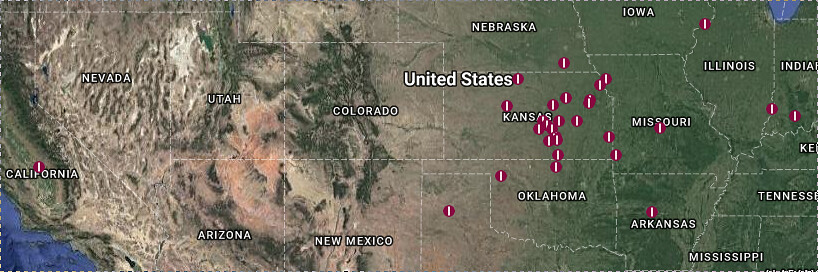
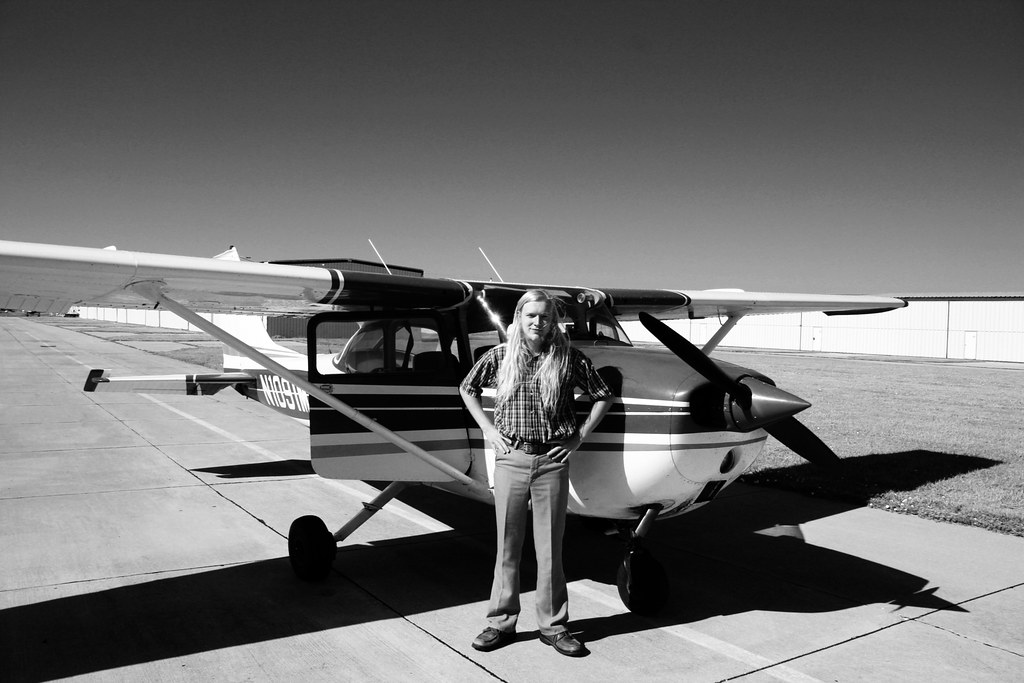
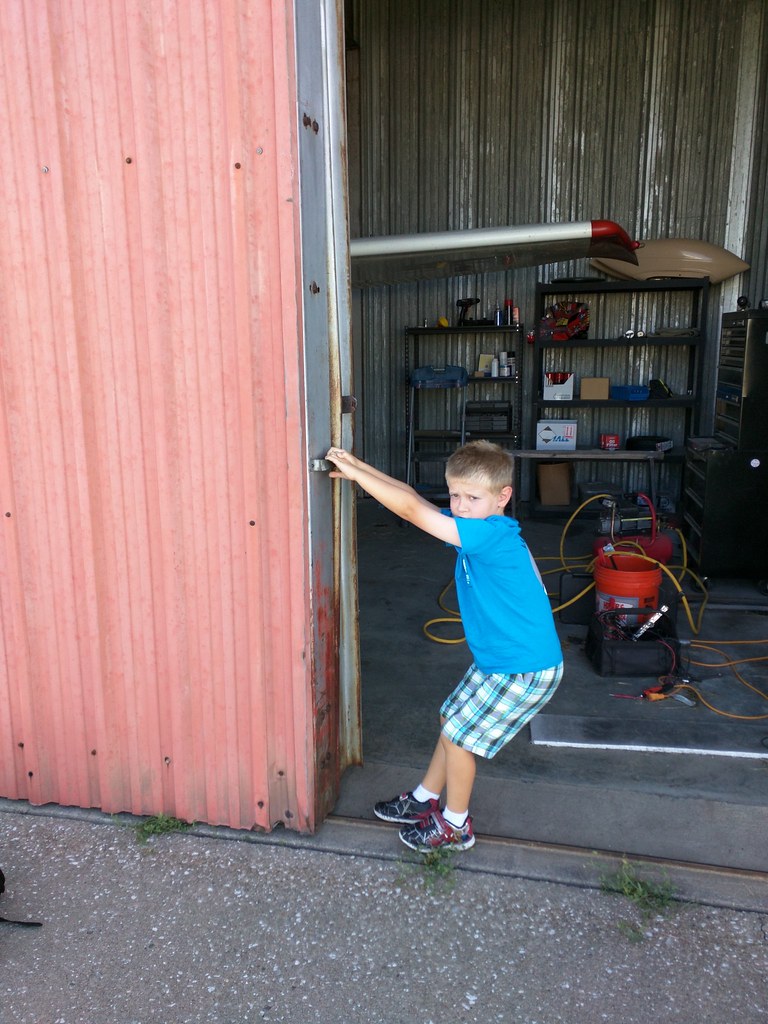
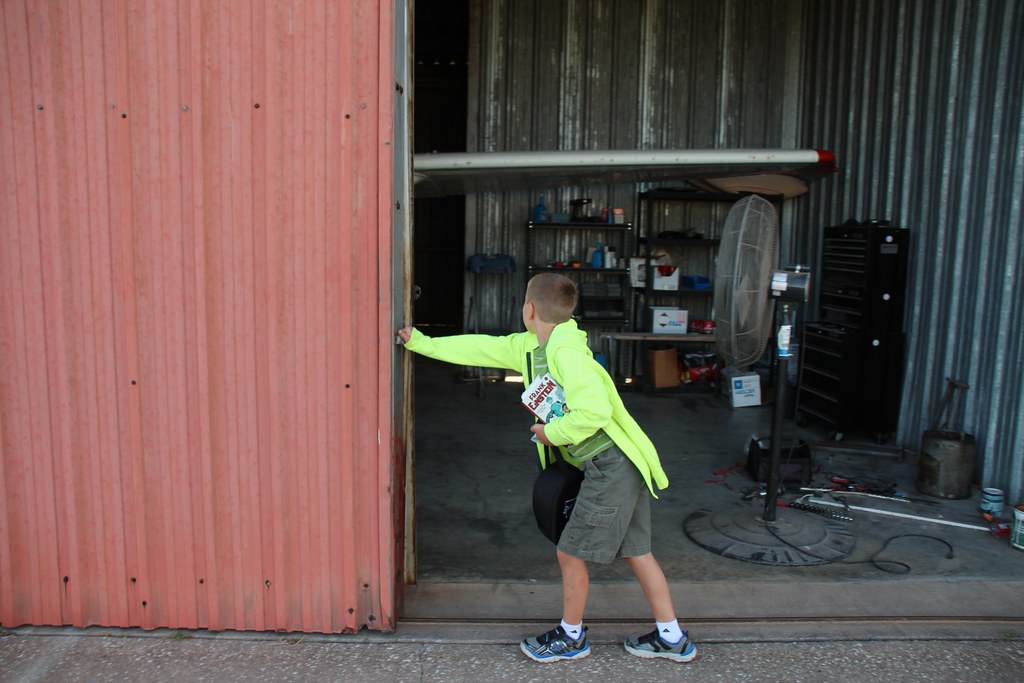
IMG_8515 This is morning. Time to fly. Two boys, happy to open the hangar door and get the plane ready. It s been a year since I passed the FAA exam and became a pilot. Memories like these are my favorite reminders why I did. It is such fun to see people s faces light up with the joy of flying a few thousand feet above ground, of the beauty and freedom and peace of the skies. I ve flown 14 different passengers in that time; almost every flight I ve taken has been with people, which I enjoy. I ve heard wow or beautiful so many times, and said it myself even more times. IMG_6083 I ve landed in two state parks, visited any number of wonderful small towns, seen historic sites and placid lakes, ascended magically over forests and plains. I ve landed at 31 airports in 10 states, flying over 13,000 miles. airports Not once have I encountered anyone other than friendly, kind, and outgoing. And why not? After all, we re working around magic flying carpet machines, right? IMG_7867_bw (That s my brother before a flight with me, by the way) Some weeks it is easy to be glum. This week has been that way for many, myself included. But then, whether you are in the air or on the ground, if you pay attention, you realize we still live in a beautiful world with many wonderful people. And, in fact, I got a reminder of that this week. Not long after the election, I got in a plane, pushed in the throttle, and started the takeoff roll down a runway in the midst of an Indiana forest. The skies were the best kind of clear blue, and pretty soon I lifted off and could see for miles. Off in the distance, I could see the last cottony remnants of the morning s fog, lying still in the valleys, surrounding the little farms and houses as if to give them a loving hug. Wow. Sometimes the flight is bumpy. Sometimes the weather doesn t cooperate, and it doesn t happen at all. Sometimes you can fly across four large states and it feels as smooth as glass the whole way. Whatever happens, at the end of the day, the magic flying carpet machine gets locked up again. We go home, rest our heads on our soft pillows, and if we so choose, remember the beauty we experienced that day. Really, this post is not about being a pilot. This post is a reminder to pay attention to all that is beautiful in this world. It surrounds us; the smell of pine trees in the forest, the delight in the faces of children, the gentle breeze in our hair, the kind word from a stranger, the very sunrise. I hope that more of us will pay attention to the moments of clear skies and wind at our back. Even at those moments when we pull the hangar door shut. IMG_20160716_093627

10 November 2016

Matthew Garrett: Tor, TPMs and service integrity attestation

One of the most powerful (and most scary) features of TPM-based measured boot is the ability for remote systems to request that clients attest to their boot state, allowing the remote system to determine whether the client has booted in the correct state. This involves each component in the boot process writing a hash of the next component into the TPM and logging it. When attestation is requested, the remote site gives the client a nonce and asks for an attestation, the client OS passes the nonce to the TPM and asks it to provide a signed copy of the hashes and the nonce and sends them (and the log) to the remote site. The remoteW site then replays the log to ensure it matches the signed hash values, and can examine the log to determine whether the system is trustworthy (whatever trustworthy means in this context).

When this was first proposed people were (justifiably!) scared that remote services would start refusing to work for users who weren't running (for instance) an approved version of Windows with a verifiable DRM stack. Various practical matters made this impossible. The first was that, until fairly recently, there was no way to demonstrate that the key used to sign the hashes actually came from a TPM[1], so anyone could simply generate a set of valid hashes, sign them with a random key and provide that. The second is that even if you have a signature from a TPM, you have no way of proving that it's from the TPM that the client booted with (you can MITM the request and either pass it to a client that did boot the appropriate OS or to an external TPM that you've plugged into your system after boot and then programmed appropriately). The third is that, well, systems and configurations vary so much that outside very controlled circumstances it's impossible to know what a "legitimate" set of hashes even is.

As a result, so far remote attestation has tended to be restricted to internal deployments. Some enterprises use it as part of their VPN login process, and we've been working on it at CoreOS to enable Kubernetes clusters to verify that workers are in a trustworthy state before running jobs on them. While useful, this isn't terribly exciting for most people. Can we do better?

Remote attestation has generally been thought of in terms of remote systems requiring that clients attest. But there's nothing that requires things to be done in that direction. There's nothing stopping clients from being able to request that a server attest to its state, allowing clients to make informed decisions about whether they should provide confidential data. But the problems that apply to clients apply equally well to servers. Let's work through them in reverse order.We have no idea what expected "good" values areYes, and this is a problem. CoreOS ships with an expected set of good values, and we had general agreement at the Linux Plumbers Conference that other distributions would start looking at what it would take to do the same. But how do we know that those values are themselves trustworthy? In an ideal world this would involve reproducible builds, allowing anybody to grab the source code for the OS, build it locally and verify that they have the same hashes.

Ok. So we're able to verify that the booted OS was good. But how about the services? The rkt container runtime supports measuring each container into the TPM, which means we can verify which container images were started. If container images are also built in such a way that they're reproducible, users can grab the source code, rebuild the container locally and again verify that it has the same hashes. Users can then be sure that the remote site is running the code they're looking at.

Or can they? Not really - a general purpose OS has all kinds of ways to inject code into containers, so an admin could simply replace the binaries inside the container after it's been measured, or ptrace() the server, or modify rkt so it generates correct measurements regardless of the image or, well, there's lots they could do. So a general purpose OS is probably a bad idea here. Instead, let's imagine an immutable OS that does nothing other than bring up networking and then reads a config file that tells it which container images to download and run. This reduces the amount of code that needs to support reproducible builds, making it easier for a client to verify that the source corresponds to the code the remote system is actually running.

Is this sufficient? Eh sadly no. Even if we know the valid values for the entire OS and every container, we don't know the legitimate values for the system firmware. Any modified firmware could tamper with the rest of the trust chain, making it possible for you to get valid OS values even if the OS has been subverted. This isn't a solved problem yet, and really requires hardware vendor support. Let's handwave this for now, or assert that we'll have some sidechannel for distributing valid firmware values.Avoiding TPM MITMingThis one's more interesting. If I ask the server to attest to its state, it can simply pass that through to a TPM running on another system that's running a trusted stack and happily serve me content from a compromised stack. Suboptimal. We need some way to tie the TPM identity and the service identity to each other.

Thankfully, we have one. Tor supports running services in the .onion TLD. The key used to identify the service to the Tor network is also used to create the "hostname" of the system. I wrote a pretty hacky implementation that generates that key on the TPM, tying the service identity to the TPM. You can ask the TPM to prove that it generated a key, and that allows you to tie both the key used to run the Tor service and the key used to sign the attestation hashes to the same TPM. You now know that the attestation values came from the same system that's running the service, and that means you know the TPM hasn't been MITMed.How do you know it's a TPM at all?This is much easier. See [1].


There's still various problems around this, including the fact that we don't have this immutable minimal container OS, that we don't have the infrastructure to ensure that container builds are reproducible, that we don't have any known good firmware values and that we don't have a mechanism for allowing a user to perform any of this validation. But these are all solvable, and it seems like an interesting project.

"Interesting" isn't necessarily the right metric, though. "Useful" is. And I think this is very useful. If I'm about to upload documents to a SecureDrop instance, it seems pretty important that I be able to verify that it is a SecureDrop instance rather than something pretending to be one. This gives us a mechanism.

The next few years seem likely to raise interest in ensuring that people have secure mechanisms to communicate. I'm not emotionally invested in this one, but if people have better ideas about how to solve this problem then this seems like a good time to talk about them.

[1] More modern TPMs have a certificate that chains from the TPM's root key back to the TPM manufacturer, so as long as you trust the TPM manufacturer to have kept control of that you can prove that the signature came from a real TPM

comment count unavailable comments

9 November 2016

Russ Allbery: Some thoughts on the US elections

I apparently am not going to get anything done today until I write this. Some thoughts, in no particular order. I don't have any profound conclusions. I'm honestly pretty upset. And pretty scared. But we have to talk to each other. And we have to listen to each other. And we have to persaude each other. And we have to be willing to be persuaded. And please go tell someone this morning that you have their back.

Daniel Pocock: Understanding what lies behind Trump and Brexit

As the US elections finish, many people are scratching their heads wondering what it all means. For example, is Trump serious about the things he has been saying, or is he simply saying whatever was most likely to make a whole bunch of really stupid people crawl out from under their rocks to vote for him? Was he serious about winning at all, or was it just the ultimate reality TV experiment? Will he show up for work in 2017, or like Australia's billionaire Clive Palmer, will he set a new absence record for an elected official? Ironically, Palmer and Trump have both been dogged by questions over their business dealings, will Palmer's descent towards bankruptcy be replicated in the ongoing fraud trial against Trump University and similar scandals? While the answer to those questions may not be clear for some time, some interesting observations can be made at this point. The world has been going racist. In the UK, for example, authorities have started putting up anti-Muslim posters with an eery resemblance to Hitler's anti-Jew propaganda. It makes you wonder if the Brexit result was really the "will of the people", or were the people deliberately whipped up into a state of irrational fear by a bunch of thugs seeking political power? Who thought The Man in the High Castle was fiction? In January 2015, a pilot of The Man in the High Castle, telling the story of a dystopian alternative history where Hitler has conquered America, was the most-watched original series on Amazon Prime. It appears Trump supporters have already been operating US checkpoints abroad for some time, achieving widespread notoriety when they blocked a family of British Muslims from visiting Disneyland in 2015. Ambushing them at the last moment as they were about to board their flight, it is unthinkable how anybody could be so cruel. When you reflect on statements made by Trump and the so-called "security" practices around the world, this would appear to be only a taste of things to come though. Is it a coincidence that Brexit and Trump both happened in the same year that the copyright on Mein Kampf expired? Ironically, in the chapter on immigration Hitler specifically singles out the U.S.A. for his praise, is that the sort of rave review that Trump aspires to when he talks about making America great again? US voters have traditionally held concerns about the power of the establishment. The US Federal Reserve has been in the news almost every week since the financial crisis, but did you know that the very concept of central banking was thrown out the window four times in America's history? Is Trump the type of hardliner who will go down this path again, or will it be business as usual? In his book Rich Dad's Guide to Investing in Gold & Silver, Robert Kiyosaki and Michael Maloney encourage people to consider putting most of their wealth into gold and silver bullion. Whether you like the politics of Trump and Brexit or not, are we entering an era where it will be prudent for people to keep at least ten percent of net wealth in this asset class again? Online dealers like BullionVault in Europe already appear to be struggling under the pressure as people rush to claim the free grams of bullion credited to newly opened accounts. The Facebook effect In recent times, there has been significant attention on the question of how Facebook and Google can influence elections, some European authorities have even issued alerts comparing this threat to terrorism. Yet in the US election, it was simple email that stole the limelight (or conveniently diverted attention from other threats), first with Clinton's private email server and later with Wikileaks exposing the entire email history of Clinton's chief of staff. The Podesta emails, while being boring for outsiders, are potentially far more damaging as they undermine the morale of Clinton's grass roots supporters. These people are essential for knocking on doors and distributing leaflets in the final phase of an election campaign, but after reading about Clinton's close relationship with big business, many of them may well have chosen to stay home. Will future political candidates seek to improve their technical competance, or will they simply be replaced by candidates who are born hackers and fluent in the language of a digital world?

7 November 2016

Jaldhar Vyas: New Laptop / Problems with Windows part 896,324

I had mentioned previously that I had been forced to purchase a new laptop. I decided that I didn't want another Thinkpad. The Lenovo ones no longer have the high quality they had in the IBM days and while support is still pretty good by todays dismal standards it's not worth the premium price. (If I'm buying it with my own money that is.) I had heard good thing about Dells' Linux support so I looked into their offerings and ended up buying a Precision 7510. Mind you this model came with Windows 7 installed but I didn't mind. As I wanted to install Debian according to my own specs anyway, I was ok with just knowing that the hardware would be compatible. So I prepared a Jessie USB installation stick (This model doesn't have a CD/DVD drive.) and shrunk down the Windows installation (but not deleted it altogether for reasons to be explained below.) At this point it is traditional to give a long, tortured account of how Heaven and Earth had to be moved to get Linux installed. But that is a thing of the past. The combination of good hardware and the excellent work of the debian-installer team, made the setup a breeze with only a couple of minor bumps in the road. One is that the kernel on the Jessie cd was not quite up to snuff. Downloading 4.6.0 from backports did the trick. Post-install, to get the most out of my nifty new 4K display, I needed the latest, alas non-free, nvidia-drivers. And for stable wifi (I always install over ethernet for this reason) I had to install the firmware-iwlwifi package. Everything else even my printer either "just worked" or needed only minor fiddling around. Having used this machine for a while, the biggest problem I have is with the keyboard. It is nowhere near as tactile and comfortable to use as the old IBM Thinkpads. Even Lenovo Thinkpad keyboards are better. I'm a hunt-and-peck type myself but it is annoying. I think a real touch typist would hate it. The cursor and home, end, page up, page down etc. keys are in the wrong place and home and end are actually function keys. There is a pointer and a trackpad and two sets of mouse buttons which seems like a waste of space. In fact much space is wasted everywhere, space which could be used to improve the keyboard. Other than that I like it. The battery life is not the best but fairly good. It's a bit heavier than I was used to but I've gotten used to it. Although I didn't go with the SSD option, it is not that noisy; again you can get used to it. All in all, I think it is worth it for the price.
I installed Debian but I only really use it as a base to run VMWare Workstation. I occasionally have to support software across multiple platforms but I don't want the hassle or expense of multiple computers so I have Windows (the original installation upgraded to Windows 10) and Mac OS X running in VMs. Plus I have another VM running Kubuntu LTS for my day to day computing, another Debian install running sid for packaging, and Minix. Backups are as simple as making a snapshot of the VM. If something accidently gets screwed up, I can easily revert it back to a known good state. Ideally, I would like to replace VMWare with a free solution such as qemu or virtualbox etc. but as far as I know VMWare is far ahead in emulation capabilities (OpenGL support for example.) which is vital for efficiently using the proprietary OS's. Things were going swimmingly until a few days ago which brings me to part two of this post. I booted into the Windows 10 VM only to be greeted by a message from the Windows boot manager that "A component of the operating system has expired." I tried going back to a snapshot from September (when this definitely was working) but I still got the same thing. A bit of googling revealed this has happened to others and the advice seemed to be to reset the computers date and reinstall Windows 10. It took several tries but I finally got that done, completed the task I needed to do and shut it down. At the end of the day I shut the whole laptop down and thought no more of it. The next day I boot up and...where is grub? It seems that during the Windows reinstall, it had overwritten grub with the Windows boot loader. And while grub is nice enough to add an entry for Windows when detected, Windows does not extend the same courtesy to Linux. Ok time to bring out my trusty USB stick again and reinstall grub. Oops I've wiped it off to store other things. No matter, download another image and do it again. Reboot and...back in Windows. Fiddle around in the EFI settings until I can get it to boot from USB. Now i'm in the shell provided by debian-installer so I can mount and chroot my Linux partition and reinstall grub. Except no I can't because it is Luks encrypted. Ok apt-get install cryptsetup, open it with my passphrase and now I can mount the partion, chroot into and reinstall grub. Except no I can't because it is a logical volume group. Back to apt-get, install lvm2, vgscan (because of course I've forgotten the name of the group,) vgchange and now I can mount, chroot, etc. etc. Except no I can't.

# mount /dev/mapper/vg00-root /mnt
# chroot /mnt
# grub-install /dev/sda
error: cannot find a device for /boot/grub (is /dev mounted?).
sigh

# mount /dev/sda5 /boot
special device /dev/sda5 does not exist.
Well, /dev is mounted but it does indeed not contain a device called sda5.

# /etc/init.d/udev start
udev requires a mounted procfs.  not started.
Very well then.

# mount -t proc none /proc
# /etc/init.d/udev start
Nope. proc needs sysfs.

# mount -t sysfs none /sys
# /etc/init.d/udev start
Still no. You get a warning about how it is a bad idea to run udev from an interactive shell and there is still not /dev/sda5. Time to start googling again. It turns out what I should have done is open another shell from the installer environment and do...

# mount --bind /dev/ /mnt/dev
Now I can mount /boot/grub and reinstall grub and it should all work right? I should be so lucky. Ok back to square one. I now did what I should have done in the first place and searched the Debian wiki. Sure enough there is a page which deals exactly with my predicament. Finally I get everything installed correctly and triumphantly reboot into Linux. Of course now Windows doesn't work again...

Petter Reinholdtsen: How to talk with your loved ones in private

A few days ago I ran a very biased and informal survey to get an idea about what options are being used to communicate with end to end encryption with friends and family. I explicitly asked people not to list options only used in a work setting. The background is the uneasy feeling I get when using Signal, a feeling shared by others as a blog post from Sander Venima about why he do not recommend Signal anymore (with feedback from the Signal author available from ycombinator). I wanted an overview of the options being used, and hope to include those options in a less biased survey later on. So far I have not taken the time to look into the individual proposed systems. They range from text sharing web pages, via file sharing and email to instant messaging, VOIP and video conferencing. For those considering which system to use, it is also useful to have a look at the EFF Secure messaging scorecard which is slightly out of date but still provide valuable information. So, on to the list. There were some used by many, some used by a few, some rarely used ones and a few mentioned but without anyone claiming to use them. Notice the grouping is in reality quite random given the biased self selected set of participants. First the ones used by many: Then the ones used by a few. Then the ones used by even fewer people And finally the ones mentioned by not marked as used by anyone. This might be a mistake, perhaps the person adding the entry forgot to flag it as used? Given the network effect it seem obvious to me that we as a society have been divided and conquered by those interested in keeping encrypted and secure communication away from the masses. The finishing remarks from Aral Balkan in his talk "Free is a lie" about the usability of free software really come into effect when you want to communicate in private with your friends and family. We can not expect them to allow the usability of communication tool to block their ability to talk to their loved ones. Note for example the option IRC w/OTR. Most IRC clients do not have OTR support, so in most cases OTR would not be an option, even if you wanted to. In my personal experience, about 1 in 20 I talk to have a IRC client with OTR. For private communication to really be available, most people to talk to must have the option in their currently used client. I can not simply ask my family to install an IRC client. I need to guide them through a technical multi-step process of adding extensions to the client to get them going. This is a non-starter for most. I would like to be able to do video phone calls, audio phone calls, exchange instant messages and share files with my loved ones, without being forced to share with people I do not know. I do not want to share the content of the conversations, and I do not want to share who I communicate with or the fact that I communicate with someone. Without all these factors in place, my private life is being more or less invaded.

6 November 2016

Shirish Agarwal: The long tail in a common s man journey to debconf16 1

I was going to put a technical post but saw the discussion of one of the meetings of the debconf meets and decided to share a novice s travel experience. Before I start here s the discussion log http://meetbot.debian.net/debconf-team/2016/debconf-team.2016-10-20-20.01.log.html and specifically this part which hit me (using fake names for discussion as haven t taken permission from the folks to cite them by name.)
20:36:52 abcd: $100 CAD is a lot for some, but you d only need it if you won t sleep in sponsored accom, which arguably is acceptable.
20:37:04 it would, efgh, fixed sponsorship sum for everybody and allocation of rooms completely decoupled. Hotel gets the money from everybody and the base fee from DebConf.
20:37:15 people who can t afford also have special needs and may be uncomfortable in sharing rooms. That s quite frequently in our community. Managing each case will be much more complicated.
20:37:31 hijk: we could set aside budget for such special needs, for sure.
20:37:43 I m talking about managing each case
20:37:46 hijk: yes, but we ll have the special cases no matter what.
20:37:48 yes, and the special cases need to be catered for regardless of how everybody else is housed
20:38:06 hijk: room allocation already includes this.
20:38:19 people having to expose their personal problems to have us permitting them staying in the hotel
20:38:23 that s just too weird
It just goes on. I dunno whether I m weird or not or the experience I would share is just normal, this I would leave for you to decide. As have shared before, some friends of mine from the free software community had cajoled me last year to apply for debconf bursary (debconf15), which surprisingly got approved, but as it was late and my pre-conceived myths/notions of visas taking a looooong time decided not to go further. Many things take a long time to happen in the Indian bureaucratic maze. For instance have been in a civil case for almost a decade now among other things so know and accept that things take their own sweet time otherwise known as Indian patience  Did the application and again, surprise, surprise this time too I was approved. Luckily, had done the application for bursary early so was a bit positive on the visa-front. There was a goof-up at the embassay but thanks to people at travel.stackexchange.com where I asked quite a few questions, I was a bit informed and travel was relatively hassle-free. Internally though, I was nervous as hell. I had been feeling like a conman or a fraud or being an imposter because I knew before-hand that the project is so huge and had done the mistake of putting up a talk and a workshop where the big guns would be, which again was accepted (not good). The only thing I was thinking of as a saving grace is that there might be some newbies who don t know about the project at all (on Open Day) and hopefully I could help with that but as you will see, even there I was fully inadequate. I live in Pune which is around 3.5 hours from Mumbai (BOM) from where international flights take off. While Pune has an Airport, due to defence considerations, there cannot be much improvement either for domestic or International carriers. There have been attempts to have an exclusive civilian Airport for a long time (almost a decade) and would still take a decade or more. Hence had decided to take an early morning train from Pune to Mumbai, change couple of locals and finally land up at the Mumbai International Airport. Hind-sight as they say is 50:50, while I do have friends in Mumbai, I also found about a homestay which is closer to the Airport and still relatively budget-friendly. Anyways, met few friends but as was paranoid about missing connections found myself in front of the Airport at 20:00 hrs. with about 7 hours + to go before my flight. While there is nothing to do around the airport rather than hanging around, just hung around outside the airport as knew that inside the airport will be chilling and once you go in, you cannot come out or at least it s an inconvenience to the security therein. The International Airport in on three levels, the basement is for vehicles, the first level to receive International and Domestic passengers and the upper-most level exclusively for people flying internationally. This again, came to know when I tried to enter into the ones meant for Domestic and International Passengers coming into the city. Came to the check-in counter at around 02:00 hrs, did the security thing and just had to wait as the flight was of 0400 hrs (from my limited search experience, the cheapest flights are at such times when nobody else (i.e.civilized people) wants to fly). Entered Doha around 5:15 Doha time and saw a much much bigger airport than either the Mumbai International Airport or/and the Delhi International Airport . While I have written some negative stuff about Doha, there were two positives that I am sure, I had forgotten to share a. There were no transit Visa Fees that I had to pay. Most countries and airports I researched have something called transit visa and that can really get expensive, so saved money on that. b. The free ride into the city and back with voluntary tipping the driver or/and guide (approx. 3-4 hours) While the second from what I could tell/know is a gimmick, this is something I wish other countries and airports emulate. There are hotels in the airport and I could have had hotel accommodation if I had booked a slightly more expensive ticket, roughly INR 5k/- each way which would have given me a bit more legroom as well as stay as my layover was more than 24 hours. But this information was known at last minute. Qatar Airways has just a toll-free number and trying more than a few times gave up. They don t have an office in the city. When I reached the check-in counter they said if I had upgraded to Y class I would have had the hotel thing. Changing tickets at the last moment was too expensive and anyways for hotel accommodation for layovers they required at least 24 hours notice. Had to make do with recliners and chairs which are not really comfortable. There were only a couple of waiting rooms on air-side which had a view of the aircraft and hence were a bit more pleasing than those which were on the land-side and were fully blocked without a view. I wish there was a map of the Airport from within the Airport as even with the single terminal it is really easy to get lost. Somehow the day and night went by and took my second flight and reached Cape Town, South Africa. Throughout the journey had been stressed as had to be awake at all times and make sure that nothing gets stolen. Having attendants at toilets were also good so that there is no possibility of any violence there. So it had been 2 days, no shower and no sleep. Later also came to know about Airport Sleeping Pods and shower stalls but these also seem to be less in number, at few airports and there always be a bit of premium attached to them as airports are a monopoly business. Anyways, reached the venue. Throughout the travel there was quite a bit of unnamed fear which I later came to know after seeing Dr. Ramanujan s The Man who knew Infinity . It was/is the fear or unknown, while in the movie it is articulated as fear of crossing seven seas, symbolically it is the fear or unknown. Now while I was dead tired, I still pushed myself as I didn t want to have the effects of jet lag interfere with the normal sleeping and waking patterns. I did freshen myself but didn t allow myself the luxury of the bath-tub as I knew that if I went in, I would not come out that day. Met all the people, learnt who s who, where things are happening etc. and slowly night came. Night came and I was so-looking forward to sleep but sleep was not to be. I later learnt it could be either of the two reasons, it could either have been travel-induced insomnia or/and what is known as the first night effect . It was only on the second day when I was in bath-tub for about 2/3 hours I could feel the tension leaving my body. I finally realized that I am in Cape Town, South Africa and could enjoy and be surprised at seeing birds within few feet of me . Now I don t know whether I m the only weird/paranoid one, I do know that it would not have been easier for me at least for the first night as I was turning and twisting throughout the night. I opened the lights, read for some time hoping for sleep to take over but that didn t work. Tried quite a few things but sleep didn t come. If I had been sleeping with other people I dunno how they would have reacted. I myself am a light sleeper (most of the time) and if I had sleep coming and somebody else acted or been the way I was, I wouldn t been able to sleep. However much you try, whatever is the natural reaction is, will be. There are still some bits to share but that would be in part 2.
Filed under: Miscellenous Tagged: #air-travel, #Debconf16, #paranoia, #sleep

Next.

Previous.