Search Results: "nion"

7 March 2007

Joachim Breitner: A different Maybe maybe

This is a post about the implementation of data types in the programming language Haskell. If you haven t heard about that, you can proabably safely skip it. For a while I have been thinking: Isn t there a way to get rid of the intermediate Maybe construct in a common expression like fromMaybe default . lookup. It seems that a way to do that would be to pass more information to the Maybe-generating function: What to do with a Just-Value, and what to return in case of Nothing. This leads to a new definion of the Maybe data type as a function. Later I discovered that this seems to work for any algebraic data type. This is probably nothing new, but I was offline at the time of writing, so I didn t check. This means that this might also be total rubbish. Enjoy.Update: Several responses in the haskell-cafe -list told me that I just re-invented Curch-Encoding. Nice :-)

Russell Coker: features of BMW 5 and 7 series

I was reading the brochure about the BMW 530i Touring (which seems to be the BMW name for what is known as a "Station Wagon" in Australia or an "Estate" in Europe). I looked at the brochure on the "Touring" because I am interested in a Station-Wagon - the Sedan version of the 5 series is almost the same in every way other than size and shape.

Here are some of the interesting features:
Adaptive headlights, they turn in to a corner when the car is cornering (showing where you are about to go instead of showing you the scenery off the road) and the high-beam switches off when an oncoming vehicle is detected.

Head-up display for speed, navigation, and other driver-relevant information.

Park distance control (PDC). Gives audio and visual alerts when you are about to hit something at low speed.

Eight air-bags of which only the necessary ones will inflate in a collision, and the inflation power will be determined by the severity of the collision.

Dynamic stability control (DSC), traction control, corner brake control, and more. Described as "all of the known features of DSC".

Seat-belt pre-tensioners in the rear and pyro-technic tensioners for front seat belts.

Rain sensor that turns on headlights, and optional head-light washers.

According to it's brochure the 7 series has bumpers that regenerate their original shape in collisions of speeds up to 6Km/h and a tire defect indicator. Apart from that there doesn't appear to be much benefit over the 5 series apart from more luxury features.

To get the PDF files from BMW Australia (without following my links which BMW will probably break soon) you have to fill in a form with "contact details". To enter that form you need a browser that works with their javascript (which means not Konqueror) so that you can enter your postcode and be prompted with a list of suburbs that match the post-code. The second-last page of that process allows you to download PDF files and it seems to indicate that your data will not be stored if you don't continue past the stage where you download the PDF files. It would be good if BMW could get smart and make their PDF files as easy to download as Mercedes does.

In terms of safety features it seems that the 7 series offers little over the 5 series. By comparing the brochures it seems to me that the Mercedes S series (as described in my previous blog post) has many more safety features than any BMW. Assuming that the BMW documents are accurate they don't seem to compare well with the Mercedes S class. From a quick search on drive.com.au (the best web site for buying used cars in Australia) it seems that the Mercedes keeps it's value better than the BMW - other people apparently share my opinion of the relative merits of the cars.

In future posts I'll summarise the features of some other cars that I consider interesting.

Jordi Mallach: Cal otada and lunar eclipse in Picamoixons

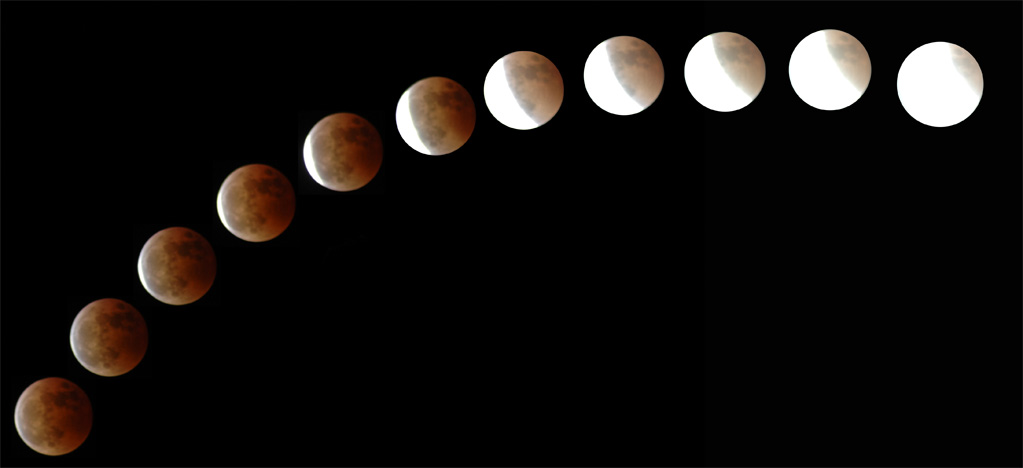
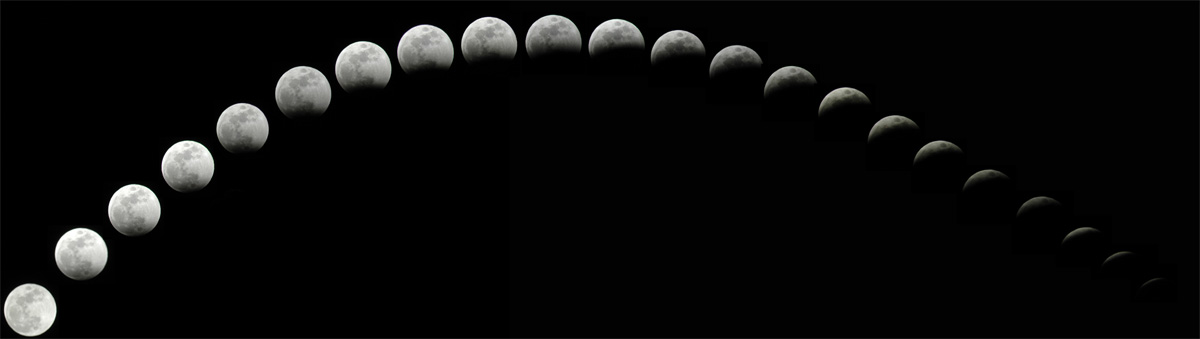
Last weekend I had great fun during my first cal otada with my Friends in Picamoixons, very near Valls in Tarragona. While it's already a tradition for my friends, this was the first time I went there, after having missed many other opportunities probably due to my overcommitment to triathlon training a few years ago. So on Friday we drove up North to Catalunya, and arrived quite late to Frago's house in the center of the town, where we slept in two packed rooms and the terrace after getting some beers in Dune. Early next morning we met Frago's friends and bought the necessary vegetables and wine for our great lunch, and soon after we were in the middle of some olive field outside Picamoixons, where we prepared a big fire and the cal ots. A cal ot is a special type of onion which grows in the area, which ends up being very long and thin. After cutting part of the green leaves, they are cooked over the flames, which carbonises the first few layers of the onion, but leaves the inner part ready for consumption. After this, you just need to pull from the inner leaves to get rid of the burnt stuff and eat the rest with a delicious and typical sauce for cal ots. So far, so good. What if your group of friends has extended the tradition, allowing for extra fun bits? In our cal otades, after you've peeled the cal ot, you keep the carbonised stuff. It's valuable ammo, which will soon be thrown at others' faces. Trying to remain clean is futile, you soon are covered by sauce and black stuff all over your head and clothes. This was real fun! After eating part of the group went up a mountain to visit an arab tower, which helped me not to get totally drunk before the night. When it got dark, we were all back to our positions around the fire, chatting and listening to varied music, while we waited for the lunar eclipse. The eclipse was impressive, seen from the country side, with absolutely no luminic contamination. My friend Jordi carefully prepared his camera to do a good photograph series of the event, and the results were impressive. When the eclipse was about to be full, it was great to see a miriad of stars appear in the sky, previously hidden by the perfect full moonlight. We were just too lucky that the weather fixed up just on time to have a completely clear sky.


The lunar eclipse, as seen from the Catalan countryside. Pics by Jordi Jover. Many were quite tired by 3 or so, so we started setting up tents and went to sleep by 4. Sunday was a slow day, dedicated to cleaning up our stuff and eating leftovers cooked on a new fire. We were back in Val ncia at 8PM or so and even after showering and cleaning my hair with shampoo, my head still smelled like smoke. Actually, I think it might still smell a tiny bit today. In short, a lovely weekend, which I hope to repeat next year. Too bad the lunar eclipse bit will be missing for quite a few more years. :)

6 March 2007

Edd Dumbill: Using sparklines to aid conference proposal selection

In a recent article I explained some of the mechanics behind putting together the schedule for XTech 2007. We've just added new visualization features to Expectnation that make proposal choice easier, and I thought I'd show some examples from the XTech 2007 review voting. Sparklines, devised by Edward Tufte, are thumbnail sketches of data that succinctly convey patterns. When Nat Torkington used sparklines to show reviewer voting patterns for OSCON program committee, it seemed a helpful addition to make to Expectnation. The profile of each reviewer is interesting — are they a harsh marker, or liberal with the top grades? — but sparklines really come into their own when drawn per proposal. Here are some small screenshots from this year's XTech voting, anonymized of course.
High flyers High scoring chart Reviewers are pretty unanimous about this proposal, as 4.0 is the top grade in our scoring system. The lack of variance suggests that I ought to ensure that all the assigned reviewers put in their scores — this could be just one person voting.  High scoring chart High scoring chart These next two are the pretty typical distribution for highly graded proposals: mostly top marks and a few average ones.  Middle rankingSome of the more interesting trends show up when the scoring isn't biased to either the top or bottom ends of the scale.  Medium scoring chartThe reviewers are unanimous about this paper's soundness. It's not made anyone go "wow", but there's nothing to grumble about either.  Medium scoring chartThis proposal clearly polarises opinion, and is such stands a better chance than the unanimous 3.0 above. Perhaps the subject matter or approach is controversial or timely.
Medium scoring chartAnother proposal that divides the reviewers' opinions. It's also worth me checking here that I don't either have a pathologically strict reviewer, or at the other end, a reviewer with a wild passion for the cause this paper advocates.  Low scoring The quality of submissions is usually so good that I don't give low graded proposals much attention, but the sparklines could alert me to potential oversights. Low scoring chartThis proposal seems to polarise opinion between "rubbish" and "ok", so it's interesting to me to check out the subject matter and see if I'm missing something with potential.  Low scoring chart Low scoring chart These proposals were not received at all well.In summary, I'm delighted to find a solid practical application for sparklines. My thanks to Nat Torkington for the inspiration. 

Marc 'Zugschlus' Haber: EasyRSA on Debian for an OpenVPN CA

After asking for useable CA Software, I have finally settled on using EasyRSA. This is what I did to come across the packaging shortcomings of EasyRSA in Debian. Storing your CA Be sure that your CA is stored in a secure place. Don’t store it online, and make it accessible only to yourself. In my opinion, storing the the CA in a cryptoloop container file on a small 32 MB USB stick is a good idea. Cryptloop is rather easy today and available in the stock Linux kernel. I commonly use grml-crypt to manage the crypto loopback stuff:
sudo grml-crypt start /media/usb4/cryptoloop $MOUNTPOINT
Gotcha: don’t confuse sudo’s “password” prompt with grml-crypt’s “Enter LUKS passphrase” prompt, the cryptoloop password won’t bring you anywhere on the sudo prompt. Preparing the CA directory For the CA, create a dedicated directory in the mounted cryptoloop file system. You’re originally supposed to copy the entire EasyRSA directory tree in there, but I’d recommend to only link the files from your system’s EasyRSA directory to automatically take advantage of distribution updates. You’ll need at least these links:
lrwxrwxrwx 1 mh mh   56 Dec 25 23:23 openssl.cnf -> /usr/share/doc/openvpn/examples/easy-rsa/2.0/openssl.cnf
lrwxrwxrwx 1 mh mh   52 Dec 25 23:22 pkitool -> /usr/share/doc/openvpn/examples/easy-rsa/2.0/pkitool
lrwxrwxrwx 1 mh mh   60 Dec 25 23:23 whichopensslcnf -> /usr/share/doc/openvpn/examples/easy-rsa/2.0/whichopensslcnf
ln -s /usr/share/doc/openvpn/examples/easy-rsa/2.0/openssl.cnf .
ln -s /usr/share/doc/openvpn/examples/easy-rsa/2.0/pkitool .
ln -s /usr/share/doc/openvpn/examples/easy-rsa/2.0/whichopensslcnf .
Configuring your CA The only thing you cannot link is the vars file which contains your CA’s local settings:
export EASY_RSA=“$(pwd)”
export OPENSSL=“openssl”
export PKCS11TOOL=“pkcs11-tool”
export GREP=“grep”
export KEY_CONFIG=$($EASY_RSA/whichopensslcnf $EASY_RSA)
export KEY_DIR=“$EASY_RSA/keys”
# Issue rm -rf warning
echo NOTE: If you run ./clean-all, I will be doing a rm -rf on $KEY_DIR
export KEY_SIZE=1024
export CA_EXPIRE=3650
export KEY_EXPIRE=3650
export KEY_COUNTRY=“DE”
export KEY_PROVINCE=“”
export KEY_CITY=“”
export KEY_ORG=“Zugschlus.de”
export KEY_EMAIL=“mh+easyrsa-mh-openvpn@zugschlus.de”
export PKCS11_MODULE_PATH=“dummy”
export PKCS11_PIN=“dummy”
Comments have been removed from this file. Better copy the file from /usr/share/doc/openvpn/examples/easy-rsa/2.0/vars and edit it to your needs. I added the two PKCS11 variables since you won’t otherwise be able to issue certificate requests. Creating the CA Next, decide on a shell instance where you will do most operations, and source vars in there. Next, run /usr/share/doc/openvpn/examples/easy-rsa/2.0/clean-all. If you do this in a directory of an already-in-use EasyRSA CA, you’ll need to restore your backup. To actually initialize the CA, run pkitool --initca --pass. If you do not give the --pass parameter, you’ll create a CA that can issue certificates without asking for a passphrase, which might not be a brilliant idea. Choose a reasonably secure pass phrase. Creating Certificates - the simple and suboptimal way You can now simply proceed to create an arbitrary number of pairs of “private” keys and associated certificate by simply calling pkitool <clientname> and/or pkitool --server <servername>. Depending on your security policy, you can mandate the private keys to be protected by a passphrase (adding --pass to the command lines), but you’ll have the expense of being asked for the passphrase every time you start a new openvpn daemon. Creating Certificates the Right Way I have put the “private” in quotes since the keys created this way are not really private: The key was created on the box hosting the CA, was stored on the local (crypted) file system and needs to be moved to the target system via a secure channel. Doing so the right way is harder than expected, so it is usually the better way to keep the private key really private by creating it directly on the target system. On the target system, you need OpenVPN installed, and openssl. After the certificate was created, you can remove openssl again. Creating a private key is part of a key-pair generation process that also leaves a certificate request. The contents of the certificate request is public, and you can safely move it to the CA box and convert it to a certificate by signing the request. You only need to make sure that nobody exchanges your target system’s certificate request for her own before you sign it as you might end up certifying a wrong identity. For the rest of this document we’re going to assume that you have ssh access to the target system and have verified the ssh host key, so that you can be reasonably sure to be connected to the right system. To create a certificate request, you can use this script, which I have called create-easyrsa-cert-req:
#!/bin/bash
set -u
TMPDIR=“/tmp”
export OPENSSL=“openssl”
export PKCS11TOOL=“pkcs11-tool”
export GREP=“grep”
export KEY_CONFIG=“/usr/share/doc/openvpn/examples/easy-rsa/2.0/openssl.cnf”
export KEY_DIR=“$TMPDIR/keys.$$”
mkdir -p $KEY_DIR
export KEY_SIZE=1024
export KEY_EXPIRE=3650
export KEY_COUNTRY=“DE”
export KEY_PROVINCE=“”
export KEY_CITY=“”
export KEY_ORG=“Zugschlus”
export KEY_OU=“$(hostname --fqdn)”
export KEY_EMAIL=“mh+$(hostname)-ovpn-cert@zugschlus.de”
export DEBUG=1
umask 077
if [ “$ 1:-foo ” != “server” ]; then
  /usr/share/doc/openvpn/examples/easy-rsa/2.0/pkitool --csr $(hostname)
else
  /usr/share/doc/openvpn/examples/easy-rsa/2.0/pkitool --csr --server $(hostname)
fi
mv $TMPDIR/keys.$$/* .
rm -rf $TMPDIR/keys.$$
When called without parameters, it creates a certificate request for an OpenVPN client certificate, and when you call it with “server” as parameter, it will create a server certificate request. In any case, it will leave two files in the current directory. They are named after the current host name, and have the extensions .csr and .key. The .key file is your private key. keep it private! The .csr file is the certificate request which you can now move to the keys subdirectory of your CA directory via scp or other means such as an USB stick. To do the actual signing, invoke pkitool --sign <hostname> and enter the CA passphrase. You can ignore the error message that there was no .key file to chmod. Gotcha, when signing a server certificate, use pkitool --server --sign <hostname>. Move Certificate to the target host You can now move the certificate to the target system. Since you’re probably going to need the root certificate and the certificate revocation list as well, you can move the .key file (if created on the CA system), the .crt file, and ca.crt to the target system. These files are public, so there is no need for a secure channel. Revoking Certificates Since an OpenVPN server’s only means of authentication is to check whether the certificate presented by a client is signed by the “right” CA, the only way to revoke VPN access is to revoke the certificate. This is also done on the CA system by calling /usr/share/doc/openvpn/examples/easy-rsa/2.0/revoke-full <client-name>. This creates a crl.pem file which contains a list of all revoked certificates. You need to have a mechanism to distribute that list to all systems that might need it, and it is recommended to have this automated. Remember, if you do not distribute the .crl file, the systems are not going to know about revoked certificates.

Rapha&#235;l Hertzog: Alioth and OpenID

Stratus seeks for comments from Alioth admins. Yes I’d like to see OpenID integration with Gforge. The upstream situation is a bit difficult, so I don’t think that you’ll have official opinion from them. In my case, I want OpenID integration because it would be cool to offer a standard wiki and be able to define ACL on some pages which refer to the Alioth accounts that people are used to use. In the longer term, we have other web services which are going to need authentication (DWTT, new version of the PTS, …) in order to provide customized content and it would be great to rely on OpenID for that part. I’m waiting your patches! ;-) And next time you want an opinion from the Alioth admins, please mail us instead of hoping that we won’t miss your blog entry in planet.debian.org.

5 March 2007

Wouter Verhelst: On my platform

I originally was quite reluctant to post on Planet Debian about the DPL race, but hey, this is the campaigning period, anyway. My choice not to go into too much detail about what I'll do about Debian seems to spark some confusion. I initially thought of adding a rather verbose explanation for that to my platform; but as the initial version of my platform got quite long and convoluted, it got cut. Perhaps that wasn't a very good idea, so here goes: One observation I've made over the years is that DPL candidates often come up with all sorts of grandiose plans about what should be done to improve Debian. These plans are usually the result of some observation they've made, and consequently some thinking they've put in so as to come up with what they think is the most reasonable solution to the problem at hand. The only problem with this approach is that, if you're not involved in whatever you have ideas on, you'll probably end up suggesting things which the people that are involved do not think is a good idea to do. Which would consequently mean that you'll either have to do it all by yourself (since you can't force DDs to do something against their will, and we have a constitution to back that up), or that they convince you that it's not a good idea, and you end up not doing whatever you promised to do during your campaign anyway. First, this is silly. If you don't know whether you can or will keep a promise, you should not make it. But apart from that, it's also a problem; if you get elected mainly because you promise to do one thing and then don't end up doing it, or do something else instead, then you've got yourself a very good reason not to be liked in the community. Which isn't something a DPL should aim for, I believe. So rather than coming up with a detailed plan of all the things I'd do once elected, I decided to come up with a detailed plan of all the things that need work. The exact stuff that gets done about them would then be decided after having a chat (on IRC or otherwise) with the people involved, directly or otherwise, and after considering what other people's opinion on the matter is, if I know said opinion. Does that give me a carte blanche, as Julien suggests? Well, yes and no. Yes, because every Debian Developer who runs for DPL is essentially asking for a carte blanche; after all, the DPL has the ability to speak for the developer body, unless overruled by GR. No, because I don't think doing whatever I want and everyone else be damned is an even remote sign of maturity, and because I promised not to seek the controversy in making decisions (while not avoiding it at all cost either).

Nico Golde: CLT 2007 is over

The Chemnitzer Linuxtage event is over and like every year the event was very nice.
From my point of view it's one of the best organized and community driven events in Germany.

Sadly I just saw one talk (libfind) because most time I was busy with meeting all the people I can just see one time a year on this event and finding a way to allow dpkg to merge old and new configuration files.

This year I attended two booths, the one of my favorite live cd grml and the one of debian.
It was the first time for grml having a booth at the CLT and I think the feedback was quite good.

The debian booth was also very cool and well organized (thanks Noel) and I had alot of interesting discussions with different users.
One question which came up was why debian permits root logins in a default ssh installation. I had no answer for this question since I also think it's definitly a security issue. Elmar Hoffmann thought it could have to do with an easy way of scping files for root without using a user temporary.
If someone has an answer, let me know.

Gustavo Franco: Random thoughts on GForge and OpenID

I was thinking about mentors.debian.net and how much it's useful and unknown for many DDs and potential contributors. I don't think our GForge installation (http://alioth.debian.org) reached its full potential (in terms of audience) but is more known than mentors.

I like the mentors documentation on how a non-DD can upload packages to their repository, and almost everything else there except for the need to create yet another account in a website. I would be glad to see the code move to nm.d.o/mentors, but being less hungry why not some integration with Alioth?

I think that if we add OpenID support into GForge and push that to Alioth, services like mentors will benefit instantly any Debian contributor (DD or not) using svn.d.o, for example. I have no knowledge on GForge internals, but feedback from a GForge hacker if this feature is planned or if this contribution would be welcome will be appreciated. That would be great hear the opinions from alioth and mentors admins.

In other words: I want my Alioth OpenID and i'm sure you can think about new interesting use cases (eg.: forums, debian-community anyone?).

3 March 2007

Adrian von Bidder: Platforms: random thoughts

These are some random thoughts based on a not very thorough reading of candidate platforms of the DPL Election 2007, and my subjective view of the candidates based on the mailing traffic I remember reading. Wouter Verhelst: Has quite a broad Debian-background, the platform also seems to share quite a bit of my view of where Debian's problems are at the moment. Doesn't propose a course of action right now, not sure how to judge that. Not sure if I remember Wouter being heavily involved in flamewars, but I do remember reading quite a few of his emails in discussions with interest. broad Debian-background, the platform also seems to share quite a bit of my view of where Debian's problems are at the moment. Doesn't propose a course of action right now, not sure how to judge that. Not sure if I remember Wouter being heavily involved in flamewars, but I do remember reading quite a few of his emails in discussions with interest. broad Debian-background, the platform also seems to share quite a bit of my view of where Debian's problems are at the moment. Doesn't propose a course of action right now, not sure how to judge that. Not sure if I remember Wouter being heavily involved in flamewars, but I do remember reading quite a few of his emails in discussions with interest. broad Debian-background, the platform also seems to share quite a bit of my view of where Debian's problems are at the moment. Doesn't propose a course of action right now, not sure how to judge that. Not sure if I remember Wouter being heavily involved in flamewars, but I do remember reading quite a few of his emails in discussions with interest. Aigars Mahinovs: Quoting from his platform: “My goal of running for DPL is not to be DPL, but to get a few concepts closer to real life.” So don't run for DPL, but start doing these things you're thinking about. Not being DPL has the advantage that you don't have to spend time on DPL stuff that would detract you from these goals. Speaking about your goals: (i) No release: I've thought about that, too, but I feel this would quickly make Debian irrelevant. (ii) $HOME configuration files organisation: take it up with the upstream developers of all the application. I think this is a very good idea, but freedesktop.org would be a better platform. (iii) Old Maintainer Process: Idea looking for a problem. (iv) Dropping Trademarks: not sure what to think about this. Gustavo Franco: Some focus on the desktop, and a constructive attitude towards Ubuntu, both positive in my book. (The first one primarily because on servers Linux is already quite well established, while the desktop is where more work is still to be done. Not because servers are less important.) His goals: (i) Core teams: as with Wouter, he sees that people and what goes on between them are where the problems are. (ii) Release goals: I think building the release based on release goals could be a driving force, but this is more RM area than DPL. (iii) Adding features to the bts doesn't need DPL powers. (iii) New developers: certainly an area that still needs attention, but the intended course is not entirely clear to me. (iv) NEW queue: same. (v) CTTE: Not sure what the idea behind this is. (vi) Groups: yes, but again not entirely clear what and how. (vii) Backports: yes, new versions of some software should go into Debian (stable) faster. Officially supporting backports or something else, I don't know, but this is an area where a DPL could pull together the RMs, security team(s), backports.org people etc. (viii) Universal OS: is this about more media coverage or about more face to face meetings? Both are good, but we should set clear goals beforehand. (ix) Much work is needed, especially in the area of buildd management (meaning: the processes and people behind it!). Does Gustavo have previous involvement here? (x) Vendors, Website, Publicity: This is more or less all about media coverage and popularity. Much needed, but as Debian as it is will never be able to commit to a public official opinion of anything, we'll need to think hard about what to do here. (xi) NMU: I don't see a great need for action here, personally. Overall: this platform contains too much material, I fear trying to tackle all these areas will lead to a burned out DPL within three months and little actually getting anywhere. Sven Luther: It's true that it always needs at least two people for a flamewar. But having a DPL who is always ready to provide one side of an argument is not a good idea. Sam Hocevar: Everything is high-level on his platform. Both good and bad. Not sure how to rate this platform, but I see myself nodding along. Learn from other OSs is good, but I hope he also means active cooperation and not just passive let's see how they do it. Steve McIntyre: Should have won 2006. Certainly did a lot of both behind-the-scenes work and some good communication. The platform lacks mention of relations between Debian and the outside world, which is an area where I feel some work is missing (and where the DPL as the only person with a official role also known outside Debian can make a difference), and also lacks mention of legal problems (trademarks and patents) where I'm not sure how solid Debian's work is. Additional argument in favor of Steve: Having a 2IC and promoting him to DPL the year after might be a good idea overall. Maybe we should actually elect the 2IC and only have a confirmation vote to promote him to DPL? Raphaël Hertzog: I like the DPL board idea. I also like how Raphaël focuses, in his platform, on the DPL board idea and some selected problems. On the other hand, the platform is wholly focused inward, outside relations are important, too ! Anthony Towns: Not sure what to think of the current DPL. I think he had good ideas, and I still think the original “spend Debian funds for the release”-idea was not that bad, but seeing how it all worked out was very, very painful for too many people. The platform seems pretty much empty, so I guess ajt won't have my vote this time. Simon Richter: Maybe I miss something, but I only see “don't repeat the dunc-tank flamefest” in his platform, which seems a bit thin. His observation that the real power of the DPL is to get everybody's attention may be partly true, though, even if this power will be spent as soon as a DPL, trying to mediate, lets himself be drawn into the flamewar instead (I don't accuse Simon that he ultimately will do this, but I fear that it happens all too quickly). Now what? I really don't have the time to thoroughly follow the campaigning, but I'll certainly have a look at the rebuttals, and perhaps somebody will do some summary. So the ballot below will certainly change. (You might also be able to buy the vote if you're rich enough ;-)
 [ 1 ] Wouter Verhelst
 [ 5 ] Aigars Mahinovs
 [ 3 ] Gustavo Franco
 [ 6 ] Sven Luther
 [ 3 ] Sam Hocevar
 [ 1 ] Steve McIntyre
 [ 2 ] Raphaë Hertzog
 [ 5 ] Anthony Towns
 [ 4 ] Simon Richter
 [ 5 ] NOTA
John Goerzen: A better environment for shell scripting

Shell scripts are good for a lot of things. It's quick and easy to design shell scripts that take input from one program, pass it to another program, munge it for filenames, etc.

But there are a few drawbacks to shell scripts.

The #1 drawback, in my opinion, is that it is extremely difficult to get quoting and escaping right. I often see things like $@ in shell scripts (breaks if a parameter has a space in it). I also see people failing to check for errors properly (set -e helps that). It's also difficult to do a more modern style of exception handling (do a sequence of actions in a temporary directory, and always remove that directory, even if there's an error, but stop processing and propogate the error). Command-line parsing is esoteric and odd, even with getopt. That's not to say that it's impossible to make a secure shell script that handles filenames with spaces in them properly. Just that it's difficult, and makes using common operators like backticks difficult.

Awhile back, I toyed with the idea of making Haskell a shell scripting language. This week, I spent some time to make this a reality. I released HSH, a shell scripting environment for Haskell.

HSH makes it easy to run shell commands, set up pipelines, etc. straight from Haskell. You can either use simple strings to invoke commands (they'll be passed to sh -c), or you can specify arguments as a list (like exec...() takes), which eliminates the strange filename problems.

But the really cool thing is that HSH doesn't just let you pipe from one external program to another. It also lets you pipe to/from pure Haskell functions. Yes, you can pipe the output of ls -l straight into a Haskell version of grep. I've found it to be very nice, especially for more complex processing tasks.

I put these simple examples on the HSH homepage:

run $ "echo /etc/pass*" :: IO String
 -> "/etc/passwd /etc/passwd-"
runIO $ "ls -l" - - "wc -l" 
 -> 12
runIO $ "ls -l" - - wcL
 -> 12
In this example, wcL is a pure-Haskell line-counting function.


The results were surprising. According to SLOCCount, porting hg-buildpackage from a shell script to a HSH script achieved a 20% reduction in source lines of code. And at the same time, gained better error handling, better safety of filenames, better type safety (compile-time type checking), etc. Yet it does exactly the same thing in almost exactly the same way.

Even greater savings will occur too. I decided to reimplement a small part of sed just for fun, and that code is still in my tree. If I removed that and replaced it with a call to sed as in the shell version, that would probably buy another 5% savings.

I didn't really expect to achieve a reduction in lines of code. I thought that I'd be lucky to come close to breaking even. After all, who'd expect something other than the shell to be better at shell scripting?

I don't know if these results are generalizable, but I'm really excited about it.

Erich Schubert: SELinux policy updated

I have not been active with SELinux recently. I was seriously lacking motivation, and recently the old server I was using to test my SELinux stuff died because of a hardware failure. But these days I installed vmware, and in order to try it out, I decided to install a SELinux Debian etch system. Then I also updated my policy packages. I actually did quite some progress on the packages; I not only merged the latest upstream SVN version, I also fixed a couple of Debian policy issues (or worked around them), and added some new functionality. First of all, I extended the update tool (now called update-selinux-policy). It will not only install the current version of each module, but also rerun autodetection and install additional modules if you added software in the meantime (it won't do the relabeling for you, though). This should make system administration a lot easier. The packages now come with a -dev companion, which includes the interface files. The README.Debian file details how you can use this to build a custom policy module, and the policygentool included will actually generate a template for you. This should make the development of policy modules a lot easier. Grab the policy packages from my experimental refpolicy directory. Note: while they share the "refpolicy" source name with the packages in Debian main, they are packaged independently. Manoj is maintaining the official packages, and I never learned how his Makefiles work, so I'm sticking to my own packaging for my development stuff. Oh, and for me they don't work in enforcing strict mode at boot yet. Policy is still incomplete for Debian (but down to ~25 audit errors). Targeted mode works in enforcing at boot time. The main issue seems to be the way Debians init ramdisk is working and the /dev directory is populated. I don't think I'll keep the packages updated frequently, sorry, and I don't think I'll have time to get enforcing working for strict, either. :-(

Evan Prodromou: 11 Vent se CCXV

We had one of the biggest snows of the year today in Montreal. The storm, which happened overnight and was supposed to let up around noon, still hasn't stopped. It's a practical white-out outside -- big fluffy flakes everywhere. The radio said we had more than 40 cm of snow, which is just amazing. I headed over to La ka this afternoon for an interview with Steve Faguy of the Montreal Gazette. I was pretty worried about going out, but as usual I was pleasantly surprised when I was outside. Snowy weather is pretty gentle, and although I was cold and wet when I got to La ka, it wasn't all that bad. I had a good talk with Steve about Wikitravel, Montreal tech scene, and the French Revolutionary Calendar. I'm looking forward to seeing the article when it comes out. tags:

certifi.ca doing well I was glad to see a post about certifi.ca in the Solution Media Blog of Thomas Huhn. Thomas set up the extremely useful OpenID Directory, so his opinion is pretty valuable. I'm glad he's as enthused about certifi.ca as I am. tags:

Registration and privacy I think I have an account on every free OpenID service on the Web. I need lots of accounts for debugging purposes, and I also like to have an idea of what people are doing with the protocol. I checked out prooveme.com a few days ago. prooveme.com gives out OpenIDs with SSL cert authentication, like certifi.ca. It seems like an OK service, but I don't think they use SSL and certs the right way. I tested the prooveme ID on a couple of services, had a couple of errors, and that was that. So I was surprised to see this posting in the proovemeblog today:
  • certifi.ca is another site doing certificated OpenID. Evan, the creator of certifi.ca is a subscriber of ours. We'll obviously be pleased if he carries on using us!
Now, I've been in wikis long enough to know that you have to AssumeGoodFaith when people post things in public forums, so I'll take this comment as nothing more than clumsy but good-natured ribbing. Ha ha ha. But: I haven't publicly said that I'd tested out the prooveme server. I'm not particularly embarrassed about it, but I hadn't had any reason to mention it to anybody, either. So the only way the poster could know that I'd registered for their service was to check their database records for my registration information. Publishing users' registration info without their consent steps over an important privacy line for me and, I think, for a lot of people. I'm not sure making a joke really justifies that kind of privacy invasion. I don't feel fairly treated, here. I partly blame myself: after all, I submitted personally-identifying information (PII) into a Web form on a site without an explicit privacy policy. I've gotten so used to OpenID providers being experienced with security and privacy issues that I made assumptions that turned out not to be the case. I've taken the incident as a wake-up call to put a privacy policy on certifi.ca. I hope that will communicate to users what I consider acceptable use of their data. And I'll make sure to check carefully for privacy policies whenever creating a new account in the future. For clarity: if I have an account on a Web service, that is not any kind of endorsement of their service, and doesn't necessarily suggest that I use that service regularly (or at all). I'm going to see what I can do to get my account deleted from the prooveme servers to avoid any misunderstanding in the future. tags:

2 March 2007

Biella Coleman: On Edmonton, Place, and State of Mind

Recently, I got a comment on an older blog post on Edmonton that basically agreed with another comment that Edmonton was so not the cat’s meow. Despite the winter and many months later, I guess I still do think it is, although in saying so, it is not I think their assessments are wrong, I think my take has as much to do as what has come before (like NJ, which was not the high point o my life), my experiences here, and what is to come in the future. I tend to like Edmonton because there is enough stuff to do but not too much to do. It is that whole freedom from choice that I like because I often shut down in the face of too much choice. What also colors my experience in a positive light is that generally, Canadian politics, social policy, and way of life, are a step up or two (or maybe three) than that of the United States. So the worst of Canada (if you are even to call Edmonton that, which I would not), in this regard, beats out the best of the United States. And I have lived most of my life in the US so that is my point of comparison. Even if you are living in a fantastic American city, you always face the possibility of struggling in ways that will *never* happen in Canada. It makes for a calmer, less aggressive society. For example, I recently learned that Edmonton has the highest murder rate in Canada, at a whopping …. 36 people per year (population of Edmonton = 1 million). I grew up in a place, Puerto Rico where the yearly murder rate hovers at about 700-800 per year (population = 4 million). And yet people here are freaking out over the high rate of murder, which is a good thing because hopefully they can bring it down but this fact should make the US pause and think about what they are doing up north to keep the murder rate so darn low (and the answer I think is pretty easy to find). But perhaps a lot of my love of the place has as much to do or more with my state of mind. After a grueling year of finishing a dissertation under pressure as I had deadline, and then living in NJ where I was on the job market (which meant spending so much time churning out application after application and then flying around interviews), in addition to flying 7 times in one year to visit my mom, my life here just feels so much more sane than it has been in years. What sealed it all was that right before I moved here in August I was lucky enough to be offered a permanent job (which means this summer I will be moving to NYC to join this department and I will be back to the land of overwhelming choice), so that for the first time in 5 years I did not have to apply for anything in the fall that would guarantee my livelihood for the next academic year. I was not faced with a year of lots of travel (and actually traveling in out out Edmonton is really one of my least favorite things). With that firmly in place, I could just concentrate on things like my work, my friends, brewing kombucha and do things routinely, like exercise, which I had not consistently done for years. There are things about Edmonton that I find totally obnoxious like the cities inability to plow roads leaving a thick glaze of black ice on the roads so that when you drive in the city, you basically are at real risk for an accident (and this is despite a 6.6 BILLION government surplus). There are a tad too many strip malls in the outlaying areas, and of course there is the infamous winter. We are still deep in it. The cold temperatures have been with us steadily for months now and according to folks, there are still two more months to look forward to. The cold and the constant layering of clothes are getting to me a little, although I do appreciate that the cold is just not as cold as one would think with the actual temperatures. The lack of wind, the dry conditions, the cute as chubby-as-anything- bunnies that run through the snow, and the overpowering sun all help to make -6 F much more mild, so it is not as bad as you would or I would think it was. So while I am thrilled to join the department where I am moving too, I will be sad when I leave, though perhaps not as sad as Edmontons “darling” hockey player, Ryan Smith, who was just traded by the Oilers to the NY Islanders. The day he left, he literally was shedding tears at the airport. And I have to say, even though I have no attachment to hockey, I found the pictures endearing because there is nothing like seeing a grown Canadian man cry over hockey! : )

Alexander Schmehl: I'm off to Chemnitz

Not that this city would be a very attractive one (in my humble opinion), but they have one of the most interesting and well organized Linux events in germany. If you have nothing to do during the weekend (or need an excuse for not having squashed any rc-bugs ;) get to Chemnitz; it's really worth it. There'll be a Debian booth organized by Noel (Sorry, too lazy to dig out how to get your accents in HTML), as well as other interesting booths. I'll give a small workshop about debian package building. See you there!

Nico Golde: wikipedia starts to suck

The famous Wikipedia online encyclopedia starts to suck. Well at least the German, haven't looked at other languages.
First they (ok in particular one wikipedia guy) wanted to delete the article about my favourite live cd grml (crux linux for example is deleted).

Ok could be just an action of some random idiot. But then I read an article in Tim Pritlove's weblog that they also deleted an article about Julia Seelinger a young politician of the green party in Berlin because of their so-called "relevance criterias".

And there are many other discussions about deleting articles, for example here.

WTF has happened to wikipedia? Is there any valid argument to delete an article apart from the argument that the content itself is totally wrong?
Isn't disk storage cheap enough today to keep these articles?
Wasn't one of the goals of wikipedia to catch up all the human knowledge?

Really, I can't understand this bureaucracy currently happening in wikipedia but if some random fools start to delete articles with these arguments I
wouldn't wonder if people stop writing and editing articles for the Wikipedia. It also sad for the people who put their efforts into wikipedia and wrote the articles.

Just sad.

Andrew Pollock: [opinion] On whacky spare tyre ideas

Russell Coker writes about not carrying spare tyres and relying on roadside assistance companies instead. I had a similar idea a while ago when I had two of my tyres slashed. I was carrying a viable spare, but with two tyres out of action, it didn't do me a lot of good. I got a tow to the nearest tyre place probably within a kilometre, but they had to order in the tyres to match what was already on the car, so I was left without a car for the remainder of the day and some of the next one. I thought it'd be a great business idea to be able to call up for roadside tyre replacement, similar to how you can "holler for a Marshall" when you get a flat battery. Incidentally, I've clearly been living here too long. I had to battle with myself to not write "tire" all the time.

1 March 2007

MJ Ray: OpenWRT (2)

OK, it's taking longer to find time to do this. The network is holding up this week and customers have work that needs doing urgently, so I've not risked bricking the router. sdf commented:
"i would try dd-wrt (dd-wrt.de) instead..."
Mark commented:
"Install OpenWRT 0.9 (not "Kamikaze", which is a ground-up rewrite in pre-alpha). Install X-WRT to get webinf^2 (better web interface for configuration). Read the OpenWRT documentation on how to backup/restore your firmware. Make a backup once after you get everything configured, again before installing any major new packages, and again just before a firmware upgrade. The IRC channel is hit-or-miss but the forums are well-attended by knowledgeable people. Hope this helps."
Thanks. That's a great help. sebastian commented:
"Just saw your blog entry, you could have a look at X-WRT, which is an enhanced web configuration frontend to OpenWRT. ( http://x-wrt.org/ ) otherwise, they just plain rock (my opinion) ;-)"
Ben Finney commented:
"One warning I'd give is to make clear that OpenWRT happily sets up a 'non-free' repository source for its 'ipkg' package manager. This is necessary to get the Linux 2.4.3x module for most Broadcom wireless chips, and for 'nas' which is apparently needed for WPA encryption. I vaguely recall someone announcing recently that free-software drivers were now available for most Broadcom chipsets, but that's likely only in Linux 2.6.x and may take quite some time to appear in OpenWRT."
I'm aware that I'm pretty screwed by the Broadcom chipset, but it's a step forwards from where I am. The reply:
"I'm not sure whether to hope for an improvement. Do you know if the Broadcom chipset on these devices is one that now has free drivers available? If so, possibly we could agitate for those drivers to be backported to the kernel used in OpenWRT."
I don't know, but I guess I'll find out soon. Thanks for all the great comments so far, but now I'm not sure whether I want OpenWRT, X-WRT or dd-wrt!

25 February 2007

Adam Rosi-Kessel: Grimmelmann and Kozinski on Law

I recently came across two old and unrelated writings about law, both of which are worth reading, especially for people with strong opinions but no formal training. The first is this piece, entitled Seven Ways in Which Code Equals Law (And One in Which It Does Not), by recently-appointed New York Law School professor James Grimmelmann and EFF Legal Director Cindy Cohn. Several observations are particularly appropriate for the slashdot crowd (and, to a lesser extent, certain members of the Debian community and others who grew up on a diet of BASIC, Pascal, and then C and later perl). I especially like this bit about “hacking the law”:
Some people, seeing this connection, and remembering the values of good code, try to improve the legal system by treating it as a computer. People come to me with ideas for hacking the law. The government says that cryptography is a weapon, they say, but the Bill of Rights says we have the right to bear arms. So that means we have a Constitutional right to use cryptography. But the legal system isn t a computer. If you can t convince a judge that what you re proposing is consistent with the values underlying a law, your argument will go nowhere. People go to jail every year because they think they ve found a way to hack the Sixteenth Amendment. The income tax is illegal, they say, or, The income tax is voluntary, see, it says so right here, and then they get convicted of tax evasion and sent to jail. We did convince several judges about the Constitutional dimension of cryptography, but the claim started from the values of the First Amendment, not a mechanical reading of its words. It s a category mistake to treat the legal system as just another architecture with its own specialized language. Code and law are different ways of regulating; they have different textures. All of those people who are required to make the legal system work leave their mark on its outcomes: they make a certain amount of drift and discretion almost inevitable. Code doesn t have such a limit: it can make perfectly hard-nosed bright-line rules and hold everyone in the world to them. Code is capable of a kind of regulatory clarity and intensity that law can only state, never really achieve.
I don’t entirely agree with the other article, entitled What I Ate For Breakfast and Other Mysteries of Judicial Decision Making by outspoken Ninth Circuit Judge Alex Kozinski (unofficial site maintained by Aaron Swartz, wikipedia entry). For example, I think critical legal studies has resulted in some interesting insights, some of which actually have practical applciation. Still, Judge Kozinski makes an important point about the numerous factors that act as a check on discretion in judicial decisionmaking:
It is popular in some circles to suppose that judicial decision making can be explained largely by frivolous factors, perhaps for example the relationship between what judges eat and what they decide. Answering questions about such relationships is quite simple - it is like being asked to write a scholarly essay on the snakes of Ireland: There are none. But as far back as I can remember in law school, the notion was advanced with some vigor that judicial decision making is a farce. Under this theory, what judges do is glance at a case and decide who should win - and they do this on the basis of their digestion (or how they slept the night before or some other variety of personal factors). If the judge has a good breakfast and a good night’s sleep, he might feel lenient and jolly, and sympathize with the downtrodden. If he had indigestion or a bad night’s sleep, he might be a grouch and take it out on the litigants. Of course, even judges can’t make both sides lose; I know, I’ve tried. So a grouchy mood, the theory went, is likely to cause the judge to take it out on the litigant he least identifies with, usually the guy who got run over by the railroad or is being foreclosed on by the bank. This theory immodestly called itself Legal Realism. Just to prove that even the silliest idea can be pursued to its illogical conclusion, Legal Realism spawned Critical Legal Studies. As I understand this so-called theory, the notion is that because legal rules don’t mean much anyway, and judges can reach any result they wish by invoking the right incantation, they should engraft their own political philosophy onto the decision-making process and use their power to change the way our society works. So, if you accept that what a judge has for breakfast affects his decisions that day, judges should be encouraged to have a consistent diet so their decisions will consistently favor one set of litigants over the other. I am here to tell you that this is all horse manure. And, like all horse manure, it contains little seeds of truth from which tiny birds can take intellectual nourishment. The little truths are these: Under our law judges do in fact have considerable discretion in certain of their decisions: making findings of fact, interpreting language in the Constitution, statutes and regulations; determining whether officials of the executive branch have abused their discretion; and, fashioning remedies for violations of the law, including fairly sweeping powers to grant injunctive relief. The larger reality, however, is that judges exercise their powers subject to very significant constraints. They simply can’t do anything they well please.
Finally, I will link, but not embed, this video of the Anna Nicole Smith court order, for an entirely different perspective on the legal process. You almost don’t really want to have to see this stuff.

Next.

Previous.








