Search Results: "nic"

22 June 2021

Lisandro Dami n Nicanor P rez Meyer: Creating an app with QML: a heater control

Last week I took the ICS course "Building an Embedded Application with Qt" and now it's time to put the gained knowledge into action. I decided to create an application to (simulate?) a heater control. Why? Because I have a very basic one at home, and I always dreamed of getting something better. So time to implement it.
Requirements General Try to do the business logic in C++ as much as possible. Thermostat Temperature profiles Profile selection The system should be able to configure the desired profile in slots of 15' for each day (Monday to Sunday). So 96 slots per day. Manual button Sometimes I want to override the predefined configuration for a special situation. This button should allow me to set a new target temperature in a time slot from 15 minutes to 3 hours. Heater on indicator We want to know when the heater is being commanded to turn on. Temperature sensor This is not strictly decided, so the ability to use different kinds of sensors, one at a time, would be just nice.
User interface I did some sketches on what I would want as a UI. But I'm not a graphic designer, so I will first do a very simple but yet functional UI and then try to switch to a better designed UI. I dream on emulating an horizontal disc gauge, those where the user sees the border of the disc and the center of it shows the current temperature, perhaps even with a magnifier in the middle. Something like this, but with the needle fixed in the center.
Implementing the idea The backend Code repository at GitLab. My first steps where to implement the C++ backend: a Settings class and a TemperatureEngine class. For the temperature sensor I decided to make a very simple AbstractTemperatureSensor class and also implement a FakeTemperatureSensor. The later will come handy in order to be able to run tests. Later on I can implement other temperature sources like reading an analog voltage from some GPIO, getting the data trough MQTT, etc. The GUI That's definitely Work In Progress :-)

21 June 2021

Junichi Uekawa: Updated my simple web recording app to support multiple cameras and selecting from it.

Updated my simple web recording app to support multiple cameras and selecting from it. WebRecord. I didn't need it until today because I didn't use a device with more than one camera as often, but I got hold of a HDMI USB capture device and that changed the game.

Shirish Agarwal: Accessibility, Freenode and American imperialism.

Accessibility This is perhaps one of the strangest ways and yet also perhaps the straightest way to start the blog post. For the past weeks/months, a strange experience has been there. I am using a Logitech wireless keyboard and mouse for almost a decade. Now, for the past few months and weeks we observed a somewhat rare phenomena . While in-between us we have a single desktop computer. So me and mum take turns to be on the Desktop. At times, however, the system would sit idle and after some time it goes to low-power mode/sleep mode after 30 minutes. Then, when you want to come back, you obviously have to give your login credentials. At times, the keyboard refuses to input any data in the login screen. Interestingly, the mouse still functions. Much more interesting is the fact that both the mouse and the keyboard use the same transceiver sensor to send data. And I had changed batteries to ensure it was not a power issue but still no input :(. While my mother uses and used the power switch (I did teach her how to hold it for few minutes and then let it go) but for self, tried another thing. Using the mouse I logged of the session thinking perhaps some race condition or something might be in the session which was not letting the keystrokes be inputted into the system and having a new session might resolve it. But this was not to be  Luckily, on the screen you do have the option to reboot or power off. I did a reboot and lo, behold the system was able to input characters again. And this has happened time and again. I tried to find GOK and failed to remember that GOK had been retired. I looked up the accessibility page on Debian wiki. Very interesting, very detailed but sadly it did not and does not provide the backup I needed. I tried out florence but found that the app. is buggy. Moreover, the instructions provided on the lightdm screen does not work. I do not get the on-screen keyboard while I followed the instructions. Just to be clear this is all on Debian testing which is gonna be Debian stable soonish  I even tried the same with xvkbd but no avail. I do use mate as my desktop-manager so maybe the instructions need some refinement ???? $ cat /etc/lightdm/lightdm-gtk-greeter.conf grep keyboard
# a11y-states = states of accessibility features: name save state on exit, -name
disabled at start (default value for unlisted), +name enabled at start. Allowed names: contrast, font, keyboard, reader.
keyboard=xvkbd no-gnome focus &
# keyboard-position = x y[;width height] ( 50%,center -0;50% 25% by default) Works only for onboard
#keyboard= Interestingly, Debian does provide two more on-screen keyboards, matchbox as well as onboard which comes from Ubuntu. While I have both of them installed. I find xvkbd to be enough for my work, the only issue seems to be I cannot get it from the drop-down box of accessibility at the login screen. Just to make sure that I have not gone to Gnome-display manager, I did run

$ sudo dpkg-reconfigure gdm3 Only to find out that I am indeed running lightdm. So I am a bit confused why it doesn t come up as an option when I have the login window/login manager running. FWIW I do run metacity as the window manager as it plays nice with all the various desktop environments I have, almost all of them. So this is where I m stuck. If I do get any help, I probably would also add those instructions to the wiki page, so it would be convenient to the next person who comes with the same issue. I also need to figure out some way to know whether there is some race-condition or something which is happening, have no clue how would I go about it without having whole lot of noise. I am sure there are others who may have more of an idea. FWIW, I did search unix.stackexchange as well as reddit/debian to see if I could see any meaningful posts but came up empty.

Freenode I had not been using IRC for quite some time now. The reasons have been multiple issues with Riot (now element) taking the whole space on my desktop. I did get alerted to the whole thing about a week after the whole thing went down. Somebody messaged me DM. I *think* I put up a thread or a mini-thread about IRC or something in response to somebody praising telegram/WhatsApp or one of those apps. That probably triggered the DM. It took me a couple of minutes to hit upon this. I was angry and depressed, seeing the behavior of the new overlords of freenode. I did see that lot of channels moved over to Libera. It was also interesting to see that some communities were thinking of moving to some other obscure platform, which again could be held hostage to the same thing. One could argue one way or the other, but that would be tiresome and fact is any network needs lot of help to be grown and nurtured, whether it is online or offline. I also saw that Libera was also using a software Solanum which is ircv3 compliant. Now having done this initial investigation, it was time to move to an IRC client. The Libera documentation is and was pretty helpful in telling which IRC clients would be good with their network. So I first tried hexchat. I installed it and tried to add Libera server credentials, it didn t work. Did see that they had fixed the bug in sid/unstable and now it s in testing. But at the time it was in sid, the bug-fixed and I wanted to have something which just ran the damn thing. I chanced upon quassel. I had played around with quassel quite a number of times before, so I knew I could play/use it. Hence, I installed it and was able to use it on the first try. I did use the encrypted server and just had to tweak some settings before I could use it with some help with their documentation. Although, have to say that even quassel upstream needs to get its documentation in order. It is just all over the place, and they haven t put any effort into streamlining the documentation, so that finding things becomes easier. But that can be said of many projects upstream. There is one thing though that all of these IRC clients lack. The lack of a password manager. Now till that isn t fixed it will suck because you need another secure place to put your password/s. You either put it on your desktop somewhere (insecure) or store it in the cloud somewhere (somewhat secure but again need to remember that password), whatever you do is extra work. I am sure there will be a day when authenticating with Nickserv will be an automated task and people can just get on talking on channels and figuring out how to be part of the various communities. As can be seen, even now there is a bit of a learning curve for both newbies and people who know a bit about systems to get it working. Now, I know there are a lot of things that need to be fixed in the anonymity, security place if I put that sort of hat. For e.g. wouldn t it be cool if either the IRC client or one of its add-on gave throwaway usernames and passwords. The passwords would be complex. This would make it easier who are paranoid about security and many do and would have. As an example we can see of Fuchs. Now if the gentleman or lady is working in a professional capacity and would come to know of their real identity and perceive rightly or wrongly the role of that person, it will affect their career. Now, should it? I am sure a lot of people would be divided on the issue. Personally, as far as I am concerned, I would say no because whether right or wrong, whatever they were doing they were doing on their own time. Not on company time. So it doesn t concern the company at all. If we were to let companies police the behavior outside the time, individuals would be in a lot of trouble. Although, have to say that is a trend that has been seen in companies that are firing people either on the left or right. A recent example that comes to mind is Emily Wilder who was fired by Associated Press. Interestingly, she was interviewed by Democracy now, and it did come out that she is a Jew. As can be seen and understood there is a lot of nuance to her story and not the way she was fired. It doesn t give a good taste in the mouth, but then getting fired nobody does. On few forums, people did share of people getting fired of their job because they were dancing (cops). Again, it all depends, for me again, hats off to anybody who feels like dancing or whatever because there are just so many depressing stories all around.

Banned and FOE On few forums I was banned because I was talking about Brexit and American imperialism, both of which are seem to ruffle a few feathers in quite a few places. For instance, many people for obvious reasons do not like this video

Now I m sorry I am not able to and have not been able to give invidious links for the past few months. The reason being invidious itself went through some changes and the changes are good and bad. For e.g. now you need to share your google id with a third-party which at least to my mind is not a good idea. But that probably is another story altogether and it probably will need its own place. Coming back to the video itself, this was shared by Anthony hazard and the Title is The Atlantic slave trade: What too few textbooks told you . I did see this video quite a few years ago and still find it hard to swallow that tens of millions of Africans were bought as slaves to the Americas, although to be fair it does start with the Spanish settlement in the land which would be called the U.S. but they bought slaves with themselves. They even got the American natives, i.e. people from different tribes which made up America at that point. One point to note is that U.S. got its independence on July 4, 1776 so all the people before that were called as European settlers for want of a better word. Some or many of these European settlers would be convicts who were sent from UK. But as shared in the article, that would only happen with U.S. itself is mature and open enough for that discussion. Going back to the original point though, these European or American settlers bought lot of slaves from Africa. The video does also shed some of the cruelty the Europeans or Americans did on the slaves, men and women in different ways. The most revelatory part though which I also forget many a times that because lot of people were taken from Africa and many of them men, it did lead to imbalances in the African societies not just in weddings but economics in general. It also developed a theory called Critical Race theory in which it tries to paint the Africans as an inferior race otherwise how would Christianity work where their own good book says All men are born equal . That does in part explain why the African countries are still so far behind their European or American counterparts. But Africa can still be proud as they are richer than us, yup India. Sadly, I don t think America is ready to have that conversation anytime soon or if ever. And if it were to do, it would have to out-do any truth and reconciliation Committee which the world has seen. A mere apology or two would not just cut it. The problems of America sadly are not limited to just Africans but the natives of the land, for e.g. the Lakota people. In 1868, they put a letter stating we will give the land back to the Lakota people forever, but then the gold rush happened. In 2007, when the Lakota stated their proposal for independence, the U.S. through its force denied. So much for the paper, it was written on. Now from what I came to know over the years, the American natives are called First nations . Time and time again the American Govt. has tried or been foul towards them. Some of the examples include The Yucca Mountain nuclear waste repository . The same is and was the case with The Keystone pipeline which is now dead. Now one could say that it is America s internal matter and I would fully agree but when they speak of internal matters of other countries, then we should have the same freedom. But this is not restricted to just internal matters, sadly. Since the 1950 s i.e. the advent of the cold war, America s foreign policy made Regime changes all around the world. Sharing some of the examples from the Cold War

Iran 1953
Guatemala 1954
Democratic Republic of the Congo 1960
Republic of Ghana 1966
Iraq 1968
Chile 1973
Argentina 1976
Afghanistan 1978-1980s
Grenada
Nicaragua 1981-1990
1. Destabilization through CIA assets
2. Arming the Contras
El Salvador 1980-92
Philippines 1986 Even after the Cold War ended the situation was anonymolus, meaning they still continued with their old behavior. After the end of Cold War

Guatemala 1993
Serbia 2000
Iraq 2003-
Afghanistan 2001 ongoing There is a helpful Wikipedia article titled History of CIA which basically lists most of the covert regime changes done by U.S. The abvoe is merely a sub-set of the actions done by U.S. Now are all the behaviors above of a civilized nation ? And if one cares to notice, one would notice that all the above countries in the list which had the regime change had either Oil or precious metals. So U.S. is and was being what it accuses China, a profiteer. But this isn t just the U.S. China story but more about the American abuse of its power. My own country, India paid IMF loans till 1991 and we paid through the nose. There were economic sanctions against India. But then, this is again not just about U.S. India. Even with Europe or more precisely Norway which didn t want to side with America because their intelligence showed that no WMD were present in Iraq, the relationship still has issues.

Pandemic and the World So I do find that this whole blaming of China by U.S. quite theatrical and full of double-triple standards. Very early during the debates, it came to light that the Spanish Flu actually originated in Kensas, U.S.

What was also interesting as I found in the Pentagon Papers much before The Watergate scandal came out that U.S. had realized that China would be more of a competitor than Russia. And this itself was in 1960 s itself. This shows the level of intelligence that the Americans had. From what I can recollect from whatever I have read of that era, China was still mostly an agri-based economy. So, how the U.S. was able to deduce that China will surpass other economies is beyond me even now. They surely must have known something that even we today do not. One of the other interesting observations and understanding that I got while researching that every year we transfer an average of 7500 diseases from animal to humans and that should be a scary figure. I think more than anything else, loss of habitat and use of animals from food to clothing to medicine is probably the reason we are getting such diseases. I am also sure that there probably are and have been similar number of transfer of diseases from humans to animals as well but for well-known biases and whatnot those studies are neither done or are under-funded. There are and have been reports of something like 850,000 undiscovered viruses which various mammals and birds have. Also I did find that most of such pandemics are hard to identify, for e.g. SARS 1 took about 15 years, Ebola we don t know till date from where it came. Even HIV has questions for us. Hell, even why does hearing go away is a mystery to us. In all of this, we want to say China is culpable. And while China may or may not be culpable, only time will tell, this is surely the opportunity for all countries to spend and make capacities in public health. Countries which will take lessons from it and improve their public healthcare models will hopefully will not suffer as those who will suffer and are continuing to suffer now  To those who feel that habitat loss of animals is untrue, I would suggest them to see Sherni which depicts the human/animal conflict in all its brutality. I am gonna warn in advance that the ending is not nice but what can you expect from a country in which forest area cover has constantly declined and the Govt. itself is only interested in headline management

The only positive story I can share from India is that finally the Modi Govt. has said we will do free vaccine immunization for everybody. Although the pace is nothing to write home about. One additional thing they relaxed was instead of going to Cowin or any other portal, people could simply walk in using their identity papers. Although, given the pace of vaccinations, it is going to take anywhere between 13-18 months or more depending on availability of vaccines.

Looking forward to all and any replies have a virtual keyboard, preferably xvkbd as that is good enough for my use-case.

Lisandro Dami n Nicanor P rez Meyer: Firsts steps into QML

After years of using and maintaining Qt there was a piece of the SDK that I never got to use as a developer: QML. Thanks to ICS I've took the free (in the sense of cost) QML Programming Fundamentals and Beyond. It consists of seven sessions, which can be easily done in a few days. I did them all in 4 days, but with enough time available you can do them even faster. Of course some previous knowledge of Qt comes handy. The only drawback was the need of a corporate e-mail in order to register (or at least the webpage says so). Apart from that it is really worth the effort. So, if you are planning into getting into QML this is definitely a nice way to start.

Russ Allbery: Review: Demon Lord of Karanda

Review: Demon Lord of Karanda, by David Eddings
Series: The Malloreon #3
Publisher: Del Rey
Copyright: September 1988
Printing: February 1991
ISBN: 0-345-36331-0
Format: Mass market
Pages: 404
This is the third book of the Malloreon, which in turn is a sequel trilogy to The Belgariad. Eddings, unlike most series authors, does a great job of reminding you what's happening with prologues in each book, but you definitely do not want to start reading here. When we last left our heroes, they had been captured. (This is arguably a spoiler for King of the Murgos, but it's not much of one, nor one that really matters.) This turns out to be an opportunity to meet the Emperor of Mallorea, the empire from which their adversary Zandramas (and, from the earlier trilogy, the god Torak) comes. This goes much better than one might expect, continuing the trend in this series of showing the leaders of the enemy countries as substantially similar to the leaders of the supposedly good countries. This sounds like open-mindedness on Eddings's part, and I suppose it partly is. It's at least a change from the first series, in which the bad guys were treated more like orcs. But the deeper I read into this series, the more obvious how invested Eddings is in a weird sort of classism. Garion and the others get along with Zakath in part because they're all royalty, or at least run in those circles. They just disagree about how to be a good ruler (and not as much as one might think, or hope). The general population of any of the countries is rarely of much significance. Zakath is a bit more cynical than Garion and company and has his own agenda, but he's not able to overcome the strong conviction of this series that the Prophecy and the fight between the Child of Light and the Child of Dark is the only thing of importance that's going on, and other people matter only to the extent that they're involved in that story. When I first read these books as a teenager, I was one of the few who liked the second series and didn't mind that its plot was partly a rehash of the first. I found, and still find, the blatantness with which Eddings manipulates the plot by making prophecy a character in the novel amusing. What I had forgotten, however, was how much of a slog the middle of this series is. It takes about three quarters of this book before there are any significant plot developments, and that time isn't packed with interesting diversions. It's mostly the heroes having conversations with each other or with Zakath, being weirdly sexist, rehashing their personality quirks, or shrugging about horrific events that don't matter to them personally. The last is a reference to the plague that appears in this book, and which I had completely forgotten. To be fair to my memory, that's partly because none of the characters seem to care much about it either. They're cooling their heels in a huge city, a plague starts killing people, they give Zakath amazingly brutal and bloodthirsty advice to essentially set fire to all the parts of the city with infected people, and then they blatantly ignore all the restrictions on movement because, well, they're important unlike all those other people and have places to go. It's rather stunningly unempathetic under the best of circumstances and seems even more vile in a 2021 re-read. Eddings also manages to make Ce'Nedra even more obnoxious than she has been by turning her into a walking zombie with weird fits where she's obsessed with her child, and adding further problems (which would be a spoiler) on top of that. I have never been a Ce'Nedra fan (that Garion's marriage ever works at all appears to be by authorial decree), but in this book she's both useless and irritating while supposedly being a tragic figure. You might be able to tell that I'm running sufficiently low on patience for Eddings's character quirks that I'm losing my enthusiasm for re-reading this bit of teenage nostalgia. This is the third book of a five-book series, so while there's a climax of sorts just like there was in the third book of the Belgariad, it's a false climax. One of the secondary characters is removed, but nothing is truly resolved; the state of the plot isn't much different at the end of this book than it was at the start. And to get there, one has to put up with Garion being an idiot, Ce'Nedra being a basket case, the supposed heroes being incredibly vicious about a plague, and one character pretending to have an absolutely dreadful Irish accent for pages upon pages upon pages. (His identity is supposedly a mystery, but was completely obvious a hundred pages before Garion figured it out. Garion isn't the sharpest knife in the drawer.) The one redeeming merit to this series is the dry voice in Garion's head and the absurd sight of the prophecy telling all the characters what to do, and we barely get any of that in this book. When it wasn't irritating or offensive, it was just a waste of time. The worst book of the series so far. Followed by Sorceress of Darshiva. Rating: 3 out of 10

20 June 2021

Julian Andres Klode: Migrating away from apt-key

This is an edited copy of an email I sent to provide guidance to users of apt-key as to how to handle things in a post apt-key world. The manual page already provides all you need to know for replacing apt-key add usage:
Note: Instead of using this command a keyring should be placed directly in the /etc/apt/trusted.gpg.d/ directory with a descriptive name and either gpg or asc as file extension
So it s kind of surprising people need step by step instructions for how to copy/download a file into a directory. I ll also discuss the alternative security snakeoil approach with signed-by that s become popular. Maybe we should not have added signed-by, people seem to forget that debs still run maintainer scripts as root. Aside from this email, Debian users should look into extrepo, which manages curated external repositories for you.

Direct translation Assume you currently have:
wget -qO- https://myrepo.example/myrepo.asc   sudo apt-key add  
To translate this directly for bionic and newer, you can use:
sudo wget -qO /etc/apt/trusted.gpg.d/myrepo.asc https://myrepo.example/myrepo.asc
or to avoid downloading as root:
wget -qO-  https://myrepo.example/myrepo.asc   sudo tee -a /etc/apt/trusted.gpg.d/myrepo.asc
Older (and all) releases only support unarmored files with an extension .gpg. If you care about them, provide one, and use
sudo wget -qO /etc/apt/trusted.gpg.d/myrepo.gpg https://myrepo.example/myrepo.gpg
Some people will tell you to download the .asc and pipe it to gpg --dearmor, but gpg might not be installed, so really, just offer a .gpg one instead that is supported on all systems. wget might not be available everywhere so you can use apt-helper:
sudo /usr/lib/apt/apt-helper download-file https://myrepo.example/myrepo.asc /etc/apt/trusted.gpg.d/myrepo.asc
or, to avoid downloading as root:
/usr/lib/apt/apt-helper download-file https://myrepo.example/myrepo.asc /tmp/myrepo.asc && sudo mv /tmp/myrepo.asc /etc/apt/trusted.gpg.d

Pretending to be safer by using signed-by People say it s good practice to not use trusted.gpg.d and install the file elsewhere and then refer to it from the sources.list entry by using signed-by=<path to the file>. So this looks a lot safer, because now your key can t sign other unrelated repositories. In practice, security increase is minimal, since package maintainer scripts run as root anyway. But I guess it s better for publicity :) As an example, here are the instructions to install signal-desktop from signal.org. As mentioned, gpg --dearmor use in there is not a good idea, and I d personally not tell people to modify /usr as it s supposed to be managed by the package manager, but we don t have an /etc/apt/keyrings or similar at the moment; it s fine though if the keyring is installed by the package. You can also just add the file there as a starting point, and then install a keyring package overriding it (pretend there is a signal-desktop-keyring package below that would override the .gpg we added).
# NOTE: These instructions only work for 64 bit Debian-based
# Linux distributions such as Ubuntu, Mint etc.
# 1. Install our official public software signing key
wget -O- https://updates.signal.org/desktop/apt/keys.asc   gpg --dearmor > signal-desktop-keyring.gpg
cat signal-desktop-keyring.gpg   sudo tee -a /usr/share/keyrings/signal-desktop-keyring.gpg > /dev/null
# 2. Add our repository to your list of repositories
echo 'deb [arch=amd64 signed-by=/usr/share/keyrings/signal-desktop-keyring.gpg] https://updates.signal.org/desktop/apt xenial main'  \
  sudo tee -a /etc/apt/sources.list.d/signal-xenial.list
# 3. Update your package database and install signal
sudo apt update && sudo apt install signal-desktop
I do wonder why they do wget gpg --dearmor, pipe that into the file and then cat sudo tee it, instead of having that all in one pipeline. Maybe they want nicer progress reporting.

Scenario-specific guidance We have three scenarios: For system image building, shipping the key in /etc/apt/trusted.gpg.d seems reasonable to me; you are the vendor sort of, so it can be globally trusted. Chrome-style debs and repository config debs: If you ship a deb, embedding the sources.list.d snippet (calling it $myrepo.list) and shipping a $myrepo.gpg in /usr/share/keyrings is the best approach. Whether you ship that in product debs aka vscode/chromium or provide a repository configuration deb (let s call it myrepo-repo.deb) and then tell people to run apt update followed by apt install <package inside the repo> depends on how many packages are in the repo, I guess. Manual instructions (signal style): The third case, where you tell people to run wget themselves, I find tricky. As we see in signal, just stuffing keyring files into /usr/share/keyrings is popular, despite /usr supposed to be managed by the package manager. We don t have another dir inside /etc (or /usr/local), so it s hard to suggest something else. There s no significant benefit from actually using signed-by, so it s kind of extra work for little gain, though.

Addendum: Future work This part is new, just for this blog post. Let s look at upcoming changes and how they make things easier.

Bundled .sources files Assuming I get my merge request merged, the next version of APT (2.4/2.3.something) will do away with all the complexity and allow you to embed the key directly into a deb822 .sources file (which have been available for some time now):
Types: deb
URIs: https://myrepo.example/ https://myotherrepo.example/
Suites: stable not-so-stable
Components: main
Signed-By:
 -----BEGIN PGP PUBLIC KEY BLOCK-----
 .
 mDMEYCQjIxYJKwYBBAHaRw8BAQdAD/P5Nvvnvk66SxBBHDbhRml9ORg1WV5CvzKY
 CuMfoIS0BmFiY2RlZoiQBBMWCgA4FiEErCIG1VhKWMWo2yfAREZd5NfO31cFAmAk
 IyMCGyMFCwkIBwMFFQoJCAsFFgIDAQACHgECF4AACgkQREZd5NfO31fbOwD6ArzS
 dM0Dkd5h2Ujy1b6KcAaVW9FOa5UNfJ9FFBtjLQEBAJ7UyWD3dZzhvlaAwunsk7DG
 3bHcln8DMpIJVXht78sL
 =IE0r
 -----END PGP PUBLIC KEY BLOCK-----
Then you can just provide a .sources files to users, they place it into sources.list.d, and everything magically works Probably adding a nice apt add-source command for it I guess. Well, python-apt s aptsources package still does not support deb822 sources, and never will, we ll need an aptsources2 for that for backwards-compatibility reasons, and then port software-properties and other users to it.

OpenPGP vs aptsign We do have a better, tighter replacement for gpg in the works which uses Ed25519 keys to sign Release files. It s temporarily named aptsign, but it s a generic signer for single-section deb822 files, similar to signify/minisign. We believe that this solves the security nightmare that our OpenPGP integration is while reducing complexity at the same time. Keys are much shorter, so the bundled sources file above will look much nicer.

Russ Allbery: Review: The Magician's Nephew

Review: The Magician's Nephew, by C.S. Lewis
Illustrator: Pauline Baynes
Series: Chronicles of Narnia #6
Publisher: Collier Books
Copyright: 1955
Printing: 1978
ISBN: 0-02-044230-0
Format: Mass market
Pages: 186
The Magician's Nephew is the sixth book of the Chronicles of Narnia in the original publication order, but it's a prequel, set fifty years before The Lion, the Witch and the Wardrobe. It's therefore put first in the new reading order. I have always loved world-building and continuities and, as a comics book reader (Marvel primarily), developed a deep enjoyment of filling in the pieces and reconstructing histories from later stories. It's no wonder that I love reading The Magician's Nephew after The Lion, the Witch and the Wardrobe. The experience of fleshing out backstory with detail and specifics makes me happy. If that's also you, I recommend the order in which I'm reading these books. Reading this one first is defensible, though. One of the strongest arguments for doing so is that it's a much stronger, tighter, and better-told story than The Lion, the Witch and the Wardrobe, and therefore might start the series off on a better foot for you. It stands alone well; you don't need to know any of the later events to enjoy this, although you will miss the significance of a few things like the lamp post and you don't get the full introduction to Aslan. The Magician's Nephew is the story of Polly Plummer, her new neighbor Digory Kirke, and his Uncle Andrew, who fancies himself a magician. At the start of the book, Digory's mother is bed-ridden and dying and Digory is miserable, which is the impetus for a friendship with Polly. The two decide to explore the crawl space of the row houses in which they live, seeing if they can get into the empty house past Digory's. They don't calculate the distances correctly and end up in Uncle Andrew's workroom, where Digory was forbidden to go. Uncle Andrew sees this as a golden opportunity to use them for an experiment in travel to other worlds. MAJOR SPOILERS BELOW. The Magician's Nephew, like the best of the Narnia books, does not drag its feet getting started. It takes a mere 30 pages to introduce all of the characters, establish a friendship, introduce us to a villain, and get both of the kids into another world. When Lewis is at his best, he has an economy of storytelling and a grasp of pacing that I wish was more common. It's also stuffed to the brim with ideas, one of the best of which is the Wood Between the Worlds. Uncle Andrew has crafted pairs of magic rings, yellow and green, and tricks Polly into touching one of the yellow ones, causing her to vanish from our world. He then uses her plight to coerce Digory into going after her, carrying two green rings that he thinks will bring people back into our world, and not incidentally also observing that world and returning to tell Uncle Andrew what it's like. But the world is more complicated than he thinks it is, and the place where the children find themselves is an eerie and incredibly peaceful wood, full of grass and trees but apparently no other living thing, and sprinkled with pools of water. This was my first encounter with the idea of a world that connects other worlds, and it remains the most memorable one for me. I love everything about the Wood: the simplicity of it, the calm that seems in part to be a defense against intrusion, the hidden danger that one might lose one's way and confuse the ponds for each other, and even the way that it tends to make one lose track of why one is there or what one is trying to accomplish. That quiet forest filled with pools is still an image I use for infinite creativity and potential. It's quiet and nonthreatening, but not entirely inviting either; it's magnificently neutral, letting each person bring what they wish to it. One of the minor plot points of this book is that Uncle Andrew is wrong about the rings because he's wrong about the worlds. There aren't just two worlds; there are an infinite number, with the Wood as a nexus, and our reality is neither the center nor one of an important pair. The rings are directional, but relative to the Wood, not our world. The kids, who are forced to experiment and who have open minds, figure this out quickly, but Uncle Andrew never shifts his perspective. This isn't important to the story, but I've always thought it was a nice touch of world-building. Where this story is heading, of course, is the creation of Narnia and the beginning of all of the stories told in the rest of the series. But before that, the kids's first trip out of the Wood is to one of the best worlds of children's fantasy: Charn. If the Wood is my mental image of a world nexus, Charn will forever be my image of a dying world: black sky, swollen red sun, and endless abandoned and crumbling buildings as far as the eye can see, full of tired silences and eerie noises. And, of course, the hall of statues, with one of the most memorable descriptions of history and empire I've ever read (if you ignore the racialized description):
All of the faces they could see were certainly nice. Both the men and women looked kind and wise, and they seemed to come of a handsome race. But after the children had gone a few steps down the room they came to faces that looked a little different. These were very solemn faces. You felt you would have to mind your P's and Q's, if you ever met living people who looked like that. When they had gone a little farther, they found themselves among faces they didn't like: this was about the middle of the room. The faces here looked very strong and proud and happy, but they looked cruel. A little further on, they looked crueller. Further on again, they were still cruel but they no longer looked happy. They were even despairing faces: as if the people they belonged to had done dreadful things and also suffered dreadful things.
The last statue is of a fierce, proud woman that Digory finds strikingly beautiful. (Lewis notes in an aside that Polly always said she never found anything specially beautiful about her. Here, as in The Silver Chair, the girl is the sensible one and things would have gone better if the boy had listened to her, a theme that I find immensely frustrating because Susan was the sensible one in the first two books of the series but then Lewis threw that away.) There is a bell in the middle of this hall, and the pillar that holds that bell has an inscription on it that I think every kid who grew up on Narnia knows by heart.
Make your choice, adventurous Stranger;
Strike the bell and bide the danger,
Or wonder, till it drives you mad,
What would have followed if you had.
Polly has no intention of striking the bell, but Digory fights her and does it anyway, waking Jadis from where she sat as the final statue in the hall and setting off one of the greatest reimaginings of a villain in children's literature. Jadis will, of course, become the White Witch who holds Narnia in endless winter some thousand Narnian years later. But the White Witch was a mediocre villain at best, the sort of obvious and cruel villain common in short fairy tales where the author isn't interested in doing much characterization. She exists to be evil, do bad things, and be defeated. She has a few good moments in conflict with Aslan, but that's about it. Jadis in this book is another matter entirely: proud, brilliant, dangerous, and creative. The death of everything on Charn was Jadis's doing: an intentional spell, used to claim a victory of sorts from the jaws of defeat by her sister in a civil war. (I find it fascinating that Lewis puts aside his normally sexist roles here.) Despite the best attempts of the kids to lose her both in Charn and in the Wood (which is inimical to her, in another nice bit of world-building), she manages to get back to England with them. The result is a remarkably good bit of villain characterization. Jadis is totally out of her element, used to a world-spanning empire run with magic and (from what hints we get) vaguely medieval technology. Her plan to take over their local country and eventually the world should be absurd and is played somewhat for laughs. Her magic, which is her great weapon, doesn't even work in England. But Jadis learns at a speed that the reader can watch. She's observant, she pays attention to things that don't fit her expectations, she changes plans, and she moves with predatory speed. Within a few hours in London she's stolen jewels and a horse and carriage, and the local police seem entirely overmatched. There's no way that one person without magic should be a real danger to England around the turn of the 20th century, but by the time the kids manage to pull her back into the Wood, you're not entirely sure England would have been safe. A chaotic confrontation, plus the ability of the rings to work their magic through transitive human contact, ends up with the kids, Uncle Andrew, Jadis, a taxicab driver and his horse all transported through the Wood to a new world. In this case, literally a new world: Narnia at the point of its creation. Here again, Lewis translates Christian myth, in this case the Genesis creation story, into a more vivid and in many ways more beautiful story than the original. Aslan singing the world into existence is an incredible image, as is the newly-created world so bursting with life that even things that normally could not grow will do so. (Which, of course, is why there is a lamp post burning in the middle of the western forest of Narnia for the Pevensie kids to find later.) I think my favorite part is the creation of the stars, but the whole sequence is great. There's also an insightful bit of human psychology. Uncle Andrew can't believe that a lion is singing, so he convinces himself that Aslan is not singing, and thus prevents himself from making any sense of the talking animals later.
Now the trouble about trying to make yourself stupider than you really are is that you very often succeed.
As with a lot in Lewis, he probably meant this as a statement about faith, but it generalizes well beyond the religious context. What disappointed me about the creation story, though, is the animals. I didn't notice this as a kid, but this re-read has sensitized me to how Lewis consistently treats the talking animals as less than humans even though he celebrates them. That happens here too: the newly-created, newly-awakened animals are curious and excited but kind of dim. Some of this is an attempt to show that they're young and are just starting to learn, but it also seems to be an excuse for Aslan to set up a human king and queen over them instead of teaching them directly how to deal with the threat of Jadis who the children inadvertently introduced into the world. The other thing I dislike about The Magician's Nephew is that the climax is unnecessarily cruel. Once Digory realizes the properties of the newly-created world, he hopes to find a way to use that to heal his mother. Aslan points out that he is responsible for Jadis entering the world and instead sends him on a mission to obtain a fruit that, when planted, will ward Narnia against her for many years. The same fruit would heal his mother, and he has to choose Narnia over her. (It's a fairly explicit parallel to the Garden of Eden, except in this case Digory passes.) Aslan, in the end, gives Digory the fruit of the tree that grows, which is still sufficient to heal his mother, but this sequence made me angry when re-reading it. Aslan knew all along that what Digory is doing will let him heal his mother as well, but hides this from him to make it more of a test. It's cruel and mean; Aslan could have promised to heal Digory's mother and then seen if he would help Narnia without getting anything in return other than atoning for his error, but I suppose that was too transactional for Lewis's theology or something. Meh. But, despite that, the only reason why this is not the best Narnia book is because The Voyage of the Dawn Treader is the only Narnia book that also nails the ending. The Magician's Nephew, up through Charn, Jadis's rampage through London, and the initial creation of Narnia, is fully as good, perhaps better. It sags a bit at the end, partly because it tries to hard to make the Narnian animals humorous and partly because of the unnecessary emotional torture of Digory. But this still holds up as the second-best Narnia book, and one I thoroughly enjoyed re-reading. If anything, Jadis and Charn are even better than I remembered. Followed by the last book of the series, the somewhat notorious The Last Battle. Rating: 9 out of 10

19 June 2021

Chris Lamb: *Raiders of the Lost Ark*: 40 Years On

"Again, we see there is nothing you can possess which I cannot take away."
The cinema was a rare and expensive treat in my youth, so I first came across Raiders of the Lost Ark by recording it from television onto a poor quality VHS. I only mention this as it meant I watched a slightly different film to the one intended, as my copy somehow missed off the first 10 minutes. For those not as intimately familiar with the film as me, this is just in time to see a Belloq demand Dr. Jones hand over the Peruvian head (see above), just in time to learn that Indy loathes snakes, and just in time to see the inadvertent reproduction of two Europeans squabbling over the spoils of a foreign land. What this truncation did to my interpretation of the film (released thirty years ago today on June 19th 1981) is interesting to explore. Without Jones' physical and moral traits being demonstrated on-screen (as well as missing the weighing the gold head and the rollercoaster boulder scene), it actually made the idea of 'Indiana Jones' even more of a mythical archetype. The film wisely withholds Jones' backstory, but my directors cut deprived him of even more, and counterintuitively imbued him with even more of a legendary hue as the elision made his qualities an assumption beyond question. Indiana Jones, if you can excuse the clich , needed no introduction at all. Good artists copy, great artists steal. And oh boy, does Raiders steal. I've watched this film about twenty times over the past two decades and it's now firmly entered into my personal canon. But watching it on its thirtieth anniversary was different not least because I could situate it in a broader cinematic context. For example, I now see the Gestapo officer in Major Strasser from Casablanca (1942), in fact just as I can with many of Raiders' other orientalist tendencies: not only in its breezy depictions of backwards sand people, but also of North Africa as an entrep t and playground for a certain kind of Western gangster. The opening as well, set in an equally reductionist pseudo-Peru, now feels like Werner Herzog's Aguirre, the Wrath of God (1972) but without, of course, any self-conscious colonial critique.
The imagery of the ark appears to be borrowed from James Tissot's The Ark Passes Over the Jordan, part of the fin de siecle fascination with the occult and (ironically enough given the background of Raiders' director), a French Catholic revival.
I can now also appreciate some of the finer edges that make this film just so much damn fun to watch. For instance, the comic book conceit that Jones and Belloq are a 'shadowy reflection' of one other and that they need 'only a nudge' to make one like the other. As is the idea that Belloq seems to be actually enjoying being evil. I also spotted Jones rejecting the martini on the plane. This feels less like a comment on corrupting effect of alcohol (he drinks rather heavily elsewhere in the film), but rather a subtle distancing from James Bond. This feels especially important given that the action-packed cold open is, let us be honest for a second, ripped straight from the 007 franchise. John William's soundtracks are always worth mentioning. The corny Raiders March does almost nothing for me, but the highly-underrated 'Ark theme' certainly does. I delight in its allusions to Gregorian chant, the diabolus in musica and the Hungarian minor scale, fusing the Christian doctrine of the Holy Trinity (the stacked thirds, get it?), the ars antiqua of the Middle Ages with an 'exotic' twist that the Russian Five associated with central European Judaism.
The best use of the ark leitmotif is, of course, when it is opened. Here, Indy and Marion are saved by not opening their eyes whilst the 'High Priest' Belloq and the rest of the Nazis are all melted away. I'm no Biblical scholar, but I'm almost certain they were alluding to Leviticus 16:2 here:
The Lord said to Moses: Tell your brother Aaron that he is not to come whenever he chooses into the Most Holy Place behind the curtain in front of the atonement cover on the ark, or else he will die, for I will appear in the cloud above the mercy seat.
But would it be too much of a stretch to also see the myth of Orpheus and Eurydices too? Orpheus's wife would only be saved from the underworld if he did not turn around until he came to his own house. But he turned round to look at his wife, and she instantly slipped back into the depths:
For he who overcome should turn back his gaze
Towards the Tartarean cave,
Whatever excellence he takes with him
He loses when he looks on those below.
Perhaps not, given that Marion and the ark are not lost in quite the same way. But whilst touching on gender, it was interesting to update my view of archaeologist Ren Belloq. To countermand his slight queer coding (a trope of Disney villains such as Scar, Jafar, Cruella, etc.), there is a rather clumsy subplot involving Belloq repeatedly (and half-heartedly) failing to seduce Marion. This disavows any idea that Belloq isn't firmly heterosexual, essential for the film's mainstream audience, but it is especially important in Raiders because, if we recall the relationship between Belloq and Jones: 'it would take only a nudge to make you like me'. (This would definitely put a new slant on 'Top men'.)
However, my favourite moment is where the Nazis place the ark in a crate in order to transport it to the deserted island. On route, the swastikas on the side of the crate spontaneously burn away, and a disturbing noise is heard in the background. This short scene has always fascinated me, partly because it's the first time in the film that the power of the ark is demonstrated first-hand but also because gives the object an other-worldly nature that, to the best of my knowledge, has no parallel in the rest of cinema. Still, I had always assumed that the Aak disfigured the swastikas because of their association with the Nazis, interpreting the act as God's condemnation of the Third Reich. But now I catch myself wondering whether the ark would have disfigured any iconography as a matter of principle or whether their treatment was specific to the swastika. We later get a partial answer to this question, as the 'US Army' inscriptions in the Citizen Kane warehouse remain untouched. Far from being an insignificant concern, the filmmakers appear to have wandered into a highly-contested theological debate. As in, if the burning of the swastika is God's moral judgement of the Nazi regime, then God is clearly both willing and able to intervene in human affairs. So why did he not, to put it mildly, prevent Auschwitz? From this perspective, Spielberg appears to be limbering up for some of the academic critiques surrounding Holocaust representations that will follow Schindler's List (1993). Given my nostalgic and somewhat ironic attachment to Raiders, it will always be difficult for me to objectively appraise the film. Even so, it feels like it is underpinned by an earnest attempt to entertain the viewer, largely absent in the affected cynicism of contemporary cinema. And when considered in the totality of Hollywood's output, its tonal and technical flaws are not actually that bad or at least Marion's muddled characterisation and its breezy chauvinism (for example) clearly have far worse examples. Perhaps the most remarkable thing about the film in 2021 is that it hasn't changed that much at all. It spawned one good sequel (The Last Crusade), one bad one (The Temple of Doom), and one hardly worth mentioning at all, yet these adventures haven't affected the original Raiders in any meaningful way. In fact, if anything has affected the original text it is, once again, George Lucas himself, as knowing the impending backlash around the Star Wars prequels adds an inadvertent paratext to all his earlier works. Yet in a 1978 discussion prior to the creation of Raiders, you can get a keen sense of how Lucas' childlike enthusiasm will always result in something either extremely good or something extremely bad somehow no middle ground is quite possible. Yes, it's easy to rubbish his initial ideas 'We'll call him Indiana Smith! but hasn't Lucas actually captured the essence of a heroic 'Americana' here, and that the final result is simply a difference of degree, not kind?

Chris Lamb: Raiders of the Lost Ark: 40 Years On

"Again, we see there is nothing you can possess which I cannot take away."
The cinema was a rare and expensive treat in my youth, so I first came across Raiders of the Lost Ark by recording it from television onto a poor quality VHS. I only mention this as it meant I watched a slightly different film to the one intended, as my copy somehow missed off the first 10 minutes. For those not as intimately familiar with the film as me, this is just in time to see a Belloq demand Dr. Jones hand over the Peruvian head (see above), just in time to learn that Indy loathes snakes, and just in time to see the inadvertent reproduction of two Europeans squabbling over the spoils of a foreign land. What this truncation did to my interpretation of the film (released thirty years ago today on June 19th 1981) is interesting to explore. Without Jones' physical and moral traits being demonstrated on-screen (as well as missing the weighing the gold head and the rollercoaster boulder scene), it actually made the idea of 'Indiana Jones' even more of a mythical archetype. The film wisely withholds Jones' backstory, but my directors cut deprived him of even more, and counterintuitively imbued him with even more of a legendary hue as the elision made his qualities an assumption beyond question. Indiana Jones, if you can excuse the clich , needed no introduction at all. Good artists copy, great artists steal. And oh boy, does Raiders steal. I've watched this film about twenty times over the past two decades and it's now firmly entered into my personal canon. But watching it on its thirtieth anniversary was different not least because I could situate it in a broader cinematic context. For example, I now see the Gestapo officer in Major Strasser from Casablanca (1942), in fact just as I can with many of Raiders' other orientalist tendencies: not only in its breezy depictions of backwards sand people, but also of North Africa as an entrep t and playground for a certain kind of Western gangster. The opening as well, set in an equally reductionist pseudo-Peru, now feels like Werner Herzog's Aguirre, the Wrath of God (1972) but without, of course, any self-conscious colonial critique.
The imagery of the ark appears to be borrowed from James Tissot's The Ark Passes Over the Jordan, part of the fin de siecle fascination with the occult and (ironically enough given the background of Raiders' director), a French Catholic revival.
I can now also appreciate some of the finer edges that make this film just so much damn fun to watch. For instance, the comic book conceit that Jones and Belloq are a 'shadowy reflection' of one other and that they need 'only a nudge' to make one like the other. As is the idea that Belloq seems to be actually enjoying being evil. I also spotted Jones rejecting the martini on the plane. This feels less like a comment on corrupting effect of alcohol (he drinks rather heavily elsewhere in the film), but rather a subtle distancing from James Bond. This feels especially important given that the action-packed cold open is, let us be honest for a second, ripped straight from the 007 franchise. John William's soundtracks are always worth mentioning. The corny Raiders March does almost nothing for me, but the highly-underrated 'Ark theme' certainly does. I delight in its allusions to Gregorian chant, the diabolus in musica and the Hungarian minor scale, fusing the Christian doctrine of the Holy Trinity (the stacked thirds, get it?), the ars antiqua of the Middle Ages with an 'exotic' twist that the Russian Five associated with central European Judaism.
The best use of the ark leitmotif is, of course, when it is opened. Here, Indy and Marion are saved by not opening their eyes whilst the 'High Priest' Belloq and the rest of the Nazis are all melted away. I'm no Biblical scholar, but I'm almost certain they were alluding to Leviticus 16:2 here:
The Lord said to Moses: Tell your brother Aaron that he is not to come whenever he chooses into the Most Holy Place behind the curtain in front of the atonement cover on the ark, or else he will die, for I will appear in the cloud above the mercy seat.
But would it be too much of a stretch to also see the myth of Orpheus and Eurydices too? Orpheus's wife would only be saved from the underworld if he did not turn around until he came to his own house. But he turned round to look at his wife, and she instantly slipped back into the depths:
For he who overcome should turn back his gaze
Towards the Tartarean cave,
Whatever excellence he takes with him
He loses when he looks on those below.
Perhaps not, given that Marion and the ark are not lost in quite the same way. But whilst touching on gender, it was interesting to update my view of archaeologist Ren Belloq. To countermand his slight queer coding (a trope of Disney villains such as Scar, Jafar, Cruella, etc.), there is a rather clumsy subplot involving Belloq repeatedly (and half-heartedly) failing to seduce Marion. This disavows any idea that Belloq isn't firmly heterosexual, essential for the film's mainstream audience, but it is especially important in Raiders because, if we recall the relationship between Belloq and Jones: 'it would take only a nudge to make you like me'. (This would definitely put a new slant on 'Top men'.)
However, my favourite moment is where the Nazis place the ark in a crate in order to transport it to the deserted island. On route, the swastikas on the side of the crate spontaneously burn away, and a disturbing noise is heard in the background. This short scene has always fascinated me, partly because it's the first time in the film that the power of the ark is demonstrated first-hand but also because gives the object an other-worldly nature that, to the best of my knowledge, has no parallel in the rest of cinema. Still, I had always assumed that the Aak disfigured the swastikas because of their association with the Nazis, interpreting the act as God's condemnation of the Third Reich. But now I catch myself wondering whether the ark would have disfigured any iconography as a matter of principle or whether their treatment was specific to the swastika. We later get a partial answer to this question, as the 'US Army' inscriptions in the Citizen Kane warehouse remain untouched. Far from being an insignificant concern, the filmmakers appear to have wandered into a highly-contested theological debate. As in, if the burning of the swastika is God's moral judgement of the Nazi regime, then God is clearly both willing and able to intervene in human affairs. So why did he not, to put it mildly, prevent Auschwitz? From this perspective, Spielberg appears to be limbering up for some of the academic critiques surrounding Holocaust representations that will follow Schindler's List (1993). Given my nostalgic and somewhat ironic attachment to Raiders, it will always be difficult for me to objectively appraise the film. Even so, it feels like it is underpinned by an earnest attempt to entertain the viewer, largely absent in the affected cynicism of contemporary cinema. And when considered in the totality of Hollywood's output, its tonal and technical flaws are not actually that bad or at least Marion's muddled characterisation and its breezy chauvinism (for example) clearly have far worse examples. Perhaps the most remarkable thing about the film in 2021 is that it hasn't changed that much at all. It spawned one good sequel (The Last Crusade), one bad one (The Temple of Doom), and one hardly worth mentioning at all, yet these adventures haven't affected the original Raiders in any meaningful way. In fact, if anything has affected the original text it is, once again, George Lucas himself, as knowing the impending backlash around the Star Wars prequels adds an inadvertent paratext to all his earlier works. Yet in a 1978 discussion prior to the creation of Raiders, you can get a keen sense of how Lucas' childlike enthusiasm will always result in something either extremely good or something extremely bad somehow no middle ground is quite possible. Yes, it's easy to rubbish his initial ideas 'We'll call him Indiana Smith! but hasn't Lucas actually captured the essence of a heroic 'Americana' here, and that the final result is simply a difference of degree, not kind?

17 June 2021

Joey Hess: typed pipes in every shell

Powershell and nushell take unix piping beyond raw streams of text to structured or typed data. Is it possible to keep a traditional shell like bash and still get typed pipes? I think it is possible, and I'm now surprised noone seems to have done it yet. This is a fairly detailed design for how to do it. I've not implemented it yet. RFC. Let's start with a command called typed. You can use it in a pipeline like this:

typed foo   typed bar   typed baz
What typed does is discover the types of the commands to its left and its right, while communicating the type of the command it runs back to them. Then it checks if the types match, and runs the command, communicating the type information to it. Pipes are unidirectional, so it may seem hard to discover the type to the right, but I'll explain how it can be done in a minute. Now suppose that foo generates json, and bar filters structured data of a variety of types, and baz consumes csv and pretty-prints a table. Then bar will be informed that its input is supposed to be json, and that its output should be csv. If bar didn't support json, typed foo and typed bar would both fail with a type error. Writing "typed" in front of everything is annoying. But it can be made a shell alias like "t". It also possible to wrap programs using typed:
cat >~/bin/foo <<EOF
#/usr/bin/typed /usr/bin/foo
EOF
Or program could import a library that uses typed, so it natively supports being used in typed pipelines. I'll explain one way to make such a library later on, once some more details are clear. Which gets us back to a nice simple pipeline, now automatically typed.
foo   bar   baz
If one of the commands is not actually typed, the other ones in the pipe will treat it as having a raw stream of text as input or output. Which will sometimes result in a type error (yay, I love type errors!), but in other cases can do something useful.
find   bar   baz
# type error, bar expected json or csv
foo   bar   less
# less displays csv 
So how does typed discover the types of the commands to the left and right? That's the hard part. It has to start by finding the pids to its left and right. There is no really good way to do that, but on Linux, it can be done: Look at what /proc/self/fd/0 and /proc/self/fd/1 link to, which contains the unique identifiers of the pipes. Then look at other processes' fd/0 and fd/1 to find matching pipe identifiers. (It's also possible to do this on OSX, I believe. I don't know about BSDs.) Searching through all processes would be a bit expensive (around 15 ms with an average number of processes), but there's a nice optimisation: The shell will have started the processes close together in time, so the pids are probably nearby. So look at the previous pid, and the next pid, and fan outward. Also, check isatty to detect the beginning and end of the pipeline and avoid scanning all the processes in those cases. To indicate the type of the command it will run, typed simply opens a file with an extension of ".typed". The file can be located anywhere, and can be an already existing file, or can be created as needed (eg in /run). Once it discovers the pid at the other end of a pipe, typed first looks at /proc/$pid/cmdline to see if it's also running typed. If it is, it looks at its open file handles to find the first ".typed" file. It may need to wait for the file handle to get opened, which is why it needs to verify the pid is running typed. There also needs to be a way for typed to learn the type of the command it will run. Reading /usr/share/typed/$command.typed is one way. Or it can be specified at the command line, which is useful for wrapper scripts:
cat >~/bin/bar <<EOF
#/usr/bin/typed --type="JSON   CSV" --output-type="JSON   CSV" /usr/bin/bar
EOF
And typed communicates the type information to the command that it runs. This way a command like bar can know what format its input should be in, and what format to use as output. This might be done with environment variables, eg INPUT_TYPE=JSON and OUTPUT_TYPE=CSV I think that's everything typed needs, except for the syntax of types and how the type checking works. Which I should probably not try to think up off the cuff. I used Haskell ADT syntax in the example above, but don't think that's necessarily the right choice. Finally, here's how to make a library that lets a program natively support being used in a typed pipeline. It's a bit tricky, because it has to run typed, because typed checks /proc/$pid/cmdline as detailed above. So, check an environment variable. When not set yet, set it, and exec typed, passing it the path to the program, which it will re-exec. This should be done before program does anything else.
This work was sponsored by Mark Reidenbach on Patreon.

16 June 2021

Abhijith PA: Changing LCD screen of car infotainment system

I have a 2013 model used car that I bought two years ago. It came with a 7 inch touch screen infotainment system on its dash board with features like navigation, Bluetooth phone connectivity and a good FM AM radio. Except the radio I rarely use navigation or Bluetooth phone sync. After couple of months the touch started to become non-responsive. Since all important things such as call termination, mute and volume control have physical switches, I was happy with it. During a periodic car check up on a local workshop, mechanic pulled battery terminals making the infotainment system locked. Now it ask for 4 digit pass code. Its one of their ant-theft mechanism and in order to enter those digits you need a touch responsive screen. So now I am completed locked out. I visited service center of this car to get it changed, turns out they don t repair it and only change by the unit. And will cost me Rs 50,000. Considering my usage is restricted to radio. That price is way too much. So my next options were,
  1. Use a normal cheap car radio player. I dropped this plan, since stereo players comes in very small size and I might need plastic placeholders to close rest of the area from the 7 inch screen. This can mess aesthetics of dash board. And it also affect value of the car if I will sell in future.
  2. Use a 7 inch third party infotainment system available in the market. I did enquired with local car accessories shop and I dropped this plan as well because most of them are android and comes with enormous number of pre installed apps which I never gonna use it anyway. And I don t need one more device that need to be connected to the Internet. Also the wiring at the back of these devices are different than what I have already so it need rewiring.
  3. Last option was to change the infotainment system parts my own. I was under the impression that these units are in-house made, tightly assembled and sealed with screws that you never see in your life and you will never able to be open it up, let alone fix parts.
Couple of articles showed me that car infotainment system sizes and wiring at the back are actually standardized. This particular system s OEM is LG After gaining confidence from several youtube videos and articles, I chose the 3rd option and started to disassemble head unit. Luckily all those screw driver heads were with me. After taking everything apart I could see back of touch screen glass bulged and pushing against the display. The back of the display had a label with its manufacturers name Innolux display and its model number AT070TN94. You might know this company from all those raspberry pi displays in the market. Also Tesla car makers use Innolux display in their infotainment unit. I was able to spot an online reseller in Hong Kong. I only need a touch screen display but to be on the safe side I also placed order for display as well(Price difference were negligible) Took 1 month to reach at my hand due to COVID restrictions. I assembled everything together and collected radio pass code the very same day I received the item. Everything is working now. yay! The touch screen + display cost me Rs 6000/-. I can easily get an average android infotainment around this price. But it was the price I paid for avoiding e-waste. So if you have a broken head unit in your pre 2015 era car. Try to change the parts yourself. Its not complicated like our mobile phones. Back of the infotainment system inside infotainment damaged screen After reassembling with new screen Finally

15 June 2021

Rapha&#235;l Hertzog: Freexian s report about Debian Long Term Support, May 2021

A Debian LTS logo
Like each month, have a look at the work funded by Freexian s Debian LTS offering. Debian project funding In May, we again put aside 2100 EUR to fund Debian projects. There was no proposals for new projects received, thus we re looking forward to receive more projects from various Debian teams! Please do not hesitate to submit a proposal, if there is a project that could benefit from the funding! We re looking forward to receive more projects from various Debian teams! Learn more about the rationale behind this initiative in this article. Debian LTS contributors In May, 12 contributors have been paid to work on Debian LTS, their reports are available: Evolution of the situation In May we released 33 DLAs and mostly skipped our public IRC meeting and the end of the month. In June we ll have another team meeting using video as lined out on our LTS meeting page.
Also, two months ago we announced that Holger would step back from his coordinator role and today we are announcing that he is back for the time being, until a new coordinator is found.
Finally, we would like to remark once again that we are constantly looking for new contributors. Please contact Holger if you are interested! The security tracker currently lists 41 packages with a known CVE and the dla-needed.txt file has 21 packages needing an update. Thanks to our sponsors Sponsors that joined recently are in bold.

14 June 2021

Enrico Zini: Pipelining

This is part of a series of posts on ideas for an ansible-like provisioning system, implemented in Transilience. Running actions on a server is nice, but a network round trip for each action is not very efficient. If I need to run a linear sequence of actions, I can stream them all to the server, and then read replies streamed from the server as they get executed. This technique is called pipelining and one can see it used, for example, in Redis, or Mitogen. Roles Ansible has the concept of "Roles" as a series of related tasks: I'll play with that. Here's an example role to install and setup fail2ban:
class Role(role.Role):
    def main(self):
        self.add(builtin.apt(
            name=["fail2ban"],
            state="present",
        ))
        self.add(builtin.copy(
            content=inline("""
                [postfix]
                enabled = true
                [dovecot]
                enabled = true
            """),
            dest="/etc/fail2ban/jail.local",
            owner="root",
            group="root",
            mode=0o644,
        ), name="configure fail2ban")
I prototyped roles as classes, with methods that push actions down the pipeline. If an action fails, all further actions for the same role won't executed, and will be marked as skipped. Since skipping is applied per-role, it means that I can blissfully stream actions for multiple roles to the server down the same pipe, and errors in one role will stop executing that role and not others. Potentially I can get multiple roles going with a single network round-trip:
#!/usr/bin/python3
import sys
from transilience.system import Mitogen
from transilience.runner import Runner
@Runner.cli
def main():
    system = Mitogen("my server", "ssh", hostname="server.example.org", username="root")
    runner = Runner(system)
    # Send roles to the server
    runner.add_role("general")
    runner.add_role("fail2ban")
    runner.add_role("prosody")
    # Run until all roles are done
    runner.main()
if __name__ == "__main__":
    sys.exit(main())
That looks like a playbook, using Python as glue rather than YAML. Decision making in roles Besides filing a series of actions, a role may need to take decisions based on the results of previous actions, or on facts discovered from the server. In that case, we need to wait until the results we need come back from the server, and then decide if we're done or if we want to send more actions down the pipe. Here's an example role that installs and configures Prosody:
from transilience import actions, role
from transilience.actions import builtin
from .handlers import RestartProsody
class Role(role.Role):
    """
    Set up prosody XMPP server
    """
    def main(self):
        self.add(actions.facts.Platform(), then=self.have_facts)
        self.add(builtin.apt(
            name=["certbot", "python-certbot-apache"],
            state="present",
        ), name="install support packages")
        self.add(builtin.apt(
            name=["prosody", "prosody-modules", "lua-sec", "lua-event", "lua-dbi-sqlite3"],
            state="present",
        ), name="install prosody packages")
    def have_facts(self, facts):
        facts = facts.facts  # Malkovich Malkovich Malkovich!
        domain = facts["domain"]
        ctx =  
            "ansible_domain": domain
         
        self.add(builtin.command(
            argv=["certbot", "certonly", "-d", f"chat. domain ", "-n", "--apache"],
            creates=f"/etc/letsencrypt/live/chat. domain /fullchain.pem"
        ), name="obtain chat certificate")
        with self.notify(RestartProsody):
            self.add(builtin.copy(
                content=self.template_engine.render_file("roles/prosody/templates/prosody.cfg.lua", ctx),
                dest="/etc/prosody/prosody.cfg.lua",
            ), name="write prosody configuration")
            self.add(builtin.copy(
                src="roles/prosody/templates/firewall-ruleset.pfw",
                dest="/etc/prosody/firewall-ruleset.pfw",
            ), name="write prosody firewall")
    # ...
This files some general actions down the pipe, with a hook that says: when the results of this action come back, run self.have_facts(). At that point, the role can use the results to build certbot command lines, render prosody's configuration from Jinja2 templates, and use the results to file further action down the pipe. Note that this way, while the server is potentially still busy installing prosody, we're already streaming prosody's configuration to it. If anything goes wrong with the installation of prosody's package, the role will be marked as failed and all further actions of the same role, even those filed by have_facts() will be skipped. Notify and handlers In the previous example self.notify() also appears: that's my attempt to model the equivalent of Ansible's handlers. If any of the actions inside the with produce changes, then the RestartProsody role will be executed, potentially filing more actions ad the end of the playbook. The runner will take care of collecting all the triggered role classes in a set, which discards duplicates, and then running the main() method of all resulting roles, which will cause more actions to be filed down the pipe. Action conditions Sometimes some actions are only meaningful as consequences of other actions. Let's take, for example, enabling buster-backports as an extra apt source:
        a = self.add(builtin.copy(
            owner="root",
            group="root",
            mode=0o644,
            dest="/etc/apt/sources.list.d/debian-buster-backports.list",
            content="deb [arch=amd64] https://mirrors.gandi.net/debian/ buster-backports main contrib",
        ), name="enable backports")
        self.add(builtin.apt(
            update_cache=True
        ), name="update after enabling backports",
           # Run only if the previous copy changed anything
           when= a: ResultState.CHANGED ,
        )
Here we want to update Apt's cache, which is a slow operation, only after we actually write /etc/apt/sources.list.d/debian-buster-backports.list. If the file was already there from a previous run, we can skip downloading the new package lists. The when= attributes adds an annotation to the action that is sent town the pipeline, that says that it should only be run if the state of a previous action matches the given one. In this case, when on the remote it's the turn of "update after enabling backports", it gets skipped unless the state of the previous "enable backports" action is CHANGED. Effects of pipelining I ported enough of Ansible's modules to be able to run the provisioning scripts of my VPS entirely via ansible. This is the playbook run as plain Ansible:
$ time ansible-playbook vps.yaml
[...]
servername       : ok=55   changed=1    unreachable=0    failed=0    skipped=0    rescued=0    ignored=0
real    2m10.072s
user    0m33.149s
sys 0m10.379s
This is the same playbook run with Ansible speeded up via the Mitogen backend, which makes Ansible more bearable:
$ export ANSIBLE_STRATEGY=mitogen_linear
$ time ansible-playbook vps.yaml
[...]
servername       : ok=55   changed=1    unreachable=0    failed=0    skipped=0    rescued=0    ignored=0
real    0m24.428s
user    0m8.479s
sys 0m1.894s
This is the same playbook ported to Transilience:
$ time ./provision
[...]
real    0m2.585s
user    0m0.659s
sys 0m0.034s
Doing nothing went from 2 minutes down to 3 seconds! That's the kind of running time that finally makes me comfortable with maintaining my VPS by editing the playbook only, and never logging in to mess with the system configuration by hand! Next steps I'm quite happy with what I have: I can now maintain my VPS with a simple script with quick iterative cycles. I might use it to develop new playbooks, and port them to ansible only when they're tested and need to be shared with infrastructure that needs to rely on something more solid and battle tested than a prototype provisioning system. I might also keep working on it as I have more interesting ideas that I'd like to try. I feel like Ansible reached some architectural limits that are hard to overcome without a major redesign, and are in many way hardcoded in its playbook configuration. It's nice to be able to try out new designs without that baggage. I'd love it if even just the library of Transilience actions could grow, and gain widespread use. Ansible modules standardized a set of management operations, that I think became the way people think about system management, and should really be broadly available outside of Ansible. If you are interesting in playing with Transilience, such as: do get in touch or send a pull request! :) Next step: Reimagining Ansible variables.

Enrico Zini: My gripes with Ansible

This is part of a series of posts on ideas for an ansible-like provisioning system, implemented in Transilience. Musing about Ansible I like infrastructure as code. I like to be able to represent an entire system as text files in a git repositories, and to be able to use that to recreate the system, from my Virtual Private Server, to my print server and my stereo, to build machines, to other kind of systems I might end up setting up. I like that the provisioning work I do on a machine can be self-documenting and replicable at will. The good For that I quite like Ansible, in principle: simple (in theory) YAML files describe a system in (reasonably) high-level steps, and it can be run on (almost) any machine that happens to have a simple Python interpreter installed. I also like many of the modules provided with Ansible: they are convenient, platform-independent implementations of common provisioning steps. They'd be fantastic to have in a library that I could use in normal programs. The bad Unfortunately, Ansible is slow. Running the playbook on my VPS takes about 3 whole minutes even if I'm just changing a line in a configuration file. This means that most of the time, instead of changing that line in the playbook and running it, to then figure out after 3 minutes that it was the wrong line, or I made a spelling mistake in the playbook, I end up logging into the server and editing in place. That defeats the whole purpose, but that level of latency between iterations is just unacceptable to me. The ugly I also think that Ansible has outgrown its original design, and the supposedly declarative, idempotent YAML has become a full declarative scripting language in disguise, whose syntax is extremely awkward and verbose. If I'm writing declarative descriptions, YAML is great. If I'm writing loops and conditionals, I want to write code, not templated YAML. I also keep struggling trying to use Ansible to provision chroots and nspawn containers. A personal experiment: Transilience There's another thing I like in Ansible: it's written in Python, which is a language I'm comfortable with. Compared to other platforms, it's one that I'm more likely to be able to control beyond being a simple user. What if I can port Ansible modules into a library of high-level provisioning functions, that I can just run via normal Python scripts? What if I can find a way to execute those scripts remotely and not just locally? I've started writing some prototype code, and the biggest problem is, of course, finding a name. Ansible comes from Ursula K. Le Guin's Hainish Cycle novels, where it is a device that allows its users to communicate near-instantaneously over interstellar distances. Traveling, however, is still constrained by the speed of light. Later in the same universe, the novels A Fisherman of the Inland Sea and The Shobies' Story, talk about experiments with instantaneous interstellar travel, as a science Ursula Le Guin called transilience:
Transilience: n. A leap across or from one thing to another [1913 Webster]
Transilience. I like everything about this name. Now that the hardest problem is solved, the rest is just a simple matter of implementation details.

Sergio Durigan Junior: I am not on Freenode anymore

This is a quick public announcement to say that I am not on the Freenode IRC network anymore. My nickname (sergiodj), which was more than a decade old, has just been deleted (along with every other nickname and channel in that network) from their database today, 2021-06-14. For your safety, you should assume that everybody you knew at Freenode is not there either, even if you see their nicknames online. Do not trust without verifying. In fact, I would strongly encourage that you do not join Freenode anymore: their new policies are absolutely questionable and their disregard for their users is blatant. If you would like to chat with me, you can find me at OFTC (preferred) and Libera.

12 June 2021

Junichi Uekawa: Wrote a quick hack to open chroot in emacs tramp.

Wrote a quick hack to open chroot in emacs tramp. I wrote a mode for cros_sdk and it was relatively simple. I figured that chroot must be easier. I could write one in about 30 minutes. I need to mount proc and home inside the chroot to make it useful, but here goes. chroot-tramp.el

11 June 2021

Mike Gabriel: New: The Debian BBB Packaging Team (and: Kurento Media Server goes Debian)

Today, Fre(i)e Software GmbH has been contracted for packaging Kurento Media Server for Debian. This packaging project will be funded by GUUG e.V. (the German Unix User Group e.V.). A big thanks to the people from GUUG e.V. for making this packaging project possible. About Kurento Media Server Kurento is an open source software project providing a platform suitable for creating modular applications with advanced real-time communication capabilities. For knowing more about Kurento, please visit the Kurento project website: https://www.kurento.org. Kurento is part of FIWARE. For further information on the relationship of FIWARE and Kurento check the Kurento FIWARE Catalog Entry. Kurento is also part of the NUBOMEDIA research initiative. Kurento Media Server is a WebRTC-compatible server that processes audio and video streams, doing composable pipeline-based processing of media. About BigBlueButton As some of you may know, Kurento Media Server is one of the core components of the BigBlueButton software, an ,,Open Source Virtual Classroom Software''. The context of the KMS funding is - after several other steps - getting the complete software component stack of BigBlueButton (aka BBB) into Debian some day, so that we can provide BBB as native Debian packages. On Debian. (Currently, one needs to use an always already a bit outdated version of Ubuntu). Due to this greater context, I just created the Debian BBB Packaging Team on salsa.debian.org. Outlook and Appreciation The current project (uploading Kurento Media Server to Debian) will very likely be extended to one year of package maintenance for all Kurento Media Server components in Debian. Extending this maintenance funding to a second year, has also been discussed, and seems a possible option. Probably most Debian Developer colleagues will agree with me when I say that Debian packaging is not a one-time shot until the first uploads of software packages have landed and settled. Debian package maintenance is a long term responsibility and requires long term commitment. I am very glad, that the people at GUUG e.V are on the same page with me (with us) regarding this. This is much and dearly appreciated. Thank you!!! What else? Well, we have also talked about another BigBlueButton component that is not yet in Debian: FreeSwitch. But more of that, when time has come. How to Join the Debian BBB Packaging Team? Please ping me via IRC (sunweaver on OFTC IRC) or [matrix] (@sunweaver:matrix.org). How to Support the Debian BBB Packaging Team? If you, your organization, your company, your municipality, your university, etc. feels like supporting the effort of packaging BigBlueButton for Debian, please get in touch with: mike.gabriel@freiesoftware.gmbh And yes, the company homepage is not online, yet, but it is in the makings... light+love
Mike (aka sunweaver)

10 June 2021

Dirk Eddelbuettel: #33: Collaborative Editing and Execution in Shared Byoby Sessions

Welcome to the 33th post in the rigorously raconteuring R recommendations series, or R4 for short. This post is also a post in the T4 series of tips, tricks, tools, and toys as it picks up and extends earlier posts on byobu. And it fits nicely in the more recent ESS-Intro series as we show some Emacs. You can find earlier R4 posts here, and the T4 posts here; the ESS-Intro series is here. The focus of this short video (and slides) is on collaboration using files, but also entire sessions, execution and all aspects of joint exploration, development or debugging. Anything you can do in a terminal you can also do shared in a terminal. The video contains a brief lightning talk, and a shared session jointly with Grant McDermott and Vicent Arel-Bundock. My big big thanks to both of them for prodding and encouragement, as well as fearless participation in the joint section of the video:

The corresponding pdf slides are here. If you like this or other open-source work I do, you can sponsor me at GitHub.

This post by Dirk Eddelbuettel originated on his Thinking inside the box blog. Please report excessive re-aggregation in third-party for-profit settings.

8 June 2021

Enrico Zini: Mock syscalls with C++

I wrote and maintain some C++ code to stream high quantities of data as fast as possible, and I try to use splice and sendfile when available. The availability of those system calls varies at runtime according to a number of factors, and the code needs to be written to fall back to read/write loops depending on what the splice and sendfile syscalls say. The tricky issue is unit testing: since the code path chosen depends on the kernel, the test suite will test one path or the other depending on the machine and filesystems where the tests are run. It would be nice to be able to mock the syscalls, and replace them during tests, and it looks like I managed. First I made catalogues of the mockable syscalls I want to be able to mock. One with function pointers, for performance, and one with std::function, for flexibility:
/**
 * Linux versions of syscalls to use for concrete implementations.
 */
struct ConcreteLinuxBackend
 
    static ssize_t (*read)(int fd, void *buf, size_t count);
    static ssize_t (*write)(int fd, const void *buf, size_t count);
    static ssize_t (*writev)(int fd, const struct iovec *iov, int iovcnt);
    static ssize_t (*sendfile)(int out_fd, int in_fd, off_t *offset, size_t count);
    static ssize_t (*splice)(int fd_in, loff_t *off_in, int fd_out,
                             loff_t *off_out, size_t len, unsigned int flags);
    static int (*poll)(struct pollfd *fds, nfds_t nfds, int timeout);
    static ssize_t (*pread)(int fd, void *buf, size_t count, off_t offset);
 ;
/**
 * Mockable versions of syscalls to use for testing concrete implementations.
 */
struct ConcreteTestingBackend
 
    static std::function<ssize_t(int fd, void *buf, size_t count)> read;
    static std::function<ssize_t(int fd, const void *buf, size_t count)> write;
    static std::function<ssize_t(int fd, const struct iovec *iov, int iovcnt)> writev;
    static std::function<ssize_t(int out_fd, int in_fd, off_t *offset, size_t count)> sendfile;
    static std::function<ssize_t(int fd_in, loff_t *off_in, int fd_out,
                                 loff_t *off_out, size_t len, unsigned int flags)> splice;
    static std::function<int(struct pollfd *fds, nfds_t nfds, int timeout)> poll;
    static std::function<ssize_t(int fd, void *buf, size_t count, off_t offset)> pread;
    static void reset();
 ;
Then I converted the code to templates, parameterized on the catalogue class. Explicit template instantiation helps in making sure that one doesn't need to include template code in all sorts of places. Finally, I can have a RAII class for mocking:
/**
 * RAII mocking of syscalls for concrete stream implementations
 */
struct MockConcreteSyscalls
 
    std::function<ssize_t(int fd, void *buf, size_t count)> orig_read;
    std::function<ssize_t(int fd, const void *buf, size_t count)> orig_write;
    std::function<ssize_t(int fd, const struct iovec *iov, int iovcnt)> orig_writev;
    std::function<ssize_t(int out_fd, int in_fd, off_t *offset, size_t count)> orig_sendfile;
    std::function<ssize_t(int fd_in, loff_t *off_in, int fd_out,
                                 loff_t *off_out, size_t len, unsigned int flags)> orig_splice;
    std::function<int(struct pollfd *fds, nfds_t nfds, int timeout)> orig_poll;
    std::function<ssize_t(int fd, void *buf, size_t count, off_t offset)> orig_pread;
    MockConcreteSyscalls();
    ~MockConcreteSyscalls();
 ;
MockConcreteSyscalls::MockConcreteSyscalls()
    : orig_read(ConcreteTestingBackend::read),
      orig_write(ConcreteTestingBackend::write),
      orig_writev(ConcreteTestingBackend::writev),
      orig_sendfile(ConcreteTestingBackend::sendfile),
      orig_splice(ConcreteTestingBackend::splice),
      orig_poll(ConcreteTestingBackend::poll),
      orig_pread(ConcreteTestingBackend::pread)
 
 
MockConcreteSyscalls::~MockConcreteSyscalls()
 
    ConcreteTestingBackend::read = orig_read;
    ConcreteTestingBackend::write = orig_write;
    ConcreteTestingBackend::writev = orig_writev;
    ConcreteTestingBackend::sendfile = orig_sendfile;
    ConcreteTestingBackend::splice = orig_splice;
    ConcreteTestingBackend::poll = orig_poll;
    ConcreteTestingBackend::pread = orig_pread;
 
And here's the specialization to pretend sendfile and splice aren't available:
/**
 * Mock sendfile and splice as if they weren't available on this system
 */
struct DisableSendfileSplice : public MockConcreteSyscalls
 
    DisableSendfileSplice();
 ;
DisableSendfileSplice::DisableSendfileSplice()
 
    ConcreteTestingBackend::sendfile = [](int out_fd, int in_fd, off_t *offset, size_t count) -> ssize_t  
        errno = EINVAL;
        return -1;
     ;
    ConcreteTestingBackend::splice = [](int fd_in, loff_t *off_in, int fd_out,
                                        loff_t *off_out, size_t len, unsigned int flags) -> ssize_t  
        errno = EINVAL;
        return -1;
     ;
 
It's now also possible to reproduce in the test suite all sorts of system-related issues we might observe in production over time.

Pavit Kaur: GSoC: About my Project and Community Bonding Period

alt text To start writing about updates regarding my GSoC project, the first obvious thing I need to do is to explain what my project really is. So let s get started.
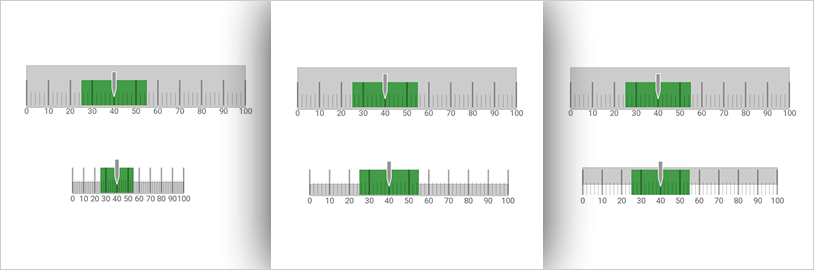
About my project

What is debci? Directly stating from the official docs:
The Debian continuous integration (debci) is an automated system that coordinates the execution of automated tests against packages in the Debian system.

Let s try decoding it: Debian is a huge system with thousands of packages and within these packages exist inter-package dependencies. So if any package is updated, it is important to test if that package is working correctly but it is equally important to test that all the packages which are dependent on this updated package are working correctly too. Debci is a platform serving this purpose of automated testing for the entire Debian archive whenever a new version of the package, or of any package in its dependency chain is available. It comes with a UI that lets developers easily run tests and see their results if they pass or not. For my GSoC project, I am working to implement some incremental improvements to debci making it easier to use and maintain.

Community Bonding Period

The debci community Everyone I have come across till now in the community is very nice. The debci community in itself is a small but active community. It really feels good to be a part of conversations here.

Weekly call set up I have two mentors for this project Antonio Terceiro and Paul Gevers and they have set up a weekly sync call with me in which I will share my updates regarding the work done in the past week, any issues I am facing, and discuss the work for next week. In addition to this, I can always contact them on IRC for any issue I am stuck in.

Work till now The first thing I did in the community bonding period is setting up this blog. I wanted to have one for a long time and this seems to be a really nice opportunity to start. And the fact this has been added to Planet Debian too makes me happier to write. I am still trying to get a hang of this and definitely need to learn how to spend less time writing it. I also worked on my already opened merge requests during this period and got them merged. Since I am already familiar with the codebase, so I started with my first deliverable a bit earlier before the official coding period begins which is migrating the logins to Salsa, Debian s Gitlab Instance. Currently, debci uses Debian SSO client certificates for logging in, but that is deprecated so it needs to be migrated to use Salsa as an identity provider. The OmniAuth library is being used to implement this with help of ruby-omniauth-gitlab strategy. I explored a great deal about integrating OmniAuth with our application and bumped into so many issues too when I began implementing that. Once I am done integrating the Salsa Authentication with debci, I am planning to write a separate tutorial on that which could be helpful to other people using OmniAuth with their application. With that, the community bonding period has ended on 7th June and the coding period officially begins and for now, I will be continuing working on my first deliverable. That s all for now. See you next time!

Next.

Previous.