Search Results: "mt"

23 January 2009

Robert McQueen: Auctions, Beards, Conferences and Devils

Tuz, coming soon to a Linux kernel near you
It s the last day of the most awesome linux.conf.au 2009 conference in Hobart, Tasmania. I ve just witnessed the a room full of 500 people sit with baited breath as Linus wielded a set of clippers to shave Bdale Garbee s beard, followed by Bdale (with a razor with 3 more blades than last time he shaved, a tiny bowl of water and a hand-mirror) trying to make it look neater. The LCA twitter feed was up on the projector, and someone rightly observed this whole event was actually pretty weird. There are already pictures on flickr too. However, well done to Bdale for being such a good sport, but it looks like his wife Karen will accompany him next year to make sure he doesn t agree to anything else like this, and supervise the waxing of Rusty s chest :) What s this all in aid of? After the incredible auction for this beautiful picture from Karen, and generous donations at the Penguin Dinner on Wednesday night, the conference has now raised between AU$ 35k and 40k towards the Save the Tasmanian Devil appeal. Around AU$ 1.3k of the nonsensical winning consortium s AU $10.6k bid came from the Collabora folks who were at the dinner, and AU$ 1.2k from Collabora and Collabora Multimedia directly. We were all set to place a winning AU$ 3k bid but then Matthew and Daniel came up with the Bdale shaving scheme, and then things really picked up. I m glad we took part - the lead scientist from the project was really grateful, and I hope the money can make a real difference to their great work.
Telepathy
On more mundane matters, I also gave my talk this morning, and my slides (Telepathy slides v2.0 thanks to Marco) are online. I also made a few demos of new awesome stuff you can do with Telepathy (most of the patches are already merged upstream or well on the way): On that note, these were just the five that I picked to try and fit into my talk. There are a load more demos in the pipeline from the other guys in Collabora of doing stuff with Telepathy, so keep a close look on Planet Collabora for the next cool thing.

20 January 2009

Jon Dowland: obama

Portrait of myself today, on the day the United States of America inaugurate their first black president. This post will probably be more valuable to me in years to come than anyone else right now, but never mind... I'm tired tonight. I mean physically tired, not mentally. Reading this back to myself if I just wrote "I'm tired" I'd assume mentally fatigued, as that seems to be my ground state. I'm suffering a mild cold but it's nothing serious. I'm unseasonably upbeat about work; for anyone looking forward, predictably but conciously disorganised, but improving. Tomorrow I have my annual review. I ate Quorn Korma tonight, one of my (very few) signature meals. I'm about to make the mistake of leaving the dishes until the morning. I'm in my third year occupying the NM queue and currently making a concious effort to get through it. On sunday I spent several hours on the effort; first, beating some of my packages into shape; then, looking at my outstanding questions. Tellingly I found the latter much more rewarding than the former. I'm also going through one of my seasonal "why do I do this" moments with Debian, perhaps not coincidentally whilst we are mired in a freeze for an overdue release. More on that in another post. I had a flat viewing this morning, one last night and another scheduled for thursday night. I'm living in "cosy" a one-bedroom flat with a nice view and terrible heating. I'm about to go to bed and pick up my current novel, "the Family Trade" by Charles Stross. As it's a fantasy novel, I can kid myself that I've broken out of the habit of reading Science Fiction novels (this after finishing Crichton's "State of Fear", an undeniably SF novel that sits in the mainstream literature shelves of just about every book shop). I shall probably write and publish book reviews for "State of Fear", "The Family Trade" and "Accelerando" (another Stross, thank you AJ) at some point.

19 January 2009

Gunnar Wolf: About the recent events and possible outcomes in Israel and Palestine

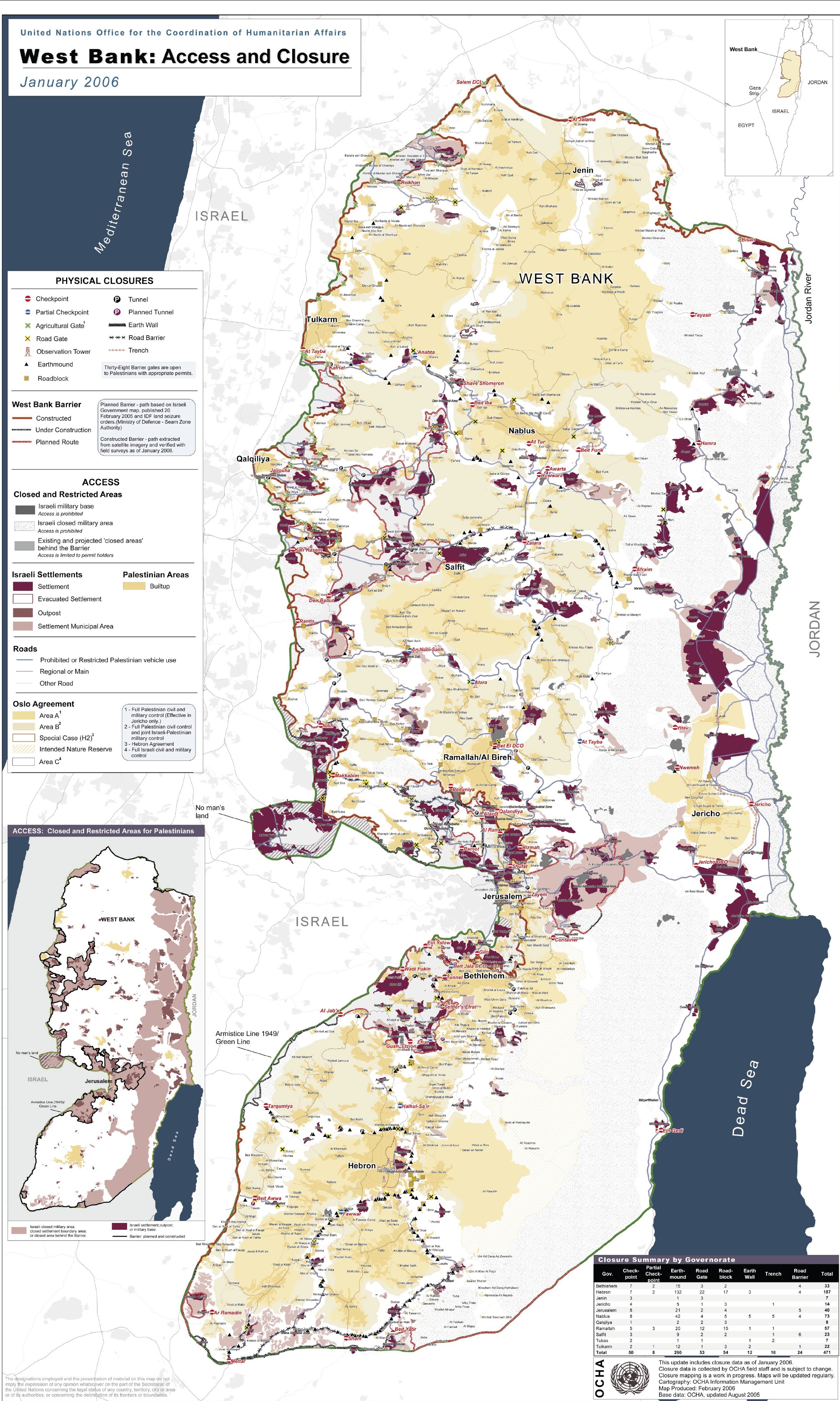
Several friends, from different groups and backgrounds and with different points of view regarding the current war in Israel (and regarding the Arab-Israeli conflict in general) have asked me for an explanation on what is happening there, what is (my view of) the real conflict, its causes... and any possible answers. And yet I am quite far from being an authority, I do want to write something about it. Be prepared, as this post is quite long.
And yet, after writing frankly a lot more than what I expected... It is by far not enough. I have still much more to add, but I have to say "stop" at some point. So, here you have it: My points of view, as well as some explanation on why are we standing where we currently are.
I am writing this based just on my personal experiencie and, of course, my personal point of view. Furthermore, I wrote a good part of this text while riding a bus, with no network access, so I am offering very few references - In any case, it will allow me to make much more progress. References always take as much time as the text itself! About me Why am I writing this? Why do people ask for my opinion? I must start by explaining who I am, so the rest of this makes sense. I am a Mexican Jew. That means, I was born in a Jewish (albeit secular) family, and grew up in an environment with general Jewish culture. My direct family (say, my parents and brother, and to a lesser degree my closest cousins) are not at all religious, I'd even venture to say most of us are complete atheists. Yet, besides the cultural belonging (which is a mixture of a Eastern European culture with lots of Idish words and dishes and general humor), my family has a strong national identification - In other words, I grew up in a fully Zionist environment, which traces back to Poland.
My grandmother was member of Hashomer Hatzair in Poland, since the early years of its existence, late 1910s and early 1920s. What is it? To make it short, a Zionist Socialist, Kibbutzian youth movement. It has many similarities (and somewhat stems indirectly from) the Scouts many of you will be familiar with, but -obviously- has a way lengthier agenda. And, yes, nowadays I feel it is somewhat out of reach with the current state of the world - It was founded in 1913, and only slightly adjusted its principles since then.
I will talk more about Hashomer later on.
My grandmother arrived in the late 1920s to Mexico, for familiar and economic reasons, but still dreamt about living in Israel for a long time. As they grew up, first my uncle joined Hashomer in Mexico in the late 1940s, when it still pursued a very much Soviet-style ideals for Israel (one of the core points that changed during the 1950s); both my father and my mother joined in the late 1950s (in fact, that's where they met). My cousins and myself were very active in the 1980s and 1990s.
The Iszaevich family has something very unusual, I'd say, engraved in our genes. We live very deeply our ideologies. That's the only explanation I can find to the way we all have led our lives. I won't go into the other family members' details, but just into mine: I was fully convinced of all we taught to our younger members and what we discussed among ourselves. I am among the very few people who really learnt Hebrew at my school, and that was only because I really cared - I know some people that just after 12 years of pseudo-learning could maybe utter a few phrases.
After finishing high school I went with my Hashomer group, together with people my age from other similar-minded Mexican Zionist youth groups, to live and learn for a year in Israel, on what is usually known as shnat hajshar - A year to get ready. To get ready to what? But of course, to come and give back go the younger groups of the movement, and finally go back to Israel and settle there definitively. I came back to Mexico, and after one year I did the only thing that was logical: I became an Israeli and went to live to a kibutz - Zikim, a beautiful place just between Ashkelon and Gaza, very near the sea shore. It was a beautiful period in my life, and I really enjoyed it - But it didn't last for very long - I quickly grew to hate the Israeli society at large. A society full of rage, of hatred. Not just between Arabs and Israelis, as many would think from the outside, but between religious and seculars. And between immigrants and locals. And between leftists and rightists (in several dimensions, as it is one of the countries where you can most easily be a economic leftist while being a political rightist - a complex society it is). A society full of disrespect and intolerance. A very hypocritical society. And one of the things that most shocked me: I wanted to live in a society of proud of its existence, that's what I had learnt Israel was - But Israelis aspire and dream of being anything else (and mostly US-Americans) in a way that made me sick, more than anything I had previously seen in Mexico.
I loved the life at the Kibutz, and I loved being an agricultor, doing hard work every day and literally getting the fruit of it. However, I cannot live isolated to a 300-people universe - At least once a week you have to go to the city if you don't want to become insane. And I could not stand the sick Israeli society.
Anyway, to make things short: After six months as an Israeli, I came back to Mexico. I went through a long period of finding myself, as I could not uphold anymore my Hashomer ideology (if I am not going to live by it, how can I continue teaching it?). Many people do anyway, but for the first months, where my Hashomer work was basically all of my life, I felt really uncomfortable. So, in short, I severed all of my relations to the Jewish community, and even denied for a long time my Jewishness until I found a (I think) better balance.
Today I am at peace. But anyway, I wanted to talk about myself in the critical period that marked me in this regard: The 1990s. Enough, lets get down to business. Zionism 1870-1920 Many people argue that the Jews invaded the Palestinians homeland - And yes, nowadays I cannot counter this. But we cannot judge what happened then based on what we see now.
Modern Zionism started around the 1870s. The Jewish history is full of pogroms and persecution, in different countries all over Europe - And a group of young people decided the only solution was to build a place to call their own. And yes, this was full of idealism and in no small part the foolishness of youth. For several centuries and up to 1920, all of current Middle East were provinces of the Ottoman Empire. Before Zionism began, the population of today-Israel was very sparse, not more than 400,000 people - up to 5% of them Jewish, around 10% Christian Arabs, and the remainder, Muslim Arabs. Of course, the low population was mostly because the country was mostly hostile - A desert in the South, mostly swamps in the North, and some minor towns mostly in the hills. It was a mostly forgotten province, away from the central Turkish rule, and there had been no frictions with the local population. It was a nice place to go, thinking -again- as a fool youngster, or as an idealist. They said, lets take a folk without a land to a land without a folk.
The number of accomplishing Zionists (this is, people who actually went to Israel instead of just talking about doing so) was not high during the first decades. But towards the 1890s, it gained critical mass. The political Zionist movement was born, with Theodor Herzl as a leader, and they started pushing -politically- for different governments to concede a territory to Jews. They went to the Turks, and didn't really get much echo. Went to other colonial powers of the time, and got unfeasible promises with no real backing (i.e. Birobidjan in Eastern Russia, Uganda in Africa)... And, as it happens in strongly ideologized movements, the movement started splitting into different groups with slightly different positions.
And no, I am not talking about the People Front for the Liberation of Judea and the People Judean Liberation Front, but I very well could. Sometimes the differences are as ridiculous as that. But hey, I take that most of my readers are acquinted with the Free Software issues, right? Think BSD vs. GPL vs. OpenSource. To give a broad idea - Only in Mexico City, with a very small Jewish community (~30,000 people), in the mid-1990s we had over 10 such movements, with 50-150 youngsters attending each. And even though some were local, and even though some very important ideologies are not represented in this country, they are all different enough to exist as separate entities. British Mandate The Ottoman empire was divided after the first World War. Its possesions in Europe became independent states, while in Asia (and Africa, if you take the semi-independent Egypt and part of Sudan into account) they were taken over as colonies or protectorates by France and the UK - Evidently, attempting to secure a long-term dominion over the area. In some aspects, they failed. In some aspects, they were (and still are) tremendously successful. The division of people by setting arbitrary boundaries has led to countries sustainable only by force and a harsh rule (such as Iraq, Lebanon and Syria), or doomed to poverty (and thus submission) due to lack of natural resources (as Jordan). Focusing on Israel/Palestine, the UK entered the area by making mutually incompatible promises to arabs and Jews - i.e. the Hussein-McMahon letters and the Balfour declaration, both ambiguous enough to lead to... Well, today. The UK rule was disastrous to the region, both in giving (and taking away) power from all sorts of puppet regimes, and swiftly going away as soon as things started looking too complicated. Yes, typical colonialism.
So, while up to the 1920s there was no real animosity between Arabs and Jews (as i.e. the Faisal-Weizmann agreement shows), during the next decades the seeds of hatred started growing, from both sides.
Many people still quote the 1947 partition plan as the direct antecedent towards Israel's real existence - That was not the first partition plan that existed. Ten years earlier, the Peel commision suggested a similar partition involving forceful population transfer. And many people see the separation of Transjordan (now Jordan) from Palestine in 1922 as a first partition. It is understandable that both partition plans (much more the 1947 than the 1937 one) were accepted by Zionists: Going from having nothing to having something (and against all odds in the environment they lived) is acceptable.
From the Zionist side, two main groups rejected the partitions: The right-wing and religious groups, insisting that the whole of the Mandate should become Israel, and the left-wing groups, which advocated for a single, bi-national state, with equal rights for all of its population. Go over and read this last link, as it was quite interesting (to me at least) to see how this solution has kept existing and regarded by (relatively) many people, and has many interesting links. 1948 onwards: Where did the refugees come from? The November 1947 partition didn't exactly translate to a planned, smooth Israeli independence - It led to six months of revolts (basically, a civil war). By mid May, the UK government and troops abandoned the territory, and one day later, Israel declared its independence. And, of course, all neighbouring countries (and Iraq) sent their troops to invade Israel. The war lasted for over six months (cease-fire was signed in January 1949). There was an intense Arab campaign indicating the armies would enter Israel and devastate it, leaving no stone in place, indicating Arab population to temporarily leave the Jewish-destined areas. The war, they said, would not take more than a couple of months, and they would be able to go back home.
Only that... When the war ended, the results were far from what the Arab governments expected. Not only Israel continued to exist, but it conquered important territories.
Of course, the Israelis were not innocent from said exodus: During the 1947-1948 civil war, and the independence war, some of the existing so-called self-defense forces (some of them were really defensive, while some were quite aggressive, even terrorist) attacked Arab villages in strategic or predominantly Jewish areas to prompt them to leave - yes, what we today call ethnic cleansing.
I had (in my head) the number of 650,000 Arabs (from a total of slightly over a million) fleeing to neighbouring countries. Wikipedia states that it is somewhere between 367,000 and 950,000. A similar number of Jews were expelled from Arab countries, many of which arrived to settle at Israel (and many others went elsewhere - For instance, a good part of the Mexican Jewish community is from Syrian origins - Many of them fleed in those years). Israel didn't accept back the (relatively few) Arabs that requested to resettle, as they were seen as hostile population - but neither did the countries that "temporarily" accepted the Palestinians accepted them as citizens. The Palestinian refugee camps today, mainly in in Lebanon, Syria, and the occupied territories held by Israel have terrible living conditions, and its population -despite living there for over 60 years- have no civil rights at all. Note that I'm omitting Jordan here, although it has several camps as well, as their situation is way better.
The Arab population that didn't leave did receive full Israeli citizenship. No, their living standards are not up to level with the average Israeli. The country and the society do have a sensible degree of racism and segregation. But the situation is nowhere as terrible as it is in the camps.
The areas which were originally to become Palestinian and were not conquered by Israel -this is, current-day West Bank and Gaza- bacame respectively Jordan and Egyptian territory. While Jordan did fully extend its soverignty covering the West Bank, Egypt didn't - Gaza is, since 1949, occupied military territory. Gaza, among the most densely populated areas in the world, has had their inhabitants under military rule ever since. When Israel returned the Sinai after signing the peace treaty with President Sadat, Egypt didn't accept Gaza back - And that's where today's greatest problem is born.
Now, Israel conquered those territories in 1967, along with the very sparsely populated Sinai and Golan. For the first ten years, the territories were basically only administered (yes, under a military rule). In 1977, with the first right-wing Israeli government, an extensive settlement policy began (and led partly to today's seemingly unsolvable situation). In 1980-1982, Israel withdrew from the Sinai. In 1981, Israel claimed full soverignty over the whole of Jerusalem and the Golan. In 1993, the "Oslo Agreement" was signed between Israel and the PLO, and it seemed we were heading towards a bright future. I lived in Israel between 1994 and 1996 - Yes, the most hope-filled period in the country's life.
Since 1996, I have tried to keep up to date with the country's evolution. All in all, even if I won't live there again, it is a country I learnt to love, a society I have long studied (even if in the end I did include many references, I wrote most of this text just off the top of my head, with the data I remember - so it might have several big errata). And yes, I keep the political stand I had 12 years ago: The only solution is to dialogue, to treat the current enemies -and not only their governments- with respect, recognizing their dignity and right to life, to self-determination. Only then we will change the status quo. How not to fight hatred Since 1993, the dream of peaceful coexistence seems to have faded. What we saw during the past three weeks, along to what we saw in Lebanon in 2006, is plainly a gross mistake if the goal is to achieve good, lasting peace.
Try to imagine how could life in Gaza be, even in the total absence of Israeli attacks. Just to set some numbers first: The Gaza strip hosts almost 1.5 million people on 360 km . When I lived in Israel, I was constantly surprised at how small a country it is - Israel tops at 550Km North to South, 150Km east to West (it is amazing, almost wherever you stand, except in the middle of the Negev, you can see the country's borders. Yes, I recognize as the border the so-called Green Line); over half of the territory is a desert, and it hosts seven million inhabitants. And it is hard to imagine how that country can be economically viable.
I do not find it feasible to imagine Gaza and the West Bank integrating a single country, and not only because they are separated by ~40Km, but because they are so sociologically different. People in the West Bank, yes, live opressed under military rule and subject to a much more constant, more visible apartheid-like state (as the territory is truly sprinkled with Jewish outposts which many Israelis refuse to recognize as their own, but still, which have incredibly higher living standards). The best land has been taken away from them, yes, but they have some space between cities to have some farming, to communicate, to... Breathe. Besides, West Bank inhabitants -even those in refugee camps- have much better living standards than anybody in Gaza. It is still an overpopulated area, but not nearly as much as Gaza.
Gazan population have been driven towards extremism. And yes, there was a civil war between Palestinian factions, as the world views between both populations are completely different - However hostile a Jenin inhabitant can be towards Israel, he does not lead the life -if it can so be called- you see at Khan Yunis.
But back to Gaza... What Israel is doing (and not only during this military operation terror campaign is wrong, from any rational point of view. Israel wants Hamas to become weaker? Then don't drive the population into supporting them!
Palestinians started giving over 50% of their support to Fatah (ex-PLO), and under 20% to Hamas. That was less than 15 years ago. However, Fatah has shown to be corrupt and inefficient at building infrastructure and improving life conditions, ineffective at negotiating a permanent agreement which secures dignity and sustainability to their people. Hamas stands as a religious, righteous organization. There are no serious corruption charges against any Hamas leaders. Hamas is clearly still at war - They didn't subscribe any peace agreement so far, and their stated #1 goal is to build a Muslim State in the whole of Israel. And the Hamas movement -like Hizbollah in Lebanon- has built quite a bit of infrastructure in the areas they control - Mainly housing. Yes, housing where they mix their own offices, many will accuse, getting human shields for free. But still, they are benefactors to a dehumanized, pauperized population.
I find it obvious that, if living conditions were at a basic level in the region, support of Hamas would decrease. Even more, of course, if they improved due to Israeli support. Israel controls this territory, so it is responsible for the well-being of its population, like it or not. And Gaza is simply too small and low on resources to survive by itself.
I was a bit surprised to find mention -although very brief- of a three state solution - And yes, this is close to what I would expect as a viable outcome. It is clear that Israel will not ever grant full citizenship to the Palestinians, as they would -euphemistically speaking- challenge the Jewish character of the State. Dropping the euphemism, Israel relies on apartheid in order not to become an Arab majority country. I might have some numbers wrong, but AFAIK, there are ~7 million Israelis, 20% of which are Arab citizens (which means, 1.4 million Arabs and probably 5 million Jews, with many other minor denominations for the difference), and ~4 million Palestinians live in the territories. Today, the country is already predominantly Arab, or at least is close to being so. So, Israel should permanently, formally disengage from all of the occupied territories. And in order to ensure violence stops, start a comprehensive, unconditional, long-term aid program. Start with giving them autonomy to regain their sea, as the Gaza port has long been closed. Allow the airport to operate again. Instead of bombing tunnels in the Egypt-Gaza borders, allow Gaza to trade with Egypt - Perhaps even to integrate territorialy, if the conditions are met. Treat their people with respect, and help them ease the terrible situation they have lived for so many decades - and then, undoubtely, terror will stop.
The West Bank? Possibly it could become a Palestinian state by itself. Possibly, it could integrate back to Jordan. That would be up to Jordans and Palestinians to decide. Of course, Jordan has already a large segment of its population defining itself as Palestinians, which counts both for and against. So, I won't venture into this supposition.
But anyway - Back to what prompted me to write this text -yes, a very or maybe even too long text - I hope somebody even takes the time to read it!- is to explain what is my point of view on the current situation, and why.
Today, a cease-fire was announced, after 23 days of murder and destruction. I sadly do not hold very high hopes for it to be lasting, much the less to be enough, to lead to what they call a de-escalation of the conflict. The most I can currently do is to voice my opinion, and hope that mine is just one more voice pointing to a sane solution, to a permanent, dignifying way out, for all people involved. Every people has the right for survival and for safety. We cannot deny this to any others. And certainly, we cannot expect anybody not to fight for their right to live.


15 January 2009

Jon Dowland: autoindex flood

Oops, ikiwiki's autoindex plugin generated pages in places that got picked up in my weblog feed. Sorry for the noise.

Jon Dowland: email

Jon Dowland: art

Jon Dowland: x40

Jon Dowland: misc

Julien Blache: Antec PSU suck

How not to start your day, from the all-hardware-sucks department. For years, I ve been struggling to keep my machines quiet. I ve miserably failed for years, and pretty much gave up once I realised that the quiet parts I was looking for just did not exist. Last year, I finally found what I was looking for: I ve been very happy with this hardware for both my workstation and my filer. Well, until today. No need to mention that this hardware is not exactly cheap, but the price is right for the quality. So, wake up today, do random things, grab my TomTom, unplug it from the workstation it s sucking its power from, do things, plug it back in the USB port so it won t draw its battery. This is how it went: Check machine temp, PSU temp, attempt to restart PSU, check UPS, check cables, replace power cable and bypass UPS. Admit defeat for this round and accept the PSU as dead. Pull out the machine, rip out the fscking damn PSU. Grab the tools, crack the PSU open. Notice bulging and leaking capacitors. Yes, this PSU is anything but cheap, yet it uses el-cheapo chinese capacitors. Antec, you suck, big time. For the past decade everybody in the industry has known that el-cheapo chinese capacitors manufactured after 1999 are total crap, using an electrolyte that isn t actually one because its formula was stolen by industrial spies who got totally PWNED and ended up stealing a bad formula. (If you need a reference, google for singing capacitors . Note that singing capacitors can also happen with good parts used in a crappy electronic design. Like that 100 Mbps D-Link switch over there, or that Sony-Ericsson mobile phone charger. Hmm. Not everybody can hear it, I do.) A healthy, young capacitor should not bulge nor leak. A capacitor that leaks, bulges or sings is a crappy capacitor and needs to be replaced with a quality part ASAP. I ve been routinely replacing such capacitors on my older motherboards (manufactured between 1999 and 2001) in the past years. I ve not had the problem in ANY of my el-cheapo PSU, and did not replace any capacitor in any of them to date. Fortunately, the machine did not suffer any further damage, nor did the TomTom. Everything is up and running again with a spare PSU. I m now going to replace the fscking capacitors on this PSU, replace the fuse, probably R&R a couple of high-voltage transistors too (they have a tendency to fry before the fuse blows out) and get it back up and running. Then I ll do the same with the other PSU in the filer, because that machine has 8 disks attached, so draws more power and hence is much more vulnerable. Fuck you Antec.
Jon Dowland: photography

Russell Coker: Old PDA vs New Mobile Phone for PDA use

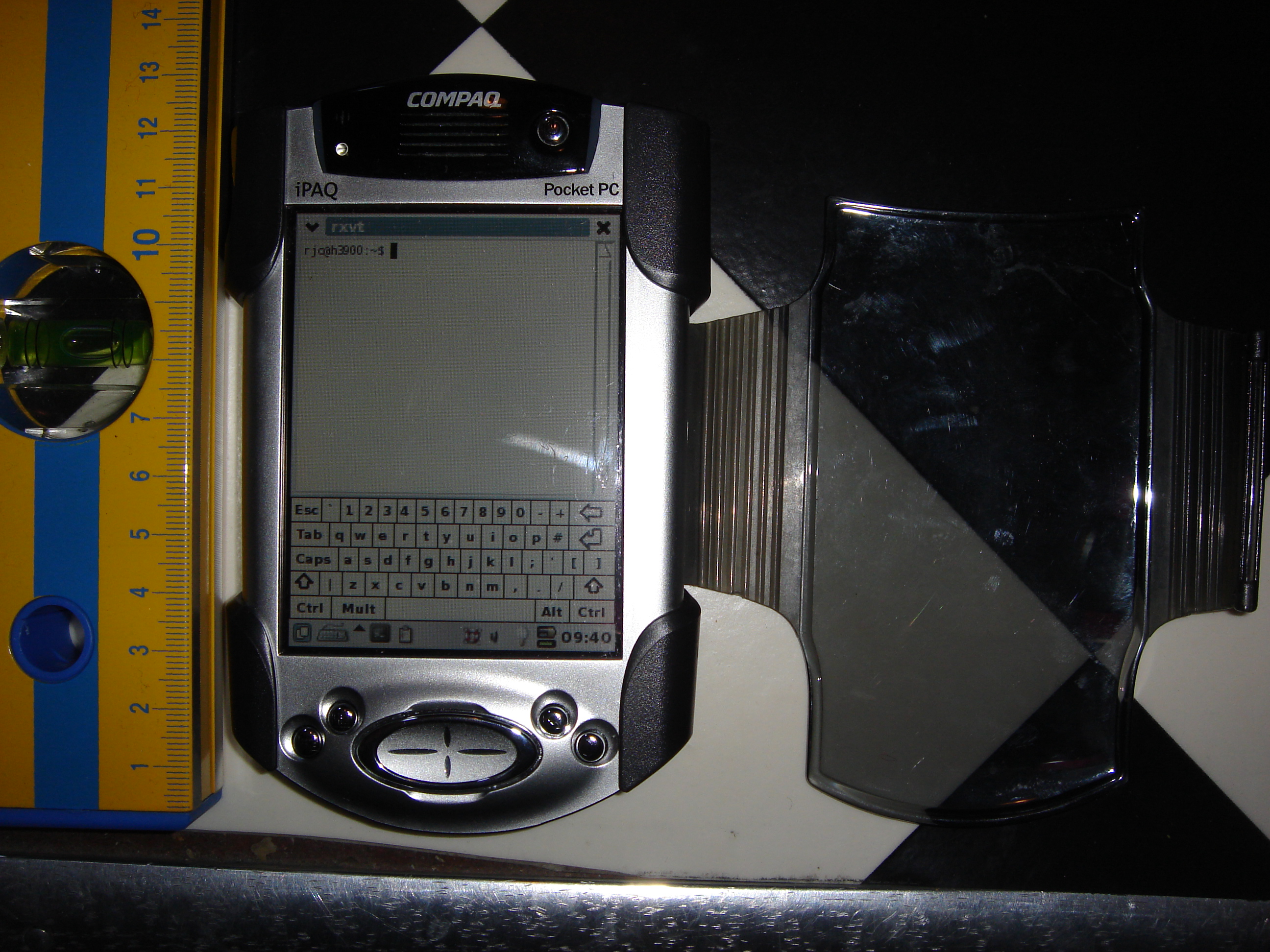
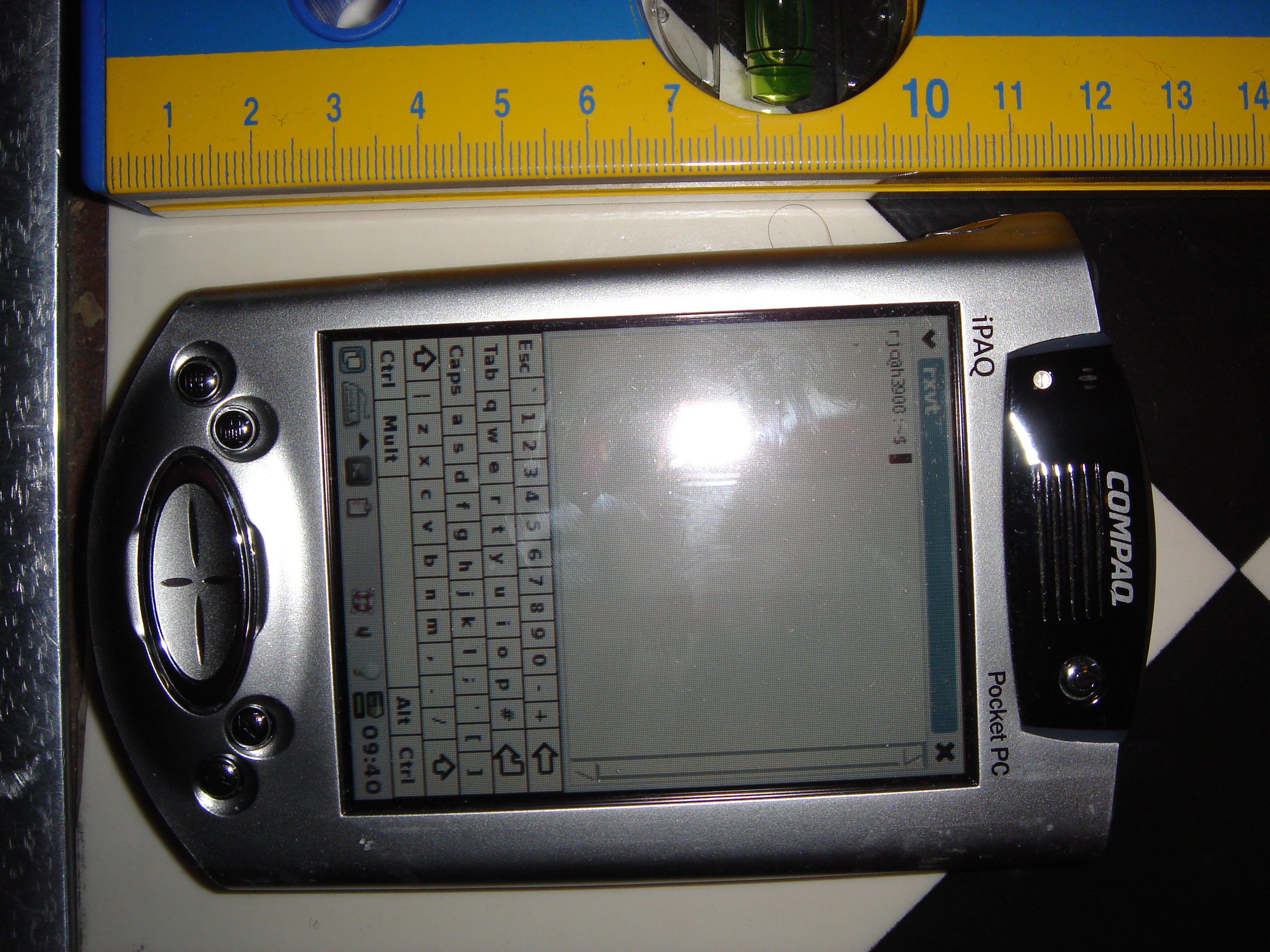
Since about 2002 I have been using a iPaQ [1] for taking notes while on the move. I have a pair of H3950 iPaQs that were given to me for the purpose of some software development work. As modern mobile phones have telephony as a small part of their feature set I think it s worth comparing a 2002 iPaQ with a 2009 mobile phone in terms of the note taking functionality. I have just got myself an LG U990 Viewty mobile phone [2]. It has a screen resolution of 240*320 which is the highest resolution that is remotely common for a mobile phone - and the same resolution as my 2002 model iPaQ. The LG KC910 Renoir has a resolution of 240*400 and seems to be the only phone that my carrier provides which has a higher resolution. The iPhone [3] has a resolution of 480*320. So it seems that the most expensive modern mobile phone that is available in Australia has a screen resolution that is only twice that of a 2002 PDA. I believe that in Japan you could buy a PDA with a higher resolution than 240*320 in 2002. My iPaQ is running Linux, so I can do whatever I want with it. I have a bar at the bottom of the screen with icons to launch, I configure it with the programs that I need most often and they are always one click away. While with my mobile phone I always have two large icons for paid services from my telco and I can t add icons for the things that I want. My iPaQ has a virtual keyboard that can be displayed in portrait or landscape mode. The above pictures show it in the portrait mode which allows the greatest area of screen space for text. The landscape mode is good for entering long lines of text even though the total number of words that can be displayed on screen is smaller. The size of my iPaQ is 134mm in height, between 77 and 84mm in width (it tapers) and 15.9mm thick without it s protective sleeve. The protective sleeve (shown in the second picture) adds about another 5mm to the width and thickness. My iPaQ is 1.76* the volume of my Viewty phone and at 184g vs 112g is 1.64* the mass. With it s sleeve on it is about 2.4* the volume. It s larger but with the sleeve it s a lot more solid, a touch-screen is very fragile so putting a touch-screen device in your back pocket without a sleeve is not a viable option. So I now own a mobile phone that has more storage, RAM, and CPU power than my iPaQ, but is less useful for the basic task of writing small documents and seems to have no facility for drawing diagrams. Most recent mobile phones have the ability to record voice (my Viewty can store 34 hours on it s internal storage and supports mini-SD cards for extra storage). But my Viewty lacks the ability to pause voice recording so if I wanted a series of notes during a meeting I would get a series of short voice recordings rather than a single file with many items. The todo list is also fairly poor in the Viewty, so even disregarding the poor keyboard on the touch-screen it would compare badly to the iPaQ. So it seems that an iPaQ that is almost seven years old when running Linux and the GPE Palmtop Environment [4] with with default configuration handily beats one of the latest and greatest mobile phones for all areas of common functionality. If the Viewty had it s source code available I would be tempted to contribute some patches (even if it was not free software). Finally, before someone suggests an Android [5], Greenphone [6] or other phone that s relatively open and programmable, I wanted a phone that had a good camera (by phone standards) and came essentially for free on an affordable contract. Maybe in two years time (when my current contract ends) there will be such a phone on offer. Mobile phones aren t THAT important to me, so while I would like to encourage the development of open telephony platforms it s a much lower priority than about a dozen free software projects. I expect that in the future something like an Android will become a great mobile phone with great PDA functionality. But for the moment I ll use an iPaQ and a Viewty.

14 January 2009

Jon Dowland: sysadvent

Someone has performed a month of sysadmin blogging over at http://sysadvent.blogspot.com/: some good stuff in there. In particular, I found Day 2 - Windows Powershell interesting (hotwire is an example of something similar in the UNIX world) and Day 24 - Message Brokers is relevant for me as we're looking at implementing some message queueing stuff at work.

Kees Cook: ETOOMANYCERTS

After upgrading an Ubuntu mail server from Hardy to Intrepid, two users could no longer connect via SSL to send email though sendmail. One was using msmtp and the other was using Outlook Express. The msmtp issue was tracked down as a supposed deficiency in msmtp. However, this left Outlook, which is neigh-impossible to debug. From the Debian msmtp bug linked from the Ubuntu bug, it seemed that the root cause was the server sending too much data during the initial connection. Packet captures of an Outlook connection seemed to back this up: Outlook negotiated STARTTLS fine, and then just never responded to the SSL handshake. It seems that something (openssl? sendmail?) changed between Hardy and Intrepid so that instead of using the /etc/ssl/certs/ca-certificates.crt file just for verification, its contents were now being sent during the SSL handshake. (I reduced the number of configured certs with sudo dpkg-reconfigure ca-certificates , and checked on the size of the handshake with openssl s_client -connect server:port wc -l .) It spewed 143 certs sent at every connection. Unsurprisingly, it seems some clients were choking on it (I would like to note that Thunderbird behaved correctly). In the end, I configured my CAfile to aim at just a single CA (the CA used to sign the server s SSL key), and that fixed both msmtp and Outlook. How fun.

10 January 2009

Daniel Burrows: New hackergotchi

For the last several years, I have been represented on Planet Debian by this hackergotchi: My old hackergotchi There are a couple problems with this gotchi: To solve all three of these problems, I dug around in my image archives to find a recent picture of myself. This was harder than you might think since I'm usually the one holding the camera, but I finally turned up this image: Me at Mt. Rainier I spent an hour fiddling in the Gimp to create myself a new hackergotchi, and voila! I present my new hackergotchi: My new hackergotchi

9 January 2009

James Morrison: Grand Canyon for new years

Sarah came up a great idea for us to do over the long, long weekend after New Years. She wanted to go to the Grand Canyon, and hike in it. I, also enjoying hiking trips, went along.

We organized the trip rather late, I think on the 27th of Dec from my parents house (I think my mom enjoys being around for trip planning since it reminds her of the trips she should plan). Given our late planning we could only get a reservation at Phantom Ranch for the night of the 1st. So the trip plan was get back to SF on 30 Dec 2008. Take bart from the airport, sleep/pack (in either order), then drive to Williams, AZ on the 31st. Take a bus the to Grand Canyon on the 1st, hike down to Phantom Ranch, sleep, hike back up to the top, see the Grand Canyon from the top. Take a bus back to Williams and drive somewhere near the Hoover Dam. Sleep. Drive, see the Hoover Dam, get to Las Vegas, and see the Cirque du Soleil show Ka. Sleep. Drive home.

So that was the plan, now for the execution. We got back to SF on time and picked up our bags from the baggage claim without any issue. The next morning we got up and moving. The optimistic hope was that we would be on the road by 8am to Williams, then stop in Fresno for gear and food. It turns out we weren't ready to go until 10, so we got hiking poles and fake crampons at the REI in SF. We also did our grocery shopping in SF. We were on the road to Williams by noon. We shared the driving Sarah took the parts with traffic, I took the 4 and two lane highways. The fortunate part about this is that I drove through the San Joaquin. One the way there, it was basically IFR conditions (I had no instruments), so I was driving through a cloud (some call it fog) and I couldn't see anything that wasn't on the road. It was really pretty but not the best for a road with lots of ups, downs and turns. I felt like a race car driver. The other interesting part (at least while I was driving) was going through the Mojave desert at sundown. I don't think Sarah has any pictures, but it was very pretty.

Finally we arrived in Williams, AZ and got to the Grand Canyon Railway Hotel, at 2345hrs, (for those counting that means we were on the road for 10h 45m). We checked in by 2358hrs on 31 Dec 2008. So we stood by the fire for two minutes, counted down, and kissed for New Years.

In the morning, things went as expected, we backed our bags to hike 10 miles, and put the rest of the stuff in the car. We got in a van that took us to the Grand Canyon. Our driver up to the Grand Canyon was very nice and showed us the sites along the way. We also met two Japanese exchange students on their way to see the Grand Canyon.

On the way was slow since we took a lot of pictures (Sarah has them all since I lots my 1GB SD card before it made its way into my camera). Unfortunatly, Sarah got tired on the way down, and also hurt her ankle. So we stumbled our way to Phantom Ranch around 1600. From the time we got to the ranch until supper at 1830, we laid back and relaxed, we needed it, our feed were sore and Sarah iced her ankle. The food at Phantom Ranch was good, not great, and there was enough of it after being on our feet all day. At end end of the day, we slept, as planned. In the morning we got up for the early breakfast. Again, it was decently, but not great, but there was enough food. Unfortunatly, Sarah was sick (She'd figured out how to deal with her ankle though) (Oh, and she isn't pregnant). So we harrassed the rangers, got some imodium, and started on our way back up the Bright Angel Trail, we took the Bright Angel Trail down and were planning on the South Kaibab trail up but the Bright Angel Trail has places to stop the South kaibab trail doesn't. Again were were planning on an early 630hrs start, but started a little later at 745hrs. We used our poles with gusto on the way back up and made it up by 1345, 6hrs on the way back up, the same time it took us to get down. The rest of the daylight hours was spent taking the village bus around the Grand Canyon village and seeing the sights from the top.

After the Grand Canyon, we drove to Kingman, stayed there, then continued on, saw the Hoover Dam, it is like Itaipu, but less political and taller, then went on to vegas. In Vegas we saw the inside of a couple hotels, I spent $1 on a slot machine, then we say Ka. Ka is an amazing show, I don't think it really suck in until after the show was over all the things the performers pulled off. That said, the stage itself was an engineering marvel that I watched almost as much as the performers.

After Vegas, the drive back was mostly uneventful, the fog in San Joaquin was a little lighter, but still heavy, Mojave is prettier at sunset and it is still good to sleep in my own bed.

6 January 2009

Andrew Pollock: [tech] On trying to use a Sansa e260 on Linux

I received a SanDisk Sansa e260 (v2) for my birthday. It was one of those presents that acquired for myself on behalf of someone else because it worked out easier that way. I bought it for cheap from Woot! I thought I'd use it to play podcasts while I'm at the gym. We've been listening to NPR for a while now, and there's lots of excellent programming, and it's all available in download for as well. Since I don't spend all that much time in the car, I'm not listening to much of it. The first mission was to upgrade the firmware. Getting the player into MSC (instead of MTP) mode with the original firmware was a little tricky, but I got there in the end. Then I had to locate the firmware in a Linux-installable format. I think I ended up resorted to using Windows, but I later found the raw firmware image without needing an installer. I'm using Rhythmbox at the moment to download the podcasts. I thought I'd try out its MTP support, just because it actually had it, but either Linux 2.6.26 has a problem with MTP, or the player is particularly flaky doing it with Linux, because I just seemed to get a pile of USB errors when connecting the device in this mode, so I'm sticking with MSC for now. Oh, and I had to put a .is_audio_player file in the root of the device to make it show up in Rhythmbox. I later discovered that it worked most optimally if I put
audio_folders=MUSIC/
folder_depth=2
in the file. I'm still trying to come up with an optimal way of managing the audio I want to listen to. It seems somewhat tedious to drag and drop all of the podcasts from Rhythmbox to the device. I kind of want some sort of plug and play auto-sync method. It seems I can't use a connection-triggered rsync, because some of the podcasts seem to get downloaded with non-FAT-filesystem-friendly filenames. Rhythmbox seems to take care of this by doing some sort of automagical renaming at transfer time. That said, not everything is showing up in the music list with sane names. There's a few things that have an unknown artist I think. That may be a deficiency in the ID3 tags of the MP3s themselves though... What I really want some way of getting home, hooking up the player and just getting what's new, without expending too much effort (at the time of hooking up the player, anyway. I'm happy to expend some effort getting to that point) The next weird thing is that the device wants to talk USB 1.1. I'm not sure what is at fault here, but I can, allegedly at least, make the device reconnect at USB 2.0 by removing and reloading the ehci-hcd module after connecting it. Here we have the device initially attached:
apollock@icarus:~$ lsusb -t
Bus#  5
 -Dev#   1 Vendor 0x1d6b Product 0x0002
Bus#  4
 -Dev#   1 Vendor 0x1d6b Product 0x0001
Bus#  3
 -Dev#   1 Vendor 0x1d6b Product 0x0001
   -Dev#   9 Vendor 0x0781 Product 0x7423
Bus#  2
 -Dev#   1 Vendor 0x1d6b Product 0x0001
   -Dev#   6 Vendor 0x413c Product 0x8103
Bus#  1
 -Dev#   1 Vendor 0x1d6b Product 0x0001
lsusb says that bus #3 is ID 1d6b:0001 Linux Foundation 1.1 root hub Then if I do a spot of presto-changeo...
apollock@icarus:~$ sudo modprobe -r ehci-hcd
apollock@icarus:~$ sudo modprobe ehci-hcd
apollock@icarus:~$ lsusb -t
Bus#  5
 -Dev#   1 Vendor 0x1d6b Product 0x0002
   -Dev#   3 Vendor 0x0781 Product 0x7423
Bus#  4
 -Dev#   1 Vendor 0x1d6b Product 0x0001
Bus#  3
 -Dev#   1 Vendor 0x1d6b Product 0x0001
Bus#  2
 -Dev#   1 Vendor 0x1d6b Product 0x0001
   -Dev#   7 Vendor 0x413c Product 0x8103
Bus#  1
 -Dev#   1 Vendor 0x1d6b Product 0x0001
Bam! It's moved over to bus #5, which lsusb says is 1d6b:0002 Linux Foundation 2.0 root hub Weird. I wonder if I should try running Rockbox on it? Seems not, it's only for v1 players. Oh well.

David Moreno: Returning an specific HTTP status/return code and content with mod_perl 2

Making a simple PerlResponseHandler that does something like this:
sub handler  
    my($r) = shift;
    $r->content_type("text/plain");
    $r->print("You suck.\n");
    return Apache2::Const::HTTP_BAD_REQUEST;
 
doesn t make what you d be expecting. This is because mod_perl assumes, since you are specifying content type and something to print, that this is a legit and valid (200-ish) request. This is what you get:

POST http://myserver/resource --> 200 OK
Connection: close
Date: Mon, 05 Jan 2009 23:02:57 GMT
Content-Type: text/plain; charset=UTF-8
Client-Date: Mon, 05 Jan 2009 23:03:00 GMT
Client-Response-Num: 1
Client-Transfer-Encoding: chunked
[ some headers snipped ]
You suck.
<!DOCTYPE HTML PUBLIC "-//IETF//DTD HTML 2.0//EN">
<html><head>
<title>200 OK<</title>
</head><body>
<h1>OK</h1>
<p>Your browser sent a request that this server could not understand.<br />
</p>
</body></html>
So, yes, I was expecting to return a 400 Bad Request return with just You suck on the response body. mod_perl disagrees, which, kind of sucks if you are trying to make a RESTful service with mod_perl HTTP handlers and filters. To avoid this behaviour, this is one way to go:
sub handler  
    my($r) = shift;
    $r->status(400); # or the one you are interested in
    $r->content_type("text/plain");
    $r->print("You suck.");
    return Apache2::Const::OK;
 
You can also take a look at status_line that overrides status. You can also avoid the content_type method call if you are sloth enough. Now, this is what you get:

GET https://myserver/resource --> 400 Bad Request
Connection: close
Date: Mon, 05 Jan 2009 23:27:08 GMT
Content-Type: text/plain; charset=UTF-8
Client-Date: Mon, 05 Jan 2009 23:27:10 GMT
Client-Peer: 209.234.249.38:443
Client-Response-Num: 1
[ some headers snipped :) ]
You suck.
And so, beer awaits.

2 January 2009

Ingo Juergensmann: Happy New Year - Frohes Neues Jahr

To all of my readers: I wish you a happy new year 2009!
Being late with new years greetings, because of family reasons like visiting, eating and such, I hope these images will compensate you:

Warnem nde - Leuchtturm in Flammen


More images can be found in my Gallery.


Auch meinen deutschsprachigen Lesern w nsche ich alles Gute und ein sch nes neues Jahr 2009!

Leuchtturm in Flammen 2009
Warnem nder Leuchtturm


Das gestrige Ereignes "Leuchtturm in Flammen" in Warnem nde war wieder sehr gut besucht. Nicht nur die Promenade war mehr als voll, sondern auch der Strand. Wir standen in H he des Kurhause am Strand, was vielleicht 100-200m zu weit weg f r mein Nikkor 18-105mm 1:3.5-5.6G ED Objektiv war, aber es gab ja trotzdem ganz gute Bilder.

Nach Beendigung der Veranstaltung str mten die Menschenmassen jedenfalls wieder zu ihren Autos, was in einem sch nem Verkehrschaos endete. Auf der Parkstra e ging es sicherlich fast eine Stunde nur in beiden Seiten mit Stop and Go voran. Auch die Nutzer von ffentlichen Verkehrsmitteln hatten wenig Freude daran, da der Bus ja genauso im Stau stand wie all die anderen Autos.

31 December 2008

Jon Dowland: the matrix

I've been testing some TVs recently: checking out things like upscaling, invented-frame injection (Samsung call this "Movie Plus" on some sets; other people call it '100hz') and suchlike. In order to compare various ways of playing films, I sat and watched the Matrix. I forgot how good this film is. Some aspects of it are quite dated, such as the mobile phones: I remember thinking that the auto slide-down keypad covers looks great; now the bulky handsets with the exposed aerials look almost as silly as the 1980s-style phones on display in Ashes to Ashes or Miami Vice. Having said that, it will be 10 years old in March 2009! I don't rate any of the sequels at all (except bits of the Animatrix), but the first one is worth a re-watch (and if you haven't seen it yet, seek it out)

28 December 2008

Joachim Breitner: MuMer relaunch preview online

A few years ago, I had some ideas about a real-world trading game. In short, a combination of the game play of Settlers of Catan , the cute pseudo-medieval world of The Settlers (the computer game), which you can play in your every day live along, without having to sit in front of the computer for a long time. I then started some code, lost motivation and let it sit there for a while.Recently, I re-developed interest in the idea and started from scratch, using Haskell and HAppS. To avoid losing interest again, I m now putting the code online and set up the server. I invite everyone to play around with it, maybe have a look at the code, send me patches or comments. As you can see, the web user interface is plain ugly HTML and could need some love. Some CSS is definitely needed, some AJAX would be nice. Also, the resource tree is very small at the moment there are a lot of things to work on, even if you don t want to touch Haskell!You can register at http://mumer.net/. You will be either given a forest (a source for wood) or a source of stone. You can reap your source, and trade on the Free Market , which is where you can always trade online, at bad prices. The idea is that you find real trade partners, to get better prices.For now, trading without physical contact is possible. You can create so-called issue ids, which represent stips of paper. You can then load resources on them, and give the paper (i.e. the number) to other players, who can then redeem them. Eventually, it is planned that these pieces of paper are provided centrally and (sufficiently) unforgeable, so that it is clear who owns a resource.You can also bid on certain stuff, such as a sawmil, which allows you to turn wood into boards. It will regularily be re-leased to the highest bidder.You can get the code (in a darcs repository) from http://darcs.nomeata.de/mumer2 and also browse the code.If you happen to be at the CCC right now and would like to talk about it, please do so!

Next.

Previous.