Search Results: "ms"

29 May 2023

Shirish Agarwal: Pearls of Luthra, Dahaad, Tetris & Discord.

Pearls of Luthra Pearls of Luthra is the first book by Brian Jacques and I think I am going to be a fan of his work. This particular book you have to be wary of. While it is a beautiful book with quite a few illustrations, I have to warn that if you are somebody who feels hungry at the very mention of food, then you will be hungry throughout the book. There isn t a single page where food isn t mentioned and not just any kind of food, the kind of food that is geared towards sweet tooth. So if you fancy tarts or chocolates or anything sweet you will right at home. The book also touches upon various teas and wines and various liquors but food is where it shines in literally. The tale is very much like a Harry Potter adventure but isn t as dark as HP was. In fact, apart from one death and one ear missing rest of our heroes and heroines and there are quite a few. I don t want to give too much away as it s a book to be treasured.

Dahaad Dahaad (the roar) is Sonakshi Sinha s entry in OTT/Web Series. The stage is set somewhere in North India while the exploits are based on a real life person called Cyanide Mohan who killed 20 women between 2005-2009. In the web series however, the antagonist s crimes are done over a period of 12 years and has 29 women as his victims. Apart from that it s pretty much a copy of what was done by the person above. It s a melting pot of a series which quite a few stories enmeshed along with the main one. The main onus and plot of the movie is about women from lower economic and caste order whose families want them to be wed but cannot due to huge demands for dowry. Now in such a situation, if a person were to give them a bit of attention, promise marriage and ask them to steal a bit and come with him and whatever, they will do it. The same modus operandi was done by Cynaide Mohan. He had a car that was not actually is but used it show off that he s from a richer background, entice the women, have sex, promise marriage and in the morning after pill there will be cynaide which the women unwittingly will consume. This is also framed by the protagonist Sonakshi Sinha to her mother as her mother is also forcing her to get married as she is becoming older. She shows some of the photographs of the victims and says that while the perpetrator is guilty but so is the overall society that puts women in such vulnerable positions. AFAIK, that is still the state of things. In fact, there is a series called Indian Matchmaking that has all the snobbishness that you want. How many people could have a lifestyle like the ones shown in that, less than 2% of the population. It s actually shows like the above that make the whole thing even more precarious  Apart from it, the show also shows prejudice about caste and background. I wouldn t go much into it as it s worth seeing and experiencing.

Tetris Tetris in many a ways is a story of greed. It s also a story of a lone inventor who had to wait almost 20 odd years to profit from his invention. Forbes does a marvelous job of giving some more background and foreground info. about Tetris, the inventor and the producer that went to strike it rich. It also does share about copyright misrepresentation happens but does nothing to address it. Could talk a whole lot but better to see the movie and draw your own conclusions. For me it was 4/5.

Discord Discord became Discord 2.0 and is a blank to me. A blank page. Can t do anything. First I thought it was a bug. Waited for a few days as sometimes webservices do fix themselves. But two weeks on and it still wasn t fixed then decided to look under. One of the tools in Firefox is Web Developer Tools ( CTRL+Shift+I) that tells you if an element of a page is not appearing or at least gives you a hint. To me it gave me the following
Content Security Policy: Ignoring 'unsafe-inline' within script-src or style-src: nonce-source or hash-source specified
Content Security Policy: The page s settings blocked the loading of a resource at data:text/css,%0A%20%20%20%20%20%20%20%2 ( style-src ). data:44:30
Content Security Policy: Ignoring 'unsafe-inline' within script-src or style-src: nonce-source or hash-source specified
TypeError: AudioContext is not a constructor 138875 https://discord.com/assets/cbf3a75da6e6b6a4202e.js:262 l https://discord.com/assets/f5f0b113e28d4d12ba16.js:1ed46a18578285e5c048b.js:241:118 What is being done is dom.webaudio.enabled being disabled in Firefox. Then on a hunch, searched on reddit and saw the following. Be careful while visiting the link as it s labelled NSFW although to my mind there wasn t anything remotely NSFW about it. They do mention using another tool AudioContext Fingerprint Defender which supposedly fakes or spoofs an id. As this add-on isn t tracked by Firefox privacy team it s hard for me to say anything positive or negative. So, in the end I stopped using discord as the alternative was being tracked by them  Last but not the least, saw this about a week back. Sooner or later this had to happen as Elon tries to make money off Twitter.

John Goerzen: Recommendations for Tools for Backing Up and Archiving to Removable Media

I have several TB worth of family photos, videos, and other data. This needs to be backed up and archived. Backups and archives are often thought of as similar. And indeed, they may be done with the same tools at the same time. But the goals differ somewhat: Backups are designed to recover from a disaster that you can fairly rapidly detect. Archives are designed to survive for many years, protecting against disaster not only impacting the original equipment but also the original person that created them. Reflecting on this, it implies that while a nice ZFS snapshot-based scheme that supports twice-hourly backups may be fantastic for that purpose, if you think about things like family members being able to access it if you are incapacitated, or accessibility in a few decades time, it becomes much less appealing for archives. ZFS doesn t have the wide software support that NTFS, FAT, UDF, ISO-9660, etc. do. This post isn t about the pros and cons of the different storage media, nor is it about the pros and cons of cloud storage for archiving; these conversations can readily be found elsewhere. Let s assume, for the point of conversation, that we are considering BD-R optical discs as well as external HDDs, both of which are too small to hold the entire backup set. What would you use for archiving in these circumstances? Establishing goals The goals I have are: I would welcome your ideas for what to use. Below, I ll highlight different approaches I ve looked into and how they stack up. Basic copies of directories The initial approach might be one of simply copying directories across. This would work well if the data set to be archived is smaller than the archival media. In that case, you could just burn or rsync a new copy with every update and be done. Unfortunately, this is much less convenient with data of the size I m dealing with. rsync is unavailable in that case. With some datasets, you could manually design some rsyncs to store individual directories on individual devices, but that gets unwieldy fast and isn t scalable. You could use something like my datapacker program to split the data across multiple discs/drives efficiently. However, updates will be a problem; you d have to re-burn the entire set to get a consistent copy, or rely on external tools like mtree to reflect deletions. Not very convenient in any case. So I won t be using this. tar or zip While you can split tar and zip files across multiple media, they have a lot of issues. GNU tar s incremental mode is clunky and buggy; zip is even worse. tar files can t be read randomly, making it extremely time-consuming to extract just certain files out of a tar file. The only thing going for these formats (and especially zip) is the wide compatibility for restoration. dar Here we start to get into the more interesting tools. Dar is, in my opinion, one of the best Linux tools that few people know about. Since I first wrote about dar in 2008, it s added some interesting new features; among them, binary deltas and cloud storage support. So, dar has quite a few interesting features that I make use of in other ways, and could also be quite helpful here: Additionally, dar comes with a dar_manager program. dar_manager makes a database out of dar catalogs (or archives). This can then be used to identify the precise archive containing a particular version of a particular file. All this combines to make a useful system for archiving. Isolated catalogs are tiny, and it would be easy enough to include the isolated catalogs for the entire set of archives that came before (or even the dar_manager database file) with each new incremental archive. This would make restoration of a particular subset easy. The main thing to address with dar is that you do need dar to extract the archive. Every dar release comes with source code and a win64 build. dar also supports building a statically-linked Linux binary. It would therefore be easy to include win64 binary, Linux binary, and source with every archive run. dar is also a part of multiple Linux and BSD distributions, which are archived around the Internet. I think this provides a reasonable future-proofing to make sure dar archives will still be readable in the future. The other challenge is user ability. While dar is highly portable, it is fundamentally a CLI tool and will require CLI abilities on the part of users. I suspect, though, that I could write up a few pages of instructions to include and make that a reasonably easy process. Not everyone can use a CLI, but I would expect a person that could follow those instructions could be readily-enough found. One other benefit of dar is that it could easily be used with tapes. The LTO series is liked by various hobbyists, though it could pose formidable obstacles to non-hobbyists trying to aceess data in future decades. Additionally, since the archive is a big file, it lends itself to working with par2 to provide redundancy for certain amounts of data corruption. git-annex git-annex is an interesting program that is designed to facilitate managing large sets of data and moving it between repositories. git-annex has particular support for offline archive drives and tracks which drives contain which files. The idea would be to store the data to be archived in a git-annex repository. Then git-annex commands could generate filesystem trees on the external drives (or trees to br burned to read-only media). In a post about using git-annex for blu-ray backups, an earlier thread about DVD-Rs was mentioned. This has a few interesting properties. For one, with due care, the files can be stored on archival media as regular files. There are some different options for how to generate the archives; some of them would place the entire git-annex metadata on each drive/disc. With that arrangement, one could access the individual files without git-annex. With git-annex, one could reconstruct the final (or any intermediate) state of the archive appropriately, handling deltions, renames, etc. You would also easily be able to know where copies of your files are. The practice is somewhat more challenging. Hundreds of thousands of files what I would consider a medium-sized archive can pose some challenges, running into hours-long execution if used in conjunction with the directory special remote (but only minutes-long with a standard git-annex repo). Ruling out the directory special remote, I had thought I could maybe just work with my files in git-annex directly. However, I ran into some challenges with that approach as well. I am uncomfortable with git-annex mucking about with hard links in my source data. While it does try to preserve timestamps in the source data, these are lost on the clones. I wrote up my best effort to work around all this. In a forum post, the author of git-annex comments that I don t think that CDs/DVDs are a particularly good fit for git-annex, but it seems a couple of users have gotten something working. The page he references is Managing a large number of files archived on many pieces of read-only medium. Some of that discussion is a bit dated (for instance, the directory special remote has the importtree feature that implements what was being asked for there), but has some interesting tips. git-annex supplies win64 binaries, and git-annex is included with many distributions as well. So it should be nearly as accessible as dar in the future. Since git-annex would be required to restore a consistent recovery image, similar caveats as with dar apply; CLI experience would be needed, along with some written instructions. Bacula and BareOS Although primarily tape-based archivers, these do also also nominally support drives and optical media. However, they are much more tailored as backup tools, especially with the ability to pull from multiple machines. They require a database and extensive configuration, making them a poor fit for both the creation and future extractability of this project. Conclusions I m going to spend some more time with dar and git-annex, testing them out, and hope to write some future posts about my experiences.

Jonathan Carter: MiniDebConf Germany 2023

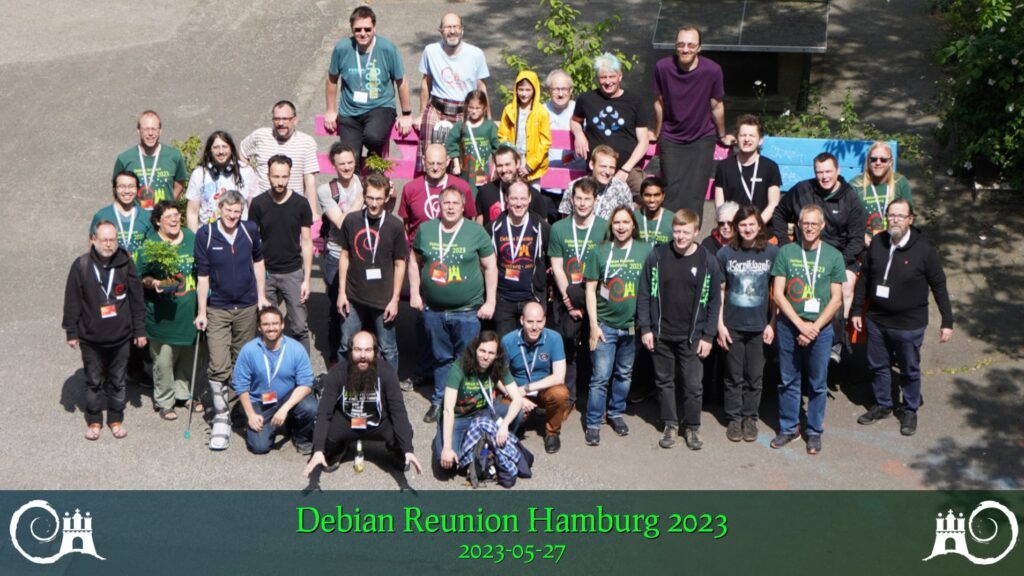
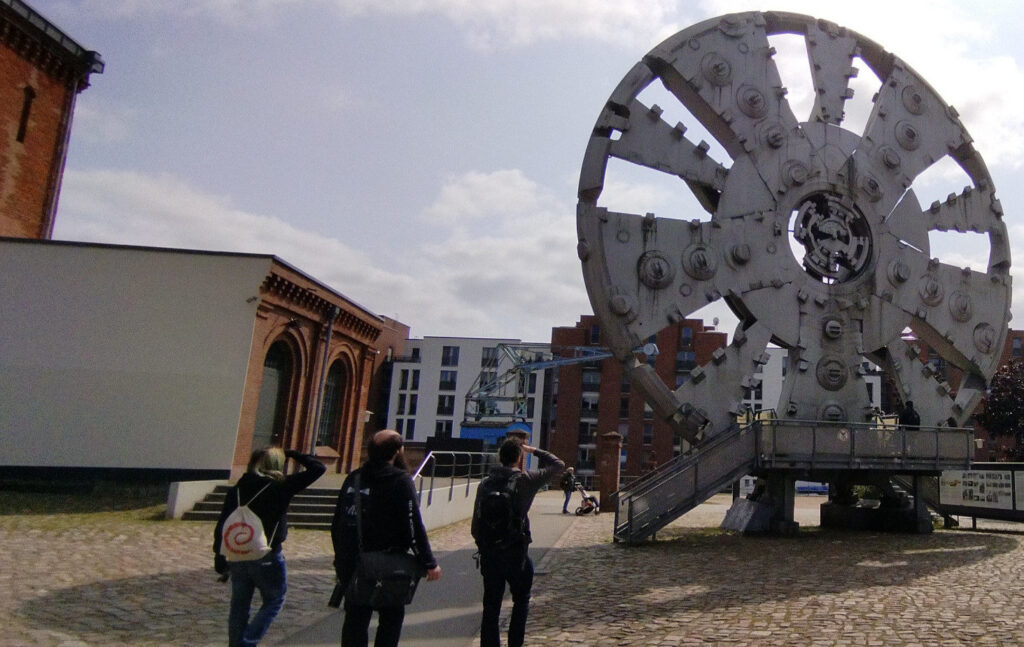
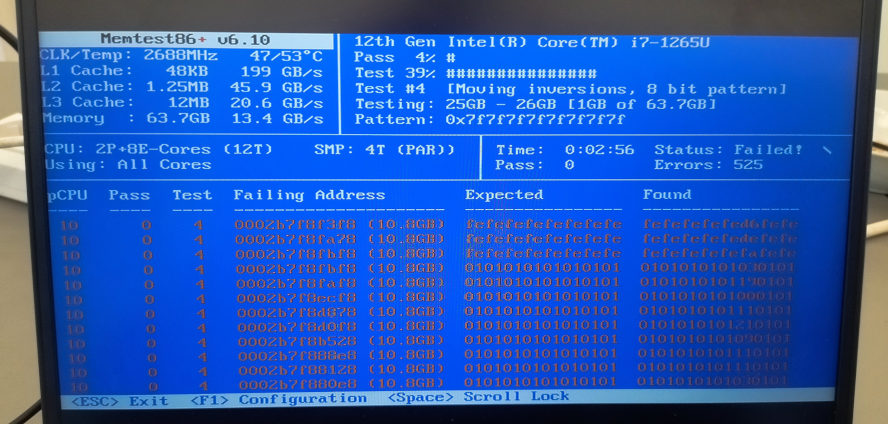
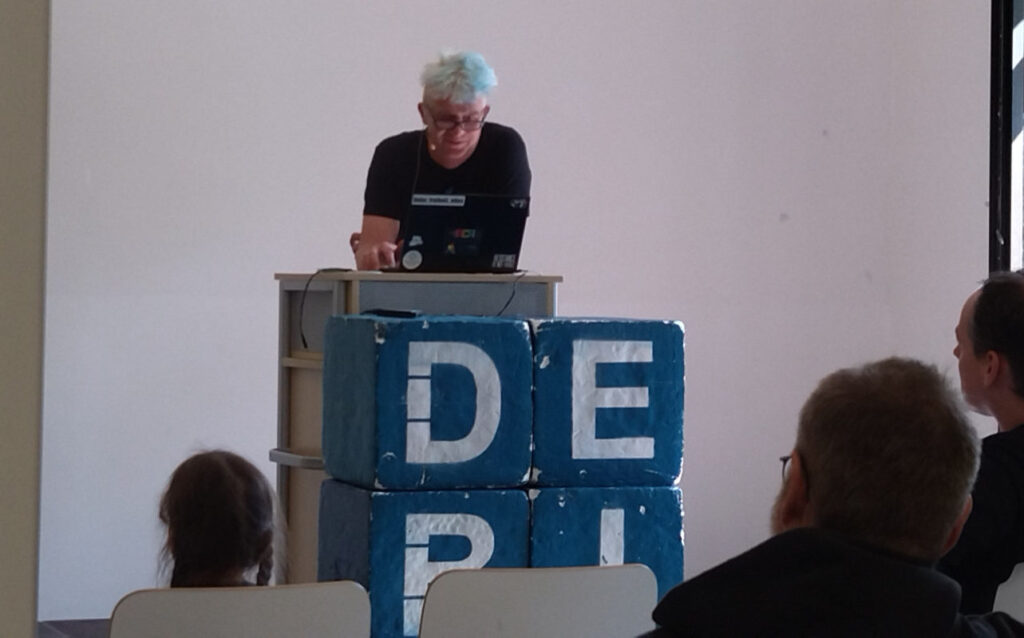
This year I attended Debian Reunion Hamburg (aka MiniDebConf Germany) for the second time. My goal for this MiniDebConf was just to talk to people and make the most of the time I have there. No other specific plans or goals. Despite this simple goal, it was a very productive and successful event for me. Tuesday 23rd:
Wednesday 24th:
Thursday 25th:
Friday 26th:
Saturday 27th: Sunday 28th: Monday 29th:
Das is nicht gut.
Tuesday 30th:

Thank you to Holger for organising this event yet again!

Russell Coker: Considering Convergence

What is Convergence In 2013 Kyle Rankin (at the time Linux Journal columnist and CSO of Purism) wrote a Linux Journal article about Linux convergence [1] (which means using a phone and a dock to replace a desktop) featuring the Nokia N900 smart phone and a chroot environment on the Motorola Droid 4 Android phone. Both of them have very limited hardware even by the standards of the day and neither of which were systems I d consider using all the time. None of the Android phones I used at that time were at all comparable to any sort of desktop system I d want to use. Hardware for Convergence Comparing a Phone to a Laptop The first hardware issue for convergence is docks and other accessories to attach a small computer to hardware designed for larger computers. Laptop docks have been around for decades and for decades I haven t been using them because they have all been expensive and specific to a particular model of laptop. Having an expensive dock at home and an expensive dock at the office and then replacing them both when the laptop is replaced may work well for some people but wasn t something I wanted to do. The USB-C interface supports data, power, and DisplayPort video over the same cable and now USB-C docks start at about $20 on eBay and dock functionality is built in to many new monitors. I can take a USB-C device to the office of any large company and know there s a good chance that there will be a USB-C dock ready for me to use. The fact that USB-C is a standard feature for phones gives obvious potential for convergence. The next issue is performance. The Passmark benchmark seems like a reasonable way to compare CPUs [2]. It may not be the best benchmark but it has an excellent set of published results for Intel and AMD CPUs. I ran that benchmark on my Librem5 [3] and got a result of 507 for the CPU score. At the end of 2017 I got a Thinkpad X301 [4] which rates 678 on Passmark. So the Librem5 has 3/4 the CPU power of a laptop that was OK for my use in 2018. Given that the X301 was about the minimum specs for a PC that I can use (for things other than serious compiles, running VMs, etc) the Librem 5 has 3/4 the CPU power, only 3G of RAM compared to 6G, and 32G of storage compared to 64G. Here is the Passmark page for my Librem5 [5]. As an aside my Libnrem5 is apparently 25% faster than the other results for the same CPU did the Purism people do something to make their device faster than most? For me the Librem5 would be at the very low end of what I would consider a usable desktop system. A friend s N900 (like the one Kyle used) won t complete the Passmark test apparently due to the Extended Instructions (NEON) test failing. But of the rest of the tests most of them gave a result that was well below 10% of the result from the Librem5 and only the Compression and CPU Single Threaded tests managed to exceed 1/4 the speed of the Librem5. One thing to note when considering the specs of phones vs desktop systems is that the MicroSD cards designed for use in dashcams and other continuous recording devices have TBW ratings that compare well to SSDs designed for use in PCs, so swap to a MicroSD card should work reasonably well and be significantly faster than the hard disks I was using for swap in 2013! In 2013 I was using a Thinkpad T420 as my main system [6], it had 8G of RAM (the same as my current laptop) although I noted that 4G was slow but usable at the time. Basically it seems that the Librem5 was about the sort of hardware I could have used for convergence in 2013. But by today s standards and with the need to drive 4K monitors etc it s not that great. The N900 hardware specs seem very similar to the Thinkpads I was using from 1998 to about 2003. However a device for convergence will usually do more things than a laptop (IE phone and camera functionality) and software had become significantly more bloated in 1998 to 2013 time period. A Linux desktop system performed reasonably with 32MB of RAM in 1998 but by 2013 even 2G was limiting. Software Issues for Convergence Jeremiah Foster (Director PureOS at Purism) wrote an interesting overview of some of the software issues of convergence [7]. One of the most obvious is that the best app design for a small screen is often very different from that for a large screen. Phone apps usually have a single window that shows a view of only one part of the data that is being worked on (EG an email program that shows a list of messages or the contents of a single message but not both). Desktop apps of any complexity will either have support for multiple windows for different data (EG two messages displayed in different windows) or a single window with multiple different types of data (EG message list and a single message). What we ideally want is all the important apps to support changing modes when the active display is changed to one of a different size/resolution. The Purism people are doing some really good work in this regard. But it is a large project that needs to involve a huge range of apps. The next thing that needs to be addressed is the OS interface for managing apps and metadata. On a phone you swipe from one part of the screen to get a list of apps while on a desktop you will probably have a small section of a large monitor reserved for showing a window list. On a desktop you will typically have an app to manage a list of items copied to the clipboard while on Android and iOS there is AFAIK no standard way to do that (there is a selection of apps in the Google Play Store to do this sort of thing). Purism has a blog post by Sebastian Krzyszkowiak about some of the development of the OS to make it work better for convergence and the status of getting it in Debian [8]. The limitations in phone hardware force changes to the software. Software needs to use less memory because phone RAM can t be upgraded. The OS needs to be configured for low RAM use which includes technologies like the zram kernel memory compression feature. Security When mobile phones first came out they were used for less secret data. Loss of a phone was annoying and expensive but not a security problem. Now phone theft for the purpose of gaining access to resources stored on the phone is becoming a known crime, here is a news report about a thief stealing credit cards and phones to receive the SMS notifications from banks [9]. We should expect that trend to continue, stealing mobile devices for ssh keys, management tools for cloud services, etc is something we should expect to happen. A problem with mobile phones in current use is that they have one login used for all access from trivial things done in low security environments (EG paying for public transport) to sensitive things done in more secure environments (EG online banking and healthcare). Some applications take extra precautions for this EG the Android app I use for online banking requires authentication before performing any operations. The Samsung version of Android has a system called Knox for running a separate secured workspace [10]. I don t think that the Knox approach would work well for a full Linux desktop environment, but something that provides some similar features would be a really good idea. Also running apps in containers as much as possible would be a good security feature, this is done by default in Android and desktop OSs could benefit from it. The Linux desktop security model of logging in to a single account and getting access to everything has been outdated for a long time, probably ever since single-user Linux systems became popular. We need to change this for many reasons and convergence just makes it more urgent. Conclusion I have become convinced that convergence is the way of the future. It has the potential to make transporting computers easier, purchasing cheaper (buy just a phone and not buy desktop and laptop systems), and access to data more convenient. The Librem5 doesn t seem up to the task for my use due to being slow and having short battery life, the PinePhone Pro has more powerful hardware and allegedly has better battery life [11] so it might work for my needs. The PinePhone Pro probably won t meet the desktop computing needs of most people, but hardware keeps getting faster and cheaper so eventually most people could have their computing needs satisfied with a phone. The current state of software for convergence and for Linux desktop security needs some improvement. I have some experience with Linux security so this is something I can help work on. To work on improving this I asked Linux Australia for a grant for me and a friend to get PinePhone Pro devices and a selection of accessories to go with them. Having both a Librem5 and a PinePhone Pro means that I can test software in different configurations which will make developing software easier. Also having a friend who s working on similar things will help a lot, especially as he has some low level hardware skills that I lack. Linux Australia awarded the grant and now the PinePhones are in transit. Hopefully I will have a PinePhone in a couple of weeks to start work on this.

Russ Allbery: Book haul

I think this is partial because I also have a stack of other books that I missed recording. At some point, I should stop using this method to track book acquisitions in favor of one of the many programs intended for this purpose, but it's in the long list of other things I really should do one of these days. As usual, I have already read and reviewed a few of these. I might be getting marginally better at reading books shortly after I acquire them? Maybe? Steven Brust Tsalmoth (sff)
C.L. Clark The Faithless (sff)
Oliver Darkshire Once Upon a Tome (non-fiction)
Hernan Diaz Trust (mainstream)
S.B. Divya Meru (sff)
Kate Elliott Furious Heaven (sff)
Steven Flavall Before We Go Live (non-fiction)
R.F. Kuang Babel (sff)
Laurie Marks Dancing Jack (sff)
Arkady Martine Rose/House (sff)
Madeline Miller Circe (sff)
Jenny Odell Saving Time (non-fiction)
Malka Older The Mimicking of Known Successes (sff)
Sabaa Tahir An Ember in the Ashes (sff)
Emily Tesh Some Desperate Glory (sff)
Valerie Valdes Chilling Effect (sff)

Louis-Philippe V ronneau: Python 3.11, pip and (breaking) system packages

As we get closer to Debian Bookworm's release, I thought I'd share one change in Python 3.11 that will surely affect many people. Python 3.11 implements the new PEP 668, Marking Python base environments as externally managed 1. If you use pip regularly on Debian, it's likely you'll eventually hit the externally-managed-environment error:
error: externally-managed-environment
  This environment is externally managed
 > To install Python packages system-wide, try apt install
    python3-xyz, where xyz is the package you are trying to
    install.
    If you wish to install a non-Debian-packaged Python package,
    create a virtual environment using python3 -m venv path/to/venv.
    Then use path/to/venv/bin/python and path/to/venv/bin/pip. Make
    sure you have python3-full installed.
    If you wish to install a non-Debian packaged Python application,
    it may be easiest to use pipx install xyz, which will manage a
    virtual environment for you. Make sure you have pipx installed.
    See /usr/share/doc/python3.11/README.venv for more information.
note: If you believe this is a mistake, please contact your Python installation or OS distribution provider. You can override this, at the risk of breaking your Python installation or OS, by passing --break-system-packages.
hint: See PEP 668 for the detailed specification.
With this PEP, Python tools can now distinguish between packages that have been installed by the user with a tool like pip and ones installed using a distribution's package manager, like apt. This is generally great news: it was previously too easy to break a system by mixing the two types of packages. This PEP will simplify our role as a distribution, as well as improve the overall Python user experience in Debian. Sadly, it's also likely this change will break some of your scripts, especially CI that (legitimately) install packages via pip alongside system packages. For example, I use the following gitlab-ci snippet to make sure my PRs don't break my build process2:
build:flit:
  stage: build
  script:
  - apt-get update && apt-get install -y flit python3-pip
  - FLIT_ROOT_INSTALL=1 flit install
  - metalfinder --help
With Python 3.11, this snippet will error out, as pip will refuse to install packages alongside the system's. The fix is to tell pip it's OK to "break" your system packages, either using the --break-system-packages parameter, or the PIP_BREAK_SYSTEM_PACKAGES=1 environment variable3. This, of course, is not something you should be using in production to restore the old behavior! The "proper" way to fix this issue, as the externally-managed-environment error message aptly (har har) informs you, is to use virtual environments. Happy hacking!

  1. Kudos to our own Matthias Klose, Stefano Rivera and Elana Hashman, who worked on designing and implementing this PEP!
  2. Which is something that bit me before... You push some changes to your git repository, everything seems fine and all the tests pass, so you merge it and make a new git tag. When the time comes to build and upload this tag to PyPi, you find out some minor thing broke your build system (which you weren't testing) and you have to scramble to make a point-release to fix the issue. Sad!
  3. Don't go searching for this environment variable in pip's code though, as you won't find it! All of pip's command line options can be passed as env vars using the PIP_<UPPER_LONG_NAME> format. Useful for tools that use pip indirectly, like flit.

27 May 2023

Dirk Eddelbuettel: RcppArmadillo 0.12.4.0.0 on CRAN: New Upstream Minor

armadillo image Armadillo is a powerful and expressive C++ template library for linear algebra and scientific computing. It aims towards a good balance between speed and ease of use, has a syntax deliberately close to Matlab, and is useful for algorithm development directly in C++, or quick conversion of research code into production environments. RcppArmadillo integrates this library with the R environment and language and is widely used by (currently) 1074 other packages on CRAN, downloaded 29.3 million times (per the partial logs from the cloud mirrors of CRAN), and the CSDA paper (preprint / vignette) by Conrad and myself has been cited 535 times according to Google Scholar. This release brings a new upstream release 12.4.0 made by Conrad a day or so ago. I prepared the usual release candidate, tested on the over 1000 reverse depends (which sadly takes almost a day on old hardware), found no issues and sent it to CRAN. Where it got tested again and was once again auto-processed smoothly by CRAN within a few hours on a Friday night which is just marvelous. So this time I tweeted about it too. The releases actually has a relatively small set of changes as a second follow-up release in the 12.* series.

Changes in RcppArmadillo version 0.12.4.0.0 (2023-05-26)
  • Upgraded to Armadillo release 12.4.0 (Cortisol Profusion Redux)
    • Added norm2est() for finding fast estimates of matrix 2-norm (spectral norm)
    • Added vecnorm() for obtaining the vector norm of each row or column of a matrix

Courtesy of my CRANberries, there is a diffstat report relative to previous release. More detailed information is on the RcppArmadillo page. Questions, comments etc should go to the rcpp-devel mailing list off the R-Forge page. If you like my open-source work, you may consider sponsoring me at GitHub.

This post by Dirk Eddelbuettel originated on his Thinking inside the box blog. Please report excessive re-aggregation in third-party for-profit settings.

26 May 2023

Valhalla's Things: Late Victorian Combinations

Posted on May 26, 2023
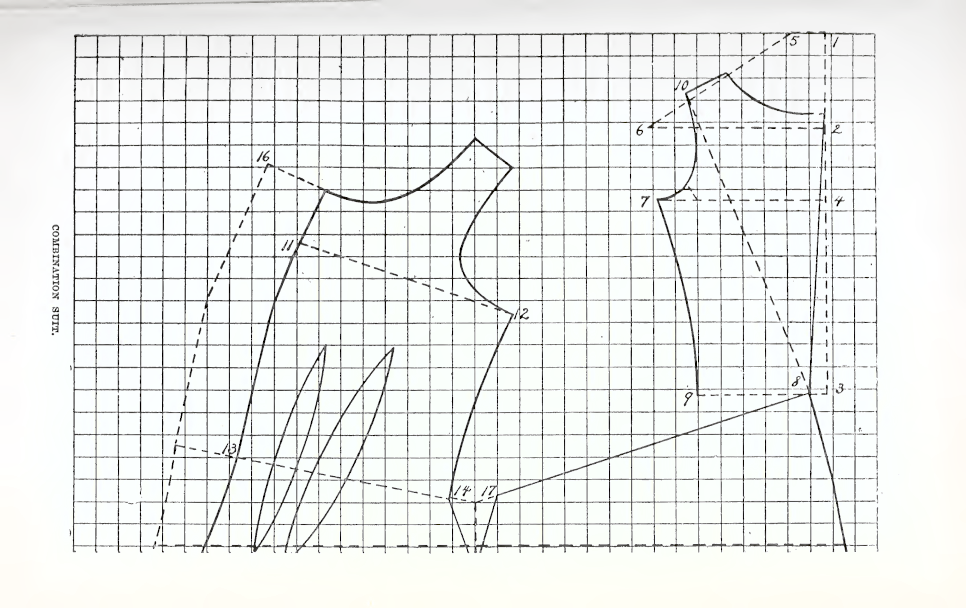
A woman wearing a white linen combination suite, with a very fitted top, small sleevelets that cover the armpits (to protect the next layers from sweat) and split drawers. The suite buttons up along the front (where it is a bit tight around the bust) and has a line of lace at the neckline and two tucks plus some lace at the legs. Some time ago, on an early Friday afternoon our internet connection died. After a reasonable time had passed we called the customer service, they told us that they would look into it and then call us back. On Friday evening we had not heard from them, and I was starting to get worried. At the time in the evening when I would have been relaxing online I grabbed the first Victorian sewing-related book I found on my hard disk and started to read it. For the record, it wasn t actually Victorian, it was Margaret J. Blair. System of Sewing and Garment Drafting. from 1904, but I also had available for comparison the earlier and smaller Margaret Blair. System of Garment Drafting. from 1897. A page from the book showing the top part of a pattern with all construction lines Anyway, this book had a system to draft a pair of combinations (chemise top + drawers); and months ago I had already tried to draft a pair from another system, but they didn t really fit and they were dropped low on the priority list, so on a whim I decided to try and draft them again with this new-to-me system. Around 23:00 in the night the pattern was ready, and I realized that my SO had gone to sleep without waiting for me, as I looked too busy to be interrupted. The next few days were quite stressful (we didn t get our internet back until Wednesday) and while I couldn t work at my day job I didn t sew as much as I could have done, but by the end of the week I had an almost complete mockup from an old sheet, and could see that it wasn t great, but it was a good start. One reason why the mockup took a whole week is that of course I started to sew by machine, but then I wanted flat-felled seams, and felling them by hand is so much neater, isn t it? And let me just say, I m grateful for the fact that I don t depend on streaming services for media, but I have a healthy mix of DVDs and stuff I had already temporary downloaded to watch later, because handsewing and being stressed out without watching something is not really great. Anyway, the mockup was a bit short on the crotch, but by the time I could try it on and be sure I was invested enough in it that I decided to work around the issue by inserting a strip of lace around the waist. And then I went back to the pattern to fix it properly, and found out that I had drafted the back of the drawers completely wrong, making a seam shorter rather than longer as it should have been. ooops. I fixed the pattern, and then decided that YOLO and cut the new version directly on some lightweight linen fabric I had originally planned to use in this project. The result is still not perfect, but good enough, and I finished it with a very restrained amount of lace at the neckline and hems, wore it one day when the weather was warm (loved the linen on the skin) and it s ready to be worn again when the weather will be back to being warm (hopefully not too soon). The last problem was taking pictures of this underwear in a way that preserves the decency (and it even had to be outdoors, for the light!). This was solved by wearing leggings and a matched long sleeved shirt under the combinations, and then promptly forgetting everything about decency and, well, you can see what happened. A woman mooning by keeping the back of split drawers open with her hands, but at least there are black leggings under them. The pattern is, as usual, published on my pattern website as #FreeSoftWear. And then, I started thinking about knits. In the late Victorian and Edwardian eras knit underwear was a thing, also thanks to the influence of various aspects of the rational dress movement; reformers such as Gustav J ger advocated for wool underwear, but mail order catalogues from the era such as https://archive.org/details/cataloguefallwin00macy (starting from page 67) have listings for both cotton and wool ones. From what I could find, back then they would have been either handknit at home or made to shape on industrial knitting machines; patterns for the former are available online, but the latter would probably require a knitting machine that I don t currently1 have. However, this is underwear that is not going to be seen by anybody2, and I believe that by using flat knit fabric one can get a decent functional approximation. In The Stash I have a few meters of a worked cotton jersey with a pretty comfy feel, and to make a long story short: this happened. a woman wearing a black cotton jersey combination suite; the front is sewn shut, but the neck is wide and finished with elastic.  The top part is pretty fitted, but becomes baggier around the crotch area and the legs are a comfortable width. I suspect that the linen one will get worn a lot this summer (linen on the skin. nothing else need to be said), while the cotton one will be stored away for winter. And then maybe I may make a couple more, if I find out that I m using it enough.

  1. cue ominous music. But first I would need space to actually keep and use it :)
  2. other than me, my SO, any costuming friend I may happen to change in the presence of, and everybody on the internet in these pictures.

23 May 2023

Craig Small: Devices with cgroup v2

Docker and other container systems by default restrict access to devices on the host. They used to do this with cgroups with the cgroup v1 system, however, the second version of cgroups removed this controller and the man page says:
Cgroup v2 device controller has no interface files and is implemented on top of cgroup BPF.
https://www.kernel.org/doc/Documentation/admin-guide/cgroup-v2.rst
That is just awesome, nothing to see here, go look at the BPF documents if you have cgroup v2. With cgroup v1 if you wanted to know what devices were permitted, you just would cat /sys/fs/cgroup/XX/devices.allow and you were done! The kernel documentation is not very helpful, sure its something in BPF and has something to do with the cgroup BPF specifically, but what does that mean? There doesn t seem to be an easy corresponding method to get the same information. So to see what restrictions a docker container has, we will have to:
  1. Find what cgroup the programs running in the container belong to
  2. Find what is the eBPF program ID that is attached to our container cgroup
  3. Dump the eBPF program to a text file
  4. Try to interpret the eBPF syntax
The last step is by far the most difficult.

Finding a container s cgroup All containers have a short ID and a long ID. When you run the docker ps command, you get the short id. To get the long id you can either use the --no-trunc flag or just guess from the short ID. I usually do the second.
$ docker ps 
CONTAINER ID   IMAGE            COMMAND       CREATED          STATUS          PORTS     NAMES
a3c53d8aaec2   debian:minicom   "/bin/bash"   19 minutes ago   Up 19 minutes             inspiring_shannon
So the short ID is a3c53d8aaec2 and the long ID is a big ugly hex string starting with that. I generally just paste the relevant part in the next step and hit tab. For this container the cgroup is /sys/fs/cgroup/system.slice/docker-a3c53d8aaec23c256124f03d208732484714219c8b5f90dc1c3b4ab00f0b7779.scope/ Notice that the last directory has docker- then the short ID. If you re not sure of the exact path. The /sys/fs/cgroup is the cgroup v2 mount point which can be found with mount -t cgroup2 and then rest is the actual cgroup name. If you know the process running in the container then the cgroup column in ps will show you.
$ ps -o pid,comm,cgroup 140064
    PID COMMAND         CGROUP
 140064 bash            0::/system.slice/docker-a3c53d8aaec23c256124f03d208732484714219c8b5f90dc1c3b4ab00f0b7779.scope
Either way, you will have your cgroup path.

eBPF programs and cgroups Next we will need to get the eBPF program ID that is attached to our recently found cgroup. To do this, we will need to use the bpftool. One thing that threw me for a long time is when the tool talks about a program or a PROG ID they are talking about the eBPF programs, not your processes! With that out of the way, let s find the prog id.
$ sudo bpftool cgroup list /sys/fs/cgroup/system.slice/docker-a3c53d8aaec23c256124f03d208732484714219c8b5f90dc1c3b4ab00f0b7779.scope/
ID       AttachType      AttachFlags     Name
90       cgroup_device   multi
Our cgroup is attached to eBPF prog with ID of 90 and the type of program is cgroup _device.

Dumping the eBPF program Next, we need to get the actual code that is run every time a process running in the cgroup tries to access a device. The program will take some parameters and will return either a 1 for yes you are allowed or a zero for permission denied. Don t use the file option as it dumps the program in binary format. The text version is hard enough to understand.
sudo bpftool prog dump xlated id 90 > myebpf.txt
Congratulations! You now have the eBPF program in a human-readable (?) format.

Interpreting the eBPF program The eBPF format as dumped is not exactly user friendly. It probably helps to first go and look at an example program to see what is going on. You ll see that the program splits type (lower 4 bytes) and access (higher 4 bytes) and then does comparisons on those values. The eBPF has something similar:
   0: (61) r2 = *(u32 *)(r1 +0)
   1: (54) w2 &= 65535
   2: (61) r3 = *(u32 *)(r1 +0)
   3: (74) w3 >>= 16
   4: (61) r4 = *(u32 *)(r1 +4)
   5: (61) r5 = *(u32 *)(r1 +8)
What we find is that once we get past the first few lines filtering the given value that the comparison lines have:
  • r2 is the device type, 1 is block, 2 is character.
  • r3 is the device access, it s used with r1 for comparisons after masking the relevant bits. mknod, read and write are 1,2 and 3 respectively.
  • r4 is the major number
  • r5 is the minor number
For a even pretty simple setup, you are going to have around 60 lines of eBPF code to look at. Luckily, you ll often find the lines for the command options you added will be near the end, which makes it easier. For example:
  63: (55) if r2 != 0x2 goto pc+4
  64: (55) if r4 != 0x64 goto pc+3
  65: (55) if r5 != 0x2a goto pc+2
  66: (b4) w0 = 1
  67: (95) exit
This is a container using the option --device-cgroup-rule='c 100:42 rwm'. It is checking if r2 (device type) is 2 (char) and r4 (major device number) is 0x64 or 100 and r5 (minor device number) is 0x2a or 42. If any of those are not true, move to the next section, otherwise return with 1 (permit). We have all access modes permitted so it doesn t check for it. The previous example has all permissions for our device with id 100:42, what about if we only want write access with the option --device-cgroup-rule='c 100:42 r'. The resulting eBPF is:
  63: (55) if r2 != 0x2 goto pc+7  
  64: (bc) w1 = w3
  65: (54) w1 &= 2
  66: (5d) if r1 != r3 goto pc+4
  67: (55) if r4 != 0x64 goto pc+3
  68: (55) if r5 != 0x2a goto pc+2
  69: (b4) w0 = 1
  70: (95) exit
The code is almost the same but we are checking that w3 only has the second bit set, which is for reading, effectively checking for X==X&2. It s a cautious approach meaning no access still passes but multiple bits set will fail.

The device option docker run allows you to specify files you want to grant access to your containers with the --device flag. This flag actually does two things. The first is to great the device file in the containers /dev directory, effectively doing a mknod command. The second thing is to adjust the eBPF program. If the device file we specified actually did have a major number of 100 and a minor of 42, the eBPF would look exactly like the above snippets.

What about privileged? So we have used the direct cgroup options here, what does the --privileged flag do? This lets the container have full access to all the devices (if the user running the process is allowed). Like the --device flag, it makes the device files as well, but what does the filtering look like? We still have a cgroup but the eBPF program is greatly simplified, here it is in full:
   0: (61) r2 = *(u32 *)(r1 +0)
   1: (54) w2 &= 65535
   2: (61) r3 = *(u32 *)(r1 +0)
   3: (74) w3 >>= 16
   4: (61) r4 = *(u32 *)(r1 +4)
   5: (61) r5 = *(u32 *)(r1 +8)
   6: (b4) w0 = 1
   7: (95) exit
There is the usual setup lines and then, return 1. Everyone is a winner for all devices and access types!

Jonathan Dowland: neovim plugins and distributions

I've been watching the neovim community for a while and what seems like a cambrian explosion of plugins emerging. A few weeks back I decided to spend most of a "day of learning" on investigating some of the plugins and technologies that I'd read about: Language Server Protocol, TreeSitter, neorg (a grandiose organiser plugin), etc. It didn't go so well. I spent most of my time fighting version incompatibilities or tracing through scant documentation or code to figure out what plugin was incompatible with which other. There's definitely a line where crossing it is spending too much time playing with your tools instead of creating. On the other hand, there's definitely value in honing your tools and learning about new technologies. Everyone's line is probably in a different place. I've come to the conclusion that I don't have the time or inclination (or both) to approach exploring the neovim universe in this way. There exist a number of plugin "distributions" (such as LunarVim): collections of pre- configured and integrated plugins that you can try to use out-of-the-box. Next time I think I'll pick one up and give that a try &emdash independently from my existing configuration &emdash and see which ideas from it I might like to adopt. shared vimrcs Some folks upload their vim or neovim configurations in their entirety for others to see. I noticed Jess Frazelle had published hers so I took a look. I suppose one could evaluate a bunch of plugins and configuration in isolation using a shared vimrc like this, in the same was as a distribution. bufferline Amongst the plugins she uses was bufferline, a plugin to re-work neovim's tab bar to behave like tab bars from more conventional editors1. I don't make use of neovim's tabs at all2, so I would lose nothing having the (presently hidden) tab bar reworked, so I thought I'd give it a go. I had to disable an existing plugin lightline, which I've had enabled for years but I wasn't sure I was getting much value from. Apparently it also messes with the tab bar! Disabling it, at least for now, at least means I'll find out if I miss it. I am already using vim-buffergator as a means of seeing and managing open buffers: a hotkey opens a sidebar with a list of open buffers, to switch between or close. Bufferline gives me a more immediate, always-present view of open buffers, which is faintly useful: but not much. Perhaps I'd like it more if I was coming from an editor that had made it more of an expected feature. The two things I noticed about it that aren't especially useful for me: when browsing around vimwiki pages, I quickly open a lot of buffers. The horizontal line fills up very quickly. Even when I don't, I habitually have quite a lot of buffers open, and the horizontal line is quickly overwhelmed. I have found myself closing open buffers with the mouse, which I didn't do before. vert Since I have brought up a neovim UI feature (tabs) I thought I'd briefly mention my new favourite neovim built-in command: vert. Quite a few plugins and commands open up a new window (e.g. git-fugitive, Man, etc.) and they typically do so in a horizontal split. I'm increasingly preferring vertical splits. Prefixing any3 such command with vert forces the split to be vertical instead.

  1. in this case the direct influence was apparently DOOM Emacs
  2. (neo)vim's notion of tabs is completely different to what you might expect from other UI models.
  3. at least, I haven't found one that doesn't work yet

Russ Allbery: Review: A Half-Built Garden

Review: A Half-Built Garden, by Ruthanna Emrys
Publisher: Tordotcom
Copyright: 2022
ISBN: 1-250-21097-6
Format: Kindle
Pages: 340
The climate apocalypse has happened. Humans woke up to the danger, but a little bit too late. Over one billion people died. But the world on the other side of that apocalypse is not entirely grim. The corporations responsible for so much of the damage have been pushed out of society and isolated on their independent "aislands," traded with only grudgingly for the few commodities the rest of the world has not yet learned how to manufacture without them. Traditional governments have largely collapsed, although they cling to increasingly irrelevant trappings of power. In their place arose the watershed networks: a new way of living with both nature and other humans, built around a mix of anarchic consensus and direct democracy, with conservation and stewardship of the natural environment at its core. Therefore, when the aliens arrive near Bear Island on the Potomac River, they're not detected by powerful telescopes and met by military jets. Instead, their waste sets off water sensors, and they're met by the two women on call for alert duty, carrying a nursing infant and backed by the real-time discussion and consensus technology of the watershed's dandelion network. (Emrys is far from the first person to name something a "dandelion network," so be aware that the usage in this book seems unrelated to the charities or blockchain network.) This is a first contact novel, but it's one that skips over the typical focus of the subgenre. The alien Ringers are completely fluent in English down to subtle nuance of emotion and connotation (supposedly due to observation of our radio and TV signals), have translation devices, and in some cases can make our speech sounds directly. Despite significantly different body shapes, they are immediately comprehensible; differences are limited mostly to family structure, reproduction, and social norms. This is Star Trek first contact, not the type more typical of written science fiction. That feels unrealistic, but it's also obviously an authorial choice to jump directly to the part of the story that Emrys wants to write. The Ringers have come to save humanity. In their experience, technological civilization is inherently incompatible with planets. Technology will destroy the planet, and the planet will in turn destroy the species unless they can escape. They have reached other worlds multiple times before, only to discover that they were too late and everyone is already dead. This is the first time they've arrived in time, and they're eager to help humanity off its dying planet to join them in the Dyson sphere of space habitats they are constructing. Planets, to them, are a nest and a launching pad, something to eventually abandon and break down for spare parts. The small, unexpected wrinkle is that Judy, Carol, and the rest of their watershed network are not interested in leaving Earth. They've finally figured out the most critical pieces of environmental balance. Earth is going to get hotter for a while, but the trend is slowing. What they're doing is working. Humanity would benefit greatly from Ringer technology and the expertise that comes from managing closed habitat ecosystems, but they don't need rescuing. This goes over about as well as a toddler saying that playing in the road is perfectly safe. This is a fantastic hook for a science fiction novel. It does exactly what a great science fiction premise should do: takes current concerns (environmentalism, space boosterism, the debatable primacy of humans as a species, the appropriate role of space colonization, the tension between hopefulness and doomcasting about climate change) and uses the freedom of science fiction to twist them around and come at them from an entirely different angle. The design of the aliens is excellent for this purpose. The Ringers are not one alien species; they are two, evolved on different planets in the same system. The plains dwellers developed space flight first and went to meet the tree dwellers, and while their relationship is not entirely without hierarchy (the plains dwellers clearly lead on most matters), it's extensively symbiotic. They now form mixed families of both species, and have a rich cultural history of stories about first contact, interspecies conflicts and cooperation, and all the perils and misunderstandings that they successfully navigated. It makes their approach to humanity more believable to know that they have done first contact before and are building on a model. Their concern for humanity is credibly sincere. The joining of two species was wildly successful for them and they truly want to add a third. The politics on the human side are satisfyingly complicated. The watershed network may have made first contact, but the US government (in the form of NASA) is close behind, attempting to lean on its widely ignored formal power. The corporations are farther away and therefore slower to arrive, but the alien visitors have a damaged ship and need space to construct a subspace beacon and Asterion is happy to offer a site on one of its New Zealand islands. The corporate representatives are salivating at the chance to escape Earth and its environmental regulation for uncontrolled space construction and a new market of trillions of Ringers. NASA's attitude is more measured, but their representative is easily persuaded that the true future of humanity is in space. The work the watershed networks are doing is difficult, uncertain, and involves a lot of sacrifice, particularly for corporate consumer lifestyles. With such an attractive alien offer on the table, why stay and work so hard for an uncertain future? Maybe the Ringers are right. And then the dandelion networks that the watersheds use as the core of their governance and decision-making system all crash. The setup was great; I was completely invested. The execution was more mixed. There are some things I really liked, some things that I thought were a bit too easy or predictable, and several places where I wish Emrys had dug deeper and provided more detail. I thought the last third of the book fizzled a little, although some of the secondary characters Emrys introduces are delightful and carry the momentum of the story when the politics feel a bit lacking. If you tried to form a mental image of ecofeminist political science fiction with 1970s utopian sensibilities, but updated for the concerns of the 2020s, you would probably come very close to the politics of the watershed networks. There are considerably more breastfeedings and diaper changes than the average SF novel. Two of the primary characters are transgender, but with very different experiences with transition. Pronoun pins are an ubiquitous article of clothing. One of the characters has a prosthetic limb. Another character who becomes important later in the story codes as autistic. None of this felt gratuitous; the characters do come across as obsessed with gender, but in a way that I found believable. The human diversity is well-integrated with the story, shapes the characters, creates practical challenges, and has subtle (and sometimes not so subtle) political ramifications. But, and I say this with love because while these are not quite my people they're closely adjacent to my people, the social politics of this book are a very specific type of white feminist collaborative utopianism. When religion makes an appearance, I was completely unsurprised to find that several of the characters are Jewish. Race never makes a significant appearance at all. It's the sort of book where the throw-away references to other important watershed networks includes African ones, and the characters would doubtless try to be sensitive to racial issues if they came up, but somehow they never do. (If you're wondering if there's polyamory in this book, yes, yes there is, and also I suspect you know exactly what culture I'm talking about.) This is not intended as a criticism, just more of a calibration. All science fiction publishing houses could focus only on this specific political perspective for a year and the results would still be dwarfed by the towering accumulated pile of thoughtless paeans to capitalism. Ecofeminism has a long history in the genre but still doesn't show up in that many books, and we're far from exhausting the space of possibilities for what a consensus-based politics could look like with extensive computer support. But this book has a highly specific point of view, enough so that there won't be many thought-provoking surprises if you're already familiar with this school of political thought. The politics are also very earnest in a way that I admit provoked a bit of eyerolling. Emrys pushes all of the political conflict into the contrasts between the human factions, but I would have liked more internal disagreement within the watershed networks over principles rather than tactics. The degree of ideological agreement within the watershed group felt a bit unrealistic. But, that said, at least politics truly matters and the characters wrestle directly with some tricky questions. I would have liked to see more specifics about the dandelion network and the exact mechanics of the consensus decision process, since that sort of thing is my jam, but we at least get more details than are typical in science fiction. I'll take this over cynical libertarianism any day. Gender plays a huge role in this story, enough so that you should avoid this book if you're not interested in exploring gender conceptions. One of the two alien races is matriarchal and places immense social value on motherhood, and it's culturally expected to bring your children with you for any important negotiation. The watersheds actively embrace this, or at worst find it comfortable to use for their advantage, despite a few hints that the matriarchy of the plains aliens may have a very serious long-term demographic problem. In an interesting twist, it's the mostly-evil corporations that truly challenge gender roles, albeit by turning it into an opportunity to sell more clothing. The Asterion corporate representatives are, as expected, mostly the villains of the plot: flashy, hierarchical, consumerist, greedy, and exploitative. But gender among the corporations is purely a matter of public performance, one of a set of roles that you can put on and off as you choose and signal with clothing. They mostly use neopronouns, change pronouns as frequently as their clothing, and treat any question of body plumbing as intensely private. By comparison, the very 2020 attitudes of the watersheds towards gender felt oddly conservative and essentialist, and the main characters get flustered and annoyed by the ever-fluid corporate gender presentation. I wish Emrys had done more with this. As you can tell, I have a lot of thoughts and a lot of quibbles. Another example: computer security plays an important role in the plot and was sufficiently well-described that I have serious questions about the system architecture and security model of the dandelion networks. But, as with decision-making and gender, the more important takeaway is that Emrys takes enough risks and describes enough interesting ideas that there's a lot of meat here to argue with. That, more than getting everything right, is what a good science fiction novel should do. A Half-Built Garden is written from a very specific political stance that may make it a bit predictable or off-putting, and I thought the tail end of the book had some plot and resolution problems, but arguing with it was one of the more intellectually satisfying science fiction reading experiences I've had recently. You have to be in the right mood, but recommended for when you are. Rating: 7 out of 10

22 May 2023

Russ Allbery: Review: Tsalmoth

Review: Tsalmoth, by Steven Brust
Series: Vlad Taltos #16
Publisher: Tor
Copyright: 2023
ISBN: 1-4668-8970-5
Format: Kindle
Pages: 277
Tsalmoth is the sixteenth book in the Vlad Taltos series and (some fans of the series groan) yet another flashback novel to earlier in Vlad's life. It takes place between Yendi and the interludes in Dragon (or, perhaps more straightforwardly, between Yendi and Jhereg. Most of the books of this series stand alone to some extent, so you could read this book out of order and probably not be horribly confused, but I suspect it would also feel weirdly pointless outside of the context of the larger series. We're back to Vlad running a fairly small operation as a Jhereg, who are the Dragaeran version of organized crime. A Tsalmoth who owes Vlad eight hundred imperials has rudely gotten himself murdered, thoroughly enough that he can't be revived. That's a considerable amount of money, and Vlad would like it back, so he starts poking around. As you might expect if you've read any other book in this series, things then get a bit complicated. This time, they involve Jhereg politics, Tsalmoth house politics, and necromancy (which in this universe is more about dimensional travel than it is about resurrecting the dead). The main story is... fine. Kragar is around being unnoticeable as always, Vlad is being cocky and stubborn and bantering with everyone, and what appears to be a straightforward illegal business relationship turns out to involve Dragaeran magic and thus Vlad's highly-placed friends. As usual, they're intellectually curious about the magic and largely ambivalent to the rest of Vlad's endeavors. The most enjoyable part of the story is Vlad's insistence on getting his money back while everyone else in the story cannot believe he would be this persistent over eight hundred imperials and is certain he has some other motive. It's otherwise a fairly forgettable little adventure. The implications for the broader series, though, are significant, although essentially none of the payoff is here. Brust has been keeping a major secret about Vlad that's finally revealed here, one that has little impact on the plot of this book (although it causes Vlad a lot of angst) but which I suspect will become very important later in the series. That was intriguing but rather unsatisfying, since it stays only a future hook with an attached justification for why we're only finding out about it now. If one has read the rest of the series, it's also nice to see Vlad and Cawti working together, bantering with each other and playing off of each other's strengths. It's reminiscent of the best parts of Yendi. As with many of the books of this series, the chapter introductions tell a parallel story; this time, it's Vlad and Cawti's wedding. I think previous books already mentioned that Vlad is narrating this series into some sort of recording device, and a bit about why he's doing that, but this is made quite explicit here. We get as much of the surrounding frame as we've ever seen before. There are no obvious plot consequences from this it's still all hints and guesswork but I suspect this will also become important by the end of the series. If you've read this much of the series, you'll obviously want to read this one as well, but unfortunately don't get your hopes up for significant plot advancement. This is another station-keeping book, which is a bit of a disappointment. We haven't gotten major plot advancement since Hawk in 2014, and I'm getting impatient. Thankfully, Lyorn has a release date already (April 9, 2024), and assuming all goes according to the grand plan, there are only two books left after Lyorn (Chreotha and The Last Contract). I'm getting hopeful that we're going to get to see the entire series. Meanwhile, I am very tempted to do a complete re-read of the series to date, probably in series chronological order rather than in publication order (as much as that's possible given the fractured timelines of Dragon and Tiassa) so that I can see how the pieces fit together. The constant jumping back and forth and allusions to events that have already happened but that we haven't seen yet is hard to keep track of. I'm very glad the Lyorn Records exists. Followed by Lyorn. Rating: 7 out of 10

21 May 2023

Bits from Debian: Infomaniak First Platinum Sponsor of DebConf23

infomaniaklogo We are pleased to announce that Infomaniak has committed to sponsor DebConf23 as a Platinum Sponsor. Infomaniak is a key player in the European Cloud and the leading developer of Web technologies in Switzerland. It aims to be an independent European alternative to the web giants and is committed to an ethical and sustainable Web that respects privacy and creates local jobs. Infomaniak develops cloud solutions (IaaS, PaaS, VPS), productivity tools for online collaboration and video and radio streaming services. The company uses only renewable electricity, offsets 200% of its CO2 emissions and extends the life of its servers up to 15 years. The company cools its infrastructure with filtered air, without air conditioning, and is building a new data centre that will fully recycle the energy it consumes to heat up to 6,000 homes. With this commitment as Platinum Sponsor, Infomaniak is contributing to make possible our annual conference, and directly supporting the progress of Debian and Free Software, helping to strengthen the community that continues to collaborate on Debian projects throughout the rest of the year. Thank you very much Infomaniak, for your support of DebConf23! Become a sponsor too! DebConf23 will take place from September 10th to 17th, 2022 in Kochi, India, and will be preceded by DebCamp, from September 3rd to 9th. And DebConf23 is accepting sponsors! Interested companies and organizations may contact the DebConf team through sponsors@debconf.org, and visit the DebConf23 website at https://debconf23.debconf.org/sponsors/become-a-sponsor/.

Russ Allbery: Review: The Stone Canal

Review: The Stone Canal, by Ken MacLeod
Series: Fall Revolution #2
Publisher: Tor
Copyright: 1996
Printing: January 2001
ISBN: 0-8125-6864-8
Format: Mass market
Pages: 339
The Stone Canal is a sort of halfway sequel to The Star Fraction. They both take place in the same universe, but the characters are almost entirely disjoint. Half of The Stone Canal happens (mostly) well before the previous book and the other half happens well after it. This book does contain spoilers for the ending of The Star Fraction if one connects the events of the two books correctly (which was a bit harder than I thought it should be), so I would not read them out of order. At the start of The Stone Canal, Jon Wilde wakes up on New Mars beside the titular canal, in the middle of nowhere, accompanied only by a robot that says it made him. Wilde remembers dying on Earth; this new life is apparently some type of resurrection. It's a long walk to Ship City, the center of civilization of a place the robot tells him is New Mars. In Ship City, an android named Dee Model has escaped from her owner and is hiding in a bar. There, she meets an AI abolitionist named Tamara, who helps her flee out the back and down the canal on a boat when Wilde walks into the bar and immediately recognizes her. The abolitionists provide her protection and legal assistance to argue her case for freedom from her owner, a man named Reid. The third thread of the story, and about half the book, is Jon Wilde's life on Earth, starting in 1975 and leading up to the chaotic wars, political fracturing, and revolutions that formed the background and plot of The Star Fraction. Eventually that story turns into a full-fledged science fiction setting, but not until the last 60 pages of the book. I successfully read two books in a Ken MacLeod series! Sadly, I'm not sure I enjoyed the experience. I commented in my review of The Star Fraction that the appeal for me in MacLeod's writing was his reputation as a writer of political science fiction. Unfortunately that's been a bust. The characters are certainly political, in the sense that they profess to have strong political viewpoints and are usually members of some radical (often Trotskyite) organization. There are libertarian anarchist societies and lots of political conflict. But there is almost no meaningful political discussion in any of these books so far. The politics are all tactical or background, and often seem to be created by authorial fiat. For example, New Mars is a sort of libertarian anarchy that somehow doesn't have corporations or a strongman ruler, even though the history (when we finally learn it) would have naturally given rise to one or the other (and has, in numerous other SF novels with similar plots). There's a half-assed explanation for this towards the end of the book that I didn't find remotely believable. Another part of the book describes the formation of the libertarian microstate in The Star Fraction, but never answers a "why" or "how" question I had in the previous book in a satisfying way. Somehow people stop caring about control or predictability or stability or traditional hierarchy without any significant difficulties except external threats, in situations of chaos and disorder where historically humans turn to anyone promising firm structure. It's common to joke about MacLeod winning multiple libertarian Prometheus Awards for his fiction despite being a Scottish communist. I'm finding that much less surprising now that I've read more of his books. Whether or not he believes in it himself, he's got the cynical libertarian smugness and hand-waving down pat. What his characters do care deeply about is smoking, drinking, and having casual sex. (There's more political fire here around opposition to anti-smoking laws than there is about any of the society-changing political structures that somehow fall into place.) I have no objections to any of those activities from a moral standpoint, but reading about other people doing them is a snoozefest. The flashback scenes sketch out enough imagined history to satisfy some curiosity from the previous book, but they're mostly about the world's least interesting love triangle, involving two completely unlikable men and lots of tedious jealousy and posturing. The characters in The Stone Canal are, in general, a problem. One of those unlikable men is Wilde, the protagonist for most of the book. Not only did I never warm to him, I never figured out what motivates him or what he cares about. He's a supposedly highly political person who seems to engage in politics with all the enthusiasm of someone filling out tax forms, and is entirely uninterested in explaining to the reader any sort of coherent philosophical approach. The most interesting characters in this book are the women (Annette, Dee Model, Tamara, and, very late in the book, Meg), but other than Dee Model they rarely get much focus from the story. By far the best part of this book is the last 60 pages, where MacLeod finally explains the critical bridge events between Wilde's political history on earth and the New Mars society. I thought this was engrossing, fast-moving, and full of interesting ideas (at least for a 1990s book; many of them feel a bit stale now, 25 years later). It was also frustrating, because this was the book I wanted to have been reading for the previous 270 pages, instead of MacLeod playing coy with his invented history or showing us interminable scenes about Wilde's insecure jealousy over his wife. It's also the sort of book where at one point characters (apparently uniformly male as far as one could tell from the text of the book) get assigned sex slaves, and while MacLeod clearly doesn't approve of this, the plot is reminiscent of a Heinlein novel: the protagonist's sex slave becomes a very loyal permanent female companion who seems to have the same upside for the male character in question. This was unfortunately not the book I was hoping for. I did enjoy the last hundred pages, and it's somewhat satisfying to have the history come together after puzzling over what happened for 200 pages. But I found the characters tedious and annoying and the politics weirdly devoid of anything like sociology, philosophy, or political science. There is the core of a decent 1990s AI and singularity novel here, but the technology is now rather dated and a lot of other people have tackled the same idea with fewer irritating ticks. Not recommended, although I'll probably continue to The Cassini Division because the ending was a pretty great hook for another book. Followed by The Cassini Division. Rating: 5 out of 10

20 May 2023

Junichi Uekawa: Shared library loading.

Shared library loading. ld.so seems to load shared libraries serially, looking through the load paths, looking through DT_LOADED sections, and looking up library paths or what's in ld.so.cache. I thought I could scan DT_LOADED with just reading approx first 2kB of shared library, and get the full list of shared libraries first, and then readahead(2) the list of shared libraries available. The result was that I could load blender binary slightly faster. blender spends about 300ms waiting for disk loading shared libraries and I could shorten it to about 100ms. sopreload, is a proof of concept with rough edges but I think it's a nice improvement.

19 May 2023

Petter Reinholdtsen: wmbusmeters, parse data from your utility meter - nice free software

There is a European standard for reading utility meters like water, gas, electricity or heat distribution meters. The Meter-Bus standard (EN 13757-2, EN 13757-3 and EN 13757 4) provide a cross vendor way to talk to and collect meter data. I ran into this standard when I wanted to monitor some heat distribution meters, and managed to find free software that could do the job. The meters in question broadcast encrypted messages with meter information via radio, and the hardest part was to track down the encryption keys from the vendor. With this in place I could set up a MQTT gateway to submit the meter data for graphing. The free software systems in question, rtl-wmbus to read the messages from a software defined radio, and wmbusmeters to decrypt and decode the content of the messages, is working very well and allowe me to get frequent updates from my meters. I got in touch with upstream last year to see if there was any interest in publishing the packages via Debian. I was very happy to learn that Fredrik hrstr m volunteered to maintain the packages, and I have since assisted him in getting Debian package build rules in place as well as sponsoring the packages into the Debian archive. Sadly we completed it too late for them to become part of the next stable Debian release (Bookworm). The wmbusmeters package just cleared the NEW queue. It will need some work to fix a built problem, but I expect Fredrik will find a solution soon. If you got a infrastructure meter supporting the Meter Bus standard, I strongly recommend having a look at these nice packages. As usual, if you use Bitcoin and want to show your support of my activities, please send Bitcoin donations to my address 15oWEoG9dUPovwmUL9KWAnYRtNJEkP1u1b.

18 May 2023

Antoine Beaupr : A terrible Pixel Tablet

In a strange twist of history, Google finally woke and thought "I know what we need to do! We need to make a TABLET!". So some time soon in 2023, Google will release "The tablet that only Google could make", the Pixel Tablet. Having owned a Samsung Galaxy Tab S5e for a few years, I was very curious to see how this would pan out and especially whether it would be easier to flash than the Samsung. As an aside, I figured I would give that a shot, and within a few days managed to completely brick the device. Awesome. See gts4lvwifi for the painful details of that. In any case, Google made a tablet. I own a Pixel phone and I'm moderately happy with it. It's easy to flash with CalyxOS, maybe this is the promise land of tablets?

Compared with the Samsung But it turns out that the Pixel Tablet pales in comparison with the Samsung tablet, produced 4 years ago, in 2019:
  • it's thicker (8.1mm vs 5.5mm)
  • it's heavier (493g vs 400g)
  • it's not AMOLED (IPS LCD)
  • it doesn't have an SD card reader
  • its camera is worse (8MP vs 13MP, 1080p video instead of 4k)
  • it's more expensive (670EUR vs 410EUR)
What the Pixel tablet has going for it:
  • a slightly more powerful CPU
  • a stylus
  • more storage (128GB or 256GB vs 64GB or 128GB)
  • more RAM (8GB vs 4GB or 6GB)
  • Wifi 6
I guess I should probably wait for the actual device to come out to see reviews and how it stacks up, but so far it's kind of impressive how underwhelming this is. Also note that we're comparing against a very old Samsung tablet here, a fairer comparison might be against the Samsung Galaxy Tab S8. There the sizes are comparable, and the Samsung is more expensive than the Pixel, but then the Pixel has absolutely zero advantages and all the other disadvantages.

The Dock The "Dock" is also worth a little aside. See, the tablet comes with a dock that doubles as a speaker. You can't buy the tablet without the dock. You have to have a dock. I shit you not, actual quote: "Can I purchase a Pixel Tablet without the Charging Speaker Dock? No, you can only purchase the Pixel Tablet with the Charging Speaker Dock." In case you really, really like the dock, "You may purchase additional Charging Speaker Docks separately (coming soon)." And no, they can't all play together, only the dock the tablet is docked into will play audio. The dock is not a Bluetooth speaker, it can only play audio from that one tablet that Google made, this one time. It's also not a battery pack. It's just a charger with speakers in it. Promising e-waste. Again, I hope I'm wrong and that this is going to be a fine tablet. But so far, it looks like it doesn't even come close to whatever Samsung threw over the fence before the apocalypse (remember 2019? were we even born yet?). "The tablet that only Google could make." Amazing. Hopefully no one else gets any bright ideas like this.

16 May 2023

Freexian Collaborators: Monthly report about Debian Long Term Support, April 2023 (by Roberto C. S nchez)

Like each month, have a look at the work funded by Freexian s Debian LTS offering.

Debian LTS contributors In April, 18 contributors have been paid to work on Debian LTS, their reports are available:
  • Abhijith PA did 6.0h (out of 0h assigned and 14.0h from previous period), thus carrying over 8.0h to the next month.
  • Adrian Bunk did 18.0h (out of 16.5h assigned and 24.0h from previous period), thus carrying over 22.5h to the next month.
  • Anton Gladky did 8.0h (out of 9.5h assigned and 5.5h from previous period), thus carrying over 7.0h to the next month.
  • Bastien Roucari s did 17.0h (out of 17.0h assigned and 3.0h from previous period), thus carrying over 3.0h to the next month.
  • Ben Hutchings did 16.0h (out of 12.0h assigned and 12.0h from previous period), thus carrying over 8.0h to the next month.
  • Chris Lamb did 18.0h (out of 18.0h assigned).
  • Dominik George did 0.0h (out of 0h assigned and 20.34h from previous period), thus carrying over 20.34h to the next month.
  • Emilio Pozuelo Monfort did 4.5h (out of 11.0h assigned and 9.5h from previous period), thus carrying over 16.0h to the next month.
  • Guilhem Moulin did 8.5h (out of 8.0h assigned and 12.0h from previous period), thus carrying over 11.5h to the next month.
  • Helmut Grohne did 5.0h (out of 2.5h assigned and 7.5h from previous period), thus carrying over 5.0h to the next month.
  • Lee Garrett did 0.0h (out of 31.5h assigned and 9.0h from previous period), thus carrying over 40.5h to the next month.
  • Markus Koschany did 40.0h (out of 40.0h assigned).
  • Ola Lundqvist did 12.5h (out of 0h assigned and 24.0h from previous period), thus carrying over 11.5h to the next month.
  • Roberto C. S nchez did 8.5h (out of 4.75h assigned and 15.25h from previous period), thus carrying over 11.5h to the next month.
  • Stefano Rivera did 1.0h (out of 0h assigned and 28.0h from previous period), thus carrying over 27.0h to the next month.
  • Sylvain Beucler did 35.0h (out of 40.5h assigned), thus carrying over 5.5h to the next month.
  • Thorsten Alteholz did 14.0h (out of 14.0h assigned).
  • Tobias Frost did 15.0h (out of 15.0h assigned and 1.0h from previous period), thus carrying over 1.0h to the next month.
  • Utkarsh Gupta did 3.5h (out of 11.0h assigned and 18.5h from previous period), thus carrying over 26.0h to the next month.

Evolution of the situation In April, we have released 35 DLAs. The LTS team would like to welcome our newest sponsor, Institut Camille Jordan, a French research lab. Thanks to the support of the many LTS sponsors, the entire Debian community benefits from direct security updates, as well as indirect improvements and collaboration with other members of the Debian community. As part of improving the efficiency of our work and the quality of the security updates we produce, the LTS has continued improving our workflow. Improvements include more consistent tagging of release versions in Git and broader use of continuous integration (CI) to ensure packages are tested thoroughly and consistently. Sponsors and users can rest assured that we work continuously to maintain and improve the already high quality of the work that we do.

Thanks to our sponsors Sponsors that joined recently are in bold.

14 May 2023

Petter Reinholdtsen: The 2023 LinuxCNC Norwegian developer gathering

The LinuxCNC project is making headway these days. A lot of patches and issues have seen activity on the project github pages recently. A few weeks ago there was a developer gathering over at the Tormach headquarter in Wisconsin, and now we are planning a new gathering in Norway. If you wonder what LinuxCNC is, lets quote Wikipedia:
"LinuxCNC is a software system for numerical control of machines such as milling machines, lathes, plasma cutters, routers, cutting machines, robots and hexapods. It can control up to 9 axes or joints of a CNC machine using G-code (RS-274NGC) as input. It has several GUIs suited to specific kinds of usage (touch screen, interactive development)."
The Norwegian developer gathering take place the weekend June 16th to 18th this year, and is open for everyone interested in contributing to LinuxCNC. Up to date information about the gathering can be found in the developer mailing list thread where the gathering was announced. Thanks to the good people at Debian, Redpill-Linpro and NUUG Foundation, we have enough sponsor funds to pay for food, and shelter for the people traveling from afar to join us. If you would like to join the gathering, get in touch. As usual, if you use Bitcoin and want to show your support of my activities, please send Bitcoin donations to my address 15oWEoG9dUPovwmUL9KWAnYRtNJEkP1u1b.

13 May 2023

Sergio Durigan Junior: Ubuntu debuginfod and source code indexing

You might remember that in my last post about the Ubuntu debuginfod service I talked about wanting to extend it and make it index and serve source code from packages. I m excited to announce that this is now a reality since the Ubuntu Lunar (23.04) release. The feature should work for a lot of packages from the archive, but not all of them. Keep reading to better understand why.

The problem While debugging a package in Ubuntu, one of the first steps you need to take is to install its source code. There are some problems with this:
  • apt-get source required dpkg-dev to be installed, which ends up pulling in a lot of other dependencies.
  • GDB needs to be taught how to find the source code for the package being debugged. This can usually be done by using the dir command, but finding the proper path to be is usually not trivial, and you find yourself having to use more complex commands like set substitute-path, for example.
  • You have to make sure that the version of the source package is the same as the version of the binary package(s) you want to debug.
  • If you want to debug the libraries that the package links against, you will face the same problems described above for each library.
So yeah, not a trivial/pleasant task after all.

The solution Debuginfod can index source code as well as debug symbols. It is smart enough to keep a relationship between the source package and the corresponding binary s Build-ID, which is what GDB will use when making a request for a specific source file. This means that, just like what happens for debug symbol files, the user does not need to keep track of the source package version. While indexing source code, debuginfod will also maintain a record of the relative pathname of each source file. No more fiddling with paths inside the debugger to get things working properly. Last, but not least, if there s a need for a library source file and if it s indexed by debuginfod, then it will get downloaded automatically as well.

but not a perfect one In order to make debuginfod happy when indexing source files, I had to patch dpkg and make it always use -fdebug-prefix-map when compiling stuff. This GCC option is used to remap pathnames inside the DWARF, which is needed because in Debian/Ubuntu we build our packages inside chroots and the build directories end up containing a bunch of random cruft (like /build/ayusd-ASDSEA/something/here). So we need to make sure the path prefix (the /build/ayusd-ASDSEA part) is uniform across all packages, and that s where -fdebug-prefix-map helps. This means that the package must honour dpkg-buildflags during its build process, otherwise the magic flag won t be passed and your DWARF will end up with bogus paths. This should not be a big problem, because most of our packages do honour dpkg-buildflags, and those who don t should be fixed anyway.

especially if you re using LTO Ubuntu enables LTO by default, and unfortunately we are affected by an annoying (and complex) bug that results in those bogus pathnames not being properly remapped. The bug doesn t affect all packages, but if you see GDB having trouble finding a source file whose full path starts without /usr/src/..., that is a good indication that you re being affected by this bug. Hopefully we should see some progress in the following weeks.

Your feedback is important to us If you have any comments, or if you found something strange that looks like a bug in the service, please reach out. You can either send an email to my public inbox (see below) or file a bug against the ubuntu-debuginfod project on Launchpad.

Next.

Previous.