Search Results: "ana"

16 January 2021

Abhijith PA: Transition from Thunderbird to Mutt

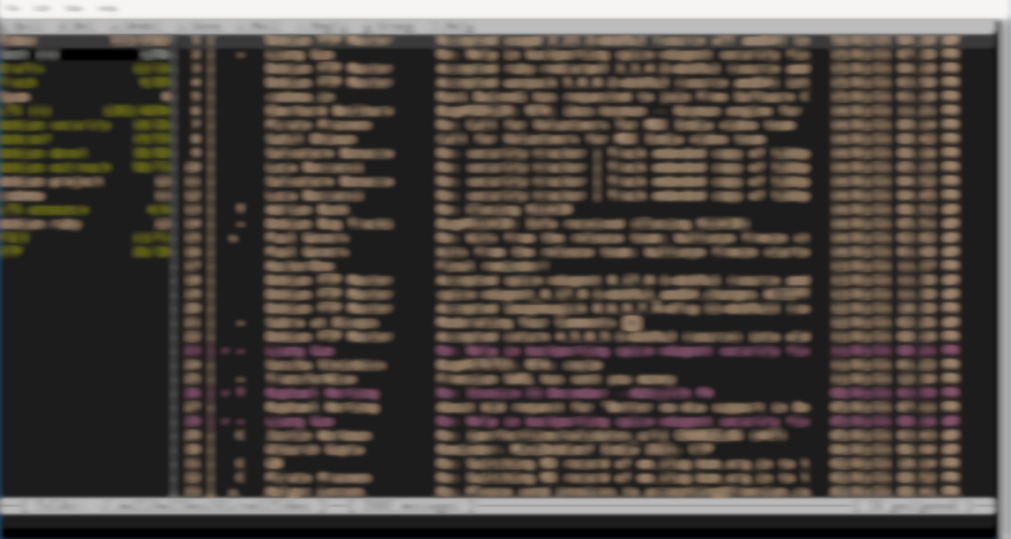
I was going OK with Thunderbird and enigmail(though it have many problems). Normally I go through changelogs before updating packages and rarely do a complete upgrage of my machine. Couple of days ago I did a complete upgrade of system which updated my Thunderbird to latest version and throwing of enigmail plugin for using their native openPGP support. There is a blog from Mozilla which I should ve read earlier. Thunderbird s builtin openPGP functionality is still in experimental, atleast not ready for my workflow. I could ve downgrade to version 68. But I chose to move to my secondary MUA, mutt. I was using mutt for emails and newsletters that I check twice in a year a so. So I started configuring mutt to handle my big mailboxes. It took three evenings to configure mutt to my workflow. Though the basic setup can be done in less than an hour it is the small nitpicks consumed much of my time. Currently I have isync to pull and keep mails offline. Mutt to read, msmtp to send, abook as the email address book and urlview to see the links in mail. I am still learning notmuch and virtual mailbox ways to filter. Mutt There are ton of articles out there to configure mutt and all related things to it. But I find certain configs very hard to get. So I will write down those. So far, everything going okay.
Cons
  • some times mbsync throws EOF and secret key not found error.
  • searching is still a pain in mutt
  • nano s spell checker also check things which I am replying to.

More to come Well for now I moved mail from part of the Thunderbird. But Thunderbird was more than a MUA to me. It was my RSS reader, calendar and to-do list manager. I will write more about those once I make a complete transition.

15 January 2021

Dirk Eddelbuettel: Rcpp 1.0.6: Some Updates

rcpp logo The Rcpp team is proud to announce release 1.0.6 of Rcpp which arrived at CRAN earlier today, and has been uploaded to Debian too. Windows and macOS builds should appear at CRAN in the next few days. This marks the first release on the new six-months cycle announced with release 1.0.5 in July. As reminder, interim dev or rc releases will often be available in the Rcpp drat repo; this cycle there were four. Rcpp has become the most popular way of enhancing R with C or C++ code. As of today, 2174 packages on CRAN depend on Rcpp for making analytical code go faster and further (which is an 8.5% increase just since the last release), along with 207 in BioConductor. This release features six different pull requests from five different contributors, mostly fixing fairly small corner cases, plus some minor polish on documentation and continuous integration. Before releasing we once again made numerous reverse dependency checks none of which revealed any issues. So the passage at CRAN was pretty quick despite the large dependency footprint, and we are once again grateful for all the work the CRAN maintainers do.

Changes in Rcpp patch release version 1.0.6 (2021-01-14)
  • Changes in Rcpp API:
    • Replace remaining few uses of EXTPTR_PTR with R_ExternalPtrAddr (Kevin in #1098 fixing #1097).
    • Add push_back and push_front for DataFrame (Walter Somerville in #1099 fixing #1094).
    • Remove a misleading-to-wrong comment (Mattias Ellert in #1109 cleaning up after #1049).
    • Address a sanitizer report by initializing two private bool variables (Benjamin Christoffersen in #1113).
    • External pointer finalizer toggle default values were corrected to true (Dirk in #1115).
  • Changes in Rcpp Documentation:
    • Several URLs were updated to https and/or new addresses (Dirk).
  • Changes in Rcpp Deployment:
    • Added GitHub Actions CI using the same container-based setup used previously, and also carried code coverage over (Dirk in #1128).
  • Changes in Rcpp support functions:
    • Rcpp.package.skeleton() avoids warning from R. (Dirk)

Thanks to my CRANberries, you can also look at a diff to the previous release. Questions, comments etc should go to the rcpp-devel mailing list off the R-Forge page. Bugs reports are welcome at the GitHub issue tracker as well (where one can also search among open or closed issues); questions are also welcome under rcpp tag at StackOverflow which also allows searching among the (currently) 2616 previous questions. If you like this or other open-source work I do, you can sponsor me at GitHub. My sincere thanks to my current sponsors for me keeping me caffeinated.

This post by Dirk Eddelbuettel originated on his Thinking inside the box blog. Please report excessive re-aggregation in third-party for-profit settings.

Michael Prokop: Revisiting 2020

* Mainly to recall what happened last year and to give thoughts and plan for the upcoming year(s) I m once again revisiting my previous year (previous editions: 2019, 2018, 2017, 2016, 2015, 2014, 2013 + 2012). Due to the Coronavirus disease (COVID-19) pandemic, 2020 was special for several reasons, but overall I consider myself and my family privileged and am very grateful for that. In terms of IT events, I planned to attend Grazer Linuxdays and DebConf in Haifa/Israel. Sadly Grazer Linuxdays didn t take place at all, and DebConf took place online instead (which I didn t really participate in for several reasons). I took part in the well organized DENOG12 + ATNOG 2020/1 online meetings. I still organize our monthly Security Treff Graz (STG) meetups, and for half of the year, those meetings took place online (which worked OK-ish overall IMO). Only at the beginning of 2020, I managed to play Badminton (still playing in the highest available training class (in german: Kader ) at the University of Graz / Universit ts-Sportinstitut, USI). For the rest of the year except for ~2 weeks in October or so the sessions couldn t occur. Plenty of concerts I planned to attend were cancelled for obvious reasons, including the ones I would have played myself. But I managed to attend Jazz Redoute 2020 Dom im Berg, Martin Grubinger in Musikverein Graz and Emiliano Sampaio s Mega Mereneu Project at WIST Moserhofgasse (all before the corona situation kicked in). The concert from Ton Feinig & RTV Slovenia Big Band occurred under strict regulations in Summer, as well as Elektra Opera by Richard Strau in a very special setting (only one piano player instead of the orchestra because of a Corona case in the orchestra) in Autumn. At the beginning of 2020, I also visited Literaturshow Roboter mit Senf at Literaturhaus Graz. The lack of concerts and rehearsals also severely impacted my playing the drums (including at HTU BigBand Graz), which pretty much didn t take place. :( Grml-wise we managed to publish release 2020.06, codename Ausgehfuahangl. Regarding jenkins-debian-glue I tried to clarify its state and received some really lovely feedback. I consider 2020 as the year where I dropped regular usage of Jabber (so far my accounts still exist, but I m no longer regularly online and am not sure for how much longer I ll keep my accounts alive as such). Business-wise it was our seventh year of business with SynPro Solutions GmbH. No big news but steady and ongoing work with my other business duties Grml Solutions and Grml-Forensic. As usual, I shared childcare with my wife. Due to the corona situation, my wife got a new working schedule, which shuffled around our schedule a bit on Mondays + Tuesdays. Still, we managed to handle the homeschooling/distance learning quite well. Currently we re sitting in the third lockdown, and yet another round of homeschooling/distance learning is going on those days (let s see how long ). I counted 112 actual school days in all of 2020 for our older daughter with only 68 school days since our first lockdown on 16th of March, whereas we had 213(!) press conferences by our Austrian government in 2020. (Further rants about the situation in Austria snipped.) Book reading-wise I managed to complete 60 books (see Mein Lesejahr 2020 ). Once again, I noticed that what felt like good days for me always included reading books, so I ll try to keep my reading pace for 2021. I ll also continue with my hobbies Buying Books and Reading Books , to get worse at Tsundoku. Hoping for vaccination and a more normal 2021, Schwuppdiwupp!

Mike Gabriel: UBports: Packaging of Lomiri Operating Environment for Debian (part 04)

Before and during FOSDEM 2020, I agreed with the people (developers, supporters, managers) of the UBports Foundation to package the Unity8 Operating Environment for Debian. Since 27th Feb 2020, Unity8 has now become Lomiri. Things got delayed a little recently as my main developer contact on the upstream side was on sick leave for a while. Fortunately, he has now fully recovered and work is getting back on track. Recent Uploads to Debian related to Lomiri Over the past 3 months I worked on the following bits and pieces regarding Lomiri in Debian: The next projects / packages ahead are lomiri-ui-toolkit, integrating changes required for Lomiri into Ayatana Indicators and then moving on with several other, smaller packages. Credits Many big thanks go to Marius and Dalton for their work on the UBports project and being always available for questions, feedback, etc. Thanks to Florian Leeber for being my point of contact for topcis regarding my cooperation with the UBports Foundation.

13 January 2021

Antoine Beaupr : New phone: Pixel 4a

I'm sorry to announce that I gave up on the Fairphone series and switched to a Google Phone (Pixel 4a) running CalyxOS.

Problems in fairy land My fairphone2, even if it is less than two years old, is having major problems:
  • from time to time, the screen flickers and loses "touch" until I squeeze it back together
  • the camera similarly disconnects regularly
  • even when it works, the camera is... pretty bad: low light is basically unusable, it's slow and grainy
  • the battery can barely keep up for one day
  • the cellular coverage is very poor, in Canada: I lose signal at the grocery store and in the middle of my house...
Some of those problems are known: the Fairphone 2 is old now. It was probably old even when I got it. But I can't help but feel a little sad to let it go: the entire point of that device was to make it easy to fix. But alas, because it's sold only in Europe, local stores don't carry replacement parts. To be fair, Fairphone did offer to fix the device, but with a 2 weeks turnaround, I had to get another phone anyways. I did actually try to buy a fairphone3, from Clove. But they did some crazy validation routine. By email, they asked me to provide a photo copy of a driver's license and the credit card, arguing they need to do this to combat fraud. I found that totally unacceptable and asked them to cancel my order. And because I'm not sure the FP3 will fix the coverage issues, I decided to just give up on Fairphone until they officially ship to the Americas.

Do no evil, do not pass go, do not collect 200$ So I got a Google phone, specifically a Pixel 4a. It's a nice device, all small and shiny, but it's "plasticky" - I would have prefered metal, but it seems you need to pay much, much more to get that (in the Pixel 5). In any case, it's certainly a better form factor than the Fairphone 2: even though the screen is bigger, the device itself is actually smaller and thinner, which feels great. The OLED screen is beautiful, awesome contrast and everything, and preliminary tests show that the camera is much better than the one on the Fairphone 2. (The be fair, again, that is another thing the FP3 improved significantly. And that is with the stock Camera app from CalyxOS/AOSP, so not as good as the Google Camera app, which does AI stuff.)

CalyxOS: success The Pixel 4a not not supported by LineageOS: it seems every time I pick a device in that list, I manage to miss the right device by one (I bought a Samsung S9 before, which is also unsupported, even though the S8 is). But thankfully, it is supported by CalyxOS. That install was a breeze: I was hesitant in playing again with installing a custom Android firmware on a phone after fighting with this quite a bit in the past (e.g. htc-one-s, lg-g3-d852). But it turns out their install instructions, mostly using a AOSP alliance device-flasher works absolutely great. It assumes you know about the commandline, and it does require to basically curl sudo (because you need to download their binary and run it as root), but it Just. Works. It reminded me of how great it was to get the Fairphone with TWRP preinstalled... Oh, and kudos to the people in #calyxos on Freenode: awesome tech support, super nice folks. An amazing improvement over the ambiance in #lineageos! :)

Migrating data Unfortunately, migrating the data was the usual pain in the back. This should improve the next time I do this: CalyxOS ships with seedvault, a secure backup system for Android 10 (or 9?) and later which backs up everything (including settings!) with encryption. Apparently it works great, and CalyxOS is also working on a migration system to switch phones. But, obviously, I couldn't use that on the Fairphone 2 running Android 7... So I had to, again, improvised. The first step was to install Syncthing, to have an easy way to copy data around. That's easily done through F-Droid, already bundled with CalyxOS (including the privileged extension!). Pair the devices and boom, a magic portal to copy stuff over. The other early step I took was to copy apps over using the F-Droid "find nearby" functionality. It's a bit quirky, but really helps in copying a bunch of APKs over. Then I setup a temporary keepassxc password vault on the Syncthing share so that I could easily copy-paste passwords into apps. I used to do this in a text file in Syncthing, but copy-pasting in the text file is much harder than in KeePassDX. (I just picked one, maybe KeePassDroid is better? I don't know.) Do keep a copy of the URL of the service to reduce typing as well. Then the following apps required special tweaks:
  • AntennaPod has an import/export feature: export on one end, into the Syncthing share, then import on the other. then go to the queue and select all episodes and download
  • the Signal "chat backup" does copy the secret key around, so you don't get the "security number change" warning (even if it prompts you to re-register) - external devices need to be relinked though
  • AnkiDroid, DSub, Nextcloud, and Wallabag required copy-pasting passwords
I tried to sync contacts with DAVx5 but that didn't work so well: the account was setup correctly, but contacts didn't show up. There's probably just this one thing I need to do to fix this, but since I don't really need sync'd contact, it was easier to export a VCF file to Syncthing and import again.

Known problems One problem with CalyxOS I found is that the fragile little microg tweaks didn't seem to work well enough for Signal. That was unexpected so they encouraged me to file that as a bug. The other "issue" is that the bootloader is locked, which makes it impossible to have "root" on the device. That's rather unfortunate: I often need root to debug things on Android. In particular, it made it difficult to restore data from OSMand (see below). But I guess that most things just work out of the box now, so I don't really need it and appreciate the extra security. Locking the bootloader means full cryptographic verification of the phone, so that's a good feature to have! OSMand still doesn't have a good import/export story. I ended up sharing the Android/data/net.osmand.plus/files directory and importing waypoints, favorites and tracks by hand. Even though maps are actually in there, it's not possible for Syncthing to write directly to the same directory on the new phone, "thanks" to the new permission system in Android which forbids this kind of inter-app messing around. Tracks are particularly a problem: my older OSMand setup had all those folders neatly sorting those tracks by month. This makes it really annoying to track every file manually and copy it over. I have mostly given up on that for now, unfortunately. And I'll still need to reconfigure profiles and maps and everything by hand. Sigh. I guess that's a good clearinghouse for my old tracks I never use... Update: turns out setting storage to "shared" fixed the issue, see comments below!

Conclusion Overall, CalyxOS seems like a good Android firmware. The install is smooth and the resulting install seems solid. The above problems are mostly annoyances and I'm very happy with the experience so far, although I've only been using it for a few hours so this is very preliminary.

Vincent Fourmond: Taking advantage of Ruby in QSoas

First of all, let me all wish you a happy new year, with all my wishes of health and succes. I sincerely hope this year will be simpler for most people as last year ! For the first post of the year, I wanted to show you how to take advantage of Ruby, the programming language embedded in QSoas, to make various things, like:

Summing the values in a column When using commands that take formulas (Ruby code), like apply-formula, the code is run for every single point, for which all the values are updated. In particulier, the state of the previous point is not known. However, it is possible to store values in what is called global variables, whose name start with an $ sign. Using this, we can keep track of the previous values. For instance, to create a new column with the sum of the y values, one can use the following approach:
QSoas> eval $sum=0
QSoas> apply-formula /extra-columns=1 $sum+=y;y2=$sum
The first line initializes the variable to 0, before we start summing, and the code in the second line is run for each dataset row, in order. For the first row, for instance, $sum is initially 0 (from the eval line); after the execution of the code, it is now the first value of y. After the second row, the second value of y is added, and so on. The image below shows the resulting y2 when used on:
QSoas> generate-dataset -1 1 x


Extending values in a column Another use of the global variables is to add "missing" data. For instance, let's imagine that a files given the variation of current over time as the potential is changed, but the potential is only changed stepwise and only indicated when it changes:
## time	current	potential
0	0.1	0.5
1	0.2
2	0.3
3	0.2
4	1.2	0.6
5	1.3
...
If you need to have the values everywhere, for instance if you need to split on their values, you could also use a global variable, taking advantage of the fact that missing values are represented by QSoas using "Not A Number" values, which can be detected using the Ruby function nan?:
QSoas> apply-formula "if y2.nan?; then y2=$value; else $value=y2;end"
Note the need of quotes because there are spaces in the ruby code. If the value of y2 is NaN, that is it is missing, then it is taken from the global variable $value else $value is set the current value of y2. Hence, the values are propagated down:
## time	current	potential
0	0.1	0.5
1	0.2	0.5
2	0.3	0.5
3	0.2	0.5
4	1.2	0.6
5	1.3	0.6
...
Of course, this doesn't work if the first value of y2 is missing.

Renaming using a pattern The command save-datasets can be used to save a whole series of datasets to the disk. It can also rename them on the fly, and, using the /mode=rename option, does only the renaming part, without saving. You can make full use of meta-data (see also a first post here)for renaming. The full power is unlocked using the /expression= option. For instance, for renaming the last 5 datasets (so numbers 0 to 4) using a scheme based on the value of their pH meta-data, you can use the following code:
QSoas> save-datasets /mode=rename /expression='"dataset-# $meta.pH "' 0..4
The double quotes are cumbersome but necessary, since the outer quotes (') prevent the inner ones (") to be removed and the inner quotes are here to indicate to Ruby that we are dealing with text. The bit inside # ... is interpreted by Ruby as Ruby code; here it is $meta.pH, the value of the "pH" meta-data. Finally the 0..4 specifies the datasets to work with. So theses datasets will change name to become dataset-7 for pH 7, etc...

About QSoas QSoas is a powerful open source data analysis program that focuses on flexibility and powerful fitting capacities. It is released under the GNU General Public License. It is described in Fourmond, Anal. Chem., 2016, 88 (10), pp 5050 5052. Current version is 3.0. You can download its source code there (or clone from the GitHub repository) and compile it yourself, or buy precompiled versions for MacOS and Windows there.

12 January 2021

Petter Reinholdtsen: Latest Jami back in Debian Testing, and scriptable using dbus

After a lot of hard work by its maintainer Alexandre Viau and others, the decentralized communication platform Jami (earlier known as Ring), managed to get its latest version into Debian Testing. Several of its dependencies has caused build and propagation problems, which all seem to be solved now. In addition to the fact that Jami is decentralized, similar to how bittorrent is decentralized, I first of all like how it is not connected to external IDs like phone numbers. This allow me to set up computers to send me notifications using Jami without having to find get a phone number for each computer. Automatic notification via Jami is also made trivial thanks to the provided client side API (as a DBus service). Here is my bourne shell script demonstrating how to let any system send a message to any Jami address. It will create a new identity before sending the message, if no Jami identity exist already:
#!/bin/sh
#
# Usage: $0  
#
# Send  to , create local jami account if
# missing.
#
# License: GPL v2 or later at your choice
# Author: Petter Reinholdtsen
if [ -z "$HOME" ] ; then
    echo "error: missing \$HOME, required for dbus to work"
    exit 1
fi
# First, get dbus running if not already running
DBUSLAUNCH=/usr/bin/dbus-launch
PIDFILE=/run/asterisk/dbus-session.pid
if [ -e $PIDFILE ] ; then
    . $PIDFILE
    if ! kill -0 $DBUS_SESSION_BUS_PID 2>/dev/null ; then
        unset DBUS_SESSION_BUS_ADDRESS
    fi
fi
if [ -z "$DBUS_SESSION_BUS_ADDRESS" ] && [ -x "$DBUSLAUNCH" ]; then
    DBUS_SESSION_BUS_ADDRESS="unix:path=$HOME/.dbus"
    dbus-daemon --session --address="$DBUS_SESSION_BUS_ADDRESS" --nofork --nopidfile --syslog-only < /dev/null > /dev/null 2>&1 3>&1 &
    DBUS_SESSION_BUS_PID=$!
    (
        echo DBUS_SESSION_BUS_PID=$DBUS_SESSION_BUS_PID
        echo DBUS_SESSION_BUS_ADDRESS=\""$DBUS_SESSION_BUS_ADDRESS"\"
        echo export DBUS_SESSION_BUS_ADDRESS
    ) > $PIDFILE
    . $PIDFILE
fi &
dringop()  
    part="$1"; shift
    op="$1"; shift
    dbus-send --session \
        --dest="cx.ring.Ring" /cx/ring/Ring/$part cx.ring.Ring.$part.$op $*
 
dringopreply()  
    part="$1"; shift
    op="$1"; shift
    dbus-send --session --print-reply \
        --dest="cx.ring.Ring" /cx/ring/Ring/$part cx.ring.Ring.$part.$op $*
 
firstaccount()  
    dringopreply ConfigurationManager getAccountList   \
      grep string   awk -F'"' ' print $2 '   head -n 1
 
account=$(firstaccount)
if [ -z "$account" ] ; then
    echo "Missing local account, trying to create it"
    dringop ConfigurationManager addAccount \
      dict:string:string:"Account.type","RING","Account.videoEnabled","false"
    account=$(firstaccount)
    if [ -z "$account" ] ; then
        echo "unable to create local account"
        exit 1
    fi
fi
# Not using dringopreply to ensure $2 can contain spaces
dbus-send --print-reply --session \
  --dest=cx.ring.Ring \
  /cx/ring/Ring/ConfigurationManager \
  cx.ring.Ring.ConfigurationManager.sendTextMessage \
  string:"$account" string:"$1" \
  dict:string:string:"text/plain","$2" 
If you want to check it out yourself, visit the the Jami system project page to learn more, and install the latest Jami client from Debian Unstable or Testing. As usual, if you use Bitcoin and want to show your support of my activities, please send Bitcoin donations to my address 15oWEoG9dUPovwmUL9KWAnYRtNJEkP1u1b.

10 January 2021

Enrico Zini: Viewing OpenStreetMap

weeklyOSM posts lots of interesting links. Here are some beautiful views of OpenStreetMap edits and renderings:

Iustin Pop: Dealing with evil ads

Background I usually don t mind ads, as not as they not very intrusive. I get that the current media model is basically ad-funded, and that unless I want to pay $1/month or so to 50 web sites, I have to accept ads, so I don t run an ad-blocker. Sure, sometimes are annoying (hey YT, mid-roll ads are borderline), but I ve also seen many good ads, as in interesting or funny even. Well, I don t think I ever bought anything as direct result from ads, so I don t know how useful ads are for the companies, but hey, what do I care. Except there a few ad networks that run what I would say are basically revolting ads. Things I don t want to ever accidentally see while eating, or things that are really make you go WTF? Maybe you know them, maybe you don t, but I guess there are people who don t know how to clean their ears, or people for whom a fast 7 day weight loss routine actually works. Thankfully, most of the time I don t browse sites which use this networks, but randomly they do leak to even sites I do browse. If I m not very stressed already, I can ignore them, otherwise they really, really annoy me. Case in point, I was on Slashdot, and because I was logged on and recently had mod points, the right side column had a check-box disable ads . That sidebar had some relatively meaningful ads, like a VPN subscription (not that I would use it, but it is a tech thing), or even a book about Kali Linux, etc. etc. So I click the disable ads , and the right column goes away. I scroll down happily, only to be met, at the bottom, by the best way to clean your ear , the most 50 useless planes ever built (which had a drawing of something that was for sure never ever built outside of in movies), you won t believe how this child actor looks today , etc.

Solving the problem The above really, really pissed me off, so I went to search how to block ad network . To my surprise, the fix was not that simple, for standard users at least.

Method 1: hosts file The hosts file is reasonable as it is relatively cross-platform (Linux and Windows and Mac, I think), but how the heck do you edit hosts on your phone? And furthermore, it has some significant downsides. First, /etc/hosts lists individual hosts, so for an entire ad network, the example I had had two screens of host names. This is really unmaintainable, since rotating host names, or having a gazillion of them is trivial. Second, it cannot return negative answers. I.e. you have to give each of those hosts a valid IPv4/IPv6, and have something either reply with 404 or another 4xx response, or not listen on port 80/443. Too annoying. And finally, it s a client-side solution, so one would have to replicate it across all clients in a home, and keep it in sync.

Method 2: ad-blockers I dislike ad-blockers on principle, since they need wide permissions on all pages, but it is a recommended solution. However, to my surprise, one finds threads saying ad-blocker foo has whitelisted ad network bar, at which point you re WTF? Why do I use an ad-blocker if they get paid by the lowest of the ad networks to show the ads? And again, it s a client-side solution, and one would have to deploy it across N clients, and keep them in sync, etc.

Method 3: HTTP proxy blocking To my surprise, I didn t find this mentioned in a quick internet search. Well, HTTP proxies have long gone the way of the dodo due to HTTPs everywhere , and while one can still use them even with HTTPS, it s not that convenient:
  • you need to tunnel all traffic through them, which might result in bottlenecks (especially for media playing/maybe video-conference/etc.).
  • or even worse, there might be protocol issues/incompatibilities due to 100% tunneling.
  • running a proxy opens up some potential security issues on the internal network, so you need to harden the proxy as well, and maintain it.
  • you need to configure all clients to know about the proxy (via DHCP or manually), which might or might not work well, since it s client-dependent.
  • you can only block at CONNECT level (host name), and you have to build up regexes for the host name.
On the good side, the actual blocking configuration is centralised, and the only distributed configuration is pointing the clients through the proxy. While I used to run a proxy back in HTTP times, the gains were significant back them (media elements caching, downloads caching, all with a slow pipe, etc.), but today is not worth it, so I ve stopped and won t bring a proxy back just for this.

Method 4: DNS resolver filtering After thinking through all the options, I thought - hey, a caching/recursive DNS resolver is what most people with a local network run, right? How difficult is to block at resolver level? and oh my, it is so trivial, for some resolvers at least. And yes, I didn t know about this a week ago

Response Policy Zones Now, of course, there is a standard for this, called Response Policy Zone, and which is supported across multiple resolvers. There are many tutorials on how to use RPZs to configure things, some of them quite detailed - e.g. this one, or a simple/more straightforward one here. The upstream BIND documentation also explains things quite well here, so you can go that route as well. It looks a bit hairy for me thought, but it works, and since it is a standard, it can be more easily deployed. There are many discussions on the internet about how to configure RPZs, how to not even resolve the names (if you re going to return something explicitly/statically), etc. so there are docs, but again it seems a bit overdone.

Resolver hooks There s another way too, if your resolver allows scripting. For example, the PowerDNS resolver allow Lua scripting, and has a relatively simple API at least, to me it looks way, way simpler than the RPZ equivalent. After 20 minutes of reading the docs, I ended up with this, IMO trivial, solution (in a file named e.g. rules.lua):
ads = newDS()
ads:add( 'evilads.com', 'evilads.well-known-cdn.com', 'moreads.net' )

function preresolve(dq)
  if ads:check(dq.qname) then
    dq.rcode = pdns.NXDOMAIN
    return true;
  end
  return false;
end
and that s it. Well, enable it/load the file in the configuration, but nothing else. Syntax is pretty straightforward, matching by suffix here, and if you need more complex stuff, you can of course do it; it s just Lua and a simple API. I don t see any immediate equivalent in Bind, so there s that, but if you can use PowerDNS, then the above solution seems simple for simple cases, and could be extended if needed (not sure in which cases). The only other thing one needs to do is to serve the local/custom resolver to all clients, whether desktop or mobile, and that s it. DNS server is bread-and-butter in DHCP, so better support than proxy, and once the host name has been (mis)resolved, nothing is involved anymore in the communication path. True, your name server might get higher CPU usage, but for home network, this should not be a problem. Can this filtering method (either RPZ or hooks) be worked around by ad networks? Sure, like anything. But changing the base domain is not fun. DNSSEC might break it (note Bind RPZ can be configure to ignore DNSSEC), but I m more worried about DNS-over-HTTPS, which I thought initially it s done for the user, but now I m not so sure anymore. Not being in control even of your own DNS resolver seems evil , but what do I know.

Combined authoritative + recursive solution This solution was provided by Guillem Jover, who uses unbound, which is a combined authoritative name server and recursive resolver in one, and dnsmasq (which is even more things, I think):
For my LANs I use unbound, and then block this kind of thing in /etc/unbound/unbound.conf.d/block.conf, with stuff like:
server:
 local-zone: adsite.example.com refuse
But then for things that are mobile, and might get out of the LAN, such as laptops, I also block with dnsmasq in /etc/dnsmasq.d/block.conf, with stuff like:
 address=/adsite.example.com/
I still use ublock-origin to block stuff at the browser level, though, for yet an extra layer of noise suppression. :)
Thanks for the info!

Happy browsing! 10 lines of Lua, and now for sure I m going to get even fatter without the this natural method will melt your belly fat in 7 days information. Or I will just throw away banana peels without knowing what I could do with hem. After a few days, I asked myself but ads are not so bad, why did I and then realised that yes, ads are not so bad anymore. And Slashdot actually loads faster So, happy browsing!

9 January 2021

Jonathan McDowell: Free Software Activities for 2020

As a reader of Planet Debian I see a bunch of updates at the start of each month about what people are up to in terms of their Free Software activities. I m not generally active enough in the Free Software world to justify a monthly report, but I did a report of my Free Software Activities for 2019 and thought I d do another for 2020. I ended up not doing as much as last year; I put a lot of that down to fatigue about the state of the world and generally not wanting to spend time on the computer at the end of the working day.

Conferences 2020 was unsurprisingly not a great year for conference attendance. I was fortunate enough to make it to FOSDEM and CopyleftConf 2020 - I didn t speak at either, but had plenty of interesting hallway track conversations as well as seeing some good talks. I hadn t been planning to attend DebConf20 due to time constraints, but its move to an entirely online conference meant I was able to attend a few talks at least. I have to say I don t like virtual conferences as much as the real thing; it s not as easy to have the casual chats at them, and it s also harder to carve out the exclusive time when you re at home. That said I spoke at NIDevConf this year, which was also fully virtual. It s not a Free Software focussed conference, but there s a lot of crossover in terms of technologies and I spoke on my experiences with Go, some of which are influenced by my packaging experiences within Debian.

Debian Most of my contributions to Free software happen within Debian. As part of the Data Protection Team I responded to various inbound queries to that team. Some of this involved chasing up other project teams who had been slow to respond - folks, if you re running a service that stores personal data about people then you need to be responsive to requests about it. The Debian Keyring was possibly my largest single point of contribution. We re in a roughly 3 month rotation of who handles the keyring updates, and I handled 2020.02.02, 2020.03.24, 2020.06.24, 2020.09.24 + 2020.12.24 For Debian New Members I m mostly inactive as an application manager - we generally seem to have enough available recently. If that changes I ll look at stepping in to help, but I don t see that happening. I continue to be involved in Front Desk, having various conversations throughout the year with the rest of the team, but there s no doubt Mattia and Pierre-Elliott are the real doers at present. In terms of package uploads I continued to work on gcc-xtensa-lx106, largely doing uploads to deal with updates to the GCC version or packaging (5, 6 + 7). sigrok had a few minor updates, libsigkrok 0.5.2-2, libsigrokdecode 0.5.3-2 as well as a new upstream release of Pulseview 0.4.2-1 and a fix to cope with change to QT 0.4.2-2. Due to the sigrok-firmware requirement on sdcc I also continued to help out there, updating to 4.0.0+dfsg-1 and doing some fixups in 4.0.0+dfsg-2. Despite still not writing an VHDL these days I continue to try and make sure ghdl is ok, because I found it a useful tool in the past. In 2020 that meant a new upstream release, 0.37+dfsg-1 along with a couple of more minor updates (0.37+dfsg-2 + 0.37+dfsg-3. libcli had a new upstream release, 1.10.4-1, and I did a long overdue update to sendip to the latest upstream release, 2.6-1 having been poked about an outstanding bug by the Reproducible Builds folk. OpenOCD is coming up to 4 years since its last stable release, but I did a snapshot upload to Debian experimental (0.10.0+g20200530-1) and a subsequent one to unstable (0.10.0+g20200819-1). There are also moves to produce a 0.11.0 release and I uploaded 0.11.0~rc1-1 as a result. libjaylink got a bump as a result (0.2.0-1) after some discussion with upstream.

OpenOCD On the subject of OpenOCD I ve tried to be a bit more involved upstream. I m not familiar enough with the intricacies of JTAG/SWD/the various architectures supported to contribute to the core, but I pushed the config for my HIE JTAG adapter upstream and try and review patches that don t require in depth hardware knowledge.

Linux I ve been contributing to the Linux kernel for a number of years now, mostly just minor bits here and there for issues I hit. This year I spent a lot of time getting support for the MikoTik RB3011 router upstreamed. That included the basic DTS addition, fixing up QCA8K to support SGMII CPU connections, adding proper 802.1q VLAN support to QCA8K and cleaning up an existing QCOM ADM driver that s required for the NAND. There were a number of associated bugfixes/minor changes found along the way too. It can be a little frustrating at times going round the review loop with submitting things upstream, but I do find it quite satisfying when it all comes together and I have no interest in weird vendor trees that just bitrot over time.

Software in the Public Interest I haven t sat on the board of SPI since 2015 but I was still acting as the primary maintainer of the membership website (with Martin Michlmayr as the other active contributor) and hosting it on my own machine. I managed to finally extricate myself from this role in August. I remain a contributing member.

Personal projects 2020 finally saw another release (0.6.0, followed swiftly by 0.6.1 to allow the upload of 0.6.1-1 to Debian) of onak. This release finally adds various improvements to deal with the hostility shown to the OpenPGP keyserver network in recent years, including full signature verification as an option. I fixed an oversight in my Digoo/1-wire temperature decoder and a bug that turned up on ARM but not MIPS in my mqtt-arp code. I should probably package it for Debian (even if I don t upload it), as I m running it on my RB3011 now.

Thorsten Alteholz: My Debian Activities in December 2020

FTP master This month I only accepted 8 packages and like last month rejected 0. Despite the holidays 293 packages got accepted. Debian LTS This was my seventy-eighth month that I did some work for the Debian LTS initiative, started by Raphael Hertzog at Freexian. This month my all in all workload has been 26h. During that time I did LTS uploads of: Unfortunately package slirp has the same version in Stretch and Buster. So I first had to upload slirp/1:1.0.17-11 to unstable, in order to be allowed to fix the CVE in Buster and to finally upload a new version to Stretch. Meanwhile the fix for Buster has been approved by the Release Team and I am waiting for the next point release now. I also prepared a debdiff for influxdb, which will result in DSA-4823-1 in January. As there appeared new CVEs for openjpeg2, I did not do an upload yet. This is planned for January now. Last but not least I did some days of frontdesk duties. Debian ELTS This month was the thirtieth ELTS month. During my allocated time I uploaded: As well as for LTS, I did not finish work on all CVEs of openjpeg2, so the upload is postponed to January. Last but not least I did some days of frontdesk duties. Unfortunately I also had to give back some hours. Other stuff This month I uploaded new upstream versions of: I fixed one or two bugs in: I improved packaging of: Some packages just needed a source upload: and there have been even some new packages: With these uploads I finished the libosmocom- and libctl-transitions. The Debian Med Advent Calendar was again really successful this year. There was no new record, but with 109, the second most number of bugs has been closed.
year number of bugs closed
2011 63
2012 28
2013 73
2014 5
2015 150
2016 95
2017 105
2018 81
2019 104
2020 109
Well done everybody who participated. It is really nice to see that Andreas is no longer a lone wolf.

Louis-Philippe V ronneau: puppetserver 6: a Debian packaging post-mortem

I have been a Puppet user for a couple of years now, first at work, and eventually for my personal servers and computers. Although it can have a steep learning curve, I find Puppet both nimble and very powerful. I also prefer it to Ansible for its speed and the agent-server model it uses. Sadly, Puppet Labs hasn't been the most supportive upstream and tends to move pretty fast. Major versions rarely last for a whole Debian Stable release and the upstream .deb packages are full of vendored libraries.1 Since 2017, Apollon Oikonomopoulos has been the one doing most of the work on Puppet in Debian. Sadly, he's had less time for that lately and with Puppet 5 being deprecated in January 2021, Thomas Goirand, Utkarsh Gupta and I have been trying to package Puppet 6 in Debian for the last 6 months. With Puppet 6, the old ruby Puppet server using Passenger is not supported anymore and has been replaced by puppetserver, written in Clojure and running on the JVM. That's quite a large change and although puppetserver does reuse some of the Clojure libraries puppetdb (already in Debian) uses, packaging it meant quite a lot of work. Work in the Clojure team As part of my efforts to package puppetserver, I had the pleasure to join the Clojure team and learn a lot about the Clojure ecosystem. As I mentioned earlier, a lot of the Clojure dependencies needed for puppetserver were already in the archive. Unfortunately, when Apollon Oikonomopoulos packaged them, the leiningen build tool hadn't been packaged yet. This meant I had to rebuild a lot of packages, on top of packaging some new ones. Since then, thanks to the efforts of Elana Hashman, leiningen has been packaged and lets us run the upstream testsuites and create .jar artifacts closer to those upstream releases. During my work on puppetserver, I worked on the following packages:

List of packages
  • backport9
  • bidi-clojure
  • clj-digest-clojure
  • clj-helper
  • clj-time-clojure
  • clj-yaml-clojure
  • cljx-clojure
  • core-async-clojure
  • core-cache-clojure
  • core-match-clojure
  • cpath-clojure
  • crypto-equality-clojure
  • crypto-random-clojure
  • data-csv-clojure
  • data-json-clojure
  • data-priority-map-clojure
  • java-classpath-clojure
  • jnr-constants
  • jnr-enxio
  • jruby
  • jruby-utils-clojure
  • kitchensink-clojure
  • lazymap-clojure
  • liberator-clojure
  • ordered-clojure
  • pathetic-clojure
  • potemkin-clojure
  • prismatic-plumbing-clojure
  • prismatic-schema-clojure
  • puppetlabs-http-client-clojure
  • puppetlabs-i18n-clojure
  • puppetlabs-ring-middleware-clojure
  • puppetserver
  • raynes-fs-clojure
  • riddley-clojure
  • ring-basic-authentication-clojure
  • ring-clojure
  • ring-codec-clojure
  • shell-utils-clojure
  • ssl-utils-clojure
  • test-check-clojure
  • tools-analyzer-clojure
  • tools-analyzer-jvm-clojure
  • tools-cli-clojure
  • tools-reader-clojure
  • trapperkeeper-authorization-clojure
  • trapperkeeper-clojure
  • trapperkeeper-filesystem-watcher-clojure
  • trapperkeeper-metrics-clojure
  • trapperkeeper-scheduler-clojure
  • trapperkeeper-webserver-jetty9-clojure
  • url-clojure
  • useful-clojure
  • watchtower-clojure
If you want to learn more about packaging Clojure libraries and applications, I rewrote the Debian Clojure packaging tutorial and added a section about the quirks of using leiningen without a dedicated dh_lein tool. Work left to get puppetserver 6 in the archive Unfortunately, I was not able to finish the puppetserver 6 packaging work. It is thus unlikely it will make it in Debian Bullseye. If the issues described below are fixed, it would be possible to to package puppetserver in bullseye-backports though. So what's left? jruby Although I tried my best (kudos to Utkarsh Gupta and Thomas Goirand for the help), jruby in Debian is still broken. It does build properly, but the testsuite fails with multiple errors: jruby testsuite failures aside, I have not been able to use the jruby.deb the package currently builds in jruby-utils-clojure (testsuite failure). I had the same exact failure with the (more broken) jruby version that is currently in the archive, which leads me to think this is a LOAD_PATH issue in jruby-utils-clojure. More on that below. To try to bypass these issues, I tried to vendor jruby into jruby-utils-clojure. At first I understood vendoring meant including upstream pre-built artifacts (jruby-complete.jar) and shipping them directly. After talking with people on the #debian-mentors and #debian-ftp IRC channels, I now understand why this isn't a good idea (and why it's not permitted in Debian). Many thanks to the people who were patient and kind enough to discuss this with me and give me alternatives. As far as I now understand it, vendoring in Debian means "to have an embedded copy of the source code in another package". Code shipped that way still needs to be built from source. This means we need to build jruby ourselves, one way or another. Vendoring jruby in another package thus isn't terribly helpful. If fixing jruby the proper way isn't possible, I would suggest trying to build the package using embedded code copies of the external libraries jruby needs to build, instead of trying to use the Debian libraries.2 This should make it easier to replicate what upstream does and to have a final .jar that can be used. jruby-utils-clojure This package is a first-level dependency for puppetserver and is the glue between jruby and puppetserver. It builds fine, but the testsuite fails when using the Debian jruby package. I think the problem is caused by a jruby LOAD_PATH issue. The Debian jruby package plays with the LOAD_PATH a little to try use Debian packages instead of downloading gems from the web, as upstream jruby does. This seems to clash with the gem-home, gem-path, and jruby-load-path variables in the jruby-utils-clojure package. The testsuite plays around with these variables and some Ruby libraries can't be found. I tried to fix this, but failed. Using the upstream jruby-complete.jar instead of the Debian jruby package, the testsuite passes fine. This package could clearly be uploaded to NEW right now by ignoring the testsuite failures (we're just packaging static .clj source files in the proper location in a .jar). puppetserver jruby issues aside, packaging puppetserver itself is 80% done. Using the upstream jruby-complete.jar artifact, the testsuite fails with a weird Clojure error I'm not sure I understand, but I haven't debugged it for very long. Upstream uses git submodules to vendor puppet (agent), hiera (3), facter and puppet-resource-api for the testsuite to run properly. I haven't touched that, but I believe we can either: Without the testsuite actually running, it's hard to know what files are needed in those packages. What now Puppet 5 is now deprecated. If you or your organisation cares about Puppet in Debian,3 puppetserver really isn't far away from making it in the archive. Very talented Debian Developers are always eager to work on these issues and can be contracted for very reasonable rates. If you're interested in contracting someone to help iron out the last issues, don't hesitate to reach out via one of the following: As for I, I'm happy to say I got a new contract and will go back to teaching Economics for the Winter 2021 session. I might help out with some general Debian packaging work from time to time, but it'll be as a hobby instead of a job. Thanks The work I did during the last 6 weeks would be not have been possible without the support of the Wikimedia Foundation, who were gracious enough to contract me. My particular thanks to Faidon Liambotis, Moritz M hlenhoff and John Bond. Many, many thanks to Rob Browning, Thomas Goirand, Elana Hashman, Utkarsh Gupta and Apollon Oikonomopoulos for their direct and indirect help, without which all of this wouldn't have been possible.

  1. For example, the upstream package for the Puppet Agent vendors OpenSSL.
  2. One of the problems of using Ruby libraries already packaged in Debian is that jruby currently only supports Ruby 2.5. Ruby libraries in Debian are currently expected to work with Ruby 2.7, with the transition to Ruby 3.0 planned after the Bullseye release.
  3. If you run Puppet, you clearly should care: the .deb packages upstream publishes really aren't great and I would not recommend using them.

8 January 2021

Reproducible Builds (diffoscope): diffoscope 164 released

The diffoscope maintainers are pleased to announce the release of diffoscope version 164. This version includes the following changes:
[ Chris Lamb ]
* Truncate jsondiff differences at 512 bytes lest they consume the entire page.
* Wrap our external call to cmp(1) with a profile (to match the internal
  profiling).
* Add a note regarding the specific ordering of the new
  all_tools_are_listed test.
[ Dimitrios Apostolou ]
* Performance improvements:
  - Improve speed of has_same_content by spawning cmp(1) less frequently.
  - Log whenever the external cmp(1) command is spawn.ed
  - Avoid invoking external diff for identical, short outputs.
* Rework handling of temporary files:
  - Clean up temporary directories as we go along, instead of at the end.
  - Delete FIFO files when the FIFO feeder's context manager exits.
[ Mattia Rizzolo ]
* Fix a number of potential crashes in --list-debian-substvars, including
  explicitly listing lipo and otool as external tools.
 - Remove redundant code and let object destructors clean up after themselves.
[ Conrad Ratschan ]
* Add a comparator for Flattened Image Trees (FIT) files, a boot image format
  used by U-Boot.
You find out more by visiting the project homepage.

6 January 2021

Urvika Gola: Dog tails and tales from 2020

There is no denying in the fact that 2020 was a challenging year for everybody, including animals. In India, animals such as dogs who mostly filled their bellies at street food stalls, were starving as there were no street eateries operating during a long long lockdown. I was in my home town, New Delhi, working from home like most of us. During the month of July 2020, a dog near the place I live (we fondly called her Brownie) delivered 7 pups in wilderness. I would never forget my first sight of them, inside a dirty, garbage filled land there were the cutest, cleanest, tiniest ball of fur! All of them were toppled as the land s surface was uneven.. The first instinct was to put them all together on a flat surface. After the search mission completed, this was the sight..
Brownie and her litter put together in the same land where she gave birth.
The next day, I sought help from a animal-lover person to build a temporary shed for the puppies! We came and changed sheets, cleaned the surroundings and put fresh water for Brownie until
..it started raining heavily one night and we were worried if the shed would sustain the heavy rainfall.
Next morning the first thing was to check on the pups, luckily, the pups were fine however, the entire area and their bed was damp. Without any second thought, the pups were moved from there to a safe house shelter as it was predicted that the rains will continue for a few more weeks due to monsoon. Soon, 2 months went by, from observing the pups crawl over, their eyes open and to their first bark, despite the struggles, it was an beautiful experience.
Brownie weaned off the pups and thus, they were ready for adoption! However, my biggest fear was, will anyone come forward to adopt them??

With such thoughts parallelly running in my mind, I started to post about adoption for these 7 pups.
To my biggest surprise, one by one, 5 amazing humans came forward and decided to give these pups a better life than what they would get on the streets of India. I wouldn t be able to express in words how grateful I will to be all the five dog parents who decided to adopt an Indian Street Puppy/Indies/Desi Puppy, opening up the space in their hearts and homes for the pups!

One of the 5 adopted pups is adopted by a person who hails from USA, but currently working in India. It s so heartwarming to see, that in India, despite so much awareness created against breeders and their methods, people still prefer to go for foreign bred puppy and disregard Indian/Desi Dogs.. On the other hand, there are foreigners who value the life of a Indian/Desi Dog : )

The 5 Adopted Pups who now have a permanent loving family!

The adorable, Robin !
Don and his new big brother!
The naughty and handsome, Swayze !
First Pup who got adopted Pluto
Playful and Beautiful, Bella !
If this isn t perfect, I don t know what is! God had planned loving families for them and they found it..
However, Its been almost six months now, that we haven t found a permanent home for 2 of the 7 pups, but they have the perfect foster family taking care of them right now.

UP FOR ADOPTION Delhi/NCR
Meet Momo and Beesa,
2 out of the 7 pups, who are still waiting for a forever home, currently living with a loving foster family.

Vaccinations, Deworming is done.
Female pups, 6 months old.

Now as winters are here, Along with one of my friend, who is also fostering the two pups, arranged gunny sack bags for our street, stray dogs. Two NGOs namely, Lotus Indie Foundation and We Exist Foundation who work Animal Welfare in India, were providing dog beds to ground volunteers like us. We are fortunate that they selected us and helped us to make winters less harsh for the stray dogs. However, the cold is such, I also purchased dog coats as well and put in on a few furries. After hours of running behind dogs and convincing them to wear coats, we managed to put it on a few.
Brownie, the mom dog!
This is a puppy!
She did not let us put coat on her
Another topic that needs more sensitivity is Sterilization/Neutering of dogs, that s a viable method cited by the Government to control dog population and end suffering of puppies who die under the wheels of cars. However, the implementation of this is worrisome, as it s not as robust. In a span of 6 months, I managed to get 5 dog sterilized in my area, number is not big but I feel it s a good start as an individual  When I see them now, healthier, happier, running around, with no fear of getting attacked by dogs, I can t express the content I feel. For 2 of the dogs (Brownie and her friend) I got it done personally from a private vet. For the other 3, I got it done via Municipal Corporations who do it for free for dogs, you d have to call them and they come with dog catchers and a van and drop them back in the same area, but volunteers like us have to be very vigilant and active during the whole process to follow up with them.
Dogs getting dropped off after sterilization.
My 2020 ended with this, I am not sure why I am I even writing this in my blog where mostly I focused on my technical work and experiences, but this pandemic was challenging was everybody and what we planned couldn t happen, but because of 2020, because of the pandemic, I was on WFH in my city and I was able to help a few dogs in my area have a healthy life ahead!

What I learned during this entire adventure was, there are a lot of sweet, sensitive, caring people that we are just yet to meet. Along the way, we will also meet insensitive and discouraging people, who are unwilling to change or listen, ignore them and continue your good.

Have 1 person by your side, it s so much stronger than 10 against you. Silver lining! Hope you all had some positive experiences despite the adversity faced by every single one of us.

Jonathan Dowland: PaperWM

My PaperWM desktop, as I write this post. My PaperWM desktop, as I write this post.
Just before Christmas I decided to try out a GNOME extension I'd read about, PaperWM. It looked promising, but I was a little nervous about breaking my existing workflow, which was heavily reliant on the Put Windows extension. It's great! I have had to carefully un-train some of my muscle memory but it seems to be worth it. It seems to strike a great balance between the rigidity of a tile-based window manager and a more traditional floating-windows one. I'm always wary of coming to rely upon large extensions or plugins. The parent software is often quite hands-off about caring about supporting users of them, or breaking them by making API changes. Certainly those Firefox users who were heavily dependent on plugins prior to the Quantum fire-break are still very, very angry. (I actually returned to Firefox at that point, so I avoided the pain, and enjoy the advantages of the re-architecture). PaperWM hopefully is large enough and popular enough to avoid that fate.

5 January 2021

Steve Kemp: Brexit has come

Nothing too much has happened recently, largely as a result of the pandemic killing a lot of daily interests and habits. However as a result of Brexit I'm having to do some paperwork, apparently I now need to register for permanent residency under the terms of the withdrawal agreement, and that will supersede the permanent residency I previously obtained. Of course as a UK citizen I've now lost the previously-available freedom of movement. I can continue to reside here in Helsinki, Finland, indefinitely, but I cannot now move to any other random EU country. It has crossed my mind, more than a few times, that I should attempt to achieve Finnish citizenship. As a legal resident of Finland the process is pretty simple, I just need two things: Of course the latter requirement is hard, I can understand a lot of spoken and written Finnish, but writing myself, and speaking a lot is currently beyond me. I need to sit down and make the required effort to increase my fluency. There is the alternative option of learning Swedish, which is a hack a lot of immigrants use: Finland has two official languages, and so the banks, the medical world, the tax-office, etc, are obliged to provide service in both. However daily life, ordering food at restaurants, talking to parents in the local neighborhood? Finnish, or English are the only real options. So if I went this route I'd end up in a weird situation where I had to learn a language to pass a test, but then would continue to need to learn more Finnish to live my life. That seems crazy, unless I were desperate for a second citizenship which I don't think I am. Learning Finnish has not yet been a priority, largely because I work in English in the IT-world, and of course when I first moved here I was working (remotely) for a UK company, and didn't have the time to attend lessons (because they were scheduled during daytime, on the basis that many immigrants are unemployed). Later we had a child, which meant that early-evening classes weren't a realistic option either. (Of course I learned a lot of the obvious things immediately upon moving, things like numbers, names for food, days of the week were essential. Without those I couldn't have bought stuff in shops and would have starved!) On the topic of languages a lot of people talk about how easy it is for children to pick up new languages, and while that is broadly true it is also worth remembering just how many years of correction and repetition they have to endure as part of the process. For example we have a child, as noted already, he is spoken to by everybody in Finnish. I speak to him in English, and he hears his mother and myself speaking English. But basically he's 100% Finnish with the exception of: If he speaks Finnish to me I pretend to not understand him, even when I do, just for consistency. As a result of that I've heard him tell strangers "Daddy doesn't speak Finnish" (in Finnish) when we've been stopped and asked for directions. He also translates what some other children have said into English for my benefit which is adorable Anyway he's four, and he's pretty amazing at speaking to everybody in the correct language - he's outgrown the phase where he'd mix different languages in the same sentence ("more leip ", "saisinko milk") - when I took him to the UK he surprised and impressed me by being able to understand a lot of the heavy/thick accents he'd never heard before. (I'll still need to train him on Rab C. Nesbitt when he's a wee bit older, but so far no worries.) So children learn languages, easily and happily? Yes and no. I've spent nearly two years correcting his English and he still makes the same mistake with gender. It's not a big deal, at all, but it's a reminder that while children learn this stuff, they still don't do it as easily as people imagine. I'm trying to learn and if I'd been corrected for two years over the same basic point you'd rightly think I was "slow", but actually that's just how it works. Learning languages requires a hell of a lot of practice, a lot of effort, and a lot of feedback/corrections. Specifically Finnish doesn't have gendered pronouns, the same word is used for "he" and "she". This leads to a lot of Finnish people, adults and children, getting the pronouns wrong in English. In the case of our child he'll say "Mommy is sleeping, when he wake up?" In the case of adults I've heard people say "My girlfriend is a doctor, he works in a hospital", or "My dad is an accountant, she works for a big firm". As I say I've spent around two years making this correction to the child, and he's still nowhere near getting it right. Kinda adorable actually:

4 January 2021

Iustin Pop: Year 2020 review

Year 2020. What a year! Sure, already around early January there were rumours/noise about Covid-19, but who would have thought where it will end up! Thankfully, none of my close or extended family was directly (medically) affected by Covid, so I/we had a privileged year compared to so many other people. I thought how to write a mini-summary, but prose is too difficult, so let s just go month-by-month. Please note that my memory is fuzzy after 9 months cooked up in the apartment, so things could 1 month compared to what I wrote.

Timeline

January Ski weekend. Skiing is awesome! Cancelling a US work trip since there will be more opportunities soon (har har!).

February Ski vacation. Yep, skiing is awesome. Can t wait for next season (har har!). Discussions about Covid start in the office, but more is this scary or just interesting? (yes, this was before casualties). Then things start escalating, work-from-home at least partially, etc. etc. Definitely not just intersting anymore. In Garmin-speak, I got ~700+ intensity minutes in February (correlates with activity time, but depends on intensity of the effort whether 1:1 or 2 intensity minutes for one wall-clock minute).

March Sometimes during the month, my workplace introduces mandatory WFH. I remember being the last person in our team in the office, on the last day we were allowed to work, and cleaning my desk/etc., thinking all this, and we ll be back in 3 weeks or so . Har har! I buy a webcam, just in case WFH gets extended. And start to increase my sports - getting double the intensity minutes (1500+).

April Switzerland enters the first, hard, lockdown. Or was it late March? Not entirely sure, but in my mind March was the opening, and April was the first main course. It is challenging, having to juggle family and work and stressed schedule, but also interesting. Looking back, I think I liked April the most, as people were actually careful at that time. I continue upgrading my home office - new sound system, so that I don t have to plug in/plug out cables. 1700+ intensity minutes this month.

May Continued WFH, somewhat routine now. My then internet provider started sucking hard, so I upgrade with good results. I m still happy, half a year later (quite happy, even). Still going strong otherwise, but waiting for summer vacation, whatever it will be. A tiny bit more effort, so 1800 intensity minutes in May.

June Switzerland relaxes the lock down, but not my company, so as the rest of the family goes out and about, I start feeling alone in the apartment. And somewhat angry at it, which impacts my sports (counter-intuitively), so I only get 1500 intensity minutes. I go and buy a coffee machine a real one, that takes beans and grinds them, so I get to enjoy the smell of freshly-ground coffee and the fun of learning about coffee beans, etc. But it occupies the time. On the work/job front, I think at this time I finally got a workstation for home, instead of a laptop (which was ultra-portable too), so together with the coffee machine, it feels like a normal work environment. Well, modulo all the people. At least I m not crying anymore every time I open a new tab in Chrome

July Situation is slowly going better, but no, not my company. Still mandatory WFH, with (if I recall correctly) one day per week allowed, and no meeting other people. I get angrier, but manage to channel my energy into sports, almost doubly my efforts in July - 2937 intensity minutes, not quite reaching the 3000 magic number. I buy more stuff to clean and take care of my bicycles, which I don t really use. So shopping therapy too.

August The month starts with a one week family vacation, but I take a bike too, so I manage to put in some effort (it was quite nice riding TBH). A bit of changes in the personal life (nothing unexpected), which complicates things a bit, but at this moment I really thought Switzerland is going to continue to decrease in infections/R-factor/etc. so things will get back to normal, right? My company expands a bit the work-from-office part, so I m optimistic. Sports wise, still going strong, 2500 intensity minutes, preparing for the single race this year.

September The personal life changes from August start to stabilise, so things become again routine, and I finally get to do a race. Life was good for an extended weekend (well, modulo race angst, but that s part of the fun), and I feel justified to take it slow the week after the race. And the week after that too. I end up the month with close, but not quite, 1900 intensity minutes.

October October starts with school holidays and a one week family vacation, but I feel demotivated. Everything is closing down again (well, modulo schools), and I actually have difficulty getting re-adjusted to no longer being alone in the apartment during the work hours. I only get ~1000 intensity minutes in October, mainly thanks to good late autumn weather and outside rides. And I start playing way more computer games. I also sell my PS4, hoping to get a PS5 next month.

November November continues to suck. I think my vacation in October was actually detrimental - it broke my rhythm, I don t really do sport anymore, not consistently at least, so I only get 700+ intensity minutes. And I keep playing computer games, even if I missed the PS5 ordering window; so I switch to PC gaming. My home office feels very crowded, so as kind of anti-shopping therapy, I sell tons of smallish stuff; can t believe how much crap I kept around while not really using it. I also manage to update/refresh all my Debian packages, since next freeze approaches. Better than for previous releases, so it feels good.

December December comes, end of the year, the much awaited vacation - which we decide to cancel due to the situation in whole of Switzerland (and neighbouring countries). I basically only play computer games, and get grand total of 345 activity minutes this month. And since my weight is inversely correlated to my training, I m basically back at my February weight, having lost all the gains I made during the year. I mean, having gained back all the fat I lost. Err, you know what I mean; I m back close to my high-watermark, which is not good.

Conclusion I was somehow hoping that the end of the year will allow me to reset and restart, but somehow - a few days into January - it doesn t really feel so. My sleep schedule is totally ruined, my motivation is so-so, and I think the way I crashed in October was much harder/worse than I realised at the time, but in a way expected for this crazy year. I have some projects for 2021 - or at least, I m trying to make up a project list - in order to get a bit more structure in my continued stuck inside the house part, which is especially terrible when on-call. I don t know how the next 3-6 months will evolve, but I m thankful that so far, we are all healthy. Actually, me personally I ve been healthier physically than in other years, due to less contact with other people. On the other side, thinking of all the health-care workers, or even service workers, my IT job is comfy and all I am is a spoiled person (I could write many posts on specifically this topic). I really need to up my willpower and lower my spoil level. Hints are welcome :( Wish everybody has a better year in 2021.

Russ Allbery: Review: The Once and Future Witches

Review: The Once and Future Witches, by Alix E. Harrow
Publisher: Redhook Books
Copyright: October 2020
ISBN: 0-316-42202-9
Format: Kindle
Pages: 515
Once upon a time there were three sisters. They were born in a forgotten kingdom that smelled of honeysuckle and mud, where the Big Sandy ran wide and the sycamores shone white as knuckle-bones on the banks. The sisters had no mother and a no-good father, but they had each other; it might have been enough. But the sisters were banished from their kingdom, broken and scattered.
The Once and Future Witches opens with Juniper, the youngest, arriving in the city of New Salem. The year is 1893, but not in our world, not quite; Juniper has witch-ways in her pocket and a few words of power. That's lucky for her because the wanted posters arrived before she did. Unbeknownst to her or to each other, her sisters, Agnes and Bella, are already in New Salem. Agnes works in a cotton mill after having her heart broken one too many times; the mill is safer because you can't love a cotton mill. Bella is a junior librarian, meek and nervous and uncertain but still fascinated by witch-tales and magic. It's Bella who casts the spell, partly by accident, partly out of wild hope, but it was Juniper arriving in the city who provided the final component that made it almost work. Not quite, not completely, but briefly the lost tower of Avalon appears in St. George's Square. And, more importantly, the three sisters are reunited. The world of the Eastwood sisters has magic, but the people in charge of that world aren't happy about it. Magic is a female thing, contrary to science and, more importantly, God. History has followed a similar course to our world in part because magic has been ruthlessly suppressed. Inquisitors are a recent memory and the cemetery has a witch-yard, where witches are buried unnamed and their ashes sown with salt. The city of New Salem is called New Salem because Old Salem, that stronghold of witchcraft, was burned to the ground and left abandoned, fit only for tourists to gawk at the supposedly haunted ruins. The women's suffrage movement is very careful to separate itself from any hint of witchcraft or scandal, making its appeals solely within the acceptable bounds of the church. Juniper is the one who starts to up-end all of that in New Salem. Juniper was never good at doing what she was told. This is an angry book that feels like something out of another era, closer in tone to a Sheri S. Tepper or Joanna Russ novel than the way feminism is handled in recent work. Some of that is the era of the setting, before women even had the right to vote. But primarily it's because Harrow, like those earlier works, is entirely uninterested in making excuses or apologies for male behavior. She takes an already-heated societal conflict and gives the underdogs magic, which turns it into a war. There is likely a better direct analogy from the suffrage movement, but the comparison that came to my mind was if Martin Luther King, Jr. proved ineffective or had not existed, and instead Malcolm X or the Black Panthers became the face of the Civil Rights movement. It's also an emotionally exhausting book. The protagonists are hurt and lost and shattered. Their moments of victory are viciously destroyed. There is torture and a lot of despair. It works thematically; all the external solutions and mythical saviors fail, but in the process the sisters build their own strength and their own community and rescue themselves. But it's hard reading at times if you're emotionally invested in the characters (and I was very invested). Harrow does try to balance the losses with triumphs and that becomes more effective and easier to read in the back half of the book, but I struggled with the grimness at the start. One particular problem for me was that the sisters start the book suspicious and distrustful of each other because of lies and misunderstandings. This is obvious to the reader, but they don't work through it until halfway through the book. I can't argue with this as a piece of characterization it made sense to me that they would have reacted to their past the way that they did. But it was still immensely frustrating to read, since in the meantime awful things were happening and I wanted them to band together to fight. They also worry over the moral implications of the fate of their father, whereas I thought the only problem was that the man couldn't die more than once. There too, it makes sense given the moral framework the sisters were coerced into, but it is not my moral framework and it was infuriating to see them stay trapped in it for so long. The other thing that I found troubling thematically is that Harrow personalizes evil. I thought the more interesting moral challenge posed in this book is a society that systematically abuses women and suppresses their power, but Harrow gradually supplants that systemic conflict with a villain who has an identity and a backstory. It provides a more straightforward and satisfying climax, and she does avoid the trap of letting triumph over one character solve all the broader social problems, but it still felt too easy. Worse, the motives of the villain turn out to be at right angles to the structure of the social oppression. It's just a tool he's using, and while that's also believable, it means the transfer of the narrative conflict from the societal to the personal feels like a shying away from a sharper political point. Harrow lets the inhabitants of New Salem off too easily by giving them the excuse of being manipulated by an evil mastermind. What I thought Harrow did handle well was race, and it feels rare to be able to say this about a book written by and about white women. There are black women in New Salem as well, and they have their own ways and their own fight. They are suspicious of the Eastwood sisters because they're worried white women will stir up trouble and then run away and leave the consequences to fall on black women... and they're right. An alliance only forms once the white women show willingness to stay for the hard parts. Black women are essential to the eventual success of the protagonists, but the opposite is not necessarily true; they have their own networks, power, and protections, and would have survived no matter what the Eastwoods did. The book is the Eastwoods' story, so it's mostly concerned with white society, but I thought Harrow avoided both making black women too magical or making white women too central. They instead operate in parallel worlds that can form the occasional alliance of mutual understanding. It helps that Cleopatra Quinn is one of the best characters of the book. This was hard, emotional reading. It's the sort of book where everything has a price, even the ending. But I'm very glad I read it. Each of the three sisters gets their own, very different character arc, and all three of those arcs are wonderful. Even Agnes, who was the hardest character for me to like at the start of the book and who I think has the trickiest story to tell, becomes so much stronger and more vivid by the end of the book. Sometimes the descriptions are trying a bit too hard and sometimes the writing is not quite up to the intended goal, but some of the descriptions are beautiful and memorable, and Harrow's way of weaving the mythic and the personal together worked for me. This is a more ambitious book than The Ten Thousand Doors of January, and while I think the ambition exceeded Harrow's grasp in a few places and she took a few thematic short-cuts, most of it works. The characters felt like living and changing people, which is not easy given how heavily the story structure leans on maiden, mother, and crone archetypes. It's an uncompromising and furious book that turns the anger of 1970s feminist SF onto themes that are very relevant in 2021. You will have to brace yourself for heartbreak and loss, but I think it's fantasy worth reading. Recommended. Rating: 8 out of 10

3 January 2021

Enrico Zini: COVID-19 vaccines

COVID-19 vaccination has started, and this site tracks progress in Italy. This site, world-wide. Reverse Engineering the source code of the BioNTech/Pfizer SARS-CoV-2 Vaccine has a pretty good description of the BioNTech/Pfizer SARS-CoV-2 Vaccine, codon by codon, broken down in a way that I managed to follow. From the same author, DNA seen through the eyes of a coder

1 January 2021

Russ Allbery: 2020 Book Reading in Review

In 2020, I finished and reviewed 42 books, two more than 2019 (although I had finished but not reviewed two books at the end of 2019, so the total is even more similar than that). This is the best year for reading in terms of book count since 2012, despite being seriously distracted by a new job, a pandemic, and US political meltdowns. Those distractions do show up in the drop in page count. If it weren't for the pandemic, the count would have been higher. Just as I got into a rhythm of reading while I exercised, gyms became a bad idea for the rest of the year. Treadmills are good for reading; long walks around the neighborhood not so much. That time went to podcasts instead, which I'm not too sad about but which don't prompt reviews. Finding the mental space and energy to write reviews proved as much of a challenge as finding time to read this year, and I once again had to do some catch-up at the end of the year. To the extent that I have goals for 2021, it's to tighten up the elapsed time between finishing a book and writing a review so that the reviews don't pile up. I read one book this year that I rated 10 out of 10: Michael Lewis's The Fifth Risk, which is partly about the US presidential transition and is really about what the US government does and what sort of people make careers in civil service. This book is brilliant, fascinating, and surprisingly touching, and I wish it were four times as long. If anything, it's even more relevant today as we enter another transition than it was when Lewis wrote it or when I read it. There were so many 9 out of 10 ratings this year that it's hard to know where to start. I read the last Murderbot novella by Martha Wells (Exit Strategy) and then the first Murderbot novel (Network Effect), both of which were everything I was hoping for. Murderbot's sarcastic first-person voice continues to be a delight, and I expect Network Effect to take home several 2021 awards. I'm eagerly awaiting the next novel, Fugitive Telemetry, currently scheduled for the end of April, 2021. Also on the fiction side were Alix E. Harrow's wonderful debut novel The Ten Thousand Doors of January, a fierce novel about family and claiming power that will hopefully win the 2020 Mythopoeic Award (which was delayed by the pandemic), and TJ Klune's heart-warming The House in the Cerulean Sea, my feel-good novel of the year. Finally, Tamsyn Muir's Gideon the Ninth and Harrow the Ninth were a glorious mess in places, but I had more fun reading and discussing those books than I've had with any novel in a very long time. On the non-fiction side, Tressie McMillan Cottom's Thick is the best collection of sociology that I've read. It's not easy reading, but that book gave me a new-found appreciation and understanding of sociology and what it's trying to accomplish. Gretchen McCulloch's Because Internet is much easier reading but similarly perspective-enhancing, helping me understand (among other things) how choice of punctuation and capitalization expands the dynamic range of meaning in informal text conversation. Finally, Nick Pettigrew's Anti-Social is a funny, enlightening, and sobering look at the process of addressing low-level unwanted behavior that's directly relevant to the current conflicts over the role of policing in society. The full analysis includes some additional personal reading statistics, probably only of interest to me.

Next.

Previous.