Review:
Overdue, by Amanda Oliver
| Publisher: |
Chicago Review Press |
| Copyright: |
2022 |
| ISBN: |
1-64160-534-0 |
| Format: |
Kindle |
| Pages: |
190 |
Like many lifetime readers, I adored the public library. I read my way
through three different children's libraries at the rate of a grocery sack
of books per week, including numerous re-readings, and then moved on to
the adult section as my introduction to science fiction. But once I had a
regular job, I discovered the fun of filling shelves with books without
having to return them or worry about what the library had available. I've
always supported my local library, but it's been decades since I spent
much time in it. When I last used one heavily, the only computers were at
the checkout desk and the only books were physical, normally hardcovers.
Overdue: Reckoning with the Public Library therefore caught my eye
when I saw a Twitter thread about it before publication. It promised to
be a picture of the modern public library and its crises from the
perspective of the librarian. The author's primary topic was the drafting
of public libraries as de facto homeless service centers, but I hoped it
would also encompass technological change, demand for new services, and
the shifting meaning of what a public library is for.
Overdue does... some of that. The author was a children's
librarian in a Washington DC public school and then worked at a downtown
branch of the Washington DC public library, and the book includes a few
anecdotes from both experiences. Most of the book, though, is Oliver's
personal memoir of how she got into field, why she chose to leave it, and
how she is making sense of her feelings about the profession. Intermixed
with that memoir is wide-ranging political commentary on topics ranging
from gentrification to mental health care. This material is relevant to
the current challenges libraries face, but it wandered far afield from
what I was hoping to get from the book.
I think of non-fiction books as coming in a few basic shapes. One is
knowledge from an expert: the author has knowledge about a topic that is
not widely shared, and they write a book to share it. Another is
popularization: an author, possibly without prior special expertise in the
topic, does research the reader could have done but doesn't have time to
do and then summarizes the results in a format that's easier to understand
than the original material. And a third is memoir, in which the author
tells the story of their own life. This is a variation of the first type,
since the author is obviously an expert in their own life, but most
people's lives are not interesting. (Mine certainly isn't!) Successful
memoir therefore depends on either having an unusual life or being a
compelling storyteller, and ideally both.
Many non-fiction books fall into multiple categories, but it's helpful for
an author to have a clear idea of which of these goals they're pursuing
since they result in different books. If the author is writing primarily
from a position of special expertise, the book should focus on that
expertise. I am interested in librarians and libraries and would like to
know more about that job, so I will read with interest your personal
stories about being a librarian. I am somewhat interested in your policy
suggestions for how to make libraries work better, although more so if you
can offer context and analysis beyond your personal experiences. I am
less interested in your opinions on, say, gentrification. That's not
because I doubt it is a serious problem (it is) or that it impacts
libraries (it does). It's because working in a library doesn't provide
any special expertise in gentrification beyond knowing that it exists,
something that I can see by walking around the corner. If I want to know
more, I will read books by urban planners, sociologists, and housing
rights activists.
This is a long-winded way of saying that I wish
Overdue had about
four times as many stories about libraries, preferably framed by general
research and background that extended beyond the author's personal
experience, or at least more specific details of the politics of the
Washington DC library system. The personal memoir outside of the library
stories failed to hold my interest.
This is not intended as a slam on the author. Oliver seems like a
thoughtful and sincere person who is struggling with how to do good in the
world without burning out, which is easy for me to sympathize with. I
suspect I broadly agree with her on many political positions. But I have
read all of this before, and personally lived through some of the same
processing, and I don't think Oliver offered new insight. The library
stories were memorable enough to form the core of a good book, but the
memoir structure did nothing for them and they were strangled by the
unoriginal and too-general political analysis.
At the risk of belaboring a negative review, there are two other things
in
Overdue that I've also seen in other writing and seem worth
commenting on.
The first is the defensive apology that the author may not have the best
perspective to write the book. It's important to be clear: I am glad that
the Oliver has thought about the ways her experiences as a white woman may
not be representative of other people. This is great; the world is a
better place when more people consider that. I'm less fond of putting
that observation
in the book, particularly at length.
As the author, rather than writing paragraphs vaguely acknowledging that
other people have different experiences, she could instead fix the
problem: go talk to librarians of other ethnic and social backgrounds and
put their stories in this book. The book would then represent broader
experiences and not require the apology.
Overdue desperately
needed more library-specific content, so that would have improved the book
in more than one way. Or if Oliver is ideologically opposed to speaking
for other people (she makes some comments to that effect), state up-front,
once, that this is a personal memoir and, as a memoir, represents only her
own experience. But the author should do something with this observation
other than dump its awkwardness on the reader, if for no other reason than
that lengthy disclaimers about the author's limited perspective are
boring.
The second point is about academic jargon and stock phrasing. I work in a
field that relies on precise distinctions of meaning (between identity,
authentication, and authorization, for example), and therefore I rely on
jargon. Its purpose is to make those types of fine distinctions. But
authors who read heavily in fields with jargon tend to let that phrasing
slip into popular writing where it's not necessary. The result is, to
quote
Orwell, "gumming together long strips of words which have already been
set in order by someone else." The effect may be small in a single
sentence but, when continued throughout a book, the overuse of jargon is
leaden, belabored, and confusing.
Any example I choose will be minor since the effect is cumulative, but one
of several I noticed in
Overdue is "lived experience." This is
jargon from philosophy that, within the field, draws a useful distinction
between one's direct experiences of living in the world, and academic or
scientific experience with a field. Both types of experience are valuable
in different situations, but they're not equivalent. This is a useful
phrase when the distinction matters and is unclear. When the type of
experience one is discussing is obvious in context (the case in at least
three of the four uses in this book), the word "lived" adds nothing but
verbosity. If too much of this creeps into writing, it becomes clunky and
irritating to read.
The best (and not coincidentally the least clunky) part of this book is
Oliver's stories of the patrons and other employees of the Northwest One
branch of the Washington DC library system and her experiences with them.
The picture was not as vivid as I was hoping for, but I came away with
some new understanding of typical interactions and day-to-day
difficulties. The same was true to a lesser extent for her experiences as
a school librarian. For both, I wish there had been more context and
framing so that I could see how her experiences fit into a whole system,
but those parts of the book were worth reading.
Unfortunately, they weren't enough of those parts in the book for me to
recommend
Overdue. But I'm still interested in reading the book I
hoped I was getting!
Rating: 5 out of 10
 As planned, we held our second local Debian meeting of the year last Sunday. We
met at the lovely


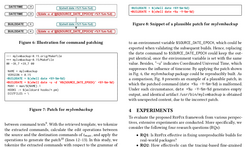




 The current metalfinder version (

 The following contributors got their Debian Developer accounts in the last two months:
 As a board, we have been working on several initiatives to make the Foundation a better asset for the GNOME Project. We re working on a number of threads in parallel, so I wanted to explain the big picture a bit more to try and connect together things like the new ED search and the bylaw changes.
We re all here to see free and open source software succeed and thrive, so that people can be be truly empowered with agency over their technology, rather than being passive consumers. We want to bring GNOME to as many people as possible so that they have computing devices that they can inspect, trust, share and learn from.
In previous years we ve tried to boost the relevance of GNOME (or technologies such as GTK) or solicit donations from businesses and individuals with existing engagement in FOSS ideology and technology. The problem with this approach is that we re mostly addressing people and organisations who are already supporting or contributing FOSS in some way. To truly scale our impact, we need to look to the outside world, build better awareness of GNOME outside of our current user base, and find opportunities to secure funding to invest back into the GNOME project.
The Foundation supports the GNOME project with infrastructure, arranging conferences, sponsoring hackfests and travel, design work, legal support, managing sponsorships, advisory board, being the fiscal sponsor of GNOME, GTK, Flathub and we will keep doing all of these things. What we re talking about here are additional ways for the Foundation to support the GNOME project we want to go beyond these activities, and invest into GNOME to grow its adoption amongst people who need it. This has a cost, and that means in parallel with these initiatives, we need to find partners to fund this work.
Neil has previously talked about themes such as education, advocacy, privacy, but we ve not previously translated these into clear specific initiatives that we would establish in addition to the Foundation s existing work. This is all a work in progress and we welcome any feedback from the community about refining these ideas, but here are the current strategic initiatives the board is working on. We ve been thinking about growing our community by encouraging and retaining diverse contributors, and addressing evolving computing needs which aren t currently well served on the desktop.
Initiative 1. Welcoming newcomers. The community is already spending a lot of time welcoming newcomers and teaching them the best practices. Those activities are as time consuming as they are important, but currently a handful of individuals are running initiatives such as GSoC, Outreachy and outreach to Universities. These activities help bring diverse individuals and perspectives into the community, and helps them develop skills and experience of collaborating to create Open Source projects. We want to make those efforts more sustainable by finding sponsors for these activities. With funding, we can hire people to dedicate their time to operating these programs, including paid mentors and creating materials to support newcomers in future, such as developer documentation, examples and tutorials. This is the initiative that needs to be refined the most before we can turn it into something real.
Initiative 2: Diverse and sustainable Linux app ecosystem. I spoke at the Linux App Summit about the work that GNOME and Endless has been supporting in Flathub, but this is an example of something which has a great overlap between commercial, technical and mission-based advantages. The key goal here is to improve the financial sustainability of participating in our community, which in turn has an impact on the diversity of who we can expect to afford to enter and remain in our community. We believe the existence of this is critically important for individual developers and contributors to unlock earning potential from our ecosystem, through donations or app sales. In turn, a healthy app ecosystem also improves the usefulness of the Linux desktop as a whole for potential users. We believe that we can build a case for commercial vendors in the space to join an advisory board alongside with GNOME, KDE, etc to input into the governance and contribute to the costs of growing Flathub.
Initiative 3: Local-first applications for the GNOME desktop. This is what Thib has been starting to discuss on Discourse,
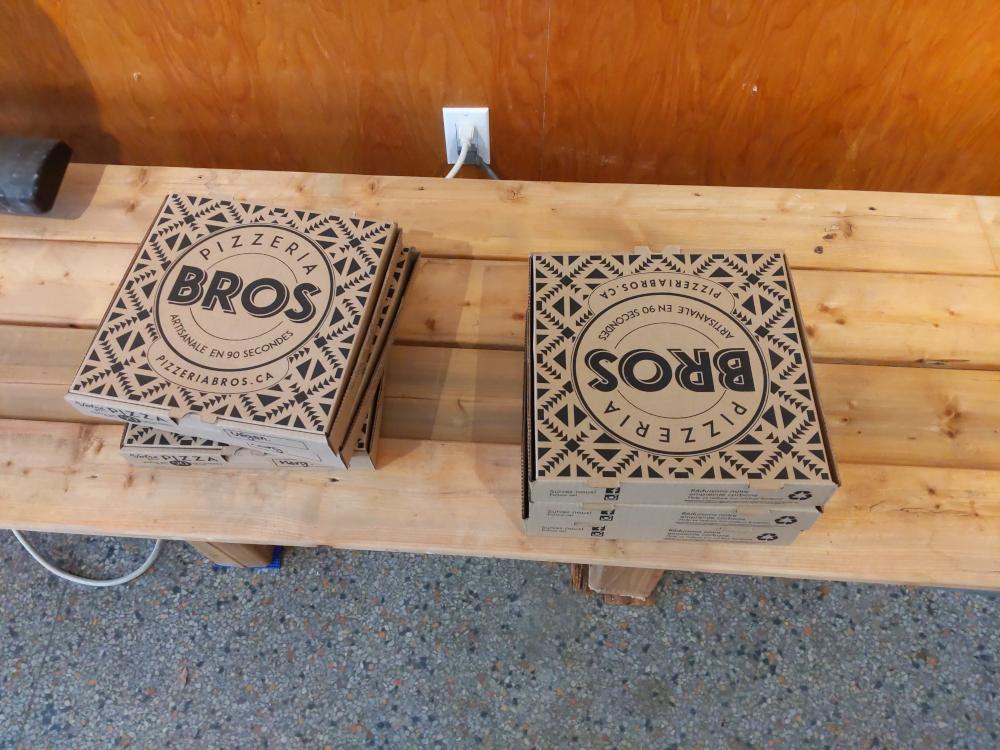
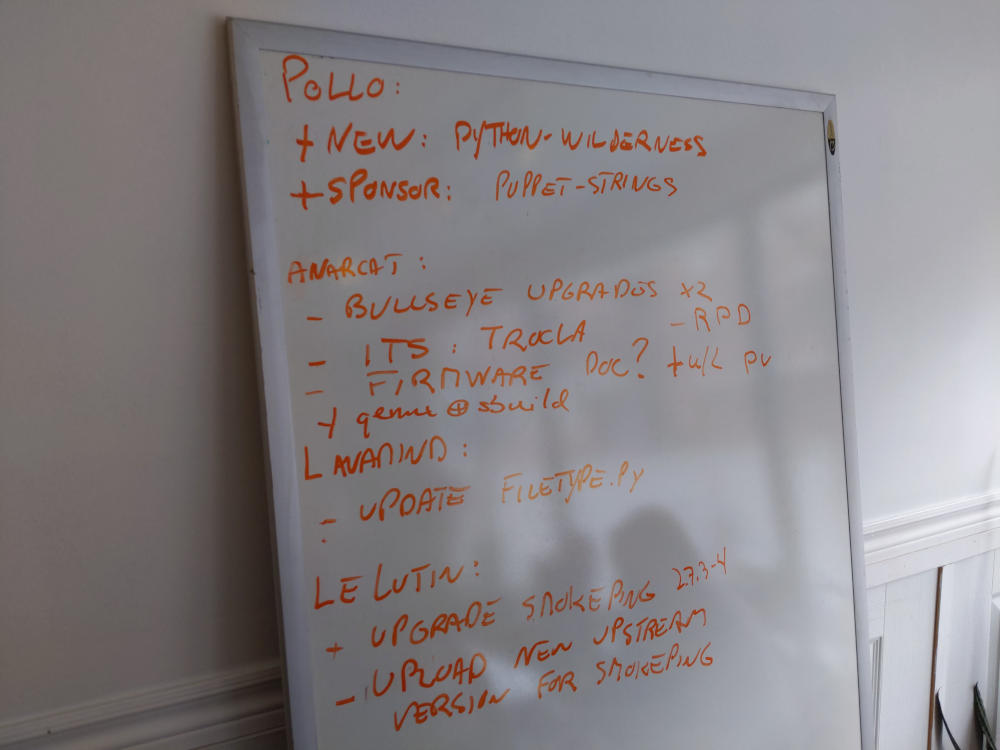
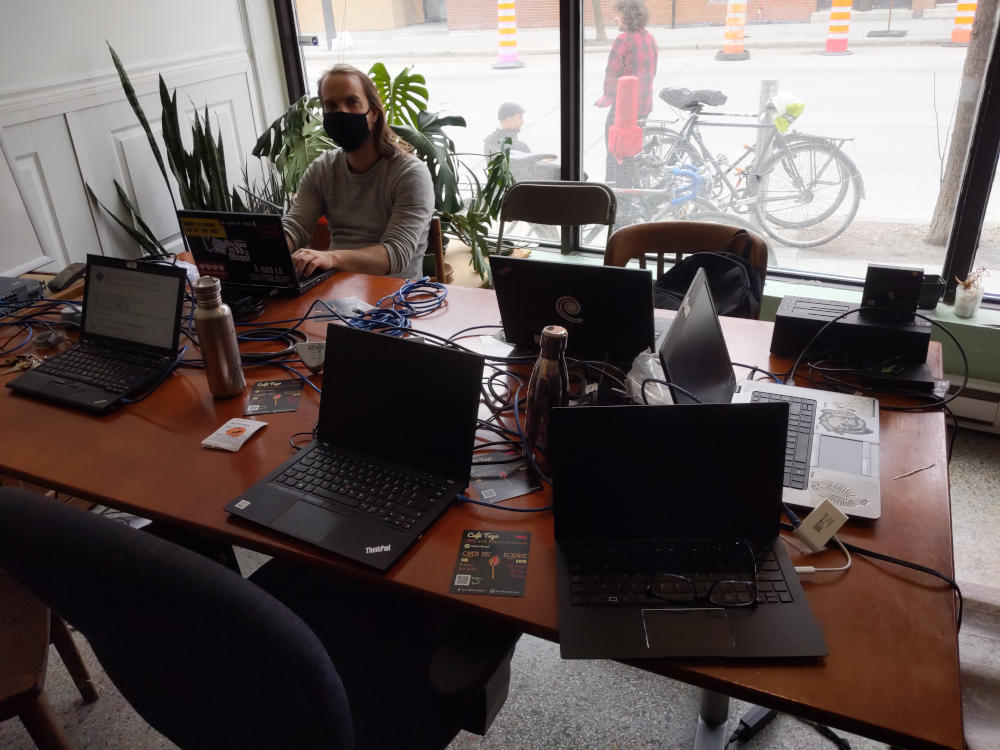 If everything goes according to plan, our next meeting should be sometime in
June. If you are interested, the best way to stay in touch is either to
 TL;DR: firmware support in Debian sucks, and we need to change
this. See the "My preference, and rationale" Section below.
In my opinion, the way we deal with (non-free) firmware in Debian is a
mess, and this is hurting many of our users daily. For a long time
we've been pretending that supporting and including (non-free)
firmware on Debian systems is not necessary. We don't want to have
to provide (non-free) firmware to our users, and in an ideal world we
wouldn't need to. However, it's very clearly no longer a sensible path
when trying to support lots of common current hardware.
Background - why has (non-free) firmware become an issue?
Firmware is the low-level software that's designed to make
hardware devices work. Firmware is tightly coupled to the hardware,
exposing its features, providing higher-level functionality and
interfaces for other software to use. For a variety of reasons, it's
typically not Free Software.
For Debian's purposes, we typically separate firmware from
software by considering where the code executes (does it run on a
separate processor? Is it visible to the host OS?) but it can be
difficult to define a single reliable dividing line here. Consider the
Intel/AMD CPU microcode packages, or the U-Boot firmware packages as
examples.
In times past, all necessary firmware would normally be included
directly in devices / expansion cards by their vendors. Over time,
however, it has become more and more attractive (and therefore more
common) for device manufacturers to not include complete firmware
on all devices. Instead, some devices just embed a very simple set
of firmware that allows for upload of a more complete firmware "blob"
into memory. Device drivers are then expected to provide that blob
during device initialisation.
There are a couple of key drivers for this change:
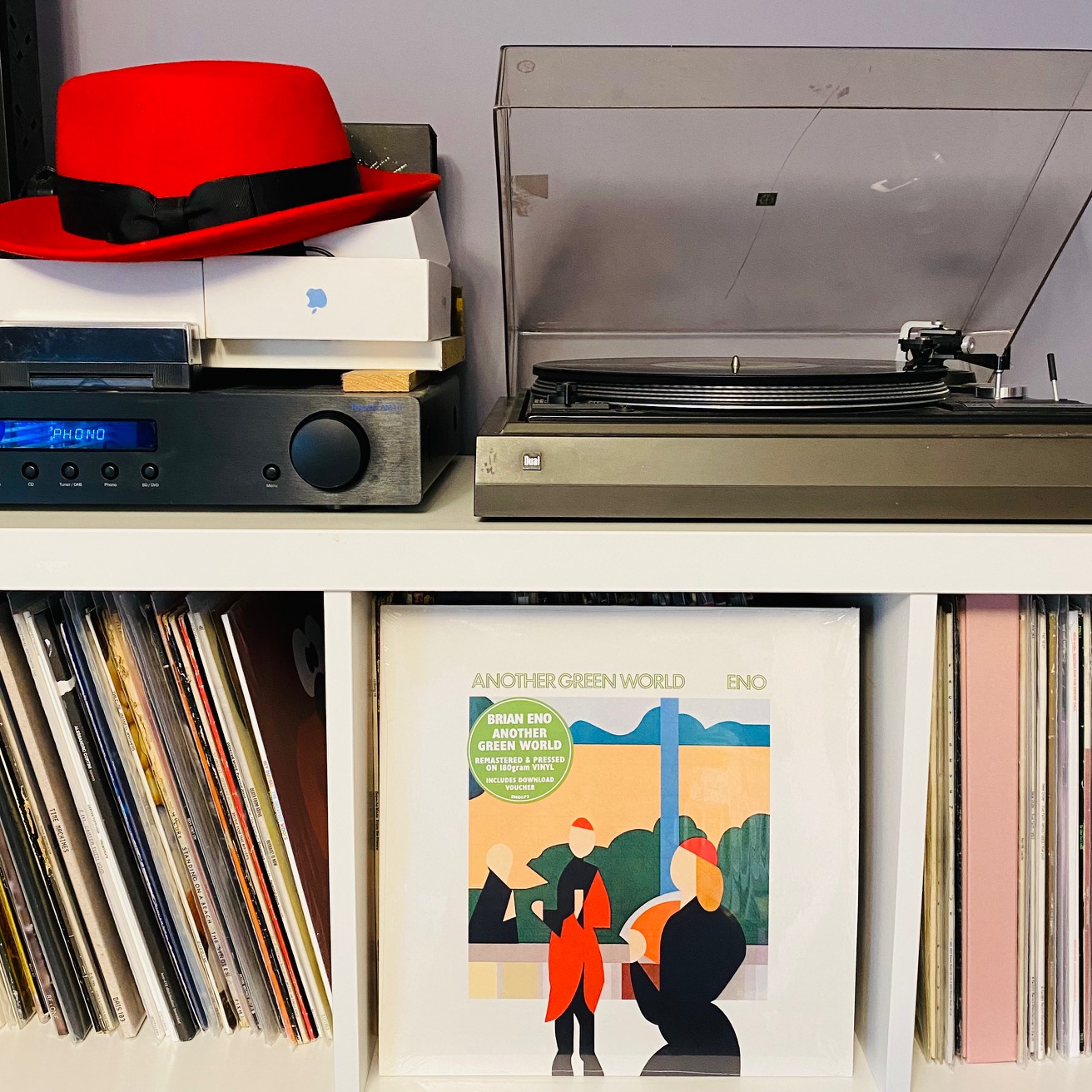
 Brian Eno's classic 1975 album Another Green World, with the
iconic cover crop from Tom Philip's After Raphael. This is a
recent pressing. I try to avoid buying new vinyl, and I think I
got this as part of a trade-in swap two years ago when I went to
get one of my first Covid vaccinations in Newcastle. It was the
first time I'd been anywhere near a record shop (which was adjacent
to the temporary vaccine centre) in a year or more, and I took the
opportunity to bring in some records to sell. I definitely left with
fewer records than I went in with, at least