Issues with Farm Laws
While I have written about the farm laws a bit sometime back. The issue is still in the nation s eye and that is due to the policies which have been done. I have been reading up on it quite a bit and also have been seeing what has been happening in here and now. The problems are with the three bills themselves which I have shared as below
Click to access farmers-produce-trade-and-commerce-promotion-and-facilation-bill.pdfClick to access farmers-empowerment-and-protection-bill.pdfClick to access essential-commodities-bill-2020.pdfBiggest issue with the laws
While there are many issues with the laws themselves but for me the biggest issue is that the fundamental right of the farmer to get justice via civil courts has been railroaded. From the laws itself. Standard disclaimer not a lawyer, please consult one for any issues per-se.
Farmers-produce-trade-and-commerce (promotion and facilitation-bill) 2020
Page 4 Chapter 3 Section 8 (1)8. (1) In case of any dispute arising out of a transaction between the farmer and a trader under section 4, the parties may seek a mutually acceptable solution through conciliation by filing an application to the Sub-Divisional Magistrate who shall refer such dispute to a Conciliation Board to be appointed by him for facilitating the binding settlement of the dispute.
(2) Every Board of Conciliation appointed by the Sub-Divisional Magistrate under sub-section (1), shall consist of a chairperson and such members not less than two and not more than four, as the Sub-Divisional Magistrate may deem fit.10
(5) If the parties to the transaction under sub-section (1) are unable to resolve the dispute within thirty days in the manner set out under this section, they may approach the Sub-Divisional Magistrate concerned who shall be the Sub-Divisional Authority for settlement of such dispute.
(8) Any party aggrieved by the order of the Sub-Divisional Authority may prefer an appeal before the Appellate Authority (Collector or Additional Collector nominated by the Collector) within thirty days of such order who shall dispose of the appeal within thirty days from the date of filing of such appeal.
10. (1) Any person aggrieved by an order under section 9 may, prefer an appeal within sixty days from the date of such order, to an officer not below the rank of Joint Secretary to the Government of India to be nominated by the Central Government for this purpose:
Page 6 of the bill. 13. No suit, prosecution or other legal proceedings shall lie against the Central Government or the State Government, or any officer of the Central Government or the State Government or any other person in respect of anything which is in good faith done or intended to be done under this Act or of any rules or orders made thereunder.
Page 7 of the bill, 15. No civil court shall have jurisdiction to entertain any suit or proceedings in respect of any matter, the cognizance of which can be taken and disposed of by any authority empowered by or under this Act or the rules made thereunder.
Now the same laws have been reiterated for the farmers (Empowerment and Protection) Agreement on Price Assurance and Farm Services Bill, 2020.
The problem is that too much power is being put into the hands of the executive. All the three, whether it is SDM (Sub-Divisional Magistrate) , the Appellate Authority or the Government Secretary directly are subservient to the whims and fancies of the Central Govt. They after all get their salaries from the Govt. itself. So there will be no independent oversight to any injustices done to the farmer.
The third bill i.e. the Essential Commodities Bill, 2020 does away with stock limits on traders and big players like Adani and Ambani. This means that both these players can take and keep produce at their end thereby forcing consumers like you and me who at the retail end would have to pay higher prices for fruits and vegetables while from the producer they will take at the lowest price possible.
While I have shared is just one of the points. That is the reason why even the Supreme Court bar association which almost never takes part in politics has been forced to take sides with the farmers. In many ways, one is forced to remember the Emergency
Update 11/12/20 Came across this article on the wire which tells how everybody s rights, not just the farmer s rights are being shod over. I think it depicts correctly the signs of time to come. While arguing on SM, also came to know about Article 300 (1), thanks to Sachin Kumar which shows multiple instances where Government was sued because somebody was working in official capacity and did mistakes, malafide or otherwise and it was the state who was made to pay.
FWIW, today farmers from Maharashtra, my state arrived at Delhi border where they were also kept at bay. I did come across an infographic which shows how the various states have fared. Most tellingly, is the state of Bihar. It was in 2006 (one of the most backward states) where APMC was taken off. While others have tried to paint a flattering picture of Bihar, they have failed to share that in the interim 15 odd years, there hasn t been any sort of infrastructure created for farmers which is the reason it is still the lowest earner. These are the last available figures we have about the farmer s income. From 2014 to 2020 there hasn t been any update.
Situation Assessment Survey of Agricultural Household 2013 Copyright GOI,
This concludes just one portion of the bill. I will take other parts of the bill. I may dwell on some other parts as and when I have the time. A cartoon which depicts the current issue
I stand with farmers Copyright Sanitary Panels Too much democracy Amitabh Kant
Yesterday, the Niti Aayog chief Amitabh Kant remarked that we are too much of a democracy at an event called for Atmanirbhar Bharat which is basically a coinage for import substitution. Whether this is desirable or not I have argued and if needed will re-argue the same later as well. What is and was interesting were the gentleman s context, the media reactions and our overall Democracy Index which has been going downhill for quite some years. Now the gentleman who is the Niti Aayog chief and who is supposed to have the ear of the Prime Minister had opined it in an event organized by Swarajya Magazine (a far-right magazine) known to be Islamophobic and all things undemocratic. It has been a target of defundthehate campaign and with good reason. But that s a different story altogether. His full statement was as below
Tough reforms are very difficult in the Indian context, as we are too much of a democracy but the government has shown courage and determination in pushing such reforms across sectors, including mining, coal, labour and agriculture. Niti Aayog chief. The upper quotation remarks and the statement has been from the article in Indian Express which I have linked to. I have archived it as a pdf just in case the link goes dead. Yesterday, after the statement became viraled, tweets of media houses which shared the tweet suddenly become unavailable. Seems too much democracy, became too little democracy all of a sudden. I think Mr. Amitabh Kant didn t visualize as the opposition as well as most people who are on Twitter to share their opinion on the same. Few examples
Too much Democracy copyright Satish Acharya
Too much democracy Illustration and Copyright Alok
Sterlite protest 13 dead, 100 injured Copyright Business Standard too much democracy
Erosion of Democracy V-dem institute Copyright The Hindu Web Team
The last one requires a bit more information. This comes from V-Dem Institute which is an independent research institute based out of Department of Political Science, University of Gothenburg, Sweden. I am gonna leave the methods they use for another day as the blog post itself has become rather big/large.
Apart from that is the Economists own Democracy Index -2019
Click to access democracy-index-2019.pdf
Now for many people, both the V-Dem report and the Economist Index are some sort of attack against India. Doesn t matter that in V-Dem 200+ countries have been taken a variety of indicators and data or the Economist which has data from 150+- countries. Somehow India is supposed to be bigger than all these countries, they do think that other countries data specifically our neighbor China or any other neighbor, those are all accurate. How the dissonance is, has to be gauged from statements of various people.
Update 11/12/20 Sadly, the newest V-Dem report marks India as getting into authoritarianism.
Gag on Press and Media owners
I had shared about the gag on the press especially with respect to western media or reports or anything. This news made its way to straitstimes which normally covers a wide-range of stories covering East Asia vis-a-vis India/South-East Asia. What has also been a big worry that most of the media has been in the hands of a few people. Caravan ran a story on the same in 2016, it has been four years, god only knows what the current situation might be. Any wonder that there is dearth of investigative journalism in India.
India media ownership 2016 Copyright Caravan
Incidentally, a reporter called Akarshan Uppal, who is a reporter on a channel called IBN24 had showecased just few days back how Adani has got land which was shot down for land change use in 2017 to 2020 around 100 acres. There seem to be very less details as to how the land was acquired, whose land it was etc. etc. The reporter was supposedly following a story on drugs on which he was attacked and is now lying in hospital.
Akarshan Uppal Reporter, IBN24 Copyright IBN24
While it would take a whole article/blog post to talk about either Adani or Ambani, in the recent case, the land that has been taken over by Adani is 100 acres and there are private rail lines. And all of this was secret till few days back. The place where these massive godowns/silos have been made are Panipat s Jondhan Kalan and Naultha villages in Haryana. This is Adani AgiLogistics. Almost 7 odd companies have registered and come up in the last couple of years. As can be seen, almost all have come up within the last 2-3 years. Seems to be a lot of coincidence, isn t it?
Personal Anecdote on Data Collection and child marriages in India.
Around 1995 -96 when Internet had started to become a thing in India, there had been quite a few non-profits which were working on various issues. One of those which I initially came in contact with and which I found to be a bit absurd was non-profit which was working in the field of women against Violence. Now it is and was not the concept or the idea which was absurd to me, it was what these women were doing. Instead of the traditional ways in which you counsel women and try and figure out issues, these women were collecting data points from newspapers and magazines. This was way way before data science became a thing in India. They had their own structure where a story about violence against women which would be above the fold would be 5 points, the one below 2.5 points, in inner pages, it would be less and less. Patriarchy at that time was so strong, even today is but at that time it was such, that it felt a waste of time. I did consult them but never said that but did privately feel the above. In hindsight, they were doing the right thing and yet even today crimes against women goes unreported and is suppressed by both State and Central Governments as well as NCRB (National Crime Records Bureau).
Interestingly, just few days back, the case against M.J. Akbar by Priya Ramani had taken a back seat and the defamation case by M.J. Akbar was taken forward. Even then, Priya Ramani s counsel s arguments were such that the court wound up in half an hour when they were expecting to do a whole day hearing. The next hearing would be happening today which I will look at in few hours from now. Why Priya Ramani was singled out rather than other tweets may probably be because she is an NRI and most NRI s usually do not want to be part of the bureaucratic Indian court system. This is also the reason that most companies from outside India especially those who are into startups prefer to change ownership, IPR etc. to their own or any country outside India which does make a loss to the exchequer. But this again is a story for another day.
At the end, while I did not want to end on a negative note, it seems in many ways status-quo remains. For e.g. 2 years back, a BJP candidate (part of the ruling dispensation) had made a controversy saying that if they win the police won t interfere in child marriages. This is and was in Rajasthan where they have been trying to eradicate it forever. Till date, neither the NHRC (National Human Rights Commission) nor NCW (National Commission for Women) has taken cognizance of the statement. This is our state of democracy.
Here s my (fourteenth) monthly update about the activities I ve done in the F/L/OSS world.
Debian
This was my 23rd month of contributing to Debian.
I became a DM in late March last year and a DD last Christmas! \o/
Apart from doing a bunch of activities like attending KubeCon + RubyConf (blog to follow!), et al and simultaneously giving
my undergrad exams, I did (relatively) more work than I had really anticipated!
Here are the following things I did in Debian this month:
micro (2.0.8-1) - New upstream version, v2.0.8. Finally! \o/
ruby-zeitwerk (2.4.2-1) - New upstream version, v2.4.2.
Other $things:
Attended the Debian Ruby team meeting.
Mentoring for newcomers.
FTP Trainee reviewing.
Moderation of -project mailing list.
Sponsored phpmyadmin for William and libexif for Hugh.
Debian (E)LTS
Debian Long Term Support (LTS) is a project to extend the lifetime of all Debian stable releases to (at least) 5 years. Debian LTS is not handled by the Debian security team, but by a separate group of volunteers and companies interested in making it a success.
And Debian Extended LTS (ELTS) is its sister project, extending support to the Jessie release (+2 years after LTS support).
This was my fourteenth month as a Debian LTS and fourth month as a Debian ELTS paid contributor.
I was assigned 22.75 hours for LTS and 45.00 hours for ELTS and worked on the following things:
(for ELTS, I worked for 5.25 hours last month, so I had to work for 39.75 (+1 extra) hours this month)
(also, I did over-work by 5.00 hours for LTS this month, but I ll re-compensate it later to avoid so much fuss!)
LTS CVE Fixes and Announcements:
Issued DLA 2425-1, fixing CVE-2020-25692, for openldap.
For Debian 9 Stretch, these problems have been fixed in version 2.4.44+dfsg-5+deb9u5.
Issued DLA 2427-1, fixing CVE-2020-14355, for spice.
For Debian 9 Stretch, these problems have been fixed in version 0.12.8-2.1+deb9u4.
Issued DLA 2428-1, fixing CVE-2020-14355, for spice-gtk.
For Debian 9 Stretch, these problems have been fixed in version 0.33-3.3+deb9u2.
Issued DLA 2430-1, fixing CVE-2020-15238, for blueman.
For Debian 9 Stretch, these problems have been fixed in version 2.0.4-1+deb9u1.
Issued DLA 2439-1, fixing CVE-2020-0452, for libexif.
For Debian 9 Stretch, these problems have been fixed in version 0.6.21-2+deb9u5.
Issued DLA 2443-1, fixing CVE-2020-15166, for zeromq3.
For Debian 9 Stretch, these problems have been fixed in version 4.2.1-4+deb9u3.
Issued DLA 2444-1, fixing CVE-2020-8037, for tcpdump.
For Debian 9 Stretch, these problems have been fixed in version 4.9.3-1~deb9u2.
ELTS CVE Fixes and Announcements:
Issued ELA 306-1, fixing CVE-2020-25692, for openldap.
For Debian 8 Jessie, these problems have been fixed in version 2.4.40+dfsg-1+deb8u7.
Issued ELA 310-1, fixing CVE-2020-0452, for libexif.
For Debian 8 Jessie, these problems have been fixed in version 0.6.21-2+deb8u5.
Issued ELA 311-1, fixing CVE-2020-8037, for tcpdump.
For Debian 8 Jessie, these problems have been fixed in version 4.9.3-1~deb8u2.
Issued ELA 312-1, backporting a new upstream release, 2020d, for tzdata.
For Debian 8 Jessie, these problems have been fixed in version 2020d-0+deb8u1.
Issued ELA 313-1, fixing CVE-2020-15166, for zeromq3.
For Debian 8 Jessie, these problems have been fixed in version 4.0.5+dfsg-2+deb8u3.
Prepared a debdiff for lxml (3.4.0-1+deb8u2) upload, which Emilio completed and rolled out later.
Other (E)LTS Work:
Front-desk duty from 26-10 until 01-10 and from 23-11 until 29-11 for both LTS and ELTS.
Over the summer I decided to migrate my backups from rdiff-backup to borg,
which offers some significant advantages, in particular de-duplication, but
comes at a cost of complexity, and a corresponding sense of unease about how
sound my backup strategy might be. I've now hit the Point Of No Return: my
second external backup drive is overdue being synced with my NAS, which will
delete the last copy of the older rdiff-backup backups.
Whilst I hesitate over this last action to commit to borg, something else
happened. My wife wanted to put a copy of her iTunes music library on her
new phone, and I couldn't find it: not only could I not find it on any of
our computers, I also couldn't find a copy on the NAS, or in backups, or even
in old DVD-Rs. This has further knocked my confidence in our family data
management, and makes me even more nervous to commit to borg. I'm now wondering
about stashing the contents of the second external backup disk on some cloud
service as a fail-safe.
There was one known-good copy of Sarah's music: on her ancient iPod Nano.
Apple have gone to varying lengths to prevent you from copying music from an
iPod. When Music is copied to an iPod, the files are stripped of all their
metadata (artist, title, album, etc.) and renamed to something non-identifying
(e.g. F01/MNRL.m4a), and the metadata (and correlation to the obscure file
name) is saved in separate database files. The partition of the flash drive
containing all this is also marked as "hidden" to prevent it appearing on macOS
and Windows systems. We are lucky that the iPod is so old, because Apple went
even further in more recent models, adding a layer of encryption.
To get the music off the iPod, one has to undo all of these steps.
Luckily, other fine folks have worked out reversing all these steps and
implemented it in software such as libgpod and its frontend, GtkPod, which
is still currently available as a Debian package. It mostly worked, and I got
back 95% of the tracks. (It would have been nice if GtkPod had reported the
tracks it hadn't recovered, it was aware they existed based on the errors
it did print. But you can't have everything.)
GtkPod is a quirky, erratic piece of software, that is only useful for old
Apple equipment
that is long out of production,
prior to the introduction of the encryption.
The upstream homepage is dead, and I suspect it is unmaintained.
The Debian package is orphaned. It's been removed from testing, because
it won't build with GCC 10. On the other hand, my experience shows that it
worked, and was useful for a real problem that someone had today.
I'm in two minds about GtkPod's fate. On the one hand, I think Debian has far
too many packages, with a corresponding burden of maintenance responsibility
(for the whole project, not just the individual package maintainers), and
there's a quality problem: once upon a time, if software had been packaged in
a distribution like Debian, that was a mark of quality, a vote of confidence,
and you could have some hope that the software would work and integrate well
with the rest of the system. That is no longer true, and hasn't been in my
experience for many years. If we were more discerning about what software we
included in the distribution, and what we kept, perhaps we could be a leaner
distribution, faster to adapt to the changing needs in the world, and of a
higher quality.
On the other hand, this story about GtkPod is just one of many similar stories.
Real problems have been solved in open source software, and computing
historians, vintage computer enthusiasts, researchers etc. can still benefit
from that software long into the future. Throwing out all this stuff in the
name of "progress", could be misguided. I'm especially sad when I see the glee
which people have expressed when ditching libraries like Qt4 from the archive.
Some software will not be ported on to Qt5 (or Gtk3, Qt6, Gtk4, Qt7, etc., in
perpetuity). Such software might be all of: unmaintained, "finished", and
useful for some purpose (however niche), all at the same time.
My maybe most impactful piece of code is tttool and the surrounding project, which allows you to create your own content for the Ravensburger Tiptoi platform. The program itself is a command line tool, and in this blog post I want to show how I go about building that program for Linux (both normal and static builds), Windows (cross-compiled from Linux), OSX (only on CI), all combined into and released as a single zip file.
Maybe some of it is useful or inspiring to my readers, or can even serve as a template. This being a blob post, though, note that it may become obsolete or outdated.
Ingredients
I am building on the these components:
Without the nix build system and package manger I probably woudn t even attempt to pull of complex tasks that may, say, require a patched ghc. For many years I resisted learning about nix, but when I eventually had to, I didn t want to go back.
This project provides an alternative Haskell build infrastructure for nix. While this is not crucial for tttool, it helps that they tend to have some cross-compilation-related patches more than the official nixpkgs. I also like that it more closely follows the cabal build work-flow, where cabal calculates a build plan based on your projects dependencies. It even has decent documentation (which is a new thing compared to two years ago).
Niv is a neat little tool to keep track of your dependencies. You can quickly update them with, say niv update nixpkgs. But what s really great is to temporarily replace one of your dependencies with a local checkout, e.g. via NIV_OVERRIDE_haskellNix=$HOME/build/haskell/haskell.nix nix-instantiate -A osx-exe-bundle There is a Github action that will keep your niv-managed dependencies up-to-date.
This service (proprietary, but free to public stuff up to 10GB) gives your project its own nix cache. This means that build artifacts can be cached between CI builds or even build steps, and your contributors. A cache like this is a must if you want to use nix in more interesting ways where you may end up using, say, a changed GHC compiler. Comes with GitHub actions integration.
CI via Github actions
Until recently, I was using Travis, but Github actions are just a tad easier to set up and, maybe more important here, the job times are high enough that you can rebuild GHC if you have to, and even if your build gets canceled or times out, cleanup CI steps still happen, so that any new nix build products will still reach your nix cache.
The repository setup
All files discussed in the following are reflected at https://github.com/entropia/tip-toi-reveng/tree/7020cde7da103a5c33f1918f3bf59835cbc25b0c.
We are starting with a fairly normal Haskell project, with a single .cabal file (but multi-package projects should work just fine). To make things more interesting, I also have a cabal.project which configures one dependency to be fetched via git from a specific fork.
To start building the nix infrastructure, we can initialize niv and configure it to use the haskell.nix repo:
This creates nix/sources.json (which you can also edit by hand) and nix/sources.nix (which you can treat like a black box).
Now we can start writing the all-important default.nix file, which defines almost everything of interest here. I will just go through it line by line, and explain what I am doing here.
checkMaterialization ? false :
This defines a flag that we can later set when using nix-build, by passing --arg checkMaterialization true, and which is off by default. I ll get to that flag later.
This imports the sources as defined niv/sources.json, and loads the pinned revision of the haskell.nix repository.
# windows crossbuilding with ghc-8.10 needs at least 20.09.# A peek at https://github.com/input-output-hk/haskell.nix/blob/master/ci.nix can helpnixpkgsSrc = haskellNix.sources.nixpkgs-2009;nixpkgsArgs = haskellNix.nixpkgsArgs;pkgs = import nixpkgsSrc nixpkgsArgs;
Now we can define pkgs, which is our version of the nixpkgs package set, extended with the haskell.nix machinery. We rely on haskell.nix to pin of a suitable revision of the nixpkgs set (see how we are using their niv setup).
Here we could our own configuration, overlays, etc to nixpkgsArgs. In fact, we do in
pkgs-osx = import nixpkgsSrc (nixpkgsArgs // system = "x86_64-darwin"; );
Next I define a little helper that I have been copying between projects, and which allows me to define the input to a nix derivation (i.e. a nix build job) with a set of regexes. I ll use that soon.
The cabalProject function takes a cabal project and turns it into a nix project, running cabal v2-configure under the hood to let cabal figure out a suitable build plan. Since we want to have multiple variants of the tttool, this is so far just a function of two arguments pkgs and sha256, which will be explained in a bit.
The cabalProject function wants to know the source of the Haskell projects. There are different ways of specifying this; in this case I went for a simple whitelist approach. Note that cabal.project.freze (which exists in the directory) is not included.
# Pinning the input to the constraint solvercompiler-nix-name = "ghc8102";
The cabal solver doesn t find out which version of ghc to use, that is still my choice. I am using GHC-8.10.2 here. It may require a bit of experimentation to see which version works for your project, especially when cross-compiling to odd targets.
index-state = "2020-11-08T00:00:00Z";
I want the build to be deterministic, and not let cabal suddenly pick different package versions just because something got uploaded. Therefore I specify which snapshot of the Hackage package index it should consider.
These modules are essentially configuration data that is merged in a structural way. Here we say that we want the tttool binary to be stripped (saves a few megabyte).
Also, when we are building on the musl platform, that s when we want to produce a static build, so let s pass -static to GHC. This seems to be enough in terms of flags to produce static binaries. It helps that my project is using mostly pure Haskell libraries; if you link against C libraries you might have to jump through additional hoops to get static linking going. The haskell.nix documentation has a section on static building with some flags to cargo-cult.
# terminfo is disabled on musl by haskell.nix, but still the flag# is set in the package plan, so override thispackages.haskeline.flags.terminfo = false;
;
This (again only used when the platform is musl) seems to be necessary to workaround what might be a big in haskell.nix.
).tttool.components.exes.tttool;
The cabalProject function returns a data structure with all Haskell packages of the project, and for each package the different components (libraries, tests, benchmarks and of course executables). We only care about the tttool executable, so let s project that out.
This function, only to be used on OSX, takes a fully build tttool, finds all the system libraries it is linking against, and copies them next to the executable, using the nice macdylibbundler. This way we can get a self-contained executable.
A nix expert will notice that this probably should be written with pkgs.runCommandNoCC, but then dylibbundler fails because it lacks otool. This should work eventually, though.
Time to create the four versions of tttool. In each case we use the tttool-exe function from above, passing the package set (pkgs, ) and a SHA256 hash.
The package set is either the normal one, or it is one of those configured for cross compilation, building either for Windows or for Linux using musl, or it is the OSX package set that we instantiated earlier.
The SHA256 hash describes the result of the cabal plan calculation that happens as part of cabalProject. By noting down the expected result, nix can skip that calculation, or fetch it from the nix cache etc.
How do we know what number to put there, and when to change it? That s when the --arg checkMaterialization true flag comes into play: When that is set, cabalProject will not blindly trust these hashes, but rather re-calculate them, and tell you when they need to be updated. We ll make sure that CI checks them.
osx-exe-bundle = osx-bundler pkgs-osx osx-exe;
For OSX, I then run the output through osx-bundler defined above, to make it independent of any library paths in /nix/store.
This is already good enough to build the tool for the various systems! The rest of the the file is related to packaging up the binaries, to tests, and various other things, but nothing too essentially. So if you got bored, you can more or less stop now.
The final zip file that I want to serve to my users contains a bunch of files from throughout my repository; I collect them here.
book = ;
The project comes with documentation in the form of a Sphinx project, which we build here. I ll omit the details, because they are not relevant for this post (but of course you can peek if you are curious).
The zipfile should provide a tttool command that works on all systems. To that end, I implement a simple platform switch using bash. I use pks.writeScript so that I can include that file directly in default.nix, but it would have been equally reasonable to just save it into nix/tttool-os-switch.sh and include it from there.
release = pkgs.runCommandNoCC "tttool-release"buildInputs = [ pkgs.perl ];''# check versionversion=$($ static-exe/bin/tttool --helpperl -ne 'print $1 if /tttool-(.*) -- The swiss army knife/')doc_version=$(perl -ne "print \$1 if /VERSION: '(.*)'/"$ book /book.html/_static/documentation_options.js)if ["$version"!="$doc_version" ]thenecho"Mismatch between tttool version \"$version\" and book version \"$doc_version\""exit 1
fi
Now the derivation that builds the content of the release zip file. First I double check that the version number in the code and in the documentation matches. Note how $ static-exe refers to a path with the built static Linux build, and $ book the output of the book building process.
The rest of the release script just copies files from various build outputs that we have defined so far.
Note that this is using both static-exe (built on Linux) and osx-exe-bundle (built on Mac)! This means you can only build the release if you either have setup a remote osx builder (a pretty nifty feature of nix, which I unfortunately can t use, since I don't have access to a Mac), or the build product must be available in a nix cache (which it is in my case, as I will explain later).
The output of this derivation is a directory with all the files I want to put in the release.
release-zip = pkgs.runCommandNoCC "tttool-release.zip"buildInputs = with pkgs; [ perl zip ];
''version=$(bash$ release /tttool --helpperl -ne 'print $1 if /tttool-(.*) -- The swiss army knife/')base="tttool-$version"echo"Zipping tttool version $version"mkdir -p $out/$basecd$outcp -r $ release /* $base/
chmod u+w -R $basezip -r $base.zip $baserm -rf $base'';
And now these files are zipped up. Note that this automatically determines the right directory name and basename for the zipfile.
This concludes the step necessary for a release.
gme-downloads = ;tests = ;
These two definitions in default.nix are related to some simple testing, and again not relevant for this post.
cabal-freeze = pkgs.stdenv.mkDerivation
name = "cabal-freeze";src = linux-exe.src;buildInputs = [ pkgs.cabal-install linux-exe.env ];buildPhase = ''mkdir .cabal
touch .cabal/config
rm cabal.project # so that cabal new-freeze does not try to use HPDF via gitHOME=$PWDcabal new-freeze --offline --enable-tests true'';
installPhase = ''mkdir -p $outecho"-- Run nix-shell -A check-cabal-freeze to update this file">$out/cabal.project.freeze
cat cabal.project.freeze >>$out/cabal.project.freeze
'';
;
Above I mentioned that I still would like to be able to just run cabal, and ideally it should take the same library versions that the nix-based build does. But pinning the version of ghc in cabal.project is not sufficient, I also need to pin the precise versions of the dependencies. This is best done with a cabal.project.freeze file.
The above derivation runs cabal new-freeze in the environment set up by haskell.nix and grabs the resulting cabal.project.freeze. With this I can run nix-build -A cabal-freeze and fetch the file from result/cabal.project.freeze and add it to the repository.
But generated files in repositories are bad, so if that cannot be avoided, at least I want a CI job that checks if they are up to date. This job does that. What s more, it is set up so that if I run nix-shell -A check-cabal-freeze it will update the file in the repository automatically, which is much more convenient than manually copying.
Lately, I have been using this pattern regularly when adding generated files to a repository: * Create one nix derivation that creates the files * Create a second derivation that compares the output of that derivation against the file in the repo * Create a derivation that, when run in nix-shell, updates that file. Sometimes that derivation is its own file (so that I can just run nix-shell nix/generate.nix), or it is merged into one of the other two.
This concludes the tour of default.nix.
The CI setup
The next interesting bit is the file .github/workflows/build.yml, which tells Github Actions what to do:
name:"Build and package"on:pull_request:push:
Standard prelude: Run the jobs in this file upon all pushes to the repository, and also on all pull requests. Annoying downside: If you open a PR within your repository, everything gets built twice. Oh well.
The build job is a matrix job, i.e. there are four variants, one for each of the different tttool builds, together with an indication of what kind of machine to run this on.
Then we configure our Cachix cache. This means that this job will use build products from the cache if possible, and it will also push new builds to the cache. This requires a secret key, which you get when setting up your Cachix cache. See the nix and Cachix tutorial for good instructions.
-run: nix-build --arg checkMaterialization true -A $ matrix.target
Now we can actually run the build. We set checkMaterialization to true so that CI will tell us if we need to update these hashes.
# work around https://github.com/actions/upload-artifact/issues/92-run: cp -RvL result upload-uses: actions/upload-artifact@v2with:name: tttool ($ matrix.target )path: upload/
For convenient access to build products, e.g. from pull requests, we store them as Github artifacts. They can then be downloaded from Github s CI status page.
The next job repeats the setup, but now runs the tests. Because of needs: build it will not start before the builds job has completed. This also means that it should get the actual tttool executable to test from our nix cache.
Finally, with the same setup, but slightly different artifact upload, we build the release zip file. Again, we wait for build to finish so that the built programs are in the nix cache. This is especially important since this runs on linux, so it cannot build the OSX binary and has to rely on the cache.
Note that we don t need to checkMaterialization again.
Annoyingly, the upload-artifact action insists on zipping the files you hand to it. A zip file that contains just a zipfile is kinda annoying, so I unpack the zipfile here before uploading the contents.
Conclusion
With this setup, when I do a release of tttool, I just bump the version numbers, wait for CI to finish building, run nix-build -A release-zip and upload result/tttool-n.m.zip. A single file that works on all target platforms. I have not yet automated making the actual release, but with one release per year this is fine.
Also, when trying out a new feature, I can easily create a branch or PR for that and grab the build products from Github s CI, or ask people to try them out (e.g. to see if they fixed their bugs). Note, though, that you have to sign into Github before being able to download these artifacts.
One might think that this is a fairly hairy setup finding the right combinations of various repertories so that cross-compilation works as intended. But thanks to nix s value propositions, this does work! The setup presented here was a remake of a setup I did two years ago, with a much less mature haskell.nix. Back then, I committed a fair number of generated files to git, and juggled more complex files but once it worked, it kept working for two years. I was indeed insulated from upstream changes. I expect that this setup will also continue to work reliably, until I choose to upgrade it again. Hopefully, then things are even more simple, and require less work-around or manual intervention.
Here s my (thirteenth) monthly update about the activities I ve done in the F/L/OSS world.
Debian
This was my 22nd month of contributing to Debian.
I became a DM in late March last year and a DD last Christmas! \o/
Whilst busy with my undergrad, I could still take some time out for contributing to Debian (I always do!).
Here are the following things I did in Debian this month:
Sponsored phpmyadmin, php-bacon-baconqrcode, twig, php-dasprid-enum, sql-parser, and mariadb-mysql-kbs for William.
Debian (E)LTS
Debian Long Term Support (LTS) is a project to extend the lifetime of all Debian stable releases to (at least) 5 years. Debian LTS is not handled by the Debian security team, but by a separate group of volunteers and companies interested in making it a success.
And Debian Extended LTS (ELTS) is its sister project, extending support to the Jessie release (+2 years after LTS support).
This was my thirteenth month as a Debian LTS and fourth month as a Debian ELTS paid contributor.
I was assigned 20.75 hours for LTS and 30.00 hours for ELTS and worked on the following things:
(for ELTS, I worked for 5.25 hours extra, so my total hours this month for ELTS were 35.25!)
Here s my (twelfth) monthly update about the activities I ve done in the F/L/OSS world.
Debian
This was my 21st month of contributing to Debian.
I became a DM in late March last year and a DD last Christmas! \o/
I ve been busy with my undergraduation stuff but I still squeezed out some time for the regular Debian work.
Here are the following things I did in Debian this month:
Sponsored trace-cmd for Sudip, ruby-asset-sync for Nilesh, and mariadb-mysql-kbs for William.
RuboCop::Packaging - Helping the Debian Ruby team! \o/
This Google Summer of Code, I worked on writing a linter that could flag offenses for lines of code
that are very troublesome for Debian maintainers while trying to package and maintain Ruby libraries and applications!
Whilst the GSoC period is over, I ve been working on improving that tool and have extended that linter to now auto-correct these offenses
by itself! \o/
You can now just use the -A flag and you re done! Boom! The ultimate game-changer!
Here s a quick demo for this feature:
A few quick updates on RuboCop::Packaging:
Has 4 cops, solving 4 different issues.
3 of them support auto-correction. Just use the -A flag.
I ve also spent a considerable amount of time in raising awareness about this and in more general sense, about downstream maintenance.
As a result, I raised a bunch of PRs which got really good response. I got all of the 20 PRs merged upstream,
fixing these issues.
Debian (E)LTS
Debian Long Term Support (LTS) is a project to extend the lifetime of all Debian stable releases to (at least) 5 years. Debian LTS is not handled by the Debian security team, but by a separate group of volunteers and companies interested in making it a success.
And Debian Extended LTS (ELTS) is its sister project, extending support to the Jessie release (+2 years after LTS support).
This was my twelfth month as a Debian LTS and third month as a Debian ELTS paid contributor.
I was assigned 19.75 hours for LTS and 15.00 hours for ELTS and worked on the following things:
(for LTS, I over-worked for 11 hours last month on the survey so only had 8.75 hours this month!)
LTS CVE Fixes and Announcements:
Issued DLA 2362-1, fixing CVE-2020-11984, for uwsgi.
For Debian 9 Stretch, these problems have been fixed in version 2.0.14+20161117-3+deb9u3.
Issued DLA 2363-1, fixing CVE-2020-17446, for asyncpg.
For Debian 9 Stretch, these problems have been fixed in version 0.8.4-1+deb9u1.
Issued ELA 274-1, fixing CVE-2020-11984, for uwsgi.
For Debian 8 Jessie, these problems have been fixed in version 2.0.7-1+deb8u3.
Issued ELA 275-1, fixing CVE-2020-14363, for libx11.
For Debian 8 Jessie, these problems have been fixed in version 2:1.6.2-3+deb8u4.
Issued ELA 278-1, fixing CVE-2020-8184, for ruby-rack.
For Debian 8 Jessie, these problems have been fixed in version 1.5.2-3+deb8u4.
Also worked on updating the version of clamAV from v0.101.5 to v0.102.4.
This was a bit tricky package to work on since it involved an ABI/API change and was more or less a transition.
Super thanks to Emilio for his invaluable help and him taking over the package, finishing, and uploading it in the end.
Other (E)LTS Work:
Front-desk duty from 31-08 to 06-09 and from 28-09 onward for both LTS and ELTS.
Launchpad still requires Python 2, which in 2020
is a bit of a problem.
Unlike a lot of the rest of 2020, though, there s good reason to be
optimistic about progress.
I ve been porting Python 2 code to Python 3 on and off for a long time, from
back when I was on the Ubuntu Foundations team and maintaining things like
the Ubiquity installer. When I moved to
Launchpad in 2015 it was certainly on my mind that this was a large body of
code still stuck on Python 2. One option would have been to just accept
that and leave it as it is, maybe doing more backporting work over time as
support for Python 2 fades away. I ve long been of the opinion that this
would doom Launchpad to being unmaintainable in the long run, and since I
genuinely love working on Launchpad - I find it an incredibly rewarding
project - this wasn t something I was willing to accept. We re already
seeing some of our important dependencies dropping support for Python 2,
which is perfectly reasonable on their terms but which is starting to become
a genuine obstacle to delivering important features when we need new
features from newer versions of those dependencies. It also looks as though
it may be difficult for us to run on Ubuntu 20.04 LTS (we re currently on
16.04, with an upgrade to 18.04 in progress) as long as we still require
Python 2, since we have some system dependencies that 20.04 no longer
provides. And then there are exciting new features like type
hints and
async/await that we d like
to be able to use.
However, until last year there were so many blockers that even considering a
port was barely conceivable. What changed in 2019 was sorting out a
trifecta of core dependencies. We ported our
database layer, Storm. We
upgraded
to modern versions of our Zope Toolkit dependencies
(after contributing various fixes upstream, including some substantial
changes to Zope s test runner
that we d carried as local patches for some years). And we
ported
our Bazaar code hosting infrastructure to
Breezy. With all that in place, a port
seemed more of a realistic possibility.
Still, even with this, it was never going to be a matter of just following
some standard porting advice and calling it
good. Launchpad has almost a million lines of Python code in its main git
tree, and around 250 dependencies of
which a number are quite Launchpad-specific. In a project that size, not
only is following standard porting advice an extremely time-consuming task
in its own right, but just about every strange corner case is going to show
up somewhere. (Did you know that StringIO.StringIO(None) and
io.StringIO(None) do different things even after you account for the
native string vs. Unicode text difference? How about the behaviour of
.union() on a subclass of
frozenset?)
Launchpad s test suite is fortunately extremely thorough, but even just
starting up the test suite involves importing most of the data model code,
so before you can start taking advantage of it you have to make a large
fraction of the codebase be at least syntactically-correct Python 3 code and
use only modules that exist in Python 3 while still working in Python 2; in
a project this size that turns out to be a large effort on its own, and can
be quite
risky
in places.
Canonical s product engineering teams work on a six-month cycle, but it just
isn t possible to cram this sort of thing into six months unless you do
literally nothing else, and please can we put all feature development on
hold while we run to stand still is a pretty tough sell to even the most
understanding management. Fortunately, we ve been able to grow the
Launchpad team in the last year or so,
and so it s been possible to put Python 3 on our roadmap on the
understanding that we aren t going to get all the way there in one cycle,
while still being able to do other substantial feature development work as well.
So, with all that preamble, what have we done this cycle? We ve taken a
two-pronged approach. From one end, we identified 147 classes that needed
to be ported away from some compatibility code in our database layer that
was substantially less friendly to Python 3: we ve ported 38 of those, so
there s clearly a fair bit more to do, but we were able to distribute this
work out among the team quite effectively. From the other end, it was clear
that it would be very inefficient to do general porting work when any
attempt to even run the test suite would run straight into the same crashes
in the same order, so I set myself a target of getting the test suite to
start up, and started hacking on an enormous git
branch that I never
expected to try to land directly: instead, I felt free to commit just about
anything that looked reasonable and moved things forward even if it was very
rough, and every so often went back to tidy things up and cherry-pick
individual commits into a form that included some kind of explanation and
passed existing tests so that I could propose them for review.
This strategy has been dramatically more successful than anything I ve tried
before at this scale. So far this cycle, considering only Launchpad s main
git tree, we ve landed 137 Python-3-relevant merge proposals for a total of
39552 lines of git diff output, keeping our existing tests passing along
the way and deploying incrementally to production. We have about 27000 more
lines of patch at varying degrees of quality to tidy up and merge. Our main
development branch is only perhaps 10 or 20 more patches away from the test
suite being able to start up, at which point we ll be able to get a buildbot
running so that multiple developers can work on this much more easily and
see the effect of their work. With the full unlanded patch stack, about 75%
of the test suite passes on Python 3! This still leaves a long tail of
several thousand tests to figure out and fix, but it s a much more
incrementally-tractable kind of problem than where we started.
Finally: the funniest (to me) bug I ve encountered in this effort was the
one I encountered in the test runner and fixed in
zopefoundation/zope.testrunner#106:
IDs of failing tests were written to a pipe, so if you have a test suite
that s large enough and broken enough then eventually that pipe would reach
its capacity and your test runner would just give up and hang. Pretty
annoying when it meant an overnight test run didn t give useful results, but
also eloquent commentary of sorts.
You can connect to a running pod with oc/kubectl rsh pod_name, or start a copy of a running pod with oc debug pod_name, but as best practises recommend unprivileged, slim container images, where do you get sosreport, kdump, dig and nmap for troubleshooting ? Fortunately you can start either a transient Debian troubleshooting container with:oc run troubleshooting-pod --stdin --tty --rm --image=docker.io/library/debian:busteror a Red Hat Entreprise Linux: oc run troubleshooting-pod --stdin --tty --rm --image=registry.access.redhat.com/rhel7/rhel-tools
I ve just got a Dell T710 server for LUV and I ve been playing with the configuration options. Here s a list of what I ve done and recommendations on how to do things. I decided not to try to write a step by step guide to doing stuff as the situation doesn t work for that. I think that a list of how things are broken and what to avoid is more useful.
BIOS
Firstly with a Dell server you can upgrade the BIOS from a Linux root shell. Generally when a server is deployed you won t want to upgrade the BIOS (why risk breaking something when it s working), so before deployment you probably should install the latest version. Dell provides a shell script with encoded binaries in it that you can just download and run, it s ugly but it works. The process of loading the firmware takes a long time (a few minutes) with no progress reports, so best to plug both PSUs in and leave it alone. At the end of loading the firmware a hard reboot will be performed, so upgrading your distribution while doing the install is a bad idea (Debian is designed to not lose data in this situation so it s not too bad).
IDRAC
IDRAC is the Integrated Dell Remote Access Controller. By default it will listen on all Ethernet ports, get an IP address via DHCP (using a different Ethernet hardware address to the interface the OS sees), and allow connections. Configuring it to be restrictive as to which ports it listens on may be a good idea (the T710 had 4 ports built in so having one reserved for management is usually OK). You need to configure a username and password for IDRAC that has administrative access in the BIOS configuration.
Web Interface
By default IDRAC will run a web server on the IP address it gets from DHCP, you can connect to that from any web browser that allows ignoring invalid SSL keys. Then you can use the username and password configured in the BIOS to login. IDRAC 6 on the PowerEdge T710 recommends IE 6.
To get a ssl cert that matches the name you want to use (and doesn t give browser errors) you have to generate a CSR (Certificate Signing Request) on the DRAC, the only field that matters is the CN (Common Name), the rest have to be something that Letsencrypt will accept. Certbot has the option --config-dir /etc/letsencrypt-drac to specify an alternate config directory, the SSL key for DRAC should be entirely separate from the SSL key for other stuff. Then use the --csr option to specify the path of the CSR file. When you run letsencrypt the file name of the output file you want will be in the format *_chain.pem . You then have to upload that to IDRAC to have it used. This is a major pain for the lifetime of letsencrypt certificates. Hopefully a more recent version of IDRAC has Certbot built in.
When you access RAC via ssh (see below) you can run the command racadm sslcsrgen to generate a CSR that can be used by certbot. So it s probably possible to write expect scripts to get that CSR, run certbot, and then put the ssl certificate back. I don t expect to use IDRAC often enough to make it worth the effort (I can tell my browser to ignore an outdated certificate), but if I had dozens of Dells I d script it.
SSH
The web interface allows configuring ssh access which I strongly recommend doing. You can configure ssh access via password or via ssh public key. For ssh access set TERM=vt100 on the host to enable backspace as ^H. Something like TERM=vt100 ssh root@drac . Note that changing certain other settings in IDRAC such as enabling Smartcard support will disable ssh access.
There is a limit to the number of open sessions for managing IDRAC, when you ssh to the IDRAC you can run racadm getssninfo to get a list of sessions and racadm closessn -i NUM to close a session. The closessn command takes a -a option to close all sessions but that just gives an error saying that you can t close your own session because of programmer stupidity. The IDRAC web interface also has an option to close sessions. If you get to the limits of both ssh and web sessions due to network issues then you presumably have a problem.
I couldn t find any documentation on how the ssh host key is generated. I Googled for the key fingerprint and didn t get a match so there s a reasonable chance that it s unique to the server (please comment if you know more about this).
Don t Use Graphical Console
The T710 is an older server and runs IDRAC6 (IDRAC9 is the current version). The Java based graphical console access doesn t work with recent versions of Java. The Debian package icedtea-netx has has the javaws command for running the .jnlp command for the console, by default the web browser won t run this, you download the .jnlp file and pass that as the first parameter to the javaws program which then downloads a bunch of Java classes from the IDRAC to run. One error I got with Java 11 was Exception in thread Timer-0 java.util.ServiceConfigurationError: java.nio.charset.spi.CharsetProvider: Provider sun.nio.cs.ext.ExtendedCharsets could not be instantiated , Google didn t turn up any solutions to this. Java 8 didn t have that problem but had a connection failed error that some people reported as being related to the SSL key, but replacing the SSL key for the web server didn t help. The suggestion of running a VM with an old web browser to access IDRAC didn t appeal. So I gave up on this. Presumably a Windows VM running IE6 would work OK for this.
Serial Console
Fortunately IDRAC supports a serial console. Here s a page summarising Serial console setup for DRAC [1]. Once you have done that put console=tty0 console=ttyS1,115200n8 on the kernel command line and Linux will send the console output to the virtual serial port. To access the serial console from remote you can ssh in and run the RAC command console com2 (there is no option for using a different com port). The serial port seems to be unavailable through the web interface.
If I was supporting many Dell systems I d probably setup a ssh to JavaScript gateway to provide a web based console access. It s disappointing that Dell didn t include this.
If you disconnect from an active ssh serial console then the RAC might keep the port locked, then any future attempts to connect to it will give the following error:
/admin1-> console com2
console: Serial Device 2 is currently in use
So far the only way I ve discovered to get console access again after that is the command racadm racreset . If anyone knows of a better way please let me know. As an aside having racreset being so close to racresetcfg (which resets the configuration to default and requires a hard reboot to configure it again) seems like a really bad idea.
Host Based Management
deb http://linux.dell.com/repo/community/ubuntu xenial openmanage
The above apt sources.list line allows installing Dell management utilities (Xenial is old but they work on Debian/Buster). Probably the packages srvadmin-storageservices-cli and srvadmin-omacore will drag in enough dependencies to get it going.
Here are some useful commands:
# show hardware event log
omreport system esmlog
# show hardware alert log
omreport system alertlog
# give summary of system information
omreport system summary
# show versions of firmware that can be updated
omreport system version
# get chassis temp
omreport chassis temps
# show physical disk details on controller 0
omreport storage pdisk controller=0
RAID Control
The RAID controller is known as PERC (PowerEdge Raid Controller), the Dell web site has an rpm package of the perccli tool to manage the RAID from Linux. This is statically linked and appears to have different versions of libraries used to make it. The command perccli show gives an overview of the configuration, but the command perccli /c0 show to give detailed information on controller 0 SEGVs and the kernel logs a vsyscall attempted with vsyscall=none message. Here s an overview of the vsyscall enmulation issue [2]. Basically I could add vsyscall=emulate to the kernel command line and slightly reduce security for the system to allow system calls from perccli that are called from old libc code to work, or I could run code from a dubious source as root.
Some versions of IDRAC have a racadm raid command that can be run from a ssh session to perform RAID administration remotely, mine doesn t have that. As an aside the help for the RAC system doesn t list all commands and the Dell documentation is difficult to find so blog posts from other sysadmins is the best source of information.
I have configured IDRAC to have all of the BIOS output go to the virtual serial console over ssh so I can see the BIOS prompt me for PERC administration but it didn t accept my key presses when I tried to do so. In any case this requires downtime and I d like to be able to change hard drives without rebooting.
I found vsyscall_trace on Github [3], it uses the ptrace interface to emulate vsyscall on a per process basis. You just run vsyscall_trace perccli and it works! Thanks Geoffrey Thomas for writing this!
Here are some perccli commands:
# show overview
perccli show
# help on adding a vd (RAID)
perccli /c0 add help
# show controller 0 details
perccli /c0 show
# add a vd (RAID) of level RAID0 (r0) with the drive 32:0 (enclosure:slot from above command)
perccli /c0 add vd r0 drives=32:0
When a disk is added to a PERC controller about 525MB of space is used at the end for RAID metadata. So when you create a RAID-0 with a single device as in the above example all disk data is preserved by default except for the last 525MB. I have tested this by running a BTRFS scrub on a disk from another system after making it into a RAID-0 on the PERC.
Here s my (eleventh) monthly update about the activities I ve done in the F/L/OSS world.
Debian
This was my 20th month of contributing to Debian.
I became a DM in late March last year and a DD last Christmas! \o/
Well, this month we had DebConf! \o/
(more about this later this week!)
Anyway, here are the following things I did in Debian this month:
Uploads and bug fixes:
rubocop (0.89.1+dfsg-1) - New upstream version for RuboCop::Packaging.
ruby-rubocop-ast (0.3.0+dfsg-1) - New upstream version for RuboCop's latest version.
Also, I log daily updates at gsocwithutkarsh2102.tk.
Since this is a wrap and whilst the daily updates are already available at the above site^, I ll quickly mention the important points and links here.
Continuation of GSoC for other Ruby related stuff!
Whilst working on Rubocop::Packaging, I contributed to more Ruby projects, refactoring their library a little bit and mostly fixing RuboCop issues and fixing issues that the Packaging extension reports as offensive .
Following are the PRs that I raised:
Debian (E)LTS
Debian Long Term Support (LTS) is a project to extend the lifetime of all Debian stable releases to (at least) 5 years. Debian LTS is not handled by the Debian security team, but by a separate group of volunteers and companies interested in making it a success.
And Debian Extended LTS (ELTS) is its sister project, extending support to the Jessie release (+2 years after LTS support).
This was my eleventh month as a Debian LTS and my second as a Debian ELTS paid contributor.
I was assigned 21.75 hours for LTS and 14.25 hours for ELTS and worked on
the following things:
Started working on uwsgi update for CVE-2020-11984. It seems that src:apache2 wasn t affected by that, but src:uwsgi was.
ELTS CVE Fixes and Announcements:
Issued ELA 255-1, fixing CVE-2020-14344, for libx11.
For Debian 8 Jessie, these problems have been fixed in version 2:1.6.2-3+deb8u3.
Issued ELA 259-1, fixing CVE-2020-10177, for pillow.
For Debian 8 Jessie, these problems have been fixed in version 2.6.1-2+deb8u5.
Issued ELA 269-1, fixing CVE-2020-11985, for apache2.
For Debian 8 Jessie, these problems have been fixed in version 2.4.10-10+deb8u17.
Started working on clamAV update, it s a major bump from v0.101.5 to v0.102.4. There were lots of movings parts. Contacted upstream maintainers to help reduce the risk of regression. Came up with a patch to loosen the libcurl version requirement. Hopefully, the update could be rolled out soon!
Other (E)LTS Work:
I spent an additional 11.15 hours working on compiling the responses of the LTS survey and preparing a gist of it for its presentation during the Debian LTS BoF at DebConf20.
In this short how-to, we'll see how to make small modifications to a Vim syntax
file, in order to change how a particular file format is highlighted. We'll go
for a simple use-case: modify the Markdown syntax file, so that H1 and H2
headings (titles and subtitles, if you prefer) are displayed in bold. Of
course, this won't be exactly as easy as expected, but no worries, we'll
succeed in the end.
The calling
Let's start with a screenshot: how Vim displays Markdown files for me,
someone who use the GNOME terminal with the Solarized light theme.
I'm mostly happy with that, except for one or two little details. I'd like to
have the titles displayed in bold, for example, so that they're easier to spot
when I skim through a Markdown file. It seems like a simple thing to ask, so I
hope there can be a simple solution.
The first steps
Let's learn the basics.
In Vim world, the rules to highlight files formats are defined in the directory
/usr/share/vim/vim82/syntax (I bet you'll have to adjust this path depending
on the version of Vim that is installed on your system).
And so, for the Markdown file format, the rules are defined in the file
/usr/share/vim/vim82/syntax/markdown.vim.
The first thing we could do is to have a look at this file, try to make sense
of it, and maybe start to make some modifications.
But wait a moment. You should know that modifying a system file is not a great
idea. First because your changes will be lost as soon as an update kicks in and
the package manager replaces this file by a new version. Second, because you
will quickly forget what files you modified, and what were your modifications,
and if you do that too much, you might experience what is called "maintenance
headache" in the long run.
So instead, maybe you DO NOT modify this file, and instead you copy it in your
personal Vim folder, more precisely in ~/.vim/syntax. Create this directory
if it does not exist:
The file in your personal folder takes precedence over the system file of the
same name in /usr/share/vim/vim82/syntax/, it is a replacement for the
existing syntax files. And so from now on, Vim uses the file
~/.vim/syntax/markdown.vim, and this is where we can make our modifications.
(And by the way, this is explained in the Vim faq-24.12)
And so, it's already nice to know all of that, but wait, there's even better.
There's is another location of interest, and it is ~/.vim/after/syntax. You
can drop syntax files in this directory, and these files are treated as
additions to the existing syntax. So if you only want to make slight
modifications, that's the way to go.
(And by the way, this is explained in the Vim faq-24.11)
So let's forget about a syntax replacement in ~/.vim/syntax/markdown.vim, and
instead let's go for some syntax additions in ~/.vim/after/syntax/markdown.vim.
Now, let's answer the initial question: how do we modify the highlighting rules
for Markdown files, so that the titles are displayed in bold? First, we have to
understand where are the rules that define the highlighting for titles. Here
there are, from the file /usr/share/vim/vim82/syntax/markdown.vim:
hi def link markdownH1 htmlH1
hi def link markdownH2 htmlH2
hi def link markdownH3 htmlH3
...
You should know that H1 means Heading 1, and so on, and so we want to make
H1 and H2 bold. What we can see here is that the headings in the Markdown files
are highlighted like the headings in HTML files, and this is obviously defined
in the file /usr/share/vim/vim82/syntax/html.vim. So let's have a look into
this file:
hi def link htmlH1 Title
hi def link htmlH2 htmlH1
hi def link htmlH3 htmlH2
...
Let's keep digging a bit. Where is Title defined? For those using the
default color scheme like me, this is defined straight in the Vim source
code, in the file
src/highlight.c.
And for those using custom color schemes, it might be defined in a file under
/usr/share/vim/vim82/colors/.
Alright, so how do we override that? We can just define this kind of rules in
our syntax additions file at ~/.vim/after/syntax/markdown.vim:
hi link markdownH1 markdownHxBold
hi link markdownH2 markdownHxBold
hi markdownHxBold  term=bold ctermfg=DarkMagenta gui=bold guifg=Magenta cterm=bold
As you can see, the only addition we made, compared to what's defined in
src/highlight.c, is cterm=bold. And that's already enough to achieve the
initial goal, make the titles (ie. H1 and H2) bold. The result can be seen in
the following screenshot:
The rabbit hole
So we could stop right here, and life would be easy and good.
However, with this solution there's still something that is not perfect. We use
the color DarkMagenta as defined in the default color scheme. What I didn't
mention however, is that this is applicable for a light background. If you
have a dark background though, dark magenta won't be easy to read.
Actually, if you look a bit more into src/highlight.c, you will see that the
default color scheme comes in two variants, one for a light background, and one
for a dark background.
And so the definition for Title for a dark background is as follow:
Hmmm, so how do we do that in our syntax file? How can we support both light
and dark background, so that the color is right in both cases?
After a bit of research, and after looking at other syntax files, it seems that
the solution is to check for the value of the background option, and so our
syntax file becomes:
hi link markdownH1 markdownHxBold
hi link markdownH2 markdownHxBold
if &background == "light"
  hi markdownHxBold term=bold ctermfg=DarkMagenta gui=bold guifg=Magenta cterm=bold
else
  hi markdownHxBold term=bold ctermfg=LightMagenta gui=bold guifg=Magenta cterm=bold
endif
In case you wonder, in Vim script you prefix Vim options with &, and so you
get the value of the background option by writing &background. You can
learn this kind of things in the Vim scripting cheatsheet.
And so, it's easy enough, except for one thing: it doesn't work. The headings
always show up in DarkMagenta, even for a dark background.
This is why I called this paragraph "the rabbit hole", by the way.
So... Well after trying a few things, I noticed that in order to make it work,
I would have to reload the syntax files with :syntax on.
At this point, the most likely explanation is that the background option is
not set yet when the syntax files are loaded at startup, hence it needs to be
reloaded manually afterward.
And after muuuuuuch research, I found out that it's actually possible to set a
hook for when an option is modified. Meaning, it's possible to execute a
function when the background option is modified. Quite cool actually.
And so, there it goes in my ~/.vimrc:
" Reload syntax when the background changes
autocmd OptionSet background if exists("g:syntax_on")   syntax on   endif
For humans, this line reads as:
when the background option is modified -- autocmd OptionSet background
check if the syntax is on -- if exists("g:syntax_on")
if that's the case, reload it -- syntax on
With that in place, my Markdown syntax overrides work for both dark and light
background. Champagne!
The happy end
To finish, let me share my actual additions to the markdown.vim syntax. It
makes H1 and H2 bold, along with their delimiters, and it also colors the
inline code and the code blocks.
" H1 and H2 headings -> bold
hi link markdownH1 markdownHxBold
hi link markdownH2 markdownHxBold
" Heading delimiters (eg '#') and rules (eg '----', '====') -> bold
hi link markdownHeadingDelimiter markdownHxBold
hi link markdownRule markdownHxBold
" Code blocks and inline code -> highlighted
hi link markdownCode htmlH1
" The following test requires this addition to your vimrc:
" autocmd OptionSet background if exists("g:syntax_on")   syntax on   endif
if &background == "light"
  hi markdownHxBold term=bold ctermfg=DarkMagenta gui=bold guifg=Magenta cterm=bold
else
  hi markdownHxBold term=bold ctermfg=LightMagenta gui=bold guifg=Magenta cterm=bold
endif
And here's how it looks like with a light background:
And a dark background:
That's all, that's very little changes compared to the highlighting from the
original syntax file, and now that we understand how it's supposed to be done,
it's not much effort to achieve it.
It's just that finding the workaround to make it work for both light and dark
background took forever, and leaves the usual, unanswered question: bug or
feature?
Welcome to the July 2020 report from the Reproducible Builds project.
In these monthly reports, we round-up the things that we have been up to over the past month. As a brief refresher, the motivation behind the Reproducible Builds effort is to ensure no flaws have been introduced from the original free software source code to the pre-compiled binaries we install on our systems. (If you re interested in contributing to the project, please visit our main website.)
I ve accidentally shipped broken updates to users in the past because the build system was feature-tested and the final binary assumed the instructions would be present without further runtime checks
Website
On our website this month, Chris Lamb updated the main Reproducible Builds website and documentation to drop a number of unused Javascript files [][][] and added unminified versions of Bootstrap and jQuery []. He also fixed a number of broken URLs [][].
Gonzalo Bulnes Guilpain made a large number of grammatical improvements [][][][][] as well as some misspellings, case and whitespace changes too [][][].
Lastly, Holger Levsen updated the README file [], marked the Alpine Linux continuous integration tests as currently disabled [] and linked the Arch Linux Reproducible Status page from our projects page [].
diffoscopediffoscope is our in-depth and content-aware diff utility that can not only locate and diagnose reproducibility issues, it provides human-readable diffs of all kinds. In July, Chris Lamb made the following changes to diffoscope, including releasing versions 150, 151, 152, 153 & 154:
New features:
Add support for flash-optimised F2FS filesystems. (#207)
Don t require zipnote(1) to determine differences in a .zip file as we can use libarchive. []
Allow --profile as a synonym for --profile=-, ie. write profiling data to standard output. []
Increase the minimum length of the output of strings(1) to eight characters to avoid unnecessary diff noise. []
Drop some legacy argument styles: --exclude-directory-metadata and --no-exclude-directory-metadata have been replaced with --exclude-directory-metadata= yes,no . []
Bug fixes:
Pass the absolute path when extracting members from SquashFS images as we run the command with working directory in a temporary directory. (#189)
Correct adding a comment when we cannot extract a filesystem due to missing libguestfs module. []
Don t crash when listing entries in archives if they don t have a listed size such as hardlinks in ISO images. (#188)
Output improvements:
Strip off the file offset prefix from xxd(1) and show bytes in groups of 4. []
Don t emit javap not found in path if it is available in the path but it did not result in an actual difference. []
Fix ... not available in path messages when looking for Java decompilers that used the Python class name instead of the command. []
Logging improvements:
Add a bit more debugging info when launching libguestfs. []
Reduce the --debug log noise by truncating the has_some_content messages. []
Fix the compare_files log message when the file does not have a literal name. []
Codebase improvements:
Rewrite and rename exit_if_paths_do_not_exist to not check files multiple times. [][]
Add an add_comment helper method; don t mess with our internal list directly. []
Replace some simple usages of str.format with Python f-strings [] and make it easier to navigate to the main.py entry point [].
In the RData comparator, always explicitly return None in the failure case as we return a non-None value in the success one. []
Tidy some imports [][][] and don t alias a variable when we do not use it. []
Clarify the use of a separate NullChanges quasi-file to represent missing data in the Debian package comparator [] and clarify use of a null diff in order to remember an exit code. []
Clarify and correct our contributing info. [][][][][][]
Jean-Romain Garnier also made the following changes:
Allow passing a file with a list of arguments via diffoscope @args.txt. (!62)
Improve the output of side-by-side diffs by detecting added lines better. (!64)
Remove offsets before instructions in objdump [][] and remove raw instructions from ELF tests [].
Other tools
strip-nondeterminism is our tool to remove specific non-deterministic results from a completed build. It is used automatically in most Debian package builds. In July, Chris Lamb ensured that we did not install the internal handler documentation generated from Perl POD documents [] and fixed a trivial typo []. Marc Herbert added a --verbose-level warning when the Archive::Cpio Perl module is missing. (!6)
reprotest is our end-user tool to build same source code twice in widely differing environments and then checks the binaries produced by each build for any differences. This month, Vagrant Cascadian made a number of changes to support diffoscope version 153 which had removed the (deprecated) --exclude-directory-metadata and --no-exclude-directory-metadata command-line arguments, and updated the testing configuration to also test under Python version 3.8 [].
Distributions
Debian
In June 2020, Timo R hling filed a wishlist bug against the debhelper build tool impacting the reproducibility status of hundreds of packages that use the CMake build system. This month however, Niels Thykier uploaded debhelper version 13.2 that passes the -DCMAKE_SKIP_RPATH=ON and -DBUILD_RPATH_USE_ORIGIN=ON arguments to CMake when using the (currently-experimental) Debhelper compatibility level 14.
According to Niels, this change:
should fix some reproducibility issues, but may cause breakage if packages run binaries directly from the build directory.
34 reviews of Debian packages were added, 14 were updated and 20 were removed this month adding to our knowledge about identified issues. Chris Lamb added and categorised the nondeterministic_order_of_debhelper_snippets_added_by_dh_fortran_mod [] and gem2deb_install_mkmf_log [] toolchain issues.
Lastly, Holger Levsen filed two more wishlist bugs against the debrebuild Debian package rebuilder tool [][].
Other distributions
In Arch Linux, there was a mass rebuild of old packages in an attempt to make them reproducible. This was performed because building with a previous release of the pacman package manager caused file ordering and size calculation issues when using the btrfs filesystem.
A system was also implemented for Arch Linux packagers to receive notifications if/when their package becomes unreproducible, and packagers now have access to a dashboard where they can all see all their unreproducible packages (more info).
Paul Spooren sent two versions of a patch for the OpenWrt embedded distribution for adding a build system revision to the packages manifest so that all external feeds can be rebuilt and verified. [][]
Upstream patches
The Reproducible Builds project detects, dissects and attempts to fix as many currently-unreproducible packages as possible. We endeavour to send all of our patches upstream where appropriate. This month, we wrote a large number of these patches, including:
Bernhard M. Wiedemann:
afl (fix an incorrectly built manual page varied from kernel boot options)
Vagrant Cascadian also reported two issues, the first regarding a regression in u-boot boot loader reproducibility for a particular target [] and a non-deterministic segmentation fault in the guile-ssh test suite []. Lastly, Jelle van der Waa filed a bug against the MeiliSearch search API to report that it embeds the current build date.
Testing framework
We operate a large and many-featured Jenkins-based testing framework that powers tests.reproducible-builds.org.
This month, Holger Levsen made the following changes:
Add notes explaining all the issues that hosts are experiencing [] and handle zipped job log files correctly [].
Separate nodes which have been automatically marked as down [] and show status icons for jobs with issues [].
Misc:
Disable all Alpine Linux jobs until they are or Alpine is fixed. []
Perform some general upkeep of build nodes hosted by OSUOSL. [][][][]
In addition, Mattia Rizzolo updated the init_node script to suggest using sudo instead of explicit logout and logins [][] and the usual build node maintenance was performed by Holger Levsen [][][][][][], Mattia Rizzolo [][] and Vagrant Cascadian [][][][].
If you are interested in contributing to the Reproducible Builds project, please visit our Contribute page on our website. However, you can get in touch with us via:
Here s my (tenth) monthly update about the activities I ve done in the F/L/OSS world.
Debian
This was my 17th month of contributing to Debian.
I became a DM in late March last year and a DD last Christmas! \o/
Well, this month I didn t do a lot of Debian stuff, like I usually do, however, I did a lot of things related to Debian (indirectly via GSoC)!
Anyway, here are the following things I did this month:
Also, I log daily updates at gsocwithutkarsh2102.tk.
Whilst the daily updates are available at the above site^, I ll breakdown the important parts of the later half of the second month here:
Marc Andre, very kindly, helped in fixing the specs that were failing earlier this month. Well, the problem was with the specs, but I am still confused how so. Anyway..
Finished documentation of the second cop and marked the PR as ready to be reviewed.
David reviewed and suggested some really good changes and I fixed/tweaked that PR as per his suggestion to finally finish the last bits of the second cop, RelativeRequireToLib.
Merged the PR upon two approvals and released it as v0.2.0!
We had our next weekly meeting where we discussed the next steps and the things that are supposed to be done for the next set of cops.
Introduced rubocop-packaging to the outer world and requested other upstream projects to use it! It is being used by 13 other projects already!
Started to work on packaging-style-guide but I didn t push anything to the public repository yet.
Worked on refactoring the cops_documentation Rake task which was broken by the new auto-corrector API. Opened PR #7 for it. It ll be merged after the next RuboCop release as it uses CopsDocumentationGenerator class from the master branch.
Whilst working on autoprefixer-rails, I found something unusual. The second cop shouldn t really report offenses if the require_relative calls are from lib to lib itself. This is a false-positive. Opened issue #8 for the same.
Continuation of GSoC for other Ruby related stuff!
Whilst working on rubocop-packaging, I contributed to more Ruby projects, refactoring their library a little bit and mostly fixing RuboCop issues and fixing issues that the Packaging extension reports as offensive .
Following are the PRs that I raised:
Debian (E)LTS
Debian Long Term Support (LTS) is a project to extend the lifetime of all Debian stable releases to (at least) 5 years. Debian LTS is not handled by the Debian security team, but by a separate group of volunteers and companies interested in making it a success.
And Debian Extended LTS (ELTS) is its sister project, extending support to the Jessie release (+2 years after LTS support).
This was my tenth month as a Debian LTS and my first as a Debian ELTS paid contributor.
I was assigned 25.25 hours for LTS and 13.25 hours for ELTS and worked on
the following things:
Other(s)
Sometimes it gets hard to categorize work/things into a particular category.
That s why I am writing all of those things inside this category.
This includes two sub-categories and they are as follows.
Personal:
This month I did the following things:
Released v0.2.0 of rubocop-packaging on RubyGems!
It s open-sourced and the repository is here.
Bug reports and pull requests are welcomed!
Released v0.1.0 of get_root on RubyGems!
It s open-sourced and the repository is here.
Wrote max-word-frequency, my Rails C1M2 programming assignment.
And made it pretty neater & cleaner!
Refactored my lts-dla and elts-ela scripts entirely and wrote them in Ruby so that there are no issues and no false-positives!
Check lts-dla here and elts-ela here.
And finally, built my first Rails (mini) web-application!
The repository is here. This was also a programming assignment (C1M3).
And furthermore, hosted it at Heroku.
Open Source:
Again, this contains all the things that I couldn t categorize earlier.
Opened several issues and PRs:
Issue #8273 against rubocop, reporting a false-positive auto-correct for Style/WhileUntilModifier.
Issue #615 against http reporting a weird behavior of a flaky test.
PR #3791 for rubygems/bundler to remove redundant bundler/setup require call from spec_helper generated by bundle gem.
Issue #3831 against rubygems, reporting a traceback of undefined method, rubyforge_project=.
Issue #238 against nheko asking for enhancement in showing the font name in the very font itself.
PR #2307 for puma to constrain rake-compiler to v0.9.4.
And finally, I joined the Cucumber organization! \o/
Thank you for sticking along for so long :)
Until next time. :wq for today.
rejected
autotalent (not the package),
bart (logo),
mumble-server (client UI),
hpcc (not a screenshot)
approved deletion of
theli (replacing incorrect screenshot)
rejected deletion of
gnome-bluetooth/aptitude/torbrowser-launcher (unintelligible),
phpbb3/hashcat/onboard/kcharselect (spam),
various packages (not the place to report abuse),
vim (not the place to send kudos)
Administration
Debian wiki:
unblock IP addresses,
approve accounts,
reset email addresses
Here is my monthly update covering what I have been doing in the free and open source software world during July 2020 (previous month):
Opened a pull request to make the build reproducible in PyERFA, a set of Python bindings for various astronomy-related utilities (#45), as well as one for PeachPy assembler to make the output of codecode/x86_64.py reproducible (#108).
As part of being on the board of directors of the Open Source Initiative and Software in the Public Interest I attended their respective monthly meetings and participated in various licensing and other discussions occurring on the internet, as well as the usual internal discussions regarding logistics and policy etc. This month, it was SPI's Annual General Meeting and the OSI has been running a number of remote strategy sessions for the board.
Updated travis.debian.net, my hosted service for projects that host their Debian packaging on GitHub, to use the Travis CI continuous integration platform) to fix a compatibility issue with the latest version of mk-build-deps. [...][...]
For Lintian, the static analysis tool for Debian packages:
Update the regular expression to search for all the released versions in a .changes file. [...]
Avoid false-positives when matching sensible-utils utilities such as i3-sensible-pager. (#966022)
Rename the send-patch tag to patch-not-forwarded-upstream. [...]
Drop reminders from 26 tags that false-positives should be reported to Lintian as this is implicit in all our tags. [...]
Reproducible Builds
One of the original promises of open source software is that distributed peer review and transparency of process results in enhanced end-user security. However, whilst anyone may inspect the source code of free and open source software for malicious flaws, almost all software today is distributed as pre-compiled binaries. This allows nefarious third-parties to compromise systems by injecting malicious code into ostensibly secure software during the various compilation and distribution processes.
The motivation behind the Reproducible Builds effort is to ensure no flaws have been introduced during this compilation process by promising identical results are always generated from a given source, thus allowing multiple third-parties to come to a consensus on whether a build was compromised.
The project is proud to be a member project of the Software Freedom Conservancy. Conservancy acts as a corporate umbrella allowing projects to operate as non-profit initiatives without managing their own corporate structure. If you like the work of the Conservancy or the Reproducible Builds project, please consider becoming an official supporter.
This month, I:
Opened pull requests to make the build reproducible in pyerfa (#45) as well as one for PeachPy to make the output of codecode/x86_64.py reproducible (#108).
In Debian:
Submitted the following patches to fix reproducibility-related toolchain issues within Debian:
dh-fortran-mod: Please make the output reproducible. (#965255)
gem2deb: should not install mkmf.log files. (#964772)
nmap: Please make the obfuscated nmap_service.exe file reproducible. (#964369)
strip-nondeterminism is our tool to remove specific non-deterministic results from a completed build. This month, I made sure that we did not install the internal handler documentation generated from Perl POD documents [...] and fixed a trivial typo [...].
diffoscope
Elsewhere in our tooling, I made the following changes to diffoscope, including preparing and uploading versions 150, 151, 152, 153 & 154 to Debian:
New features:
Add support for flash-optimised F2FS filesystems. (#207)
Don't require zipnote(1) to determine differences in a .zip file as we can use libarchive. [...]
Allow --profile as a synonym for --profile=-, ie. write profiling data to standard output. [...]
Increase the minimum length of the output of strings(1) to eight characters to avoid unnecessary diff noise. [...]
Drop some legacy argument styles: --exclude-directory-metadata and --no-exclude-directory-metadata have been replaced with --exclude-directory-metadata= yes,no . [...]
Bug fixes:
Pass the absolute path when extracting members from SquashFS images as we run the command with working directory in a temporary directory. (#189)
Correct adding a comment when we cannot extract a filesystem due to missing libguestfs module. [...]
Don't crash when listing entries in archives if they don't have a listed size such as hardlinks in ISO images. (#188)
Output improvements:
Strip off the file offset prefix from xxd(1) and show bytes in groups of 4. [...]
Don't emit javap not found in path if it is available in the path but it did not result in an actual difference. [...]
Fix ... not available in path messages when looking for Java decompilers that used the Python class name instead of the command. [...]
Logging improvements:
Add a bit more debugging info when launching libguestfs. [...]
Reduce the --debug log noise by truncating the has_some_content messages. [...]
Fix the compare_files log message when the file does not have a literal name. [...]
Codebase improvements:
Rewrite and rename exit_if_paths_do_not_exist to not check files multiple times. [...][...]
Add an add_comment helper method; don't mess with our internal list directly. [...]
Replace some simple usages of str.format with Python 'f-strings' [...] and make it easier to navigate to the main.py entry point [...].
In the RData comparator, always explicitly return None in the failure case as we return a non-None value in the success one. [...]
Tidy some imports [...][...][...] and don't alias a variable when we don't end up using. [...]
Clarify the use of a separate NullChanges quasi-file to represent missing data in the Debian package comparator [...] and clarify use of a 'null' diff in order to remember an exit code. [...]
Frontdesk duties, including responding to user/developer questions, reviewing packages, participating in mailing list discussions, offering comments on our survey and attended our IRC contributor meeting. I also made some changes to tools after the move from the Debian version supported [...].
Issued DLA 2273-1 for shiro, first to fix a path-traversal issue where a specially-crafted request could cause an authentication bypass (CVE-2020-1957) and then to fix an encoding issue introduced in the handling of the previous CVE-2020-1957 path-traversal issue which itself could have also caused an authentication bypass (CVE-2020-11989).
Issued DLA 2274-1 to fix a possible signature verification issue in the fwupd firmware update tool as the return value of gpgme_op_verify_result was not being checked.
Issued DLA 2299-1 and ELA 252-1 in order to prevent a privilege escalation vulnerability discovered in Net-SNMP, a set of tools for collecting and organising information about devices on computer networks.
Issued DLA 2300-1 as it was discovered that there was an issue where kdepim-runtime would default to using unencrypted POP3 communication despite the user interface indicating that encryption was in use.
You can find out more about the project via the following video:
tl;dr: Use MessagePack, rather than CBOR.
Introduction
I recently wanted to choose a binary encoding. This was for a project using Rust serde, so I looked at the list of formats there. I ended up reading about CBOR and MessagePack.
Both of these are binary formats for a JSON-like data model. Both of them are "schemaless", meaning you can decode them without knowing the structure. (This also provides some forwards compatibility.) They are, in fact, quite similar (although they are totally incompatible). This is no accident: CBOR is, effectively, a fork of MessagePack.
Both formats continue to exist and both are being used in new programs. I needed to make a choice but lacked enough information. I thought I would try to examine the reasons and nature of the split, and to make some kind of judgement about the situation. So I did a lot of reading [11]. Here are my conclusions.
History and politics
Between about 2010 and 2013 there was only MessagePack. Unfortunately, MessagePack had some problems. The biggest of these was that it lacked a separate string type. Strings were to be encoded simply as byte blocks. This caused serious problems for many MessagePack library implementors: for example, when decoding a MessagePack file the Python library wouldn't know whether to produce a Python bytes object, or a string. Straightforward data structures wouldn't round trip through MessagePack. [1] [2]
It seems that in late 2012 this came to the attention to someone with an IETF background. According to them, after unsatisfactory conversations with MessagePack upstream, they decided they would have to fork. They submitted an Internet Draft for a partially-incompatible protocol [3] [4]. Little seemed to happen in the IETF until soon before the Orlando in-person IETF meeting in February 2013.[5]
These conversations sparked some discussion in the MessagePack issue tracker. There were long threads including about process [1,2,4 ibid]. But there was also a useful technical discussion, about proposed backward compatible improves to the MessagePack spec.[5] The prominent IETF contributor provided some helpful input in these discussions in the MessagePack community - but also pushed quite hard for a "tagging" system, which suggestion was not accepted (see my technical analysis, below).
An improved MessagePack spec resulted, with string support, developed largely by the MessagePack community. It seems to have been available in useable form since mid-2013 and was officially published as canonical in August 2013.
Meanwhile a parallel process was pursued in the IETF, based on the IETF contributor's fork, with 11 Internet-Drafts from February[7] to September[8]. This seems to have continued even though the original technical reason for the fork - lack of string vs binary distinction - no longer applied. The IETF proponent expressed unhappiness about MessagePack's stewardship and process as much as they did about the technical details [4, ibid]. The IETF process culminated in the CBOR RFC[9].
The discussion on process questions between the IETF proponent and MessagePack upstream, in the MessagePack issue tracker [4, ibid] should make uncomfortable reading for IETF members. The IETF acceptance of CBOR despite clear and fundamental objections from MessagePack upstream[13] and indeed other respected IETF members[14], does not reflect well on the IETF. The much vaunted openness of the IETF process seems to have been rather one-sided. The IETF proponent here was an IETF Chair. Certainly the CBOR author was very well-spoken and constantly talks about politeness and cooperation and process; but what they actually did was very hostile. They accused the MessagePack community of an "us and them" attitude while simultaneously pursuing a forked specification!
The CBOR RFC does mention MessagePack in Appendix E.2. But not to acknowledge that CBOR was inspired by MessagePack. Rather, it does so to make a set of tendentious criticisms of MessagePack. Perhaps these criticisms were true when they were first written in an I-D but they were certainly false by the time the RFC was actually published, which occurred after the MessagePack improvement process was completely concluded, with a formal spec issued.
Since then both formats have existed in parallel. Occasionally people discuss which one is better, and sometimes it is alleged that "yes CBOR is the successor to MessagePack", which is not really fair.[9][10]
Technical differences
The two formats have a similar arrangement: initial byte which can encode small integers, or type and length, or type and specify a longer length encoding. But there are important differences. Overall, MessagePack is very significantly simpler.
Floating point
CBOR supports five floating point formats! Not only three sizes of IEEE754, but also decimal floating point, and bigfloats. This seems astonishing for a supposedly-simple format. (Some of these are supported via the semi-optional tag mechanism - see below.)
Indefinite strings and arrays
Like MessagePack, CBOR mostly precedes items with their length. But CBOR also supports "indefinite" strings, arrays, and so on, where the length is not specified at the beginning. The object (array, string, whatever) is terminated by a special "break" item. This seems to me to be a mistake. If you wanted the kind of application where MessagePack or CBOR would be useful, streaming sub-objects of unknown length is not that important. This possibility considerably complicates decoders.
CBOR tagging system
CBOR has a second layer of sort-of-type which can be attached to each data item. The set of possible tags is open-ended and extensible, but the CBOR spec itself gives tag values for: two kinds of date format; positive and negative bignums; decimal floats (see above); binary but expected to be encoded if converted to JSON (in base64url, base64, or base16); nestedly encoded CBOR; URIs; base64 data (two formats); regexps; MIME messages; and a special tag to make file(1) work.
In practice it is not clear how many of these are used, but a decoder must be prepared to at least discard them. The amount of additional spec complexity here is quite astonishing. IMO binary formats like this will (just like JSON) be used by a next layer which always has an idea of what the data means, including (where the data is a binary blob) what encoding it is in etc. So these tags are not useful.
These tags might look like a middle way between (i) extending the binary protocol with a whole new type such as an extension type (incompatible with old readers) and encoding your new kind data in a existing type (leaving all readers who don't know the schema to print it as just integers or bytes or string). But I think they are more trouble than they are worth.
The tags are uncomfortably similar to the ASN.1 tag system, which is widely regarded as one of ASN.1's unfortunate complexities.
MessagePack extension mechanism
MessagePack explicitly reserves some encoding space for users and for future extensions: there is an "extension type". The payload is an extension type byte plus some more data bytes; the data bytes are in a format to be defined by the extension type byte. Half of the possible extension byte values are reserved for future specification, and half are designated for application use. This is pleasingly straightforward.
(There is also one unused primary initial byte value, but that would be rejected by existing decoders and doesn't seem like a likely direction for future expansion.)
Minor other differences in integer encoding
The encodings of integers differ.
In MessagePack, signed and unsigned integers have different typecodes. In CBOR, signed and unsigned positive integers have the same typecodes; negative integers have a different set of typecodes. This means that a CBOR reader which knows it is expecting a signed value will have to do a top-bit-set check on the actual data value! And a CBOR writer must check the value to choose a typecode.
MessagePack reserves fewer shortcodes for small negative integers, than for small positive integers.
Conclusions and lessons
MessagePack seems to have been prompted into fixing the missing string type problem, but only by the threat of a fork. However, this fork went ahead even after MessagePack clearly accepted the need for a string type. MessagePack had a fixed protocol spec before the IETF did.
The continued pursuit of the IETF fork was ostensibly been motivated by a disapproval of the development process and in particular a sense that the IETF process was superior. However, it seems to me that the IETF process was abused by CBOR's proponent, who just wanted things their own way. I have seen claims by IETF proponents that the open decisionmaking system inherently produces superior results. However, in this case the IETF process produced a bad specification. To the extent that other IETF contributors had influence over the ultimate CBOR RFC, I don't think they significantly improved it. CBOR has been described as MessagePack bikeshedded by the IETF. That would have been bad enough, but I think it's worse than that. To a large extent CBOR is one person's NIH-induced bad design rubber stamped by the IETF. CBOR's problems are not simply matters of taste: it's significantly overcomplicated.
One lesson for the rest of us is that although being the upstream and nominally in charge of a project seems to give us a lot of power, it's wise to
listen carefully to one's users and downstreams. Once people are annoyed enough to fork, the fork will have a life of its own.
Another lesson is that many of us should be much warier of the supposed moral authority of the IETF. Many IETF standards are awful (Oauth 2 [12]; IKE; DNSSEC; the list goes on). Sometimes (especially when network adoption effects are weak, as with MessagePack vs CBOR) better results can be obtained from a smaller group, or even an individual, who simply need the thing for their own uses.
Finally, governance systems of public institutions like the IETF need to be robust in defending the interests of outsiders (and hence of society at large) against eloquent insiders who know how to work the process machinery. Any institution which nominally serves the public good faces a constant risk of devolving into self-servingness. This risk gets worse the more powerful and respected the institution becomes.
References
"no apologies for complaining about this farce" (IETF list message from Phillip Hallam-Baker, 15th August 2013)
Edited 2020-07-14 18:55 to fix a minor formatting issue, and 2020-07-14 22:54 to fix two typos
Here is my transparent report for my work on the Debian Long Term Support (LTS) and Debian Extended Long Term Support (ELTS), which extend the security support for past Debian releases, as a paid contributor.
In June, the monthly sponsored hours were split evenly among contributors depending on their max availability - I was assigned 30h for LTS (out of 30 max; all done) and 5.25h for ELTS (out of 20 max; all done).
While LTS is part of the Debian project, fellow contributors sometimes surprise me: suggestion to vote for sponsors-funded projects with concorcet was only met with overhead concerns, and there were requests for executive / business owner decisions (we're currently heading towards consultative vote); I heard concerns about discussing non-technical issues publicly (IRC team meetings are public though); the private mail infrastructure was moved from self-hosting straight to Google; when some got an issue with Debian Social for our first video conference, there were immediate suggestions to move to Zoom...
Well, we do need some people to make those LTS firmware updates in non-free
Also this was the last month before shifting suites: goodbye to Jessie LTS and Wheezy ELTS, welcome Stretch LTS and Jessie ELTS.
ELTS - Wheezy
mysql-connector-java: improve testsuite setup; prepare wheezy/jessie/stretch triple builds; coordinate versioning scheme with security-team; security upload ELA 234-1
ntp: wheezy+jessie triage: 1 ignored (too intrusive to backport); 1 postponed (hard to exploit, no patch)
Clean-up (ditch) wheezy VMs
LTS - Jessie
mysql-connector-java: see common work in ELTS
mysql-connector-java: security uploads DLA 2245-1 (LTS) and DSA 4703 (oldstable)
ntp: wheezy+jessie triage (see ELTS)
rails: global triage, backport 2 patches, security upload DLA 2251-1
rails: global security: prepare stretch/oldstable update
rails: new important CVE on unmaintained 4.x, fixes introduce several regressions, propose new fix to upstream, update stretch proposed update [and jessie, but rails will turn out unsupported in ELTS]
python3.4: prepare update to fix all pending non-criticial issues, 5/6 ready
Here s my (ninth) monthly update about the activities I ve done in the F/L/OSS world.
Debian
This was my 16th month of contributing to Debian.
I became a DM in late March last year and a DD last Christmas! \o/
This month was a little intense. I did a lot of different kinds of things in Debian this month. Whilst most of my time went on doing security stuff, I also sponsored a bunch of packages.
Here are the following things I did this month:
Uploads and bug fixes:
rails (2:5.2.4.3+dfsg-1) - fix a bunch of CVEs in Sid and Bullseye.
Sponsored ruby-ast for Abraham, libexif for Hugh, djangorestframework-gis and karlseguin-ccache for Nilesh, and twig-extensions, twig-i18n-extension, and mariadb-mysql-kbs for William.
GSoC Phase 1, Part 2!
Last month, I got selected as a Google Summer of Code student for Debian again! \o/
I am working on the Upstream-Downstream Cooperation in Ruby project.
The first half of the first month is blogged here, titled, GSoC Phase 1.
Also, I log daily updates at gsocwithutkarsh2102.tk.
Whilst the daily updates are available at the above site^, I ll breakdown the important parts of the later half of the first month here:
Spread the word/usage about this tool/library via adding them in the official RuboCop docs.
We had our third weekly meeting where we discussed the next steps and the things that are supposed to be done for the next set of cops.
Wrote more tests so as to cover different aspects of the GemspecGit cop.
Opened PR #4 for the next Cop, RequireRelativeToLib.
Introduced rubocop-packaging to the outer world and requested other upstream projects to use it! It is being used by 6 other projects already
Had our fourth weekly meeting where we pair-programmed (and I sucked :P) and figured out a way to make the second cop work.
Found a bug, reported at issue #5 and raised PR #6 to fix it.
And finally, people loved the library/tool (and it s outcome):
(for those who don t know, @bbatsov is the author of RuboCop, @lienvdsteen is an amazing fullstack engineer at GitLab, and @pboling is the author of some awesome Ruby tools and libraries!)
Continuation of GSoC for other Ruby related stuff!
Whilst I have already mentioned it multiple times but it s still not enough to stress how amazing Antonio Terceiro and David Rodr guez are!
They re more than just mentors to me!
Well, only they know how much I trouble them with different things, which are not only related to my GSoC project but also extends to the projects they maintain! :P
David maintains rubygems and bundler and Antonio maintains debci.
So on days when I decide to hack on rubygems or debci, only I know how kind and nice David and Anotonio are to me!
They very patiently walk me through with whatever I am stuck on, no matter what and no matter when.
Thus, with them around, I contributed to these two projects and more, with regards to working on rubocop-packaging.
Following are a few things that I raised:
Debian LTS
Debian Long Term Support (LTS) is a project to extend the lifetime of all Debian stable releases
to (at least) 5 years. Debian LTS is not handled by the Debian security team, but by a separate group
of volunteers and companies interested in making it a success.
This was my ninth month as a Debian LTS paid contributor. I was assigned 30.00 hours and worked on
the following things:
Uploaded a fix for CVE-2020-11082, for ruby-kaminari.
This upload was for Sid and Bullseye and this CVE was fixed in version 1.0.1-6.
Uploaded a fix for CVE-2020-10663, for ruby-json, ruby2.1, and ruby2.5.
These uploads were for Stretch and Buster and were fixed in the version 2.3.3-1+deb9u8, 2.1.0+dfsg-2+deb10u1, 2.3.3-1+deb9u8, and 2.5.5-3+deb10u2.
Other(s)
Sometimes it gets hard to categorize work/things into a particular category.
That s why I am writing all of those things inside this category.
This includes two sub-categories and they are as follows.
Personal:
This month I did the following things:
Wrote and published v0.1.0 of rubocop-packaging on RubyGems!
It s open-sourced and the repository is here.
Bug reports and pull requests are welcomed!
Integrated a tiny (yet a powerful) hack to align images in markdown for my blog.
Commit here.

 Update 11/12/20 Came across this article on the wire which tells how everybody s rights, not just the farmer s rights are being shod over. I think it depicts correctly the signs of time to come. While arguing on SM, also came to know about Article 300 (1), thanks to Sachin Kumar which shows multiple instances where Government was sued because somebody was working in official capacity and did mistakes, malafide or otherwise and it was the state who was made to pay.
FWIW, today farmers from Maharashtra, my state arrived at Delhi border where they were also kept at bay. I did come across an infographic which shows how the various states have fared. Most tellingly, is the state of Bihar. It was in 2006 (one of the most backward states) where APMC was taken off. While others have tried to paint a flattering picture of Bihar, they have failed to share that in the interim 15 odd years, there hasn t been any sort of infrastructure created for farmers which is the reason it is still the lowest earner. These are the last available figures we have about the farmer s income. From 2014 to 2020 there hasn t been any update.
 Situation Assessment Survey of Agricultural Household 2013 Copyright GOI,
 This concludes just one portion of the bill. I will take other parts of the bill. I may dwell on some other parts as and when I have the time. A cartoon which depicts the current issue
 I stand with farmers Copyright Sanitary Panels
 Too much Democracy copyright Satish Acharya
 Too much democracy Illustration and Copyright Alok
 Sterlite protest 13 dead, 100 injured Copyright Business Standard too much democracy
 Erosion of Democracy V-dem institute Copyright The Hindu Web Team
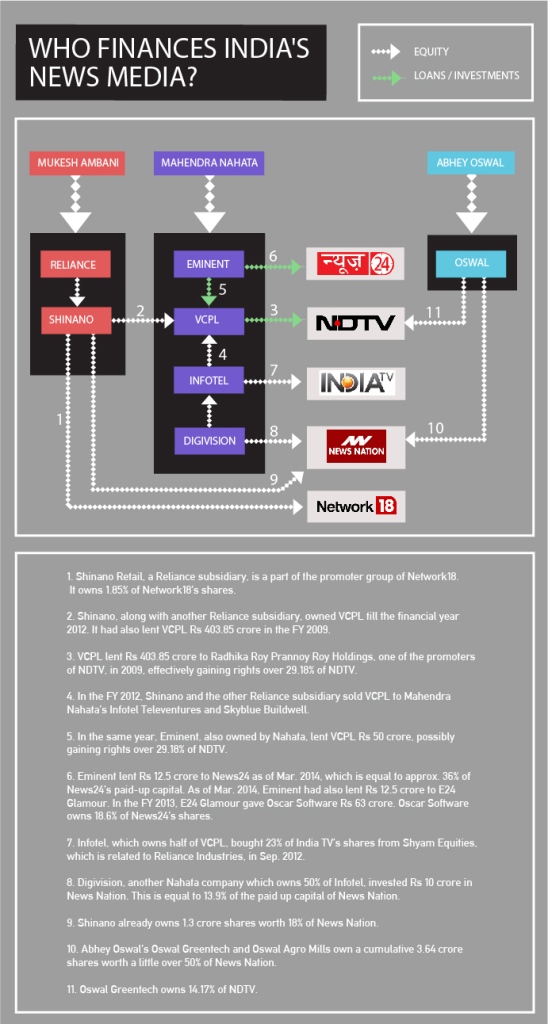 India media ownership 2016 Copyright Caravan
 Akarshan Uppal Reporter, IBN24 Copyright IBN24
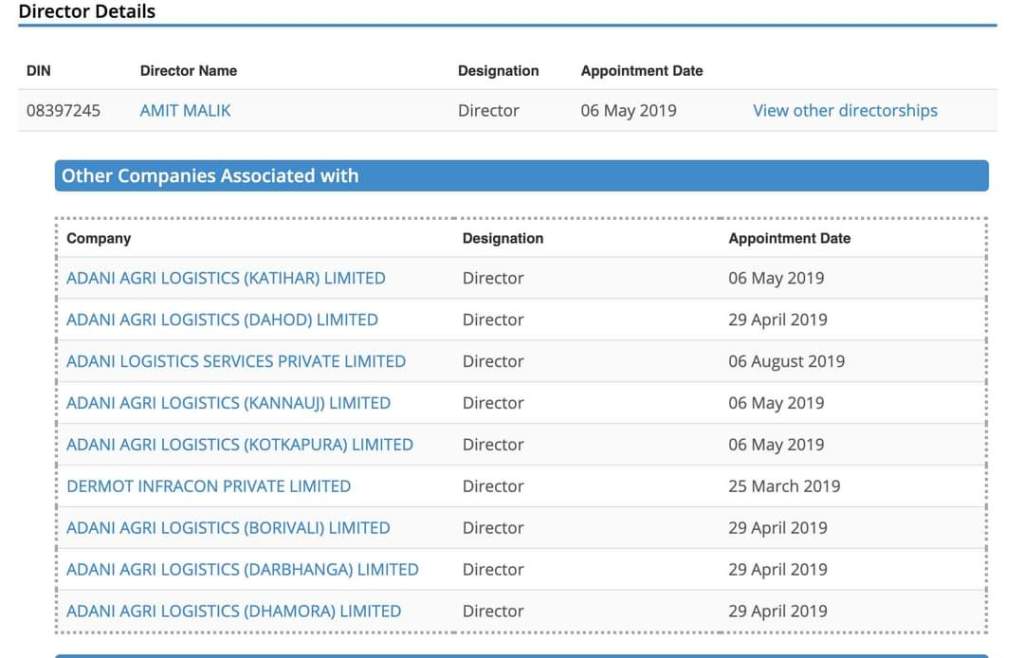


 Over the summer I decided to migrate my backups from rdiff-backup to borg,
which offers some significant advantages, in particular de-duplication, but
comes at a cost of complexity, and a corresponding sense of unease about how
sound my backup strategy might be. I've now hit the Point Of No Return: my
second external backup drive is overdue being synced with my NAS, which will
delete the last copy of the older rdiff-backup backups.
Whilst I hesitate over this last action to commit to borg, something else
happened. My wife wanted to put a copy of her iTunes music library on her
new phone, and I couldn't find it: not only could I not find it on any of
our computers, I also couldn't find a copy on the NAS, or in backups, or even
in old DVD-Rs. This has further knocked my confidence in our family data
management, and makes me even more nervous to commit to borg. I'm now wondering
about stashing the contents of the second external backup disk on some cloud
service as a fail-safe.
There was one known-good copy of Sarah's music: on her ancient iPod Nano.
Apple have gone to varying lengths to prevent you from copying music from an
iPod. When Music is copied to an iPod, the files are stripped of all their
metadata (artist, title, album, etc.) and renamed to something non-identifying
(e.g.
 My maybe most impactful piece of code is
 Another month, another bunch of uploads. The freeze for Debian 11 (bullseye) is edging closer, so I ve been trying to get my package list in better shape ahead of that. Thanks to those who worked on fixing lintian.debian.org and the lintian reports on the QA pages, those are immensely useful and it s great to have that back!
2020-10-04: Upload package gnome-shell-extension-draw-on-your-screen (8-1) to Debian unstable.
2020-10-05: Sponsor package flask-restful (0.3.8-4) for Debian unstable (Python Team request).
2020-10-05: Sponsor package python-potr (1.0.2-3) for Debian unstable (Python Team request).
2020-10-06: Sponsor package python-pyld (2.0.3-1) for Debian unstable (Python Team request).
2020-10-06: Sponsor package flask-openid (1.2.5+dfsg-4) for Debian unstable (Python Team request).
2020-10-06: Sponsor package qosmic (1.6.0-4) for Debian unstable (E-mail request).
2020-10-07: File removal for gnome-shell-extension-workspace-to-dock (RC Buggy, no longer maintained:
 This
 A few quick updates on

 You can connect to a running pod with


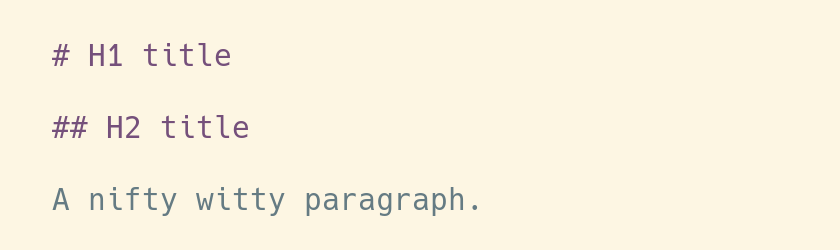 I'm mostly happy with that, except for one or two little details. I'd like to
have the titles displayed in bold, for example, so that they're easier to spot
when I skim through a Markdown file. It seems like a simple thing to ask, so I
hope there can be a simple solution.
The first steps
Let's learn the basics.
In Vim world, the rules to highlight files formats are defined in the directory
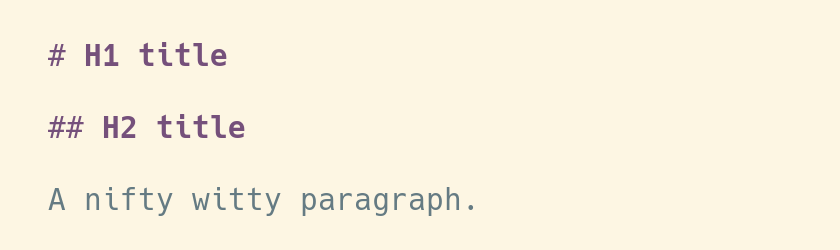 The rabbit hole
So we could stop right here, and life would be easy and good.
However, with this solution there's still something that is not perfect. We use
the color
 And a dark background:
 That's all, that's very little changes compared to the highlighting from the
original syntax file, and now that we understand how it's supposed to be done,
it's not much effort to achieve it.
It's just that finding the workaround to make it work for both light and dark
background took forever, and leaves the usual, unanswered question:






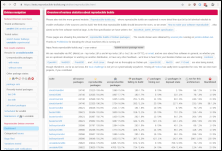

 Here is my monthly update covering what I have been doing in the free and open source software world during July 2020 (


 Also this was the last month before shifting suites: goodbye to Jessie LTS and Wheezy ELTS, welcome Stretch LTS and Jessie ELTS.
ELTS - Wheezy


