Search Results: "jam"

23 November 2022

Fran ois Marier: Name resolution errors in Ubuntu repositories while building a docker container

I ran into what seemed to be a DNS problem when building a Docker container:
Err http://archive.ubuntu.com jammy Release.gpg
  Could not resolve 'archive.ubuntu.com'
W: Failed to fetch http://archive.ubuntu.com/ubuntu/dists/jammy/Release.gpg  Could not resolve 'archive.ubuntu.com'
W: Some index files failed to download. They have been ignored, or old ones used instead.
I found that many solutions talked about setting the default DNS server explicitly in /etc/docker/daemon.json:
 
    "dns": ["1.1.1.1"]
 
but that didn't work for me. I noticed however that I was having these problems whenever I connected to my VPN. So what did work for me was restarting the docker daemon whenever there is a change in networking (e.g. enabling/disabling VPN) by putting the following in /etc/NetworkManager/dispatcher.d/docker-local:
#!/bin/sh
LOGFILE=/var/log/docker-restarts.log
if [ -z "$1" ]; then
    echo "$0: called with no interface" >> $LOGFILE
    exit 1;
fi
if [ "$1" = lo ]; then
    # Ignoring the loopback interface
    exit 0;
fi
case "$2" in
    up vpn-up down vpn-down)
        echo "$0: restarting docker due to action \ $2' on interface \ $1'" >> $LOGFILE
        /bin/systemctl restart docker.service
        ;;
    *)
        echo "$0: ignoring action \ $2' on interface \ $1'" >> $LOGFILE
        ;;
esac
and then making that new file executable:
chmod +x /etc/NetworkManager/dispatcher.d/docker-local
You can confirm that it's working as intended by watching the logs:
tail -f /var/log/docker-restarts.log
while enabling/disable your VPN or your network connection. If you don't see any output, then something is wrong and the Docker restart isn't happening.

1 November 2022

Jonathan Dowland: Halloween playlist 2022

I hope you had a nice Halloween! I've collected together some songs that I've enjoyed over the last couple of years that loosely fit a theme: ambient, instrumental, experimental, industrial, dark, disconcerting, etc. I've prepared a Spotify playlist of most of them, but not all. The list is inline below as well, with many (but not all) tracks linking to Bandcamp, if I could find them there. This is a bit late, sorry. If anyone listens to something here and has any feedback I'd love to hear it. (If you are reading this on an aggregation site, it's possible the embeds won't work. If so, click through to my main site) Spotify playlist: https://open.spotify.com/playlist/3bEvEguRnf9U1RFrNbv5fk?si=9084cbf78c364ac8; The list, with Bandcamp embeds where possible: Some sources
  1. Via Stuart Maconie's Freak Zone
  2. Via Mary Anne Hobbs
  3. Via Lose yourself with
  4. Soma FM - Doomed (Halloween Special)

5 October 2022

Dirk Eddelbuettel: RVowpalWabbit 0.0.17: Maintenance

Almost to the week one year since the last maintenance release, we can announce another maintenance release, now at version 0.0.17, of the RVowpalWabbit package. The CRAN maintainers kindly and politly pointed out that I was (cough, cough) apparently the last maintainer who had packages that set StagedInstall: no. Guilty as charged. RVowpalWabbit is one the two packages; the other one will hopefully follow shortly . And while I long suspected linking aspects to drive this (this is an old package, newer R packaging of the awesome VowpalWabbit is in rvw, I was plain wrong here. The cause was an absolute path to an included dataset, computed in an example, which then gets serialized. As Tomas Kalibera suggested, we can replace the constant with a function and all is well. So here is 0.0.17. As noted before, there is a newer package rvw based on the excellent GSoC 2018 and beyond work by Ivan Pavlov (mentored by James and myself) so if you are into VowpalWabbit from R go check it out. CRANberries provides a summary of changes to the previous version. More information is on the RVowpalWabbit page. Issues and bugreports should go to the GitHub issue tracker. If you like this or other open-source work I do, you can now sponsor me at GitHub.

This post by Dirk Eddelbuettel originated on his Thinking inside the box blog. Please report excessive re-aggregation in third-party for-profit settings.

27 September 2022

Fran ois Marier: Upgrading from chan_sip to res_pjsip in Asterisk 18

After upgrading to Ubuntu Jammy and Asterisk 18.10, I saw the following messages in my logs:
WARNING[360166]: loader.c:2487 in load_modules: Module 'chan_sip' has been loaded but was deprecated in Asterisk version 17 and will be removed in Asterisk version 21.
WARNING[360174]: chan_sip.c:35468 in deprecation_notice: chan_sip has no official maintainer and is deprecated.  Migration to
WARNING[360174]: chan_sip.c:35469 in deprecation_notice: chan_pjsip is recommended.  See guides at the Asterisk Wiki:
WARNING[360174]: chan_sip.c:35470 in deprecation_notice: https://wiki.asterisk.org/wiki/display/AST/Migrating+from+chan_sip+to+res_pjsip
WARNING[360174]: chan_sip.c:35471 in deprecation_notice: https://wiki.asterisk.org/wiki/display/AST/Configuring+res_pjsip
and so I decided it was time to stop postponing the overdue migration of my working setup from chan_sip to res_pjsip. It turns out that it was not as painful as I expected, though the conversion script bundled with Asterisk didn't work for me out of the box.

Debugging Before you start, one very important thing to note is that the SIP debug information you used to see when running this in the asterisk console (asterisk -r):
sip set debug on
now lives behind this command:
pjsip set logger on

SIP phones The first thing I migrated was the config for my two SIP phones (Snom 300 and Snom D715). The original config for them in sip.conf was:
[2000]
; Snom 300
type=friend
qualify=yes
secret=password123
encryption=no
context=full
host=dynamic
nat=no
directmedia=no
mailbox=10@internal
vmexten=707
dtmfmode=rfc2833
call-limit=2
disallow=all
allow=g722
allow=ulaw
[2001]
; Snom D715
type=friend
qualify=yes
secret=password456
encryption=no
context=full
host=dynamic
nat=no
directmedia=yes
mailbox=10@internal
vmexten=707
dtmfmode=rfc2833
call-limit=2
disallow=all
allow=g722
allow=ulaw
and that became the following in pjsip.conf:
[transport-udp]
type = transport
protocol = udp
bind = 0.0.0.0
external_media_address = myasterisk.dyn.example.com
external_signaling_address = myasterisk.dyn.example.com
local_net = 192.168.0.0/255.255.0.0
[2000]
type = aor
max_contacts = 1
[2000]
type = auth
username = 2000
password = password123
[2000]
type = endpoint
context = full
dtmf_mode = rfc4733
disallow = all
allow = g722
allow = ulaw
direct_media = no
mailboxes = 10@internal
auth = 2000
outbound_auth = 2000
aors = 2000
[2001]
type = aor
max_contacts = 1
[2001]
type = auth
username = 2001
password = password456
[2001]
type = endpoint
context = full
dtmf_mode = rfc4733
disallow = all
allow = g722
allow = ulaw
direct_media = yes
mailboxes = 10@internal
auth = 2001
outbound_auth = 2001
aors = 2001
The different direct_media line between the two phones has to do with how they each connect to my Asterisk server and whether or not they have access to the Internet.

Internal calls For some reason, my internal calls (from one SIP phone to the other) didn't work when using "aliases". I fixed it by changing this blurb in extensions.conf from:
[speeddial]
exten => 1000,1,Dial(SIP/2000,20)
exten => 1001,1,Dial(SIP/2001,20)
to:
[speeddial]
exten => 1000,1,Dial($ PJSIP_DIAL_CONTACTS(2000) ,20)
exten => 1001,1,Dial($ PJSIP_DIAL_CONTACTS(2001) ,20)
I have not yet dug into what this changes or why it's necessary and so feel free to leave a comment if you know more here.

PSTN trunk Once I had the internal phones working, I moved to making and receiving phone calls over the PSTN, for which I use VoIP.ms with encryption. I had to change the following in my sip.conf:
[general]
register => tls://555123_myasterisk:password789@vancouver2.voip.ms
externhost=myasterisk.dyn.example.com
localnet=192.168.0.0/255.255.0.0
tcpenable=yes
tlsenable=yes
tlscertfile=/etc/asterisk/asterisk.cert
tlsprivatekey=/etc/asterisk/asterisk.key
tlscapath=/etc/ssl/certs/
[voipms]
type=peer
host=vancouver2.voip.ms
secret=password789
defaultuser=555123_myasterisk
context=from-voipms
disallow=all
allow=ulaw
allow=g729
insecure=port,invite
canreinvite=no
trustrpid=yes
sendrpid=yes
transport=tls
encryption=yes
to the following in pjsip.conf:
[transport-tls]
type = transport
protocol = tls
bind = 0.0.0.0
external_media_address = myasterisk.dyn.example.com
external_signaling_address = myasterisk.dyn.example.com
local_net = 192.168.0.0/255.255.0.0
cert_file = /etc/asterisk/asterisk.cert
priv_key_file = /etc/asterisk/asterisk.key
ca_list_path = /etc/ssl/certs/
method = tlsv1_2
[voipms]
type = registration
transport = transport-tls
outbound_auth = voipms
client_uri = sip:555123_myasterisk@vancouver2.voip.ms
server_uri = sip:vancouver2.voip.ms
[voipms]
type = auth
password = password789
username = 555123_myasterisk
[voipms]
type = aor
contact = sip:555123_myasterisk@vancouver2.voip.ms
[voipms]
type = identify
endpoint = voipms
match = vancouver2.voip.ms
[voipms]
type = endpoint
context = from-voipms
disallow = all
allow = ulaw
allow = g729
from_user = 555123_myasterisk
trust_id_inbound = yes
media_encryption = sdes
auth = voipms
outbound_auth = voipms
aors = voipms
rtp_symmetric = yes
rewrite_contact = yes
send_rpid = yes
timers = no
The TLS method line is needed since the default in Debian OpenSSL is too strict. The timers line is to prevent outbound calls from getting dropped after 15 minutes. Finally, I changed the Dial() lines in these extensions.conf blurbs from:
[from-voipms]
exten => 5551231000,1,Goto(2000,1)
exten => 2000,1,Dial(SIP/2000&SIP/2001,20)
exten => 2000,n,Goto(in2000-$ DIALSTATUS ,1)
exten => 2000,n,Hangup
exten => in2000-BUSY,1,VoiceMail(10@internal,su)
exten => in2000-BUSY,n,Hangup
exten => in2000-CONGESTION,1,VoiceMail(10@internal,su)
exten => in2000-CONGESTION,n,Hangup
exten => in2000-CHANUNAVAIL,1,VoiceMail(10@internal,su)
exten => in2000-CHANUNAVAIL,n,Hangup
exten => in2000-NOANSWER,1,VoiceMail(10@internal,su)
exten => in2000-NOANSWER,n,Hangup
exten => _in2000-.,1,Hangup(16)
[pstn-voipms]
exten => _1NXXNXXXXXX,1,Set(CALLERID(all)=Francois Marier <5551231000>)
exten => _1NXXNXXXXXX,n,Dial(SIP/voipms/$ EXTEN )
exten => _1NXXNXXXXXX,n,Hangup()
exten => _NXXNXXXXXX,1,Set(CALLERID(all)=Francois Marier <5551231000>)
exten => _NXXNXXXXXX,n,Dial(SIP/voipms/1$ EXTEN )
exten => _NXXNXXXXXX,n,Hangup()
exten => _011X.,1,Set(CALLERID(all)=Francois Marier <5551231000>)
exten => _011X.,n,Authenticate(1234)
exten => _011X.,n,Dial(SIP/voipms/$ EXTEN )
exten => _011X.,n,Hangup()
exten => _00X.,1,Set(CALLERID(all)=Francois Marier <5551231000>)
exten => _00X.,n,Authenticate(1234)
exten => _00X.,n,Dial(SIP/voipms/$ EXTEN )
exten => _00X.,n,Hangup()
to:
[from-voipms]
exten => 5551231000,1,Goto(2000,1)
exten => 2000,1,Dial(PJSIP/2000&PJSIP/2001,20)
exten => 2000,n,Goto(in2000-$ DIALSTATUS ,1)
exten => 2000,n,Hangup
exten => in2000-BUSY,1,VoiceMail(10@internal,su)
exten => in2000-BUSY,n,Hangup
exten => in2000-CONGESTION,1,VoiceMail(10@internal,su)
exten => in2000-CONGESTION,n,Hangup
exten => in2000-CHANUNAVAIL,1,VoiceMail(10@internal,su)
exten => in2000-CHANUNAVAIL,n,Hangup
exten => in2000-NOANSWER,1,VoiceMail(10@internal,su)
exten => in2000-NOANSWER,n,Hangup
exten => _in2000-.,1,Hangup(16)
[pstn-voipms]
exten => _1NXXNXXXXXX,1,Set(CALLERID(all)=Francois Marier <5551231000>)
exten => _1NXXNXXXXXX,n,Dial(PJSIP/$ EXTEN @voipms)
exten => _1NXXNXXXXXX,n,Hangup()
exten => _NXXNXXXXXX,1,Set(CALLERID(all)=Francois Marier <5551231000>)
exten => _NXXNXXXXXX,n,Dial(PJSIP/1$ EXTEN @voipms)
exten => _NXXNXXXXXX,n,Hangup()
exten => _011X.,1,Set(CALLERID(all)=Francois Marier <5551231000>)
exten => _011X.,n,Authenticate(1234)
exten => _011X.,n,Dial(PJSIP/$ EXTEN @voipms)
exten => _011X.,n,Hangup()
exten => _00X.,1,Set(CALLERID(all)=Francois Marier <5551231000>)
exten => _00X.,n,Authenticate(1234)
exten => _00X.,n,Dial(PJSIP/$ EXTEN @voipms)
exten => _00X.,n,Hangup()
Note that it's not just replacing SIP/ with PJSIP/, but it was also necessary to use a format supported by pjsip for the channel since SIP/trunkname/extension isn't supported by pjsip.

25 September 2022

Shirish Agarwal: Rama II, Arthur C. Clarke, Aliens

Rama II This would be more of a short post about the current book I am reading. Now people who have seen Arrival would probably be more at home. People who have also seen Avatar would also be familiar to the theme or concept I am sharing about. Now before I go into detail, it seems that Arthur C. Clarke wanted to use a powerful god or mythological character for the name and that is somehow the RAMA series started. Now the first book in the series explores an extraterrestrial spaceship that earth people see/connect with. The spaceship is going somewhere and is doing an Earth flyby so humans don t have much time to explore the spaceship and it is difficult to figure out how the spaceship worked. The spaceship is around 40 km. long. They don t meet any living Ramans but mostly automated systems and something called biots. As I m still reading it, I can t really say what happens next. Although in Rama or Rama I, the powers that be want to destroy it while in the end last they don t. Whether they could have destroyed it or not would be whole another argument. What people need to realize is that the book is a giant What IF scenario.

Aliens If there were any intelligent life in the Universe, I don t think they will take the pain of visiting Earth. And the reasons are far more mundane than anything else. Look at how we treat each other. One of the largest democracies on Earth, The U.S. has been so divided. While the progressives have made some good policies, the Republicans are into political stunts, consider the political stunt of sending Refugees to Martha s Vineyard. The ex-president also made a statement that he can declassify anything just by thinking about it. Now understand this, a refugee is a legal migrant whose papers would be looked into by the American Govt. and till the time he/she/their application is approved or declined they can work, have a house, or do whatever to support themselves. There is a huge difference between having refugee status and being an undocumented migrant. And it isn t as if the Republicans don t know this, they did it because they thought they will be able to get away with it. Both the above episodes don t throw us in a good light. If we treat others like the above, how can we expect to be treated? And refugees always have a hard time, not just in the U.S, , the UK you name it. The UK just some months ago announced a controversial deal where they will send Refugees to Rwanda while their refugee application is accepted or denied, most of them would be denied. The Indian Government is more of the same. A friend, a casual acquaintance Nishant Shah shared the same issues as I had shared a few weeks back even though he s an NRI. So, it seems we are incapable of helping ourselves as well as helping others. On top of it, we have the temerity of using the word alien for them. Now, just for a moment, imagine you are an intelligent life form. An intelligent life-form that could coax energy from the stars, why would you come to Earth, where the people at large have already destroyed more than half of the atmosphere and still arguing about it with the other half. On top of it, we see a list of authoritarian figures like Putin, Xi Jinping whose whole idea is to hold on to power for as long as they can, damn the consequences. Mr. Modi is no different, he is the dumbest of the lot and that s saying something. Most of the projects made by him are in disarray, Pune Metro, my city giving an example. And this is when Pune was the first applicant to apply for a Metro. Just like the UK, India too has tanked the economy under his guidance. Every time they come closer to target dates, the targets are put far into the future, for e.g. now they have said 2040 for a good economy. And just like in other countries, he has some following even though he has a record of failure in every sector of the economy, education, and defense, the list is endless. There isn t a single accomplishment by him other than screwing with other religions. Most of my countrymen also don t really care or have a bother to see how the economy grows and how exports play a crucial part otherwise they would be more alert. Also, just like the UK, India too gave tax cuts to the wealthy, most people don t understand how economies function and the PM doesn t care. The media too is subservient and because nobody asks the questions, nobody seems to be accountable :(.

Religion There is another aspect that also has been to the fore, just like in medieval times, I see a great fervor for religion happening here, especially since the pandemic and people are much more insecure than ever before. Before, I used to think that insecurity and religious appeal only happen in the uneducated, and I was wrong. I have friends who are highly educated and yet still are blinded by religion. In many such cases or situations, I find their faith to be a sham. If you have faith, then there shouldn t be any room for doubt or insecurity. And if you are not in doubt or insecure, you won t need to talk about your religion. The difference between the two is that a person is satiated himself/herself/themselves with thirst and hunger. That person would be in a relaxed mode while the other person would continue to create drama as there is no peace in their heart. Another fact is none of the major religions, whether it is Christianity, Islam, Buddhism or even Hinduism has allowed for the existence of extraterrestrials. We have already labeled them as aliens even before meeting them & just our imagination. And more often than not, we end up killing them. There are and have been scores of movies that have explored the idea. Independence day, Aliens, Arrival, the list goes on and on. And because our religions have never thought about the idea of ET s and how they will affect us, if ET s do come, all the religions and religious practices would panic and die. That is the possibility why even the 1947 Roswell Incident has been covered up . If the above was not enough, the bombing of Hiroshima and Nagasaki by the Americans would always be a black mark against humanity. From the alien perspective, if you look at the technology that they have vis-a-vis what we have, they will probably think of us as spoilt babies and they wouldn t be wrong. Spoilt babies with nuclear weapons are not exactly a healthy mix

Earth To add to our fragile ego, we didn t even leave earth even though we have made sure we exploit it as much as we can. We even made the anthropocentric or homocentric view that makes man the apex animal and to top it we have this weird idea that extraterrestrials come here or will invade for water. A species that knows how to get energy out of stars but cannot make a little of H2O. The idea belies logic and again has been done to death. Why we as humans are so insecure even though we have been given so much I fail to understand. I have shared on numerous times the Kardeshev Scale on this blog itself. The above are some of the reasons why Arthur C. Clarke s works are so controversial and this is when I haven t even read the whole book. It forces us to ask questions that we normally would never think about. And I have to repeat that when these books were published for the first time, they were new ideas. All the movies, from Stanley Kubrick s 2001: Space Odyssey, Aliens, Arrival, and Avatar, somewhere or the other reference some aspect of this work. It is highly possible that I may read and re-read the book couple of times before beginning the next one. There is also quite a bit of human drama, but then that is to be expected. I have to admit I did have some nice dreams after reading just the first few pages, imagining being given the opportunity to experience an Extraterrestrial spaceship that is beyond our wildest dreams. While the Governments may try to cover up or something, the ones who get to experience that spacecraft would be unimaginable. And if they were able to share the pictures or a Livestream, it would be nothing short of amazing. For those who want to, there is a lot going on with the New James Webb Telescope. I am sure it would give rise to more questions than answers.

22 September 2022

Jonathan Dowland: Nine Inch Nails, Cornwall, June

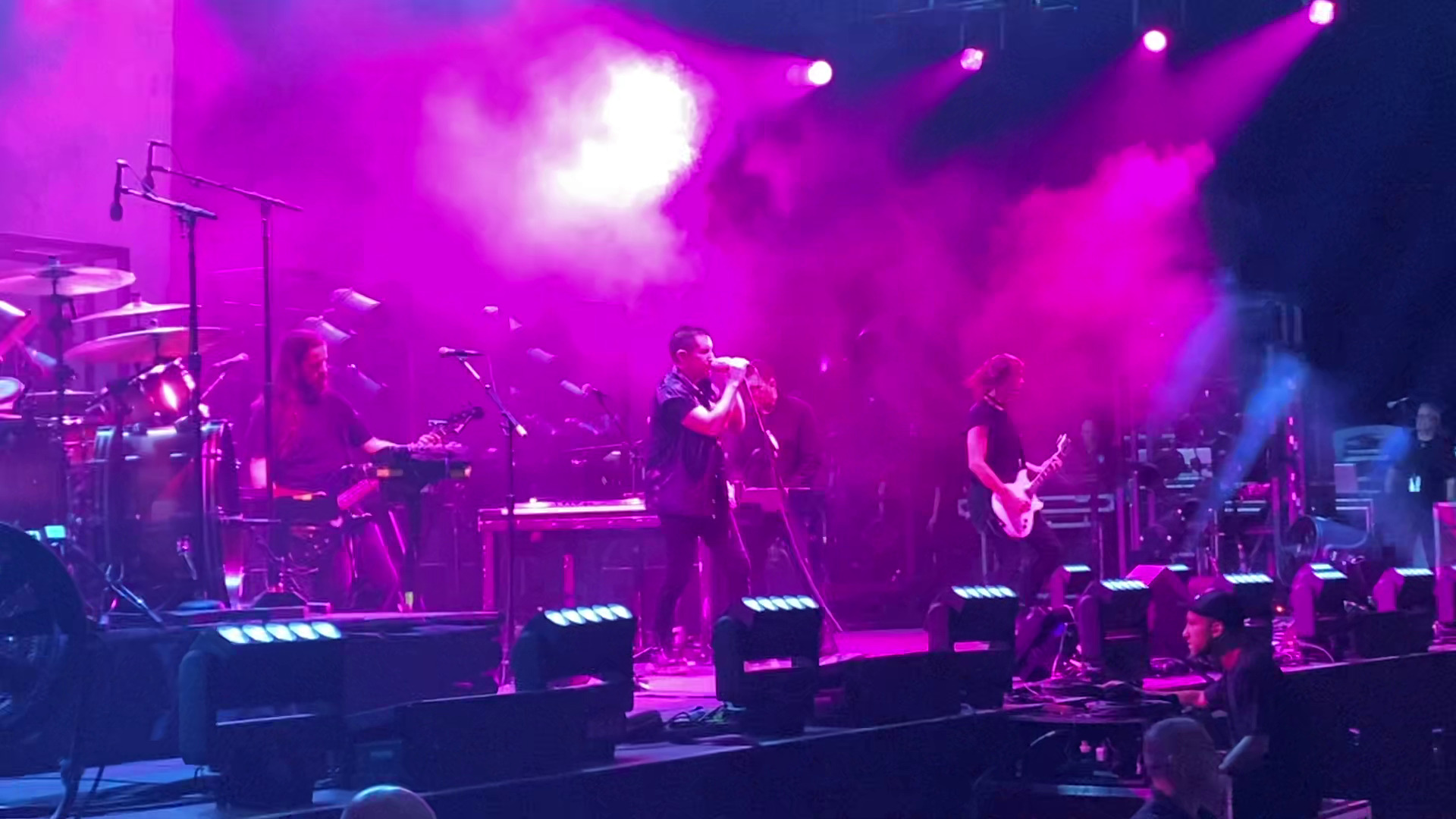
In June I travelled to see Nine Inch Nails perform two nights at the Eden Project in Cornwall. It'd been eight years since I last saw them live and when they announced the Eden shows, I thought it might be the only chance I'd get to see them for a long time. I committed, and sods law, a week or so later they announced a handful of single-night UK club shows. On the other hand, on previous tours where they'd typically book two club nights in each city, I've attended one night and always felt I should have done both, so this time I was making that happen. Newquay
approach by air approach by air
Towan Beach (I think) Towan Beach (I think)
For personal reasons it's been a difficult year so it was nice to treat myself to a mini holiday. I stayed in Newquay, a seaside town with many similarities to the North East coast, as well as many differences. It's much bigger, and although we have a thriving surfing community in Tynemouth, Newquay have it on another level. They also have a lot more tourism, which is a double-edged sword: in Newquay, besides surfing, there was not a lot to do. There's a lot of tourist tat shops, and bars and cafes (som very nice ones), but no book shops, no record shops, very few of the quaint, unique boutique places we enjoy up here and possibly take for granted. If you want tie-dyed t-shirts though, you're sorted. Nine Inch Nails have a long-established, independently fan-run forum called Echoing The Sound. There is now also an official Discord server. I asked on both whether anyone was around in Newquay and wanted to meet up: not many people were! But I did meet a new friend, James, for a quiet drink. He was due to share a taxi with Sarah, who was flying in but her flight was delayed and she had to figure out another route. Eden Project
the Eden Project the Eden Project
The Eden Project, the venue itself, is a fascinating place. I didn't realise until I'd planned most of my time there that the gig tickets granted you free entry into the Project on the day of the gig as well as the day after. It was quite tricky to get from Newquay to the Eden project, I would have been better off staying in St Austell itself perhaps, so I didn't take advantage of this, but I did have a couple of hours total to explore a little bit at the venue before the gig on each night. Friday 17th (sunny) Once I got to the venue I managed to meet up with several names from ETS and the Discord: James, Sarah (who managed to re-arrange flights), Pete and his wife (sorry I missed your name), Via Tenebrosa (she of crab hat fame), Dave (DaveDiablo), Elliot and his sister and finally James (sheapdean), someone who I've been talking to online for over a decade and finally met in person (and who taped both shows). I also tried to meet up with a friend from the Debian UK community (hi Lief) but I couldn't find him! Support for Friday was Nitzer Ebb, who I wasn't familiar with before. There were two men on stage, one operating instruments, the other singing. It was a tough time to warm up the crowd, the venue was still very empty and it was very bright and sunny, but I enjoyed what I was hearing. They're definitely on my list. I later learned that the band's regular singer (Doug McCarthy) was unable to make it, and so the guy I was watching (Bon Harris) was standing in for full vocal duties. This made the performance (and their subsequent one at Hellfest the week after) all the more impressive.
pic of the band
Via (with crab hat), Sarah, me (behind). pic by kraw Via (with crab hat), Sarah, me (behind). pic by kraw
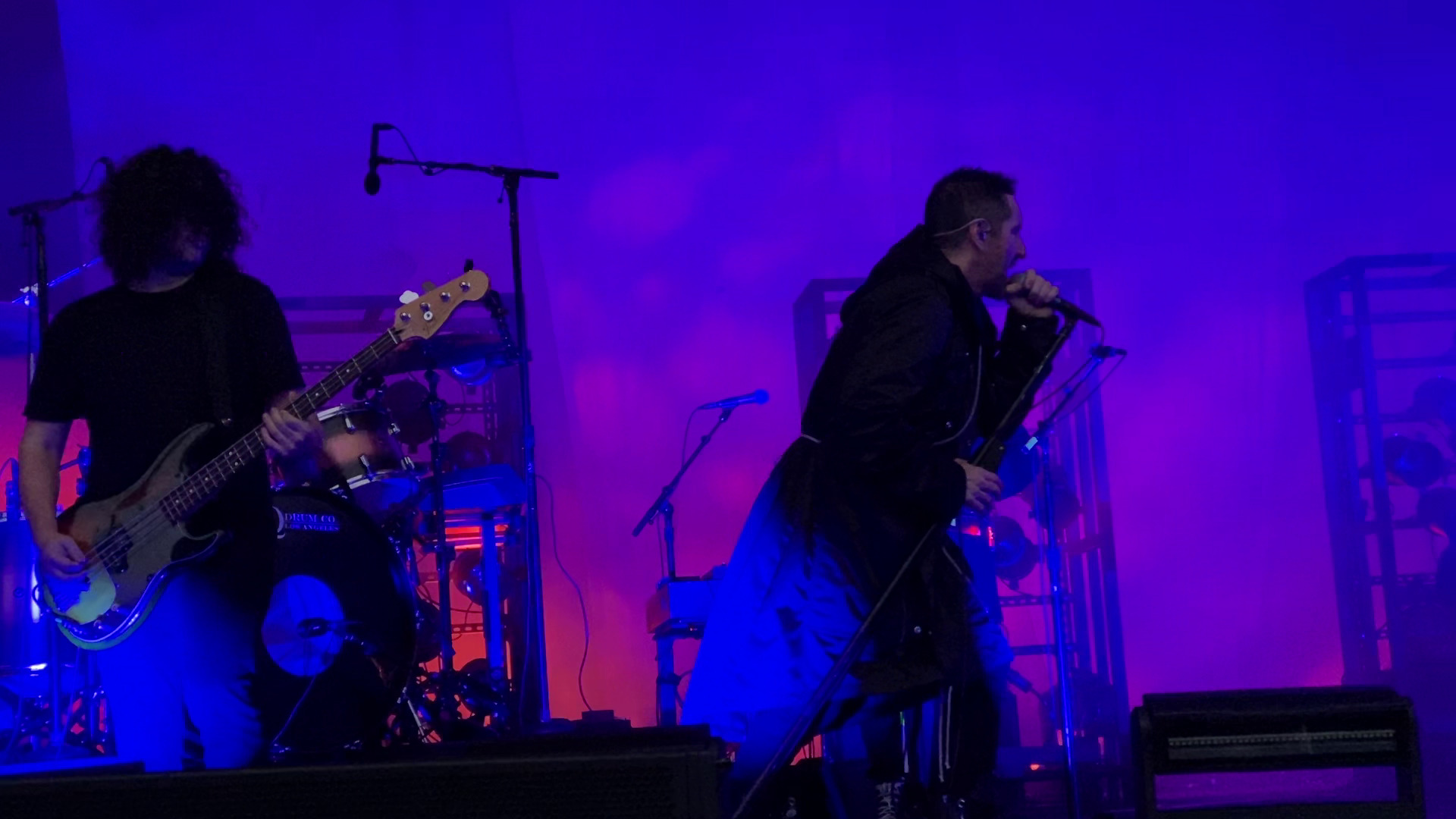
(Day) and night one, Thursday, was very hot and sunny and the band seemed a little uncomfortable exposed on stage with little cover. Trent commented as such at least once. The setlist was eclectic: and I finally heard some of my white whale songs. Highlights for me were The Perfect Drug, which was unplayed from 1997-2018 and has now become a staple, and the second ever performance of Everything, the first being a few days earlier. Also notable was three cuts in a row from the last LP, Bad Witch, Heresy and Love Is Not Enough. Saturday 18th (rain)
with Elliot, before with Elliot, before
Day/night 2, Friday, was rainy all day. Support was Yves Tumor, who were an interesting clash of styles: a Prince/Bowie-esque inspired lead clashing with a rock-out lead guitarist styling himself similarly to Brian May. I managed to find Sarah, Elliot (new gig best-buddy), Via and James (sheapdean) again. Pete was at this gig too, but opted to take a more relaxed position than the rail this time. I also spent a lot of time talking to a Canadian guy on a press pass (both nights) that I'm ashamed to have forgotten his name. The dank weather had Nine Inch Nails in their element. I think night one had the more interesting setlist, but night two had the best performance, hands down. Highlights for me were mostly a string of heavier songs (in rough order of scarcity, from common to rarely played): wish, burn, letting you, reptile, every day is exactly the same, the line begins to blur, and finally, happiness in slavery, the first UK performance since 1994. This was a crushing set. A girl in front of me was really suffering with the cold and rain after waiting at the venue all day to get a position on the rail. I thought she was going to pass out. A roadie with NIN noticed, and came over and gave her his jacket. He said if she waited to the end of the show and returned his jacket he'd give her a setlist, and true to his word, he did. This was a really nice thing to happen and really gave the impression that the folks who work on these shows are caring people.
Yep I was this close Yep I was this close
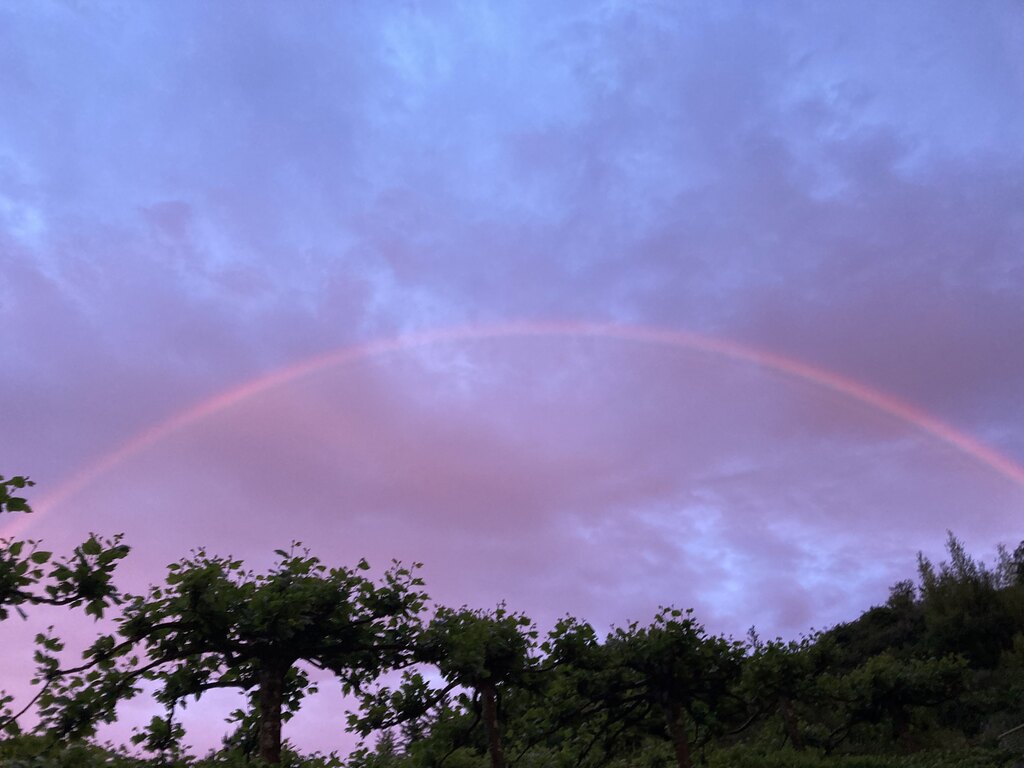
A fuckin' rainbow! Photo by "Lazereth of Nazereth"
Afterwards Afterwards
Night two did have some gentler songs and moments to remember: a re-arranged Sanctified (which ended a nineteen-year hiatus in 2013) And All That Could Have Been (recorded 2002, first played 2018), La Mer, during which the rain broke and we were presented with a beautiful pink-hued rainbow. They then segued into Less Than, providing the comic moment of the night when Trent noticed the rainbow mid-song; now a meme that will go down in NIN fan history. Wrap-up This was a blow-out, once in a lifetime trip to go and see a band who are at the top of their career in terms of performance. One problem I've had with NIN gigs in the past is suffering gig flashback to them when I go to other (inferior) gigs afterwards, and I'm pretty sure I will have this problem again. Doing both nights was worth it, the two experiences were very different and each had its own unique moments. The venue was incredible, and Cornwall is (modulo tourist trap stuff) beautiful.

17 September 2022

James Valleroy: How I avoid sysadmin work

The server running this blog is a RockPro64 sitting in my living room. Besides WordPress (the blogging software), I run various other services on it: Most of these are for my personal use, and a few of them have pages for public viewing (linked at the top of this page). Despite running a server, I don t really consider myself to be a system administrator (or sysadmin for short). I generally try to avoid doing system administration work as much as possible. I think this is due to a number of reasons: These reasons might be surprising to some, but they also suggest that an alternative approach: So my approach is this: if I want to run an additional service, enhance an existing one, or fix a bug, I don t do those changes directly on my server. Instead, I will make (or suggest, or request) the change somewhere upstream of my server: So basically my system administration task turns into a software development task instead. And (in my opinion) there are much better tools available for this: source control systems such as git, test suites and Continuous Integration (CI) pipelines, and code review processes. These make it easier to keep track of and understand the changes, and reduce the possibility of making a catastrophic mistake. Besides this, there is one other major advantage to working upstream: the work is not just benefiting the server running in my home, but many others. Anyone who is using the same software or packages will also get the improvements or bug fixes. And likewise, I get to benefit from the work done by many other contributors. Some final notes about this approach:

11 September 2022

Shirish Agarwal: Politics, accessibility, books

Politics I have been reading books, both fiction and non-fiction for a long long time. My first book was a comic most probably when I was down with Malaria when I was a kid. I must be around 4-5 years old. Over the years, books have given me great joy and I continue to find nuggets of useful information, both in fiction as well as non-fiction books. So here s to sharing something and how that can lead you to a rabbit hole. This entry would be a bit NSFW as far as language is concerned. NYPD Red 5 by James Patterson First of all, have no clue as to why James Patterson s popularity has been falling. He used to be right there with Lee Child and others, but not so much now. While I try to be mysterious about books, I would give a bit of heads-up so people know what to expect. This is probably more towards the Adult crowd as there is a bit of sex as well as quite a few grey characters. The NYPD Red is a sort of elite police task force that basically is for celebrities. In the book series, they do a lot of ass-kissing (figuratively more than literally). Now the reason I have always liked fiction is that however wild the assumption or presumption is, it does have somewhere a grain of truth. And each and every time I read a book or two, that gets cemented. One of the statements in the book told something about how 9/11 took a lot of police personnel out of the game. First, there were a number of policemen who were patrolling the Two Towers, so they perished literally during the explosion. Then there were policemen who were given the cases to close the cases (bring the cases to conclusion). When you are investigating your own brethren or even civilians who perished 9/11 they must have experienced emotional trauma and no outlet. Mental health even in cops is the same and given similar help as you and me (i.e. next to none.) But both of these were my assumptions. The only statement that was in the book was they lost a lot of bench strength. Even NYFD (New York Fire Department). This led me to me to With Crime At Record Lows, Should NYC Have Fewer Cops? This is more right-wing sentiment and in fact, there have been calls to defund the police. This led me to https://cbcny.org/ and one specific graph. Unfortunately, this tells the story from 2010-2022 but not before. I was looking for data from around 1999 to 2005 because that will tell whether or not it happened. Then I remembered reading in newspapers the year or two later how 9/11 had led NYC to recession. I looked up online and for sure NY was booming before 9/11. One can argue that NYC could come down and that is pretty much possible, everything that goes up comes down, it s a law of nature but it would have been steady rather than abrupt. And once you are in recession, the first thing to go is personnel. So people both from NYPD and NYFD were let go, even though they were needed the most then. As you can see, a single statement in a book can take you to places & time literally. Edit: Addition 11th September There were quite a few people who also died from New York Port Authority and they also lost quite a number of people directly and indirectly and did a lot of patrolling of the water bodies near NYC. Later on, even in their department, there were a lot of early retirements.

Kosovo A couple of days back I had a look at the Debconf 2023 BOF that was done in Kosovo. One of the interesting things that happened during the BOF is when a woman participant chimed in and asks India to recognize Kosovo. Immediately it triggered me and I opened the Kosovo Wikipedia page to get some understanding of the topic. Reading up on it, came to know Russia didn t agree and doesn t recognize Kosovo. Mr. Modi likes Putin and India imports a lot of its oil from Russia. Unrelatedly, but still useful, we rejected to join IPEF. Earlier, we had rejected China s BRI. India has never been as vulnerable as she is now. Our foreign balance has reached record lows. Now India has been importing quite a bit of Russian crude and has been buying arms and ammunition from them. We are also scheduled to buy a couple of warships and submarines etc. We even took arms and ammunition from them on lease. So we can t afford that they are displeased with India. Even though Russia has more than friendly relations with both China and Pakistan. At the same time, the U.S. is back to aiding Pakistan which the mainstream media in India refuses to even cover. And to top all of this, we have the Chip 4 Alliance but that needs its own article, truth be told but we will do with a paragraph  Edit Addition 11th September Seems Kosovo isn t unique in that situation, there are 3-4 states like that. A brief look at worldpopulationreview tells you there are many more.

Chip 4 Alliance For almost a decade I have been screaming about this on my blog as well as everywhere that chip fabrication is a national security thing. And for years, most people deny it. And now we have chip 4 alliance. Now to understand this, you have to understand that China for almost a decade, somewhere around 2014 or so came up with something called the big fund . Now one can argue one way or the other how successful the fund has been, but it has, without doubt, created ripples so strong that the U.S., Taiwan, Japan, and probably South Korea will join and try to stem the tide. Interestingly, in this grouping, South Korea is the weakest in the statements and what they have been saying. Within the group itself, there is a lot of tension and China would use that and there are a number of unresolved issues between the three countries that both China & Russia would exploit. For e.g. the Comfort women between South Korea and Japan. Or the 1985 Accord Agreement between Japan and the U.S. Now people need to understand this, this is not just about China but also about us. If China has 5-6x times India s GDP and their research budget is at the very least 100x times what India spends, how do you think we will be self-reliant? Whom are we fooling? Are we not tired of fooling ourselves  In diplomacy, countries use leverage. Sadly, we let go of some of our most experienced negotiators in 2014 and since then have been singing in the wind

Accessibility, Jitsi, IRC, Element-Desktop The Wikipedia page on Accessibility says the following Accessibility is the design of products, devices, services, vehicles, or environments so as to be usable by people with disabilities. The concept of accessible design and practice of accessible development ensures both direct access (i.e. unassisted) and indirect access meaning compatibility with a person s assistive technology. Now IRC or Internet Relay Chat has been accessible for a long time. I know of even blind people who have been able to navigate IRC quite effortlessly as there has been a lot of work done to make sure all the joints speak to each other so people with one or more disabilities still can use, and contribute without an issue. It does help that IRC and many clients have been there since the 1970s so most of them have had more than enough time to get all the bugs fixed and both text-to-speech and speech-to-text work brilliantly on IRC. Newer software like Jitsi or for that matter Telegram is lacking those features. A few days ago, discovered on Telegram I was shared that Samsung Voice input is also able to do the same. The Samsung Voice Input works wonder as it translates voice to text, I have not yet tried the text-to-speech but perhaps somebody can and they can share whatever the results can be one way or the other. I have tried element-desktop both on the desktop as well as mobile phone and it has been disappointing, to say the least. On the desktop, it is unruly and freezes once in a while, and is buggy. The mobile version is a little better but that s not saying a lot. I prefer the desktop version as I can use the full-size keyboard. The bug I reported has been there since its Riot days. I had put up a bug report even then. All in all, yesterday was disappointing

3 September 2022

James Valleroy: File sharing with bepasty

One of the apps running on my FreedomBox that I use frequently is bepasty. bepasty is essentially a self-hosted, free software pastebin. It allows you to paste text, or upload any type of file. You can also set an expiration date for when the file or text will automatically be deleted. If you are uploading multiple related files, you can organize them into a list. bepasty does not have user accounts. Instead, it has shared passwords, where each password is linked to a set of permissions. There are five permissions: Read, List, Create, Delete, and Admin. (The meanings are mostly straightforward, except for Admin, which means the ability to lock and unlock files.) This allows very fine-grained control. For example, if you want someone to be able to upload files to your bepasty, but not view or download anything, than you can generate a password with only the Create permission, and give this password to the person who will be uploading files. To simplify the initial setup in FreedomBox, we generate three passwords by default: one for viewers (List and Read), one for editors (List, Read, Create, and Delete), and one for admins (all permissions). In addition, when no password has been provided, the Read (but not List) permission is provided by default. This allows files to be easily shared by sending just their URLs (and no password required). The URLs contain some random characters, so it is not easy to guess. I mostly use bepasty for moving files between systems, whether its a physical machine or VPS, or a VM or container that I will use only briefly. Especially in the latter case, it s nice that I don t need to do any extra setup (such as copying SSH keys) before I copy my files over. The bepasty package is available in Debian stable (with a newer version in stable-backports and testing). The many use-cases that it provides, and the well-maintained Debian packaging, made it a compelling choice for integration into FreedomBox, which has included bepasty for one-click installation since version 20.14.

1 September 2022

Russ Allbery: Summer haul

It's been a while since I posted one of these! Or, really, much of anything else. Busy and distracted this summer and a bit behind on a wide variety of things at the moment, although thankfully not in a bad way. Sara Alfageeh & Nadia Shammas Squire (graphic novel)
Travis Baldree Legends & Lattes (sff)
Leigh Bardugo Six of Crows (sff)
Miles Cameron Artifact Space (sff)
Robert Caro The Power Broker (nonfiction)
Kate Elliott Servant Mage (sff)
Nicola Griffith Spear (sff)
Alix E. Harrow A Mirror Mended (sff)
Tony Judt Postwar (nonfiction)
T. Kingfisher Nettle & Bone (sff)
Matthys Levy & Mario Salvadori Why Buildings Fall Down (nonfiction)
Lev Menand The Fed Unbound (nonfiction)
Courtney Milan Trade Me (romance)
Elie Mystal Allow Me to Retort (nonfiction)
Quenby Olson Miss Percy's Pocket Guide (sff)
Anu Partanen The Nordic Theory of Everything (nonfiction)
Terry Pratchett Hogfather (sff)
Terry Pratchett Jingo (sff)
Terry Pratchett The Last Continent (sff)
Terry Pratchett Carpe Jugulum (sff)
Terry Pratchett The Fifth Elephant (sff)
Terry Pratchett The Truth (sff)
Victor Ray On Critical Race Theory (nonfiction)
Richard Roberts A Spaceship Repair Girl Supposedly Named Rachel (sff)
Nisi Shawl & Latoya Peterson (ed.) Black Stars (sff anthology)
John Scalzi The Kaiju Preservation Society (sff)
James C. Scott Seeing Like a State (nonfiction)
Mary Sisson Trang (sff)
Mary Sisson Trust (sff)
Benjanun Sriduangkaew And Shall Machines Surrender (sff)
Lea Ypi Free (nonfiction)
It's been long enough that I've already read and reviewed some of these. Already read and pending review are the next two Pratchett novels in my slow progress working through them. Had to catch up with the Tor.com re-read series. So many books and quite definitely not enough time at the moment, although I've been doing better at reading this summer than last summer!

27 August 2022

James Valleroy: FreedomBox Packages in Debian

FreedomBox is a Debian pure blend that reduces the effort needed to run and maintain a small personal server. Being a pure blend means that all of the software packages which are used in FreedomBox are included in Debian. Most of these packages are not specific to FreedomBox: they are common things such as Apache web server, firewalld, slapd (LDAP server), etc. But there are a few packages which are specific to FreedomBox: they are named freedombox, freedombox-doc-en, freedombox-doc-es, freedom-maker, fbx-all and fbx-tasks. freedombox is the core package. You could say, if freedombox is installed, then your system is a FreedomBox (or a derivative). It has dependencies on all of the packages that are needed to get a FreedomBox up and running, such as the previously mentioned Apache, firewalld, and slapd. It also provides a web interface for the initial setup, configuration, and installing apps. (The web interface service is called Plinth and is written in Python using Django framework.) The source package of freedombox also builds freedombox-doc-en and freedombox-doc-es. These packages install the FreedomBox manuals for English and Spanish, respectively. freedom-maker is a tool that is used to build FreedomBox disk images. An image can be copied to a storage device such as a Solid State Disk (SSD), eMMC (internal flash memory chip), or a microSD card. Each image is meant for a particular hardware device (or target device), or a set of devices. In some cases, one image can be used across a wide range of devices. For example, the amd64 image is for all 64-bit x86 architecture machines (including virtual machines). The arm64 image is for all 64-bit ARM machines that support booting a generic image using UEFI. fbx-all and fbx-tasks are special metapackages, both built from a single source package named debian-fbx. They are related to tasksel, a program that displays a curated list of packages that can be installed, organized by interest area. Debian blends typically provide task files to list their relevant applications in tasksel. fbx-tasks only installs the tasks for FreedomBox (without actually installing FreedomBox). fbx-all goes one step further and also installs freedombox itself. In general, FreedomBox users won t need to interact with these two packages. Links:

19 August 2022

Emmanuel Kasper: Everything markdown with pandoc

Using a markdown file , this style sheet and this simple command,
pandoc couronne.md --standalone --css styling.css \
    --to  html5  --table-of-contents &gt; couronne.html
I feel I will never need a word processor again. It produces this nice looking document without pain.

14 August 2022

Jamie McClelland: Web caching is hard

Web caching is hard. And also, maybe I m not that good under pressure? In any event, I made the following mistakes while trying to debug a web site using our nginx cache that bit the dust under heavy load today: Action: I ran curl -I https://website.org/ and it hung. Wrong assumption: Something is wrong with nginx. Why else would it just hang? Reconsidered conclusion: The resource (the home page) is a MISS, so nginx has to retrieve it from the origin, but the origin is over-loaded and timing out, so my request is also timing out. Maybe something is wrong with the nginx caching configuration since the home page really should be a HIT but that s another problem. Action: I changed the configuration from our normal caching set of directives to our aggressive caching set of directives, reloaded nginx and curl -I https://website.org/ still hung. Wrong assumption: aggressive caching isn t working and I need a different configuration. Reconsidered conclusion: The home page still has failed to be loaded from the origin, so every request for it is going to be a MISS, and is going to hang, until nginx is able to fill the cache with it. The configuration change might be the right change; we just need the origin to calm down before we will know. Action: I restarted PHP on the origin to free up PHP processes so my home page request can fill the cache and still curl -I https://website.org/ hangs. Wrong assumption: WTF! The world is ending! Reconsidered conclusion: The regular traffic which is accessing other pages (not the home page) consumed all the available PHP processes on the origin before my request for the home page could complete, so nginx is still unable to fill the cache with the home page. Action: Once we got things under control, I changed the caching level from aggressive back down to normal. I ran curl -I https://website.org/ and it was HIT ing. I concluded that we don t need the aggressive cache after all. Got some coffee, came back later and ran it again and it consistently showed MISS. Wrong assumption: What?!? Did something change on the origin to stop the cache from working?? Reconsidered conclusion: The aggressive cache set the cache for 5 minutes. Even after changing to normal caching, the home page was still cached so it was served from the cache. After 5 minutes, the cache expired. Now, the normal cache setting are in play to determine whether the request would be cached or not. In other words, you have to wait for the cache to expire (or bust the cache) before you can effectively know if the new cache settings are working.

4 August 2022

Jamie McClelland: Fine tuning Thunderbird's end-to-end encryption

I love that Thunderbird really tackled OpenPGP head on and incorporated it directly into the client. I know it s been a bit rough for some users, but I think it s a good long term investment. And to demonstrate I ll now complain about a minor issue :). I replied to an encrypted message but couldn t send the response using encryption. I got an error message indicating that End-to-end encryption requires resolving certificate issues for and it listed the recipient email address. Screen shot of error message saying: End-to-end encryption requires resolving certificate issues for I spent an enormous amount of time examining the recipient s OpenPGP key. I made sure it was not expired. I made sure it was actually in my Thunderbird key store not just in my OpenPGP keychain. I made sure I had indicated that I trust it enough to use. I re-downloaded it. I eventually gave up and didn t send the email. Then I responded to another encrypted email and it worked. What!?!? I spent more time comparing the recipients before I realized the problem was the sending address, not the recipient address. I have an OpenPGP key that lists several identities. I have a Thunderbird Account that uses the Identities feature to add several from addresses. And, it turns out that in Thunderbird, you need to indicate which OpenPGP key to use for your main account but also for each identity. When you drill down to Manage Identities for your account, you are able to indicate which OpenPGP key you want to use for each identity. Once I indicated that each identity should use my OpenPGP key, the issue was resolved. And here s my Thunderbird bug asking for an error message pointing to the sender address, not the recipient address.

Jamie McClelland: Fine tuning Thunderbird's end-to-end encryption

I love that Thunderbird really tackled OpenPGP head on and incorporated it directly into the client. I know it s been a bit rough for some users, but I think it s a good long term investment. And to demonstrate I ll now complain about a minor issue :). I replied to an encrypted message but couldn t send the response using encryption. I got an error message indicating that End-to-end encryption requires resolving certificate issues for and it listed the recipient email address. &ldquo;Screen shot of error message saying: End-to-end encryption requires resolving certificate issues for [blacked out email address]&rdquo; I spent an enormous amount of time examining the recipient s OpenPGP key. I made sure it was not expired. I made sure it was actually in my Thunderbird key store not just in my OpenPGP keychain. I made sure I had indicated that I trust it enough to use. I re-downloaded it. I eventually gave up and didn t send the email. Then I responded to another encrypted email and it worked. What!?!? I spent more time comparing the recipients before I realized the problem was the sending address, not the recipient address. I have an OpenPGP key that lists several identities. I have a Thunderbird Account that uses the Identities feature to add several from addresses. And, it turns out that in Thunderbird, you need to indicate which OpenPGP key to use for your main account but also for each identity. When you drill down to Manage Identities for your account, you are able to indicate which OpenPGP key you want to use for each identity. Once I indicated that each identity should use my OpenPGP key, the issue was resolved. And here s my Thunderbird bug asking for an error message pointing to the sender address, not the recipient address.

31 July 2022

Joachim Breitner: The Via Alpina red trail through Slovenia

This July my girlfriend and I hiked the Slovenian part of the Red Trail of the Via Alpina, from the edge of the Julian Alps to Trieste, and I d like to share some observations and tips that we might have found useful before our trip.
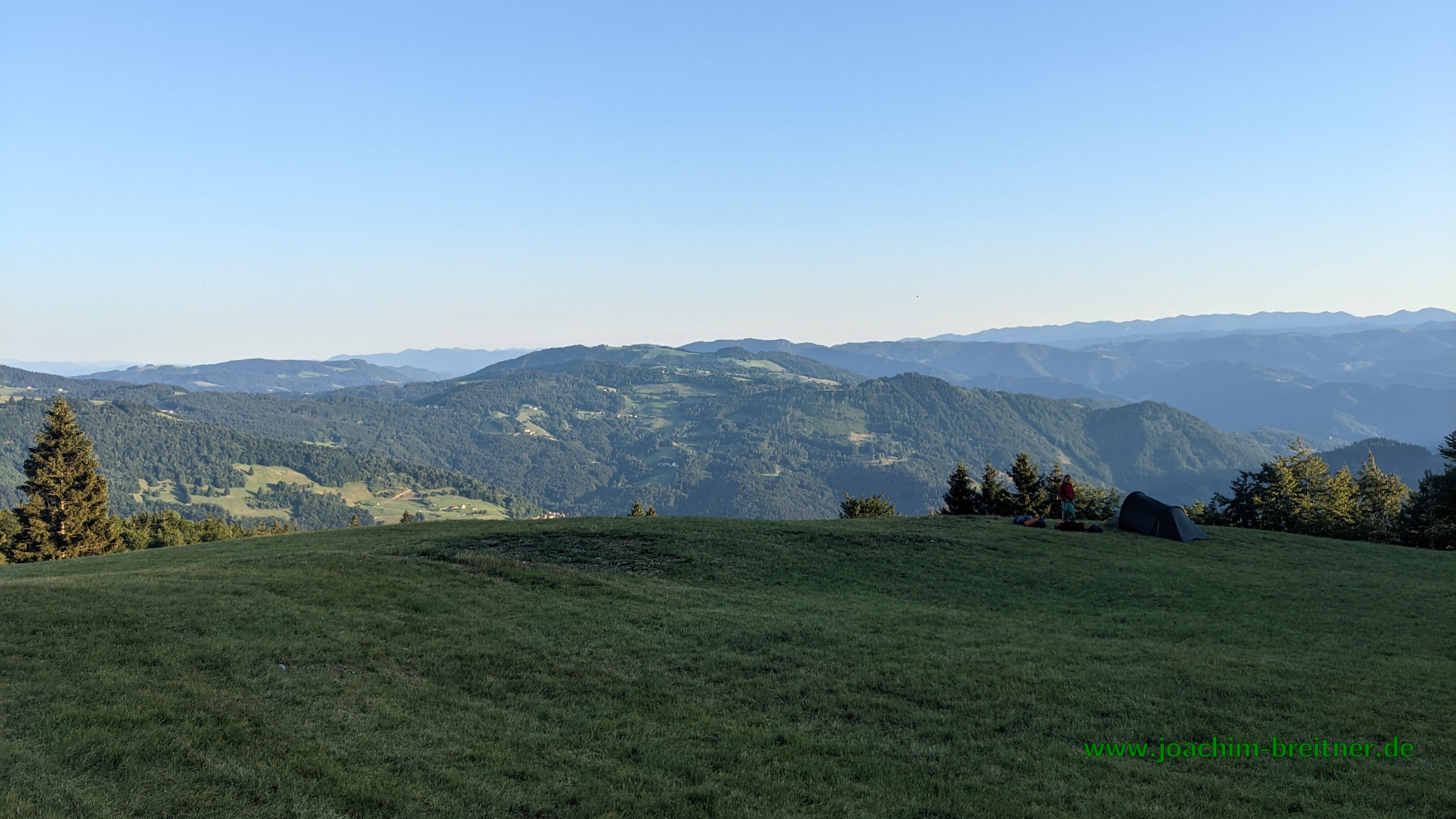
Our most favorite camp spot Our most favorite camp spot

Getting there As we traveled with complete camping gear and wanted to stay in our tent, we avoided the high alpine parts of the trail and started just where the trail came down from the Alps and entered the Karst. A great way to get there is to take the night train from Zurich or Munich towards Ljubljana, get off at Jesenice, have breakfast, take the local train to Podbrdo and you can start your tour at 9:15am. From there you can reach the trail at Pedrovo Brdo within 1 h.

Finding the way We did not use any paper maps, and instead relied on the OpenStreetMap data, which is very good, as well as the official(?) GPX tracks on Komoot, which are linked from the official route descriptions. We used OsmAnd. In general, trails are generally very well marked (red circle with white center, and frequent signs), but the signs rarely tell you which way the Via Alpina goes, so the GPS was needed. Sometimes the OpenStreetMap trail and the Komoot trail disagreed on short segments. We sometimes followed one and other times the other.

Variants We diverged from the trail in a few places:
  • We did not care too much about the horses in Lipica and at least on the map it looked like a longish boringish and sun-exposed detour, so we cut the loop and hiked from Prelo e pri Lokvi up onto the peak of the Veliko Gradi e (which unfortunately is too overgrown to provide a good view).
  • When we finally reached the top of Mali Kras and had a view across the bay of Trieste, it seemed silly to walk to down to Dolina, and instead we followed the ridge through Socerb, essentially the Alpe Adria Trail.
  • Not really a variant, but after arriving in Muggia, if one has to go to Trieste, the ferry is a probably nicer way to finish a trek than the bus.

Pitching a tent We used our tent almost every night, only in Idrija we got a room (and a shower ). It was not trivial to find good camp spots, because most of the trail is on hills with slopes, and the flat spots tend to have housed built on them, but certainly possible. Sometimes we hid in the forest, other times we found nice small and freshly mowed meadows within the forest.

Water Since this is Karst land, there is very little in terms of streams or lakes along the way, which is a pity. The Idrijca river right south of Idrija was very tempting to take a plunge. Unfortunately we passed there early in the day and we wanted to cover some ground first, so we refrained. As for drinking water, we used the taps at the bathrooms of the various touristic sites, a few (but rare) public fountains, and finally resorted to just ringing random doorbells and asking for water, which always worked.

Paths A few stages lead you through very pleasant narrow forest paths with a sight, but not all. On some days you find yourself plodding along wide graveled or even paved forest roads, though.

Landscape and sights The view from Nanos is amazing and, with this high peak jutting out over a wide plain, rather unique. It may seem odd that the trail goes up and down that mountain on the same day when it could go around, but it is certainly worth it. The Karst is mostly a cultivated landscape, with lots of forestry. It is very hilly and green, which is pretty, but some might miss some craggedness. It s not the high alps, after all, but at least they are in sight half the time. But the upside is that there are few sights along the way that are worth visiting, in particular the the Franja Partisan Hospital hidden in a very narrow gorge, the Predjama Castle and the kocjan Caves

17 July 2022

Russ Allbery: Review: Trang

Review: Trang, by Mary Sisson
Series: Trang #1
Publisher: Mary Sisson
Copyright: 2011
Printing: December 2013
ASIN: B004I6DAQ8
Format: Kindle
Pages: 374
In 2113, a radio mapping satellite near the Titan station disappeared. It then reappeared five days later, apparently damaged and broadcasting a signal that made computers crash. The satellite was immediately sent back to the Space Authority base in Beijing for careful examination, but the techs on the station were able to decode the transmission: a request for the contents of databases. The general manager of the station sent a probe to the same location and it too vanished, returning two days later with a picture of a portal, followed shortly by an alien probe. Five years later, Philippe Trang has been assigned as the first human diplomat to an alien space station in intergalactic space at the nexus of multiple portals. Humans will apparently be the eighth type of intelligent life to send a representative to the station. He'll have a translation system, a security detail, and the groundwork of five years of audiovisual communications with the aliens, including one that was able to learn English. But he'll be the first official diplomatic representative physically there. The current style in SF might lead you to expect a tense thriller full of nearly incomprehensible aliens, unexplained devices, and creepy mysteries. This is not that sort of book. The best comparison point I could think of is James White's Sector General novels, except with a diplomat rather than a doctor. The aliens are moderately strange (not just humans in prosthetic makeup), but are mostly earnest, well-meaning, and welcoming. Trang's security escort is more military than he expects, but that becomes a satisfying negotiation rather than an ongoing problem. There is confusion, misunderstandings, and even violence, but most of it is sorted out by earnest discussion and attempts at mutual understanding. This is, in other words, diplomat competence porn (albeit written by someone who is not a diplomat, so I wouldn't expect too much realism). Trang defuses rather than confronts, patiently sorts through the nuances of a pre-existing complex dynamic between aliens without prematurely picking sides, and has the presence of mind to realize that the special forces troops assigned to him are another culture he needs to approach with the same skills. Most of the book is low-stakes confusion, curiosity, and careful exploration, which could have been boring but wasn't. It helps that Sisson packs a lot of complexity into the station dynamics and reveals it in ways that I found enjoyably unpredictable. Some caveats: This is a self-published first novel (albeit by an experienced reporter and editor) and it shows. The book has a sort of plastic Technicolor feel that I sometimes see in self-published novels, where the details aren't quite deep enough, the writing isn't quite polished, and the dialog isn't quite as tight as I'm used to. It also meanders in a way that few commercial novels do, including slice-of-life moments and small asides that don't go anywhere. This can be either a bug or a feature depending on what you're in the mood for. I found it relaxing and stress-relieving, which is what I was looking for, but you may have a different experience. I will warn that the climax features a sudden escalation of stakes that I don't think was sufficiently signaled by the tone of the writing, and thus felt a bit unreal. Sisson also includes a couple deus ex machina twists that felt a bit predictable and easy, and I didn't find the implied recent history of one of the alien civilizations that believable. The conclusion is therefore not the strongest part of the book; if you're not enjoying the journey, it probably won't get better. But, all that said, this was fun, and I've already bought the second book in the series. It's low-stakes, gentle SF with a core of discovery and exploration rather than social dynamics, and I haven't run across much of that recently. The worst thing in the book is some dream glimpses at a horrific event in Trang's past that's never entirely on camera. It's not as pacifist as James White, but it's close. Recommended, especially if you liked Sector General. White's series is so singular that I previously would have struggled to find a suggestion for someone who wanted more exactly like that (but without the Bewitched-era sexism). Now I have an answer. Score another one for Susan Stepney, who is also how I found Julie Czerneda. Trang is also currently free for Kindle, so you can't beat the price. Followed by Trust. Rating: 8 out of 10

29 June 2022

Aigars Mahinovs: Long travel in an electric car

Since the first week of April 2022 I have (finally!) changed my company car from a plug-in hybrid to a fully electic car. My new ride, for the next two years, is a BMW i4 M50 in Aventurine Red metallic. An ellegant car with very deep and memorable color, insanely powerful (544 hp/795 Nm), sub-4 second 0-100 km/h, large 84 kWh battery (80 kWh usable), charging up to 210 kW, top speed of 225 km/h and also very efficient (which came out best in this trip) with WLTP range of 510 km and EVDB real range of 435 km. The car also has performance tyres (Hankook Ventus S1 evo3 245/45R18 100Y XL in front and 255/45R18 103Y XL in rear all at recommended 2.5 bar) that have reduced efficiency. So I wanted to document and describe how was it for me to travel ~2000 km (one way) with this, electric, car from south of Germany to north of Latvia. I have done this trip many times before since I live in Germany now and travel back to my relatives in Latvia 1-2 times per year. This was the first time I made this trip in an electric car. And as this trip includes both travelling in Germany (where BEV infrastructure is best in the world) and across Eastern/Northen Europe, I believe that this can be interesting to a few people out there. Normally when I travelled this trip with a gasoline/diesel car I would normally drive for two days with an intermediate stop somewhere around Warsaw with about 12 hours of travel time in each day. This would normally include a couple bathroom stops in each day, at least one longer lunch stop and 3-4 refueling stops on top of that. Normally this would use at least 6 liters of fuel per 100 km on average with total usage of about 270 liters for the whole trip (or about 540 just in fuel costs, nowadays). My (personal) quirk is that both fuel and recharging of my (business) car inside Germany is actually paid by my employer, so it is useful for me to charge up (or fill up) at the last station in Gemany before driving on. The plan for this trip was made in a similar way as when travelling with a gasoline car: travelling as fast as possible on German Autobahn network to last chargin stop on the A4 near G rlitz, there charging up as much as reasonable and then travelling to a hotel in Warsaw, charging there overnight and travelling north towards Ionity chargers in Lithuania from where reaching the final target in north of Latvia should be possible. How did this plan meet the reality? Travelling inside Germany with an electric car was basically perfect. The most efficient way would involve driving fast and hard with top speed of even 180 km/h (where possible due to speed limits and traffic). BMW i4 is very efficient at high speeds with consumption maxing out at 28 kWh/100km when you actually drive at this speed all the time. In real situation in this trip we saw consumption of 20.8-22.2 kWh/100km in the first legs of the trip. The more traffic there is, the more speed limits and roadworks, the lower is the average speed and also the lower the consumption. With this kind of consumption we could comfortably drive 2 hours as fast as we could and then pick any fast charger along the route and in 26 minutes at a charger (50 kWh charged total) we'd be ready to drive for another 2 hours. This lines up very well with recommended rest stops for biological reasons (bathroom, water or coffee, a bit of movement to get blood circulating) and very close to what I had to do anyway with a gasoline car. With a gasoline car I had to refuel first, then park, then go to bathroom and so on. With an electric car I can do all of that while the car is charging and in the end the total time for a stop is very similar. Also not that there was a crazy heat wave going on and temperature outside was at about 34C minimum the whole day and hitting 40C at one point of the trip, so a lot of power was used for cooling. The car has a heat pump standard, but it still was working hard to keep us cool in the sun. The car was able to plan a charging route with all the charging stops required and had all the good options (like multiple intermediate stops) that many other cars (hi Tesla) and mobile apps (hi Google and Apple) do not have yet. There are a couple bugs with charging route and display of current route guidance, those are already fixed and will be delivered with over the air update with July 2022 update. Another good alterantive is the ABRP (A Better Route Planner) that was specifically designed for electric car routing along the best route for charging. Most phone apps (like Google Maps) have no idea about your specific electric car - it has no idea about the battery capacity, charging curve and is missing key live data as well - what is the current consumption and remaining energy in the battery. ABRP is different - it has data and profiles for almost all electric cars and can also be linked to live vehicle data, either via a OBD dongle or via a new Tronity cloud service. Tronity reads data from vehicle-specific cloud service, such as MyBMW service, saves it, tracks history and also re-transmits it to ABRP for live navigation planning. ABRP allows for options and settings that no car or app offers, for example, saying that you want to stop at a particular place for an hour or until battery is charged to 90%, or saying that you have specific charging cards and would only want to stop at chargers that support those. Both the car and the ABRP also support alternate routes even with multiple intermediate stops. In comparison, route planning by Google Maps or Apple Maps or Waze or even Tesla does not really come close. After charging up in the last German fast charger, a more interesting part of the trip started. In Poland the density of high performance chargers (HPC) is much lower than in Germany. There are many chargers (west of Warsaw), but vast majority of them are (relatively) slow 50kW chargers. And that is a difference between putting 50kWh into the car in 23-26 minutes or in 60 minutes. It does not seem too much, but the key bit here is that for 20 minutes there is easy to find stuff that should be done anyway, but after that you are done and you are just waiting for the car and if that takes 4 more minutes or 40 more minutes is a big, perceptual, difference. So using HPC is much, much preferable. So we put in the Ionity charger near Lodz as our intermediate target and the car suggested an intermediate stop at a Greenway charger by Katy Wroclawskie. The location is a bit weird - it has 4 charging stations with 150 kW each. The weird bits are that each station has two CCS connectors, but only one parking place (and the connectors share power, so if two cars were to connect, each would get half power). Also from the front of the location one can only see two stations, the otehr two are semi-hidden around a corner. We actually missed them on the way to Latvia and one person actually waited for the charger behind us for about 10 minutes. We only discovered the other two stations on the way back. With slower speeds in Poland the consumption goes down to 18 kWh/100km which translates to now up to 3 hours driving between stops. At the end of the first day we drove istarting from Ulm from 9:30 in the morning until about 23:00 in the evening with total distance of about 1100 km, 5 charging stops, starting with 92% battery, charging for 26 min (50 kWh), 33 min (57 kWh + lunch), 17 min (23 kWh), 12 min (17 kWh) and 13 min (37 kW). In the last two chargers you can see the difference between a good and fast 150 kW charger at high battery charge level and a really fast Ionity charger at low battery charge level, which makes charging faster still. Arriving to hotel with 23% of battery. Overnight the car charged from a Porsche Destination Charger to 87% (57 kWh). That was a bit less than I would expect from a full power 11kW charger, but good enough. Hotels should really install 11kW Type2 chargers for their guests, it is a really significant bonus that drives more clients to you. The road between Warsaw and Kaunas is the most difficult part of the trip for both driving itself and also for charging. For driving the problem is that there will be a new highway going from Warsaw to Lithuanian border, but it is actually not fully ready yet. So parts of the way one drives on the new, great and wide highway and parts of the way one drives on temporary roads or on old single lane undivided roads. And the most annoying part is navigating between parts as signs are not always clear and the maps are either too old or too new. Some maps do not have the new roads and others have on the roads that have not been actually build or opened to traffic yet. It's really easy to loose ones way and take a significant detour. As far as charging goes, basically there is only the slow 50 kW chargers between Warsaw and Kaunas (for now). We chose to charge on the last charger in Poland, by Suwalki Kaufland. That was not a good idea - there is only one 50 kW CCS and many people decide the same, so there can be a wait. We had to wait 17 minutes before we could charge for 30 more minutes just to get 18 kWh into the battery. Not the best use of time. On the way back we chose a different charger in Lomza where would have a relaxed dinner while the car was charging. That was far more relaxing and a better use of time. We also tried charging at an Orlen charger that was not recommended by our car and we found out why. Unlike all other chargers during our entire trip, this charger did not accept our universal BMW Charging RFID card. Instead it demanded that we download their own Orlen app and register there. The app is only available in some countries (and not in others) and on iPhone it is only available in Polish. That is a bad exception to the rule and a bad example. This is also how most charging works in USA. Here in Europe that is not normal. The normal is to use a charging card - either provided from the car maker or from another supplier (like PlugSufring or Maingau Energy). The providers then make roaming arrangements with all the charging networks, so the cards just work everywhere. In the end the user gets the prices and the bills from their card provider as a single monthly bill. This also saves all any credit card charges for the user. Having a clear, separate RFID card also means that one can easily choose how to pay for each charging session. For example, I have a corporate RFID card that my company pays for (for charging in Germany) and a private BMW Charging card that I am paying myself for (for charging abroad). Having the car itself authenticate direct with the charger (like Tesla does) removes the option to choose how to pay. Having each charge network have to use their own app or token bring too much chaos and takes too much setup. The optimum is having one card that works everywhere and having the option to have additional card or cards for specific purposes. Reaching Ionity chargers in Lithuania is again a breath of fresh air - 20-24 minutes to charge 50 kWh is as expected. One can charge on the first Ionity just enough to reach the next one and then on the second charger one can charge up enough to either reach the Ionity charger in Adazi or the final target in Latvia. There is a huge number of CSDD (Road Traffic and Safety Directorate) managed chargers all over Latvia, but they are 50 kW chargers. Good enough for local travel, but not great for long distance trips. BMW i4 charges at over 50 kW on a HPC even at over 90% battery state of charge (SoC). This means that it is always faster to charge up in a HPC than in a 50 kW charger, if that is at all possible. We also tested the CSDD chargers - they worked without any issues. One could pay with the BMW Charging RFID card, one could use the CSDD e-mobi app or token and one could also use Mobilly - an app that you can use in Latvia for everything from parking to public transport tickets or museums or car washes. We managed to reach our final destination near Aluksne with 17% range remaining after just 3 charging stops: 17+30 min (18 kWh), 24 min (48 kWh), 28 min (36 kWh). Last stop we charged to 90% which took a few extra minutes that would have been optimal. For travel around in Latvia we were charging at our target farmhouse from a normal 3 kW Schuko EU socket. That is very slow. We charged for 33 hours and went from 17% to 94%, so not really full. That was perfectly fine for our purposes. We easily reached Riga, drove to the sea and then back to Aluksne with 8% still in reserve and started charging again for the next trip. If it were required to drive around more and charge faster, we could have used the normal 3-phase 440V connection in the farmhouse to have a red CEE 16A plug installed (same as people use for welders). BMW i4 comes standard with a new BMW Flexible Fast Charger that has changable socket adapters. It comes by default with a Schucko connector in Europe, but for 90 one can buy an adapter for blue CEE plug (3.7 kW) or red CEE 16A or 32A plugs (11 kW). Some public charging stations in France actually use the blue CEE plugs instead of more common Type2 electric car charging stations. The CEE plugs are also common in camping parking places. On the way back the long distance BEV travel was already well understood and did not cause us any problem. From our destination we could easily reach the first Ionity in Lithuania, on the Panevezhis bypass road where in just 8 minutes we got 19 kWh and were ready to drive on to Kaunas, there a longer 32 minute stop before the charging desert of Suwalki Gap that gave us 52 kWh to 90%. That brought us to a shopping mall in Lomzha where we had some food and charged up 39 kWh in lazy 50 minutes. That was enough to bring us to our return hotel for the night - Hotel 500W in Strykow by Lodz that has a 50kW charger on site, while we were having late dinner and preparing for sleep, the car easily recharged to full (71 kWh in 95 minutes), so I just moved it from charger to a parking spot just before going to sleep. Really easy and well flowing day. Second day back went even better as we just needed an 18 minute stop at the same Katy Wroclawskie charger as before to get 22 kWh and that was enough to get back to Germany. After that we were again flying on the Autobahn and charging as needed, 15 min (31 kWh), 23 min (48 kWh) and 31 min (54 kWh + food). We started the day on about 9:40 and were home at 21:40 after driving just over 1000 km on that day. So less than 12 hours for 1000 km travelled, including all charging, bio stops, food and some traffic jams as well. Not bad. Now let's take a look at all the apps and data connections that a technically minded customer can have for their car. Architecturally the car is a network of computers by itself, but it is very secured and normally people do not have any direct access. However, once you log in into the car with your BMW account the car gets your profile info and preferences (seat settings, navigation favorites, ...) and the car then also can start sending information to the BMW backend about its status. This information is then available to the user over multiple different channels. There is no separate channel for each of those data flow. The data only goes once to the backend and then all other communication of apps happens with the backend. First of all the MyBMW app. This is the go-to for everything about the car - seeing its current status and location (when not driving), sending commands to the car (lock, unlock, flash lights, pre-condition, ...) and also monitor and control charging processes. You can also plan a route or destination in the app in advance and then just send it over to the car so it already knows where to drive to when you get to the car. This can also integrate with calendar entries, if you have locations for appointments, for example. This also shows full charging history and allows a very easy export of that data, here I exported all charging sessions from June and then trimmed it back to only sessions relevant to the trip and cut off some design elements to have the data more visible. So one can very easily see when and where we were charging, how much power we got at each spot and (if you set prices for locations) can even show costs. I've already mentioned the Tronity service and its ABRP integration, but it also saves the information that it gets from the car and gathers that data over time. It has nice aspects, like showing the driven routes on a map, having ways to do business trip accounting and having good calendar view. Sadly it does not correctly capture the data for charging sessions (the amounts are incorrect). Update: after talking to Tronity support, it looks like the bug was in the incorrect value for the usable battery capacity for my car. They will look into getting th eright values there by default, but as a workaround one can edit their car in their system (after at least one charging session) and directly set the expected battery capacity (usable) in the car properties on the Tronity web portal settings. One other fun way to see data from your BMW is using the BMW integration in Home Assistant. This brings the car as a device in your own smart home. You can read all the variables from the car current status (and Home Asisstant makes cute historical charts) and you can even see interesting trends, for example for remaining range shows much higher value in Latvia as its prediction is adapted to Latvian road speeds and during the trip it adapts to Polish and then to German road speeds and thus to higher consumption and thus lower maximum predicted remaining range. Having the car attached to the Home Assistant also allows you to attach the car to automations, both as data and event source (like detecting when car enters the "Home" zone) and also as target, so you could flash car lights or even unlock or lock it when certain conditions are met. So, what in the end was the most important thing - cost of the trip? In total we charged up 863 kWh, so that would normally cost one about 290 , which is close to half what this trip would have costed with a gasoline car. Out of that 279 kWh in Germany (paid by my employer) and 154 kWh in the farmhouse (paid by our wonderful relatives :D) so in the end the charging that I actually need to pay adds up to 430 kWh or about 150 . Typically, it took about 400 in fuel that I had to pay to get to Latvia and back. The difference is really nice! In the end I believe that there are three different ways of charging:
  • incidental charging - this is wast majority of charging in the normal day-to-day life. The car gets charged when and where it is convinient to do so along the way. If we go to a movie or a shop and there is a chance to leave the car at a charger, then it can charge up. Works really well, does not take extra time for charging from us.
  • fast charging - charging up at a HPC during optimal charging conditions - from relatively low level to no more than 70-80% while you are still doing all the normal things one would do in a quick stop in a long travel process: bio things, cleaning the windscreen, getting a coffee or a snack.
  • necessary charging - charging from a whatever charger is available just enough to be able to reach the next destination or the next fast charger.
The last category is the only one that is really annoying and should be avoided at all costs. Even by shifting your plans so that you find something else useful to do while necessary charging is happening and thus, at least partially, shifting it over to incidental charging category. Then you are no longer just waiting for the car, you are doing something else and the car magically is charged up again. And when one does that, then travelling with an electric car becomes no more annoying than travelling with a gasoline car. Having more breaks in a trip is a good thing and makes the trips actually easier and less stressfull - I was more relaxed during and after this trip than during previous trips. Having the car air conditioning always be on, even when stopped, was a godsend in the insane heat wave of 30C-38C that we were driving trough. Final stats: 4425 km driven in the trip. Average consumption: 18.7 kWh/100km. Time driving: 2 days and 3 hours. Car regened 152 kWh. Charging stations recharged 863 kWh. Questions? You can use this i4talk forum thread or this Twitter thread to ask them to me.

25 June 2022

Jamie McClelland: Deleting an app won't bring back Roe v Wade

In some ways it feels like 2016 all over again. I m seeing panic-stricken calls for everyone to delete their period apps, close their Facebook accounts, de-Google their cell phones and, generally speaking, turn their entire online lives upside down to avoid the techno-surveillance dragnet unleashed by the overturning of Roe v. Wade. I m sympathetic and generally agree that many of us should do most of those things on any given day. But, there is a serious problem with this cycle of repression and panic: it s very bad for organizing. In our rush to give people concrete steps they can take to feel safer, we re fueling a frenzy of panic and fear, which seriously inhibits activism. Now is the time to remind people that, over the last 20 years, a growing movement of organizers and technologists have been building user-driven, privacy-respecting, consentful technology platforms as well as organizations and communities to develop them. We have an entire eco system of: All of these projects need our love and support over the long haul. Please help spread the word - rather then just deleting an app, let s encourage people to join an organziation or try out a new kind of technology that will serve us down the road when we may need it even more then today.

20 June 2022

Jamie McClelland: A very liberal spam assassin rule

I just sent myself a test message via Powerbase (a hosted CiviCRM project for community organizers) and it didn t arrive. Wait, nope, there it is in my junk folder with a spam score of 6!
X-Spam-Status: Yes, score=6.093 tagged_above=-999 required=5
	tests=[BAYES_00=-1.9, DKIM_SIGNED=0.1, DKIM_VALID=-0.1,
	DKIM_VALID_AU=-0.1, DKIM_VALID_EF=-0.1, DMARC_MISSING=0.1,
	HTML_MESSAGE=0.001, KAM_WEBINAR=3.5, KAM_WEBINAR2=3.5,
	NO_DNS_FOR_FROM=0.001, SPF_HELO_NONE=0.001, ST_KGM_DEALS_SUB_11=1.1,
	T_SCC_BODY_TEXT_LINE=-0.01] autolearn=no autolearn_force=no
What just happened? A careful look at the scores suggest that the KAM_WEBINAR and KAM_WEBINAR2 rules killed me. I ve never heard of them (this email came through a system I m not administering). So, I did some searching and found a page with the rules:
# SEMINARS AND WORKSHOPS SPAM
header   __KAM_WEBINAR1 From =~ /education career manage learning webinar project efolder/i
header   __KAM_WEBINAR2 Subject =~ /last chance increase productivity workplace morale payroll dept trauma.training case.study issues follow.up service.desk vip.(lunch breakfast) manage.your private.business professional.checklist customers.safer great.timesaver prep.course crash.course hunger.to.learn (keys tips).(to for).smarter/i
header   __KAM_WEBINAR3 Subject =~ /webinar strateg seminar owners.meeting webcast our.\d.new sales.video/i
body     __KAM_WEBINAR4 /executive.education contactid register now \d+.minute webinar management.position supervising.skills discover.tips register.early take.control marketing.capabilit drive.more.sales leveraging.cloud solution.provider have.a.handle plan.to.divest being.informed upcoming.webinar spearfishing.email increase.revenue industry.podcast \d+.in.depth.tips early.bird.offer pmp.certified lunch.briefing/i

meta     KAM_WEBINAR (__KAM_WEBINAR1 + __KAM_WEBINAR2 + __KAM_WEBINAR3 + __KAM_WEBINAR4 >= 3)
describe KAM_WEBINAR Spam for webinars
score    KAM_WEBINAR 3.5

meta     KAM_WEBINAR2 (__KAM_WEBINAR1 + __KAM_WEBINAR2 + __KAM_WEBINAR3 + __KAM_WEBINAR4 >= 4)
describe KAM_WEBINAR2 Spam for webinars
score    KAM_WEBINAR2 3.5
For those of you who don t care to parse those regular expressions, here s a summary: Hm. I m glad I can now fix our email, but this doesn t work so well for people with a name that includes project that like to organize webinars for which you have to register.

Next.

Previous.