Search Results: "dpk"

11 November 2020

Reproducible Builds: Reproducible Builds in October 2020

Welcome to the October 2020 report from the Reproducible Builds project. In our monthly reports, we outline the major things that we have been up to over the past month. As a brief reminder, the motivation behind the Reproducible Builds effort is to ensure flaws have not been introduced in the binaries we install on our systems. If you are interested in contributing to the project, please visit our main website.

General On Saturday 10th October, Morten Linderud gave a talk at Arch Conf Online 2020 on The State of Reproducible Builds in Arch. The video should be available later this month, but as a teaser:
The previous year has seen great progress in Arch Linux to get reproducible builds in the hands of the users and developers. In this talk we will explore the current tooling that allows users to reproduce packages, the rebuilder software that has been written to check packages and the current issues in this space.
During the Reproducible Builds summit in Marrakesh in 2019, developers from the GNU Guix, NixOS and Debian distributions were able to produce a bit-for-bit identical GNU Mes binary despite using three different versions of GCC. Since this summit, additional work resulted in a bit-for-bit identical Mes binary using tcc, and last month a fuller update was posted to this effect by the individuals involved. This month, however, David Wheeler updated his extensive page on Fully Countering Trusting Trust through Diverse Double-Compiling, remarking that:
GNU Mes rebuild is definitely an application of [Diverse Double-Compiling]. [..] This is an awesome application of DDC, and I believe it s the first publicly acknowledged use of DDC on a binary
There was a small, followup discussion on our mailing list. In openSUSE, Bernhard M. Wiedemann published his monthly Reproducible Builds status update. This month, the Reproducible Builds project restarted our IRC meetings, managing to convene twice: the first time on October 12th (summary & logs), and later on the 26th (logs). As mentioned in previous reports, due to the unprecedented events throughout 2020, there will be no in-person summit event this year. On our mailing list this month El as Alejandro posted a request for help with a local configuration
Software development This month, we tried to fix a large number of currently-unreproducible packages, including: Bernhard M. Wiedemann also reported three issues against bison, ibus and postgresql12.

Tools diffoscope is our in-depth and content-aware diff utility. Not only could you locate and diagnose reproducibility issues, it provides human-readable diffs of all kinds too. This month, Chris Lamb uploaded version 161 to Debian (later backported by Mattia Rizzolo), as well as made the following changes:
  • Move test_ocaml to the assert_diff helper. [ ]
  • Update tests to support OCaml version 4.11.1. Thanks to Sebastian Ramacher for the report. (#972518)
  • Bump minimum version of the Black source code formatter to 20.8b1. (#972518)
In addition, Jean-Romain Garnier temporarily updated the dependency on radare2 to ensure our test pipelines continue to work [ ], and for the GNU Guix distribution Vagrant Cascadian diffoscope to version 161 [ ]. In related development, trydiffoscope is the web-based version of diffoscope. This month, Chris Lamb made the following changes:
  • Mark a --help-only test as being a superficial test. (#971506)
  • Add a real, albeit flaky, test that interacts with the try.diffoscope.org service. [ ]
  • Bump debhelper compatibility level to 13 [ ] and bump Standards-Version to 4.5.0 [ ].
Lastly, disorderfs version 0.5.10-2 was uploaded to Debian unstable by Holger Levsen, which enabled security hardening via DEB_BUILD_MAINT_OPTIONS [ ] and dropped debian/disorderfs.lintian-overrides [ ].

Website and documentation This month, a number of updates to the main Reproducible Builds website and related documentation were made by Chris Lamb:

  • Add a citation link to the academic article regarding dettrace [ ], and added yet another supply-chain security attack publication [ ].
  • Reformatted the Jekyll s Liquid templating language and CSS formatting to be consistent [ ] as well as expand a number of tab characters [ ].
  • Used relative_url to fix missing translation icon on various pages. [ ]
  • Published two announcement blog posts regarding the restarting of our IRC meetings. [ ][ ]
  • Added an explicit note regarding the lack of an in-person summit in 2020 to our events page. [ ]

Testing framework The Reproducible Builds project operates a Jenkins-based testing framework that powers tests.reproducible-builds.org. This month, Holger Levsen made the following changes:
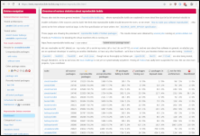
  • Debian-related changes:
    • Refactor and improve the Debian dashboard. [ ][ ][ ]
    • Track bugs which are usertagged as filesystem , fixfilepath , etc.. [ ][ ][ ]
    • Make a number of changes to package index pages. [ ][ ][ ]
  • System health checks:
    • Relax disk space warning levels. [ ]
    • Specifically detect build failures reported by dpkg-buildpackage. [ ]
    • Fix a regular expression to detect outdated package sets. [ ]
    • Detect Lintian issues in diffoscope. [ ]

  • Misc:
    • Make a number of updates to reflect that our sponsor Profitbricks has renamed itself to IONOS. [ ][ ][ ][ ]
    • Run a F-Droid maintenance routine twice a month to utilise its cleanup features. [ ]
    • Fix the target name in OpenWrt builds to ath79 from ath97. [ ]
    • Add a missing Postfix configuration for a node. [ ]
    • Temporarily disable Arch Linux builds until a core node is back. [ ]
    • Make a number of changes to our thanks page. [ ][ ][ ]

Build node maintenance was performed by both Holger Levsen [ ][ ] and Vagrant Cascadian [ ][ ][ ], Vagrant Cascadian also updated the page listing the variations made when testing to reflect changes for in build paths [ ] and Hans-Christoph Steiner made a number of changes for F-Droid, the free software app repository for Android devices, including:
  • Do not fail reproducibility jobs when their cleanup tasks fail. [ ]
  • Skip libvirt-related sudo command if we are not actually running libvirt. [ ]
  • Use direct URLs in order to eliminate a useless HTTP redirect. [ ]

If you are interested in contributing to the Reproducible Builds project, please visit the Contribute page on our website. However, you can also get in touch with us via:

4 November 2020

Martin-Éric Racine: Migrating to Predictable Network Interface Names

A couple of years ago, I moved into a new flat that comes with RJ45 sockets wired for 10 Gigabit (but currently offering 1 Gigabit) Ethernet.This also meant changing the settings on my router box for my new ISP.I took this opportunity to review my router's other settings too. I'll be blogging about these over the next few posts. Migrating to Predictable Network Interface Names Ever since Linus decided to flip the network interface enumeration order in the Linux kernel, I had been relying on udev's persistent network interface rules to maintain some semblance of consistency in the NIC naming scheme of my hosts. It has never been a totally satisfactory method, since it required manually editing the file to list the MAC addresses of all Ethernet cards and WiFi dongles likely to appear on that host to consistently use an easy-to-remember name that I could adopt for ifupdown configuration files. Enter predictable interface names. What started as a Linux kernel module project at Dell was eventually re-implemented in systemd. However, clear documentation on the naming scheme had been difficult to find and udev's persistent network interface rules gave me what I needed, so I postponed the transition for years. Relocating to a new flat and rethinking my home network to match gave me an opportunity to revisit the topic. The naming scheme is surprisingly simple and logical, once proper explanations have been found. The short version: The rest of the name specifies on which PCI bus and which slot the interface is found. On my old Dell laptop, it looks like this: An added bonus of the naming scheme is that it makes replacing hardware a breeze, since the naming scheme is bus and slot specific, not MAC address specific. No need to edit any configuration file. I saw this first-hand when I got around upgrading my router's network cards to Gigabit-capable ones to take advantage of my new home's broadband LAN. All it took was to power off the host, swap the Ethernet cards and power on the host. That's it. systemd took care of everything else. Still, migrating looked like a daunting task. Debian's wiki page gave me some answers, but didn't provide a systematic approach. I came up with the following shell script:

#!/bin/sh
lspci   grep -i -e ethernet -e network
sudo dmesg   grep -i renamed
for n in $(ls -X /sys/class/net/   grep -v lo);
do
  echo $n: && udevadm test-builtin net_id /sys/class/net/$n 2>/dev/null   grep NAME;
  sudo rgrep $n /etc
  sudo find /etc -name '*$n*'
done
This combined ideas found on the Debian wiki with a few of my own. Running the script before and after the migration ensured that I hadn't missed any configuration file. Once I was satisfied with that, I commented out the old udev persistent network interface rules, ran dpkg-reconfigure on all my Linux kernel images to purge the rules from the initrd images, and called it a day. ... well, not quite. It turns out that with bridge-utils, bridge_ports all no longer works. One must manually list all interfaces to be bridged. Debian bug report filed. PS: Luca Capello pointed out that Debian 10/Buster's Release Notes include migration instructions.

31 October 2020

Chris Lamb: Free software activities in October 2020

Here is my monthly update covering what I have been doing in the free software world during October 2020 (previous month): For Lintian, the static analysis tool for Debian packages, I uploaded versions 2.97.0, 2.98.0, 2.99.0 & 2.100.0 as well as updated the declares-possibly-conflicting-debhelper-compat-versions tag as we may specify the Debhelper compatibility level in debian/rules or debian/control (#972464) and dropped a reference to missing manual page [...].

Reproducible Builds One of the original promises of open source software is that distributed peer review and transparency of process results in enhanced end-user security. However, whilst anyone may inspect the source code of free and open source software for malicious flaws, almost all software today is distributed as pre-compiled binaries. This allows nefarious third-parties to compromise systems by injecting malicious code into ostensibly secure software during the various compilation and distribution processes. The motivation behind the Reproducible Builds effort is to ensure no flaws have been introduced during this compilation process by promising identical results are always generated from a given source, thus allowing multiple third-parties to come to a consensus on whether a build was compromised. The project is proud to be a member project of the Software Freedom Conservancy. Conservancy acts as a corporate umbrella allowing projects to operate as non-profit initiatives without managing their own corporate structure. If you like the work of the Conservancy or the Reproducible Builds project, please consider becoming an official supporter. This month, I: I also updated the main Reproducible Builds website and documentation:
Lastly, I made the following changes to diffoscope, including preparing and uploading version 161 to Debian: trydiffoscope is the web-based version of diffoscope. This month, I made the following changes:

Debian Debian LTS This month I have worked 18 hours on Debian Long Term Support (LTS) and 12 hours on its sister Extended LTS project. You can find out more about the project via the following video:

Uploads Bugs filed

30 October 2020

Kees Cook: combining apt install and get dist-upgrade ?

I frequently see a pattern in image build/refresh scripts where a set of packages is installed, and then all packages are updated:
apt update
apt install -y pkg1 pkg2 pkg2
apt dist-upgrade -y
While it s not much, this results in redundant work. For example reading/writing package database, potentially running triggers (man-page refresh, ldconfig, etc). The internal package dependency resolution stuff isn t actually different: install will also do upgrades of needed packages, etc. Combining them should be entirely possible, but I haven t found a clean way to do this yet. The best I ve got so far is:
apt update
apt-cache dumpavail   dpkg --merge-avail -
(for i in pkg1 pkg2 pkg3; do echo "$i install")   dpkg --set-selections
apt-get dselect-upgrade
This gets me the effect of running install and upgrade at the same time, but not dist-upgrade (which has slightly different resolution logic that d I d prefer to use). Also, it includes the overhead of what should be an unnecessary update of dpkg s database. Anyone know a better way to do this? Update: Julian Andres Klode pointed out that dist-upgrade actually takes package arguments too just like install. *face palm* I didn t even try it I believed the man-page and the -h output. It works perfectly!

2020, Kees Cook. This work is licensed under a Creative Commons Attribution-ShareAlike 4.0 License.
CC BY-SA 4.0

14 October 2020

Michael Stapelberg: distri: a Linux distribution to research fast package management

Over the last year or so I have worked on a research linux distribution in my spare time. It s not a distribution for researchers (like Scientific Linux), but my personal playground project to research linux distribution development, i.e. try out fresh ideas. This article focuses on the package format and its advantages, but there is more to distri, which I will cover in upcoming blog posts.

Motivation I was a Debian Developer for the 7 years from 2012 to 2019, but using the distribution often left me frustrated, ultimately resulting in me winding down my Debian work. Frequently, I was noticing a large gap between the actual speed of an operation (e.g. doing an update) and the possible speed based on back of the envelope calculations. I wrote more about this in my blog post Package managers are slow . To me, this observation means that either there is potential to optimize the package manager itself (e.g. apt), or what the system does is just too complex. While I remember seeing some low-hanging fruit , through my work on distri, I wanted to explore whether all the complexity we currently have in Linux distributions such as Debian or Fedora is inherent to the problem space. I have completed enough of the experiment to conclude that the complexity is not inherent: I can build a Linux distribution for general-enough purposes which is much less complex than existing ones. Those were low-hanging fruit from a user perspective. I m not saying that fixing them is easy in the technical sense; I know too little about apt s code base to make such a statement.

Key idea: packages are images, not archives One key idea is to switch from using archives to using images for package contents. Common package managers such as dpkg(1) use tar(1) archives with various compression algorithms. distri uses SquashFS images, a comparatively simple file system image format that I happen to be familiar with from my work on the gokrazy Raspberry Pi 3 Go platform. This idea is not novel: AppImage and snappy also use images, but only for individual, self-contained applications. distri however uses images for distribution packages with dependencies. In particular, there is no duplication of shared libraries in distri. A nice side effect of using read-only image files is that applications are immutable and can hence not be broken by accidental (or malicious!) modification.

Key idea: separate hierarchies Package contents are made available under a fully-qualified path. E.g., all files provided by package zsh-amd64-5.6.2-3 are available under /ro/zsh-amd64-5.6.2-3. The mountpoint /ro stands for read-only, which is short yet descriptive. Perhaps surprisingly, building software with custom prefix values of e.g. /ro/zsh-amd64-5.6.2-3 is widely supported, thanks to:
  1. Linux distributions, which build software with prefix set to /usr, whereas FreeBSD (and the autotools default), which build with prefix set to /usr/local.
  2. Enthusiast users in corporate or research environments, who install software into their home directories.
Because using a custom prefix is a common scenario, upstream awareness for prefix-correctness is generally high, and the rarely required patch will be quickly accepted.

Key idea: exchange directories Software packages often exchange data by placing or locating files in well-known directories. Here are just a few examples:
  • gcc(1) locates the libusb(3) headers via /usr/include
  • man(1) locates the nginx(1) manpage via /usr/share/man.
  • zsh(1) locates executable programs via PATH components such as /bin
In distri, these locations are called exchange directories and are provided via FUSE in /ro. Exchange directories come in two different flavors:
  1. global. The exchange directory, e.g. /ro/share, provides the union of the share sub directory of all packages in the package store.
    Global exchange directories are largely used for compatibility, see below.
  2. per-package. Useful for tight coupling: e.g. irssi(1) does not provide any ABI guarantees, so plugins such as irssi-robustirc can declare that they want e.g. /ro/irssi-amd64-1.1.1-1/out/lib/irssi/modules to be a per-package exchange directory and contain files from their lib/irssi/modules.

Search paths sometimes need to be fixed Programs which use exchange directories sometimes use search paths to access multiple exchange directories. In fact, the examples above were taken from gcc(1) s INCLUDEPATH, man(1) s MANPATH and zsh(1) s PATH. These are prominent ones, but more examples are easy to find: zsh(1) loads completion functions from its FPATH. Some search path values are derived from --datadir=/ro/share and require no further attention, but others might derive from e.g. --prefix=/ro/zsh-amd64-5.6.2-3/out and need to be pointed to an exchange directory via a specific command line flag.

FHS compatibility Global exchange directories are used to make distri provide enough of the Filesystem Hierarchy Standard (FHS) that third-party software largely just works. This includes a C development environment. I successfully ran a few programs from their binary packages such as Google Chrome, Spotify, or Microsoft s Visual Studio Code.

Fast package manager I previously wrote about how Linux distribution package managers are too slow. distri s package manager is extremely fast. Its main bottleneck is typically the network link, even at high speed links (I tested with a 100 Gbps link). Its speed comes largely from an architecture which allows the package manager to do less work. Specifically:
  1. Package images can be added atomically to the package store, so we can safely skip fsync(2) . Corruption will be cleaned up automatically, and durability is not important: if an interactive installation is interrupted, the user can just repeat it, as it will be fresh on their mind.
  2. Because all packages are co-installable thanks to separate hierarchies, there are no conflicts at the package store level, and no dependency resolution (an optimization problem requiring SAT solving) is required at all.
    In exchange directories, we resolve conflicts by selecting the package with the highest monotonically increasing distri revision number.
  3. distri proves that we can build a useful Linux distribution entirely without hooks and triggers. Not having to serialize hook execution allows us to download packages into the package store with maximum concurrency.
  4. Because we are using images instead of archives, we do not need to unpack anything. This means installing a package is really just writing its package image and metadata to the package store. Sequential writes are typically the fastest kind of storage usage pattern.
Fast installation also make other use-cases more bearable, such as creating disk images, be it for testing them in qemu(1) , booting them on real hardware from a USB drive, or for cloud providers such as Google Cloud.

Fast package builder Contrary to how distribution package builders are usually implemented, the distri package builder does not actually install any packages into the build environment. Instead, distri makes available a filtered view of the package store (only declared dependencies are available) at /ro in the build environment. This means that even for large dependency trees, setting up a build environment happens in a fraction of a second! Such a low latency really makes a difference in how comfortable it is to iterate on distribution packages.

Package stores In distri, package images are installed from a remote package store into the local system package store /roimg, which backs the /ro mount. A package store is implemented as a directory of package images and their associated metadata files. You can easily make available a package store by using distri export. To provide a mirror for your local network, you can periodically distri update from the package store you want to mirror, and then distri export your local copy. Special tooling (e.g. debmirror in Debian) is not required because distri install is atomic (and update uses install). Producing derivatives is easy: just add your own packages to a copy of the package store. The package store is intentionally kept simple to manage and distribute. Its files could be exchanged via peer-to-peer file systems, or synchronized from an offline medium.

distri s first release distri works well enough to demonstrate the ideas explained above. I have branched this state into branch jackherer, distri s first release code name. This way, I can keep experimenting in the distri repository without breaking your installation. From the branch contents, our autobuilder creates:
  1. disk images, which
  2. a package repository. Installations can pick up new packages with distri update.
  3. documentation for the release.
The project website can be found at https://distr1.org. The website is just the README for now, but we can improve that later. The repository can be found at https://github.com/distr1/distri

Project outlook Right now, distri is mainly a vehicle for my spare-time Linux distribution research. I don t recommend anyone use distri for anything but research, and there are no medium-term plans of that changing. At the very least, please contact me before basing anything serious on distri so that we can talk about limitations and expectations. I expect the distri project to live for as long as I have blog posts to publish, and we ll see what happens afterwards. Note that this is a hobby for me: I will continue to explore, at my own pace, parts that I find interesting. My hope is that established distributions might get a useful idea or two from distri.

There s more to come: subscribe to the distri feed I don t want to make this post too long, but there is much more! Please subscribe to the following URL in your feed reader to get all posts about distri: https://michael.stapelberg.ch/posts/tags/distri/feed.xml Next in my queue are articles about hermetic packages and good package maintainer experience (including declarative packaging).

Feedback or questions? I d love to discuss these ideas in case you re interested! Please send feedback to the distri mailing list so that everyone can participate!

19 September 2020

Jelmer Vernooij: Debian Janitor: Expanding Into Improving Multi-Arch

The Debian Janitor is an automated system that commits fixes for (minor) issues in Debian packages that can be fixed by software. It gradually started proposing merges in early December. The first set of changes sent out ran lintian-brush on sid packages maintained in Git. This post is part of a series about the progress of the Janitor. As of dpkg 1.16.2 and apt 0.8.13, Debian has full support for multi-arch. To quote from the multi-arch implementation page:

Multiarch lets you install library packages from multiple architectures on the same machine. This is useful in various ways, but the most common is installing both 64 and 32- bit software on the same machine and having dependencies correctly resolved automatically. In general you can have libraries of more than one architecture installed together and applications from one architecture or another installed as alternatives.
The Multi-Arch specification describes a new Multi-Arch header which can be used to indicate how to resolve cross-architecture dependencies. The existing Debian Multi-Arch hinter is a version of dedup.debian.net that compares binary packages between architectures and suggests fixes to resolve multi-arch problems. It provides hints as to what Multi- Arch fields can be set, allowing the packages to be safely installed in a Multi-Arch world. The full list of almost 10,000 hints generated by the hinter is available at https://dedup.debian.net/static/multiarch-hints.yaml. Recent versions of lintian-brush now include a command called apply-multiarch-hints that downloads and locally caches the hints and can apply them to a package maintained in Git. For example, to apply multi-arch hints to autosize.js:
 $ debcheckout autosize.js
 declared git repository at https://salsa.debian.org/js-team/autosize.js.git
 git clone https://salsa.debian.org/js-team/autosize.js.git autosize.js ...
 Cloning into 'autosize.js'...
 [...]
 $ cd autosize.js
 $ apply-multiarch-hints
 Downloading new version of multi-arch hints.
 libjs-autosize: Add Multi-Arch: foreign.
 node-autosize: Add Multi-Arch: foreign.
 $ git log -p
 commit 3f8d1db5af4a87e6ebb08f46ddf79f6adf4e95ae (HEAD -> master)
 Author: Jelmer Vernoo  <jelmer@debian.org>
 Date:   Fri Sep 18 23:37:14 2020 +0000
     Apply multi-arch hints.
     + libjs-autosize, node-autosize: Add Multi-Arch: foreign.
     Changes-By: apply-multiarch-hints
 diff --git a/debian/changelog b/debian/changelog
 index e7fa120..09af4a7 100644
 --- a/debian/changelog
 +++ b/debian/changelog
 @@ -1,3 +1,10 @@
 +autosize.js (4.0.2~dfsg1-5) UNRELEASED; urgency=medium
 +
 +  * Apply multi-arch hints.
 +    + libjs-autosize, node-autosize: Add Multi-Arch: foreign.
 +
 + -- Jelmer Vernoo  <jelmer@debian.org>  Fri, 18 Sep 2020 23:37:14 -0000
 +
  autosize.js (4.0.2~dfsg1-4) unstable; urgency=medium
    * Team upload
 diff --git a/debian/control b/debian/control
 index 01ca968..fbba1ae 100644
 --- a/debian/control
 +++ b/debian/control
 @@ -20,6 +20,7 @@ Architecture: all
  Depends: $ misc:Depends 
  Recommends: javascript-common
  Breaks: ruby-rails-assets-autosize (<< 4.0)
 +Multi-Arch: foreign
  Description: script to automatically adjust textarea height to fit text - NodeJS
   Autosize is a small, stand-alone script to automatically adjust textarea
   height to fit text. The autosize function accepts a single textarea element,
 @@ -32,6 +33,7 @@ Package: node-autosize
  Architecture: all
  Depends: $ misc:Depends 
   , nodejs
 +Multi-Arch: foreign
  Description: script to automatically adjust textarea height to fit text - Javascript
   Autosize is a small, stand-alone script to automatically adjust textarea
   height to fit text. The autosize function accepts a single textarea element,
The Debian Janitor also has a new multiarch-fixes suite that runs apply-multiarch-hints across packages in the archive and proposes merge requests. For example, you can see the merge request against autosize.js here.

For more information about the Janitor's lintian-fixes efforts, see the landing page.

9 September 2020

Reproducible Builds: Reproducible Builds in August 2020

Welcome to the August 2020 report from the Reproducible Builds project. In our monthly reports, we summarise the things that we have been up to over the past month. The motivation behind the Reproducible Builds effort is to ensure no flaws have been introduced from the original free software source code to the pre-compiled binaries we install on our systems. If you re interested in contributing to the project, please visit our main website.


This month, Jennifer Helsby launched a new reproduciblewheels.com website to address the lack of reproducibility of Python wheels. To quote Jennifer s accompanying explanatory blog post:
One hiccup we ve encountered in SecureDrop development is that not all Python wheels can be built reproducibly. We ship multiple (Python) projects in Debian packages, with Python dependencies included in those packages as wheels. In order for our Debian packages to be reproducible, we need that wheel build process to also be reproducible
Parallel to this, transparencylog.com was also launched, a service that verifies the contents of URLs against a publicly recorded cryptographic log. It keeps an append-only log of the cryptographic digests of all URLs it has seen. (GitHub repo) On 18th September, Bernhard M. Wiedemann will give a presentation in German, titled Wie reproducible builds Software sicherer machen ( How reproducible builds make software more secure ) at the Internet Security Digital Days 2020 conference.

Reproducible builds at DebConf20 There were a number of talks at the recent online-only DebConf20 conference on the topic of reproducible builds. Holger gave a talk titled Reproducing Bullseye in practice , focusing on independently verifying that the binaries distributed from ftp.debian.org are made from their claimed sources. It also served as a general update on the status of reproducible builds within Debian. The video (145 MB) and slides are available. There were also a number of other talks that involved Reproducible Builds too. For example, the Malayalam language mini-conference had a talk titled , ? ( I want to join Debian, what should I do? ) presented by Praveen Arimbrathodiyil, the Clojure Packaging Team BoF session led by Elana Hashman, as well as Where is Salsa CI right now? that was on the topic of Salsa, the collaborative development server that Debian uses to provide the necessary tools for package maintainers, packaging teams and so on. Jonathan Bustillos (Jathan) also gave a talk in Spanish titled Un camino verificable desde el origen hasta el binario ( A verifiable path from source to binary ). (Video, 88MB)

Development work After many years of development work, the compiler for the Rust programming language now generates reproducible binary code. This generated some general discussion on Reddit on the topic of reproducibility in general. Paul Spooren posted a request for comments to OpenWrt s openwrt-devel mailing list asking for clarification on when to raise the PKG_RELEASE identifier of a package. This is needed in order to successfully perform rebuilds in a reproducible builds context. In openSUSE, Bernhard M. Wiedemann published his monthly Reproducible Builds status update. Chris Lamb provided some comments and pointers on an upstream issue regarding the reproducibility of a Snap / SquashFS archive file. [ ]

Debian Holger Levsen identified that a large number of Debian .buildinfo build certificates have been tainted on the official Debian build servers, as these environments have files underneath the /usr/local/sbin directory [ ]. He also filed against bug for debrebuild after spotting that it can fail to download packages from snapshot.debian.org [ ]. This month, several issues were uncovered (or assisted) due to the efforts of reproducible builds. For instance, Debian bug #968710 was filed by Simon McVittie, which describes a problem with detached debug symbol files (required to generate a traceback) that is unlikely to have been discovered without reproducible builds. In addition, Jelmer Vernooij called attention that the new Debian Janitor tool is using the property of reproducibility (as well as diffoscope when applying archive-wide changes to Debian:
New merge proposals also include a link to the diffoscope diff between a vanilla build and the build with changes. Unfortunately these can be a bit noisy for packages that are not reproducible yet, due to the difference in build environment between the two builds. [ ]
56 reviews of Debian packages were added, 38 were updated and 24 were removed this month adding to our knowledge about identified issues. Specifically, Chris Lamb added and categorised the nondeterministic_version_generated_by_python_param and the lessc_nondeterministic_keys toolchain issues. [ ][ ] Holger Levsen sponsored Lukas Puehringer s upload of the python-securesystemslib pacage, which is a dependency of in-toto, a framework to secure the integrity of software supply chains. [ ] Lastly, Chris Lamb further refined his merge request against the debian-installer component to allow all arguments from sources.list files (such as [check-valid-until=no]) in order that we can test the reproducibility of the installer images on the Reproducible Builds own testing infrastructure and sent a ping to the team that maintains that code.

Upstream patches The Reproducible Builds project detects, dissects and attempts to fix as many currently-unreproducible packages as possible. We endeavour to send all of our patches upstream where appropriate. This month, we wrote a large number of these patches, including:

diffoscope diffoscope is our in-depth and content-aware diff utility that can not only locate and diagnose reproducibility issues, it provides human-readable diffs of all kinds. In August, Chris Lamb made the following changes to diffoscope, including preparing and uploading versions 155, 156, 157 and 158 to Debian:
  • New features:
    • Support extracting data of PGP signed data. (#214)
    • Try files named .pgp against pgpdump(1) to determine whether they are Pretty Good Privacy (PGP) files. (#211)
    • Support multiple options for all file extension matching. [ ]
  • Bug fixes:
    • Don t raise an exception when we encounter XML files with <!ENTITY> declarations inside the Document Type Definition (DTD), or when a DTD or entity references an external resource. (#212)
    • pgpdump(1) can successfully parse some binary files, so check that the parsed output contains something sensible before accepting it. [ ]
    • Temporarily drop gnumeric from the Debian build-dependencies as it has been removed from the testing distribution. (#968742)
    • Correctly use fallback_recognises to prevent matching .xsb binary XML files.
    • Correct identify signed PGP files as file(1) returns data . (#211)
  • Logging improvements:
    • Emit a message when ppudump version does not match our file header. [ ]
    • Don t use Python s repr(object) output in Calling external command messages. [ ]
    • Include the filename in the not identified by any comparator message. [ ]
  • Codebase improvements:
    • Bump Python requirement from 3.6 to 3.7. Most distributions are either shipping with Python 3.5 or 3.7, so supporting 3.6 is not only somewhat unnecessary but also cumbersome to test locally. [ ]
    • Drop some unused imports [ ], drop an unnecessary dictionary comprehensions [ ] and some unnecessary control flow [ ].
    • Correct typo of output in a comment. [ ]
  • Release process:
    • Move generation of debian/tests/control to an external script. [ ]
    • Add some URLs for the site that will appear on PyPI.org. [ ]
    • Update author and author email in setup.py for PyPI.org and similar. [ ]
  • Testsuite improvements:
    • Update PPU tests for compatibility with Free Pascal versions 3.2.0 or greater. (#968124)
    • Mark that our identification test for .ppu files requires ppudump version 3.2.0 or higher. [ ]
    • Add an assert_diff helper that loads and compares a fixture output. [ ][ ][ ][ ]
  • Misc:
In addition, Mattia Rizzolo documented in setup.py that diffoscope works with Python version 3.8 [ ] and Frazer Clews applied some Pylint suggestions [ ] and removed some deprecated methods [ ].

Website This month, Chris Lamb updated the main Reproducible Builds website and documentation to:
  • Clarify & fix a few entries on the who page [ ][ ] and ensure that images do not get to large on some viewports [ ].
  • Clarify use of a pronoun re. Conservancy. [ ]
  • Use View all our monthly reports over View all monthly reports . [ ]
  • Move a is a suffix out of the link target on the SOURCE_DATE_EPOCH age. [ ]
In addition, Javier Jard n added the freedesktop-sdk project [ ] and Kushal Das added SecureDrop project [ ] to our projects page. Lastly, Michael P hn added internationalisation and translation support with help from Hans-Christoph Steiner [ ].

Testing framework The Reproducible Builds project operate a Jenkins-based testing framework to power tests.reproducible-builds.org. This month, Holger Levsen made the following changes:
  • System health checks:
    • Improve explanation how the status and scores are calculated. [ ][ ]
    • Update and condense view of detected issues. [ ][ ]
    • Query the canonical configuration file to determine whether a job is disabled instead of duplicating/hardcoding this. [ ]
    • Detect several problems when updating the status of reporting-oriented metapackage sets. [ ]
    • Detect when diffoscope is not installable [ ] and failures in DNS resolution [ ].
  • Debian:
    • Update the URL to the Debian security team bug tracker s Git repository. [ ]
    • Reschedule the unstable and bullseye distributions often for the arm64 architecture. [ ]
    • Schedule buster less often for armhf. [ ][ ][ ]
    • Force the build of certain packages in the work-in-progress package rebuilder. [ ][ ]
    • Only update the stretch and buster base build images when necessary. [ ]
  • Other distributions:
    • For F-Droid, trigger jobs by commits, not by a timer. [ ]
    • Disable the Archlinux HTML page generation job as it has never worked. [ ]
    • Disable the alternative OpenWrt rebuilder jobs. [ ]
  • Misc;
Many other changes were made too, including:
  • Chris Lamb:
    • Use <pre> HTML tags when dumping fixed-width debugging data in the self-serve package scheduler. [ ]
  • Mattia Rizzolo:
  • Vagrant Cascadian:
    • Mark that the u-boot Universal Boot Loader should not build architecture independent packages on the arm64 architecture anymore. [ ]
Finally, build node maintenance was performed by Holger Levsen [ ], Mattia Rizzolo [ ][ ] and Vagrant Cascadian [ ][ ][ ][ ]

Mailing list On our mailing list this month, Leo Wandersleb sent a message to the list after he was wondering how to expand his WalletScrutiny.com project (which aims to improve the security of Bitcoin wallets) from Android wallets to also monitor Linux wallets as well:
If you think you know how to spread the word about reproducibility in the context of Bitcoin wallets through WalletScrutiny, your contributions are highly welcome on this PR [ ]
Julien Lepiller posted to the list linking to a blog post by Tavis Ormandy titled You don t need reproducible builds. Morten Linderud (foxboron) responded with a clear rebuttal that Tavis was only considering the narrow use-case of proprietary vendors and closed-source software. He additionally noted that the criticism that reproducible builds cannot prevent against backdoors being deliberately introduced into the upstream source ( bugdoors ) are decidedly (and deliberately) outside the scope of reproducible builds to begin with. Chris Lamb included the Reproducible Builds mailing list in a wider discussion regarding a tentative proposal to include .buildinfo files in .deb packages, adding his remarks regarding requiring a custom tool in order to determine whether generated build artifacts are identical in a reproducible context. [ ] Jonathan Bustillos (Jathan) posted a quick email to the list requesting whether there was a list of To do tasks in Reproducible Builds. Lastly, Chris Lamb responded at length to a query regarding the status of reproducible builds for Debian ISO or installation images. He noted that most of the technical work has been performed but there are at least four issues until they can be generally advertised as such . He pointed that the privacy-oriented Tails operation system, which is based directly on Debian, has had reproducible builds for a number of years now. [ ]

If you are interested in contributing to the Reproducible Builds project, please visit our Contribute page on our website. However, you can get in touch with us via:

2 September 2020

Norbert Preining: Multiple GPUs for graphics and deep learning

For long time I have been using a good old nvidia GeForce GTX 1050 for my display and deep learning needs. I reported a few times how to get Tensorflow running on Debian/Sid, see here and here. Later on I switched to AMD GPU in the hope that an open source approach to both GPU driver as well as deep learning (ROCm) would improve the general experience. Unfortunately it turned out that AMD GPUs are generally not ready for deep learning usage. The problems with AMD and ROCm are far and wide. First of all, it seems that for anything more complicated then simple stuff, AMD s flagship RX 5700(XT) and all GFX10 (Navi) based cards are not(!!!) supported in ROCm. Yes, you read correct AMD does not support 5700(XT) cards in the ROCm stack. Some simple stuff works, but nothing for real computations. Then, even IF they would support, ROCm as distributed is currently a huge pain in the butt. The source code is a huge mess, and building usable packages from it is probably possible, but quite painful (I am member of the ROCm packaging team in Debian, and have tried many hours). And the packages provided by AMD are not installable on Debian/sid due to library incompatibilities. So that left me with a bit a problem: for work I need to train quite some neural networks, do model selection, etc. Doing this on a CPU is a bit a burden. So at the end I decided to put the nVidia card back into the computer (well, after moving it to a bigger case but that is a different story to tell). Here are the steps I did to get both cards working for their respective target: AMD GPU for driving the console and X (and games!), and the nVidia card doing the deep learning stuff (tensorflow using the GPU). Starting point Starting point was a working AMD GPU installation. The AMD GPU is also the first GPU card (top slot) and thus the one that is used by the BIOS and the Linux console. If you want the video output on the second card you need to trick, and probably don t have console output, etc etc. So not a solution for me. Installing libcuda1 and the nvidia kernel drivers Next step was installing the libcuda1 package:

apt install libcuda1
This installs a lot of stuff, including the nvidia drivers, GLX libraries, alternatives setup, and update-glx tool and package. The kernel module should be built and installed automatically for your kernel. Installing CUDA Follow more or less the instructions here and do
wget -O- https://developer.download.nvidia.com/compute/cuda/repos/ubuntu1804/x86_64/7fa2af80.pub   sudo tee /etc/apt/trusted.gpg.d/nvidia-cuda.asc
echo "deb http://developer.download.nvidia.com/compute/cuda/repos/ubuntu1804/x86_64/ /"   sudo tee /etc/apt/sources.list.d/nvidia-cuda.list
sudo apt-get update
sudo apt-get install cuda-libraries-10-1
Warning! At the moment Tensorflow packages require CUDA 10.1, so don t install the 10.0 version. This might change in the future! This will install lots of libs into /usr/local/cuda-10.1 and add the respective directory to the ld.so path by creating a file /etc/ld.so.conf.d/cuda-10-1.conf. Install CUDA CuDNN One difficult to satisfy dependency are the CuDNN libraries. In our case we need the version 7 library for CUDA 10.1. To download these files one needs to have a NVIDIA developer account, which is quick and painless. After that go to the CuDNN page where one needs to select Archived releases and then Download cuDNN v7.N.N (xxxx NN, YYYY), for CUDA 10.1 and then cuDNN Runtime Library for Ubuntu18.04 (Deb). At the moment (as of today) this will download a file libcudnn7_7.6.5.32-1+cuda10.1_amd64.deb which needs to be installed with dpkg -i libcudnn7_7.6.5.32-1+cuda10.1_amd64.deb. Updating the GLX setting Here now comes the very interesting part one needs to set up the GLX libraries. Reading the output of update-glx --help and then the output of update-glx --list glx:
$ update-glx --help
update-glx is a wrapper around update-alternatives supporting only configuration
of the 'glx' and 'nvidia' alternatives. After updating the alternatives, it
takes care to trigger any follow-up actions that may be required to complete
the switch.
 
It can be used to switch between the main NVIDIA driver version and the legacy
drivers (eg: the 304 series, the 340 series, etc).
 
For users with Optimus-type laptops it can be used to enable running the discrete
GPU via bumblebee.
 
Usage: update-glx <command>
 
Commands:
  --auto <name>            switch the master link <name> to automatic mode.
  --display <name>         display information about the <name> group.
  --query <name>           machine parseable version of --display <name>.
  --list <name>            display all targets of the <name> group.
  --config <name>          show alternatives for the <name> group and ask the
                           user to select which one to use.
  --set <name> <path>      set <path> as alternative for <name>.
 
<name> is the master name for this link group.
  Only 'nvidia' and 'glx' are supported.
<path> is the location of one of the alternative target files.
  (e.g. /usr/lib/nvidia)
 
$ update-glx --list glx
/usr/lib/mesa-diverted
/usr/lib/nvidia
I was tempted into using
update-glx --config glx /usr/lib/mesa-diverted
because at the end the Mesa GLX libraries should be used to drive the display via the AMD GPU. Unfortunately, with this neither the nvidia kernel module was loaded, the nvidia persistenced couldn t run because the library libnvidia-cfg1 wasn t found (not sure it was needed at all ), and with that also no way to run tensorflow on GPU. So what I did I tried
update-glx --auto glx
(which is the same as update-glx --config glx /usr/lib/nvidia), and rebooted, and decided to check afterwards what is broken. To my big surprise, the AMD GPU still worked out of the box, including direct rendering, and the games I tried (Overload, Supraland via Wine) all worked without a hinch. Not that I really understand why the GLX libraries that are seemingly now in use are from nvidia but work the same (if anyone has an explanation, that would be great!), but since I haven t had any problems till now, I am content. Checking GPU usage in tensorflow Make sure that you remove tensorflow-rocm and reinstall tensorflow with GPU support:
pip3 uninstall tensorflow-rocm
pip3 install --upgrade tensorflow-gpu
After that a simple
$ python3 -c "import tensorflow as tf;print(tf.reduce_sum(tf.random.normal([1000, 1000])))"
....(lots of output)
2020-09-02 11:57:04.673096: I tensorflow/core/common_runtime/gpu/gpu_device.cc:1402] Created TensorFlow device (/job:localhost/replica:0/task:0/device:GPU:0 with 3581 MB memory) -> physical GPU (device: 0, name: GeForce GTX 1050 Ti, pci bus id: 0000:05:00.0, compute capability: 6.1)
tf.Tensor(1093.4915, shape=(), dtype=float32)
$
should indicate that the GPU is used by tensorflow! The R Keras package should also work out of the box and pick up the system-wide tensorflow which in turn picks the GPU, see this post for example code to run for tests. Conclusion All in all it was easier than expected, despite the dances one has to do for nvidia to get the correct libraries. What still puzzles me is the selection option in update-glx, and might need a better support for secondary nvidia GPU cards.

1 September 2020

Paul Wise: FLOSS Activities August 2020

Focus This month I didn't have any particular focus. I just worked on issues in my info bubble.

Changes

Issues

Review

Administration
  • Debian: restarted RAM eating service
  • Debian wiki: unblock IP addresses, approve accounts

Sponsors The cython-blis/preshed/thinc/theano bugs and smart-open/python-importlib-metadata/python-pyfakefs/python-zipp/python-threadpoolctl backports were sponsored by my employer. All other work was done on a volunteer basis.

31 August 2020

Chris Lamb: Free software activities in August 2020

Here is another monthly update covering what I have been doing in the free software world during August 2020 (previous month): I uploaded Lintian versions 2.86.0, 2.87.0, 2.88.0, 2.89.0, 2.90.0, 2.91.0 and 2.92.0, as well as made the following changes:

Reproducible Builds One of the original promises of open source software is that distributed peer review and transparency of process results in enhanced end-user security. However, whilst anyone may inspect the source code of free and open source software for malicious flaws, almost all software today is distributed as pre-compiled binaries. This allows nefarious third-parties to compromise systems by injecting malicious code into ostensibly secure software during the various compilation and distribution processes. The motivation behind the Reproducible Builds effort is to ensure no flaws have been introduced during this compilation process by promising identical results are always generated from a given source, thus allowing multiple third-parties to come to a consensus on whether a build was compromised. The project is proud to be a member project of the Software Freedom Conservancy. Conservancy acts as a corporate umbrella allowing projects to operate as non-profit initiatives without managing their own corporate structure. If you like the work of the Conservancy or the Reproducible Builds project, please consider becoming an official supporter. This month, I:

diffoscope I made the following changes to diffoscope, including preparing and uploading versions 155, 156, 157 and 158 to Debian:

Debian Debian LTS This month I have worked 18 hours on Debian Long Term Support (LTS) and 12 hours on its sister Extended LTS project. You can find out more about the project via the following video:


Uploads to Debian

22 August 2020

Jelmer Vernooij: Debian Janitor: > 60,000 Lintian Issues Automatically Fixed

The Debian Janitor is an automated system that commits fixes for (minor) issues in Debian packages that can be fixed by software. It gradually started proposing merges in early December. The first set of changes sent out ran lintian-brush on sid packages maintained in Git. This post is part of a series about the progress of the Janitor.

Scheduling Lintian Fixes To determine which packages to process, the Janitor looks at the import of lintian output across the archive that is available in UDD [1]. It will prioritize those packages with the most and more severe issues that it has fixers for. Once a package is selected, it will clone the packaging repository and run lintian-brush on it. Lintian-brush provides a framework for applying a set of fixers to a package. It will run each of a set of fixers in a pristine version of the repository, and handles most of the heavy lifting.
The Inner Workings of a Fixer Each fixer is just an executable which gets run in a clean checkout of the package, and can make changes there. Most of the fixers are written in Python or shell, but they can be in any language. The contract for fixers is pretty simple:
  • If the fixer exits with non-zero, the changes are reverted and fixer is considered to have failed
  • If it exits with zero and made changes, then it should write a summary of its changes to standard out
If a fixer is uncertain about the changes it has made, it should report so on standard output using a pseudo-header. By default, lintian-brush will discard any changes with uncertainty but if you are running it locally you can still apply them by specifying --uncertain. The summary message on standard out will be used for the commit message and (possibly) the changelog message, if the package doesn t use gbp dch.
Example Fixer Let s look at an example. The package priority extra is deprecated since Debian Policy 4.0.1 (released August 2 017) see Policy 2.5 "Priorities". Instead, most packages should use the optional priority. Lintian will warn when a package uses the deprecated extra value for the Priority - the associated tag is priority-extra-is-replaced-by-priority-optional. Lintian-brush has a fixer script that can automatically replace extra with optional . On systems that have lintian-brush installed, the source for the fixer lives in /usr/share/lintian-brush/fixers/priority-extra-is-replaced-by-priority-optional.py, but here is a copy of it for reference:
 1
 2
 3
 4
 5
 6
 7
 8
 9
10
11
12
13
#!/usr/bin/python3
from debmutate.control import ControlEditor
from lintian_brush.fixer import report_result, fixed_lintian_tag
with ControlEditor() as updater:
    for para in updater.paragraphs:
        if para.get("Priority") == "extra":
            para["Priority"] = "optional"
            fixed_lintian_tag(
                para, 'priority-extra-is-replaced-by-priority-optional')
report_result("Change priority extra to priority optional.")
This fixer is written in Python and uses the debmutate library to easily modify control files while preserving formatting or back out if it is not possible to preserve formatting. All the current fixers come with tests, e.g. for this particular fixer the tests can be found here: https://salsa.debian.org/jelmer/lintian-brush/-/tree/master/tests/priority-extra-is-replaced-by-priority-optional. For more details on writing new fixers, see the README for lintian-brush. For more details on debugging them, see the manual page.
Successes by fixer Here is a list of the fixers currently available, with the number of successful merges/pushes per fixer:
Lintian Tag Previously merged/pushed Ready but not yet merged/pushed
uses-debhelper-compat-file 4906 4161
upstream-metadata-file-is-missing 4281 3841
package-uses-old-debhelper-compat-version 4256 3617
upstream-metadata-missing-bug-tracking 2438 2995
out-of-date-standards-version 2062 2936
upstream-metadata-missing-repository 1936 2987
trailing-whitespace 1720 2295
insecure-copyright-format-uri 1791 1093
package-uses-deprecated-debhelper-compat-version 1391 1287
vcs-obsolete-in-debian-infrastructure 872 782
homepage-field-uses-insecure-uri 527 1111
vcs-field-not-canonical 850 655
debian-changelog-has-wrong-day-of-week 224 376
debian-watch-uses-insecure-uri 314 242
useless-autoreconf-build-depends 112 428
priority-extra-is-replaced-by-priority-optional 315 194
debian-rules-contains-unnecessary-get-orig-source-target 35 428
tab-in-license-text 125 320
debian-changelog-line-too-long 186 190
debian-rules-sets-dpkg-architecture-variable 69 166
debian-rules-uses-unnecessary-dh-argument 42 182
package-lacks-versioned-build-depends-on-debhelper 125 95
unversioned-copyright-format-uri 43 136
package-needs-versioned-debhelper-build-depends 127 50
binary-control-field-duplicates-source 34 134
renamed-tag 73 69
vcs-field-uses-insecure-uri 14 109
uses-deprecated-adttmp 13 91
debug-symbol-migration-possibly-complete 12 88
copyright-refers-to-symlink-license 51 48
debian-control-has-unusual-field-spacing 33 66
old-source-override-location 32 62
out-of-date-copyright-format 20 62
public-upstream-key-not-minimal 43 30
older-source-format 17 54
custom-compression-in-debian-source-options 12 57
copyright-refers-to-versionless-license-file 29 39
tab-in-licence-text 33 31
global-files-wildcard-not-first-paragraph-in-dep5-copyright 28 33
out-of-date-copyright-format-uri 9 50
field-name-typo-dep5-copyright 29 29
copyright-does-not-refer-to-common-license-file 13 42
debhelper-but-no-misc-depends 9 45
debian-watch-file-is-missing 11 41
debian-control-has-obsolete-dbg-package 8 40
possible-missing-colon-in-closes 31 13
unnecessary-testsuite-autopkgtest-field 32 9
missing-debian-source-format 7 33
debhelper-tools-from-autotools-dev-are-deprecated 9 29
vcs-field-mismatch 8 29
debian-changelog-file-contains-obsolete-user-emacs-setting 33 0
patch-file-present-but-not-mentioned-in-series 24 9
copyright-refers-to-versionless-license-file 22 9
debian-control-has-empty-field 25 6
missing-build-dependency-for-dh-addon 10 20
obsolete-field-in-dep5-copyright 15 13
xs-testsuite-field-in-debian-control 20 7
ancient-python-version-field 13 12
unnecessary-team-upload 19 5
misspelled-closes-bug 6 16
field-name-typo-in-dep5-copyright 1 20
transitional-package-not-oldlibs-optional 4 17
maintainer-script-without-set-e 9 11
dh-clean-k-is-deprecated 4 14
no-dh-sequencer 14 4
missing-vcs-browser-field 5 12
space-in-std-shortname-in-dep5-copyright 6 10
xc-package-type-in-debian-control 4 11
debian-rules-missing-recommended-target 4 10
desktop-entry-contains-encoding-key 1 13
build-depends-on-obsolete-package 4 9
license-file-listed-in-debian-copyright 1 12
missing-built-using-field-for-golang-package 9 4
unused-license-paragraph-in-dep5-copyright 4 7
missing-build-dependency-for-dh_command 6 4
comma-separated-files-in-dep5-copyright 3 6
systemd-service-file-refers-to-var-run 4 5
copyright-not-using-common-license-for-apache2 3 5
debian-tests-control-autodep8-is-obsolete 2 6
dh-quilt-addon-but-quilt-source-format 2 6
no-homepage-field 3 5
font-packge-not-multi-arch-foreign 1 6
homepage-in-binary-package 1 4
vcs-field-bitrotted 1 3
built-using-field-on-arch-all-package 2 1
copyright-should-refer-to-common-license-file-for-apache-2 1 2
debian-pyversions-is-obsolete 3 0
debian-watch-file-uses-deprecated-githubredir 1 1
executable-desktop-file 1 1
skip-systemd-native-flag-missing-pre-depends 1 1
vcs-field-uses-not-recommended-uri-format 1 1
init.d-script-needs-depends-on-lsb-base 1 0
maintainer-also-in-uploaders 1 0
public-upstream-keys-in-multiple-locations 1 0
wrong-debian-qa-group-name 1 0
Total 29656 32209

Footnotes
[1]temporarily unavailable due to Debian bug #960156 but the Janitor is relying on historical data

For more information about the Janitor's lintian-fixes efforts, see the landing page

23 July 2020

Enrico Zini: Build Qt5 cross-builder with raspbian sysroot: compiling with the sysroot (continued)

Lite extra ball, from https://www.flickr.com/photos/st3f4n/143623902 This is part of a series of posts on compiling a custom version of Qt5 in order to develop for both amd64 and a Raspberry Pi. The previous rounds of attempts ended in one issue too many to investigate in the allocated hourly budget. Andreas Gruber wrote:
Long story short, a fast solution for the issue with EGLSetBlobFuncANDROID is to remove libraspberrypi-dev from your sysroot and do a full rebuild. There will be some changes to the configure results, so please review them - if they are relevant for you - before proceeding with your work.
That got me unstuck! dpkg --purge libraspberrypi-dev in the sysroot, and we're back in the game. While Qt5's build has proven extremely fragile, I was surprised that some customization from Raspberry Pi hadn't yet broken something. In the end, they didn't disappoint. More i386 issues The run now stops with a new 32bit issue related to v8 snapshots:
qt-everywhere-src-5.15.0/qtwebengine/src/core/release$ /usr/bin/g++ -pie -Wl,--fatal-warnings -Wl,--build-id=sha1 -fPIC -Wl,-z,noexecstack -Wl,-z,relro -Wl,-z,now -Wl,-z,defs -Wl,--as-needed -m32 -pie -Wl,--disable-new-dtags -Wl,-O2 -Wl,--gc-sections -o "v8_snapshot/mksnapshot" -Wl,--start-group @"v8_snapshot/mksnapshot.rsp"  -Wl,--end-group  -ldl -lpthread -lrt -lz
/usr/bin/ld: skipping incompatible //usr/lib/x86_64-linux-gnu/libz.so when searching for -lz
/usr/bin/ld: skipping incompatible //usr/lib/x86_64-linux-gnu/libz.a when searching for -lz
/usr/bin/ld: cannot find -lz
collect2: error: ld returned 1 exit status
Attempted solution: apt install zlib1g-dev:i386. Alternative solution (untried): configure Qt5 with -no-webengine-v8-snapshot. It builds! Installation paths Now it tries to install files into debian/tmp/home/build/sysroot/opt/qt5custom-armhf/. I realise that I now need to package the sysroot itself, both as a build-dependency of the Qt5 cross-compiler, and as a runtime dependency of the built cross-builder. Conclusion The current work in progress, patches, and all, is at https://github.com/Truelite/qt5custom/tree/master/debian-cross-qtwebengine It blows my mind how ridiculously broken is the Qt5 cross-compiler build, for a use case that, looking at how many people are trying, seems to be one of the main ones for the cross-builder.

16 July 2020

Enrico Zini: Build Qt5 cross-builder with raspbian sysroot: compiling with the sysroot

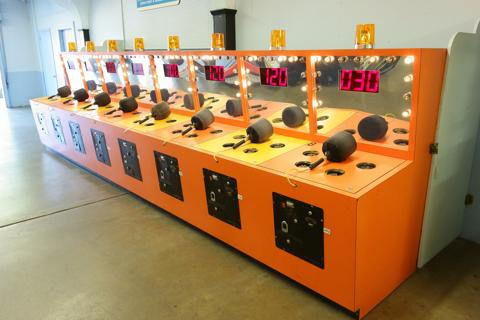
Whack-A-Mole machines from <https://commons.wikimedia.org/wiki/File:Whac-A-Mole_Cedar_Point.jpg> This is part of a series of posts on compiling a custom version of Qt5 in order to develop for both amd64 and a Raspberry Pi. Now that I have a sysroot, I try to use it to build Qt5 with QtWebEngine. Nothing seems to work straightforwardly with Qt5's build system, and hit an endless series of significant blockers to try and work around.

Problem in wayland code QtWayland's source currently does not compile:
../../../hardwareintegration/client/brcm-egl/qwaylandbrcmeglwindow.cpp: In constructor  QtWaylandClient::QWaylandBrcmEglWindow::QWaylandBrcmEglWindow(QWindow*) :
../../../hardwareintegration/client/brcm-egl/qwaylandbrcmeglwindow.cpp:131:67: error: no matching function for call to  QtWaylandClient::QWaylandWindow::QWaylandWindow(QWindow*&) 
     , m_eventQueue(wl_display_create_queue(mDisplay->wl_display()))
                                                                   ^
In file included from ../../../../include/QtWaylandClient/5.15.0/QtWaylandClient/private/qwaylandwindow_p.h:1,
                 from ../../../hardwareintegration/client/brcm-egl/qwaylandbrcmeglwindow.h:43,
                 from ../../../hardwareintegration/client/brcm-egl/qwaylandbrcmeglwindow.cpp:40:
../../../../include/QtWaylandClient/5.15.0/QtWaylandClient/private/../../../../../src/client/qwaylandwindow_p.h:97:5: note: candidate:  QtWaylandClient::QWaylandWindow::QWaylandWindow(QWindow*, QtWayland
Client::QWaylandDisplay*) 
     QWaylandWindow(QWindow *window, QWaylandDisplay *display);
     ^~~~~~~~~~~~~~
../../../../include/QtWaylandClient/5.15.0/QtWaylandClient/private/../../../../../src/client/qwaylandwindow_p.h:97:5: note:   candidate expects 2 arguments, 1 provided
make[5]: Leaving directory '/home/build/armhf/qt-everywhere-src-5.15.0/qttools/src/qdoc'
I am not trying to debug here. I understand that Wayland support is not a requirement, and I'm adding -skip wayland to Qt5's configure options. Next round. nss not found Qt5 embeds Chrome's sources. Chrome's sources require libnss3-dev to be available for both host and target architectures. Although I now have it installed both on the build system and in the sysroot, the pkg-config wrapper that Qt5 hooks into its Chrome's sources, failes to find it:
Command: /usr/bin/python2 /home/build/armhf/qt-everywhere-src-5.15.0/qtwebengine/src/3rdparty/chromium/build/config/linux/pkg-config.py -s /home/build/sysroot/ -a arm -p /usr/bin/arm-linux-gnueabihf-pkg-config --system_libdir lib nss -v -lssl3
Returned 1.
stderr:
Package nss was not found in the pkg-config search path.
Perhaps you should add the directory containing  nss.pc'
to the PKG_CONFIG_PATH environment variable
No package 'nss' found
Traceback (most recent call last):
  File "/home/build/armhf/qt-everywhere-src-5.15.0/qtwebengine/src/3rdparty/chromium/build/config/linux/pkg-config.py", line 248, in <module>
    sys.exit(main())
  File "/home/build/armhf/qt-everywhere-src-5.15.0/qtwebengine/src/3rdparty/chromium/build/config/linux/pkg-config.py", line 143, in main
    prefix = GetPkgConfigPrefixToStrip(options, args)
  File "/home/build/armhf/qt-everywhere-src-5.15.0/qtwebengine/src/3rdparty/chromium/build/config/linux/pkg-config.py", line 82, in GetPkgConfigPrefixToStrip
    "--variable=prefix"] + args, env=os.environ).decode('utf-8')
  File "/usr/lib/python2.7/subprocess.py", line 223, in check_output
    raise CalledProcessError(retcode, cmd, output=output)
subprocess.CalledProcessError: Command '['/usr/bin/arm-linux-gnueabihf-pkg-config', '--variable=prefix', 'nss']' returned non-zero exit status 1
See //build/config/linux/nss/BUILD.gn:15:3: whence it was called.
  pkg_config("system_nss_no_ssl_config")  
  ^---------------------------------------
See //crypto/BUILD.gn:218:25: which caused the file to be included.
    public_configs += [ "//build/config/linux/nss:system_nss_no_ssl_config" ]
                        ^--------------------------------------------------
Project ERROR: GN run error!
It's trying to look into $SYSROOT/usr/lib/pkgconfig, while it should be $SYSROOT//usr/lib/arm-linux-gnueabihf/pkgconfig. I worked around this this patch to qtwebengine/src/3rdparty/chromium/build/config/linux/pkg-config.py:
--- pkg-config.py.orig  2020-07-16 11:46:21.005373002 +0200
+++ pkg-config.py   2020-07-16 11:46:02.605296967 +0200
@@ -61,6 +61,7 @@
   libdir = sysroot + '/usr/' + options.system_libdir + '/pkgconfig'
   libdir += ':' + sysroot + '/usr/share/pkgconfig'
+  libdir += ':' + sysroot + '/usr/lib/arm-linux-gnueabihf/pkgconfig'
   os.environ['PKG_CONFIG_LIBDIR'] = libdir
   return libdir
Next round. g++ 8.3.0 Internal Compiler Error Qt5's sources embed Chrome's sources that embed the skia library sources. One of the skia library sources, when cross-compiled to ARM with -O1 or -O2 with g++ 8.3.0, produces an Internal Compiler Error:
/usr/bin/arm-linux-gnueabihf-g++ -MMD -MF obj/skia/skcms/skcms.o.d -DUSE_UDEV -DUSE_AURA=1 -DUSE_NSS_CERTS=1 -DUSE_OZONE=1 -DOFFICIAL_BUILD -DTOOLKIT_QT -D_FILE_OFFSET_BITS=64 -D_LARGEFILE_SOURCE -D_LARGEFILE64_SOURCE -DNO_UNWIND_TABLES -D__STDC_CONSTANT_MACROS -D__STDC_FORMAT_MACROS -DCR_SYSROOT_HASH=76e6068f9f6954e2ab1ff98ce5fa236d3d85bcbd -DNDEBUG -DNVALGRIND -DDYNAMIC_ANNOTATIONS_ENABLED=0 -I../../3rdparty/chromium/third_party/skia/include/third_party/skcms -Igen -I../../3rdparty/chromium -w -std=c11 -mfp16-format=ieee -fno-strict-aliasing --param=ssp-buffer-size=4 -fstack-protector -fno-unwind-tables -fno-asynchronous-unwind-tables -fPIC -pipe -pthread -march=armv7-a -mfloat-abi=hard -mtune=generic-armv7-a -mfpu=vfpv3-d16 -mthumb -Wall -U_FORTIFY_SOURCE -D_FORTIFY_SOURCE=2 -Wno-psabi -Wno-unused-local-typedefs -Wno-maybe-uninitialized -Wno-deprecated-declarations -fno-delete-null-pointer-checks -Wno-comments -Wno-packed-not-aligned -Wno-dangling-else -Wno-missing-field-initializers -Wno-unused-parameter -O2 -fno-ident -fdata-sections -ffunction-sections -fno-omit-frame-pointer -g0 -fvisibility=hidden -std=gnu++14 -Wno-narrowing -Wno-class-memaccess -Wno-attributes -Wno-class-memaccess -Wno-subobject-linkage -Wno-invalid-offsetof -Wno-return-type -Wno-deprecated-copy -fno-exceptions -fno-rtti --sysroot=../../../../../../sysroot/ -fvisibility-inlines-hidden -c ../../3rdparty/chromium/third_party/skia/third_party/skcms/skcms.cc -o obj/skia/skcms/skcms.o
during RTL pass: expand
In file included from ../../3rdparty/chromium/third_party/skia/third_party/skcms/skcms.cc:2053:
../../3rdparty/chromium/third_party/skia/third_party/skcms/src/Transform_inl.h: In function  void baseline::exec_ops(const Op*, const void**, const char*, char*, int) :
../../3rdparty/chromium/third_party/skia/third_party/skcms/src/Transform_inl.h:766:13: internal compiler error: in convert_move, at expr.c:218
 static void exec_ops(const Op* ops, const void** args,
             ^~~~~~~~
Please submit a full bug report,
with preprocessed source if appropriate.
See <file:///usr/share/doc/gcc-8/README.Bugs> for instructions.
I reported the bug at https://gcc.gnu.org/bugzilla/show_bug.cgi?id=96206 Since this source compiles with -O0, I attempted to fix this by editing qtwebkit/src/3rdparty/chromium/build/config/compiler/BUILD.gn and replacing instances of -O1 and -O2 with -O0. Spoiler: wrong attempt. We'll see it in the next round. Impossible constraint in asm Qt5's sources embed Chrome's sources that embed the ffmpeg library sources. Even if ffmpeg's development libraries are present both in the host and in the target system, the build system insists in compiling and using the bundled version. Unfortunately, using -O0 breaks the build of ffmpeg:
/usr/bin/arm-linux-gnueabihf-gcc -MMD -MF obj/third_party/ffmpeg/ffmpeg_internal/opus.o.d -DHAVE_AV_CONFIG_H -D_POSIX_C_SOURCE=200112 -D_XOPEN_SOURCE=600 -DPIC -DFFMPEG_CONFIGURATION=NULL -DCHROMIUM_NO_LOGGING -D_ISOC99_SOURCE -D_LARGEFILE_SOURCE -DUSE_UDEV -DUSE_AURA=1 -DUSE_NSS_CERTS=1 -DUSE_OZONE=1 -DOFFICIAL_BUILD -DTOOLKIT_QT -D_FILE_OFFSET_BITS=64 -D_LARGEFILE_SOURCE -D_LARGEFILE64_SOURCE -DNO_UNWIND_TABLES -DCR_SYSROOT_HASH=76e6068f9f6954e2ab1ff98ce5fa236d3d85bcbd -DNDEBUG -DNVALGRIND -DDYNAMIC_ANNOTATIONS_ENABLED=0 -DOPUS_FIXED_POINT -I../../3rdparty/chromium/third_party/ffmpeg/chromium/config/Chromium/linux/arm -I../../3rdparty/chromium/third_party/ffmpeg -I../../3rdparty/chromium/third_party/ffmpeg/compat/atomics/gcc -Igen -I../../3rdparty/chromium -I../../3rdparty/chromium/third_party/opus/src/include -fPIC -Wno-deprecated-declarations -fomit-frame-pointer -w -std=c99 -pthread -fno-math-errno -fno-signed-zeros -fno-tree-vectorize -fno-strict-aliasing --param=ssp-buffer-size=4 -fstack-protector -fno-unwind-tables -fno-asynchronous-unwind-tables -fPIC -pipe -pthread -march=armv7-a -mfloat-abi=hard -mtune=generic-armv7-a -mfpu=vfpv3-d16 -mthumb -g0 -fvisibility=hidden -Wno-psabi -Wno-unused-local-typedefs -Wno-maybe-uninitialized -Wno-deprecated-declarations -fno-delete-null-pointer-checks -Wno-comments -Wno-packed-not-aligned -Wno-dangling-else -Wno-missing-field-initializers -Wno-unused-parameter -O0 -fno-ident -fdata-sections -ffunction-sections -std=gnu11 --sysroot=../../../../../../sysroot/ -c ../../3rdparty/chromium/third_party/ffmpeg/libavcodec/opus.c -o obj/third_party/ffmpeg/ffmpeg_internal/opus.o
In file included from ../../3rdparty/chromium/third_party/ffmpeg/libavutil/intmath.h:30,
                 from ../../3rdparty/chromium/third_party/ffmpeg/libavutil/common.h:106,
                 from ../../3rdparty/chromium/third_party/ffmpeg/libavutil/avutil.h:296,
                 from ../../3rdparty/chromium/third_party/ffmpeg/libavutil/audio_fifo.h:30,
                 from ../../3rdparty/chromium/third_party/ffmpeg/libavcodec/opus.h:28,
                 from ../../3rdparty/chromium/third_party/ffmpeg/libavcodec/opus_celt.h:29,
                 from ../../3rdparty/chromium/third_party/ffmpeg/libavcodec/opus.c:32:
../../3rdparty/chromium/third_party/ffmpeg/libavcodec/opus.c: In function  ff_celt_quant_bands :
../../3rdparty/chromium/third_party/ffmpeg/libavutil/arm/intmath.h:77:5: error: impossible constraint in  asm 
     __asm__ ("usat %0, %2, %1" : "=r"(x) : "r"(a), "i"(p));
     ^~~~~~~
The same source compiles with using -O2 instead of -O0. I worked around this by undoing the previous change, and limiting -O0 to just the source that causes the Internal Compiler Error. I edited qtwebengine/src/3rdparty/chromium/third_party/skia/third_party/skcms/skcms.cc to prepend:
#pragma GCC push_options
#pragma GCC optimize ("O0")
and append:
#pragma GCC pop_options
Next round. Missing build-deps for i386 code Qt5's sources embed Chrome's sources that embed the V8 library sources. For some reason, torque, that is part of V8, wants to build some of its sources into 32 bit code with -m32, and I did not have i386 cross-compilation libraries installed:
/usr/bin/g++ -MMD -MF v8_snapshot/obj/v8/torque_base/csa-generator.o.d -DUSE_UDEV -DUSE_AURA=1 -DUSE_NSS_CERTS=1 -DUSE_OZONE=1 -DOFFICIAL_BUILD -DTOOLKIT_QT -D_FILE_OFFSET_BITS=64 -D_LARGEFILE_SOURCE -D_LARGEFILE64_SOURCE -DNO_UNWIND_TABLES -D__STDC_CONSTANT_MACROS -D__STDC_FORMAT_MACROS -DNDEBUG -DNVALGRIND -DDYNAMIC_ANNOTATIONS_ENABLED=0 -DV8_TYPED_ARRAY_MAX_SIZE_IN_HEAP=64 -DENABLE_MINOR_MC -DV8_INTL_SUPPORT -DV8_CONCURRENT_MARKING -DV8_ENABLE_LAZY_SOURCE_POSITIONS -DV8_EMBEDDED_BUILTINS -DV8_SHARED_RO_HEAP -DV8_WIN64_UNWINDING_INFO -DV8_ENABLE_REGEXP_INTERPRETER_THREADED_DISPATCH -DV8_31BIT_SMIS_ON_64BIT_ARCH -DV8_DEPRECATION_WARNINGS -DV8_TARGET_ARCH_ARM -DCAN_USE_ARMV7_INSTRUCTIONS -DCAN_USE_VFP3_INSTRUCTIONS -DUSE_EABI_HARDFLOAT=1 -DV8_HAVE_TARGET_OS -DV8_TARGET_OS_LINUX -DDISABLE_UNTRUSTED_CODE_MITIGATIONS -DV8_31BIT_SMIS_ON_64BIT_ARCH -DV8_DEPRECATION_WARNINGS -Iv8_snapshot/gen -I../../3rdparty/chromium -I../../3rdparty/chromium/v8 -Iv8_snapshot/gen/v8 -fno-strict-aliasing --param=ssp-buffer-size=4 -fstack-protector -fno-unwind-tables -fno-asynchronous-unwind-tables -fPIC -pipe -pthread -m32 -msse2 -mfpmath=sse -mmmx -Wall -U_FORTIFY_SOURCE -D_FORTIFY_SOURCE=2 -Wno-unused-local-typedefs -Wno-maybe-uninitialized -Wno-deprecated-declarations -fno-delete-null-pointer-checks -Wno-comments -Wno-packed-not-aligned -Wno-dangling-else -Wno-missing-field-initializers -Wno-unused-parameter -fno-omit-frame-pointer -g0 -fvisibility=hidden -Wno-strict-overflow -Wno-return-type -O3 -fno-ident -fdata-sections -ffunction-sections -std=gnu++14 -Wno-narrowing -Wno-class-memaccess -Wno-attributes -Wno-class-memaccess -Wno-subobject-linkage -Wno-invalid-offsetof -Wno-return-type -Wno-deprecated-copy -fvisibility-inlines-hidden -fexceptions -frtti -c ../../3rdparty/chromium/v8/src/torque/csa-generator.cc -o v8_snapshot/obj/v8/torque_base/csa-generator.o
In file included from ../../3rdparty/chromium/v8/src/torque/csa-generator.h:8,
                 from ../../3rdparty/chromium/v8/src/torque/csa-generator.cc:5:
/usr/include/c++/8/iostream:38:10: fatal error: bits/c++config.h: No such file or directory
 #include <bits/c++config.h>
          ^~~~~~~~~~~~~~~~~~
compilation terminated.
New build dependencies needed:
apt install lib32stdc++-8-dev
apt install libc6-dev-i386
dpkg --add-architecture i386
apt install linux-libc-dev:i386
Next round. OpenGL build issues Next bump are OpenGL related compiler issues:
/usr/bin/arm-linux-gnueabihf-g++ -MMD -MF obj/QtWebEngineCore/gl_ozone_glx_qt.o.d -DCHROMIUM_VERSION=\"80.0.3987.163\" -DUSE_UDEV -DUSE_AURA=1 -DUSE_NSS_CERTS=1 -DUSE_OZONE=1 -DOFFICIAL_BUILD -DTOOLKIT_QT -D_FILE_OFFSET_BITS=64 -D_LARGEFILE_SOURCE -D_LARGEFILE64_SOURCE -DNO_UNWIND_TABLES -D__STDC_CONSTANT_MACROS -D__STDC_FORMAT_MACROS -DCR_SYSROOT_HASH=76e6068f9f6954e2ab1ff98ce5fa236d3d85bcbd -DNDEBUG -DNVALGRIND -DDYNAMIC_ANNOTATIONS_ENABLED=0 -DQT_NO_LINKED_LIST -DQT_NO_KEYWORDS -DQT_USE_QSTRINGBUILDER -DQ_FORWARD_DECLARE_OBJC_CLASS=QT_FORWARD_DECLARE_CLASS -DQTWEBENGINECORE_VERSION_STR=\"5.15.0\" -DQTWEBENGINEPROCESS_NAME=\"QtWebEngineProcess\" -DBUILDING_CHROMIUM -DQTWEBENGINE_EMBEDDED_SWITCHES -DQT_NO_EXCEPTIONS -D_LARGEFILE64_SOURCE -D_LARGEFILE_SOURCE -DQT_NO_DEBUG -DQT_QUICK_LIB -DQT_GUI_LIB -DQT_QMLMODELS_LIB -DQT_WEBCHANNEL_LIB -DQT_QML_LIB -DQT_NETWORK_LIB -DQT_POSITIONING_LIB -DQT_CORE_LIB -DQT_WEBENGINECOREHEADERS_LIB -DVK_NO_PROTOTYPES -DGL_GLEXT_PROTOTYPES -DUSE_GLX -DUSE_EGL -DGOOGLE_PROTOBUF_NO_RTTI -DGOOGLE_PROTOBUF_NO_STATIC_INITIALIZER -DHAVE_PTHREAD -DU_USING_ICU_NAMESPACE=0 -DU_ENABLE_DYLOAD=0 -DUSE_CHROMIUM_ICU=1 -DU_STATIC_IMPLEMENTATION -DICU_UTIL_DATA_IMPL=ICU_UTIL_DATA_FILE -DUCHAR_TYPE=uint16_t -DWEBRTC_NON_STATIC_TRACE_EVENT_HANDLERS=0 -DWEBRTC_CHROMIUM_BUILD -DWEBRTC_POSIX -DWEBRTC_LINUX -DABSL_ALLOCATOR_NOTHROW=1 -DWEBRTC_USE_BUILTIN_ISAC_FIX=1 -DWEBRTC_USE_BUILTIN_ISAC_FLOAT=0 -DHAVE_SCTP -DNO_MAIN_THREAD_WRAPPING -DSK_HAS_PNG_LIBRARY -DSK_HAS_WEBP_LIBRARY -DSK_USER_CONFIG_HEADER=\"../../skia/config/SkUserConfig.h\" -DSK_GL -DSK_HAS_JPEG_LIBRARY -DSK_USE_LIBGIFCODEC -DSK_VULKAN_HEADER=\"../../skia/config/SkVulkanConfig.h\" -DSK_VULKAN=1 -DSK_SUPPORT_GPU=1 -DSK_GPU_WORKAROUNDS_HEADER=\"gpu/config/gpu_driver_bug_workaround_autogen.h\" -DVK_NO_PROTOTYPES -DLEVELDB_PLATFORM_CHROMIUM=1 -DLEVELDB_PLATFORM_CHROMIUM=1 -DV8_31BIT_SMIS_ON_64BIT_ARCH -DV8_DEPRECATION_WARNINGS -I../../3rdparty/chromium/skia/config -I../../3rdparty/chromium/third_party -I../../3rdparty/chromium/third_party/boringssl/src/include -I../../3rdparty/chromium/third_party/skia/include/core -Igen -I../../3rdparty/chromium -I/home/build/armhf/qt-everywhere-src-5.15.0/qtwebengine/src/core -I/home/build/armhf/qt-everywhere-src-5.15.0/qtwebengine/src/core/api -I/home/build/armhf/qt-everywhere-src-5.15.0/qtdeclarative/include/QtQuick/5.15.0 -I/home/build/armhf/qt-everywhere-src-5.15.0/qtdeclarative/include/QtQuick/5.15.0/QtQuick -I/home/build/armhf/qt-everywhere-src-5.15.0/qtbase/include/QtGui/5.15.0 -I/home/build/armhf/qt-everywhere-src-5.15.0/qtbase/include/QtGui/5.15.0/QtGui -I/home/build/armhf/qt-everywhere-src-5.15.0/qtdeclarative/include -I/home/build/armhf/qt-everywhere-src-5.15.0/qtdeclarative/include/QtQuick -I/home/build/armhf/qt-everywhere-src-5.15.0/qtbase/include -I/home/build/armhf/qt-everywhere-src-5.15.0/qtbase/include/QtGui -I/home/build/armhf/qt-everywhere-src-5.15.0/qtdeclarative/include/QtQmlModels/5.15.0 -I/home/build/armhf/qt-everywhere-src-5.15.0/qtdeclarative/include/QtQmlModels/5.15.0/QtQmlModels -I/home/build/armhf/qt-everywhere-src-5.15.0/qtdeclarative/include/QtQml/5.15.0 -I/home/build/armhf/qt-everywhere-src-5.15.0/qtdeclarative/include/QtQml/5.15.0/QtQml -I/home/build/armhf/qt-everywhere-src-5.15.0/qtbase/include/QtCore/5.15.0 -I/home/build/armhf/qt-everywhere-src-5.15.0/qtbase/include/QtCore/5.15.0/QtCore -I/home/build/armhf/qt-everywhere-src-5.15.0/qtdeclarative/include/QtQmlModels -I/home/build/armhf/qt-everywhere-src-5.15.0/qtwebchannel/include -I/home/build/armhf/qt-everywhere-src-5.15.0/qtwebchannel/include/QtWebChannel -I/home/build/armhf/qt-everywhere-src-5.15.0/qtdeclarative/include/QtQml -I/home/build/armhf/qt-everywhere-src-5.15.0/qtbase/include/QtNetwork -I/home/build/armhf/qt-everywhere-src-5.15.0/qtlocation/include -I/home/build/armhf/qt-everywhere-src-5.15.0/qtlocation/include/QtPositioning -I/home/build/armhf/qt-everywhere-src-5.15.0/qtbase/include/QtCore -I/home/build/armhf/qt-everywhere-src-5.15.0/qtwebengine/include -I/home/build/armhf/qt-everywhere-src-5.15.0/qtwebengine/include/QtWebEngineCore -I/home/build/armhf/qt-everywhere-src-5.15.0/qtwebengine/include/QtWebEngineCore/5.15.0 -I/home/build/armhf/qt-everywhere-src-5.15.0/qtwebengine/include/QtWebEngineCore/5.15.0/QtWebEngineCore -I.moc -I/home/build/sysroot/opt/vc/include -I/home/build/sysroot/opt/vc/include/interface/vcos/pthreads -I/home/build/sysroot/opt/vc/include/interface/vmcs_host/linux -Igen/.moc -I/home/build/armhf/qt-everywhere-src-5.15.0/qtbase/mkspecs/devices/linux-rasp-pi2-g++ -Igen -Igen -I../../3rdparty/chromium/third_party/libyuv/include -Igen -I../../3rdparty/chromium/third_party/jsoncpp/source/include -I../../3rdparty/chromium/third_party/jsoncpp/generated -Igen -Igen -I../../3rdparty/chromium/third_party/khronos -I../../3rdparty/chromium/gpu -I../../3rdparty/chromium/third_party/vulkan/include -I../../3rdparty/chromium/third_party/perfetto/include -Igen/third_party/perfetto/build_config -Igen -Igen -Igen/third_party/dawn/src/include -I../../3rdparty/chromium/third_party/dawn/src/include -Igen -I../../3rdparty/chromium/third_party/boringssl/src/include -I../../3rdparty/chromium/third_party/protobuf/src -Igen/protoc_out -I../../3rdparty/chromium/third_party/protobuf/src -I../../3rdparty/chromium/third_party/ced/src -I../../3rdparty/chromium/third_party/icu/source/common -I../../3rdparty/chromium/third_party/icu/source/i18n -I../../3rdparty/chromium/third_party/webrtc_overrides -I../../3rdparty/chromium/third_party/webrtc -Igen/third_party/webrtc -I../../3rdparty/chromium/third_party/abseil-cpp -I../../3rdparty/chromium/third_party/skia -I../../3rdparty/chromium/third_party/libgifcodec -I../../3rdparty/chromium/third_party/vulkan/include -I../../3rdparty/chromium/third_party/skia/third_party/vulkanmemoryallocator -I../../3rdparty/chromium/third_party/vulkan/include -Igen/third_party/perfetto -Igen/third_party/perfetto -Igen/third_party/perfetto -Igen/third_party/perfetto -Igen/third_party/perfetto -Igen/third_party/perfetto -Igen/third_party/perfetto -Igen/third_party/perfetto -Igen/third_party/perfetto -Igen/third_party/perfetto -I../../3rdparty/chromium/third_party/crashpad/crashpad -I../../3rdparty/chromium/third_party/crashpad/crashpad/compat/non_mac -I../../3rdparty/chromium/third_party/crashpad/crashpad/compat/linux -I../../3rdparty/chromium/third_party/crashpad/crashpad/compat/non_win -I../../3rdparty/chromium/third_party/libwebm/source -I../../3rdparty/chromium/third_party/leveldatabase -I../../3rdparty/chromium/third_party/leveldatabase/src -I../../3rdparty/chromium/third_party/leveldatabase/src/include -I../../3rdparty/chromium/v8/include -Igen/v8/include -I../../3rdparty/chromium/third_party/mesa_headers -fno-strict-aliasing --param=ssp-buffer-size=4 -fstack-protector -fno-unwind-tables -fno-asynchronous-unwind-tables -fPIC -pipe -pthread -march=armv7-a -mfloat-abi=hard -mtune=generic-armv7-a -mfpu=vfpv3-d16 -mthumb -Wall -U_FORTIFY_SOURCE -D_FORTIFY_SOURCE=2 -Wno-psabi -Wno-unused-local-typedefs -Wno-maybe-uninitialized -Wno-deprecated-declarations -fno-delete-null-pointer-checks -Wno-comments -Wno-packed-not-aligned -Wno-dangling-else -Wno-missing-field-initializers -Wno-unused-parameter -O2 -fno-ident -fdata-sections -ffunction-sections -fno-omit-frame-pointer -g0 -fvisibility=hidden -g -O2 -fdebug-prefix-map=/home/build/armhf/qt-everywhere-src-5.15.0=. -fstack-protector-strong -Wformat -Werror=format-security -Wdate-time -D_FORTIFY_SOURCE=2 -O2 -fno-exceptions -Wall -Wextra -D_REENTRANT -I/home/build/sysroot/usr/include/nss -I/home/build/sysroot/usr/include/nspr -std=gnu++14 -Wno-narrowing -Wno-class-memaccess -Wno-attributes -Wno-class-memaccess -Wno-subobject-linkage -Wno-invalid-offsetof -Wno-return-type -Wno-deprecated-copy -fno-exceptions -fno-rtti --sysroot=../../../../../../sysroot/ -fvisibility-inlines-hidden -g -O2 -fdebug-prefix-map=/home/build/armhf/qt-everywhere-src-5.15.0=. -fstack-protector-strong -Wformat -Werror=format-security -Wdate-time -D_FORTIFY_SOURCE=2 -O2 -std=gnu++1y -fno-exceptions -Wall -Wextra -D_REENTRANT -Wno-unused-parameter -Wno-unused-variable -Wno-deprecated-declarations -c /home/build/armhf/qt-everywhere-src-5.15.0/qtwebengine/src/core/ozone/gl_ozone_glx_qt.cpp -o obj/QtWebEngineCore/gl_ozone_glx_qt.o
In file included from ../../3rdparty/chromium/ui/gl/gl_bindings.h:497,
                 from ../../3rdparty/chromium/ui/gl/gl_gl_api_implementation.h:12,
                 from /home/build/armhf/qt-everywhere-src-5.15.0/qtwebengine/src/core/ozone/gl_ozone_glx_qt.cpp:49:
../../3rdparty/chromium/ui/gl/gl_bindings_autogen_egl.h:227:5: error:  EGLSetBlobFuncANDROID  has not been declared
     EGLSetBlobFuncANDROID set,
     ^~~~~~~~~~~~~~~~~~~~~
../../3rdparty/chromium/ui/gl/gl_bindings_autogen_egl.h:228:5: error:  EGLGetBlobFuncANDROID  has not been declared
     EGLGetBlobFuncANDROID get);
     ^~~~~~~~~~~~~~~~~~~~~
../../3rdparty/chromium/ui/gl/gl_bindings_autogen_egl.h:571:46: error:  EGLSetBlobFuncANDROID  has not been declared
                                              EGLSetBlobFuncANDROID set,
                                              ^~~~~~~~~~~~~~~~~~~~~
../../3rdparty/chromium/ui/gl/gl_bindings_autogen_egl.h:572:46: error:  EGLGetBlobFuncANDROID  has not been declared
                                              EGLGetBlobFuncANDROID get) = 0;
                                              ^~~~~~~~~~~~~~~~~~~~~
cc1plus: warning: unrecognized command line option  -Wno-deprecated-copy 
/usr/bin/arm-linux-gnueabihf-g++ -MMD -MF obj/QtWebEngineCore/display_gl_output_surface.o.d -DCHROMIUM_VERSION=\"80.0.3987.163\" -DUSE_UDEV -DUSE_AURA=1 -DUSE_NSS_CERTS=1 -DUSE_OZONE=1 -DOFFICIAL_BUILD -DTOOLKIT_QT -D_FILE_OFFSET_BITS=64 -D_LARGEFILE_SOURCE -D_LARGEFILE64_SOURCE -DNO_UNWIND_TABLES -D__STDC_CONSTANT_MACROS -D__STDC_FORMAT_MACROS -DCR_SYSROOT_HASH=76e6068f9f6954e2ab1ff98ce5fa236d3d85bcbd -DNDEBUG -DNVALGRIND -DDYNAMIC_ANNOTATIONS_ENABLED=0 -DQT_NO_LINKED_LIST -DQT_NO_KEYWORDS -DQT_USE_QSTRINGBUILDER -DQ_FORWARD_DECLARE_OBJC_CLASS=QT_FORWARD_DECLARE_CLASS -DQTWEBENGINECORE_VERSION_STR=\"5.15.0\" -DQTWEBENGINEPROCESS_NAME=\"QtWebEngineProcess\" -DBUILDING_CHROMIUM -DQTWEBENGINE_EMBEDDED_SWITCHES -DQT_NO_EXCEPTIONS -D_LARGEFILE64_SOURCE -D_LARGEFILE_SOURCE -DQT_NO_DEBUG -DQT_QUICK_LIB -DQT_GUI_LIB -DQT_QMLMODELS_LIB -DQT_WEBCHANNEL_LIB -DQT_QML_LIB -DQT_NETWORK_LIB -DQT_POSITIONING_LIB -DQT_CORE_LIB -DQT_WEBENGINECOREHEADERS_LIB -DVK_NO_PROTOTYPES -DGL_GLEXT_PROTOTYPES -DUSE_GLX -DUSE_EGL -DGOOGLE_PROTOBUF_NO_RTTI -DGOOGLE_PROTOBUF_NO_STATIC_INITIALIZER -DHAVE_PTHREAD -DU_USING_ICU_NAMESPACE=0 -DU_ENABLE_DYLOAD=0 -DUSE_CHROMIUM_ICU=1 -DU_STATIC_IMPLEMENTATION -DICU_UTIL_DATA_IMPL=ICU_UTIL_DATA_FILE -DUCHAR_TYPE=uint16_t -DWEBRTC_NON_STATIC_TRACE_EVENT_HANDLERS=0 -DWEBRTC_CHROMIUM_BUILD -DWEBRTC_POSIX -DWEBRTC_LINUX -DABSL_ALLOCATOR_NOTHROW=1 -DWEBRTC_USE_BUILTIN_ISAC_FIX=1 -DWEBRTC_USE_BUILTIN_ISAC_FLOAT=0 -DHAVE_SCTP -DNO_MAIN_THREAD_WRAPPING -DSK_HAS_PNG_LIBRARY -DSK_HAS_WEBP_LIBRARY -DSK_USER_CONFIG_HEADER=\"../../skia/config/SkUserConfig.h\" -DSK_GL -DSK_HAS_JPEG_LIBRARY -DSK_USE_LIBGIFCODEC -DSK_VULKAN_HEADER=\"../../skia/config/SkVulkanConfig.h\" -DSK_VULKAN=1 -DSK_SUPPORT_GPU=1 -DSK_GPU_WORKAROUNDS_HEADER=\"gpu/config/gpu_driver_bug_workaround_autogen.h\" -DVK_NO_PROTOTYPES -DLEVELDB_PLATFORM_CHROMIUM=1 -DLEVELDB_PLATFORM_CHROMIUM=1 -DV8_31BIT_SMIS_ON_64BIT_ARCH -DV8_DEPRECATION_WARNINGS -I../../3rdparty/chromium/skia/config -I../../3rdparty/chromium/third_party -I../../3rdparty/chromium/third_party/boringssl/src/include -I../../3rdparty/chromium/third_party/skia/include/core -Igen -I../../3rdparty/chromium -I/home/build/armhf/qt-everywhere-src-5.15.0/qtwebengine/src/core -I/home/build/armhf/qt-everywhere-src-5.15.0/qtwebengine/src/core/api -I/home/build/armhf/qt-everywhere-src-5.15.0/qtdeclarative/include/QtQuick/5.15.0 -I/home/build/armhf/qt-everywhere-src-5.15.0/qtdeclarative/include/QtQuick/5.15.0/QtQuick -I/home/build/armhf/qt-everywhere-src-5.15.0/qtbase/include/QtGui/5.15.0 -I/home/build/armhf/qt-everywhere-src-5.15.0/qtbase/include/QtGui/5.15.0/QtGui -I/home/build/armhf/qt-everywhere-src-5.15.0/qtdeclarative/include -I/home/build/armhf/qt-everywhere-src-5.15.0/qtdeclarative/include/QtQuick -I/home/build/armhf/qt-everywhere-src-5.15.0/qtbase/include -I/home/build/armhf/qt-everywhere-src-5.15.0/qtbase/include/QtGui -I/home/build/armhf/qt-everywhere-src-5.15.0/qtdeclarative/include/QtQmlModels/5.15.0 -I/home/build/armhf/qt-everywhere-src-5.15.0/qtdeclarative/include/QtQmlModels/5.15.0/QtQmlModels -I/home/build/armhf/qt-everywhere-src-5.15.0/qtdeclarative/include/QtQml/5.15.0 -I/home/build/armhf/qt-everywhere-src-5.15.0/qtdeclarative/include/QtQml/5.15.0/QtQml -I/home/build/armhf/qt-everywhere-src-5.15.0/qtbase/include/QtCore/5.15.0 -I/home/build/armhf/qt-everywhere-src-5.15.0/qtbase/include/QtCore/5.15.0/QtCore -I/home/build/armhf/qt-everywhere-src-5.15.0/qtdeclarative/include/QtQmlModels -I/home/build/armhf/qt-everywhere-src-5.15.0/qtwebchannel/include -I/home/build/armhf/qt-everywhere-src-5.15.0/qtwebchannel/include/QtWebChannel -I/home/build/armhf/qt-everywhere-src-5.15.0/qtdeclarative/include/QtQml -I/home/build/armhf/qt-everywhere-src-5.15.0/qtbase/include/QtNetwork -I/home/build/armhf/qt-everywhere-src-5.15.0/qtlocation/include -I/home/build/armhf/qt-everywhere-src-5.15.0/qtlocation/include/QtPositioning -I/home/build/armhf/qt-everywhere-src-5.15.0/qtbase/include/QtCore -I/home/build/armhf/qt-everywhere-src-5.15.0/qtwebengine/include -I/home/build/armhf/qt-everywhere-src-5.15.0/qtwebengine/include/QtWebEngineCore -I/home/build/armhf/qt-everywhere-src-5.15.0/qtwebengine/include/QtWebEngineCore/5.15.0 -I/home/build/armhf/qt-everywhere-src-5.15.0/qtwebengine/include/QtWebEngineCore/5.15.0/QtWebEngineCore -I.moc -I/home/build/sysroot/opt/vc/include -I/home/build/sysroot/opt/vc/include/interface/vcos/pthreads -I/home/build/sysroot/opt/vc/include/interface/vmcs_host/linux -Igen/.moc -I/home/build/armhf/qt-everywhere-src-5.15.0/qtbase/mkspecs/devices/linux-rasp-pi2-g++ -Igen -Igen -I../../3rdparty/chromium/third_party/libyuv/include -Igen -I../../3rdparty/chromium/third_party/jsoncpp/source/include -I../../3rdparty/chromium/third_party/jsoncpp/generated -Igen -Igen -I../../3rdparty/chromium/third_party/khronos -I../../3rdparty/chromium/gpu -I../../3rdparty/chromium/third_party/vulkan/include -I../../3rdparty/chromium/third_party/perfetto/include -Igen/third_party/perfetto/build_config -Igen -Igen -Igen/third_party/dawn/src/include -I../../3rdparty/chromium/third_party/dawn/src/include -Igen -I../../3rdparty/chromium/third_party/boringssl/src/include -I../../3rdparty/chromium/third_party/protobuf/src -Igen/protoc_out -I../../3rdparty/chromium/third_party/protobuf/src -I../../3rdparty/chromium/third_party/ced/src -I../../3rdparty/chromium/third_party/icu/source/common -I../../3rdparty/chromium/third_party/icu/source/i18n -I../../3rdparty/chromium/third_party/webrtc_overrides -I../../3rdparty/chromium/third_party/webrtc -Igen/third_party/webrtc -I../../3rdparty/chromium/third_party/abseil-cpp -I../../3rdparty/chromium/third_party/skia -I../../3rdparty/chromium/third_party/libgifcodec -I../../3rdparty/chromium/third_party/vulkan/include -I../../3rdparty/chromium/third_party/skia/third_party/vulkanmemoryallocator -I../../3rdparty/chromium/third_party/vulkan/include -Igen/third_party/perfetto -Igen/third_party/perfetto -Igen/third_party/perfetto -Igen/third_party/perfetto -Igen/third_party/perfetto -Igen/third_party/perfetto -Igen/third_party/perfetto -Igen/third_party/perfetto -Igen/third_party/perfetto -Igen/third_party/perfetto -I../../3rdparty/chromium/third_party/crashpad/crashpad -I../../3rdparty/chromium/third_party/crashpad/crashpad/compat/non_mac -I../../3rdparty/chromium/third_party/crashpad/crashpad/compat/linux -I../../3rdparty/chromium/third_party/crashpad/crashpad/compat/non_win -I../../3rdparty/chromium/third_party/libwebm/source -I../../3rdparty/chromium/third_party/leveldatabase -I../../3rdparty/chromium/third_party/leveldatabase/src -I../../3rdparty/chromium/third_party/leveldatabase/src/include -I../../3rdparty/chromium/v8/include -Igen/v8/include -I../../3rdparty/chromium/third_party/mesa_headers -fno-strict-aliasing --param=ssp-buffer-size=4 -fstack-protector -fno-unwind-tables -fno-asynchronous-unwind-tables -fPIC -pipe -pthread -march=armv7-a -mfloat-abi=hard -mtune=generic-armv7-a -mfpu=vfpv3-d16 -mthumb -Wall -U_FORTIFY_SOURCE -D_FORTIFY_SOURCE=2 -Wno-psabi -Wno-unused-local-typedefs -Wno-maybe-uninitialized -Wno-deprecated-declarations -fno-delete-null-pointer-checks -Wno-comments -Wno-packed-not-aligned -Wno-dangling-else -Wno-missing-field-initializers -Wno-unused-parameter -O2 -fno-ident -fdata-sections -ffunction-sections -fno-omit-frame-pointer -g0 -fvisibility=hidden -g -O2 -fdebug-prefix-map=/home/build/armhf/qt-everywhere-src-5.15.0=. -fstack-protector-strong -Wformat -Werror=format-security -Wdate-time -D_FORTIFY_SOURCE=2 -O2 -fno-exceptions -Wall -Wextra -D_REENTRANT -I/home/build/sysroot/usr/include/nss -I/home/build/sysroot/usr/include/nspr -std=gnu++14 -Wno-narrowing -Wno-class-memaccess -Wno-attributes -Wno-class-memaccess -Wno-subobject-linkage -Wno-invalid-offsetof -Wno-return-type -Wno-deprecated-copy -fno-exceptions -fno-rtti --sysroot=../../../../../../sysroot/ -fvisibility-inlines-hidden -g -O2 -fdebug-prefix-map=/home/build/armhf/qt-everywhere-src-5.15.0=. -fstack-protector-strong -Wformat -Werror=format-security -Wdate-time -D_FORTIFY_SOURCE=2 -O2 -std=gnu++1y -fno-exceptions -Wall -Wextra -D_REENTRANT -Wno-unused-parameter -Wno-unused-variable -Wno-deprecated-declarations -c /home/build/armhf/qt-everywhere-src-5.15.0/qtwebengine/src/core/compositor/display_gl_output_surface.cpp -o obj/QtWebEngineCore/display_gl_output_surface.o
In file included from ../../3rdparty/chromium/gpu/command_buffer/client/gles2_interface.h:8,
                 from ../../3rdparty/chromium/gpu/command_buffer/client/client_transfer_cache.h:15,
                 from ../../3rdparty/chromium/gpu/command_buffer/client/gles2_implementation.h:28,
                 from /home/build/armhf/qt-everywhere-src-5.15.0/qtwebengine/src/core/compositor/display_gl_output_surface.cpp:47:
/home/build/sysroot/opt/vc/include/GLES2/gl2.h:78: warning: "GL_FALSE" redefined
 #define GL_FALSE                          (GLboolean)0
In file included from ../../3rdparty/chromium/gpu/command_buffer/client/client_context_state.h:10,
                 from ../../3rdparty/chromium/gpu/command_buffer/client/gles2_implementation.h:27,
                 from /home/build/armhf/qt-everywhere-src-5.15.0/qtwebengine/src/core/compositor/display_gl_output_surface.cpp:47:
../../3rdparty/chromium/third_party/khronos/GLES3/gl3.h:85: note: this is the location of the previous definition
 #define GL_FALSE                          0
In file included from ../../3rdparty/chromium/gpu/command_buffer/client/gles2_interface.h:8,
                 from ../../3rdparty/chromium/gpu/command_buffer/client/client_transfer_cache.h:15,
                 from ../../3rdparty/chromium/gpu/command_buffer/client/gles2_implementation.h:28,
                 from /home/build/armhf/qt-everywhere-src-5.15.0/qtwebengine/src/core/compositor/display_gl_output_surface.cpp:47:
/home/build/sysroot/opt/vc/include/GLES2/gl2.h:79: warning: "GL_TRUE" redefined
 #define GL_TRUE                           (GLboolean)1
In file included from ../../3rdparty/chromium/gpu/command_buffer/client/client_context_state.h:10,
                 from ../../3rdparty/chromium/gpu/command_buffer/client/gles2_implementation.h:27,
                 from /home/build/armhf/qt-everywhere-src-5.15.0/qtwebengine/src/core/compositor/display_gl_output_surface.cpp:47:
../../3rdparty/chromium/third_party/khronos/GLES3/gl3.h:86: note: this is the location of the previous definition
 #define GL_TRUE                           1
In file included from ../../3rdparty/chromium/gpu/command_buffer/client/gles2_interface.h:8,
                 from ../../3rdparty/chromium/gpu/command_buffer/client/client_transfer_cache.h:15,
                 from ../../3rdparty/chromium/gpu/command_buffer/client/gles2_implementation.h:28,
                 from /home/build/armhf/qt-everywhere-src-5.15.0/qtwebengine/src/core/compositor/display_gl_output_surface.cpp:47:
/home/build/sysroot/opt/vc/include/GLES2/gl2.h:600:37: error: conflicting declaration of C function  void glShaderSource(GLuint, GLsizei, const GLchar**, const GLint*) 
 GL_APICALL void         GL_APIENTRY glShaderSource (GLuint shader, GLsizei count, const GLchar** string, const GLint* length);
                                     ^~~~~~~~~~~~~~
In file included from ../../3rdparty/chromium/gpu/command_buffer/client/client_context_state.h:10,
                 from ../../3rdparty/chromium/gpu/command_buffer/client/gles2_implementation.h:27,
                 from /home/build/armhf/qt-everywhere-src-5.15.0/qtwebengine/src/core/compositor/display_gl_output_surface.cpp:47:
../../3rdparty/chromium/third_party/khronos/GLES3/gl3.h:624:29: note: previous declaration  void glShaderSource(GLuint, GLsizei, const GLchar* const*, const GLint*) 
 GL_APICALL void GL_APIENTRY glShaderSource (GLuint shader, GLsizei count, const GLchar *const*string, const GLint *length);
                             ^~~~~~~~~~~~~~
cc1plus: warning: unrecognized command line option  -Wno-deprecated-copy 
I'm out of the allocated hour budget, and I'll stop here for now. Building Qt5 has been providing some of the most nightmarish work time in my entire professional life. If my daily job became being required to deal with this kind of insanity, I would strongly invest in a change of career. Update Andreas Gruber wrote:
Long story short, a fast solution for the issue with EGLSetBlobFuncANDROID is to remove libraspberrypi-dev from your sysroot and do a full rebuild. There will be some changes to the configure results, so please review them - if they are relevant for you - before proceeding with your work.
And thanks to Andreas, the story can continue...

14 July 2020

Russell Coker: Debian PPC64EL Emulation

In my post on Debian S390X Emulation [1] I mentioned having problems booting a Debian PPC64EL kernel under QEMU. Giovanni commented that they had PPC64EL working and gave a link to their site with Debian QEMU images for various architectures [2]. I tried their image which worked then tried mine again which also worked it seemed that a recent update in Debian/Unstable fixed the bug that made QEMU not work with the PPC64EL kernel. Here are the instructions on how to do it. First you need to create a filesystem in an an image file with commands like the following:
truncate -s 4g /vmstore/ppc
mkfs.ext4 /vmstore/ppc
mount -o loop /vmstore/ppc /mnt/tmp
Then visit the Debian Netinst page [3] to download the PPC64EL net install ISO. Then loopback mount it somewhere convenient like /mnt/tmp2. The package qemu-system-ppc has the program for emulating a PPC64LE system, the qemu-user-static package has the program for emulating PPC64LE for a single program (IE a statically linked program or a chroot environment), you need this to run debootstrap. The following commands should be most of what you need.
apt install qemu-system-ppc qemu-user-static
update-binfmts --display
# qemu ppc64 needs exec stack to solve "Could not allocate dynamic translator buffer"
# so enable that on SE Linux systems
setsebool -P allow_execstack 1
debootstrap --foreign --arch=ppc64el --no-check-gpg buster /mnt/tmp file:///mnt/tmp2
chroot /mnt/tmp /debootstrap/debootstrap --second-stage
cat << END > /mnt/tmp/etc/apt/sources.list
deb http://mirror.internode.on.net/pub/debian/ buster main
deb http://security.debian.org/ buster/updates main
END
echo "APT::Install-Recommends False;" > /mnt/tmp/etc/apt/apt.conf
echo ppc64 > /mnt/tmp/etc/hostname
# /usr/bin/awk: error while loading shared libraries: cannot restore segment prot after reloc: Permission denied
# only needed for chroot
setsebool allow_execmod 1
chroot /mnt/tmp apt update
# why aren't they in the default install?
chroot /mnt/tmp apt install perl dialog
chroot /mnt/tmp apt dist-upgrade
chroot /mnt/tmp apt install bash-completion locales man-db openssh-server build-essential systemd-sysv ifupdown vim ca-certificates gnupg
# install kernel last because systemd install rebuilds initrd
chroot /mnt/tmp apt install linux-image-ppc64el
chroot /mnt/tmp dpkg-reconfigure locales
chroot /mnt/tmp passwd
cat << END > /mnt/tmp/etc/fstab
/dev/vda / ext4 noatime 0 0
#/dev/vdb none swap defaults 0 0
END
mkdir /mnt/tmp/root/.ssh
chmod 700 /mnt/tmp/root/.ssh
cp ~/.ssh/id_rsa.pub /mnt/tmp/root/.ssh/authorized_keys
chmod 600 /mnt/tmp/root/.ssh/authorized_keys
rm /mnt/tmp/vmlinux* /mnt/tmp/initrd*
mkdir /boot/ppc64
cp /mnt/tmp/boot/[vi]* /boot/ppc64
# clean up
umount /mnt/tmp
umount /mnt/tmp2
# setcap binary for starting bridged networking
setcap cap_net_admin+ep /usr/lib/qemu/qemu-bridge-helper
# afterwards set the access on /etc/qemu/bridge.conf so it can only
# be read by the user/group permitted to start qemu/kvm
echo "allow all" > /etc/qemu/bridge.conf
Here is an example script for starting kvm. It can be run by any user that can read /etc/qemu/bridge.conf.
#!/bin/bash
set -e
KERN="kernel /boot/ppc64/vmlinux-4.19.0-9-powerpc64le -initrd /boot/ppc64/initrd.img-4.19.0-9-powerpc64le"
# single network device, can have multiple
NET="-device e1000,netdev=net0,mac=02:02:00:00:01:04 -netdev tap,id=net0,helper=/usr/lib/qemu/qemu-bridge-helper"
# random number generator for fast start of sshd etc
RNG="-object rng-random,filename=/dev/urandom,id=rng0 -device virtio-rng-pci,rng=rng0"
# I have lockdown because it does no harm now and is good for future kernels
# I enable SE Linux everywhere
KERNCMD="net.ifnames=0 noresume security=selinux root=/dev/vda ro lockdown=confidentiality"
kvm -drive format=raw,file=/vmstore/ppc64,if=virtio $RNG -nographic -m 1024 -smp 2 $KERN -curses -append "$KERNCMD" $NET

9 July 2020

Enrico Zini: Laptop migration

This laptop used to be extra-flat My laptop battery started to explode in slow motion. HP requires 10 business days to repair my laptop under warranty, and I cannot afford that length of downtime. Alternatively, HP quoted me 375 + VAT for on-site repairs, which I tought was very funny. For 376.55 + VAT, which is pretty much exactly the same amount, I bought instead a refurbished ThinkPad X240 with a dual-core I5, 8G of RAM, 250G SSD, and a 1920x1080 IPS display, to use as a spare while my laptop is being repaired. I'd like to thank HP for giving me the opportunity to own a ThinkPad. Since I'm migrating all my system to the spare and then (hopefully) back, I'm documenting what I need to be fully productive on new hardware. Install Debian A basic Debian netinst with no tasks selected is good enough to get going. Note that if wifi worked in Debian Installer, it doesn't mean that it will work in the minimal system it installed. See here for instructions on quickly bringing up wifi on a newly installed minimal system. Copy /home A simple tar of /home is all I needed to copy my data over. A neat way to do it was connecting the two laptops with an ethernet cable, and using netcat:
# On the source
tar -C / -zcf - home   nc -l -p 12345 -N
# On the target
nc 10.0.0.1 12345   tar -C / -zxf -
Since the data travel unencrypted in this way, don't do it over wifi. Install packages I maintain a few simple local metapackages that depend on the packages I usually used. I could just install those and let apt bring in their dependencies. For the build dependencies of the programs I develop, I use mk-build-deps from the devscripts package to create metapackages that make sure they are installed. Here's an extract from debian/control of the metapackage:
Source: enrico
Section: admin
Priority: optional
Maintainer: Enrico Zini <enrico@debian.org>
Build-Depends: debhelper (>= 11)
Standards-Version: 3.7.2.1
Package: enrico
Section: admin
Architecture: all
Depends:
  mc, mmv, moreutils, powertop, syncmaildir, notmuch,
  ncdu, vcsh, ddate, jq, git-annex, eatmydata,
  vdirsyncer, khal, etckeeper, moc, pwgen
Description: Enrico's working environment
Package: enrico-devel
Section: devel
Architecture: all
Depends:
  git, python3-git, git-svn, gitk, ansible, fabric,
  valgrind, kcachegrind, zeal, meld, d-feet, flake8, mypy, ipython3,
  strace, ltrace
Description: Enrico's development environment
Package: enrico-gui
Section: x11
Architecture: all
Depends:
  xclip, gnome-terminal, qalculate-gtk, liferea, gajim,
  mumble, sm, syncthing, virt-manager
Recommends: k3b
Description: Enrico's GUI environment
Package: enrico-sanity
Section: admin
Architecture: all
Conflicts: libapache2-mod-php, libapache2-mod-php5, php5, php5-cgi, php5-fpm, libapache2-mod-php7.0, php7.0, libphp7.0-embed, libphp-embed, libphp5-embed
Description: Enrico's sanity
 Metapackage with a list of packages that I do not want anywhere near my
 system.
System-wide customizations I tend to avoid changing system-wide configuration as much as possible, so copying over /home and installing packages takes care of 99% of my needs. There are a few system-wide tweaks I cannot do without: For postfix, I have a little ansible playbook that takes care of it. Network Manager system connections need to be copied manually: a plain copy and a systemctl restart network-manager are enough. Note that Network Manager will ignore the files unless their owner and permissions are what it expects. Fine tuning Comparing the output of dpkg --get-selections between the old and the new system might highlight packages manually installed in a hurry and not added to the metapackages. Finally, what remains is fixing the sad state of mimetype associations, which seem to associate opening file depending on whatever application was installed last, phases of the moon, and what option is the most annoying. Currently on my system, PDFs are opened in inkscape by xdg-open and in calibre by run-mailcap. Let's see how long it takes to figure this one out.

5 July 2020

Russell Coker: Debian S390X Emulation

I decided to setup some virtual machines for different architectures. One that I decided to try was S390X the latest 64bit version of the IBM mainframe. Here s how to do it, I tested on a host running Debian/Unstable but Buster should work in the same way. First you need to create a filesystem in an an image file with commands like the following:
truncate -s 4g /vmstore/s390x
mkfs.ext4 /vmstore/s390x
mount -o loop /vmstore/s390x /mnt/tmp
Then visit the Debian Netinst page [1] to download the S390X net install ISO. Then loopback mount it somewhere convenient like /mnt/tmp2. The package qemu-system-misc has the program for emulating a S390X system (among many others), the qemu-user-static package has the program for emulating S390X for a single program (IE a statically linked program or a chroot environment), you need this to run debootstrap. The following commands should be most of what you need.
# Install the basic packages you need
apt install qemu-system-misc qemu-user-static debootstrap
# List the support for different binary formats
update-binfmts --display
# qemu s390x needs exec stack to solve "Could not allocate dynamic translator buffer"
# so you probably need this on SE Linux systems
setsebool allow_execstack 1
# commands to do the main install
debootstrap --foreign --arch=s390x --no-check-gpg buster /mnt/tmp file:///mnt/tmp2
chroot /mnt/tmp /debootstrap/debootstrap --second-stage
# set the apt sources
cat << END > /mnt/tmp/etc/apt/sources.list
deb http://YOURLOCALMIRROR/pub/debian/ buster main
deb http://security.debian.org/ buster/updates main
END
# for minimal install do not want recommended packages
echo "APT::Install-Recommends False;" > /mnt/tmp/etc/apt/apt.conf
# update to latest packages
chroot /mnt/tmp apt update
chroot /mnt/tmp apt dist-upgrade
# install kernel, ssh, and build-essential
chroot /mnt/tmp apt install bash-completion locales linux-image-s390x man-db openssh-server build-essential
chroot /mnt/tmp dpkg-reconfigure locales
echo s390x > /mnt/tmp/etc/hostname
chroot /mnt/tmp passwd
# copy kernel and initrd
mkdir -p /boot/s390x
cp /mnt/tmp/boot/vmlinuz* /mnt/tmp/boot/initrd* /boot/s390x
# setup /etc/fstab
cat << END > /mnt/tmp/etc/fstab
/dev/vda / ext4 noatime 0 0
#/dev/vdb none swap defaults 0 0
END
# clean up
umount /mnt/tmp
umount /mnt/tmp2
# setcap binary for starting bridged networking
setcap cap_net_admin+ep /usr/lib/qemu/qemu-bridge-helper
# afterwards set the access on /etc/qemu/bridge.conf so it can only
# be read by the user/group permitted to start qemu/kvm
echo "allow all" > /etc/qemu/bridge.conf
Some of the above can be considered more as pseudo-code in shell script rather than an exact way of doing things. While you can copy and past all the above into a command line and have a reasonable chance of having it work I think it would be better to look at each command and decide whether it s right for you and whether you need to alter it slightly for your system. To run qemu as non-root you need to have a helper program with extra capabilities to setup bridged networking. I ve included that in the explanation because I think it s important to have all security options enabled. The -object rng-random,filename=/dev/urandom,id=rng0 -device virtio-rng-ccw,rng=rng0 part is to give entropy to the VM from the host, otherwise it will take ages to start sshd. Note that this is slightly but significantly different from the command used for other architectures (the ccw is the difference). I m not sure if noresume on the kernel command line is required, but it doesn t do any harm. The net.ifnames=0 stops systemd from renaming Ethernet devices. For the virtual networking the ccw again is a difference from other architectures. Here is a basic command to run a QEMU virtual S390X system. If all goes well it should give you a login: prompt on a curses based text display, you can then login as root and should be able to run dhclient eth0 and other similar commands to setup networking and allow ssh logins.
qemu-system-s390x -drive format=raw,file=/vmstore/s390x,if=virtio -object rng-random,filename=/dev/urandom,id=rng0 -device virtio-rng-ccw,rng=rng0 -nographic -m 1500 -smp 2 -kernel /boot/s390x/vmlinuz-4.19.0-9-s390x -initrd /boot/s390x/initrd.img-4.19.0-9-s390x -curses -append "net.ifnames=0 noresume root=/dev/vda ro" -device virtio-net-ccw,netdev=net0,mac=02:02:00:00:01:02 -netdev tap,id=net0,helper=/usr/lib/qemu/qemu-bridge-helper
Here is a slightly more complete QEMU command. It has 2 block devices, for root and swap. It has SE Linux enabled for the VM (SE Linux works nicely on S390X). I added the lockdown=confidentiality kernel security option even though it s not supported in 4.19 kernels, it doesn t do any harm and when I upgrade systems to newer kernels I won t have to remember to add it.
qemu-system-s390x -drive format=raw,file=/vmstore/s390x,if=virtio -drive format=raw,file=/vmswap/s390x,if=virtio -object rng-random,filename=/dev/urandom,id=rng0 -device virtio-rng-ccw,rng=rng0 -nographic -m 1500 -smp 2 -kernel /boot/s390x/vmlinuz-4.19.0-9-s390x -initrd /boot/s390x/initrd.img-4.19.0-9-s390x -curses -append "net.ifnames=0 noresume security=selinux root=/dev/vda ro lockdown=confidentiality" -device virtio-net-ccw,netdev=net0,mac=02:02:00:00:01:02 -netdev tap,id=net0,helper=/usr/lib/qemu/qemu-bridge-helper
Try It Out I ve got a S390X system online for a while, ssh root@s390x.coker.com.au with password SELINUX to try it out. PPC64 I ve tried running a PPC64 virtual machine, I did the same things to set it up and then tried launching it with the following result:
qemu-system-ppc64 -drive format=raw,file=/vmstore/ppc64,if=virtio -nographic -m 1024 -kernel /boot/ppc64/vmlinux-4.19.0-9-powerpc64le -initrd /boot/ppc64/initrd.img-4.19.0-9-powerpc64le -curses -append "root=/dev/vda ro"
Above is the minimal qemu command that I m using. Below is the result, it stops after the 4. from 4.19.0-9 . Note that I had originally tried with a more complete and usable set of options, but I trimmed it to the minimal needed to demonstrate the problem.
  Copyright (c) 2004, 2017 IBM Corporation All rights reserved.
  This program and the accompanying materials are made available
  under the terms of the BSD License available at
  http://www.opensource.org/licenses/bsd-license.php
Booting from memory...
Linux ppc64le
#1 SMP Debian 4.
The kernel is from the package linux-image-4.19.0-9-powerpc64le which is a dependency of the package linux-image-ppc64el in Debian/Buster. The program qemu-system-ppc64 is from version 5.0-5 of the qemu-system-ppc package. Any suggestions on what I should try next would be appreciated.

1 July 2020

Paul Wise: FLOSS Activities June 2020

Focus This month I didn't have any particular focus. I just worked on issues in my info bubble.

Changes

Issues

Review

Administration
  • Debian BTS: usertags QA
  • Debian IRC channels: fixed a channel mode lock
  • Debian wiki: unblock IP addresses, approve accounts, ping folks with bouncing email

Communication
  • Respond to queries from Debian users and developers on the mailing lists and IRC

Sponsors The ifenslave and apt-listchanges work was sponsored by my employer. All other work was done on a volunteer basis.

18 June 2020

Enrico Zini: Missing Qt5 designer library in cross-build development

This is part of a series of posts on compiling a custom version of Qt5 in order to develop for both amd64 and a Raspberry Pi. The problem While testing the cross-compiler, we noticed that the designer library was not being built. The designer library is needed to build designer plugins, which allow loading, dynamically at runtime, .ui interface files that use custom widgets. The error the customer got at runtime is: QFormBuilder was unable to create a custom widget of the class ' '; defaulting to base class 'QWidget'. The library with the custom widget implementation was correctly linked, and indeed the same custom widget was used by the application in other parts of its interface not loaded via .ui files. It turns out that it is not sufficient, and to load custom widgets automatically, QUiLoader wants to read their metadata from plugin libraries containing objects that implement the QDesignerCustomWidgetInterface interface. Sadly, building such a library requires using QT += designer, and the designer library, that was not being built by Qt5's build system. This looks very much like a Qt5 bug. A work around would be to subclass QUiLoader extending createWidget to teach it how to create the custom widgets we need. Unfortunately, the customer has many custom widgets. The investigation To find out why designer was not being built, I added -d to the qmake invocation at the end of qtbase/configure, and trawled through the 3.1G build output. The needle in the haystack seems to be here:
DEBUG 1: /home/build/armhf/qt-everywhere-src-5.15.0/qttools/src/designer/src/src.pro:18: SUBDIRS := uiplugin uitools lib components designer plugins
DEBUG 1: /home/build/armhf/qt-everywhere-src-5.15.0/qttools/src/designer/src/src.pro:23: calling qtNomakeTools(lib components designer plugins)
As far as I can understand, qtNomakeTools seems to be intended to disable building those components if QT_BUILD_PARTS doesn't contain tools. For cross-building, QT_BUILD_PARTS is libs examples, so designer does not get built. However, designer contains the library part needed for QDesignerCustomWidgetInterface and that really needs to be built. I assume that part should really be built as part of libs, not tools. The fixes/workarounds I tried removing designer from the qtNomakeTools invocation at qttools/src/designer/src/src.pro:23, to see if qttools/src/designer/src/designer/ would get built. It did get built, but then build failed with designer/src/designer and designer/src/uitools both claiming the designer plugin. I tried editing qttools/src/designer/src/uitools/uitools.pro not to claim the designer plugin when tools is not a build part. I added the tweaks to the Qt5 build system as debian/patches. 2 hours of build time later... make check is broken:
make[6]: Leaving directory '/home/build/armhf/qt-everywhere-src-5.15.0/qttools/src/designer/src/uitools'
make[5]: *** No rule to make target 'sub-components-check', needed by 'sub-designer-check'.  Stop.
But since make check doesn't do anything in this build, we can simply override dh_auto_test to skip that step. Finally, this patch builds a new executable, of an architecture that makes dh_shlibdeps struggle:
dpkg-shlibdeps: error: cannot find library libQt5DesignerComponentssystem.so.5 needed by debian/qtbase5system-armhf-dev/opt/qt5system-armhf/bin/designer (ELF format: 'elf32-little' abi: '0101002800000000'; RPATH: '')
dpkg-shlibdeps: error: cannot find library libQt5Designersystem.so.5 needed by debian/qtbase5system-armhf-dev/opt/qt5system-armhf/bin/designer (ELF format: 'elf32-little' abi: '0101002800000000'; RPATH: '')
 
And we can just skip running dh_shlibdeps on the designer executable. The result is in the qt5custom git repository.

12 June 2020

Enrico Zini: Qt5 custom build for armhf embedded development

This is part of a series of posts on compiling a custom version of Qt5 in order to develop for both amd64 and a Raspberry Pi. I split building Qt5 for armhf development in two parts: one cross-build environment to be installed on amd64 develpment systems, and a runtime part to be installed on the target armhf hardware. Building a Qt5 cross-building environment builds a mix of armhf and amd64 binares: the amd64 tools to use for cross-building, like moc, qmake, plugins for Qt Creator, and so on; armhf headers and libraries to use at cross-build time; armhf shared libraries to use at runtime. The procedure I came up with builds a devel package for amd64 development machines, which contains everything, and a second package that extracts from it only what is needed at runtime. The cross-build environment is coinstallable both with the version of Qt distributed with Debian, and with the amd64 custom Qt development package. The current build is sadly using -skip qtwebengine, because I have had no success so far getting QtWebEngine to compile as part of a cross-build Qt setup (the last road bump I can't overcome is nss and nspr not being coinstallable on amd64 and armhf, while both seem to be needed for it). The resulting packaging is at https://github.com/Truelite/qt5custom. Set up sources Open the source tarball, and add the amd64 packaging:
tar axf qt-everywhere-src-5.15.0.tar.xz
cp -a debian-cross qt-everywhere-src-5.15.0/debian
If needed, install the Qt license:
cp qt-license.txt ~/.qt-license
If debugging information are not needed in armhf development, remove --no-strip from ./configure invocation in the rules file, to build significantly smaller .deb packages. Install build dependencies Install cross-compilers:
dpkg --add-architecture armhf
apt install crossbuild-essential-armhf
You can use apt build-dep to install dependencies manually:
cd qt-everywhere-src-5.15.0
apt build-dep .
apt -a armhf build-dep .
Alternatively, you can create installable .deb metapackages that depends on the build dependencies:
apt install devscripts
mk-build-deps --host-arch amd64 debian-cross/control
mk-build-deps --host-arch armhf debian-cross/control
apt -f install qt-everywhere-cross-build-deps_5.15.0-1_amd64.deb qt-everywhere-cross-cross-build-deps_5.15.0-1_armhf.deb
Note that there are two sets of dependencies: one of amd64 packages, and one of armhf packages. Building the cross-build environment After installing the build dependencies, you can build like this:
cd qt-everywhere-src-5.15.0
fakeroot debian/rules binary
In debian/rules you can configure NUMJOBS with the number of available CPUs in the machine, to have parallel builds. This will build a package with the cross-build development environment for amd64, called qtbase5custom-armhf-dev Building the runtime environment To generate the runtime package for armhf, one needs to have the cross-build package (qtbase5custom-armhf-dev) installed in the system together with its build dependencies. At that point, the armhf runtime package can be built using the debian-armhf directory without further sources:
apt install crossbuild-essential-armhf debhelper qtbase5custom-armhf-dev*_amd64.deb qt-everywhere-src-cross-build-deps*_armhf.deb
mkdir runtime
cp -a debian-armhf runtime/debian
cd runtime
dpkg-buildpackage -a armhf
Building the runtime environment generates: If, while generating the cross-build environment, --no-strip was removed, the libqtcustom-dbgsym package with debugging symbols will not be generated. Using the cross-build environment These install their content in /opt, and are coninstallable with the version of Qt distributed in Debian, and with the custom Qt packages for amd64. One needs to be careful not to create programs that link, either directly or indirectly, with more than one of these coinstalled Qt, because the in memory layout of objects could be different and incompatible, causing unexpected results. Selecting which Qt version to use: qtchooser These Qt custom packages integrate with qtchooser to select the version of Qt to use at compile time. qtchooser --list-versions lists available versions. One can choose what to use by exporting QT_SELECT:
# apt install qtchooser qt5-qmake qt5-default
$ qtchooser --list-versions
4
5
qt4-x86_64-linux-gnu
qt4
qt5-x86_64-linux-gnu
qt5
qt5custom-x86_64-linux-gnu
qt5custom
qt5custom-armhf-x86_64-linux-gnu
qt5custom-armhf
$ qmake --version
QMake version 3.1
Using Qt version 5.11.3 in /usr/lib/x86_64-linux-gnu
$ export QT_SELECT=qt5custom-armhf
$ qmake --version
QMake version 3.1
Using Qt version 5.15.0 in /opt/qt5custom-armhf/lib
Cross-building software using custom Qt One just needs to export QT_SELECT=qt5custom-armhf in the environment, then proceed to build normally:
export QT_SELECT=qt5custom-armhf
fakeroot ./debian/rules clean binary
Or:
export QT_SELECT=qt5custom-armhf
qmake file.pro
If switching from one Qt to another, it is possible that the makefiles created by one qmake are not working well with the other. In that case, one can just remove them and regenerate them. The build result is ready to be copied into, and run in, the target armhf device.

4 June 2020

Antoine Beaupr : Replacing Smokeping with Prometheus

I've been struggling with replacing parts of my old sysadmin monitoring toolkit (previously built with Nagios, Munin and Smokeping) with more modern tools (specifically Prometheus, its "exporters" and Grafana) for a while now. Replacing Munin with Prometheus and Grafana is fairly straightforward: the network architecture ("server pulls metrics from all nodes") is similar and there are lots of exporters. They are a little harder to write than Munin modules, but that makes them more flexible and efficient, which was a huge problem in Munin. I wrote a Migrating from Munin guide that summarizes those differences. Replacing Nagios is much harder, and I still haven't quite figured out if it's worth it.

How does Smokeping work Leaving those two aside for now, I'm left with Smokeping, which I used in my previous job to diagnose routing issues, using Smokeping as a decentralized looking glass, which was handy to debug long term issues. Smokeping is a strange animal: it's fundamentally similar to Munin, except it's harder to write plugins for it, so most people just use it for Ping, something for which it excels at. Its trick is this: instead of doing a single ping and returning this metrics, it does multiple ones and returns multiple metrics. Specifically, smokeping will send multiple ICMP packets (20 by default), with a low interval (500ms by default) and a single retry. It also pings multiple hosts at once which means it can quickly scan multiple hosts simultaneously. You therefore see network conditions affecting one host reflected in further hosts down (or up) the chain. The multiple metrics also mean you can draw graphs with "error bars" which Smokeping shows as "smoke" (hence the name). You also get per-metric packet loss. Basically, smokeping runs this command and collects the output in a RRD database:
fping -c $count -q -b $backoff -r $retry -4 -b $packetsize -t $timeout -i $mininterval -p $hostinterval $host [ $host ...]
... where those parameters are, by default:
  • $count is 20 (packets)
  • $backoff is 1 (avoid exponential backoff)
  • $timeout is 1.5s
  • $mininterval is 0.01s (minimum wait interval between any target)
  • $hostinterval is 1.5s (minimum wait between probes on a single target)
It can also override stuff like the source address and TOS fields. This probe will complete between 30 and 60 seconds, if my math is right (0% and 100% packet loss).

How do draw Smokeping graphs in Grafana A naive implementation of Smokeping in Prometheus/Grafana would be to use the blackbox exporter and create a dashboard displaying those metrics. I've done this at home, and then I realized that I was missing something. Here's what I did.
  1. install the blackbox exporter:
    apt install prometheus-blackbox-exporter
    
  2. make sure to allow capabilities so it can ping:
    dpkg-reconfigure prometheus-blackbox-exporter
    
  3. hook monitoring targets into prometheus.yml (the default blackbox exporter configuration is fine):
    scrape_configs:
      - job_name: blackbox
          metrics_path: /probe
          params:
            module: [icmp]
          scrape_interval: 5s
          static_configs:
            - targets:
              - octavia.anarc.at
              # hardcoded in DNS
              - nexthop.anarc.at
              - koumbit.net
              - dns.google
          relabel_configs:
            - source_labels: [__address__]
              target_label: __param_target
            - source_labels: [__param_target]
              target_label: instance
            - target_label: __address__
              replacement: 127.0.0.1:9115  # The blackbox exporter's real hostname:port.
    
    Notice how we lower the scrape_interval to 5 seconds to get more samples. nexthop.anarc.at was added into DNS to avoid hardcoding my upstream ISP's IP in my configuration.
  4. use this Grafana panel to graph the results. It was created with this query:
    sum(probe_icmp_duration_seconds phase="rtt" ) by (instance)
    
    • Set the Legend field to instance RTT
    • Set Draw modes to lines and Mode options to staircase
    • Set the Left Y axis Unit to duration(s)
    • Show the Legend As table, with Min, Avg, Max and Current enabled
    Then this query, for packet loss:
    1-avg_over_time(probe_success[$__interval])!=0 or null
    
    • Set the Legend field to instance packet loss
    • Set a Add series override to Lines: false, Null point mode: null, Points: true, Points Radius: 1, Color: deep red, and, most importantly, Y-axis: 2
    • Set the Right Y axis Unit to percent (0.0-1.0) and set Y-max to 1
    Then set the entire thing to Repeat, on target, vertically. And you need to add a target variable like label_values(probe_success, instance).
The result looks something like this:
A plot of RTT and packet loss over time of three nodes Not bad, but not Smokeping
This actually looks pretty good! The resulting dashboard is available in the Grafana dashboard repository.

What is missing? Now, that doesn't exactly look like Smokeping, does it. It's pretty good, but it's not quite what we want. What is missing is variance, the "smoke" in Smokeping. There's a good article about replacing Smokeping with Grafana. They wrote a custom script to write samples into InfluxDB so unfortunately we can't use it in this case, since we don't have InfluxDB's query language. I couldn't quite figure out how to do the same in PromQL. I tried:
stddev(probe_icmp_duration_seconds phase="rtt",instance=~"$instance" )
stddev_over_time(probe_icmp_duration_seconds phase="rtt",instance=~"$instance" [$__interval])
stddev_over_time(probe_icmp_duration_seconds phase="rtt",instance=~"$instance" [1m])
The first two give zero for all samples. The latter works, but doesn't look as good as Smokeping. So there might be something I'm missing. SuperQ wrote a special exporter for this called smokeping_prober that came out of this discussion in the blackbox exporter. Instead of delegating scheduling and target definition to Prometheus, the targets are set in the exporter. They also take a different approach than Smokeping: instead of recording the individual variations, they delegate that to Prometheus, through the use of "buckets". Then they use a query like this:
histogram_quantile(0.9 rate(smokeping_response_duration_seconds_bucket[$__interval]))
This is the rationale to SuperQ's implementation:
Yes, I know about smokeping's bursts of pings. IMO, smokeping's data model is flawed that way. This is where I intentionally deviated from the smokeping exact way of doing things. This prober sends a smooth, regular series of packets in order to be measuring at regular controlled intervals. Instead of 20 packets, over 10 seconds, every minute. You send one packet per second and scrape every 15. This has the same overall effect, but the measurement is, IMO, more accurate, as it's a continuous stream. There's no 50 second gap of no metrics about the ICMP stream. Also, you don't get back one metric for those 20 packets, you get several. Min, Max, Avg, StdDev. With the histogram data, you can calculate much more than just that using the raw data. For example, IMO, avg and max are not all that useful for continuous stream monitoring. What I really want to know is the 90th percentile or 99th percentile. This smokeping prober is not intended to be a one-to-one replacement for exactly smokeping's real implementation. But simply provide similar functionality, using the power of Prometheus and PromQL to make it better. [...] one of the reason I prefer the histogram datatype, is you can use the heatmap panel type in Grafana, which is superior to the individual min/max/avg/stddev metrics that come from smokeping. Say you had two routes, one slow and one fast. And some pings are sent over one and not the other. Rather than see a wide min/max equaling a wide stddev, the heatmap would show a "line" for both routes.
That's an interesting point. I have also ended up adding a heatmap graph to my dashboard, independently. And it is true it shows those "lines" much better... So maybe that, if we ignore legacy, we're actually happy with what we get, even with the plain blackbox exporter. So yes, we're missing pretty "fuzz" lines around the main lines, but maybe that's alright. It would be possible to do the equivalent to the InfluxDB hack, with queries like:
min_over_time(probe_icmp_duration_seconds phase="rtt",instance=~"$instance" [30s])
avg_over_time(probe_icmp_duration_seconds phase="rtt",instance=~"$instance" [5m])
max_over_time(probe_icmp_duration_seconds phase="rtt",instance=~"$instance" [30s])
The output looks something like this:
A plot of RTT and packet loss over time of three nodes, with minimax Looks more like Smokeping!
But there's a problem there: see how the middle graph "dips" sometimes below 20ms? That's the min_over_time function (incorrectly, IMHO) returning zero. I haven't quite figured out how to fix that, and I'm not sure it is better. But it does look more like Smokeping than the previous graph. Update: I forgot to mention one big thing that this setup is missing. Smokeping has this nice feature that you can order and group probe targets in a "folder"-like hierarchy. It is often used to group probes by location, which makes it easier to scan a lot of targets. This is harder to do in this setup. It might be possible to setup location-specific "jobs" and select based on that, but it's not exactly the same.

Credits Credits to Chris Siebenmann for his article about Prometheus and pings which gave me the avg_over_time query idea.

Next.

Previous.