Search Results: "bap"

16 March 2012

Christian Perrier: [life] No more teens at home...

So, since Wednesday, we have no more teenagers among our children. Indeed, our youngest, Magali, turned 20 and we happily celebrated that in a japanese restaurant in Paris : Magali is living in a (very) small flat in Paris as she attends preparation courses for exams meant to enter physical therapist schools. She's currently working very hard to prepare these and is left with only one week before the first exam. We're 100% confident that she'll succeed. Really, the days where our little shrimp was crawling across her bed, turning clockwise and finally sleeping in the width of the bed....do not seem so far. And still, these folks we call "our kids" are now grown-up persons living their own lives : Jean-Baptiste (some of my friends reading this blog have met him at DebConf 10) will soon enter profesionnal life after graduating an engineering school in electronics, at 24. Sophie, now 22, will resume her social worker school in Bordeaux in September and will probably start working as social worker ("assistante sociale", in French) afterwards. And we hope that our little shrimp (which her sister calls "mini-poop") starts a physical therapist school next year. So, well, more and more, Elisabeth and I are old parents and weeks where we're indeed both alone at home are now common (not to mention weeks where only one of us is alone either because she has professionnal commitments on some other side of the planet or I have some free software event on another side of the planet). It is indeed really likely that this year's holidays will be the first ones where we have a distant travel...which we'll be doing alone. Holidays in Nicaragua (you probably guess why Nicaragua) are much awaited and will be enjoyed a lot, but still...:-) So, well, to all those of you who read this and are parents, or plan to become parents, be happy. The wonder that it is lasts for years and it's very hard to describe precisely the link that connects parents and their children. At least the one we have with our children, which both us and them are proud of. And that pride and this link have no price. I really wish you guys to develop the same with your newborns (particularly those of you who very very very recently became parents anbd, yes I mean you who know who you are...).

Daniel Kahn Gillmor: Compromising webapps: a case study

This paper should be required reading for anyone developing, deploying, or administering web applications. It's also interesting to read the perspective of the folks operating the compromised webapp (details are in the section titled "Digital Vote-By-Mail" on pages 34 to 38).

9 March 2012

Bartosz Feński: httpie package

Tired of using curl to debug webapps?
curl -i -X PUT -H 'Content-Type:application/json; charset=utf-8' -d ' "hello":"world" ' http://httpbin.org/put
Looks quite complicated and for sure it is error prone.
http PUT httpbin.org/put hello=world
This looks much better, and I ve just created package with this useful tool. It s called httpie and is already in NEW queue. Besides simplifying syntax it has also color output which makes results more readable. For the impatient I put this package also on my people.d.o page.

4 March 2012

Gregor Herrmann: RC bugs 2012/09

as usual, here's my RCBW report. like in the last weeks, a mixture of NMUs and mails to the BTS, grabbing and writing patches, ...

27 February 2012

Enrico Zini: SQLAlchemy, MySQL and sql_mode=traditional

SQLAlchemy, MySQL and sql_mode=traditional As everyone should know, by default MySQL is an embarassing stupid toy:
mysql> create table foo (val integer not null);
Query OK, 0 rows affected (0.03 sec)
mysql> insert into foo values (1/0);
ERROR 1048 (23000): Column 'val' cannot be null
mysql> insert into foo values (1);
Query OK, 1 row affected (0.00 sec)
mysql> update foo set val=1/0 where val=1;
Query OK, 1 row affected, 1 warning (0.00 sec)
Rows matched: 1  Changed: 1  Warnings: 1
mysql> select * from foo;
+-----+
  val  
+-----+
    0  
+-----+
1 row in set (0.00 sec)
Luckily, you can tell it to stop being embarassingly stupid:
mysql> set sql_mode="traditional";
Query OK, 0 rows affected (0.00 sec)
mysql> update foo set val=1/0 where val=0;
ERROR 1365 (22012): Division by 0
(There is an even better sql mode you can choose, though: it is called "Install PostgreSQL") Unfortunately, I've been hired to work on a project that relies on the embarassing stupid behaviour of MySQL, so I cannot set sql_mode=traditional globally or the existing house of cards will collapse. Here is how you set it session-wide with SQLAlchemy 0.6.x: it took me quite a while to find out:
import sqlalchemy.interfaces
# Without this, MySQL will silently insert invalid values in the
# database, causing very long debugging sessions in the long run
class DontBeSilly(sqlalchemy.interfaces.PoolListener):
    def connect(self, dbapi_con, connection_record):
        cur = dbapi_con.cursor()
        cur.execute("SET SESSION sql_mode='TRADITIONAL'")
        cur = None
engine = create_engine(..., listeners=[DontBeSilly()])
Why does it take all that effort is beyond me. I'd have expected this to be turned on by default, possibly with a switch that insane people could use to turn it off.

20 February 2012

Gunnar Wolf: Left Google Reader for rssLounge

Ben mentions he left Google Reader and went back to Liferea, but mentions a series of bugs that keep him from being happy. After pondering it a bit, a couple of months ago I also left Google Reader, but I turned to a free webapp: rssLounge aggregator. Although it does not fully cover Ben's wishlist (I'll get to it now), I am happy using it as it covers my main need: Being able to read my stuff from just about everywhere, without installing even a ssh client (that would make public Windows machines a liability for me, as they could sniff my keystrokes while authenticating to my ssh server). So, for me, a webapp is basically a must. Well, as for Ben's list:
  1. MAY be a desktop or web application.
    Check. Well, I don't know what would fail this :)
  2. If it's a web application, it MUST be reasonably secure, e.g. it must not be written in PHP.
    Fail. It's PHP. And that's my main reason for not uploading it to Debian I use and enjoy this app every day, but it has some bugs I don't really feel like looking into. And yes, maintaining PHP code is ugly.
  3. If it's a web application, it MUST allow for multiple independent users on the same server.
    Don't really remember, I set it up just for myself. But in any case, you could install a different instance per user?
  4. If it's a desktop application, it MUST embed a browser engine (presumably Gecko or WebKit) so I can follow links without having to switch windows.
    N/A
  5. MUST support organisation of feeds by folders or tags, including combined item lists.
    Pass.
  6. MUST keep track of which items have been read.
    Pass.
  7. MUST support a global 'unread items' list. SHOULD only remove items from this list when I refresh it, not as soon as I move away from an item.
    Pass. In fact, given that storage is cheap, I have set it to never expire old entries. I don't know if it will ever be useful, but as long as it does not hurt me...
  8. SHOULD support a three-pane (folder/list/item) view or something similar. Google Reader's list view with expanding items is perhaps even better, though it means links must be opened in a separate tab.
    It's more like Google Reader's
  9. SHOULD support folder and item navigation by keyboard.
    Pass.
  10. SHOULD have some way to flag/bookmark items for later attention.
    Pass.
  11. If it's a desktop application, it SHOULD have some sort of download manager to support podcasts.
    N/A
So, Ben, with only one (big) fail, it might be a good candidate for you. PS- And hard as it might seem, I am leading an almost-Google-free life now! :) But don't let them hear this, as we want them to keep sponsoring Summer of Code and DebConf.

30 January 2012

Pau Garcia i Quiles: HTML5 for everything?

Apparently HTML5 applications are the best thing after sliced bread. HTML5 is the first platform any mobile vendor supports: iPhone, Android, Windows Phone, BlackBerry, Symbian. All of them. Windows 8 is said to promote HTML5 as the preferred application development solution. I used to look kindly at that. But about a month ago I started to get worried: is HTML5 good for everything? Long-lived applications In military, industrial, warehouse management, medical, etc is not rare that bespoke applications are developed and stay in use for many years (and I really mean many: 10, 20 or even more!) with barely an update. It s not rare that those applications only receive very small updates once very 5 years. Those applications, not Angry Birds, are what keeps the world running: troops know what supplies they can count on, iPhones are manufactured, FedEx is able to deliver your package and your doctor is able to check your health. But now that everybody seems to be moving to HTML5 webapps, what happens when my warehouse management application is a webapp and the additions in the newest browsers make the webapp no longer work? Are vain upgrades the future? Say my webapp is released in 2014 and it works fine with Firefox 14.0 and Chrome 26.0, the newest browsers when I release the application in 2014. Fast-forward to 2020 and Firefox 14.0 and Chrome 26.0 do not even install on Windows 10 computer! What s the solution? Should the customer pay for a huge update and redesign to make it work with Firefox 27.1 and Chrome 41.0 in 2020? A virtual machine with Windows 8 and Firefox 14.0? A portable Mozilla Firefox 14.0 on Windows 10 in 2020 to be able to use that line-of-business application that only requires a small update once or twice every 5 years? How are the virtual machine and/or Portable Firefox 14.0 different from or better than a fat client? What s the advantage? I d say none! Native applications usually do not have that kind of problems because APIs are much more stable. You can still run Win16 applications on Windows 7! You don t believe me? We may soon be developing for 76 browsers! While HTML5 may be fine for applications which are updated very often, it makes me feel very uneasy to see it used in environments where applications will be rarely updated, such as SCADAs, warehouse management, control system, medical records, etc. A solution is needed It looks like that choice of technology is going to make those applications much more expensive in the medium and long term, paying for adaptations to new browsers (sorry, I resist to call update or upgrade to something that adds zero value other than being able to run on a newer browser). Or maybe it s about time to define actual HTML5 profiles . ACID3 seems to be too weak of a profile: two very different browsers may pass ACID3 yet a webapp would work with one browser and fail with the other due to bugs, missing features/added features, etc. Something needs to be done.

4 January 2012

Matthew Garrett: The economic incentive to violate the GPL

My post yesterday on how Google gains financial benefit from vendor GPL violations contained an assertion that some people have questioned - namely, "unscrupulous hardware vendors save money by ignoring their GPL obligations". And, to be fair, as written it's true but not entirely convincing. So instead, let's consider "unscrupulous hardware vendors have economic incentives to ignore their GPL obligations".

The direct act of compliance costs money
Complying with the GPL means having the source code that built the binaries you ship. This is easy if your workflow involves putting source in at one end and getting binaries out at the other, but getting to that workflow means having a certain degree of engineering rigour. If your current build process involves mixing a bunch of known good binaries you got from somewhere but you can't remember where with a hacked up source tree that exists on someone's hard drive and then pushing all of these into a tool that only runs on Windows ME, before taking the resulting image and replacing chunks of it by hand, compliance is effectively impossible.

We all know that this is against all kinds of best practices and probably causes so many problems that it's more expensive in the long term, but retooling and hiring someone to oversee all of this takes time and money, and given the margins on many of these devices that's probably enough to make you uncompetitive for a couple of product cycles. Maybe you'll be in a better position afterwards, but you don't know that there'll be an afterwards.

Suppliers who don't provide you with the source code may be cheaper than those who do
You can't be in compliance if you don't have the source code in the first place. The same arguments that apply to the hardware vendors also apply to the people selling you your chips, so there's also an economic incentive for them to avoid complying. And there's an obvious incentive for you to choose the cheaper chipset, even if they don't comply.

Getting the source may cost money
Buying a chipset doesn't necessarily get you the software that makes it work - several silicon vendors will charge you for the SDK. But many of these devices are effectively reference platforms, so are basically identical from a hardware perspective. So if one of your competitors paid for the SDK, you can just dump the binaries off their machine, flash them onto your own boards and save yourself a decent amount of money. You obviously don't get the source, and nor do you have the standing to insist that the vendor whose binaries you misappropriated give you the source.

In the absence of enforcement, GPL compliance only works if it's the norm
Let's imagine two companies, A and B. Both build a tablet device, and buy the full SDK including source code. Both find a bunch of bugs in the vendor SDK and fix a different subset of them. They ship. A provides source code. B doesn't. B can now take A's bugfixes and incorporate them, resulting in a more compelling product without any significant extra cost. You now have two products that can sell for the same price, but B's is better. A would need to prove that B copied their bugfixes rather than simply fixing them themselves , which probably isn't going to happen.

In a larger market, if B is the only vendor who does this then their advantage isn't large - some of A's work is misappropriated by B, but A does benefit from the engineering work contributed by C, D, E, F and G. A combination of social pressure and legal threats may bring B into compliance. But if infringement is the norm, A has no incentive at all to release the source - by doing so they'll be helping not only B, but also C, D, E, F and G. Everyone undercuts A and they go out of business quite quickly.

Moral: In the absence of enforcement, if everyone else is infringing, a single company who complies is at a disadvantage.

If compliance cost nothing then everyone would do it
You can argue that cheap tablets from China are infringing simply because nobody knows better. But what's HTC's excuse? They've clearly decided that there's a benefit in holding back their source code releases[1], balancing this against the risk of being sued. They know full well what they're doing. If compliance was free they'd ship the source at the same time as they shipped the binaries. Other significant vendors are also fully aware of their obligations but choose to ignore them anyway.

Summary
There are economic incentives to infringe the GPL, and therefore (all else being equal) an infringing device can be sold for less money. All else being equal, a cheaper device will sell more units. More sales means more devices selling adverts for Google. Google makes more money because Android vendors infringe the GPL.

Edited to add:

But don't just take my word for it - Jean-Baptiste Queru says the same here (search for "scrubbing" - is there any way to link directly to a Google plus comment?)

[1] The usual argument is "We will release the source code within 120 days", implying that it's a process that takes time and we should just be patient. Every single time I've started making threatening noises, the source has appeared within a week.

comment count unavailable comments

14 December 2011

Emanuele Rocca: First steps with Sinatra on Heroku

Lately I have been playing a little bit with different Platform as a Service providers. So far, the most developer-friendly one seems to be Heroku. In particular, Heroku provides an incredibly straightforward way to get started. After creating an account on their website, you just have to install the appropriate gem: sudo gem install heroku The command heroku help will then show you all the possible invocations of the command line client, just to give you an idea of what you can do with it (everything). Alright, that s not particularly interesting without an application to play with, is it? So let s create a new Sinatra application. In order to do that, we need a new directory containing a file like the following one:
# webapp.rb
require 'rubygems'
require 'sinatra'
# Add other gems you might need here
get '/' do
  "Your Sinatra app is working!"
end
Also add a Gemfile with all the required dependencies, in our trivial example sinatra is actually the only gem you need:
source :rubygems
gem "sinatra"
Lastly, you need a config.ru file where you can require our newly created Ruby program and specify that it is a Sinatra application. In this example, the Ruby file is called webapp.rb.
require './webapp'
run Sinatra::Application
A very useful program when developing a Sinatra application is shotgun. gem install shotgun and you will be able to run your new shiny app by executing the command shotgun. While developing on your machine, shotgun will take care of reloading the application for every request, so that you don t have to restart the server after every modification to the source code. Run bundle install to easily install all the required dependencies in your development environment, and shotgun to start the app locally. Pointing your browser to http://127.0.0.1:9393/ you can check if everything works as expected. If nothing went wrong, you can create a git repository to track changes to the source code:
git init
git add . 
git commit -m "Initial commit"
Perfect! Now, how do you create and deploy your application on Heroku?
heroku create
git push heroku master
Heroku will automatically find out that you deployed a Sinatra application, it will install all the required dependencies and start serving requests. A few interesting commands you might want to run to see what s going on are heroku info, heroku ps and heroku logs. The client also provides a command, heroku open, that opens your browser at the right production URL. So, you now have a working application under revision control. Dependencies are handled by specifying them into the Gemfile, and the required gems can be installed locally using bundle. Shotgun is our friend when it comes to use the application for development purposes. A git push heroku master is all we need to deploy a new version of the code. Of course there is way much more about Sinatra and Heroku than what I ve covered in this mini-intro. Please refer to the Sinatra Book and the Heroku Dev Center for more information!

1 December 2011

Dirk Eddelbuettel: Wicked Webapps with R, err, Wt

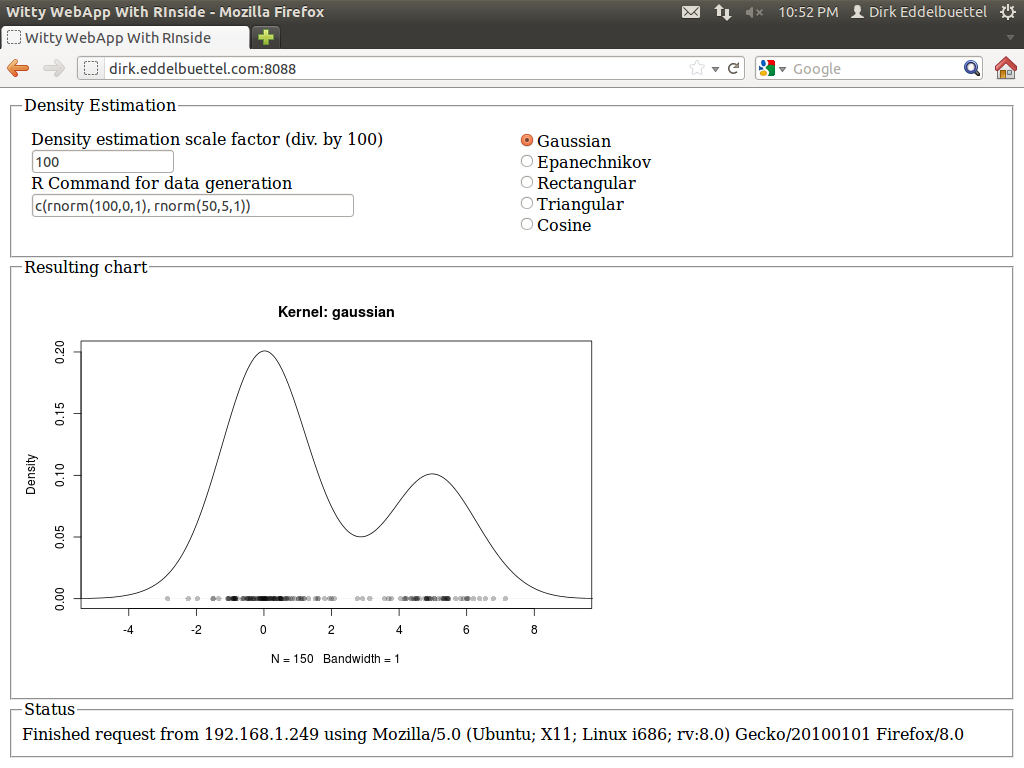
A few months ago, I had blogged about using R inside of Qt. This used our RInside package for embedding the statistical programming environment and language R inside of a C++ application, and further relies on our Rcpp package for R and C++ integration and object mapping. The example was simple yet powerful: a reimplementation of the standard GUI application of a standard density estimate. Here the user can pick a kernel density function from a selection, and also slide a bandwidth parameter. One nice addition was an entry field already populated with a simple expression for a mixture of Normals, allowing for arbitrary random distributions over which to estimate. The example is pretty (thanks to Qt), and was added to RInside with the last CRAN release 0.2.4. The blog post has a nice screenshot. I had long wondered how to do something similar 'on the web'. Web integration and application frameworks are of course a dime a dozen: Just about any language offers this, with more or less ease. But I wanted something simple yet powerful and fast. And I did not like the idea of a multi-tier app, or of a multi-language mix. I remember having seen something about a web-application framework not unlike Qt, and studying the very useful Wikipedia web application framework comparison I re-discovered Wt (pronounced "Witty"). So there it is, using C++ which brings us ample performance, the ability to connect to a number of libraries and applications (which is important in my quantitatively-minded workd) and avoid the whole multi-tier, multi-language combination. The Wt website has a few more good reason why this may be a suitable idea; the toolkit also offers a very decent amount of features and is amply documented with a fair number of examples. And after just a little bit poking around during two weekends, I now have the following webapp committed in the SVN repository of RInside, and it is all implemented in in less than two hundred (generously commented) lines of code. Example of embedding R via RInside into a Wt C++ application: density estimation for a mixture It is currently up and running at the address shown in the screenshot, so give it a go (though I may take it down at another point in time). I quite like it: The application is responsive: changes in the radio buttons (for the density), or the bandwidth, each trigger reestimation of the density, and a new and updated chart is displayed immediately with no noticeable delay---just like the desktop application did. Best of all, the code logic is essentially unchanged from the Qt-based app. Signals and slots related events to actions, the layout is in terms of standard GUI boxen and containers. And best of all, I did not have to write a line of html, javascript, css or ajax: it is all handled by the Wt toolkit. I was able to drive the app from an Android phone, my tablet, various computers around the house, and had a few friends poke a stick at it from afar. There is at one open issue. Wt launches new instances of the application object with each connection, which is a very clean model. That doesn't map perfectly with R (which is single-threaded) and RInside (which runs as a singleton for the same reason). So right now, each action sends its state back to the client. In other words, each clients own its parameters and well as vector of random numbers. Each new action sends these back to the app which passes it to R, launches the re-estimation and gets an updated chart back which is then shown by the the client. That is not perfect, and maybe a forking model as used by Simon's RServe would be better, though it would require a rewrite of RInside. Not sure if we get there anytime soon. And for simple applications not facing legions of concurrent users, the singleton should still work. It's a proof of concept at this point. Feedback welcome, and RInside and Rcpp questions should go to the rcpp-devel list as usual.

26 November 2011

Steve Kemp: Slaughter now tested upon Microsoft Windows hosts.

Recently I said that my perl-based sysadmin tool, Slaughter, was at the cross-roads. I wasn't sure if I should leave it alone, or update it somehow. As I'm generally lazy and busy (yes it is possible to be both simultaneously!) I didn't do anything. But happily earlier in the week I received a bunch of updates from Jean Baptiste which implemented support for managing Windows clients, via Strawberry Perl. So I guess the conclusion is: Do nothing. Change nothing. Just fix any issues which are reported to me, and leave it as-is. (I did a little more than that, refactoring to avoid duplication and improve "neatness".) As I said at the time I've had some interesting feedback, suggestions and bugfixes from people over the past year or so - so I shouldn't be surprised to learn I'm not the only person using it. ObQuote: "Oh, yes, a big cat! My salvation depends upon it! " - Dracula (1992)
14 October 2011

John Goerzen: Greece part 2: History (and sauntering up to guys with machine guns)

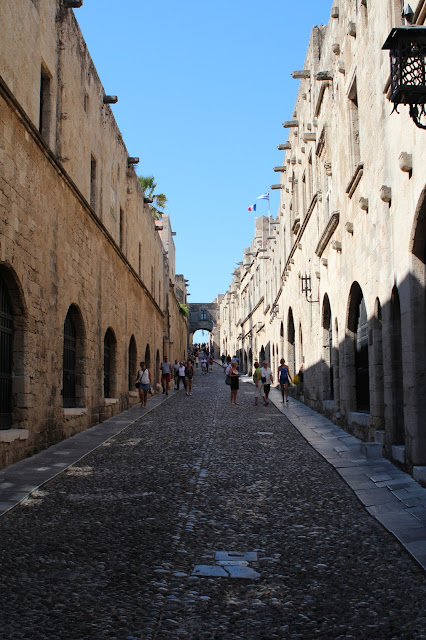
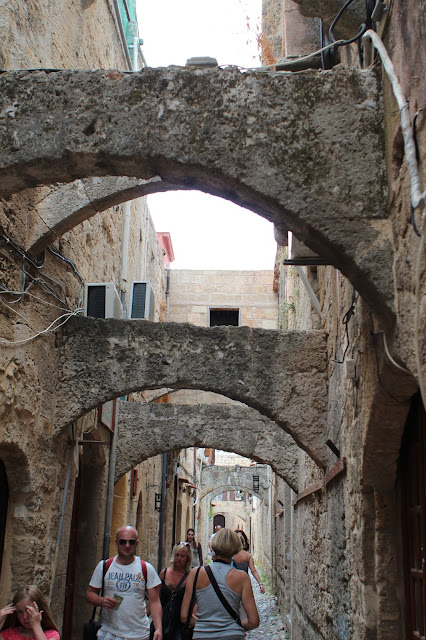
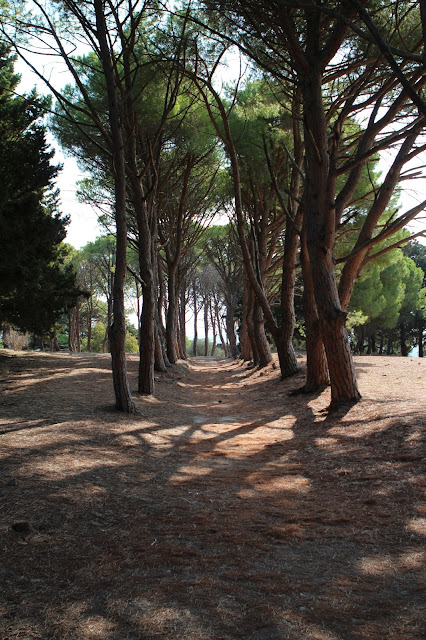
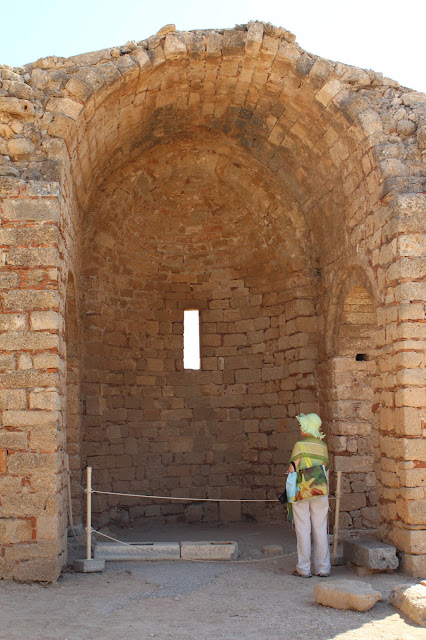
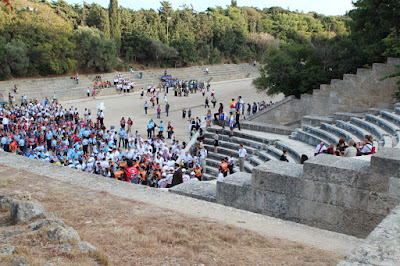
Terah and I went to the Greek island Rhodes recently. This is the second in a series about it. I am one to enjoy history. There is something deeply, well, connecting, about standing in an old place. There is a timeless quality to it a feeling of being connected to so many people of the past, and yet still being connected to change, visible in things such as weathering of stones. To gaze at pottery that s 300 years old, walk past 700-year-old walls, or pass through what remains of the grand portico of an ancient temple to Athena stirs a feeling I can barely explain, of timelessness. Although Rhodes doesn t have the famous Greek sites such as the Parthenon or Delphi, I can t help but wonder why the Rhodes sites aren t better known. They were incredible and it is hard to condense all that we saw into a short blog post. I have to start with the medieval Rhodes Old Town. We got off the bus a few blocks from it one bright morning, and our first task was to find a gate across the moat. Oh yes, A GATE ACROSS THE MOAT. It s a dry moat, and that bridge off in the distance is the gate we were headed to. Outside of the outer wall is a nice quiet walking area. The moat and walls completely surround Old Town and, for the most part, date back about 500 years. The round stones you see on that picture, we were told, were likely surplus from catapults and other projectile weapons. Cross one line of walls and you come to another, with original canons still present. The Knights Hospitaller of St. John, which held Rhodes for a few centuries until the Ottomans captured it, sure knew how to build to impress. The gate we happened to use was Amboise, the Grand Master s Gate. Right there is the stunningly rebuilt landmark Palace of the Grand Master. It is absolutely impossible for any photograph to begin to do this building justice. Between its imported Greek and Roman floors, to the grand nature of everything in it, and the archaeological museum in one corner, it was a fitting start to a visit to Old Town. Here s one of the main staircases. Just near the Palace is quiet courtyard with an old door. Pass through that door and suddenly you re in the midst of the busy Old Town. And among the landmarks in Old Town, the most prominent is Ippoton, the Avenue of the Knights. Along this avenue are the buildings built by the various nationalities of knights, many of which are historical sites in their own. Taken together, it is quite clear why Rhodes is said to be one of the world s best-preserved medieval cities. Down at the other end of Ippoton is the Knights Hospital, which is now part of the archaeological museum. Step off the Avenue a few blocks and you get to some quieter narrow streets just as old, in many cases. On Sunday morning, we were able to visit Mount Filerimos. In contrast to the busy Rhodes, Filerimos had an air of quiet and still to it. It was the site of a monastery, two historic churches, and a landmark Italian cross on the mountaintop. We arrived, and begin our visit with a walk up the quiet stone path. When we got to the top, we walked past this peaceful church. As we walked past the outside, we heard the beautiful music of chant from indoors. We got to step in and listen to mass for a few minutes. In typical fashion, directly in front of the church are two much older sites: one, the ruins of a temple to Athena, and the other a 4th-century Christian bapistery. Rhodes is a popular tourist destination, and of course we saw plenty of popular sites (such as the grandmaster s palace). Filerimos had a few tourists too, but not as many. I frequently like to operate on the plan of going wherever all the tourists aren t. And so, on Filerimos, that meant seeing what was behind the monastery. It started with this peaceful tree-lined path. And the deserted, but intentionally open, gate led to the remains of a Byzantine fortress, which had been a staging area for both the Knights and the Ottomans before their campaigns to capture Rhodes. It also provided incredible views of the surrounding countryside. The first historic site we had visited on our trip was the Acropolis of Lindos, parts of which are 2300 years old. Here s a view of the mountain from the rooftop of the Kalypso, our favorite restaurant in Lindos. The columns of the temple to Athena Lindia are visible, and of course so are the walls. The road up to the acropolis is accessible only on foot or by donkey. It is apparently the only road that has ever been used to get to the acropolis. Here is the partially-restored grand portico to the temple. There s an old Christian church (4th century, if memory serves) at the Acropolis too. The Acropolis makes some pretty good use of natural defenses too. Here s a view from one level of it. There s a manmade wall up there at the very top. And, of course, the beautiful Aegean always in the background. There are lots of cats on Rhodes. Here is a kitten napping at the top of the Lindos Acropolis: Lindos itself is a beautiful town. Here s one of the quieter streets: Notice the pebble steps leading into the houses those intricate pieces of artwork are all over. This post won t be complete without the story of our visit to the Acropolis of Rhodes. We walked there from Old Town. At the Acropolis, there are the remains of a temple to Apollo, an ancient theater, and an ancient stadium where qualifying matches for the Olympics were held. As we got closer to the area, we were repeatedly passed by people dressed in uniforms of various types. And as we got there, we joined a stream of people entering the area. The ancient stadium had apparently thousands of people in it, country names were being read off over the loudspeakers, policemen wielding machine guns were standing by, and we had absolutely no idea what was going on. At this point, you can appreciate the difference between Terah and me. Terah thought that we have no idea what is happening, she was tired from the walk, and so thought we should just leave. I thought that we have no idea what is happening, which is a great reason to stay. So Terah opted to sit and read a bit under some trees while I explored. Here s a view of the stadium as it was emptying out, seen from the theater: I explored the temple and theater, and eventually we were ready to head back. We knew there was a bus back to the New Market (from where we could get a bus back to our hotel), but didn t know where the bus stop was. The obvious place to ask were the policemen, which I thought I would do. Terah thought she would just stay sitting under the trees, on the grounds that the policemen nearest us were all carrying machine guns and perhaps wouldn t like to be disturbed. This led to my cryptic tweet:
Only ONE of us is the kind of person that goes up to guys with machine guns to ask what s happening. Me to Terah today
They told me that it was the preparations for the opening ceremony for a global shooting contest, and also gave me directions to the bus stop.

4 September 2011

Raphaël Hertzog: My Debian activities in August 2011

This is my monthly summary of my Debian related activities. If you re among the people who made a donation to support my work (91.44 , thanks everybody!), then you can learn how I spent your money. Otherwise it s just an interesting status update on my various projects. Dpkg work When I came back from Debconf, I merged my implementation of dpkg-source --commit (already presented last month). I continued some work on the hardening build flags but it s currently stalled waiting on Kees Cook to provide the required documentation to integrate in dpkg-buildflags(1). Following a discussion held during DebConf, Michael Prokop has been kind enough to setup a git-triggered auto-builder of dpkg (using Jenkins). You can now help us by testing the latest git version. Follow those instructions:

$ wget -O - http://jenkins.grml.org/debian/C525F56752D4A654.asc   sudo apt-key add -
$ sudo sponge /etc/apt/sources.list.d/dpkg-git <<END
deb http://jenkins.grml.org/debian dpkg main
END
$ sudo apt-get update && sudo apt-get upgrade
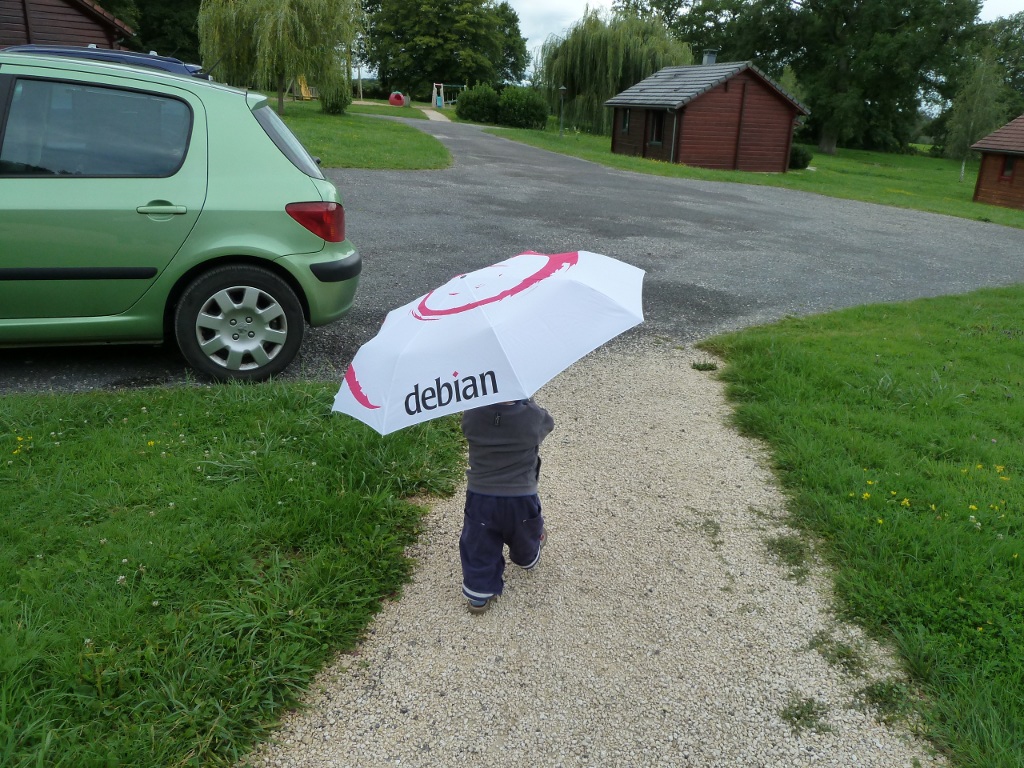
On the bug fixing side I took care of #640198 (minor man page update), #638291 (a fix to correctly handle hardlinks of conffiles), #637564 (the simplification logic of union dependencies was broken in some cases) and #631494 (interrupting dpkg-source while building a native source package left some temporary files around that should have been cleaned). WordPress update I released WordPress 3.2.1 in unstable (after having taken the time to test the updated package on my blog!) and fixed its RC bug (#625773). In the process I discovered a false positive in lintian (I reported it in 637473). Gnome-shell-timer package From time to time, I like to use the Pomodoro Technique. That s why I was an user of timer-applet in GNOME 2. Now with the switch to GNOME 3, I lost this feature. But I recently discovered gnome-shell-timer, a GNOME Shell extension that provides the same features. I created a Debian package of it and quickly filed some bugs while I was testing it (two usability issues and an encoding problem) QA Work During DebConf I met Giovanni Mascellani and he was interested to help the QA team. He started working on the backlog of bugs concerning the Package Tracking System (PTS) and submitted a bunch of patches. I reviewed them and merged them but since they were good, I quickly got lazy and got him added to the QA team so that he can commit his fixes alone. It also helps to build trust when you have had the opportunity to discuss face to face. :-) Vacation That s not so much compared to usual but to my defense I also took 2 weeks of vacation with my family. But somehow even in vacation I can t really forget Debian. Here s my son:
Thanks See you next month for a new summary of my activities.

3 comments Liked this article? Click here. My blog is Flattr-enabled.

28 August 2011

Christian Perrier: 10 years being Debian Developer - part 3: the news and genealogy years

I stopped my story in early 1994, after my Big Switch to the mysterious and new world of Linux. My home server, kheops, is now running Debian and is fed with news and mail by FrMug, formerly French Minix Users Group and now run by AFAU, the "Association Fran aise des Amateurs de Usenet". As I'm still console-challenged, I'm reading mail and news on another machine I have at home, named "khephren", which is running an, ahem, beta copy of Microsoft Windows 95. Yeah, I know...:-) These 1994-1999 years were mostly the Usenet years, for me. I gradually became more and more involved in several fr.* newsgroups, either related to the Linux world...or to the Windows world. The latter was professionnally a bonus for me as 1994 is also the year where I switched from the Material Science department at Onera to the Network and Computing Department. My mission there was to accompany the increasing prevalence of personal desktop workstations in the daily life of what was formerly the Big Castle of Computing at Onera, hosting various generations of Cray computers, most of which being in the Top500 world supercomputers (we even had one in the Top10, very briefly, at somepoint). So, I was "the PC and Windows guy" in this world of supercomputing, Unix and network wizards. But my hobby at home helped me keeping and growing skills in both "worlds" which, over the years, has proven to be a not so common profile..:-) Meanwhile, at home, I was spending hours and nights reading those newsgroups...or getting involved in fr.* hierarchy management..or expanding my friends network to many people in the news, Linux, BSD worlds. That lasted for about 3 years with ups and downs (with three young kids at home, you end up having slightly less time...). I was gradually improving my home server use, adding more functionalities to it, for instance setting it up as a file and print server with Samba 1.9.something (this will be the beginning of a long story with samba!). Unfortunately, my dear Ren had passed in the meantime. Ren did so much for Linux in France that he'll be the only link I give in this article. If you happen to go through P re Lachaise cemetery in Paris, go to its Memory garden instead of visiting Jim Morrison's grave and drink a whisky bottle in memory of Ren . Or just install one of the most funnily named Debian packages: le-dico-de-rene-cougnenc and, again, drink something to his memory (whisky is highly preferred). We then reached 1997 and a specific event: my father (who was very sick for years) passed during summer, some time after my grand-father passed too. As it apparently happens for many people, it triggerred me into the interest for family history. After all, those people who are going away are family memories. And, in some way, I wanted to keep track of this memory. As a consequence, I started collecting family memories, interviewing my close relatives (the oldest ones) and ending, of course, in tracking all this with my computers. That was the start of a long genealogy research that sent me on the track of the Perrier family (of course), but also all other branches, on my mother and father side, as well as reconstructing the tree of cousins we have, etc, etc. As anybody who did that knows, this is quite an endless task but I went very committed to it. I quickly ended up in joining research groups that were using the recent growth of personal access to Internet communication. Those groups were, in these 90's, building elaborated systems where people can help together in their research instead of having to travel to places where archives are stored. I participated to many such groups and even ended up animating one who was doing research in archives of the "Yvelines" "d partement", my place of living (even though I have no family branch there). At the same time, other groups were sending me research results for my own family in the French region where my roots are. Collective effort, help others for free, you can recognize things that are a constant all over these years, indeed. It actually helped me in tracking my Perrier ancestors up to about 1680, with 11 generations of men holding that name (from Jean-Baptiste, my son, up to tienne Perrier, who is born about 1640-1650, in the small village named Briant in Sa ne et Loire, in France). Or even climbing up to Laurent Polette, born circa 1510, mentioned in a document date February 1562. He his my oldest known ancestor.Those folks being 15 generations before me. My oldest ancestor is born under Fran ois the First, King of France, protector of Leonardo Da Vinci, at the time La Joconde was painted or the Chambord castle was built. Doh. Unfortunately, genealogy software, at that time, was quite poor for Unix systems. Lifelines was a quite strong development but wasn't that user-friendly and I ended up using a Windows-based "shareware" software written by an individual. Still, my Linux machine was used quite intensively: databases were stored there, and saved there, all important informations were there, my mail was received there, along with dozens of mailing lists I was reading. I even hosted a few mailing lists on my home server. Still, in the meantime also, again in 1997, in October, another event happened. We had a pollution peak in Paris area and October 1st was the first (and as of now the only ever) day where driving restrictions were applied. Up to that moment, I was driving to/from work (30 kilometers one way). I decided to use this opportunity to really test public transport, for one full month. As I knew it would take me much more time than driving, I tried to imagine a way to use that time. How about reading mail and news on a laptop instead of only at home? Done... In a few days, I found a used Compaq Aero laptop (486 16MHz), I installed Debian "bo" on it, switched my mail and news workflow to console programs (mutt and slrn) and here we go! So, finally, in October 1997, I was using Linux nearly all time long, the only exception being genealogy data handling. That laptop was named "mykerinos" (the small pyramid) and....my laptop is still named mykerinos, though it's now the 5th mykerinos I have..:-) Ah, and since then, I nearly always use public transport to go to/from work. Debian addiction is good for the planet! At some point (I don't remember exactly when...about 1999, I think), DSL connections appeared and one of the first DSL FAI emerged on France: Free. I was already using their services for dialup access, but DSL was then a revolution: persistent connection! And nearly immediately, static IP! I became one of their first DSL customers (and I'm still one). Moreover, I had then friends working there...and they had many Debian machines to host their services. So, with the help of my Freenix friends, some DNS hosting on their machines and the still tireless eu.org entirely free domain, perrier.eu.org was born. Immediately, this gave me opportunities for doing many interesting things with my home server: setting up www.perrier.eu.org and use it....for learning web things and sharing genealogical data. For instance, I ended up hosting some data sent by other genealogists such as digital copies of archives for some French regions, all served through my 512/128kbps DSL line (quickly upgraded to 2Mb, IIRC). And, very quickly, I felt the need to share my family tree, of course! And here comes Geneweb. Written (in Ocaml) by Daniel de Rauglaudre, Geneweb was (and still is) by far one of the best tools to share genealogy data over the Net. So, I ended up installing it on my home machine. Guess how I did that? "apt-get install geneweb", of course. Yes, it was packaged. Indeed by Brent Fulgham who did the initial release on July 22nd 2000. Here, my memory is a little bit vague. I think I actually packaged Geneweb for my own use and sharing it on upstream FTP site, forking Brent's package as a start, but updating to latest upstream release. Then I quickly ended up having discussions with Brent about this new upstream release, and that lead to:
geneweb (3.10-3) unstable; urgency=low
  * Merging with unofficial package from Geneweb ftp site
    (in preparation of new maintainer [Christian Perrier] takeing
    over responsibility).  Note that all of this work is from
    Christian.
  * Default database dir is now writable by members of geneweb group
  * New geneweb group added at installation
  * Package tries to properly handle former installations of the
    unofficial Geneweb package available on Geneweb ftp site
  * Debconf dialogs translated in french
  * More languages available
  * Creation of /var/geneweb/etc, /var/geneweb/cnt, /var/geneweb/images
    with proper permission so that authorised users may use these also
  * When de-installed, all databases are exported with gwu (should allow
    smooth upgrades when the databse format changes)
 -- Brent A. Fulgham <bfulgham>  Mon, 22 Jan 2001 19:30:47 -0800
See? Already "debconf translation to French"! "More languages available". Here we are. As discussed with Brent, he propsoed me to take the package over. So, on January 11th 2001, I had applied in the New Maintainer Process. I'm amazed how quickly it went indeed: there was a tool I needed, it needed to be packaged, I could handle the packaging...and then I decided to be involved. Here we are: bubulle is on his way to become one of those magicians who are building the best universal operating system. Yes, me, the clueless material scientist..:-) How did it go? You'll know this in next episode, of course...

21 August 2011

Chris Lamb: Timezone bingo in debian/changelog files

Tim pointed out that it's worth travelling simply for the new timezone in your debian/changelog entries. We can use AptFs to work out who has collected the most so far:
import os
import glob
import itertools
import collections
from dateutil.parser import parse
from debian.changelog import Changelog
data = collections.defaultdict(set)
for package in glob.glob('/apt/*'):
    if os.path.islink(package):
        continue # Consider source packages only
    try:
        changelog = Changelog(open('%s/debian/changelog' % package))
    except:
        continue # Ignore invalid changelogs
    for entry in changelog:
        try:
            data[entry.author].add(parse(entry.date).strftime('%z'))
        except ValueError:
            pass # Ignore invalid dates
fn = lambda x: len(x[1])
top = sorted(data.items(), key=fn, reverse=True)
for k, g in itertools.groupby(top, key=fn):
    print "\n%d timezone(s):" % k
    for author, timezones in sorted(g):
        print " * %s (%s)" % (
            author.encode('utf8', 'ignore'),
            ', '.join(sorted(timezones, reverse=True)),
        )
14 timezone(s):
 * Bdale Garbee <bdale@gag.com> (-0800, -0700, -0600, -0500, -0400, -0300,
   +1300, +1100, +1030, +0900, +0300, +0200, +0100, +0000)
12 timezone(s):
 * Joey Hess <joeyh@debian.org> (-1000, -0900, -0800, -0700, -0500, -0400,
   -0300, -0200, +0300, +0200, +0100, +0000)
11 timezone(s):
 * Paul Wise <pabs@debian.org> (-0400, -0300, +1300, +1100, +1000, +0930,
   +0900, +0800, +0200, +0100, +0000)
9 timezone(s):
 * Barak A. Pearlmutter <bap@debian.org> (-0700, -0600, -0500, -0400, +0500,
   +0300, +0200, +0100, +0000)
 * Martin Michlmayr <tbm@cyrius.com> (-1000, -0700, -0300, +1100, +1000,
   +0300, +0200, +0100, +0000)
 * Martin Pitt <mpitt@debian.org> (-0800, -0700, -0600, -0500, -0400, +0300,
   +0200, +0100, +0000)
 * Sam Hocevar (Debian packages) <sam+deb@zoy.org> (-0700, -0500, -0400, -0300,
   +0930, +0300, +0200, +0100, +0000)
Full output. However, something tells me we aren't going to see widespread gamification of Debian development.

Christian Perrier: 10 years being Debian Developer - part 1: before 1992

So, on July 31st 2011, it was exactly 10 years since I am a Debian developer. What happened in the meantime? What lead me to this? What turned this unskilled dude into a sometimes quite visible contributor of one of the major free software projects? If you're interested in that, please read on. Otherwise, well, this is just yet another "bubulle talks about self" post and you can skip it. Well, first of all, how did I end up being a DD? And first of firsts, how did I end up not being a random user of Windows, playing games on his desktop computer at work? I am not a computer scientist, an "informaticien" as we sometimes say in French (most often, what people who are not in computing stuff say...thinking that all folks working more or less closely to computers know everything about them). I graduated with a PhD in Materials science, in 1989 after conducting a research on "Influence of Yttrium Oxide dispersion on the strength of titanium alloys", at Onera, a French public research institution for aerospace and defence. I was then hired, still at Onera (where I'm still working, 25 years after starting my PhD work) to lead the Mechanical Testing Laboratory in the Materials Science department. So, my lab had many big machines designed to conduct creep and fatigue tests often at interestingly high temperatures such as 2000 C, on samples of various materials that are used in aircrafts structures, engines, etc. or in various space thingies (remember Herm s, the european shuttle?) or in various "things that fly but just one way and you shouldn't be there when they land". So, we had computers handling data acquisition for these tests. So I became involved with designing data acquisition setups, or even programming data acquisition programs (one of mine, written in Forth, ran all Onera creep tests until 2004 and successfully passed Y2K because I knew that 2000 was a leap year. It could even pass 2100 as I knew this is not a leap year..:-) One day, I had to buy a modem in order to communicate with out italian counterpart (CIRA) and exchange tests results. Then I had to learn how modems work in MS-Dos(yeah...). Then, I discovered "online" resources...indeed more that strange world that was then called "BBS" (Bulletin Board Systems), those mysterious things ran by some happy few who were using modems at their home place to communicate in "forums" and everything related to technology. PC-Board, Remote Access, Fidonet, etc. became familiar to me these days, back in 1988-1990. So familiar that I ended up running my own BBS at home, killing our phone bills and using very sophisticated techniques such as US Robotics "High Speed Transfer" modems that could be used at 19200bps asymetrical for very high speed transfers of kilobytes and kilobytes of useless MS-Dos "freeware" and "shareware". Indeed, my very first BBS didn't even have one of these: it was using a cheaper V.22bis modem operating at 2400bps. I was waiting for my order of a sophisticated HST modem to arrive from USA through obscure import channels meant to circumvent the French telephone company regulations that were forbidding the use of "unapproved" systems, in order to protect the famous French Telephone System from interferences brought by Bad American Material. Bubulle System was born. During those years, I discovered very interesting things: computers can run together once you draw a wire between them. That's called Local Area Network and you can even transfer data at 1Mbps between two computers, assuming you don't forget to put terminating resistors at the end of the line on these funny 10-baseT connectors at the back of your home-assembled PC that was using 2MB of RAM (bought for very cheap through the help of an American friend who was in touch with some Chinese folks who were selling 256kb RAM sticks for half the retail price....assuming you want to drive in a mysterious storing place close to Charles de Gaulle airport or Eurodisney). Hello Gordon. Yes, I know, we're still friends on Facebook and you're probably still using that weird programming language which you were, IIRC, the only person in the world to use. 2MB, that should be enough for barely anything, including running *multitasking* software where, miracle, I could run two tasks at the same time on my one and only PC at home. Miracle, I don't have to shutdown my BBS if I want to read forums on my friends BBS. Yay for Desqview/386! Multitasking for dummies Still, I have to build one of these "networks" at home. Elizabeth won't like that as it means one more box (home-made of course) in our living room and some more wires. And why the hell is it running 24/7? So that friends can visit the BBS, darling... And I can even communicate with them: I write a message, I get an answer the day after and so on. In one full week, we can have a great conversation that would have taken *minutes* to have in the real life. Isn't this the miracle of technlogy? And, yes, this is a good reason for having phone bills raising up to 500 Francs/month: people can "exchange" programs through my BBS, that horrible white box running in the living room. Often, these programs are written for free and some of them are even given with "source code", which allows people to *modify* them. And that even makes friends, you know? Imagine that some day we have to move from one house to another: then I can just call out "who wants to help bubulle moving?", and probably a dozen of (sometimes scary but always nice and polite...and sometimes even showered) geeks will pop up and happily carry boxes full of my vinyl LP collection all day long. An entire world of friends. "bubulle", you say, dear? What's that? That's my nickname. It was invented by one of these friends, a really strange guy named Ren Cougnenc who wrote this "free software" program anmed BBTH, which allows you to use modems to connect to BBS, and even to those many "Minitel" BBS we have in France, thanks to our wonderful world-leading technology using V.23 communication. Many people know me as "bubulle" because, you know, Perrier water has bubbles and Ren likes Gaston Lagaffe fish companion who he named "bubulle". Ren , I love you. You chose to leave this world back in 1998. We'll no longer have our "p'tits midis" in Antony where you were showing me the marvels of what's coming in next episode. All this was around 1988 and about 1992, doing all these mysterious things at home (between Jean-Baptiste and Sophie's diapers) while still working with data acquisition MS-Dos machines at work. How did this end up being a Debian Developer? You'll know in the next episode..:-)

7 August 2011

Christian Perrier: Jiwayeu Anivaichai' Bob

Today is our "historical" Spongebob (the one you can see here) birthday. Bob is indeed "born" on August 7th 2002, in Las Vegas, when my (at that time) kids won it in the Kids Casino in Circus Circus casino. Since then, Bob is one of the family mascots along with the world famous Titeps (these are born much earlier). The Perrier family has tons of stories about Bob and we developed a major "Sponge disease", becoming more and more crazy about this incredible character. So, happy 9th birthday, Bobob....and have a good meal tomorrow (the day after his birthday is the only day in one year where he eats something....the rest of the year, Bob only drinks whatever liquid comes close to him). I know that Jean-Baptiste won't forget to feed you.

21 July 2011

Joachim Breitner: Copying HTML from gnome-terminal

One of the first things that I worked on here at DebConf11 is supporting the HTML target in gnome-terminal. This means that if you copy a part of the screen and paste it into some application that handles HTML (such as evolution or my blog s edit field), attributes such as color and boldness are preserved. Here are some examples: A man page

MAN(1)                           Manual pager utils                           MAN(1)
NAME
       man - an interface to the on-line reference manuals
SYNOPSIS
       man [-C file] [-d] [-D] [--warnings[=warnings]] [-R encoding] [-L locale] [-m
       system[,...]] [-M path] [-S list] [-e extension] [-i -I] [--regex --wildcard]
       [--names-only]  [-a]  [-u]  [--no-subpages]  [-P  pager] [-r prompt] [-7] [-E
       encoding]   [--no-hyphenation]   [--no-justification]   [-p   string]    [-t]
       [-T[device]] [-H[browser]] [-X[dpi]] [-Z] [[section] page ...] ...
       man -k [apropos options] regexp ...
       man -K [-w -W] [-S list] [-i -I] [--regex] [section] term ...
       man -f [whatis options] page ...
       man  -l [-C file] [-d] [-D] [--warnings[=warnings]] [-R encoding] [-L locale]
       [-P pager] [-r prompt] [-7]  [-E  encoding]  [-p  string]  [-t]  [-T[device]]
       [-H[browser]] [-X[dpi]] [-Z] file ...
       man -w -W [-C file] [-d] [-D] page ...
       man -c [-C file] [-d] [-D] page ...
       man [-hV]
DESCRIPTION
       man is the system's manual pager. Each page argument given to man is normally
       the name of a program, utility or function.  The manual page associated  with
       each  of these arguments is then found and displayed. A section, if provided,
 Manual page man(1) line 1 (press h for help or q to quit)
A coloured diff from git
commit 55c514ae6a714abcfa818c33f00a2c051412c3d9
Author: Joachim Breitner <mail@joachim-breitner.de>
Date:   Thu Jul 21 12:08:56 2011 +0200
    Refactor vte_terminal_determine_colors_internal
    
    to work on VteCellAttr instead of VteCell, and use it in
    vte_terminal_cellattr_to_html.
diff --git a/src/vte.c b/src/vte.c
index 8bcc95d..7d4a6f1 100644
--- a/src/vte.c
+++ b/src/vte.c
@@ -6532,19 +6532,18 @@ swap (guint *a, guint *b)
 
 static void
 vte_terminal_determine_colors_internal(VteTerminal *terminal,
-                                      const VteCell *cell,
+                                      const VteCellAttr *attr,
                                       gboolean selected,
                                       gboolean cursor,
                                       guint *pfore, guint *pback)
  
        guint fore, back;
Midnight commander
  Links     Datei     Befehl     Optionen     Rechts
 <  ~/build/gnome-terminal/vte  .[^]> <  ~/build/gnome-terminal/vte  .[^]> 
 'n        Name            Gr e  Modifikations 'n         Name            Gr e  Modifikations 
 /..                      BERVZ. 20. Jul 18:23 /..                       BERVZ. 20. Jul 18:23 
 /.git                       4096 22. Jul 12:42 /.git                        4096 22. Jul 12:42 
 /autom4te.cache             4096 22. Jul 11:20 /autom4te.cache              4096 22. Jul 11:20 
 /doc                        4096 22. Jul 11:20 /doc                         4096 22. Jul 11:20 
 /glade                      4096 22. Jul 11:20 /glade                       4096 22. Jul 11:20 
 /gnome-pty-helper           4096 22. Jul 09:47 /gnome-pty-helper            4096 22. Jul 09:47 
 /perf                       4096 22. Jul 11:20 /perf                        4096 22. Jul 11:20 
 /po                         4096 22. Jul 11:20 /po                          4096 22. Jul 11:20 
 /src                       12288 22. Jul 12:41 /src                        12288 22. Jul 12:41 
 /termcaps                   4096 22. Jul 11:20 /termcaps                    4096 22. Jul 11:20 
  .gitignore                  935 22. Jul 11:20  .gitignore                   935 22. Jul 11:20 
  AUTHORS                      41 20. Jul 18:25  AUTHORS                       41 20. Jul 18:25 
  COPYING                   35068 22. Jul 11:11  COPYING                    35068 22. Jul 11:11 
  ChangeLog.pre-git        433051 20. Jul 18:25  ChangeLog.pre-git         433051 20. Jul 18:25 
  HACKING                     905 20. Jul 18:25  HACKING                      905 20. Jul 18:25 
  MAINTAINERS                 118 20. Jul 18:25  MAINTAINERS                  118 20. Jul 18:25 
  Makefile                  30512 22. Jul 11:20  Makefile                   30512 22. Jul 11:20 
  Makefile.am                1247 22. Jul 11:11  Makefile.am                 1247 22. Jul 11:11 
  Makefile.in               28812 22. Jul 11:20  Makefile.in                28812 22. Jul 11:20 
  NEWS                      43910 20. Jul 18:25  NEWS                       43910 20. Jul 18:25 
  README                      496 20. Jul 18:25  README                       496 20. Jul 18:25 
  aclocal.m4               377874 22. Jul 11:20  aclocal.m4                377874 22. Jul 11:20 
 *autogen.sh                  610 20. Jul 18:25 *autogen.sh                   610 20. Jul 18:25 
 
 BERVZ.                                        BERVZ.                                         
  10G/104G (9%)   10G/104G (9%)  
Hint: To look at the output of a command in the viewer, use M-!
~/build/gnome-terminal/vte $
 1Hilfe   2Men     3Ansicht  4Bear~ten 5Kopieren 6Ver~ben 7Mkdir    8L schen  9Men s   10Beenden
These changes are discussed in GNOME Bugzilla bug #365121 and can be downloaded in my git repository. Unfortunately, I later found out that I was not basing my work on the current development version, which has changed considerably, so we will see how and when my changes will actually make it into GNOME. Also note that my blog s HTML editor actually modifies the HTML code, so looking at the source of this page does not give you the code that I generate. Update: I ported my changes onto the vte-next branch, so they could be merged now. Please follow the bug report if you want to know more.

Flattr this post

20 June 2011

Rapha&#235;l Hertzog: apt-get, aptitude, pick the right Debian package manager for you

This is a frequently asked question: What package manager shall I use? . And my answer is the one that suits your needs . In my case, I even use different package managers depending on what I m trying to do. APT vs dpkg, which one is the package manager? In the Debian world, we re usually thinking of APT-based software when we re referring to a package manager . But in truth, the real package manager is dpkg. It s the low-level tool that takes a .deb file and extracts its content on the disk, or that takes the name of a package to remove the associated files, etc. APT is better known because it s the part of the packaging infrastructure that matters to the user. APT makes collection of software available to the user and does the dirty work of downloading all the required packages and installing them by calling dpkg in the correct order to respect the dependencies. But APT is not a simple program, it s a library and several different APT frontends have been developed on top of that library. The most widely known is apt-get since it s the oldest one, and it s provided by APT itself. Graphical APT front-ends update-manager is a simple frontend useful to install security updates and other trivial daily upgrades (if you re using testing or sid). It s the one that you get when you click in the desktop notification that tells you that updates are available. In cases, where the upgrade is too complicated for update-manager, it will suggest to run synaptic which is full featured package manager. You can browse the list on installed/available packages in numerous ways, you can mark packages for installation/upgrade/removal/purge and then run in one go all the recorded actions. software-center aims to be an easy to use application installer, it will hide most of the packaging details and will only present installed/available applications (as defined by a .desktop file). It s very user friendly and has been developed by Ubuntu. Of the graphical front-ends, I use mainly synaptic and only when I m reviewing what I have installed to trim the system down. Console-based GUI APT front-ends In this category, I ll cite only aptitude. Run without parameter, it will start a powerful console-based GUI. Much like synaptic, you can have multiple views of the installed/available packages and mark packages for installation/upgrade/removal/purge before executing everything at once. Command-line based package managers and APT front-ends This is where the well known apt-get fits, but there are several other alternatives: aptitude, cupt, wajig. Wajig and cupt are special cases as they don t use libapt: the former wraps several tools including apt-get, and the latter is a (partial) APT reimplementation (versions 1.x were in Perl, 2.x are now is C++). You re welcome to try them out and find out which one you prefer, but I have never felt the need to use something else than apt-get and aptitude. apt-get or aptitude? First I want to make it clear that you can use both and mix them without problems. It used to be annoying when apt-get did not track which packages were automatically installed while aptitude did, but now that both packages share this list, there s no reason to avoid switching back and forth. I would recommend apt-get for the big upgrades (i.e. dist-upgrade from one stable to the next) because it will always find quickly a relatively good solution while aptitude can find several convoluted solutions (or none) and it s difficult to decide which one should be used. On the opposite for regular upgrades in unstable (or testing), I would recommend aptitude safe-upgrade . It does a better job than apt-get at keeping on hold packages which are temporarily broken due to some not yet finished changes while still installing new packages when required. With aptitude it s also possible to tweak dynamically the suggested operations while apt-get doesn t allow this. And aptitude s command line is probably more consistent: with apt-get you have to switch between apt-get and apt-cache depending on the operation that you want to do, aptitude on the other hand does everything by itself. Take some time to read their respective documentation and to try them.
Click here to subscribe to my free newsletter and get my monthly analysis on what s going on in Debian and Ubuntu. Or just follow along via the RSS feed, Identi.ca, Twitter or Facebook.

11 comments Liked this article? Click here. My blog is Flattr-enabled.

15 June 2011

Christian Perrier: So, what happened with Kikithon?

I mentioned this briefly yesterday, but now I'll try to summarize the story of a great surprise and a big moment for me. All this started when my wife Elizabeth and my son Jean-Baptiste wanted to do something special for my 50th birthday. So, it indeed all started months ago, probably early March or something (I don't yet have all the details). Jean-Baptiste described this well on the web site, so I won't go again into details, but basically, this was about getting birthday wishes from my "free software family" in, as you might guess, as many languages as possible. Elizabeth brought the original idea and JB helped her by setting up the website and collecting e-mail addresses of people I usually work with: he grabbed addresses from PO files on Debian website, plus some in his own set of GPG signatures and here we go. And then he started poking dozens of you folks in order to get your wishes for this birthday. Gradually, contributions accumulated on the website, with many challenges for them: be sure to get as many people as possible, poking and re-poking all those FLOSS people who keep forgetting things... It seems that poking people is something that's probably in the Perrier's genes! And they were doing all this without me noticing. As usually in Debian, releasing on time is a no-no. So, it quickly turned out that having everything ready by April 2nd wouldn't be possible. So, their new goal was offering this to me on Pentecost Sunday, which was yesterday. And...here comes the gift. Aha, this looks like a photo album. Could it be a "50 years of Christian" album? But, EH, why is that pic of me, with the red Debconf5 tee-shirt (that features a world map) and a "bubulle" sign, in front of the book? But, EH EH EH, what the .... are doing these word by H0lger, then Fil, then Joey doing on the following pages? And only then, OMG, I discover the real gift they prepared. 106, often bilingual, wishes from 110 people (some were couples!). 18 postcards (one made of wood). 45 languages. One postcard with wishes from nearly every distro representatives at LinuxTag 2011. Dozens of photos from my friends all around the world. All this in a wonderful album. I can't tell what I said. Anyway, JB was shooting a video, so...we'll see. OK, I didn't cry...but it wasn't that far and emotion was really really intense. Guys, ladies, gentlemen, friends....it took me a while to realize what you contributed to. It took me the entire afternoon to realize the investment put by Elizabeth and JB (and JB's sisters support) into this. Yes, as many of you wrote, I have an awesome family and they really know how to share their love. I also have an awesome virtual family all around the world. Your words are wholeheartedly appreciated and some were indeed much much much appreciated. Of course, I'll have the book in Banja Luka so that you can see the result. I know (because JB and Elizabeth told me) that many of you were really awaiting to see how it would be received (yes, that includes you, in Germany, who I visited in early May!!!). Again, thank you so much for this incredible gift. Thank you Holger Levsen, Phil Hands, Joey Hess, Lior Kaplan, Martin Michlmayr, Alberto Gonzalez Iniesta, Kenshi "best friend" Muto, Praveen Arimbrathodiyil, Felipe Augusto van de Wiel, Ana Carolina Comandulli (5 postcards!), Stefano Zacchiroli (1st contribution received by JB, of course), Gunnar Wolf, Enriiiiiico Zini, Clytie Siddall, Frans Pop (by way of Clytie), Tenzin Dendup, Otavio Salvador, Neil McGovern, Konstantinos Margaritis, Luk Claes, Jonas Smedegaard, Pema Geyleg, Meike "sp tzle queen" Reichle, Alexander Reichle-Schmehl, Torsten Werner, "nette BSD" folks, CentOS Ralph and Brian, Fedora people, SUSE's Jan, Ubuntu's Lucia Tamara, Skolelinux' Paul, Rapha l Hertzog, Lars Wirzenius, Andrew McMillan (revenge in September!), Yasa Giridhar Appaji Nag (now I know my name in Telugu), Amaya Rodrigo, St phane Glondu, Martin Krafft, Jon "maddog" Hall (and God save the queen), Eddy Petri or, Daniel Nylander, Aiet Kolkhi, Andreas "die Katze geht in die K che, wunderbar" Tille, Paul "lets bend the elbow" Wise, Jordi "half-marathon in Banja Luka" Mallach, Steve "as ever-young as I am" Langasek, Obey Arthur Liu, YAMANE Hideki, Jaldhar H. Vyas, Vikram Vincent, Margarita "Bronx cross-country queen" Manterola, Patty Langasek, Aigars Mahinovs (finding a pic *with* you on it is tricky!), Thepittak Karoonboonyanan, Javier "nobody expects the Spanish inquisition" Fern ndez-Sanguino, Varun Hiremath, Moray Allan, David Moreno Garza, Ralf "marathon-man" Treinen, Arief S Fitrianto, Penny Leach, Adam D. Barrat, Wolfgang Martin Borgert, Christine "the mentee overtakes the mentor" Spang, Arjuna Rao Chevala, Gerfried "my best contradictor" Fuchs, Stefano Canepa, Samuel Thibault, Eloy "first samba maintainer" Par s, Josip Rodin, Daniel Kahn Gillmor, Steve McIntyre, Guntupalli Karunakar, Jano Gulja , Karolina Kali , Ben Hutchings, Matej Kova i , Khoem Sokhem, Lisandro "I have the longest name in this list" Dami n Nicanor P rez-Meyer, Amanpreet Singh Alam, H ctor Or n, Hans Nordhaugn, Ivan Mas r, Dr. Tirumurti Vasudevan, John "yes, Kansas is as flat as you can imagine" Goerzen, Jean-Baptiste "Piwet" Perrier, Elizabeth "I love you" Perrier, Peter Eisentraut, Jesus "enemy by nature" Climent, Peter Palfrader, Vasudev Kamath, Miroslav "Chicky" Ku e, Mart n Ferrari, Ollivier Robert, Jure uhalev, Yunqiang Su, Jonathan McDowell, Sampada Nakhare, Nayan Nakhare, Dirk "rendez-vous for Chicago marathon" Eddelbuettel, Elian Myftiu, Tim Retout, Giuseppe Sacco, Changwoo Ryu, Pedro Ribeoro, Miguel "oh no, not him again" Figueiredo, Ana Guerrero, Aur lien Jarno, Kumar Appaiah, Arangel Angov, Faidon Liambotis, Mehdi Dogguy, Andrew Lee, Russ Allbery, Bj rn Steensrud, Mathieu Parent, Davide Viti, Steinar H. Gunderson, Kurt Gramlich, Vanja Cvelbar, Adam Conrad, Armi Be irovi , Nattie Mayer-Hutchings, Joerg "dis shuld be REJECTed" Jaspert and Luca Capello. Let's say it gain:

Next.

Previous.