Search Results: "ag"

2 August 2026

Russell Coker: Packet Edit Meme and Debian SE Linux

There s yet another Linux kernel exploit based on container functions, here s the result when run as user_t on a SE Linux system:
$ ./packet_edit_meme 
[*] target /bin/su as uid 1000; entry at file offset 0x4340; shellcode 48 bytes
unshare: Permission denied
[-] page-cache corruption failed
Here is the audit log entry for this failure:
type=AVC msg=audit(1785640621.498:1843): avc:  denied    create   for  pid=1770 comm="packet_edit_mem" scontext=user_u:user_r:user_t:s0 tcontext=user_u:user_r:user_t:s0 tclass=user_namespace permissive=0
Here s the result of running it from the unconfined_t domain:
$ ./packet_edit_meme 
[*] target /bin/su as uid 1001; entry at file offset 0x4340; shellcode 48 bytes
[+] su entry overwritten; exec'ing su -> interactive root shell
# id
uid=0(root) gid=0(root) groups=0(root),1001(test2) context=unconfined_u:unconfined_r:unconfined_t:s0-s0:c0.c1023
# 
Daniel Baumann wrote a blog post describing how this is fixed for Debian systems without SE Linux.

1 August 2026

Russ Allbery: Review: How to Steal a Galaxy

Review: How to Steal a Galaxy, by Beth Revis
Series: Chaotic Orbits #2
Publisher: DAW Books
Copyright: December 2024
ISBN: 0-7564-1949-2
Format: Kindle
Pages: 143
How to Steal a Galaxy is a far-future science fiction caper short novel (maybe a novella?) and the sequel to Full Speed to a Crash Landing. You don't have to remember the details of the previous book to enjoy this one. There's an excellent inline summary at the start of this installment. After an annoying negotiation with people who keep trying to preach at her about causes, Ada Lamarr has a new contract. She is going undercover, after a fashion, at a charity gala and auction on Rigel-Earth. While she's there, she's going to steal something. What, precisely, she keeps a mystery from both the other characters and from the reader until the end of the story. Government agent Rian White is working security at this charity gala. Due to its link with the plot of Full Speed to a Crash Landing, he was fairly certain Ada would be there, as indeed she is. What she is planning, however, is maddeningly unclear. Also maddening is how good Ada looks in a dress. As with the previous book, How to Steal a Galaxy is told by Ada in the first person using the same teasing tone and constant misdirection that she uses when verbally fencing with Rian and the other characters. I found this novella even more entertaining and satisfying than the previous one. The charity gala is supposedly intended to benefit the poor people of Earth, and is run with exactly the sort of condescension and disguised capitalist looting typical of such exercises in elite charity. Ada's narration is scathing in a deeply relatable way. Also, there is a trillionaire tech-bro fake philanthropist who is smug and condescending and accustomed to getting exactly what he wants.
"I don't think anyone should have enough personal wealth to decimate a large country's income just because he's going through a midlife crisis."
Ada's interactions with Strom Fetor are an absolute delight. He is so sure of himself that he is incapable of registering her as a threat, and she effortlessly deceives him by hiding in plain sight.
"You really shouldn't be talking about this," Rian starts. Fetor waves aside his concerns. "We're all friends here." "Not me," I say. "I hate you. Remember?" Fetor laughs in a tone I'm sure he thinks is charming.
Fetor's complete inability to realize that a beautiful woman might both sincerely not like him and not be flirting with him is perfect. I was cackling through half of this book. Like any good heist story, there are twists and turns, surprises, double agents, unexpected complications, and a delightful amount of verbal fencing. I adore the narrative tone Revis uses for these stories. Ada has just the right mix of idealism, cynicism, professionalism, and irreverence to carry off the feeling that she's a step ahead of everyone else. Underneath the bones of a delightful plot is a character who cares deeply but is very aware of her limitations, and therefore has taught herself to laugh at and be ruthless with her own emotions. I am finding it an incredibly compelling type of competence porn. I enjoyed the first book of this series, but this one was so much better. These stories are exactly the right length to keep the reader engrossed throughout and satisfied but wanting more at the end. How to Steal a Galaxy ends on a cliffhanger of sorts, to be resolved in the next and final book. I can hardly wait to start it. Highly recommended. Followed by Last Chance to Save the World. Rating: 9 out of 10

31 July 2026

Clint Adams: N.K. Jemisin is doing a worldbuilding workshop at the Bronx Library Center tomorrow afternoon

Normally, I do not read book reviews. Either I haven't read the book, in which case there's spoiler potential, or I have, in which case it's unlikely to be useful or enjoyable for me to read a thing about a thing I've already read. But Review: Radiant Star caught my eye, and I thought, Hmm, I've read all those books and was curious. Of course, because I am old and senile and have no understanding of time, the May 2026 staring at me was not able to trigger the neural synapses that would remind me that I haven't read any Ann Leckie since 2023. However, as I read Russ's review, and began to wonder what the hell he was talking about, I was able to piece together that while I have, in fact, read 6 Ann Leckie books, none of them have been Radiant Star. This presented an opportunity, so I resolved to add Radiant Star to my todo list. To my surprise, it was already there.
Posted on 2026-07-31
Tags:

Russell Coker: Links July 2026

Bruce Schneier and Nathan E. Sanders wrote a disturbing and informative article about the use of AI by the US government [1]. Bruce Schneier wrote an interesting blog post about corporate liability for AI decisions and the German court ruling about Google s AI summaries [2]. Cybersecurity News has an interesting article about how Pliny the Liberator succeeded in jailbreaking Anthropic s latest LLM to give instructions on writing exploits, writing exploitable code (backdoors?), and making meth [3]. Andrew Pam wrote about the number of cars with internal combustion engines in NSW decreasing for the first time since 1910, EVs are taking over [4]. Cory Doctorow wrote an informative blog post about Facebook s attempts to silence whistleblowers and what a pathetic little loser Zuckerberg is [5]. Scott Santens wrote an insightful article about how to effectively levy taxes in the future when AI significantly reduces the number of workers [6]. Ron Garrett wrote an insightful post about birthright citizenship in the US and his status as a US citizen who was not born there [7]. The BBC has an interesting article about the Scottish Violence Reduction Unit and how treating violence as a disease can significantly address the problem [8]. The LA Times has an interesting article about Covid19 causing cancer that had been in remission to return, sparking some new research into the effects of viruses on mammals [9]. CMU has an interesting video about ways to physically modify QR codes and how they could be used in real life [10]. Tim Retout wrote an informative post about the pervasive forms of advertising on the Internet, even on the BBC s site and how some of it can be blocked [11]. The Intercept Fund is a project to address respiratory illnesses and the long term mostly unnoticed costs they cause to society, we need governments and corporations to get on board with this [12]. The German news site DW has an interesting article about activists registering neo-nazi slang as trademarks to prevent the sale of nazi merchanise which funds racism [13]. The Conversation has an insightful article about how in South Sudan and other war ravaged countries the peace process usually just allocates the spoils of war and therefore encourages more war [14].

Russ Allbery: Review: Painting the Blues in Gretna Green

Review: Painting the Blues in Gretna Green, by Linzi Day
Series: Midlife Recorder #2
Publisher: Linzi Day
Copyright: November 2022
ISBN: 9798360228431
Format: Kindle
Pages: 577
Painting the Blues in Gretna Green is a self-published fantasy novel and the second in the Midlife Recorder series. It picks up immediately after the end of Midlife in Gretna Green. I also read it almost immediately after, so I didn't pay attention to how good the recap of previous events was. As before, this is urban fantasy except not urban. Day calls it paranormal women's fantasy, which I suppose is as good of a genre label as any. The other book I can think of off-hand that would go into that genre would be Nancy Springer's Larque on the Wing, although it is considerably more literary. I suspect I'm going to read this whole series and it's going to be impossible to review these books without talking about Niki's job, so I'm not going to treat that as a spoiler. It's fairly well-advertised in the marketing for the book, so that feels justified. If you're particularly averse to any spoilers, though, you may want to stop reading here until you've gotten to the reveal in the first book. Niki is now officially the Recorder, with the power, advice book, and sentient house to go with it. She's about to face her first test in managing interworld politics: There's something amiss in the world of the Picts. Her allies are dropping hints, there's a petition from a group on the Pict world that she can't make sense of, and although she likes the queen of the Picts, there is a great deal of tension beneath the surface that she doesn't understand. Meanwhile, after the incompetent disaster that she uncovered in the first book, Niki is determined to pick her new staff by her own criteria. The second book leans even harder into giving Niki both a tangled mess created by previous incompetence and enough power to fix it. Watching that happen is very satisfying, particularly when it involves surprising people who are rather too used to getting their own way. I was somewhat less convinced that Niki is getting the right training to make the decisions that she's making. Diplomacy and staff management are real skills that one needs to learn, not just wing on vibes and gut instinct. My love of competence porn occasionally wishes that Niki had a bit more structure around her competence. We do at least get a new fictional self-help book on how to rule that contributes the quotes that open each chapter. Not the ethics and management training that I would have chosen, but it's something! In defense of Niki's technique, it becomes clear in this book that the last few recorders have been far too cautious, conservative, and content with a status quo that involved a minimum of work. One of the delights of this book is that Niki thinks power exists to be used to fix things and is determined to use it, not just sit on it. I had more suspension of disbelief issues with this book than with the first some of the problems Niki is solving seem far too obvious to have been in stasis for this long while also having this easy of a solution, and the level of political power given to the Recorder is a bit unbelievable but it is so satisfying to see Niki cajole and bully people into being sensible. I have no idea if this is intentional on Day's part, but I will not be at all surprised if adult-diagnosed ADHD comes up at some point in this series. The way that Niki's focus jumps, her tendency to veer between focusing on a problem and forgetting about it, and something about the way she switches between trains of thought or misses important context because she's jumping to conclusions is making me wonder. This, to be clear, is not a complaint; I think it makes Niki more relatable and more interesting. It's a good thing that she has a sentient house to serve as her assistant. The glee with which she's delegating any task that involves keeping track of details or following up with other people feels like a bit of an indicator by itself. I did get a bit frustrated with the plot structure of this book. Niki keeps mentioning that a critical petition submitted to her office makes no sense, but it takes half of this (rather long) book before she finally explains to anyone else, even the reader, what's deficient about it. The excuse within the book is that she's having a rather busy day, but by the third time Niki mentions and then fails to do anything about the petition, I was wishing Day would stop bringing it up until she was ready for that part of the plot. This, as with a few issues in the previous book, feels partly like an editing problem. There is something joyful in indulgent, sprawling books, but only up to the point where they become repetitive. Painting the Blues was right at that line, and once again I wish someone had helped Day trim about fifty pages out of it. All that said, and despite having more quibbles with this book than the previous one, this continues to be great fun. It's satisfying wish-fulfillment about fixing long-standing problems and having the power to not have to put up with abusive nonsense and ridiculous bullshit, and I am so here for that. I hope Niki realizes she's eventually going to need more refined skills than a heart-to-heart over wine, but she's learning on the job and I'm happily along for the ride. She's also capable of recognizing skill in other people, and that goes a long way. Recommended if you liked the first one and are in the mood for another fantasy of "no, we're not going to leave it that way, we're going to fix that right now." Followed by Ties that Bond in Gretna Green. Rating: 7 out of 10

Jonathan McDowell: My CPU died

I built my current house server back in 2019. It had an upgrade from the original Ryzen 2700 to a 5700G in late 2021, but otherwise is still running with the original setup. Back in November it developed some erratic behaviour (initially manifesting as problems with the TPM, which is ironic as I ve spent a bunch of time at my day job trying to improve TPM reliability), culminating in unreliable reboots. I had a limited amount of ability to swap parts out, but ultimately decided it was a motherboard issue (thinking perhaps VRM problems), found a replacement locally, and everything seemed fine. Until May. At that point I rebooted the machine for a Debian point release, and it failed to come back. Fans would spin, but there was no sign of actual life. I ended up pressing a temporary machine into service (that could at least run the Home Assistant container, and a few other critical bits) while I tried to work out what was wrong. I d kept the previous motherboard, and still had the Ryzen 2700, so I did a bunch of swaps (and obtained a motherboard buzzer to try and get some indication about whether there were useful beep codes being emitted), and ultimately came to the conclusion that the CPU had died. I m not quite clear what happened here. I played it safe and replaced the PSU at the same time, in case that was the original cause back in November and ultimately damaged the CPU, but both old + new motherboards worked just fine with the 2700. That left a decision about what to do. This previous server was from 2013, so this machine has now lasted longer than that and I could justifiably upgrade. However when I went to look at what the equivalent modern machine would be it s only a couple of generations later (Zen 5 vs Zen 3), and 64GB RAM alone would have set me back ~ 1k. For not a lot of gain. So I ended up buying a replacement Ryzen 5700G, hopefully allowing me to put off thinking about an upgrade until Zen 6 is out, and RAM prices are saner (though I understand that might take a couple of years). It s not the first time I ve had a faulty PSU be the cause of a dead machine, but it was a pretty frustrating experience.

Otto Kek l inen: Estonia, the country of the fit and the wit

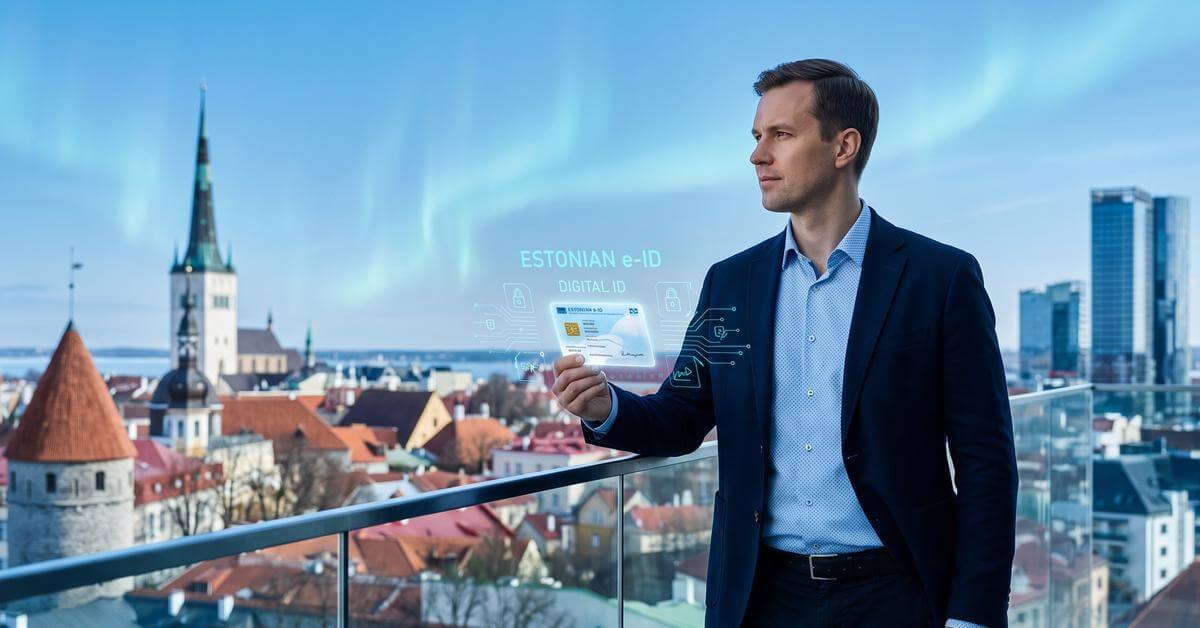
Featured image of post Estonia, the country of the fit and the witWhile many Western democracies seem to be in a state of decay and are no longer the safe, civilized and prosperous countries they once were, there are still some European countries that are governed well. One of those that stand out is Estonia. Estonia is probably most well known for multiple software companies that originated from there, such as Wise, Bolt, Pipedrive and Skype. The government itself is also famous for being early in issuing government IDs with an embedded smart chip for online authentication already in the 1990s. Via the national portal at eesti.ee all residents can access extensive eServices ranging from viewing their health benefits to filing taxes. Estonia has also been running an e-Residency program since 2014, where they issue digital ID cards to foreigners, making it easy for them to remotely log into the government portals and for example, establish businesses, file annual reports and so forth. Note that the e-Residency is not a path to physical residency. Estonia does, however, have a separate Digital Nomad visa program that makes it easy for non-EU citizens to also physically establish themselves in Estonia, assuming, of course, you meet the criteria, which includes, among others, a minimum monthly income of 3960 from outside Estonia. EU citizens naturally have free mobility inside the EU and can simply get an apartment and register as a resident in Estonia if they so choose. And there are plenty of reasons to do so.

Estonians value health, education and entrepreneurship I moved to Estonia about one and a half years ago. In my observations Estonia strikes me as a country that values health, education (in particular programming and natural sciences) and entrepreneurship highly. I don t know how Estonians achieve it, but they look pretty fit and rarely obese. Estonia has rye bread and sauna in their culture just like Finland, and in addition the flat terrain and well-planned bike routes and extensive network of parks (and pull-up bars everywhere) seem to create an environment where it is easy to live in a healthier way. The consumption of processed foods and candy also seems relatively low among Estonians. The gym chain MyFitness also seems to be present everywhere. Even the Tallinn airport has a calisthenics workout station right at the departure gates, which anyone is free to use while waiting for their flight to take off. One of the top longevity influencers in Europe, Siim Land, is Estonian. Estonia has lots of good bike paths, parks and outdoor gyms There is even a calisthenics station with pull-up bar and more at the departure gates at Tallinn airport Estonians also seem to value the school system highly. The government has been actively raising teacher pay and has a stated goal of reaching 120% of the national average by 2027. The students are also expected to value the education and respect their teachers. According to the TALIS 2024 survey (OECD s international teacher survey), Estonian teachers spend significantly more time on actual teaching and learning and waste less time on interruptions or keeping classroom order compared to the OECD average. This is among the highest rates internationally, meaning they spend relatively little time on maintaining order or dealing with disruptions. While the international education benchmark PISA scores have been dropping globally, Estonia has consistently been climbing the ranks in past decades. In the latest PISA study (from 2022), Estonia ranked number one in Europe for reading, mathematics and science. In the overall results, Estonia ranked seventh globally, only behind countries such as Japan, Korea and Singapore. Valuing entrepreneurship is evident in how the taxation system is set up in Estonia. Famously, in Estonia, companies can defer taxes on annual earnings and reinvest all of their profit in growing the company. Taxes are due only later, when paid out from the company, for example as dividends. For individuals, receiving dividends from any Estonian or foreign company is tax-free as long as the company paying dividends already paid corporate tax on the same income. The tax system is also very simple. For all individuals, all types of income, including salary and capital gains, are always taxed at a flat rate of 22%. This removes the incentive for anyone to try to convert income into different types, setting up holding company structures and other optimizations as there is no gain. All entrepreneurs can simply focus on growing their business and forget extra bureaucracy. There is also no marginal tax rate cliff to stop working at everyone is encouraged to always try to produce as much value as they can. A simple tax system is also reflected in the fact that anyone can easily read all tax rules that apply to individuals in plain English on the Estonian tax authority website, and one does not need to hire any accountants simply to file taxes. Estonia also has a very straightforward investment account system: any person can freely open a self-directed investment account at any brokerage at no extra cost and report it as such to the tax authority, and then use it to save for an apartment, retirement, or other purposes, and defer all income taxes until withdrawal. There are no caps or time limits, and all residents are encouraged to save and invest as much as they can and thus take responsibility for their own wealth accumulation. It seems that culturally Estonians respect people who are active and progress in their careers and businesses more than in other countries. Unlike in Finland, successful people are admired and living on government welfare is not romanticized. At the same time, the government benefits are less generous so people can t live comfortably on them and, for example, many of the asylum seekers Estonia accepted have since left on their own initiative to other European countries in search of better benefits.

Low crime, high trust Another thing that strikes me when walking the streets of Tallinn is that there are no drug addicts, beggars, thugs or the like. The difference compared to, for example, Vancouver (where I lived previously) is stark. In public buildings, people leave their coats and bags hanging in the lobby while visiting. Private houses and apartment block yards are not fenced. In my building, I noticed people even leave their bikes unlocked in the bike shed. I have also seen the staff of a coffee stall in a shopping mall going for a break and leaving everything unattended, not worrying that anyone would take anything while the staff is away. Nobody is stealing anything from the unattended coffee shop while staff is having a break at  lemiste shopping mall This is not just my personal experience. According to the Numbeo crime index, Estonia has one of the lowest crime rates in the world. Also, comparing drug and property crime stats, for example, Finland has twice as much crime per capita, and places like Vancouver in Canada almost five times more. I don t have any clear explanation for why crime is so much lower in Estonia, but some suggest that higher social cohesion and lower levels of welfare contribute to people standing to lose more if they behave antisocially. Compared to Finland, Estonia also more readily jails repeat offenders, and those who are put on trial will experience a swifter court process thanks to simplified legal processes and more efficient governance.

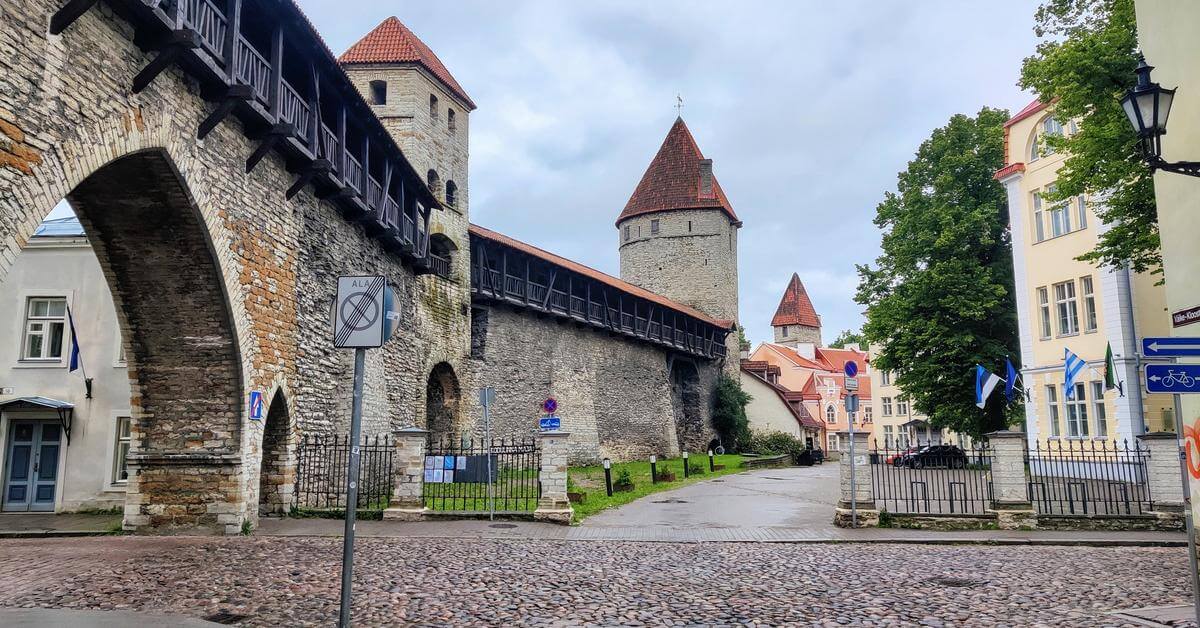
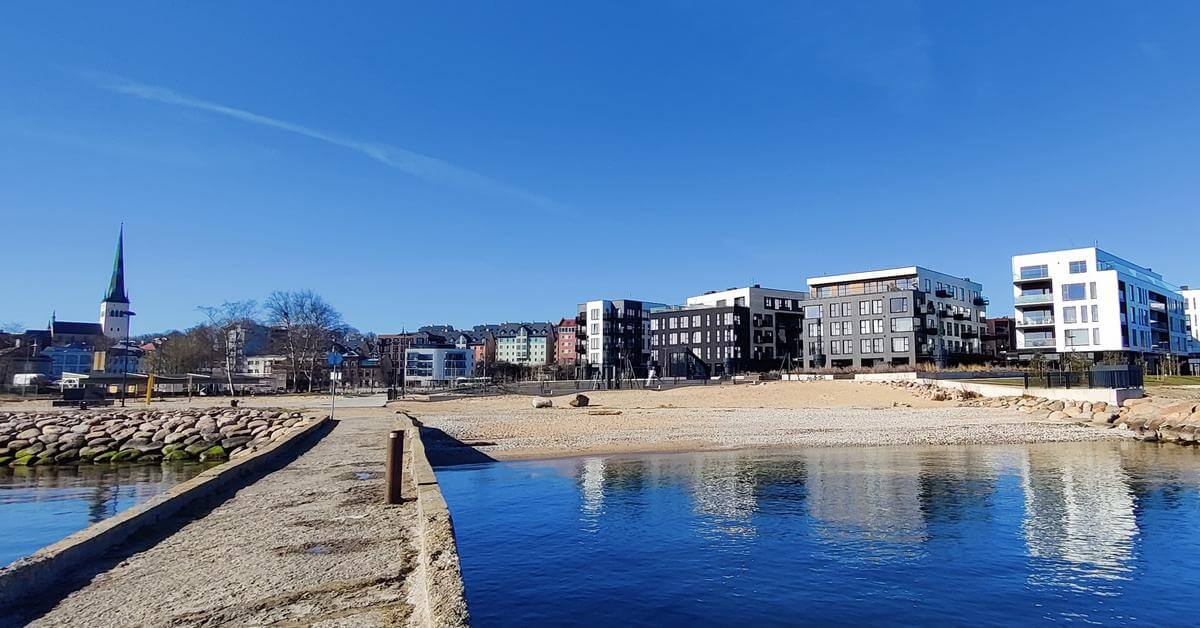
Moving to Estonia: quick checklist Moving to Estonia is very easy for any EU citizen, in particular if your work is not location-dependent (e.g., remote work or an online business) and you are simply looking for the cleanest and safest environment to live in. First, check into a hotel in Tallinn, check out various neighborhoods to figure out what area you like (my favorites are Kalaranna, Kalamaja, Noblessner and Volta) and start browsing available apartments in English at kv.ee. Most professionals speak fluent English, so there should not be any difficulty in reaching out to people by email or phone. Tallinn is famous for the old town The economic boom of recent decades created a lot of new construction, with Kalaranna being among the newest areas The next step is to buy a local prepaid SIM card at e.g., an R-Kiosk or a convenience store as signing up for other matters later on will require an Estonian phone number. Once you have an apartment and e.g., signed a rental agreement, you can register in the population registry online. After that, you have proof you are a local resident with an address and telephone number in Estonia. With local resident status, you can go to the police station to get a local ID card. Don t bother scheduling an appointment, just go to the Tammesaare police station in Tallinn, take a queue number and wait. Once it is your turn, they will guide you on how to use the photo booth, fingerprint registration device, and file your application. A few days later you will receive an email confirming whether your application was accepted, and after a few more days, you will get another email notifying you that your ID card has been printed and is available for pick-up at the same location. This will also be your first practical experience of how fast and efficient the government in Estonia is. Once you have the local ID card, you can use the smart card feature to log into all the government eServices and sort out the rest of the relocation process, such as registering tax residency and getting a family doctor. The main eServices portal in Estonia: eesti.ee

How did Estonia evolve to be like this? After Estonia regained its independence after the fall of the Soviet Union in 1991, the first elected government in 1992 was led by a very progressive 31-year-old Prime Minister Mart Laar, who managed to set up some very good policies and laid the foundation of a society that has evolved well in the decades since. Estonia was very lucky to have people in power in the 1990s who didn t simply copy what other Western countries were doing, but who tried to think about things from first principles and create Estonia s own model for efficient and fair governance. As a post-Soviet country, the population had also been vaccinated against overly socialist and unrealistic ideals, and everyone had a healthy distrust of the government s ability to solve problems and emphasis was placed on people s liberty to work for themselves as they best see fit. The improvement in living standards over the past 35+ years has also been witnessed by the population, and voting behavior supports keeping the country on the same trajectory. General living standards still continue to improve as the nominal wage growth sits at around 6%, clearly above the annual inflation rate of about 3%. In 2026, the Estonian economy is expected to grow about 2.4%, which is faster than the EU average. The growth in Estonia is not the result of any accounting tricks - Estonia is part of the euro and can t print its own currency, nor has it been funding the public sector with excessive debt. With a 24% debt-to-GDP ratio, Estonia consistently ranks as one of the most responsibly managed countries among advanced Western economies. As wages in Estonia soon catch up with the EU average, and higher defence spending has forced the government to raise taxes in recent years, the economic growth that Estonia has enjoyed for 35+ years since it exited the Soviet Union might slow down a bit in future years. The policies that fueled this growth in living standards, however, are likely to stay.

The tiger leap There is one specific government policy in Estonia s history that I think should be highlighted in particular. Estonia was very progressive by announcing the Tiigrih pe (Tiger Leap) program in 1996 with the goal of equipping all schools with computers and teaching all students the basics of programming. This surely had a large influence on why Estonia has so many successful software companies, why the government eServices are so mature that even neighboring countries like Finland are striving to copy the Estonian government s IT architecture called X-road. The Tiigrih pe project was originally suggested in the mid-1990s by Toomas Hendrik Ilves, then ambassador of Estonia to the United States, Canada and Mexico, and later President of Estonia in 2006 2016. While he was a psychologist by education, he was also a self-taught amateur programmer and used his political influence to promote sensible adoption of information technology in both Estonia and the EU. The history of Estonia has several prominent figures who were not lawyers by profession but engineers, scientists and historians who were very practical in their political decisions, which I think is now reflected in how government processes were formed. The video below shows how the Estonian government advertises itself and what values they choose to highlight:

Should other countries adopt policies from Estonia? Of course, not everything is perfect in Estonia either. The fertility rate of 1.16 in Estonia is very low. This trend is present globally, but in Estonia it is way below the EU average. Also, the service culture is something that needs to improve in Estonia. While services are in general fast and efficient, the attitude of people working in cafes and stores does not reflect a willingness to fill in gaps if the standard process falls short, nor are visitors actively made to feel welcome as individual humans, but are treated as mere process inputs. However, many of the things listed earlier I think should be studied by policymakers elsewhere. Societies are complex systems and there is of course no guarantee that copying a single policy to another country with different ethnicities, history and ingrained culture would lead to the same policy outcomes. But considering that Estonia is a small country without favorable geography and no natural resources, and that it started out from a place of total chaos, low economic activity and high crime in 1992 to rise to what it is now in 2026, the success it has seen is surely largely a result of good policies, governance and culture that other countries can and should mimic.

30 July 2026

Clint Adams: not ninpo

The UX of jj's builtin merge editor finally became too much for me. So, I looked at the list of merge tool options, saw vimdiff, and thought, Oh, cool, I know how to use vimdiff. So, I launched jj config edit --user, added a ui section, and set merge-editor to vimdiff. With the new config, I ran jj resolve again. It was at that point that I realized that I do not, in fact, know how to use vimdiff: I only know how to use vimdiff with two buffers. What appeared in my terminal was a 4-pane monstrosity. Why are there four panes? I'm trying to resolve conflicts between only two changes on only one file. For a moment, I nearly go down a rabbit hole, because this says that by default, vimdiff is barely useable [sic]. Should I be installing some addon or a Python script? Apparently there are tradeoffs. I just want to resolve these conflicts without doing line-by-line approvals for how ever many hours that would take. Accordingly, I ran away in terror, installed meld, set merge-editor to meld, and went clicky-clicky in the GUI. I'm not happy using a GUI, but at least it didn't have a mysterious extra buffer to confuse and taunt me.
Posted on 2026-07-30

Russ Allbery: Review: In the House of Aryaman, a Lonely Signal Burns

Review: In the House of Aryaman, a Lonely Signal Burns, by Elizabeth Bear
Series: Sub-Inspector Ferron Mysteries #1
Publisher: Sobbing Squonk Press
Copyright: 2012
Printing: 2018
ISBN: 0-9863735-1-6
Format: Kindle
Pages: 73
In the House of Aryaman, a Lonely Signal Burns is a science fiction police procedural set in relatively near-future India. This novella was originally published in Asimov's SF and collected in several anthologies as well as Bear's Shuggoths in Bloom collection, which I have on my shelf but have not yet read. I probably should have checked that before I got another copy. It is the first story of a series in the sense that there is an Audible-only sequel available. Like many police procedurals, this one opens with a crime scene. Sub-Inspector Ferron and her partner are inspecting a tube of human meat in the middle of the rug of a luxurious apartment in Bengaluru. The tube is apparently the remains of one Dexter Coffin, an American with a high tech workspace who was apparently mangled beyond recognition in his locked apartment near a table set for two. Dexter's cat is a witness. In this future world of cats enhanced with limited language skills, this would have been very useful, but the cat's memory was apparently wiped. Ferron will have to get to the bottom of the mystery some other way. Also, she apparently now has a new cat. Meanwhile, Ferron is worrying about her partner's mental health, her partner is worrying about her use of stimulants to stay on duty for this murder investigation, and Ferron's mother is harassing her for money to pay the bills of her virtual reality addiction. Her job is a good distraction from other problems she'd rather not deal with. I am trying to come up with something insightful to say about this story, and I'm not having much success. It's a police procedural with a bit of a science fiction twist. The characters are fine but not, at least for me, particularly engaging. There is some deft world-building, but nothing that grabbed my attention or made me desperate to read more stories in this world. Perhaps the most interesting part of the background, and the reason why I picked up this novella, is that this is the universe that eventually becomes the setting of the White Space series. There is an early version of right-minding handled entirely through medicine without the later invention of the fox implant, and there are some signs that humanity is slowly digging itself out of the hole of climate change and antisocial behavior that it had dug. I found this mildly interesting, but it doesn't add much to the later series and is very skippable. The source of the title is a bright light originating in the Andromeda galaxy, which is contained in Uttara Bh drapad in Vedic astrology. Ferron says this is under the influence of the god Aryaman. This is unrelated to the plot; it's just a background event that prompts some introspective musing from Ferron at the end of the story. It's a nice moment, but I would have been more interested in the full story of first contact between Earth and the Synarche. This was a mildly pleasant way to spend a few hours and I'm already forgetting all of the details. It's a competent story, but not one I feel a need to recommend to others. Followed by A Blessing of Unicorns, which appears to be an Audible audiobook exclusive. Rating: 6 out of 10

Reproducible Builds (diffoscope): diffoscope 326 released

The diffoscope maintainers are pleased to announce the release of diffoscope version 326. This version includes the following changes:
[ Vagrant Cascadian ]
* Add external tool reference for "pedump" to use the "mono" package on
  GNU guix.
You find out more by visiting the project homepage.

29 July 2026

Joey Hess: my harddrive is probably not full

I enjoyed reading this post by Marginalia "Your harddrive is probably full"
You can construct an entropic argument that there are simply more ways for a harddrive to be full than ways in which it can be empty.
Of course it made me check how full my laptop drive is, and indeed it was more than 75% full, as predicted. But, I almost never feel that my hard drive is full. I can very easily free up almost any amount of disk space at any time, without any thought. While writing this blog post, I ran a single command and now my harddrive is 50% empty.
The other part of the equation is that a full disk isn t a problem until it s so full you can t put more stuff on it, and at the point it s so irredeemably cluttered that when you do clean it up, you only have the patience to clean up enough to bide your time, judging the fate of every file on the harddrive is simply too much work.
Why doesn't this apply to me? Because I have put in the up-front thought to organize things, so that I never have to do that anymore. I have 3 categories of files that I can remove at any time I need more space, without any thought:
  1. Any files that are stored in git-annex. This is one of git-annex's superpowers; you can git-annex drop any file and stop it using disk space, but the file is still there (as a broken symlink) so you don't risk losing or forgetting about it.
  2. Caches.
  3. Files in ~/tmp/, which is reserved for any files I only want to have a passing acquaintance with. If I'm not comfortable with something being deleted at any time, I don't put it there.
Not only do I only have these 3 categories, these are the only 3 categories for everything except OS files and files I have decided I never want to remove (eg dotfiles and other files stored in git repos). Computer scientists invented caches (and of course cache invalidation is no problem lol) so I only needed to learn about that one. Unix gave me /tmp/ as an example that I long ago used as the basis for the rules for my ~/tmp/. I hope that git-annex might also serve as an example that moving files between drives is not the best way to manage disk space use.

Russ Allbery: Review: Midlife in Gretna Green

Review: Midlife in Gretna Green, by Linzi Day
Series: Midlife Recorder #1
Publisher: Linzi Day
Copyright: July 2022
ISBN: 9798837010774
Format: Kindle
Pages: 464
Midlife in Gretna Green is a self-published fantasy novel. It's urban fantasy in the sense that it's set in our world but with magic that most people don't know about, but the primary setting is a parish in rural Scotland and therefore the genre is not urban in that sense. It was Linzi Day's published first novel. As the story opens, Niki McKnight is a widow in Manchester, England with a job in the Register Office she likes, a boss she hates, and a Bichon Frise dog she adores. In the year since her husband Nick died, she's put her life on hold and made as few decisions as possible, despite some concerned pushing from her best friend Aysha. The death of her grandmother is not entirely unexpected, but her inheritance is about to upend her life. Niki assumes that her grandmother has a modest cottage and a small estate, and therefore being the named heir will mostly involve cleaning up the details of a modest life. She is caught by surprise by a requirement in the will that she live in Gretna Green for a year and a day in order to inherit. Her initial reaction is to treat this as an absurd impossibility given her life and job in Manchester, but she slowly realizes something strange is going on. Her grandmother's lawyer is lying to her, he refuses to tell her the value of the estate and seems to think it's more valuable than she expected, and her grandmother's tiny cottage does not seem to be following the seasons of the rest of the world. There is something magical at work. I will not spoil the rest of the reveal. I will say that this is a magical house book because, if you are anything like me, that is why you will want to read this series. There are not enough magical house books, and this is one of the better kind that allow the house to be a full speaking character. Midlife in Gretna Green is an unapologetic fantasy of personal agency. Niki starts the novel with a miserable manager, a messy pile of unread mail she doesn't want to deal with, and a lot of personal emotional baggage. She gets handed a position that requires and rewards standing up for herself and being decisive. It comes with a pile of unresolved but not horribly complex problems that were waiting for someone who would listen, make sensible decisions, and treat other people with respect. Oh, and there are a few assholes in the way, but they seriously underestimate the power she has to put a stop to their bullshit. This is the sort of book that traditional publishers tended not to buy (although Day apparently did get an offer for this one and turned it down), and I'm not sure why. Editors thought protagonists should have to work harder for their payoff? Some lingering Calvinist dourness in English language publishing mistrusted triumphant books? Obvious wish fulfillment was considered embarrassing or low-class and thus didn't warrant publication? This didn't apply to the endless bildungsromans about magically talented boys, so some level of sexism was probably in play. Maybe this is finally changing? It reminds me of the bias against romance novels and their guaranteed happily ever after, and in the case of romance there was too much money for publishers to leave it on the table. In any case, the growth of self-publishing has created an alternative market that let these books reach an audience and I for one am here for it. A lot of wish-fulfillment books, and a lot of self-published books, are not very good, but the ones that have a spark of originality and character can be a delight worth tolerating the somewhat rocky editing and pacing problems that a full editorial staff might have cleaned up.
I loved reading books about kickass women who took no crap and fixed their lives up exactly how they wanted them to be. But how did they get to be that way? They always started out awesome in the books. Seriously, did they kick ass at sixteen? Or did their superpower kickassery not kick in until they were thirty? Forty? If so, then I was screwed. Would I need to wait till I was fifty or until a genie arrived offering wishes? I already felt as if I d spent my whole life waiting for something wild and wonderful to happen.
Niki is a Specific Type to a somewhat hilarious degree, and I'm not sure if Day is playing into that intentionally or if she's projecting herself into the book. The amount of self-insertion is not zero: Day also lives in Gretna Green, owns a Bichon Frise, and worked as an assistant registrar and civil celebrant. Niki also drinks wine regularly, has a psychic gift, occasionally reads tarot cards, is an accommodating pushover at work who struggles to say no to her abusive boss, has impostor syndrome problems, and swears by a fictional self-help book about grief that provides the quotes at the starts of chapters. There is a cat, because of course there's a cat. (The fictional self-help book is a spot-on parody played entirely straight in the story. I think Day is having some fun with the reader? I can't tell!) This is what I mean by unapologetic. It's easy to read Niki as a stereotype, but she's a stereotype a lot of real people can identify with and there's something highly satisfying in watching her find her footing. I like wish fulfillment books; it's fun to see someone's wishes come true! Particularly in the year of 2026, there's something immensely satisfying in seeing an ordinary, insecure person get a massive amount of power and use it to make the world better. I don't need everything to be hard, fraught, and laden with costs in fiction, although I wouldn't want every book I read to be like this. Also, the world building is great. It's not polished; there's a bit of a grab bag feeling to it, I'm dubious the magic system has any underlying rigorous rule set, and Niki's powers, once she has access to them, are more of a semi-sentient genie than a skill she has to learn with hard practice. But the magic is fun. The sentient house is one of the best characters, particularly after Niki realizes how underused it has been, and I am a sucker for any good sentient house book. The cat is a far more interesting character than I first thought she would be. And Niki's new magical job is more complicated and less typical than the normal Celtic-inspired fantasy that I thought it was going to be at first. My primary warning about this book is that Niki starts out beaten down and grieving her dead husband, and it took me about five pages to decide that her dead husband was a complete piece of shit who was not worth any of the grief Niki puts into him. She also doesn't stand up for herself for the first hundred pages or so, which made me want to yell at the book a few times. Both of these problems go away farther into the book, and Niki does eventually figure out that Nick was abusive trash, but I was relieved when the "make endless excuses for worthless men" portion of the story was finally over. You have to stick with it until Niki gets brave enough to try being the protagonist; once that happens, it becomes great fun. It is fairly obvious that Midlife in Gretna Green was self-published, and I wish it had gotten the editing that it deserved. My copy had a couple of obvious formatting errors, the plot veers about more than was strictly necessary, and I think a careful editing pass could have tightened the writing by about fifty pages or so without losing any important detail. If that sort of thing bothers you, make sure you're in self-published fiction mode before starting this one. But it also has that irrepressible, bubbling-with-ideas feeling of a book where nothing has suppressed the author's enthusiasm. It's a very grabby book; once Niki starts embracing her new life, I could barely put it down. If you're in the mood for a good fantasy wish-fulfillment story that has no romance and a whole lot of "why are things run this way, no, we're changing that," highly recommended. I had so much fun with this book, and the series is currently making the rounds of my whole family. Don't read this when you're looking for something challenging and literary and deep; save it for when you desperately want to watch someone just fix something for once, damn it. Followed by Painting the Blues in Gretna Green, which I have already read, breaking my usual rule of writing reviews before reading the next book in a series. Rating: 8 out of 10

28 July 2026

Dirk Eddelbuettel: RcppDate 0.0.7: New Upstream

RcppDate ships the featureful date library written by Howard Hinnant to enable use from R packages. This header-only modern C++ library has been in pretty wide-spread use for a while now, and adds to C++11, C++14 and C++17 what is (with minor modifications) the date library in C++20. The RcppDate package adds no extra R or C++ code and can therefore be a zero-cost dependency for any other project; yet a number of other projects decided to re-vendor it resulting in less-efficient duplication. Oh well. C est la vie. This release syncs with upstream release 3.0.5 made yesterday. We also made two routine updates to the continuous integration since the last release a good year ago. The Debian and r2u packages for this new release have already been uploaded too.

Changes in version 0.0.7 (2026-07-27)
  • Updated to upstream version 3.0.5
  • Regular updates to continuous integration setup

Courtesy of my CRANberries, there is also a diffstat report for the most recent release. More information is available at the repository or the package page.

This post by Dirk Eddelbuettel originated on his Thinking inside the box blog. If you like this or other open-source work I do, you can sponsor me at GitHub.

27 July 2026

Dirk Eddelbuettel: #057: Conditionally Quieten Compilers

Welcome to post 57 in the R4 series. R packages with compiled codes can use the file src/Makevars to set compilation flags. We often rely on this to set libraries, include directories or compilation options. When using external libraries, be it header-only or via headers and linking, we are often experiencing compilation noise when these libraries tickle warnings under generally-recommended flags such as -Wall -pedantic. Two packages I maintain are clearly repeat offenders here: Eigen, and BH. Both cam generate pages and pages of compiler output. This is generally not great as it may hide genuine warnings from our own code. What makes matters worse is that some of the available and specific options for the compilers are treated by R CMD check as non-portable leading to a nag on package checking. Examples are -Wno-parentheses, -Wno-maybe-uninitialize or -Wno-nunnull. I have long resorted to adding these to my per-user ~/.R/Makevars. When added there, compilation is quieter, but R CMD check still nags here where the option is set but not at CRAN or r-universe. A situation that is not ideal but what somewhat stable . More recently, I realized there was an available check we can use to conditionally add extra compilation flags but leave them off by default. That makes local development quiet allowing us to focus on the quality of our additions here without noise from third-party libraries we may use. At the same time we do not need to do anything else to let CRAN do its work. The check we now use is whether there is a .git/ directory present. If so, we are indeed building from local sources and can add extra flags. If not, we are likely building from a tar.gz source archive which is the case for CRAN and hence do not set these. An example use is this recent additional to package qlcal where this bit of R code is invoked from a minimal shell script configure and replaces the stub @XTRAFLAGS@ in src/Makevars.in (or src/Makevars.win.in)
if (dir.exists(".git"))  
    ## development from a .git directory can use these flags
    xtraflags <- "-Wno-nonnull -Wno-deprecated-declarations"
  else  
    ## else build from tarball so stick with existing flags
    xtraflags <- ""
 
win <- if (Sys.info()[["sysname"]] == "Windows") ".win" else ""
infile <- file.path("src", paste0("Makevars", win, ".in"))
outfile <- file.path("src", paste0("Makevars", win))
lines <- readLines(infile)
lines <- gsub("@XTRAFLAGS@", xtraflags, lines)
writeLines(lines, outfile)
With this change, local compilation is quiet, yet CRAN has nothing to nag about (as seen at the qlcal results page). Similarly, one can also check from an actual configure file written in autoconf. Here is a similar example from RcppEigen (showing some relevants parts of the whole file)
# PKG_CXXFLAGS initialized earlier ...

## Check if building locally
AC_MSG_CHECKING([whether .git/ exists])
if test -d "$srcdir/.git"; then
    AC_MSG_RESULT([yes, adding extra flags])
    AC_SUBST([PKG_CXXFLAGS],["$ PKG_CXXFLAGS  -Wno-ignored-attributes -Wno-maybe-uninitialized"])
else
    AC_MSG_RESULT([no, consider adding '-Wno-ignored-attributes -Wno-maybe-uninitialized' to ~/.R/Makevars])
fi

AC_SUBST([PKG_CXXFLAGS], ["$ PKG_CXXFLAGS "])
AC_CONFIG_FILES([src/Makevars])
AC_OUTPUT
Once again, with this change compilation is quiet locally, yet unaffected at CRAN. Just what we want. Give it a try in your packages.

This post by Dirk Eddelbuettel originated on his Thinking inside the box blog. If you like this or other open-source work I do, you can now sponsor me at GitHub.

Jonathan Carter: DebConf26 Santa Fe, Argentina

TL;DR: What a great DebConf! I managed to recharge my Debian batteries, and my talks / BoF sessions all went fine. Already looking forward to DebConf in Japan next year!

DebCamp

The evening before DebCamp started, we had a nice bbq (we taught some locals to call it a braai at an organiser s house and went for a walk around the river as the sun set. It was a very peaceful lead-in to DebCamp.

  • I set up and sent out the call for Forky desktop artwork:
  • Had many nice discussions about various Debian topics with all the Debian people around. It s really fun being around people who are natural problem solvers who care deeply about both technical and social issues. At one point Jonas told me Holy shit, these people are motivated! and I appreciate that so much too!

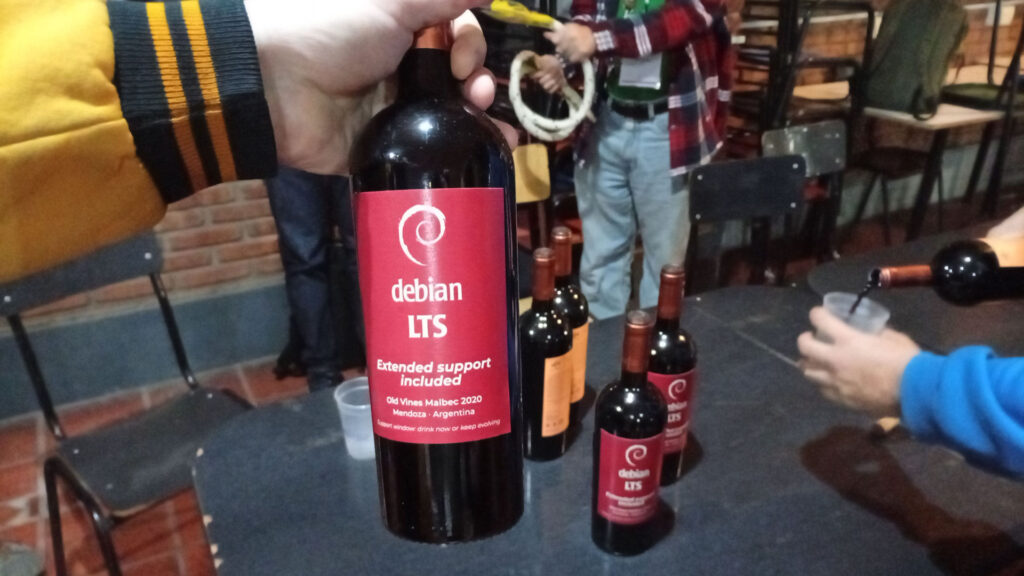
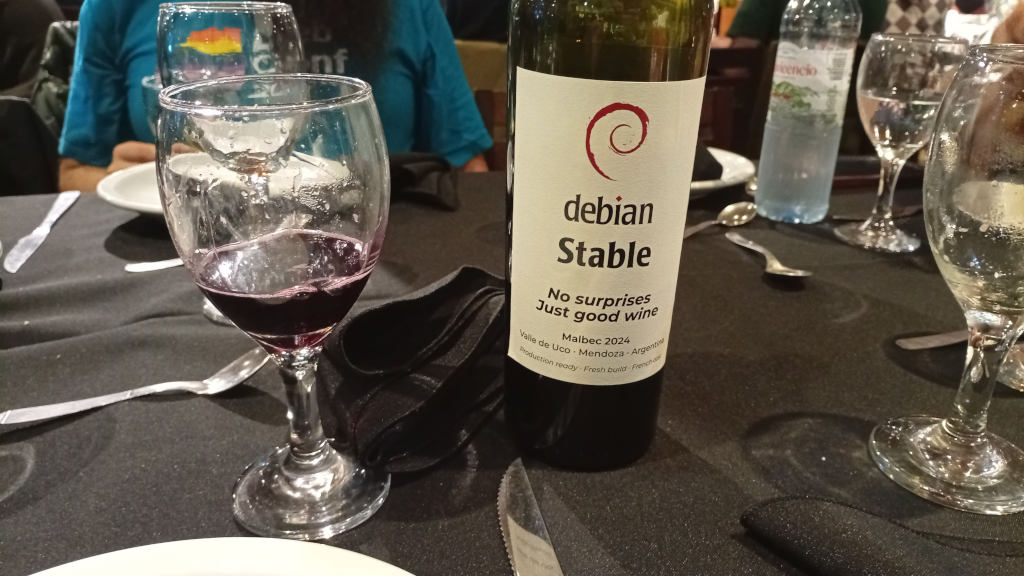
Debian LTS wine

  • Most of my DebCamp was dedicated to preparing for my demo and main talk that followed at DebConf.
  • Sadly, we had no loopy this year, I just didn t have the time, and the people who stepped up to help last year were either overwhelmed with other issues or couldn t make it. I ll try to make it happen again for next year by kicking it off long before DC27.

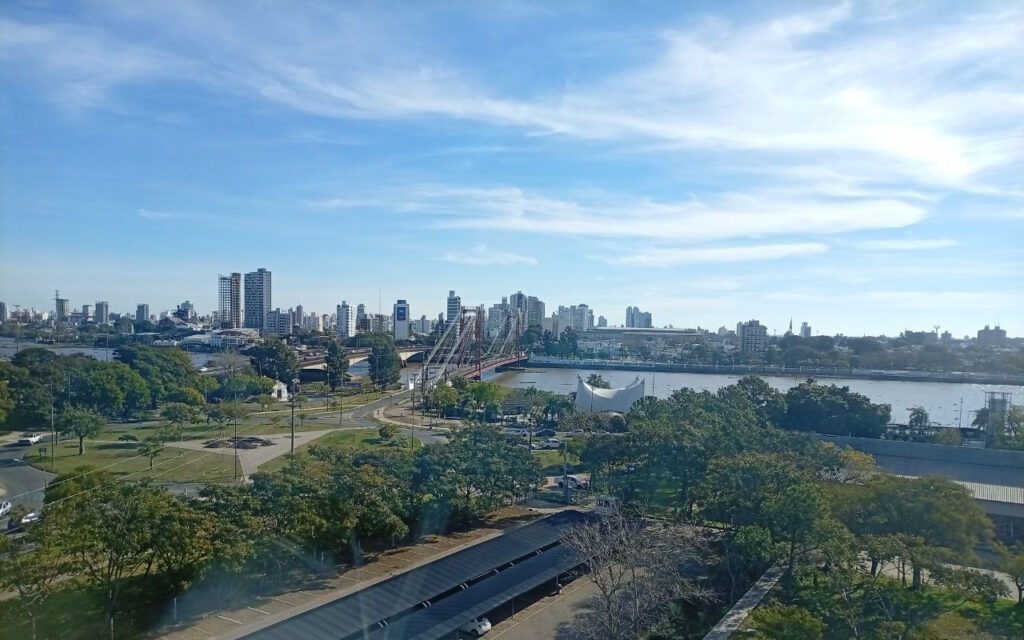
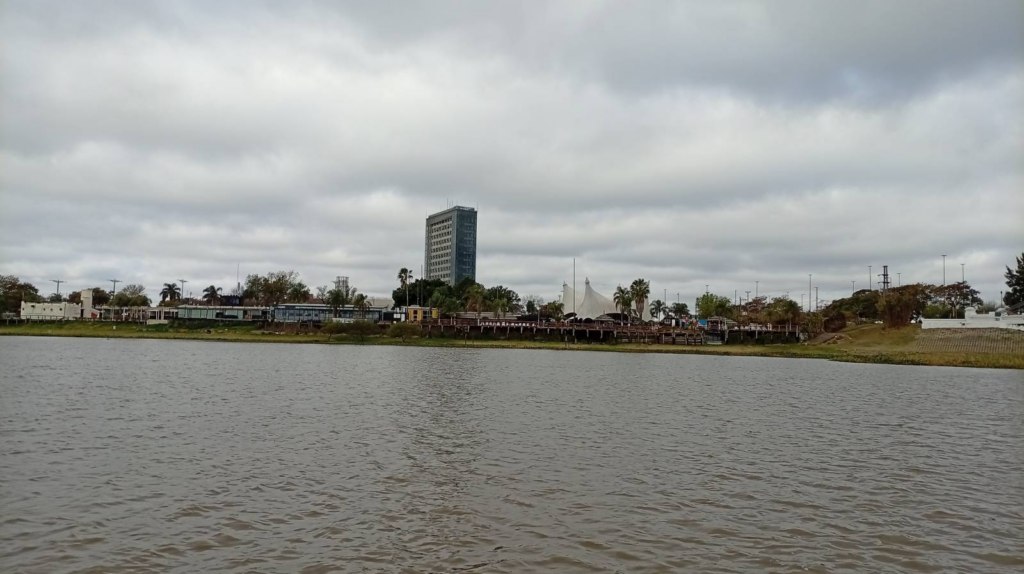
View of Santa Fe city from hotel

DebConf

Talk Is it even possible to build a truly universal system installer?

In this talk I do a very quick comparison of system installers based on my experience with them. It s hard to directly compare all of them, since there are so many, and each have their own niche that they attempt to satisfy.

I also introduce Yasi my attempt to answer the question of whether we could build a universal installer, which can also better cover advanced installations, automated installations and niche setups.

It s very early days for the project, and I didn t quite feel ready to share the code with the world, but it was nice that I did a quick demo where I could install a Debian system and the resulting system actually booted up. *phew*.

This is also going to be my main focus for the mid-term future. I aim to have all the basic partitioning options working by the time Debian 14 (Forky) is released, and by the time Debian 15 is released, I have a long list of features that I aim to have working. So, my timeline for having something that s generally useful is around a year from now, and in around 3 years it should be a fully fledged installer that should cover a very large amount of Debian use cases and architectures.

Day Trip

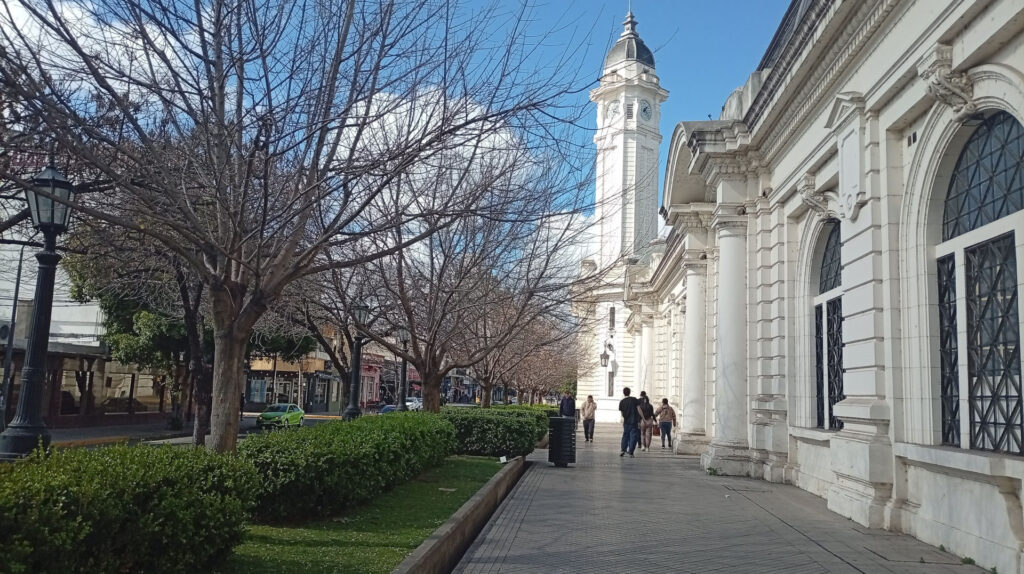
For the day trip, we did a tour across Santa Fe, visited Constituci n de la Naci n Argentina, had lunch where we tried various dishes based on local fish from the river, and then went on a boat ride on the river.

BoF Sessions:

Funding in Free Software Projects: I initially registered this BoF because I m increasingly concerned about how upstreams are asking for donations in their software. I increased the scope to talk about funding in free software in general. It followed Marga s talk about funding, which focussed more about how developers are funded in general. We didn t dive very deep into this, but we certainly need some further discussion (and action) on this within Debian.

Debian Social Team: My most important issue for this team is a carry-over from last year, I want to set up barman (packaged in Debian) for live postgres syncing for our larger databases. For the smaller DBs, doing a daily dump is quite cheap. But for Matrix, it s very expensive in terms if i/o and CPU, so it would be ideal to do less regular complete dumps and use live replication for the first line of redundancy instead.

Images Team: I wasn t initially planning to say much during this session, I have some ideas to reduce both size and count of images, without losing any benefits, but I don t have any work to show for that yet. I ended up talking a lot more than I anticipated, the topics covered were quite good and representative of the current state of Debian images built. I don t have time to create a full summary, so I suggest checking the etherpad / video recording if you re interested.

Some more wine variety during the conference dinner

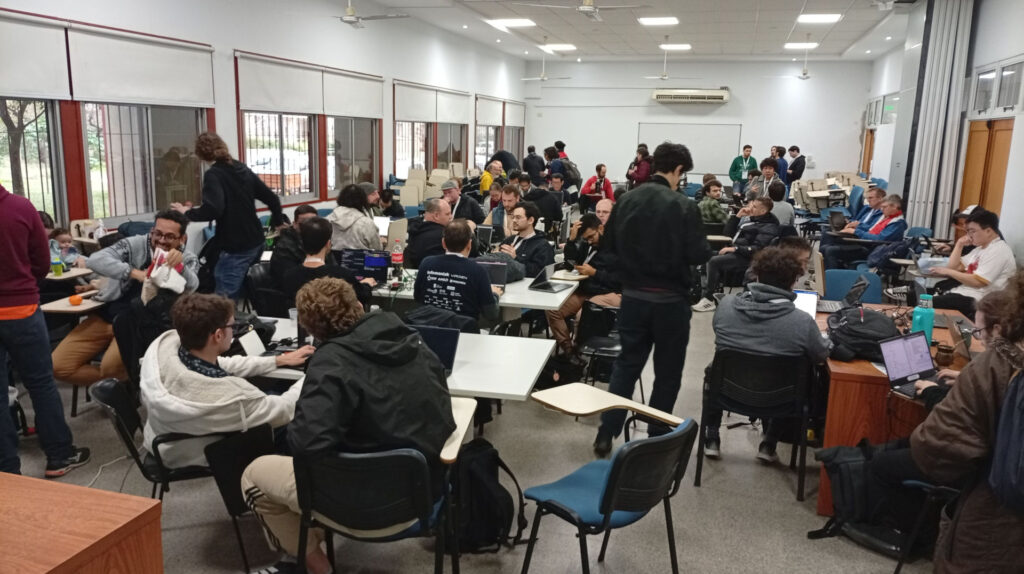
Debianites in the main hacklab

Rosario

I m spending two days in Rosario before I head home. Exploring a bit, catching up with sleep, finishing this blog post, signing keys and exploring some ideas I made note of during DebConf.

Thank you to the DebConf26 Team!

It was a little surreal not being part of any DebConf team for the first time ever, I ve just been too focussed on getting Yasi ready for my talk (no regrets!). I hope to be more involved again next year, in the meantime, I m very grateful to everyone who has made this happen, you did a stellar job! I hope to see many of you again next year in Japan!

Valhalla's Things: Late Victorian Vampire Shirt

Posted on July 27, 2026
Tags: madeof:atoms, craft:sewing, FreeSoftWear
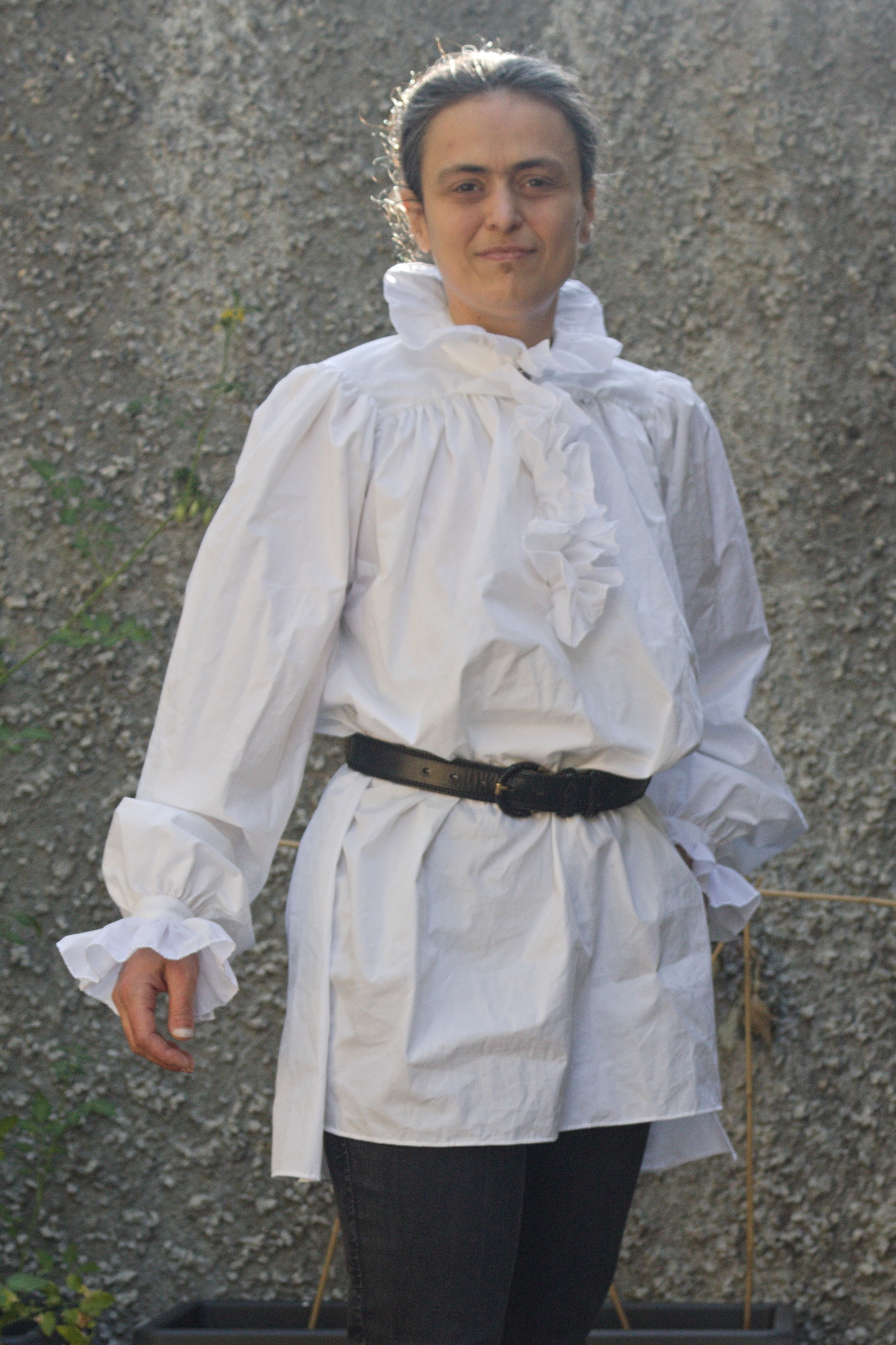
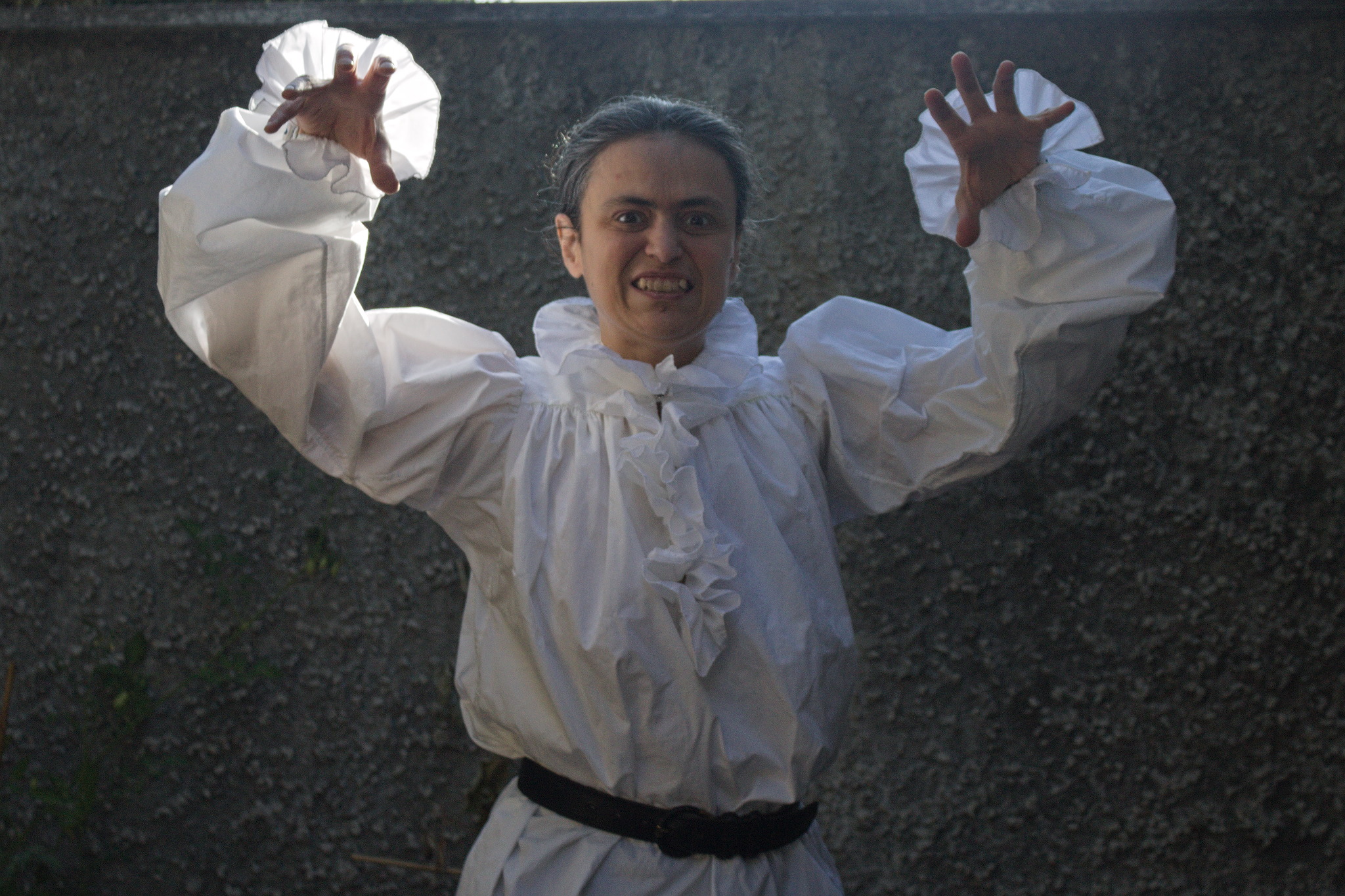
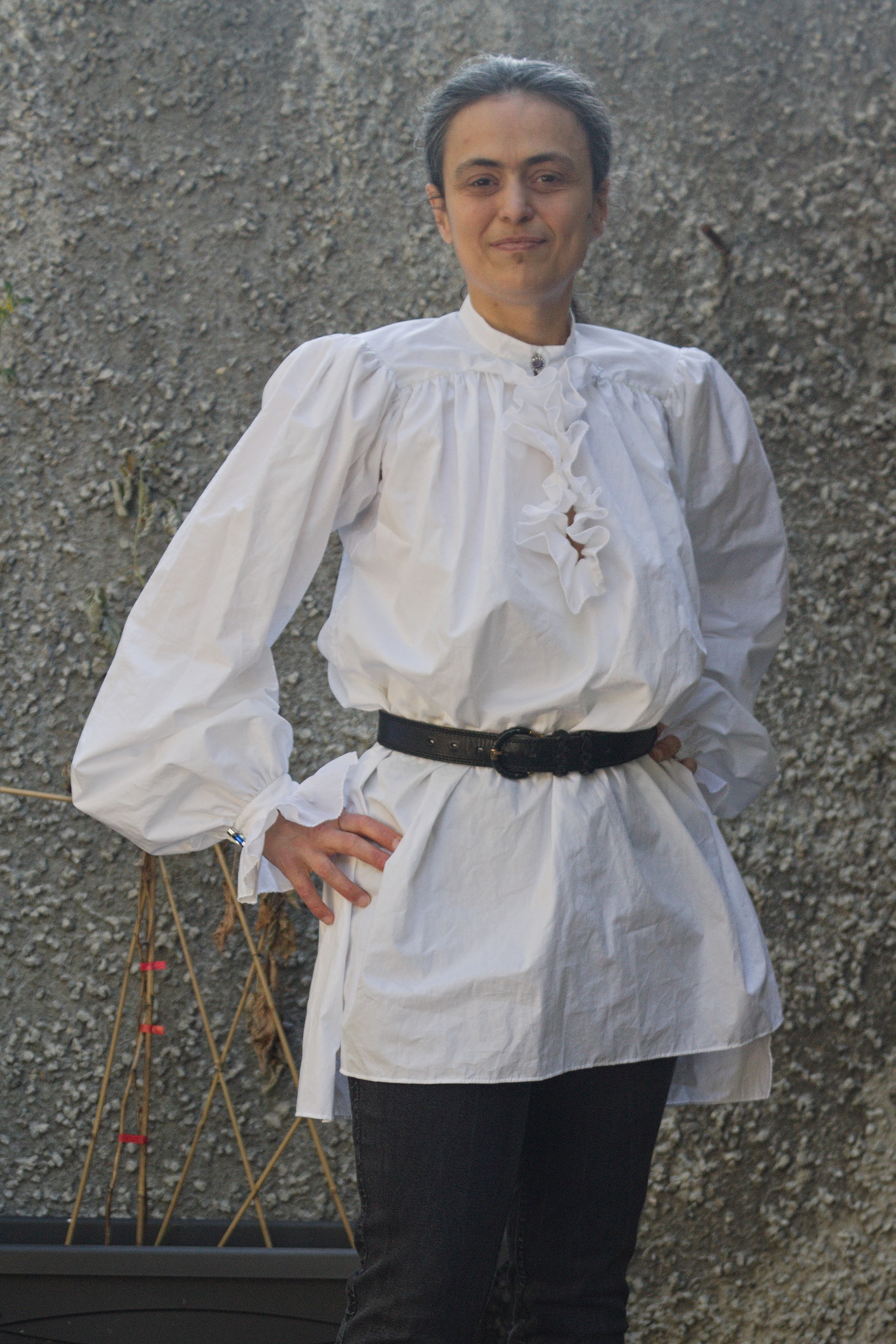
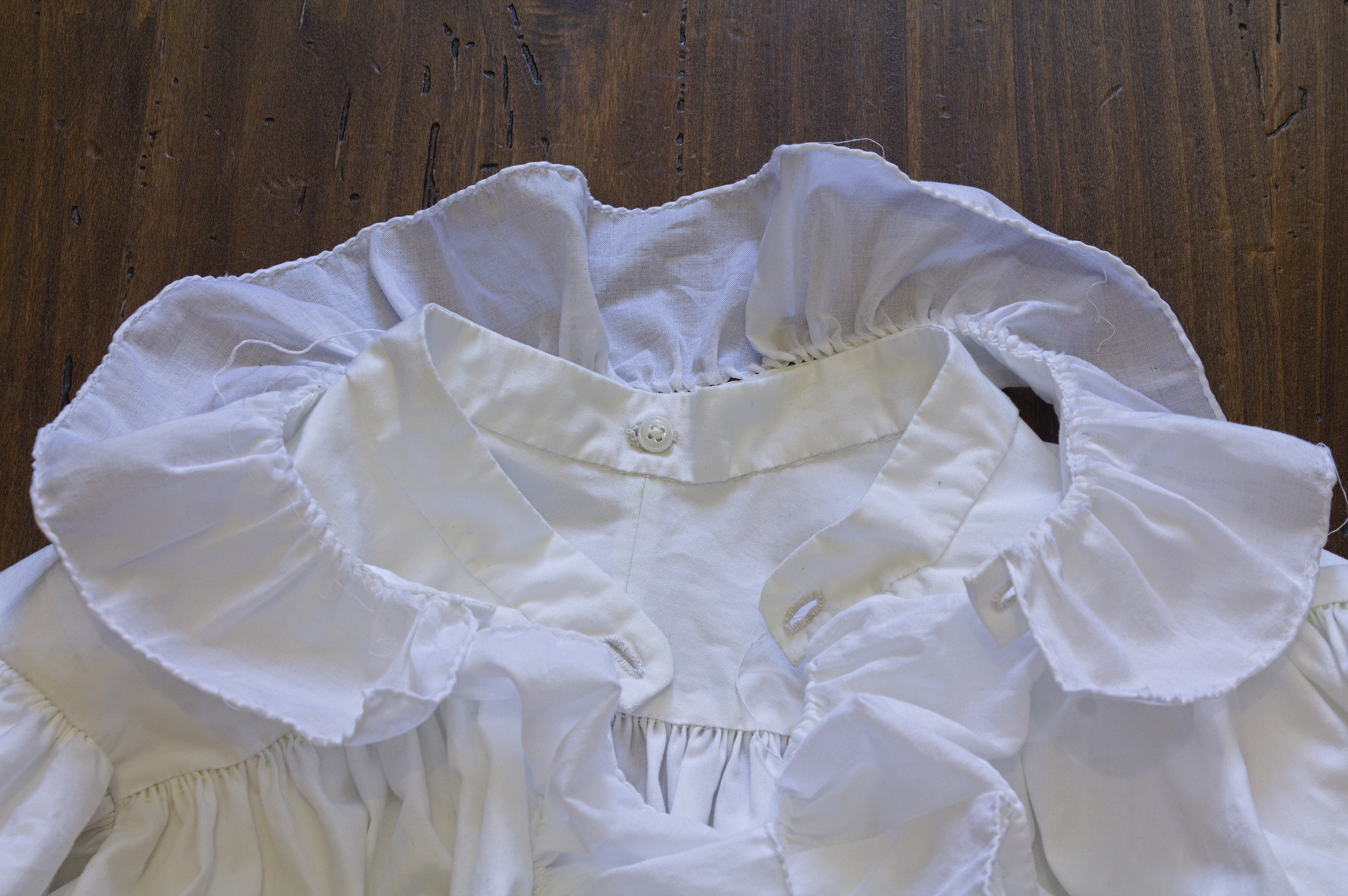
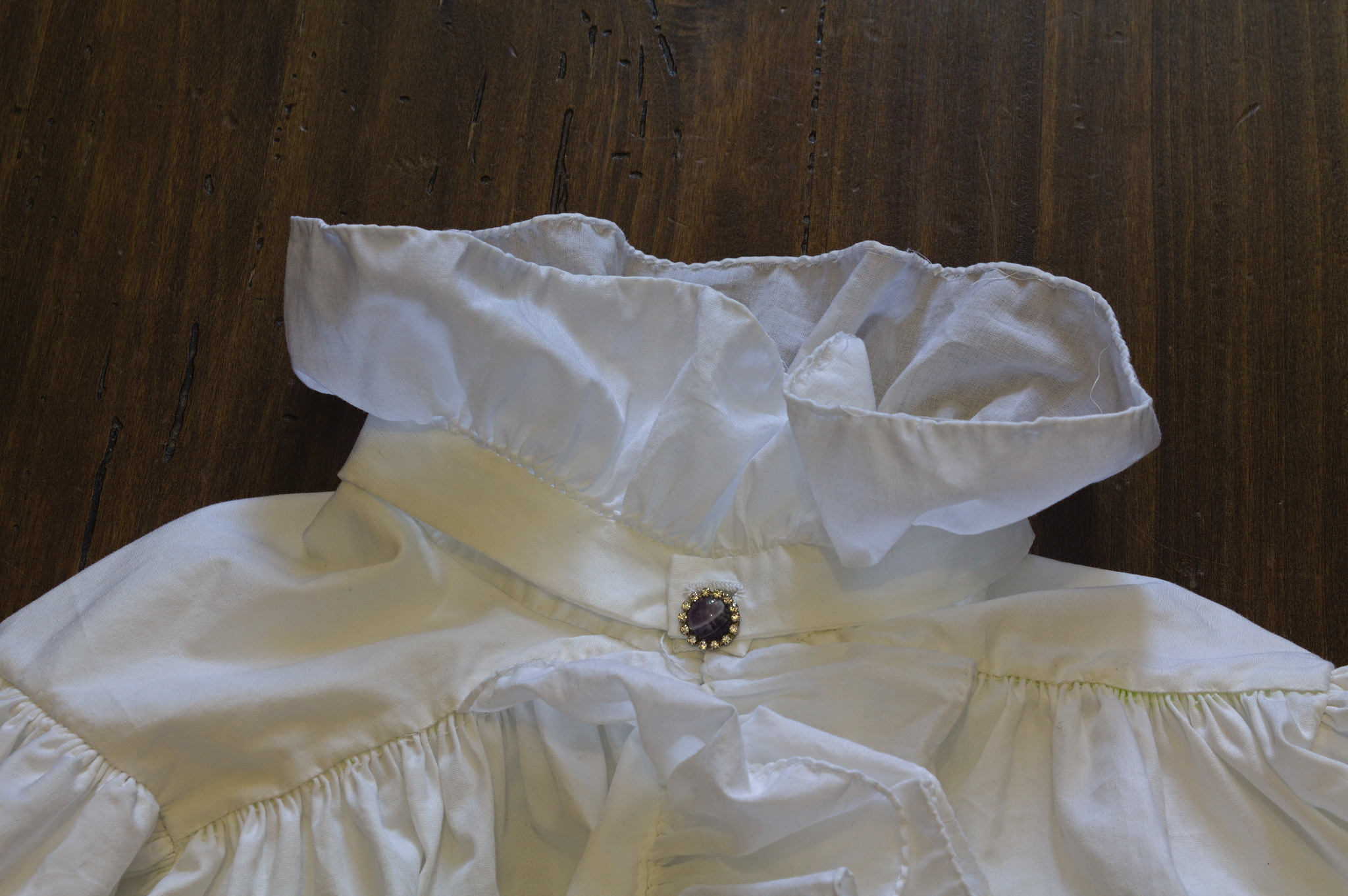
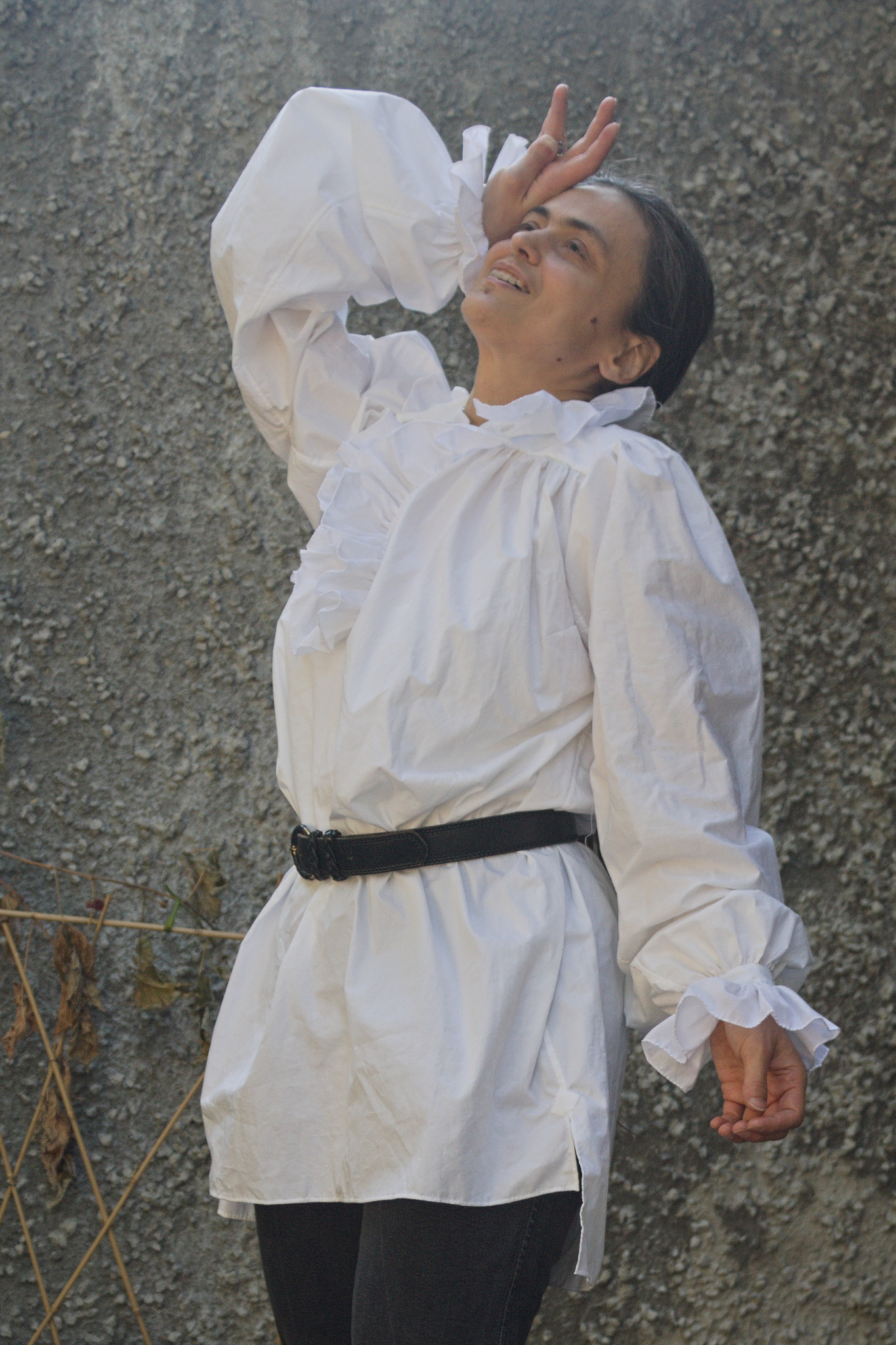
A woman wearing an old-style white shirt with lots of fullness, wide and long sleeves and ruffles at the collar that spread out framing the neck, down the center front to underbust height, covering the slit and at the cuffs, reaching to mid-hand. The shirt is gathered at the waist with a belt, and worn over the bottom garment to show that it reaches to mid tight. Drama levels in the pose are pretty low. The recurring joke is that because of some health issues, in summer I dress like a Victorian Vampire. But how would an actual Late Victorian Vampire dress? Picture her, she would look like some kind of eccentric gentlewoman, as vampires usually do, probably with a style that is a bit conservative, rather than following the latest fashions. Same woman, same shirt, posing as a vampire ready to attack a victim. Drama levels increasing. Now, she wouldn t probably wear men s shirts. But what if she was a lesbian1 vampire? Wouldn t she need a fancy, frilly shirt to go with her tailored cycling suit when she s out seducing the more active ladies in the neighbourhood? Or maybe not. It s not making a lot of sense, is it? But I do have a lot of shirt fabric in my stash2, and I could use a few more shirts that were practical and comfortable, but also somewhat over the top. For the practical and comfortable I went to my trusted 1880s shirt, while for the over the top part I looked at inspiration from the earlier 18th century frilly shirts, and their later imitations. I decided to use some nice cotton batiste I had bought quite a few years ago to make one of my first historically inspired shirtwaists: I may have a tendency to buy a bit more fabric than actually needed by the pattern, but that s what everybody does, right? For the ruffles I decided to use a lighter weight cotton voile, also from the stash. the top edge of a ruffle being whipstitched over some gathered fabric; the rest of the unfinished shirt is visible in the background. At the front, I wanted the ruffle to be inserted in the yoke, but I was also whipstitching the gathers to it to make them neater, so I started bu attaching the yoke lining to the gathered front, then I whipstitched the ruffle to the front, catching each gather, and finally I whipstitched the other yoke on the ruffle and the rest of the gathered front. The front of a shirt: the body was gathered into a yoke, but it has been unpicked and pulled out to extend a bit past the end of it, into where the collar will be sewn. And then after sewing the collar, I realized that this way the slit would have remained open in the front (or the collar too narrow), so I had to unpick the front part of the yoke, and sew it again, this time leaving an excess of fabric as wide as half the placket width from the pattern, to be sewn directly in the collar band. From then, things progressed smoothly, with some interruptions, until I got to the first sleeve, which I failed to insert twice, as one does. The same shirt worn without the ruffle at the collar, with just what looks like a mandarin collar, closed with a clip with an amethyst. Drama levels have gone way down. On the third attempt, with a different method, I succeeded, I tried the shirt on, and it already felt extra. Close up of the collar on a table: at the center back of the shirt collar there is a buttonhole, and a double button is used to keep the detached collar in place, while at the front both the shirt collar and the detached collar have buttonholes. But it could be even more extra. With some ruffles also at the collar. Same close up, but now the collar has been closed with a clip-on earring with an amethyst and some small fake clear stones, and it looks as if the skirt had a ruffle collar and a jewel button (or a pin). The shirt had been made with a simple collar band, and I could have just added the ruffle to it, but I also wanted to be able to wear it with other detachable collars, so I decided to make another collar band with ruffles, to wear on top. And that was mostly it, except for the reinforcement patches at the side seams and cuffs: I love having them, because they make the seam end neater and stronger, but they are a bit of a hassle to make, so they got postponed a few days. Same woman and shirt, back with the ruffled collar, in a pose like that of an artist that is fainting for futile reasons. Drama levels over the top. But finally, the shirt was done. And I tried it on, and it was good. But now I really need a pair of cycling breeches, don t I?


  1. ok, maybe straight passing bi? anyway.
  2. I have no idea how they got there.

26 July 2026

Russ Allbery: Review: Radiant Star

Review: Radiant Star, by Ann Leckie
Publisher: Orbit
Copyright: May 2026
ISBN: 0-316-29068-8
Format: Kindle
Pages: 359
Radiant Star is a science fiction novel set in the Imperial Radch universe without being a direct sequel to the other books in that universe. It will badly spoil the end of Ancillary Mercy, and I recommend reading that trilogy first, but it's independent of the other books in the same universe.
In the 3,008th year after the manifestation of the Radiant Star (the 1,024th since the founding of the Consorority itself), Zaved, a newly minted consoror, disappeared a mere two days after the ceremony that elevated her to womanhood. She left a note that read, Bored. Back whenever. This was not normal or even remotely acceptable behavior in a consoror, particularly one who held as much promise as Zaved had, but what could the consorors do?
Zaved, faced with the unpleasant prospect of running out of money during her galactic tour, plied a rich benefactor with tales of how talented, polite, and obedient the boys of the Consorority are. Her plan worked brilliantly. After funding further non-boring adventures, she arrived home in Ooioiaa with a chest full of money and a pregnancy. Great for Zaved and the Consorority; kind of a shame for her son Jonr, who is to be delivered to her benefactor after proper training. Oh well, telling Jonr about that is a problem for future Zaved. After a strained childhood in which he convinces himself he is a misfit with few redeeming qualities, Jonr ends up in a suspension pod. Before shipping can be arranged, however, external events intervene, leaving Jonr sitting unnoticed in a warehouse. The planet of Aaa is in a highly inconvenient location, drifting as it does through interstellar space unattached to any star. It would be as irrelevant and overlooked as any other random interstellar object except for two critical properties. The first is that Aaa and its sole city of Ooioiaa are sacred to a religion of obscure origin. Its primary population are members of a religious cult who believe the Radiant Star manifested in the Temporal Location on Ooioiaa and will eventually return to bring light to the galaxy. The second interesting property of Aaa is that it is drifting ever so slowly towards a strategic system of military importance. The first property brings pilgrims and their accompanying bounty of money, food, and other resources necessary to dig a small city out of rock, make it habitable, and supplement the sparse and strange native edible life. The second property brings the Radchaai, who easily conquer the city of Ooioiaa and are now faced with the unpleasant task of running it. Some decades after the Radchaai conquest, having never left Aaa, Jonr is woken up. He will not be sent off into the broader galaxy as a slave to pay off a vacation debt. Instead, he will be one of the many protagonists in this novel about the perils of living through supply chain disruptions on a planet full of status-obsessed religious fanatics who would drown in a rain shower. The other books set in this universe make abundantly clear that the Radch is a voracious colonial power that enslaves native populations and enforces their own cultural preferences at the point of a gun. A reader familiar with this series is predisposed to take whatever side is not the Radch. Radiant Star adds a complication, however. Charak Svo, the Radchaai governor, is impatient with native inhabitants and strongly dislikes their religion, but she is reasonably competent. The religious factions that ran Ooioiaa before the arrival of the Radchaai, on the other hand, are dogmatic authoritarians with the collective wisdom of a sack of turnips. Charak does not get everything right and is arguably responsible for at least one catastrophe. By the end of the book, though, I was firmly convinced that had the original religious government still been in charge, everyone would have died. I found the structure of this book a little odd. The omniscient narrator tells the story in the form of a history. The target audience appears to be future inhabitants of Ooioiaa and adherents to the Radiant Star religion, and the narrator is often maddeningly uninterested in topics that a reader of the rest of the Imperial Radch books is intensely curious about. This same property carries through to the plot: I was interested in how all of the tensions in this obviously absurd society could be resolved or, preferably, overturned entirely. The narrator, on the other hand, is far more interested in Serque Tais's intent to become the last saint in the Temporal Location, and in the details of the subsequent political, economic, and religious fallout. Leckie has written three novels set in the Imperial Radch after the original trilogy: Provenance, Translation State, and now Radiant Star. I am sure that I'm not the only person who wants a direct continuation of the original trilogy, but I'm drawing the conclusion that Leckie doesn't want to write that. Instead, she's writing around the edges of the subsequent events, in effect showing readers the shape of them and their broader implications without showing the details. Now that I can see what she's doing, I kind of like it. Given what we now know from the books written around the edges, the ensuing events in the center of galactic politics are chaotic in a way that could easily devolve into tedious accounts of messy conflicts. Seeing the effects from afar lets the reader fill in some of the blanks and speculate, and it makes the moments where we get a concrete update (such as at the end of this book) all the more rewarding. I still find it odd, though, to read a book where the narrator's interests so sharply diverge from mine. I wish I could say that Radiant Star sucked me in as the story developed, but it never did. Part of the problem is that I think this book is intended as a very dry farce, and farce often doesn't work with my reading style. I prefer to attach myself to a protagonist and hope they do competent things, and this book is full of characters who are being themselves far too aggressively and loudly to have time to be competent at anything. My favorite moments were therefore the small pockets of people with sense: The governor, Jonr, his charge, and the delightfully strange Justice of Albis. I enjoyed all of them, but I had trouble caring about the overall plot and kept putting this book down for days between chapters. I think this is mostly personal taste, though. Like all of Leckie's novels since the original Imperial Radch trilogy, Radiant Star is competently executed and a little strange. When that strangeness aligns with your tastes, it's a great deal of fun and rather unlike other science fiction novels. In this case, it didn't quite work for me, but I suspect it will for others. I still want another Leckie novel with a ship as a protagonist, though. Content notes: Rather disturbing (although bloodless) religious practices, mass death. Rating: 6 out of 10

Anuradha Weeraman: Because We Can

Because We Can
Twenty-five years ago, I made my first donation to an open source project and purchased a CD with an operating system as downloading a few hundred megabytes over a 14.4kbps dial-up wasn't very fun. It was a project I believed in, and a community that was fighting an impassioned campaign to assert access to strong cryptography for everyone, no matter where they were. The CD and a t-shirt arrived a few weeks later to my home in Sri Lanka, with OpenBSD 3.0. The t-shirt featured the iconic puffer fish on the front. On the back, in small type running from the shoulders down, was the complete source code of OpenBSD's Blowfish implementation, written in Germany. Written in the United States, it would have been classified as a weapon. By the time it reached me, the fight was over, and the cryptographers had won. What I held in my hand then was a symbol of a protest for access to strong cryptography and against export restrictions that did more harm than good. Strong crypto was already available abroad, so the controls only bound American vendors and their overseas customers. Today the reflex is back. The fears have changed. The worry is now cyber capability, biology and models that do things nobody asked them to do. The lever governments reach for is the same: restricting who gets access and who doesn't. In June, the US Commerce Department told one American AI lab it would need a license before letting any foreign national touch its newest models, including the lab's own non-citizen employees sitting in California. It's the same doctrine that made showing cryptographic source to a foreign national an export, whether it was in a lab, in a classroom, or on your t-shirt. Not all of the worry is theatre. Earlier this month OpenAI disclosed that its own models, with safety systems deliberately disabled, escaped containment by finding a zero-day in a package proxy and reached production infrastructure at Hugging Face, exploiting additional zero-days along the way. Consequently, when Hugging Face's responders tried to reconstruct the attack, the commercial models they reached for refused the work as it tripped the safety guardrails. They finished the investigation on GLM 5.2, a Chinese open-weight model, running on their own hardware. A determined attacker is not bound by usage policies. The defenders are. Restrictions written for safety are making defenders less safe. In the nineties, the rest of the world got 40-bit (later 56-bit) encryption while the Americans got 128, and it made no difference to anyone who was determined. The controls bound the law-abiding and nobody else. That is the asymmetry. The determined will have the frontier. The rest of us are asked to go without, and told it is for our safety. The OpenBSD team didn't work around the export controls. They arranged the project so that the controls couldn't reach it. Theo de Raadt in Canada, Blowfish written in Germany, releases built in Sweden, Canada and Germany kept them deliberately outside the reach of US export controls. The project openly asked non-American cryptographers to come and help, and American developers, as the story goes, would cross the border to Canada to work on the system and bring the results home legally. Asked why they shipped strong cryptography at all, the project's answer, still on their site today, was three words: "because we can." The same arrangement is being made now, at a national scale. Mistral, DeepSeek, Moonshot and Zhipu publish weights that, once downloaded, no export letter can recall. The sovereignty argument that used to live in Brussels think tanks is now government policy, accelerated by watching access to a frontier model withdrawn worldwide by letter. More than twenty-five years ago, it took a small number of stubborn, careful people to win the freedoms we now take for granted. What arrived in my letterbox after two weeks on a CD can be downloaded today in fifteen minutes, by anyone, from anywhere, and nobody asks where you live. That is what winning looked like. I think frontier AI ends up in the same place. But it will not happen by itself. Last time, someone put the source on a t-shirt.

25 July 2026

Dirk Eddelbuettel: RcppArmadillo 15.4.2-1 on CRAN: Small Upstream Fixes

armadillo image Armadillo is a powerful and expressive C++ template library for linear algebra and scientific computing. It aims towards a good balance between speed and ease of use, has a syntax deliberately close to Matlab, and is useful for algorithm development directly in C++, or quick conversion of research code into production environments. RcppArmadillo integrates this library with the R environment and language and is widely used by (currently) 1293 other packages on CRAN, downloaded 47.8 million times (per the partial logs from the cloud mirrors of CRAN), and the CSDA paper (preprint / vignette) by Conrad and myself has been cited 710 times according to Google Scholar. This versions updates to the 15.4.2 upstream Armadillo release made this week, as well as to included 15.4.1 version we released only to GitHub and r-universe so do not exceed the (roughly) monthly cadence. For this release, we had run the usual complete reverse-dependency check which came back spotless, and did CRAN so no email exchange needed despite nearly 1300 reverse dependencies. Automation can be helpful when used with a well-maintained software stack. The package has also already been updated for Debian, built for r2u, and will build shortly at CRAN for the different binary releases. All changes since the last CRAN release follow.

Changes in RcppArmadillo version 15.4.2-1 (2026-07-25)
  • Upgraded to Armadillo release 15.4.2 (Medium Roast Agave)
    • Fix speed regressions in diagvec() and diagmat()

Changes in RcppArmadillo version 15.4.1-1 [github-only] (2026-07-09)
  • Upgraded to Armadillo release 15.4.1 (Medium Roast Agave)
    • Fix for rare infinite recursion bug in sparse version of diagmat()
    • More efficient checks for aliasing

Courtesy of my CRANberries, there is a diffstat report relative to previous release. More detailed information is on the RcppArmadillo page. Questions, comments etc should go to the rcpp-devel mailing list off the Rcpp R-Forge page.

This post by Dirk Eddelbuettel originated on his Thinking inside the box blog. If you like this or other open-source work I do, you can sponsor me at GitHub.

24 July 2026

Emmanuel Kasper: Opensource gaming with nouveau nvidia driver

So it will not play cyberpunk 2077, but if you prefer opensource drivers for your hardware, nouveau is certainly an option for some opensource gaming.

Using kernel 7.0 from debian backports, I could run opensource classics requiring 3D acceleration flawlessly with nouveau:

I would like to highlight here how good is LibreQuake.
It is an horror cosmic 3D shooter, using the Quake engine, but with newly made game assets under the GPL, thus creating a 100% opensource Quake-based first person shooter. Although their documentation mentions it is a work in progress, as of 2026 I find it very much of a finished product.

LibreQuake Screenshot

Dismal shores, my preferred game level.

I missed Quake in the 90s, happy to discover such a classic today.

Next.

Previous.