Search Results: "ed"

7 August 2011

Wouter Verhelst: Restoring from backups using NBD

During the past Debconf, Joerg borrowed my laptop. I'd told him that he could basically wipe all files if he wanted to, since I had a full backup at home. With that, I mostly meant to say that he could reinstall the box, or add or remove packages as much as he wanted to. What I didn't mean for him to do was to give it back to me with a completely wiped hard disk that it wouldn't even boot off of anymore, but that's what he did. Oh well. So I hadn't done the restore yet, last week, since I'd been busy doing other things. Now, my backup consisted of a file called 'mbr' of 2KB; a file called 'backup.tar.bz2' of 66G, and an LVM volume called 'windows' that was written with 'dd if=/dev/sda1 of=/dev/lvm/windows'[1]. Meaning, I could do a restore, but it was somewhat more involved than just running bacula and allowing it to do its stuff for a while. I briefly considered mounting the external USB disk on which the backup was written to my other laptop, and streaming everything over the network, but quickly discarded that idea for speed issues. Instead, I created 4GB NBD export on that other laptop, ran d-i with my partman-nbd on the to-be-restored laptop, installed Debian to the NBD device, booted off of that, and could then do a restore while having a fully functional system. With the sole gotcha that I couldn't disconnect it from the network until the restore was complete, but that's not insurmountable. The 'dd' restore has finished in the mean time, I'm still waiting for tar to complete its job. Once that's finished, I'll probably have to refresh grub to the internal hard disk, and then I'll be able to boot it. I hope. Having said that, doing a bare-metal restore while booting off of an NBD device is quite practical. I mean, sure, I could have downloaded a live system from the network somewhere, but that would've taken forever, would probably have had an impact on performance of the system while it was running, and overall isn't very ideal IMO. On the other hand, an NBD device is much faster than a local CD or DVD, can be written to without requiring a RAM disk, doesn't need squashfs to get you to reasonable sizes, and as far as the kernel is concerned it's just a local hard disk. If the above paragraph sounds like I'm proud, then that's because I am. Two years ago, doing this would have involved much more manual work. Today, I had a system running root off NBD in minutes. [1] Yeah, so my car has a builtin TomTom GPS that I can't do updates for under Linux, AFAIK. Plus some other stuff. Sue me.

Ritesh Raj Sarraf: MMA

Wrestling (WWE) is entertaining. The way the ww[ef] superstars (Especially the ones like Undertaker, Triple H) are presented is fun to watch. Or the kind of high flying maveuveurs the wwf superstars are able to perform, it really is super cool. The only catch is - it is not a sport. The feuds are all pre-defined to juicen things up.I recently came to know of UFC. I hope some day they start airing it in my part of the world. I'm still getting acquianted to MMA, but it really is an awesome sport. This is one forum which does show size does not matter. Was watching Royce Gracie's matches from UFC 4. Awesome matches clearly showing the skill with which one can beat any size or power. The final was in between a pro-jiu jitsu vs pro-wrestler. Gracie won it but was given a tough fight by the wrestler.That brings me to EA Sports MMA. read more

Julien Blache: forked-daapd: v0.18

Release 0.18 is a small update to forked-daapd, adding a config knob for the ALSA mixer channel to use for volume setting; this is required in some setups. Starting with this release, the forked-daapd logfile needs to be owned by the user forked-daapd runs as. If you use logrotate, you want to add the create option to the config stanza for forked-daapd. The GCD codebase received a build fix for FreeBSD and I m told it works nicely there too. Tarballs available at http://alioth.debian.org/~jblache/forked-daapd/ or in the forked-daapd project on Alioth; GPG signatures made with my (new) Debian key FA1E5292. I m trying to transition the git repository to the forked-daapd project too, but I can t get it to show up under the SCM tab in the web interface nor does it show up in gitweb. Still waiting for a resolution on that.

Raphaël Hertzog: People behind Debian: Margarita Manterola, Debian Women member

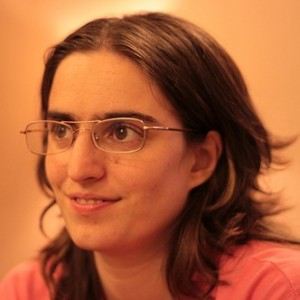
Photograph taken by Julia Palandri

When I think about Margarita, I always remember her as a friendly and welcoming person. Like most of the Debian Women members by the way. But she likes to spread some love and organized a Debian Appreciation Day for example. I think I met her in real life for the first time at Debconf 6 in Oaxtepec (Mexico). She deeply cares about Debian in general. She has proven it multiple times with her DPL candidacy and by giving talks like Making Debian rule again. One last thing, Debconf11 is just over and you will see that Debconf4 has had a big influence on Marga. My advice is simple: next time there s a Debconf on your continent, make sure to take a few days off and come to meet us! It really gives another picture of the Debian community. Now let s proceed with the interview. Raphael: Who are you? Margarita: I m Margarita Manterola, a Software Developer from Argentina. I work developing software in Python in a Debian-friendly company during the day, and teach programming at a local university during the evenings. I m married to Maximiliano Curia who is also a Debian Developer, most of our Free Software work has been done together. I only maintain a handful of packages in Debian, I m more interested in fixing bugs than in packaging new software. I ve also been a part of the organizing team of many of the previous Debian Conferences. One of the biggest commitments and the biggest success of my participation in Debian was being part of the organizing team of DebConf8, in Argentina. Raphael: How did you start contributing to Debian? Margarita: I started using Debian around 2000. Soon after we had learned the grips of general GNU/Linux usage, Maxy and I started giving an introductory course at our local university, and became quite involved with the local LUG. At some point in 2002/2003 I became a Debian Bug Reporter : most of my friends would report bugs to me, and I would then write them in the proper form to the BTS. I would also be very attentive about reporting any bugs that I might encounter myself trying to create good bug reports. The turning point in my participation in Debian was DebConf4 in Porto Alegre, Brazil. Being so close to Argentina meant that we felt specially invited to be there, and Maxy and I decided to go to DebConf for our honeymoon. We didn t really know much about DebConf dynamics, but we were really eager to learn more about Debian and become more involved. What happened was that meeting with DDs from all over the world transformed our lives, we became part of the Debian family and wanted to be more and more involved. Soon after that we both started maintaining packages and not long after that, applied to become Developers. The Debian Women project also meant a lot to me. I felt encouraged all along the way, encouraged to learn, to ask questions and to lose the fear of making mistakes. I became a Debian Developer on November 2005. Since then, Debian has always been one of the most important things I do in my life. Raphael There was a Debian Women BoF during debconf. What are the plans for Debian Women in the upcoming months? Margarita: I was not there in person, but thanks to the awesome work of the video team, and of Christian Perrier s typing efforts when something failed, I was able to experience much of what was discussed. :) One of the many points that came up during the BOF is that many people Want to help but don t know where to start or how to go about it. It s a challenge for the Debian Women project to find a way to allow these people to become involved in Debian through Mini projects or something like that. Another of the subjects that was brought up was the Debian Women mentoring project, which has been going on for quite a while now, but lacks enough publicity. So, we need to reach more people about it, and maybe also improve it with some templates, similar to the New Maintainer templates, so that mentees that don t know where to start have some sort of general path to follow. Raphael: You created very useful diagrams documenting how package maintainer scripts are invoked by dpkg. How did you do it and was that a useful experience? Margarita: I did those diagrams to be able to answer one of the questions in the NM templates, regarding the order of the maintainer script execution. Answering the question in text was basically copying and pasting the part of the Debian Policy that explained it, which wasn t really too clear for me, so I decided to go and make a diagram of it, so that I could really understand it. I did it by the best of all debugging techniques: adding prints to each of the maintainer scripts, and testing them in all the different orders that I could think of. It was a useful experience at the time, because I learned a lot of how maintainers scripts work. I didn t expect the diagrams to become so famous, though, I only did them to answer one NM question, that I assumed most other people had already answered before :) Raphael: You participated in a DPL election. This is a big commitment to make. What were your motivations? Margarita: As I said, I was part of the organizing team of DebConf8, in Argentina. Which was quite a success, a lot of people enjoyed it and praised the good work that had been done by the local team. During said DebConf8, I had a dream (it was almost a nightmare, actually): I woke up and just like that, I was the DPL. I spoke to some people about this dream and to my complete surprise many said that I should actually do it. After giving that possibility a year and a half of thoughts, during the 2010 campaign I was talked into participating myself as a candidate, and it was a very interesting experience. However, I m very glad that Zack got elected and not me, I think he makes a much better DPL that I would have made. Raphael: What s the biggest problem of Debian? Margarita: I think the main problem that we have is our communication, both inside the project and outside the project. Most of us are very technical people, our skills lay in the technical part of Debian (preparing packages, fixing bugs, writing software, administering systems) not in the social part. And thus, we lack a general empathy that is quite needed when interacting with people from all over the world. Raphael: Do you have wishes for Debian Wheezy? Margarita: Not particularly. I do want it to be a great release with good quality, stable software. I would also like to keep making Debian more and more universal with each release, making it more user friendly, more accessible, and more robust than any other previous release. Raphael: Is there someone in Debian that you admire for their contributions? Margarita: I admire a lot of people in Debian. There s a lot of people that contribute a lot of time to Debian, amounts of time that I can t begin to understand how they can afford. I admire Stefano Zacchiroli, our current project leader. And Steve McIntyre, the project leader before him. Also Bdale Garbee, who s also been a DPL in the past. Making this list I realize that Debian has been blessed by quite a number of great leaders in the past. I admire Holger Levsen, for his contributions to the DebConf video team, that have made it possible year after year for the whole project to participate in DebConf remotely. I admire Steve Langasek and Andreas Barth (etch is still my favourite release). I admire Christian Perrier for his work on internationalization. I admire Joerg Jaspert for the incredible amounts of time that he puts into Debian. And actually, I could go on admiring people all night long. I admire so many people that this interview could become a very boring list of names. I guess it s better to leave it at saying that Debian is lucky to have quite a lot of excellent hackers around.
Thank you to Marga for the time spent answering my questions. I hope you enjoyed reading her answers as I did. Subscribe to my newsletter to get my monthly summary of the Debian/Ubuntu news and to not miss further interviews. You can also follow along on Identi.ca, Twitter and Facebook.

14 comments Liked this article? Click here. My blog is Flattr-enabled.

Jan Wagner: (new and old) culture

After visiting the great Deadmau5 concert of his Europe Tour in Berlin 7 weeks ago, I m involved into a traditional cultural event on the technical side on the next weekend.

We are running the plattform for the online streaming of Lohengrin live from the Bayreuth Festival Theatre on Sunday, 14th August 2011. Usually we are coming together around noon and having a BBQ while keeping all the stuff up and running.

To get back into this millenium, we (yes, my girl and me) are at the Highfield festival the weekend afterwards. I guess you can find me at the white stage or at camp site. Keep on rocking!

Jan Wagner: Alone at home

Sometime it happens, that there are school holidays. As my lovely girl used to be a teacher, she has some time off at that period. So she left me with our kids yesterday to visit the grandparents.
It was two hours after leaving, when I was really surprized that I was sitting around and thinking about what to do next, as normaly the weekend are family time.
So I decided to take my bike and a paper map to get of for a trip. Since some years, I usually use my bike to escort the girls or when going to work, which is just a 5 minutes ride, so I thought that would be a great opportunitiy.
I took a backpack with raining clothes, mounted the bike helmet on it, in case I needed to go cross country, some water and my music player.
It was a great ride, beside that I realized I m not in the same condition as some years ago. Unfortunately this will likely not change in the next 12 mounth, as we have some projects in the queue we need to deal with. Hopefully we will solve that satisfactorily and have a bit more spare time afterwards.

Anyways .. 27,65km in 1h40 is not so bad, as it was hot and humid.
Ride summary:

Tanguy Ortolo: Useful options of rsync

rsync logo
rsync is often used to back up systems, with options such as:
-a --archive
recurse and preserve usual attributes: symlinks, devices and special files, user and groups ownership, permissions and times;
-H --hard-links
detect and preserve hard links;
-A --acls
preserve ACLs, if you use them;
-X --xattrs
preserve extended attributes, if you use them.
In addition to these common options, rsync has plenty others, so everyone has his own recipe, but I would like to share two useful options I discovered.--numeric-ids By default, rsync uses literal UIDs and GIDs if it can find matches in both the source and the destination. That is, if you have users jacquouille (1002) on your source system Reblochon, and a user jacquouille (1005) on your destination system Neufch tel, rsync will map them: files with an UID of 1002 will be backed up with an UID of 1005. This may or may not be wanted, but anyway you must be aware of it. For instance, if you have to restore Reblochon's home directories and do that by attaching a new drive locally to Neufch tel, you will end with mixed up UIDs. This option --numeric-ids forces rsync to use numeric IDs instead of trying to map them. It is notably needed for backups of jailed systems (BSD jails, OpenVZ, VServer, lxc ) which appear to have bogus IDs when seen from their host system because they have their own ID maps. --fake-super When you back up a full system or anything that requires keeping file ownership or device information, you need to have root privileges on the destination system. Without them, rsync would be unable to correctly chown() the destination files. This option --fake-super offers a way to back up privileged information without requiring root privileges. It works by adding special extended attributes such as user.rsync.%stat containing al this information. Of course, it still requires a destination file system that supports extended attributes. This provides a good way to push system backups without weakening your security by opening a root access on you destination system. For instance, I personally use it with rsyncd running as an unprivileged user.

Asheesh Laroia: Women, men, and accidentally being a jerk (at the Desktop Summit)

The first day of the Desktop Summit was yesterday, Saturday, August 6. I loved it and gave a presentation. There are two very different stories I can tell on the topic of gender equality in free software. I'll start with the bad.
It's pretty easy, in the U.S. at least, to get people of privilege to stop using terms that evoke centuries of oppression from slavery. It's harder to ask people to stop doing that to women. I'm writing this post to ask for that. There were two different times that people I generally respect used words that historically have been used to hurt and minimize women. "Cygnus Solutions is prostitutes." Dave Neary was delivering a talk (that I found impressively informative) called, "The cost of going it alone". When the talk covered the cost (in time and money) of getting your corporation's code into the community branch of an open-source project, he pointed out you could hire someone with the skills. Cygnus was the go-to company for that in the 1990s; to explain that Cygnus does not care who they work for, he said the sentence in bold. "The OpenSuSE Build Service is a slut." I was at a party at a hackerspace last night. Someone who I admire for his work in free in free software, both technical and community, was joking with me about that no one should compile (or use) GTK. I riffed on the joke and remarked, "The OpenSuSE build service will build anything." He replied with the sentence in bold. "Slut" and "prostitute" are terms that recall the objectification of women. They're terms that attempt to measure a woman's worth as a sex object. It's not nice to the many women in attendance to bring that up. You might not have thought this through. You might want to read one woman's take "On Sluts, Rape, and Fuckery". Give it a read. Then, give it a rest. The thing is, this matters all the time. That's why I have to call you two out on it. Now for the happy story.
While watching the Desktop Summit's intern showcase, I was floored. One hacker implemented Off-The-Record instant messaging for Telepathy. Another implemented pluggable back-ends for Getting Things GNOME, a task manager. I heard about overwhelming documentation and usability improvements to GNOME mainstays Cheese and Anjuta. In a short summer, these students made huge changes. For most of them, this was the first time they delivered any sort of presentation. Every single talk was delivered in earnest and enthusiasm. They told us about the work they had done and what might happen in the future. The other remarkable thing about the intern presentations was the demographics. I didn't keep count, but it seemed like as many women as men presented. We heard about hugely-important changes to documentation, code, and usability. People from central Europe, South Asia (yay), and Brazil took the stage. I hope that is the future of free software.
There are two things I want to see for our community. I want to know that people are respected and not reminded of centuries of oppression. I also want to see our community grow in size and diversity. I treat these issues as separate. We should choose respectful words when we speak not because we want more women to show up, but because it part of the expectation of decency that we should be able to expect from each other. And I failed the community when I did not make it clear there and then that this kind of language is not okay with me. It took me a day to understand this failure, so here I am writing this blog post. P.S. Thanks to Karen Rustad for her feedback while writing this post.

Lars Wirzenius: Missing roles in software: build engineers

The construction, deployment, and use of software involves a number of roles. I do not have an exhaustive list, but I have a couple in my list that seem to be surprising to some developers. In the traditional Unix (mainframe) model, there are three roles: In my personal reality distortion bubble, this model is badly broken, and has been since the middle of the 1990s. Here's an updated model: A common misconception is that distro developers merely compile software and shove the binaries into glorified tarballs. That is, of course, part of the job, but it's also the part that most distro's tools completely automate. There's a lot more to do, though. For example, just keeping track of known security problems among thirty thousand packages, and making or finding fixes for them, and testing the fixes, and releasing updates for them, takes up quite a bit of effort. Another thing distro developers have to spend effort on is dealing with the multitude of build systems upstream projects use. The freedom to experiment with different solutions is one of the cornerstones of free software development. However, when it comes to build systems, many of them are not serious experiments, and instead are quick hacks thrown together to imperfectly solve problems that sometimes should not exist at all. This highlights one role prominently still missing: build engineer. Their task is to solve the problem of taking the upstream source code, dealing with build-time configuration issues, actually building the software, and then installing it in whatever location the person installing the software wants it installed. Further, their task is to provide the software to do this in a sensible manner. Build engineers already exist, of course. For example, the developers of the autotools suite are such. Every upstream project also has someone who sets up autotools for their project, or some other build tools, or writes them from scratch for that project. However, what's lacking, perhaps, is recognition that build engineering is an important part of software development. Mostly, build systems are set up (or, worse, written) by upstream developers to fit their narrow view of how things should work, a view anchored in the old, broken model of roles. This attitude matters, because for the most part, build systems do not seem to be written to the same quality standards as the rest of the upstream software. For example, when an upstream developer writes a Makefile, and does not consider distro development, they'll often make it hard to differentiate between install-time location and run-time location of various components of the software. Thus, it might be hard for the Debian packager to get the software installed into debian/tmp rather than /usr/local, because the build system hardcodes debian/tmp/usr/lib/foo/plugins as the location of the plugins, since that's where the software gets installed, even if, in the Debian scenario, it's not where it gets run from. Luckily for much software these problems have been solved or avoided. Indeed, as crufty as autotools is, it's one of the things that has kept upstreams sane about their build systems, by providing such good tools that it's more work to write a new, bad one than to use autotools. We currently have roving bands of translators, who move from project to project and translate them into various natural languages. I would like to see a future where there are people dedicated to build engineering, who go from project to project and set up or fix their build problems. A good build system, once set up, should require a minimum of work to keep working. I'd also like to see much improvement in the build software. As good as autotools has been to free software, I'm sure there's a lot of room for improvement. For example, autotools requires setting up a bunch of boilerplate files in each project, which seems like something that could be avoided by relying on specific conventions. However, those improvements are a separate topic. I might go into them some day, if I decide to start developing build tools myself, but until then, I'll let those who do that decide how they want to do it. PS. There are lots more missing roles in my model of free software development, of course. For example, security engineers (find and fix problems, but also provide ways to prevent problems, or limit their scope), internal politicians (keep the project's human wheels from squeaking too much), diplomats (keep different projects from clashing too much), release engineers, etc. Someone should make an exhaustive list.

Christian Perrier: Jiwayeu Anivaichai' Bob

Today is our "historical" Spongebob (the one you can see here) birthday. Bob is indeed "born" on August 7th 2002, in Las Vegas, when my (at that time) kids won it in the Kids Casino in Circus Circus casino. Since then, Bob is one of the family mascots along with the world famous Titeps (these are born much earlier). The Perrier family has tons of stories about Bob and we developed a major "Sponge disease", becoming more and more crazy about this incredible character. So, happy 9th birthday, Bobob....and have a good meal tomorrow (the day after his birthday is the only day in one year where he eats something....the rest of the year, Bob only drinks whatever liquid comes close to him). I know that Jean-Baptiste won't forget to feed you.

Debian Med: Debian Med BOF @ DebConf 11 in Banja Luka

Andreas Tille had a BOF about Debian Med at DebConf 11 in Banja Luka at 30.7.2011. The slides as well as a video record can be downloaded.
Andreas had given an overview about the current status of Debian Med. It can be stated that the project which is one out of several Debian Pure Blends had made good progress over its nine years of existence. While several applications which might be used in medical care in the wider sense (which also stretches to microbiological research) were added to Debian so that we have a count of close to 200 packages it was also stated that the existence of Debian Med itself has attracted new Developers to the Debian project. Saying this Free Software for medicine profits from the Debian distribution and Debian was able to gather new manpower because this software was included.
The following TODO items were raised in the BOF
Visibility:
Plans for the next Debian Release:

Antonio Terceiro: Playing with JPEG quality and file size

This is probably no news at all for graphics/image processing experts, but its something I've just learnt myself and I thought it would be fun to share. I am writing a static HTML photo algum generator and was a little suspicious of the size of the generated JPEG images. I thought "well, these JPEGs should not be that large ..." I did some quick research and found out that ImageMagick uses JPEG quality 92 by default and was curious how file size would vary as I changed the output quality. Then I took an image and produced thumbnails for it with the "JPEG quality" parameter ranging from 1 to 100 to check 1) how the file size varies with quality and 2) how much quality actually makes any difference when viewing the images. To generate the thumbnails with varying quality, I did the following:
$ for i in $(seq -f %03g 1 100); do convert -scale 640x480 -quality $i /path/to/original.jpg $i.jpg; echo $i; done
Then I generated a data file by calculating the size of each file with du and piping the results through sed and awk:
$ du -b [0-9]*.jpg   sed 's/.jpg//'   awk '  print $2 " " $1  '
The generated data file looks this, with JPEG quality in first column and file size in bytes in the second column:
001 20380
002 20383
003 20634
004 21106
[...]
Regarding to file size, it seems like between 1 and 50, file size grows sublinearly with quality. Beyond that, the curve reaches an inflection point and grows in a way that looks, if not exponentially, at least polynomially.Jpeg-file-size-by-quality The above plot was produced in a R session that looked like this:
$ R
R version 2.13.1 (2011-07-08)
Copyright (C) 2011 The R Foundation for Statistical Computing
ISBN 3-900051-07-0
Platform: i486-pc-linux-gnu (32-bit)
R   um software livre e vem sem GARANTIA ALGUMA.
Voc  pode redistribu -lo sob certas circunst ncias.
Digite 'license()' ou 'licence()' para detalhes de distribui o.
R   um projeto colaborativo com muitos contribuidores.
Digite 'contributors()' para obter mais informa es e
'citation()' para saber como citar o R ou pacotes do R em publica es.
Digite 'demo()' para demonstra es, 'help()' para o sistema on-line de ajuda,
ou 'help.start()' para abrir o sistema de ajuda em HTML no seu navegador.
Digite 'q()' para sair do R.
> png()
> data <- read.table('points.dat')
> quality <- data[[1]]
> quality
  [1]   1   2   3   4   5   6   7   8   9  10  11  12  13  14  15  16  17  18
 [19]  19  20  21  22  23  24  25  26  27  28  29  30  31  32  33  34  35  36
 [37]  37  38  39  40  41  42  43  44  45  46  47  48  49  50  51  52  53  54
 [55]  55  56  57  58  59  60  61  62  63  64  65  66  67  68  69  70  71  72
 [73]  73  74  75  76  77  78  79  80  81  82  83  84  85  86  87  88  89  90
 [91]  91  92  93  94  95  96  97  98  99 100
> filesize <- data[[2]]
> filesize
  [1]  20380  20383  20634  21106  21551  22012  22469  22878  23323  23715
 [11]  24103  24494  24952  25327  25725  26127  26507  26886  27216  27550
 [21]  27917  28288  28627  28945  29271  29583  29919  30280  30516  30813
 [31]  31099  31367  31679  31873  32232  32538  32704  33072  33324  33443
 [41]  33860  34055  34253  34633  34804  35074  35216  35491  35871  35935
 [51]  36030  36443  36743  36898  37120  37382  37726  38077  38307  38581
 [61]  39002  39270  39700  39962  40388  40762  41086  41629  42062  42544
 [71]  43048  43392  44062  44824  45023  45682  46532  47347  47833  48701
 [81]  49612  50423  51694  52637  53635  55243  56340  58304  59709  62162
 [91]  64207  66273  70073  74617  79917  86745  94950 105680 128158 145937
> plot(quality, filesize, xlab = 'JPEG Quality', ylab = 'File size')
> 
Save workspace image? [y/n/c]: y
Looking at the actual generated thumbnails, somewhere after quality > 60 I stopped noticing the difference between increasing quality factors. Settling with a default quality of 75 seems to be good enough: the resulting static HTML album generated from a folder with 82 pictures dropped from 12MB with the default ImageMagick quality factor to 6MB with quality 75, with very little perceivable image quality loss.

6 August 2011

Andrew Pollock: [life] RIP Margaret Rutter

I got a call from Mum today to inform me that my grandmother had passed away last night, Brisbane time, at 94 years of age. Four generations If you want to get all genealogically correct, she's technically my step-maternal grandmother, but she's the grandmother I spent the most time with, growing up, so I'm not going to split hairs. It's come as a bit of a shock, because despite having had progressively worse dementia for probably over a decade, she's been in incredibly good physical condition. I think it was in her 70's that she had a heart valve replaced, and I for one had been expecting that to be the thing to wear out and take her down slowly. I last saw her in the flesh in January, when the above photo was taken, and more recently a few weeks ago on Skype. She was recently moved from an aged-care hostel in Toowoomba to a nursing home in Brisbane, as her dementia had progressed beyond the point that she could be cared for in the previous facility. Mum had visited her earlier in the day yesterday, and she was fine, but apparently the staff found her unconscious at around 5pm when they went to get her for dinner. She was taken to the Royal Brisbane and Women's Hospital where it was determined she had suffered from a stroke, and she passed away later that evening at around 11:30pm. So all in all, she had a very good innings, and of all the ways to leave this world, this was one of the quicker and more painless ways to do it. That's the problem with a quick exit - it's usually completely unexpected. It's looking like the funeral will be on Friday, and I've got a flight tentatively booked to leave on Wednesday and get in on Friday morning and return again on Monday. At the time I arranged this, I'd completely forgotten that I was flying to Calgary on Monday night to babysit the son of friends, while they go to the US Consulate for a visa appointment. Fortunately this travel doesn't conflict with that travel, it just means I'll be away from work for longer, and spending a lot of time inside pressurized tubes. I'm fairly confident with all of the short international trips, I'm going to look like a drug mule or something, and someone's going to thoroughly cavity search me.

Bdale Garbee: FreedomBox in Banja Luka

FreedomBox activities at Debconf11 I spent the last two weeks of July 2011 in Banja Luka. The occasion was the annual Debian developer's conference, Debconf11 and preceding work week known as Debcamp. This was my tenth successive year attending Debconf, and I had a very productive and pleasant time! The facilities were good, the local team was friendly, enthusiastic, and very helpful, and in addition to giving three talks and hosting a couple panel discussions, I managed to put a burst of energy into work on FreedomBox. Several other developers working on FreedomBox were also present, and a good number of Sheeva and Dream plugs were evident in the hacklabs sporting new FreedomBox stickers. Working together in the same place for several days, we made good progress on several projects, and also had some great discussions about what we want to do going forward. image building tools For some time, I've been working towards a light-weight tool set to build FreedomBox software images. Shortly before Debconf started, I chose the name 'freedom-maker' for this tool and shared a link to a readable copy of my git repository with other developers I expected to work with in Banja Luka. With input from Bert Agaz and Jonas Smedegaard during Debcamp, freedom-maker went from almost useful to actually useful. It still deserves work to be more useful to others, but I have now pushed a copy of the git repository to git.debian.org so that we can take advantage of the tools supported there to enable others to more easily contribute to the code. Very soon, Bert plans to add support to freedom-maker for using Lars Wirzenius' vmdebootstrap to build x86 images suitable for testing in a virtualized environment. At the same time, we plan to refactor the existing code slightly to enable lists of desired packages for the various image flavors we expect to produce independently of the configuration for each specific image building tool. Jonas continued in parallel to work on his alternate packaging toolset boxer. It offers some potentially interesting features for the future, and we may eventually merge some or all of it into freedom-maker, but for now it remains a separate utility. uAP user space tools Several weeks ago, we received from Marvell the source code to two user space programs that are necessary for configuring and monitoring the binary firmware provided for the uAP wireless chip used in the DreamPlug. Early during my stay in Banja Luka, I packaged these for Debian as uaputl and uapevent, and I am pleased to note that they were quickly accepted into the archive and are now present in Debian mirrors. u-boot Another bit of code received very shortly before Debconf started was the source for the version of u-boot shipped by Globalscale in the DreamPlug units we're working with. During Debcamp, Clint Adams passed a copy of this source to Jason Cooper, who was already trying to add support for the DreamPlug to upstream u-boot, but had stalled due to a lack of information. Jason has now merged his own work with the sources we got from the manufacturer, and is making good progress towards merging DreamPlug support into upstream u-boot. Once that happens, we should be able to flash our Sheeva and Dream plug devices with a u-boot image built from the source in the Debian u-boot package, in the process enabling things that matter to us like the ability to boot from an ext2 partition, and hopefully the ability to execute command scripts from that partition instead of having to hard-code kernel filenames in flash. This will allow us to support the ongoing effort in Debian to move away from the need for kernel symlinks. DreamPlug kernels With respect to kernels, another work stream at Debconf primarily involving H ctor Or n and Nick Bane was to analyze the current state of the patches from Marvell and Globalscale used to support the DreamPlug against both upstream and current Debian kernel sources. To my surprise and our collective pleasure, the remaining patch set required against current upstream kernels is much smaller than we previously believed! There are still several patches critical to us that are not merged upstream, but the work remaining to be able to build images for our devices from mainline and Debian kernel source trees now seems like something we might be able to complete before Debian's next stable release. One of our discoveries during the u-boot and kernel work during Debconf was that Globalscale did not obtain a new machine id for the DreamPlug, but instead re-used the one for the GuruPlug series, despite there being some differences in the hardware that require at least one additional driver. After much discussion, we plan to continue using the existing machine id instead of requesting another, particularly because the ARM kernel community has apparently stopped issuing new ids for the moment. We will add a new kernel config option for the DreamPlug, however, and are likely to build distinct Sheeva and Dream kernel packages that do not require initrd for use in FreedomBox images, even if doing so is not strictly necessary. This will allow us to optimize both the in-memory footprint and boot times for our devices. software configuration Another area of investigation in Banja Luka was technology for package configuration. Mirsal Ennaime performed various tests using debconf and Config::Model, with some results reflected in this commit relating to configuring the bitcoind daemon in the bitcoin package for Debian. identity and trust management While we did not actually do any FreedomBox specific work on the trust management layer we know is necessary, after several rounds of conversation, I am now more convinced than ever that the right path forward is to base our trust relationships on OpenPGP keys using GnuPG and Monkeysphere as starting software elements. Our thinking to date is captured on an Identity Management page in the wiki. communication services Another thing that became fairly clear to me during discussions at Debconf is that in the near term, planning to build communication services around XMPP is the approach most likely to give good results. Investigating the software choices available to build an interesting XMPP infrastructure is now a high priority for me. Jonas has done some work towards configuring and integrating ejabberd or Prosody, I've started studying yate as a possible call manager and VoIP server choice with XMPP/jingle support, and we await with great interest a release from the Buddycloud developers to evaluate as a possible basis for deploying social network services. Some of these software choices will lead us to use Apache as our web services base technology because of the need for features that only it supports well among daemons that are Free Software. Jonas completed packaging GNU Sip Witch for Debian, and it is now available in the mirror network. Tzafrir Cohen and Jonas did some initial testing on its use. documentation A number of new wiki pages were written (or at least started) in order to sum up ideas, design various aspects of FreedomBox, and reflect discussions that happened during DebConf11. A lot of work is needed to complete these pages though, as well as others to capture more of the current state of the project. press coverage Finally, while in Banja Luka I got some great press coverage for FreedomBox! On Sunday the 24th, I was interviewed by the main television network serving the Republika Srpska. This led to a couple of minutes of coverage near the top of the national news program that night, immediately following the lead story about the President and several ministers appearing at Debian Day that morning to help open the conference. This interview was later re-used in another TV program that summarized Debconf11. On the morning of Thursday the 28th, I was part of a small group that spent more than an hour meeting with the Minister of Science and Technology in his office, and the relationship between Debian and our work on FreedomBox was one of the items of discussion in that meeting and the associated press conference. I'm told this resulted in more press coverage, but if true I have not seen it yet. summary On Friday afternoon the 29th, I gave a talk in the main Debconf program containing a FreedomBox Progress Report . In it, I talked about the structure of the FreedomBox Foundation, progress the foundation has made, and the work that was still then underway in Banja Luka. It was streamed live over the internet, and replays are available online. The reaction from Debian developers present was very positive, which was good to learn since by that time my energy level was quite low after the nearly two weeks of intense technical and social interaction that is Debconf! All in all, we got lots of work done on FreedomBox in Banja Luka, enough that I think at least the next few steps along the road towards an eventual "1.0" release of a reference implementation are now much clearer than they were two weeks ago!

Julien Valroff: DSPAM 3.10.0 released

The DSPAM project has recently released the 3.10.0 version of free content-based spam filter. Besides various bug fixes, the most important change is the switch to the AGPL-3 license (from GPL-2). The Debian packages are almost ready, but still require further testing as they have been largely amended, especially to add multiarch support. I expect to upload them to unstable within the next week or so, and, if no major problem happens in the meantime, will upload them to squeeze-backports as soon as they reach testing.

Alexander Wirt: Listmaster stuff

Sometimes it helps if your baby thinks it is a good idea to get you up at 05:00 in the morning, so I was able to do some listmaster stuff today. I worked on several bugs and I added the following new mailinglists:

Thanks for this work should go to melissa.

5 August 2011

Lars Wirzenius: Using OpenPGP subkeys in Debian development

I don't want to keep my GPG private keys on my laptop, so I've been keeping them on an encrypted USB drive instead, and loading them onto the laptop only when needed. That's cumbersome, when making Debian packages, and needing to sign the packages frequently. So I'm going to start using subkeys instead. However, I couldn't find good documentation for that, so after figuring things out, I wrote something that will hopefully be useful for others. It's at http://wiki.debian.org/subkeys for your fixing pleasure.

Kai Wasserb ch: YouTube: download 1080p videos when CLive is unavailable

Todays addition to the tips series has a funny history. A friend of mine was stuck in an envrionment, where she couldn't install Perl or CLive but PHP with some PECL modules was installed. She needed to download a few videos for a presentation, but didn't know how to fetch the videos from YouTube. So I was asked to help. ;-) After some pondering of the problem, I came up with the following script:
<?php
/*
 * Copyright (C) 2011  Kai Wasserb ch <kai@dev.carbon-project.org>
 *
 * Small little script to help out in the absence of Perl/Clive but with
 * PHP present.
 *
 * License: GPLv3 <http://www.gnu.org/licenses/gpl-3.0.txt>
 *
 */
if(php_sapi_name() !== 'cli')
  die("This script needs to be run on the CLI!\n");
if($argc !== 2 )
  die("No URL given on CLI or too much parameters!\n");
// Script expects a URL like http://www.youtube.com/watch?v=[ID]
if(filter_var($argv[1], FILTER_VALIDATE_URL, FILTER_FLAG_QUERY_REQUIRED) === false)
  die("Parameter given as URL does not seem to be an URL or contain a query!\n");
if(!$ch = curl_init($argv[1]))
  die("Couldn't init cURL handle for  ".$argv[1]." \n");
curl_setopt($ch, CURLOPT_HEADER,          false );
curl_setopt($ch, CURLOPT_RETURNTRANSFER,  true  );
$htmlsource = curl_exec($ch);
$error = curl_error($ch);
curl_close($ch);
if($htmlsource === false)
  die('cURL returned an error: '.$error."\n");
unset($error);
if(!preg_match('/url_encoded_fmt_stream_map=([a-zA-Z0-9%\.,\-_]+)&/',
               $htmlsource, $matches))
  die("No matches found for url_encoded_fmt_stream_map!\n");
$final = NULL;
foreach(explode(',', urldecode($matches[1])) as $decoded_url_map)  
  parse_str($decoded_url_map, $tmp);
  if($tmp['quality'] === 'hd1080')  
    $final = $tmp;
    $final['url']   = urldecode($tmp['url']);
    // $final['type']  = urldecode($tmp['type']); // Not used
    break;  // Not really needed, but should save us some
            // iterations, since 1080p seems to come always first.
   
 
if(!is_array($final)   is_null($final))
  die("No 1080p version of the video was found!\n");
if(!preg_match('/<meta property="og:title" content="(.*)"/', $htmlsource, $title))
  die("Couldn't determine title!\n");
$ftitle = preg_replace('/[^\w\d]*/', '', $title[1]);
printf("Found hd1080-quality video for  %s .\n", $argv[1]);
printf("Downloading to %s.mp4 ...", $ftitle);
if(!$ch=curl_init($final['url']))
  die("\nCouldn't create cURL handle for  ".$final['url']." \n");
if(!$fh = fopen(getcwd().DIRECTORY_SEPARATOR.$ftitle.'.mp4', 'wb'))  
  curl_close($ch);
  die("\nCouldn't create  ".$ftitle.".mp4 .\n");
 
curl_setopt($ch, CURLOPT_HEADER,         false );
curl_setopt($ch, CURLOPT_FILE,           $fh   );
curl_setopt($ch, CURLOPT_BINARYTRANSFER, true  );
if(!curl_exec($ch))  
  $error = curl_error($ch);
  fclose($fh);
  curl_close($ch);
  die("\nCouldn't download video. cURL error: ".$error."\n");
 
curl_close($ch);
fclose($fh);
printf(" done.\n");
?>
You can download it from my website or you can just copy the code given above into a file. However you get the code, the execution will look like: php -f /path/to/script.php http://www.youtube.com/watch?v=[ID]. Now, before I get a lot of e-mails telling me, what could be improved on the script or its other limitations (like only being able to download 1080p videos), please remember that it was hacked together for a simple use case with no real intent on my part to use it for anything else. It only later occurred to me, that others might be in a similar pinch sometime. Thus I'm releasing the above code "as is" under the GNU GPLv3. Therefore you're free to adapt it to your needs. Please also note, that I'm not recommending using the above script instead of CLive. If you can install CLive, do so and don't bother with the above.

Wouter Verhelst: n900 broken

Yesterday, as I was trying to charge my N900, something bad happened. I must have applied slightly too much pressure when I tried to enter the battery charger into the micro-USB port, and I heard something crack. Next thing I know, I see the micro-USB port is not where it's supposed to be anymore, and it won't charge anymore, at all. This isn't something that's unfixable, but it's not something that's in my skillset to fix. So I'll need to send it in for repairs, or some such. Since the battery was almost flat, and the red traffic light behind which I'd been waiting at the time switched to green, I just switched it off to save battery life, and moved on. When I got home, I tried switching it on again so that I could take a backup of the device before sending it in for repair and/or finding someone to fix it, but the battery was apparently already quite dead at the time -- I could boot it, I could start the backup application, but around the time I pushed on the 'new backup' button, the phone decided that the battery level was just too low and powered itself down. D'oh. So, here's a silly question: Does anyone have the necessary skills required to help me solder the micro-USB connector back on? Alternatively, does anyone have a (charged) Nokia BL-5J battery that I can borrow for a few minutes so I can create a backup and store it on the micro-sd card? Your help is very much appreciated. Mean time, I'll be off buying a temporary replacement phone now.

Rudy Godoy: Compute Clusters Integration for Debian Development and Building Report 4

Hello, this is the fourth report for the project. First, I d like to
apologize for being late, I took a short trip over the weekend and
missed the deadline. This time I ve good news for my project. As
expected I ve made the necesary changes to have Eucalyptus support ARM
images. The approach was extending and exposing an arch field that
will be used by libvirt s XML domain file. I m working currently on
having the involved functions working with the new extension and I
expect to have this done over the middle of the next week. What was done so far

- Extended the ncInstance_t struct on util/data.h adding the archId
parameter. This struct keeps the information regarding a node (nc),
say RAM, Kernel, etc. Currently it has no way to set an arch in order
to be used later. typdef struct ncInstance_t
...
char reservationId[CHAR_BUFFER_SIZE];
char userId[CHAR_BUFFER_SIZE];
char archId[CHAR_BUFFER_SIZE]; // arch field added
int retries;
...

The Eucalyptus team was OK with this approach that I ve proposed few
weeks ago. For all my changes the approach is maintain compatibility
with existing features.
We still have to define if we are setting a default value, say amd64,
or keep it unset until the user sets one. For now we will be supporting
amd64 and arm as valid fields. - Modified the allocate_intance() function to support the archId
field. This involved adding a new parameter and detecting whether its
present and setting de value accordingly. This function is later used
by the doRunInstance() function in node/handlers_kvm.c - Modified the involved functions that are called by the KVM handlers
and result in passing parameters to the XML file generator for being
used by libvirt s and KVM and have the image running under
Eucalyptus. The new parameters and field are not required and only
being used if they are set with a value. The archId parameter has been
added as the last one, so existing function calls can work. This could
be rearranged later, but will involve a more extensive revision with
Eucalyptus developers. - I ve set a git local repo in order to keep track of the changes to
Eucalyptus. Since this part is a sort of a Eucalyptus branch I took
this approach. Steffen and I are discussing whether to release this as
a pkg-eucalyptus branch (as dpatch, using existing packaging). Either
way I m putting the diff files form my git repo over the wiki and will
put them on my site too. I plan to use git-svn in order to send them
later to the pkg-eucalyptus repo once we are settled with this. - Updated the project s wiki[1] page with information regarding all that s
involved on my work, so it can be re-played or resumed later. 1- http://wiki.debian.org/SummerOfCode2011/BuildWithEucalyptus/ProjectLog What I plan to to over the next weeks
-
- Finish the modifications to the relevant functions. Expected dealine:
next week.
- Do integration tests:
Write a test program, there s an example under node/ that could be
helpful.
Generate the XML domain definition from Eucalyptus functions. The
full cycle: handler_kvm -> allocate_instance -> get_instance_xml ->
have the XML file properly generated -> qemu-kvm runs the instance
using the proper emulator (arm in our case).
- Test runnning the image I ve worked on the project s begining.
- Fixing bits and cooperate with the pkg-eucalyptus team on the
packaging bits.
- Talk to Eucalyptus so they adopt our patches.
- Rock and roll :) What would be nice to have after the project ends
-
- The Debian packaging *needs* work. I ve already discussed this on the
pkg-eucalyptus mailing list. I ve also committed myself to help on
that side even after the SoC ends.
- Talk with upstream and Ubuntu to coordinate the packaging efforts and
modifications to the software.
- Get adopters to use our work :) By now, few weeks about to finish the SoC, I can say that it s been a
good experience and as I stated I m planning to keep maintaing/working
on the software after that. I ve already joined the pkg-eucalyptus team
and plan to contribute actively. I m sad I didn t managed to get Debconf
this year, time was a constraint again, hopefully we can meet in 2012! I
guess that all by now! Best regards,
Rud

Next.

Previous.