BBI Kenya and live Supreme Court streaming on YT
The last few weeks have been unrelenting as all sorts of news have been coming in, mostly about the downturn in the Economy, Islamophobia in India on the rise, Covid, and electioneering. However, in the last few days, Kenya surpassed India in live-streaming proceeds in a Court of Appeals about BBI or Building Bridges Initiative. A background filler article on the topic can be found in BBC. The live-streaming was done via YT and if wants to they can start from
https://www.youtube.com/watch?v=JIQzpmVKvro
One can also subscribe to K24TV which took the initiative of sharing the proceedings with people worldwide. If K24TV continues to share SC proceedings of Kenya, that would add to the soft power of Kenya. I will not go into the details of the case as Gautam Bhatia who has been following the goings-on in Kenya is a far better authority on the subject. In fact, just recently he shared about another Kenyan judgment from a trial which can be seen here. He has shared the proceedings and some hot takes on the Twitter thread started by him. Probably after a couple of weeks or more when he has processed what all has happened there, he may also share some nuances although many of his thoughts would probably go to his book on Comparative Constitutional Law which he hopes to publish maybe in 2021/2022 or whenever he can. Such televised proceedings are sure to alleviate the standing of Kenya internationally. There has been a proposal to do similar broadcasts by India but with surveillance built-in, so they know who is watching. The problems with the architecture and the surveillance built-in have been shared by Srinivas Kodali or DigitalDutta quite a few times, but that probably is a story for another day.
Uttar Pradesh Population Control BillHindus comprise 83% of Indian couples with more than two child children
The U.P. Population Bill came and it came with lot of prejudices. One of the prejudices is the idea that Muslims create or procreate to have the most children. Even with data is presented as shared above from NFHS National Family Health Survey which is supposed to carry our surveys every few years did the last one around 4 years back. The analysis from it has been instrumental not only in preparing graphs as above but also sharing about what sort of death toll must have been in rural India. And as somebody who have had the opportunity in the past, can vouch that you need to be extremely lucky if something happens to you when you are in a rural area.
Even in places like Bodh Gaya (have been there) where millions of tourists come as it is one of the places not to be missed on the Buddhism tourist circuit, the medical facilities are pretty underwhelming. I am not citing it simply because there are too many such newspaper reports from even before the pandemic, and both the State and the Central Govt. response has been dismal. Just a few months back, they were recalled. There were reports of votes being bought at INR 1000/- (around $14) and a bottle or two of liquor. There used to be a time when election monitoring whether national or state used to be a thing, and you had LTO s (Long-time Observers) and STO s (Short-Term Observers) to make sure that the election has been neutral. This has been on the decline in this regime, but that probably is for another time altogether. Although, have to point out the article which I had shared a few months ago on the private healthcare model is flawed especially for rural areas. Instead of going for cheap, telemedicine centers that run some version of a Linux distro. And can provide a variety of services, I know Kerala and Tamil Nadu from South India have experimented in past but such engagements need to be scaled up. This probably will come to know when the next time I visit those places (sadly due to the virus, not anytime soonish.:( ) .
Going back to the original topic, though, I had shared Hans Rosling s famous Ted talk on population growth which shows that even countries which we would not normally associate with family planning for e.g. the middle-east and Africa have also been falling quite rapidly. Of course, when people have deeply held prejudices, then it is difficult. Even when sharing China as to how they had to let go of their old policy in 2016 as they had the thing for leftover men . I also shared the powerful movie So Long my Son. I even shared how in Haryana women were and are trafficked and have been an issue for centuries but as neither suits the RW propaganda, they simply refuse to engage. They are more repulsed by people who publish this news rather than those who are actually practicing it, as that is culture . There is also teenage pregnancy, female infanticide, sex-selective abortion, etc., etc. It is just all too horrible to contemplate.
Personal anecdote I know a couple, or they used to be a couple, where the gentleman wanted to have a male child. It was only after they got an autistic child, they got their DNA tested and came to know that the gentleman had a genetic problem. He again forced and had another child, and that too turned out to be autistic. Finally, he left the wife and the children, divorced them and lived with another woman. Almost a decade of the wife s life was ruined. The wife before marriage was a gifted programmer employed at IBM. This was an arranged marriage. After this, if you are thinking of marrying, apart from doing astrology charts, also look up DNA compatibility charts. Far better than ruining yours or the women s life. Both the children whom I loved are now in heaven, god bless them
If one wants to, one can read a bit more about the Uttar Pradesh Population bill here. The sad part is that the systems which need fixing, nobody wants to fix. The reason being simple. If you get good health service by public sector, who will go to the private sector. In Europe, AFAIK they have the best medical bang for the money. Even the U.S. looks at Europe and hopes it had the systems that Europe has but that again is probably for another day.
South Africa and India long-lost brothers.
As had shared before, after the 2016 South African Debconf convention, I had been following South Africa. I was happy when FeesMustFall worked and in 2017 the then ANC president Zuma declared it in late 2017. I am sure that people who have been regular visitors to this blog know how my position is on student loans. They also must be knowing that even in U.S. till the 1970s it had free education all the way to be a lawyer and getting a lawyer license. It is only when people like Thurgood Marshall, Martin Luther King Jr., and others from the civil rights movement came out as a major force that the capitalists started imposing fees. They wanted people who could be sold to corporate slavery, and they won. Just last week, Biden took some steps and canceled student loans and is working on steps towards broad debt forgiveness.
Interestingly, NASA has an affirmative diversity program for people from diverse backgrounds, where a couple of UC (Upper Caste) women got the job. While they got the job, the RW (Right-Wing) was overjoyed as they got jobs on merit . Later, it was found that both the women were the third or fourth generation of immigrants in U.S.
NASA Federal Equal Opportunity Policy Directive NPD 3713 2H
Going back to the original question and topic, while there has been a concerning spate of violence, some calling it the worst sort of violence not witnessed since 1994. The problem, as ascertained in that article, is the same as here in India or elsewhere.
Those, again, who have been on my blog know that merit 90% of the time is a function of privilege and there is a vast amount of academic literature which supports that.
If, for a moment, you look at the data that is shared in the graph above which shows that 83% of Hindus and 13% of Muslims have more than 2 children, what does it show, it shows that 83+13 = 96% of the population is living in insecurity. The 5% are the ones who have actually consolidated more power during this regime rule in India. Similarly, from what I understood living in Cape Town for about a month, it is the Dutch Afrikaans as they like to call themselves and the immigrants who come from abroad who have enjoyed the fruits of tourism and money and power while the rest of the country is dying due to poverty. It is the same there, it is the same here. Corruption is also rampant in both countries, and the judiciary is virtually absent from both communities in India and SA. Interestingly, South Africa and India have been at loggerheads, but I suspect that is more due to the money and lobbying power by the Dutch. Usually, those who have money power, do get laws and even press on their side, and it is usually the ruling party in power. I cannot help but share about the Gupta brothers and their corruption as I came to know about it in 2016. And as have shared that I m related to Gupta s on my mother s side, not those specific ones but Gupta as a clan. The history of the Gupta dynasty does go back to the 3rd-4th century.
Equally interesting have been Sonali Ranade s series of articles which she wrote in National Herald, the latest on exports which is actually the key to taking India out of poverty rather than anything else. While in other countries Exporters are given all sort of subsidies, here it is being worked as how to give them less. This was in Economic times hardly a week back Export incentive schemes being reduced
I can t imagine the incredible stupidity done by the Finance Minister. And then in an attempt to prove that, they will attempt to present a rosy picture with numbers that have nothing to do with reality.
Interestingly enough, India at one time was a major exporter of apples, especially from Kashmir. Now instead of exporting, we are importing them from Afghanistan as well as Belgium and now even from the UK. Those who might not want to use the Twitter link could use this article. Of course, what India got out of this trade deal is not known. One can see that the UK got the better deal from this. Instead of investing in our own capacity expansion, we are investing in increasing the capacity of others. This is at the time when due to fuel price hike (Central taxes 66%) demand is completely flat. And this is when our own CEA (Chief Economic Adviser) tells us that growth will be at the most 6-7% and that too in 2023-2024 while currently, the inflation rate is around 12%. Is it then any wonder that almost 70% are living on Govt. ration and people in the streets of Kolkata, Assam, and other places have to sell kidneys to make sure they have some money for their kids for tomorrow. Now I have nothing against the UK but trade negotiation is an art. Sadly, this has been going on for the last few years. The politicians in India fool the public by always telling of future trade deals. Sadly, as any businessman knows, once you have compromised, you always have to compromise. And the more you compromise, the more you weaken the hand for any future trade deals. IIT pupil tries to sell kidney to repay loan, but no takers for Dalit organ.
The above was from yesterday s Times of India. Just goes to show how much people are suffering. There have been reports in vernacular papers of quite a few people from across regions and communities are doing this so they can live without pain a bit.
Almost all the time, the politicians are saved as only few understand international trade, the diplomacy and the surrounding geopolitics around it. And this sadly, is as much to do with basic education as much as it is to any other factor
Suli Deals
About a month back on the holy day of Ramzan or Ramadan as it is known in the west, which is beloved by Muslims, a couple of Muslim women were targeted and virtually auctioned. Soon, there was a flood and a GitHub repository was created where hundreds of Muslim women, especially those who have a voice and fearlessly talk about their understanding about issues and things, were being virtually auctioned. One week after the FIR was put up, to date none of the people mentioned in the FIR have been arrested. In fact, just yesterday, there was an open letter which was published by livelaw. I have saved a copy on WordPress just in case something does go wrong. Other than the disgust we feel, can t say much as no action being taken by GOI and police.
IT Rules 2021 and Big Media
After almost a year of sleeping when most activists were screaming hoarsely about how the new IT rules are dangerous for one and all, big media finally woke up a few weeks back and listed a writ petition in Madras High Court of the same. Although to be frank, the real writ petition was filed In February 2021, classical singer, performer T.M. Krishna in Madras High Court. Again, a copy of the writ petition, I have hosted on WordPress. On 23rd June 2021, a group of 13 media outlets and a journalist have challenged the IT Rules, 2021.
The Contention came from Digital News Publishers Association which is made up of the following news companies: ABP Network Private Limited, Amar Ujala Limited, DB Corp Limited, Express Network Pvt Ltd, HT Digital Streams Limited, IE Online Media Services Pvt Ltd, Jagran Prakashan Limited, Lokmat Media Private Limited, NDTV Convergence Limited, TV Today Network Limited, The Malayala Manorama Co (P) Ltd, Times Internet Limited, and Ushodaya Enterprises Private Limited. All the above are heavyweights in the markets where they operate. The reason being simple, when these media organizations came into being, the idea was to have self-regulation, which by and large has worked. Now, the present Govt. wants each news item to be okayed by them before publication. This is nothing but blatant misuse of power and an attempt at censorship. In fact, the Tamil Nadu BJP president himself made a promise of the same. And of course, what is true and what is a lie, only GOI knows and will decide for the rest of the country. If somebody remembers Joseph Goebbels at this stage, it is merely a coincidence. Anyways, 3 days ago Supreme Court on 14th July the Honorable Supreme Court asked the Madras High Court to transfer all the petitions to SC. This, the Madras High Court denied as cited/shared by Meera Emmanuel, a reporter who works with barandbench. The Court says nothing doing, let this happen and then the SC can entertain the motion of doing it that level. At the same time, they would have the benefit of Madras High Court opinion as well. It gave the center two weeks to file a reply. So, either of end-week of July or latest by August first week, we might be able to read the Center s reply on the same. The SC could do a forceful intervention, but it would lead to similar outrage as has been witnessed in the past when a judge commented that if the SC has to do it all, then why do we need the High Courts, district courts etc. let all the solutions come from SC itself. This was, admittedly, frustration on the part of the judge, but due in part to the needless intervention of SC time and time again. But the concerns had been felt around all the different courts in the country.
Sedition Law
A couple of days ago, the Supreme Court under the guidance of Honorable CJI NV Ramanna, entertained the PIL filed by Maj Gen S G Vombatkere (Retd.) which asked simply that the sedition law which was used in the colonial times by the British to quell dissent by Mahatma Gandhi and Bal Gangadhar Tilak during the Indian freedom struggle. A good background filler article can be found on MSN which tells about some recent cases but more importantly how historically the sedition law was used to quell dissent during India s Independence. Another article on MSN actually elaborates on the PIL filed by Maj Gen S. G. Vombatkere. Another article on MSN tells how sedition law has been challenged and changed in 10 odd countries. I find it equally sad and equally hilarious that the Indian media whose job is to share news and opinion on this topic is being instead of being shared more by MSN. Although, I would be bereft of my duty if I did not share the editorial on the same topic by the Hindu and Deccan Chronicle. Also, an interesting question to ask is, are there only 10 countries in the world that have sedition laws? AFAIK, there are roughly 200 odd countries as recognized by WTO. If 190 odd countries do not have sedition laws, it also tells a lot about them and a lot about the remaining 10. Also, it came to light that police are still filing laws under sec66A which was declared null and void a few years ago. It was replaced with section 124A if memory serves right and it has more checks and balances.
Danish Siddiqui, Pulitzer award-winning and death in Afghanistan
Before I start with Danish Siddiqui, let me share an anecdote that I think I have shared on the blog years ago about how photojournalists are. Again, those who know me and those who follow me know how much I am mad both about trains and planes (civil aviation). A few months back, I had shared a blog post about some of the biggest railway systems in the world which shows that privatization of Railways doesn t necessarily lead to up-gradation of services but definitely leads to an increase in tariff/fares. Just had a conversation couple of days ago on Twitter and realized that need to also put a blog post about civil aviation in India and the problems it faces, but I digress.
This was about a gentleman who wanted to take a photo of a particular train coming out of a valley at a certain tunnel at two different heights, one from below and one from above the train. This was several years ago, and while I did share that award-winning photograph then, it probably would take me quite a bit of time and effort to again look it up on my blog and share.
The logistics though were far more interesting and intricate than I had first even thought of. We came around a couple of days before the train was supposed to pass that tunnel and the valley. More than half a dozen or maybe more shots were taken throughout the day by the cameras. The idea was to see how much light was being captured by the cameras and how much exposure was to be given so that the picture isn t whitened out or is too black.
Weather is the strangest of foes for a photojournalist or even photographers, and the more you are in nature, the more unpredictable it is and can be. We were also at a certain height, so care had to be taken in case light rainfall happens or dew falls, both not good for digital cameras.
And dew is something which will happen regardless of what you want. So while the two days our gentleman cameraman fiddled with the settings to figure out correct exposure settings, we had one other gentleman who was supposed to take the train from an earlier station and apprise us if the train was late or not.
The most ideal time would be at 0600 hrs. When the train would enter the tunnel and come out and the mixture of early morning sun rays, dew, the flowers in the valley, and the train would give a beautiful effect. We could stretch it to maybe 0700 hrs.
Anything after that would just be useless, as it wouldn t have the same effect. And of all this depended on nature. If the skies were to remain too dark, nothing we could do about it, if the dewdrops didn t fall it would all be over.
On the day of the shoot, we were told by our compatriot that the train was late by half an hour. We sank a little on hearing that news. Although Photoshop and others can do touch-ups, most professionals like to take as authentic a snap as possible. Everything had been set up to perfection. The wide-angle lenses on both the cameras with protections were set up. The tension you could cut with a knife. While we had a light breakfast, I took a bit more and went in the woods to shit and basically not be there. This was too tensed up for me. Returned an hour to find everybody in a good mood. Apparently, the shoot went well. One of the two captured it for good enough. Now, this is and was in a benign environment where the only foe was the environment. A bad shot would have meant another week in the valley, something which I was not looking forward to. Those who have lived with photographers and photojournalists know how self-involved they can be in their craft, while how grumpy they can be if they had a bad shoot. For those, who don t know, it is challenging to be friends with such people for a long time. I wish they would scream more at nature and let out the frustrations they have after a bad shoot. But again, this is in a very safe environment.
Now let s cut to Danish Siddiqui and the kind of photojournalism he followed. He followed a much more riskier sort of photojournalism than the one described above. Krittivas Mukherjee in his Twitter thread shared how reporters in most advanced countries are trained in multiple areas, from risk assessment to how to behave in case you are kidnapped, are in riots, hostage situations, etc. They are also trained in all sorts of medical training from treating gunshot wounds, CPR, and other survival methods. They are supposed to carry medical equipment along with their photography equipment. Sadly, these concepts are unknown in India. And even then they get killed. Sadly, he attributes his death to the thrill of taking an exclusive photograph. And the gentleman s bio reads that he is a diplomat. Talk about tone-deafness
On another completely different level was Karen Hao who was full of empathy as she shared the humility, grace, warmth and kinship she describes in her interaction with the photojournalist. His body of work can be seen via his ted talk in 2020 where he shared a brief collage of his works. Latest, though in a turnaround, the Taliban have claimed no involvement in the death of photojournalist Danish Siddiqui. This could be in part to show the Taliban in a more favorable light as they do and would want to be showcased as progressive, even though they are forcing that all women within a certain age become concubines or marry the fighters and killing the minority Hazaras or doing vile deeds with them. Meanwhile, statements made by Hillary Clinton almost a decade, 12 years ago have come back into circulation which stated how the U.S. itself created the Taliban to thwart the Soviet Union and once that job was finished, forgot all about it. And then in 2001, it landed back in Afghanistan while the real terrorists were Saudi. To date, not all documents of 9/11 are in the public domain. One can find more information of the same here. This is gonna take probably another few years before Saudi Arabia s whole role in the September 11 attacks will be known.
Last but not the least, came to know about the Pegasus spyware and how many prominent people in some nations were targeted, including in mine India. Will not talk more as it s already a big blog post and Pegasus revelations need an article on its own.
It seems I m the only person on the Internet who didn t know sending email to
Google with bit.ly links will tank your
deliverability.
To my credit, I ve been answering deliverability support questions for 16 years
and this has never come up.
Until last week.
For some reason, at May First we suddenly had about
three percent of our email to Google deferred with the ominous sounding:
Our system has detected that this message is 421-4.7.0 suspicious due to the
nature of the content and/or the links within.
The quantity of email that accounts for just three percent of mail to Google is
high, and caused all kinds of monitoring alarms to go off, putting us into a
bit of panic.
Eventually we realized all but one of the email messages had bit.ly links.
I m still not sure whether this issue was caused by a weird and coincidental
spike in users sending bit.ly links to Google. Or whether some subtle change in
the Google algorithm is responsible. Or some change in our IP address
reputation placed greater emphasis on bit.ly links.
In the end it doesn t really matter - the real point is that until we disrupt
this growing monopoly we will all be at the mercy of Google and their
algorithms for email deliverability (and much, much more).
Like each month, have a look at the work funded by Freexian s Debian LTS offering.
Debian project funding
In June, we put aside 5775 EUR to fund Debian projects for which we re looking forward to receive more projects from various Debian teams! Learn more about the rationale behind this initiative in this article.
Debian LTS contributors
In June, 12 contributors have been paid to work on Debian LTS, their reports are available:
Abhijith PA did 18.0h (out of 14h assigned and 19h from May), thus carrying over 15h to July.
Utkarsh Gupta did not report back about their work so we assume they did nothing (out of 40h assigned), thus is carrying over 40h for July.
Evolution of the situation
In June we released 30 DLAs. As already written last month we are looking for a Debian LTS project manager and team coordinator. Finally, we would like to remark once again that we are constantly looking for new contributors. Please contact Holger if you are interested!
The security tracker currently lists 41 packages with a known CVE and the dla-needed.txt file has 23 packages needing an update.
Thanks to our sponsors
Sponsors that joined recently are in bold.
Back in the days of Etch, I converted this blog from Drupal to
ikiwiki. I remember being very excited about this brand
new concept of static web sites derived from content stored in a version
control system.
And now over a decade later I ve moved to hugo.
I feel some loyalty to ikiwiki and Joey Hess for opening my eyes to the static
web site concept. But ultimately I grew tired of splitting my time and energy
between learning ikiwiki and hugo, which has been my tool of choice for new
projects. When I started getting strange emails that I suspect had something to
do with spammers filling out ikiwiki s commenting registration system, I choose
to invest my time in switching to hugo over debugging and really understanding
how ikiwiki handles user registration.
I carefully reviewed anarcat s blog on converting from ikiwiki to
hugo and learned
about a lot of ikiwiki features I am not using. Wow, it s times like these that
I m glad I keep it really simple. Based on the various ikiwiki2hugo python
scripts I studied, I eventually wrote a far simpler
one
tailored to my needs.
Also, in what could only be called a desperate act of procrastination combined
with a touch of self-hatred (it s been a rough week) I rejected all the
commenting options available to me and choose to implement my own in
PHP.
What?!?! Why would anyone do such a thing?
I refer you to my previous sentence about desperate procrastination. And
also I know it s fashionable to hate PHP, but honestly as the first
programming language I learned, there is something comforting and familiar
about it. And, on a more objective level, I can deploy it easily to just about
any hosting provider in the world. I don t have to maintain a unicorn service
or a nodejs service and make special configuration entries in my web
configuration. All I have to do is upload the php files and I m done.
Well, I m sure I ll regret this decision.
Special thanks to Alexander Bilz for the
anatole hugo theme. I choose it via a
nearly random click to avoid the rabbit hole of choosing a theme. And, by luck,
it has turned out quite well. I only had to override the commento partial theme
page to hijack it for my own commenting system s use.
Bought BEHRINGER U-PHORIA 2-Channel UMC202HD.
My previous Q1002US mixer seemed to have unreliable right channel bus and was getting worried.
MIDAS preamp, simple to use. Connect it to Linux box and it works as a USB audio device with two channel of input. It has two inputs and hence it will probably look like a stereo recording. If I connect my XM8500 it turns out to be on the left channel, for example.
Looking at the waveforms, the noise floor is lower than Q1002US and I love it so far.
Used my hack yesterday to confirm its behavior.
This is not only the Year of the Ox, but also the year of Debian 11, code-named
bullseye. The release lies ahead, full freeze starts this week.
A good opportunity to take a look at what is new in bullseye.
In this post new programs and new software versions related to
XMPP, also known as Jabber are presented.
XMPP exists since 1999, and has a diverse and active developers community. It is a
universal communication protocol, used for instant messaging, IoT, WebRTC, and social
applications.
You probably will encounter some oxen in this post.
biboumi, XMPP gateway to connect to IRC servers: 8.3 9.0
The biggest change for users is SASL support: A new field in the Configure ad-hoc
command lets you set a password that will be used to authenticate to the nick service,
instead of using the cumbersome NickServ method.
Many more changes are listed in the changelog.
Dino, modern XMPP client: 0.0.git20181129 0.2.0
Dino in Debian 10 was practically a technology preview. In Debian 11 it is already a
fully usable client, supporting OMEMO encryption, file upload, image preview, message
correction and many more features in a clean and beautiful user interface.
ejabberd, the extensible realtime platform: 18.12.1 21.01.
Probably the most important improvement for end-users is
XEP-0215 support to facilitate modern WebRTC-style audio/video calls.
ejabberd also integrates more nicely with systemd (e.g., the watchdog feature if
supported, now). Apart from that, a new configuration validator was introduced, which
brings a more flexible (but mostly backwards-compatible) syntax. Also, error reporting
in case of misconfiguration should be way more helpful, now. As a new authentication
backend, JSON Web Tokens (JWT) can be used. In addition to the XMPP and SIP support,
ejabberd now includes a full-blown MQTT server. A large number of smaller features has
been added, performance was improved in many ways, and several bugs were fixed.
See the long list of changes.
Gajim, a GTK+-based Jabber client: 1.1.2 1.3.1
The new Debian release brings many improvements. Gajim s network code has been
completely rewritten, which leads to faster connections, better recovery from network
loss, and less network related hiccups. Customizing Gajim is now easier than ever.
Thanks to the new settings backend and a completely reworked Preferences window, you
can adapt Gajim to your needs in just a few seconds.
Good for newcomers: account creation is now a lot easier with Gajim s new assistant.
The new Profile window gives you many options to tell people more about yourself. You
can now easily crop your own profile picture before updating it.
Group chats actions have been reorganized. It s now easier to send invitations or
change your nickname for example. Gajim also received support for chat markers, which
enables you to see how far your contact followed the conversation. But this is by far
not everything the new release brings. There are many new and helpful features, such
as pasting images from your clipboard directly into the chat or playing voice messages
directly from the chat window.
Read more about the new Gajim release in Debian 11 here.
Furthermore, three more Gajim plugins are now in Debian: gajim-lengthnotifier,
gajim-openpgp for OX (XEP-0373: OpenPGP for XMPP) and gajim-syntaxhighlight.
NEW Kaidan Simple and user-friendly Jabber/XMPP client 0.7.0
Kaidan is a simple, user-friendly and modern XMPP chat client. The user interface
makes use of Kirigami and QtQuick, while the back-end of Kaidan is entirely written in
C++ using Qt and the Qt-based XMPP library QXmpp. Kaidan runs on mobile and desktop
systems including Linux, Windows, macOS, Android, Plasma Mobile and Ubuntu Touch.
mcabber, small Jabber (XMPP) console client: 1.1.0 1.1.2
A theme for 256 color terminals is now included, the handling of carbon message copies
has been improved, and various minor issues have been fixed.
Poezio, Console-based XMPP client: 0.12.1 0.13.1
This new release brings many improvements, such as Message Archive (XEP-0313) support,
initial support for OMEMO (XEP-0384) through a plugin, HTTP File Upload support,
Consitent Color Generation (XEP-0392), and plenty of internal changes and bug fixes.
Not all changes in 0.13 and 0.13.1 can be listed, see the CHANGELOG
for a more extensive summary.
Profanity, the console based XMPP client: 0.6.0 0.10.0
We can not list all changes which have been done,
but here are some highlights.
Support of OMEMO Encryption (XEP-0384). Consistent Color Generation (XEP-0392),
be aware of the changes in the command to standardize the names of commands. A
clipboard feature has been added. Highlight unread messages with a different
color in /wins. Keyboard switch to select the next window with unread messages
with alt + a. Support for Last Message Correction (XEP-0308), Allow UTF-8
symbols as OMEMO/OTR/PGP indicator char. Add option to open avatars directly
(XEP-0084). Add option to define a theme at startup and some changes to improve
themes. Add possibility to easily open URLs. Add experimental OX (XEP-0373,
XEP-0374) support. Add OMEMO media sharing support, ...
There is also a Profanity light package in Debian now, the
best option for systems with tight limits on resources.
Prosody, the lightweight extensible XMPP server: 0.11.2 0.11.9
Upgrading to the latest stable release of Prosody brings a whole load of
improvements in the stability, usability and performance departments. It especially
improves the performance of websockets, and PEP performance for users with many
contacts. It includes interoperability improvements for a range of clients.
Psi, Qt-based XMPP client: 1.3 1.5
The new version contains important bug fixes.
salutatoi, multi-frontends, multi-purposes communication tool: 0.7.0a4 0.8.0~hg3453
This version is now fully running on Python 3, and has full OMEMO support (one2one,
groups and files). The CLI frontend (jp) has among new commands a "jp file get" one
which is comparable to wget with OMEMO support. A file sharing component is included,
with HTTP Upload and Jingle support. For a list of other improvements, please consult
the changelog.
Note, that the upstream project has been renamed to "Libervia".
NEW sms4you, Personal gateway connecting SMS to XMPP or email 0.0.7
It runs with a GSM device over ModemManager and uses a lightweight
XMPP server or a single email account to handle communication in both directions.
NEW xmppc, XMPP Command Line Client 0.1.0
xmppc is a new command line tool for XMPP. It supports some
basic features of XMPP (request your roster, bookmarks, OMEMO Devices and
fingerprints). You can send messages with both legacy PGP (XEP-0027) and the
new OX (XEP-0373: OpenPGP for XMPP).
That's all for now. Enjoy Debian 11 bullseye and Happy Chatting!
How are you meant to write about an unfinished emancipation? Bodies of Light is a 2014 book by Glasgow-born Sarah Moss on the stirrings of women's suffrage in an arty clique in nineteenth-century England. Set in the intellectually smoggy cities of Manchester and London, we follow the studious and intelligent Alethia 'Ally' Moberly, who is struggling to gain the acceptance of herself, her mother and the General Medical Council.
'Alethia' may be the Greek goddess of truth, but our Ally is really searching for wisdom. Her strengths are her patience and bookish learning, and she acquires Latin as soon as she learns male doctors will use it to keep women away from the operating theatre. In fact, Ally's acquisition of language becomes a recurring leitmotif: replaying a suggestive dream involving a love interest, for instance, Ally thinks of 'dark, tumbling dreams for which she has a perfectly adequate vocabulary'. There are very few moments of sensuality in the book, and pairing it with Ally's understated wit achieves a wonderful effect.
The amount we learn about a character is adapted for effect as well. There are few psychological insights about Ally's sister, for example, and she thus becomes a fey, mysterious and almost Pre-Raphaelite figure below the surface of a lake to match the artistic movement being portrayed. By contrast, we get almost the complete origin story of Ally's mother, Elizabeth, who also constitutes of those rare birds in literature: an entirely plausible Christian religious zealot. Nothing Ally does is ever enough for her, but unlike most modern portrayals of this dynamic, neither of them are aware of what is going, and it is conveyed in a way that is chillingly... benevolent. This was brought home in the annual 'birthday letters' that Elizabeth writes to her daughter:
Last year's letter said that Ally was nervous, emotional and easily swayed, and that she should not allow her behaviour to be guided by feeling but remember always to assert her reason. Mamma would help her with early hours, plain food and plenty of exercise. Ally looks at the letter, plump in its cream envelope. She hopes Mamma wrote it before scolding her yesterday.
The book makes the implicit argument that it is a far more robust argument against pervasive oppression to portray a character in, say, 'a comfortable house, a kind husband and a healthy child', yet they are nonetheless still deeply miserable, for reasons they can't quite put their finger on. And when we see Elizabeth perpetuating some generational trauma with her own children, it is telling that is pattern is not short-circuited by an improvement in their material conditions. Rather, it is arrested only by a kind of political consciousness in Ally's case, the education in a school. In fact, if there is a real hero in Bodies of Light, it is the very concept of female education.
There's genuine shading to the book's ideological villains, despite finding their apotheosis in the jibes about 'plump Tories'. These remarks first stuck out to me as cheap thrills by the author; easy and inexpensive potshots that are unbecoming of the pages around them. But they soon prove themselves to be moments of much-needed humour. Indeed, when passages like this are read in their proper context, the proclamations made by sundry Victorian worthies start to serve as deadpan satire:
We have much evidence that the great majority of your male colleagues regard you as an aberration against nature, a disgusting, unsexed creature and a danger to the public.
Funny as these remarks might be, however, these moments have a subtler and more profound purpose as well. Historical biography always has the risk of allowing readers to believe that the 'issue' has already been solved hence, perhaps, the enduring appeal of science fiction. But Moss providing these snippets from newspapers 150 years ago should make a clear connection to a near-identical moral panic today.
On the other hand, setting your morality tale in the past has the advantage that you can show that progress is possible. And it can also demonstrate how that progress might come about as well. This book makes the argument for collective action and generally repudiates individualisation through ever-fallible martyrs. Ally always needs 'allies' not only does she rarely work alone, but she is helped in some way by almost everyone around her. This even includes her rather problematic mother, forestalling any simplistic proportioning of blame. (It might be ironic that Bodies of Light came out in 2014, the very same year that Sophia Amoruso popularised the term 'girl boss'.) Early on, Ally's schoolteacher is coded as the primary positive influence on her, but Ally's aunt later inherits this decisive role, continuing Ally's education on cultural issues and what appears to be the Victorian version of 'self-care'. Both the aunt and the schoolteacher are, of course, surrogate mother figures.
After Ally arrives in the cut-throat capital, you often get the impression you are being shown discussions where each of the characters embodies a different school of thought within first-wave feminism. This can often be a fairly tedious device in fiction, the sort of thing you would find in a Sally Rooney novel, Pilgrim's Progress or some other ponderously polemical tract. Yet when Ally appears to 'win' an argument, it is only in the sense that the narrator continues to follow her, implicitly and lightly endorsing her point. Perhaps if I knew my history better, I might be able to associate names with the book's positions, but perhaps it is better (at least for the fiction-reading experience...) that I don't, as the baggage of real-world personalities can often get in the way. I'm reminded here of Regina King's One Night in Miami... (2020), where caricatures of Malcolm X, Muhammad Ali, Jim Brown and Sam Cooke awkwardly replay various arguments within an analogous emancipatory struggle.
Yet none of the above will be the first thing a reader will notice. Each chapter begins with a description of an imaginary painting, providing a title and a date alongside a brief critical exegesis. The artworks serve a different purpose in each chapter: a puzzle to be unlocked, a fear to be confirmed, an unsolved enigma. The inclusion of (artificial) provenances is interesting as well, not simply because they add colour and detail to the chapter to come, but because their very inclusion feels reflective of how we see art today.
Orphelia (1852) by Sir John Everett Millais.
To continue the question this piece began, how should an author conclude a story about an as-yet-unfinished struggle for emancipation? How can they? Moss' approach dares you to believe the ending is saccharine or formulaic, but what else was she meant to turn in yet another tale of struggle and suffering? After all, Thomas Hardy has already written Tess of the d'Urbervilles. All the same, it still feels slightly unsatisfying to end merely with Ally's muted, uncelebrated success.
Nevertheless, I suspect many readers will dislike the introduction of a husband in the final pages, taking it as a betrayal of the preceding chapters. Yet Moss denies us from seeing the resolution as a Disney-style happy ending. True, Ally's husband turns out to be a rather dashing lighthouse builder, but isn't it Ally herself who is lighting the way in their relationship, warning other women away from running aground on the rocks of mental illness? And Tom feels more of a reflection of Ally's newly acquired self-acceptance instead of that missing piece she needed all along. We learn at one point that Tom's 'importance to her is frightening' this is hardly something a Disney princess would say.
In fact, it is easy to argue that a heroic ending for Ally might have been an even more egregious betrayal. The evil of saints is that you can never live up to them, for the concept of a 'saint' embodies an unreachable ideal that no human can begin to copy. By being taken as unimpeachable and uncorrectable as well, saints preclude novel political action, and are therefore undoubtedly agents of reaction. Appreciating historical figures as the (flawed) people that they really were is the first step if you wish to continue or adapt their political ideas.
I had acquired Bodies of Light after enjoying Moss' Summerwater (2020), which had the dubious honour of being touted as the 'first lockdown novel', despite it being finished before Covid-19. There are countless ways one might contrast the two, so I will limit myself to the sole observation that the strengths of one are perhaps the weaknesses of the other. It's not that Bodies of Light ends with a whimper, of course, as it quietly succeeds in concert with Ally. But by contrast, the tighter arc of Summerwater (which is set during a single day, switches protagonist between chapters, features a closed-off community, etc.) can reach a higher high with its handful of narrative artifices. Summerwater is perhaps like Phil Collins' solo career: 'more satisfying, in a narrower way.'
Continuing with #newinbullseye. One package that isn t new but its tools are used by many of us is util-linux, providing many essential system utilities. There is util-linux v2.33.1 in Debian/buster and util-linux v2.36.1 in Debian/bullseye, and as usual there are many new features and options available.
I don t want to replicate the release notes provided by upstream, instead make sure to check out the Release highlights sections in the following release notes:
Tools that have been taken over from / moved to other packages
Debian s util-linux source package provides new binary packages: eject (and eject-udeb) and bsdextrautils. The util-linux implementation of /usr/bin/eject is used now, replacing the one previously provided by the eject source package.
Overall, from a util-linux perspective the following shifts took place:
col, colcrt, colrm, column: moved from binary package bsdmainutils to bsdextrautils
eject: moved to binary package eject
hd: moved from binary package bsdmainutils to bsdextrautils
hexdump: moved from binary package bsdmainutils to bsdextrautils
look: moved from binary package bsdmainutils to bsdextrautils
ul: moved from binary package bsdmainutils to bsdextrautils
write(.ul): moved from binary package bsdmainutils (named bsd-write) to bsdextrautils
Deprecated / removed tools
Tools that are no longer shipped as of Debian/bullseye:
/usr/bin/rename.ul (rename files): use e.g. rename package instead, see #926637 for details regarding the removal
/usr/bin/volname (return volume name for a device formatted with an ISO-9660 file system): use blkid -s LABEL -o value $filename instead
/usr/lib/eject/dmcrypt-get-device: no replacement available
New tools
Debian s bsdutils package (which is provided by the util-linux source package) provides a new tool from util-linux:
scriptlive: re-execute stdin log by a shell in PTY session
The new tools lsirq + irqtop (to monitor kernel interrupts) sadly didn t make it into util-linux s packaging of Debian/bullseye (as without per-CPU data they do not seem mature at this time). The new hardlink tool (to consolidate duplicate files via hardlinks) won t be shipped, as there s an existing hardlink package already.
New features/options
agetty + getty:
--show-issue display issue file and exit
blkdiscard:
--force disable all checking
blkid:
-D, --no-part-details don't print info from partition table
blkzone:
Commands:
open         Open a range of zones.
close        Close a range of zones.
finish       Set a range of zones to Full.
Options:
-f, --force            enforce on block devices used by the system
cfdisk:
--lock[=<mode>] use exclusive device lock (yes, no or nonblock)
dmesg:
--noescape             don't escape unprintable character
-W, --follow-new       wait and print only new messages
fdisk:
-x, --list-details          like --list but with more details
-n, --noauto-pt             don't create default partition table on empty devices
--lock[=<mode>]             use exclusive device lock (yes, no or nonblock)
fstrim:
-I, --listed-in <list>   trim filesystems listed in specified files
--quiet-unsupported      suppress error messages if trim unsupported
lsblk:
Options:
-E, --dedup <column> de-duplicate output by <column>
                     (for example 'lsblk --dedup WWN' to de-duplicate devices by WWN number, e.g. multi-path devices)
-M, --merge          group parents of sub-trees (usable for RAIDs, Multi-path)
                     see http://karelzak.blogspot.com/2018/11/lsblk-merge.html
New output columns:
FSVER         filesystem version
PARTTYPENAME  partition type name
DAX           dax-capable device
lscpu:
Options:
-B, --bytes             print sizes in bytes rather than in human readable format
-C, --caches[=<list>]   info about caches in extended readable format
    --output-all        print all available columns for -e, -p or -C
Available output columns for -C:
        ALL-SIZE  size of all system caches
           LEVEL  cache level
            NAME  cache name
        ONE-SIZE  size of one cache
            TYPE  cache type
            WAYS  ways of associativity
    ALLOC-POLICY  allocation policy
    WRITE-POLICY  write policy
        PHY-LINE  number of physical cache line per cache t
            SETS  number of sets in the cache; set lines has the same cache index
   COHERENCY-SIZE  minimum amount of data in bytes transferred from memory to cache
lslogins:
--lastlog <path> set an alternate path for lastlog
lsns:
-t, --type time namespace type time is also supported now (next to mnt, net, ipc, user, pid, uts, cgroup)
mkswap:
--lock[=<mode>] use exclusive device lock (yes, no or nonblock)
more:
Options:
-n, --lines <number>  the number of lines per screenful
New long options (in addition to the listed equivalent short options):
  --silent       - equivalent to -d
  --logical      - equivalent to -f
  --no-pause     - equivalent to -l
  --print-over   - equivalent to -c
  --clean-print  - equivalent to -p
  --squeeze      - equivalent to -s
  --plain        - equivalent to -u
mount:
Options:
--target-prefix <path>  specifies path use for all mountpoints
Source:
ID=<id>                 specifies device by udev hardware ID
mountpoint:
--nofollow do not follow symlink
nsenter:
-T, --time[=<file>] enter time namespace
script:
-I, --log-in <file>           log stdin to file
-O, --log-out <file>          log stdout to file (default)
-B, --log-io <file>           log stdin and stdout to file
-T, --log-timing <file>       log timing information to file
-m, --logging-format <name>   force to 'classic' or 'advanced' format
-E, --echo <when>             echo input (auto, always or never)
sfdisk:
--disk-id <dev> [<str>]           print or change disk label ID (UUID)
--relocate <oper> <dev>           move partition header
--move-use-fsync                  use fsync after each write when move data
--lock[=<mode>]                   use exclusive device lock (yes, no or nonblock)
unshare:
-T, --time[=<file>]       unshare time namespace
--map-user=<uid> <name>   map current user to uid (implies --user)
--map-group=<gid> <name>  map current group to gid (implies --user)
-c, --map-current-user    map current user to itself (implies --user)
--keep-caps               retain capabilities granted in user namespaces
-R, --root=<dir>          run the command with root directory set to <dir>
-w, --wd=<dir>            change working directory to <dir>
-S, --setuid <uid>        set uid in entered namespace
-G, --setgid <gid>        set gid in entered namespace
--monotonic <offset>      set clock monotonic offset (seconds) in time namespaces
--boottime <offset>       set clock boottime offset (seconds) in time namespaces
wipefs:
--lock[=<mode>] use exclusive device lock (yes, no or nonblock)
OS security features and server class systems are things that surely belong together. If a program is important enough to buy expensive servers to run it then it s important enough that you want to have all the OS security features enabled. For such an important program you will also want to have all possible monitoring systems running so you can predict hardware failures etc. Therefore you would expect that you could buy a server, setup the vendor s management software, configure your Linux kernel with security features such as lockdown (a LSM that restricts access to /dev/mem, the iopl() system call, and other dangerous things [1]), and have it run nicely! You will be disappointed if you try doing that on a HP or Dell server though.
HP Problems
[370742.622525] Lockdown: hpasmlited: raw io port access is restricted; see man kernel_lockdown.7
The above message is logged when trying to INSTALL (not even run) the hp-health package from the official HP repository (as documented in my previous blog post about the HP ML-110 Gen9 [2]) with lockdown=integrity (the less restrictive lockdown option). Now the HP package in question is in their repository for Debian/Stretch (released in 2017) and the Lockdown LSM was documented by LWN as being released in 2019, so not supporting a Debian/Bullseye feature in Debian/Stretch packages isn t inherently a bad thing apart from the fact that they haven t released a new version of that package since. The Stretch package that I am testing now was released in 2019. Also it s been regarded as best practice to have device drivers for this sort of thing since long before 2017.
# hplog -v
ERROR: Could not open /dev/cpqhealth/cdt.
Please make sure the Health Monitor is started.
Attempting to run the hplog -v command (to view the HP hardware log) gives the above error. Strace reveals that it could and did open /dev/cpqhealth/cdt but had problems talking to something (presumably the Health Monitor daemon) over a Unix domain socket. It would be nice if they could at least get the error message right!
Dell Problems
[   13.811165] Lockdown: smbios-sys-info: /dev/mem,kmem,port is restricted; see man kernel_lockdown.7
[   13.820935] Lockdown: smbios-sys-info: raw io port access is restricted; see man kernel_lockdown.7
[   18.118118] Lockdown: dchcfg: raw io port access is restricted; see man kernel_lockdown.7
[   18.127621] Lockdown: dchcfg: /dev/mem,kmem,port is restricted; see man kernel_lockdown.7
[   19.371391] Lockdown: dsm_sa_datamgrd: raw io port access is restricted; see man kernel_lockdown.7
[   19.382147] Lockdown: dsm_sa_datamgrd: /dev/mem,kmem,port is restricted; see man kernel_lockdown.7
Above is a sample of the messages when booting a Dell PowerEdge R710 with lockdown=integrity with the srvadmin-omacore package installed from the official Dell repository I describe in my blog post about the Dell PowerEdge R710 [3]. Now that repository is for Ubuntu/Xenial which was released in 2015, but again it was best practice to have device drivers for this many years ago. Also the newest Debian based releases that Dell apparently supports are Ubuntu/Xenial and Debian/Jessie which were both released in 2015.
# omreport system esmlog
Error! No Embedded System Management (ESM) log found on this system.
Above is the result when I try to view the ESM log (the Dell hardware log).
How Long Should Server Support Last?
The Wikipedia List of Dell PowerEdge Servers shows that the R710 is a Generation 11 system. Generation 11 was first released in 2010 and Generation 12 was first released in 2012. Generation 13 was the latest hardware Dell sold in 2015 when they apparently ceased providing newer OS support for Generation 11. Dell currently sells Generation 15 systems and provides more recent support for Generation 14 and Generation 15. I think it s reasonable to debate whether Dell should support servers for 4 generations. But given that a major selling point of server class systems is that they have long term support I think it would make sense to give better support for this and not drop support when it s only 2 versions from the latest release! The support for Dell Generation 11 hardware only seems to have lasted for 3 years after Generation 12 was first released. Also it appears that software support for Dell Generation 13 ceased before Generation 14 was released, that sucks for the people who bought Generation 13 when they were new!
HP is currently selling Gen 10 servers which were first released at the end of 2017. So it appears that HP stopped properly supporting Gen 9 servers as soon as Gen 10 servers were released!
One thing to note about these support times, when the new generation of hardware was officially released the previous generation was still on sale. So while HP Gen 10 servers officially came out in 2017 that doesn t necessarily mean that someone who wanted to buy a ML-110 Gen10 could actually have done so.
For comparison Red Hat Enterprise Linux has been supported for 4-6 years for every release they made since 2005 and Ubuntu has always had a 5 year LTS support for servers.
How To Do It Properly
The correct way of interfacing with hardware is via a device driver that is supported in the kernel.org tree. That means it goes through the usual kernel source code quality checks which are really good at finding bugs and gives users an assurance that the code won t cause security problems. Generally nothing about the code from Dell or HP gives me confidence that it should be directly accessing /dev/kmem or raw IO ports without risk of problems.
Once a driver is in the kernel.org tree it will usually stay there forever and not require further effort from the people who submit it. Then it just works for everyone and tends to work with any other kernel features that people use, like LSMs.
If they released the source code to the management programs then it would save them even more effort as they could be maintained by the community.
Created a web page for recording game play.
For mixing video and audio from HDMI input and grabbing audio from mic.
Basically just configuring the two audio and video tracks.
here it is.
This month I left freenode, an IRC network I had been on for at least 16
years, for reasons that you probably all read about. I think the biggest
lesson I take from this situation and ones happening around the same time
is that proper governance in peer production projects is absolutely critical.
Respond to queries from Debian users and contributors on the mailing lists and IRC
Sponsors
The purple-discord/flower work was sponsored by my employers.
All other work was done on a volunteer basis.
This is part of a series of posts on ideas for an ansible-like provisioning
system, implemented in Transilience.
Unit testing some parts of Transilience, like the
apt and
systemd
actions, or remote Mitogen connections, can really use a containerized system
for testing.
To have that, I reused my work on nspawn-runner.
to build a simple and very fast system of ephemeral containers, with minimal dependencies,
based on systemd-nspawn
and btrfs snapshots:
Setup
To be able to use systemd-nspawn --ephemeral, the chroots needs to be btrfs
subvolumes. If you are not running on a btrfs filesystem, you can create one to
run the tests, even on a file:
I created a script to setup the test environment, here is an extract:
mkdir -p test_chroots
cat << EOF > "test_chroots/CACHEDIR.TAG"Signature: 8a477f597d28d172789f06886806bc55# chroots used for testing transilience, can be regenerated with make-test-chrootEOF
btrfs subvolume create test_chroots/buster
eatmydata debootstrap --variant=minbase --include=python3,dbus,systemd buster test_chroots/buster
CACHEDIR.TAG is a nice trick to tell backup software not to bother backing up
the contents of this directory, since it can be easily regenerated.
eatmydata is optional, and it speeds up debootstrap quite a bit.
Running unittest with sudo
Here's a simple helper to drop root as soon as possible, and regain it only
when needed. Note that it needs $SUDO_UID and $SUDO_GID, that are set by
sudo, to know which user to drop into:
classProcessPrivs:""" Drop root privileges and regain them only when needed """def__init__(self):self.orig_uid,self.orig_euid,self.orig_suid=os.getresuid()self.orig_gid,self.orig_egid,self.orig_sgid=os.getresgid()if"SUDO_UID"notinos.environ:raiseRuntimeError("Tests need to be run under sudo")self.user_uid=int(os.environ["SUDO_UID"])self.user_gid=int(os.environ["SUDO_GID"])self.dropped=Falsedefdrop(self):""" Drop root privileges """ifself.dropped:returnos.setresgid(self.user_gid,self.user_gid,0)os.setresuid(self.user_uid,self.user_uid,0)self.dropped=Truedefregain(self):""" Regain root privileges """ifnotself.dropped:returnos.setresuid(self.orig_suid,self.orig_suid,self.user_uid)os.setresgid(self.orig_sgid,self.orig_sgid,self.user_gid)self.dropped=False@contextlib.contextmanagerdefroot(self):""" Regain root privileges for the duration of this context manager """ifnotself.dropped:yieldelse:self.regain()try:yieldfinally:self.drop()@contextlib.contextmanagerdefuser(self):""" Drop root privileges for the duration of this context manager """ifself.dropped:yieldelse:self.drop()try:yieldfinally:self.regain()privs=ProcessPrivs()privs.drop()
As soon as this module is loaded, root privileges are dropped, and can be
regained for as little as possible using a handy context manager:
classChroot:""" Manage an ephemeral chroot """running_chroots:Dict[str,"Chroot"]=def__init__(self,name:str,chroot_dir:Optional[str]=None):self.name=nameifchroot_dirisNone:self.chroot_dir=self.get_chroot_dir(name)else:self.chroot_dir=chroot_dirself.machine_name=f"transilience- uuid.uuid4() "defstart(self):""" Start nspawn on this given chroot. The systemd-nspawn command is run contained into its own unit using systemd-run """unit_config=['KillMode=mixed','Type=notify','RestartForceExitStatus=133','SuccessExitStatus=133','Slice=machine.slice','Delegate=yes','TasksMax=16384','WatchdogSec=3min',]cmd=["systemd-run"]forcinunit_config:cmd.append(f"--property= c ")cmd.extend(("systemd-nspawn","--quiet","--ephemeral",f"--directory= self.chroot_dir ",f"--machine= self.machine_name ","--boot","--notify-ready=yes"))log.info("%s: starting machine using image %s",self.machine_name,self.chroot_dir)log.debug("%s: running %s",self.machine_name," ".join(shlex.quote(c)forcincmd))withprivs.root():subprocess.run(cmd,check=True,capture_output=True)log.debug("%s: started",self.machine_name)self.running_chroots[self.machine_name]=selfdefstop(self):""" Stop the running ephemeral containers """cmd=["machinectl","terminate",self.machine_name]log.debug("%s: running %s",self.machine_name," ".join(shlex.quote(c)forcincmd))withprivs.root():subprocess.run(cmd,check=True,capture_output=True)log.debug("%s: stopped",self.machine_name)delself.running_chroots[self.machine_name]@classmethoddefcreate(cls,chroot_name:str)->"Chroot":""" Start an ephemeral machine from the given master chroot """res=cls(chroot_name)res.start()returnres@classmethoddefget_chroot_dir(cls,chroot_name:str):""" Locate a master chroot under test_chroots/ """chroot_dir=os.path.abspath(os.path.join(os.path.dirname(__file__),"..","test_chroots",chroot_name))ifnotos.path.isdir(chroot_dir):raiseRuntimeError(f" chroot_dir does not exists or is not a chroot directory")returnchroot_dir# We need to use atextit, because unittest won't run# tearDown/tearDownClass/tearDownModule methods in case of KeyboardInterrupt# and we need to make sure to terminate the nspawn containers at exit@atexit.registerdefcleanup():# Use a list to prevent changing running_chroots during iterationforchrootinlist(Chroot.running_chroots.values()):chroot.stop()
And here's a TestCase
mixin that starts a containerized systems and opens a Mitogen
connection to it:
classChrootTestMixin:""" Mixin to run tests over a setns connection to an ephemeral systemd-nspawn container running one of the test chroots """chroot_name="buster"@classmethoddefsetUpClass(cls):super().setUpClass()importmitogenfromtransilience.systemimportMitogencls.broker=mitogen.master.Broker()cls.router=mitogen.master.Router(cls.broker)cls.chroot=Chroot.create(cls.chroot_name)withprivs.root():cls.system=Mitogen(cls.chroot.name,"setns",kind="machinectl",python_path="/usr/bin/python3",container=cls.chroot.machine_name,router=cls.router)@classmethoddeftearDownClass(cls):super().tearDownClass()cls.system.close()cls.broker.shutdown()cls.chroot.stop()
Running tests
Once the tests are set up, everything goes on as normal, except one needs to
run nose2 with sudo:
sudo nose2-3
Spin up time for containers is pretty fast, and the tests drop root as soon as
possible, and only regain it for as little as needed.
Also, dependencies for all this are minimal and available on most systems, and
the setup instructions seem pretty straightforward
This blog post is about my observations of some of the plants in my home garden.
While still a n00b on the subject, these notes are my observations and experiences over days, weeks and months. Thankfully, with the capability to take frequent pictures, it has been easy to do an assessment and generate a report of some of these amazing behaviors of plants, in an easy timeline order; all thanks to the EXIF data embedded.
This has very helpfully allowed me to record my, otherwise minor observations, into great detail; and make some sense out of it by correlating the data over time.
It is an emotional experience. You see, plants are amazing. When I sow a sapling, water it, feed it, watch it grow, prune it, medicate it, and what not; I build up affection towards it.
Though, at the same time, to me it is a strict relationship, not too attached; as in it doesn t hurt to uproot a plant if there is a good reason. But still, I find some sort of association to it.
With plants around, it feels I have a lot of lives around me. All prospering, communicating, sharing. And communicate they do. What is needed is just the right language to observe and absorb their signals and decipher what they are trying to say.
Devastation
How in this world, when you are caring for your plants, can it transform:
From This
Healthy Mulberry Plant
Healthy Mulberry Plant
Healthy Bael Plant
To This
Dead Mulberry Plant
Very Sick Bael Plant
With emotions involved, this can be an unpleasant experience.
Bael is a dear plant to me. The plant as a whole has religious values (Shiva). As well, its fruits have lots of health benefits, especially for the intestines. Its leaves have a lot of medicinal properties.
When I planted the Bael, there were a lot of emotions that went along.
On the other hand, the Mulberry is something I put in with a lot of enthusiasm. Mulberries are now rare to find, especially in urban locations. For one, they have a very short shelf life; But more than that, the way lifestyles are heading towards, I was always worried if my children would ever have a day to see and taste these fruits.
The mulberry that I planted, yielded twice; once very soon when I had planted and second, before it died. Infact, it died while during its second yield phase.
It was quite saddening to see that happen. It made me wonder why it happened. I had been caring for the plants fairly well. Watering them timely, feeding them the right amount of nutrients. They were getting a good amount of sun.
But still their health was deteriorating. And then the demise of the Mulberry. Many thoughts hit my mind.
I consulted the claimed experts in the domain, the maali, the gardener. I got a very vague answer; there must be termites in the soil. It didn t make much sense to me. I mean if there are termites they d hit day one. They won t sleep for months and just wake up one fine day and start attacking the roots of particular plants; not all.
I wasn t convinced with the termite theory; But still, give the expert the blind hand, I went with his word.
When my mulberry was dead, I dug its roots. Looking for proof, to see if there were any termites, I uprooted it. But I couldn t find any trace of termites. And the plant next to it was perfectly healthy and blossoming. So I was convinced that it wasn t the termite but something else.
But else what ? I still didn t have an answer to that.
Thinking
The Corona pandemic had embraced and there was a lot to worry, and worry not any, if you change the perspective. With plants around in my home, and our close engagement with them, and the helplessness that I felt after seeking help from the experts, it was time again; to build up some knowledge on the subject.
But how ? How do you go about a subject you have not much clue about ? A subject which has always been around in the surrounding but very seldom have I dedicated focused thought to it. To be honest, the initial thought of diving on the subject made me clueless. I had no idea where to begin with. But, so, as has been my past history, I chose to take it as a curiosity.
I gathered some books, skimmed through a couple of pages. Majority of the books I got hold of were about DIYs and How to do Home Gardening types. It was a decent introduction to a novice but my topic of curiosity was different.
Thankfully, with the Internet, and YouTube in particular, a lot of good stuff is available as documentary videos. While going through some, I came across a video which mentioned about carnivore plants. Like, for example, this one.
Carnivore Plant
This got me thinking that there could be a possibility of something similar, that did the fate to my Mulberry plant. But who did it ? And how to dive further on this suspicion ? And most of all, if that thought of possibility was actually the reality. Or was I just hitting in the dark ?
Beginning
To put some perspective, here s how it started. When we moved into our home, the gardener put in a couple of plants stock, as part of the property handover. Now, I don t exactly recollect the name of the plants that came in stock, neither English nor Hindi; But at my neighbor s place, the plant is still there.
Here are some of the pictures of this beauty. But don t just go by the looks as looks can be deceiving
Dominating Plant
Dominating Plant
Dominating Plant
We hadn t put any serious thought about the plants we were offered by the gardener. After all, we never had ever thought of any mishap either.
Plants we planted
Apart from what was offered by the builder/gardener as part of the property handover, in over the next 6 months of we moving in, I planted 3 tree type plants.
Mulberry
Bael
Rudraksha
The Mulberry, as I have described so far, died a tragic death.
Bael, on the other hand, fought hard. But very little did we know that the plant was struggling the fight. Our impression was that we must have been given a bad breed of the plant. Or maybe the termite theory had some truth.
For the Rudraksha plant, the growth was slow. This was the very first time I had seen a Rudraksha plant, so I had no clue of what its growth rate could be, and what to expect out of it. I wasn t sure if the local climate suited the plant. A quick search showed no objections to the plant in the local climate, but that was it. So my theory has been to put in the plant, and observe.
Here s what my Rudraksha plant looked like during the initial days/weeks of its settlement
Rudraksha Plant
The Hint
Days passed and so on. Not much had progressed in gathering information. The plant s health was usual; deteriorating at a slow pace.
On day, thinking of the documentaries I had been watching, it hit my mind about the plant behavior.
Plants can be Carnivores.
Plants can be Aggressive.
Plants can be Invaders.
Plants can be Territorial.
There are many plants where their aggression can be witnessed with bare human eyes. Like creepers. Some of them are good at spreading tentacles, grabbing onto other plants' stems and branches and spread above it. This was my hint from the documentaries. That s one of the many ways plants set their dominance. That is what hit my mind that if plants are aggressive on the out, underneath the soil, they should be having similar behavior.
I mean, what we see as humans is just a part of the actual plant. More than half of the actual plant is usually underneath the soil, in most plants.
So there s a high chance to get more information out, if you dig the soil and look the roots.
The Digging
As I mentioned earlier, I do establish bindings, emotions and attachments. But not much usually comes in the way to curiosity.
To dig further on the theory that the problem was elsewhere, with within the plants ecosystem, we needed to pick on another subject - the plant.
And the plant we chose was the plant which was planted in the initial offering to us, when we moved into our home. It was the same plant breed which was neighboring all our newly planted trees: Rudraksha, Mulberry and Bael.
If you look closely into the pictures above of these plants, you ll notice the stem of another plant, the Territorial Dominator, is close-by to these 3 plants. That s because the gardener put in a good number of them to get his action item complete.
So we chose to dig and uproot one of those plant to start with. Now, while they may look gentle on the outside, with nice red colored tiny flowers, these plants were giants underneath. Their roots were huge. It took some sweat shredding to single-handedly remove them.
Dominating Plant Uprooted
Dominating Plant Uprooted
Dominating Plant Uprooted
Dominating Plant Uprooted
Today is brighter
Bael
I ll let the pictures do the initial talking today.
Healthy Bael
Healthy Bael
Healthy Bael
Healthy Bael
Healthy Bael
The above ones are pictures of the same Bael plant, which had struggled to live, for almost 14 months. Back then, this plant was starved of its resources. It was dying a slow death out of starvation. After we uprooted the other dominant species, the Bael has recovered and has regained its charm.
In the pictures above of the Bael plant, you can clearly mark out the difference in its stem. The dark colored one is from its months of struggle, while the bright green is from now where it is well nourished and regained its health.
Mulberry
As for the Mulberry, I couldn t save it. But I later managed to get another one. But it turns out I didn t take good, full length pictures of the new mulberry when I planted. The only picture I have is this:
Second Mulberry Plant
I recollect when I brought it home, it was around 1 - 1.5 feet in length.
This is where I have it today: Majestically standing, 12 feet and counting
Second Mulberry Plant 7 feet tall
Rudraksha
Then:
Rudraksha Plant
And now:
I feel quite happy about
Rudraksha Plant
Rudraksha Plant
Rudraksha Plant
All these plants are on the very same soil with the very same care taker. What has changed is my experience and learning.
Plant Co-Existence
Plant co-existence is a difficult topic. My knowledge on plants is very limited in general, and co-existence is something tricky, unexplored, at times invisible (when underneath the soil). So it is a difficult topic. So far, what I ve learnt is purely observations, experiences and hints from the documentaries.
There surely are many many plants that co-exist very well. A good example is my Bael plant itself, which is healthily co-sharing its space with 2 other Croton plants. Same goes for the Rudraksha, which has a close-by neighbor in an Adenium and an Allamanda.
The plant world is mesmerizing. How they behave, communicate and many many more signs. There s so much to observe, learn, explore and document. I hope to have more such observations and experiences to share
So I had another major email crash
with my syncmaildirsetup. This time I was at
least able to confirm the issue, and I still haven't lost mail thanks
to backups and sheer luck (again).
The crash
It is not really worth going over the crash in details, it's fairly
similar to the last one: something bad happened and smd started
destroying everything. The hint is that it takes a long time to do
what usually takes seconds. It helps that I now have a second monitor
showing logs.
I still lost much more mail than the last time. I used to have "301
723 messages", according to notmuch. But then when I ran smd-pull
by hand, it was telling me:
95K emails scanned
Oops. You can see notmuch happily noticing the destroyed files on
the server:
jun 28 16:33:40 marcos notmuch[28532]: No new mail. Removed 65498 messages. Detected 1699 file renames.
jun 28 16:36:05 marcos notmuch[29746]: No new mail. Removed 68883 messages. Detected 2488 file renames.
jun 28 16:41:40 marcos notmuch[31972]: No new mail. Removed 118295 messages. Detected 3657 file renames.
The final count ended up being 81 042 messages, according to
notmuch. A whopping 220 000 mails deleted.
The interesting bit, this time around, is that I caught smd in the act
of running two processes in parallel:
jun 28 16:30:09 curie systemd[2845]: Finished pull emails with syncmaildir.
jun 28 16:30:09 curie systemd[2845]: Starting push emails with syncmaildir...
jun 28 16:30:09 curie systemd[2845]: Starting pull emails with syncmaildir...
On marcos (the server), guessed the number of messages delivered since
the last backup to be 71, just looking at timestamps in the mail
log. Made a list:
This brought me back to the state after the backup plus the mails
delivered during the day, which means I had to catchup with all my
holiday's read emails (1440 mails!) but thankfully I made a dump of
the notmuch database on curie at the start of the procedure, so this
actually restored a sane state:
pv notmuch.dump notmuch restore
Phew!
Workaround
I have filed this as a bug in upstream issue 18. Considering I
filed 11 issues and only 3 of those were closed, I'm not holding my
breath. I nevertheless filed PR 19 in the hope that this will fix
my particular issue, but I'm not even sure this is the right
fix...
Fix
At this point, I'm really ready to give up on SMD. It's really, really
nice to be able to sync mail over SSH because I don't need to store my
IMAP password on disk. But surely there are more reliable syncing
mechanisms. I do not remember ever losing that much mail before. At
worst, offlineimap would duplicate emails like mad, but never destroy
my entire mail spool that way.
As mentioned
before, there
are other programs that sync mail. I'm looking at:
offlineimap3: requires IMAP, used the py2 version in the past,
might just still work, first sync painful (IIRC), ways to tunnel
over SSH, see comment below
isync/mbsync: might be faster, I remember having trouble
switching from offlineimap to this, has support for TLS client
certs, running over SSH, and generally has good words from multiple
Debian and notmuch people
getmail: just downloads email, might not be enough
nncp: treat the local spool as another mail server, might not
be compatible with my "multiple clients" setup
doveadm-sync: requires dovecot on both ends, but supports
using SSH to sync, will try this next, may have
performance problems, see comment below
interimap: syncs two IMAP servers, apparently faster than
doveadm and offlineimap
mail-sync: notify support, happens over any piped transport
(e.g. ssh), diff/patch system, requires binary on both ends,
mentions UUCP in the manpage, seems awfully complicated to setup,
mentions rsmtp which is a nice name for rsendmail
I had been meaning to write on the above topic for almost a couple of months now but just kept procrastinating about it. That push came to a shove when Sucheta Dalal and Debasis Basu shared their understanding, wisdom, and all in the new book called Absolute Power Inside story of the National Stock Exchange s amazing success, leading to hubris, regulatory capture and algo scam . Now while I will go into the details of the new book as currently, I have not bought it but even if I had bought it and shared some of the revelations from it, it wouldn t have done justice to either the book or what is sharing before knowing some of the background before it.
Before I jump ahead, I would suggest people to read my sort of introductory blog post on banking history so they know where I m coming from. I m going to deviate a bit from Banking as this is about trade and capital markets, although Banking would come in later on. And I will also be sharing some cultural insights along with history so people are aware of why things happened the way they did.
Calicut, Calcutta, Kolkata, one-time major depot around the world
Now, one cannot start any topic about trade without talking about Kolkata. While today, it seems like a bastion of communism, at one time it was one of the major trade depots around the world. Both William Dalrymple and the Chinese have many times mentioned Kolkata as being one of the major centers of trade. This was between the 13th and the late 19th century. A cursory look throws up this article which talks about Kolkata or Calicut as it was known as a major trade depot. There are of course many, many articles and even books which do tell about how Kolkata was a major trade depot. Now between the 13th and 19th century, a lot of changes happened which made Kolkata poorer and shifted trade to Mumbai/Bombay which in those times was nothing but just a port city like many others.
The Rise of the Zamindar
Around the 15th century when Babur Invaded Hindustan, he realized that Hindustan is too big a country to be governed alone. And Hindustan was much broader than independent India today. So he created the title of Zamindars. Interestingly, if you look at the Mughal period, they were much more in tune with Hindustani practices than the British who came later. They used the caste divisions and hierarchy wisely making sure that the status quo was maintained as far as castes/creed were concerned. While in-fighting with various rulers continued, it was more or less about land and power other than anything else. When the Britishers came they co-opted the same arrangement with a minor adjustment. While in the before system, the zamindars didn t have powers to be landowners. The Britishers gave them land ownerships. A huge percentage of thess zamindars especially in Bengal were from my own caste Banias or Baniyas.
The problem and the solution for the Britishers had been this was a large land to control and exploit and the number of British officers and nobles were very less. So they gave virtually a lot of powers to the Banias. The only thing the British insisted on were very high rents from the newly minted Zamindars. The Zamindar in turn used the powers of personal fiefdom to give loans at very high interest rates when the poor were unable to pay the interest rate, they would take the land while at the same time slavery was forced on both men and women, many a time rapes and affairs. While there have been many records shedding light on it, don t think it could be any more powerful as enacted and shared by Shabana Azmi in Ankur:the Seedling. Another prominent grouping was formed around the same time was the Bhadralok. Now as shared Bhadralok while having all the amenities of belonging to the community, turned a blind eye to the excesses being done by the Zamindars. How much they played a hand in the decimation of Bengal has been a matter of debate, but they did have a hand, that much is not contested.
The Rise of Stock Exchanges
Sadly and interestingly, many people believe and continue to believe that stock exchanges is recent phenomena. The first stock exchange though was the Calcutta Stock Exchange rather than the Bombay Stock Exchange. How valuable was Calcutta to the Britishers in its early years can be gauged from the fact that at one time it was made the capital of India in 1772 . In fact, after the Grand Trunk Road (on which there had been even Train names in both countries) x number of books have been written of the trade between Calcutta and Peshawar (Now in Pakistan). And it was not just limited to trade but also cultural give-and-take between the two centers. Even today, if you look at YT (Youtube) and look up some interviews of old people, you find many interesting anecdotes of people sharing both culture and trade.
The problem of the 60 s and rise of BSE
After India became independent and the Constitutional debates happened, the new elites understood that there cannot be two power centers that could govern India. On one hand, were the politicians who had come to power on the back of the popular vote, the other was the Zamindars, who more often than not had abused their powers which resulted in widespread poverty. The Britishers are to blame, but so do the middlemen as they became willing enablers to the same system of oppression. Hence, you had the 1951 amendment to the Constitution and the 1956 Zamindari Abolition Act. In fact, you can find much more of an in-depth article both about Zamindars and their final abolition here. Now once Zamindari was gone, there was nothing to replace it with. The Zamindars ousted of their old roles turned and tried to become Industrialists. The problem was that the poor and the downtrodden had already had experiences with the Zamindars. Also, some Industrialists from North and West also came to Bengal but they had no understanding of either the language or the cultural understanding of what had happened in Bengal. And notice that I have not talked about both the famines and the floods that wrecked Bengal since time immemorial and some of the ones which got etched on soul of Bengal and has marks even today
The psyche of the Bengali and the Bhadralok has gone through enormous shifts. I have met quite a few and do see the guilt they feel. If one wonders as to how socialist parties are able to hold power in Bengal, look no further than Tarikh which tells and shares with you that even today how many Bengalis still feel somewhat lost.
The Rise of BSE
Now, while Kolkata Stock Exchange had been going down, for multiple reasons other than listed above. From the 1950s onwards Jawaharlal Nehru had this idea of 5-year plans, borrowed from socialist countries such as Russia, China etc. His vision and ambition for the newly minted Indian state were huge, while at the same time he understood we were poor. The loot by East India Company and the Britishers and on top of that the division of wealth with Pakistan even though the majority of Muslims chose and remained with India. Travel on Indian Railways was a risky affair. My grandfather had shared numerous tales where he used to fill money in socks and put the socks on in boots when going between either Delhi Kolkata or Pune Kolkata.
Also, as the Capital became Delhi, it unofficially was for many years, the transparency from Kolkata-based firms became less. So many Kolkata firms either mismanaged and shut down while Maharashtra, my own state, saw a huge boon in Industrialization as well as farming. From the 1960s to the 1990s there were many booms and busts in the stock exchanges but most were manageable.
While the 60s began on a good note as Goa was finally freed from the Portuguese army and influence, the 1962 war with the Chinese made many a soul question where we went wrong. Jawaharlal Nehru went all over the world to ask for help but had to return home empty-handed. Bollywood showed a world of bell-bottoms and cars and whatnot, while the majority were still trying to figure out how to put two square meals on the table. India suffered one of the worst famines in those times. People had to ration food. Families made do with either one meal or just roti (flatbread) rather than rice. In Bengal, things were much more severe. There were huge milk shortages, so Bengalis were told to cut down on sweets. This enraged the Bangalis as nothing else could.
Note If one wants to read how bad Indians felt at that time, all one has to read is V.S. Naipaul s An Area of darkness .
This was also the time when quite a few Indians took their first step out of India. While Air India had just started, the fares were prohibitive. Those who were not well off, either worked on ships or went via passenger or cargo ships to Dubai/Qatar middle-east. Some went to Russia and some even to States. While today s migr s want to settle in the west forever and have their children and grandchildren grow up in the West, in the 1960s and 70s the idea was far different. The main purpose for a vast majority was to get jobs and whatnot, save maximum money and send it back to India as a remittance. The idea was to make enough money in 3-5-10 years, come back to India, and then lead a comfortable life.
Sadly, there has hardly been any academic work done in India, at least to my knowledge to document the sacrifices done by Indians in search of jobs, life, purpose, etc. in the 1960s and 1970s. The 1970s was also when alternative cinema started its journey with people like Smita Patil, Naseeruddin Shah who portrayed people s struggles on-screen. Most of them didn t have commercial success because the movies and the stories were bleak. While the acting was superb, most Indians loved to be captured by fights, car-chases, and whatnot rather than the deary existence which they had. And the alt cinema forced them to look into the mirror, which was frowned upon both by the masses and the classes. So cinema which could have been a wake-up call for a lot of Indians failed. One of the most notable works of that decade, at least to me, was Manthan. 1961 was also marked by the launch of Economic Times and Financial Express which tells that there was some appetite for financial news and understanding.
The 1970s was also a very turbulent time in the corporate sector and stock exchanges. Again, the companies which were listed were run by the very well-off and many of them had been abroad. At the same time, you had fly-by-night operators. One of the happenings which started in this decade is you had corporate wars and hostile takeovers, quite a few of them of which could well have a Web series or two of their own.
This was also a decade marked by huge labor unrest, which again changed the face of Bombay/Mumbai. From the 1950s till the 1970s, Bombay was known for its mills. So large migrant communities from all over India came to Bombay to become the next Bollywood star and if that didn t happen, they would get jobs in the mills. Bombay/Mumbai has/had this unique feature that somehow you will make money to make ends meet. Of course, with the pandemic, even that has gone for a toss. Labor unrest was a defining character of that decade. Three movies, Kaala Patthar, Kalyug, and Ankush give a broad outlook of what happened in that decade. One thing which is present and omnipresent then and now is how time and time again we lost our demographic dividend. Again there was an exodus of young people who ventured out to seek fortunes elsewhere. The 1970s and 80s were also famous for the license Raj which they bought in. Just like the Soviets, there were waiting periods for everything. A telephone line meant waiting for things anywhere from 4 to 8 years. In 1987, when we applied and got a phone within 2-3 months, most of my relatives both from my mother and father s side could not believe we paid 0 to get a telephone line. We did pay the telephone guy INR 10/- which was a somewhat princely sum when he was installing it, even then they could not believe it as in Northern India, you couldn t get a phone line even if your number had come. You had to pay anywhere from INR 500/1000 or more to get a line. This was BSNL and to reiterate there were no alternatives at that time.
The 1990s and the Harshad Mehta Scam
The 90s was when I was a teenager. You do all the stupid things for love, lust, whatever. That is also the time you are introduced really to the world of money. During my time, there were only three choices, Sciences, Commerce, and Arts. If History were your favorite subject then you would take Arts and if it was not, and you were not studious, then you would up commerce. This is how careers were chosen. So I enrolled in Commerce. Due to my grandfather and family on my mother s side interested in stocks both as a saving and compounding tool, I was able to see Pune Stock Exchange in action one day. The only thing I remember that day is people shouting loudly with various chits. I had no idea that deals of maybe thousands or even lakhs. The Pune Stock Exchange had been newly minted. I also participated in a couple of mock stock exchanges and came to understand that one has to be aggressive in order to win. You had to be really loud to be heard over others, you could not afford to be shy. Also, spread your risks. Sadly, nothing about the stock markets was there in the syllabus. 1991 was also when we saw the Iraq war, the balance of payments crisis in India, and didn t know that the Harshad Mehta scam was around the corner.
Most of the scams in India have been caught because the person who was doing it was flashy. And this was the reason that even he was caught as Ms. Sucheta Dalal, a young beat reporter from Indian Express who had been covering Indian stock market. Many of her articles were thought-provoking.
Now, a brief understanding is required to know before we actually get to the scam. Because of the 1991 balance of payments crisis, IMF rescued India on the condition that India throws its market open. In the 1980s itself, Rajeev Gandhi had wanted to partially make India open but both politicians and Industrialists advised him not to do the same, we are/were not ready. On 21st May 1991, Rajeev Gandhi was assassinated by the LTTE. A month later, due to the sympathy vote, the Narsimha Rao Govt. took power. While for most new Governments there is usually a honeymoon period lasting 6 months or so till they get settled in their roles before people start asking tough questions. It was not to be for this Govt. Immediately, The problem had been building for a few years. Although, in many ways, our economy was better than it is today. The only thing India didn t do well at that time was managing foreign exchange. As only a few Indians had both the money and the opportunity to go abroad and need for electronics was limited. One of the biggest imports of the time then and still today is Energy, Oil. While today it is Oil/Gas and electronics, at that time it was only OIl. The Oil import bill was ballooning while exports were more or less stagnant and mostly comprised of raw materials rather than finished products. Even today, it is largely this, one of the biggest Industrialists in India Ambani exports gas/oil while Adani exports coal. Anyways, the deficit was large enough to trigger a payment crisis. And Narsimha Rao had to throw open the Indian market almost overnight. Some changes became quickly apparent, while others took a long time to come.
Satellite Television and Entry of Foreign Banks
Almost overnight, from 1 channel we became multi-channel. Star TV (Rupert Murdoch) bought us Bold and Beautiful, while CNN broadcasted the Iraq War. It was unbelievable for us that we were getting reports of what had happened 24-48 hours earlier. Fortunately or unfortunately, I was still very much a teenager to understand the import of what was happening. Even in my college, except for one or two-person, it wasn t a topic for debate or talk or even the economy. We were basically somehow cocooned in our own little world.
But this was not the case for the rest of India and especially banks. The entry of foreign banks was a rude shock to Indian banks. The foreign banks were bringing both technology and sophistication in their offerings, and Indian Banks needed and wanted fast money to show hefty profits. Demand for credit wasn t much, at least nowhere the level it today is. At the same time, default on credit was nowhere high as today is. But that will require its own space and article.
To quench the thirst for hefty profits by banks, Enter Harshad Mehta. At that point in time, banks were not permitted at all to invest in the securities/share market. They could only buy Government securities or bonds which had a coupon rate of say 8-10% which was nowhere enough to satisfy the need for hefty profits as desired by Indian banks. On top of it, that cash was blocked for a long time. Most of these Government bonds had anywhere between 10-20 year maturity date and some even longer. Now, one loophole in that was that the banks themselves could not buy these securities. They had to approach a registered broker of the share market who will do these transactions on their behalf. Here is where Mr. Mehta played his game. He shared both legal and illegal ways in which both the bank and he would prosper. While banking at one time was thought to be conservative and somewhat cautious, either because they were too afraid that Western private banks will take that pie or whatever their reasons might be, they agreed to his antics.
To play the game, Harshad Mehta needed lots of cash, which the banks provided him in the guise of buying securities that were never bought, but the amounts were transferred to his account. He actively traded stocks, at the same time made a group, and also made the rumor mill work to his benefit. The share market is largely a reactionary market. It operates on patience, news, and rumor-mill. The effect of his shenanigans was that the price of a stock that was trending at say INR 200 reached the stratospheric height of INR 9000/- without any change in the fundamentals or outlook of the stock. His thirst didn t remain restricted to stocks but also ventured into the unglamorous world of Govt. securities where he started trading even in them in large quantities. In order to attract new clients, he coveted a fancy lifestyle. The fancy lifestyle was what caught the eye of Sucheta Dalal, and she started investigating the deals he was doing. Being a reporter, she had the advantage of getting many doors to open and get information that otherwise would be under lock and key. On 23rd April 1992, Sucheta Dalal broke the scam.
The Impact
The impact was almost like a shock to the markets. Even today, it can be counted as one of the biggest scams in the Indian market if you adjust it for inflation. I haven t revealed much of the scam and what happened, simply because Sucheta Dalal and Debasis Basu wrote The Scam for that purpose. How do I shorten a story and experience which has been roughly written in 300 odd pages in one or two paragraphs, it is simply impossible. The impact though was severe. The Indian stock market became a bear market for two years. Sucheta Dalal was kicked out/made to resign out of Indian Express. The thing is simple, all newspapers survive on readership and advertisements with advertisements. Companies who were having a golden run, whether justified or not, on the bourses/Stock Exchange. For many companies, having a good number on the stock exchange was better than the company fundamentals. There was supposed to be a speedy fast-track court setup for Financial crimes, but it worked only for the Harshad Mehta case and still took over 5 years. It led to the creation of NSE (National Stock Exchange). It also led to the creation of SEBI, perhaps one of the most powerful regulators, giving it a wide range of powers and remit but on the ground more often that proved to be no more than a glorified postman. And the few times it used, it used on the wrong people and people had to go to courts to get justice. But then this is not about SEBI nor is this blog post about NSE. I have anyways shared about Absolute power above, so will not repeat the link here.
The Anecdotal impact was widespread. Our own family broker took the extreme step. For my grandfather on the mother s side, he was like the second son. The news of his suicide devastated my grandfather quite a bit, which we realized much later when he was diagnosed with Alzheimer s. Our family stockbroker had been punting, taking lots of cash from the market at very high rates, betting on stocks wildly as the stock market was reaching for the stars when the market crashed, he was insolvent. How the family survived is a tale in itself. They had just got married just a few years ago and had a cute boy and girl soon after. While today, both are grown-up, at that time what the wife faced only she knows. There were also quite a few shareholders who also took the extreme step. The stock markets in those days were largely based on trust and even today is unless you are into day-trading. So there was always some money left on the table for the share/stockbroker which would be squared off in the next deal/transaction where again you will leave something. My grandfather once thought of going over and meeting them, and we went to the lane where their house is, seeing the line of people who had come for recovery of loans, we turned back with a heavy heart.
There was another taboo that kinda got broken that day. The taboo was that the stock market is open to scams. From 1992 to 2021 has been a cycle of scams. Even now, today, the stock market is at unnatural highs. We know for sure that a lot of hot money is rolling around, a lot of American pension funds etc. Till it will work, it will work, some news something and that money will be moved out. Who will be left handing the can, the Indian investors? A Few days back, Ambani writes about Adani. Now while the facts shared are correct, is Adani the only one, the only company to have a small free float in the market. There probably are more than 1/4th or 1/3rd of well-respected companies who may have a similar configuration, the only problem is it is difficult to know who the proxies are.
Now if I were to reflect and compare this either with the 1960s or even the 1990s I don t find much difference apart from the fact that the proxy is sitting in Mauritius. At the same time, today you can speculate on almost anything. Whether it is stocks, commodities, derivatives, foreign exchange, cricket matches etc. the list is endless. Since 2014, the rise in speculation rather than investment has been dramatic, almost stratospheric. Sadly, there are no studies or even attempts made to document this. How much official and unofficial speculation is there in the market nobody knows. Money markets have become both fluid and non-transparent. In theory, you have all sorts of regulators, but it is still very much like the Wild West. One thing to note that even Income tax had to change and bring it provisions to account for speculative income.So, starting from being totally illegitimate, it has become kind of legal and is part of Income Tax. And if speculation is not wrong, why not make Indian cricket officially a speculative event, that will be honest and GOI will get part of the proceeds.
Conclusion
I wish there was some positive conclusion I could drive, but sadly there is not. Just today read twoarticles about the ongoing environmental issues in Himachal Pradesh. As I had shared even earlier, the last time I visited those places in 2011, and even at that time I was devastated to see the kind of construction going on. Jogiwara Road which they showed used to be flat single ground/first floor dwellings, most of which were restaurants and whatnot. I had seen the water issues both in Himachal and UT (Uttarakhand) back then and this is when they made huge dams. In U.S. they are removing dams and here we want more dams
Every year or so, I revisit the current best practices for Python packaging.
I.e. the way you re supposed to distribute your Python packages. The main
source is packaging.python.org where the official packaging guidelines
are. It is worth noting that the way you re supposed to package your Python
applications is not defined by Python or its maintainers, but rather
delegated to a separate entity, the Python Packaging Authority (PyPA).
PyPA
PyPA does an excellent job providing us with information, best practices and
tutorials regarding Python packaging. However, there s one thing that
irritates me every single time I revisit the page and that is the misleading
recommendation of their own tool pipenv.
Quoting from the tool recommendations section of the packaging
guidelines:
Use Pipenv to manage library dependencies when developing Python
applications. See Managing Application Dependencies for more details on
using pipenv.
PyPA recommends pipenv as the standard tool for dependency
management, at least since 2018. A bold statement, given that
pipenv only started in 2017, so the Python community cannot have had not
enough time to standardize on the workflow around that tool. There have been
no releases of pipenv between 2018-11 and 2020-04, that s 1.5 years for the
standard tool. In the past, pipenv also hasn t been shy in pushing
breaking changes in a fast-paced manner.
PyPA still advertises pipenv all over the place and only mentions poetry
a couple of times, although poetry seems to be the more mature product. I
understand that pipenv lives under the umbrella of PyPA, but I still expect
objectiveness when it comes to tool recommendation. Instead of making such
claims, they should provide a list of competing tools and provide a fair
feature comparison.
Distributions
You would expect exactly one distribution for Python packages, but here in
Python land, we have several ones. The most popular ones being PyPI the
official one and Anaconda. Anaconda is more geared towards
data-scientists. The main selling point for Anaconda back then was that it
provided pre-compiled binaries. This was especially useful for data-science
related packages which depend on libatlas, -lapack, -openblas, etc. and need
to be compiled for the target system. This problem has mostly been solved with
the wide adoption of wheels, but you still encounter some source-only
uploads to PyPI that require you to build stuff locally on pip install.
Of course there s also the Python packages distributed by the Operating
System, Debian in my case. While I was a firm believer in only using those
packages provided by the OS in the very past, I moved to the opposite end of
the spectrum throughout the years, and am only using the minimal packages
provided by Debian to bootstrap my virtual environments (i.e. pip,
setuptools and wheel). The main reason is outdated or missing libraries,
which is expected Debian cannot hope to keep up with all the upstream
changes in the ecosystem, and that is by design and fine. However, with the
recent upgrade of manylinux, even the pip provided by Debian/unstable
was too outdated, so you basically had to pip install --upgrade pip for a
while otherwise you d end up compiling every package you d try to install via
pip.
So I m sticking to the official PyPI distribution wherever possible. However,
compared to the Debian distribution it feels immature. In my opinion, there
should be compiled wheels for all packages available that need it, built and
provided by PyPI. Currently, the wheels provided are the ones uploaded by the
upstream maintainers. This is not enough, as they usually build wheels only
for one platform. Sometimes they don t upload wheels in the first place,
relying on the users to compile during install.
Then you have manylinux, an excellent idea to create some common ground
for a portable Linux build distribution. However, sometimes when a new version
of manylinux is released some upstream maintainers immediately start
supporting only that version, breaking a lot of systems.
A setup similar to Debian s where the authors only do a source-upload and the
wheels are compiled on PyPI infrastructure for all available platforms, is
probably the way to go.
setup.py, setup.cfg, requirements.txt. Pipfile, pyproject.toml oh my!
This is the part I m revisiting the documentation every year, to see what s
the current way to go.
The main point of packaging your Python application is to define the package s
meta data and (build-) dependencies.
setup.py + requirements.txt
For the longest time, the setup.py and requirements.txt were (and, spoiler
alert: still is) the backbone of your packaging efforts. In setup.py you
define the meta data of your package, including its dependencies.
If your project is a deployable application (vs. a library) you ll very often
provide an additional requirements.txt with pinned dependencies. Usually
the list of requirements is the same as defined in setup.py but with pinned
versions. The reason why you avoid version pinning in setup.py is that it
would interfere with other pinned dependencies from other dependencies you try
to install.
setup.cfg
setup.cfg is a configuration file that is used by many standard tools in the
Python ecosystem. Its format is ini-style and each tools configuration lives
in its own stanza. Since 2016 setuptools supports configuring
setup() using setup.cfg files. This was exciting news back then, however,
it does not completely replace the setup.py file. While you can move most of
the setup.py configuration into setup.cfg, you ll still have to provide
that file with an empty setup() in order to allow for editable pip
installs. In my opinion, that makes this feature useless and I rather stick to
setup.py with a properly populated setup() until that file can be
completely replaced with something else.
Pipfile + Pipflie.lock
Pipfile and Pipfile.lock are supposed to replace
requirements.txt some day. So far they are not supported by pip or
mentioned in any PEP. I think only pipenv supports them, so I d ignore
them for now.
pyproject.toml
PEP 518 introduces the pyproject.toml file as a way to specify
build requirements for your project. PEP 621 defines how to store
project meta data in it.
pip and setuptools support pyproject.toml to some extent, but not to a
point where it completely replaces setup.py yet. Many of Python s standard
tools allow already for configuration in pyproject.toml so it seems this
file will slowly replace the setup.cfg and probably setup.py and
requirements.txt as well. But we re not there yet.
poetry has an interesting approach: it will allow you to write everything
into pyproject.toml and generate a setup.py for you at build-time, so it
can be uploaded to PyPI.
Ironically, Python settled for the TOML file format here, although there is
currently no support for reading TOML files in Python s standard library.
Summary
While some alternatives exist, in 2021 I still stick to setup.py and
requirements.txt to define the meta data and dependencies of my projects.
Regarding the tooling, pip and twine are sufficient and do their job just
fine. Alternatives like pipenv and poetry exist. The scope of poetry
seems to be better aligned with my expectations, and it seems the more mature
project compared to pipenv but in any case I ll ignore both of them until I
revisit this issue in 2022.
Closing Thoughts
While the packaging in Python has improved a lot in the last years, I m still
somewhat put off how such a core aspect of a programming language is treated
within Python. With some jealousy, I look over to the folks at Rust and how
they seemed to get this aspect right from the start.
What would in my opinion improve the situation?
Source only uploads and building of weels for all platforms on PyPI
infrastructure this way we could have wheels everywhere and remove the
need to compile anything in pip install
Standard tooling: pip has been and still is the tool of choice for
packaging in Python. For some time now, you also need twine in order to
upload your packages. setup.py upload still exists, but hasn t worked for
months on my machines. It would be great to have something that improves the
virtualenv handling and dependency management. We do have some tools with
overlapping use-cases, like poetry and pipenv. pipenv is heavily
advertised and an actual PyPA project, but it feels immature in terms of
scope, release history (and emojis!) compared to poetry. poetry is
gaining a lot of traction, but it is apparently not receiving much love from
PyPA, which brings me to:
Unbiased tool recommendations. I don t understand why PyPA is trying so hard
to make us believe pipenv would be the standard tool for Python packaging.
Instead of making such claims, please provide a list of competitors and
provide a fair feature comparison. PyPA is providing great packaging
tutorials and is a valuable source of information around this topic. But
when it comes to the tool recommendations, I do challenge PyPA s
objectiveness.

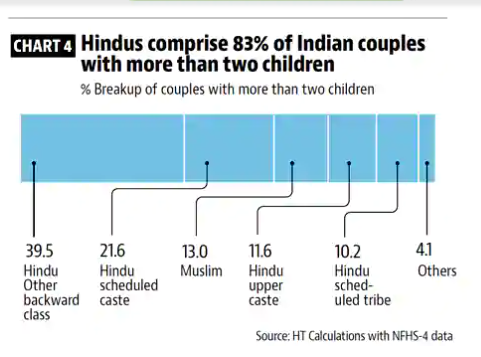 Hindus comprise 83% of Indian couples with more than two child children
 If one wants to, one can read a bit more about the Uttar Pradesh Population bill here. The sad part is that the systems which need fixing, nobody wants to fix. The reason being simple. If you get good health service by public sector, who will go to the private sector. In Europe, AFAIK they have the best medical bang for the money. Even the U.S. looks at Europe and hopes it had the systems that Europe has but that again is probably for another day.
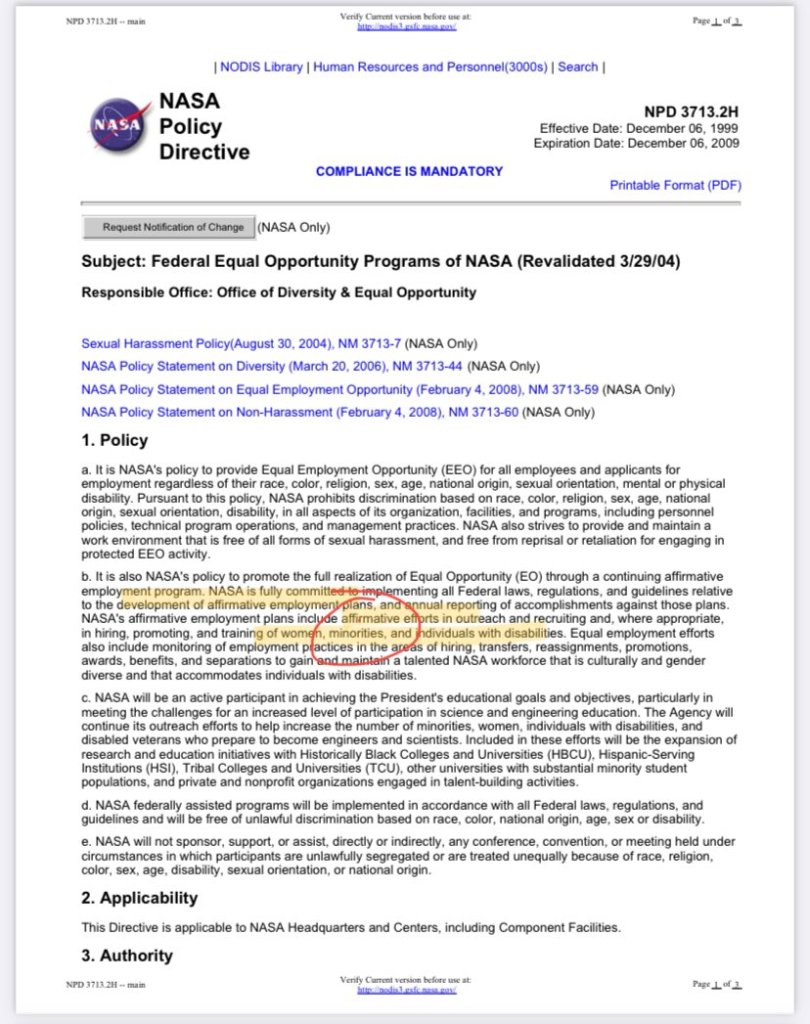 NASA Federal Equal Opportunity Policy Directive NPD 3713 2H
 Export incentive schemes being reduced
 IIT pupil tries to sell kidney to repay loan, but no takers for Dalit organ.


 Bought BEHRINGER U-PHORIA 2-Channel UMC202HD.
My previous Q1002US mixer seemed to have unreliable right channel bus and was getting worried.
MIDAS preamp, simple to use. Connect it to Linux box and it works as a USB audio device with two channel of input. It has two inputs and hence it will probably look like a stereo recording. If I connect my XM8500 it turns out to be on the left channel, for example.
Looking at the waveforms, the noise floor is lower than Q1002US and I love it so far.
 This is not only the Year of the Ox, but also the year of Debian 11, code-named
bullseye. The release lies ahead,
 How are you meant to write about an unfinished emancipation? Bodies of Light is a 2014 book by Glasgow-born Sarah Moss on the stirrings of women's suffrage in an arty clique in nineteenth-century England. Set in the intellectually smoggy cities of Manchester and London, we follow the studious and intelligent Alethia 'Ally' Moberly, who is struggling to gain the acceptance of herself, her mother and the General Medical Council.
'Alethia' may be the Greek goddess of truth, but our Ally is really searching for wisdom. Her strengths are her patience and bookish learning, and she acquires Latin as soon as she learns male doctors will use it to keep women away from the operating theatre. In fact, Ally's acquisition of language becomes a recurring leitmotif: replaying a suggestive dream involving a love interest, for instance, Ally thinks of 'dark, tumbling dreams for which she has a perfectly adequate vocabulary'. There are very few moments of sensuality in the book, and pairing it with Ally's understated wit achieves a wonderful effect.
The amount we learn about a character is adapted for effect as well. There are few psychological insights about Ally's sister, for example, and she thus becomes a fey, mysterious and almost Pre-Raphaelite figure

 Continuing with
 This blog post is about my observations of some of the plants in my home garden.
While still a n00b on the subject, these notes are my observations and experiences over days, weeks and months. Thankfully, with the capability to take frequent pictures, it has been easy to do an assessment and generate a report of some of these amazing behaviors of plants, in an easy timeline order; all thanks to the EXIF data embedded.
This has very helpfully allowed me to record my, otherwise minor observations, into great detail; and make some sense out of it by correlating the data over time.
It is an emotional experience. You see, plants are amazing. When I sow a sapling, water it, feed it, watch it grow, prune it, medicate it, and what not; I build up affection towards it.
Though, at the same time, to me it is a strict relationship, not too attached; as in it doesn t hurt to uproot a plant if there is a good reason. But still, I find some sort of association to it.
With plants around, it feels I have a lot of lives around me. All prospering, communicating, sharing. And communicate they do. What is needed is just the right language to observe and absorb their signals and decipher what they are trying to say.
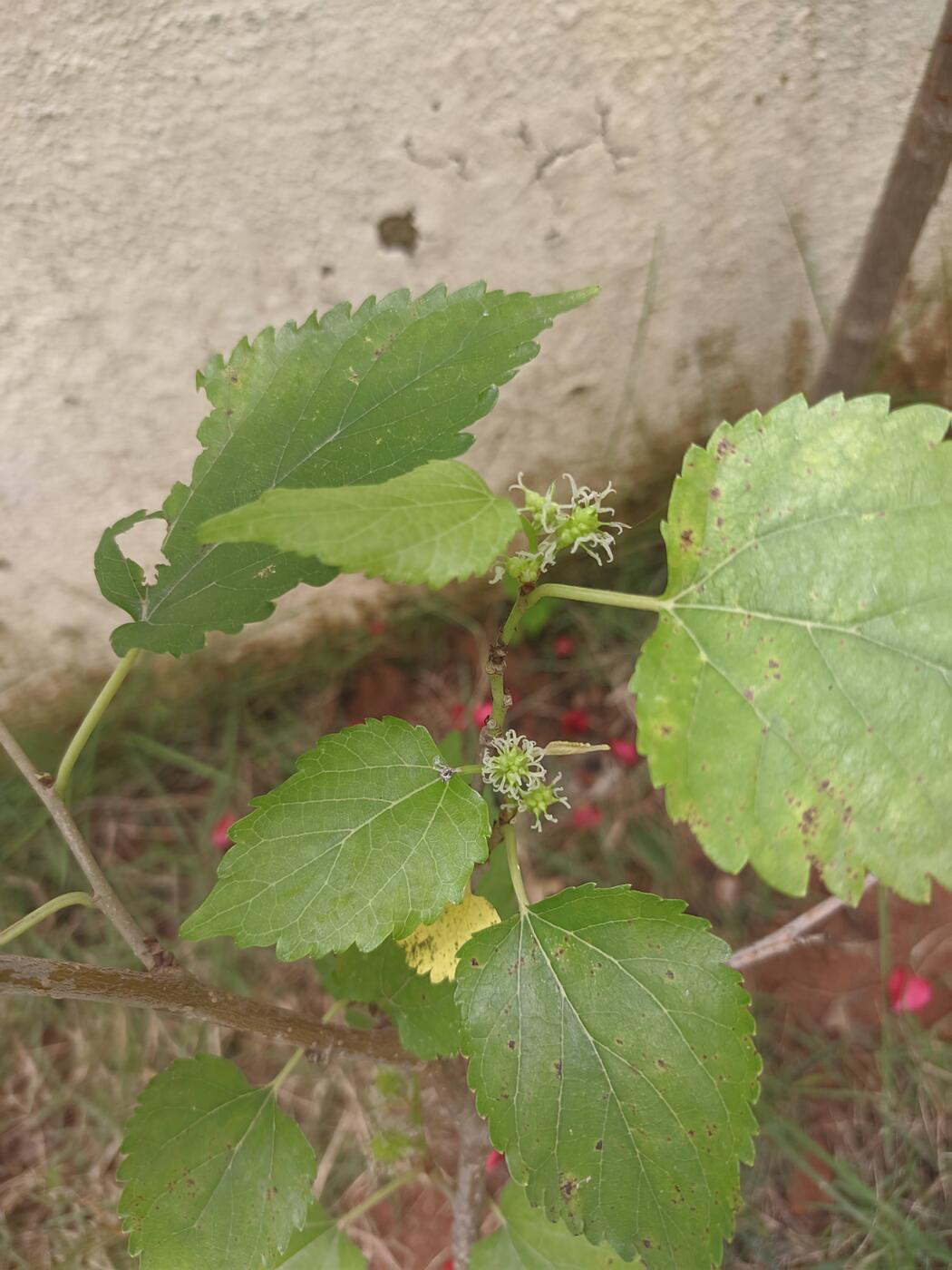
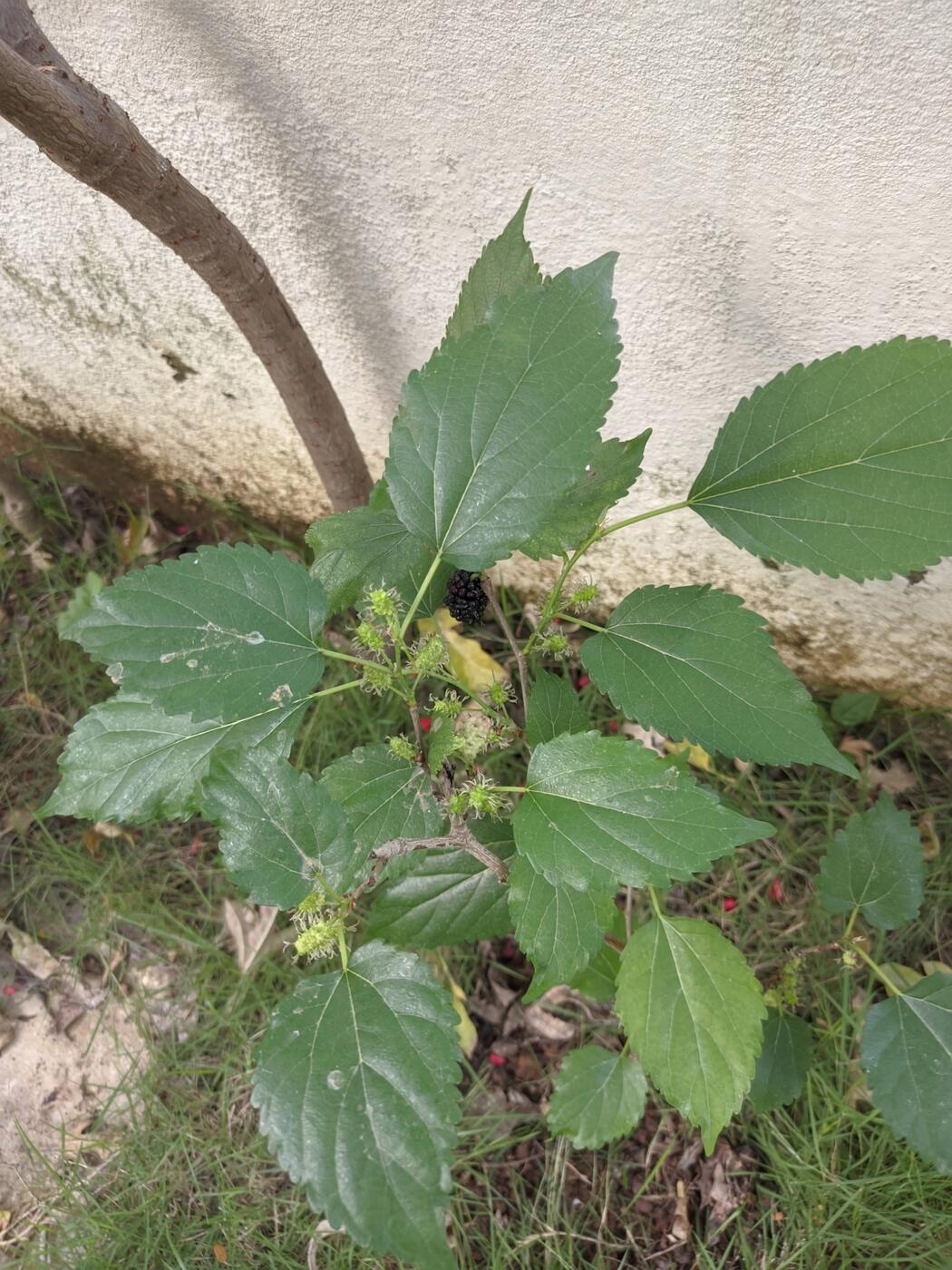
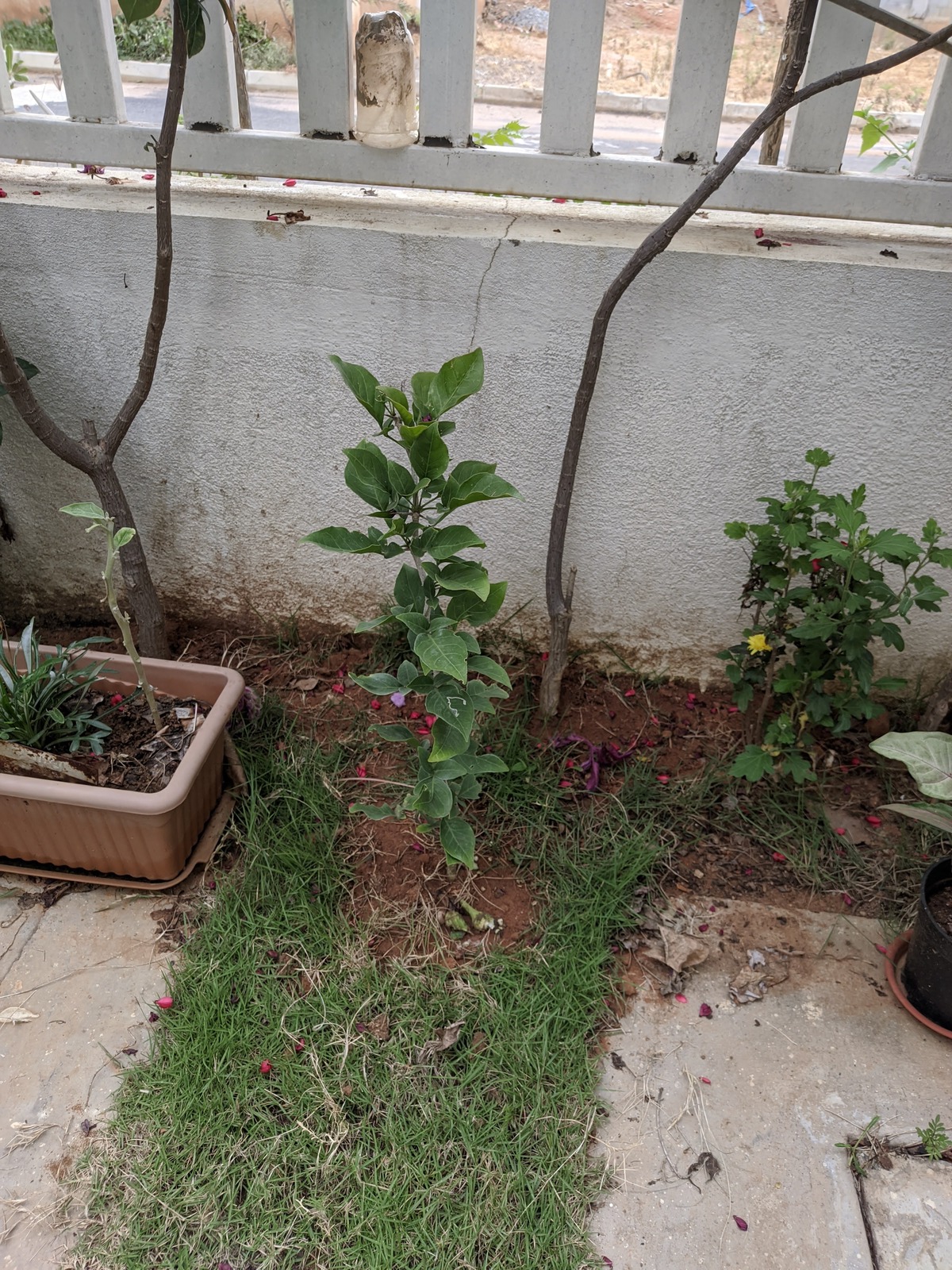
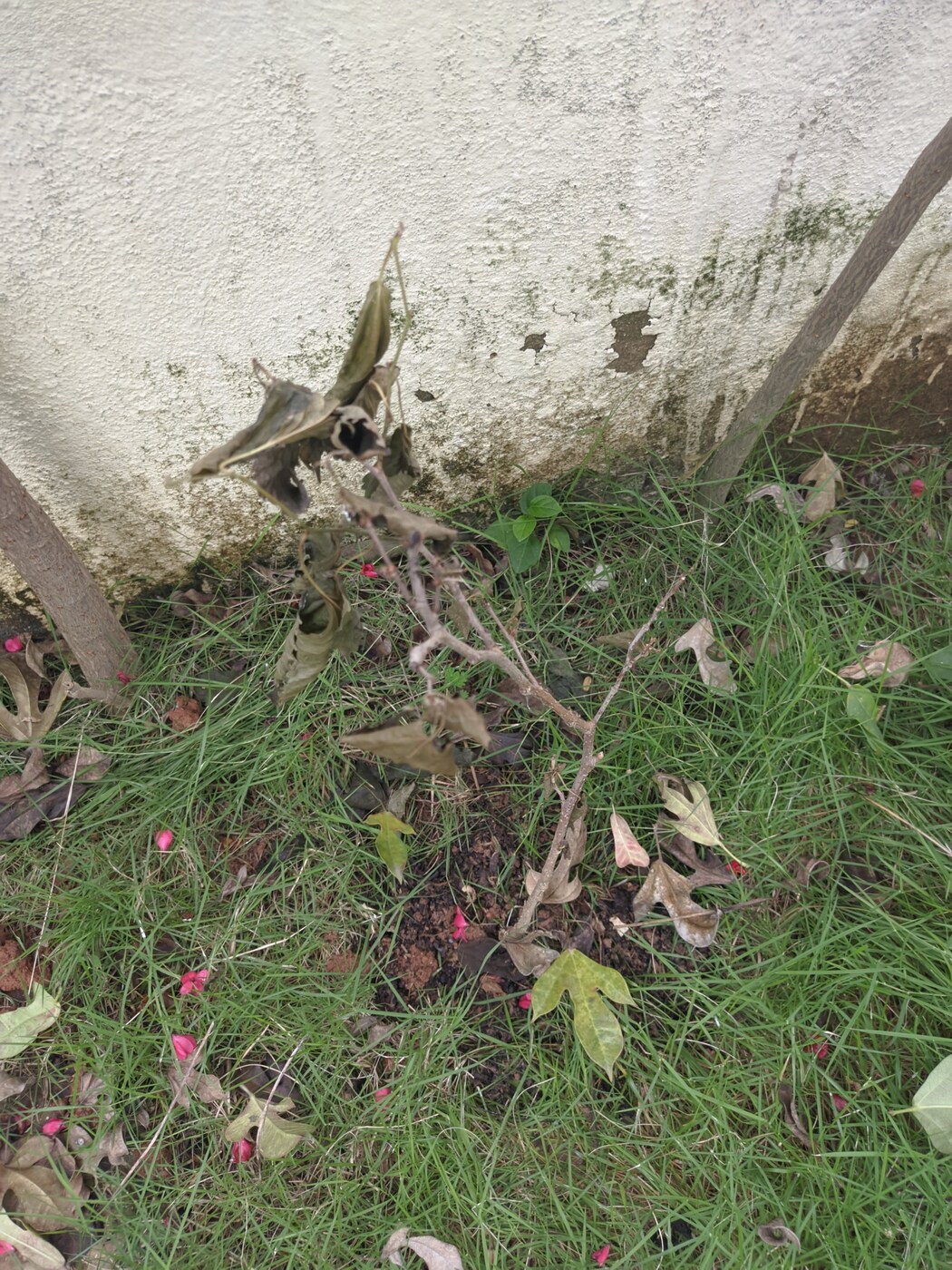

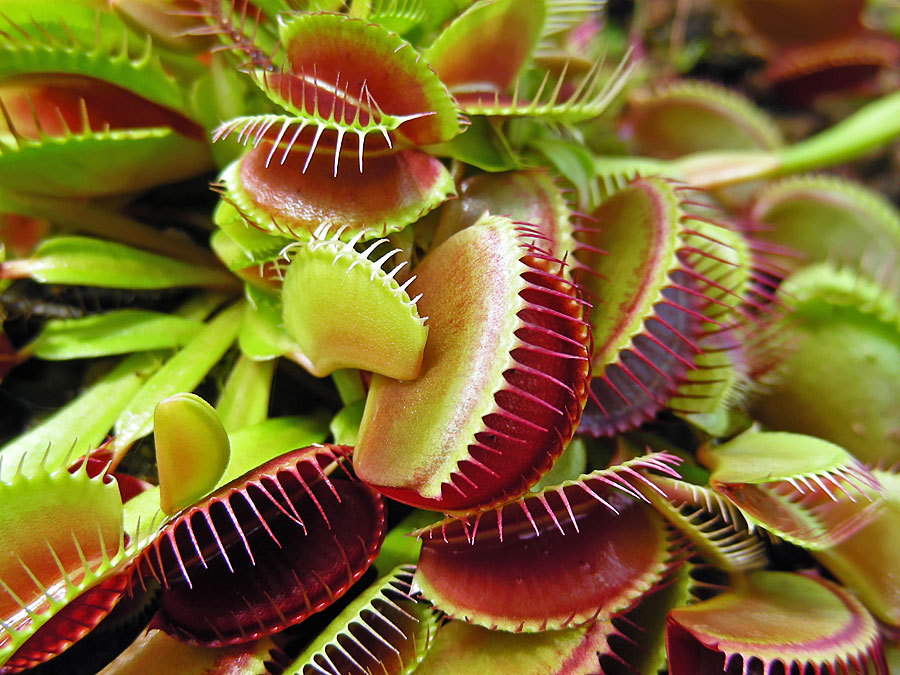
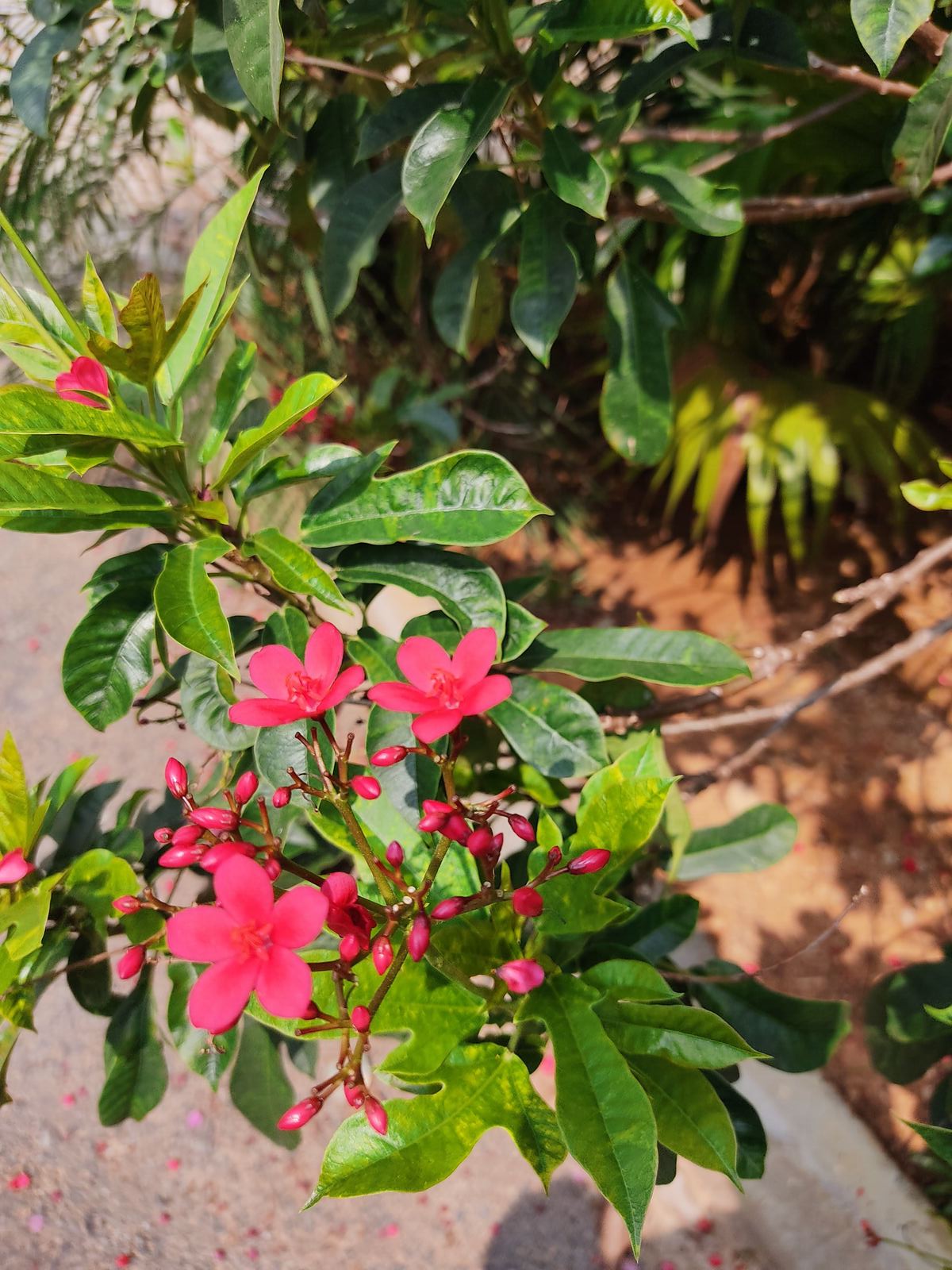


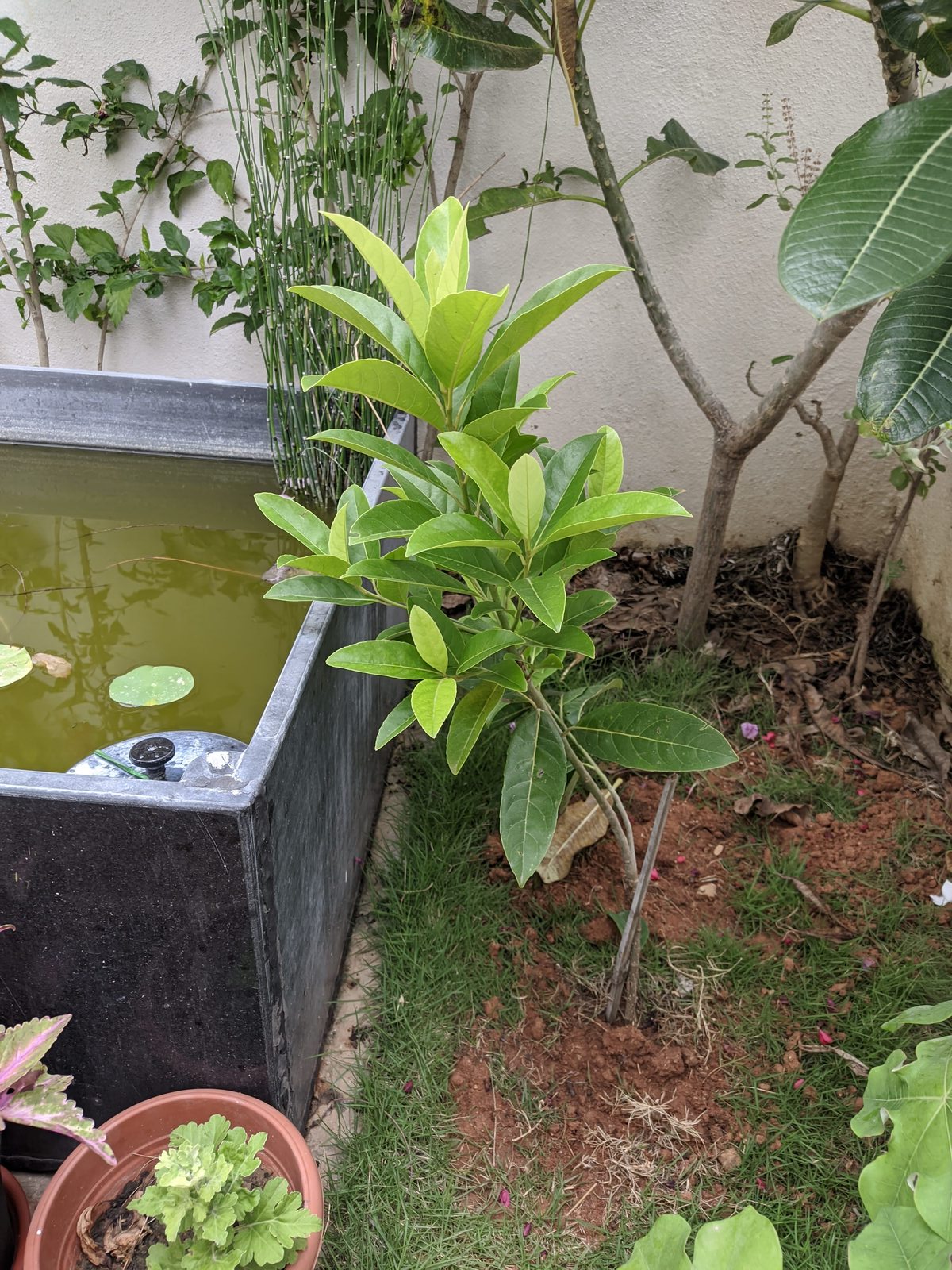
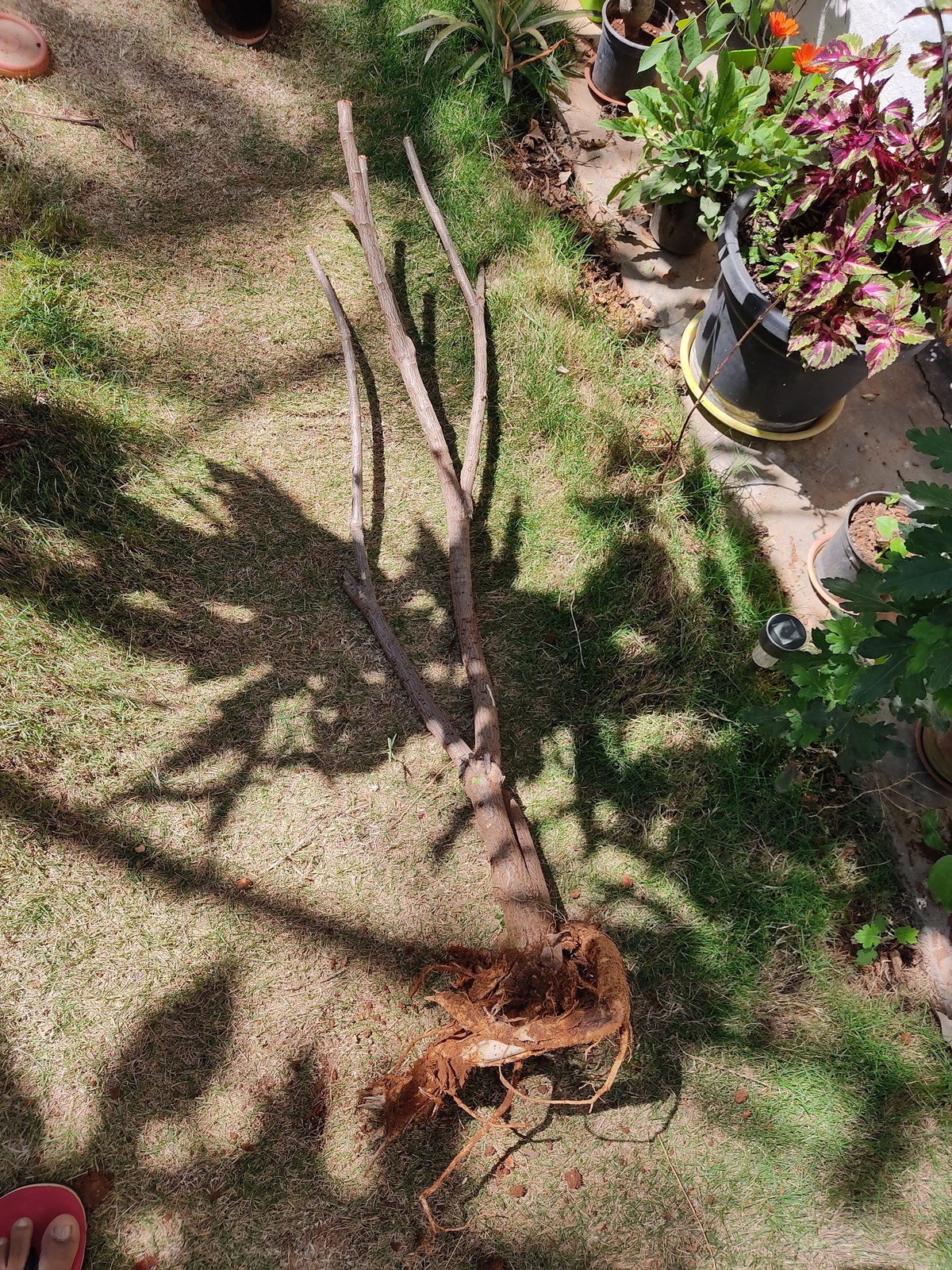
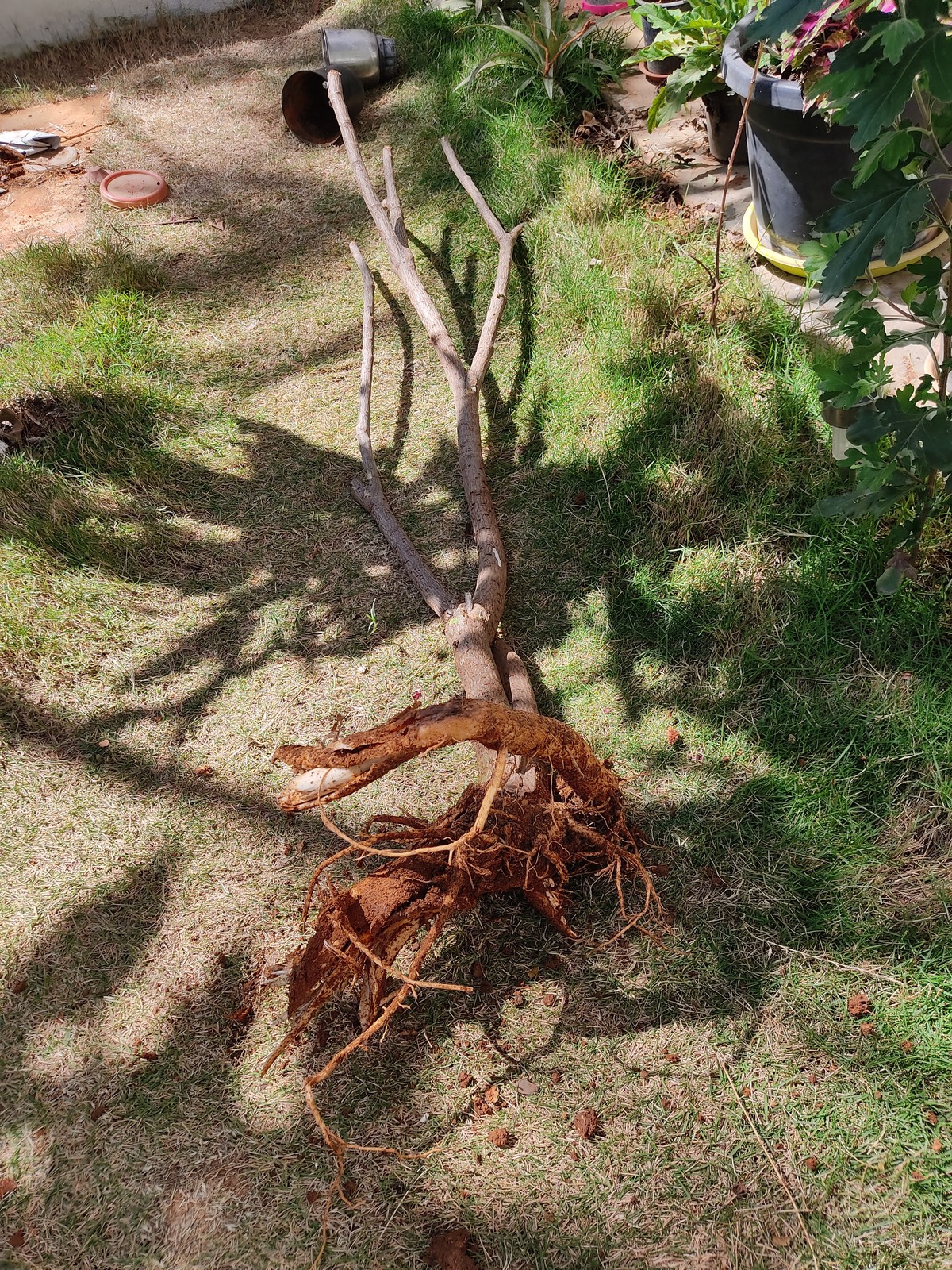
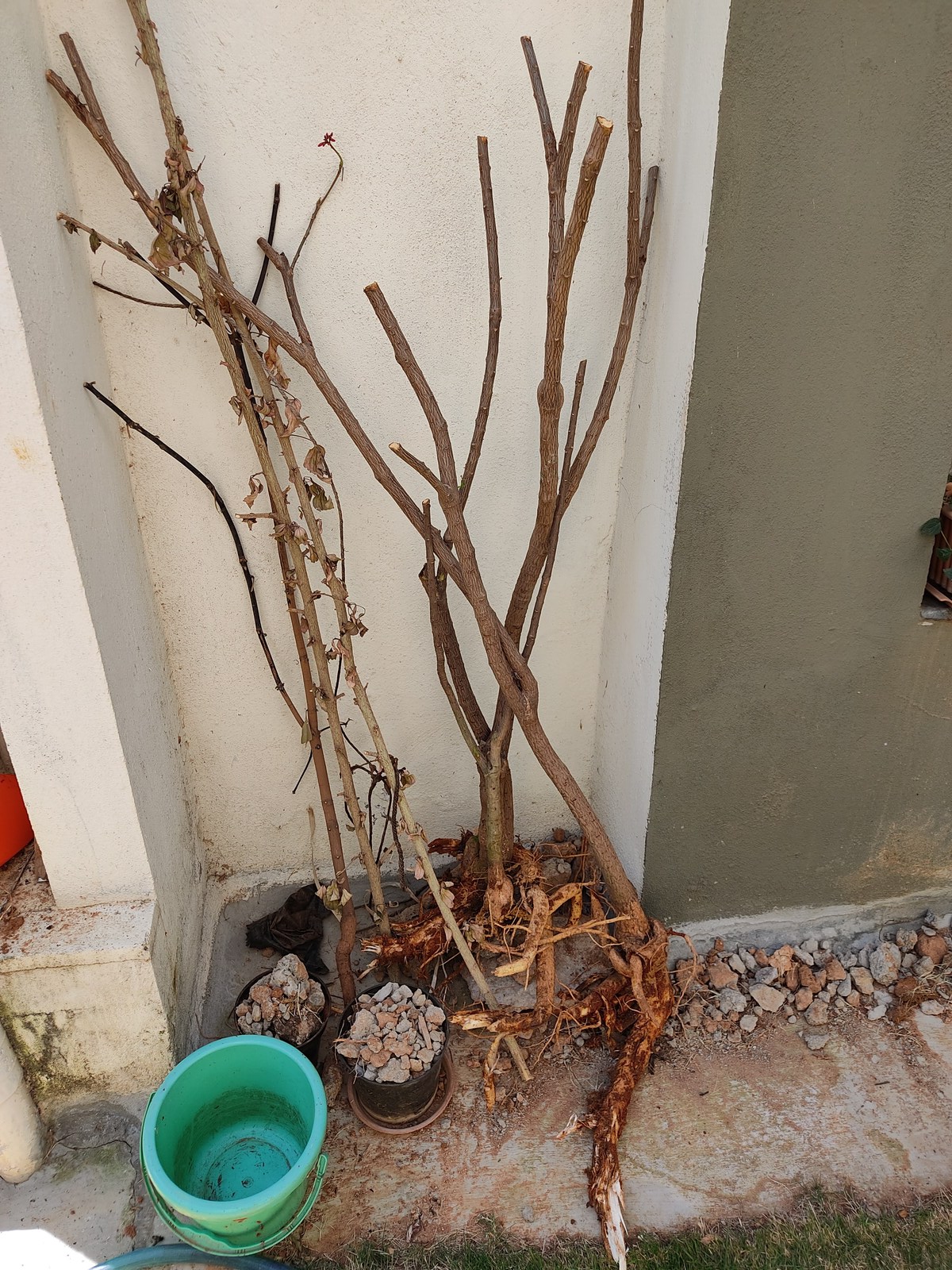
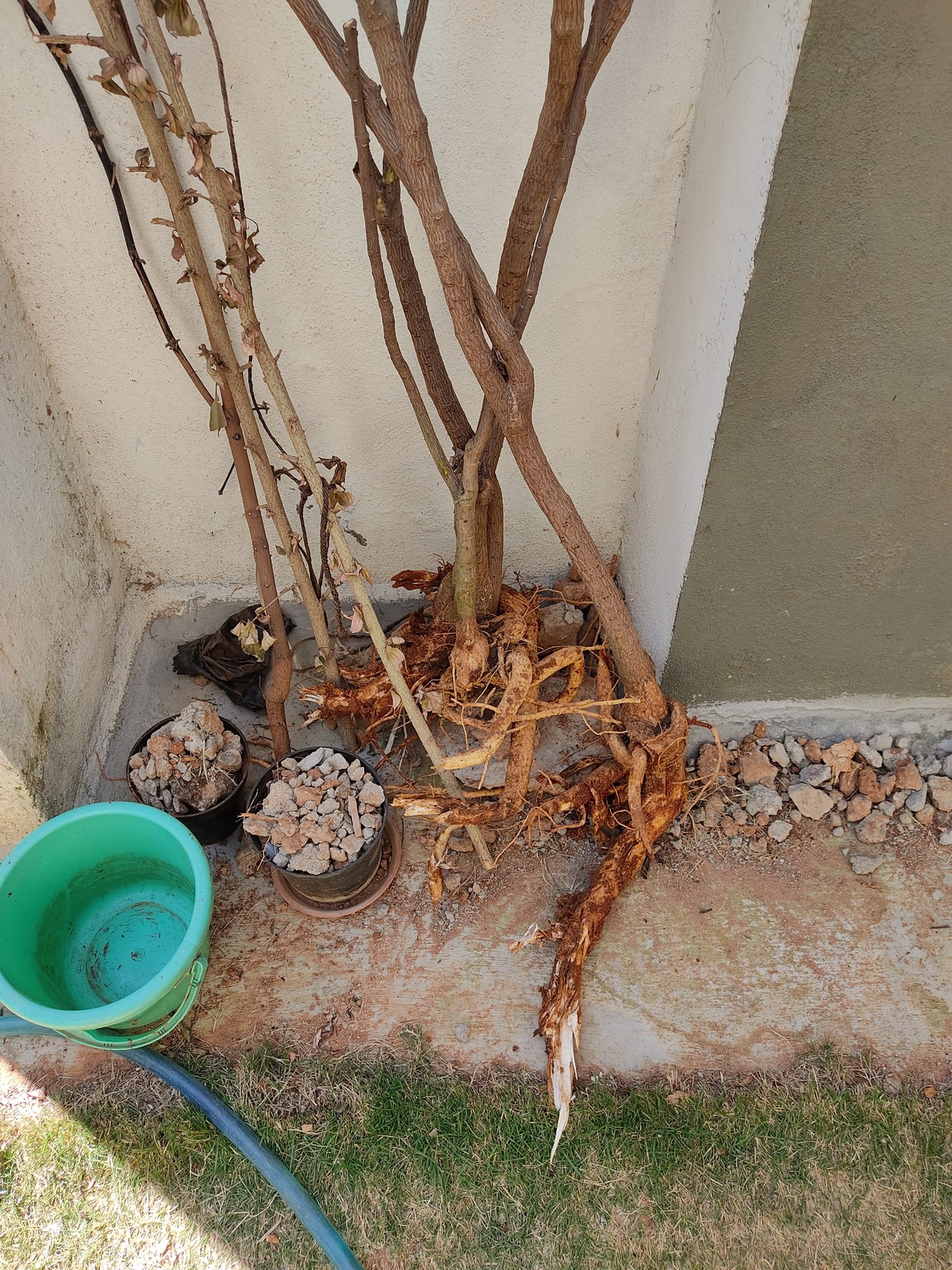
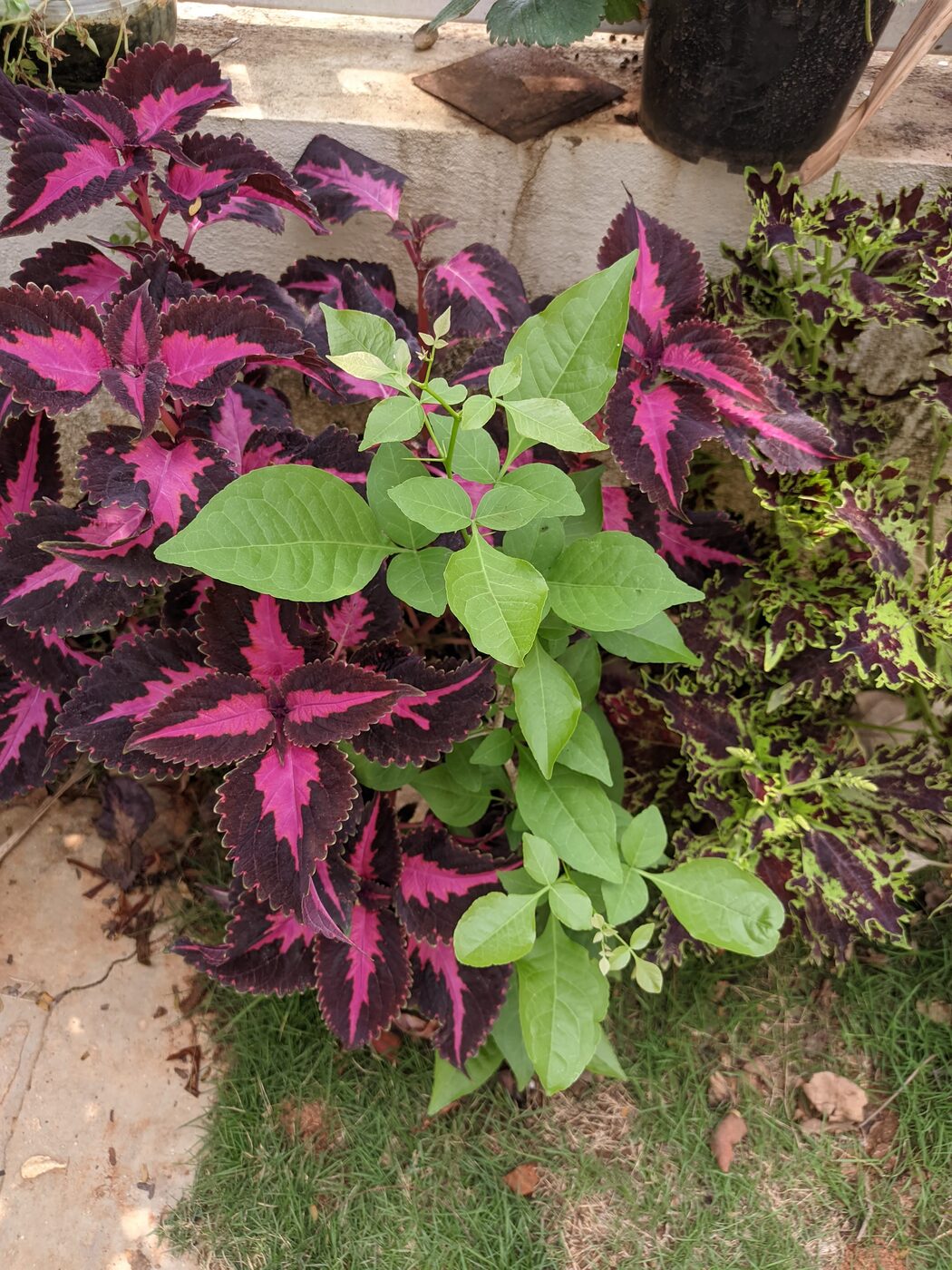

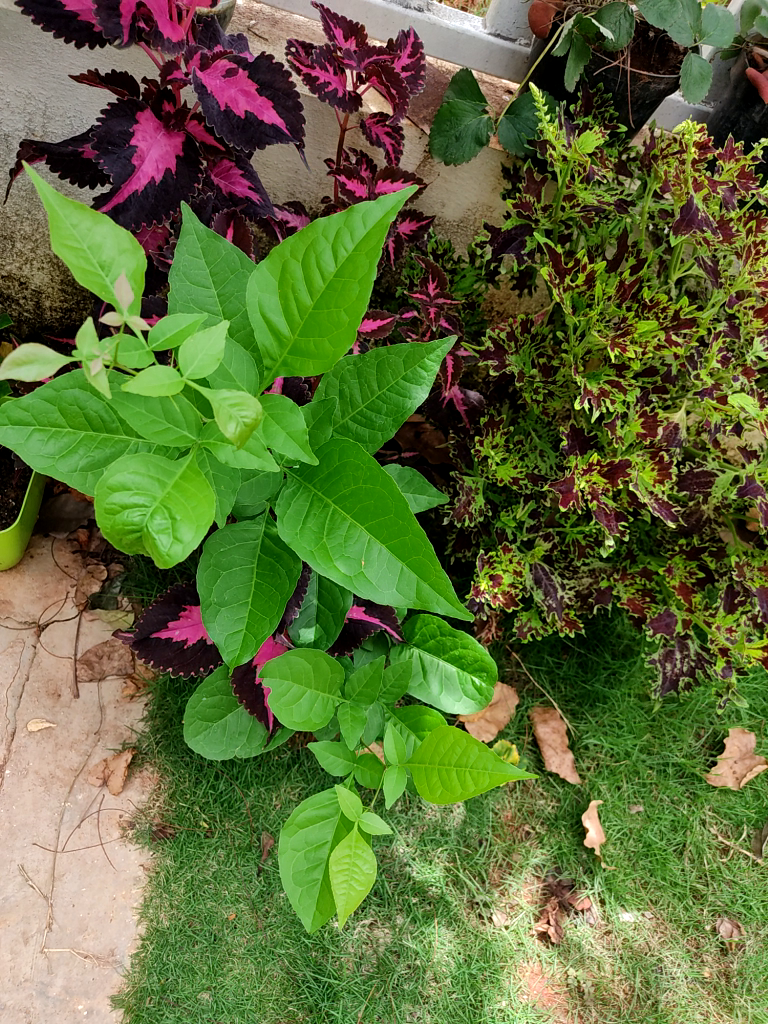



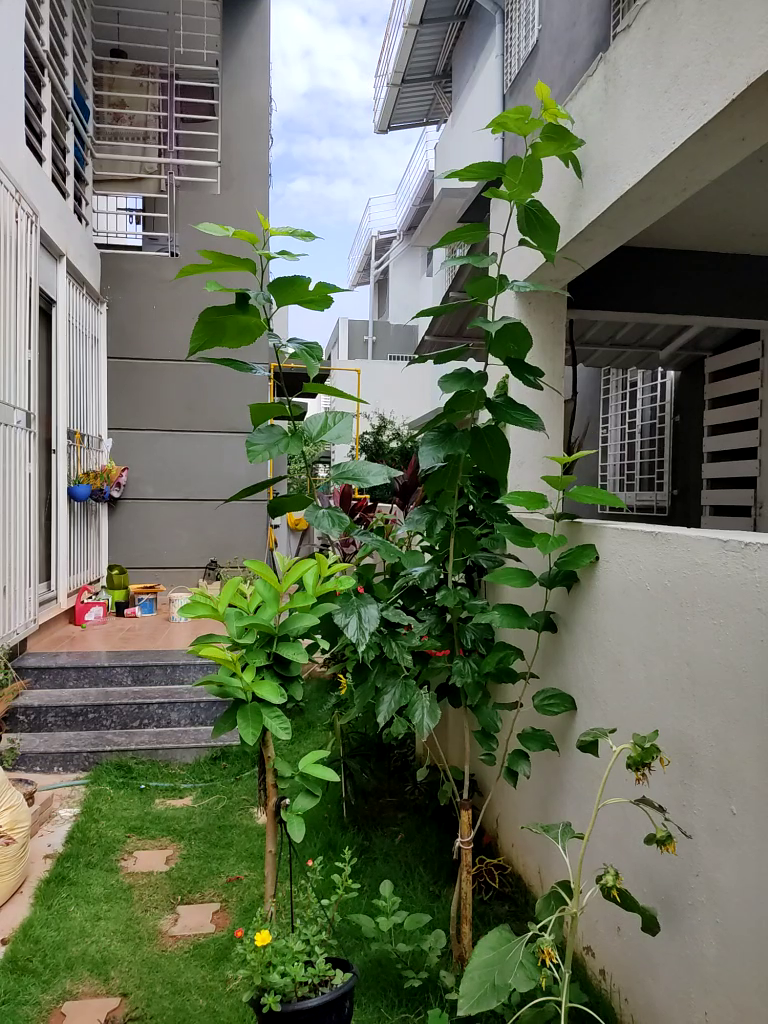
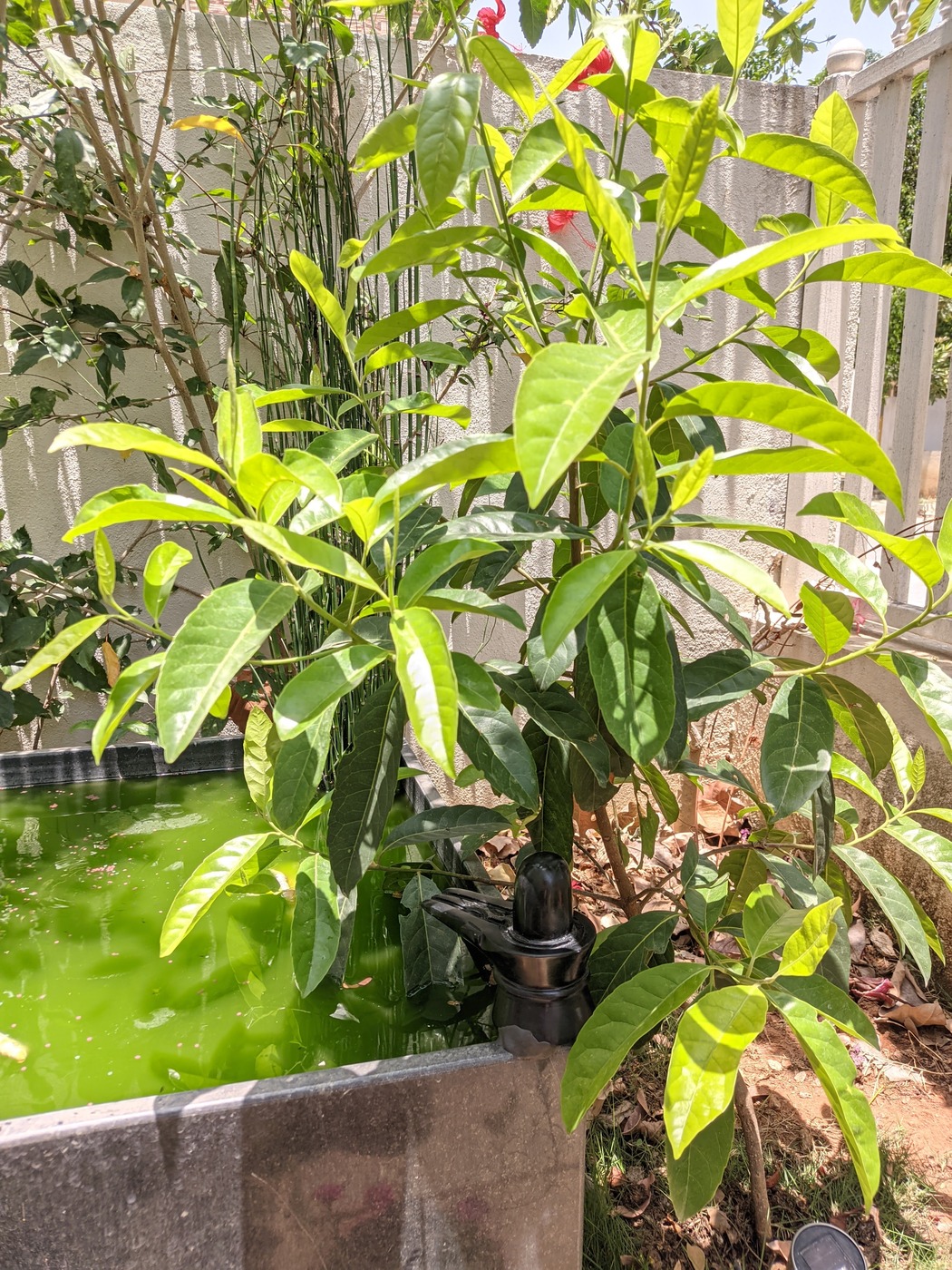
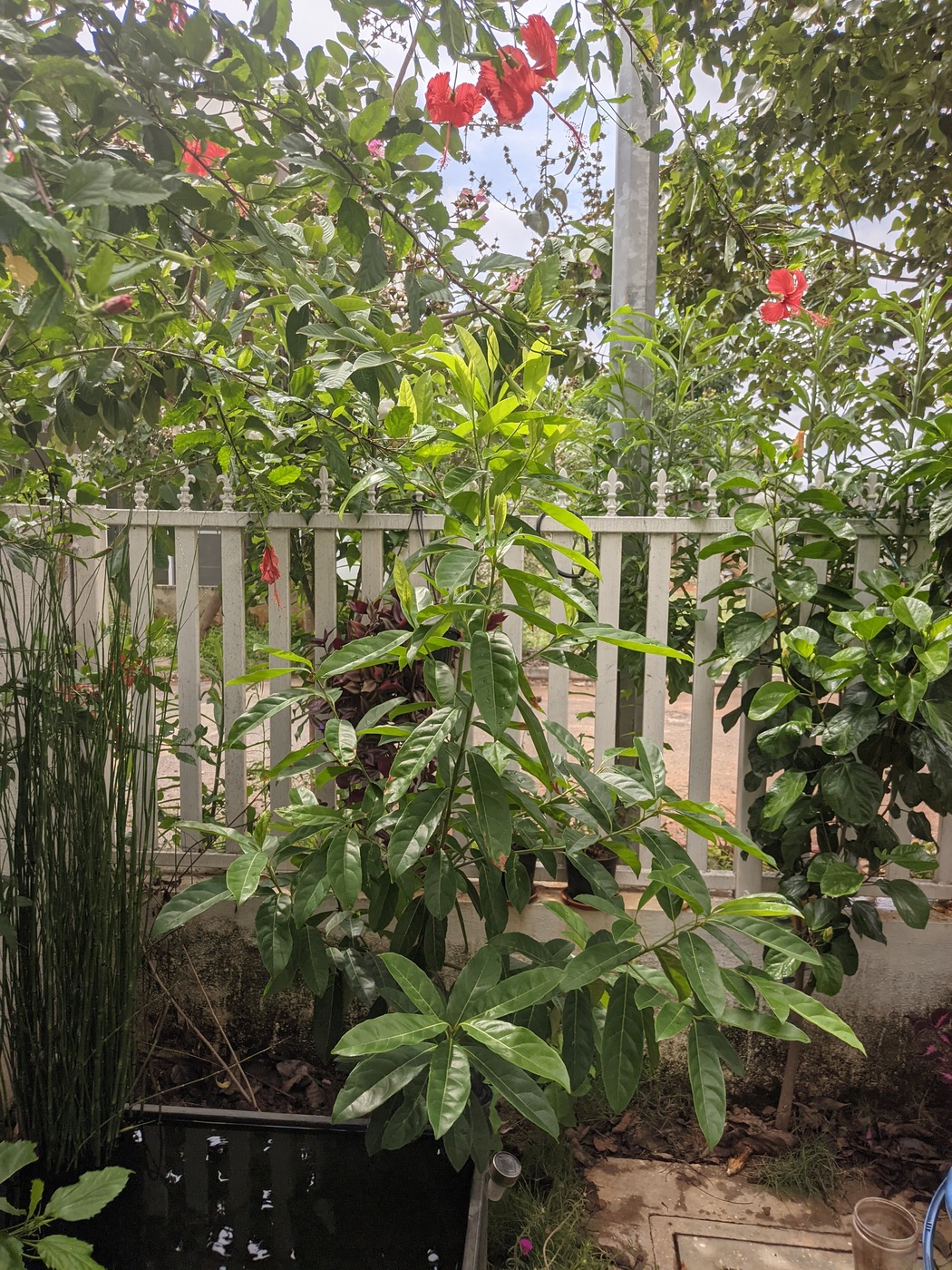
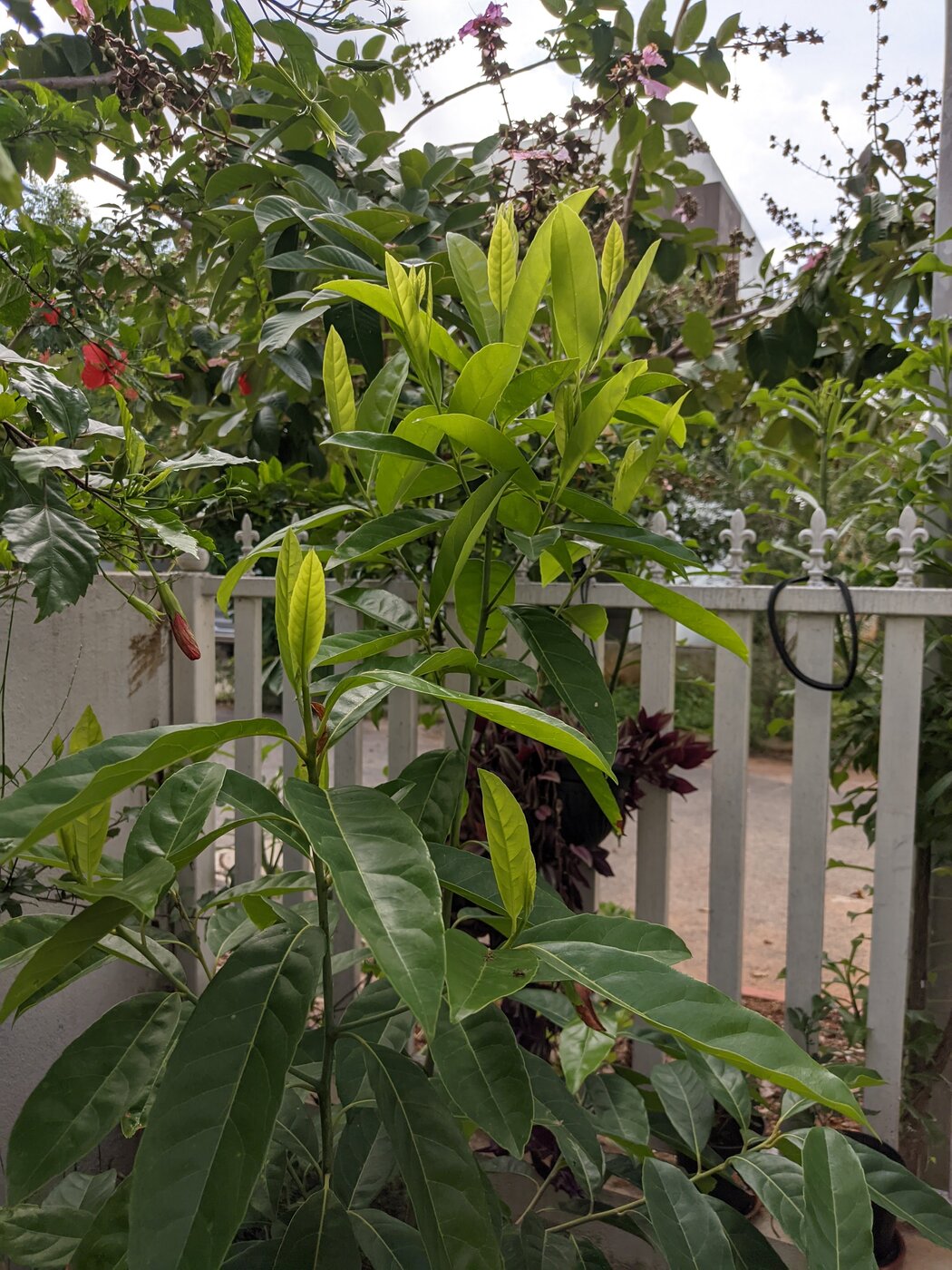
 Every year or so, I revisit the current best practices for Python packaging.
I.e. the way you re supposed to distribute your Python packages. The main
source is