Antonio Terceiro: Debian Ruby Sprint 2016 - day 3: Ruby 2.3 in unstable, Reproducible Builds, and Data Structures for Dinner Booths
Day 3 was again a full of useful work. Since the beginning of the sprint, we were able to fix more than 50 FTBFS bugs, alongside general quality improvements in the packages.
 In a party arranged like above, when the people closest to wall need to go alleviate themselves of some beer, you basically have to perform a removal from the bottom of a stack, which requires popping all the elements at the top. When they come back, you have to options:
in the Debian jargon, FTBFS means that a package fails to build from source , which in Debian is a critical bug because users need to be able to produce binary packages from their source code to fully exercise the free software principles.An important milestone that was also achieved on day 3 was the upload of ruby-defaults 1:2.3.0+1, making
ruby2.3 the new default version of Ruby. That is the version that will shipped in the next Debian release, codenamed stretch. This is the culmination of a joint effort between the Ruby team and Debian Release Team that involves rebuilding a little more than 130 packages that use the Ruby C API to make sure everything will just work on upgrades, both from the previous stable release, and from earlier snapshots of the current development release.
Another small change that will have a big impact for Debian and for free software was an improvement to gem2deb that fixes a reproducibility issue in Ruby packages and will help currently more than 100 Ruby packages become reproducible.
The full list of items that have been worked on is this:
- sponsor ruby-github-linguist. Closes: #815908. Thanks balasankar
- rebuild remaining failing packages 55 remaining!
- uploaded ruby-em-synchrony (FTBFS #800029)
- day 2 report blog post
- ruby-certificate-authority-0.1.6-1 (#816506)
- filed for ruby-grack removal
- uploaded ruby-em-synchrony
- uploaded ruby-mathml (FTBS #800029)
- uploaded new upstream version of ruby-redis which claims better ruby2.2 support
- uploaded pry (0.10.3-2), hoping it will build correctly on the buildd
- uploaded ruby-hashery
- rails security issues: CVE-2016-2098, CVE-2016-2097
- fixed in unstable on 2:4.2.5.2-1
- contacted security team for jessie update
- uploaded ruby-ruby-engine, ruby-ruby-version, ruby-rspec-pending-for to NEW
- updated ruby-hashie to new upstream version
- ruby-remcached (fix FTBFS)
- made the switch to ruby2.3 in unstable *********
- filed https://bugs.ruby-lang.org/issues/12137 as ruby-awesome-print triggers this
- uploaded ruby-rspec 3.4
- uploaded ruby-rspec-rails 3.4
- uploaded ruby-grack 2.0.2-2 (fix FTBFS)
- ruby-memcache-client (#797256) => RoM ruby-memcache-client (#816538) + https://github.com/rack/rack/issues/1025
- upload ruby-acts-as-lists (Closes: FTBS #816482)
- ruby-beautify: fixed and uploaded
- filed for ruby-foreigner removal (+ fixed diaspora dependency)
- uploaded newer ruby-origin to fix FTBFS
- uploaded ruby-responders
- gem2deb hacking
- dh-make-ruby will not overwrite debian/copyright anymore
- force generated gemspecs to use date from debian/changelog. fixes https://tests.reproducible-builds.org/issues/unstable/timestamps_in_gemspec_files_issue.html
- uploaded version 0.27 to unstable
- make ruby-riddle tests run and work during build
- ruby-flexmock 2.0.4-1 -> uploaded
- RoM ruby-memcache-client (done #816538)
- upload nanoc 4.1.4 and fix tests for ruby2.3
- Upload new upstream version of ruby-test-after-commit
- uploaded newer upstream for ruby-origin fixing FTBFS bug
In a party arranged like above, when the people closest to wall need to go alleviate themselves of some beer, you basically have to perform a removal from the bottom of a stack, which requires popping all the elements at the top. When they come back, you have to options:
- place them back at their original position, in which case
- the people who stayed have to either stay standing or get up all over again (not sure what is worse)
- the odds are that the next person to leave will require less effort from the others
- shift everyone to places against the wall and place the one coming back at the very end of the bench away from the wall, in which case
- the people who stayed are perhaps less annoyed, but you have to rearrange plates and pints
- it is less likely that the next time will require less effort from the others
 Right after breaking for lunch, but before actually going out, we made what so far is official group photo (I might try again as the shot was not a really good one).
 Of course the most interesting part was the actual work that was done, and day 2 list is not less impressive than the day before:
 There was enough food that at the end we were all very full.
 And with the spokesperson task of the day done, off to hacking I am!
 . I also sent 22 emails to maintainers asking questions.
Squeeze LTS
This was my twentieth month that I did some work for the
 Here is my monthly update covering a large part of what I have been doing in the free software world (
 Only one week has passed since the
 The details are as follows:

 Since several years ago we've been using
 If you don t want to read on, here the preliminary conclusion: Why didn t I do it earlier! But before we go into details, let me start with my background:
History of my devices
Originally I was a big opponent of smart phones and preferred the Unix-way, one device for one thing. So I had a normal phone and (various)
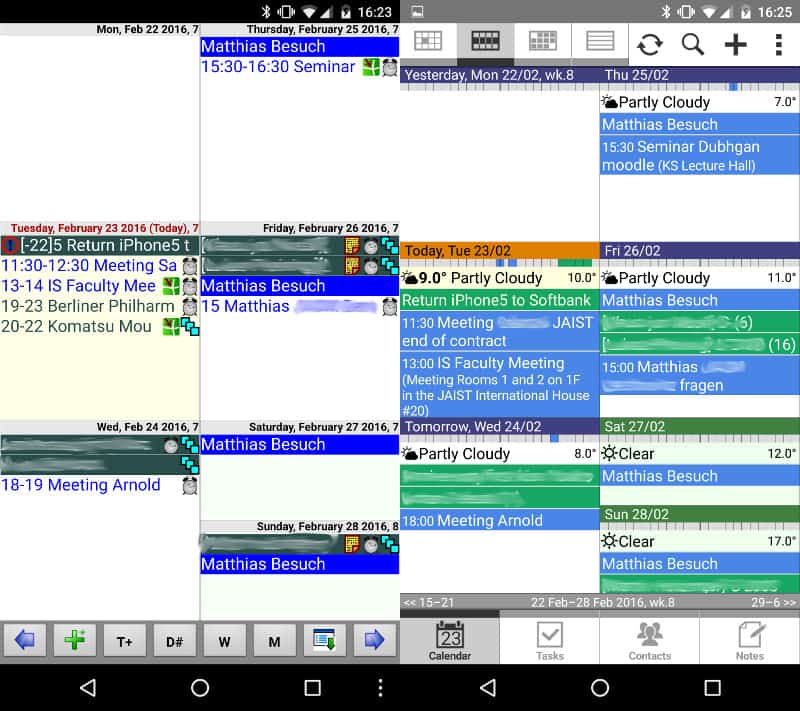 So nowadays on Android I have both Pocket Informant Pro as well as Pimlical, but after a short time I have now switched practically exclusively to Pimlical.
Notes
Here there is pain HUGE PAIN!!! iOS has an excellent applications for notes, called simply
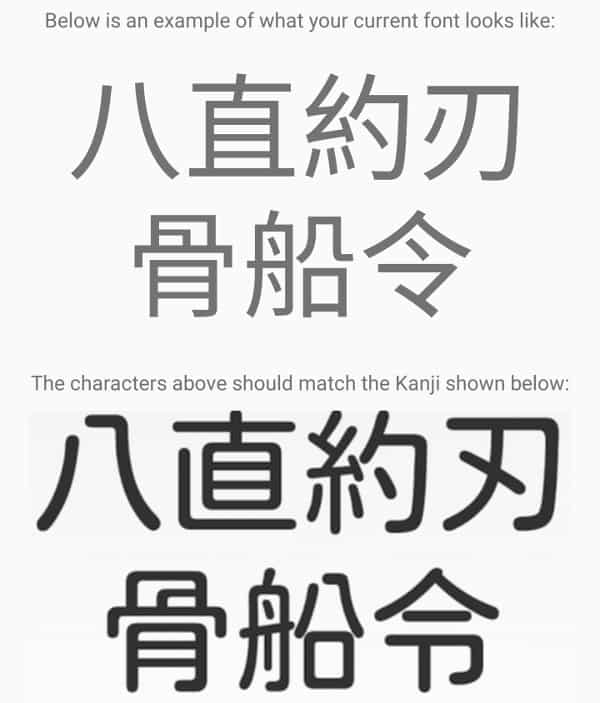 This is a well known problem and I have
 Debian on Android
Yes, you can have a full Debian system running in your terminal on Android. There are several applications providing this feature, and I am rather surprised how smooth it works.
Conclusion
My preliminary conclusion is that the switch to Android at this time was perfectly timed, and from the technological side I should have done much earlier. In future blogs I will discuss particular instances of this transition in more details.
If you have any suggestion for me, in particular for a good notes taking application, please let me know!

 I had no access to the internet for most of my childhood. Nobody in my area knew anything about programming. I learned a great deal from a number of CDs that included free software source code and archives of project mailing lists. When I got to university, I learned even more by being able to develop a Debian-based OS for use in our computer facilities. That gave me the experience and knowledge that I needed to become involved in Debian development, which in turn gave me the background required to be able to help Ubuntu become the first free software operating system to work out of the box on modern laptops. From there, I've been able to build my career around developing free software.
 The first major version of the scalable timeserie database I work on,
 The diagram above shows how data are organized inside Gnocchi. Until version
1.3, there would have been only one file for each aggregation methods.
In the upcoming 2.0 version, Gnocchi will split all these data into smaller
parts, where each data split is stored in a file/object. This allows to
manipulate smaller pieces of data and to increase the parallelism of the CRUD
operations on the back-end leading to large speed improvement.
In order to split timeseries into several chunks, Gnocchi defines a maximum
number of N points to keep per chunk, to limit their maximum size. It then
defines a hash function that produces a non-unique key for any timestamp. It
makes it easy to find in which chunk any timestamp should be stored or
retrieved.
Data compression
Up to Gnocchi 1.3, the data stored for each metric is simply serialized using
 The XOR algorithm implemented in Python is pretty slow, compared to LZ4. Truth
is that
 I tried 2 Python implementations of the same algorithm (and submitted them to
my friend and Python developer
 Considering the compression ratio of the different algorithms, they are pretty
much identical. The worst case scenario (random values) for LZ4 compress down
to 9 bytes per data point, whereas XOR can go down to 7.38 bytes per data
point. In general XOR encoding beats LZ4 by 15 %, except for cases where all
values are 0 or 1. However, LZ4 is faster than XOR by a factor of 4 -70
depending on cases.
That means that we'll use LZ4 for data compression in Gnocchi 2.0. It's
possible that we could achieve as fast compression/decompression algorithm, but
I don't think it's worth the effort right now it'd represent a lot of code to
write and to maintain.