Search Results: "agi"

3 January 2017

Russ Allbery: Review: Castle of Wizardry

Review: Castle of Wizardry, by David Eddings
Series: The Belgariad #4
Publisher: Del Rey
Copyright: May 1984
Printing: September 1991
ISBN: 0-345-33570-8
Format: Mass market
Pages: 373
Castle of Wizardry is the fourth book of the Belgariad and very much the middle of the story. Despite coming after an intermediate climax, this isn't the sort of series you can start in the middle. The problem with intermediate climaxes in a long series is that the next book can be a bit of a let-down as the characters do the necessary regrouping and reorienting and determine next steps. I think that hurts Castle of Wizardry quite a lot. The best bits are at the beginning, as the party escapes the consequences of Magician's Gambit, collects one more party member, shows us a lot more of Errand (who is always delightful), and confounds Relg's life and world view considerably. (Although there's a good bit of authorial fiat in the last.) This builds into a major story event, which would normally help avoid the let-down after the climax, but it's the major story event that is so frequently and obviously foreshadowed that you'd have to be as dumb as, well, Garion to not know what's coming. That gives a certain "yes, yes, we know already" tone to proceedings that robs it of its ability to rebuild tension. That said, the appeal of this series continues to be in the small details. While the first major event of this book goes pretty much as expected (including Ce'Nedra's reaction, which is just as irritating as you might be expecting), my favorite part was the endless, bubbly enthusiasm of the incredibly powerful artifact that features heavily. Usually epic fantasy will treat such world-breaking objects with seriousness and awe, as treasures to be admired and sacred (or terrifying) great works. See, for instance, the ur-example of Tolkien's rings, both the One Ring and the elven rings of power. Eddings manages a mix of awe and bemusement that doesn't undermine their power but that adds a delightful human element. This series pulls off treating a powerful magical artifact like an over-enthusiastic puppy without making it feel any less dangerous. It's a very neat, and I think underappreciated, trick to pull off. Another part of this book I liked, if a more stock one, is Garion's reactions after the big story event. This isn't the first book to portray basic decency and thoughtfulness as a major feature in people from humble backgrounds elevated to great power, but I always enjoy seeing that. Garion stops whining (mostly) and starts acting like a decent, level-headed person who doesn't assume he has the right to arrange other people's lives, and is rewarded for it. Real life is often not that fair or ethical, but that's why one reads wish-fulfillment fantasy like this: for a world in which being a good person is rewarded. However, Eddings does have some structural issues here. The narrative arc of this book, as a stand-alone entity, is odd. Its most dramatic event is in the middle, and then has a long traveling section that's, by comparison, much less exciting. The events of that section feel more like random encounters than a coherent part of the story, and are preceded by the most utterly ridiculous temper tantrums. I think the tantrums were meant to be pure humor, but my reaction was primarily eye-rolling. I have a hard time reconciling a screaming fit and breaking furniture with the long life experience and thoughtful planning of the character in question. And then there is the Ce'Nedra section that closes this book, and Ce'Nedra in this book more generally. To be fair, Castle of Wizardry is clearly intended to be Ce'Nedra's moment to grow as a person and stop being a childish brat. This does happen somewhat, and there are moments in the last section of the book where she does admirable things. But I couldn't quite believe in the mechanism, and it doesn't help that it's one of the most ham-handed bits of pre-ordained success in a book that has a tendency towards them. That undermines the real attempts Eddings makes to ground that success in Ce'Nedra's actual skills. Also undermining this is that those skills are manipulating people shamelessly, which Eddings seems to think is charming and attractive and I... don't. But the real problem is that I flatly disbelieve in Ce'Nedra as a character, or, given the apparent existence of such a creature, the level of tolerance that other characters show her. If I'd been Polgara, within fifteen minutes of meeting her I would have been seriously debating whether the destruction of the world might be a small price to pay for the satisfaction of dumping her down the nearest well. And not only is she awful by herself but Garion also descends to the same level whenever he's around her, until both of them are behaving like blithering idiots. I suspect part of my issue is that, to the extent that she is realistic at all, Ce'Nedra is the sort of intensely high-drama person who I have some amount of life experience with, and that life experience says "do not let this person anywhere near your life." Red flags all over everything. Garion needs to nope the hell out, because this will not end well. (Except, of course, it will, because it's that sort of series and the power of the author is strong.) I want female characters with real agency in my fantasy, and I want a female protagonist who is doing things of equal importance as the male protagonist (not that Eddings attempts to go that far). But Ce'Nedra reads like a fictional character written by someone who had never met a woman, but has extensively studied female supporting characters in books about junior-high social cliques and then tried to reconcile that research with the stereotype of women as manipulative seductresses. Yes, this series is full of stereotypes and characters painted in broad strokes, but Ce'Nedra is several tiers below every other supporting character in the book in both believability and in my desire to read about her. It's not that Eddings doesn't know how to write women at all. Polgara still falls into a few stereotyped categories, but she's sensible, opinionated, and has clear agency throughout the story. Taiba is delightful, if minor here. Poledra is absolutely wonderful whenever she appears. Some of the queens are obviously practical and sensible. And this book features a surprisingly good resolution to the subplot around Barak's wife, although the mechanism is a bit eye-rollingly cliched. Ce'Nedra's character is unusual for the series and almost certainly a deliberate authorial choice, and this book is supposed to be her coming of age. But I am baffled by that choice, and there's very little about it that I enjoyed reading. One more minor complaint: Silk gets a "tragic secret" in this book, and I really wish he hadn't. More time with Silk is always a feature, and I still love the character, but his oddities were already adequately explained by both his innate character and his way of dealing with a particularly awkward court situation. (One that ties into Eddings's habit of using some bad relationship stereotypes, but that's a rant for another day.) I think this additional tragic secret was gratuitous and really unnecessary, not to mention weirdly implausible and oddly cruel towards the other character involved. I was hoping that Magician's Gambit had turned a corner for the series, but Castle of Wizardry, despite having some neat moments, has some serious flaws. One more book to go, in which we learn that some of the eastern races have redeeming qualities! Followed by Enchanter's End Game. Rating: 6 out of 10

Maria Glukhova: Getting to know diffoscope better

I apologize to all potential readers of this blog for not writing a comprehensive Introduction post with details of the project I am taking part in during my internship, as well as some story about how I ended up there. Let me just say that I was a Debian user for years when I discovered it is taking part in Outreachy as one of organisations. Their Reproducible Builds effort has a noble goal and a bunch of great people behind it - I had no chances not to get excited by it. Looking for a place where my skills could be of any use, I discovered diffoscope - the tool for in-depth comparassion of files, archives etc. My mentor, Mattia Rizzolo, supported my decision to work on it, so now I am concentrating my efforts on improving diffoscope. As my first steps, I am doing small (but hopefully still somewhat important) job of fixing existing bugs. It helps me to better understand how diffoscope works, as well as introduces me to the workflow of opensource development. During December, I have done several small contributions, mostly fixing bugs.

Test data and jessie-backports First of them could be somewhat called cleaning up after my own mistake, although that mistake wasn t trivial. During the application period, I have fixed a bug with diffoscope failing while comparing symlinks to directory. That was a small change, but I included some tests for that case anyway. And that actually caused problems. With these tests, I included test data: two folders with symlinks. All was good in unstable version of Debian, but in jessie-backports, that commit caused build to fail. After some digging, I discovered the problem was caused by build process including copying that data. That was done using shutils Python module, and older version of that module, included in jessie, could not handle copying symlinks to directory properly. Thanks to my mentor for giving me a hint on how to resolve this: using temporary folders and creating these symlinks at runtime. That way, we ensured tests run without problems during build process on jessie. What have I learned: A great deal, actually. I spent too much time on that one, but I learned how to build packages, what happens during dpkg-buildpackage run and what debhelper tools are for. I also learned a bit about what chroot is and how to use it for testing.

ICC profile files and file type recognizing regexp Another one was also about failing tests and, therefore, failing build. Failing tests were all due to ICC files were not recognized by diffoscope. Turned out libmagic got an update which changed the description of ICC profile files. Diffoscope was relying on regexp applied to file type description to recognize the file, so I changed regexp to reflect the changes in libmagic. What have I learned: How diffoscope recognizes file types. Got me thinking: maybe there is a better way? That regexp-based approach is doomed to cause problems with every file type description change. I have this question still lingering in my mind - maybe I will come up with an idea later.

Order-like difference in text files Next, I decided to do something a bit bigger and fullfilled a feature request. That request was for detecting order-like difference in text files (when files has the same lines, but in different order). I did it by collecting added and removed lines in diff output in lists, sorting and then comparing them. Sadly, I forgot about one particular case - when one of the files is missing the newline at the end of file. I was kindly reminded of that quite soon in comments on the bug-tracker (thanks danielsh!) and have already fixed that. I also recieved feedback on how better implement it deeper in the diffoscope - not using the results of diff, but rather comparing sum of hashes of the lines directly in the difference module. I am yet to try that. What have I learned: That a call to diff is actually the slowest part of the diffoscope run when done on two big text files. Could it help somehow in speeding it up? I don t know yet. I also learned to comment on bugs in Debian bugtracker and was surprised by how much feedback I got. Thanks to my mentor for pushing me to do that - I definetely need to overcome my fear of communications to be more effective!

Random FTBFS There was also a very nasty bug that caused diffoscope to fail to be built from source randomly, failing with non-informative Fatal Python error: deallocated None. It already seemed strange when it was first reported; It got only more strange when suddenly that bug ceased to be reproducible. We hoped that would mean that bug was caused by some external tool, and was fixed there. Turns out it was not that easy. I tested this on two separate computers and on virtual machine; I used different versions of diffoscope. Well. Seems like that bug is still somehow tied to diffoscope version and not some external tool version - I still can do git checkout 64 and be able to reproduce the bug (still randomly, though). Although I spent quite a lot of time on that one, the only result was the information about connection between bug apperances and diffoscope version. I still wasn t able to get to the root of the problem - hopefully, someone else will be able to, given the information I found. What have I learned: git-bisect! Thanks to my friend for pointing me to it, that tool came handy in that situation. Also, got some experience in catching nasty bugs like that (pity that no experience in squashing them). I had some extra time commitements in December, one of them (Reproducible Builds Summit II) connected to my internship and one (my exam session in university) not. In January, I should be able to allocate more time to that work - I hope it will help me achieve more significant results. Many thanks to Mattia Rizzolo, Chris Lamb, Holger Levsen and all other folks of Reproducible Builds project - I cannot stress enough how important your support is to me. Wish you all a great 2017!

2 January 2017

Ross Gammon: Happy New Year My Free Software activities in December 2016

So that was 2016! Here s a summary of what I got up to on my computer(s) in December, a check of how I went against my plan, and the TODO list for the next month or so. With a short holiday to Oslo, Christmas holidays, Christmas parties (at work and with Alexander at school, football etc.), travelling to Brussels with work, birthdays (Alexander & Antje), I missed a lot of deadlines, and failed to reach most of my Free Software goals (including my goals for new & updated packages in Debian Stretch the soft freeze is in a couple of days). To top it all off, I lost my grandmother at the ripe old age of 93. Rest in peace Nana. I wish I could have made it to the funeral, but it is sometimes tough living on the other side of the world to your family. Debian Ubuntu Other Plan status & update for next month Debian Before the 5th January 2017 Debian Stretch soft freeze I hope to: For the Debian Stretch release: Ubuntu Other

Markus Koschany: My Free Software Activities in December 2016

Welcome to gambaru.de. Here is my monthly report that covers what I have been doing for Debian. If you re interested in Android, Java, Games and LTS topics, this might be interesting for you. Debian Android Debian Games Debian Java Debian LTS This was my tenth month as a paid contributor and I have been paid to work 13,5 hours on Debian LTS, a project started by Rapha l Hertzog. In that time I did the following: Non-maintainer uploads

1 January 2017

Russ Allbery: 2016 Book Reading in Review

So, I did not accomplish my reading goal for 2016 (reading and reviewing more books in 2016 than I did in 2015). Many things contributed to that, but the root cause was that I didn't make enough time for reading. Much of the time that could have gone to reading went to playing Hearthstone (a good thing) and obsessing over the 2016 US election (mostly a waste of time and particularly energy, although I'm not sure I could have stopped). That said, I did get quite a lot of reading done at the end of the year, and I'm hoping to keep up that momentum for next year. In 2016, I did a lot of re-reading and comfort reading. I'm probably going to continue with some of the re-reading in 2017, since I'm enjoying it, but my reading goal for the year is to get back to reading award nominees and previous award winners. There's so much great new stuff being published that I want to discover. I'm not going to set an explicit goal around number of books, but I am going to make an effort to carve out more time in my schedule for reading books (and less for reading on-line news). This was another year with two 10 out of 10 books. One of them was a re-read: Lord of Emperors, the second book of Guy Gavriel Kay's Sarantine Mosaic. (I also re-read the first book this year, Sailing to Sarantium, and gave it a 9.) I like nearly all of Kay's historical fantasies, but this duology is one of my personal favorites. The second 10 out of 10 book was a complete surprise: A Man Called Ove by Fredrik Backman (translated by Henning Koch). My mother found this book and suggested it to me, and I loved every moment of it. I will definitely be reading more of Backman's work. There were two more fiction standouts this year: Digger by Ursula Vernon, and The Philosopher Kings by Jo Walton. The first is a graphic novel about a wombat who is trying to make her way home from an unexpected detour into a mess of magic and gods. The second is the middle book in a trilogy about an attempt to construct Plato's Just City and all of the philosophical and social problems that ensue (with some bonus science fiction and fantasy elements). Both of them are excellent. Walton is consistently one of my favorite authors, and Ursula Vernon was my great discovery of a new author to read this year. (Not that I've followed through on that much, the year in reading being what it was, but I will be doing so.) My favorite non-fiction book of the year continues my interest in time management in general and Mark Forster's approaches in particular. Secrets of Productive People was the last book I reviewed this year (just a coincidence, not any intentional attempt to set things up for next year) and the best version of his overall approach to date. If you've not read any of Forster based on my previous recommendations, this is a good place to start. Also worth mentions were Jeffrey Toobin's The Run of His Life, on the O.J. Simpson case, and Andrew Groen's The Empires of EVE, on the history of player empires in the EVE Online MMORPG. I Kickstarted the latter and didn't regret it. The full analysis includes some additional personal reading statistics, probably only of interest to me.

Joey Hess: p2p dreams

In one of the good parts of the very mixed bag that is "Lo and Behold: Reveries of the Connected World", Werner Herzog asks his interviewees what the Internet might dream of, if it could dream. The best answer he gets is along the lines of: The Internet of before dreamed a dream of the World Wide Web. It dreamed some nodes were servers, and some were clients. And that dream became current reality, because that's the essence of the Internet. Three years ago, it seemed like perhaps another dream was developing post-Snowden, of dissolving the distinction between clients and servers, connecting peer-to-peer using addresses that are also cryptographic public keys, so authentication and encryption and authorization are built in. Telehash is one hopeful attempt at this, others include snow, cjdns, i2p, etc. So far, none of them seem to have developed into a widely used network, although any of them still might get there. There are a lot of technical challenges due to the current Internet dream/nightmare, where the peers on the edges have multiple barriers to connecting to other peers. But, one project has developed something similar to the new dream, almost as a side effect of its main goals: Tor's onion services. I'd wanted to use such a thing in git-annex, for peer-to-peer sharing and syncing of git-annex repositories. On November 13th, I started building it, using Tor, and I'm releasing it concurrently with this blog post.
git-annex's Tor support replaces its old hack of tunneling git protocol over XMPP. That hack was unreliable (it needed a TCP on top of XMPP layer) but worse, the XMPP server could see all the data being transferred. And, there are fewer large XMPP servers these days, so fewer users could use it at all. If you were using XMPP with git-annex, you'll need to switch to either Tor or a server accessed via ssh.
Now git-annex can serve a repository as a Tor onion service, and that can then be accessed as a git remote, using an url like tor-annex::tungqmfb62z3qirc.onion:42913. All the regular git, and git-annex commands, can be used with such a remote. Tor has a lot of goals for protecting anonymity and privacy. But the important things for this project are just that it has end-to-end encryption, with addresses that are public keys, and allows P2P connections. Building an anonymous file exchange on top of Tor is not my goal -- if you want that, you probably don't want to be exchanging git histories that record every edit to the file and expose your real name by default. Building this was not without its difficulties. Tor onion services were originally intended to run hidden websites, not to connect peers to peers, and this kind of shows.. Tor does not cater to end users setting up lots of Onion services. Either root has to edit the torrc file, or the Tor control port can be used to ask it to set one up. But, the control port is not enabled by default, so you still need to su to root to enable it. Also, it's difficult to find a place to put the hidden service's unix socket file that's writable by a non-root user. So I had to code around this, with a git annex enable-tor that su's to root and sets it all up for you.
One interesting detail about the implementation of the P2P protocol in git-annex is that it uses two Free monads to build up actions. There's a Net monad which can be used to send and receive protocol messages, and a Local monad which allows only the necessary modifications to files on disk. Interpreters for Free monad actions can chose exactly which actions to allow for security reasons. For example, before a peer has authenticated, the P2P protocol is being run by an interpreter that refuses to run any Local actions whatsoever. Other interpreters for the Net monad could be used to support other network transports than Tor.
When two peers are connected over Tor, one knows it's talking to the owner of a particular onion address, but the other peer knows nothing about who's talking to it, by design. This makes authentication harder than it would be in a P2P system with a design like Telehash. So git-annex does its own authentication on top of Tor. With authentication, users would need to exchange absurdly long addresses (over 150 characters) to connect their repositories. One very convenient thing about using XMPP was that a user would have connections to their friend's accounts, so it was easy to share with them. Exchanging long addresses is too hard. This is where Magic Wormhole saved the day. It's a very elegant way to get any two peers in touch with each other, and the users only have to exchange a short code phrase, like "2-mango-delight", which can only be used once. Magic Wormhole makes some security tradeoffs for this simplicity. It's got vulnerabilities to DOS attacks, and its MITM resistance could be improved. But I'm lucky it came along just in time. So, it takes only installing Tor and Magic Wormhole, running two git-annex commands, and exchanging short code phrases with a friend, perhaps over the phone or in an encrypted email, to get your git-annex repositories connected and syncing over Tor. See the documentation for details. Also, the git-annex webapp allows setting the same thing up point-and-click style. The Tor project blog has throughout December been featuring all kinds of projects that are using Tor. Consider this a late bonus addition to that. ;) I hope that Tor onion services will continue to develop to make them easier to use for peer-to-peer systems. We can still dream a better Internet.
This work was made possible by all my supporters on Patreon.

31 December 2016

Jonathan McDowell: IMDB Top 250: Complete. Sort of.

Back in 2010, inspired by Juliet, I set about doing 101 things in 1001 days. I had various levels of success, but one of the things I did complete was the aim of watching half of the IMDB Top 250. I didn t stop at that point, but continued to work through it at a much slower pace until I realised that through the Queen s library I had access to quite a few DVDs of things I was missing, and that it was perfectly possible to complete the list by the end of 2016. So I did. I should point out that I didn t set out to watch the list because I m some massive film buff. It was more a mixture of watching things that I wouldn t otherwise choose to, and also watching things I knew were providing cultural underpinnings to films I had already watched and enjoyed. That said, people have asked for some sort of write up when I was done. So here are some random observations, which are almost certainly not what they were looking for.

My favourite film is not in the Top 250 First question anyone asks is What s your favourite film? . That depends a lot on what I m in the mood for really, but fairly consistently my answer is The Hunt for Red October. This has never been in the Top 250 that I ve noticed. Which either says a lot about my taste in films, or the Top 250, or both. Das Boot was in the list and I would highly recommend it (but then I like all submarine movies it seems).

The Shawshank Redemption is overrated I can t recall a time when The Shawshank Redemption was not top of the list. It s a good film, and I ve watched it many times, but I don t think it s good enough to justify its seemingly unbroken run. I don t have a suggestion for a replacement, however.

The list is constantly changing I say I ve completed the Top 250, but that s working from a snapshot I took back in 2010. Today the site is telling me I ve watched 215 of the current list. Last night it was 214 and I haven t watched anything in between. Some of those are films released since 2010 (in particular new releases often enter high and then fall out of the list over a month or two), but the current list has films as old as 1928 (The Passion of Joan of Arc) that weren t there back in 2010. So keeping up to date is not simply a matter of watching new releases.

The best way to watch the list is terrestrial TV There were various methods I used to watch the list. Some I d seen in the cinema when they came out (or was able to catch that way anyway - the QFT showed Duck Soup, for example). Netflix and Amazon Video had some films, but overall a very disappointing percentage. The QUB Library, as previously mentioned, had a good number of DVDs on the list (especially the older things). I ended up buying a few (Dial M for Murder on 3D Bluray was well worth it; it s beautifully shot and unobtrusively 3D), borrowed a few from friends and ended up finishing off the list by a Lovefilm one month free trial. The single best source, however, was UK terrestrial TV. Over the past 6 years Freeview (the free-to-air service here) had the highest percentage of the list available. Of course this requires some degree of organisation to make sure you don t miss things.

Films I enjoyed Not necessarily my favourite, but things I wouldn t have necessarily watched and was pleasantly surprised by. No particular order, and I m leaving out a lot of films I really enjoyed but would have got around to watching anyway.
  • Clint Eastwood films - Gran Torino and Million Dollar Baby were both excellent but neither would have appealed to me at first glance. I hated Unforgiven though.
  • Jimmy Stewart. I m not a fan of It s a Wonderful Life (which I d already watched because it s Lister s favourite film), but Harvey is obviously the basis of lots of imaginary friend movies and Rear Window explained a Simpsons episode (there were a lot of Simpsons episodes explained by watching the list).
  • Spaghetti Westerns. I wouldn t have thought they were my thing, but I really enjoyed the Sergio Leone films (A Fistful of Dollars etc.). You can see where Tarantino gets a lot of his inspiration.
  • Foreign language films. I wouldn t normally seek these out. And in general it seems I cannot get on with Italian films (except Life is Beautiful), but Amores Perros, Amelie and Ikiru were all better than expected.
  • Kind Hearts and Coronets. For some reason I didn t watch this until almost the end; I think the title always put me off. Turned out to be very enjoyable.

Films I didn t enjoy I m sure these mark me out as not being a film buff, but there are various things I would have turned off if I d caught them by accident rather than setting out to watch them. I ve kept the full list available, if you re curious.

Chris Lamb: Free software activities in December 2016

Here is my monthly update covering what I have been doing in the free software world (previous month):
Reproducible builds

Whilst anyone can inspect the source code of free software for malicious flaws, most software is distributed pre-compiled to end users. The motivation behind the Reproducible Builds effort is to permit verification that no flaws have been introduced either maliciously or accidentally during this compilation process by promising identical results are always generated from a given source, thus allowing multiple third-parties to come to a consensus on whether a build was compromised. This month:
I also made the following changes to our tooling:
diffoscope

diffoscope is our in-depth and content-aware diff utility that can locate and diagnose reproducibility issues.

  • Optimisations:
    • Avoid unnecessary string manipulation writing --text output (~20x speedup).
    • Avoid n iterations over archive files (~8x speedup).
    • Don't analyse .deb s twice when comparing .changes files (2x speedup).
    • Avoid shelling out to colordiff by implementing color support directly.
    • Memoize calls to distutils.spawn.find_executable to avoid excessive stat(1) syscalls.
  • Progress bar:
    • Show current file / ELF section under analysis etc. in progress bar.
    • Move the --status-fd output to use JSON and to include the current filename.
  • Code tidying:
    • Split out the try.diffoscope.org client so that it can be released separately on PyPI.
    • Completely rework the diffoscope and diffoscope.comparators modules, grouping similar utilities into their own modules, etc.
  • Miscellaneous:
    • Update dex_expected_diffs test to ensure compatibility with enjarify 1.0.3.
    • Ensure that running from Git will always use that checkout's Python modules.
    • Add a simple profiling framework.

strip-nondeterminism

strip-nondeterminism is our tool to remove specific non-deterministic results from a completed build.

  • Makefile.PL: Change NAME argument to a Perl package name.
  • Ensure our binaries are available in autopkgtest tests.

try.diffoscope.org

trydiffoscope is a web-based version of the diffoscope in-depth and content-aware diff utility. Continued thanks to Bytemark for sponsoring the hardware.

  • Show progress bar and position in queue, etc. (#25 & #26)
  • Promote command-line client with PyPI instructions.
  • Increase comparison time limit to 90 seconds.

buildinfo.debian.net

buildinfo.debian.net is my experiment into how to process, store and distribute .buildinfo files after the Debian archive software has processed them.

  • Added support for version 0.2 .buildinfo files. (#15)

Debian
Debian LTS

This month I have been paid to work 13 hours on Debian Long Term Support (LTS). In that time I did the following:
  • "Frontdesk" duties, triaging CVEs, etc.
  • Issued DLA 733-1 for openafs, fixing an information leak vulnerability. Due to incomplete initialization or clearing of reused memory, directory objects could contain 'dead' directory entry information.
  • Issued DLA 734-1 for mapserver closing an information leakage vulnerability.
  • Issued DLA 737-1 for roundcube preventing arbitrary remote code execution by sending a specially crafted email.
  • Issued DLA 738-1 for spip patching a cross-site scripting (XSS) vulnerability.
  • Issued DLA 740-1 for libgsf fixing a null pointer deference exploit via a crafted .tar file.

Debian Uploads
  • redis:
    • 3.2.5-5 Add RunTimeDirectory=redis to systemd .service files.
    • 3.2.5-6 Add missing Depends on lsb-base for /lib/lsb/init-functions usage in redis-sentinel's initscript.
    • 3.2.6-1 New upstream release.
    • 4.0-1 & 4.0-rc2-1 New upstream experimental releases.
  • aptfs: 0.9-1 & 0.10-1 New upstream releases.


Debian FTP Team

As a Debian FTP assistant I ACCEPTed 107 packages: android-platform-libcore, compiz, debian-edu, dehydrated, dh-cargo, gnome-shell-extension-pixelsaver, golang-1.8, golang-github-btcsuite-btcd-btcec, golang-github-elithrar-simple-scrypt, golang-github-pelletier-go-toml, golang-github-restic-chunker, golang-github-weaveworks-mesh, golang-google-genproto, igmpproxy, jimfs, kpmcore, libbio-coordinate-perl, libdata-treedumper-oo-perl, libdate-holidays-de-perl, libpgobject-type-bytestring-perl, libspecio-library-path-tiny-perl, libterm-table-perl, libtext-hogan-perl, lighttpd, linux, linux-signed, llmnrd, lua-geoip, lua-sandbox-extensions, lua-systemd, node-cli-cursor, node-command-join, node-death, node-detect-indent, node-domhandler, node-duplexify, node-end-of-stream, node-first-chunk-stream, node-from2, node-glob-stream, node-has-binary, node-inquirer, node-interpret, node-is-negated-glob, node-is-unc-path, node-lazy-debug-legacy, node-lazystream, node-load-grunt-tasks, node-merge-stream, node-object-assign-sorted, node-orchestrator, node-pkg-up, node-resolve-from, node-resolve-pkg, node-rx, node-sorted-object, node-stream-shift, node-streamtest, node-string.prototype.codepointat, node-strip-bom-stream, node-through2-filter, node-to-absolute-glob, node-unc-path-regex, node-vinyl, openzwave, openzwave-controlpanel, pcb-rnd, pd-upp, pg-partman, postgresql-common, pybigwig, python-acora, python-cartopy, python-codegen, python-efilter, python-flask-sockets, python-intervaltree, python-jsbeautifier, python-portpicker, python-pretty-yaml, python-protobix, python-sigmavirus24-urltemplate, python-sqlsoup, python-tinycss, python-watson-developer-cloud, python-zc.customdoctests, python-zeep, r-cran-dbitest, r-cran-dynlm, r-cran-mcmcpack, r-cran-memoise, r-cran-modelmetrics, r-cran-plogr, r-cran-prettyunits, r-cran-progress, r-cran-withr, ruby-clean-test, ruby-gli, ruby-json-pure, ruby-parallel, rustc, sagemath, sbuild, scram, sidedoor, toolz & yabasic. I additionally filed 4 RC bugs against packages that had incomplete debian/copyright files against jimfs, compiz, python-efilter & ruby-json-pure.

Russ Allbery: Review: Magician's Gambit

Review: Magician's Gambit, by David Eddings
Series: The Belgariad #3
Publisher: Del Rey
Copyright: June 1983
Printing: February 1990
ISBN: 0-345-33545-7
Format: Mass market
Pages: 305
Magician's Gambit is the third book of the Belgariad, and although it's the best, you probably can't start here. Too much setup has already happened by this point of the story. In retrospect, it's my memories of this book that led me to hang on to this series all these years and pick it up for a re-read. Garion has finally gotten past his whining (mostly), the party puts Ce'Nedra in a hole and leaves her there for a bunch of the book, and the characters finally do something concrete (and significant) in advancement of the plot. Eddings does a good job of avoiding the series problem of saving up all the climactic moments for the end of the story and instead adds a very good middle climax to the story that wraps up the main plot line of the first three books. I think this is also the book that best displays the interestingly quirky ways that Eddings approaches the epic fantasy genre. (Now to figure out how to talk about them without spoiling the story....) One of my favorite bits in this series is the dry voice in the back of Garion's head. I don't want to say too much about it, since discovering the nature of that voice slowly over the series is part of the fun. But this is the book where most of that mystery is revealed, and it's a rather different spin on the wise advisor trope. Garion has more than the usual number of mentor figures, and like many books of this type they function partly as plot devices to force the story down the correct path. One of the things that makes plot devices irritating is that they feel forced on the story from outside. Eddings here pulls a trick to embed that device inside the story, so it feels less like the hand of the author and more like an aspect of the mythology. I'm not sure it would work for everyone, and the execution isn't that sophisticated, but it's entertained me every time I read this series. It helps that the voice is an interesting character in its own right, and one of the few characters in the book who takes Garion seriously and explains things to him. By comparison, Belgarath and Polgara are still annoyingly high-handed and uncommunicative (particularly Polgara). Another highlight of this book is a lovely interlude in Belgarath's home, where we meet some of his colleagues (Beldin is a delight) and Garion finally starts experimenting with his own power. I mostly read this series for the supporting characters, not for Garion, who spends far too much time whining and most of the rest of the time being just neutrally there. But in this book Eddings finally gives him some moments of real awe and discovery, using one of my favorite approaches to the powerful chosen one character: making normally-hard things easy but normally-easy things unintuitive because they think about magic differently than anyone else. Most of the moments when Garion does something that shouldn't be possible are highlights. We also get nearly the final characters for Garion's band, and they're good ones. Relg is mostly amusing in some of his later reactions to specific characters and is a bit tedious in this book, but Errand is a unique idea and one of my favorite characters of the series. He fits well with the tendency of this series to not take itself, or power, or mythology, too seriously. Eddings avoids the trap of making everything Significant and Fraught; characters snark and do things on a whim, power has funny side effects, and the most powerful object in the story is treated in a way that has one both laughing and flinching at the same time. (It's a nice twist on and homage to some of the trappings around the One Ring, while making it far more light-hearted.) There are a few things I could complain about (the gender stereotyping between Garion and Ce'Nedra is so strong, for instance), but they're more minor here than in previous books. I enjoy reading about characters doing things they're very good at, and there's quite a lot of that here. (That said, I do feel like I should mention somewhere that one of the characters is very good at killing Murgos, who are supposedly human. I suppose it wouldn't be epic fantasy without a bit of casual genocide, and to be fair the Murgos in question are mostly trying to track down and kill the party, but the way that's played partly for laughs gets distasteful if one thinks about it too much.) This series is at its best when it balances dramatic prophecy with irreverent poking, gives the protagonists moments of odd and very human joy (Garion's colt!), and celebrates the unlikely and unexpected collection of people (or fable characters) who are drawn together by the story. I think this book hits those notes well, and although the flaws of the previous books are still there, they're muted and don't get as much screen time. Instead, we get some fun foreshadowing, a sense of power and growth, a few moments of delight and awe, and a lot of the sort of exasperated wise-cracking common to experienced people who trust each other and are working together on something hard. Magician's Gambit, and this whole series, will not be to everyone's taste, but it's the first book of the series I can comfortably recommend if you like this sort of thing. Followed by Castle of Wizardry. Rating: 8 out of 10

30 December 2016

Antoine Beaupr : My free software activities, November and December 2016

Debian Long Term Support (LTS) Those were 8th and 9th months working on Debian LTS started by Raphael Hertzog at Freexian. I had trouble resuming work in November as I had taken a long break during the month and started looking at issues only during the last week of November.

Imagemagick, again I have, again, spent a significant amount of time fighting the ImageMagick (IM) codebase. About 15 more vulnerabilities were found since the last upload, which resulted in DLA-756-1. In the advisory, I unfortunately forgot to mention CVE-2016-8677 and CVE-2016-9559, something that was noticed by my colleague Roberto after the upload... More details about the upload are available in the announcement. When you consider that I worked on IM back in october, which lead to an upload near the end of November covering around 80 more vulnerabilities, it doesn't look good for the project at all. Of the 15 vulnerabilities I worked on, only 6 had CVEs assigned and I had to request CVEs for the other 9 vulnerabilities plus 11 more that were still unassigned. This lead to the assignment of 25 distinct CVE identifiers as a lot of issues were found to be distinct enough to warrant their own CVEs. One could also question how many of those issues affect the fork, Graphicsmagick. A lot of the vulnerabilities were found through fuzzing searches that may not have been tested on Graphicsmagick. It seems clear to me that a public corpus of test data should be available to test regressions and cross-project vulnerabilities. It's already hard enough to track issues withing IM itself, I can't imagine what it would be for the fork to keep track of those issues, especially since upstream doesn't systematically request CVEs for issues that they find, a questionable practice considering the number of issues we all need to keep track of.

Nagios I have also worked on the Nagios package and produced DLA 751-1 which fixed two fairly major issues (CVE-2016-9565 and CVE-2016-9566) that could allow remote root access under certain conditions. Fortunately, the restricted permissions setup by default in the Debian package made both exploits limited to information disclosure and privilege escalation if the debug log is enabled. This says a lot about how proper Debian packaging can help in limiting the attack surface of certain vulnerabilities. It was also "interesting" to have to re-learn dpatch to add patches to the package: I regret not converting it to quilt, as the operation is simple and quilt is so much easier to use. People new to Debian packaging may be curious to learn about the staggering number of patching systems historically used in Debian. On that topic, I started a conversation about how much we want to reuse existing frameworks when we work on those odd packages, and the feedback was interesting. Basically, the answer is "it depends"...

NSS I had already worked on the package in November and continued the work in December. Most of the work was done by Raphael, which fixed a lot of issues with the test suite. I tried to wrap this up by fixing CVE-2016-9074, the build on armel and the test suite. Unfortunately, I had to stop again because I ran out of hours and the fips test suite was still failing, but fortunately Raphael was able to complete the work with DLA-759-1. As things stand now, the package is in better shape than in other suites as tests (Debian bug #806639) and autopkgtest (Debian bug #806207) are still not shipped in the sid or stable releases.

Other work For the second time, I forgot to formally assign myself a package before working on it, which meant that I wasted part of my hours working on the monit package. Those hours, of course, were not counted in my regular hours. I still spent some time reviewing mejo's patch to ensure it was done properly and it turned out we both made similar patches working independently, always a good sign. As I reported in my preliminary November report, I have also triaged issues in libxml2, ntp, openssl and tiff. Finally, I should mention my short review of the phpMyAdmin upload, among the many posts i sent to the LTS mailing list.

Other free software work One reason why I had so much trouble getting paid work done in November is that I was busy with unpaid work...

manpages.debian.org A major time hole for me was trying to tackle the manpages.debian.org service, which had been offline since August. After a thorough evaluation of the available codebases, I figured the problem space wasn't so hard and it was worth trying to do an implementation from scratch. The result is a tool called debmans. It took, obviously, way longer than I expected, as I experimented with Python libraries I had been keeping an eye on for a while. For the commanline interface, I used the click library, which is really a breeze to use, but a bit heavy for smaller scripts. For a web search service prototype, I looked at flask, which was also very interesting, as it is light and simple enough to use that I could get started quickly. It also, surprisingly, fares pretty well in the global TechEmpower benchmarking tests. Those interested in those tools may want to look at the source code, in particular the main command (using an interesting pattern itself, __main__.py) and the search prototype. Debmans is the first project for which I have tried the CII Best Practices Badge program, an interesting questionnaire to review best practices in software engineering. It is an excellent checklist I recommend every project manager and programmer to get familiar with. I still need to complete my work on Debmans: as I write this, I couldn't get access to the new server the DSA team setup for this purpose. It was a bit of a frustrating experience to wait for all the bits to get into place while I had a product ready to test. In the end, the existing manpages.d.o maintainer decided to deploy the existing codebase on the new server while the necessary dependencies are installed and accesses are granted. There's obviously still a bunch of work to be done for this to be running in production so I have postponed all this work to January. My hope is that this tool can be reused by other distributions, but after talking with Ubuntu folks, I am not holding my breath: it seems everyone has something that is "good enough" and that they don't want to break it...

Monkeysign I spent a good chunk of time giving a kick in the Monkeysign project, with the 2.2.2 release, which features contributions from two other developers, which may be a record for a single release. I am especially happy to have adopted a new code of conduct - it has been an interesting process to adapt the code of conduct for such a relatively small project. Monkeysign is becoming a bit of a template on how to do things properly for my Python projects: documentation on readthedocs.org including a code of conduct, support and contribution information, and so on. Even though the code now looks a bit old to me and I am embarrassed to read certain parts, I still think it is a solid project that is useful for a lot of people. I would love to have more time to spend on it.

LWN publishing As you may have noticed if you follow this blog, I have started publishing articles for the LWN magazine, filed here under the lwn tag. It is a way for me to actually get paid for some of my blogging work that used to be done for free. Reports like this one, for example, take up a significant amount of my time and are done without being paid. Converting parts of this work into paid work is part of my recent effort to reduce the amount of time I spend on the computer. An funny note: I always found the layout of the site to be a bit odd, until I looked at my articles posted there in a different web browser, which didn't have my normal ad blocker configuration. It turns out LWN uses ads, and Google ones too, which surprised me. I definitely didn't want to publish my work under banner ads, and will never do so on this blog. But it seems fair that, since I get paid for this work, there is some sort of revenue stream associated with it. If you prefer to see my work without ads, you can wait for it to be published here or become a subscriber which allows you to get rid of the ads on the site. My experience with LWN is great: they're great folks, and very supportive. It's my first experience with a real editor and it really pushed me in improving my writing to make better articles that I normally would here. Thanks to the LWN folks for their support! Expect more of those quality articles in 2017.

Debian packaging I have added a few packages to the Debian archive:
  • magic-wormhole: easy file-transfer tool, co-maintained with Jamie Rollins
  • slop: screenshot tool
  • xininfo: utility used by teiler
  • teiler (currently in NEW): GUI for screenshot and screencast tools
I have also updated sopel and atheme-services.

Other work Against my better judgment, I worked again on the borg project. This time I tried to improve the documentation, after a friend asked me for help on "how to make a quick backup". I realized I didn't have any good primer to send regular, non-sysadmin users to and figured that, instead of writing a new one, I could improve the upstream documentation instead. I generated a surprising 18 commits of documentation during that time, mainly to fix display issues and streamline the documentation. My final attempt at refactoring the docs eventually failed, unfortunately, again reminding me of the difficulty I have in collaborating on that project. I am not sure I succeeded in making the project more attractive to non-technical users, but maybe that's okay too: borg is a fairly advanced project and not currently aimed at such a public. This is yet another project I am thinking of creating: a metabackup program like backupninja that would implement the vision created by liw in his A vision for backups in Debian post, which was discarded by the Borg project. Github also tells me that I have opened 19 issues in 14 different repositories in November. I would like to particularly bring your attention to the linkchecker project which seems to be dead upstream and for which I am looking for collaborators in order to create a healthy fork. Finally, I started on reviving the stressant project and changing all my passwords, stay tuned for more!

Chris Lamb: My favourite books of 2016

Whilst I managed to read almost sixty books in 2016 here are ten of my favourites in no particular order. Disappointments this year include Stewart Lee's Content Provider (nothing like his stand-up), Christopher Hitchens' And Yet (his best essays are already published) and Heinlein's Stranger in a Strange Land (great exposition, bizarre conclusion). The worst book I finished, by far, was Mark Edward's Follow You Home.



https://images-eu.ssl-images-amazon.com/images/P/B010EAQLV2.01._PC__.jpg Animal QC Gary Bell, QC Subtitled My Preposterous Life, this rags-to-riches story about a working-class boy turned eminent lawyer would be highly readable as a dry and factual account but I am compelled to include it here for its extremely entertaining style of writing. Full of unsurprising quotes that take one unaware: would you really expect a now-Queen's Counsel to "heartily suggest that if you find yourself suffering from dysentery in foreign climes you do not medicate it with lobster thermidor and a bottle of Ecuadorian red?" A real good yarn.

https://images-eu.ssl-images-amazon.com/images/P/B0196HJ6OS.01._PC__.jpg So You've Been Publically Shamed Jon Ronson The author was initially recommended to me by Brad but I believe I started out with the wrong book. In fact, I even had my doubts about this one, prematurely judging from the title that it was merely cashing-in on a fairly recent internet phenomenon like his more recent shallow take on Trump and the alt-Right but in the end I read Publically Shamed thrice in quick succession. I would particularly endorse the audiobook version: Ronson's deadpan drawl suits his writing perfectly.
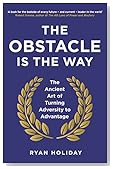
https://images-eu.ssl-images-amazon.com/images/P/B00IX49OS4.01._PC__.jpg The Obstacle is the Way Ryan Holiday Whilst everyone else appears to be obligated to include Ryan's recent Ego is the Enemy in their Best of 2016 lists I was actually taken by his earlier "introduction by stealth" to stoic philosophy. Certainly not your typical self-help book, this is "a manual to turn to in troubling times". Returning to this work at least three times over the year even splashing out on the audiobook at some point I feel like I learned a great deal, although it is now difficult to pinpoint exactly what. Perhaps another read in 2017 is thus in order
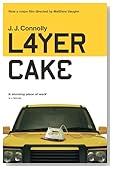
https://images-eu.ssl-images-amazon.com/images/P/071563335X.01._PC__.jpg Layer Cake J.J. Connolly To judge a book in comparison to the film is to do both a disservice, but reading the book of Layer Cake really underscored just how well the film played to the strengths of that medium. All of the aspects that would not have worked had been carefully excised from the screenplay, ironically leaving more rewarding "layers" for readers attempting the book. A parallel adaption here might be No Country for Old Men - I would love to read (or write) a comparative essay between these two adaptions although McCarthy's novel is certainly the superior source material.

https://images-eu.ssl-images-amazon.com/images/P/B00G1SRB6Q.01._PC__.jpg Lying Sam Harris I've absorbed a lot of Sam Harris's uvre this year in the form of his books but moreover via his compelling podcast. I'm especially fond of Waking Up on spirituality without religion and would rank that as my favourite work of his. Lying is a comparatively short read, more of a long essay in fact, where he argues that we can radically simplify our lives by merely telling the truth in situations where others invariably lie. Whilst it would take a brave soul to adopt his approach his case is superlatively well-argued and a delight to read.
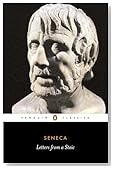
https://images-eu.ssl-images-amazon.com/images/P/0140442103.01._PC__.jpg Letters from a Stoic Seneca

Great pleasure is to be found not only in keeping up an old and established friendship but also in beginning and building up a new one. Reading this in a beautifully svelte hardback, I tackled a randomly-chosen letter per day rather than attempting to read it cover-to-cover. Breaking with a life-long tradition, I even decided to highlight sections in pen so I could return to them at ease. I hope it's not too hackneyed to claim I gained a lot from "building up" a relationship with this book. Alas, it is one of those books that is too easy to recommend given that it might make one appear wise and learned, but if you find yourself in a slump, either in life or in your reading habits, it certainly has my approval.


https://images-eu.ssl-images-amazon.com/images/P/B00BHD3TIE.01._PC__.jpg Solo: A James Bond Novel William Boyd I must have read all of the canonical Fleming novels as a teenager and Solo really rewards anyone who has done so. It would certainly punish anyone expecting a Goldeneye or at least be a little too foreign to be enjoyed. Indeed, its really a pastiche of these originals, both in terms of the time period, general tone (Bond is more somber; more vulnerable) and in various obsessions of Fleming's writing, such as the overly-detailed description of the gambling and dining tables. In this universe, 007's restaurant expenses probably contributed signifcantly to the downfall of the British Empire, let alone his waistline. Bond flicking through a ornithological book at one point was a cute touch
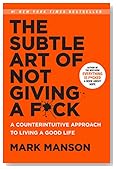
https://images-eu.ssl-images-amazon.com/images/P/B019MMUA8S.01._PC__.jpg The Subtle Art of Not Giving A F*ck Mark Manson Certainly a wildcard to include here and not without its problems, The Subtle Art is a curious manifesto on how to approach life. Whilst Manson expouses an age-old philosophy of grounding yourself and ignoring the accumulation of flatscreen TVs, etc. he manages to do so in a fresh and provocative "21st-centry gonzo" style. Highly entertaining, at one point the author posits an alternative superhero ("Disappointment Panda") that dishes out unsolicited and uncomfortable truths to strangers before simply walking away: "You know, if you make more money, that s not going to make your kids love you," or: "What you consider friendship is really just your constant attempts to impress people." Ouch.
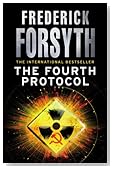
https://images-eu.ssl-images-amazon.com/images/P/B004ZLS5RK.01._PC__.jpg The Fourth Protocol Frederick Forsyth I have a crystal-clear memory from my childhood of watching a single scene from a film in the dead of night: Pierce Brosnan sets a nuclear device to detonate after he can get away but a double-crossing accomplice surreptitiously brings the timetable forward in order that the bomb also disposes of him Anyway, at some point whilst reading The Fourth Protocol it dawned on me that this was that book. I might thus be giving the book more credit due to this highly satisfying connection but I think it stands alone as a superlative political page-turner and is still approachable outside the machinations of the Cold War.
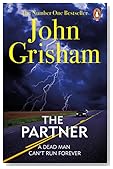
https://images-eu.ssl-images-amazon.com/images/P/B003IDMUSG.01._PC__.jpg The Partner John Grisham After indulging in a bit too much non-fiction and an aborted attempt at The Ministry of Fear, I turned to a few so-called lower-brow writers such as Jeffrey Archer, etc. However, it was The Partner that turned out to be a real page-turner for somewhat undefinable reasons. Alas, it appears the rest of the author's output is unfortunately in the same vein (laywers, etc.) so I am hesitant to immediately begin others but judging from various lists online I am glad I approached this one first.
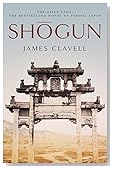
https://images-eu.ssl-images-amazon.com/images/P/B00D3J2QKC.01._PC__.jpg Shogun: The First Novel of the Asian saga James Clavell Despite its length, I simply couldn't resist returning to Shogun this year although it did fatigue me to the point that I have still yet to commence on its sequel, Tai-Pan. Like any good musical composition, one is always rewarded by returning to a book and I took great delight in uncovering more symbolism throughout (such as noticing that one of the first words Blackthorne learns in Japanese is "truth") but also really savouring the tragic arcs that run throughout the novel, some beautiful phrases ("The day seemed to lose its warmth ") and its wistful themes of inevitability and karma.

Russ Allbery: Review: Queen of Sorcery

Review: Queen of Sorcery, by David Eddings
Series: The Belgariad #2
Publisher: Del Rey
Copyright: November 1982
Printing: March 1992
ISBN: 0-345-33565-1
Format: Mass market
Pages: 322
Queen of Sorcery is the second book in the Belgariad, which is a "one story in five books" sort of series. You could probably take a chance on skipping Pawn of Prophecy, since it's not a very good book, but some parts of the story may be confusing without it. We're now getting into the part of the series where I can start saying some nice things about it, so I should put that in context and not get expectations too high. The Belgariad as a series is fully invested in the stock symbols and stereotypes of Tolkien-derivative fantasy. White is good; black is bad. West is good; east is bad. People are very neatly divided into countries, and national traits are exceptionally strong. The Murgos, the people who serve (although "under the thumb of" would be more accurate, Eddings doesn't spend much time thinking about the difference) the Big Bad of the series, are basically orcs, for all that they're theoretically human. With an unsympathetic reading, it's very easy to see the echos of the Yellow Peril in the war between the west and the east, including the standard trope of fractious, arguing, and diverse western kingdoms against a unified horde from the east. (To be fair, Eddings does undermine the unity a bit with the Nadraks later in the series, and my recollection is that the Mallorean, a follow-on series, undermines it even further.) Given that, I've been trying to figure out why I had fond memories of this series and enjoyed this re-read, since that normally isn't my thing. There are a few elements that are best talked about in the context of the next book, but one element shows up here as the party of heroes, finishing their forced detour in Cherek, head south through Arendia. Eddings is aware that he's stereotyping each nation of people in this world and embraces it so thoroughly that it stops feeling like stereotypes and starts feeling more like a fable. The Arends are a great example. Arendia is pure medieval fantasy world (even more so than the rest of this world). There are knights in castles, large forests reserved for noble hunting, and miserable serfs. The Arends, apart from the serfs, are full of tales of glory and honor, are impulsive and loyal to a fault, and are in the midst of a simmering internal war that's just barely not broken into open fighting. But the Arends know that they have an unhealthy obsession with honor, know that they constantly get themselves into trouble by being absolutist about honor and far too impulsive, and can't seem to help themselves. They bemoan the war while being apparently unable to do anything that would bring it to an end. If you think of them as people, none of this makes much sense. If you think of them as talking animals in a fable, aware of their natures but still governed by them, it starts to strangely work. When they're isolated from their society by joining the protagonists' party (the early part of this series mostly involves collecting people, for reasons explained later in the series, while following the trail of a thief), the characters of Eddings's world start developing a bit more nuance and depth. But even then, it's more within the bounds that one would expect in a long fable, and falls a bit short of human growth. The lion might learn something from the badger, but the lion is still a lion. With that frame, the first half of this book is rather entertaining. Eddings is taking the stereotype of the noble knight from a typical Arthurian romance and treating it like a class of animal in a fable, which I think is subtly delightful. There's even a doomed love triangle (a very chaste one, which is a reminder that this series was probably targeted at YA readers). The reader joins the primary characters in a sense of bemused exasperation. (Well, Garion takes the doomed love triangle much too seriously, but he's young). Unfortunately, the second half of this book is not one of the finest moments in this series. It's mostly a duet of whining. The first half of the whining comes from Garion, who finally discovers one of the many things about himself that's been obvious to the readers since the middle of the first book, and then promptly develops one of the worst cases of pathetic angst you'll encounter. The people who have been lying to him and keeping secrets from him are now all eager to teach him, which grates almost as much, whereas he's determined to never use his abilities. It makes me think the worst of absolutely everyone involved, and it all happens in one of the most depressing and disgusting settings of the book. The second half of the whining comes from Ce'Nedra, who is by far my least favorite character of this series. She's intended to be an obnoxious, spoiled, imperious brat, and also runs headlong into gender roles in this series, which means she's a living mass of irritation and gender stereotypes, made worse by the fact that the protagonists mostly tolerate her and Garion's reactions to her nonsense are also whiny and obnoxious. It's not my favorite bit of reading. Ce'Nedra does get marginally better later in the series, but she's at her worst here, at the same time Garion is at his worst, which makes the last half of this book a real chore. The only real plus side is that the voice in the back of Garion's head gets a few great moments, but more on that in the next book where it starts playing a prominent role. I should note here that Eddings isn't a complete disaster on gender in this series. There are a lot of unexamined stereotypes, but there are also a lot of examined ones, and it's obvious in places that he's trying. Polgara is a major character, women get some agency in this story, and they at least appear (which is never a given in Tolkien-derivative fantasy). But it's pretty obvious that gender roles start from a "men are from Mars, women are from Venus" set of expectations and then run into Eddings's general tendency to exaggerate all such divisions to fable levels, which in places isn't pretty. And, well, there are all-female giggly dryads who have to capture men to reproduce and who have a euphoric reaction to chocolate. That's a thing that happens. So you may or may not want to agree with me about the completeness of the disaster. Adjust expectations accordingly. If Queen of Sorcery had stuck with the tone of the first half of the book, I would say that it was doing something oddly interesting and showing some of the charm that made me want to re-read this series. Unfortunately, the second half of the book is a bit of a disaster, full of characters acting in ways that makes them very hard to like. Still, I plowed through this book in a couple nights of reading, so there's something here that draws one through the story. And the next book of the series is considerably better. Followed by Magician's Gambit. Rating: 6 out of 10

29 December 2016

Sven Hoexter: Out of the comfort zone: OpenSuSE support for an ordinary user - f*ck my morals

A friend of mine choose for $reasons to install the latest OpenSuSE 42.2 release as his new laptop operating system. It's been a while that I had contact with the SuSE Linux distribution. Must be around 12 years or so. The unsual part here is that I've to support a somewhat eccentric, but mostly ordinary user of computers. And to my surprise it's still hard to just plug in your existing stuff and expect it work. I've done so many dirty things to this installation in the last three days, my system egineering heart is bleeding. printing with a Canon Pixma iP100 printer This is a small portable Canon printer, about four years old. It provides a decent quality and its main strength is that it's small and really portable. Sadly the gutenprint driver just pushes through a blank page. No ink wasted on it at all. So the only reasonable other choice was a four year old binary rpm package provided by Canon. It has a file dependency on "libtiff.so.3" which is no longer available in recent GNU/Linux distributions. So I cheated and
- unpacked the tarball
- installed the rpm from the "packages" folder
zypper install cnijfilter-common-3.70-1.x86_64.rpm cnijfilter-ip100series-3.70-1.x86_64.rpm
... and choose to ignore the missing file dependency on libtiff.so.5.
ln -s /usr/lib64/libtiff.so /usr/lib64/libtiff.so.5
- re-ran the ./install.sh which registered the printer with cups and does whatever else
  magic is included in 1906 lines of shell.
To my surprise this driver still works and provides the expected quality. Though it's just a question of time until this setup will break. Be it an incompatible ABI change in libtiff or another lib in use by those Canon provided tools. QGIS and gdal with ECW support While the printer stuff is a rather common use case, having a map viewer for map files in the ECW format is the eccentric part. I found some hints on stackoverflow and subsequently https://trac.osgeo.org/gdal/wiki/ECW that a non-free library is required and a specific build of gdal. Then QGIS should be able to work with ECW files. Lucky us there is at least a OpenSuSE repository for gdal and QGIS. So I did the following:
zypper addrepo http://download.opensuse.org/repositories/Application:/Geo/openSUSE_Leap_42.2/Application:Geo.repo
zypper install qgis
Then I had to download the non-free ECW SDK from http://download.hexagongeospatial.com/downloads/erdas-ecw-jp2-sdk-v5.3-%28linux%29 - you'll and up with a '.bin' installer file. The installation process left me with "ERDAS-ECW_JPEG_2000_SDK-5.3.0" folder in my $HOME. I moved that one to /opt. Next step is adding the library to the ldconfig search path.
echo "/opt/ERDAS-ECW_JPEG_2000_SDK-5.3.0/Desktop_Read-Only/lib/x64/release/" > /etc/ld.so.conf.d/ecw.conf; ldconfig
Now it was "just" about rebuild gdal with ECW support. So I downloaded the required source packages with "zypper source-install gdal", edited the spec somewhere in "/usr/src/" to make the following modifications
--with-ecw=/opt/ERDAS-ECW_JPEG_2000_SDK-5.3.0/Desktop_Read-Only
added to the "./configure" invocation. And somewhere at the top we had to relax the requirement that all installed files have to be referenced inside the package.
%define _unpackaged_files_terminate_build 0
As a last step I had to "rpmbuild -ba" the package and force the installation via zypper once more, because this time we have a file depedency on the libecw stuff and it's obviously not listed in the rpm database. Last but not least I tried to put the gdal build on hold with
zypper addlock gdal libgdal20
to ensure it's not removed on the next update. Other non-free tools Beside of those two issues I had to install a range of other non-free tools, but currently they work without further issues or modifications. One is Teamviewer (i686 multiarch rpm) and the other one is XnViewMP. XnView is also able to show ECW files, but only the smaller ones. It crashes on bigger ones but that's also the case on Windows. Then there is also (required by some Italian map related websites) the ugly Adobe Flash Plugin for Firefox, but that one is sadly still a widespread issue. We also tried to try out the nvidia graphic drivers but at the moment we could only get the build in Intel card to work. Usually the preferred solution from my point of view but sometimes we see rendering glitches and I'm not sure if it's the driver or something else. my personal take away I hate to admit it but it's nothing extraordinary that was requested here. But still it took me the better part of two evenings to figure everything out. And even now it's not properly integrated and doomed to fail any day due to various updates and changes in the surounding ecosystem. I've full sympathy for every average user that would give up after two hours of research and try&error on this journey. For the printer drivers I'm happy to blame Canon. The printer situation as a whole improved from my point of view during the last decade, but it's still a pain in the ass with the very short shelf life you usually see with consumer models. For the ECW case one could discuss if it would be legally possible and helpful to do ugly dlopen() stuff to dynamcially load the shared libs. But then again someone has to make his hands dirty during the build and discussions about the legal use of header files will be the next chapter (hello Oracle). It's just ugly. Actually I know too little about the world of image formats to judge if someone has a good reason to keep this format commercial or not. From my personal point of view it's not useful and maybe even morally wrong. Technically one could argue if it would make sense to keep a local copy of the gdal build in "/opt" and start QGIS with a modified library path to prefer the private gdal build. Not sure if that is any better. On the other hand there are evolving mechanism like flatpack that would ease the handling of such situations. Buth then again we would be catering non-free software. It feels a lot like giving up. While my private working environment is except for firmware blobs free, I now created for someone a real "FrankenSuSE" to satisfy his everyday needs. On the one hand we now have another mostly satisfied user of a mostly free operating system. On the other hand that was only possible by adding a vast amount of non-free software. For sure we did not win the war, I'm not even sure if we've won a single battle here. It's just frustrating to see what is required to get someone up and running. With my personal attitude towards open source software it even feels wrong to invest so much time into fiddling with non-free components. What is still missing We currently lack an image viewer that allows us to print only a selection of an image, which is useful to print parts of a map. That usually works with XnView on Windows but does not work with the Linux version at the moment. I also tried gwenview and geeqie and had the same issue. Not sure if it's maybe a bug in XnView or one of the Qt parts (gwenview is also Qt based). I did not research that yet. Update: I spent quite some time looking into open bug reports for geeqie and gwenview. Seems the feature to print only a section of an image is something new. I've created #374299 (gwenview) and #457 (geeqie). For XnView I expect it's a difference between XnViewMP (the portable version) and the Windows only XnView Classic. Needs to be clarified and it might be worth to try XnView Classic with wine. Maybe printing with wine via cups works, I found at least some results for it on the internet.

Russ Allbery: Review: Pawn of Prophecy

Review: Pawn of Prophecy, by David Eddings
Series: The Belgariad #1
Publisher: Del Rey
Copyright: April 1982
Printing: August 1990
ISBN: 0-345-33551-1
Format: Mass market
Pages: 258
I hit a period in November when I felt like reading something entirely undemanding and fun, something that was predictable, comfortable, and guaranteed to be a happy ending. There are times in life for books like that. I've been vaguely thinking of re-reading the Belgariad for a while, which I'd not read since I was in college, and that seemed to fit the bill. Garion is a farm-boy in Sendaria, a quiet and industrious kingdom full of farmers. His only family is his Aunt Pol, who ran the kitchen at Faldor's farm. His life has all the hallmarks of being entirely unremarkable, despite occasional visits by a traveling vagabond, Wolf, who clearly knows his Aunt Pol. But then something extremely important is stolen elsewhere, Wolf and Pol have to leave to pursue it for reasons that are quite murky to Garion, and Pol is unwilling to leave Garion behind. This begins Garion's great adventure, in which he becomes far more important and powerful than he would have ever imagined. That's the promise, at least, and the stock plot of every series like this. And let me be clear up front: the Belgariad is very stock. That's part of what I was in the mood for, but don't come to this series looking for interesting differentiation. It's clearly in the center of the secondary world chosen one fantasy genre, with a great evil, forces of good arrayed against it, and someone who unknowingly has the power to stop evil but has to learn how to use it. If you're in the mood for this, every note will be comfortably familiar; if not, it might be boringly predictable. Unfortunately, this particular book does not cast the Belgariad in a good light. Garion's introduction to this story is intensely irritating, almost entirely because no one will tell him what's going on. Pol is excessively protective (smotheringly so), but shuts down any questions he has and doesn't explain why she's freaking out. (This doesn't become entirely clear until towards the end of the second book.) What little scraps Garion picks up, he has to get by eavesdropping. Even by the end of this book, when Garion has met royalty and started helping with larger political issues (albeit mostly by accident), everyone is keeping him in the dark and he doesn't believe the hints he's gotten. I can't remember how I reacted to this the first time I read this series, but the second time through, it was extremely frustrating. The frustration is stronger because any regular reader of this genre knows exactly what Garion is, although not precisely how the story will play out, and can make fairly good guesses about Pol and Wolf from early in the story. Everyone playing coy doesn't even add legitimate suspense or set up a big reveal. It just made me irritated at Garion's blindness (it's mildly understandable given how foreign the idea is to his life, but he seems remarkably dense even with that), and even more irritated at Wolf and, in particular, Aunt Pol for keeping him so thoroughly in the dark. Garion is very attached to his aunt; on this re-reading, I wasn't entirely sure why. She occasionally shows love and support, and she's certainly wise, but for most of the book she treats him with brusque condescension and tries to keep him as ignorant as possible. Garion's weird entanglement with a black rider that he'd seen for most of his life doesn't make this any better. It's creepy and disturbing, it's not entirely resolved in this book, and Garion is clearly in danger, which wasn't the vibe that I was looking for when starting this re-read. And it's hard to escape the feeling that Garion might have managed to tell someone if all the adult figures in his life weren't so secretive, dismissive, and excessively controlling. So, all in all, an inauspicious beginning. It was good enough to keep me reading when I first read the series, and it was good enough on this re-read, but just barely. The saving grace is Silk and Barak, when the story finally meets them. Those who have read this series will know that they're just the beginning of the party-building process that will take up much of this series (so many Lord of the Rings resonances), but the one thing I will give Eddings is that he writes entertaining supporting characters. Both of them are a bit stereotyped, but they add so much to this story. Silk in particular is a delight and remains a delight throughout the series, adding a much-needed level of snark and sneaky enjoyment that lightens so many of the serious episodes of this story. The Belgariad in general is highly derivative map exploration fantasy, and you shouldn't expect anything deeper. It is, however, enjoyable map exploration fantasy with some entertaining supporting cast members. Sadly, only the glimmers of that are visible from this book. Pawn of Prophecy is mostly an irritating tour of bad parenting techniques, refusal to talk to teenagers, sneaking around to get information that should have been legitimately shared, and taking forever to get around to the mythology that we all know is coming. I therefore can't recommend this book, although one does have to read it in order to read the rest of the series, which as I recall gets considerably better. Followed by Queen of Sorcery. Rating: 5 out of 10

27 December 2016

Joey Hess: multi-terminal applications

While learning about and configuring weechat this evening, I noticed a lot of complexity and unsatisfying tradeoffs related to its UI, its mouse support, and its built-in window system. Got to wondering what I'd do differently, if I wrote my own IRC client, to avoid those problems. The first thing I realized is, it is not a good idea to think about writing your own IRC client. Danger will robinson.. So, let's generalize. This blog post is not about designing an IRC client, but about exploring simpler ways that something like an IRC client might handle its UI, and perhaps designing something general-purpose that could be used by someone else to build an IRC client, or be mashed up with an existing IRC client. What any modern IRC client needs to do is display various channels to the user. Maybe more than one channel should be visible at a time in some kind of window, but often the user will have lots of available channel and only want to see a few of them at a time. So there needs to be an interface for picking which channel(s) to display, and if multiple windows are shown, for arranging the windows. Often that interface also indicates when there is activity on a channel. The most recent messages from the channel are displayed. There should be a way to scroll back to see messages that have already scrolled by. There needs to be an interface for sending a message to a channel. Finally, a list of users in the channel is often desired. Modern IRC clients implement their own UI for channel display, windowing, channel selection, activity notification, scrollback, message entry, and user list. Even the IRC clients that run in a terminal include all of that. But how much of that do they need to implement, really? Suppose the user has a tabbed window manager, that can display virtual terminals. The terminals can set their title, and can indicate when there is activity in the terminal. Then an IRC client could just open a bunch of terminals, one per channel. Let the window manager handle channel selection, windowing (naturally), and activity notification. For scrollback, the IRC client can use the terminal's own scrollback buffer, so the terminal's regular scrollback interface can be used. This is slightly tricky; can't use the terminal's alternate display, and have to handle the UI for the message entry line at the bottom. That's all the UI an IRC client needs (except for the user list), and most of that is already implemented in the window manager and virtual terminal. So that's an elegant way to make an IRC client without building much new UI at all. But, unfortunately, most of us don't use tabbed window managers (or tabbed terminals). Such an IRC client, in a non-tabbed window manager, would be a many-windowed mess. Even in a tabbed window manager, it might be annoying to have so many windows for one program. So we need fewer windows. Let's have one channel list window, and one channel display window. There could also be a user list window. And there could be a way to open additional, dedicated display windows for channels, but that's optional. All of these windows can be seperate virtual terminals. A potential problem: When changing the displayed channel, it needs to output a significant number of messages for that channel, so that the scrollback buffer gets populated. With a large number of lines, that can be too slow to feel snappy. In some tests, scrolling 10 thousand lines was noticiably slow, but scrolling 1 thousand lines happens fast enough not to be noticiable. (Terminals should really be faster at scrolling than this, but they're still writing scrollback to unlinked temp files.. sigh!) An IRC client that uses multiple cooperating virtual terminals, needs a way to start up a new virtual terminal displaying the current channel. It could run something like this:
x-terminal-emulator -e the-irc-client --display-current-channel
That would communicate with the main process via a unix socket to find out what to display. Or, more generally:
x-terminal-emulator -e connect-pty /dev/pts/9
connect-pty would simply connect a pty device to the terminal, relaying IO between them. The calling program would allocate the pty and do IO to it. This may be too general to be optimal though. For one thing, I think that most curses libraries have a singleton terminal baked into them, so it might be hard to have a single process control cursors on multiple pty's. And, it might be innefficient to feed that 1 thousand lines of scrollback through the pty and copy it to the terminal. Less general than that, but still general enough to not involve writing an IRC client, would be a library that handled the irc-client-like channel display, with messages scrolling up the terminal (and into the scrollback buffer), a input area at the bottom, and perhaps a few other fixed regions for status bars and etc. Oh, I already implemented that! In concurrent-output, over a year ago: a tiling region manager for the console I wonder what other terminal applications could be simplified/improved by using multiple terminals? One that comes to mind is mutt, which has a folder list, a folder view, and an email view, that all are shoehorned, with some complexity, into a single terminal.

Gunnar Wolf: Giving up on the Drupal 8 debianization

I am sad (but feel my duty) to inform the world that we will not be providing a Drupal 8 package in Debian. I filed an Intent To Package bug a very long time ago, intending to ship it with Jessie; Drupal 8 was so deep a change that it took their community overly long to achieve and stabilize. Still, Drupal 8 was released over a year ago today. I started working on debianizing the package shortly afterwards. There is also some online evidence As my call for help sent through this same blog. I have been too busy this last year. I let the packaging process lay dormant for too long, without even touching it for even half a year. Then, around September, I started working with the very nice guys of Indava, David and Enrique, and did very good advances. They clearly understood Debian's needs when it comes to full source inclusion (as D8 ships many minified Javascript libraries), attribution (as additionally to all those, many third-party PHP projects are bundled in the infamous vendor/ directory), and system-wide dependency management (as Drupal builds on some frameworks and libraries already available within Debian, chiefly Symfony, Doctrine, Twig... Even more, most of them appeared to work at the version levels we will be shipping, so all was dandy and for some weeks, I was quite optimistic on finishing the package on time and with the needed quality and testing. Yay! But... Reality bites. When I started testing my precious package... It broke in horrible ways. Uncomprehensible PHP errors (and I have to add here, I am a PHP newbie and am reluctant to learn better a language that strikes me as so inconsistent, so ugly), which we spent some time tackling... Of course, configuration changes are more than expected... But, just as we Debianers learnt some important lessons after the way-too-long Sarge freeze (ten years ago, many among you won't remember those frustrating days), Drupal learnt as well. They changed their release strategy Instead of describing it, those interested can read it at its source. What it meant for me, sadly, is that this process does not align with the Debian maintenance model. This means: The Drupal API stays mostly-stable between 8.0.x, 8.1.x, 8.2.x, etc. However, Drupal will incorporate new versions of their bundled libraries. I understood the new versions would be incorporated at minor-level branches, but if I read correctly some of my errors, some dependencies change even at patch-level updates. And... Well, if you update a PHP library, and the invoking PHP code (that is, Drupal) relies in this new version... Sadly, it makes it unmaintainable for Debian. So, long story short: I have decided to drop Drupal8 support in Debian. Of course, if somebody wants to pick up the pieces, the Git repository is still there (although I do plan on erasing it in a couple of weeks, as it means useless waste of project resources otherwise), and you could probably even target unstable+backports in a weird way (as it's software that, given our constraints, shouldn't enter testing, at least during a freeze). So... Sigh, a tear is dropped for every lost hour of work, and my depeest regrets to David and Enrique who put their work as well to make D8 happen in Debian. I will soon be closing the ITP and... Forgetting about the whole issue?

26 December 2016

Russ Allbery: Review: The Kingdom of Gods

Review: The Kingdom of Gods, by N.K. Jemisin
Series: Inheritance #3
Publisher: Orbit
Copyright: 2011
Printing: April 2012
ISBN: 0-316-04394-X
Format: Mass market
Pages: 567
The Kingdom of Gods is the third and final book of the Inheritance trilogy and rests very heavily on the events of The Hundred Thousand Kingdoms and The Broken Kingdoms. I think it's the best book of the trilogy as well, but this isn't the place to start. The build-up from the previous books is very important to this story. The first book of this series followed Yeine in her introduction to the highly political, abusive, and exploitative world of the Arameri, and her deeper introduction to the complex theology and mythology of Jemisin's constructed world. The second involved fewer theological fireworks and more day-to-day decisions, but it followed the implications of the first book's climax and revealed another important lurking weapon from the past. The Kingdom of Gods returns to a theological focus, this time putting Sieh front and center, and is once again concerned with the fate of the entire world, or even reality itself. Sieh played a significant role in the first book, but only seen from Yeine's perspective. He's the trickster god, the god of childhood, of play and whim and unfairness and practical jokes, of all the chaos and lack of impulse control and impudence of childhood. The Kingdom of Gods opens with him encountering two Arameri children in the abandoned areas under Sky and making an unlikely and impulsive pledge of friendship. One that leads to an unexplained catastrophe, a long blackout, and possibly the end of his existence, since Sieh starts aging. And growing up directly undermines his power. One of the two children turns out to be the heir of the haughty, devious, and deeply racist Arameri, whose position atop the hierarchy of the world has been weakened by earlier events but not shaken entirely. Her relationship with Sieh is much more fraught and complex when both of them are teenagers and Sieh is struggling badly to remain true to himself. But what drives the plot is a deadly new form of magic that is targeting the Arameri family and threatening to bring back world-wide war. This is my favorite book of the trilogy, not so much because it brings a relatively satisfying conclusion (The Hundred Thousand Kingdoms wasn't bad at that either), but because for once I like all of the main characters. Yeine and Nahadoth are hit and miss (the second two books of the trilogy make it clear that Nahadoth can be a real asshole), and as mentioned in the review of The Broken Kingdoms, I found Shiny exasperating. But Sieh is fun, even when he's being obnoxious, and both of the kids he befriends are complex and multifaceted. Shahar, with her hard and complex relationship with her mother, is probably my favorite character in the book, but her brother certainly has his moments. I did not like Sieh's maturation process. There are parts of this story that are squirm-inducing, and not in a good way (at least for me). And he does tend to get whiny in places. But he knows everyone in Jemisin's complex mythology, he has a great first-person narrative voice, and there are some very fun moments of interaction with his sibling gods. It says something that I really enjoyed this story even though books about slow, ongoing illness and diminution are rather far from my favorites (and Sieh's aging falls into that category). While there are some beautiful set-pieces here once the shit starts to hit the fan in earnest, the concluding fireworks didn't really work for me. The final confrontation was too abstracted, too indescribable, and too full of ancillary carnage to be the ending I was looking for. (Perhaps because of what I've been playing recently, I keep thinking of it as one of those chaotic, floating, dream-like cut-scene disasters in a Final Fantasy game that's trying to hint at indescribable magic.) But the denouement made me happy, and it fit the characters. And don't miss the glossary at the end of the book that Sieh has scribbled all over. This book includes, as a bonus, a short story: "Not the End": This is the ending that The Broken Kingdoms actually needed. It (plus some key bits in the rest of The Kingdom of Gods) made me feel much better about the end of that book, and added a much-needed light note to the rather heavy bits at the end of this book. And I do love Oree. It's very short, and it's not in any way a standalone story (more of a belated epilogue to the previous novel), but that's all that was needed. (8) Rating: 8 out of 10

25 December 2016

Gregor Herrmann: RC bugs 2016/46-51

it's amazing how many new bugs appear; luckily in the Debian Perl Group we're not too bad at fixing them as well. here's the list of my contributions over the last weeks:

Jonathan McDowell: The terrible PIC ecosystem

I recently had call to play with some 1-Wire devices at work (more of which in a future post). It was taking a while for the appropriate programmer to turn up, so of course I pulled out my trusty BusPirate. It turned out the devices in question would only talk in overdrive mode, while the Bus Pirate could only offer standard mode. So I set about trying to figure out how to add the appropriate support. This is is a huge endorsement for test equipment with Free Software firmware. Rather than giving up I was able to go and grab the current firmware, which has been adopted by the community since Dangerous Prototypes have discontinued development. What let me down was the ecosystem around the PIC24FJ64GA002. My previous recent experience with microcontrollers has been with the ATTiny range and the STM32. Getting up and running with both of these was fairly easy - the tool chains necessary were already present in Debian, so all it took was a simple apt invocation to install everything I needed to compile code and program it to the devices. Not so with the PIC series, which surprised me. There seems to be some basic support for the earlier PIC16 range, but for later chips there s nothing that works out of the box with Debian. Investigation revealed that this was because there s nothing maintained that enabled Free development for the PIC range. The accepted solution is the closed MPLAB X. Now, in one sense fair play to Microchip for making this available. But in another, shame on you. I can t imagine ever choosing to build something based on a chip that only had a closed source tool chain available. I want things I can use in Makefiles and properly script, that are available in my distro of choice and that generally work in the same fashion as the tool chains I m used to. I understand there might be some benefit in a closed compiler in terms of performance (and have HPC friends who would never trust a benchmark provided using GCC), but in general that s not the space I move in. Nor does it seem to be the sort of attitude you should be taking if you are trying to attract the hobbyist and small production run market. Any yet this seems common amongst hardware manufacturers. People whose core business is selling physical items, where the software is only relevant in terms of being able to use those items, seem to consider the software to be precious. Instead of opening up programming specifications and allowing a more widespread use of the hardware, increasing sales. I understand there are some cases where this isn t practical, but the default attitude is definitely one of being closed rather than open, which is a terrible shame. Anyway. I do have some Bus Pirate 1-Wire overdrive support now working (pending some testing to ensure standard mode still works), but I am glad I never spent a lot of time getting involved with PICs now.

24 December 2016

Shirish Agarwal: Trains, Planes and the future

Swacch Bharat - Indian Railways Copyright: Indian Express

Swacch Bharat Indian Railways Copyright: Indian Express

Some of the content may be NSFW. viewer discretion advised. I have had a life-long fascination with trains. One of my first memories was that of 5-7 year old, clutching my mother or grandmother s hand seeing the steam engine lumbering down whistling and smoking at the same time. I was both afraid and strangely drawn to the iron beast and the first time I knew and then slowly understood that if we come with luggage and the steam-engine comes, it means we are going to travel. I have travelled some, but there are lots to explore still and I do hope that I cover some more of it during my lifetime. The reason I am writing about trains is an article which caught my eye couple of days. Besides seeing the changing geography, the variety of food one can get on train and in stations is one of the primary reasons that Indians love to travel by trains. It is one place where you could have incredible conversations over cup of tea or favourite food and unlike air travel and the famed IFE (In-flight entertainment) people are actually pretty social even with all the gadgets. For those who are wondering, the author was travelling between Jamshedpur, Gujarat to Kolkatta, a train ride which has now gone on my bucket list for the delectable items the author has described To add to the above, it is still cheaper than air travel, although that is changing a bit as Indian Railways seeks to modernize Railways and make it into world-class bullet trains. Indian Railways has a long, rich culture and some of the most interesting nuggets you learn over time adds to the fascination of the Railways. For instance I m sharing this letter which I read first in book and then saw in the New Delhi Railway Museum. The letter I am sharing below was written by a certain Shri Okhil Chandra Sen to the Sahibganj Railway Office in year 1909, almost 38 years before India became independent. I am arrive by passenger train Ahmedpur station and my belly is too much swelling with jackfruit. I am therefore went to privy. Just I doing the nuisance that guard making whistle blow for train to go off and I am running with lotah in one hand and dhoti in the next when I am fall over and expose all my shocking to man and female women on plateform. I am got leaved at Ahmedpur station. This too much bad, if passenger go to make dung that dam guard not wait train five minutes for him. I am therefore pray your honour to make big fine on that guard for public sake. Otherwise I am making big report! to papers. If it were not for Mr. Okhil Chandra Sen we would still be running with water bottle (improvement) and jeans/shorts/whatever (again improvement) while the possibility of falling over would always be omnipresent in a hurry. Now we do have toilets and some of the better trains even have Bio-toilets which should make things better as well.(/NSFW) For the plane bit, most of my flights have been domestic flying. Some of my most memorable flights is when flying from Mumbai on a clear sky overlooking the Queen s necklace, loving it and landing in Bangalore during mist or rain or both. Delhi is also good as airports go but nothing much adventurous about it. It was only with the experience of my first international flight, I realized the same feeling again, nervousness and sense of adventure as you meet new people. Nowadays every week I do try and broaden my horizon by seeking and learning a bit about International Travel.
Copyright: National Geographic Magazine

Copyright: National Geographic Magazine

In this I came across an article on National Geographic site which also evoked similar feelings. While I can t go back to the past and even if I did (in distant past before I was born), I wouldn t want to improve my financial situation at all (as otherwise I would hit the Grandfather Paradox or/and the Butterfly effect (essentially saying there s no free lunch), it still makes you wonder about a time when people had lot more adventure and lot more moving parts. I do wish they had a much bigger snapshot of that plane so I could really see how people sat in the old aircraft. The low-resolution picture doesn t do justice to the poster and the idea of that time. https://en.wikipedia.org/wiki/A_Sound_of_Thunder for an implementation of Butterfly effect. The Grandfather Paradox has been seen plenty of times in fantasy movies like the Back to the Future, Planet of the Apes and many others so will not go there. For the average joe today, s/he has to navigate security,check bags, get her/imself processed through passport control, get boarding pass, get to the gate on-time, get to the aircraft via bridge or bus, get to the seat, somehow make it through the ascent and use your IFE and get snacks and meals till it s time to touch-down and re-do the whole drill again as many times you are connecting. I really admire Gunnar Wolf for the tenacity he showed for the x number of connections he made both ways.
The world's 10 best airports Copyright: Changi International Airport

Photo Courtesy Changi International Airport, Singapore

While leafing through the interweb today, came across an article . While you can slice and dice the report anyway you want, for me if ever I get a chance again for an International Travel, I would try to see I get a layover at these three airports in order of preference (this is on the basis that none of these airports need a transit visa for the activities shared) a. Changi International Airport It is supposed to have shower amenities, has a movie theatre (+1), free tour of the city (+1) and of course as many Indians do go to Singapore as a destination in itself would have multiple vegetarian options (+2) so would be nice if I need to layover. b. Zurich Airport (ZRH) For passengers with an extended layover, Zurich Airport offers bicycle and inline-skate rentals and excursions to the Swiss Museum of Transport Lucerne. From business-insider.com. While I m not much of a bicycle and inline-skating freak, if the Swiss Museum of Transport Lucerne is anything to the scale of Isiko Museum which I shared in a blog post sometime before, it would be worth by itself. I haven t tried to find the site but can imagine, for e.g. if it has a full-scale model of a submarine or train engine, either steam-engines or ones like SNCF or any of the other bullet-trains and early aircraft, it would just blow my mind. When you are talking about transport, there is so much science, business, logistics etc. that I m sure I ll overload with information, photos and any trinkets they have to buy. c. Central Japan International Airport (NGO) It has a 1,000-foot-long sky deck where passengers can watch ships sail into Nagoya Port. There s also a traditional Japanese bathhouse where you can have a relaxing soak while watching the sunset over the bay. BusinessInsider.com Not a bad place to be if you need a layover. Just sink yourself in the bathhouse and see the bay and ships coming in. Luxury indeed. Honourable mention d. Munich Airport (MUC) A nearby visitors park features mini golf and a display of historic aircraft. Business-Insider.com . Now this would have made my list but I guess one would need a Schengen visa to access the visitors park but then if you have that, then why just stay in the Airport itself, could travel through Europe itself and have a longish stop-over. So all in all, it s indeed a fascinating time to be alive, dreaming and just being. Till later. Update I had forgotten to share one more reason why I was writing this article. Although somewhat of a cynic, am hopeful that Pune metro happens. Also, if I had just waited a day, would have been able to add couple of wonderful articles that would make people wanderlust more
Filed under: Miscellenous Tagged: #Best Airports, #Central Japan International Airport, #Changi International Airport, #Food, #Loo, #Nostalgia, #NSFW, #Planes, #Steam Engine, #Trains, #Zurich Airport, Indian Railways, memories

Next.

Previous.