Scarlett Gately Moore: KDE Akademy 2023, Sunburns, and KDE Snaps
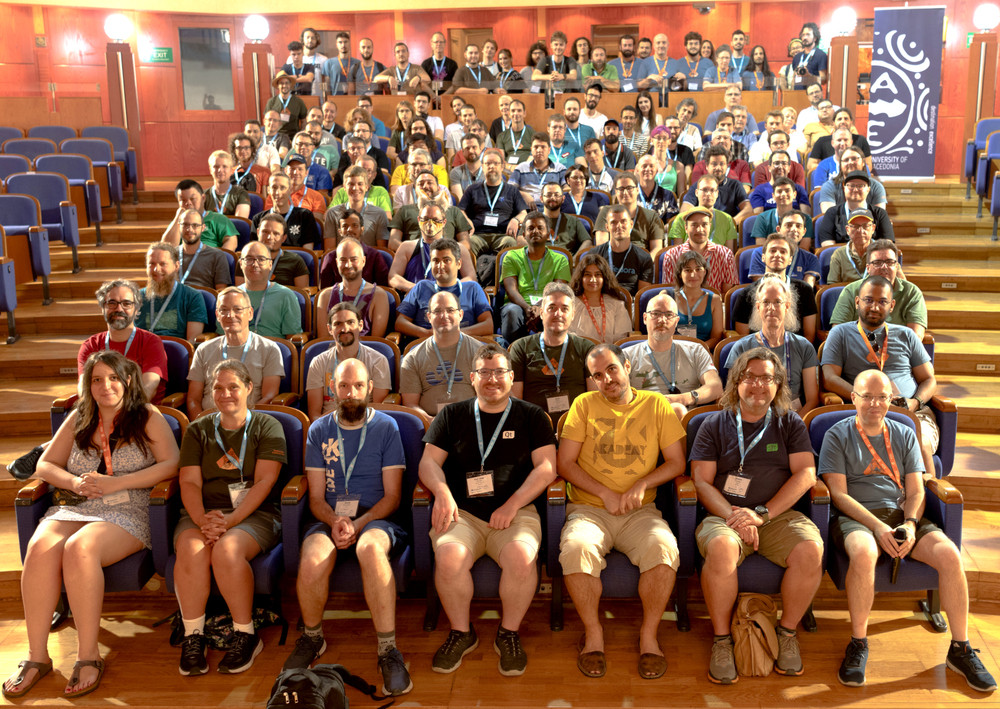 KDE Akademy 2023
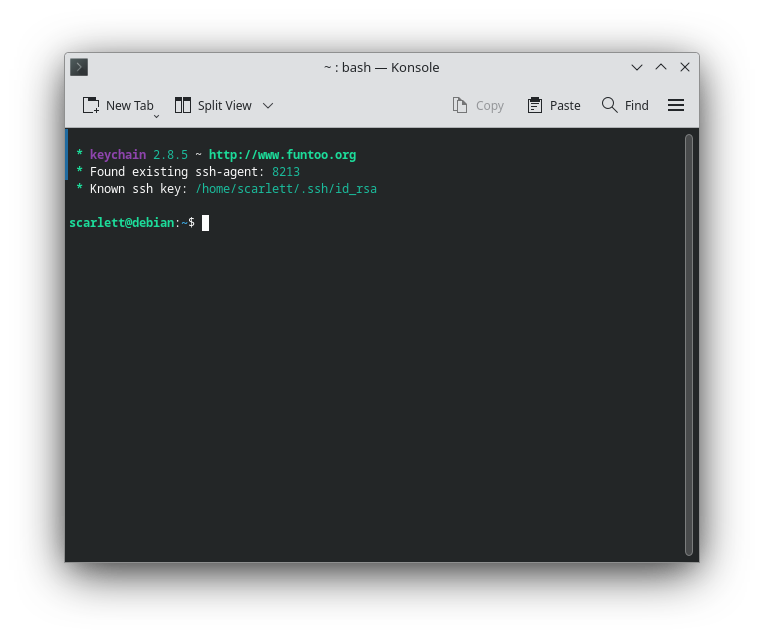 KDE Konsole snapKDE Akademy 2023KDE Konsole snap
 Welcome to the 41th post in the $R^4 series. Just
as the previous
post illustrated r2u use to empower
interactive Google
Colab sessions, today we want to look at continuous integration via
GitHub Actions.
Actions are very powerful, yet also intimidating and complex. How
does one know what to run? How does ensure requirements are installed?
What does these other actions do?
Here we offer a much simpler yet fully automatic
solution. It takes advantage of the fact that r2u integrates
fully and automatically with the system, here
apt, without us having to worry about the setup. One way to
make this very easy is the use of the Rocker containers for r2u. They already include
the few lines of simple (and scriptable) setup, and have bspm setup so that R
commands to install packages dispatch to apt and will bring
all required dependencies automatically and easily.
With that the required yaml file for an action can be as simple as
this:
name: r2u

on:
  push:
  pull_request:
  release:

jobs:
  ci:
    runs-on: ubuntu-latest
    container:
      image: rocker/r2u:latest
    steps:
      - uses: actions/checkout@v3
      - name: SessionInfo
        run: R -q -e 'sessionInfo()'
      #- name: System Dependencies
      #  # can be used to install e.g. cmake or other build dependencies
      #  run: apt update -qq && apt install --yes --no-install-recommends cmake git
      - name: Package Dependencies
        run: R -q -e 'remotes::install_deps(".", dependencies=TRUE)'
      - name: Build Package
        run: R CMD build --no-build-vignettes --no-manual .
      - name: Check Package
run: R CMD check --no-vignettes --no-manual $(ls -1tr *.tar.gz tail -1)on block where for simplicity we
select pushes, pull requests and releases. One could reduce this to just
pushes by removing or commenting out the next two lines. Many further
refinements are possible and documented but not reqired.
Second, the jobs section and its sole field
ci saythat we are running this CI on Ubuntu in its latest
release. Importantly we then also select the rocker container for r2 meaning that we
explicitly select running in this container (which happens to be an
extension and refinement of ubuntu-latest). The
latest tag points to the most recent LTS release, currently
jammy aka 22.04. This choice also means that our runs are
limited to Ubuntu and exclude macOS and Windows. That is a choice: not
every CI task needs to burn extra (and more expensive) cpu cycles on the
alternative OS, yet those can always be added via other yaml files
possibly conditioned on fewer runs (say: only pull requests) if
needed.
Third, we have the basic sequence of steps. We check out
the repo this file is part of (very standard). After that we ask
R show the session info in case we need to troubleshoot.
(These two lines could be commented out.) Next we show a commented-out
segment we needed in another repo where we needed to add
cmake and git as the package in question
required local compilation during build. Such a need is fairly rare, but
as shown can be be accomodated easily while taking advantage of the rich
development infrastructure provided by Ubuntu. But the step should be
optional for most R packages so it is commented out here. The next step
uses the remotes package
to look at the DESCRIPTION file and install all dependencies which,
thanks to r2u and bspm, will use all Ubuntu
binaries making it both very fast, very easy, and generally failsafe.
Finally we do the two standard steps of building the source
package and checking it (while omitting vignettes and the (pdf)
manual as the container does not bother with a full texlive
installation this could be altered if desired in a derived
container).
And that s it! The startup cost is a few seconds to pull the
container, plus a few more seconds for dependencies and let us recall
that e.g. the entire tidyverse installs all one hundred plus
packages in about twenty seconds as shown in earlier post. After that
the next cost is generally just what it takes to build and check your
package once all requirements are in.
To use such a file for continuous integration, we can install it in
the .github/workflows/ directory of a repository. One
filename I have used is .github/workflows/r2u.yaml making
it clear what this does and how.
More information about r2u is at its site, and we
answered some question in issues, and at stackoverflow. More questions
are always welcome!
If you like this or other open-source work I do, you can now sponsor me at
GitHub.
This post by Dirk Eddelbuettel originated on his Thinking inside the box blog. Please report excessive re-aggregation in third-party for-profit settings.
 After many years of effort, I am happy to announce that Debian
riscv64 is now an official
architecture!
This milestone is not the end of the journey but rather the beginning of a new
one: the port will need to be rebootstrapped in the official archive, build
daemons will have to be reinstalled and handed over to
DSA, many bugs will need to be fixed. If everything
goes well, the architecture will eventually be released with
Trixie. Please note that this
process will be long and will span several months.
I would like to take this opportunity to thanks everyone who contributed to
this significant milestone, including individuals and Debian teams, as well as
the organizations and companies that provided us with resources (by rough
chronological order):
MIT CSAIL,
Sifive,
Mullvad,
tetaneutral.net,
OSU Open Source Lab,
Microchip,
BeagleBoard.org Foundation,
RISC-V international,
PLCT Lab (ISCAS),
StarFive,
and Metropolitan Area Network Darmstadt.
 The DebConf video team has been
sprinting in
preparation for DebConf 23 which will
happen in Kochi, India, in September of this year.
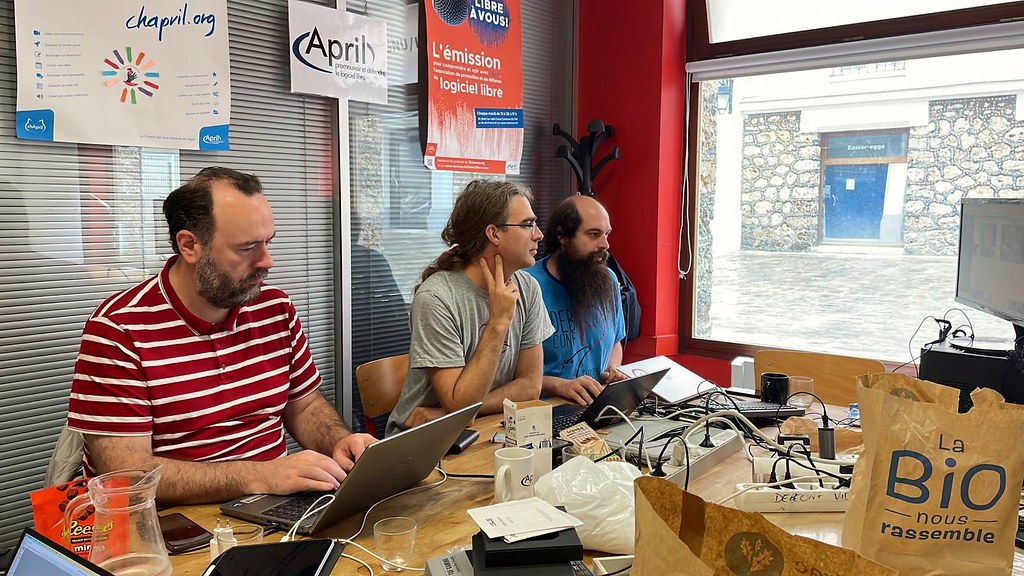 Present were Nicolas "olasd" Dandrimont, Stefano "tumbleweed" Rivera,
and yours truly. Additionally, Louis-Philippe "pollo" V ronneau and Carl
"CarlFK" Karsten joined the sprint remotely from across the pond.
Thank you to the DPL for agreeing to fund flights, food, and
accomodation for the team members. We would also like to extend a
special thanks to the Association April for
hosting our sprint at their offices.
We made a lot of progress:
 We took a couple of days of for a family vacation / road trip through
the hills of Central Mexico. The overall trip does not look like
anything out of the ordinary
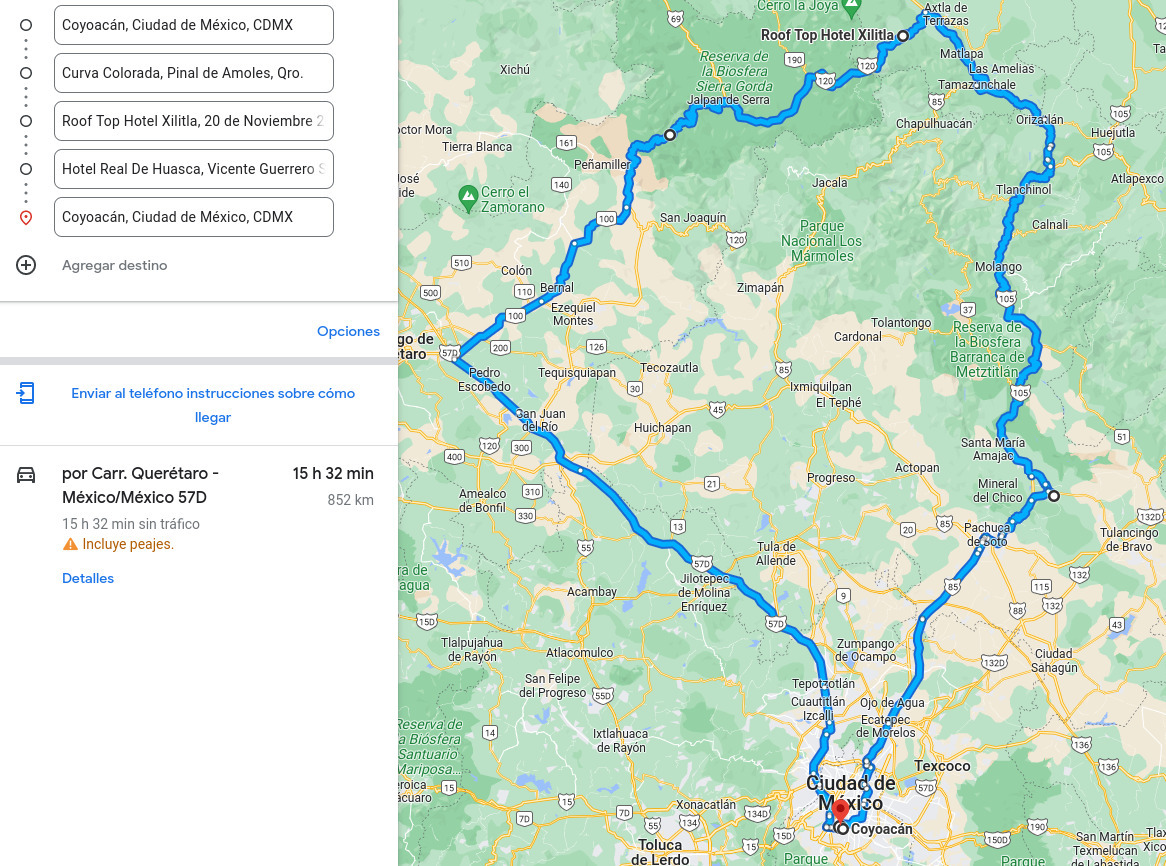 Other than the fact that Google forecasted we d take approximately
15.5 hours driving for 852Km that is, an average of almost 55
Km/h. And yes, that s what we signed up for. And that s what we
got. Of course, the exact routes are not exactly what Google suggested
(I can say we optimized a bit the route, i.e., by avoiding the
metropolitan area of Quer taro, at the extreme west, and going via San
Juan del R o / Tequisquiapan / Bernal).
The first stretch of the road is just a regular, huge highway, with
no particular insights. The highways leaving and entering Mexico City
on the North are not fun nor beautiful, only they are needed to get
nice trips going
Mexico City sits at a point of changing climates. Of course, it is a
huge city And I cannot imagine how it would be without all of the
urbanization it now sports. But anyway: On the West, South, and part
of the East, it is surrounded by high mountains, with beautiful and
dense forests. Mexico City is 2200m high, and most of the valley s
surrounding peaks are ~3000m (and at the South Eastern tip, our two
big volcanoes, Popocat petl and Iztacc huatl, get past the 5700m
mark). Towards the North, the landscape is flatter and much more
dry. Industrial compounds give way to dry grasslands. Of course,
central Mexico does not understand the true meaning of flat, and the
landscape is full with eh-not-very-big mountains.
Then, as we entered Quer taro State, we started approaching
Bernal. And we saw a huge rock that looks like it is not supposed
to be there! It just does not fit the surroundings.
 Shortly after Bernal, we entered a beautiful, although most crumpled,
mountain ridge: Sierra Gorda de
Quer taro. Sierra Gorda
encompasses most of the North of the (quite small 11500Km total)
state of Quer taro, plus portions of the neighboring states; other
than the very abrupt and sharp orography, what strikes me most is the
habitat diversity it encompasses. We started going up an absolute
desert, harsh and beautiful; we didn t take pictures along the way as
the road is difficult enough that there are almost no points for
stopping for refreshments or for photo opportunities. But it is quite
majestic. And if you think deserts are barren, boring places well,
please do spend some time enjoying them!
Anyway At on point, the road passes by a ~3100m height, and
suddenly Pines! More pines! A beautiful forest! We reached our
first stop at the originally mining town of Pinal de
Amoles.


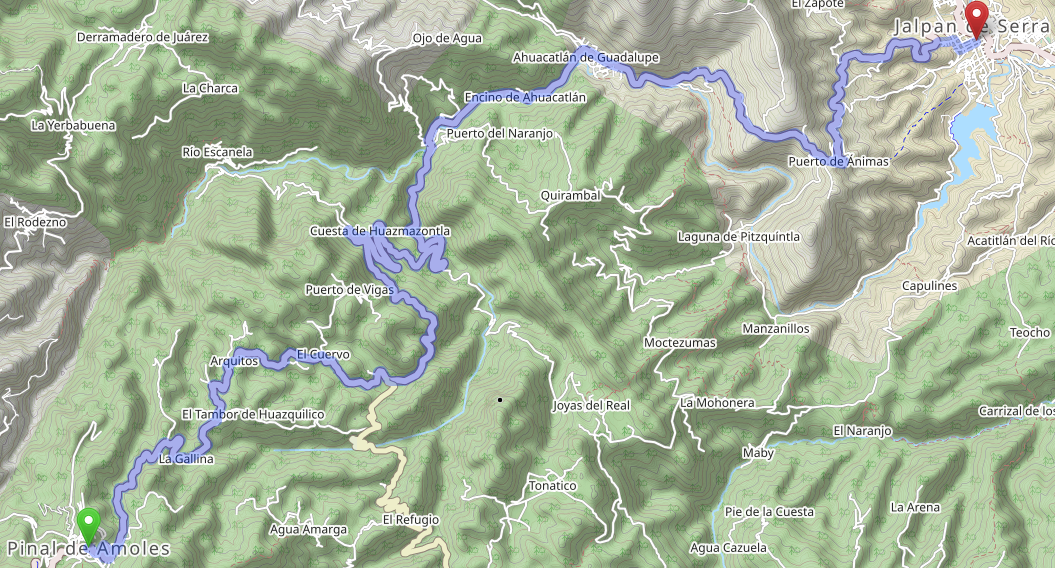
 After spending the night there and getting a much needed rest, we
started a quite steep descent towards Jalpan de
Serra. While it is
only ~20Km away on the map, we descended from 2300 to 760 meters of
altitude (and the road was over 40Km long).
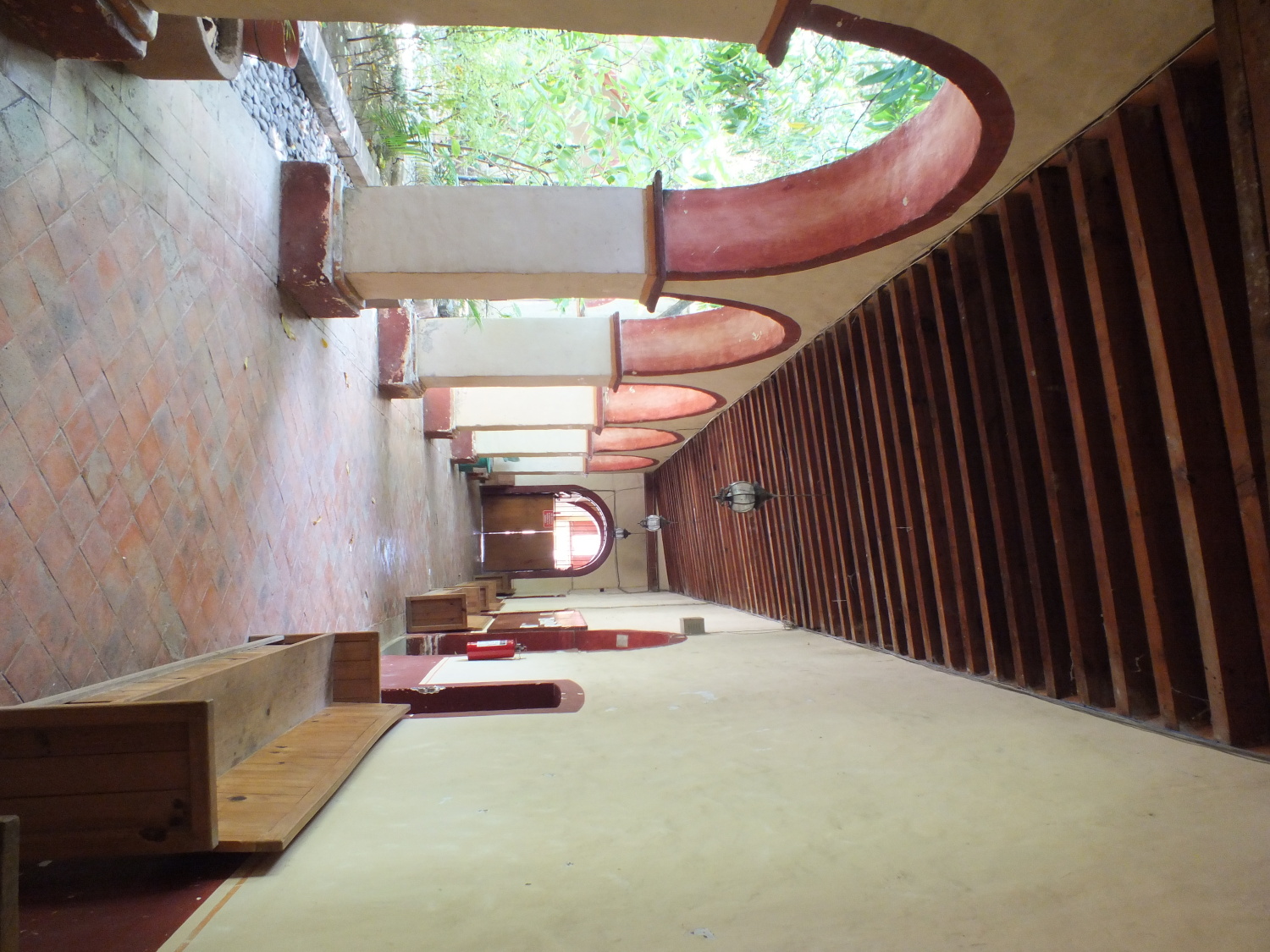
 Being much lower, the climate drastically changed from cool and humid
to quite warm and the body attitude in the kids does not lie!
 In the mid-18th century, Fray Jun pero Serra established five missions
to evangelize the population of this very harsh territory, and the
frontispiece for the church and monastery in Jalpan is quite
breathtaking.




 But we were just passing by Jalpan. A short visit to the church and to
the ice-cream shop, and we were again on our way. We crossed the state
border, entering San Luis Potos , and arrived to our main destination:
Xilitla, the little town in
the beautiful Huasteca where
the jungle meets surrealism.
Xilitla was chosen by the British poet and patron of various
surrealist artists https://en.wikipedia.org/wiki/Edward_James. He was a British noble (an unofficial grandson of King
Edward VII), and heir to a huge fortune. I m not going to repeat here
his very well known biography suffice to say that he got in love
with the Huasteca, and bought a >30ha piece of jungle and mountain
close to the Xilitla town, and made it his house. With very ample
economic resources, in the late 1940s he started his lifelong project
of building a surrealist garden.
And Well, that s enough blabbering for me. I m sharing some
pictures I took there. The place is plainly magic and
wonderful. Edward James died in 1984, and his will decrees that after
his death, the jungle should be allowed to reclaim the constructions
so many structures are somewhat crumbling, and it is expected they
will break down in the following decades. But for whoever comes to
Mexico This magic place is definitely worth the heavy ride to the
middle of the mountains and to the middle of the jungle.
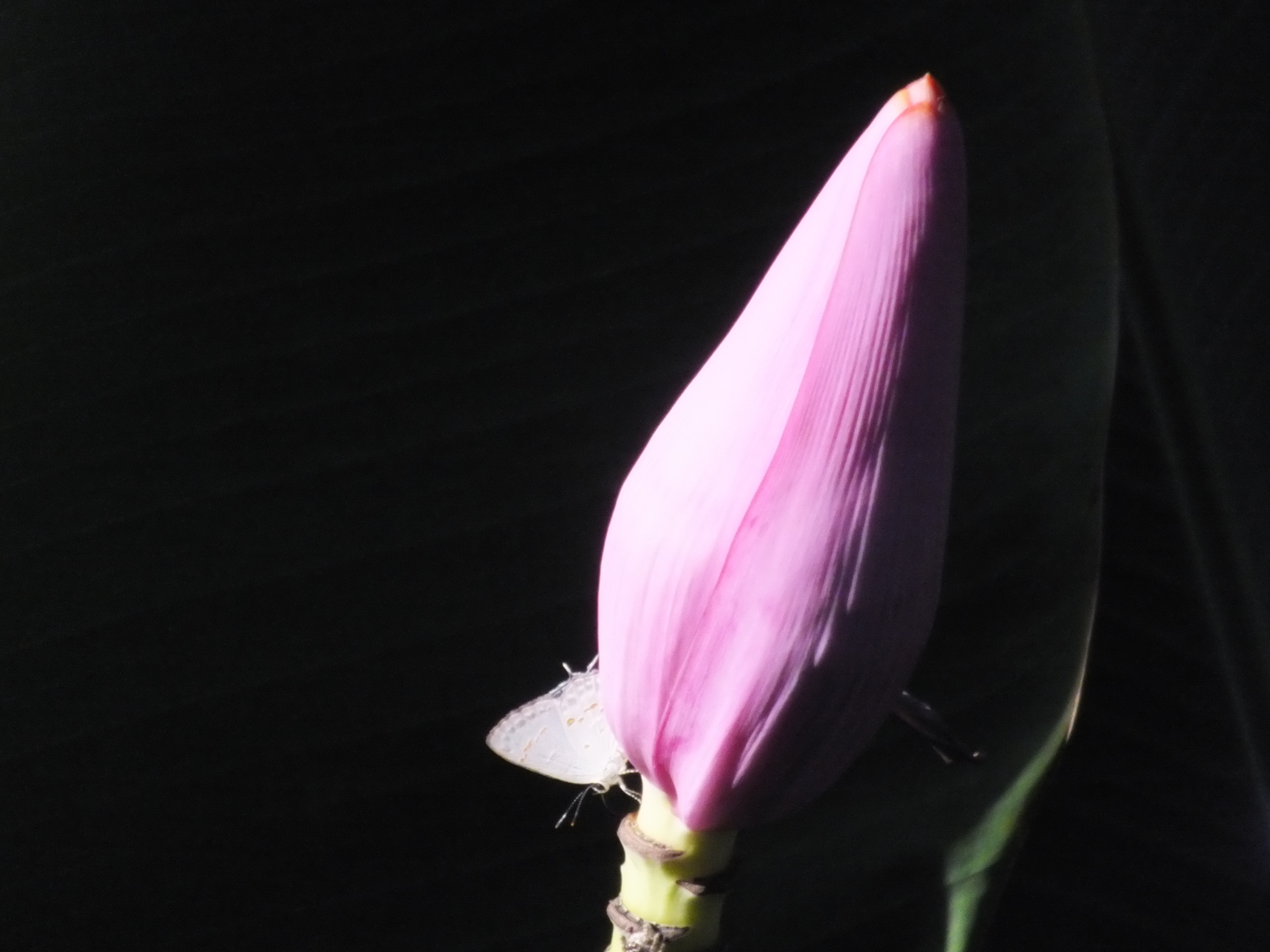




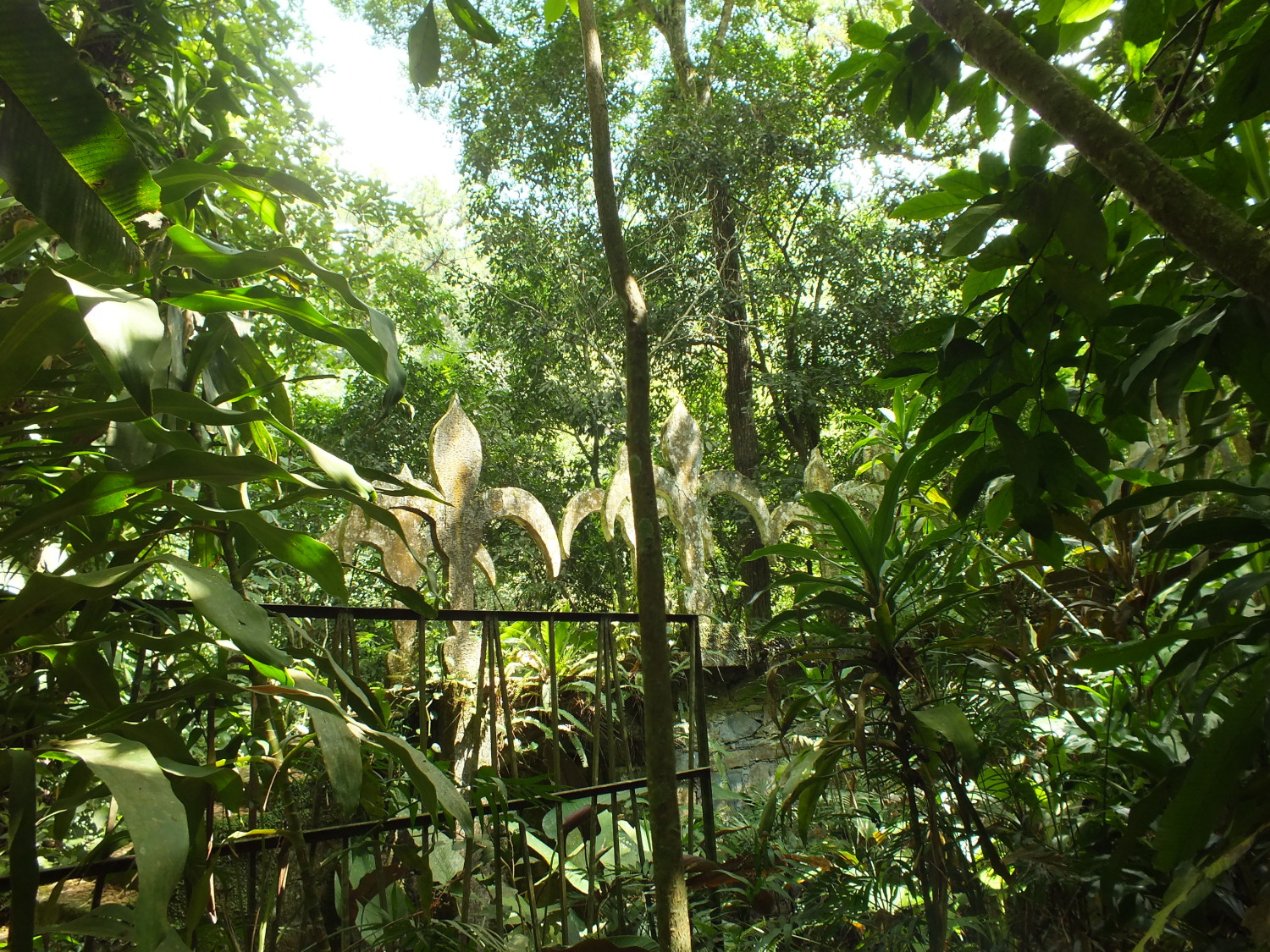
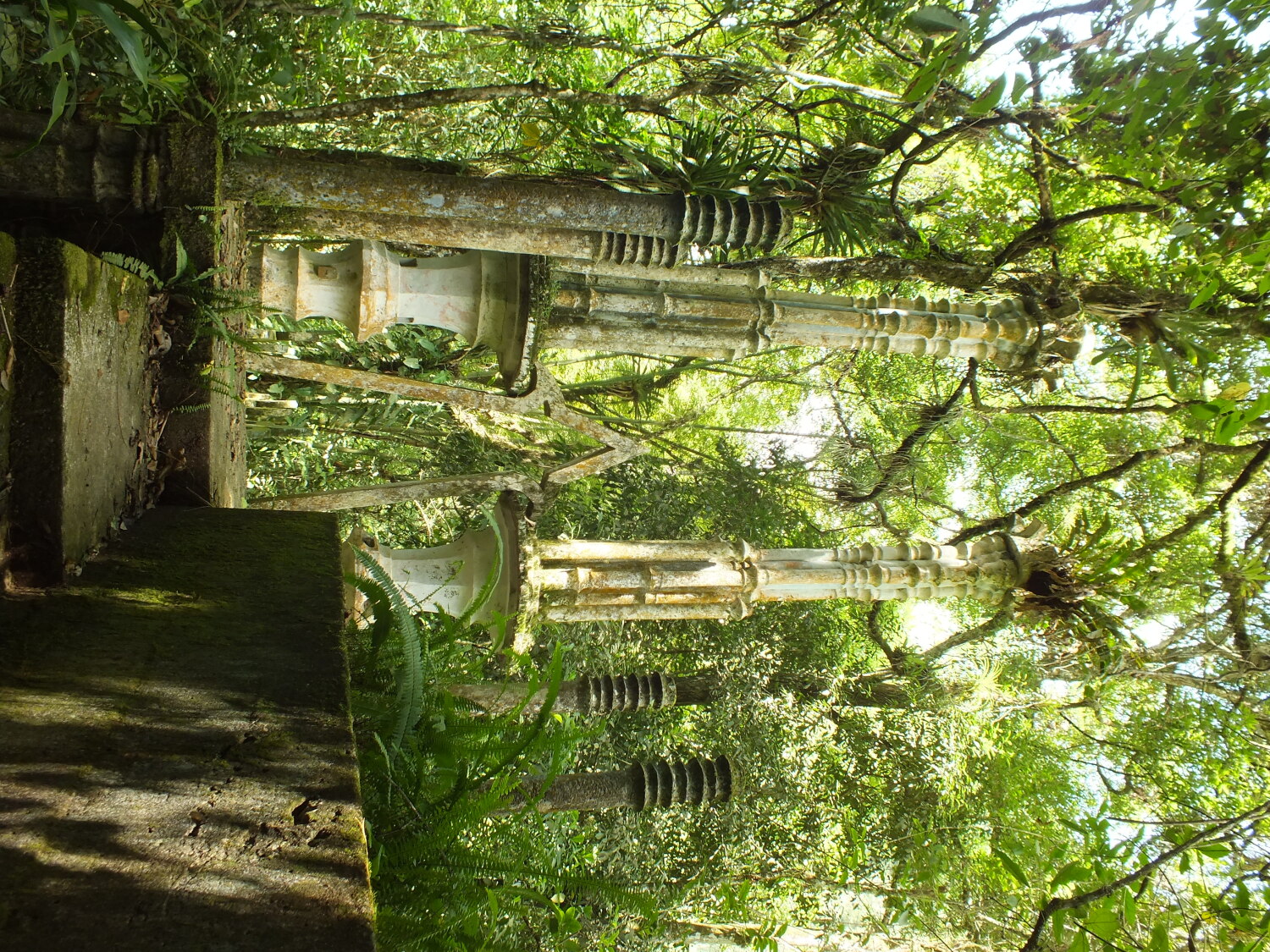










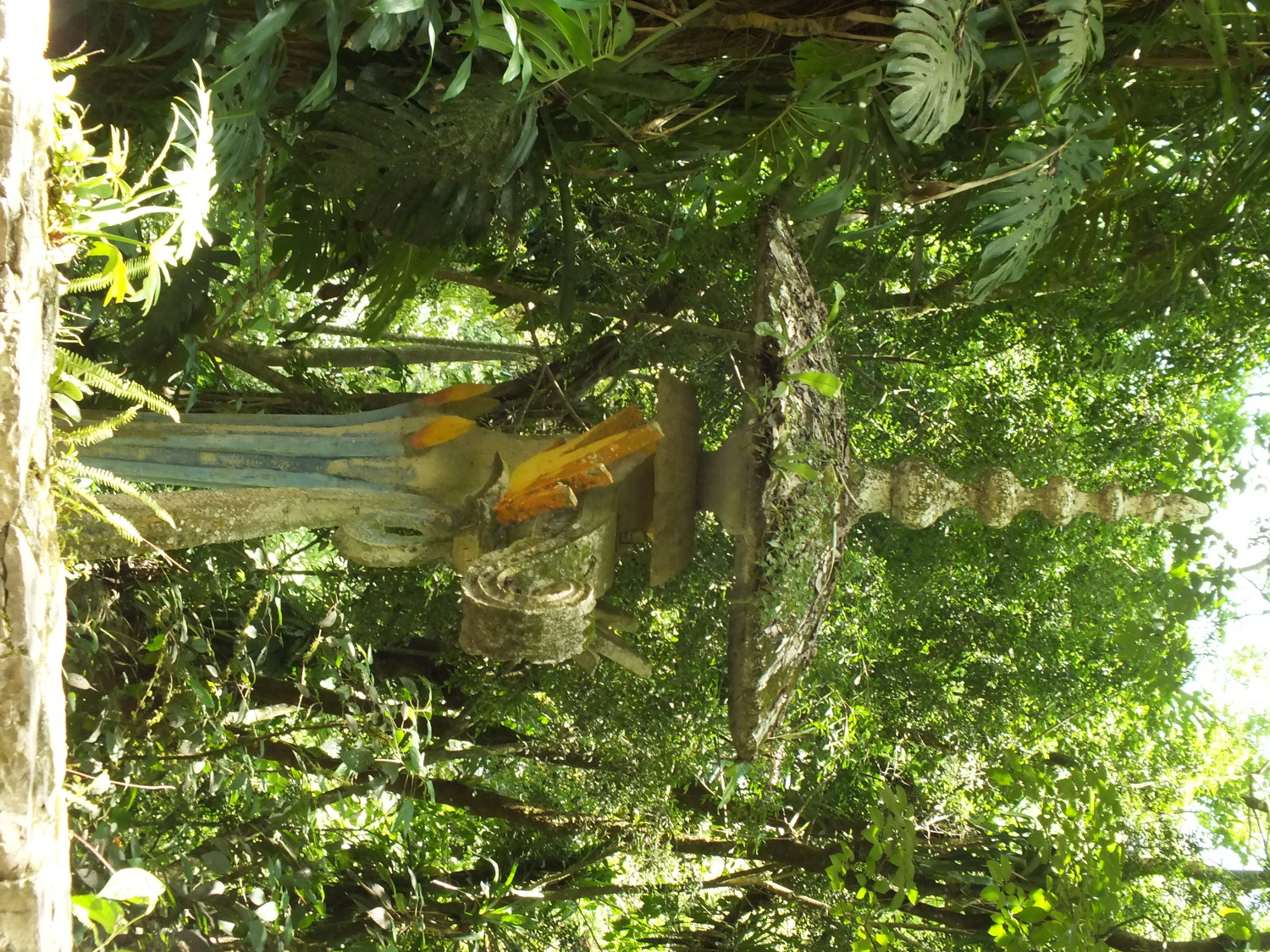
 Xilitla now also hosts a very good museum with sculptures by Leonora
Carrington, James long-time friend, but I m not going to abuse this
space with even more pictures. And of course, we did more, and enjoyed
more, during our three days in Xilitla.
And for our way back I wanted to try a different route. We decided
to come back to Mexico City crossing Hidalgo state instead of
Quer taro. I had feared the roads would be in a worse shape or would
be more difficult to travel And I was happy to be proven wrong!
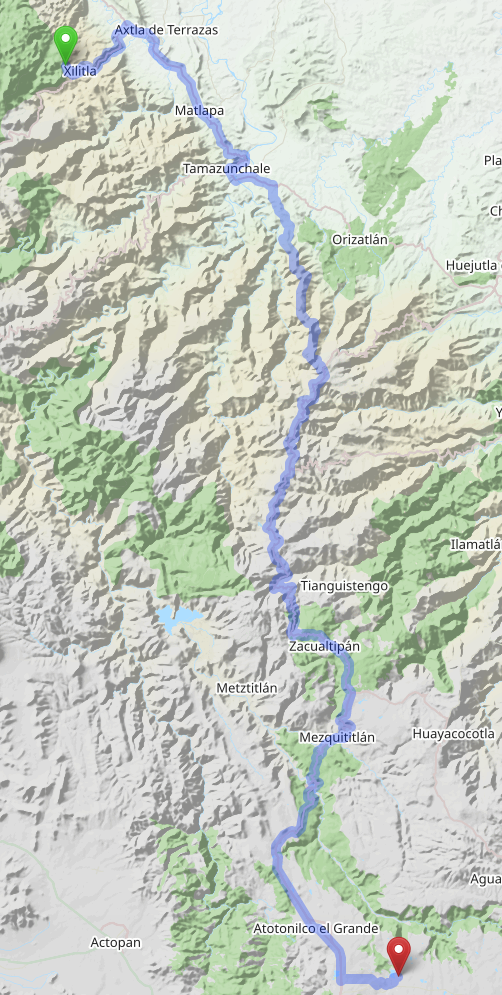 This was the longest driving stretch approximately 6:30 for
250Km. The roads are in quite decent shape, and while there are some
stretches where we were quite lonely (probably the loneliest one was
the sharp ascent from Tamazunchale to the detour before Orizatl n),
the road felt safe and well kept at all times. The sights all across
Eastern Hidalgo are breathtaking, and all furiously green (be it with
really huge fern leaves or with tall, strong pines), until
Zacualtip n.
 And just as abruptly or more as when we entered Pinal de Amoles We
crossed Orizatl n, and we were in a breathtaking arid, desert-like
environment again. We crossed the Barranca de Metztitl n natural
reserve, and arrived to spend the night at Huasca de Ocampo.
There are many more things we could have done starting at Huasca, a
region where old haciendas thrived, full of natural formations, and
very very interesting. But we were tired and pining to be finally back
home. So we rested until mid-morning and left straight back home in
Mexico City. Three hours later, we were relaxing, preparing lunch, the
kids watching whatever-TV-like-things are called nowadays.
All in all, a very beautiful vacation!
The seventh release of the still pretty new qlcal package
arrivied at CRAN today.
qlcal
delivers the calendaring parts of QuantLib. It is provided (for the R
package) as a set of included files, so the package is self-contained
and does not depend on an external QuantLib library (which can be
demanding to build). qlcal covers
over sixty country / market calendars and can compute holiday lists, its
complement (i.e. business day lists) and much more.
This release brings updates from the just-released QuantLib 1.31 version.
As the update comprises a number of small-but-important updates to eight different country calendars as well as a new US calendar (in a slight variation on the government bond calendar) we can also update the little demo highlighting all calendars within the US for the given year:Changes in version 0.0.7 (2023-07-19)
- Updates, extensions and corrections to calendars from South Korea, Hong Kong, Singapore, India, Taiwan, South Africa, Denmark and Finland from QuantLib 1.31
- Added support for UnitedStates/SOFR calendar
> ## see https://github.com/qlcal/qlcal-r/blob/master/demo/allUScalendars.R
> ## see R/calendars.R in qlcal, we prepend 'UnitedStates/' in makeHol()
> cals <- c("LiborImpact", "NYSE", "GovernmentBond", "NERC", "FederalReserve", "SOFR")
> print(Reduce(cbind, Map(makeHol, cals)))
           LiborImpact NYSE GovernmentBond NERC FederalReserve SOFR
2023-01-02        TRUE TRUE           TRUE TRUE           TRUE TRUE
2023-01-16        TRUE TRUE           TRUE   NA           TRUE TRUE
2023-02-20        TRUE TRUE           TRUE   NA           TRUE TRUE
2023-04-07          NA TRUE             NA   NA             NA TRUE
2023-05-29        TRUE TRUE           TRUE TRUE           TRUE TRUE
2023-06-19        TRUE TRUE           TRUE   NA           TRUE TRUE
2023-07-04        TRUE TRUE           TRUE TRUE           TRUE TRUE
2023-09-04        TRUE TRUE           TRUE TRUE           TRUE TRUE
2023-10-09        TRUE   NA           TRUE   NA           TRUE TRUE
2023-11-10        TRUE   NA             NA   NA             NA   NA
2023-11-23        TRUE TRUE           TRUE TRUE           TRUE TRUE
2023-12-25        TRUE TRUE           TRUE TRUE           TRUE TRUE
> This post by Dirk Eddelbuettel originated on his Thinking inside the box blog. Please report excessive re-aggregation in third-party for-profit settings.
 I've removed my website from indexing by Google.
The proximate cause is Google's new effort to
DRM the web,
but there is of course so much more.
This is a unique time, when it's actually feasible to become ungoogleable
without losing much. Nobody really expects to be able to find anything of
value in a Google search now, so if they're looking for me or something I've
made and don't find it, they'll use some other approach.
I've looked over the kind of traffic that Google refers to my website, and
it will not be a significant loss even if those people fail to find me by
some other means. Over 30% of the traffic to this website is rss feeds.
Google just doesn't matter on the modern web.
The web will end one day. But let's not let Google kill it.

 But part of it has been neglect as well as this time article shares. What we have lost and continue to lose is just priceless. Every book has a grain of truth in it, some more, some less but equally enjoyable.
Most harmful is the neglect towards books and is more true today than any other time in history. Kids today have a wide variety of tools to keep themselves happy or occupied, from anime, VR, gaming the list goes on and on. In that scenario, how the humble books can compete. People think of Kindle but most e-readers like Kindle are nothing but obsolescence by design. I have tried out Kindle a few times but find it a bit on the flimsy side. Books are much better IMHO or call me old-school. While there are many advantages, one of the things that I like about books is that you can easily put yourself in either the protagonist or the antagonist or somewhere in the middle and think of the possible scenarios wherever you are in a particular book. I could go on but it will be a blog post or two in itself.
Till later. Happy Reading.
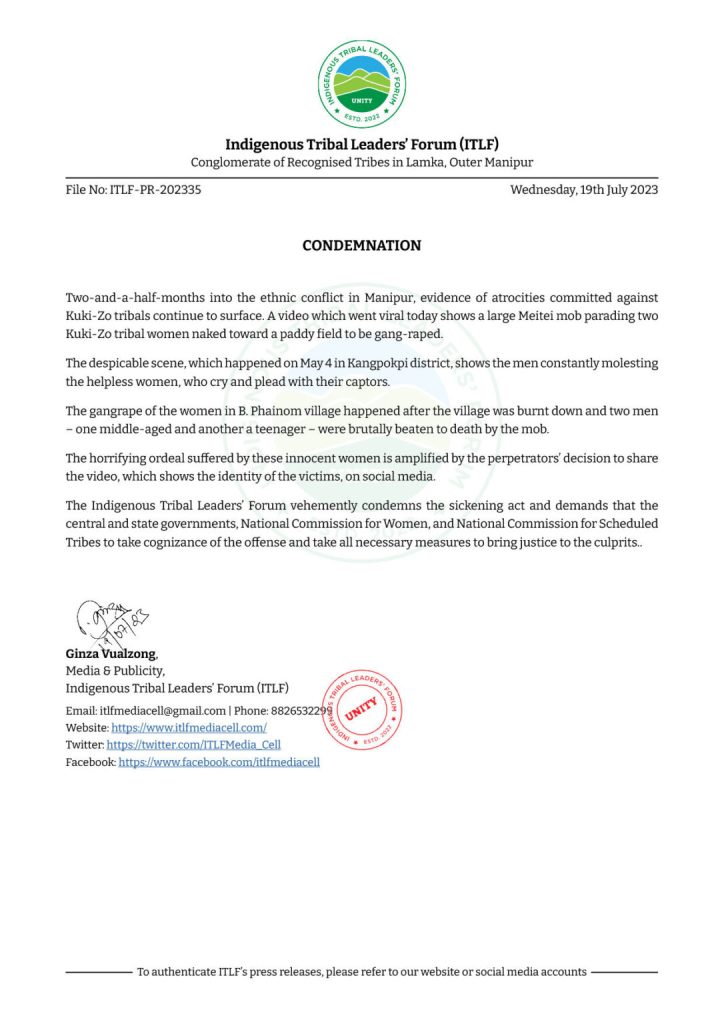
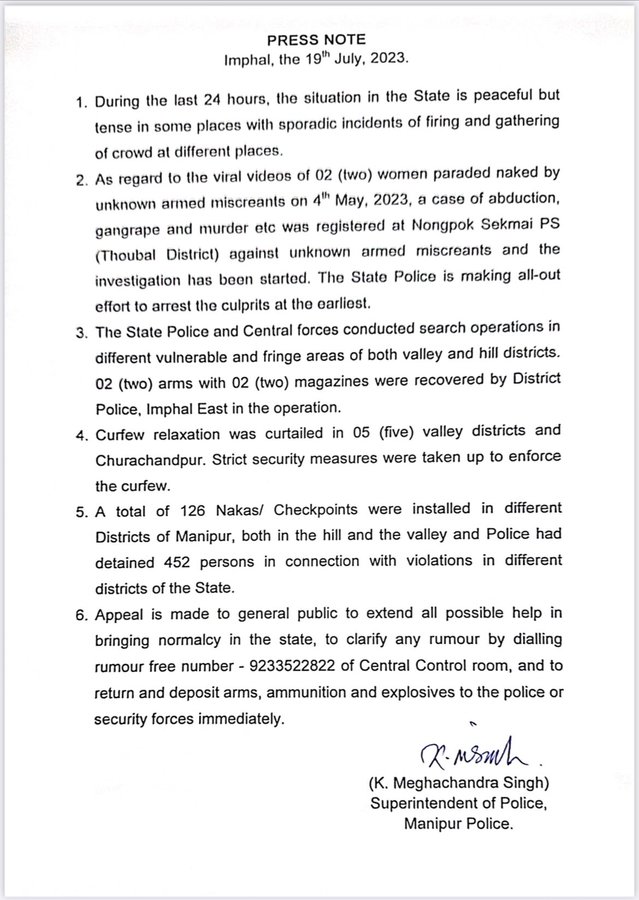
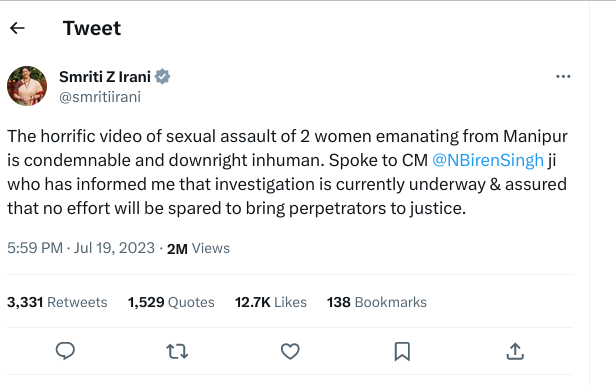 . Also not clear who is doing the condemning here. No word of support for the women, no offer of intervention, why is she the Minister of Child and Women Development (CDW) if she can t use harsh words or give support to the women who have gone and going through horrific things
Update : CM Biren Singh s Statement after the video surfaced
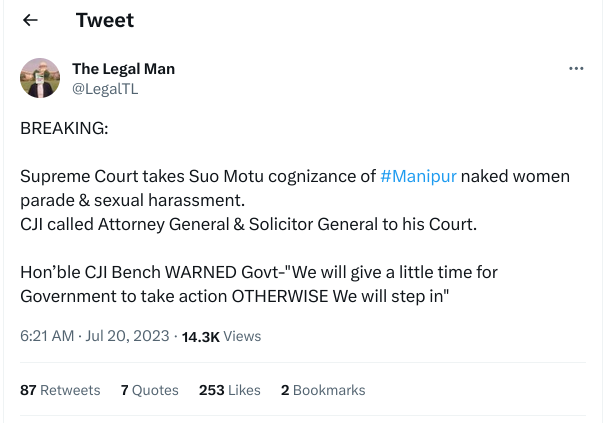
 Update: CJI (Chief Justice of India) has taken suo-moto cognizance and has warned both the State and Centre to move quickly otherwise they will take the matter in their own hand.

 Update: Opposition was told there would be a debate on Manipur. The whole day went by, no debate. That s the shamelessness of this Govt.
Update 20th July 19:25 Center may act or not act against the perpetrators but they will act against Twitter who showed the crime. Talk about shooting the messenger

 This post describes how to deploy cilium (and
hubble) using
docker on a Linux system with
k3d or kind to test it as
CNI and
Service Mesh.
I wrote some scripts to do a local installation and evaluate cilium to use it
at work (in fact we are using cilium on an EKS
cluster now), but I thought it would be a good idea to share my original
scripts in this blog just in case they are useful to somebody, at least for
playing a little with the technology.
cilium
I m providing some links for the reader interested on reading about it:
cilium as CNI, metallb for BGP (I tested the
cilium options, but I wasn t able to configure them right) and nginx as the
ingress controller (again, I tried to use cilium but something didn t work
either).
To be able to use the previous components some default options have been
disabled on k3d and kind and, in the case of k3d, a lot of k3s options
(traefik, servicelb, kubeproxy, network-policy, ) have also been
disabled to avoid conflicts.
To use the scripts we need to install cilium, docker, helm, hubble,
k3d, kind, kubectl and tmpl in our system.
After cloning the repository, the sbin/tools.sh
script can be used to do that on a linux-amd64 system:
$ git clone https://gitea.mixinet.net/blogops/cilium-docker.git
$ cd cilium-docker
$ ./sbin/tools.sh appsk3d (for kind replace
k3d by kind) we can use the
sbin/cilium-install.sh script as
follows:
$ # Deploy first k3d cluster with cilium & cluster-mesh
$ ./sbin/cilium-install.sh k3d 1 full
[...]
$ # Deploy second k3d cluster with cilium & cluster-mesh
$ ./sbin/cilium-install.sh k3d 2 full
[...]
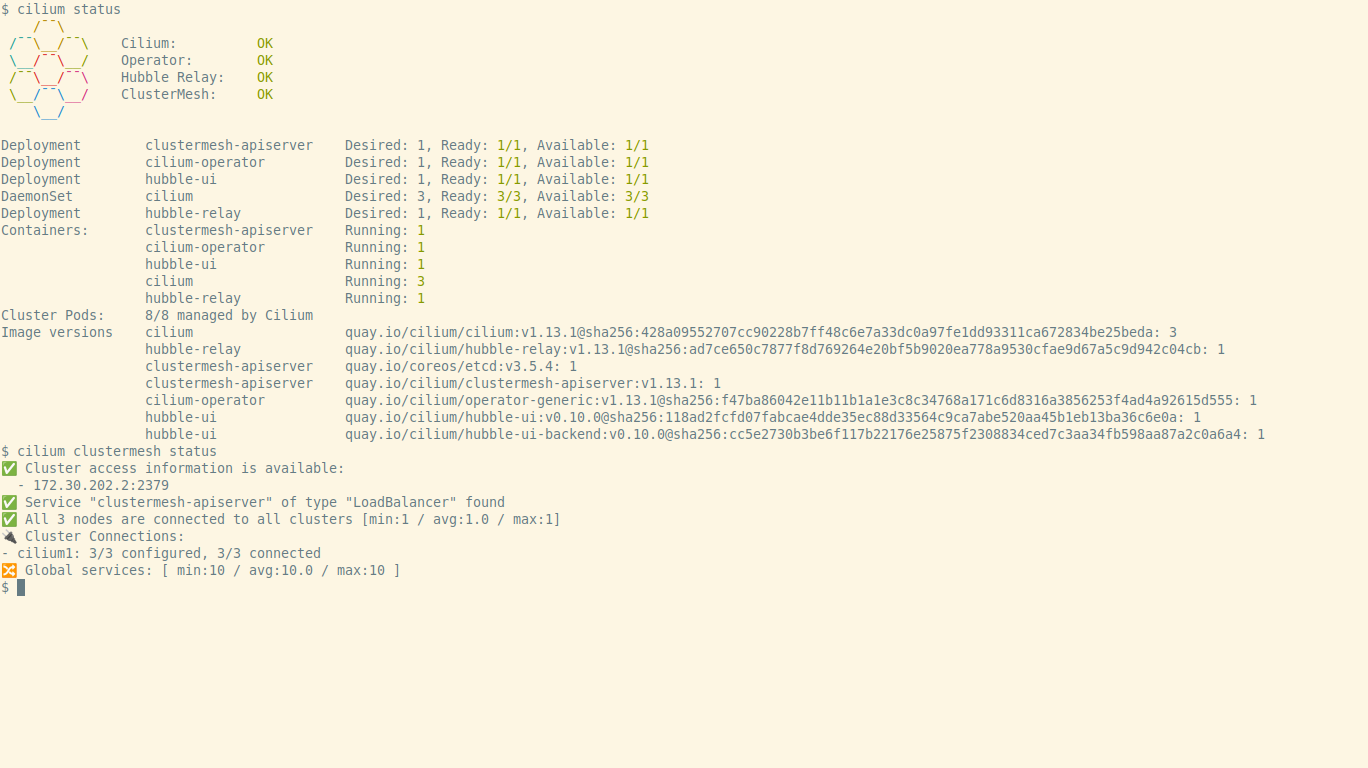
$ # The 2nd cluster-mesh installation connects the clusterscilium status after the installation we should get an
output similar to the one seen on the following screenshot:
tmpl/k3d-config.yaml: configuration to
deploy the k3d cluster.tmpl/kind-config.yaml: configuration to
deploy the kind cluster.tmpl/metallb-crds.yaml and
tmpl/ippols.yaml: configurations for the
metallb deployment.tmpl/cilium.yaml: values to deploy the
cilium using the helm chart.sbin/cilium-remove.sh script.
cilium deployment needs to mount the
bpffs on /sys/fs/bpf and cgroupv2 on /run/cilium/cgroupv2; that is
done automatically on kind, but fails on k3d because the image does not
include bash (see this issue).To fix it we mount a script on all the k3d containers that is executed each
time they are started (the script is mounted as /bin/k3d-entrypoint-cilium.sh
because the /bin/k3d-entrypoint.sh script executes the scripts that follow
the pattern /bin/k3d-entrypoint-*.sh before launching the k3s daemon).
The source code of the script is available
here.k3d we have found issues
with open files, looks like they are related to inotify (see
this
page on the kind documentation); adding the following to the
/etc/sysctl.conf file fixed the issue:# fix inotify issues with docker & k3d
fs.inotify.max_user_watches = 524288
fs.inotify.max_user_instances = 512cilium
as the cluster ingress yet (it did not work, so it is no longer enabled)
and we are also ignoring the gateway-api for now.cilium cli to do all the installations, but I
noticed that following that route the current version does not work right with
hubble (it messes up the TLS support, there are some notes about the
problems on this cilium
issue), so we are deploying with helm right now.The problem with the helm approach is that there is no official documentation
on how to install the cluster mesh with it (there is a request for
documentation here), so we are
using the cilium cli for now and it looks that it does not break the hubble
configuration.cilium we have used some scripts & additional config files that are
available on the test sub directory of the repository:
cilium-connectivity.sh: a script
that runs the cilium connectivity test for one cluster or in multi cluster
mode (for mesh testing).If we export the variable HUBBLE_PF=true the script executes the command
cilium hubble port-forward before launching the tests.http-sw.sh: Simple tests for cilium policies
from the cilium demo;
the script deploys the Star Wars demo application and allows us to add the
L3/L4 policy or the L3/L4/L7 policy, test the connectivity and view the
policies.ingress-basic.sh: This test is for
checking the ingress controller, it is prepared to work against cilium and
nginx, but as explained before the use of cilium as an ingress controller
is not working as expected, so the idea is to call it with nginx always as
the first argument for now.mesh-test.sh: Tool to deploy a global
service on two clusters, change the service affinity to local or remote,
enable or disable if the service is shared and test how the tools respond.cilium-connectivity.sh executes the standard cilium tests:
$ ./test/cilium-connectivity.sh k3d 12
   Monitor aggregation detected, will skip some flow validation
steps
  [k3d-cilium1] Creating namespace cilium-test for connectivity
check...
  [k3d-cilium2] Creating namespace cilium-test for connectivity
check...
[...]
  All 33 tests (248 actions) successful, 2 tests skipped,
0 scenarios skipped.http-sw.sh script:
kubectx k3d-cilium2 # (just in case)
# Create test namespace and services
./test/http-sw.sh create
# Test without policies (exaust-port fails by design)
./test/http-sw.sh test
# Create and view L3/L4 CiliumNetworkPolicy
./test/http-sw.sh policy-l34
# Test policy (no access from xwing, exaust-port fails)
./test/http-sw.sh test
# Create and view L7 CiliumNetworkPolicy
./test/http-sw.sh policy-l7
# Test policy (no access from xwing, exaust-port returns 403)
./test/http-sw.sh test
# Delete http-sw test
./test/http-sw.sh deletemesh-test.sh script:
# Create services on both clusters and test
./test/mesh-test.sh k3d create
./test/mesh-test.sh k3d test
# Disable service sharing from cluster 1 and test
./test/mesh-test.sh k3d svc-shared-false
./test/mesh-test.sh k3d test
# Restore sharing, set local affinity and test
./test/mesh-test.sh k3d svc-shared-default
./test/mesh-test.sh k3d svc-affinity-local
./test/mesh-test.sh k3d test
# Delete deployment from cluster 1 and test
./test/mesh-test.sh k3d delete-deployment
./test/mesh-test.sh k3d test
# Delete test
./test/mesh-test.sh k3d delete My daughter Beatrice asked for me to print her a 3D printer.
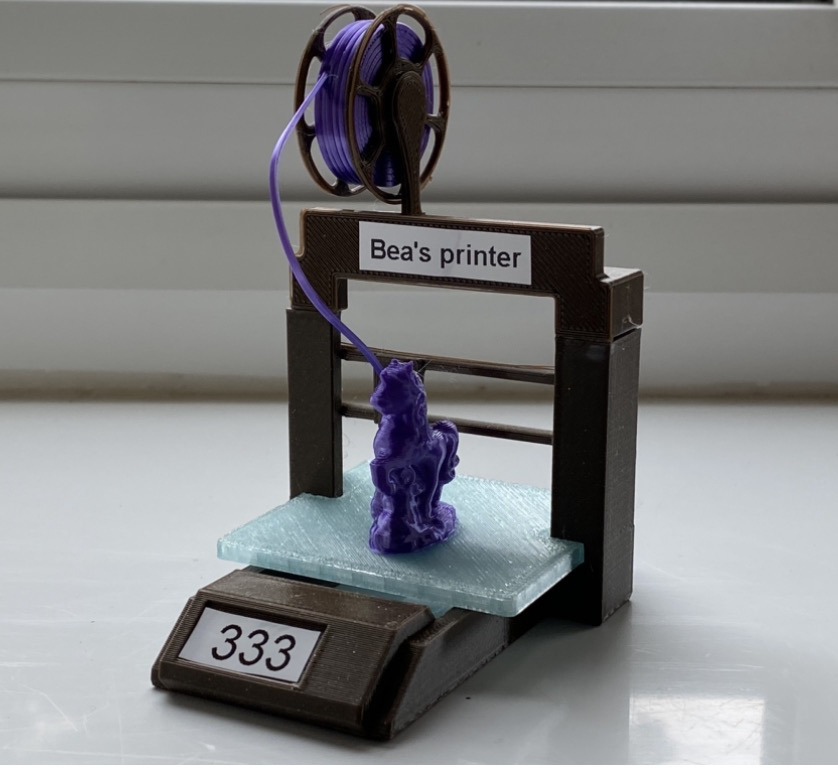 Bea's 3D printer
 Photo by Taylor Vick (Unsplash)
/etc/netplan/ as an input and generates corresponding network configuration for the relevant network stack backend in /run/systemd/network/ or /run/NetworkManager/ depending on the system configuration. All while keeping full flexibility to control the underlying network stack in its native way if need be.
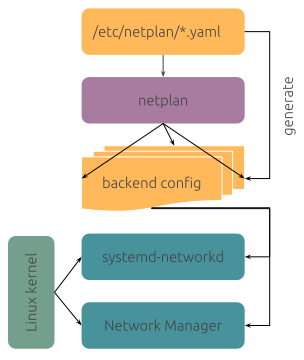 Design overview (netplan.io)
/etc/netplan/lan.yaml:
network:
  version: 2
  renderer: networkd
  ethernets:
    enp3s0:
dhcp4: true/etc/netplan/ to configure a system, independent of the underlying network configuration backend. This is also very helpful to seed the initial network configuration for new Linux installations, for example through installation systems such as Subiquity, Ubuntu s desktop installer or cloud-init across the public and private clouds.
In addition to describing and applying network configuration, the netplan status CLI can be used to query relevant data from the underlying network stack(s), such as systemd-networkd, NetworkManager or iproute2, and present them in a unified way.
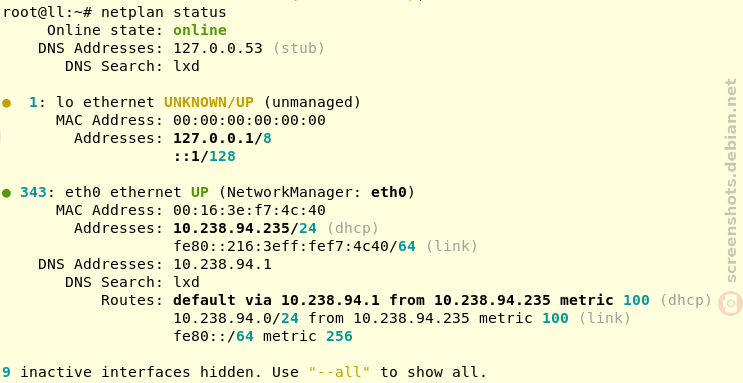 Netplan status (Debian)
/etc/netplan/. This way, administrators just need to care about Netplan when managing a fleet of Desktop installations. This solution is currently being used in more confined environments, like Ubuntu Core, when using the NetworkManager snap, and we will deliver it to generic Ubuntu desktop systems in 24.04 LTS.
In addition to NetworkManager, libnetplan can also be used to integrate with other tools in the networking space, such as cloud-init for improved validation of user data or installation systems when seeding new Linux images.
| Series: | Legends & Lattes #1 |
| Publisher: | Tor |
| Copyright: | 2022 |
| ISBN: | 1-250-88609-0 |
| Format: | Kindle |
| Pages: | 293 |

$sudo apt update (updates the index files of apt and tells you how many packages are upgradable). IIRC, every 4-5 hours there is an index runs that basically catches any new debian packages. You can see the index generated dynamically each time you run the above command in /var/lib/apt/lists $ sudo debdelta-upgrade Now the debdelta algorithim goes to work. Debdelta has its own mirror. I think sometime after the indexes are updated, debdelta does it own run, probably an hour or two later. The algorithim sees how big the diff between the two packages and generates a delta. If the generated delta (diff.) between the old and the new is less than 70% then the generated delta is kept or otherwise thrown. The delta is kept in debdelta mirror. You can from 1 day history how big it is. And AFAIK, it is across all the hardware and platforms that Debian supports. My issue has been simply that debdelta just doesn t work and even after debdelta-upgrade I am forced to get all the files from the server. Have shared more details here.
3. The last step is $ sudo aptitude upgrade or $ sudo aptitude install and give package names if you know some packages are broken or non-resolvable or have some bugs.
RISC I had shared about RISC chips couple of weeks back. One of the things that I had forgotten to share that Android is also supporting RISC-V few months back. How I forgot that crucial bit of info. is beyond me. There are number of RISC-V coming out in the next few months to early 2024. One of the more interesting boards that came up in 2021/2022 was HiFive Unmatched. The problem is that the board although interesting on specs is out of reach of most Indians. I am sure most people would be aware of the chicken and egg problem and that is where it is. Pricing will be key component. If they get the pricing right and are able to produce in good numbers, we might see more of these boards soon. At least with Android that issue gets somewhat resolved. There is possibility that we may see more Android set-top boxes and whatnot paired with RISC paving more money for RISC development and a sort of virtuous cycle. While I m in two minds, I decide not to share what chips are coming unless and until we know what the pricing is, otherwise they just become part of a hype cycle. But it s definitely something to watch out for. One of the more interesting articles that I read last week also tells how Linux has crossed 3% desktop space and his views on the same. I do very much agree with his last paragraph but at the same time biased as am an old time desktop user. I just don t find myself happy on small factor keyboards. I will leave the rest for some other time depending how things happen.

 Like each month, have a look at the work funded by Freexian s Debian LTS offering.
Over the years, the Debian GNU/kFreeBSD
port has gone through various
phases. After many years of development, it was released as technology
preview with the release of
Squeeze and eventually became an
official architecture with the release of
Wheezy. However it ceased being an
official architecture a couple of years later with the release of Jessie,
although a
jessie-kfreebsd
suite was available in the official archive. Some years later, it was moved to
the debian-ports
archive, where it
slowly regressed over the years. The development totally has now been stopped
for over a year,
and the port has been
removed from the
debian-ports archive. It's time to say it goodbye!
I feel a touch of nostalgia as I was deeply involved in the Debian GNU/kFreeBSD
port for nearly a decade, starting in 2006. There are many different reasons to
like GNU/kFreeBSD ranging from political to technical considerations.
Personally, I liked the technical aspect, as the FreeBSD kernel, at that time,
was ahead of the Linux kernel in term of features: jails, ZFS, IPv6 stateful
firewalling, and at a later point superpages. That said it was way behind for
hardware support and to the best of my knowledge this remains unchanged.
Meanwhile, the Linux kernel development accelerated in the latter stages of the
2.6.x series, and eventually closed the feature gap. At some point, I began to
lose interest, and also to lack time, and slowly stepped away from its
development.

apt upgrade --without-new-pkgs followed by apt full-upgrade).
And when executing apt full-upgrade I had the following error:
Preparing to unpack .../71-python3-numpy_1%3a1.24.2-1_amd64.deb ...
Unpacking python3-numpy (1:1.24.2-1) over (1:1.19.5-1) ...
dpkg: error processing archive /tmp/apt-dpkg-install-ibI85v/71-python3-numpy_1%3a1.24.2-1_amd64.deb (--unpack):
 trying to overwrite '/usr/bin/f2py', which is also in package python-numpy 1:1.16.5-5
python-numpy package and resuming the upgrade with apt --fix-broken install followed by apt full-upgrade allowed the upgrade to complete successfully.
This was already metioned in a Debian bug report and would have been avoided if I had purged the locally obsolete packages after upgrading to Debian 11.
On laptop and workstation, after the upgrade, for unclear reasons, the gnome3 user extensions were disabled.
I reenabled the extensions manually with
gsettings set org.gnome.shell disable-user-extensions false
podman, had a major upgrade from 3 to 4, and a backward-incompatible configuration change. If a custom configuration file was in place in /etc/containers/storage.conf to override the default storage options, you need now to add the following stanza
[storage]
runroot="/run/containers/storage"
graphRoot="/var/lib/containers/storage"
Failed to obtain podman configuration: runroot must be set when running any podman command.
This was discussed upstream.
Cloud server (VM)
Everything worked flawlessly, nothing to report.
Conclusion
Again a great Debian release, very happy that I could update three systems with ten thousands of packages with so little fuss.
For my small home server running RHEL 8 (with the no cost sub) I will do a reinstall on newer hardware.
 Spent 2 hours migrating my chrome extension to manifest v3.
Two parts that didn't make sense at first, browser_action to action migration, and executeScript.
First, browser_action to action manifest change was straightforward. However it didn't occur to me that I had to rewrite chrome.browserAction.onClicked.addListener to chrome.action.onClicked.addListener. It doesn't say anything on the web page, well maybe the less than equal to MV2. If you deprecate something please say what you replace it with.
Second, chrome.tabs.executeScript API was updated to chrome.scripting.executeScript. Apart from the promisified interface that I liked, there was the more important difference that it no longer takes a string to inject as script, it takes a function.
So I rewrote my script with $ stuff and as part of that unintentional bugs were fixed and introduced.
Trying to figure out where my string became a float unintentionally took a good part of the hour.
All in all I have spent 2 hours on migrating my script, this is my second migration.
I am not very happy with this transition as it doesn't add any value to my script.
Welcome to the June 2023 report from the Reproducible Builds project
 In our reports, we outline the most important things that we have been up to over the past month. As always, if you are interested in contributing to the project, please visit our Contribute page on our website.
 We are very happy to announce the upcoming Reproducible Builds Summit which set to take place from October 31st November 2nd 2023, in the vibrant city of Hamburg, Germany.
Our summits are a unique gathering that brings together attendees from diverse projects, united by a shared vision of advancing the Reproducible Builds effort. During this enriching event, participants will have the opportunity to engage in discussions, establish connections and exchange ideas to drive progress in this vital field. Our aim is to create an inclusive space that fosters collaboration, innovation and problem-solving. We are thrilled to host the seventh edition of this exciting event, following the success of previous summits in various iconic locations around the world, including Venice, Marrakesh, Paris, Berlin and Athens.
If you re interesting in joining us this year, please make sure to read the event page] which has more details about the event and location. (You may also be interested in attending PackagingCon 2023 held a few days before in Berlin.)
 This month, Vagrant Cascadian will present at FOSSY 2023 on the topic of Breaking the Chains of Trusting Trust:
Corrupted build environments can deliver compromised cryptographically signed binaries. Several exploits in critical supply chains have been demonstrated in recent years, proving that this is not just theoretical. The most well secured build environments are still single points of failure when they fail. [ ] This talk will focus on the state of the art from several angles in related Free and Open Source Software projects, what works, current challenges and future plans for building trustworthy toolchains you do not need to trust.Hosted by the Software Freedom Conservancy and taking place in Portland, Oregon, FOSSY aims to be a community-focused event: Whether you are a long time contributing member of a free software project, a recent graduate of a coding bootcamp or university, or just have an interest in the possibilities that free and open source software bring, FOSSY will have something for you . More information on the event is available on the FOSSY 2023 website, including the full programme schedule.
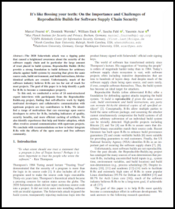 Marcel Fourn , Dominik Wermke, William Enck, Sascha Fahl and Yasemin Acar recently published an academic paper in the 44th IEEE Symposium on Security and Privacy titled It s like flossing your teeth: On the Importance and Challenges of Reproducible Builds for Software Supply Chain Security . The abstract reads as follows:
The 2020 Solarwinds attack was a tipping point that caused a heightened awareness about the security of the software supply chain and in particular the large amount of trust placed in build systems. Reproducible Builds (R-Bs) provide a strong foundation to build defenses for arbitrary attacks against build systems by ensuring that given the same source code, build environment, and build instructions, bitwise-identical artifacts are created.However, in contrast to other papers that touch on some theoretical aspect of reproducible builds, the authors paper takes a different approach. Starting with the observation that much of the software industry believes R-Bs are too far out of reach for most projects and conjoining that with a goal of to help identify a path for R-Bs to become a commonplace property , the paper has a different methodology:
We conducted a series of 24 semi-structured expert interviews with participants from the Reproducible-Builds.org project, and iterated on our questions with the reproducible builds community. We identified a range of motivations that can encourage open source developers to strive for R-Bs, including indicators of quality, security benefits, and more efficient caching of artifacts. We identify experiences that help and hinder adoption, which heavily include communication with upstream projects. We conclude with recommendations on how to better integrate R-Bs with the efforts of the open source and free software community.A PDF of the paper is now available, as is an entry on the CISPA Helmholtz Center for Information Security website and an entry under the TeamUSEC Human-Centered Security research group.
comp.unix.programming. Larry notes that it starts with Jayan asking about comparing binaries that might have difference in their embedded timestamps (that is, perhaps, Foreshadowing diffoscope, amiright? ) and goes on to observe that:
The antagonist is David Schwartz, who correctly says There are dozens of complex reasons why what seems to be the same sequence of operations might produce different end results, but goes on to say I totally disagree with your general viewpoint that compilers must provide for reproducability [sic]. Dwight Tovey and I (Larry Doolittle) argue for reproducible builds. I assert Any program especially a mission-critical program like a compiler that cannot reproduce a result at will is broken. Also it s commonplace to take a binary from the net, and check to see if it was trojaned by attempting to recreate it from source.
SOURCE_DATE_EPOCH environment variable [ ], Chris Lamb made it easier to parse our summit announcement at a glance [ ], Mattia Rizzolo added the summit announcement at a glance [ ] itself [ ][ ][ ] and Rahul Bajaj added a taxonomy of variations in build environments [ ].
 27 reviews of Debian packages were added, 40 were updated and 8 were removed this month adding to our knowledge about identified issues. A new
randomness_in_documentation_generated_by_mkdocs toolchain issue was added by Chris Lamb [ ], and the deterministic flag on the paths_vary_due_to_usrmerge issue as we are not currently testing usrmerge issues [ ] issues.
bullseye, bookworm, trixie and sid , but he also mentioned amongst many changes that not only are the non-free images being built (and are reproducible) but that the live images are generated officially by Debian itself. [ ]
CFLAGS environment variable. [ ]
 F-Droid added 21 new reproducible apps in June, resulting in a new record of 145 reproducible apps in total. [ ]. (This page now sports missing data for March May 2023.) F-Droid contributors also reported an issue with broken resources in APKs making some builds unreproducible. [ ]
 Bernhard M. Wiedemann published another monthly report about reproducibility within openSUSE
bcachefs (sort find / filesys)build-compare (reports files as identical)build-time (toolchain date)cockpit (merged, gzip mtime)gcc13 (gcc13 toolchain LTO parallelism)ghc-rpm-macros (toolchain parallelism)golangcli-lint (date)gutenprint (date+time)mage (date (golang))mumble (filesys)pcr (date)python-nss (drop sphinx .doctrees)python310 (merged, bisected+backported)warpinator (merged, date)xroachng (date)elinks.multipath-tools.mkdocstrings-python-handlers.fribidi.jtreg7.python-bitstring (forwarded upstream).gradle-kotlin-dsl.libsdl-console.kawari8.freetds.gbrowse.bglibs.advi.afterstep.simstring.manderlbot.erlang-proper.comedilib.libint.newlib.binutils-msp430.c-munipack.python-marshmallow-sqlalchemy.mplayer.menu.mini-buildd.pnetcdf.liblopsub.wcc.shotcut.icu.libapache-poi-java.atf.valgrind. The Reproducible Builds project operates a comprehensive testing framework (available at tests.reproducible-builds.org) in order to check packages and other artifacts for reproducibility. In June, a number of changes were made by Holger Levsen, including:
amd64, armhf, and i386 architectures to Debian bookworm, with the exception of the Jenkins host itself which will be upgraded after the release of Debian 12.1. In addition, Mattia Rizzolo updated the email configuration for the @reproducible-builds.org domain to correctly accept incoming mails from jenkins.debian.net [ ] as well as to set up DomainKeys Identified Mail (DKIM) signing [ ]. And working together with Holger, Mattia also updated the Jenkins configuration to start testing Debian trixie which resulted in stopped testing Debian buster. And, finally, Jan-Benedict Glaw contributed patches for improved NetBSD testing.
#reproducible-builds on irc.oftc.net.
rb-general@lists.reproducible-builds.org
 I m six months into my journey of building a business which means its time to reflect and review the goals I set for the year.
Next.