Search Results: "sten"

28 August 2013

Lior Kaplan: Hello free PHP JSON extension

I ve noticed that my post from three months ago ( Bye bye non-free PHP JSON extension ) was quoted quite often (thanks (: ). But I also noticed that most people didn t read the post fully, and didn t see the replacement package. Hopefully the title of this post will correct that impression. I d like to indicate the existence of the php5-json package. It s part of Debian unstable since June 2013 and testing (jessie) since August 2013. Users who wish to build the free extension on their own are welcome to download it from PECL at http://pecl.php.net/package/jsonc . It s a good chance to thank Remi Collet for his work on this replacement. I m happy that the main Linux distributions have already adopted it.
Filed under: Uncategorized

Matt Zimmerman: Scaling Human Systems: Roles and Responsibilities

This is part 5 in a series on organizational design and growth. What it means

Each of us has a job to do, probably more than one, and our teammates should know what they are. Why it s important

Roles are a kind of standing commitment we make to each other. They re a way of dividing up work which is easy to understand and simple to apply. Utilizing this tool will make it easier for us to coordinate our day to day work, and manage the changes and growth we re going through. Old Status Quo

Roles are vague or nonexistent. Management roles in particular are probably not well understood. Many people juggle multiple roles, all of which are implicit. Moving to a new team means learning from scratch what other people do. People take responsibility for tasks and decisions largely on a case-by-case basis, or based on implicit knowledge of what someone does (or doesn t do). In many cases, there is only one person in the company who knows how to perform a certain function. When someone leaves or goes on vacation, gaps are left behind. New Status Quo

Each individual has a clear understanding of the scope of their job. We have a handful of well defined roles, which are used by multiple teams and have written definitions. People who are new or transfer between teams have a relatively easy time understanding what the people around them are doing. Many day to day responsibilities are defined by roles, and more than one person can fill that role. When someone leaves a team, another person can cover their critical roles. Behaviors that help

Obstacles that stand in our way

23 August 2013

Thorsten Glaser: FrOSCon 2013, or, why is there no MirBSD exhibit?

FrOSCon is approaching, and all MirBSD developers will attend but why s there no MirBSD exhibit? The answer to that is a bit complex. First let s state that of course we will participate in the event as well as the Open Source world. We ll also be geocaching around the campus with other interested (mostly OSS) people (including those we won for this sport) and helping out other OSS projects we ve become attached to. MirOS BSD, the operating system, is a niche system. The conference on the other hand got younger and more mainstream. This means that almost all conference visitors do not belong to the target group of MirOS BSD which somewhat is an ancient solution : the most classical BSD around (NetBSD loses because they have rc.d and PAM and lack sendmail(8), sorry guys, your attempt at being not reformable doesn t count) and running on restricted hardware (such as my 486SLC with 12 MiB RAM) and exots (SPARCstation). It s viable even as developer workstation (if your hardware is supported otherwise just virtualise it) but its strength lies with SPARC support and embedded x86 . And being run as virtual machine: we re reportedly more stable and more performant than OpenBSD. MirBSD is not cut off from modern development and occasionally takes a questionable but justified choice (such as using 16-bit Unicode internally) or a weird-looking but beneficial one (such as OPTU encoding saving us locale(1) hassles) or even acts as technological pioneer (64-bit time_t on ILP32 platforms) or, at least, is faster than OpenBSD (newer GNU toolchain, things like that), but usually more conservatively, and yes, this is by design, not by lack of manpower, most of the time. The MirPorts Framework, while technically superiour in enough places, is something that just cannot happen without manpower. I (tg@) am still using it exclusively, continuing to update ports I use and occasionally creating new ones (mupdf is in the works!), but it s not something I d recommend someone (other than an Mac OSX user) to use on a n n-MirBSD system (Interix is not exactly thriving either, and the Interix support was only begun; other OSes are not widely tested). The MirBSD Korn Shell is probably the one thing I will be remembered for. But I have absolutely no idea how one would present it on a booth at such an exhibition. A talk is much more likely. So no on that front too. jupp, the editor which sucks less, is probably something that does deserve mainstream interest (especially considering Natureshadow is using it while teaching computing to kids) but probably more in a workshop setting. And booth space is precious enough in the FH so I think that d be unfair. All the other subprojects and side projects Benny and I have, such as mir c , josef stalin, FreeWRT, Lunix Ewe, Shellsnippets, the fonts, etc. are interesting but share few, if any, common ground. Again, this does not match the vast majority of visitors. While we probably should push a number of these more, but a booth isn t it here, either. MirOS Linux ( MirLinux ) and MirOS Windows are, despite otherwise-saying rumours called W*k*p*d*a, only premature ideas that will not really be worked on (though MirLinux concepts are found in mir c and stalin). As you can see, despite all developers having full-time dayjobs, The MirOS Project is far from being obsolete. We hope that our website visitors understand our reasons to not have an exhibition booth of our own (even if the SPARCstation makes for a way cool one, it s too heavy to lift all the time), and would like to point out that there are several other booths (commercial ones, as well as OSS ones such as AllBSD, Debian and (talking to) others) and other itineries we participate in. This year both Benny and I have been roped into helping out the conference itself, too (not exactly unvoluntarily though). The best way to talk to us is IRC during regular European geek hours (i.e. until way too late into the night which Americans should benefit from), semi-synchronously, or mailing lists. We sort of expect you to not be afraid to RTFM and look up acronyms you don t understand; The MirOS Project is not unfriendly but definitely not suited for your proverbial Aunt Tilly, newbies, desktop users, and people who aren t at least somewhat capable of using written English (this is by design).

Justus Winter: No noweb anymore...

... which is probably a good thing. But here is the boot log you all have been waiting for:
start ext2fs: Hurd server bootstrap: ext2fs[device:hd0s1] exec init proc auth
INIT: version 2.88 booting
Using makefile-style concurrent boot in runlevel S.
Activating swap...done.
Checking root file system...fsck from util-linux 2.20.1
hd2 : tray open or drive not ready
end_request: I/O error, dev 02:00, sector 0
/dev/hd0s1: clean, 44693/181056 files, 291766/723200 blocks
done.
Activating lvm and md swap...(default pager): Already paging to partition hd0s5!
done.
Checking file systems...fsck from util-linux 2.20.1
hd2 : tray open or drive not ready
end_request: I/O error, dev 02:00, sector 0
done.
Cleaning up temporary files... /tmp.
Mounting local filesystems...done.
Activating swapfile swap...(default pager): Already paging to partition hd0s5!
done.
df: Warning: cannot read table of mounted file systems: No such file or directory
Cleaning up temporary files....
Configuring network interfaces...Internet Systems Consortium DHCP Client 4.2.2
Copyright 2004-2011 Internet Systems Consortium.
All rights reserved.
For info, please visit https://www.isc.org/software/dhcp/
Listening on Socket//dev/eth0
Sending on   Socket//dev/eth0
*** stack smashing detected ***: dhclient terminated
Aborted
Failed to bring up /dev/eth0.
done.
Cleaning up temporary files....
Setting up X socket directories... /tmp/.X11-unix /tmp/.ICE-unix.
INIT: Entering runlevel: 2
Using makefile-style concurrent boot in runlevel 2.
Starting enhanced syslogd: rsyslogd.
Starting deferred execution scheduler: atd.
Starting periodic command scheduler: cron.
Starting system message bus: dbusFailed to set socket option"/var/run/dbus/system_bus_socket": Protocol not available.
Starting OpenBSD Secure Shell server: sshd.
unexpected ACK from keyboard
GNU 0.3 (debian) (console)
login: root
[...]
root@debian:~# ifup /dev/eth0
Internet Systems Consortium DHCP Client 4.2.2
Copyright 2004-2011 Internet Systems Consortium.
All rights reserved.
For info, please visit https://www.isc.org/software/dhcp/
Listening on Socket//dev/eth0
Sending on   Socket//dev/eth0
*** stack smashing detected ***: dhclient terminated
Aborted
Failed to bring up /dev/eth0.
root@debian:~# dhclient -v -pf /run/dhclient.-dev-eth0.pid -lf /var/lib/dhcp/dhclient.-dev-eth0.leases /dev/eth0
Internet Systems Consortium DHCP Client 4.2.2
Copyright 2004-2011 Internet Systems Consortium.
All rights reserved.
For info, please visit https://www.isc.org/software/dhcp/
Listening on Socket//dev/eth0
Sending on   Socket//dev/eth0
*** stack smashing detected ***: dhclient terminated
Aborted
root@debian:~# dhclient -pf /run/dhclient.-dev-eth0.pid -lf /var/lib/dhcp/dhclient.-dev-eth0.leases /dev/eth0
root@debian:~# ifup /dev/eth0
Internet Systems Consortium DHCP Client 4.2.2
Copyright 2004-2011 Internet Systems Consortium.
All rights reserved.
For info, please visit https://www.isc.org/software/dhcp/
Listening on Socket//dev/eth0
Sending on   Socket//dev/eth0
DHCPREQUEST on /dev/eth0 to 255.255.255.255 port 67
DHCPACK from 10.0.2.2
bound to 10.0.2.15 -- renewal in 34108 seconds.
ps: comm: Unknown format spec
root@debian:~# halt
Broadcast message from root@debian (console) (Fri Aug 23 19:42:19 2013):
The system is going down for system halt NOW!
INIT: Switching to runlevel: 0root@debian:~#
INIT: Sending processes the TERM signal
INIT: Sending processes the KILL signal
Using makefile-style concurrent boot in runlevel 0.
Stopping deferred execution scheduler: atd.
task c10f53f8 deallocating an invalid port 2098928, most probably a bug.
Asking all remaining processes to terminate...done.
All processes ended within 1 seconds...done.
Stopping enhanced syslogd: rsyslogd.
Deconfiguring network interfaces...Internet Systems Consortium DHCP Client 4.2.2
Copyright 2004-2011 Internet Systems Consortium.
All rights reserved.
For info, please visit https://www.isc.org/software/dhcp/
Listening on Socket//dev/eth0
Sending on   Socket//dev/eth0
DHCPRELEASE on /dev/eth0 to 10.0.2.2 port 67
/dev/eth0 (2):
  inet address  0.0.0.0
  netmask       255.255.255.0
  broadcast     10.0.2.255
  flags         BROADCAST ALLMULTI MULTICAST
  mtu           1500
done.
Deactivating swap...swapoff: /dev/hd0s5: 177152k swap space
done.
Unmounting weak filesystems...umount: /etc/mtab: Warning: duplicate entry for device /dev/hd0s1 (/servers/socket/26)
umount: /etc/mtab: Warning: duplicate entry for device /dev/hd0s1 (/dev/cons)
umount: could not find entry for: /dev/cons
umount: could not find entry for: /servers/socket/26
done.
mount: cannot remount /: Device or resource busy
Will now halt.
store a new irq 11init: notifying pfinet of shutdown...init: notifying tmpfs swap of shutdown...init: notifying tmpfs swap of shutdown...init: notifying tmpfs swap of shutdown...init: notifying ext2fs device:hd0s1 of shutdown...init: halting Mach (flags 0x8)...
In tight loop: hit ctl-alt-del to reboot
With some tiny patches for ifupdown I've been able to resolve network related issues. All of them? Of course not, funny thing about developing for the Hurd is that once you fix one thing, then some other thing or code path is executed that has never been run on Hurd before, and therefore something else breaks. In this case I fixed ifupdown to generate valid names for the pid file and leases file and all of the sudden dhclient starts dying. Funny thing about that is, if one drops the -v flag from the dhclient invocation as I did it above, the crash isn't triggered and once the lease file has been successfully written, it is safe to add the -v flag again. Not yet sure what goes on there, then again, looking at the source of isc-dhcp-client it is not so surprising that it crashes :/ When I first looked at ifupdown it was written in noweb, a literate programming tool. It is an interesting idea, even more so since (classic) c can be very verbose and cryptic. But it decouples the control flow from the structure of the program, which makes patching it quite a challenge since it is not as obvious where the changes have to go in. This is how ifupdown looked some weeks ago:
% wc --lines ifupdown.nw
6123 ifupdown.nw
% pdftk ifupdown.pdf dump_data   grep NumberOfPages
NumberOfPages: 113
The ifupdown.nw is the noweb source, from which seven .c, four .h, two .pl and one Makefile are generated. It also contains a redicioulus amount of documentation, to the point that the authors at several points did not now what to write and just drop some nonsensical lines into the file. The source also compiles to a 113 page pdf file, that contains all of the documentation and all of the code, not at all in the order that one would expect a program to be written, but in the order the authors chose to structure the documentation. Fortunately for me the maintainer decided to drop the noweb source and to add the generated files to the source control system. This made my job much easier :) So here are the patches I published this week: I must admit that I do not know exactly what I will do next week. Obviously fixing the dhclient crash would be nice, I'll look into that. But I'm surely find some useful thing to do.

22 August 2013

Matthew Garrett: If you ever use text VTs, don't run XMir right now

It'd be easy to assume that in a Mir-based world, the Mir server receives input events and hands them over to Mir clients. In fact, as I described here, XMir uses standard Xorg input drivers and so receives all input events directly. This led to issues like the duplicate mouse pointer seen in earlier versions of XMir - as well as the pointer being drawn by XMir, Mir was drawing its own pointer.

But there's also some more subtle issues. Mir recently gained a fairly simple implementation of VT switching, simply listening for input events where a function key is hit while the ctrl and alt modifiers are set[1]. It then performs the appropriate ioctl on /dev/console and the kernel switches the VT. The problem here is that Mir doesn't tell XMir that this has happened, and so XMir still has all of its input devices open and still pays attention to any input events.

This is pretty easy to demonstrate. Open a terminal or text editor under Xmir and make sure it has focus. Hit ctrl+alt+f1 and log in. Hit ctlr+alt+f7 again. Your username and password will be sitting in the window.

This is Launchpad bug 1192843, filed on the 20th of June. A month and a half later, Mir was added to the main Ubuntu repositories. Towards the bottom, there's a note saying "XMir always listening to keyboard, passwords may appear in other X sessions". This is pretty misleading, since "other X sessions" implies that it's only going to happen if you run multiple X sessions. Regardless, it's a known bug that can potentially leak user passwords.

So it's kind of odd that that's the only mention of it, hidden in a disused toilet behind a "Doesn't work on VESA" sign. If you follow the link to installation instructions you get this page which doesn't mention the problem at all. Now, to be fair, it doesn't mention any of the other problems with Mir either, but the other problems merely result in things not working rather than your password ending up in IRC.

This being developmental software isn't an excuse. There's been plenty of Canonical-led publicity about Mir and people are inevitably going to test it out. The lack of clear and explicit warnings is utterly inexcusable, and these packages shouldn't have landed in the archive until the issue was fixed. This is brutally irresponsible behaviour on the part of Canonical.

So, if you ever switch to a text VT, either make sure you're not running XMir at the moment or make sure that you never leave any kind of network client focused when you switch away from X. And you might want to check IRC and IM logs to make sure you haven't made a mistake already.

[1] One lesser-known feature of X is that the VT switching events are actually configured in the keymap. ctrl+alt+f1 defaults to switching to VT1, but you can remap any key combination to any VT switch event. Except, of course, this is broken in XMir because Mir catches the keystroke and handles it anyway.

comment count unavailable comments

21 August 2013

Joey Hess: experimental multiuser git-annex repository

On the last day of DebConf 13, RichiH and Ganneff and I set up a git-annex repository that all Debian developers have automatic commit access to, and everyone can clone and browse. See the announcement email. This is an interesting repository for me for several reasons. Selfishly, I have always wanted an easy way to download lots of DebConf photos for offline viewing, and never seem to get around to downloading everything from gallery.debconf.org when I have bandwidth. I've also wanted an example repository that shows how git-annex can be used by a large group for collaboration. Finally, the way this repository is set up with an incoming queue is fairly unique. With 430 files in the repository, totaling over 3.5 gigabytes (which doesn't include all the talk videos that are #included into it), and at least 18 people having cloned the repository so far, the debconf-share repository is well on its way to being a sort of large git-annex repository. Just running git annex whereis is interesting; many of the files already have 8 copies. Some talk videos are more popular than others and you can see when they're downloaded too. But enough snooping.. ;) So far people have uploaded mostly photos and talk slides. Other places exist to store those things in the DebConf infrastructure, but it's nice to have them all available in one tree. I particularly like today's addition of chrysn's files which include the raw photos and hugin files used to produce panoramas, and then pull those together into a postcard which has all its sources available. In my corner of the debconf-share repository, I'm collecting together files regarding the possibly-historic dpkg-source-git-re-re-redesign process that would have otherwise been scattered around various places and probably not all published. This includes an hour long recording of the main design session (recorded with permissions) made by my laptop's mic, which, surprisingly, turned out to be pretty listenable. I will probably have more to say about this process later, once Ian announces dgit. So, we're still seeing how usage develops. I hope that having this available during the next DebConf, and other Debian meetings, rather than only at the end, will further facilitate file sharing and storage. Especially if a fast clone is available right on the DebConf LAN. ;)
The technical details of how the repository is put together are: I've found at least 4 bugs in git-annex as a result of this repository, which is a rather unusual use case. And fixed 2 of them so far..

19 August 2013

Gunnar Wolf: After Debian's 20th birthday, everybody's life gets back to normality...

As I slowly read my good friends wishing each other a good trip, telling they got home safely, and the IRC channels form thick drops of a bitter-sweet etheral substance, I cannot help feeling DebConf13 is over For me as well, from the distance. Many friends gave me warm greetings, and without being there, gave me that beautiful feeling of real community that Debian has given me for ten years already, since I met in real-life many of its developers at DebConf3 in Oslo. And yes, I have stated this far too many times I have attended every DebConf since (and worked organizing most of them). This year, over 300 people were gathered in Switzerland to enjoy the always most intense weeks of the year. This year, I was unable to attend due to calendar clashes. Even so, without the stress that organizers have, and thanks to the great work of the always-loved Video Team, I think I was able to be present at more sessions than at in any of the last few years. Oh, and for the readers of this blog who were not there Do you want to follow what was presented? You can download already the videos for all of the recorded presentations (that were, due to the planned coverage and the manageable size of the Video Team, about of the total scheduled sessions). And, as always, I was able to follow many very interesting talks and take part of a couple interesting meetings/BoF sessions. I still have a bit of catchup, partly due to the timezone difference (I was only at one of the sessions during the Swiss morning, at 02:30 local time, the pkg-ruby-extras team BoF). Anyway... Not being there, I surely was an avid consumer of the photos posted in the DebConf13 gallery, and will surely follow it for some more time as some of you upload your pending material. It was clear from the beginning that, no matter what your definition of consensus is, the chosen venue was beautiful. A beautiful place between the lake and the mountains where our sportiest guys had a very good share of morning runs, cycling sessions, competition sports of different types, outright plain fun for attendees of all sizes and all species... But, hey, wait! During a chat in the course of DebConf, a friend told me a bit worried that all this beauty and fun might make our dear and very important sponsors they are paying for a geek vacation, is it so? No, not at all. Not by a long stretch. And just looking at those same galleries makes it clear and obvious. After all, it's widely known that Debian is the operating system for the gurus. Simple: It's impossible to have all those geeks without getting amazing work done, in ways that even seem clich s (this last photo had Joey Hess explaining dpkg format version 3.0 (git) ideas, sketched after waking up at 3AM on the first sketching surface available to him). After all, Debian people are famous for their inclination to use any excuse to open their computers and hack away. We can find Debianers hacking in small spaces and also hacking out in the fields. But this time, people were able to hack indoors while enjoying the nature and hack outdoors under a tree. And, yes, one of the things that makes organizing DebConf worth it is, after eleven months having low-bandwidth meetings over IRC, having the opportunity to plan for the next days face to face, in a relaxed but work-full environment. Anyway, here at home I didn't sit idly just longing over them. How could I? We are just celebrating the Debian Project's 20th anniversary! http://gwolf.org/content/jonathan-host-and-organizer-rancho-electr-nico">Jonathan, a Debian enthusiast, student at my university, and collaborator for several free software-related collectives in Mexico City, invited me to the celebration at Rancho Electr nico (which I recently mentioned in this same blog). While I was unable to stay for the whole celebration, we had a very good time; I talked about some ways on how to contribute to Debian. Although I didn't have much of a presentation prepared for it, I feel it was successful and interesting for the attendees I just hope to start seeing some of them get into any of the ways for helping Debian soon. I also stayed as a listener and ocassional commenter for a talk on the Debian Project's history and goals, and to a presentation on a nifty electronic music programming tool called Supercollider (of course, available in Debian). Now, "regular" life should continue. For some value of "regular".

16 August 2013

Justus Winter: All the important bits are there - please test and review :)

Finally, more bootlog-pr0n:
start ext2fs: Hurd server bootstrap: ext2fs[device:hd0s1] exec init proc auth
INIT: version 2.88 booting
Using makefile-style concurrent boot in runlevel S.
Activating swap...done.
Checking root file system...fsck from util-linux 2.20.1
hd2 : tray open or drive not ready
end_request: I/O error, dev 02:00, sector 0
/dev/hd0s1: clean, 44680/181056 files, 292234/723200 blocks
done.
Activating lvm and md swap...(default pager): Already paging to partition hd0s5!
done.
Checking file systems...fsck from util-linux 2.20.1
hd2 : tray open or drive not ready
end_request: I/O error, dev 02:00, sector 0
done.
Cleaning up temporary files... /tmp.
Mounting local filesystems...done.
Activating swapfile swap...(default pager): Already paging to partition hd0s5!
done.
df: Warning: cannot read table of mounted file systems: No such file or directory
Cleaning up temporary files....
Configuring network interfaces...inetutils-ifconfig: invalid arguments
ifup: failed to open pid file /run/network/ifup-/dev/eth0.pid: No such file or directory
Internet Systems Consortium DHCP Client 4.2.2
Copyright 2004-2011 Internet Systems Consortium.
All rights reserved.
For info, please visit https://www.isc.org/software/dhcp/
can't create /var/lib/dhcp/dhclient./dev/eth0.leases: No such file or directory
Listening on Socket//dev/eth0
Sending on   Socket//dev/eth0
DHCPDISCOVER on /dev/eth0 to 255.255.255.255 port 67 interval 8
DHCPREQUEST on /dev/eth0 to 255.255.255.255 port 67
DHCPOFFER from 10.0.2.2
DHCPACK from 10.0.2.2
can't create /var/lib/dhcp/dhclient./dev/eth0.leases: No such file or directory
bound to 10.0.2.15 -- renewal in 34744 seconds.
done.
Cleaning up temporary files....
Setting up X socket directories... /tmp/.X11-unix /tmp/.ICE-unix.
INIT: Entering runlevel: 2
Using makefile-style concurrent boot in runlevel 2.
Starting enhanced syslogd: rsyslogd.
Starting deferred execution scheduler: atd.
Starting periodic command scheduler: cron.
Starting system message bus: dbusFailed to set socket option"/var/run/dbus/system_bus_socket": Protocol not available.
Starting OpenBSD Secure Shell server: sshd.
unexpected ACK from keyboard
GNU 0.3 (debian) (console)
login: root
root@debian:~# shutdown -h now
Broadcast message from root@debian (console) (Fri Aug 16 20:02:47 2013):
The system is going down for system halt NOW!
INIT: Switching to runlevel: 0root@debian:~#
INIT: Sending processes the TERM signal
INIT: Sending processes the KILL signal
Using makefile-style concurrent boot in runlevel 0.
Stopping deferred execution scheduler: atd.
task c10f72a8 deallocating an invalid port 2098928, most probably a bug.
Asking all remaining processes to terminate...done.
All processes ended within 1 seconds...done.
Stopping enhanced syslogd: rsyslogd.
Deconfiguring network interfaces...ifdown: failed to open pid file /run/network/ifdown-/dev/eth0.pid: No such file or directory
Internet Systems Consortium DHCP Client 4.2.2
Copyright 2004-2011 Internet Systems Consortium.
All rights reserved.
For info, please visit https://www.isc.org/software/dhcp/
can't create /var/lib/dhcp/dhclient./dev/eth0.leases: No such file or directory
Listening on Socket//dev/eth0
Sending on   Socket//dev/eth0
/bin/sh: 1: ifconfig: not found
done.
Deactivating swap...swapoff: /dev/hd0s5: 177152k swap space
done.
Unmounting weak filesystems...umount: /etc/mtab: Warning: duplicate entry for device /dev/hd0s1 (/dev/cons)
umount: could not find entry for: /dev/cons
done.
Unmounting local filesystems...done.
mount: cannot remount /: Device or resource busy
Will now halt.
init: notifying pfinet of shutdown...init: notifying tmpfs swap of shutdown...init: notifying tmpfs swap of shutdown...init: notifying tmpfs swap of shutdown...init: notifying ext2fs device:hd0s1 of shutdown...init: halting Mach (flags 0x8)...
In tight loop: hit ctl-alt-del to reboot
(You might note that df complains about not being able to read the mtab file. That is because it has been built with _PATH_MOUNTED being /var/run/mtab. This will correct itself when the coreutils package is being rebuilt against a patched libc.) I spent my last two weeks with polishing my patch series, that meant a lot of package rebuilds and that means a lot of waiting (even more so on the Hurd, short version: fakeroot-hurd could be fast but is not yet working properly, fakeroot-tcp is slow) and thus some frustration ;) Also I had to pay special attention so that the upgraded packages could be installed without accidentally breaking anything in the process. Making sysvinit pid 1 is surprisingly tricky in this regard since it breaks the ABI and requires a libc fix that also worked with the current Hurd servers. Here are the patches: So I had some spare time on my hand while waiting for numerous package rebuilds and I took this as an opportunity to read papers about Mach and to familiarize myself with mig, the Mach Interface Generator. While I have used it in the past, I had not yet looked at its implementation. And I had to patch the exec server, and there was both code implementing a questionable feature (on-demand unzipping of binaries) and code that was not even compiled (courtesy of the preprocessor) and had probably bit-rot by now. So I figured I could spend my time doing some cleanups: I have rebuild all the necessary packages and uploaded them into an apt repository:
deb http://teythoon.cryptobitch.de/gsoc/heap/debian unstable main
Please use unstable for now. Also make sure that you have a recovery plan for your Debian/Hurd installation if anything goes wrong. For your convenience there's a seed tarball containing packages with the appropriate sources.list.d snippets and the repository key: https://teythoon.cryptobitch.de/gsoc/heap/debian/seed.tar If you want to switch to the new runsystem.sysv, do:
# update-alternatives --config runsystem
Whenever you switch runsystems, please use reboot-hurd to reboot the system. This is the most robust way. Known issues: Next week I will address the network related issues. By now they are the source of most of the error messages in the bootlog.

15 August 2013

Daniel Pocock: Free software for free markets

Co-inciding with the first DebConf in Switzerland, one of the world's leading financial centers, the first official packaging of open messaging and market data distribution framework OpenMAMA for a Linux distribution has just been uploaded. The packages, along with the Avis low-latency event-router middleware/transport were uploaded to the Debian unstable catalog this week and will soon be available conveniently to install with apt-get. OpenMAMA was developed by NYSE Technologies and includes code originally developed under their previous brand Wombat Financial Software. The project was recently placed under the strategic umbrella of the Linux Foundation. Packages for Fedora and EPEL The initial packaging effort has identified a number of build system bugs, patches have been contributed upstream. The resolution of these issues and the experience gained with the Debian package will make it relatively easy to package for RPM-based platforms in the near future. Not just for finance While it is clear that OpenMAMA's designers had financial services in mind (and the low-latency, high throughput transport of market price data in particular), the solution is generalised and likely to be useful in other domains where asynchronous messaging and inter-process communication is required. In fact, this distinction is made particularly clear by the division of OpenMAMA into two subprojects:
  • OpenMAMA itself is a general-purpose programming API for asynchronous messaging. It hides the details of various low-level transports, including the open source Avis event router and popular proprietary solutions like Tibco Rendezvous. Java programmers have had such a generalised API for many years (JMS), whereas OpenMAMA brings a similar paradigm to the C/C++ developer.
  • OpenMAMDA is a further layer on top of OpenMAMA designed to encapsulate market data. It competes directly with proprietary solutions such as those from Reuters and Bloomberg. OpenMAMDA comes with specific APIs for news, order books and options and could be extended for other markets.
Commercial background Reuters and Bloomberg are well known as two of the main vendors in the market data industry. Both of them (and other competitors) provide a range of data services and related software. Buying a data feed doesn't automatically give access to the software from the same franchise: the software and APIs are promoted as a valuable product in their own right. It is actually quite possible (and not unheard of) for an institution to run a Reuters Market Data System (RMDS) software stack fed by a data feed from Bloomberg or vice-versa. When an IT department or third-party vendor of trading systems wants to transport data between applications (or between multiple users of a single application) they will not typically do it themselves and one of these APIs is usually chosen. OpenMAMA appears to be a strong contender for such use cases. Bloomberg has recently made their API public, although OpenMAMA goes much further by making their source code public too. Development samples with the OpenMAMA API Programming the OpenMAMA API appears to be relatively consistent with the event-loop model that many developers are already comfortable with. For a very fast start, two compelling examples are the basic publisher and basic subscriber. Here is a sample of the code from the basic subscriber, demonstrating how to start the event loop and receive event notifications in a callback class:
static void createSubscriber (void)
 
    try
     
        gSubscription = new MamaBasicSubscription;
        gSubscription->createBasic (gTransport,
                                    gDefaultQueue,
                                    new SubscriptionCallback (),
                                    gTopic);
        gSubscription->setDebugLevel (gSubscLogLevel);
     
    catch (MamaStatus &status)
     
        cerr << "Error creating subscription: " 
             << status.toString () << endl;
        exit (1);
     
 
and here is some basic code that processes messages asynchronously:
class SubscriptionCallback : public MamaBasicSubscriptionCallback
 
public:
    virtual ~SubscriptionCallback ()  
    virtual void onCreate (MamaBasicSubscription*  subscription)
     
        if (gQuietLevel < 2)
         
            printf ("Created inbound subscription.\n");
         
     
    virtual void onError (MamaBasicSubscription*  subscription,
                          const MamaStatus&       status,
                          const char*             subject) 
     
        printf ("Error creating subscription: %s\n", 
                status.toString ());
        exit (1);
     
    virtual void onMsg (MamaBasicSubscription* subscription, 
                        MamaMsg&               msg)
     
        if (gQuietLevel < 2)
         
            printf ("Recieved msg.\n");
         
        DisplayIterator it;
        msg.iterateFields (it, NULL, NULL);
     
    //JG: need to add in onDestroy as this is abstract and must be implemented
    virtual void onDestroy (MamaBasicSubscription*  subscription, void * closure)
     
        if (gQuietLevel < 2)
         
            printf ("Destroyed subscription.\n");
         
     
 ;
Practical uses outside financial services Some people may feel that having a low-latency market-data system is overkill for anybody not running a trading desk. Not so. OpenMAMA may well prove useful and convenient as a one-stop-shop API for multi-currency accounting software (Postbooks, GnuCash, etc), for multi-currency web sites (e.g. UberCart) and many other applications.

7 August 2013

Keith Packard: Cursor tracking

Tracking Cursor Position I spent yesterday morning in the Accessibility BOF here at Guadec and was reminded that one persistent problem with tools like screen magnifiers and screen readers is that they need to know the current cursor position all the time, independent of which window the cursor is in and independent of grabs. The current method that these applications are using to track the cursor is to poll the X server using XQueryPointer. This is obviously terrible for at least a couple of reasons: These two problems also conflict with one another. Reducing input latency comes at the cost of further reducing the opportunities for power saving, and vice versa. XInput2 to the rescue (?) XInput2 has the ability to deliver raw device events right to applications, bypassing the whole event selection mechanism within the X server. This was designed to let games and other applications see relative mouse motion events and drawing applications see the whole tablet surface. These raw events are really raw though; they do not include the cursor position, and so cannot be directly used for tracking. However, we do know that the cursor only moves in response to input device events, so we can easily use the arrival of a raw event to trigger a query for the mouse position. A better plan? Perhaps what we should do is to actually create a new event type to report the cursor position and the containing window so that applications can simply track that. Yeah, it s a bit of a special case, but it s a common requirement for accessibility tools.
 
    CursorEvent
        EVENTHEADER
        detail:                    CARD32
        sourceid:                  DEVICEID
        flags:                     DEVICEEVENTFLAGS
    root:                      WINDOW
    window:                    WINDOW
    root-x, root-y:            INT16
    window-x, window-y:        INT16
 
A CursorEvent is sent whenever a sprite moves on the screen. sourceid is the master pointer which is moving. root is the root window containing the cursor, window is the window that the pointer is in. root-x and root-y indicate the position within the root window, window-x and window-y indicate the position within window . Demo Application Here s a short application, hacked from Peter Hutterer s part1.c
/* cc -o track_cursor track_cursor.c  pkg-config --cflags --libs xi x11  */
#include <stdio.h>
#include <string.h>
#include <X11/Xlib.h>
#include <X11/extensions/XInput2.h>
/* Return 1 if XI2 is available, 0 otherwise */
static int has_xi2(Display *dpy)
 
    int major, minor;
    int rc;
    /* We support XI 2.2 */
    major = 2;
    minor = 2;
    rc = XIQueryVersion(dpy, &major, &minor);
    if (rc == BadRequest)  
    printf("No XI2 support. Server supports version %d.%d only.\n", major, minor);
    return 0;
      else if (rc != Success)  
    fprintf(stderr, "Internal Error! This is a bug in Xlib.\n");
     
    printf("XI2 supported. Server provides version %d.%d.\n", major, minor);
    return 1;
 
static void select_events(Display *dpy, Window win)
 
    XIEventMask evmasks[1];
    unsigned char mask1[(XI_LASTEVENT + 7)/8];
    memset(mask1, 0, sizeof(mask1));
    /* select for button and key events from all master devices */
    XISetMask(mask1, XI_RawMotion);
    evmasks[0].deviceid = XIAllMasterDevices;
    evmasks[0].mask_len = sizeof(mask1);
    evmasks[0].mask = mask1;
    XISelectEvents(dpy, win, evmasks, 1);
    XFlush(dpy);
 
int main (int argc, char **argv)
 
    Display *dpy;
    int xi_opcode, event, error;
    XEvent ev;
    dpy = XOpenDisplay(NULL);
    if (!dpy)  
    fprintf(stderr, "Failed to open display.\n");
    return -1;
     
    if (!XQueryExtension(dpy, "XInputExtension", &xi_opcode, &event, &error))  
       printf("X Input extension not available.\n");
          return -1;
     
    if (!has_xi2(dpy))
    return -1;
    /* select for XI2 events */
    select_events(dpy, DefaultRootWindow(dpy));
    while(1)  
    XGenericEventCookie *cookie = &ev.xcookie;
    XIRawEvent      *re;
    Window          root_ret, child_ret;
    int         root_x, root_y;
    int         win_x, win_y;
    unsigned int        mask;
    XNextEvent(dpy, &ev);
    if (cookie->type != GenericEvent  
        cookie->extension != xi_opcode  
        !XGetEventData(dpy, cookie))
        continue;
    switch (cookie->evtype)  
    case XI_RawMotion:
        re = (XIRawEvent *) cookie->data;
        XQueryPointer(dpy, DefaultRootWindow(dpy),
                  &root_ret, &child_ret, &root_x, &root_y, &win_x, &win_y, &mask);
        printf ("raw %g,%g root %d,%d\n",
            re->raw_values[0], re->raw_values[1],
            root_x, root_y);
        break;
     
    XFreeEventData(dpy, cookie);
     
    return 0;
 
Hacks in xeyes Of course, one common mouse tracking application is xeyes, so I ve hacked up that code (on top of my present changes) here:
git clone git://people.freedesktop.org/~keithp/xeyes.git

3 August 2013

Steve Langasek: Network services and Upstart

So Debian bug #710747 led to an interesting discussion the other night on IRC which made me realize there are a lot of people who have yet to understand why sysvinit needs replacing. I can't speak to whether upstart solves this bug in particular. The tftpd-hpa package in Ubuntu (and in Debian experimental) does have an upstart job, and I have used tftpd-hpa on systems whose network interfaces are managed entirely with NetworkManager, and I have not seen this bug; but I can't say that this is more than coincidence. However, I can speak to how upstart provides facilities that address the general problem of starting services that require a working network connection to be present before they start up. Traditionally on Linux systems, init scripts could assume that the network connection is up before starting any services for the target runlevel. With LSB dependencies, you could also express this as
Required-Start:    $network
The trouble with both of these approaches is that they assume that there is a single point in time, early in the boot of the system, when the "network" is up. This was an ok assumption 15 years ago, when the Linux kernel initialized all devices serially and all our network configuration was static. But nowadays, you simply cannot rely on systems booting in such a way that the network is fully up shortly after boot - or in a way that you can block the system boot waiting for the network to be up. If all of our services would cope gracefully with being started without the network, this would be a non-issue. Unfortunately, not all network services are written in such a way as to work without a network; nor do they all cope with dynamic changes to interfaces or addresses. While it would be better if these services were written more robustly, since there's no shortage of daemons written this way, it's convenient that upstart provides tools for coping with this behavior in the meantime. Here's a real (simplified) example of an upstart job for a service that needs to wait for a non-loopback interface before it starts:
start on (local-filesystems and net-device-up IFACE!=lo)
stop on runlevel [!2345]
expect fork
respawn
exec nmbd -D
Now, you might also have a service that you only want to start up when a particular network device comes up. This is easily expressed in upstart, and might look like this hypothetical job:
start on net-device-up IFACE=wlan0
stop on net-device-down IFACE=wlan0
expect daemon
respawn
exec mydaemon
If you need to restart a daemon whenever the set of active network connections changes, that's less straightforward. Upstart doesn't have the notion of a 'restart' rule, so you would need two jobs to handle this - one for the daemon itself that starts on the first network connection, and a second job to trigger a restart of the daemon when the network status changes. For the tftpd-hpa case in the abovementioned bug, this might look like:
$ cat /etc/init/tftpd-hpa.conf
start on runlevel [2345]
stop on runlevel [!2345]
expect fork
respawn
script
        if [ -f $ DEFAULTS  ]; then
                . $ DEFAULTS 
        fi
        exec /usr/sbin/in.tftpd --listen  --user $ TFTP_USERNAME  --address $ TFTP_ADDRESS  $ TFTP_OPTIONS  $ TFTP_DIRECTORY 
end script
$ cat /etc/init/tftpd-hpa-restart.conf
start on net-device-up
task
instance $IFACE
script
        status tftpd-hpa   grep -q start/   stop
        restart tftpd-hpa
end script
For this case, upstart doesn't provide quite so great an advantage. It's nice to be able to use upstart natively for both pieces, but you can do the same thing with an init script plus an if-up.d script for ifupdown, which is what maintainers do today. I think adding a restart on stanza to upstart in the future to address this would be a good idea. Though in any event, this is far simpler to do with upstart than with any if-up.d script I've ever seen for managing an initscript-based service. Between the more friendly declarative syntax, and the enhanced semantics for expressing when to run (or restart) a job, upstart offers clear advantages over other init systems.

2 August 2013

Justus Winter: There is no spoon...

This is the Hurd shutting down:
root@debian:~# init 0
INIT: Switching to runlevel: 0
INIT: Sending processes the TERM signal
INIT: Sending processes the KILL signal
Using makefile-style concurrent boot in runlevel 0.
Stopping deferred execution scheduler: atd.
Asking all remaining processes to terminate...done.
All processes ended within 1 seconds...done.
Stopping enhanced syslogd: rsyslogd.
Deconfiguring network interfaces...ifdown: failed to open pid file /run/network/ifdown-/dev/eth0.pid: No such file or directory
Internet Systems Consortium DHCP Client 4.2.2
Copyright 2004-2011 Internet Systems Consortium.
All rights reserved.
For info, please visit https://www.isc.org/software/dhcp/
can't create /var/lib/dhcp/dhclient./dev/eth0.leases: No such file or directory
Listening on Socket//dev/eth0
Sending on   Socket//dev/eth0
/bin/sh: 1: ifconfig: not found
done.
Deactivating swap...swapoff: /dev/hd0s5: 177152k swap space
done.
mount: cannot remount /: Device or resource busy
Will now halt.
INIT: no more processes left in this runlevel
The important line is the one saying Asking all remaining processes to terminate...done.. What happens there is that /sbin/killall5 is run, actually does its job and the system survives that. What was needed to fix killall5 is to mark some processes (all translators being started as root as well as any essential processes) as important and to exempt them from being frozen and killed by killall5. Furthermore it was necessary to fill in the correct values for the start_code and end_code fields of the /proc/*/stat records (this used to be an issue for Debian/kFreeBSD as well). I am still in the process of cleaning up the patch series, I will finish that first thing Monday morning. I also spent my time polishing my mtab translator, the patch series is in its fourth revision and I consider it ready for inclusion: http://lists.gnu.org/archive/html/bug-hurd/2013-07/msg00259.html I also had this moment of clarity and enlightenment. For the first time I thought I finally understood what the Hurd really was. It is just a bunch of Mach programs that talk to each other in this really strange language and as a result they behave very much like the equivalent programs would on a different POSIX-like system. This is of course hidden away from the application programmer in our libc. This language is a mere convention, Richard calls this system personality. On some other level I have known this for a long time, but I never grasped the profound implications for users and developers, and for composability and the security of the system as a whole. I will try to show some of the cool stuff that can be done with such a system, stuff that is hard to do on monolithic kernels. And I had to patch the exec server. You know what they say, once you looked into /hurd/exec, there is no going back. I am very happy to report that I addressed all three major issues I identified in my second week. Next week I will clean up my initscripts patch series and submit it for inclusion. I will also rebuild the hurd, sysvinit and libc packages with all my patches included for broader testing. And if I ever run out of stuff to do first, I will have to look at the network related issues.

30 July 2013

Daniel Pocock: Switzerland's scariest railway (video)

Although promoted as a funicular railway, the Gelmerbahn funicular has the appearance of a giant roller coaster and all of the fun too. For all those still having nightmares about recent rail tragedies in the age of non-stop surveillance and on-line replays, the 108 degree ascent (or descent) may not be your thing. On the other hand, for those who experience the London Underground each morning, "mind the gap" takes on a whole new meaning as you see your feet hanging out the bottom of the train and the tracks descending vertically into the valley below. <video controls="" height="340" poster="http://danielpocock.com/sites/danielpocock.com/files/gbahn-preview.jpg" width="560">

<source src="http://video.danielpocock.com/Gelmerbahn.webm" type="video/webm"></source>
Click to access video on original page
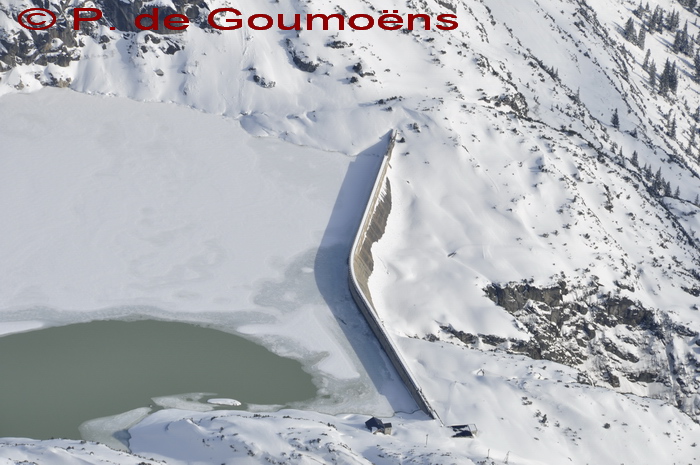
</video> and here are download links for those who prefer to download now and watch later (about 160MB): At the top At the top, there is a scenic two hour walk around Lake Gelmer, the path takes you across the top of a dam built for hydro-electric power generation. Lake Gelmer - hydro-electric dam Getting there from DebConf13 and the Debian 20th birthday For those coming to Switzerland for DebConf13 next month, the Gelmerbahn is probably a little bit too far for a day trip but makes an excellent place to stop during a 2 or 3 day tour around Switzerland. It is accessible using the all-day bus pass for the tour of 3 or 4 mountain passes or by train to Innertkirchen and then a short ride on the bus. The busses are irregular, use sbb.ch to plan the journey. Walking down the mountain from the lake to the bus stop takes about 90 minutes and for those who choose this option, the ticket is cheaper. More Swiss travel blogs Please click here to access some of my previous blogs about Swiss travel with videos and useful ideas for day trips.

28 July 2013

Joey Hess: git-annex as a podcatcher

As a Sunday diversion, I wrote 150 lines of code and turned git-annex into a podcatcher! I've been using hpodder, a podcatcher written in Haskell. But John Goerzen hasn't had time to maintain it, and it fell out of Debian a while ago. John suggested I maintain it, but I have not found the time, and it'd be another mass of code for me to learn and worry about. Also, hpodder has some misfeatures common to the "podcatcher" genre: So, here's a rethink of the podcatcher genre:
cd annex; git annex importfeed http://url/to/podcast http://another/podcast
There is no database of feeds at all. Although of course you can check a list of them right into the same git repository, next to the files it adds. git-annex already keeps track of urls associated with content, so it reuses that to know which urls it's already downloaded. So when you're done with a podcast file and delete it, it won't download it again. This is a podcatcher that doesn't need to actually download podcast files! With --fast, it only records the existence of files in git, so git annex get will download them from the web (or perhaps from a nearer location that git-annex knows about). Took just 3 hours to write, and that's including full control over the filenames it uses (--template='$ feedtitle)/$ itemtitle $ extension '), and automatic resuming of interrupted downloads. Most of what I needed was already available in git-annex's utility libraries or Hackage. Technically, the only part of this that was hard at all was efficiently querying the git repository for a list of all known urls. I found a pretty fast way to do it, but might add a local cache file later on.

25 July 2013

John Goerzen: Spring Always Comes

There will come a time when you believe everything is finished. That will be the beginning. Louis L Amour
Last year, I wrote about the difficult times in my life and hope for future, but never really explained why. I have written little since, because there is little I can write without a bit of explanation. It is partly because of the complexity of the task of telling my story without telling too much of others stories. But it is important I tell this story. So often on the Internet, we hear only the brave face, the positive things that happen. This story involves tears and difficulty. And also we often see only anger and bitterness. This story involves joy and celebration. One afternoon last year, I was working as usual (I work from home) when two sheriff deputies arrived on my doorstep. They gave me paperwork showing that my now ex-wife had filed for divorce, had asked them to serve me the paperwork, and that she had been given temporary possession of the house. I had 2 hours to gather up clothes and a little computer equipment (there was a list) and leave the house. Thus began the most difficult time in my life. I went from reading a bedtime story and singing a bedtime song to my young boys every night to seeing them only a little, from living in the house my grandparents and dad had lived in to having no particular plan for where I d sleep that night, from thinking I had a good idea of what the future held to not knowing when, if ever, I d ever be back home. I worried about how the boys would fare (they have done well so far). And it was incomprehensible; I couldn t find answers to why? . In the time since, the divorce became final, I did return home, the boys spend more time with me, and a new normal emerged. At the time, it seemed like a sudden, deep winter blizzard. I couldn t see very far down the road, spring seemed far off, and I couldn t see very well either forward or backward. But I was determined to find positives in the situation. It started almost immediately; I had never been a person to talk about pain, but just a few hours after the divorce was filed, I knew I needed to talk to someone about it, and did. A week later, I shared about it in church. Amazing friends, locally and all over the world, provided support and encouragement. I had less total time with the boys than before the divorce, but more time with just the three of us, and we used it to play together at home, spend days in town, and even take a train trip to Santa Fe, where none of us had ever been before. I realized how much I could forgive, and that my ex-wife probably did the best she could with the persistent legacy of difficult life events that happened to her long before she met me. I understood this, and was never angry, just sad, for everyone. I have always known nobody is perfect, myself included, but can be hard on myself when I m less than perfect. I forgave myself, too, realizing that I did my best to help in the most unfamiliar of waters, and although I sometimes didn t get it right, my conscience is clear because my heart was in the right place and I tried, very hard. Most incredibly, I became a person with a deep sense of inner peace. I always tried to work hard to set life on a good path; I got good grades in school, am a good employee, and have a strong set of values. But where courts are involved, there s a strong sense of powerlessness. At times, there was nothing I could do to make life better for my boys or for me. I finally had to let go of taking on responsibility for all that on my own shoulders. I simply knew that things would be OK, and in fact were OK, and that there is nothing in life that really deserves worries. That doesn t mean worries are never present, but that mostly they are subdued, like a radio quietly playing in another room. When they aren t, I can sit down at the piano, play my penny whistle, sing, walk to my creek, talk to friends, or any of so many things that let them melt away. I stopped searching for happiness and peace, and let those things find me. In religious terms, my faith became not just an intellectual one, but also a spiritual one. An atheist friend asked me, Just what does religion mean to you anyway? My answer: The certainty that spring always comes, for everyone that understands this.
People speak of misfortunes and sufferings, remarked Pierre, but if at this moment I were asked: Would you rather be what you were before you were taken prisoner, or go through all this again? then for heaven s sake let me again have captivity and horseflesh! We imagine that when we are thrown out of our usual ruts all is lost, but it is only then that what is new and good begins. While there is life there is happiness. There is much, much before us. Tolstoy, War and Peace
By Thanksgiving, I had much to be thankful for. Some of it under my nose waiting to be rediscovered after years of distraction, such as the glorious Kansas sunrises. Some things were new, such as roasting a turkey all by myself (or, rather, with Jacob and Oliver) for the first time, and having it come out absolutely perfectly. And some were just the things of everyday life: that I lived in my own house again, that I could walk out to the creek at the edge of my property whenever I wanted, that I could play piano, that the sounds of laughter and little running feet again could often be heard on my wood floors. That s not to say everything was easy; the courts sometimes made decisions sometimes I didn t think were in the boys best interests, legal things dragged on and on, but in the end, peace endured. Happiness endured. I found myself thinking at Thanksgiving that it was the best Thanksgiving ever. Not much later, I considered myself happier than I ve ever been. I was focusing on the daily gifts of life, marveling at the sunrises, looking forward to life s next adventure, confident that it would be far better than the last. And then, to my complete surprise, I found myself in a relationship again. On top of all the wonderful things happening in my life, I met Laura. I never could have imagined a friend so wonderful, a relationship so loving and joyful, something to treasure so deeply. I can look back at events and shake my head in amazement and wonder, that I found myself happier than I d ever been, and then this wonderful relationship on top of that. I have been blessed to have the life I do, and feel almost embarrassingly lucky. I share this story because friends that had been through divorce years ago shared their stories. They gave me hope. And if I didn t share this story in this public way, I would be squandering an opportunity to find more positives from what happened. I hope that this helps, somehow, someone that is in pain know that there is beauty in the valley, and spring always comes, every single year. And I share it because happiness like this can t be repressed for long. Tolstoy was right. While there is life, there is happiness. I ll end with a story from last Thanksgiving. It was 6:10AM that weekend. I was still asleep, and heard this: Jacob, yelling from his room: Dad? Dad! Me, groggy: Yes, Jacob? Jacob: Can I go down and look at the Christmas tree? Me: Sure, and you can turn it on too. Jacob: Great! At that point, I could have gone back to sleep. I was really short on sleep that morning, and Jacob would have been fine. But I gave him a couple of minutes, then I went downstairs too. He was curled up on the piano bench, looking at the tree. I quietly turned up the downstairs thermostat, got a chair, put it next to the piano bench, and sat down by the tree too. Jacob crawled over onto my lap and snuggled up for awhile. Neither of us said anything. Then: Dad? Yes? This is the best Thanksgiving ever. And he gave me a big hug. And he was right. Yes, he was RIGHT! That will be the beginning. Spring comes!

24 July 2013

Daniel Leidert: Moving from (software) RAID 1 to RAID 5 and testing performance

Finally I finished migrating my new N54L from a 2-disk software RAID 1 (2x2TB WD20EFRX) to 3-disk RAID 5 (3x2TB WD20EFRX) using mdadm. I got an excellent mini HOWTO I followed. Resyncing and reshaping the RAID took several days ... top speed was 110.000K/s ... but left my data untouched. Finally growing the RAID now I have two partitions; one with 0.5GB (md0) and the other with 3.4GB (md1) which both host an EXT4 file system, whereas the first one is encrypted via LUKS and the second one is not. RAID device and file system configuration Below is a summary of the setup and the values I found working well for my system.
3-disk RAID 5 devicefile system
devicechunkstripe_cache_sizeread_ahead_kbtypeencryptionstridestripe-width
/dev/md064409632768ext4luks1632
/dev/md15121638432768ext4no128256
I've played around with the system a bit. Changing the chunk size on the fly however took a long time. /dev/md0 will contain some backups, so there probably will be a mixture of small and large files. So I've chosen to only test the values 64K, 128K and 512K (default) for this device. I left the other untouched as it will mainly contain large files. Performance measurement Below are the results using hdparm to measure performance. First lets take a look at the drives ...

$ hdparm -tT /dev/sd[bcd]
/dev/sdb:
Timing cached reads: 3268 MB in 2.00 seconds = 1634.54 MB/sec
Timing buffered disk reads: 438 MB in 3.00 seconds = 145.87 MB/sec

/dev/sdc:
Timing cached reads: 3292 MB in 2.00 seconds = 1646.32 MB/sec
Timing buffered disk reads: 392 MB in 3.01 seconds = 130.22 MB/sec

/dev/sdd:
Timing cached reads: 3306 MB in 2.00 seconds = 1653.18 MB/sec
Timing buffered disk reads: 436 MB in 3.00 seconds = 145.26 MB/sec

$ hdparm --direct -tT /dev/sd[bcd]
/dev/sdb:
Timing O_DIRECT cached reads: 468 MB in 2.01 seconds = 233.17 MB/sec
Timing O_DIRECT disk reads: 442 MB in 3.00 seconds = 147.15 MB/sec

/dev/sdc:
Timing O_DIRECT cached reads: 468 MB in 2.00 seconds = 233.69 MB/sec
Timing O_DIRECT disk reads: 392 MB in 3.01 seconds = 130.36 MB/sec

/dev/sdd:
Timing O_DIRECT cached reads: 468 MB in 2.00 seconds = 233.94 MB/sec
Timing O_DIRECT disk reads: 442 MB in 3.01 seconds = 146.93 MB/sec
... and now at the RAID devices ...

$ hdparm -tT /dev/md?
/dev/md0:
Timing cached reads: 3320 MB in 2.00 seconds = 1660.37 MB/sec
Timing buffered disk reads: 770 MB in 3.01 seconds = 256.05 MB/sec

/dev/md1:
Timing cached reads: 3336 MB in 2.00 seconds = 1668.07 MB/sec
Timing buffered disk reads: 742 MB in 3.01 seconds = 246.89 MB/sec

$ hdparm --direct -tT /dev/md?
/dev/md0:
Timing O_DIRECT cached reads: 974 MB in 2.00 seconds = 487.08 MB/sec
Timing O_DIRECT disk reads: 770 MB in 3.01 seconds = 256.17 MB/sec

/dev/md1:
Timing O_DIRECT cached reads: 784 MB in 2.00 seconds = 391.18 MB/sec
Timing O_DIRECT disk reads: 742 MB in 3.01 seconds = 246.42 MB/sec
... and now lets see, which actual speed we reach using dd. First lets check the encrypted device:

RAID-5 /dev/md0 (LUKS encrypted EXT4): chunk=64K, stripe_cache_size=4096,
readahead(blockdev)=65536, stride=16, stripe-width=32 ...

$ dd if=/dev/zero of=/mnt/md0/10g.img bs=1k count=10000000
10000000+0 Datens tze ein
10000000+0 Datens tze aus
10240000000 Bytes (10 GB) kopiert, 64,1227 s, 160 MB/s

$ dd if=/mnt/md0/10g.img of=/dev/null bs=1k count=10000000
10000000+0 Datens tze ein
10000000+0 Datens tze aus
10240000000 Bytes (10 GB) kopiert, 85,768 s, 119 MB/s
Well, read speed is consistently lower than write speed for the encrypted file system. Lets take a look at the non-encrypted device:

RAID-5 /dev/md1 (EXT4): chunk=512K, stripe_cache_size=16384,
readahead(blockdev)=65536, stride=128, stripe-width=256 ...

$ dd if=/dev/zero of=/mnt/md1/10g.img bs=1k count=10000000
10000000+0 Datens tze ein
10000000+0 Datens tze aus
10240000000 Bytes (10 GB) kopiert, 37,0016 s, 277 MB/s

$ dd if=/mnt/md1/10g.img of=/dev/null bs=1k count=10000000
10000000+0 Datens tze ein
10000000+0 Datens tze aus
10240000000 Bytes (10 GB) kopiert, 33,5901 s, 305 MB/s
Looks nice to me. How to set these values I use a mixture of udev, util-linux and e2fsprogs to set the values. First I checked, which values for stripe_cache_size and read_ahead_kb are working best for me. For the LUKS encrypted EXT4 I got varying results showing best performances with values of 4096, 8192 and 16384 for stripe_cache_size. I decided for the first value, because it appeared more often with the best performance than the others.

$ less /etc/udev/rules.d/90-local-n54l.rules grep stripe_cache
SUBSYSTEM=="block", KERNEL=="md0", ACTION=="add", TEST=="md/stripe_cache_size", TEST=="queue/read_ahead_kb", ATTR md/stripe_cache_size ="4096", ATTR queue/read_ahead_kb ="32768", ATTR bdi/read_ahead_kb ="32768"
SUBSYSTEM=="block", KERNEL=="md1", ACTION=="add", TEST=="md/stripe_cache_size", TEST=="queue/read_ahead_kb", ATTR md/stripe_cache_size ="16384", ATTR queue/read_ahead_kb ="32768", ATTR bdi/read_ahead_kb ="32768"
The read_ahead_kb value can also be set using blockdev. Note that this command expects a value of 512-byte sectors whereas read_ahead_kb is the size in kbyte. Therefor the difference in values:

$ blockdev --setra 65536 /dev/md[01]
Tuning the EXT4 file system performance with calculated values using tune2fs:

$ tune2fs -E stride=16,stripe-width=32 -O dir_index /dev/mapper/_dev_md0
$ tune2fs -E stride=128,stripe-width=256 -O dir_index /dev/md1
Disabling NCQ reduced the speed a lot for me, so I left the values as is and did not struggle with it:

$ cat /sys/block/sd[bcd]/device/queue_depth
31
31
31

23 July 2013

Ritesh Raj Sarraf: Power consumption on Linux 3.10

The power consumption on the Linux kernel 3.10 is pretty bad. On kernel 3.10, with the follwing config, the PowerTop results are:
#
# Timers subsystem
#
CONFIG_TICK_ONESHOT=y
CONFIG_NO_HZ_COMMON=y
# CONFIG_HZ_PERIODIC is not set
CONFIG_NO_HZ_IDLE=y
# CONFIG_NO_HZ_FULL is not set
CONFIG_NO_HZ=y
CONFIG_HIGH_RES_TIMERS=y
PowerTOP v2.0 Overview Idle stats Frequency stats Device stats Tunables
The battery reports a discharge rate of 28.0 W
The estimated remaining time is 23 minutes
Summary: 1785.5 wakeups/second, 0.0 GPU ops/second, 0.0 VFS ops/sec and 22.1% CPU use
Power est. Usage Events/s Category Description
16.3 W 2915 rpm Device Laptop fan
5.11 W 100.0% Device USB device: WALTON Primo-X1 Primo-X1
1.70 W 33.3% Device Display backlight
849 mW 33.3% Device Display backlight
425 mW 86.0 ms/s 330.7 Process /usr/bin/konsole
316 mW 63.9 ms/s 66.1 Process /usr/bin/plasma-desktop
142 mW 28.6 ms/s 396.8 Process /usr/bin/X :0 -auth /var/run/lightdm/root/:0 -nolisten tcp vt7
64.1 mW 13.0 ms/s 198.4 Process kwin -session 101261418fe3000136103713100000053880000_13746081
53.6 mW 10.8 ms/s 0.00 Process powertop
35.9 mW 7.3 ms/s 66.1 Process /usr/lib/chromium/chromium --type=plugin --plugin-path=/usr/li
24.3 mW 4.9 ms/s 396.8 Interrupt PS/2 Touchpad / Keyboard / Mouse
6.92 mW 1.4 ms/s 0.00 Interrupt [48] i915
5.94 mW 1.2 ms/s 66.1 Interrupt [9] RCU(softirq)
3.98 mW 0.8 ms/s 0.00 kWork flush_to_ldisc
3.78 mW 0.8 ms/s 66.1 Process [ksoftirqd/2]
3.33 mW 673.3 us/s 66.1 Process [rcu_sched]
1.80 mW 363.1 us/s 66.1 Interrupt [1] timer(softirq)
1.79 mW 363.0 us/s 0.00 Process [ksoftirqd/4]
Where as on the 3.9 kernel:
The battery reports a discharge rate of 13.2 W
The estimated remaining time is 43 minutes
Summary: 611.5 wakeups/second, 0.0 GPU ops/second, 0.0 VFS ops/sec and 14.2% CPU use
Power est. Usage Events/s Category Description
14.0 W 2722 rpm Device Laptop fan
1.72 W 33.3% Device Display backlight
862 mW 33.3% Device Display backlight
255 mW 65.7 ms/s 58.0 Process /usr/bin/plasma-desktop
91.9 mW 23.7 ms/s 27.5 Process /usr/lib/chromium/chromium --type=renderer --lang=en-US --forc
60.1 mW 15.5 ms/s 96.1 Process /usr/lib/chromium/chromium --type=plugin --plugin-path=/usr/li
25.0 mW 6.4 ms/s 25.1 Process kwin -session 101261418fe3000136103713100000053880000_13746094
21.5 mW 5.6 ms/s 34.2 Process /usr/bin/X :0 -auth /var/run/lightdm/root/:0 -nolisten tcp vt7
13.1 mW 3.4 ms/s 5.6 Process /usr/bin/konsole
9.82 mW 2.5 ms/s 53.7 Process [irq/48-iwlwifi]
9.11 mW 2.4 ms/s 2.2 Process /usr/bin/knemo
8.62 mW 2.2 ms/s 12.3 Process /usr/lib/chromium/chromium --password-store=detect
8.32 mW 2.1 ms/s 45.5 Interrupt [48] iwlwifi
6.96 mW 1.8 ms/s 35.3 Interrupt [7] sched(softirq)
5.13 mW 1.3 ms/s 57.1 Interrupt [47] i915
4.24 mW 1.1 ms/s 0.4 Process powertop
3.38 mW 0.9 ms/s 1.5 Timer tcp_keepalive_timer
2.85 mW 0.7 ms/s 11.9 Process /usr/sbin/mysqld --basedir=/usr --datadir=/var/lib/mysql --plu
<section class="field field-name-taxonomy-vocabulary-1 field-type-taxonomy-term-reference field-label-above view-mode-rss">

Categories: </section><section class="field field-name-taxonomy-vocabulary-2 field-type-taxonomy-term-reference field-label-above view-mode-rss">

Keywords: </section>

22 July 2013

Daniel Pocock: Winning at any cost

It's not every day that a student messing around with keystroke loggers comes to fame through slashdot. Nonetheless, systematically rigging an election and getting sentenced to 12 months in a dorm with bars has helped raise 22 year old Matthew Weaver's profile well above that of the average script kiddie. Now let's stop and reflect on poor Weaver's future. You may be thinking that with an exchange program like this on his academic record he won't be so popular with employers. Given that he was busted by campus security rather than the FBI he won't even attract the interest of those companies who hire ex-hackers. So where could he go? How is it done in Australia? Not too long ago, when I was a student myself, one of our prominent universities was subjected to a very similar scam. Four members of the Tin Tin for NUS ticket at La Trobe University were implicated in stuffing the ballot the old fashioned way. The incidents even share the characteristics of chronic stupidity: just as Weaver had been caught voting for himself 259 times from the same IP address in a campus computer lab, team Tin Tin had tried to hand their bag of manipulated postal votes directly to the deputy returning officer rather than discretely posting them through the internal mail. According to an official report by the Deputy Returning Officer, Karsten Haley, all four candidates were charged with Dishonest Conduct and Interfering with Ballot Papers. Unfortunately, the report notes that

La Trobe University SRC Electoral Regulations do not empower the Returning Officer or Deputy to enforce charges or disciplinary procedures and the charges were never faced by the accused.
Given the seriousness of the matter, Haley did not give up his attempts to hold them to account. He escalated it to the Dean of the college and then to the University Secretary. He reports that "their disinterest was extraordinary" and that nobody would involve the police. Young Labor suspended Just over a year later, in 1997, the ALP's youth division for the state of Victoria, Young Labor, was suspended after attempts to rig the ballot to elect the Young Labor leadership team. The guilty parties were never publicly named. Nobody was formally suspended or expelled and this simply left them with more time on their hands to invest their energy in other elections. The suspension of Victorian Young Labor remained in effect for a number of years. The specific allegations about the Young Labor ballot suggest that those people particularly keen to win had printed fake student cards and given them to stooges who would impersonate other Young Labor members who had not attended to vote in person. Where are they now? It is no co-incidence that these students were (and still are) members of Labor Unity, a powerful faction within Australia's ruling Labor Party, the ALP. Most political organisations would presumably express concern about these allegations. The ALP does things differently. One of the students who withdrew his nomination in La Trobe, Mr Larocca, subsequently became Mayor in the City of Moreland, one of the ALP's strongholds. Even more remarkably from an outsider's viewpoint, another of these figures, Stephen Donnelly, is currently employed as the Assistant State Secretary of the ALP in Victoria. Communications like this newsletter reveal that he is one of the key figures in the party's pre-selection process. He has recently been appointed to direct the ALP's 2013 federal election campaign for the state of Victoria. Another co-incidence On the same weekend that Weaver was in the news for his antics, Donnelly's latest employer, the ALP's Victorian branch, was conducting pre-selection ballots to choose candidates for the upcoming federal election. So it's no surprise that Monday's newspaper headlines report fresh allegations of voting irregularities. Sadly, I've seen some of Labor Unity's bad behavior first hand. About 10 years ago I was living in South Melbourne, which is in the federal electoral district of Melbourne Ports. A young female friend of mine, a member of the local Elwood branch of the ALP, had spent election day handing out brochures for an ALP candidate in a marginal seat rather than assisting the controversial local ALP candidate, Michael Danby. A few days later I was witness to an incident where Danby aggressively confronted this young woman and demanded to know why he hadn't seen her handing out his own leaflets on polling day. He stood within centimeters of her and was literally looking down on her as he demanded some kind of apology to sooth his bruised ego. She looked terrified and barely responded. Within moments one of his handlers approached and physically moved Danby away from this young woman, I dare to think where things would have gone otherwise. Eye for talent Remarkably, at the same time, the infamous Stephen Donnelly had started shadowing Danby in his movements about the district. Fresh out of university, his talents had been recognised by Danby and he was employed in Danby's office, enabling him to continue honing his skills on a full-time basis with a tax-payer funded salary. What a remarkable contrast to the story of Weaver. Can anybody imagine a US congressman collecting Weaver from the prison gates and deploying him to an office on Capitol Hill? The biggest bankruptcy in student history Around the same time, Donnelly's Student Unity, the student arm of Labor Unity were successful in taking over the student union of my own campus, the University of Melbourne. Not long after I graduated I heard that they had been accused of skimming off $1 million from catering providers and a high-risk $46 million property transaction that put the organisation into liquidation. Unlike Mr Weaver, who's scheme at Cal State barely got off the ground, none of those involved in the Melbourne University incident has faced criminal proceedings. One ALP figure, Andrew Landeryou, spent several months in Costa Rica while wanted for questioning in the Supreme Court. His wife has just been endorsed for a seat in the Senate with support from various Labor Unity figures including Danby. The Gillard questions In 1996, around the same time that Donnelly & Co. were romping around student unions learning the tricks of the political trade, a lawyer quietly departed from the firm Slater and Gorden after an internal investigation into a property transaction linked to a union slush fund. Like Donnelly, this lawyer's next move was to take employment in the office of a Labor Party MP. More recently she was backed by Labor Unity to become Prime Minister. The union slush fund remains under investigation, frustrated by the disappearance of documents. The $60 million heist Recently I blogged about Gillard and Abbott, leaders of the two main political parties in Australia, agreeing to take $60 million of taxpayer money to fund their parties' campaigns in the upcoming federal election, giving themselves an obscenely unfair unadvantage over all other contestants. Where would that money end up? In the case of the ALP, does it appear likely that figures like the Victorian ALP's federal campaign director, Mr Donnelly, would be involved in the expenditure? National shame With this background, it becomes easier to understand the quality (or lack of it) in Australia's national leadership. When you consider that the generation responsible for the La Trobe incident, the Young Labor suspension and the MUSU bankruptcy are now growing into positions of greater responsibility in the ALP it leaves me feeling the quality of leadership is only going to get a lot worse before it starts getting better. For example, the recent incident where coloured people were fed to the sharks has nothing to do with the worldwide refugee crisis and everything to do with maintaining the dumbed-down level of political discourse that Labor Unity thugs and their followers can cope with. Real issues like climate change and energy policy, for example, appear to be beyond the pay grade of Australia's political class Ranjini - coloured, indefinite detention It is startling that up to her own recent demise, Gillard herself had repeatedly begged the public to stop asking questions about her own past and remember that Labor politicians are innocent until proven guilty - yet she had a pregnant coloured woman thrown into a concentration camp on unfounded fears about "national security". No evidence has ever been presented that poor Ranjini committed a crime, but the houses bought with money from trade unions, transactions handled through Gillard's own office, seem to be as solid as bricks and mortar. If only poor Matthew Weaver had been an Australian, how much further would his star have risen? Update: please sign the petition at change.org asking La Trobe university to re-examine the report and refer it formally to the police. If you are concerned about the plight of poor Ranjini and other people subject to Australia's domestic rendition program, please take a moment to see Letters for Ranjini

21 July 2013

Benjamin Mako Hill: The Wikipedia Gender Gap Revisited

In a new paper, recently published in the open access journal PLOSONE, Aaron Shaw and I build on new research in survey methodology to describe a method for estimating bias in opt-in surveys of contributors to online communities. We use the technique to reevaluate the most widely cited estimate of the gender gap in Wikipedia. A series of studies have shown that Wikipedia s editor-base is overwhelmingly male. This extreme gender imbalance threatens to undermine Wikipedia s capacity to produce high quality information from a full range of perspectives. For example, many articles on topics of particular interest to women tend to be under-produced or of poor quality. Given the open and often anonymous nature of online communities, measuring contributor demographics is a challenge. Most demographic data on Wikipedia editors come from opt-in surveys where people respond to open, public invitations. Unfortunately, very few people answer these invitations. Results from opt-in surveys are unreliable because respondents are rarely representative of the community as a whole. The most widely-cited estimate from a large 2008 survey by the Wikimedia Foundation (WMF) and UN University in Maastrict (UNU-MERIT) suggested that only 13% of contributors were female. However, the very same survey suggested that less than 40% of Wikipedia s readers were female. We know, from several reliable sources, that Wikipedia s readership is evenly split by gender a sign of bias in the WMF/UNU-MERIT survey. In our paper, we combine data from a nationally representative survey of the US by the Pew Internet and American Life Project with the opt-in data from the 2008 WMF/UNU-MERIT survey to come up with revised estimates of the Wikipedia gender gap. The details of the estimation technique are in the paper, but the core steps are:
  1. We use the Pew dataset to provide baseline information about Wikipedia readers.
  2. We apply a statistical technique called propensity scoring to estimate the likelihood that a US adult Wikipedia reader would have volunteered to participate in the WMF/UNU-MERIT survey.
  3. We follow a process originally developed by Valliant and Dever to weight the WMF/UNU-MERIT survey to correct for estimated bias.
  4. We extend this weighting technique to Wikipedia editors in the WMF/UNU data to produce adjusted estimates of the demographics of their sample.
Using this method, we estimate that the proportion of female US adult editors was 27.5% higher than the original study reported (22.7%, versus 17.8%), and that the total proportion of female editors was 26.8% higher (16.1%, versus 12.7%). These findings are consistent with other work showing that opt-in surveys tend to undercount women. Overall, these results reinforce the basic substantive finding that women are vastly under-represented among Wikipedia editors. Beyond Wikipedia, our paper describes a method online communities can adopt to estimate contributor demographics using opt-in surveys, but that is more credible than relying entirely on opt-in data. Advertising-intelligence firms like ComScore and Quantcast provide demographic data on the readership of an enormous proportion of websites. With these sources, almost any community can use our method (and source code) to replicate a similar analysis by: (1) surveying a community s readers (or a random subset) with the same instrument used to survey contributors; (2) combining results for readers with reliable demographic data about the readership population from a credible source; (3) reweighting survey results using the method we describe. Although our new estimates will not help us us close the gender gap in Wikipedia or address its troubling implications, they give us a better picture of the problem. Additionally, our method offers an improved tool to build a clearer demographic picture of other online communities in general.

20 July 2013

Eddy Petri&#537;or: (Not a) GNU Make quirk, or why logs should be provided

About two months ago I was writing about a quirk I found in GNU Make related to the $(patsubst ) function.

I have just tried this on my Debian Wheezy laptop which has make 3.81, but I wasn't able to reproduce the issue with the version from Debian (3.81-8.2).

The makefile looks like this:
PATH := ../some/prefixCPU12suf/include
CPUINC := $(patsubst ../some/prefix%,%,$(PATH))
CPU := $(patsubst %/include,%,$(CPUINC))

default:
@echo "PATH = $(PATH)"
@echo "CPUINC = $(CPUINC)"
@echo "CPU = $(CPU)"
And the result was correct:
0 eddy@heidi /tmp $ make
PATH = ../some/prefixCPU12/include
CPUINC = CPU12/include
CPU = CPU12
0 eddy@heidi /tmp $ make --version
GNU Make 3.81
Copyright (C) 2006 Free Software Foundation, Inc.
This is free software; see the source for copying conditions.
There is NO warranty; not even for MERCHANTABILITY or FITNESS FOR A
PARTICULAR PURPOSE.

This program built for x86_64-pc-linux-gnu
The worst part is that I know I tested this issue on 3.82 on Cygwin and on Linux with the 3.82 version and it failed, but I wasn't able to remember how I did it. I started searching through the directory where I knew there could be the test makefile, I wasn't able to find it, until I remembered what I was trying to achieve.

From a path like ../some/prefixCPU12suf/include I wanted to use % to remove the parts 'some/prefix' and 'suf/include' because in the directory ../CPU12 there were some files that needed to be processed.

The actual issue is that GNU Make's '%' is not analogous to shell's '*', so that means code like this does not work as I assumed anf the 'pref' part is not an anchor:


PATH := ../some/prefCPU12suf/include
CPUINC := $(patsubst pref%,%,$(PATH))
CPU := $(patsubst %suf/include,%,$(CPUINC))

default:
@echo "PATH = $(PATH)"
@echo "CPUINC = $(CPUINC)"
@echo "CPU = $(CPU)"
Which leads to these results, no matter the version:

0 eddy@heidi ~/usr/src/make/make-profiler/make-3.82 $ ./make -f /tmp/makefile
PATH = ../some/prefCPU12suf/include
CPUINC = ../some/prefCPU12suf/include
CPU = ../some/prefCPU12
0 eddy@heidi ~/usr/src/make/make-profiler/make-3.82 $ ./make --version
GNU Make 3.82
Built for x86_64-unknown-linux-gnu
Copyright (C) 2010 Free Software Foundation, Inc.
License GPLv3+: GNU GPL version 3 or later <http: gnu.org="" gpl.html="" licenses="">
This is free software: you are free to change and redistribute it.
There is NO WARRANTY, to the extent permitted by law.
0 eddy@heidi ~/usr/src/make/make-profiler/make-3.82 $ make -f /tmp/makefile
PATH = ../some/prefCPU12suf/include
CPUINC = ../some/prefCPU12suf/include
CPU = ../some/prefCPU12
0 eddy@heidi ~/usr/src/make/make-profiler/make-3.82 $ make --version
GNU Make 3.81
Copyright (C) 2006 Free Software Foundation, Inc.
This is free software; see the source for copying conditions.
There is NO warranty; not even for MERCHANTABILITY or FITNESS FOR A
PARTICULAR PURPOSE.

This program built for x86_64-pc-linux-gnu</http:>
Not sure if this could be qualified as a true bug, or a if the way I expected is a nice to have feature, but, in any case, the behaviour is consistent, unlike my brain which failed to initially identify the inconsistency in my code:

0 eddy@heidi ~/usr/src/make/make-profiler/make-3.82 $ grep patsubst /tmp/makefile
CPUINC := $(patsubst pref%,%,$(PATH))
CPU := $(patsubst %suf,%,$(CPUINC))
0 eddy@heidi ~/usr/src/make/make-profiler/make-3.82 $ make -f /tmp/makefile
PATH = ../some/prefCPU12suf/include
CPUINC = ../some/prefCPU12suf/include
CPU = ../some/prefCPU12suf/include
Note that this behaviour of patsubst is asymtric to how subst works, as explained in the updated old post.

This took some extra effort to remember what was the actual issue, and shows why logs are important when reporting an issue, and why reporting issues as soon as they were encountered: because human brains are faulty. (Yes, yours, too!)

Next.

Previous.