Search Results: "spa"

31 May 2021

Chris Lamb: Free software activities in May 2021

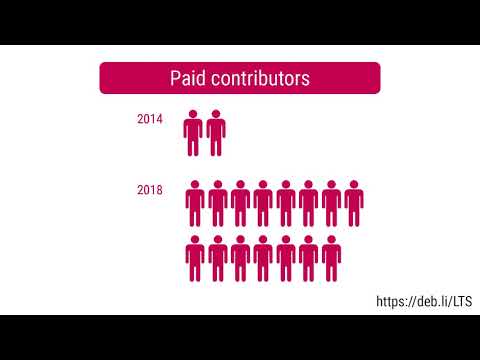
Here's my monthly update covering what I have been doing in the free software world for May 2021 (previous month): Reproducible Builds The motivation behind the Reproducible Builds effort is to ensure no flaws have been introduced during this compilation process by promising identical results are always generated from a given source, thus allowing multiple third-parties to come to a consensus on whether a build was compromised. I also made the following changes to diffoscope, including preparing and uploading versions 174, 175 and 176 to Debian: Debian Finally, I also made a sponsored upload of adminer (4.7.9-2) for Alexandre Rossi. Debian LTS This month I have worked 18 hours on Debian Long Term Support (LTS) and 12 hours on its sister Extended LTS project. You can find out more about the project via the following video:
Russell Coker: Some Ideas About Storage Reliability

Hard Drive Brands When people ask for advice about what storage to use they often get answers like use brand X, it works well for me and brand Y had a heap of returns a few years ago . I m not convinced there is any difference between the small number of manufacturers that are still in business. One problem we face with reliability of computer systems is that the rate of change is significant, so every year there will be new technological developments to improve things and every company will take advantage of them. Storage devices are unique among computer parts for their requirement for long-term reliability. For most other parts in a computer system a fault that involves total failure is usually easy to fix and even a fault that causes unreliable operation usually won t spread it s damage too far before being noticed (except in corner cases like RAM corruption causing corrupted data on disk). Every year each manufacturer will bring out newer disks that are bigger, cheaper, faster, or all three. Those disks will be expected to remain in service for 3 years in most cases, and for consumer disks often 5 years or more. The manufacturers can t test the new storage technology for even 3 years before releasing it so their ability to prove the reliability is limited. Maybe you could buy some 8TB disks now that were manufactured to the same design as used 3 years ago, but if you buy 12TB consumer grade disks, the 20TB+ data center disks, or any other device that is pushing the limits of new technology then you know that the manufacturer never tested it running for as long as you plan to run it. Generally the engineering is done well and they don t have many problems in the field. Sometimes a new range of disks has a significant number of defects, but that doesn t mean the next series of disks from the same manufacturer will have problems. The issues with SSDs are similar to the issues with hard drives but a little different. I m not sure how much of the improvements in SSDs recently have been due to new technology and how much is due to new manufacturing processes. I had a bad experience with a nameless brand SSD a couple of years ago and now stick to the better known brands. So for SSDs I don t expect a great quality difference between devices that have the names of major computer companies on them, but stuff that comes from China with the name of the discount web store stamped on it is always a risk. Hard Drive vs SSD A few years ago some people were still avoiding SSDs due to the perceived risk of new technology. The first problem with this is that hard drives have lots of new technology in them. The next issue is that hard drives often have some sort of flash storage built in, presumably a SSHD or Hybrid Drive gets all the potential failures of hard drives and SSDs. One theoretical issue with SSDs is that filesystems have been (in theory at least) designed to cope with hard drive failure modes not SSD failure modes. The problem with that theory is that most filesystems don t cope with data corruption at all. If you want to avoid losing data when a disk returns bad data and claims it to be good then you need to use ZFS, BTRFS, the NetApp WAFL filesystem, Microsoft ReFS (with the optional file data checksum feature enabled), or Hammer2 (which wasn t production ready last time I tested it). Some people are concerned that their filesystem won t support wear levelling for SSD use. When a flash storage device is exposed to the OS via a block interface like SATA there isn t much possibility of wear levelling. If flash storage exposes that level of hardware detail to the OS then you need a filesystem like JFFS2 to use it. I believe that most SSDs have something like JFFS2 inside the firmware and use it to expose what looks like a regular block device. Another common concern about SSD is that it will wear out from too many writes. Lots of people are using SSD for the ZIL (ZFS Intent Log) on the ZFS filesystem, that means that SSD devices become the write bottleneck for the system and in some cases are run that way 24*7. If there was a problem with SSDs wearing out I expect that ZFS users would be complaining about it. Back in 2014 I wrote a blog post about whether swap would break SSD [1] (conclusion it won t). Apart from the nameless brand SSD I mentioned previously all of my SSDs in question are still in service. I have recently had a single Samsung 500G SSD give me 25 read errors (which BTRFS recovered from the other Samsung SSD in the RAID-1), I have yet to determine if this is an ongoing issue with the SSD in question or a transient thing. I also had a 256G SSD in a Hetzner DC give 23 read errors a few months after it gave a SMART alert about Wear_Leveling_Count (old age). Hard drives have moving parts and are therefore inherently more susceptible to vibration than SSDs, they are also more likely to cause vibration related problems in other disks. I will probably write a future blog post about disks that work in small arrays but not in big arrays. My personal experience is that SSDs are at least as reliable as hard drives even when run in situations where vibration and heat aren t issues. Vibration or a warm environment can cause data loss from hard drives in situations where SSDs will work reliably. NVMe I think that NVMe isn t very different from other SSDs in terms of the actual storage. But the different interface gives some interesting possibilities for data loss. OS, filesystem, and motherboard bugs are all potential causes of data loss when using a newer technology. Future Technology The latest thing for high end servers is Optane Persistent memory [2] also known as DCPMM. This is NVRAM that fits in a regular DDR4 DIMM socket that gives performance somewhere between NVMe and RAM and capacity similar to NVMe. One of the ways of using this is Memory Mode where the DCPMM is seen by the OS as RAM and the actual RAM caches the DCPMM (essentially this is swap space at the hardware level), this could make multiple terabytes of RAM not ridiculously expensive. Another way of using it is App Direct Mode where the DCPMM can either be a simulated block device for regular filesystems or a byte addressable device for application use. The final option is Mixed Memory Mode which has some DCPMM in Memory Mode and some in App Direct Mode . This has much potential for use of backups and to make things extra exciting App Direct Mode has RAID-0 but no other form of RAID. Conclusion I think that the best things to do for storage reliability are to have ECC RAM to avoid corruption before the data gets written, use reasonable quality hardware (buy stuff with a brand that someone will want to protect), and avoid new technology. New hardware and new software needed to talk to new hardware interfaces will have bugs and sometimes those bugs will lose data. Filesystems like BTRFS and ZFS are needed to cope with storage devices returning bad data and claiming it to be good, this is a very common failure mode. Backups are a good thing.

Russ Allbery: Review: The Relentless Moon

Review: The Relentless Moon, by Mary Robinette Kowal
Series: Lady Astronaut #3
Publisher: Tor
Copyright: 2020
ISBN: 1-250-23648-7
Format: Kindle
Pages: 542
Content note: Discussion of eating disorders in this review and portrayal of an eating disorder in the novel. The Relentless Moon is the third book of the Lady Astronaut series and the first one that doesn't feature Elma. It takes place simultaneously with The Fated Sky and tells the story of what happened on Earth, and the Moon, while Elma was in transit to Mars. It's meant to be read after The Fated Sky and would be a significant spoiler for that novel. The protagonist of this novel is Nicole Wargin: wife of the governor of Kansas (a more prestigious state in this universe since the seat of government for the United States was relocated to Kansas City after the Meteor), expert politician's wife, and another of the original group of female astronauts. Kenneth, her husband, is considering a run for president. Nicole is working as an astronaut, helping build out the permanent Moon base. But there are a lot of people on Earth who are not happy with the amount of money and political attention that the space program is getting. They have decided to move beyond protests and political opposition to active sabotage. Nicole was hoping to land an assignment piloting one of the larger rockets. What she gets instead is an assignment as secretary to the Lunar Colony Administrator, as cover. Her actual job is to watch for saboteurs that may or may not be operating on the Moon. Before she even leaves the planet, one of the chief engineers of the space program is poisoned. The pilot of the translunar shuttle falls ill during the flight to the Moon. And then the shuttle's controls fail during landing and disaster is only narrowly averted. The story from there is a cloak and dagger sabotage investigation mixed with Kowal's meticulously-researched speculation about a space program still running on 1950s technology but drastically accelerated by the upcoming climate collapse of Earth. Nicole has more skills for this type of mission than most around her realize due to very quiet work she did during the war, not to mention the feel for personalities and politics that she's honed as a governor's wife. But, like Elma, she's also fighting some personal battles. Elma's are against anxiety; Nicole's are against an eating disorder. I think my negative reaction to this aspect of the book is not the book's fault, but it was sufficiently strong that it substantially interfered with my enjoyment. The specific manifestation of Nicole's eating disorder is that she skips meals until she makes herself ill. My own anxious tendencies hyperfocus on prevention and on rule-following. The result is that once Kowal introduces the eating disorder subplot, my brain started anxiously monitoring everything that Nicole ate and keeping track of her last meal. This, in turn, felt horribly intrusive and uncomfortable. I did not want to monitor and police Nicole's eating, particularly when Nicole clearly was upset by anyone else doing exactly that, and yet I couldn't stop the background thread of my brain that did so. The result was a highly unsettling feeling that I was violating the privacy of the protagonist of the book that I was reading, mixed with anxiety and creeping dread about her calorie intake. Part of this may have been intentional to give the reader some sense of how this felt to Nicole. (The negative interaction with my own anxiety was likely not intentional.) Kowal did an exceptionally good job at invoking reader empathy (at least in me) for Elma's anxiety in The Calculating Stars. I didn't like the experience much this time, but that doesn't make it an invalid focus for a book. It may, however, make me a poor reviewer for this part of the reading experience. This was a major subplot, so it was hard to escape completely, but I quite enjoyed the rest of the book. It's not obvious who the saboteurs are or even how the sabotage is happening, and the acts of clear sabotage are complicated by other problems that may be more subtle sabotage, may be bad luck, or may be the inherent perils of trying to survive in space. Many of Nicole's suspicions do not pan out, which was a touch that I appreciated. She has to look for ulterior motives in everything, and in reality that means she'll be wrong most of the time, but fiction often unrealistically short-cuts that process. I also liked how Kowal handles the resolution, which avoids villain monologues and gives Nicole's opposition their own contingency plans, willingness to try to adapt to setbacks, and the intelligence to keep trying to manipulate the situation even when their plans fail. As with the rest of this series, there's a ton of sexism and racism, which the characters acknowledge and which Nicole tries to resist as much as she can, but which is so thoroughly baked into the society that it's mostly an obstacle that has to be endured. This is not the book, or series, to read if you're looking for triumph over discrimination or for women being allowed to be awesome without having to handle and soothe men's sexist feelings about their abilities. Nicole gets a clear victory arc, but it's a victory despite sexism rather than an end to it. The Relentless Moon did feel a bit long. There are a lot of scene-setting preliminaries before Nicole leaves for the Moon, and I'm not sure all of them were necessary at that length. Nicole also spends a lot of time being suspicious of everyone and second-guessing her theories, and at a few points I thought that dragged. But once things start properly happening, I thoroughly enjoyed the technological details and the thought that Kowal put into the mix of sabotage, accidents, and ill-advised human behavior that Nicole has to sort through. The last half of the book is the best, which is always a good property for a book to have. The eating disorder subplot made me extremely uncomfortable for reasons that are partly peculiar to me, but outside of that, this is a solid entry in the series and fills in some compelling details of what was happening on the other end of the intermittent radio messages Elma received. If you've enjoyed the series to date, you will probably enjoy this installment as well. But if you didn't like the handling of sexism and racism as deeply ingrained social forces that can at best be temporarily bypassed, be warned that The Relentless Moon continues the same theme. Also, if you're squeamish about medical conditions in your fiction, be aware that the specific details of polio feature significantly in the book. Rating: 7 out of 10

30 May 2021

Russell Coker: Wifi Performance on Linux

Wifi usually just works. In the past I haven t had to worry much about performance as for home use things have always been bearable and at work it s never been my job so I just file a bug report with the relevant people when things go wrong. But a few years ago I had some problems. For my home network I got a free Wifi AP which wasn t performing well. My AP supported 802.11 modes b/g or g/n (b, g, and n are slow, medium, and fast speeds). I initially had the AP running in b/g mode because I had an 802.11b USB wifi device that I used. When I replaced that with one that did 802.11g I tried changing the AP to g/n mode but performance was even worse on my laptop (although quite good on phones) so I switched back. For phones it appeared to work well giving 54Mb/s while on my laptop (a second hand Thinkpad X1 Carbon) it was giving 11Mb/s at best and often much less than that. The best demonstration of problems was to start transferring a large file while pinging a system on the LAN the AP was connected to. Usually it would give ping times of 1s or more, sometimes 5s+ ping times. While this was happening the Invalid misc count increased rapidly, often by more than 100 per second. The results of Google searches suggest that Invalid misc is due to interference and recommend changing the channel. My AP had been on channel 1 which had performed poorly, channels 2-8 were ok, and channel 9 seemed reasonably good. As an aside trying all channels manually is not a good idea, it takes a lot of time and gives little useful data. After changing to channel 9 it still only gave about 500KB/s when transferring large files with ping times of about 100ms, but that s a big improvement. I tried running iwlist scanning to scan the Wifi network for other APs, that showed that channel 1 was used a lot but didn t make it clear what I should do other than that. The next thing I tried was the Wifi Analyser app on Android [1] (which doesn t work on my latest phone, I don t know if it s still being actively maintained, it will definitely work on older phones). That has a nice graph mode that shows which channels are used and how the frequencies spread and interfere with other channels. One thing I hadn t realised before I looked at the graphs is that 802.11n uses 4 channels and interferes past that. If you have two 802.11n devices you don t have much space left out of the 14 channels available. To make more space I configured the Wifi AP in my ADSL modem to 802.11b/g mode and assigned it a channel away from the others making 4 channels available with no interference. After that iwconfig reported between 60 and 120Mb/s and I got consistent transfer rates over 1.5MB/s while ping times remained below 100ms. The 5GHz frequency range is less congested. But at the time I didn t feel like buying 5GHz equipment. Since that time I had signed up with an ISP that had a good deal on a Wifi AP that had 5GHz. Now I have all my devices configured to use 5GHz or 2.4GHz depending on which they think is best. So there s less devices on 2.4GHz and the AP is configured for 20MHz channel width in the 2.4GHz range (which means 802.11b/g). Conclusion 802.11n seems to be a bad idea unless you run the only AP in an area. In a suburban area you will have 3 other houses broadcasting in your area and 802.11n is bad for everyone. The worst case scenario would be one person using 802.11n and interfering with everyone else s 802.11g and then having everyone else turn on 802.11n to try and make things faster. 5GHz is less congested as most people run old hardware. It also has a shorter range which has the upside of getting less interference from other people. I m considering installing 5GHz APs at both ends of my house and configuring all my new devices to not use 2.4GHz. Wifi spectrum analysis software is much better than manual testing of channels or trying to deduce things from the output if iwlist scanning .

Russell Coker: HP ML110 Gen9

I ve just bought a HP ML110 Gen9 as a personal workstation, here are my notes about it and documentation on running Debian on it. Why a Server? I bought this is because the ML350p Gen8 turned out to be too noisy for my taste [1]. I ve just been editing my page about Memtest86+ RAM speeds [2], over the course of 10 years (high end laptop in 2001 to low end server in 2011) RAM speed increased by a factor of 100. RAM speed has been increasing at a lower rate than CPU speed and is becoming an increasing bottleneck on system performance. So while I could get a faster white-box system the cost of a second-hand server isn t that great and I m getting a system that s 100* faster than what was adequate for most tasks in 2001. HP makes some nice workstation class machines with ECC RAM (think server without remote management, hot-swap disks, or redundant PSU but with sound hardware). But they are significantly more expensive on the second hand market than servers. This server cost me $650 and came with 2*480G DC grade SSDs (Intel but with HPE stickers). I hope that more than half of the purchase price will be recovered from selling the SSDs (I will use NVMe). Also 64G of non-ECC RAM costs $370 from my local store. As I want lots of RAM for testing software on VMs it will probably turn out that the server cost me less than the cost of new RAM once I ve sold the SSDs! Monitoring
wget -O /usr/local/hpePublicKey2048_key1.pub https://downloads.linux.hpe.com/SDR/hpePublicKey2048_key1.pub
echo "# HP monitoring" >> /etc/apt/sources.list
echo "deb [signed-by=/usr/local/hpePublicKey2048_key1.pub] http://downloads.linux.hpe.com/SDR/downloads/MCP/Debian/ stretch/current-gen9 non-free" >> /etc/apt/sources.list
The above commands will make the management utilities installable on Debian/Buster. If using Bullseye (Testing at the moment) then you need to have Buster repositories in APT for dependencies, HP doesn t seem to have packaged all their utilities for Buster.
wget -r -np -A Contents-amd64.bz2 http://downloads.linux.hpe.com/SDR/repo/mcp/debian/dists
To find out which repositories had the programs I need I ran the above recursive wget and then uncompressed them for grep -R (as an aside it would be nice if bzgrep supported -R). I installed the hp-health package which has hpasmcli for viewing and setting many configuration options and hplog for viewing event log data and thermal data (among a few other things). I ve added a new monitor to etbemon hp-temp.monitor to monitor HP server temperatures, I haven t made a configuration option to change the thresholds for what is considered normal because I don t expect server class systems to be routinely running above the warning temperature. For the linux-temp.monitor script I added a command-line option for the percentage of the high temperature that is an error condition as well as an option for the number of CPU cores that need to be over-temperature, having one core permanently over the high temperature due to a web browser seems standard for white-box workstations nowadays. The hp-health package depends on libc6-i686 lib32gcc1 even though none of the programs it contains use lib32gcc1. Depending on lib32gcc1 instead of lib32gcc1 lib32gcc-s1 means that installing hp-health requires removing mesa-opencl-icd which probably means that BOINC can t use the GPU among other things. I solved this by editing /var/lib/dpkg/status and changing the package dependencies to what I desired. Note that this is not something for a novice to do, make a backup and make sure you know what you are doing! Issues The HPE Dynamic Smart Array B140i is a software RAID device. While it s convenient for some users that software RAID gets supported in the UEFI boot process, generally software RAID is a bad idea. Also my system has hot-swap drive caddies but the controller doesn t support hot-swap. So the first thing to do was to configure the array controller to run in AHCI mode and give up on using hot-swap drive caddies for hot-swap. I tested all the documented ways of scanning for new devices and nothing other than a reboot made the kernel recognise a new SATA disk. According to specs provided by Dell and HP the ML110 Gen9 makes less noise than the PowerEdge T320, according to my own observations the reverse is the case. I don t know if this is because of Dell being more conservative in their specs than HP or because of how dBA is measured vs my own personal annoyance thresholds for sounds. As the system makes more noise than I m comfortable with I plan to build a rubber enclosure for the rear of the system to reduce noise, that will be the subject of another post. For Australian readers Bunnings has some good deals on rubber floor mats that can be used to reduce server noise. The server doesn t have sound hardware, while one could argue that servers don t need sound there are some server uses for sound hardware such as using line input as a source of entropy. Also for a manufacturer it might be a benefit to use the same motherboard for workstations and servers. Fortunately a friend gave me a nice set of Logitech USB speakers a few years ago that I hadn t previously had a cause to use, so that will solve the problem for me (I don t need line-in on a workstation). UEFI and Memtest I decided to try UEFI boot for something new (in the past I d only used UEFI boot for a server that only had large disks). In the past I ve booted all my own systems with BIOS boot because I m familiar with it and they all have SSDs for booting which are less than 2TB in size (until recently 2TB SSDs weren t affordable for my personal use). The Debian UEFI wiki page is worth reading [3]. The Debian Wiki page about ProLiant servers [4] is worth reading too. Memtest86+ doesn t support EFI booting (just goes to a black screen) even though Debian/Buster puts in a GRUB entry for it (Debian bug #695246 was filed for this in 2012). Also on my ML110 Memtest86+ doesn t report the RAM speed (a known issue on Memtest86+). Comments on the net say that Memtest86+ hasn t been maintained for a long time and Memtest86 (the non-free version) has been updated more recently. So far I haven t seen a system with ECC RAM have a memory problem that could be detected by Memtest86+, the memory problems I ve seen on ECC systems have been things that prevent booting (RAM not being recognised correctly), that are detected by the BIOS as ECC errors before booting, or that are reported by the kernel as ECC errors at run time (happened years ago and I can t remember the details). Overall I m not a fan of EFI with the way it currently works in Debian. It seems to add some of the GRUB functionality into the BIOS and then use that to load GRUB. It seems that EFI can do everything you need and it would be better to just have a single boot loader not two of them chained. Power Supply There are a range of PSUs for the ML110, the one I have has the smallest available PSU (350W) and doesn t have a PCIe power cable (the one used for video cards). Here is the HP document which shows the cabling for the various ML110 Gen8 PSUs [5], I have the 350W PSU. One thing I ve considered is whether I could make an adaptor from the drive bay power to the PCIe connector. A quick web search indicates that 4 SAS disks when active can take up to 75W more power than a system with no disks. If that s the case then the 2 spare drive bay connectors which can each handle 4 disks should be able to supply 150W. As a 6 pin PCIe power cable (GPU power cable) is rated at 75W that should be fine in theory (here s a page with the pinouts for PCIe power connectors [6]). My video card is a Radeon R7 260X which apparently takes about 113W all up so should be taking less than 75W from the PCIe power cable. All I really want is YouTube, Netflix, and text editing at 4K resolution. So I don t need much in terms of 3D power. KDE uses some of the advanced features of modern video cards, but it doesn t compare to 3D gaming. According to the Wikipedia page for Radeon RX 500 series [7] the RX560 supports DisplayPort 1.4 and HDMI 2.0 (both of which do 4K@60Hz) and has a TDP of 75W. So a RX560 video card seems like a good option that will work in any system that doesn t have a spare PCIe power cable. I ve just ordered one of those for $246 so hopefully that will arrive in a week or so. PCI Fan The ML110 Gen9 has an optional PCIe fan and baffle to cool PCIe cards (part number 784580-B21). Extra cooling of PCIe cards is a good thing, but $400 list price (and about $50 ebay price) for the fan and baffle is unpleasant. When I boot the system with a PCIe dual-ethernet card and two PCIe NVMe cards it gives a BIOS warning on boot, when I add a video card it refuses to boot without the extra fan. It s nice that the system makes sure it doesn t get into a thermal overload situation, but it would be nicer if they just shipped all necessary fans with it instead of trying to get more money out of customers. I just bought a PCI fan and baffle kit for $60. Conclusion In spite of the unexpected expense of a new video card and PCI fan the overall cost of this system is still low, particularly when considering that I ll find another use for the video card which needs and extra power connector. It is disappointing that HP didn t supply a more capable PSU and fit all the fans to all models, the expectation of a server is that you can just do server stuff not have to buy extra bits before you can do server stuff. If you want to install Tesla GPUs or something then it s expected that you might need to do something unusual with a server, but the basic stuff should just work. A single processor tower server should be designed to function as a deskside workstation and be able to handle an average video card. Generally it s a nice computer, I look forward to getting the next deliveries of parts so I can make it work properly.

29 May 2021

Joey Hess: the end of the olduse.net exhibit

Ten years ago I began the olduse.net exhibit, spooling out Usenet history in real time with a 30 year delay. My archive has reached its end, and ten years is more than long enough to keep running something you cobbled together overnight way back when. So, this is the end for olduse.net. The site will continue running for another week or so, to give you time to read the last posts. Find the very last one, if you can! The source code used to run it, and the content of the website have themselves been archived up for posterity at The Internet Archive. Sometime in 2022, a spammer will purchase the domain, but not find it to be of much value. The Utzoo archives that underlay it have currently sadly been censored off the Internet by someone. This will be unsuccessful; by now they have spread and many copies will live on.
I told a lie ten years ago.
You can post to olduse.net, but it won't show up for at least 30 years.
Actually, those posts drop right now! Here are the followups to 30-year-old Usenet posts that I've accumulated over the past decade. Mike replied in 2011 to JPM's post in 1981 on fa.arms-d "Re: CBS Reports"
A greeting from the future: I actually watched this yesterday (2011-06-10) after reading about it here.
Christian Brandt replied in 2011 to schrieb phyllis's post in 1981 on the "comments" newsgroup "Re: thank you rrg"
Funny, it will be four years until you post the first subnet post i ever read and another eight years until my own first subnet post shows up.
Bernard Peek replied in 2012 to mark's post in 1982 on net.sf-lovers "Re: luke - vader relationship"
i suggest that darth vader is luke skywalker's mother.
You may be on to something there.
Martijn Dekker replied in 2012 to henry's post in 1982 on the "test" newsgroup "Re: another boring test message" trentbuck replied in 2012 to dwl's post in 1982 on the "net.jokes" newsgroup "Re: A child hood poem" Eveline replied in 2013 to a post in 1983 on net.jokes.q "Re: A couple"
Ha!
Bill Leary replied in 2015 to Darin Johnson's post in 1985 on net.games.frp "Re: frp & artwork" Frederick Smith replied in 2021 to David Hoopes's post in 1990 on trial.rec.metalworking "Re: Is this group still active?"

Shirish Agarwal: Planes, Pandemic and Medical Devices I

The Great Electric Airplane Race It took me quite sometime to write as have been depressed about things. Then a few days back saw Nova s The Great Electric Airplane Race. While it was fabulous and a pleasure to see and know that there are more than 200 odd startups who are in the race of making an electric airplane which works and has FAA certification. I was disappointed though that there no coverage of any University projects. From what little I know, almost all advanced materials which U.S. had made has been first researched in mostly Universities and when it is close to fruition then either spin-off as a startup or give to some commercial organization/venture to make it scalable and profitable. If they had, I am sure more people could be convinced to join sciences and engineering in college. I actually do want to come to this as part of both general medicine and vaccine development in U.S. but will come later. The idea that industry works alone should be discouraged, but that perhaps may require another article to articulate why I believe so.

Medical Device Ventilators in India Before the pandemic, probably most didn t know what a ventilator is and was, at least I didn t, although I probably used it during my somewhat brief hospital stay a couple of years ago. It entered into the Indian twitter lexicon more so in the second wave as the number of people who got infected became more and more and the ventilators which were serving them became less and less just due to sheer mismatch of numbers and requirements. Rich countries donated/gifted ventilators to India on which GOI put GST of 28%. Apparently, they are a luxury item, just like my hearing aid. Last week Delhi High Court passed a judgement that imposition of GST should not be on a gift like ventilators or oxygenators. The order can be found here. Even without reading the judgement the shout from the right was judicial activism while after reading it is a good judgement which touches on several points. The first, in itself, stating the dichotomy that if a commercial organization wanted to import a ventilator or an oxygenator the IGST payable is nil while for an individual it is 12%. The State (here State refers to State Government in this case Gujarat Govt.) did reduce the IGST for state from 12% to NIL IGST for federal states but that to till only 30.06.2021. No relief to individuals on that account. The Court also made use of Mr. Arvind Datar, as Amicus Curiae or friend of court. The petitioner, an 85-year-old gentleman who has put it up has put broad assertions under Article 21 (right to live) and the court in its wisdom also added Article 14 which enshrines equality of everyone before law. The Amicus Curiae, as his duty, guided the court into how the IGST law works and shared a brief history of the law and the changes happening before and after it. During his submissions, he also shared the Mega Exemption Notification no. 50/2017 under which several items are there which are exempted from putting IGST. The Amicus Curiae did note that such exemptions were also there before Mega Exemption Notification had come into play. However, DGFT (Directorate General of Foreign Trade) on 30-04-2021 issued notification No. 4/2015-2020 through which oxygenators had been exempted from Custom Duty/BCD (Basic Customs Duty. In another notification on no. 30/2021 dated 01.05.2021 it reduced IGST from 28% to 12% for personal use. If however the oxygenator was procured by a canalizing agency (bodies such as State Trading Corporation of India (STC) or/and Metals and Minerals Corporation (MMTC) and such are defined as canalising agents) then it will be fully exempted from paying any sort of IGST, albeit subject to certain conditions. What the conditions are were not shared in the open court. The Amicus Curiae further observed that it is contrary to practice where both BCD and IGST has been exempted for canalising agents and others, some IGST has to be paid for personal use. To share within the narrow boundaries of the topic, he shared entry no. 607A of General Exemption no.190 where duty and IGST in case of life-saving drugs are zero provided the life-saving drugs imported have been provided by zero cost from an overseas supplier for personal use. He further shared that the oxygen generator would fall in the same entry of 607A as it fulfills all the criteria as shared for life-saving medicines and devices. He also used the help of Drugs and Cosmetics Act 1940 which provides such a relief. The Amicus Curiae further noted that GOI amended its foreign trade policy (2015-2020) via notification no.4/2015-2020, dated 30.04.2021, issued by DGFT where Rakhi and life-saving drugs for personal use has been exempted from BCD till 30-07-2021. No reason not to give the same exemption to oxygenators which fulfill the same thing. The Amicus Curiae, further observes that there are exceptional circumstances provisions as adverted to in sub-section (2) of Section 25 of the Customs Act, whereby Covid-19 which is known and labelled as a pandemic where the distinctions between the two classes of individuals or agencies do not make any sense. While he did make the observation that exemption from duty is not a right, in the light of the pandemic and Article 14, it does not make sense to have distinctions between the two classes of importers. He further shared from Circular no. 9/2014-Customs, dated 19.08.2014 by CBEC (Central Board of Excise and Customs) which gave broad exemptions under Section 25 (2) of the same act in respect of goods and services imported for safety and rehabilitation of people suffering and effected by natural disasters and epidemics. He further submits that the impugned notification is irrational as there is no intelligible differentia rule applied or observed in classifying the import of oxygen concentrators into two categories. One, by the State and its agencies; and the other, by an individual for personal use by way of gift. So there was an absence of adequate determining principle . To bolster his argument, he shared the judgements of

a) Union of India vs. N.S. Rathnam & Sons, (2015) 10 SCC 681 (N.S. Ratnams and Sons Case) b) Shayara Bano vs. Union of India, (2017) 9 SCC 1 (Shayara Bano Case) The Amicus Curiae also rightly observed that the right to life also encompasses within it, the right to health. You cannot have one without the other and within that is the right to have affordable treatment. He further stated that the state does not only have a duty but a positive obligation is cast upon it to ensure that the citizen s health is secured. He again cited Navtej Singh Johars vs Union of India (Navtej Singh Johar Case) in defence of right to life. Mr. Datar also shared that unlike in normal circumstances, it is and should be enough to show distinct and noticeable burdensomeness which is directly attributable to the impugned/questionable tax. The gentleman cited Indian Express Newspapers (Bombay) Private Limited vs. Union of India, (1985) 1 SCC 641 (Indian Express case) 1985 which shared both about Article 19 (1) (a) and Article 21. Bloggers note At this juncture, I should point out which I am sharing the judgement and I would be sharing only the Amicus Curiae POV and then the judge s final observations. While I was reading it, I was stuck by the fact that the Amicus Curiae had cited 4 cases till now, 3 of them are pretty well known both in the legal fraternity and even among public at large. Another 3 which have been shared below which are also of great significance. Hence, felt the need to share the whole judgement. The Amicus Curiae further observed that this tax would have to be disproportionately will have to be paid by the old and the infirm, and they might find it difficult to pay the amounts needed to pay the customs duty/IGST as well as find the agent to pay in this pandemic. Blogger Note The situation with the elderly is something like this. Now there are a few things to note, only Central Govt. employees and pensioners get pensions which has been freezed since last year. The rest of the elderly population does not. The rate of interest has fallen to record lows from 5-6% in savings interest rate to 2% and on Fixed Deposits at 4.9% while the nominal inflation rate has up by 6% while CPI and real inflation rates are and would be much more. And this is when there is absolutely no demand in the economy. To add to all this, RBI shared a couple of months ago that fraud of 5 trillion rupees has been committed between 2015 and 2019 in banks. And this is different from the number of record NPA s that have been both in Public and Private Sector banks. To get out of this, the banks have squeezed their customers and are squeezing as well as asking GOI for bailouts. How much GOI is responsible for the frauds as well as NPA s would probably require its own space. And even now, RBI and banks have made heavy provisions as lockdowns are still a facet and are supposed to remain a facet till the end of the year or even next year (all depending upon when we get the vaccine). The Amicus Curiae further argued that the ventilators which are available locally are of bad quality. The result of all this has resulted in a huge amount of unsurmountable pressure on hospitals which they are unable to overcome. Therefore, the levy of IGST on oxygenators has direct impact on health of the citizen. So the examination of the law should not be by what intention it was but how it is affecting citizen rights now. For this he shared R.C.Cooper vs Union of India (another famous case R.C. Cooper vs Union of India) especially paragraph 49 and Federation of Hotel & Restaurant Association of India vs. Union of India, (1989) at paragraph 46 (Federation of Hotel Case) Mr. Datar further shared the Supreme Court order dated 18.12.2020, passed in Suo Moto Writ Petition(Civil) No.7/2020, to buttress the plea that the right to health includes the right to affordable treatment. Blogger s Note For those, who don t know Suo Moto is when the Court, whether Supreme Court or the High Courts take up a matter for public good. It could be in anything, law and order, Banking, Finance, Public Health etc. etc. This was the norm before 2014. The excesses of the executive were curtailed by both the Higher and the lower Judiciary. That is and was the reason that Judiciary is and was known as the third pillar of Indian democracy. A good characterization of Suo Moto can be found here. Before ending his submission, the learned Amicus Curiae also shared Jeeja Ghosh vs. Union of India, (2016) (Jeeja Ghosh Case, an outstanding case as it deals with people with disabilities and their rights and the observations made by the Division Bench of Hon ble Mr. Justice A. K. Sikri as well as Hon ble Mr. Justice R. K. Agrawal.) After Amicus Curiae completed his submissions, it was the turn of Mr. Sudhir Nandrajog, and he adopted the arguments and submissions made by the Amicus Curiae. The gentleman reiterated the facts of the case and how the impugned notification was violative of both Article 14 and 21 of the Indian Constitution. Blogger s Note The High Court s judgement which shows all the above arguments by the Amicus Curiae and the petitioner s lawyer also shared the State s view. It is only on page 24, where the Delhi High Court starts to share its own observations on the arguments of both sides. Judgement continued The first observation that the Court makes is that while the petitioner demonstrated that the impugned tax imposition would have a distinct and noticeable burdensomeness while the State did not state or share in any way how much of a loss it would incur if such a tax were let go and how much additional work would have to be done in order to receive this specific tax. It didn t need to do something which is down the wire or mathematically precise, but it didn t even care to show even theoretically how many people will be affected by the above. The counter-affidavit by the State is silent on the whole issue. The Court also contended that the State failed to prove how collecting IGST from the concerned individuals would help in fighting coronavirus in any substantial manner for the public at large. The High Court shared observations from the Navtej Singh Johar case where it is observed that the State has both negative and positive obligations to ensure that its citizens are able to enjoy the right to health. The High Court further made the point that no respectable person does like to be turned into a charity case. If the State contends that those who obey the law should pay the taxes then it is also obligatory on the state s part to lessen exactions such as taxes at the very least in times of war, famine, floods, epidemics and pandemics. Such an approach would lead a person to live a life of dignity which is part of Article 21 of the Constitution. Another point that was made by the State that only the GST council is able to make any changes as regards to exemptions rather than the State were found to be false as the State had made some exemptions without going to the GST council using its own powers under Section 25 of the Customs Act. The Court also points out that it does send a discriminatory pattern when somebody like petitioner has to pay the tax for personal use while those who are buying it for commercial use do not have to pay the tax. The Court agreed of the view of the Amicus Curiae, Mr. Datar that oxygenator should be taxed at NIL rate at IGST as it is part of life-saving drugs and oxygenator fits the bill as medical equipment as it is used in the treatment, mitigation and prevention of spread of Coronavirus. Mr. Datar also did show that oxygenator is placed at the same level as other life-saving drugs. The Court felt further emboldened as the observations by Supreme Court in State of Andhra Pradesh vs. Linde India Limited, 2020 ( State of Andhra Pradesh vs Linde Ltd.) The Court further shared many subsequent notifications from the State and various press releases by the State itself which does make the Court s point that oxygenators indeed are drugs as defined in the court case above. The State should have it as part of notification 190. This would preserve the start of the notification date from 03.05.2021 and the state would not have to issue a new notification. The Court further went to postulate that any persons similar to the petitioner could avail of the same, if they furnish a letter of undertaking to an officer designated by the State that the medical equipment would not be put to commercial use. Till the state does not do that, in the interim the importer could give the same undertaking to Joint Secretary, Customs or their nominee can hand over the same to custom officer. The Court also shared that it does not disagree with the State s arguments but the challenges which have arisen are in a unique time period/circumstances, so they are basing their judgement based on how the situation is. The Court also mentioned an order given by Supreme Court Diary No. 10669/2020 passed on 20.03.2020 where SC has taken pains to understand the issues faced by the citizens. The court also mentioned the Small Scale Industrial Manufactures Association Case (both of these cases I don t know) . So in conclusion, the Court holds the imposition of IGST on oxygenator which are imported by individuals as gifts from their relatives as unconstitutional. They also shared that any taxes taken by GOI in above scenario have to be returned. The relief to the state is they will not have to pay interest cost on the same. To check misuse of the same, the petitioner or people who are in similar circumstances would have to give a letter of undertaking to an officer designated by the State within 7 days of the state notifying the patient or anybody authorized by him/her to act on their behalf to share the letter of undertaking with the State. And till the State doesn t provide an officer, the above will continue. Hence, both the writ petition and the pending application are disposed off. The Registry is directed to release any money deposited by the petitioner along with any interest occurred on it (if any) . At the end they record appreciation of Mr. Arvind Datar, Mr. Zoheb Hossain, Mr. Sudhir Nandrajog as well as Mr. Siddharth Bambha. It is only due to their assistance that the court could reach the conclusion it did. For Delhi High Court RAJIV SHAKDHER, J. TALWANT SINGH, J. May 21, 2020 Blogger s Observations Now, after the verdict GOI does have few choices, either accept the verdict or appeal in the SC. A third choice is to make a committee and come to the same conclusions via the committee. GOI has done something similar in the past. If that happens and the same conclusions are reached as before, then the aggrieved may have no choice but to appear in the highest court of law. And this will put the aggrieved at a much more vulnerable place than before as SC court fees, lawyer fees etc. are quite high compared to High Courts. So, there is a possibility that the petitioner may not even approach unless and until some non-profit (NGO) does decide to fight and put it up as common cause or something similar. There is another judgement that I will share, probably tomorrow. Thankfully, that one is pretty short compared to this one. So it should be far more easier to read. FWIW, I did learn about the whole freeenode stuff and many channels who have shifted from freenode to libera. I will share my own experience of the same but that probably will take a day or two.
Zeeshan of IYC (India Youth Congress) along with Salman Khan s non-profit Being Human getting oxygenators
The above picture of Zeeshan. There have been a whole team of Indian Youth Congress workers (main opposition party to the ruling party) who have doing lot of relief effort. They have been buying Oxygenators from abroad with help of Being Human Foundation started by Salman Khan, an actor who works in A-grade movies in Bollywood.

28 May 2021

Raphaël Hertzog: Freexian s report about Debian Long Term Support, April 2021

A Debian LTS logo
Like each month, have a look at the work funded by Freexian s Debian LTS offering. Debian project funding In April, we put aside 5775 EUR to fund Debian projects. There was no proposals for new projects received, thus we re looking forward to receive more projects from various Debian teams! Please do not hesitate to submit a proposal, if there is a project that could benefit from the funding! Debian LTS contributors In April, 11 contributors have been paid to work on Debian LTS, their reports are available: Evolution of the situation In April we released 33 DLAs and held a LTS team meeting using video conferencing. The security tracker currently lists 53 packages with a known CVE and the dla-needed.txt file has 26 packages needing an update. We are please to welcome VyOS as a new gold sponsor! Thanks to our sponsors Sponsors that joined recently are in bold.

Bits from Debian: Donation from rsync.net to the Debian Project and benefits for Debian members

We are pleased to announce that offsite backup and cloud storage company rsync.net has generously donated several Terabytes of storage space to the Debian Project! This new storage medium will be used to backup our Debian Peertube instance. In addition to this bountiful offer, rsync.net is also providing a free-forever 500 GB account to every Debian Developer. rsync.net is a dedicated offsite backup company. Since 2001, they have provided customers with a secure UNIX filesystem accessible with most SSH/SFTP applications. rsync.net s infrastructure is spread across multiple continents with a core IPv6 network and a ZFS redundant file-system assuring customer data is kept securely with integrity. The Debian Project thanks rsync.net for their generosity and support.

27 May 2021

Wouter Verhelst: SReview and pandemics

The pandemic was a bit of a mess for most FLOSS conferences. The two conferences that I help organize -- FOSDEM and DebConf -- are no exception. In both conferences, I do essentially the same work: as a member of both video teams, I manage the postprocessing of the video recordings of all the talks that happened at the respective conference(s). I do this by way of SReview, the online video review and transcode system that I wrote, which essentially crowdsources the manual work that needs to be done, and automates as much as possible of the workflow. The original version of SReview consisted of a database, a (very basic) Mojolicious-based webinterface, and a bunch of perl scripts which would build and execute ffmpeg command lines using string interpolation. As a quick hack that I needed to get working while writing it in my spare time in half a year, that approach was workable and resulted in successful postprocessing after FOSDEM 2017, and a significant improvement in time from the previous years. However, I did not end development with that, and since then I've replaced the string interpolation by an object oriented API for generating ffmpeg command lines, as well as modularized the webinterface. Additionally, I've had help reworking the user interface into a system that is somewhat easier to use than my original interface, and have slowly but surely added more features to the system so as to make it more flexible, as well as support more types of environments for the system to run in. One of the major issues that still remains with SReview is that the administrator's interface is pretty terrible. I had been planning on revamping that for 2020, but then massive amounts of people got sick, travel was banned, and both the conferences that I work on were converted to an online-only conference. These have some very specific requirements; e.g., both conferences allowed people to upload a prerecorded version of their talk, rather than doing the talk live; since preprocessing a video is, technically, very similar to postprocessing it, I adapted SReview to allow people to upload a video file that it would then validate (in terms of length, codec, and apparent resolution). This seems like easy to do, but I decided to implement this functionality so that it would also allow future use for in-person conferences, where occasionally a speaker requests that modifications would be made to the video file in a way that SReview is unable to do. This made it marginally more involved, but at least will mean that a feature which I had planned to implement some years down the line is now already implemented. The new feature works quite well, and I'm happy I've implemented it in the way that I have. In order for the "upload" processing and the "post-event" processing to not be confused, however, I decided to import the conference schedules twice: once as the conference itself, and once as a shadow version of that conference for the prerecordings. That way, I could track the progress through the system of the prerecording completely separately from the progress of the postprocessing of the video (which adds opening/closing credits, and transcodes to multiple variants of the same video). Schedule parsing was something that had not been implemented in a generic way yet, however; since that made doubling the schedule in that way rather complex, I decided to bite the bullet and (finally) implement schedule parsing in a generic way. Currently, schedule parsers exist for two formats (Pentabarf XML and the Wafer variant of that same format which is almost, but not quite, entirely the same). The API for that is quite flexible, and I'm happy with the way things have been implemented there. I've also implemented a set of "virtual" parsers, which allow mangling the schedule in various ways (by either filtering out talks that we don't want, or by generating the shadow version of the schedule that I talked about earlier). While the SReview settings have reasonable defaults, occasionally the output of SReview is not entirely acceptable, due to more complicated matters that then result in encoding artifacts. As a result, the DebConf video team has been doing a final review step, completely outside of SReview, to ensure that such encoding artifacts don't exist. That seemed suboptimal, so recently I've been working on integrating that into SReview as well. First tests have been run, and seem to be acceptable, but there's still a few loose ends to be finalized. As part of this, I've also reworked the way comments could be entered into the system. Previously the presence of a comment would signal that the video has some problems that an administrator needed to look at. Unfortunately, that was causing some confusion, with some people even thinking it's a good place to enter a "thank you for your work" style of comment... which it obviously isn't. Turning it into a "comment log" system instead fixes that, and also allows for better two-way communication between administrators and reviewers. Hopefully that'll improve things in that area as well. Finally, the audio normalization in SReview -- for which I've long used bs1770gain -- is having problems. First of all, bs1770gain will sometimes alter the timing of the video or audio file that it's passed, which is very problematic if I want to process it further. There is an ffmpeg loudnorm filter which implements the same algorithm, so that should make things easier to use. Secondly, the author of bs1770gain is a strange character that I'd rather not be involved with. Before I knew about the loudnorm filter I didn't really have a choice, but now I can just rip bs1770gain out and replace it by the loudnorm filter. That will fix various other bugs in SReview, too, because SReview relies on behaviour that isn't actually there (but which I didn't know at the time when I wrote it). All in all, the past year-and-a-bit has seen a lot of development for SReview, with multiple features being added and a number of long-standing problems being fixed. Now if only the pandemic would subside, allowing the whole "let's do everything online only" wave to cool down a bit, so that I can finally make time to implement the admin interface...

Michael Prokop: What to expect from Debian/bullseye #newinbullseye

Bullseye Banner, Copyright 2020 Juliette Taka Debian v11 with codename bullseye is supposed to be released as new stable release soon-ish (let s hope for June, 2021! :)). Similar to what we had with #newinbuster and previous releases, now it s time for #newinbullseye! I was the driving force at several of my customers to be well prepared for bullseye before its freeze, and since then we re on good track there overall. In my opinion, Debian s release team did (and still does) a great job I m very happy about how unblock requests (not only mine but also ones I kept an eye on) were handled so far. As usual with major upgrades, there are some things to be aware of, and hereby I m starting my public notes on bullseye that might be worth also for other folks. My focus is primarily on server systems and looking at things from a sysadmin perspective. Further readings Of course start with taking a look at the official Debian release notes, make sure to especially go through What s new in Debian 11 + Issues to be aware of for bullseye. Chris published notes on upgrading to Debian bullseye, and also anarcat published upgrade notes for bullseye. Package versions As a starting point, let s look at some selected packages and their versions in buster vs. bullseye as of 2021-05-27 (mainly having amd64 in mind):
Package buster/v10 bullseye/v11
ansible 2.7.7 2.10.8
apache 2.4.38 2.4.46
apt 1.8.2.2 2.2.3
bash 5.0 5.1
ceph 12.2.11 14.2.20
docker 18.09.1 20.10.5
dovecot 2.3.4 2.3.13
dpkg 1.19.7 1.20.9
emacs 26.1 27.1
gcc 8.3.0 10.2.1
git 2.20.1 2.30.2
golang 1.11 1.15
libc 2.28 2.31
linux kernel 4.19 5.10
llvm 7.0 11.0
lxc 3.0.3 4.0.6
mariadb 10.3.27 10.5.10
nginx 1.14.2 1.18.0
nodejs 10.24.0 12.21.0
openjdk 11.0.9.1 11.0.11+9 + 17~19
openssh 7.9p1 8.4p1
openssl 1.1.1d 1.1.1k
perl 5.28.1 5.32.1
php 7.3 7.4+76
postfix 3.4.14 3.5.6
postgres 11 13
puppet 5.5.10 5.5.22
python2 2.7.16 2.7.18
python3 3.7.3 3.9.2
qemu/kvm 3.1 5.2
ruby 2.5.1 2.7+2
rust 1.41.1 1.48.0
samba 4.9.5 4.13.5
systemd 241 247.3
unattended-upgrades 1.11.2 2.8
util-linux 2.33.1 2.36.1
vagrant 2.2.3 2.2.14
vim 8.1.0875 8.2.2434
zsh 5.7.1 5.8
Linux Kernel The bullseye release will ship a Linux kernel based on v5.10 (v5.10.28 as of 2021-05-27, with v5.10.38 pending in unstable/sid), whereas buster shipped kernel 4.19. As usual there are plenty of changes in the kernel area and this might warrant a separate blog entry, but to highlight some issues: One surprising change might be that the scrollback buffer (Shift + PageUp) is gone from the Linux console. Make sure to always use screen/tmux or handle output through a pager of your choice if you need all of it and you re in the console. The kernel provides BTF support (via CONFIG_DEBUG_INFO_BTF, see #973870), which means it s no longer necessary to install LLVM, Clang, etc (requiring >100MB of disk space), see Gregg s excellent blog post regarding the underlying rational. Sadly the libbpf-tools packaging didn t make it into bullseye (#978727), but if you want to use your own self-made Debian packages, my notes might be useful. With kernel version 5.4, SUBDIRS support was removed from kbuild, so if an out-of-tree kernel module (like a *-dkms package) fails to compile on bullseye, make sure to use a recent version of it which uses M= or KBUILD_EXTMOD= instead. Unprivileged user namespaces are enabled by default (see #898446 + #987777), so programs can create more restricted sandboxes without the need to run as root or via a setuid-root helper. If you prefer to keep this feature restricted (or tools like web browsers, WebKitGTK, Flatpak, don t work), use sysctl -w kernel.unprivileged_userns_clone=0 . The /boot/System.map file(s) no longer provide the actual data, you need to switch to the dbg package if you rely on that information:
% cat /boot/System.map-5.10.0-6-amd64 
ffffffffffffffff B The real System.map is in the linux-image-<version>-dbg package
Be aware though, that the *-dbg package requires ~5GB of additional disk space. Systemd systemd v247 made it into bullseye (updated from v241). Same as for the kernel this might warrant a separate blog entry, but to mention some highlights: Systemd in bullseye activates its persistent journal functionality by default (storing its files in /var/log/journal/, see #717388). systemd-timesyncd is no longer part of the systemd binary package itself, but available as standalone package. This allows usage of ntp, chrony, openntpd, without having systemd-timesyncd installed (which prevents race conditions like #889290, which was biting me more than once). journalctl gained new options:
--cursor-file=FILE      Show entries after cursor in FILE and update FILE
--facility=FACILITY...  Show entries with the specified facilities
--image=IMAGE           Operate on files in filesystem image
--namespace=NAMESPACE   Show journal data from specified namespace
--relinquish-var        Stop logging to disk, log to temporary file system
--smart-relinquish-var  Similar, but NOP if log directory is on root mount
systemctl gained new options:
clean UNIT...                       Clean runtime, cache, state, logs or configuration of unit
freeze PATTERN...                   Freeze execution of unit processes
thaw PATTERN...                     Resume execution of a frozen unit
log-level [LEVEL]                   Get/set logging threshold for manager
log-target [TARGET]                 Get/set logging target for manager
service-watchdogs [BOOL]            Get/set service watchdog state
--with-dependencies                 Show unit dependencies with 'status', 'cat', 'list-units', and 'list-unit-files'
 -T --show-transaction              When enqueuing a unit job, show full transaction
 --what=RESOURCES                   Which types of resources to remove
--boot-loader-menu=TIME             Boot into boot loader menu on next boot
--boot-loader-entry=NAME            Boot into a specific boot loader entry on next boot
--timestamp=FORMAT                  Change format of printed timestamps
If you use systemctl edit to adjust overrides, then you ll now also get the existing configuration file listed as comment, which I consider very helpful. The MACAddressPolicy behavior with systemd naming schema v241 changed for virtual devices (I plan to write about this in a separate blog post). There are plenty of new manual pages: systemd also gained new unit configurations related to security hardening: Another new unit configuration is SystemCallLog= , which supports listing the system calls to be logged. This is very useful for for auditing or temporarily when constructing system call filters. The cgroupv2 change is also documented in the release notes, but to explicitly mention it also here, quoting from /usr/share/doc/systemd/NEWS.Debian.gz:
systemd now defaults to the unified cgroup hierarchy (i.e. cgroupv2).
This change reflects the fact that cgroups2 support has matured
substantially in both systemd and in the kernel.
All major container tools nowadays should support cgroupv2.
If you run into problems with cgroupv2, you can switch back to the previous,
hybrid setup by adding systemd.unified_cgroup_hierarchy=false to the
kernel command line.
You can read more about the benefits of cgroupv2 at
https://www.kernel.org/doc/html/latest/admin-guide/cgroup-v2.html
Note that cgroup-tools (lssubsys + lscgroup etc) don t work in cgroup2/unified hierarchy yet (see #959022 for the details). Configuration management puppet s upstream doesn t provide packages for bullseye yet (see PA-3624 + MODULES-11060), and sadly neither v6 nor v7 made it into bullseye, so when using the packages from Debian you re still stuck with v5.5 (also see #950182). ansible is also available, and while it looked like that only version 2.9.16 would make it into bullseye (see #984557 + #986213), actually version 2.10.8 made it into bullseye. chef was removed from Debian and is not available with bullseye (due to trademark issues). Prometheus stack Prometheus server was updated from v2.7.1 to v2.24.1, and the prometheus service by default applies some systemd hardening now. Also all the usual exporters are still there, but bullseye also gained some new ones: Virtualization docker (v20.10.5), ganeti (v3.0.1), libvirt (v7.0.0), lxc (v4.0.6), openstack, qemu/kvm (v5.2), xen (v4.14.1), are all still around, though what s new and noteworthy is that podman version 3.0.1 (tool for managing OCI containers and pods) made it into bullseye. If you re using the docker packages from upstream, be aware that they still don t seem to understand Debian package version handling. The docker* packages will not be automatically considered for upgrade, as 5:20.10.6~3-0~debian-buster is considered newer than 5:20.10.6~3-0~debian-bullseye:
% apt-cache policy docker-ce
  docker-ce:
    Installed: 5:20.10.6~3-0~debian-buster
    Candidate: 5:20.10.6~3-0~debian-buster
    Version table:
   *** 5:20.10.6~3-0~debian-buster 100
          100 /var/lib/dpkg/status
       5:20.10.6~3-0~debian-bullseye 500
          500 https://download.docker.com/linux/debian bullseye/stable amd64 Packages
Vagrant is available in version 2.2.14, the package from upstream works perfectly fine on bullseye as well. If you re relying on VirtualBox, be aware that upstream doesn t provide packages for bullseye yet, but the package from Debian/unstable (v6.1.22 as of 2021-05-27) works fine on bullseye (VirtualBox isn t shipped with stable releases since quite some time due to lack of cooperation from upstream on security support for older releases, see #794466). If you rely on the virtualbox-guest-additions-iso and its shared folders support, you might be glad to hear that v6.1.22 made it into bullseye (see #988783), properly supporting more recent kernel versions like present in bullseye. debuginfod There s a new service debuginfod.debian.net (see debian-devel-announce and Debian Wiki), which makes the debugging experience way smoother. You no longer need to download the debugging Debian packages (*-dbgsym/*-dbg), but instead can fetch them on demand, by exporting the following variables (before invoking gdb or alike):
% export DEBUGINFOD_PROGRESS=1    # for optional download progress reporting
% export DEBUGINFOD_URLS="https://debuginfod.debian.net"
BTW: if you can t rely on debuginfod (for whatever reason), I d like to point your attention towards find-dbgsym-packages from the debian-goodies package. Vim Sadly Vim 8.2 once again makes another change for bad defaults (hello mouse behavior!). When incsearch is set, it also applies to :substitute. This makes it veeeeeeeeeery annoying when running something like :%s/\s\+$// to get rid of trailing whitespace characters, because if there are no matches it jumps to the beginning of the file and then back, sigh. To get the old behavior back, you can use this:
au CmdLineEnter : let s:incs = &incsearch   set noincsearch
au CmdLineLeave : let &incsearch = s:incs
rsync rsync was updated from v3.1.3 to v3.2.3. It provides various checksum enhancements (see option --checksum-choice). We got new capabilities (hardlink-specials, atimes, optional protect-args, stop-at, no crtimes) and the addition of zstd and lz4 compression algorithms. And we got new options: OpenSSH OpenSSH was updated from v7.9p1 to 8.4p1, so if you re interested in all the changes, check out the release notes between those version (8.0, 8.1, 8.2, 8.3 + 8.4). Let s highlight some notable new features: Misc unsorted

25 May 2021

Vincent Bernat: Jerikan+Ansible: a configuration management system for network

There are many resources for network automation with Ansible. Most of them only expose the first steps or limit themselves to a narrow scope. They give no clue on how to expand from that. Real network environments may be large, versatile, heterogeneous, and filled with exceptions. The lack of real-world examples for Ansible deployments, unlike Puppet and SaltStack, leads many teams to build brittle and incomplete automation solutions. We have released under an open-source license our attempt to tackle this problem: Here is a quick demo to configure a new peering:
This work is the collective effort of C dric Hasco t, Jean-Christophe Legatte, Lo c Pailhas, S bastien Hurtel, Tchadel Icard, and Vincent Bernat. We are the network team of Blade, a French company operating Shadow, a cloud-computing product. In May 2021, our company was bought by Octave Klaba and the infrastructure is being transferred to OVHcloud, saving Shadow as a product, but making our team redundant. Our network was around 800 devices, spanning over 10 datacenters with more than 2.5 Tbps of available egress bandwidth. The released material is therefore a substantial example of managing a medium-scale network using Ansible. We have left out the handling of our legacy datacenters to make the final result more readable while keeping enough material to not turn it into a trivial example.

Jerikan The first component is Jerikan. As input, it takes a list of devices, configuration data, templates, and validation scripts. It generates a set of configuration files for each device. Ansible could cover this task, but it has the following limitations:
  • it is slow;
  • errors are difficult to debug;1 and
  • the hierarchy to look up a variable is rigid.
Jerikan inputs and outputs
If you want to follow the examples, you only need to have Docker and Docker Compose installed. Clone the repository and you are ready!

Source of truth We use YAML files, versioned with Git, as the single source of truth instead of using a database, like NetBox, or a mix of a database and text files. This provides many advantages:
  • anyone can use their preferred text editor;
  • the team prepares changes in branches;
  • the team reviews changes using merge requests;
  • the merge requests expose the changes to the generated configuration files;
  • rollback to a previous state is easy; and
  • it is fast.
The first file is devices.yaml. It contains the device list. The second file is classifier.yaml. It defines a scope for each device. A scope is a set of keys and values. It is used in templates and to look up data associated with a device.
$ ./run-jerikan scope to1-p1.sk1.blade-group.net
continent: apac
environment: prod
groups:
- tor
- tor-bgp
- tor-bgp-compute
host: to1-p1.sk1
location: sk1
member: '1'
model: dell-s4048
os: cumulus
pod: '1'
shorthost: to1-p1
The device name is matched against a list of regular expressions and the scope is extended by the result of each match. For to1-p1.sk1.blade-group.net, the following subset of classifier.yaml defines its scope:
matchers:
  - '^(([^.]*)\..*)\.blade-group\.net':
      environment: prod
      host: '\1'
      shorthost: '\2'
  - '\.(sk1)\.':
      location: '\1'
      continent: apac
  - '^to([12])-[as]?p(\d+)\.':
      member: '\1'
      pod: '\2'
  - '^to[12]-p\d+\.':
      groups:
        - tor
        - tor-bgp
        - tor-bgp-compute
  - '^to[12]-(p ap)\d+\.sk1\.':
      os: cumulus
      model: dell-s4048
The third file is searchpaths.py. It describes which directories to search for a variable. A Python function provides a list of paths to look up in data/ for a given scope. Here is a simplified version:2
def searchpaths(scope):
    paths = [
        "host/ scope[location] / scope[shorthost] ",
        "location/ scope[location] ",
        "os/ scope[os] - scope[model] ",
        "os/ scope[os] ",
        'common'
    ]
    for idx in range(len(paths)):
        try:
            paths[idx] = paths[idx].format(scope=scope)
        except KeyError:
            paths[idx] = None
    return [path for path in paths if path]
With this definition, the data for to1-p1.sk1.blade-group.net is looked up in the following paths:
$ ./run-jerikan scope to1-p1.sk1.blade-group.net
[ ]
Search paths:
  host/sk1/to1-p1
  location/sk1
  os/cumulus-dell-s4048
  os/cumulus
  common
Variables are scoped using a namespace that should be specified when doing a lookup. We use the following ones:
  • system for accounts, DNS, syslog servers,
  • topology for ports, interfaces, IP addresses, subnets,
  • bgp for BGP configuration
  • build for templates and validation scripts
  • apps for application variables
When looking up for a variable in a given namespace, Jerikan looks for a YAML file named after the namespace in each directory in the search paths. For example, if we look up a variable for to1-p1.sk1.blade-group.net in the bgp namespace, the following YAML files are processed: host/sk1/to1-p1/bgp.yaml, location/sk1/bgp.yaml, os/cumulus-dell-s4048/bgp.yaml, os/cumulus/bgp.yaml, and common/bgp.yaml. The search stops at the first match. The schema.yaml file allows us to override this behavior by asking to merge dictionaries and arrays across all matching files. Here is an excerpt of this file for the topology namespace:
system:
  users:
    merge: hash
  sampling:
    merge: hash
  ansible-vars:
    merge: hash
  netbox:
    merge: hash
The last feature of the source of truth is the ability to use Jinja2 templates for keys and values by prefixing them with ~ :
# In data/os/junos/system.yaml
netbox:
  manufacturer: Juniper
  model: "~  model upper  "
# In data/groups/tor-bgp-compute/system.yaml
netbox:
  role: net_tor_gpu_switch
Looking up for netbox in the system namespace for to1-p2.ussfo03.blade-group.net yields the following result:
$ ./run-jerikan scope to1-p2.ussfo03.blade-group.net
continent: us
environment: prod
groups:
- tor
- tor-bgp
- tor-bgp-compute
host: to1-p2.ussfo03
location: ussfo03
member: '1'
model: qfx5110-48s
os: junos
pod: '2'
shorthost: to1-p2
[ ]
Search paths:
[ ]
  groups/tor-bgp-compute
[ ]
  os/junos
  common
$ ./run-jerikan lookup to1-p2.ussfo03.blade-group.net system netbox
manufacturer: Juniper
model: QFX5110-48S
role: net_tor_gpu_switch
This also works for structured data:
# In groups/adm-gateway/topology.yaml
interface-rescue:
  address: "~  lookup('topology', 'addresses').rescue  "
  up:
    - "~ip route add default via   lookup('topology', 'addresses').rescue ipaddr('first_usable')   table rescue"
    - "~ip rule add from   lookup('topology', 'addresses').rescue ipaddr('address')   table rescue priority 10"
# In groups/adm-gateway-sk1/topology.yaml
interfaces:
  ens1f0: "~  lookup('topology', 'interface-rescue')  "
This yields the following result:
$ ./run-jerikan lookup gateway1.sk1.blade-group.net topology interfaces
[ ]
ens1f0:
  address: 121.78.242.10/29
  up:
  - ip route add default via 121.78.242.9 table rescue
  - ip rule add from 121.78.242.10 table rescue priority 10
When putting data in the source of truth, we use the following rules:
  1. Don t repeat yourself.
  2. Put the data in the most specific place without breaking the first rule.
  3. Use templates with parsimony, mostly to help with the previous rules.
  4. Restrict the data model to what is needed for your use case.
The first rule is important. For example, when specifying IP addresses for a point-to-point link, only specify one side and deduce the other value in the templates. The last rule means you do not need to mimic a BGP YANG model to specify BGP peers and policies:
peers:
  transit:
    cogent:
      asn: 174
      remote:
        - 38.140.30.233
        - 2001:550:2:B::1F9:1
      specific-import:
        - name: ATT-US
          as-path: ".*7018$"
          lp-delta: 50
  ix-sfmix:
    rs-sfmix:
      monitored: true
      asn: 63055
      remote:
        - 206.197.187.253
        - 206.197.187.254
        - 2001:504:30::ba06:3055:1
        - 2001:504:30::ba06:3055:2
    blizzard:
      asn: 57976
      remote:
        - 206.197.187.42
        - 2001:504:30::ba05:7976:1
      irr: AS-BLIZZARD

Templates The list of templates to compile for each device is stored in the source of truth, under the build namespace:
$ ./run-jerikan lookup edge1.ussfo03.blade-group.net build templates
data.yaml: data.j2
config.txt: junos/main.j2
config-base.txt: junos/base.j2
config-irr.txt: junos/irr.j2
$ ./run-jerikan lookup to1-p1.ussfo03.blade-group.net build templates
data.yaml: data.j2
config.txt: cumulus/main.j2
frr.conf: cumulus/frr.j2
interfaces.conf: cumulus/interfaces.j2
ports.conf: cumulus/ports.j2
dhcpd.conf: cumulus/dhcp.j2
default-isc-dhcp: cumulus/default-isc-dhcp.j2
authorized_keys: cumulus/authorized-keys.j2
motd: linux/motd.j2
acl.rules: cumulus/acl.j2
rsyslog.conf: cumulus/rsyslog.conf.j2
Templates are using Jinja2. This is the same engine used in Ansible. Jerikan ships some custom filters but also reuse some of the useful filters from Ansible, notably ipaddr. Here is an excerpt of templates/junos/base.j2 to configure DNS and NTP servers on Juniper devices:
system  
  ntp  
 % for ntp in lookup("system", "ntp") % 
    server   ntp  ;
 % endfor % 
   
  name-server  
 % for dns in lookup("system", "dns") % 
      dns  ;
 % endfor % 
   
 
The equivalent template for Cisco IOS-XR is:
 % for dns in lookup('system', 'dns') % 
domain vrf VRF-MANAGEMENT name-server   dns  
 % endfor % 
!
 % for syslog in lookup('system', 'syslog') % 
logging   syslog   vrf VRF-MANAGEMENT
 % endfor % 
!
There are three helper functions provided:
  • devices() returns the list of devices matching a set of conditions on the scope. For example, devices("location==ussfo03", "groups==tor-bgp") returns the list of devices in San Francisco in the tor-bgp group. You can also omit the operator if you want the specified value to be equal to the one in the local scope. For example, devices("location") returns devices in the current location.
  • lookup() does a key lookup. It takes the namespace, the key, and optionally, a device name. If not provided, the current device is assumed.
  • scope() returns the scope of the provided device.
Here is how you would define iBGP sessions between edge devices in the same location:
 % for neighbor in devices("location", "groups==edge") if neighbor != device % 
   % for address in lookup("topology", "addresses", neighbor).loopback tolist % 
protocols bgp group IPV  address ipv  -EDGES-IBGP  
  neighbor   address    
    description "IPv  address ipv  : iBGP to   neighbor  ";
   
 
   % endfor % 
 % endfor % 
We also have a global key-value store to save information to be reused in another template or device. This is quite useful to automatically build DNS records. First, capture the IP address inserted into a template with store() as a filter:
interface Loopback0
 description 'Loopback:'
  % for address in lookup('topology', 'addresses').loopback tolist % 
 ipv  address ipv   address   address store('addresses', 'Loopback0') ipaddr('cidr')  
  % endfor % 
!
Then, reuse it later to build DNS records by iterating over store():4
 % for device, ip, interface in store('addresses') % 
   % set interface = interface replace('/', '-') replace('.', '-') replace(':', '-') % 
   % set name = ' . '.format(interface lower, device) % 
  name  . IN   'A' if ip ipv4 else 'AAAA'     ip ipaddr('address')  
 % endfor % 
Templates are compiled locally with ./run-jerikan build. The --limit argument restricts the devices to generate configuration files for. Build is not done in parallel because a template may depend on the data collected by another template. Currently, it takes 1 minute to compile around 3000 files spanning over 800 devices.
Jerikan outputs when building templates
Output of Jerikan after building configuration files for six devices
When an error occurs, a detailed traceback is displayed, including the template name, the line number and the value of all visible variables. This is a major time-saver compared to Ansible!
templates/opengear/config.j2:15: in top-level template code
    config.interfaces.  interface  .netmask   adddress   ipaddr("netmask")  
        continent  = 'us'
        device     = 'con1-ag2.ussfo03.blade-group.net'
        environment = 'prod'
        host       = 'con1-ag2.ussfo03'
        infos      =  'address': '172.30.24.19/21' 
        interface  = 'wan'
        location   = 'ussfo03'
        loop       = <LoopContext 1/2>
        member     = '2'
        model      = 'cm7132-2-dac'
        os         = 'opengear'
        shorthost  = 'con1-ag2'
_ _ _ _ _ _ _ _ _ _ _ _ _ _ _ _ _ _ _ _ _ _ _ _ _ _ _ _ _ _ _ _ _ _ _
value = JerkianUndefined, query = 'netmask', version = False, alias = 'ipaddr'
[ ]
        # Check if value is a list and parse each element
        if isinstance(value, (list, tuple, types.GeneratorType)):
            _ret = [ipaddr(element, str(query), version) for element in value]
            return [item for item in _ret if item]
>       elif not value or value is True:
E       jinja2.exceptions.UndefinedError: 'dict object' has no attribute 'adddress'
We don t have general-purpose rules when writing templates. Like for the source of truth, there is no need to create generic templates able to produce any BGP configuration. There is a balance to be found between readability and avoiding duplication. Templates can become scary and complex: sometimes, it s better to write a filter or a function in jerikan/jinja.py. Mastering Jinja2 is a good investment. Take time to browse through our templates as some of them show interesting features.

Checks Optionally, each configuration file can be validated by a script in the checks/ directory. Jerikan looks up the key checks in the build namespace to know which checks to run:
$ ./run-jerikan lookup edge1.ussfo03.blade-group.net build checks
- description: Juniper configuration file syntax check
  script: checks/junoser
  cache:
    input: config.txt
    output: config-set.txt
- description: check YAML data
  script: checks/data.yaml
  cache: data.yaml
In the above example, checks/junoser is executed if there is a change to the generated config.txt file. It also outputs a transformed version of the configuration file which is easier to understand when using diff. Junoser checks a Junos configuration file using Juniper s XML schema definition for Netconf.5 On error, Jerikan displays:
jerikan/build.py:127: RuntimeError
-------------- Captured syntax check with Junoser call --------------
P: checks/junoser edge2.ussfo03.blade-group.net
C: /app/jerikan
O:
E: Invalid syntax:  set system syslog archive size 10m files 10 word-readable
S: 1

Integration into GitLab CI The next step is to compile the templates using a CI. As we are using GitLab, Jerikan ships with a .gitlab-ci.yml file. When we need to make a change, we create a dedicated branch and a merge request. GitLab compiles the templates using the same environment we use on our laptops and store them as an artifact.
Merge requests in GitLab for a change
Merge request to add a new port in USSFO03. The templates were compiled successfully but approval from another team member is still required to merge.
Before approving the merge request, another team member looks at the changes in data and templates but also the differences for the generated configuration files:
Differences for generated configuration files
The change configures a port on the Juniper device, adds records to DNS, and updates NetBox with the new IP addresses (not shown).

Ansible After Jerikan has built the configuration files, Ansible takes over. It is also packaged as a Docker image to avoid the trouble to maintain the right Python virtual environment and ensure everyone is using the same versions.

Inventory Jerikan has generated an inventory file. It contains all the managed devices, the variables defined for each of them and the groups converted to Ansible groups:
ob1-n1.sk1.blade-group.net ansible_host=172.29.15.12 ansible_user=blade ansible_connection=network_cli ansible_network_os=ios
ob2-n1.sk1.blade-group.net ansible_host=172.29.15.13 ansible_user=blade ansible_connection=network_cli ansible_network_os=ios
ob1-n1.ussfo03.blade-group.net ansible_host=172.29.15.12 ansible_user=blade ansible_connection=network_cli ansible_network_os=ios
none ansible_connection=local
[oob]
ob1-n1.sk1.blade-group.net
ob2-n1.sk1.blade-group.net
ob1-n1.ussfo03.blade-group.net
[os-ios]
ob1-n1.sk1.blade-group.net
ob2-n1.sk1.blade-group.net
ob1-n1.ussfo03.blade-group.net
[model-c2960s]
ob1-n1.sk1.blade-group.net
ob2-n1.sk1.blade-group.net
ob1-n1.ussfo03.blade-group.net
[location-sk1]
ob1-n1.sk1.blade-group.net
ob2-n1.sk1.blade-group.net
[location-ussfo03]
ob1-n1.ussfo03.blade-group.net
[in-sync]
ob1-n1.sk1.blade-group.net
ob2-n1.sk1.blade-group.net
ob1-n1.ussfo03.blade-group.net
none
in-sync is a special group for devices which configuration should match the golden configuration. Daily and unattended, Ansible should be able to push configurations to this group. The mid-term goal is to cover all devices. none is a special device for tasks not related to a specific host. This includes synchronizing NetBox, IRR objects, and the DNS, updating the RPKI, and building the geofeed files.

Playbook We use a single playbook for all devices. It is described in the ansible/playbooks/site.yaml file. Here is a shortened version:
- hosts: adm-gateway:!done
  strategy: mitogen_linear
  roles:
    - blade.linux
    - blade.adm-gateway
    - done
- hosts: os-linux:!done
  strategy: mitogen_linear
  roles:
    - blade.linux
    - done
- hosts: os-junos:!done
  gather_facts: false
  roles:
    - blade.junos
    - done
- hosts: os-opengear:!done
  gather_facts: false
  roles:
    - blade.opengear
    - done
- hosts: none:!done
  gather_facts: false
  roles:
    - blade.none
    - done
A host executes only one of the play. For example, a Junos device executes the blade.junos role. Once a play has been executed, the device is added to the done group and the other plays are skipped. The playbook can be executed with the configuration files generated by the GitLab CI using the ./run-ansible-gitlab command. This is a wrapper around Docker and the ansible-playbook command and it accepts the same arguments. To deploy the configuration on the edge devices for the SK1 datacenter in check mode, we use:
$ ./run-ansible-gitlab playbooks/site.yaml --limit='edge:&location-sk1' --diff --check
[ ]
PLAY RECAP *************************************************************
edge1.sk1.blade-group.net  : ok=6    changed=0    unreachable=0    failed=0    skipped=3    rescued=0    ignored=0
edge2.sk1.blade-group.net  : ok=5    changed=0    unreachable=0    failed=0    skipped=1    rescued=0    ignored=0
We have some rules when writing roles:
  • --check must detect if a change is needed;
  • --diff must provide a visualization of the planned changes;
  • --check and --diff must not display anything if there is nothing to change;
  • writing a custom module tailored to our needs is a valid solution;
  • the whole device configuration is managed;6
  • secrets must be stored in Vault;
  • templates should be avoided as we have Jerikan for that; and
  • avoid duplication and reuse tasks.7
We avoid using collections from Ansible Galaxy, the exception being collections to connect and interact with vendor devices, like cisco.iosxr collection. The quality of Ansible Galaxy collections is quite random and it is an additional maintenance burden. It seems better to write roles tailored to our needs. The collections we use are in ci/ansible/ansible-galaxy.yaml. We use Mitogen to get a 10 speedup on Ansible executions on Linux hosts. We also have a few playbooks for operational purpose: upgrading the OS version, isolate an edge router, etc. We were also planning on how to add operational checks in roles: are all the BGP sessions up? They could have been used to validate a deployment and rollback if there is an issue. Currently, our playbooks are run from our laptops. To keep tabs, we are using ARA. A weekly dry-run on devices in the in-sync group also provides a dashboard on which devices we need to run Ansible on.

Configuration data and templates Jerikan ships with pre-populated data and templates matching the configuration of our USSFO03 and SK1 datacenters. They do not exist anymore but, we promise, all this was used in production back in the days!
Network architecture for Blade datacenter
The latest iteration of our network infrastructure for SK1, USSFO03, and future data centers. The production network is using BGPttH using a spine-leaf fabric. The out-of-band network is using a simple L2 design, using the spanning tree protocol, as well as a set of console servers.
Notably, you can find the configuration for:
our edge routers
Some are running on Junos, like edge2.ussfo03, the others on IOS-XR, like edge1.sk1. The implemented functionalities are similar in both cases and we could swap one for the other. It includes the BGP configuration for transits, peerings, and IX as well as the associated BGP policies. PeeringDB is queried to get the maximum number of prefixes to accept for peerings. bgpq3 and a containerized IRRd help to filter received routes. A firewall is added to protect the routing engine. Both IPv4 and IPv6 are configured.
our BGP-based fabric
BGP is used inside the datacenter8 and is extended on bare-metal hosts. The configuration is automatically derived from the device location and the port number.9 Top-of-the-rack devices are using passive BGP sessions for ports towards servers. They are also serving a provisioning network to let them boot using DHCP and PXE. They also act as a DHCP server. The design is multivendor. Some devices are running Cumulus Linux, like to1-p1.ussfo03, while some others are running Junos, like to1-p2.ussfo03.
our out-of-band fabric
We are using Cisco Catalyst 2960 switches to build an L2 out-of-band network. To provide redundancy and saving a few bucks on wiring, we build small loops and run the spanning-tree protocol. See ob1-p1.ussfo03. It is redundantly connected to our gateway servers. We also use OpenGear devices for console access. See con1-n1.ussfo03
our administrative gateways
These Linux servers have multiple purposes: SSH jump boxes, rescue connection, direct access to the out-of-band network, zero-touch provisioning of network devices,10 Internet access for management flows, centralization of the console servers using Conserver, and API for autoconfiguration of BGP sessions for bare-metal servers. They are the first servers installed in a new datacenter and are used to provision everything else. Check both the generated files and the associated Ansible tasks.

  1. Ansible does not even provide a line number when there is an error in a template. You may need to find the problem by bisecting.
    $ ansible --version
    ansible 2.10.8
    [ ]
    $ cat test.j2
    Hello   name  !
    $ ansible all -i localhost, \
    >  --connection=local \
    >  -m template \
    >  -a "src=test.j2 dest=test.txt"
    localhost   FAILED! =>  
        "changed": false,
        "msg": "AnsibleUndefinedVariable: 'name' is undefined"
     
    
  2. You may recognize the same concepts as in Hiera, the hierarchical key-value store from Puppet. At first, we were using Jerakia, a similar independent store exposing an HTTP REST interface. However, the lookup overhead is too large for our use. Jerikan implements the same functionality within a Python function.
  3. The list of available filters is mangled inside jerikan/jinja.py. This is a remain of the fact we do not maintain Jerikan as a standalone software.
  4. This is a bit confusing: we have a store() filter and a store() function. With Jinja2, filters and functions live in two different namespaces.
  5. We are using a fork with some modifications to be able to validate our configurations and exposing an HTTP service to reduce the time spent on each configuration check.
  6. There is a trend in network automation to automate a configuration subset, for example by having a playbook to create a new BGP session. We believe this is wrong: with time, your configuration will get out-of-sync with its expected state, notably hand-made changes will be left undetected.
  7. See ansible/roles/blade.linux/tasks/firewall.yaml and ansible/roles/blade.linux/tasks/interfaces.yaml. They are meant to be called when needed, using import_role.
  8. We also have some datacenters using BGP EVPN VXLAN at medium-scale using Juniper devices. As they are still in production today, we didn t include this feature but we may publish it in the future.
  9. In retrospect, this may not be a good idea unless you are pretty sure everything is uniform (number of switches for each layer, number of ports). This was not our case. We now think it is a better idea to assign a prefix to each device and write it in the source of truth.
  10. Non-linux based devices are upgraded and configured unattended. Cumulus Linux devices are automatically upgraded on install but the final configuration has to be pushed using Ansible: we didn t want to duplicate the configuration process using another tool.

Shirish Agarwal: Pandemic, Toolkit and India

Pandemic Situation in India. I don t know from where I should start. This is probably a good start. I actually would recommend Indiacable as they do attempt to share some things happening in India from day to day but still there is a lot thatt they just can t cover, nobody can cover. There were two reports which kind of shook me all inside. One which sadly came from the UK publication Independent, probably as no Indian publication would dare publish it. The other from Rural India. I have been privileged in many ways, including friends who have asked me if I need any financial help. But seeing reports like above, these people need more help, guidance and help than I. While I m never one to say give to Foundations. If some people do want to help people from Maharashtra, then moneylifefoundation could be a good place where they could donate. FWIW, they usually use the foundation to help savers and investors be safe and help in getting money when taken by companies with dubious intentions. That is their drive. Two articles show their bent. The first one is about the Algo scam which I have written previously about the same in this blog. Interestingly, when I talk about this scam, all Modi supporters are silent. The other one does give some idea as to why the Govt. is indifferent. That is going to a heavy cross for all relatives to bear. There has been a lot that has been happening. Now instead of being limited to cities, Covid has now gone hinterland in a big way. One could ask also Praveen as he probably knows what would be good for Kerala and surrounding areas. The biggest change, however, has been that India is now battling not just the pandemic but also Mucormycosis also known as black fungus and its deadlier cousin the white fungus. Mucormycosis came largely due to an ill-advise given that applying cow dung gives protection to Corona. And many applied it due to faith. And people who know science do know that in fact it has that bacteria. Sadly, those of us who are and were more interested in law, computer science etc. has now also have to keep on top of what is happening in the medical field. It isn t that I hate it, but it has a lot of costs. From what I could gather on various social media and elsewhere, a single injection of anti-fungal for the above costs INR 3k/- and that needs to be 5 times in a day and that course has to be for three weeks. So even the relatively wealthy people can and will become poor in no time. No wonder thousands of those went to UK, US, Dubai or wherever they could find safe-harbor from the pandemic with no plans of arriving back soon. There was also the whole bit about FBS or Fetal Bovin Serum. India ordered millions of blood serum products from abroad and continues to. This was quickly shut down as news on Social Media. Apparently, it is only the Indian cow which is worthy of reverence. All other cows and their children are fair game according to those in power. Of course, that discussion was quickly shut down as was the discussion about IGP (Indian Genome Project). People over the years had asked me why India never participated for the HGP (Human Gnome Project). I actually had no answer for that. Then in 2020, there was idea of IGP which was put up and then it was quickly shot down as the results could damage a political party s image. In fact, a note to people who want to join Indian civil services tells the reason exactly. While many countries in the world are hypocrites, including the U.S. none can take the place that India has made for itself in that field.

The Online experience The vaccination process has been made online and has led to severe heartburn and trouble for many including many memes. For e.g.

Daily work, get up, have a bath, see if you got a slot on the app, sleep.
People trying desperately to get a slot, taken from Hindi Movie Dilwale Dulhania Le Jaygenge.
Just to explain what is happening, one has to go to the website of cowin. Sharing a screenshot of the same.
Cowin app. sceeenshot
I have deliberately taken a screenshot of the cowin app. in U.P. which is one of the areas where the ruling party, BJP has. I haven t taken my state for the simple reason, even if a slot is open, it is of no use as there are no vaccines. As have been shared in India Cable as well as in many newspapers, it is the Central Govt. which holds the strings for the vaccines. Maharashtra did put up an international tender but to no effect. All vaccine manufacturers want only Central Govt. for purchases for multiple reasons. And GOI is saying it has no money even though recently it got loans as well as a dividend from RBI to the tune of 99k crore. For what all that money is, we have no clue. Coming back though, to the issue at hand. the cowin app. is made an open api. While normally, people like us should and are happy when an API is open, it has made those who understand how to use git, compile, etc. better than others. A copy of the public repo. of how you can do the same can be found on Github. Now, obviously, for people like me and many others it has ethical issues.

Kiran s Interview in Times of India (TOI) There isn t much to say apart from I haven t used it. I just didn t want to. It just is unethical. Hopefully, in the coming days GOI does something better. That is the only thing we are surviving on, hope.

The Toolkit saga A few days before, GOI shared a toolkit apparently made by Congress to defame the party in power. That toolkit was shared before the press and Altnews did the investigation and promptly shredded the claims. Congress promptly made an FIR in Chhattisgarh where it is in power. The gentleman who made the claims Mr. Sambit Patra refused to appear against the police without evidence citing personal reasons and asking 1 week to appear before them. Apart from Altnews which did a great job, sadly many people didn t even know that there is something called WYSIWYG. I had to explain that so many Industries, whether it is politics, creative industries, legal, ad industries, medical transcription, and imaging all use this, and all the participants use the same version of the software. The reason being that in most Industries, there is a huge loss and issue of legal liabilities if something untoward happens. For e.g. if medical transcription is done in India is wrong (although his or her work will be checked by a superior in the West), but for whatever reason is not, and a wrong diagnosis is put (due to wrong color or something) then a patient could die and the firm who does that work could face heavy penalties which could be the death of them. There is another myth that Congress has unlimited wealth or huge wealth. I asked if that was the case, why didn t they shift to Mac. Of course, none have answers on this one. There is another reason why they didn t want to appear. The Rona Wilson investigation by Arsenal Experts also has made them cautious. Previously, they had a free run. Nowadays, software forensic tools are available to one and all. For e.g. Debian itself has a good variety of tools for the same. I remember Vipin s sharing few years back. For those who want to start, just install the apps. and try figuring out. Expertise on using the tools takes years though, as you use the tool day in night. Update 25/05/2021 Apparently because Twitter made and showcased few tweets as Manipulated Media , those in Govt. are and were dead against it. So they conducted a raid against Twitter India headquarters, knowing fully well that there would be nobody except security. The moment I read this, my mind went to the whole Fruit of the poisonous tree legal doctrine. Sadly though, India doesn t recognize it and in fact, still believes in the pre-colonial era that evidence however collected is good. A good explanation of the same can be found here. There are some exceptions to the rule, but they are done so fine that more often than not, they can t be used in the court of law in India. Although a good RTI was shared by Mr. Saket Gokhale on the same issue, which does raise some interesting points
Twitter India Raid, Saket Gokhale RTI 1
Saket Gokhale RTI query , Twitter India Raid 2
FWIW, Saket has been successful in getting his prayers heard either as answers to RTI queries or then following it up in the various High Courts of India. Of course, those who are in the ruling party ridicule him but are unable to find faults in his application of logic. And quite a few times, I have learned from his applications as well as nuances or whatever is there in law, a judgment or a guideline which he invokes in his prayer. For e.g. the Lalitha Kumari Guidelines which the gentleman has shared in his prayer can be found here. Hence now, it would be upto the Delhi Police Cell to prove their case in response to RTI. He has also trapped them as he has shared they can t give excuses/exemptions which they have tried before. As I had shared earlier, High Courts in India have woken up, whether it is Delhi, Mumbai, Aurangabad, Madhya Pradesh, Uttar Pradesh, Odisha or Kerala. Just today i.e. on 25th May 2021, Justices Bela Trivedi and Justice Kalra had asked how come all the hospitals don t have NOC from the Fire De[partment. They also questioned the ASG (Assistant Solicitor General) as how BU (Building Use Certificate) has been granted as almost all the 400 hospitals are in residential area. To which the ASG replies, it is the same state in almost 4000 schools as well as 6000 odd factories in Ahemdabad alone, leave the rest of the district and state alone. And this is when last year strict instuctions were passed. They chose to do nothing sadly. I will share a link on this when bar and bench gives me  The Hindu also shared the whole raid on twitter saga.

Conclusion In conclusion, I sincerely do not where we are headed. The only thing I know is that we cannot expect things to be better before year-end and maybe even after that. It all depends on the vaccines and their availability. After that ruralindia article, I had to see quite a few movies and whatnot just to get that out of my head. And this is apart from the 1600 odd teachers and workers who have died in the U.P. poll duty. Now, what a loss, not just to the family members of the victims, but a whole generation of school children who would not be able to get quality teaching and be deprived of education. What will be their future, God only knows. The only good Bollywood movie which I saw was Ramprasad ki Teravi . The movie was an accurate representation of most families in and around me. There was a movie called Sansar (1987) which showed the breakup of the joint family and into a nuclear family. This movie could very well have been a continuation of the same. Even Marathi movies which at one time were very progressive have gone back to the same boy, girl love story routine. Sameer, though released in late 2020, was able to see it only recently. Vakeel Saab was an ok copy of Pink . I loved Sameer as, unlike Salman Khan films, it showed pretty much an authentic human struggle of a person who goes to the Middle East without any qualifications and works as a laborer and the trials he goes through. Somehow, Malayalam movies have a knack for showing truth without much of budget. Most of the Indian web series didn t make an impact. I think many of them were just going through the motions, it seems as everybody is concerned with the well-being of their near and dear ones. There was also this (Trigger Warning: This story discusses organized campaigns glorifying and advocating sexual violence against Muslim women.) Hoping people somehow make it to the other side of the pandemic.

24 May 2021

Jonathan Dowland: Answering my own Template Haskell question

A couple of weeks ago I stumbled across a Template Haskell question on the Haskell sub-reddit. This was quite exciting because I rarely see TH questions, and this one was by someone working on something which was quite similar to what I had done: they were writing a code generator, and had pure functions of type Exp -> Exp -> Exp, but wanted to leverage TH's quasi-quotation syntax (e.g. [ \p -> p + 1 ]) as a syntactic short-hand. Alas these quasi-quotes are of type Q Exp, so the question becomes, how to escape Q? I had to do exactly this, so I knew an answer: use unsafePerformIO. Another commenter pointed at this Overloaded Quotation Brackets GHC Proposal which I was not aware of and is a much more elegant solution, available since GHC 9.0.1. There was something odd about the question, though. Sometime later on, I checked back to find that the thread had been deleted. It turns out it was one of a set of duplicate posts with exactly the same question. Spammers are copying old questions and reposting them, presumably in an attempt to harvest "Reddit karma". When I learned that, my sense of oddness about the question remained, so I went to find the original thread, to discover I wrote the original question a year ago and had therefore literally answered my own question a year later. Back to the more elegant solution. In GHC versions 9 onwards, quasi-quotation returns a different type that is not bound up in the Q Monad: GHC 8.8.4:
 > :t [  42  ]
[  42  ] :: Language.Haskell.TH.Lib.Internal.ExpQ
 > [  42  ]
<interactive>:5:1: error:
      No instance for (Show Language.Haskell.TH.Lib.Internal.ExpQ)
        arising from a use of  print 
      In a stmt of an interactive GHCi command: print it
GHC 9.0.1:
 > :t [  42  ]
[  42  ]
  :: Language.Haskell.TH.Syntax.Quote m =>
     m Language.Haskell.TH.Syntax.Exp
 > [  42  ]
LitE (IntegerL 42)

Vincent Bernat: Transient prompt with Zsh

Powerlevel10k is a theme for Zsh. It contains some powerful features, is astoundingly fast, and easy to customize. I am quite amazed at the skills of its main author. Be sure to also have a look at Zsh for Humans, a complete Zsh configuration including this theme. One of the nice features of Powerlevel10k is transient prompts: past prompts are reduced to a more minimal configuration to save space by removing unneeded information.
Demonstration of a transient prompt with Zsh: past prompts use a more compact form
My implementation of a transient prompt with Zsh. Past prompts are compact and include the time of the command execution, the hostname, and the status of the previous command while the complete prompt contains more information like the current directory and the Git branch.
When it comes to configuring my shell, I still prefer writing and understanding each line going into it. Therefore, I am still building my Zsh configuration from scratch. Here is how I have integrated the above transient feature into my prompt. The first step is to configure the appearance of the prompt in its compact form. Let s assume we have a variable, $_vbe_prompt_compact set to 1 when we want a compact prompt. We use the following function to define the prompt appearance:
_vbe_prompt ()  
    local retval=$?
    # When compact, just time + prompt sign
    if (( $_vbe_prompt_compact )); then
        # Current time (with timezone for remote hosts)
        _vbe_prompt_segment cyan default "%D %H:%M$ SSH_TTY+ %Z  "
        # Hostname for remote hosts
        [[ $SSH_TTY ]] && \
            _vbe_prompt_segment black magenta "%B%M%b"
        # Status of the last command
        if (( $retval )); then
            _vbe_prompt_segment red default $ PRCH[reta] 
        else
            _vbe_prompt_segment green cyan $ PRCH[ok] 
        fi
        # End of prompt
        _vbe_prompt_end
        return
    fi
    # Regular prompt with many information
    # [ ]
 
setopt prompt_subst
PS1='$(_vbe_prompt) '

Update (2021.05) The following part has been rewritten to be more robust. The code is stolen from Powerlevel10k s issue #888. See the comments for more details.

Our next step is to redraw the prompt after accepting a command. We wrap Zsh line editor into a function:1
_vbe-zle-line-init()  
    [[ $CONTEXT == start ]]   return 0
    # Start regular line editor
    (( $+zle_bracketed_paste )) && print -r -n - $zle_bracketed_paste[1]
    zle .recursive-edit
    local -i ret=$?
    (( $+zle_bracketed_paste )) && print -r -n - $zle_bracketed_paste[2]
    # If we received EOT, we exit the shell
    if [[ $ret == 0 && $KEYS == $'\4' ]]; then
        _vbe_prompt_compact=1
        zle .reset-prompt
        exit
    fi
    # Line edition is over. Shorten the current prompt.
    _vbe_prompt_compact=1
    zle .reset-prompt
    unset _vbe_prompt_compact
    if (( ret )); then
        # Ctrl-C
        zle .send-break
    else
        # Enter
        zle .accept-line
    fi
    return ret
 
zle -N zle-line-init _vbe-zle-line-init
That s all!
One downside of using the powerline fonts is that it messes with copy/paste. As I am using tmux, I use the following snippet to work around this issue and use only standard Unicode characters when copying from the terminal:
bind-key -T copy-mode M-w \
  send -X copy-pipe-and-cancel "sed 's/ .* /%/g'   xclip -i -selection clipboard" \;\
  display-message "Selection saved to clipboard!"
Copying and pasting the text from the screenshot above yields the following text:
14:21 % ssh eizo.luffy.cx
Linux eizo 4.19.0-16-amd64 #1 SMP Debian 4.19.181-1 (2021-03-19) x86_64
Last login: Fri Apr 23 14:20:39 2021 from 2a01:cb00:3f:b02:9db6:efa4:d85:7f9f
14:21 CEST % uname -a
Linux eizo 4.19.0-16-amd64 #1 SMP Debian 4.19.181-1 (2021-03-19) x86_64 GNU/Linux
14:21 CEST %
Connection to eizo.luffy.cx closed.
14:22 % git status
On branch article/zsh-transient
Untracked files:
  (use "git add <file>..." to include in what will be committed)
        ../../media/images/zsh-compact-prompt@2x.jpg
nothing added to commit but untracked files present (use "git add" to track)

  1. We have to manually enable bracketed paste because Zsh does it after zle-line-init.

23 May 2021

Sandro Tosi: QNAP: control LCD panel and speaker

LCD PanelMost (if not all) QNAP models come with an LCD display, in my model i got a 2 lines by 16 characters each. The tool to control the panel is:
/sbin/lcd_tool
but sometimes it's a bit stubborn in executing the commands, so as mentioned here you may want to killall -9 lcdmond and then issue the command you want; this is the snippet i'm using:
# print a msg on the panel
killall -9 lcdmond
/sbin/lcd_tool -1 "$LINE1" -2 "$LINE2"
sleep 5
# turn off screen light
killall -9 lcdmond
/sbin/lcd_tool -f
it ain't pretty, but it gets the job done.

Speaker / BuzzerIf you look for how to make your system beep, you may find these commands:
/sbin/pic_raw 80    Beep short
/sbin/pic_raw 81 Beep long
but they no longer work. So keep looking, i stumbled upon this post, mentioning hal_app, and that indeed works, but with a different syntax than the one presented at that link.In order to use hal_app to make a beep sound, the syntax that worked for me is:
/sbin/hal_app --se_buzzer enc_id=0,mode=XXX
If you remove entirely mode=XXX, it produces a short beep, but here is the list of all the modes available and their results (found out via exhaustive search):

code output
0 short beep (0.5 secs)
1 long beep (1 sec)
2 3x short beeps (0.5 secs), long pause (1 sec)
3-7, 10,
15, 16, 17,
18, 19, 20
2x long beeps (1 sec), very long pause (2 secs)
8, 9 3x long beeps (1 sec), very long pauses (2 secs)
12, 13 long beep, 2x very short pause (0.25) very short beep (0.25)
14 3x very short beep (0.25) very short pause (0.25)
(you can prepend as many 0 to the mode strings as you wish, so 000 is equivalent to 0, 000018 is equivalent to 18, and so on).PS: this article is based on my system, TVS-473 running firmware 4.5.3.1652PPS: friendly reminder that this is how you edit the crontab on a QNAP machine.

22 May 2021

Ritesh Raj Sarraf: Setting Up a Secure Webapp

As a person who prefers full access to data in the simplest format, while at the same time having it useful with latest technologies, my quest for trying things out is an ongoing activity. Earlier, I blogged about my needs of collating news feeds in a simple format, readily accessible offline, while still being useful and aligned with the modern paradigm. In today s age, the other common aspect of our life, is digitization of moments. With the advent of great technology and affordable economics, the world now has access to great devices to capture moments in digital form. Most people, these days, are equipped with smart devices, like mobile phones, that come with pretty good image capturing devices. Our lives, our societies, how we interact; a lot of it is now built around the assumption of smart devices and digital services. A lot of good things have happened of it. We are now able to send messages to people, securely, in a matter of seconds. We are now able to capture moments, which otherwise we d often miss; all thanks to devices like smart mobile phones that most of all carry almost all along with us. In this regard, we are quite indebted to the technology revolution that has improved life styles all over. Of course, like every coin has a flip side, thus too, too much of obsession with digital life, also has its drawbacks. A simple reminder to self should always be about what a human life is designed for and try to live by its rules.
Moments Given the tools general availability, we are all more used to capturing moments. Once upon a time, taking a photo meant going to a photo studio. Then came a generation where we d have personal devices with roll films, to which we captured the moments. And then get it processed from a photo developing service provider. And that is when we d know which all moments came out correct and which ones were spoilt. In such cases, there s always the wish I could have that moment again. Thankfully, now, in our current generation, we have the liberty to take pictures and validate them almost immediately. We also have the flexibility to take multiple shots of the moment and do the filtering later. There s also many intelligent and invasive services, all mostly provided free, to help you organize these moments; at a small cost of keeping an eye on your life activity. In a summary, mankind, now, generates lots and lots of data. So much lot that now even mammoths like Google are forced to make a call whether it is more profitable to sniff user activity while providing them a service for free, or ask people to pay otherwise too.

Privacy Many of us are wary of the amount of personal data we generate, which is our asset; and how the big tech giants want a piece of it in the name of free services. And in such quest, free aside, there s always a lookout for privacy savvy tools that can help us draw a bold line in between Public and Private

Google Photos Google Photos has been a great tool. The way it organizes, siphons and present your data is simply amazing. No good would have been the photos taken, if they weren t easily searchable, organized, annotated, and presented. But Google Photos is proprietary and invasive. The amount of information they have access to should be a concern to all people. For services that invade so much, the world needs Free Services.

PhotoPrism I only came across this project around a month ago, while the project has been around since 2019. So far, in my exploration, this is one of the best Free Software tools to manage and organize my digital photos. The other favorite tool that I regularly depend on is Digikam and it still is a gem. In a gist, PhotoPrism aims to be the equivalent of Google Photos, for the privacy savvy people. As of date, it has a decent list of features available. And for some of the missing ones, I ve come up with a fairly okay workflow with other tools, which is one of the reasons of this blog post. PhotoPrism is a web app, written in the Go Programming Language. Its layout and workflow as a Photo Management application is similar to Google Photos. It is very performant compared to other applications. Since it is a Progressive Web App, access through a Laptop, Tablet or Mobile is almost the same. It uses Google TensorFlow for some of its features and thus you feel like using Google Photos in some regard. Some shortcomings and workarounds
  • Facial Recognition: To date, facial recognition is a planned feature. But this was easy to tackle given that Digikam has pretty solid facial recognition. So I use Digikam to detect, recognize and annotate faces. And then PhotoPrism is happy enough to use those annotations and present relevant data.
  • HTTP Web App: The upstream project has done a good job of making use of Docker container technology in presenting this web app solution. A software solution, the equivalent of a Google Photos, does need a heavyweight config. In free software, it is all about reusing available tools. PhotoPrism makes use of tools like MySQL, Vue.js, TensorFlow, GoLang, GoLibs and strives to provide a single package solution, all thanks to Docker containers.
In its current offering, PhotoPrism is run as a HTTP Web App. I wanted to have an added layer of security on top of it. And thus run an nginx reverse proxy on top of it. Along with it, I run the proxy service on HTTPS, thus making all traffic from clients to the proxy encrypted. I also wanted an added layer of HTTP AUTH on top, so I explored some options and finally settled down with http-auth-digest Also, in the current implementation, PhotoPrism doesn t have a strong notion of normal and private photos in its data organization. I wanted normal photos available under a standard auth realm and private photos under a different realm. And along with a different realm, I also wanted some added security directives for it. So far, it looks like I ve put together a decent solution with the help of nginx.
  • First of all, since the port from the host is forwarded to the docker instance, that needed to be controlled. Instead of the default of listening on all interfaces, I changed it to loopback only. Because my primary and only interface is going to be the nginx reverse proxy
  • Setup nginx with a self-signed certificate to have all communication encrypted.
  • Setup nginx as a reverse proxy to talk to PhotoPrism.
    server  
       listen 80;
       listen [::]:80;
       server_name lenovo;
       return 302 https://$host$request_uri;
       rewrite ^ https://$http_host$request_uri? permanent;    # force redirect http to https
        server_tokens off;
     
    server  
    listen 443 ssl http2 default_server;
    listen [::]:443 ssl http2 default_server;
    ssl_certificate_key /etc/ssl/private/ssl-cert-snakeoil.key;
    ssl_certificate /etc/ssl/certs/ssl-cert-snakeoil.pem;
    server_tokens off;
    server_name lenovo;
    client_max_body_size 500M;
        auth_digest_expires 900s;
        auth_digest_evasion_time 5s;
        auth_digest_replays 500;
    location /private  
        auth_digest 'abc';
        auth_digest_user_file /etc/nginx/htdigest;
        auth_digest_expires 900s;
        auth_digest_evasion_time 5s;
        auth_digest_replays 500;
        proxy_pass http://localhost:2342/private;
     
    location /discover  
        auth_digest 'abc';
        auth_digest_user_file /etc/nginx/htdigest;
        auth_digest_expires 900s;
        auth_digest_evasion_time 5s;
        auth_digest_replays 500;
        proxy_pass http://localhost:2342/discover;
     
    location /  
        proxy_set_header X-Forwarded-For $proxy_add_x_forwarded_for;
        proxy_set_header Host $host;
        proxy_buffering off;
        proxy_http_version 1.1;
        proxy_set_header Upgrade $http_upgrade;
        proxy_set_header Connection "upgrade";
        proxy_pass http://localhost:2342;
          
        auth_basic "Priv";
        auth_basic_user_file /etc/nginx/htpasswd;


  • nginx packaging: I was so happy to see the simplicity of the nginx packaging in Debian. Becuase http-auth-digest is not upstream, it needs to be pulled in separately and compiled. I was happy to see how simple the packaging structure of nginx in Debian is. It was just a matter of putting in the module in the right modules location, which as structured such in the packaging falls under the debian/ packaging sub-folder, that any future upgrades will be quite easy to manage.
  • http-auth-digest: I d love to see http-auth-digest module be part of the upstream package. While I m a web n00b, I felt this module perfect for my use case. From what I ve understood, set up and tested so far, this module fills in all my requirements; which is more of like a session management.
With the combined setup in place, https://host is authenticated with a different set of credentials. On the other hand, https://host/discover and /private get covered with a different set of credentials and policies. While, this will continue to be an ongoing effort and audit of the services that I build, so far now, I feel this is in decent shape that I can use it as my daily driver. The end result is:
nginx auth prompt
nginx auth prompt
PhotoPrism Photo List
PhotoPrism Menu
PhotoPrism Menu

Updates
  • Things can really get frustrating at times. These days, it is Google that contributes to it. https://bugs.chromium.org/p/chromium/issues/detail?id=544244
    • It is is now fair to say that Google is big enough to rewrite all the standards. Or at least break them. Or best, their arrogance of it. This bug report is a fine example of what other ways it could have been dealt.

20 May 2021

Jonathan McDowell: Losing control to Kubernetes

GMK NucBox Kubernetes is about giving up control. As someone who likes to understand what s going on that s made it hard for me to embrace it. I ve also mostly been able to ignore it, which has helped. However I m aware it s incredibly popular, and there s some infrastructure at work that uses it. While it s not my responsibility I always find having an actual implementation of something is useful in understanding it generally, so I decided it was time to dig in and learn something new. First up, I should say I understand the trade-off here about handing a bunch of decisions off to Kubernetes about the underlying platform allowing development/deployment to concentrate on a nice consistent environment. I get the analogy with the shipping container model where you can abstract out both sides knowing all you have to do is conform to the TEU API. In terms of the underlying concepts I ve got some virtualisation and container experience, so I m not coming at this as a complete newcomer. And I understand multi-site dynamically routed networks. That said, let s start with a basic goal. I d like to understand k8s (see, I can be cool and use the short name) enough to be comfortable with what s going on under the hood and be able to examine a running instance safely (i.e. enough confidence about pulling logs, probing state etc without fearing I might modify state). That ll mean when I come across such infrastructure I have enough tools to be able to hopefully learn from it. To do this I figure I ll need to build myself a cluster and deploy some things on it, then poke it. I ll start by doing so on bare metal; that removes variables around cloud providers and virtualisation and gives me an environment I know is isolated from everything else. I happen to have a GMK NucBox available, so I ll use that. As a first step I m aiming to get a single node cluster deployed running some sort of web accessible service that is visible from the rest of my network. That should mean I ve covered the basics of a Kubernetes install, a running service and actually making it accessible. Of course I m running Debian. I ve got a Bullseye (Debian 11) install - not yet released as stable, but in freeze and therefore not a moving target. I wanted to use packages from Debian as much as possible but it seems that the bits of Kubernetes available in main are mostly just building blocks and not a great starting point for someone new to Kubernetes. So to do the initial install I did the following:
# Install docker + nftables from Debian
apt install docker.io nftables
# Add the Kubernetes repo and signing key
curl -s https://packages.cloud.google.com/apt/doc/apt-key.gpg > /etc/apt/k8s.gpg
cat > /etc/apt/sources.list.d/kubernetes.list <<EOF
deb [signed-by=/etc/apt/k8s.gpg] https://apt.kubernetes.io/ kubernetes-xenial main
EOF
apt update
apt install kubelet kubeadm kubectl
That resulted in a 1.21.1-00 install, which is current at the time of writing. I then used kubeadm to create the cluster:
kubeadm init --apiserver-advertise-address 192.168.53.147 --apiserver-cert-extra-sans udon.mynetwork
The extra parameters were to make the API server externally accessible from the host. I don t know if that was a good idea or not at this stage kubeadm spat out a bunch of instructions but the key piece was about copying the credentials to my user account. So I did:
mkdir ~noodles/.kube
cp -i /etc/kubernetes/admin.conf ~noodles/.kube/config
chown -R noodles ~noodles/.kube/
I then was able to see my pod:
noodles@udon:~$ kubectl get nodes
NAME   STATUS     ROLES                  AGE     VERSION
udon   NotReady   control-plane,master   4m31s   v1.21.1
Ooooh. But why s it NotReady? Seems like it s a networking issue and I need to install a networking provider. The documentation on this is appalling. Flannel gets recommended as a simple option but then turns out to need a --pod-network-cidr option passed to kubeadm and I didn t feel like cleaning up and running again (I ve omitted all the false starts it took me to get to this point). Another pointer was to Weave so I decided to try that with the following magic runes:
mkdir -p /var/lib/weave
head -c 16 /dev/urandom   shasum -a 256   cut -d " " -f1 > /var/lib/weave/weave-passwd
kubectl create secret -n kube-system generic weave-passwd --from-file=/var/lib/weave/weave-passwd
kubectl apply -f "https://cloud.weave.works/k8s/net?k8s-version=$(kubectl version   base64   tr -d '\n')&password-secret=weave-passwd&env.IPALLOC_RANGE=192.168.0.0/24"
(I believe what that s doing is the first 3 lines create a password and store it into the internal Kubernetes config so the weave pod can retrieve it. The final line then grabs a YAML config from Weaveworks to configure up weave. My intention is to delve deeper into what s going on here later; for now the primary purpose is to get up and running.) As I m running a single node cluster I then had to untaint my control node so I could use it as a worker node too:
kubectl taint nodes --all node-role.kubernetes.io/master-
And then:
noodles@udon:~$ kubectl get nodes
NAME   STATUS   ROLES                  AGE   VERSION
udon   Ready    control-plane,master   15m   v1.21.1
Result. What s actually running? Nothing except the actual system stuff, so we need to ask for all namespaces:
noodles@udon:~$ kubectl get pods --all-namespaces
NAMESPACE     NAME                           READY   STATUS    RESTARTS   AGE
kube-system   coredns-558bd4d5db-4nvrg       1/1     Running   0          18m
kube-system   coredns-558bd4d5db-flrfq       1/1     Running   0          18m
kube-system   etcd-udon                      1/1     Running   0          18m
kube-system   kube-apiserver-udon            1/1     Running   0          18m
kube-system   kube-controller-manager-udon   1/1     Running   0          18m
kube-system   kube-proxy-6d8kg               1/1     Running   0          18m
kube-system   kube-scheduler-udon            1/1     Running   0          18m
kube-system   weave-net-mchmg                2/2     Running   1          3m26s
These are all things I m going to have to learn about, but for now I ll nod and smile and pretend I understand. Now I want to actually deploy something to the cluster. I ended up with a simple HTTP echoserver (though it s not entirely clear that s actually the source for what I ended up pulling):
$ kubectl create deployment hello-node --image=k8s.gcr.io/echoserver:1.10
deployment.apps/hello-node created
$ kubectl get pod
NAME                          READY   STATUS    RESTARTS   AGE
hello-node-59bffcc9fd-8hkgb   1/1     Running   0          36s
$ kubectl expose deployment hello-node --type=NodePort --port=8080
$ kubectl get services
NAME         TYPE        CLUSTER-IP      EXTERNAL-IP   PORT(S)          AGE
hello-node   NodePort    10.107.66.138   <none>        8080:31529/TCP   1m
Looks good. And to test locally:
curl http://10.107.66.138:8080/

Hostname: hello-node-59bffcc9fd-8hkgb
Pod Information:
	-no pod information available-
Server values:
	server_version=nginx: 1.13.3 - lua: 10008
Request Information:
	client_address=192.168.53.147
	method=GET
	real path=/
	query=
	request_version=1.1
	request_scheme=http
	request_uri=http://10.107.66.138:8080/
Request Headers:
	accept=*/*
	host=10.107.66.138:8080
	user-agent=curl/7.74.0
Request Body:
	-no body in request-
Neat. But my external network is 192.168.53.0/24 and that s a 10.* address so how do I actually make it visible to other hosts? What I seem to need is an Ingress Controller which provide some sort of proxy between the outside world and pods within the cluster. Let s pick nginx because at least I have some vague familiarity with that and it seems like it should be able to do a bunch of HTTP redirection to different pods depending on the incoming request.
kubectl apply -f https://raw.githubusercontent.com/kubernetes/ingress-nginx/controller-v0.46.0/deploy/static/provider/cloud/deploy.yaml
I then want to expose the hello-node to the outside world and I finally had to write some YAML:
cat > hello-ingress.yaml <<EOF
apiVersion: networking.k8s.io/v1
kind: Ingress
metadata:
  name: example-ingress
  annotations:
    nginx.ingress.kubernetes.io/rewrite-target: /$1
spec:
  rules:
    - host: udon.mynetwork
      http:
        paths:
          - path: /
            pathType: Prefix
            backend:
              service:
                name: hello-node
                port:
                  number: 8080
EOF
i.e. incoming requests to http://udon.mynetwork/ should go to the hello-node on port 8080. I applied this:
$ kubectl apply -f hello-ingress.yaml
ingress.networking.k8s.io/example-ingress created
$ kubectl get ingress
NAME              CLASS    HOSTS            ADDRESS   PORTS   AGE
example-ingress   <none>   udon.mynetwork             80      3m8s
No address? What have I missed? Let s check the nginx service, which apparently lives in the ingress-nginx namespace:
noodles@udon:~$ kubectl get services -n ingress-nginx
NAME                                 TYPE           CLUSTER-IP      EXTERNAL-IP   PORT(S)                    AGE
ingress-nginx-controller             LoadBalancer   10.96.9.41      <pending>     80:32740/TCP,443:30894/TCP 13h
ingress-nginx-controller-admission   ClusterIP      10.111.16.129   <none>        443/TCP                    13h
<pending> does not seem like something I want. Digging around it seems I need to configure the external IP. So I do:
kubectl patch svc ingress-nginx-controller -n ingress-nginx -p \
	' "spec":  "type": "LoadBalancer", "externalIPs":["192.168.53.147"] '
and things look happier:
noodles@udon:~$ kubectl get services -n ingress-nginx
NAME                                 TYPE           CLUSTER-IP      EXTERNAL-IP      PORT(S)                 AGE
ingress-nginx-controller             LoadBalancer   10.96.9.41      192.168.53.147   80:32740/TCP,443:30894/TCP   14h
ingress-nginx-controller-admission   ClusterIP      10.111.16.129   <none>           443/TCP                 14h
noodles@udon:~$ kubectl get ingress
NAME              CLASS    HOSTS           ADDRESS          PORTS   AGE
example-ingress   <none>   udon.mynetwork  192.168.53.147   80      14h
Let s try a curl from a remote host:
curl http://udon.mynetwork/

Hostname: hello-node-59bffcc9fd-8hkgb
Pod Information:
	-no pod information available-
Server values:
	server_version=nginx: 1.13.3 - lua: 10008
Request Information:
	client_address=192.168.0.5
	method=GET
	real path=/
	query=
	request_version=1.1
	request_scheme=http
	request_uri=http://udon.mynetwork:8080/
Request Headers:
	accept=*/*
	host=udon.mynetwork
	user-agent=curl/7.64.0
	x-forwarded-for=192.168.53.136
	x-forwarded-host=udon.mynetwork
	x-forwarded-port=80
	x-forwarded-proto=http
	x-real-ip=192.168.53.136
	x-request-id=6aaef8feaaa4c7d07c60b2d05c45f75c
	x-scheme=http
Request Body:
	-no body in request-
Ok, so that seems like success. I ve got a single node cluster running a single actual application pod (the echoserver) and exporting it to the outside world. That s enough to start poking under the hood. Which is for another post, as this one is already getting longer than I d like. I ll just leave some final thoughts of things I need to work out:

16 May 2021

Carl Chenet: How to save up to 500 /year switching from Mailchimp to Open Source Mailtrain and AWS SES

My newsletter Le Courrier du hacker (3,800 subscribers, 176 issues) is 3 years old and Mailchimp costs were becoming unbearable for a small project ($50 a month, $600 a year), with still limited revenues nowadays. Switching to the Open Source Mailtrain plugged to the AWS Simple Email Service (SES) will dramatically reduce the associated costs. First things first, thanks a lot to Pierre-Gilles Leymarie for his own article about switching to Mailtrain/SES. I owe him (and soon you too) so much. This article will be a step-by-step about how to set up Mailtrain/SES on a dedicated server running Linux. What s the purpose of this article? Mailchimp is more and more expensive following the growth of your newsletter subscribers and you need to leave it. You can use Mailtrain, a web app running on your own server and use the AWS SES service to send emails in an efficient way, avoiding to be flagged as a spammer by the other SMTP servers (very very common, you can try but you have been warned against  Prerequisites You will need the following prerequisites : Steps This is a fairly straightforward setup if you know what you re doing. In the other case, you may need the help of a professional sysadmin. You will need to complete the following steps in order to complete your setup: Configure AWS SES Verify your domain You need to configure the DKIM to certify that the emails sent are indeed from your own domain. DKIM is mandatory, it s the de-facto standard in the mail industry. Ask to verify your domain
Ask AWS SES to verify a domain
Generate the DKIM settings
Use the DKIM settings
Now you have your DKIM settings and Amazon AWS is waiting for finding the TXT field in your DNS zone. Configure your DNS zone to include DKIM settings I can t be too specific for this section because it varies A LOT depending on your DNS provider. The keys is: as indicated by the previous image you have to create one TXT record and two CNAME records in your DNS zone. The names, the types and the values are indicated by AWS SES. If you don t understand what s going here, there is a high probabiliy you ll need a system administrator to apply these modifications and the next ones in this article. Am I okay for AWS SES ? As long as the word verified does not appear for your domain, as shown in the image below, something is wrong. Don t wait too long, you have a misconfiguration somewhere.
AWS SES pending verification
When your domain is verified, you ll also receive an email to inform you about the successful verification. SMTP settings The last step is generating your credentials to use the AWS SES SMTP server. IT is really straightforward, providing the STMP address to use, the port, and a pair of username/password credentials.
AWS SES SMTP settings and credentials
Just click on Create My SMTP Credentials and follow the instructions. Write the SMTP server address somewhere and store the file with credentials on your computer, we ll need them below. Configure your server As we said before, we need a baremetal server or a virtual machine running a recent Linux. Configure your MySQL/MariaDB database We create a user mailtrain having all rights on a new database mailtrain.
MariaDB [(none)]> create database mailtrain;
Query OK, 1 row affected (0.00 sec)
MariaDB [(none)]> CREATE USER 'mailtrain' IDENTIFIED BY 'V3rYD1fF1cUlTP4sSW0rd!';
Query OK, 0 rows affected (0.01 sec)
MariaDB [(none)]> GRANT ALL PRIVILEGES ON mailtrain.* TO 'mailtrain'@localhost IDENTIFIED BY 'V3rYD1fF1cUlTP4sSW0rd!';
Query OK, 0 rows affected (0.00 sec)
MariaDB [(none)]> FLUSH PRIVILEGES;
Query OK, 0 rows affected (0.00 sec)
MariaDB [(none)]> show databases;
+--------------------+
  Database            
+--------------------+
  information_schema  
  mailtrain           
  mysql               
  performance_schema  
+--------------------+
6 rows in set (0.00 sec)
MariaDB [(none)]> Bye
Configure your web server I use Nginx and I ll give you the complete setup for it, including generating Let s Encrypt. Configure Let s Encrypt You need to stop Nginx as root: systemctl stop nginx Then get the certificate only, I ll give the Nginx Vhost configuration: certbot certonly -d mailtrain.toto.com Install Mailtrain On your server create the following directory: mkdir -p /var/www/
cd /var/www
wget https://github.com/Mailtrain-org/mailtrain/archive/refs/tags/v1.24.1.tar.gz
tar zxvf v1.24.1.tar.gz
Modify the file /var/www/mailtrain/config/production.toml to use the MySQL settings:
[mysql]
host="localhost"
user="mailtrain"
password="V3rYD1ff1culT!"
database="mailtrain"
Now launch the Mailtrain process in a screen:
screen
NODE_ENV=production npm start
Now Mailtrain is launched and should be running. Yeah I know it s ugly to launch like this (root process in a screen, etc) you can improve security with the following commands:
groupadd mailtrain
useradd -g mailtrain
chown -R mailtrain:mailtrain /var/www/mailtrain 
Now create the following file in /etc/systemd/system/mailtrain.service
[Unit]
 Description=mailtrain
 After=network.target
[Service]
 Type=simple
 User=mailtrain
 WorkingDirectory=/var/www/mailtrain/
 Environment="NODE_ENV=production"
 Environment="PORT=3000"
 ExecStart=/usr/bin/npm run start
 TimeoutSec=15
 Restart=always
[Install]
 WantedBy=multi-user.target
To register the following systemd unit and to launch the new Mailtrain daemon, use the following commands (do not forget to kill your screen session if you used it before):
systemctl daemon-reload
systemctl start mailtrain.service
Now Mailtrain is running under the classic user mailtrain of the mailtrain system group. Configure the Nginx Vhost configuration for your domain Here is my configuration for the Mailtrain Nginx Vhost:
map $http_upgrade $connection_upgrade  
  default upgrade;
  ''      close;
 
server  
  listen 80; 
  listen [::]:80;
  server_name mailtrain.toto.com;
  return 301 https://$host$request_uri;
 
server  
  listen 443 ssl;
  listen [::]:443 ssl;
  server_name mailtrain.toto.com;
  access_log /var/log/nginx/mailtrain.toto.com.access.log;
  error_log /var/log/nginx/mailtrain.toto.com.error.log;
  ssl_protocols TLSv1.2;
  ssl_ciphers EECDH+AESGCM:EECDH+AES;
  ssl_ecdh_curve prime256v1;
  ssl_prefer_server_ciphers on; 
  ssl_session_cache shared:SSL:10m;
  ssl_certificate     /etc/letsencrypt/live/mailtrain.toto.com/fullchain.pem;
  ssl_certificate_key /etc/letsencrypt/live/mailtrain.toto.com/privkey.pem;
  keepalive_timeout    70; 
  sendfile             on;
  client_max_body_size 0;
  root /var/www/mailtrain;
  location ~ /\.well-known\/acme-challenge  
    allow all;
   
  gzip on; 
  gzip_disable "msie6";
  gzip_vary on; 
  gzip_proxied any;
  gzip_comp_level 6;
  gzip_buffers 16 8k; 
  gzip_http_version 1.1;
  gzip_types text/plain text/css application/json application/javascript text/xml application/xml application/xml+rss text/javascript;
  add_header Strict-Transport-Security "max-age=31536000";
  location /   
    try_files $uri @proxy;
   
  location @proxy  
    proxy_set_header Host $host;
    proxy_set_header X-Real-IP $remote_addr;
    proxy_set_header X-Forwarded-For $proxy_add_x_forwarded_for;
    proxy_set_header X-Forwarded-Proto https;
    proxy_pass http://127.0.0.1:3000;
   
 
Now Nginx is ready. Just start it:
systemctl start nginx
This Nginx vhost will redirect all http requests coming to the Mailtrain process running on the 3000 port. Now it s time to setup Mailtrain! Setup Mailtrain You should be able to access your Mailtrain at https://mailtrain.toto.com Mailtrain is quite simple to configure, Here is my mailer setup. Mailtrain just forwards emails to AWS SES. We only have to plug Mailtrain to AWS SES.
Mailtrain mailer setup
The hostname is provided by AWS SES in the STMP Settings section. Use the 465 port and USE TLS option. Next is providing your AWS SES username and password you generated above and stored somewhere on your computer. One of the issues I encountered is the AWS SES rate limit. Send too many emails too fast will get you flagged as a spammer. So I had to throttle Mailtrain. Because I m a lazy man, I asked Pierre-Gilles Leymarie his setup. Quite easier than determining myself the good one. Here is my setup. Works fine for my soon-to-be 4k subscribers. The idea is: if your AWS SES lets you know you send too fast then just slow down.
Mailtrain to throttle sending emails to AWS SES
Conclusion That s it! You re ready! Almost. You need an HTML template for your newsletter and a list of subscribers. Buf if you re not new in the newsletter field, fleeing Mailchimp because of their expensive prices, you should have them both already. After sending almost ten issues with this setup, I m really happy with it. Open/click rates are the same. When leaving Mailchimp, do not leave any list of subscribers because they ll charge you $8 for a 0 to 500 contacts, that s crazy expensive! About the author The post How to save up to 500 /year switching from Mailchimp to Open Source Mailtrain and AWS SES appeared first on Carl Chenet's Blog.

15 May 2021

Sean Whitton: pinebookpro

I recently bought a Pinebook Pro. This was mainly out of general interest, but also because I wanted to have a spare portable computer. When I was recently having some difficulty with my laptop not charging, I realised that I am dependent on having access to Emacs, notmuch.el and my usual git repositories in the way that most people are dependent on their smartphones all the info I need to get things done is in there, and it s very disabling not to have it. So, good to have a spare. I decided to get the machine running the hard way, and have been working to add a facility to install the device-specific bootloader to Consfigurator. It has been good to learn about how ARM machines boot. The only really hard part turned out to be coming up with the right abstractions within Consfigurator, thanks to the hard work of the Debian U-Boot maintainers. This left me with a chroot and a corresponding disk image, properly partitioned and with the bootloader installed. It was only then that the difficulties began: getting a kernel and initrd combination which can output to the Pinebook Pro s screen and take input from its keyboard is not really straightforward yet, but that s required for inputting disk encryption passwords, which are required on portable devices. I don t have the right hardware to make a serial connection to the machine, so all this took a lot of trial and error. I ve ended up using Manjaro s patched upstream kernel build for now, because that compiles in the right drivers, and debugging an initrd without a serial connection is far too inefficient. What I keep having to remind myself is that this device isn t really a laptop in the usual sense it s a single board computer that s powering several pieces of hardware which together roughly constitute a laptop. I think something which epitomises this is how the power light doesn t come on when you hit the power button, but only when the bootloader or operating system kernel thinks to turn on the LED. You start up this SBC and it loads up some software and then once it has got itself going several seconds later that software starts turning on the screen, keyboard, power LEDs etc. Whereas on an ordinary laptop it s more than you turn on the keyboard, screen, power LEDs etc. all at once, and then /they/ go off and load some software. Of course this description is nothing like what s actually going on, but it s my attempt to capture how it feels as a user, who is installing operating systems, but otherwise treating the laptop s hardware, including things like boot ROMs, as a black box. There are tangible differences between what it is like to do that with an ordinary laptop and with the Pinebook Pro. Thanks to Vagrant Cascadian for all the work on U-Boot in Debian and for help on IRC, Cyril Brulebois for help with crossbuilding, and Birger Schacht for a useful blog post.

Next.

Previous.