Search Results: "rul"

12 August 2011

MJ Ray: Back to Work

This is my first week back after two weeks off (I aim for three complete weeks off a year). Even if I had reached InboxZero (and ToDoZero and so on ), there was two weeks of requests, reports and rubbish piled on top of what was already scheduled. I wasn t even completely offline this time and was forwarding urgent incoming messages to other members of our co-op, but the backlog is still significant. How you deal with this? Basically, I arrive back and I feel like I m already behind. The good feeling of being up-to-date seems like a distant memory. The clear day I allocated to dealt with things that arrived seemed inadequate. Was that just bad luck because a lot of stuff came in, or is there a rule-of-thumb for how much catch-up time to allocate? 3 Lessons Learned From 6 Days Off The Grid Social Butterfly Guy offers a view on how to prioritise things, but it still looks like catch-up takes hours. Can you see any ways to make it more efficient but still please clients, collaborators and co-op members?

8 August 2011

Joachim Breitner: Nicer URL formatting in LaTeX

To format URLs in LaTeX, one usually uses the url package (either directly, or indirectly via hyperref). By default, it typesets the URL in a mono-spaced font. Maybe this was a good idea some years ago, when URL were not ubiquitous. Today, I do not think they need neither the emphasis nor the explictit technical association that is caused by changing the font. And last but not least, mono-spaced fonts are very wide.
<embed src="http://www.joachim-breitner.de/various/latex-url-font.svg" type="image/svg+xml" width="400">
So url offers the command \urlstyle. I prefer to set it to sf, because URLs tend to look better without serif. In the picture above (also available as PDF), that is the second line. But this still has issues: The double slash at the beginning is spaced out more than it should, given that, at least to most readers, http:// is a single entitiy. In addition, the underscore is far to wide (this only happens if you use the T1 font encoding). Hence I modified the typesetting of both the slash and the underscore to achieve the appearance in the third line. The code is derived from the one given on this blog post by Nei, with slightly less kerning of the slashes and with extending instead of redefining \UrlSpecials and the underscore handling added. Here is the full code for the picture given above, to use it you need to copy the part between and including \makeatletter and \makeatother into the preamble of your document:
\documentclass article 
\usepackage url 
\usepackage[T1] fontenc 
\usepackage[top=3pt, bottom=3pt, left=3pt, right=3pt, paperwidth=6.7cm, paperheight=1.6cm] geometry 
\begin document 
\noindent
\url http://example.com/with_underscore/ \\
\urlstyle sf 
\url http://example.com/with_underscore/ \\
\makeatletter
% Inspired by http://anti.teamidiot.de/nei/2009/09/latex_url_slash_spacingkerning/
% but slightly less kern and shorter underscore
\let\UrlSpecialsOld\UrlSpecials
\def\UrlSpecials \UrlSpecialsOld\do\/ \Url@slash \do\_ \Url@underscore %
\def\Url@slash \@ifnextchar/ \kern-.11em\mathchar47\kern-.2em %
     \kern-.0em\mathchar47\kern-.08em\penalty\UrlBigBreakPenalty 
\def\Url@underscore \nfss@text \leavevmode \kern.06em\vbox \hrule\@width.3em 
\makeatother
\url http://example.com/with_underscore/ 
\end document 

Flattr this post

7 August 2011

Rapha&#235;l Hertzog: People behind Debian: Margarita Manterola, Debian Women member

Photograph taken by Julia Palandri

When I think about Margarita, I always remember her as a friendly and welcoming person. Like most of the Debian Women members by the way. But she likes to spread some love and organized a Debian Appreciation Day for example. I think I met her in real life for the first time at Debconf 6 in Oaxtepec (Mexico). She deeply cares about Debian in general. She has proven it multiple times with her DPL candidacy and by giving talks like Making Debian rule again. One last thing, Debconf11 is just over and you will see that Debconf4 has had a big influence on Marga. My advice is simple: next time there s a Debconf on your continent, make sure to take a few days off and come to meet us! It really gives another picture of the Debian community. Now let s proceed with the interview. Raphael: Who are you? Margarita: I m Margarita Manterola, a Software Developer from Argentina. I work developing software in Python in a Debian-friendly company during the day, and teach programming at a local university during the evenings. I m married to Maximiliano Curia who is also a Debian Developer, most of our Free Software work has been done together. I only maintain a handful of packages in Debian, I m more interested in fixing bugs than in packaging new software. I ve also been a part of the organizing team of many of the previous Debian Conferences. One of the biggest commitments and the biggest success of my participation in Debian was being part of the organizing team of DebConf8, in Argentina. Raphael: How did you start contributing to Debian? Margarita: I started using Debian around 2000. Soon after we had learned the grips of general GNU/Linux usage, Maxy and I started giving an introductory course at our local university, and became quite involved with the local LUG. At some point in 2002/2003 I became a Debian Bug Reporter : most of my friends would report bugs to me, and I would then write them in the proper form to the BTS. I would also be very attentive about reporting any bugs that I might encounter myself trying to create good bug reports. The turning point in my participation in Debian was DebConf4 in Porto Alegre, Brazil. Being so close to Argentina meant that we felt specially invited to be there, and Maxy and I decided to go to DebConf for our honeymoon. We didn t really know much about DebConf dynamics, but we were really eager to learn more about Debian and become more involved. What happened was that meeting with DDs from all over the world transformed our lives, we became part of the Debian family and wanted to be more and more involved. Soon after that we both started maintaining packages and not long after that, applied to become Developers. The Debian Women project also meant a lot to me. I felt encouraged all along the way, encouraged to learn, to ask questions and to lose the fear of making mistakes. I became a Debian Developer on November 2005. Since then, Debian has always been one of the most important things I do in my life. Raphael There was a Debian Women BoF during debconf. What are the plans for Debian Women in the upcoming months? Margarita: I was not there in person, but thanks to the awesome work of the video team, and of Christian Perrier s typing efforts when something failed, I was able to experience much of what was discussed. :) One of the many points that came up during the BOF is that many people Want to help but don t know where to start or how to go about it. It s a challenge for the Debian Women project to find a way to allow these people to become involved in Debian through Mini projects or something like that. Another of the subjects that was brought up was the Debian Women mentoring project, which has been going on for quite a while now, but lacks enough publicity. So, we need to reach more people about it, and maybe also improve it with some templates, similar to the New Maintainer templates, so that mentees that don t know where to start have some sort of general path to follow. Raphael: You created very useful diagrams documenting how package maintainer scripts are invoked by dpkg. How did you do it and was that a useful experience? Margarita: I did those diagrams to be able to answer one of the questions in the NM templates, regarding the order of the maintainer script execution. Answering the question in text was basically copying and pasting the part of the Debian Policy that explained it, which wasn t really too clear for me, so I decided to go and make a diagram of it, so that I could really understand it. I did it by the best of all debugging techniques: adding prints to each of the maintainer scripts, and testing them in all the different orders that I could think of. It was a useful experience at the time, because I learned a lot of how maintainers scripts work. I didn t expect the diagrams to become so famous, though, I only did them to answer one NM question, that I assumed most other people had already answered before :) Raphael: You participated in a DPL election. This is a big commitment to make. What were your motivations? Margarita: As I said, I was part of the organizing team of DebConf8, in Argentina. Which was quite a success, a lot of people enjoyed it and praised the good work that had been done by the local team. During said DebConf8, I had a dream (it was almost a nightmare, actually): I woke up and just like that, I was the DPL. I spoke to some people about this dream and to my complete surprise many said that I should actually do it. After giving that possibility a year and a half of thoughts, during the 2010 campaign I was talked into participating myself as a candidate, and it was a very interesting experience. However, I m very glad that Zack got elected and not me, I think he makes a much better DPL that I would have made. Raphael: What s the biggest problem of Debian? Margarita: I think the main problem that we have is our communication, both inside the project and outside the project. Most of us are very technical people, our skills lay in the technical part of Debian (preparing packages, fixing bugs, writing software, administering systems) not in the social part. And thus, we lack a general empathy that is quite needed when interacting with people from all over the world. Raphael: Do you have wishes for Debian Wheezy? Margarita: Not particularly. I do want it to be a great release with good quality, stable software. I would also like to keep making Debian more and more universal with each release, making it more user friendly, more accessible, and more robust than any other previous release. Raphael: Is there someone in Debian that you admire for their contributions? Margarita: I admire a lot of people in Debian. There s a lot of people that contribute a lot of time to Debian, amounts of time that I can t begin to understand how they can afford. I admire Stefano Zacchiroli, our current project leader. And Steve McIntyre, the project leader before him. Also Bdale Garbee, who s also been a DPL in the past. Making this list I realize that Debian has been blessed by quite a number of great leaders in the past. I admire Holger Levsen, for his contributions to the DebConf video team, that have made it possible year after year for the whole project to participate in DebConf remotely. I admire Steve Langasek and Andreas Barth (etch is still my favourite release). I admire Christian Perrier for his work on internationalization. I admire Joerg Jaspert for the incredible amounts of time that he puts into Debian. And actually, I could go on admiring people all night long. I admire so many people that this interview could become a very boring list of names. I guess it s better to leave it at saying that Debian is lucky to have quite a lot of excellent hackers around.
Thank you to Marga for the time spent answering my questions. I hope you enjoyed reading her answers as I did. Subscribe to my newsletter to get my monthly summary of the Debian/Ubuntu news and to not miss further interviews. You can also follow along on Identi.ca, Twitter and Facebook.

14 comments Liked this article? Click here. My blog is Flattr-enabled.

4 August 2011

Rapha&#235;l Hertzog: My Debian activities in July 2011

This is my monthly summary of my Debian related activities. If you re among the people who made a donation to support my work (170 , thanks everybody!), then you can learn how I spent your money. Otherwise it s just an interesting status update on my various projects. This month passed by very quickly since I attended both the Libre Software Meeting / RMLL and the DebConf. Libre Software Meeting / RMLL I attended only 3 days out of the 6 but that was a deliberate choice since I was also attending DebConf for a full week later in the month. During those 3 days I helped with the Debian booth that was already well taken care of by Fr d ric Perrenot and Arnaud Gambonnet. Unfortunately we did not have any goodies to sell. We (as in Debian France) should do better in this regard next time. One of the talks I attended presented EnVenteLibre. This website started as an online shop for two French associations (Ubuntu-fr, Framasoft). They externalize all the logistic to a company and only have to care about ordering goodies and delivering to the warehouse of the logistic company. They can also take some goodies from the warehouse and ship them for a conference, etc. We discussed a bit to see how Debian France could join, they are even ready to study what can be done to operate at the international level (that would be interesting for Debian with all the local associations that we have throughout the world). Back to the LSM, while I had 3 good days in Strasbourg, it seems to mee that the event is slowly fading out it s far from being an international event and the number of talks doesn t make for a better quality. BTW, do you remember that Debconf 0 and Debconf 1 were associated to this event while it was in Bordeaux? dpkg-source improvements During my time in Strasbourg (and in particular the travel to go there and back!) I implemented some changes to 3.0 (quilt) source format. It will now fail to build the source package if there are upstream changes that are not properly recorded in a quilt patch:

dpkg-source: info: local changes detected, the modified files are:
 2ping-1.1/README
dpkg-source: info: you can integrate the local changes with dpkg-source --commit
dpkg-source: error: aborting due to unexpected upstream changes, see /tmp/2ping_1.1-1.diff.cki8YB
As the error message hints, there s a new --commit command supported by dpkg-source that will generate the required quilt patch to fix this. In the processe you will have to submit a name and edit the patch header (pre-formatted with DEP3 compatible fields). You can get back the old behavior with the --auto-commit option. Build flags changes Ever since we adopted the Ubuntu changes to let dpkg-buildpackage set some build related environment variables (see #465282), many Debian people expressed their concerns with this approach both because it broke some packages and because those variables are not set if you execute debian/rules directly. In the end, the change was not quickly reverted and we fixed the package that this change broke. Despite this we later decided that the correct approach to inject build flags would be a new interface: dpkg-buildflags. Before changing dpkg-buildpackage to no longer set the compilation flags, I wanted to ensure dpkg-buildflags had some decent coverage in the archive (to avoid breaking too many packages again). My criteria was that CDBS and dh (of debhelper) should be using it. With the recent debhelper change (see #544844) this has been reached so I changed dpkg-buildpackage accordingly. Makefile snippets provided by dpkg At the same time, I also wanted an easy way for maintainers not using dh or CDBS to be able to fix their package easily and go back to injecting the compilation flags in the environment but doing it from the rules files. Starting with the next version of dpkg, this will be possible with something like this:
DPKG_EXPORT_BUILDFLAGS = 1
include /usr/share/dpkg/default.mk
Without DPKG_EXPORT_BUILDFLAGS the variables are not exported in the environment and have no effect unless you use them somewhere. More than build flags, this will also provide a bunch of other variables that can be useful in a rules files: all the variables provided by dpkg-architecture, vendor related variables/macro and some basic package information (mainly version related). dpkg-buildflags improvements Given the renewed importance that dpkg-buildflags will take now that dpkg-buildpackage no longer sets the corresponding environment variables, I thought that I could give it some love by fixing all the open issues and implementing some suggestions I got. I also had a chat with a few members of the technical committee to discuss how hardening build flags could be enabled in Debian and this also resulted in a few ideas of improvements. In the end, here are the main changes implemented: Will all those changes, the complete set of compilation flags can be returned by dpkg-buildflags (before it would only return the default flags and it was expected that the Debian packaging would add whatever else is required afterwards). Now the maintainer just has to use the new environment variables to ensure the returned values correspond to what the package needs. DebConf: rolling and hardening build flags I spent a full week in DebConf (from Sunday 24th to Sunday 31th) and as usual, it s been a pleasure to meet again all my Debian friends. It s always difficult to find a good balance between attending talks, working in the hacklab and socializing but I m pretty happy with the result. I did not have any goal when I arrived, except managing the Rolling Bof (slides and video here) but all the discussions during talks always lead to a growing TODO list. This year was no exception. The technical committee BoF resulted in some discussions of some of the pending issues, in particular one that interests me: how to enable hardening build flags in Debian (see #552688). We scheduled another discussion on the topic for Tuesday and the outcome is that dpkg-buildflags is the proper interface to inject hardening build flags provided that it offers a mean to drop unwanted flags and a practical way to inject them in the ./configure command line. Given this I got to work and implemented those new features and worked with Kees Cook to prepare a patch that enables the hardening build flags by default. It s not ready to be merged but it s working already (see my last update in the bug log). A few words about the Rolling BoF too. The room was pretty crowded: as usual the topic generates lots of interest. My goal with the BoF was very limited, I wanted to weigh the importance of the various opinions expressed in the last gigantic discussion on debian-devel. It turns out a vast majority of attendants believe that testing is already usable. But when you ask them if we must advertise it more, answers are relatively mixed. When asked if we can sustain lots of testing/rolling users, few people feel qualified to reply but those that do tend to say yes. More dpkg work Lots of small things done: Package Tracking System and DEHS Christoph Berg recently wrote a replacement for DEHS because the latter was not really reliable and not under control of the QA team. This is a centralized system that uses the watch files to detect new upstream versions of the software available in Debian. I updated the Package Tracking System to use this new tool instead of DEHS. The new thing works well but we re still lacking the mail notifications that DEHS used to send out. If someone wants to contribute it, that would be great! Misc packaging work I did some preliminary work to update the WordPress package to the latest upstream version (3.2). I still have to test the resulting package, replacing upstream shipped copies of javascript/PHP libraries is always a risk and unfortunately all of them had some changes in the integration process. I also updated nautilus-dropbox to version 0.6.8 released upstream. I also uploaded the previous version (that was in testing at that time) to squeeze-backports. So there s now an official package in all the Debian distributions (Squeeze, Wheezy, Sid and Experimental)! Thanks See you next month for a new summary of my activities.

No comment Liked this article? Click here. My blog is Flattr-enabled.

John Goerzen: Complete.Org Migrated To Different Continent, 15 minutes downtime

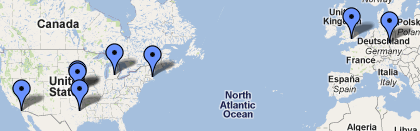
It s time to change locations for my server. I ve been with CoreNetworks for almost 5 years. They provide a good value, with fully dedicated servers a lot cheaper than most places, and good support to boot targeting people that can handle root on their own box. I m switching, though, to Hetzner Online (of Germany), primarily because I am needing more than 1GB RAM, and they can provide a 2GB box for less than I pay now for 1GB. I asked for feedback on Google+, and got positive feedback. Today, I migrated from one machine to another, copying a dozen or two GB of data, and only had about 15 minutes downtime. I was able to do this without console access to the source machine, though console access wasn t really required for either. This will work with any basic Linux install on the destination, or it could be prepared directly from a rescue environment. Before I explain how I did it, I thought it was interesting to think of the different places that the machine that was known as complete.org has lived over the years. Here s a map (click for detail): Here s the general process. First, well in advance of the move, crank the TTL on the domains way down. This way, old IPs won t be cached for very long once the system moves. Next, start rsyncing data from the old machine to the new. Do not yet shut down daemons on the old. Shut down as much as you can on the new. You ll want to focus on static data, such as /home. /usr is a good candidate as well. /var if you are selective databases may be a good candidate, or may not. The idea is to seed the destination with data so that when we do the real rsync, most of the data will be there; it will have to tidy things up after daemons are stopped, and update some things, but the bulk of the work should be done. Next, start preparing some exclude lists for the final rsync, which will copy an entire machine to the other. You will likely want to exclude files such as /etc/fstab, /etc/network/interfaces, /etc/resolv.conf, /etc/hosts, /etc/default/grub, /sys/*, /proc/*, /dev/*, and the like. I used rsync -v -P -a -H -A -X -S numeric-ids delete-after. Now, start editing config files for the new IP, but do it on the old server (these will be synced over to the new one). Start with the bind config files, and touch anything else that needs it maybe Apache configs, whatever. Next, get ready to do the final sync. In an ideal environment, we d just shut both machines down to single-user mode, but that s not going to quite cut it here. Use ps and shut down all daemons except sshd and udev on the destination. Yes, including even syslog. This is to prevent anything actively accessing the disk during the rsync, and also to prevent any issues with clients accessing server daemons that aren t ready yet. Now, on the source machine, reload bind. This will start answering DNS queries with the new machine s IP, and should also propagate the changes to your secondary DNS. Next, kill off all the daemons on the source machine, except for ssh and bind. You might want to set /etc/nologin to prevent regular users from logging in on ssh, if you have them. Now rsync things over to the new machine. Do any final tweaking over there (merging in /etc/hosts maybe, dealing with the udev rules.d persistent net thing, etc.). Reboot the new server and you should be up and running.

1 August 2011

Sandro Tosi: And what am I now? A Python Core Developer!

Yeah, since a couple of hours I'm officially a Python Core Developer (and this confirms it, so I'm not dreaming!)

I'm now in that mixed state in between the happiness and the fear I'll do stupid mistakes and I'll be ashamed of myself. But hey, it's only those who do nothing that make no mistakes.

Interesting days ahead, a lot of procedures to learn and get used to, hopefully also a lot of bugs fixed :) That's for sure, I'll go step by step, following the better be safe than sorry rule.

At the end, I'd like to thank all the people at Python that made this possible, they are quite a number, so if I'd named them, I surely forgot someone, and it would be unfair! So well, you know who you are, and this big THANK YOU is yours :)

26 July 2011

Erich Schubert: Restricting Skype via iptables

Whenever I launch Skype on my computer, it gets banned from the university network within a few minutes; the ban expires again after a few minutes when I close Skype. This is likely due to the aggresive nature of Skype, maybe the firewalls think it is trying to do a DDoS attack. One of the known big issues of using Skype.
For Windows users, there are some known workaround to limit Skype that usually involve registry editing. These are however not available on Linux, unfortunately.
Therefore, I decided to play around with advanced iptables functionality. While you cannot match the originating process reliably (the owner match module seemed to include such functionality at some point, but it was deemed unreliable on multi-core systems). However, there are other and more efficient methods of achieving the same.
Here's my setup:
# Add a system group for Skype
addgroup --system skype
# Override permissions of skype (assuming Debian package!)
dpkg-statoverride --update --add root skype 2755  which skype 
And these are the iptables rules I use:
iptables -I OUTPUT -p tcp -m owner --gid-owner skype \
    -m multiport ! --dports 80,443 -j REJECT
iptables -I OUTPUT -p udp -m owner --gid-owner skype -j REJECT
They allow outgoing connections by Skype only on ports 80 and 443, which supposedly do not trigger the firewall (in fact, this filter is recommended by our network administration for Skype).
Or wrapped as pyroman (my firewall configuration tool; aptitude install pyroman) module:
"""
Skype restriction to avoid firewall block.
Raw iptables commands.
"""
iptables(Firewall.output, "-p tcp -m owner --gid-owner skype -m multiport ! --dports 80,443 -j %s" % Firewall.reject)
iptables(Firewall.output, "-p udp -m owner --gid-owner skype -j %s" % Firewall.reject)
which I've put just after the conntrack default module, as 05_skype.py

23 July 2011

Stefano Zacchiroli: harmonious assignments

why proprietary relicensing is unacceptable for a Free Software enthusiast The past few months have witnessed a large debate about copyright assignment, which seems to has neared its peak around the time Project Harmony has released version 1.0 of its agreement templates. (Note: I use the expression "copyright assignment" in this post, but I'd happily include into it both actual Copyright Assignment Agreements CCAs and Contributor License Agreements CLAs, as both could be used to permit various forms of proprietary relicensing.) Mark Shuttleworth has been one of the most prominent voices campaigning in favor of copyright assignments (to for-profit companies). A couple of interesting blog posts of his where this is evident are "On balancing economic power in the FLOSS ecosystem" and "The responsibilities of ownership". Voices against the opportunity of increasing the popularity of copyright assignments are aplenty and it is pointless to repeat good arguments which I find fully convincing. If you are interested in the subject, here are a few good reads I recommend: What I would like to add to the debate is the point of view of a Free Software enthusiast, not unlike yours truly. I contribute to Free Software not because it is superior to proprietary software in either its software products or in its development methodology. (It actually is superior in many cases, but that's just not my primary motivation.) I do contribute to Free Software to build a world in which users are in complete control of the software they run. Let's assume we have a broken toaster at home. We are all free to (1) open it up and try to repair it by ourselves. If we don't have the needed knowledge, we are free to (2) hand it over to a person that we trust and who does have the needed knowledge to repair it. That failing, we can (3) ask the toaster producer to repair it for us. Many people like me simply don't accept to live in a world where, once all the toasters will be software-driven, the only repair option will be (3), just because the toaster software is proprietary. (Given various kind of [broken] metaphors have been used to explain copyright assignments, it seemed sensible to propose my broken toaster metaphor in exchange.) When I contribute to some Free Software project, I not only care about being able myself to get a Free Software licensed copy of the whole product (i.e. the original software product + my own contribution). I care that all recipients of the product, present and future, will be able to get that contribution with enough freedoms attached to put them in control of the software that includes it. This desire can be fulfilled with a varying degree of success, depending on the license of the code base I contribute to. For instance, I find more pleasant to contribute to a copyleft licensed code base than to a weak-/non-copyleft licensed one, and more pleasant to contribute to an AGPL-ed web app than to a copyleft web app. It also means that, given the option, I will not allow the code base maintainer to re-license my contribution under terms that allow distributing it without suitable freedoms attached. Different contributors will be ready to accept different re-licensing promises, but the mere fact we are debating all this and that companies like Canonical feel the need of campaigning for copyright assignments is evidence that many contributors like me exists and actually have a problem with allowing downstream relicensing of their contributions. What is feared the most is of course proprietary relicensing. According to my moral horizon this is the case not because the company might end up gaining money out of my code: I wouldn't have a problem with that. The reason is rather that the company will be able to distribute my own code in a way that grants less freedoms to users than those that were implicitly "agreed upon" when the contribution has been written. In that respect, I can't help thinking at harmony agreements as a large scale smoke screen experiment meant to convince volunteers that copyright assignments are something Free Software needs. By exploiting the creative-commons-like "it's easy, just choose one" scheme, Harmony takes the chance of offering misleading options such as the one labeled "any OSI approved license". Via that option, which is seemingly fine, the copyright recipient will be allowed to relicense the contribution under some non-copyleft license (e.g. BSD) and from there do essentially what they want. All in all, companies campaigning for copyright assignments seem to have failed to understand two main points. The first one is that contributors motivated by Free Software ideals want the code to remain free not only for themselves, but for all recipients of the code. I'm not claiming that all contributors to FOSS projects belong to this category, but the fact that there is a considerable amount of such people is undeniable. Hoping that they will be fooled by tricks like the "any OSI approved license" agreement is foolish. The second is that while volunteer Free Software communities do respect companies that provide huge amounts of code contributions, they also expect companies to figure out by themselves which business models make their businesses sustainable. Telling volunteers that current business models are not sustainable without proprietary relicensing is worthless. Volunteers just don't care. They want software freedom guarantees and are not willing to renounce to them in exchange of the wealth of companies, not even under the (implicit) threat that otherwise those companies will be forced to reduce the amount of their code contributions.
Update: explain in the initial note why my reasoning here encompasses both CCAs and CLAs. Thanks Tollef for noticing that it wasn't clear.

Mike Hommey: debian-rules-missing-recommended-target, dh, and dumb make

Lintian now has a warning for debian/rules missing build-arch and build-indep targets. As a dh user, I was surprised that some of my dh-using packages had this problem. And when looking at the source, I remembered how I came to this: GNU make is stupid. Considering the following excerpt of the GNU make manual:
.PHONY
The prerequisites of the special target .PHONY are considered to be phony targets. When it is time to consider such a target, make will run its recipe unconditionally, regardless of whether a file with that name exists or what its last-modification time is.
And considering the following debian/rules:
.PHONY: build
%:
        dh $@
What do you think happens when you run debian/rules build in a directory containing a build file or directory?
make: Nothing to be done for build .
However, an explicit rule, like the following, works:
.PHONY: build
build:
        dh $@
It happens that many of the packages I maintain contain a build subdirectory in their source. As such, to work around the aforementioned issue, I just declared the dh rules explicitely, as in:
.PHONY: build binary binary-arch binary-indep (...)
build binary binary-arch binary-indep (...):
        dh $@
And this obviously doesn t scale for new rules such as build-arch and build-indep. To be future-proof, I ll use the following instead:
.PHONY: build
build %:
        dh $@
I don t know why I didn t do that the first time

22 July 2011

Stefano Zacchiroli: 16 months of debian sprints

average sprint speed: 1 sprint/month I've proposed a DebConf11 BoF on Debian sprints and, more generally, on how we have been using Debian money in the past 1.3 years. As part of the BoF preparation, I've taken the time to review the last 16 months of sprints and check how the Debian Sprint Program which we've recently streamlined and "marketed" quite a bit is going. In particular, I've finally done the homework of preparing the big table of sprints and their costs, in order to evaluate how sustainable the sprint program is. Without further ado, here is the table:
Debian sprints held from April 2010 to June 2011
No Sprint When (month) Where Attendees Debian cost (EUR)
1 groupware (report) 04/2010 de 4 240
2 FAI (report) 06/2010 de 7 570
(DebConf10) 08/2010 us
3 ftpmaster (report) 09/2010 de 3 350
4 DSA (report) 09/2010 de 3 400
5 release team (report) 10/2010 fr 6 0
6 kernel team (report) 10/2010 fr 3 120
7 www team 12/2010 at 5 1430
8 debian med 01/2011 de 25 460
9 security team 01/2011 de 7 1000
10 emdebian 02/2011 uk 17 0
11 ftpmaster 03/2011 de 5 2000
12 groupware 04/2011 de 6 300
13 alioth 05/2011 uk 4 500
14 debian edu 06/2011 de 9 760
15 release team 06/2011 be 5 1640
(DebConf11) 07/2010 ba
Total 15 sprints 16 months 9770
To better understand the table, several comments are in order: Please note that the purpose of the table is not to be precise and transparent about Debian finances and how we use them. That is a (very!) worthwhile goal and I do think Debian should do much better in informing its community about how donated money are used to further Debian goals. But that is a broader topic on which the auditors are working; it is not up to me to discuss it here. If you are interested in that topic though, you might want to follow tbm's BoF at DebConf11. The purpose of the table is rather to find out some general figures about Debian sprints held in the recent past: I'm personally quite happy about those figures. Enabling volunteer developers to meet and hack together in person is possibly the most valuable way of using donated money. Having 1 sprint/month is not bad, but in a project the size of Debian is quite possibly a minimum. Doing more than that is highly desirable. It is also financially sustainable, especially if we will be able to show by actually having more sprints and being transparent about them that we can put into good use donated money. Another, more subtle, aspect of sustainability is that related to sprint management. Processing sprint requests and ensuring that transparency guidelines are actually followed by the organizers is still quite some work. I've been mostly doing that myself up to now, which is all fine and well, but does not necessarily scale. Other organizations (such as KDE e.V.) have realized that to the point of having hired people specifically to manage sprints in an otherwise volunteer community. In Debian we are quite keen of maintaining the project running on a volunteer basis. At the same time I feel we should have more room for scalability in the number of sprints we could run. So if you are looking for a management task to help Debian with, think about becoming, err, "sprint master", and contact me. If otherwise you want to focus on Debian hacking, what are you waiting for? Check the guidelines and propose your sprint! To know more about sprints, Debian money, and how you could help with all that, be sure not to miss the Sprint and money BoF.

Cosimo Alfarano: D-Bus eavesdroppers and unicast signals

There was an interesting issue in D-Bus, related to unicast vs broadcast signals, which led [edit: typo] to a small change in specs and which might be of some interest for D-Bus developers.

Unicast signals are not widely known and probably even less used, but they are possible.
They are useful, for instance, when you need to trigger an action from a single client, among your listeners.

Until some days ago, when a unicast signal was emitted, it was actually received by everyone listening to the signal's interface (unless a strict rule was added, unusual), waking up a number of processes which actually weren't interested in the signal.
Collateral effect, waking up cost apart: those processes might actually consider the signal as they were the actual recipient and take some action upon it. Bad.

Typical rule having this problem is "sender="org.foo,interface=org.bar".
Imagine several clients using this rule to listen to org.foo, but org.foo wanting to send a signal to :1.23 only.
Specifying destination=:1.23 for the signal object didn't really work since no dest=val was specified in the rule, allowing any destination actually matching it and all the listeners to be woken up anyway.

The problem with this situation was fixing the bad behaviour without filter out eavesdroppers, which actually wanted to receive the message even if not for them.

The solution is a sort of "eavesdrop opt-in", as Thiago proposed to add a keyword to DBusMatchRule, "eavesdrop=true false" which defaults to false and with which the listener declares that it really wants to eavesdrop, enabling it to receive messages (including signals) not meant for it (AKA eavesdropping).
Otherwise any message (again, including signals) with a specified destination won't match a filter with no or different destination. Also a rule with a specific destination won't match broadcast messages.


In other words, by default a match rule filter will match only broadcast messages or the ones specifically for you, unless you declare your very nature of eavesdropper by adding "eavesdrop=true" to your filter rule.

This is a behavioural change and consequently means a small amend to the D-Bus spec for 1.5.x.

It also means that if you maintain some code which acts as an eavesdropper, you should fix the code adding "eavesdrop=true" to your filter.
Note that it's only for 1.5.x branch; adding the "eavesdrop" keyword to a filter sent to a 1.4.x bus will fail as the keyword is not recognized.
An example on how to deal with this change keeping compatibility toward 1.4.x (stable branch) and 1.5.x (devel branch) at the same time is shown by this bustle fix. It checks for the feature presence and prepends the keyword if supported.

21 July 2011

Stefano Zacchiroli: Test Driven Development in Debian

... or TDDD and DEP8 context As a nice byproduct of the huge "rolling" discussion we had back in April/May, various people have brainstormed about applying Test-Driven Development (TDD) techniques to Debian development. Here is a brief summary of some opinions on the matter: ... and hey, they've also coined the cool TDDD acronym, which I hereby took the freedom to re-target to Test-Driven Development in Debian. Having a cool acronym, we are already half-way to actually having the process up and running *g*. more testing I believe Debian needs more testing and I've been advocating for that since quite a while e.g. at DebConf10, as one of the main goals we should pursue in the near future. Of course advocating alone is not enough in Debian to make things happen and that is probably why this goal has been (thus far) less successful that others we have put forward, such as welcoming non-packaging contributors as Debian Project members. There are important reasons for increasing testing in Debian. quality assurance Quality Assurance has always been, and still is, one of the distinctive traits of Debian. I often say that Debian has a widespread culture of technical excellence and that is visible in several places: the Debian Policy process, lintian, piuparts, periodic full archive rebuilds, the EDOS/Mancoosi QA tools, the cultural fact that maintainers tend to know a lot about the software they're packaging rather than only about packaging, the we release when it's ready mantra, etc. But caring about quality is not a boolean, it's rather something that should be continuously cherished, refining quality requirements over time. By simply maintaining the status quo in its QA tools and processes, Debian won't remain for long a distribution who could claim to care about package quality. Others will catch up and are in fact already doing that. In particular, we surely have room for improvements in our quality tools and processes for: reducing inertia Inertia is a recurring topic among Debian lovers (and haters). It is often argued how difficult it is to make changes in Debian, both small and large, due to several (alleged) hindrances such as the size of the archive, the number of ports, the number of maintainers that should agree before proceeding with a cross-package change, etc. It's undeniable that the more code/ports/diversity you have, the more difficult is to apply "global" changes. But at least for what concerns the archive size, I believe that for the most part it's just FUD: simply debunking the self-inflicted culture about how "dangerous" doing NMUs is might go and has already gone, imho a long way to fight inertia. Adding per-package and integration tests will make us go another long way in reducing inertia when it comes to performing archive-wide changes. Indeed if a package you are not entirely familiar with has extensive test suites, and if they still pass after your changes, you can be more confident in your changes. The barrier to contribution, possibly via NMU, gets reduced as a result. And if your change will turn out to be bad but still not spot by the test suites, then you can NMU (or otherwise contribute) again to extend the test suite and make the life easier for future contributors to that package. It smells a lot like an useful virtuous cycle to me. autopkgtest / DEP8 how you can help Of all the above, the topic that intrigues me the most is as-installed package testing. Work on that front has been started a few years ago by Ian Jackson when he was working for Canonical. The status quo is embodied by the autopkgtest package. At present, the package contains of various tools and the following two specs:
  1. README.package-tests provides a standard format to declare per-package tests using the new debian/tests/control file. Tests come as executable files which will be run by the adt-run tool in a testbed where the package(s) to be tested is already installed. This part of the specs has been reified as DEP8 which I'm (supposedly) co-driving with Iustin Pop and Ian (for well-deserved credits).
  2. README.virtualisation-sever describes the interface among the test runner and the testbed. A nice separation is provided among the runner and the testbed, enabling different testbed environments with a varying degree of isolation: you can have a "null" testbed which runs tests on your real machines (needless to say, this is highly discouraged, but is provided by the adt-virt-null tool), a chroot testbed (adt-chroot), or a XEN/LVM based testbed (adt-virt-xenlvm).
The specs allow for several runtime testing scenarios and look quite flexible. The tools on the other hand suffer a bit of bitrot, which is unsurprisingly given they haven't been used much for several years. At the very minimum the following Python development tasks are in need of some love: If you are both interested in TDDD and grok Python, the above and many others tasks might whet your appetite. If this is the case don't hesitate to contact me, I'll be happy to provide some guidance.
Note: this post is the basis for the TDDD BoF that I will co-host with Tom Marble at DebConf11. If you plan to come, we will appreciate your thoughts on this matter as well as your help in getting the autopkgtest toolchain up and running again.

Rapha&#235;l Hertzog: People behind Debian: Martin Michlmayr, former Debian Project Leader

Martin Michlmayr is a Debian developer since 2000 and I share quite a few things with him, starting with his age and involvement in the quality assurance team. He managed to be elected Debian Project Leader in 2003 and 2004. He s no longer as active as he used to be but his input is always very valuable and he continues to do very interesting things in particular concerning the support of NAS devices. Read on for the details. Raphael: Who are you? Martin: I m Martin Michlmayr. I m 32, originally from Austria, and currently living in the UK. I ve contributed to various free software projects over the years but Debian is without doubt the one I m most passionate about. I joined Debian in 2000 when I was a student. I worked on Debian more or less full time for a few years while I was pretending to study. Later I started a PhD to do research about quality and management aspects of volunteer free software projects. I investigated the release process in several free software projects, in particular looking at time-based releases. After finishing my PhD in 2007, I joined Hewlett-Packard. I m part of HP s Open Source Program Office and work on various free software and open source activities, both internally and within the community. Raphael: How did you start contributing to Debian? Martin: I first used Debian in the days of 0.93R6, some time around the end of 1995. The 0.93R6 release was still based on a.out but I needed an ELF-based system for some application, so I moved to Slackware. I then quickly moved to Red Hat Linux where I stayed for several years. I rediscovered Debian in 2000 and quickly decided to join the project. I cannot recall how I rediscovered Debian but when I did, it was clear to me that Debian was the ideal project for me: I could identify with its philosophy, I liked the volunteer nature of the project, and I found the size and diversity of Debian interesting since a large project offers a lot of different challenges and opportunities. I remember how many new things there were to learn and back then the documentation and other resources for new contributors were nowhere as good as they are today. My application manager, Julian Gilbey, was a great help he was incredibly friendly and passionate about Debian. I also remember meeting up with Peter Palfrader (weasel) for key signing when we were both in the New Maintainer queue. I was incredibly lucky with my New Maintainer process and soon became an official Debian Developer. Because there was a shortage of application managers, my first major contribution in Debian was to become an application manager myself and help other people join the project. Debian is a large project with a long history and a rich culture, so new contributors should expect that it will take some time to become familiar with everything. Fortunately, there are many resources, such as documentation and the debian-mentors list, for new contributors. Another great way to become familiar with the way things are done in Debian is to subscribe to various Debian mailing lists and ideally to read some mailing list archives. It s also a great idea to attend the Debian Conference or other conferences since meeting people in real life is a great way to integrate. I remember attending Debian Conference 1 in Bordeaux where I gave my first public talk. Finally, new contributors should find an area where they can make a unique contribution. Most people in Debian maintain packages but there are so many other ways to contribute. For example, most of my contributions were not technical but were about coordination and other organizational activities. Raphael: What s your biggest achievement within Debian? Martin: I m particularly proud of a number of achievements: Raphael: Speaking about NAS devices: what exactly are you doing on this topic and how can people help? Martin: There are plenty of instructions on the Internet to install Linux distributions on NAS or various embedded devices by connecting a serial console and then typing in hundreds of commands. What I found is that such instructions significantly limit the user base because they are way too complicated for most users. There are just too many steps that can go wrong. So instead, in Debian, we provide a solution that just works: usually, you download a firmware image for your NAS device from Debian and when you upgrade you get the Debian installer. You connect to the installer via SSH and perform a normal installation. The installer knows about the device and will prepare everything for you automatically for example, it knows if the device has requirements for the partition layout and it will install the kernel where the device expects to find it; unfortunately, NAS devices are not like PCs, so the requirements are different for almost every device and therefore you need special code to support a new device. Finally, there are detailed installation guides and we provide help on our mailing lists. There are a number of technical areas for improvement. The installation could be made even easier, and it would be nice to support new platforms and devices. A bigger problem is that while we ve implemented a great solution for NAS devices, we haven t really extended this work to support other classes of devices. For example, tablets and mobile phones are getting incredibly popular and we don t have a compelling solution for such devices, mostly because of the lack of an appropriate GUI. Raphael: What are your plans for Debian Wheezy? Martin: I ve recently been asked by Stefano Zacchiroli, our current Debian Project Leader, to coordinate the care-taking of Debian finances. Debian, as a volunteer project, relies on donations and in-kind gifts (e.g. hardware) to maintain its infrastructure and to support various development efforts, such as funding sprints and other developer gatherings. Debian s money and other assets are held by affiliate organizations around the world. My responsibility will be to keep track of money and other assets (e.g. hardware and trademarks), work with the DPL to establish procedures related to the use of Debian s assets, and make sure that the procedures are followed. Finally, we want to publish public statements so our donors know how we use their donations to further improve Debian. I just started working on this and this will be my main activity in Debian in the coming months. Raphael: Speaking of money, I plan to run a fundraising to get the Debian book I wrote with Roland Mas translated (cf. http://debian-handbook.info). Is this something Debian should support? Martin: First of all, I should make it clear that I don t decide how Debian spends its money. This is up to the DPL to decide together with the project at a whole. I ll just make sure that procedures are followed and expenses tracked and reported properly. Having said that, in my opinion, it s unlikely that Debian as a project will fund this effort. It would be inconsistent with the position of the project not to fund work directly (only some related expenses, such as travel costs to allow Debian teams to organize face-to-face meetings). Whether Debian should support the fundraising effort by helping to promote it is another question and that s probably not as clear cut. It looks like a worthwhile effort, but on the other hand it would be unfair for authors of other Debian books for Debian to put its weight behind one and there are many other efforts that are worth promoting if you promote one, where do you stop? So while it sounds worthwhile, it s probably better for Debian to stay out of it. But somehow related to this, I sometimes worry about the fact that there are so few paid opportunities around Debian. If you contribute to the Linux kernel for a while, you have an excellent chance to get hired by someone and to work on the kernel full time. The kernel may be an extreme example but there are a lot of projects that have more paid opportunities than Debian, e.g. Mono, GNOME, OpenOffice/LibreOffice and KDE. Obviously, there are some Debian Developers who can spend some time on Debian as part of their job. I know that some Canonical employees contribute to Debian, that support companies like credativ improve Debian as part of their work, and that system administrators fix bugs or package new software as they deploy Debian. But I think this is a minority of contributors and even they don t work full time on Debian. Instead what I see is that a lot of people leave university, get a job and then no longer have time for Debian or people start a family and no longer have time. I can take myself as an example since I don t have nearly as much time as I did in the past when I was a student. I guess there are different ways to deal with this problem one would be to create more paid opportunities around Debian outside the project, another one might be to make it easier for new volunteers to join the project. I don t have the answers to these questions but it s something I wonder about, and I also wonder whether pure volunteer projects can still keep up with projects with a lot of full time contributors. Raphael: What motivates you to continue to contribute year after year? Martin: Debian is a great project with a great mission, goals and people. I contribute to make Debian a better solution and to promote the free software philosophy. Finally, the community around Debian provides a lot of motivation. It s amazing how much I ve learned about other cultures because of my involvement in Debian and how many friends I ve made over the years all around the world. Raphael: Do you have wishes for Debian Wheezy? Martin: Not really. I m pretty happy with the way things are going at the moment. We have made a lot of organizational changes in the last few years from which the project has greatly benefited. I m particularly pleased about the plans to adopt a time-based freeze. Raphael: Is there someone in Debian that you admire for their contributions? Martin: There are many people I admire greatly. I d like to mention Joey Hess because he s a great example to follow. He doesn t get involved in politics, is easy to work with and does great technical work. In fact, he has made not one but several contributions that have completely changed Debian (debconf, debhelper, and debian-installer). Furthermore, Debian has a lot of contributors who have done great work over the years but who are not very vocal about it. People like Colin Watson or Peter Palfrader. Debian has many unique contributors and the list of people I admire is much longer than the few people I just mentioned.
Thank you to Martin for the time spent answering my questions. I hope you enjoyed reading his answers as I did. He raised some interesting questions. Subscribe to my newsletter to get my monthly summary of the Debian/Ubuntu news and to not miss further interviews. You can also follow along on Identi.ca, Twitter and Facebook.

No comment Liked this article? Click here. My blog is Flattr-enabled.

20 July 2011

Cyril Brulebois: Smile of the day

It s been a while since my last patches for GNU/kFreeBSD, and Christoph kindly took over the kfreebsd-* build daemons from me some time ago, but still: smile of the day. Thanks, Russ.

19 July 2011

Olivier Berger: Migrating mail from Evolution local storage to Evolution + local Imap (dovecot with Maildir) 2/X

See previous post for the rationale. I ve then started migrating my mail using evolution. First I ve installed dovecot and set it up so as to store my mail inside my $HOME/Maildir/ dir. Evolution will run dovecot on demand through a pipe, instead of through network access like with regular remote IMAP servers. So dovecot won t be started as a daemon. I ve been inspired by Roland s setup for this (even though I not using offlineimap). Inside Evolution, I ve configured a second mail profile, for this local IMAP server, using the custom command to connect to server :
"MAIL=maildir:$HOME/Maildir /usr/lib/dovecot/imap" I ve migrated my existing mail folders using copy to function on all top-level mail folders from the local evolution storage, to copy them to the IMAP folders. Note that some folders that include a dot ( . ) need to be renamed, as the dot is a path separator for IMAP. I ve adapted Evolution s vfolders definitions so as to take into account the active remote folders instead of the local ones, and that s it, the mail is migrated. I m using fetchmail + procmail to fetch mail from remote servers and to deliver it to the Maildirs, using dovecot s deliver program, with something like : DELIVER="/usr/lib/dovecot/deliver" :0: w
$DELIVER
I ve migrated the filters of evolution to server-side Sieve rules so that dovecot s deliver sorts incoming mail in the right Maildirs. The dovecot config needs to be adapted to activate the sieve plugin (dovecot-sieve Debian package), in /etc/dovecot/conf.d/15-lda.conf : protocol lda
# Space separated list of plugins to load (default is global mail_plugins).
mail_plugins = $mail_plugins sieve
log_path = /tmp/dovecot-deliver-errors.log
info_log_path = /tmp/dovecot-deliver.log

The original Evolution filters rules were stored in $HOME/.config/evolution/mail/filters.xml, so I wrote a quick python DOM parsing tool to extract the (long) list of definitions and generate Sieve rules for the $HOME/.dovecot.sieve config file (in which folder hierarchy uses a . path separator instead of a / ). The sieve-test program can be used to check is sieve rules function as you want. Now this is all setup, I only need to configure notmuch to index all the Maildirs. But this is left to another post.

17 July 2011

Cyril Brulebois: Thoughts on multiple webcams

Keeping an eye on something with a webcam is really easy: just a matter of setting up for example (c)vlc to multicast from /dev/videoX to the network, and done. Example:
# Streaming:
cvlc v4l2:///dev/video0 --no-audio --sout "#transcode vcodec=mp2v,vb=3072 :std access=udp,mux=ts,dst=224.0.0.1 "
# Playing, possibly on a remote machine:
vlc udp://@224.0.0.1:1234
Notes: Possible problems: Where to go from here:

14 July 2011

Jamie McClelland: GnuCash with python bindings

Hats off to the GnuCash developers and the Parit Worker Collective for the python bindings to GnuCash. If there is any doubt that free software makes life easier it's being able to write your own accounting import scripts while reading the original source code. I had to re-compile Debian's version of GnuCash because it doesn't have the python bindings enabled by default. As root:
apt-get build-dep gnucash
apt-get install python-dev
As a non privileged user:
apt-get source gnucash
cd gnucash-N.N.N # varies depending on your version)
Then, edit debian/rules and add --enable-python-bindings to the dhautoconfigure command. I replaced the line:
--enable-locale-specific-tax
With the lines:
--enable-locale-specific-tax \
--enable-python-bindings
Then, update the change log with:
dch
Built the new package:
dpkg-buildpackage -rfakeroot -uc -b
I then wrote a python module. It logs into the server running our members database, runs a script to export tab delimited lists, and then imports them into our gnucash xml file. It's far from perfect (I'm fairly new to python). Also - I have sheepishly inserted code that searches for certain values by accessing the gnucash file directly (via python's xml handling modules). I couldn't figure out how to do the search I needed with they available python methods, although it may very well be there and I just couldn't figure it out. If anyone is interested in using it for a template:
#!/usr/bin/python
import sys 
import os
import time
import csv
import warnings
from xml.dom.minidom import parse
from gnucash import Session,  GncNumeric
from gnucash.gnucash_business import Customer, Invoice, Entry, BillTerm
from decimal import Decimal
import datetime
import tempfile
import subprocess
def main(argv = None):
  if argv is None:
    argv = sys.argv
  path = os.environ['MFPL_GNUCASH_PATH']
  if not os.path.exists(path):
    print """Path (%s) does not exist. Please set 
    MFPL_GNUCASH_PATH environment variable\n""" % path
    return 1 
  if os.path.exists(path + '.LCK'):
    print """Lock file exists. Is GNUCash running?\n"""
    return 1 
  command = argv[1]
  import_file = None
  if 2 in argv:
    if argv[2] == '--from-file':
      if argv[3]:
        if os.path.exists(argv[3]):
          file_path = argv[3]
          import_file = open(file_path,'r')
        else:
          print "Can't find file to import: %s" % argv[3]
          return 1
      else:
        print "Please pass path to file if using --from-file"
        return 1
    else:
      print "I didn't understand the argument: %s" %s
  # download import file if not provided
  if import_file == None:
    import_file = get_data(command)
  # The file might be gzipped, so
  # open and save it 
  s = get_gnucash_session(path) 
  s.save()
  s.end()
  # Wait a second, so we can create a backup
  # without a name collision
  time.sleep(1)
  # Open for real now...
  s = get_gnucash_session(path) 
  xml_dom = parse(path) 
  if command == "members":
    ret = import_members_from_file(s, xml_dom, import_file)
  if command == "invoices":
    ret = import_invoices_from_file(s, xml_dom, import_file)
  s.save()
  s.end()
  return ret
def get_data(command):
  import_file = tempfile.NamedTemporaryFile()   
  if command == 'members':
    remote_cmd = 'acc-member-list'
  else:
    remote_cmd = 'acc-invoice-list'
  args = [ '/usr/bin/ssh', 'mayfirst@hay.mayfirst.org', '/home/mayfirst/bin/' + remote_cmd ]
  subprocess.call(args,stdout = import_file)
  return import_file
def import_invoices_from_file(s, xml_dom, csvfile):
  dialect = 'excel-tab'
  csvfile.seek(0)
  reader = csv.reader(csvfile, dialect)
  nodes = xml_dom.getElementsByTagName('gnc:GncCustomer')
  already_entered = 0
  entered = 0
  for row in reader:
    member_id = row[0]
    invoice_id = row[1]
    invoice_date = row[2]
    invoice_amount = row[3]
    invoice_desc = row[4]
    if not member_id.isdigit():
      # header line or not coded to a member?
      continue
    member_id = int(member_id)
    invoice_id = int(invoice_id)
    if invoice_exists(xml_dom, invoice_id):
      # print "Already entered %s (%s)" % (invoice_date,invoice_id)
      already_entered += 1
    else:
      if not member_exists(xml_dom, "No Name McGoo - fix me" , member_id):
        print "Skipping member id %s, invoice id %s - member doesn't exist" % (member_id, invoice_id)
      else:
        invoice_enter(s, member_id, invoice_id, invoice_date, invoice_amount, invoice_desc )
        entered += 1
  print "Invoices entered from last two months: %s (%s already existed)" % (entered, already_entered)
  return True
def get_guid_from_member_id(nodes,member_id):
  member_id = pad_number(member_id)
  for node in nodes:
    for child in node.childNodes:
      if child.nodeName == 'cust:guid':
        guid = child.childNodes[0].data
      if child.nodeName == 'cust:id':
        if member_id == child.childNodes[0].data:
          return guid   
def import_members_from_file(s, dom, csvfile):
  dialect = 'excel-tab'
  csvfile.seek(0)
  reader = csv.reader(csvfile, dialect)
  already_entered = 0
  entered = 0
  for row in reader:
    member = row[0]
    member_id = row[1]
    if not member_id.isdigit():
      # header line?
      continue
    member_id = int(member_id)
    if member_exists(dom, member, member_id):
      #print "Already entered %s (%s)" % (member, member_id)
      already_entered += 1
    else:
      member_enter(s, member, member_id )
      entered += 1
  print "Members entered from last two months: %s (%s already existed)" % (entered, already_entered)
  return True
def get_gnucash_session(path):
  with warnings.catch_warnings():
    warnings.simplefilter("ignore")
    return Session(path, is_new = False)
def member_enter(s, member, member_id):
  print "Entering %s with id %s" % (member, member_id)
  book = s.book
  root = book.get_root_account()
  commod_table = book.get_table()
  USD = commod_table.lookup('CURRENCY', 'USD')
  member_id = pad_number(member_id)
  new_customer = Customer(book, member_id, USD, member)
def invoice_enter(s, member_id, invoice_id, invoice_date, invoice_amount, invoice_desc):
  book = s.book
  root = book.get_root_account()
  commod_table = book.get_table()
  USD = commod_table.lookup('CURRENCY', 'USD')
  invoice_id = pad_number(invoice_id)
  member_id = pad_number(member_id)
  invoice_date_object = datetime.datetime.strptime(invoice_date, "%Y-%m-%d %H:%M:%S") 
  member = book.CustomerLookupByID(member_id)
  assert( member != None )
  assert( isinstance(member, Customer) )
  assets = root.lookup_by_name("Assets")
  recievables = assets.lookup_by_name("Recievables")
  income = root.lookup_by_name("Membership Dues")
  invoice = Invoice(book, invoice_id, USD, member, invoice_date_object )
  invoice_value = gnc_numeric_from_decimal(Decimal(invoice_amount))
  invoice_entry = Entry(book, invoice)
  invoice_entry.SetDescription(invoice_desc)
  invoice_entry.SetQuantity( GncNumeric(1) )
  invoice_entry.SetInvAccount(income)
  invoice_entry.SetInvPrice(invoice_value)
  invoice_entry.SetDate(invoice_date_object)
  invoice_entry.SetDateEntered(invoice_date_object)
  print "Entering invoice %s %s %s" % (invoice_id, invoice_date, invoice_amount)
  invoice.PostToAccount(recievables, invoice_date_object, invoice_date_object, "", True)
def pad_number(num):
  return "%(number)06d" %   'number': num  
def member_exists(dom, member, member_id):
  member_id = pad_number(member_id)
  for node in dom.getElementsByTagName('gnc:GncCustomer'):
    for child in node.childNodes:
      if child.nodeName == 'cust:name':
        for grandchild in child.childNodes:
          if member == grandchild.data:
            return True
      if child.nodeName == 'cust:id':
        for grandchild in child.childNodes:
          if member_id == grandchild.data:
            return True
  return False
def invoice_exists(dom, invoice_id):
  invoice_id = pad_number(invoice_id)
  for node in dom.getElementsByTagName('gnc:GncInvoice'):
    for child in node.childNodes:
      if child.nodeName == 'invoice:id':
        for grandchild in child.childNodes:
          if invoice_id == grandchild.data:
            return True
  return False
def gnc_numeric_from_decimal(decimal_value):
    sign, digits, exponent = decimal_value.as_tuple()
    # convert decimal digits to a fractional numerator
    # equivlent to
    # numerator = int(''.join(digits))
    # but without the wated conversion to string and back,
    # this is probably the same algorithm int() uses
    numerator = 0
    TEN = int(Decimal(0).radix()) # this is always 10
    numerator_place_value = 1
    # add each digit to the final value multiplied by the place value
    # from least significant to most sigificant
    for i in xrange(len(digits)-1,-1,-1):
        numerator += digits[i] * numerator_place_value
        numerator_place_value *= TEN
    if decimal_value.is_signed():
        numerator = -numerator
    # if the exponent is negative, we use it to set the denominator
    if exponent < 0 :
        denominator = TEN ** (-exponent)
    # if the exponent isn't negative, we bump up the numerator
    # and set the denominator to 1
    else:
        numerator *= TEN ** exponent
        denominator = 1
    return GncNumeric(numerator, denominator)
if __name__ == "__main__":
  sys.exit(main())

Rapha&#235;l Hertzog: How to squash Debian release critical bugs

Squashing release critical (RC) bugs is one of the most helpful way to contribute to Debian. Because those are the bugs that we need to get rid of in order to release the next stable version. Let s see how you can help. The process is really simple:
  1. Find a RC bug that you can fix
  2. Prepare a fixed package
  3. Send the patch to the BTS
  4. Get your fixed package uploaded
I have already covered points 2 and 3 in a former article: How to prepare patches for Debian packages. So I m not going to repeat myself in this article, instead I ll cover how to find a release critical bug to fix and how to get your package uploaded. Find a RC bug with UDD The Ultimate Debian Database (UDD) provides a neat interface to query the bug tracking system: http://udd.debian.org/bugs.cgi. The form contains many options to customize the query, we ll try explain some. First, at the top, you can decide to list bugs based on whether or not they affect testing/stable/unstable. Indeed, thanks to version tracking the BTS knows if a bug applies to the version of the package present in a given distribution. I suggest you pick a choice that includes sid because that s where you re going to push your fixed package. If sid is not affected by the bug, you can t do much about it (except if you want to join the release team and help ensure updates are flowing from unstable to testing). I usually go for wheezy and sid because that filters out packages which are not in testing (and are thus not blocking the next release). Then you have lots of filters to further reduce the list of bugs. It s important to reduce the noise as you typically have several hundreds of RC bugs at a given time. I suggest you the following settings for a start, but you re free to try other combinations depending on what you want to achieve (I ll give some examples later): I usually sort the results by source package so that I immediately see if several RC bugs are affecting the source package. And I might add popularity contest information to get a feel of whether the package is widely used or not. You can see the results of the suggested query here. Other interesting queries: Find a RC bug with rc-alert The downside of the above method is that you get bugs on packages that you don t know at all and that you might not care about. Some of them might even be better removed instead of fixed. With the rc-alert command (provided by the devscripts package), you will get a list of RC bugs
on packages that are installed on your computer. It should be much more restrictive. And you have command line options to further filter the list just like with the UDD form. Bonus feature: you can also filter by debtags allowing you to restrict the bugs to packages which are implemented in programming languages that you know.
$ rc-alert --include-dists TU --exclude-tags P+ --debtags implemented-in::perl,implemented-in::python
Package: gwibber
Bug:     608724
Title:   gwibber bypasses certificate checking when providing the login/password for OAuth
Flags:   [     S  ] (security)
Dists:   [STU] (stable, testing, unstable)
Debtags: implemented-in::python, interface::x11, role::program, uitoolkit::gtk, works-with::im, x11::application
[...]
Get your fixed package uploaded Usually sending the patch to the BTS is more than enough. The maintainer or another Debian developer will pick it up at some point. But if you re interested in becoming a Debian maintainer/developer, it might be worth to push your changes more quickly and get credited by a proper upload with your name. Instead of just preparing a patch, you should also prepare a fixed package following the rules of a Non-Maintainer Upload. Put this package somewhere online (for example on mentors.debian.net). When you send your patch to the BTS, include the link to the updated package and express your wish to get this update sponsored. If you haven t heard anything from the maintainer after 2-3 days, try to find a sponsor on debian-mentors@lists.debian.org. NMUs are easier to review than completely new packages and many Debian developers like to kill RC bugs, so there s a good chance that you ll find someone. Now happy RC bug-squashing! And if you really enjoy it, you can subscribe to debian-bugs-rc (~3000 mails per month) :-)
If you want to read more articles like this one, click here to subscribe to my free newsletter. You can also follow me on Identi.ca, Twitter and Facebook.

No comment Liked this article? Click here. My blog is Flattr-enabled.

12 July 2011

Christoph Berg: Kudos to dh_python2

Transitioning Python modules to dh_python2 is straightforward. I removed LOADS of magic from python-radix. I especially like the complexity reduction in debian/rules, but debian/control also got some fields removed.

Gunnar Wolf: Free Software must migrate to become Free Culture

Cineast and Free Culture activist Nina Paley wrote some days ago a rantifesto on why the FSF has a double standard: Why are the Freedoms guaranteed for Free Software not guaranteed for Free Culture?, by not following its own very strict rules on software when it comes to culture as a whole. Her post was widely circulated, and got (at least) one reply by fellow Debian Developer Wouter Verhelst, largely agreeing with her, and an anti-rantifesto by Joe Brockmeier Which was promptly answered again by Wouter with a very fun and inspired post, written from the right angle: From the viewpoint of a person who is both a programmer and a musician, and understands the concepts at hand. I'd love to write a longer, better thought post But I'm tired and frankly stressed by many things, so I am just echoing their very interesting discussion to other people who might want to read it. I have been thinking and writing bits on that subject over the last couple of months. An example of that was the talk I gave at the Senate ~6 weeks ago. Following that talk, I wrote a short article for Revista Z calo (a widely circulated magazine mainly dealing with Mexican politics and social issues) called simply Software libre, cultura libre (full text available, but in Spanish only You can try reading an automated translation if it suits you). I wrote the article, mind you, with very limited time, and I'll be the first to recognize the prose was quite poor this time :( Anyway My point is that our nature is to share culture, to build it in a collaborative fashion, and having the Internet as a practically zero-cost, zero loss medium with which we can interchange our creativity with other like-minded people will naturally boost creativity. Free Software emerged before other Free Culture groups just because programmers had privileged access to Internet in the 80s and early 90s; as network access and digital creation tools have got to more people, it's just natural for all kinds of free culture to grow. Software is just a form of knowledge. Code is just a notation for a certain kind of ideas, just as the mathematical or musical notations. I believe (and hope) it's just unavoidable for us all to eventually switch to a mainly free cultural creation system.

Next.

Previous.