Dirk Eddelbuettel: Rcpp 1.0.11 on CRAN: Updates and Maintenance

 The Rcpp Core Team is delighted to announce that the newest release
1.0.11 of the Rcpp package arrived on
CRAN and in Debian earlier today. Windows and
macOS builds should appear at CRAN in the next few days, as will builds
in different Linux distribution and of course at r2u. The release was
finalized three days ago, but given the widespread use and extended
reverse dependencies at CRAN it
usually takes a few days to be processed. This release continues with
the six-months January-July cycle started with release
1.0.5 in July 2020. As a reminder, we do of course make interim
snapshot dev or rc releases available via the Rcpp drat repo and strongly
encourage their use and testing I run my systems with these versions
which tend to work just as well, and are also fully tested against all
reverse-dependencies.
Rcpp has long established itself
as the most popular way of enhancing R with C or C++ code. Right now,
2720 packages on CRAN depend on
Rcpp for making analytical code go
faster and further, along with 251 in BioConductor. On CRAN, 13.7% of
all packages depend (directly) on Rcpp, and 59.6% of all compiled packages
do. From the cloud mirror of CRAN (which is but a subset of all CRAN
downloads), Rcpp has been downloaded
72.5 million times. The two published papers (also included in the
package as preprint vignettes) have, respectively, 1678 (JSS, 2011) and 259 (TAS, 2018)
citations, while the the book (Springer useR!,
2013) has another 588.
This release is incremental as usual, generally preserving existing
capabilities faithfully while smoothing our corners and / or extending
slightly, sometimes in response to changing and tightened demands from
CRAN or R standards.
The full list below details all changes, their respective PRs and, if
applicable, issue tickets. Big thanks from all of us to all
contributors!
Thanks to my CRANberries, you can also look at a diff to the previous release. Questions, comments etc should go to the rcpp-devel mailing list off the R-Forge page. Bugs reports are welcome at the GitHub issue tracker as well (where one can also search among open or closed issues); questions are also welcome underChanges in Rcpp version 1.0.11 (2023-07-03)
- Changes in Rcpp API:
Rcpp:::CxxFlags()now quotes only non-standard include path on linux (Lukasz in #1243 closing #1242).- Two unit tests no longer accidentally bark on stdout (Dirk and I aki in #1245).
- Compilation under C++20 using clang++ and its standard library is enabled (Dirk in #1248 closing #1244).
- Use backticks in a generated
.Call()statement inRcppExports.R(Dirk #1256 closing #1255).- Switch to
system2()to capture standard error messages in error cases (I aki in #1259 and #1261 fixing #1257).- Changes in Rcpp Documentation:
- Changes in Rcpp Deployment:
- A test for
qnormnow uses the more accurate value from R 4.3.0 (Dirk in #1252 and #1260 fixing #1251).- Skip tests with path issues on Windows (I aki in #1258).
- Container deployment in continuous integrations was improved. (I aki and Dirk in #1264, Dirk in #1269).
- Several files receives minor edits to please
R CMD checkfrom r-devel (Dirk in #1267).
rcpp
tag at StackOverflow which also allows searching among the
(currently) 2994 previous questions.
If you like this or other open-source work I do, you can sponsor me at
GitHub.
This post by Dirk Eddelbuettel originated on his Thinking inside the box blog. Please report excessive re-aggregation in third-party for-profit settings.
 Another minor maintenance release, now at version 0.0.20, of
 Thanks to

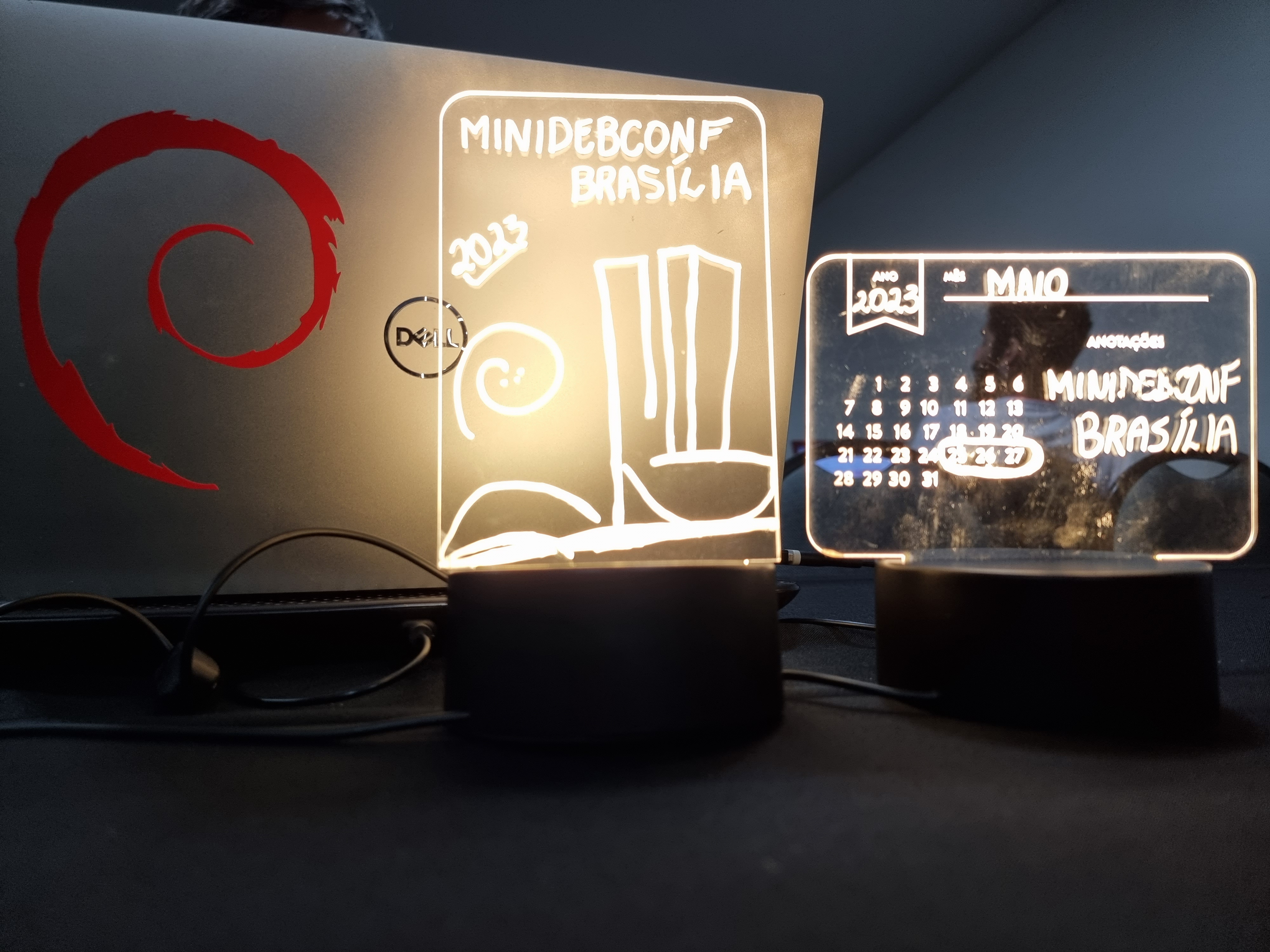
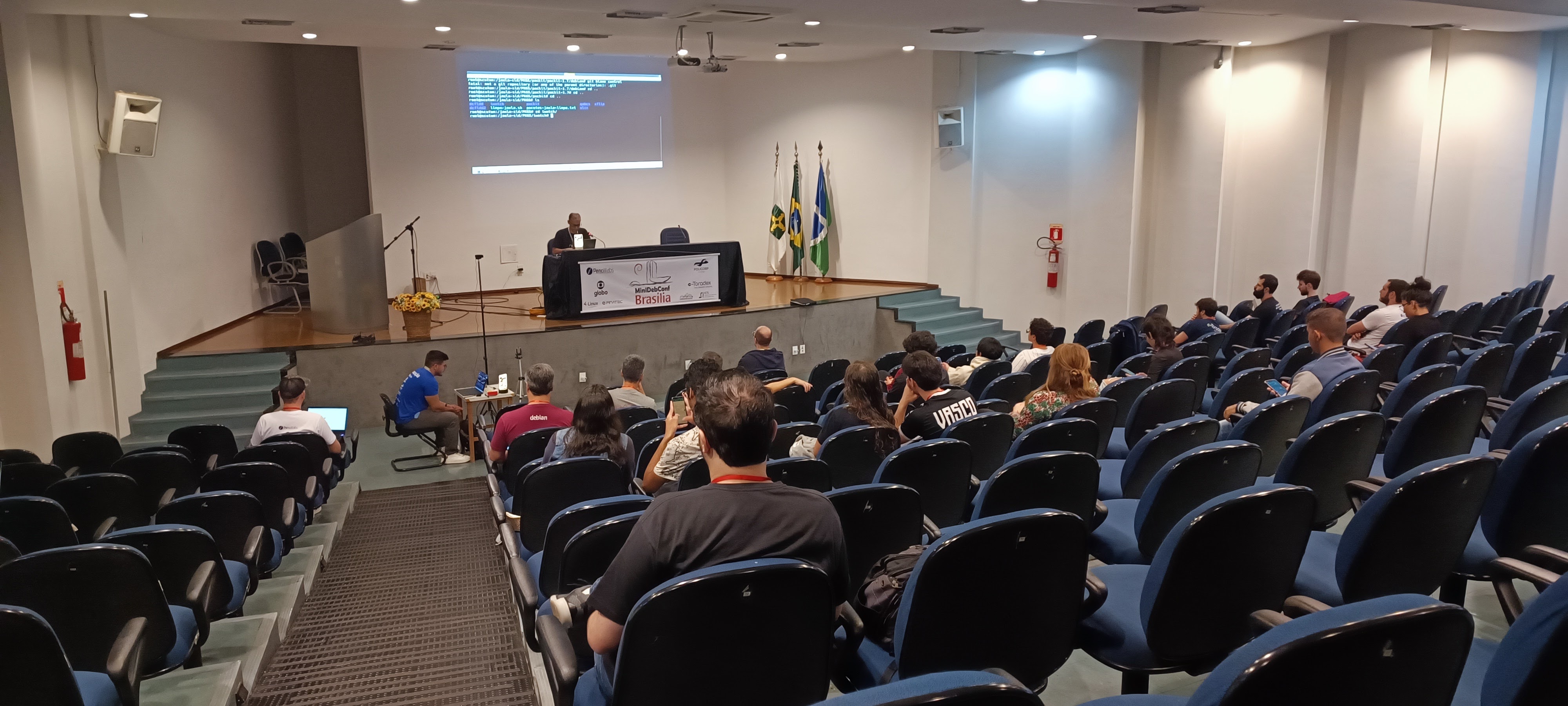
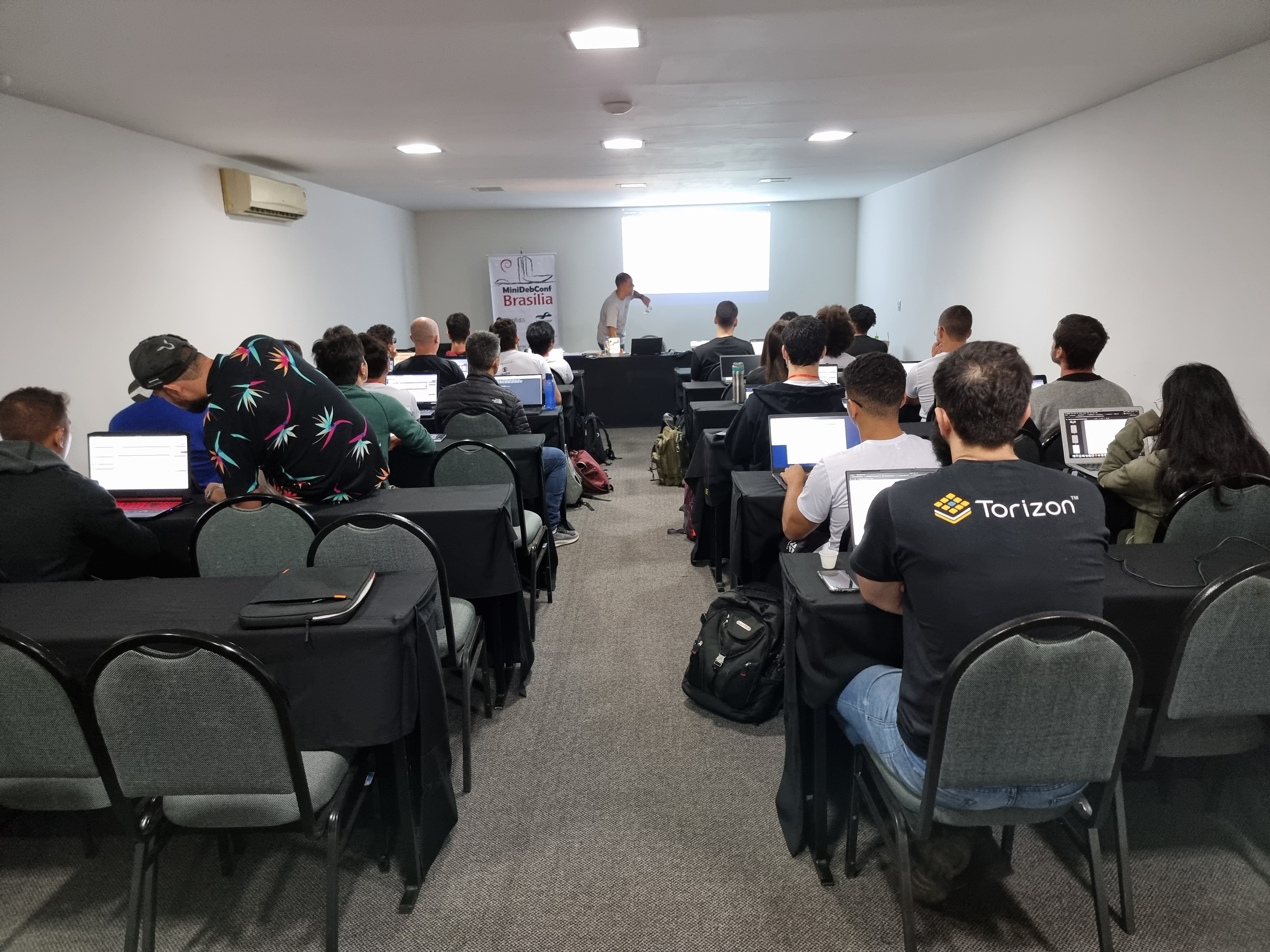
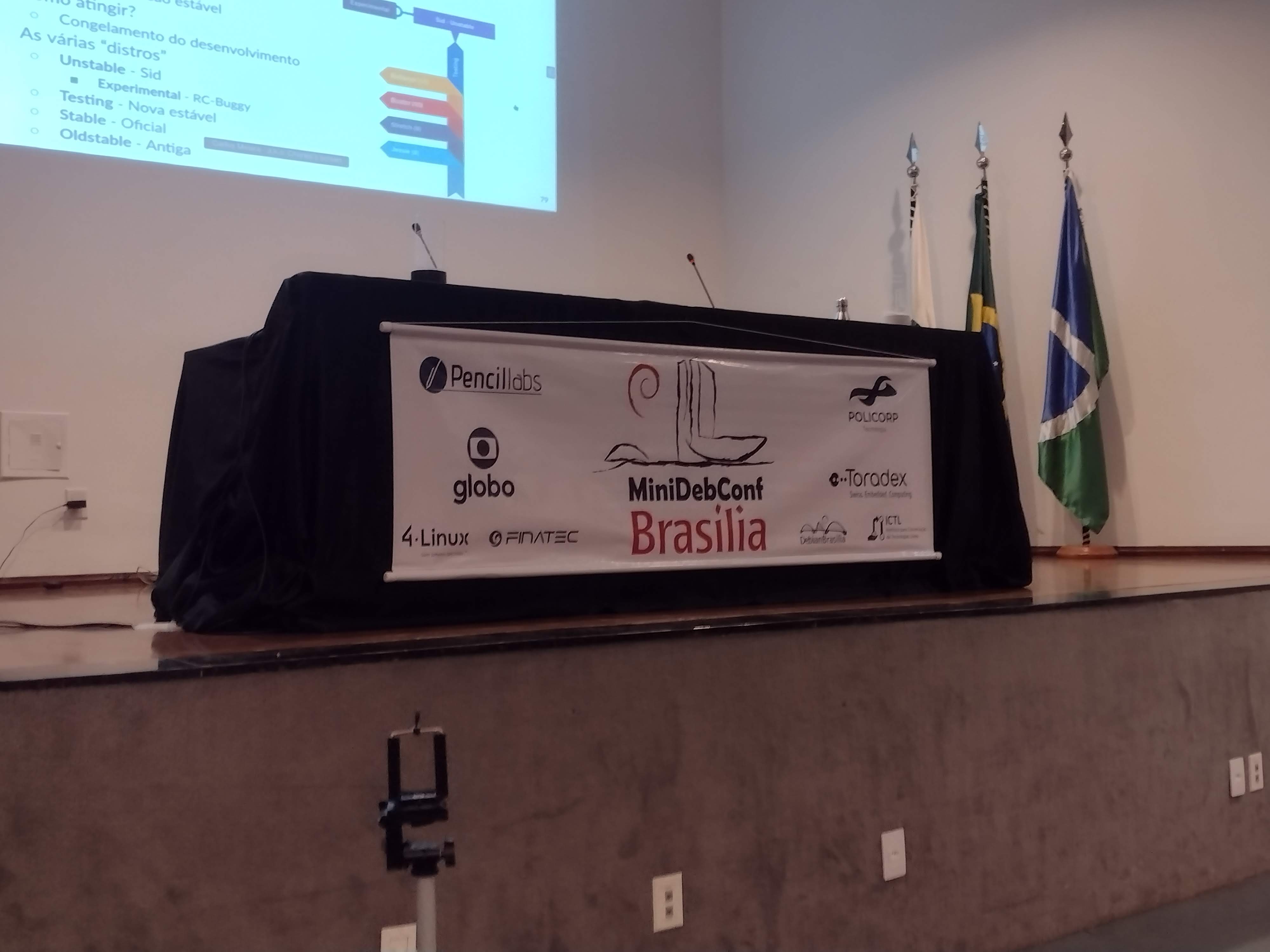 From May 25th to 27th, Bras lia hosted the
 Activities
The MiniDebConf program was intense and diverse. On May 25th and 26th (Thursday
and Friday), we had talks, discussions, workshops, and many hands-on activities.
On the 27th (Saturday), the Hacking Day took place, which was a special moment
for Debian contributors to come together and work collaboratively on various
aspects of the project. This was the Brazilian version of Debcamp, a tradition
preceding DebConf. On this day, we prioritized practical activities such as
software packaging, translations, key signing, install fest, and the Bug
Squashing Party.
 Edition numbers
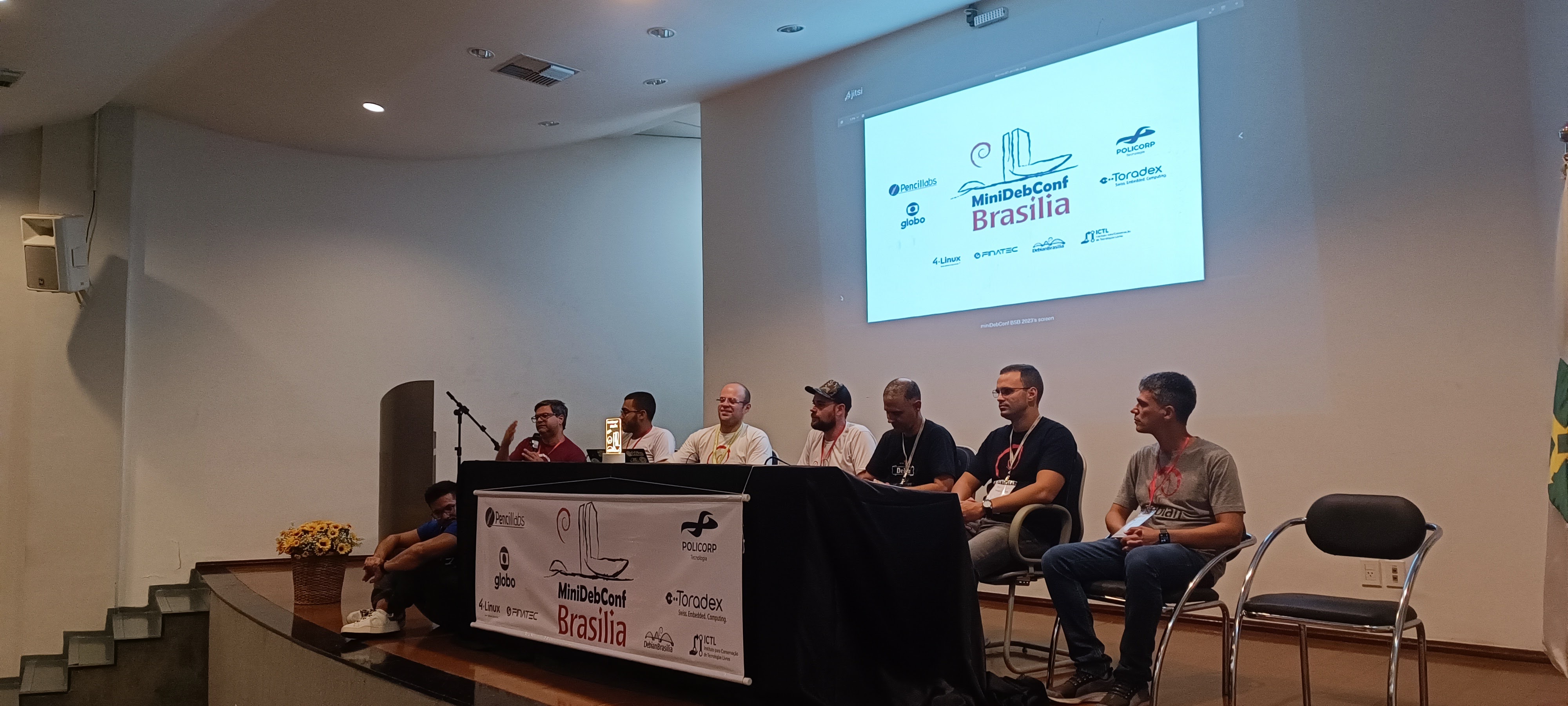
The event numbers are impressive and demonstrate the community's involvement
with Debian. We had 236 registered participants, 20 submitted talks, 14
volunteers, and 125 check-ins. Furthermore, in the hands-on activities, we
achieved significant results, including 7 new installations of Debian GNU/Linux,
the update of 18 packages in the official Debian project repository by
participants, and the inclusion of 7 new contributors to the translation team.
We also highlight the remote participation of the community through live
streams. The analytics data reveals that our website received a total of 7,058
views, with 2,079 views on the homepage (which featured our sponsors' logos),
3,042 views on the program page, and 104 views on the sponsors' page. We
recorded 922 unique users during the event.
On YouTube, the live stream reached 311 views, with 56 likes and a peak of 20
concurrent views. There were an incredible 85.1 hours of watch time, and our
channel gained 30 new subscribers. All this engagement and interest from the
community further strengthen MiniDebConf.
 Photos and videos
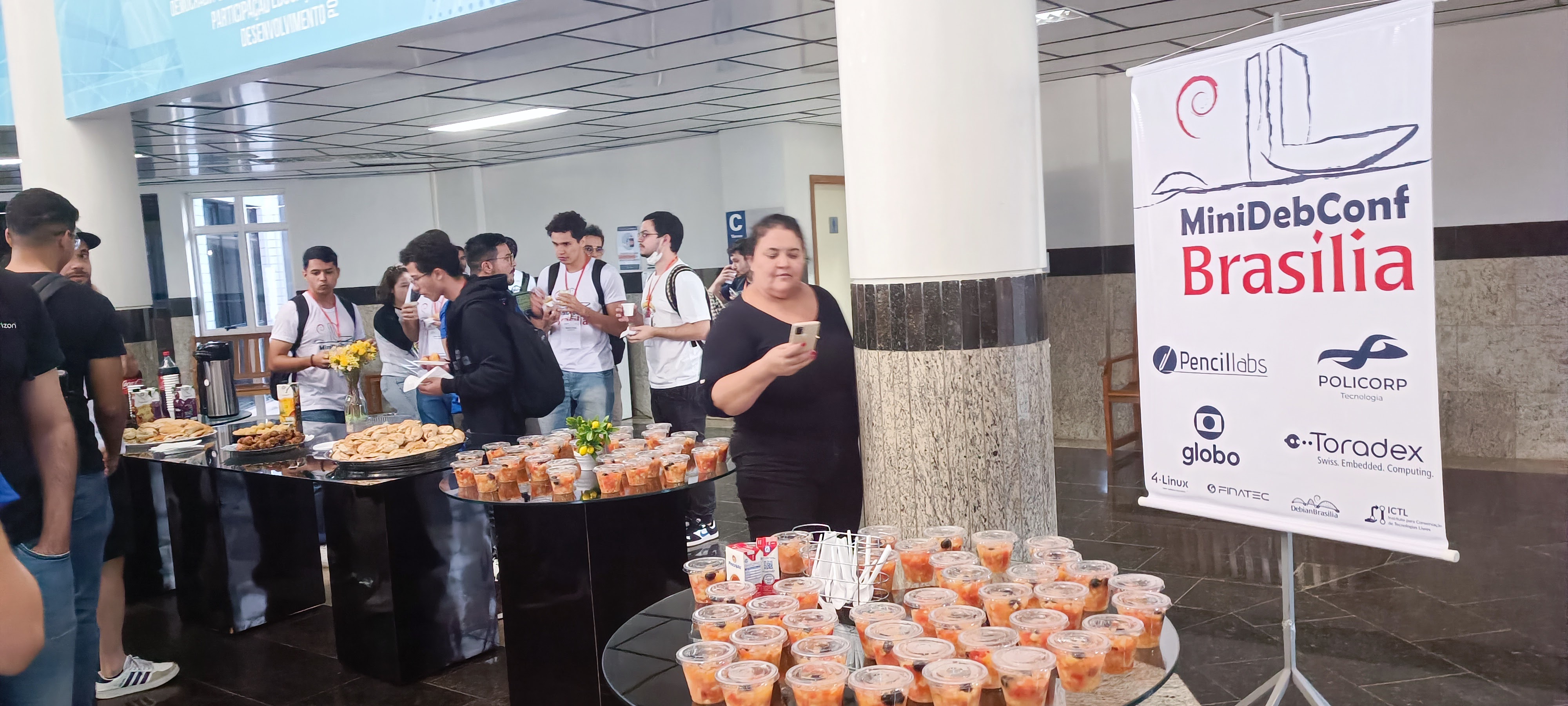
To relive the best moments of the event, we have photos and recordings
available. Photos can be accessed at: https://deb.li/pbsb2023. Video recordings
of the talks are available at the following link:
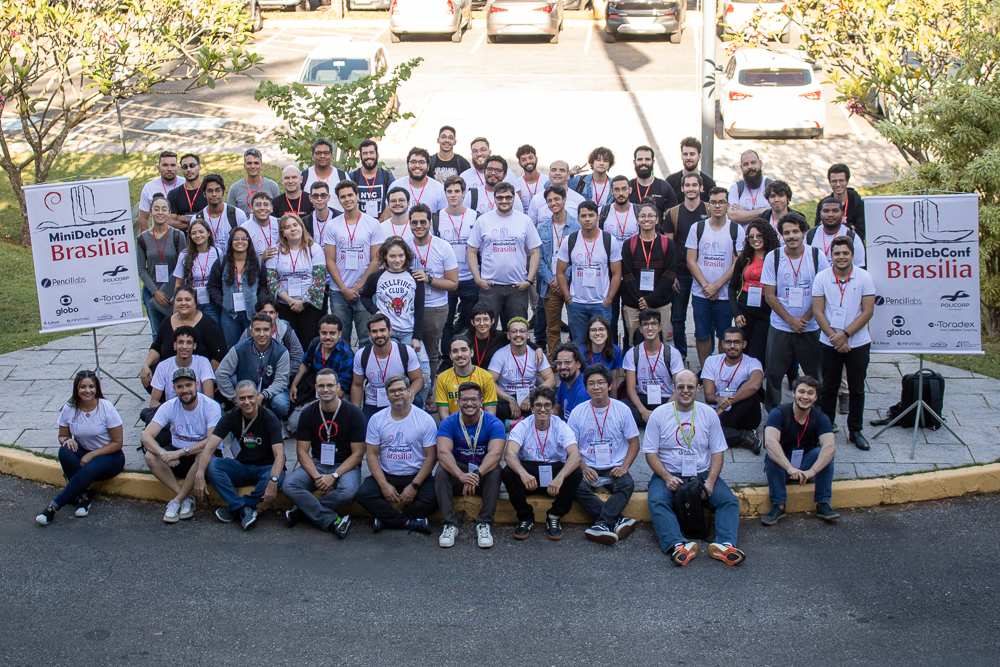
 MiniDebConf Bras lia 2023 was a milestone for the Debian community,
demonstrating the power of collaboration and Free Software. We hope that
everyone enjoyed this enriching gathering and will continue to actively
participate in future Debian Project initiatives. Together, we can make a
difference!

 but that is probably a story for another time. Just as a parting shot, even memory vendors are
 Reduce the size of your c: partition to the smallest it can be and then turn off windows with the understanding that you will never boot this system on the iron ever again.
 To find the literal path names of your detected drives you can run fdisk -l. Pay attention to the names of the partitions and the sizes of the drives to help determine which is which.
Once you have a shell in the netinst installer, you should maybe be able to run a command like the following. This will duplicate the disk located at if (in file) to the disk located at of (out file) while showing progress as the status.
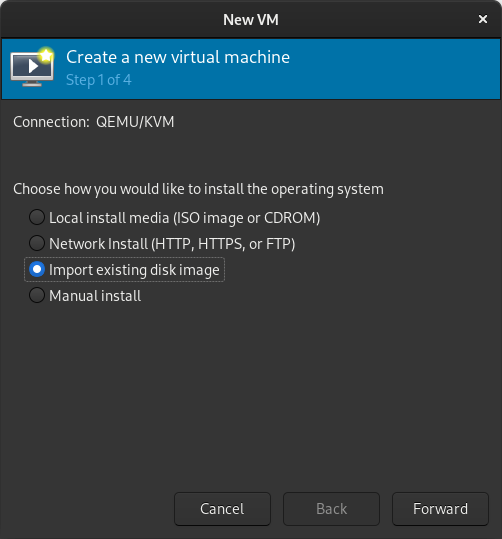
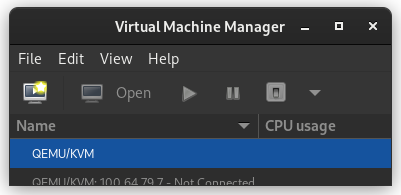 In the New VM window, select Import existing disk image
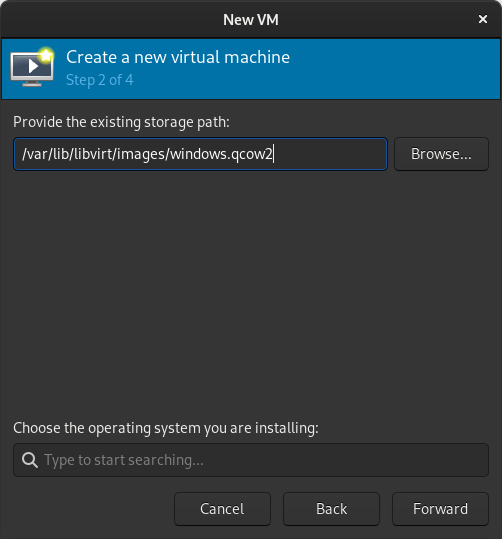
 When prompted for the path to the image, use the one we created with sudo qemu-img convert above.
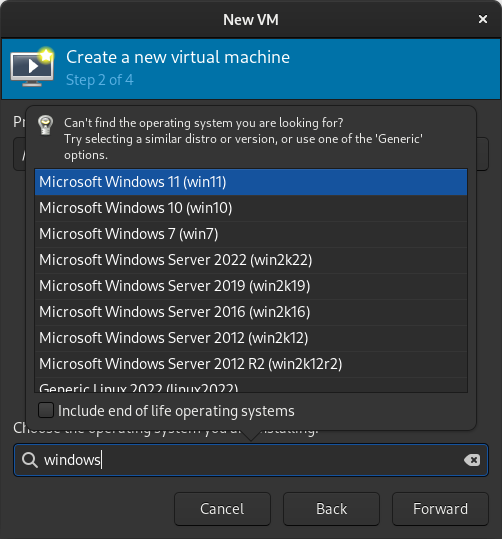
 Select the version of Windows you want.
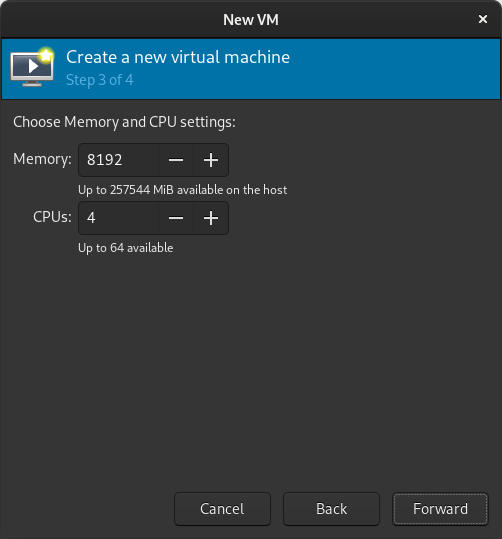
 Select memory and CPUs to allocate to the VM.
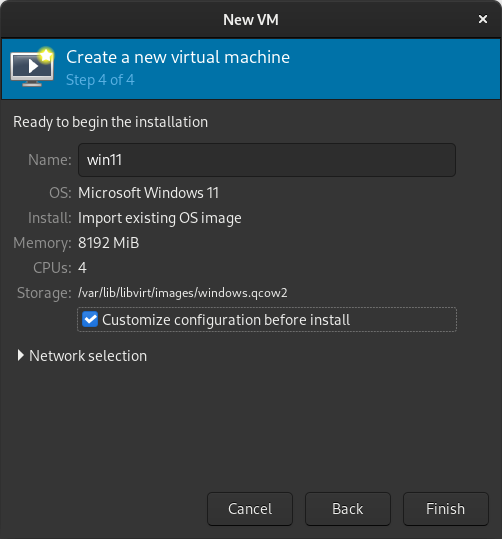
 Tick the Customize configuration before install box
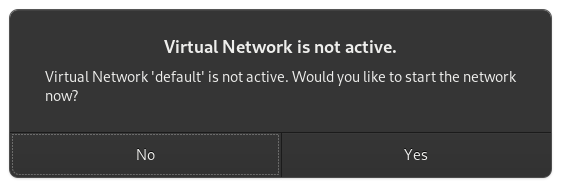
 If you re prompted to enable the default network, do so now.
 The default hardware layout should probably suffice. Get it as close to the underlying hardware as it is convenient to do. But Windows is pretty lenient these days about virtualizing licensed windows instances so long as they re not running in more than one place at a time.
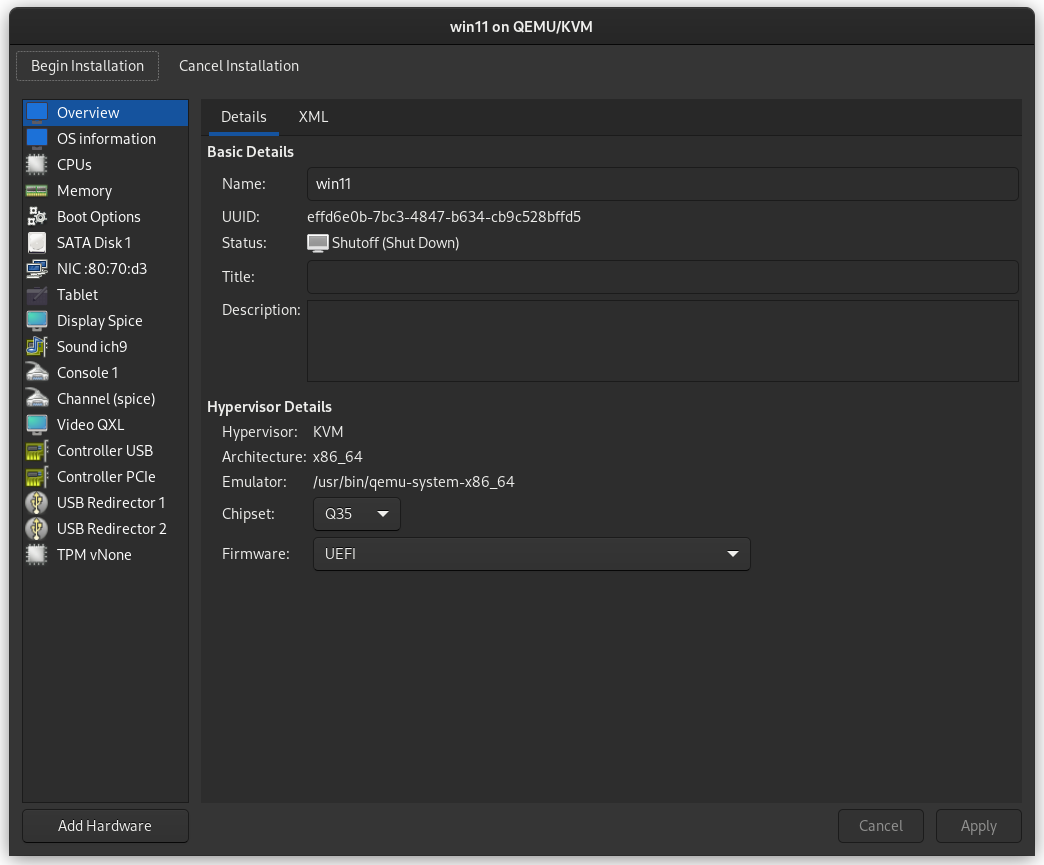 Good luck! Leave comments if you have questions.
 Since before I got involved in the eID


 While travel these days is much reduced I still end up in Dublin regularly enough (though less so now I m not working directly with folk there), and have the occasional US trip. Given that I live and work in the UK, and thus get paid in GBP ( ), this leads to the question of what to do about USD ($) and EUR ( ) transaction. USD turns out to be easy; I still have a US account from when I lived there and keeping it active has, so far, not proved to be a problem.
EUR is tricker. In an ideal world I d find a fee-free account that would allow normal Eurozone transfers and provide me with a suitable debit + credit card for use while travelling. I ve found options with a fee, but I don t have enough Euro transactions to make it worthwhile.
A friend pointed me at the
 update-info. Something is corrupting my /usr/share/info/dir entry.
I've found mutt-alias.info.gz and muttrc-mode.info.gz seems to cause the problematic entries. They seem to declare iso-8859-1 and that seems to cause some kind of corruption.
Then I found there's a bug