Desde de setembro de 2015, o
time de publicidade
do Projeto Debian passou a publicar a cada dois meses
listas com os nomes dos(as) novos(as)
Desenvolvedores(as) Debian (DD - do
ingl s Debian Developer) e
Mantenedores(as) Debian
(DM - do ingl s Debian Maintainer).
Estamos aproveitando estas listas para publicar abaixo os nomes dos(as)
brasileiros(as) que se tornaram Desenvolvedores(as) e Mantenedores(as) Debian a
partir de julho de 2015.
Desenvolvedores(as) Debian / Debian Developers / DDs:
Marcos Talau
Esta lista ser atualizada quando o time de publicidade do Debian publicar
novas listas com DMs e DDs e tiver brasileiros.
Para ver a lista completa de Mantenedores(as) e Desenvolvedores(as) Debian,
inclusive outros(as) brasileiros(as) antes de julho de 2015 acesse:
https://nm.debian.org/public/people
Computer terminals have traditionally had an actual bell
that would ring when a certain control character (the bell
character, typically control-g or \a in an C escape
sequence) would come in the input stream.
That feature actually predates computers altogether, and was present
in Baudot code, "an early character encoding for telegraphy
invented by mile Baudot in the 1870s", itself superseding Morse
code.
Modern terminal emulators have, of course, kept that feature: if
you run this command in a terminal right now:
printf '\a'
... you may hear some annoying beep. Or not. It actually depends on
a lot of factors, including which terminal emulator you're using, how
it's configured, whether you have headphones on, or speakers
connected, or, if you're really old school, a PC speaker, even.
Typically, I have this theory that it does the exact opposite of what
you want, regardless of whether you have configured it or not. That
is, if you want it to make noises, it won't, and if you want it to
stay silent, it will make brutal, annoying noises in moments you would
the least expect. I suspect this is a law in computer science, but I'm
too lazy to come up with a formal definition.
Yet something can be done with this.
Making the bell useful and silent
Many terminal emulators have this feature where they can silence the
bell somehow. It can be turned into a "visual bell" which basically
flashes the screen when a bell arrives. Or that can also be disabled
and the bell is just completely ignored.
What I did instead is turn the bell into a "urgency hint" (part
of the ICCCM standard. In xterm, this is done with this X
resource entry (typically in ~/.Xresources):
XTerm*bellIsUrgent:  true
XTerm*visualBell: false
Interestingly, this doesn't clearly say "bell is muted", but it's
effectively what it does. Or maybe it works because I have muted
"System Sounds" in Pulseaudio. Who knows. I do have this in my startup
scripts though:
If the dash or 'off' are given, the bell will be turned off.
Interestingly, you have the option of setting the bell "volume",
"pitch, in hertz, and [...] duration in milliseconds. Note that not
all hardware can vary the bell characteristics." In any case, I think
that's the magic trick to turn the darn thing off.
Now this should send urgency hints to your window manager:
sleep 3 ; printf '\a'
Try it: run the command, switch to another desktop, then wait 3
seconds. You should see the previous desktop show up in red or
something.
In the i3 window manager I am currently using, this is
the default, although I did set the colors (client.urgent and
urgent_workspace in bar.colors).
Other window managers or desktop environments may require different
configurations.
Sending a bell...
Now that, on itself, will only be useful when something sets a
bell. One place I had found a trick like this, long ago, is this
post (dead link, archived) which has various instructions for
different tools. I'll recopy some of them here since the original site
is dead, but credit goes to the Netbuz blog.
(Note that the blog post also features an Awesome WM configuration for
urgency hints.)
Mutt
set beep=yes
set beep_new=yes
Irssi
/set beep_when_window_active ON
/set beep_when_away ON
/set beep_msg_level MSGS DCC DCCMSGS HILIGHT
It was also recommending this setting, but it appears to be deprecated
and gives a warning in modern irssi versions:
/set bell_beeps ON
GNU Screen
This is an important piece of the puzzle, because by default, terminal
multiplexers have their own opinion of what to do with the bell as
well:
# disabled: we want to propagate bell to clients, which should handle
# it in their own terminal settings. this  vbell off  is also the
# upstream and tmux's default
#
# see also: http://netbuz.org/blog/2011/11/x-bells-and-urgency-hints/
vbell off
# propagate bell from other windows up to the terminal emulator as well
bell_msg 'Bell in window %n^G'
The bell_msg bit is an extra from me: it uses the bell message that
pops up when screen detects a bell in another window to resend the
bell control character up to the running terminal.
This makes it so a bell in any multiplexed window will also
propagate to the parent terminal, which is not the default.
Tmux
Untested, but that is apparently how you do it:
# listen to alerts from all windows
set -g bell-action any
# notice bell in windows
set -g monitor-bell on
# only propagate bell, don't warn user, as it hangs tmux for a second
set -g visual-bell off
# send bell *and* notify when activity (if monitor-activity)
set -g visual-activity both
Note that this config goes beyond what we have in GNU screen in that
inactivity or activity will trigger a bell as well. This might be
useful for cases where you don't have the prompt hack (below) but it
could also very well be very noisy. It will only generate noise when
monitor-activity is enabled though.
bash and shell prompts
Now the icing on cake is to actually send the bell when a command
completes. This is what I use this for the most, actually.
I was previously using undistract-me for this, actually. That was
nice: it would send me a nice desktop notification when a command was
running more than a certain amount of time, and if the window was
unfocused. But configuring this was a nightmare: because it uses a
complex PROMPT_COMMAND in bash, it would conflict with my (already
existing and way too) complex bash prompt, and lead to odd
behaviors. It would also not work for remote commands, of course, as
it wouldn't have access to my local D-BUS to send notifications
(thankfully!).
So instead, what I do now is systematically print a bell whenever a
command terminates, in all my shells. I have this in my
/root/.bashrc on all my servers, deployed in Puppet:
PROMPT_COMMAND='printf "\a"'
Or you can just put it directly in the shell prompt, with something
like:
PS1='\[\a\]'"$PS1"
(I have the equivalent in my own .bashrc, although that thing is
much more complex, featuring multi-command pipeline exit status,
colors, terminal title setting, and more, which should probably
warrant its own blog post.)
This sounds a little bonkers and really noisy, but remember that I
turned off the audible bell. And urgency hints are going to show up
only if the window is unfocused. So it's actually really nice and not
really distracting.
Or, to reuse the undistract-me concept: it allows me to not lose focus
too much when I'm waiting for a long process to complete.
That idea actually came from ahf, so kudos to him on that nice
hack.
Caveats
That is not setup on all the machines I administer for work, that
said. I'm afraid that would be too disruptive for people who do not
have that configuration. This implies that I don't get notifications
for commands that run for a long time on remote servers, most of the
time. That said, I could simply run a command with a trailing printf
'\a' to get a notification.
This might not work in Wayland, your window manager, your desktop
environment, your Linux console, or your telegraphy session.
Marie is a royal bastardess, a product of rape no less, and entirely out
of place in the court in Westminster, where she landed after being kicked
off her mother's farm. She had run the farm since her mother's untimely
death, but there was no way that her relatives would let her inherit. In
court, Marie is too tall, too ugly, and too strange, raised by women who
were said to carry the blood of the fairy M lusine. Eleanor of
Aquitaine's solution to her unwanted house guest is a Papal commission.
Marie is to become the prioress of an abbey.
I am occasionally unpleasantly reminded of why I don't read very much
literary fiction. It's immensely frustrating to read a book in which the
author cares about entirely different things than the reader, and where
the story beats all land wrong.
This is literary historical fiction set in the 12th century. Marie is
Marie de France,
author of the lais about courtly love that are famous primarily due to
their position as early sources for the legends of King Arthur. The lais
are written on-screen very early in this book, but they disappear without
any meaningful impact on the story. Matrix is, instead, about
Shaftesbury Abbey and what it becomes during Marie's time as prioress and
then abbess, following the theory that Marie de France was
Mary of
Shaftesbury.
What I thought I was getting in this book, from numerous reviews and
recommendations, was a story of unexpected competence: how a wild,
unwanted child of seventeen lands at a dilapidated and starving abbey,
entirely against her will, and then over the next sixty years transforms
it into one of the richest abbeys in England. This does happen in this
book, but Groff doesn't seem to care about the details of that
transformation at all.
Instead, Matrix takes the mimetic fiction approach of detailed and
precise description of a few characters, with all of their flaws and
complexities, and with all of the narrative's attention turned to how they
are feeling and what they are seeing. It is also deeply, fully committed
to a Great Man (or in this case a Great Woman) view of history.
Marie is singular. The narrative follows her alone, she makes all the
significant decisions, and the development of the abbey is determined by
her apparently mystical visions. (In typical mimetic fashion, these are
presented as real to her, and the novel takes no position on whether that
reality is objective.) She builds spy networks, maneuvers through local
and church politics, and runs the abbey like her personal kingdom. The
tiny amount of this that is necessarily done by other people is attributed
to Marie's ability to judge character. Other people's motives are simply
steamrolled over and have no effect.
Maddeningly, essentially all of this happens off-screen, and Groff is
completely uninterested in the details of how any of it is accomplished.
Marie decides to do something, the narrative skips forward a year, and it
has happened. She decides to build something, and then it's built. She
decides to collect the rents she's due, the novel gestures vaguely at how
she's intimidating, and then everyone is happily paying up. She builds
spy networks; who cares how? She maneuvers through crises of local and
church politics that are vaguely alluded to, through techniques that are
apparently too uninteresting to bother the reader with.
Instead, the narrative focuses on two things: her deeply dysfunctional,
parasocial relationship with Eleanor, and her tyrannical relationship with
the other nuns. I suspect that Groff would strongly disagree with my
characterization of both of those narratives, and that's the other half of
my problem with this book.
Marie is obsessed with and in love with Eleanor, a completely impossible
love to even talk about, and therefore turns to courtly love from afar as
a model into which she can fit her feelings. While this is the setup for
a tragedy, it's a good idea for a story. But what undermined it for me is
that Marie's obsession seems to be largely physical (she constantly dwells
on Eleanor's beauty), and Eleanor is absolutely horrible to her in every
way: condescending, contemptuous, dismissive, and completely uninterested.
This does change a bit over the course of the book, but not enough to
justify the crush that Marie maintains for this awful person through her
entire life.
And Eleanor is the only person in the book who Marie treats like an equal.
Everyone else is a subordinate, a daughter, a charge, a servant, or a
worker. The nuns of the abbey prosper under her rule, so Marie has ample
reason to justify this to herself, but no one else's opinions or beliefs
matter to her in any significant way. The closest anyone can come to
friendship is to be reliably obedient, perhaps after some initial
objections that Marie overrules. Despite some quite good characterization
of the other nuns, none of the other characters get to do anything.
There is no delight in teamwork, sense of healthy community, or
collaborative problem-solving. It's just all Marie, all the time,
imposing her vision on the world both living and non-living through sheer
force of will.
This just isn't entertaining, at least for me. The writing might be
beautiful, the descriptions detailed and effective, and the research
clearly extensive, but I read books primarily for characters, I read
characters primarily for their relationships, and these relationships are
deeply, horribly unhealthy. They are not, to be clear, unrealistic
(although I do think there's way too much chosen one in Marie and way too
many problems that disappear off-camera); there are certainly people in
the world with dysfunctional obsessive relationships, and there are
charismatic people who overwhelm everyone around them. This is just not
what I want to read about.
You might think, with all I've said above, that I'm spoiling a lot of the
book, but weirdly I don't think I am. Every pattern I mention above is
well-established early in the novel. About the only thing that I'm
spoiling is the hope that any of it is somehow going to change, a hope
that I clung to for rather too long.
This is a great setup for a book, and I wish it were written by a fantasy
author instead of a literary author. Perhaps I'm being too harsh on
literary fiction here, but I feel like fantasy authors are more likely to
write for readers who want to see the growth sequence. If someone is
going to change the world, I want to see how they changed the
world. The mode of fantasy writing tends to think that what people do
(and how they do it) is as interesting or more interesting than what they
feel or what they perceive.
If this idea, with the exact same level of (minor) mysticism and historic
realism, without added magic, were written by, say, Guy Gavriel Kay or
Nicola Griffith, it would be a far different and, in my opinion, a much
better book. In fact, Hildis
part of this book written by Nicola Griffith, and it is a much
better book.
I have seen enough people rave about this book to know that this is a
personal reaction that is not going to be shared by everyone, or possibly
even most people. My theory is that this is due to the different reading
protocols between literary fiction readers and fantasy readers. I put
myself in the latter camp; if you prefer literary fiction, you may like
this much better (and also I'm not sure you'll find my book reviews
useful). I may be wrong, though; maybe there are fantasy readers who
would like this. I will say that the sense of place is very strong and
the writing has all the expected literary strengths of descriptiveness and
rhythm.
But, sadly, this was not at all my thing, and I'm irritated that I wasted
time on it.
Rating: 4 out of 10
If you ve done anything in the Kubernetes space in recent years, you ve most likely come across the words Service Mesh . It s backed by a set of mature technologies that provides cross-cutting networking, security, infrastructure capabilities to be used by workloads running in Kubernetes in a manner that is transparent to the actual workload. This abstraction enables application developers to not worry about building in otherwise sophisticated capabilities for networking, routing, circuit-breaking and security, and simply rely on the services offered by the service mesh.In this post, I ll be covering Linkerd, which is an alternative to Istio. It has gone through a significant re-write when it transitioned from the JVM to a Go-based Control Plane and a Rust-based Data Plane a few years back and is now a part of the CNCF and is backed by Buoyant. It has proven itself widely for use in production workloads and has a healthy community and release cadence.It achieves this with a side-car container that communicates with a Linkerd control plane that allows central management of policy, telemetry, mutual TLS, traffic routing, shaping, retries, load balancing, circuit-breaking and other cross-cutting concerns before the traffic hits the container. This has made the task of implementing the application services much simpler as it is managed by container orchestrator and service mesh. I covered Istio in a prior post a few years back, and much of the content is still applicable for this post, if you d like to have a look.Here are the broad architectural components of Linkerd:The components are separated into the control plane and the data plane.The control plane components live in its own namespace and consists of a controller that the Linkerd CLI interacts with via the Kubernetes API. The destination service is used for service discovery, TLS identity, policy on access control for inter-service communication and service profile information on routing, retries, timeouts. The identity service acts as the Certificate Authority which responds to Certificate Signing Requests (CSRs) from proxies for initialization and for service-to-service encrypted traffic. The proxy injector is an admission webhook that injects the Linkerd proxy side car and the init container automatically into a pod when the linkerd.io/inject: enabled is available on the namespace or workload.On the data plane side are two components. First, the init container, which is responsible for automatically forwarding incoming and outgoing traffic through the Linkerd proxy via iptables rules. Second, the Linkerd proxy, which is a lightweight micro-proxy written in Rust, is the data plane itself.I will be walking you through the setup of Linkerd (2.12.2 at the time of writing) on a Kubernetes cluster.Let s see what s running on the cluster currently. This assumes you have a cluster running and kubectl is installed and available on the PATH.
On most systems, this should be sufficient to setup the CLI. You may need to restart your terminal to load the updated paths. If you have a non-standard configuration and linkerd is not found after the installation, add the following to your PATH to be able to find the cli:
export PATH=$PATH:~/.linkerd2/bin/
At this point, checking the version would give you the following:
$ linkerd version
Client version: stable-2.12.2
Server version: unavailable
Setting up Linkerd Control PlaneBefore installing Linkerd on the cluster, run the following step to check the cluster for pre-requisites:
kubernetes-api
--------------
  can initialize the client
  can query the Kubernetes API
kubernetes-version
------------------
  is running the minimum Kubernetes API version
  is running the minimum kubectl version
pre-kubernetes-setup
--------------------
  control plane namespace does not already exist
  can create non-namespaced resources
  can create ServiceAccounts
  can create Services
  can create Deployments
  can create CronJobs
  can create ConfigMaps
  can create Secrets
  can read Secrets
  can read extension-apiserver-authentication configmap
  no clock skew detected
linkerd-version
---------------
  can determine the latest version
  cli is up-to-date
Status check results are
All the pre-requisites appear to be good right now, and so installation can proceed.The first step of the installation is to setup the Custom Resource Definitions (CRDs) that Linkerd requires. The linkerd cli only prints the resource YAMLs to standard output and does not create them directly in Kubernetes, so you would need to pipe the output to kubectl apply to create the resources in the cluster that you re working with.
$ linkerd install --crds   kubectl apply -f -
Rendering Linkerd CRDs...
Next, run  linkerd install   kubectl apply -f -  to install the control plane.
customresourcedefinition.apiextensions.k8s.io/authorizationpolicies.policy.linkerd.io created
customresourcedefinition.apiextensions.k8s.io/httproutes.policy.linkerd.io created
customresourcedefinition.apiextensions.k8s.io/meshtlsauthentications.policy.linkerd.io created
customresourcedefinition.apiextensions.k8s.io/networkauthentications.policy.linkerd.io created
customresourcedefinition.apiextensions.k8s.io/serverauthorizations.policy.linkerd.io created
customresourcedefinition.apiextensions.k8s.io/servers.policy.linkerd.io created
customresourcedefinition.apiextensions.k8s.io/serviceprofiles.linkerd.io created
Next, install the Linkerd control plane components in the same manner, this time without the crds switch:
$ linkerd install   kubectl apply -f -
namespace/linkerd created
clusterrole.rbac.authorization.k8s.io/linkerd-linkerd-identity created
clusterrolebinding.rbac.authorization.k8s.io/linkerd-linkerd-identity created
serviceaccount/linkerd-identity created
clusterrole.rbac.authorization.k8s.io/linkerd-linkerd-destination created
clusterrolebinding.rbac.authorization.k8s.io/linkerd-linkerd-destination created
serviceaccount/linkerd-destination created
secret/linkerd-sp-validator-k8s-tls created
validatingwebhookconfiguration.admissionregistration.k8s.io/linkerd-sp-validator-webhook-config created
secret/linkerd-policy-validator-k8s-tls created
validatingwebhookconfiguration.admissionregistration.k8s.io/linkerd-policy-validator-webhook-config created
clusterrole.rbac.authorization.k8s.io/linkerd-policy created
clusterrolebinding.rbac.authorization.k8s.io/linkerd-destination-policy created
role.rbac.authorization.k8s.io/linkerd-heartbeat created
rolebinding.rbac.authorization.k8s.io/linkerd-heartbeat created
clusterrole.rbac.authorization.k8s.io/linkerd-heartbeat created
clusterrolebinding.rbac.authorization.k8s.io/linkerd-heartbeat created
serviceaccount/linkerd-heartbeat created
clusterrole.rbac.authorization.k8s.io/linkerd-linkerd-proxy-injector created
clusterrolebinding.rbac.authorization.k8s.io/linkerd-linkerd-proxy-injector created
serviceaccount/linkerd-proxy-injector created
secret/linkerd-proxy-injector-k8s-tls created
mutatingwebhookconfiguration.admissionregistration.k8s.io/linkerd-proxy-injector-webhook-config created
configmap/linkerd-config created
secret/linkerd-identity-issuer created
configmap/linkerd-identity-trust-roots created
service/linkerd-identity created
service/linkerd-identity-headless created
deployment.apps/linkerd-identity created
service/linkerd-dst created
service/linkerd-dst-headless created
service/linkerd-sp-validator created
service/linkerd-policy created
service/linkerd-policy-validator created
deployment.apps/linkerd-destination created
cronjob.batch/linkerd-heartbeat created
deployment.apps/linkerd-proxy-injector created
service/linkerd-proxy-injector created
secret/linkerd-config-overrides created
Kubernetes will start spinning up the data plane components and you should see the following when you list the pods:
kubernetes-api
--------------
  can initialize the client
  can query the Kubernetes API
kubernetes-version
------------------
  is running the minimum Kubernetes API version
  is running the minimum kubectl version
linkerd-existence
-----------------
  'linkerd-config' config map exists
  heartbeat ServiceAccount exist
  control plane replica sets are ready
  no unschedulable pods
  control plane pods are ready
  cluster networks contains all pods
  cluster networks contains all services
linkerd-config
--------------
  control plane Namespace exists
  control plane ClusterRoles exist
  control plane ClusterRoleBindings exist
  control plane ServiceAccounts exist
  control plane CustomResourceDefinitions exist
  control plane MutatingWebhookConfigurations exist
  control plane ValidatingWebhookConfigurations exist
  proxy-init container runs as root user if docker container runtime is used
linkerd-identity
----------------
  certificate config is valid
  trust anchors are using supported crypto algorithm
  trust anchors are within their validity period
  trust anchors are valid for at least 60 days
  issuer cert is using supported crypto algorithm
  issuer cert is within its validity period
  issuer cert is valid for at least 60 days
  issuer cert is issued by the trust anchor
linkerd-webhooks-and-apisvc-tls
-------------------------------
  proxy-injector webhook has valid cert
  proxy-injector cert is valid for at least 60 days
  sp-validator webhook has valid cert
  sp-validator cert is valid for at least 60 days
  policy-validator webhook has valid cert
  policy-validator cert is valid for at least 60 days
linkerd-version
---------------
  can determine the latest version
  cli is up-to-date
control-plane-version
---------------------
  can retrieve the control plane version
  control plane is up-to-date
  control plane and cli versions match
linkerd-control-plane-proxy
---------------------------
  control plane proxies are healthy
  control plane proxies are up-to-date
  control plane proxies and cli versions match
Status check results are
Everything looks good.Setting up the Viz ExtensionAt this point, the required components for the service mesh are setup, but let s also install the viz extension, which provides a good visualization capabilities that will come in handy subsequently. Once again, linkerd uses the same pattern for installing the extension.
$ linkerd viz install   kubectl apply -f -
namespace/linkerd-viz created
clusterrole.rbac.authorization.k8s.io/linkerd-linkerd-viz-metrics-api created
clusterrolebinding.rbac.authorization.k8s.io/linkerd-linkerd-viz-metrics-api created
serviceaccount/metrics-api created
clusterrole.rbac.authorization.k8s.io/linkerd-linkerd-viz-prometheus created
clusterrolebinding.rbac.authorization.k8s.io/linkerd-linkerd-viz-prometheus created
serviceaccount/prometheus created
clusterrole.rbac.authorization.k8s.io/linkerd-linkerd-viz-tap created
clusterrole.rbac.authorization.k8s.io/linkerd-linkerd-viz-tap-admin created
clusterrolebinding.rbac.authorization.k8s.io/linkerd-linkerd-viz-tap created
clusterrolebinding.rbac.authorization.k8s.io/linkerd-linkerd-viz-tap-auth-delegator created
serviceaccount/tap created
rolebinding.rbac.authorization.k8s.io/linkerd-linkerd-viz-tap-auth-reader created
secret/tap-k8s-tls created
apiservice.apiregistration.k8s.io/v1alpha1.tap.linkerd.io created
role.rbac.authorization.k8s.io/web created
rolebinding.rbac.authorization.k8s.io/web created
clusterrole.rbac.authorization.k8s.io/linkerd-linkerd-viz-web-check created
clusterrolebinding.rbac.authorization.k8s.io/linkerd-linkerd-viz-web-check created
clusterrolebinding.rbac.authorization.k8s.io/linkerd-linkerd-viz-web-admin created
clusterrole.rbac.authorization.k8s.io/linkerd-linkerd-viz-web-api created
clusterrolebinding.rbac.authorization.k8s.io/linkerd-linkerd-viz-web-api created
serviceaccount/web created
server.policy.linkerd.io/admin created
authorizationpolicy.policy.linkerd.io/admin created
networkauthentication.policy.linkerd.io/kubelet created
server.policy.linkerd.io/proxy-admin created
authorizationpolicy.policy.linkerd.io/proxy-admin created
service/metrics-api created
deployment.apps/metrics-api created
server.policy.linkerd.io/metrics-api created
authorizationpolicy.policy.linkerd.io/metrics-api created
meshtlsauthentication.policy.linkerd.io/metrics-api-web created
configmap/prometheus-config created
service/prometheus created
deployment.apps/prometheus created
service/tap created
deployment.apps/tap created
server.policy.linkerd.io/tap-api created
authorizationpolicy.policy.linkerd.io/tap created
clusterrole.rbac.authorization.k8s.io/linkerd-tap-injector created
clusterrolebinding.rbac.authorization.k8s.io/linkerd-tap-injector created
serviceaccount/tap-injector created
secret/tap-injector-k8s-tls created
mutatingwebhookconfiguration.admissionregistration.k8s.io/linkerd-tap-injector-webhook-config created
service/tap-injector created
deployment.apps/tap-injector created
server.policy.linkerd.io/tap-injector-webhook created
authorizationpolicy.policy.linkerd.io/tap-injector created
networkauthentication.policy.linkerd.io/kube-api-server created
service/web created
deployment.apps/web created
serviceprofile.linkerd.io/metrics-api.linkerd-viz.svc.cluster.local created
serviceprofile.linkerd.io/prometheus.linkerd-viz.svc.cluster.local created
A few seconds later, you should see the following in your pod list:
The viz components live in the linkerd-viz namespace.You can now checkout the viz dashboard:
$ linkerd viz dashboard
Linkerd dashboard available at:
http://localhost:50750
Grafana dashboard available at:
http://localhost:50750/grafana
Opening Linkerd dashboard in the default browser
Opening in existing browser session.
The Meshed column indicates the workload that is currently integrated with the Linkerd control plane. As you can see, there are no application deployments right now that are running.Injecting the Linkerd Data Plane componentsThere are two ways to integrate Linkerd to the application containers:1 by manually injecting the Linkerd data plane components 2 by instructing Kubernetes to automatically inject the data plane componentsInject Linkerd data plane manuallyLet s try the first option. Below is a simple nginx-app that I will deploy into the cluster:
Back in the viz dashboard, I do see the workload deployed, but it isn t currently communicating with the Linkerd control plane, and so doesn t show any metrics, and the Meshed count is 0:Looking at the Pod s deployment YAML, I can see that it only includes the nginx container:
Let s directly inject the linkerd data plane into this running container. We do this by retrieving the YAML of the deployment, piping it to linkerd cli to inject the necessary components and then piping to kubectl apply the changed resources.
Back in the viz dashboard, the workload now is integrated into Linkerd control plane.Looking at the updated Pod definition, we see a number of changes that the linkerd has injected that allows it to integrate with the control plane. Let s have a look:
At this point, the necessary components are setup for you to explore Linkerd further. You can also try out the jaeger and multicluster extensions, similar to the process of installing and using the viz extension and try out their capabilities.Inject Linkerd data plane automaticallyIn this approach, we shall we how to instruct Kubernetes to automatically inject the Linkerd data plane to workloads at deployment time.We can achieve this by adding the linkerd.io/inject annotation to the deployment descriptor which causes the proxy injector admission hook to execute and inject linkerd data plane components automatically at the time of deployment.
This annotation can also be specified at the namespace level to affect all the workloads within the namespace. Note that any resources created before the annotation was added to the namespace will require a rollout restart to trigger the injection of the Linkerd components.Uninstalling LinkerdNow that we have walked through the installation and setup process of Linkerd, let s also cover how to remove it from the infrastructure and go back to the state prior to its installation.The first step would be to remove extensions, such as viz.
1.3 billion announced for new Forestry Support
Funds to be delivered through new Forestry Programme
Premiums for planting trees to be increased by between 46% and 66% and extended to 20 years for farmers
#GreensInGovernment
The Taoiseach, Miche l Martin TD, Minister of State with responsibility for Forestry, Senator Pippa Hackett, and Minister for Agriculture, Food and the Marine, Charlie McConalogue T.D today announced a proposed investment by the Government of 1.3 billion in Irish forestry. The funding will be for the next national Forestry Programme and represents the largest ever investment by an Irish Government in tree-planting. The programme will now be the subject of state-aid approval by the European Commission.
The Taoiseach said:
This commitment by the Government to such a substantial financial package reflects the seriousness with which we view the climate change and biodiversity challenges, which affect all of society. Forestry is at the heart of delivering on our sustainability goals and strong support is needed to encourage engagement from all our stakeholders in reaching our objectives.
Minister Hackett said:
I m delighted to have secured a package of 1.318 billion for forestry. This will support the biggest and best-funded Forestry Programme ever in Ireland. It comes at an appropriate time, given the urgency of taking climate mitigation measures. Planting trees is one of the most effective methods of tackling climate change as well as contributing to improved biodiversity and water quality. One of my main aims is to re-engage farmers in afforestation. I m delighted therefore to be proposing a new 20-year premium term exclusively for farmers, as well as introducing a new small-scale native woodland scheme which will allow farmers to plant up to 1 hectare of native woodland on farmland and along watercourses outside of the forestry licensing process.
Minister McConalogue said:
Today we commit to providing unprecedented incentives to encourage the planting of trees that can provide a valuable addition to farm income and help to meet national climate and biodiversity objectives. This funding guarantees continued payments to those forest owners who planted under the current scheme and who are still in receipt of premiums. It also offers new and improved financial supports to those who undertake planting and sustainable forest management under the new Programme. We intend to increase premiums for planting trees by between 46% and 66% and to extend the premium period from 15 to 20 years for farmers.
"We are approaching a new and exciting period for forestry in Ireland. The new Forestry Programme will drive a new and brighter future for forestry, for farmers and for our climate.
The proposed new Forestry Programme is currently out to public consultation as part of the Strategic Environmental Assessment and Appropriate Assessment process. The Programme is the main implementation mechanism for the new Forest Strategy (2023 -2030) which reflects the ambitions contained in the recently published Shared National Vision for Trees, Woods and Forests in Ireland until 2050. The public consultation closes on 29th November, 2022 and any changes which result from this process will be incorporated into the Programme and the Forest Strategy.
Minister Hackett commented: The draft Forestry Programme and Forest Strategy are the product of extensive stakeholder consultation and feedback, and both documents are open to public consultation for the next number of weeks. I would strongly encourage all interested parties to engage with the consultation in advance of the Strategy and Programme being finalised.
The new Programme is built around the principle of right trees in the right places for the right reasons with the right management. It aims to deliver more diverse forest which will meet multiple societal objectives, economic, social and environmental. Higher grant rates for forest establishment are also proposed with increases of approximately 20% to reflect rising living costs. The new one hectare native tree area scheme will also make it easier for landowners who wish to plant small areas of trees on their farm.
The Taoiseach concluded I welcome this milestone and I believe that this funding injection will be an important catalyst in delivering on the ambition outlined in the new Forest Strategy. Our environmental challenges are huge but so is our commitment to overcoming them and this Forestry Programme is key to delivering so many of our priorities.
The new Programme will be 100% Exchequer funded and is subject to State Aid approval from the EU Commission. The Department is in contact with the Commission in relation to this approval which is a rigorous process.
New Planning and Environment Court will reform planning appeals process
#GreensInGovernment
The Green Party has fulfilled an important Programme for Government commitment following the cabinet's decision to establish a new division of the High Court to specialise in environmental and planning issues. This is a major reform that will allow planning law to operate in a more efficient and environmentally friendly manner.
Steven Matthews TD, Green Party Spokesperson for Planning and Local Government, explained the aim of the new court;
The goal is to ensure that our judicial system has the capacity to decide cases as quickly as possible within a growing and increasingly complex body of Irish and EU environmental law. Timely access to justice is a cornersto ne of the effective rule of law and an international legal commitment Ireland has entered under the Aarhus Convention. This is extremely pressing given the urgent need to ease the pressure on the housing system and develop the infrastructure we need to transition to a zero-carbon economy."
The Green Party is committed to ensuring the new Court will have the resources to fulfil its role. The Government will pass new legislation to allow the number of judges to be increased and provide the necessary exchequer funding to pay for these judges.
The new Court will hear all the cases currently taken by the High Court s Commercial Planning and Strategic Infrastructure Development List and other major environmental cases. This is likely to include all major infrastructure cases as well as many cases relating to EU Environmental Law such as Environmental Impact Assessment, Strategic Environmental Assessment, Birds/Habitats, the Water Framework Directive and the Industrial Emissions Directive.
Department of Education confirms 12,544 Ukrainian pupils currently enrolled in Irish schools
#GreensInGovernment
The Department of Education can confirm that as of 1 November, 12,544 Ukrainian pupils have been enrolled in schools across Ireland. Out of that figure, 7,948 of these pupils have been accommodated in primary schools while 4,596 pupils have enrolled in post-primary schools.
To assist with the transition of Ukrainian refugees and their families into Irish schools Regional Education and Language Teams (REALT) continue to operate, hosted by the 16 regional education and training boards around Ireland and staffed by regionally based education support personnel.
These teams are ensuring that clear, accessible information flows are in place between schools, local education support services and national support structures in relation to people arriving from Ukraine.
Information for parents in Ukrainian and Russian on accessing school places is available on gov.ie/Ukraine.
The Department will continue to publish figures on the enrolment of Ukrainian children each month.
Carpe Jugulum is the 23rd Discworld novel and the 6th witches
novel. I would not recommend reading it before Maskerade, which introduces Agnes.
There are some spoilers for Wyrd
Sisters, Lords and Ladies, and
Maskerade in the setup here and hence in the plot description
below. I don't think they matter that much, but if you're avoiding all
spoilers for earlier books, you may want to skip over this one. (You're
unlikely to want to read it before those books anyway.)
It is time to name the child of the king of Lancre, and in a gesture of
good will and modernization, he has invited his neighbors in Uberwald to
attend. Given that those neighbors are vampires, an open invitation was
perhaps not the wisest choice.
Meanwhile, Granny Weatherwax's invitation has gone missing. On the plus
side, that meant she was home to be summoned to the bedside of a pregnant
woman who was kicked by a cow, where she makes the type of hard decision
that Granny has been making throughout the series. On the minus side, the
apparent snub seems to send her into a spiral of anger at the lack of
appreciation.
Points off right from the start for a plot based on a misunderstanding and
a subsequent refusal of people to simply talk to each other. It is partly
engineered, but still, it's a cheap and irritating plot.
This is an odd book.
The vampires (or vampyres, as the Count wants to use) think of themselves
as modern and sophisticated, making a break from the past by attempting to
overcome such traditional problems as burning up in the sunlight and fear
of religious symbols and garlic. The Count has put his family through
rigorous training and desensitization, deciding such traditional
vulnerabilities are outdated things of the past. He has, however, kept
the belief that vampires are at the top of a natural chain of being,
humans are essentially cattle, and vampires naturally should rule and feed
on the population. Lancre is an attractive new food source. Vampires
also have mind control powers, control the weather, and can put their
minds into magpies.
They are, in short, enemies designed for Granny Weatherwax, the witch
expert in headology. A shame that Granny is apparently off sulking.
Nanny and Agnes may have to handle the vampires on their own, with the
help of Magrat.
One of the things that makes this book odd is that it seemed like
Pratchett was setting up some character growth, giving Agnes a chance to
shine, and giving Nanny Ogg a challenge that she didn't want. This sort
of happens, but then nothing much comes of it. Most of the book is the
vampires preening about how powerful they are and easily conquering
Lancre, while everyone else flails ineffectively. Pratchett does pull
together an ending with some nice set pieces, but that ending doesn't
deliver on any of the changes or developments it felt like the story was
setting up.
We do get a lot of Granny, along with an amusingly earnest priest of Om
(lots of references to Small Gods here,
while firmly establishing it as long-ago history). Granny is one of my
favorite Discworld characters, so I don't mind that, but we've seen Granny
solve a lot of problems before. I wanted to see more of Agnes, who is the
interesting new character and whose dynamic with her inner voice feels
like it has a great deal of unrealized potential.
There is a sharp and condensed version of comparative religion from
Granny, which is probably the strongest part of the book and includes one
of those Discworld quotes that has been widely repeated out of context:
"And sin, young man, is when you treat people as things. Including
yourself. That's what sin is."
"It's a lot more complicated than that "
"No. It ain't. When people say things are a lot more complicated
than that, they means they're getting worried that they won t like the
truth. People as things, that's where it starts."
This loses a bit in context because this book is literally about treating
people as things, and thus the observation feels more obvious when it
arrives in this book than when you encounter it on its own, but it's still
a great quote.
Sadly, I found a lot of this book annoying. One of those annoyances is a
pet peeve that others may or may not share: I have very little patience
for dialogue in phonetically-spelled dialect, and there are two
substantial cases of that here. One is a servant named Igor who speaks
with an affected lisp represented by replacing every ess sound with th,
resulting in lots of this:
"No, my Uncle Igor thtill workth for him. Been thtruck by lightning
three hundred timeth and thtill putth in a full night'th work."
I like Igor as a character (he's essentially a refugee from The
Addams Family, which adds a good counterpoint to the malicious and
arrogant evil of the vampires), but my brain stumbles over words like
"thtill" every time. It's not that I can't decipher it; it's that the
deciphering breaks the flow of reading in a way that I found not at all
fun. It bugged me enough that I started skipping his lines if I couldn't
work them out right away.
The other example is the Nac Mac Feegles, who are... well, in the book,
they're Pictsies and a type of fairy, but they're Scottish Smurfs, right
down to only having one female (at least in this book). They're
entertainingly homicidal, but they all talk like this:
"Ach, hins tak yar scaggie, yer dank yowl callyake!"
I'm from the US and bad with accents and even worse with accents
reproduced in weird spellings, and I'm afraid that I found 95% of
everything said by Nac Mac Feegles completely incomprehensible to the
point where I gave up even trying to read it. (I'm now rather worried
about the Tiffany Aching books and am hoping Pratchett toned the dialect
down a lot, because I'm not sure I can deal with more of this.)
But even apart from the dialect, I thought something was off about the
plot structure of this book. There's a lot of focus on characters who
don't seem to contribute much to the plot resolution. I wanted more of
the varied strengths of Lancre coming together, rather than the focus on
Granny. And the vampires are absurdly powerful, unflappable, smarmy, and
contemptuous of everyone, which makes for threatening villains but also
means spending a lot of narrative time with a Discworld version of
Jacob Rees-Mogg. I
feel like there's enough of that in the news already.
Also, while I will avoid saying too much about the plot, I get very
suspicious when older forms of oppression are presented as good
alternatives to modernizing, rationalist spins on exploitation. I see
what Pratchett was trying to do, and there is an interesting point here
about everyone having personal relationships and knowing their roles (a
long-standing theme of the Lancre Discworld stories). But I think the
reason why there is some nostalgia for older autocracy is that we only
hear about it from stories, and the process of storytelling often creates
emotional distance and a patina of adventure and happy outcomes. Maybe
you can make an argument that classic British imperialism is superior to
smug neoliberalism, but both of them are quite bad and I don't want either
of them.
On a similar note, Nanny Ogg's tyranny over her entire extended clan
continues to be played for laughs, but it's rather unappealing and seems
more abusive the more one thinks about it. I realize the witches are not
intended to be wholly good or uncomplicated moral figures, but I want to
like Nanny, and Pratchett seems to be writing her as likable, even though
she has an astonishing lack of respect for all the people she's related
to. One might even say that she treats them like things.
There are some great bits in this book, and I suspect there are many
people who liked it more than I did. I wouldn't be surprised if it was
someone's favorite Discworld novel. But there were enough bits that
didn't work for me that I thought it averaged out to a middle-of-the-road
entry.
Followed by The Fifth Elephant in publication order. This is the
last regular witches novel, but some of the thematic thread is picked up
by The Wee Free Men, the first Tiffany Aching novel.
Rating: 7 out of 10
Before you go on: I've been
warned off
implementing this in practice on a few counts; namely, the space tradeoff isn't
worth it, and it's unlikely to correct meaningful errors. I'm going to leave
this post up, but please do take the content with a very large grain of salt!
My initial efforts to build a PHY
and Data Link layer from
scratch using my own code have been progressing nicely since the initial
BPSK based protocol I ve documented under the PACKRAT series. As part of that,
I ve been diving deep into FEC,
and in particular, LDPC.
I won t be able to do an overview of LDPC justice in this post with any
luck that ll come in a later post to come as part of the RATPACK series,
so some knowledge is assumed. As such this post is less useful for those
looking to learn about LDPC, and a bit more targeted to those who enjoy
talking and thinking about FEC.
Hey, heads up! - This post contains extremely unvalidated and back of
the napkin quality work without any effort to prove this out generally.
Hopefully this work can be of help to others, but please double check anything
below if you need it for your own work!
While implementing LDPC, I ve gotten an encoder and checker working, enough
to use LDPC like a checksum. The next big step is to write a Decoder, which
can do error correction. The two popular approaches for the actual correction
that I ve seen while reading about LDPC are
Belief Propagation,
and some class of linear programming that I haven t dug into yet.
I m not thrilled at how expensive this all is in software, so while implementing
the stack I ve been exploring every shady side ally to try and learn more about
how encoders and decoders work, both in theory - and in practice.
Processing an LDPC Message
Checking if a message is correct is fairly straightforward with LDPC (as with
encoding, I ll note). As a quick refresher given the LDPC H (check) matrix
of width N, you can check your message vector (msg) of length N by
multipling H and msg, and checking if the output vector is all zero.
// scheme contains our G (generator) and
// H (check) matrices.
scheme:=G: Matrix... , H: Matrix...// msg contains our LDPC message (data and
// check bits).
msg:=Vector...// N is also the length of the encoded
// msg vector after check bits have been
// added.
N:=scheme.G.Width// Now, let's generate our 'check' vector.
ch:=Multiply(scheme.H, msg)
We can now see if the message is correct or not:
// if the ch vector is all zeros, we know
// that the message is valid, and we don't
// need to do anything.
ifch.IsZero()
// handle the case where the message
// is fine as-is.
return...// Expensive decode here
This is great for getting a thumbs up / thumbs down on the message being
correct, but correcting errors still requires pulling the LDPC matrix values
from the g (generator) matrix out, building a bipartite graph, and
iteratively reprocessing the bit values, until constraints are satisfied and
the message has been corrected.
This got me thinking - what is the output vector when it s not all zeros?
Since 1 values in the output vector indicates consistency problems in the
message bits as they relate to the check bits, I wondered if this could be used
to speed up my LDPC decoder. It appears to work, so this post is half an attempt
to document this technique before I put it in my hot path, and half a plea for
those who do like to talk about FEC to tell me what name this technique
actually is.
k-Bit Brute Forcing
Given that the output Vector s non-zero bit pattern is set due to the position
of errors in the message vector, let s use that fact to build up a table
of k-Bit errors that we can index into.
// for clarity's sake, the Vector
// type is being used as the lookup
// key here, even though it may
// need to be a hash or string in
// some cases.
idx:=map[Vector]intfori:=0; i < N; i++// Create a vector of length N
v:=Vectorv.FlipBit(i)
// Now, let's use the generator matrix to encode
// the data with checksums, and then use the
// check matrix on the message to figure out what
// bit pattern results
ev:=Multiply(scheme.H, Multiply(v, scheme.G))
idx[ev] = i
This can be extended to multiple bits (hence: k-Bits), but I ve only done
one here for illustration. Now that we have our idx mapping, we can now
go back to the hot path on Checking the incoming message data:
// if the ch vector is all zeros, we know
// that the message is valid, and we don't
// need to do anything.
ifch.IsZero()
// handle the case where the message
// is fine as-is.
return...errIdx, ok:=idx[ch]
ifokmsg.FlipBit(errIdx)
// Verify the LDPC message using
// H again here.
return...// Expensive decode here
Since map lookups wind up a heck of a lot faster than message-passing
bit state, the hope here is this will short-circuit easy to solve errors
for k-Bits, for some value of k that the system memory can tolerate.
Does this work?
Frankly I have no idea. I ve written a small program and brute forced
single-bit errors in all bit positions using random data to start with, and
I ve not been able to find any collisions in the 1-bit error set, using the
LDPC matrix from 802.3an-2006. Even if I was to find a collision for a
higher-order k-Bit value, I m tempted to continue with this approach, and treat
each set of bits in the Vector s bin (like a hash-table), checking the LDPC
validity after each bit set in the bin. As long as the collision rate is small
enough, it should be possible to correct k-Bits of error faster than the more
expensive Belief Propagation approach. That being said, I m not entirely
convinced collisions will be very common, but it ll take a bit more time
working through the math to say that with any confidence.
Have you seen this approach called something official in publications? See
an obvious flaw in the system? Send me a tip, please!
Our local Debian user group gathered on Sunday October 30th to chat, work on
Debian and do other, non-Debian related hacking :) This time around, we met at
EfficiOS's1 offices. As you can see from the following
picture, it's a great place and the view they have is pretty awesome. Many
thanks for hosting us!
This was our 4th meeting this year and once again, attendance was great: 10
people showed up to work on various things.
Following our bi-monthly schedule, our next meeting should be in December, but
I'm not sure it'll happen. December can be a busy month here and I will have to
poke our mailing list to see if people have the spoons for an event.
This time around, I was able to get a rough log of the Debian work people did:
pollo:
An Bord Plean la conceded that the N6 Galway City Ring Road was in contravention with the National Climate Action plan.
In planning for how we adapt to and mitigate climate change, the UN IPCC AR6 report summarised the state of research globally and modelled nearly 3000 scenarios. The scenarios that kept us below 2 degrees of warming (our Paris agreement commitments) overwhelmingly depended on a move away from car-dependent societies and relied on car-free cities. This report was signed off by every world government.
All EU and national modelling agrees. Accordingly our national Climate Action plan prepares for this global move from cars. It involves a reduction in car traffic, heavy investment in public transport and active travel (walking and cycling). This is essential as the research shows this works, and takes up to 84% less energy for transport in cities.
The N6GCRR plan ignored this, and assumed an increase in car traffic of up to 49%. It in practice would have locked in car dependency when we don t expect there to be enough materials (lithium, etc for batteries) or energy to support that number of cars.
Across Europe and the world we have seen how to move from cars in cities: rail, reliable bus services with dedicated bus corridors; safe, segregated cycle lanes, public space design that enables walking, cycling by keeping distances short the 15 minute city concept of having schools, shops, transport hubs less than 15 minutes from your door. From Paris, removing 40% of cars from the city, now removing a lane from the Peripherique (its ring road), to Korea where expressways in cities have been removed to improve traffic as part of its better design. In Ireland, Dublin has seen a 49% drop in peak-time traffic over recent decades with improved public transport and cycling.
But in Galway we ve ignored all this: not a kilometre of segregated cycle lane added, as there has been an over 80% drop in pupils cycling to school since the 1980s, amplifying traffic as parents commute to drop them to school, making roads more dangerous. No bus route passes over the Quincentennial bridge.
Rather than fix the traffic in Galway, a ring road would induce more traffic as the existing Bothar na dTreabh / Quincintennial bridge did; the current road opened up Knocknacarra for development; a new motorway to Barna would open up Barna for more development.
This is zombie planning: a roads plan from the 1990s lives on, while our County Development Plan has moved the focus to creating new satellite towns in Ardaun and Garraun instead. When all new business wants to be on the East, the new developments need to be near them; new schools are being built on the East, not the West. Rail is being double-tracked to Oranmore (and on to Athenry) to provide commuter rail to Renmore and the growing towns. This reduces the demand for cross-city commuting.
Active travel and public transport development in the city has been stalled awaiting the ring road. This needs to be implemented as quickly as possible. The bus corridor from Salthill (via the schools) to Oranmore (via the businesses at Ballybrit, Parkmore) needs to be completed; this will involve a bus lane on the bridge. The N6GCRR said this was impossible without a new bridge for cars; Dublin s experience with the quays shows otherwise. If we get a fraction of the drop Dublin has seen, the traffic problem will be solved, as shown when the schools are out for holidays.
The NTA and Galway councils have been stuck in thinking from 30 years ago. They assume that traffic cannot be reduced, only added; the ABP inspector agreed, despite overwhelming evidence elsewhere. We need to implement what has been shown to work elsewhere as quickly as possible; the funding is in place but the will and vision to do so has been lacking.
Here s my (thirty-seventh) monthly but brief update about the activities I ve done in the F/L/OSS world.
Debian
This was my 46th month of actively contributing to Debian.
I became a DM in late March 2019 and a DD on Christmas 19! \o/
There s a bunch of things I do, both, technical and non-technical. Here are the things I did this month:
Debian Uploads
ruby-espeak (1.1.0-1) - New upstream version, v1.1.0.
Ubuntu
This was my 21st month of actively contributing to Ubuntu.
Now that I joined Canonical to work on Ubuntu full-time, there s a bunch of things I do! \o/
I mostly worked on different things, I guess.
I was too lazy to maintain a list of things I worked on so there s
no concrete list atm. Maybe I ll get back to this section later or
will start to list stuff from the fall, as I was doing before. :D
Debian (E)LTS
Debian Long Term Support (LTS) is a project to extend the lifetime of all Debian stable releases to (at least) 5 years. Debian LTS is not handled by the Debian security team, but by a separate group of volunteers and companies interested in making it a success.
And Debian Extended LTS (ELTS) is its sister project, extending support to the Jessie release (+2 years after LTS support).
This was my thirty-seventh month as a Debian LTS and twenty-eighth month as a Debian ELTS paid contributor.
I worked for 35.00 hours for LTS and 25.00 hours for ELTS.
Uploaded dropbear to fix CVE-2021-36369 in buster. Waiting for ELTS upload to issue the DLA. But will do soon now.
src:joblib is a bit painful - having to backport patches to Py2. :/
Started to look at other set of packages.
ELTS CVE Fixes and Announcements:
Issued ELA 715-1, fixing CVE-2022-43680, for expat.
For Debian 9 stretch, these problems have been fixed in version 2.2.0-2+deb9u7.
For Debian 8 jessie, these problems have been fixed in version 2.1.0-6+deb8u10.
As usual with these every-two-year posts, probably of direct interest only
to California residents. Maybe the more obscure things we're voting on
will be a minor curiosity to people elsewhere.
Apologies to Planet Debian readers for the explicitly political post
because I'm too lazy to change my blog software to do more fine-grained
post classification. For what it's worth, most of the discussion here
will be about the more fiddly and nuanced things we vote on, not on the
major hot-button proposition.
As in 2020, I'm only going to cover the ballot propositions, as all of the
state-wide and most of the district races are both obvious to me and
boring to talk about. The hyperlocal races are more interesting this
year, but the number of people who would care and who are also reading
this blog is essentially nonexistent, so I won't bother writing them up.
This year, everything except Proposition 1 is an initiative (not put on
the ballot by the legislature), which means I default to voting against
them because they're usually poorly-written.
Proposition 1: YES. Adds reproductive rights to the California
state constitution. I'm fairly sure everyone reading this has already
made up their mind on this topic and certainly nothing will ever change my
mind, so I'll leave it at that.
Proposition 26: YES. This mushes two different things together
in an unhelpful way: allowing sports betting at some racetracks, and
allowing a wider variety of gambling on tribal lands.
I have no strong opinion about the former (I'll get into that more with
the next proposition). For the latter, my starting point is that Native
American tribes are and should be treated like independent governments
with their own laws (which is what we promised them by treaty and then
have systematically and maliciously betrayed ever since). I am not a
citizen of any of the tribes and therefore fundamentally I should not get
a say on this. I'm not a big fan of gambling or of the companies they're
likely to hire to run casinos, but it should be their land and their
decision.
Proposition 27: NO. This, on the other hand, is about on-line
sports betting outside of tribal lands, and looks to be a lot more about
corruption and corporate greed.
I am fairly dubious that outlawing gambling in general is that good of an
idea. I think the harms are overstated given the existence of even wilder
forms of gambling (crypto and financial derivatives) that are perfectly
legal, and I'm always suspicious of attempting to solve social problems
with police and prohibition systems. If there were a ballot proposition
to simply legalize gambling in California, I'd have to think hard about
that.
But this is not that. This requires companies that want to offer on-line
gambling to pay substantial up-front costs (which will restrict this to
only huge gambling companies). In return, they are allowed entry into
what is essentially a state-constructed partial monopoly. As usual,
there's a typical vice tax deal attached where those companies are taxed
to fund some program (in this case, homeless services and mental health
treatment), but these sorts of taxes tend to be regressive in effect. We
could just tax richer people like me to pay for those services instead.
I'm also dubious that the money for homelessness will be used to build
housing, which is what we need to do to address the problem.
Proposition 28: YES. Sets aside money for art and music funding
in public and charter schools. This is a reluctant yes because this sort
of law should not be done via proposition; it should be done through a
normal legislative process that balances all of the priorities for school
funding. But despite the broken process by which this was put forward, it
seems like a reasonable law and no one is opposing it, so okay, fine.
Proposition 29: NO. The attempt to force all dialysis clinics to
have licensed doctors on site is back again.
Everything about the way dialysis health care is provided in California
makes me angry. We should have a state health care system similar to the
NHS. We should open dialysis clinics based on the number of people
requiring dialysis in that area. Every one of them should be unionized.
We absolutely should not allow for-profit companies to have primary
responsibility for basic life-saving medical care like dialysis.
But this proposition does not solve any of those problems, and what it
claims to do is false. It claims that by setting credential requirements
on who has to be on-site at a dialysis clinic, the clinics will become
safer. This is simply not true, for all of the reasons discussed in
Still Not Safe.
This is not how safety works.
The safest person to do dialysis is someone with extensive experience in
performing dialysis, who has seen all the problems and has an intuition
for what to watch out for. That has less to do with credentials than with
good training specifically in dialysis, apprenticeship, and
practice, not to mention reasonable hours and good pay so that the workers
are not stressed. Do I think the private dialysis clinics are likely
doing a good job with this? Hah. (Do I think dialysis clinics run by
large medical non-profits would do a good job with this? Also hah.) But
this would enshrine into law a fundamentally incorrect solution to the
problem that makes dialysis more expensive without addressing any of the
other problems with the system.
It's the same tactic that was used on abortion clinics, with the same
bogus argument that having people with specific credentials on-site would
make them safer. It was false then and it's still false now. I would
agree with better regulation of dialysis clinics, but this specific
regulation is entirely wrong-headed.
Also, while this isn't an overriding factor, I get annoyed when the same
proposition shows up again without substantial changes. For matters of
fundamental rights, okay, sure. But for technical regulation fixes like
this one, the proponents should consider taking no for an answer and
trying a different approach. Like going to the legislature, which is
where this kind of regulation should be designed anyway.
Proposition 30: YES. Raises taxes on the personal income of
extremely rich Californians (over $2 million in income in one year) to
fund various climate change mitigation programs. This is another
reluctant yes vote, because once again this shouldn't be done by
initiative and should be written properly by the legislature. I also
don't like restricting tax revenue to particular programs, which reduce
budget flexibilty to no real purpose. It's not important to me that these
revenues go to these specific programs, although the programs seem like
good ones to fund.
But the reality remains that wealthy Silicon Valley executives are
undertaxed and the only way we can ever manage to raise taxes is through
voting for things like this, so fine.
Proposition 31: NO. The Calfornia legislature banned the sale of
flavored vape products. If NO beats YES on this proposition, that ban
will be overturned.
Drug prohibition has never, ever worked, and yet we keep trying it over
and over again in the hope that this time we'll get a different outcome.
As usual, the pitch in favor of this is all about the children,
specifically the claim that flavored tobacco products are only about
increasing their appeal to kids because... kids like candy? Or something?
I am extremely dubious of this argument; it's obvious to me from walking
around city streets that adults prefer the flavored products as well and
sale to kids is already prohibited and unchanged by this proposition.
I don't like vaping. I wish people would stop, at least around me,
because the scent is obnoxious and the flavored stuff is even more
obnoxious, even apart from whatever health problems it causes. But I'm
never going to vote for drug prohibition because drug prohibition doesn't
work. It just creates a black market and organized crime and makes
society overall worse. Yes, the tobacco companies are some of the worst
corporations on the planet, and I hope they get sued into oblivion (and
ideally prosecuted) for all the lying they do, but I'm still not going to
vote for prohibition. Even the best kind of prohibition that only outlaws
sale and not possession.
Also, secondarily but still significant, bans like this just frustrate a
bunch of people and burn good will and political capital, which we should
be trying to preserve to tackle far more important problems. The politics
of outlawing people's pleasures for their own good are not great. We have
a lot of serious problems to deal with; maybe let's not pick fights we
don't have to.
I have a computer that serves as a home server as well as a desktop
machine. It has an encrypted home directory to protect user files and, in
the default configuration, that unfortunately interferes with unattended
reboots since someone needs to be present to enter the encryption password.
Here's how I added a timeout and made /home optional on that machine.
I started by adding a one-minute timeout on the password prompt by adding
timeout=60 in my /etc/crypttab:
Before that, the password prompt would timeout but the system would be
unable to boot since one of the required partitions had failed to mount.
Now, to ensure that I don't accidentally re-create home directories for
users when the system is mounted without a /home, I made the /home
directory on the non-encrypted drive read-only:
umount /home
cd /home
chmod a-w .
Finally, with all of this in place, I was now happy to configure the
machine to automatically reboot after a kernel panic by putting the
following in /etc/sysctl.d/local.conf:
# Automatic reboot 10 seconds after a kernel panic
kernel.panic = 10
since I know that the machine will come back up just fine and that all
services will be running. I simply won't be able to log into that machine as
any other user than root until I manually unlock and mount /home.
This is the 22nd Discworld novel and follows Interesting Times in internal continuity. Like some of the other
Rincewind novels, it stands alone well enough that you could arguably
start reading here, but I have no idea why you'd want to.
When we last saw Rincewind, he was being magically yanked out of the
Agatean Empire. The intent was to swap him with a cannon and land him
back in Ankh-Morpork, but an unfortunate expansion of the spell to three
targets instead of two meant that a kangaroo had a very bad day. Ever
since then, Rincewind has been trying to survive the highly inhospitable
land of FourEcks (XXXX), so called because no one in Ankh-Morpork knows
where it is.
The faculty at the Unseen University didn't care enough about Rincewind to
bother finding him until the Librarian fell sick. He's feverish and
miserable, but worse, he's lost control of his morphic function, which
means that he's randomly turning into other things and is unable to take
care of the books. When those books are magical, this is dangerous. One
possible solution is to stabilize the Librarian's form with a spell, but
to do that they need his real name. The only person who might know it is
the former assistant librarian: Rincewind.
I am increasingly convinced that one of the difficulties in getting people
hooked on Discworld is that the series starts with two Rincewind books,
and the Rincewind books just aren't very good.
The fundamental problem is that Rincewind isn't a character, he's a gag.
Discworld starts out as mostly gags, but then the characterization
elsewhere gets deeper, the character interactions become more complex, and
Pratchett adds more and more philosophy. That, not the humor, is what I
think makes these books worth reading. But none of this applies to
Rincewind. By this point, he's been the protagonist of six novels, and
still the only thing I know about him is that he runs away from
everything. Other than that, he's just sort of... there.
In the better Rincewind novels, some of the gap is filled by Twoflower,
the Luggage, Cohen the barbarian, the Librarian (who sadly is out of
commission for most of this book), or the Unseen University faculty. But
they're all supporting characters. Most of them are also built around a
single (if better) gag. As a result, the Rincewind books tend more
towards joke collections than the rest of Discworld. There isn't a
philosophical or characterization through line to hold them together.
The Last Continent is, as you might have guessed, a parody of
Australia. And by that I mean it's a mash-up of Crocodile Dundee,
Mad Max, The Adventures of Priscilla, Queen of the Desert,
and every dad joke about Australia that you've heard. Pratchett loves
movie references and I do not love movie references, so there's always
part of his books that doesn't click for me, but this one was just Too
Much. Yes, everything in Australia is poisonous. Yes, Australians talk
funny. Oh look, there's another twist on a Crocodile Dundee quote.
Yes, yes, that's a knife. Gah. The Rincewind sections were either
confusing (there's some sort of drug-trip kangaroo god because reasons) or
cliched and boring. Sometimes both.
The second plot, following the Unseen University faculty in their inept
attempts to locate Rincewind, is better. Their bickering is still a bit
one-trick and works better in the background of stronger characters (such
as Death and Susan), but Pratchett does make
their oblivious overconfidence entertaining. It's enough to sustain half
of the book, but not enough to make up for the annoyances of the Rincewind
plot.
To his credit, I think Pratchett was really trying to say something
interesting in this novel about Discworld metaphysics. There are bits in
the Australian plot that clearly are references to Aboriginal beliefs,
which I didn't entirely follow but which I'm glad were in there. The
Unseen University faculty showing up in the middle of a creation myth and
completely misunderstanding it was a good scene. But the overall story
annoyed me and failed to hold my interest.
I don't feel qualified to comment on the Priscilla scenes, since
I've never seen the movie and have only a vague understanding of its role
in trans history. I'm not sure his twists on the story quite worked, but
I'm glad that Pratchett is exploring gender; that wasn't as common when
these books were written.
Overall, though, this was forgettable and often annoying. There are a few
great lines and a few memorable bits in any Pratchett book, including this
one, but the Rincewind books just aren't... good. Not like the rest of
the series, at least. I will be very happy to get back to the witches in
the next book.
Followed in publication order by Carpe Jugulum, and later
thematically by The Last Hero.
Rating: 5 out of 10
In my home lab(s), I have a handful of machines spread around a few
points of presence, with mostly residential/commercial cable/DSL
uplinks, which means, generally, NAT. This makes monitoring those
devices kind of impossible. While I do punch holes for SSH, using jump
hosts gets old quick, so I'm considering adding a virtual private
network (a "VPN", not a VPN service) so that all machines can
be reachable from everywhere.
I see three ways this can work:
a home-made Wireguard VPN, deployed with Puppet
a Wireguard VPN overlay, with Tailscale or equivalent
IPv6, native or with tunnels
So which one will it be?
Wireguard Puppet modules
As is (unfortunately) typical with Puppet, I found multiple different
modules to talk with Wireguard.
The voxpupuli module seems to be the most promising. The
abaranov module is more popular and has more contributors, but
it has more open issues and PRs.
More critically, the voxpupuli module was written after the abaranov
author didn't respond to a PR from the voxpupuli author trying to
add more automation (namely private key management).
It looks like setting up a wireguard network would be as simple as
this on node A:
This configuration come from this pull request I sent to the
module to document how to use that fact.
Note that the addresses used here are examples that shouldn't be
reused and do not confirm to RFC5737 ("IPv4 Address Blocks
Reserved for Documentation", 192.0.2.0/24 (TEST-NET-1),
198.51.100.0/24 (TEST-NET-2), and 203.0.113.0/24 (TEST-NET-3)) or
RFC3849 ("IPv6 Address Prefix Reserved for Documentation",
2001:DB8::/32), but that's another story.
(To avoid boostrapping problems, the resubmit-facts configuration
could be used so that other nodes facts are more immediately
available.)
One problem with the above approach is that you explicitly need to
take care of routing, network topology, and addressing. This can get
complicated quickly, especially if you have lots of devices, behind
NAT, in multiple locations (which is basically my life at home,
unfortunately).
Concretely, basic Wireguard only support one peer behind
NAT. There are some workarounds for this, but they generally imply
a relay server of some sort, or some custom registry, it's
kind of a mess. And this is where overlay networks like Tailscale come
in.
Tailscale
Tailscale is basically designed to deal with this problem. It's
not fully opensource, but pretty close, and they have an interesting
philosophy behind that. The client is opensource, and there
is an opensource version of the server side, called
headscale. They have recently (late 2022) hired the main headscale
developer while promising to keep supporting it, which is pretty
amazing.
Tailscale provides an overlay network based on Wireguard, where each
peer basically has a peer-to-peer encrypted connexion, with automatic
key rotation. They also ship a multitude of applications and features
on top of that like file sharing, keyless SSH access, and so on. The
authentication layer is based on an existing SSO provider, you
don't just register with Tailscale with new account, you login with
Google, Microsoft, or GitHub (which, really, is still Microsoft).
The Headscale server ships with many features out of that:
Neither project (client or server) is in Debian (RFP 972439 for
the client, none filed yet for the server), which makes deploying this
for my use case rather problematic. Their install instructions
are basically a curl bash but they also provide packages for
various platforms. Their Debian install instructions are
surprisingly good, and check most of the third party checklist
we're trying to establish. (It's missing a pin.)
There's also a Puppet module for tailscale, naturally.
What I find a little disturbing with Tailscale is that you not only
need to trust Tailscale with authorizing your devices, you also
basically delegate that trust also to the SSO provider. So, in my
case, GitHub (or anyone who compromises my account there) can
penetrate the VPN. A little scary.
Tailscale is also kind of an "all or nothing" thing. They have
MagicDNS, file transfers, all sorts of things, but those things
require you to hook up your resolver with Tailscale. In fact,
Tailscale kind of assumes you will use their nameservers, and have
suffered great lengths to figure out how to do that. And
naturally, here, it doesn't seem to work reliably; my resolv.conf
somehow gets replaced and the magic resolution of the ts.net domain
fails.
(I wonder why we can't opt in to just publicly resolve the ts.net
domain. I don't care if someone can enumerate the private IP addreses
or machines in use in my VPN, at least I don't care as much as
fighting with resolv.conf everywhere.)
Because I mostly have access to the routers on the networks I'm on, I
don't think I'll be using tailscale in the long term. But it's pretty
impressive stuff: in the time it took me to even review the Puppet
modules to configure Wireguard (which is what I'll probably end up
doing), I was up and running with Tailscale (but with a broken DNS,
naturally).
(And yes, basic Wireguard won't bring me DNS either, but at least I
won't have to trust Tailscale's Debian packages, and Tailscale, and
Microsoft, and GitHub with this thing.)
IPv6
IPv6 is actually what is supposed to solve this. Not NAT port
forwarding crap, just real IPs everywhere.
The problem is: even though IPv6 adoption is still growing, it's
kind of reaching a plateau at around 40% world-wide, with Canada
lagging behind at 34%. It doesn't help that major ISPs in Canada
(e.g. Bell Canada, Videotron) don't care at all about IPv6
(e.g. Videotron in betasince 2011). So we can't rely on
those companies to do the right thing here.
The typical solution here is often to use a tunnel like HE's
tunnelbroker.net. It's kind of tricky to configure, but once
it's done, it works. You get end-to-end connectivity as long as
everyone on the network is on IPv6.
And that's really where the problem lies here; the second one of
your nodes can't setup such a tunnel, you're kind of stuck and that
tool completely breaks down. IPv6 tunnels also don't give you the kind
of security a VPN provides as well, naturally.
The other downside of a tunnel is you don't really get peer-to-peer
connectivity: you go through the tunnel. So you can expect higher
latencies and possibly lower bandwidth as well. Also, HE.net doesn't
currently charge for this service (and they've been doing this for a
long time), but this could change in the future (just like
Tailscale, that said).
Concretely, the latency difference is rather minimal, Google:
--- ipv6.l.google.com ping statistics ---
10 packets transmitted, 10 received, 0,00% packet loss, time 136,8ms
RTT[ms]: min = 13, median = 14, p(90) = 14, max = 15
--- google.com ping statistics ---
10 packets transmitted, 10 received, 0,00% packet loss, time 136,0ms
RTT[ms]: min = 13, median = 13, p(90) = 14, max = 14
In the case of GitHub, latency is actually lower, interestingly:
--- ipv6.github.com ping statistics ---
10 packets transmitted, 10 received, 0,00% packet loss, time 134,6ms
RTT[ms]: min = 13, median = 13, p(90) = 14, max = 14
--- github.com ping statistics ---
10 packets transmitted, 10 received, 0,00% packet loss, time 293,1ms
RTT[ms]: min = 29, median = 29, p(90) = 29, max = 30
That is because HE.net peers directly with my ISP and Fastly (which
is behind GitHub.com's IPv6, apparently?), so it's only 6 hops
away. While over IPv4, the ping goes over New York, before landing
AWS's Ashburn, Virginia datacenters, for a whopping 13 hops...
I managed setup a HE.net tunnel at home, because I also need IPv6
for other reasons (namely debugging at work). My first attempt at
setting this up in the office failed, but now that I found the
openwrt.org guide, it worked... for a while, and I was able to
produce the above, encouraging, mini benchmarks.
Unfortunately, a few minutes later, IPv6 just went down again. And the
problem with that is that many programs (and especially
OpenSSH) do not respect the Happy Eyeballs protocol (RFC
8305), which means various mysterious "hangs" at random times on
random applications. It's kind of a terrible user experience, on top
of breaking the one thing it's supposed to do, of course, which is to
give me transparent access to all the nodes I maintain.
Even worse, it would still be a problem for other remote nodes I might
setup where I might not have acess to the router to setup the
tunnel. It's also not absolutely clear what happens if you setup the
same tunnel in two places... Presumably, something is smart enough to
distribute only a part of the /48 block selectively, but I don't
really feel like going that far, considering how flaky the setup is
already.
Other options
If this post sounds a little biased towards IPv6 and Wireguard, it's
because it is. I would like everyone to migrate to IPv6 already, and
Wireguard seems like a simple and sound system.
I'm aware of many other options to make VPNs. So before anyone jumps
in and says "but what about...", do know that I have personnally
experimented with:
ipsec, specifically strongswan: hard to configure
(especially configure correctly!), harder even to debug, otherwise
really nice because transparent (e.g. no need for special subnets),
used at work, but also considering a replacement there because it's
a major barrier to entry to train new staff
OpenVPN: mostly used as a client for [VPN service][]s like
Riseup VPN or Mullvad, mostly relevant for client-server
configurations, not really peer-to-peer, shared secrets or TLS,
kind of an hassle to maintain, see also SoftEther for an
alternative implementation
All of those solutions have significant problems and I do not wish to
use any of those for this project.
Also note that Tailscale is only one of many projects laid over
Wireguard to do that kind of thing, see this LWN review for
others (basically NetbBird, Firezone, and Netmaker).
Future work
Those are options that came up after writing this post, and might
warrant further examination in the future.
Meshbird, a "distributed private networking" with little
information about how it actually works other than "encrypted with
strong AES-256"
Nebula, "A scalable overlay networking tool with a focus on
performance, simplicity and security", written by Slack people to
replace IPsec, docs, runs as an overlay for Slack's 50k
node network, only packaged in Debian experimental, lagging behind
upstream (1.4.0, from May 2021 vs upstream's 1.6.1 from September
2022), requires a central CA, Golang, I'm in "wait and see" mode
for now
ouroboros: "peer-to-peer packet network prototype", sounds and
seems complicated
QuickTUN is interesting because it's just a small wrapper
around NaCL, and it's in Debian... but maybe too obscure for my own
good
unetd: Wireguard-based full mesh networking from OpenWRT, not
in Debian
vpncloud: "high performance peer-to-peer mesh VPN over UDP
supporting strong encryption, NAT traversal and a simple
configuration", sounds interesting, not in Debian
Conclusion
Right now, I'm going to deploy Wireguard tunnels with Puppet. It seems
like kind of a pain in the back, but it's something I will be able to
reuse for work, possibly completely replacing strongswan.
I have another Puppet module for IPsec which I was planning to
publish, but now I'm thinking I should just abort that and replace
everything with Wireguard, assuming we still need VPNs at work in the
future. (I have a number of reasons to believe we might not need any
in the near future anyways...)
Next year my son will turn 4. I have quit playing computer games for a pretty
long time now, but recently i questioned myself: what will be the first
computer game hes going to play? Why not create a simple game by myself?
Living on the landside, his attention has been drawn to farming machines
for quite some time now and that topic never grows old for him, which
makes for a perfect game setting.
The game logic should be pretty simple: A tiling 2d jump game where you have to
make an tractor jump over appearing objects. Different vehicles and backgrounds
to choose and a set of lives with randomly generated coins which you have
to catch to undo happened failures.
Never having done anything related to pygame the learning curve has been quite
good so far :-)
The part i spent most time with was searching for free assets and pixel art
which im able to use. Gimp also made me lose quite some hair while failing to
canvas/crop images to the right size so the placements within the different
maps matched..
I used pyinstaller to make it somewhat portable (needs to run on windows too)
and building the artifacts using github actions was quite a nice experience..
Lets see where this goes next, lots of ideas come to my mind :)
https://github.com/abbbi/trktor
While trying to stay warm in our first snow of the year, I got several apps tested and released in round 3 of https://www.scarlettgatelymoore.dev/kde-gear-snaps-round-2/ ! All of these are being ( re ) tested on both arm64 and amd64. Hence, the release is going slower than it will in the future. Thank you for your patience.
Kalzium ( again ) Molecule editor works. Known bug downloading molecules. Just go to Home/Documents and rename the file hotsuff-access.xml to themolecule.cml and load molecule as a temporary work around until a permanent fix comes about. https://bugs.kde.org/show_bug.cgi?id=461027
Ktuberling
Kbounce
Kmplot
Kbreakout
Knavalbattle
Kubrick ( Not on chromebook unfortunately, opengl errors need looking into. )
Kbruch
Knetwalk
Kwordquiz
Knights ( Sound is fixed! )
Kollision
Lokalize
Kfourinline
More rounds of bug gardening has been done, if you find bugs, or know one of your bugs is related to it being a snap, please assign to me.https://bugs.kde.org
Please consider a donation so I may bring many more apps your way.
https://www.patreon.com/sgmoore
I am working on one time donations.
The Golden Enclaves is the third and concluding book of the
Scholomance trilogy and picks up literally the instant after the end of
The Last Graduate. The three books form
a coherent and complete story that under absolutely no circumstances
should be read out of order.
This is an impossible review to write because everything is a spoiler.
You're only going to read this book if you've read and liked the first
two, and in that case you do not want to know a single detail about this
book before you read it. The timing of revelations was absolutely
perfect; I repeatedly figured out what was going on at exactly the same
time that El did, which rarely happens in a book. (And from talking to
friends I am not the only one.)
If you're still deciding whether to read the series, or are deciding how
to prioritize the third book, here are the things you need to know:
Novik nails the ending. Absolutely knocks it out of the park.
Everything is explained, and the explanation was wholly satisfying.
There is more Liesel, and she's even better in the third book.
El's relationship with her mother still works perfectly.
Holy shit.
You can now stop reading this review here and go read, assured that this
is the best work of Novik's career to date and has become my favorite
fantasy series of all time, something I do not say lightly.
For those who want some elaboration, I'll gush some more about this book,
but the above is all you need to know.
There are so many things that I loved about this series, but the most
impressive to me is how each book broadens the scope of the story while
maintaining full continuity with the characters and plot. Novik moves
from individuals to small groups to, in this book, systems and social
forces without dropping a beat and without ever losing the characters.
She could have written a series only about El and her friends and it still
would have been amazing, but each book takes a risky leap into a broader
perspective and she pulls it off every time.
This is also one of the most enjoyable first-person perspectives that I
have ever read. (I think only Code Name
Verity competes, and that's my favorite novel of all time.) Whether you
like this series at all will depend on whether you like El, because you
spend the entire series inside her head. I loved every moment of it.
Novik not infrequently pauses the action to give the reader a page or four
of El's internal monologue, and I not only didn't mind, I thought those
were the best parts of the book. El is such a deep character: stubborn,
thoughtful, sarcastic, impulsive, but also ethical and self-aware in a
grudging sort of way that I found utterly compelling to read.
And her friends! The friendship dynamics are so great. We sadly don't
see as much of Liu in this book (for very good reasons, but I would gladly
read an unnecessary sequel novella that existed just to give Liu more time
with her friends), but everyone else is here, and in exchange we get much
more of Liesel. There should be an Oscar for best supporting character in
a novel just so that Liesel can win it. Why are there not more impatient,
no-nonsense project managers in fiction?
There are a couple of moments between El and Liesel that are among my
favorite character interactions in fiction.
This is also a series in which the author understands what the characters
did in the previous books and the bonds that experience would form, and
lets that influence how they interact with the rest of the world. I won't
be more specific to avoid spoilers, but the characters worked so hard and
were on edge for so long, and I felt like Novik understood the types of
relationships that would create in a far deeper and more complex way than
most novels. There are several moments in The Golden Enclaves
where I paused in reading to admire how perfect the character reactions
were, and how striking the contrast was with people who hadn't been
through what they went through.
The series as a whole is chosen-one fantasy, and if you'd told me that
before I read it, I would have grimaced. But this is more evidence (which
I should have learned from the romance genre) that tropes, even ones that
have been written many times, do not wear out, no matter what critics will
try to tell you. There's always room for a great author to pick up the
whole idea, turn it sideways, and say "try looking at it from this angle."
This is boarding schools, chosen one, and coming of age, with the snarky
first-person voice of urban fantasy, and it respects all of those story
shapes, is aware of earlier work, and turns them all into something
original, often funny, startlingly insightful, and thoroughly engrossing.
I am aware that anything I like this much is probably accidentally
aimed at my favorite ideas as a reader and my reaction may be partly
idiosyncratic. I am not at all objective, and I'm sure not everyone will
like it as much as I did. But wow did I ever like this book and this
series. Just the best thing I've read in a very, very long time.
Highly, highly recommended. (Start at the
beginning!)
Rating: 10 out of 10
This is my report from the Netfilter Workshop 2022. The event was held on 2022-10-20/2022-10-21 in Seville, and the venue
was the offices of Zevenet. We started on Thursday with Pablo Neira (head of the project) giving a short
welcome / opening speech. The previous iteration of this event was in virtual fashion in 2020, two years ago.
In the year 2021 we were unable to meet either in person or online.
This year, the number of participants was just eight people, and this allowed the setup to be a bit more informal.
We had kind of an un-conference style meeting, in which whoever had something prepared just went ahead and opened
a topic for debate.
In the opening speech, Pablo did a quick recap on the legal problems the Netfilter project had a few years ago, a
topic that was settled for good some months ago, in January 2022. There were no news in this front,
which was definitely a good thing.
Moving into the technical topics, the workshop proper, Pablo started to comment on the recent developments to
instrument a way to perform inner matching for tunnel protocols. The current implementation supports VXLAN, IPIP,
GRE and GENEVE. Using nftables you can match packet headers that are encapsulated inside these protocols.
He mentioned the design and the goals, that was to have a kernel space setup that allows adding more protocols by just
patching userspace. In that sense, more tunnel protocols will be supported soon, such as IP6IP, UDP, and ESP.
Pablo requested our opinion on whether if nftables should generate the matching dependencies. For example,
if a given tunnel is UDP-based, a dependency match should be there otherwise the rule won t work as expected. The
agreement was to assist the user in the setup when possible and if not, print clear error messages.
By the way, this inner thing is pure stateless packet filtering. Doing inner-conntracking is an open topic
that will be worked on in the future.
Pablo continued with the next topic: nftables automatic ruleset optimizations. The times of linear ruleset evaluation
are over, but some people have a hard time understanding / creating rulesets that leverage maps, sets, and
concatenations. This is where the ruleset optimizations kick in: it can transform a given ruleset to be more optimal
by using such advanced data structures. This is purely about optimizing the ruleset, not about validating
the usefulness of it, which could be another interesting project.
There were a couple of problems mentioned, however. The ruleset optimizer can be slow, O(n!) in worst case. And the
user needs to use nested syntax. More improvements to come in the future.
Next was Stefano Brivio s turn (Red Hat engineer). He had been involved lately in a couple of migrations to
nftables, in particular libvirt and KubeVirt. We were pointed to https://libvirt.org/firewall.html, and Stefano walked us
through the 3 or 4 different virtual networks that libvirt can create. He evaluated some options to generate efficient
rulesets in nftables to instrument such networks, and commented on a couple of ideas: having a null
matcher in nftables set expression. Or perhaps having kind of subsets, something similar to a view in a SQL
database. The room spent quite a bit of time debating how the nft_lookup API could be extended to support such new
search operations.
We also discussed if having intermediate facilities such as firewalld could provide the abstraction levels that
could make developers more comfortable. Using firewalld also may have the advantage that coordination between different
system components writing ruleset to nftables is handled by firewalld itself and developers are freed of the
responsibility of doing it right.
Next was Fernando F. Mancera (Red Hat engineer). He wanted to improve error reporting when deleting table/chain/rules
with nftables. In general, there are some inconsistencies on how tables can be deleted (or flushed). And there seems
to be no correct way to make a single table go away with all its content in a single command.
The room agreed in that the commands destroy table and delete table should be defined consistently, with
the following meanings:
destroy: nuke the table, don t fail if it doesn t exist
delete: delete the table, but the command will fail if it doesn t exist
This topic diverted into another: how to reload/replace a ruleset but keep stateful information (such as counters).
Next was Phil Sutter (Netfilter coreteam member and Red Hat engineer). He was interested in discussing options to
make iptables-nft backward compatible. The use case he brought was simple: What happens if a container running
iptables 1.8.7 creates a ruleset with features not supported by 1.8.6. A later container running 1.8.6 may fail to
operate.
Phil s first approach was to attach additional metadata into rules to assist older iptables-nft in decoding and
printing the ruleset. But in general, there are no obvious or easy solutions to this problem. Some people are
mixing different tooling version, and there is no way all cases can be predicted/covered. iptables-nft already
refuses to work in some of the most basic failure scenarios.
An other way to approach the issue could be to introduce some kind of support to print raw expressions in
iptables-nft, like -m nft xyz. Which feels ugly, but may work. We also explored playing with the semantics of
release version numbers. And another idea: store strings in the nft rule userdata area with the equivalent
matching information for older iptables-nft.
In fact, what Phil may have been looking for is not backwards but forward compatibility. Phil was undecided which path
to follow, but perhaps the most common-sense approach is to fall back to a major release version bump (2.x.y)
and declaring compatibility breakage with older iptables 1.x.y.
That was pretty much it for the first day. We had dinner together and went to sleep for the next day.
The second day was opened by Florian Westphal (Netfilter coreteam member and Red Hat engineer). Florian has been
trying to improve nftables performance in kernels with RETPOLINE mitigations enabled. He commented that several
workarounds have been collected over the years to avoid the performance penalty of such mitigations.
The basic strategy is to avoid function indirect calls in the kernel.
Florian also described how BPF programs work around this more effectively. And actually, Florian tried translating
nf_hook_slow() to BPF. Some preliminary benchmarks results were showed, with about 2% performance improvement in
MB/s and PPS. The flowtable infrastructure is specially benefited from this approach. The software
flowtable infrastructure already offers a 5x performance improvement with regards the classic forwarding path, and the
change being researched by Florian would be an addition on top of that.
We then moved into discussing the meeting Florian had with Alexei in Zurich. My personal opinion was that
Netfilter offers interesting user-facing interfaces and semantics that BPF does not. Whereas BPF may be more performant
in certain scenarios. The idea of both things going hand in hand may feel natural for some people. Others also
shared my view, but no particular agreement was reached in this topic. Florian will probably continue exploring options
on that front.
The next topic was opened by Fernando. He wanted to discuss Netfilter involvement in Google Summer of Code and Outreachy.
Pablo had some personal stuff going on last year that prevented him from engaging in such projects. After all, GSoC is
not fundamental or a priority for Netfilter. Also, Pablo mentioned the lack of support from others in the project for
mentoring activities. There was no particular decision made here. Netfilter may be present again in such initiatives
in the future, perhaps under the umbrella of other organizations.
Again, Fernando proposed the next topic: nftables JSON support. Fernando shared his plan of going over all features
and introduce programmatic tests from them. He also mentioned that the nftables wiki was incomplete and couldn t be
used as a reference for missing tests. Phil suggested running the nftables python test-suite in JSON mode, which
should complain about missing features. The py test suite should cover pretty much all statements and variations on
how the nftables expression are invoked.
Next, Phil commented on nftables xtables support. This is, supporting legacy xtables extensions in nftables.
The most prominent problem was that some translations had some corner cases that resulted in a listed ruleset that
couldn t be fed back into the kernel. Also, iptables-to-nftables translations can be sloppy, and the resulting
rule won t work in some cases. In general, nft list ruleset nft -f may fail in rulesets created by iptables-nft
and there is no trivial way to solve it.
Phil also commented on potential iptables-tests.py speed-ups. Running the test suite may take very long time
depending on the hardware. Phil will try to re-architect it, so it runs faster. Some alternatives had been
explored, including collecting all rules into a single iptables-restore run, instead of hundreds of individual
iptables calls.
Next topic was about documentation on the nftables wiki. Phil is interested in having all nftables
code-flows documented, and presented some improvements in that front. We are trying to organize all
developer-oriented docs on a mediawiki portal, but the extension was not active yet. Since I worked at the
Wikimedia Foundation, all the room stared at me, so at the end I kind of committed to exploring and enabling the
mediawiki portal extension. Note to self: is this perhaps https://www.mediawiki.org/wiki/Portals ?
Next presentation was by Pablo. He had a list of assorted topics for quick review and comment.
We discussed nftables accept/drop semantics. People that gets two or more rulesets from different software are
requesting additional semantics here. A typical case is fail2ban integration. One option is quick accept (no further
evaluation if accepted) and the other is lazy drop (don t actually drop the packet, but delay decision until the
whole ruleset has been evaluated). There was no clear way to move forward with this.
A debate on nft userspace memory usage followed. Some people are running nftables on low end devices with very
little memory (such as 128 MB). Pablo was exploring a potential solution: introducing struct constant_expr, which
can reduce 12.5% mem usage.
Next we talked about repository licensing (or better, relicensing to GPLv2+). Pablo went over a list of files in the
nftables tree which had diverging licenses. All people in the room agreed on this relicensing effort. A mention to
the libreadline situation was made.
Another quick topic: a bogus EEXIST in nft_rbtree. Pablo & Stefano to work in a patch.
Next one was conntrack early drop in flowtable. Pablo is studying use cases for some legitimate UDP unidirectional
flows (like RTP traffic).
Pablo and Stefano discussed pipapo not being atomic on updates. Stefano already looked into it, and one of the ideas
was to introduce a new commit API for sets.
The last of the quick topics was an idea to have a global table in nftables. Or some global items, like sets. Folk
in the community keep asking for this. Some ideas were discussed, like perhaps adding a family agnostic family. But
then there would be a challenge: nftables would need to generate byte code that works in any of the hooks.
There was no immediate way of addressing this. The idea of having templated tables/sets circulated again as a way
of reusing data across namespaces/families.
Following this, a new topic was introduced by Stefano. He wanted to talk about nft_set_pipapo, documentation, what
to do next, etc. He did a nice explanation of how the pipapo algorithm works for element inserts, lookups, and
deletion. The source code is pretty well documented, by the way. He showed performance measurements of
different data types being stored in the structure. After some lengthly debate on how to introduce changes without
breaking usage for users, he declared some action items: writing more docs, addressing problems with non-atomic
set reloads and a potential rework of nft_rbtree.
After that, the next topic was kubernetes & netfilter , also by Stefano. Actually, this topic was very similar
to what we already discussed regarding libvirt. Developers want to reduce packet matching effort, but also often
don t leverage nftables most performant features, like sets, maps or concatenations.
Some Red Hat developers are already working on replacing everything with native nftables & firewalld integrations.
But some rules generators are very bad. Kubernetes (kube-proxy) is a known case. Developers simply won t learn how
to code better ruleset generators. There was a good question floating around: What are people missing on first
encounter with nftables?
The Netfilter project doesn t have a training or marketing department or something like that. We cannot
force-educate developers on how to use nftables in the right way. Perhaps we need to create a set of dedicated
guidelines, or best practices, in the wiki for app developers that rely on nftables. Jozsef Kadlecsik
(Netfilter coreteam) supported this idea, and suggested going beyond: such documents should be written exclusively
from the nftables point of view: stop approaching the docs as a comparison to the old iptables semantics.
Related to that last topic, next was Laura Garc a (Zevenet engineer, and venue host). She shared the same information
as she presented in the Kubernetes network SIG in August 2020. She walked us through nftlb and
kube-nftlb, a proof-of-concept replacement for kube-proxy based on nftlb that can outperform it.
For whatever reason, kube-nftlb wasn t adopted by the upstream kubernetes community.
She also covered latest changes to nftlb and some missing features, such as integration with nftables egress.
nftlb is being extended to be a full proxy service and a more robust overall solution for service abstractions.
In a nutshell, nftlb uses a templated ruleset and only adds elements to sets, which is exactly the right usage
of the nftables framework. Some other projects should follow its example. The performance numbers are impressive,
and from the early days it was clear that it was outperforming classical LVS-DSR by 10x.
I used this opportunity to bring a topic that I wanted to discuss. I ve seen some SRE coworkers talking about
katran as a replacement for traditional LVS setups. This software is a XDP/BPF based solution for load
balancing. I was puzzled about what this software had to offer versus, for example, nftlb or any other
nftables-based solutions. I commented on the highlighs of katran, and we discussed the nftables equivalents.
nftlb is a simple daemon which does everything using a JSON-enabled REST API. It is already
packaged into Debian, ready to use, whereas katran feels more like a collection of steps that you
need to run in a certain order to get it working. All the hashing, caching, HA without state sharing, and backend
weight selection features of katran are already present in nftlb.
To work on a pure L3/ToR datacenter network setting, katran uses IPIP encapsulation. They can t just mangle the
MAC address as in traditional DSR because the backend server is on a different L3 domain. It turns out nftables
has a nft_tunnel expression that can do this encapsulation for complete feature parity. It is only available in
the kernel, but it can be made available easily on the userspace utility too.
Also, we discussed some limitations of katran, for example, inability to handle IP fragmentation, IP options, and
potentially others not documented anywhere. This seems to be common with XDP/BPF programs, because handling all
possible network scenarios would over-complicate the BPF programs, and at that point you are probably better off by
using the normal Linux network stack and nftables.
In summary, we agreed that nftlb can pretty much offer the same as katran, in a more flexible way.
Finally, after many interesting debates over two days, the workshop ended. We all agreed on the need for extending
it to 3 days next time, since 2 days feel too intense and too short for all the topics worth discussing.
That s all on my side! I really enjoyed this Netfilter workshop round.
 Desde de setembro de 2015, o
time de publicidade
do Projeto Debian passou a publicar a cada dois meses
listas com os nomes dos(as) novos(as)
Desenvolvedores(as) Debian (DD - do
ingl s Debian Developer) e
Mantenedores(as) Debian
(DM - do ingl s Debian Maintainer).
Estamos aproveitando estas listas para publicar abaixo os nomes dos(as)
brasileiros(as) que se tornaram Desenvolvedores(as) e Mantenedores(as) Debian a
partir de julho de 2015.
Desenvolvedores(as) Debian / Debian Developers / DDs:
Marcos Talau
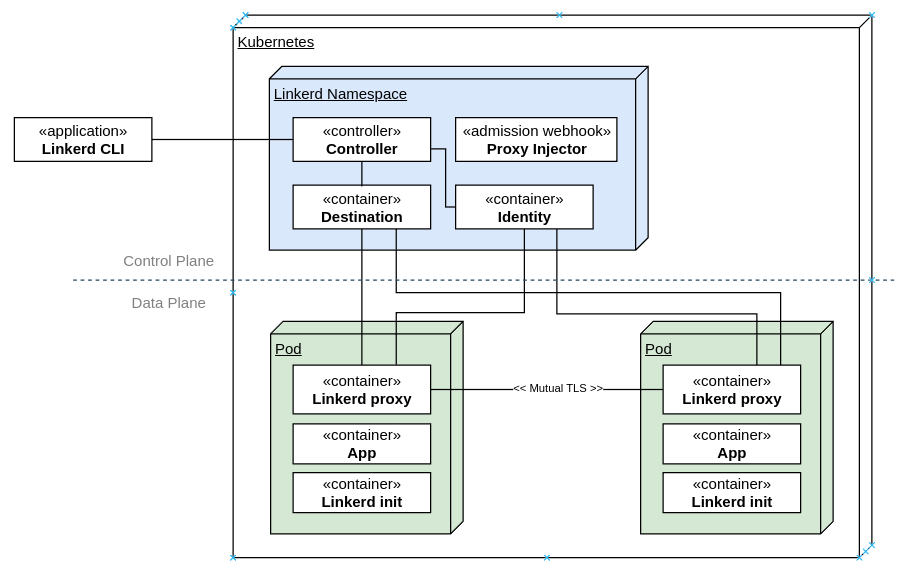
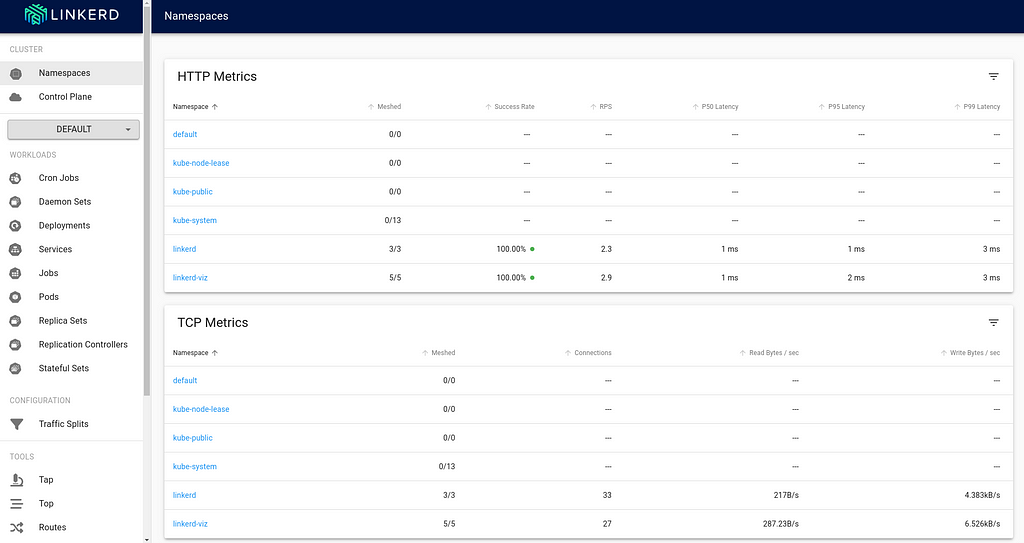
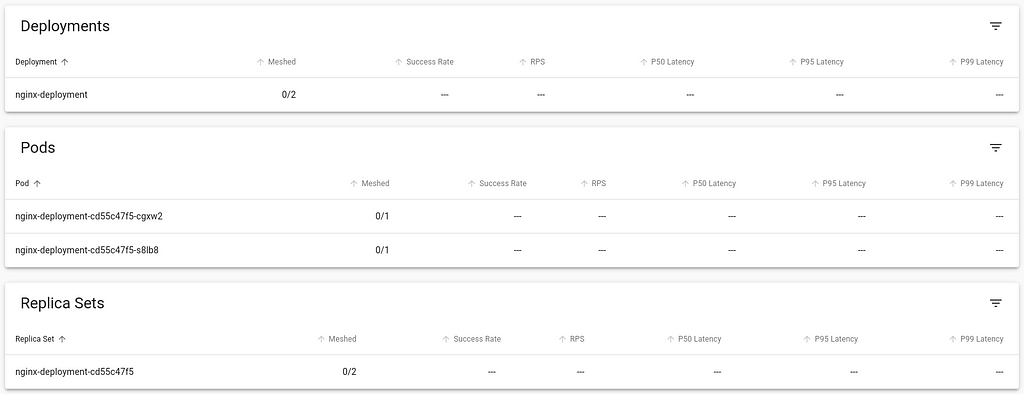
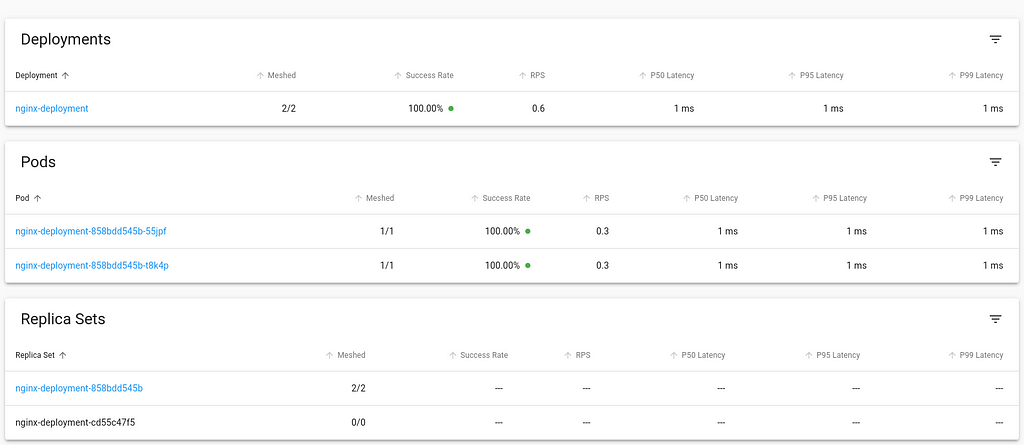

 Our local Debian user group gathered on Sunday October 30th to chat, work on
Debian and do other, non-Debian related hacking :) This time around, we met at
 This was our 4th meeting this year and once again, attendance was great: 10
people showed up to work on various things.
Following our bi-monthly schedule, our next meeting should be in December, but
I'm not sure it'll happen. December can be a busy month here and I will have to
poke our mailing list to see if people have the spoons for an event.
This time around, I was able to get a rough log of the Debian work people did:
pollo:




 https://github.com/abbbi/trktor
 This is my report from the Netfilter Workshop 2022. The event was held on 2022-10-20/2022-10-21 in Seville, and the venue
was the offices of
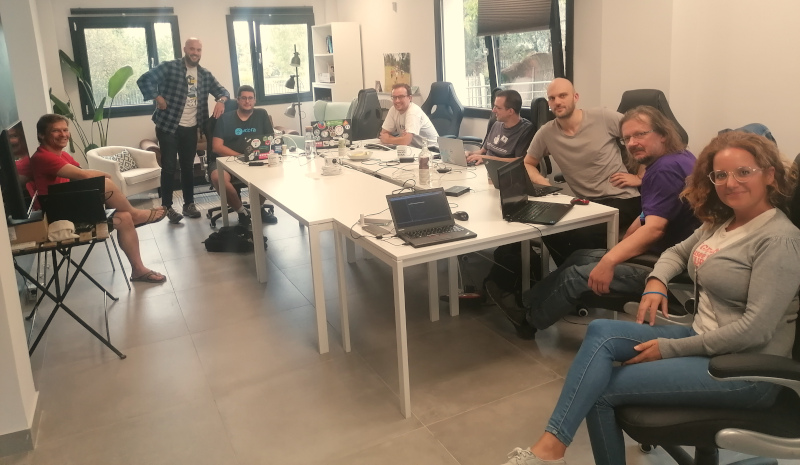 The second day was opened by Florian Westphal (Netfilter coreteam member and Red Hat engineer). Florian has been
trying to improve nftables performance in kernels with RETPOLINE mitigations enabled. He commented that several
workarounds have been collected over the years to avoid the performance penalty of such mitigations.
The basic strategy is to avoid function indirect calls in the kernel.
Florian also described how BPF programs work around this more effectively. And actually, Florian tried translating
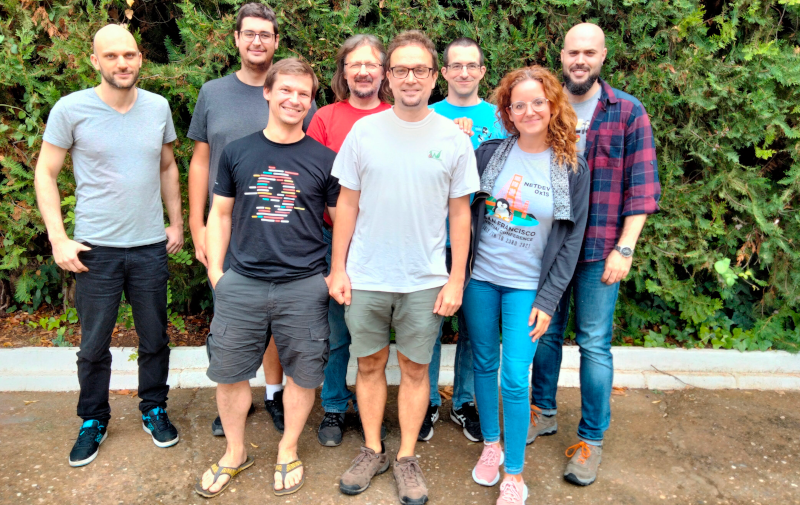 Finally, after many interesting debates over two days, the workshop ended. We all agreed on the need for extending
it to 3 days next time, since 2 days feel too intense and too short for all the topics worth discussing.
That s all on my side! I really enjoyed this Netfilter workshop round.