

The Rcpp Core Team is once again pleased to announce a new release
(now at 1.0.13) of the
Rcpp package.
It arrived on
CRAN earlier
today, and has since been uploaded to
Debian. Windows and macOS builds
should appear at CRAN in the next few days, as will builds in different
Linux distribution and of course
r2u should catch up
tomorrow too. The release was uploaded last week, but not only does
Rcpp always gets flagged because of the
grandfathered
.Call(symbol) but
CRAN also found two packages
regressing which then required them to take five days to get back to
us. One issue was
known; another
did not reproduce under our tests against over 2800 reverse dependencies
leading to the eventual release today. Yay. Checks are good and
appreciated, and it does take time by humans to review them.
This release continues with the six-months January-July cycle started
with
release
1.0.5 in July 2020. As a reminder, we do of course make interim
snapshot dev or rc releases available via the
Rcpp drat repo as well as
the
r-universe page and
repo and strongly encourage their use and testing I run my systems
with these versions which tend to work just as well, and are also fully
tested against all reverse-dependencies.
Rcpp has long established itself
as
the most popular way of enhancing
R with C or C++ code. Right now,
2867 packages on
CRAN depend on
Rcpp for making analytical code go
faster and further, along with 256 in
BioConductor. On CRAN, 13.6% of
all packages depend (directly) on
Rcpp, and 59.9% of all compiled packages
do. From the cloud mirror of CRAN (which is but a subset of all CRAN
downloads),
Rcpp has been downloaded
86.3 million times. The two published papers (also included in the
package as preprint vignettes) have, respectively, 1848 (
JSS, 2011) and 324 (
TAS, 2018)
citations, while the the
book (Springer useR!,
2013) has another 641.
This release is incremental as usual, generally preserving existing
capabilities faithfully while smoothing our corners and / or extending
slightly, sometimes in response to changing and tightened demands from
CRAN or
R standards. The move towards a
more standardized approach for the C API of R leads to a few changes;
Kevin did most of the PRs for this. Andrew Johnsom also provided a very
nice PR to update internals taking advantage of variadic templates.
The full list below details all changes, their respective PRs and, if
applicable, issue tickets. Big thanks from all of us to all
contributors!
Changes in
Rcpp release version 1.0.13 (2024-07-11)
- Changes in Rcpp API:
- Set R_NO_REMAP if not already defined (Dirk in #1296)
- Add variadic templates to be used instead of generated code
(Andrew Johnson in #1303)
- Count variables were switches to
size_t to avoid
warnings about conversion-narrowing (Dirk in #1307)
- Rcpp now avoids the usage of the (non-API) DATAPTR function when
accessing the contents of Rcpp Vector objects where possible. (Kevin in
#1310)
- Rcpp now emits an R warning on out-of-bounds Vector accesses.
This may become an error in a future Rcpp release. (Kevin in #1310)
- Switch
VECTOR_PTR and STRING_PTR to new
API-compliant RO variants (Kevin in #1317 fixing #1316)
- Changes in Rcpp Deployment:
- Small updates to the CI test containers have been made (#1304)
Thanks to my
CRANberries, you
can also look at a
diff
to the previous release Questions, comments etc should go to the
rcpp-devel
mailing list off the
R-Forge page.
Bugs reports are welcome at the
GitHub issue tracker as
well (where one can also search among open or closed issues).
If you like this or other open-source work I do, you can
sponsor me at
GitHub.
This post by Dirk
Eddelbuettel originated on his Thinking inside the box
blog. Please report excessive re-aggregation in third-party for-profit
settings.
 Here comes the 3rd article of the 5-episode blog post series on Polis, written by Guido Berh rster, member of staff at my company Fre(i)e Software GmbH.
Enjoy also this read on Guido's work on Polis,
 The following contributors got their Debian Developer accounts in the last two months:

 While I was living in Argentina, we (my family) found ourselves checking for
weather forecasts almost constantly weather there can be quite unexpected,
much more so that here in Mexico. So it took me a bit of tinkering to come up
with a couple of simple scripts to show the weather forecast as part of my
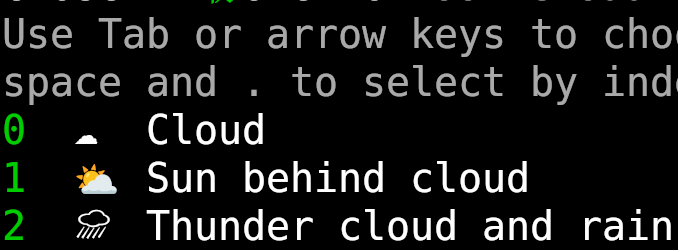 I am using
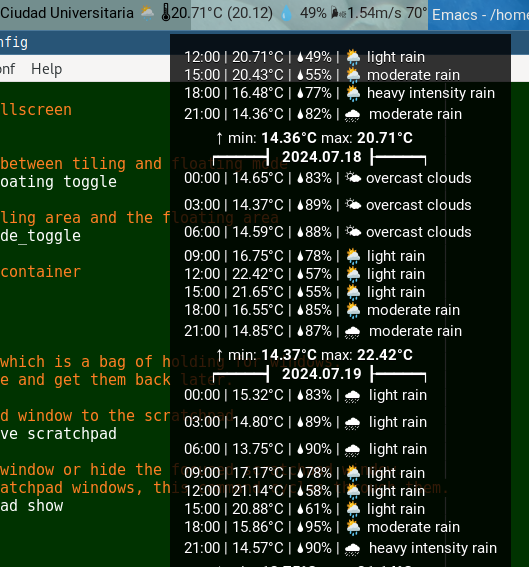 Do note that it seems OpenWeather will return the name of the closest available
meteorology station with (most?) recent data for my home, I often get Ciudad
Universitaria, but sometimes Coyoac n or even San ngel Inn.
 Who cares what Wulfenia is about? It s about you, my stupid Wolf cousin!

 Twenty years ago, it was easy to dislike Microsoft. It was the quintessential evil MegaCorp that was quick to squash competition, often ruthlessly, but in some cases slowly through a more insidious process of embracing, extending, and exterminating anything that got in the way. This was the signature personality of Ballmer-era Microsoft that also inspired and united the software freedom fighting forces that came together to safeguard things that mattered to them and were at risk.I remember the era when the Novell, SCO, and Microsoft saga cast fear, uncertainty, and doubt on the future of open Unix and Linux and on what would happen to the operating systems that we loved if the suits of Redmond prevailed. Looking back, I&aposm glad that the arc of this story has bent towards justice, and I shudder at the possibilities had it worked out differently.Looking at today&aposs Microsoft, I&aposm amazed at how much change a leader with the right vision can make to the trajectory of a company that even makes an old-school software freedom advocate as me admire and even applaud the strides it has taken in the last 10 or so years that has dramatically shifted the perception of Microsoft. The personality of the Satya-era Microsoft is one to behold. While it will take more time to win back the trust, we see the tides changing and the positivity is important for the entire industry.For Microsoft, it was TypeScript and VS Code that helped change the narrative internally which led to its internal resurgence and acceptance of open source. Its acquisition of GitHub propelled it forward within the community overnight. Its contributions to the Linux kernel and other major software projects have also been consequential in changing its public perceptions.It takes a while to claw back trust and is very easy to breach. This time, however, Microsoft seems to understand this dynamic more than it did 20 years ago. All it took was the right leadership.








 Like each month, have a look at the work funded by