Search Results: "edd"

26 January 2014

Dirk Eddelbuettel: RcppEigen 0.3.2.0.2

A new maintenance release of RcppEigen is now on CRAN. And just like yesterday's RcppClassic upload and today's RcppZiggurat upload, the timing was motivated chiefly by some minor caretaking for an upcoming Rcpp release -- hopefully soon, and with more details to follow. But this release also contains some minor cleanups. The NEWS file entry shown below lists all changes.
Changes in RcppEigen version 0.3.2.0.2 (2014-01-26)
  • Converted three unused unit test files to RUnit and removed Suggests: of testthat
  • Add declaration to import a symbol from Rcpp to NAMESPACE to ensure proper instantiation with the upcoming Rcpp version
  • Retire SHLIB.maker function
Courtesy of CRANberries, there are diffstat reports for the most recent release relative to the preceding version. Questions, comments etc about RcppEigen should go to the rcpp-devel mailing list off the R-Forge page.

This post by Dirk Eddelbuettel originated on his Thinking inside the box blog. Please report excessive re-aggregation in third-party for-profit settings.

Dirk Eddelbuettel: RcppZiggurat 0.1.2

A new maintenance release of RcppZiggurat is now on CRAN. And just like yesterday's RcppClassic upload, this is motivated chiefly by some minor caretaking for an upcoming Rcpp release -- hopefully soon, and with more details to follow. This release also contains some small extensions and work-in-progress. By using R's uniform generator, we can fall back to R's seeding of the RNG -- but going through the R data structures has a performance hit. Similarly, and somewhat surprisingly, the default generators in both Boost and the C++11 library are not all that speedy. The NEWS file entry shown below lists all changes.
Changes in version 0.1.2 (2013-12-28)
  • Add a new generator deploying R's unif_rand which faciliates use of Ziggurat as the user-supplied generator for N(0,1)
  • Update a 'local' demo comparing normal distribution RNGs from Boost, C++11 and Armadillo none of which are particularly speedy
  • Add declaration to import a symbol from Rcpp to NAMESPACE to ensure proper instantiation with the upcoming Rcpp version
Courtesy of CRANberries, there are diffstat reports for the most recent release relative to the preceding version. More detailed information is on the RcppZiggurat page. Questions, comments etc should go to the rcpp-devel mailing list off the R-Forge page.

This post by Dirk Eddelbuettel originated on his Thinking inside the box blog. Please report excessive re-aggregation in third-party for-profit settings.

Daniel Pocock: Beyond init systems: other opportunities for simplification

One thing that everybody agrees on in the debate about Debian's init system replacement is that the manifests used by most of the new schemes are far more concise than traditional init scripts. Simplification need not stop there however. Another opportunity for simplification exists in the creation of users at package installation. Every packaging tool has a different approach and all of them involve multiple lines of boilerplate script code duplicated between hundreds of packages that all need exactly the same thing. What is worse, embedding this logic into the postinst scripts on Debian or %post logic of an RPM makes it far more awkard for a system administrator to audit the user account requirements of packages (when installing many of them in a hurry) or to customise the logic for a whole site without rebuilding the whole packages. Potential improvement How to improve this? Well, packages (on any distribution) could be invited to declare the user and group accounts they depend on. A central configuration parameter in /etc/dpkg/dpkg.cfg or /etc/rpm would then control how the package manager behaves, with several possible options:
  • Create users/groups on demand without prompting
  • Abort installation/configuration of any package if the pre-requisite users do not exist on the system
  • Prompt: at the beginning of any package install, ask the administrator to create the users himself before proceeding, with an option to abort and potentially displaying some convenient LDIF fragments and other samples that the administrator can cut and paste.
Running a command like apt-get --simulate would give a system administrator an immediate view of all users/groups required by the packages they propose to install.

Dirk Eddelbuettel: RcppClassic 0.9.5

A maintenance release of RcppClassic, now at version 0.9.5, went out to CRAN today. Nothing changed in user-facing code. The build was triggered by a change in an upcoming Rcpp release (more about that another time), and a few minor updates were needed for extended checks done by R. Courtesy of CRANberries, there is the set of changes relative to the previous release 0.9.4. Questions, comments etc should go to the rcpp-devel mailing list off the R-Forge page.

This post by Dirk Eddelbuettel originated on his Thinking inside the box blog. Please report excessive re-aggregation in third-party for-profit settings.

24 January 2014

Daniel Pocock: DruCall updated, Lumicall talk at FOSDEM next weekend

The latest version of DruCall is now pushed to the Drupal Git Repository. As described previously, this version uses JSCommunicator (which is based on the popular JsSIP) as the underlying phone framework. I would be very grateful if somebody from the Drupal community could kindly help my projects escape from the sandbox. Try the new Drucall, free calls to mobiles running Lumicall As a demo of the power of SIP and DruCall, you can make free calls to mobiles running Lumicall. It will also dial any number registered in ENUM. Lumicall, the open alternative to Viber, FOSDEM 2014 I'll be giving a talk about the Lumicall project at FOSDEM 2014. The talk is at 13:00 on Sunday, 2 February in the Embedded and Mobile devroom. As space is usually limited in the devrooms and FOSDEM is a completely free event without any advance registration, please arrive early (maybe even 1 or 2 talks before mine) to get a seat.

22 January 2014

Dirk Eddelbuettel: RcppArmadillo 0.4.000.2

A bug fix release of Armadillo came out and was turned into a new RcppArmadillo release which is now on CRAN and will go shortly to Debian. The complete list of changes is below.
Changes in RcppArmadillo version 0.4.000.2 (2014-01-21)
  • Upgraded to Armadillo release Version 4.000.2
    • fix for randi() generating out-of-interval values
    • workaround for a bug in the Intel compiler
Courtesy of CRANberries, there is also a diffstat report for the most recent release As always, more detailed information is on the RcppArmadillo page. Questions, comments etc should go to the rcpp-devel mailing list off the R-Forge page.

This post by Dirk Eddelbuettel originated on his Thinking inside the box blog. Please report excessive re-aggregation in third-party for-profit settings.

21 January 2014

John Goerzen: Married!

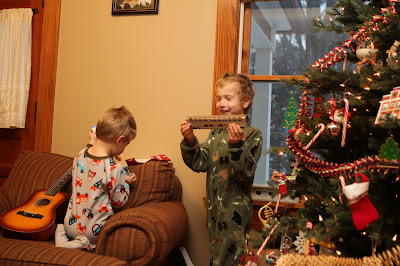
One week before the wedding, to Laura: Mono won t just clear up right away. One week before the wedding, to me: That s going to need stitches. Yes, not long before the wedding, Laura had come down with mononucleosis and I had cut into my finger with a very sharp knife while cutting bread requiring a trip to the emergency room to get stitches. Two days before we got married, instead of moving furniture, I was getting stitches out of my finger. It wasn t the kind of week we had planned. But it was the happiest, most amazing occasion I could have ever imagined. As I wrote last month, I am richly blessed indeed. Our wedding was three days after Christmas. The church was still decorated for Christmas, with the tree in on corner, glittering stars suspended in mid-air on cables from the walls, wreaths and candles in the windows, and it was a joy-filled day. Before the ceremony, we took pictures the only part of the day Jacob and Oliver weren t thrilled with. Nevertheless, we got some fun ones. Laura and I seem to know quite a few pastors between us and not just because Laura is a pastor. My brother officiated with the wedding vows, his wife with scripture and a prayer of blessing, and the church s pastor gave the message. Laura and I wrote in our wedding program, Music has long been a thread running through both our lives. We have enjoyed singing together, playing piano and pennywhistle duets, attending concerts, and even exploring old hymnals. Music is also one of the best ways to have a conversation even a conversation with God. We wrote a page in the program about each of the hymns that were a part of the wedding, and why we picked them. The combined church choirs of my home church and Laura s church sang John Rutter s beautiful arrangement of For the Beauty of the Earth (click here to listen to a different choir). Hearing For the beauty of each hour , For the joy of human love , and Lord of all, to thee we raise this our joyful hymn of praise was perfect for the day. It was with such great happiness that we walked out of the sanctuary, a married couple, to the sound of the congregation singing Joy to the World! Jacob and Oliver were so very excited on our wedding day. They happily explored the church while waiting for things to happen. We had them help us light our unity candle, and they were pleased with that. Jacob loved his suit, which made him look just like me. And they were, of course, delighted with the cake and in the middle of it all. For our honeymoon, we managed to get two weeks of vacation, and spent about half of it at home. We had looked at various options for retreats in the country, but eventually concluded that our house is a retreat in the country, so might as well enjoy it at home. We also went to the Palo Duro Canyon area near Amarillo in the Texas panhandle, staying in a small B&B in Canyon, TX. Palo Duro is the second-largest canyon in North America, and quite colorful year-round. What a beautiful place to go for our honeymoon! By the time we got there, Laura was getting past mono, and we went for hikes in the canyon on two different days hiking a total of 10 miles, including a hike up the side of the canyon. After we got back home, on the last weekday of our honeymoon, we went back to the Flint Hills of Kansas, to some of the same places we had spent our third date. We climbed the windy staircase at the Chase County Courthouse, the oldest courthouse still in use in Kansas. And peered out its famous oval window. We found the last remnant of the old ghost town of Elk, ate at the same restaurant we had that day. It brought back wonderful memories, and it was a good day in itself. Because even though it was a gold, drizzly, overcast day in January, this time, we were married. And this year, Thanksgiving is all year.

20 January 2014

Dirk Eddelbuettel: RProtoBuf 0.4.0: A whole lot of goodies and Windoze support

A new major release 0.4.0 of RProtoBuf, is now on CRAN. RProtoBuf provides GNU R bindings for the Google Protocol Buffers ("Protobuf") data encoding library used and released by Google, and deployed as a language and operating-system agnostic protocol by numerous projects. With this release, we are welcoming Jeroen Ooms to the team. Jeroen had already worked on some RProtoBuf extensions in the context of his OpenCPU project; we have now integrated those Protocol Buffers functions. And Jeroen pushed all the right buttons to finally get RProtoBuf built on everybody's least-favourite operating system by provding a static library for use by win-builder and CRAN. Murray once again did a lot of work on internals. His use of the LLVM tool llvm-format was particular helpful to make our coding style a little more consistent. The complete NEWS file entry for this release follows:
Changes in RProtoBuf version 0.4.0 (2014-01-14)
  • Changes to support CRAN builds for MS Windows.
  • Added functions serialize_pb, unserialize_pb, and can_serialize_pb plus documentation from Jeroen Ooms RProtoBufUtils package.
  • New dir inst/python with some Python examples.
  • Added Jeroen Ooms as author.
  • Vignettes have been converted to the R 3.0.0 or later use of external vignette builders, no longer need a Makefile
  • Added missing methods to dollar completion list for Message, Descriptor, EnumValueDescriptor, and FileDescriptor classes.
  • Add missing export for .DollarNames EnumValueDescriptor to allow completion on that class.
  • Add more than 15 additional pages to the main Intro vignette documenting better all of the S4 classes implemented by RProtoBuf, updating the type mapping tables to take into account 64-bit support, and documenting advanced features such as Extensions.
  • Added better error checking in EnumDescriptors to catch the case when wrong types are provided.
  • Updated the FileDescriptor name() method to accept a boolean for full paths just like the generic name() method.
  • Correct a bug that incorrectly dispatched as.character() when as.list() was called on Descriptor objects.
  • Update FileDescriptor $ dispatch to work properly for the names of fields defined in the FileDescriptor, instead of just returning NULL even for types returned by $ completion.
  • Added a reservation for extension fields in the example tutorial.Person schema.
  • Support setting int32 fields with character representations and raise an R-level stop() error if the provided string can not be parsed as a 32-bit integer, rather than crashing the R instance.
  • Update the project TODO file.
  • Add better documentation and tests for all of the above.
  • Corrected the handling of uint32 and fixed32 types in protocol buffers to ensure that they work with numbers as large as 2^32 - 1, which is larger than an integer can hold in R since R does not have an unsigned integer class. These values are stored as doubles internally now to avoid losing precision.
  • Added unit tests to verify behavior of RProtoBuf with extreme values for uint32 types.
  • Removed old exception handling code and instead rely on the more modern Rcpp::stop method maintained in Rcpp.
  • Add better error messages when setting a repeated field of messages to inform the user which element index was of the wrong type and what the expected type was.
  • Add an optional 'partial' argument to readASCII allowing uninitialized message fragments to be read in.
  • (internal) Added const qualifiers in more places throughout the C++ code for type safety.
  • (internal) Standardize coding conventions of the C++ files and run them through clang-format for consistency. A STYLE file has been submitted to R-Forge with details about the coding standards and how they are enforced with Emacs and clang-format.
  • Applied changes suggested by Kevin Ushey to the S4 class handling to support both the currently released Rcpp as well as the currently pending next version.
CRANberries also provides a diff to the previous release 0.3.2. More information is at the RProtoBuf page which has a draft package vignette, a 'quick' overview vignette and a unit test summary vignette. Questions, comments etc should go to the rprotobuf mailing list off the RProtoBuf page at R-Forge.

This post by Dirk Eddelbuettel originated on his Thinking inside the box blog. Please report excessive re-aggregation in third-party for-profit settings.

17 January 2014

Rog rio Brito: Developing for Android with Debian

I have just enrolled in a MOOC to learn about programming with Android. There are many tutorials and reports of people using Linux for the development of the apps out there, but, unfortunately, many of them are outdated or contain misleading information. You will find bazillion instructions out there telling you to install JDK6. (Even the instructions in the MOOCs say so, and Google says that it is the only supported version of Java). Even more than that, some of them will tell you that you should not use OpenJDK, but use Oracle's JDK instead. So, if you have a pure amd64 system and you try to install the x86-64 version of Google's Android Developer Tools (ADT), you are going to have a surprise: you will have all sorts of programs telling you that you have file not found, even though the required binaries are there. (This is, of course, besides install openjdk-7-jdk, if you wish to use the integrated Eclipse environment). Turns out that the so-called 64-bit ADT/SDK actually has many 32-bit executables(!) and they aren't statically linked. Inspecting them, I needed the following packages:
    gcc-4.8-base:i386
    libc6-i686:i386
    libc6:i386
    libgcc1:i386
    libstdc++6:i386
    zlib1g:i386
It is worth observing that: Given the above, and given that the version of the GCC libraries can vary a lot, it is perhaps better to simply do something like:
apt-get install libstdc++6:i386 zlib1g:i386
Although not necessary, since you are using an amd64 machine, your computer already supports many more recent instructions that will be used if you install the package libc6-i686:i386. To avoid the emulator from spitting out error messages related to libGL.so, install libgl1-mesa-dev (note: not i386 here). This way, you will be able to run the embedded QEMU with full KVM acceleration if you pass the options -qemu -m 1024 -enable-kvm on Eclipse's "Run > Run Configurations... > Target > Additional Emulator Command Line Options". After that, you are probably good to go.

11 January 2014

Johannes Schauer: Why do I need superuser privileges when I just want to write to a regular file

I have written a number of scripts to create Debian foreign architecture (mostly armel and armhf) rootfs images for SD cards or NAND flashing. I started with putting Debian on my Openmoko gta01 and gta02 and continued with devices like the qi nanonote, a marvel kirkwood based device, the Always Innovating Touchbook (close to the Beagleboard), the Notion Ink Adam and most recently the Golden Delicious gta04. Once it has been manufactured, I will surely also get my hands dirty with the Neo900 whose creators are currently looking for potential donors/customers to increase the size of the first batch and get the price per unit further down. Creating a Debian rootfs disk image for all these devices basically follows the same steps:
  1. create an disk image file, partition it, format the partitions and mount the / partition into a directory
  2. use debootstrap or multistrap to extract a selection of armel or armhf packages into the directory
  3. copy over /usr/bin/qemu-arm-static for qemu user mode emulation
  4. chroot into the directory to execute package maintainer scripts with dpkg --configure -a
  5. copy the disk image onto the sd card
It was not long until I started wondering why I had to run all of the above steps with superuser privileges even though everything except the final step (which I will not cover here) was in principle nothing else than writing some magic bytes to files I had write access to (the disk image file) in some more or less fancy ways. So I tried using fakeroot+fakechroot and after some initial troubles I managed to build a foreign architecture rootfs without needing root priviliges for steps two, three and four. I wrote about my solution which still included some workarounds in another article here. These workarounds were soon not needed anymore as upstream fixed the outstanding issues. As a result I wrote the polystrap tool which combines multistrap, fakeroot, fakechroot and qemu user mode emulation. Recently I managed to integrate proot support in a separate branch of polystrap. Last year I got the LEGO ev3 robot for christmas and since it runs Linux I also wanted to put Debian on it by following the instructions given by the ev3dev project. Even though ev3dev calls itself a "distribution" it only deviates from pure Debian by its kernel, some configuration options and its initial package selection. Otherwise it's vanilla Debian. The project also supplies some multistrap based scripts which create the rootfs and then partition and populate an SD card. All of this is of course done as the superuser. While the creation of the file/directory structure of the foreign Debian armel rootfs can by now easily be done without superuser priviliges by running multistrap under fakeroot/fakechroot/proot, creating the SD card image still seems to be a bit more tricky. While it is no problem to write a partition table to a regular file, it turned out to be tricky to mount these partition because tools like kpartx and losetup require superuser permissions. Tools like mkfs.ext3 and fuse-ext2 which otherwise would be able to work on a regular file without superuser privileges do not seem to allow to specify the required offsets that the partitions have within the disk image. With fuseloop there exists a tool which allows to "loop-mount" parts of a file in userspace to a new file and thus allows tools like mkfs.ext3 and fuse-ext2 to work as they normally do. But fuseloop is not packaged for Debian yet and thus also not in the current Debian stable. An obvious workaround would be to create and fill each partition in a separate file and concatenate them together. But why do I have to write my data twice just because I do not want to become the superuser? Even worse: because parted refuses to write a partition table to a file which is too small to hold the specified partitions, one spends twice the disk space of the final image: the image with the partition table plus the image with the main partition's content. So lets summarize: a bootable foreign architecture SD card disk image is nothing else than a regular file representing the contents of the SD card as a block device. This disk image is created in my home directory and given enough free disk space there is nothing stopping me from writing any possible permutation of bits to that file. Obviously I'm interested in a permutation representing a valid partition table and file systems with sensible content. Why do I need superuser privileges to generate such a sensible permutation of bits? Gladly it seems that the (at least in my opinion) hardest part of faking chroot and executing foreign architecture package maintainer scripts is already possible without superuser privileges by using fakeroot and fakechroot or proot together with qemu user mode emulation. But then there is still the blocker of creating the disk image itself through some user mode loop mounting of a filesystem occupying a virtual "partition" in the disk image. Why has all this only become available so very recently and still requires a number of workarounds to fully work in userspace? There exists a surprising amount of scripts which wrap debootstrap/multistrap. Most of them require superuser privileges. Does everybody just accept that they have to put a sudo in front of every invocation and hope for the best? While this might be okay for well tested code like debootstrap and multistrap the countless wrapper scripts might accidentally (be it a bug in the code or a typo in the given command line arguments) write to your primary hard disk instead of your SD card. Such behavior can easily be mitigated by not executing any such script with superuser privileges in the first place. Operations like loop mounting affect the whole system. Why do I have to touch anything outside of my home directory (/dev/loop in this case) to populate a file in it with some meaningful bits? Virtualization is no option because every virtualization solution again requires root privileges. One might argue that a number of solutions just require some initial setup by root to then later be used by a regular user (for example /etc/fstab configuration or the schroot approach). But then again: why do I have to write anything outside of my home directory (even if it is only once) to be able to write something meaningful to a file in it? The latter approach also does not work if one cannot become root in the first place or is limited by a virtualized environment. Imagine you are trying to build a Debian rootfs on a machine where you just have a regular user account. Or a situation I was recently in: I had a virtual server which denied me operations like loop mounting. Given all these downsides, why is it still so common to just assume that one is able and willing to use sudo and be done with it in most cases? I really wonder why technologies like fakeroot and fakechroot have only been developed this late. Has this problem not been around since the earliest days of Linux/Unix? Am I missing something and rambling around for nothing? Is this idea a lost cause or something that is worth spending time and energy on to extend and fix the required tools?

9 January 2014

Jo Shields: Here Ye, Here Ye

Valve Software s Steam is the number one digital game distribution service, with more than 65 million registered accounts. Steam runs on Windows, Mac OS, and Linux x86/amd64 computers, and provides access to several thousand games, at varying price points an enormous growth from less than a dozen games for Windows only about a decade ago. Valve s latest endeavour has been to bring their storefront into the living room, with a three-pronged attack: a new game controller, a programme of licensed x86 consoles to plug into the family TV, and an OS to run on the Steam Machines to tie it all together. December saw the first public release of their SteamOS which, as it turns out, is basically just a preconfigured desktop Linux. Specifically, it s a Debian Wheezy derivative, comprising a subset of 502 source packages from Wheezy; 8 of Valve s own source packages; and 51 source packages which have been either patched compared to Wheezy, backported from post-Wheezy, or both. For example, the compiler used by default is gcc-4.7 (rather than Wheezy s 4.6) and the libc version postdates Wheezy too. Valve s official instructions and installer release concerned quite a few people who had planned to try SteamOS on an older PC, by mandating a large (500GB) hard disk and a PC with UEFI firmware. Very quickly a number of instructions started appearing from people trying to fix what people felt were real issues specifically provision for BIOS-based computers, and installation from optical media. After being assured that redistribution of derivatives of SteamOS were entirely authorized (and, in fact, encouraged) I decided to produce my own variant, calling upon my own experience with debian-installer modification from past and present jobs, as well as calling upon the skills and experience of the UK Debian community as needed. The end result is Ye Olde SteamOSe. SteamOS on VMware Workstation 10 This weekend saw the third release of Ye Olde SteamOSe, a derivative designed to greatly widen the pool of computers capable of running Valve s OS. And unlike the first two releases, the public response this time has been crazy. Like, totally crazy. Combined score across several subreddits totals about 1700. 7 pages of Google search results. Hundreds of tweets. Mentions in dozens of blogs around the world. Coverage on the Linux Action Show. Unilaterally added to Softpedia s list of distributions. Almost 2000 views of a video installation walkthrough I posted on YouTube. Crazy. Sadly the idea to try and track visitors to the page didn t occur to me until long after the initial rush subsided, but 1000 visitors on Tuesday for a news story which landed on Sunday is still pretty hot in my book. It s also interesting to observe the demographics of site visitors the #1 referrer on Tuesday was Dutch PC site Tweakers.net, and StumbleUpon outranks reddit for referrals. About 66% of visitors interested in installing my Debian Wheezy derivative derivative came using Windows (20% using Linux), which suggests there s a lot of potential Linux users out amongst the Windows gamer masses. So what s the purpose of this self-congratulatory blog post? Just dick-waving? Well, there s an element of that (I m only human), but I think it might be nice to alert the audience on Planet Debian/Ubuntu, many of whom are not big gamers, to the next big thing in embedded Linux except this time a real GNU/X.org/sysVinit distribution, not some NIH thing like Android. So now you know!

7 January 2014

Dirk Eddelbuettel: RcppArmadillo 0.400

A new major release 4.000 of Armadillo came out out yesterday morning. This is a new stable release by Conrad with a new major number, and it brings a few nice changes as detailed below. I rolled up RcppArmadillo version 0.400 yesterday morning, and following a little bit of discussion this version is now on CRAN and in Debian. The complete list of changes is below.
Changes in RcppArmadillo version 0.4.000 (2014-01-05)
  • Upgraded to Armadillo release Version 4.000 (Feral Steamroller)
    • added eigen decompositions of sparse matrices: eigs_sym() and eigs_gen() [ but this requires linking against ARPACK which RcppArmadillo as a pure-template package does not do, and R is not linked against ARPACK either. ]
    • added eigen decomposition for pair of matrices: eig_pair()
    • added simpler forms of eig_gen()
    • added condition number of matrices: cond()
    • expanded find() to handle cubes
    • expanded subcube views to access elements specified in a vector
    • template argument for running_stat_vec expanded to accept vector types
    • more robust fast inverse of 4x4 matrices
    • faster divide-and-conquer decompositions are now used by default for eig_sym(), pinv(), princomp(), rank(), svd(), svd_econ()
    • the form inv(sympd(X)) no longer assumes that X is positive definite; use inv_sympd() instead
    • added MEX connector for interfacing Octave/Matlab with Armadillo matrices (contributed by George Yammine)
Courtesy of CRANberries, there is also a diffstat report for the most recent release As always, more detailed information is on the RcppArmadillo page. Questions, comments etc should go to the rcpp-devel mailing list off the R-Forge page.

This post by Dirk Eddelbuettel originated on his Thinking inside the box blog. Please report excessive re-aggregation in third-party for-profit settings.

6 January 2014

Julien Danjou: Databases integration testing strategies with Python

The Ceilometer project supports various database backend that can be used as storage. Among them are MongoDB, SQLite MySQL, PostgreSQL, HBase, DB2 All Ceilometer's code is unit tested, but when dealing with external storage services, one cannot be sure that the code is really working. You could be inserting data with an incorrect SQL statement, or in the wrong table. Only having the real database storage running and being used can tell you that.
Over the months, we developed integration testing on top of our unit testing to validate that our storage drivers are able to deal with real world databases. That is not really different from generic integration testing. Integration testing is about plugging all the pieces of your software all together and running. In what I call "database integration testing", the pieces will be both your software and the database system that you are going to rely on. The only difference here is that one of the module is not coming from the application itself but is an external project. The type of database that you use (RDBMS, NoSQL ) does not matter. Taking a step back, what I will describe here could also apply to a lot of other different software modules, even something that would not be a database sytem at all. Writing tests for integration Presumably, your Python application has unit tests. In order to test against a database back-end, you need to write a few specific classes of tests that will use the database subsystem for real. For example:
import unittest
import os
import sqlalchemy

class TestDB(unittest.TestCase):
def setUp(self):
url = os.getenv("DB_TEST_URL")
if not url:
self.skipTest("No database URL set")
self.engine = sqlalchemy.create_engine(url)

This code will try to fetch the database URL to use from an environment variable, and then will rely on SQLAlchemy to create a database connection.
import unittest
import os
import sqlalchemy

import myapp

class TestDB(unittest.TestCase):
def setUp(self):
url = os.getenv("DB_TEST_URL")
if not url:
self.skipTest("No database URL set")
self.engine = sqlalchemy.create_engine(url)

def test_foobar(self):
self.assertTrue(myapp.store_integer(self.engine, 42))

You can then add as many tests as you want using the connection stored in self.engine. If no test database URL is, the tests will be skipped; however that decision is up to you. You may want to have these tests always run and fail if they can't be run. In the setUp() method, you may also need to do more work, like create a database and delete a database.
import unittest
import os
import sqlalchemy

class TestDB(unittest.TestCase):
def setUp(self):
url = os.getenv("DB_TEST_URL")
if not url:
self.skipTest("No database URL set")
self.engine = sqlalchemy.create_engine(url)
self.connection = self.engine.connect()
self.connection.execute("CREATE DATABASE testdb")

def tearDown(self):
self.connection.execute("DROP DATABASE testdb")

This will make sure that the database you need is clean and ready to be used to testing. Launching modules, a.k.a. databases
The main problem we encountered when building integration testing with databases, is to find a way to start them. Most users are used to start them system-wide with some sort of init script, but when running sandboxed tests, that is not really a good option. Browsing the documentation of each storage allowed us to find a way to start them in foreground and control them "interactively" via a shell script. The following is a script that you can use to run Python tests using nose and is heavily inspired by the one we wrote for Ceilometer.
#!/bin/bash
set -e

clean_exit()
local error_code="$?"
kill -9 $(jobs -p) >/dev/null 2>&1 true
rm -rf "PGSQL_DATA"
return $error_code


check_for_cmd ()
if ! which "$1" >/dev/null 2>&1
then
echo "Could not find $1 command" 1>&2
exit 1
fi


wait_for_line ()
while read line
do
echo "$line" grep -q "$1" && break
done < "$2"
# Read the fifo for ever otherwise process would block
cat "$2" >/dev/null &


check_for_cmd mongod

trap "clean_exit" EXIT

# Start PostgreSQL process for tests
PGSQL_DATA= mktemp -d /tmp/PGSQL-XXXXX
PGSQL_PATH= pg_config --bindir
PGSQL_PATH /initdb $ PGSQL_DATA
mkfifo $ PGSQL_DATA /out
$ PGSQL_PATH /postgres -F -k $ PGSQL_DATA -D $ PGSQL_DATA &> $ PGSQL_DATA /out &
# Wait for PostgreSQL to start listening to connections
wait_for_line "database system is ready to accept connections" $ PGSQL_DATA /out
export DB_TEST_URL="postgresql:///?host=$ PGSQL_DATA &dbname=template1"

# Run the tests
nosetests

If you use tox to automatize your test run, you can use this scripts (I call it run-test.sh) in your tox.ini file.
[testenv]
commands = toxinidir /run-tests.sh posargs

Most databases are able to be run in some sort of standalone mode where you can connect to them using a either a Unix domain socket, or a fixed port. Here are the snippet used in Ceilometer to run with MongoDB and MySQL:
# Start MongoDB process for tests
MONGO_DATA=$(mktemp -d /tmp/MONGODB-XXXXX)
MONGO_PORT=29000
mkfifo $ MONGO_DATA /out
mongod --maxConns 32 --nojournal --noprealloc --smallfiles --quiet --noauth --port $ MONGO_PORT --dbpath "$ MONGO_DATA " --bind_ip localhost &>$ MONGO_DATA /out &
# Wait for Mongo to start listening to connections
wait_for_line "waiting for connections on port $ MONGO_PORT " $ MONGO_DATA /out
export DB_TEST_URL="mongodb://localhost:$ MONGO_PORT /testdb"

# Start MySQL process for tests
MYSQL_DATA=$(mktemp -d /tmp/MYSQL-XXXXX)
mkfifo $ MYSQL_DATA /out
mysqld --datadir=$ MYSQL_DATA --pid-file=$ MYSQL_DATA /mysql.pid --socket=$ MYSQL_DATA /mysql.socket --skip-networking --skip-grant-tables &> $ MYSQL_DATA /out &
# Wait for MySQL to start listening to connections
wait_for_line "mysqld: ready for connections." $ MYSQL_DATA /out
export DB_TEST_URL="mysql://root@localhost/testdb?unix_socket=$ MYSQL_DATA /mysql.socket&charset=utf8"

The mechanism is always the same. We create a fifo with mkfifo, and then run the database daemon with the output redirected to that fifo. We then read from it until we find a line stating the the database is ready to be used. At that point, we can continue and start running the tests. You have to read continuously from the fifo, otherwise the process writing to it will block. We redirect the output to /dev/null, but you could also redirect it to a different log file, or not at all. One step further: using parallelism and scenarios The described approach is quite simple, as it only support one database type. When using an abstraction layer, such as SQLAlchemy, it would be a good idea to run all these tests against different RDBMS, such as MySQL and PostgreSQL for example. The snippet above allows to run both RDBMS in parallel, but the classic approach of unit tests does not allow that. Using one scenario for each database backend would be a great idea. To that end, you can use the testscenarios library.
import unittest
import os
import sqlalchemy
import testscenarios

load_tests = testscenarios.load_tests_apply_scenarios

class TestDB(unittest.TestCase):
scenarios = [
('mysql', dict(database_connection=os.getenv("MYSQL_TEST_URL")),
('postgresql', dict(database_connection=os.getenv("PGSQL_TEST_URL")),
]

def setUp(self):
if not self.database_connection:
self.skipTest("No database URL set")
self.engine = sqlalchemy.create_engine(self.database_connection)
self.connection = self.engine.connect()
self.connection.execute("CREATE DATABASE testdb")

def tearDown(self):
self.connection.execute("DROP DATABASE testdb")

$ python -m subunit.run test_scenario   subunit2pyunit
test_scenario.TestDB.test_foobar(mysql)
test_scenario.TestDB.test_foobar(mysql) ... ok
test_scenario.TestDB.test_foobar(postgresql)
test_scenario.TestDB.test_foobar(postgresql) ... ok

---------------------------------------------------------
Ran 2 tests in 0.061s

OK

To speed up tests run, you could also run the test in parallel. It can be intesting as you'll be able to spread the workload among a lot of different CPUs. However, note that it can require a different database for each test or a locking mechanism to be in place. It's likely that your tests won't be able to work altogether at the same time on only one database. (Both usage of scenarios and parallelism in testing will be covered in The Hacker's Guide to Python, in case you wonder.)
The Hacker's Guide to Python
A book I'm writing that will be launched soon, talking about designing Python applications, state of the art, and various Python tips. If you want to be the first to hear about the launch, subscribe now.

3 January 2014

Dirk Eddelbuettel: New BH release 1.51.1-4

A new release of the BH package is now on CRAN and its mirrors. BH provides (a sizeable subset of) the Boost library for C++, particularly the (large) parts delivered as pure template headers not requiring linking. See the BH page for more details. This release comes from a rewritten build script for the package. We no longer drive the initial set of Boost libraries by the requirements of the bigmemory (and synchronicity) packages, but rather explicitly enumerate an equivalent set of Boost libraries. This ensures that these libraries are included completely. We also move the project repository to this GitHub repo. The complete list changes follows below.
Changes in version 1.51.0-4 (2014-01-01)
  • Rewritten main package creation script to no longer scan for what bigmemory and synchronicity use, but rather explicitly copy over an (equivalent) list of explicitly-enumerated Boost libraries
  • Repository moved from R-Forge to GitHub, scripts and layout adjusted accordingly
  • Besides the implicitly expanded coverage by including the complete libraries, we also expanded from math/distributions to all of math.
Courtesy of CRANberries, there is also a diffstat report for the most recent release. Comments and suggestions are welcome via the mailing list or issue tracker still available via the package page at R-Forge.

This post by Dirk Eddelbuettel originated on his Thinking inside the box blog. Please report excessive re-aggregation in third-party for-profit settings.

1 January 2014

Vincent Bernat: Testing infrastructure with serverspec

Checking if your servers are configured correctly can be done with IT automation tools like Puppet, Chef, Ansible or Salt. They allow an administrator to specify a target configuration and ensure it is applied. They can also run in a dry-run mode and report servers not matching the expected configuration. On the other hand, serverspec is a tool to bring the well known RSpec, a testing tool for the Ruby programming language frequently used for test-driven development, to the infrastructure world. It can be used to remotely test server state through an SSH connection. Why one would use such an additional tool? Many things are easier to express with a test than with a configuration change, like for example checking that a service is correctly installed by checking it is listening to some port.

Getting started Good knowledge of Ruby may help but is not a prerequisite to the use of serverspec. Writing tests feels like writing what we expect in plain English. If you think you need to know more about Ruby, here are two short resources to get started: serverspec s homepage contains a short and concise tutorial on how to get started. Please, read it. As a first illustration, here is a test checking a service is correctly listening on port 80:
describe port(80) do
  it   should be_listening  
end
The following test will spot servers still running with Debian Squeeze instead of Debian Wheezy:
describe command("lsb_release -d") do
  it   should return_stdout /wheezy/  
end
Conditional tests are also possible. For example, we want to check the miimon parameter of bond0, but only when the interface is present:
has_bond0 = file('/sys/class/net/bond0').directory?
# miimon should be set to something other than 0, otherwise, no checks
# are performed.
describe file("/sys/class/net/bond0/bonding/miimon"), :if => has_bond0 do
  it   should be_file  
  its(:content)   should_not eq "0\n"  
end
serverspec comes with a complete documentation of available resource types (like port and command) that can be used after the keyword describe. When a test is too complex to be expressed with simple expectations, it can be specified with arbitrary commands. In the below example, we check if memcached is configured to use almost all the available system memory:
# We want memcached to use almost all memory. With a 2GB margin.
describe "memcached" do
  it "should use almost all memory" do
    total = command("vmstat -s   head -1").stdout #  
    total = /\d+/.match(total)[0].to_i
    total /= 1024
    args = process("memcached").args #  
    memcached = /-m (\d+)/.match(args)[1].to_i
    (total - memcached).should be > 0
    (total - memcached).should be < 2000
  end
end
A bit more arcane, but still understandable: we combine arbitrary shell commands (in ) and use of other serverspec resource types (in ).

Advanced use Out of the box, serverspec provides a strong fundation to build a compliance tool to be run on all systems. It comes with some useful advanced tips, like sharing tests among similar hosts or executing several tests in parallel. I have setup a GitHub repository to be used as a template to get the following features:
  • assign roles to servers and tests to roles;
  • parallel execution;
  • report generation & viewer.

Host classification By default, serverspec-init generates a template where each host has its own directory with its unique set of tests. serverspec only handles test execution on remote hosts: the test execution flow (which tests are executed on which servers) is delegated to some Rakefile1. Instead of extracting the list of hosts to test from a directory hiearchy, we can extract it from a file (or from an LDAP server or from any source) and attach a set of roles to each of them:
hosts = File.foreach("hosts")
  .map    line  line.strip  
  .map do  host 
   
    :name => host.strip,
    :roles => roles(host.strip),
   
end
The roles() function should return a list of roles for a given hostname. It could be something as simple as this:
def roles(host)
  roles = [ "all" ]
  case host
  when /^web-/
    roles << "web"
  when /^memc-/
    roles << "memcache"
  when /^lb-/
    roles << "lb"
  when /^proxy-/
    roles << "proxy"
  end
  roles
end
In the snippet below, we create a task for each server as well as a server:all task that will execute the tests for all hosts (in ). Pay attention, in , at how we attach the roles to each server.
namespace :server do
  desc "Run serverspec to all hosts"
  task :all => hosts.map    h  h[:name]   #  
  hosts.each do  host 
    desc "Run serverspec to host # host[:name] "
    ServerspecTask.new(host[:name].to_sym) do  t 
      t.target = host[:name]
      #  : Build the list of tests to execute from server roles
      t.pattern = './spec/ ' + host[:roles].join(",") + ' /*_spec.rb'
    end
  end
end
You can check the list of tasks created:
$ rake -T
rake check:server:all      # Run serverspec to all hosts
rake check:server:web-10   # Run serverspec to host web-10
rake check:server:web-11   # Run serverspec to host web-11
rake check:server:web-12   # Run serverspec to host web-12
Then, you need to modify spec/spec_helper.rb to tell serverspec to fetch the host to test from the environment variable TARGET_HOST instead of extracting it from the spec file name.

Parallel execution By default, each task is executed when the previous one has finished. With many hosts, this can take some time. rake provides the -j flag to specify the number of tasks to be executed in parallel and the -m flag to apply parallelism to all tasks:
$ rake -j 10 -m check:server:all

Reports rspec is invoked for each host. Therefore, the output is something like this:
$ rake spec
env TARGET_HOST=web-10 /usr/bin/ruby -S rspec spec/web/apache2_spec.rb spec/all/debian_spec.rb
......
Finished in 0.99715 seconds
6 examples, 0 failures
env TARGET_HOST=web-11 /usr/bin/ruby -S rspec spec/web/apache2_spec.rb spec/all/debian_spec.rb
......
Finished in 1.45411 seconds
6 examples, 0 failures
This does not scale well if you have dozens or hundreds of hosts to test. Moreover, the output is mangled with parallel execution. Fortunately, rspec comes with the ability to save results in JSON format. Those per-host results can then be consolidated into a single JSON file. All this can be done in the Rakefile:
  1. For each task, set rspec_opts to --format json --out ./reports/current/# target .json. This is done automatically by the subclass ServerspecTask which also handles passing the hostname in an environment variable and a more concise and colored output.
  2. Add a task to collect the generated JSON files into a single report. The test source code is also embedded in the report to make it self-sufficient. Moreover, this task is executed automatically by adding it as a dependency of the last serverspec-related task.
Have a look at the complete Rakefile for more details on how this is done. A very simple web-based viewer can handle those reports2. It shows the test results as a matrix with failed tests in red: Report viewer example Clicking on any test will display the necessary information to troubleshoot errors, including the test short description, the complete test code, the expectation message and the backtrace: Report viewer showing detailed error I hope this additional layer will help making serverspec another feather in the IT cap, between an automation tool and a supervision tool.

  1. A Rakefile is a Makefile where tasks and their dependencies are described in plain Ruby. rake will execute them in the appropriate order.
  2. The viewer is available in the GitHub repository in the viewer/ directory.

29 December 2013

Russ Allbery: Review: The Incrementalists

Review: The Incrementalists, by Steven Brust & Skyler White
Publisher: Tor
Copyright: September 2013
ISBN: 0-7653-3422-4
Format: Hardcover
Pages: 304
The Incrementalists are a secret society that has been in continuous existence for forty thousand years. The members are immortal... sort of (more on that in a moment). They are extremely good at determining what signals, triggers, and actions have the most impact on people, and adept at using those triggers to influence people's behavior. And they're making the world better. Not in any huge, noticeable way, just a little bit, here and there. Incrementally. Brust and White completely had me with this concept. There are several SF novels about immortals, but (apart from the vampire subgenre) they mostly stay underground and find ways to survive without trying to change the surrounding human society. I love the idea of small, incremental changes, and I was looking forward to reading a book about how that would work. How do they choose what to do? How do they find the right place to push? What long-term goals would such an organization pursue, and what governance structure would they use? I'm still wondering about most of those things, sadly, since that isn't what this novel is about at all. I should be fair: a few of those questions hover in the background. There are some political arguments (that parallel arguments on Brust's blog), and a tiny bit about governance. But mostly this is a sort of romance, a fight over identity, and an extensive exploration of the mental "garden" that the Incrementalists use and build to hold their memories and share information with each other. The story revolves around two Incrementalists: Phil, who is one of the leaders and has one of the longest continuous identities of any of the group, and Renee, a new recruit by Phil who picks up the memories and capabilities (sort of) of the recently-deceased Incrementalist Celeste. Phil is the long-term insider, although a fairly laid-back one. Renee is the outsider, the one to which the story is happening at the beginning, who is taught how the Incrementalists' system works. The Incrementalists is told in alternating first-person viewpoint sections by Phil and Renee (making me wonder if the characters were each written by one of the authors). Once I got past my disappointment over this book not being quite what I wanted, the identity puzzles that Brust and White play with here caught my attention. The underlying "magic" of the Incrementalists is based on the "memory palace" concept of storing memories via visualizations, but takes it into something akin to personal alternate worlds. Their immortality isn't through physical immortality, but rather the ability to store their memories and personality in their garden, which is their term for the memory palace, and then have it imposed on someone else: a combination of reincarnation, mental takeover, and mental merging. This makes for complex interpersonal relationships and complex interactions between memory, belief, and identity, not to mention some major ethical issues, which come to a head in Phil and Renee's relationship and Celeste's lingering meddling. I think Brust and White are digging into some interesting questions of character here. There's a lot of emphasis in The Incrementalists on the ease with which people can be manipulated, and the Incrementalists themselves are far from immune. Choice and personal definition are both questionable concepts given how much influence other people have, how many vulnerabilities everyone carries with them, and how much one's opinions are governed by one's life history. That makes identity complex, and raises the question of whether one can truly define oneself. But, while all these ideas are raised, I think The Incrementalists dances around them more than engages them directly. It's similar to the background hook: yes, these people are slowly improving the world, and we see a little bit of that (and a little bit of them manipulating people for their own convenience), but the story doesn't fully engage with the idea. There's a romance, a few arguments, some tension, some world-building, but I don't feel like this book ever fully committed to any of them. One of the occasional failure modes of Brust for me is insufficient explanation and insufficient clarity, and I hit that here. My final impression of The Incrementalists is interesting, enjoyable, but vaguely disappointing. It's still a good story with some interesting characters and nice use of the memory palace concept, and I liked Renee throughout (although I think the development of the love story is disturbingly easy and a little weird). But I can't strongly recommend it, and I'm not sure if it's worth seeking out. Rating: 7 out of 10

27 December 2013

John Goerzen: Richly Blessed

It s wedding week! Wedding week! Wedding week! Wedding week! Oh, also Christmas. Oh dad, it s wedding week! I can t believe it! It s finally here! Wedding week! Jacob, age 7, Sunday Oh dad, this is the best Christmas EVER! Jacob, Wednesday Dad, is the wedding TODAY? Oliver, age 4, every morning this week This has certainly been a Christmas like no other. I have never known something to upstage Christmas for Jacob, but apparently a wedding can! Laura and I got to celebrate our first Christmas together this year together, of course, with the boys. We enjoyed a wonderful day in the middle of a busy week, filled with play, family togetherness, warmth, and happiness. At one point, while I was helping the boys with their new model train components, Laura was enjoying playing Christmas tunes on the piano. Every time she d reach the end, Jacob paused, and said, That was awesome! , beating me to it. That s a few days before Christmas Jacob and Oliver demanding snow ice cream, and of course who am I to refuse? Cousins opening presents After his school Christmas program, Jacob has enjoyed singing. Here he is after the Christmas Eve program, where he excitedly ran up into the choir loft, picked up a hymnal, and pretended to sing. And, of course, opening of presents at home. Sometimes I think about how I didn t know life could get this good. Soon Laura and I will be married, and it will be even better. Truly we have been richly blessed.

24 December 2013

Dirk Eddelbuettel: RcppZiggurat 0.1.0 (and 0.1.1): Faster N(0,1) RNGs

Over the last few weeks I have been working on getting the Ziggurat normal random number generator updated and available in R. The Ziggurat generator provides a pretty unique combination of speed and good statistical properties for (standard) normal random numbers (as opposed to uniform draws as is commonn for most RNGs). Generation of N(0,1) draws may not by itself be the dominant slowdown in a simulation, yet when large number of draws are required it may be helpful to have a generator that is faster than the defaults in R (which have excellent properties, but not the fastest speed). A first release 0.0.1 went to CRAN a couple of weeks ago. This was followed up by a more thorough release 0.1.0 this last weekend which, as it happens, needed a minor follow-up 0.1.1 to clean up some dependencies on the right R version, as well as vignette building procedures. I added a web page about RcppZiggurat to group together some basic information, but the single best starting point may be the detailed pdf vignette included in the package. Courtesy of CRANberries, there are diffstat reports for the most recent release as well as for the preceding release two days earlier. More detailed information is on the RcppZiggurat page. Questions, comments etc should go to the rcpp-devel mailing list off the R-Forge page.

This post by Dirk Eddelbuettel originated on his Thinking inside the box blog. Please report excessive re-aggregation in third-party for-profit settings.

23 December 2013

B lint R czey: Introducing XBMC from Debian

available from unstable, and hopefully soon from testing, too! The longer story: The xbmc package has been uninstallable and unbuildable in Debian unstable for quite some time. Mainly due to differing preferences of the XBMC project and Debian. Original XBMC source includes several embedded libraries, some patched to work with XBMC perfectly and to provide the best user experience the XBMC project prefers building XBMC with those libraries. In Debian, on the other hand, the recommended practice is not embedding libraries, but using the packaged versions instead to reduce the amount of security updates in case a library needs a security related fix, to save space on mirrors and to avoid divergence between the embedded versions of the libraries. One consequence of using externally packaged libraries is the need for making XMBC work with newer versions of the external libraries even when the embedded one would still work perfectly or (in some cases) there are even breakages due to changing APIs or new bugs in the library. XBMC depends on many libraries and the changes to them in Debian used to break one or another XBMC use case from time to time. The XBMC project received many direct bug reports from users of the Debian-shipped XBMC package which were harder than necessary to handle due to the lack of clear differentiation from the .deb packages provided directly by
them and using the embedded libraries. To help both users and developers the xbmc package starts using the XBMC from Debian name on the main screen and in the logs, the version number used inside the application is set to the Debian package s version, and README.Debian directs users of the package to Debian s BTS instead of XBMC s forums. The most notable difference between XBMC and XBMC from Debian is that XBMC uses
its embedded patched FFmpeg, while XBMC from Debian uses libav. If movies play too slow, too fast, without sound or too loud, you should definitely check BTS first. ;-) Happy Holidays and don t stay too much in front of the screen if XBMC from Debian happens to work for hours without any crash! :-)

20 December 2013

Dirk Eddelbuettel: New RcppEigen release 0.3.2.0.1 -- and a new maintainer

In a recent email to the Rcpp and lme4 mailing lists, Doug Bates announced that was turning away from R, Rcpp, lme4 and hence also RcppEigen for which he had been both the primary author and maintainer. This is huge loss for the R community. I have known Doug since the 1990s. He has been a fairly central figure around R during all those years in which I got more and more involved with R. I have learned a lot from him, and enjoyed the work together---initially on the Debian R package (which I took over from him), and all the way to joint work on Rcpp and RcppEigen, including our JSS paper. I am certain to miss him around R. Now, in order to keep RcppEigen viable within CRAN and the R ecosystem, I have offered to maintain it. A first new upload is now on CRAN (and I also uploaded it to Debian where I started to maintain it too as a depedency for lme4). I have also started to make a few minor changes such as tightening Suggests: a little, and editing a few descriptive files. Details are in the Github repo. Questions, comments etc about RcppEigen should go to the rcpp-devel mailing list off the R-Forge page.

This post by Dirk Eddelbuettel originated on his Thinking inside the box blog. Please report excessive re-aggregation in third-party for-profit settings.

Next.

Previous.