Search Results: "beh"

14 August 2013

Raphael Geissert: A bashism a week is back

After a while without posts on the a bashism a week series, it is coming back!

Next week, at the usual time and day of the week, the series of blog posts about bashisms will be back for at least one more month. Subscribe via Atom and don't miss any post and check all the previous posts.

The a bashism a week series cover some of the differences between bash and the behavior of other shells, and the requirements by the POSIX standard regarding shell scripting. Or put simply: they are a guide to common bashisms, allowing you to identify them and avoid their use for a more compatible and portable code.

Happy reading!

12 August 2013

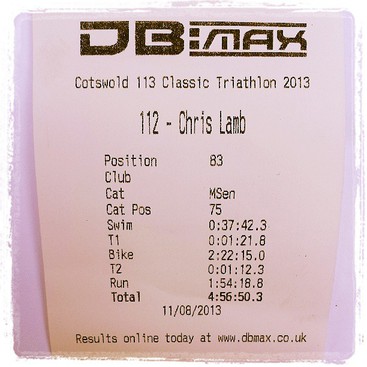
Chris Lamb: Cotswold Classic Middle Distance triathlon

https://chris-lamb.co.uk/wp-content/2013/cotswold_course.jpg Since becoming interested in triathlon in October of last year, my goal in 2013 was not to just finish a "70.3" (or "Half-Ironman"), but to complete one in under 5 hours. At the time, each discipline was woefully inadequate; I had not swum in over a decade, my cycling was average and I had only begun running again after years away from exercise. The somewhat arbitrary target time would dictate my training. For example, the high proportion of time spent on the bike combined with the injury-sensitive nature of running meant that cycling would have a highest return on investment of the three disciplines. Despite that, I would need to take the run seriously but carefully - I decided to enter a series of monthly 10K races where I could steadily reduce my times over the year. Races themselves formed a crucial part of my preparation and a carefully balanced race calendar was surprisingly important, balancing upcoming milestones that would provide an achievable goal as well as uncovering weaknesses in enough time so they could be worked on. Whilst I did post about my first triathlon, I felt no compulsion with the interleaving five or six races as I was evaluating them in the context of the 70.3 rather than as races in their own right.
Swim
Distance
1900m
Time
37:42
Whilst this wasn't my worst open water swim, it was certainly not my best. The first 500m was straightforward, but I lost my form over the next 500m and I overcompensated with excessive kick. My calves responded by cramping badly two or three times after that, losing both momentum and time. Curiously, whenever I could identify my speed relative to my effort (for example, by some underwater reeds) I could use that as feedback and my rotation (etc.) would temporarily return. Pool swimming always has markers of this kind, whilst a murky lake does not. In conclusion, my lack of open water training outside of races held me back more than I expected.
Bike https://chris-lamb.co.uk/wp-content/2013/cotswold_bike.jpg
Distance
52 miles
Time
2:22 (21.9 mph average)
I had thoroughly absorbed the advice that you should prepare for your primary race so that it feels like another day at the office. On this criterion, the bike leg was almost perfect. My nutrition strategy energy drink every 5 minutes, gel every 30 minutes worked fine until mile 35 where I felt like I had taken on too much fluid (and no time to take a bathroom break). I had a temporary hiccup with my rear derailleur but my "tame" 52/34 12x28 gearing was vindicated on the climbs, although in retrospect that might mostly be schadenfreude. Tens of hours acclimatising to a time trial bike was rewarded by being able to spend the entire leg in "aero" position (ignoring 90-degree turns or serious gradients), improving efficiency.
Run https://chris-lamb.co.uk/wp-content/2013/cotswold_run.jpg
Distance
13.1 miles (21km)
Time
1:54:18 (5:25/km)
I had prepared a chart which provided the pace I required based on the race time at the start of the run. I would then only need to monitor my run pace instead of repeatedly extrapolating a finish time as even basic arithmetic can become impossible when fatigued. This strategy was chosen as I was too risk-adverse to aim for a faster time than strictly required; the downside of missing the target from aiming too high and "blowing up" outweighed going a few minutes faster overall. Despite that, I ran half-marathon personal best. Unfortunately, due to pressing the wrong watch button after the swim, the chart was worthless unless I could assume the race started exactly at 6:30AM. With no other option I decided to trust that with some padding, but the uncertainly it added was unsettling. Adding to that feeling, my left hip started to twinge at 7K, something it has never done before. My plan was to get to 16K, take a caffeine gel and then keep ratcheting up the pace until the finish. In my long run training I could speed up to a 4:10/km pace but after 5 hours of racing and being reasonably sure I was going to reach my goal, the best I could summon was 4:45/km. My form completely shot, I crossed the finish line and got into a fetal position in the shade behind a tent, scaring the race organisers for a few minutes.
Overall
Total time
4:56:50
Writing this the day after the race, I am still a little unsure of how I feel. I am obviously extremely content that I reached my goal but given the volume and detail of preparation it was not a huge surprise to me on race day that I did so. This combined with the "real" work and progress being achieved throughout the training seems to have robbed the event of some element of triumph it could have had, but that in itself was somewhat expected. Where next? I had always dismissed the consensus view of needing to take a decent break after the season has ended but now I am looking forward to putting triathlon-specific training on hold for a while and explore other things. I highly doubt this will be my last triathlon though. https://chris-lamb.co.uk/wp-content/2013/cotswold_result.jpg (Full results)

10 August 2013

Matthew Garrett: When to add a platform-specific quirk to a Linux driver

If you're tempted to add a platform-specific quirk to a Linux driver, pause and do the following:

  1. Check whether the platform works correctly with the generic Windows driver for the hardware in question. If it requires a platform-specific driver rather than the generic one, adding a quirk is probably ok.
  2. If the generic Windows driver works, check whether there's any evidence of platform-specific code in the Windows driver. This will typically be in the .inf file, but occasionally you'll want to run strings against the Windows driver and see whether any functions or strings match the platform in question. If there's evidence of special-casing in the generic Windows driver, adding a quirk is probably ok
  3. If the generic Windows driver works and doesn't appear to have any platform-specific special casing, don't add a quirk. You'll plausibly fix the machine you care about, but you won't fix any others that have the same behaviour. Even worse, if someone does eventually fix the problem properly, there's a risk that your special-casing will now break your system.

The moral to this story is: if you think adding a quirk is the right solution, you're almost certainly wrong.

comment count unavailable comments

9 August 2013

Daniel Pocock: GSoC students progress

I've been lucky enough to be involved in a team mentoring two students contributing to Debian under the Google Summer of Code program this year. Both students have demonstrated a lot of enthusiasm and talent and have just passed their mid-term evaluations. Students often provide a fresh insight to projects. Their potential is not to be underestimated: one diligent student, Thomas Herndon from UMass Amherst recently came to fame exposing fundamental spreadsheet errors in calculations used to back the IMF case for austerity. Herndon was lucky to receive a copy of the spreadsheet (the source was not published openly as in free software): that is one problem that GSoC students don't have to wrestle with. Both of our GSoC students have exposed previously unknown issues in the code they are working on: Fabian discovered API differences in GnuTLS caused problems for dynalogin, while Catalin helped discover that some headers from reSIProcate are susceptible to ABI-breaking behavior dependending on the combination of CPPFLAGS. DebConf this month Both students are going to discuss some of their work on 17 August at DebConf - they are particularly keen to meet with other members of the Debian community throughout the week and find out how their work can best be leveraged by the community and Debian's wider userbase (and derivatives). Fabian Gr nbichler : one time passwords Fabian's project has been working on oath-toolkit and dynalogin. These are excellent projects, helping us realise new opportunities to use tokens for various types of authentication exchanges, such as login. Part of his project involves implementing the recently formalized IETF RFC 6287 for OCRA in a practical way that developers can use. Catalin Usurelu : real-time communications Catalin's project involves working with a variety of open source communications applications to make them work well together on a Debian system. One piece of work he is just completing provides a turn-key SIP conferencing solution that could replace Mumble (which attracted quite some controversy in the previous Debian release cycle) Community development These are all community projects and any feedback from users and other developers is always very welcome. For example, if you have time to test or provide suggestions, please feel free to jump in on the mailing lists we use for these projects.

5 August 2013

Daniel Pocock: Effectively supporting virtual domains with Mailman

When I first decided to run my own list server, I was well aware of the popularity of Mailman but I was deterred from using it by the complexity of setting up virtual hosts. In particular, 99% of the software I use for servers is packaged. Whenever I choose a new piece of software, using something that is packaged and supported is high on my list of priorities. Mailman's distribution tarball and the packages built from it only have limited support for virtual hosting. My own objective is to host lists for open source projects. As some of these projects don't have dedicated budgets, it is particularly important to find lightweight, low-maintenance solutions. Furthermore, it is important that those solutions don't detract from the time I want to invest in the projects themselves. I've developed some scripts to solve the problem: to start using them quickly, please see the README file. Here I provide a more detailed overview of the logic behind this approach. Mailman's limitations and workarounds For me, the biggest limitation of Mailman is that the site list is always linked to a single domain, which has to be chosen arbitrarily from the list of domains being hosted. Although it is not emphasized in the documentation, there is also the inconvenience of having all the lists from potentially unrelated projects appearing together on Mailman's main index page. Another limitation is that each list name must be globally unique across all domains. Some existing workarounds exist but they have limitations too. There is a virtual domain patch, but it is not clear how this handles the site list or the site index page. There is also the postfix-to-mailman script distributed by Debian and Ubuntu: using a transport-based solution looks elegant at first, but when you realise that you need to whitelist the addresses (to ensure messages are rejected at ingress rather than bounced), it becomes just as much work to maintain as the alternatives it aims to avoid: Mailman's authors do not endorse this approach. Experimenting with Sympa Deterred by Mailman's limitations, I initially went with Sympa and that seemed to run quite well for a number of years. In particular, it supports full virtual hosting out-of-the-box and all this is standard in the convenient Debian packages. From time-to-time, users have complained about the use of JavaScript in the web UI, but that was not something I could immediately resolve. However, when I upgraded to Debian 7 (wheezy), more serious problems appeared. Initially, the web UI (used for subscribing or browsing the archives) was completely broken. Anybody accessing the site would be given a download of the wws binary rather than the page that was supposed to be generated by the binary. I discovered errors about this in Apache's error.log and tried installing libapache2-mod-fcgid. The problem was resolved, but from then on, my whole web server became unstable and at least once every day I would have to restart the Apache process or it would become inaccessible. I put the details into a bug report and after not getting any feedback, decided to go and have another look at Mailman. A closer look at Mailman Looking at Mailman again, it appeared that the only way to achieve a relatively "pure" virtual hosting solution would be to run multiple installations of Mailman in different directory trees. Initially, I hoped this could be done by sharing copies of the binaries and just creating replicas of the structure under /var/lib/mailman. Looking under the hood, I discovered that the paths were compiled into the binaries and could not be easily overriden. It appears that this limitation could be overcome with some trivial patches to read directory names from the environment. The main aims of using shared binaries are disk space efficiency and also being able to benefit from security updates for the binary packages. However, if I had to patch the binaries, then I wouldn't be able to benefit from the security update packages anyway. So, it became inevitable that I would have to build binaries from source one way or another: either with a patch or by building multiple copies of each binary, each hardcoded with a different path. Putting it into practice Looking over the Mailman architecture, there are four things to be replicated for each installation:
  • init script to start a standalone qrunner per domain
  • cron jobs
  • CGI configuration from Apache (easily isolated by using a different ScriptAlias inside each Apache <VirtualHost>
  • Invocation of the Mailman binary from the mailer's aliases file
The init scripts and crontabs can be easily generated from a template (I used Debian's copies of these files as a base for that). Some of the Apache configuration can be handled by putting wildcards in the <Directory> specifications and the rest can be easily cut-and-pasted into <VirtualHost> definitions. Based on all of the above, all I had to do was run Mailman's configure script and make once for each virtual domain. I've scripted the whole process - my script is available here Managing the aliases file One particular limitation of my mailer (Postfix) is that the Mailman message processor can't be invoked directly from a rule in the virtual alias map. Scripts like this can only be invoked from the normal /etc/aliases file. This problem is not unique to Mailman: for Sympa, I also had to deal with this. The most common solution is to use the virtual file to translate all the virtual list addresses into very verbose usernames within the local domain:
Address Mapped to
widget-users@lists.example.org lists.example.org-widget-users@my-local-domain
The local part, lists.example.org-widget-users can then be used in the regular /etc/aliases file. This approach is described in the Sympa documentation and also in one of the virtual domain patches for Mailman. I've included a script for generating these alias mappings in the repository with my other scripts for building virtual Mailman installations. It would also be possible to patch Mailman itself to generate such files dynamically when new lists are created. Conclusion and next steps Using the techniques described and these small scripts, I successfully built independent virtual hosts for two of my domains, lists.lumicall.org and lists.dynalogin.org on a single mail host. Notice how each of them has the appearance of a clean, standalone Mailman installation? Going forward, I believe it would not be hard for the 2.x branch of Mailman to support this approach to virtual hosting with three changes:
  • Allowing the binaries to take their directory tree name from an environment variable or command line option or by inspecting argv[0] to discover their own location,
  • Generating the aliases file in the more verbose format and
  • Providing some convenient init script and crontab that iterates over all the domains

3 August 2013

Steve Langasek: Network services and Upstart

So Debian bug #710747 led to an interesting discussion the other night on IRC which made me realize there are a lot of people who have yet to understand why sysvinit needs replacing. I can't speak to whether upstart solves this bug in particular. The tftpd-hpa package in Ubuntu (and in Debian experimental) does have an upstart job, and I have used tftpd-hpa on systems whose network interfaces are managed entirely with NetworkManager, and I have not seen this bug; but I can't say that this is more than coincidence. However, I can speak to how upstart provides facilities that address the general problem of starting services that require a working network connection to be present before they start up. Traditionally on Linux systems, init scripts could assume that the network connection is up before starting any services for the target runlevel. With LSB dependencies, you could also express this as
Required-Start:    $network
The trouble with both of these approaches is that they assume that there is a single point in time, early in the boot of the system, when the "network" is up. This was an ok assumption 15 years ago, when the Linux kernel initialized all devices serially and all our network configuration was static. But nowadays, you simply cannot rely on systems booting in such a way that the network is fully up shortly after boot - or in a way that you can block the system boot waiting for the network to be up. If all of our services would cope gracefully with being started without the network, this would be a non-issue. Unfortunately, not all network services are written in such a way as to work without a network; nor do they all cope with dynamic changes to interfaces or addresses. While it would be better if these services were written more robustly, since there's no shortage of daemons written this way, it's convenient that upstart provides tools for coping with this behavior in the meantime. Here's a real (simplified) example of an upstart job for a service that needs to wait for a non-loopback interface before it starts:
start on (local-filesystems and net-device-up IFACE!=lo)
stop on runlevel [!2345]
expect fork
respawn
exec nmbd -D
Now, you might also have a service that you only want to start up when a particular network device comes up. This is easily expressed in upstart, and might look like this hypothetical job:
start on net-device-up IFACE=wlan0
stop on net-device-down IFACE=wlan0
expect daemon
respawn
exec mydaemon
If you need to restart a daemon whenever the set of active network connections changes, that's less straightforward. Upstart doesn't have the notion of a 'restart' rule, so you would need two jobs to handle this - one for the daemon itself that starts on the first network connection, and a second job to trigger a restart of the daemon when the network status changes. For the tftpd-hpa case in the abovementioned bug, this might look like:
$ cat /etc/init/tftpd-hpa.conf
start on runlevel [2345]
stop on runlevel [!2345]
expect fork
respawn
script
        if [ -f $ DEFAULTS  ]; then
                . $ DEFAULTS 
        fi
        exec /usr/sbin/in.tftpd --listen  --user $ TFTP_USERNAME  --address $ TFTP_ADDRESS  $ TFTP_OPTIONS  $ TFTP_DIRECTORY 
end script
$ cat /etc/init/tftpd-hpa-restart.conf
start on net-device-up
task
instance $IFACE
script
        status tftpd-hpa   grep -q start/   stop
        restart tftpd-hpa
end script
For this case, upstart doesn't provide quite so great an advantage. It's nice to be able to use upstart natively for both pieces, but you can do the same thing with an init script plus an if-up.d script for ifupdown, which is what maintainers do today. I think adding a restart on stanza to upstart in the future to address this would be a good idea. Though in any event, this is far simpler to do with upstart than with any if-up.d script I've ever seen for managing an initscript-based service. Between the more friendly declarative syntax, and the enhanced semantics for expressing when to run (or restart) a job, upstart offers clear advantages over other init systems.

2 August 2013

Justus Winter: There is no spoon...

This is the Hurd shutting down:
root@debian:~# init 0
INIT: Switching to runlevel: 0
INIT: Sending processes the TERM signal
INIT: Sending processes the KILL signal
Using makefile-style concurrent boot in runlevel 0.
Stopping deferred execution scheduler: atd.
Asking all remaining processes to terminate...done.
All processes ended within 1 seconds...done.
Stopping enhanced syslogd: rsyslogd.
Deconfiguring network interfaces...ifdown: failed to open pid file /run/network/ifdown-/dev/eth0.pid: No such file or directory
Internet Systems Consortium DHCP Client 4.2.2
Copyright 2004-2011 Internet Systems Consortium.
All rights reserved.
For info, please visit https://www.isc.org/software/dhcp/
can't create /var/lib/dhcp/dhclient./dev/eth0.leases: No such file or directory
Listening on Socket//dev/eth0
Sending on   Socket//dev/eth0
/bin/sh: 1: ifconfig: not found
done.
Deactivating swap...swapoff: /dev/hd0s5: 177152k swap space
done.
mount: cannot remount /: Device or resource busy
Will now halt.
INIT: no more processes left in this runlevel
The important line is the one saying Asking all remaining processes to terminate...done.. What happens there is that /sbin/killall5 is run, actually does its job and the system survives that. What was needed to fix killall5 is to mark some processes (all translators being started as root as well as any essential processes) as important and to exempt them from being frozen and killed by killall5. Furthermore it was necessary to fill in the correct values for the start_code and end_code fields of the /proc/*/stat records (this used to be an issue for Debian/kFreeBSD as well). I am still in the process of cleaning up the patch series, I will finish that first thing Monday morning. I also spent my time polishing my mtab translator, the patch series is in its fourth revision and I consider it ready for inclusion: http://lists.gnu.org/archive/html/bug-hurd/2013-07/msg00259.html I also had this moment of clarity and enlightenment. For the first time I thought I finally understood what the Hurd really was. It is just a bunch of Mach programs that talk to each other in this really strange language and as a result they behave very much like the equivalent programs would on a different POSIX-like system. This is of course hidden away from the application programmer in our libc. This language is a mere convention, Richard calls this system personality. On some other level I have known this for a long time, but I never grasped the profound implications for users and developers, and for composability and the security of the system as a whole. I will try to show some of the cool stuff that can be done with such a system, stuff that is hard to do on monolithic kernels. And I had to patch the exec server. You know what they say, once you looked into /hurd/exec, there is no going back. I am very happy to report that I addressed all three major issues I identified in my second week. Next week I will clean up my initscripts patch series and submit it for inclusion. I will also rebuild the hurd, sysvinit and libc packages with all my patches included for broader testing. And if I ever run out of stuff to do first, I will have to look at the network related issues.

25 July 2013

Michael Stapelberg: Looking for a USB WLAN stick

Posting this on behalf of a friend of mine in the hope that you can help: I ve failed several times now to find a suitable WLAN USB dongle that works out of the box on Debian testing. Often manufacturers change the chipsets without changing the version numbers, the product pages are incomplete or even state wrong information. I turn to you, in the hopes that someone can give me helpful pointers. The dongle should have: If you have any hints, please send them directly to breunig AT uni-hd DOT de. Thanks!

24 July 2013

Gergely Nagy: My git tagging convention

Zigo posted an article earlier, one which I disagree with strongly. First of all, something that has been in use ever since git was invented is hardly a new fashion. Something that is used by the very same person who invented git and by git itself, is hardly surprising to be found so widespread. Especially not when it is used as an example in git's very own documentation! Writing it off as something silly, because of the way GitHub works, without even trying to understand the reason behind it is just plain wrong. Just because GitHub names tarballs the way it does, does not mean that we should change the way we tag.For example, cgit (used by, among others, kernel.org), uses the tag name as-is for its tarballs, unlike GitHub which prepends the project name, so one will have to mangle the filename in a debian/watch file anyway, when downloading from a host that is not GitHub, therefore his arguments for a raw version-only tag are bogus, unless your upstream is using GitHub.But I do not want to criticise only, rather, to provide a reason why a prefix is used, and why I chose the "worst" prefix: the project name itself.One very strong reason to use a prefix, either v or any other prefix is to ease tab completion. If you have a tag that is a bare number, you type the first, press tab, and get a mixture of commits and tags. You can't easily tell your completion system that you want commits or tags. With a prefix outside of the hex range, which v is, you can do that, and that makes working with it a lot easier.Is it for convenience? Yes. But ask yourself this: how many times do you have to write a debian/watch file? Once per package. How much time do you spend looking for a tag, or a commit? A lot more. So which one is most important? The convenience of someone who has to work around the tarball naming of the hosting service once, or the developer who works with the software daily? Obviously the latter!But that is not all. I'm an advocate of prefixing the tag with the project name, actually, and I've been doing that for all new projects for a while now, and I'm not going to change that, because it serves a very practical purpose: if you have a parent repository, with a lot of submodules, if git tag tells you the project name too, that makes it much easier to navigate. I don't have to bake submodule support into my shell prompt (that would be costy), and I won't find it surprising that if I enter a subdirectory, git tag fails to list the version I know I'm working on. Just because I happened to end up in a submodule, which is something I end up doing often, as I have many repositories that have submodules, which in turn have other submodules, and so on and so forth through many layers.A raw version number as a tag name is insufficient for my needs, simple as that. And I, as upstream, don't care that whoever packages my thing, will have to add a line to a watch file. That only needs to be done once, while I work with tags and commits daily.I'm sorry, but calling this naming convention a disease just because GitHub's tarball naming is what it is, without even considering that there may be other reasons behind it than legacy, and that there are hosting sites outside of GitHub, is a mistake. Dear package maintainers, please do not annoy us upstreams with requests to cripple our daily work. Thank you.

Keith Packard: present-redirect

Present Extension Redirection Multi-buffered applications have always behaved poorly in the presence of the Composite extension: Owen Taylor suggested that Present should offer a way to redirect operations to the compositing manager as a way to solve these problems. This posting is my attempt to make that idea a bit more concrete given the current Present design. Design Goals Here s a list of features I think we should try to provide:
  1. Provide accurate information to applications about when presentation to the screen actually occurs. In particular, GLX applications using GLX_OML_sync_control should receive the correct information in terms of UST and MSC for each Swap Buffers request.
  2. Ensure that applications still receive correct information as to the contents of their buffers, in particular we want to be able to implement EGL_EXT_buffer_age in a useful manner.
  3. Avoid needing to un-redirect full-screen windows to get page flipping behavior.
  4. Eliminate all extra copies. A windowed application may still perform one copy from back buffer to scanout buffer, but there shouldn t be any reason to copy contents to the composite redirection buffer or the compositing manager back buffer.
Simple Present Redirection With those goals in mind, here s what I see as the sequence of events for a simple windowed application doing a new full-window update without any translucency or window transformation in effect:
  1. Application creates back buffer, draws new frame to it.
  2. Application executes PresentRegion. In this example, the valid and update parameters are None , indicating that the full window should be redrawn.
  3. The server captures the PresentRegion request and constructs a PresentRedirectNotify event containing sufficient information for the compositor to place that image correctly on the screen:
    • target window for the presentation
    • source pixmap containing the new image
    • idle fence to notify when the source pixmap is no longer in use.
    • serial number from the request.
    • target MSC for the presentation. This should probably just be the computed absolute MSC value, and not the original target/divisor/numerator values provided by the application.
  4. The compositing manager receives this event and constructs a new PresentRegion request using the provided source pixmap, but this time targeting the root window, and constructing a valid region which clips the pixmap to the shape of the window on the screen. This request would use the original application s idle fence value so that when complete, the application would get notified. This request would need to also include the original target window and serial number so that a suitable PresentCompleteNotify event can be constructed and delivered when the final presentation is complete.
  5. The server executes this new PresentRegion operation. When complete, it delivers PresentCompleteNotify events to both the compositing manager and the application.
  6. Once the source pixmap is no longer in use (either the copy has completed, or the screen has flipped away from this pixmap), the server triggers the idle fence.
Multiple Application Redirection If multiple applications perform PresentRegion operations within the same frame, then the compositing manager will receive multiple PresentRedirectNotify events, and can simply construct multiple new PresentRegion requests. If these are all queued to the same global MSC, they will execute at the same frame boundary. No inter-operation dependency exists here. Complex Presentations Ok, so the simple case looks like it s pretty darn simple to implement, and satisfies the design goals nicely. Let s look at a couple of more complicated cases in common usage; the first is with translucency, the second with scaling application images down to thumbnails and the third with partial application window updates. Redirection with Translucency If the compositing manager discovers that a portion of the updated region overlays or is overlaid by something translucent (either another window, or drop shadows, or something else), then a composite image for that area must be constructed before the whole can be presented. Starting when the compositing manager receives the event, we have:
  1. The compositing manager receives this event. Using the new pixmap, along with pixmaps for the other involved windows and graphical elements, the compositing manager constructs an updated view for the affected portion of the screen in a back buffer pixmap. Once complete, a PresentRegion operation that uses this back buffer pixmap is sent to the X server. Again, the original target window and serial number are also delivered to the server so that a suitable PresentCompleteNotify event can be delivered to the application.
  2. The server executes this new PresentRegion operation; PresentCompleteNotify events are delivered, and idle fences triggered as appropriate.
Redirection with Transformation Transformation of the window contents means that we cannot always update a portion of the back buffer directly from the provided application pixmap as that will not contain the window border. Contents generated from a region that includes both application pixels and window border pixels must be sourced from a single pixmap containing both sets of pixels. One option that I ve discussed in the past to solve this would be to have the original application allocate the pixmap large enough to hold both the application contents and the surrounding window border. Have it draw the application contents at the correct offset within this pixmap, and then have the window manager contents drawn around that; either automatically by the X server, or even manually by the compositing manager. That would be mighty convenient for the compositing manager, but would require significant additional infrastructure throughout the X server and even harder the drawing system (OpenGL or some other system). There s another reason to want this though, and that s for sub-frame buffer scanout page swapping. The second option would be for the compositing manager to combine these images itself; there s a nice pixmap already containing the window manager image the composite redirect buffer. Taking the provided source pixmap and copying it directly to the target window will construct our composite image, just as if we had no Present redirection in place. This will cost an additional copy though, which we ve promised to avoid. Of course, as it s just for thumb-nailing or other visual effects, perhaps the compositing manager could perform this operation at a reduced frame rate, so that overall system performance didn t suffer. Retaining Access to the Application Buffer Above, I discussed having the idle fence from the redirected PresentRegion operation be sent along with the replacement PresentRegion operation. This ignores the fact that the composting manager may well need the contents of that application frame again in the future, when displaying changes for other applications that involve the same region of the screen. With the goal of making sure the idle fences are triggered as soon as possible so that applications can re-use or free the buffers quickly, let s think about when the triggering can occur.
  1. Full-screen flipped applications. In this case, the application s idle fence can be triggered once the application provides a new frame and the X server has flipped to that new frame, or some other scanout buffer.
  2. Windowed, copied applications. In this case, the application s idle fence can be triggered once the application provides a new frame to the compositing manager, and the X server doesn t have any presentations queued.
In both cases, we require that both the X server and the compositing manager be finished with the buffer before the application s idle fence should be triggered. One easy way to get this behavior is for the composting manager to create a new idle fence for its operations. When that is triggered, it would receive an X event and then trigger the applications idle fence as appropriate. This would add considerable latency to the application s idle fence a round trip through the compositing manager. The alternative would be to construct some additional protocol to make the applications idle fence dependent on the Present operation and some additional state provided by the compositing manager. Some experimentation here is warranted, but my experience with latency in this area is that it causes applications to end up allocating another back buffer as the idle notification arrives just after a buffer allocation request comes down to the rendering library. Definitely sub-optimal. An Aside on Media Stream Counters The GLX_OML_sync_control extension defines the Media Stream Counter (MSC) as a counter unique to the graphics subsystem which is incremented each time a vertical retrace occurs. That would be trivial if we had only one vertical retrace sequence in the world. However, we actually have N+1 such counters, one for each of the N active monitors in the system and a separate fake counter to be used when none of the other counters is available. In the current Present implementation, windows transition among the various Media Stream Counter domains as they move between the various monitors, and those monitors get turned on and off. As they move between these counter domains, Present tracks a global offset from their original domain. This offset ensures that the MSC value remains monotonically increasing as seen by each window. What it does not ensure is that all windows have comparable MSC sequence values; two windows on the same monitor may well have different MSC values for the same physical retrace event. And, even moving a window from one MSC domain to another and back won t make it return to the original MSC sequence values due to differences in refresh rates between the monitors. Internally, Present asserts that each CRTC in the system identifies a unique MSC domain, and it has a driver API which identifies which CRTC a particular window should be associated with. Once a particular CRTC has been identified for a window, client-relative MSC values and CRTC-relative MSC values can be exchanged using an offset between that CRTC MSC domain and the window MSC domain. The Intel driver assigns CRTCs to windows by picking the CRTC showing the greatest number of pixels for a particular window. When two CRTCs show the same number of pixels, the Intel driver picks the first in the list. Vblank Synchronization and Multiple Monitors Ok, so each window lives in a particular MSC domain, clocked by the MSC of the CRTC the driver has associated it with. In an un-composited world, this makes picking when to update the screen pretty simple; Present updates the screen when vblank happens in the CRTC associated with the window. In the composite redirected case, it s a bit harder all of the PresentRegion operations are going to target the root window, and yet we want updates for each window to be synchronized with the monitor containing that window. Of course, the root window belongs to a single MSC domain (likely the largest monitor, using the selection algorithm described above from the Intel driver). So, any PresentRegion requests will be timed relative to that single monitor. I think what is required here is for the PresentRegion extension to take an optional CRTC argument, which would then be used as the MSC domain instead of the window MSC domain. All of the timing arguments would be interpreted relative to that CRTC MSC domain. The PresentRedirectNotify event would then contain the relevant CRTC and the MSC value would be relative to that CRTC. A clever Compositing manager could then decompose a global PresentRegion operation into per-CRTC PresentRegion operations and ensure that multiple monitors were all synchronized correctly. We could take this even further and have the PresentRegion capable of passing a smaller CRTC-sized pixmap down to the kernel, effectively providing per-CRTC pixmaps with no visible explicit protocol Other Composite Users Ok, so the above discussion is clearly focused on getting the correct contents onto the screen with minimal copies along the way. However, what I ve ignored is how to deal with other applications, also using Composite at the same time. They re all going to expect that the composite redirect buffers will contain correct window contents at all times, and yet we ve just spent a bunch of time making that not be the case to avoid copying data into those buffers and instead copying directly to the compositing manager back or front buffers. Obviously the X server is aware of when this happens; the compositing manager will have selected for manual redirection on all top-level windows, while our other application will have only been able to select for automatic redirection. So, we ve got two pretty clear choices here:
  1. Have the X server change how Present redirection works when some other application selects for Automatic redirection on a window. It would copy the source pixmap into the window buffer and then send (a modified?) PresentRedirectNotify event to the compositing manager.
  2. Include a flag in the PresentRedirectNotify event that the composite redirect buffer needs to eventually get the contents of the source pixmap, and then expect the compositing manager to figure out what to do.
Development Plans As usual, I m going to pick the path of least resistance for all of the above options and see how things look; where the easy thing works, we can keep using it. Where the easy thing fails, I ll try something else. The changes required for this are pretty minimal. The PresentRegion request needs to gain a list of window/serial pairs that are also to be notified when the operation completes:
PRESENTNOTIFY  
    window: WINDOW
    serial: CARD32
     
 
    PresentRegion
    window: WINDOW
    pixmap: PIXMAP
    serial: CARD32
    valid-area: REGION or None
    update-area: REGION or None
    x-off, y-off: INT16
    idle-fence: FENCE
    target-crtc: CRTC or None
    target-msc: CARD64
    divisor: CARD64
    remainder: CARD64
    notifies: LISTofPRESENTNOTIFY
 
    Errors: Window, Pixmap, Match
The target-crtc parameter explicitly identifies a CRTC MSC domain. If None, then this request implicitly uses the window MSC domain. notifies provides a list of windows that will also receive PresentCompleteNotify events with the associated serial number when this PresentRegion operation completes.
 
    PresentRedirectNotify
    type: CARD8         XGE event type (35)
    extension: CARD8        Present extension request number
    length: CARD16          2
    evtype: CARD16          Present_RedirectNotify
    eventID: PRESENTEVENTID
    event-window: WINDOW
    window: WINDOW
    pixmap: PIXMAP
    serial: CARD32
    valid-area: REGION
    valid-rect: RECTANGLE
    update-area: REGION
    update-rect: RECTANGLE
    x-off, y-off: INT16
    target-crtc: CRTC
    target-msc: CARD64
    idle-fence: FENCE
    update-window: BOOL
 
The target-crtc identifies which CRTC MSC domain the target-msc value relates to. divisor and remainder have been removed as the target-msc value has been adjusted using the application values. If update-window is True, then the recipient of this event is instructed to provide reasonably up-to-date contents directly to the window by copying the contents of pixmap to the window manually. Beyond these two protocol changes, the compositing manager is expected to receive Sync events when the idle-fence is triggered and then manually perform a Sync operation to trigger the client s idle-fence when appropriate. I m planning to work on these changes, and then go re-work xcompmgr (or perhaps unagi, which certainly looks less messy) to incorporate support for Present redirection. The goal is to have something to demonstrate at Guadec, which doesn t seem impossible, aside from leaving on vacation in four days

23 July 2013

Russell Coker: Security is Impossible

The Scope of the Problem Security is inherently complex because of the large number of ways of circumventing it. For example Internet facing servers have been successfully attacked based on vulnerabilities in the OS, the server application, public key generation, DNS, SSL key certificates (and many other programs and algorithms in use), as well as the infrastructure and employees of all companies in the chain. When all those layers work reasonably well (not perfectly but well enough to not obviously be the weakest link) there are attacks on the end user systems that access the servers (such as the trojan horse programs used to attack PCs used for online banking). My Area of Interest The area of security that interests me is Linux software development. There are many related areas such as documentation and default configurations to make it easier for people to secure their systems (instead of insecure systems being the default option) which are all important. There are also many related fields such as ensuring that all people with relevant access are trustworthy. There are many interesting problems to solve in such areas most of which aren t a good match for my skills or just require more time than I have available. I sometimes write blog posts commenting on random security problems in other areas. Sometimes I hope to inspire people to new research, sometimes I hope to just inform users who can consider the issues when implementing solutions to security problems. Bugs In the software development side there are ongoing problems of bugs in code that weaken security. The fact that the main area of concern for people who are interested in securing systems is fixing bugs is an indication that the problem of software quality needs a lot of work at the moment. The other area that gets a reasonable amount of obvious work is in access control. Again it s an area that needs a lot of work, but the fact that we re not done with that is an indication of how far there is to go in generally improving computer security. Authenticating Software Releases There have been cases where source code repositories have been compromised to introduce trojan horse code, the ones I ve read about have been discovered reasonably quickly with little harm done but there could be some which weren t discovered. Of course it s likely that such attacks will be discovered because someone will have the original and the copies can be compared. Repositories of binaries are a bigger problem, it s not always possible to recompile a program and get a binary which checks out as being identical (larger programs often include the build time in the binary). Even for build processes which don t include such data it can be very difficult to determine the integrity of a build process. For example programs compiled with different versions of libraries, header files, or compilers will usually differ slightly. As most developers frequently change the versions of such software they will often be unable to verify their own binaries and any automated verification of such binaries will be impossible for anyone else. So if a developer s workstation was compromised without their knowledge it might be impossible for them to later check whether they released trojan binaries without just running the binaries in question and looking for undesired behavior. The problem of verifying past binaries is solvable for large software companies, Linux distributions, and all other organisations that have the resources to keep old versions of all binaries and libraries used to build software. For proprietary software companies the verification process would have to start with faith in the vendor of their OS and compiler doing the right thing. For Linux distributions and other organisations based on free software it would start by having the source to everything which can then be verified in theory although in practice verifying all source for compilers, the OS, and libraries would be a huge undertaking. Espionage There is a well documented history of military espionage, people who are sworn to secrecy have been subverted by money, blackmail, and by having political beliefs which don t agree with their government. The history of corporate espionage is less well documented but as corporations perform less stringent background checks than military organisations I think it s safe to assume that corporate espionage is much more common. Presumably any government organisation that can have any success at subverting employees of a foreign government can be much more successful in subverting programmers (either in companies such as Microsoft or in the FOSS community). One factor that makes it easier to launch such attacks is the global nature of software development. Government jobs that involve access to secret data have requirements about where the applicant was born and has lived, corporate jobs and volunteer positions in free software development don t have such requirements. The effort involved in subverting an existing employee of a software company or contributor to free software or the effort involved in getting an agent accepted in such a project would be quite small when compared to a nuclear weapons program. Therefore I think we should assume that every country which is capable of developing nuclear weapons (even North Korea) can do such things if they wish. Would the government of such a country want to subvert a major software project that is used by hundreds of millions of people? I can imagine ways that such things could benefit a government and while there would be costs for such actions (both in local politics and international relations) it seems most likely that some governments would consider it to be worth the risk and North Korea doesn t seem to have much to lose. Conclusion We would like every computer to be like a castle with a strong wall separating them from the bad things which can t be breached in ways that aren t obvious. But the way things are progressing with increasingly complex systems depending on more people and other systems it s becoming more like biology than engineering. We can think of important government systems as being comparable to the way people with compromised immune systems are isolated from any risk of catching a disease, the consequences of an infection are worse so greater isolation measures are required. For regular desktop PCs getting infected by a trojan is often regarded as being similar to getting a cold in winter. People just accept that their PC will be infected on occasion and don t bother making any serious effort to prevent it. After an infection is discovered the user (or their management for a corporate PC) tend not to be particularly worried about data loss in spite of some high profile data leaks from companies that do security work and the ongoing attacks against online banking and webcam spying on home PCs. I don t know what it will take for users to start taking security risks seriously. I think that a secure boot is a good step in the right direction, but it s a long way from being able to magically solve all security problems. I ve previously described some of the ways that secure boot won t save you [1]. The problems of subverting developers don t seem to be an immediate concern (although we should consider the possibility that it might be happening already without anyone noticing). The ongoing trend is that the value of computers in society is steadily increasing which therefore increases the rewards for criminals and spy agencies who can compromise them. Therefore it seems that we will definitely face the problems of subverted developers if we can adequately address the current technical problems related to flaws in software and inadequate access control. We just need to fix some of the problems which are exploited more easily to force the attackers to use the more difficult and expensive attacks. Note that it is a really good thing to make attacks more difficult, that decreases the number of organisations that are capable of attack even though it won t stop determined attackers. For end user systems the major problem seems to be related to running random programs from the Internet without a security model that adequately protects the system. Both Android and iOS make good efforts at protecting a system in the face of random hostile applications, but they have both been shown to fail in practice (it might be a good idea to have a phone for games that is separate from the phone used for phone calls etc). More research into OS security is needed to address this. But in the mean time users need to refrain from playing games and viewing porn on systems that are used for work, Internet banking, and other important things. While PCs are small and cheap enough that having separate PCs for important and unimportant tasks is practical it seems that most users don t regard the problems as being serious enough to be worth the effort.

22 July 2013

Jamie McClelland: Sharing screen with remote Linux user behind a firewall

Intentionally helping someone poke a hole through their firewall to allow any users on a remote machine access to their computer is generally a bad idea... unless they want you to help them with their computer. In that case, I find it really useful. Toward this end, I've setup a dedicated user account (jamie-share@chavez.mayfirst.org in this example). I granted myself shell access to this user and generated an ssh key pair:
ssh-keygen -t rsa
Then, as a convenience I move my public key into the home directory:
cp ~/.ssh/id_rsa.pub ~/
Next, I give the user I want to help ssh access to this shell account on an Internet connected computer (in this example: jamie-share@chavez.mayfirst.org). Either I share the password with them or if they have an ssh key or monkeysphere identity I use that. Then, I ask them to grant teh jamie-share user access to their user account by running (which downloads the key I just created):
mkdir -p ~/.ssh
ssh jamie-share@chavez.mayfirst.org "cat id_rsa.pub" >> ~/.ssh/authorized_keys
Next, ask them to install openssh-server on their local computer:
sudo apt-get install openssh-server screen
Next, they run the following command on their local computer:
ssh -R 2222:localhost:22 jamie-share@chavez.mayfirst.org
This command says: forward port 2222 on chavez.mayfirst.org to port 22 on your local computer. Lastly, I log in to jamie-share@chavez.mayfirst.org and run, replacing with their local username.
ssh <their-username>localhost -p 2222
You can do whatever you want now, but running screen is a good way to share a session so the person you are working with can see what you are doing as you do it. p.s. Thanks Ross for the tips!

Matthew Garrett: ARM and firmware specifications

Jon Masters, Chief ARM Architect at Red Hat, recently posted a description of his expectations for baseline arm64 servers. The quick summary is that systems should implement UEFI and ACPI, and any more traditional ARM boot mechanisms should be ignored. This is an interesting departure from the status quo in the ARM world, and it's worth thinking about the benefits and drawbacks of this approach.

It's very easy to build a generic kernel for most x86 systems, since the PC platform is fairly well defined even if not terribly well specified. Where system hardware does vary, it's almost always exposed on an enumerable bus (such as PCI or USB) which allows the OS to bind appropriate drivers. Things are different in the ARM world. Even once you're past the point of different SoC vendors requiring different kernel setup code and drivers, you still have to cope with the fact that system vendors can wire these SoCs up very differently. Hardware is often attached via GPIO lines without any means to enumerate them. The end result is that you've traditionally needed a different kernel for every ARM board. This is viable if you're selling the OS and hardware as a single product, but less viable if there's any desire to run a generic OS on the hardware.

The solution that's been adopted for this in the Linux world is called Device Tree. Device Tree actually has significant history, having been used as the device descriptor format in Open Firmware. Since there was already support for it in the Linux kernel, adapting it for use in ARM devices was straightforward. Device Tree aware devices can pass a descriptor blob to the kernel at startup[1], and devices without that knowledge can have a blob build into the kernel.

So, if this problem is already solved, why the push to move to UEFI and ACPI? This push didn't actually originate in the Linux world - Microsoft mandate that Windows RT devices implement UEFI and ACPI, and were they to launch a Windows ARM server product would probably carry that over. That makes sense for Microsoft, since recent versions of Windows have been x86 only and so have grown all kinds of support for ACPI and UEFI. Supporting Device Tree would require Microsoft to rewrite large parts of Windows, whereas mandating UEFI and ACPI allowed them to reuse most of their existing Windows boot and driver code. As a result, largely at Microsoft's behest, ACPI 5 has grown a range of additional features for describing things like GPIO pinouts and I2C connections. Whatever your weird device layout, you can probably express it via ACPI.

This argument works less well for Linux. Linux already supports Device Tree, whereas it currently doesn't support ACPI or UEFI on ARM[2]. Hardware vendors are already used to working with Device Tree. Moving to UEFI and ACPI has the potential to uncover a range of exciting new kernel issues and vendor bugs. It's not obviously an engineering win.

So how about users? There's an argument that since server vendors are now mostly shipping ACPI and UEFI systems, having ARM support these technologies makes it easier for customers to replace x86 systems with ARM systems. This really doesn't fly for ACPI, which is entirely invisible to the user. There are no standard ACPI entry points for system configuration, and the bits of ACPI that are generically useful (such as configuring system wakeup times) are already abstracted away to a standard interface by the kernel. It's somewhat more compelling for UEFI. UEFI supports a platform-independent bytecode language (EFI Byte Code, or EBC), which means that customers can write their own system management utilities, build them for EBC and then deploy them to their servers without caring about whether they're x86 or ARM. Want a bootloader that'll hit an internal HTTP server in order to determine which system image to deploy, and which works on both x86 and ARM? Straightforward.

Arnd Bergmann has a interesting counterargument. In a nutshell, ARM servers aren't currently aiming for the same market as x86 servers, and as a result customers are unlikely to gain any significant benefit from shared functionality between the two.

So if there's no real benefit to users, and if there's no benefit to kernel developers, what's the point? The main one that springs to mind is that there is a benefit to distributions. Moving to UEFI means that there's a standard mechanism for distributions to interact with the firmware and configure the bootloader. The traditional ARM approach has been for vendors to ship their own version of u-boot. If that's in flash then it's not much of a problem[3], but if it's on disk then you have to ship a range of different bootloaders and know which one to install (and let's not even talk about initial bootstrapping).

This seems like the most compelling argument. UEFI provides a genuine benefit for distributions, and long term it probably provides some benefit to customers. The question is whether that benefit is worth the flux. The same distribution benefit could be gained by simply mandating a minimum set of u-boot functionality, which would seem much more straightforward. The customer benefit is currently unclear.

In the end it'll probably be a market decision. If Red Hat produce an ARM product that has these requirements, and if Suse produce an ARM product that will work with u-boot and Device Tree, it'll be up to vendors to decide whether the additional work to support UEFI/ACPI is worth it in order to be able to sell to customers who want Red Hat. I expect that large vendors like HP and Dell will probably do it, but the smaller ones may not. The customer demand issue is also going to be unclear until we learn whether using UEFI is something that customers actually care about, rather than a theoretical benefit.

Overall, I'm on the fence as to whether a UEFI requirement is going to stick, and I suspect that the ACPI requirement is tilting at windmills. There's nothing stopping vendors from providing a Device Tree blob from UEFI, and I can't think of any benefits they gain from using ACPI instead. Vendor interest in the generic parts of the ACPI spec has been tepid even in the x86 world (the vast majority of ACPI spec updates come from Microsoft and Intel, not any of the system vendors), and I don't see that changing with the introduction of a range of ARM vendors who are already happy with Device Tree.

We'll see. Linux is going to need to gain the support for UEFI and ACPI on ARM in any case, since there's already hardware shipping in that configuration. But with ARM vendors still getting to grips with Device Tree, forcing them to go through another change in how they do things is going to be hard work. Red Hat may be successful in enforcing these requirements at the cost of some vendor unhappiness, or Red Hat may find that their product doesn't boot on most of the available hardware. It's an aggressive gamble, and while it'll be interesting to see how it plays out, I'm not that optimistic.

[1] The blob could be pulled from the firmware, but it's not uncommon for it to be built into u-boot instead. This does mean that you have a device-specific u-boot even if you have a generic kernel, but that's typically true anyway.
[2] Patches have been posted for ARM UEFI support. They're not mergeable in their current form, but they should be in the near future. ACPI support is in development.
[3] Although not all u-boots are created equal - some vendors ship versions that will only boot off FAT, some vendors ship versions that will only boot off ext2. Having to special case this stuff in your installer is a pain.

comment count unavailable comments

Riku Voipio: ACPI on ARM storm in teacup

A recent google+ post by Jon Masters caused some stormy and some less stormy responses. A lot of BIOS/UEFI/ACPI hate comes X86, where ACPI is used from everything from suspending devices to reading buttons and setting leds. So when X86 kernel suspends, it does magic calls to ACPI and prays that the firmware vendor did not screw it up. Now vendors do screw up, hence lots of cursing and ugly workarounds in the kernel follows. My Lenovo has a firwmare bug where the FN-buttons and Fan stops working if the laptop is attached on AC adapter for too long. The fan is probably a simple i2c device the kernel could control directly without jumping through ACPI hiding layer hoops. But the X86 people hold the view it is better to trust the firmware engineer to control devices instead of having the kernel folk to write device drivers to ... control devices! Now on ARM(64) the idea of using ACPI is to have none of that. Instead the idea is to use ACPI only to provide tables for enumerating what devices are available in the platform. Just like what device tree does. Now if this is the same as device tree, why bother? The main reason is to allow the distribution installer behave same on X86 / ARM / ARM64. This is crucial for distributions like fedora and RHEL where a cabal holds the point of view that X86 distribution development must not be constrained by ARM support. But it also important for everyone that the method of installing your favorite distribution to an ARM64 server is standard and works the same for any server from any vendor. Now while UEFI and ACPI are definitely not my preferred solutions, I can accept them as necessary evil for having a more standard platform.

Daniel Pocock: Winning at any cost

It's not every day that a student messing around with keystroke loggers comes to fame through slashdot. Nonetheless, systematically rigging an election and getting sentenced to 12 months in a dorm with bars has helped raise 22 year old Matthew Weaver's profile well above that of the average script kiddie. Now let's stop and reflect on poor Weaver's future. You may be thinking that with an exchange program like this on his academic record he won't be so popular with employers. Given that he was busted by campus security rather than the FBI he won't even attract the interest of those companies who hire ex-hackers. So where could he go? How is it done in Australia? Not too long ago, when I was a student myself, one of our prominent universities was subjected to a very similar scam. Four members of the Tin Tin for NUS ticket at La Trobe University were implicated in stuffing the ballot the old fashioned way. The incidents even share the characteristics of chronic stupidity: just as Weaver had been caught voting for himself 259 times from the same IP address in a campus computer lab, team Tin Tin had tried to hand their bag of manipulated postal votes directly to the deputy returning officer rather than discretely posting them through the internal mail. According to an official report by the Deputy Returning Officer, Karsten Haley, all four candidates were charged with Dishonest Conduct and Interfering with Ballot Papers. Unfortunately, the report notes that

La Trobe University SRC Electoral Regulations do not empower the Returning Officer or Deputy to enforce charges or disciplinary procedures and the charges were never faced by the accused.
Given the seriousness of the matter, Haley did not give up his attempts to hold them to account. He escalated it to the Dean of the college and then to the University Secretary. He reports that "their disinterest was extraordinary" and that nobody would involve the police. Young Labor suspended Just over a year later, in 1997, the ALP's youth division for the state of Victoria, Young Labor, was suspended after attempts to rig the ballot to elect the Young Labor leadership team. The guilty parties were never publicly named. Nobody was formally suspended or expelled and this simply left them with more time on their hands to invest their energy in other elections. The suspension of Victorian Young Labor remained in effect for a number of years. The specific allegations about the Young Labor ballot suggest that those people particularly keen to win had printed fake student cards and given them to stooges who would impersonate other Young Labor members who had not attended to vote in person. Where are they now? It is no co-incidence that these students were (and still are) members of Labor Unity, a powerful faction within Australia's ruling Labor Party, the ALP. Most political organisations would presumably express concern about these allegations. The ALP does things differently. One of the students who withdrew his nomination in La Trobe, Mr Larocca, subsequently became Mayor in the City of Moreland, one of the ALP's strongholds. Even more remarkably from an outsider's viewpoint, another of these figures, Stephen Donnelly, is currently employed as the Assistant State Secretary of the ALP in Victoria. Communications like this newsletter reveal that he is one of the key figures in the party's pre-selection process. He has recently been appointed to direct the ALP's 2013 federal election campaign for the state of Victoria. Another co-incidence On the same weekend that Weaver was in the news for his antics, Donnelly's latest employer, the ALP's Victorian branch, was conducting pre-selection ballots to choose candidates for the upcoming federal election. So it's no surprise that Monday's newspaper headlines report fresh allegations of voting irregularities. Sadly, I've seen some of Labor Unity's bad behavior first hand. About 10 years ago I was living in South Melbourne, which is in the federal electoral district of Melbourne Ports. A young female friend of mine, a member of the local Elwood branch of the ALP, had spent election day handing out brochures for an ALP candidate in a marginal seat rather than assisting the controversial local ALP candidate, Michael Danby. A few days later I was witness to an incident where Danby aggressively confronted this young woman and demanded to know why he hadn't seen her handing out his own leaflets on polling day. He stood within centimeters of her and was literally looking down on her as he demanded some kind of apology to sooth his bruised ego. She looked terrified and barely responded. Within moments one of his handlers approached and physically moved Danby away from this young woman, I dare to think where things would have gone otherwise. Eye for talent Remarkably, at the same time, the infamous Stephen Donnelly had started shadowing Danby in his movements about the district. Fresh out of university, his talents had been recognised by Danby and he was employed in Danby's office, enabling him to continue honing his skills on a full-time basis with a tax-payer funded salary. What a remarkable contrast to the story of Weaver. Can anybody imagine a US congressman collecting Weaver from the prison gates and deploying him to an office on Capitol Hill? The biggest bankruptcy in student history Around the same time, Donnelly's Student Unity, the student arm of Labor Unity were successful in taking over the student union of my own campus, the University of Melbourne. Not long after I graduated I heard that they had been accused of skimming off $1 million from catering providers and a high-risk $46 million property transaction that put the organisation into liquidation. Unlike Mr Weaver, who's scheme at Cal State barely got off the ground, none of those involved in the Melbourne University incident has faced criminal proceedings. One ALP figure, Andrew Landeryou, spent several months in Costa Rica while wanted for questioning in the Supreme Court. His wife has just been endorsed for a seat in the Senate with support from various Labor Unity figures including Danby. The Gillard questions In 1996, around the same time that Donnelly & Co. were romping around student unions learning the tricks of the political trade, a lawyer quietly departed from the firm Slater and Gorden after an internal investigation into a property transaction linked to a union slush fund. Like Donnelly, this lawyer's next move was to take employment in the office of a Labor Party MP. More recently she was backed by Labor Unity to become Prime Minister. The union slush fund remains under investigation, frustrated by the disappearance of documents. The $60 million heist Recently I blogged about Gillard and Abbott, leaders of the two main political parties in Australia, agreeing to take $60 million of taxpayer money to fund their parties' campaigns in the upcoming federal election, giving themselves an obscenely unfair unadvantage over all other contestants. Where would that money end up? In the case of the ALP, does it appear likely that figures like the Victorian ALP's federal campaign director, Mr Donnelly, would be involved in the expenditure? National shame With this background, it becomes easier to understand the quality (or lack of it) in Australia's national leadership. When you consider that the generation responsible for the La Trobe incident, the Young Labor suspension and the MUSU bankruptcy are now growing into positions of greater responsibility in the ALP it leaves me feeling the quality of leadership is only going to get a lot worse before it starts getting better. For example, the recent incident where coloured people were fed to the sharks has nothing to do with the worldwide refugee crisis and everything to do with maintaining the dumbed-down level of political discourse that Labor Unity thugs and their followers can cope with. Real issues like climate change and energy policy, for example, appear to be beyond the pay grade of Australia's political class Ranjini - coloured, indefinite detention It is startling that up to her own recent demise, Gillard herself had repeatedly begged the public to stop asking questions about her own past and remember that Labor politicians are innocent until proven guilty - yet she had a pregnant coloured woman thrown into a concentration camp on unfounded fears about "national security". No evidence has ever been presented that poor Ranjini committed a crime, but the houses bought with money from trade unions, transactions handled through Gillard's own office, seem to be as solid as bricks and mortar. If only poor Matthew Weaver had been an Australian, how much further would his star have risen? Update: please sign the petition at change.org asking La Trobe university to re-examine the report and refer it formally to the police. If you are concerned about the plight of poor Ranjini and other people subject to Australia's domestic rendition program, please take a moment to see Letters for Ranjini


20 July 2013

Eddy Petri&#537;or: (Not a) GNU Make quirk, or why logs should be provided

About two months ago I was writing about a quirk I found in GNU Make related to the $(patsubst ) function.

I have just tried this on my Debian Wheezy laptop which has make 3.81, but I wasn't able to reproduce the issue with the version from Debian (3.81-8.2).

The makefile looks like this:
PATH := ../some/prefixCPU12suf/include
CPUINC := $(patsubst ../some/prefix%,%,$(PATH))
CPU := $(patsubst %/include,%,$(CPUINC))

default:
@echo "PATH = $(PATH)"
@echo "CPUINC = $(CPUINC)"
@echo "CPU = $(CPU)"
And the result was correct:
0 eddy@heidi /tmp $ make
PATH = ../some/prefixCPU12/include
CPUINC = CPU12/include
CPU = CPU12
0 eddy@heidi /tmp $ make --version
GNU Make 3.81
Copyright (C) 2006 Free Software Foundation, Inc.
This is free software; see the source for copying conditions.
There is NO warranty; not even for MERCHANTABILITY or FITNESS FOR A
PARTICULAR PURPOSE.

This program built for x86_64-pc-linux-gnu
The worst part is that I know I tested this issue on 3.82 on Cygwin and on Linux with the 3.82 version and it failed, but I wasn't able to remember how I did it. I started searching through the directory where I knew there could be the test makefile, I wasn't able to find it, until I remembered what I was trying to achieve.

From a path like ../some/prefixCPU12suf/include I wanted to use % to remove the parts 'some/prefix' and 'suf/include' because in the directory ../CPU12 there were some files that needed to be processed.

The actual issue is that GNU Make's '%' is not analogous to shell's '*', so that means code like this does not work as I assumed anf the 'pref' part is not an anchor:


PATH := ../some/prefCPU12suf/include
CPUINC := $(patsubst pref%,%,$(PATH))
CPU := $(patsubst %suf/include,%,$(CPUINC))

default:
@echo "PATH = $(PATH)"
@echo "CPUINC = $(CPUINC)"
@echo "CPU = $(CPU)"
Which leads to these results, no matter the version:

0 eddy@heidi ~/usr/src/make/make-profiler/make-3.82 $ ./make -f /tmp/makefile
PATH = ../some/prefCPU12suf/include
CPUINC = ../some/prefCPU12suf/include
CPU = ../some/prefCPU12
0 eddy@heidi ~/usr/src/make/make-profiler/make-3.82 $ ./make --version
GNU Make 3.82
Built for x86_64-unknown-linux-gnu
Copyright (C) 2010 Free Software Foundation, Inc.
License GPLv3+: GNU GPL version 3 or later <http: gnu.org="" gpl.html="" licenses="">
This is free software: you are free to change and redistribute it.
There is NO WARRANTY, to the extent permitted by law.
0 eddy@heidi ~/usr/src/make/make-profiler/make-3.82 $ make -f /tmp/makefile
PATH = ../some/prefCPU12suf/include
CPUINC = ../some/prefCPU12suf/include
CPU = ../some/prefCPU12
0 eddy@heidi ~/usr/src/make/make-profiler/make-3.82 $ make --version
GNU Make 3.81
Copyright (C) 2006 Free Software Foundation, Inc.
This is free software; see the source for copying conditions.
There is NO warranty; not even for MERCHANTABILITY or FITNESS FOR A
PARTICULAR PURPOSE.

This program built for x86_64-pc-linux-gnu</http:>
Not sure if this could be qualified as a true bug, or a if the way I expected is a nice to have feature, but, in any case, the behaviour is consistent, unlike my brain which failed to initially identify the inconsistency in my code:

0 eddy@heidi ~/usr/src/make/make-profiler/make-3.82 $ grep patsubst /tmp/makefile
CPUINC := $(patsubst pref%,%,$(PATH))
CPU := $(patsubst %suf,%,$(CPUINC))
0 eddy@heidi ~/usr/src/make/make-profiler/make-3.82 $ make -f /tmp/makefile
PATH = ../some/prefCPU12suf/include
CPUINC = ../some/prefCPU12suf/include
CPU = ../some/prefCPU12suf/include
Note that this behaviour of patsubst is asymtric to how subst works, as explained in the updated old post.

This took some extra effort to remember what was the actual issue, and shows why logs are important when reporting an issue, and why reporting issues as soon as they were encountered: because human brains are faulty. (Yes, yours, too!)

Eddy Petri&#537;or: GNU Make quirk

(Updated 2013-07-20: Correctly describe the issue and provide examples)

Make has several useful built-in functions, among which $(patsubst pattern,replacer,string). The pattern can contain the character % which is a wildcard meaning any string and that can be referred in the replacer parameter. Only the first occurrence of % is treated with this special meaning, just as the manual says.

What the manual doesn't say is that only the form %bla works, while the form bla% does NOT work GNU Make's '%' is not analogous to shell's '*', so you can't expect to remove substrings in the middle of a string without knowing the exact string until the part you want to remove.

This does not work if you want to obtain '../some/CPU12/include' in OTHERPATH:

PATH := ../some/prefCPU12/include
OTHERPATH := $(patsubst pref%,%,$(PATH))

default:
@echo "OTHERPATH = $(OTHERPATH)
The result will be:
OTHERPATH = ../some/prefCPU12/include
This bahaviour is somewhat asymetric to how subst behaves and how one would expect it to, considering '%' is explained as a glob pattern:

0 eddy@heidi /tmp $ cat makefile
PATH := ../some/prefCPU12/include
OTHERPATH := $(patsubst pref%,%,$(PATH))
SPATH := $(subst pref,,$(PATH))

default:
@echo "PATH = $(PATH)"
@echo "OTHERPATH = $(OTHERPATH)"
@echo "SPATH = $(SPATH)"
0 eddy@heidi /tmp $ make
PATH = ../some/prefCPU12/include
OTHERPATH = ../some/prefCPU12/include
SPATH = ../some/CPU12/include
Not sure what make developers would say about this, and I am not sure if having % work as a glob pattern and using it, instead of invoking sed would be better for performance, but sure I would like to have the option :-) .

16 July 2013

Gunnar Wolf: Open Repositories 2013 #OR2013 Charlottetown, P.E.I., Canada

I just came back home from the Open Repositories 2013 conference, in Charlottetown, Prince Edward Island, Canada; a conference on Open Access publishing, digital repositories, preservation strategies... It was quite an interesting conference, and gave me the opportunity to meet several interesting people. Mostly worthy of note, I spent some good time with the team behind the EPrints software, which powers my institute's repository, and with whom I expect to do some work trying to get EPrints more in shape to be considered as uploadable to Debian. I presented a (very non-technical) talk titled RAD-UNAM: Genesis and evolution of a repository administrators group, describing the experiences we have had at our group in UNAM setting up a federated repository (link to the talk in the OR2013 site). It was a very good experience as well as a nice trip. Oh And if you come over to my blog, you will see here the photos I took during the week of a very nice, little Canadian city.

14 July 2013

Dirk Eddelbuettel: Go home, Feedly, you're drunk!

With the demise of Google Reader, many of us have scrambled to find alternatives which cover many/most of the features we were used to. For me, synchronised access from web and mobile counts quite high, and I want the (Android) mobile experience to be pretty pleasant too. So with that, and like many other folks, I had shifted over to Feedly. And before I carry on, let me say that Feedly actually does pretty well. They handled the onslaught of new users; they also listened and changed their UI a little to be more compact and Reader-alike And most importantly, it mostly just works. Until it doesn't. Around the time Feedly shifted folks to their own cloud-based backend, posts from my very own CRANberries aggregator of CRAN package changes for R started to show only truncated posts. See this screenshot from reading Feedly: Feedly truncates the CRANberries post and compare it with this one from TheOldReader: OldReader shows the full CRANberries post which contains the diffstat output, nicely marked up and all. Now, it so happens that I am the creator of the very RSS feed I am consuming here, and I wrote it so that I could read the very diffstat output that is now missing. And I know full well that neither the code, nor the hosting (on my own box), nor any other aspect changed. Before confirming this via TheOldReader, I looked at the RSS output, and I tried other frontend and apps --- and it became clear that the bug seems to be at the Feedly cloud storage level. And trying to be a good sport, I submitted a bug report / suggestion, but to no avail (apart from two other chiming in that they see this elsewhere too). Given that I am the coder behind the feed that is displayed in a truncated manner, I am aware that I am using a code stack that is stale (the original Blosxom static web generator) yet which has not posed another problem anywhere in the decade I used it. Nor does the CRANberries feed pose a problem when aggregated and viewed via the TheOldReader code path, or for that matter via Planet R which also carries (parts of) CRANberries. So for now, I have to either pivot out of the CRANberries RSS reading in Feedly and go directly to the webpage (fine, but cumbersome and in need of a working connection) or use a second subscription mechanism. I appreciate what the TheOldReader folks are doing---presumably with a minor fraction of the resources available to Feedly---and may hang with them for now. But it would be awfully nice if Feedly could sleep off its hangover and fix this. In which case I'd be much happier recommending its service.

Michael Stapelberg: Systemd support in Debian packages: how to help

Sometimes, people show up in our IRC channel #debian-systemd or on our mailing list pkg-systemd-maintainers@lists.alioth.debian.org and ask how they can help. This blog post answers that question. First of all, whatever you end up doing, please coordinate with us first! Saying hi in our IRC channel or on our mailing list and explaining what you intend to do is all we ask for. In the past, people have filed bug reports with service files that are not idiomatic, and we really need to avoid that. Currently, our biggest task is to add/improve systemd support to individual Debian packages, and this is where we can use a lot of help. We have a dashboard which contains two lists:
  1. Packages that ship a service file, but don t use dh-systemd yet.
    These need to be updated to get proper maintscripts (e.g. deb-systemd-helper enable/disable calls, possibly start/stop/restart calls).
  2. Packages that ship an init script but no service file yet.
    These need a service file plus dh-systemd support.
Adding a service file and dh-systemd support After you picked a service from the second list in our dashboard, first double-check that there is no bug filed against it yet (the dashboard might be a few hours behind). Then, search for a service file, either upstream or in other distributions such as Arch Linux, Fedora, Gentoo, etc. In case there is no service file yet, write one. Please carefully test the service file (e.g. does starting/stopping/restarting and reloading work) and send it to us for review. Be careful to avoid obvious regressions from the sysvinit init script. That is, don t just write a very simplistic service file that breaks a use-case which formerly worked. If in doubt, ask pkg-systemd-maintainers or chose a different package to work on. Afterwards, add systemd support by using the dh-systemd helper, see https://wiki.debian.org/Systemd/Packaging. The last step is to file a proper bug report against the package that uses our usertag and CCs pkg-systemd-maintainers. See http://bugs.debian.org/714190 for an example. Replacing custom maintscripts with dh-systemd Check if the package currently has any direct systemctl calls in its maintscripts and remove them if so (see http://bugs.debian.org/713853 for an example). Follow https://wiki.debian.org/Systemd/Packaging to add systemd support using the dh-systemd helper. Check whether the maintscripts look good and generate a debdiff to highlight the differences between the old and the new version:
debdiff --controlfiles=ALL OLD_amd64.changes NEW_amd64.changes
Then file a bug report which uses our usertag and CCs pkg-systemd-maintainers. See http://bugs.debian.org/713853 for an example. Thanks! Thank you for helping us and Debian in general!

Next.

Previous.