Search Results: "bab"

13 May 2016

Norbert Preining: TeX Live 2016 (pretest) hits Debian/unstable

The sources of TeX Live binaries are now (hopefully) frozen, and barring unpleasant surprises, these will be code going into the final release (one fix for luatex is coming, though). Thus, I thought it is time to upload TeX Live 2016 packages to Debian/unstable to expose them to a wider testing area packages in experimental receive hardly any testing. texlive-2016-debian-pretest The biggest changes are with Luatex, where APIs were changed fundamentally and practically each package using luatex specific code needs to be adjusted. Most of the package authors have already uploaded fixed versions to CTAN and thus to TeX Live, but some are surely still open. I have taken the step to provide driver files for pgf and pgfplots to support pgf with luatex (as I need it myself). One more thing to be mentioned is that the binaries finally bring support for reproducible builds by supporting the SOURCE_DATE_EPOCH environment variable. Please send bug reports, suggestions, and improvements (patches welcome!) to improve the quality of the packages. In particular, lintian complains a lot about various man page problems. If someone wants to go through all that it would help a lot. Details on request. Other than that, many packages have been updated or added since the last Debian packages, here are the incomplete lists (I had accidentally deleted the tlmgr.log file at some point): new: acmart, chivo, coloring, dvisvgm-def, langsci, makebase, pbibtex-base, platex, ptex-base, ptex-fonts, rosario, uplatex, uptex-base, uptex-fonts. updated: achemso, acro, arabluatex, arydshln, asymptote, babel-french, biblatex-ieee, bidi, bookcover, booktabs, bxjscls, chemformula, chemmacros, cslatex, csplain, cstex, dtk, dvips, epspdf, fibeamer, footnotehyper, glossaries, glossaries-extra, gobble, graphics, gregoriotex, hyperref, hyperxmp, jadetex, jslectureplanner, koma-script, kpathsea, latex-bin, latexmk, lollipop, luaotfload, luatex, luatexja, luatexko, mathastext, mcf2graph, mex, microtype, msu-thesis, m-tx, oberdiek, pdftex, pdfx, pgf, pgfplots, platex, pmx, pst-cie, pst-func, pst-ovl, pst-plot, ptex, ptex-fonts, reledmac, shdoc, substances, tasks, tetex, tools, uantwerpendocs, ucharclasses, uplatex, uptex, uptex-fonts, velthuis, xassoccnt, xcolor, xepersian, xetex, xgreek, xmltex. Enjoy.

12 May 2016

Matthew Garrett: Convenience, security and freedom - can we pick all three?

Moxie, the lead developer of the Signal secure communication application, recently blogged on the tradeoffs between providing a supportable federated service and providing a compelling application that gains significant adoption. There's a set of perfectly reasonable arguments around that that I don't want to rehash - regardless of feelings on the benefits of federation in general, there's certainly an increase in engineering cost in providing a stable intra-server protocol that still allows for addition of new features, and the person leading a project gets to make the decision about whether that's a valid tradeoff.

One voiced complaint about Signal on Android is the fact that it depends on the Google Play Services. These are a collection of proprietary functions for integrating with Google-provided services, and Signal depends on them to provide a good out of band notification protocol to allow Signal to be notified when new messages arrive, even if the phone is otherwise in a power saving state. At the time this decision was made, there were no terribly good alternatives for Android. Even now, nobody's really demonstrated a free implementation that supports several million clients and has no negative impact on battery life, so if your aim is to write a secure messaging client that will be adopted by as many people is possible, keeping this dependency is entirely rational.

On the other hand, there are users for whom the decision not to install a Google root of trust on their phone is also entirely rational. I have no especially good reason to believe that Google will ever want to do something inappropriate with my phone or data, but it's certainly possible that they'll be compelled to do so against their will. The set of people who will ever actually face this problem is probably small, but it's probably also the set of people who benefit most from Signal in the first place.

(Even ignoring the dependency on Play Services, people may not find the official client sufficient - it's very difficult to write a single piece of software that satisfies all users, whether that be down to accessibility requirements, OS support or whatever. Slack may be great, but there's still people who choose to use Hipchat)

This shouldn't be a problem. Signal is free software and anybody is free to modify it in any way they want to fit their needs, and as long as they don't break the protocol code in the process it'll carry on working with the existing Signal servers and allow communication with people who run the official client. Unfortunately, Moxie has indicated that he is not happy with forked versions of Signal using the official servers. Since Signal doesn't support federation, that means that users of forked versions will be unable to communicate with users of the official client.

This is awkward. Signal is deservedly popular. It provides strong security without being significantly more complicated than a traditional SMS client. In my social circle there's massively more users of Signal than any other security app. If I transition to a fork of Signal, I'm no longer able to securely communicate with them unless they also install the fork. If the aim is to make secure communication ubiquitous, that's kind of a problem.

Right now the choices I have for communicating with people I know are either convenient and secure but require non-free code (Signal), convenient and free but insecure (SMS) or secure and free but horribly inconvenient (gpg). Is there really no way for us to work as a community to develop something that's all three?

comment count unavailable comments

11 May 2016

Julian Andres Klode: Backing up with borg and git-annex

I recently found out that I have access to a 1 TB cloud storage drive by 1&1, so I decided to start taking off-site backups of my $HOME (well, backups at all, previously I only mirrored the latest version from my SSD to an HDD). I initially tried obnam. Obnam seems like a good tool, but is insanely slow. Unencrypted it can write about 3 MB/s, which is somewhat OK, but even then it can spend hours forgetting generations (1 generation takes probably 2 minutes, and there might be 22 of them). In encrypted mode, the speed reduces a lot, to about 500 KB/s if I recall correctly, which is just unusable. I found borg backup, a fork of attic. Borg backup achieves speeds of up to 15 MB/s which is really nice. It s also faster with scanning: I can now run my bihourly backups in about 1 min 30s (usually backs up about 30 to 80 MB mostly thanks to Chrome I suppose!). And all those speeds are with encryption turned on. Both borg and obnam use some form of chunks from which they compose files. Obnam stores each chunk in its own file, borg stores multiple chunks (even from different files) in a single pack file which is probably the main reason it is faster. So how am I backing up: My laptop has an internal SSD and an HDD. I backup every 2 hours (at 09,11,13,15,17,19,21,23,01:00 hours) using a systemd timer event, from the SSD to the HDD. The backup includes all of $HOME except for Downloads, .cache, the trash, Android SDK, and the eclipse and IntelliJ IDEA IDEs. Now the magic comes in: The backup repository on the HDD is monitored by git-annex assistant, which automatically encrypts and uploads any new files in there to my 1&1 WebDAV drive and registers them in a git repository hosted on bitbucket. All files are encrypted and checksummed using SHA256, reducing the chance of the backup being corrupted. I m not sure how the WebDAV thing will work once I want to prune things, I suspect it will then delete some pack files and repack things into new files which means it will spend more bandwidth than obnam would. I d also have to convince git-annex to actually drop anything from the WebDAV remote, but that is not really that much of a concern with 1TB storage space in the next 2 years at least I also have an external encrypted HDD which I can take backups on, it currently houses a fuller backup of $HOME that also includes Downloads, the Android SDK, and the IDEs for quicker recovery. Downloads changes a lot, and all of them can be fairly easily re-retrieved from the internet as needed, so there s not much point in painfully uploading them to a WebDAV backup site.
Filed under: Uncategorized

9 May 2016

Mike Gabriel: Recent progress in NXv3 development

This is to give a comprehensive overview on the recent progress made in NXv3 (aka nx-libs) development. The upstream sources of nx-libs can be found at / viewed on / cloned from Github:
https://github.com/ArcticaProject/nx-libs A great portion of the current work is sponsored by the Qindel Group [1] in Spain (QINDEL FORMACI N Y SERVICIOS, S.L.). Thanks for making this possible. Planned release date: 2nd July, 2016 We aim at releasing a completely tidied up nx-libs code tree versioned 3.6.0 on July 2nd, 2016. There is still a whole bunch of work to do for this, but I am positive that we can make this release date. Goals of our Efforts There are basically two major goals for spending a considerable amount of time, money and energy on NXv3 hacking: The efforts undertaken always have the various existing use cases in mind (esp. the framework of the coming-up Arctica Project, TheQVD and X2Go). Overview on Recent Development Progress General Code Cleanups Making this beast maintainable means first of all: identifying code redundancies, unused code passages, etc. and remove them. This is where we came from (NoMachine's NX 3.5.x, including nxcomp, nxcompext, nxcompshad, nx-X11 and nxagent): 1,757,743 lines of C/C++ code.
[mike@minobo nx-libs.35 (3.5.0.x)]$ cloc --match-f '.*\.(c cpp h)$' .
    5624 text files.
    5614 unique files.                                          
    2701 files ignored.
http://cloc.sourceforge.net v 1.60  T=18.59 s (302.0 files/s, 132847.4 lines/s)
-------------------------------------------------------------------------------
Language                     files          blank        comment           code
-------------------------------------------------------------------------------
C                             3134         231180         252893        1326393
C/C++ Header                  2274          78062         116132         349743
C++                            206          20037          13312          81607
-------------------------------------------------------------------------------
SUM:                          5614         329279         382337        1757743
-------------------------------------------------------------------------------
On the current 3.6.x branch of nx-libs (at commit 6c6b6b9), this is where we are now: 662,635 lines of C/C++ code, amount of code reduced to a third of the original code lines.
[mike@minobo nx-libs (3.6.x)]$ cloc --match-f '.*\.(c cpp h)' .
    2012 text files.
    2011 unique files.                                          
    1898 files ignored.
http://cloc.sourceforge.net v 1.60  T=5.63 s (341.5 files/s, 161351.5 lines/s)
-------------------------------------------------------------------------------
Language                     files          blank        comment           code
-------------------------------------------------------------------------------
C                             1015          74605          81625         463244
C/C++ Header                   785          26992          34354         138063
C++                            122          16984          10804          61328
-------------------------------------------------------------------------------
SUM:                          1922         118581         126783         662635
-------------------------------------------------------------------------------
The latest development branch currently has these statistics: 619,353 lines of C/C++ code, another 40,000 lines could be dropped.
[mike@minobo nx-libs (pr/libnx-xext-drop-unused-extensions)]$ cloc --match-f '.*\.(c cpp h)' .
    1932 text files.
    1931 unique files.                                          
    1898 files ignored.
http://cloc.sourceforge.net v 1.60  T=5.66 s (325.4 files/s, 150598.1 lines/s)
-------------------------------------------------------------------------------
Language                     files          blank        comment           code
-------------------------------------------------------------------------------
C                              983          69474          77186         426564
C/C++ Header                   738          25616          33048         131599
C++                            121          16984          10802          61190
-------------------------------------------------------------------------------
SUM:                          1842         112074         121036         619353
-------------------------------------------------------------------------------
Dropping various libNX_X* shared libraries (and using X.org shared client libraries instead) At first, various bundled libraries could be dropped from the nx-X11 code tree. Secondly, several of the bundled X.org libraries could be dropped, because we managed to build against those libraries as provided system-wide. Then, and this undertaking is much trickier, we could drop nearly all Xlib extension libraries that are used by nxagent with its role of being an X11 client. We could sucessfully drop these Xlib extension libraries from nx-X11, because we managed to build nxagent against the matching libraries in X.org: libNX_Xdmcp, libNX_Xfixes, libNX_XComposite, libNX_Xdamage, libNX_Xtst, libNX_Xinerama, libNX_Xfont, libNX_xkbui, and various others. All these droppings happened without a loss of functionality. However, some shared X client libraries are not easy to remove without loss of functionality, or rather not removable at all. Dropping libNX_Xrender We recently dropped libNX_Xrender [2] and now build nxagent against X.org's libXrender. However, this cost us a compression feature in NX. The libNX_Xrender code has passages that do zero padding of the unused memory portions in non-32bit-depth glyphs (the NX_RENDER_CLEANUP feature). However, we have hope for being able to reintroduce that feature again later, but current efforts [3] still fail at run-time. Dropping libNX_Xext is not possible... ...the libNX_Xext / Xserver Xext code has been cleaned up instead. Quite an amount of research and testing has been spent on removing the libNX_Xext library from the build workflow of nxagent. However, it seems that building against X.org's libXext will require us to update the Xext part of the nxagent Xserver at the same time. While taking this deep look into Xext code, we dropped various Xext extensions from the nx-X11 Xserver code. The extensions that got dropped [5] are all extensions that already have been dropped from X.org's Xserver code, as well. Further investigation, however, showed, that actually the only used client side extension code from libNX_Xext is the XShape extension. Thus, all other client side extension got dropped now in a very recent pull request [4]. Dropping libNX_X11 not easy, research summary given here For the sake of dropping the Xlib library bundled with nx-libs, we have attempted at writing a shared library called libNX_Xproxy. This library is supposed to contain a subset of the NXtrans related Xlib code that NoMachine patched into X.org's libX11 (and libxtrans). Results of this undertaking [6] so far: Over the weekend, I thought this all through once more and I am pretty sure right now, that we can actually make libNX_Xproxy work and drop all of libNX_X11 from nx-libs soon. Although we have to port (i.e. copy) various functions related to the NX transport from libNX_X11 into libNX_Xproxy, this change will allow us to drop all Xlib drawing routines and use those provided by X.org's Xlib shared library directly. Composite extension backport in nxagent to version 0.4 Mihai Moldovan looked at what it needs to make the Composite extension functional in nxagent. Unfortunately, the exact answer cannot be given, yet. As a start, Mihai backported latest Composite extension (v0.4) code from X.org's Xserver into the nxagent Xserver [7]. The currently shipped Composite extension version in nxagent is v0.2. Work on the NX Compression shared library (aka nxcomp v3) Fernando Carvajal and Salvador Fandi o from the Qindel Group [1] filed three pull requests against the nxcomp part of nx-libs recently, two of them have been code cleanups (done by Fernando), the third one is a feature enhancement regarding channels in nxcomp (provided by Salva). Protocol clean-up: drop pre-3.5 support With the release of nx-libs 3.6.x, we will drop support for nxcomp versions earlier than 3.5. Thus, if you are still on nxcomp 3.4, be prepared for upgrading at least to version 3.5.x. The code removal had been issued as pull request #111 ("Remove compatibility code for nxcomp before 3.5.0") [8]. The PR has already been reviewed and merged. Fernando filed another code cleanup PR (#119 [9]) against nx-libs that also already got merged into the 3.6.x branch. UNIX Socket Support for Channels The nxcomp library (and thus, nxproxy) provides a feature called "channels". Channels in nxcomp can be used for forwarding traffic between NX client side and the NX server side (along the graphical X11 transport that nxcomp is designed for). Until version 3.5.x, nxcomp was only able to use local TCP sockets for providing / connecting to channel endpoints. We consider local TCP sockets as insecure and aim at adding UNIX file socket support to nxcomp whereever a connection is established. Salva provided a patch against nxcomp that provides UNIX socket support to channel endpoints. The initial use case for this patch is: connect to client side pulseaudio socket file and avoid enabling the TCP listening socket in pulseaudio. The traffic then is channeled to the server side, so that pulse clients can connect to a UNIX socket file rather than to a local TCP port. The channel support patch has already been reviewed and merged into the 3.6.x branch of nx-libs. Rebasing nxagent against latest X.org Ulrich Sibiller spent a considerable amount of time and energy on providing a build chain that allows building nxagent against a modularized X.org 7.0 (rather than against the monolithic build tree of X.org 6.9, like we still do in nx-libs 3.6.x). We plan to adapt and minimize this build workflow for nx-libs 3.7.x (scheduled for summer 2017). A short howto that shows how to build nxagent with that new workflow will be posted on this blog within the next days. So stay tuned. Further work accomplished Quite a lot of code cleanup PRs have been filed by myself against nx-libs. Most of them target at removal of unnecessary code from the nx-X11 Xserver code base and the nxagent DDX: The third one (PR #120) in the list requires some detailled explanation: We discovered that nxagent ships overrides some symbols from the original Xserver code base. These overrides are induced by copies of some files from some Xserver sub-directory placed into the hw/nxagent/ DDX path. All those files' names match the pattern NX*.c. These copies of code are done in a way that the C compiler suppresses throwing its 'symbol "" redefined: first defined in ""; redefined in ""' errors. The approach taken, however, requires to have quite a few 10.000 lines of redundant code in hw/nxagent/NX*.c that also gets shipped in some Xserver sub-directory (mostly dix/ and render/). With pull request #120, we have identified all code passages in hw/nxagent/NX*.c that must be considered as NX'ish. We differentiated the NX'ish functions from functions that never got changed by NoMachine when developing nxagent. I then came up with four different approaches ([13,14,15,16]) of dropping redundant code from those hw/nxagent/NX*.c files. We (Mihai Moldovan and myself) discussed the various approaches and favoured the disable-Xserver-code-and-include-into-NX*.c variant [14] over the others for the following reasons: In the long run, the Xserver portion of the patches provided via this pull request #120 are required to be upstreamed into X.org's Xserver. The discussion around this will be started when we fully dive into rebasing nxagent's Xserver code base against latest X.org Xserver. Tasks ahead before the 3.6.x Release Various tasks we face before 3.6.x can be released. Here is a probably incomplete list: Tasks ahead after the 3.6.x Release (i.e., for 3.7.x) Here is an even rougher and probably highly incomplete list for tasks after the 3.6.x release: Credits Some people have to be named here that give their heart and love to this project. Thank you guys for supporting the development efforts around nx-libs and the Arctica Project: Thanks to Nico Arenas Alonso from and on behalf of the Qindel Group for coordinating the current funding project around nx-libs. Thanks to Ulrich Sibiller for giving a great amount of spare time to working on the nxagent-rebase-against-X.org effort. Thanks to Mihai Moldovan for doing endless code reviews and being available for contracted work via BAUR-ITCS UG [17] on NXv3, as well. Thanks to Mario Becroft for providing a patch that allows us to hook into nxagent X11 sessions with VNC and have the session fully available over VNC while the NX transport is in suspended state. Also Mario is pouring some fancy UDP ideas into the re-invention of remote desktop computing process performed in the Arctica Project. Mario has been an NX supporter for years, I am glad to have him still around after so many years (although he was close to abandoning NX usage at least once). Thanks to Fernando Carvajal from Qindel (until April 2016) for cleaning up nxcomp code. Thanks to Orion Poplawski from the Fedora Project for working on the first bundled libraries removal patches and being a resource on RPM packaging. Thanks to my friend Lee for working behind the scenes on the Arctica Core code and constantly pouring various of his ideas into my head. Thanks for regularly reminding me on benchmarking things.
Folks, thanks to all of you for all your various efforts on this huge beast of software. You are a great resource of expertise and it's a pleasure and honour working with you all.
New Faces Last but not least, I'd like to let everyone know that the Qindel Group sponsors another developer joining in on NXv3 development: Vadim Troshchinskiy (aka vatral on Github). Vadim has worked on NXv3 before and we are looking forward to having him and his skills in the team soon (probably end of May 2016). Welcome on board of the team, Vadim.
[1] http://www.qindel.com
[2] https://github.com/ArcticaProject/nx-libs/pull/93
[3] https://github.com/sunweaver/nx-libs/commit/be41bde7efc46582b442706dfb85...
[4] https://github.com/ArcticaProject/nx-libs/pull/121
[5] https://github.com/ArcticaProject/nx-libs/pull/106
[6] https://github.com/sunweaver/nx-libs/tree/wip/libnx-x11-full-removal
[7] https://github.com/sunweaver/nx-libs/tree/pr/composite-0_4
[8] https://github.com/ArcticaProject/nx-libs/pull/111
[9] https://github.com/ArcticaProject/nx-libs/pull/119
[10] https://github.com/ArcticaProject/nx-libs/pull/102
[11] https://github.com/ArcticaProject/nx-libs/pull/106
[12] https://github.com/ArcticaProject/nx-libs/pull/120
[13] https://github.com/sunweaver/nx-libs/commit/9692e6a7045b3ab5cb0daaed187e... (include NX'ish code into Xserver)
[14] https://github.com/sunweaver/nx-libs/commit/3d359bfc2b6d021c1ae9c6e19e96... (include Xserver code into NX*.c)
[15] https://github.com/sunweaver/nx-libs/commit/af72ee5624a15d21c610528e37b6... (use weak symbols and non-static symbols)
[16] https://github.com/sunweaver/nx-libs/commit/7205bb8848c49ee3e78a82fde906... (override symbols with interceptions)
[17] http://www.baur-itcs.de/20-x2go/20-x2gosupport/

8 May 2016

Niels Thykier: Another Britney patchset

I just submitted another patch series to improve Britney for review. If accepted, they will probably be merged into master within 2 weeks. The changes this time are probably most exciting for people that run/maintain Britney. Key highlights include: I would like to dwell a moment on the faux packages . We have had a helper script generate and inject fake packages into the list of packages (called faux packages ). They generally serve two purposes, which Britney will support:
  1. Whitelist of fake packages to satisfy dependencies of other packages.
    • These are generally stand-in for non-free machine configuration packages, where the end-user system would also fetch packages from the vendor s repository.
    • Packages relying on faux packages are generally not in main as Debian s main component is required to be self-contained.
    • These are (still) be called faux packages in/after the patch series
  2. Ensuring that certain packages are present and installable in testing.
    • We have a lot of d-i related packages here to avoid accidental breakage of d-i.
    • These are now referred to as a constraint (assuming there is no bike-shedding over the name).
Since Britney will now distinguish between these two use cases, I also make Britney enforce the second use case slightly better. Mind you, it can still be overruled by force-hints and BREAK_ARCHES, so there still enough rope to hang yourself. The other exciting part of this patch set (for me, at least) is that Britney will hopefully become simpler to deploy. No doubt there are still some missing features and paper cuts left, but I suspect we are not far from a:
  1. Fill out a template config file pointing Britney to your mirror
  2. Run britney -c britney.conf
  3. Make your archive kit update your target suite based on Britney s output.
  4. Put step 2+3 in crontab/jenkins/task scheduler of choice
  5. Profit
There will certainly be some features that requires extra steps. An example is the anti rc-bugs regression feature, which requires you to feed Britney with the list of RC bugs for your source and target suite. But even without, Britney would still protect your target suite from most installability issues.
Filed under: Debian, Release-Team

John Goerzen: The Simple Joys of the Plains

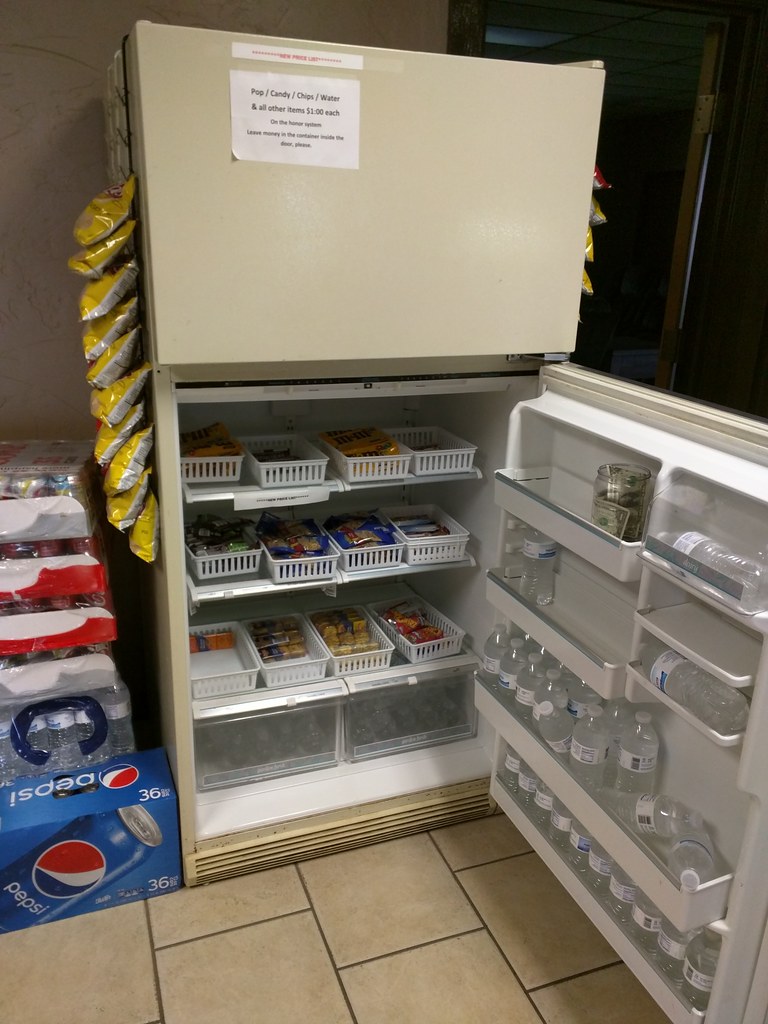
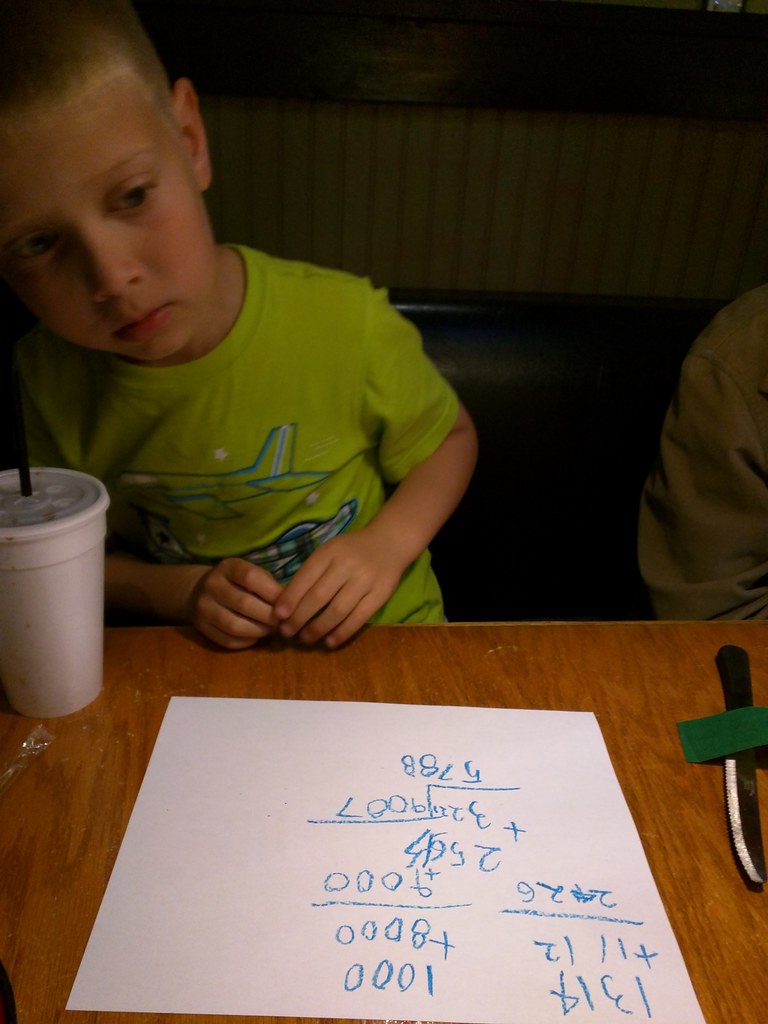
We love to go exploring as a family. Last year, we gave Jacob and Oliver a theme: find places older than Grandpa. They got creative really quick, realizing that any state park counts ( dirt is older than grandpa! ) as did pretty much any museum. Probably our hit from last year was the visit to the tunnels under Ellinwood, KS. Beatrice, NE This year, our theme is places we can fly to . A couple of weeks ago, Laura had a conference in the beautiful small town of Beatrice, NE. So all four of us flew up, and Jacob, Oliver, and I found fun activities while Laura was at her conference. IMG_20160423_125238 We walked around Beatrice a bit, and I noticed this rails-to-trails area. Jacob and Oliver were immediately interested (since it was railroad-related). They quickly turned it into a game of kick-the-dandelion, trying to kick dandelions off their stems and see how high in the air they could get them. The answer: pretty high. IMG_20160423_082343 Of course, you can t go wrong with swimming. Here s Oliver getting ready for some swimming. IMG_20160423_132125 Right near Beatrice is the Homestead National Monument. Of course, the bales decorated like a minion got their attention. IMG_20160423_135141 Like the other national parks, this one has a junior ranger program. You complete a few things in an activity book and take a pledge to protect the park, and then you get a badge and some stickers. Here s Oliver proudly taking his pledge, holding the new raccoon he bought in their gift shop. Canyon, TX Laura and I have been to Canyon, TX, twice the first was for our honeymoon. Yes, we did get some strange looks when we told people we were going to Amarillo for our honeymoon. But it was absolutely perfect for us. We both enjoy the simple gifts of nature. We kept thinking we ve got to take the boys here . So this weekend, we did. We flew a Cessna out there. IMG_20160505_180409 Almost every little general aviation airport seems to have a bowl of candy, a plate of cookies, or some such thing for people that are flying through. I often let Jacob and Oliver choose ONE item. They hit the jackpot when we stopped at West Woodward, Oklahoma for fuel and a break. Two whole fridges stocked with stuff: cans of pop in one, and all sorts of snacks in the other. In typical GA fashion, there was a jar in the fridge asking for $1 if you took something. And it clearly hadn t been emptied in awhile. They also had a nice lounge and a patio. Perfect for munching while watching the activities on the ramp. IMG_20160505_211110 After landing at the beautiful little Tradewind Airport in Amarillo, we ate dinner at Feldman s Wrong-Way Diner in Canyon, TX. Oh my, was that ever popular with the boys. The eagerly looked around to find anything that was wrong a plane hanging upside down from the ceiling, a direction sign saying Tattoine 30 parsecs , movie posters hung upside down, whatever it might be. The fact that model trains were whirring past overhead certainly didn t hurt either. IMG_20160505_214127 They had a giant bin of crayons by the entrance. Jacob and Oliver each grabbed a fistful, and decided it would be fun to do some math problems while we wait. Oliver particularly got into that, and was quite accurate on his large addition problems. Impressive for a first-grader! IMG_20160506_163801 Of course, the big highlight of the area is Palo Duro Canyon. Jacob and Oliver were so eager to explore the canyon that they were just about bubbling over with excitement the night before. They decided that we should explore one of the most difficult trails in the canyon one that would take us from the bottom of the canyon all the way to the top and back, about 2.5 miles each way. P5060008 And they LOVED it. We d stop every few minutes to climb on some rocks, smash up some pieces of sandstone, munch on a snack, or even watch a lizard scurry past. P5060003 IMG_20160506_203218 At the trading post in the canyon, both boys explored the gift shop. Jacob happily purchased a Texas magnet and Palo Duro Canyon keychain, which he carried around the rest of the weekend. Oliver loves stuffed animals, and he bought a cuddly little (but long) snake. When we got back to the hotel, he tied a couple of knots in it, and it became snake airlines . Here is the snake airline taking off. He named it Rattletail the friendly snake , which I thought was a pretty nifty name. IMG_20160507_075730 The hotel s waffle maker made Texas-shaped waffles, clearly a hit! IMG_20160507_101653 Saturday, we explored the absolutely massive Panhandle-Plains Historical Museum. (How does something that huge wind up in Canyon, TX?) Both boys enjoyed spending hours there. Here s Oliver in Pioneer Town (an indoor recreation of a 1900s town) sending a telegraph message. Oliver wanted to help with the plane. He helped me tie it down in Amarillo, helped check it over during preflight, basically got involved in every part of it. Jacob studied aviation maps (sectionals) with me, planning our flight, figuring out how fast we d go. I loaded Avare (an Android app) on an old tablet for him, so he had aviation maps in the cockpit just like me. He would be telling us how fast we were going every so often, pointing out landmarks, etc. When it was time to head back home, both boys wanted to stay longer a sure sign of a good trip. They wanted to hike another trail in the canyon, go back to the museum, and eat at Feldman s 18 more times. (We got there twice, which was plenty for Laura and me!) On our drive home, Oliver said, Dad-o, will you teach me to be a pilot? You should be my flight instructor. Then I could fly everywhere with you. Now that just makes a dad s day.

7 May 2016

Craig Small: Displaying Linux Memory

Memory management is hard, but RAM management may be even harder. Most people know the vague overall concept of how memory usage is displayed within Linux. You have your total memory which is everything inside the box; then there is used and free which is what the system is or is not using respectively. Some people might know that not all used is used and some of it actually is free. It can be very confusing to understand, even for a someone who maintains procps (the package that contains top and free, two programs that display memory usage). So, how does the memory display work? What free shows The free program is part of the procps package. It s central goal is to give a quick overview of how much memory is used where. A typical output (e.g. what I saw when I typed free -h ) could look like this:
      total   used    free   shared  buff/cache  available
Mem:    15G   3.7G    641M     222M         11G        11G
Swap:   15G   194M     15G
I ve used the -h option for human-readable output here for the sake of brevity and because I hate typing long lists of long numbers. People who have good memories (or old computers) may notice there is a missing -/+ buffers/cache line. This was intentionally removed in mid-2014 because as the memory management of Linux got more and more complicated, these lines became less relevant. These used to help with the not used used memory problem mentioned in the introduction but progress caught up with it. To explain what free is showing, you need to understand some of the underlying statistics that it works with. This isn t a lesson on how Linux its memory (the honest short answer is, I don t fully know) but just enough hopefully to understand what free is doing. Let s start with the two simple columns first; total and free. Total Memory This is what memory you have available to Linux. It is almost, but not quite, the amount of memory you put into a physical host or the amount of memory you allocate for a virtual one. Some memory you just can t have; either due to early reservations or devices shadowing the memory area. Unless you start mucking around with those settings or the virtual host, this number stays the same. Free Memory Memory that nobody at all is using. They haven t reserved it, haven t stashed it away for future use or even just, you know, actually using it. People often obsess about this statistic but its probably the most useless one to use for anything directly. I have even considered removing this column, or replacing it with available (see later what that is) because of the confusion this statistic causes. The reason for its uselessness is that Linux has memory management where it allocates memory it doesn t use. This decrements the free counter but it is not truly used . If you application needs that memory, it can be given back. A very important statistic to know for running a system is how much memory have I got left before I either run out or I start to serious swap stuff to swap drives. Despite its name, this statistic will not tell you that and will probably mislead you. My advice is unless you really understand the Linux memory statistics, ignore this one. Who s Using What Now we come to the components that are using (if that is the right word) the memory within a system. Shared Memory Shared memory is often thought of only in the context of processes (and makes working out how much memory a process uses tricky but that s another story) but the kernel has this as well. The shared column lists this, which is a direct report from the Shmem field in the meminfo file. Slabs For things used a lot within the kernel, it is inefficient to keep going to get small bits of memory here and there all the time. The kernel has this concept of slabs where it creates small caches for objects or in-kernel data strucutures that slabinfo(5) states [such as] buffer heads, inodes and dentries . So basically kernel stuff for the kernel to do kernelly things with. Slab memory comes in two flavours. There is reclaimable and unreclaimable. This is important because unreclaimable cannot be handed back if your system starts to run out of memory. Funny enough, not all reclaimable is, well, reclaimable. A good estimate is you ll only get 50% back, top and free ignore this inconvenient truth and assume it can be 100%. All of the reclaimable slab memory is considered part of the Cached statistic. Unreclaimable is memory that is part of Used. Page Cache and Cached Page caches are used to read and write to storage, such as a disk drive. These are the things that get written out when you use sync and make the second read of the same file much faster. An interesting quirk is that tmpfs is part of the page cache. So the Cached column may increase if you have a few of these. The Cached column may seem like it should only have Page Cache, but the Reclaimable part of the Slab is added to this value. For some older versions of some programs, they will have no or all Slab counted in Cached. Both of these versions are incorrect. Cached makes up part of the buff/cache column with the standard options for free or has a column to itself for the wide option. Buffers The second component to the buff/cache column (or separate with the wide option) is kernel buffers. These are the low-level I/O buffers inside the kernel. Generally they are small compared to the other components and can basically ignored or just considered part of the Cached, which is the default for free. Used Unlike most of the previous statistics that are either directly pulled out of the meminfo file or have some simple addition, the Used column is calculated and completely dependent on the other values. As such it is not telling the whole story here but it is reasonably OK estimate of used memory. Used component is what you have left of your Total memory once you have removed: Notice that the unreclaimable part of slab is not in this calculation, which means it is part of the used memory. Also note this seems a bit of a hack because as the memory management gets more complicated, the estimates used become less and less real. Available In early 2014, the kernel developers took pity on us toolset developers and gave us a much cleaner, simpler way to work out some of these values (or at least I d like to think that s why they did it). The available statistic is the right way to work out how much memory you have left. The commit message explains the gory details about it, but the great thing is that if they change their mind or add some new memory feature the available value should be changed as well. We don t have to worry about should all of slab be in Cached and are they part of Used or not, we have just a number directly out of meminfo. What does this mean for free? Poor old free is now at least 24 years old and it is based upon BSD and SunOS predecessors that go back way before then. People expect that their system tools don t change by default and show the same thing over and over. On the other side, Linux memory management has changed dramatically over those years. Maybe we re all just sheep (see I had to mention sheep or RAMs somewhere in this) and like things to remain the same always. Probably if free was written now; it would only need the total, available and used columns with used merely being total minus available. Possibly with some other columns for the wide option. The code itself (found in libprocps) is not very hard to maintain so its not like this change will same some time but for me I m unsure if free is giving the right and useful result for people that use it.

6 May 2016

Matthias Klumpp: Adventures in D programming

I recently wrote a bigger project in the D programming language, the appstream-generator (asgen). Since I rarely leave the C/C++/Python realm, and came to like many aspects of D, I thought blogging about my experience could be useful for people considering to use D. Disclaimer: I am not an expert on programming language design, and this is not universally valid criticism of D just my personal opinion from building one project with it. Why choose D in the first place? The previous AppStream generator was written in Python, which wasn t ideal for the task for multiple reasons, most notably multiprocessing and LMDB not working well together (and in general, multiprocessing being terrible to work with) and the need to reimplement some already existing C code in Python again. So, I wanted a compiled language which would work well together with the existing C code in libappstream. Using C was an option, but my least favourite one (writing this in C would have been much more cumbersome). I looked at Go and Rust and wrote some small programs performing basic operations that I needed for asgen, to get a feeling for the language. Interfacing C code with Go was relatively hard since libappstream is a GObject-based C library, I expected to be able to auto-generate Go bindings from the GIR, but there were only few outdated projects available which did that. Rust on the other hand required the most time in learning it, and since I only briefly looked into it, I still can t write Rust code without having the coding reference open. I started to implement the same examples in D just for fun, as I didn t plan to use D (I was aiming at Go back then), but the language looked interesting. The D language had the huge advantage of being very familiar to me as a C/C++ programmer, while also having a rich standard library, which included great stuff like std.concurrency.Generator, std.parallelism, etc. Translating Python code into D was incredibly easy, additionally a gir-d-generator which is actively maintained exists (I created a small fork anyway, to be able to directly link against the libappstream library, instead of dynamically loading it). What is great about D? This list is just a huge braindump of things I had on my mind at the time of writing  Interfacing with C There are multiple things which make D awesome, for example interfacing with C code and to a limited degree with C++ code is really easy. Also, working with functions from C in D feels natural. Take these C functions imported into D:
extern(C):
nothrow:
struct _mystruct  
alias mystruct_p = _mystruct*;
mystruct_p = mystruct_create ();
mystruct_load_file (mystruct_p my, const(char) *filename);
mystruct_free (mystruct_p my);
You can call them from D code in two ways:
auto test = mystruct_create ();
// treating "test" as function parameter
mystruct_load_file (test, "/tmp/example");
// treating the function as member of "test"
test.mystruct_load_file ("/tmp/example");
test.mystruct_free ();
This allows writing logically sane code, in case the C functions can really be considered member functions of the struct they are acting on. This property of the language is a general concept, so a function which takes a string as first parameter, can also be called like a member function of string. Writing D bindings to existing C code is also really simple, and can even be automatized using tools like dstep. Since D can also easily export C functions, calling D code from C is also possible. Getting rid of C++ cruft There are many things which are bad in C++, some of which are inherited from C. D kills pretty much all of the stuff I found annoying. Some cool stuff from D is now in C++ as well, which makes this point a bit less strong, but it s still valid. E.g. getting rid of the #include preprocessor dance by using symbolic import statements makes sense, and there have IMHO been huge improvements over C++ when it comes to metaprogramming. Incredibly powerful metaprogramming Getting into detail about that would take way too long, but the metaprogramming abilities of D must be mentioned. You can do pretty much anything at compiletime, for example compiling regular expressions to make them run faster at runtime, or mixing in additional code from string constants. The template system is also very well thought out, and never caused me headaches as much as C++ sometimes manages to do. Built-in unit-test support Unittesting with D is really easy: You just add one or more unittest blocks to your code, in which you write your tests. When running the tests, the D compiler will collect the unittest blocks and build a test application out of them. The unittest scope is useful, because you can keep the actual code and the tests close together, and it encourages writing tests and keep them up-to-date. Additionally, D has built-in support for contract programming, which helps to further reduce bugs by validating input/output. Safe D While D gives you the whole power of a low-level system programming language, it also allows you to write safer code and have the compiler check for that, while still being able to use unsafe functions when needed. Unfortunately, @safe is not the default for functions though. Separate operators for addition and concatenation D exclusively uses the + operator for addition, while the ~ operator is used for concatenation. This is likely a personal quirk, but I love it very much that this distinction exists. It s nice for things like addition of two vectors vs. concatenation of vectors, and makes the whole language much more precise in its meaning. Optional garbage collector D has an optional garbage collector. Developing in D without GC is currently a bit cumbersome, but these issues are being addressed. If you can live with a GC though, having it active makes programming much easier. Built-in documentation generator This is almost granted for most new languages, but still something I want to mention: Ddoc is a standard tool to generate code documentation for D code, with a defined syntax for describing function parameters, classes, etc. It will even take the contents of a unittest scope to generate automatic examples for the usage of a function, which is pretty cool. Scope blocks The scope statement allows one to execute a bit of code before the function exists, when it failed or was successful. This is incredibly useful when working with C code, where a free statement needs to be issued when the function is exited, or some arbitrary cleanup needs to be performed on error. Yes, we do have smart pointers in C++ and with some GCC/Clang extensions a similar feature in C too. But the scopes concept in D is much more powerful. See Scope Guard Statement for details. Built-in syntax for parallel programming Working with threads is so much more fun in D compared to C! I recommend taking a look at the parallelism chapter of the Programming in D book. Pure functions D allows to mark functions as purely-functional, which allows the compiler to do optimizations on them, e.g. cache their return value. See pure-functions. D is fast! D matches the speed of C++ in almost all occasions, so you won t lose performance when writing D code that is, unless you have the GC run often in a threaded environment. Very active and friendly community The D community is very active and friendly so far I only had good experience, and I basically came into the community asking some tough questions regarding distro-integration and ABI stability of D. The D community is very enthusiastic about pushing D and especially the metaprogramming features of D to its limits, and consists of very knowledgeable people. Most discussion happens at the forums/newsgroups at forum.dlang.org. What is bad about D? Half-proprietary reference compiler This is probably the biggest issue. Not because the proprietary compiler is bad per se, but because of the implications this has for the D ecosystem. For the reference D compiler, Digital Mars D (DMD), only the frontend is distributed under a free license (Boost), while the backend is proprietary. The FLOSS frontend is what the free compilers, LLVM D Compiler (LDC) and GNU D Compiler (GDC) are based on. But since DMD is the reference compiler, most features land there first, and the Phobos standard library and druntime is tuned to work with DMD first. Since major Linux distributions can t ship with DMD, and the free compilers GDC and LDC lack behind DMD in terms of language, runtime and standard-library compatibility, this creates a split world of code that compiles with LDC, GDC or DMD, but never with all D compilers due to it relying on features not yet in e.g. GDCs Phobos. Especially for Linux distributions, there is no way to say use this compiler to get the best and latest D compatibility . Additionally, if people can t simply apt install latest-d, they are less likely to try the language. This is probably mainly an issue on Linux, but since Linux is the place where web applications are usually written and people are likely to try out new languages, it s really bad that the proprietary reference compiler is hurting D adoption in that way. That being said, I want to make clear DMD is a great compiler, which is very fast and build efficient code. I only criticise the fact that it is the language reference compiler. UPDATE: To clarify the half-proprietary nature of the compiler, let me quote the D FAQ:
The front end for the dmd D compiler is open source. The back end for dmd is licensed from Symantec, and is not compatible with open-source licenses such as the GPL. Nonetheless, the complete source comes with the compiler, and all development takes place publically on github. Compilers using the DMD front end and the GCC and LLVM open source backends are also available. The runtime library is completely open source using the Boost License 1.0. The gdc and ldc D compilers are completely open sourced.
Phobos (standard library) is deprecating features too quickly This basically goes hand in hand with the compiler issue mentioned above. Each D compiler ships its own version of Phobos, which it was tested against. For GDC, which I used to compile my code due to LDC having bugs at that time, this means that it is shipping with a very outdated copy of Phobos. Due to the rapid evolution of Phobos, this meant that the documentation of Phobos and the actual code I was working with were not always in sync, leading to many frustrating experiences. Furthermore, Phobos is sometimes removing deprecated bits about a year after they have been deprecated. Together with the older-Phobos situation, you might find yourself in a place where a feature was dropped, but the cool replacement is not yet available. Or you are unable to import some 3rd-party code because it uses some deprecated-and-removed feature internally. Or you are unable to use other code, because it was developed with a D compiler shipping with a newer Phobos. This is really annoying, and probably the biggest source of unhappiness I had while working with D especially the documentation not matching the actual code is a bad experience for someone new to the language. Incomplete free compilers with varying degrees of maturity LDC and GDC have bugs, and for someone new to the language it s not clear which one to choose. Both LDC and GDC have their own issues at time, but they are rapidly getting better, and I only encountered some actual compiler bugs in LDC (GDC worked fine, but with an incredibly out-of-date Phobos). All issues are fixed meanwhile, but this was a frustrating experience. Some clear advice or explanation which of the free compilers is to prefer when you are new to D would be neat. For GDC in particular, being developed outside of the main GCC project is likely a problem, because distributors need to manually add it to their GCC packaging, instead of having it readily available. I assume this is due to the DRuntime/Phobos not being subjected to the FSF CLA, but I can t actually say anything substantial about this issue. Debian adds GDC to its GCC packaging, but e.g. Fedora does not do that. No ABI compatibility D has a defined ABI too bad that in reality, the compilers are not interoperable. A binary compiled with GDC can t call a library compiled with LDC or DMD. GDC actually doesn t even support building shared libraries yet. For distributions, this is quite terrible, because it means that there must be one default D compiler, without any exception, and that users also need to use that specific compiler to link against distribution-provided D libraries. The different runtimes per compiler complicate that problem further. The D package manager, dub, does not yet play well with distro packaging This is an issue that is important to me, since I want my software to be easily packageable by Linux distributions. The issues causing packaging to be hard are reported as dub issue #838 and issue #839, with quite positive feedback so far, so this might soon be solved. The GC is sometimes an issue The garbage collector in D is quite dated (according to their own docs) and is currently being reworked. While working with asgen, which is a program creating a large amount of interconnected data structures in a threaded environment, I realized that the GC is significantly slowing down the application when threads are used (it also seems to use UNIX signals SIGUSR1 and SIGUSR2 to stop/resume threads, which I still find odd). Also, the GC performed poorly on memory pressure, which did get asgen killed by the OOM killer on some more memory-constrained machines. Triggering a manual collection run after a large amount of these interconnected data structures wasn t needed anymore solved this problem for most systems, but it would of course have been better to not needing to give the GC any hints. The stop-the-world behavior isn t a problem for asgen, but it might be for other applications. These issues are at time being worked on, with a GSoC project laying the foundation for further GC improvements. version is a reserved word Okay, that is admittedly a very tiny nitpick, but when developing an app which works with packages and versions, it s slightly annoying. The version keyword is used for conditional compilation, and needing to abbreviate it to ver in all parts of the code sucks a little (e.g. the Package interface can t have a property version , but now has ver instead). The ecosystem is not (yet) mature In general it can be said that the D ecosystem, while existing for almost 9 years, is not yet that mature. There are various quirks you have to deal with when working with D code on Linux. It s always nothing major, usually you can easily solve these issues and go on, but it s annoying to have these papercuts. This is not something which can be resolved by D itself, this point will solve itself as more people start to use D and D support in Linux distributions gets more polished. Conclusion I like to work with D, and I consider it to be a great language the quirks it has in its toolchain are not that bad to prevent writing great things with it. At time, if I am not writing a shared library or something which uses much existing C++ code, I would prefer D for that task. If a garbage collector is a problem (e.g. for some real-time applications, or when the target architecture can t run a GC), I would not recommend to use D. Rust seems to be the much better choice then. In any case, D s flat learning curve (for C/C++ people) paired with the smart choices taken in language design, the powerful metaprogramming, the rich standard library and helpful community makes it great to try out and to develop software for scenarios where you would otherwise choose C++ or Java. Quite honestly, I think D could be a great language for tasks where you would usually choose Python, Java or C++, and I am seriously considering to replace quite some Python code with D code. For very low-level stuff, C is IMHO still the better choice. As always, choosing the right programming language is only 50% technical aspects, and 50% personal taste  UPDATE: To get some idea of D, check out the D tour on the new website tour.dlang.org.

3 May 2016

Russ Allbery: Review: The Effective Engineer

Review: The Effective Engineer, by Edmond Lau
Publisher: Effective Bookshelf
Copyright: 2015
ISBN: 0-9961281-0-7
Format: Trade paperback
Pages: 222
Silicon Valley start-up tech companies have a standard way of thinking about work. Large chunks of this come from Google, which pioneered a wide variety of new, or at least not-yet-mainstream, ways of organizing and thinking about work. The rest accreted through experience with fast-paced start-ups, engineer-focused companies, web delivery of products, and rabid turnover and high job mobility within a hothouse of fairly similar companies. A key part of this mindset is the firm belief that this atmosphere has created a better way to work, at least for software engineers (and systems administrators, although heaven forbid that one call them that any more): more effective, more efficient, more focused on what really matters. I think this is at least partly true, at least from the perspective of a software engineer. This Silicon Valley work structure focuses on data gathering, data-based decision-making, introspection, analysis, and continuous improvement, all of which I think are defensibly pointed in the right direction (if rarely as rigorous as one might want to believe). It absorbs bits and pieces of work organization techniques that are almost certainly improvements for the type of work software engineers do: Agile, Lean, continuous deployment, and fast iteration times. In other cases, though, I'm less convinced that this Silicon Valley consensus is objectively better as opposed to simply different; interviewing, for instance, is a puzzle that I don't think anyone has figured out, and the remarkable consensus in Silicon Valley on how to interview (basically, "like Google except for the bits we thought were obnoxious") feels more like a social fad than a sign of getting it right. But every industry has its culture of good ideas, bad ideas, fads, and fashion, and it's quite valuable to know that culture if you want to work in that industry. The Effective Engineer is a self-published book by Edmund Lau, a Silicon Valley software engineer who also drifted (as is so common in Silicon Valley) into mentoring, organizing, and speaking to other software engineers. Its purpose, per the subtitle, is to tell you "how to leverage your efforts in software engineering to make a disproportionate and meaningful impact." While that's not exactly wrong, and the book contains some useful and valuable tips, I'd tend to give it a slightly different subtitle: "a primer on how a Silicon Valley software engineer is expected to think about their work." This is a bit more practical, a bit less confident, and a bit less convinced of its own correctness than Lau might want to present his work, but it's just as valuable of a purpose if you want to work in the industry. (And is a bit more honest about its applicability outside of that industry.) What this book does extremely well is present, in a condensed, straightforward, and fast-moving form, most of the highlights of how start-ups and web-scale companies approach software engineering and the SWE role in companies (SWE, meaning software engineer, is another bit of Google terminology that's now nearly universal). If you've already worked in or around this industry for a while, you've probably picked up a lot of this via osmosis: prioritize based on impact and be unapologetic about letting other things drop, have a growth mindset, reprioritize regularly, increase your iteration speed, measure everything constantly, check your assumptions against data, derisk your estimates, use code review and automated testing (but not too much), automate operations, and invest heavily in hiring and onboarding. (The preceding list is a chapter list for this book.) If you're working at one of these sorts of companies, you're probably currently somewhere between nodding and rolling your eyes because no one at work will shut up about these topics. But if you've not worked inside one of these companies, even if you've done software engineering elsewhere, this is a great book to read to prepare yourself. You're going to hear about these ideas constantly, and, if it achieves nothing else at all, The Effective Engineer will give you a firm enough grounding in the lingo and mindset that you can have intelligent conversations with people who assume this is the only way to think about software engineering. By this point, you might be detecting a certain cynicism in this review. It's not entirely fair: a lot of these ideas are clearly good ones, and Lau does a good job of describing them quickly and coherently. It's a good job for what it is. But there are a couple of things that limited its appeal for me. First, it's definitely a primer. I read it after having worked at a web-scale start-up for a year and a half. There wasn't much in it that seemed particularly new, and it's somewhat superficial. The whole middle section in particular (build tools for yourself, measure everything, be data-driven) are topics for which the devil is often in the details. Lau gives you the terminology and the expected benefits, but putting any one of these techniques into practice could be a book (or several) by itself. Don't expect to come away from The Effective Engineer with much of a concrete plan for how to do these things in your day-to-day software development projects. But it's a good reminder to be thinking about, say, how to embed metrics and data-gathering hooks into the software you write. This is the nature of a primer; no 222-page book can get into much depth about the fractal complexity of doing good, fast, scalable software development. Second, there's a fundamental question raised by a book like this: effective at what? Lau tackles that in the first chapter with his focus on impact and leverage, and it's good advice as far as it goes. (Regular readers of my book reviews know that I love this sort of time management and prioritization discussion.) But measuring impact is a hard problem that requires a prioritization framework, and this is not really the book for this. The Effective Engineer is written primarily for software developers at start-ups, leaves the whole venture-capital start-up process as unquestioned background material, and accepts without comment the standard measures of value in that world: fast-deployed products, hypergrowth, racing competitors for perceived innovation, and finding ways to extract money. That's as deep into the question of impact as Lau gets: increases in company revenue. There's nothing wrong with this for the kind of book Lau intended to write, and it's not his fault that I find it unsatisfying. But don't expect The Effective Engineer to ask any hard questions about whether that's a meaningful definition of impact, or to talk much about less objective goals: quality of implementation, craftsmanship, giving back to a broader community via free software contributions, impact on the world in ways that can't be measured in market share, or anything else that is unlikely to lead to objective impact for company profits. At best he leaves a bit of wiggle room around using the concept of impact with different goals. If you're a new graduate who wants to work at Silicon-Valley-style start-ups, this is a great orientation, and likewise if you're coming from a different area of software development into that world. If you're not working in that industry, The Effective Engineer may still be moderately interesting, but it's not written for that audience and has little or nothing to say of the challenges of other types of businesses. But if you've already worked in the industry for a while, or if you're more interested in deeper discussions of goals and subjective values, you may not get much out of this. Rating: 7 out of 10

2 May 2016

Michal Čihař: Weekly phpMyAdmin contributions 2016-W17

Last week was quite split into many smaller tasks - working on our libraries (both SQL parser and motranslator got new releases with bug fixes), fixing bugs for upcoming 4.6.1 and working on documentation. From the libraries side, probably most visible is release of motranslator 1.0, just to claim it's now stable enough. Let's see if somebody else will pick it up as well or it will stay only for our use. Most time was however spent on our documentation. We've agreed to move wiki from our server to GitHub wiki and reduce content available on the wiki. So far it's really mixture of user documentation, notes and developer documentation. The final shape should be that wiki will contain only developer documentation and all end user documentation will go to our documentation. So far I've gone through about half of user docs pages, deleted duplicated ones and moved content to our documentation. It is most visible on the user guide which now contains way more information and hopefully it will get more complete in near future. Handled issues:

Filed under: English phpMyAdmin 0 comments

1 May 2016

Russ Allbery: Review: The Oath

Review: The Oath, by Jeffrey Toobin
Publisher: Anchor
Copyright: 2012
Printing: June 2013
ISBN: 0-307-39071-3
Format: Trade paperback
Pages: 298
Jeffrey Toobin is a legal analyst for CNN and The New Yorker and plays a similar role for the intricacies of the legal system as popular science writers play for physics. I'd previously read and reviewed his The Nine, an excellent history of the Rehnquist Supreme Court. The Oath is half sequel and half extension, bringing the same analysis to the first four years of the Obama presidency and the appointments of Sonia Sotomayor and Elena Kagan. Sequels to popular history books that are not explicitly multi-volume works are a tricky publishing niche. People expect them to stand alone; I doubt it would work to tell people "read The Nine before reading this book," and regardless, Toobin did not take that approach. But the court profiled in The Oath only differs by two justices than that in The Nine. There was therefore a fair bit of repetition, since Toobin felt obligated to repeat his profiles of the five members of the court he had already deeply analyzed in the previous book. He even retold the story of Sandra Day O'Conner leaving the court despite it falling outside the focus of this book. I think these 300 pages could have been 150 pages of additional material in The Nine if Toobin had started this project later. That said, if you enjoyed The Nine (and I very much did), this is more of the same. Toobin picks up with Obama's inauguration ceremony and a fascinating bit of legal trivia over the oath of office, and then provides a detailed profile of the Roberts court and the major decisions of the first four years of Obama's presidency. His discussion of the nomination process and Obama's judicial philosophy rang very true following the death of Scalia: Obama's nomination of Merrick Garland is exactly what one would predict from Toobin's discussion. And, as with the previous book, I discovered that I had a lot of misconceptions about both Sotomayor and Kagan that Toobin cleared up. He does a great job showing the complexities of the interplay between law, politics, apparently unlikely friendships (such as Scalia and Ginsburg), and the executive and judicial branch. Worth particular mention is Toobin's discussion of the office of Solicitor General of the United States. I had no idea the role it plays in Supreme Court decisions. If I had given it any thought at all, I would have assumed it was essentially a variation on White House Counsel crossed with the Attorney General's office. But it's quite a bit more than that, as Elena Kagan's profile shows. If you, like I, raised an eyebrow at Obama's nomination of Elena Kagan to the Supreme Court from Solicitor General, wondering if that was at all similar to Bush's nomination of Harriet Miers, this section will be very informative. White House Counsel and Solicitor General are very, very different positions. However, The Oath has one major drawback that The Nine didn't: it's partisan. Now, Toobin is a liberal, with a clear preference towards the progressive side of the court. This was also true in The Nine, and I don't think that's a serious problem. Everyone writes from a particular perspective; stating it is more honest than concealing it, and it's the reader's responsibility to weigh multiple sides. But I thought Toobin was largely fair to those he disagreed with in The Nine. Even Thomas received some defense against popular misconceptions. It probably helped that much of that book focuses on conservatives who became liberals as the court shifted, people like Sandra Day O'Conner for whom Toobin has clear respect. I commented in my review of the previous book that it didn't feel quite balanced, but it felt like Toobin was trying hard to be fair. The Oath does not give that same feeling. Toobin hates the direction of the Roberts court, hates most of its 5-4 decisions, and strongly disagrees with the judicial philosophies of both Roberts and Alito. But more than that, he is clearly dubious that they even have coherent judicial philosophies. Maybe that's a legitimate critique, maybe it's not; regardless, I don't think he proves his case. The tone of much of the book is disgusted and angry rather than deliberate and relentless. Where Toobin engages with the thought process of Alito or, particularly, Roberts, the primary focus is to disagree with it rather than explain it. This happens to match my own emotional reaction, but I doubt it will be persuasive to someone who doesn't already agree with Toobin, and it hurts the quality of the history. I suspect this would have been a better book if Toobin had waited ten years before writing it (still covering the same time frame). Some distance from the subject helps provide a more complete and thoughtful history. But, of course, it likely wouldn't have sold as well. That said, one of the themes of this book is how the conservatives on the Roberts court are currently playing the role of radicals from the perspective of the judicial tradition, overturning settled case law and calling into question precedents that have been used to decide numerous cases. The liberals, in contrast, are currently mostly playing the role of conservatives: standing up for the principle of stare decisis, trying to maintain consistency with past decisions, trying to minimize disruptive change. Conservatives will argue (correctly) that this depends on one's time frame and that they're trying to overturn radical past decisions, but those radical decisions, whatever their merits, are now often more than fifty years into the past. I hadn't thought about the current Supreme Court ideological battles from that perspective and found it eye-opening. It also ties in well with Obama's judicial philosophy as Toobin presents it: preferring democracy, laws, and change from the ballot box, and with little appetite for controversial court decisions. Obama is a judicial conservative. He therefore favors the liberal wing as the court is currently constructed, but not because he has much appetite for pushing forward civil rights in the courts. This is not the book The Nine was. It's repetitive if you've read the previous book (which you should, as it's the better book of the two), and I thought Toobin's critical balance was off. But it has a lot of interesting things to say about Obama's approach to the law, how the executive branch interacts with the Supreme Court, and the philosophy and approaches of the newer justices on the court. Recommended, although not as strongly. Rating: 7 out of 10

30 April 2016

Chris Lamb: Free software activities in April 2016

Here is my monthly update covering a large part of what I have been doing in the free software world (previously):
Debian My work in the Reproducible Builds project was covered in our weekly reports. (#48, #49, #50, #51 & #52)
Uploads
  • redis (2:3.0.7-3) Adding, amongst some other changes, systemd LimitNOFILE support to allow a higher number of open file descriptors.


FTP Team

As a Debian FTP assistant I ACCEPTed 135 packages: aptitude, asm, beagle, blends, btrfs-progs, camitk, cegui-mk2, cmor-tables, containerd, debian-science, debops, debops-playbooks, designate-dashboard, efitools, facedetect, flask-testing, fstl, ganeti-os-noop, gnupg, golang-fsnotify, golang-github-appc-goaci, golang-github-benbjohnson-tmpl, golang-github-dchest-safefile, golang-github-docker-go, golang-github-dylanmei-winrmtest, golang-github-hawkular-hawkular-client-go, golang-github-hlandau-degoutils, golang-github-hpcloud-tail, golang-github-klauspost-pgzip, golang-github-kyokomi-emoji, golang-github-masterminds-semver-dev, golang-github-masterminds-vcs-dev, golang-github-masterzen-xmlpath, golang-github-mitchellh-ioprogress, golang-github-smartystreets-assertions, golang-gopkg-hlandau-configurable.v1, golang-gopkg-hlandau-easyconfig.v1, golang-gopkg-hlandau-service.v2, golang-objx, golang-pty, golang-text, gpaste, gradle-plugin-protobuf, grip, haskell-brick, haskell-hledger-ui, haskell-lambdabot-haskell-plugins, haskell-text-zipper, haskell-werewolf, hkgerman, howdoi, jupyter-client, jupyter-core, letsencrypt.sh, libbpp-phyl, libbpp-raa, libbpp-seq, libbpp-seq-omics, libcbor-xs-perl, libdancer-plugin-email-perl, libdata-page-pageset-perl, libevt, libevtx, libgit-version-compare-perl, libgovirt, libmsiecf, libnet-ldap-server-test-perl, libpgobject-type-datetime-perl, libpgobject-type-json-perl, libpng1.6, librest-client-perl, libsecp256k1, libsmali-java, libtemplates-parser, libtest-requires-git-perl, libtext-xslate-perl, linux, linux-signed, mandelbulber2, netlib-java, nginx, node-rc, node-utml, nvidia-cuda-toolkit, openfst, openjdk-9, openssl, php-cache-integration-tests, pulseaudio, pyfr, pygccxml, pytest-runner, python-adventure, python-arrayfire, python-django-feincms, python-fastimport, python-fitsio, python-imagesize, python-lib389, python-libtrace, python-neovim-gui, python3-proselint, pythonpy, pyzo, r-cran-ca, r-cran-fitbitscraper, r-cran-goftest, r-cran-rnexml, r-cran-rprotobuf, rrdtool, ruby-proxifier, ruby-seamless-database-pool, ruby-syslog-logger, rustc, s5, sahara-dashboard, salt-formula-ceilometer, salt-formula-cinder, salt-formula-glance, salt-formula-heat, salt-formula-horizon, salt-formula-keystone, salt-formula-neutron, salt-formula-nova, seer, simplejson, smrtanalysis, tiles-autotag, tqdm, tran, trove-dashboard, vim, vulkan, xapian-bindings & xapian-core.

27 April 2016

Michal Čihař: motranslator 1.0

After two months since it's announcement I think it's good time to release 1.0 version of motranslator. This release doesn't bring any major changes, it's more to indicate that the library is stable :-). The motranslator is a translation library used in current phpMyAdmin master (upcoming 4.7.0) with focus on speed and memory usage. It uses Gettext MO files to load the translations. It also comes with testsuite (100% coverage) and basic documentation. Recommended way to install it is using composer from Packagist repository:
composer require phpmyadmin/motranslator
The Debian package will be available probably at point phpMyAdmin 4.7.0 will be out, but if you see need to have it earlier, just let me know.

Filed under: English phpMyAdmin 0 comments

26 April 2016

Niels Thykier: Putting Debian packages in labelled boxes

Lintian 2.5.44 was released the other day and (to most) the most significant bug fix was probably that Lintian learned about Policy 3.9.8. I would like to thank Axel Beckert for doing that. Notably it also made me update the test suite so to make future policy releases less painful. For others, it might be the fact that Lintian now accepts (valid) versioned provides (which seemed prudent now that Britney accepts them as well). Newcomers might appreciate that we are giving a much more sensible warning when they have extra spaces in their changelog sign off line (rather than pretending it is an improper NMU). But I digress What I am here to talk about is that Lintian 2.5.44 started classifying packages based on various facts or properties , we can determine. Therefore: Here are some of the labelled boxes your packages will be put into[0]: The tags themselves are (as mentioned) mere classifications and their primary purpose is to classify or measure certain properties. With them any body can download the data set and come with some bold statement about Debian packages (hopefully without relying too much on lies, damned lies and statistics ). Lets try that immediately! In the next release, we will also add tracking of auto-generated snippets from dh_*-tools. Currently unversioned, but I hope to add versioning to that so we can find and rebuild packages that have been built with buggy autoscripts (like #788098) If you want to see the classification tags for your package, please run lintian with like this:
# Add classification tags
$ lintian -L +classification <pkg-or-changes>
# Or if you want only classification tags$ lintian -L =classification <pkg-or-changes>
Please keep in mind that classification tags ( C ) are not issues in themselves. Lintian is simply attempting to add a visible indicator about a given fact or property in the package nothing more, nothing less. Future work help (read: patches) welcome: [0] Mind you, the reporting framework s handling of these tags could certainly be improved. [1] Please note how it distinguishes 1.0 into native and non-native based on whether the package has a diff.gz. Presumably that can be exploited somehow [2] Disclaimer: At the time of writing, only ~80% of the archive have been processed. This is computed as: NS / (NS + WS), where NS and WS are the number of unique packages with the tags no-ctrl-scripts and ctrl-script respectively. [3] or maybe not, but we got two packages classified as using both CDBS and the dh-sequencer. I have not looked at it in detail. For the curious: libmecab-java and ctioga2.
Filed under: Debian, Lintian

25 April 2016

Antoine Beaupr : My free software activities, April 2016

Debian Long Term Support (LTS) This is my 5th month working on Debian LTS, started by Raphael Hertzog at Freexian. This is my largest month so far, in which I worked on completing the Xen and NSS packages updates from last month, but also spent a significant amount of time working on phpMyAdmin and libidn.

Updates to NSS and Xen completed This basically consisted on following up on the reviews from other security people. I basically continued building up on Brian's work and tested the package on a test server at Koumbit, which seems to have survived well the upgrade. The details are in this post to the debian-lts mailing list. As for NSS, the package was mostly complete, but I forgot to ship the tests for some reason, so I added them back. I also wrote the release team to see if it was possible to update NSS to the same version in all suites. Unfortunately, this issue is still pending, but I still hope we can find better ways of managing that package in the long term.

IDN and phpMyAdmin Most of my time this month was spent working on IDN and phpMyAdmin. Unfortunately, it turns out that someone else had worked on the libidn package. This is partly my fault: I forgot to check in the dsa-needed.txt file for assignment before working on the package. But considering how in flux the workflow currently is with the switch between the main security team and the LTS team for the wheezy maintenance, I don't feel too bad. Still, I prepared a package which was a bit more painful than it should have been because of GNUlib. I didn't even know about GNUlib before, oddly enough, and after that experience, I feel that it should just not exist at all anymore. I have filed a bug to remove that dependency at the very least, but I do not clearly see how such a tool is necessary on Debian at this point in time. But phpMyAdmin, no one had worked on that. And I understand why: even though it's a very popular package, there were quite a few outstanding issues (8!) in Wheezy, with 10-15 patches to be ported. Plus, it's ... well, PHP. And old PHP at that, with parts of it with modern autoloader classes, and other with mixed HTML and PHP content, require (and not require_once) and all sorts of nasty things you still find in the PHP universe. I nevertheless managed to produce a new Debian package for wheezy and test it on Koumbit's test servers. Hopefully, that can land into Wheezy soon.

Long term software support I am a little worried that we are, both in Jessie and Wheezy sitting in between stable releases for phpMyAdmin, something that is a recurring issue for a lot of packages in Debian stable or LTS. Sometimes, it just happens that the version that happens to be in Debian testing when it is released as stable is just not a supported release upstream. It's the case for phpMyAdmin in Jessie (4.3, whereas 4.0 and 4.4 are supported) and Wheezy (3.4, although it's unclear how long that was supported upstream). But even if the next Debian stable (Stretch), would pick a stable release upstream, there is actually no phpMyAdmin release that has a support window as long as Debian stable (roughly 3 years), let alone as long as Debian LTS (5 years). This is a similar problem with NSS: upstream is simply not supporting their product in the long term, or at least not in the terms we are used to in the Debian community (ie. only security fixes or regressions). This is, in my opinion, a real concern for the reliability and sustainability of the computing infrastructure we are creating. While some developers are of the opinion that software older than 18 months is too old, here we are shipping hardware and software in space or we have Solaris, which is supported for 16 years! Now that is a serious commitment and something we can rely on. 18 months is really, really, a tiny short time in the history of our civilization. I know computer programmers and engineers like to think of themselves in elitist terms, that they are changing the world every other year. But the truth is that things have not changed much in the last 4 decades where computing has existed, both in terms of security or functionality. Two quotes from my little quotes collection come to mind here:
Software gets slower faster than hardware gets faster. - Wirth's law The future is already here it's just not very evenly distributed. - William Gibson
Because of course, the response to my claims that computing is not really advancing is "but look! we have supercomputers in our pockets now!" Yes, of course, we do have those fancy phones and they are super-connected, but they are a threat to our fundamental rights and freedom. And those glittering advances always pale in comparison to what could be done if we wouldn't be wasting our time rewriting the same software over and over again on different, often proprietary, platforms, simply because of the megalomaniac fantasies of egoistic programmers. It would be great to build something that lasts, for a while. Software that does not need to be updated every 16 months. You'd think that something as basic as a screensaver release could survive what is basically the range of human infancy. Yet it seems we like to run mindlessly in the minefield of software development, one generation following the other without questioning the underlying assumption of infinite growth that permeates our dying civilization. I have talked about this before of course, but working with the LTS project just unnerves me so bad that I just needed to let out another rant. (For the record, I really have a lot of respect for JWZ and all the work he has done in the free software world. I frequently refer to his "no-bullshit" backup guide and use Xscreensaver daily. But I do think he was wrong in this case: asking Debian to remove Xscreensaver is just too much. The response from the maintainer was exemplary of how to handle such issues in the future. I restarted Xscreensaver after the stable update, and the message is gone, and things are still all fine. Thanks JWZ and Tormod for keeping things rolling.)

Other free software work With that in mind, I obviously didn't stop doing other computing work this month. In fact, I did a lot of work to try to generally fix the internet, that endless and not-quite-gratifying hobby so many of us are destroying our bodies to accomplish.

Build tools I have experimented a bit more with different build tools. I got worried because at some point cowbuilder got orphaned and I figured I could refresh the way I build packages for LTS. I looked into sbuild, but that ended up not bringing much improvements over my current cowbuilder setup (which I really need to document better). I was asked by the new maintainer to open a bug report to make such setups easier by guessing the basepath better, so we'll see how that goes. I did enjoy the simplicity of gitpkg and discovered cowpoke which made it about 2 times faster to build packages because I could use another server to build larger packages. I also found that gitpkg doesn't use -n by default when calling gzip, which makes it harder to reproduce tarballs when they are themselves built reproducibly, which is the case for Github tarballs (really nice of them). So I filed bug #820842 about that. It would be pretty awesome if such buildds would be available for Debian Developers to do their daily tasks. It could simply be a machine that would spin up a chroot with cowbuilder or it could even be a full, temporary VM although that would take way more resources than a simple VM with a cowbuilder setup. In the meantime, I should probably look at whalebuilder as an alternative to cowbuilder. It is a tool that supports building packages within a Docker chroot, which means that packages are built from a clean environment like pbuilder, and using COW optimisations but also without privileges or network access, which is a huge plus especially when you build untrusted packages.

Ikiwiki admonitions I have done some work to implement Moinmoin-like admonitions in Ikiwiki, something I am quite happy about since it's something I was really missing about Moinmoin. Admonitions bring a really nice way to outline certain blocks with varying severity levels and distinct styles. For example:
Admonitions are great!
This was done with a macro, but basically, since Markdown allows more or less arbitrary HTML, this can also be done with the <div> tag. I like that we don't have a new weird markup here. Yet, I still liked the sub-parser feature of MoinMoin, something that can be implemented in Ikiwiki, but it's a little more clunky. Normally, you'd probably do this with the inline macro and subpages, but it's certainly less intuitive that directly inlined content.

Ereader I got a new e-reader! I was hesitant between the Kobo Aura H20 and the Kobo Glo HD, which were the ones available at Bestbuy. So I bought both and figured I would return the other. That was a painful decision! In the end, both machines are pretty nice:
  • Aura H2O
    • Pros:
      • waterproof
      • larger screen (makes it easier to see web pages and better for the eyes)
      • naturally drawn to it
    • Cons:
      • heavier
      • larger (fits in outside pocket though)
      • port cover finicky
      • more expensive (180$) - prices may go down in future
  • Aura Glo HD
    • Pros
      • smaller (fits in inside pocket of both coats)
      • better resolution in theory (can't notice in practice)
      • cheaper (100$)
      • may be less common on the future (larger models more common? just a guess)
    • Cons
      • no SD card
      • smaller screen
      • power button in the middle
... but in the end, I ended up settling down on the Glo, mostly for the price. Heck, I saved around 100$, so for that amount, I could have gotten two machines so that if one breaks I would still have the other. I have ordered a cover for it on Deal Extreme about two weeks ago, and it still hasn't arrived. I suspect it's going to take a few more months to get there, by which point I may have changed e-reader again. Note that both e-readers needed an update to calibre, so I started working on a calibre backport (#818309) which I will complete soon. So anyways, I looked into better ways of transferring articles from the web to the e-reader, something which I do quite a bit to avoid spending too much time on the computer. Since the bookmark manager I use (Bookie) is pretty much dead, I started looking at other alternatives. And partly inspired by Framasoft's choice of Wallabag for their bookmarking service (Framabag), I started to look into that software, especially since my friend who currently runs the Bookie instance is thinking of switching to Wallabag as well. It seems the simplest way to browse articles remotely through a standard protocol is by implementing OPDS support in Wallabag. OPDS is a standard developed in part by the Internet Archive and it allows for browsing book collections and downloading them. Articles and bookmarks would then be presented as individual books that would be accessible from any OPDS-compatible device. Unfortunately, the Kobo e-readers don't support OPDS out of the box: you need to setup some OPDS-compatible reader like Koreader. And that I found nearly impossible to do: I was able to setup KSM (the "start menu", not to be confused with that KSM), but not Koreader in KSM. Besides, I do not want a separate OS running here on the tablet: I just want to start Koreader every once in a while. KSM just starts another system when you reboot the e-reader, something which is not really convenient on the Kobo. Basically, I just want to add Koreader as a tile in the home screen on the e-reader. I found the documentation on that topic to be sparse and hard to follow. It is often dispersed across multiple forum threads and involves uploading random binaries, often proprietary, to the e-reader. It had been a long time since I was asked to "register my software" frenetically, and I hadn't missed that one bit. So I decided to stay away from this until that solution and its documentation matures a bit.

Streaming re-established I have worked a bit on my home radio stream. I simply turned the Liquidsoap stream back online, and did a few tweaks to the documentation that I had built back then. All that experimenting led me to do two NMUs. One was for gmpc-plugins to fix a FTBFS (bug #807735) and to properly kill the shout streamer when completing the playback (bug #820908). The other was to fix the ezstream manpage (bug #573928), a patch that had been sitting there for 5 years! This was to try to find an easy way to stream random audio (say from a microphone) to the Icecast server, something which is surprisingly difficult, consider how basic that functionality is. I was surprised to see that Darkice just completely fails to start (bug #821040) and I had to fallback to the simplest ices2 software to stream the audio. I am still having issues with Liquidsoap: it's really unstable! As a server, I would expect it to keep running for days if not years. Unfortunately, there's always something that makes it crash. I had assertion failed (bug #821112) and I keep seeing it crash after 2-3 days fairly reliably, a bug I reported 3 years ago and that is still not fixed (bug #727307). Switching back the stream to Vorbis (because I was having problems with the commandline mp3 players and ogg123 is much more lightweight) created another set of problems too, this time with the phone. It seems that Android cannot stream Vorbis at all, something that is even worse in Cyanogenmod... I also had to tweak my MPD config to make the Android client be able to load the larger playlists (see dmix buffer is full).

Android apps So I have also done quite a bit of work again on my phone. I finally was told how to access from Termux from adb shell which is pretty cool because now I can start a screen on my phone and then, when I'm tired of tapping to type, I can just reconnect to it when I plug in a USB cable on my laptop. I sent a pull request to fix the documentation regarding that. I also tried to see how my SMS and Signal situation could be improved. Right now, I have two different apps to do SMS on my phone: I use both Signal and the VoIP.ms SMS client, because I do not have a contract or SIM card in my phone. Both work well independently, but it's somewhat annoying to have to switch between the two. (In fact, I feel that Signal itself has an issue with how it depends on the network to send encrypted messages: I often have to "ping" people in clear text (and therefore in the other app) so that they connect to their data plan to fetch my "secure" signal messages...) Anyways, I figured it would be nice if at least there would be a SMS fallback in Signal that would allow me to send regular text messages from signal through Voip.MS. That was dismissed really fast. Moxie even closed the conversation completely, something I had never experienced before, and doesn't feel exactly pleasant. The Voip.MS side was of course not impressed and basically shrugged it off because Signal was not receptive. I also tried to clear up the Libresignal confusion: there are 3 different projects named "Libresignal", and I am not sure I figured out the right thing, even though the issue is now closed and there's a FAQ that is supposed to make all that clear. Nevertheless, I opened two distinct feature requests to try to steer the conversation into a more productive direction: GCM-less calls and GCM support. But I'm not sure neither will go anywhere. In the meantime, I am using the official signal client, which I downloaded using gplaycli and which I keep up to date with Aptoide. Even though the reliability of that site is definitely questionable, it seems that once you have a trusted version, it is safe to upgrade, regardless of the source because there is a trust path between you and the developer. I also filed a few issues with varying levels of success/response from the community:

Random background radiation And then there's of course the monthly background noise of all the projects I happened to not only stumble on, but also file bugs or patches against:

Norbert Preining: G del and Daemons an excursion into literature

Explaining G del s theorems to students is a pain. Period. How can those poor creatures crank their mind around a Completeness and an Incompleteness Proof I understand that. But then, there are brave souls using G del s theorems to explain the world of demons to writers, in particular to answer the question:
You can control a Demon by knowing its True Name, but why?
goedel-glabrezu Very impressive. Found at worldbuilding.stackexchange.com, pointed to me by a good friend. I dare to full quote author Cort Ammon (nothing more is known), to preserve this masterpiece. Thanks!!!!
Use of their name forces them to be aware of the one truth they can never know. Tl/Dr: If demons seek permanent power but trust no one, they put themselves in a strange position where mathematical truisms paint them into a corner which leaves their soul small and frail holding all the strings. Use of their name suggests you might know how to tug at those strings and unravel them wholesale, from the inside out! Being a demon is tough work. If you think facing down a 4000lb Glabrezu without their name is difficult, try keeping that much muscle in shape in the gym! Never mind how many manicurists you go through keeping the claws in shape! I don t know how creative such demons truly are, but the easy route towards the perfect French tip that can withstand the rigors of going to the gym and benching ten thousand pounds is magic. Such a demon might learn a manicure spell from the nearby resident succubi. However, such spells are often temporary. No demon worth their salt is going to admit in front of a hero that they need a moment to refresh their mani before they can fight. The hero would just laugh at them. No, if a demon is going to do something, they re going to do it right, and permanently. Not just nice french tips with a clear lacquer over the top, but razor sharp claws that resharpen themselves if they are blunted and can extend or retract at will! In fact, come to think of it, why even go to the gym to maintain one s physique? Why not just cast a magic spell which permanently makes you into the glorious Hanz (or Franz) that the trainer keeps telling you is inside you, just waiting to break free. Just get the spell right once, and think of the savings you could have on gym memberships. Demons that wish to become more powerful, permanently, must be careful. If fairy tales have anything to teach is, it s that one of the most dangerous things you can do is wish for something forever, and have it granted. Forever is a very long time, and every spell has its price. The demon is going to have to make sure the price is not greater than the perks. It would be a real waste to have a manicure spell create the perfect claws, only to find that they come with a peculiar perchance to curve towards one s own heart in an attempt to free themselves from the demon that cast them. So we need proofs. We need proofs that each spell is a good idea, before we cast it. Then, once we cast it, we need proof that the spell actually worked intended. Otherwise, who knows if the next spell will layer on top perfectly or not. Mathematics to the rescue! The world of First Order Logic (FOL, or herefter simply logic ) is designed to offer these guarantees. With a few strokes of a pen, pencil, or even brush, it can write down a set of symbols which prove, without a shadow of a doubt, that not only will the spell work as intended, but that the side effects are manageable. How? So long as the demon can prove that they can cast a negation spell to undo their previous spell, the permanency can be reverted by the demon. With a few more fancy symbols, the demon can also prove that nobody else outside of the demon can undo their permanency. It s a simple thing for mathematics really. Mathematics has an amazing spell called reductio ad infinitum which does unbelievable things. However, there is a catch. There is always a catch with magic, even when that magic is being done through mathematics. In 1931, Kurt G del published his Incompleteness Theorems. These are 3 fascinating works of mathematical art which invoke the true names of First Order Logic and Set Theory. G del was able to prove that any system which is powerful enough to prove out all of algebra (1 + 1 = 2, 2 + 1 = 3, 3 * 5 = 15, etc.), could not prove its own validity. The self referential nature of proving itself crossed a line that First Order Logic simply could not return from. He proved that any system which tries must pick up one of these five traits: If the demon wants itself to be able to cancel the spell, his proof is going to have to include his own abilities, creating just the kind of self referential effects needed to invoke G del s incompleteness theorems. After a few thousand years, the demon may realize that this is folly. A fascinating solution the demon might choose is to explore the incomplete solution to G del s challenge. What if the demon permits the spell to change itself slightly, but in an unpredictable way. If the demon was a harddrive, perhaps he lets a single byte get changed by the spell in a way he cannot expect. This is actually enough to sidestep G del s work, by introducing incompleteness. However, now we have to deal with pesky laws of physic and magics. We can t just create something out of nothing, so if we re going to let the spell change a single byte of us, there must be a single byte of information, its dual, that is unleashed into the world. Trying to break such conservation laws opens up a whole can of worms. Better to let that little bit go free into the world. Well, almost. If you repeat this process a whole bunch of times, layering spells like a Matryoska doll, you re eventually left with a soul that is nothing but the leftover bits of your spells that you simply don t know enough about to use. If someone were collecting those bits and pieces, they might have the undoing of your entire self. You can t prove it, of course, but its possible that those pieces that you sent out into the world have the keys to undo your many layers of armor, and then you know they are the bits that can nullify your soul if they get there. So what do you do? You hide them. You cast your spells only on the darkest of nights, deep in a cave where no one can see you. If you need assistants, you make sure to ritualistically slaughter them all, lest one of them know your secret and whisper it to a bundle of reeds, The king has horns, if you are familiar with the old fairy tale. Make it as hard as possible for the secret to escape, and hope that it withers away to nothingness before someone discovers it, leaving you invincible. Now we come back to the name. The demon is going to have a name it uses to describe its whole self, including all of the layers of spellcraft it has acquired. This will be a great name like Abraxis, the Unbegotten Father or Satan, lord of the underworld. However, they also need to keep track of their smaller self, their soul. Failure to keep track of this might leave them open to an attack if they had missed a detail when casting their spells, and someone uncovered something to destroy them. This would be their true name, potentially something less pompous, like Gaylord Focker or Slartybartfarst. They would never use this name in company. Why draw attention to the only part of them that has the potential to be weak. So when the hero calls out for Slartybartfarst, the demon truly must pay attention. If they know the name the demon has given over the remains of their tattered soul, might they know how to undo the demon entirely? Fear would grip their inner self, like a child, having to once again consider that they might be mortal. Surely they would wish to destroy the hero that spoke the name, but any attempt runs the risk of falling into a trap and exposing a weakness (surely their mind is racing, trying to enumerate all possible weaknesses they have). It is surely better for them to play along with you, once you use their true name, until they understand you well enough to confidently destroy you without destroying themselves. So you ask for answers which are plausible. This one needs no magic at all. None of the rules are invalid in our world today. Granted finding a spell of perfect manicures might be difficult (believe me, some women have spent their whole life searching), but the rules are simply those of math. We can see this math in non-demonic parts of society as well. Consider encryption. An AES-256 key is so hard to brute force that it is currently believed it is impossible to break it without consuming 3/4 of the energy in the Milky Way Galaxy (no joke!). However, know the key, and decryption is easy. Worse, early implementations of AES took shortcuts. They actually left the signature of the path they took through the encryption in their accesses to memory. The caches on the CPU were like the reeds from the old fable. Merely observing how long it took to read data was sufficient to gather those reeds, make a flute, and play a song that unveils the encryption key (which is clearly either The king has horns or 1-2-3-4-5 depending on how secure you think your luggage combination is). Observing the true inner self of the AES encryption implementations was enough to completely dismantle them. Of course, not every implementation fell victim to this. You had to know the name of the implementation to determine which vulnerabilities it had, and how to strike at them. Or, more literally, consider the work of Alfred Whitehead, Principia Mathematica. Principia Mathematica was to be a proof that you could prove all of the truths in arithmetic using purely procedural means. In Principia Mathematica, there was no manipulation based on semantics, everything he did was based on syntax manipulating the actual symbols on the paper. G del s Incompleteness Theorem caught Principia Mathematica by the tail, proving that its own rules were sufficient to demonstrate that it could never accomplish its goals. Principia Mathematica went down as the greatest Tower of Babel of modern mathematical history. Whitehead is no longer remembered for his mathematical work. He actually left the field of mathematics shortly afterwards, and became a philosopher and peace advocate, making a new name for himself there. (by Cort Ammon)

24 April 2016

Dominique Dumont: Automount usb devices with systemd

Hello Ever since udisk-glue was obsoleted with udisk (the first generation), I ve been struggling to find a solution to automatically mount a usb drive when such a device is connected to a kodi based home cinema PC. I wanted to avoid writing dedicated scripts or udev rules. Systemd is quite powerful and I thought that a simple solution should be possible using systemd configuration. Actually, auto-mount notion covers 2 scenario :
  1. A device is mounted after being plugged in
  2. An already available device is mounted when a process accesses its mount point
The first case is the one that is needed with Kodi. The second may be usefull so is also documented in this post. For the first case, add a line like the following in /etc/fstab:
/dev/sr0 /mnt/br auto defaults,noatime,auto,nofail 0 2
and reload systemd configuration:
sudo systemctl daemon-reload
The important parameters are auto and nofail : with auto , systemd mounts the filesystem as soon as the device is available. This behavior is different from sysvinit where auto is taken into account only when mount -a is run by init scripts. nofail ensures that boot does not fail when the device is not available. The second case is handled by a line like the following one (even if the line is split here to improve readability):
/dev/sr0 /mnt/br auto defaults,x-systemd.automount,\
   x-systemd.device-timeout=5,noatime,noauto 0 2
With the line above in /etc/fstab, the file system is mounted when user does (for instance) ls /mnt/br (actually, the first ls fails and triggers the mount. A second ls gives the expected result. There s probably a way to improve this behavior, but I ve not found it ) x-systemd.* parameters are documented in systemd.mount(5). Last but not least, using a plain device file (like /dev/sr0) works fine to automount optical devices. But it is difficult to predict the name of a device file created for a usb drive, so a LABEL or a UUID should be used in /etc/fstab instead of a plain device file. I.e. something like:
LABEL=my_usb_drive /mnt/my-drive auto defaults,auto,nofail 0 2
All the best
Tagged: kodi, systemd

21 April 2016

John Goerzen: Count me as a systemd convert

Back in 2014, I wrote about some negative first impressions of systemd. I also had a plea to debian-project to end all the flaming, pointing out that jessie will still boot , noting that my preference was for sysvinit but things are what they are and it wasn t that big of a deal. Although I still have serious misgivings about the systemd upstream s attitude, I ve got to say I find the system rather refreshing and useful in practice. Here s an example. I was debugging the boot on a server recently. It mounts a bunch of NFS filesystems and runs a third-party daemon that is started from an old-style /etc/init.d script. We had a situation where the NFS filesystems the daemon required didn t mount on boot. The daemon then was started, and unfortunately it basically does a mkdir -p on startup. So it started running and processing requests with negative results. So there were two questions: why did the NFS filesystems fail to start, and how could we make sure the daemon wouldn t start without them mounted? For the first, journalctl -xb was immensely helpful. It logged the status of each individual mount, and it turned out that it looked like a modprobe or kernel race condition when a bunch of NFS mounts were kicked off in parallel and all tried to load the nfsv4 module at the same time. That was easy enough to work around by adding nfsv4 to /etc/modules. Now for the other question: refusing to start the daemon if the filesystems weren t there. With systemd, this was actually trivial. I created /etc/systemd/system/mydaemon.service.requires (I ll call the service mydaemon here), and in it I created a symlink to /lib/systemd/system/remote-fs.target. Then systemctl daemon-reload, and boom, done. systemctl list-dependencies mydaemon will even show the the dependency tree, color-coded status of each item on it, and will actually show every single filesystem that remote-fs requires and the status of it in one command. Super handy. In a non-systemd environment, I d probably be modifying the init script and doing a bunch of manual scripting to check the filesystems. Here, one symlink and one command did it, and I get tools to inspect the status of the mydaemon prerequisites for free. I ve got to say, as someone that has occasionally had to troubleshoot boot ordering and update-rc.d symlink hell, troubleshooting this stuff in systemd is considerably easier and the toolset is more powerful. Yes, it has its set of poorly-documented complexity, but then so did sysvinit. I never thought the world is falling folks were right, but by now I can be counted among those that feels like systemd has matured to the point where it truly is superior to sysvinit. Yes, in 2014 it had some bugs, but by here in 2016 it looks pretty darn good and I feel like Debian s decision has been validated through my actual experience with it.

20 April 2016

Jonathan Dowland: mount-on-demand backups

Last week, someone posted a request for help on the popular Server Fault Q&A site: they had apparently accidentally deleted their entire web hosting business, and all their backups. The post (now itself deleted) was a reasonably obvious fake, but mainstream media reported on it anyway, and then life imitated art and 123-reg went and did actually delete all their hosted VMs, and their backups. I was chatting to some friends from $job-2 and we had a brief smug moment that we had never done anything this bad, before moving on to incredulity that we had never done anything this bad in the 5 years or so we were running the University web servers. Some time later I realised that my personal backups were at risk from something like this because I have a permanently mounted /backup partition on my home NAS. I decided to fix it. I already use Systemd to manage mounting the /backup partition (via a backup.mount file) and its dependencies. I'll skip the finer details of that for now. I planned to define some new Systemd units for each backup job which was previously scheduled via Cron in order that I could mark them as depending on the /backup mount. I needed to adjust that mount definition by adding StopWhenUnneeded=true. This ensures that /backup will be unmounted when it is not in use by another job, and not at risk of a stray rm -rf. The backup jobs are all simple shell scripts that convert quite easily into services. An example: backup-home.service:
[Unit]
Requires=backup.mount
After=backup.mount
[Service]
User=backupuser
Group=backupuser
ExecStart=/home/backupuser/bin/phobos-backup-home
To schedule this, I also need to create a timer: backup-home.timer:
[Timer]
OnCalendar=*-*-* 04:01:00
[Install]
WantedBy=timers.target
To enable the timer, you have to both enable and start it:
systemctl enable backup-home.timer
systemctl start backup-home.timer
I created service and timer units for each of my cron jobs. The other big difference to driving these from Cron is that by default I won't get any emails if the jobs generate output - in particular, if they fail. I definitely do want mail if things fail. The Arch Wiki has an interesting proposed solution to this which I took a look at. It's a bit clunky, and my initial experiments with a derivation from this (using mail(1) not sendmail(1)) have not yet generated any mail. Pros and Cons The Systemd timespec is more intuitive than Cron's. It's a shame you need a minimum of three more lines of boilerplate for the simplest of timers. I think WantedBy=timers.target should probably be an implicit default for all .timer type units. Here I think clarity suffers in the name of consistency. With timers, start doesn't kick-off the job, it really means "enable" in the context of timers, which is clumsy considering the existing enable verb, which seems almost superfluous, but is necessary for consistency, since Systemd units need to be enabled before they can be started As Simon points out in the comments, this is not true. Rather, "enable" is needed for the timer to be active upon subsequent boots, but won't enable it in the current boot. "Start" will enable it for the current boot, but not for subsequent ones. Since I need a .service and a .unit file for each active line in my crontab, that's a lot of small files (twice as many as the number of jobs being defined) and they're all stored in system-wide folder because of the dependency on the necessarily system-level units defining the mount. It's easy to forget the After= line for the backup services. On the one hand, it's a shame that After= doesn't imply Require=, so you don't need both; or alternatively there was a convenience option that did both. On the other hand, there are already too many Systemd options and adding more conjoined ones would just make it even more complicated. It's a shame I couldn't use user-level units to achieve this, but they could not depend on the system-level ones, nor activate /backup. This is a sensible default, since you don't want any user to be able to start any service on-demand, but some way of enabling it for these situations would be good. I ruled out systemd.automount because a stray rm -rf would trigger the mount which defeats the whole exercise. Apparently this might be something you solve with Polkit, as the Arch Wiki explains, which looks like it has XML disease. I need to get mail-on-error working reliably.

Norbert Preining: GnuPG notes: subkeys, yubikey, gpg1 vs gpg2

Switching from one GnuPG master key to the usage of subkeys was long on my list of things I wanted to do, but never came around. With the advent of a YubiKey NEO in my pocket I finally took the plunge: reading through lots of web pages (and adding one here for confusion), trying to understand the procedures, and above all, understanding my own requirements! gpg-subkeys-yubi To sum up a long story, it was worth the plunge, and all over the security level of my working environment has improved considerable. While the advantages of subkeys are well documented (e.g., Debian Wiki), at the end of the day I was like probably many Debian Developers having one master key that was used for every action: mail decryption and signing, signing of uploads, etc. Traveling a lot I always felt uncomfortable. Despite a lengthy passphrase, I still didn t want my master key to get into wrong hands in case the laptop got stolen. Furthermore, I had my master key on several computers (work, laptop, mail server), which didn t help a lot either. With all this, I started to compile a list of requirements/objectives I wanted to have: Warning Before we start a word of caution make backups, best is to make backups at every stage. You don t want that an erroneous operations wipes out your precious keys without a backup! Preparation In the following I will assume that MASTERKEY environment variable contains the id of the master key to be converted. Furthermore, I have followed some of the advice here, so key ids will be shown in long format. Let us start with the current situation:
$ gpg -K $MASTERKEY
sec   4096R/0x6CACA448860CDC13 2010-09-14
      Key fingerprint = F7D8 A928 26E3 16A1 9FA0  ACF0 6CAC A448 860C DC13
uid                            Norbert Preining <norbert@preining.info>
uid                            Norbert Preining <preining@logic.at>
uid                            Norbert Preining <preining@debian.org>
uid                            Norbert Preining <preining@jaist.ac.jp>
ssb   4096R/0xD1D2BD14810F62B3 2010-09-14
In the following we will go through the following steps: Yubikey SmartCard setup There are several guides out there, but I will in very near future write one about using the NEO for various usage scenaria including GPG keys. Edit the current key The following can be done in one session or in different sessions, the screen logs are after starting with:
$ gpg --expert --edit-key $MASTERKEY
add expiry date Having an expiry date on your key serves two purposes: If you loose it, it will solve itself automatically, and furthermore, you are forced to deal with the key and refresh your gpg knowledge at least once a year. That are two perfect reasons to set expiry to one year. The following log selects each key in turn and sets its expiry date.
$ gpg --expert --edit-key $MASTERKEY
gpg (GnuPG) 1.4.20; Copyright (C) 2015 Free Software Foundation, Inc.
This is free software: you are free to change and redistribute it.
There is NO WARRANTY, to the extent permitted by law.
 
Secret key is available.
 
pub  4096R/0x6CACA448860CDC13  created: 2010-09-14  expires: never       usage: SC  
                               trust: ultimate      validity: ultimate
sub  4096R/0xD1D2BD14810F62B3  created: 2010-09-14  expires: never       usage: E   
[ultimate] (1). Norbert Preining <norbert@preining.info>
[ultimate] (2)  Norbert Preining <preining@logic.at>
[ultimate] (3)  Norbert Preining <preining@debian.org>
[ultimate] (4)  Norbert Preining <preining@jaist.ac.jp>
 
gpg> expire
Changing expiration time for the primary key.
Please specify how long the key should be valid.
         0 = key does not expire
      <n>  = key expires in n days
      <n>w = key expires in n weeks
      <n>m = key expires in n months
      <n>y = key expires in n years
Key is valid for? (0) 1y
Key expires at Mon 06 Feb 2017 08:09:16 PM JST
Is this correct? (y/N) y
 
You need a passphrase to unlock the secret key for
user: "Norbert Preining <norbert@preining.info>"
4096-bit RSA key, ID 0x6CACA448860CDC13, created 2010-09-14
 
Enter passphrase:
 
pub  4096R/0x6CACA448860CDC13  created: 2010-09-14  expires: 2017-02-06  usage: SC  
                               trust: ultimate      validity: ultimate
sub  4096R/0xD1D2BD14810F62B3  created: 2010-09-14  expires: never       usage: E   
[ultimate] (1). Norbert Preining <norbert@preining.info>
[ultimate] (2)  Norbert Preining <preining@logic.at>
[ultimate] (3)  Norbert Preining <preining@debian.org>
[ultimate] (4)  Norbert Preining <preining@jaist.ac.jp>
 
gpg> key 1
 
pub  4096R/0x6CACA448860CDC13  created: 2010-09-14  expires: 2017-02-06  usage: SC  
                               trust: ultimate      validity: ultimate
sub* 4096R/0xD1D2BD14810F62B3  created: 2010-09-14  expires: never       usage: E   
[ultimate] (1). Norbert Preining <norbert@preining.info>
[ultimate] (2)  Norbert Preining <preining@logic.at>
[ultimate] (3)  Norbert Preining <preining@debian.org>
[ultimate] (4)  Norbert Preining <preining@jaist.ac.jp>
 
gpg> expire
Changing expiration time for a subkey.
Please specify how long the key should be valid.
         0 = key does not expire
      <n>  = key expires in n days
      <n>w = key expires in n weeks
      <n>m = key expires in n months
      <n>y = key expires in n years
Key is valid for? (0) 1y
Key expires at Mon 06 Feb 2017 08:09:27 PM JST
Is this correct? (y/N) y
 
You need a passphrase to unlock the secret key for
user: "Norbert Preining <norbert@preining.info>"
4096-bit RSA key, ID 0x6CACA448860CDC13, created 2010-09-14
 
Enter passphrase:
 
pub  4096R/0x6CACA448860CDC13  created: 2010-09-14  expires: 2017-02-06  usage: SC  
                               trust: ultimate      validity: ultimate
sub* 4096R/0xD1D2BD14810F62B3  created: 2010-09-14  expires: 2017-02-06  usage: E   
[ultimate] (1). Norbert Preining <norbert@preining.info>
[ultimate] (2)  Norbert Preining <preining@logic.at>
[ultimate] (3)  Norbert Preining <preining@debian.org>
[ultimate] (4)  Norbert Preining <preining@jaist.ac.jp>
Add a photo Not strictly necessary, but an interesting feature. gpg suggests 240 288, I resized a photo of my head, greyscaled it, and optimized it with jpegoptim -s -m40 my-photo.jpg. The parameter 40 is the quality, I played around a bit to find the best balance between size and quality. The size should not be too big as the photo will be part of the key!
gpg> addphoto
 
Pick an image to use for your photo ID.  The image must be a JPEG file.
Remember that the image is stored within your public key.  If you use a
very large picture, your key will become very large as well!
Keeping the image close to 240x288 is a good size to use.
 
Enter JPEG filename for photo ID: GPG/norbert-head.jpg
Is this photo correct (y/N/q)? y
 
You need a passphrase to unlock the secret key for
user: "Norbert Preining <norbert@preining.info>"
4096-bit RSA key, ID 0x6CACA448860CDC13, created 2010-09-14
 
Enter passphrase:
 
pub  4096R/0x6CACA448860CDC13  created: 2010-09-14  expires: 2017-02-06  usage: SC  
                               trust: ultimate      validity: ultimate
sub* 4096R/0xD1D2BD14810F62B3  created: 2010-09-14  expires: 2017-02-06  usage: E   
[ultimate] (1). Norbert Preining <norbert@preining.info>
[ultimate] (2)  Norbert Preining <preining@logic.at>
[ultimate] (3)  Norbert Preining <preining@debian.org>
[ultimate] (4)  Norbert Preining <preining@jaist.ac.jp>
[ unknown] (5)  [jpeg image of size 4185]
Add subkeys of 2048bit for signing/encryption/authentication Now comes the interesting part, adding three subkeys: one for signing, one for encrypting, and one for authentication. The one for signing is the one you will use for signing your uploads to Debian as well as emails. The authentication key will later be used to provide ssh authentication. Note that you have to use the --expert expert option to edit-key (as shown above), otherwise gpg does not allow to do this. As I want to move the subkeys to the Yubikey NEO, a keysize of 2048bits is necessary. First for the signing:
gpg> addkey
Key is protected.
 
You need a passphrase to unlock the secret key for
user: "Norbert Preining <norbert@preining.info>"
4096-bit RSA key, ID 0x6CACA448860CDC13, created 2010-09-14
 
Enter passphrase:
 
Please select what kind of key you want:
   (3) DSA (sign only)
   (4) RSA (sign only)
   (5) Elgamal (encrypt only)
   (6) RSA (encrypt only)
   (7) DSA (set your own capabilities)
   (8) RSA (set your own capabilities)
Your selection? 4
RSA keys may be between 1024 and 4096 bits long.
What keysize do you want? (2048) 
Requested keysize is 2048 bits
Please specify how long the key should be valid.
         0 = key does not expire
      <n>  = key expires in n days
      <n>w = key expires in n weeks
      <n>m = key expires in n months
      <n>y = key expires in n years
Key is valid for? (0) 1y
Key expires at Mon 06 Feb 2017 08:10:06 PM JST
Is this correct? (y/N) y
Really create? (y/N) y
We need to generate a lot of random bytes. It is a good idea to perform
some other action (type on the keyboard, move the mouse, utilize the
disks) during the prime generation; this gives the random number
generator a better chance to gain enough entropy.
....+++++
..........+++++
 
pub  4096R/0x6CACA448860CDC13  created: 2010-09-14  expires: 2017-02-06  usage: SC  
                               trust: ultimate      validity: ultimate
sub* 4096R/0xD1D2BD14810F62B3  created: 2010-09-14  expires: 2017-02-06  usage: E   
sub  2048R/0xEC00B8DAD32266AA  created: 2016-02-07  expires: 2017-02-06  usage: S   
[ultimate] (1). Norbert Preining <norbert@preining.info>
[ultimate] (2)  Norbert Preining <preining@logic.at>
[ultimate] (3)  Norbert Preining <preining@debian.org>
[ultimate] (4)  Norbert Preining <preining@jaist.ac.jp>
[ unknown] (5)  [jpeg image of size 4185]
Now the same for encryption key:
gpg> addkey
Key is protected.
 
You need a passphrase to unlock the secret key for
user: "Norbert Preining <norbert@preining.info>"
4096-bit RSA key, ID 0x6CACA448860CDC13, created 2010-09-14
 
Enter passphrase:
 
Please select what kind of key you want:
   (3) DSA (sign only)
   (4) RSA (sign only)
   (5) Elgamal (encrypt only)
   (6) RSA (encrypt only)
   (7) DSA (set your own capabilities)
   (8) RSA (set your own capabilities)
Your selection? 6
RSA keys may be between 1024 and 4096 bits long.
What keysize do you want? (2048) 
Requested keysize is 2048 bits
Please specify how long the key should be valid.
         0 = key does not expire
      <n>  = key expires in n days
      <n>w = key expires in n weeks
      <n>m = key expires in n months
      <n>y = key expires in n years
Key is valid for? (0) 1y
Key expires at Mon 06 Feb 2017 08:10:20 PM JST
Is this correct? (y/N) y
Really create? (y/N) y
We need to generate a lot of random bytes. It is a good idea to perform
some other action (type on the keyboard, move the mouse, utilize the
disks) during the prime generation; this gives the random number
generator a better chance to gain enough entropy.
..+++++
........+++++
 
pub  4096R/0x6CACA448860CDC13  created: 2010-09-14  expires: 2017-02-06  usage: SC  
                               trust: ultimate      validity: ultimate
sub* 4096R/0xD1D2BD14810F62B3  created: 2010-09-14  expires: 2017-02-06  usage: E   
sub  2048R/0xEC00B8DAD32266AA  created: 2016-02-07  expires: 2017-02-06  usage: S   
sub  2048R/0xBF361ED434425B4C  created: 2016-02-07  expires: 2017-02-06  usage: E   
[ultimate] (1). Norbert Preining <norbert@preining.info>
[ultimate] (2)  Norbert Preining <preining@logic.at>
[ultimate] (3)  Norbert Preining <preining@debian.org>
[ultimate] (4)  Norbert Preining <preining@jaist.ac.jp>
[ unknown] (5)  [jpeg image of size 4185]
Finally for the authentication key. Note that only here the --expert is necessary! We use (8) RSA (set your own capabilities) and then toggle sign and encryption capabilities off, and authentication on.
gpg> addkey
Key is protected.
 
You need a passphrase to unlock the secret key for
user: "Norbert Preining <norbert@preining.info>"
4096-bit RSA key, ID 0x6CACA448860CDC13, created 2010-09-14
 
Enter passphrase:
 
Please select what kind of key you want:
   (3) DSA (sign only)
   (4) RSA (sign only)
   (5) Elgamal (encrypt only)
   (6) RSA (encrypt only)
   (7) DSA (set your own capabilities)
   (8) RSA (set your own capabilities)
Your selection? 8
 
Possible actions for a RSA key: Sign Encrypt Authenticate 
Current allowed actions: Sign Encrypt 
 
   (S) Toggle the sign capability
   (E) Toggle the encrypt capability
   (A) Toggle the authenticate capability
   (Q) Finished
 
Your selection? s
 
Possible actions for a RSA key: Sign Encrypt Authenticate 
Current allowed actions: Encrypt 
 
   (S) Toggle the sign capability
   (E) Toggle the encrypt capability
   (A) Toggle the authenticate capability
   (Q) Finished
 
Your selection? e
 
Possible actions for a RSA key: Sign Encrypt Authenticate 
Current allowed actions: 
 
   (S) Toggle the sign capability
   (E) Toggle the encrypt capability
   (A) Toggle the authenticate capability
   (Q) Finished
 
Your selection? a
 
Possible actions for a RSA key: Sign Encrypt Authenticate 
Current allowed actions: Authenticate 
 
   (S) Toggle the sign capability
   (E) Toggle the encrypt capability
   (A) Toggle the authenticate capability
   (Q) Finished
 
Your selection? q
RSA keys may be between 1024 and 4096 bits long.
What keysize do you want? (2048) 
Requested keysize is 2048 bits
Please specify how long the key should be valid.
         0 = key does not expire
      <n>  = key expires in n days
      <n>w = key expires in n weeks
      <n>m = key expires in n months
      <n>y = key expires in n years
Key is valid for? (0) 1y
Key expires at Mon 06 Feb 2017 08:10:34 PM JST
Is this correct? (y/N) y
Really create? (y/N) y
We need to generate a lot of random bytes. It is a good idea to perform
some other action (type on the keyboard, move the mouse, utilize the
disks) during the prime generation; this gives the random number
generator a better chance to gain enough entropy.
......+++++
+++++
 
pub  4096R/0x6CACA448860CDC13  created: 2010-09-14  expires: 2017-02-06  usage: SC  
                               trust: ultimate      validity: ultimate
sub* 4096R/0xD1D2BD14810F62B3  created: 2010-09-14  expires: 2017-02-06  usage: E   
sub  2048R/0xEC00B8DAD32266AA  created: 2016-02-07  expires: 2017-02-06  usage: S   
sub  2048R/0xBF361ED434425B4C  created: 2016-02-07  expires: 2017-02-06  usage: E   
sub  2048R/0x9C7CA4E294F04D49  created: 2016-02-07  expires: 2017-02-06  usage: A   
[ultimate] (1). Norbert Preining <norbert@preining.info>
[ultimate] (2)  Norbert Preining <preining@logic.at>
[ultimate] (3)  Norbert Preining <preining@debian.org>
[ultimate] (4)  Norbert Preining <preining@jaist.ac.jp>
[ unknown] (5)  [jpeg image of size 4185]
 
gpg> save
Check the current status Good point to take a break and inspect the current status. We should have one main key and three subkeys, all with expiry dates of 1 year ahead, and a photo also attached to the key:
$ gpg --expert --edit-key $MASTERKEY
gpg (GnuPG) 1.4.20; Copyright (C) 2015 Free Software Foundation, Inc.
This is free software: you are free to change and redistribute it.
There is NO WARRANTY, to the extent permitted by law.
 
Secret key is available.
 
gpg: checking the trustdb
gpg: public key 0x0FC3EC02FBBB8AB1 is 58138 seconds newer than the signature
gpg: 3 marginal(s) needed, 1 complete(s) needed, classic trust model
gpg: depth: 0  valid:   2  signed:  28  trust: 0-, 0q, 0n, 0m, 0f, 2u
gpg: depth: 1  valid:  28  signed:  41  trust: 28-, 0q, 0n, 0m, 0f, 0u
gpg: next trustdb check due at 2016-11-02
pub  4096R/0x6CACA448860CDC13  created: 2010-09-14  expires: 2017-02-06  usage: SC  
                               trust: ultimate      validity: ultimate
sub  4096R/0xD1D2BD14810F62B3  created: 2010-09-14  expires: 2017-02-06  usage: E   
sub  2048R/0xEC00B8DAD32266AA  created: 2016-02-07  expires: 2017-02-06  usage: S   
sub  2048R/0xBF361ED434425B4C  created: 2016-02-07  expires: 2017-02-06  usage: E   
sub  2048R/0x9C7CA4E294F04D49  created: 2016-02-07  expires: 2017-02-06  usage: A   
[ultimate] (1). Norbert Preining <norbert@preining.info>
[ultimate] (2)  Norbert Preining <preining@logic.at>
[ultimate] (3)  Norbert Preining <preining@debian.org>
[ultimate] (4)  Norbert Preining <preining@jaist.ac.jp>
[ultimate] (5)  [jpeg image of size 4185]
 
gpg>
Create revocation certificate In case something happens, like all your backups are burned, your computers are destroyed, or all data stolen by the NSA, it is a good idea to have an old fashioned paper print out of a revocation certificate which allows you to revoke the key even if you are not in possession of it. This should be printed out and kept in a safe place.
$ gpg --gen-revoke $MASTERKEY > GPG/revoke-certificate-$MASTERKEY.txt
 
sec  4096R/0x6CACA448860CDC13 2010-09-14 Norbert Preining <norbert@preining.info>
 
Create a revocation certificate for this key? (y/N) y
Please select the reason for the revocation:
  0 = No reason specified
  1 = Key has been compromised
  2 = Key is superseded
  3 = Key is no longer used
  Q = Cancel
(Probably you want to select 1 here)
Your decision? 1
Enter an optional description; end it with an empty line:
> 
Reason for revocation: Key has been compromised
(No description given)
Is this okay? (y/N) y
 
You need a passphrase to unlock the secret key for
user: "Norbert Preining <norbert@preining.info>"
4096-bit RSA key, ID 0x6CACA448860CDC13, created 2010-09-14
 
Enter passphrase:
 
ASCII armored output forced.
Revocation certificate created.
Please move it to a medium which you can hide away; if the NSA or KGB or Mossad gets access to this certificate, they can use it to make your key unusable. It is smart to print this certificate and store it away, just in case your media become unreadable. Create gpg 2.1 structure There are currently three versions of gpg available: classic (version 1) which is one static binary, perfect for servers or scripting tasks; stable (version 2.0) which is the modularized version supporting OpenPGP, S/MIME, and Secure Shell; and finally modern (version 2.1 and up) with enhanced features like support for Elliptic Curve cryptography. Debian currently ships version 1 as standard, and also the modern version (but there are traces in experimental of a pending transition). The newer versions of GnuPG are modularized and use an agent. For the following we need to kill any running instance of gpg-agent.
$ killall gpg-agent
After that a simple call to gpg2 to list the secret keys will convert the layout to the new standard:
$ gpg2 -K $MASTERKEY
gpg: keyserver option 'ca-cert-file' is obsolete; please use 'hkp-cacert' in dirmngr.conf
gpg: starting migration from earlier GnuPG versions
gpg: porting secret keys from '/home/norbert/.gnupg/secring.gpg' to gpg-agent
gpg: key 0xD2BF4AA309C5B094: secret key imported
gpg: key 0x6CACA448860CDC13: secret key imported
gpg: migration succeeded
sec   rsa4096/0x6CACA448860CDC13 2010-09-14 [SC] [expires: 2017-02-06]
      Key fingerprint = F7D8 A928 26E3 16A1 9FA0  ACF0 6CAC A448 860C DC13
uid                   [ultimate] Norbert Preining <norbert@preining.info>
uid                   [ultimate] Norbert Preining <preining@logic.at>
uid                   [ultimate] Norbert Preining <preining@debian.org>
uid                   [ultimate] Norbert Preining <preining@jaist.ac.jp>
uid                   [ultimate] [jpeg image of size 4185]
ssb   rsa4096/0xD1D2BD14810F62B3 2010-09-14 [E] [expires: 2017-02-06]
ssb   rsa2048/0xEC00B8DAD32266AA 2016-02-07 [S] [expires: 2017-02-06]
ssb   rsa2048/0xBF361ED434425B4C 2016-02-07 [E] [expires: 2017-02-06]
ssb   rsa2048/0x9C7CA4E294F04D49 2016-02-07 [A] [expires: 2017-02-06]
After this there will be new files/directories in the .gnupg directory, in particular: .gnupg/private-keys-v1.d/ which contains the private keys. Creating backup Now your .gnupg directory contains still all the keys, available for gpg1 and gpg2.1. You MUST MAKE A BACKUP NOW!!! on at least 3 USB sticks and maybe some other offline media. Keep them in a safe place, better in different and safe places, you will need them for extending the expiry date, signing other keys, etc. Warning concerning USB and vfat file systems gpg >= 2.1 requires gpg-agent which in turn needs a socket. If you have the backup on an USB drive (most often with vfat file system), you need to redirect the socket, as vfat does not support sockets! Edit /USBSTICK/gnupghome/S.gpg-agent and enter there
%Assuan%
socket=/dev/shm/S.gpg-agent
After that the socket will be created in /dev/shm/ instead and invoking gpg with gpg2 --homedir /USBSTICK/gnupghome will work. You have done your backups, right? Move sub keys to card As I mentioned, I want to have no keys on my laptop which I carry around to strange countries, instead I want to have them all on a Yubikey NEO. I will describe the setup and usage in details soon, but mention here only how to move the keys to the card. This requires a finished setup including change of pins. Note that when using gpg2 to move the keys to the card, the local copies are actually deleted, but only for the gpg2(.1) files. The gpg1 secret keys are still all in place.
$ gpg2 --edit-key $MASTERKEY
gpg (GnuPG) 2.1.11; Copyright (C) 2016 Free Software Foundation, Inc.
This is free software: you are free to change and redistribute it.
There is NO WARRANTY, to the extent permitted by law.
 
Secret key is available.
 
sec  rsa4096/0x6CACA448860CDC13
     created: 2010-09-14  expires: 2017-02-06  usage: SC  
     trust: ultimate      validity: ultimate
ssb  rsa4096/0xD1D2BD14810F62B3
     created: 2010-09-14  expires: 2017-02-06  usage: E   
ssb  rsa2048/0xEC00B8DAD32266AA
     created: 2016-02-07  expires: 2017-02-06  usage: S   
ssb  rsa2048/0xBF361ED434425B4C
     created: 2016-02-07  expires: 2017-02-06  usage: E   
ssb  rsa2048/0x9C7CA4E294F04D49
     created: 2016-02-07  expires: 2017-02-06  usage: A   
[ultimate] (1). Norbert Preining <norbert@preining.info>
[ultimate] (2)  Norbert Preining <preining@logic.at>
[ultimate] (3)  Norbert Preining <preining@debian.org>
[ultimate] (4)  Norbert Preining <preining@jaist.ac.jp>
[ultimate] (5)  [jpeg image of size 4185]
 
gpg> key 2
 
sec  rsa4096/0x6CACA448860CDC13
     created: 2010-09-14  expires: 2017-02-06  usage: SC  
     trust: ultimate      validity: ultimate
ssb  rsa4096/0xD1D2BD14810F62B3
     created: 2010-09-14  expires: 2017-02-06  usage: E   
ssb* rsa2048/0xEC00B8DAD32266AA
     created: 2016-02-07  expires: 2017-02-06  usage: S   
ssb  rsa2048/0xBF361ED434425B4C
     created: 2016-02-07  expires: 2017-02-06  usage: E   
ssb  rsa2048/0x9C7CA4E294F04D49
     created: 2016-02-07  expires: 2017-02-06  usage: A   
[ultimate] (1). Norbert Preining <norbert@preining.info>
[ultimate] (2)  Norbert Preining <preining@logic.at>
[ultimate] (3)  Norbert Preining <preining@debian.org>
[ultimate] (4)  Norbert Preining <preining@jaist.ac.jp>
[ultimate] (5)  [jpeg image of size 4185]
 
gpg> keytocard
Please select where to store the key:
   (1) Signature key
   (3) Authentication key
Your selection? 1
 
sec  rsa4096/0x6CACA448860CDC13
     created: 2010-09-14  expires: 2017-02-06  usage: SC  
     trust: ultimate      validity: ultimate
ssb  rsa4096/0xD1D2BD14810F62B3
     created: 2010-09-14  expires: 2017-02-06  usage: E   
ssb* rsa2048/0xEC00B8DAD32266AA
     created: 2016-02-07  expires: 2017-02-06  usage: S   
ssb  rsa2048/0xBF361ED434425B4C
     created: 2016-02-07  expires: 2017-02-06  usage: E   
ssb  rsa2048/0x9C7CA4E294F04D49
     created: 2016-02-07  expires: 2017-02-06  usage: A   
[ultimate] (1). Norbert Preining <norbert@preining.info>
[ultimate] (2)  Norbert Preining <preining@logic.at>
[ultimate] (3)  Norbert Preining <preining@debian.org>
[ultimate] (4)  Norbert Preining <preining@jaist.ac.jp>
[ultimate] (5)  [jpeg image of size 4185]
 
gpg> key 2
 
sec  rsa4096/0x6CACA448860CDC13
     created: 2010-09-14  expires: 2017-02-06  usage: SC  
     trust: ultimate      validity: ultimate
ssb  rsa4096/0xD1D2BD14810F62B3
     created: 2010-09-14  expires: 2017-02-06  usage: E   
ssb  rsa2048/0xEC00B8DAD32266AA
     created: 2016-02-07  expires: 2017-02-06  usage: S   
ssb  rsa2048/0xBF361ED434425B4C
     created: 2016-02-07  expires: 2017-02-06  usage: E   
ssb  rsa2048/0x9C7CA4E294F04D49
     created: 2016-02-07  expires: 2017-02-06  usage: A   
[ultimate] (1). Norbert Preining <norbert@preining.info>
[ultimate] (2)  Norbert Preining <preining@logic.at>
[ultimate] (3)  Norbert Preining <preining@debian.org>
[ultimate] (4)  Norbert Preining <preining@jaist.ac.jp>
[ultimate] (5)  [jpeg image of size 4185]
 
gpg> key 3
 
sec  rsa4096/0x6CACA448860CDC13
     created: 2010-09-14  expires: 2017-02-06  usage: SC  
     trust: ultimate      validity: ultimate
ssb  rsa4096/0xD1D2BD14810F62B3
     created: 2010-09-14  expires: 2017-02-06  usage: E   
ssb  rsa2048/0xEC00B8DAD32266AA
     created: 2016-02-07  expires: 2017-02-06  usage: S   
ssb* rsa2048/0xBF361ED434425B4C
     created: 2016-02-07  expires: 2017-02-06  usage: E   
ssb  rsa2048/0x9C7CA4E294F04D49
     created: 2016-02-07  expires: 2017-02-06  usage: A   
[ultimate] (1). Norbert Preining <norbert@preining.info>
[ultimate] (2)  Norbert Preining <preining@logic.at>
[ultimate] (3)  Norbert Preining <preining@debian.org>
[ultimate] (4)  Norbert Preining <preining@jaist.ac.jp>
[ultimate] (5)  [jpeg image of size 4185]
 
gpg> keytocard
Please select where to store the key:
   (2) Encryption key
Your selection? 2
 
sec  rsa4096/0x6CACA448860CDC13
     created: 2010-09-14  expires: 2017-02-06  usage: SC  
     trust: ultimate      validity: ultimate
ssb  rsa4096/0xD1D2BD14810F62B3
     created: 2010-09-14  expires: 2017-02-06  usage: E   
ssb  rsa2048/0xEC00B8DAD32266AA
     created: 2016-02-07  expires: 2017-02-06  usage: S   
ssb* rsa2048/0xBF361ED434425B4C
     created: 2016-02-07  expires: 2017-02-06  usage: E   
ssb  rsa2048/0x9C7CA4E294F04D49
     created: 2016-02-07  expires: 2017-02-06  usage: A   
[ultimate] (1). Norbert Preining <norbert@preining.info>
[ultimate] (2)  Norbert Preining <preining@logic.at>
[ultimate] (3)  Norbert Preining <preining@debian.org>
[ultimate] (4)  Norbert Preining <preining@jaist.ac.jp>
[ultimate] (5)  [jpeg image of size 4185]
 
gpg> key 3
 
sec  rsa4096/0x6CACA448860CDC13
     created: 2010-09-14  expires: 2017-02-06  usage: SC  
     trust: ultimate      validity: ultimate
ssb  rsa4096/0xD1D2BD14810F62B3
     created: 2010-09-14  expires: 2017-02-06  usage: E   
ssb  rsa2048/0xEC00B8DAD32266AA
     created: 2016-02-07  expires: 2017-02-06  usage: S   
ssb  rsa2048/0xBF361ED434425B4C
     created: 2016-02-07  expires: 2017-02-06  usage: E   
ssb  rsa2048/0x9C7CA4E294F04D49
     created: 2016-02-07  expires: 2017-02-06  usage: A   
[ultimate] (1). Norbert Preining <norbert@preining.info>
[ultimate] (2)  Norbert Preining <preining@logic.at>
[ultimate] (3)  Norbert Preining <preining@debian.org>
[ultimate] (4)  Norbert Preining <preining@jaist.ac.jp>
[ultimate] (5)  [jpeg image of size 4185]
 
gpg> key 4
 
sec  rsa4096/0x6CACA448860CDC13
     created: 2010-09-14  expires: 2017-02-06  usage: SC  
     trust: ultimate      validity: ultimate
ssb  rsa4096/0xD1D2BD14810F62B3
     created: 2010-09-14  expires: 2017-02-06  usage: E   
ssb  rsa2048/0xEC00B8DAD32266AA
     created: 2016-02-07  expires: 2017-02-06  usage: S   
ssb  rsa2048/0xBF361ED434425B4C
     created: 2016-02-07  expires: 2017-02-06  usage: E   
ssb* rsa2048/0x9C7CA4E294F04D49
     created: 2016-02-07  expires: 2017-02-06  usage: A   
[ultimate] (1). Norbert Preining <norbert@preining.info>
[ultimate] (2)  Norbert Preining <preining@logic.at>
[ultimate] (3)  Norbert Preining <preining@debian.org>
[ultimate] (4)  Norbert Preining <preining@jaist.ac.jp>
[ultimate] (5)  [jpeg image of size 4185]
 
gpg> keytocard
Please select where to store the key:
   (3) Authentication key
Your selection? 3
 
sec  rsa4096/0x6CACA448860CDC13
     created: 2010-09-14  expires: 2017-02-06  usage: SC  
     trust: ultimate      validity: ultimate
ssb  rsa4096/0xD1D2BD14810F62B3
     created: 2010-09-14  expires: 2017-02-06  usage: E   
ssb  rsa2048/0xEC00B8DAD32266AA
     created: 2016-02-07  expires: 2017-02-06  usage: S   
ssb  rsa2048/0xBF361ED434425B4C
     created: 2016-02-07  expires: 2017-02-06  usage: E   
ssb* rsa2048/0x9C7CA4E294F04D49
     created: 2016-02-07  expires: 2017-02-06  usage: A   
[ultimate] (1). Norbert Preining <norbert@preining.info>
[ultimate] (2)  Norbert Preining <preining@logic.at>
[ultimate] (3)  Norbert Preining <preining@debian.org>
[ultimate] (4)  Norbert Preining <preining@jaist.ac.jp>
[ultimate] (5)  [jpeg image of size 4185]
 
gpg> key 4
 
sec  rsa4096/0x6CACA448860CDC13
     created: 2010-09-14  expires: 2017-02-06  usage: SC  
     trust: ultimate      validity: ultimate
ssb  rsa4096/0xD1D2BD14810F62B3
     created: 2010-09-14  expires: 2017-02-06  usage: E   
ssb  rsa2048/0xEC00B8DAD32266AA
     created: 2016-02-07  expires: 2017-02-06  usage: S   
ssb  rsa2048/0xBF361ED434425B4C
     created: 2016-02-07  expires: 2017-02-06  usage: E   
ssb  rsa2048/0x9C7CA4E294F04D49
     created: 2016-02-07  expires: 2017-02-06  usage: A   
[ultimate] (1). Norbert Preining <norbert@preining.info>
[ultimate] (2)  Norbert Preining <preining@logic.at>
[ultimate] (3)  Norbert Preining <preining@debian.org>
[ultimate] (4)  Norbert Preining <preining@jaist.ac.jp>
[ultimate] (5)  [jpeg image of size 4185]
 
gpg> save
Note the repetition of selecting and deselecting keys. Current status After this procedure we are now in the following situation: In gpg words it looks like this:
$ gpg2 -K $MASTERKEY
gpg: keyserver option 'ca-cert-file' is obsolete; please use 'hkp-cacert' in dirmngr.conf
sec   rsa4096/0x6CACA448860CDC13 2010-09-14 [SC] [expires: 2017-02-06]
      Key fingerprint = F7D8 A928 26E3 16A1 9FA0  ACF0 6CAC A448 860C DC13
uid                   [ultimate] Norbert Preining <norbert@preining.info>
uid                   [ultimate] Norbert Preining <preining@logic.at>
uid                   [ultimate] Norbert Preining <preining@debian.org>
uid                   [ultimate] Norbert Preining <preining@jaist.ac.jp>
uid                   [ultimate] [jpeg image of size 4185]
ssb   rsa4096/0xD1D2BD14810F62B3 2010-09-14 [E] [expires: 2017-02-06]
ssb>  rsa2048/0xEC00B8DAD32266AA 2016-02-07 [S] [expires: 2017-02-06]
ssb>  rsa2048/0xBF361ED434425B4C 2016-02-07 [E] [expires: 2017-02-06]
ssb>  rsa2048/0x9C7CA4E294F04D49 2016-02-07 [A] [expires: 2017-02-06]
 
$ gpg -K $MASTERKEY
sec   4096R/0x6CACA448860CDC13 2010-09-14 [expires: 2017-02-06]
      Key fingerprint = F7D8 A928 26E3 16A1 9FA0  ACF0 6CAC A448 860C DC13
uid                            Norbert Preining <norbert@preining.info>
uid                            Norbert Preining <preining@logic.at>
uid                            Norbert Preining <preining@debian.org>
uid                            Norbert Preining <preining@jaist.ac.jp>
uid                            [jpeg image of size 4185]
ssb   4096R/0xD1D2BD14810F62B3 2010-09-14 [expires: 2017-02-06]
ssb   2048R/0xEC00B8DAD32266AA 2016-02-07 [expires: 2017-02-06]
ssb   2048R/0xBF361ED434425B4C 2016-02-07 [expires: 2017-02-06]
ssb   2048R/0x9C7CA4E294F04D49 2016-02-07 [expires: 2017-02-06]
 
$ gpg2 --card-status
 
....
Name of cardholder: Norbert Preining
....
PIN retry counter : 3 3 3
Signature counter : 0
Signature key ....: 5871 F824 2DCC 3660 2362  BE7D EC00 B8DA D322 66AA
      created ....: 2016-02-07 11:10:06
Encryption key....: 2501 195C 90AB F4D2 3DEA  A303 BF36 1ED4 3442 5B4C
      created ....: 2016-02-07 11:10:20
Authentication key: 9CFB 3775 C164 0E99 F0C8  014C 9C7C A4E2 94F0 4D49
      created ....: 2016-02-07 11:10:34
General key info..: sub  rsa2048/0xEC00B8DAD32266AA 2016-02-07 Norbert Preining <norbert@preining.info>
sec   rsa4096/0x6CACA448860CDC13  created: 2010-09-14  expires: 2017-02-06
ssb   rsa4096/0xD1D2BD14810F62B3  created: 2010-09-14  expires: 2017-02-06
ssb>  rsa2048/0xEC00B8DAD32266AA  created: 2016-02-07  expires: 2017-02-06
                                  card-no: 0006 03645719
ssb>  rsa2048/0xBF361ED434425B4C  created: 2016-02-07  expires: 2017-02-06
                                  card-no: 0006 03645719
ssb>  rsa2048/0x9C7CA4E294F04D49  created: 2016-02-07  expires: 2017-02-06
                                  card-no: 0006 03645719
$
Remove private master keys You are sure that you have a working backup? Did you try it with gpg --homedir ...? Only if you are really sure, continue. We are now removing the master key from both the gpg2 and gpg1 setup. removal for gpg2 gpg2 keeps the private keys in ~/.gnupg/private-keys-v1.d/KEYGRIP.key and the KEYGRIP can be found by adding --with-keygrip to the key listing. Be sure to delete the correct file, the one related to the master key.
$ gpg2 --with-keygrip --list-key $MASTERKEY
pub   rsa4096/0x6CACA448860CDC13 2010-09-14 [SC] [expires: 2017-02-06]
      Key fingerprint = F7D8 A928 26E3 16A1 9FA0  ACF0 6CAC A448 860C DC13
      Keygrip = 9DC1E90703856C1DE0EAC970CED7ABF5EE5EF79D
uid                   [ultimate] Norbert Preining <norbert@preining.info>
uid                   [ultimate] Norbert Preining <preining@logic.at>
uid                   [ultimate] Norbert Preining <preining@debian.org>
uid                   [ultimate] Norbert Preining <preining@jaist.ac.jp>
uid                   [ultimate] [jpeg image of size 4185]
sub   rsa4096/0xD1D2BD14810F62B3 2010-09-14 [E] [expires: 2017-02-06]
      Keygrip = 4B8FF57434DD989243666377376903281D861596
sub   rsa2048/0xEC00B8DAD32266AA 2016-02-07 [S] [expires: 2017-02-06]
      Keygrip = 39B14EF1392F2F251863A87AE4D44CE502755C39
sub   rsa2048/0xBF361ED434425B4C 2016-02-07 [E] [expires: 2017-02-06]
      Keygrip = E41C8DDB2A22976AE0DA8D7D11F586EA793203EA
sub   rsa2048/0x9C7CA4E294F04D49 2016-02-07 [A] [expires: 2017-02-06]
      Keygrip = A337DE390143074C6DBFEA64224359B9859B02FC
 
$ rm ~/.gnupg/private-keys-v1.d/9DC1E90703856C1DE0EAC970CED7ABF5EE5EF79D.key
$
After that the missing key is shown in gpg2 -K with an additional # meaning that the key is not available:
$ gpg2 -K $MASTERKEY
sec#  rsa4096/0x6CACA448860CDC13 2010-09-14 [SC] [expires: 2017-02-06]
...
removal for gpg1 Up to gpg v2.0 there is no simple way to delete only one part of the key. We export the subkeys, delete the private key, and reimport the subkeys:
$ gpg --output secret-subkeys --export-secret-subkeys $MASTERKEY
 
$ gpg --delete-secret-keys $MASTERKEY
 
sec  4096R/0x6CACA448860CDC13 2010-09-14 Norbert Preining <norbert@preining.info>
 
Delete this key from the keyring? (y/N) y
This is a secret key! - really delete? (y/N) y
 
$ gpg --import secret-subkeys
gpg: key 0x6CACA448860CDC13: secret key imported
gpg: key 0x6CACA448860CDC13: "Norbert Preining <norbert@preining.info>" not changed
gpg: Total number processed: 1
gpg:              unchanged: 1
gpg:       secret keys read: 1
gpg:   secret keys imported: 1
 
$
Current status We are basically at the stage we wanted to achieve: For gpg2.1 only the old encryption key is available, the master key is not, and the other sub keys are moved to the yubikey:
$ gpg2 -K $MASTERKEY
sec#  rsa4096/0x6CACA448860CDC13 2010-09-14 [SC] [expires: 2017-02-06]
      Key fingerprint = F7D8 A928 26E3 16A1 9FA0  ACF0 6CAC A448 860C DC13
uid                   [ultimate] Norbert Preining <norbert@preining.info>
uid                   [ultimate] Norbert Preining <preining@logic.at>
uid                   [ultimate] Norbert Preining <preining@debian.org>
uid                   [ultimate] Norbert Preining <preining@jaist.ac.jp>
uid                   [ultimate] [jpeg image of size 4185]
ssb   rsa4096/0xD1D2BD14810F62B3 2010-09-14 [E] [expires: 2017-02-06]
ssb>  rsa2048/0xEC00B8DAD32266AA 2016-02-07 [S] [expires: 2017-02-06]
ssb>  rsa2048/0xBF361ED434425B4C 2016-02-07 [E] [expires: 2017-02-06]
ssb>  rsa2048/0x9C7CA4E294F04D49 2016-02-07 [A] [expires: 2017-02-06]
$
And for gpg <= 2.0 the old encryption key and the sub keys are available, but the master key is not:
$ gpg -K $MASTERKEY
sec#  4096R/0x6CACA448860CDC13 2010-09-14 [expires: 2017-02-06]
      Key fingerprint = F7D8 A928 26E3 16A1 9FA0  ACF0 6CAC A448 860C DC13
uid                            Norbert Preining <norbert@preining.info>
uid                            Norbert Preining <preining@logic.at>
uid                            Norbert Preining <preining@debian.org>
uid                            Norbert Preining <preining@jaist.ac.jp>
uid                            [jpeg image of size 4185]
ssb   4096R/0xD1D2BD14810F62B3 2010-09-14 [expires: 2017-02-06]
ssb   2048R/0xEC00B8DAD32266AA 2016-02-07 [expires: 2017-02-06]
ssb   2048R/0xBF361ED434425B4C 2016-02-07 [expires: 2017-02-06]
ssb   2048R/0x9C7CA4E294F04D49 2016-02-07 [expires: 2017-02-06]
 
$
Split the .gnupg directory for mail server and laptop As mentioned, I want to have a gpg1 version available at the server where I read my emails, and be able to sign/encrypt emails there, while on my laptop no secret key is available. Thus I prepare two gnupg directories. For the mailserver the gpg2 specific files are removed:
$ cp -a .gnupg .gnupg-mail
$ cd .gnupg-mail
$ rm -rf private-keys-v1.d/ pubring.gpg~ reader_0.status
$ rm -rf S.gpg-agent* S.scdaemon .gpg-v21-migrated
On my laptop, where I did all this operation, I remove the gpg1 files, namely the outdated secring.gpg:
$ cd $HOME/.gnupg
$ rm secring.gpg
As a last step I move the .gnupg-mail directory to my mail server. Once could *expire* the old encryption key, but for now I leave it as is. Upload keys to keyservers If you are a Debian Developer, a simple update of your master key will suffice:
gpg --keyserver hkp://keyring.debian.org --send-key YOURMASTERKEYID
Note that the update from the keyring server to the actual Debian keyring takes up to one month. Until that time either do not upload anything, or use the (offline) master key for signing. After your key has been updated in the Debian keyring, signatures made with the signing subkey will be accepted for uploading to Debian. It might be also a good idea to upload your new keys to some keyservers like:
gpg --keyserver hkp://pool.sks-keyservers.net --send-key $MASTERKEY
Now you an also fix the configuration file skew between gpg1 and gpg2. Further remark I am currently trying to use the authentication key from my Yubikey NEO as ssh key, but bugs (see #795368 and #818969) prohibit it at the moment. Raphael Herzog gave a possible fix by killing the gpg-agent and restarting it with gpg-agent --daemon from an X terminal, and I can confirm that this worked. After one year before the key expires I need to extend the key validity for another year. For this you need the offline master key. I will describe the process when it becomes necessary. Reading list The following web sites have been useful in collecting the necessary information:
  1. https://iain.learmonth.me/yubikey-neo-gpg/
  2. https://iain.learmonth.me/yubikey-udev/
  3. http://blog.josefsson.org/2014/06/23/offline-gnupg-master-key-and-subkeys-on-yubikey-neo-smartcard/
  4. https://wiki.debian.org/Subkeys
  5. https://jclement.ca/articles/2015/gpg-smartcard/ as modernized version of (3)
  6. https://www.esev.com/blog/post/2015-01-pgp-ssh-key-on-yubikey-neo/ similar style, with ssh and gnome-keyring infos
  7. http://karlgrz.com/2fa-gpg-ssh-keys-with-pass-and-yubikey-neo/ also good reading
  8. https://help.riseup.net/en/security/message-security/openpgp/best-practices good and concise advise on gpg practices
My writing is mostly based on (5) with additions from (4). Please let me know of any errors, improvements, and fixes. I hope this walk-through might help others in the same situation.

Next.

Previous.