Search Results: "az"

19 September 2014

Paul Tagliamonte: Docker PostgreSQL Foreign Data Wrapper

For the tl;dr: Docker FDW is a thing. Star it, hack it, try it out. File bugs, be happy. If you want to see what it's like to read, there's some example SQL down below. The question is first, what the heck is a PostgreSQL Foreign Data Wrapper? PostgreSQL Foreign Data Wrappers are plugins that allow C libraries to provide an adaptor for PostgreSQL to talk to an external database. Some folks have used this to wrap stuff like MongoDB, which I always found to be hilarous (and an epic hack). Enter Multicorn During my time at PyGotham, I saw a talk from Wes Chow about something called Multicorn. He was showing off some really neat plugins, such as the git revision history of CPython, and parsed logfiles from some stuff over at Chartbeat. This basically blew my mind. All throughout the talk I was coming up with all sorts of things that I wanted to do -- this whole library is basically exactly what I've been dreaming about for years. I've always wanted to provide a SQL-like interface into querying API data, joining data cross-API using common crosswalks, such as using Capitol Words to query for Legislators, and use the bioguide ids to JOIN against the congress api to get their Twitter account names. My first shot was to Multicorn the new Open Civic Data API I was working on, chuckled and put it aside as a really awesome hack. Enter Docker It wasn't until tianon connected the dots for me and suggested a Docker FDW did I get really excited. Cue a few hours of hacking, and I'm proud to say -- here's Docker FDW. This lets us ask all sorts of really interesting questions out of the API, and might even help folks writing webapps avoid adding too much Docker-aware logic. Abstractions can be fun! Setting it up I'm going to assume you have a working Multicorn, PostgreSQL and Docker setup (including adding the postgres user to the docker group) So, now let's pop open a psql session. Create a database (I called mine dockerfdw, but it can be anything), and let's create some tables. Before we create the tables, we need to let PostgreSQL know where our objects are. This takes a name for the server, and the Python importable path to our FDW.
CREATE SERVER docker_containers FOREIGN DATA WRAPPER multicorn options (
    wrapper 'dockerfdw.wrappers.containers.ContainerFdw');
CREATE SERVER docker_image FOREIGN DATA WRAPPER multicorn options (
    wrapper 'dockerfdw.wrappers.images.ImageFdw');
Now that we have the server in place, we can tell PostgreSQL to create a table backed by the FDW by creating a foreign table. I won't go too much into the syntax here, but you might also note that we pass in some options - these are passed to the constructor of the FDW, letting us set stuff like the Docker host.
CREATE foreign table docker_containers (
    "id"          TEXT,
    "image"       TEXT,
    "name"        TEXT,
    "names"       TEXT[],
    "privileged"  BOOLEAN,
    "ip"          TEXT,
    "bridge"      TEXT,
    "running"     BOOLEAN,
    "pid"         INT,
    "exit_code"   INT,
    "command"     TEXT[]
) server docker_containers options (
    host 'unix:///run/docker.sock'
);
CREATE foreign table docker_images (
    "id"              TEXT,
    "architecture"    TEXT,
    "author"          TEXT,
    "comment"         TEXT,
    "parent"          TEXT,
    "tags"            TEXT[]
) server docker_image options (
    host 'unix:///run/docker.sock'
);
And, now that we have tables in place, we can try to learn something about the Docker containers. Let's start with something fun - a join from containers to images, showing all image tag names, the container names and the ip of the container (if it has one!).
SELECT docker_containers.ip, docker_containers.names, docker_images.tags
  FROM docker_containers
  RIGHT JOIN docker_images
  ON docker_containers.image=docker_images.id;
     ip                   names                               tags                   
-------------+-----------------------------+-----------------------------------------
                                              ruby:latest 
                                              paultag/vcs-mirror:latest 
                /de-openstates-to-ocd         sunlightlabs/scrapers-us-state:latest 
                /ny-openstates-to-ocd         sunlightlabs/scrapers-us-state:latest 
                /ar-openstates-to-ocd         sunlightlabs/scrapers-us-state:latest 
 172.17.0.47    /ms-openstates-to-ocd         sunlightlabs/scrapers-us-state:latest 
 172.17.0.46    /nc-openstates-to-ocd         sunlightlabs/scrapers-us-state:latest 
                /ia-openstates-to-ocd         sunlightlabs/scrapers-us-state:latest 
                /az-openstates-to-ocd         sunlightlabs/scrapers-us-state:latest 
                /oh-openstates-to-ocd         sunlightlabs/scrapers-us-state:latest 
                /va-openstates-to-ocd         sunlightlabs/scrapers-us-state:latest 
 172.17.0.41    /wa-openstates-to-ocd         sunlightlabs/scrapers-us-state:latest 
                /jovial_poincare              <none>:<none> 
                /jolly_goldstine              <none>:<none> 
                /cranky_torvalds              <none>:<none> 
                /backstabbing_wilson          <none>:<none> 
                /desperate_hoover             <none>:<none> 
                /backstabbing_ardinghelli     <none>:<none> 
                /cocky_feynman                <none>:<none> 
                                              paultag/postgres:latest 
                                              debian:testing 
                                              paultag/crank:latest 
                                              <none>:<none> 
                                              <none>:<none> 
                /stupefied_fermat             hackerschool/doorbot:latest 
                /focused_euclid               debian:unstable 
                /focused_babbage              debian:unstable 
                /clever_torvalds              debian:unstable 
                /stoic_tesla                  debian:unstable 
                /evil_torvalds                debian:unstable 
                /foo                          debian:unstable 
(31 rows)
OK, let's see if we can bring this to the next level now. I finally got around to implementing INSERT and DELETE operations, which turned out to be pretty simple to do. Check this out:
DELETE FROM docker_containers;
DELETE 1
This will do a stop + kill after a 10 second hang behind the scenes. It's actually a lot of fun to spawn up a container and terminate it from PostgreSQL.
INSERT INTO docker_containers (name, image) VALUES ('hello', 'debian:unstable') RETURNING id;
                                id                                
------------------------------------------------------------------
 0a903dcf5ae10ee1923064e25ab0f46e0debd513f54860beb44b2a187643ff05
INSERT 0 1
(1 row)
Spawning containers works too - this is still very immature and not super practical, but I figure while I'm showing off, I might as well go all the way.
SELECT ip FROM docker_containers WHERE id='0a903dcf5ae10ee1923064e25ab0f46e0debd513f54860beb44b2a187643ff05';
     ip      
-------------
 172.17.0.12
(1 row)
Success! This is just a taste of what's to come, so please feel free to hack on Docker FDW, tweet me @paultag, file bugs / feature requests. It's currently a bit of a hack, and it's something that I think has long-term potential after some work goes into making sure that this is a rock solid interface to the Docker API.

18 September 2014

Dariusz Dwornikowski: RFS health in Debian

I am working on a small project to create WNPP like statistics for open RFS bugs. I think this could improve a little bit effectiveness of sponsoring new packages by giving insight into bugs that are on their way to being starved (i.e. not ever sponsored, or rotting in a queue). The script attached in this post is written in Python and uses Debbugs SOAP interface to get currently open RFS bugs and calculates their dust and age. The dust factor is calculated as an absolute value of a difference between bugs's age and log_modified. Later I would like to create fully blown stats for an RFS queue, taking into account the whole history (i.e. 2012-1-1 until now), and check its health, calculate MTTGS (mean time to get sponsored). The list looks more or less like this:
Age  Dust Number  Title
37   0    757966  RFS: lutris/0.3.5-1 [ITP]
1    0    762015  RFS: s3fs-fuse/1.78-1 [ITP #601789] -- FUSE-based file system backed by Amazon S3
81   0    753110  RFS: mrrescue/1.02c-1 [ITP]
456  0    712787  RFS: distkeys/1.0-1 [ITP] -- distribute SSH keys
120  1    748878  RFS: mwc/1.7.2-1 [ITP] -- Powerful website-tracking tool
1    1    762012  RFS: fadecut/0.1.4-1
3    1    761687  RFS: abraca/0.8.0+dfsg-1 -- Simple and powerful graphical client for XMMS2
35   2    758163  RFS: kcm-ufw/0.4.3-1 ITP
3    2    761636  RFS: raceintospace/1.1+dfsg1-1 [ITP]
....
....
The script rfs_health.py can be found below, it uses SOAPpy (only python <3 unfortunately).
#!/usr/bin/python
import SOAPpy
import time
from datetime import date, timedelta, datetime
url = 'http://bugs.debian.org/cgi-bin/soap.cgi'
namespace = 'Debbugs/SOAP'
server = SOAPpy.SOAPProxy(url, namespace)
class RFS(object):
    def __init__(self, obj):
        self._obj = obj
        self._last_modified = date.fromtimestamp(obj.log_modified)
        self._date = date.fromtimestamp(obj.date)
        if self._obj.pending != 'done':
            self._pending = "pending"
            self._dust = abs(date.today() - self._last_modified).days
        else:
            self._pending = "done"
            self._dust = abs(self._date - self._last_modified).days
        today = date.today()
        self._age = abs(today - self._date).days
    @property
    def status(self):
        return self._pending
    @property
    def date(self):
        return self._date
    @property
    def last_modified(self):
        return self._last_modified
    @property
    def subject(self):
        return self._obj.subject
    @property
    def bug_number(self):
        return self._obj.bug_num
    @property
    def age(self):
        return self._age
    @property
    def dust(self):
        return self._dust
    def __str__(self):
        return "  subject:   age:  dust: ".format(self._obj.bug_num, self._obj.subject, self._age, self._dust)
if __name__ == "__main__":
    bugi = server.get_bugs("package", "sponsorship-requests", "status", "open")
    buglist = [RFS(b.value) for b in server.get_status(bugi).item]
    buglist_sorted_by_dust = sorted(buglist, key=lambda x: x.dust, reverse=False)
    print("Age  Dust Number  Title")
    for i in buglist_sorted_by_dust:
        print(" :<4   :<4   :<7   ".format(i.age, i.dust, i.bug_number, i.subject))

13 September 2014

Laura Arjona: Disabling comments in the blog

I m getting more spam than the amount that I can stand in this blog. Comments are moderated, so the public is not suffering that, only me. From time to time I go to my dashboard and clean the spam. I m afraid that I delete some legit comment in these spam-cleaning-fevers, or, more probably, that a legit comment waits in the queue for several days (weeks?), just because I m lazy to deal with spam and let days pass by (until the fever comes). I think I m going to follow the wisdom of Bradley M. Kuhn and link to a pump.io note for comments on my blog posts (disabling them here in WordPress.com). I usually post a notice when I write something in my blog, so the only task is to update the blog post with the pump.io URL of the thread for comments. While WordPress.com allows to write comments quickly, without need of an account (you write just a name and an email, and the comment), in pump you need to have an account and sign in to comment. That looks as a bad thing, a barrier for people to participate. But of course, it stops spam :) After thinking about it a bit, pump.io it s a federated network, you can choose the pump server that they want, you can create a fake account, you don t need to provide personal information and it s another way to promote one of the social networks where I live. Other systems link to facebook, twitter, or other places, and nobody complains! Even when those services don t have any of the advantages of being in a federated free-software powered social network :) If anybody don t want to use pump.io but wants to comment, other ways to reach me or the related blog post are: So now it s decided, and this is the first post of this new experiment. This text is posted in pump.io too, and you can comment there :)
Filed under: My experiences and opinion, Tools Tagged: Blog, English, federation, pump.io, social networks, Wordpress

12 September 2014

Richard Hartmann: Release Critical Bug report for Week 37

Remember, remember; the fifth of November. The UDD bugs interface currently knows about the following release critical bugs: Graphical overview of bug stats thanks to azhag:

John Goerzen: The Thrill and Stress of Too Many Hobbies

Today, 4PM. Jacob and Oliver excitedly peer at the box in our kitchen a really big box, taller than them. Inside is is the first model airplane I d ever purchased. The three of us hunkered down on the kitchen floor, opened the box, unpacked the parts, examined the controller, and found the manual with cryptic assembly directions. Oliver turned some screws while Jacob checked out the levers on the controllers. Then they both left for a bit to play with their toy buses. A little while later, the three of us went outside. It was too windy to fly. I had never flied an RC plane before only RC quadcopters (much easier to fly), and some practice time on an RC simulator. But the excitement was too much. So out we went, and the plane took off perfectly, climbed, flew over the trees, and circled above our heads at my command. I even managed a good landing in the wind, despite about 5 aborted attempts due to coming in too high, wrong angle, too fast, or last-minute gusts of wind throwing everything off. I am not sure how I pulled that all off on my first flight, but somehow I did! It was thrilling! I ve had a lot of hobbies in my life. Computers have run through many of them; I learned Pascal (a programming language) at about the same time I learned cursive handwriting and started with C at around age 10. It was all fun. I ve been a Debian developer for some 18 years now, and have written a lot of code, and even books about code, over the years. Photography, music, literature, history, philosophy, and theology have been interests for quite some time as well. In the last few years, I ve picked up amateur radio, model aircraft, etc. And last month, Laura led me into Ada s Technical Books during our visit to Seattle, resulting in me getting interested in Arduino. (The boys and I have already built a light-activated crossing gate for their HO-gauge model trains, and Jacob can now say he s edited a few characters of C!) Sometimes I find ways to merge hobbies; I ve set up all sorts of amateur radio systems on Linux, take aerial photographs, and set up systems to stream music in my house. But I also have a lot less time for hobbies overall than I once did; other things in life, such as my children, are more important. Some of the code I once worked on actively I no longer use or maintain, and I feel guilty about that when people send bug reports that I have no interest in fixing anymore. Sometimes I feel a need to cut down, and perhaps have; and then, I get an interest in RC aircraft and find an airplane that is great for a beginner and fairly inexpensive. Perhaps it is the curse of being a curious person living in an interesting world. Do any of the rest of you have a large number of hobbies? How do you feel about that?

11 September 2014

Enrico Zini: suspend-i-really-mean-it

Laptop, I demand that you suspend! Dear Lazyweb, Sometimes some application prevents suspend on my laptop. I want to disable that feature: how? I understand that there may exist some people who like that feature. I, on the other hand, consider a scenario like this inconceivable:
  1. I'm on a plane working with my laptop, the captain announces preparations for landing, so I quickly hit the suspend button (or close the lid) on my laptop and stow it away.
  2. One connecting flight later, I pick up my backpack, I feel it unusually hot and realise that my laptop has been on all along, and is now dead from either running out of battery or thermal protection.
  3. I think things that, if spoken aloud in front of a pentacle, might invoke major lovecraftian horrors.
I do not want this scenario to ever be possible. I want my suspend button to suspend the laptop no matter what. If a process does not agree, I'm fine with suspending it anyway, or killing it. If I want my laptop to suspend, I generally have a good enough real-world reason for it, and I cannot conceive that a software could ever be allowed to override my command. How do I change this? I don't know if I should look into systemd, upowerd, pm-utils, the kernel, the display manager or something else entirely. I worry that I cannot even figure where to start looking for a solution. This happened to me multiple times already, and I consider it ridiculous. I know that it can cause me data loss. I know that it can cause me serious trouble in case I was relying on having some battery or state left at my arrival. I know that depending on what is in my backpack, this could also be physically dangerous. So, what knob do I tweak for this? How do I make suspend reliable? Update Systemd has an inhibitor system, and systemd-inhibit --list only lists 'delay' blocks in my system. It is an interesting feature that seems to be implemented in the right way, and it could mean that I finally can get my screen to be locked before the system is suspended. It is possible to configure the inhibitor system in /etc/systemd/logind.conf, including ways to ignore inhibitors, and a maximum time after which inhibitors are ignored if not yet released. Try as I might to run everything that I was running on the plane that time, I could not manage to see anything take an inhibitor block that could have prevented my suspend. I now suspect that what happened to me was a glitch caused by something else (hardware? kernel? cosmic rays!) during that specific suspend. When I had this issue in the past it looks like the infrastructure at the time was far more primitive that what we have now with systemd, so I guess that when writing my blog post I had simply correlated my old experiences with a one-off suspend glitch. If I want to investigate or tune further, to test the situation with a runaway block, I can use commands like systemd-inhibit --mode=block sleep 3600. I'm quite happy to see that we're moving to a standard and sane system for this. In the meantime, I have learnt that pm-utils has now become superfluous and can be deinstalled, and so can acpi-support and acpi-support-base. Thanks vbernat, mbiebl, and ah, on #debian-devel for all the help.

8 September 2014

Ana Beatriz Guerrero Lopez: DebConf14 and ten years contributing to Debian

It has been one week since I m back from DebConf14 and I m still recovering and catching up with things. DebConf14 has been amazing, it has been great to be back after missing it for two years. Thanks a lot to everybody who helped to make it real. On my side, I helped a bit in the talks team. During DebConf14, I got the opportunity to discuss with Rene Mayorga about the MIA work-flow and we also got some feedback in the MIA BoF. We have plenty of ideas to implement and we re aiming to improve things during this next year. This summer has been also 10 years since I started contributing to Debian. It s hard to believe. Ten years ago I barely knew where to start helping and now I have an endless TODO list of things I would like to do. And always during DebConf this list seems to grow ten times faster than usual. Thankfully, also motivation increases a lot :)

6 September 2014

Joachim Breitner: ICFP 2014

Another on-my-the-journey-back blog post; this time from the Frankfurt Airport Train Station my flight was delayed (if I knew that I could have watched the remaining Lightning Talks), and so was my train, but despite 5min of running through the Airport just not enough. And now that the free 30 Minutes of Railway Station Internet are used up, I have nothing else to do but blog... Last week I was attending ICFP 2014 in Gothenburg, followed by the Haskell Symposium and the Haskell Implementors Workshop. The justification to attend was the paper on Safe Coercions (joint work with Richard Eisenberg, Simon Peyton Jones and Stephanie Weirich), although Richard got to hold the talk, and did so quite well. So I got to leisurely attend the talks, while fighting the jet-lag that I brought from Portland. There were as expected quite a few interesting talks. Among them the first keynote, Kathleen Fisher on the need for formal methods in cars and toy-quadcopters and unmanned battle helicopters, which made me conclude that my Isabelle skills might eventually become relevant in practical applications. And did you know that if someone gains access to your car s electronics, they can make the seat belt pull you back hard? Stefanie Weirich s keynote (and the subsequent related talks by Jan Stolarek and Richard Eisenberg) on what a dependently typed Haskell would look like and what we could use it for was mouth-watering. I am a bit worried that Haskell will be become a bit obscure for newcomers and people that simply don t want to think about types too much, on the other hand it seems that Haskell as we know it will always stay there, just as a subset of the language. Similarly interesting were refinement types for Haskell (talks by Niki Vazou and by Eric Seidel), in the form of LiquidTypes, something that I have not paid attention to yet. It seems to be a good way for more high assurance in Haskell code. Finally, the Haskell Implementors Workshop had a truckload of exciting developments in and around Haskell: More on GHCJS, Partial type signatures, interactive type-driven development like we know it from Agda, the new Haskell module system and amazing user-defined error messages the latter unfortunately only in Helium, at least for now. But it s not the case that I only sat and listened. During the Haskell Implementors Workshop I held a talk Contributing to GHC with a live demo of me fixing a (tiny) bug in GHC, with the aim of getting more people to hack on GHC (slides, video). The main message here is that it is not that big of deal. And despite me not actually saying much interesting in the talk, I got good feedback afterwards. So if it now actually motivates someone to contribute to GHC, I m even more happier. And then there is of course the Hallway Track. I discussed the issues with fusing a left fold (unfortunately, without a great solution). In order to tackle this problem more systematically, John Wiegley and I created the beginning of a List Fusion Lab , i.e. a bunch of list benchmark and the possibility to compare various implementations (e.g. with different RULES) and various compilers. With that we can hopefully better assess the effect of a change to the list functions. PS: The next train is now also delayed, so I ll likely miss my tram and arrive home even later... PPS: I really have to update my 10 year old picture on my homepage (or redesign it completely). Quite a few people knew my name, but expected someone with shoulder-long hair... PPPS: Haskell is really becoming mainstream: I just talked to a randomly chosen person (the boy sitting next to me in the train), and he is a Haskell enthusiast, building a structured editor for Haskell together with his brother. And all that as a 12th-grader...

2 September 2014

Rapha&#235;l Hertzog: My Free Software Activities in August 2014

This is my monthly summary of my free software related activities. If you re among the people who made a donation to support my work (65.55 , thanks everybody!), then you can learn how I spent your money. Otherwise it s just an interesting status update on my various projects. Distro Tracker Even though I was officially in vacation during 3 of the 4 weeks of August, I spent many nights working on Distro Tracker. I m pleased to have managed to bring back Python 3 compatibility over all the (tested) code base. The full test suite now passes with Python 3.4 and Django 1.6 (or 1.7). From now on, I ll run tox on all code submitted to make sure that we won t regress on this point. tox also runs flake8 for me so that I can easily detect when the submitted code doesn t respect the PEP8 coding style. It also catches other interesting mistakes (like unused variable or too complex functions). Getting the code to pass flake8 was also a major effort, it resulted in a huge commit (89 files changed, 1763 insertions, 1176 deletions). Thanks to the extensive test suite, all those refactoring only resulted in two regressions that I fixed rather quickly. Some statistics: 51 commits over the last month, 41 by me, 3 by Andrew Starr-Bochicchio, 3 by Christophe Siraut, 3 by Joseph Herlant and 1 by Simon Kainz. Thanks to all of them! Their contributions ported some features that were already available on the old PTS. The new PTS is now warning of upcoming auto-removals, is displaying problems with uptream URLs, includes a short package description in the page title, and provides a link to screenshots (if they exist on screenshots.debian.net). We still have plenty of bugs to handle, so you can help too: check out https://tracker.debian.org/docs/contributing.html. I always leave easy bugs for others to handle, so grab one and get started! I ll review your patch with pleasure. :-) Tryton After my last batch of contributions to Tryton s French Chart of Accounts (#4108, #4109, #4110, #4111) C dric Krier granted me commit rights to the account_fr mercurial module. Debconf 14 I wasn t able to attend this year but thanks to awesome work of the video team, I watched some videos (and I still have a bunch that I want to see). Some of them were put online the day after they had been recorded. Really amazing work! Django 1.7 After the initial bug reports, I got some feedback of maintainers who feared that it would be difficult to get their packages working with Django 1.7. I helped them as best as I can by providing some patches (for horizon, for django-restricted-resource, for django-testscenarios). Since I expected many maintainers to be not very pro-active, I rebuilt all packages with Django 1.7 to detect at least those that would fail to build. I tagged as confirmed all the corresponding bug reports. Looking at https://bugs.debian.org/cgi-bin/pkgreport.cgi?users=python-django@packages.debian.org;tag=django17, one can see that some progress has been made with 25 packages fixed. Still there are at least 25 others that are still problematic in sid and 35 that have not been investigated at all (except for the automatic rebuild that passed). Again your help is more than welcome! It s easy to install python-django 1.7 from experimental and they try to use/rebuild the packages from the above list. Dpkg translation With the freeze approaching, I wanted to ensure that dpkg was fully translated in French. I thus pinged debian-l10n-french@lists.debian.org and merged some translations that were done by volunteers. Unfortunately it looks like nobody really stepped up to maintain it in the long run so I did myself the required update when dpkg 1.17.12 got uploaded. Is there anyone willing to manage dpkg s French translation? With the latest changes in 1.17.13, we have again a few untranslated strings:
$ for i in $(find . -name fr.po); do echo $i; msgfmt -c -o /dev/null --statistics $i; done
./po/fr.po
1083 translated messages, 4 fuzzy translations, 1 untranslated message.
./dselect/po/fr.po
268 translated messages, 3 fuzzy translations.
./scripts/po/fr.po
545 translated messages.
./man/po/fr.po
2277 translated messages, 8 fuzzy translations, 3 untranslated messages.
Misc stuff I made an xsane QA upload (it s currently orphaned) to drop the (build-)dependency on liblcms1 and avoid getting it removed from Debian testing (see #745524). For the record, how-can-i-help warned me of this after one dist-upgrade. With the Django 1.7 work and the need to open up an experimental branch, I decided to switch python-django s packaging to git even though the current team policy is to use subversion. This triggered (once more) the discussion about a possible switch to git and I was pleased to see more enthusiasm this time around. Barry Warsaw tested a few workflows, shared his feeling and pushed toward a live discussion of the switch during Debconf. It looks like it might happen for good this time. I contributed my share in the discussions on the mailing list. Thanks See you next month for a new summary of my activities.

2 comments Liked this article? Click here. My blog is Flattr-enabled.

Antonio Terceiro: DebConf 14: Community, Debian CI, Ruby, Redmine, and Noosfero

This time, for personal reasons I wasn t able to attend the full DebConf, which started on the Saturday August 22nd. I arrived at Portland on the Tuesday the 26th by noon, at the 4th of the conference. Even though I would like to arrive earlier, the loss was alleviated by the work of the amazing DebConf video team. I was able to follow remotely most of the sessions I would like to attend if I were there already. As I will say to everyone, DebConf is for sure the best conference I have ever attended. The technical and philosophical discussions that take place in talks, BoF sessions or even unplanned ad-hoc gathering are deep. The hacking moments where you have a chance to pair with fellow developers, with whom you usually only have contact remotely via IRC or email, are precious. That is all great. But definitively, catching up with old friends, and making new ones, is what makes DebConf so special. Your old friends are your old friends, and meeting them again after so much time is always a pleasure. New friendships will already start with a powerful bond, which is being part of the Debian community. Being only 4 hours behind my home time zone, jetlag wasn t a big problem during the day. However, I was waking up too early in the morning and consequently getting tired very early at night, so I mostly didn t go out after hacklabs were closed at 10PM. Despite all of the discussion, being in the audience for several talks, other social interactions and whatnot, during this DebConf I have managed to do quite some useful work. debci and the Debian Continuous Integration project I gave a talk where I discussed past, present, and future of debci and the Debian Continuous Integration project. The slides are available, as well as the video recording. One thing I want you to take away is that there is a difference between debci and the Debian Continuous Integration project: A few days before DebConf, C dric Boutillier managed to extract gem2deb-test-runner from gem2deb, so that autopkgtest tests can be run against any Ruby package that has tests by running gem2deb-test-runner --autopkgtest. gem2deb-test-runner will do the right thing, make sure that the tests don t use code from the source package, but instead run them against the installed package. Then, right after my talk I was glad to discover that the Perl team is also working on a similar tool that will automate running tests for their packages against the installed package. We agreed that they will send me a whitelist of packages in which we could just call that tool and have it do The Right Thing. We might be talking here about getting autopkgtest support (and consequentially continuous integration) for free for almost 2000 4000 packages. The missing bits for this to happen are: During a few days I have mentored Lucas Kanashiro, who also attended DebConf, on writing a patch to add support for email notifications in debci so maintainers can be pro-actively notified of status changes (pass/fail, fail/pass) in their packages. I have also started hacking on the support for distributed workers, based on the initial work by Martin Pitt: Ruby I had some discusion with Christian about making Rubygems install to $HOME by default when the user is not root. We discussed a few implementation options, and while I don t have a solution yet, we have a better understanding of the potential pitfalls. The Ruby BoF session on Friday produced a few interesting discussions. Some take away point include, but are not limited to: Redmine I was able to make Redmine work with the Rails 4 stack we currently have in unstable/testing. This required using a snapshot of the still unreleased version 3.0 based on the rails-4.1 branch in the upstream Subversion repository as source. I am a little nervous about using a upstream snapshot, though. According to the "roadmap of the project ":http://www.redmine.org/projects/redmine/roadmap the only purpose of the 3.0 release will be to upgrade to Rails 4, but before that happens there should be a 2.6.0 release that is also not released yet. 3.0 should be equivalent to that 2.6.0 version both feature-wise and, specially, bug-wise. The only problem is that we don t know what that 2.6.0 looks like yet. According to the roadmap it seems there is not much left in term of features for 2.6.0, though. The updated package is not in unstable yet, but will be soon. It needs more testing, and a good update to the documentation. Those interested in helping to test Redmine on jessie before the freeze please get in touch with me. Noosfero I gave a lighting talk on Noosfero, a platform for social networking websites I am upstream for. It is a Rails appplication licensed under the AGPLv3, and there are packages for wheezy. You can checkout the slides I used. Video recording is not available yet, but should be soon. That s it. I am looking forward to DebConf 15 at Heidelberg. :-)

1 September 2014

Juliana Louback: Debconf 2014 and How I Became a Debian Contributor

Part 1 - Debconf 2014 This year I went to my first Debconf, which took place in Portland, OR during the last week of August 2014. All in all I have to rate my experience as very enlightening and in the end quite fun. First of all, it was a little daunting to go to a conference in 1 - A city I d never been to before; 2 - A conference with 300+ people, only 3 of which I knew and even then I only knew them virtually. Not to mention I was in the presence of some extremely brilliant and known contirbutors in the Debian community which was somewhat intimidating. Just to give you an idea, Linus Torvalds showed up for a Q&A session last Friday morning! Jealous? Actually I missed that too. It was kind of a last minute thing, booked for coincidentally the exact time I d be flying out of Portland. I found out about it much too late. But luckily for me and maybe you, the session was filmed and can be seen here. Isn t that a treat? Point made, there are lots of really talented people there, both techies and non-techies. It s easy to feel you re out of league, at least I did. But I d highly encourage you to ignore such feelings if you re ever in the same situation. Debian has been built on for a long time now, but although a lot has been done, a lot still needs to be done. The Debian community is very welcoming of new contributors and users, regardless of the level of expertise. So far I haven t been snubbed by anyone. To the contrary, all my interactions with the Debian community members has been extremely positive. So go ahead and attend the meetings and presentations, even if you think it s not your area of expertise. Debconf was organized (or at least this one was) as a series of talks, meet ups and ad hoc sessions, some of which occured simultaneously. The sessions were all about different components of the Debian universe, from presenting new features to overviews of accomplishments to discussing issues and how to fix them. A schedule with the location and description of each session was posted on the Debconf wiki. Sometimes none of the sessions at a certain time was on a topic I knew very much about. But I d sit in anyways. There s no rule to attending the sessions, no minimum qualifications required. You ll likely learn something new and you just might find out there is something you can do to contribute. There are also hackathons that are quite the thing or so I heard. Or you could walk about and meet new people, do some networking. I have to say networking was the highlight of the Debconf for me. Remember I said I knew about 3 people who were at the conference? Well, I had actually just corresponded with those people. I didn t really know them. So on my first day I spent quite some time shyly peeking at people s name tags, trying to recognize someone I had met over email or IRC. But with 300 or so people at the conference, I was unsuccessful. So I finally gave up on that strategy and walked up to a random person, stuck out my hand and said, Hi. My name is Juliana. This is my first Debconf. What s your name and what do you do for Debian? This may not be according to protocol, but it worked for me. I got to meet lots of people that way, met some Debian contributos from my home country (Brazil), some from my current city (NYC), and yet others that had similar interests as I do who I might work with in the near future. For example, I love Machine Learning, I m currently beginning my graduate studies on that track. Several Debian contributors offered to introduce me to a well known Machine Learning researcher and Debian contributor who is in NYC. Others had tried out JSCommunicator and had lots of suggestions for new features and fixes, or wanted to know more about the project and WebRTC in general. Also, not everyone there is a super experienced Debian contributor or user. There are a lot of newbies like me. I got to do a quick 20-min presentation and demo of the work I had done on JSCommunicator during GSoC 2014. Oh my goodness that was nerve-wracking, but not half as painful as I expected. My mentor (Daniel Pocock) wisely suggested that when confronted with a question I didn t know how to answer, to redirect the question to to the audience. Chances are, there is someone there that knows the answer. If not, it will at least spark a good discussion. When meeting new people at Debian, a question almost everyone asked is How did you start working with/for Debian? . So I thought it would be a good topic to post about. Part 2 - How I Became a Debian Contributor Sometime in late October of 2013 (I think) I received an email from one of my professors at UNIRIO forwarding a description of the Outreach Program for Women. OPW is a program organized by the GNOME which endeavors to get more women involved in FOSS. OPW is similar to Google Summer of Code; you work remotely from home, guided by an assigned mentor. Debian was one of the 8 participating organizations that year. There was a list of project proposals which I perused, a few of them caught my eye and these projects were all Debian. I d already been a fan of FOSS before. I had used the Ubuntu and Debian OS, I d migrated to GIMP from Photoshop and to Open Office from Microsoft Office, for example. I d strongly advocated the use of some of my prefered open source apps and programs to my friends and family. But I hadn t ever contributed to a FOSS project. There s no time like the present, so I reached out the the mentor responsible for one of the projects I was interested in, Daniel Pocock. Daniel guided me through making a small contribution to a FOSS project, which serves as a token demonstration of my abilities and is part of the application process. I added a small feature to JMXetric and suggested a fix for an issue in the xTuple project. Actually, I had forgotten about this. Recently I made another contribution to xTuple, it s funny to see things come full circle. I also had to write a profile-ish description of my experience and how I intended on contributing during OPW on the Debian wiki, if you d like you can check it out here. I wouldn t follow my example to a T, because in the end I didn t make the OPW selection. Actually, I take that back. The fact I wasn t chosen for OPW that year doesn t mean I was incompetent or incapable of making a valuable contribution. OPW and GSoC do not have unlimited resources; they can t include everyone they d like to. They receive thousands of proposals from very talented engineers and not everyone can participate at a given moment. But even though I wasn t selected, like I said, I could still pitch in. It s good to keep in mind that people usually aren t paid to contribute to FOSS. It s usually volunteer based, which I think is one of the beauties of the FOSS community and in my opinion one of the causes of it s success and great quality. People contribute because they want to, not because they have to. I will say I was a little disappointed at not being chosen. But after being reassured that this rejection wasn t due to any lack on my part, I decided to continue contributing to the Debian project I d applied to. I was begining the final semester of my undergraduate studies which included writing a thesis. To be able to focus on my thesis and graduate on time, I d stopped working temporarily and was studying full time. But I didn t want to lose practice and contributing to a FOSS project is a great way to stay in coding shape while doing something useful. So continue contributing I did. It paid off. I gained experience, added value to a FOSS project and I think my previous contributions added weight to the application I later made for GSoC 2014. I passed this time. To be honest, I really wasn t counting on it. Actually, I was certain I wouldn t pass for some reason - insecure much? But with GSoC I wasn t too anxious about it as I was with the OPW application because by then, I was already hooked . I d learned about all the benefits of becoming a FOSS contributor and I wasn t stopping anytime soon. I had every intention of still working on my FOSS project with or without GSoC. GSoC 2014 ended a week ago (August 18th 2014). There s a list of things I still want to do with JSCommunicator and you can be sure I ll keep working on them. P.S. This is not to say that programs like OPW and GSoC aren t amazing programs. Try it out if you can, it s really a great experience.

30 August 2014

John Goerzen: 2AM to Seattle

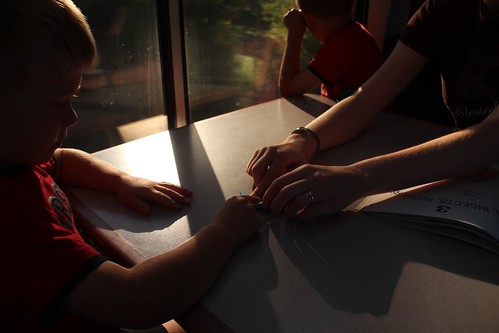
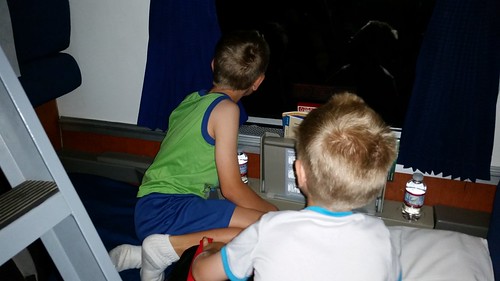
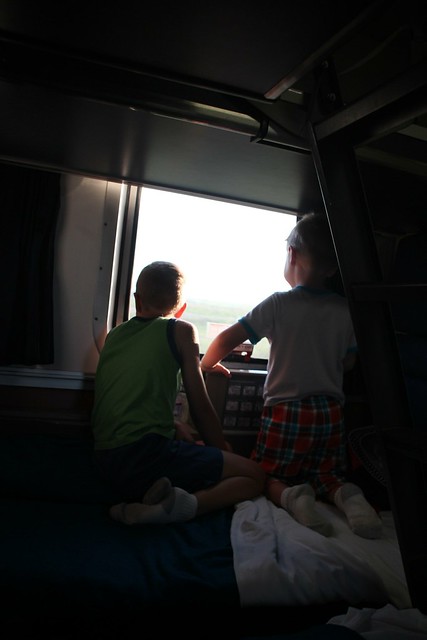
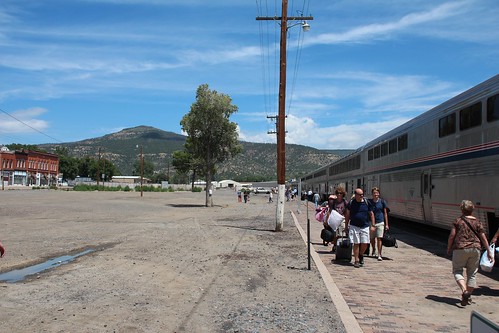
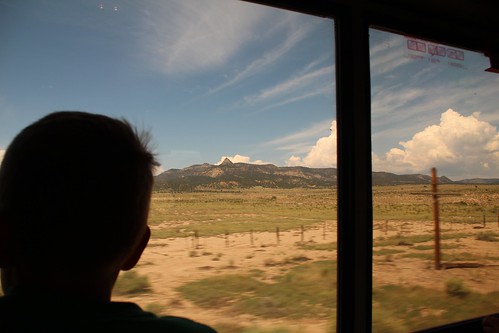
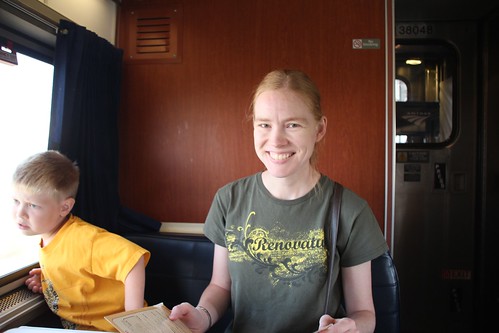
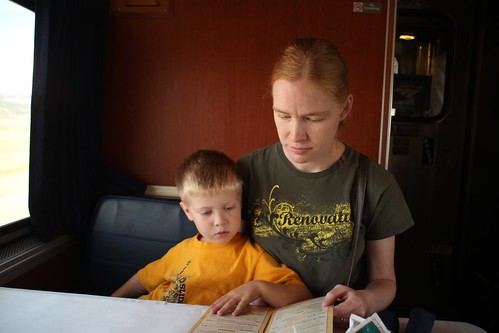
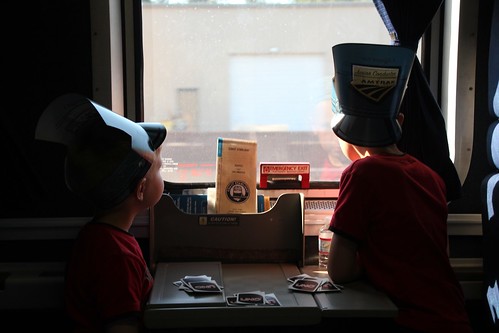
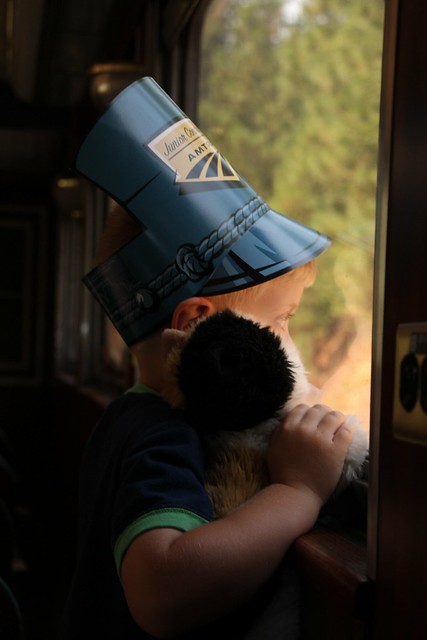
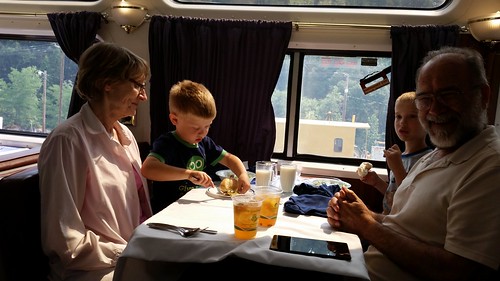
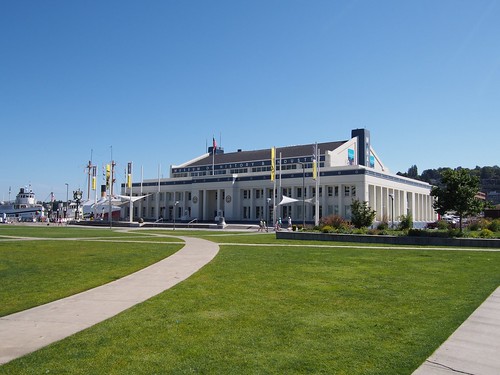
Monday morning, 1:45AM. Laura and I walk into the boys room. We turn on the light. Nothing happens. (They re sound sleepers.) Boys, it s time to get up to go get on the train! Four eyes pop open. Yay! Oh I m so excited! And then, Meow! (They enjoy playing with their stuffed cats that Laura got them for Christmas.) Before long, it was out the door to the train station. We even had time to stop at a donut shop along the way. We climbed into our family bedroom (a sleeping car room on Amtrak specifically designed for families of four), and as the train started to move, the excitement of what was going on crept in. Yes, it s 2:42AM, but these are two happy boys: 2014-08-04 02 Jacob and Oliver love trains, and this was the beginning of a 3-day train trip from Newton to Seattle that would take us through Kansas, Colorado, the Rocky Mountains of New Mexico, Arizona, Los Angeles, up the California coast, through the Cascades, and on to Seattle. Whew! Here we are later that morning before breakfast: IMG_3776 Here s our train at a station stop in La Junta, CO: IMG_3791 And at the beautiful small mountain town of Raton, NM: IMG_3805 Some of the passing scenery in New Mexico: IMG_3828 Through it all, we found many things to pass the time. I don t think anybody was bored. I took the boys exploring the train several times we d walk from one end to the other and see what all was there. There was always the dining car for our meals, the lounge car for watching the passing scenery, and on the Coast Starlight, the Pacific Parlor Car. Here we are getting ready for breakfast one morning. IMG_3830 Getting to select meals and order in the train restaurant was a big deal for the boys. IMG_3832 Laura brought one of her origami books, which even managed to pull the boys away from the passing scenery in the lounge car for quite some time. IMG_3848 Origami is serious business: IMG_3869 They had some fun wrapping themselves around my feet and challenging me to move. And were delighted when I could move even though they were trying to weight me down! IMG_3880 Several games of Uno were played, but even those sometimes couldn t compete with the passing scenery: IMG_3898 The Coast Starlight features the Pacific Parlor Car, which was built over 50 years ago for the Santa Fe Hi-Level trains. They ve been updated; the upper level is a lounge and small restaurant, and the lower level has been turned into a small theater. They show movies in there twice a day, but most of the time, the place is empty. A great place to go with little boys to run around and play games. IMG_3896 The boys and I sort of invented a new game: roadrunner and coyote, loosely based on the old Looney Tunes cartoons. Jacob and Oliver would be roadrunners, running around and yelling MEEP MEEP! Meanwhile, I was the coyote, who would try to catch them even briefly succeeding sometimes but ultimately fail in some hilarious way. It burned a lot of energy. And, of course, the parlor car was good for scenery-watching too: IMG_3908 We were right along the Pacific Ocean for several hours sometimes there would be a highway or a town between us and the beach, but usually there was nothing at all between us and the coast. It was beautiful to watch the jagged coastline go by, to gaze out onto the ocean, watching the birds apparently so beautiful that I didn t even think to take some photos. Laura s parents live in California, and took a connecting train. I had arranged for them to have a sleeping car room near ours, so for the last day of the trip, we had a group of 6. Here are the boys with their grandparents at lunch Wednesday: 2014-08-06 11 We stepped off the train in Seattle into beautiful King Street Station. P8100197 Our first day in Seattle was a quiet day of not too much. Laura s relatives live near Lake Washington, so we went out there to play. The boys enjoyed gathering black rocks along the shore. IMG_3956 We went blackberry picking after that filled up buckets for a cobbler. The next day, we rode the Seattle Monorail. The boys have been talking about this for months a kind of train they ve never been on. That was the biggest thing in their minds that they were waiting for. They got to ride in the very front, by the operator. P8080073 Nice view from up there. P8080078 We walked through the Pike Market I hadn t been in such a large and crowded place like that since I was in Guadalajara: P8080019 At the Seattle Aquarium, we all had a great time checking out all the exhibits. The please touch one was a particular hit. P8080038 Walking underneath the salmon tank was fun too. We spent a couple of days doing things closer to downtown. Laura s cousin works at MOHAI, the Museum of History and Industry, so we spent a morning there. The boys particularly enjoyed the old periscope mounted to the top of the building, and the exhibit on chocolate (of course!) P8100146 They love any kind of transportation, so of course we had to get a ride on the Seattle Streetcar that comes by MOHAI. P8090094 All weekend long, we had been noticing the seaplanes taking off from Lake Washington and Lake Union (near MOHAI). So finally I decided to investigate, and one morning while Laura was doing things with her cousin, the boys and I took a short seaplane ride from one lake to another, and then rode every method of transportation we could except for ferries (we did that the next day). Here is our Kenmore Air plane: P8100100 The view of Lake Washington from 1000 feet was beautiful: P8100109 I think we got a better view than the Space Needle, and it probably cost about the same anyhow. P8100117 After splashdown, we took the streetcar to a place where we could eat lunch right by the monorail tracks. Then we rode the monorail again. Then we caught a train (it went underground a bit so it was a subway to them!) and rode it a few blocks. There is even scenery underground, it seems. P8100151 We rode a bus back, and saved one last adventure for the next day: a ferry to Bainbridge Island. 2014-08-11 14 2014-08-11 16 Laura and I even got some time to ourselves to go have lunch at an amazing Greek restaurant to celebrate a year since we got engaged. It s amazing to think that, by now, it s only a few months until our wedding anniversary too! There are many special memories of the weekend I could mention visiting with Laura s family, watching the boys play with her uncle s pipe organ (it s in his house!), watching the boys play with their grandparents, having all six of us on the train for a day, flying paper airplanes off the balcony, enjoying the cool breeze on the ferry and the beautiful mountains behind the lake. One of my favorites is waking up to high-pitched Meow? Meow meow meow! Wake up, brother! sorts of sounds. There was so much cat-play on the trip, and it was cute to hear. I have the feeling we won t hear things like that much more. So many times on the trip I heard, Oh dad, I am so excited! I never get tired of hearing that. And, of course, I was excited, too.















Joachim Breitner: DebConf 14

I m writing this blog post on the plane from Portland towards Europe (which I now can!), using the remaining battery live after having watched one of the DebConf talks that I missed. (It was the systemd talk, which was good and interesting, but maybe I should have watched one of the power management talks, as my battery is running down faster than it should be, I believe.) I mostly enjoyed this year s DebConf. I must admit that I did not come very prepared: I had neither something urgent to hack on, nor important things to discuss with the other attendees, so in a way I had a slow start. I also felt a bit out of touch with the project, both personally and technically: In previous DebConfs, I had more interest in many different corners of the project, and also came with more naive enthusiasm. After more than 10 years in the project, I see a few things more realistic and also more relaxed, and don t react on Wouldn t it be cool to have crazy idea very easily any more. And then I mostly focus on Haskell packaging (and related tooling, which sometimes is also relevant and useful to others) these days, which is not very interesting to most others. But in the end I did get to do some useful hacking, heard a few interesting talks and even got a bit excited: I created a new tool to schedule binNMUs for Haskell packages which is quite generic (configured by just a regular expression), so that it can and will be used by the OCaml team as well, and who knows who else will start using hash-based virtual ABI packages in the future... It runs via a cron job on people.debian.org to produce output for Haskell and for OCaml, based on data pulled via HTTP. If you are a Debian developer and want up-to-date results, log into wuiet.debian.org and run ~nomeata/binNMUs --sql; it then uses the projectb and wanna-build databases directly. Thanks to the ftp team for opening up incoming.debian.org, by the way! Unsurprisingly, I also held a talk on Haskell and Debian (slides available). I talked a bit too long and we had too little time for discussion, but in any case not all discussion would have fitted in 45 minutes. The question of which packages from Hackage should be added to Debian and which not is still undecided (which means we carry on packaging what we happen to want in Debian for whatever reason). I guess the better our tooling gets (see the next section), the more easily we can support more and more packages. I am quite excited by and supportive of Enrico s agenda to remove boilerplate data from the debian/ directories and relying on autodebianization tools. We have such a tool for Haskell package, cabal-debian, but it is unofficial, i.e. neither created by us nor fully endorsed. I want to change that, so I got in touch with the upstream maintainer and we want to get it into shape for producing perfect Debian packages, if the upstream provided meta data is perfect. I d like to see the Debian Haskell Group to follows Enrico s plan to its extreme conclusion, and this way drive innovation in Debian in general. We ll see how that goes. Besides all the technical program I enjoyed the obligatory games of Mao and Werewolves. I also got to dance! On Saturday night, I found a small but welcoming Swing-In-The-Park event where I could dance a few steps of Lindy Hop. And on Tuesday night, Vagrant Cascadian took us (well, three of us) to a blues dancing night, which I greatly enjoyed: The style was so improvisation-friendly that despite having missed the introduction and never having danced Blues before I could jump right in. And in contrast to social dances in Germany, where it is often announced that the girls are also invited to ask the boys, but then it is still mostly the boys who have to ask, here I took only half a minute of standing at the side until I got asked to dance. In retrospect I should have skipped the HP reception and went there directly... I m not heading home at the moment, but will travel directly to G teborg to attend ICFP 2014. I hope the (usually worse) west-to-east jet lag will not prevent me from enjoying that as much as I could.

Gergely Nagy: Happy

For the past decade or so, I wasn't exactly happy. I struggled with low self esteem, likely bordered on depression at times. I disappointed friends, family and most of all, myself. There were times I not only disliked the person I was, but hated it. This wasn't healthy, nor forward-looking, I knew that all along, and that made the situation even worse. I tried to maintain a more enthusiastic mask, pretended that nothing's wrong. Being fully aware that there actually is nothing terribly wrong, while still feeling worthless, just added insult to injury.In the past few years, things started to improve. I had a job, things to care about, things to feel passionate about, people around me who knew nothing about the shadows on my heart, yet still smiled, still supported me. But years of self loathing does not disappear overnight.Then one day, some six months ago, my world turned upside down. Years of disappointment, hate and loathing - poof, gone. Today, I'm happy. This is something I have not been able to tell myself in all honesty in this century yet (except maybe for very brief periods of time, when I was happy for someone else).[Engaged]A little over six months ago, I met someone, someone I could open up to. I still remember the first hour, where we talked about our own shortcomings and bad habits. At the end of the day, when She ordered me a crazy-pancake (a pancake with half a dozen random fillings), I felt happy. She is everything I could ever wish for, and more. She isn't just the woman I love, with whom I'll say the words in a couple of months. She's much more than a partner, a friend a soul-mate combined in one person. She is my inspiration, my role model and my Guardian Angel too.I no longer feel worthless, nor inadequate. I am disappointed with myself no more. I do not hate, I do not loathe, and past mistakes, past feelings seem so far away! I can share everything with Her, She does not judge, nor condemn: she supports and helps. With Her, I am happy. With Her, I am who I wanted myself to be. With Her, I am complete.Thank You.

28 August 2014

Gunnar Wolf: Ongoing crypto handling discussions

I love to see there is a lot of crypto discussions going on at DebConf. Maybe I'm skewed by my role as keyring-maint, but I have been involved in more than one discussion every day on what do/should signatures mean, on best key handling practices, on some ideas to make key maintenance better, on how the OpenPGPv4 format lays out a key and its components on disk, all that. I enjoy some of those discussions pose questions that leave me thinking, as I am quite far from having all answers. Discussions should be had face to face, but some start online and deserve to be answered online (and also pose opportunity to become documentation). Simon Josefsson blogs about The case for short OpenPGP key validity periods. This will be an important issue to tackle, as we will soon require keys in the Debian keyring to have a set expiration date (surprise surprise!) and I agree with Simon, setting an expiration date far in the future means very little. There is a caveat with using, as he suggests, very short expiry periods: We have a human factor sitting in the middle. Keyring updates in Debian are done approximately once a month, and I do not see the period shortening. That means, only once a month we (currently Jonathan McDowell and myself, and we expect to add Daniel Kahn Gillmor soon) take the full changeset and compile a new keyring that replaces the active one in Debian. This means that if you have, as Simon suggests, a 100-day validity key, you have to remember to update it at least every 70 days, or you might be locked out during the days it takes us to process it. I set my expiration period to two years, although I might shorten it to only one. I expect to add checks+notifications before we enable this requirement project-wide (so that Debian servers will mail you when your key is close to expiry); I think that mail can be sent at approximately [expiry date - 90 days] to give you time both to you and to us to act. Probably the optimal expiration periods under such conditions would be between 180 and 365 days. But, yes, this is by far not yet a ruling, but a point in the discussion. We still have some days of DebConf, and I'll enjoy revising this point. And Simon, even if we correct some bits for these details, I'd like to have your permission to use this fine blog post as part of our documentation! (And on completely unrelated news: Congratulations to our dear and very much missed friend Bubulle for completely losing his sanity and running for 28 hours and a half straight! He briefly describes this adventure when it was about to start, and we all want him to tell us how it was. Mr. Running French Guy, you are amazing!)

24 August 2014

DebConf team: Full video coverage for DebConf14 talks (Posted by Tiago Bortoletto Vaz)

We are happy to announce that live video streams will be available for talks and discussion meetings in DebConf14. Recordings will be posted soon after the events. You can also interact with other local and remote attendees by joining the IRC channels which are listed at the streams page. For people who want to view the streams outside a webbrowser, the page for each room lists direct links to the streams. More information on the streams and the various possibilities offered is available at DebConf Videostreams. The schedule of talks is available at DebConf 14 Schedule. Thanks to our amazing video volunteers for making it possible. If you like the video coverage, please add a thank you note to VideoTeam Thanks

Lucas Nussbaum: on the Dark Ages of Free Software: a Free Service Definition ?

Stefano Zacchiroli opened DebConf 14 with an insightful talk titled Debian in the Dark Ages of Free Software (slides available, video available soon). He makes the point (quoting slide 16) that the Free Software community is winning a war that is becoming increasingly pointless: yes, users have 100% Free Software thin client at their fingertips [or are really a few steps from there]. But all their relevant computations happen elsewhere, on remote systems they do not control, in the Cloud. That give-up on control of computing is a huge and important problem, and probably the largest challenge for everybody caring about freedom, free speech, or privacy today. Stefano rightfully points out that we must do something about it. The big question is: how can we, as a community, address it? Towards a Free Service Definition? I believe that we all feel a bit lost with this issue because we are trying to attack it with our current tools & weapons. However, they are largely irrelevant here: the Free Software Definition is about software, and software is even to be understood strictly in it, as software programs. Applying it to services, or to computing in general, doesn t lead anywhere. In order to increase the general awareness about this issue, we should define more precisely what levels of control can be provided, to understand what services are not providing to users, and to make an informed decision about waiving a particular level of control when choosing to use a particular service. Benjamin Mako Hill pointed out yesterday during the post-talk chat that services are not black or white: there aren t impure and pure services. Instead, there s a graduation of possible levels of control for the computing we do. The Free Software Definition lists four freedoms how many freedoms, or types of control, should there be in a Free Service Definition, or a Controlled-Computing Definition? Again, this is not only about software: the platform on which a particular piece of software is executed has a huge impact on the available level of control: running your own instance of WordPress, or using an instance on wordpress.com, provides very different control (even if as Asheesh Laroia pointed out yesterday, WordPress does a pretty good job at providing export and import features to limit data lock-in). The creation of such a definition is an iterative process. I actually just realized today that (according to Wikipedia) the very first occurrence of an attempt at a Free Software Definition was published in 1986 (GNU s bulletin Vol 1 No.1, page 8) I thought it happened a couple of years earlier. Are there existing attempts at defining such freedoms or levels of controls, and at benchmarking such criteria against existing services? Such criteria would not only include control over software modifications and (re)distribution, but also likely include mentions of interoperability and open standards, both to enable the user to move to a compatible service, and to avoid forcing the user to use a particular implementation of a service. A better understanding of network effects is also needed: how much and what type of service lock-in is acceptable on social networks in exchange of functionality? I think that we should inspire from what was achieved during the last 30 years on Free Software. The tools that were produced are probably irrelevant to address this issue, but there s a lot to learn from the way they were designed. I really look forward to the day when we will have: Exciting times!

23 August 2014

Antti-Juhani Kaijanaho: A milestone toward a doctorate

Yesterday I received my official diploma for the degree of Licentiate of Philosophy. The degree lies between a Master s degree and a doctorate, and is not required; it consists of the coursework required for a doctorate, and a Licentiate Thesis, in which the student demonstrates good conversance with the field of research and the capability of independently and critically applying scientific research methods (official translation of the Government decree on university degrees 794/2004, Section 23 Paragraph 2). The title and abstract of my Licentiate Thesis follow:
Kaijanaho, Antti-Juhani
The extent of empirical evidence that could inform evidence-based design of programming languages. A systematic mapping study.
Jyv skyl : University of Jyv skyl , 2014, 243 p.
(Jyv skyl Licentiate Theses in Computing,
ISSN 1795-9713; 18)
ISBN 978-951-39-5790-2 (nid.)
ISBN 978-951-39-5791-9 (PDF)
Finnish summary Background: Programming language design is not usually informed by empirical studies. In other fields similar problems have inspired an evidence-based paradigm of practice. Central to it are secondary studies summarizing and consolidating the research literature. Aims: This systematic mapping study looks for empirical research that could inform evidence-based design of programming languages. Method: Manual and keyword-based searches were performed, as was a single round of snowballing. There were 2056 potentially relevant publications, of which 180 were selected for inclusion, because they reported empirical evidence on the efficacy of potential design decisions and were published on or before 2012. A thematic synthesis was created. Results: Included studies span four decades, but activity has been sparse until the last five years or so. The form of conditional statements and loops, as well as the choice between static and dynamic typing have all been studied empirically for efficacy in at least five studies each. Error proneness, programming comprehension, and human effort are the most common forms of efficacy studied. Experimenting with programmer participants is the most popular method. Conclusions: There clearly are language design decisions for which empirical evidence regarding efficacy exists; they may be of some use to language designers, and several of them may be ripe for systematic reviewing. There is concern that the lack of interest generated by studies in this topic area until the recent surge of activity may indicate serious issues in their research approach. Keywords: programming languages, programming language design, evidence-based paradigm, efficacy, research methods, systematic mapping study, thematic synthesis
A Licentiate Thesis is assessed by two examiners, usually drawn from outside of the home university; they write (either jointly or separately) a substantiated statement about the thesis, in which they suggest a grade. The final grade is almost always the one suggested by the examiners. I was very fortunate to have such prominent scientists as Dr. Stefan Hanenberg and Prof. Stein Krogdahl as the examiners of my thesis. They recommended, and I received, the grade very good (4 on a scale of 1 5). The thesis has been accepted for publication published in our faculty s licentiate thesis series and will in due course appear has appeared in our university s electronic database (along with a very small number of printed copies). In the mean time, if anyone wants an electronic preprint, send me email at antti-juhani.kaijanaho@jyu.fi.
Figure 1 of the thesis: an overview of the mapping processFigure 1 of the thesis: an overview of the mapping process
As you can imagine, the last couple of months in the spring were very stressful for me, as I pressed on to submit this thesis. After submission, it took me nearly two months to recover (which certain people who emailed me on Planet Haskell business during that period certainly noticed). It represents the fruit of almost four years of work (way more than normally is taken to complete a Licentiate Thesis, but never mind that), as I designed this study in Fall 2010.
Figure 8 of the thesis: Core studies per publication yearFigure 8 of the thesis: Core studies per publication year
Recently, I have been writing in my blog a series of posts in which I have been trying to clear my head about certain foundational issues that irritated me during the writing of the thesis. The thesis contains some of that, but that part of it is not very strong, as my examiners put it, for various reasons. The posts have been a deliberately non-academic attempt to shape the thoughts into words, to see what they look like fixed into a tangible form. (If you go read them, be warned: many of them are deliberately provocative, and many of them are intended as tentative in fact if not in phrasing; the series also is very incomplete at this time.) I closed my previous post, the latest post in that series, as follows:
In fact, the whole of 20th Century philosophy of science is a big pile of failed attempts to explain science; not one explanation is fully satisfactory. [...] Most scientists enjoy not pondering it, for it s a bit like being a cartoon character: so long as you don t look down, you can walk on air.
I wrote my Master s Thesis (PDF) in 2002. It was about the formal method called B ; but I took a lot of time and pages to examine the history and content of formal logic. My supervisor was, understandably, exasperated, but I did receive the highest possible grade for it (which I never have fully accepted I deserved). The main reason for that digression: I looked down, and I just had to go poke the bridge I was standing on to make sure I was not, in fact, walking on air. In the many years since, I ve taken a lot of time to study foundations, first of mathematics, and more recently of science. It is one reason it took me about eight years to come up with a doable doctoral project (and I am still amazed that my department kept employing me; but I suppose they like my teaching, as do I). The other reason was, it took me that long to realize how to study the design of programming languages without going where everyone has gone before. Debian people, if any are still reading, may find it interesting that I found significant use for the dctrl-tools toolset I have been writing for Debian for about fifteen years: I stored my data collection as a big pile of dctrl-format files. I ended up making some changes to the existing tools (I should upload the new version soon, I suppose), and I wrote another toolset (unfortunately one that is not general purpose, like the dctrl-tools are) in the process. For the Haskell people, I mainly have an apology for not attending to Planet Haskell duties in the summer; but I am back in business now. I also note, somewhat to my regret, that I found very few studies dealing with Haskell. I just checked; I mention Haskell several times in the background chapter, but it is not mentioned in the results chapter (because there were not studies worthy of special notice). I am already working on extending this work into a doctoral thesis. I expect, and hope, to complete that one faster.

22 August 2014

Russell Coker: Men Commenting on Women s Issues

A lecture at LCA 2011 which included some inappropriate slides was followed by long discussions on mailing lists. In February 2011 I wrote a blog post debunking some of the bogus arguments in two lists [1]. One of the noteworthy incidents in the mailing list discussion concerned Ted Ts o (an influential member of the Linux community) debating the definition of rape. My main point on that issue in Feb 2011 was that it s insensitive to needlessly debate the statistics. Recently Valerie Aurora wrote about another aspect of this on The Ada Initiative blog [2] and on her personal blog. Some of her significant points are that conference harassment doesn t end when the conference ends (it can continue on mailing lists etc), that good people shouldn t do nothing when bad things happen, and that free speech doesn t mean freedom from consequences or the freedom to use private resources (such as conference mailing lists) without restriction. Craig Sanders wrote a very misguided post about the Ted Ts o situation [3]. One of the many things wrong with his post is his statement I m particularly disgusted by the men who intervene way too early without an explicit invitation or request for help or a clear need such as an immediate threat of violence in womens issues . I believe that as a general rule when any group of people are involved in causing a problem they should be involved in fixing it. So when we have problems that are broadly based around men treating women badly the prime responsibility should be upon men to fix them. It seems very clear that no matter what scope is chosen for fixing the problems (whether it be lobbying for new legislation, sociological research, blogging, or directly discussing issues with people to change their attitudes) women are doing considerably more than half the work. I believe that this is an indication that overall men are failing. Asking for Help I don t believe that members of minority groups should have to ask for help. Asking isn t easy, having someone spontaneously offer help because it s the right thing to do can be a lot easier to accept psychologically than having to beg for help. There is a book named Women Don t Ask which has a page on the geek feminism Wiki [4]. I think the fact that so many women relate to a book named Women Don t Ask is an indication that we shouldn t expect women to ask directly, particularly in times of stress. The Wiki page notes a criticism of the book that some specific requests are framed as complaining , so I think we should consider a complaint from a woman as a direct request to do something. The geek feminism blog has an article titled How To Exclude Women Without Really Trying which covers many aspects of one incident [5]. Near the end of the article is a direct call for men to be involved in dealing with such problems. The geek feminism Wiki has a page on Allies which includes Even a blog post helps [6]. It seems clear from public web sites run by women that women really want men to be involved. Finally when I get blog comments and private email from women who thank me for my posts I take it as an implied request to do more of the same. One thing that we really don t want is to have men wait and do nothing until there is an immediate threat of violence. There are two massive problems with that plan, one is that being saved from a violent situation isn t a fun experience, the other is that an immediate threat of violence is most likely to happen when there is no-one around to intervene. Men Don t Listen to Women Rebecca Solnit wrote an article about being ignored by men titled Men Explain Things to Me [7]. When discussing women s issues the term Mansplaining is often used for that sort of thing, the geek feminism Wiki has some background [8]. It seems obvious that the men who have the greatest need to be taught some things related to women s issues are the ones who are least likely to listen to women. This implies that other men have to teach them. Craig says that women need space to discover and practice their own strength and their own voices . I think that the best way to achieve that goal is to listen when women speak. Of course that doesn t preclude speaking as well, just listen first, listen carefully, and listen more than you speak. Craig claims that when men like me and Matthew Garrett comment on such issues we are making women s spaces more comfortable, more palatable, for men . From all the discussion on this it seems quite obvious that what would make things more comfortable for men would be for the issue to never be discussed at all. It seems to me that two of the ways of making such discussions uncomfortable for most men are to discuss sexual assault and to discuss what should be done when you have a friend who treats women in a way that you don t like. Matthew has covered both of those so it seems that he s doing a good job of making men uncomfortable I think that this is a good thing, a discussion that is comfortable and palatable for the people in power is not going to be any good for the people who aren t in power. The Voting Aspect It seems to me that when certain issues are discussed we have a social process that is some form of vote. If one person complains then they are portrayed as crazy. When other people agree with the complaint then their comments are marginalised to try and preserve the narrative of one crazy person. It seems that in the case of the discussion about Rape Apology and LCA2011 most men who comment regard it as one person (either Valeria Aurora or Matthew Garrett) causing a dispute. There is even some commentary which references my blog post about Rape Apology [9] but somehow manages to ignore me when it comes to counting more than one person agreeing with Valerie. For reference David Zanetti was the first person to use the term apologist for rapists in connection with the LCA 2011 discussion [10]. So we have a count of at least three men already. These same patterns always happen so making a comment in support makes a difference. It doesn t have to be insightful, long, or well written, merely I agree and a link to a web page will help. Note that a blog post is much better than a comment in this regard, comments are much like conversation while a blog post is a stronger commitment to a position. I don t believe that the majority is necessarily correct. But an opinion which is supported by too small a minority isn t going to be considered much by most people. The Cost of Commenting The Internet is a hostile environment, when you comment on a contentious issue there will be people who demonstrate their disagreement in uncivilised and even criminal ways. S. E. Smith wrote an informative post for Tiger Beatdown about the terrorism that feminist bloggers face [11]. I believe that men face fewer threats than women when they write about such things and the threats are less credible. I don t believe that any of the men who have threatened me have the ability to carry out their threats but I expect that many women who receive such threats will consider them to be credible. The difference in the frequency and nature of the terrorism (and there is no other word for what S. E. Smith describes) experienced by men and women gives a vastly different cost to commenting. So when men fail to address issues related to the behavior of other men that isn t helping women in any way. It s imposing a significant cost on women for covering issues which could be addressed by men for minimal cost. It s interesting to note that there are men who consider themselves to be brave because they write things which will cause women to criticise them or even accuse them of misogyny. I think that the women who write about such issues even though they will receive threats of significant violence are the brave ones. Not Being Patronising Craig raises the issue of not being patronising, which is of course very important. I think that the first thing to do to avoid being perceived as patronising in a blog post is to cite adequate references. I ve spent a lot of time reading what women have written about such issues and cited the articles that seem most useful in describing the issues. I m sure that some women will disagree with my choice of references and some will disagree with some of my conclusions, but I think that most women will appreciate that I read what women write (it seems that most men don t). It seems to me that a significant part of feminism is about women not having men tell them what to do. So when men offer advice on how to go about feminist advocacy it s likely to be taken badly. It s not just that women don t want advice from men, but that advice from men is usually wrong. There are patterns in communication which mean that the effective strategies for women communicating with men are different from the effective strategies for men communicating with men (see my previous section on men not listening to women). Also there s a common trend of men offering simplistic advice on how to solve problems, one thing to keep in mind is that any problem which affects many people and is easy to solve has probably been solved a long time ago. Often when social issues are discussed there is some background in the life experience of the people involved. For example Rookie Mag has an article about the street harassment women face which includes many disturbing anecdotes (some of which concern primary school students) [12]. Obviously anyone who has lived through that sort of thing (which means most women) will instinctively understand some issues related to threatening sexual behavior that I can t easily understand even when I spend some time considering the matter. So there will be things which don t immediately appear to be serious problems to me but which are interpreted very differently by women. The non-patronising approach to such things is to accept the concerns women express as legitimate, to try to understand them, and not to argue about it. For example the issue that Valerie recently raised wasn t something that seemed significant when I first read the email in question, but I carefully considered it when I saw her posts explaining the issue and what she wrote makes sense to me. I don t think it s possible for a man to make a useful comment on any issue related to the treatment of women without consulting multiple women first. I suggest a pre-requisite for any man who wants to write any sort of long article about the treatment of women is to have conversations with multiple women who have relevant knowledge. I ve had some long discussions with more than a few women who are involved with the FOSS community. This has given me a reasonable understanding of some of the issues (I won t claim to be any sort of expert). I think that if you just go and imagine things about a group of people who have a significantly different life-experience then you will be wrong in many ways and often offensively wrong. Just reading isn t enough, you need to have conversations with multiple people so that they can point out the things you don t understand. This isn t any sort of comprehensive list of ways to avoid being patronising, but it s a few things which seem like common mistakes. Anne Onne wrote a detailed post advising men who want to comment on feminist blogs etc [13], most of it applies to any situation where men comment on women s issues.

Ian Donnelly: Wrapping Up

Hi Everybody! I have been keeping very busy on this blog the past few days with some very exciting updates! Everything is now in place for my Google Summer of Code project! Elektra now has the ability to merge KeySets, ucf has been patched to allow custom merge commands, we included a new elektra-merge script to use in conjunction with the new ucf command, and we wrote a great tutorial on how to use Elektra to merge configuration files in any package using ucf. There are few things I have missed updating you all on or are still wrapping up. First of all, I would like to address the Debian packages. While Elektra includes everything needed for my Google Summer of Code Project, it must be built from source right now. Unfortunately, with the rapid development Elektra has seen the past few months, we did not pay enough attention to the Debian packages and they became dusty and riddles with bugs. Fortunately, we have a solution and his name is Pino Toscano. Pino has, very graciously, agreed to help us fix our Debian packages back into shape. If you wish to see the current progress of the packages, you can check his repo. Pino has already made fantastic progress creating the Debian packages. I will post here when packages are all fixed up and the latest versions of Elektra are into the Debian repo. Some great news that we just received is that Elektra 0.8.7 has just been accepted into Debian unstable! This is huge progress for our team and means that users can now download our packages directly from Debian s unstable repo and test out these new features. Obviously, the normal caveats apply for any packages in unstable but this is still an amazing piece of news and I would like to thank Pino again for all the support he has provided. Another worthy piece of news that I unfortunately haven t had time to cover is that thanks to Felix Berlakovich Elektra has a new plug-in called ini. In case you couldn t guess, this new plug-in is used to mount ini files and the good news is that it is a vast improvement on our older simpleini plug-in. While it is still a work in progress, this new plug-in is much more powerful than simpleini. The new plug-in supports section and comments and works with many more ini files than the old plug-in. You may have noticed that I used this new plug-in to mount smb.conf in my technical demo of Samba using Elektra from configuration merging. Since smb.conf follows the same syntax as an ini file this new plug-in works great for mounting this file into the Elektra Key Database. I hope my blogs so far have been very informative and helpful. Sincerely,
Ian S. Donnelly

Next.

Previous.