Search Results: "sf"

10 March 2016

Hideki Yamane: Microsoft uses Debian - this is 2010s

Interesting, the Register says Microsoft has released a Debian Linux switch OS. Repeat, a Debian Linux switch operating system, I don't know it's true or not but interesting at least.

Anyway, relationship between Debian and Microsoft is completely different from 10 years ago. Microsoft Azure added Debian as one of their endorsed distribution, and I worked for improving Hyper-V support on Debian, it becomes better than until 8.2 with hyperv-daemons package (thanks to folks for pushing it to stable). It's good for everyone that one of the biggest software company chose Debian for their product.


And, dear Microsoft, if you truely love OSS, then it's time to consider to show it with becoming sponsor for DebConf and talk with us in there with beer :)

swirl, swirl

8 March 2016

Dirk Eddelbuettel: gtrendsR 1.3.3

A very nice new update to the gtrendsR package by Philippe and myself is now avilable via CRAN. I had only blogged about the initial 1.3.0 release, and we have added a whole slew of new features and fixes. Philippe rewrote a lot of the parsing to make it more robust to different encodings, and to add other features. So in no particular order, we can now sub-group by regions more finely, withstand various misfeatures in returned data sets, generally do better on connections, and more --- and also allow for intra-day, daily and weekly queries! That last part is pretty fun. Here is the code I ran last Saturday to look at the query for Donald Drumpf, a name brought to us via a beautiful John Oliver episode worth watching which ran about nine days ago. So last Saturday, when we were still within the seven day window, I ran
library(gtrendsR)
dp <- gtrends("Donald Drumpf", res="7d")
plot(dp) + ggplot2::ggtitle("The Drumpf") + ggplot2::theme(legend.position="none")
which resulted in the following chart Donald Drump query which highlights another nice feature: the ggplot2 object created by the plotting function is returned, so we can locally modify and tune it. Here we set a title and suppress the default legend. As I had not blogged about the interim bug-fix releases 1.3.1 and 1.3.2, here is the set of NEWS entries for the last three releases:

gtrendsR 1.3.3
  • A ggplot2 object can now be returned for further customization. plot(gtrends("NHL")) + ggtitle("NHL trend") + theme(legend.position="none")
  • Support for hourly and daily data (#67). For example, it is now possible to have hourly data for the last seven days with gtrends("nhl", geo = "CA", res = "7d"). Use ?gtrends for more information about the time resolution supported by the package.
  • Support for categorties (#46). Ex.: gtrends("NHL", geo = "US", cat = "0-20") will search only in the sport category.
  • Some countries (ex: Hong Kong) were missing from the list (#69).
  • Various typos and documentation work.

gtrendsR 1.3.2
  • Added support for sub-countries (#25). Ex.: gtrends("NHL", geo = "CA-QC") will return trends data for Qu bec province in Canada. The list of supported sub-countries can be obtained via data(countries).
  • Data parsing should work for any data returned by Google Trends (i.e. countries independent).
  • Better support for queries using keywords in different languages (#50, #57). Ex.: gtrends(" ", geo = "TW")
  • Now able to specify up to five countries (#53) via gtrends("NHL", geo = c("CA", "US"))
  • Fixing issue #51 allowing UK-based queries via geo = "GB"

gtrendsR 1.3.1
  • Fixing issue #34 where connection verification was not done properly.
  • Now able to use more latin character in query. For example: gtrends("montr al").
  • Can now deal with data returned other than in English language.

Courtesy of CRANberries, there is also a diffstat report for the this release. As always, more detailed information is on the gtrendsR repo where questions, comments etc should go via the issue tickets system.

This post by Dirk Eddelbuettel originated on his Thinking inside the box blog. Please report excessive re-aggregation in third-party for-profit settings.

Edited 2016-03-08: Corrected code snipped and one grammar instance

6 March 2016

Jaldhar Vyas: 7DRL 2016

It's time once again for the annual 7 Day Roguelike Challenge. I know I said I wasn't going to take part again until I properly finished one of my previous entries but I've thought of an interesting and novel game mechanic that I'm eager to try out so what the hell. If you are interested in following my progress, I will blog about it here starting from Monday and (hopefully successfully) finishing on the following Sunday. Of course the best part of it is coming up with names. Here are this years choices:

5 March 2016

Lunar: Reproducible builds: week 44 in Stretch cycle

What happened in the reproducible builds effort between February 21th and February 27th:

Toolchain fixes Didier Raboud uploaded pyppd/1.0.2-4 which makes PPD generation deterministic. Emmanuel Bourg uploaded plexus-maven-plugin/1.3.8-10 which sorts the components in the components.xml files generated by the plugin. Guillem Jover has implemented stable ordering for members of the control archives in .debs. Chris Lamb submitted another patch to improve reproducibility of files generated by cython.

Packages fixed The following packages have become reproducible due to changes in their build dependencies: dctrl-tools, debian-edu, dvdwizard, dymo-cups-drivers, ekg2, epson-inkjet-printer-escpr, expeyes, fades, foomatic-db, galternatives, gnuradio, gpodder, gutenprint icewm, invesalius, jodconverter-cli latex-mk, libiio, libimobiledevice, libmcrypt, libopendbx, lives, lttnganalyses, m2300w, microdc2, navit, po4a, ptouch-driver, pxljr, tasksel, tilda, vdr-plugin-infosatepg, xaos. The following packages became reproducible after getting fixed: Some uploads fixed some reproducibility issues, but not all of them:

tests.reproducible-builds.org The reproducibly tests for Debian now vary the provider of /bin/sh between bash and dash. (Reiner Herrmann)

diffoscope development diffoscope version 50 was released on February 27th. It adds a new comparator for PostScript files, makes the directory tests pass on slower hardware, and line ordering variations in .deb md5sums files will not be hidden anymore. Version 51 uploaded the next day re-added test data missing from the previous tarball. diffoscope is looking for a new primary maintainer.

Package reviews 87 reviews have been removed, 61 added and 43 updated in the previous week. New issues: captures_shell_variable_in_autofoo_script, varying_ordering_in_data_tar_gz_or_control_tar_gz. 30 new FTBFS have been reported by Chris Lamb, Antonio Terceiro, Aaron M. Ucko, Michael Tautschnig, and Tobias Frost.

Misc. The release team reported on their discussion about the topic of rebuilding all of Stretch to make it self-contained (in respect to reproducibility). Christian Boltz is hoping someone could talk about reproducible builds at the openSUSE conference happening June 22nd-26th in N rnberg, Germany.

1 March 2016

Vincent Sanders: Hope is tomorrow's veneer over today's disappointment.

Recently I have been very hopeful about the 96boards Hikey SBC and as Evan Esar predicted I have therefore been very disappointed. I was given a Hikey after a Linaro connect event some time ago by another developer who could not get the system working usefully and this is the tale of what followed.
The Standard Design
This board design was presented as Linaro creating a standard for the 64bit Single Board Computer (SBC) market. So I had expected that a project with such lofty goals would have considered many factors and provided at least as good a solution as the existing 32bit boards.

The lamentable hubris of creating a completely new form factor unfortunately sets a pattern for the whole enterprise. Given the aim towards "makers" I would have accepted that the system would not be a ATX PC size motherboard, but mini/micro/nano and pico ITX have been available for several years.

If opting for a smaller "credit card" form factor why not use one of the common ones that have already been defined by systems such as the Raspberry Pi B+? Instead now every 96Board requires special cases and different expansion boards.

Not content with defining their own form factor the design also uses a 8-18V supply, this is the only SBC I own that is not fed from a 5V supply. I understand that a system might require more current than a micro USB connector can provide, but for example the Banana Pi manages with a DC barrel jack readily capable of delivering 25W which would seem more than enough

The new form factor forced the I/O connectors to be placed differently to other SBC, given the opportunity to concentrate all connectors on one edge (like ATX designs) and avoid the issues where two or three sides are used. The 96board design instead puts connectors on two edges removing any possible benefit this might have given.

The actual I/O connectors specified are rather strange. There is a mandate for HDMI removing the possibility of future display technology changes. The odd USB arrangement of two single sockets instead of a stacked seems to be an attempt to keep height down but the expansion headers and CPU heatsink mean this is largely moot.

The biggest issue though is mandating WIFI but not Ethernet (even as an option), everything else in the design I could logically understand but this makes no sense. It means the design is not useful for many applications without adding USB devices.

Expansion is presented as a 2mm pitch DIL socket for "low speed" signals and a high density connector for "high speed" signals. The positioning and arrangement of these connectors proffered an opportunity to improve upon previous SBC designs which was not taken. The use of 2mm pitch and low voltage signals instead of the more traditional 2.54mm pitch 3.3v signals means that most maker type applications will need adapting from the popular Raspberry Pi and Arduino style designs.

In summary the design appears to have been a Linaro project to favour one of their members which took a Hisilicon Android phone reference design and put it onto a board with no actual thought beyond getting it done. Then afterwards attempted to turn that into a specification, this has simply not worked as an approach.

My personal opinion is that this specification is fatally flawed and, is a direct cause of, the bizarre situation where the "consumer" specification exists alongside the "enterprise" edition which itself has an option of microATX form factor anyhow!
The ImplementationIf we ignore the specification appearing to be nothing more than a codification of the original HiKey design we can look at the HiKey as an implementation.

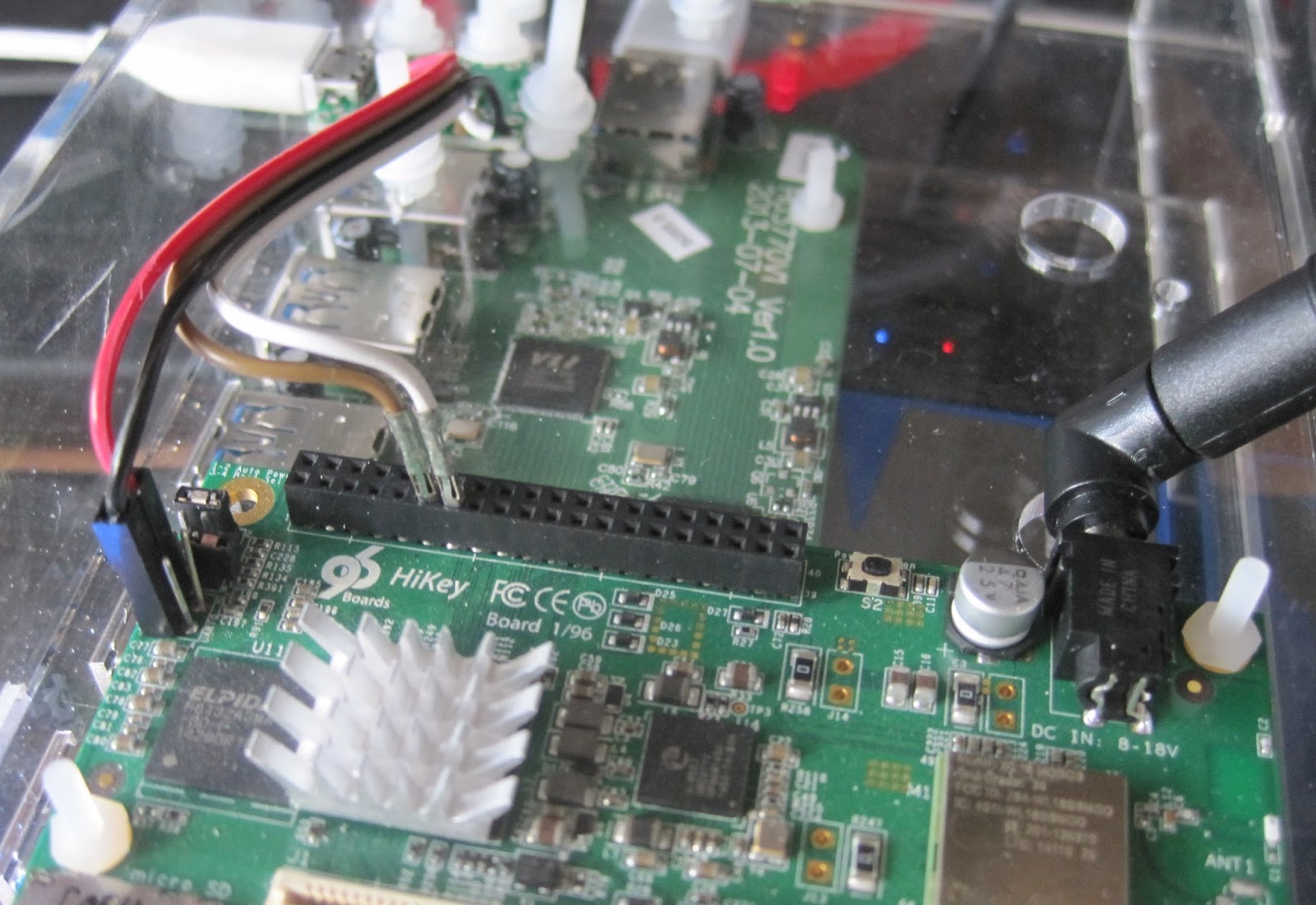
Initially the board required modifying to add headers to attach a USB to 1.8V LVTTL serial adaptor on the UART0 serial port. Once Andy Simpkins had made this change for me I was able to work through the instructions and attempt to install a bootloader and OS image.

The initial software was essentially HiSilicon vendor code using the Android fastboot system to configure booting. There was no source and the Ubuntu OS images were an obvious afterthought to the Android images. Just getting these images installed required a great deal of effort, repetition and debugging. It was such a dreadful experience this signalled the commencement one of the repeated hiatuses throughout this project, the allure of 64 bit ARM computing has its limits even for me.

When I returned to the project I attempted to use the system from the on-board eMMC but the pre-built binary only kernel and OS image were very limited. Building a replacement kernel , or even modules for the existing one proved fruitless and the system was dreadfully unstable.

I wanted to use the system as a builder for some Open Source projects but the system instability ruled this out. I considered attempting to use virtualisation which would also give better system isolation for builder systems. By using KVM running a modern host kernel and OS as a guest this would also avoid issues with the host systems limitations. At which point I discovered the system had no virtualisation enabled apparently because the bootloader lacked support.

In addition to these software issues there were hardware problems, despite forcing the use of USB for all additional connectivity the USB implementation was dreadful. For a start all USB peripherals have to run at the same speed! One cannot mix full (12Mbit) and high speed (480Mbit) devices which makes adding a USB Ethernet and SATA device challenging when you cannot use a keyboard.

And because I needed more challenges only one of the USB root hubs was functional. In effect this made the console serial port critical as it was the only reliable way to reconfigure the system without a keyboard or network link (and WIFI was not reliable either)
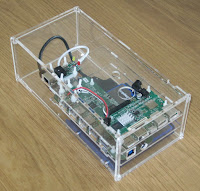
After another long pause in proceedings I decided that I should house all the components together and that perhaps being out on my bench might be the cause of some instability. I purchased a powered Amazon basics USB 2 hub, an Ethernet adaptor and a USB 2 SATA interface in the hope of accessing some larger mass storage.

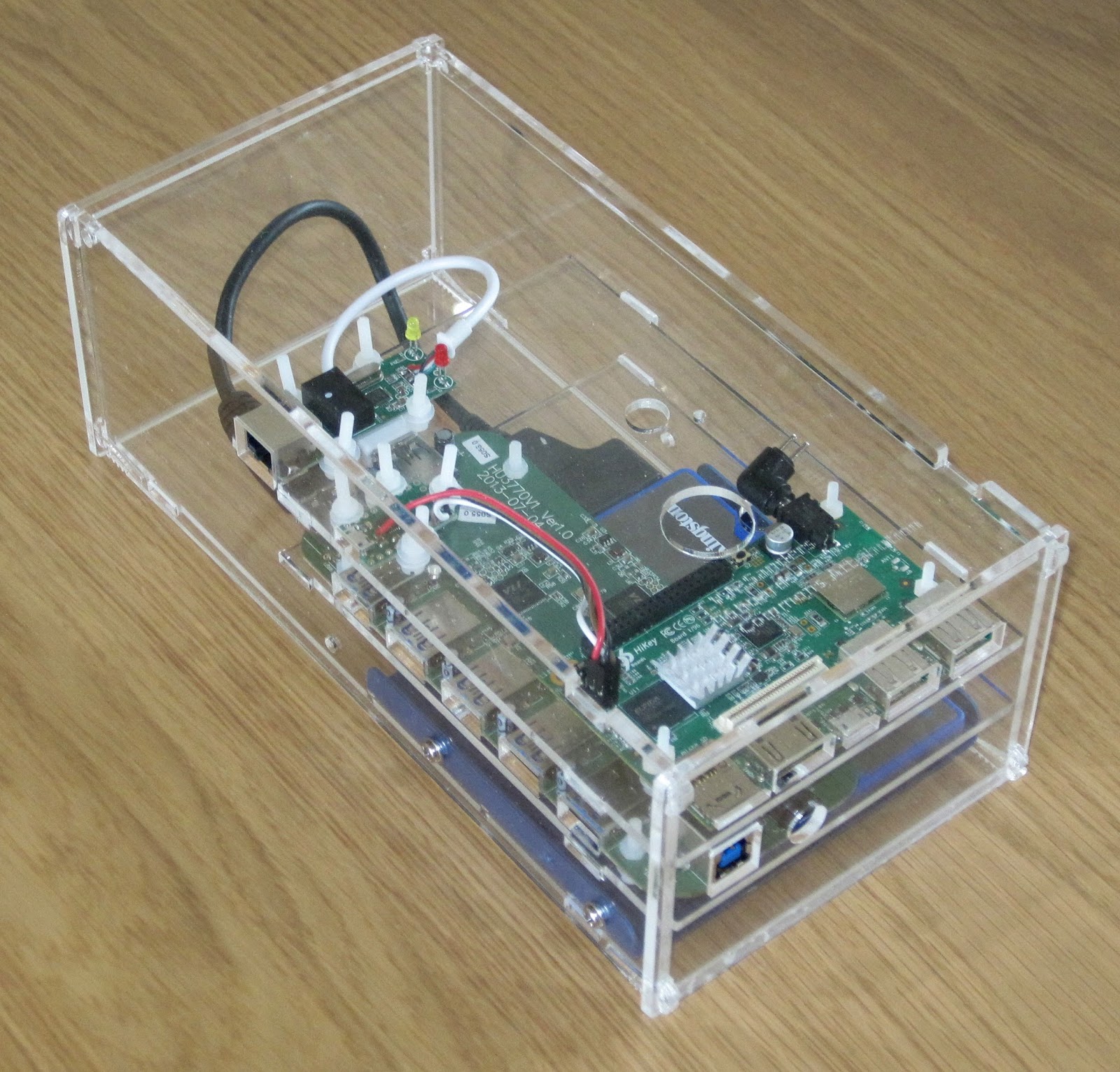
The USB hub power supply was 12V DC which matched the Hikey requirements so I worked out I could use a single 4A capable supply and run a 3.5inch SATA hard drive too. I designed a laser cut enclosure and mounted all the components. As it turned out I only had a 2.5inch hard drive handy so the enclosure is a little over size. If I were redoing this design I would attempt to make it fit in 1U of height and be mountable in a 19inch rack instead it is an 83mm high (under 2U) box.

A new software release had also become available which purported to use an UEFI bootloader after struggling to install this version unsuccessfully, made somewhat more problematic by the undocumented change from UART0 (unpopulated header) to UART3 on the low speed 2mm pitch header. The system seemed to start the kernel which panicked and hung either booting from eMMC or SD card. Once again the project went on hold after spending tens of hours trying to make progress.
Third time's a charmAs the year rolled to a close I once again was persuaded to look at the hikey, I followed the much improved instructions and installed the shiny new November software release which appears to have been made for the re-release of the Hikey through LeMaker. This time I obtained a Debian "jessie" system that booted from the eMMC.

Having a booted system meant I could finally try and use it. I had decided to try and use the system to host virtual machines used as builders within the NetSurf CI system.

The basic OS uses a mixture of normal Debian packages with some replacements from Linaro repositories. I would have prefered to see more use of Debain packages even if they were from the backports repositories but on the positive side it is good to see the use of Debian instead of Ubuntu.

The kernel is a heavily patched 3.18 built in a predominantly monolithic (without modules) manner with the usual exceptions such as the mali and wifi drivers (both of which appear to be binary blobs). The use of a non-mainline capable SoC means the standard generic distribution kernels cannot be used and unless Linaro choose to distribute a kernel with the feature built in it is necessary to compile your own from sources.

The default install has a linaro user which I renamed to my user and ensured all the ssh keys and passwords on the system were changed. This is an important step when using this pre-supplied images as often a booted system is identical to every other copy.

To access mass storage my only option was via USB, indeed to add any additional expansion that is the only choice. The first issue here is that the USB host support is compiled in so when the host ports are initialised it is not possible to select a speed other than 12MBit. The speed is changed to 480Mbit by using a user space application found in the users home directory (why this is not a tool provided by a package and held in sbin I do not know).

When the usb_speed tool is run there is a chance that the previously enumerated devices will be rescanned and what was /dev/sda has become /dev/sdb if this happens there is a high probability that the system must be rebooted to prevent random crashes due to the "zombie" device.

Because the speed change operation is unreliable it cannot be reliably placed in the boot sequence so this must be executed by hand on each boot to get access to the mass storage.

NetSurf project already uses a x86_64 virtual host system which runs an LLVM physical volume from which we allocate logical volumes for each VM. I initially hoped to do this with the hikey but as soon as I tried to use the logical volume with a VM the system locked up with nothing shown on console. I did not really try very hard to discover why and instead simply used files on disc for virtual drives which seemed to work.

To provide reliable network access I used a USB attached Ethernet device, this like the mass storage suffered from unreliable enumeration and for similar reasons could not be automated requiring manually using the serial console to start the system.

Once the system was started I needed to install the guest VM. I had hoped I might be able to install locally from Debian install media as I do for x86 using the libvirt tools. After a great deal of trial and error I finally was forced to abandon this approach when I discovered the Linaro kernel is lacking iso9660 support so installing from standard media was not possible.

Instead I used the instructions provided by Leif Lindholm to create a virtual machine image on my PC and copied the result across. These instructions are great except I used version 2.5 of Qemu instead of 2.2 which had no negative effect. I also installed the Debian backports for Jessie to get an up to date 4.3 kernel.

After copying the image to the Hikey I started it by hand from the command line as a four core virtual machine and was successfully able to log in. The guest would operate for up to a day before stopping with output such as

$
Message from syslogd@ciworker13 at Jan 29 07:45:28 ...
kernel:[68903.702501] BUG: soft lockup - CPU#0 stuck for 27s! [mv:24089]

Message from syslogd@ciworker13 at Jan 29 07:45:28 ...

kernel:[68976.958028] BUG: soft lockup - CPU#2 stuck for 74s! [swapper/2:0]

Message from syslogd@ciworker13 at Jan 29 07:47:39 ...
kernel:[69103.199724] BUG: soft lockup - CPU#3 stuck for 99s! [swapper/3:0]

Message from syslogd@ciworker13 at Jan 29 07:53:21 ...
kernel:[69140.321145] BUG: soft lockup - CPU#3 stuck for 30s! [rs:main Q:Reg:505]

Message from syslogd@ciworker13 at Jan 29 07:53:21 ...
kernel:[69192.880804] BUG: soft lockup - CPU#0 stuck for 21s! [jbd2/vda3-8:107]

Message from syslogd@ciworker13 at Jan 29 07:53:21 ...
kernel:[69444.805235] BUG: soft lockup - CPU#3 stuck for 22s! [swapper/3:0]

Message from syslogd@ciworker13 at Jan 29 07:55:21 ...
kernel:[69570.177600] BUG: soft lockup - CPU#1 stuck for 112s! [systemd:1]

Timeout, server 192.168.7.211 not responding.

After this output the host system would not respond and had to be power cycled never mind the guest!

Once I changed to single core operation the system would run for some time until the host suffered from the dreaded kernel OOM killer. I was at a loss as to why the oom killer was running as the VM was only allocated half the physical memory (512MB) allowing the host what I presumed to be an adequate amount.

By adding a 512MB swapfile the system was able to push the few hundred kilobytes it wanted to swap and the system was now stable! The swapfile of course has to be started by hand as the external storage is unreliable and unavailable at boot.

I converted the qemu command line to a libvirt config using the virsh tool
virsh domxml-from-native qemu-argv cmdln.args
The converted configuration required manual editing to get a working system but now I have a libvirt based VM guest I can control along with all my other VM using the virt-manager tool.

This system is now stable and has been in production use for a month at time of writing. The one guest VM is a single core 512MB aarch64 system which takes over 1100 seconds (19 minutes) to do what a Banana Pi 2 dual core 1GB memory 32bit native ARM system manages in 300 seconds.

It seems the single core limited memory system with USB SATA attached storage is very, very slow.

I briefly attempted to run the CI system job natively within the host system but within minutes it crashed hard and required a power cycle to retrieve, it had also broken the UEFI boot. I must thank Leif for walking me through recovering the system otherwise I would have needed to start over.
ConclusionsI must stress these conclusions and observations are my own and do not represent anyone else.

My main conclusions are:

This project has taken almost a year to get to the final state and has been one of the least enjoyable within that time. The only reason I have a running system at the end of it is sheer bloody mindedness because after spending hundreds of hours of my free time I was not prepared to see it all go to waste.

To be fair, the road I travelled is now much smoother and if the application is suited to having a mobile phone without a screen then the Hikey probably works as a solution. For me, however, the Hikey product with the current hardware and software limitations is not something I would recommend in preference to other options.
Russ Allbery: Review: The Lost Steersman

Review: The Lost Steersman, by Rosemary Kirstein
Series: Steerswomen #3
Publisher: Rosemary Kirstein
Copyright: 2003, 2014
Printing: 2014
ISBN: 0-9913546-2-1
Format: Kindle
Pages: 432
This is the third book in the Steerswomen series and a direct follow-up to the events of The Outskirter's Secret. It does, marvel of marvels, feature an in-character summary of the events of the series to date! I do love when authors do this; it helps immensely if you come back to a series after a bit of a break between books. But this whole series is so good, and the emotional tone and development of Rowan as a character is so strong, that I recommend against starting here. After the events of the last book, Rowan has returned to the Inner Lands. She's sent her report back to the Archives, but stopped at the Annex in Alemeth. This is an auxiliary library that should have copies of the journals and other research that Rowan wants to search, and stopping there saves substantial travel time. However, she finds the steerswoman who was custodian of the Annex is deceased and the Annex is, from Rowan's perspective, a mess. Nothing is organized, the books aren't properly cared-for, and Mira's interactions with the townsfolk were far different than Rowan's natural attitude. The start of this book was a surprising shift. After the large-scale revelations at the end of The Outskirter's Secret, and the sense of escalating danger, Rowan's return to small-town life in the Inner Lands comes as a shock. That's true for both the reader and for Rowan, and the parallels make it a remarkably effective bit of writing. At the beginning of the story, the reader is already familiar with Rowan (at least if you've read the previous books) and how she thinks of being a steerswoman. Rowan is very much on edge and in a hurry given what's going on in the broader world. But the town is used to Mira: a gregarious socializer who cared far more about town gossip and her role as coordinator of it than she cared about most of her steerswoman duties. (At least as seen from Rowan's perspective. By the end of the book, we have a few hints that something else might be going on, but the damage to the books at least feels unforgivable.) Rowan is resented and even disliked at first, particularly by Steffie and Gwen who did most of the chores at the Annex and were closest to Mira. One of the reasons why I love this series so much is that Kirstein has a gift for characterization. Rowan (and Bel, who largely doesn't appear in this book) are brilliant characters, but it's not just them. At the start of this book, the reader tends to share Rowan's opinion of the town: a sort of half-bemused, half-exasperated indifference. Even as the characters start to grow on one, it seems like a backwater and a diversion from the larger story. But it becomes clear that Rowan is very on-edge from her experience in the Outskirts, that she's underestimated the relevance of Mira to at least the town's happiness, and she's greatly underestimated the ability of the townsfolk to help her. Steffie, in particular, is a wonderful character; by the end of the book, he had become one of my favorite people in the series so far. He doesn't think he's particularly smart, and his life before Rowan is very simple, but there are depths to him that no one, including him, expected. There is a plot here, apart from small town politics and Rowan's slow relaxation. (Although those were so compelling that I'm not sure I would have minded if that were the entire book.) The lost steersman of the title is an old student friend of Rowan that she unexpectedly meets in town, a former steersman who quit the order and refused to explain why. Rowan, of course, cannot resist trying to fix this situation. The second plot driver is a dangerous invasion of Outskirts monsters into the town. Those who have read the previous books will have some immediate guesses as to why this might be, and Rowan does as well. But there's more going on than it might first appear. This book is not entirely a diversion. It returns to the main plot of the series by the end of the book, and we learn much more about Rowan's world. But, somewhat surprisingly, that was my least favorite part of the book. It has some nice bits of exploration and puzzle-solving, and Rowan is always a delight to spend time with. But the last section of the book is similar to many other genre books I've read before well-written, to be sure, but not as unique. It also features a rather long section following a character who is severely physically ill, which is something I always find very hard to read (a personal quirk). But there's a lot of meat here for the broader plot, and I have no idea what will happen in the next book. The part of The Lost Steersman that I'm going to remember, though, are the town bits, up through the arrival of Zenna (another delightful character who adds even more variety to Kirstein's presentation of steerswomen). Kirstein is remarkably good at mixing small-town characters with the scientific investigation of the steerswomen and letting them bounce off of each other to reveal more about the character of both. If it weren't for the end of the book, which bothered me for partly idiosyncratic reasons, I think this would have been my favorite book of the series. Followed by The Language of Power, and be warned that this book ends on something close to a cliffhanger. Rating: 8 out of 10

29 February 2016

Tom Marble: is-slfc-shooting-open-source-in-the-foot

Is SFLC Shooting Open Source in the Foot? The academic article by SFLC about ZFS is troubling and may unintentionally shoot free software licensing in the foot. When I was at Sun (as part of the team that released the Java Programming Language by starting the OpenJDK project) I often heard community concerns about the CDDL license. At the time the big complaint was about the "Choice of Venue" clause. I got involved because Sun had developed many essential Java libraries and distributed them under CDDL. The community requested a more permissive license and I was able to convince internal project leaders (and Sun's lawyers) to make a licensing change for a handful of these projects. And there was much rejoicing. Based on my experience in helping Java to become open source I came to appreciate the legal hacks on copyright which make open source possible. It's the free software license which uses copyright to enable sharing (vs. the default of disabling sharing).

Open Source Licenses
And so I have appreciated many of the writings and speeches from SFLC on the mechanisms of software freedom. I was particularly moved by the talks about the "Freedom Box" concept. That's why this SFLC post on ZFS sounds so off key: if open source works because of free software licenses it seems weird to weaken that foundation by prioritizing the "equity" (or intended spirit) of the license. Allow me to mention that as I do most of my computing these days on GNU/Linux I miss the super cool features of ZFS from Solaris. I did try an early version of btrfs and was quite disappointed (but that's another story). In this happy case the source code for ZFS is available, but what about the future, when we aren't so lucky and someone asserts in court that the "you know, the software license was really about the spirit of sharing and that means we are allowed to use it -- and not be held to the pesky details as written in the license". A lawyer I respect called this out: "Equity" has no place in US law. The point is that for lawyers software licenses work because they have clear, written rules to guarantee the spirit is upheld; but spirit doesn't work in front of a judge -- clear rules do. Free and open source software has made so much progress in all facets of life why on earth would we second guess the licensing tools that made it possible? And why would SFLC try to shift the spotlight (and in this case the legal burden) to "a good-faith belief that the conduct falls within the equity of the license". Especially given the earlier comment which clearly states "[the combination] is inconsistent with the literal meaning of GPLv2 section 2(b)."
Wat?

The entire raison d' tre for open source software licenses was so that developers (and users) would have clarity and wouldn't have to ask permission to use the software!!! As stated elsewhere (and like I did with those Java libraries) the easy solution is to have the ZFS copyright holder (now Oracle) reclicense (or dual license) the code under a compatible license (permissive or copyleft). If OpenSolaris was still a thing I might understand some hesitancy, but why not liberate ZFS now? So we have to wonder what could possibly be motivating this odd "spirit of the license" position on the part of SFLC? Fortunately charities that enjoy non-profit status are required to make public filings of their income in something called a "Form 990". The latest SFLC 990 I could find shows SFLC getting 78% (or just over $5 million) from "non public support" (see page 14). A number with "two commas" would even be interesting to for-profit companies. Just whom is making these "donations" and what exactly do they get in return? Apparently I'm not the only one wondering about this question. On one hand it's important to know if SFLC as a non-profit is, indeed, acting in the public interest (as the IRS requires). Yet the even bigger issue here is would "asking for a consensus about the spirit" trump the written copyright license and set a scary precedent for open source software in general?

Norbert Preining: Debian/TeX Live full update 20160223

Only one week has passed since the last Debian/TeX Live update, and there is already a new one? The explanation is simple: consolidation of packages and preparation for 2016. The update comprises of uploads of texlive-base, texlive-lang, texlive-extra, texlive-bin, musixtex, pmx, m-tx, xmltex, jadetex. Besides the usual changes it brings a merge back in of several hitherto separately packaged packages. Debian - TeX Live 2015 The details are as follows: Furthermore, since some packages ship binaries, texlive-bin has been updated to build the new binaries, too. Lots of changes, but in the long run I see less work and better upgrades. Especially keeping the music-related packages uptodate was a bit a pain, and using the standard TeX Live update mechanisms looks much more promising. And, not to forget, a few more new and updated packages: New packages bibletext, cochineal, hyphen-occitan, libertinegc, lroundrect, miama, mparrows, scrlttr2copy, visualpstricks. Updated packages animate, babel-friulan, babel-russian, bxjscls, caption, celtic, cmtiup, crimson, crossrefware, droit-fr, dvips, fibeamer, fira, fithesis, forest, geschichtsfrkl, gost, hobby, hyperxmp, hyphen-base, hyph-utf8, inconsolata, ipaex-type1, mcf2graph, media9, reledmac, roundrect, showhyphens, spath3, splitindex, unicode-data. Enjoy.

Daniel Silverstone: Kicad hacking - Intra-sheet links and ERC

This is a bit of an odd posting since it's about something I've done but is also here to help me explain why I did it and thus perhaps encourage some discussion around the topic within the Kicad community...
Recently (as you will know if you follow this blog anywhere it is syndicated) I have started playing with Kicad for the development of some hardware projects I've had a desire for. In addition, some of you may be aware that I used to work for a hardware/software consultancy called Simtec, and there I got to play for a while with an EDA tool called Mentor Designview. Mentor was an expensive, slow, clunky, old-school EDA tool, but I grew to understand and like the workflow. I spent time looking at gEDA and Eagle when I wanted to get back into hardware hacking for my own ends; but neither did I really click with. On the other hand, a mere 10 minutes with Kicad and I knew I had found the tool I wanted to work with long-term. I designed the beer'o'meter project (a flow meter for the pub we are somehow intimately involved with) and then started on my first personal surface-mount project -- SamDAC which is a DAC designed to work with our HiFi in our study at home. As I worked on the SamDAC project, I realised that I was missing a very particular thing from Mentor, something which I had low-level been annoyed by while looking at other EDA tools -- Kicad lacks a mechanism to mark a wire as being linked to somewhere else on the same sheet. Almost all of the EDA tools I've looked at seem to lack this nicety, and honestly I miss it greatly, so I figured it was time to see if I could successfully hack on Kicad. Kicad is written in C++, and it has been mumble mumble years since I last did any C++, either for personal hacking or professionally, so it took a little while for that part of my brain to kick back in enough for me to grok the codebase. Kicad is not a small project, taking around ten minutes to build on my not-inconsiderable computer. And while it beavered away building, I spent time looking around the source code, particularly the schematic editor eeschema. To skip ahead a bit, after a couple of days of hacking around, I had a proof-of-concept for the intra-sheet links which I had been missing from my days with Mentor, and some ERC (electrical rules checking) to go alongside that to help produce schematics without unwanted "sharp corners". In total, I added: I forked the Kicad mirror on Github and pushed my own branch with this work to my Kicad fork. All of this is meant to allow schematic capture engineers to more clearly state their intentions regarding what they are drawing. The intra-sheet link could be thought of like a no-connect element, except instead of saying "this explicitly goes nowhere" we're saying "this explicitly goes somewhere else on this sheet, you can go look for it". Obviously, people who dislike (or simply don't want to use) such intra-sheet link elements can just disable that ERC tickybox and not be bothered by them in the least (well except for the toolbar button and menu item I suppose). Whether this work gets accepted into Kicad, or festers and dies on the vine, it was good fun developing it and I'd like to illustrate how it could help you, and why I wrote it in the first place:

A contrived story
Note, while this story is meant to be taken seriously, it is somewhat contrived, the examples are likely electrical madness, but please just think about the purpose of the checks etc.
To help to illustrate the feature and why it exists, I'd like to tell you a somewhat contrived story about Fred. Fred is a schematic capture engineer and his main job is to review schematics generated by his colleagues. Fred and his colleagues work with Kicad (hurrah) but of late they've been having a few issues with being able to cleanly review schematics. Fred's colleagues are not the neatest of engineers. In particular they tend to be quite lazy when it comes to running busses, which are not (for example) address and data busses, around their designs and they tend to simply have wires which end in mid-space and pick up somewhere else on the sheet. All this is perfectly reasonable of course, and Kicad handles it with aplomb. Sadly it seems quite error prone for Fred's workplace. As an example, Fred's colleague Ben has been designing the power supply for a particular board. As with most power supplies, plenty of capacitors are needed to stabilise the regulators and smooth the output. In the example below, the intent is that all of the capacitors are on the FOO net. Contrived problem example 1 Sadly there's a missing junction and/or slightly misplaced label in the upper section which means that C2 and C3 simply don't join to the FOO net. This could easily be missed, but the ERC can't spot it at all since there's more than one thing on each net, so the pins of the capacitors are connected to something. Fred is very sad that this kind of problem can sometimes escape notice by the schematic designer Ben, Fred himself, and the layout engineer, resulting in boards which simply do not work. Fred takes it upon himself to request that the strict wiring checks ERC is made mandatory for all designs, and that the design engineers be required to use intra-sheet link symbols when they have signals which wander off to other parts of the sheet like FOO does in the example. Without any further schematic changes, strict wiring checks enabled gives the following points of ERC concern for Ben to think about: Contrived problem example 2 As you can see, the ERC is pointing at the wire ends and the warnings are simply that the wires are dangling and that this is not acceptable. This warning is very like the pin-not-connected warnings which can be silenced with an explicit no-connect schematic element. Ben, being a well behaved and gentle soul, obeys the design edicts from Fred and seeks out the intra-sheet link symbols, clearing off the ERC markers and then adding intra-sheet links to his design: Contrived problem example 3 This silences the dangling end ERC check, which is good, however it results in another ERC warning: Contrived problem example 4 This time, the warning for Ben to deal with is that the intra-sheet links are pointless. Each exists without a companion to link to because of the net name hiccough in the top section. It takes Ben a moment to realise that the mistake which has been made is that a junction is missing in the top section. He adds the junction and bingo the ERC is clean once more: Contrived problem example 5 Now, this might not seem like much gain for so much effort, but Ben can now be more confident that the FOO net is properly linked across his design and Fred can know, when he looks at the top part of the design, that Ben intended for the FOO net to go somewhere else on the sheet and he can look for it.

Why do this at all? Okay, dropping out of our story now, let's discuss why these ERC checks are worthwhile and why the intra-sheet link schematic element is needed.
Note: This bit is here to remind me of why I did the work, and to hopefully explain a little more about why I think it's worth adding to Kicad...
Designers are (one assumes) human beings. As humans we (and I count myself here too) are prone to mistakes. Sadly mistakes are often subtle and could easily be thought of as deliberate if the right thought processes are not followed carefully when reviewing. Anyone who has ever done code review, proofread a document, or performed any such activity, will be quite familiar with the problems which can be introduced by a syntactically and semantically valid construct which simply turns out to be wrong in the greater context. When drawing designs, I often end up with bits of wire sticking out of schematic sections which are not yet complete. Sadly if I sleep between design sessions, I often lose track of whether such a dangling wire is meant to be attached to more stuff, or is simply left because the net is picked up elsewhere on the sheet. With intra-sheet link elements available, if I had intended the latter, I'd have just dropped such an element on the end of the wire before I stopped for the day. Also, when drawing designs, I sometimes forget to label a wire, especially if it has just passed through a filter or current-limiting resistor or similar. As such, even with intra-sheet link elements to show me when I mean for a net to go bimbling off across the sheet, I can sometimes end up with unnamed nets whose capacitors end up not used for anything useful. This is where the ERC comes in. By having the ERC complain if a wire dangles -- the design engineer won't forget to add links (or check more explicitly if the wire is meant to be attached to something else). By having junctions which don't actually link anything warned about, the engineer can't just slap a junction blob down on the end of a wire to silence that warning, since that doesn't mean anything to a reviewer later down the line. By having the ERC warn if a net has exactly one intra-sheet link attached to it, missing net names and errors such as that shown in my contrived example above can be spotted and corrected. Ultimately this entire piece of work is about ensuring that the intent of the design engineer is captured clearly in the schematic. If the design engineer meant to leave that wire dangling because it's joining to another bit of wire elsewhere on the sheet, they can put the intra-sheet links in to show this. The associated ERC checks are there purely to ensure that the validation of this intent is not bypassed accidentally, or deliberately, in order to make the use of this more worthwhile and to increase the usefulness of the ERC on designs where signals jump around on sheets where wiring them up directly would just create a mess.

Dirk Eddelbuettel: New CRAN package gunsales

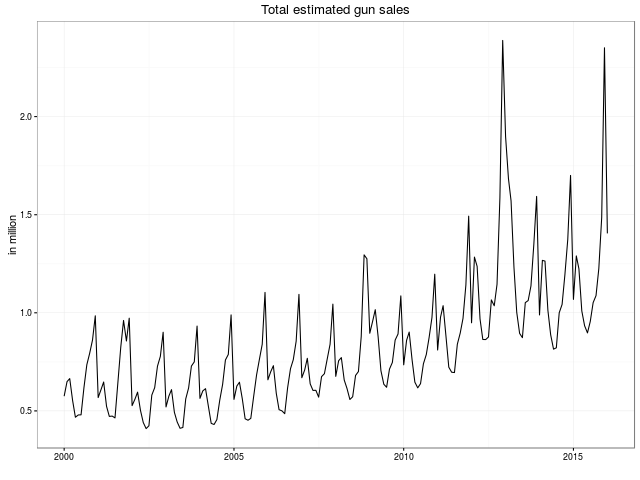
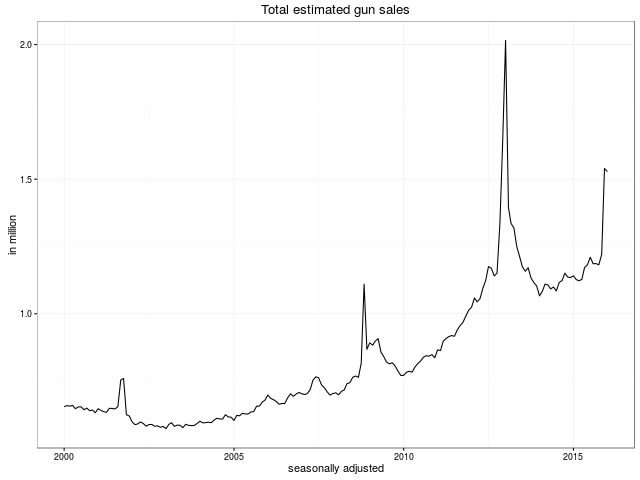
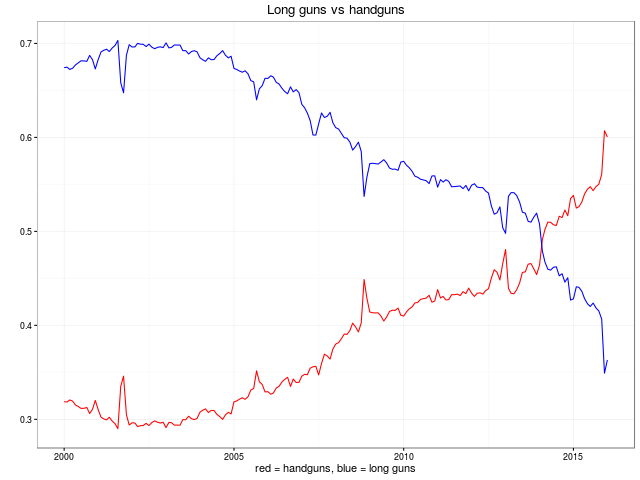
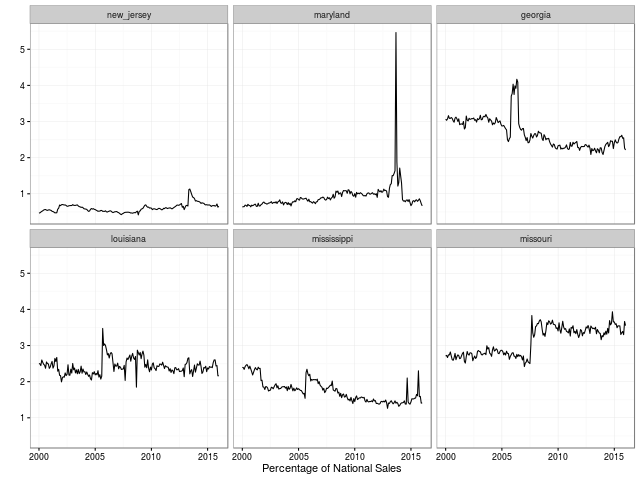
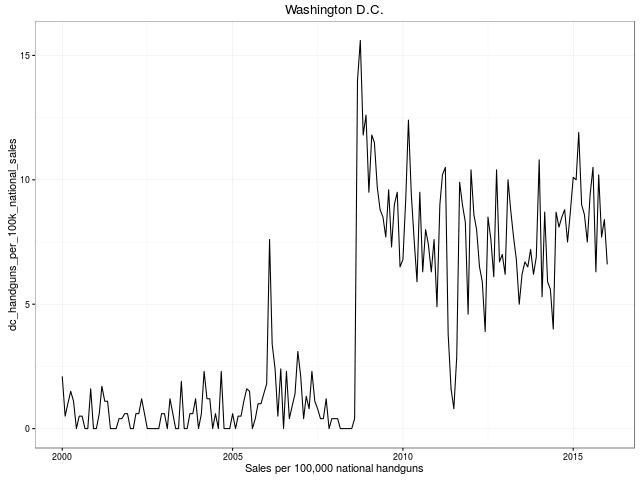
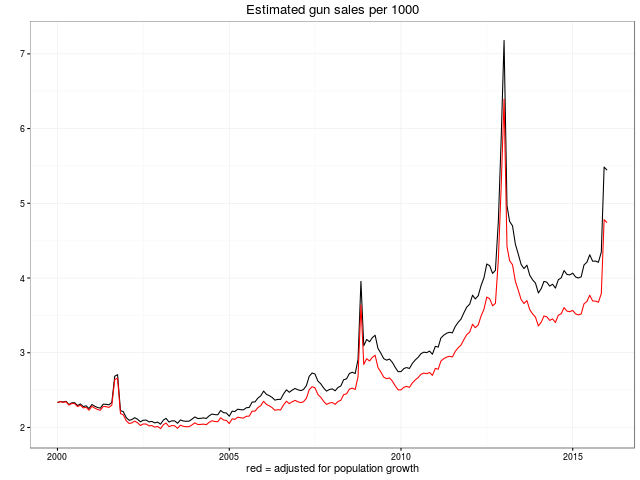
This is based on joint work with Gregor Aisch and Josh Keller of the New York Times. A new package gunsales is now on the CRAN network for R. It is based the NYTimes/gunsales repository underlying the excellent New York Times visualizations, first published first in December 2015 and updated with more recent data since. The analysis takes public government data on gun sales from the National Instant Criminal Background Check System (NICS). The original data is scraped from the pdf, included in the package, and analysed in a cross-section and time-series manner. The standard US Census tool X-13ARIMA-SEATS is used to deseasonalize the timeseries at the national or state level. (Note that Buzzfeed also published data and (Python) code in another GitHub repo.) As an aside, it was the use of X-13ARIMA-SEATS here -- and its somewhat awkward and manual installation also seen in the initial versions of the code in the NYTimes/gunsales repo -- which lead to the recent work by Christoph Sax and myself. We now provide a new package x13binary on CRAN so that Christoph's excellent seasonal package can simply depend upon it and have a working binary provided and installed ready to use; see the recent blog post for more. The net result is that a package like this new gunsales project can simply depend upon seasonal and also be assurred that x13binary "just works". As Martha would say, "A Good Thing". Back to the gunsales project. Following the initial publication of the repository with the data and R code in a simple script, I felt compelled to reorganize it as a package. Packages for R, as we teach our students, colleagues, or anybody else who wants to listen are really the best way to bundle code, data, documentation (i.e. vignettes) and tests. All that exists now in the gunsales package. The package now has one main function, analysis(), which returns a single dataframe object. This dataframe object can then be fed to two plotting functions. The first, plot_gunsales(), will then recreate all the (base R) plots from the original code base. The second, ggplot_gunsales(), does the same but via ggplot2. This should give anybody the ability to look at the data, study the transformations done, form and maybe test new hypotheses and visualize in manner comparable to the original publication. As an amuse gueule, here are the key plots also shown in the main README.md at GitHub: Total Estimated Gun Sales Total Estimated Gun Sales, Seasonally Adjusted Total Estimated Gun Sales, Population-Growth Adjusted Handguns vs Longguns Six States DC We look forward to more remixes and analysis of this data. The plan of the GitHub repository is to keep the data set updated as new data points are published.

This post by Dirk Eddelbuettel originated on his Thinking inside the box blog. Please report excessive re-aggregation in third-party for-profit settings.

28 February 2016

Ian Campbell: Hotswapping a failed RAID device

Recently I started getting SMART warnings from on of the disks in my home NAS (a QNAP TS-419P II armel/kirkwood device running Debian Jessie):
Device: /dev/disk/by-id/ata-ST3000DM001-1CH166_W1F2QSV6 [SAT], Self-Test Log error count increased from 0 to 1
Meaning it was now time to switch out that disk from the RAID5 array. Since everytime this happens I have to go and lookup again what to do I've decided to write it down this time. I configure SMART to talk about devices by-id (giving me their name and model number) so first I needed to figure out what the kernel was calling this device (although mdadm is happy with the by-id path, various other bits are not):
# readlink /dev/disk/by-id/ata-ST3000DM001-1CH166_W1F2QSV6 
../../sdd
Next I needed to mark the device as failed in the array:
# mdadm --detail /dev/md0 
/dev/md0:
[...]
          State : clean 
 Active Devices : 4
Working Devices : 4
 Failed Devices : 0
  Spare Devices : 0
[...]
    Number   Major   Minor   RaidDevice State
       5       8       48        0      active sync   /dev/sdd
       1       8       32        1      active sync   /dev/sdc
       6       8       16        2      active sync   /dev/sdb
       4       8        0        3      active sync   /dev/sda
# mdadm --fail /dev/md0 /dev/disk/by-id/ata-ST3000DM001-1CH166_W1F2QSV6 
mdadm: set /dev/disk/by-id/ata-ST3000DM001-1CH166_W1F2QSV6 faulty in /dev/md0
# mdadm --detail /dev/md0 
/dev/md0:
[...]
 Active Devices : 3
Working Devices : 3
 Failed Devices : 1
  Spare Devices : 0
[...]
Number   Major   Minor   RaidDevice State
   0       0        0        0      removed
   1       8       32        1      active sync   /dev/sdc
   6       8       16        2      active sync   /dev/sdb
   4       8        0        3      active sync   /dev/sda
   5       8       48        -      faulty   /dev/sdd
If it had been the RAID subsystem rather than SMART monitoring which had first spotted the issue then this would have happened already (and I would had received a different mail from the RAID checks instead of SMART). Once the disk is marked as failed then actually remove it from the array:
# mdadm --remove /dev/md0 /dev/disk/by-id/ata-ST3000DM001-1CH166_W1F2QSV6 
mdadm: hot removed /dev/disk/by-id/ata-ST3000DM001-1CH166_W1F2QSV6 from /dev/md0
And finally tell the kernel to delete the device:
# echo 1 > /sys/block/sdd/device/delete 
At this point I can physically swap the disks. At this point I noticed there were some interesting messages in dmesg, either from the echo to the delete node in sysfs or from the physical switch of the disks:
[1779238.656459] md: unbind<sdd>
[1779238.659455] md: export_rdev(sdd)
[1779258.686720] sd 3:0:0:0: [sdd] Synchronizing SCSI cache
[1779258.700507] sd 3:0:0:0: [sdd] Stopping disk
[1779259.377589] ata4.00: disabled
[1779371.126202] ata4: exception Emask 0x10 SAct 0x0 SErr 0x180000 action 0x6 frozen
[1779371.133740] ata4: edma_err_cause=00000020 pp_flags=00000000, SError=00180000
[1779371.141003] ata4: SError:   10B8B Dispar  
[1779371.145309] ata4: hard resetting link
[1779371.468708] ata4: SATA link down (SStatus 0 SControl 300)
[1779371.474340] ata4: EH complete
[1779557.416735] ata4: exception Emask 0x10 SAct 0x0 SErr 0x4010000 action 0xe frozen
[1779557.424356] ata4: edma_err_cause=00000010 pp_flags=00000000, dev connect
[1779557.431264] ata4: SError:   PHYRdyChg DevExch  
[1779557.436008] ata4: hard resetting link
[1779563.357089] ata4: link is slow to respond, please be patient (ready=0)
[1779567.449096] ata4: SRST failed (errno=-16)
[1779567.453316] ata4: hard resetting link
I wonder if I should have used another method to detach the disk, perhaps poking the controller rather than the disk (which rang a vague bell in my memory from last time this happened) but in the end the disk is broken and the kernel seems to have coped so I'm not too worried about it. It looked like the new disk had already been recognised:
[1779572.593471] scsi 3:0:0:0: Direct-Access     ATA      HGST HDN724040AL A5E0 PQ: 0 ANSI: 5
[1779572.604187] sd 3:0:0:0: [sdd] 7814037168 512-byte logical blocks: (4.00 TB/3.63 TiB)
[1779572.612171] sd 3:0:0:0: [sdd] 4096-byte physical blocks
[1779572.618252] sd 3:0:0:0: Attached scsi generic sg3 type 0
[1779572.626754] sd 3:0:0:0: [sdd] Write Protect is off
[1779572.631771] sd 3:0:0:0: [sdd] Mode Sense: 00 3a 00 00
[1779572.632588] sd 3:0:0:0: [sdd] Write cache: enabled, read cache: enabled, doesn't support DPO or FUA
[1779572.665609]  sdd: unknown partition table
[1779572.671522] sd 3:0:0:0: [sdd] Attached SCSI disk
[1779855.362331]  sdd: unknown partition table
So I skipped trying to figure out how to perform a SCSI rescan and went straight to identifying that the new disk was called:
/dev/disk/by-id/ata-HGST_HDN724040ALE640_PK1338P4GY8ENB
and then tried to do a SMART conveyancing self-test with:
# smartctl -t conveyance /dev/disk/by-id/ata-HGST_HDN724040ALE640_PK1338P4GY8ENB
But this particular drive seems to not support that, so I went straight to editing /etc/smartd.conf to replace the old disk with the new one and:
# service smartmontools reload
With all that I was ready to add the new disk to the array:
# mdadm --add /dev/md0 /dev/disk/by-id/ata-HGST_HDN724040ALE640_PK1338P4GY8ENB
mdadm: added /dev/disk/by-id/ata-HGST_HDN724040ALE640_PK1338P4GY8ENB
# mdadm --detail /dev/md0 
/dev/md0:
[...] 
      State : clean, degraded, recovering 
 Active Devices : 3
Working Devices : 4
 Failed Devices : 0
  Spare Devices : 1
[...]
 Rebuild Status : 0% complete
[...]
Number   Major   Minor   RaidDevice State
   5       8       48        0      spare rebuilding   /dev/sdd
   1       8       32        1      active sync   /dev/sdc
   6       8       16        2      active sync   /dev/sdb
   4       8        0        3      active sync   /dev/sda
# cat /proc/mdstat 
Personalities : [raid6] [raid5] [raid4] 
md0 : active raid5 sdd[5] sda[4] sdb[6] sdc[1]
      5860538880 blocks super 1.2 level 5, 512k chunk, algorithm 2 [4/3] [_UUU]
      [>....................]  recovery =  0.0% (364032/1953512960) finish=1162.4min speed=28002K/sec
So now all that was left was to wait about 20 hours (with fingers crossed a second disk didn't die! spoiler: it didn't)

26 February 2016

Erich Schubert: Protect your file server from the Locky trojan

The "Locky" trojan and similar trojans apparently can cause havoc on your file servers (you may have heard the reports of hospitals that had to pay thousands of dollars to be able to decrypt their files).
Obviously, this is a good reason to double-check you backups.
But as a Linux admin, you may want to consider additional security measures. Here is one suggestion (untested, because I do not run a Samba file server):
Enable logging in the Samba file server, and monitor the log file for the known file names created by Locky. I.e. files named .locky or _Locky_recover_instructions.txt.
If a user creates such a file, immediately ban his IP from accessing your file server, and send out an alert to the admin and the affected user.
This probably won't prevent much damage from the users PC, but it should at least prevent it from doing much on your file server.
There also exist security modules such as "samba-virusfilter" that could probably be extended to cover this, too.

Sorry, I cannot provide you step-by-step instruction because I am a Linux-only user. I do not run a Samba file server. I have only had conversations with friends about this trojan.

24 February 2016

Norbert Preining: Switching from iOS to Android

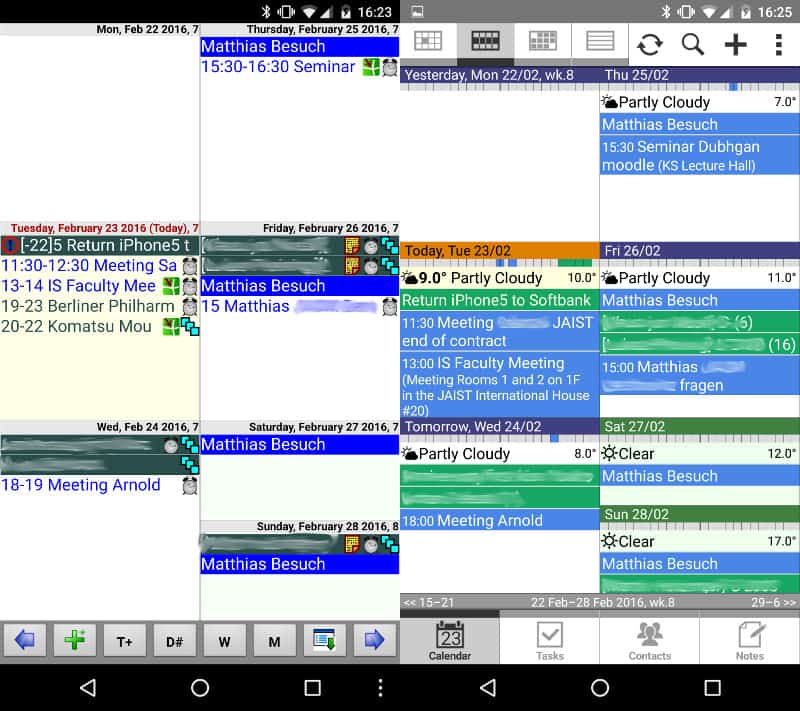
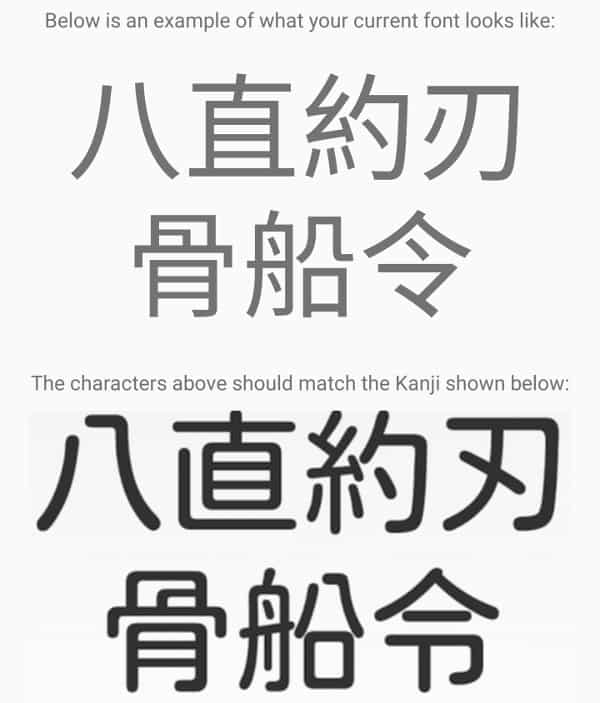
This article starts a series of blogs on my ventures into Android land after having used iOS devices for 6 years. I have never been a strong believer in the Apple ecosystem, and my trials to convince myself to MacBooks and MacPros always ended with installing Linux on them, so I guess I wasn t really the ideal target for iOS. Thus, my iOS devices were also permanently in jailbroken state, otherwise I would feel amputated. But as much as I disliked the lock-in and closed environment of the iOS world, it was from the user perspective surprisingly well done and smooth. So it was with a certain level of tension when I finally switched to Linux^WAndroid. android-ios If you don t want to read on, here the preliminary conclusion: Why didn t I do it earlier! But before we go into details, let me start with my background: History of my devices Originally I was a big opponent of smart phones and preferred the Unix-way, one device for one thing. So I had a normal phone and (various) Palm devices (Tungsten X, Tungsten C, and above all my beloved Handera TRGpro). I loved the Palm world and considered it superior to the then smart phone world, until I came to Japan, where the challenge of a proper input method for Japanese and proper Japanese support posed a big hurdle. The Palm devices had a stick and written input fields, but Japanese input was practically impossible and a huge pain. Searching for a word in Japanese was more hurdle then looking it up in a printed dictionary. In addition, I needed a phone in Japan, so I plunged into the smart phone world and got myself a iPhone (3g). What a world did open for me: easy typing of Japanese, dictionaries, on-the-fly translation, woooow! And above all, I discovered my most beloved and till now one of my most important programs: Flashcards Deluxe. Thanks, and I have to say to 80% thanks to this program my Japanese learning speed has accelerated considerably. There is nothing more important for me than getting drilled in a systematic way. But I derail, anyway, having Flashcard Deluxe on the iPhone within rather short time I had about 10000 or more flashcards created, and moving on to a different architecture (Android) was for quite some time practically impossible without loosing years of statistics and learning, so I renewed my contract after 2 years together with a iPhone 4s. Another two years passed, and these years brought an Android version of Flashcards Deluxe, as well as Dropbox syncing, so I had no excuse anymore to remain in iOS land, wouldn t it be for an iPhone 5s that was passed to me near the end of my forth year, so I again extended the contract for two years. Finally, after 6 years of iPhone devices, this January I finally decided it is time to switch to Android. After lots of thinking, comparing, and requesting advice from good friends with more experience in the smart phone market I went for a Google Nexus 6p. Google Nexus 6p I will not repeat the specs of this phone as they are widely available on the net. My original plan was a Samsung S6, but after consultation with an expert I decided for an original Google phone for better security support. That left me with the option between a Nexus 5x and 6p, and due to prize differences (prizes of mobiles are ridiculously strange in Japan) I went for the 6p instead of the 5x. One point that made the decision for this slight too big device easy was the fact that it uses a great AMOLED display. Moving the data Since I was using Google Calendar and Google Contacts already on the iPhone, moving to the Android phone was far less a hassle than I thought. My contacts and events showed up without a hiccup. Most of the usual apps are nowadays available on both iOS and Android, so the most difficult thing was remembering all the passwords to log into the applications again (SNS like G+, FB, Twitter etc). The same is more or less true for messengers of all kinds (Line, WhatsApp, Threema, etc), but here one is advised to check with the respective web site first to make sure one does not loose all of the important data. Line for example is a stupid ***** that deletes all previous chats on the old phone and does not make them available on the new one. WhatsApp can be converted with a special conversion program. Threema, too allows for transfer of ids. Move of applications After that came the hunt for replacement applications for those that are not available as is on Android: Mail At first like probably everyone I used the shipped GMail program. It might be good for Google Mail accounts, but for anything else it is just a real pain. Thus, I have searched a bit and finally settled (for now) for K-9 Mail: it is open source, open development, feature rich, and more a hackers type email program, perfectly suited to me. There is a commercial variant called K@-Mail that says that it improves the user interface and some usability items as well as features, but I didn t see much of an advantage over the original version (which is completely free) and in fact some of my accounts didn t work at all. So I remain with K9 Mail and I think this is a good decision. Calendar Managing Calendars is one of the most important task for me. I have been a fervent supporter of DateBk4, DateBk 5, and DateBk 6 on the original Palm series, and when I left the Palm World it was with great pain that I had to loose DateBk. Not only because it was a simply fantastic calendar program that allowed me to keep track of all my climbing routes, festivities, in a much more advanced way than any other Calendering application, but also because the programmer of the DateBk series is running the Dewar Wildlife Trust, a Gorilla rescue group and a lot of the money he makes from the app sales is going to rescue Gorillas. With the switch to iOS this option was gone, and I first used the built-in calendar application (which is so weak) and later and for long time Pocket Informant Pro. This is a very good program and probably the only one that can compete with DateBk with respect to functionality and usefulness. During the time of me being locked in in iOS I realized that the world has moved on and a new version of DateBk series for Java was developed, called Pimlical. First only available on Windows, it became later available also on Android and Linux, too. The following screen shot puts Pimlical on the left, and Pocket Informant on the right. I will write a more detailed comparison in future, in short: PInformant is more streamlined and polished, Pimlical has more configuration option. Practically everything can be adjusted to one s need, and in addition there is also a Desktop application that sync either with Google and the phone, or only with the phone if you want to live off the grid. pimlical-pinformant So nowadays on Android I have both Pocket Informant Pro as well as Pimlical, but after a short time I have now switched practically exclusively to Pimlical. Notes Here there is pain HUGE PAIN!!! iOS has an excellent applications for notes, called simply Notebooks. This little pearl was my work horse for everything (more or less) memorable. From poems and song texts to bus time tables, from PDF to GIFs, from MarkDown to HTML, everything could be saved into Notebooks, displayed, edited, ordered. And above all it had automatic background sync with Dropbox. So I could drop new files into the respective sub-folder of my Dropbox folder and could be sure I have the files available on my phone when I leave for a trip. And there is a huge bag of features that I haven t even tapped into! Android is unfortunately not on the list of supported architectures of Notebooks. So I searched far and wide, and without any success. There are all kind of notes, flash colors, overly simple, fast and slow, stylish and plain, but none of them did even provide half of the features of Notebooks. None, not even half. I still hope I might find the ultimate notes application, or even better would be an Android version of the original Notebooks application (but this is not high on the developers todo list), but for now I am in despair The Rest As I said, most apps are nowadays available on both platforms, so there is not much more to do than download the respective Android app and log in again. That worked very nice across practically all apps. Things I don t like (i.e., which are broken!) on Android Although a very convenient system and perfectly made to fit my taste, there are some things that are a huge pain (and a big shame on Google to not being able to fix that for long time!): Japanese fonts when the device is in English interface language In case you are a foreigner living in Japan and want your Android phone in English, but still read emails, news, etc in Japanese, then Android provides you with the worst, namely Chinese fonts: chinese-japanese-mix This is a well known problem and I have blogged about fixing the very same problem on Linux (Debian), and the solution is a simple reshuffling in the fontconfig configuration files. There is even an application for it in the Google store, Kanji Fix, but it needs a rooted device (which I haven t done till now my failure!). I can only hope that Google fixes this completely stupid problem in a future version. The Me problem Another of these beasty problems: The Android Contacts application has an entry for Me , which unfortunately, no idea why, cannot be linked with my normal me in the list of contacts. There are reports all over the Internet, strange suggestions, and no real solution. Again, a simple thing that should work but doesn t. Invisible Images folder in MTP mode A more annoying problem is that the camera folder under Photos does not show up when connecting the device in MTP mode to my computer, and as consequence me being unable to copy photos from the device to my computer. The solution I am using at the moment is moving the photos with a file manager to a new folder which is visible during MTP communcation, and copy the photos from there. But this, too, should be something trivial, but alas, despite a lot of posts on the internet I couldn t find a proper solution. Google Music As written somewhere else, Google Music has switched from 5 star system to up/down system, which is a huge pain and PITA. Things I do like (or I discovered) on Android There are some things I haven t been used/tried on iOS they might be possible which I really like: Yubikey Neo support I will write about this in a different blog, but nowadays I have my GPG keys on an hardware token (Yubikey Neo) and the application OpenKeychain on Android works nicely with both K9 Mail and via NFC with my Yubikey. That is a great tool! Bluetooth streaming Bluetooth on iOS devices was always a bit broken for me, so connecting my phone to my old car radio I needed radio transmitter that was connected to the cable port of the iPhone. With Android I use a Bluetooth Radio device (receives data via bluetooth, and sends music out via radio waves for a car stereo to receive them). Now if my monthly data limit wouldn t be that low  Debian on Android Yes, you can have a full Debian system running in your terminal on Android. There are several applications providing this feature, and I am rather surprised how smooth it works. Conclusion My preliminary conclusion is that the switch to Android at this time was perfectly timed, and from the technological side I should have done much earlier. In future blogs I will discuss particular instances of this transition in more details. If you have any suggestion for me, in particular for a good notes taking application, please let me know!
23 February 2016

Uwe Kleine-K nig: Christoph Hellwig vs VMware

On Thursday the lawsuit about GPL compliance of VMware's ESXi products starts. I support Christoph's position and share his view that VMware's product is in conflict with the GPL. Read more on the software freedom conservancy's FAQ about the case. I keep my fingers crossed!

21 February 2016

Lunar: Reproducible builds: week 43 in Stretch cycle

What happened in the reproducible builds effort between February 14th and February 20th 2016:

Toolchain fixes Yaroslav Halchenko uploaded cython/0.23.4+git4-g7eed8d8-1 which makes its output deterministic. Original patch by Chris Lamb. Didier Raboud uploaded pyppd/1.0.2-3 to experimental which now serialize PPD deterministically. Lunar submitted two patches for lcms to add a way for clients to set the creation date/time in profile headers and initialize all bytes when writing named colors.

Packages fixed The following packages have become reproducible due to changes in their build dependencies: dbconfig-common, dctrl-tools, dvdwizard, ekg2, expeyes, galternatives, gpodder, icewm, latex-mk, libiio, lives, navit, po4a, tasksel, tilda, vdr-plugin-infosatepg, xaos. The following packages became reproducible after getting fixed: Some uploads fixed some reproducibility issues, but not all of them: Unknown status:
  • tomcat7/7.0.68-1 by Emmanuel Bourg (test suite fails in test environment).
Patches submitted which have not made their way to the archive yet:
  • #814840 on tor by Petter Reinholdtsen: use the UTC timezone when calling asciidoc.
  • #815082 on arachne-pnr by Dhole: use the C locale to format the changelog date.
  • #815192 on manpages-de by Reiner Herrmann: tell grep to always treat the input as text so that it works with non-UTF-8 locales.
  • #815193 on razorqt by Reiner Herrmann: tell grep to always treat the input as text so that it works with non-UTF-8 locales.
  • #815250 on jacal by Reiner Herrmann: use the C locale to format the build date.
  • #815252 on colord by Lunar: remove extra timestamps when generating CMF and spectra and implement support for SOURCE_DATE_EPOCH.

reproducible.debian.net Two new package sets have been added: freedombox and freedombox_build-depends. (h01ger)

diffoscope development diffoscope version 49 was released on February 17th. It continues to improve handling of debug symbols for ELF files. Their content will now be compared separately to make them more readable. The search for matching debug packages is more efficient by looking only for .deb files in the same parent directory. Alongside more bug fixes, support for ICC profiles has been added, and libarchive is now also used to read metadata for ar archives.

strip-nondeterminism development Reiner Herrmann added support to normalize Gettext .mo files.

Package reviews 170 reviews have been removed, 172 added and 54 updated in the previous week. 34 new FTBFS bugs have been opened by Chris Lamb, h01ger and Reiner Herrmann. New issues added this week: lxqt_translate_desktop_binary_file_matched_under_certain_locales, timestamps_in_manpages_generated_by_autogen. Improvements to the prebuilder script: avoid ccache, skip disorderfs hook if device nodes cannot be created, compatibility with grsec trusted path execution (Reiner Herrmann), code cleanup (Esa Peuha).

Misc. Steven Chamberlain highlighted reproducibility problems due to differences in how Linux and FreeBSD handle permissions for symlinks. Some possible ways forward have been discussed on the reproducible-builds mailing list. Bernhard M. Wiedemann reported on some reproducibility tests made on OpenSuse mentioning the growing support for SOURCE_DATE_EPOCH. If you are eligible for Outreachy or Google Summer of Code, consider spending the summer working on reproducible builds!

Vincent Sanders: Stack 'em, pack 'em and rack 'em.

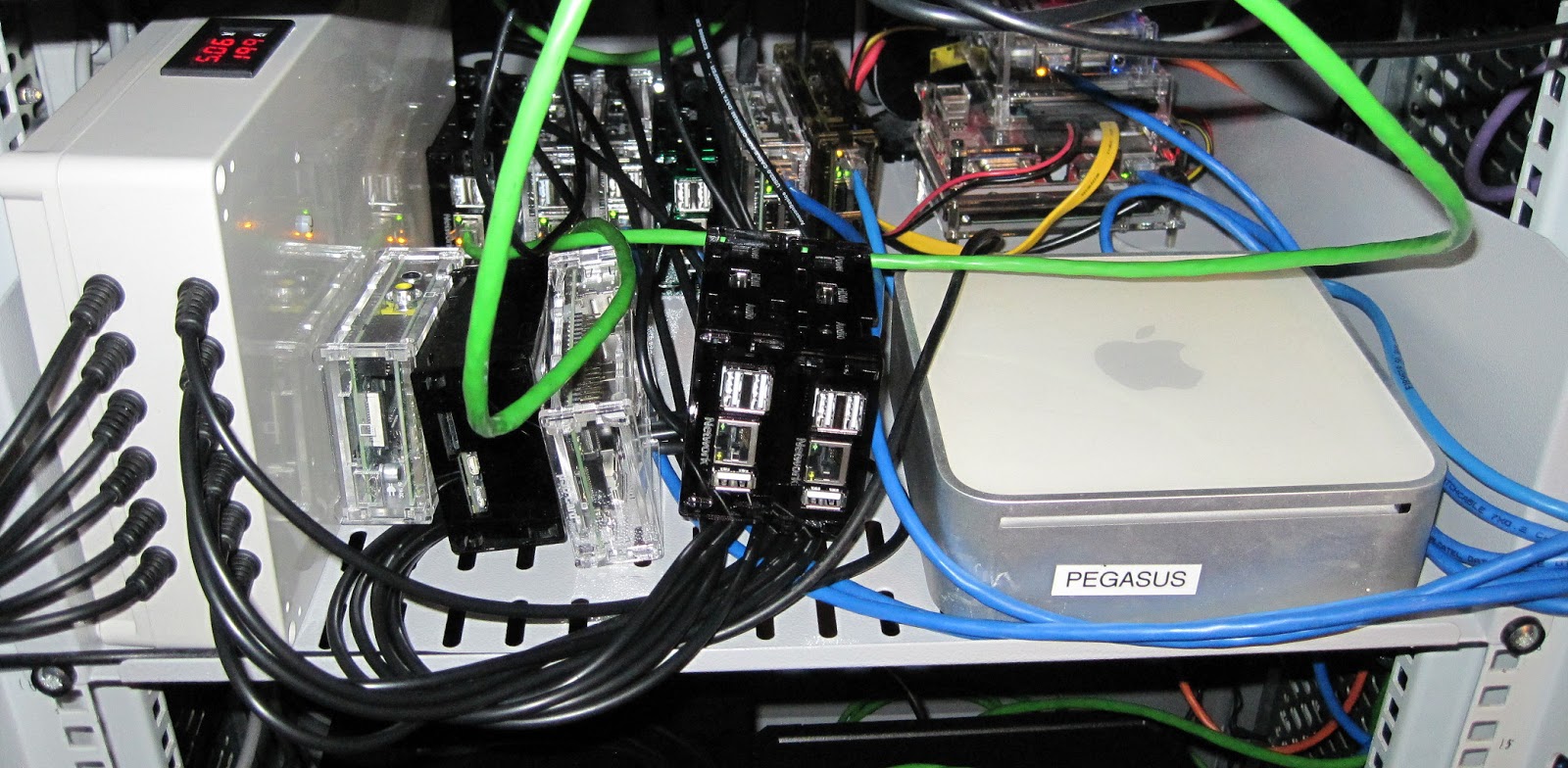
As you may be aware I have a bit of a problem with Single Board Computers in that I have a lot of them. Keeping them organised has turned into a bit of a problem.

cluttered shelf of SBC
I designed clip cases for many of these systems giving me a higher storage density on my rack shelves and built a power supply to reduce the cabling complexity. These helped but I still ended up with a cluttered shelf full of SBC.

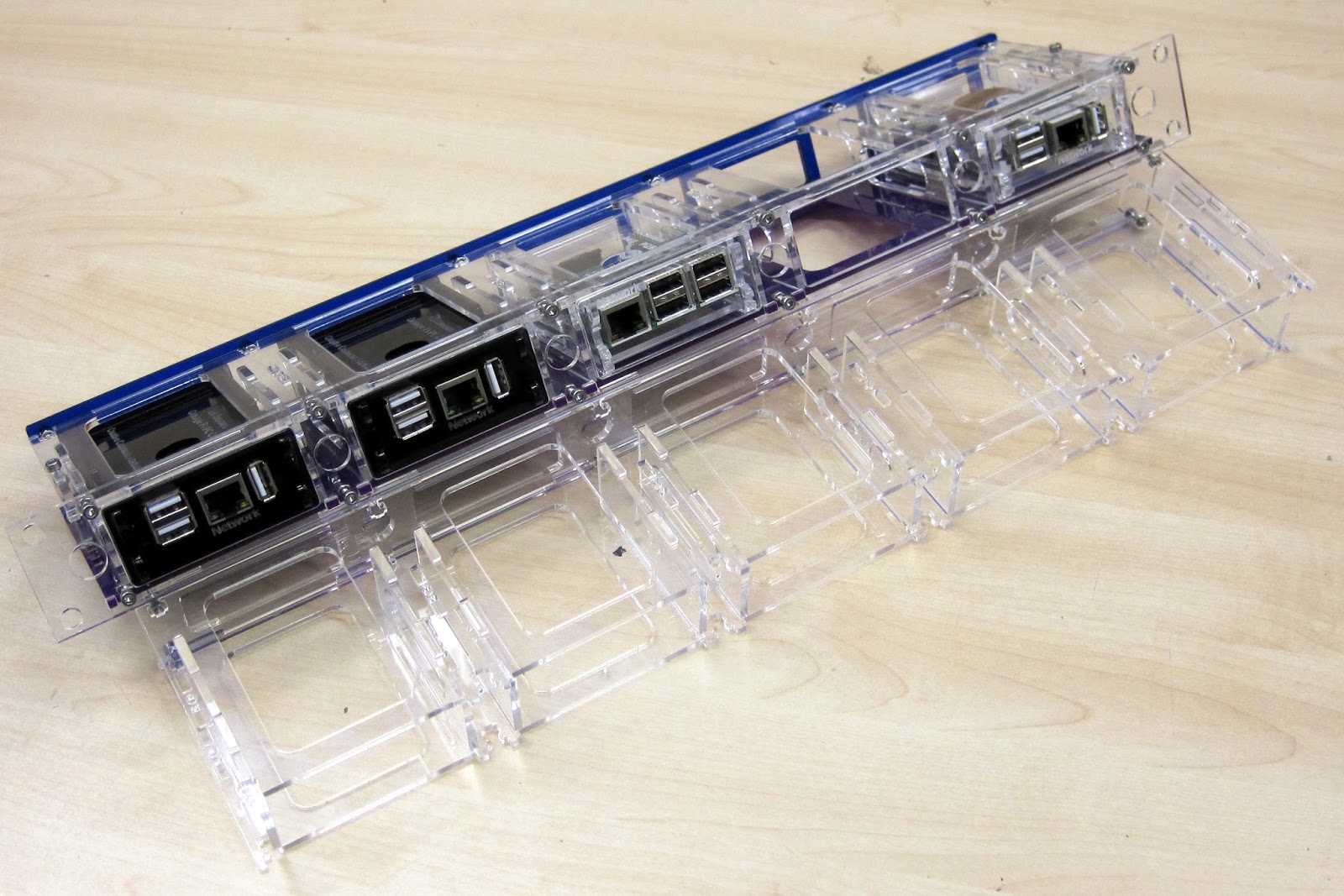
I decided I would make a rack enclosure to hold the SBC, I was limited to material I could easily CNC machine which limited me to acrylic plastics or wood.

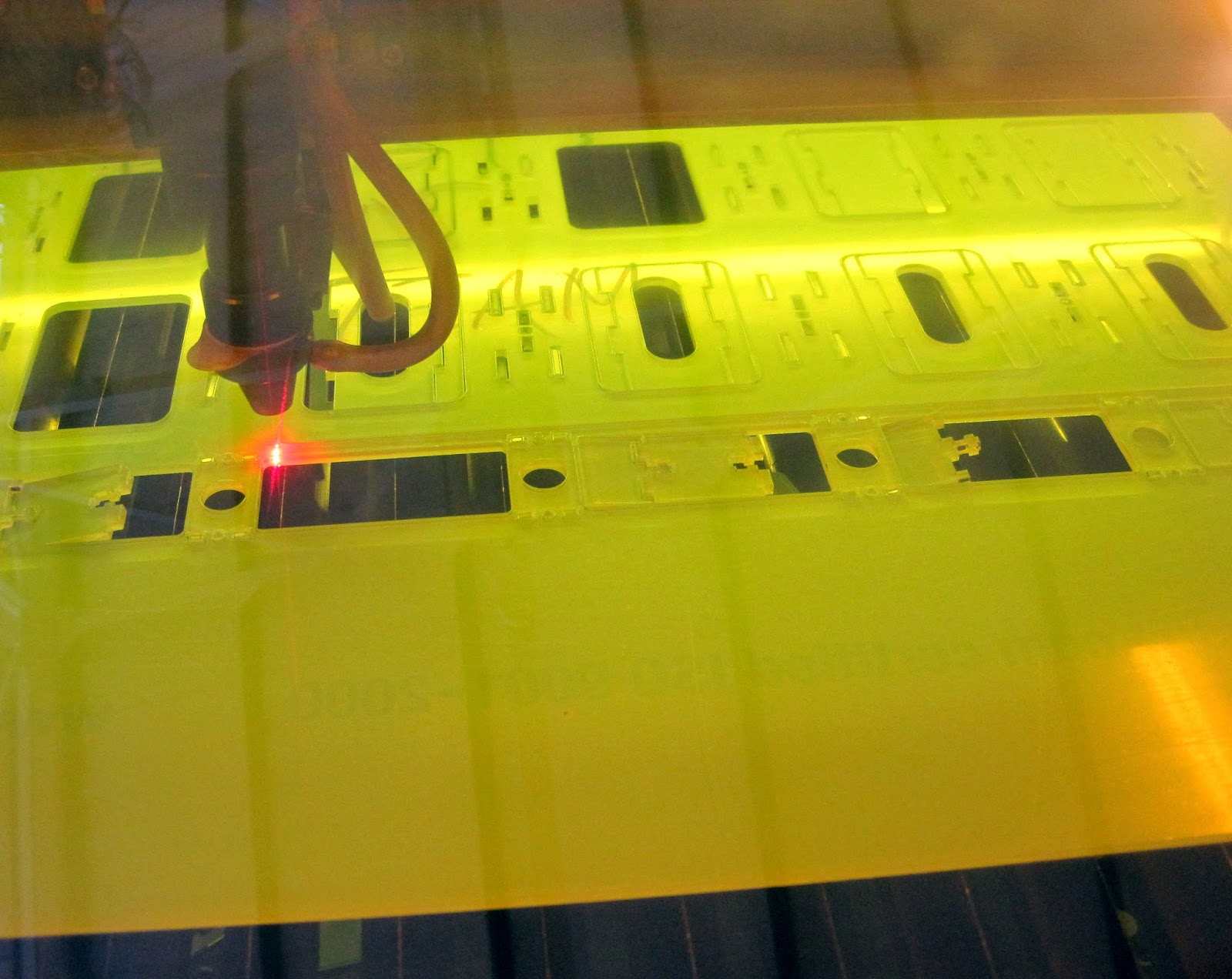
laser cutting the design, viewed through heavily tinted filterInitially I started with the idea of housing the individual boards in a toast rack arrangement. This would mean that the enclosure would have to be at least 2U high to fit the boards all the existing cases would have to be discarded. This approach was dropped when the drawbacks of having no flexibility and only being able to fit the units that were selected at design time became apparent (connector cutouts and mounting hole placement.

Instead I changed course to try and incorporate the existing cases which already solved the differing connector and mounting placement problem and gave me a uniform size to consider. Once I had this approach the design came pretty quickly. I used a tube girder construction 1U in height to get as much strength as possible from the 3mm acrylic plastic I would use.

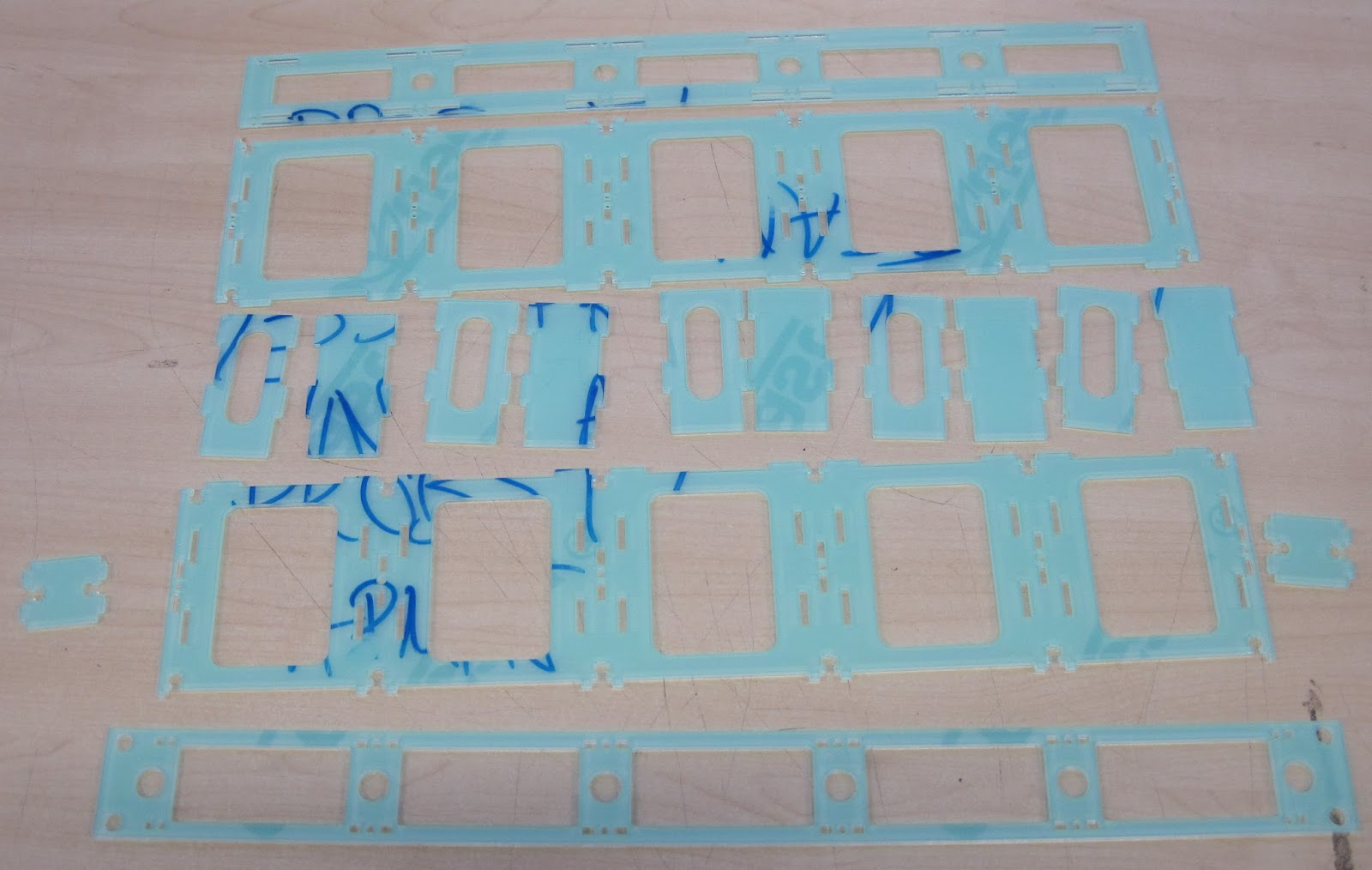
laser cut pieces arranged for assembly still with protective film on
The design was simply laser cut from sheet stock and fastened together with M3 nut and bolts. Once I corrected the initial design errors (I managed to get almost every important dimension wrong on the first attempt) the result was a success.

working prototype resting on initial version
The prototype is a variety of colours because makespace ran out of suitably sized clear acrylic stock but the colouring has no effect on the result other than aesthetical. The structure gives a great deal of rigidity and there is no sagging or warping, indeed testing on the prototype got to almost 50Kg loading without a failure (one end clamped and the other end loaded at 350mm distance)

I added some simple rotating latches at the front which keep the modules held in place and allow units to be removed quickly if necessary.

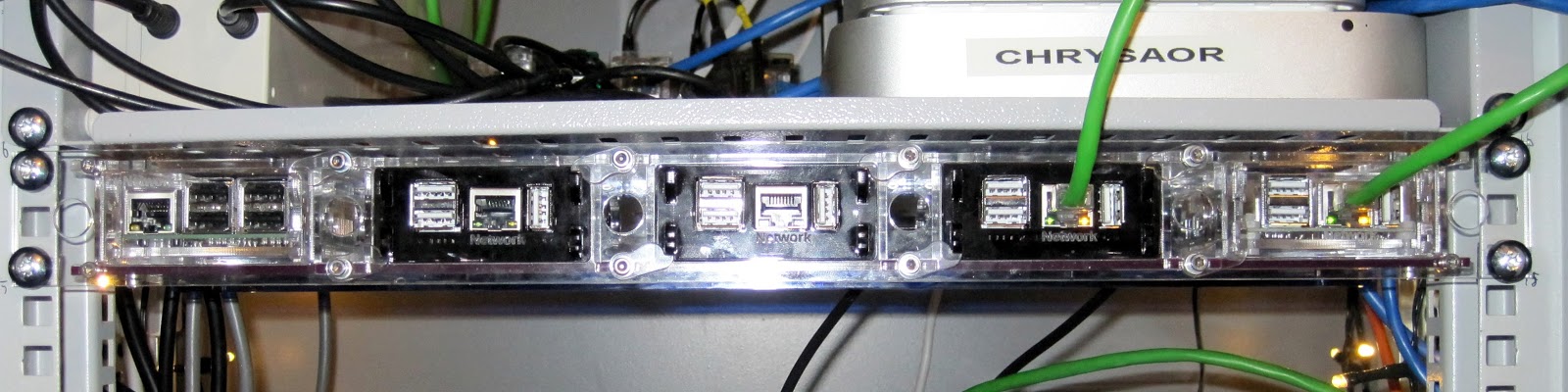
rack slots installed and in use
Overall this project was successful and I can now pack five SBC per U neatly. It does limit me to using systems cased in my "slimline" designs (68x30x97mm) which currently means the Raspberry Pi B+ style and the Orange Pi PC.

Once small drawback is access to I/O and power connectors. These need to be right angled and must be unplugged before unit removal which can be a little fiddly. Perhaps a toast rack design of cases would have given easier connector access but I am happy with this trade off of space for density.

As usual the design files are freely available, perhaps they could be useful as a basis for other laser cut rack enclosure designs.

18 February 2016

Matthew Garrett: Canonical, Ubuntu and why I seem so upset about them all the time

I had no access to the internet for most of my childhood. Nobody in my area knew anything about programming. I learned a great deal from a number of CDs that included free software source code and archives of project mailing lists. When I got to university, I learned even more by being able to develop a Debian-based OS for use in our computer facilities. That gave me the experience and knowledge that I needed to become involved in Debian development, which in turn gave me the background required to be able to help Ubuntu become the first free software operating system to work out of the box on modern laptops. From there, I've been able to build my career around developing free software.

Ubuntu can be translated as "I am who I am because of who we all are". I am who I am because people made the choice to release their software under licenses that permitted examination, modification and redistribution. I am who I am because I was able to participate in communities that took advantages of those freedoms to produce new and better software. I am who I am because when my priorities differed from those of existing communities, it was still possible for me to benefit from their work and for them to benefit from mine.

Free software doesn't mean that the software is entirely free of restrictions. While a core aspect is the right to distribute modified versions of code, it has never been fundamental to free software that you be able to do so while still claiming that the code is the original version. Various approaches have been taken to make it possible for users to distinguish modified versions, ranging from simply including license terms that require modified versions be marked as such, to licenses that require that you change the name of the package if you modify it. However, what's probably the most effective approach has been to apply trademark law to the problem. Mozilla's trademark policy is an example of this - if you modify the code in ways that aren't approved by Mozilla, you aren't entitled to use the trademarks.

A requirement that you avoid use of trademarks in an infringing way is reasonable. Mozilla products include support for building with branding disabled, which makes it very straightforward for a user to build a modified version of Firefox that can be redistributed without any trademark issues. Red Hat have a similar policy for Fedora and RHEL[1] - you simply replace the packages that contain the branding and you're done.

Canonical's IP policy around Ubuntu is fundamentally different. While Mozilla make it clear that you simply no longer have a right to use the trademarks under trademark law, Canonical appear to require that you remove all trademarks entirely even if using them wouldn't be a violation of trademark law. While Mozilla restrict the redistribution of modified binaries that include their trademarks, Canonical insist that you rebuild everything even if the package doesn't contain any trademarks. And while Mozilla give you a single build option that creates binaries that conform with their trademark requirements, Canonical will refuse to tell you what you have to do.

When asked about this at SCALE earlier this year, Mark Shuttleworth claimed that Ubuntu's policy was consistent with that of other projects. This is inaccurate. Nobody else requires that you rebuild every package before you can redistribute it in a modified distribution - such a restriction is a violation of freedom 2 of the Free Software Definition, and as a result the binary distributions of Ubuntu are not free software. Nobody else refuses to discuss whether you're required to remove non-infringing trademarks in order to be able to redistribute. Nobody else responds to offers to make it easier for users to produce non-infringing derivatives with a flat refusal.

Mark claims that I'm only raising this issue because I work for a competitor and wish to harm Canonical. Nothing could be further from the truth. I began discussing this before working for my current employers - my previous employers had no meaningful market overlap with Canonical at all. The reason I care is because I care about free software. I care about people being able to derive new and interesting things from existing code. I care about a small team of people being able to take Ubuntu and make something better in the same way that Ubuntu did with Debian. I care about ensuring that users receive the freedom to do this without having to jump through a significant number of hoops in the process. Ubuntu has been a spectacularly successful vehicle for getting free software into the hands of users. Mark's generosity in funding this experiment has undoubtedly made the world a better place. Canonical employs a large number of talented developers writing high quality software, many of whom I'm fortunate enough to be able to call friends. And Canonical are squandering that by restricting the rights of their users and alienating the free software community.

I want others to be who they are because of my work and the work of all the others like me. Anything that makes that more difficult saddens me, and so I do what I can to fix it. I criticise Canonical's policies in the hope that we, as a community, can convince Canonical to agree that this kind of artificial barrier to modification hurts us more than it helps them. In many ways, Canonical remain one of our best hopes for broadening the reach of free software, and this is why it's unfortunate that they do so in a way that makes it more difficult for people to have the same experiences that I did.

[1] While it's easy to turn a trademark infringing version of RHEL into a non-infringing one, Red Hat don't provide publicly available binary packages for RHEL. If you get hold of them somehow you're entitled to redistribute them freely, but Red Hat's subscriber agreement indicates that if you do this as a Red Hat customer you will lose access to further binary updates - a provision that I find utterly repugnant. Its inclusion reduces my respect for Red Hat and my enthusiasm for working with them, and given the official Red Hat support for CentOS it appears to make no sense whatsoever. Red Hat should drop it.

comment count unavailable comments

16 February 2016

Daniel Pocock: FOSSASIA 2016, pgDay Asia 2016 and MiniDebConf Singapore

The FOSSASIA 2016 conference is taking place next month, 18-20 March at the Science Centre Singapore. The FOSSASIA community has also offered to host a MiniDebConf Singapore 2016 and pgDay Asia 2016. With sufficient interest from volunteers and participants, these events could do a lot to raise the profile of free software in the region. Applications from speakers and exhibition tables are still possible using the form. Real-time communications technology at FOSSASIA 2016 We are currently discussing a Real-time lounge and demo area for FOSSASIA, hopefully with a live linkup to the FSF's LibrePlanet 2016 in Boston. FOSSASIA have invited a number of developers to speak about SIP, XMPP, WebRTC and peer-to-peer communications solutions. Hopefully exact attendance and scheduling can be publicised soon. Sponsors needed Bringing leading free software developers to Singapore is not easy and further sponsorship is needed to ensure all the speakers who would like to participate can get there. If you or your organization can help with funding or accommodation please make contact. Google Summer of Code If you want to be selected for Google Summer of Code 2016 and you live in Singapore or a neighbouring country, FOSSASIA could be a great opportunity to meet potential mentors, hack on things together and talk about project ideas. Free software development is a community activity and the more you engage with the community, the more confident mentors are likely to be about selecting you. Questions and contact For general questions about FOSSASIA 2016 and Singapore, please ask the FOSSASIA mailing list. For questions about the MiniDebConf, see debconf-discuss and for pgDay Asia, please join the pgday-asia mailing list or otherwise try pgsql-general or the seasiapug regional list.

Vincent Fourmond: QSoas tips and tricks: better baselines using the "save points" feature

During data processing in our team, we often subtract plain polynomial baselines to our data, drawn by hand using the b command. Note that this is legitimate because we know that the signal we are looking for quickly drops to 0 outside a given range. The usual workflow is to just load the data, use b to draw a baseline and subtract it, and then have further fun with the baseline-subtracted data. This was the only possibility in the old SOAS. However, I don't like so much this kind of workflow, because such a baseline is arbitrary, and once it's subtracted, it's hard to reassess the baseline afterwards.
This is why I've designed a better way in QSoas: when you are done creating a baseline, push p: this exits pushing only the interpolation nodes:
Above, the baseline subtraction interface, and below, the resulting nodes:
The nodes can be reloaded by hitting uppercase L from within b and giving a buffer number (admittedly, the interface as of now isn't that good, I'll have to work on it). Alternatively, you can greenerate the baseline by using interpolate, and then further subtract it using S:
QSoas> interpolate 1 0
where 1 is the original buffer (in fact, only its X values will be used, so you don't have to use the same buffer) and 0 is the buffer containing the interpolation nodes. Saving only the interpolation nodes makes it possible to reedit the baseline easily, and regenerate the baseline-subtracted data using a script. This is my favorite approach, because I like to be able to trace every single step from the raw data to processed data. Another neat feature is that, from within b, you can reload only the X values of nodes using lowercase l (and giving buffer number): the Y values are computed as if you had clicked at the corresponding positions. This is very useful is you have a whole series of similar baselines to make: most often, you won't even need manual adjustment to get a good baseline. I hope you'll find this tip useful !

Next.

Previous.