Search Results: "edd"

14 March 2014

Neil Williams: LAVA server on an arndale

(ARMv7 A15 dual core) I ve covered how I set up my home LAVA lab and how I got two iMX.53 boards running, the next step was to sort out the LAVA server. My initial setup relied on using my Thinkpad as the server. This was somewhat convenient as that s how I develop the code, but didn t help me run jobs like health checks because the laptop was usually somewhere other than on the home LAN. There had been a long-standing problem with using LAVA on ARM the uwsgi support didn t compile but the code being used was old. As the same code has been in Debian for a long time, I suspected that this was fixed with a newer version. So as part of migrating LAVA to django1.6, apache2.4, postgres9.3, django-tables2 0.13 and a few other updated dependencies, I have been using the version of uwsgi from Debian unstable for quite a while without problems on x86. A simple tweak to the LAVA setup scripts and a newer version of uwsgi became available and it builds just fine on armhf. (I haven t tried armel because Linaro is ARMv7 or newer and we don t test with ARMv5/ARMv6 boards, so there s no point in trying armel it s not likely to be an issue for this fix though.) (Only the current lava-deployment-tool methods need to actually compile uwsgi directly from upstream without any patches the packaging which will replace l-d-t uses precompiled binaries, just as any admin would expect.) That initial install was on one of the iMX.53 boards, which ran as slowly as anyone who has used an iMX.53 would expect. I haven t run test jobs on that install, it had a hard enough time serving the frontend. Clearly some more cores would be a good step and when an arndale became available for the home lab, the next step was to get a SATA drive onto the arndale, put Debian unstable on that and then deploy LAVA to the arndale using the Debian packages. As a bonus, these packages are built for django1.6 (using an unreleased branch). Sounds simple enough. It works on iMX.53, it should work on an arndale. Well, it does but only after some unexpected faff. arndale, u-boot and SATA I hate u-boot every single time I ever touch it, the little I know about any other u-boot device is completely useless. Uniformity is a good thing infinite permutations are just rope to hang ourselves with cute embedded nonsense hacks and I m bored of that whole scene. So, boot the arndale, interrupt the bootloader to get to the prompt. What s the first thing most people would want? help. Denied this particular u-boot has been compiled without the ability to display any help messages. u-boot has just sunk further into the depths of please can we have something else which is uniform across devices . OK, well maybe I can get by without help. sata init unknown command sata . (Go away, do something else for a bit.) The arndale isn t one of the newest boards in the ARMv7 world, LAVA has been using them for a while, so someone has probably done some work to fix this . nope. There s a workaround a nice detailed guide by Phil Endecott which details that the kernel needs to continue to be loaded from SD and then the SATA can be used for just the rootfs. Mildly annoyed (I was hoping to be able to update the arndale kernel without the hassle of mounting the SD card at all), the rest was straight-forward. Preparing the SATA and installing Debian Due to the complexity of some of the transitions currently ongoing in Debian ahead of the Jessie release freeze, uwsgi is not in Debian testing right now so this install has to be Debian unstable. That s OK, I ve been running Debian unstable on all my machines for several years now usually updating ~5 times a week.

# parted /dev/sda -s unit mb mktable msdos
# parted /dev/sda -s unit mb mkpart primary 1 -- "-0"
# mkfs.ext4 /dev/sda1
# mount /dev/sda1 /mnt/root/
(note the in the mkpart command, that catches me out most times I try this. Without it, the special -0 gets interpreted as an option to parted but parted doesn t then tell you how to fix it, it just complains about an unknown option.) The SD image I am using is a LAVA master image, based on Ubuntu, so it was easy to put debootstrap onto it.

# apt-get install debootstrap
# debootstrap --arch=armhf sid /mnt/root/ http://ftp.uk.debian.org/debian
# chroot /mnt/root/
Inside the chroot, it s Debian as usual:

apt-get update
apt-get install emdebian-archive-keyring
passwd
emdebian-archive-keyring is a package I (ab)use to sign my LAVA packaging as it has the advantage of being in Debian and Ubuntu going back to the time of Lenny, so it is always available from a repository which has already been authenticated to apt and doesn t involve downloading some random key from a website. I use passwd manually because this rootfs won t be using auto-login, it will have regular users. root passwords can be automated, if necessary. Thinking about login, remember to give the rootfs a usable tty. (The LAVA master image has a nasty habit of mangling editors like nano and vi when used over serial, so I m using echo.) For the arndale you need:

# echo T0:23:respawn:/sbin/getty -L ttySAC2 115200 vt102 >> ./etc/inittab
# echo >> ./etc/securetty
# echo ttySAC2 >> ./etc/securetty
Then to make the hostname useful, adapt this to your needs:

echo 127.0.0.1 arndale.codehelp arndale >> ./etc/hosts
Finally, get the network running at boot and add the LAVA repository:

# echo auto lo eth0 > ./etc/network/interfaces.d/arndale
# echo iface lo inet loopback >> ./etc/network/interfaces.d/arndale
# echo iface eth0 inet dhcp >> ./etc/network/interfaces.d/arndale
# echo deb http://people.linaro.org/~neil.williams/lava sid main >> ./etc/apt/sources.list.d/lava.list
# apt-get update
# exit
Once the LAVA packaging is finalised, the packages will be uploaded to a normal Linaro PPA, I ll update the packages to use an official download location and we ll move to using sane version string handling. For now, the packages are still in development. Code for the packaging is in Alioth but there are issues with anonymous access to the pkg-linaro-lava repositories currently, so I ve also pushed to http://github.com/Linaro if you are interested in building the packages yourself. See also my packaging guide which is also linked from the Links page on my own site. With that done, time to reboot, set the SATA drive as the rootfs using the horrid u-boot and install LAVA.

# reboot
> setenv bootargs console=tty0 console=ttySAC2,115200n8 drm_kms_helper.edid_firmware=edid-1920x1080.fw root=/dev/sda1
> boot
login
# apt-get install postgresql
After this operation, 63.0 MB of additional disk space will be used.

# apt-get install lava-server
After this operation, 231 MB of additional disk space will be used.

# a2dissite 000-default
# a2ensite lava-server
# apache2ctl restart
# service lava-server restart
Take note of the IP address of your new ARM LAVA server and sign in with your regular details, e.g. using OpenID before creating a temporary superuser:

# lava-server manage createsuperuser --username default --email=user@example.com
Choose a temporary password, log out, log in as the temporary superuser, promote your regular user to superuser and default owner of unrestricted devices in the django admin interface. Finally, log out and login as regular user to delete the temporary user. (Yes, that probably could do with some improvement remind me later and I ll see if a known user can be promoted from the command line.) See also Senthil s recent post on LAVA unit tests. Getting those to run without so many steps is also on the TODO list. Results
IP Address: 127.0.0.1
Is Master? : True
Uptime: 6:02:23.700000
Architecture: armv7l
Platform: Linux-3.10.1.0-1-linaro-arndale-armv7l-with-debian-jessie-sid
Insignal Arndale evaluation board based on EXYNOS5250
System memory: 1998MiB
Next! I m working on some code upstream to make it easier to add devices from the command line. The aim is that a set of simple commands will set up an initial device, run a job on that device and submit a result bundle to the LAVA server as job #1. This gives some assurance that everything has gone well. Now I can finally add health checks for the iMX.53 boards and start regular tests on those boards. The cubie boards will wait for a later blog post, there are interesting problems with the bootloader and serial connections. That s a whole different rant.

Dirk Eddelbuettel: Rcpp 0.11.1

A new minor release 0.11.1 of Rcpp is now on the CRAN network for GNU R; binaries for Debian have also been uploaded. The release fixes a number of bugs that have come up since the 0.11.0 release in January, but also brings some extensions. See the NEWS file section below for details, or the ChangeLog file in the package and on the Rcpp Changelog page Once again, we tested this release by building against all CRAN packages which depend upon Rcpp. In short, three packages are blacklisted from tests, and three came up with something we noted --- but the remaining 177 packages all build and test cleanly. Detailed results of those tests (and the scripts for it) are on GitHub. There are a number of other fixes, upgrades and other extensions detailed in NEWS file extract below, in the ChangeLog file in the package and on the Rcpp Changelog page.
Changes in Rcpp version 0.11.1 (2014-03-13)
  • Changes in Rcpp API:
    • Preserve backwards compatibility with Rcpp 0.10.* by allowing RObject extraction from vectors (or lists) of Rcpp objects
    • Add missing default constructor to Reference class that was omitted in the header-only rewrite
    • Fixes for NA and NaN handling of the IndexHash class, as well as the vector .sort() method. These fixes ensure that sugar functions depending on IndexHash (i.e. unique(), sort_unique(), match()) will now properly handle NA and NaN values for numeric vectors.
    • DataFrame::nrows now more accurately mimics R's internal behavior (checks the row.names attribute)
    • Numerous changes to permit compilation on the Solaris OS
    • Rcpp vectors gain a subsetting method it is now possible to subset an Rcpp vector using CharacterVectors (subset a by name), LogicalVectors (logical subsetting), and IntegerVectors (0-based index subsetting). Such subsetting will also work with Rcpp sugar expressions, enabling expressions such as x[ x > 0].
    • Comma initialization (e.g. CharacterVector x = "a", "b", "c";, has been disabled, as it causes problems with the behavior of the = operator with Rcpp::Lists. Users who want to re-enable this functionality can use #define RCPP_COMMA_INITIALIZATION, but be aware of the above caveat. The more verbose CharacterVector x = CharacterVector::create("a", "b", "c") is preferred.
  • Changes in Rcpp Attributes
    • Fix issue preventing packages with Rcpp::interfaces attribute from compiling.
    • Fix behavior with attributes parsing of ::create for default arguments, and also allow constructors of a given size (e.g. NumericVector v = NumericVector(10)) gives a default value of numeric(10) at the R level). Also make NAs preserve type when exported to R (e.g. NA_STRING as a default argument maps to NA_character_ at the R level)
  • Changes in Rcpp modules
    • Corrected the un_pointer implementation for object
Thanks to CRANberries, you can also look at a diff to the previous release. As always, even fuller details are on the Rcpp Changelog page and the Rcpp page which also leads to the downloads, the browseable doxygen docs and zip files of doxygen output for the standard formats. A local directory has source and documentation too. Questions, comments etc should go to the rcpp-devel mailing list off the R-Forge page

This post by Dirk Eddelbuettel originated on his Thinking inside the box blog. Please report excessive re-aggregation in third-party for-profit settings.

12 March 2014

Dirk Eddelbuettel: QuantLib 1.4 packages also available for Ubuntu and Windoze

QuantLib release 1.4 came out a couple of days ago. Sticking with standard practice, I immediately updated the Debian packages I have been maintaining for over a dozen years now, and corresponding binaries are available for Debian flavors unstable ("sid") and testing ("jessie"). I also updated my RQuantLib package accordingly (though it needed no changes -- yay to stable APIs). However, I also run Ubuntu on a few machines at work and home, and proceeded to create local packages for both 32-bit ("i386") and 64-bit ("amd64") variants of the current release 13.10 ("saucy"). As these may be of use to others, I am now making these available here from my box so that folks can run a current QuantLib version on those machines. Lastly, Brian Ripley was kind enough to also fire up his cross-compilation setup on his Linux box to create similar Windows binaries, These are e.g. used on CRAN and by the win-builder service to compile the RQuantLib CRAN Windows builds of RQuantLib. That corresponding archive file can be obtained as Quantlib14.zip see this short page for details. My thanks to Brian for helping with this. I hope this may be useful to the few people wishing to compile and/or extend RQuantLib and QuantLib.

This post by Dirk Eddelbuettel originated on his Thinking inside the box blog. Please report excessive re-aggregation in third-party for-profit settings.

9 March 2014

Dirk Eddelbuettel: RQuantLib 0.3.12

A new bug-fix / maintenance release RQuantLib 0.3.12 is now on CRAN and in Debian. While adding the plugin feature, I was too optmistic about finding the quantlib-config script. This is now tested more carefully. A few things related to building with Rcpp were updated as well now that Rcpp 0.11.0 is out. Thanks to CRANberries, there is also a diff to the previous release 0.3.11. Full changelog details, examples and more details about this package are at my RQuantLib page.

This post by Dirk Eddelbuettel originated on his Thinking inside the box blog. Please report excessive re-aggregation in third-party for-profit settings.

8 March 2014

Dirk Eddelbuettel: RcppArmadillo 0.4.100.2.1

Conrad made a first bug-fix release 4.100.2 for Armadillo, his templated C++ library for linear algebra, yesterday. See below for details on the the small set of changes. This was quickly wrapped up in a new RcppArmadillo release 0.4.100.2.1 release. I also added some first steps towards turning C++11 on. This can be used now with a pre-release of R 3.1.0, and can be generally activated once R 3.1.0 is released on April 10.
Changes in RcppArmadillo version 0.4.100.2 (2014-03-07)
  • Upgraded to Armadillo release Version 4.100.2
    • fix for handling null vectors by normalise()
    • fix for memory handling by sparse matrices
  • Correct use of [[ depends()]] in skeleton example file
  • Prepare src/Makevars for C++11 support from R 3.1.0 by defining USE_CXX11 which is currently commented out
  • In the Armadillo configuration, turn on C++11 support if USE_CXX11 is defined
Courtesy of CRANberries, there is also a diffstat report for the most recent release As always, more detailed information is on the RcppArmadillo page. Questions, comments etc should go to the rcpp-devel mailing list off the R-Forge page.

This post by Dirk Eddelbuettel originated on his Thinking inside the box blog. Please report excessive re-aggregation in third-party for-profit settings.

Dirk Eddelbuettel: RcppEigen 0.3.2.1.0 and 0.3.2.1.1

Shortly after I prepared the bug-fix / maintenance release 0.3.2.0.3 of RcppEigen, the code based was updated to the recent Eigen release 3.2.1 by Doug Bates. I wrapped this up in release 0.3.2.1.0 of RcppEigen. The next day, Brian Ripley noticed a build failure on Solaris; and followed up with a better ifdef test for one problematic line which now also addresses the equally irrelevant Unix variants of HP, SGI, and AIX (IBM). May it help someone ... In any event, this constituted release 0.3.2.1.1. The NEWS entries for both follow.
Changes in RcppEigen version 0.3.2.1.1 (2014-03-06)
  • Better ifdef on one directory entry feature, with thanks to Brian Ripley.
Changes in RcppEigen version 0.3.2.1.0 (2014-03-03)
  • Updated to version 3.2.0 of Eigen
Courtesy of CRANberries, there are diffstat reports for the most recent release and preceding release. Questions, comments etc about RcppEigen should go to the rcpp-devel mailing list off the R-Forge page.

This post by Dirk Eddelbuettel originated on his Thinking inside the box blog. Please report excessive re-aggregation in third-party for-profit settings.

2 March 2014

Daniel Pocock: Google Summer of Code opportunities in JavaScript, HTML5, jQuery and WebRTC

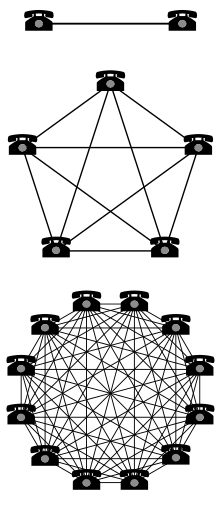
WebRTC is one of the highlights of HTML5. The latest stable releases of Google Chrome (including the free Chromium browser) and Firefox include support for this technology and although the specifications are still being finalized, this is the time when developers can start preparing the first generation of web-apps that will define the future of this technology. The JSCommunicator project aims to make it easy to integrate WebRTC into existing web applications. It provides a high-level API on top of the popular JsSIP SIP stack for JavaScript. The JSCommunicator API provides basic dialing and call control features, allowing you to focus on the application level rather than the SIP level. The configuration file suggests many possible ways it can be deployed and customized without any coding at all. The popular DruCall module for the Drupal CMS provides a practical demonstration of how JSCommunicator can be embedded in other products, multiplying the power of WebRTC for millions of other web developers, bloggers, online shops and other sites. This part of the DruCall source code provides a practical demonstration of how JSCommunicator integrates with PHP and this demonstrates how we extract the parameters from PHP in the JavaScript and convert them to the JSCommunicator configuration object. Practical deployments of WebRTC today The student selected for this GSoC project will focus on two practical, real-world deployments of JSCommunicator: It is particularly important to think about ways to make this technology useful for the Debian Developer community in the pursuit of Debian's work. Not just for Debian A communication product is not much use if there is nobody to talk to. The optimal outcome of this project may involve helping two or three additional free software communities to build portals similar to https://rtc.debian.org so that they can interact with Debian and each other using Federated SIP. As Metcalfe's Law explains, this outcome would be a win-win situation for everybody. Metcalfe's Law - Network effect Mentors needed too The more diverse the mentoring community, the more positive outcomes we can achieve with this project. If you would like to be part of a mentoring team for this project, please email me and subscribe to the Debian SOC co-ordination email list. There is no strict requirement for all mentors in the team to be full Debian Developers and emerging technology like this clearly needs people with strengths in a range of different areas. Get started now For general ideas about getting selected for Google Summer of Code, please see the comments at the bottom of my earlier blog post about Ganglia projects For this project in WebRTC in particular, please:
  • Review the project brief on the Debian wiki
  • Discuss your ideas on the JsSIP Google group
  • Send an email to introduce yourself on the Debian SOC co-ordination email list and give a link to your post on the JsSIP list
  • You must complete a coding test. Please see the open bug list for JSCommunicator, complete one of these tasks and submit a pull request on Github. Please send an email to the JsSIP Google group to discuss your pull request.
  • Explain what features you would create during the summer
  • Explain which other tools or libraries you would like to use
  • Give examples of previous work you have done with HTML and JavaScript
  • Explain how your participation will benefit Debian, free software and the wider world. Give some practical examples.
  • If you are interested in other JavaScript and jQuery opportunities for GSoC 2014, please also read more about the web components in the Ganglia project - if you apply for both Debian and Ganglia, you only have to complete one coding test as part of your application.

1 March 2014

Dirk Eddelbuettel: RcppEigen 0.3.2.0.2

A new bug-fix / maintenance release of RcppEigen is now on CRAN. RcppEigen brings the Eigen C++ template library for linear algebra to R. This release updates the RcppEigen.package.skeleton() function for a needed change in R, updates and extends the code example used by this skeleton package generator, and updates a few things now that Rcpp 0.11.0 is out.
Changes in RcppEigen version 0.3.2.0.3 (2014-03-01)
  • Updated and extended RcppEigen.package.skeleton() to use several examples via Rcpp Attributes; also removed the deprecated namespace argument
  • Updated skeleton package example for Rcpp 0.11.0 or later by removing needed for linking with user library
  • Updated files DESCRIPTION, NAMESPACE, src/Makevars and src/Makevars.win similarly
Courtesy of CRANberries, there are diffstat reports for the most recent release relative to the preceding version. Questions, comments etc about RcppEigen should go to the rcpp-devel mailing list off the R-Forge page.

This post by Dirk Eddelbuettel originated on his Thinking inside the box blog. Please report excessive re-aggregation in third-party for-profit settings.

Dirk Eddelbuettel: RcppArmadillo 0.4.100.0

A new minor upstream release 4.100 of the Armadillo templated C++ library for linear algebra was finalised by Conrad yesterday. I rolled up the corresponding RcppArmadillo release 0.4.100.0 which is now on CRAN and will go to Debian shortly.
Changes in RcppArmadillo version 0.4.100.0 (2014-02-28)
  • Upgraded to Armadillo release Version 4.100.0 (Dirt Cruiser)
    • added normalise() for normalising vectors to unit p-norm
    • extended the field class to handle 3D layout
    • extended eigs_sym() and eigs_gen() to obtain eigenvalues of various forms (eg. largest or smallest magnitude)
    • automatic SIMD vectorisation of elementary expressions (eg. matrix addition) when using Clang 3.4+ with -O3 optimisation
    • faster handling of sparse submatrix views
    • workaround for a bug in LAPACK 3.4
Courtesy of CRANberries, there is also a diffstat report for the most recent release As always, more detailed information is on the RcppArmadillo page. Questions, comments etc should go to the rcpp-devel mailing list off the R-Forge page.

This post by Dirk Eddelbuettel originated on his Thinking inside the box blog. Please report excessive re-aggregation in third-party for-profit settings.

25 February 2014

Gergely Nagy: GSoC2014: syslog-ng ACCEPTED

We are happy to announce that we were accepted to be a mentoring organisation for Google Summer of Code Google Summer of Code 2014 programme! This year, we applied as the syslog-ng project, independently from the company behind, and we put a lot of effort not just into the proposals, but on the organisation image as well, with a brand-new website, among other things. I would like to thank both openSUSE for their past help (in 2012, and in 2013, we participated on GSOC under the umbrella of the openSUSE) and for vouching for us this year, and Debian too, for supporting our application with their vouch as well.This year, we have - as per usual - an interesting list of projects to choose from, with varied difficulties, touching a wide range of syslog-ng components. I am confident that any student interested in logging, or systems infrastracture in general, would find something interesting on our idea page. But if not, we are certainly open to accepting student proposals too.Unlike in previous years, we have a much better infrastracture (in the form of The Incubator), more documentation, more mentors, and projects that are described in more detail, where we, as mentors, have a better idea of what we'd like to see. This is a very interesting opportunity for us too, not just for students, as for the first time in our history within the Google Summer of Code programme, we are on our own, without an umbrella organisation, and we have to prove our worth. And we certainly will do that. What our students built last year is the bare minimum this year: we're upping the goals, for we want to build even more awesome features.Of course, building amazing things is just a side-effect, because the real purpose of the programme is to teach, and to get people involved in the free software community as a whole. Our mentors are all contributors to various free software projects, and we'd like our students to become such contributors too, to let them see that while the tasks may be challenging, the rewards are well worth it. Seeing your code used in production is a terrific feeling. Talking with the community, with the potential users is incredibly useful, and rewarding too. We'd like our students to be involved throughly and deeply, we will let them see the beauty the Free Software world has to offer.They will also learn a ton about the internals of syslog-ng, a software used on millions on devices, from embedded devices to room-size cluster monsters. We'll touch multi threading, in-software communication, scalability, performance and data structure topics. We'll fight with ancient, legacy systems, and win! The road ahead is challenging, but full of adventure.If you are a student, contact us, either on IRC, on Twitter, or the mailing list, we are happy to answer any questions you may have. If you are a user of syslog-ng, we would welcome feedback on our ideas, and new proposals too!

22 February 2014

Dirk Eddelbuettel: RcppBDT 0.2.2

A new maintenance release of the RcppBDT package is now on CRAN. There is no new code in this; it mainly accomodates a request by CRAN to standardize the \code Imports: and \code Depends: relationships in the \code DESCRIPTION file. We also updated the build process now that we can use Rcpp 0.11.0. Having said that, there is a lot of new code in the git repository but I guess I'll talk about that when I can make a new upload. Yesterday, this balked because win-builder felt the need for a long long int in 64-bit mode which we can provide once C++11 will be permitted under R 3.1.0, due out in April. Oddly, no such need arose in 64-bit Linux. Oh well. The complete NEWS entry is below:
Changes in version 0.2.2 (2014-02-21)
  • Updates to current CRAN Policy standards for Depends: and Imports: in DESCRIPTION
  • Also take advantage of new Rcpp 0.11.0 build options
  • New code remains in GitHub repo master branch until R 3.1.0 is release so that we can use C++11 in order to get the long long int support without which the package does not build on Windows (whereas Linux is fine)
Courtesy of CRANberries, there is also a diffstat report for 0.2.2 relative to 0.2.1. As always, feedback is welcome and the rcpp-devel mailing list off the R-Forge page for Rcpp is the best place to start a discussion.

This post by Dirk Eddelbuettel originated on his Thinking inside the box blog. Please report excessive re-aggregation in third-party for-profit settings.

Dirk Eddelbuettel: RDieHarder 0.1.3

A pure maintenance release of RDieHarder is now on CRAN. RDieHarder provides R bindings for the DieHarder battery of tests for random number generators by Brown et al. This release contains no new code, but the vignette needed to be moved from inst/doc to vignettes/ to help finalize that transition of the R / CRAN Package Policy. Courtesy of CRANberries, there is also a diffstat report relative to the previous release. As always, more detailed information is on the RDieHarder page.

This post by Dirk Eddelbuettel originated on his Thinking inside the box blog. Please report excessive re-aggregation in third-party for-profit settings.

20 February 2014

Dirk Eddelbuettel: RcppArmadillo 0.4.000.4

A new minor release of RcppArmadillo is now on CRAN and in Debian. RcppArmadillo brings the Armadillo templated C++ library for linear algebra to R by means of Rcpp. This release contains both a few minor bugfixes from the 4.000 branch of Armadillo and some enhancements in RcppArmadillo itself that are related to the recent Rcpp 0.11.0 release.
Changes in RcppArmadillo version 0.4.000.4 (2014-02-19)
  • Upgraded to Armadillo release Version 4.000.4
    • fix for randi() generating out-of-interval values
    • fix for saving field objects
    • workaround for a bug in the Intel compiler
  • Updated for Rcpp (>= 0.11.0) by removing linking step from build process, added appropriate dependency on Rcpp
  • Updated RcppArmadillo.package.skeleton function accordingly to use proper NAMESPACE import
  • Rewritten rcpparma_hello_world (which is used by the RcppArmadillo.package.skeleton function) to use Rcpp Attributes, and added more examples
  • Added two functions to set Armadillo's RNGs (ie the system RNG) from a given value and to randomize it, as suggested by G bor Cs rdi. Note that these do not work within RStudio (which itself also uses the same system RNG).
Courtesy of CRANberries, there is also a diffstat report for the most recent release As always, more detailed information is on the RcppArmadillo page. Questions, comments etc should go to the rcpp-devel mailing list off the R-Forge page.

This post by Dirk Eddelbuettel originated on his Thinking inside the box blog. Please report excessive re-aggregation in third-party for-profit settings.

12 February 2014

Dirk Eddelbuettel: RInside 0.2.11

A new release 0.2.11 of RInside is now on CRAN. RInside provides a set of convenience classes which facilitate embedding of R inside of C++ applications and programs, using the classes and functions provided by the Rcpp R and C++ integration package. This release, the first in fourteen months, fixes one important initialization issue created by the recent Rcpp 0.11.0 release, adds a few other changes related to that release and improves a number of small points such as new or improved examples. The NEWS extract below has more details.
Changes in RInside version 0.2.11 (2014-02-11)
  • Updated for Rcpp 0.11.0:
    • Updated initialization by assigning global environment via pointer only after R itself has been initialized with special thanks to Kevin Ushey for the fix
    • Updated DESCRIPTION with Imports: instead of Depends:
    • Added correspondiing importFrom(Rcpp, evalCpp) to NAMESPACE
    • Noted in all inst/examples/*/Makefile that Rcpp no longer requires a library argument, but left code for backwards compatibility in case 0.11.0 is not yet installed.
  • Added --vanilla --slave to default arguments for R initialization
  • Added a few more explicit #include statements in the qt example which Qt 5.1 now appears to require with thanks to Spencer Behling for the patch
  • Added new MPI example with worker functions and RInside instance, kindly contributed by Nicholas Pezolano and Martin Morgan
CRANberries also provides a short report with changes from the previous release. More information is on the RInside page. Questions, comments etc should go to the rcpp-devel mailing list off the Rcpp R-Forge page.

This post by Dirk Eddelbuettel originated on his Thinking inside the box blog. Please report excessive re-aggregation in third-party for-profit settings.

11 February 2014

Dirk Eddelbuettel: RcppSMC 0.1.2

Late last week, and just before leaving to participate in this crazy thing, I managed to get a new version of RcppSMC onto CRAN. RcppSMC combines the SMCTC template classes for Sequential Monte Carlo and Particle Filters (Johansen, 2009, JSS) with the Rcpp package for R/C++ Integration (Eddelbuettel and Francois, 2011, JSS) and thereby allows for easier and more direct access from R to the computational core of the Sequential Monte Carlo algorithm. This release regroups a few minor changes we accumulated over the last few months, but was triggered by the Rcpp 0.11.0 release last week. The NEWS entry is below:
Changes in RcppSMC version 0.1.2 (2014-02-06)
  • Updated for Rcpp 0.11.0 with explicit importFrom in NAMESPACE and corresponding versioned Imports: in DESCRIPTION; also removed linking instruction from src/Makevars as no it is longer needed with this new Rcpp version
  • Addded GitHub / Travis CI support
  • Use more portable dev.new() rather than x11() in pfLinearBS.R
  • Applied some corrections to pfNonlinBS.R example
  • Converted NEWS to NEWS.Rd
Courtesy of CRANberries, there is also a diffstat report relative to the previous release. As always, more detailed information is on the RcppSMC page,

This post by Dirk Eddelbuettel originated on his Thinking inside the box blog. Please report excessive re-aggregation in third-party for-profit settings.

10 February 2014

Mario Lang: Neurofunkcasts

I have always loved Drum and Bass. In 2013 I rediscovered my love for Darkstep and Neurofunk, and found that these genres have developed quite a lot in the recent years. Some labels like Black Sun Empire and Evol Intent produce mixes/sets on a regular basis as podcasts these days. This article aggregates some neurofunk podcasts I like a lot, most recent first. Enjoy 33 hours and 57 minutes of fun with dark and energizing beats. Thanks to BSE Contrax and Evol Intent for providing such high quality sets. You can also see the Python source for the program that was used to generate this page.

7 February 2014

Russ Allbery: Things I learn from reading Reddit

I am apparently an Ent. I think that's one of the nicest things that anyone has said about me this year. I'm feeling quite delighted by it. I'm not sure it's the character from Lord of the Rings that fits me the best, and for personal reasons I have to default to identifying with Gwaihir, but it definitely captures a substantial component of my personality. Hoom.

3 February 2014

Petter Reinholdtsen: Testing sysvinit from experimental in Debian Hurd

A few days ago I decided to try to help the Hurd people to get their changes into sysvinit, to allow them to use the normal sysvinit boot system instead of their old one. This follow up on the great Google Summer of Code work done last summer by Justus Winter to get Debian on Hurd working more like Debian on Linux. To get started, I downloaded a prebuilt hard disk image from http://ftp.debian-ports.org/debian-cd/hurd-i386/current/debian-hurd.img.tar.gz, and started it using virt-manager. The first think I had to do after logging in (root without any password) was to get the network operational. I followed the instructions on the Debian GNU/Hurd ports page and ran these commands as root to get the machine to accept a IP address from the kvm internal DHCP server:
settrans -fgap /dev/netdde /hurd/netdde 
kill $(ps -ef awk '/[p]finet/   print $2 ')
kill $(ps -ef awk '/[d]evnode/   print $2 ')
dhclient /dev/eth0
After this, the machine had internet connectivity, and I could upgrade it and install the sysvinit packages from experimental and enable it as the default boot system in Hurd. But before I did that, I set a password on the root user, as ssh is running on the machine it for ssh login to work a password need to be set. Also, note that a bug somewhere in openssh on Hurd block compression from working. Remember to turn that off on the client side. Run these commands as root to upgrade and test the new sysvinit stuff:
cat > /etc/apt/sources.list.d/experimental.list <<EOF
deb http://http.debian.net/debian/ experimental main
EOF
apt-get update
apt-get dist-upgrade
apt-get install -t experimental initscripts sysv-rc sysvinit \
    sysvinit-core sysvinit-utils 
update-alternatives --config runsystem
To reboot after switching boot system, you have to use reboot-hurd instead of just reboot, as there is not yet a sysvinit process able to receive the signals from the normal 'reboot' command. After switching to sysvinit as the boot system, upgrading every package and rebooting, the network come up with DHCP after boot as it should, and the settrans/pkill hack mentioned at the start is no longer needed. But for some strange reason, there are no longer any login prompt in the virtual console, so I logged in using ssh instead. Note that there are some race conditions in Hurd making the boot fail some times. No idea what the cause is, but hope the Hurd porters figure it out. At least Justus said on IRC (#debian-hurd on irc.debian.org) that they are aware of the problem. A way to reduce the impact is to upgrade to the Hurd packages built by Justus by adding this repository to the machine:
cat > /etc/apt/sources.list.d/hurd-ci.list <<EOF
deb http://darnassus.sceen.net/~teythoon/hurd-ci/ sid main
EOF
At the moment the prebuilt virtual machine get some packages from http://ftp.debian-ports.org/debian, because some of the packages in unstable do not yet include the required patches that are lingering in BTS. This is the completely list of "unofficial" packages installed:
# aptitude search '?narrow(?version(CURRENT),?origin(Debian Ports))'
i   emacs                   - GNU Emacs editor (metapackage)
i   gdb                     - GNU Debugger
i   hurd-recommended        - Miscellaneous translators
i   isc-dhcp-client         - ISC DHCP client
i   isc-dhcp-common         - common files used by all the isc-dhcp* packages
i   libc-bin                - Embedded GNU C Library: Binaries
i   libc-dev-bin            - Embedded GNU C Library: Development binaries
i   libc0.3                 - Embedded GNU C Library: Shared libraries
i A libc0.3-dbg             - Embedded GNU C Library: detached debugging symbols
i   libc0.3-dev             - Embedded GNU C Library: Development Libraries and Hea
i   multiarch-support       - Transitional package to ensure multiarch compatibilit
i A x11-common              - X Window System (X.Org) infrastructure
i   xorg                    - X.Org X Window System
i A xserver-xorg            - X.Org X server
i A xserver-xorg-input-all  - X.Org X server -- input driver metapackage
#
All in all, testing hurd has been an interesting experience. :) X.org did not work out of the box and I never took the time to follow the porters instructions to fix it. This time I was interested in the command line stuff.

Dirk Eddelbuettel: Rcpp 0.11.0

A new major release 0.11.0 of Rcpp is now on the CRAN network for GNU R and binaries for Debian have been uploaded as well. Before you read on, please note that this release will most likely require a reinstallation of all your packages using Rcpp as it now works without a user-facing shared library. The biggest change in this version is that it is now effectively headers-only. Before you wonder, there is still compiled code provided by Rcpp for use by packages. But this uses the function registration mechanism of GNU R instead via instantiation at package startup. This does make package building easier, will remove the need to query GNU R for the Rcpp library file in src/Makevars when compiling, and should generally avoid building issues such as the dreaded fails on paths with spaces still annoying users of a certain OS. There are a number of other fixes, upgrades and other extensions detailed in NEWS file extract below, in the ChangeLog file in the package and on the Rcpp Changelog page as well as in a release announcement I'll post later.
Changes in Rcpp version 0.11.0 (2014-02-02)
  • Changes in Rcpp API:
    • Functions provided/used by Rcpp are now registered with R and instantiated by client package alleviating the need for explicit linking against libRcpp which is therefore no longer created.
    • Updated the Rcpp.package.skeleton() function accordingly.
    • New class StretchyList for pair lists with fast addition of elements at the front and back. This abstracts the 3 functions NewList, GrowList and Insert used in various packages and in parsers in R.
    • The function dnt, pnt, qnt sugar functions were incorrectly expanding to the no-degree-of-freedoms variant.
    • Unit tests for pnt were added.
    • The sugar table function did not handle NAs and NaNs properly for numeric vectors. Fixed and tests added.
    • The internal coercion mechanism mapping numerics to strings has been updated to better match R (specifically with Inf, -Inf, and NaN.)
    • Applied two bug fixes to Vector sort() and RObject definition spotted and corrected by Kevin Ushey
    • New checkUserInterrupt() function that provides a C++ friendly implementation of R_CheckUserInterrupt.
  • Changes in Rcpp attributes:
    • Embedded R code chunks in sourceCpp are now executed within the working directory of the C++ source file.
    • Embedded R code chunks in sourceCpp can now be disabled.
  • Changes in Rcpp documentation:
    • The Rcpp-FAQ and Rcpp-package vignettes have been updated and expanded.
    • Vignettes are now typeset with grey background for code boxes.
    • The bibtex reference file has been update to reflexct current package versions.
  • Changes in Rcpp unit tests:
    • The file tests/doRUnit.R was rewritten following the pattern deployed in RProtoBuf which is due to Murray Stokely
    • The function test() was rewritten; it provides an easy entry point to running unit tests of the installed package
Thanks to CRANberries, you can also look at a diff to the previous release 0.10.6. As always, even fuller details are on the Rcpp Changelog page and the Rcpp page which also leads to the downloads, the browseable doxygen docs and zip files of doxygen output for the standard formats. A local directory has source and documentation too. Questions, comments etc should go to the rcpp-devel mailing list off the R-Forge page

This post by Dirk Eddelbuettel originated on his Thinking inside the box blog. Please report excessive re-aggregation in third-party for-profit settings.

28 January 2014

Dirk Eddelbuettel: RQuantLib 0.3.11

A new minor / maintenance release RQuantLib 0.3.11 is now on CRAN and in Debian. Like the RcppClassic upload two days ago and the RcppZiggurat and RcppEigen uploads yesterday, this release was motivated at least in part by an upcoming Rcpp release about which I should have more to day soon. A few things got polished and updated, and we added a plugin which should make use via Rcpp Attribute easier. RQuantLib combines (some of) the quantitative analytics of QuantLib with the R statistical computing environment and language. Thanks to CRANberries, there is also a diff to the previous release 0.3.10. Full changelog details, examples and more details about this package are at my RQuantLib page.

This post by Dirk Eddelbuettel originated on his Thinking inside the box blog. Please report excessive re-aggregation in third-party for-profit settings.

Next.

Previous.