Search Results: "cas"

4 March 2021

Molly de Blanc: Vaccination

This is about why I decided to get vaccinated, and why that was a hard choice. Note: If you have the opportunity to get vaccinated, you should. This is good for public health. If you re worried about being a bad person by getting vaccinated now, you re probably not a bad person. This is my professional opinion as a bioethics graduate student. Anyway, onward. Not Great Reasons to Not Get Vaccinated Reason one: Other people need them more. There are people have a much higher risk of dying from COVID or having long term consequences. I don t want to get a vaccine at the expense of someone who has much worse projected outcomes. Reason two: I live a lowish risk life. I have a low/medium risk lifestyle. I go to the grocery store, but I don t do things like indoor dining. I have drinks with friends, outside, generally maintaining distance and trying to be polite and careful. I go on walks or sit in parks with friends. I have three people I see inside, and we don t see anyone else inside. Through my school, I am tested regularly though I am behind right now, I ll admit. I work from home, I take classes on my computer. My podmates also work from home. There are other people who live much higher risk lives and don t have a choice in the matter. They work outside of their homes, they are taking care of other people, they re incarcerated, their children go to school in-person. Those people need vaccines more than I do or at least I feel like that s the case. Even though I know that, e.g., parents won t be able to get vaccinated unless they otherwise qualify, I still feel like I d be doing them wrong by getting vaccinated first! Reason three: I don t want to deal with other people s judgement. When New Jersey allowed smokers to get vaccinated, wow, did people go off on how unfair that is. I ve seen the same rhetoric applied to other preexisting conditions/qualifications. Boo. Great Reasons to Get Vaccinated I had a few good conversations with friends I respect a lot. They convinced me that I should get vaccinated, in spite of my concerns. Reason one: I m scared of COVID. I actually find this the weakest of my reasons to get vaccinated: I m scared of COVID. I get migraines. I downplay how bad they are, because I know other people who have it worse, but they re terrible. They re debilitating. COVID can increase your risk of migraines, especially if you re already prone to them. They can last months. Boo. I m terrified of Long COVID. A part of my identity comes from doing things outside, and this past year without regularly swimming or going on bike trips or going up mountains has been really rough for me. For my own sake, I don t want to get sick. Reason two: I want to protect the people in my life. Being vaccinated is good for the people in my life. The current conversation I ve heard is that if you re vaccinated, you re probably less likely to spread COVID to those around you. That sounds great! I m not going to change my lifestyle anytime soon to be higher risk, but I like knowing that there s an even smaller chance I will become a disease vector. Reason three: Seriously, everyone should get vaccinated. Vaccinations are key to fighting COVID. I am not an epidemiologist (though I did once consider become an epistemologist). I m not going to pretend to be one. But they tell me that vaccines are really important, and the Intro to Public Health class I took agrees. We need to vaccinate everyone we can, everywhere in the world, in order to create the best outcomes. We don t want some vaccine-resistant COVID variant to show up somewhere because we were jerkfaces and prevented people from getting vaccinated. Medical professionals and experts I talked with told me to get vaccinated as soon as the opportunity arose. Maybe they said this because they like me, but I think they re also concerned about public health. So you re ready to get your vaccine! I m so excited for you! Sumana Harihareswara wrote this great blog post about getting vaccinated in New York City, though is probably relevant for New York State in general. Please check out your state s guidelines and maybe do a little research or creative thinking about what counts. This Twitter thread Sumana shared talked about ADHD as a qualifying condition under developmental and learning disorders. Your doctor might be super helpful! Your doctor might also not be helpful at all. When I talked to mine they didn t know much about the vaccine roll out plan, criteria, or procedures around proof of medical condition. Some vaccine sites also have waitlists for extra doses. A friend of mine is on one! For these, you generally don t have to meet the qualification criteria. These are doses left at the end of the day due to canceled appointments and things like that. A lot of states have useful Twitter bots and web sites. We have TurboVax. It s great. Big fan. These are usually appoints for the day of or the next day or two.

2 March 2021

Russ Allbery: Review: The Lion, the Witch and the Wardrobe

Review: The Lion, the Witch and the Wardrobe, by C.S. Lewis
Illustrator: Pauline Baynes
Series: Chronicles of Narnia #1
Publisher: Collier Books
Copyright: 1950
Printing: 1978
ISBN: 0-02-044220-3
Format: Mass market
Pages: 186
Although it's been more than 20 years since I last read it, I believe I have read The Lion, the Witch and the Wardrobe more times than any other book. The count is certainly in double digits. As you might guess, I also have strong opinions about it, some of which are unorthodox, and I've been threatening to write this review for years. It seemed a fitting choice for my 1000th review. There is quite a lot that can and has been said about this book and this series, and this review is already going to be much too long, so I'm only going to say a fraction of it. I'm going to focus on my personal reactions as someone raised a white evangelical Christian but no longer part of that faith, and the role this book played in my religion. I'm not going to talk much about some of its flaws, particularly Lewis's treatment of race and gender. This is not because I don't agree they're there, but only that I don't have much to say that isn't covered far better in other places. Unlike my other reviews, this one will contain major spoilers. If you have managed to remain unspoiled for a 70-year-old novel that spawned multiple movies and became part of the shared culture of evangelical Christianity, and want to stay that way, I'll warn you in ALL CAPS when it's time to go. But first, a few non-spoiler notes. First, reading order. Most modern publications of The Chronicles of Narnia will list The Magician's Nephew as the first book. This follows internal chronological order and is at C.S. Lewis's request. However, I think Lewis was wrong. You should read this series in original publication order, starting with The Lion, the Witch and the Wardrobe (which I'm going to abbreviate as TLtWatW like everyone else who writes about it). I will caveat this by saying that I have a bias towards reading books in the order an author wrote them because I like seeing the development of the author's view of their work, and I love books that jump back in time and fill in background, so your experience may vary. But the problem I see with the revised publication order is that The Magician's Nephew explains the origins of Narnia and, thus, many of the odd mysteries of TLtWatW that Lewis intended to be mysterious. Reading it first damages both books, like watching a slow-motion how-to video for a magic trick before ever seeing it performed. The reader is not primed to care about the things The Magician's Nephew is explaining, which makes it less interesting. And the bits of unexpected magic and mystery in TLtWatW that give it so much charm (and which it needs, given the thinness of the plot) are already explained away and lose appeal because of it. I have read this series repeatedly in both internal chronological order and in original publication order. I have even read it in strict chronological order, wherein one pauses halfway through the last chapter of TLtWatW to read The Horse and His Boy before returning. I think original publication order is the best. (The Horse and His Boy is a side story and it doesn't matter that much where you read it as long as you read it after TLtWatW. For this re-read, I will follow original publication order and read it fifth.) Second, allegory. The common understanding of TLtWatW is that it's a Christian allegory for children, often provoking irritated reactions from readers who enjoyed the story on its own terms and later discovered all of the religion beneath it. I think this view partly misunderstands how Lewis thought about the world and there is a more interesting way of looking at the book. I'm not as dogmatic about this as I used to be; if you want to read it as an allegory, there are plenty of carefully crafted parallels to the gospels to support that reading. But here's my pitch for a different reading. To C.S. Lewis, the redemption of the world through the death of Jesus Christ is as foundational a part of reality as gravity. He spent much of his life writing about religion and Christianity in both fiction and non-fiction, and this was the sort of thing he constantly thought about. If somewhere there is another group of sentient creatures, Lewis's theology says that they must fit into that narrative in some way. Either they would have to be unfallen and thus not need redemption (roughly the position taken by The Space Trilogy), or they would need their own version of redemption. So yes, there are close parallels in Narnia to events of the Christian Bible, but I think they can be read as speculating how Christian salvation would play out in a separate creation with talking animals, rather than an attempt to disguise Christianity in an allegory for children. It's a subtle difference, but I think Narnia more an answer to "how would Christ appear in this fantasy world?" than to "how do I get children interested in the themes of Christianity?", although certainly both are in play. Put more bluntly, where other people see allegory, I see the further adventures of Jesus Christ as an anthropomorphic lion, which in my opinion is an altogether more delightful way to read the books. So much for the preamble; on to the book. The Pevensie kids, Peter, Susan, Edmund, and Lucy, have been evacuated to a huge old house in the country due to the air raids (setting this book during World War II, something that is passed over with barely a mention and not a hint of trauma in a way that a modern book would never do). While exploring this house, which despite the scant description is still stuck in my mind as the canonical huge country home, Lucy steps into a wardrobe because she wants to feel the fur of the coats. Much to her surprise, the wardrobe appears not to have a back, and she finds herself eventually stepping into a snow-covered pine forest where she meets a Fawn named Mr. Tumnus by an unlikely lamp-post. MAJOR SPOILERS BELOW, so if you don't want to see those, here's your cue to stop reading. Two things surprised me when re-reading TLtWatW. The first, which I remember surprising me every time I read it, is how far into this (very short) book one has to go before the plot kicks into gear. It's not until "What Happened After Dinner" more than a third in that we learn much of substance about Narnia, and not until "The Spell Begins to Break" halfway through the book that things start to happen. The early chapters are concerned primarily with the unreliability of the wardrobe portal, with a couple of early and brief excursions by Edmund and Lucy, and with Edmund being absolutely awful to Lucy. The second thing that surprised me is how little of what happens is driven by the kids. The second half of TLtWatW is about the fight between Aslan and the White Witch, but this fight was not set off by the children and their decisions don't shape it in any significant way. They're primarily bystanders; the few times they take action, it's either off-camera or they're told explicitly what to do. The arguable exception is Edmund, who provides the justification for the final conflict, but he functions more as plot device than as a character with much agency. When that is combined with how much of the story is also on rails via its need to recapitulate part of the gospels (more on that in a moment), it makes the plot feel astonishingly thin and simple. Edmund is the one protagonist who gets to make some decisions, all of them bad. As a kid, I hated reading these parts because Edmund is an ass, the White Witch is obviously evil, and everyone knows not to eat the food. Re-reading now, I have more appreciation for how Lewis shows Edmund's slide into treachery. He starts teasing Lucy because he thinks it's funny (even though it's not), has a moment when he realizes he was wrong and almost apologizes, but then decides to blame his discomfort on the victim. From that point, he is caught, with some help from the White Witch's magic, in a spiral of doubling down on his previous cruelty and then feeling unfairly attacked. Breaking the cycle is beyond him because it would require admitting just how badly he behaved and, worse, that he was wrong and his little sister was right. He instead tries to justify himself by spreading poisonous bits of doubt, and looks for reasons to believe the friends of the other children are untrustworthy. It's simplistic, to be sure, but it's such a good model of how people slide into believing conspiracy theories and joining hate groups. The Republican Party is currently drowning in Edmunds. That said, Lewis does one disturbing thing with Edmund that leaped out on re-reading. Everyone in this book has a reaction when Aslan's name is mentioned. For the other three kids, that reaction is awe or delight. For Edmund, it's mysterious horror. I know where Lewis is getting this from, but this is a nasty theological trap. One of the problems that religion should confront directly is criticism that questions the moral foundations of that religion. If one postulates that those who have thrown in with some version of the Devil have an instinctual revulsion for God, it's a free intellectual dodge. Valid moral criticism can be hand-waved away as Edmund's horrified reaction to Aslan: a sign of Edmund's guilt, rather than a possible flaw to consider seriously. It's also, needless to say, not the effect you would expect from a god who wants universal salvation! But this is only an odd side note, and once Edmund is rescued it's never mentioned again. This brings us to Aslan himself, the Great Lion, and to the heart of why I think this book and series are so popular. In reinterpreting Christianity for the world of Narnia, Lewis created a far more satisfying and relatable god than Jesus Christ, particularly for kids. I'm not sure I can describe, for someone who didn't grow up in that faith, how central the idea of a personal relationship with Jesus is to evangelical Christianity. It's more than a theological principle; it's the standard by which one's faith is judged. And it is very difficult for a kid to mentally bootstrap themselves into a feeling of a personal relationship with a radical preacher from 2000 years ago who spoke in gnomic parables about subtle points of adult theology. It's hard enough for adults with theological training to understand what that phrase is intended to mean. For kids, you may as well tell them they have a personal relationship with Aristotle. But a giant, awe-inspiring lion with understanding eyes, a roar like thunder, and a warm mane that you can bury your fingers into? A lion who sacrifices himself for your brother, who can be comforted and who comforts you in turn, and who makes a glorious surprise return? That's the kind of god with which one can imagine having a personal relationship. Aslan felt physical and embodied and present in the imagination in a way that Jesus never did. I am certain I was not the only Christian kid for whom Aslan was much more viscerally real than Jesus, and who had a tendency to mentally substitute Aslan for Jesus in most thoughts about religion. I am getting ahead of myself a bit because this is a review of TLtWatW and not of the whole series, and Aslan in this book is still a partly unformed idea. He's much more mundanely present here than he is later, more of a field general than a god, and there are some bits that are just wrong (like him clapping his paws together). But the scenes with Susan and Lucy, the night at the Stone Table and the rescue of the statues afterwards, remain my absolute favorite parts of this book and some of the best bits of the whole series. They strike just the right balance of sadness, awe, despair, and delight. The image of a lion also lets Lewis show joy in a relatable way. Aslan plays, he runs, he wrestles with the kids, he thrills in the victory over evil just as much as Susan and Lucy do, and he is clearly having the time of his life turning people back to flesh from stone. The combination of translation, different conventions, and historical distance means the Bible has none of this for the modern reader, and while people have tried to layer it on with Bible stories for kids, none of them (and I read a lot of them) capture anything close to the sheer joy of this story. The trade-off Lewis makes for that immediacy is that Aslan is a wonderful god, but TLtWatW has very little religion. Lewis can have his characters interact with Aslan directly, which reduces the need for abstract theology and difficult questions of how to know God's will. But even when theology is unavoidable, this book doesn't ask for the type of belief that Christianity demands. For example, there is a crucifixion parallel, because in Lewis's world view there would have to be. That means Lewis has to deal with substitutionary atonement (the belief that Christ died for the sins of the world), which is one of the hardest parts of Christianity to justify. How he does this is fascinating. The Narnian equivalent is the Deep Magic, which says that the lives of all traitors belong to the White Witch. If she is ever denied a life, Narnia will be destroyed by fire and water. The Witch demands Edmund's life, which sets up Aslan to volunteer to be sacrificed in Edmund's place. This triggers the Deeper Magic that she did not know about, freeing Narnia from her power. You may have noticed the card that Lewis is palming, and to give him credit, so do the kids, leading to this exchange when the White Witch is still demanding Edmund:
"Oh, Aslan!" whispered Susan in the Lion's ear, "can't we I mean, you won't, will you? Can't we do something about the Deep Magic? Isn't there something you can work against it?" "Work against the Emperor's magic?" said Aslan, turning to her with something like a frown on his face. And nobody ever made that suggestion to him again.
The problem with substitutionary atonement is why would a supposedly benevolent god create such a morally abhorrent rule in the first place? And Lewis totally punts. Susan is simply not allowed to ask the question. Lewis does try to tackle this problem elsewhere in his apologetics for adults (without, in my opinion, much success). But here it's just a part of the laws of this universe, which all of the characters, including Aslan, have to work within. That leads to another interesting point of theology, which is that if you didn't already know about the Christian doctrine of the trinity, you would never guess it from this book. The Emperor-Beyond-the-Sea and Aslan are clearly separate characters, with Aslan below the Emperor in the pantheon. This makes rules like the above work out more smoothly than they do in Christianity because Aslan is bound by the Emperor's rules and the Emperor is inscrutable and not present in the story. (The Holy Spirit is Deity Not-appearing-in-this-book, but to be fair to Lewis, that's largely true of the Bible as well.) What all this means is that Aslan's death is presented straightforwardly as a magic spell. It works because Aslan has the deepest understanding of the fixed laws of the Emperor's magic, and it looks nothing like what we normally think of as religion. Faith is not that important in this book because Aslan is physically present, so it doesn't require any faith for the children to believe he exists. (The Beavers, who believed in him from prophecy without having seen him, are another matter, but this book never talks about that.) The structure of religion is therefore remarkably absent despite the story's Christian parallels. All that's expected of the kids is the normal moral virtues of loyalty and courage and opposition to cruelty. I have read this book so many times that I've scrutinized every word, so I have to resist the temptation to dig into every nook and cranny: the beautiful description of spring, the weird insertion of Lilith as Adam's first wife, how the controversial appearance of Santa Claus in this book reveals Lewis's love of Platonic ideals... the list is endless, and the review is already much longer than normal. But I never get to talk about book endings in reviews, so one more indulgence. The best thing that can be said about the ending of TLtWatW is that it is partly redeemed by the start of Prince Caspian. Other than that, the last chapter of this book has always been one of my least favorite parts of The Chronicles of Narnia. For those who haven't read it (and who by this point clearly don't mind spoilers), the four kids are immediately and improbably crowned Kings and Queens of Narnia. Apparently, to answer the Professor from earlier in the book, ruling magical kingdoms is what they were teaching in those schools? They then spend years in Narnia, never apparently giving a second thought to their parents (you know, the ones who are caught up in World War II, which prompted the evacuation of the kids to the country in the first place). This, for some reason, leaves them talking like medieval literature, which may be moderately funny if you read their dialogue in silly voices to a five-year-old and is otherwise kind of tedious. Finally, in a hunt for the white stag, they stumble across the wardrobe and tumble back into their own world, where they are children again and not a moment has passed. I will give Lewis credit for not doing a full reset and having the kids not remember anything, which is possibly my least favorite trope in fiction. But this is almost as bad. If the kids returned immediately, that would make sense. If they stayed in Narnia until they died, that arguably would also make sense (their poor parents!). But growing up in Narnia and then returning as if nothing happened doesn't work. Do they remember all of their skills? How do you readjust to going to school after you've lived a life as a medieval Queen? Do they remember any of their friends after fifteen years in Narnia? Argh. It's a very "adventures are over, now time for bed" sort of ending, although the next book does try to patch some of this up. As a single book taken on its own terms, TLtWatW is weirdly slight, disjointed, and hits almost none of the beats that one would expect from a children's novel. What saves it is a sense of delight and joy that suffuses the descriptions of Narnia, even when locked in endless winter, and Aslan. The plot is full of holes, the role of the children in that plot makes no sense, and Santa Claus literally shows up in the middle of the story to hand out plot devices and make an incredibly sexist statement about war. And yet, I memorized every gift the children received as a kid, I can still feel the coziness of the Beaver's home while Mr. Beaver is explaining prophecy, and the night at the Stone Table remains ten times more emotionally effective for me than the description of the analogous event in the Bible. And, of course, there's Aslan.
"Safe?" said Mr. Beaver. "Don't you hear what Mrs. Beaver tells you? Who said anything about safe? 'Course he isn't safe. But he's good. He's the king, I tell you."
Aslan is not a tame lion, to use the phrase that echos through this series. That, I think, is the key to the god that I find the most memorable in all of fantasy literature, even in this awkward, flawed, and decidedly strange introduction. Followed by Prince Caspian, in which the children return to a much-changed Narnia. Lewis has gotten most of the obligatory cosmological beats out of the way in this book, so subsequent books can tell more conventional stories. Rating: 7 out of 10

1 March 2021

Russ Allbery: Review: Architects of Memory

Review: Architects of Memory, by Karen Osborne
Series: Memory War #1
Publisher: Tor
Copyright: 2020
ISBN: 1-250-21546-3
Format: Kindle
Pages: 350
Ash is an Aurora Company indenture working as a salvage pilot in the wreckage of the Battle of Tribulation. She's been on the crew of the Twenty-Five and indentured to Aurora for about a year. Before that, she was an indenture in the mines of Bittersweet, where her fianc died in an attack from the alien Vai and where she contracted the celestium poisoning that's slowly killing her. Her only hope for treatment is to work off her indenture and become a corporate citizen, a hope that is doomed if Aurora discovers her illness. Oh, and she's in love with the citizen captain of the Twenty-Five, a relationship that's a bad idea for multiple reasons and which the captain has already cut off. This is the hopeful, optimistic part of the book, before things start getting grim. The setting of Architects of Memory is a horrifying future of corporate slavery and caste systems that has run head-long into aliens. The Vai released mysterious and beautiful weapons that kill humans horribly and were wreaking havoc on the corporate ships, but then the Vai retreated in the midst of their victory. The Twenty-Five is salvaging useful equipment and undetonated Vai ordnance off the dead hulk of the Aurora ship London when corporate tells them that the London may be hiding a more potent secret: a captured Vai weapon that may be the reason the Vai fled. I was tempted into reading this because the plot is full of elements I usually like: a tight-knit spaceship crew, alien first contact full of mysterious discoveries, corporate skulduggery, and anti-corporate protagonists. However, I like those plot elements when they support a story about overthrowing oppression and improving the universe. This book, instead, is one escalating nightmare after another. Ash starts the book sick but functional and spends much of the book developing multiple forms of brain damage. She's not alone; the same fate awaits several other likable characters. The secret weapon has horrible effects while also being something more terrible than a weapon. The corporations have an iron and apparently inescapable grip on humanity, with no sign of even the possibility of rebellion, and force indentures to cooperate with their slavery in ways that even the protagonists can't shake. And I haven't even mentioned the organ harvesting and medical experiments. The plot is a spiral between humans doing awful things to aliens and then doing even more awful things to other humans. I don't want to spoil the ending, but I will say that it was far less emotionally satisfying than I needed. I'm not sure this was intentional; there are some indications that Osborne meant for it to be partly cathartic for the characters. But not only didn't it work for me at all, it emphasized my feelings about the hopelessness and futility of the setting. If a book is going to put me through that amount of character pain and fear, I need a correspondingly significant triumph at the end. If that doesn't bother you as much as it does me, this book does have merits. The descriptions of salvage on a disabled starship are vivid and memorable and a nice change of pace from the normal military or scientific space stories. Salvage involves being careful, methodical, and precise in the face of tense situations; combined with the eerie feeling of battlefield remnants, it's an evocative scene. The Vai devices are satisfyingly alien, hitting a good balance between sinister and exotically beautiful. The Vai themselves, once we finally learn something about them, are even better: a truly alien form of life at the very edge of mutual understanding. There was the right amount of inter-corporate skulduggery, with enough factions for some tense complexity and double-crossing, but not so many that I lost track. And there is some enjoyably tense drama near the climax. Unfortunately, the unremitting horrors were too much for me. They're also too much for the characters, who oscillate between desperate action and psychological meltdowns that become more frequent and more urgently described as one gets farther into the book. Osborne starts the book with the characters already so miserable that this constant raising of the stakes became overwrought and exhausting for me. By the end of the book, the descriptions of the mental state of the characters felt like an endless, incoherent scream of pain. Combine that with a lot of body horror, physical and mental illness, carefully-described war crimes, and gruesome death, and I hit mental overload. This is not the type of science fiction novel (thankfully getting rarer) in which the author thinks any of these things are okay. Osborne is clearly on the side of her characters and considers the events of this story as horrible as I do. I think her goal was to tell a story about ethics and courage in the face of atrocities and overwhelming odds, and maybe another reader would find that. For me, it was lost in the darkness. Architects of Memory reaches a definite conclusion but doesn't resolve some major plot elements. It's followed by Engines of Oblivion, which might, based on the back-cover text, be more optimistic? I don't think I have it in me to find out, though. Rating: 4 out of 10

28 February 2021

Jamie McClelland: From openbox to sway

I've been running the Openbox window manager since 2005. That's longer then I've lived in any one apartment in my entire life! However, over the years I've been bracing for a change. It seems clear the Wayland is the future, although when that future is supposed to begin is much more hazy. Really, I've felt a bit like a ping pong ball, from panicking over whether Xorg is abandoned (with a follow up from a X server maintainer) to anxiously wondering if literally everything will break the moment I switch to Wayland. In fact, I started this blog post over a year ago when I first decided to switch from the Openbox to Sway. This is my third major attempt to make the change and I think it will finally stick this time. In retrospect, it would have been more sensible to first switch from openbox to i3 (which is a huge transition) and then from i3 to sway, but I decided to dive into the deep end with both changes. So... I'm on debian bullseye so I installed sway and friends (from sid). Then I copied /etc/sway/config to ~/.config/sway/config. I start openbox after logging in with exec startx so after rebooting, I ran exec sway and to my astonishment sway started. Hooray! However, I found that ssh-agent wasn't running so I couldn't ssh into any servers. That's kinda a problem. Launching ssh-agent under openbox was buried deep in /etc/X11/Xsession.d/90x11-common_ssh-agent and clearly was not going to happen via wayland. Since programs using ssh-agent depend on the environment variables SSH_AUTH_SOCK and SSH_AGENT_PID being globally available I thought I could simply run $(eval ssh-agent) via my tty terminal before running exec sway. And, that would have worked. Except... I like to add my keys via ssh-add -c so that everytime my key is being used I get a ssh-askpass prompt to confirm the use. It seems that since ssh-add is started before a window manager is running, it can't run the prompt. Ok, we can fix this. After searching the web, I came upon a solution of running ssh-agent via systemctl --user:
# This service myst be started manually after sway
# starts.
[Unit]
Description=OpenSSH private key agent
IgnoreOnIsolate=true
[Service]
Type=forking
Environment=SSH_AUTH_SOCK=%t/ssh-agent.socket
ExecStart=/usr/bin/ssh-agent -a $SSH_AUTH_SOCK
Then, in my ~/.bashrc file I have:
if [ -n WAYLAND_DISPLAY ]; then
  export SSH_AUTH_SOCK=/run/user/1000/ssh-agent.socket
fi
I think $SSH_AGENT_PID is only used by ssh-agent to kill itself. Now that is running via systemd - killing it should be do-able without a global environment variable. Done? Hardly. I've been using impass (nee assword) happily for years but alas it is tightly integrated with xdo and xclip. So... I've switched to keepassxc which works out of the box with wayland. My next challenge was the status bar. Farewell faithful tint2. One of the reasons I failed on my first two attempts to switch to Sway was the difficulty of getting the swaybar to work how I wanted, particularly with nm-applet. Two things allowed me to move forward: Next up: the waybar clock module doesn't work, but that is easy enough to work around. Replacing my uses of xclip with wl-clipboard was a little tedious but really not that difficult. Getting my screen shot and screen recorder functionality was a bit harder. I did a lot of searching before I finally found and compiled both swappy, screen shot and wf-recorder. In the course of all my adventures, I came across the following helpful tips:
Updates
  1. I've installed libreoffice-gtk3 to ensure libre office runs under wayland
  2. I've installed the latest Gimp via flatpak to get proper wayland support
  3. I've exported MOZ_ENABLE_WAYLAND to ensure firefox works properly.
  4. I've found that passing -c to my ssh-add command to ensure I am prompted for each use of my key seems to cause sway to crash intermittently.
  5. I am working on a questionable work around to get screen sharing to work in zoom. I haven't actually tried it on a real zoom call yet.
  6. Speaking of screen sharing - when using Firefox, I can only share Xwayland screens. Firefox is running under wayland so I can't share it. Chromium is running under xwayland, so I have to use Chromium when screen sharing.
  7. Wait, scratch that about screen sharing in Firefox. I've installed xdg-desktop-portal-wlr, added export XDG_CURRENT_DESKTOP=sway and export XDG_SESSION_TYPE=wayland to my .bashrc, and after hours of frustration, realize that I needed to configured firejail to allow it so that I can share my entire screen in Firefox. It doesn't yet support sharing a specific window, so I still have to keep chromium around for that (and Chromium can only share xwayland windows). Sigh. Oh, one more thing about Firefox: the option to choose what to share doesn't have "Entire Screen" as an option, you are just supposed to know that you should choose "Use operating system settings".
  8. I still am getting weekly crashes. Some of them I've fixed by switching to wayland friendly versions (e.g. Libre Office and Gimp) but others I haven't yet tracked down.
  9. My keyboard does not have an altgr key, so even though I have selected the "English (US) - English (intl., with AltGr dead keys)" I can't get accent marks. I went down a rabbit hole of trying to re-map the Alt key to the right of my space bar but it all seemed too complicated. So - I found a way easier approach. In my ~/.config/sway/config file I have: bindsym Mod4+e exec wtype " ". I have repeated that line for the main accent marks I need.
  10. Due to a Firefox Bug, when I share my desktop or mic or camera, the sharing indicator expands like a normal tiling window instead of remaining a tiny little box on each desktop reminding me that I'm sharing something. I'd prefer to have it be a tiny little box, but since I can't figure that out, I've disabled it by typing about:config in the Firefox location window, searching for privacy.webrtc.legacyGlobalIndicator and setting it to False. The reddit thread also suggested finding privacy.webrtc.hideGlobalIndicator and setting it to True, but that setting doesn't seem to be available and setting the first one alone seems to do the trick.
  11. Oh, one more environment variable to set: GDK_BACKEND=wayland,x11. First I just set it to wayland to get gtk3 apps to use wayland (like gajim). But that broke electron apps (like signal) which notice that variable but don't have a way to display via wayland (at least not yet). Setting it to "wayland,x11" shows the priority. Thank you ubuntu community.
  12. I've also finally consolidated where my environment variables go. I've added them all to ~/.config/sway/env. That seems like an official sway place to put them, but sway doesn't pay any attention to them. So I start sway via my own bash script which sources that file via [ -f "$HOME/.config/sway/env" ] && . "$HOME/.config/sway/env" before exec'ing sway.

Chris Lamb: Free software activities in February 2021

Here is my monthly update covering what I have been doing in the free software world during February 2021 (previous month):

Reproducible Builds The motivation behind the Reproducible Builds effort is to ensure no flaws have been introduced during compilation process by promising identical results are always generated from a given source, therefore allowing multiple third-parties to come to a consensus on whether a build was compromised. The project is proud to be a member project of the Software Freedom Conservancy. Conservancy acts as a corporate umbrella allowing projects to operate as non-profit initiatives without managing their own corporate structure. If you like the work of the Conservancy or the Reproducible Builds project, please consider becoming an official supporter. This month, I: I also made the following changes to diffoscope, including preparing and uploading versions 167 and 168 to Debian:

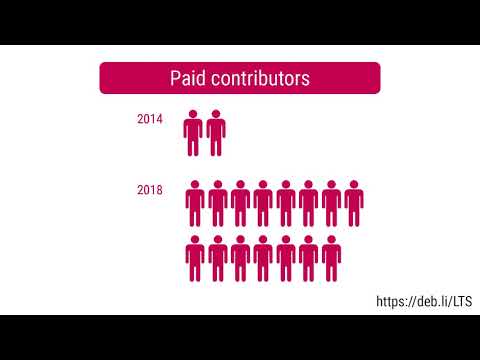
Debian Uploads I also sponsored an upload of adminer (4.7.9-1) for Alexandre Rossi. Debian LTS This month I have worked 18 hours on Debian Long Term Support (LTS) and 12 hours on its sister Extended LTS project. You can find out more about the project via the following video:

Martin-Éric Racine: Shipping Debian with GNOME X.XX.0 is an extremely bad idea

Since the freeze has slowly crept in, now is the time to revisit my pet peeve with Debian's release process: to publish a new Debian release as soon as GNOME published a new X.XX.0 version. This is an extremely bad idea: X.XX.0 releases tend to lack polish, their translations are not up-to-date and several silly bugs that hamper the user experience (what the Ubuntu guys call "paper cuts") exist. Those issues tend to be fixed later when GNOME X.XX.1, X.XX.2, etc. bugfix releases are published. However, Debian has a policy of not pushing non-security releases onto a stable distribution. In this particular case, there are only two valid alternatives: either release Bullseye with GNOME 3.38.X or change the Debian policy to allow pushing 3.40.X bugfix releases via bullseye-updates.

24 February 2021

Dirk Eddelbuettel: RcppSimdJson 0.1.4 on CRAN: Small Bugfix

A quick note to say that we finalized a bugfix release 0.1.5 of RcppSimdJson yesterday which got onto CRAN earlier today. RcppSimdJson wraps the fantastic and genuinely impressive simdjson library by Daniel Lemire and collaborators. Via very clever algorithmic engineering to obtain largely branch-free code, coupled with modern C++ and newer compiler instructions, it results in parsing gigabytes of JSON parsed per second which is quite mindboggling. The best-case performance is faster than CPU speed as use of parallel SIMD instructions and careful branch avoidance can lead to less than one cpu cycle per byte parsed; see the video of the talk by Daniel Lemire at QCon (also voted best talk). This version brings a small fix to Windows where temporary filenames constructed from URLs (as for example constructed by our td package) need an extra sanization for a possible ? character. We will be addressing that properly in due course but for now a simple gsub() will do. The NEWS entry follows.

Changes in version 0.1.5 (2021-02-23)
  • Temporary filenames from request URLs need an extra path sanitization on Windows as seen with package td.
  • A few #nocov tags were added to the code.

Courtesy of my CRANberries, there is also a diffstat report for this release. For questions, suggestions, or issues please use the issue tracker at the GitHub repo. If you like this or other open-source work I do, you can now sponsor me at GitHub.

This post by Dirk Eddelbuettel originated on his Thinking inside the box blog. Please report excessive re-aggregation in third-party for-profit settings.

22 February 2021

Dima Kogan: feedgnuplot: labelled bar charts and a guide

I just released feedgnuplot 1.57, which includes two new pieces that I've long thought about adding:

Labelled bar charts
I've thought about adding these for a while, but had no specific need for them. Finally, somebody asked for it, and I wrote the code. Now that I can, I will probably use these all the time. The new capability can override the usual numerical tic labels on the x axis, and instead use text from a column in the data stream. The most obvious use case is labelled bar graphs:
echo "# label value
      aaa     2
      bbb     3
      ccc     5
      ddd     2"   \
feedgnuplot --vnl \
            --xticlabels \
            --with 'boxes fill solid border lt -1' \
            --ymin 0 --unset grid
xticlabels-basic.svg
But the usage is completely generic. All --xticlabels does, is to accept a data column as labels for the x-axis tics. Everything else that's supported by feedgnuplot and gnuplot works as before. For instance, I can give a domain, and use a style that takes y values and a color:
echo "# x label y color
        5 aaa   2 1
        6 bbb   3 2
       10 ccc   5 4
       11 ddd   2 1"   \
feedgnuplot --vnl --domain \
            --xticlabels \
            --tuplesizeall 3 \
            --with 'points pt 7 ps 2 palette' \
            --xmin 4 --xmax 12 \
            --ymin 0 --ymax 6 \
            --unset grid
xticlabels-points-palette.svg
And we can use gnuplot's support for clustered histograms:
echo "# x label a b
        5 aaa   2 1
        6 bbb   3 2
       10 ccc   5 4
       11 ddd   2 1"   \
vnl-filter -p label,a,b   \
feedgnuplot --vnl \
            --xticlabels \
            --set 'style data histogram' \
            --set 'style histogram cluster gap 2' \
            --set 'style fill solid border lt -1' \
            --autolegend \
            --ymin 0 --unset grid
xticlabels-clustered.svg
Or we can stack the bars on top of one another:
echo "# x label a b
        5 aaa   2 1
        6 bbb   3 2
       10 ccc   5 4
       11 ddd   2 1"   \
vnl-filter -p label,a,b   \
feedgnuplot --vnl \
            --xticlabels \
            --set 'style data histogram' \
            --set 'style histogram rowstacked' \
            --set 'boxwidth 0.8' \
            --set 'style fill solid border lt -1' \
            --autolegend \
            --ymin 0 --unset grid
xticlabels-stacked.svg
This is gnuplot's "row stacking". It also supports "column stacking", which effectively transposes the data, and it's not obvious to me that makes sense in the context of feedgnuplot. Similarly, it can label y and/or z axes; I can't think of a specific use case, so I don't have a realistic usage in mind, and I don't support that yet. If anybody can think of a use case, email me. Notes and limitations:
  • Since with --domain you can pass in both an x value and a tic label, it is possible to give it conflicting tic labels for the same x value. gnuplot itself has this problem too, and it just takes the last label it has for a given x. This is probably good-enough.
  • feedgnuplot uses whitespace-separated columns with no escape mechanism, so the field labels cannot have whitespace in it. Fixing this is probably not worth the effort.
  • These tic labels do not count towards the tuplesize
  • I really need to add a similar feature to gnuplotlib. This will happen when I need it or when somebody asks for it, whichever comes first.

A feedgnuplot guide
This fills in a sorely needed missing part of the documentation: the main feedgnuplot website now has a page containing examples and corresponding graphical output. This serves as a tutorial and a gallery demonstrating some usages. It's somewhat incomplete, since it can't show streaming plots, or real-world interfacing with stuff that produces data: some of those usages remain the the README. It's a million times better than what I had before though, which was nothing. Internally this is done just like the gnuplotlib guide: the thing is an org-mode document with org-babel snippets that are evaluated by emacs to make the images. There's some fancy emacs lisp to tie it all together. Works great!

John Goerzen: Recovering Our Lost Free Will Online: Tools and Techniques That Are Available Now

As I ve been thinking and writing about privacy and decentralization lately, I had a conversation with a colleague this week, and he commented about how loss of privacy is related to loss of agency: that is, loss of our ability to make our own choices, pursue our own interests, and be master of our own attention. In terms of telecommunications, we have never really been free, though in terms of Internet and its predecessors, there have been times where we had a lot more choice. Many are too young to remember this, and for others, that era is a distant memory. The irony is that our present moment is one of enormous consolidation of power, and yet also one of a proliferation of technologies that let us wrest back some of that power. In this post, I hope to enlighten or remind us of some of the choices we have lost and also talk about the ways in which we can choose to regain them, already, right now. I will talk about the possibilities, the big dreams that are possible now, and then go into more detail about the solutions. The Problems & Possibilities The limitations of online We make the assumption that we must be online to exchange data. This is reinforced by many modern protocols; Twitter clients, for instance, don t tend to let you make posts by relaying them through disconnected devices. What would it be like if you could fully participate in global communities without a constant Internet connection? If you could share photos with your friends, read the news, read your email, etc. even if you don t have a connection at present? Even if the device you use to do that never has a connection, but can route messages via other devices that do? Would it surprise you to learn that this was once the case? Back in the days of UUCP, much email and Usenet news a global discussion forum that didn t require an Internet connection was relayed via occasional calls over phone lines. This technology remains with us, and has even improved. Sadly, many modern protocols make no effort in this regard. Some email clients will let you compose messages offline to send when you get online later, but the assumption always is that you will be connected to an IP network again soon. NNCP, on the other hand, lets you relay messages over TCP, a radio, a satellite, or a USB stick. Email and Usenet, since they were designed in an era where store-and-forward was valued, can actually still be used in an entirely offline fashion (without ever touching an IP-based network). All it takes is for someone to care to make it happen. You can even still do it over UUCP if you like. The physical and data link layers Many of us just accept that we communicate in a few ways: Wifi for short distances, and then cable modems or DSL for our local Internet connection, and then many people are fuzzy about what happens after that. Or, alternatively, we have 4G phones that are the local Internet connection, and the same fuzzy things happen after. Think about this for a moment. Which of these do you control in any way? Sometimes just wifi, sometimes maybe you have choices of local Internet providers. After that, your traffic is handled by enormous infrastructure companies. There is choice here. People in ham radio have been communicating digitally over long distances without the support of the traditional Internet for decades, but the technology to do this is now more accessible to anyone. Long-distance radio has had tremendous innovation in the last decade; cheap radios can now communicate over several miles/km without any other infrastructure at all. We all carry around radios (Wifi and Bluetooth) in our pockets that don t have to be used as mere access points to the Internet or as drivers of headphones, but can also form their own networks directly (Briar). Meshtastic is an example; it s an instant messenger that can form a mesh over many miles/km and requires no IP infrastructure at all. Briar is similar. XBee radios form a mesh in hardware, allowing peers to reach each other (also over many miles/km) with a serial or framed protocol. Loss of peer-to-peer Back in the late 90s, I worked at a university. I had a 386 on my desk for a workstation not a powerful computer even then. But I put the boa webserver on it and could just serve pages on the Internet. I didn t have to get permission. Didn t have to pay a hosting provider. I could just DO it. And of course that is because the university had no firewall and no NAT. Every PC at the university was a full participant on the Internet as much as the servers at Microsoft or DEC. All I needed was a DNS entry. I could run my own SMTP server if I wanted, run a web or Gopher server, and that was that. There are many reasons why this changed. Nowadays most residential ISPs will block SMTP for their customers, and if they didn t, others would; large email providers have decided not to federate with IPs in residential address spaces. Most people have difficulty even getting a static IP address in the first place. Many are behind firewalls, NATs, or both, meaning that incoming connections of any kind are problematic. Do you see what that means? It has weakened the whole point of the Internet being a network of peers. While IP still acts that way, as a practical matter, there are clients that are prevented from being servers by administrative policy they have no control over. Imagine if you, a person with an Internet connection to your laptop or phone, could just decide to host a website, or a forum on it. For moderate levels of load, they are certainly capable of this. The only thing in the way is the network management policies you can t control. Elaborate technologies exist to try to bridge this divide, and some, like Tor or cjdns, can work quite well. More on this below. Expense of running something popular Related to the loss of peer-to-peer infrastructure is the very high cost of hosting something popular. Do you want to share videos with lots of people? That almost certainly is going to require expensive equipment and bandwidth. There is a reason that there are only a small handful of popular video streaming sites online. It requires a ton of money to host videos at scale. What if it didn t? What if you could achieve economies of scale so much that you, an individual, could compete with the likes of YouTube? You wouldn t necessarily have to run ads to support the service. You wouldn t have to have billions of dollars or billions of viewers just to make it work. This technology exists right now. Of course many of you are aware of how Bittorrent leverages the swarm for files. But projects like IPFS, Dat, and Peertube have taken this many steps further to integrate it into a global ecosystem. And, at least in the case of Peertube, this is a thing that works right now in any browser already! Application-level walled gardens I was recently startled at how much excitement there was when Github introduced dark mode . Yes, Github now offers two colors on its interface. Already back in the 80s and 90s, many DOS programs had more options than that. Git is a decentralized protocol, but Github has managed to make it centralized. Email is a decentralized protocol pick your own provider, and they all communicate but Facebook and Twitter aren t. You can t just pick your provider for Facebook. It s Facebook or nothing. There is a profit motive in locking others out; these networks want to keep you using their platforms because their real customers are advertisers, and they want to keep showing you ads. Is it possible to have a world where you get to pick your own app for sharing photos, and it works even if your parents use a different one? Yes, yes it is. Mastodon and the Fediverse are fantastic examples for social media. Pixelfed is specifically designed for photos, Mastodon for short-form communication, there s Pleroma for more long-form communication, and they all work together. You can use Mastodon to read Pleroma content or look at Pixelfed photos, and there are many (free) providers of each. Freedom from manipulation I recently wrote about the dangers of the attention economy, so I won t go into a lot of detail here. Fundamentally, you are not the customer of Facebook or Google; advertisers are. They optimize their site to keep you on it as much as possible so that they can show you as many ads as possible which makes them as much money as possible. Ads, of course, are fundamentally seeking to manipulate your behavior ( buy this product ). By lowering the cost of running services, we can give a huge boost to hobbyists and nonprofits that want to do so without an ultimate profit motive. For-profit companies benefit also, with a dramatically reduced cost structure that frees them to pursue their mission instead of so many ads. Freedom from snooping (privacy and anonymity) These days, it s not just government snooping that people think about. It s data stolen by malware, spies at corporations (whether human or algorithmic), and even things like basic privacy of one s own security footage. Here the picture is improving; encryption in transit, at least at a basic level, has become much more common with TLS being a standard these days. Sadly, end-to-end encryption (E2EE) is not nearly as much, perhaps because corporations have a profit motive to have access to your plaintext and metadata. Closely related to privacy is anonymity: that is, being able to do things in an anonymous fashion. The two are not necessarily equal: you could send an encrypted message but reveal who the correspondents are, as with email; or, you could send a plaintext message over a Tor exit node that hides who the correspondents are. It is sometimes difficult to achieve both. Nevertheless, numerous answers exist here that tackle one or both problems, from the Signal messenger to Tor. Solutions That Exist Today Let s dive in to some of the things that exist today. One concept you ll see in many of these is integrated encryption with public keys used for addressing. In other words, your public key is akin to an IP address (and in some cases, is literally your IP address.) Data link and networking technologies (some including P2P) P2P Infrastructure While some of the technologies above, such as cjdns, explicitly facitilitate peer-to-peer communication, there are some other application-level technologies to look at. Instant Messengers and Chat I won t go into a lot of detail here since I recently wrote a roundup of secure mesh messengers and also a followup article about Signal and some hidden drawbacks of P2P. Please refer to those articles for some interesting things that are happening in this space. Matrix is a distributed IM platform similar in concept to Slack or IRC, but globally distributed in a mesh. It supports optional E2EE. Social Media I wrote recently about how to join the Fediverse, which covered joining Mastodon, a federeated, decentralized social network. Mastodon is the largest of these, with several million users, and is something of a much nicer version of Twitter. Mastodon is also part of what is known as the Fediverse , which are applications that are loosely joined together by their support of the ActivityPub protocol. Other popular Fediverse applications include Pixelfed (similar to Instagram) and Peertube for sharing video. Peertube is particularly interesting in that it supports Webtorrent for efficiently distributing popular videos. Webtorrent is akin to Bittorrent running efficiently inside your browser. Concluding Remarks Part of my goal with this is encouraging people to dream big, to ask questions like: What could you do if offline were easy? What is possible if you have freedom in the physical and data link layers? Dream big. We re so used to thinking that it s quite difficult for two devices on the Internet to talk to each other. What would be possible if this were actually quite easy? The assumption that costs rise dramatically as popularity increases is also baked into our thought processes. What if that weren t the case could you take on Youtube from your garage? Would lowering barriers to entry lower the ad economy and let nonprofits have more equal footing with large corporations? We have so many walled gardens, from Github to Facebook, that we almost forget it doesn t have to be that way. So having asked these questions, my secondary point is to suggest that these aren t pie-in-the-sky notions. These possibilites are with us right now. You ll notice from this list that virtually every one of these technologies is ad-free at its heart (though some would be capable of serving ads). They give you back your attention. Many preserve privacy, anonymity, or both. Many dramatically improve your freedom of association and communication. Technologies like IPFS and Bittorrent ease the burden of running something popular. Some are quite easy to use (Mastodon or Peertube) while others are much more complex (libp2p or the lower-level mesh network systems). Clearly there is still room for improvement in many areas. But my fundamental point is this: good technology is here, right now. Technical people can vote with their feet and wallets and start using it. Early adopters will help guide the way for the next set of improvements. Join us!

Russ Allbery: Review: Finder

Review: Finder, by Suzanne Palmer
Series: Finder Chronicles #1
Publisher: DAW Books
Copyright: 2019
ISBN: 0-7564-1511-X
Format: Kindle
Pages: 391
Fergus Ferguson is a repo man, or professional finder as he'd prefer. He locates things taken by people who don't own them and returns them to their owners. In this case, the thing in question is a sentient starship, and the person who stole it is Arum Gilger, a warlord in a wired-together agglomeration of space habitats and mined-out asteroids named Cernekan. Cernee, as the locals call it, is in the backwaters of human space near the Gap between the spiral arms of the galaxy. One of Fergus's first encounters in Cernee is with an old lichen farmer named Mattie Vahn who happens to take the same cable car between stations that he does. Bad luck for Fergus, since that's also why Gilger's men first disable and then blow up the cable car, leaving Mattie dead and Fergus using the auto-return feature of Mattie's crates to escape to the Vahns' home station. The Vahns are not a power in Cernee, not exactly, but they do have some important alliances and provide an inroads for Fergus to get the lay of the land and map out a plan to recover the Venetia's Sword. This is a great hook. I would happily read a whole series about an interstellar repo man, particularly one like Fergus who only works for the good guys and recovers things from petty warlords. Fergus is a thoughtful, creative loner whose style is improvised plans, unexpected tactics, and thinking on his feet rather than either bluster or force (although there is a fair bit of death in this book, some of which is gruesome). About two-thirds of the book is in roughly that expected shape. Fergus makes some local contacts, maps out the political terrain, and maneuvers himself towards his target through a well-crafted slum of wired-together habitats and working-class miners. Also, full points for the creative security system on the starship that tries to solve a nearly impossible problem (a backdoor supplementing pre-shared keys with a cultural authentication scheme that can't be vulnerable to brute force or database searches). Halfway through, though, Palmer throws a curve ball at the reader that involves the unexplained alien presence that's been lurking around the system. That part of the plot shifts focus somewhat abruptly from the local power struggle Fergus has been navigating to something far more intrusive and personal. Fergus has to both reckon with a drastic change in his life and deal with memories of his early life on an Earth drowning in climate change, his abusive childhood, and his time spent in the Martian resistance. This is also a fine topic for an SF novel, but I think Finder suffered a bit from falling between two stools. The fun competence drama of the lone repossession agent striking back against petty tyrants by taking away their toys is derailed by the sudden burst of introspection and emotional processing, but the processing is not deep or complex enough to carry the story on its own. Fergus had an awful and emotionally alienated childhood followed by some nasty trauma, to which he has responded by carefully never getting close to anyone so that he never hurts anyone who relies on him. And yet, he's a fundamentally decent person and makes friends despite himself, and from there you can probably write the rest of the arc yourself. There's nothing wrong with this as the emotional substrate of a book that's primarily focused on an action plot, but the screeching change of focus threw me off. The good news is that the end of the book returns to the bits that I liked about the first half. The mixed news is that I thought the political situation in Cernee resolved much too easily and much too straightforwardly. I would have preferred the twisty alliances to stay twisty, rather than collapse messily into a far simpler moral duality. I will also speak on behalf of all the sentient starship lovers out there and complain that the Venetia's Sword was woefully underused. It had better show up in a future volume! This unsteadiness and a few missed opportunities make Finder a good book rather than a great one, but I was still happily entertained and willing to write that off as first-novel unevenness. There are a lot of background elements left unresolved for a future volume, but Finder comes to a satisfying conclusion. Recommended if you're looking for an undemanding space action story with a quick pace and decent, if not very deep, characters. Followed by Driving the Deep. Rating: 7 out of 10

21 February 2021

Matthew Garrett: Making hibernation work under Linux Lockdown

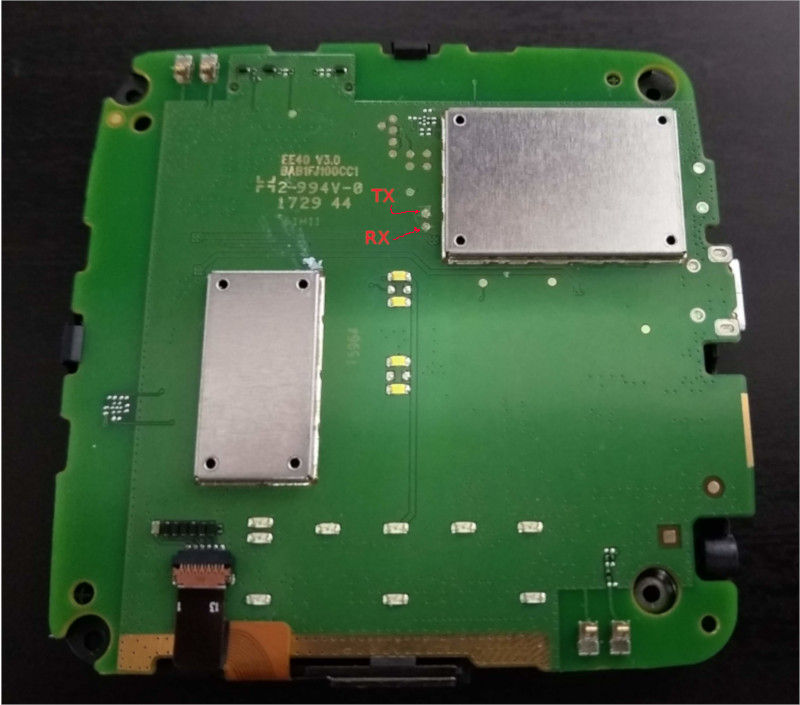
Linux draws a distinction between code running in kernel (kernel space) and applications running in userland (user space). This is enforced at the hardware level - in x86-speak[1], kernel space code runs in ring 0 and user space code runs in ring 3[2]. If you're running in ring 3 and you attempt to touch memory that's only accessible in ring 0, the hardware will raise a fault. No matter how privileged your ring 3 code, you don't get to touch ring 0.

Kind of. In theory. Traditionally this wasn't well enforced. At the most basic level, since root can load kernel modules, you could just build a kernel module that performed any kernel modifications you wanted and then have root load it. Technically user space code wasn't modifying kernel space code, but the difference was pretty semantic rather than useful. But it got worse - root could also map memory ranges belonging to PCI devices[3], and if the device could perform DMA you could just ask the device to overwrite bits of the kernel[4]. Or root could modify special CPU registers ("Model Specific Registers", or MSRs) that alter CPU behaviour via the /dev/msr interface, and compromise the kernel boundary that way.

It turns out that there were a number of ways root was effectively equivalent to ring 0, and the boundary was more about reliability (ie, a process running as root that ends up misbehaving should still only be able to crash itself rather than taking down the kernel with it) than security. After all, if you were root you could just replace the on-disk kernel with a backdoored one and reboot. Going deeper, you could replace the bootloader with one that automatically injected backdoors into a legitimate kernel image. We didn't have any way to prevent this sort of thing, so attempting to harden the root/kernel boundary wasn't especially interesting.

In 2012 Microsoft started requiring vendors ship systems with UEFI Secure Boot, a firmware feature that allowed[5] systems to refuse to boot anything without an appropriate signature. This not only enabled the creation of a system that drew a strong boundary between root and kernel, it arguably required one - what's the point of restricting what the firmware will stick in ring 0 if root can just throw more code in there afterwards? What ended up as the Lockdown Linux Security Module provides the tooling for this, blocking userspace interfaces that can be used to modify the kernel and enforcing that any modules have a trusted signature.

But that comes at something of a cost. Most of the features that Lockdown blocks are fairly niche, so the direct impact of having it enabled is small. Except that it also blocks hibernation[6], and it turns out some people were using that. The obvious question is "what does hibernation have to do with keeping root out of kernel space", and the answer is a little convoluted and is tied into how Linux implements hibernation. Basically, Linux saves system state into the swap partition and modifies the header to indicate that there's a hibernation image there instead of swap. On the next boot, the kernel sees the header indicating that it's a hibernation image, copies the contents of the swap partition back into RAM, and then jumps back into the old kernel code. What ensures that the hibernation image was actually written out by the kernel? Absolutely nothing, which means a motivated attacker with root access could turn off swap, write a hibernation image to the swap partition themselves, and then reboot. The kernel would happily resume into the attacker's image, giving the attacker control over what gets copied back into kernel space.

This is annoying, because normally when we think about attacks on swap we mitigate it by requiring an encrypted swap partition. But in this case, our attacker is root, and so already has access to the plaintext version of the swap partition. Disk encryption doesn't save us here. We need some way to verify that the hibernation image was written out by the kernel, not by root. And thankfully we have some tools for that.

Trusted Platform Modules (TPMs) are cryptographic coprocessors[7] capable of doing things like generating encryption keys and then encrypting things with them. You can ask a TPM to encrypt something with a key that's tied to that specific TPM - the OS has no access to the decryption key, and nor does any other TPM. So we can have the kernel generate an encryption key, encrypt part of the hibernation image with it, and then have the TPM encrypt it. We store the encrypted copy of the key in the hibernation image as well. On resume, the kernel reads the encrypted copy of the key, passes it to the TPM, gets the decrypted copy back and is able to verify the hibernation image.

That's great! Except root can do exactly the same thing. This tells us the hibernation image was generated on this machine, but doesn't tell us that it was done by the kernel. We need some way to be able to differentiate between keys that were generated in kernel and ones that were generated in userland. TPMs have the concept of "localities" (effectively privilege levels) that would be perfect for this. Userland is only able to access locality 0, so the kernel could simply use locality 1 to encrypt the key. Unfortunately, despite trying pretty hard, I've been unable to get localities to work. The motherboard chipset on my test machines simply doesn't forward any accesses to the TPM unless they're for locality 0. I needed another approach.

TPMs have a set of Platform Configuration Registers (PCRs), intended for keeping a record of system state. The OS isn't able to modify the PCRs directly. Instead, the OS provides a cryptographic hash of some material to the TPM. The TPM takes the existing PCR value, appends the new hash to that, and then stores the hash of the combination in the PCR - a process called "extension". This means that the new value of the TPM depends not only on the value of the new data, it depends on the previous value of the PCR - and, in turn, that previous value depended on its previous value, and so on. The only way to get to a specific PCR value is to either (a) break the hash algorithm, or (b) perform exactly the same sequence of writes. On system reset the PCRs go back to a known value, and the entire process starts again.

Some PCRs are different. PCR 23, for example, can be reset back to its original value without resetting the system. We can make use of that. The first thing we need to do is to prevent userland from being able to reset or extend PCR 23 itself. All TPM accesses go through the kernel, so this is a simple matter of parsing the write before it's sent to the TPM and returning an error if it's a sensitive command that would touch PCR 23. We now know that any change in PCR 23's state will be restricted to the kernel.

When we encrypt material with the TPM, we can ask it to record the PCR state. This is given back to us as metadata accompanying the encrypted secret. Along with the metadata is an additional signature created by the TPM, which can be used to prove that the metadata is both legitimate and associated with this specific encrypted data. In our case, that means we know what the value of PCR 23 was when we encrypted the key. That means that if we simply extend PCR 23 with a known value in-kernel before encrypting our key, we can look at the value of PCR 23 in the metadata. If it matches, the key was encrypted by the kernel - userland can create its own key, but it has no way to extend PCR 23 to the appropriate value first. We now know that the key was generated by the kernel.

But what if the attacker is able to gain access to the encrypted key? Let's say a kernel bug is hit that prevents hibernation from resuming, and you boot back up without wiping the hibernation image. Root can then read the key from the partition, ask the TPM to decrypt it, and then use that to create a new hibernation image. We probably want to prevent that as well. Fortunately, when you ask the TPM to encrypt something, you can ask that the TPM only decrypt it if the PCRs have specific values. "Sealing" material to the TPM in this way allows you to block decryption if the system isn't in the desired state. So, we define a policy that says that PCR 23 must have the same value at resume as it did on hibernation. On resume, the kernel resets PCR 23, extends it to the same value it did during hibernation, and then attempts to decrypt the key. Afterwards, it resets PCR 23 back to the initial value. Even if an attacker gains access to the encrypted copy of the key, the TPM will refuse to decrypt it.

And that's what this patchset implements. There's one fairly significant flaw at the moment, which is simply that an attacker can just reboot into an older kernel that doesn't implement the PCR 23 blocking and set up state by hand. Fortunately, this can be avoided using another aspect of the boot process. When you boot something via UEFI Secure Boot, the signing key used to verify the booted code is measured into PCR 7 by the system firmware. In the Linux world, the Shim bootloader then measures any additional keys that are used. By either using a new key to tag kernels that have support for the PCR 23 restrictions, or by embedding some additional metadata in the kernel that indicates the presence of this feature and measuring that, we can have a PCR 7 value that verifies that the PCR 23 restrictions are present. We then seal the key to PCR 7 as well as PCR 23, and if an attacker boots into a kernel that doesn't have this feature the PCR 7 value will be different and the TPM will refuse to decrypt the secret.

While there's a whole bunch of complexity here, the process should be entirely transparent to the user. The current implementation requires a TPM 2, and I'm not certain whether TPM 1.2 provides all the features necessary to do this properly - if so, extending it shouldn't be hard, but also all systems shipped in the past few years should have a TPM 2, so that's going to depend on whether there's sufficient interest to justify the work. And we're also at the early days of review, so there's always the risk that I've missed something obvious and there are terrible holes in this. And, well, given that it took almost 8 years to get the Lockdown patchset into mainline, let's not assume that I'm good at landing security code.

[1] Other architectures use different terminology here, such as "supervisor" and "user" mode, but it's broadly equivalent
[2] In theory rings 1 and 2 would allow you to run drivers with privileges somewhere between full kernel access and userland applications, but in reality we just don't talk about them in polite company
[3] This is how graphics worked in Linux before kernel modesetting turned up. XFree86 would just map your GPU's registers into userland and poke them directly. This was not a huge win for stability
[4] IOMMUs can help you here, by restricting the memory PCI devices can DMA to or from. The kernel then gets to allocate ranges for device buffers and configure the IOMMU such that the device can't DMA to anything else. Except that region of memory may still contain sensitive material such as function pointers, and attacks like this can still cause you problems as a result.
[5] This describes why I'm using "allowed" rather than "required" here
[6] Saving the system state to disk and powering down the platform entirely - significantly slower than suspending the system while keeping state in RAM, but also resilient against the system losing power.
[7] With some handwaving around "coprocessor". TPMs can't be part of the OS or the system firmware, but they don't technically need to be an independent component. Intel have a TPM implementation that runs on the Management Engine, a separate processor built into the motherboard chipset. AMD have one that runs on the Platform Security Processor, a small ARM core built into their CPU. Various ARM implementations run a TPM in Trustzone, a special CPU mode that (in theory) is able to access resources that are entirely blocked off from anything running in the OS, kernel or otherwise.

comment count unavailable comments

19 February 2021

Jonathan Dowland: Wrist Watches

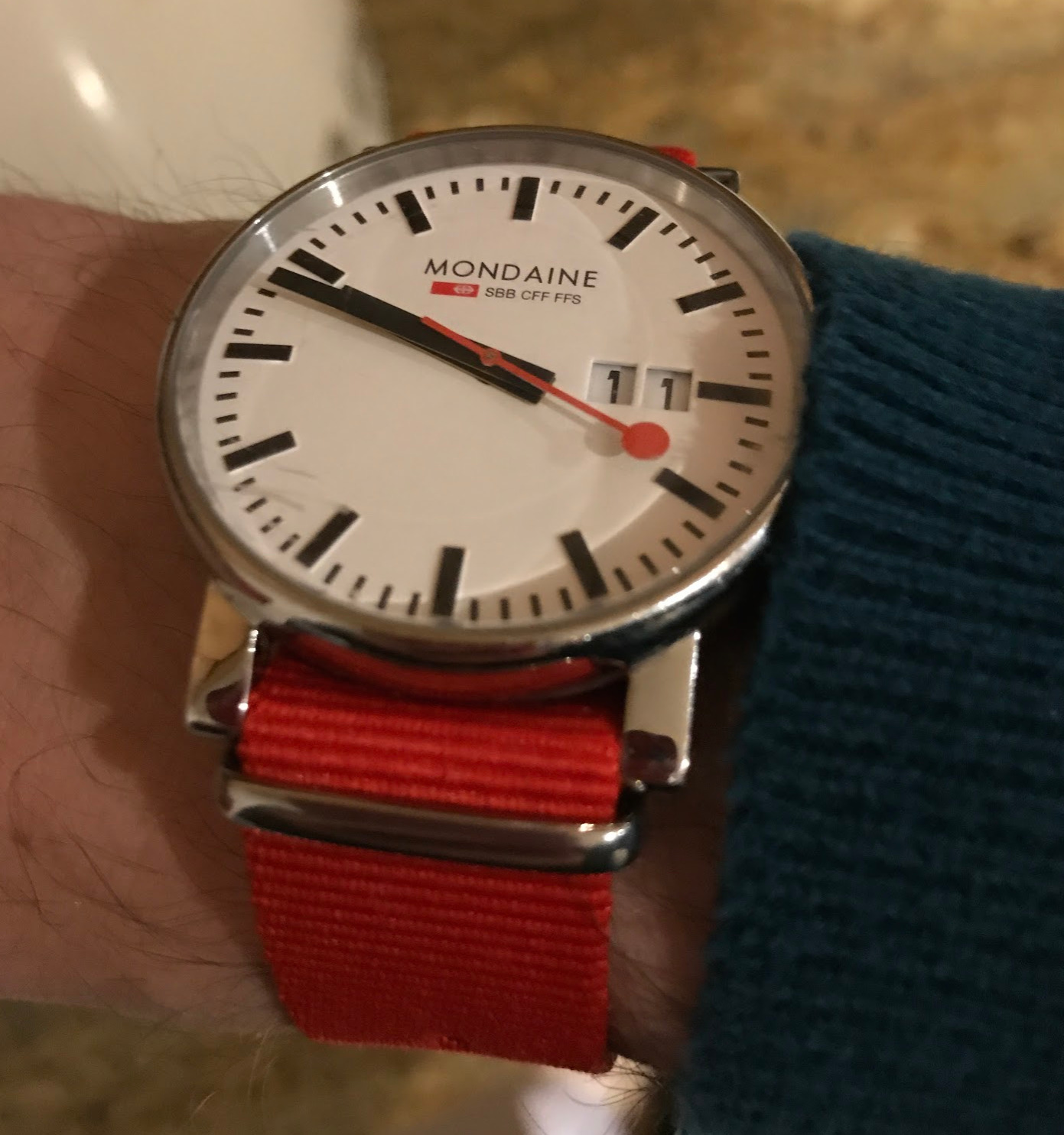
red strap red strap
This is everything I have to say about watches (or time pieces, or chronometers, if you prefer: I don't). I've always worn a watch, and still do; but I've never really understood the appeal of the kind of luxury watches you see advertise here there and everywhere, with their chunky cases, over-complicated faces and enormous price-tags. So the world of watch-appreciation was closed to me, until my 30th birthday (a while ago) when my wife bought me a Mondaine Evo "Big Date" quartz watch. It's not an analogue watch nor an "heirloom timepiece", neither of which are properties that matter to me. The large face has almost nothing extraneous on it, although my model includes day-of-the-month. I like it very much. And so I cracked open the door a little onto the world of watches and watch fashion and had a short spell of interest in some other styles, types, and the like. This drew to a close with buying a selection of cheap, coloured nylon fabric "nato"-style straps. Now whenever I feel the itch for a change, I just change the strap. Smart Watches have never appealed to me. I can see some of their advantages, but the last thing I need is another gadget to regularly charge, or another avenue to check my email. I appreciate that wearing a wrist watch at all is anachronistic (sorry), and I did wonder whether it's a habit I could get out of. A few weeks ago, during our endless Lockdown, my watch battery ran out, so I spent a couple of weeks un-learning my reliance on a wristwatch to orient myself. I've managed to get it replaced now (some watch repair places being considered Essential Services) and I'm comfortably back in my default mode of wearing and relying upon it.

18 February 2021

Julian Andres Klode: APT 2.2 released

APT 2.2.0 marks the freeze of the 2.1 development series and the start of the 2.2 stable series. Let s have a look at what changed compared to 2.2. Many of you who run Debian testing or unstable, or Ubuntu groovy or hirsute will already have seen most of those changes.

New features
  • Various patterns related to dependencies, such as ?depends are now available (2.1.16)
  • The Protected field is now supported. It replaces the previous Important field and is like Essential, but only for installed packages (some minor more differences maybe in terms of ordering the installs).
  • The update command has gained an --error-on=any option that makes it error out on any failure, not just what it considers persistent ons.
  • The rred method can now be used as a standalone program to merge pdiff files
  • APT now implements phased updates. Phasing is used in Ubuntu to slow down and control the roll out of updates in the -updates pocket, but has previously only been available to desktop users using update-manager.

Other behavioral changes
  • The kernel autoremoval helper code has been rewritten from shell in C++ and now runs at run-time, rather than at kernel install time, in order to correctly protect the kernel that is running now, rather than the kernel that was running when we were installing the newest one. It also now protects only up to 3 kernels, instead of up to 4, as was originally intended, and was the case before 1.1 series. This avoids /boot partitions from running out of space, especially on Ubuntu which has boot partitions sized for the original spec.

Performance improvements
  • The cache is now hashed using XXH3 instead of Adler32 (or CRC32c on SSE4.2 platforms)
  • The hash table size has been increased

Bug fixes
  • * wildcards work normally again (since 2.1.0)
  • The cache file now includes all translation files in /var/lib/apt/lists, so multi-user systems with different locales correctly show translated descriptions now.
  • URLs are no longer dequoted on redirects only to be requoted again, fixing some redirects where servers did not expect different quoting.
  • Immediate configuration is now best-effort, and failure is no longer fatal.
  • various changes to solver marking leading to different/better results in some cases (since 2.1.0)
  • The lower level I/O bits of the HTTP method have been rewritten to hopefully improve stability
  • The HTTP method no longer infinitely retries downloads on some connection errors
  • The pkgnames command no longer accidentally includes source packages
  • Various fixes from fuzzing efforts by David

Security fixes
  • Out-of-bound reads in ar and tar implementations (CVE-2020-3810, 2.1.2)
  • Integer overflows in ar and tar (CVE-2020-27350, 2.1.13)
(all of which have been backported to all stable series, back all the way to 1.0.9.8.* series in jessie eLTS)

Incompatibilities
  • N/A - there were no breaking changes in apt 2.2 that we are aware of.

Deprecations
  • apt-key(1) is scheduled to be removed for Q2/2022, and several new warnings have been added. apt-key was made obsolete in version 0.7.25.1, released in January 2010, by /etc/apt/trusted.gpg.d becoming a supported place to drop additional keyring files, and was since then only intended for deleting keys in the legacy trusted.gpg keyring. Please manage files in trusted.gpg.d yourself; or place them in a different location such as /etc/apt/keyrings (or make up your own, there s no standard location) or /usr/share/keyrings, and use signed-by in the sources.list.d files. The legacy trusted.gpg keyring still works, but will also stop working eventually. Please make sure you have all your keys in trusted.gpg.d. Warnings might be added in the upcoming months when a signature could not be verified using just trusted.gpg.d. Future versions of APT might switch away from GPG.
  • As a reminder, regular expressions and wildcards other than * inside package names are deprecated (since 2.0). They are not available anymore in apt(8), and will be removed for safety reasons in apt-get in a later release.

Jonathan McDowell: Hacking and Bricking the EE Opsrey 2 Mini

I ve mentioned in the past my twisted EE network setup from when I moved in to my current house. The 4GEE WiFi Mini (also known as the EE Osprey 2 Mini or the EE40VB, and actually a rebadged Alcatel Y853VB) has been sitting unused since then, so I figured I d see about trying to get a shell on it. TL;DR: Of course it s running Linux, there s a couple of test points internally which bring out the serial console, but after finding those and logging in I discovered it s running ADB on port 5555 quite happily available without authentication both via wifi and the USB port. So if you have physical or local network access, instant root shell. Well done, folks. And then I bricked it before I could do anything more interesting. There s a lack of information about this device out there - most of the links I can find are around removing the SIM lock - so I thought I d document the pieces I found just in case anyone else is trying to figure it out. It s based around a Qualcomm MDM9607 SoC, paired with 64M RAM and 256M NAND flash. Wifi is via an RTL8192ES. Kernel is 3.18.20. Busybox is v1.23.1. It s running dnsmasq but I didn t grab the version. Of course there s no source or offer of source provided. Taking it apart is fairly easy. There s a single screw to remove, just beside the SIM slot. The coloured rim can then be carefully pried away from the back, revealing the battery. There are then 4 screws in the corners which need removed in order to be able to lift out the actual PCB and gain access to the serial console test points. EE40VB PCB serial console test points My mistake was going poking around trying to figure out where the updates are downloaded from - I know I m running a slightly older release than what s current, and the device can do an automatic download + update. Top tip; don t run Jrdrecovery. It ll error on finding /cache/update.zip and wipe the main partition anyway. That ll leave you in a boot loop where the device boots the recovery partition which tries to install /cache/update.zip which of course still doesn t exist. So. Where next? First, I need to get the device into a state where I can actually do something other than watch it boot into recovery, fail to flash and reboot. Best guess at present is to try and get it to enter the Qualcomm EDL (Emergency Download) mode. That might be possible with a custom USB cable that grounds D+ on boot. Alternatively I need to probe some of the other test points on the PCB and see if grounding any of those helps enter EDL mode. I then need a suitable firehose OEM-signed programmer image. And then I need to actually get hold of a proper EE40VB firmware image, either via one of the OTA update files or possibly via an Alcatel ADSU image (though no idea how to get hold of one, other than by posting to a random GSM device forum and hoping for the kindness of strangers). More updates if/when I make progress
Qualcomm bootloader log
Format: Log Type - Time(microsec) - Message - Optional Info
Log Type: B - Since Boot(Power On Reset),  D - Delta,  S - Statistic
S - QC_IMAGE_VERSION_STRING=BOOT.BF.3.1.2-00053
S - IMAGE_VARIANT_STRING=LAATANAZA
S - OEM_IMAGE_VERSION_STRING=linux3
S - Boot Config, 0x000002e1
B -    105194 - SBL1, Start
D -     61885 - QSEE Image Loaded, Delta - (451964 Bytes)
D -     30286 - RPM Image Loaded, Delta - (151152 Bytes)
B -    459330 - Roger:boot_jrd_oem_main
B -    461526 - Welcome to key_check_poweron!!!
B -    466436 - REG0x00, rc=47
B -    469120 - REG0x01, rc=1f
B -    472018 - REG0x02, rc=1c
B -    474885 - REG0x03, rc=47
B -    477782 - REG0x04, rc=b2
B -    480558 - REG0x05, rc=
B -    483272 - REG0x06, rc=9e
B -    486139 - REG0x07, rc=
B -    488854 - REG0x08, rc=a4
B -    491721 - REG0x09, rc=80
B -    494130 - bq24295_probe: vflt/vsys/vprechg=0mV/0mV/0mV, tprechg/tfastchg=0Min/0Min, [0C, 0C]
B -    511546 - come to calculate vol and temperature!!
B -    511637 - ##############battery_core_convert_vntc: NTC_voltage=1785690
B -    517280 - battery_core_convert_vntc: <-44C, 1785690uV>, present=0
B -    529358 - bq24295_set_current_limit: setting=0mA, mode=-1, input/fastchg/prechg/termchg=-1mA/0mA/0mA/0mA
B -    534360 - bq24295_set_charge_current, rc=0,reg_val=0,i=0
B -    539636 - bq24295_enable_charge: setting=0, chg_enable=-1, otg_enable=0
B -    546072 - bq24295_enable_charging: enable_charging=0
B -    552172 - bq24295_set_current_limit: setting=0mA, mode=-1, input/fastchg/prechg/termchg=-1mA/0mA/0mA/0mA
B -    561566 - bq24295_set_charge_current, rc=0,reg_val=0,i=0
B -    567056 - bq24295_enable_charge: setting=0, chg_enable=0, otg_enable=0
B -    579286 - come to calculate vol and temperature!!
B -    579378 - ##############battery_core_convert_vntc: NTC_voltage=1785777
B -    585539 - battery_core_convert_vntc: <-44C, 1785777uV>, present=0
B -    597617 - charge_main: battery is plugout!!
B -    597678 - Welcome to pca955x_probe!!!
B -    601063 - pca955x_probe: PCA955X probed successfully!
D -     27511 - APPSBL Image Loaded, Delta - (179348 Bytes)
B -    633271 - QSEE Execution, Start
D -       213 - QSEE Execution, Delta
B -    638944 - >>>>>>>>>>>>>>>>>>>>>>>>>>>>>>>>>Start writting JRD RECOVERY BOOT
B -    650107 - >>>>>>>>>>>>>>>>>>>>>>>>>>>>>>>>>Start writting  RECOVERY BOOT
B -    653218 - >>>>>>>>>>>>>>>>>>>>>>>>>>>>>>>>>read_buf[0] == 0
B -    659044 - SBL1, End
D -    556137 - SBL1, Delta
S - Throughput, 2000 KB/s  (782884 Bytes,  278155 us)
S - DDR Frequency, 240 MHz
littlekernel aboot log
Android Bootloader - UART_DM Initialized!!!
[0] welcome to lk
[0] SCM call: 0x2000601 failed with :fffffffc
[0] Failed to initialize SCM
[10] platform_init()
[10] target_init()
[10] smem ptable found: ver: 4 len: 17
[10] ERROR: No devinfo partition found
[10] Neither 'config' nor 'frp' partition found
[30] voltage of NTC  is 1789872!
[30] voltage of BAT  is 3179553!
[30] usb present is 1!
[30] Loading (boot) image (4171776): start
[530] Loading (boot) image (4171776): done
[540] DTB Total entry: 25, DTB version: 3
[540] Using DTB entry 0x00000129/00010000/0x00000008/0 for device 0x00000129/00010000/0x00010008/0
[560] JRD_CHG_OFF_FEATURE!
[560] come to jrd_target_pause_for_battery_charge!
[570] power_on_status.hard_reset = 0x0
[570] power_on_status.smpl = 0x0
[570] power_on_status.rtc = 0x0
[580] power_on_status.dc_chg = 0x0
[580] power_on_status.usb_chg = 0x0
[580] power_on_status.pon1 = 0x1
[590] power_on_status.cblpwr = 0x0
[590] power_on_status.kpdpwr = 0x0
[590] power_on_status.bugflag = 0x0
[590] cmdline: noinitrd  rw console=ttyHSL0,115200,n8 androidboot.hardware=qcom ehci-hcd.park=3 msm_rtb.filter=0x37 lpm_levels.sleep_disabled=1  earlycon=msm_hsl_uart,0x78b3000  androidboot.serialno=7e6ba58c androidboot.baseband=msm rootfstype=ubifs rootflags=b
[620] Updating device tree: start
[720] Updating device tree: done
[720] booting linux @ 0x80008000, ramdisk @ 0x80008000 (0), tags/device tree @ 0x81e00000
Linux kernel console boot log
[    0.000000] Booting Linux on physical CPU 0x0
[    0.000000] Linux version 3.18.20 (linux3@linux3) (gcc version 4.9.2 (GCC) ) #1 PREEMPT Thu Aug 10 11:57:07 CST 2017
[    0.000000] CPU: ARMv7 Processor [410fc075] revision 5 (ARMv7), cr=10c53c7d
[    0.000000] CPU: PIPT / VIPT nonaliasing data cache, VIPT aliasing instruction cache
[    0.000000] Machine model: Qualcomm Technologies, Inc. MDM 9607 MTP
[    0.000000] Early serial console at I/O port 0x0 (options '')
[    0.000000] bootconsole [uart0] enabled
[    0.000000] Reserved memory: reserved region for node 'modem_adsp_region@0': base 0x82a00000, size 56 MiB
[    0.000000] Reserved memory: reserved region for node 'external_image_region@0': base 0x87c00000, size 4 MiB
[    0.000000] Removed memory: created DMA memory pool at 0x82a00000, size 56 MiB
[    0.000000] Reserved memory: initialized node modem_adsp_region@0, compatible id removed-dma-pool
[    0.000000] Removed memory: created DMA memory pool at 0x87c00000, size 4 MiB
[    0.000000] Reserved memory: initialized node external_image_region@0, compatible id removed-dma-pool
[    0.000000] cma: Reserved 4 MiB at 0x87800000
[    0.000000] Memory policy: Data cache writeback
[    0.000000] CPU: All CPU(s) started in SVC mode.
[    0.000000] Built 1 zonelists in Zone order, mobility grouping on.  Total pages: 17152
[    0.000000] Kernel command line: noinitrd  rw console=ttyHSL0,115200,n8 androidboot.hardware=qcom ehci-hcd.park=3 msm_rtb.filter=0x37 lpm_levels.sleep_disabled=1  earlycon=msm_hsl_uart,0x78b3000  androidboot.serialno=7e6ba58c androidboot.baseband=msm rootfstype=ubifs rootflags=bulk_read root=ubi0:rootfs ubi.mtd=16
[    0.000000] PID hash table entries: 512 (order: -1, 2048 bytes)
[    0.000000] Dentry cache hash table entries: 16384 (order: 4, 65536 bytes)
[    0.000000] Inode-cache hash table entries: 8192 (order: 3, 32768 bytes)
[    0.000000] Memory: 54792K/69632K available (5830K kernel code, 399K rwdata, 2228K rodata, 276K init, 830K bss, 14840K reserved)
[    0.000000] Virtual kernel memory layout:
[    0.000000]     vector  : 0xffff0000 - 0xffff1000   (   4 kB)
[    0.000000]     fixmap  : 0xffc00000 - 0xfff00000   (3072 kB)
[    0.000000]     vmalloc : 0xc8800000 - 0xff000000   ( 872 MB)
[    0.000000]     lowmem  : 0xc0000000 - 0xc8000000   ( 128 MB)
[    0.000000]     modules : 0xbf000000 - 0xc0000000   (  16 MB)
[    0.000000]       .text : 0xc0008000 - 0xc07e6c38   (8060 kB)
[    0.000000]       .init : 0xc07e7000 - 0xc082c000   ( 276 kB)
[    0.000000]       .data : 0xc082c000 - 0xc088fdc0   ( 400 kB)
[    0.000000]        .bss : 0xc088fe84 - 0xc095f798   ( 831 kB)
[    0.000000] SLUB: HWalign=64, Order=0-3, MinObjects=0, CPUs=1, Nodes=1
[    0.000000] Preemptible hierarchical RCU implementation.
[    0.000000] NR_IRQS:16 nr_irqs:16 16
[    0.000000] GIC CPU mask not found - kernel will fail to boot.
[    0.000000] GIC CPU mask not found - kernel will fail to boot.
[    0.000000] mpm_init_irq_domain(): Cannot find irq controller for qcom,gpio-parent
[    0.000000] MPM 1 irq mapping errored -517
[    0.000000] Architected mmio timer(s) running at 19.20MHz (virt).
[    0.000011] sched_clock: 56 bits at 19MHz, resolution 52ns, wraps every 3579139424256ns
[    0.007975] Switching to timer-based delay loop, resolution 52ns
[    0.013969] Switched to clocksource arch_mem_counter
[    0.019687] Console: colour dummy device 80x30
[    0.023344] Calibrating delay loop (skipped), value calculated using timer frequency.. 38.40 BogoMIPS (lpj=192000)
[    0.033666] pid_max: default: 32768 minimum: 301
[    0.038411] Mount-cache hash table entries: 1024 (order: 0, 4096 bytes)
[    0.044902] Mountpoint-cache hash table entries: 1024 (order: 0, 4096 bytes)
[    0.052445] CPU: Testing write buffer coherency: ok
[    0.057057] Setting up static identity map for 0x8058aac8 - 0x8058ab20
[    0.064242]
[    0.064242] **********************************************************
[    0.071251] **   NOTICE NOTICE NOTICE NOTICE NOTICE NOTICE NOTICE   **
[    0.077817] **                                                      **
[    0.084302] ** trace_printk() being used. Allocating extra memory.  **
[    0.090781] **                                                      **
[    0.097320] ** This means that this is a DEBUG kernel and it is     **
[    0.103802] ** unsafe for produciton use.                           **
[    0.110339] **                                                      **
[    0.116850] ** If you see this message and you are not debugging    **
[    0.123333] ** the kernel, report this immediately to your vendor!  **
[    0.129870] **                                                      **
[    0.136380] **   NOTICE NOTICE NOTICE NOTICE NOTICE NOTICE NOTICE   **
[    0.142865] **********************************************************
[    0.150225] MSM Memory Dump base table set up
[    0.153739] MSM Memory Dump apps data table set up
[    0.168125] VFP support v0.3: implementor 41 architecture 2 part 30 variant 7 rev 5
[    0.176332] pinctrl core: initialized pinctrl subsystem
[    0.180930] regulator-dummy: no parameters
[    0.215338] NET: Registered protocol family 16
[    0.220475] DMA: preallocated 256 KiB pool for atomic coherent allocations
[    0.284034] cpuidle: using governor ladder
[    0.314026] cpuidle: using governor menu
[    0.344024] cpuidle: using governor qcom
[    0.355452] msm_watchdog b017000.qcom,wdt: wdog absent resource not present
[    0.361656] msm_watchdog b017000.qcom,wdt: MSM Watchdog Initialized
[    0.371373] irq: no irq domain found for /soc/pinctrl@1000000 !
[    0.381268] spmi_pmic_arb 200f000.qcom,spmi: PMIC Arb Version-2 0x20010000
[    0.389733] platform 4080000.qcom,mss: assigned reserved memory node modem_adsp_region@0
[    0.397409] mem_acc_corner: 0 <--> 0 mV
[    0.401937] hw-breakpoint: found 5 (+1 reserved) breakpoint and 4 watchpoint registers.
[    0.408966] hw-breakpoint: maximum watchpoint size is 8 bytes.
[    0.416287] __of_mpm_init(): MPM driver mapping exists
[    0.420940] msm_rpm_glink_dt_parse: qcom,rpm-glink compatible not matches
[    0.427235] msm_rpm_dev_probe: APSS-RPM communication over SMD
[    0.432977] smd_open() before smd_init()
[    0.437544] msm_mpm_dev_probe(): Cannot get clk resource for XO: -517
[    0.445730] smd_channel_probe_now: allocation table not initialized
[    0.453100] mdm9607_s1: 1050 <--> 1350 mV at 1225 mV normal idle
[    0.458566] spm_regulator_probe: name=mdm9607_s1, range=LV, voltage=1225000 uV, mode=AUTO, step rate=4800 uV/us
[    0.468817] cpr_efuse_init: apc_corner: efuse_addr = 0x000a4000 (len=0x1000)
[    0.475353] cpr_read_fuse_revision: apc_corner: fuse revision = 2
[    0.481345] cpr_parse_speed_bin_fuse: apc_corner: [row: 37]: 0x79e8bd327e6ba58c, speed_bits = 4
[    0.490124] cpr_pvs_init: apc_corner: pvs voltage: [1050000 1100000 1275000] uV
[    0.497342] cpr_pvs_init: apc_corner: ceiling voltage: [1050000 1225000 1350000] uV
[    0.504979] cpr_pvs_init: apc_corner: floor voltage: [1050000 1050000 1150000] uV
[    0.513125] i2c-msm-v2 78b8000.i2c: probing driver i2c-msm-v2
[    0.518335] i2c-msm-v2 78b8000.i2c: error on clk_get(core_clk):-517
[    0.524478] i2c-msm-v2 78b8000.i2c: error probe() failed with err:-517
[    0.531111] i2c-msm-v2 78b7000.i2c: probing driver i2c-msm-v2
[    0.536788] i2c-msm-v2 78b7000.i2c: error on clk_get(core_clk):-517
[    0.542886] i2c-msm-v2 78b7000.i2c: error probe() failed with err:-517
[    0.549618] i2c-msm-v2 78b9000.i2c: probing driver i2c-msm-v2
[    0.555202] i2c-msm-v2 78b9000.i2c: error on clk_get(core_clk):-517
[    0.561374] i2c-msm-v2 78b9000.i2c: error probe() failed with err:-517
[    0.570613] msm-thermal soc:qcom,msm-thermal: msm_thermal:Failed reading node=/soc/qcom,msm-thermal, key=qcom,core-limit-temp. err=-22. KTM continues
[    0.583049] msm-thermal soc:qcom,msm-thermal: probe_therm_reset:Failed reading node=/soc/qcom,msm-thermal, key=qcom,therm-reset-temp err=-22. KTM continues
[    0.596926] msm_thermal:msm_thermal_dev_probe Failed reading node=/soc/qcom,msm-thermal, key=qcom,online-hotplug-core. err:-517
[    0.609370] sps:sps is ready.
[    0.613137] msm_rpm_glink_dt_parse: qcom,rpm-glink compatible not matches
[    0.619020] msm_rpm_dev_probe: APSS-RPM communication over SMD
[    0.625773] mdm9607_s2: 750 <--> 1275 mV at 750 mV normal idle
[    0.631584] mdm9607_s3_level: 0 <--> 0 mV at 0 mV normal idle
[    0.637085] mdm9607_s3_level_ao: 0 <--> 0 mV at 0 mV normal idle
[    0.643092] mdm9607_s3_floor_level: 0 <--> 0 mV at 0 mV normal idle
[    0.649512] mdm9607_s3_level_so: 0 <--> 0 mV at 0 mV normal idle
[    0.655750] mdm9607_s4: 1800 <--> 1950 mV at 1800 mV normal idle
[    0.661791] mdm9607_l1: 1250 mV normal idle
[    0.666090] mdm9607_l2: 1800 mV normal idle
[    0.670276] mdm9607_l3: 1800 mV normal idle
[    0.674541] mdm9607_l4: 3075 mV normal idle
[    0.678743] mdm9607_l5: 1700 <--> 3050 mV at 1700 mV normal idle
[    0.684904] mdm9607_l6: 1700 <--> 3050 mV at 1700 mV normal idle
[    0.690892] mdm9607_l7: 1700 <--> 1900 mV at 1700 mV normal idle
[    0.697036] mdm9607_l8: 1800 mV normal idle
[    0.701238] mdm9607_l9: 1200 <--> 1250 mV at 1200 mV normal idle
[    0.707367] mdm9607_l10: 1050 mV normal idle
[    0.711662] mdm9607_l11: 1800 mV normal idle
[    0.716089] mdm9607_l12_level: 0 <--> 0 mV at 0 mV normal idle
[    0.721717] mdm9607_l12_level_ao: 0 <--> 0 mV at 0 mV normal idle
[    0.727946] mdm9607_l12_level_so: 0 <--> 0 mV at 0 mV normal idle
[    0.734099] mdm9607_l12_floor_lebel: 0 <--> 0 mV at 0 mV normal idle
[    0.740706] mdm9607_l13: 1800 <--> 2850 mV at 2850 mV normal idle
[    0.746883] mdm9607_l14: 2650 <--> 3000 mV at 2650 mV normal idle
[    0.752515] msm_mpm_dev_probe(): Cannot get clk resource for XO: -517
[    0.759036] cpr_efuse_init: apc_corner: efuse_addr = 0x000a4000 (len=0x1000)
[    0.765807] cpr_read_fuse_revision: apc_corner: fuse revision = 2
[    0.771809] cpr_parse_speed_bin_fuse: apc_corner: [row: 37]: 0x79e8bd327e6ba58c, speed_bits = 4
[    0.780586] cpr_pvs_init: apc_corner: pvs voltage: [1050000 1100000 1275000] uV
[    0.787808] cpr_pvs_init: apc_corner: ceiling voltage: [1050000 1225000 1350000] uV
[    0.795443] cpr_pvs_init: apc_corner: floor voltage: [1050000 1050000 1150000] uV
[    0.803094] cpr_init_cpr_parameters: apc_corner: up threshold = 2, down threshold = 3
[    0.810752] cpr_init_cpr_parameters: apc_corner: CPR is enabled by default.
[    0.817687] cpr_init_cpr_efuse: apc_corner: [row:65] = 0x15000277277383
[    0.824272] cpr_init_cpr_efuse: apc_corner: CPR disable fuse = 0
[    0.830225] cpr_init_cpr_efuse: apc_corner: Corner[1]: ro_sel = 0, target quot = 631
[    0.837976] cpr_init_cpr_efuse: apc_corner: Corner[2]: ro_sel = 0, target quot = 631
[    0.845703] cpr_init_cpr_efuse: apc_corner: Corner[3]: ro_sel = 0, target quot = 899
[    0.853592] cpr_config: apc_corner: Timer count: 0x17700 (for 5000 us)
[    0.860426] apc_corner: 0 <--> 0 mV
[    0.864044] i2c-msm-v2 78b8000.i2c: probing driver i2c-msm-v2
[    0.869261] i2c-msm-v2 78b8000.i2c: error on clk_get(core_clk):-517
[    0.875492] i2c-msm-v2 78b8000.i2c: error probe() failed with err:-517
[    0.882225] i2c-msm-v2 78b7000.i2c: probing driver i2c-msm-v2
[    0.887775] i2c-msm-v2 78b7000.i2c: error on clk_get(core_clk):-517
[    0.893941] i2c-msm-v2 78b7000.i2c: error probe() failed with err:-517
[    0.900719] i2c-msm-v2 78b9000.i2c: probing driver i2c-msm-v2
[    0.906256] i2c-msm-v2 78b9000.i2c: error on clk_get(core_clk):-517
[    0.912430] i2c-msm-v2 78b9000.i2c: error probe() failed with err:-517
[    0.919472] msm-thermal soc:qcom,msm-thermal: msm_thermal:Failed reading node=/soc/qcom,msm-thermal, key=qcom,core-limit-temp. err=-22. KTM continues
[    0.932372] msm-thermal soc:qcom,msm-thermal: probe_therm_reset:Failed reading node=/soc/qcom,msm-thermal,
key=qcom,therm-reset-temp err=-22. KTM continues
[    0.946361] msm_thermal:get_kernel_cluster_info CPU0 topology not initialized.
[    0.953824] cpu cpu0: dev_pm_opp_get_opp_count: device OPP not found (-19)
[    0.960300] msm_thermal:get_cpu_freq_plan_len Error reading CPU0 freq table len. error:-19
[    0.968533] msm_thermal:vdd_restriction_reg_init Defer vdd rstr freq init.
[    0.975846] cpu cpu0: dev_pm_opp_get_opp_count: device OPP not found (-19)
[    0.982219] msm_thermal:get_cpu_freq_plan_len Error reading CPU0 freq table len. error:-19
[    0.991378] cpu cpu0: dev_pm_opp_get_opp_count: device OPP not found (-19)
[    0.997544] msm_thermal:get_cpu_freq_plan_len Error reading CPU0 freq table len. error:-19
[    1.013642] qcom,gcc-mdm9607 1800000.qcom,gcc: Registered GCC clocks
[    1.019451] clock-a7 b010008.qcom,clock-a7: Speed bin: 4 PVS Version: 0
[    1.025693] a7ssmux: set OPP pair(400000000 Hz: 1 uV) on cpu0
[    1.031314] a7ssmux: set OPP pair(1305600000 Hz: 7 uV) on cpu0
[    1.038805] i2c-msm-v2 78b8000.i2c: probing driver i2c-msm-v2
[    1.043587] AXI: msm_bus_scale_register_client(): msm_bus_scale_register_client: Bus driver not ready.
[    1.052935] i2c-msm-v2 78b8000.i2c: msm_bus_scale_register_client(mstr-id:86):0 (not a problem)
[    1.062006] irq: no irq domain found for /soc/wcd9xxx-irq !
[    1.069884] i2c-msm-v2 78b7000.i2c: probing driver i2c-msm-v2
[    1.074814] AXI: msm_bus_scale_register_client(): msm_bus_scale_register_client: Bus driver not ready.
[    1.083716] i2c-msm-v2 78b7000.i2c: msm_bus_scale_register_client(mstr-id:86):0 (not a problem)
[    1.093850] i2c-msm-v2 78b9000.i2c: probing driver i2c-msm-v2
[    1.098889] AXI: msm_bus_scale_register_client(): msm_bus_scale_register_client: Bus driver not ready.
[    1.107779] i2c-msm-v2 78b9000.i2c: msm_bus_scale_register_client(mstr-id:86):0 (not a problem)
[    1.167871] KPI: Bootloader start count = 24097
[    1.171364] KPI: Bootloader end count = 48481
[    1.175855] KPI: Bootloader display count = 3884474147
[    1.180825] KPI: Bootloader load kernel count = 16420
[    1.185905] KPI: Kernel MPM timestamp = 105728
[    1.190286] KPI: Kernel MPM Clock frequency = 32768
[    1.195209] socinfo_print: v0.10, id=297, ver=1.0, raw_id=72, raw_ver=0, hw_plat=8, hw_plat_ver=65536
[    1.195209]  accessory_chip=0, hw_plat_subtype=0, pmic_model=65539, pmic_die_revision=131074 foundry_id=0 serial_number=2120983948
[    1.216731] sdcard_ext_vreg: no parameters
[    1.220555] rome_vreg: no parameters
[    1.224133] emac_lan_vreg: no parameters
[    1.228177] usbcore: registered new interface driver usbfs
[    1.233156] usbcore: registered new interface driver hub
[    1.238578] usbcore: registered new device driver usb
[    1.244507] cpufreq: driver msm up and running
[    1.248425] ION heap system created
[    1.251895] msm_bus_fabric_init_driver
[    1.262563] qcom,qpnp-power-on qpnp-power-on-c7303800: PMIC@SID0 Power-on reason: Triggered from PON1 (secondary PMIC) and 'cold' boot
[    1.273747] qcom,qpnp-power-on qpnp-power-on-c7303800: PMIC@SID0: Power-off reason: Triggered from UVLO (Under Voltage Lock Out)
[    1.285430] input: qpnp_pon as /devices/virtual/input/input0
[    1.291246] PMIC@SID0: PM8019 v2.2 options: 3, 2, 2, 2
[    1.296706] Advanced Linux Sound Architecture Driver Initialized.
[    1.302493] Add group failed
[    1.305291] cfg80211: Calling CRDA to update world regulatory domain
[    1.311216] cfg80211: World regulatory domain updated:
[    1.317109] Switched to clocksource arch_mem_counter
[    1.334091] cfg80211:  DFS Master region: unset
[    1.337418] cfg80211:   (start_freq - end_freq @ bandwidth), (max_antenna_gain, max_eirp), (dfs_cac_time)
[    1.354087] cfg80211:   (2402000 KHz - 2472000 KHz @ 40000 KHz), (N/A, 2000 mBm), (N/A)
[    1.361055] cfg80211:   (2457000 KHz - 2482000 KHz @ 40000 KHz), (N/A, 2000 mBm), (N/A)
[    1.370545] NET: Registered protocol family 2
[    1.374082] cfg80211:   (2474000 KHz - 2494000 KHz @ 20000 KHz), (N/A, 2000 mBm), (N/A)
[    1.381851] cfg80211:   (5170000 KHz - 5250000 KHz @ 80000 KHz), (N/A, 2000 mBm), (N/A)
[    1.389876] cfg80211:   (5250000 KHz - 5330000 KHz @ 80000 KHz), (N/A, 2000 mBm), (N/A)
[    1.397857] cfg80211:   (5490000 KHz - 5710000 KHz @ 80000 KHz), (N/A, 2000 mBm), (N/A)
[    1.405841] cfg80211:   (5735000 KHz - 5835000 KHz @ 80000 KHz), (N/A, 2000 mBm), (N/A)
[    1.413795] cfg80211:   (57240000 KHz - 63720000 KHz @ 2160000 KHz), (N/A, 0 mBm), (N/A)
[    1.422355] TCP established hash table entries: 1024 (order: 0, 4096 bytes)
[    1.428921] TCP bind hash table entries: 1024 (order: 0, 4096 bytes)
[    1.435192] TCP: Hash tables configured (established 1024 bind 1024)
[    1.441528] TCP: reno registered
[    1.444738] UDP hash table entries: 256 (order: 0, 4096 bytes)
[    1.450521] UDP-Lite hash table entries: 256 (order: 0, 4096 bytes)
[    1.456950] NET: Registered protocol family 1
[    1.462779] futex hash table entries: 256 (order: -1, 3072 bytes)
[    1.474555] msgmni has been set to 115
[    1.478551] Block layer SCSI generic (bsg) driver version 0.4 loaded (major 251)
[    1.485041] io scheduler noop registered
[    1.488818] io scheduler deadline registered
[    1.493200] io scheduler cfq registered (default)
[    1.502142] msm_rpm_log_probe: OK
[    1.506717] msm_serial_hs module loaded
[    1.509803] msm_serial_hsl_probe: detected port #0 (ttyHSL0)
[    1.515324] AXI: get_pdata(): Error: Client name not found
[    1.520626] AXI: msm_bus_cl_get_pdata(): client has to provide missing entry for successful registration
[    1.530171] msm_serial_hsl_probe: Bus scaling is disabled                      [    1.074814] AXI: msm_bus_scale_register_client(): msm_bus_scale_register_client: Bus driver not ready.
[    1.083716] i2c-msm-v2 78b7000.i2c: msm_bus_scale_register_client(mstr-id:86):0 (not a problem)
[    1.093850] i2c-msm-v2 78b9000.i2c: probing driver i2c-msm-v2
[    1.098889] AXI: msm_bus_scale_register_client(): msm_bus_scale_register_client: Bus driver not ready.
[    1.107779] i2c-msm-v2 78b9000.i2c: msm_bus_scale_register_client(mstr-id:86):0 (not a problem)
[    1.167871] KPI: Bootloader start count = 24097
[    1.171364] KPI: Bootloader end count = 48481
[    1.175855] KPI: Bootloader display count = 3884474147
[    1.180825] KPI: Bootloader load kernel count = 16420
[    1.185905] KPI: Kernel MPM timestamp = 105728
[    1.190286] KPI: Kernel MPM Clock frequency = 32768
[    1.195209] socinfo_print: v0.10, id=297, ver=1.0, raw_id=72, raw_ver=0, hw_plat=8, hw_plat_ver=65536
[    1.195209]  accessory_chip=0, hw_plat_subtype=0, pmic_model=65539, pmic_die_revision=131074 foundry_id=0 serial_number=2120983948
[    1.216731] sdcard_ext_vreg: no parameters
[    1.220555] rome_vreg: no parameters
[    1.224133] emac_lan_vreg: no parameters
[    1.228177] usbcore: registered new interface driver usbfs
[    1.233156] usbcore: registered new interface driver hub
[    1.238578] usbcore: registered new device driver usb
[    1.244507] cpufreq: driver msm up and running
[    1.248425] ION heap system created
[    1.251895] msm_bus_fabric_init_driver
[    1.262563] qcom,qpnp-power-on qpnp-power-on-c7303800: PMIC@SID0 Power-on reason: Triggered from PON1 (secondary PMIC) and 'cold' boot
[    1.273747] qcom,qpnp-power-on qpnp-power-on-c7303800: PMIC@SID0: Power-off reason: Triggered from UVLO (Under Voltage Lock Out)
[    1.285430] input: qpnp_pon as /devices/virtual/input/input0
[    1.291246] PMIC@SID0: PM8019 v2.2 options: 3, 2, 2, 2
[    1.296706] Advanced Linux Sound Architecture Driver Initialized.
[    1.302493] Add group failed
[    1.305291] cfg80211: Calling CRDA to update world regulatory domain
[    1.311216] cfg80211: World regulatory domain updated:
[    1.317109] Switched to clocksource arch_mem_counter
[    1.334091] cfg80211:  DFS Master region: unset
[    1.337418] cfg80211:   (start_freq - end_freq @ bandwidth), (max_antenna_gain, max_eirp), (dfs_cac_time)
[    1.354087] cfg80211:   (2402000 KHz - 2472000 KHz @ 40000 KHz), (N/A, 2000 mBm), (N/A)
[    1.361055] cfg80211:   (2457000 KHz - 2482000 KHz @ 40000 KHz), (N/A, 2000 mBm), (N/A)
[    1.370545] NET: Registered protocol family 2
[    1.374082] cfg80211:   (2474000 KHz - 2494000 KHz @ 20000 KHz), (N/A, 2000 mBm), (N/A)
[    1.381851] cfg80211:   (5170000 KHz - 5250000 KHz @ 80000 KHz), (N/A, 2000 mBm), (N/A)
[    1.389876] cfg80211:   (5250000 KHz - 5330000 KHz @ 80000 KHz), (N/A, 2000 mBm), (N/A)
[    1.397857] cfg80211:   (5490000 KHz - 5710000 KHz @ 80000 KHz), (N/A, 2000 mBm), (N/A)
[    1.405841] cfg80211:   (5735000 KHz - 5835000 KHz @ 80000 KHz), (N/A, 2000 mBm), (N/A)
[    1.413795] cfg80211:   (57240000 KHz - 63720000 KHz @ 2160000 KHz), (N/A, 0 mBm), (N/A)
[    1.422355] TCP established hash table entries: 1024 (order: 0, 4096 bytes)
[    1.428921] TCP bind hash table entries: 1024 (order: 0, 4096 bytes)
[    1.435192] TCP: Hash tables configured (established 1024 bind 1024)
[    1.441528] TCP: reno registered
[    1.444738] UDP hash table entries: 256 (order: 0, 4096 bytes)
[    1.450521] UDP-Lite hash table entries: 256 (order: 0, 4096 bytes)
[    1.456950] NET: Registered protocol family 1
[    1.462779] futex hash table entries: 256 (order: -1, 3072 bytes)
[    1.474555] msgmni has been set to 115
[    1.478551] Block layer SCSI generic (bsg) driver version 0.4 loaded (major 251)
[    1.485041] io scheduler noop registered
[    1.488818] io scheduler deadline registered
[    1.493200] io scheduler cfq registered (default)
[    1.502142] msm_rpm_log_probe: OK
[    1.506717] msm_serial_hs module loaded
[    1.509803] msm_serial_hsl_probe: detected port #0 (ttyHSL0)
[    1.515324] AXI: get_pdata(): Error: Client name not found
[    1.520626] AXI: msm_bus_cl_get_pdata(): client has to provide missing entry for successful registration
[    1.530171] msm_serial_hsl_probe: Bus scaling is disabled
[    1.535696] 78b3000.serial: ttyHSL0 at MMIO 0x78b3000 (irq = 153, base_baud = 460800 [    1.544155] msm_hsl_console_setup: console setup on port #0
[    1.548727] console [ttyHSL0] enabled
[    1.548727] console [ttyHSL0] enabled
[    1.556014] bootconsole [uart0] disabled
[    1.556014] bootconsole [uart0] disabled
[    1.564212] msm_serial_hsl_init: driver initialized
[    1.578450] brd: module loaded
[    1.582920] loop: module loaded
[    1.589183] sps: BAM device 0x07984000 is not registered yet.
[    1.594234] sps:BAM 0x07984000 is registered.
[    1.598072] msm_nand_bam_init: msm_nand_bam_init: BAM device registered: bam_handle 0xc69f6400
[    1.607103] sps:BAM 0x07984000 (va:0xc89a0000) enabled: ver:0x18, number of pipes:7
[    1.616588] msm_nand_parse_smem_ptable: Parsing partition table info from SMEM
[    1.622805] msm_nand_parse_smem_ptable: SMEM partition table found: ver: 4 len: 17
[    1.630391] msm_nand_version_check: nand_major:1, nand_minor:5, qpic_major:1, qpic_minor:5
[    1.638642] msm_nand_scan: NAND Id: 0x1590aa98 Buswidth: 8Bits Density: 256 MByte
[    1.646069] msm_nand_scan: pagesize: 2048 Erasesize: 131072 oobsize: 128 (in Bytes)
[    1.653676] msm_nand_scan: BCH ECC: 8 Bit
[    1.657710] msm_nand_scan: CFG0: 0x290408c0,           CFG1: 0x0804715c
[    1.657710]             RAWCFG0: 0x2b8400c0,        RAWCFG1: 0x0005055d
[    1.657710]           ECCBUFCFG: 0x00000203,      ECCBCHCFG: 0x42040d10
[    1.657710]           RAWECCCFG: 0x42000d11, BAD BLOCK BYTE: 0x000001c5
[    1.684101] Creating 17 MTD partitions on "7980000.nand":
[    1.689447] 0x000000000000-0x000000140000 : "sbl"
[    1.694867] 0x000000140000-0x000000280000 : "mibib"
[    1.699560] 0x000000280000-0x000000e80000 : "efs2"
[    1.704408] 0x000000e80000-0x000000f40000 : "tz"
[    1.708934] 0x000000f40000-0x000000fa0000 : "rpm"
[    1.713625] 0x000000fa0000-0x000001000000 : "aboot"
[    1.718582] 0x000001000000-0x0000017e0000 : "boot"
[    1.723281] 0x0000017e0000-0x000002820000 : "scrub"
[    1.728174] 0x000002820000-0x000005020000 : "modem"
[    1.732968] 0x000005020000-0x000005420000 : "rfbackup"
[    1.738156] 0x000005420000-0x000005820000 : "oem"
[    1.742770] 0x000005820000-0x000005f00000 : "recovery"
[    1.747972] 0x000005f00000-0x000009100000 : "cache"
[    1.752787] 0x000009100000-0x000009a40000 : "recoveryfs"
[    1.758389] 0x000009a40000-0x00000aa40000 : "cdrom"
[    1.762967] 0x00000aa40000-0x00000ba40000 : "jrdresource"
[    1.768407] 0x00000ba40000-0x000010000000 : "system"
[    1.773239] msm_nand_probe: NANDc phys addr 0x7980000, BAM phys addr 0x7984000, BAM IRQ 164
[    1.781074] msm_nand_probe: Allocated DMA buffer at virt_addr 0xc7840000, phys_addr 0x87840000
[    1.791872] PPP generic driver version 2.4.2
[    1.801126] cnss_sdio 87a00000.qcom,cnss-sdio: CNSS SDIO Driver registered
[    1.807554] msm_otg 78d9000.usb: msm_otg probe
[    1.813333] msm_otg 78d9000.usb: OTG regs = c88f8000
[    1.820702] gbridge_init: gbridge_init successs.
[    1.826344] msm_otg 78d9000.usb: phy_reset: success
[    1.830294] qcom,qpnp-rtc qpnp-rtc-c7307000: rtc core: registered qpnp_rtc as rtc0
[    1.838474] i2c /dev entries driver
[    1.842459] unable to find DT imem DLOAD mode node
[    1.846588] unable to find DT imem EDLOAD mode node
[    1.851332] unable to find DT imem dload-type node
[    1.856921] bq24295-charger 4-006b: bq24295 probe enter
[    1.861161] qcom,iterm-ma = 128
[    1.864476] bq24295_otg_vreg: no parameters
[    1.868502] charger_core_register: Charger Core Version 5.0.0(Built at 20151202-21:36)!
[    1.877007] i2c-msm-v2 78b8000.i2c: msm_bus_scale_register_client(mstr-id:86):0x3 (ok)
[    1.885559] bq24295-charger 4-006b: bq24295_set_bhot_mode 3
[    1.890150] bq24295-charger 4-006b: power_good is 1,vbus_stat is 2
[    1.896588] bq24295-charger 4-006b: bq24295_set_thermal_threshold 100
[    1.902952] bq24295-charger 4-006b: bq24295_set_sys_min 3700
[    1.908639] bq24295-charger 4-006b: bq24295_set_max_target_voltage 4150
[    1.915223] bq24295-charger 4-006b: bq24295_set_recharge_threshold 300
[    1.922119] bq24295-charger 4-006b: bq24295_set_terminal_current_limit iterm_disabled=0, iterm_ma=128
[    1.930917] bq24295-charger 4-006b: bq24295_set_precharge_current_limit bdi->prech_cur=128
[    1.940038] bq24295-charger 4-006b: bq24295_set_safty_timer 0
[    1.945088] bq24295-charger 4-006b: bq24295_set_input_voltage_limit 4520
[    1.972949] sdhci: Secure Digital Host Controller Interface driver
[    1.978151] sdhci: Copyright(c) Pierre Ossman
[    1.982441] sdhci-pltfm: SDHCI platform and OF driver helper
[    1.989092] sdhci_msm 7824900.sdhci: sdhci_msm_probe: ICE device is not enabled
[    1.995473] sdhci_msm 7824900.sdhci: No vreg data found for vdd
[    2.001530] sdhci_msm 7824900.sdhci: sdhci_msm_pm_qos_parse_irq: error -22 reading irq cpu
[    2.009809] sdhci_msm 7824900.sdhci: sdhci_msm_pm_qos_parse: PM QoS voting for IRQ will be disabled
[    2.018600] sdhci_msm 7824900.sdhci: sdhci_msm_pm_qos_parse: PM QoS voting for cpu group will be disabled
[    2.030541] sdhci_msm 7824900.sdhci: sdhci_msm_probe: sdiowakeup_irq = 353
[    2.036867] sdhci_msm 7824900.sdhci: No vmmc regulator found
[    2.042027] sdhci_msm 7824900.sdhci: No vqmmc regulator found
[    2.048266] mmc0: SDHCI controller on 7824900.sdhci [7824900.sdhci] using 32-bit ADMA in legacy mode
[    2.080401] Welcome to pca955x_probe!!
[    2.084362] leds-pca955x 3-0020: leds-pca955x: Using pca9555 16-bit LED driver at slave address 0x20
[    2.095400] sdhci_msm 7824900.sdhci: card claims to support voltages below defined range
[    2.103125] i2c-msm-v2 78b7000.i2c: msm_bus_scale_register_client(mstr-id:86):0x5 (ok)
[    2.114183] msm_otg 78d9000.usb: Avail curr from USB = 1500
[    2.120251] come to USB_SDP_CHARGER!
[    2.123215] Welcome to sn3199_probe!
[    2.126718] leds-sn3199 5-0064: leds-sn3199: Using sn3199 9-bit LED driver at slave address 0x64
[    2.136511] sn3199->led_en_gpio=21
[    2.139143] i2c-msm-v2 78b9000.i2c: msm_bus_scale_register_client(mstr-id:86):0x6 (ok)
[    2.150207] usbcore: registered new interface driver usbhid
[    2.154864] usbhid: USB HID core driver
[    2.159825] sps:BAM 0x078c4000 is registered.
[    2.163573] bimc-bwmon 408000.qcom,cpu-bwmon: BW HWmon governor registered.
[    2.171080] devfreq soc:qcom,cpubw: Couldn't update frequency transition information.
[    2.178513] coresight-fuse a601c.fuse: QPDI fuse not specified
[    2.184242] coresight-fuse a601c.fuse: Fuse initialized
[    2.192407] coresight-csr 6001000.csr: CSR initialized
[    2.197263] coresight-tmc 6026000.tmc: Byte Counter feature enabled
[    2.203204] sps:BAM 0x06084000 is registered.
[    2.207301] coresight-tmc 6026000.tmc: TMC initialized
[    2.212681] coresight-tmc 6025000.tmc: TMC initialized
[    2.220071] nidnt boot config: 0
[    2.224563] mmc0: new ultra high speed SDR50 SDIO card at address 0001
[    2.231120] coresight-tpiu 6020000.tpiu: NIDnT on SDCARD only mode
[    2.236440] coresight-tpiu 6020000.tpiu: TPIU initialized
[    2.242808] coresight-replicator 6024000.replicator: REPLICATOR initialized
[    2.249372] coresight-stm 6002000.stm: STM initialized
[    2.255034] coresight-hwevent 606c000.hwevent: Hardware Event driver initialized
[    2.262312] Netfilter messages via NETLINK v0.30.
[    2.266306] nf_conntrack version 0.5.0 (920 buckets, 3680 max)
[    2.272312] ctnetlink v0.93: registering with nfnetlink.
[    2.277565] ip_set: protocol 6
[    2.280568] ip_tables: (C) 2000-2006 Netfilter Core Team
[    2.285723] arp_tables: (C) 2002 David S. Miller
[    2.290146] TCP: cubic registered
[    2.293915] NET: Registered protocol family 10
[    2.298740] ip6_tables: (C) 2000-2006 Netfilter Core Team
[    2.303407] sit: IPv6 over IPv4 tunneling driver
[    2.308481] NET: Registered protocol family 17
[    2.312340] bridge: automatic filtering via arp/ip/ip6tables has been deprecated. Update your scripts to load br_netfilter if you need this.
[    2.325094] Bridge firewalling registered
[    2.328930] Ebtables v2.0 registered
[    2.333260] NET: Registered protocol family 27
[    2.341362] battery_core_register: Battery Core Version 5.0.0(Built at 20151202-21:36)!
[    2.348466] pmu_battery_probe: vbat_channel=21, tbat_channel=17
[    2.420236] ubi0: attaching mtd16
[    2.723941] ubi0: scanning is finished
[    2.732997] ubi0: attached mtd16 (name "system", size 69 MiB)
[    2.737783] ubi0: PEB size: 131072 bytes (128 KiB), LEB size: 126976 bytes
[    2.744601] ubi0: min./max. I/O unit sizes: 2048/2048, sub-page size 2048
[    2.751333] ubi0: VID header offset: 2048 (aligned 2048), data offset: 4096
[    2.758540] ubi0: good PEBs: 556, bad PEBs: 2, corrupted PEBs: 0
[    2.764305] ubi0: user volume: 3, internal volumes: 1, max. volumes count: 128
[    2.771476] ubi0: max/mean erase counter: 192/64, WL threshold: 4096, image sequence number: 35657280
[    2.780708] ubi0: available PEBs: 0, total reserved PEBs: 556, PEBs reserved for bad PEB handling: 38
[    2.789921] ubi0: background thread "ubi_bgt0d" started, PID 96
[    2.796395] android_bind cdev: 0xC6583E80, name: ci13xxx_msm
[    2.801508] file system registered
[    2.804974] mbim_init: initialize 1 instances
[    2.809228] mbim_init: Initialized 1 ports
[    2.815074] rndis_qc_init: initialize rndis QC instance
[    2.819713] jrd device_desc.bcdDevice: [0x0242]
[    2.823779] android_bind scheduled usb start work: name: ci13xxx_msm
[    2.830230] android_usb gadget: android_usb ready
[    2.834845] msm_hsusb msm_hsusb: [ci13xxx_start] hw_ep_max = 32
[    2.840741] msm_hsusb msm_hsusb: CI13XXX_CONTROLLER_RESET_EVENT received
[    2.847433] msm_hsusb msm_hsusb: CI13XXX_CONTROLLER_UDC_STARTED_EVENT received
[    2.855851] input: gpio-keys as /devices/soc:gpio_keys/input/input1
[    2.861452] qcom,qpnp-rtc qpnp-rtc-c7307000: setting system clock to 1970-01-01 06:36:41 UTC (23801)
[    2.870315] open file error /usb_conf/usb_config.ini
[    2.876412] jrd_usb_start_work open file erro /usb_conf/usb_config.ini, retry_count:0
[    2.884324] parse_legacy_cluster_params(): Ignoring cluster params
[    2.889468] ------------[ cut here ]------------
[    2.894186] WARNING: CPU: 0 PID: 1 at /home/linux3/jrd/yanping.an/ee40/0810/MDM9607.LE.1.0-00130/apps_proc/oe-core/build/tmp-glibc/work-shared/mdm9607/kernel-source/drivers/cpuidle/lpm-levels-of.c:739 parse_cluster+0xb50/0xcb4()
[    2.914366] Modules linked in:
[    2.917339] CPU: 0 PID: 1 Comm: swapper Not tainted 3.18.20 #1
[    2.923171] [<c00132ac>] (unwind_backtrace) from [<c0011460>] (show_stack+0x10/0x14)
[    2.931092] [<c0011460>] (show_stack) from [<c001c6ac>] (warn_slowpath_common+0x68/0x88)
[    2.939175] [<c001c6ac>] (warn_slowpath_common) from [<c001c75c>] (warn_slowpath_null+0x18/0x20)
[    2.947895] [<c001c75c>] (warn_slowpath_null) from [<c034e180>] (parse_cluster+0xb50/0xcb4)
[    2.956189] [<c034e180>] (parse_cluster) from [<c034b6b4>] (lpm_probe+0xc/0x1d4)
[    2.963527] [<c034b6b4>] (lpm_probe) from [<c024857c>] (platform_drv_probe+0x30/0x7c)
[    2.971380] [<c024857c>] (platform_drv_probe) from [<c0246d54>] (driver_probe_device+0xb8/0x1e8)
[    2.980118] [<c0246d54>] (driver_probe_device) from [<c0246f30>] (__driver_attach+0x68/0x8c)
[    2.988467] [<c0246f30>] (__driver_attach) from [<c02455d0>] (bus_for_each_dev+0x6c/0x90)
[    2.996626] [<c02455d0>] (bus_for_each_dev) from [<c02465a4>] (bus_add_driver+0xe0/0x1c8)
[    3.004786] [<c02465a4>] (bus_add_driver) from [<c02477bc>] (driver_register+0x9c/0xe0)
[    3.012739] [<c02477bc>] (driver_register) from [<c080c3d8>] (lpm_levels_module_init+0x14/0x38)
[    3.021459] [<c080c3d8>] (lpm_levels_module_init) from [<c0008980>] (do_one_initcall+0xf8/0x1a0)
[    3.030217] [<c0008980>] (do_one_initcall) from [<c07e7d4c>] (kernel_init_freeable+0xf0/0x1b0)
[    3.038818] [<c07e7d4c>] (kernel_init_freeable) from [<c0582d48>] (kernel_init+0x8/0xe4)
[    3.046888] [<c0582d48>] (kernel_init) from [<c000dda0>] (ret_from_fork+0x14/0x34)
[    3.054432] ---[ end trace e9ec50b1ec4c8f73 ]---
[    3.059012] ------------[ cut here ]------------
[    3.063604] WARNING: CPU: 0 PID: 1 at /home/linux3/jrd/yanping.an/ee40/0810/MDM9607.LE.1.0-00130/apps_proc/oe-core/build/tmp-glibc/work-shared/mdm9607/kernel-source/drivers/cpuidle/lpm-levels-of.c:739 parse_cluster+0xb50/0xcb4()
[    3.083858] Modules linked in:
[    3.086870] CPU: 0 PID: 1 Comm: swapper Tainted: G        W      3.18.20 #1
[    3.093814] [<c00132ac>] (unwind_backtrace) from [<c0011460>] (show_stack+0x10/0x14)
[    3.101575] [<c0011460>] (show_stack) from [<c001c6ac>] (warn_slowpath_common+0x68/0x88)
[    3.109641] [<c001c6ac>] (warn_slowpath_common) from [<c001c75c>] (warn_slowpath_null+0x18/0x20)
[    3.118412] [<c001c75c>] (warn_slowpath_null) from [<c034e180>] (parse_cluster+0xb50/0xcb4)
[    3.126745] [<c034e180>] (parse_cluster) from [<c034b6b4>] (lpm_probe+0xc/0x1d4)
[    3.134126] [<c034b6b4>] (lpm_probe) from [<c024857c>] (platform_drv_probe+0x30/0x7c)
[    3.141906] [<c024857c>] (platform_drv_probe) from [<c0246d54>] (driver_probe_device+0xb8/0x1e8)
[    3.150702] [<c0246d54>] (driver_probe_device) from [<c0246f30>] (__driver_attach+0x68/0x8c)
[    3.159120] [<c0246f30>] (__driver_attach) from [<c02455d0>] (bus_for_each_dev+0x6c/0x90)
[    3.167285] [<c02455d0>] (bus_for_each_dev) from [<c02465a4>] (bus_add_driver+0xe0/0x1c8)
[    3.175444] [<c02465a4>] (bus_add_driver) from [<c02477bc>] (driver_register+0x9c/0xe0)
[    3.183398] [<c02477bc>] (driver_register) from [<c080c3d8>] (lpm_levels_module_init+0x14/0x38)
[    3.192107] [<c080c3d8>] (lpm_levels_module_init) from [<c0008980>] (do_one_initcall+0xf8/0x1a0)
[    3.200877] [<c0008980>] (do_one_initcall) from [<c07e7d4c>] (kernel_init_freeable+0xf0/0x1b0)
[    3.209475] [<c07e7d4c>] (kernel_init_freeable) from [<c0582d48>] (kernel_init+0x8/0xe4)
[    3.217542] [<c0582d48>] (kernel_init) from [<c000dda0>] (ret_from_fork+0x14/0x34)
[    3.225090] ---[ end trace e9ec50b1ec4c8f74 ]---
[    3.229667] /soc/qcom,lpm-levels/qcom,pm-cluster@0: No CPU phandle, assuming single cluster
[    3.239954] qcom,cc-debug-mdm9607 1800000.qcom,debug: Registered Debug Mux successfully
[    3.247619] emac_lan_vreg: disabling
[    3.250507] mem_acc_corner: disabling
[    3.254196] clock_late_init: Removing enables held for handed-off clocks
[    3.262690] ALSA device list:
[    3.264732]   No soundcard [    3.274083] UBIFS (ubi0:0): background thread "ubifs_bgt0_0" started, PID 102
[    3.305224] UBIFS (ubi0:0): recovery needed
[    3.466156] UBIFS (ubi0:0): recovery completed
[    3.469627] UBIFS (ubi0:0): UBIFS: mounted UBI device 0, volume 0, name "rootfs"
[    3.476987] UBIFS (ubi0:0): LEB size: 126976 bytes (124 KiB), min./max. I/O unit sizes: 2048 bytes/2048 bytes
[    3.486876] UBIFS (ubi0:0): FS size: 45838336 bytes (43 MiB, 361 LEBs), journal size 9023488 bytes (8 MiB, 72 LEBs)
[    3.497417] UBIFS (ubi0:0): reserved for root: 0 bytes (0 KiB)
[    3.503078] UBIFS (ubi0:0): media format: w4/r0 (latest is w4/r0), UUID 4DBB2F12-34EB-43B6-839B-3BA930765BAE, small LPT model
[    3.515582] VFS: Mounted root (ubifs filesystem) on device 0:12.
[    3.520940] Freeing unused kernel memory: 276K (c07e7000 - c082c000)
INIT: version 2.88 booting

17 February 2021

Norbert Preining: Debian KDE/Plasma Status 2021-02-18

Lots of time has passed since the last status update, and Debian is going into pre-release freeze, so let us report a bit about the most recent changes: Debian/bullseye will have Plasma 5.20.5, Frameworks 5.78, Apps 20.12. Debian/experimental already carries Plasma 5.21 and Frameworks 5.79, and that is also the level at the OSC builds. Debian Bullseye We are in soft freeze now, and only targeted fixes are allowed, but Bullseye is carrying a good mixture consisting of the KDE Frameworks 5.78, including several backports of fixes from 5.79 to get smooth operation. Plasma 5.20.5, again with several cherry picks for bugs will be in Bullseye, too. The KDE/Apps are mostly at 20.12 level, and the KDE PIM group packages (akonadi, kmail, etc) are at 20.08. Debian experimental In the last days I have uploaded frameworks 5.79 and Plasma 5.21 to Debian/experimental. For Plasma there is still some NEW processing to be done, but in due time the packages will be available and installable from experimental. OBS packages The OBS packages as usual follow the latest release, and currently ship KDE Frameworks 5.79, KDE Apps 20.12.2, and Plasma 5.21.0. The package sources are as usual (note the different path for the Plasma packages and the App packages, containing the release version!), for Debian/unstable:

deb https://download.opensuse.org/repositories/home:/npreining:/debian-kde:/frameworks/Debian_Unstable/ ./
deb https://download.opensuse.org/repositories/home:/npreining:/debian-kde:/plasma521/Debian_Unstable/ ./
deb https://download.opensuse.org/repositories/home:/npreining:/debian-kde:/apps2012/Debian_Unstable/ ./
deb https://download.opensuse.org/repositories/home:/npreining:/debian-kde:/other/Debian_Unstable/ ./
and the same with Testing instead of Unstable for Debian/testing. Digikam beta There is also a separate repository for the upcoming digikam release:
deb https://download.opensuse.org/repositories/home:/npreining:/debian-kde:/digikam-beta/Debian_Unstable/ ./
just in case you want to test the rc release of digikam 7.2.0.

16 February 2021

Vincent Fourmond: QSoas tips and tricks: permanently storing meta-data

It is one thing to acquire and process data, but the data themselves are most often useless without the context, the conditions in which the experiments were made. These additional informations can be called meta-data. In a previous post, we have already described how one can set meta-data to data that are already loaded, and how one can make use of them. QSoas is already able to figure out some meta-data in the case of electrochemical data, most notably in the case of files acquired by GPES, ECLab or CHI potentiostats. However, only a small number of constructors are supported as of now[1], and there are a number of experimental details that the software is never going to be able to figure out for you, such as the pH, the sample, what you were doing... The new version of QSoas provides a means to permanently store meta-data for experimental data files:
QSoas> record-meta pH 7 file.dat
This command uses record-meta to permanently store the information pH = 7 for the file file.dat. Any time QSoas loads the file again, either today or in one year, the meta-data will contain the value 7 for the field pH. Behind the scenes, QSoas creates a single small file, file.dat.qsm, in which the meta-data are stored (in the form of a JSON dictionnary). You can set the same meta-data to many files in one go, using wildcards (see load for more information). For instance, to set the pH=7 meta-data to all the .dat files in the current directory, you can use:
QSoas> record-meta pH 7 *.dat
You can only set one meta-data for each call to record-meta, but you can use it as many times as you like. Finally, you can use the /for-which option to load or browse to select only the files which have the meta you need:
QSoas> browse /for-which=$meta.pH<=7
This command browses the files in the current directory, showing only the ones that have a pH meta-data which is 7 or below.

[1] I'm always ready to implement the parsing of other file formats that could be useful for you. If you need parsing of special files, please contact me, sending the given files and the meta-data you'd expect to find in those. About QSoas QSoas is a powerful open source data analysis program that focuses on flexibility and powerful fitting capacities. It is released under the GNU General Public License. It is described in Fourmond, Anal. Chem., 2016, 88 (10), pp 5050 5052. Current version is 3.0. You can download its source code there (or clone from the GitHub repository) and compile it yourself, or buy precompiled versions for MacOS and Windows there.

14 February 2021

Chris Lamb: The Silence of the Lambs: 30 Years On

No doubt it was someone's idea of a joke to release Silence of the Lambs on Valentine's Day, thirty years ago today. Although it references Valentines at one point and hints at a deeper relationship between Starling and Lecter, it was clearly too tempting to jeopardise so many date nights. After all, how many couples were going to enjoy their ribeyes medium-rare after watching this? Given the muted success of Manhunter (1986), Silence of the Lambs was our first real introduction to Dr. Lecter. Indeed, many of the best scenes in this film are introductions: Starling's first encounter with Lecter is probably the best introduction in the whole of cinema, but our preceding introduction to the asylum's factotum carries a lot of cultural weight too, if only because the camera's measured pan around the environment before alighting on Barney has been emulated by so many first-person video games since.
We first see Buffalo Bill at the thirty-two minute mark. (Or, more tellingly, he sees us.) Delaying the viewer's introduction to the film's villain is the mark of a secure and confident screenplay, even if it was popularised by the budget-restricted Jaws (1975) which hides the eponymous shark for one hour and 21 minutes.
It is no mistake that the first thing we see of Starling do is, quite literally, pull herself up out of the unknown. With all of the focus on the Starling Lecter repartee, the viewer's first introduction to Starling is as underappreciated as she herself is to the FBI. Indeed, even before Starling tells Lecter her innermost dreams, we learn almost everything we need to about Starling in the first few minutes: we see her training on an obstacle course in the forest, the unused rope telling us that she is here entirely voluntarily. And we can surely guess why; the passing grade for a woman in the FBI is to top of the class, and Starling's not going to let an early February in Virginia get in the way of that. We need to wait a full three minutes before we get our first line of dialogue, and in just eight words ("Crawford wants to see you in his office...") we get our confirmation about the FBI too. With no other information other than he can send a messenger out into the cold, we can intuit that Crawford tends to get what Crawford wants. It's just plain "Crawford" too; everyone knows his actual title, his power, "his" office. The opening minutes also introduce us to the film's use of visual hierarchy. Our Hermes towers above Starling throughout the brief exchange (she must push herself even to stay within the camera's frame). Later, Starling always descends to meet her demons: to the asylum's basement to visit Lecter and down the stairs to meet Buffalo Bill. Conversely, she feels safe enough to reveal her innermost self to Lecter on the fifth floor of the courthouse. (Bong Joon-ho's Parasite (2019) uses elevation in an analogous way, although a little more subtly.)
The messenger turns to watch Starling run off to Crawford. Are his eyes involuntarily following the movement or he is impressed by Starling's gumption? Or, almost two decades after John Berger's male gaze, is he simply checking her out? The film, thankfully, leaves it to us.
Crawford is our next real introduction, and our glimpse into the film's sympathetic treatment of law enforcement. Note that the first thing that the head of the FBI's Behavioral Science Unit does is to lie to Starling about the reason to interview Lecter, despite it being coded as justified within the film's logic. We learn in the book that even Barney deceives Starling, recording her conversations with Lecter and selling her out to the press. (Buffalo Bill always lies to Starling, of course, but I think we can forgive him for that.) Crawford's quasi-compliment of "You grilled me pretty hard on the Bureau's civil rights record in the Hoover years..." then encourages the viewer to conclude that the FBI's has been a paragon of virtue since 1972... All this (as well as her stellar academic record, Crawford's wielding of Starling's fragile femininity at the funeral home and the cool reception she receives from a power-suited Senator Ruth Martin), Starling must be constantly asking herself what it must take for anyone to take her seriously. Indeed, it would be unsurprising if she takes unnecessary risks to make that happen.
The cold open of Hannibal (2001) makes for a worthy comparison. The audience remembers they loved the dialogue between Starling and Lecter, so it is clumsily mentioned. We remember Barney too, so he is shoehorned in as well. Lacking the confidence to introduce new signifiers to its universe, Red Dragon (2002) aside, the hollow, 'clip show' feel of Hannibal is a taste of the zero-calorie sequels to come in the next two decades.
The film is not perfect, and likely never was. Much has been written on the fairly transparent transphobia in Buffalo Bill's desire to wear a suit made out of women's skin, but the film then doubles down on its unflattering portrayal by trying to have it both ways. Starling tells the camera that "there's no correlation between transsexualism and violence," and Lecter (the film's psychoanalytic authority, remember) assures us that Buffalo Bill is "not a real transsexual" anyway. Yet despite those caveats, we are continually shown a TERFy cartoon of a man in a wig tucking his "precious" between his legs and an absurdly phallic gun. And, just we didn't quite get the message, a decent collection of Nazi memorabilia. The film's director repeated the novel's contention that Buffalo Bill is not actually transgender, but someone so damaged that they are seeking some kind of transformation. This, for a brief moment, almost sounds true, and the film's deranged depiction of what it might be like to be transgender combined with its ambivalence feels distinctly disingenuous to me, especially given that on an audience and Oscar-adjusted basis Silence of the Lambs may very well be the most transphobic film to come out of Hollywood. Still, I remain torn on the death of the author, especially when I discover that Jonathan Demme went on to direct Philadelphia (1993), likely the most positive film about homophobia and HIV.

Nevertheless, as an adaption of Thomas Harris' original novel, the movie is almost flawless. The screenplay excises red herrings and tuns down the volume on some secondary characters. Crucially for the format, it amplifies Lecter's genius by not revealing that he knew everything all along and cuts Buffalo Bill's origin story for good measure too good horror, after all, does not achieve its effect on the screen, but in the mind of the viewer. The added benefit of removing material from the original means that the film has time to slowly ratchet up the tension, and can remain patient and respectful of the viewer's intelligence throughout: it is, you could almost say, "Ready when you are, Sgt. Pembury". Otherwise, the film does not deviate too far from the original, taking the most liberty when it interleaves two narratives for the famous 'two doorbells' feint.
Dr. Lecter's upright stance when we meet him reminds me of the third act of Alfred Hitchcock's Notorious (1946), another picture freighted with meaningful stairs. Stanley Kubrick's The Killing (1956) began the now-shopworn trope of concealing a weapon in a flower box.
Two other points of deviation from the novel might be worthy of mention. In the book, a great deal is made of Dr. Lecter's penchant for Bach's Goldberg Variations, inducing a cultural resonance with other cinematic villains who have a taste for high art. It is also stressed in the book that it is the Canadian pianist Glenn Gould's recording too, although this is likely an attempt by Harris to demonstrate his own refined sensibilities Lecter would surely have prefered a more historically-informed performance on the harpsichord. Yet it is glaringly obvious that it isn't Gould playing in the film at all; Gould's hypercanonical 1955 recording is faster and focused, whilst his 1981 release is much slower and contemplative. No doubt tedious issues around rights prevented the use of either recording, but I like to imagine that Gould himself nixed the idea. The second change revolves around the film's most iconic quote. Deep underground, Dr. Lecter tries to spook Starling:
A census taker once tried to test me. I ate his liver with some fava beans and a nice Chianti.
The novel has this as "some fava beans and a big Amarone". No doubt the movie-going audience could not be trusted to know what an Amarone was, just as they were not to capable of recognising a philosopher. Nevertheless, substituting Chianti works better here as it cleverly foreshadows Tuscany (we discover that Lecter is living in Florence in the sequel), and it avoids the un-Lecterian tautology of 'big' Amarone's, I am reliably informed, are big-bodied wines. Like Buffalo Bill's victims. Yet that's not all. "The audience", according to TV Tropes:
... believe Lecter is merely confessing to one of his crimes. What most people would not know is that a common treatment for Lecter's "brand of crazy" is to use drugs of a class known as MAOIs (monoamine oxidase inhibitors). There are several things one must not eat when taking MAOIs, as they can case fatally low blood pressure, and as a physician and psychiatrist himself, Dr. Lecter would be well aware of this. These things include liver, fava beans, and red wine. In short, Lecter was telling Clarice that he was off his medication.
I could write more, but as they say, I'm having an old friend for dinner. The starling may be a common bird, but The Silence of the Lambs is that extremely rara avis indeed the film that's better than the book. Ta ta...

Fran ois Marier: Creating a Kodi media PC using a Raspberry Pi 4

Here's how I set up a media PC using Kodi (formerly XMBC) and a Raspberry Pi 4.

Hardware The hardware is fairly straightforward, but here's what I ended up getting: You'll probably want to add a remote control to that setup. I used an old Streamzap I had lying around.

Installing the OS on the SD-card Plug the SD card into a computer using a USB adapter. Download the imager and use it to install Raspbian on the SDcard. Then you can simply plug the SD card into the Pi and boot.

System configuration Using sudo raspi-config, I changed the following:
  • Set hostname (System Options)
  • Wait for network at boot (System Options): needed for NFS
  • Disable screen blanking (Display Options)
  • Enable ssh (Interface Options)
  • Configure locale, timezone and keyboard (Localisation Options)
  • Set WiFi country (Localisation Options)
Then I enabled automatic updates:
apt install unattended-upgrades anacron
echo 'Unattended-Upgrade::Origins-Pattern  
        "origin=Debian,codename=$ distro_codename ,label=Debian";
        "origin=Debian,codename=$ distro_codename ,label=Debian-Security";
        "origin=Raspbian,codename=$ distro_codename ,label=Raspbian";
        "origin=Raspberry Pi Foundation,codename=$ distro_codename ,label=Raspberry Pi Foundation";
 ;'   sudo tee /etc/apt/apt.conf.d/51unattended-upgrades-raspbian

Headless setup Should you need to do the setup without a monitor, you can enable ssh by inserting the SD card into a computer and then creating an empty file called ssh in the boot partition. Plug it into your router and boot it up. Check the IP that it received by looking at the active DHCP leases in your router's admin panel. Then login:
ssh -o PreferredAuthentications=password -o PubkeyAuthentication=no pi@192.168.1.xxx
using the default password of raspberry.

Hardening In order to secure the Pi, I followed most of the steps I usually take when setting up a new Linux server. I created a new user account for admin and ssh access:
adduser francois
addgroup sshuser
adduser francois sshuser
adduser francois sudo
and changed the pi user password to a random one:
pwgen -sy 32
sudo passwd pi
before removing its admin permissions:
deluser pi adm
deluser pi sudo
deluser pi dialout
deluser pi cdrom
deluser pi lpadmin
Finally, I enabled the Uncomplicated Firewall by installing its package:
apt install ufw
and only allowing ssh connections. After starting ufw using systemctl start ufw.service, you can check that it's configured as expected using ufw status. It should display the following:
Status: active
To                         Action      From
--                         ------      ----
22/tcp                     ALLOW       Anywhere
22/tcp (v6)                ALLOW       Anywhere (v6)

Installing Kodi Kodi is very straightforward to install since it's now part of the Raspbian repositories:
apt install kodi
To make it start at boot/login, while still being able to exit and use other apps if needed:
cp /etc/xdg/lxsession/LXDE-pi/autostart ~/.config/lxsession/LXDE-pi/
echo "@kodi" >> ~/.config/lxsession/LXDE-pi/autostart

Network File System In order to avoid having to have all media storage connected directly to the Pi via USB, I setup an NFS share over my local network. First, give static IP allocations to the server and the Pi in your DHCP server, then add it to the /etc/hosts file on your NFS server:
192.168.1.3    pi
Install the NFS server package:
apt instal nfs-kernel-server
Setup the directories to share in /etc/exports:
/pub/movies    pi(ro,insecure,all_squash,subtree_check)
/pub/tv_shows  pi(ro,insecure,all_squash,subtree_check)
Open the right ports on your firewall by putting this in /etc/network/iptables.up.rules:
-A INPUT -s 192.168.1.3 -p udp -j ACCEPT
-A INPUT -s 192.168.1.0/24 -p tcp --dport 111 -j ACCEPT
-A INPUT -s 192.168.1.0/24 -p udp --dport 111 -j ACCEPT
-A INPUT -s 192.168.1.0/24 -p udp --dport 123 -j ACCEPT
-A INPUT -s 192.168.1.0/24 -p tcp --dport 600:1124 -j ACCEPT
-A INPUT -s 192.168.1.0/24 -p udp --dport 600:1124 -j ACCEPT
-A INPUT -s 192.168.1.0/24 -p tcp --dport 2049 -j ACCEPT
-A INPUT -s 192.168.1.0/24 -p udp --dport 2049 -j ACCEPT
Finally, apply all of these changes:
iptables-apply
systemctl restart nfs-kernel-server.service
On the Pi, put the server's static IP in /etc/hosts:
192.168.1.2    fileserver
and this in /etc/fstab:
fileserver:/data/movies  /kodi/movies  nfs  ro,bg,hard,noatime,async,nolock  0  0
fileserver:/data/tv      /kodi/tv      nfs  ro,bg,hard,noatime,async,nolock  0  0
Then create the mount points and mount everything:
mkdir -p /kodi/movies
mkdir /kodi/tv
mount /kodi/movies
mount /kodi/tv

12 February 2021

Dirk Eddelbuettel: RcppSimdJson 0.1.4 on CRAN: New Improvements

Brendan and I are happy to share that a new RcppSimdJson release 0.1.4 arrived on CRAN earlier today. RcppSimdJson wraps the fantastic and genuinely impressive simdjson library by Daniel Lemire and collaborators. Via very clever algorithmic engineering to obtain largely branch-free code, coupled with modern C++ and newer compiler instructions, it results in parsing gigabytes of JSON parsed per second which is quite mindboggling. The best-case performance is faster than CPU speed as use of parallel SIMD instructions and careful branch avoidance can lead to less than one cpu cycle per byte parsed; see the video of the talk by Daniel Lemire at QCon (also voted best talk). This version brings a new option to always return list types, tweaks to setting option in the the request and other small improvements. The NEWS entry follows.

Changes in version 0.1.4 (2021-02-12)
  • Support additional headers in fload (Dirk in #60).
  • Enable continuous integration via GitHub Actions using run.sh from r-ci repo (Dirk in #61, #62).
  • Add option to always return list to fparse()/fload() (Brendan in #65 closing #64).

Courtesy of my CRANberries, there is also a diffstat report for this release. For questions, suggestions, or issues please use the issue tracker at the GitHub repo. If you like this or other open-source work I do, you can now sponsor me at GitHub.

This post by Dirk Eddelbuettel originated on his Thinking inside the box blog. Please report excessive re-aggregation in third-party for-profit settings.

11 February 2021

Julien Danjou: Debugging C code on macOS

Debugging C code on macOSI started to write C 25 years ago now, with many different tools over the year. As many open source developers, I spent most of my life working with the GNU tools out there.As I've been using an Apple computer over the last years, I had to adapt to this environment and learn the tricks of the trade. Here are some of my notes so a search engine can index them and I'll be able to find them later.

Debugger: lldbI was used to gdb for most of years doing C. I never managed to install gdb correctly on macOS as it needs certificates, authorization, you name it, to work properly.macOS provides a native debugger named lldb, which really looks like gdb to me it runs in a terminal with a prompt.I had to learn the few commands I mostly use, which are:
  • lldb -- myprogram -options to run the program with options
  • r to run the program
  • bt or bt N to get a backtrace of the latest N frames
  • f N to select frame N
  • p V to print some variable value or memory address
Those commands cover 99% of my use case with a debugger when writing C, so once I lost my old gdb habits, I was good to go.

Debugging Memory Overflows

On GNU/LinuxOne of my favorite tools when writing C has always been Electric Fence (and DUMA more recently). It's a library that overrides the standard memory manipulation function (e.g., malloc) and instantly makes the program crash when an out of memory error is produced, rather than corrupting the heap.Heap corruption issues are hard to debug without such tools as they can happen at any time and stay unnoticed for a while, crashing your program in a totally different location later.There's no need to compile your program with those libraries. By using the dynamic loader, you can preload them and overload the standard C library functions.
LD_PRELOAD=/usr/lib/libefence.so.0.0 my-program
Run my-program with Eletric Fence loaded on GNU/Linux
My gdb configuration has been sprinkle with my friends efence and duma, and I would activate them from gdb easily with this configuration in ~/.gdbinit:
define efence
        set environment EF_PROTECT_BELOW 0
        set environment EF_ALLOW_MALLOC_0 1
        set environment LD_PRELOAD /usr/lib/libefence.so.0.0
        echo Enabled Electric Fence\n
end
document efence
Enable memory allocation debugging through Electric Fence (efence(3)).
        See also nofence and underfence.
end
define underfence
        set environment EF_PROTECT_BELOW 1
        set environment EF_ALLOW_MALLOC_0 1
        set environment LD_PRELOAD /usr/lib/libefence.so.0.0
        echo Enabled Electric Fence for underflow detection\n
end
document underfence
Enable memory allocation debugging for underflows through Electric Fence
(efence(3)).
        See also nofence and efence.
end
define nofence
        unset environment LD_PRELOAD
        echo Disabled Electric Fence\n
end
document nofence
Disable memory allocation debugging through Electric Fence (efence(3)).
end
define duma
        set environment DUMA_PROTECT_BELOW 0
        set environment DYMA_ALLOW_MALLOC_0 1
        set environment LD_PRELOAD /usr/lib/libduma.so
        echo Enabled DUMA\n
end
document duma
Enable memory allocation debugging through DUMA (duma(3)).
        See also noduma and underduma.
end

On macOSI've been looking for equivalent features in macOS, and after many hours of research, I found out that this feature is shipped natively with libgmalloc. It works in the same way, and its features are documented by Apple.My ~/.lldbinit file now contains the following:
command alias gm _regexp-env DYLD_INSERT_LIBRARIES=/usr/lib/libgmalloc.dylib
This command alias allows enabling gmalloc by just typing gm at the lldb prompt and then run the program again to see if it crashes with gmalloc enabled.

Debugging CPythonIt's not a mystery that I spend a lot of time writing Python code that's the main reason I've been doing C lately.When playing with CPython, it can be useful to, e.g., dump the content of PyObject structs on the heap or get the Python backtrace.I've been using cpython-lldb for this with great success. It adds a few bells and whistles when debugging CPython or extensions inside lldb. For example, the alias py-bt is handy to get the Python traceback of your calls rather than a bunch of cryptic C frames.Now, you should be ready to debug your nasty issues and memory problems on macOS efficiently!

Next.

Previous.