Search Results: "ah"

30 January 2014

Andrew Pollock: [life] Day 3, Playgroup

Today was our first expedition to the local Playgroup at the Bulimba Senior Citizen's Centre, an easy 5 minute bike ride from our place. I told Zoe we were going to Playgroup when Sarah dropped her around this morning, and she got very excited and jumped up and down. When Sarah asked her if she knew what Playgroup was, she said "no!" while continuing to jump up and down excitedly. We all laughed. I must have put this on my calendar when I was in Sydney last week, because I had it down for 8:30am, and we rocked up and there wasn't anyone there. A lady arrived to set up for a music class, and she said that the Playgroup didn't usually start until much later, so I figured I'd had a timezone fail and we went for a little bike ride around Bulimba while we waited. The lady who was running the Playgroup arrived at about 9:15am, and so we helped with the set up. Basically lots of toys, a couple of slides and some basic craft stuff. Heaps of the little IKEA round plastic stools. Parents (almost exclusively mothers) started trickling in from 9:30am. I've got a total name overload. We need name tags. Most of the girls seemed to be about 2 and a half, and a lot of the mothers had very young second children. Apparently a mother's group had joined en masse because they all had second children who were crawling, and so meeting in a park wasn't practical any more. Structurally, the first hour or so was just a free for all, and the last half an hour was some songs, a story and some playing under and on a parachute. All in all it was a good morning's activity, and at $20 for the term, nice and cheap. Apparently you're supposed to join Playgroup Queensland as well, for $40, but that takes care of liability insurance and whatnot. If only their website used SSL. Zoe mostly just wanted to play with me. We did a lot of role playing with some dolls, and she checked out the various toys. She loved that there was a stage, and took it upon herself to give an impromptu dance performance for a bit. We also did a little craft activity. She seemed more interested in helping flap the parachute than going under it, but enjoyed having a ride on it when the time came. I've just finished reading How Not to F*** Them Up by Oliver James. It was quite an interesting read, although not particularly applicable for my situation, as it more dealt with the first three years. It was interesting observing a whole bunch of different mothering techniques in action, both in dealing with their toddler children, and how they responded to their second infants. After Playgroup, we biked over to the local toy shop around the corner from home, and grabbed some birthday presents for the birthday party on Saturday and came home for lunch. Chicken quesadillas and some mango (I hadn't realised how much I've missed Queensland mangoes until we moved back, and I'm glad Zoe loves them as well). I got her down for a nap earlier today, and after she woke up, I asked Zoe if she wanted to write on the birthday cards we'd bought for the twins' birthday presents. She said she didn't know how to write her name (which isn't true) and wanted to paint them instead, so we compromised and used some sponge letters to stamp "Z O E" on the cards in paint. Zoe said that Eva's favourite colour was purple and Layla's was pink (or it may have been the other way around), so we stamped one with purple paint and mixed red and white to make something that looked more orange than pink and stamped the other one. Then Zoe wanted to glue the two paper plates together that we'd been using to hold the paint, so we did that, and then she wanted to "hand paint" a cardboard tube, which seemed to involve me directly squirting various colours into her hands and then her "painting" the tube with what was in her hands. The tube quickly ended up a brown/grey colour. All in all, it was a fabulous mess, and fortunately no walls or doors copped any paint on the way to the bathroom to clean up. After that, we cleaned up Zoe's room a bit, which resulted in her going off and playing with her Magna Doodle with Smudge for a bit, and then we played Doctor with her doctor set and then we did some baking. It was a good afternoon, and she only asked to watch TV once, when she first woke up from her nap, and we managed to successfully divert to other much more fun stuff.

29 January 2014

Petter Reinholdtsen: A fist full of non-anonymous Bitcoins

Bitcoin is a incredible use of peer to peer communication and encryption, allowing direct and immediate money transfer without any central control. It is sometimes claimed to be ideal for illegal activity, which I believe is quite a long way from the truth. At least I would not conduct illegal money transfers using a system where the details of every transaction are kept forever. This point is investigated in USENIX ;login: from December 2013, in the article "A Fistful of Bitcoins - Characterizing Payments Among Men with No Names" by Sarah Meiklejohn, Marjori Pomarole,Grant Jordan, Kirill Levchenko, Damon McCoy, Geoffrey M. Voelker, and Stefan Savage. They analyse the transaction log in the Bitcoin system, using it to find addresses belong to individuals and organisations and follow the flow of money from both Bitcoin theft and trades on Silk Road to where the money end up. This is how they wrap up their article:
"To demonstrate the usefulness of this type of analysis, we turned our attention to criminal activity. In the Bitcoin economy, criminal activity can appear in a number of forms, such as dealing drugs on Silk Road or simply stealing someone else s bitcoins. We followed the flow of bitcoins out of Silk Road (in particular, from one notorious address) and from a number of highly publicized thefts to see whether we could track the bitcoins to known services. Although some of the thieves attempted to use sophisticated mixing techniques (or possibly mix services) to obscure the flow of bitcoins, for the most part tracking the bitcoins was quite straightforward, and we ultimately saw large quantities of bitcoins flow to a variety of exchanges directly from the point of theft (or the withdrawal from Silk Road). As acknowledged above, following stolen bitcoins to the point at which they are deposited into an exchange does not in itself identify the thief; however, it does enable further de-anonymization in the case in which certain agencies can determine (through, for example, subpoena power) the real-world owner of the account into which the stolen bitcoins were deposited. Because such exchanges seem to serve as chokepoints into and out of the Bitcoin economy (i.e., there are few alternative ways to cash out), we conclude that using Bitcoin for money laundering or other illicit purposes does not (at least at present) seem to be particularly attractive."
These researches are not the first to analyse the Bitcoin transaction log. The 2011 paper "An Analysis of Anonymity in the Bitcoin System" by Fergal Reid and Martin Harrigan is summarized like this:
"Anonymity in Bitcoin, a peer-to-peer electronic currency system, is a complicated issue. Within the system, users are identified by public-keys only. An attacker wishing to de-anonymize its users will attempt to construct the one-to-many mapping between users and public-keys and associate information external to the system with the users. Bitcoin tries to prevent this attack by storing the mapping of a user to his or her public-keys on that user's node only and by allowing each user to generate as many public-keys as required. In this chapter we consider the topological structure of two networks derived from Bitcoin's public transaction history. We show that the two networks have a non-trivial topological structure, provide complementary views of the Bitcoin system and have implications for anonymity. We combine these structures with external information and techniques such as context discovery and flow analysis to investigate an alleged theft of Bitcoins, which, at the time of the theft, had a market value of approximately half a million U.S. dollars."
I hope these references can help kill the urban myth that Bitcoin is anonymous. It isn't really a good fit for illegal activites. Use cash if you need to stay anonymous, at least until regular DNA sampling of notes and coins become the norm. :) As usual, if you use Bitcoin and want to show your support of my activities, please send Bitcoin donations to my address 15oWEoG9dUPovwmUL9KWAnYRtNJEkP1u1b.

28 January 2014

Bits from Debian: Debian.org enabled for SIP federation and WebRTC, XMPP/Jabber to follow

Debian System Administrators working in conjunction with pkg-voip team member Daniel Pocock have set up a SIP proxy and TURN server for debian.org. Specifically, the SIP proxy provides a way for Debian Developers to use their Debian email ID as a SIP address for making calls to other project members and exchanging calls with any other domain that is enabled for SIP. The repro SIP proxy from reSIProcate has been chosen for this project. The TURN server provides a mechanism for users of SIP or XMPP (Jabber) to relay audio and video streams through a public IP address when necessary, eliminating many of the quality issues that arise when NAT devices block the media streams in one or both directions. The service allows the users to connect directly with the SIP device or softphone of their choosing, including many of those packaged in Debian such as Jitsi and Empathy or third party solutions like Lumicall or CSipSimple on Android. The SIP proxy also includes a WebRTC interface, allowing Debian Developers to immediately try WebRTC voice and video calls without installing or configuring any software of their own other than a web browser. A second stage of the project involves providing an XMPP (Jabber) server with similar capabilities for federated communications between debian.org users and other domains. Further details will be announced in the weeks ahead. It is a significant feature of the Debian Project philosophy that we can operate the entire project using free software, specifically, using software available in Debian packages running on our own infrastructure and without a dependency on third party cloud solutions.These new services for project members fulfill those expectations. It is particularly relevant for situations where real-time communication (voice or video) collaboration takes place with third parties such as applicants for Google Summer of Code, Outreach Program for Women, sponsors, media and other free software projects. Project specific details and a user guide are available now on the Debian Wiki at http://wiki.debian.org/UnifiedCommunications/DebianDevelopers

Andrea Colangelo: The (brand new) Debian 3D-Printing Team is hiring!

The 3D-printing technology has gained quite a big momentum in recent times. Its use is spreading widely even among hobbyists and many sources report daily several (sometimes weird) examples of its usage. The thing I like most, as a Free Software activist, is that several 3D-printing-related free and open source software are already available and quite good, and some printers are even released as free hardware. Unfortunately, Debian is quite lagged behind with regard to the availability of such software in our archive, especially compared to other distributions who already ship much of it. Hopefully this situation will change drastically thanks to the brand new Debian 3D-Printing team, whose purpose is to make Debian a rocking platform to do some serious 3D-printing. The team is bootstrapping right now, and we are looking for volunteers who are willing to help us. Packagers are greatly welcomed, but also triagers, users and passionate people with some experience in the field are extremely valuable. People willing to join the team can take a look at our (in-progress) wiki page and apply on the team page on Alioth. As with any good packaging team, a mailing list is available to share ideas, feel free to subscribe it, and feel free to join #debian-3dprinting on OFTC if you want to hang out with other team members.

Andrew Pollock: [life] Day 1, first day of Kindergarten

Yesterday was the first day of my new routine, except I haven't really established the new routine yet. I think that's going to take a few weeks. It was, however, the first day of Zoe's new routine, she started Kindergarten. "Kindergarten" is a bit of an ambiguous term, even within Australia, it seems. Back when I went to school, there was "pre-school", which was, as best I can determine, what "Kindergarten" is now, except a year later. It was optional, half a week, and the year preceding the start of primary ("elementary") school. I think every other state was already doing an extra year of school (which I think they called "Kindergarten", "Kinder", or something starting with "K") so Queensland blew up "pre-school", created "Prep" and now that's the first year of primary school. Zoe will start "Prep" next year. Then the Queensland education boffins realised that kids were missing out on the stuff that "pre-school" used to offer, so they reintroduced it in the form of "Kindergarten" (by Queensland standards). It's supposed to be play-based, and isn't really "long day care". Zoe does Monday, Tuesday and every other Wednesday, from 8:30am until 2:20pm. I'd only heard about C&K from a friend after moving back to Brisbane, so we were very fortunate to secure a place without having camped out on a waiting list from birth. We got very lucky, and ended up getting multiple offers, but we're pretty thrilled with the one that Zoe got into. It's a relatively new facility, right next to a state school and some bushland. They take the kids on excursions into the bushland, and up to the state school where there's some chickens. The Kindergarten facility itself is really lovely. Anyway, yesterday was Zoe's first day. I biked there yesterday morning (without Zoe) and it took me about 11 minutes. It took me more like 15 minutes to pick her up with the bike trailer. It's uphill on the way there, but not too much of a slog. It's been really great that Zoe's BFF from day care, Megan, also scored a place in the same Kindergarten, as I think this will help the transition for both girls greatly. I was able to stay for an extended period of time to help settle Zoe in, and I was able to leave without her being particularly distressed. I then biked home, running a few errands along the way. I then got stuck into a woodworking project (I'm trying to make a little wooden clothesline for Zoe). It turns out trying to cut a halved joint with a hand saw and chisel is a lot of work. I've managed to aggravate an old rotator cuff injury and the two pieces are a tad too tight, so I'm thinking I'll redo it and cut the joint out with an electric router instead. I probably spent at least a couple of hours faffing around with that. So I banged away with a hammer and chisel for a bit, got a haircut, had a late lunch and next thing I knew it was 2pm and time to head back on the bike to pick up Zoe. She was still asleep on her stretcher when I arrived to pick her up, which wasn't that surprising, since she tends to sleep later and longer at day care. I got a good opportunity to chat with her teacher about her first day and then gently woke her up with a kiss, and we headed home. I introduced Zoe to one of our new neighbours, and after a snack, we drove into Fortitude Valley where I had to pick up some mail from my post office box. When we got back home, I started on dinner while Zoe watched a little bit of TV. I spontaneously invited my cousin over to join us for dinner, and we walked down to the Hawthorne Garage for a babyccino after dinner. It was a good day. I realised that I'm going to have to be super regimented with my time on the days Zoe is in Kindergarten, because 2pm is going to roll around very quickly. "Scarcity brings clarity", as Sergey says...

Andrew Pollock: [life] Day 2, first day of "daddy daycare"

Today was the first weekday of me taking care of Zoe. We got things started more or less on the same routine that we used to do when she had day care, so we were dressed and ready to roll by about 8am. We baked a batch of mini cornbread muffins, and had them ready by the time my 9:30am chiropractic appointment rolled around, so we took a few with us for morning tea for my chiropractor and his receptionist. I've taken Zoe with me on a few occasions, and speak of her often to my chiropractor. He's a dad himself, and the first few times I brought her in, he juggled for her, so she thinks he's pretty cool. Last night, Zoe had expressed a desire to go to Southbank today. It was initially looking like it'd be too rainy, but by the time I was done with the chiropractor, it looked safe enough to venture out, so we went back home, and I prepared a picnic lunch for us, and we caught a bus over to Southbank. We had a bit of a splash around in the water and then ate lunch. Zoe had a great time alternating between feeding and chasing seagulls, crows, and an ibis. My girlfriend, who works in South Brisbane, walked over and joined us briefly and then we all walked back towards the bus and parted ways. Southbank mid-week is pretty nice. Not too busy. It was a slow walk home from the bus, but the reward of a My Little Pony biscuit was enough to get her racing ahead of me from the corner. After a biscuit and some quiet time, she fell asleep and I've had a couple of hours to read and write blog posts, as well as plan future activities. I'm hoping that we'll have enough time to go birthday present shopping for a 4th birthday party (for twins from Zoe's old day care) that we're going to on Saturday morning after swim class, before Sarah arrives to pick her up, but I'm dubious we'll get time. Zoe's still asleep as I write. There's always tomorrow. We might be best off just baking the second batch of cornbread muffins.

26 January 2014

Neil Williams: Home server rack

The uses of this particular rack I ll cover in future entries this is about how I made the rack itself, with help from friends (Steve McIntyre & Andy Simpkins). A common theme is making allowances for using dev kit boards ready-to-rack ARM servers are not here yet. My aim was to have 4, possibly 6 ARM dev kit boards running services from home, so there was no need for a standard 42U rack, a 9U rack is enough. Hence:
Wall Mounted 9U 450mm deep 19 inch rack enclosure glass door To run various other services around the house (firewall, file server etc.), a microserver was also necessary:
HP 704941-421 ProLiant Micro Server (AMD Turion II Neo N54L 2.2GHz, 2GB RAM, 250GB HDD, 2 Core, 7th Generation) I chose to mount that on a bookcase beneath the wall mounted rack as it kept all the cables at the bottom of the rack itself. The microserver needed a second gigabit network card fitted to cope with being a firewall as well, if you do the same, ensure you find a suitable card with a low profile bracket. Some are described as being low profile but do not package the low profile bracket, only a low profile card and a full height bracket.
Intel EXPI9301CTBLK PRO1000 Network Card note the low profile bracket in the pack. The first of the dev kit requirements is the lack of boards which can be racked, so shelves are going to be needed, leading on to something to stop the boards wandering across the shelf when the cables are adjusted velcro pads in my case. Second requirement is that dev kit boards are notorious for not rebooting cleanly. Nothing to do with the image being run, the board just doesn t cut power or doesn t come back after cutting power. Sometimes this is down to early revisions of the board, sometimes the board pulls enough power through the USB serial converter to remain alive, whatever the cause, it won t reboot without user involvement. So a PDU becomes necessary remotely controllable. New units tend to be expensive and/or only suitable for larger racks, I managed to find an older 8 port APC unit, something like: (Don t be surprised if that becomes a dead link search for APC Smart Slot Master Switch Power Distribution Unit). Talking of power, I m looking to use SATA drives with these boards and the boards themselves come with a variety of wall wart plugs or USB cables, so a number of IEC sockets are needed not the usual plugs:
Power cable IEC C14 plug 13A socket 25 cm or, for devices which genuinely need 2A to boot (use the 1A for attached SATA or leave empty):

Black Universal 3.1A 15W 5V Dual USB Rapid Mains Charger Plug Check the power output rating of the USB plugs used to connect to the mains as well many are 1A or less. Keep the right plug for the right board.
Power is going to also be a problem if, like me, you want to run SATA drives off boards which support SATA. The lack of a standard case means that ATX power is awkward, so check out some cheap SATA enclosures to get a SATA connector with USB power. I am using these enclosures (prices seem to have risen since I obtained them):

Startech 2.5 inch eSATA USB External Hard Drive Enclosure for SATA HDD Along with these:
eSATA to SATA Serial External Shielded Cable 1m because the iMx53 boards have SATA connectors but the enclosure exports eSATA. Whilst this might seem awkward, the merit of having both eSATA and simple USB power on one enclosure is not to be under-estimated. (Avoid the stiffer black cables space will get tight inside the rack.) Naturally, a 2.5 inch SATA drive is going to be needed for each enclosure, I m using HDD but SSD is also an option. Also, consider simple 2 or 3 way fused adaptors so that the board and the SATA drive can be powered from a single PDU port, this makes rebooting much simpler if the board needs a power supply with integrated plug instead of over USB. Now to the networking (2 x 8 port was cheaper than 1 x 16):
Netgear GS108 8-port Gigabit Ethernet Unmanaged Switch Don t forget the cat5 cables too you ll want lots of short cables, 1m or shorter inside the rack and a few longer ones going to the microserver and wall socket. I used 8x1m. Naturally, on the floor below your rack you are going to put a UPS, so the PDU power then needs to be converted to draw from the UPS via IEC plugs instead of standard mains. I decided to use a 6 gang extension 1m cable with an IEC plug it was the only bit of wiring I had to do and even those are available ready-made if you want to do it that way. Depending on the board, you may need your own serial to USB converters, you ll certainly need some powered USB hubs. I m using a wall mounted 9U rack, so I also needed a masonry drill and 4 heavy duty masonry M8 bolts. The rack comes with a mounting plate which needs to be bolted to the wall but nothing else is included. This step is much easier with someone else to take the weight of the rack as it is guided into the brackets on the mounting plate the bracket may need a little persuasion to allow for the bolt heads to not get in the way during mounting. Once mounted, the holes in the back of the rack allow for plenty of room, it s just getting to that point. The rack has side panels which latch out easily, providing easy maintenance. The glass door can be easily reversed to open from the opposite side. However, the key in the glass door is largely useless. The expectation is that the units in the rack are attached at the front but the dev boards on shelves are not going to be protected by a key in the front door. The key therefore ends up being little more than a handle for the glass door. OK. If you ve got this far, it s a case of putting things together:
Economy Cage Nut Tool 19 inch racking for cagenut extraction Yes, you really do want one. Fine, do without the premium one, but the economy one will save you a lot of (physical) pain. At this stage, it becomes clear that the normal 19 inch server rack shelves don t leave a lot of room at the back of the rack for the cables and there are a lot of cables. Each board has power, USB serial connection and network. The SATA has power too. The PDU has a power lead and you ll need network switches too. The network switches need power and an uplink cable. I positioned the supports in the rack as far forward as possible and attached the shelves to give enough room for the PDU on the base of the rack, the network switches resting on top and the extension bar (with the heavier, stiffer cables) at the back. (I need to bring my shelves another 1 or 2 positions further forward as there is barely enough room for one cable between the shelf and the back of the rack and that makes moving boards around harder than it needs to be.) The PDU defaults to enabling all ports at startup, so connect to it over telnet and turn off the ports before connecting things and sorting out the network interface to what the rest of the lab needs. (I m using a 10. range and the PDU was originally set to use 192.168.1.) That s about it as far as the hardware setup is concerned. Just time to label up each board, note down which PDU port does which device, which serial to USB converter is on which device on the microserver and check the power my initial problem with one board was traced to the inability of the board to power SATA off the on-board USB port even when using the provided 2A power supply. That meant adding a standard mains adaptor to feed both the SATA power and the board power off the one PDU port there is little point powering off the board but not the SATA, or vice versa. I haven t totalled up the expenditure but the biggest expenses were the microserver and the wall mounted rack but don t underestimate how much it will cost to buy 6 IEC plugs, various USB serial converters and how much you may spend on peripheral items. There is quite a lot of room on the 2 shelves for more boards, what will limit the deployment in this rack is space for the cables, especially power. The shorter the power cables, the easier it will be to maintain the devices in the rack. It might be worth looking at a 12U rack, if only to give plenty of space for cables. Once I ve got the software working, I ll describe what this rack will be doing it s got something to do with Debian, ARM, Linux and tests but you ve probably already guessed that much

18 January 2014

Steve Kemp: Some software releases to change the topic.

Now it is time for me to go silent for a while, and not talk about jobs, unemployment, or puppies. This past week has also been full of software releases. Some of the public ones include:
Lumail - My console mail client, with integrated lua scripting
After three months of slow work I've issued a new release today. This release features several bugfixes for dealing with malformed MIME messages, and similar fun. The core set of lua primitives hasn't changed very much for a good six months now, which means I guess rightly what kind of things would be useful.
Templer - My perl-based static-site generator.
This was recently updated to add two new plugins to the core:
  • A redis plugin to allow you to set variables to values retrieved from redis.
  • An RSS plugin to allow you to inline (remote) RSS feeds into your static HTML. Useful for building news-pages, etc.
Although there are a million static-site generators I still think mine has value, and I am consistently using it.
Months ago when I said "I'm writing a mail-client", all I need to do is handle three cases: Then some new things like "Compose", "Reply", "Forward", I remember somebody commented along the lines of "Yeah, but MIME will make you hate your life" I laughed. Now I know better. Still it works, it works well, and I'm glad I did it.

Colin Watson: Testing wanted: GRUB 2.02~beta2 Debian/Ubuntu packages

This is mostly a repost of my ubuntu-devel mail for a wider audience, but see below for some additions. I'd like to upgrade to GRUB 2.02 for Ubuntu 14.04; it's currently in beta. This represents a year and a half of upstream development, and contains many new features, which you can see in the NEWS file. Obviously I want to be very careful with substantial upgrades to the default boot loader. So, I've put this in trusty-proposed, and filed a blocking bug to ensure that it doesn't reach trusty proper until it's had a reasonable amount of manual testing. If you are already using trusty and have some time to try this out, it would be very helpful to me. I suggest that you only attempt this if you're comfortable driving apt-get directly and recovering from errors at that level, and if you're willing to spend time working with me on narrowing down any problems that arise. Please ensure that you have rescue media to hand before starting testing. The simplest way to upgrade is to enable trusty-proposed, upgrade ONLY packages whose names start with "grub" (e.g. use apt-get dist-upgrade to show the full list, say no to the upgrade, and then pass all the relevant package names to apt-get install), and then (very important!) disable trusty-proposed again. Provided that there were no errors in this process, you should be safe to reboot. If there were errors, you should be able to downgrade back to 2.00-22 (or 1.27+2.00-22 in the case of grub-efi-amd64-signed). Please report your experiences (positive and negative) with this upgrade in the tracking bug. I'm particularly interested in systems that are complex in any way: UEFI Secure Boot, non-trivial disk setups, manual configuration, that kind of thing. If any of the problems you see are also ones you saw with earlier versions of GRUB, please identify those clearly, as I want to prioritise handling regressions over anything else. I've assigned myself to that bug to ensure that messages to it are filtered directly into my inbox. I'll add a couple of things that weren't in my ubuntu-devel mail. Firstly, this is all in Debian experimental as well (I do all the work in Debian and sync it across, so the grub2 source package in Ubuntu is a verbatim copy of the one in Debian these days). There are some configuration differences applied at build time, but a large fraction of test cases will apply equally well to both. I don't have a definite schedule for pushing this into jessie yet - I only just finished getting 2.00 in place there, and the release schedule gives me a bit more time - but I certainly want to ship jessie with 2.02 or newer, and any test feedback would be welcome. It's probably best to just e-mail feedback to me directly for now, or to the pkg-grub-devel list. Secondly, a couple of news sites have picked this up and run it as "Canonical intends to ship Ubuntu 14.04 LTS with a beta version of GRUB". This isn't in fact my intent at all. I'm doing this now because I think GRUB 2.02 will be ready in non-beta form in time for Ubuntu 14.04, and indeed that putting it in our development release will help to stabilise it; I'm an upstream GRUB developer too and I find the exposure of widely-used packages very helpful in that context. It will certainly be much easier to upgrade to a beta now and a final release later than it would be to try to jump from 2.00 to 2.02 in a month or two's time. Even if there's some unforeseen delay and 2.02 isn't released in time, though, I think nearly three months of stabilisation is still plenty to yield a boot loader that I'm comfortable with shipping in an LTS. I've been backporting a lot of changes to 2.00 and even 1.99, and, as ever for an actively-developed codebase, it gets harder and harder over time (in particular, I've spent longer than I'd like hunting down and backporting fixes for non-512-byte sector disks). While I can still manage it, I don't want to be supporting 2.00 for five more years after upstream has moved on; I don't think that would be in anyone's best interests. And I definitely want some of the new features which aren't sensibly backportable, such as several of the new platforms (ARM, ARM64, Xen) and various networking improvements; I can imagine a number of our users being interested in things like optional signature verification of files GRUB reads from disk, improved Mac support, and the TrueCrypt ISO loader, just to name a few. This should be a much stronger base for five-year support.

16 January 2014

Andrew Pollock: [life] And now for something completely different...

After 8 years, February 6 will be my last day with Google. The hardest pill to swallow with the end of my marriage was the reduction in my time with Zoe. It was one thing to lose my wife, but to lose 50% of my daughter as well has been, and will continue to be, a struggle for me. 2014 is the last year before Zoe starts in Prep (Queensland's school grade before "one"). This is my last opportunity to be able to have a big chunk of time with her before she gets swallowed up by the school system. It's ridiculous to be sticking her in full-time long day care if I have an alternative. And I do have an alternative. I'm in the fortunate financial position of not having a mortgage, or any debt to speak of, and a modest amount of savings. I shall be Daddy Day Care. It had always been my career goal in life to be a stay at home Dad. I'd wanted to have another child and be the one to stay at home and look after the kids, and allow Sarah to resume her career. Obviously none of that worked out, but there's no reason why I can't be a stay at home Dad for at least this year. Zoe's at a wonderful age now. We can have a lot of fun together this year. She's going to be in a 5 day a fortnight Kindergarten program (Monday, Tuesday and every other Wednesday) between 8:20am to 2:30pm, so I'm planning on using one of those days for Debian contributions, one of those days for exploring some of the crazy startup ideas I have rattling around in my head, and every second Wednesday to keep the home tidy. It's going to be a fun, different year for Zoe and I, and I'm so looking forward to it. I'm planning on doing lots of activities from Play at Home Mom, doing lots of baking and we'll be doing Science Friday's. If anyone knows where I can get a toddler-sized lab coat, drop me a line. I'm hoping I can make time to write up our activities for posterity as well.

15 January 2014

Sylvestre Ledru: Debian France shop

During the month of December, we have been working with folks from En Vente Libre to create a shop with Debian products: http://www.enventelibre.org/debian We have now a shop with plenty of Debian products. The design has been done by Ahmet DEMIR. Most of them are already known by the community (they were sold during FOSDEM or various Debconf) like the Buff, Swiss Army knife or the classical polos. But, t-shirts based on Wheezy theme are brand new:
They are available in three colors:
* Red
* Blue
* Grey For now, the website is only French, an English version might come in the future.

Sylvestre Ledru: Some thoughts concerning LLVM & Clang and their evolutions: Release of LLVM & Clang 3.4

We just released LLVM & Clang 3.4 (already available in Debian Jessie and Ubuntu Trusty). The clang new release introduces some more warning and error detections. The point of the blog post is not to detail the changes (LLVM / Clang) but more to take a step back on the LLVM and Clang toolchains, usages and dissemination. For the last couple years, I have been presenting our work on the Debian side to make Clang part of the Debian infrastructure. I add the chance to speak at many events (Debconf 12 & 13, FOSDEM 2013, Linux Plumbers 2013, Distro recipes, etc). I even had Linus Torvalds attending to one of these talks (and proposing new approach). I had many feedback from the Debian/Ubuntu communities but also from other communities.
More and more projects are using Clang as part of their workflows, in term of development, production and QA. For example, some of them are running continuous integration using clang instead of gcc, others are running scan-build (Wireshark or LLVM itself) or Address Sanitizer (asan) (Firefox for example), etc.
More and more actors are moving from gcc to clang for their developments (Sony with their PS4, Chrome under Mac OS X, Apple, the Linux Kernel with the LLVMLinux project, FreeBSD, etc).
I stopped counting the number of times when people answered me "Yeh, I am now using Clang" when I said I am involved upstream. In parallel, more and more projects are using LLVM as a backend or computing engine and, in the meantime, getting more and more attraction (not because they are based on LLVM but just because they are great projects). For example, Mesa (llvmpipe), Julia, Rust, Emscripten or Native Client (NaCL) are excellent examples of this. The two last are excellent proofs that LLVM based technologies have an impact which goes further than geek-tools and will be used on a daily basis by millions of users. I also saw an interesting and growing number of new projects using libclang and libTooling. My feeling is that the lack of plugin capabilities in gcc for a long time and, now, its current complexity limited the innovation in term of compilation capabilities, analysis and fun tools. The features and the quality of this library are enabling new developments and I am sure we will see more and more excellent tools based on this library during 2014.
For example, the LLVM toolchain ships Clang modernize and clang format and some cool projects like include-what-you-use, DXR, OCLint or creduce are emerging. Thanks to this great competition, gcc is also improving (ASAN, JIT, better warnings, etc), remaining still relevant as before. No doubt that 2014 will be a great year for compilers.

10 January 2014

Paul Tagliamonte: Docker in Debian

Hello, World! Docker s in Debian! Isn t that great! Let s all get happy! It s called docker.io, so go ahead and sudo apt-get install docker.io whenever you want :) The first two uploads have a few errors, which are 100% my fault. The first were a set of FTBFS bugs, which were a stupid error on my part. Thanks to olasd for catching the remaining bug, related to stripping the binaries. I m so sorry this happened, it slipped through as a result of me having a local docker binary in /usr/local, which I tested completely before uploading a totally different binary. I won t let it happen again. It should be fixed now. However, this comes with a warning. It appears as though systemd (which, for the record I adore) is allowing lxc-start unmount /dev/pts and friends, which causes a bunch of damage to the host. I ve filed the bug as bug #734813. Currently the outdated mount(1) is holding back a workaround. Hopefully we get util-linux updated so we can hack around this in the short-term. Hopefully the bigger issues get solved. So, if you re a systemd user, please hold off on using docker.io until we resolve this issue in Debian.

9 January 2014

Russ Allbery: Review: Honeyed Words

Review: Honeyed Words, by J.A. Pitts
Series: Sarah Beauhall #2
Publisher: Tor
Copyright: July 2011
ISBN: 0-7653-2907-7
Format: Trade paperback
Pages: 412
Honeyed Words is a direct sequel to Black Blade Blues and probably doesn't make sense to read out of order. Sarah, Katie, their friends, and Katie's family are still recovering from the climactic events of Black Blade Blues and licking their wounds, but things are slowly looking up. Sarah is getting more comfortable openly expressing her sexuality, although there are still tensions, and her relationships are improving. The city of Vancouver also seems to be recovering. But major political shifts among the nonhuman races have echoes and ramifications, and after a kidnapped singer and a murdered dwarf, Sarah is pulled back into the turmoil. If you liked the world-building in Black Blade Blues, Honeyed Words is more of the same, but with more variety. Pitts adds elves to dwarves and dragons, shows considerably more of the supernatural world beneath the surface of human cities, and introduces Sarah to some new types of danger. There are a few more glimmers of the history of Sarah's sword and the nature of the gods in this universe, but still nothing conclusive. Pitts broadens the world-building rather than deepening it. But I liked the new characters. Teenage elves with obsessions make for great characters, and the demon who shows up about halfway through is delightful. As with the first book, this is mostly a story of things happening to Sarah while she tries to muddle through as best she can. There isn't much in the way of grand strategy or of seizing control of the plot. She just tries to do the right thing and gets lots of help from lots of friends. But the plot moves right along, and it's mixed with a healthy sense of normality that I find refreshing. She needs work as a blacksmith, she's trying to support a friend without having much money of her own, the living arrangements this forces are a bit of a strain for her own relationships, and her broken relationship with her family continues to lurk. Much urban fantasy is built around the premise of a regular person thrust into a fantasy world, but much of it then discards normal life once the supernatural starts. I think Pitts does a particularly good job of keeping his protagonist's life grounded in the ongoing mundane problems of living. It's also more fun to read about Sarah when she isn't quite as angstful. Over the course of Honeyed Words, she seems to be growing into a person who can accept who she is and feel secure about her place in the world. That's nice to see. The downside to this book is that, while it's full of quite a lot of stuff, not all of it coheres that horribly well. It has a certain "middle book" feel. The major plot resolves, but with some significant lingering consequences and something of a cliff-hanger last chapter. Most of the threads left open by the first book are still open here. There's character growth, and setup for some resolution, but not a lot of actual resolution. I still like this series, though. I like urban fantasy that isn't about vampires and werewolves; berserker blacksmiths and Norse legend has much more appeal, and I want to read more of it. Pitts's writing is a bit clunky and probably won't win many rewards, but it's serviceable and I think improving. If you enjoyed the first book, it's worth looking for this one as well. Followed by Forged in Fire. Rating: 7 out of 10

8 January 2014

Jamie McClelland: New OpenPGP key

After playing around with How secure is my password, I dediced to start changing the handful of passwords I have committed to memory to being very long phrases rather than shorter, concentrated collections of random-seeming characters (another interesting blog post would be to understand the algorythm behind that site but for now I've just taken it at face value). Despite my usual practice of introducing new passphrases by changing my laptop login (which can always be reset if necessary), I went ahead and changed by GPG key instead to a new 50 character phrase. Fifteen minutes passed before I needed access to the key and... I couldn't repeat the passphrase. I tried to be clever. I opened a text file and typed in this passphrase over and over again, ultimately generating 49 unique typo-ridden versions of the passphrase. Then, I wrote a simple script that took each of these versions and generated additional versions by: In the end I had about 350,000 versions of my passphrase. None of them worked. What in the world did I type?? Could I just ask the NSA? In any event, my new OpenPGP key fingerprint is:
1F9C30CB3CFC5DA9987FA035A014C05A607B7535
Please note: I've changed the "real name" part of my User Id from "Jamie McClelland" to "James McClelland" becuase James is on my government issued id. I'll be working on collecting new signatures for the rest of my life. Some interesting information on how this made my life difficult:
Postscript: Thanks to Jordan Uggla, I was directed to passe-partout, a tool that can extract an RSA private key out of memory when ssh-agent is running with the key loaded. Since I am using the Monkeysphere, my OpenPGP key has an authentication-capable subkey, which is fed to an ssh-agent and used to grant me access to remote computers using ssh. After losing my passphrase, I was not able to access that subkey. With the help of pass-partout, and the fact that the subkey was loaded into ssh-agent before I lost the passphrase, I was able to extract the private RSA key from my ssh-agent and save it to a file. Then, I could restart my ssh-agent with my ''new'' authentication-capable OpenPGP subkey, thus allowing me to access servers that have granted me access via my new key and the handful of servers that still only grant me access via my old key.

6 January 2014

Raphaël Hertzog: My Free Software Activities in December 2013

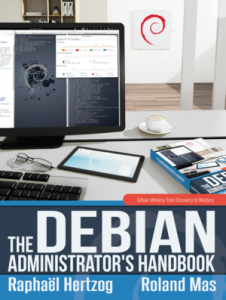
This is my monthly summary of my free software related activities. If you re among the people who made a donation to support my work (147.56 , thanks everybody!), then you can learn how I spent your money. Otherwise it s just an interesting status update on my various projects. The Debian Administrator s Handbook Cover of the Debian Administrator's Handbook (Wheezy edition)I spent a good chunk of December on the book. First finalizing the English version and getting it out (BTW, just for the launch, there s a 10% discount on the paperback that lasts only until January 9th!). Then working on updating the French translation. Eyrolles will publish a new edition of the French book based on this translation. Expect some further news about this during January! Debian France I contributed to many discussions within Debian France. Starting with a complaint that most events are organized in Paris, I proposed to map the location of Debian France members. We added new fields in the membership management page so that members can add their GPS coordinates and Fr d ric Decou made some experiments with Openstreetmap. Someone else (Kiriarat) volunteered to write the required glue code. A manual map is currently maintained on the website. Sample logo receivedIn the discussions about the setup of the Debian France shop, I suggested to update our logo with a nicer looking one. We got a few suggestions and after further discussions with Alexandre Delano and Sylvestre Ledru, we organized a small contest to entice designers to submit a logo proposal to us (the winner earns a set of Debian goodies). We got 46 proposals (see my favorite on the right)! The board is currently pre-selecting the logos and setting up the final vote for our members. The winner shall be announced at the end of the upcoming mini-debconf in Paris. I also continued the work to finalize new bylaws and new internal rules. They shall be adopted during the next general assembly which will happen during the mini-debconf. Misc Debian Work WordPress maintenance. I mentored Pablo Vasquez to do his first small contribution to the WordPress packaging. I really appreciate this but he s not yet ready to assume maintenance of a big package like WordPress on his own. I got multiple other offers of help and pinged them all while filing #733726 to coordinate the work on the new upstream version. But I got no reply :-( Handing over packages to new maintainers is hard Init system discussion. The technical committee has the hard task of picking the default init system that will replace the traditional System V init (see #727708). I followed this huge discussion closely and contributed a bit where I add something meaningful to say. Final decision is expected sometimes in January. FWIW, I share entirely Russ Allbery s point of view in those discussions. I have been running systemd on some of my computers for a few months already. Fixing lxc in stable. The lxc package in stable has a non-working debian template. I really dislike documenting that things are broken so instead of doing that in the Debian Administrator s Handbook, I opted to do something about it. I prepared a non maintainer upload for stable (see #680469 for the problem and #732358 for the stable update request). Misc stuff. I sponsored a tcpdf upload. I filed an enhancement request on Publican to have it keep processing instructions present in translations. I uploaded new versions of publican-librement and debian-handbook. I filed #732678 against git-buildpackage because it failed to properly call lintian when given the -A dpkg-buildpackage argument. Thanks See you next month for a new summary of my activities.

No comment Liked this article? Click here. My blog is Flattr-enabled.

Julian Andres Klode: python-apt now native Python 3 code

Today I made an important change to the python-apt code: It is now native Python 3 code (but also works under Python 2). The previous versions all run 2to3 during the build process to create a Python 3 version. This is no longer needed, as the code is now identical. As part of that change, python-apt now only supports Python 2.7, Python 3.3, and newer. I m using some features only present in 3.3 like Python2 unicode literal syntax in order to keep the code simple. Here s how I did it: I took the Python 2 code and ran 2to3 -f print -x future on it. This turned every print statement in a call to the print function. I then went ahead and added a from __future__ import print_function to the top of each module. This was the first commit. For the second commit, I ran 2to3 -p -x future to convert the remaining stuff to Python 3, and then undid some changes (like unicode literals) and fixed the rest of the changes to work under both Python 2 and 3. Sometimes I added a top-level code like:
if sys.version_info_major >= 3:
    unicode = str
So I could use unicode in the code for the Python 2 cases. I used various backported modules like io and stuff only available in Python 2.7, so dropped support for Python 2.6.
Filed under: Debian, Python

4 January 2014

Simon Josefsson: Necrotizing Fasciitis

Dear World, On the morning of December 24th I felt an unusual pain in my left hand between the thumb and forefinger. The pain increased and in the afternoon I got a high fever, at some point above 40 degrees Celsius or 104 degree Fahrenheit. I went to the emergency department and was hospitalized during the night between the 24th and 25th of December. On the afternoon of December 26th I underwent surgery to find out what was happening, and was then diagnosed with Necrotizing Fasciitis (the wikipedia article on NF gives a fair summary), caused by the common streptococcus bacteria (again see wikipedia article on Streptococcus). A popular name for the disease is flesh-eating bacteria. Necrotizing Fasciitis is a rare and aggresive infection, often deadly if left untreated, that can move through the body at speeds of a couple of centimeters per hour. I have gone through 6 surgeries, leaving wounds all over my left hand and arm. I have felt afraid of what the disease will do to me, anxiety over what will happen in the future, confusion and uncertainty about how a disease like this can exist and that I get the right treatment since so little appears to be known about it. The feeling of loneliness and that nobody is helping, or even can help, has also been present. I have experienced pain. Even though pain is something I m less afraid of (I have a back problem) compared to other feelings, I needed help from several pain killers. I ve received normal Paracetamol, stronger NSAID s (e.g., Ketorolac/Toradol), several Opiate pain-killers including Alfentanil/Rapifen, Tramadol/Tradolan, OxyContin/OxyNorm, and Morphine. After the first and second surgery, nothing helped and I was still screaming with pain and kicking the bed. After the first surgery, I received a local anesthetic (a plexus block). After the second surgery, the doctors did not want to masquerade my pain, because sign of pain indicate further growth of the infection, and I was given the pain-dissociative drug Ketamine/Ketalar and the stress-releasing Clonidine/Catapresan. Once the third surgery removed all of the infection, pain went down, and I experienced many positive feelings. I am very grateful to be alive. I felt a strong sense of inner power when I started to fight back against the decease. I find joy in even the simplest of things, like being able to drink water or seeing trees outside the window. I cried out of happiness when I saw our children s room full of toys. I have learned many things about the human body, and I am curious by nature so I look forward to learn more. I hope to be able to draw strength from this incident, to help me prioritize better in my life. My loving wife sa has gone through a nightmare as a consequence of my diagnosis. At day she had to cope with daily life taking care of our wonderful 1-year old daughter Ingrid and 3-year old boy Alfred. All three of them had various degrees of strep throat with fever, caused by the same bacteria and anyone with young kids know how intense that alone can be. She gave me strength over the phone. She kept friends and relatives up to date about what happened, with the phone ringing all the time. She worked to get information out from the hospital about my status, sometimes being rudely treated and just being hanged up on. After a call with the doctor after the third surgery, when the infection had spread from the hand to within 5cm of my torso, she started to plan for a life without me. My last operation were on Thursday January 2nd and I left hospital the same day. I m writing this on the Saturday of January 4rd, although some details and external links have been added after that. I have regained access to my arm and hand and doing rehab to regain muscle control, while my body is healing. I m doing relaxation exercises to control pain and relax muscles, and took the last strong drug yesterday. Currently I take antibiotics (more precisely Clindamycin/Dalacin) and the common Paracetamol-based pain-killer Alvedon together with on-demand use of an also common NSAID containing Ibuprofen (Ipren). My wife and I were even out at a restaurant tonight. Fortunately I was healthy when this started, and with bi-weekly training sessions for the last 2 years I was physically at my strongest peak in my 38 year old life (weighting 78kg or 170lb, height 182cm or 6 feet). I started working out to improve back issues, increase strength, and prepare for getting older. Exercise has never been my thing although I think it is fun to run medium distances (up to 10km). I want thank everyone who helped me and our family through this, both professionally and personally, but I don t know where to start. You know who you are. You are the reason I m alive. Naturally, I want to focus on getting well and spend time with my family now. I don t yet know to what extent I will recover, but the prognosis is good. Don t expect anything from me in the communities and organization that I m active in (e.g., GNU, Debian, IETF, Yubico). I will come back as energy, time and priorities permits. flattr this!

24 December 2013

Andrea Veri: Manage passwords with pass

Fighting with passwords have always been one of my favorite battles in the past and unfortunately the former always won. I never liked using the root user that much for administering a machine and made a massive use of sudo, I won t list all the benefits of using sudo, but the following wiki page has a pretty nice overview of them. Said that, when using sudo it s definitely ideal to combine a strong password that is also easy to remember and type again when prompted. Sadly strong passwords that are also easy to remember can be considered an oxymoron. How hard would it be to recall a 30+ chars long password? Honestly that would be close to impossible for an human being but what if a little software available on the major GNU/Linux distributions could handle that for us? That s where pass comes handy, but what is pass? from the pass manpage itself:
pass is a very simple password store that keeps passwords inside gpg2(1) encrypted files inside a simple directory tree residing at ~/.password-store. The pass utility provides a series of commands for manipulating the password store, allowing the user to add, remove, edit, synchronize, generate, and manipulate passwords.
I m sure that a lot of you guys have been looking for a tool like this one for ages: pass allows you to generate very strong passwords with pwgen, GPG encrypt them with your GPG Key, store them safely on your disk and make them available whenever you need them with a single command. But let s move to the practice, give the following steps a try and enjoy how powerful your pass setup will be. First setup 1. Install the software:
yum/apt-get install pass

2. Generate a GPG Key if you don t have one already, a detailed guide can be found here. 3. Initialize your passwords storage. (GPGKEYID can be retrieved by running gpg list-keys and then looking for a line similar to this one: pub 4096R/B3A6223D 2012-06-25)
pass init GPGKEYID

4. Generate your first password and call it sudo_password given you are going to make use of it as your brand new sudo password. (we want it at least 30+ chars long)
pass generate sudo_password 30

5. (Optional) Create as much passwords as you need and make sure to save them with unique names, that way you will be able to identify what a password is used for easily.
pass generate gmail_password 30

Additional maintenance commands on your password database 1. Look at the existing passwords on your database.
pass ls

Result:
Password Store
  gmail_password
  sudo_password
  root_password

2. Manually edit a password.
pass edit password_name

3. Remove a password from your database.
pass rm password_name

4. Copy a password on your clipboard and paste it.
pass -c password_name

Are you wondering if pass supports a VCS? Yeah, it does, it currently allows you to manage your passwords database with Git, so that each applied change to the database will be tracked through a VCS so that you won t forget when and how you updated a specific password.

Gergely Nagy: Some free software are really free

I read a post titled "Free software is NOT Free", and that triggered a few thoughts, which I would like to share here. While the post has some good thoughts, there are points in it which I disagree with strongly. You see, I've been writing free software almost half my life, most of the things I contributed to various projects, and the vast majority of my own projects, were made because it made me feel good. Because I scratched an itch, and sharing filled me with a sense of accomplishment.I always had bills to pay, and I have a day job to get that kind of thing sorted, yet, I do not believe that the quality of my free software work suffers because of that. Do I have less time? Yes, I do. But slower pace does not mean lesser quality - more often than not, I found that slower pace leads to better considerations, more care given to each change, because fixing it later, fast, is much more costly, so you make sure that your improvements will stand the trial of time.But I digress. I want to share a different view on the topic, based on my own experiences.When I first got into free software, I was young, bright-eyed, full of hopes and illusions of grandieur. I did my part of small contributions here and there, and every bit of "Thanks!", every bit of feedback - be it criticism or rejection - contributed to my development. This part of the free software culture is still important to me, and remains a major factor behind my desire to work on free software. Later on, there came another revelation: people actually use the stuff I write! That's an awesome feeling too, but with it, comes a burden too: supporting users, and trying to cater to every need that arises. To combat this, to not drown, you need to learn to say "No". It is hard, but as maintainer of a project, it's your task to keep it maintainable, and you need to know your limits. Would it be better if you could fulfil every wish? If you could do everything you ever dreamed of? You may think the answer is yes, but you're wrong. The answer is "No".Not everything needs to be done, not every wish needs to come true. As always, there's a balance. Limiting the amount of time that can be spent on a project helps keep that balance. And when balance is found, the project becomes more mature, maintenance stops being a chore you do not want to do, but have to, and instead becomes something you actually enjoy. We are human beings, we dream and wish for a lot, and we have a hard time realising our limits. That makes us feel sad, sometimes even inadequate. Having less time puts us into a different position, where were are forced to reevaluate how we spend the little free time we have. In the long run, I believe that is good for free software.But there's an even better way to approach the problem! You want to work on your projects, right? Yet, you also want to pay your bills. And you are a fan of free (as in freedom) software. When I found myself in a position like that, when I was looking for work, I was looking at companies which are friendly towards free software, and even have a few on their portfolio. Working for such a company allows me to be happy with myself, by not betraying my own beliefs, and on the side, still spend time on my own things.When I spend my day working on free software, I feel energised, and during lunch break, I can look through my plans for my own projects (some of which are related to my work too, which makes it even easier to spend time on them), plan ahead, and go home with a head full of ideas. No exhaustion after a daunting day of hacking proprietary software, with a sinking heart. No feeling guilty of not taking good care of your projects, because you do take care! You just do it on your own terms.So this is my suggestion to independent free software hackers: find a free software friendly company, that allows - or even encourages - you to work on your own things too. That way, you can pay your bills, and work on your hobbies, and best of all: keep them as hobbies, so it does not become a burden. When a hobby becomes your job, that often leaves a sour taste behind, when you can't fulfil every need, or fix every issue.Get a free software day-job, and keep your hobby as such, and everyone benefits. You get to keep your sanity, and users will receive better care, because the developers do what they love, and not what they have to.You give up some of your freedoms, yes, by not being independent. But being independent is not always the right choice. For some people, it may well be, for some, not so much. My experience over the past 15 years or so, is that independence brings a lot more headache than I'm willing to deal with. I'd rather work for a free software friendly company, where, after three years, I get paid to write and contribute to free software, and take care of my personal projects on the side, than try do all of it on my own.None of the software I wrote is worth a full salary, and none of them requires me to work full time on them, either. I could, mind you, I have enough ideas lined up to keep me busy for years. But do I want to? Do I want to burn myself out?No. The day job satisfies my hunger for contributing to a widely used piece of software, and my hobby projects satisfy my exploratory needs. I'm happy this way, and I'm very happy that thanks to the work and dedication of some amazing people, we got this far, that one can have a day job and independent projects too, that are all free software, without having to depend on fairly unreliable sources, such as donations (mind you, donations are a nice extra).There are, of course, different situations, and different people. What works for one, may not work for the other. This is what worked for me, and I felt the need to share it, lest anyone thinks that the world's darker than it really is.

Next.

Previous.