Search Results: "ed"

11 January 2012

Jon Dowland: The Silent Land

I've just finished reading Graham Joyce's haunting The Silent Land: an atmospheric and moving love story set in an Alpine ski resort. Husband and Wife Jake and Zoe head out to the slopes early one morning and are caught in an avalanche. They survive, narrowly, but upon returning to the resort, everything has changed Anyone who has read any quantity of SF or fantasy will probably make an early guess at what's going on, and you'd most likely get it wrong. Even if you know where you're going, the journey is often the point, rather than the destination, and this journey is pretty gripping. I do most of my reading on the train to and from work. I often listen to music when I'm reading and I try to choose things which aren't going to distract my attention from the book too much. Film soundtracks are good; so is classical; so is a lot of Eno's work. For this book I mostly listened to the score from the latest film version of The Girl with the Dragon Tattoo, by Trent Reznor and Atticus Ross. Clocking in at only seven minutes shy of three hours, this is a haunting score that evokes a cold, isolated Swedish winter, and thematically matched the book perfectly. The score is a little less accessible than their previous work, but is rewarding on repeat listen. You can get a free 6-track sampler at the website linked above.

Jon Dowland: My new record player unit

[pic]
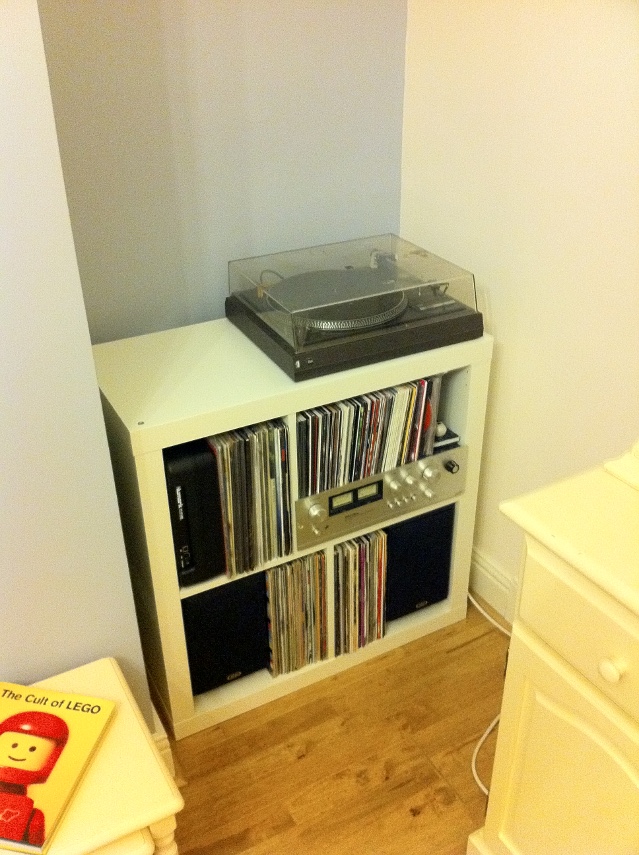
A mildly hacked Ikea "Expedit" shelving unit is a surprisingly snug home for my Hi-fi and my vinyl collection (even the 7" records). [

Jon Dowland: whiley.gif

Jon Dowland: Robert Smith in for John Peel

On 21st October 2004, Robert Smith of the Cure sat in for John Peel whilst he was on holiday and presented his show. This was part of a sequence of people covering for Peel. Off the top of my head Siouxie of the Banshees sat in on another night, but I forget who else. Anyway, sadly, John died a few days later on the 25th. Before John's death, in response to his pre-recorded show being butchered by the BBC, Smith posted an angry message on the Cure's website, which included the tracklisting as he had originally prepared. After John's death was announced, Smith deleted the post from his site, no doubt out of respect for Peel and to avoid any mis-interpretation. I recorded the show onto minidisc when it was broadcast and discovered a lot of music that I loved and hadn't heard of before. I've just stumbled across a copy of Smith's post, including the tracklist, so for historical interest's sake, here it is (with only light typographical editing). If anyone cares enough, I could have a look for that minidisc

Craig Small: MediaServer with Rygel

Rygel XVI

Image by Cayusa via Flickr

Like a lot of people, I have one of those set-top TV boxes that can record TV shows at set times. I made sure that I could get at the files (using a FTP server in this case) and that the files were some sort of common standard (MPEG 4 TS). I also have a bunch of mp3 music files. That s fine when I m on the desktop because the files are local. I wanted to make these available to anyone in the household. DLNA seemed to be a reasonably OK way of doing this, the problem was, how to get it working in Linux? A lot of the problem is that it is hard to find a DLNA only server. Sure MythTV could do it, but it needs a tv tuner or a lot of fiddling around. XMBC can also do it, but it needs to be running a GUI. I even tried mediatomb but could not get the thing to compile as the library calls to mozjs were all using deprecated functions. I just wanted a daemon that served stuff, nothing more; no fancy ui, no need for X just file serving goodness. Rygel is almost that. You could say it is a user server much like a torrent client/server. The nice thing is you can fiddle around with rygel so it becomes close to a real server. This is how I did it. First, I made a rygel user with a home directory, but disabled login. I don t like programs running root if they don t need it and rygel doesn t need it. The home directory needs to be writeable to the rygel user too otherwise the program doesn t work too well. I use /var/local/rygel as its home. For the configuration, copy /etc/rygel.conf to ~rygel/.config/rygel.conf This is the configuration file for rygel. I disabled all of the modules except MediaExport. Make sure you disable Tracker otherwise MediaExport will not work. Tracker is only useful for real users who are logged in and have dbus etc going which this user is certainly not. I made a simple rygeld file in /usr/local/sbin which basically starts the program, forks and grabs the PID to write to a pidfile. This mean it was easier to track the program in the init scripts.
#!/bin/sh
#
# Rygel daemon handling
RYGEL='/usr/bin/rygel'
RYGEL_ARGS=''
su -s /bin/sh -c "nohup $RYGEL $RYGEL_ARGS > /var/local/rygel/rygel.log 2>&1 &"
rygel
EXIT_CODE=$?
if [ $EXIT_CODE != 0 ] ; then
        return $EXIT_CODE
fi
PGROUP= ps --no-headers -o pgrp $$ 
PID= pgrep -g $PGROUP -f $RYGEL 
echo $PID > /var/run/rygel.pid
exit 0
In case you were wondering, the pgrp finds the program group so the pgrep finds the right rygel process that has the same program group as the starting shell. The init script is a standard init script except the exec flag checks for /usr/bin/rygel but the start line starts /usr/local/sbin/rygeld This is because we want to kill the real rygel process but start it with the script. This setup works rather well. You do get some messages in the logfile about dbus not working but it is harmless. I tried disabling the mpris and external plugins but no matter what flag or configuration file option I tried, they would always try to start and fail with no dbus. Rygel is a a reasonably light-weight way of serving media to your home network. It idles 200 MB virtual with 16MB resident and when idle uses almost no CPU.

Michal Čihař: Configuring standalone XBMC

I have a laptop used for playing music (and occasionally also videos) which is currently running Windows XP with XBMC. Reinstalling this beast to Linux is on my todo list for ages and now I've finally found time to try that. Starting Debian installer worked like charm and in few minutes I got Debian system running. I've chosen to run sid, well for reason I run it usually on place where I want latest software. Installing XBMC from Debian multimedia worked also fine and you can easily find some howtos for directly starting XBMC. And that's where I ran into trouble - XBMC is damn slow. Notebook has oldish nVidia GeForce FX Go5200 card, which seems to be poorly supported by nouveau (and "Do not file bug reports about this driver." suggest that this is what authors do expect). Okay, I can survive having some binary crap so let's try nVidia proprietary drivers. I've quickly realized that the legacy drivers won't work with recent xserver and probably also not with the kernel. Maybe I should try installing something older, what would run binary drivers, but for now I gave up and system is back on Windows (with all problems I have there...).

Filed under: Debian English Linux 7 comments Flattr this!

10 January 2012

Andrew Pollock: [life] Breaking and entering, with permission

I had a bit of an adventure yesterday, which would have taken some explaining if the police had gotten involved. It went a little something like this... My friend and former co-worker Sara was in the US Virgin Islands for the holidays. Her boyfriend, Karl, flew there separately for the tail end of her time there. Yesterday, I received a phone call from Sara, saying that Karl had managed to fly out to the Virgin Islands without his passport. Apparently you can get there without one, but to get back into the mainland US, you need one. She wanted to know if I could get one of my lock-picking co-workers to break into their apartment and retrieve Karl's passport and mail it them. Karl was supposed to fly out the next day. Attempts by Sara to contact her landlord had failed, so they didn't have many other options (apart from mailing me a key, which would have cost them another day). I asked one of my co-workers, Jason, who I knew was into lock picking, if he was up for it, and he offered to put me in touch with another guy who had dominated the recent lock picking night that he'd run. So now I'm talking to David, who's on board with the mission, but doesn't have his lock picking gear on him. No problem, Jason says he'll lend me his, which was at work with him. So we have a plan. Our friends Ian and Melinda are currently in Australia. They've lent us their car because it's leased, and they have some minimum mileage they're supposed to do and they're under it, so I've been driving to work in their car some days. As it happens, I drove to work in it yesterday. So now David and I set out in a car that neither of us own, with a lock picking set that belongs to another person, to break into an apartment of someone who's in the Virgin Islands. What could possibly go wrong? I'm told that it's not illegal to own a lock picking set, but if you're caught with one on your person and you're not a locksmith, you can get into all sorts of trouble. On top of that I'd have a hard time explaining the car I'm driving. We get to Sara and Karl's condo complex. It has a common gate that visitors would normal get buzzed through. Turns out it's not that hard to climb over. It's got some benign-looking spiky things on top, but I could get a leg over from the left hand side of the gate and jump over without impaling myself. Then I let David in and we proceeded upstairs to Sara and Karl's apartment door, where David set to work. Sara said that just the dead bolt was locked. David started at it with Jason's tools, trying to be as discreet as possible. It was about 3:30pm and there was no one around, but we could hear some noises from the neighbouring apartment (the two front doors were right next to each other). After what felt like about half an hour without success (the last pin of the lock was particularly tricky apparently) David was having to resort to more noisy techniques with the lock, so I decided to take the up-front approach and just inform the next door neighbour what we were doing in case he/she (I think it was a she) decided to call the cops on us. I told her through the door why we were there and what we were doing. She didn't seem to care too much. David then proceeded to start "raking" the lock, essentially brute forcing the pins with a lot of jiggling, and finally managed to pick it and we were in. I quickly found Karl's passport where it was suspected to be, and then we pondered how we were going to lock the door again. We could have just locked the door knob instead of the deadbolt and closed the door behind us, but we weren't sure if Sara and Karl had a key to the doorknob (Sara said they always just locked the deadbolt). Sara was fine with leaving the door unlocked until they got home, but weren't so keen on leaving our fingerprints all over the place and then leaving the door unlocked. David tried to re-pick the deadbolt so that he could lock it via the same means as opened it, and I scouted around for a key. I managed to find a key that locked both the deadbolt and the doorknob, so I took that with us and locked up their apartment. In David's defense, the deadbolt was a bit stiff to lock even with the key. I dropped David back at work, collected my stuff (it was now about 4:30pm) and headed to the UPS Store to ship Karl's passport to him as fast as humanly possible. I just made the 5pm pick up. Today I received an SMS from Sara informing me that they had received the passport. I was very impressed with how fast it got to them. So that was all a bit of an adventure. I'm not sure how much longer Karl is going to have to stay in the Virgin Islands as a result. I'm going to suggest that Sara and Karl leave a spare key with someone in future.

John Goerzen: Social Overload

I m finding social media is becoming a bit annoying. I enjoy using it to keep in touch with all sorts of people, but my problem is the proliferation of services that don t integrate well with each other. Right now, I have: So my problems are:
  1. Posting things multiple places. I currently can post on identi.ca, which automatically posts to twitter, which automatically posts to Facebook. But then I d still have to post to Google+, assuming it s something that I d like to share with both my Facebook friends and my Google+ circles it usually is.
  2. The situation is even worse for re-tweeting/re-sharing other people s posts. That is barely possible between platforms and usually involves cutting and pasting. Though this is somewhat more rare.
  3. It s probably possible to make my blog posts automatically generate a tweet, but not to automatically generate a G+ post.
All the hassle of posting things multiple places leads me to just not bother at all some of the time, which is annoying too. There are some tools that would take G+ content and put it on Twitter, but without a character counter on G+, I don t think this would be useful. Anyone else having similar issues? How are you coping?

Petter Reinholdtsen: Changing the default Iceweasel start page in Debian Edu/Squeeze

In the Squeeze version of Debian Edu / Skolelinux soon to be released, users of the system will get their default browser start page set from LDAP, allowing the system administrator to point all users to the school web page by updating one setting in LDAP. In addition to setting the default start page when a machine boots, users are shown the same page as a welcome page when they log in for the first time. The LDAP object dc=skole,dc=skolelinux,dc=no have an attribute labeledURI with "http://www/ LDAP for Debian Edu/Skolelinux" as the default content. By changing this value to another URL, all users get to see the page behind this new URL. An easy way to update it is by using the ldapvi tool. It can be called as "ldapvi -ZD '(cn=admin)'' to update LDAP with the new setting. We have written the code to adjust the default start page and show the welcome page, and I wonder if there is an easier way to do this from within Iceweasel instead.

Michal Čihař: Flattr losing it's momentum?

From what I can see on both my personal Flattr account (where was never really much going on) and on (more attractive) phpMyAdmin's profile, the amount of people using Flattr there goes down there every month. There was definitely big momentum when it has been introduced, many geeks saw it as great opportunity for making micro payments work. Maybe people who started to use it at beginning are slowly abandoning it (what is true for me as well) and new ones simply don't come that much or whatever else. Anyway I definitely don't have the big picture to see whether is global trend or just my project is more unlucky...

Filed under: English Phpmyadmin 9 comments Flattr this!

Axel Beckert: Illegal attempt to re-initialise SSL for server (theoretically shouldn't happen!)

After dist-upgrading my main Hetzner server from Lenny to Squeeze, Apache failed to come up, barfing the following error message in the alphabetically last defined and enabled virtual host s error log:
[error] Illegal attempt to re-initialise SSL for server (theoretically shouldn't happen!)
Well this is not theory but the real world and it did happen and it took me a while to find out what was wrong with the configuration despite it worked with Lenny s Apache version. To avoid that others have to search as long as I had to, here s the solution: Look at all enabled sites, pick out those which have a VirtualHost on port 443 defined and verify that all these VirtualHost containers do have their own SSLEngine On statement. If at least one is missing, you ll run into the above mentioned error message. And it won t necessarily show up in the error log of those VirtualHosts which are missing the statement but only in the last VirtualHost (or the last VirtualHost on port 443). To find the relevant site files, I used the following one-liner:
grep -lE 'VirtualHost.*443' sites-enabled/*[^~]   \
  xargs grep -ci "SSLEngine On"   \
  grep :0
Should work for all sites which have defined just one VirtualHost on port 443 per file. I suspect that the raise of SNI made Apache s SSL implementation more picky with regards to VirtualHosts. Oh, and kudos to this comment to an article on Debian-Administration.org because it finally pointed me in the right direction. :-)

9 January 2012

Tim Retout: Perl Tutorial

Hello, World! Last year, a bit of a fuss was kicked up in the Perl community about the low quality of search results for the phrase "Perl tutorial". Various ideas for fixing this were proposed, including the handy Perl tutorial hub, but kicking Leeds University off the coveted top spot is going to be a real challenge. The problem is, most Perl tutorials on the internet were written for Perl 4; modern Perl doesn't get a look-in. It's a miracle anyone manages to learn Perl at all... While thinking over this problem, I was reading Mithaldu's original criteria for the "content creation" option. "Community effort"... "github repo"... "exported to HTML regularly"... if only Perl had some central site where you can publish documentation... that all Perl hackers can access and update... like CPAN. So although my documentation-writing skills are pretty weak, I proudly introduce the Perl-Tutorial CPAN dist and github repository. The great thing about writing Perl documentation using POD is that you can link to other CPAN references so easily - as the basics get filled out, they can guide the user towards how to learn more about each topic. Everyone who's anyone knows how to send a pull request on github, and there seems to be far more of a community feel to CPAN these days. Version 0.001 is just "Hello, World!" - but watch this space. :)

Craig Small

Following up from the upstream release of a new procps, the debian packages have also been updated. This upload has a significant change in that, I hope, procps is now multi-arch compliant. To make this happen, the libprocps library is now in it s own package, separate from the binaries. It also means that if you have programs not from procps that link to this library they are now broken. I put in a Breaks: line for the three I know about which will need a recompile with a small tweak in the control file and linked statements. As suggested in the multi arch wiki page, I tested the libprocps0-dev package by compiling something against it, in this case another Debian package xmem. Doing this was very useful for teasing out some bugs on the dev package itself that did not appear while linking the library to the procps binaries. In short, the new procps has a lot fewer patches than the old ones and the next version will have less as I have already included the current changes into the upstream git repository. The main differences are now The three are really bugs, especially the last, which is why the patches will disappear next release.

Craig Small: procps 3.32 Debian packages

Following up from the upstream release of a new procps, the debian packages have also been updated. This upload has a significant change in that, I hope, procps is now multi-arch compliant. To make this happen, the libprocps library is now in it s own package, separate from the binaries. It also means that if you have programs not from procps that link to this library they are now broken. I put in a Breaks: line for the three I know about (xmem, guymager and open-vm-tools) which will need a recompile with a small tweak in the control file and linked statements. As suggested in the multi arch implementation wiki page, I tested the libprocps0-dev package by compiling something against it, in this case another Debian package xmem. Doing this was very useful for teasing out some bugs on the dev package itself that did not appear while linking the library to the procps binaries. In short, the new procps has a lot fewer patches than the old ones and the next version will have less as I have already included the current changes into the upstream git repository. The main differences are now The three are really bugs, especially the last, which is why the patches will disappear next release.

Eddy Petrișor: Another Windows tip - How to store cvspass login for CVSNT

Since I am currently working on a Windows machine at work I am looking for ways to make this thing work in a sane way. The latest insane thing is the fact that I wasn't able to log on a CVS server at work from WinCVS (which uses CVSNT) with my regular credentials, while the cached password in Cygwin did work with the Cygwin CVS.

So the obvious fix was to copy the .cvspass file from cygwin to whereever CVSNT kept its cvspass file. Well, it isn't that easy, since CVSNT keeps such passwords in the Windows registry. But since I had no previous logins with CVSNT, I didn't knew what to put in the registry.

I found really easily that the key is under HKEY_CURRENT_USER\Software\cvsnt\cvspass, but how do I save it? Looking at the line in my cygwin .cvspass I saw the line had the format:

/1 :pserver:username@our.cvs.server.net:/u S()meh4s'h00

I finally found out that I have to create a string value with the name ":pserver:username@our.cvs.server.net:/u" and the value data that hash "S()meh4s'h00" and plainly ignore the first field.


Stay tuned. The next article will be about what's common between Windows 7 and GNOME 3 / gnome-shell, since I upgraded my home laptop to wheezy (I really wanted to use pitivi 0.15), and my desktop at work to Windows 7.

Steve McIntyre: Armhf buildds and status in Debian

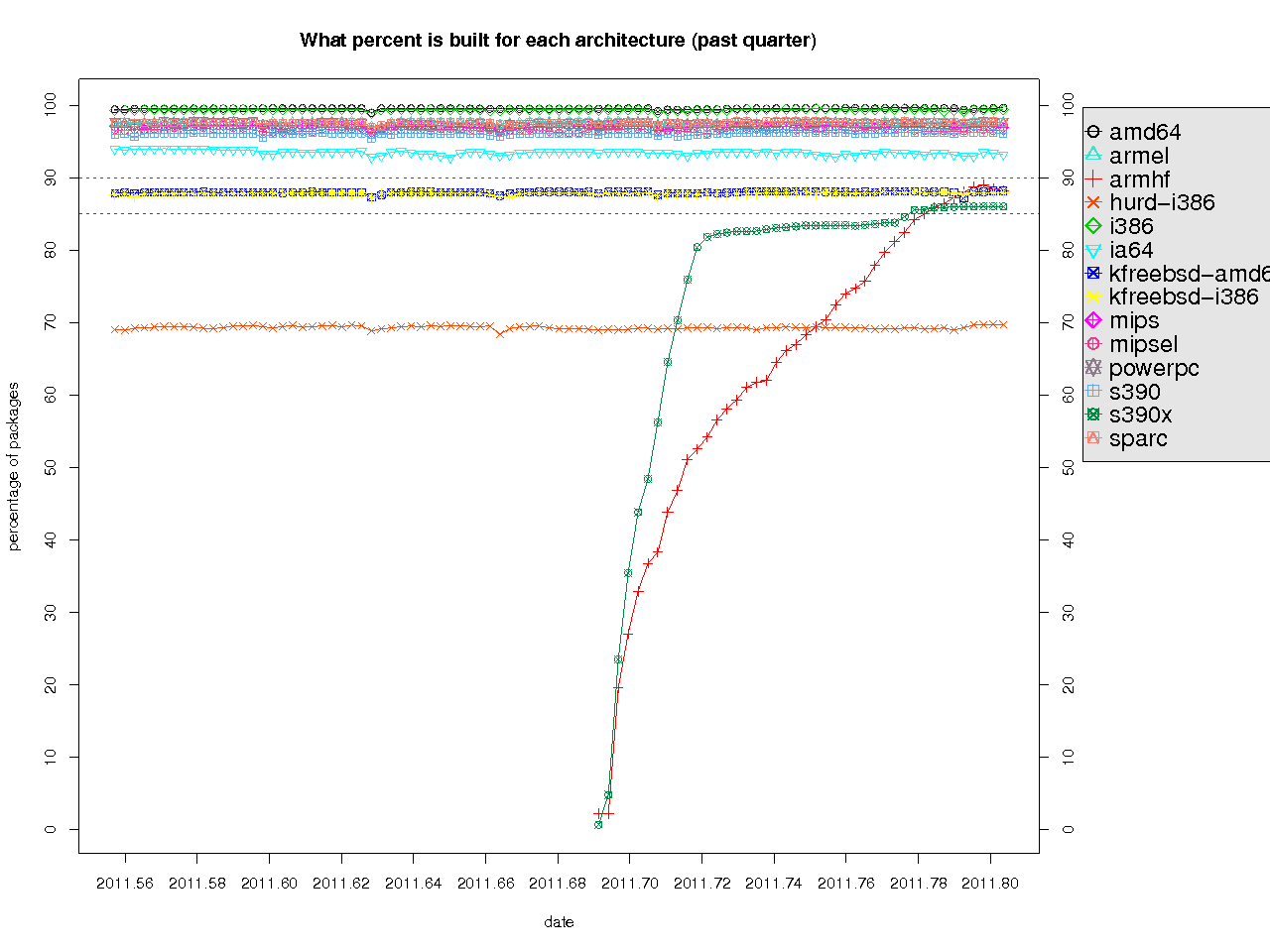
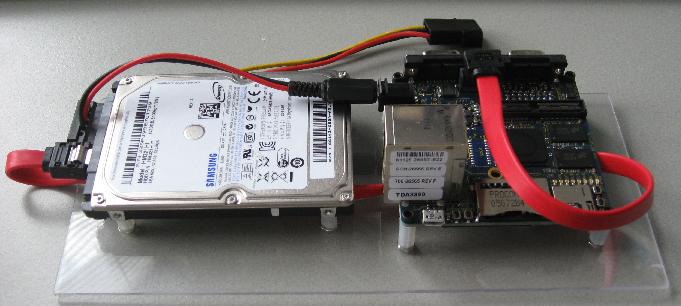
Current status Back in September, I wrote about the machines that I set up to help bootstrap the new armhf port in Debian. Basing on Konstantinos' huge efforts in bringing up the new "architecture" in debian-ports, we started importing armhf into the main Debian archive on the 24th of November. Since then, those builders have been churning away night and day to build the huge collection of software that makes up the Debian archive. The current state can be seen on the armhf buildd status page, and there's a nice graph showing how quickly we've managed to run from 0 to over 90% of the archive here. (Click on the image for a larger version, or visit https://buildd.debian.org/stats/ for other versions. We overtook hurd-i386 quickly and are now ahead of the kfreebsd-* architectures. armhf bootstrap graph We've recently brought 3 more similar build machines online (hildegard, howells and hummel), again sponsored by the nice folks at Linaro but now hosted at the York NeuroImaging Centre at the University of York. This gives us both more build horsepower to keep up with building more different bits of Debian (experimental, updates etc.) and more redundancy in case of problems. We now have the vast majority of the archive built, and now a number of us are concentrating on fixing the remaining issues: language bootstraps and bugs. Also, on the 7th of January we were just added into testing, the next step on our path for inclusion as a Debian release architecture. Setting up the machines A lot of people have been asking me about the physical setup I showed in my last blog about these machines, so here's more details for those who are interested. Mount the 6 boards into the mini-rack, connect up the Molex power connectors to each board, attach ethernet cables and turn it all on! Each board comes with a micro-SD card containing uboot and an Ubuntu installation. I've configured uboot to boot off the hard drive directly, but leaving configuration available to use the Ubuntu on the micro-SD as a simple rescue system should the need arise. The Quickstart boards are not ideal physically for two reasons: the lack of SATA power, plus you need to push a power button on each board to boot it - they don't boot automatically the moment power is applied. However, they're quite inexpensive little machines and have done a great job of building the Debian archive so far! The ideal machines for us would also include more RAM at this point. CPU on these is adequate, but the larger C++ packages (yay webkit!) use a huge amount of memory at link time. Linking in swap is not the best thing, performance-wise... :-( UPDATE 2012-01-12: Ian tells me that the newer Quickstart-R boards apparently have a different power controller; these now boot up straight away without needing you to push a button. That sounds useful.

Antonio Terceiro: Life after exec()

From the not necessarily big news, but still useful department. The situation: for Very Good Reasons 1, you want to replace your current process by calling exec(), but you still want to have the chance to do something after the process you exec()ed finishes. This is a simple technique I just came up with: just before replacing the current process by calling exec(), you fork() a process in the background that will wait for the current process id to disappear from the process list, and then does whatever you want to do. A simple proof-of-concept I wrote is composed of two bash programs: wrapper and real. real is really simple: it just waits a few seconds and then prints its process id to the console:
#!/bin/bash
sleep 5
echo $BASHPID
wrapper is the program that handles the situation we want to exercise: it replaces itself with real, but still has the chance to do something after real finishes. In this case, wrapper notifies the user that real finished.
#!/bin/bash
echo $BASHPID
real_program_pid=$BASHPID
(
  while ps -p "$real_program_pid" >/dev/null; do
    sleep 0.1s
  done
  notify-send 'real program finished'
) &
exec ./real
One nice property that wrapper explores is that when exec() starts real, it really replaces wrapper, and therefore has the same process id (in this case accessible by bash in the $BASHPID variable). Because of this, the background process that wrapper starts just before the exec() call already knows which process it has to watch for. The actual code for waiting is not optimal, though. I cannot use waitpid() (the wait builtin in bash), since real is not a child process of wrapper. I went with a brute force approach here, and I am pretty sure there is a cheaper way to wait for a random PID without a busy loop (but that wasn t the point here). 1 update: I am aware of the classic fork()/exec() pattern. My Very Good Reasons include the fact that I can t control the flow: I am writing a plugin for a program that calls its plugins in sequence, and after that, calls exec(), but my plugin is interested in doing some work after exec() finishes.

Blars Blarson: makers

Makers by Cory Doctorow (and Chiriaco Summit again) OpenStreetmap Link Tonight I'm staying at the free camping area behind the General Patton Museum at Chiriaco Summit. Not a lot has changed since the last time I stayed here. There is one other RV here as well. The picture is taken from the tank garden, with my RV in the free camping area behind. Makers is a SF novel set in the fairly near future. It is available in ebook form free from the author's web site or if you prefer you can buy the paper edition from a bookstore. I found the first portion one of the most believable near-future with a significant change I have read. (The boogie-woogie Elmo dolls that run Linux and didn't sell were a cute touch.) While the technology involved might seem the same as the typical techno-babble seen in mass-market SF to someone not in the computer industry, it is actually plausible and the details are correct. The later parts of the novel are less believable, but still internally consistent. Overall, I found this a good but not great read.

8 January 2012

Gregor Herrmann: RC bugs 2012/01

new year, old hobby: trying to fix an RC bug per day, & reporting about it. here's the first episode of 2012:

Olly Betts: Talks

I finally got my talk slides from last year's Kiwi PyCon and OSDC uploaded, and got inspired to overhaul my list of talks, including a few that were missing entirely, and adding links to video or audio of more of the talks. If you've half an hour to kill and want some 8-bit computing nostalgia, then the video of "The Art of Writing Small Programs" from OSDC 2011 is well worth a watch.

Next.

Previous.