Matthias Klumpp: Tanglu Beta2 now available!
While writing this post, I recognize that we might need a news-blog for  Tanglu
 Since yesterday, we have an (installable!) Beta2 release of Tanglu!
Compared to the previous snapshot, it comes with a huge amount of improvements and bugfixes:
 I am pretty happy with this Beta2 release, because Tanglu is shaping out to be the distribution we imagined in the beginning.
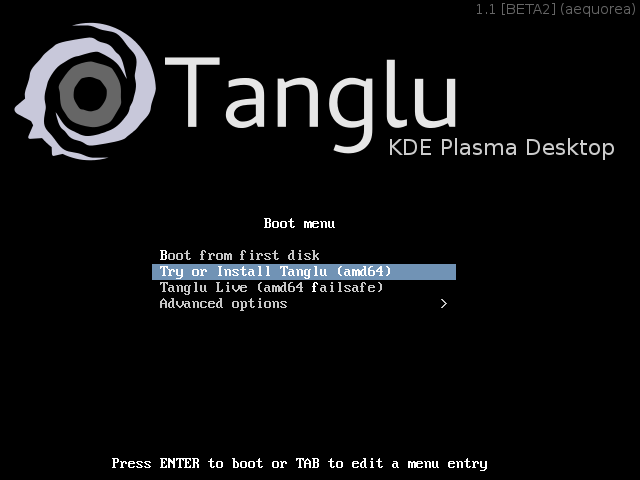
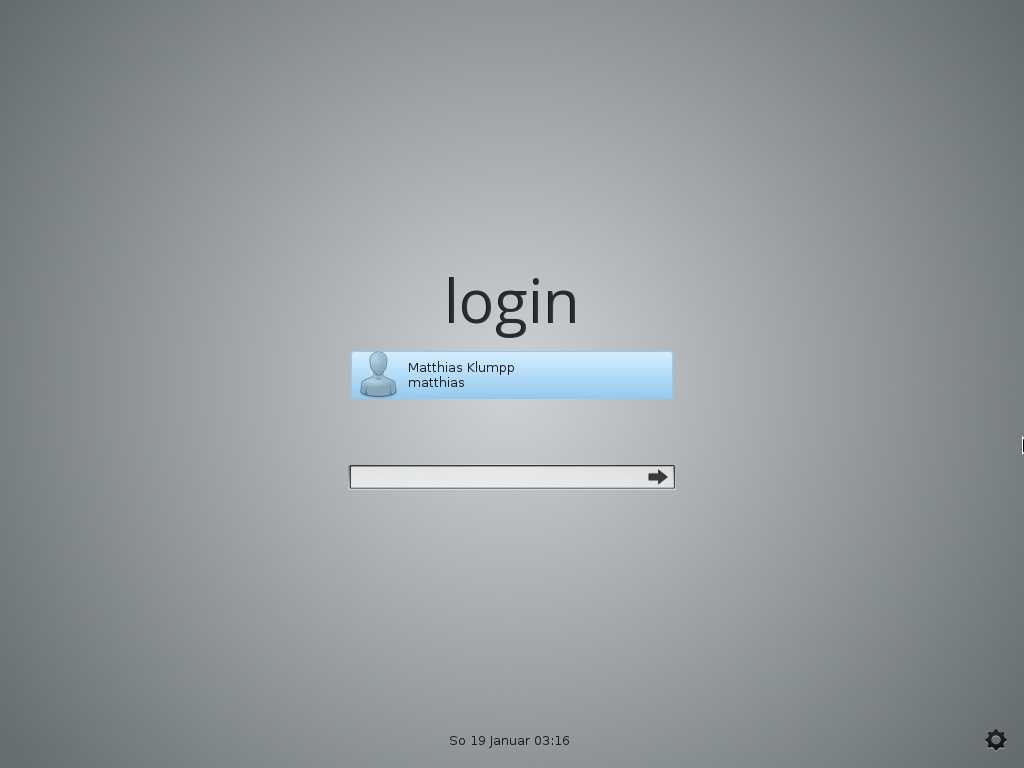
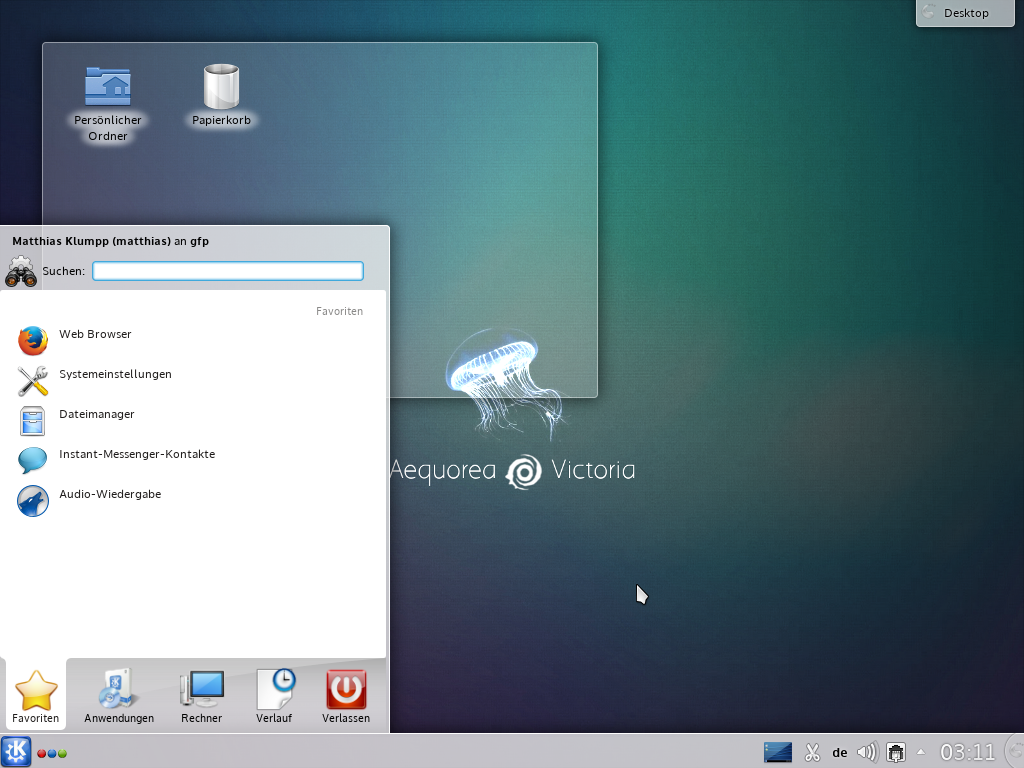
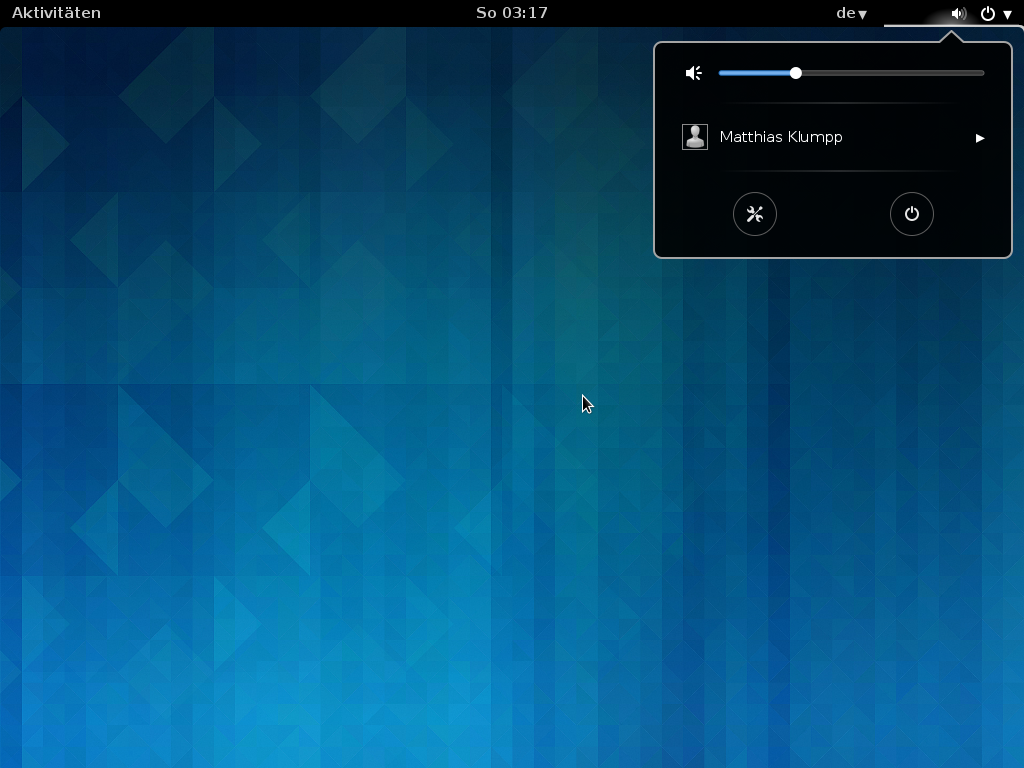
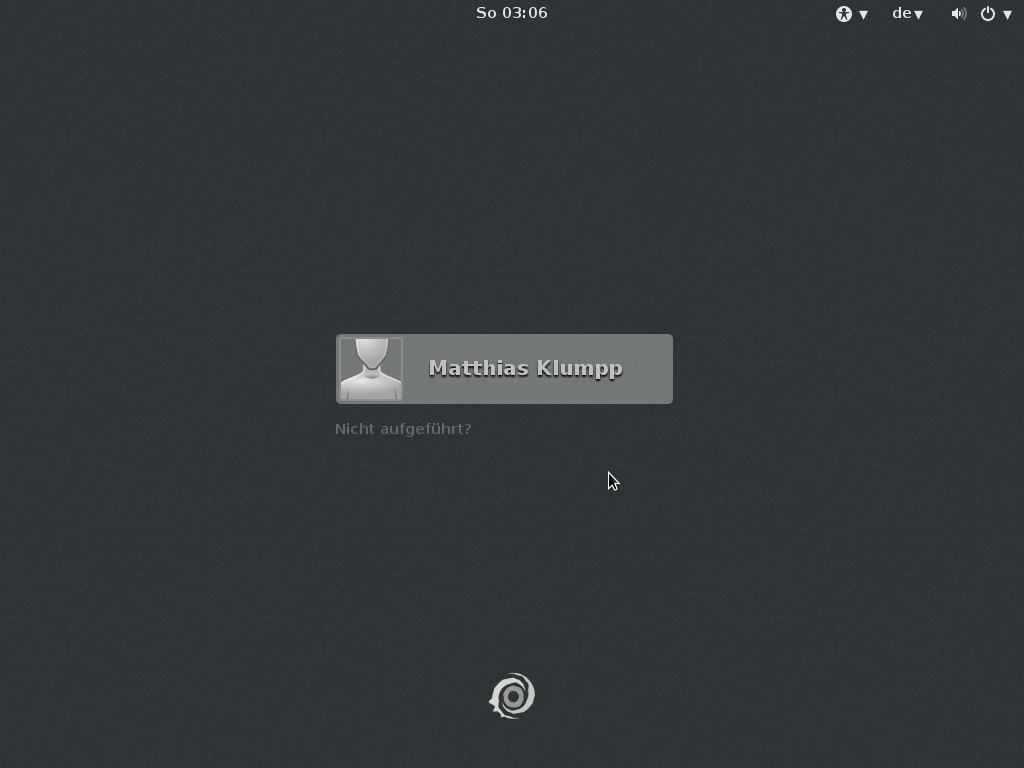
Have fun! And as bonus, here are some images from Beta2:
Tanglu
Since yesterday, we have an (installable!) Beta2 release of Tanglu!
Compared to the previous snapshot, it comes with a huge amount of improvements and bugfixes:
- The systemd journal is now used for logging exclusively. You can install rsyslog to get the old behaviour back, and switch the journal to non-persistent mode. If you want to test the journal, type journalctl -b to get all messages from last boot. If we experience issues, we might revert to rsyslog for the final release.
- KDE received a new theming for KDM/KSplash, so we can now show a face-browser in KDM, which is considered more user-friendly. User faces are now loaded from the user s settings, instead of system directories by default. If you want to load a large user list (> 100) over network, you might not want this, but in that case you can easily revert the change.
- Tanglu does no longer include an MTA by default. If you want one, install one and configure it. On desktop systems, having an MTA makes no sense, especially when it is not properly configured (we follow Ubuntu/Fedora here).
- We ship with a functional live-installer now! You can install Tanglu easily to try it out. Unfortunately, the Debian installer is still not working, so you will have to boot into the live session to install Tanglu.
- GNOME is now working. GDM and g-s-d will no longer crash, and Mutter is able to utilize llvmpipe for rendering in a virtual machine. The Shell and various other GNOME parts were updated to GNOME 3.10
- We now ship the 1.14 version of Xorg now
- Linux 3.12 is now default
- People with ATi graphics cards might have trouble with installing the proprietary fglrx driver
- In some very rare cases, the live-cd won t auto-login. In that case, just reboot and try again, or use the password live to access the account.
- Some packages are not installable, there is a list compiled here, with detailed info why they are broken (they will be removed from the release if they are not fixed) Some transitions are still pending (causes broken/not-coinstallable packages)
- Users with a non-English locale will have an additional Public folder in their home-directory on KDE
- We don t support UEFI at time, please use the legacy mode to boot
We just noticed that the GNOME images won t start the GNOME-Session for some reason.[UPDATE:21.01]: We published new live-cd images which have this issue fixed.
I am pretty happy with this Beta2 release, because Tanglu is shaping out to be the distribution we imagined in the beginning.
Have fun! And as bonus, here are some images from Beta2:

 I have just uploaded a newer version of
 Now it is time for me to go silent for a while, and not talk about jobs, unemployment, or puppies.
This past week has also been full of software releases. Some of the public ones include:
 Another 3 hours later, the most obvious bugs were weeded out and the code
successfully cloned an entire mirror for the first time. I verified the
correctness by running debmirror afterwards, and no files were downloaded that
had not actually arrived on the mirror in the meantime.
Features
 Last night it seems the so called
 It's almost a month since I last blogged something, and one of my new year's resolution is to change that, a bit. Let's see how it goes.
I've been listening a lot to this great band from Sweden recently again, put all their songs onto my mobile phone. It might sound weird because they have a rather aggressive style, both soundwise but also lyricswise, but it helps me to get things off my chest and stay relaxed in the rest of my life.
The band I want to present to you was already twice mentioned in some other articles of my blog I noticed, but this is the proper post about them: I'm talking about
 The


 Checking if your servers are configured correctly can be done with
 Clicking on any test will display the necessary information to
troubleshoot errors, including the test short description, the
complete test code, the expectation message and the backtrace:
 I hope this additional layer will help making serverspec another
feather in the
 When
 For a long time now I ve used

 Cleaning up X server warnings
So I was sitting in the Narita airport with a couple of other free
software developers merging X server patches. One of the developers
was looking over my shoulder while the X server was building and
casually commented on the number of warnings generated by the
compiler.
I felt like I had invited someone into my house without cleaning for
months embarrassed and ashamed that we d let the code devolve into
this state.
Of course, we ve got excuses the X server code base is one of the
oldest pieces of regularly used free software in existence. It was
started before ANSI-C was codified. No function prototypes, no
const , no void * , no enums or stdint.h. There may be a few
developers out there who remember those days (fondly, of course), but
I think most of us are glad that our favorite systems language has
gained a lot of compile-time checking in the last 25 years.
We ve spent time in the past adding function prototypes and cleaning
up other warnings, but there was never a point at which the X server
compiled without any warnings. More recently, we ve added a pile of
new warning flags when compiling the X server which only served to
increase the number of warnings dramatically.
The current situation
With the master branch of the X server and released versions of the
dependencies, we generate 1047 warnings in the default build.
-Wcast-qual considered chatty
The GCC flag, -Wcast-qual, complains when you cast a pointer and
change the const qualifier status. A very common thing for the X
server to do is declare pointers as const to mark them as immutable
once assigned. Often, the relevant data is actually constructed once
at startup in allocated memory and stored to the data
structure. During server reset, that needs to be freed, but free
doesn t take a const pointer, so we cast to (void *), which
-Wcast-qual then complains about. Loudly.
Of the 1047 warnings, 380 of them are generated by this one warning
flag. I ve gone ahead and just disabled it in util/macros for now.
String constants are a pain
The X server uses string constants to initialize defaults for font
paths, configuration options, font names along with a host of other
things. These end up getting stored in variables that can also take
allocated storage. I ve gone ahead and declared the relevant objects
as const and then fixed the code to suit.
I don t have a count of the number of warnings these changes fixed;
they were scattered across dozens of X server directories, and I was
fixing one directory at a time, but probably more than half of the
remaining warnings were of this form.
And a host of other warnings
Fixing the rest of the warnings was mostly a matter of stepping
through them one at a time and actually adjusting the code. Shadowed
declarations, unused values, redundant declarations and missing printf
attributes were probably the bulk of them though.
Changes to external modules
Instead of just hacking the X server code, I ve created patches for
other modules where necessary to fix the problems in the right
place.
 Fingerprints and Key IDs