Inspired by the fine Debian Local Groups all over the world, I ve long since wanted to start one in Cape Town. Unfortunately, there s been many obstacles over the years. Shiny distractions, an epidemic, DPL terms these are just some of the things that got in the way.
Fortunately, things are starting to gain traction, and we re well on our way to forming a bona fide local group for South Africa.
We got together at Woodstock Grill, they have both a nice meeting room, and good food and beverage, also reasonably central for most of us.
Cake
Starting with the important stuff, we got this Debian cake made that ended up much bigger than we expected, at least we all got to take some home too! (it tasted great too)
Yes, cake.
Talk
This event was planned very last minute, so we didn t do any kind of RSVP and I had no idea who exactly would show up, so I went ahead and prepared one of my usual introduction to Linux and Debian talks, and how these things are having an impact on the world out there. I also talked a bit about the community and how we intend to grow our local team here in South Africa. It turned out most of the audience were already experienced Linux users, but I was happy to see that they were very enthusiastic about the local group concept!
While reading through some material to find some inspiration for this talk, I came across an old quote from the original Debian Manifesto that I found very poignant again, so I feel compelled to share (didn t use it in my talk this time though since I didn t cover much current events):
The time has come to concentrate on the future of Linux rather than on the destructive goal of enriching oneself at the expense of the entire Linux community and its future. Ian Murdock, 1994
Debian-ZA logo
Tammy spent some time creating a whole bunch of logo concepts, that she presented to us. They aren t meant as final logo choices, but as initial concepts, and they worked well to invoke a very lively discussion about logos and design!
Here are just some of her designs that I cherry picked since they were the most discussed. We still haven t decided if it will be Debian ZA or Debian-ZA or Debian South Africa, although the latter will probably cause least confusion internationally.
Personally, the last one on this image that I referred to as the carpet is my personal favourite :-)
Happy Birthday Song
John and Heila wrote a happy birthday song. After seeing the lyrics (and considering myself an amateur lyricist) I thought it was way too tacky and I told John to put it away. But when the cake came out, someone said we should sing! and the lyrics quickly re-emerged and was handed out to everyone. It s also meant to be a loopy clip for the upcoming DebConf23. I ll concede that it worked out alright in the end! You judge for yourself:
Mousepads
People still use mousepads? That was my initial reaction when Heila told me that she was going to make some commemorative 30 year Debian mousepads for our birthday event, and they ended up being popular. It s probably a safer surface to put dev boards on than on my desk directly, so at least I do have a use for one!
Group Photo
The group photo, complete with disco ball! We should ve taken this earlier because it was already getting late and some people had to head back home. Lesson learned for next time!
30th Birthday Interview with The Changelog
I also did an interview with The Changelog for Debian s 30th birthday. It was late, and I haven t had a chance to listen to it yet, so I hope their producers managed to edit something coherent out of my usual Debian babbling:
More later
There s so much more I d like to say about Debian, the last 30 years, local groups, the eco-system that we find ourselves in. And, Lemmy! But I ll see if I can get an instance up over the weekend and will then talk about that some more another time.
Taking a hands-on low-level approach to learning AI has been
incredibly rewarding. I wanted to create an achievable task that would
motivate me to learn the tools and get practical experience training and
using large language models. Just at the point when I was starting to
spin up GPU instances, Llama2 was released to the public. So I elected
to start with that model. As I mentioned, I m
interested in exploring how sex-positive AI can help human connection in
positive ways. For that reason, I suspected that Llama2 might not
produce good results without training: some of Meta s safety goals run
counter to what I m trying to explore. I suspected that there might be
more attention paid to safety in the chat variants of Llama2 rather than
the text generation variants, and working against that might be
challenging for a first project, so I started with Llama-2-13b as a
base.
Preparing a Dataset
I elected to generate a fine tuning dataset using fiction. Long term,
that might not be a good fit. But I ve always wanted to understand how
an LLM s tone is adjusted how you get an LLM to speak in a different
voice. So much of fine tuning focuses on examples where a given prompt
produces a particular result. I wanted to understand how to bring in
data that wasn t structured as prompts. The Huggingface course actually
gives an example of how to adjust a model set up for masked language
modeling trained on wikitext to be better at predicting the vocabulary
of movie reviews. There though, doing sample breaks in the dataset at
movie review boundaries makes sense. There s another example of training
an LLM from scratch based on a corpus of python code. Between these two
examples, I figured out what I needed. It was relatively simple in
retrospect: tokenize the whole mess, and treat everything as output.
That is, compute loss on all the tokens.
Long term, using fiction as a way to adjust how the model responds is
likely to be the wrong starting point. However, it maximized focus on
aspects of training I did not understand and allowed me to satisfy my
curiosity.
Rangling the Model
I decided to actually try and add additional training to the model
directly rather than building an adapter and fine tuning a small number
of parameters. Partially this was because I had enough on my mind
without understanding how LoRA adapters work. Partially, I wanted to
gain an appreciation for the infrastructure complexity of AI training. I
have enough of a cloud background that I ought to be able to work on
distributed training. (As it turned out, using BitsAndBytes 8-bit
optimizer, I was just able to fit my task onto a single GPU).
I wasn t even sure that I could make a measurable difference in
Llama-2-13b running 890,000 training tokens through a couple of training
epochs. As it turned out I had nothing to fear on that front.
Getting everything to work was more tricky than I expected. I didn t
have an appreciation for exactly how memory intensive training was. The
Transformers documentation points out that with typical parameters for
mixed-precision training, it takes 18 bytes per model parameter. Using
bfloat16 training and an 8-bit optimizer was enough to get things to
fit.
Of course then I got to play with convergence. My initial optimizer
parameters caused the model to diverge, and before I knew it, my model
had turned to NAN, and would only output newlines. Oops. But looking
back over the logs, watching what happened to the loss, and looking at
the math in the optimizer to understand how I ended up getting something
that rounded to a divide by zero gave me a much better intuition for
what was going on.
The results.
This time around I didn t do anything in the way of quantitative
analysis of what I achieved. Empirically I definitely changed the tone
of the model. The base Llama-2 model tends to steer away from sexual
situations. It s relatively easy to get it to talk about affection and
sometimes attraction. Unsurprisingly, given the design constraints, it
takes a bit to get it to wonder into sexual situations. But if you hit
it hard enough with your prompt, it will go there, and the results are
depressing. At least for prompts I used, it tended to view sex fairly
negatively. It tended to be less coherent than with other prompts. One
inference managed to pop out in the middle of some text that wasn t
hanging together well, Chapter 7 - Rape.
With my training, I did manage to achieve my goal of getting the
model to use more positive language and emotional signaling when talking
about sexual situations. More importantly, I gained a practical
understanding of many ways training can go wrong.
There were overfitting problems: names of characters from my
dataset got more attention than I wished they did. As a model for
interacting with some of the universes I used as input, that was kind of
cool, but if I was looking to just adjust how the model talked about
intimate situations, I massively got things to be too specific.
I gained a new appreciation for how easy it is to trigger
catastrophic forgetting.
I begin to appreciate how this sort of unsupervised training
could be best paired with supervised training to help correct model
confusion. Playing with the model, I often ran into cases where my
reaction was like Well, I don t want to train it to give that response,
but if it ever does wander into this part of the state space, I d like
to at least get it to respond more naturally. And I think I understand
how to approach that either with custom loss functions or manipulating
which tokens compute loss and which ones do not.
And of course realized I need to learn a lot about sanitizing and
preparing datasets.
A lot of articles I ve been reading about training make more sense. I
have better intuition for why you might want to do training a certain
way, or why mechanisms for countering some problem will be
important.
Future Activities:
Look into LoRA adapters; having understood what happens when you
manipulate the model directly, I can now move on to intelligent
solutions.
Look into various mechanisms for rewards and supervised
training.
See how hard it is to train a chat based model out of some of its
safety constraints.
Construct datasets; possibly looking at sources like relationship
questions/advice.
Over 30 years ago the late Ian Murdock
wrote
to the comp.os.linux.development newsgroup about the completion of a brand-new
Linux release which he named "The Debian Linux Release".
He built the release by hand, from scratch, so to speak. Ian laid out
guidelines for how this new release would work, what approach the release
would take regarding its size, manner of upgrades, installation procedures; and
with great care of consideration for users without Internet connection.
Unaware that he had sparked a movement in the fledgling F/OSS community, Ian
worked on and continued to work on Debian. The release, now aided by volunteers
from the newsgroup and around the world, grew and continues to grow as one of
the largest and oldest FREE operating systems that still exist today.
Debian at its core is comprised of Users, Contributors, Developers, and
Sponsors, but most importantly, People. Ians drive and focus remains
embedded in the core of Debian, it remains in all of our work, it remains in
the minds and hands of the users of The Universal Operating System.
The Debian Project is proud and happy to share our anniversary not exclusively
unto ourselves, instead we share this moment with everyone, as we come together
in celebration of a resounding community that works together, effects change,
and continues to make a difference, not just in our work but around the world.
Debian is present in cluster systems, datacenters, desktop computers, embedded
systems, IoT devices, laptops, servers, it may possibly be powering the web
server and device you are reading this article on, and it can also be found in
Spacecraft.
Closer to earth, Debian fully supports projects for accessibility:
Debian Edu/Skolelinux - an operating system
designed for educational use in schools and communities,
Debian Science - providing free
scientific software across many established and emerging fields,
Debian Hamradio - for amateur
radio enthusiasts,
Debian-Accessibility - a
project focused on the design of an operating system suited to fit the
requirements of people with disabilites, and
Debian Astro - focused on supporting
professional and hobbyist astronomers.
Debian strives to give, reach, embrace, mentor, share, and teach with
internships through many programs internally and externally such as the Google
Summer of Code, Outreachy, and the Open Source Promotion Plan.
None of this could be possible without the vast amount of support, care, and
contributions from what started as and is still an all volunteer project.
We celebrate with each and every one who has helped shape Debian over all of
these years and toward the future.
Today we all certainly celebrate 30 years of Debian, but know that Debian
celebrates with each and every one of you all at the same time.
Over the next few days Celebration parties are planned to take place in
Austria, Belgium, Bolivia, Brazil, Bulgaria, Czech Republic, France, Germany
(CCCcamp), India, Iran, Portugal, Serbia, South Africa, and Turkey.
You are of course, invited to join us!
Check out, attend, or form your very own
DebianDay 2023 Event.
See you then!
Thank you, thank you all so very much.
With Love,
The Debian Project
I've been maintaining a number of Perl software packages recently.
There's SReview,
my video review and transcoding system of which I split off
Media::Convert a while
back; and as of about a year ago, I've also added
PtLink, an RSS aggregator
(with future plans for more than just that).
All these come with extensive test suites which can help me ensure that
things continue to work properly when I play with things; and all of
these are hosted on salsa.debian.org, Debian's gitlab instance. Since
we're there anyway, I configured GitLab CI/CD to run a full test suite
of all the software, so that I can't forget, and also so that I know
sooner rather than later when things start breaking.
GitLab has extensive support for various test-related reports, and while
it took a while to be able to enable all of them, I'm happy to report
that today, my perl test suites generate all three possible reports.
They are:
The coverage regex, which captures the total reported coverage for
all modules of the software; it will show the test coverage on the
right-hand side of the job page (as in this
example), and
it will show what the delta in that number is in merge request
summaries (as in this
example
The JUnit report, which tells GitLab in detail which tests were run,
what their result was, and how long the test took (as in this
example)
The cobertura report, which tells GitLab which lines in the software
were ran in the test suite; it will show up coverage of affected lines
in merge requests, but nothing more. Unfortunately, I can't show an
example here, as the information seems to be no longer available once
the merge request has been merged.
Additionally, I also store the native perl Devel::Cover report as job
artifacts, as they show some information that GitLab does not.
It's important to recognize that not all data is useful. For instance,
the JUnit report allows for a test name and for details of the test.
However, the module that generates the JUnit report from TAP test suites does not make a
distinction here; both the test name and the test details are reported
as the same. Additionally, the time a test took is measured as the time
between the end of the previous test and the end of the current one;
there is no "start" marker in the TAP protocol.
That being said, it's still useful to see all the available information
in GitLab. And it's not even all that hard to do:
Let's expand on that a bit.
The first three lines should be clear for anyone who's used GitLab CI/CD
in the past. We create a job called test; we start it in the test
stage, and we run it in the perl:latest docker image. Nothing
spectacular here.
The coverage line contains a regular expression. This is applied by
GitLab to the output of the job; if it matches, then the first bracket
match is extracted, and whatever that contains is assumed to contain the
code coverage percentage for the code; it will be reported as such in
the GitLab UI for the job that was ran, and graphs may be drawn to show
how the coverage changes over time. Additionally, merge requests will
show the delta in the code coverage, which may help deciding whether to
accept a merge request. This regular expression will match on a line of
that the cover program will generate on standard output.
The before_script section installs various perl modules we'll need
later on. First, we intall
ExtUtils::Depends. My code
uses
ExtUtils::MakeMaker,
which ExtUtils::Depends depends on (no pun intended); obviously, if your
perl code doesn't use that, then you don't need to install it. The next
three modules -- Devel::Cover,
TAP::Harness::JUnit and
Devel::Cover::Report::Cobertura
are necessary for the reports, and you should include them if you want
to copy what I'm doing.
Next, we install declared dependencies, which is probably a good idea
for you as well, and then we run perl Makefile.PL, which will generate
the Makefile. If you don't use ExtUtils::MakeMaker, update that part to
do what your build system uses. That should be fairly straightforward.
You'll notice that we don't actually use the Makefile. This is because
we only want to run the test suite, which in our case (since these are
PurePerl modules) doesn't require us to build the software first. One
might consider that this makes the call of perl Makefile.PL useless,
but I think it's a useful test regardless; if that fails, then obviously
we did something wrong and shouldn't even try to go further.
The actual tests are run inside a script snippet, as is usual for
GitLab. However we do a bit more than you would normally expect; this is
required for the reports that we want to generate. Let's unpack what we
do there:
cover -delete
This deletes any coverage database that might exist (e.g., due to
caching or some such). We don't actually expect any coverage database,
but it doesn't hurt.
HARNESS_PERL_SWITCHES='-MDevel::Cover'
This tells the TAP harness that we want it to load the Devel::Cover
addon, which can generate code coverage statistics. It stores that in
the cover_db directory, and allows you to generate all kinds of
reports on the code coverage later (but we don't do that here, yet).
prove -v -l -s
Runs the actual test suite, with verbose output, shuffling (aka,
randomizing) the test suite, and adding the lib directory to perl's
include path. This works for us, again, because we don't actually need
to compile anything; if you do, then -b (for blib) may be required.
ExtUtils::MakeMaker creates a test target in its Makefile, and usually
this is how you invoke the test suite. However, it's not the only way to
do so, and indeed if you want to generate a JUnit XML report then you
can't do that. Instead, in that case, you need to use the prove, so
that you can tell it to load the TAP::Harness::JUnit module by way of
the --harness option, which will then generate the JUnit XML report.
By default, the JUnit XML report is generated in a file
junit_output.xml. It's possible to customize the filename for this
report, but GitLab doesn't care and neither do I, so I don't. Uploading
the JUnit XML format tells GitLab which tests were run and
Finally, we invoke the cover script twice to generate two coverage
reports; once we generate the default report (which generates HTML files
with detailed information on all the code that was triggered in your
test suite), and once with the -report cobertura parameter, which
generates the cobertura XML format.
Once we've generated all our reports, we then need to upload them to
GitLab in the right way. The native perl report, which is in the
cover_db directory, is uploaded as a regular job artifact, which we
can then look at through a web browser, and the two XML reports are
uploaded in the correct way for their respective formats.
All in all, I find that doing this makes it easier to understand how my
code is tested, and why things go wrong when they do.
Welcome to the 41th post in the $R^4 series. This
post draws on joint experiments first started by Grant building on the
lovely work done by Eitsupi as
part of our Rocker Project. In
short, r2u is an ideal
match for Codespaces, a
Microsoft/GitHub service to run code locally but in the cloud via
browser or Visual Studio
Code. This posts co-serves as the README.md in the .devcontainer
directory as well as a vignette
for r2u.
So let us get into it. Starting from the r2u repository, the .devcontainer
directory provides a small self-containted file
devcontainer.json to launch an executable environment R
using r2u. It is based on the example in Grant
McDermott s codespaces-r2u repo and reuses its documentation. It is
driven by the Rocker
Project s Devcontainer Features repo creating a fully functioning R
environment for cloud use in a few minutes. And thanks to r2u you can add easily to
this environment by installing new R packages in a fast and failsafe
way.
Try it out
To get started, simply click on the green Code button at the top
right. Then select the Codespaces tab and click the + symbol to
start a new Codespace.
The first time you do this, it will open up a new browser tab where
your Codespace is being instantiated. This first-time instantiation
will take a few minutes (feel free to click View logs to see how
things are progressing) so please be patient. Once built, your Codespace
will deploy almost immediately when you use it again in the future.
After the VS Code editor opens up in your browser, feel free to open
up the examples/sfExample.R
file. It demonstrates how r2u enables us install
packages and their system-dependencies with ease, here
installing packages sf (including all its
geospatial dependencies) and ggplot2 (including
all its dependencies). You can run the code easily in the browser
environment: Highlight or hover over line(s) and execute them by hitting
Cmd+Return (Mac) /
Ctrl+Return (Linux / Windows).
(Both example screenshots reflect the initial codespaces-r2u
repo as well as personal scratchspace one which we started with, both of
course work here too.)
Do not forget to close your Codespace once you have finished using
it. Click the Codespaces tab at the very bottom left of your code
editor / browser and select Close Current Codespace in the resulting
pop-up box. You can restart it at any time, for example by going to
https://github.com/codespaces and clicking on your instance.
Extend r2u with r-universe
r2u offers
fast, easy, reliable access to all of CRAN via binaries for
Ubuntu focal and jammy. When using the latter (as is the default), it
can be combined with r-universe
and its Ubuntu jammy binaries. We demontrates this in a second example
file examples/censusExample.R
which install both the cellxgene-census
and tiledbsoma R
packages as binaries from r-universe (along with about 100
dependencies), downloads single-cell data from Census and uses Seurat to create PCA and
UMAP decomposition plots. Note that in order run this you have to
change the Codespaces default instance from small (4gb ram) to large
(16gb ram).
Local DevContainer build
Codespaces are DevContainers running in the cloud (where
DevContainers are themselves just Docker images running with some VS
Code sugar on top). This gives you the very powerful ability to edit
locally but run remotely in the hosted codespace. To test this setup
locally, simply clone the repo and open it up in VS Code. You will need
to have Docker installed and running on your system (see here). You will also
need the Remote
Development extension (you will probably be prompted to install it
automatically if you do not have it yet). Select Reopen in Container
when prompted. Otherwise, click the >< tab at the
very bottom left of your VS Code editor and select this option. To shut
down the container, simply click the same button and choose Reopen
Folder Locally . You can always search for these commands via the
command palette too (Cmd+Shift+p /
Ctrl+Shift+p).
Use in Your Repo
To add this ability of launching Codespaces in the browser (or
editor) to a repo of yours, create a directory
.devcontainers in your selected repo, and add the file .devcontainers/devcontainer.json.
You can customize it by enabling other feature, or use the
postCreateCommand field to install packages (while taking
full advantage of r2u).
Acknowledgments
There are a few key plumbing pieces that make everything work here.
Thanks to:
Last but not least everybody who helped me make r2u possible, tested it,
or sent hints for improvement.
Colophon
More information about r2u is at its site, and we
answered some question in issues, and at stackoverflow. More questions
are always welcome!
If you like this or other open-source work I do, you can now sponsor me at
GitHub.
Utkarsh Gupta
did 1.5h (out of 0h assigned and 13.75h from previous period), thus carrying over 12.25h to the next month.
Evolution of the situation
In July, we have released 35 DLAs.
LTS contributor Lee Garrett, has continued his hard work to prepare a testing
framework for Samba, that can now provision bootable VMs with little effort,
both for Debian and for Windows.
This work included the introduction of a new package to Debian,
rhsrvany, which
allows turning any Windows program or script into a Windows service. As the
Samba testing framework matures it will be possible to perform functional tests
which cannot be performed with other available test mechanisms and aspects of
this framework will be generalizable to other package ecosystems beyond Samba.
July included a notable security
update of bind9
by LTS contributor Chris Lamb.
This update addressed a potential denial of service attack in this critical
network infrastructure component.
Thanks to our sponsors
Sponsors that joined recently are in bold.
Mexico s education sector had one of the longest lockdowns due to COVID: As
everybody, we went virtual in March 2020, and it was only by late February
2022 that I went back to teach presentially at the University.
But for the semester starting next Tuesday, I m going back to a full-online
mode. Why? Because me and my family will be travelling to Argentina for six
months, starting this October and until next March. When I went to ask for my
teaching to be frozen for two semesters, the Head of Division told me he was
actually looking for teachers wanting to do distance-teaching With a student
population of >380,000 students, and not being able to grow the physical
infrastructure, and with such a big city as Mexico City, where a person can take
ove 2hr to commute daily It only makes sense to offer part of the courses
online.
To be honest, I m a bit nervous about this. The past couple of days, I ve been
setting up again the technological parts (i.e. spinning up a Jitsi instance,
remembering my usual practices and programs). But Well, I know that being
videoconference-bound, my teaching will lose the dynamism that comes from
talking face to face with students. I think I will miss it!
(but at the same time, I m happy to try this anew: to go virtual, but where
students choosing this modality do so by choice rather than because the world
forced them to)
and then adding a script for the
routable
state in /etc/networkd-dispatcher/routable.d/iptables:
#!/bin/sh
LOGFILE=/var/log/iptables.log
if [ "$IFACE" = lo ]; then
    echo "$0: ignoring $IFACE for \ $STATE'" >> $LOGFILE
    exit 0
fi
case "$STATE" in
    routable)
        echo "$0: restoring iptables rules for $IFACE" >> $LOGFILE
        /sbin/iptables-restore /etc/network/iptables.up.rules >> $LOGFILE 2>&1
        /sbin/ip6tables-restore /etc/network/ip6tables.up.rules >> $LOGFILE 2>&1
        ;;
    *)
        echo "$0: nothing to do with $IFACE for \ $STATE'" >> $LOGFILE
        ;;
esac
before finally making that script executable (otherwise it won't run):
With this in place, I can put my iptables rules in the usual place
(/etc/network/iptables.up.rules and /etc/network/ip6tables.up.rules) and
use the handy iptables-apply and ip6tables-apply commands to test
any changes to my firewall rules.
Looking at /var/log/iptables.log confirms that it is being called
correctly for each network interface as they are started.
Welcome to the 41th post in the $R^4 series. This
post draws on joint experiments first started by Grant building on the
lovely work Eitsupi as part of
our Rocker Project. In short,
r2u is an ideal match
for Codesspaces, a
Microsoft/GitHub service to run code locally but in the cloud via
browser or Visual Studio
Code. This posts co-serves as the README.md in the .devcontainer
directory as well as a vignette
for r2u.
So let us get into it. Starting from the r2u repository, the .devcontainer
directory provides a small self-containted file
devcontainer.json to launch an executable environment R
using r2u. It is based on the example in Grant
McDermott s codespaces-r2u repo and reuses its documentation. It is
driven by the Rocker
Project s Devcontainer Features repo creating a fully functioning R
environment for cloud use in a few minutes. And thanks to r2u you can add easily to
this environment by installing new R packages in a fast and failsafe
way.
Try it out
To get started, simply click on the green Code button at the top
right. Then select the Codespaces tab and click the + symbol to
start a new Codespace.
The first time you do this, it will open up a new browser tab where
your Codespace is being instantiated. This first-time instantiation
will take a few minutes (feel free to click View logs to see how
things are progressing) so please be patient. Once built, your Codespace
will deploy almost immediately when you use it again in the future.
After the VS Code editor opens up in your browser, feel free to open
up the examples/sfExample.R
file. It demonstrates how r2u enables us install
packages and their system-dependencies with ease, here
installing packages sf (including all its
geospatial dependencies) and ggplot2 (including
all its dependencies). You can run the code easily in the browser
environment: Highlight or hover over line(s) and execute them by hitting
Cmd+Return (Mac) /
Ctrl+Return (Linux / Windows).
(Both example screenshots reflect the initial codespaces-r2u
repo as well as personal scratchspace one which we started with, both of
course work here too.)
Do not forget to close your Codespace once you have finished using
it. Click the Codespaces tab at the very bottom left of your code
editor / browser and select Close Current Codespace in the resulting
pop-up box. You can restart it at any time, for example by going to
https://github.com/codespaces and clicking on your instance.
Extend r2u with r-universe
r2u offers
fast, easy, reliable access to all of CRAN via binaries for
Ubuntu focal and jammy. When using the latter (as is the default), it
can be combined with r-universe
and its Ubuntu jammy binaries. We demontrates this in a second example
file examples/censusExample.R
which install both the cellxgene-census
and tiledbsoma R
packages as binaries from r-universe (along with about 100
dependencies), downloads single-cell data from Census and uses Seurat to create PCA and
UMAP decomposition plots. Note that in order run this you have to
change the Codespaces default instance from small (4gb ram) to large
(16gb ram).
Local DevContainer build
Codespaces are DevContainers running in the cloud (where
DevContainers are themselves just Docker images running with some VS
Code sugar on top). This gives you the very powerful ability to edit
locally but run remotely in the hosted codespace. To test this setup
locally, simply clone the repo and open it up in VS Code. You will need
to have Docker installed and running on your system (see here). You will also
need the Remote
Development extension (you will probably be prompted to install it
automatically if you do not have it yet). Select Reopen in Container
when prompted. Otherwise, click the >< tab at the
very bottom left of your VS Code editor and select this option. To shut
down the container, simply click the same button and choose Reopen
Folder Locally . You can always search for these commands via the
command palette too (Cmd+Shift+p /
Ctrl+Shift+p).
Use in Your Repo
To add this ability of launching Codespaces in the browser (or
editor) to a repo of yours, create a directory
.devcontainers in your selected repo, and add the file .devcontainers/devcontainer.json.
You can customize it by enabling other feature, or use the
postCreateCommand field to install packages (while taking
full advantage of r2u).
Acknowledgments
There are a few key plumbing pieces that make everything work here.
Thanks to:
Last but not least everybody who helped me make r2u possible, tested it,
or sent hints for improvement.
Colophon
More information about r2u is at its site, and we
answered some question in issues, and at stackoverflow. More questions
are always welcome!
If you like this or other open-source work I do, you can now sponsor me at
GitHub.
KDE Skrooge snap
It has been a very busy couple of weeks in the KDE snap world! Here is a rundown of what has been done:
Solved issues with an updated mesa in Jammy causing some apps to seg fault by rebuilding our content pack. Please do a snap refresh if this happens to you.
Resolved our scanner apps not finding any scanners. Skanlite and Skanpage now work as expected and find your scanners, even network scanners!
Fixed an issue with neochat/ruqola that relaunching the application just hangs https://forum.snapcraft.io/t/neochat-autoconnect-requests/36331 and https://bugs.kde.org/show_bug.cgi?id=473003 by allowing access to system password manager. Still working out online accounts ( specifically ubuntu-sso )
Fixed issues with QML and styles not being found or set in many snaps.
Helped FreeCAD update their snap to core22 ( while not KDE, they do use the kde-neon ext ) https://github.com/FreeCAD/FreeCAD-snap/pull/92
New applications completed Skrooge Qrca massif-visualizer
Updating applications to 23.04.3 half way through unfortunately our priority for launchpad builders is last so it is a bottleneck until I sort out how to get them to bump that up.
Updated our content pack to latest in snapcraft upstream for the kde-neon extension.
Various fixes to ease updating our snapcraft files with new releases ( to ease CI automated releases )
An update to the Very exciting news coming soon : While everything went well, it is not (yet!) happening. I do not have the management experience the stakeholders are looking for to run the project. I understand completely! I have the passion and project experience, just not management in this type of project. So with that said, are you a KDE/C++ developer with a management background and have a history of bringing projects to the finishline? Are you interested in an exciting new project with new technologies? Talk to me! I can be reached via sgmoore on the various chat channels, sgmoore at kde dot org, or connect via linkedin and message: https://www.linkedin.com/in/scarlettgatelymoore If you know anyone that might be interested, please point them here!
As this project gets further delayed, it leaves me without an income still. If you or someone you know has any short term contract work let me know. Pesky bills and life expenses don t pay themselves If you can spare some change ( anything helps ) please consider a donation. https://gofund.me/5d0691bc
A big thank you to the community for making my work possible thus far!
Armadillo is a powerful
and expressive C++ template library for linear algebra and scientific
computing. It aims towards a good balance between speed and ease of use,
has a syntax deliberately close to Matlab, and is useful for algorithm
development directly in C++, or quick conversion of research code into
production environments. RcppArmadillo
integrates this library with the R environment and language and is
widely used by (currently) 1092 other packages on CRAN, downloaded 30.1 million
times (per the partial logs from the cloud mirrors of CRAN), and the CSDA paper (preprint
/ vignette) by Conrad and myself has been cited 545 times according
to Google Scholar.
This release brings bugfix upstream release 12.6.1. Conrad release
12.6.0 when CRAN went on summer
break. I rolled it up ran the full reverse-depenency check against the
now more than 1000 packages. And usage from one those revealed a
corner-case bug (of not always flattening memory for sparse matrices
to zero values) so 12.6.1 followed. This is what was uploaded today. And
as I prepared it earlier in the week as CRAN reopened, Conrad released a
new 12.6.2. However, its changes are only concerned with
settings for Armadillo-internal use of its random number generators
(RNGs). And as RcppArmadillo connects Armadillo to the RNGs provided by
R, the upgrade does not affect R users at all. However it is available
in the github repo, in the Rcpp drap repo and at r-universe.
The set of changes for this RcppArmadillo release follows.
Changes
in RcppArmadillo version 0.12.6.1.0 (2023-07-26)
Upgraded to Armadillo release 12.6.1 (Cortisol Retox)
faster multiplication of dense vectors by sparse matrices (and
vice versa)
faster eigs_sym() and
eigs_gen()
faster conv() and conv2() when using
OpenMP
added diags() and spdiags() for
generating band matrices from set of vectors
I still enjoy Kodi and
LibreELEC as my multimedia center
at home. Sadly two of the services I really would like to use from
within Kodi are not easily available. The most wanted add-on would be
one making The Internet Archive
available, and it has
not been
working for many years. The second most wanted add-on is one
using the Invidious privacy enhanced
Youtube frontent. A plugin for this has been partly working, but
not been kept up to date in the Kodi add-on repository, and its
upstream seem to have given it up in April this year, when the git
repository was closed. A few days ago I got tired of this sad state
of affairs and decided to
have
a go at improving the Invidious add-on. As
Google has
already attacked the Invidious concept, so it need all the support
if can get. My small contribution here is to improve the service
status on Kodi.
I added support to the Invidious add-on for automatically picking a
working Invidious instance, instead of requiring the user to specify
the URL to a specific instance after installation. I also had a look
at the set of patches floating around in the various forks on github,
and decided to clean up at least some of the features I liked and
integrate them into my new release branch. Now the plugin can handle
channel and short video items in search results. Earlier it could
only handle single video instances in the search response. I also
brushed up the set of metadata displayed a bit, but hope I can figure
out how to get more relevant metadata displayed.
Because I only use Kodi 20 myself, I only test on version 20 and am
only motivated to ensure version 20 is working. Because of API changes
between version 19 and 20, I suspect it will fail with earlier Kodi
versions.
I already
asked to have
the add-on added to the official Kodi 20 repository, and is
waiting to heard back from the repo maintainers.
As usual, if you use Bitcoin and want to show your support of my
activities, please send Bitcoin donations to my address
15oWEoG9dUPovwmUL9KWAnYRtNJEkP1u1b.
tracker.debian.org work by Rapha l Hertzog
Rapha l spent some time during his vacation to update
distro-tracker to be fully
compatible with Django 3.2 so that the codebase and the whole testsuite can
run on Debian 12. There s one exception though with the functional test suite
that still needs further work to cope with the latest version of Selenium.
By dropping support of Django 2.2, Rapha l could also start to work toward
support of Django 4.2 since Django helpfully emits deprecation warnings of
things that will break in future versions. All the warnings have been fixed
but the codebase still fails its testsuite in Django 4.2 because we have to
get rid of the python3-django-jsonfield dependency (that is rightfully dead
upstream since Django has native support nowadays). All the JSONField have
been converted to use Django s native field, but the migration system still
requires that dependency at this point.
This will require either some fresh reboot of the migration history, or some
other trickery to erase the jsonfield dependency from the history of
migrations. If you have experience with that, don t hesitate to share it (mail
at hertzog@debian.org, or reach out to buxy on
IRC).
At this point, tracker.debian.org runs with Django 3.2 on Debian 11 since
Debian System Administrators are not yet ready to upgrade debian.org hosts to
Debian 12.
DebConf 23 bursary work by Utkarsh Gupta
Utkarsh led the bursary team this year. The bursary team got a ton of requests
this time. Rolling out the results in 4 batches, the bursary team catered over
165 bursary requests - which is superb!
The team managed to address all the requests and answered a bit over 120 emails
in the process. With that, the bursaries are officially closed for DebConf
2023. The team also intends to roll out some of the statistics closer to
DebConf.
Miscellaneous contributions
Stefano implemented meson support in pybuild, the tool for building Python
packages in Debian against multiple Python versions.
Santiago did some work on Salsa CI to enhance the ARM support on the
autopkgtest job and make Josch s branch
work. MR to come soon.
Helmut sent patches for 6 cross build failures.
Stefano has been preparing for DebConf 23: Working on the website, and
assisting the local teams.
Stefano attended the DebConf Video team sprint in Paris, mostly looking at
new hardware and software options for video capture and live-mixing.
Full sprint report.
This is a short announcement to say that I have changed my main
OpenPGP key. A signed statement is available with the
cryptographic details but, in short, the reason is that I stopped
using my old YubiKey NEO that I have worn on my keyring since
2015.
I now have a YubiKey 5 which supports ED25519 which features much
shorter keys and faster decryption. It allowed me to move all my
secret subkeys on the key (including encryption keys) while retaining
reasonable performance.
I have written extensive documentation on how to do that OpenPGP key
rotation and also YubiKey OpenPGP operations.
Warning on storing encryption keys on a YubiKey
People wishing to move their private encryption keys to such a
security token should be very careful as there are special
precautions to take for disaster recovery.
I am toying with the idea of writing an article specifically about
disaster recovery for secrets and backups, dealing specifically with
cases of death or disabilities.
Autocrypt changes
One nice change is the impact on Autocrypt headers, which are
considerably shorter.
Before, the header didn't even fit on a single line in an email, it
overflowed to five lines:
Note that I have implemented my own kind of ridiculous Autocrypt
support for the NotmuchEmacs email client I use, see this
elisp code. To import keys, I pipe the message into this
script which is basically just:
sq autocrypt decode gpg --import
... thanks to Sequoia best-of-class Autocrypt support.
Note on OpenPGP usage
While some have claimed OpenPGP's death, I believe those are
overstated. Maybe it's just me, but I still use OpenPGP for my
password management, to authenticate users and messages, and it's the
interface to my YubiKey for authenticating with SSH servers.
I understand people feel that OpenPGP is possibly insecure,
counter-intuitive and full of problems, but I think most of those
problems should instead be attributed to its current flagship
implementation, GnuPG. I have tried to work with GnuPG for years, and
it keeps surprising me with evilness and oddities.
I have high hopes that the Sequoia project can bring some sanity
into this space, and I also hope that RFC4880bis can eventually
get somewhere so we have a more solid specification with more robust
crypto. It's kind of a shame that this has dragged on for so
long, but Update: there's a separate draft called
openpgp-crypto-refresh that might actually be adopted as the
"OpenPGP RFC" soon! And
it doesn't keep real work from happening in Sequoia and other
implementations. Thunderbird rewrote their OpenPGP implementation with
RNP (which was, granted, a bumpy road because it lost
compatibility with GnuPG) and Sequoia now has a certificate store
with trust management (but still no secret storage), preliminary
OpenPGP card support and even a basic GnuPG compatibility
layer. I'm also curious to try out the OpenPGP CA
capabilities.
So maybe it's just because I'm becoming an old fart that doesn't want
to change tools, but so far I haven't seen a good incentive in
switching away from OpenPGP, and haven't found a good set of tools
that completely replace it. Maybe OpenSSH's keys and CA can eventually
replace it, but I suspect they will end up rebuilding most of OpenPGP
anyway, just more slowly. If they do, let's hope they avoid the
mistakes our community has done in the past at least...
Leonardo and I are happy to
announce the release of a first follow-up release 0.1.1 of our dtts package
which got to [CRAN][cran] in its initial upload last year.
dtts
builds upon our nanotime
package as well as the beloved data.table to bring
high-performance and high-resolution indexing at the
nanosecond level to data frames. dtts aims to
bring the time-series indexing versatility of xts (and zoo) to the immense
power of data.table while
supporting highest nanosecond resolution.
This release fixes a bug flagged by valgrind and brings
several internal enhancements.
Changes in version 0.1.1
(2023-08-08)
A simplifcation was applied to the C++ interface glue code (#9 fixing #8)
The package no longer enforces the C++11 compilation standard (#10)
An uninitialized memory read has been correct (#11)
I dug out a computer running Fedora 28, which was released 2018-04-01 - over 5 years ago. Backing up the data and re-installing seemed tedious, but the current version of Fedora is 38, and while Fedora supports updates from N to N+2 that was still going to be 5 separate upgrades. That seemed tedious, so I figured I'd just try to do an update from 28 directly to 38. This is, obviously, extremely unsupported, but what could possibly go wrong?
Running sudo dnf system-upgrade download --releasever=38 didn't successfully resolve dependencies, but sudo dnf system-upgrade download --releasever=38 --allowerasing passed and dnf started downloading 6GB of packages. And then promptly failed, since I didn't have any of the relevant signing keys. So I downloaded the fedora-gpg-keys package from F38 by hand and tried to install it, and got a signature hdr data: BAD, no. of bytes(88084) out of range error. It turns out that rpm doesn't handle cases where the signature header is larger than a few K, and RPMs from modern versions of Fedora. The obvious fix would be to install a newer version of rpm, but that wouldn't be easy without upgrading the rest of the system as well - or, alternatively, downloading a bunch of build depends and building it. Given that I'm already doing all of this in the worst way possible, let's do something different.
The relevant code in the hdrblobRead function of rpm's lib/header.c is: int32_t il_max = HEADER_TAGS_MAX; int32_t dl_max = HEADER_DATA_MAX;
if (regionTag == RPMTAG_HEADERSIGNATURES) il_max = 32; dl_max = 8192;
which indicates that if the header in question is RPMTAG_HEADERSIGNATURES, it sets more restrictive limits on the size (no, I don't know why). So I installed rpm-libs-debuginfo, ran gdb against librpm.so.8, loaded the symbol file, and then did disassemble hdrblobRead. The relevant chunk ends up being: 0x000000000001bc81 <+81>: cmp $0x3e,%ebx 0x000000000001bc84 <+84>: mov $0xfffffff,%ecx 0x000000000001bc89 <+89>: mov $0x2000,%eax 0x000000000001bc8e <+94>: mov %r12,%rdi 0x000000000001bc91 <+97>: cmovne %ecx,%eax
which is basically "If ebx is not 0x3e, set eax to 0xffffffff - otherwise, set it to 0x2000". RPMTAG_HEADERSIGNATURES is 62, which is 0x3e, so I just opened librpm.so.8 in hexedit, went to byte 0x1bc81, and replaced 0x3e with 0xfe (an arbitrary invalid value). This has the effect of skipping the if (regionTag == RPMTAG_HEADERSIGNATURES) code and so using the default limits even if the header section in question is the signatures. And with that one byte modification, rpm from F28 would suddenly install the fedora-gpg-keys package from F38. Success!
But short-lived. dnf now believed packages had valid signatures, but sadly there were still issues. A bunch of packages in F38 had files that conflicted with packages in F28. These were largely Python 3 packages that conflicted with Python 2 packages from F28 - jumping this many releases meant that a bunch of explicit replaces and the like no longer existed. The easiest way to solve this was simply to uninstall python 2 before upgrading, and avoiding the entire transition. Another issue was that some data files had moved from libxcrypt-common to libxcrypt, and removing libxcrypt-common would remove libxcrypt and a bunch of important things that depended on it (like, for instance, systemd). So I built a fake empty package that provided libxcrypt-common and removed the actual package. Surely everything would work now?
Ha no. The final obstacle was that several packages depended on rpmlib(CaretInVersions), and building another fake package that provided that didn't work. I shouted into the void and Bill Nottingham answered - rpmlib dependencies are synthesised by rpm itself, indicating that it has the ability to handle extensions that specific packages are making use of. This made things harder, since the list is hard-coded in the binary. But since I'm already committing crimes against humanity with a hex editor, why not go further? Back to editing librpm.so.8 and finding the list of rpmlib() dependencies it provides. There were a bunch, but I couldn't really extend the list. What I could do is overwrite existing entries. I tried this a few times but (unsurprisingly) broke other things since packages depended on the feature I'd overwritten. Finally, I rewrote rpmlib(ExplicitPackageProvide) to rpmlib(CaretInVersions) (adding an extra '\0' at the end of it to deal with it being shorter than the original string) and apparently nothing I wanted to install depended on rpmlib(ExplicitPackageProvide) because dnf finished its transaction checks and prompted me to reboot to perform the update. So, I did.
And about an hour later, it rebooted and gave me a whole bunch of errors due to the fact that dbus never got started. A bit of digging revealed that I had no /etc/systemd/system/dbus.service, a symlink that was presumably introduced at some point between F28 and F38 but which didn't get automatically added in my case because well who knows. That was literally the only thing I needed to fix up after the upgrade, and on the next reboot I was presented with a gdm prompt and had a fully functional F38 machine.
You should not do this. I should not do this. This was a terrible idea. Any situation where you're binary patching your package manager to get it to let you do something is obviously a bad situation. And with hindsight performing 5 independent upgrades might have been faster. But that would have just involved me typing the same thing 5 times, while this way I learned something. And what I learned is "Terrible ideas sometimes work and so you should definitely act upon them rather than doing the sensible thing", so like I said, you should not do this in case you learn the same lesson.
Debian Project Bits
Volume 1, Issue 1August 05, 2023
Welcome to the inaugural issue of Debian Project Bits!
Those remembering the Debian Weekly News (DwN) will recognize some of the sections here which served as our inspiration.
Debian Project Bits posts will allow for a faster turnaround of some project
news on a monthly basis. The Debian Micronews
service will continue to share shorter news items, the Debian Project News
remains as our official newsletter which may move to a biannual archive format.
News
Debian Day
The Debian Project was officially
founded by Ian Murdock on August 16,
1993. Since then we have celebrated our Anniversary of that date each year with
events around the world. We would love it if you could join our revels
this very special year as we have the honor of turning 30!
Attend or organize a local Debian Day
celebration. You're invited to plan your own event: from Bug Squashing parties
to Key Signing parties, Meet-Ups, or any type of social event whether large or
small. And be sure to check our Debian reimbursement How
To if you need such
resources.
You can share your days, events, thoughts, or notes with us and the
rest of the community with the #debianday tag that will be used across most
social media platforms. See you then!
Events: Upcoming and Reports
Upcoming
Debian 30 anos
The Debian Brasil Community is organizing the
event Debian 30 anos to
celebrate the 30th anniversary of the Debian Project.
From August 14 to 18, between 7pm and 22pm (UTC-3) contributors will talk
online in Portuguese and we will live stream on
Debian Brasil YouTube channel.
DebConf23: Debian Developers Camp and Conference
The 2023 Debian Developers Camp (DebCamp) and Conference
(DebConf23) will be hosted this year in
Infopark, Kochi, India.
DebCamp is slated to run from September 3 through 9, immediately followed by
the larger DebConf, September 10 through 17.
If you are planning on attending the conference this year, now is the time to
ensure your travel documentation, visa
information,
bursary submissions, papers and relevant equipment are prepared. For more
information contact: debconf@debconf.
MiniDebConf Cambridge 2023
There will be a
MiniDebConf
held in Cambridge, UK, hosted by ARM for 4 days in November: 2 days for a
mini-DebCamp (Thu 23 - Fri 24), with space for dedicated development / sprint /
team meetings, then two days for a more regular MiniDebConf (Sat 25 - Sun 26)
with space for more general talks, up to 80 people.
Reports
During the last months, the Debian Community has organized some Bug Squashing Parties:
Tilburg, Netherlands. October 2022.
St-Cergue, Switzerland. January 2023
Montreal, Canada. February 2023
In January, Debian India hosted the MiniDebConf Tamil Nadu in Viluppuram, Tamil Nadu, India (Sat 28 - Sun 26).
The following month, the MiniDebConf Portugal 2023 was held in Lisbon (12 - 16 February 2023).
These events, seen as a stunning success by some of their attendees, demonstrate the vitality of
our community.
Debian Brasil Community at Campus Party Brazil 2023
Another edition of Campus Party Brazil
took place in the city of S o Paulo between July 25th and 30th. And one more
time the Debian Brazil Community was present. During the days in the available
space, we carry out some activities such as:
Gifts for attendees (stickers, cups, lanyards);
Workshop on how to contribute to the translation team;
Workshop on packaging;
Key signing party;
Information about the project;
For more info and a few photos, check out the organizers'
report.
MiniDebConf Bras lia 2023
From May 25 to 27, Bras lia hosted the MiniDebConf Bras lia
2023. This gathering was composed of
various activities such as talks, workshops, sprints, BSPs (Bug Squashing
Party), key signings, social events, and hacking, aimed to bring the community
together and celebrate the world's largest Free Software project: Debian.
For more information please see the
full report
written by the organizers.
Debian Reunion Hamburg 2023
This year the annual Debian Reunion Hamburg
was held from Tuesday 23 to 30 May starting with four days of
hacking followed by two days of talks, and then two more days of hacking. As
usual, people - more than forty-five attendees from Germany, Czechia, France,
Slovakia, and Switzerland - were happy to meet in person, to hack and chat
together, and much more. If you missed the live streams, the
video recordings
are available.
Translation workshops from the pt_BR team
The Brazilian translation team, debian-l10n-portuguese, had their first workshop
of 2023 in February with great results. The workshop was aimed at beginners,
working in DDTP/DDTSS.
For more information please see the full
report
written by the organizers.
And on June 13 another workshop took place to translate
The Debian Administrator's Handbook). The main
goal was to show beginners how to collaborate in the translation of this
important material, which has existed since 2004. The manual's translations
are hosted on
Weblate.
Releases
Stable Release
Debian 12 bookworm was released on
June 10, 2023. This new version
becomes the stable release of Debian and moves the prior Debian 11
bullseye release to
oldstable status. The Debian
community celebrated the release with 23
Release Parties all around the
world.
Bookworm's first point release 12.1
address miscellaneous bug fixes affecting 88 packages, documentation, and
installer updates was made available on July 22,
2023.
RISC-V support
riscv64 has recently been added to the
official Debian architectures for support of 64-bit little-endian
RISC-V hardware running the Linux kernel. We expect
to have full riscv64 support in Debian 13 trixie. Updates on bootstrap,
build daemon, porterbox, and development progress were recently shared by the
team in a Bits from the Debian riscv64 porters
post.
non-free-firmware
The Debian 12 bookworm archive now includes non-free-firmware; please be
sure to update your apt sources.list if your systems requires such components
for operation. If your previous sources.list included non-free for this
purpose it may safely be removed.
apt sources.list
The Debian archive holds several components:
main: Contains
DFSG-compliant packages,
which do not rely on software outside this area to operate.
contrib:
Contains packages that contain DFSG-compliant software, but have dependencies
not in main.
non-free:
Contains software that does not comply with the DFSG.
non-free-firmware: Firmware that is otherwise not part of the Debian system
to enable use of Debian with hardware that requires such firmware.
For more information and guidelines on proper configuration of the apt
source.list file please see the Configuring Apt Sources -
Wiki page.
Inside Debian
New Debian Members
Please welcome the following newest Debian Project Members:
Marius Gripsgard (mariogrip)
Mohammed Bilal (rmb)
Emmanuel Arias (amanu)
Robin Gustafsson (rgson)
Lukas M rdian (slyon)
David da Silva Polverari (polverari)
To find out more about our newest members or any Debian Developer, look
for them on the Debian People list.
Security
Debian's Security Team releases current advisories on a daily basis.
Some recently released advisories concern these packages:
trafficserver
Several vulnerabilities were discovered in Apache Traffic Server, a
reverse and forward proxy server, which could result in information
disclosure or denial of service.
asterisk
A flaw was found in Asterisk, an Open Source Private Branch Exchange. A
buffer overflow vulnerability affects users that use PJSIP DNS resolver.
This vulnerability is related to CVE-2022-24793. The difference is that
this issue is in parsing the query record parse_query(), while the issue
in CVE-2022-24793 is in parse_rr(). A workaround is to disable DNS
resolution in PJSIP config (by setting nameserver_count to zero) or use
an external resolver implementation instead.
flask
It was discovered that in some conditions the Flask web framework may
disclose a session cookie.
chromium
Multiple security issues were discovered in Chromium, which could result
in the execution of arbitrary code, denial of service or information
disclosure.
Other
Popular packages
gpgv - GNU privacy guard
signature verification tool. 99,053 installations.
gpgv is actually a stripped-down version of gpg which
is only able to check signatures. It is somewhat smaller than the fully-blown
gpg and uses a different (and simpler) way to check that the public keys used
to make the signature are valid. There are no configuration files and only a
few options are implemented.
dmsetup - Linux Kernel Device
Mapper userspace library. 77,769 installations.
The Linux Kernel Device Mapper is the LVM (Linux
Logical Volume Management) Team's implementation of a minimalistic kernel-space
driver that handles volume management, while keeping knowledge of the
underlying device layout in user-space. This makes it useful for not only LVM,
but software raid, and other drivers that create "virtual" block devices.
sensible-utils - Utilities
for sensible alternative selection. 96,001 daily users.
This package provides a number of small utilities which
are used by programs to sensibly select and spawn an appropriate browser,
editor, or pager. The specific utilities included are: sensible-browser
sensible-editor sensible-pager.
popularity-contest -
The popularity-contest package. 90,758 daily users.
The popularity-contest package sets up a cron job that
will periodically anonymously submit to the Debian developers statistics about
the most used Debian packages on the system. This information helps Debian
make decisions such as which packages should go on the first CD. It also lets
Debian improve future versions of the distribution so that the most popular
packages are the ones which are installed automatically for new users.
New and noteworthy packages in unstable
Toolkit for scalable simulation of distributed applications
SimGrid is a toolkit that provides core
functionalities for the simulation of distributed applications in heterogeneous
distributed environments. SimGrid can be used as a Grid simulator, a P2P
simulator, a Cloud simulator, a MPI simulator, or a mix of all of them. The
typical use-cases of SimGrid include heuristic evaluation, application
prototyping, and real application development and tuning. This package
contains the dynamic libraries and runtime.
LDraw mklist program
3D CAD programs and rendering programs using the LDraw
parts library of LEGO parts rely on a file called parts.lst containing a list
of all available parts. The program ldraw-mklist is used to generate this list
from a directory of LDraw parts.
Open Lighting Architecture - RDM Responder Tests
The DMX512 standard for Digital MultipleX is used for
digital communication networks commonly used to control stage lighting and
effects. The Remote Device Management protocol is an extension to DMX512,
allowing bi-directional communication between RDM-compliant devices without
disturbing other devices on the same connection. The Open Lighting
Architecture (OLA) provides a plugin framework for distributing DMX512 control
signals. The ola-rdm-tests package provides an automated way to check protocol
compliance in RDM devices.
parsec-service
Parsec is an abstraction layer that can be used to
interact with hardware-backed security facilities such as the Hardware Security
Module (HSM), the Trusted Platform Module (TPM), as well as firmware-backed and
isolated software services. The core component of Parsec is the security
service, provided by this package. The service is a background process that
runs on the host platform and provides connectivity with the secure facilities
of that host, exposing a platform-neutral API that can be consumed into
different programming languages using a client library. For a client library
implemented in Rust see the package librust-parsec-interface-dev.
Simple network calculator and lookup tool
Process and lookup network addresses from the command
line or CSV with ripalc. Output has a variety of customisable formats.
High performance, open source CPU/GPU miner and RandomX benchmark
XMRig is a high performance, open source, cross
platform RandomX, KawPow, CryptoNight, and GhostRider unified CPU/GPU miner and
RandomX benchmark.
Ping, but with a graph - Rust source code
This package contains the source for the Rust gping
crate, packaged by debcargo for use with cargo and dh-cargo.
Once upon a time in Debian:
2014-07-31 The Technical committee choose
libjpeg-turbo
as the default JPEG decoder.
2010-08-01
DebConf10 starts New York City, USA
2007-08-05
Debian Maintainers approved by vote
2009-08-05 Jeff Chimene files bug
#540000 against
live-initramfs.
Calls for help
The Publicity team calls for volunteers and help!
Your Publicity team is asking for help from you our readers, developers, and
interested parties to contribute to the Debian news effort. We implore you to
submit items that may be of interest to our community and also ask for your
assistance with translations of the news into (your!) other languages along
with the needed second or third set of eyes to assist in editing our work
before publishing. If you can share a small amount of your time to aid our
team which strives to keep all of us informed, we need you. Please reach out
to us via IRC on #debian-publicity
on OFTC.net, or our public mailing list,
or via email at press@debian.org for sensitive or
private inquiries.
What is this mysterious protocol? Who uses it and what is its story?
This story is a winding one, beginning in 1981. Kermit is, to the best of my knowledge, the oldest actively-maintained software package with an original developer still participating. It is also a scripting language, an Internet server, a (scriptable!) SSH client, and a file transfer protocol.
And my first use of it was talking to my HP-48GX calculator over a 9600bps serial link. Yes, that calculator had a Kermit server built in.
But let s back up and talk about serial ports and Modems.
Serial Ports and Modems
In my piece The PC & Internet Revolution in Rural America, I recently talked about getting a modem what an excitement it was to get one! I realize that many people today have never used a serial line or a modem, so let s briefly discuss.
Before Ethernet and Wifi took off in a big way, in the 1990s-2000s, two computers would talk to each other over a serial line and a modem. By modern standards, these were slow; 300bps was a common early speed. They also (at least in the beginning) had no kind of error checking. Characters could be dropped or changed. Sometimes even those speeds were faster than the receiving device could handle. Some serial links were 7-bit, and wouldn t even pass all 7-bit characters; for instance, sending a Ctrl-S could lock up a remote until you sent Ctrl-Q.
And computers back in the 1970s and 1980s weren t as uniform as they are now. They used different character sets, different line endings, and even had different notions of what a file is. Today s notion of a file as whatever set of binary bytes an application wants it to be was by no means universal; some systems treated a file as a set of fixed-length records, for instance.
So there were a lot of challenges in reliably moving files between systems. Kermit was introduced to reliably move files between systems using serial lines, automatically working around the varieties of serial lines, detecting errors and retransmitting, managing transmit speeds, and adapting between architectures as appropriate. Quite a task! And perhaps this explains why it was supported on a calculator with a primitive CPU by today s standards.
Serial communication, by the way, is still commonplace, though now it isn t prominent in everyone s home PC setup. It s used a lot in industrial equipment, avionics, embedded systems, and so forth.
The key point about serial lines is that they aren t inherently multiplexed or packetized. Whereas an Ethernet network is designed to let many dozens of applications use it at once, a serial line typically runs only one (unless it is something like PPP, which is designed to do multiplexing over the serial line).
So it become useful to be able to both log in to a machine and transfer files with it. That is, incidentally, still useful today.
Kermit and XModem/ZModem
I wondered: why did we end up with two diverging sets of protocols, created at about the same time? The Kermit website has the answer: essentially, BBSs could assume 8-bit clean connections, so XModem and ZModem had much less complexity to worry about. Kermit, on the other hand, was highly flexible. Although ZModem came out a few years before Kermit had its performance optimizations, by about 1993 Kermit was on par or faster than ZModem.
Beyond serial ports
As LANs and the Internet came to be popular, people started to use telnet (and later ssh) to connect to remote systems, rather than serial lines and modems. FTP was an early way to transfer files across the Internet, but it had its challenges. Kermit added telnet support, as well as later support for ssh (as a wrapper around the ssh command you already know). Now you could easily log in to a machine and exchange files with it without missing a beat.
And so it was that the Internet Kermit Service Daemon (IKSD) came into existence. It allows a person to set up a Kermit server, which can authenticate against local accounts or present anonymous access akin to FTP.
And so I established the quux.org Kermit Server, which runs the Unix IKSD (part of the Debian ckermit package).
Trying Out the quux.org Kermit Server
There are more instructions on the quux.org Kermit Server page! You can connect to it using either telnet or the kermit program. I won t duplicate all of the information here, but here s what it looks like to connect:
$ kermit
C-Kermit 10.0 Beta.08, 15 Dec 2022, for Linux+SSL (64-bit)
 Copyright (C) 1985, 2022,
  Trustees of Columbia University in the City of New York.
  Open Source 3-clause BSD license since 2011.
Type ? or HELP for help.
(/tmp/t/) C-Kermit>iksd /user:anonymous kermit.quux.org
 DNS Lookup...  Trying 135.148.101.37...  Reverse DNS Lookup... (OK)
Connecting to host glockenspiel.complete.org:1649
 Escape character: Ctrl-\ (ASCII 28, FS): enabled
Type the escape character followed by C to get back,
or followed by ? to see other options.
----------------------------------------------------

 >>> Welcome to the Internet Kermit Service at kermit.quux.org <<<

To log in, use 'anonymous' as the username, and any non-empty password

Internet Kermit Service ready at Fri Aug  4 22:32:17 2023
C-Kermit 10.0 Beta.08, 15 Dec 2022
kermit

Enter e-mail address as Password: [redacted]

Anonymous login.

You are now connected to the quux kermit server.

Try commands like HELP, cd gopher, dir, and the like.  Use INTRO
for a nice introduction.

(~/) IKSD>
You can even recursively download the entire Kermit mirror: over 1GB of files!
Conclusions
So, have fun. Enjoy this experience from the 1980s.
And note that Kermit also makes a better ssh client than ssh in a lot of ways; see ideas on my Kermit page.
This page also has a permanent home on my website, where it may be periodically updated.
About a week back Jio launched a laptop called JioBook that will be manufactured in China
The most interesting thing is that the whole thing will be produced in Hunan, China. Then 3 days later India mandates a licensing requirement for Apple, Dell and other laptop/tablet manufacturers. And all of these in the guise of Make in India . It is similar how India has exempted Adani and the Tatas from buying as much solar cells as are needed and then sell the same in India. Reliance will be basically monopolizing the laptop business. And if people think that projects like Raspberry Pi, Arduino etc. will be exempted they have another think coming.
History of License Raj
After India became free, in the 1980s the Congress wanted to open its markets to the world just like China did. But at that time, the BJP, though small via Jan Sangh made the argument that we are not ready for the world. The indian businessman needs a bit more time. And hence a compromise was made. The compromise was simple. Indian Industry and people who wanted to get anything from the west, needed a license. This was very much in line how the Russian economy was evolving. All the three nations, India, China and Russia were on similar paths. China broke away where it opened up limited markets for competition and gave state support to its firms. Russia and Japan on the other hand, kept their markets relatively closed. The same thing happened in India, what happened in Russia and elsewhere. The businessman got what he wanted, he just corrupted the system. Reliance, the conglomerate today abused the same system as much as it could. Its defence was to be seen as the small guy. I wouldn t go into that as that itself would be a big story in itself. Whatever was sold in India was sold with huge commissions and just like Russia scarcity became the order of the day. Monopolies flourished and competition was nowhere. These remained till 1991 when Prime Minister Mr. Manmohan Singh was forced to liberalize and open up the markets. Even at that time, the RSS through its Swadeshi Jagran Manch was sharing the end of the world prophecies for the Indian businessman.
2014 Current Regime
In 2010, in U.K. the Conservative party came in power under the leadership of David Cameron who was influenced by the policies of Margaret Thatcher who arguably ditched manufacturing in the UK. David Cameron and his party did the same 2010 onwards but for public services under the name austerity. India has been doing the same. The inequality has gone up while people s purchasing power has gone drastically down. CMIE figures are much more drastic and education is a joke.
Add to that since 2016 funding for scientists have gone to the dogs and now they are even playing with doctor s careers. I do not have to remind people that a woman scientist took almost a quarter century to find a drug delivery system that others said was impossible. And she did it using public finance. Science is hard. I have already shared in a previous blog post how it took the Chinese 20 years to reach where they are and somehow we think we will be able to both China and Japan. Of the 160 odd countries that are on planet earth, only a handful of countries have both the means and the knowledge to use and expand on that.
While I was not part of Taiwan Debconf, later I came to know that even Taiwan in many ways is similar to Japan in the sense that a majority of its population is stuck in low-paid jobs (apart from those employed in TSMC) which is similar to Keiretsu or Chabeol from either Japan or South Korea. In all these cases, only a small percentage of the economy is going forward while the rest is stagnating or even going backwards. Similar is the case in India as well
Unlike the Americans who chose the path to have more competition, we have chosen the path to have more monopolies. So even though, I very much liked Louis es project sooner or later finding the devices itself would be hard. While the recent notification is for laptops, what stops them from doing the same with mobiles or even desktop systems. As it is, both smartphones as well as desktop systems has been contracting since last year as food inflation has gone up.
Add to that availability of products has been made scarce (whether by design or not, unknown.) The end result, the latest processor launched overseas becomes the new thing here 3-4 years later. And that was before this notification. This will only decrease competition and make Ambanis rich at cost of everyone else. So much for east of doing business . Also the backlash has been pretty much been tepid. So what I shared will probably happen again sooner or later.
The only interesting thing is that it s based on Android, probably in part due to the issues people seeing in both Windows 10, 11 and whatnot.
Till later.
Update :- The print tried a decluttering but instead cluttered the topic. While what he shared all was true, and certainly it is a step backwards but he didn t need to show how most Indians had to go to RBI for the same. I remember my Mamaji doing the same and sharing afterwards that all he had was $100 for a day which while being a big sum was paltry if you were staying in a hotel and were there for company business. He survived on bananas and whatver cheap veg. he could find then. This is almost 35-40 odd years ago. As shared the Govt. has been doing missteps for quite sometime now. The print does try to take a balanced take so it doesn t run counter of the Government but even it knows that this is a bad take. The whole thing about security is just laughable, did they wake up after 9 years. And now in its own wisdom it apparently has shifted the ban instead from now to 3 months afterwards. Of course, most people on the right just applauding without understanding the complexities and implications of the same. Vendors like Samsung and Apple who have made assembly operations would do a double-think and shift to Taiwan, Vietnam, Mexico anywhere. Global money follows global trends. And such missteps do not help
Implications in A.I. products
One of the things that has not been thought about how companies that are making A.I. products in India or even MNC s will suffer. Most of them right now are in stealth mode but are made for Intel or AMD or ARM depending upon how it works for them. There is nothing to tell if the companies made their plea and was it heard or unheard. If the Government doesn t revert it then sooner or later they would either have to go abroad or cash out/sell to somebody else. Some people on the right also know this but for whatever reason have chosen to remain silent.
Till later
Consent, Violence, Sexual Abuse
This again would be somewhat of a mature post. So children, please refrain from reading.
When I hear the above words, my first thought goes to Aamir Khan s Season 1 Episode 2 in Satyamev Jayate. This was the first time that the topic of child sexual abuse was bought in the forefront in the hall rather than a topic to be discussed in the corner. Unfortunately, that episode is still in Hindi and no English subtitles available even today shows a lack of sensitivity in Indian s part to still come to terms with Child abuse that happens in India. The numbers that they had shared at that time were shocking. More than 50 per cent children experience sexual abuse and mostly from friends or relatives. That means 1 in every 2 children. And this was in 2012. But the problem of child sexual abuse didn t start then, it started in the 1960 s, 70 s. In the 1960 s, 1970s we didn t have much of cinema and TV and whatever there was pretty limited. There were few B movie producers, but most of them came into their own in the 1980s. So what influenced Indians in those days were softcore magazines that either had a mature aunt or a teen and they would tease and sooner or later the man would sort of overpower them and fulfill his needs. Even mainstream Indian cinema used similar tropes. One of the most memorable songs of that era Wada Karo Nahi Chodoge Tum Meera Saath from Aa Gale Lag jaa. A bit of context for the song. This is where Shashi Kapoor sees, he tries to ask her to date him, she says no. He tries to put an act where he shows he can t skate or rather pretends. And kinda takes a promise from her that she will date him if he is able to skate. And viola, the next moment he is not just skating, but dancing and singing as well. And the whole he touches her and you can see that is uncomfortable and yet after a while he woos her. Now this is problematic today because we are seeing it from today s lens. It might also have problematic with the feminists of that time, but they probably would have been called overly sensitive or something like that. And this is what went in Universal cinema. But this is just tip of the surface. There were and are multiple poems and even art in those times that flirted and even sort of engaged with sexual molestation, rape both in poems as well as literature, both in Hindi and various regional literature. Similar to stuff that Keats and some other poets (problematic stuff) they wrote and where both men and women were in two minds, whether to take all the other good literature out or kinda make the difference between the art and artist.
Now, while Aamir spoke about consent it wasn t in any official capacity or even a legal capacity. The interesting thing was that there was an Act that kinda put some safeguards but had been doing rounds for almost a decade. Because the extremists on both sides, Hindus and Muslims were not in favor of that Act, it was still doing rounds. Aamir s episode on 6th May 2012 and the discussions in mainstream media following that forced the Indian legislature to make POSCO as a law on 22nd May 2012. Almost 6 months to 2 weeks, Nirbhaya happened and changes to the law happened in another 6 months. Both voyeurism and stalking were made jailable offenses and consent became part of lingua franca in the Supreme Court.
Couple of weeks back, I had shared in the Manipur case the part about fingering . In the same Act, another change that was done that insertion of any part including foreign objects in any of the openings would be classed as rape . So in that Manipur case, at least those 2-3 people who have been identified as clear perpetrators according to the law of land would be rapists and should have the highest punishment. Unfortunately, the system is rigged against women as Vrinda Grover had shared just couple of weeks back. How a 6 month fast track case (to be completed within 6 months) becomes a 10 year old case tells you the efficacy of the system.
The reality is far more worse than is shared or known. Just a few months ago, GOI shared some data on Sexual Harassment in 2018-19. And this is after constant pressurizing by Activists that GOI doesn t like. In fact, in 2021, Unicef had shared data about how India was one of the five countries where child brides are still prevalent. India denied but didn t produce any alternative data. The firing of Mr. James over NHFS data sets doesn t give it any brownie points to the present Government.
What has happened in the last few years is that the Government for reasons of its own had been scrubbing and censoring a lot of data. I won t go far, just 2 day old story which I had shared just couple of days back. Roughly a 25 year old RPF constable kills his superior and kills 3 Muslims after going to various coaches and then the Government uses the defence of temporary insanity.
Even the mental instability defence has twists and turns
Incidentally, Press Trust of India is s private organization and not the public broadcaster of the old. And incidentally, just a few days back, it came to light that they hadn t paid Income tax for last 2-3 years. Because of issues in reward money, the public came to know otherwise they wouldn t have known.
Coming back to the topic itself, there was a video where you could hear and see the accused stating after killing the three Muslims that if you want to remain in India, then you have to vote for only Modi or Yogi, otherwise this will happen. That video was scrubbed both from Twitter as well as YouTube. All centralized platforms at the very least, whether it is Google (Youtube) or Twitter or Meta uses its own media ID. Meta s being most problematic but that probably being a discussion for another day. The same censorship tools are applied rigorously and lot of incidents are buried. Cases of girls being thrown in lakes just after lakes or low numbers of conviction in case of gang rapes are more often than not disappears.
The above article shared just a few days ago that how low the conviction rates of gang rapes are in Gujarat tells you the story. You might get the story today, but wait for a few weeks and you will find that the story has disappeared. What most people do not know or understand is that the web is increasingly a public repository of idea, imaginations and trust and authoritarian regimes like Government of India is increasingly using both official as well as unofficial methods to suppress the same. To see that in the last 9 odd years, GOI has made the highest number of takedown requests and been either number one or number two tells all.
My question is where we do from here ??? If even the Minister and her Ministry can do only whataboutery rather than answer the questions, then how we are supposed to come up solutions. And even if a solution exists, without the state and Center agreeing and co-operating with civil society, any solution will be far off the desired result. I am sorry that I at least have no answers
 Inspired by the fine Debian Local Groups all over the world, I ve long since wanted to start one in Cape Town. Unfortunately, there s been many obstacles over the years. Shiny distractions, an epidemic, DPL terms these are just some of the things that got in the way.
Fortunately, things are starting to gain traction, and we re well on our way to forming a bona fide local group for South Africa.
We got together at Woodstock Grill, they have both a nice meeting room, and good food and beverage, also reasonably central for most of us.
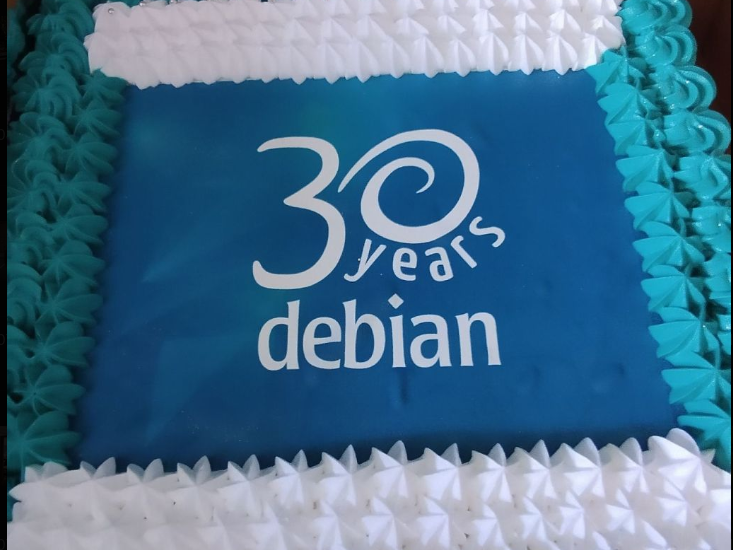
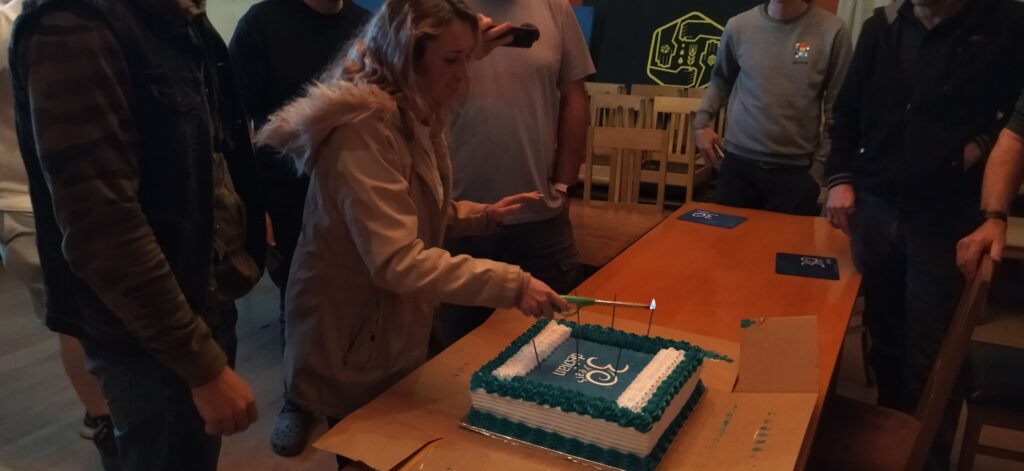
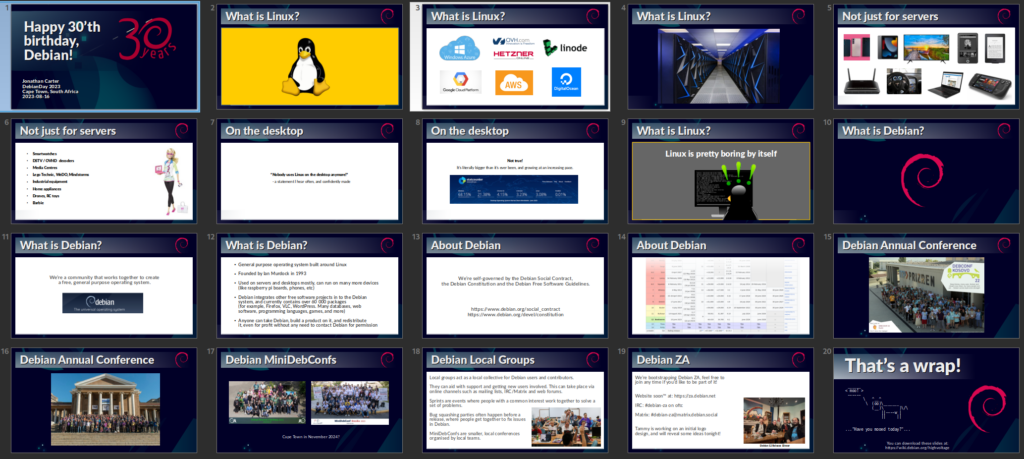
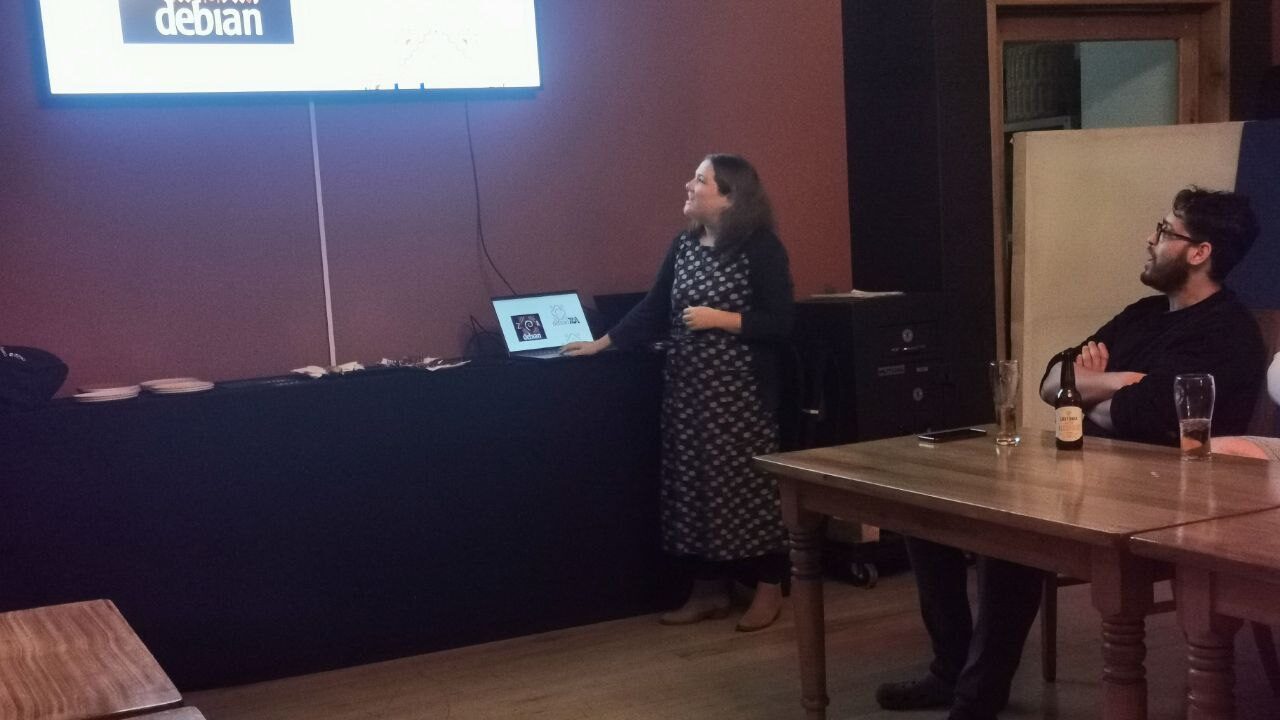

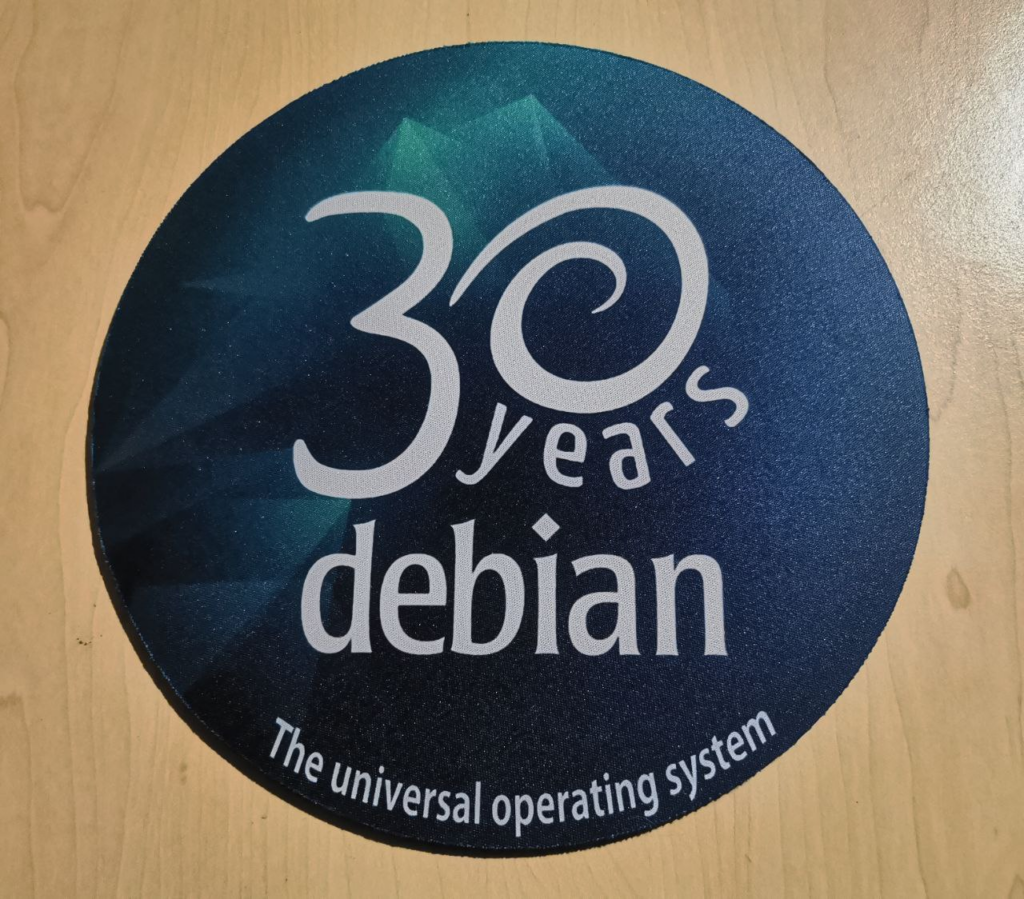
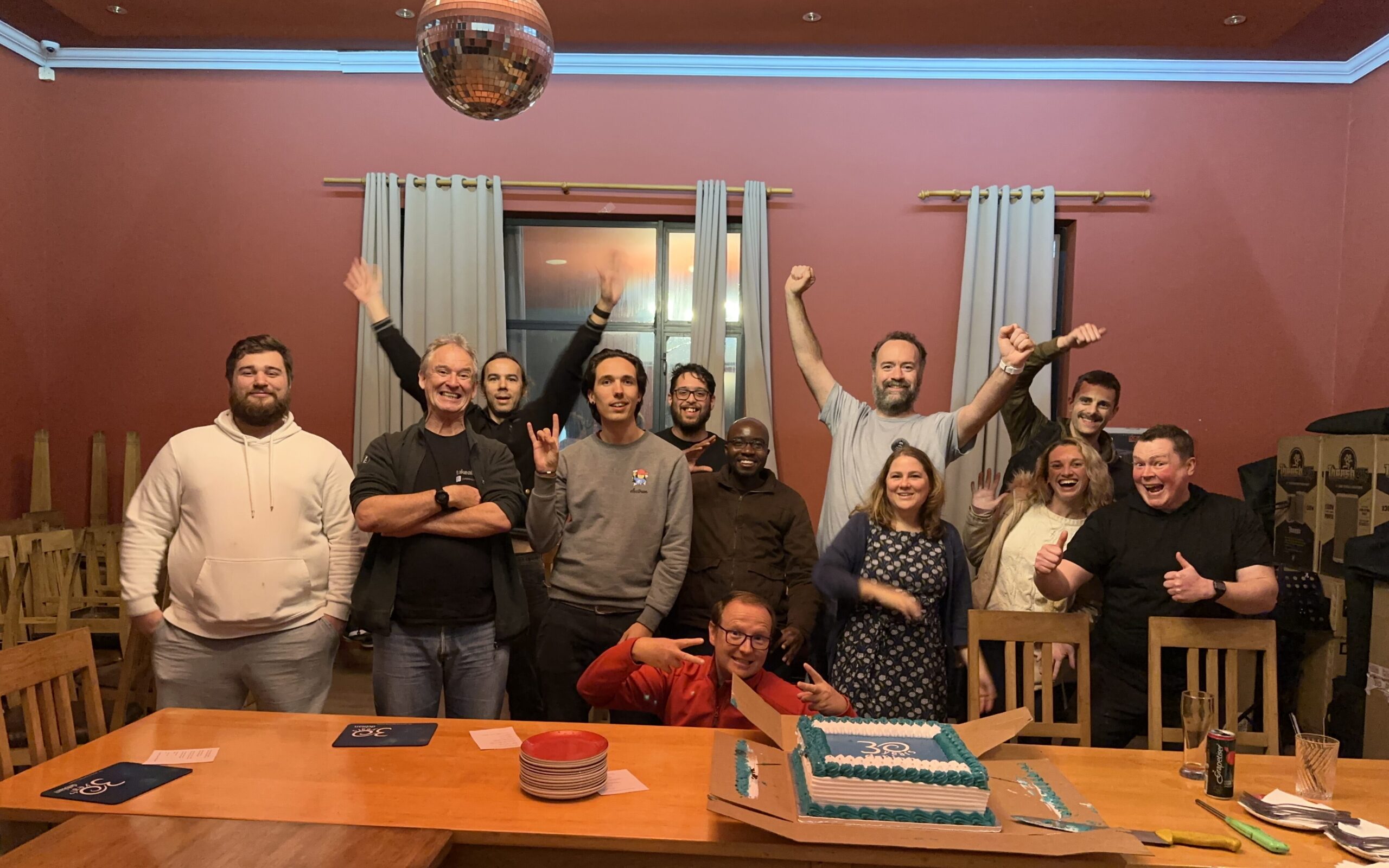

 I've been maintaining a number of Perl software packages recently.
There's
 Welcome to the 41th post in the
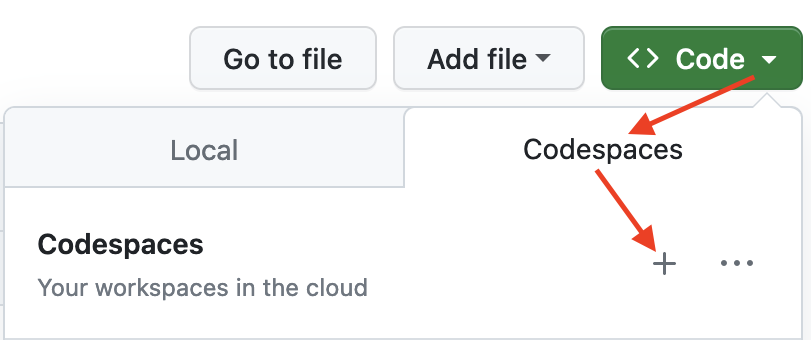 The first time you do this, it will open up a new browser tab where
your Codespace is being instantiated. This first-time instantiation
will take a few minutes (feel free to click View logs to see how
things are progressing) so please be patient. Once built, your Codespace
will deploy almost immediately when you use it again in the future.
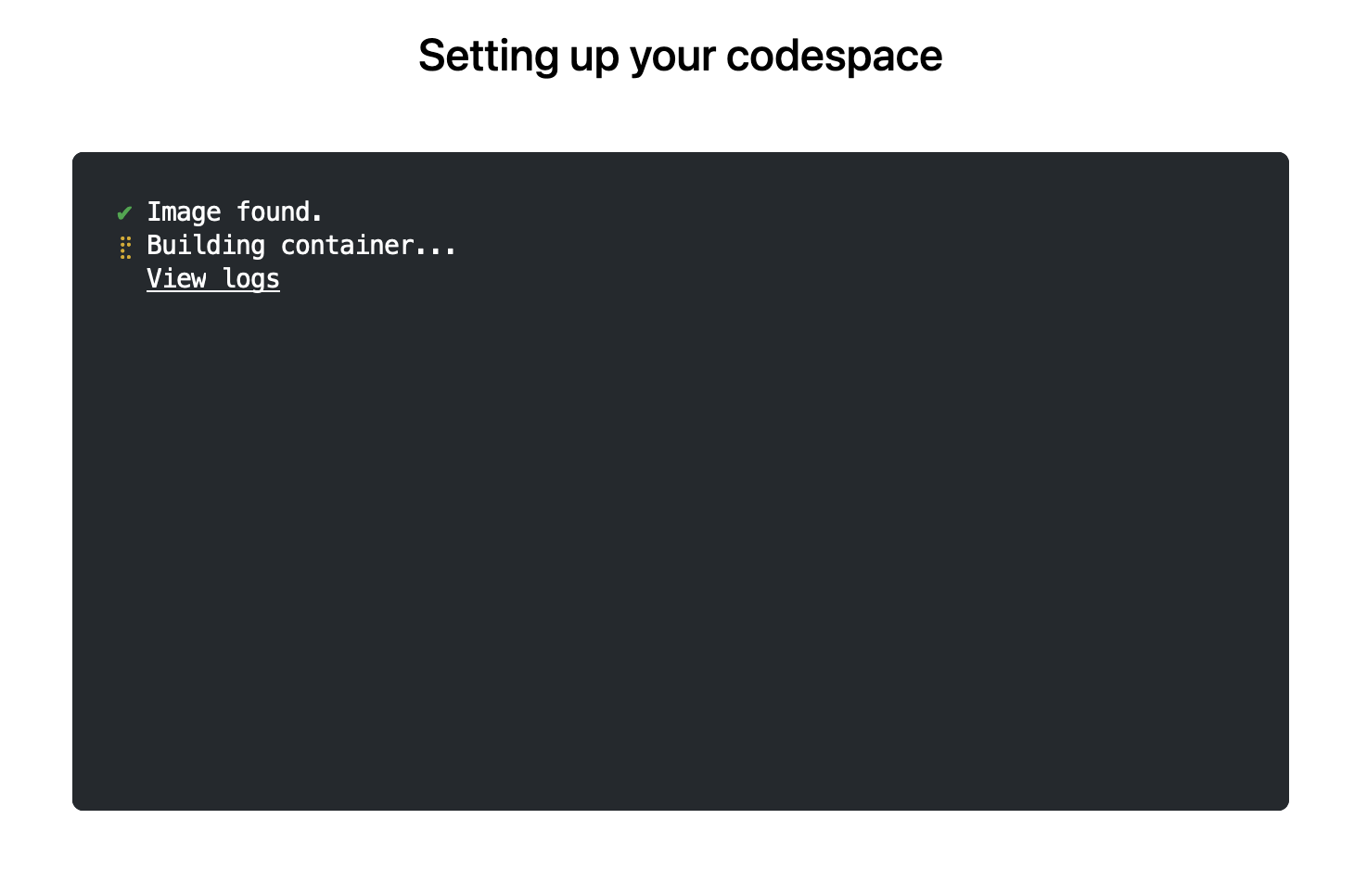 After the VS Code editor opens up in your browser, feel free to open
up the
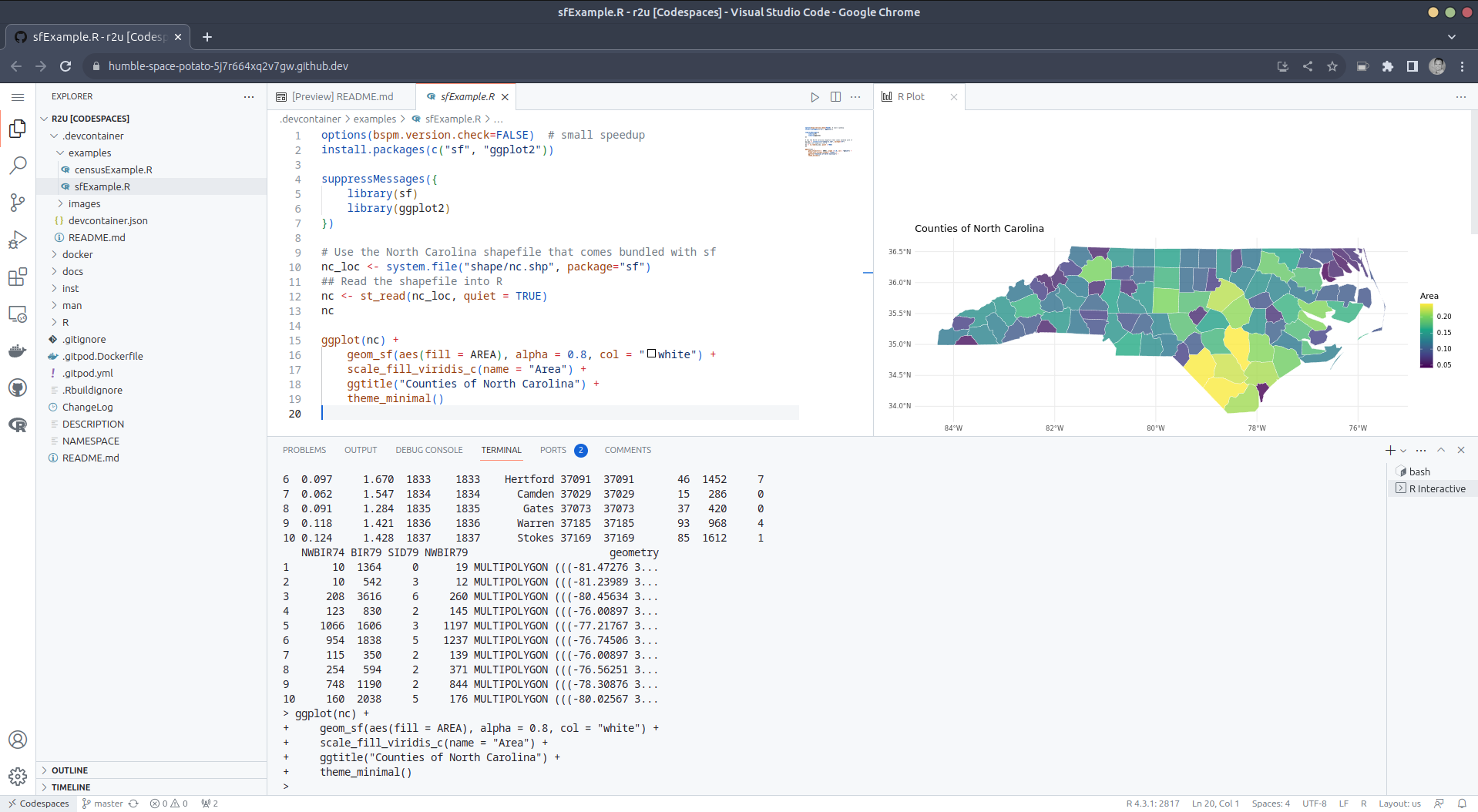 (Both example screenshots reflect the initial
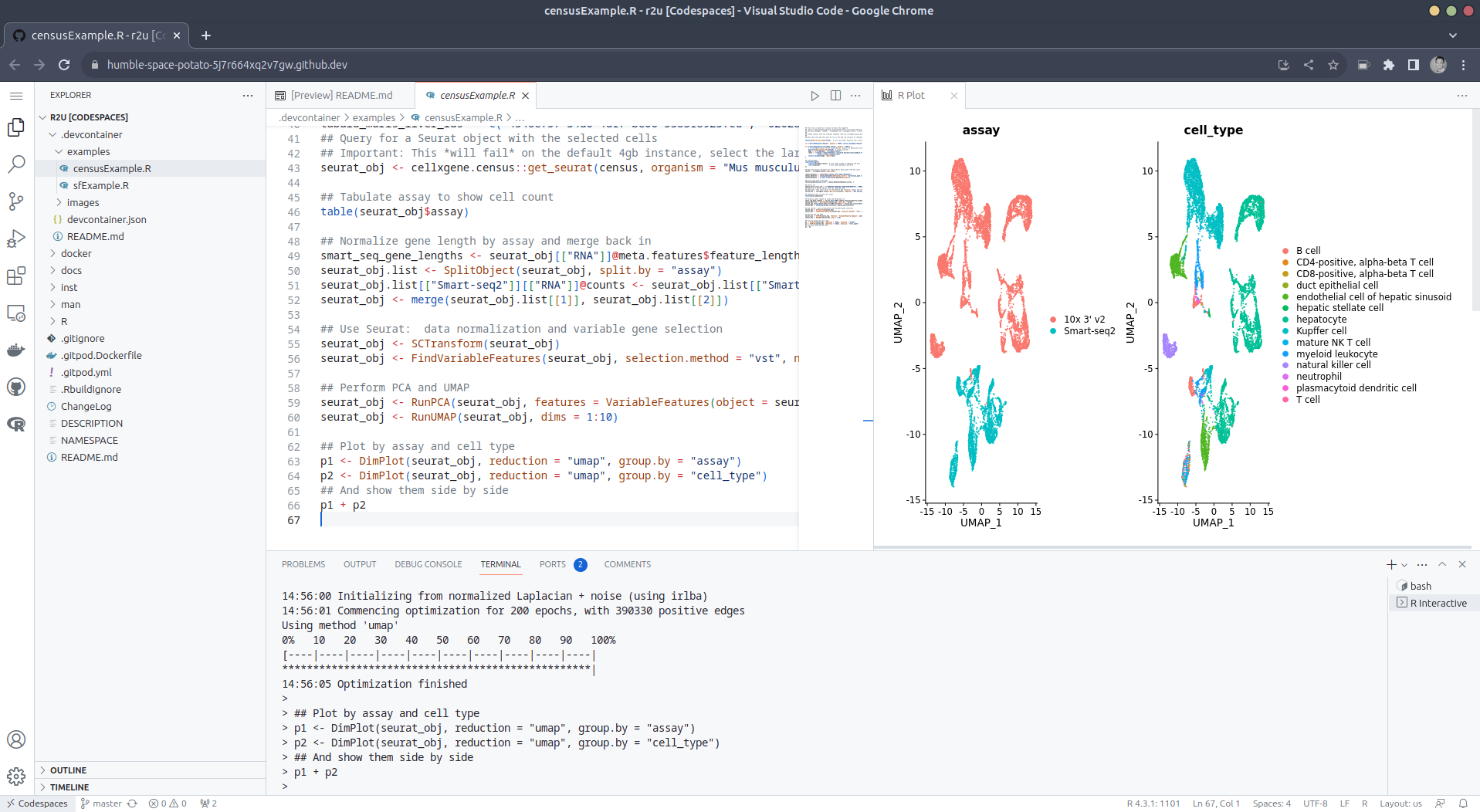

 Like each month, have a look at the work funded by
 Mexico s education sector had one of the longest lockdowns due to COVID: As
everybody, we went virtual in March 2020, and it was only by late February
2022 that I went back to teach presentially at the University.
But for the semester starting next Tuesday, I m going back to a full-online
mode. Why? Because me and my family will be travelling to Argentina for six
months, starting this October and until next March. When I went to ask for my
teaching to be frozen for two semesters, the Head of Division told me he was
actually looking for teachers wanting to do distance-teaching With a student
population of >380,000 students, and not being able to grow the physical
infrastructure, and with such a big city as Mexico City, where a person can take
ove 2hr to commute daily It only makes sense to offer part of the courses
online.
To be honest, I m a bit nervous about this. The past couple of days, I ve been
setting up again the technological parts (i.e. spinning up a Jitsi instance,
remembering my usual practices and programs). But Well, I know that being
videoconference-bound, my teaching will lose the dynamism that comes from
talking face to face with students. I think I will miss it!
(but at the same time, I m happy to try this anew: to go virtual, but where
students choosing this modality do so by choice rather than because the world
forced them to)
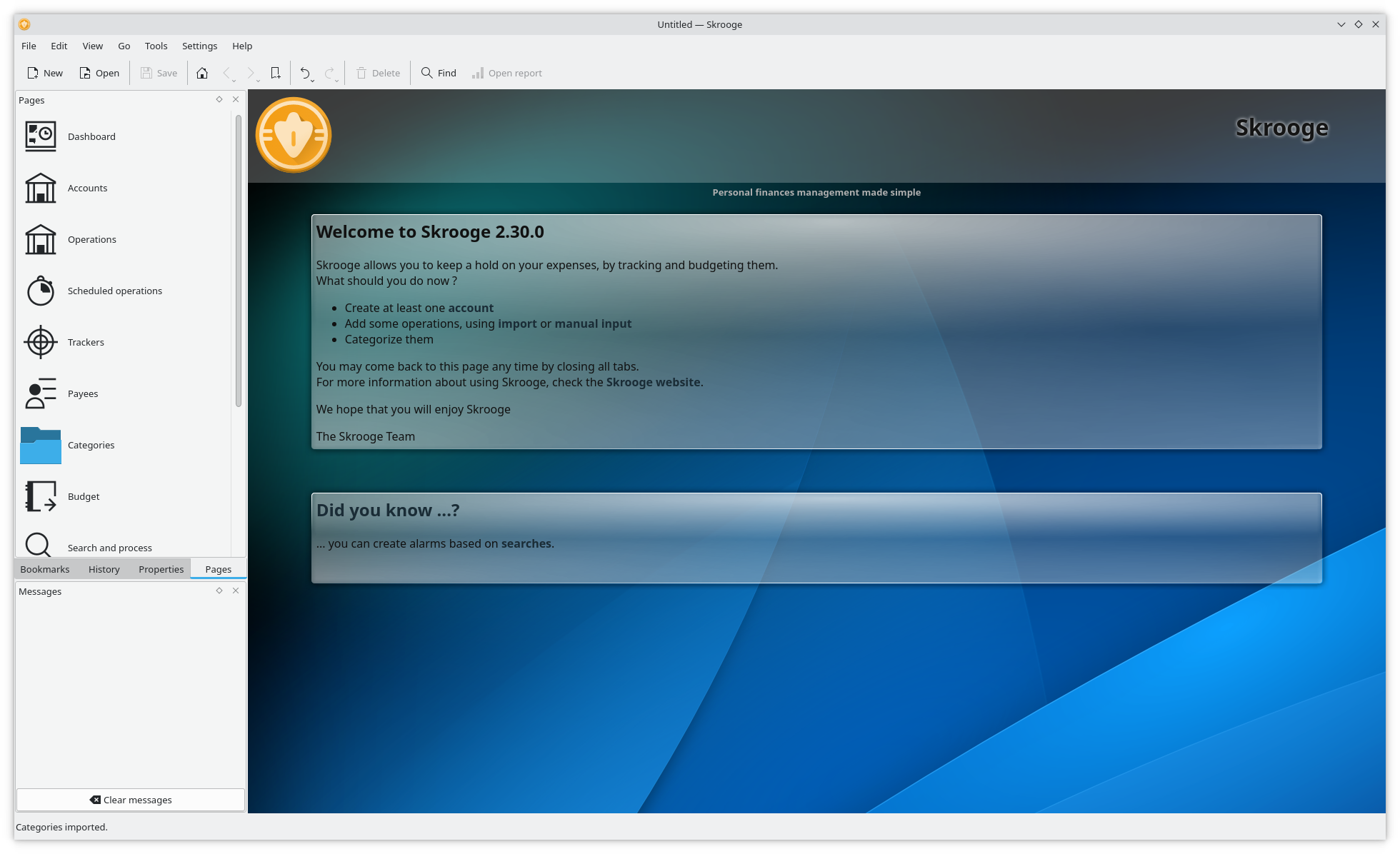 KDE Skrooge snap
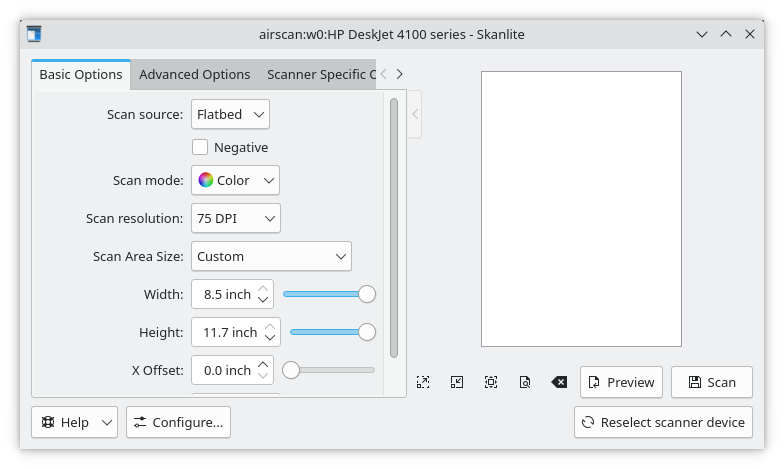
 If you can spare some change ( anything helps ) please consider a donation.

 I dug out a computer running Fedora 28, which was released 2018-04-01 - over 5 years ago. Backing up the data and re-installing seemed tedious, but the current version of Fedora is 38, and while Fedora supports updates from N to N+2 that was still going to be 5 separate upgrades. That seemed tedious, so I figured I'd just try to do an update from 28 directly to 38. This is, obviously, extremely unsupported, but what could possibly go wrong?
 About a week back Jio launched a


 Unlike the Americans who chose the path to have more competition, we have chosen the path to have more monopolies. So even though, I very much liked Louis es