Search Results: "edd"

3 May 2014

Dirk Eddelbuettel: RcppSMC 0.1.3 and 0.1.4

The very useful Valgrind tool had flagged an actual error in the package which the CRAN maintainers asked us to address. This was followed by a minor brown-bad oversight of a missing delete, also tagged by Valgrind. Both are pretty ancient bugs which we probably should have found aeons ago. Releases 0.1.3 and 0.1.4 made it to CRAN yesterday in short succession. To recap, RcppSMC combines the SMCTC template classes for Sequential Monte Carlo and Particle Filters (Johansen, 2009, JSS) with the Rcpp package for R/C++ Integration (Eddelbuettel and Francois, 2011, JSS) and thereby allows for easier and more direct access from R to the computational core of the Sequential Monte Carlo algorithm. The two NEWS entries are below:
Changes in RcppSMC version 0.1.4 (2014-05-02)
  • Added missing delete operator to destructor in sampler
Changes in RcppSMC version 0.1.3 (2014-05-01)
  • Bugfix in Sampler.iterate() for memory overrun detected by valgrind
Courtesy of CRANberries, there are also diffstat reports for 0.1.3. and 0.1.4. As always, more detailed information is on the RcppSMC page,

This post by Dirk Eddelbuettel originated on his Thinking inside the box blog. Please report excessive re-aggregation in third-party for-profit settings.

22 April 2014

Steve McIntyre: Linaro welcomes GSOC 2014 students

After several weeks of review and discussion, the application and selection period for the 2014 Google Summer of Code is over. 4,420 students proposed a total of 6,313 projects for this summer. From those, 1,307 students have been accepted (more details), and Linaro is one of the 190 Open Source projects that will be working with students this year. In our first year as a GSOC mentoring organisation, we received 17 applications and Google allocated us 3 slots for student projects. It was quite a challenge to pick just 3 projects from the excellent field, and it's a shame that the limited number of slots meant we had no choice but to disappoint some people. Thanks to all those who applied! I'm delighted to announce our 3 chosen interns for 2014: Please join me in welcoming these three new engineers to the Linaro team! We have a GSOC wiki ready for our students to use at https://gsoc.linaro.org/ and hopefully they will start adding content there soon about themselves and their projects (hint!). In the meantime, we have more information about our original proposals and the GSOC program in the main Linaro wiki. Starting today, the next phase of the program is the so-called "bonding period". Students are encouraged to get to know people within Linaro (especially their mentors!) and prepare to start work on their projects, whatever is needed. The official start of the work period for GSOC is May 19th, and it runs through to August 18th. We will give updates on progress through the summer, and we're hoping to talk about our results at the next Linaro Connect in September. Good luck, folks!

Martín Ferrari: DNSSEC, DANE, SSHFP, etc

While researching some security-related stuff for a post I am currently writing, I found some interesting bits here and there that I though I should share, as they were new to me, and probably for many others.

DNSSEC The first thing is DNSSEC. I knew about it, of course, but never bothered to dig much into it. While reading about many interesting applications of DNS for key distribution, and thinking of ways to use them, it is clear that DNSSEC is a precondition for any of that to work. In case you don't know about it, it is an extension for the DNS service to make it safer, for example, to avoid the bad guys having you think that google.com points to sniffer.nsa.gov. Apart from these ber-cool applications I was thinking about, avoiding DNS-based attacks becomes more and more relevant these days. And I think Debian and the rest of the Free Software world should work on making this available to all end-users as easily as possible. While adoption still looks pretty low, there are some good news. First, Google claims its public DNS supports DNSSEC. Of course, you need to trust Google servers, and the path between your machine and them. But if your resolver supports DNSSEC, you can use their servers and validate the answers. On the other side, I am not too sure about their implementation, as half of the time, it would return a valid answer to a query for an invalid record: dig +dnssec sigfail.verteiltesysteme.net @8.8.8.8). Also, they have not published DNSSEC records for google.com, which seems crazy. Some packages included in Debian already take advantage of DNSSEC, if available (more on that later), but more importantly, there are a couple of DNSSEC-enabled recursive servers, including bind, unbound, and the more commonly-used dnsmasq (there is a wiki page summarising Debian's status). Sadly, the default configuration for dnsmasq does not enable DNSSEC, and most people will not use it, even if it installed, because DHCP-provided servers are usually preferred. It seems to me that it would be wise to have a package that would install dnsmasq with DNSSEC enabled, and make it the only valid resolver for the system. If you want to check if your resolver is correctly validating DNSSEC, you can use this test web page. Another good news is that many top-level domains already support DNSSEC, and in my case, Gandi.net has support in place to set it up. So I am going to look into enabling it for my own domain.

SSHFP One useful and simple advantage of using DNSSEC, is that you can store information there, and then trust it to be correct. One new DNS RR (resource record) that is useful in this context is the SSHFP RR, which allows the sysadmin of a host to publish the host SSH key fingerprint in the DNS zone. The ssh client, when enabling the VerifyHostKeyDNS option, will use that information to trust unknown hosts. One downside to this, is that either if you set the option to ask, or if your resolver does not support DNSSEC, you get the same message, which does not warn you about the extra risk. To help you create your DNS records, you can just run this command:
$ ssh-keygen -r brie.tincho.org
brie.tincho.org IN SSHFP 1 1 6ac93c63379828b5b75847bc37d8ab2b48983343
brie.tincho.org IN SSHFP 2 1 cf0d11515367e3aa7eeb37056688f11b53c8ef23

DANE, S/MIME and GPG Recently, while at FOSDEM, I attended talks that mentioned DANE. This proposed IETF standard introduces a mechanism to use DNS as a secure key distribution system, which could completely override the CA oligopoly, a very attractive proposition for many people. In short, it is very similar to the SSHFP mechanism, but it is not restricted to SSH host keys: it can be used to distribute public key information for any TLS-enabled service. So, instead (or in addition to) of having a CA sign your certificate, and relying on the chain of trust by means of having a local copy of all root CA certificates, you use the chain of trust embedded in DNSSEC to make sure that the DNS RRs you publish are valid. Then, the client application can trust the fingerprint published for the relevant service to verify that it is talking to the right server. This is a very exciting development, and I hope it gets widespread adoption. It is already supported in Postfix, there seem to be some work going on in Mozilla, as well as in Prosody which is a great start. Another exciting development of this, is the generalisation of DANE for other entities, like email addresses. There are two draft RFCs being worked on right now to deploy S/MIME and OpenPGP key material using DNSSEC. This could also change completely the way we manage the Web of Trust.

15 April 2014

Dirk Eddelbuettel: BH release 1.54.0-2

Yesterday's release of RcppBDT 0.2.3 lead to an odd build error. If one used at the same time a 32-bit OS, a compiler as recent as g++ 4.7 and the Boost 1.54.0 headers (directly or via the BH package) then the file lexical_cast.hpp barked and failed to compile for lack of an 128-bit integer (which is not a surprise on a 32-bit OS). After looking at this for a bit, and looking at some related bug report, I came up with a simple fix (which I mentioned in an update to the RcppBDT 0.2.3 release post). Sleeping over it, and comparing to the Boost 1.55 file, showed that the hunch was right, and I have since made a new release 1.54.0-2 of the BH package which contains the fix.
Changes in version 1.54.0-2 (2014-04-14)
  • Bug fix to lexical_cast.hpp which now uses the test for INT128 which the rest of Boost uses, consistent with Boost 1.55 too.
Courtesy of CRANberries, there is also a diffstat report for the most recent release. Comments and suggestions are welcome via the mailing list or issue tracker at the GitHub repo.

This post by Dirk Eddelbuettel originated on his Thinking inside the box blog. Please report excessive re-aggregation in third-party for-profit settings.

Colin Watson: Porting GHC: A Tale of Two Architectures

We had some requests to get GHC (the Glasgow Haskell Compiler) up and running on two new Ubuntu architectures: arm64, added in 13.10, and ppc64el, added in 14.04. This has been something of a saga, and has involved rather more late-night hacking than is probably good for me. Book the First: Recalled to a life of strange build systems You might not know it from the sheer bulk of uploads I do sometimes, but I actually don't speak a word of Haskell and it's not very high up my list of things to learn. But I am a pretty experienced build engineer, and I enjoy porting things to new architectures: I'm firmly of the belief that breadth of architecture support is a good way to shake out certain categories of issues in code, that it's worth doing aggressively across an entire distribution, and that, even if you don't think you need something now, new requirements have a habit of coming along when you least expect them and you might as well be prepared in advance. Furthermore, it annoys me when we have excessive noise in our build failure and proposed-migration output and I often put bits and pieces of spare time into gardening miscellaneous problems there, and at one point there was a lot of Haskell stuff on the list and it got a bit annoying to have to keep sending patches rather than just fixing things myself, and ... well, I ended up as probably the only non-Haskell-programmer on the Debian Haskell team and found myself fixing problems there in my free time. Life is a bit weird sometimes. Bootstrapping packages on a new architecture is a bit of a black art that only a fairly small number of relatively bitter and twisted people know very much about. Doing it in Ubuntu is specifically painful because we've always forbidden direct binary uploads: all binaries have to come from a build daemon. Compilers in particular often tend to be written in the language they compile, and it's not uncommon for them to build-depend on themselves: that is, you need a previous version of the compiler to build the compiler, stretching back to the dawn of time where somebody put things together with a big magnet or something. So how do you get started on a new architecture? Well, what we do in this case is we construct a binary somehow (usually involving cross-compilation) and insert it as a build-dependency for a proper build in Launchpad. The ability to do this is restricted to a small group of Canonical employees, partly because it's very easy to make mistakes and partly because things like the classic "Reflections on Trusting Trust" are in the backs of our minds somewhere. We have an iron rule for our own sanity that the injected build-dependencies must themselves have been built from the unmodified source package in Ubuntu, although there can be source modifications further back in the chain. Fortunately, we don't need to do this very often, but it does mean that as somebody who can do it I feel an obligation to try and unblock other people where I can. As far as constructing those build-dependencies goes, sometimes we look for binaries built by other distributions (particularly Debian), and that's pretty straightforward. In this case, though, these two architectures are pretty new and the Debian ports are only just getting going, and as far as I can tell none of the other distributions with active arm64 or ppc64el ports (or trivial name variants) has got as far as porting GHC yet. Well, OK. This was somewhere around the Christmas holidays and I had some time. Muggins here cracks his knuckles and decides to have a go at bootstrapping it from scratch. It can't be that hard, right? Not to mention that it was a blocker for over 600 entries on that build failure list I mentioned, which is definitely enough to make me sit up and take notice; we'd even had the odd customer request for it. Several attempts later and I was starting to doubt my sanity, not least for trying in the first place. We ship GHC 7.6, and upgrading to 7.8 is not a project I'd like to tackle until the much more experienced Haskell folks in Debian have switched to it in unstable. The porting documentation for 7.6 has bitrotted more or less beyond usability, and the corresponding documentation for 7.8 really isn't backportable to 7.6. I tried building 7.8 for ppc64el anyway, picking that on the basis that we had quicker hardware for it and didn't seem likely to be particularly more arduous than arm64 (ho ho), and I even got to the point of having a cross-built stage2 compiler (stage1, in the cross-building case, is a GHC binary that runs on your starting architecture and generates code for your target architecture) that I could copy over to a ppc64el box and try to use as the base for a fully-native build, but it segfaulted incomprehensibly just after spawning any child process. Compilers tend to do rather a lot, especially when they're built to use GCC to generate object code, so this was a pretty serious problem, and it resisted analysis. I poked at it for a while but didn't get anywhere, and I had other things to do so declared it a write-off and gave up. Book the Second: The golden thread of progress In March, another mailing list conversation prodded me into finding a blog entry by Karel Gardas on building GHC for arm64. This was enough to be worth another look, and indeed it turned out that (with some help from Karel in private mail) I was able to cross-build a compiler that actually worked and could be used to run a fully-native build that also worked. Of course this was 7.8, since as I mentioned cross-building 7.6 is unrealistically difficult unless you're considerably more of an expert on GHC's labyrinthine build system than I am. OK, no problem, right? Getting a GHC at all is the hard bit, and 7.8 must be at least as capable as 7.6, so it should be able to build 7.6 easily enough ... Not so much. What I'd missed here was that compiler engineers generally only care very much about building the compiler with older versions of itself, and if the language in question has any kind of deprecation cycle then the compiler itself is likely to be behind on various things compared to more typical code since it has to be buildable with older versions. This means that the removal of some deprecated interfaces from 7.8 posed a problem, as did some changes in certain primops that had gained an associated compatibility layer in 7.8 but nobody had gone back to put the corresponding compatibility layer into 7.6. GHC supports running Haskell code through the C preprocessor, and there's a __GLASGOW_HASKELL__ definition with the compiler's version number, so this was just a slog tracking down changes in git and adding #ifdef-guarded code that coped with the newer compiler (remembering that stage1 will be built with 7.8 and stage2 with stage1, i.e. 7.6, from the same source tree). More inscrutably, GHC has its own packaging system called Cabal which is also used by the compiler build process to determine which subpackages to build and how to link them against each other, and some crucial subpackages weren't being built: it looked like it was stuck on picking versions from "stage0" (i.e. the initial compiler used as an input to the whole process) when it should have been building its own. Eventually I figured out that this was because GHC's use of its packaging system hadn't anticipated this case, and was selecting the higher version of the ghc package itself from stage0 rather than the version it was about to build for itself, and thus never actually tried to build most of the compiler. Editing ghc_stage1_DEPS in ghc/stage1/package-data.mk after its initial generation sorted this out. One late night building round and round in circles for a while until I had something stable, and a Debian source upload to add basic support for the architecture name (and other changes which were a bit over the top in retrospect: I didn't need to touch the embedded copy of libffi, as we build with the system one), and I was able to feed this all into Launchpad and watch the builders munch away very satisfyingly at the Haskell library stack for a while. This was all interesting, and finally all that work was actually paying off in terms of getting to watch a slew of several hundred build failures vanish from arm64 (the final count was something like 640, I think). The fly in the ointment was that ppc64el was still blocked, as the problem there wasn't building 7.6, it was getting a working 7.8. But now I really did have other much more urgent things to do, so I figured I just wouldn't get to this by release time and stuck it on the figurative shelf. Book the Third: The track of a bug Then, last Friday, I cleared out my urgent pile and thought I'd have another quick look. (I get a bit obsessive about things like this that smell of "interesting intellectual puzzle".) slyfox on the #ghc IRC channel gave me some general debugging advice and, particularly usefully, a reduced example program that I could use to debug just the process-spawning problem without having to wade through noise from running the rest of the compiler. I reproduced the same problem there, and then found that the program crashed earlier (in stg_ap_0_fast, part of the run-time system) if I compiled it with +RTS -Da -RTS. I nailed it down to a small enough region of assembly that I could see all of the assembly, the source code, and an intermediate representation or two from the compiler, and then started meditating on what makes ppc64el special. You see, the vast majority of porting bugs come down to what I might call gross properties of the architecture. You have things like whether it's 32-bit or 64-bit, big-endian or little-endian, whether char is signed or unsigned, that sort of thing. There's a big table on the Debian wiki that handily summarises most of the important ones. Sometimes you have to deal with distribution-specific things like whether GL or GLES is used; often, especially for new variants of existing architectures, you have to cope with foolish configure scripts that think they can guess certain things from the architecture name and get it wrong (assuming that powerpc* means big-endian, for instance). We often have to update config.guess and config.sub, and on ppc64el we have the additional hassle of updating libtool macros too. But I've done a lot of this stuff and I'd accounted for everything I could think of. ppc64el is actually a lot like amd64 in terms of many of these porting-relevant properties, and not even that far off arm64 which I'd just successfully ported GHC to, so I couldn't be dealing with anything particularly obvious. There was some hand-written assembly which certainly could have been problematic, but I'd carefully checked that this wasn't being used by the "unregisterised" (no specialised machine dependencies, so relatively easy to port but not well-optimised) build I was using. A problem around spawning processes suggested a problem with SIGCHLD handling, but I ruled that out by slowing down the first child process that it spawned and using strace to confirm that SIGSEGV was the first signal received. What on earth was the problem? From some painstaking gdb work, one thing I eventually noticed was that stg_ap_0_fast's local stack appeared to be being corrupted by a function call, specifically a call to the colourfully-named debugBelch. Now, when IBM's toolchain engineers were putting together ppc64el based on ppc64, they took the opportunity to fix a number of problems with their ABI: there's an OpenJDK bug with a handy list of references. One of the things I noticed there was that there were some stack allocation optimisations in the new ABI, which affected functions that don't call any vararg functions and don't call any functions that take enough parameters that some of them have to be passed on the stack rather than in registers. debugBelch takes varargs: hmm. Now, the calling code isn't quite in C as such, but in a related dialect called "Cmm", a variant of C-- (yes, minus), that GHC uses to help bridge the gap between the functional world and its code generation, and which is compiled down to C by GHC. When importing C functions into Cmm, GHC generates prototypes for them, but it doesn't do enough parsing to work out the true prototype; instead, they all just get something like extern StgFunPtr f(void);. In most architectures you can get away with this, because the arguments get passed in the usual calling convention anyway and it all works out, but on ppc64el this means that the caller doesn't generate enough stack space and then the callee tries to save its varargs onto the stack in an area that in fact belongs to the caller, and suddenly everything goes south. Things were starting to make sense. Now, debugBelch is only used in optional debugging code; but runInteractiveProcess (the function associated with the initial round of failures) takes no fewer than twelve arguments, plenty to force some of them onto the stack. I poked around the GCC patch for this ABI change a bit and determined that it only optimised away the stack allocation if it had a full prototype for all the callees, so I guessed that changing those prototypes to extern StgFunPtr f(); might work: it's still technically wrong, not least because omitting the parameter list is an obsolescent feature in C11, but it's at least just omitting information about the parameter list rather than actively lying about it. I tweaked that and ran the cross-build from scratch again. Lo and behold, suddenly I had a working compiler, and I could go through the same build-7.6-using-7.8 procedure as with arm64, much more quickly this time now that I knew what I was doing. One upstream bug, one Debian upload, and several bootstrapping builds later, and GHC was up and running on another architecture in Launchpad. Success! Epilogue There's still more to do. I gather there may be a Google Summer of Code project in Linaro to write proper native code generation for GHC on arm64: this would make things a good deal faster, but also enable GHCi (the interpreter) and Template Haskell, and thus clear quite a few more build failures. Since there's already native code generation for ppc64 in GHC, getting it going for ppc64el would probably only be a couple of days' work at this point. But these are niceties by comparison, and I'm more than happy with what I got working for 14.04. The upshot of all of this is that I may be the first non-Haskell-programmer to ever port GHC to two entirely new architectures. I'm not sure if I gain much from that personally aside from a lot of lost sleep and being considered extremely strange. It has, however, been by far the most challenging set of packages I've ported, and a fascinating trip through some odd corners of build systems and undefined behaviour that I don't normally need to touch.

14 April 2014

Dirk Eddelbuettel: RcppBDT 0.2.3

A new release of the RcppBDT package is now on CRAN. Several new modules were added; the package can now work on dates, date durations, "ptime" (aka posix time), and timezones. Most interesting may be the fact that ptime is configured to use 96 bits. This allows a precise representation of dates and times down to nanoseconds, and permits date and time calculations at this level. The complete NEWS entry is below:
Changes in version 0.2.3 (2014-04-13)
  • New module 'bdtDt' replacing the old 'bdtDate' module in a more transparent style using a local class which is wrapped, just like the three other new classes do
  • New module 'bdtTd' providing date durations which can be added to dates.
  • New module 'bdtTz' providing time zone information such as offset to UTC, amount of DST, abbreviated and full timezone names.
  • New module 'bdtDu' using 'posix_time::duration' for time durations types
  • New module 'bdtPt' using 'posix_time::ptime' for posix time, down to nanosecond granularity (where hardware and OS permit it)
  • Now selects C++11 compilation by setting CXX_STD = CXX11 in src/Makevars* and hence depend on R 3.1.0 or later this gives gives us long long needed for the nano-second high-resolution time calculations across all builds and platforms.
Courtesy of CRANberries, there is also a diffstat report for the lastest release. As always, feedback is welcome and the rcpp-devel mailing list off the R-Forge page for Rcpp is the best place to start a discussion. Update: I just learned the hard way that the combination of 32-bit OS, g++ at version 4.7 or newer and a Boost version of 1.53 or 1.54 does not work with this new upload. Some Googling suggests that this ought to be fixed in Boost 1.54; seemingly it isn't as our trusted BH package with Boost headers provides that very version 1.54. However, the Googling also suggested a quick two-line fix which I just committed in the Github repo. A new BH package with the fix may follow in a few days.

This post by Dirk Eddelbuettel originated on his Thinking inside the box blog. Please report excessive re-aggregation in third-party for-profit settings.

11 April 2014

Ian Campbell: qcontrol 0.5.3

Update: Closely followed by 0.5.4 to fix an embarassing brown paper bag bug: Get it from gitorious or http://www.hellion.org.uk/qcontrol/releases/0.5.4/. I've just released qcontrol 0.5.3. Changes since the last release: Get it from gitorious or http://www.hellion.org.uk/qcontrol/releases/0.5.3/. The Debian package will be uploaded shortly.

Dirk Eddelbuettel: RcppCNPy 0.2.3

R 3.1.0 came out today. Among the (impressive and long as usual) list of changes is the added ability to specify CXX_STD = CXX11 in order to get C++11 (or the best available subset on older compilers). This brings a number of changes and opportunities which are frankly too numerous to be discussed in this short post. But it also permits us, at long last, to use long long integer types. For RcppCNPy, this means that we can finally cover NumPy integer data (along with the double precision we had from the start) on all platforms. Python encodes these as an int64, and that type was unavailable (at least in 32-bit OSs) until we got long long made available to us by R. So today I made the change to depend on R 3.1.0, and select C++11 which allowed us to free the code from a number if #ifdef tests. This all worked out swimmingly and the new package has already been rebuilt for Windows. I also updated the vignette, and refreshed its look and feel. Full changes are listed below.
Changes in version 0.2.3 (2014-04-10)
  • src/Makevars now sets CXX_STD = CXX11 which also provides the long long type on all platforms, so integer file support is no longer conditional.
  • Consequently, code conditional on RCPP_HAS_LONG_LONG_TYPES has been simplified and is no longer conditional.
  • The package now depends on R 3.1.0 or later to allow this.
  • The vignette has been updated and refreshed to reflect this.
CRANberries also provides a diffstat report for the latest release. As always, feedback is welcome and the rcpp-devel mailing list off the R-Forge page for Rcpp is the best place to start a discussion.

This post by Dirk Eddelbuettel originated on his Thinking inside the box blog. Please report excessive re-aggregation in third-party for-profit settings.

9 April 2014

Dirk Eddelbuettel: BH release 1.54.0-1

A new release of the BH package is now on CRAN and its mirrors. BH provides (a sizeable subset of) the Boost library for C++, particularly (large) parts delivered as pure template headers not requiring linking. See the BH page for more details. This release provides our first update relative to the Boost tarballs we started with. It moves us from 1.51.0 (which was getting a little long in the tooth) to 1.54.0. This is just about the first time ever that I didn't package something straight from the current release (now 1.55.0). My aim was to to balance the oh, shiny, new aspect with some stability. Comments welcome--maybe I will go to the bleeding edge next time. As before, the CRAN is created by running bcp over a number of selected components of Boost. If you'd like to see additional ones include, please do get in touch too. Before uploading, I also tested against all of these sixteen CRAN dependents I could quickly test on my server given the installed dependencies there. The complete list changes follows below.
Changes in version 1.54.0-1 (2014-04-07)
  • Upgraded to Boost 1.54.0
  • Adjust build script local/script/CreateBoost.sh accordingly
  • Renamed generation_runge_kutta_cash_karp54_classic.hpp to generation_runge_kutta_cash_karp54_cl.hpp to remain within 100-character limit for tar
Courtesy of CRANberries, there is also a diffstat report for the most recent release. Comments and suggestions are welcome via the mailing list or issue tracker at the GitHub repo.

This post by Dirk Eddelbuettel originated on his Thinking inside the box blog. Please report excessive re-aggregation in third-party for-profit settings.

8 April 2014

Dirk Eddelbuettel: RcppArmadillo 0.4.200.0

Conrad released a new upstream release 4.200 for Armadillo, his templated C++ library for linear algebra, earlier today. As usual, this was rolled up in a new RcppArmadillo release 0.4.200.0; I had actually made two pre-releases leading up his 4.200 release and was hence not expecting any surprises. Prior to uploading to CRAN, I also tested against all 61 reverse dependencies of the package. Last but not least, I also updated the corresponding Debian package.
Changes in RcppArmadillo version 0.4.200.0 (2014-04-07)
  • Upgraded to Armadillo release Version 4.200 (Flintlock Swoop)
    • faster transpose of sparse matrices
    • more efficient handling of aliasing during matrix multiplication
    • faster inverse of matrices marked as diagonal
Courtesy of CRANberries, there is also a diffstat report for the most recent release As always, more detailed information is on the RcppArmadillo page. Questions, comments etc should go to the rcpp-devel mailing list off the R-Forge page.

This post by Dirk Eddelbuettel originated on his Thinking inside the box blog. Please report excessive re-aggregation in third-party for-profit settings.

7 April 2014

Russ Allbery: Review: Fantasy & Science Fiction, September/October 2011

Review: Fantasy & Science Fiction, September/October 2011
Editor: Gordon van Gelder
Issue: Volume 121, No. 3 & 4
ISSN: 1095-8258
Pages: 258
Another review of a magazine that I finished quite some time ago. Apologies for any inaccuracies or lack of depth in the reviews. There wasn't much in Charles de Lint's reviews in this issue that interested me, but Michelle West covers a great selection of books. Two of them (The Wise Man's Fear and The Quantum Thief) are already on my to-read list; the third, The Postmortal, sounded interesting and would go on my list to purchase if I didn't already have so many good books I've not read. Otherwise, this issue is short on non-fiction. The only other essay entry is a film review from Kathi Maio, which is the typical whining about all things film that F&SF publishes. "Rutger and Baby Do Jotenheim" by Esther M. Friesner: Baby is a former pole dancer with a toy poodle named Mister Snickers, which warns you right away that this story is going to involve a few over-the-top caricatures and more use of the word "piddle" than one might ideally want. Rutger is a mythology professor who tolerates her for the standard reasons in this sort of pairing. They're travelling across country to Baby's sister's wedding when their car breaks down in Minnesota, prompting an encounter with frost giants. As you might expect, this is a sort of fractured fairy tale, except based on Norse mythology instead of the more typical Grimm fare. The fun is in watching these two apparent incompetents (but with enough knowledge of mythology to clue in the reader) reproduce the confrontation between Thor and Utgard-Loki. The fight with old age is particularly entertaining. If you've read any of Friesner's other stories, you know what to expect: not much in the way of deeper meaning, but lots of fun playing with stereotypes and an optimistic, funny outcome. Good stuff. (7) "The Man Inside Black Betty" by Sarah Langan: This story comes with a mouthful of a subtitle: "Is Nicholas Wellington the World's Best Hope?" It's also a story that purports to be written by a fictional character, in this case one Saurub Ramesh (with Langan credited as having done "research"). It's told in the style of first-person journalism, relating the thoughts and impressions of Ramesh as he interviews Nicholas Wellington. The topic is Black Betty: a black hole above Long Island Sound. Wellington is a scientific genius and iconoclast with radical theories of black holes that contradict how the government has been attempting to deal with Black Betty, unsuccessfully. The structure here was well-handled, reminding me a lot of a Michael Lewis article during the financial collapse. Langan has a good feel for how journalism of this type mixes personalities, politics, and facts. But it's all setup and no story. We get some world building, and then it's over, with no resolution except pessimism. Meh. (4) "A Borrowed Heart" by Deborah J. Ross: Ross starts with the trappings of urban fantasy transplanted into a Victorian world: supernatural creatures about, a protagonist who is a high-class prostitute, and sex and a sucubus by the second page. It evolves from there into a family drama and an investigation, always giving the reader the impression that a vampire will jump out at any moment. But the ending caught me entirely by surprise and was far more effective due to its departure from the expected path. Well done. (7) "Bright Moment" by Daniel Marcus: The conflict between terraforming and appreciation for the universe as we find it is an old story pattern in science fiction, and Marcus doesn't add much here. I think the story would have been stronger if he'd found a way to write the same plot with a pure appeal to environmental beauty without the typical stakes-raising. But he does sprinkle the story with a few interesting bits, including a pod marriage and a futuristic version of extreme sports as a way of communing with nature. (6) "The Corpse Painter's Masterpiece" by M. Rickert: This is typical of my reaction to a Rickert story: shading a bit too much towards horror for me, a bit too cryptic, well-written but not really my thing. It's about a corpse painter who does the work of an informal mortician, improving the appearance of bodies for their funerals, and the sheriff who brings him all the dead bodies. It takes an odd macabre twist, and I have no idea what to make of the ending. (4) "Aisle 1047" by Jon Armstrong: Armstrong is best known for a couple of novels, Grey and Yarn, which entangle their stories in the future of marketing and commerce. One may be unsurprised, then, that this short story is on similar themes, with the intensity turned up to the parody point. Tiffan3 is a department-store saleswoman, spouting corporate slogans and advertising copy while trying to push customers towards particular products. The story follows the escalation into an all-out brand war, fought with the bubbly short-cut propaganda of a thirty-second commercial. For me, it fell awkwardly between two stools: it's a little too over-the-top and in love with its own bizarre alternate world to be effective satire, but the world is more depressing than funny and the advertising copy is grating. More of a curiosity than a successful story, I think. (5) "Anise" by Chris DeVito: Stories that undermine body integrity and focus on the fascinated horror of violation of physical boundaries aren't generally my thing, so take that into account in this review. Anise's husband died, but that's not as much of a problem as it used to be. Medical science can resurrect people via a sort of permanent, full-body life support system, making them more cyborg than human. "Anise" is about the social consequences of this technology in a world where a growing number of people have a much different relationship with their body than the typical living person today. It's a disturbing story that is deeply concerned with the physical: sex, blood, physical intimacy in various different forms, and a twisted type of psychological abuse. I think fans of horror will like this more than I did, although it's not precisely horror. It looks at the way one's perception of self and others can change by passing through a profound physical transformation. (5) "Spider Hill" by Donald Mead: I liked this story a lot better. It's about witchcraft and farm magic, about family secrets, and a sort of coming-of-age story (for a girl rather than a boy, for once). The main character is resourceful, determined, but also empathetic and aware of the impact of her actions, which made her more fun to read about. I doubt I'll remember this for too long, but when skimming through it again for a review, I had fond memories of it. (6) "Where Have All the Young Men Gone?" by Albert E. Cowdrey: Cowdrey in his paranormal investigation mode, which I like better than his horror mode. For once, the protagonist isn't even a lower-class or backwoods character. Instead, he's a military historian travelling in Austria who runs across a local ghost story. This is a fairly straightforward ghost investigation that follows a familiar path (albeit to an unusual final destination), but Cowdrey is a good story-teller and I liked the protagonist. (7) "Overtaken" by Karl Bunker: This is the sort of story that delivers its moral with the force of a hammer. It's not subtle. But if you're in the right mood for that, it's one of the better stories of its type. It's about a long-journey starship, crew in hibernation, that's overtaken by a far newer and faster mechanized ship from Earth that's attempting to re-establish contact with the old ships. The story is a conversation between the ship AIs. Save this one until you're in the mood for an old-fashioned defense of humanity. (8) "Time and Tide" by Alan Peter Ryan: Another pseudo-horror story, although I think it's better classified as a haunting. A wardrobe recalls a traumatic drowning in the childhood of the protagonist. As these things tend to do in stories like this, reality and memory start blurring and the wardrobe takes on a malevolent role. Not my sort of thing. (3) "What We Found" by Geoff Ryman: Any new Geoff Ryman story is something to celebrate. This is a haunting story on the boundaries between the scientific method and tribal superstition, deeply entangled with the question of how one recovers from national and familial trauma. How can we avoid passing the evils and madness of one generation down to the next? Much of the story is about family trauma, told with Ryman's exceptional grasp of character, but the science is entangled in an ingenious way that I won't spoil. As with Air, this is in no way science fiction. The science here would have fascinating and rather scary implications for our world, but clearly is not how science actually works. But as an insight into politics, and into healing, I found it a startlingly effective metaphor. I loved every bit of this. By far the best story of the issue. (9) Rating: 7 out of 10

3 April 2014

Aigars Mahinovs: Wireless photo workflow

For a while now I've been looking for ways to improve my photo workflow - to simplify and speed up the process. Now I've gotten a new toy to help that along - a Panasonic FlashAir SD card with WiFi connectivity. I was pretty sure that build-in workflows of some more automated solutions would not be a perfect fit for me, so I got this card which has a more manual workflow and a reasonable API, so I could write my own. Now I am trying to work out my requirements, the user stories if you will. I see two distinct workflows: live event and travel pictures. In both cases I want the images to retain the file names, Exif information and timing of the original photos and also have embedded GPS information from the phone synced to the time the photo was taken. And if I take a burst of very similar photos, I want the uploading process to only select and upload the "best" one (trivial heiristic being the file size) with an ability for me to later choose another one to replace it. There would need to be some way of syncing phone and camera time, especially considering that phones usually switch to local time zone when traveling and cameras do not, maybe the original time the photo was taken would need to be changed to local time zone, so that there are no photos that are taken during the day, but have a timestamp of 23:45 GMT. When I am in Live Event mode I would like the photos that I take to immediately start uploading to an event album that I create (or choose) at the start of the shoot with a preset privacy mode. This assumes that either I am willing to upload via 3G of my phone or that I have access to a stable WiFi network on-site. It might be good if I could upload a scaled down version of the pictures during the event and then later replace the image files with full-size images when the even is over and I am at home in my high-speed network. I probably don't need the full size files on my phone. When I am in Travel mode, I want to delay photo uploading until I am back at the hotel with its high speed Wifi, but also have an option to share some snapshots immediately over 3G or random cafe Wifi. I am likely to take more photos that there is memory in my phone, so I would like to clear original files from the phone while keeping them in the SD card and in the cloud, but still keeping enough metadata to allow re-uploading an image or choosing another image in a burst. Now I need to flesh out the technical requirements from the above and write an Android app to implement that. Or maybe start by writing this in Python as a cross-platform command-line/desktop app and only later porting it to Android when all the rought parts are ironed out. This will have an extra benefit of people being able to run the same workflow on a laptop instead of a phone or tablet. Let's assume that this is written in a pretty flexible way, allowing to plug in backends for different WiFi SD cards, cloud services, plug-in points for things like instant display of the latest photo on the laptop screen in full-screen mode and other custom actions, what else would people love to see in something like this? What other workflow am I completely overlooking?


1 April 2014

Raphael Geissert: Rant: no more squeeze LTS

Following my blog post about Long Term Support for Debian squeeze, the news was picked up by Slashdot, Reddit (again), Barrapunto, Twitter, and Phoronix (in spite of their skepticism).

Over 300 persons, some representing their companies, contacted the security team since the news about the LTS came out - it all seemed like things were finally rrolling.

However, a few days before the coordination mailing list was setup, a not-so-friendly mail was received from a legal officer of a company that produces a RPM derivative with Long Term Support and paid support contracts. The company-that-can't-be-named from here on, due to trademark abuse.

Long story short: the Debian Squeeze LTS project has been boycotted and threatened. Unfair competition (antitrust law) has been brought up against the project, among other threats.

So, great move company-that-can't-be-named, you got it - there won't be LTS, it's been decided and the interested parties have been notified. Perhaps you want to take over the actual development?

31 March 2014

John Goerzen: Springtime in the Mountains

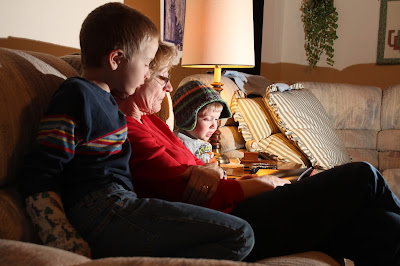
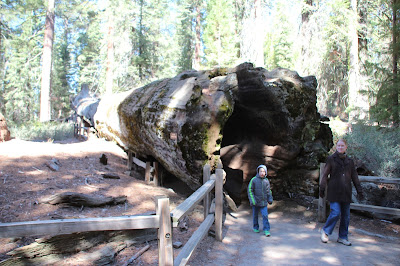
The scene: early one morning as the sun has just started to rise. Jacob and Oliver, ages 7 and 4, are the first people to wake up in the house their grandparents in California, where the four of us are visiting for the first time as a family. They have a conversation and decide that would be a good to go find a mystery. They decide to take their flashlights pink and blue, matching each boy s favorite color and slowly, but not very quietly, open their bedroom door and creep out. Brother, you forgot your flashlight! says Oliver. Oh, thanks brother! I ll get it! says Jacob. Meanwhile, Laura s mom wakes up, and notices two boys with flashlights creeping through the living room. Pretty soon they reach the kitchen, open the dishwasher, spy a suspicious-looking bowl, and decide that they have found the mystery a clean bowl! Or, at least that s the story that I pieced together based on what a 4-year-old and the grandma he awakened told me. We were on our first family trip to the Fresno, California area, to visit Laura s parents Jacob and Oliver s new grandparents. They ve played together before, but as this was our first visit to their place, there was quite the excitement. The boys had flown before, but it was several years ago and neither of them remember it well, so they were excited about that, too. The night before, Jacob woke up to tell me Dad, I am too excited to sleep. I think I will go downstairs and watch some TV. He didn t get too far with that plan. But he was excited. We went through security at the laid-back Wichita airport (where the TSA agents smile and there are often no security lines at all). We found our gate with enough time to grab lunch, which we did. The boys and I then did what we often do to kill time: explore. We explored the terminal, watching carpet-layers cut out carpet for the jetway, watching the construction of the new Terminal 3 out the window. And, of course, watching airplanes take off and land from the terminal s large windows. Finally it was our turn to board, and we all got on the plane: Jacob and Oliver with their backpacks of on-board activites, Laura and me with the rest of our carryon luggage, for the short trip to Denver. Jacob and Oliver s noses were pressed against the windows. Or, well, Jacob s was. Oliver s window was a little too high for him, but he was thrilled anyhow. They delighted in the airplane snacks, and the fact that they were allowed to drink pop on the plane. We packed books and some new art supplies for them (colored post-its, pages from a train-themed page-a-day calendar, a notebook, and a set of colored pens really seemed to do the trick.) We had a choice of 35 minutes or 4 hours between flights in Denver, and I had chosen 4 hours, thinking that would be a lot less stressful with boys. And it was. We found a nice corner of the mezzanine to sit for awhile they did art projects and played a game with Laura. Then I took them exploring Denver. We rode the moving sidewalks up and down the terminal, took a train ride to another terminal and back, ate supper all together, and flew to Fresno. We had stopped in the Wichita airport to buy them each a souvenir airplane, and these came out often during the rest of the trip. They enjoyed the mockups of the sequoias in Fresno Yosemite International Airport, enjoyed their beds and their room at the house, and did actually manage to fall asleep eventually. We had a few days there, where they played in a park, with bubbles on the patio, or croquet in the yard (I even discovered Jacob happily using the cast his broken arm is in as a hammer to pound the hoops into the ground!) There are a lot of miniatures in the house, and the boys enjoyed exploring the dollhouses and especially the N-gauge model train. Jacob enjoyed it so much he asked me to record a video of him playing with the trains. Evenings often brought book-reading, from the many children s books in the house. At home, Laura and I and both boys often scrunch onto an oversized chair and read a book and sing a song (one I make up on whatever topic they choose). Over there, we often had Laura, Jacob, Oliver, Laura s mom, and me scrunched up somewhere while the boys heard a story read to them by their grandma. That happened plenty of times other than bedtime, too. (Or Jacob would take his favorite books and read them to himself.) Laura s parents organized a reception Sunday for us, for the people from that area that couldn t make it to our wedding. Jacob and Oliver, predictably, had fun playing and even talked to some of the adults. The adults that didn t ask Jacob about his cast, anyhow (he dislikes talking about it). The boys discovered a live mic at the church where the reception was, and do I detect two future pastors in our midst? We had a great time at Laura s uncle and aunt s place. The boys were happy to discover an orange tree in their backyard, a tetherball post not far away, and an uncle ready to give them a demonstration of a swimming pool vacuum cleaner or sit at the piano with them. Jacob s favorite part, though, was when the hamburger buns his great uncle were toasting were left on the grill during the prayer before the meal, got a bit scorched, and the uncle remarked with a chuckle that I guess the Lord was tired of listening to me drone on! Jacob loved his meal, and cackled at the thought of a prayer causing buns to get scorched. But their highlight was the visit to the sequoias at Kings Canyon National Park the next day. The excitement had been building for that day all weekend. On the way out, we stopped at a fruit stand and bought some delicious strawberries the fresh, juicy, sweet and tasty kind that are red all the way through. We continued up through the foothills, stopping periodically to get out and stretch, look at the sights, take some photos, or borrow grandpa s binoculars. I knew we d be traveling in two cars, so I had the thought to pack some 2-way radios before we left. I gave one to the boys and one to the grandparents. All weekend long, whenever the six of us went somewhere, the boys (and especially Jacob) would give directions to the car that was following. Turn right! The light is green! Catch up, you re going too slow! So all the way into the mountains, Jacob would send back instructions on what to do. We saw Grant Grove, home to the worlds third-largest tree (267ft/81m tall and 3000 years old). It s quite the impressive tree the trunk s diameter near the ground is 29ft or almost 9m. As we walked the trails, their speed kept increasing as they were hunting for the tree tunnel I had told them about a tree that fell centuries ago and had been hollowed out to make a home. That trunk was easily 8ft or more in diameter, and I could stand up completely in places. We found it, to much delight from the boys So this is what it s like to be inside a tree! Our trip home brought a delay in Denver and a missed flight, which excited the boys when I told them now we get to eat supper in the airport! I wonder how long that tactic will work But Jacob was also excited because the plane we were put on in the end was bigger than the one we were scheduled on, so that was another piece of excitement. We got home, and I carried two sleeping boys in from the car, upstairs, tucked them in, pulled off their shoes, and put their favorite stuffed animals in their arms. They were happy to be home, and with memories to treasure for a long time.

Andrew Pollock: [life] My girlfriend's name is Anshu

I've been referring to Anshu as "my girlfriend" in all my blog posts because I haven't gotten around to writing this post yet. I've finally gotten around to it. Anshu and I met at a speed dating event 8 months ago. I quite enjoyed the speed dating experience, and having done it, would prefer it over Internet dating. I think it helped that at the time I was working from home, getting above and beyond the amount of alone time that my introversion required for me to recharge, so I was in the right frame of mind for it. I did pretty well, I got 6 matches from the night, one of which was Anshu. Anshu is an Indian-Australian dual national. She emigrated about 12 years ago to do her Masters degree here, and decided to stay. This is my first inter-ethnic relationship, and it's been a very interesting expansion of my cultural horizons. Anshu is vegetarian, so I've expanded my vegetarian cooking repertoire significantly since we've been seeing each other. I already do "Meatless Monday" with Zoe, so it wasn't that difficult a transition for me.

29 March 2014

Dirk Eddelbuettel: R / Finance 2014 Open for Registration

The annoucement below just went to the R-SIG-Finance list. More information is as usual at the R / Finance page:
Now open for registrations: R / Finance 2014: Applied Finance with R
May 16 and 17, 2014
Chicago, IL, USA
The registration for R/Finance 2014 -- which will take place May 16 and 17 in Chicago -- is now open! Building on the success of the previous conferences in 2009, 2010, 2011, 2012 and 2013, we expect around 300 attendees from around the world. R users from industry, academia, and government will joining 30+ presenters covering all areas of finance with R. We are very excited about the four keynotes by Bill Cleveland, Alexios Ghalanos, Bob McDonald and Luke Tierney. The main agenda (currently) includes sixteen full presentations and twenty-one shorter "lightning talks". We are also excited to offer four optional pre-conference seminars on Friday morning. To celebrate the sixth year of the conference in style, the dinner will be returning to The Terrace of the Trump Hotel. Overlooking the Chicago River and skyline, it is a perfect venue to continue conversations while dining and drinking. More details of the agenda are available at:
http://www.RinFinance.com/agenda/
Registration information is available at
http://www.RinFinance.com/register/
and can also be directly accessed by going to
http://www.regonline.com/RFinance2014
We would to thank our 2014 Sponsors for the continued support enabling us to host such an exciting conference:
International Center for Futures and Derivatives at UIC Revolution Analytics
MS-Computational Finance at University of Washington OneMarketData
RStudio
On behalf of the committee and sponsors, we look forward to seeing you in Chicago!
Gib Bassett, Peter Carl, Dirk Eddelbuettel, Brian Peterson,
Dale Rosenthal, Jeffrey Ryan, Joshua Ulrich
See you in Chicago in May!

This post by Dirk Eddelbuettel originated on his Thinking inside the box blog. Please report excessive re-aggregation in third-party for-profit settings.

28 March 2014

Dirk Eddelbuettel: Upcoming Rcpp talks and workshops

A number of talks about Rcpp are scheduled over the next couple of months: So the month of June is still pretty open. If someone wants me to talk somewhere else, preferably on a Saturday, feel free to get in touch.

This post by Dirk Eddelbuettel originated on his Thinking inside the box blog. Please report excessive re-aggregation in third-party for-profit settings.

26 March 2014

Dirk Eddelbuettel: RProtoBuf 0.4.1

A new bug-fix release release 0.4.1 of RProtoBuf, is now on CRAN. RProtoBuf provides GNU R bindings for the Google Protocol Buffers ("Protobuf") data encoding library used and released by Google, and deployed as a language and operating-system agnostic protocol by numerous projects. Murray once more shouldered most of the actual burden and fixed a number of issues detailed below.
Changes in RProtoBuf version 0.4.1 (2014-03-25)
  • Document and add a test for the deprecated group functionality.
  • Add a CITATION file pointing to our arXiv.org preprint.
  • Fix a bug in the show method for EnumDescriptor types.
  • Import all top-level enums from imported .proto files.
  • Removed duplicate enum value type from the unit tests that caused problems with the most recent libprotobuf-2.5. (without option allow_alias).
CRANberries also provides a diff to the previous release. More information is at the RProtoBuf page which has a draft package vignette, a 'quick' overview vignette and a unit test summary vignette. Questions, comments etc should go to the rprotobuf mailing list off the RProtoBuf page at R-Forge.

This post by Dirk Eddelbuettel originated on his Thinking inside the box blog. Please report excessive re-aggregation in third-party for-profit settings.

18 March 2014

Raphael Geissert: Debian squeeze LTS

As announced in the "Bits from the Security Team" (LWN copy) email a couple of weeks ago, it is possible that Debian squeeze will have Long Term Support, primarily in the way of security updates.

The news have made it to Softpedia and reddit and even though it has not been announced how long it would be supported, what use cases are planned, etc., the answer I can give is that it depends solely on people contributing to it.

I'd like to add that no, the LTS announcement is not related to the use of Debian on the ISS laptops, as mentioned in reddit - at least not that we are aware of. And to avoid possible confusion from the Softpedia article, the plan is LTS for the squeeze release.

From the emails we have received in response to the announcement, I do wonder however where are the people who expressed interest and signs of engagement last time there was a discussion about providing LTS for Debian.

Perhaps it wasn't stressed enough in the email, but those who are interested in benefiting from (and therefore contributing to) long term support, please do contact the security team NOW.

After all, the clock keeps ticking and Debian squeeze is going to reach its End of Life in less than two months otherwise.

16 March 2014

Russell Coker: BTRFS Status March 2014

I m currently using BTRFS on most systems that I can access easily. It s not nearly reliable enough that I want to install it on a server in another country or an embedded device that s only accessible via 3G, but for systems where I can access the console it s not doing too badly. Balancing and Space Allocation # btrfs filesystem df /
Data, single: total=103.97GiB, used=85.91GiB
System, DUP: total=32.00MiB, used=20.00KiB
Metadata, DUP: total=1.78GiB, used=1.31GiB
# df -h /
Filesystem Size Used Avail Use% Mounted on
/dev/disk/by-uuid/ac696117-473c-4945-a71e-917e09c6503c 108G 89G 19G 84% /
Currently there are still situations where it can run out of space and deadlock on freeing space. The above shows the output of the btrfs df command and the regular df command, I have about 106G of disk space used by data and metadata in BTRFS while df shows that the entire filesystem (IE the block device) is 108G. So if I use another 2G of data or metadata then the system is at risk of deadlocking. To avoid that happening I have to run btrfs balance start / to start a balance which defragments the space use and frees some blocks. Currently there is a bug in BTRFS (present in all Debian/Unstable kernels) which prevents a balance operation from completing when systemd is used in a default configuration (there s something about the way systemd accesses it s journal files that triggers a BTRFS bug). This is really inconvenient, particularly given that there s probably a strong correlation between people who use experimental filesystems and people who use experimental init programs. When you get to the stage of the filesystem being deadlocked you can sometimes recover by removing snapshots and sometimes by adding a new device to the filesystem (even a USB flash drive will do). But I once had a filesystem get into a state where there wasn t enough space to balance, add a device, or remove a snapshot so I had to do a backup/format/restore. Quota Groups Last time I asked the developers (a few weeks ago) they told me that quota groups aren t ready to use. They also said that they know about enough bugs that there s no benefit in testing that feature. Even people who want to report bugs in BTRFS shouldn t use quotas. Kernel Panics with Kmail I ve had three systems develop filesystem corruption on files related to Kmail (the email program from KDE). I suspect that Kmail is triggering a bug in BTRFS. On all three systems the filesystem developed corruption that persisted across a reboot. One of the three systems was fixed by deleting the file for the Outbox, the others are waiting for kernel 3.14 which is supposed to fix the bug that causes kernel panics when accessing the corrupted files in question. I don t know whether kernel 3.14 will fix the bug that caused the corruption in the first place. Conclusion As I don t use quotas BTRFS is working well for me on systems that have plenty of storage space and don t run Kmail. There are some systems running systemd where I plan to upgrade the kernel before all the filesystem space is allocated. One of my systems is currently running SysVinit so I can balance the filesystem. Apart from these issues BTRFS is working reasonably well for me. I haven t yet had it s filesystem checksums correct corrupted data from disk in any situation other than tests (I have had ZFS correct such an error, so hardware I use does benefit from this). I have restored data from BTRFS snapshots on many occasions, so that feature has been a major benefit for me. When I had a system with faulty RAM the internal checks in BTRFS alerted me to the problem and I didn t lose any data, the filesystem became read-only and I was able to copy everything off even though it was too corrupted for writes.

Next.

Previous.