Search Results: "hug"

21 October 2008

David Welton: Android is out!

As most people probably know by now, the Android source code is available, as promised: http://source.android.com/ The next part is the interesting part, though, in my opinion. Source code is wonderful, and a huge gift from Google, but the real "secret sauce" for the most successful open source projects is the community. It will be interesting to see how Google manages this aspect of their project. It could be a situation where they create, and the public consumes, and it's fairly one way, with the odd patch here and there going back. Or it could be that they'll really let people get involved. Running a community for something this big, with this much code, and this much interest to the world at large is a daunting task, but Google certainly has the open source expertise to figure it out, so what we end up seeing will depend on exactly how Google wants to manage things. All in all though, a big step for open source - congratulations to all the people at Google who made it happen!

18 October 2008

Jeff Bailey: And we're back...

Umm, wow. So we extended the trip a week longer than expected to accommodate the hospitalisation, and wound up being able to finalise the house inspection, some banking, and get started on the insurance.

All of which means that the three of us have possession of our new place on December 1st!! Yay! We have to figure out if, tax-wise, a December move is the right thing for us, but I suspect it will be. The old timeframes aren't so important now, I guess. Moving still feels like the right thing to do.

The hospital bills came to about $10k for 3 days in the hospital, and one follow-up emergency visit. Our US insurance will cover this with no problem.

Thanks for all the well-wishes and support. I don't know how to reply to it in a meaningful way. Words suck and I wish I could hug you all in person. It's such a rollercoaster to have bought a place at the same time and be so excited by it.

When we have our move date, we'll probably have a wine and fruit party or something. =)

15 October 2008

John Goerzen: The Best Photo Printing Services

When I first got a digital SLR camera a few years ago, I spent some time evaluating photo printing options. I sent a set of test prints to several different companies, and wound up deciding to use Shutterfly for my photo printing.

It's been some time since then, so I figured it was about time to re-evaluate options.

There are three main things to consider when obtaining prints of photos: cost of prints, quality of prints at delivery, and longevity of prints. Many people look only at cost, and those that look past cost rarely look past quality at longevity. Longevity (or permanence) is, in my opinion, the most important factor to consider. But let's look at all of them.

Longevity

All color photo print technologies fade or otherwise degrade over time. There are several main things that can cause this: exposure to light, exposure to gases (especially ozone), and exposure to humidity. The impact of these different items varies by print technology, paper, and process.

Longevity: Traditional Photo Paper

Most services such as Shutterfly, Snapfish, Ofoto, as well as retailers such as Walmart, Target, and Walgreens print on traditional photo paper.

Historically, traditional photo paper has had terrible fading characteristics. Typically, old photos exposed to light -- for instance, hanging on a wall underneath a light bulb or in the sun -- will exhibit severe fade towards yellow or magenta. Modern papers are much better, but you will still not want to leave them directly in the sun or under lights.

Over at TPR, you can find several papers analyzing this. Perhaps the most interesting are test of digital prints and image permanence: comparing the technologies.

To attempt to summarize, what you see is that of the two common consumer-grade photo papers, Kodak Royal and Fuji Crystal Archive, the Fuji paper has better permanence. However, the pro-quality Kodak Professional Supra Endura is better than either of them by a significant margin. The photo papers didn't really have a problem with humidity, and not much of a problem with ozone.

Longevity: Inkjet

So what about inkjets and laser processes? The main thing I learned from my research is that there is a tremendous amount of variance here. When looking solely at top-quality inkjet papers and inks, they ranged everywhere from having little bits of them flake off after a few months to doing better than any of the photo papers. This variance occurred even with similar papers from the same manufacturer.

As far as light exposure is concerned, every inkjet paper tested by TPR did better than Kodak Royal. Some fared about the same as Fuji Crystal Archive. And some even beat out Kodak Supra Endura.

But look at the ozone exposure test and you see a far different picture. All of the photo papers did really well, though suprisingly Supra Endura was the worst of them (though the scale is so small here that the difference is pretty minimal).

Not one of the inkjet papers came even close to that, and some faded so fast that they couldn't even make it halfway through the test.

As far as humidity is concerned, it barely impacted the photo paper prints at all. Inkjet impacts were still mostly small, but also were mostly more impacted than the photo paper.

Longevity: Laser

And finally, how about laser prints. There was huge variety here. An HP printer they tested faded so fast it couldn't complete the light exposure test, while a Konica-Minolta fared better than Kodak Supra Endura in one test. In another light exposure test, they performed about the same as the photo papers. Ozone had little effect on the laser papers, except for the Dell test, which faded so fast they had to abort the test early. Humidity also had little effect on the laser prints.

Longevity: Other Examples

Brett Wilson did some interesting experiments with photos hung in front of a window as well. Wilhelm Imaging also has done some research in this area, though they are done using fluorescent lights only, which is prejudicial in favor of inkjet papers and against photo papers.

For the ultimate in longevity, true black and white photo paper is well-regarded.

TPR also has a report covering different lacquer and other finishes often applied to prints to improve their longevity.

Longevity: Conclusions

With the exact right combination of inkjet paper and ink, you can get a print that will last exceptionally long. Some inkjet paper and ink combinations have really poor longevity characteristics, however, as do the laser papers.

Photo papers, especially Kodak Supra Endura, but even Fuji Crystal Archive, will last quite awhile as well, and are probably the best storage if kept in dark conditions such as an album.

Print Quality

When looking at print quality, I'm concerned with correct color balance, saturation, cropping, consistency, sharpness, contract, and detail in both dark and light areas -- the typical things you'd look for.

Printing inkjet prints at home leaves all this up to your printer, inks, papers, and you, so we can't really compare meaningfully.

Back when I looked at it, Shutterfly and Ofoto did the best. Walmart, Walgreens, dotPhoto, and many of the other online sites were really too poor to even bother with. Ofoto had a bit of a yellow tint to it, while Shutterfly did pretty well.

Most of the reviews of the major sites I've seen lately rank Shutterfly or Snapfish at the top in terms of quality. Many also rank Ofoto/Kodak near the top.

Walmart and Walgreens produce consistently bad results, and I only use them if all that matters is speed. If you ever read a review where somebody says that they get good results from one of those places, find a review where somebody has a better idea what they're talking about.

Besides your mass-market sites like Shutterfly and Ofoto, there are also some slightly more expensive sites. The two best-known are mpix.com and adorama.com. Mpix is a division of Miller's Professional Imaging, a pro lab. Mpix is basically a website where you can submit photos in the way you would to one of these other sites, and they can do their thing. Their standard rate includes human color correction on every print, but they offer a cheaper rate if you don't need that. Their standard paper is Kodak Pro Supra Endura (the one that ranked highest in longevity tests), and the options go up from there. They also offer printing on true black and white paper, as well as wrap-around canvas and other such options.

I've sent some work their way and have been exceptionally happy with the result. Everything from the color of the prints down to the packaging shows extreme care and attention to detail. Among the reviews that cover mpix -- many don't -- it almost always comes out at the top of the pack, easily beating out Shutterfly and Snapfish. It can be more pricy (though sometimes actually cheaper, since shipping is flat-rate with them), though not significantly.

Adorama is also sometimes mentioned. Most people seem to prefer mpix over adorama, but some prefer adorama. It's a bit cheaper when you don't need color correction for some prints, but sometimes -- right now, for instance -- closes for weeks at a time to observe Jewish holidays. It didn't seem to be enough for me to bother.

Cost

Perhaps the easiest to figure out is cost, since websites typically list it right there for you.

High-quality inkjet prints are by far the most expensive option. I looked at 4x6 prints. Using the high-quality paper/ink combinations that did well in the TPR tests, and when buying supplies in bulk to get the best possible discount, it's still 25 cents or more for a single 4x6 print. That's with doing all the color work yourself, and not even figuring in the cost of the inevitable experimenting with getting the software set up right and the wasted prints when ink gets low. It also doesn't figure in the cost of the printer.

At mpix, if you do your own color correction, it's 19 cents per print, plus shipping. Prints are on Kodak Professional Supra Endura Shipping is a flat rate of $3 for 50 or fewer 4x6 or smaller prints, or a flat rate of $5.95 for USPS Priority Mail for anything else. They offer FedEx at an additional cost, which maxes out at a flat rate of $12.75 for overnight shipping. Some items such as framed canvas prints are more expensive.

Other options at an additional cost include color correction by a human, metallic paper, Ilford B&W paper, etc. There are also some more typical pro-lab options: red-eye removal by a human, custom retouching, etc.

At Shutterfly, a 4x6 print goes for 15 cents. You can get them as low as 10 cents if you buy a pre-paid plan of 600 prints for $60. Shipping varies based on the number of prints, starting at $1.79 for up to 10 prints, ranging up to $21 for 500 prints, with 3 cents per print after that. Priority and express mail is available at an additional charge. Shutterfly's standard paper is Fuji Crystal Archive.

At Snapfish, a 4x6 print goes for 9 cents. You can get them as low as 8 cents if you buy a pre-paid plan of 250 prints. Shipping at Snapfish follows a complicated formula, but is generally approximately the same as Shutterfly. Though if you print more than 595 prints, watch out for the 10 cents per print overage fee. They don't state what paper they use. Recent reports seem to suggest that it's Fuji Crystal Archive, but some reports claim it's Kodak Royal.

My Conclusions

I'm planning to switch most of my prints to mpix -- their higher quality and cheaper shipping offset their higher per-print cost for me. Also, I plan to try out Snapfish and see what sort of quality I get from them for things where quality isn't really that critical.

11 October 2008

Andrew McMillan: Shiny New Laptop

After a few years of only buying laptops with Intel hardware, today I bought something totally different. It's not really what I wanted (which was an HP HDX 16t) but I get the feeling that none of these 16" HD 1080 laptops will make it to New Zealand for a while yet, and the NZ dollar has done such a nosedive recently that it's better not to wait any longer. In the places that hold stock there seem to be some good specials around at the moment, and as the owner of a new free, open-source consulting business (i.e: a cheap bastard) I went shopping for the cheapest dual-core I could find with a half-decent screen, and I found the Asus X53K for $999 (USD$589) at Dick Smith, including a 2G ram upgrade to take it to 3G. It's entirely non-intel, with a 2GHz Turion dual-core, ATI Radeon X2300 with 1440x900 panel, Atheros AR2425 wifi and 160G HD. I'd bought a replacement 320G hard drive even before I got the laptop, so now I have a pristine, unbooted 160G hard drive with the install files for some other OS on it - no doubt I'll find a use for the disk, at least! Since AMD got ATI to release all their chip documentation earlier this year I felt able to shell out for this, rather than the extra $100 for the model next to it, and it was nice too to get home and find that Atheros have recently released the HAL for their a/b/g chips. Which presumably means that they haven't done so for their 'n' chipsets, and I should continue to steer clear of that technology for a while yet... I'm running Debian GNU/Linux 'Sid' on the Asus X53K and, everything pretty much just works out of the box. My installation process was to rsync the old laptop onto a new disk, and boot the new laptop from that - after compiling a new kernel more appropriate to the changed hardware. After overcoming my own stupidity in not syncing the /dev/ underneath udev, which I easily googled my way out of, the only problem I've found so far is that the free radeon driver doesn't do 3d for me. Presumably the non-free ones would, but they won't compile against my 2.6.27 kernel so I don't know for sure. Fortunately I don't use 3d for anything so it's not a huge inconvenience to me. With 3G RAM and a fast 320G hard drive the laptop actually is an upgrade for me, too, and it has a webcam too, which I expect I'll look at in much the same way as I did the fingerprint reader on the old laptop. It will be good to finally hand that old one back to Catalyst, too, who have given me the flexibility to take my time on this. Now to try and peel off all these stickers without damaging anything!

9 October 2008

David Welton: Dynamic Languages in Desktop Applications

Ted Leung talks about the lack of dynamic languages in desktop applications. There's something ironic about that: Ted works for Sun Microsystems. Sun Microsystems, back in the day, was a big contributor to Tcl and Tk. Despite not being the "in thing", Tcl and Tk are used a lot more than people think. Not so much in the latest and greatest things being built now, due to the (undeservedly) "uncool" reputation, but in lots of products that are still chugging along, earning money and serving their users well, if not noisily so. Interestingly enough, my biggest client here in the Innsbruck area is one of these. They have offices worldwide, make a good living at what they do, and their user interface is mostly in Tk.

7 October 2008

Russell Coker: The Security Benefits of Being Unimportant

A recent news item is the “hacking” of the Yahoo mailbox used by Sarah Palin (the Republican VP candidate) [1]. It seems most likely that it was a simple social-engineering attack on the password reset process of Yahoo (although we are unlikely to learn the details unless the case comes to trial). The email address in question had been used for some time to avoid government data-retention legislation but had only been “hacked” after she was listed as the VP candidate. The reason of course is that most people don’t care much about who is the governor of one of the least populous US states. Remote attack on a mailbox (which is what we presume happened) is only one possible problem. Another of course is that of the integrity of the staff at the ISP. While I know nothing about what happens inside Yahoo, I have observed instances of unethical actions by employees at some ISPs where I have previously worked, I have no doubt that such people would have read the email of a VP candidate without any thought if they had sufficient access to do so. If an ISP stores unencrypted passwords then the way things usually work is that the helpdesk people are granted read access to the password data so that they can login to customer accounts to reproduce problems - this is a benefit for the customers in terms of convenience. But that also means that they can read the email of any customer at any time. I believe that my account on Gmail (the only webmail service I use) is relatively safe. I’m sure that there are a huge number of people who are more important than me who use Gmail. But if I was ever considered to have a reasonable chance of becoming Prime Minister then I would avoid using a Gmail account as a precaution. There is a rumoured Chinese proverb and curse in three parts:
May you live in interesting times
May you come to the attention of those in authority
May you find what you are looking for [2]
In terms of your email, everyone who has root access to the machine which stores it (which includes employees of the companies that provide warranty service to all the hardware in the server room) and every help-desk person who can login to your account to diagnose problems is in a position of authority. Being merely one of thousands of customers (or millions of customers for a larger service) is a measure of safety. As for the “interesting times” issue, the Republican party is trying to keep the issue focussed on the wars instead of on the economy. The problem with basing a campaign on wars is that many people will come to the conclusion that the election is not about people merely losing some money, but people dying. This could be sufficient to convince people that the right thing to do is not to abide by the usual standards for ethical behavior when dealing with private data, but to instead try and find something that can be used to affect the result of an election. Mail that is not encrypted (most mail isn’t) and which is not transferred with TLS (so few mail servers support TLS that it hardly seems worth the effort of implementing it) can be intercepted at many locations (the sending system and routers are two options). But the receiving system is the easiest location. A big advantage for a hostile party in getting mail from the receiving system is that it can be polled quickly (an external attacker could use an open wireless access-point and move on long before anyone could catch them) and that if it is polled from inside the company that runs the mail server there is almost never any useful audit trail (if a sysadmin logs in to a server 10 times a day for real work reasons, and 11th login to copy some files will not be noticed). One of the problems with leaks of secret data is that it is often impossible to know whether they have happened. While there is public evidence of one attack on Sarah Palin’s Yahoo account, there is no evidence that it was the first attack. If someone had obtained the password (through an insider in Yahoo, or through a compromised client machine) then they could have been copying all the mail for months without being noticed. It seems to me that your choice of ISP needs to be partly determined by how many hostile parties will want to access your mail and what resources they may be prepared to devote to it. For a significant political candidate using a government email address seems like the best option, with the alternative being to use a server owned and run by the political party in question, if you can have the staff fired for leaking your mail then your email will be a lot safer!

3 October 2008

Christian Perrier: Why I think Foss.in/2008 is missing its target..

(long post, you've been warned) With his his 'Omelette Post' about FOSS.IN/2008 Call for Participation, Atul Chitnis, the FOSS.IN team 'leader' indeed sent an strong sign. For those who aren't aware of it, FOSS.IN is the longstanding major FLOSS event in India and, still (just like our beloved Debconf) only run by volunteers. Last year, along with Sam Hocevar, I had the chance to attend the event and share the groove of that big, huge, conference, with over 2,000 participants. Some other Debian fellows also made it in the past (Jaldhar, Bdale...). During the Debian Project Day as well as regular conference days, we had the great opportunity to meet with the people who currently participate in Debian (and Ubuntu) in South Asia, as well as first meeting some major contributors from other projects. For me, and, I think, of all people I met up there, this was a great *and productive* event. Maybe not productive at the moment it happened, but productive in terms of mutual awareness, knowledge and friendship. All people who attended such conferences (should I say "Debconf" or "FOSDEM"?) know what I'm talking about. The conference was still quite focused on "real" FLOSS contribution more than evangelizing or politics. And I think it succeeded in it quite well. This year, I already planned to not attend...mostly because such event, with the associated long travel time, is something I can't really fit in my real life right now. Also, because it conflicts with a planned Extremadura work session, indeed. Still, I would indeed not have attended it. Atul's post makes it clear: the even will only be about coding. The point is to put focus on people who code and we do 'real' code. Bug fixing is not coding. Translation effort is not coding. Work on support for complex languages is not coding. Actually, what FOSS.IN/2008 organizers are trying to do is a kind of big Debcamp. I'm afraid it won't work this way. From what I have seen in years of participation to Debian, things just don't come up this way. People don't sit down and code because they're invited to. And, still, are only "people who code" the only people that matter in a project? Debian is sometimes seen as one of the biggest FLOSS projects all around (probably shared with the Linux kernel). How many people in Debian just "sit down and code"? What about those people who maintain our web site, our archive, setup our infrastructure, our new maintainer queue, our communication channels? What about those dozens of people who nicely maintain packages and keep the link with upstream developers, or fix bugs.... Those people do not seem welcomed at FOSS.IN/2008. "Not only bug fixing" is said in this announcement. This, I don't get it. At all. Why would "bug fixing" be second class work? Why would it be more noble to "code" new stuff? Maybe Atul did not mean to say this. He wants to have Indian contributors in FLOSS to be more visible....but I don't share this. Indian contributors in Debian *are* visible. Giridhar Appaji Nag is visible, "my" translator crew is visible, Kartik Mistry is visible (he once was too visible, even, by maintaining a little bit too many packages...). Bug fixing is the most noble task I see in FLOSS development. This is what we need the most. I recently blogged about how I feel APT to be 'poorly' maintained (once again, that was not targeted to current APT maintainers). What I would respect deeply is to see a bunch of Indian contributors stand up and take this task over. Atul, that would certainly not be "outsourcing code/package maintenance" and, no, these are not things one can get involved with instantly. Really, I don't buy this vision and that saddens me. That saddens me mostly because I know the folks there. I know the FOSS.IN organizers and I have deep respect for them. I just think they're missing the target and are too ambitious: one cannot change an event so drastically by just saying it has to change..:-) And, really, I'm even more sad to see localization work be called a low-hanging fruit from a country where there are 22 official languages. Or take words such as "talk is cheap, show me the code" as $ DEITY 's Holy Word just because it was once said by Linus Torvalds (who said many stupid things). Code is just one part of FLOSS development. Certainly one of the important parts but still one part. What would have happened to FLOSS if only "coders" had been working on it all over those years? It would be something used by about 10,000 people all around the world, that's all. We should not make an opposition between those who code and those who don't. By the way, do *I* code? When I'm sitting at 07:00AM on a Saturday morning, hacking on Samba packages and try to have Samba 3.2.4 built with the set of patches we have on Debian....do I code? I'm not *producing* code....the code was produced by those wonderful Samba Team folks. Does Karolin Seeger code when she's releasing samba with such a precise and constant schedule as she's doing since early 2008? Or Ana Guerrero when she (not alone!) compiles dozens of KDE packages and organizes and bumps the maintenance of KDE in Debian for the best of our users. Or Miriam Ruiz when she picks up each and every possible free game and tries to get it in Debian, talks with upstream developers, help them to fiw their code to suit the severe requirements of the Debian policy? Or Clytie Siddall when she translates about every major FLOSS in Vietnamese (nor URL here, sorry)? All these folks are part of the FLOSS game. You want Indians to be part of FLOSS game? Then allow the potential Karolin, Ana, Miriam or Clytie to be part of Indian FLOSS game and don't try to make FOSS.in the place where you seek the future Indian Linus Torvalds and only him her. Talk is cheap, show me the contribution.

Michal Čihař: Gammu stable version 1.21.0

Good news everyone, after long time of inactivity and huge development over past month, new stable Gammu release is out. Since 1.20.94, there are only minor fixes in handling some corner cases in AT parser, but full list of changes since last stable 1.20.0 is quite long: You can download from usual place: http://cihar.com/gammu/, Binary packages will be available soon.

John Goerzen: What Traditional Values Mean to Me

A comment on Facebook yesterday got me thinking what American "traditional values" are all about. We hear it a lot, and I suspect it means something different to different people.

Here's what it means to me.

It starts with an ethic fundamentally informed by the central tenets of Christianity -- which are also excellent standards of decency by secular standards. We are called to have a relentless drive to care for the repressed, poor, downtrodden. As Jesus said, "whatever you do to the least of these, so you do to me." It means extending the hand of friendship and compassion to all, in our own neighborhood and around the world. It means taking good care of the resources we have, acting responsibly, and affirming and supporting others so they can do the same. It means that, as our founding fathers emphasized, remembering that all people are created equal, are equally deserving of a good life, and deserve liberty and freedom. Finally, it means a constant realization that we are creating a human institution, and will always have an imperfect answer to these ideals, but that we can -- and must -- recognize our faults and strive to make things better.

How do these apply to our time?

We must start with the poor, the repressed, and habitually think of their situation in everything we do. That means remembering that when we drop a bomb in Afghanistan to kill a terrorist, we also usually kill 50 innocent bystanders, and devastate their families. It means remembering that illegal immigrants from Mexico come here because all they want is refuge from drug wars, food on the table, and a roof over their head. It means showing compassion in deportation proceedings: when illegal immigrant parents have a child born in the United States, the child is an American citizen and can't be deported, but deporting the parents will create an orphan. It means actively helping the repressed people of the world, whether they be in Sudan, Georgia, or AIDS victims in Africa, Muslims in New York. It means reducing taxes on the poor, giving them the skills and tools they need to make their way in life. It means caring for those with alcohol drug addictions, helping them to summon the strength to get past those problems, rather than locking them up or throwing them out on the street. In days past, this might have meant sharing firewood with the family down the road that was at risk of freezing in winter. Today it might mean assistance with winter heating bills.

Remembering that all people are created equal means that we must provide good education for everyone, whether they live in suburban California, inner city Detroit, or rural Appalachia. We owe quality health care to everyone; those without means to pay for health care, or to pay for a car to get to a clinic, should be treated with dignity and respect, and have equal access to medicine.

Remembering that all people are created equal also means that we must provide equal justice under law, and give everyone a fair trail. We must abandon the death penalty, because we have a shocking number of people on death row -- hugely disproportionately black and poor -- that have been shown innocent of their crimes thanks to advances in DNA testing. We must maintain the integrity of checks and balances in government, and support judicial oversight over search and seizure. We must avoid warrantless wiretapping because it subverts judicial oversight and corrupts our justice system by making the exercise of power secret. We must denounce torture, and refuse to employ it, because no human, being created equal, deserves to be treated in such a way -- and we have been applying it to innocent humans.

We owe the opportunity to grow up in a loving family, in a safe community, to every child. We must make sure that gangs no longer have the run of our streets, that drugs aren't displacing hard work as the currency of the community, and that adoption is inexpensive and practical for more families, rather than costing thousands of dollars. Doing so will help every child grow up knowing that they are valued, are important, rather than being unwanted and therefore abused or neglected.

Extending the hand of friendship and compassion to all starts with being a good example -- that shining city on a hill that Reagan talked about. We have to run an open, just, and fair society ourselves. We must not fear those that are different than us, just because they're different. We have to recognize that citizens of Iran, Russia, North Korea, Palestine, and the United States fundamentally are humans, created equal, seeking the same thing: a safe and secure future for themselves and their families. Being able to coexist peacefully means starting from that point, and being willing to talk to them, and yes, even their leaders, regardless of how distasteful they may be.

Acting responsibly with our resources starts at home -- things like not driving up credit card debt, not living outside our means. The same applies to government: massive deficits each year are exceptionally irresponsible and place us at great risk both at the present and in the future. We also have a duty to care for the planet and the environment in which we live, which means actively working to curb the things we do to harm the planet and cause global warming.

What about recognizing our faults? Perhaps the most patriotic duty asked of Americans is dissent. It is never easy, but is essential to keeping our democracy functioning. This country has a long history of successes, and also a long history of failures. We failed so many by keeping slavery legal for so long, and discrimination and lynching legal for even longer. We failed that Native Americans by forcing them from their lands and treating them with brutality. We have, to some extent, risen above these failures thanks to the ability to recognize them and try, to the best of our ability, to fix them. This is what the civil rights movement was about, and why we have a holiday for Martin Luther King, Jr. He spoke out against a society that said some couldn't eat in a restaurant because of the color of their skin, or who were repressed because of their economic status. He recognized that problem in America, and by speaking out against it, helped to change this country for the better.

Today we have to recognize the things we are doing wrong, and try to change them. We are torturing potentially innocent people. We are discriminating against Muslims and homosexuals in our midst. We are giving extraordinary power to big media companies through changes in copyright law, to big communications companies through failure to enact network neutrality laws. And we are labeling people that disagree with war as unpatriotic.

Notice some things I didn't mention, such as abortion. It's not really relevant, and the lines we are fed by both sides present us with this false pro choice vs. pro life debate. In reality, it seems to me that both sides want the best for the children: for every child to grow up in a loving family, where he or she is wanted. We all know from research that laws banning abortion do not actually reduce it. So we ought all to come together and try to make it more rare by providing more support to single parents, by making it easier to adopt children, by trying to make the perceived need for an abortion to go away.

So, in this election, I look at the candidates and it seems pretty clear which one is promoting traditional values and which one isn't. Obama is actively trying to reach across the aisle and find common ground. Even in his convention speech, he suggested ways to work together on abortion like I just mentioned. In the debate, he listened carefully to his opponent and acknowledged when he thought McCain was right. This is a necessary first step in working together to move forward. McCain subsequently released an ad mocking Obama for this.

What about caring for the poor? Again, Obama's tax policies, education policies, and health care policies take care of them far better than McCain's. About responsibility? McCain supported these deficit-busting budgets of the last 6 years, supported the oil-centric energy policies, and has been only lukewarm towards dealing with global warming. McCain and Palin mock Obama for trying to help poor Chicago neighborhoods 20 years ago, for being willing to just talk to our supposed enemies, for actually reaching across the aisle.

So yes, I am a values voter, and that's why I can't possibly do anything but vote for Obama.

David Welton: Visitors

I use Google's Analytics system for several web sites I run, but find it a bit cumbersome for just getting a quick overview of what's happening. For years, I've used my friend Salvatore's visitors program to analyze web logs. It claims to be a "fast web log analyzer" and it is blazing fast - so fast that for all the sites I run, it only takes a few seconds to process a year or two's worth of log files. For instance:
3724130 lines processed in 68 seconds
55 invalid lines, 0 blacklisted referers
And that's not a particularly fast server that it's running on, and of course it's running with a high "nice" value. Visitors is probably not suited to huge sites, as that's its only mode of operation - it doesn't save data - but it's a great option for everything but the biggest of log files. Using it every day, there are a few things that I wanted to improve or tweak, so with Salvatore's permission, I went ahead and put the code under version control over at Google Code: http://code.google.com/p/visitors/

Adrian von Bidder: Desktop integration

Sune Vuorela raises a few interesting points about integration of various (meta)data storage frameworks on your KDE desktop (read the comments, too, as several of these issues have been or are being addressed.) A huge, somewhat related, itch to me is that the end user of a Linux desktop still has to care if an application uses KDE, GNOME, XFCE, GNUstep, old style X11 or whatever. As an end user, I don't care that GIMP is a GTK application. Somebody told me that I can use fish:/ URLs to open remote files and I've duly noted down the syntax because I have no idea what this does, but it does open this file the webdude has told me I should edit with kolourpaint, and now I want to use GIMP because it's much nicer to use ... Similar issues with settings (I did set the web proxy in the system settings, now why do half of the application not respect this?) and all kinds of other stuff. I believe it's issues like this that will hamper the Linux on the Desktop the most in future. Obviously, in a controlled (corporate) environment, this is not a big problem because it's a problem for the IT staff, but in the SOHO and home computer market, these are real, difficult problems, and since they don't know any of the technical problems behind it it's also very hard to explain why it's not easy for me to set up their system so it works like they feel it should (I already have problems explaining why there should be different Linux distributions at all ... ) Update: It occurs to me that this is the kind of stuff we (distribution developers) should be concentrating on, by putting pressure on upstream and doing some of the work. I guess we've concentrated too much on just packaging the stuff.

2 October 2008

David Pashley: Slaves *and* Caching

Dear Lazyweb, We have a web application that has quite a large database and reasonable usage. Back in the dim and distant past, we scaled the application by the age-old method of using several read-only slave databases to prevent reads on the master swamping writes. This worked well for several years, and then we introduced memcached into the mix to improve performance by reducing the number of reads from the database. This improved our database capacity even further. Now the question has arisen about reducing or even removing the code to read from the slaves. I'm trying to come up with some compelling reasons to keep the application reading from the slaves. The pros and cons I currently have for removing the code are:
Pros
  • Reduces code complexity
  • Removes consistency problems due to latency in the replication. This is less of a problem than it used to be after we solved a problem with our replication
Cons
  • Reduces our existing capacity
  • Cache flushes would cause huge spikes on our master server until the cache filled up again
  • Caches wouldn't help queries with unique critera
I would appreciate any additional reasons, pro or cons. We already have an existing non-live slave for backups and slow queries by developers. We would retain a slave for redundancy in the case of master failure. I'm only looking for issues that would affect the application.
Read Comments (0)

Russell Coker: Solutions for the Housing Crisis

Currently we have a huge husing crisis in the US which involves significant political corruption including the federal government preventing state governments from stopping predatory banking practices [1]. The corrupt plan to solve this is to simply give the banks a lot of taxpayer money, so the banking business model then becomes to do whatever it takes to make a short-term profit and then rely on federal funds for long-term viability. The bank employees who caused the problem by aggressively selling mortgages to people who could never repay them if the housing prices stabilised - let alone if the prices fell. If the aim is to protect families, then the first requirement is that they not be evicted from their homes. The solution to this is to void the mortgage of anyone resident home owner who purchased a house on the basis of false advice from the bank or who unknowingly entered into a mortgage that any reasonable person who is good at maths can recognise as being impossible for them to repay. The bank would end up with clear title to the property and the ex-homeowner would end up with no debt. Then such properties could be set for a controlled rent for a reasonable period of time (say 5 years). The bank (or it’s creditors) would have the option of renting the property to the ex-mortgagee for a minimum of five years or selling the property to someone else who was willing to do so. Of course the ex-mortgagee (who would not be bankrupt) would have the option of seeking out a new mortgage at reasonable rates and then buying thier home again. Also to benefit families the rent control period could be extended for as long as they have dependent children. The losers in this would be the banks and the people who purchased multiple investment properties (the ones who caused all the problems). Finally what is needed is a cultural shift towards austerity (as described by Juan Enriquez and Jorge Dominguez) [2]. Glen makes an interesting point about the irony of typical homeowners in the US demonstrating more financial literacy than the people who run banks [3].

30 September 2008

James Morrison: QoTD

"At least in this part of McCain-Palin energy policy it doesn t seem that Palin will add much to the debate other than supporting the official position on clean coal." -- y Matthew McDermott, treehugger.com .

Where has Mrs Palin ever added to the debate? Well except for me to mention her in my blog and getting mentioned on almost any other news source.

Remember, put your C$6 to work, vote green.

26 September 2008

Romain Francoise: Five and counting

Five years ago today, I became a Debian Developer! My account was created just a few weeks after Debian's 10th birthday and we recently celebrated the 15th, so I've been around for about a third of the project's life. In that period, we released sarge and etch, had two compromises, approximately 300,000 bugs were filed in the BTS, Ubuntu was created, three DPLs came and went, dunc-tank was launched and subsequently abandoned, and the Debian Maintainer status was created (among other notable events).

For me personally there have been ups and downs, but mostly it's been fun. I'm still proud of taking part in what is perhaps the largest volunteer project to date, and one that can produce a distribution of outstanding quality and versatility. The Debian community is huge, diverse and sometimes frighteningly technical, but always focused on making Debian (both the product and the project) better for everyone; it's worth being part of it if only for the amazing melting-pot of cultures and (sometimes antagonistic) technological philosophies.

I think that after fifteen years Debian is still relevant both as a basis for derivative distributions, and as a product for end users. I like to think that I've played a part, however insignificant, in Debian's success in the past five years and I hope that I'll be given the chance to continue contributing in the future. Rock on, Debian!

24 September 2008

Matthew Garrett

Russell writes about the iphone. I think he's missing a few things.

The open nature of the PC wasn't inherently what brought it greater success. The open nature of the PC meant that it could spawn an ecosystem of third party hardware vendors, sure. It also meant that it could be cheaply cloned by other manufacturers, ensuring competition that drove down the price of hardware. The net result? x86 is ubiquitous, sufficiently so that even Apple use a basically standard[1] x86 platform these days. Low prices and the wide availability of software that people wanted to run bought the PC the marketplace, with Microsoft being the real winners. Apple hardware remained more expensive for years, and the compelling MacOS software was mostly limited to areas like DTP. Nobody else had any incentive to buy a Mac.

Now, let's look at the phone market. Third party hardware vendors? No real distinction between the iphone and anything else. Sure, anything remotely clever has to plug into the dock port, but developing something to work with that also gets you into the ludicrously huge ipod market. Other phone accessories are either batteries, chargers or headphones. That's really not going to be what determines market success.

Competitive cheapness? When you have a multivendor OS like Android or Windows Mobile, you might expect there to be more opportunity to compete to undercut each other, offering equivalent platforms for less cost. But that's missing something. In the same way that the home computer market has basically consolidated towards PCs, the phone market has already consolidated. Your smartphone has an ARM in, probably along with an off the shelf GSM chip and some 3D core (generally something from Imagination, though in Android's case Qualcomm seem to have come up with their own core - I haven't been able to find out if it's derived from something else). There's no realistic way to make a phone with equivalent hardware functionality and quality to the iphone and sell it for significantly less money. And if you figure out how to, Apple get to take advantage of the same price reductions in their next generation hardware. And, being Apple, they'll probably find some compelling wonderful design feature that costs them nothing extra but makes you want it more anyway. So hardware competition probably isn't going to be what determines market success.

Which leaves two things - advertising and applications. Apple are good at marketing. This is unfortunate, because I'd really rather live in a world where everyone running MacOS was running Linux instead, but we seem to suck in comparison. The good news is that Microsoft also seem to, so maybe we'll have our act together some time between now and Apple crushing us to death. So, assuming current trends continue, Apple's marketing probably isn't going to kill the iphone. Which leaves one thing: applications.

The obvious argument against the iphone's success is that, as a closed software distribution platform, it's less attractive to developers. I don't think that's true. If we look at the console market, the gp2x was hardly a PSP killer. Or a DS killer. You could possibly argue it was a Gizmondo killer, but only if you ignore the Finnish mafia. Being an open platform doesn't immediately result in you killing closed platforms. You need developers, and you need applications. Otherwise nobody's going to buy your hardware, even if it costs $10 less than an iphone and has a few extra bits of plastic. What attracts developers? An attractive development environment and a revenue stream. Android has one real thing going for it here - it's not tied to Objective C, and so there's probably a larger number of potential developers. But let's be realistic. If you're a competent developer, you can move from C++ or Java to Objective C without too much effort. And if you're an incompetent developer, you're not going to be deciding the future of a platform.

Apple have made it easy for people to write applications that share the iphone's delightful[2] UI. There's almost active encouragement to write beautiful programs that integrate well. Sure, the platform limitations bite you in weird ways (like the no background running thing), but Apple have come up with hacks to smooth most of those over. The iphone is a wonderful device to develop for. Sufficiently delightful that there was a huge developer base even before Apple had released the SDK. What does that tell you? Developers actively want to write for the iphone. In fact, they wanted to even before there was a real revenue model. Mindshare means a lot.

What are we going to see in response from Android? To begin with, uglier applications. I'm sure that'll get better over time, but right now the Android UI just isn't as well put together[3]. It's functional, even attractive. But it's not beautiful. And lowering the bar to developer involvement means the potential for more My First Phone Application. Windows Mobile and Symbian have huge numbers of applications. They're mostly dreadful lashups of functionality you'd never want and a UI that's ugly enough to make you want to stab out your eyes, coupled with a nag screen asking for a $10 donation to carry on using it assuming it hasn't crashed before it got that far. To be fair, a lot of iphone stuff isn't much better. But proportionately? Right now the Apple stuff has it. I never want to see another listing of Symbian freeware.

At the moment, Apple wins at providing compelling applications. They may be a gatekeeper between the developer and the user, but right now that's not causing too many problems. Well. It wasn't. The recent fuss about Apple dropping applications because of perceived competition with their own software is an issue. If a developer is going to spend a significant amount of time and money on an application, they want a reasonable reassurance that they're going to be able to ship it. And, right now, Apple's not giving that. It remains to be seen whether this has long term consequences, but there's some danger of Apple alienating their developer base. If those developers move to another platform, and if they create compelling software, Apple might stand some real competition. At the moment? Apple has the hardware, the OS and the applications. They have the potential to take over broad swathes of the market. But they also have the opportunity to throw it away. And that's what's going to decide the success of the iphone - a closed platform is not inherently a problem, but it gives the vendor the option of removing one of their key advantages. If Apple get through this with their developer popularity intact, I don't see the open/closed distinction as having any real-world importance at all.

The relevance to Linux? We're not going to succeed by being philosophically better. We have to be better in the real world as well. Ignoring that in favour of our social benefits doesn't result in us winning.

[1] It's slightly more legacy free than a "genuine" PC - there's no i8042, and things like the gate A20 hack aren't implemented. But it'll boot DOS (given enough effort), so hell, it's a PC

[2] And yes, I genuinely do think that the iphone's UI is better than anything else on the market. There's no reason someone else, including us, couldn't have got there first. But we didn't, and now everyone gets to play catch up. Shit happens

[3] I have no idea where Apple gets its UI engineers from, but someone needs to find the source and start waving huge piles of money to pick them up first.

Gunnar Wolf: FISOL, Tapachula / OpenStreetMap

I was invited to participate at Festival Internacional de Software Libre (FISOL), in Tapchula, Chiapas. The other invited speakers were Sandino Flores (tigrux), Alexandro Colorado (jza), Eric Herrera (crac), John Hall (maddog) and Fernando Romo (pop), all well-known due to very different contributions to the Free Software movement in Mexico and abroad. Several other people also presented tutorials, but I was not involved in that part, and mentioning one while not the rest would be unfair.
The conference was quite massive - Tapachula is a medium-sized city (~200,000 people) in Mexico's Southernmost point - Sadly, due to its geographical location, it is mainly famous for being the region where illegal immigrants from Central America enter Mexico towards the USA, and it is a known spot for all kind of abuses, both from the authorities and from gangs of thieves.
This is the third time I come to this conference. The first two years (2005, 2006) it was organized by the local CUCS university and it was reasonably large, but this year it counted also with many other universities in the region. Attendance was... HUGE. We were told around 1600 students were registered to participate, and I expect at least 1000 to have actually been there. Very amazing and encouraging!
It is, by far, a base-level conference - Most attendees had had no previous contact with Free Software at all, or had at most toyed around with a distro for some hours. Some people, of course, _are_ already working and involved, on various different degrees. All in all, quite encouraging.
But not only I had fun (and got extremely tired!) at the conference, or at the beer sessions afterwards. I also got to push some more publicity (and work, of course!) towards my new favorite pet project: OpenStreetMap.
As many other Debianers, I joined the fever last August, during Debconf. So far, I have been quite busy tracing and mapping; I am quite fortunate to get the OSM addiction while living on the edge of the well-mapped area of Mexico City. So far, I have mostly worked on the Ciudad Universitaria and Coyoac n areas, where some sensible improvement can be felt. Lots yet to do, for sure, but I'm making progress.
Still, mapping Coyoac n sometimes feels a bit futile. Why? Because all of my cycling/tracing/mapping sessions look almost like a little blip on the overall state of my city, which is way better than what I expected - Most of the central city is done (although lots of work is still pending on the very large outskirts - but getting there can be a trip just by itself!)...
But this time, I had the opportunity to do something new, something better and sensible. And, yes, it feels very good. How does the map of Tapachula look for just a weekend of mapping activity? And, yes, I only went out once (morning running) expressely to get some new traces, the rest of it was while being transported by car to the conference-related activities. And I didn't even have to say once "lets go by a different route"! ;-)
Just for comparison: Last week, Tapachula's state was quite similar to what they have today on Google Maps - Just the major highways in the area. Besides, if you look at the satellite map for Tapachula, I estimate I managed to map around between a fifth and a tenth of the city's surface.
So, have you got a GPS? Do you enjoy going out on the street, be it walking, running, cycling on driving? Or even if you don't enjoy it, are you sometimes forced into it? Start contributing to OpenStreetMap now!

23 September 2008

Jeff Bailey: AM_MAINTAINER_MODE - A decent solution

I don't really know why I found myself looking at the gitweb for automake just now, but I noticed that they've finally committed something I've wanted for a bit (but was, of course, too lazy to code myself)[0]

AM_MAINTAINER_MODE was the subject of huge debate when it first came out. It's the bit that can set itself so that the autotools scripts won't get regenerated even if the source files for those have been touched.

The problem is that by default, that's the wrong thing to do. A developer with the source (which I assume anyone with the source is. Otherwise their distro is probably handling all their compilation needs) *wants* those updates to happen automagically. In a distro, however, it's occasionally necessary to patch the autoconf bits, which means that you're trusting the installed autoconf on either the builder or your machine to consistently do the right thing in an automated fashion. And hopefully leave you with a readable debdiff in the end.

I'm hoping that AM_MAINTAINER_MODE([disabled]) becomes a standard thing to do with autoconf-based packages.

[0] http://git.savannah.gnu.org/gitweb/?p=automake.git;a=commit;h=861c19856121d8e875e30268dee6033ded6fc7ae

Christian Perrier: Joerg m'a tuer

(semi-joke only fully understandable by French folks. Julien Blache used the same joke in the past) My dear Genneff, "Valid-Until" is certainly a good idea and I have no doubt it's well implemented in our archive tools. I'm less sure about this being implemented in apt, because of the loose resources of the APT maintenance "team" as of now. And I'm damn sure that implementing that feature will add yet more work coordinating l10n. APT is currently fully translated to 18 languages and, of course, the warning message issued by APT when a user is directed to a faked security repository *has* to be translated for the user to really understand what's happening. It even has to be translated very carefully. Contrary to popular belief, not all systems admins understand English easily. And we really want the important message that will be issued by APT in such case, to be understood and understood well. So, good luck to /me dealing with a last minute l10n update that will quite certainly happen, now. I can't even use this in an attempt to get bug #500000, as #499897 is already reported against apt. Crap. I'm out of ideas for getting that bug report... As a revenge, I propose that next time we all see Ganneff in a group, we all hug him to death for implementing that very good feature in our archive tools.

20 September 2008

Andreas Metzler: aux fines herbes

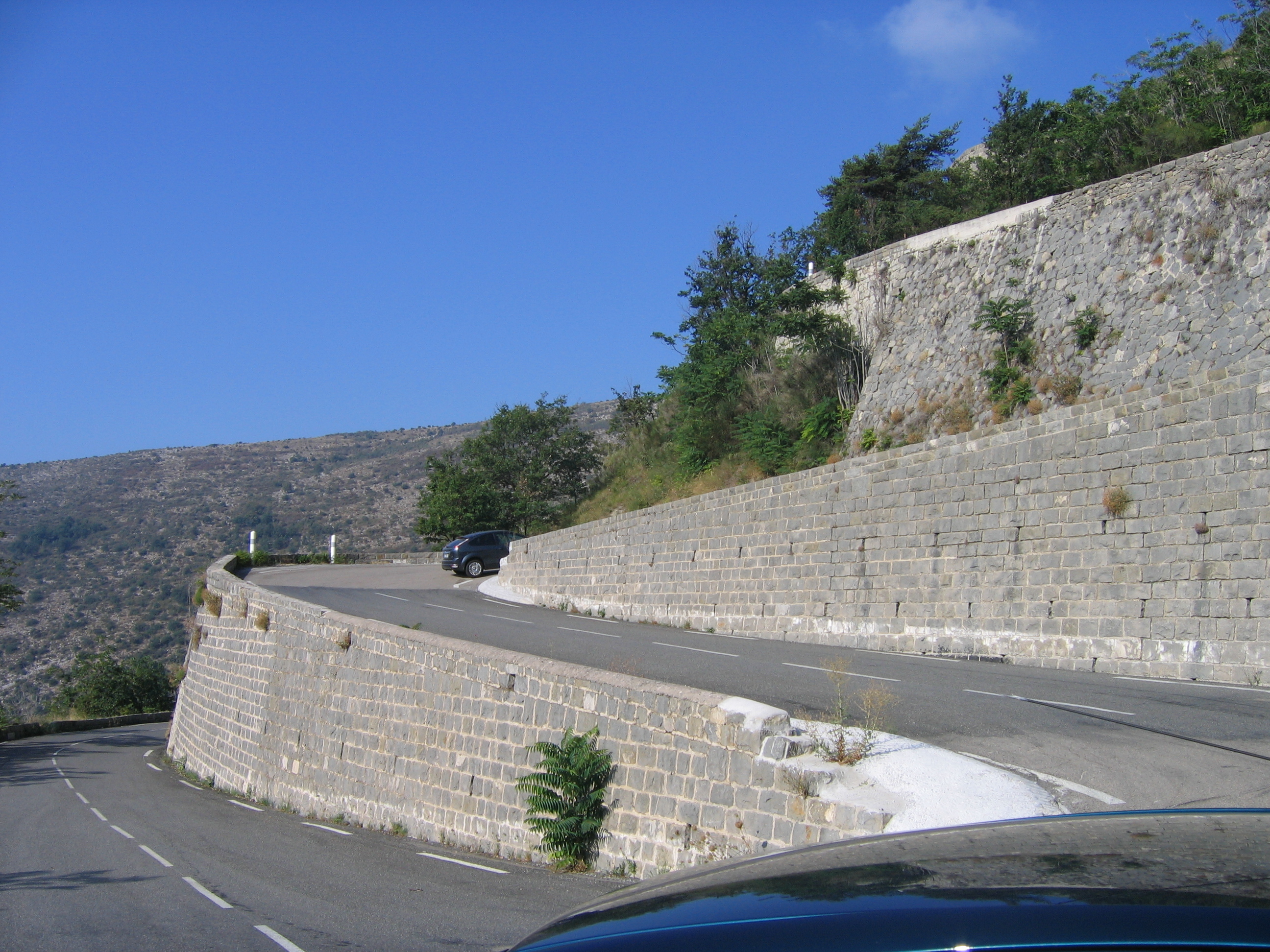
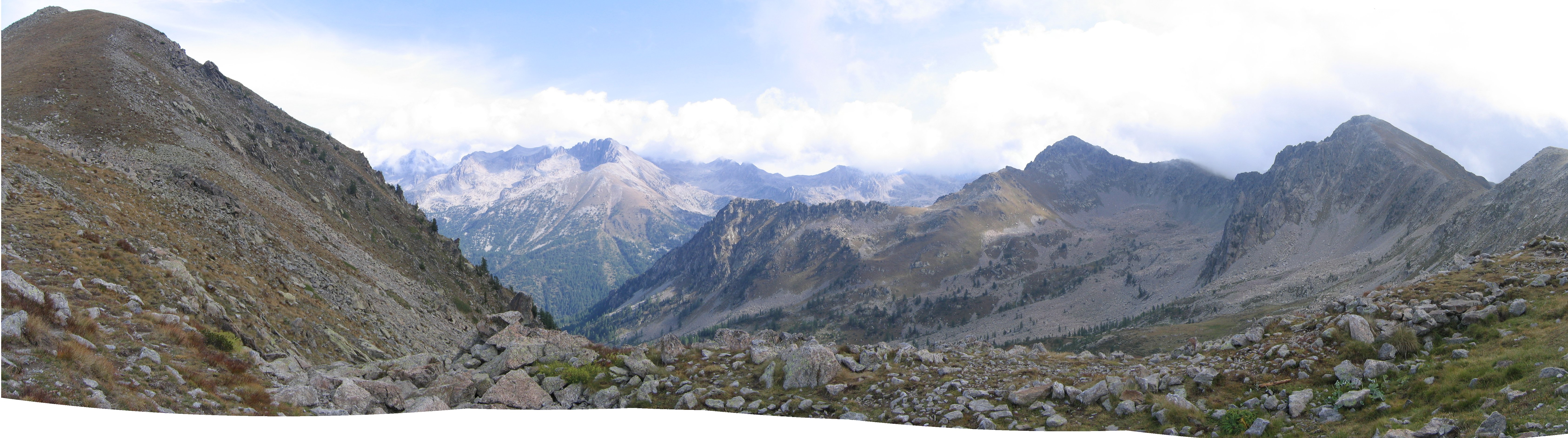
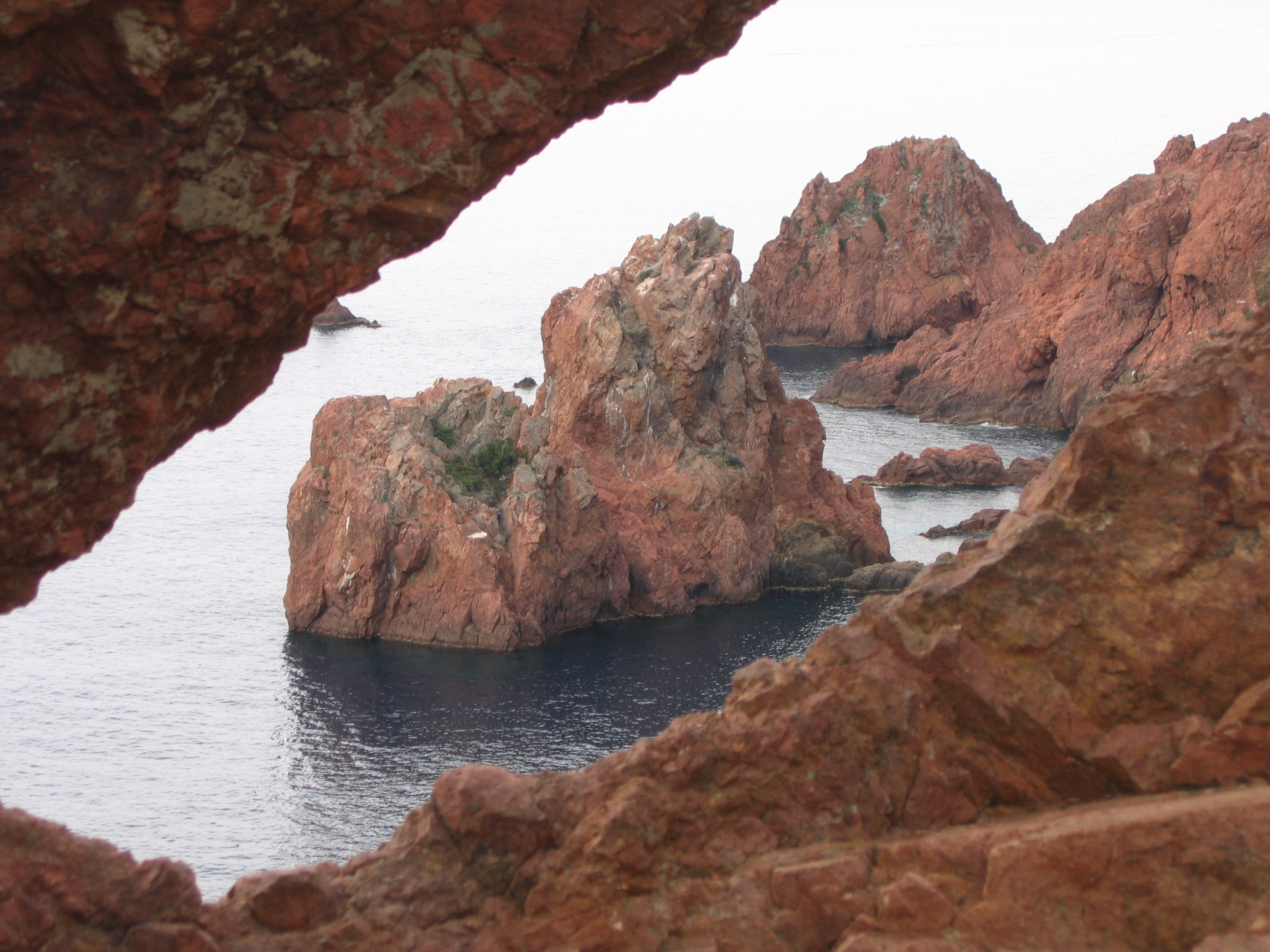
I am back from a really nice holiday, driving around in the Provence. Best stuff:

Next.

Previous.