Search Results: "ag"

30 August 2024

Steve McIntyre: Party like it's 2024

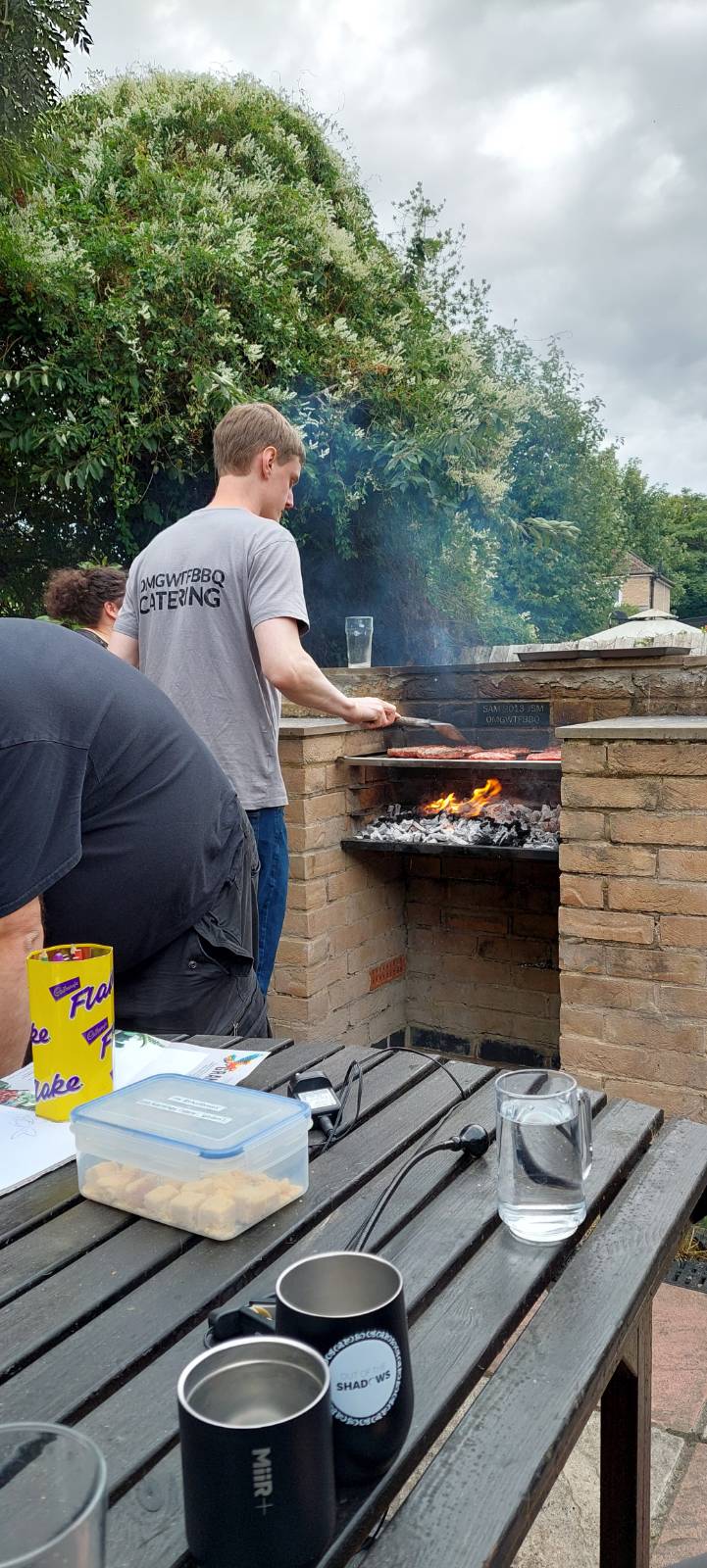
It (was) that time of year again - last weekend we hosted a bunch of nice people at our place in Cambridge for the annual Debian UK OMGWTFBBQ! can you BBQ gin?? Lots of friends, lots of good food and drink. Of course lots of geeky discussions about Debian, networking, random computer languages and... screws? And of course some card games to keep us laughing into each night! beer anyone? Many thanks to a number of awesome friendly people for again sponsoring the important refreshments for the weekend. It's hungry/thirsty work celebrating like this!

Sahil Dhiman: Debconf24 Busan

DebConf24 was held in Busan, South Korea, from July 28th to August 4th 2024 and preceded by DebCamp from July 21st to July 27th. This was my second IRL DebConf (DC) and fourth one in total. I started in Debian with a DebConf, so its always an occasion when one happens. This year again, I worked in fundraising team, working to raise funds from International sponsors. We did manage to raise good enough funding, albeit less than budgeted. Though, the local Korean team was able to connect and gather many Governmental sponsors, which was quite surprising for me. I wasn t seriously considering attending DebConf until I discussed this with Nilesh. More or less, his efforts helped push me through the whole process. Thanks, Nilesh, for this. In March, I got my passport and started preparing documents for South Korean visa. It did require quite a lot of paper work but seeing South Korea s s fresh passport visa rejection rate, I had doubts about visa acceptance. The visa finally got approved, which could be attributed to great documentation and help from DebConf visa team. This was also my first trip outside India, and this being to DebConf made many things easy. Most stuff were documented on DebConf website and wiki. Asking some query got immediate responses from someone in the DebConf channels. We then booked a direct flight from Delhi, reaching Seoul in the morning. With good directions from Sourab TK who had reached Seoul a few hours earlier, we quickly got Korean Won, local SIM and T Money card (transportation card) and headed towards Seoul by AREX, airport metro. We spent the next two days exploring Seoul, which is huge. It probably has the highest number of skyscrapers I have ever seen. The city has a good mix of modern and ancient culture. We explored various places in Seoul including Gyeongbokgung Palace, Statue of King Sejong, Bukchon Hanok village, N Seoul Tower and various food markets which were amazing. A Street in Seoul
A Street in Seoul
Next, we headed to Busan for DebConf using KTX (Korean high speed rail). (Fun fact, slogan for City of Busan is Busan is Good .) South Korea has a good network of frequently running high speed trains. We had pre-booked our tickets because, despite the frequency, trains were sold out most of the time. KTX ride was quite smooth, despite travelling at 300 Kmph at times through Korean countryside and long mountain tunnels. View from Dorm Room
PKNU Entrance
The venue for DebConf was Pukyong National University (PKNU), Daeyeon Campus. PKNU had two campuses in the Busan and some folks ended up in wrong campus too. With good help and guidance from the front desk, we got our dormitory rooms assigned. Dorms here were quite different, ie: View from Dorm Room
View from Dorm Room
Settling in was easy. We started meeting familiar folks after almost a year. The long conversations started again. Everyone was excited for DebConf. Like everytime, the first day was full of action (and chaos). Meet and greet, volunteers check in, video team running around and fixing stuff and things working (or not). There were some interesting talks and sponsors stalls. After day one, things more or less settled down. I again volunteered for video team stuff and helped in camera operations and talk directions, which is always fun. As the tradition applies, saw few talks live on stream too sitting in the dorm room during the conf, which is always fun, when too tired to get ready and go out. From Talk Director's chair
From Talk Director's chair
DebConf takes care of food needs for vegan/vegetarianism folks well, of which I m one. I got to try different food items, which was quite an experience. Tried using chopsticks again which didn t work, which I later figured that handling metal ones were more difficult. We had late night ramens and wooden chopsticks worked perfectly. One of the days, we even went out to an Indian restaurant to have some desi aloo paratha, paneer dishes, samosas and chai (milk tea). I wasn t particularly craving desi food but wasn t able to get something according to my taste so went there. As usual Bits from DPL talk was packed
As usual Bits from DPL talk was packed
For day trip, I went to Ulsan. San means mountains in Korean. Ulsan is a port city with many industries including Hyundai car factory, petrochemical industry, paint industry, ship building etc. We saw bamboo forest, Ulsan tower (quite a view towards Ulsan port), whale village, Ulsan Onggi Museum and the sea (which was beautiful). The beautiful sea
The beautiful sea

View from Ulsan Bridge Observatory
Amongst the sponsors, I was most interested in our network sponsors, folks who were National research and education networks (NREN) here. We had two network sponsors, KOREN and KREONET, thanks to efforts by local team. Initially it was discussed that they ll provide 20G uplink each, so 40G in total, which was whopping but by the time the closing talk happened, we got to know we had 200G uplink to the Internet. This was a massive update to last year when we had 1G main and 100M backup link. 200G wasn t what is required, but it was massive capacity and IIRC from the talk, we peaked at around 500M in usage, but it s always fun to have astronomical amount of bandwidth for bragging rights ;) Various mascots in attendance
Various mascots in attendance

Video and Network stats. Screengrab from closing ceremony
Now let s talk about things I found interesting about South Korea in general: Gyeongbokgung Palace Entrance Gyeongbokgung Palace Entrance Gyeongbokgung Palace Entrance
Grand Gyeongbokgung Palace, Seoul

Starfield Library
Starfield Library, Seoul
If one has to get the whole DebConf experience, it s better to attend DebCamp as well because that s when you can sit and interact with everyone better. As DebConf starts, everyone gets busy in various talks and events and things take a pace. DebConf days literally fly. This year, attending DebConf in person was a different experience. Attending DebConf without any organizational work/stress so was better, and I was able to understand working of different Debian team and workflows better while also identified a few where I would like to join and help. A general conclusion was that almost all Debian teams needs more folks to help out. So if someone want to join, they can probably reach out to the team, and would be able to onboard new folks. Though this would require some patience. Kudos to the Korean team who were able to pull off this event under this tight timeline and thanks for all the hospitality. DebConf24 Group Photo
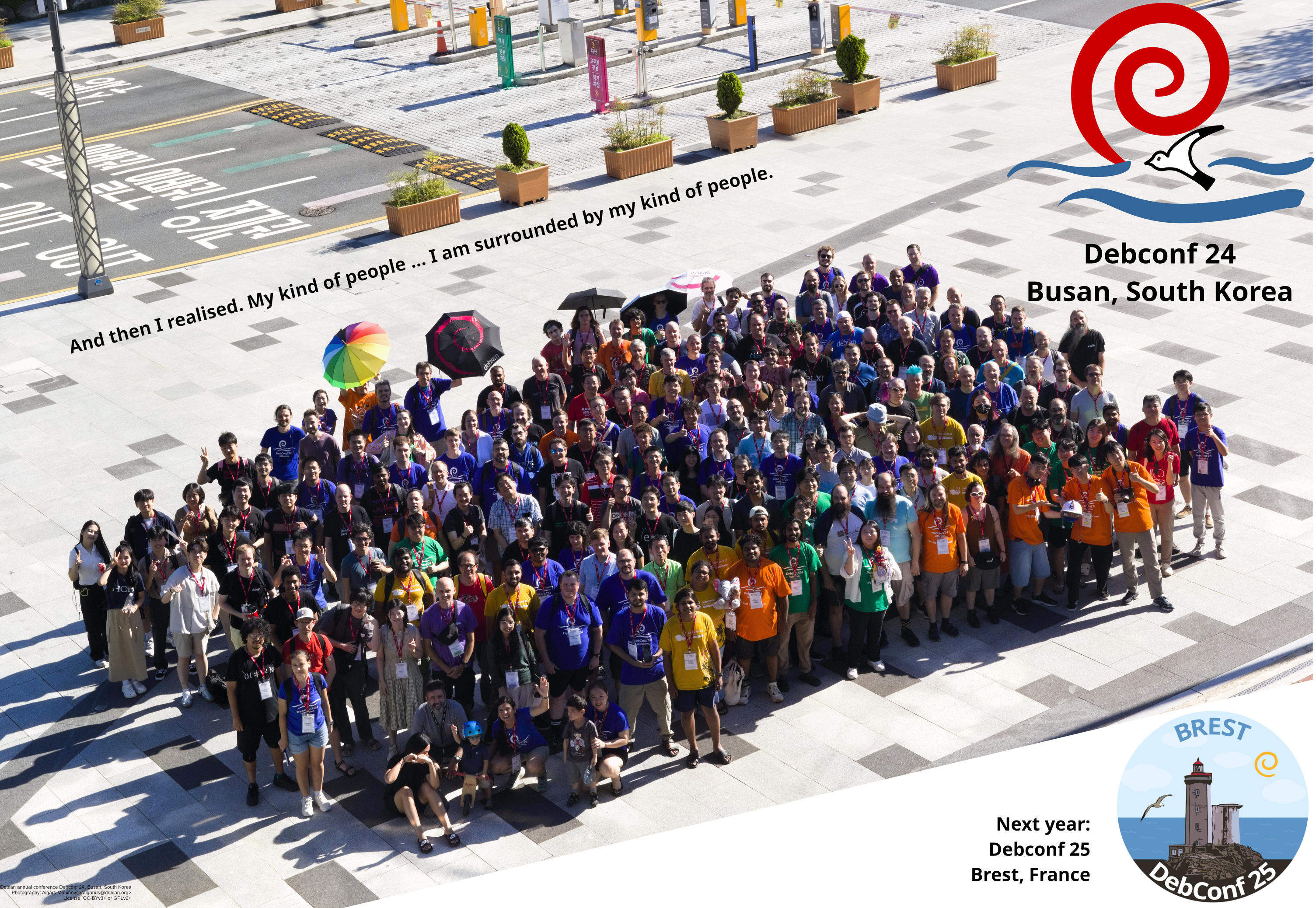
DebConf24 Group Photo. Click to enlarge.
Credits - Aigars Mahinovs
This whole experience expanded my world view. There s so much to see and explore and understand. Looking forward to DebConf25 in Brest, France. PS - Shoutout to abbyck (aka hamCK)!

Russ Allbery: Review: Thornhedge

Review: Thornhedge, by T. Kingfisher
Publisher: Tor
Copyright: 2023
ISBN: 1-250-24410-2
Format: Kindle
Pages: 116
Thornhedge is a fantasy novella by T. Kingfisher, the pen name that Ursula Vernon uses for her adult writing. It won the 2024 Hugo Award for best novella. No matter how much my brain wants to misspell the title, it is a story about a hedge, not a Neolithic earthwork.
The fairy was the greenish-tan color of mushroom stems and her skin bruised blue-black, like mushroom flesh. She had a broad, frog-like face and waterweed hair. She was neither beautiful nor made of malice, as many of the Fair Folk are said to be.
There is a princess asleep in a tower, surrounded by a wall of thorns. Toadling's job is to keep anyone from foolishly breaking in. At first, it was a constant struggle and all that she could manage, but with time, the flood of princes slowed to a trickle. A road was built and abandoned. People fled. There was a plague. With any luck, the tower was finally forgotten. Then a knight shows up. Not a very rich knight, nor a very successful knight. Just a polite and very persistent knight who wants to get into the tower that Toadling does not want him to get into. As you might have guessed, this is a Sleeping Beauty retelling. As you may have also guessed from the author, or from the cover text that says "not all curses should be broken," this version is a bit different. How and why it departs from the original is a surprise that slowly unfolds over the course of the story, in parallel to a delicate, cautious, and delightfully kind-hearted conversation between the knight and the fairy. If you have read a T. Kingfisher story before, particularly one of her fractured fairy tales, you know what to expect. Toadling is one of her typical well-meaning, earnest, slightly awkward protagonists who is just trying to do the right thing in a confusing world full of problems and dangers. She's constantly overwhelmed and yet she keeps going, because what else is there to do. Like a lot of Kingfisher's writing, it's a story about quiet courage from someone who doesn't consider herself courageous. One of the twists this time is that the knight is a character from a similar vein: doggedly unwilling to leave any problem alone, but equally determined to try to be kind. The two of them together make for a story with a gentle and rather melancholy tone. We do, eventually, learn the whole backstory of the tower, the wall of thorns, and Toadling. There is a god, a rather memorable one, who is frustratingly cryptic in the way that gods are. There are monsters who are more loving than most humans. There are humans who turn out to be surprisingly decent when it matters. And, like most of Kingfisher's writing, there is a constant awareness of how complicated the world is, how full it is of people who are just trying to get through each day, and how heavy of burdens people can shoulder when they don't see another way. This story pulled me right in. It is not horror, although there are a few odd bits like there always are in Kingfisher stories. Your largest risk as a reader is that it might make you cry if stories about earnest people doing their best in overwhelming situations hit you that way. My primary complaint is that there was nowhere near enough ending for me. After everything I learned about the characters, I wanted to spend some time with them outside of the bounds of the story. Kingfisher points the reader in a direction and then leaves the rest to your imagination, and I can see why she chose that story construction, but I wanted more catharsis than I got. That complaint aside, this is quintessential T. Kingfisher, and I am unsurprised that it won a Hugo. If you've read any of her other fractured fairy tales, or the 2023 Hugo winner for best novel, you know the sort of stories she tells, and you probably know whether you will like this. I am one of the people who like this. Rating: 8 out of 10

Steve McIntyre: A birthday gift to remember!

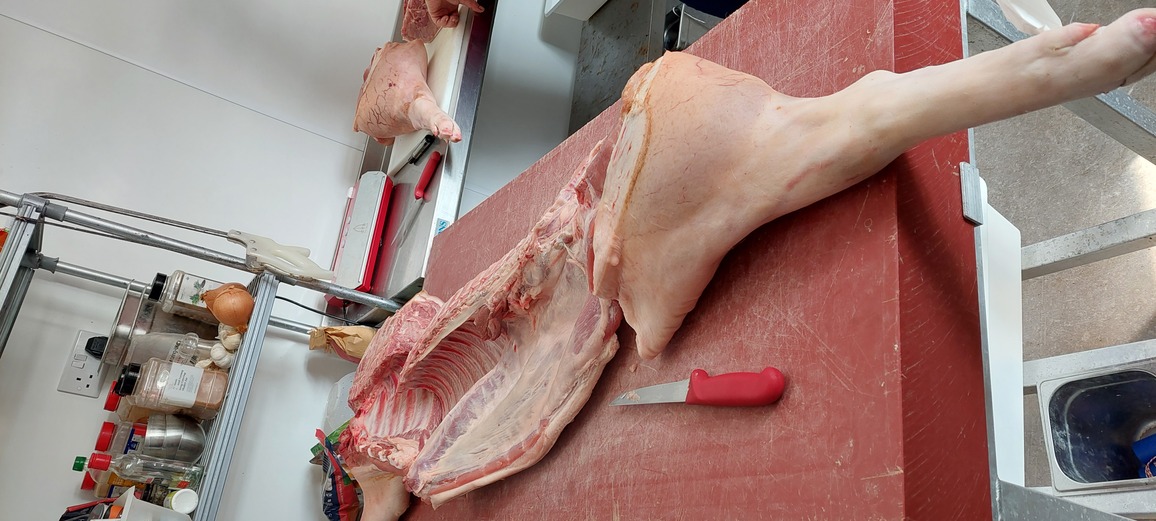
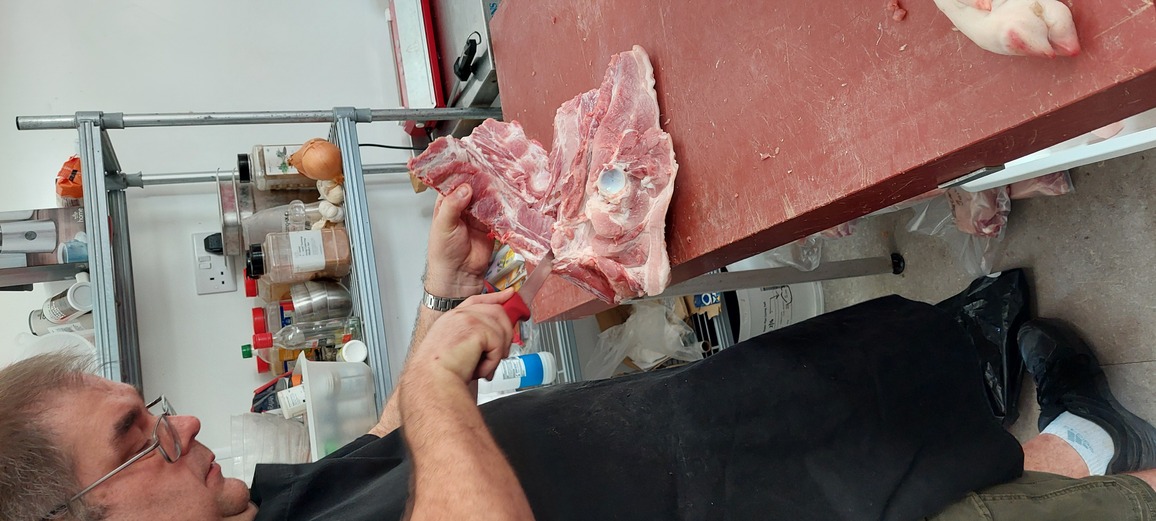
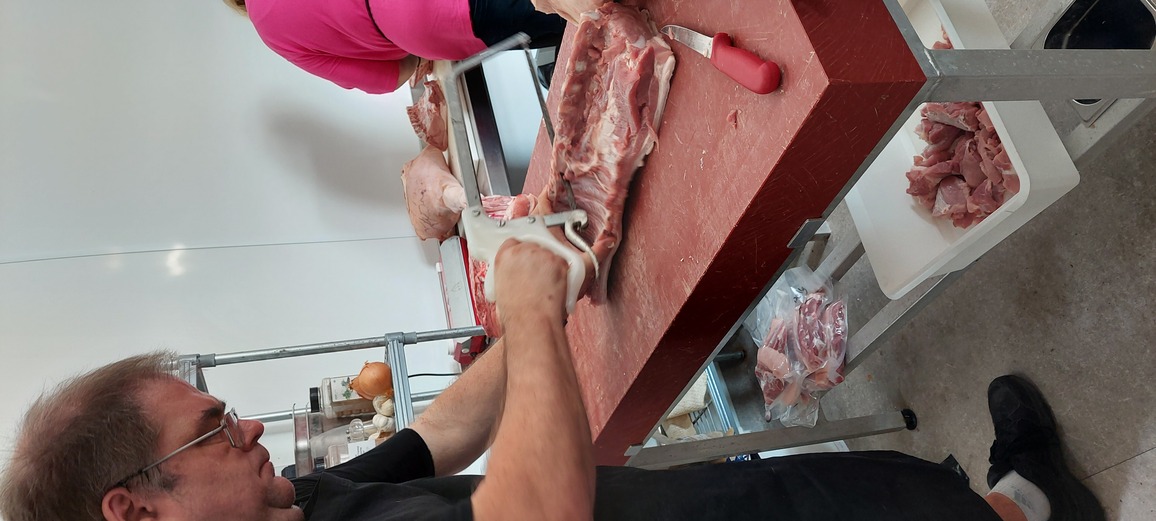
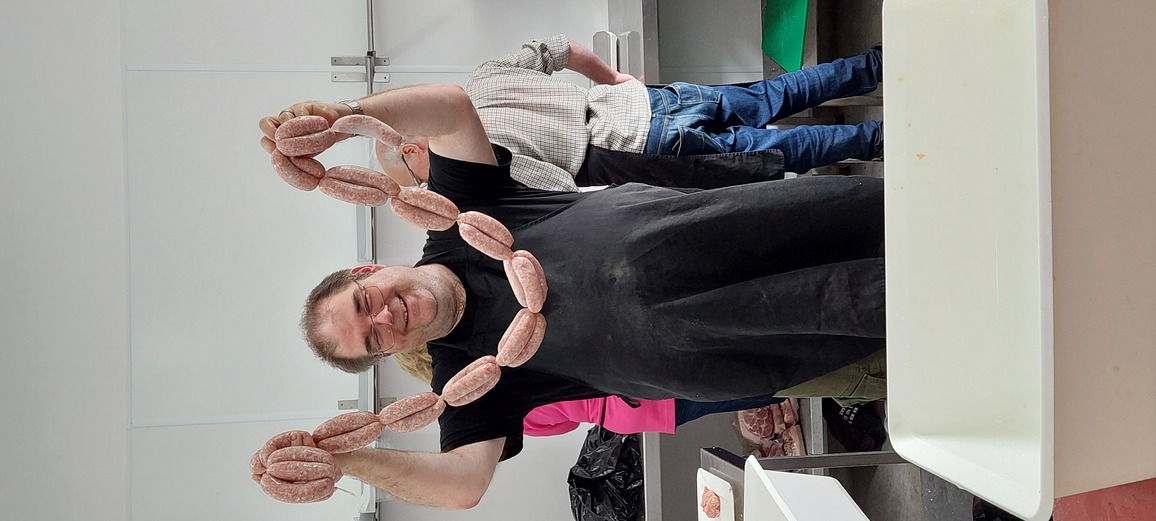
Warning: If you're not into meat, you might want to skip the rest of this... This year, I turned 50. Wow. Lots of friends and family turned up to help me celebrate, with a BBQ (of course!). I was very grateful for a lovely set of gifts from those awesome people, and I have a number of driving experiences to book in the next year or so. I'm going to have so much fun driving silly cars on and off road! However, the most surprising gift was something totally different - a full-day course of hands-on pork butchery. I was utterly bemused - I've never considered doing anything like this at all, and I'd certainly never talked to friends about anything like it either. I was shocked, but in a good way! So, two weekends back Jo and I went over to Empire Farm in Somerset. We stayed nearby so we could be ready on-site early on Sunday morning, and then we joined three other people doing the course. Jo was there to observe, i.e. to watch and take (lots of!) pictures. I can genuinely say that this was the most fun surprise gift I've ever received! David Coldman, the master butcher working with us, has been in the industry for many years. He was an excellent teacher, showing us everything we needed to know and being very patient with us when we needed it. It was great to hear his philosophy too - he only uses the very best locally-sourced meat and focuses on quality over quantity. He showed us all the different cuts of pork that a butcher will make, and we were encouraged to take everything home - no waste here! half a pig At the beginning of the day, we each started with half a pig. Over the next several hours, we steadily worked our way through a series of cuts with knife and saw, making the remaining pig smaller and smaller as we went. saw knife We finished the day with three sets of meat. First, a stack of vacuum-packed joints, chops and steaks ready for cooking and eating at home. Second: a box of off-cuts that we minced and made into sausages at the end of the day. Finally: a bag of skin and bones. Our friend's dog got some of the bones, and Jo turned a lot of the skin into crackling that we shared with friends at the OMGWTFBBQ the next weekend. sausages This was an amazing day. Massive thanks to my good friend Chris Walker for suggesting this gift. As I told David on the day: this was the most fun surprise gift I've ever received. Good hands-on teaching in a new craft is an incredible thing to experience, and I can't recommend this course highly enough.

Reproducible Builds (diffoscope): diffoscope 277 released

The diffoscope maintainers are pleased to announce the release of diffoscope version 277. This version includes the following changes:
[ Sergei Trofimovich ]
* Don't crash when attempting to hashing symlinks with targets that point to
  a directory.
You find out more by visiting the project homepage.

29 August 2024

Jonathan Carter: Orphaning bcachefs-tools in Debian

Around a decade ago, I was happy to learn about bcache a Linux block cache system that implements tiered storage (like a pool of hard disks with SSDs for cache) on Linux. At that stage, ZFS on Linux was nowhere close to where it is today, so any progress on gaining more ZFS features in general Linux systems was very welcome. These days we care a bit less about tiered storage, since any cost benefit in using anything else than nvme tends to quickly evaporate compared to time you eventually lose on it. In 2015, it was announced that bcache would grow into its own filesystem. This was particularly exciting and it caused quite a buzz in the Linux community, because it brought along with it more features that compare with ZFS (and also btrfs), including built-in compression, built-in encryption, check-summing and RAID implementations. Unlike ZFS, it didn t have a dkms module, so if you wanted to test bcachefs back then, you d have to pull the entire upstream bcachefs kernel source tree and compile it. Not ideal, but for a promise of a new, shiny, full-featured filesystem, it was worth it. In 2019, it seemed that the time has come for bcachefs to be merged into Linux, so I thought that it s about time we have the userspace tools (bcachefs-tools) packaged in Debian. Even if the Debian kernel wouldn t have it yet by the time the bullseye (Debian 11) release happened, it might still have been useful for a future backported kernel or users who roll their own. By total coincidence, the first git snapshot that I got into Debian (version 0.1+git20190829.aa2a42b) was committed exactly 5 years ago today. It was quite easy to package it, since it was written in C and shipped with a makefile that just worked, and it made it past NEW into unstable in 19 January 2020, just as I was about to head off to FOSDEM as the pandemic started, but that s of course a whole other story. Fast-forwarding towards the end of 2023, version 1.2 shipped with some utilities written in Rust, this caused a little delay, since I wasn t at all familiar with Rust packaging yet, so I shipped an update that didn t yet include those utilities, and saw this as an opportunity to learn more about how the Rust eco-system worked and Rust in Debian. So, back in April the Rust dependencies for bcachefs-tools in Debian didn t at all match the build requirements. I got some help from the Rust team who says that the common practice is to relax the dependencies of Rust software so that it builds in Debian. So errno, which needed the exact version 0.2, was relaxed so that it could build with version 0.4 in Debian, udev 0.7 was relaxed for 0.8 in Debian, memoffset from 0.8.5 to 0.6.5, paste from 1.0.11 to 1.08 and bindgen from 0.69.9 to 0.66. I found this a bit disturbing, but it seems that some Rust people have lots of confidence that if something builds, it will run fine. And at least it did build, and the resulting binaries did work, although I m personally still not very comfortable or confident about this approach (perhaps that might change as I learn more about Rust). With that in mind, at this point you may wonder how any distribution could sanely package this. The problem is that they can t. Fedora and other distributions with stable releases take a similar approach to what we ve done in Debian, while distributions with much more relaxed policies (like Arch) include all the dependencies as they are vendored upstream. As it stands now, bcachefs-tools is impossible to maintain in Debian stable. While my primary concerns when packaging, are for Debian unstable and the next stable release, I also keep in mind people who have to support these packages long after I stopped caring about them (like Freexian who does LTS support for Debian or Canonical who has long-term Ubuntu support, and probably other organisations that I ve never even heard of yet). And of course, if bcachfs-tools don t have any usable stable releases, it doesn t have any LTS releases either, so anyone who needs to support bcachefs-tools long-term has to carry the support burden on their own, and if they bundle it s dependencies, then those as well. I ll admit that I don t have any solution for fixing this. I suppose if I were upstream I might look into the possibility of at least supporting a larger range of recent dependencies (usually easy enough if you don t hop onto the newest features right away) so that distributions with stable releases only need to concern themselves with providing some minimum recent versions, but even if that could work, the upstream author is 100% against any solution other than vendoring all its dependencies with the utility and insisting that it must only be built using these bundled dependencies. I ve made 6 uploads for this package so far this year, but still I constantly get complaints that it s out of date and that it s ancient. If a piece of software is considered so old that it s useless by the time it s been published for two or three months, then there s no way it can survive even a usual stable release cycle, nevermind any kind of long-term support. With this in mind (not even considering some hostile emails that I recently received from the upstream developer or his public rants on lkml and reddit), I decided to remove bcachefs-tools from Debian completely. Although after discussing this with another DD, I was convinced to orphan it instead, which I have now done. I made an upload to experimental so that it s still available if someone wants to work on it (without having to go through NEW again), it s been removed from unstable so that it doesn t migrate to testing, and the ancient (especially by bcachefs-tools standards) versions that are in stable and oldstable will be removed too, since they are very likely to cause damage with any recent kernel versions that support bcachefs. And so, my adventure with bcachefs-tools comes to an end. I d advise that if you consider using bcachefs for any kind of production use in the near future, you first consider how supportable it is long-term, and whether there s really anyone at all that is succeeding in providing stable support for it.

Michael Ablassmeier: proxmox backup S3 proxy

A few weeks ago Tiziano Bacocco started a small project to implement a (golang) proxy that allows to store proxmox backups on S3 compatible storage: pmoxs3backuproxy, a feature which the current backup server does not have. I wanted to have a look at the Proxmox Backup Server implementation for a while, so i jumped on the wagon and helped with adding most of the API endpoints required to seamlessly use it as drop-in replacement in PVE. The current version can be configured as storage backend in PVE. You can then schedule your backups to the S3 storage likewise. It now supports both the Fixed index format required to create virtual machine backups and the Dynamic index format, used by the regular proxmox-backup-client for file and container backups. (full and incremental) The other endpoints like adding notes, removing or protecting backups, mounting images using the PVE frontend (or proxmox-backup-client) work too. It comes with a garbage collector that does prune the backup storage if snapshots expire and runs integrity checks on the data. You can also configure it as so called remote storage in the Proxmox Backup server itself and pull back complete buckets using proxmox-backup-manager pull , if your local datastore crashes. I think it will become more interesting if future proxmox versions will allow to push backups to other stores, too.

27 August 2024

Russ Allbery: Review: Dark Horse

Review: Dark Horse, by Michelle Diener
Series: Class 5 #1
Publisher: Eclipse
Copyright: June 2015
ISBN: 0-9924559-3-6
Format: Kindle
Pages: 366
Dark Horse is a science fiction romance novel, the first of a five book series as of this writing. It is self-published, although it is sufficiently well-edited and packaged that I had to do some searching to confirm that. Rose was abducted by aliens. The Tecrans picked her up along with a selection of Earth animals, kept her in a cell in their starship, and experimented on her. As the book opens, she has managed to make her escape with the aid of an AI named Sazo who was also imprisoned on the Tecran ship. Sazo dealt with the Tecrans, dropped the ship in the middle of Grih territory, and then got Rose and most of the animals on shuttles to a nearby planet. Dav Jallan is the commander of the ship the Grih sent to investigate the unexplained appearance of a Class 5 Tecran warship in the middle of their territory. The Grih and the Tecran, along with three other species, are members of the United Council, which means in theory they're all at peace. With the Tecran, that theory is often strained. Dav is not going to turn down one of their highly-advanced Class 5 warships delivered to him on a silver platter. There is only the matter of the unexpected cargo, the first orange dots (indicating unknown life forms) that most of the Grih have ever seen. There is a romance. That romance did not work for me. I thought it was highly unprofessional on Dav's part and a bit too obviously constructed on the author's part. It also leans on the subgenre convention that aliens can be remarkably physically similar and sexually compatible, which always causes problems for my suspension of disbelief even though I know it's no less plausible than faster-than-light travel. Despite that, I had so much fun with this book! It was absolutely delightful and weirdly grabby in a way that caught me by surprise. I was skimming some parts of it to write this review and found myself re-reading multiple pages before I dragged myself back on task. I think the most charming part of this book is that the United Council has a law called the Sentient Beings Agreement that makes what the Tecran were doing extremely illegal, and the Grih and the other non-Tecran aliens take this very seriously and with a refreshing lack of cynicism. Rose has a typical human reaction to ending up in a place where she doesn't know the rules and isn't entirely an expected guest. She almost reflexively smoothes over miscommunications and tensions, trying to adapt to their expectations. And then, repeatedly, the Grih realize how much work she's doing to adapt to them, feel enraged at the Tecran and upset that they didn't understand or properly explain something, and find some way to make Rose feel more comfortable. It's surprisingly soothing and comforting to read. It occurred to me in several places that Dark Horse could be read as a wish-fulfillment fantasy of what life as a woman could be like if men took their fair share of the mental load. (This concept is usually applied to housework, but I think it generalizes to other social and communication contexts.) I suspect this was not an accident. There is a lot of wish fulfillment in this book. The Grih are very human-like but hunky, which is convenient for the romance subplot. They struggle to sing, value music exceptionally highly, and consider Rose's speaking voice beautifully musical. Her typical human habit of singing to herself is a source of immediate and almost overwhelming fascination. The supplies Rose takes from the Tecran ship when she flees just happen to be absurdly expensive scented shampoo and equally expensive luxury adaptable clothing. The world she lands on, and the Grih ship, are low-gravity compared to Earth, so Rose is unusually strong for her size. Grih military camouflage has no effect on her human vision. The book is set up to make Rose special. If that type of wish fulfillment is going to grate, wait on this book until you're more in the mood for it. But I like wish fulfillment books when they're done well. Part of why I like to read is to imagine a better world. And Rose isn't doted on; despite their hospitality, she's constantly underestimated by the Grih. Even with their deep belief in the Sentient Beings Agreement, they find it hard to believe that an unknown sentient, even an advanced sentient, is really their equal. Their concern at the start is somewhat patronizing, so watching Rose constantly surprise them delighted the part of my brain that likes both competence porn and deserved reversals, even though the competence here is often due to accidents of biology. It helps that Diener tells the story in alternating perspectives, so the reader first watches Rose do something practical and straightforward from her perspective and then gets to enjoy the profound surprise and chagrin of the aliens. There is a plot beneath this first contact story, and beyond the political problem of figuring out what to do with Rose and the Tecran. Sazo, Rose's AI friend, does not want the Grih to know he exists. He has a history that Rose does not know about and may not be entirely safe. As the political situation with the Tecran escalates, Sazo is pursuing goals of his own, and Rose has a firm opinion about where her loyalties should lie. The resolution is nothing ground-breaking as far as SF goes, but I thought it was satisfyingly tense and complex. Dark Horse leaves obvious room for a sequel, but it comes to a satisfying conclusion. The writing is serviceable, particularly once you get into the story. I would not call it great, and it's not going to win any literary awards, but it didn't interfere with my enjoyment of the story. This is not the sort of book that will make anyone's award list, but it is easily in the top five of books I had the most fun reading this year. Maybe save it for when you're looking for something light and wholesome and don't mind some rather obvious tropes, but if you're in the mood for imagining people who take laws seriously and sincerely try to help other people, I found this an utterly delightful way to pass the time. I immediately bought the sequel. Recommended. Followed by Dark Deeds. Rating: 8 out of 10

25 August 2024

Thomas Lange: Custom Live Media, also for Newer Hardware

At this years Debian conference in South Korea I've presented1 the new feature of the FAIme web service. You can now build your own Debian live media/ISO. The web interface provides various settings, for e.g. adding a user name and its password, selecting the Debian release (stable or testing), the desktop environment and the language. Additionally you can add your own list of packages, that will be installed into the live environment. It's possible to define a custom script that gets executed during the boot process. For remote access to the live system, you can easily sepcify a github, gitlab or salsa account, whose public ssh key will be used for passwordless root access. If your hardware needs special grub settings, you may also add those. I'm thinking about adding an autologin checkbox, so the live media could be used for a kiosk system. And finally newer hardware is supported with the help of the backports kernel for the Debian stable release (aka bookworm). This combination is not available from the official Debian live images or the netinst media because the later has some complicated dependencies which are not that easy to resolve2. At DebConf24 I've talked to Alper who has some ideas3 how to improve the Debian installer environment which then may support a backports kernel. The FAI web service for live ISO is available at https://fai-project.org/FAIme/live

24 August 2024

Kalyani Kenekar: Join Us: Contribute to Open Source as Marathi speaking person!

Logo GNOME Logo MARATHI GNOME is one of the most widely used free and open-source desktop environments! Your native language is Marathi and you are using GNOME as your desktop environment? Then me as the coordinator for the Marathi translation team in GNOME is excited to invite you to become part of the team who is working on translating the GNOME Desktop into Marathi! By this and contributing to the translation of GNOME into Marathi you would be a member of an important project and you can help to make it more accessible to Marathi speakers worldwide and help also to keep our language alive in the open source world.

Why Should You Contribute?
  • Promote Your Language By translating GNOME into Marathi, you help to preserve and promote our beautiful language in the digital world.
  • Learn and Grow Contributing to open-source projects like GNOME is a great way to improve your language and technical skills, network with like-minded individuals, and gain recognition in the global open-source community.
  • Give Back to the Community This is an opportunity to contribute to a project that has a significant impact on users around the world. Your work will enable Marathi speakers to use technology in their native language.

Who Can Contribute? You don t need to be a professional translator to join us! If you are fluent in Marathi and have a basic understanding of English, your contributions will be invaluable. Whether you re a student, a professional, or just someone passionate about your language, your help is needed and really appreciated!

How To Start Translating? Once you re familiar with the tools, you can easily begin translating. We have a list of untranslated strings waiting for your contribution!

How To Join The Team? Follow these steps to join the Marathi translation team for GNOME and start contributing:
  • Step 1: Visit our GNOME Translation Team Page.
  • Step 2: If you re a new user, click on the Create Account option to sign up.
  • Step 3: Once you ve created your account, log in with your credentials.
  • Step 4: After logging in, click the Join button to become a translator for the Marathi team.
  • Step 5: You ll now see a list of different modules that need translation. Choose one of the files that interests you and download it to your computer.
  • Step 6: Translate the content locally on your computer. Once you re done, return to the website, click Browse, and submit your translated file.

Get Familiar with the Additional Tools

Varnam If you re not used to typing in Marathi, you can still contribute using the Varnam website, a free and open-source tool that converts English text into Marathi. Here s how you can get started:
  • Step 1: Visit the Varnam website.
  • Step 2: Click on the Try Now button on the website.
  • Step 3: In the language selection menu, choose Marathi as your desired language.
  • Step 4: Now you can start typing in English, and Varnam will automatically convert your text into Marathi. If you need more guidance, there s a help window available on the site that you can explore for additional support.

Need Help Or You Have Questions? If you have any doubts or need further assistance how you get started with translating GNOME into Marathi, don t hesitate to reach out. I m here to help you on every step of the way! You can connect with me directly at kalyaniknkr@gmail.com Whether you need technical support, guidance on using the tools, or just want to discuss the project, feel free to get in touch. Let s work together to make GNOME accessible to Marathi speakers around the world. Your contributions are always invaluable, and I look forward to welcoming you to our team! Thank you for your interest and support!

Jonathan Dowland: Fediverse and feeds

It's clear that Twitter has been circling the drain for years, but things have been especially bad in recent times. I haven't quit (I have some sympathy with the viewpoint don't cede territory to fascists) but I try to read it much less, and I certainly post much less. Especially at the moment, I really appreciate distractions. Last time I wrote about Mastodon (by which I meant the Fediverse1), I was looking for a new instance to try. I settled on Debian's social instance2. I'm now trying to put any energy I might spend engaging on Twitter, into engaging in the Fediverse instead. (You can follow me via the handle @jon@dow.land, I think, which should repoint to my actual handle, @jmtd@pleroma.debian.social.) There are other potential successors to Twitter: two big ones are Bluesky and Facebook-owned Threads. They are effectively cookie-cutter copies of the Twitter model, and so, we will repeat the same mistakes there. Sadly I see the majority of communities and sub-cultures I follow are migrating to one or the other of these. The Fediverse (or the Mastodon-ish bits of it) should avoid the fate of Twitter. JWZ puts it better and more succinctly than I can. The Fedi experience is, sadly, pretty clunky. So I want to try and write a bit from time to time with tips and tricks that might improve people's experiences. First up, something I discovered only today about Mastodon instances. As JWZ noted, If you are worried about picking the "right" Mastodon instance, don't. Just spin the wheel.. You can spend too much time trying to guess a good answer to this. Better to just get started. At the same time, individual instances are supposed to cater to specific niches. So it could be useful to sample the public posts from an entire instance. For example, to find people to follow, or decide to hop over to that instance yourself. You can't (I think) follow an entire instance from within yours, but, they usually have a public page which shows you the latest traffic. For example, the infosec-themed instance infosec.exchange has one here: https://infosec.exchange/public/local These pages don't provide RSS or Atom feeds3, sadly. I hope that's on the software's roadmap, and hasn't been spurned for ideological reasons. For now at least, OpenRSS provide RSS/Atom feeds for many Mastodon instances. For example, an RSS/Atom feed of the above: https://openrss.org/infosec.exchange/public/local One can add these feeds to your Feed reader and over time get a flavour for the kind of discourse that takes place on given instances. I think the OpenRSS have to manually add Mastodon instances to their service. I tried three instances and only one (infosec.exchange) worked. I'm not sure but I think trying an instance that doesn't work automatically puts it on OpenRSS's backlog.

  1. the Fediverse-versus-Mastodon nomenclature problem is just the the tip of the iceberg, in terms of adoption problems. Mastodon provides a twitter-like service that participates in the Fediverse. But it isn't correct to call the twitter-like service "Mastodon" because other softwares also participate in/provide that service. And it's not correct to call it "Fediverse" because that describes a bigger thing, with e.g. youtube clones also taking part. I'm not sure what the right term should be for "the twitter-like thing". Also, everything I wrote here is probably subtly wrong.
  2. Debian's instance actually runs Pleroma, an alternative to Mastodon. Why should it matter? I think it's healthy for there to be more than one implementation in an open ecosystem. However the experience can be janky, as the features don't perfectly align, some Mastodon features/APIs are not documented/standardised/etc.
  3. I have to remind myself that the concept of RSS/Atom feeds and Feedreaders might need explaining to a modern audience too. Perhaps in another blog post.

Dirk Eddelbuettel: RcppEigen 0.3.4.0.2 on CRAN: Micro Maintenance

A new maintenance release of RcppEigen is now on CRAN, and will go to Debian shortly as usual. Eigen is a C++ template library for linear algebra: matrices, vectors, numerical solvers, and related algorithms. RcppEigen is used by 460 other CRAN packages, and has been downloaded 31.9 million times just off the mirrors of CRAN keeping logs for counting. The recent change switing to Authors@R (now that CRAN mandates it) contained in dual typo in ORCID tags, this releases fixes it. The complete NEWS file entry follows.

Changes in RcppEigen version 0.3.4.0.2 (2024-08-23)
  • Correct two typos in the ORCID tag

Courtesy of CRANberries, there is also a diffstat report for the most recent release. If you like this or other open-source work I do, you can sponsor me at GitHub.

This post by Dirk Eddelbuettel originated on his Thinking inside the box blog. Please report excessive re-aggregation in third-party for-profit settings.

Russell Coker: Wifi 6E Mesh

I am looking into getting a Wifi mesh network. The aim is to use it for providing access to devices through my home especially for devices on the congested 2.4GHz frequency. Ideally I want 6GHz Wifi6E for the communication between mesh nodes as well as for talking to the few devices that are new enough to support it (I like buying cheap second hand devices). 2.5Gbit ethernet connections on all mesh nodes would be good too. Wifi 7 is semi-released, you can buy devices even though the specs aren t entirely finalised. I expect that next year when Wifi 7 devices are more common the second hand prices of Wifi 6E will drop. Currently Wifi 6E devices are somewhat expensive. One major problem at the moment is cloud configuration . Here is a 41 page forum thread of TP-Link customers asking in vain for non-cloud configuration [1]. The problems with cloud configuration are that it doesn t allow configuration without Internet access (so no fixing things when internet breaks and no use for a private network without Internet), it relies on a proprietary phone app (so a problem with your phone breaks everything), and it adds a dependency on an unpaid service that TP-Link might decide to turn off at some future time. The TP -Link Deco X55 AX3000 looks like a good set of devices, it currently costs $328 for a set of three Wifi 6 (not 6E) devices is a good deal, pity that the poor software options let it down. TP-Link also seems to be scanning web traffic and sending the analysis to an external site [2], it seems to be operating as malware. The TP-Link software seems to be most accurately described as malware. There is the OpenWrt project for open firmware on Wifi APs which is a great project [3] but it doesn t seem to support any Wifi 6 mesh systems yet. If most Wifi hardware requires malware for operation it seems that running a VPN over Wifi is the way to go. A hostile party being able to sniff your home network is much worse than a hostile party sniffing public Internet traffic. The Google Nest mesh devices have good specs and price, $359 for a three node Wifi 6E mesh that has 2.5Gbit ethernet. But they can only be configured with a Google app for Android or iOS and require a Gmail account. Giving Google the ability to shut down all my stuff by deleting my gmail account is not acceptable. Also Google is well known for cancelling services [4]. A mitigating factor is that there should be enough of those devices sold to make them a good target for an OpenWRT port. As an aside it looks like the TailScale mesh VPN system could be a solution to the security issues related to malware on Wifi APs problem [5]. There is also HeadScale which is the fully open source variant of that [6]. Even when the vendor isn t overtly hostile they can make mistakes so encryption is good. Kogan is selling an own-brand Wifi 6 mesh network package that comes with 1/2/3 devices for $70/$120/$140. It doesn t do Wifi 6E but supports the better encoding methods of Wifi 6 over Wifi 5 and will be good for bridging a LAN in one part of a house to a Wifi 2.4GHz or Ethernet connected device in another part. They also support up to 7 nodes so you could buy two of the 3 device packages and run one network with 2 and another with 4. The pricing is very competitive and they support web based administration! I ve just ordered the $140 Wifi 6 pack from Kogan. If it doesn t do what I want then I can find someone else who will be happy with whatever functionality it gives and $140 is an amount I can risk without concern. If it works well then I might upgrade to Wifi 6E or Wifi 7 next year and deploy the Wifi 6 one for a relative. It seems that for my needs a cheap and OK Wifi 6 device is better than an expensive Wifi 6E device.

Russell Coker: Is Secure Boot Worth Using?

With news like this one cited by Bruce Schneier [1] people are asking whether it s worth using Secure Boot. Regarding the specific news article, this is always a risk with distributed public key encryption systems. Lose control of one private key and attackers can do bad things. That doesn t make it bad it just makes it less valuable. If you want to setup a system for a government agency, bank, or other high value target then it s quite reasonable to expect an adversary to purchase systems of the same make and model to verify that their attacks will work. If you want to make your home PC a little harder to attack then you can expect that the likely adversaries won t bother with such things. You don t need security to be perfect, making a particular attack slightly more difficult than other potential attacks gives a large part of the benefit. The purpose of Secure Boot is to verify the boot loader with a public key signature and then have the boot loader verify the kernel. Microsoft signs the shim that is used by each Linux distribution to load GRUB (or another boot loader). So when I configure a Debian system with Secure Boot enabled that doesn t stop anyone from booting Ubuntu. From the signatures on the boot loader etc there is no difference from my Debian installation and a rescue image from Debian, Ubuntu, or another distribution booted by a hostile party to do things against my interests. The difference between the legitimate OS image and malware is a matter of who boots it and the reason for booting it. It is possible to deconfigure Microsoft keys from UEFI to only boot from your own key, this document describes what is necessary to do that [2]. Basically if you boot without using any option ROMs (which among other things means the ROM from your video card) then you can disable the MS keys. If it s impossible to disable the MS keys that doesn t make it impossible to gain a benefit from the Secure Boot process. You can use a block device decryption process that involves a signature of the kernel and the BIOS being used as part of the decryption for the device. So if a system is booted with the wrong kernel and the user doesn t recognise it then they will find that they can t unlock the device with the password. I think it s possible on some systems to run the Secure Boot functionality in a non-enforcing mode such that it will use a bootloader without a valid signature but still use the hash for TPM calculations, that appears impossible on my Thinkpad Yoga Gen3 which only has enabled and disabled as options but should work on Dell laptops which have an option to run Secure Boot in permissive mode. I believe that the way of the future is to use something like EFIStub [3] to create unified kernel images with a signed kernel, initrd, and command-line parameters in a single bundle which can be loaded directly by the UEFI BIOS. From the perspective of a distribution developer it s good to have many people using the current standard functionality of shim and GRUB for EFI as a step towards that goal. CloudFlare has a good blog post about Linux kernel hardening [4]. In that post they cover the benefits of a full secure boot setup (which is difficult at the current time) and the way that secure boot enables the lockdown module for kernel integrity. When Secure Boot is detected by the kernel it automatically enables lockdown=integrity functionality (see this blog post for an explanation of lockdown [5]). It is possible to enable this by putting lockdown=integrity on the kernel command line or lockdown=confidentiality if you want even more protection, but it happens by default with Secure Boot. Secure Boot is something you can set to get a selection of security features enabled and get a known minimum level of integrity even if the signatures aren t used for anything useful, restricting a system to only boot kernels from MS, Debian, Ubuntu, Red Hat, etc is not useful. For most users I think that Secure Boot is a small increase in security but testing it on a large number of systems allows increasing the overall security of operating systems which benefits the world. Also I think that having features like EFIStub usable for a large portion of the users (possibly the majority of users) is something that can be expected to happen in the lifetime of hardware being purchased now. So ensuring that Secure Boot works with GRUB now will facilitate using EFIStub etc in future years. The Secure Boot page on the Debian wiki is worth reading, and also worth updating for people who want to contribute [6].

22 August 2024

Thomas Goirand: Packaging Home Assistant

During Debconf, Edward Betts and myself started packaging Home Assistant for Debian. It consists of hundreds of Python packages. So far, we counted at least 675 packages. That s a lot, though most packages are just libraries to talk with some IoT devices and some APIs. It s fairly easy to create a new package: it takes me about 15 to 20 minutes, probably half that time to Edward. And it s a lot of fun. So far in one month of time, we managed to package about 1 third of the list (probably 200+ Python packages already). Once we ve done all the dependencies, we may start to have fun with the core of the application! At the current speed, hopefully we ll be done before the end of the year. Edward and myself have swear to make at least one package a day, which I ve been doing so far, and Edward did a way more We also received contributions from Silton0506, Tianyu, piotr, EiPi Fun, sourabhtk37, and Count-Dracula, as per the very bottom of the TODO list in the wiki (see link below). If you have a bit of free time, we d love to have more contributors. Here s were to get the needed information: We created a team in Salsa: https://salsa.debian.org/homeassistant-team/ Our TODO list: https://wiki.debian.org/Python/HomeAssistant Our DDPO Q/A page: https://qa.debian.org/developer.php?login=team%2Bhomeassistant%40tracker.debian.org Feel free to join us on IRC: #debian-homeassistant Discussing with a lot of people about it, I realized that A LOT of DDs are actually using Home Assistant. Wouldn t you like it better if it was just a apt install away ? Any DD can simply take a package in the wiki, open an ITP, upload it s debianized source on Salsa, and upload to the Debian archive. Most are very easy simple packages to make.

Jonathan McDowell: Thoughts on Advent of Code + Rust

Diego wrote about his dislike for Advent of Code and that reminded me I hadn t written up my experience from 2023. Mostly because, spoiler, I never actually completed it and always intended to do so and then write it up. I think it s time to accept I m not going to do that, and write down some thoughts before I forget all of them. These are somewhat vague, given the time that s elapsed, but I think still relevant. You might also find Roger s problem write up interesting. I ve tried AoC a couple of times before; I think I had a very brief attempt back in 2021, and I got 4 days in for 2022. For Advent of Code 2023 I tried much harder to actually complete the challenges, and got most of the way there. I didn t allow myself to move on to the next day until fully completing the previous day, and didn t end up doing the second half of December 24th, or any of December 25th.

Rust First I want to talk about Rust, which is the language I chose to use for the problems. I ve dabbled a little in it, but I d like more familiarity with the basic language, and some programming problems seemed like a good way to get that. It s a language I want to like; I ve spent a lot of my career writing C, do more in Go these days, and generally think Rust promises a low level, run-time light environment like C but with the rough edges taken off. I set myself the challenge of using just bare Rust; no external crates, no use of cargo. I was accused of playing on hard mode by doing this, but it really wasn t the intention - I figured that I should be able to do what I needed without recourse to anything outside the core language, and didn t want what seemed like the extra complexity of dealing with cargo. That caused problems, however. I m used to by-default generic error handling in Go through the error type, but Rust seems to have much more tightly typed errors. I was pointed at anyhow as the right way to do this in Rust. I still find this surprising; I ended up using unwrap() a lot when I think with more generic error handling I could have used ?. The other thing I discovered is that by default rustc is heavy on the debug output. I got significantly better results on some of the solutions with rustc -O -C target-cpu=native source.rs. I probably shouldn t be surprised by this, but worth noting. Rust, to me, has a syntax only a C++ programmer could love. I am not a C++ programmer. Coming from C I found Go to be a nice, simple syntax to learn. Rust has not been the same. There s a lot more punctuation, and it s not always clear to me what it s doing. This applies more when reading other people s code than when writing it myself, obviously, but I see a lot of Rust code that could give Perl a run for its money in terms of looking like line noise. The borrow checker didn t bug me too much, but did add overhead to my thinking. The Rust compiler is generally very good at outputting helpful error messages when the programmer is an idiot. I ended up having to use a RefCell for one solution, and using .iter() for loops rather than explicit iterators (why, why is this different?). I also kept forgetting to explicitly mark variables as mutable when declaring them. Things I liked? There s a rich set of first class data types. Look, I m a C programmer, I m easily pleased. You give me some sort of hash array and I ll be happy. Rust manages that, tuples, strings, all the standard bits any modern language can provide. The whole impl thing for adding methods to structures I like as a way of providing some abstraction, though I think Go has a nicer syntax for it. The compiler, as mentioned, is great at spitting out useful errors for the most part. Also although I wasn t using external crates for AoC I do appreciate there s a decent ecosystem there now (though that brings up another gripe: rust seems to still be a fairly fast moving target, to the extent I can no longer rely on the compiler in Debian stable to be able to compile random projects I find).

Advent of Code Let s talk about the advent of code bit now. Hopefully it s long enough since it came out that this won t be spoilers for anyone, but if you haven t attempted the 2023 AoC and might, you might want to stop reading here. First, a refresher on the format for those who might not be aware of it. Problems are posted daily from December 1st until the 25th. Each is in 2 parts; the second part is not viewable until you have provided the correct answer for the first part. There s a whole leaderboard thing going on, but the puzzle opens at midnight UTC-5 so generally by the time I wake up and have time to look the problem has been solved many times over; no chance of getting listed. Credit to AoC creator, Eric Wastl, for writing up the set of problems in an entertaining fashion. I quite enjoyed seeing how the puzzle would be phrased each day, and the whole thing obviously brings a lot of joy to folk I know. I always start AoC thinking it ll be a fun set of puzzles to solve. Then something happens and I miss a day or two, and all of a sudden I ve a bunch of catching up to do and it s all a bit more of a chore. I hit that at some points this time, but made a concerted effort to try and power through it. That perseverance was required up front, because I found the second part of Day 1 to be ill specified, and had to iterate a few times to actually calculate the desired solution (IIRC, issues about whether sevenone at the end of a line ended up as 7 or 1 really tripped me up). I don t recall any other problems that bit me as hard on the specification as this one, but it happening up front was unfortunate. The short example input doesn t always help with this either; either it s not enough to be able to extrapolate patterns, or it doesn t show all the variations you need to account for (that aren t fully specified in the text), or in a few cases it turned out I needed to understand the shape of the actual data to produce a solution that could actually complete in a reasonable time. Which brings me to another matter, sometimes brute force doesn t actually work. This is fine, but the second part of the day s problem can change the approach you d take. So sometimes I got lucky in the way I handled the first half, and doing the second half was a simple 5 minute tweak, and sometimes I had to entirely change the way I was storing data. You might claim that if I was a better programmer I d have always produced a first half solution that was amenable to extension for the second half. First, I dispute that; I think there are always situations where the problem domain can change in enough directions that you can t handle all of them without a lot of effort. Secondly, I didn t find AoC an environment that encouraged me to optimise for generic solutions. Maybe some of the puzzles in isolation would allow for that, but a month of daily problems to solve while still engaging in regular life meant I hacked things up, took short cuts based on the knowledge I had of the input data, etc, etc. Overall I can see the appeal, but the sheer quantity and the fact I write code as part of my day job just made it feel too much like a chore, rather than a fun mental exercise. I did wonder how they d look as a set of interview puzzles (obviously a subset, rather than all of them), but I m not sure how you d actually use them for that - I wouldn t want anyone to have to solve them in a live interview. So, in case it s not obvious, I m not planning to engage in AoC again this yet. But I m continuing to persevere with Rust (though most of my work stuff is thankfully still Go).

Debian Brasil: Debian Day 2024 em Natal/RN - Brasil

por Allythy O Debian Day um evento anual que celebra o anivers rio do Debian, uma das distribui es GNU/Linux mais importante do Software Livre, criada em 16 de Agosto de 1993, por Ian Murdock. No ltimo s bado (17/08/2024) no Sebrae-RN comemoramos os 31 anos Debian em Natal, no Rio Grande do Norte. A celebra o, foi organizada pela PotiLivre(Comunidade Potiguar de Software Livre), destacou os 31 anos de hist ria do Debian. O evento contou com algumas palestras e muitas discuss es sobre Software Livre. Tivemos 70 inscri es, 40 estiverem presentes. O Debian Day em Natal foi uma ocasi o para celebrar a trajet ria do Debian e refor ar a import ncia do Software Livre. Palestrantes Agradecemos imensamente a Isaque Barbosa Martins, Eduardo de Souza Paix o, Fernando Guisso,que palestraram nessa edi o! Obrigado por compartilhar tanto conhecimento com a comunidade. Esperamos ver voc s novamente em futuros encontros! foto da palestra conhecendo projeto Debian Link dos slides do Debian Day Participantes Um grande obrigado tamb m a todos os participantes, n s fazemos isso por voc s! Esperamos que tenham aprendido, se divertido e feito novas conex es entre a comunidade Participantes do Debian Day Natal-RN Essa edi o do Debina Day Natal foi organizada por: Allythy, Clara Nobre, Gabriel Damazio e Marcel Ribeiro.

Matthew Garrett: What the fuck is an SBAT and why does everyone suddenly care

Short version: Secure Boot Advanced Targeting and if that's enough for you you can skip the rest you're welcome.

Long version: When UEFI Secure Boot was specified, everyone involved was, well, a touch naive. The basic security model of Secure Boot is that all the code that ends up running in a kernel-level privileged environment should be validated before execution - the firmware verifies the bootloader, the bootloader verifies the kernel, the kernel verifies any additional runtime loaded kernel code, and now we have a trusted environment to impose any other security policy we want. Obviously people might screw up, but the spec included a way to revoke any signed components that turned out not to be trustworthy: simply add the hash of the untrustworthy code to a variable, and then refuse to load anything with that hash even if it's signed with a trusted key.

Unfortunately, as it turns out, scale. Every Linux distribution that works in the Secure Boot ecosystem generates their own bootloader binaries, and each of them has a different hash. If there's a vulnerability identified in the source code for said bootloader, there's a large number of different binaries that need to be revoked. And, well, the storage available to store the variable containing all these hashes is limited. There's simply not enough space to add a new set of hashes every time it turns out that grub (a bootloader initially written for a simpler time when there was no boot security and which has several separate image parsers and also a font parser and look you know where this is going) has another mechanism for a hostile actor to cause it to execute arbitrary code, so another solution was needed.

And that solution is SBAT. The general concept behind SBAT is pretty straightforward. Every important component in the boot chain declares a security generation that's incorporated into the signed binary. When a vulnerability is identified and fixed, that generation is incremented. An update can then be pushed that defines a minimum generation - boot components will look at the next item in the chain, compare its name and generation number to the ones stored in a firmware variable, and decide whether or not to execute it based on that. Instead of having to revoke a large number of individual hashes, it becomes possible to push one update that simply says "Any version of grub with a security generation below this number is considered untrustworthy".

So why is this suddenly relevant? SBAT was developed collaboratively between the Linux community and Microsoft, and Microsoft chose to push a Windows update that told systems not to trust versions of grub with a security generation below a certain level. This was because those versions of grub had genuine security vulnerabilities that would allow an attacker to compromise the Windows secure boot chain, and we've seen real world examples of malware wanting to do that (Black Lotus did so using a vulnerability in the Windows bootloader, but a vulnerability in grub would be just as viable for this). Viewed purely from a security perspective, this was a legitimate thing to want to do.

(An aside: the "Something has gone seriously wrong" message that's associated with people having a bad time as a result of this update? That's a message from shim, not any Microsoft code. Shim pays attention to SBAT updates in order to avoid violating the security assumptions made by other bootloaders on the system, so even though it was Microsoft that pushed the SBAT update, it's the Linux bootloader that refuses to run old versions of grub as a result. This is absolutely working as intended)

The problem we've ended up in is that several Linux distributions had not shipped versions of grub with a newer security generation, and so those versions of grub are assumed to be insecure (it's worth noting that grub is signed by individual distributions, not Microsoft, so there's no externally introduced lag here). Microsoft's stated intention was that Windows Update would only apply the SBAT update to systems that were Windows-only, and any dual-boot setups would instead be left vulnerable to attack until the installed distro updated its grub and shipped an SBAT update itself. Unfortunately, as is now obvious, that didn't work as intended and at least some dual-boot setups applied the update and that distribution's Shim refused to boot that distribution's grub.

What's the summary? Microsoft (understandably) didn't want it to be possible to attack Windows by using a vulnerable version of grub that could be tricked into executing arbitrary code and then introduce a bootkit into the Windows kernel during boot. Microsoft did this by pushing a Windows Update that updated the SBAT variable to indicate that known-vulnerable versions of grub shouldn't be allowed to boot on those systems. The distribution-provided Shim first-stage bootloader read this variable, read the SBAT section from the installed copy of grub, realised these conflicted, and refused to boot grub with the "Something has gone seriously wrong" message. This update was not supposed to apply to dual-boot systems, but did anyway. Basically:

1) Microsoft applied an update to systems where that update shouldn't have been applied
2) Some Linux distros failed to update their grub code and SBAT security generation when exploitable security vulnerabilities were identified in grub

The outcome is that some people can't boot their systems. I think there's plenty of blame here. Microsoft should have done more testing to ensure that dual-boot setups could be identified accurately. But also distributions shipping signed bootloaders should make sure that they're updating those and updating the security generation to match, because otherwise they're shipping a vector that can be used to attack other operating systems and that's kind of a violation of the social contract around all of this.

It's unfortunate that the victims here are largely end users faced with a system that suddenly refuses to boot the OS they want to boot. That should never happen. I don't think asking arbitrary end users whether they want secure boot updates is likely to result in good outcomes, and while I vaguely tend towards UEFI Secure Boot not being something that benefits most end users it's also a thing you really don't want to discover you want after the fact so I have sympathy for it being default on, so I do sympathise with Microsoft's choices here, other than the failed attempt to avoid the update on dual boot systems.

Anyway. I was extremely involved in the implementation of this for Linux back in 2012 and wrote the first prototype of Shim (which is now a massively better bootloader maintained by a wider set of people and that I haven't touched in years), so if you want to blame an individual please do feel free to blame me. This is something that shouldn't have happened, and unless you're either Microsoft or a Linux distribution it's not your fault. I'm sorry.

comment count unavailable comments

21 August 2024

Russ Allbery: Review: These Burning Stars

Review: These Burning Stars, by Bethany Jacobs
Series: Kindom Trilogy #1
Publisher: Orbit
Copyright: October 2023
ISBN: 0-316-46342-6
Format: Kindle
Pages: 430
These Burning Stars is a science fiction thriller with cyberpunk vibes. It is Bethany Jacobs's first novel and the first of an expected trilogy, and won the 2024 Philip K. Dick Award for the best SF paperback original published in the US. Generation starships brought humanity to the three star systems of the Treble, where they've built a new and thriving culture of billions. The Treble is ruled by the Kindom, a tripartite government structure built around the worship of six gods and the aristocratic power of the First Families. The Clerisy handle religion, the Secretaries run the bureaucracy, and the Cloaksaan enforce the decisions of the other branches. The Nightfoots are one of the First Families. They control sevite, the propellant required to move between the systems of the Treble now that the moon Jeve and the sole source of natural jevite has been destroyed. Esek Nightfoot is a cleric, theoretically following the rules of the Clerisy, but she has made a career of training cloaksaan. She is is mercurial, powerful, ruthless, ambitious, politically well-connected, and greatly feared. She is also obsessed with a person named Six: an orphan she first encountered at a training school who was too young to have a gender or a name but who was already one of the best fighters in the school. In the sort of manipulative challenge typical of Esek, she dangled the offer of a place as a student and challenged the child to learn enough to do something impressive. The subsequent twenty years of elusive taunts and mysterious gifts from the impossible-to-locate Six have driven Esek wild. Cleric Chono was beside Esek for much of that time. One of Six's classmates and another of Esek's rescues, Chono is the rare student who became a cleric rather than a cloaksaan. She is pious, cautious, and careful, the opposite of Esek's mercurial rage, but it's impossible to spend that much time around the woman and not be affected and manipulated by her. As this story opens, Chono is summoned by the First Cleric to join Esek on an assignment: recover a data coin that was stolen from a pirate raid on the Nightfoot compound. He refuses to tell them what data is on it, only saying that he believes it could be used to undermine public trust in the Nightfoot family. Jun is a hacker with considerably fewer connections to power or government and no desire to meet any of these people. She and her partner Liis make a dubiously legal living from smaller, quieter jobs. Buying a collection of stolen data coins for an archivist consortium is riskier than she prefers, but she's been tracking down rumors of this coin for months. The deal is worth a lot of money, enough to make a huge difference for her family. This is the second book I've read recently with strong cyberpunk vibes, although These Burning Stars mixes them with political thriller. This is a messy world with complicated political and religious systems, a lot of contentious history, and vast inequality. The story is told in two interleaved time sequences: the present-day fight over the data coin and the information that it contains, and a sequence of flashbacks telling the history of Esek's relationship with Six and Chono. Jun's story is the most cyberpunk and the one I found the most enjoyable to read, but Chono is a good viewpoint character for Esek's vicious energy and abusive charisma. Six is not a viewpoint character. For most of the book, they're present mostly in shadows, glimpses, and consequences, but they're the strongest character of the book. Both Esek and Six are larger than life, creatures of legend stuffed into mundane politics but too full of strong emotions, both good and bad, to play by any of the rules. Esek has the power base and access to the levers of government, but Six's quiet competence and mercilessly targeted morality may make them the more dangerous of the pair. I found the twisty political thriller part of this book engrossing and very difficult to put down, but it was also a bit too much drama for me in places. Jacobs has some surprises in store, one of which I did not expect at all, and they're set up beautifully and well-done within the story, but Esek and Six become an emotional star that the other characters orbit around and are in danger of getting pulled into. Chono is an accomplished and powerful character in her own right, but she's also an abuse victim, and while those parts are realistic, I didn't entirely enjoy reading them. There is quiet competence here alongside the drama, but I think I wanted the balance of emotion to tip a bit more towards the competence. There is one thing that Jacobs does with the end of the book that greatly impressed me. Unfortunately I can't even hint at it for fear of spoilers, but the ending is unsettling in a way that I found surprising and thought-provoking. I think what I can say is that this book respects the intelligence and skill of secondary characters in a way that I think is rare in a story with such overwhelming protagonists. I'm still thinking about that, and it's going to pull me right into the sequel. This is not going to be to everyone's taste. Esek is a viewpoint character and she can be very nasty. There's a lot of violence and abuse, including one rather graphic fight scene that I thought dragged on much longer than it needed to. But it's a satisfying, complex story with a true variety of characters and some real surprises. I'm glad I read it. Followed by On Vicious Worlds, not yet published as I write this. Content warnings: emotional and physical abuse, graphic violence, off-screen rape and sexual abuse of minors. Rating: 7 out of 10

Dirk Eddelbuettel: RcppMagicEnum 0.0.1 on CRAN: New Package!

Happy to announce a new package: RcppMagicEnum. It arrived on CRAN yesterday following the resumption of normal service following the CRAN summer break. RcppMagicEnum brings the magicenum library by Daniil Goncharov to R. Modern C++ is powerful, but still lacks reflection. This may change with C++26 but until then this library can help. A simple example, also shown on the README is as follows (and can be called from R via Rcpp::sourceCpp() if the RcppMagicEnum package is installed):
// [[Rcpp::depends(RcppMagicEnum)]]

#include <RcppMagicEnum>

// define a simple enum class, it uses optional typing as well as optional assigned values
enum class Color : int   RED = -10, BLUE = 0, GREEN = 10  ;

// [[Rcpp::export]]
void example()  
    // instantiate an enum value in variable 'val'
    auto val = Color::RED;

    // show the current value on stdout
    Rcpp::Rcout << "Name of enum: " << magic_enum::enum_name(val) << std::endl;
    Rcpp::Rcout << "Integer value of enum: " << magic_enum::enum_integer(val) << std::endl;
 

/*** R
example()
*/
It produces the following output (where the meta-comment at the end ensure the included and created-by-sourcing function example() is also called):
> Rcpp::sourceCpp("miniex.cpp")

> example()
Name of enum: RED
Integer value of enum: -10
>
The plan to experiment some more with this and then see if we could possible make factor variables map to such enums and vice versa. Help and discussion input is always welcome, and could be submitted either on the rcpp-devel list or as an issue at the repo. The short NEWS entry follows.

Changes in version 0.0.1 (2024-07-31)
  • Initial version and CRAN upload

If you like this or other open-source work I do, you can sponsor me at GitHub.

This post by Dirk Eddelbuettel originated on his Thinking inside the box blog. Please report excessive re-aggregation in third-party for-profit settings.

Next.

Previous.