I was asked on the Fediverse1 to describe my $dayjob daily
workflow. Blogging about it seemed like a good opportunity to take stock of my
current setup.
The core of my approach is to maintain a daily log, rather like an engineering
Lab Book2. My number one tip for anyone starting a career in Software
Engineering (or for that matter systems administration) is to keep a daily log
of what you intended to do, what you actually did, what you changed, what
changed as a consequence, etcetera. I've already written about the tools I use
for that: vimwiki.
They key drawback of that system is managing TODO lists. In Vimwiki, tasks look
like this:
  * [ ] buy milk (still todo)
  * [X] clean the car (done)
These get dispersed or duplicated around different days/wiki pages. It's hard
to get a current view of open (or otherwise relevant) tasks, and impractical to
update many copies of the same task when its state changes (such as when it's
done).
The solution I've adopted for now is another Vim plugin,
taskwiki, which synchronises tasks
with Taskwarrior3, an external task-management tool.
If I mark a task as "done", Taskwiki updates all references to that task to
reflect the new state. I can also construct queries to list all tasks matching
some criteria. I have a special Vimwiki page named "Backlog" which runs the
query "all tasks tagged 'redhat' in state 'pending'" (Linked from the
boilerplate at the top of every page I write, for quick access):
Much like the base Vimwiki plugin, Taskwiki is very opinionated, and I've had
to tame it by disabling several of its features. I've also hit a couple of
mildly frustrating bugs (#368,
#425). I might one day
have a go at writing an alternative, simpler plugin in Lua (Neovim's native scripting
language), but for now it works well enough and I don't have the time.
There's very little in this current workflow for managing scheduling tasks, and
that's probably where the focus should be for my next iterative improvement
efforts. I think Taskwarrior, the underlying tool, has some good support for
that. I'd particularly like some more visual approaches for managing the
backlog, such as something Kanban-style.
sorry I can't find who/the toot any more
Analogous to an engineering lab book, but the analogy is not exact.
I recently read a little bit about what Engineers are actually taught
to do in a lab book, and it's quite a bit more narrowly-scoped than I
realised. This slide-deck is interesting:
https://www.training.nih.gov/assets/Lab_Notebook_508_(new).pdf
I rarely use Taskwarrior directly yet, and so I haven't written
about it independently of Taskwiki..
The importance of clean, fresh indoor air is one of the most tangible takeaways of the Covid-19 pandemic. In addition to being an effective risk mitigation strategy for reducing the spread of respiratory illnesses, clean, fresh air is necessary to enable effective cognitive performance.
Monitoring indoor air quality is relatively easy to do, but traditionally has not been a key focus. I believe air quality monitoring should be accessible for any indoor space, and for highly occupied indoor spaces should be provided on a continuous basis. This post explores the need and an opportunity for a business that can accelerate the adoption of ventilation monitoring through the following topics:
The importance of indoor air quality
Clean, fresh air is fundamental to life and health. That might sound obvious, but unfortunately being obvious is not enough to ensure the air we breathe is in fact always clean and healthy. Repeated studies have revealed that in many cases the air you re breathing at school, in the bus or at work and probably also at home falls well below the ideal of what clean, fresh air should be.
Unclean air has potential long-term health impacts and has also been shown to lower cognitive performance impacting the ability to learn and work as well as increasing the risk of transmission of respiratory illnesses like Covid-19 and the flu.
Ventilation (replacing old stale air with clean fresh air) is the most effective and economical method of improving and maintaining high indoor air quality. Most New Zealand buildings (including schools and houses) are designed to rely on manual ventilation (opening windows), while newer buildings, often including larger or commercial buildings may use mechanical ventilation involving fans and ducts. Mechanical ventilation including filtration may also be required in situations where the outdoor air is not clean and fresh such as in a city or next to a busy intersection.
Observing the invisible
Overall air quality is a complex topic involving many contributing factors, many of which are invisible and not perceptible to us until well after adverse effects or irritation occur. This complexity and lack of visible signal is a large contributing factor to the ignorance and lack of attention towards indoor air quality that is prevalent in most buildings and indoor spaces today. Our attention is biased towards the risks that we can see, and this default bias has not been helped by hesitation and resistance to the idea that aerosol transmission and air quality is an important factor in preventing disease transmission that has only recently started to change. Zeynep Tufekci has a great overview that provides fascinating context for how an overreaction to the early incorrect theories of bad air and miasma causing disease contributed to aerosol transmission and air quality being incorrectly neglected for so long.
Correcting this history of inattention to indoor air quality is going to take time and effort, but one significant step that we can take to help start the journey to ensuring all indoor spaces have clean, healthy air is to make the invisible part visible. The concentration of carbon dioxide (CO2) in a space is an incredibly effective and easy to measure proxy for the ventilation of a space. The atmospheric background level of CO2 is around 420 parts per million (ppm), while our exhaled breath has concentrations as high as 40,000 ppm. Without effective ventilation, one or more people breathing in an enclosed space will rapidly lead to an observable increase in CO2 concentration, which in turn provides a signal that the ventilation is insufficient and needs to be improved.
Monitoring CO2 and improving ventilation is not a panacea for all possible air quality issues, but for the majority of buildings and indoor spaces, using CO2 as a proxy for ventilation and increasing ventilation when CO2 levels rise above recommended levels is a simple, effective and achievable approach that will deliver improvements in cognitive performance and reduction in the risk of disease transmission with few, if any, downsides or risks. See this Public Health Communication Centre briefing for a more detailed explanation.
Adding clean air to our hygiene practices
We have well established expectations of hygiene for the food we eat and the water we drink and these expectations are codified in regulations that ensure those providing these services do so in a way that gives us confidence that we re not going to be at risk of illness. You may recall seeing food grade ratings prominently displayed on the walls of restaurants and cafes that you visit as an example of this.
Why should the air we breathe be treated any differently?
I think there is a strong argument that indoor air quality deserves regulation, both of the absolute quality of the air and ensuring that the practices and achieved air quality are clearly advertised and available. Ventilation monitoring via measurement of CO2 concentration provides an effective and achievable method that can be used to achieve this, and countries like Belgium and Japan are already starting to regulate indoor air quality. In the UK, the independent SAGE group of scientists has published Scores on the Doors , a proposal which demonstrates how CO2 monitoring can be helpful in providing information about the air quality of indoor spaces.
Unfortunately there is no movement in any of these directions in New Zealand yet, and no sign that regulation or even a basic campaign to raise awareness of ventilation and air quality is even being planned. This is disappointing, but even if such work was planned, it would still require appropriate ventilation monitoring products and services to enable it, and while there are some options available, it is not a fully solved space yet.
Existing ventilation monitoring options
Until recently the available offerings for ventilation monitoring have sat at two distinct ends of the price and quality spectrum:
Handheld air quality meters advertised as measuring CO2, but in reality reporting only an approximation. These meters do not contain actual CO2 sensors, and only approximate CO2 levels based on measurements of other components of the air. While cheap (often less than $100), these meters are not useful for providing reliable data that can be systematically used to assess and improve ventilation and should be avoided.
High-end building management systems (BMS), and industrial measurement products targeted at large buildings such as offices or commercial applications such as food production. These systems require specialist installation, often integrated with large whole-building air conditioning systems. These systems, if appropriately configured, can be a great solution for the types of buildings and spaces that can afford them, but by their nature and cost, they do not offer a solution for the majority of smaller buildings and indoor spaces where we tend to spend a lot of our time.
Over the last few years a growing number of companies have developed products that fit in between the unreliable air quality meters and the expensive BMS/industrial measurement products. Promising NZ-based options in this space include Air Suite, Tether and Monkeytronics. These products are wall mountable, resemble a smoke alarm and utilise a WiFi network to report their measurements to a supporting web service. Pricing varies between $200 and $300 ex GST per unit.
Aranet, while not NZ based, provides a handheld monitor the Aranet4 Home, which is well regarded for quality and accuracy. Aranet4 Home devices are the most expensive in this space, retailing at $386 ex GST and offer a clunkier and less convenient set of connectivity options via a Bluetooth connection to an associated phone. To obtain similar reporting functionality to the other products requires upgrading to their Pro model and purchasing a separate base station at a combined cost of $1255 ex GST.
Outside the commercial product offerings are a number of open source DIY options, which can be built by anyone with basic electronics knowledge. AirGradient is a leading example based in Thailand, and within New Zealand Oliver Seiler s CO2 Monitor provides similar functionality. These open source options have a parts cost in the $100-$150 range, depending on volume built and provide high-quality measurements via trusted CO2 sensors while also offering huge flexibility in terms of how they operate, interact with users and potential supporting web services.
An opportunity: Small businesses and organisations
While a growing number of high-quality CO2 monitors has the potential to help drive increased adoption of ventilation monitoring, the plethora of small businesses and organisations that own, operate and manage many of the indoor spaces we visit on a day-to-day basis do not appear to be well served by these existing products.
To deploy ventilation monitoring a small business or organisation needs to first become aware of the need or demand for it, and then have a simple and easy path to acquire and install the monitor and access the data. Little to no marketing or demand generation appears to be targeted towards this market from the existing businesses and tellingly, several of the products are not directly available for sale, requiring interaction with a salesperson to purchase. This indicates a focus on selling to larger customers who have a campus or portfolio of buildings and will purchase in larger quantities than the typical small business or organisation will.
Small businesses and organisations are likely to occupy smaller buildings and spaces where manual ventilation is the prevalent method of improving and maintaining air quality. Maintaining clean, fresh air via manual ventilation requires the occupants of the space to receive an obvious and straightforward signal when action (opening windows, etc) is required. While the products above all tend to provide some form of local feedback and display in the room, the indication provided and notification of when to take action is less obvious and prominent than would be ideal in a situation where manual ventilation is being relied upon.
Informally testing this opportunity with family and friends running small businesses over the last few months has resulted in promising feedback. One particular success story was the discovery of a fresh air duct on the air conditioning unit in a small office that had never been connected to the outside air and was simply recirculating air from the ceiling space back into an office! The resulting stuffiness and poor air quality had been noticed, but without the clear indication from the CO2 monitor that the air conditioning was actually making things worse, rather than better, the underlying issue had not been understood. With the issue fixed and the duct now connected, that business is now enjoying much more productive and healthy working conditions.
Next steps
Many small businesses and organisations are likely to have poor air quality and opportunities for improvement similar to the example above that are waiting to be found and fixed, and the existing products available are neither focused or ideal for the needs of this market.
I have spent some time over the past six months building a basic CO2 monitoring service that I have used to deploy ventilation monitoring to our local school, and a few other local businesses. There are a number of challenges that still need to be addressed in order to scale the business up, but I think there is a reasonable chance that I can build a viable business that offers an attractive and useful solution that would accelerate the deployment of ventilation monitoring for small businesses and organisations.
In an upcoming post, I will explain the foundations of the service that I have built to date, the challenges that need to be overcome and how I plan to evolve the service from the current prototype into a sustainable, bootstrapped business.
I recently mentioned on the internet I did work in this direction and a friend of mine asked me to write a blogpost on this. I didn t blog for a long time (keeping all the goodness for myself hehe), so here we go. To set the scene, let s assume we want to make an exectuable binary for x86_64 Linux that s supposed to be extremely portable. It should work on both Debian and Arch Linux. It should work on systems without glibc like Alpine Linux. It should even work in a FROM scratch Docker container. In a more serious setting you would statically link musl-libc with your Rust program, but today we re in a silly-goofy mood so we re going to try to make this work without a libc. And we re also going to use Rust for this, more specifically the stable release channel of Rust, so this blog post won t use any nightly-only features that might still change/break. If you re using a Rust 1.0 version that was recent at the time of writing or later (>= 1.68.0 according to my computer), you should be able to try this at home just fine .
This tutorial assumes you have no prior programming experience in any programming language, but it s going to involve some x86_64 assembly. If you already know what a syscall is, you ll be just fine. If this is your first exposure to programming you might still be able to follow along, but it might be a wild ride.
If you haven t already, install rustup (possibly also available in your package manager, who knows?)
# when asked, press enter to confirm default settings
curl --proto'=https'--tlsv1.2 -sSf https://sh.rustup.rs sh
This is going to install everything you need to use Rust on Linux (this tutorial assumes you re following along on Linux btw). Usually it s still using a system linker (by calling the cc binary, and errors out if none is present), but instead we re going to use rustup to install an additional target:
rustup target add x86_64-unknown-none
I don t know if/how this is made available by Linux distributions, so I recommend following along with rust installed from rustup.
Anyway, we re creating a new project with cargo, this creates a new directory that we can then change into (you might ve done this before):
cargo new hack-the-planet
cd hack-the-planet
There s going to be a file named Cargo.toml, we don t need to make any changes there, but the one that was auto-generated for me at the time of writing looks like this:
[package]name="hack-the-planet"version="0.1.0"edition="2021"# See more keys and their definitions at https://doc.rust-lang.org/cargo/reference/manifest.html[dependencies]
There s a second file named src/main.rs, it s going to contain some pre-generated hello world, but we re going to delete it and create a new, empty file:
rm src/main.rs
touch src/main.rs
Alrighty, leaving this file empty is not valid but we re going to walk through the individual steps so we re going to try to build with an empty file first. At this point I would like to credit this chapter of a fasterthanli.me series and a blogpost by Philipp Oppermann, this tutorial is merely an 2023 update and makes it work with stable Rust. Let s run the build:
$ cargo build --release --target x86_64-unknown-none
   Compiling hack-the-planet v0.1.0 (/hack-the-planet)
error[E0463]: can't find crate for  std

  = note: the  x86_64-unknown-none  target may not support the standard library
  = note:  std  is required by  hack_the_planet  because it does not declare  #![no_std]
error[E0601]:  main  function not found in crate  hack_the_planet

  = note: consider adding a  main  function to  src/main.rs
Some errors have detailed explanations: E0463, E0601.
For more information about an error, try  rustc --explain E0463 .
error: could not compile  hack-the-planet  due to 2 previous errors
Since this doesn t use a libc (oh right, I forgot to mention this up to this point actually), this also means there s no std standard library. Usually the standard library of Rust still uses the system libc to do syscalls, but since we specify our libc as none this means std won t be available (use std::fs::rename won t work). There are still other functions we can use and import, for example there s core that s effectively a second standard library, but much smaller.
To opt-out of the std standard library, we can put #![no_std] into src/main.rs:
Rust noticed we didn t define a main function and suggest we add one. This isn t what we want though so we ll politely decline and inform Rust we don t have a main and it shouldn t attempt to call it. We re adding #![no_main] to our file and src/main.rs now looks like this:
#![no_std]#![no_main]
Running the build again:
$ cargo build
   Compiling hack-the-planet v0.1.0 (/hack-the-planet)
error:  #[panic_handler]  function required, but not found
error: language item required, but not found:  eh_personality

  = note: this can occur when a binary crate with  #![no_std]  is compiled for a target where  eh_personality  is defined in the standard library
  = help: you may be able to compile for a target that doesn't need  eh_personality , specify a target with  --target  or in  .cargo/config
error: could not compile  hack-the-planet  due to 2 previous errors
Rust is asking us for a panic handler, basically I m going to jump to this address if something goes terribly wrong and execute whatever you put there . Eventually we would put some code there to just exit the program, but for now an infinitely loop will do. This is likely going to get stripped away anyway by the compiler if it notices our program has no code-branches leading to a panic and the code is unused. Our src/main.rs now looks like this:
$ objdump -d target/x86_64-unknown-none/release/hack-the-planet
target/x86_64-unknown-none/release/hack-the-planet:     file format elf64-x86-64
Ok that looks pretty from scratch to me . The file contains no cpu instructions. Also note how our infinity loop is not present (as predicted).
Making a basic program and executing it
Ok let s try to make a valid program that basically just cleanly exits. First let s try to add some cpu instructions and verify they re indeed getting executed. Lemme introduce, the INT 3 instruction in x86_64 assembly. In binary it s also known as the 0xCC opcode. It crashes our program in a slightly different way, so if the error message changes, we know it worked. The other tutorials use a #[naked] function for the entry point, but since this feature isn t stabilized at the time of writing we re going to use the global_asm! macro. Also don t worry, I m not going to introduce every assembly instruction individually. Our program now looks like this:
The error message of the crash is now slightly different because it s hitting our breakpoint cpu instruction. Funfact btw, if you run this in strace you can see this isn t making any system calls (aka not talking to the kernel at all, it just crashes):
Let s try to make a program that does a clean shutdown. To do this we inform the kernel with a system call that we may like to exit. We can get more info on this with man 2 exit and it defines exit like this:
[[noreturn]] void _exit(int status);
On Linux this syscall is actually called _exit and exit is implemented as a libc function, but we don t care about any of that today, it s going to do the job just fine. Also note how it takes a single argument of type int. In C-speak this means signed 32 bit , i32 in Rust.
Next we need to figure out the syscall number of this syscall. These numbers are cpu architecture specific for some reason (idk, idc). We re looking these numbers up with ripgrep in /usr/include/asm/:
Since we re on x86_64 the correct value is the one in unistd_64.h, 60. Also, on x86_64 the syscall number goes into the rax cpu register, the status argument goes in the rdi register. The return value of the syscall is going to be placed in the rax register after the syscall is done, but for exit the execution is never given back to us. Let s try to write 60 into the rax register and 69 into the rdi register. To copy into registers we re going to use the mov destination, source instruction to copy from source to destination. With these registers setup we can use the syscall cpu instruction to hand execution over to the kernel. Don t worry, there s only one more assembly instruction coming and for everything else we re going to use Rust.
Our code now looks like this:
Writing Rust
Ok but even though cpu instructions can be fun at times, I d rather not deal with them most of the time (this might strike you as odd, considering this blog post). Instead let s try to define a function in Rust and call into that instead. We re going to define this function as unsafe (btw none of this is taking advantage of the safety guarantees by Rust in case it wasn t obvious. This tutorial is mostly going to stick to unsafe Rust, but for bigger projects you can attempt to reduce your usage of unsafe to opt back into normal safe Rust), it also declares the function with #[no_mangle] so the function name is preserved as main and we can call it from our global_asm entry point. Lastely, when our program is started it s going to get the stack address passed in one of the cpu registers, this value is expected to be passed to our function as an argument. Our function declares ! as return type, which means it never returns:
#[no_mangle]unsafefnmain(_stack_top:*constu8)->!// TODO: this is missing
This won t compile yet, we need to add our assembly for the exit syscall back in.
This time we re using the asm! macro, this is a slightly more declarative approach. We want to run the syscall cpu instruction with 60 in the rax register, and this time we want the rdi register to be zero, to indicate a successful exit. We also use options(noreturn) so Rust knows it should assume execution does not resume after this assembly is executed (the Linux kernel guarantees this). We modify our global_asm! entrypoint to call our new main function, and to copy the stack address from rsp into the register for the first argument rdi because it would otherwise get lost forever:
After building and disassembling this the Rust compiler is slowly starting to do work for us:
$ cargo build --release --target x86_64-unknown-none
$ objdump -d target/x86_64-unknown-none/release/hack-the-planet
target/x86_64-unknown-none/release/hack-the-planet:     file format elf64-x86-64
Disassembly of section .text:
0000000000001210 <_start>:
    1210:	48 89 e7             	mov    %rsp,%rdi
    1213:	e8 08 00 00 00       	call   1220 <main>
    1218:	cc                   	int3
    1219:	cc                   	int3
    121a:	cc                   	int3
    121b:	cc                   	int3
    121c:	cc                   	int3
    121d:	cc                   	int3
    121e:	cc                   	int3
    121f:	cc                   	int3
0000000000001220 <main>:
    1220:	50                   	push   %rax
    1221:	b8 3c 00 00 00       	mov    $0x3c,%eax
    1226:	31 ff                	xor    %edi,%edi
    1228:	0f 05                	syscall
    122a:	0f 0b                	ud2
The mov and syscall instructions are still the same, but it noticed it can XOR the rdi register with itself to set it to zero. It s using x86 assembly language (the 32 bit variant of x86_64, that also happens to work on x86_64) to do so, that s why the register is refered to as edi in the disassembly. You can also see it s inserting a bunch of 0xCC instructions (for alignment) and Rust puts the opcodes 0x0F 0x0B at the end of the function to force an invalid opcode exception so the program is guaranteed to crash in case the exit syscall doesn t do it.
This code still executes as expected:
Adding functions
Ok we re getting closer but we aren t quite there yet. Let s try to write an exit function for our assembly that we can then call like a normal function. Remember that it takes a signed 32 bit integer that s supposed to go into rdi.
Actually, since this function doesn t take any raw pointers and any i32 is valid for this syscall we re going to remove the unsafe marker of this function. When doing this we still need to use unsafe within the function for our inline assembly.
Running this still works, but interestingly the generated assembly didn t change at all:
$ cargo build --release --target x86_64-unknown-none
$ objdump -d target/x86_64-unknown-none/release/hack-the-planet
target/x86_64-unknown-none/release/hack-the-planet:     file format elf64-x86-64
Disassembly of section .text:
0000000000001210 <_start>:
    1210:	48 89 e7             	mov    %rsp,%rdi
    1213:	e8 08 00 00 00       	call   1220 <main>
    1218:	cc                   	int3
    1219:	cc                   	int3
    121a:	cc                   	int3
    121b:	cc                   	int3
    121c:	cc                   	int3
    121d:	cc                   	int3
    121e:	cc                   	int3
    121f:	cc                   	int3
0000000000001220 <main>:
    1220:	50                   	push   %rax
    1221:	b8 3c 00 00 00       	mov    $0x3c,%eax
    1226:	31 ff                	xor    %edi,%edi
    1228:	0f 05                	syscall
    122a:	0f 0b                	ud2
Rust noticed there s no need to make it a separate function at runtime and instead merged the instructions of the exit function directly into our main. It also noticed the 0 argument in exit(0) means rdi is supposed to be zero and uses the XOR optimization mentioned before.
Since main is not calling any unsafe functions anymore we could mark it as safe too, but in the next few functions we re going to deal with file descriptors and raw pointers, so this is likely the only safe function we re going to write in this tutorial so let s just keep the unsafe marker.
Printing text
Ok let s try to do a quick hello world, to do this we re going to call the write syscall. Looking it up with man 2 write:
The write syscall takes 3 arguments and returns a signed size_t. In Rust this is called isize. In C size_t is an unsigned integer type that can hold any value of sizeof(...) for the given platform, ssize_t can only store half of that because it uses one of the bits to indicate an error has occured (the first s means signed, write returns -1 in case of an error).
The arguments for write are:
the file descriptor to write to. stdout is located on file descriptor 1.
a pointer/address to some memory.
the number of bytes that should be written, starting at the given address.
Now that s a lot of stuff at once. Since this syscall is actually going to hand execution back to our program we need to let Rust know which cpu registers the syscall is writing to, so Rust doesn t attempt to use them to store data (that would be silently overwritten by the syscall). inlateout("raw") 1 => r0 means we re writing a value to the register and want the result back in variable r0. in("rdi") fd means we want to write the value of fd into the rdi register. lateout("rcx") _ means the Linux kernel may write to that register (so the previous value may get lost), but we don t want to store the value anywhere (the underscore acts as a dummy variable name).
This doesn t compile just yet though
Rust has inferred the type of r0 is isize since that s what our function returns, but the type of the input value for the register was inferred to be i32. We re going to select a specific number type to fix this.
We need to set the number of bytes we want to write explicitly because there s no concept of null-byte termination in the write system call, it s quite literally write the next X bytes, starting from this address . Our program now looks like this:
This time there are 2 syscalls, first write, then exit. For write it s setting up the 3 arguments in our cpu registers (rdi, rsi, rdx). The lea instruction subtracts 0x102b from the rip register (the instruction pointer) and places the result in the rsi register. This is effectively saying an address relative to wherever this code was loaded into memory . The instruction pointer is going to point directly behind the opcodes of the lea instruction, so 0x1238 - 0x102b = 0x20d. This address is also pointed out in the disassembly as a comment.
We don t see the string in our disassembly but we can convert our 0x20d hex to 525 in decimal and use dd to read 12 bytes from that offset, and sure enough:
$ dd bs=1 skip=525 count=12 if=target/x86_64-unknown-none/release/hack-the-planet
Hello world
12+0 records in
12+0 records out
Execute our binary with strace also shows the new write syscall (and the bytes that are being written mixed up in the output).
$ strace -f ./hack-the-planet
execve("./hack-the-planet", ["./hack-the-planet"], 0x74493abe64a8 /* 39 vars */) = 0
write(1, "Hello world\n", 12Hello world
)           = 12
exit(0)                                 = ?
+++ exited with 0 +++
After running strip on it to remove some symbols the binary is so small, if you open it in a text editor it fits on a screenshot:
I ve used hardware-backed OpenPGP keys since 2006 when I imported newly generated rsa1024 subkeys to a FSFE Fellowship card. This worked well for several years, and I recall buying more ZeitControl cards for multi-machine usage and backup purposes. As a side note, I recall being unsatisfied with the weak 1024-bit RSA subkeys at the time my primary key was a somewhat stronger 1280-bit RSA key created back in 2002 but OpenPGP cards at the time didn t support more than 1024 bit RSA, and were (and still often are) also limited to power-of-two RSA key sizes which I dislike.
I had my master key on disk with a strong password for a while, mostly to refresh expiration time of the subkeys and to sign other s OpenPGP keys. At some point I stopped carrying around encrypted copies of my master key. That was my main setup when I migrated to a new stronger RSA 3744 bit key with rsa2048 subkeys on a YubiKey NEO back in 2014. At that point, signing other s OpenPGP keys was a rare enough occurrence that I settled with bringing out my offline machine to perform this operation, transferring the public key to sign on USB sticks. In 2019 I re-evaluated my OpenPGP setup and ended up creating a offline Ed25519 key with subkeys on a FST-01G running Gnuk. My approach for signing other s OpenPGP keys were still to bring out my offline machine and sign things using the master secret using USB sticks for storage and transport. Which meant I almost never did that, because it took too much effort. So my 2019-era Ed25519 key still only has a handful of signatures on it, since I had essentially stopped signing other s keys which is the traditional way of getting signatures in return.
None of this caused any critical problem for me because I continued to use my old 2014-era RSA3744 key in parallel with my new 2019-era Ed25519 key, since too many systems didn t handle Ed25519. However, during 2022 this changed, and the only remaining environment that I still used my RSA3744 key for was in Debian and they require OpenPGP signatures on the new key to allow it to replace an older key. I was in denial about this sub-optimal solution during 2022 and endured its practical consequences, having to use the YubiKey NEO (which I had replaced with a permanently inserted YubiKey Nano at some point) for Debian-related purposes alone.
In December 2022 I bought a new laptop and setup a FST-01SZ with my Ed25519 key, and while I have taken a vacation from Debian, I continue to extend the expiration period on the old RSA3744-key in case I will ever have to use it again, so the overall OpenPGP setup was still sub-optimal. Having two valid OpenPGP keys at the same time causes people to use both for email encryption (leading me to have to use both devices), and the WKD Key Discovery protocol doesn t like two valid keys either. At FOSDEM 23 I ran into Andre Heinecke at GnuPG and I couldn t help complain about how complex and unsatisfying all OpenPGP-related matters were, and he mildly ignored my rant and asked why I didn t put the master key on another smartcard. The comment sunk in when I came home, and recently I connected all the dots and this post is a summary of what I did to move my offline OpenPGP master key to a Nitrokey Start.
First a word about device choice, I still prefer to use hardware devices that are as compatible with free software as possible, but the FST-01G or FST-01SZ are no longer easily available for purchase. I got a comment about Nitrokey start in my last post, and had two of them available to experiment with. There are things to dislike with the Nitrokey Start compared to the YubiKey (e.g., relative insecure chip architecture, the bulkier form factor and lack of FIDO/U2F/OATH support) but as far as I know there is no more widely available owner-controlled device that is manufactured for an intended purpose of implementing an OpenPGP card. Thus it hits the sweet spot for me.
Nitrokey Start
The first step is to run latest firmware on the Nitrokey Start for bug-fixes and important OpenSSH 9.0 compatibility and there are reproducible-built firmware published that you can install using pynitrokey. I run Trisquel 11 aramo on my laptop, which does not include the Python Pip package (likely because it promotes installing non-free software) so that was a slight complication. Building the firmware locally may have worked, and I would like to do that eventually to confirm the published firmware, however to save time I settled with installing the Ubuntu 22.04 packages on my machine:
$ sha256sum python3-pip*
ded6b3867a4a4cbaff0940cab366975d6aeecc76b9f2d2efa3deceb062668b1c  python3-pip_22.0.2+dfsg-1ubuntu0.2_all.deb
e1561575130c41dc3309023a345de337e84b4b04c21c74db57f599e267114325  python3-pip-whl_22.0.2+dfsg-1ubuntu0.2_all.deb
$ doas dpkg -i python3-pip*
...
$ doas apt install -f
...
$
Installing pynitrokey downloaded a bunch of dependencies, and it would be nice to audit the license and security vulnerabilities for each of them. (Verbose output below slightly redacted.)
jas@kaka:~$ pip3 install --user pynitrokey
Collecting pynitrokey
  Downloading pynitrokey-0.4.34-py3-none-any.whl (572 kB)
Collecting frozendict~=2.3.4
  Downloading frozendict-2.3.5-cp310-cp310-manylinux_2_17_x86_64.manylinux2014_x86_64.whl (113 kB)
Requirement already satisfied: click<9,>=8.0.0 in /usr/lib/python3/dist-packages (from pynitrokey) (8.0.3)
Collecting ecdsa
  Downloading ecdsa-0.18.0-py2.py3-none-any.whl (142 kB)
Collecting python-dateutil~=2.7.0
  Downloading python_dateutil-2.7.5-py2.py3-none-any.whl (225 kB)
Collecting fido2<2,>=1.1.0
  Downloading fido2-1.1.0-py3-none-any.whl (201 kB)
Collecting tlv8
  Downloading tlv8-0.10.0.tar.gz (16 kB)
  Preparing metadata (setup.py) ... done
Requirement already satisfied: certifi>=14.5.14 in /usr/lib/python3/dist-packages (from pynitrokey) (2020.6.20)
Requirement already satisfied: pyusb in /usr/lib/python3/dist-packages (from pynitrokey) (1.2.1.post1)
Collecting urllib3~=1.26.7
  Downloading urllib3-1.26.15-py2.py3-none-any.whl (140 kB)
Collecting spsdk<1.8.0,>=1.7.0
  Downloading spsdk-1.7.1-py3-none-any.whl (684 kB)
Collecting typing_extensions~=4.3.0
  Downloading typing_extensions-4.3.0-py3-none-any.whl (25 kB)
Requirement already satisfied: cryptography<37,>=3.4.4 in /usr/lib/python3/dist-packages (from pynitrokey) (3.4.8)
Collecting intelhex
  Downloading intelhex-2.3.0-py2.py3-none-any.whl (50 kB)
Collecting nkdfu
  Downloading nkdfu-0.2-py3-none-any.whl (16 kB)
Requirement already satisfied: requests in /usr/lib/python3/dist-packages (from pynitrokey) (2.25.1)
Collecting tqdm
  Downloading tqdm-4.65.0-py3-none-any.whl (77 kB)
Collecting nrfutil<7,>=6.1.4
  Downloading nrfutil-6.1.7.tar.gz (845 kB)
  Preparing metadata (setup.py) ... done
Requirement already satisfied: cffi in /usr/lib/python3/dist-packages (from pynitrokey) (1.15.0)
Collecting crcmod
  Downloading crcmod-1.7.tar.gz (89 kB)
  Preparing metadata (setup.py) ... done
Collecting libusb1==1.9.3
  Downloading libusb1-1.9.3-py3-none-any.whl (60 kB)
Collecting pc_ble_driver_py>=0.16.4
  Downloading pc_ble_driver_py-0.17.0-cp310-cp310-manylinux_2_17_x86_64.manylinux2014_x86_64.whl (2.9 MB)
Collecting piccata
  Downloading piccata-2.0.3-py3-none-any.whl (21 kB)
Collecting protobuf<4.0.0,>=3.17.3
  Downloading protobuf-3.20.3-cp310-cp310-manylinux_2_12_x86_64.manylinux2010_x86_64.whl (1.1 MB)
Collecting pyserial
  Downloading pyserial-3.5-py2.py3-none-any.whl (90 kB)
Collecting pyspinel>=1.0.0a3
  Downloading pyspinel-1.0.3.tar.gz (58 kB)
  Preparing metadata (setup.py) ... done
Requirement already satisfied: pyyaml in /usr/lib/python3/dist-packages (from nrfutil<7,>=6.1.4->pynitrokey) (5.4.1)
Requirement already satisfied: six>=1.5 in /usr/lib/python3/dist-packages (from python-dateutil~=2.7.0->pynitrokey) (1.16.0)
Collecting pylink-square<0.11.9,>=0.8.2
  Downloading pylink_square-0.11.1-py2.py3-none-any.whl (78 kB)
Collecting jinja2<3.1,>=2.11
  Downloading Jinja2-3.0.3-py3-none-any.whl (133 kB)
Collecting bincopy<17.11,>=17.10.2
  Downloading bincopy-17.10.3-py3-none-any.whl (17 kB)
Collecting fastjsonschema>=2.15.1
  Downloading fastjsonschema-2.16.3-py3-none-any.whl (23 kB)
Collecting astunparse<2,>=1.6
  Downloading astunparse-1.6.3-py2.py3-none-any.whl (12 kB)
Collecting oscrypto~=1.2
  Downloading oscrypto-1.3.0-py2.py3-none-any.whl (194 kB)
Collecting deepmerge==0.3.0
  Downloading deepmerge-0.3.0-py2.py3-none-any.whl (7.6 kB)
Collecting pyocd<=0.31.0,>=0.28.3
  Downloading pyocd-0.31.0-py3-none-any.whl (12.5 MB)
Collecting click-option-group<0.6,>=0.3.0
  Downloading click_option_group-0.5.5-py3-none-any.whl (12 kB)
Collecting pycryptodome<4,>=3.9.3
  Downloading pycryptodome-3.17-cp35-abi3-manylinux_2_17_x86_64.manylinux2014_x86_64.whl (2.1 MB)
Collecting pyocd-pemicro<1.2.0,>=1.1.1
  Downloading pyocd_pemicro-1.1.5-py3-none-any.whl (9.0 kB)
Requirement already satisfied: colorama<1,>=0.4.4 in /usr/lib/python3/dist-packages (from spsdk<1.8.0,>=1.7.0->pynitrokey) (0.4.4)
Collecting commentjson<1,>=0.9
  Downloading commentjson-0.9.0.tar.gz (8.7 kB)
  Preparing metadata (setup.py) ... done
Requirement already satisfied: asn1crypto<2,>=1.2 in /usr/lib/python3/dist-packages (from spsdk<1.8.0,>=1.7.0->pynitrokey) (1.4.0)
Collecting pypemicro<0.2.0,>=0.1.9
  Downloading pypemicro-0.1.11-py3-none-any.whl (5.7 MB)
Collecting libusbsio>=2.1.11
  Downloading libusbsio-2.1.11-py3-none-any.whl (247 kB)
Collecting sly==0.4
  Downloading sly-0.4.tar.gz (60 kB)
  Preparing metadata (setup.py) ... done
Collecting ruamel.yaml<0.18.0,>=0.17
  Downloading ruamel.yaml-0.17.21-py3-none-any.whl (109 kB)
Collecting cmsis-pack-manager<0.3.0
  Downloading cmsis_pack_manager-0.2.10-py2.py3-none-manylinux1_x86_64.whl (25.1 MB)
Collecting click-command-tree==1.1.0
  Downloading click_command_tree-1.1.0-py3-none-any.whl (3.6 kB)
Requirement already satisfied: bitstring<3.2,>=3.1 in /usr/lib/python3/dist-packages (from spsdk<1.8.0,>=1.7.0->pynitrokey) (3.1.7)
Collecting hexdump~=3.3
  Downloading hexdump-3.3.zip (12 kB)
  Preparing metadata (setup.py) ... done
Collecting fire
  Downloading fire-0.5.0.tar.gz (88 kB)
  Preparing metadata (setup.py) ... done
Requirement already satisfied: wheel<1.0,>=0.23.0 in /usr/lib/python3/dist-packages (from astunparse<2,>=1.6->spsdk<1.8.0,>=1.7.0->pynitrokey) (0.37.1)
Collecting humanfriendly
  Downloading humanfriendly-10.0-py2.py3-none-any.whl (86 kB)
Collecting argparse-addons>=0.4.0
  Downloading argparse_addons-0.12.0-py3-none-any.whl (3.3 kB)
Collecting pyelftools
  Downloading pyelftools-0.29-py2.py3-none-any.whl (174 kB)
Collecting milksnake>=0.1.2
  Downloading milksnake-0.1.5-py2.py3-none-any.whl (9.6 kB)
Requirement already satisfied: appdirs>=1.4 in /usr/lib/python3/dist-packages (from cmsis-pack-manager<0.3.0->spsdk<1.8.0,>=1.7.0->pynitrokey) (1.4.4)
Collecting lark-parser<0.8.0,>=0.7.1
  Downloading lark-parser-0.7.8.tar.gz (276 kB)
  Preparing metadata (setup.py) ... done
Requirement already satisfied: MarkupSafe>=2.0 in /usr/lib/python3/dist-packages (from jinja2<3.1,>=2.11->spsdk<1.8.0,>=1.7.0->pynitrokey) (2.0.1)
Collecting asn1crypto<2,>=1.2
  Downloading asn1crypto-1.5.1-py2.py3-none-any.whl (105 kB)
Collecting wrapt
  Downloading wrapt-1.15.0-cp310-cp310-manylinux_2_5_x86_64.manylinux1_x86_64.manylinux_2_17_x86_64.manylinux2014_x86_64.whl (78 kB)
Collecting future
  Downloading future-0.18.3.tar.gz (840 kB)
  Preparing metadata (setup.py) ... done
Collecting psutil>=5.2.2
  Downloading psutil-5.9.4-cp36-abi3-manylinux_2_12_x86_64.manylinux2010_x86_64.manylinux_2_17_x86_64.manylinux2014_x86_64.whl (280 kB)
Collecting capstone<5.0,>=4.0
  Downloading capstone-4.0.2-py2.py3-none-manylinux1_x86_64.whl (2.1 MB)
Collecting naturalsort<2.0,>=1.5
  Downloading naturalsort-1.5.1.tar.gz (7.4 kB)
  Preparing metadata (setup.py) ... done
Collecting prettytable<3.0,>=2.0
  Downloading prettytable-2.5.0-py3-none-any.whl (24 kB)
Collecting intervaltree<4.0,>=3.0.2
  Downloading intervaltree-3.1.0.tar.gz (32 kB)
  Preparing metadata (setup.py) ... done
Collecting ruamel.yaml.clib>=0.2.6
  Downloading ruamel.yaml.clib-0.2.7-cp310-cp310-manylinux_2_17_x86_64.manylinux2014_x86_64.manylinux_2_24_x86_64.whl (485 kB)
Collecting termcolor
  Downloading termcolor-2.2.0-py3-none-any.whl (6.6 kB)
Collecting sortedcontainers<3.0,>=2.0
  Downloading sortedcontainers-2.4.0-py2.py3-none-any.whl (29 kB)
Requirement already satisfied: wcwidth in /usr/lib/python3/dist-packages (from prettytable<3.0,>=2.0->pyocd<=0.31.0,>=0.28.3->spsdk<1.8.0,>=1.7.0->pynitrokey) (0.2.5)
Building wheels for collected packages: nrfutil, crcmod, sly, tlv8, commentjson, hexdump, pyspinel, fire, intervaltree, lark-parser, naturalsort, future
  Building wheel for nrfutil (setup.py) ... done
  Created wheel for nrfutil: filename=nrfutil-6.1.7-py3-none-any.whl size=898520 sha256=de6f8803f51d6c26d24dc7df6292064a468ff3f389d73370433fde5582b84a10
  Stored in directory: /home/jas/.cache/pip/wheels/39/2b/9b/98ab2dd716da746290e6728bdb557b14c1c9a54cb9ed86e13b
  Building wheel for crcmod (setup.py) ... done
  Created wheel for crcmod: filename=crcmod-1.7-cp310-cp310-linux_x86_64.whl size=31422 sha256=5149ac56fcbfa0606760eef5220fcedc66be560adf68cf38c604af3ad0e4a8b0
  Stored in directory: /home/jas/.cache/pip/wheels/85/4c/07/72215c529bd59d67e3dac29711d7aba1b692f543c808ba9e86
  Building wheel for sly (setup.py) ... done
  Created wheel for sly: filename=sly-0.4-py3-none-any.whl size=27352 sha256=f614e413918de45c73d1e9a8dca61ca07dc760d9740553400efc234c891f7fde
  Stored in directory: /home/jas/.cache/pip/wheels/a2/23/4a/6a84282a0d2c29f003012dc565b3126e427972e8b8157ea51f
  Building wheel for tlv8 (setup.py) ... done
  Created wheel for tlv8: filename=tlv8-0.10.0-py3-none-any.whl size=11266 sha256=3ec8b3c45977a3addbc66b7b99e1d81b146607c3a269502b9b5651900a0e2d08
  Stored in directory: /home/jas/.cache/pip/wheels/e9/35/86/66a473cc2abb0c7f21ed39c30a3b2219b16bd2cdb4b33cfc2c
  Building wheel for commentjson (setup.py) ... done
  Created wheel for commentjson: filename=commentjson-0.9.0-py3-none-any.whl size=12092 sha256=28b6413132d6d7798a18cf8c76885dc69f676ea763ffcb08775a3c2c43444f4a
  Stored in directory: /home/jas/.cache/pip/wheels/7d/90/23/6358a234ca5b4ec0866d447079b97fedf9883387d1d7d074e5
  Building wheel for hexdump (setup.py) ... done
  Created wheel for hexdump: filename=hexdump-3.3-py3-none-any.whl size=8913 sha256=79dfadd42edbc9acaeac1987464f2df4053784fff18b96408c1309b74fd09f50
  Stored in directory: /home/jas/.cache/pip/wheels/26/28/f7/f47d7ecd9ae44c4457e72c8bb617ef18ab332ee2b2a1047e87
  Building wheel for pyspinel (setup.py) ... done
  Created wheel for pyspinel: filename=pyspinel-1.0.3-py3-none-any.whl size=65033 sha256=01dc27f81f28b4830a0cf2336dc737ef309a1287fcf33f57a8a4c5bed3b5f0a6
  Stored in directory: /home/jas/.cache/pip/wheels/95/ec/4b/6e3e2ee18e7292d26a65659f75d07411a6e69158bb05507590
  Building wheel for fire (setup.py) ... done
  Created wheel for fire: filename=fire-0.5.0-py2.py3-none-any.whl size=116951 sha256=3d288585478c91a6914629eb739ea789828eb2d0267febc7c5390cb24ba153e8
  Stored in directory: /home/jas/.cache/pip/wheels/90/d4/f7/9404e5db0116bd4d43e5666eaa3e70ab53723e1e3ea40c9a95
  Building wheel for intervaltree (setup.py) ... done
  Created wheel for intervaltree: filename=intervaltree-3.1.0-py2.py3-none-any.whl size=26119 sha256=5ff1def22ba883af25c90d90ef7c6518496fcd47dd2cbc53a57ec04cd60dc21d
  Stored in directory: /home/jas/.cache/pip/wheels/fa/80/8c/43488a924a046b733b64de3fac99252674c892a4c3801c0a61
  Building wheel for lark-parser (setup.py) ... done
  Created wheel for lark-parser: filename=lark_parser-0.7.8-py2.py3-none-any.whl size=62527 sha256=3d2ec1d0f926fc2688d40777f7ef93c9986f874169132b1af590b6afc038f4be
  Stored in directory: /home/jas/.cache/pip/wheels/29/30/94/33e8b58318aa05cb1842b365843036e0280af5983abb966b83
  Building wheel for naturalsort (setup.py) ... done
  Created wheel for naturalsort: filename=naturalsort-1.5.1-py3-none-any.whl size=7526 sha256=bdecac4a49f2416924548cae6c124c85d5333e9e61c563232678ed182969d453
  Stored in directory: /home/jas/.cache/pip/wheels/a6/8e/c9/98cfa614fff2979b457fa2d9ad45ec85fa417e7e3e2e43be51
  Building wheel for future (setup.py) ... done
  Created wheel for future: filename=future-0.18.3-py3-none-any.whl size=492037 sha256=57a01e68feca2b5563f5f624141267f399082d2f05f55886f71b5d6e6cf2b02c
  Stored in directory: /home/jas/.cache/pip/wheels/5e/a9/47/f118e66afd12240e4662752cc22cefae5d97275623aa8ef57d
Successfully built nrfutil crcmod sly tlv8 commentjson hexdump pyspinel fire intervaltree lark-parser naturalsort future
Installing collected packages: tlv8, sortedcontainers, sly, pyserial, pyelftools, piccata, naturalsort, libusb1, lark-parser, intelhex, hexdump, fastjsonschema, crcmod, asn1crypto, wrapt, urllib3, typing_extensions, tqdm, termcolor, ruamel.yaml.clib, python-dateutil, pyspinel, pypemicro, pycryptodome, psutil, protobuf, prettytable, oscrypto, milksnake, libusbsio, jinja2, intervaltree, humanfriendly, future, frozendict, fido2, ecdsa, deepmerge, commentjson, click-option-group, click-command-tree, capstone, astunparse, argparse-addons, ruamel.yaml, pyocd-pemicro, pylink-square, pc_ble_driver_py, fire, cmsis-pack-manager, bincopy, pyocd, nrfutil, nkdfu, spsdk, pynitrokey
  WARNING: The script nitropy is installed in '/home/jas/.local/bin' which is not on PATH.
  Consider adding this directory to PATH or, if you prefer to suppress this warning, use --no-warn-script-location.
Successfully installed argparse-addons-0.12.0 asn1crypto-1.5.1 astunparse-1.6.3 bincopy-17.10.3 capstone-4.0.2 click-command-tree-1.1.0 click-option-group-0.5.5 cmsis-pack-manager-0.2.10 commentjson-0.9.0 crcmod-1.7 deepmerge-0.3.0 ecdsa-0.18.0 fastjsonschema-2.16.3 fido2-1.1.0 fire-0.5.0 frozendict-2.3.5 future-0.18.3 hexdump-3.3 humanfriendly-10.0 intelhex-2.3.0 intervaltree-3.1.0 jinja2-3.0.3 lark-parser-0.7.8 libusb1-1.9.3 libusbsio-2.1.11 milksnake-0.1.5 naturalsort-1.5.1 nkdfu-0.2 nrfutil-6.1.7 oscrypto-1.3.0 pc_ble_driver_py-0.17.0 piccata-2.0.3 prettytable-2.5.0 protobuf-3.20.3 psutil-5.9.4 pycryptodome-3.17 pyelftools-0.29 pylink-square-0.11.1 pynitrokey-0.4.34 pyocd-0.31.0 pyocd-pemicro-1.1.5 pypemicro-0.1.11 pyserial-3.5 pyspinel-1.0.3 python-dateutil-2.7.5 ruamel.yaml-0.17.21 ruamel.yaml.clib-0.2.7 sly-0.4 sortedcontainers-2.4.0 spsdk-1.7.1 termcolor-2.2.0 tlv8-0.10.0 tqdm-4.65.0 typing_extensions-4.3.0 urllib3-1.26.15 wrapt-1.15.0
jas@kaka:~$
Then upgrading the device worked remarkable well, although I wish that the tool would have printed URLs and checksums for the firmware files to allow easy confirmation.
jas@kaka:~$ PATH=$PATH:/home/jas/.local/bin
jas@kaka:~$ nitropy start list
Command line tool to interact with Nitrokey devices 0.4.34
:: 'Nitrokey Start' keys:
FSIJ-1.2.15-5D271572: Nitrokey Nitrokey Start (RTM.12.1-RC2-modified)
jas@kaka:~$ nitropy start update
Command line tool to interact with Nitrokey devices 0.4.34
Nitrokey Start firmware update tool
Platform: Linux-5.15.0-67-generic-x86_64-with-glibc2.35
System: Linux, is_linux: True
Python: 3.10.6
Saving run log to: /tmp/nitropy.log.gc5753a8
Admin PIN:
Firmware data to be used:
- FirmwareType.REGNUAL: 4408, hash: ...b'72a30389' valid (from ...built/RTM.13/regnual.bin)
- FirmwareType.GNUK: 129024, hash: ...b'25a4289b' valid (from ...prebuilt/RTM.13/gnuk.bin)
Currently connected device strings:
Device:
    Vendor: Nitrokey
   Product: Nitrokey Start
    Serial: FSIJ-1.2.15-5D271572
  Revision: RTM.12.1-RC2-modified
    Config: *:*:8e82
       Sys: 3.0
     Board: NITROKEY-START-G
initial device strings: [ 'name': '', 'Vendor': 'Nitrokey', 'Product': 'Nitrokey Start', 'Serial': 'FSIJ-1.2.15-5D271572', 'Revision': 'RTM.12.1-RC2-modified', 'Config': '*:*:8e82', 'Sys': '3.0', 'Board': 'NITROKEY-START-G' ]
Please note:
- Latest firmware available is:
  RTM.13 (published: 2022-12-08T10:59:11Z)
- provided firmware: None
- all data will be removed from the device!
- do not interrupt update process - the device may not run properly!
- the process should not take more than 1 minute
Do you want to continue? [yes/no]: yes
...
Starting bootloader upload procedure
Device: Nitrokey Start FSIJ-1.2.15-5D271572
Connected to the device
Running update!
Do NOT remove the device from the USB slot, until further notice
Downloading flash upgrade program...
Executing flash upgrade...
Waiting for device to appear:
  Wait 20 seconds.....
Downloading the program
Protecting device
Finish flashing
Resetting device
Update procedure finished. Device could be removed from USB slot.
Currently connected device strings (after upgrade):
Device:
    Vendor: Nitrokey
   Product: Nitrokey Start
    Serial: FSIJ-1.2.19-5D271572
  Revision: RTM.13
    Config: *:*:8e82
       Sys: 3.0
     Board: NITROKEY-START-G
device can now be safely removed from the USB slot
final device strings: [ 'name': '', 'Vendor': 'Nitrokey', 'Product': 'Nitrokey Start', 'Serial': 'FSIJ-1.2.19-5D271572', 'Revision': 'RTM.13', 'Config': '*:*:8e82', 'Sys': '3.0', 'Board': 'NITROKEY-START-G' ]
finishing session 2023-03-16 21:49:07.371291
Log saved to: /tmp/nitropy.log.gc5753a8
jas@kaka:~$
jas@kaka:~$ nitropy start list
Command line tool to interact with Nitrokey devices 0.4.34
:: 'Nitrokey Start' keys:
FSIJ-1.2.19-5D271572: Nitrokey Nitrokey Start (RTM.13)
jas@kaka:~$
Before importing the master key to this device, it should be configured. Note the commands in the beginning to make sure scdaemon/pcscd is not running because they may have cached state from earlier cards. Change PIN code as you like after this, my experience with Gnuk was that the Admin PIN had to be changed first, then you import the key, and then you change the PIN.
jas@kaka:~$ gpg-connect-agent "SCD KILLSCD" "SCD BYE" /bye
OK
ERR 67125247 Slut p  fil <GPG Agent>
jas@kaka:~$ ps auxww grep -e pcsc -e scd
jas        11651  0.0  0.0   3468  1672 pts/0    R+   21:54   0:00 grep --color=auto -e pcsc -e scd
jas@kaka:~$ gpg --card-edit
Reader ...........: 20A0:4211:FSIJ-1.2.19-5D271572:0
Application ID ...: D276000124010200FFFE5D2715720000
Application type .: OpenPGP
Version ..........: 2.0
Manufacturer .....: unmanaged S/N range
Serial number ....: 5D271572
Name of cardholder: [not set]
Language prefs ...: [not set]
Salutation .......:
URL of public key : [not set]
Login data .......: [not set]
Signature PIN ....: forced
Key attributes ...: rsa2048 rsa2048 rsa2048
Max. PIN lengths .: 127 127 127
PIN retry counter : 3 3 3
Signature counter : 0
KDF setting ......: off
Signature key ....: [none]
Encryption key....: [none]
Authentication key: [none]
General key info..: [none]
gpg/card> admin
Admin commands are allowed
gpg/card> kdf-setup
gpg/card> passwd
gpg: OpenPGP card no. D276000124010200FFFE5D2715720000 detected
1 - change PIN
2 - unblock PIN
3 - change Admin PIN
4 - set the Reset Code
Q - quit
Your selection? 3
PIN changed.
1 - change PIN
2 - unblock PIN
3 - change Admin PIN
4 - set the Reset Code
Q - quit
Your selection? q
gpg/card> name
Cardholder's surname: Josefsson
Cardholder's given name: Simon
gpg/card> lang
Language preferences: sv
gpg/card> sex
Salutation (M = Mr., F = Ms., or space): m
gpg/card> login
Login data (account name): jas
gpg/card> url
URL to retrieve public key: https://josefsson.org/key-20190320.txt
gpg/card> forcesig
gpg/card> key-attr
Changing card key attribute for: Signature key
Please select what kind of key you want:
   (1) RSA
   (2) ECC
Your selection? 2
Please select which elliptic curve you want:
   (1) Curve 25519
   (4) NIST P-384
Your selection? 1
The card will now be re-configured to generate a key of type: ed25519
Note: There is no guarantee that the card supports the requested size.
      If the key generation does not succeed, please check the
      documentation of your card to see what sizes are allowed.
Changing card key attribute for: Encryption key
Please select what kind of key you want:
   (1) RSA
   (2) ECC
Your selection? 2
Please select which elliptic curve you want:
   (1) Curve 25519
   (4) NIST P-384
Your selection? 1
The card will now be re-configured to generate a key of type: cv25519
Changing card key attribute for: Authentication key
Please select what kind of key you want:
   (1) RSA
   (2) ECC
Your selection? 2
Please select which elliptic curve you want:
   (1) Curve 25519
   (4) NIST P-384
Your selection? 1
The card will now be re-configured to generate a key of type: ed25519
gpg/card>
jas@kaka:~$ gpg --card-edit
Reader ...........: 20A0:4211:FSIJ-1.2.19-5D271572:0
Application ID ...: D276000124010200FFFE5D2715720000
Application type .: OpenPGP
Version ..........: 2.0
Manufacturer .....: unmanaged S/N range
Serial number ....: 5D271572
Name of cardholder: Simon Josefsson
Language prefs ...: sv
Salutation .......: Mr.
URL of public key : https://josefsson.org/key-20190320.txt
Login data .......: jas
Signature PIN ....: not forced
Key attributes ...: ed25519 cv25519 ed25519
Max. PIN lengths .: 127 127 127
PIN retry counter : 3 3 3
Signature counter : 0
KDF setting ......: on
Signature key ....: [none]
Encryption key....: [none]
Authentication key: [none]
General key info..: [none]
jas@kaka:~$
Once setup, bring out your offline machine and boot it and mount your USB stick with the offline key. The paths below will be different, and this is using a somewhat unorthodox approach of working with fresh GnuPG configuration paths that I chose for the USB stick.
jas@kaka:/media/jas/2c699cbd-b77e-4434-a0d6-0c4965864296$ cp -a gnupghome-backup-masterkey gnupghome-import-nitrokey-5D271572
jas@kaka:/media/jas/2c699cbd-b77e-4434-a0d6-0c4965864296$ gpg --homedir $PWD/gnupghome-import-nitrokey-5D271572 --edit-key B1D2BD1375BECB784CF4F8C4D73CF638C53C06BE
gpg (GnuPG) 2.2.27; Copyright (C) 2021 Free Software Foundation, Inc.
This is free software: you are free to change and redistribute it.
There is NO WARRANTY, to the extent permitted by law.
Secret key is available.
sec  ed25519/D73CF638C53C06BE
     created: 2019-03-20  expired: 2019-10-22  usage: SC
     trust: ultimate      validity: expired
[ expired] (1). Simon Josefsson <simon@josefsson.org>
gpg> keytocard
Really move the primary key? (y/N) y
Please select where to store the key:
   (1) Signature key
   (3) Authentication key
Your selection? 1
sec  ed25519/D73CF638C53C06BE
     created: 2019-03-20  expired: 2019-10-22  usage: SC
     trust: ultimate      validity: expired
[ expired] (1). Simon Josefsson <simon@josefsson.org>
gpg>
Save changes? (y/N) y
jas@kaka:/media/jas/2c699cbd-b77e-4434-a0d6-0c4965864296$
At this point it is useful to confirm that the Nitrokey has the master key available and that is possible to sign statements with it, back on your regular machine:
jas@kaka:~$ gpg --card-status
Reader ...........: 20A0:4211:FSIJ-1.2.19-5D271572:0
Application ID ...: D276000124010200FFFE5D2715720000
Application type .: OpenPGP
Version ..........: 2.0
Manufacturer .....: unmanaged S/N range
Serial number ....: 5D271572
Name of cardholder: Simon Josefsson
Language prefs ...: sv
Salutation .......: Mr.
URL of public key : https://josefsson.org/key-20190320.txt
Login data .......: jas
Signature PIN ....: not forced
Key attributes ...: ed25519 cv25519 ed25519
Max. PIN lengths .: 127 127 127
PIN retry counter : 3 3 3
Signature counter : 1
KDF setting ......: on
Signature key ....: B1D2 BD13 75BE CB78 4CF4  F8C4 D73C F638 C53C 06BE
      created ....: 2019-03-20 23:37:24
Encryption key....: [none]
Authentication key: [none]
General key info..: pub  ed25519/D73CF638C53C06BE 2019-03-20 Simon Josefsson <simon@josefsson.org>
sec>  ed25519/D73CF638C53C06BE  created: 2019-03-20  expires: 2023-09-19
                                card-no: FFFE 5D271572
ssb>  ed25519/80260EE8A9B92B2B  created: 2019-03-20  expires: 2023-09-19
                                card-no: FFFE 42315277
ssb>  ed25519/51722B08FE4745A2  created: 2019-03-20  expires: 2023-09-19
                                card-no: FFFE 42315277
ssb>  cv25519/02923D7EE76EBD60  created: 2019-03-20  expires: 2023-09-19
                                card-no: FFFE 42315277
jas@kaka:~$ echo foo gpg -a --sign gpg --verify
gpg: Signature made Thu Mar 16 22:11:02 2023 CET
gpg:                using EDDSA key B1D2BD1375BECB784CF4F8C4D73CF638C53C06BE
gpg: Good signature from "Simon Josefsson <simon@josefsson.org>" [ultimate]
jas@kaka:~$
Finally to retrieve and sign a key, for example Andre Heinecke s that I could confirm the OpenPGP key identifier from his business card.
jas@kaka:~$ gpg --locate-external-keys aheinecke@gnupg.com
gpg: key 1FDF723CF462B6B1: public key "Andre Heinecke <aheinecke@gnupg.com>" imported
gpg: Total number processed: 1
gpg:               imported: 1
gpg: marginals needed: 3  completes needed: 1  trust model: pgp
gpg: depth: 0  valid:   2  signed:   7  trust: 0-, 0q, 0n, 0m, 0f, 2u
gpg: depth: 1  valid:   7  signed:  64  trust: 7-, 0q, 0n, 0m, 0f, 0u
gpg: next trustdb check due at 2023-05-26
pub   rsa3072 2015-12-08 [SC] [expires: 2025-12-05]
      94A5C9A03C2FE5CA3B095D8E1FDF723CF462B6B1
uid           [ unknown] Andre Heinecke <aheinecke@gnupg.com>
sub   ed25519 2017-02-13 [S]
sub   ed25519 2017-02-13 [A]
sub   rsa3072 2015-12-08 [E] [expires: 2025-12-05]
sub   rsa3072 2015-12-08 [A] [expires: 2025-12-05]
jas@kaka:~$ gpg --edit-key "94A5C9A03C2FE5CA3B095D8E1FDF723CF462B6B1"
gpg (GnuPG) 2.2.27; Copyright (C) 2021 Free Software Foundation, Inc.
This is free software: you are free to change and redistribute it.
There is NO WARRANTY, to the extent permitted by law.
pub  rsa3072/1FDF723CF462B6B1
     created: 2015-12-08  expires: 2025-12-05  usage: SC
     trust: unknown       validity: unknown
sub  ed25519/2978E9D40CBABA5C
     created: 2017-02-13  expires: never       usage: S
sub  ed25519/DC74D901C8E2DD47
     created: 2017-02-13  expires: never       usage: A
The following key was revoked on 2017-02-23 by RSA key 1FDF723CF462B6B1 Andre Heinecke <aheinecke@gnupg.com>
sub  cv25519/1FFE3151683260AB
     created: 2017-02-13  revoked: 2017-02-23  usage: E
sub  rsa3072/8CC999BDAA45C71F
     created: 2015-12-08  expires: 2025-12-05  usage: E
sub  rsa3072/6304A4B539CE444A
     created: 2015-12-08  expires: 2025-12-05  usage: A
[ unknown] (1). Andre Heinecke <aheinecke@gnupg.com>
gpg> sign
pub  rsa3072/1FDF723CF462B6B1
     created: 2015-12-08  expires: 2025-12-05  usage: SC
     trust: unknown       validity: unknown
 Primary key fingerprint: 94A5 C9A0 3C2F E5CA 3B09  5D8E 1FDF 723C F462 B6B1
     Andre Heinecke <aheinecke@gnupg.com>
This key is due to expire on 2025-12-05.
Are you sure that you want to sign this key with your
key "Simon Josefsson <simon@josefsson.org>" (D73CF638C53C06BE)
Really sign? (y/N) y
gpg> quit
Save changes? (y/N) y
jas@kaka:~$
This is on my day-to-day machine, using the NitroKey Start with the offline key. No need to boot the old offline machine just to sign keys or extend expiry anymore! At FOSDEM 23 I managed to get at least one DD signature on my new key, and the Debian keyring maintainers accepted my Ed25519 key. Hopefully I can now finally let my 2014-era RSA3744 key expire in 2023-09-19 and not extend it any further. This should finish my transition to a simpler OpenPGP key setup, yay!
Too many years ago, I started (but did not finish) a series
of blog posts on the topic of Imaging Optical Media. I was writing it as I
was figuring out the process to use whilst importing my own piles of home-made
CD-Rs and DVD-Rs to a more suitable storage.
Back in 2018 Antoine Beaupr blogged about being inspired by
my article series to sort out his optical media collection, and wrote up his
notes so far.
This inspired me (in 2018!) to change the approach for writing up what I'd
been doing. Instead of a series of blog posts, I've dumped all the material I
have written in one place: imaging discs. I've also reduced the
scope somewhat, deciding that "Organising the extracted files" is a large
enough (and orthogonal) topic to deserve its own page (if I ever write anything
about it).
The "new" material is really two unfinished blog posts: ?figuring out disc
contents and ?Retrying damaged/degraded
discs. I post them now in the hope that they are
useful despite being unfinished.
The nineteenth release of littler as a
CRAN package
landed this morning, following in the now seventeen year history (!!) as
a package started by Jeff in 2006, and joined
by me a few weeks later.
littler
is the first command-line interface for R as it predates
Rscript. It allows for piping as well for shebang
scripting via #!, uses command-line arguments more
consistently and still starts
faster. It also always loaded the methods package which
Rscript only began to do in recent years.
littler
lives on Linux and Unix, has its difficulties on macOS due to
yet-another-braindeadedness there (who ever thought case-insensitive
filesystems as a default were a good idea?) and simply does not exist on
Windows (yet the build system could be extended see RInside for
an existence proof, and volunteers are welcome!). See the FAQ
vignette on how to add it to your PATH. A few examples
are highlighted at the Github repo, as well
as in the examples
vignette.
This release is somewhat unique is not having any maintenance of the
small core but rather focussing exclusively on changes to the (many !!)
scripts collected in examples/scripts/.
We added new ones and extended several existing ones including
install2.r thanks to patches by @eitsupi. Of the new scripts, I already
use tttl.r quite a bit for tests on co-maintained packages
that use testthat (but as I have made known before my heart
belongs firmly to tinytest as nobody should need thirty-plus
recursive dependencies to run a few test predicates) as well as the
very new installRub.r to directly add r-universe Ubuntu binaries
onto an r2u systems as
demonstrated in a first
and second
tweet (and corresponding toot) this week.
The full change description follows.
Changes in littler
version 0.3.18 (2023-03-25)
Changes in examples scripts
roxy.r can now set an additional
--libpath
getRStudioDesktop.r and
getRStudioServer.r have updated default download
file
install2.r and installGithub.r can set
--type
r2u.r now has a --suffix
option
tt.r removes a redundant library
call
tttl.r has been added for
testthat::test_local()
installRub.r has been added to install r-universe
binaries on Ubuntu
install2.r has updated error capture messages
(Tatsuya Shima and Dirk in #104)
My CRANberries
service provides a comparison to the
previous release. Full details for the littler
release are provided as usual at the ChangeLog
page, and also on the package docs website.
The code is available via the GitHub repo, from
tarballs and now of course also from its CRAN
page and via install.packages("littler"). Binary
packages are available directly in Debian (currently in experimental
due to a release freeze) as well as (in a day or two) Ubuntu binaries at
CRAN thanks to the tireless Michael Rutter and of course via r2u following its next
refresh.
Comments and suggestions are welcome at the GitHub repo.
If you like this or other open-source work I do, you can now sponsor me at
GitHub.
By default, EFI firmwares boot a specific file under /efi/boot/. The name of
such file depends on the architecture: for example, on 64 bit x86 systems it is
bootx64.efi, while on ARM it is bootaa64.efi.
Copy /usr/lib/grub/x86_64-efi/monolithic/grubx64.efi from package
grub-efi-amd64-bin to /efi/boot/bootx64.efi on the boot image, and that
should be enough to start GRUB.
The kernel will start and reach the point of trying to mount the root fs. This
is great but it would now be useful to have some sort of shell access in order
to look around. Let s add an initrd!
There s the option of starting qemu in console, let s try that out. Start qemu
with -nographic, and append console=ttyS0 to the kernel command line
arguments.
We can double-check in the firmware settings if Secure boot is indeed enabled.
At the GRUB prompt, type fwsetup:
grub> fwsetup
Check under "Device Manager" "Secure Boot Configuration" that "Attempt
Secure Boot" is selected, then boot from GRUB as before. If all went well, the
kernel should confirm that we have booted with Secure boot:
Thief of Time is the 26th Discworld novel and the last Death novel,
although he still appears in subsequent books. It's the third book
starring Susan Sto Helit, so I don't recommend starting here.
Mort is the best starting point for the
Death subseries, and Reaper Man provides
a useful introduction to the villains.
Jeremy Clockson was an orphan raised by the Guild of Clockmakers. He is
very good at making clocks. He's not very good at anything else,
particularly people, but his clocks are the most accurate in Ankh-Morpork.
He is therefore the logical choice to receive a commission by a mysterious
noblewoman who wants him to make the most accurate possible clock: a clock
that can measure the tick of the universe, one that a fairy tale says had
been nearly made before. The commission is followed by a surprise
delivery of an Igor, to help with the clock-making.
People who live in places with lots of fields become farmers. People who
live where there is lots of iron and coal become blacksmiths. And people
who live in the mountains near the Hub, near the gods and full of magic,
become monks. In the highest valley are the History Monks, founded by Wen
the Eternally Surprised. Like most monks, they take apprentices with
certain talents and train them in their discipline. But Lobsang Ludd, an
orphan discovered in the Thieves Guild in Ankh-Morpork, is proving a
challenge. The monks decide to apprentice him to Lu-Tze the sweeper;
perhaps that will solve multiple problems at once.
Since Hogfather, Susan has moved from
being a governess to a schoolteacher. She brings to that job the same
firm patience, total disregard for rules that apply to other people, and
impressive talent for managing children. She is by far the most popular
teacher among the kids, and not only because she transports her class all
over the Disc so that they can see things in person. It is a job that she
likes and understands, and one that she's quite irate to have interrupted
by a summons from her grandfather. But the Auditors are up to something,
and Susan may be able to act in ways that Death cannot.
This was great. Susan has quickly become one of my favorite Discworld
characters, and this time around there is no (or, well, not much)
unbelievable romance or permanently queasy god to distract. The
clock-making portions of the book quickly start to focus on Igor, who is a
delightful perspective through whom to watch events unfold. And the
History Monks! The metaphysics of what they are actually doing (which I
won't spoil, since discovering it slowly is a delight) is perhaps my
favorite bit of Discworld world building to date. I am a sucker for
stories that focus on some process that everyone thinks happens
automatically and investigate the hidden work behind it.
I do want to add a caveat here that the monks are in part a parody of
Himalayan Buddhist monasteries, Lu-Tze is rather obviously a parody of
Laozi and Daoism in general, and Pratchett's parodies of non-western
cultures are rather ham-handed. This is not quite the insulting mess that
the Chinese parody in Interesting Times
was, but it's heavy on the stereotypes. It does not, thankfully,
rely on the stereotypes; the characters are great fun on their own
terms, with the perfect (for me) balance of irreverence and
thoughtfulness. Lu-Tze refusing to be anything other than a sweeper and
being irritatingly casual about all the rules of the order is a classic
bit that Pratchett does very well. But I also have the luxury of ignoring
stereotypes of a culture that isn't mine, and I think Pratchett is on
somewhat thin ice.
As one specific example, having Lu-Tze's treasured sayings be a collection
of banal aphorisms from a random Ankh-Morpork woman is both hilarious and
also arguably rather condescending, and I'm not sure where I landed. It's
a spot-on bit of parody of how a lot of people who get very into "eastern
religions" sound, but it's also equating the Dao De Jing with
advice from the Discworld equivalent of a English housewife. I think the
generous reading is that Lu-Tze made the homilies profound by looking at
them in an entirely different way than the woman saying them, and that's
not completely unlike Daoism and works surprisingly well. But that's
reading somewhat against the grain; Pratchett is clearly making fun of
philosophical koans, and while anything is fair game for some friendly
poking, it still feels a bit weird.
That isn't the part of the History Monks that I loved, though. Their
actual role in the story doesn't come out of the parody. It's something
entirely native to Discworld, and it's an absolute delight. The scene
with Lobsang and the procrastinators is perhaps my favorite Discworld set
piece to date. Everything about the technology of the History Monks, even
the Bond parody, is so good.
I grew up reading the Marvel Comics universe, and Thief of Time
reminds me of a classic John Byrne or Jim Starlin story, where the heroes
are dumped into the middle of vast interdimensional conflicts involving
barely-anthropomorphized cosmic powers and the universe is revealed to
work in ever more intricate ways at vastly expanding scales. The Auditors
are villains in exactly that tradition, and just like the best of those
stories, the fulcrum of the plot is questions about what it means to be
human, what it means to be alive, and the surprising alliances these
non-human powers make with humans or semi-humans. I devoured this kind of
story as a kid, and it turns out I still love it.
The one complaint I have about the plot is that the best part of this book
is the middle, and the end didn't entirely work for me. Ronnie Soak is at
his best as a supporting character about three quarters of the way through
the book, and I found the ending of his subplot much less interesting.
The cosmic confrontation was oddly disappointing, and there's a whole
extended sequence involving chocolate that I think was funnier in
Pratchett's head than it was in mine. The ending isn't bad, but
the middle of this book is my favorite bit of Discworld writing yet, and I
wish the story had carried that momentum through to the end.
I had so much fun with this book. The Discworld novels are clearly
getting better. None of them have yet vaulted into the ranks of my
all-time favorite books there's always some lingering quibble or sagging
bit but it feels like they've gone from reliably good books to more
reliably great books. The acid test is coming, though: the next book is a
Rincewind book, which are usually the weak spots.
Followed by The Last Hero in publication order. There is no direct
thematic sequel.
Rating: 8 out of 10
Github accidentally committed their SSH RSA private key to a repository, and now a bunch of people's infrastructure is broken because it needs to be updated to trust the new key. This is obviously bad, but what's frustrating is that there's no inherent need for it to be - almost all the technological components needed to both reduce the initial risk and to make the transition seamless already exist.
But first, let's talk about what actually happened here. You're probably used to the idea of TLS certificates from using browsers. Every website that supports TLS has an asymmetric pair of keys divided into a public key and a private key. When you contact the website, it gives you a certificate that contains the public key, and your browser then performs a series of cryptographic operations against it to (a) verify that the remote site possesses the private key (which prevents someone just copying the certificate to another system and pretending to be the legitimate site), and (b) generate an ephemeral encryption key that's used to actually encrypt the traffic between your browser and the site. But what stops an attacker from simply giving you a fake certificate that contains their public key? The certificate is itself signed by a certificate authority (CA), and your browser is configured to trust a preconfigured set of CAs. CAs will not give someone a signed certificate unless they prove they have legitimate ownership of the site in question, so (in theory) an attacker will never be able to obtain a fake certificate for a legitimate site.
This infrastructure is used for pretty much every protocol that can use TLS, including things like SMTP and IMAP. But SSH doesn't use TLS, and doesn't participate in any of this infrastructure. Instead, SSH tends to take a "Trust on First Use" (TOFU) model - the first time you ssh into a server, you receive a prompt asking you whether you trust its public key, and then you probably hit the "Yes" button and get on with your life. This works fine up until the point where the key changes, and SSH suddenly starts complaining that there's a mismatch and something awful could be happening (like someone intercepting your traffic and directing it to their own server with their own keys). Users are then supposed to verify whether this change is legitimate, and if so remove the old keys and add the new ones. This is tedious and risks users just saying "Yes" again, and if it happens too often an attacker can simply redirect target users to their own server and through sheer fatigue at dealing with this crap the user will probably trust the malicious server.
Why not certificates? OpenSSH actually does support certificates, but not in the way you might expect. There's a custom format that's significantly less complicated than the X509 certificate format used in TLS. Basically, an SSH certificate just contains a public key, a list of hostnames it's good for, and a signature from a CA. There's no pre-existing set of trusted CAs, so anyone could generate a certificate that claims it's valid for, say, github.com. This isn't really a problem, though, because right now nothing pays attention to SSH host certificates unless there's some manual configuration.
(It's actually possible to glue the general PKI infrastructure into SSH certificates. Please do not do this)
So let's look at what happened in the Github case. The first question is "How could the private key have been somewhere that could be committed to a repository in the first place?". I have no unique insight into what happened at Github, so this is conjecture, but I'm reasonably confident in it. Github deals with a large number of transactions per second. Github.com is not a single computer - it's a large number of machines. All of those need to have access to the same private key, because otherwise git would complain that the private key had changed whenever it connected to a machine with a different private key (the alternative would be to use a different IP address for every frontend server, but that would instead force users to repeatedly accept additional keys every time they connect to a new IP address). Something needs to be responsible for deploying that private key to new systems as they're brought up, which means there's ample opportunity for it to accidentally end up in the wrong place.
Now, best practices suggest that this should be avoided by simply placing the private key in a hardware module that performs the cryptographic operations, ensuring that nobody can ever get at the private key. The problem faced here is that HSMs typically aren't going to be fast enough to handle the number of requests per second that Github deals with. This can be avoided by using something like a Nitro Enclave, but you're still going to need a bunch of these in different geographic locales because otherwise your front ends are still going to be limited by the need to talk to an enclave on the other side of the planet, and now you're still having to deal with distributing the private key to a bunch of systems.
What if we could have the best of both worlds - the performance of private keys that just happily live on the servers, and the security of private keys that live in HSMs? Unsurprisingly, we can! The SSH private key could be deployed to every front end server, but every minute it could call out to an HSM-backed service and request a new SSH host certificate signed by a private key in the HSM. If clients are configured to trust the key that's signing the certificates, then it doesn't matter what the private key on the servers is - the client will see that there's a valid certificate and will trust the key, even if it changes. Restricting the validity of the certificate to a small window of time means that if a key is compromised an attacker can't do much with it - the moment you become aware of that you stop signing new certificates, and once all the existing ones expire the old private key becomes useless. You roll out a new private key with new certificates signed by the same CA and clients just carry on trusting it without any manual involvement.
Why don't we have this already? The main problem is that client tooling just doesn't handle this well. OpenSSH has no way to do TOFU for CAs, just the keys themselves. This means there's no way to do a git clone ssh://git@github.com/whatever and get a prompt asking you to trust Github's CA. Instead, you need to add a @cert-authority github.com (key) line to your known_hosts file by hand, and since approximately nobody's going to do that there's only marginal benefit in going to the effort to implement this infrastructure. The most important thing we can do to improve the security of the SSH ecosystem is to make it easier to use certificates, and that means improving the behaviour of the clients.
It should be noted that certificates aren't the only approach to handling key migration. OpenSSH supports a protocol for key rotation, basically by allowing the server to provide a set of multiple trusted keys that the client can cache, and then invalidating old ones. Unfortunately this still requires that the "new" private keys be deployed in the same way as the old ones, so any screwup that results in one private key being leaked may well also result in the additional keys being leaked. I prefer the certificate approach.
Finally, I've seen a couple of people imply that the blame here should be attached to whoever or whatever caused the private key to be committed to a repository in the first place. This is a terrible take. Humans will make mistakes, and your systems should be resilient against that. There's no individual at fault here - there's a series of design decisions that made it possible for a bad outcome to occur, and in a better universe they wouldn't have been necessary. Let's work on building that better universe.
Recently, I'm coming to feel the burden on my shoulder, it makes me so annoyed.
As of that, I've considered replacing the hardware (keyboard).
I've searched for a new gear candidate to resolve the above issue with the following conditions:
MUST: Needs trackpoint (because I'm using ThinkPad Keyboard with TrackPoint so long, I'm afraid to
work without it)
MUST: Separate keyboard (split keyboard) to be ergonomic to reduce the burden on my shoulder.
SHOULD: Upstream publishes products in a form of source code (I prefer more "free" products)
As a result, Ultimate Hacking Keyboard [1] seems that it is the best solution for me
because UHK implements trackpoint, split keyboard feature, and upstream publishes firmware as MIT-like license. [2]
It seems the best solution but it costs me more budget unexpectedly (weaker YEN contrast to USD makes it a worse situation).
so I've asked about reimbursement [3] for Debian project.
Fortunately, reimbursement request is approved and processed by SPI [4], even though there is a troublesome with the paperwork (it's my fault) [5], I could get a new gear - Ultimate Hacking Keyboard.
(Note that reimbursement does not cover all of costs - import tax fee, and so on, but it helps a lot)
As I mentioned above, I used ThinkPad keyboard with TrackPoint so long, I'm noticed that I was used to be optimized to that keyboard.
Here is the first impression:
Even though the silent red switch, it may be a bit noisy, but it is acceptable.
TrackPoint module may not be so useful as I expected, it may be better to use mod layer or mini trackball with key cluster module.
This is because it is not an appropriate position for me that trackpoint module must be attached to left on N, Space key.
(left to H key is better position for me)
Remapping configuration tool is awesome. but need to try to find my "best" assignment furthermore.
It is hard to replace keycaps because of a special keycap width (bit shorter keycap design exists)
It takes about a few weeks to get used to new gear.
The curled code is a bit shorter than I expected, so it should be replaced with a longer one.
Anyway, UHK is an awesome product and it is worth to recommend you.
Update on 2023-03-23: thanks to Daniel Roschka for mentioning the Mandos and TPM approaches, which might be better alternatives, depending on your options and needs. Peter Palfrader furthermore pointed me towards clevis-initramfs and tang.
A customer of mine runs dedicated servers inside a foreign data-center, remote hands only. In such an environment you might need a disk replacement because you need bigger or faster disks, though also a disk might (start to) fail and you need a replacement. One has to be prepared for such a scenario, but fully wiping your used disk then might not always be an option, especially once disks (start to) fail. On the other hand you don t want to end up with (partial) data on your disk handed over to someone unexpected.
By encrypting the data on your disks upfront you can prevent against this scenario. But if you have a fleet of servers you might not want to manually jump on servers during boot and unlock crypto volumes manually. It s especially annoying if it s about the root filesystem where a solution like dropbear-initramfs needs to be used for remote access during initramfs boot stage. So my task for the customer was to adjust encrypted LUKS devices such that no one needs to manually unlock the encrypted device during server boot (with some specific assumptions about possible attack vectors one has to live with, see the disclaimer at the end).
The documentation about this use-case was rather inconsistent, especially because special rules apply for the root filesystem (no key file usage), we see different behavior between what s supported by systemd (hello key file again), initramfs-tools and dracut, not to mention the changes between different distributions. Since tests with this tend to be rather annoying (better make sure to have a Grml live system available :)), I m hereby documenting what worked for us (Debian/bullseye with initramfs-tools and cryptsetup-initramfs).
The system was installed with LVM on-top of an encrypted Software-RAID device, only the /boot partition is unencrypted. But even if you don t use Software-RAID nor LVM the same instructions apply. The system looks like this:
The server will then boot without prompting for a crypto password.
Note that initramfs-tools by default uses an insecure umask of 0022, resulting in the initrd being accessible to everyone. But if you have the dropbear-initramfs package installed, its /usr/share/initramfs-tools/conf-hooks.d/dropbear sets UMASK=0077 , so the resulting /boot/initrd* file should automatically have proper permissions (0600). The cryptsetup hook warns about a permissive umask configuration during update-initramfs runs, but if you want to be sure, explicitly set it via e.g.:
# cat > /etc/initramfs-tools/conf.d/umask << EOF
# restrictive umask to avoid non-root access to initrd:
UMASK=0077
EOF
# update-initramfs -k all -u
Disclaimer: Of course you need to trust users with access to /etc/initramfs-tools/unlock.sh as well as the initramfs/initrd on your system. Furthermore you should wipe the boot partition (to destroy the keyfile information) before handing over such a disk. But that is a risk my customer can live with, YMMV.
Review: The Kaiju Preservation Society, by John Scalzi
Publisher:
Tor
Copyright:
2022
ISBN:
0-7653-8913-4
Format:
Kindle
Pages:
264
As this novel opens, Jamie Gray, our first-person narrator, is working for
the business side of a startup food delivery service named f dm d. He's
up for his six month performance review and has some great ideas for how
to improve the company's market standing going into pandemic lockdown.
His boss has other ideas: Jamie at the bottom of the corporate ladder,
delivering food door-to-door.
Tom is working for a semi-secret organization with a last-minute,
COVID-induced worker shortage. He needs someone who can lift things.
Jamie used to go to some of the same parties, can lift things, and is
conveniently available. And that's how Jamie ends up joining the Kaiju
Preservation Society, because it turns out the things that need lifting
are in a different dimension.
This book was so bad. I think this may be the worst-written novel at a
technical level that I have read since I started writing book reviews.
It's become trendy in some circles to hate Scalzi, so I want to be clear
that I normally get along fine with his writing. Scalzi is an unabashedly
commercial writer of light, occasionally humorous popcorn SF. It's not
great literature, and he's unlikely to write a new favorite novel, but his
books are easy to read and reliably deliver a few hours of comfortable
entertainment. The key word is "reliably"; Scalzi doesn't have a lot of
dynamic range, but you know what you're getting and can decide to read him
when that matches your mood.
When I give a book a bad review, it's usually because I found the ideas
deeply unpleasant (genocidal theology, for
instance, or creepy voyeuristic sexism). That's
not the problem here. The ideas are fine: a variation on the
Jurassic Park setup but with
kaiju and less commercialism,
an everyman narrator to look at everything for the reader, a few assholes
thrown in to provide some conflict sure, sign me up, sounds like the
kind of light entertainment I expect from a Scalzi novel. The excuse for
interdimensional portals was clever (and consistent with kaiju story
themes), and the biological handwaving created a lot of good story hooks.
The material for a fun novel is all present.
The problem, instead, is that this book was not finished. It's the bare
skeleton of a story with almost-nonexistent characters and plot, stuck in
a novel-shaped box and filled in with repetitive banter and dad jokes of
the approximate consistency of styrofoam packing material.
When I complain about the characterization, I fear people who haven't read
the book won't understand what I mean. He's always had dialogue quirks
that tend to show up in all of his characters and make them sound similar.
I noticed this in other books, but it wasn't a
big deal.
The characterization problems in this book are a big deal.
I can identify four characters, total, from the entire novel: the
first-person protagonist, the villain, the pilot, and the woman who does
the forest floor safety training. None of those characters are memorable
or interesting, but at least they're somewhat distinct. Apart from them,
you could write a computer program that randomly selected character names
for each dialogue line and I wouldn't be able to tell the
difference. I have never given up on character identity and started
ignoring all the dialogue tags in a book before. Everyone says the same
thing, makes the same jokes, has the same emotional reactions, and has the
same total lack of interiority or distinguishing characteristics. The
only way I can imagine telling the characters apart is if you memorized
the association between names and professions, and I have no idea why
you'd bother.
The descriptions are, if anything, worse. Scalzi is not a heavily
descriptive author, but usually he gives me something to hang my
imagination on. You would think that if you were writing a book about
kaiju one where kaiju are quite actively involved in the story,
fighting, roaring, menacing, being central to the plot you would
describe a kaiju at some point during the novel. They're visually
impressive giant monsters! This is an inherently visual story genre! And
at no point in this entire novel does Scalzi ever describe a kaiju in any
detail. Not once! The most we get is that one has tentacles and a sort
of eye spot. And sometimes there are wings. There are absolutely no
overall impressions, comparisons, attempts to sketch what the characters
are seeing, nothing.
Or, for another example, consider the base, the place where the characters
live for most of the story and where much of the dialogue happens. Here
is the sum total of all sensory information I can recall about the
characters' home: it has stairs, and there's a plant in Jamie's room.
(The person who left the plant, who never appears on screen, gets more
characterization in two pages than anyone else gets in the whole novel.)
What does the base look like from the outside? The inside? How many
stories does it have? What are the common spaces like? What does it
smell like? Does it feel institutional, or welcoming, or dirty, or
sparkling? How long does it take to get from one end of it to the other?
Does it make weird noises at night? I have no impressions of this place
whatsoever. Maybe a few of these things were mentioned in passing and I
missed them, but that's because the narrator of this book never describes
his surroundings in detail, stops to look at something eye-catching,
thinks about how he feels about a place, or otherwise gives the reader any
meaningful emotional engagement with the spaces around him.
And it's not like this story was instead stuffed with action. There is
barely a novelette's worth of plot and most of that is predictable: the
setup, the initial confrontation, the discovery of the evil plan, the
final confrontation. For most of the book, nothing of any consequence
happens. It's just endless pages of vaguely bantering dialogue between
totally indistinguishable characters while Jamie repeats "I lift things."
(That was funny the first couple of times; by the fifth time, the funny
wore off.) The climax, when it finally happens, is mostly monologuing and
half-hearted repartee that is cringeworthy and vaguely embarrassing for
everyone involved.
I don't really blame Scalzi for this book. I wish he had realized that it
was half-baked at best and needed some major revisions, but the author's
note at the end makes it clear that the process of bringing this book into
the world was a train wreck. It was written in two months, in a rush,
after Scalzi had already missed a deadline for a different book that
failed to come together. Life happens, and in 2020 and early 2021 a whole
lot of life was happening. The tone of the author's note is vaguely
apologetic; I think Scalzi realizes at some level that this is not his
best work.
The person I do blame is Patrick Nielsen Hayden, Scalzi's editor,
who is a multiple-Hugo-award-winning book editor and the managing editor
of science fiction at Tor and absolutely should have known better. It was
his responsibility to look at this book and say "this is not ready yet";
this is part of the function of the traditional publishing apparatus.
This could have been a good book. The ideas and the hook were there; it
just needed some actual substance in the middle and a whole lot of
character work. Instead, he was the one who made the decision to publish
the book in this state.
But, well, the joke's on me, because The Kaiju Preservation Society
sold a ton of copies, got nominated for several awards, won an
Alex Award, and made
Amazon's best of 2022 list, so I guess this was a brilliant publishing
decision and the book was everything it needed to be? Maybe I'm just bad
at reading and have no sense of humor? I have no explanation; I am truly
and completely baffled.
There are books that I don't like but that have obvious merits for people
who are not me. There are styles of writing that I don't like and other
people do. But I would have sworn this book was objectively unfinished
and half-assed at a craft and construction level, in ways that don't
depend as much on personal taste. I recommend quietly forgetting it was
ever published and waiting for a better Scalzi novel, but it has a 4.04
star rating on Goodreads with nearly 32,000 reviews, so what do I know.
Anyway, I was warned that I wasn't going to like this book and I read it
anyway for silly reasons because I figured it was a Scalzi novel and how
bad could it be, really. I brought this on myself, and I at least got the
fun of ranting about it. Apparently this book found its people and they
got a lot of joy out of it, and good for them.
Rating: 2 out of 10
Anti-national and Anti-India judges Kiren Rijiju, Law Minister.
For those who can t see the above poster says the following A handful of retired Supreme Court judges who are part of Anti-India and are trying to make Indian judiciary play role of the Opposition party. Law Minister Kiren Rijiju.
Now, just to give bit more of a context, the above has happened as the CJI (Chief Justice has not been listening or toeing their line)
The above is a statement given by CJI DY Chandrachud. He says and I quote Democracy needs truth to survive. Democracy and truth go hand in hand. Speaking truth to power is a right of every citizen in a democracy. It is equally a duty.
Another quote by him. I am personally averse to sealed covers. There has to be transparency in Court. This is about implementing the orders. What can be secrecy here.
Now I need to again give context of the various statements given. The law minister who gave this statement, his name incidentally came first under the radar sometime in 2013-2014 in a list given/shared by Union Home Secretary R K Singh (then in UPA, now in BJP) as an anti-India China sympathizer. Of course today all sorts of thugs use the brand nationalism he is one of them.
Now as far as the CJI is concerned, AFAIK I know he bent over backwards for them but they were not pleased with him. The latest sealed cover statement is because BJP wanted to put a sealed cover in the ongoing Udhav Thackeray vs Eknath Shinde case where BJP or the Eknath Shinde faction tried to give a sealed cover. The problem with sealed cover is for any defence there is nothing to fight against it. It could be a blank paper, it could be whole lot of gossip or innuendo, unless it s out in the open the prosecution in this case i.e. Udhav Thackeray team could not effectively fight as they do not know the contents of the said sealed cover. This goes against all judicial norms. The U.S. tried with sealed cover and ended the practise only after couple of cases. Even in the OROP case (One Rank One Pension) the Govt. tried the same trick.
As I have shared before, this actually comes Senator Joseph Mccarthy who started this whole thing in 1950 s, a bit of background on him. I probably had shared about him before but it bears to know and remember again and again. The same is what Mr. Trump has done time and again. It s a similar script. Bully your opponents and use sealed cover as no questions can be asked about it. The good news though is that the views of CJI have been changing. So, yes they would like to change the CJI, they actually have been trying to have their own man have keys to the judiciary but without success so far, soon though this bastion would also fall, if not today then tomorrow. The EC (Election Commission) has been thoroughly compromised. Would not share more as that EC s bending acts would use a whole blog post or two to share the numerous instances where BJP has been given all rights. In fact, via RTI it came to be known that many of the BJP leaders had given false statements about their education in the EC affidavit. That alone should have been grounds for throwing out the legislators but in their wisdom they see fit to remain blind. The latest case is of Mr. Nishikant Dubey.
Of course, even with the legal documents shared in public domain and EC having powers to verify such documents, they are choosing to remain silent. If one has lied about one thing in an affidavit, what or how many lies he has shared in that same document. And how are you supposed to trust anything that comes out of his mouth. This is the state of not just Mr. Dubey but a whole lot of people who are in BJP today. And EC as an institution seems to be let down. There was a time when it was lead by T.N. Seshan who was courageous, fearless and fair. He later went to become Speaker but even then he was harsh but fair. Perhaps people thought we will always have people like him. Hence instead of strong institutions having strong rules, we based our trust on people and hence we are where we are
There is much to share but some other day, Till later.
Given that B lint just braggedblogged about how
efficiently he can build a Linux
kernel
(less than 8 seconds, wow! Well, yes, until you read it is the
result of aggressive caching and is achieved only for a second run),
and that a question just popped up today on the Debian ARM mailing
list, is an ARM computer a good choice? Which
one? ,
I decided to share my results of an experiment I did several months
ago, to graphically show to my students the effects of parallelism,
the artifacts of hyperthreading, the effects of different architecture
sets, and even illustrate about the actual futility of my experiment
(somewhat referring to John Gustafson s reevaluation of Amdahl s
law, already 30 years
ago One does
not take a fixed-size problem and run it on various numbers of
processors except when doing academic research ; thanks for referring
to my inconsequential reiterative compilations as academic research! )
I don t expect any of the following images to be groundbreaking, but
at least, next time I need to find them it is quite likely I ll be
able to find them and I will be able to more easily refer to them in
online discussions
So What did I do? I compiled Linux repeatedly, on several of the
machines I had available, varying the -j flag (how many cores to use
simultaneously), starting with single-core, and pushing up until just
a bit over the physical number of cores the CPU has.
Sadly, I lost several of my output images, but the three following are
enough to tell interesting bits of the story:
A nice little server my Institute acquired in early 2021: Xeon
Silver 4208, with 8 physical cores (plus hyperthreading)
My laptop, an 8-ARM-core Lenovo Yoga C630. Do note it s a
big.LITTLE system, where 4 cores are smaller and 4 are bigger.
A Raspberry Pi 4 (8GB version)
Of course, I have to add that this is not a scientific comparison; the
server and my laptop have much better I/O than the Raspberry s puny
micro-SD card (and compiling hundreds of thousands of files is quite
an IO-stressed job, even though the full task does exhibit the very
low compared single-threaded performance of the Raspberry even
compared with the Yoga).
No optimizations were done (they would be harmful to the effects I
wanted to show!), the compile was made straight from the upstream
sources.
Ken MacLeod is a Scottish science fiction writer who has become amusingly
famous for repeatedly winning the libertarian Prometheus Award despite
being a (somewhat libertarian-leaning) socialist. The Star
Fraction is the first of a loose series of four novels about future solar
system politics and was nominated for the Clarke Award (as well as winning the Prometheus). It was MacLeod's
first novel.
Moh Kohn is a mercenary, part of the Felix Dzerzhinsky Workers' Defence
collective. They're available for hire to protect research labs and
universities against raids from people such as animal liberationists and
anti-AI extremists (or, as Moh calls them, creeps and cranks). As
The Star Fraction opens, he and his smart gun are protecting a lab
against an attack.
Janis Taine is a biologist who is currently testing a memory-enhancing
drug on mice. It's her lab that is attacked, although it isn't vandalized
the way she expected. Instead, the attackers ruined her experiment by
releasing the test drug into the air, contaminating all of the controls.
This sets off a sequence of events that results in Moh, Janis, and Jordon
Brown, a stock trader for a religious theocracy, on the run from the US/UN
and Space Defense.
I had forgotten what it was like to read the uncompromising old-school
style of science fiction novel that throws you into the world and explains
nothing, leaving it to the reader to piece the world together as you go.
It's weirdly fun, but I'm either out of practice or this was a
particularly challenging example of the genre. MacLeod throws a lot of
characters at you quickly, including some that have long and complicated
personal histories, and it's not until well into the book that the pieces
start to cohere into a narrative. Even once that happens, the
relationship between the characters and the plot is unobvious until late
in the book, and comes from a surprising direction.
Science fiction as a genre is weirdly conservative about political
systems. Despite the grand, futuristic ideas and the speculation about
strange alien societies, the human governments rarely rise to the
sophistication of a modern democracy. There are a lot of empires,
oligarchies, and hand-waved libertarian semi-utopias, but not a lot of
deep engagement with the speculative variety of government systems humans
have proposed. The rare exceptions therefore get a lot of attention from
those of us who find political systems fascinating.
MacLeod has a reputation for writing political SF in that sense, and
The Star Fraction certainly delivers. Moh (despite the name of his
collective, which is explained briefly in the book) is a Trotskyist with a
family history with the Fourth International that is central to the plot.
The setting is a politically fractured Britain full of autonomous zones
with wildly different forms of government, theoretically ruled by a
restored monarchy. That monarchy is opposed by the Army of the New
Republic, which claims to be the legitimate government of the United
Kingdom and is considered by everyone else to be terrorists. Hovering in
the background is a UN entirely subsumed by the US, playing global
policeman over a chaotic world shattered by numerous small-scale wars.
This satisfyingly different political world is a major plus for me. The
main drawback is that I found the world-building and politics more
interesting than the characters. It's not that I disliked them; I found
them enjoyably quirky and odd. It's more that so much is happening and
there are so many significant characters, all set in an unfamiliar and
unexplained world and often divided into short scenes of a few pages, that
I had a hard time keeping track of them all. Part of the point of
The Star Fraction is digging into their tangled past and connecting
it up with the present, but the flashbacks added a confused timeline on
top of the other complexity and made it hard for me to get lost in the
story. The characters felt a bit too much like puzzle pieces until the
very end of the book.
The technology is an odd mix with a very 1990s feel. MacLeod is one of
the SF authors who can make computers and viruses believable, avoiding the
cyberpunk traps, but AI becomes relevant to the plot and the conception of
AI here feels oddly retro. (Not MacLeod's fault; it's been nearly 30
years and a lot has changed.) On-line discussion in the book is still
based on newsgroups, which added to the nostalgic feel. I did like the
eventual explanation for the computing part of the plot, though; I can't
say much while avoiding spoilers, but it's one of the more believable
explanations for how a technology could spread in a way required for the
plot that I've read.
I've been planning on reading this series for years but never got around
to it. I enjoyed my last try at a MacLeod
series well enough to want to keep reading, but not well enough to keep
reading immediately, and then other books happened and now it's been 19
years. I feel similarly about The Star Fraction: it's good enough
(and in a rare enough subgenre of SF) that I want to keep reading, but not
enough to keep reading immediately. We'll see if I manage to get to the
next book in a reasonable length of time.
Followed by The Stone Canal.
Rating: 6 out of 10
If you're familiar with Elie Mystal's previous work (writer for The
Nation, previously editor for Above the Law, Twitter gadfly, and
occasional talking head on news commentary programs), you'll have a good
idea what to expect from this book: pointed liberal commentary, frequently
developing into rants once he works up a head of steam. The subtitle of
A Black Guy's Guide to the Constitution tells you that the topic is
US constitutional law, which is very on brand. You're going to get
succinct and uncompromising opinions at the intersection of law and
politics. If you agree with them, you'll probably find them funny; if you
disagree with them, you'll probably find them infuriating.
In other words, Elie Mystal is the sort of writer one reads less for "huh,
I disagreed with you but that's a good argument" and more for "yeah, you
tell 'em, Elie!" I will be very surprised if this book changes anyone's
mind about a significant political debate. I'm not sure if people who
disagree are even in the intended audience.
I'm leery of this sort of book. Usually its function is to feed
confirmation bias with some witty rejoinders and put-downs that only sound
persuasive to people who already agree with them. If I want that, I can
just read Twitter (and you will be unsurprised to know that Mystal has
nearly 500,000 Twitter followers). This style can also be boring at book
length if the author is repeating variations on a theme.
There is indeed a lot of that here, particularly in the first part of this
book. If you don't generally agree with Mystal already, save yourself the
annoyance and avoid this like the plague. It's just going to make you
mad, and I don't think you're going to get anything useful out of it. But
as I got deeper into this book, I think Mystal has another, more
interesting purpose that's aimed at people who do largely agree. He's
trying to undermine a very common US attitude (even on the left) about the
US constitution.
I don't know if most people from the US (particularly if they're white and
male) realize quite how insufferably smug we tend to be about the US
constitution. When you grow up here, the paeans to the constitution and
the Founding Fathers (always capitalized like deities) are so ubiquitous
and unremarked that it's difficult not to absorb them at a subconscious
level. There is a national mythology about the greatness of our charter
of government that crosses most political divides. In its modern form,
this comes with some acknowledgment that some of its original provisions
(the notorious three-fifths of a person clause, for instance) were bad,
but we subsequently fixed them and everything is good now. Nearly
everyone gets taught this in school, and it's almost never challenged.
Even the edifices of the US left, such as the ACLU and the NAACP, tend to
wrap themselves in the constitution.
It's an enlightening experience to watch someone from the US corner a
European with a discussion of the US constitution and watch the European
plan escape routes while their soul attempts to leave their body. And I
think it's telling that having that experience, as rare as it might be
given how oblivious we can be, is still more common than a white person
having a frank conversation with a black person in the US about the merits
of the constitution as written. For various reasons, mostly because this
is not very safe for the black person, this rarely happens.
This book is primarily Mystal giving his opinion on various current
controversies in constitutional law, but the underlying refrain is that
the constitution is a trash document written by awful people that sets up
a bad political system. That system has been aggressively defended by
reactionary Supreme Courts, which along with the designed difficulty of
the amendment process has prevented fixing many obviously broken parts.
This in turn has led to numerous informal workarounds and elaborate
"interpretations" to attempt to make the system vaguely functional.
In other words, Mystal is trying to tell the US reader to stop being so
precious about this specific document, and is using its truly egregious
treatment of black people as the main fulcrum for his argument. Along the
way, he gives an abbreviated tour of the highlights of constitutional law,
but if you're at all interested in politics you've probably heard most of
that before. The main point, I think, is to dig up any reverence left
over from a US education, haul it out into the light of day, and compare
it to the obvious failures of the constitution as a body of law and the
moral failings of its authors. Mystal then asks exactly why we should
care about original intent or be so reluctant to change the resulting
system of government.
(Did I mention you should not bother with this book if you don't agree
with Mystal politically? Seriously, don't do that to yourself.)
Readers of my reviews will know that I'm fairly far to the left
politically, particularly by US standards, and yet I found it fascinating
how much lingering reverence Mystal managed to dig out of me while reading
this book. I found myself getting defensive in places, which is absurd
because I didn't write this document. But I grew up surrounded by
nigh-universal social signaling that the US constitution was the greatest
political document ever, and in a religious tradition that often argued
that it was divinely inspired. If one is exposed to enough of this, it
becomes part of your background understanding of the world. Sometimes it
takes someone being deliberately provocative to haul it back up to the
surface where it can be examined.
This book is not solely a psychological intervention in national
mythology. Mystal gets into detailed legal arguments as well. I thought
the most interesting was the argument that the bizarre and unconvincing
"penumbras" and "emanations" reasoning in
Griswold
v. Connecticut (which later served as the basis of
Roe v. Wade) was
in part because the
Lochner
era Supreme Court had, in the course of trying to strike down all worker
protection laws, abused the concept of substantive due process so badly
that Douglas was unwilling to use it in the majority opinion and instead
made up entirely new law. Mystal argues that the Supreme Court should
have instead tackled the true meaning of substantive due process head-on
and decided Griswold on 14th Amendment equal protection and
substantive due process grounds. This is probably a well-known argument
in legal circles, but I'd not run into it before (and Mystal makes it far
more interesting and entertaining than my summary).
Mystal also joins the tradition of thinking of the Reconstruction
Amendments (the 13th, 14th, and 15th amendments passed after the Civil
War) as a second revolution and an attempt to write a substantially new
constitution on different legal principles, an attempt that subsequently
failed in the face of concerted and deadly reactionary backlash. I first
encountered this perspective via Jamelle Bouie, and it added a lot to my
understanding of Reconstruction to see it as a political fight about the
foundational principles of US government in addition to a fight over
continuing racism in the US south. Maybe I was unusually ignorant of it
(I know I need to read W.E.B. DuBois), but I think this line of reasoning
doesn't get enough attention in popular media. Mystal provides a good
introduction.
But, that being said, Allow Me to Retort is more of a vibes book
than an argument. As in his other writing, Mystal focuses on what he sees
as the core of a controversy and doesn't sweat the details too much. I
felt like he was less trying to convince me and more trying to model a
different way of thinking and talking about constitutional law that isn't
deferential to ideas that are not worthy of deference. He presents his
own legal analysis and possible solutions to current US political
challenges, but I don't think the specific policy proposals are the strong
part of this book. The point, instead, is to embrace a vigorous politics
based on a modern understanding of equality, democracy, and human rights,
without a lingering reverence for people who mostly didn't believe in any
of those things. The role of the constitution in that politics is a flawed
tool rather than a sacred text.
I think this book is best thought of as an internal argument in the US
left. That argument is entirely within the frame of the US legal
tradition, so if you're not in the US, it will be of academic interest at
best (and probably not even that). If you're on the US right, Mystal
offers lots of provocative pull quotes to enjoy getting outraged over, but
he provides that service on Twitter for free.
But if you are on the US left, I think Allow Me to Retort is worth
more consideration than I'd originally given it. There's something here
about how we engage with our legal history, and while Mystal's approach is
messy, maybe that's the only way you can get at something that's more
emotion than logic. In some places it degenerates into a Twitter rant,
but Mystal is usually entertaining even when he's ranting. I'm not sorry
I read it.
Rating: 7 out of 10
Been looking into some existant sshd implementations in go. Most of the
projects on github seem to use the standard x/crypto/ssh lib.
During testing, i just wanted to see which banner these kind of ssh servers
provide, using the simple command:
After my last post a few things have happened. First, I want to thank all of you for your support, monetary and moral. The open source community is amazing and I love being a part of it. We are surviving thanks to all of you. Despite my failed interview, a new door has opened up and I am happy to announce that Canonical is funding me to work part time for a period of 3 months on KDE Snaps! While not the full time role I was hoping for, I ll take it, and who knows, maybe they will see just how awesome I am!
I started back to work on these last Tuesday. So far I have made good progress and even have a working Core22 snap!
Work done on upstream snapcraft ( tool used to make snaps ):
New content pack version, fixed an issue with snapcraft remote-build choking on part with /sdk, fixed regex as our naming scheme has changed:
https://github.com/snapcore/snapcraft/pull/4069
Ran into a new bug with snapcraft expand-extensions and so I must now enter all of this information manually into snapcraft.yaml until fixed, bug report here:
https://bugs.launchpad.net/snapcraft/+bug/2011719
And without further ado, our first core22 snap is Dragonplayer Version 22.12.3 available in the snap store. Many more coming soon!
KDE Dragon media player
With a new month upon us, I must ask for help again, I will not see any money for this work until next month. Please consider a dontation. Thank you from the bottom of our hearts.
https://gofund.me/c9cc02ed
Posted on March 16, 2023
A few years ago a friend told me that her usual fabric shop was closing down and had a sale on all remaining stock.
While being sad for yet another brick and mortar shop that was going to be missed (at least it was because the owners were retiring, not because it wasn t sustainable anymore), of course I couldn t miss the opportunity.
So we drove a few hundred km, had some nice time with a friend that (because of said few hundred km) we rarely see, and spent a few hours looting the corps er helping the shop owner getting rid of stock before their retirement.
Among other things there was a cut of lightweight swiss embroidery cotton in blue which may or may not have been enthusiastically grabbed with plans of victorian underwear.
It was too nice to be buried under layers and layers of fabric (and I suspect that the embroidery wouldn t feel great directly on the skin under a corset), so the natural fit was something at the corset cover layer, and the fabric was enough for a combination garment of the kind often worn in the later Victorian age to prevent the accumulation of bulk at the waist.
It also has the nice advantage that in this time of corrupted morals it is perfectly suitable as outerwear as a nice summer dress.
Then life happened, the fabric remained in my stash for a long while, but finally this year I have a good late victorian block that I can adapt, and with spring coming it was a good time to start working on the summer wardrobe.
The block I ve used comes from The Cutters Practical Guide to the Cutting of Ladies Garments and is for a jacket, rather than a bodice, but the bodice block from the same book had a 4 part back, which was too much for this garment. I reduced the ease around the bust a bit, which I believe worked just fine.
The main pattern was easy enough to prepare, I just had to add skirt panels with a straight side towards the front and flaring out towards the back, and I did a quick mockup from an old sheet to check the fit (good) and the swish and volume of the skirt (just right at the first attempt!).
The mockup was also used to get an idea of a few possible necklines, and I opted for a relatively deep V, and a front opening with a partial placket down to halfway between the waist and the hips. I also opted for a self-fabric ruffle at the hem and armscyes.
The only design choice left was the pocket situation: I wanted to wear this garment both as underwear (where pockets aren t needed, and add unwanted bulk) and outerwear (where no pockets is not an option), and the fabric felt too thin to support the weight of the contents of a full pocket. So I decided to add slits into the seams, with just a modesty placket, and wear pockets under the dress as needed.
I decided to put the slits between the side and side back panels for two reasons: one is that this way the pockets can sit towards the back, where the fullness of the skirt is supposed to be, rather than under the flat front, and the other one is to keep the seams around the front panel clean, since they are the first ones to be changed when altering a garment for fit.
For the same reason, I didn t trim the excess allowance from that seam: it means that it is a bit more bulky, but the fabric is thin enought that it s not really noticeable, and it gives an additional cm for future alterations.
Then, as the garment was getting close to being finished I was measuring and storing some old cotton lace I had received as a gift, and there was a length of relatively small lace, and the finish on the neckline was pretty simple and called for embellishment, and who am I to deny embellishment to victorian inspired clothing?
First I had to finish attaching the ruffles, however, and this is when I cursed myself for not using the ruffler foot I have (it would have meant not having selvedges on all seams of the ruffle), and for pleating the ruffle rather than gathering it (I prefer the look of handsewn gathers, but here I m sewing everything by machine, and that s faster, right? (it probably wasn t)).
Also, this is where I started to get low on pins, and I had to use the ones from the vintage1 box I ve been keeping as decoration in the sewing room.
A few long sessions of pinning later, the ruffle was sewn and I could add the lace; I used white thread so that it would be hidden on the right side, but easily visible inside the garment in case I ll decide to remove or change it later.
A few buttons and buttonholes later, the garment was ready, and the only thing left was to edit the step-by-step pictures and publish the pattern: it s now available as #FreeSoftWear on my patterns website.
And Of course, I had to do a proper swish test of the finished dress with the ruffle, and I m happy to announce that it was fully passed.
Except, maybe I shouldn t carry heavy items in my pockets when doing it? Oh, well.
I have other plans for the same pattern, but they involve making some crochet lace, so I expect I can aim at making them wearable in summer 2024.
Now I just have to wait for the weather to be a bit warmer, and then I can start enjoing this one.
ok, even more vintage, since my usual pins come from a plastic box that has been probably bought in the 1980s.
I m working in a very small web agency with 4 employees, one of them part time and our boss who doesn t do programming. It shouldn t come as a surprise, that our development infrastructure is not perfect. We have many ideas and dreams how we could improve it, but not the time. Now we have two obvious choices: Either we just do nothing or we buy services from specialized vendors like github, atlassian, travis-ci, heroku, google and others.
Doing nothing does not work for me. But just buying all this stuff doesn t please me either. We d depend on proprietary software, lock-in effects or one-size-fits-all offerings. Another option would be to find other small web shops like us, form a cooperative and share essential services. There are thousands of web shops in the same situation like us and we all need the same things:
public and private Git hosting
continuous integration (Jenkins)
code review (Gerrit)
file sharing (e.g. git-annex + webdav)
wiki
issue tracking
virtual windows systems for Internet Explorer testing
MySQL / Postgres databases
PaaS for PHP, Python, Ruby, Java
staging environment
Mails, Mailing Lists
simple calendar, CRM
monitoring
As I said, all of the above is available as commercial offerings. But I d prefer the following to be satisfied:
The infrastructure itself should be open (but not free of charge), like the OpenStack Project Infrastructure as presented at LCA. I especially like how they review their puppet config with Gerrit.
The process to become an admin for the infrastructure should work much the same like the process to become a Debian Developer. I d also like the same attitude towards quality as present in Debian.
Does something like that already exists? There already is the German cooperative hostsharing which is kind of similar but does provide mainly hosting, not services. But I ll ask them next after writing this blog post.
Is your company interested in joining such an effort? Does it sound silly?
Comments:
Sounds promising. I already answered by mail. Dirk Deimeke (Homepage) am 16.02.2014 08:16 Homepage: http://d5e.org
I m sorry for accidentily removing a comment that linked to https://mayfirst.org while moderating comments. I m really looking forward to another blogging engine Thomas Koch am 16.02.2014 12:20
Why? What are you missing? I am using s9y for 9 years now. Dirk Deimeke (Homepage) am 16.02.2014 12:57
 I was asked on the Fediverse1 to describe my $dayjob daily
workflow. Blogging about it seemed like a good opportunity to take stock of my
current setup.
The core of my approach is to maintain a daily log, rather like an engineering
Lab Book2. My number one tip for anyone starting a career in Software
Engineering (or for that matter systems administration) is to keep a daily log
of what you intended to do, what you actually did, what you changed, what
changed as a consequence, etcetera. I've already written about the tools I use
for that: vimwiki.
They key drawback of that system is managing TODO lists. In Vimwiki, tasks look
like this:
 The importance of clean, fresh indoor air is one of the most tangible takeaways of the Covid-19 pandemic. In addition to being an effective risk mitigation strategy for reducing the spread of respiratory illnesses, clean, fresh air is necessary to enable effective cognitive performance.
Monitoring indoor air quality is relatively easy to do, but traditionally has not been a key focus. I believe air quality monitoring should be accessible for any indoor space, and for highly occupied indoor spaces should be provided on a continuous basis. This post explores the need and an opportunity for a business that can accelerate the adoption of ventilation monitoring through the following topics:

 Nitrokey Start

 The nineteenth release of
 Github
 Recently, I'm coming to feel the burden on my shoulder, it makes me so annoyed.
As of that, I've considered replacing the hardware (keyboard).
I've searched for a new gear candidate to resolve the above issue with the following conditions:
 Update on 2023-03-23: thanks to Daniel Roschka for mentioning the

 Anti-national and Anti-India judges Kiren Rijiju, Law Minister.


 There is much to share but some other day, Till later.
 Given that
 So What did I do? I compiled Linux repeatedly, on several of the
machines I had available, varying the
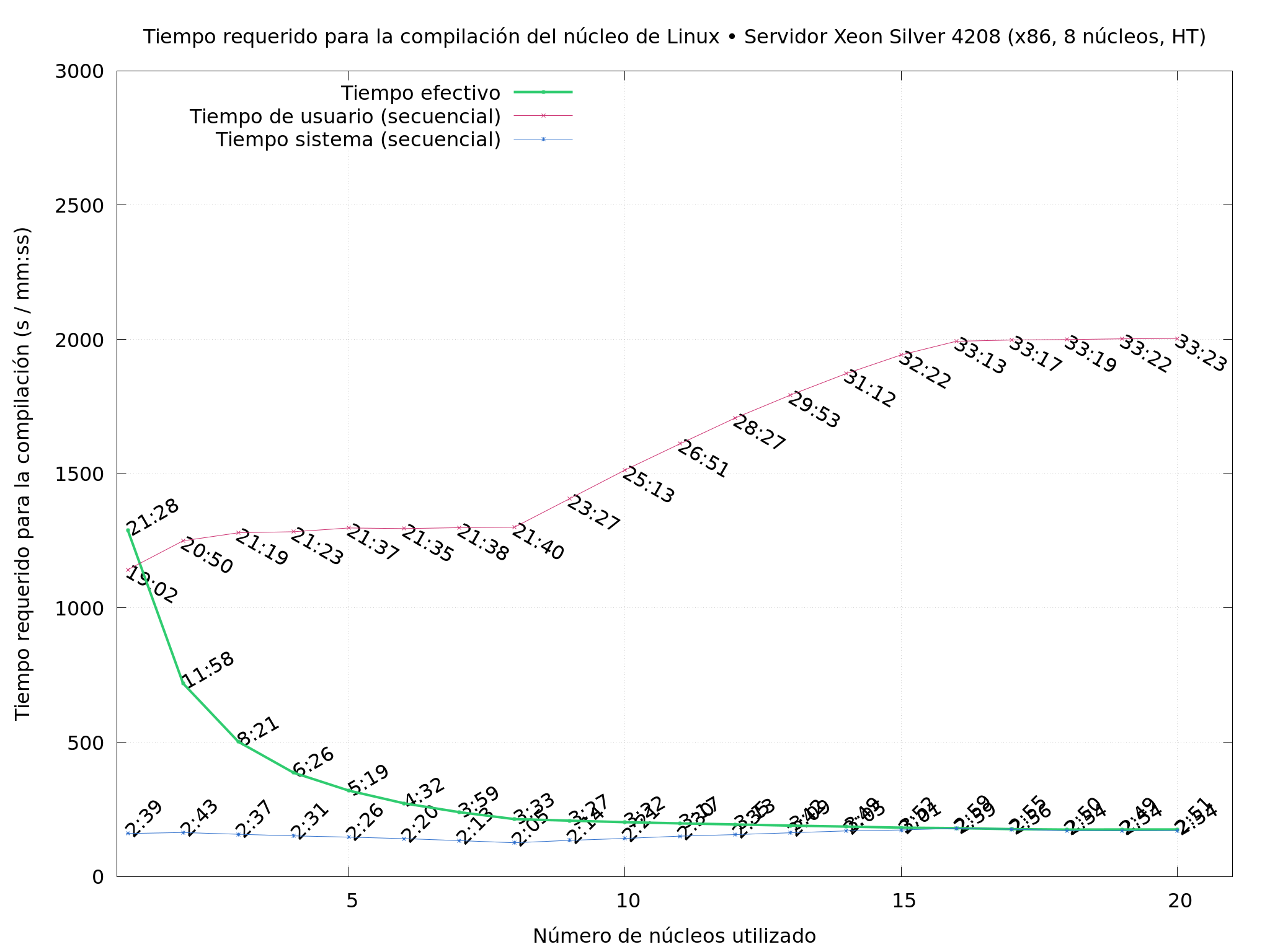
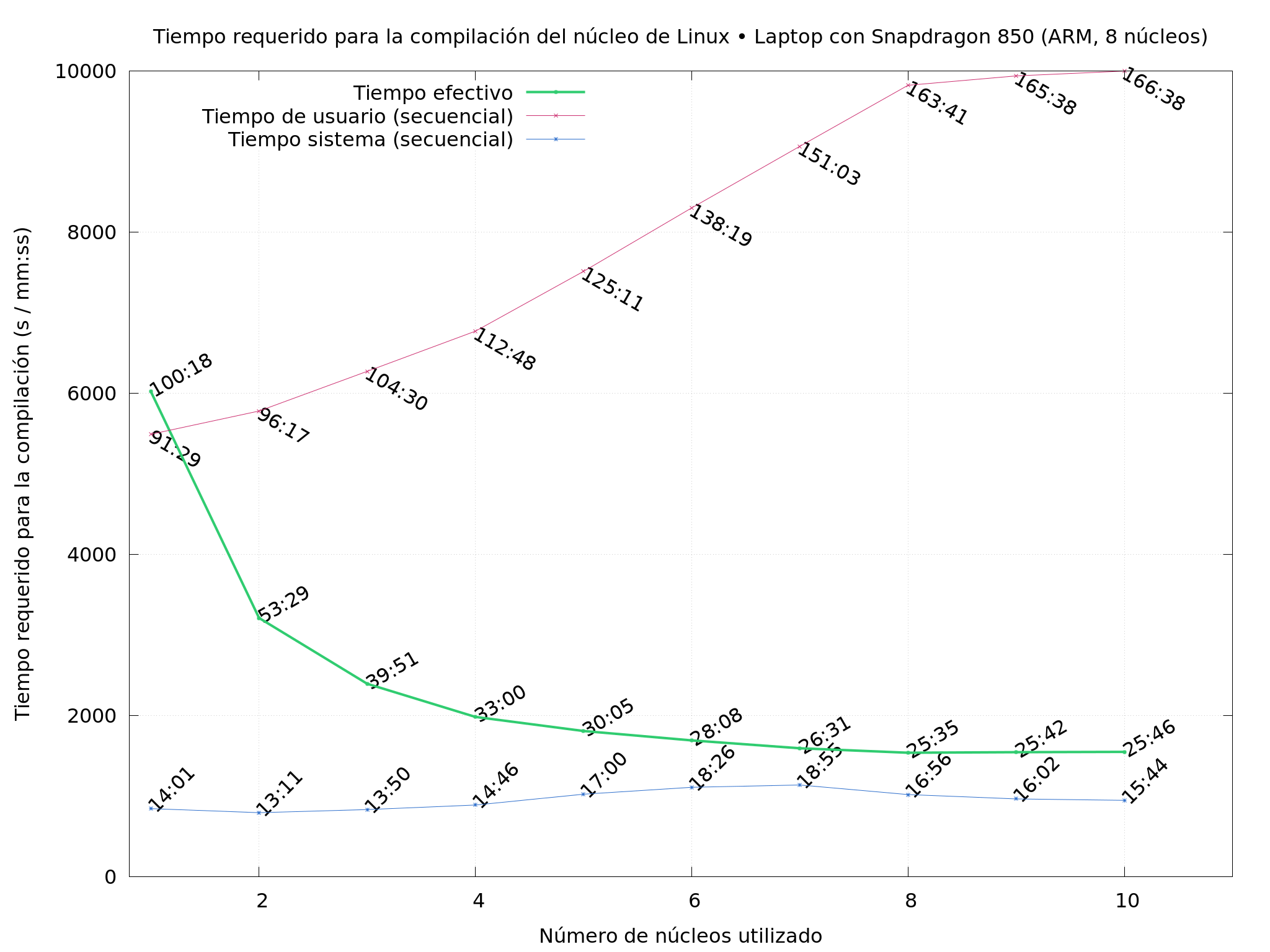
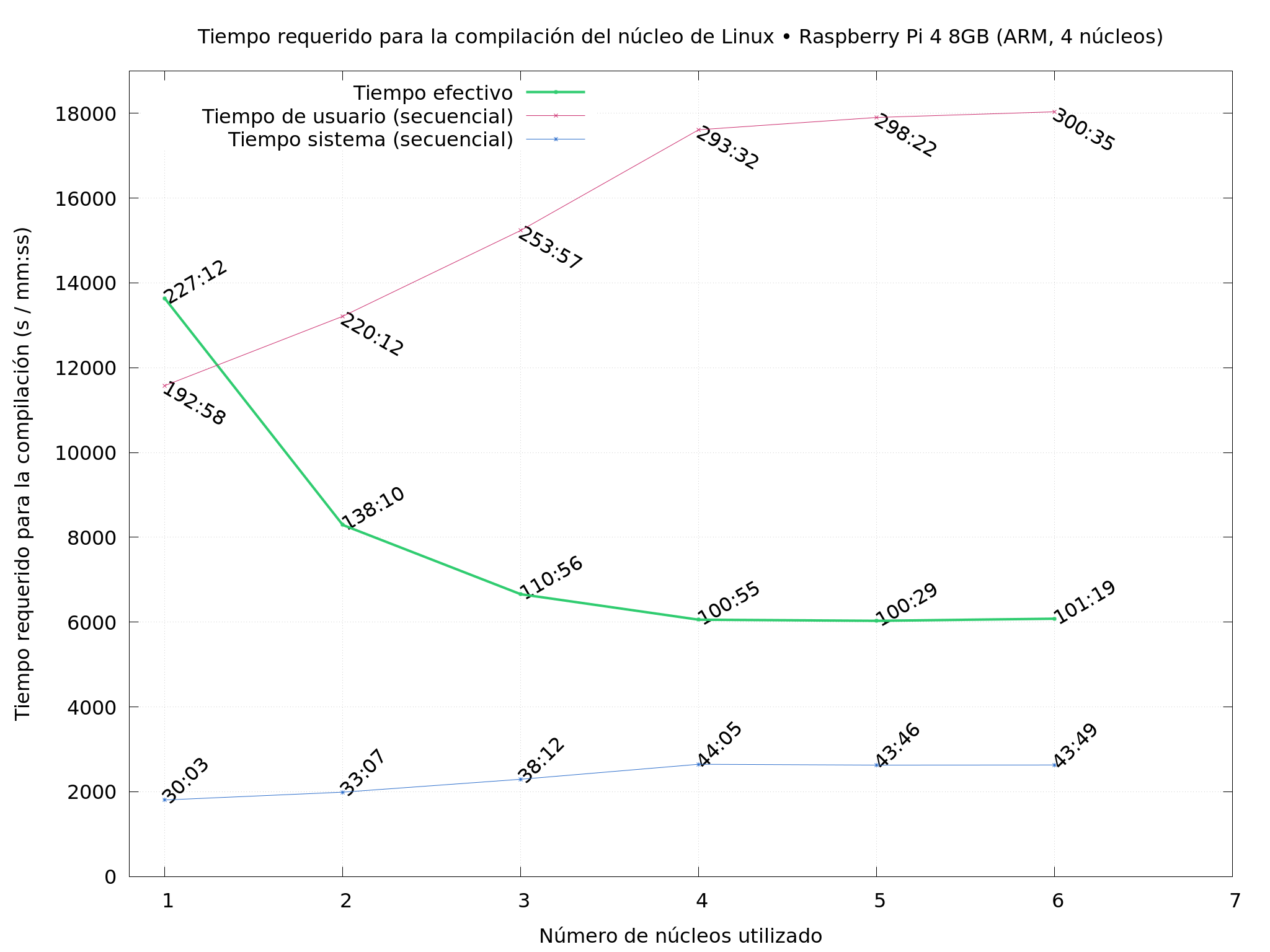
 Snowy Sunrise Witch Wells, Az
 I started back to work on these last Tuesday. So far I have made good progress and even have a working Core22 snap!
Work done on upstream snapcraft ( tool used to make snaps ):
New content pack version, fixed an issue with snapcraft remote-build choking on part with /sdk, fixed regex as our naming scheme has changed:
 KDE Dragon media player
 A few years ago a friend told me that her usual fabric shop was closing down and had a sale on all remaining stock.
While being sad for yet another brick and mortar shop that was going to be missed (at least it was because the owners were retiring, not because it wasn t sustainable anymore), of course I couldn t miss the opportunity.
So we drove a few hundred km, had some nice time with a friend that (because of said few hundred km) we rarely see, and spent a few hours looting the corps er helping the shop owner getting rid of stock before their retirement.
 Among other things there was a cut of lightweight swiss embroidery cotton in blue which may or may not have been enthusiastically grabbed with plans of victorian underwear.
It was too nice to be buried under layers and layers of fabric (and I suspect that the embroidery wouldn t feel great directly on the skin under a corset), so the natural fit was something at the corset cover layer, and the fabric was enough for a combination garment of the kind often worn in the later Victorian age to prevent the accumulation of bulk at the waist.
It also has the nice advantage that in this time of corrupted morals it is perfectly suitable as outerwear as a nice summer dress.
Then life happened, the fabric remained in my stash for a long while, but finally this year I have a good late victorian block that I can adapt, and with spring coming it was a good time to start working on the summer wardrobe.
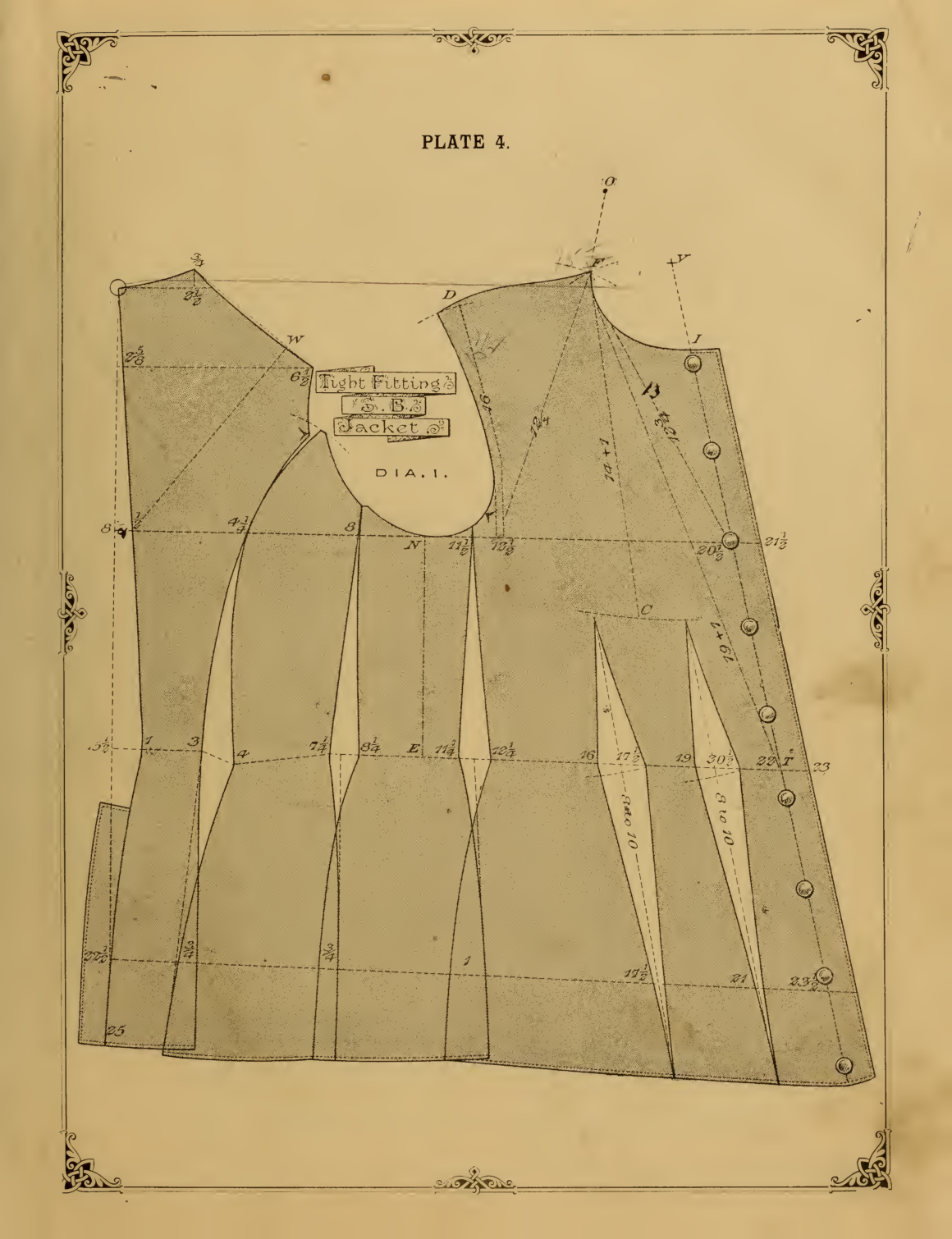 The block I ve used comes from
 The only design choice left was the pocket situation: I wanted to wear this garment both as underwear (where pockets aren t needed, and add unwanted bulk) and outerwear (where no pockets is not an option), and the fabric felt too thin to support the weight of the contents of a full pocket. So I decided to add slits into the seams, with just a modesty placket, and wear
 First I had to finish attaching the ruffles, however, and this is when I cursed myself for not using the ruffler foot I have (it would have meant not having selvedges on all seams of the ruffle), and for pleating the ruffle rather than gathering it (I prefer the look of handsewn gathers, but here I m sewing everything by machine, and that s faster, right? (it probably wasn t)).
 Also, this is where I started to get low on pins, and I had to use the ones from the vintage
 Except, maybe I shouldn t carry heavy items in my pockets when doing it? Oh, well.
I have other plans for the same pattern, but they involve making some crochet lace, so I expect I can aim at making them wearable in summer 2024.
Now I just have to wait for the weather to be a bit warmer, and then I can start enjoing this one.