Search Results: "sto"

27 December 2022

Chris Lamb: Favourite books of 2022: Fiction

This post marks the beginning my yearly roundups of the favourite books and movies that I read and watched in 2022 that I plan to publish over the next few days. Just as I did for 2020 and 2021, I won't reveal precisely how many books I read in the last year. I didn't get through as many books as I did in 2021, though, but that's partly due to reading a significant number of long nineteenth-century novels in particular, a fair number of those books that American writer Henry James once referred to as "large, loose, baggy monsters." However, in today's post I'll be looking at my favourite books that are typically filed under fiction, with 'classic' fiction following tomorrow. Works that just missed the cut here include John O'Brien's Leaving Las Vegas, Colson Whitehead's Sag Harbor and possibly The Name of the Rose by Umberto Eco, or Elif Batuman's The Idiot. I also feel obliged to mention (or is that show off?) that I also read the 1,079-page Infinite Jest by David Foster Wallace, but I can't say it was a favourite, let alone recommend others unless they are in the market for a good-quality under-monitor stand.

Mona (2021) Pola Oloixarac Mona is the story of a young woman who has just been nominated for the 'most important literary award in Europe'. Mona sees the nomination as a chance to escape her substance abuse on a Californian campus and so speedily decamps to the small village in the depths of Sweden where the nominees must convene for a week before the overall winner is announced. Mona didn't disappear merely to avoid pharmacological misadventures, though, but also to avoid the growing realisation that she is being treated as something of an anthropological curiosity at her university: a female writer of colour treasured for her flourish of exotic diversity that reflects well upon her department. But Mona is now stuck in the company of her literary competitors who all have now gathered from around the world in order to do what writers do: harbour private resentments, exchange empty flattery, embody the selfsame racialised stereotypes that Mona left the United States to avoid, stab rivals in the back, drink too much, and, of course, go to bed together. But as I read Mona, I slowly started to realise that something else is going on. Why does Mona keep finding traces of violence on her body, the origins of which she cannot or refuses to remember? There is something eerily defensive about her behaviour and sardonic demeanour in general as well. A genre-bending and mind-expanding novel unfolded itself, and, without getting into spoiler territory, Mona concludes with such a surprising ending that, according to Adam Thirlwell:
Perhaps we need to rethink what is meant by a gimmick. If a gimmick is anything that we want to reject as extra or excessive or ill-fitting, then it may be important to ask what inhibitions or arbitrary conventions have made it seem like excess, and to revel in the exorbitant fictional constructions it produces. [...]
Mona is a savage satire of the literary world, but it's also a very disturbing exploration of trauma and violence. The success of the book comes in equal measure from the author's commitment to both ideas, but also from the way the psychological damage component creeps up on you. And, as implied above, the last ten pages are quite literally out of this world.

My Brilliant Friend (2011)
The Story of a New Name (2012)
Those Who Leave and Those Who Stay (2013)
The Story of the Lost Child (2014) Elena Ferrante Elena Ferrante's Neopolitan Quartet follows two girls, both brilliant in their own way. Our protagonist-narrator is Elena, a studious girl from the lower rungs of the middle class of Naples who is inspired to be more by her childhood friend, Lila. Lila is, in turn, far more restricted by her poverty and class, but can transcend it at times through her fiery nature, which also brands her as somewhat unique within their inward-looking community. The four books follow the two girls from the perspective of Elena as they grow up together in post-war Italy, where they drift in-and-out of each other's lives due to the vicissitudes of change and the consequences of choice. All the time this is unfolding, however, the narrative is very always slightly charged by the background knowledge revealed on the very first page that Lila will, many years later, disappear from Elena's life. Whilst the quartet has the formal properties of a bildungsroman, its subject and conception are almost entirely different. In particular, the books are driven far more by character and incident than spectacular adventures in picturesque Italy. In fact, quite the opposite takes place: these are four books where ordinary-seeming occurrences take on an unexpected radiance against a background of poverty, ignorance, violence and other threats, often bringing to mind the films of the Italian neorealism movement. Brilliantly rendered from beginning to end, Ferrante has a seemingly studious eye for interpreting interactions and the psychology of adolescence and friendship. Some utterances indeed, perhaps even some glances are dissected at length over multiple pages, something that Vittorio De Sica's classic Bicycle Thieves (1948) could never do. Potential readers should not take any notice of the saccharine cover illustrations on most editions of the books. The quartet could even win an award for the most misleading artwork, potentially rivalling even Vladimir Nabokov's Lolita. I wouldn't be at all surprised if it is revealed that the drippy illustrations and syrupy blurbs ("a rich, intense and generous-hearted story ") turn out to be part of a larger metatextual game that Ferrante is playing with her readers. This idiosyncratic view of mine is partially supported by the fact that each of the four books has been given a misleading title, the true ambiguity of which often only becomes clear as each of the four books comes into sharper focus. Readers of the quartet often fall into debating which is the best of the four. I've heard from more than one reader that one has 'too much Italian politics' and another doesn't have enough 'classic' Lina moments. The first book then possesses the twin advantages of both establishing the environs and finishing with a breathtaking ending that is both satisfying and a cliffhanger as well but does this make it 'the best'? I prefer to liken the quartet more like the different seasons of The Wire (2002-2008) where, personal favourites and preferences aside, although each season is undoubtedly unique, it would take a certain kind of narrow-minded view of art to make the claim that, say, series one of The Wire is 'the best' or that the season that focuses on the Baltimore docks 'is boring'. Not to sound like a neo-Wagnerian, but each of them adds to final result in its own. That is to say, both The Wire and the Neopolitan Quartet achieve the rare feat of making the magisterial simultaneously intimate.

Out There: Stories (2022) Kate Folk Out There is a riveting collection of disturbing short stories by first-time author Kate Fork. The title story first appeared in the New Yorker in early 2020 imagines a near-future setting where a group of uncannily handsome artificial men called 'blots' have arrived on the San Francisco dating scene with the secret mission of sleeping with women, before stealing their personal data from their laptops and phones and then (quite literally) evaporating into thin air. Folk's satirical style is not at all didactic, so it rarely feels like she is making her points in a pedantic manner. But it's clear that the narrator of Out There is recounting her frustration with online dating. in a way that will resonate with anyone who s spent time with dating apps or indeed the contemporary hyper-centralised platform-based internet in general. Part social satire, part ghost story and part comic tales, the blurring of the lines between these factors is only one of the things that makes these stories so compelling. But whilst Folk constructs crazy scenarios and intentionally strange worlds, she also manages to also populate them with characters that feel real and genuinely sympathetic. Indeed, I challenge you not to feel some empathy for the 'blot' in the companion story Big Sur which concludes the collection, and it complicates any primary-coloured view of the dating world of consisting entirely of predatory men. And all of this is leavened with a few stories that are just plain surreal. I don't know what the deal is with Dating a Somnambulist (available online on Hobart Pulp), but I know that I like it.

Solaris (1961) Stanislaw Lem When Kelvin arrives at the planet Solaris to study the strange ocean that covers its surface, instead of finding an entirely physical scientific phenomenon, he soon discovers a previously unconscious memory embodied in the physical manifestation of a long-dead lover. The other scientists on the space station slowly reveal that they are also plagued with their own repressed corporeal memories. Many theories are put forward as to why all this is occuring, including the idea that Solaris is a massive brain that creates these incarnate memories. Yet if that is the case, the planet's purpose in doing so is entirely unknown, forcing the scientists to shift focus and wonder whether they can truly understand the universe without first understanding what lies within their own minds and in their desires. This would be an interesting outline for any good science fiction book, but one of the great strengths of Solaris is not only that it withholds from the reader why the planet is doing anything it does, but the book is so forcefully didactic in its dislike of the hubris, destructiveness and colonial thinking that can accompany scientific exploration. In one of its most vitriolic passages, Lem's own anger might be reaching out to the reader:
We are humanitarian and chivalrous; we don t want to enslave other races, we simply want to bequeath them our values and take over their heritage in exchange. We think of ourselves as the Knights of the Holy Contact. This is another lie. We are only seeking Man. We have no need of other worlds. We need mirrors. We don t know what to do with other worlds. A single world, our own, suffices us; but we can t accept it for what it is. We are searching for an ideal image of our own world: we go in quest of a planet, of a civilisation superior to our own, but developed on the basis of a prototype of our primaeval past. At the same time, there is something inside us that we don t like to face up to, from which we try to protect ourselves, but which nevertheless remains since we don t leave Earth in a state of primal innocence. We arrive here as we are in reality, and when the page is turned, and that reality is revealed to us that part of our reality that we would prefer to pass over in silence then we don t like it anymore.
An overwhelming preoccupation with this idea infuses Solaris, and it turns out to be a common theme in a lot of Lem's work of this period, such as in his 1959 'anti-police procedural' The Investigation. Perhaps it not a dislike of exploration in general or the modern scientific method in particular, but rather a savage critique of the arrogance and self-assuredness that accompanies most forms of scientific positivism, or at least pursuits that cloak themselves under the guise of being a laudatory 'scientific' pursuit:
Man has gone out to explore other worlds and other civilizations without having explored his own labyrinth of dark passages and secret chambers and without finding what lies behind doorways that he himself has sealed.
I doubt I need to cite specific instances of contemporary scientific pursuits that might meet Lem's punishing eye today, and the fact that his critique works both in 2022 and 1961 perhaps tells us more about the human condition than we'd care to know. Another striking thing about Solaris isn't just the specific Star Trek and Stargate SG-1 episodes that I retrospectively realised were purloined from the book, but that almost the entire register of Star Trek: The Next Generation in particular seems to be rehearsed here. That is to say, TNG presents itself as hard and fact-based 'sci-fi' on the surface, but, at its core, there are often human, existential and sometimes quite enormously emotionally devastating human themes being discussed such as memory, loss and grief. To take one example from many, the painful memories that the planet Solaris physically materialises in effect asks us to seriously consider what it actually is taking place when we 'love' another person: is it merely another 'mirror' of ourselves? (And, if that is the case, is that... bad?) It would be ahistorical to claim that all popular science fiction today can be found rehearsed in Solaris, but perhaps it isn't too much of a stretch:
[Solaris] renders unnecessary any more alien stories. Nothing further can be said on this topic ...] Possibly, it can be said that when one feels the urge for such a thing, one should simply reread Solaris and learn its lessons again. Kim Stanley Robinson [...]
I could go on praising this book for quite some time; perhaps by discussing the extreme framing devices used within the book at one point, the book diverges into a lengthy bibliography of fictional books-within-the-book, each encapsulating a different theory about what the mechanics and/or function of Solaris is, thereby demonstrating that 'Solaris studies' as it is called within the world of the book has been going on for years with no tangible results, which actually leads to extreme embarrassment and then a deliberate and willful blindness to the 'Solaris problem' on the part of the book's scientific community. But I'll leave it all here before this review gets too long... Highly recommended, and a likely reread in 2023.

Brokeback Mountain (1997) Annie Proulx Brokeback Mountain began as a short story by American author Annie Proulx which appeared in the New Yorker in 1997, although it is now more famous for the 2005 film adaptation directed by Taiwanese filmmaker Ang Lee. Both versions follow two young men who are hired for the summer to look after sheep at a range under the 'Brokeback' mountain in Wyoming. Unexpectedly, however, they form an intense emotional and sexual attachment, yet life intervenes and demands they part ways at the end of the summer. Over the next twenty years, though, as their individual lives play out with marriages, children and jobs, they continue reuniting for brief albeit secret liaisons on camping trips in remote settings. There's no feigned shyness or self-importance in Brokeback Mountain, just a close, compassionate and brutally honest observation of a doomed relationship and a bone-deep feeling for the hardscrabble life in the post-War West. To my mind, very few books have captured so acutely the desolation of a frustrated and repressed passion, as well as the particular flavour of undirected anger that can accompany this kind of yearning. That the original novella does all this in such a beautiful way (and without the crutch of the Wyoming landscape to look at ) is a tribute to Proulx's skills as a writer. Indeed, even without the devasting emotional undertones, Proulx's descriptions of the mountains and scree of the West is likely worth the read alone.

Luster (2020) Raven Leilani Edie is a young Black woman living in New York whose life seems to be spiralling out of control. She isn't good at making friends, her career is going nowhere, and she has no close family to speak of as well. She is, thus, your typical NYC millennial today, albeit seen through a lens of Blackness that complicates any reductive view of her privilege or minority status. A representative paragraph might communicate the simmering tone:
Before I start work, I browse through some photos of friends who are doing better than me, then an article on a black teenager who was killed on 115th for holding a weapon later identified as a showerhead, then an article on a black woman who was killed on the Grand Concourse for holding a weapon later identified as a cell phone, then I drown myself in the comments section and do some online shopping, by which I mean I put four dresses in my cart as a strictly theoretical exercise and then let the page expire.
She starts a sort-of affair with an older white man who has an affluent lifestyle in nearby New Jersey. Eric or so he claims has agreed upon an 'open relationship' with his wife, but Edie is far too inappropriate and disinhibited to respect any boundaries that Eric sets for her, and so Edie soon becomes deeply entangled in Eric's family life. It soon turns out that Eric and his wife have a twelve-year-old adopted daughter, Akila, who is also wait for it Black. Akila has been with Eric's family for two years now and they aren t exactly coping well together. They don t even know how to help her to manage her own hair, let alone deal with structural racism. Yet despite how dark the book's general demeanour is, there are faint glimmers of redemption here and there. Realistic almost to the end, Edie might finally realise what s important in her life, but it would be a stretch to say that she achieves them by the final page. Although the book is full of acerbic remarks on almost any topic (Dogs: "We made them needy and physically unfit. They used to be wolves, now they are pugs with asthma."), it is the comments on contemporary race relations that are most critically insightful. Indeed, unsentimental, incisive and funny, Luster had much of what I like in Colson Whitehead's books at times, but I can't remember a book so frantically fast-paced as this since the Booker-prize winning The Sellout by Paul Beatty or Sam Tallent's Running the Light.

Ian Wienand: Redirecting webfinger requests with Apache

If you have a personal domain, it is nice if you can redirect webfinger requests so you can be easily found via your email. This is hardly a new idea, but the growth of Mastodon recently has made this more prominent. I wanted to redirect webfinger endpoints to a Mastondon host I am using, but only my email and only standard Apache rewrites. Below, replace xxx@yyy\.com with your email and zzz.social with the account to be redirected to. There are a couple of tricks in being able to inspect the query-string and quoting, but the end result that works for me is
RewriteEngine On
RewriteMap lc int:tolower
RewriteMap unescape int:unescape
RewriteCond % REQUEST_URI  ^/\.well-known/webfinger$
RewriteCond $ lc:$ unescape:% QUERY_STRING  (?:^ &)resource=acct:xxx@yyy\.com(?:$ &)
RewriteRule ^(.*)$ https://zzz.social/.well-known/webfinger?resource=acct:xxx@zzz.social [L,R=302]
RewriteCond % REQUEST_URI  ^/\.well-known/host-meta$
RewriteCond $ lc:$ unescape:% QUERY_STRING  (?:^ &)resource=acct:xxx@yyy\.com(?:$ &)
RewriteRule ^(.*)$ https://zzz.social/.well-known/host-meta?resource=acct:xxx@zzz.social [L,R=302]
RewriteCond % REQUEST_URI  ^/\.well-known/nodeinfo$
RewriteCond $ lc:$ unescape:% QUERY_STRING  (?:^ &)resource=acct:xxx@yyy\.org(?:$ &)
RewriteRule ^(.*)$ https://zzz.social/.well-known/nodeinfo?resource=acct:xxx@zzz.social [L,R=302]
c.f. https://blog.bofh.it/debian/id_464

Steve Kemp: A summary of the year.

This year had a lot of things happen in it, world-wide, as is always the case. Being more selfish here are the things I remember, in brief unless there are comments/questions: On the topic of Finnish I'm getting pretty damn good at understanding, albeit less good in speaking. Finnish is all about the suffixes, so: Most of this is regular, so you can be childless via the "ton" suffix - lapsiton is "lapsi" (child) "ton" (less). The hard part in communication is thus twofold: Our child turned six recently, and most of the year was spent doing things with him, for him, and to him. He's on the verge of learning to read (English and Finnish), he's interested in maths and completes little puzzles freely and happily. He likes to help with Sodoku, for example and not just the child-versions. In the past couple of weeks I let him play Super Mario & Super Mario Bros 3, on a NES Classic, and he dies constantly, with a smile on his face. But he does love to tell me what to do when he watches me play! He's learned to ice-skate, and ski, and almost learned to swim. (I'll say he can swim 3m inside a pool, without aid, but then he starts to sink.) We've got a couple of regular rituals with each other - including going to sauna every week or two, and other similar things. He's gotten more interested in helping me cook, and his mother too. (My wife and I live in separate houses..) I guess the next big milestone will be him walking to school by himself, which will start next year. As things stand I wake up early, go over to his house, and do all the morning-things, before I take him there. I expect I'll still want to go there, give him his breakfast, his medicine, and help him get dressed. After that I guess I kick him out, and he makes his own way there. Happily the walk to school is a few hundred meters, and doesn't involve crossing any roads. But of course it does bring other complications: if he's not collected, and walks home himself, then he needs a key to one/other house, and there's the potential need for a phone to say "I'm late", "I'm lost", or us to say "Where are you?". Anyway .. interesting year .. good year. Despite everything else.
26 December 2022

Vincent Bernat: Managing infrastructure with Terraform, CDKTF, and NixOS

A few years ago, I downsized my personal infrastructure. Until 2018, there were a dozen containers running on a single Hetzner server.1 I migrated my emails to Fastmail and my DNS zones to Gandi. It left me with only my blog to self-host. As of today, my low-scale infrastructure is composed of 4 virtual machines running NixOS on Hetzner Cloud and Vultr, a handful of DNS zones on Gandi and Route 53, and a couple of Cloudfront distributions. It is managed by CDK for Terraform (CDKTF), while NixOS deployments are handled by NixOps. In this article, I provide a brief introduction to Terraform, CDKTF, and the Nix ecosystem. I also explain how to use Nix to access these tools within your shell, so you can quickly start using them.

CDKTF: infrastructure as code Terraform is an infrastructure-as-code tool. You can define your infrastructure by declaring resources with the HCL language. This language has some additional features like loops to declare several resources from a list, built-in functions you can call in expressions, and string templates. Terraform relies on a large set of providers to manage resources.

Managing servers Here is a short example using the Hetzner Cloud provider to spawn a virtual machine:
variable "hcloud_token"  
  sensitive = true
 
provider "hcloud"  
  token = var.hcloud_token
 
resource "hcloud_server" "web03"  
  name = "web03"
  server_type = "cpx11"
  image = "debian-11"
  datacenter = "nbg1-dc3"
 
resource "hcloud_rdns" "rdns4-web03"  
  server_id = hcloud_server.web03.id
  ip_address = hcloud_server.web03.ipv4_address
  dns_ptr = "web03.luffy.cx"
 
resource "hcloud_rdns" "rdns6-web03"  
  server_id = hcloud_server.web03.id
  ip_address = hcloud_server.web03.ipv6_address
  dns_ptr = "web03.luffy.cx"
 
HCL expressiveness is quite limited and I find a general-purpose language more convenient to describe all the resources. This is where CDK for Terraform comes in: you can manage your infrastructure using your preferred programming language, including TypeScript, Go, and Python. Here is the previous example using CDKTF and TypeScript:
import   App, TerraformStack, Fn   from "cdktf";
import   HcloudProvider   from "./.gen/providers/hcloud/provider";
import * as hcloud from "./.gen/providers/hcloud";
class MyStack extends TerraformStack  
  constructor(scope: Construct, name: string)  
    super(scope, name);
    const hcloudToken = new TerraformVariable(this, "hcloudToken",  
      type: "string",
      sensitive: true,
     );
    const hcloudProvider = new HcloudProvider(this, "hcloud",  
      token: hcloudToken.value,
     );
    const web03 = new hcloud.server.Server(this, "web03",  
      name: "web03",
      serverType: "cpx11",
      image: "debian-11",
      datacenter: "nbg1-dc3",
      provider: hcloudProvider,
     );
    new hcloud.rdns.Rdns(this, "rdns4-web03",  
      serverId: Fn.tonumber(web03.id),
      ipAddress: web03.ipv4Address,
      dnsPtr: "web03.luffy.cx",
      provider: hcloudProvider,
     );
    new hcloud.rdns.Rdns(this, "rdns6-web03",  
      serverId: Fn.tonumber(web03.id),
      ipAddress: web03.ipv6Address,
      dnsPtr: "web03.luffy.cx",
      provider: hcloudProvider,
     );
   
 
const app = new App();
new MyStack(app, "cdktf-take1");
app.synth();
Running cdktf synth generates a configuration file for Terraform, terraform plan previews the changes, and terraform apply applies them. Now that you have a general-purpose language, you can use functions.

Managing DNS records While using CDKTF for 4 web servers may seem a tad overkill, this is quite different when it comes to managing a few DNS zones. With DNSControl, which is using JavaScript as a domain-specific language, I was able to define the bernat.ch zone with this snippet of code:
D("bernat.ch", REG_NONE, DnsProvider(DNS_BIND, 0), DnsProvider(DNS_GANDI),
  DefaultTTL('2h'),
  FastMailMX('bernat.ch',  subdomains: ['vincent'] ),
  WebServers('@'),
  WebServers('vincent');
This generated 38 records. With CDKTF, I use:
new Route53Zone(this, "bernat.ch", providers.aws)
  .sign(dnsCMK)
  .registrar(providers.gandiVB)
  .www("@", servers)
  .www("vincent", servers)
  .www("media", servers)
  .fastmailMX(["vincent"]);
All the magic is in the code that I did not show you. You can check the dns.ts file in the cdktf-take1 repository to see how it works. Here is a quick explanation:
  • Route53Zone() creates a new zone hosted by Route 53,
  • sign() signs the zone with the provided master key,
  • registrar() registers the zone to the registrar of the domain and sets up DNSSEC,
  • www() creates A and AAAA records for the provided name pointing to the web servers,
  • fastmailMX() creates the MX records and other support records to direct emails to Fastmail.
Here is the content of the fastmailMX() function. It generates a few records and returns the current zone for chaining:
fastmailMX(subdomains?: string[])  
  (subdomains ?? [])
    .concat(["@", "*"])
    .forEach((subdomain) =>
      this.MX(subdomain, [
        "10 in1-smtp.messagingengine.com.",
        "20 in2-smtp.messagingengine.com.",
      ])
    );
  this.TXT("@", "v=spf1 include:spf.messagingengine.com ~all");
  ["mesmtp", "fm1", "fm2", "fm3"].forEach((dk) =>
    this.CNAME( $ dk ._domainkey ,  $ dk .$ this.name .dkim.fmhosted.com. )
  );
  this.TXT("_dmarc", "v=DMARC1; p=none; sp=none");
  return this;
 
I encourage you to browse the repository if you need more information.

About Pulumi My first tentative around Terraform was to use Pulumi. You can find this attempt on GitHub. This is quite similar to what I currently do with CDKTF. The main difference is that I am using Python instead of TypeScript because I was not familiar with TypeScript at the time.2 Pulumi predates CDKTF and it uses a slightly different approach. CDKTF generates a Terraform configuration (in JSON format instead of HCL), delegating planning, state management, and deployment to Terraform. It is therefore bound to the limitations of what can be expressed by Terraform, notably when you need to transform data obtained from one resource to another.3 Pulumi needs specific providers for each resource. Many Pulumi providers are thin wrappers encapsulating Terraform providers. While Pulumi provides a good user experience, I switched to CDKTF because writing providers for Pulumi is a chore. CDKTF does not require such a step. Outside the big players (AWS, Azure and Google Cloud), the existence, quality, and freshness of the Pulumi providers are inconsistent. Most providers rely on a Terraform provider and they may lag a few versions behind, miss a few resources, or have a few bugs of their own. When a provider does not exist, you can write one with the help of the pulumi-terraform-bridge library. The Pulumi project provides a boilerplate for this purpose. I had a bad experience with it when writing providers for Gandi and Vultr: the Makefile automatically installs Pulumi using a curl sh pattern and does not work with /bin/sh. There is a lack of interest for community-based contributions4 or even for providers for smaller players.

NixOS & NixOps Nix is a functional, purely-functional programming language. Nix is also the name of the package manager that is built on top of the Nix language. It allows users to declaratively install packages. nixpkgs is a repository of packages. You can install Nix on top of a regular Linux distribution. If you want more details, a good resource is the official website, and notably the learn section. There is a steep learning curve, but the reward is tremendous.

NixOS: declarative Linux distribution NixOS is a Linux distribution built on top of the Nix package manager. Here is a configuration snippet to add some packages:
environment.systemPackages = with pkgs;
  [
    bat
    htop
    liboping
    mg
    mtr
    ncdu
    tmux
  ];
It is possible to alter an existing derivation5 to use a different version, enable a specific feature, or apply a patch. Here is how I enable and configure Nginx to disable the stream module, add the Brotli compression module, and add the IP address anonymizer module. Moreover, instead of using OpenSSL 3, I keep using OpenSSL 1.1.6
services.nginx =  
  enable = true;
  package = (pkgs.nginxStable.override  
    withStream = false;
    modules = with pkgs.nginxModules; [
      brotli
      ipscrub
    ];
    openssl = pkgs.openssl_1_1;
   );
If you need to add some patches, it is also possible. Here are the patches I added in 2019 to circumvent the DoS vulnerabilities in Nginx until they were fixed in NixOS:7
services.nginx.package = pkgs.nginxStable.overrideAttrs (old:  
  patches = oldAttrs.patches ++ [
    # HTTP/2: reject zero length headers with PROTOCOL_ERROR.
    (pkgs.fetchpatch  
      url = https://github.com/nginx/nginx/commit/dbdd[ ].patch;
      sha256 = "a48190[ ]";
     )
    # HTTP/2: limited number of DATA frames.
    (pkgs.fetchpatch  
      url = https://github.com/nginx/nginx/commit/94c5[ ].patch;
      sha256 = "af591a[ ]";
     )
    #  HTTP/2: limited number of PRIORITY frames.
    (pkgs.fetchpatch  
      url = https://github.com/nginx/nginx/commit/39bb[ ].patch;
      sha256 = "1ad8fe[ ]";
     )
  ];
 );
If you are interested, have a look at my relatively small configuration: common.nix contains the configuration to be applied to any host (SSH, users, common software packages), web.nix contains the configuration for the web servers, isso.nix runs Isso into a systemd container.

NixOps: NixOS deployment tool On a single node, NixOS configuration is in the /etc/nixos/configuration.nix file. After modifying it, you have to run nixos-rebuild switch. Nix fetches all possible dependencies from the binary cache and builds the remaining packages. It creates a new entry in the boot loader menu and activates the new configuration. To manage several nodes, there exists several options, including NixOps, deploy-rs, Colmena, and morph. I do not know all of them, but from my point of view, the differences are not that important. It is also possible to build such a tool yourself as Nix provides the most important building blocks: nix build and nix copy. NixOps is one of the first tools available but I encourage you to explore the alternatives. NixOps configuration is written in Nix. Here is a simplified configuration to deploy znc01.luffy.cx, web01.luffy.cx, and web02.luffy.cx, with the help of the server and web functions:
let
  server = hardware: name: imports:  
    deployment.targetHost = "$ name .luffy.cx";
    networking.hostName = name;
    networking.domain = "luffy.cx";
    imports = [ (./hardware/. + "/$ hardware .nix") ] ++ imports;
   ;
  web = hardware: idx: imports:
    server hardware "web$ lib.fixedWidthNumber 2 idx " ([ ./web.nix ] ++ imports);
in  
  network.description = "Luffy infrastructure";
  network.enableRollback = true;
  defaults = import ./common.nix;
  znc01 = server "exoscale" [ ./znc.nix ];
  web01 = web "hetzner" 1 [ ./isso.nix ];
  web02 = web "hetzner" 2 [];
 

Tying everything together with Nix The Nix ecosystem is a unified solution to the various problems around software and configuration management. A very interesting feature is the declarative and reproducible developer environments. This is similar to Python virtual environments, except it is not language-specific.

Brief introduction to Nix flakes I am using flakes, a new Nix feature improving reproducibility by pinning all dependencies and making the build hermetic. While the feature is marked as experimental,8 it is widely used and you may see flake.nix and flake.lock at the root of some repositories. As a short example, here is the flake.nix content shipped with Snimpy, an interactive SNMP tool for Python relying on libsmi, a C library:
 
  inputs =  
    nixpkgs.url = "nixpkgs";
    flake-utils.url = "github:numtide/flake-utils";
   ;
  outputs =   self, ...  @inputs:
    inputs.flake-utils.lib.eachDefaultSystem (system:
      let
        pkgs = inputs.nixpkgs.legacyPackages."$ system ";
      in
       
        # nix build
        packages.default = pkgs.python3Packages.buildPythonPackage  
          name = "snimpy";
          src = self;
          preConfigure = ''echo "1.0.0-0-000000000000" > version.txt'';
          checkPhase = "pytest";
          checkInputs = with pkgs.python3Packages; [ pytest mock coverage ];
          propagatedBuildInputs = with pkgs.python3Packages; [ cffi pysnmp ipython ];
          buildInputs = [ pkgs.libsmi ];
         ;
        # nix run + nix shell
        apps.default =   
          type = "app";
          program = "$ self.packages."$ system ".default /bin/snimpy";
         ;
        # nix develop
        devShells.default = pkgs.mkShell  
          name = "snimpy-dev";
          buildInputs = [
            self.packages."$ system ".default.inputDerivation
            pkgs.python3Packages.ipython
          ];
         ;
       );
 
If you have Nix installed on your system:
  • nix run github:vincentbernat/snimpy runs Snimpy,
  • nix shell github:vincentbernat/snimpy provides a shell with Snimpy ready-to-use,
  • nix build github:vincentbernat/snimpy builds the Python package, tests included, and
  • nix develop . provides a shell to hack around Snimpy when run from a fresh checkout.9
For more information about Nix flakes, have a look at the tutorial from Tweag.

Nix and CDKTF At the root of the repository I use for CDKTF, there is a flake.nix file to set up a shell with Terraform and CDKTF installed and with the appropriate environment variables to automate my infrastructure. Terraform is already packaged in nixpkgs. However, I need to apply a patch on top of the Gandi provider. Not a problem with Nix!
terraform = pkgs.terraform.withPlugins (p: [
  p.aws
  p.hcloud
  p.vultr
  (p.gandi.overrideAttrs
    (old:  
      src = pkgs.fetchFromGitHub  
        owner = "vincentbernat";
        repo = "terraform-provider-gandi";
        rev = "feature/livedns-key";
        hash = "sha256-V16BIjo5/rloQ1xTQrdd0snoq1OPuDh3fQNW7kiv/kQ=";
       ;
     ))
]);
CDKTF is written in TypeScript. I have a package.json file with all the dependencies needed, including the ones to use TypeScript as the language to define infrastructure:
 
  "name": "cdktf-take1",
  "version": "1.0.0",
  "main": "main.js",
  "types": "main.ts",
  "private": true,
  "dependencies":  
    "@types/node": "^14.18.30",
    "cdktf": "^0.13.3",
    "cdktf-cli": "^0.13.3",
    "constructs": "^10.1.151",
    "eslint": "^8.27.0",
    "prettier": "^2.7.1",
    "ts-node": "^10.9.1",
    "typescript": "^3.9.10",
    "typescript-language-server": "^2.1.0"
   
 
I use Yarn to get a yarn.lock file that can be used directly to declare a derivation containing all the dependencies:
nodeEnv = pkgs.mkYarnModules  
  pname = "cdktf-take1-js-modules";
  version = "1.0.0";
  packageJSON = ./package.json;
  yarnLock = ./yarn.lock;
 ;
The next step is to generate the CDKTF providers from the Terraform providers and turn them into a derivation:
cdktfProviders = pkgs.stdenvNoCC.mkDerivation  
  name = "cdktf-providers";
  nativeBuildInputs = [
    pkgs.nodejs
    terraform
  ];
  src = nix-filter  
    root = ./.;
    include = [ ./cdktf.json ./tsconfig.json ];
   ;
  buildPhase = ''
    export HOME=$(mktemp -d)
    export CHECKPOINT_DISABLE=1
    export DISABLE_VERSION_CHECK=1
    export PATH=$ nodeEnv /node_modules/.bin:$PATH
    ln -nsf $ nodeEnv /node_modules node_modules
    # Build all providers we have in terraform
    for provider in $(cd $ terraform /libexec/terraform-providers; echo */*/*/*); do
      version=''$ provider##*/ 
      provider=''$ provider%/* 
      echo "Build $provider@$version"
      cdktf provider add --force-local $provider@$version   cat
    done
    echo "Compile TS   JS"
    tsc
  '';
  installPhase = ''
    mv .gen $out
    ln -nsf $ nodeEnv /node_modules $out/node_modules
  '';
 ;
Finally, we can define the development environment:
devShells.default = pkgs.mkShell  
  name = "cdktf-take1";
  buildInputs = [
    pkgs.nodejs
    pkgs.yarn
    terraform
  ];
  shellHook = ''
    # No telemetry
    export CHECKPOINT_DISABLE=1
    # No autoinstall of plugins
    export CDKTF_DISABLE_PLUGIN_CACHE_ENV=1
    # Do not check version
    export DISABLE_VERSION_CHECK=1
    # Access to node modules
    export PATH=$PWD/node_modules/.bin:$PATH
    ln -nsf $ nodeEnv /node_modules node_modules
    ln -nsf $ cdktfProviders  .gen
    # Credentials
    for p in \
      njf.nznmba.pbz/Nqzvavfgengbe \
      urgmare.pbz/ivaprag@oreang.pu \
      ihyge.pbz/ihyge@ivaprag.oreang.pu; do
        eval $(pass show $(echo $p   tr 'A-Za-z' 'N-ZA-Mn-za-m')   grep '^export')
    done
    eval $(pass show personal/cdktf/secrets   grep '^export')
    export TF_VAR_hcloudToken="$HCLOUD_TOKEN"
    export TF_VAR_vultrApiKey="$VULTR_API_KEY"
    unset VULTR_API_KEY HCLOUD_TOKEN
  '';
 ;
The derivations listed in buildInputs are available in the provided shell. The content of shellHook is sourced when starting the shell. It sets up some symbolic links to make the JavaScript environment built at an earlier step available, as well as the generated CDKTF providers. It also exports all the credentials.10 I am also using direnv with an .envrc to automatically load the development environment. This also enables the environment to be available from inside Emacs, notably when using lsp-mode to get TypeScript completions. Without direnv, nix develop . can activate the environment. I use the following commands to deploy the infrastructure:11
$ cdktf synth
$ cd cdktf.out/stacks/cdktf-take1
$ terraform plan --out plan
$ terraform apply plan
$ terraform output -json > ~-automation/nixops-take1/cdktf.json
The last command generates a JSON file containing various data to complete the deployment with NixOps.

NixOps The JSON file exported by Terraform contains the list of servers with various attributes:
 
  "hardware": "hetzner",
  "ipv4Address": "5.161.44.145",
  "ipv6Address": "2a01:4ff:f0:b91::1",
  "name": "web05.luffy.cx",
  "tags": [
    "web",
    "continent:NA",
    "continent:SA"
  ]
 
In network.nix, this list is imported and transformed into an attribute set describing the servers. A simplified version looks like this:
let
  lib = inputs.nixpkgs.lib;
  shortName = name: builtins.elemAt (lib.splitString "." name) 0;
  domainName = name: lib.concatStringsSep "." (builtins.tail (lib.splitString "." name));
  server = hardware: name: imports:  
    networking =  
      hostName = shortName name;
      domain = domainName name;
     ;
    deployment.targetHost = name;
    imports = [ (./hardware/. + "/$ hardware .nix") ] ++ imports;
   ;
  cdktf-servers-json = (lib.importJSON ./cdktf.json).servers.value;
  cdktf-servers = map
    (s:
      let
        tags-maybe-import = map (t: ./. + "/$ t .nix") s.tags;
        tags-import = builtins.filter (t: builtins.pathExists t) tags-maybe-import;
      in
       
        name = shortName s.name;
        value = server s.hardware s.name tags-import;
       )
    cdktf-servers-json;
in
 
  // [ ]
  // builtins.listToAttrs cdktf-servers
For web05, this expands to:
web05 =  
  networking =  
    hostName = "web05";
    domainName = "luffy.cx";
   ;
  deployment.targetHost = "web05.luffy.cx";
  imports = [ ./hardware/hetzner.nix ./web.nix ];
 ;
As for CDKTF, at the root of the repository I use for NixOps, there is a flake.nix file to set up a shell with NixOps configured. Because NixOps do not support rollouts, I usually use the following commands to deploy on a single server:12
$ nix flake update
$ nixops deploy --include=web04
$ ./tests web04.luffy.cx
If the tests are OK, I deploy the remaining nodes gradually with the following command:
$ (set -e; for h in web 03..06 ; do nixops deploy --include=$h; done)
nixops deploy rolls out all servers in parallel and therefore could cause a short outage where all Nginx are down at the same time.
This post has been a work-in-progress for the past three years, with the content being updated and refined as I experimented with different solutions. There is still much to explore13 but I feel there is enough content to publish now.

  1. It was an AMD Athlon 64 X2 5600+ with 2 GB of RAM and 2 400 GB disks with software RAID. I was paying something around 59 per month for it. While it was a good deal in 2008, by 2018 it was no longer cost-effective. It was running on Debian Wheezy with Linux-VServer for isolation, both of which were outdated in 2018.
  2. I also did not use Python because Poetry support in Nix was a bit broken around the time I started hacking around CDKTF.
  3. Pulumi can apply arbitrary functions with the apply() method on an output. It makes it easy to transform data that are not known during the planning stage. Terraform has functions to serve a similar purpose, but they are more limited.
  4. The two mentioned pull requests are not merged yet. The second one is superseded by PR #61, submitted two months later, which enforces the use of /bin/bash. I also submitted PR #56, which was merged 4 months later and quickly reverted without an explanation.
  5. You may consider packages and derivations to be synonyms in the Nix ecosystem.
  6. OpenSSL 3 has outstanding performance regressions.
  7. NixOS can be a bit slow to integrate patches since they need to rebuild parts of the binary cache before releasing the fixes. In this specific case, they were fast: the vulnerability and patches were released on August 13th 2019 and available in NixOS on August 15th. As a comparison, Debian only released the fixed version on August 22nd, which is unusually late.
  8. Because flakes are experimental, many documentations do not use them and it is an additional aspect to learn.
  9. It is possible to replace . with github:vincentbernat/snimpy, like in the other commands, but having Snimpy dependencies without Snimpy source code is less interesting.
  10. I am using pass as a password manager. The password names are only obfuscated to avoid spam.
  11. The cdktf command can wrap the terraform commands, but I prefer to use them directly as they are more flexible.
  12. If the change is risky, I disable the server with CDKTF. This removes it from the web service DNS records.
  13. I would like to replace NixOps with an alternative handling progressive rollouts and checks. I am also considering switching to Nomad or Kubernetes to deploy workloads.

24 December 2022

Simon Josefsson: OpenPGP key on FST-01SZ

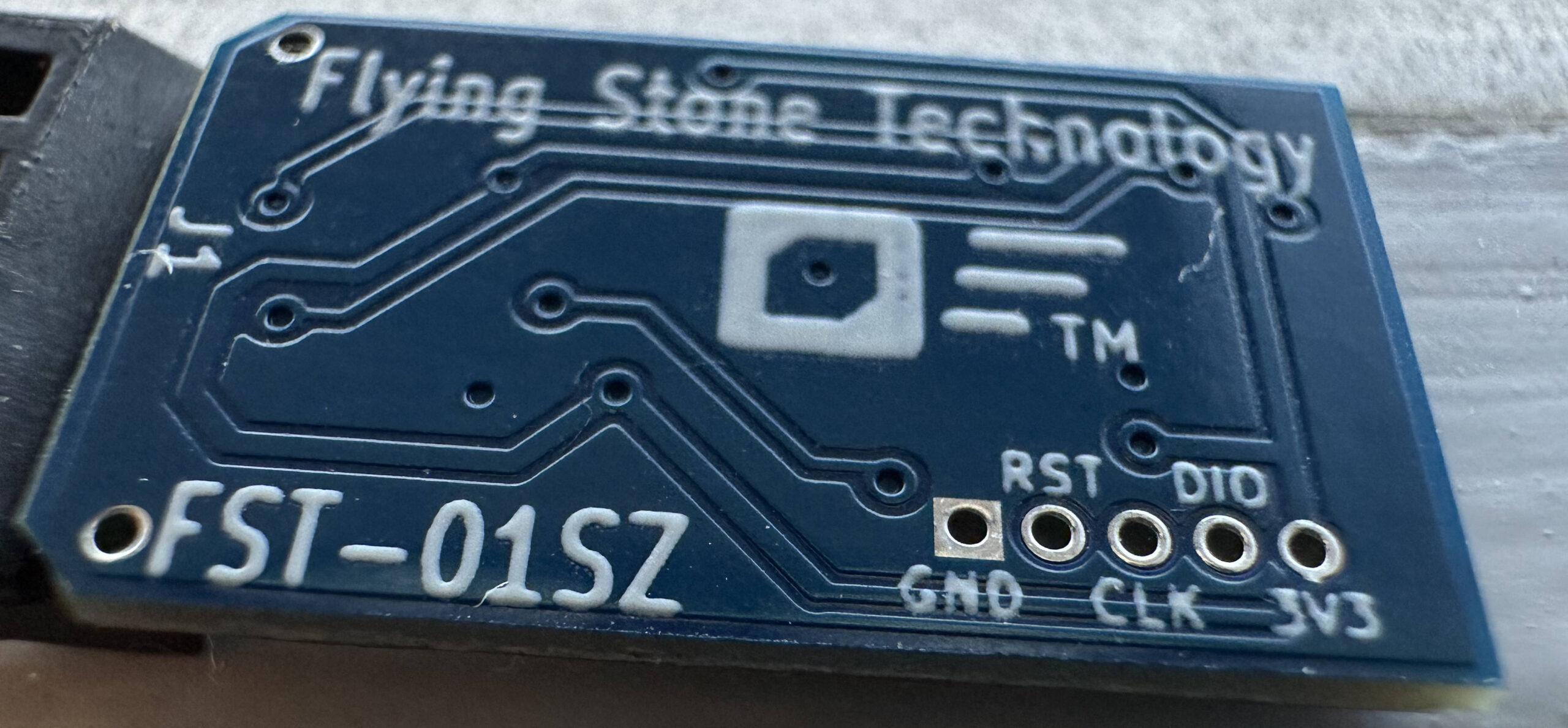
I use GnuPG to compute cryptographic signatures for my emails, git commits/tags, and software release artifacts (tarballs). Part of GnuPG is gpg-agent which talks to OpenSSH, which I login to remote servers and to clone git repositories. I dislike storing cryptographic keys on general-purpose machines, and have used hardware-backed OpenPGP keys since around 2006 when I got a FSFE Fellowship Card. GnuPG via gpg-agent handles this well, and the private key never leaves the hardware. The ZeitControl cards were (to my knowledge) proprietary hardware running some non-free operating system and OpenPGP implementation. By late 2012 the YubiKey NEO supported OpenPGP, and while the hardware and operating system on it was not free, at least it ran a free software OpenPGP implementation and eventually I setup my primary RSA key on it. This worked well for a couple of years, and when I in 2019 wished to migrate to a new key, the FST-01G device with open hardware running free software that supported Ed25519 had become available. I created a key and have been using the FST-01G on my main laptop since then. This little device has been working, the signature counter on it is around 14501 which means around 10 signatures/day since then! Currently I am in the process of migrating towards a new laptop, and moving the FST-01G device between them is cumbersome, especially if I want to use both laptops in parallel. That s why I need to setup a new hardware device to hold my OpenPGP key, which can go with my new laptop. This is a good time to re-visit alternatives. I quickly decided that I did not want to create a new key, only to import my current one to keep everything working. My requirements on the device to chose hasn t changed since 2019, see my summary at the end of the earlier blog post. Unfortunately the FST-01G is out of stock and the newer FST-01SZ has also out of stock. While Tillitis looks promising (and I have one to play with), it does not support OpenPGP (yet). What to do? Fortunately, I found some FST-01SZ device in my drawer, and decided to use it pending a more satisfactory answer. Hopefully once I get around to generate a new OpenPGP key in a year or so, I will do a better survey of options that are available on the market then. What are your (freedom-respecting) OpenPGP hardware recommendations?
FST-01SZ circuit board
Similar to setting up the FST-01G, the FST-01SZ needs to be setup before use. I m doing the following from Trisquel 11 but any GNU/Linux system would work. When the device is inserted at first time, some kernel messages are shown (see /var/log/syslog or use the dmesg command):

usb 3-3: new full-speed USB device number 39 using xhci_hcd
usb 3-3: New USB device found, idVendor=234b, idProduct=0004, bcdDevice= 2.00
usb 3-3: New USB device strings: Mfr=1, Product=2, SerialNumber=3
usb 3-3: Product: Fraucheky
usb 3-3: Manufacturer: Free Software Initiative of Japan
usb 3-3: SerialNumber: FSIJ-0.0
usb-storage 3-3:1.0: USB Mass Storage device detected
scsi host1: usb-storage 3-3:1.0
scsi 1:0:0:0: Direct-Access     FSIJ     Fraucheky        1.0  PQ: 0 ANSI: 0
sd 1:0:0:0: Attached scsi generic sg2 type 0
sd 1:0:0:0: [sdc] 128 512-byte logical blocks: (65.5 kB/64.0 KiB)
sd 1:0:0:0: [sdc] Write Protect is off
sd 1:0:0:0: [sdc] Mode Sense: 03 00 00 00
sd 1:0:0:0: [sdc] No Caching mode page found
sd 1:0:0:0: [sdc] Assuming drive cache: write through
 sdc:
sd 1:0:0:0: [sdc] Attached SCSI removable disk
Interestingly, the NeuG software installed on the device I got appears to be version 1.0.9:

jas@kaka:~$ head /media/jas/Fraucheky/README
NeuG - a true random number generator implementation
						  Version 1.0.9
						     2018-11-20
					           Niibe Yutaka
			      Free Software Initiative of Japan
What's NeuG?
============
jas@kaka:~$ 
I could not find version 1.0.9 published anywhere, but the device came with a SD-card that contain a copy of the source, so I uploaded it until a more canonical place is located. Putting the device in the serial mode can be done using a sudo eject /dev/sdc command which results in the following syslog output.

usb 3-3: reset full-speed USB device number 39 using xhci_hcd
usb 3-3: device firmware changed
usb 3-3: USB disconnect, device number 39
sdc: detected capacity change from 128 to 0
usb 3-3: new full-speed USB device number 40 using xhci_hcd
usb 3-3: New USB device found, idVendor=234b, idProduct=0001, bcdDevice= 2.00
usb 3-3: New USB device strings: Mfr=1, Product=2, SerialNumber=3
usb 3-3: Product: NeuG True RNG
usb 3-3: Manufacturer: Free Software Initiative of Japan
usb 3-3: SerialNumber: FSIJ-1.0.9-42315277
cdc_acm 3-3:1.0: ttyACM0: USB ACM device
Now download Gnuk, verify its integrity and build it. You may need some additional packages installed, try apt-get install gcc-arm-none-eabi openocd python3-usb. As you can see, I m using the stable 1.2 branch of Gnuk, currently on version 1.2.20. The ./configure parameters deserve some explanation. The kdf_do=required sets up the device to require KDF usage. The --enable-factory-reset allows me to use the command factory-reset (with admin PIN) inside gpg --card-edit to completely wipe the card. Some may consider that too dangerous, but my view is that if someone has your admin PIN it is game over anyway. The --vidpid=234b:0000 is specifies the USB VID/PID to use, and --target=FST_01SZ is critical to set the platform (you ll may brick the device if you pick the wrong --target setting).

jas@kaka:~/src$ rm -rf gnuk neug
jas@kaka:~/src$ git clone https://gitlab.com/jas/neug.git
Cloning into 'neug'...
remote: Enumerating objects: 2034, done.
remote: Counting objects: 100% (2034/2034), done.
remote: Compressing objects: 100% (603/603), done.
remote: Total 2034 (delta 1405), reused 2013 (delta 1405), pack-reused 0
Receiving objects: 100% (2034/2034), 910.34 KiB   3.50 MiB/s, done.
Resolving deltas: 100% (1405/1405), done.
jas@kaka:~/src$ git clone https://salsa.debian.org/gnuk-team/gnuk/gnuk.git
Cloning into 'gnuk'...
remote: Enumerating objects: 13765, done.
remote: Counting objects: 100% (959/959), done.
remote: Compressing objects: 100% (337/337), done.
remote: Total 13765 (delta 629), reused 907 (delta 599), pack-reused 12806
Receiving objects: 100% (13765/13765), 12.59 MiB   3.05 MiB/s, done.
Resolving deltas: 100% (10077/10077), done.
jas@kaka:~/src$ cd neug
jas@kaka:~/src/neug$ git describe 
release/1.0.9
jas@kaka:~/src/neug$ git tag -v  git describe 
object 5d51022a97a5b7358d0ea62bbbc00628c6cec06a
type commit
tag release/1.0.9
tagger NIIBE Yutaka <gniibe@fsij.org> 1542701768 +0900
Version 1.0.9.
gpg: Signature made Tue Nov 20 09:16:08 2018 CET
gpg:                using EDDSA key 249CB3771750745D5CDD323CE267B052364F028D
gpg:                issuer "gniibe@fsij.org"
gpg: Good signature from "NIIBE Yutaka <gniibe@fsij.org>" [unknown]
gpg:                 aka "NIIBE Yutaka <gniibe@debian.org>" [unknown]
gpg: WARNING: This key is not certified with a trusted signature!
gpg:          There is no indication that the signature belongs to the owner.
Primary key fingerprint: 249C B377 1750 745D 5CDD  323C E267 B052 364F 028D
jas@kaka:~/src/neug$ cd ../gnuk/
jas@kaka:~/src/gnuk$ git checkout STABLE-BRANCH-1-2 
Branch 'STABLE-BRANCH-1-2' set up to track remote branch 'STABLE-BRANCH-1-2' from 'origin'.
Switched to a new branch 'STABLE-BRANCH-1-2'
jas@kaka:~/src/gnuk$ git describe
release/1.2.20
jas@kaka:~/src/gnuk$ git tag -v  git describe 
object 9d3c08bd2beb73ce942b016d4328f0a596096c02
type commit
tag release/1.2.20
tagger NIIBE Yutaka <gniibe@fsij.org> 1650594032 +0900
Gnuk: Version 1.2.20
gpg: Signature made Fri Apr 22 04:20:32 2022 CEST
gpg:                using EDDSA key 249CB3771750745D5CDD323CE267B052364F028D
gpg: Good signature from "NIIBE Yutaka <gniibe@fsij.org>" [unknown]
gpg:                 aka "NIIBE Yutaka <gniibe@debian.org>" [unknown]
gpg: WARNING: This key is not certified with a trusted signature!
gpg:          There is no indication that the signature belongs to the owner.
Primary key fingerprint: 249C B377 1750 745D 5CDD  323C E267 B052 364F 028D
jas@kaka:~/src/gnuk/src$ git submodule update --init
Submodule 'chopstx' (https://salsa.debian.org/gnuk-team/chopstx/chopstx.git) registered for path '../chopstx'
Cloning into '/home/jas/src/gnuk/chopstx'...
Submodule path '../chopstx': checked out 'e12a7e0bb3f004c7bca41cfdb24c8b66daf3db89'
jas@kaka:~/src/gnuk$ cd chopstx
jas@kaka:~/src/gnuk/chopstx$ git describe
release/1.21
jas@kaka:~/src/gnuk/chopstx$ git tag -v  git describe 
object e12a7e0bb3f004c7bca41cfdb24c8b66daf3db89
type commit
tag release/1.21
tagger NIIBE Yutaka <gniibe@fsij.org> 1650593697 +0900
Chopstx: Version 1.21
gpg: Signature made Fri Apr 22 04:14:57 2022 CEST
gpg:                using EDDSA key 249CB3771750745D5CDD323CE267B052364F028D
gpg: Good signature from "NIIBE Yutaka <gniibe@fsij.org>" [unknown]
gpg:                 aka "NIIBE Yutaka <gniibe@debian.org>" [unknown]
gpg: WARNING: This key is not certified with a trusted signature!
gpg:          There is no indication that the signature belongs to the owner.
Primary key fingerprint: 249C B377 1750 745D 5CDD  323C E267 B052 364F 028D
jas@kaka:~/src/gnuk/chopstx$ cd ../src
jas@kaka:~/src/gnuk/src$ kdf_do=required ./configure --enable-factory-reset --vidpid=234b:0000 --target=FST_01SZ
Header file is: board-fst-01sz.h
Debug option disabled
Configured for bare system (no-DFU)
PIN pad option disabled
CERT.3 Data Object is NOT supported
Card insert/removal by HID device is NOT supported
Life cycle management is supported
Acknowledge button is supported
KDF DO is required before key import/generation
jas@kaka:~/src/gnuk/src$ make   less
jas@kaka:~/src/gnuk/src$ cd ../regnual/
jas@kaka:~/src/gnuk/regnual$ make   less
jas@kaka:~/src/gnuk/regnual$ cd ../../
jas@kaka:~/src$ sudo python3 neug/tool/neug_upgrade.py -f gnuk/regnual/regnual.bin gnuk/src/build/gnuk.bin
gnuk/regnual/regnual.bin: 4608
gnuk/src/build/gnuk.bin: 109568
CRC32: b93ca829
Device: 
Configuration: 1
Interface: 1
20000e00:20005000
Downloading flash upgrade program...
start 20000e00
end   20002000
# 20002000: 32 : 4
Run flash upgrade program...
Wait 1 second...
Wait 1 second...
Device: 
08001000:08020000
Downloading the program
start 08001000
end   0801ac00
jas@kaka:~/src$ 
The kernel log will contain the following, and the card is ready to use as an OpenPGP card. You may unplug it and re-insert it as you wish.

usb 3-3: reset full-speed USB device number 41 using xhci_hcd
usb 3-3: device firmware changed
usb 3-3: USB disconnect, device number 41
usb 3-3: new full-speed USB device number 42 using xhci_hcd
usb 3-3: New USB device found, idVendor=234b, idProduct=0000, bcdDevice= 2.00
usb 3-3: New USB device strings: Mfr=1, Product=2, SerialNumber=3
usb 3-3: Product: Gnuk Token
usb 3-3: Manufacturer: Free Software Initiative of Japan
usb 3-3: SerialNumber: FSIJ-1.2.20-42315277
Setting up the card is the next step, and there are many tutorials around for this, eventually I settled with the following sequence. Let s start with setting the admin PIN. First make sure that pcscd nor scdaemon is running, which is good hygien since those processes cache some information and with a stale connection this easily leads to confusion. Cache invalidation sigh.

jas@kaka:~$ gpg-connect-agent "SCD KILLSCD" "SCD BYE" /bye
jas@kaka:~$ ps auxww grep -e pcsc -e scd
jas        30221  0.0  0.0   3468  1692 pts/3    R+   11:49   0:00 grep --color=auto -e pcsc -e scd
jas@kaka:~$ gpg --card-edit
Reader ...........: 234B:0000:FSIJ-1.2.20-42315277:0
Application ID ...: D276000124010200FFFE423152770000
Application type .: OpenPGP
Version ..........: 2.0
Manufacturer .....: unmanaged S/N range
Serial number ....: 42315277
Name of cardholder: [not set]
Language prefs ...: [not set]
Salutation .......: 
URL of public key : [not set]
Login data .......: [not set]
Signature PIN ....: forced
Key attributes ...: rsa2048 rsa2048 rsa2048
Max. PIN lengths .: 127 127 127
PIN retry counter : 3 3 3
Signature counter : 0
KDF setting ......: off
Signature key ....: [none]
Encryption key....: [none]
Authentication key: [none]
General key info..: [none]
gpg/card> admin
Admin commands are allowed
gpg/card> kdf-setup
gpg/card> passwd
gpg: OpenPGP card no. D276000124010200FFFE423152770000 detected
1 - change PIN
2 - unblock PIN
3 - change Admin PIN
4 - set the Reset Code
Q - quit
Your selection? 3
PIN changed.
1 - change PIN
2 - unblock PIN
3 - change Admin PIN
4 - set the Reset Code
Q - quit
Your selection? 
Now it would be natural to setup the PIN and reset code. However the Gnuk software is configured to not allow this until the keys are imported. You would get the following somewhat cryptical error messages if you try. This took me a while to understand, since this is device-specific, and some other OpenPGP implementations allows you to configure a PIN and reset code before key import.

Your selection? 4
Error setting the Reset Code: Card error
1 - change PIN
2 - unblock PIN
3 - change Admin PIN
4 - set the Reset Code
Q - quit
Your selection? 1
Error changing the PIN: Conditions of use not satisfied
1 - change PIN
2 - unblock PIN
3 - change Admin PIN
4 - set the Reset Code
Q - quit
Your selection? q
Continue to configure the card and make it ready for key import. Some settings deserve comments. The lang field may be used to setup the language, but I have rarely seen it use, and I set it to sv (Swedish) mostly to be able to experiment if any software adhears to it. The URL is important to point to somewhere where your public key is stored, the fetch command of gpg --card-edit downloads it and sets up GnuPG with it when you are on a clean new laptop. The forcesig command changes the default so that a PIN code is not required for every digital signature operation, remember that I averaged 10 signatures per day for the past 2-3 years? Think of the wasted energy typing those PIN codes every time! Changing the cryptographic key type is required when I import 25519-based keys.

gpg/card> name
Cardholder's surname: Josefsson
Cardholder's given name: Simon
gpg/card> lang
Language preferences: sv
gpg/card> sex
Salutation (M = Mr., F = Ms., or space): m
gpg/card> login
Login data (account name): jas
gpg/card> url
URL to retrieve public key: https://josefsson.org/key-20190320.txt
gpg/card> forcesig
gpg/card> key-attr
Changing card key attribute for: Signature key
Please select what kind of key you want:
   (1) RSA
   (2) ECC
Your selection? 2
Please select which elliptic curve you want:
   (1) Curve 25519
   (4) NIST P-384
Your selection? 1
The card will now be re-configured to generate a key of type: ed25519
Note: There is no guarantee that the card supports the requested size.
      If the key generation does not succeed, please check the
      documentation of your card to see what sizes are allowed.
Changing card key attribute for: Encryption key
Please select what kind of key you want:
   (1) RSA
   (2) ECC
Your selection? 2
Please select which elliptic curve you want:
   (1) Curve 25519
   (4) NIST P-384
Your selection? 1
The card will now be re-configured to generate a key of type: cv25519
Changing card key attribute for: Authentication key
Please select what kind of key you want:
   (1) RSA
   (2) ECC
Your selection? 2
Please select which elliptic curve you want:
   (1) Curve 25519
   (4) NIST P-384
Your selection? 1
The card will now be re-configured to generate a key of type: ed25519
gpg/card> 
Reader ...........: 234B:0000:FSIJ-1.2.20-42315277:0
Application ID ...: D276000124010200FFFE423152770000
Application type .: OpenPGP
Version ..........: 2.0
Manufacturer .....: unmanaged S/N range
Serial number ....: 42315277
Name of cardholder: Simon Josefsson
Language prefs ...: sv
Salutation .......: Mr.
URL of public key : https://josefsson.org/key-20190320.txt
Login data .......: jas
Signature PIN ....: not forced
Key attributes ...: ed25519 cv25519 ed25519
Max. PIN lengths .: 127 127 127
PIN retry counter : 3 3 3
Signature counter : 0
KDF setting ......: on
Signature key ....: [none]
Encryption key....: [none]
Authentication key: [none]
General key info..: [none]
gpg/card> 
The device is now ready for key import! Bring out your offline laptop and boot it and use the keytocard command on the subkeys to import them. This assumes you saved a copy of the GnuPG home directory after generating the master and subkeys before, which I did in my own previous tutorial when I generated the keys. This may be a bit unusual, and there are simpler ways to do this (e.g., import a copy of the secret keys into a fresh GnuPG home directory).

$ cp -a gnupghome-backup-mastersubkeys gnupghome-import-fst01sz-42315277-2022-12-24
$ ps auxww grep -e pcsc -e scd
$ gpg --homedir $PWD/gnupghome-import-fst01sz-42315277-2022-12-24 --edit-key B1D2BD1375BECB784CF4F8C4D73CF638C53C06BE
...
Secret key is available.
gpg: checking the trustdb
gpg: marginals needed: 3  completes needed: 1  trust model: pgp
gpg: depth: 0  valid:   1  signed:   0  trust: 0-, 0q, 0n, 0m, 0f, 1u
sec  ed25519/D73CF638C53C06BE
     created: 2019-03-20  expired: 2019-10-22  usage: SC  
     trust: ultimate      validity: expired
ssb  cv25519/02923D7EE76EBD60
     created: 2019-03-20  expired: 2019-10-22  usage: E   
ssb  ed25519/80260EE8A9B92B2B
     created: 2019-03-20  expired: 2019-10-22  usage: A   
ssb  ed25519/51722B08FE4745A2
     created: 2019-03-20  expired: 2019-10-22  usage: S   
[ expired] (1). Simon Josefsson <simon@josefsson.org>
gpg> key 1
sec  ed25519/D73CF638C53C06BE
     created: 2019-03-20  expired: 2019-10-22  usage: SC  
     trust: ultimate      validity: expired
ssb* cv25519/02923D7EE76EBD60
     created: 2019-03-20  expired: 2019-10-22  usage: E   
ssb  ed25519/80260EE8A9B92B2B
     created: 2019-03-20  expired: 2019-10-22  usage: A   
ssb  ed25519/51722B08FE4745A2
     created: 2019-03-20  expired: 2019-10-22  usage: S   
[ expired] (1). Simon Josefsson <simon@josefsson.org>
gpg> keytocard
Please select where to store the key:
   (2) Encryption key
Your selection? 2
sec  ed25519/D73CF638C53C06BE
     created: 2019-03-20  expired: 2019-10-22  usage: SC  
     trust: ultimate      validity: expired
ssb* cv25519/02923D7EE76EBD60
     created: 2019-03-20  expired: 2019-10-22  usage: E   
ssb  ed25519/80260EE8A9B92B2B
     created: 2019-03-20  expired: 2019-10-22  usage: A   
ssb  ed25519/51722B08FE4745A2
     created: 2019-03-20  expired: 2019-10-22  usage: S   
[ expired] (1). Simon Josefsson <simon@josefsson.org>
gpg> key 1
sec  ed25519/D73CF638C53C06BE
     created: 2019-03-20  expired: 2019-10-22  usage: SC  
     trust: ultimate      validity: expired
ssb  cv25519/02923D7EE76EBD60
     created: 2019-03-20  expired: 2019-10-22  usage: E   
ssb  ed25519/80260EE8A9B92B2B
     created: 2019-03-20  expired: 2019-10-22  usage: A   
ssb  ed25519/51722B08FE4745A2
     created: 2019-03-20  expired: 2019-10-22  usage: S   
[ expired] (1). Simon Josefsson <simon@josefsson.org>
gpg> key 2

sec  ed25519/D73CF638C53C06BE
     created: 2019-03-20  expired: 2019-10-22  usage: SC  
     trust: ultimate      validity: expired
ssb  cv25519/02923D7EE76EBD60
     created: 2019-03-20  expired: 2019-10-22  usage: E   
ssb* ed25519/80260EE8A9B92B2B
     created: 2019-03-20  expired: 2019-10-22  usage: A   
ssb  ed25519/51722B08FE4745A2
     created: 2019-03-20  expired: 2019-10-22  usage: S   
[ expired] (1). Simon Josefsson <simon@josefsson.org>
gpg> keytocard
Please select where to store the key:
   (3) Authentication key
Your selection? 3
sec  ed25519/D73CF638C53C06BE
     created: 2019-03-20  expired: 2019-10-22  usage: SC  
     trust: ultimate      validity: expired
ssb  cv25519/02923D7EE76EBD60
     created: 2019-03-20  expired: 2019-10-22  usage: E   
ssb* ed25519/80260EE8A9B92B2B
     created: 2019-03-20  expired: 2019-10-22  usage: A   
ssb  ed25519/51722B08FE4745A2
     created: 2019-03-20  expired: 2019-10-22  usage: S   
[ expired] (1). Simon Josefsson <simon@josefsson.org>
gpg> key 2
sec  ed25519/D73CF638C53C06BE
     created: 2019-03-20  expired: 2019-10-22  usage: SC  
     trust: ultimate      validity: expired
ssb  cv25519/02923D7EE76EBD60
     created: 2019-03-20  expired: 2019-10-22  usage: E   
ssb  ed25519/80260EE8A9B92B2B
     created: 2019-03-20  expired: 2019-10-22  usage: A   
ssb  ed25519/51722B08FE4745A2
     created: 2019-03-20  expired: 2019-10-22  usage: S   
[ expired] (1). Simon Josefsson <simon@josefsson.org>
gpg> key 3
sec  ed25519/D73CF638C53C06BE
     created: 2019-03-20  expired: 2019-10-22  usage: SC  
     trust: ultimate      validity: expired
ssb  cv25519/02923D7EE76EBD60
     created: 2019-03-20  expired: 2019-10-22  usage: E   
ssb  ed25519/80260EE8A9B92B2B
     created: 2019-03-20  expired: 2019-10-22  usage: A   
ssb* ed25519/51722B08FE4745A2
     created: 2019-03-20  expired: 2019-10-22  usage: S   
[ expired] (1). Simon Josefsson <simon@josefsson.org>
gpg> keytocard
Please select where to store the key:
   (1) Signature key
   (3) Authentication key
Your selection? 1
sec  ed25519/D73CF638C53C06BE
     created: 2019-03-20  expired: 2019-10-22  usage: SC  
     trust: ultimate      validity: expired
ssb  cv25519/02923D7EE76EBD60
     created: 2019-03-20  expired: 2019-10-22  usage: E   
ssb  ed25519/80260EE8A9B92B2B
     created: 2019-03-20  expired: 2019-10-22  usage: A   
ssb* ed25519/51722B08FE4745A2
     created: 2019-03-20  expired: 2019-10-22  usage: S   
[ expired] (1). Simon Josefsson <simon@josefsson.org>
gpg> quit
Save changes? (y/N) y
$ 
Now insert it into your daily laptop and have GnuPG and learn about the new private keys and forget about any earlier locally available card bindings this usually manifests itself by GnuPG asking you to insert a OpenPGP card with another serial number. Earlier I did rm -rf ~/.gnupg/private-keys-v1.d/ but the scd serialno followed by learn --force is nicer. I also sets up trust setting for my own key.

jas@kaka:~$ gpg-connect-agent "scd serialno" "learn --force" /bye
...
jas@kaka:~$ echo "B1D2BD1375BECB784CF4F8C4D73CF638C53C06BE:6:"   gpg --import-ownertrust
jas@kaka:~$ gpg --card-status
Reader ...........: 234B:0000:FSIJ-1.2.20-42315277:0
Application ID ...: D276000124010200FFFE423152770000
Application type .: OpenPGP
Version ..........: 2.0
Manufacturer .....: unmanaged S/N range
Serial number ....: 42315277
Name of cardholder: Simon Josefsson
Language prefs ...: sv
Salutation .......: Mr.
URL of public key : https://josefsson.org/key-20190320.txt
Login data .......: jas
Signature PIN ....: not forced
Key attributes ...: ed25519 cv25519 ed25519
Max. PIN lengths .: 127 127 127
PIN retry counter : 5 5 5
Signature counter : 3
KDF setting ......: on
Signature key ....: A3CC 9C87 0B9D 310A BAD4  CF2F 5172 2B08 FE47 45A2
      created ....: 2019-03-20 23:40:49
Encryption key....: A9EC 8F4D 7F1E 50ED 3DEF  49A9 0292 3D7E E76E BD60
      created ....: 2019-03-20 23:40:26
Authentication key: CA7E 3716 4342 DF31 33DF  3497 8026 0EE8 A9B9 2B2B
      created ....: 2019-03-20 23:40:37
General key info..: sub  ed25519/51722B08FE4745A2 2019-03-20 Simon Josefsson <simon@josefsson.org>
sec#  ed25519/D73CF638C53C06BE  created: 2019-03-20  expires: 2023-09-19
ssb>  ed25519/80260EE8A9B92B2B  created: 2019-03-20  expires: 2023-09-19
                                card-no: FFFE 42315277
ssb>  ed25519/51722B08FE4745A2  created: 2019-03-20  expires: 2023-09-19
                                card-no: FFFE 42315277
ssb>  cv25519/02923D7EE76EBD60  created: 2019-03-20  expires: 2023-09-19
                                card-no: FFFE 42315277
jas@kaka:~$ 
Verify that you can digitally sign and authenticate using the key and you are done!

jas@kaka:~$ echo foo gpg -a --sign gpg --verify
gpg: Signature made Sat Dec 24 13:49:59 2022 CET
gpg:                using EDDSA key A3CC9C870B9D310ABAD4CF2F51722B08FE4745A2
gpg: Good signature from "Simon Josefsson <simon@josefsson.org>" [ultimate]
jas@kaka:~$ ssh-add -L
ssh-ed25519 AAAAC3NzaC1lZDI1NTE5AAAAILzCFcHHrKzVSPDDarZPYqn89H5TPaxwcORgRg+4DagE cardno:FFFE42315277
jas@kaka:~$ 
So time to relax and celebrate christmas? Hold on not so fast! Astute readers will have noticed that the output said PIN retry counter: 5 5 5 . That s not the default PIN retry counter for Gnuk! How did that happen? Indeed, good catch and great question, my dear reader. I wanted to include how you can modify the Gnuk source code, re-build it and re-flash the Gnuk as well. This method is different than flashing Gnuk onto a device that is running NeuG so the commands I used to flash the firmware in the start of this blog post no longer works in a device running Gnuk. Fortunately modern Gnuk supports updating firmware by specifying the Admin PIN code only, and provides a simple script to achieve this as well. The PIN retry counter setting is hard coded in the openpgp-do.c file, and we run a a perl command to modify the file, rebuild Gnuk and upgrade the FST-01SZ. This of course wipes all your settings, so you will have the opportunity to practice all the commands earlier in this post once again!

jas@kaka:~/src/gnuk/src$ perl -pi -e 's/PASSWORD_ERRORS_MAX 3/PASSWORD_ERRORS_MAX 5/' openpgp-do.c
jas@kaka:~/src/gnuk/src$ make   less
jas@kaka:~/src/gnuk/src$ cd ../tool/
jas@kaka:~/src/gnuk/tool$ ./upgrade_by_passwd.py 
Admin password: 
Device: 
Configuration: 1
Interface: 0
../regnual/regnual.bin: 4608
../src/build/gnuk.bin: 110592
CRC32: b93ca829
Device: 
Configuration: 1
Interface: 0
20002a00:20005000
Downloading flash upgrade program...
start 20002a00
end   20003c00
Run flash upgrade program...
Waiting for device to appear:
  Wait 1 second...
  Wait 1 second...
Device: 
08001000:08020000
Downloading the program
start 08001000
end   0801b000
Protecting device
Finish flashing
Resetting device
Update procedure finished
jas@kaka:~/src/gnuk/tool$
Now finally, I wish you all a Merry Christmas and Happy Hacking!

23 December 2022

Louis-Philippe V ronneau: 2022 A Musical Retrospective

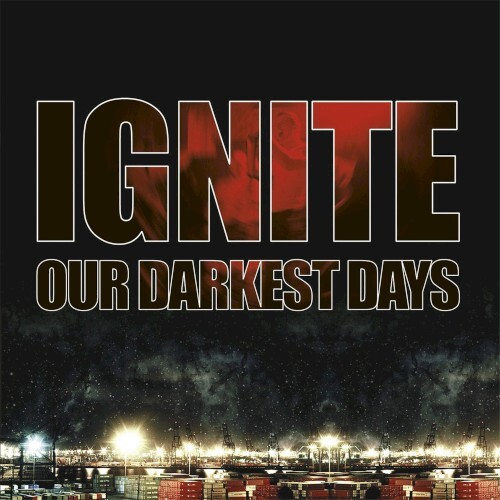
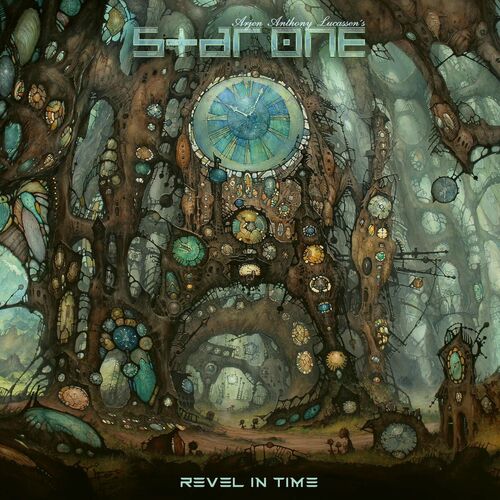
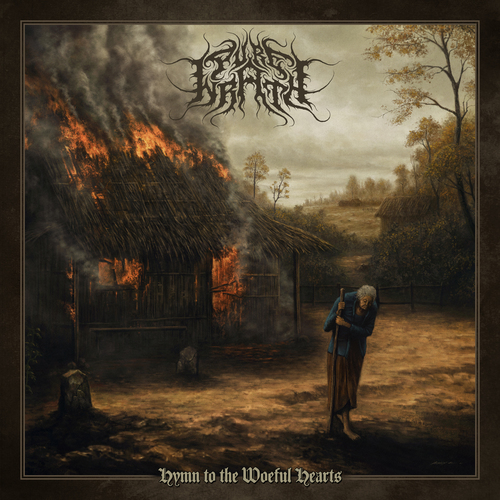
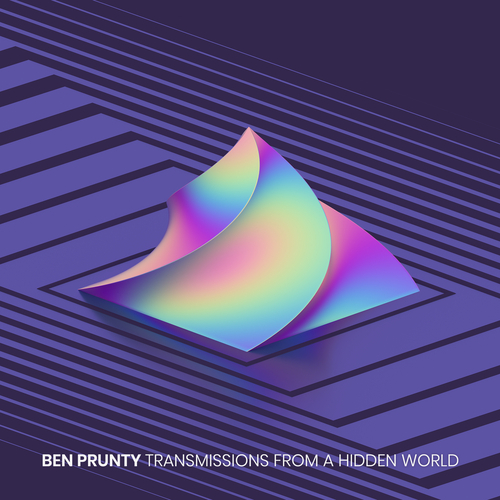
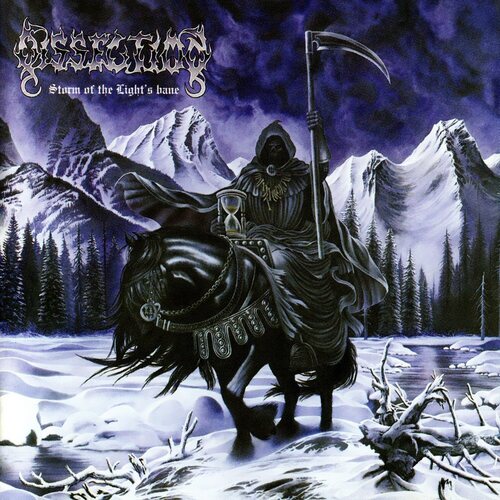
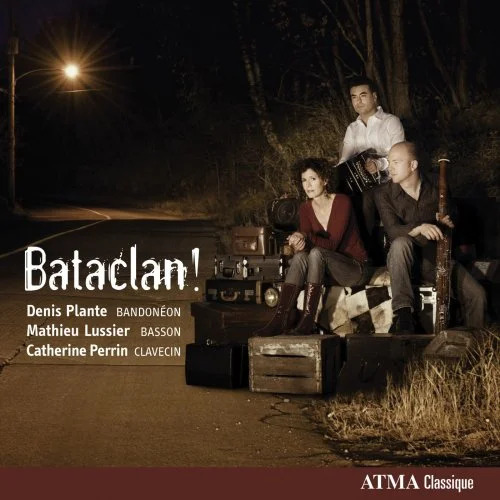
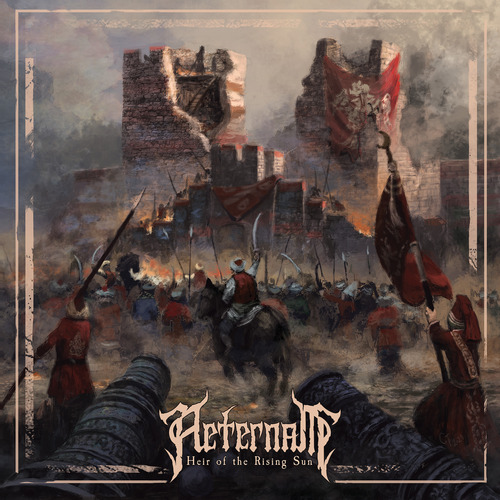
With the end of the year approaching fast, I thought putting my year in retrospective via music would be a fun thing to do. Albums In 2022, I added 51 new albums to my collection nearly one a week! I listed them below in the order in which I acquired them. I purchased most of these albums when I could and borrowed the rest at libraries. If you want to browse though, I added links to the album covers pointing either to websites where you can buy them or to Discogs when digital copies weren't available1. Browsing through the albums, I can see my tastes really shifted a lot in the last few years. I used to listen to a lot of Hip-Hop, but the recent trends in this genre2 really turn me off. In fact, it seems I didn't add a single Hip-Hop album to my collection this year... Metal also continues to dominate the list. Many thanks to Angry Metal Guy for being the best metal reviewing website out there. Concerts 2022 was also a big change for me, as I started going to much more concerts than I previously did. metalfinder has been working great and I'm really happy with it. Here are the concerts I went to in 2022: I'm looking forward continuing to go to a lot of concerts in 2023!

  1. Some of the albums especially the O ! ones are pretty underground. For most of those, I actually have physical copies I bought and ripped.
  2. Mostly mumble rap, beats than are less and less sample-based, extreme commercialisation and lyrics that are less and less political and engaged.

21 December 2022

Russ Allbery: Review: Shutdown

Review: Shutdown, by Adam Tooze
Publisher: Viking
Copyright: September 2021
ISBN: 0-593-29756-3
Format: Kindle
Pages: 305
Shutdown is a history of the world macroeconomic response to COVID-19, covering 2020 and the very beginning of 2021. But wait, you might be saying. It's only the end of 2022 right now, and this book was published in September of 2021. That's not history, that's journalism. And yes, I think that's a valid critique. Shutdown is doing something rather odd, and I'm not certain it was a good idea, but I do think it has a (somewhat narrow) audience. Descriptions first. After an awkward introduction (more on that later), Tooze launches into an essentially chronological history in four parts: the initial viral spread and early political and public health response, the economic hard stop and macroeconomic response, the summer fallout and political complications, and the more-organized aftershocks of the fall. The early chapters are closer to a history, with a clear timeline and the tracery of cause and effect. The closer the narrative comes to the time Tooze was writing it, the more that clarity drops away. The last few chapters feel like a collection of simultaneous events that may or may not be related or have long-term significance. Everyone reading this lived through those events, and if you're at all like me, consumed far more news coverage of them than was healthy. The obvious question, then, is why read a book that rehashes all of that? For me, there are two answers: Tooze pays attention to more of the world than makes it into the local headlines and tries to synthesize a larger picture, and the focus of this book is the macroeconomic facilities used in the response. I remember the fights over school closures in the US. I didn't know about the impact of unprecedented Federal Reserve action on the bond market for emerging market government debt. If you're the sort of person who reads The Economist religiously (which I am not), you may not learn anything new here. If you're not, and you have a general interest in international finance, there were probably some wrinkles you missed. Even if you stay up-to-date on the more technical news, Shutdown provides an intermediate consolidation and restructuring. It's not ready to be a history in the traditional sense, but it's a first pass at putting events in order and tracing the implications for the global financial system. Read in that sense, Shutdown felt like a continuation of Tooze's Crashed, following the same themes of a hegemonic but unstable dollar system and a Federal Reserve that has increasingly taken on the role of backstop to the entire world (and how the only tools it has available tend to increase wealth inequality). If you've not read Crashed, read it first. I think it's the stronger and more thorough book (not the least because it had more time and data to construct a coherent history), and it's the best introduction to the international macroeconomic risks that Tooze traces in Shutdown. This book was, for me, an update of the Tooze's thinking in Crashed for the COVID era. Tooze is very good at clearly describing macroeconomic shocks. I recently read Lev Menand's The Fed Unbound, which is in part about the same intervention during the COVID shock that Tooze describes here, and yet it wasn't until I read Shutdown that I grasped that the Treasury purchases by the Fed had arguably crossed the political red line of monetizing government debt, even though the Fed probably had no choice and few people noticed in the middle of the crisis. This is where Tooze's background as a historian is helpful. Most people writing on this topic are either economists, who seem to take inferences like that for granted and dive into the technical debate, or journalists, who rarely understand the nuance and often jump to facile conclusions. Tooze is a historian with an extensive economics background; he can explain the mechanics while still focusing on the limitations of politics, which is the sort of analysis that I want to read. The problem with this book as a history is that it necessarily raises more questions than it answers. In the conclusion, Tooze writes:
A severe tightening in U.S. monetary policy or even a full-fledged taper tantrum would put global resilience to a stern test. So too would a violent escalation of geopolitical tension in one of the major regions of the world economy.
Both of those events have subsequently happened, which throws any tentative conclusions Tooze can offer into question. For another example, when Tooze wrote Shutdown, China's zero COVID policy was widely celebrated inside China and had enabled a fast economic recovery while the rest of the world was still in serious difficulty. Before Omicron, it was conceivable (if extremely risky) that China could continue to avoid a major COVID surge. In December of 2022, it's obvious they only managed to delay, and while delay meant vaccination and the price in deaths may well be smaller than was paid for the route taken by most of the rest of the world, the trade-offs are now even harder to analyze. There are, of course, other examples, the most obvious of which is the rise of global inflation simultaneous with a strengthening dollar. A history written from a distance of several decades would have included that aftermath. A snap history with a distance of only a few months cannot. The other problem with this book is that it's not as polished. Viking did an amazing job turning publication around in roughly six months, dramatically faster than publishing normally works, but there are parts that could have used more editing. The introduction, in particular, reads more like a blog post than an edited book, and while I'm a happy reader of Tooze's Chartbook, the recap of COVID's impact was a bit trite and Tooze's abstract musings on polycrisis could have used tightening and clarity. The meat of the book is better, but there is a messy stream-of-consciousness feel that is inherent in a book written to this tight of a timeline. I think the audience of this book is, narrowly, people who have read Crashed and want to follow that line of reasoning into the COVID era. Crashed is one of the better books on macroeconomic history that I've read, and I did indeed want to follow that train of thought, so I am part of that audience. This is not the sort of book that I would widely recommend, however. If you want to read it, you probably know that already; if you are new to Tooze's analysis, Crashed is the place to start. Rating: 7 out of 10

20 December 2022

Russ Allbery: Review: Tess of the Road

Review: Tess of the Road, by Rachel Hartman
Series: Tess of the Road #1
Publisher: Random House
Copyright: 2018
Printing: 2022
ISBN: 1-101-93130-2
Format: Kindle
Pages: 536
Tess of the Road is the first book of a YA fantasy duology set in the same universe as Seraphina and Shadow Scale. It's hard to decide what to say about reading order (and I now appreciate the ambiguous answers I got). Tess of the Road is a sequel to Seraphina and Shadow Scale in the sense that there are numerous references to the previous duology, but it has a different protagonist and different concerns. You don't need to read the other duology first, but Tess of the Road will significantly spoil the resolution of the romance plot in Seraphina, and it will be obvious that you've skipped over background material. That said, Shadow Scale is not a very good book, and this is a much better book. I guess the summary is this: if you're going to read the first duology, read it first, but don't feel obligated to do so. Tess was always a curious, adventurous, and some would say unmanageable girl, nothing like her twin. Jeanne is modest, obedient, virtuous, and practically perfect in every way. Tess is not; after a teenage love affair resulting in an out-of-wedlock child and a boy who disappeared rather than marry her, their mother sees no alternative but to lie about which of the twins is older. If Jeanne can get a good match among the nobility, the family finances may be salvaged. Tess's only remaining use is to help her sister find a match, and then she can be shuffled off to a convent. Tess throws herself into court politics and does exactly what she's supposed to. She engineers not only a match, but someone Jeanne sincerely likes. Tess has never lacked competence. But this changes nothing about her mother's view of her, and Tess is depressed, worn, and desperately miserable in Jeanne's moment of triumph. Jeanne wants Tess to stay and become the governess of her eventual children, retaining their twin bond of the two of them against the world. Their older sister Seraphina, more perceptively, tries to help her join an explorer's expedition. Tess, in a drunken spiral of misery, insults everyone and runs away, with only a new pair of boots and a pack of food. This is going to be one of those reviews where the things I didn't like are exactly the things other readers liked. I see why people loved this book, and I wish I had loved it too. Instead, I liked parts of it a great deal and found other parts frustrating or a bit too off-putting. Mostly this is a preference problem rather than a book problem. My most objective complaint is the pacing, which was also my primary complaint about Shadow Scale. It was not hard to see where Hartman was going with the story, I like that story, I was on board with going there, but getting there took for-EV-er. This is a 536 page book that I would have edited to less than 300 pages. It takes nearly a hundred pages to get Tess on the road, and while some of that setup is necessary, I did not want to wallow in Tess's misery and appalling home life for quite that long. A closely related problem is that Hartman continues to love flashbacks. Even after Tess has made her escape, we get the entire history of her awful teenage years slowly dribbled out over most of the book. Sometimes this is revelatory; mostly it's depressing. I had guessed the outlines of what had happened early in the book (it's not hard), and that was more than enough motivation for me, but Hartman was determined to make the reader watch every crisis and awful moment in detail. This is exactly what some readers want, and sometimes it's even what I want, but not here. I found the middle of the book, where the story is mostly flashbacks and flailing, to be an emotional slog. Part of the problem is that Tess has an abusive mother and goes through the standard abuse victim process of being sure that she's the one who's wrong and that her mother is justified in her criticism. This is certainly realistic, and it eventually lead to some satisfying catharsis as Tess lets go of her negative self-image. But Tess's mother is a narcissistic religious fanatic with a persecution complex and not a single redeeming quality whatsoever, and I loathed reading about her, let alone reading Tess tiptoeing around making excuses for her. The point of this in the story is for Tess to rebuild her self-image, and I get it, and I'm sure this will work for some readers, but I wanted Tess's mother (and the rest of her family except her sisters) to be eaten by dragons. I do not like the emotional experience of hating a character in a book this much. Where Tess of the Road is on firmer ground is when Tess has an opportunity to show her best qualities, such as befriending a quigutl in childhood and, in the sort of impulsive decision that shows her at her best, learning their language. (For those who haven't read the previous books, quigutls are a dog-sized subspecies of dragon that everyone usually treats like intelligent animals, although they're clearly more than that.) Her childhood quigutl friend Pathka becomes her companion on the road, which both gives her wanderings some direction and adds some useful character interaction. Pathka comes with a plot that is another one of those elements that I think will work for some readers but didn't work for me. He's in search of a Great Serpent, a part of quigutl mythology that neither humans or dragons pay attention to. That becomes the major plot of the novel apart from Tess's emotional growth. Pathka also has a fraught relationship with his own family, which I think was supposed to parallel Tess's relationships but never clicked for me. I liked Tess's side of this relationship, but Pathka is weirdly incomprehensible and apparently fickle in ways that I found unsatisfying. I think Hartman was going for an alien tone that didn't quite work for me. This is a book that gets considerably better as it goes along, and the last third of the book was great. I didn't like being dragged through the setup, but I loved the character Tess became. Once she reaches the road crew, this was a book full of things that I love reading about. The contrast between her at the start of the book and the end is satisfying and rewarding. Tess's relationship with her twin Jeanne deserves special mention; their interaction late in the book is note-perfect and much better than I had expected. Unfortunately, Tess of the Road doesn't have a real resolution. It's only the first half of Tess's story, which comes back to that pacing problem. Ah well. I enjoyed this but I didn't love it. The destination was mostly worth the journey, but I thought the journey was much too long and I had to spend too much time in the company of people I hated far more intensely than was comfortable. I also thought the middle of the book sagged, a problem I have now had with two out of three of Hartman's books. But I can see why other readers with slightly different preferences loved it. I'm probably invested enough to read the sequel, although I'm a bit grumbly that the sequel is necessary. Followed by In the Serpent's Wake. Rating: 7 out of 10

Freexian Collaborators: Recent improvements to Tryton's Debian Packaging (by Mathias Behrle and Rapha l Hertzog)

Foreword Freexian has been using Tryton for a few years to handle its invoicing and accounting. We have thus also been using the Debian packages maintained by Mathias Behrle and we have been funding some of his work because maintaining an ERP with more than 50 source packages was too much for him to handle alone on his free time. When Mathias discovered our Project Funding initiative, it was quite natural for him to consider applying to be able to bring some much needed improvements to Tryton s Debian packaging. He s running his own consulting company (MBSolutions) so it s easy for him to invoice Freexian to get the money for the funded projects. What follows is Mathias Behrle s description of the projects that he submitted and of the work that he achieved. If you want to contact him, you can reach out to mathiasb@m9s.biz or mbehrle@debian.org. You can also follow him on Mastodon.

Report In January 2022 I applied for two projects in the Freexian Project Funding Initiative.
  • Tryton Project 1
    • The starting point of this project was Debian Bug #998319: tryton-server should provide a ready-to-use production-grade server config. To address this problem instead of only providing configuration snippets the idea was to provide a full featured guided setup of a Tryton production environment, thus eliminating the risks of trial and error for the system administrator.
  • Tryton Project 2
    • The goal of this project was to complete the available Tryton modules in Debian main with the latest set available from tryton.org and to automate the task of creating new Debian packages from Tryton modules as much as possible.

Accomplishments As the result of Task 1, several new packages emerged:
  • tryton-server-postgresql provides the guided setup of a PostgreSQL database backend.
  • tryton-server-uwsgi provides the installation and configuration of a robust WSGI server on top of tryton-server.
  • tryton-server-nginx provides the configuration of a scalable web frontend to the uwsgi server, including the optional setup of secure access by Letsencrypt certificates.
  • tryton-server-all-in-one puts it all together to provide a fully functional Tryton production environment, including a database filled with basic static data. With the installation of this package a robust and secure production grade setup is possible from scratch, all configuration leg work is done in the background.
The work was thoroughly reviewed by Neil Williams. Thanks go to him for his detailed feedback providing very valuable information from the view of a fresh Tryton user getting in first contact with the software. A cordial thank you as well goes to the translation teams providing initial reviews and translations for the configuration questions. The efforts of Task 1 were completed with Task 2:
  • A Tryton specific version of PyPi2deb was created to help in the preparation of new Debian packages for new Tryton modules.
  • All missing Tryton modules for the current series were packaged for Debian.
On top of those two planned projects, I completed an additional task: the packaging of the Tryton Web Client. The Web Client is a quite important feature to access a Tryton server with the browser and even a crucial requirement for some companies. Unfortunately the packaging of the Web Client for Debian was problematic from the beginning. tryton-sao requires exact versions of JavaScript libraries that are almost never guaranteed to be available in the different targeted Debian releases. Therefore a package with vendored libraries has been created and will hopefully soon hit the Debian main archive. The package is already available from the Tryton Backport Mirror for the usually supported Debian releases.

Summary I am very pleased that the Tryton suite in Debian has gained full coverage of Tryton modules and a user-friendly installation. The completion of the project represents a huge step forward in the state-of-the-art deployment of a production grade Tryton environment. Without the monetary support of Freexian s project funding the realization of this project wouldn t have been possible in this way and to this extent.

19 December 2022

Simon Josefsson: Second impressions of Guix 1.4

While my first impression of Guix 1.4rc2 on NV41PZ was only days ago, the final Guix 1.4 release has happened. I thought I should give it a second try, although being at my summer house with no wired ethernet I realized this may be overly optimistic. However I am happy to say that a guided graphical installation on my new laptop went smooth without any problem. Practicing OS installations has a tendency to make problems disappear. My WiFi issues last time was probably due to a user interface mistake on my part: you have to press a button to search for wireless networks before seeing them. I m not sure why I missed this the first time, but maybe the reason was that I didn t really expect WiFi to work on this laptop with one Intel-based WiFi card without firmware and a USB-based WiFi dongle. I haven t went back to the rc2 image, but I strongly believe it wasn t a problem with that image but my user mistake. Perhaps some more visual clues could be given that Guix found a usable WiFi interface, as this isn t completely obvious now. My main pet problem with the installation is the language menu. It contains a bazillion languages, and I want to find Swedish in it. However the list is half-sorted so it looks like it is alphabetized but paging through the list I didn t find svenska , but did notice that the sorting restarts after a while. Eventually I find my language of chose, but a better search interface would be better. Typing s to find it jumps around in the list. This may be a user interface misunderstanding on my part: I may be missing whatever great logic I m sure there is to find my language in that menu. I did a simple installation, enabling GNOME, Cups and OpenSSH. Given the experience with sharing /home with my Trisquel installation last time, I chose to not mount it this time, fixing this later on if I want to share files between OSes. Watching the installation proceed with downloading packages over this slow WiFi was meditative, and I couldn t help but wonder what logic there was to the many steps where it says it is going to download X MB of software, downloads a set of packages, and then starts another iteration saying it is going to download Y MB and then downloads another set of packages. Maybe there is a package dependency tree being worked out while I watch. After logging into GNOME I had to provide the WiFi password another time, it seems it wasn t saved during installation, or I was too impatient to wait for WiFi to come up automatically. Using the GNOME WiFi selection menu worked fine. The webcam issue is still present, the image is distorted and it doesn t happen in Trisquel. Other than that, everythings appear to work, but it has to be put through more testing. Upgrading Guix after installation is still suffering from the same issue I noticed with the rc2 images, this time I managed to save the error message in case someone wants to provide an official fix or workaround. The initial guix pull command also takes forever, even on this speedy laptop, but after the initial run it is faster. Here are the error messages (pardon the Swedish):
jas@kaka ~$ sudo -i
...
root@kaka ~# guix pull
...
root@kaka ~# guix system reconfigure /etc/config.scm 
guix system: fel: aborting reconfiguration because commit 8e2f32cee982d42a79e53fc1e9aa7b8ff0514714 of channel 'guix' is not a descendant of 989a3916dc8967bcb7275f10452f89bc6c3389cc
tips: Use  --allow-downgrades' to force this downgrade.
root@kaka ~# 
I ll avoid using allow-downgrades this time to see if there is a better solution available. Update: Problem resolved: my muscle memory typed sudo -i before writing the commands above. If I stick to the suggested guix pull (as user) followed by sudo guix system reconfigure /etc/config.scm everything works. I ll leave this in case someone else runs into this problem. I m using the Evolution mail/calendar/contacts application, and it was not installed via GNOME so I had to manually install it using guix package -i evolution . Following the guided setup worked remarkable well (it auto-detects all my email settings after giving it my email address), although at the end I get a surprising error message:
Puzzling error message from Evolution
If I didn t know a bit about how Evolution works internally, I would have been stuck here the solution is to install the evolution data server package. This should probably be a dependency from the main package? Fix it by guix package -i evolution-data-server . It works directly, no need to even restart Evolution or go through the configuration dialog again. After this, I m happily using email against my Dovecot server and contacts/calendars against my Nextcloud server via GNOME s builtin Nextcloud connector which was straight-forward to setup.

Russ Allbery: Review: Artifact Space

Review: Artifact Space, by Miles Cameron
Series: Arcana Imperii #1
Publisher: Gollancz
Copyright: June 2021
ISBN: 1-4732-3262-7
Format: Kindle
Pages: 483
Artifact Space is a military (mostly) science fiction novel, the first of an expected trilogy. Christian Cameron is a prolific author of historical fiction under that name, thrillers under the name Gordon Kent, and historical fantasy under the name Miles Cameron. This is his first science fiction novel. Marca Nbaro is descended from one of the great spacefaring mercantile families, but it's not doing her much good. She is a ward of the Orphanage, the boarding school for orphaned children of the DHC, generous in theory and a hellhole in practice. Her dream to serve on one of the Greatships, the enormous interstellar vessels that form the backbone of the human trading network, has been blocked by the school authorities, a consequence of the low-grade war she's been fighting with them throughout her teenage years. But Marca is not a person to take no for an answer. Pawning her family crest gets her just enough money to hire a hacker to doctor her school records, adding the graduation she was denied and getting her aboard the Greatship Athens as a new Midshipper. I don't read a lot of military science fiction, but there is one type of story that I love that military SF is uniquely well-suited to tell. It's not the combat or the tactics or the often-trite politics. It's the experience of the military as a system, a collective human endeavor. One ideal of the military is that people come to it from all sorts of backgrounds, races, and social classes, and the military incorporates them all into a system built for a purpose. It doesn't matter who you are or what you did before: if you follow the rules, do your job, and become part of a collaboration larger than yourself, you have a place and people to watch your back whether or not they know you or like you. Obviously, like any ideal, many militaries don't live up to this, and there are many stories about those failures. But the story of that ideal, told well, is a genre I like a great deal and is hard to find elsewhere. This sort of military story shares some features with found family, and it's not a coincidence that I also like found family stories. But found family still assumes that these people love you, or at least like you. For some protagonists, that's a tricky barrier both to cross and to believe one has crossed. The (admittedly idealized) military doesn't assume anyone likes you. It doesn't expect that you or anyone around you have the right feelings. It just expects you to do your job and work with other people who are doing their job. The requirements are more concrete, and thus in a way easier to believe in. Artifact Space is one of those military science fiction stories. I was entirely unsurprised to see that the author is a former US Navy career officer. The Greatships here are, technically, more of a merchant marine than a full-blown military. (The author noted in an interview that he based them on the merchant ships of Venice.) The weapons are used primarily for defense; the purpose of the Greatships is trade, and every crew member has a storage allotment in the immense cargo area that they're encouraged to use. The setting is in the far future, after a partial collapse and reconstruction of human society, in which humans have spread through interstellar space, settled habitable planets, and built immense orbital cities. The Athens is trading between multiple human settlements, but its true destination is far into the deep black: Tradepoint, where it can trade with the mysterious alien Starfish for xenoglas, a material that humans have tried and failed to reproduce and on which much of human construction now depends. This is, to warn, one of those stories where the scrappy underdog of noble birth makes friends with everyone and is far more competent than anyone expects. The story shape is not going to surprise you, and you have to have considerable tolerance for it to enjoy this book. Marca is ridiculously, absurdly central to the plot for a new Middie. Sometimes this makes sense given her history; other times, she is in the middle of improbable accidents that felt forced by the author. Cameron doesn't entirely break normal career progression, but Marca is very special in a way that you only get to be as the protagonist of a novel. That said, Cameron does some things with that story shape that I liked. Marca's hard-won survival skills are not weirdly well-suited for her new life aboard ship. To the contrary, she has to unlearn a lot of bad habits and let go of a lot of anxiety. I particularly liked her relationship with her more-privileged cabin mate, which at first seemed to only be a contrast between Thea's privilege and Marca's background, but turned into both of them learning from each other. There's a great mix of supporting characters, with a wide variety of interactions with Marca and a solid sense that all of the characters have their own lives and their own concerns that don't revolve around her. There is, of course, a plot to go with this. I haven't talked about it much because I think the summaries of this book are a bit of a spoiler, but there are several layers of political intrigue, threats to the ship, an interesting AI, and a good hook in the alien xenoglas trade. Cameron does a deft job balancing the plot with Marca's training and her slow-developing sense of place in the ship (and fear about discovery of her background and hacking). The pacing is excellent, showing all the skill I'd expect from someone with a thriller background and over forty prior novels under his belt. Cameron portrays the tedious work of learning a role on a ship without boring the reader, which is a tricky balancing act. I also like the setting: a richly multicultural future that felt like it included people from all of Earth, not just the white western parts. That includes a normalized androgyne third gender, which is the sort of thing you rarely see in military SF. Faster-than-light travel involves typical physics hand-waving, but the shape of the hand-waving is one I've not seen before and is a great excuse for copying the well-known property of oceangoing navies that longer ships can go faster. (One tech grumble, though: while Cameron does eventually say that this is a known tactic and Marca didn't come up with anything novel, deploying spread sensors for greater resolution is sufficiently obvious it should be standard procedure, and shouldn't have warranted the character reactions it got.) I thoroughly enjoyed this. Artifact Space is the best military SF that I've read in quite a while, at least back to John G. Hemry's JAG in space novels and probably better than those. It's going to strike some readers, with justification, as cliched, but the cliches are handled so well that I had only minor grumbling at a few absurd coincidences. Marca is a great character who is easy to care about. The plot was tense and satisfying, and the feeling of military structure, tradition, jargon, and ship pride was handled well. I had a very hard time putting this down and was sad when it ended. If you're in the mood for that class of "learning how to be part of a collaborative structure" style of military SF, recommended. Artifact Space reaches a somewhat satisfying conclusion, but leaves major plot elements unresolved. Followed by Deep Black, which doesn't have a release date at the time of this writing. Rating: 9 out of 10

18 December 2022

Russell Coker: Wall Facers

I m currently reading the second book of the TriSolar Sci-Fi series by Cixin Liu, I ve only just started it so this post can t have spoilers for it and I will also only have minimal spoilers for the first book (nothing more than you will get from pop culture references to it). In the second book there are people called Wall Facers who have broad powers to shape the course of the Human response to an alien invasion in 400+ years time. The idea is that as the aliens have an ability to see everything that can be seen on Earth any ideas that leave the brain of one person can be snooped on, so if some people act independently without communicating their plans they can take the aliens by surprise. While that is probably going to work out well in the books history in general seems to show that people who act independently without any useful feedback from others tend to perform poorly, every king and dictator seems to demonstrate this. Efficient Work I ve been thinking about what I would do if I had significant powers to guide the response to an alien threat in some hundreds of years. The first thing to do would be to get all people working as efficiently as possible. Without the imminent threat of alien invasion we can have debates about how much time to spend working vs leisure time. Should we make 24 hours per week the new normal work week? But if the threat of annihilation is looming then the discussion should be about how to get as many people as possible working as much as possible. Currently 1/4 of the world population lack access to safe drinking water [1], there s a plan to achieve universal and equitable access to safe and affordable drinking water for all by 2030 . But 2030 isn t soon enough, another 8 years where 1/4 of children born won t reach their potential due to poor water is unacceptable. Currently 13% of the world population don t have access to electricity and 40% don t have access to clean fuels for cooking [2]. Lack of energy access reduces health and opportunities for education. Healthcare is another major obstacle to human development and therefore economic development. Even some allegedly first-world countries like the US lack universal affordable healthcare. I think we could reasonably get safe water to 99% of the world population before 2025 if we tried hard (IE applied a small fraction of the resources of a single war to it). Getting electricity to 95% of the world population and clean cooking fuels to 90% of the world population are probably achievable goals for 2025 as well. Healthcare is a slightly harder problem as we need to train more nurses and doctors. A registered nurse apparently needs 3 years of training after completing high school. We may have to improve high schools to get more students up to the standard of nursing degrees. If it takes 3 years to improve schools in year 9+ and then 3 years to get more high school graduates that would mean that it would take about 9 years to get an increase in nurses. Doing this would require increasing the capacity of universities and making university almost free (as it was for decades). So in about 2031 we could start sending a significant number of nurses from developed countries to help out developing countries. Becoming a doctor apparently requires 8 years of study plus a minimum of 3 years residency . So if doctors were entirely trained in first world countries then we wouldn t be able to send many doctors to developing countries until 2039. If the residency was performed in other countries then it could be as early as 2036. According to the WHO currently only half the world s population have adequate healthcare [3]. To get adequate healthcare to the world we need to more than double the number of doctors because currently we don t have enough in countries with decent healthcare systems such as Australia. It would probably take to at least 2060 to get enough doctors trained. The end goal of course would be to have every country able to train enough of it s citizens to provide all medical services, but countries that have serious widespread healthcare problems that reduce the number of people who can pursue higher education will have difficulty in that until some of the healthcare problems are alleviated. Education Obviously education is important to all achievements. Currently education seems very poorly run, it is possible to create a school system that teaches children effectively without the bullying that is common in Australia and without the sort of pressure that South Korea is infamous for. One of the main issues to resolve with the school system is the idea that everyone should learn at the same speed, that goal can only be achieved by making the majority of the students learn slowly. Students should be able to freely skip ahead as their skill permits and finish school at any age. Also high school isn t for everyone, the tech schools that teach trades need to be brought back. Deceiving Aliens A plot point in the TriSolar series is that the aliens can see each other s thoughts, the local communication (their equivalent to talking) is based on reading each other s thoughts without the possibility of deception. While deceptive written communication is potentially possible for them they haven t developed skills in that area. As a first step towards exploiting this humans could focus more on linguistic development that increases language complexity, such as the way the English language adopts words from other languages and gives them slightly different meanings for example the difference between driver and chauffeur and the difference between dog and hound is not obvious to many Europeans who otherwise speak English fluently. When involved in conversation it s possible to convey meaning without directly stating things, this is used extensively by people who are interested in security. My observations of this are based on conversations with people who do government work, but I imagine that criminal organisations also do similar things for similar reasons. An increased focus on poetry in schools might be helpful in developing skills for conveying ideas to people who think in human ways where the message is unclear to non-humans who have no experience of deception. I wonder whether the ability to understand human poetry would make aliens less hostile to humans, if they can think like us then they would be less likely to want to exterminate us. Poker is a game that depends on the ability to deceive others, I ve never been any good at it. I wonder if making it part of the school curriculum would help improve the overall human ability to deceive aliens. I don t think that such schools would become dens of sociopathy as depicted in Kakegurui, but it might have some negative results. Spreading education to a larger portion of the world s population requires more use of electronic education. Anything learned via text can be more easily assimilated by aliens than things that are learned directly from other people. For high school and the basics of a university degree this is fine. But for more advanced education it seems that having a large face to face component might help keep the value away from the aliens. More Ideas? What do you think I missed on this list? I wasn t trying to list every possibility, just the more important ones. Also for any goals other than increasing inequality for it s own sake we should improve health and education for the world.

16 December 2022

Simon Josefsson: Guix 1.4 on NV41PZ

On the shortlist of things to try on my new laptop has been Guix. I have been using Guix on my rsnapshot-based backup server since 2018, and experimented using it on a second laptop but never on my primary daily work machine. The main difference with Guix for me, compared to Debian (or Trisquel), is that Guix follows a rolling release model, even though they prepare stable versioned installation images once in a while. It seems the trend for operating system software releases is to either following a Long-Term-Support approach or adopt a rolling approach. Historically I have found that the rolling release approach, such as following Debian testing, has lead to unreliable systems, since little focus was given to system integration stability. This probably changed in the last 10 years or so, and today add-on systems like Homebrew on macOS gives me access to modern releases of free software easily. While I am likely to stay with LTS releases of GNU/Linux on many systems, the experience with rolling Guix (with unattended-upgrades from a cron job to pull in new code continously) on my backup servers has been smooth: no need for re-installation or debugging of installations for over four years! I tried the Guix 1.4 rc2 installation image on top of my previous Trisquel 11 installation; following the guided Guix installation menus was simple. I installed using wired network, since the WiFi dongle I had did not automatically become available. I put the Guix system on a separate partition, that I left empty when I installed Trisquel, and mounted the same /home that I used for Trisquel. Everything booted fine, and while I had some issues doing guix pull followed by guix system reconfigure /etc/config.scm I eventually got it working by using --allow-downgrade once. I believe this was a symptom of using a release candidate installation image. Guix did not auto-detect Trisquel or set up a Grub boot menu for it, and I have been unable to come up with the right Guix bootloader magic to add a Trisquel boot item again. Fortunately, the EFI boot choser allows me to boot Trisquel again. Guix 1.4 uses Linux-libre 6.0 which is newer than Trisquel 11 s Linux-libre 5.15. The WiFi dongle worked automatically once the system was installed. I will continue to tweak the default system configuration that was generated, it seems a standard GNOME installation does not include Evolution on Guix. Everything else I have tested works fine, including closing the lid and suspend and then resume, however the builtin webcam has a distorted image which does not happen on Trisquel. All in all, it seems the resulting system would be usable enough for me. I will be switching between Trisquel and Guix, but expect to spend most of time for daily work within Trisquel because it gives me the stable Debian-like environment that I ve been used to for ~20 years. Sharing the same /home between Trisquel and Guix may have been a mistake: GNOME handles this badly, and the dock will only contain the lowest-common-denominator of available applications, with the rest removed permanently.

15 December 2022

Reproducible Builds: Supporter spotlight: David A. Wheeler on supply chain security

The Reproducible Builds project relies on several projects, supporters and sponsors for financial support, but they are also valued as ambassadors who spread the word about our project and the work that we do. This is the sixth instalment in a series featuring the projects, companies and individuals who support the Reproducible Builds project. We started this series by featuring the Civil Infrastructure Platform project and followed this up with a post about the Ford Foundation as well as a recent ones about ARDC, the Google Open Source Security Team (GOSST), Jan Nieuwenhuizen on Bootstrappable Builds, GNU Mes and GNU Guix and Hans-Christoph Steiner of the F-Droid project. Today, however, we will be talking with David A. Wheeler, the Director of Open Source Supply Chain Security at the Linux Foundation.

Holger Levsen: Welcome, David, thanks for taking the time to talk with us today. First, could you briefly tell me about yourself? David: Sure! I m David A. Wheeler and I work for the Linux Foundation as the Director of Open Source Supply Chain Security. That just means that my job is to help open source software projects improve their security, including its development, build, distribution, and incorporation in larger works, all the way out to its eventual use by end-users. In my copious free time I also teach at George Mason University (GMU); in particular, I teach a graduate course on how to design and implement secure software. My background is technical. I have a Bachelor s in Electronics Engineering, a Master s in Computer Science and a PhD in Information Technology. My PhD dissertation is connected to reproducible builds. My PhD dissertation was on countering the Trusting Trust attack, an attack that subverts fundamental build system tools such as compilers. The attack was discovered by Karger & Schell in the 1970s, and later demonstrated & popularized by Ken Thompson. In my dissertation on trusting trust I showed that a process called Diverse Double-Compiling (DDC) could detect trusting trust attacks. That process is a specialized kind of reproducible build specifically designed to detect trusting trust style attacks. In addition, countering the trusting trust attack primarily becomes more important only when reproducible builds become more common. Reproducible builds enable detection of build-time subversions. Most attackers wouldn t bother with a trusting trust attack if they could just directly use a build-time subversion of the software they actually want to subvert.
Holger: Thanks for taking the time to introduce yourself to us. What do you think are the biggest challenges today in computing? There are many big challenges in computing today. For example:
Holger: Do you think reproducible builds are an important part in secure computing today already? David: Yes, but first let s put things in context. Today, when attackers exploit software vulnerabilities, they re primarily exploiting unintentional vulnerabilities that were created by the software developers. There are a lot of efforts to counter this: We re just starting to get better at this, which is good. However, attackers always try to attack the easiest target. As our deployed software has started to be hardened against attack, attackers have dramatically increased their attacks on the software supply chain (Sonatype found in 2022 that there s been a 742% increase year-over-year). The software supply chain hasn t historically gotten much attention, making it the easy target. There are simple supply chain attacks with simple solutions: Unfortunately, attackers know there are other lines of attack. One of the most dangerous is subverted build systems, as demonstrated by the subversion of SolarWinds Orion system. In a subverted build system, developers can review the software source code all day and see no problem, because there is no problem there. Instead, the process to convert source code into the code people run, called the build system , is subverted by an attacker. One solution for countering subverted build systems is to make the build systems harder to attack. That s a good thing to do, but you can never be confident that it was good enough . How can you be sure it s not subverted, if there s no way to know? A stronger defense against subverted build systems is the idea of verified reproducible builds. A build is reproducible if given the same source code, build environment and build instructions, any party can recreate bit-by-bit identical copies of all specified artifacts. A build is verified if multiple different parties verify that they get the same result for that situation. When you have a verified reproducible build, either all the parties colluded (and you could always double-check it yourself), or the build process isn t subverted. There is one last turtle: What if the build system tools or machines are subverted themselves? This is not a common attack today, but it s important to know if we can address them when the time comes. The good news is that we can address this. For some situations reproducible builds can also counter such attacks. If there s a loop (that is, a compiler is used to generate itself), that s called the trusting trust attack, and that is more challenging. Thankfully, the trusting trust attack has been known about for decades and there are known solutions. The diverse double-compiling (DDC) process that I explained in my PhD dissertation, as well as the bootstrappable builds process, can both counter trusting trust attacks in the software space. So there is no reason to lose hope: there is a bottom turtle , as it were.
Holger: Thankfully, this has all slowly started to change and supply chain issues are now widely discussed, as evident by efforts like Securing the Software Supply Chain: Recommended Practices Guide for Developers which you shared on our mailing list. In there, Reproducible Builds are mentioned as recommended advanced practice, which is both pretty cool (we ve come a long way!), but to me it also sounds like this will take another decade until it s become standard normal procedure. Do you agree on that timeline? David: I don t think there will be any particular timeframe. Different projects and ecosystems will move at different speeds. I wouldn t be surprised if it took a decade or so for them to become relatively common there are good reasons for that. Today the most common kinds of attacks based on software vulnerabilities still involve unintentional vulnerabilities in operational systems. Attackers are starting to apply supply chain attacks, but the top such attacks today are typosquatting (creating packages with similar names) and dependency confusion) (convincing projects to download packages from the wrong repositories). Reproducible builds don t counter those kinds of attacks, they counter subverted builds. It s important to eventually have verified reproducible builds, but understandably other issues are currently getting prioritized first. That said, reproducible builds are important long term. Many people are working on countering unintentional vulnerabilities and the most common kinds of supply chain attacks. As these other threats are countered, attackers will increasingly target build systems. Attackers always go for the weakest link. We will eventually need verified reproducible builds in many situations, and it ll take a while to get build systems able to widely perform reproducible builds, so we need to start that work now. That s true for anything where you know you ll need it but it will take a long time to get ready you need to start now.
Holger: What are your suggestions to accelerate adoption? David: Reproducible builds need to be: I think there s a snowball effect. Once many projects packages are reproducible, it will be easier to convince other projects to make their packages reproducible. I also think there should be some prioritization. If a package is in wide use (e.g., part of minimum set of packages for a widely-used Linux distribution or framework), its reproducibility should be a special focus. If a package is vital for supporting some societally important critical infrastructure (e.g., running dams), it should also be considered important. You can then work on the ones that are less important over time.
Holger: How is the Best Practices Badge going? How many projects are participating and how many are missing? David: It s going very well. You can see some automatically-generated statistics, showing we have over 5,000 projects, adding more than 1/day on average. We have more than 900 projects that have earned at least the passing badge level.
Holger: How many of the projects participating in the Best Practices badge engaging with reproducible builds? David: As of this writing there are 168 projects that report meeting the reproducible builds criterion. That s a relatively small percentage of projects. However, note that this criterion (labelled build_reproducible) is only required for the gold badge. It s not required for the passing or silver level badge. Currently we ve been strategically focused on getting projects to at least earn a passing badge, and less on earning silver or gold badges. We would love for all projects to get earn a silver or gold badge, of course, but our theory is that projects that can t even earn a passing badge present the most risk to their users. That said, there are some projects we especially want to see implementing higher badge levels. Those include projects that are very widely used, so that vulnerabilities in them can impact many systems. Examples of such projects include the Linux kernel and curl. In addition, some projects are used within systems where it s important to society that they not have serious security vulnerabilities. Examples include projects used by chemical manufacturers, financial systems and weapons. We definitely encourage any of those kinds of projects to earn higher badge levels.
Holger: Many thanks for this interview, David, and for all of your work at the Linux Foundation and elsewhere!


For more information about the Reproducible Builds project, please see our website at reproducible-builds.org. If you are interested in ensuring the ongoing security of the software that underpins our civilisation and wish to sponsor the Reproducible Builds project, please reach out to the project by emailing contact@reproducible-builds.org.

Abhijith PA: Running PostmarketOS on my phone

Couple of weeks back I installed PostmarketOS on my idle phone Leeco Le 1s , which was paper weight for some time now. It all started with a roadtrip to Pondicherry (I will soon write about this trip). As I was sitting on the front seat where Praveen s Librem 5 kept charing on the car dashboard. And we had a small discussion about PostmarketOS and how much new ports are available now. My idle phone came to my mind. After reaching home I started setting up porting pmOS to this device. Going through pmOS website, to my surprise there is already a port for this device. The OEM unlock is quite easy even though a little hiccup at begin (I suspect it is solely of my cable). The Xiaomi users knows the pain of unlocking bootloader. With the pmOS community preferred practice of using pmbootstrap, I built image for my device, flashed it. And phone boot stopped with pmOS logo. I thought I went to bootloop. I tried sxmo, xfce4, everything same nothing happening after boot logo splash. The pmOS troubleshooting wiki is quite good. They have documented most issues. Though screen is stuck I can still ssh to the phone. From wiki I came to know its a screen refresh problem. I installed msm-fb-refresher package and ran it as a daemon. Voila, I have a mate desktop. Mate Mate desktop is not at all touch friendly even though I tried to scaled up to read and tap things on the screen. Wiki suggest xfce4 is little more touch friendly. I started moving to xfce. Then again same problem, stuck at boot loop. This time it was with lightdm, I turned off CanGraphical issue warning and now I have xfce desktop. pmos xfce seems great comparing with mate. Nothing works as of now from a Mobile phone point of view. The phone maintainer says the battery is working, but I couldn t get it working. Its always in battery mode and 50% status. I thought the hardware buttons will never work. But with xev, I can see the hardware key event triggering.

14 December 2022

Russ Allbery: Review: Contact

Review: Contact, by Carl Sagan
Publisher: Pocket Books
Copyright: 1985
Printing: October 1986
ISBN: 0-671-43422-5
Format: Mass market
Pages: 434
Contact is a standalone first-contact science fiction novel. Carl Sagan (1934 1996) was best known as a non-fiction writer, astronomer, and narrator of the PBS non-fiction program Cosmos. This is his first and only novel. Ellie Arroway is the director of Project Argus, a radio telescope array in the New Mexico desert whose primary mission is SETI: the search for extra-terrestrial intelligence by scanning the skies for unexpected radio signals. Its assignment to SETI is controversial; there are radio astronomy projects waiting, and although 25% of the telescope time is assigned to non-SETI projects, some astronomers think the SETI mission should be scrapped and Argus fully diverted to more useful research. That changes overnight when Argus picks up a signal from Vega, binary pulses representing the sequence of prime numbers. The signal of course doesn't stop when the Earth rotates, so Ellie and her team quickly notify every radio observatory they can get hold of to follow the signal as it passes out of their line of sight. Before long, nearly every country with a radio telescope is involved, and Russian help is particularly vital since they have ship-mounted equipment. The US military and intelligence establishment isn't happy about this and make a few attempts to shove the genie back into the bottle and keep any further discoveries secret, without a lot of success. (Sagan did not anticipate the end of the Cold War, and yet ironically relations with the Russians in his version of the 1990s are warmer by far than they are today. Not that this makes the military types any happier.) For better or worse, making sense of the alien signal becomes a global project. You may be familiar with this book through its 1997 movie adaptation starring Jodie Foster. What I didn't know before reading this book is that it started life as a movie treatment, co-written with Ann Druyan, in 1979. When the movie stalled, Sagan expanded it into a novel. (Given the thanks to Druyan in the author's note, it may not be far wrong to name her as a co-author.) If you've seen the movie, you will have a good idea of what will happen, but the book gives the project a more realistic international scope. Ellie has colleagues carefully selected from all over the world, including for the climactic moment of the story. The biggest problem with Contact as a novel is that Sagan is a non-fiction writer who didn't really know how to write a novel. The long, detailed descriptions of the science and the astronomical equipment fit a certain type of SF story, but the descriptions of the characters, even Ellie, are equally detailed and yet use the same style. The book starts with an account of Ellie's childhood and path into science written like a biography or a magazine profile, not like a novel in which she's the protagonist. The same is true of the other characters: we get characterization of a sort, but the tone ranges from Wikipedia article to long-form essay and never quite feels like a story. Ellie is the most interesting character in the book, partly because the way Sagan writes her is both distant but oddly compelling. Sagan (or perhaps Druyan?) tries hard to show what life is like for a woman born in the middle of the 20th century who is interested in science and I think mostly succeeds, although Ellie's reactions to sexism felt weirdly emotionless. The descriptions of her relationships are even odder and the parts where this book felt the least like a novel, but Sagan does sell some of that tone as reflective of Ellie's personality. She's a scientist, the work is the center of her life, and everything else, even when important, is secondary. It doesn't entirely make the writing style work, but it helps. Sagan does attempt to give Ellie a personal development arc related to her childhood and her relationships with her father and step-father. I thought the conclusion to that was neither believable nor anywhere near as important as Sagan thought it was, which was off-putting. Better were her ongoing arguments with evangelical Christians, one of whom is a close-minded ass and the other of which is a far more interesting character. They felt wedged into this book, and I'm dubious a realistic version of Ellie would have been the person to have those debates, but it's a subject Sagan clearly has deep personal interest in and that shows in how they're written. The other problem with Contact as a novel is that Sagan does not take science fiction seriously as a genre, instead treating it as a way to explore a thought experiment. To a science fiction reader, or at least to this science fiction reader, the interesting bits of this story involve the aliens. Those are not the bits Sagan is interested in. His attention is on how this sort of contact, and project, would affect humanity and human politics. We do get some more traditional science fiction near the end of the book, but Sagan then immediately backs away from it, minimizes that part of the story, and focuses exclusively on the emotional and philosophical implications for humans of his thought experiment. Since I found his philosophical musings about agnosticism and wonder and discovery less interesting than the actual science fiction bits, I found this somewhat annoying. The ending felt a bit more like a cheap trick than a satisfying conclusion. Interestingly, this entire novel is set in an alternate universe, for reasons entirely unexplained (at least that I noticed) in the book. It's set in the late 1990s but was written in 1985, so of course this is an alternate future, but the 1985 of this world still isn't ours. Yuri Gagarin was the first man to set foot on the moon, and the space program and the Cold War developed in subtly different ways. I'm not sure why Sagan made that choice, but it felt to me like he was separating his thought experiment farther from our world to give the ending more plausible deniability. There are, at the time of the novel, permanent orbital colonies for (mostly) rich people, because living in space turns out to greatly extend human lifespans. That gives Sagan an opportunity to wax poetic about the life-altering effects of seeing Earth from space, which in his alternate timeline rapidly sped up nuclear disarmament and made the rich more protective of the planet. This is an old bit of space boosterism that isn't as common these days, mostly because it's become abundantly clear that human psychology doesn't work this way. Sadly, rich sociopaths remain sociopaths even when you send them into space. I was a bit torn between finding Sagan's predictions charmingly hopeful and annoyingly daft. I don't think this novel is very successful as a novel. It's much longer than it needs to be and long parts of it drag. But it's still oddly readable; even knowing the rough shape of the ending in advance, I found it hard to put down once the plot properly kicks into gear about two-thirds of the way through. There's a lot in here that I'd argue with Sagan about, but he's thoughtful and makes a serious attempt to work out the political and scientific ramifications of such a discovery in detail. Despite the dry tone, he does a surprisingly good job capturing the anticipation and excitement of a very expensive and risky scientific experiment. I'm not sure I would recommend this book to anyone, but I'm also the person who found Gregory Benford's Timescape to be boring and tedious, despite its rave reviews as a science fiction novel about the practice of science. If that sort of book is more your jam, you may like Contact better than I did. Rating: 6 out of 10

13 December 2022

Matthew Garrett: Trying to remove the need to trust cloud providers

First up: what I'm covering here is probably not relevant for most people. That's ok! Different situations have different threat models, and if what I'm talking about here doesn't feel like you have to worry about it, that's great! Your life is easier as a result. But I have worked in situations where we had to care about some of the scenarios I'm going to describe here, and the technologies I'm going to talk about here solve a bunch of these problems.

So. You run a typical VM in the cloud. Who has access to that VM? Well, firstly, anyone who has the ability to log into the host machine with administrative capabilities. With enough effort, perhaps also anyone who has physical access to the host machine. But the hypervisor also has the ability to inspect what's running inside a VM, so anyone with the ability to install a backdoor into the hypervisor could theoretically target you. And who's to say the cloud platform launched the correct image in the first place? The control plane could have introduced a backdoor into your image and run that instead. Or the javascript running in the web UI that you used to configure the instance could have selected a different image without telling you. Anyone with the ability to get a (cleverly obfuscated) backdoor introduced into quite a lot of code could achieve that. Obviously you'd hope that everyone working for a cloud provider is honest, and you'd also hope that their security policies are good and that all code is well reviewed before being committed. But when you have several thousand people working on various components of a cloud platform, there's always the potential for something to slip up.

Let's imagine a large enterprise with a whole bunch of laptops used by developers. If someone has the ability to push a new package to one of those laptops, they're in a good position to obtain credentials belonging to the user of that laptop. That means anyone with that ability effectively has the ability to obtain arbitrary other privileges - they just need to target someone with the privilege they want. You can largely mitigate this by ensuring that the group of people able to do this is as small as possible, and put technical barriers in place to prevent them from pushing new packages unilaterally.

Now imagine this in the cloud scenario. Anyone able to interfere with the control plane (either directly or by getting code accepted that alters its behaviour) is in a position to obtain credentials belonging to anyone running in that cloud. That's probably a much larger set of people than have the ability to push stuff to laptops, but they have much the same level of power. You'll obviously have a whole bunch of processes and policies and oversights to make it difficult for a compromised user to do such a thing, but if you're a high enough profile target it's a plausible scenario.

How can we avoid this? The easiest way is to take the people able to interfere with the control plane out of the loop. The hypervisor knows what it booted, and if there's a mechanism for the VM to pass that information to a user in a trusted way, you'll be able to detect the control plane handing over the wrong image. This can be achieved using trusted boot. The hypervisor-provided firmware performs a "measurement" (basically a cryptographic hash of some data) of what it's booting, storing that information in a virtualised TPM. This TPM can later provide a signed copy of the measurements on demand. A remote system can look at these measurements and determine whether the system is trustworthy - if a modified image had been provided, the measurements would be different. As long as the hypervisor is trustworthy, it doesn't matter whether or not the control plane is - you can detect whether you were given the correct OS image, and you can build your trust on top of that.

(Of course, this depends on you being able to verify the key used to sign those measurements. On real hardware the TPM has a certificate that chains back to the manufacturer and uniquely identifies the TPM. On cloud platforms you typically have to retrieve the public key via the metadata channel, which means you're trusting the control plane to give you information about the hypervisor in order to verify what the control plane gave to the hypervisor. This is suboptimal, even though realistically the number of moving parts in that part of the control plane is much smaller than the number involved in provisioning the instance in the first place, so an attacker managing to compromise both is less realistic. Still, AWS doesn't even give you that, which does make it all rather more complicated)

Ok, so we can (largely) decouple our trust in the VM from having to trust the control plane. But we're still relying on the hypervisor to provide those attestations. What if the hypervisor isn't trustworthy? This sounds somewhat ridiculous (if you can't run a trusted app on top of an untrusted OS, how can you run a trusted OS on top of an untrusted hypervisor?), but AMD actually have a solution for that. SEV ("Secure Encrypted Virtualisation") is a technology where (handwavily) an encryption key is generated when a new VM is created, and the memory belonging to that VM is encrypted with that key. The hypervisor has no access to that encryption key, and any access to memory initiated by the hypervisor will only see the encrypted content. This means that nobody with the ability to tamper with the hypervisor can see what's going on inside the OS (and also means that nobody with physical access can either, so that's another threat dealt with).

But how do we know that the hypervisor set this up, and how do we know that the correct image was booted? SEV has support for a "Launch attestation", a CPU generated signed statement that it booted the current VM with SEV enabled. But it goes further than that! The attestation includes a measurement of what was booted, which means we don't need to trust the hypervisor at all - the CPU itself will tell us what image we were given. Perfect.

Except, well. There's a few problems. AWS just doesn't have any VMs that implement SEV yet (there are bare metal instances that do, but obviously you're building your own infrastructure to make that work). Google only seem to provide the launch measurement via the logging service - and they only include the parsed out data, not the original measurement. So, we still have to trust (a subset of) the control plane. Azure provides it via a separate attestation service, but again it doesn't seem to provide the raw attestation and so you're still trusting the attestation service. For the newest generation of SEV, SEV-SNP, this is less of a big deal because the guest can provide its own attestation. But Google doesn't offer SEV-SNP hardware yet, and the driver you need for this only shipped in Linux 5.19 and Azure's SEV Ubuntu images only offer up to 5.15 at the moment, so making use of that means you're putting your own image together at the moment.

And there's one other kind of major problem. A normal VM image provides a bootloader and a kernel and a filesystem. That bootloader needs to run on something. That "something" is typically hypervisor-provided "firmware" - for instance, OVMF. This probably has some level of cloud vendor patching, and they probably don't ship the source for it. You're just having to trust that the firmware is trustworthy, and we're talking about trying to avoid placing trust in the cloud provider. Azure has a private beta allowing users to upload images that include their own firmware, meaning that all the code you trust (outside the CPU itself) can be provided by the user, and once that's GA it ought to be possible to boot Azure VMs without having to trust any Microsoft-provided code.

Well, mostly. As AMD admit, SEV isn't guaranteed to be resistant to certain microarchitectural attacks. This is still much more restrictive than the status quo where the hypervisor could just read arbitrary content out of the VM whenever it wanted to, but it's still not ideal. Which, to be fair, is where we are with CPUs in general.

(Thanks to Leonard Cohnen who gave me a bunch of excellent pointers on this stuff while I was digging through it yesterday)

comment count unavailable comments

12 December 2022

Matthew Garrett: Quick update on Pluton and Linux

I've been ridiculously burned out for a while now but I'm taking the month off to recover and that's giving me an opportunity to catch up on a lot of stuff. This has included me actually writing some code to work with the Pluton in my Thinkpad Z13. I've learned some more stuff in the process, but based on everything I know I'd still say that in its current form Pluton isn't a threat to free software.

So, first up: by default on the Z13, Pluton is disabled. It's not obviously exposed to the OS at all, which also means there's no obvious mechanism for Microsoft to push out a firmware update to it via Windows Update. The Windows drivers that bind to Pluton don't load in this configuration. It's theoretically possible that there's some hidden mechanism to re-enable it at runtime, but that code doesn't seem to be in Windows at the moment. I'm reasonably confident that "Disabled" is pretty genuinely disabled.

Second, when enabled, Pluton exposes two separate devices. The first of these has an MSFT0101 identifier in ACPI, which is the ID used for a TPM 2 device. The Pluton TPM implementation doesn't work out of the box with existing TPM 2 drivers, though, because it uses a custom start method. TPM 2 devices commonly use something called a "Command Response Buffer" architecture, where a command is written into a buffer, the TPM is told to do a thing, and the response to the command ends up in another buffer. The mechanism to tell the TPM to do a thing varies, and an ACPI table exposed to the OS defines which of those various things should be used for a given TPM. Pluton systems have a mechanism that isn't defined in the existing version of the spec (1.3 rev 8 at the time of writing), so I had to spend a while staring hard at the Windows drivers to figure out how to implement it. The good news is that I now have a patch that successfully gets the existing Linux TPM driver code work correctly with the Pluton implementation.

The second device has an MSFT0200 identifier, and is entirely not a TPM. The Windows driver appears to be a relatively thin layer that simply takes commands from userland and passes them on to the chip - I haven't found any userland applications that make use of this, so it's tough to figure out what functionality is actually available. But what does seem pretty clear from the code I've looked at is that it's a component that only responds when it's asked - if the OS never sends it any commands, it's not able to do anything.

One key point from this recently published Microsoft doc is that the whole "Microsoft can update Pluton firmware" thing does just seem to be the ability for the OS to push new code to the chip at runtime. That means Microsoft can't arbitrarily push new firmware to the chip - the OS needs to be involved. This is unsurprising, but it's nice to see some stronger confirmation of that.

Anyway. tl;dr - Pluton can (now) be used as a regular TPM. Pluton also exposes some additional functionality which is not yet clear, but there's no obvious mechanism for it to compromise user privacy or restrict what users can run on a Free operating system. The Pluton firmware update mechanism appears to be OS mediated, so users who control their OS can simply choose not to opt in to that.

comment count unavailable comments

Vasudev Kamath: Installing Debian from GRML Live CD

I had bought a Thinkpad E470 laptop back in 2018 which was lying unused for quite some time. Recently when I wanted to use it, I found that the keyboard is not working, especially some keys and after some time the laptop will hang in Lenovo boot screen. I came back to Bangalore almost after 2 years from my hometown (WFH due to Covid) and thought it was the right time to get my laptop back to normal working state. After getting the keyboard replaced I noticed that 1TB HDD is no longer fast enough for my taste!. I've to admit I never thought I would start disliking HDD so quickly thanks to modern SSD based work laptops. So as a second upgrade I got the HDD removed from my laptop and got a 240G SSD. Yeah I know its reduction from my original size but I intend to continue using my old HDD via USB SATA enclosure as an external HDD which can house the extra data which I need to save. So now that I've a SSD I need to install Debian Unstable again on it and this is where I tried something new. My colleague (name redacted on request) suggested to me use GRML live CD and install Debian via debootstrap. And after giving a thought I decided to try this out. Some reason for going ahead with this are listed below

  1. Debian Installer does not support a proper BTRFS based root file system. It just allows btrfs as root but no subvolume support. Also I'm not sure about the luks support with btrfs as root.
  2. I also wanted to give a try to systemd-boot as my laptop is UEFI capable and I've slowly started disliking Grub.
  3. I really hate installing task-kde-desktop (Yeah you read it right, I've switched to be a KDE user for quite some time) which will pull tons of unwanted stuff and bloat. Well it's not just task-kde-desktop but any other task-desktop package does similar and I don't want to have too much of unused stuff and services running.
Disk Preparation As a first step I went to GRML website and downloaded current pre-release. Frankly, I'm using GRML for first time and I was not sure what to expect. When I booted it up I was bit taken a back to see its console based and I did not have a wired lan just a plain wireless dongle (Jiofi device) and was wondering what it will take to connect. But surprisingly curses based UI was pretty much straight forward to allow me to connect to Wifi AP. Another thing was the rescue CD had non-free firmware as the laptop was using ath10k device and needed non-free blobs to operate. Once I got shell prompt in rescue CD first thing I did was to reconfigure console-setup to increase font size which was very very small on default boot. Once that is done I did the following to create a 1G (FAT32) partition for EFI.


parted -a optimal -s /dev/sda mklabel gpt
parted -a optimal -s /dev/sda mkpart primary vfat 0% 1G
parted -a optimal -s /dev/sda set 1 esp on
mkfs.vfat -n boot_disk -F 32 /dev/sda1
So here is what I did: created a 1G vfat type partition and set the esp flag on it. This will be mounted to /boot/efi for systemd-boot. Next I created a single partition on the rest of the available free disk which will be used as the root file system. Next I encrypted the root parition using LUKS and then created the BTRFS file system on top of it.
cryptsetup luksFormat /dev/sda2
cryptsetup luksOpen /dev/sda2 ENC
mkfs.btrfs -L root_disk /dev/mapper/ENC
Next is to create subvolumes in BTRFS. I followed suggestion by colleague and created a top-level @ as subvolume below which created @/home @/var/log @/opt . Also enabled compression with zstd and level of 1 to avoid battery drain. Finally marked the @ as default subvolume to avoid adding it to fstab entry.
mount -o compress=zstd:1 /dev/mapper/ENC /mnt
btrfs subvol create /mnt/@
cd /mnt/@
btrfs subvol create ./home
btrfs subvol create ./opt
mkdir -p var
btrfs subvol create ./var/log
btrfs suvol set-default /mnt/@
Bootstrapping Debian Now that root disk is prepared next step was to bootstrap the root file system. I used debootstrap for this job. One thing I missed here from installer was ability to preseed. I tried looking around to figure out if we can preseed debootstrap but did not find much. If you know the procedure do point it to me.
cd /mnt/
debootstrap --include=dbus,locales,tzdata unstable @/ http://deb.debian.org/debian
Well this just gets a bare minimal installation of Debian I need to install rest of the things post this step manually by chroot into target folder @/. I like the grml-chroot command for chroot purpose, it does most of the job of mounting all required directory like /dev/ /proc /sys etc. But before entering chroot I need to mount the ESP partition we created to /boot/efi so that I can finalize the installation of kernel and systemd-boot.
umount /mnt
mount -o compress=zstd:1 /dev/mapper/ENC /mnt
mkdir -p /mnt/boot/efi
mount /dev/sda1 /mnt/boot/efi
grml-chroot /mnt /bin/bash
I remounted the root subvolume @ directly to /mnt now, remember I made @ as default subvolume before. I also mounted ESP partition with FAT32 file system to /boot/efi. Finally I used grml-chroot to get into chroot of newly bootstrapped file system. Now I will install the kernel and minimal KDE desktop installation and configure locales and time zone data for the new system. I wanted to use dracut instead of default initramfs-tools for initrd. I also need to install cryptsetup and btrfs-progs so I can decrypt and really boot into my new system.
apt-get update
apt-get install linux-image-amd64 dracut openssh-client \
                        kde-plasma-desktop plasma-workspace-wayland \
                        plasma-nm cryptsetup btrfs-progs sudo
Next is setting up crypttab and fstab entries for new system. Following entry is added to fstab
LABEL="root_disk" / btrfs defaults,compress=zstd:1 0 0
And the crypttab entry
ENCRYPTED_ROOT UUID=xxxx none discard,x-initrd.attach
I've not written actual UUID above this is just for the purpose of showing the content of /etc/crypttab. Once these entries are added we need to recreate initrd. I just reconfigured the installed kernel package for retriggerring the recreation of initrd using dracut. .. Reconfiguration was locales is done by editing /etc/locales.gen to uncomment en_US.UTF-8 and writing /etc/timezone with Asia/Kolkata. I used DEBIAN_FRONTEND=noninteractive to avoid another prompt asking for locale and timezone information.
export DEBIAN_FRONTEND=noninteractive
dpkg-reconfigure locales
dpkg-reconfigure tzdata
Added my user using adduser command and also set the root password as well. Added my user to sudo group so I can use sudo to elevate privileges.
Setting up systemd-boot So now basic usable system is ready last part is enabling the systemd-boot configuration as I'm not gonna use grub. I did following to install systemd-boot. Frankly I'm not expert of this it was colleague's suggestion. Before installing the systemd-boot I had to setup kernel command line. This can be done by writing command line to /etc/kernel/cmdline with following contents.
systemd.gpt_auto=no quiet root=LABEL=root_disk
I'm disabling systemd-gpt-generator to avoid race condition between crypttab entry and auto generated entry by systemd. I faced this mainly because of my stupidity of not adding entry root=LABEL=root_disk
apt-get install -y systemd-boot
bootctl install --make-entry-directory=yes --entry-token=machine-id
dpkg-reconfigure linux-image-6.0.0-5-amd64
Finally exit from the chroot and reboot into the freshly installed system. systemd-boot already ships a hook file zz-systemd-boot under /etc/kernel so its pretty much usable without any manual intervention. Previously after kernel installation we had to manually update kernel image in efi partitions using bootctl
Conclussion Though installing from live image is not new and debian-installer also does the same only difference is more control over installation and doing things which is installer is not letting you do (or should I say is not part of default installation?). If properly automated using scripts we can leverage this to do custom installation in large scale environments. I know there is FAI but I've not explored it and felt there is too much to setup for a simple installations with specific requirements. So finally I've a system with Debian which differs from default Debian installation :-). I should thank my colleague for rekindling nerd inside me who had stopped experimenting quite a long time back.

Russ Allbery: Review: The Unbroken

Review: The Unbroken, by C.L. Clark
Series: Magic of the Lost #1
Publisher: Orbit
Copyright: March 2021
ISBN: 0-316-54267-9
Format: Kindle
Pages: 490
The Unbroken is the first book of a projected fantasy trilogy. It is C.L. Clark's first novel. Lieutenant Touraine is one of the Sands, the derogatory name for the Balladairan Colonial Brigade. She, like the others of her squad, are conscript soldiers, kidnapped by the Balladairan Empire from their colonies as children and beaten into "civilized" behavior by Balladairan training. They fought in the Balladairan war against the Taargens. Now, they've been reassigned to El-Wast, capital city of Qaz l, the foremost of the southern colonies. The place where Touraine was born, from which she was taken at the age of five. Balladaire is not France and Qaz l is not Algeria, but the parallels are obvious and strongly implied by the map and the climates. Touraine and her squad are part of the forces accompanying Princess Luca, the crown princess of the Balladairan Empire, who has been sent to take charge of Qaz l and quell a rebellion. Luca's parents died in the Withering, the latest round of a recurrent plague that haunts Balladaire. She is the rightful heir, but her uncle rules as regent and is reluctant to give her the throne. Qaz l is where she is to prove herself. If she can bring the colony in line, she can prove that she's ready to rule: her birthright and her destiny. The Qaz li are uninterested in being part of Luca's grand plan of personal accomplishment. She steps off her ship into an assassination attempt, foiled by Touraine's sharp eyes and quick reactions, which brings the Sand to the princess's attention. Touraine's reward is to be assigned the execution of the captured rebels, one of whom recognizes her and names her mother before he dies. This sets up the core of the plot: Qaz li rebellion against an oppressive colonial empire, Luca's attempt to use the colony as a political stepping stone, and Touraine caught in between. One of the reasons why I am happy to see increased diversity in SFF authors is that the way we tell stories is shaped by our cultural upbringing. I was taught to tell stories about colonialism and rebellion in a specific ideological shape. It's hard to describe briefly, but the core idea is that being under the rule of someone else is unnatural as well as being an injustice. It's a deviation from the way the world should work, something unexpected that is inherently unstable. Once people unite to overthrow their oppressors, eventual success is inevitable; it's not only right or moral, it's the natural path of history. This is what you get when you try to peel the supremacy part away from white supremacy but leave the unshakable self-confidence and bedrock assumption that the universe cares what we think. We were also taught that rebellion is primarily ideological. One may be motivated by personal injustice, but the correct use of that injustice is to subsume it into concepts such as freedom and democracy. Those concepts are more "real" in some foundational sense, more central to the right functioning of the world, than individual circumstance. When the now-dominant group tells stories of long-ago revolution, there is no personal experience of oppression and survival in which to ground the story; instead, it's linked to anticipatory fear in the reader, to the idea that one's privileges could be taken away by a foreign oppressor and that the counter to this threat is ideological unity. Obviously, not every white fantasy author uses this story shape, but the tendency runs deep because we're taught it young. You can see it everywhere in fantasy, from Lord of the Rings to Tigana. The Unbroken uses a much different story shape, and I don't think it's a coincidence that the author is Black. Touraine is not sympathetic to the Qaz li. These are not her people and this is not her life. She went through hell in Balladairan schools, but she won a place, however tenuous. Her personal role model is General Cantic, the Balladairan Blood General who was also one of her instructors. Cantic is hard as nails, unforgiving, unbending, and probably a war criminal, but also the embodiment of a military ethic. She is tough but fair with the conscript soldiers. She doesn't put a stop to their harassment by the regular Balladairan troops, but neither does she let it go too far. Cantic has power, she knows how to keep it, and there is a place for Touraine in Cantic's world. And, critically, that place is not just hers: it's one she shares with her squad. Touraine's primary loyalty is not to Balladaire or to Qaz l. It's to the Sands. Her soldiers are neither one thing nor the other, and they disagree vehemently among themselves about what Qaz l and their other colonial homes should be to them, but they learned together, fought together, and died together. That theme is woven throughout The Unbroken: personal bonds, third and fourth loyalties, and practical ethics of survival that complicate and contradict simple dichotomies of oppressor and oppressed. Touraine is repeatedly offered ideological motives that the protagonist in the typical story shape would adopt. And she repeatedly rejects them for personal bonds: trying to keep her people safe, in a world that is not looking out for them. The consequence is that this book tears Touraine apart. She tries to walk a precarious path between Luca, the Qaz li, Cantic, and the Sands, and she falls off that path a lot. Each time I thought I knew where this book was going, there's another reversal, often brutal. I tend to be a happily-ever-after reader who wants the protagonist to get everything they need, so this isn't my normal fare. The amount of hell that Touraine goes through made for difficult reading, worse because much of it is due to her own mistakes or betrayals. But Clark makes those decisions believable given the impossible position Touraine is in and the lack of role models she has for making other choices. She's set up to fail, and the price of small victories is to have no one understand the decisions that she makes, or to believe her motives. Luca is the other viewpoint character of the book (and yes, this is also a love affair, which complicates both of their loyalties). She is the heroine of a more typical genre fantasy novel: the outsider princess with a physical disability and a razor-sharp mind, ambitious but fair (at least in her own mind), with a trusted bodyguard advisor who also knew her father and a sincere desire to be kinder and more even-handed in her governance of the colony. All of this is real; Luca is a protagonist, and the reader is not being set up to dislike her. But compared to Touraine's grappling with identity, loyalty, and ethics, Luca is never in any real danger, and her concerns start to feel too calculated and superficial. It's hard to be seriously invested in whether Luca proves herself or gets her throne when people are being slaughtered and abused. This, I think, is the best part of this book. Clark tells a traditional ideological fantasy of learning to be a good ruler, but she puts it alongside a much deeper and more complex story of multi-faceted oppression. She has the two protagonists fall in love with each other and challenges them to understand each other, and Luca does not come off well in this comparison. Touraine is frustrated, impulsive, physical, and sometimes has catastrophically poor judgment. Luca is analytical and calculating, and in most ways understands the political dynamics far better than Touraine. We know how this story usually goes: Luca sees Touraine's brilliance and lifts her out of the ranks into a role of importance and influence, which Touraine should reward with loyalty. But Touraine's world is more real, more grounded, and more authentic, and both Touraine and the reader know what Luca could offer is contingent and comes with a higher price than Luca understands. (Incidentally, the cover of The Unbroken, designed by Lauren Panepinto with art by Tommy Arnold, is astonishingly good at capturing both Touraine's character and the overall feeling of the book. Here's a larger version.) The writing is good but uneven. Clark loves reversals, and they did keep me reading, but I think there were too many of them. By the end of the book, the escalation of betrayals and setbacks was more exhausting than exciting, and I'd stopped trusting anything good would last. (Admittedly, this is an accurate reflection of how Touraine felt.) Touraine's inner monologue also gets a bit repetitive when she's thrashing in the jaws of an emotional trap. I think some of this is first-novel problems of over-explaining emotional states and character reasoning, but these problems combine to make the book feel a bit over-long. I'm also not in love with the ending. It's perhaps the one place in the book where I am more cynical about the politics than Clark is, although she does lay the groundwork for it. But this book is also full of places small and large where it goes a different direction than most fantasy and is better for it. I think my favorite small moment is Touraine's quiet refusal to defend herself against certain insinuations. This is such a beautiful bit of characterization; she knows she won't be believed anyway, and refuses to demean herself by trying. I'm not sure I can recommend this book unconditionally, since I think you have to be in the mood for it, but it's one of the most thoughtful and nuanced looks at colonialism and rebellion I can remember seeing in fantasy. I found it frustrating in places, but I'm also still thinking about it. If you're looking for a political fantasy with teeth, you could do a lot worse, although expect to come out the other side a bit battered and bruised. Followed by The Faithless, and I have no idea where Clark is going to go with the second book. I suppose I'll have to read and find out. Content note: In addition to a lot of violence, gore, and death, including significant character death, there's also a major plague. If you're not feeling up to reading about panic caused by contageous illness, proceed with caution. Rating: 7 out of 10

Next.

Previous.