Search Results: "sten"

9 April 2014

Thorsten Glaser: Heartbleed vs. Startcom / StartSSL

First of all, good news, MirBSD is not vulnerable to The Heartbleed Bug due to my deliberate choice to stick to an older OpenSSL version. My inquiry (in various places) as to what precisely could leak when a vulnerable client connected to a n n-vulnerable server has yet to be answered, though we can assume private key material is safe. Now the bad news: while the CA I use and a CA I don t use offer free rekeying (in general), a CA I also use occasionally refuses to do that. The ugly: they will not even revoke the certificates, so any attacker who gained your key, for example when you have been using a certificate of theirs on a Debian system, will be able to use it (e.g. to MITM your visitors traffic) unless you shell over lots of unreasonable money per certificate. (Someone wrote they got the fee waived, but others don t, nor do I. (There s also a great Twitter discussion-thingy about this involving Zugschlus, but I won t link Twitter because they are not accessible to Lynx users like me and other Planet Debian authors.)
I ve been using GoDaddy privately for a while, paid for a wildcard certificate for *.mirbsd.org, and later also at work. I ve stopped using it privately due to current lack of money. Occasionally, for n n-wildcard gratis SSL certificates for HTTP servers. Startcom s StartSSL certificates are unusable for real SSL as used in SMTP STARTTLS anyway, so usage isn t much.
Now I ve got a dilemma here. I ve created a CA myself, to use with MirBSD infrastructure and things like that X.509 certificates for my hosts (especially so I can use them for SMTP) and possibly personal friends (whose PGP key I ve signed with maximum trust after the usual verification) but am using a StartSSL certificate for www.mirbsd.org as my GoDaddy wildcard certificate expires in a week or so (due to the aforementioned monetary issues), and I d rather not pay for a limited certificate only supporting a single vhost. There is absolutely no issue with that certificate and key (only ever generated and used on MirBSD, only using it in Apache mod_ssl). Then, there s this soon-to-be tax-exempt non-profit society of public utility I m working with, whose server runs Debian, and which is affected, but has been using a StartSSL certificate for a while. Neither the society nor I can afford to pay for revocation, and we do not see any possible justification for this especially in the face of CVE-2014-0160. I expect a rekey keeping the current validity end date, and would accept a revocation even if I were unable to get a new certificate, since even were we to get a certificate for the society s domain from someplace else, an attacker could still MITM us with the previous one from Startcom. The problem here is: I d really love to see (all of!) Startcom dropped from the global list of trustworthy CAs, but then I d not know from where to get a cert for MirBSD; Globalsign is not an option because I will not limit SSL compatibility to a level needed to pass their quality test possibly GoDaddy, ISTR they offer a free year to Open Source projects no idea about one for the society but it would solve the problem of not getting the certificates revoked. For everyone. I am giving Startcom time until Friday after $dayjob (for me); after that, I ll be kicking them off MirBSD s CA bundle and will be lobbying for Debian and Mozilla to do the same. Any other ideas of how to deal with that? I d probably pay 5 for a usable certificate accepted by people (including old systems, such as MSIE 5.0 on Win2k and the likes) without questioning most of the time, I only serve public content anyway and just use SSL to make the NSA s job more difficult (and even when not I m not dealing with any payment information, just the occasional login protected area). By the way, is there any way to access the information that is behind a current-day link to groups.google.com with Lynx or Pine? I can t help but praise GMane for their NNTP interface. ObFunfact: just when I was finished writing this wlog entry, I got a new eMail Special offer just for you. from GoDaddy. Sadly, no offer for a 5 SSL certificate, just the usual 20-35% off coupon code.

1 April 2014

Marco d'Itri: Real out of band connectivity with network namespaces

This post explains how to configure on a Linux server a second and totally independent network interface with its own connectivity. It can be useful to access the server when the regular connectivity is broken. This can happen thanks to network namespaces, a virtualization feature available in recent kernels. We need to create a simple script to be run at boot time which will create and configure the namespace. First, move in the new namespace the network interface which will be dedicated to it:
ip netns add oob
ip link set eth2 netns oob
And then configure it as usual with iproute, by executing it in the new namespace with ip netns exec:
ip netns exec oob ip link set lo up
ip netns exec oob ip link set eth2 up
ip netns exec oob ip addr add 192.168.1.2/24 dev eth2
ip netns exec oob ip route add default via 192.168.1.1
The interface must be configured manually because ifupdown does not support namespaces yet, and it would use the same /run/network/ifstate file which tracks the interfaces of the main namespace (this is also a good argument in favour of something persistent like Network Manager...). Now we can start any daemon in the namespace, just make sure that they will not interfere with the on-disk state of other instances:
ip netns exec oob /usr/sbin/sshd -o PidFile=/run/sshd-oob.pid
Netfilter is virtualized as well, so we can load a firewall configuration which will be applied only to the new namespace:
ip netns exec oob iptables-restore < /etc/network/firewall-oob-v4
As documented in ip-netns(8), iproute netns add will also create a mount namespace and bind mount in it the files in /etc/netns/$NAMESPACE/: this is very useful since some details of the configuration, like the name server IP, will be different in the new namespace:
mkdir -p /etc/netns/oob/
echo 'nameserver 8.8.8.8' > /etc/netns/oob/resolv.conf
If we connect to the second SSH daemon, it will create a shell in the second namespace. To enter the main one, i.e. the one used by PID 1, we can use a simple script like:
#!/bin/sh -e
exec nsenter --net --mount --target 1 "$@"
To reach the out of band namespace from the main one we can use instead:
#!/bin/sh -e
exec nsenter --net --mount --target $(cat /var/run/sshd-oob.pid) "$@"
Scripts like these can also be used in fun ssh configurations like:
Host 10.2.1.*
 ProxyCommand ssh -q -a -x -N -T server-oob.example.net 'nsenter-main nc %h %p'

Thorsten Glaser: Sorry about the MediaWiki-related breakage in wheezy

I would like to publicly apologise for the inconvenience caused by my recent updates to the mediawiki and mediawiki-extensions source packages in Debian wheezy (stable-security). As for reasons I m doing Mediawiki-related work at my dayjob, as part of FusionForge/Evolvis development, and try to upstream as much as I can. Our production environment is a Debian wheezy-based system with a selection of newer packages, including MediaWiki from sid (although I also have a test system running sid, so my uploads to Debian are generally better tested). I haven t had experience with stable-security uploads before, and made small oversights (and did not run the full series of tests on the final , permitted-to-upload, version, only beforehand) which led to the problems. The situation was a bit complicated by the need to update the two packages in lockstep, to fight an RC bug file/symlink conflict, which was hard enough to do in sid already, plus the desire to fix other possibly-RC bugs at the same time. I also got no external review, although I cannot blame anyone since I never asked anyone explicitly, so I accept this as my fault. The issues with the updates are: My unfamiliarity with some of the packaging concepts used here, combined with this being something I do during $dayjob (which can limit the time I can invest, although I m doing much more work on Mediawiki in Debian than I thought I could do on the job), can cause some of those oversights. I guess I also should install a vanilla wheezy environment somewhere for testing I do not normally do stable uploads (jmw did them before), so I was not prepared for that. And, while here: thanks to the Debian Security Team for putting up with me (also in this week s FusionForge issue), and thanks to Mediawiki upstream for agreeing to support releases shipped in Debian stable for longer support, so we can easily do stable-security updates.

31 March 2014

John Goerzen: Springtime in the Mountains

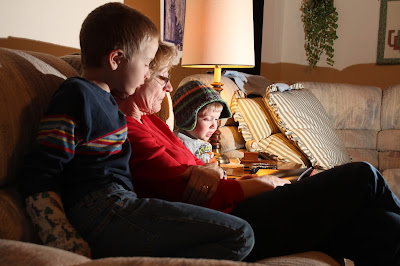
The scene: early one morning as the sun has just started to rise. Jacob and Oliver, ages 7 and 4, are the first people to wake up in the house their grandparents in California, where the four of us are visiting for the first time as a family. They have a conversation and decide that would be a good to go find a mystery. They decide to take their flashlights pink and blue, matching each boy s favorite color and slowly, but not very quietly, open their bedroom door and creep out. Brother, you forgot your flashlight! says Oliver. Oh, thanks brother! I ll get it! says Jacob. Meanwhile, Laura s mom wakes up, and notices two boys with flashlights creeping through the living room. Pretty soon they reach the kitchen, open the dishwasher, spy a suspicious-looking bowl, and decide that they have found the mystery a clean bowl! Or, at least that s the story that I pieced together based on what a 4-year-old and the grandma he awakened told me. We were on our first family trip to the Fresno, California area, to visit Laura s parents Jacob and Oliver s new grandparents. They ve played together before, but as this was our first visit to their place, there was quite the excitement. The boys had flown before, but it was several years ago and neither of them remember it well, so they were excited about that, too. The night before, Jacob woke up to tell me Dad, I am too excited to sleep. I think I will go downstairs and watch some TV. He didn t get too far with that plan. But he was excited. We went through security at the laid-back Wichita airport (where the TSA agents smile and there are often no security lines at all). We found our gate with enough time to grab lunch, which we did. The boys and I then did what we often do to kill time: explore. We explored the terminal, watching carpet-layers cut out carpet for the jetway, watching the construction of the new Terminal 3 out the window. And, of course, watching airplanes take off and land from the terminal s large windows. Finally it was our turn to board, and we all got on the plane: Jacob and Oliver with their backpacks of on-board activites, Laura and me with the rest of our carryon luggage, for the short trip to Denver. Jacob and Oliver s noses were pressed against the windows. Or, well, Jacob s was. Oliver s window was a little too high for him, but he was thrilled anyhow. They delighted in the airplane snacks, and the fact that they were allowed to drink pop on the plane. We packed books and some new art supplies for them (colored post-its, pages from a train-themed page-a-day calendar, a notebook, and a set of colored pens really seemed to do the trick.) We had a choice of 35 minutes or 4 hours between flights in Denver, and I had chosen 4 hours, thinking that would be a lot less stressful with boys. And it was. We found a nice corner of the mezzanine to sit for awhile they did art projects and played a game with Laura. Then I took them exploring Denver. We rode the moving sidewalks up and down the terminal, took a train ride to another terminal and back, ate supper all together, and flew to Fresno. We had stopped in the Wichita airport to buy them each a souvenir airplane, and these came out often during the rest of the trip. They enjoyed the mockups of the sequoias in Fresno Yosemite International Airport, enjoyed their beds and their room at the house, and did actually manage to fall asleep eventually. We had a few days there, where they played in a park, with bubbles on the patio, or croquet in the yard (I even discovered Jacob happily using the cast his broken arm is in as a hammer to pound the hoops into the ground!) There are a lot of miniatures in the house, and the boys enjoyed exploring the dollhouses and especially the N-gauge model train. Jacob enjoyed it so much he asked me to record a video of him playing with the trains. Evenings often brought book-reading, from the many children s books in the house. At home, Laura and I and both boys often scrunch onto an oversized chair and read a book and sing a song (one I make up on whatever topic they choose). Over there, we often had Laura, Jacob, Oliver, Laura s mom, and me scrunched up somewhere while the boys heard a story read to them by their grandma. That happened plenty of times other than bedtime, too. (Or Jacob would take his favorite books and read them to himself.) Laura s parents organized a reception Sunday for us, for the people from that area that couldn t make it to our wedding. Jacob and Oliver, predictably, had fun playing and even talked to some of the adults. The adults that didn t ask Jacob about his cast, anyhow (he dislikes talking about it). The boys discovered a live mic at the church where the reception was, and do I detect two future pastors in our midst? We had a great time at Laura s uncle and aunt s place. The boys were happy to discover an orange tree in their backyard, a tetherball post not far away, and an uncle ready to give them a demonstration of a swimming pool vacuum cleaner or sit at the piano with them. Jacob s favorite part, though, was when the hamburger buns his great uncle were toasting were left on the grill during the prayer before the meal, got a bit scorched, and the uncle remarked with a chuckle that I guess the Lord was tired of listening to me drone on! Jacob loved his meal, and cackled at the thought of a prayer causing buns to get scorched. But their highlight was the visit to the sequoias at Kings Canyon National Park the next day. The excitement had been building for that day all weekend. On the way out, we stopped at a fruit stand and bought some delicious strawberries the fresh, juicy, sweet and tasty kind that are red all the way through. We continued up through the foothills, stopping periodically to get out and stretch, look at the sights, take some photos, or borrow grandpa s binoculars. I knew we d be traveling in two cars, so I had the thought to pack some 2-way radios before we left. I gave one to the boys and one to the grandparents. All weekend long, whenever the six of us went somewhere, the boys (and especially Jacob) would give directions to the car that was following. Turn right! The light is green! Catch up, you re going too slow! So all the way into the mountains, Jacob would send back instructions on what to do. We saw Grant Grove, home to the worlds third-largest tree (267ft/81m tall and 3000 years old). It s quite the impressive tree the trunk s diameter near the ground is 29ft or almost 9m. As we walked the trails, their speed kept increasing as they were hunting for the tree tunnel I had told them about a tree that fell centuries ago and had been hollowed out to make a home. That trunk was easily 8ft or more in diameter, and I could stand up completely in places. We found it, to much delight from the boys So this is what it s like to be inside a tree! Our trip home brought a delay in Denver and a missed flight, which excited the boys when I told them now we get to eat supper in the airport! I wonder how long that tactic will work But Jacob was also excited because the plane we were put on in the end was bigger than the one we were scheduled on, so that was another piece of excitement. We got home, and I carried two sleeping boys in from the car, upstairs, tucked them in, pulled off their shoes, and put their favorite stuffed animals in their arms. They were happy to be home, and with memories to treasure for a long time.

Laura Arjona: MiniDebConf Barcelona 2014

Wow, I cannot believe it has already been 2 weeks from MiniDebConf Barcelona.
It has been the first Debian event (and free software conference) that I have attended in person, and I took the opportunity to get more involved, giving a talk about translations together with Francesca Ciceri, and two lightning talks about two free software projects that I use and love and I d like to see them packaged for Debian: Pump.io and GNU MediaGoblin (videos coming soon). I also somehow-promoted Keysigning during the conference (well, in fact, I just sent some two emails to the mailing list before, and printed stickers with May I sign your key? slogan so we could keysign easily in the freetime between talks). The people I ve met some people in person, who I was following in the Debian mailing lists and identi.ca for long time (years, in some cases \o/). It has been amazing to meet Francesca Ciceri and Enrico Zini, since their blogposts and vision about Debian diversity skills have influenced very much in my involvement in Debian. It has been very important to me to be able to say THANK YOU to Tiago from the Debian video team (sorry Holger, I couldn t manage to meet you face to face), because I have learned so many things watching videos from Debconfs! Videos helped me to feel that I m part of the community, even when I cannot attend to the events, by following the streaming and being able to recognize the faces of the people and the work they do in Debian. I ve met many Debian Women, of course. I m so fan of all of them! I m enjoying a welcoming and diverse community thanks to many of them that worked since many years ago to make Debian what it is now, and faced bitter moments too. I cannot say that I engaged in many deep conversations (well, maybe some 2 or 3, and me mostly listening), but the most important thing that I keep from them was simply being there , watching and listening, enjoying the voices of the experience like Ana and Miriam, and the freshness and joy of Tassia, Solveig and Elena, for example. I ve tried to be welcoming too, I m not a newbie anymore as new people come to the group :) New projects (and renewing forces for other) Debian contributors I wanted to get more involved in the Debian contributors project and it has been a perfect opportunity to understand better all what I had read and watched about it before going to Barcelona. My plan is, apart of doing promotion as with all the projects that I use and love, to try to get translator work credited via Debian Contributors. That means to hack the l10n bot that now gathers info from the mailing lists to build the coordination pages for translators. It shouldn t be difficult to make it send that info to contributors.debian.org site, but I ll try to understand how it works and propose an elegant patch. No idea about Perl, btw, but anyway, it s a good excuse to start learning. Mediagoblin and pump.io packaging I m not sure I can help on this, but I ll keep an eye in the evolution of the Debian packaging of GNU MediaGoblin and the Pumpiverse software. I ll give moral support, at least, to the people actually working on that :) Website and Publicity team After Solveig s talk about bug triaging I ve been thinking about some bugs that I reviewed in the Website and Publicity team, and I think I should make a new round on the pending bugs to close them if they don t apply anymore, or to try to push a bit more towards a solution, if I can. Tails website translation Tails is a Debian derivative preconfigured to work out-of-the-box with privacy and anonymity features, since uses the Tor network for all the outgoing and ingoing connections.
Solveig proposed me to join the Spanish translators team at Tails. I just joined the translators mailing list, in order to help translating the Tails website into Spanish (the software is already translated, under the Tor Project). This is a new challenge from the translation point of view, since they work with PO files. And now, what? Well, first, I ll try to clean a bit my TODO list, mainly about translations, and other things not related to Debian. From now on until summer, I ll keep an eye and a hand on all the projects in which I am involved, and also I ll try to keep on engaging with the community via pump.io, the mailing lists, and IRC channels. Next summer, if I can put in order my GPG keys (long story), I ll try to join the Debian New Member process. If not, I ll try to get new keys and some signs, and then I ll apply. OTOH, thanks to the end of Windows XP support, it seems that some people are willing to migrate to any GNU/Linux distribution, and of course I m recommending Debian. Expect some blog posts about these migrations (wow, I should migrate some servers that still run Squeeze too ) and my new role of Debian help desk at job, if finally some people decide to migrate. I have gathered Debian stickers to proudly give to anyone that installs Debian in their computer!
Filed under: Events, My experiences and opinion, Videos Tagged: Communities, Contributing to libre software, Debian, English, Free Software, libre software, MediaGoblin, Moving into free software, pump.io, translations

Francesca Ciceri: Random notes from MiniDebconf Barcelona 2014

First of all, let me say this: Barcelona MiniDebconf was awesome. So the most important part of this post is a very big thank you to the organizers, volunteers, speakers, sponsors and attendees. Now, down to business. Day 0 Day 0 was a day of travelling, more or less: the Italian Cabal (me, Enrico, Elena and Diego) left in the early morning from Varese (where we had an epic Munchkin Apocalypse game the night before), and we travelled by car across Liguria and France and finally reached Barcelona in the evening. (Boring! Even more if you don't drive. I hate long trips by car) We reached Barcelona in time for the pre-registration event at Falstaff Bar, eat a great Falafel and hugged lots of people. Day 1 To me the highlight of Day 1 was to finally meet in person Laura Arjona, Spanish translator, publicity volunteer, pump.io and mediagoblin contributor. We had decided to have a workshop together about translations and we spent the morning more or less tweaking our presentation and chatting :). So, save for Elena's talk on 3d printing in Debian ("The Universal OS: now making tabletop games and cookie cutters!" -- which was great!) I missed all the talks in the morning. But thanks to the always amazing videoteam, I'll be able to watch them later, when the recordings will be published :). For me, the best talk of the day - well, no, actually of the conference! - was that afternoon: Ana Isabel Carvalho told us about the Libre Graphics Magazine project. Libre Graphics Magazine is a well written and designed magazine at the crossroad between Free Software tools and ideals and graphic arts and design. A crossroad not very much frequented, I'd say. But then, maybe I'm wrong: it's not that graphic artists don't use Free Software tools, it's more like the one who do are invisible.
This is one purpose of a Libre Graphics Magazine: to serve as a catalyst for discussion, to build a home for the users of Libre Graphics software, standards and methods. In such a magazine, we may unite all our previously disparate successes, all the successes which have, until now, stood alone as small examples, disjointed from the larger community. We have the opportunity to elevate the discourse around Libre Graphics as a professionally viable option, to raise previously unmentioned issues and to push forward the conception of just what Libre Graphics can produce.
If you are even only vagued interested in typefaces, fonts, design and graphic art take a look at the magazine: it's CC-BY-SA licensed and you can download it for free, or buy a paper copy (which is amazing, really!). And it's not just about graphic arts: if you skim over the titles of the issues, you can find that they've talked about things like "Localisation/Internationalization", "Use Cases and Affordances" and, my favourite, "Gendering F/LOSS". On a similar topic, Siri's talk about "Why aren't more designers using Debian or working for Debian?" tried to shed a light on the difficult relationship between Free Software tools and graphic artists. These are the voices we need to listen to if we want to bring more graphic artists to Debian, and $deity knows that Debian needs them a lot :). After Solveig's talk about bug triaging and Miriam's one on packaging, it was time for the l10n workshop. I think it went well: we tried to briefly explain the translation workflow in Debian, and to translate together with the audience a po-debconf message. It wasn't maybe enough to complete and submit a translation, but hopefully it gave the audience an idea about how to do it. The day ended with a party for Debian Women 10th anniversary. And the cake wasn't a lie, beside being very good. Day 2 This, I'll remember as "the day I exited my comfort zone". Ok, I'm making a bit of fuss about it, but it was my first talk in English all alone. I spoke about the non-uploading DD process and how to keep your (and others') sanity in a big community project (slides here). I think it's very important to remind people that not all DDs are coding persons. And you don't need to be a developer to love Debian, contribute to it and become an official member of the project. But writing this presentation was for me also the occasion to take stock of my experience in Debian so far: in that talk slipped many of my demons, as impostor syndrome or overcommitment. But all the things I said are more or less, common sense - nothing new! - and lesson learned on the road: it's been now 2 years as DD and 4 as contributor. I'm pretty sure it's thanks to the special conditions of this conference (only speakers identifying themselves as female, a safe and very friendly environment) that I had the courage to give a talk. So the conference was a complete success on that regard, too. In the afternoon I was able to do one of the things I love: videoteam duty. Though I convinced Riccio to switch roles and to give me the camera: my experience in directing during last DebConf left me a bit scarred. Special mention for Laura speaking of pump.io and MediaGoblin and Solveig of Tails during the "Lightning Talks" and the people from LelaCoders during the "Bits from Local Communities" session. The Day(s) after: a Debian Contributors hackathon In my experience a measure of a conference's success is the burst of activity in pet projects just afterwards. In this, also, Barcelona MiniConf was a success: during the weekend, Enrico, Laura and I had the chance to talk together about Debian Contributors and make some plans.
So, as soon as we got in Italy again, I took possession of Enrico's couch for a couple of days and we did a little bit of hacking on Contributors. For my part, I mostly worked in trying to add more data sources to the site: my (not so) secret agenda is to map most of the non-coding contributions. That basically means: translators, publicity editors, event organizers and volunteers, etc. Being in the same room as Enrico, gave me the chance to ask him how to add data sources and to test the existing code (we spot a little problem in the prototype for svn repository mining he made a while ago). At the end of the hackathon, I had managed to: Please note that if you have contributed to one of the repo above and you are not listed there, it means that the automatic recognition of your email address didn't work. We still need to implement a manual interface for the recognition of email addresses: patches are very much welcome! Meanwhile Enrico: If you care about recognition of diverse contributions in Debian, help us: read the project todo list and subscribe to the low traffic mailing list or browse the project Git repository.

Mart&iacute;n Ferrari: Fun with Linux telephony

Continuing with my tendency to vent about stuff, today I want to talk about telephony. Since a few years ago, I need to use different VoIP providers to keep in touch with friends and family, in different parts of the world. So, I have a DID in Argentina (bought trough the excellent DIDWW), and another one in Ireland (which came for free when I was using BlueFace for call termination). I also have a service to handle outbound calls (FlowRoute), but it is not necessarily the only one I use, as cost and quality of Internet calls vary wildly. I have also used several Betamax providers, the aforementioned BlueFace, tried Netelip, etc. This results in having soft-phones installed in my mobile devices and laptop, and a hardware SIP phone that I carry around; all of them having configurations for at least 3 different providers. This does not lead to hilarity. In light of this, it's been a long time since I want to set up my own SIP router to be able to handle all of this, and be able to register to a single SIP proxy that will handle all the complexity. Last Friday, the Irish DID decided to stop working. It turns out, that since I don't have my own setup, I was using that provider as a kind of hub, with their provided voicemail, and terminating the Argentinian DID there. So the damage was big. This made me spend way too many hours during the weekend trying to set up some SIP solution. And I am not pleased.

Asterisk First, I went with the old and known Asterisk. The default installation in Debian puts 95 configuration files in /etc/asterisk, which you are supposed to review and adjust. Yes, you've read correctly: ninety-five different configuration files. None of them having anything close to a sensible explanation of their syntax or function. Also, not a remote hint of consistency. I could not find any configuration helper in the Debian archive, just hundreds of PHP-based projects scattered around the web. All the started guides I've found only guided you for the most basic tasks, but did not give you a way to have a functioning system. Needless to say, after a short time I grew tired of this, and decided to try something else.

Way too many options After this, I have spent an inordinate amount of hours, just trying to comprehend the difference between the gazillion different VoIP systems out there, I am still struggling to see that. Even if I understand that X is not a PBX, I don't exactly need a PBX, and most products deliver at least some of the features I need. It seems none of them makes a good job of just explaining what you can or can't do with their software. Documentation is awful in all the projects I researched. When it is there at all, it is incomplete, maybe super detailed at points, but in most cases, there is just no big picture view of the system to just start understanding how things work, and how to find your way. Sadly, not even the distros seems to be able to put a list of "recommended VoIP software for different needs".

Yate Finally, I've found YATE (Yet Another Telephony Engine). It seemed promising: not too bloated, fairly extensible, and scriptable in a few languages! Sadly, after many hours, it turned out to be a fiasco. The documentation seems decent, until you realise there are many key details left out. Basic information about how a call is handled cannot be found anywhere. Using the scripting power, I was able to find out at least the variables that were available, but that was not enough. I found a mailing list (with the worst archive reader I've seen in ages), where people made the very same questions I have, and nobody has replied. In years. So here I am, stuck with not being able to tell if a call is coming from a random host on the internet, or one of my DIDs, or one of the authenticated clients. I guess I will have to start from scratch with Yet Another (Another) Telephony Engine.

Russ Allbery: Review: Sundiver

Review: Sundiver, by David Brin
Series: Uplift #1
Publisher: Bantam
Copyright: February 1980
Printing: September 1995
ISBN: 0-553-26982-8
Format: Mass market
Pages: 340
Sundiver is the first book of Brin's Uplift series, which I think it's fair to say are the books that made his reputation as an author. It's less well-known than the later sequels Startide Rising and The Uplift War for reasons that I'll get into in a moment. This was a re-read; I've read the first Uplift series before (and Startide Rising separately before that), but not in many years, and I wanted to re-read them and review them. I haven't finished doing that yet, several months after I re-read Sundiver, largely because this book wasn't as enjoyable as I remembered. The Uplift series is set in a heavily populated galaxy with a multitude of alien races. It follows the SF alien life pattern where the galaxy was well-populated and fully developed long before humans discovered it. The Earth is a relatively obscure backwater, and humans are expected to adopt to and follow the rules and restrictions that the other races had long-since established. This primarily means a complex and very formal system of caste and patronage: species brought to sapience by the technology of their patrons are expected to serve their patron races for millennia, and one's status in the galaxy is determined by the length of those patronage chains and the number of species one has fostered in turn. As is typical for stories of this sort, humans break the rules in unexpected ways. They have no known patrons, having apparently evolved sapience entirely on their own (although the galactic races are quite dubious of this theory). And they have uplifted two species to sapience (chimpanzees and dolphins) before their discovery by the rest of galactic civilization, although in fairly primitive ways and not properly by galactic standards. Set against this background, Sundiver is a science fiction puzzle story of a fairly old style. The protagonist, Jacob Demwa, is a scientific investigator who retired after a tragedy that killed his love. He's recruited out of that retirement and into this plot by an alien who is sympathetic to humans. A human exploration mission into the chromosphere of the Sun, treated as ridiculous by most of the galactics since the shared Library Institute certainly contains more information about stars than human technology could possibly uncover, has found strange and apparently sapient creatures living there: flocks of cattle-like creatures that are apparently being herded. There is no reference to such star-dwellers in the Library, which raises the possibility that humans have discovered something novel. That would be quite a coup against the galactics. But after the destruction of one of the solar exploration ships, it starts looking like these creatures are hostile. Jacob reminded me of a mix between a Larry Niven short story protagonist, working through the practical impact of a physics puzzle, and Isaac Asimov's Elijah Baley. What exactly is going on, both scientifically and politically, remains unclear for nearly the entire book. Both Jacob and the reader are constantly forming and then discarding hypotheses as events overtake them. The stakes are more interesting than a lot of science fiction novels: rather than survival or war, the stakes are prestige, influence, and status, with subtle but possibly vital effects on what position humans will take among the other species of the galaxy. All this sounds promising, and is why I remembered this book fondly. Unfortunately, re-reading it was a disappointing experience on several fronts. First, the characterization varies between trite and stereotyped. The aliens suffer from the standard alien characterization problem: each of them is an exemplar of their species, and all of the aliens feel like archetypes. While there are some twists in the inter-alien politics, one never gets a sense of the aliens as varied and complex societies in their own right. The humans are more varied, but that primarily means varieties of irritating. The worst is Peter LaRoque, a journalist who is set up as a villain of the story, and who is such an unremitting and over-the-top stereotype of everything possibly bad about journalists (and French people) that every scene containing him felt like someone scraping fingernails on a chalkboard. The other characters are a bit better, but not by much. Jacob himself has a bizarre, semi-mystical psychological problem from trauma that seems to give his amoral subconscious a life of its own. Brin appears to be setting this up to have major plot significance, but it never made any sense to me, didn't matter much in the end, and seems to mostly be an excuse for Jacob's hypercompetence. Sundiver's treatment of female characters also annoyed me enough to be worth a mention. The primary female character, Helene, is clearly intended to be a strong character with her own agency (she's both station commander and a starship captain), and Brin makes a lot of the humans switching to different words than male and female as a sign of a more egalitarian future. But this all feels skin-deep. The inevitable romance is all about Helene's attractiveness and ability to listen to Jacob, her logic is described as unscientific, and I got more and more annoyed by her portrayal as the book went along. She's not entirely without agency in the story, but she's much closer to a damsel in distress than the independent character Brin appeared to be trying for. It's hard to shake the feeling that she's being persistently belittled by the story. But this is a scientific puzzle story more than a mystery; characterization would be nice, but isn't strictly required. On re-read, the part of Sundiver that annoyed me the most was how much of a letdown the plot resolution was. I'm going to avoid any specific spoilers here, but I found the ending of both quite disappointing and a sign of the major problem with this series as a whole. The setup over-promises and Brin fails to deliver, a pattern that will repeat itself in this series. We get tantalizing hints of a new solar species, of revelations about the past of humanity, of deep galactic politics, and of vast knowledge contained in the Library that humans don't yet have access to. We get superficial archetypes for characters, politics that seem more like the bickering of children, plot twists that persistently take the story in more mundane and less interesting directions, and a sense of wonder, or lack thereof, that feels more like a Scooby Doo story than what I expect from science fiction. Some of the plot twists are unexpected and almost add some interest to the story, but don't make enough sense in the context of the story to be satisfying. And, of course, there's an climactic action sequence involving physical combat, as is required of all good Star Trek (original series) episodes. (I was waiting for Jacob's shirt to fall off.) The problem I have always had with Brin as a writer is that his ideas are far better than his ability to write characters and plots. In the hands of a better author, the Uplift universe background has so much potential. And I think Brin is a better author a few years later; my recollection is that both Startide Rising and The Uplift War do a better job of delivering on their promises. But Sundiver is deservedly forgettable. The good ideas rarely go anywhere beyond the obvious, the characters are irritating and often don't make sense, and the story is disappointing. I can't say I'm sorry to have read it, since my memory edited it down into a much better story, but I can only recommend it as background for later, better books. Rating: 4 out of 10

26 March 2014

Russell Coker: The Aspie Accent

I am often asked about my accent . The most common guess is that it s a British accent, while I lived in London for about a year I don t think that my accent changed much during that time (people have commented on the way I speak since I was in primary school). Also there isn t a British accent anyway, the Wikipedia page of Regional Accents of English has the first three sections devoted to accents in the island of Britain (and Northern Ireland is part of the United Kingdom which people often mean when they sat Britain ). The Received Pronounciation is the main BBC accent and the accent that is most associated with Britain/England/the UK (which are three different things even though most people don t know it) and I don t think that I sound like that at all. I ve had various other guesses, the Netherlands (where I lived for a few years but mostly spoke to other foreigners), New Zealand (which I ve visited a couple of times for conferences), Denmark (the closest I got was attending a conference in Sweden), and probably others I can t remember. If I actually had developed an accent from another country then it would probably be from the US. The amount of time I ve spent watching Hollywood movies and watching US TV shows greatly exceeds the amount of time I ve spent listening to people from all other countries. The fact that among all the people who wanted to try and guess where my accent supposedly originated none have ever included the US seems like strong evidence to suggest that I don t have any sort of accent that really derives from another country. Also I have never had someone mistake me for being a resident of their own country based on accent which seems like clear evidence that all claims about me having a foreign accent are bogus. Autism forums such as WrongPlanet.net [1] always turn up plenty of results for a search on accent . In such discussions it seems that a British accent is most common mistake and there are often theories raised about why that is often related to speaking in a formal or precise way or by using a large vocabulary. Also in such discussions the list of countries that people supposedly have accents from is very inclusive, it seems that any country that the listener has heard of but doesn t know that well is a good candidate. The fact that Aspies from outside the US are rarely regarded as having an American accent could be due to the fact that Hollywood has made most of the world population aware of what most American accents sound like. Also if I really had some sort of accent from another country then probably someone would comment on that when I m outside Australia. When I m travelling people tend to recognise my accent as Australian, while it doesn t please me when someone thinks that I sound like Crocodile Dundee (as happened in the Netherlands) it might not be entirely inaccurate. This is Annoying The way the issue of accent is raised is generally in the form of people asking where I m from, it seems to imply that they don t think I belong in Australia because of the way I speak. It s particularly annoying when people seem unable to realise that they are being obnoxious after the first wrong guess. When I reply no to the first are you from $COUNTRY question and don t offer any further commentary it s not an invitation to play 20 questions regarding where I m supposedly from, it s actually an indication that I m not interested in a conversation on that topic. A Social Skills 101 course would include teaching people that when someone uses one-word answers to your questions it usually means that they either don t like your questions or don t want to talk to you. Social Skills vs Status The combination of persistence and misreading a social situation which are involved when someone interrogates me about my supposed accent are both parts of the diagnostic criteria for Autism. But I generally don t get questions about my accent in situations where there are many Aspies (IE anything related to the Free Software community). I think that this is because my interactions with people in the Free Software community are based around work (with HR rules against being a jerk) and community events where no-one would doubt that I belong. I mostly get questions about my accent from random middle-class white people who feel entitled to query other people about their status who I meet in situations where there is nothing restraining them from being a jerk. For example random people I meet on public transport.

23 March 2014

Russell Coker: Aldi Deserves an Award for Misleading Email

Aldi Mobile has made a significant change to their offerings. They previously had an offer of $35 for unlimited calls and 2.5G of data in a month for which they had to publicly apologise for misleading customers as 2500 minutes of calls a month (83 minutes per day) is no-where near unlimited [1]. They also had an offer of $15 for 2G of data. In an email about this Aldi said Many of our customers are using a lot less than what is included in our current $35 plan. So we will soon be introducing new Value Packs with more flexible options; meaning you only pay for what you really need and they start from just $10. . That is grossly misleading, if they offered new plans in addition to the old ones and allowed customers to choose the plan that is the best match then it would be useful to some customers. But removing the supposedly unlimited plan and the $15 for 2G of data option is removing affordable options for people who want to use their phones for lots of calls or very few calls but moderate amounts of data use. New Plans The base rate for calls on Aldi pre-paid is $0.12 per minute and $0.12 per SMS, consider every mention of minute in this section to be minute or SMS . The Aldi Newplans page [2] starts with a $10 per month plan which offers 100 minutes of calls which would be $12 at the previous rate of $0.12 per minute. That is OK value when compared to just using the pre-paid calls if you consistently use more than 83 minutes of calls per month. However if you don t use 84 minutes of calls (EG you don t speak much on the phone and use Google Hangouts instead of SMS) then it s not good value. Also the advertised data use is $5 per 100MB, which is way below what is needed for a typical user with an Android phone. My mother in law was barely able to stick within a limit of 300MB/month when that was her limit, but while using the Aldo 2G/month bolt-on she s increased her data usage. The smallest of the new plans costs $20 per month, it provides 300 minutes of calls and includes 300MB of data. For an extra $7 you can get another 300MB of data. For my mother in law it seems that the cheapest option on the new plans would be $27 per month, that would cover the 60 minutes of calls she might make and the 450MB of data she s probably using. That s significantly more expensive than her previous cost of $15 for 2G of data and $7.20 for calls and has the additional difficulty that I would have to be more involved in helping her avoid excessive data use. The 2G data bolt-on was really good for some of my relatives, when they use that and configure their phones not to update software over 3G they never had to ask me about any problems related to excess data use. So my mother in law is facing an extra $5 per month (or maybe more depending on data use) and more time spent calling me for tech support. The data bolt on that Aldi is going to offer in future is $30 for 3G of data to replace the previous offer of $15 for 2G of data. The cost will be unchanged for anyone who uses between 2G and 3G a month, for everyone who uses less than 2G or more than 3G the data bolt-on will cost more. There is simply no possibility for any Aldi data-only customer to save on data use. The only way someone who uses a moderate amount of data could save money is if they use more than 160 minutes of calls and less than 1G of data. Disclaimer My analysis above is based on interpreting the Aldi web site. As with most telcos they aren t trying to make things easy in this regard, it seems that the consensus of opinion among telcos is to use complex pricing to make it difficult to compare and reduce competitive pressure. I blame any inaccuracies in my analysis on the Aldi web site. Why Aldi Shouldn t Mislead Customers Aldi isn t primarily a mobile phone company, their main business is running a supermarket. The trust of customers is important to them, raising prices when competition goes away is one thing, but misleading customers about it is another. If Aldi were to honestly say now that Kogan Mobile no longer exists there is nothing forcing us to have low prices then I d have a lot more respect for their company and be more inclined to shop at their supermarket. It s a sad indictment of our society that I need to include a why lying is wrong section in such a blog post.

21 March 2014

Justus Winter: Debian/Hurd switches to sysvinit

Previously, Debian/Hurd used a home-grown init system. Last year, I participated in the gsoc and set out to make it boot using sysvinit instead. On Debian/Hurd, one can switch between the available init systems using update-alternatives(8). With the latest Debian/Hurd packages uploaded earlier today, the priority of the old init system was lowered so that sysvinit is preferred. So as of now, Debian/Hurd is using sysvinit by default. (If you are upgrading your Debian/Hurd installation now, please remember that you must use reboot-hurd or halt-hurd to shut it down whenever you switch to a different init system.) And because screenshots of booting operating systems are just awesome, here is a current one. Note how smooth it is:
start ext2fs: Hurd server bootstrap: ext2fs[device:hd0s1] exec init proc auth
INIT: version 2.88 booting
Using makefile-style concurrent boot in runlevel S.
Activating swap...done.
Checking root file system...fsck from util-linux 2.20.1
/dev/hd0s1: clean, 29799/181056 files, 206131/723200 blocks
done.
Creating compatibility symlink from /etc/mtab to /proc/mounts. ... (warning).
mount: cannot remount /proc: Invalid argument
Activating lvm and md swap...done.
Checking file systems...fsck from util-linux 2.20.1
done.
Cleaning up temporary files... /tmp.
Mounting local filesystems...done.
Activating swapfile swap...done.
Cleaning up temporary files....
Configuring network interfaces...Internet Systems Consortium DHCP Client 4.2.2
Copyright 2004-2011 Internet Systems Consortium.
All rights reserved.
For info, please visit https://www.isc.org/software/dhcp/
Listening on Socket//dev/eth0
Sending on   Socket//dev/eth0
DHCPDISCOVER on /dev/eth0 to 255.255.255.255 port 67 interval 7
DHCPREQUEST on /dev/eth0 to 255.255.255.255 port 67
DHCPOFFER from 10.0.2.2
DHCPACK from 10.0.2.2
bound to 10.0.2.15 -- renewal in 40021 seconds.
done.
Cleaning up temporary files....
INIT: Entering runlevel: 2
Using makefile-style concurrent boot in runlevel 2.
Starting enhanced syslogd: rsyslogd.
Starting deferred execution scheduler: atd.
Starting periodic command scheduler: cron.
Starting OpenBSD Secure Shell server: sshd.
Debian GNU/Hurd jessie/sid debian console
login:

Petter Reinholdtsen: Video DVD reader library / python-dvdvideo - nice free software

Keeping your DVD collection safe from scratches and curious children fingers while still having it available when you want to see a movie is not straight forward. My preferred method at the moment is to store a full copy of the ISO on a hard drive, and use VLC, Popcorn Hour or other useful players to view the resulting file. This way the subtitles and bonus material are still available and using the ISO is just like inserting the original DVD record in the DVD player. Earlier I used dd for taking security copies, but it do not handle DVDs giving read errors (which are quite a few of them). I've also tried using dvdbackup and genisoimage, but these days I use the marvellous python library and program python-dvdvideo written by Bastian Blank. It is in Debian already and the binary package name is python3-dvdvideo. Instead of trying to read every block from the DVD, it parses the file structure and figure out which block on the DVD is actually in used, and only read those blocks from the DVD. This work surprisingly well, and I have been able to almost backup my entire DVD collection using this method. So far, python-dvdvideo have failed on between 10 and 20 DVDs, which is a small fraction of my collection. The most common problem is DVDs using UTF-16 instead of UTF-8 characters, which according to Bastian is against the DVD specification (and seem to cause some players to fail too). A rarer problem is what seem to be inconsistent DVD structures, as the python library claim there is a overlap between objects. An equally rare problem claim some value is out of range. No idea what is going on there. I wish I knew enough about the DVD format to fix these, to ensure my movie collection will stay with me in the future. So, if you need to keep your DVDs safe, back them up using python-dvdvideo. :)

Andrew Pollock: [life] Day 52, Trial Ballet class, rain and paint, Science Friday

I woke up at 2am, and then spent over an hour trying to get back to sleep. That was phenomenally annoying. Then at 5am, Zoe's white noise app on her Nexus 7 decided to go a bit wonky (as it does from time to time), which caused her to wake up. I couldn't convince her tablet to behave, so I just let her get in bed with me, but neither of us went back to sleep. I think at about 6am I told her she could turn on the TV so I could try and squeeze in a bit more rest. I managed to forget to put the oats in the Thermomix when I made porridge this morning. It took me a while to figure out why the consistency and colour didn't look quite right when I dished it up. Yep, it was one of those mornings. Zoe had her trial ballet class this morning, at 9:45am in Coorparoo. I managed to get Zoe organised a bit early, so we were the first ones there. It's in a church hall, and has a nice floor, with a mirrored wall and barres on each long wall. Eventually the other girls arrived, there were 5 regulars in total. A good sized class. I had mixed feelings when I discovered that parents weren't normally able to be present in the dance studio to watch the classes. I was today, because it was a trial, but once Zoe starts regular classes, I'll have to wait outside. I'm disappointed I won't be able to watch, but it'll be nice to have 45 minutes to myself. Zoe did really well in the class today. She picked everything up very quickly, and I don't think she'll be negatively impacted by having entered in Term 2. She seemed very comfortable and looked like she enjoyed herself. Not long after we arrived, the heavens opened in a massive downpour, which continued when we had to leave. It was a fair dash back to the car. I'd had plans of a picnic lunch in New Farm Park, but scrapped them on account of the weather. We got home, and had a late morning tea, and then Zoe wanted to play with her Marble Run. After that, we gave Smudge a good brushing and then Zoe wanted to do some craft and painting. I let Zoe set herself up, and it was fun to see what bits and pieces she chose to dig out of the arts and craft bins. She wanted to make another crown for Mummy's boss, but we don't have any crown making stuff at home (yet), so she ended up starting to decorate a wand and gluing a pom pom on a shoe box, before moving on to painting her cardboard box cubby house and rocket. She wanted to start doing some hand painting right around lunch time, but I managed to convince her to do that after lunch. We had some lunch, and then she did a little bit more painting and stickering before her nap. She passed out for her nap very quickly. After her nap, I asked her if she wanted to paint or do science, and without hesitation, she chose science! I delved into the "Weather" chapter of 365 Science Experiments and we did a couple with ice cubes and salt and then she saw one where you stick a balloon over the neck of a glass bottle and put it in hot water and the balloon "inflates", so we did that one as well. We also popped a balloon to simulate thunder. It was all nice and easy, without a lot of preparation required. After that, we did a bit of a clean up and then Zoe watched some of her DVDs from the library while she waited for Sarah to arrive to pick her up. It was a good day today. No meltdowns.

18 March 2014

Andrew Pollock: [life] Day 49, Kindergarten, general exhaustion, a new car radio and a body corporate AGM

I was pretty exhausted after yesterday's sustained activities. By the time I'd blogged, done some photo management, gone to yoga class, made dinner and called my girlfriend, it was late, and I'd gotten to that tired point where I couldn't be bothered getting off the couch, so I ended up having a self-inflicted late night. This morning I tried to go for a run, but I died at the 2km mark, half way up Hawthorne Road, so I walked for the remainder of my 5km circuit. I'm going to say it was a combination of tiredness, insufficient hydration, the heat, and my head space. I got home from my "run", and had a shower and cleaned up the kitchen a bit and decided I'd rather get out of the house than work on my taxes, so I headed over to Moorooka to talk to the folks at Northfield about a new car radio. I've been wanting to get a better radio for the car for a while. The factory one has no line in, so I can't play anything off my phone through the car speakers. I've been wanting one that can do Bluetooth and play USB media. That way I can stick all of Zoe's CDs onto a USB stick and give her (and me) more variety than the current 3 track CD from dentist that she's favouring, and with Bluetooth I can listen to Pandora without needing a cable. I got to Northfield, and was pleased that they could do something within the budget I was looking at, and bought the DEH-X6650BT, which they were able to install for me on the spot. They said it'd take an hour and half, so I went for a walk down the road to Moorooka's main street to kill some time. I ended up having lunch at a little Ethiopian cafe where I swear the lady didn't understand English. Moorooka's quite nice and ethnic. After lunch I walked back, with the intention of reading the manual while I waited, and was pleasantly surprised to find they'd already finished the installation. When the guy was walking me through how to use it, I was really pleasantly surprised to discover that it also included Bluetooth hands free for my phone, with a little microphone glued to the top of my windscreen. That really made my day. I don't have to faff around with my little Bluetooth earpiece in the car any more. Then I discovered it had built-in Pandora support. So I'm really happy with this purchase, and really glad I didn't have to make a second trip to get it installed. I scouted around for a small USB thumb drive on the way home, and copied all Zoe's music off my laptop when I got home. By this stage, it was too late to bike to Kindergarten, and I wasn't really feeling like it anyway, because it was too hot, and I wanted to show Zoe the new radio anyway. It was a good call, because Zoe was fast asleep, and didn't take very kindly to being woken up. It took about 20 minutes to get her calm enough to get her back to the car. We got home, and we chilled out on the couch and watched a bunch of Youtube videos on the TV from when she was in the US, and then I showed her some Winter Olympics figure skating and speed skating, and then she watched a bit of DVD while I cleaned up the living room. Sarah picked up Zoe, and then I hosted our Body Corporate's annual general meeting.

11 March 2014

Steve Kemp: Discovering back-end servers automatically?

Recently I've been pondering how to do service discovery. Pretend you have a load balancer which accepts traffic and routes incoming requests to different back-ends. The loadbalancer might be pound, varnish, haproxy, nginx, or similar. The back-ends might be node applications, apache, or similar. The typical configuration of the load-balancer will read:
# forward
# backends
backend web1    .host = "10.0.0.4";  
backend web2    .host = "10.0.0.6";  
backend web3    .host = "10.0.0.5";  
#  afterword
I've seen this same setup in many situations, and while it can easily be imagined that there might be "random HTTP servers" on your (V)LAN which shouldn't receive connections it seems like a pain to keep updating the backends. Using UDP/multicast broadcasts it is trivial to announce "Hey I'm a HTTP-server with the name 'foo'", and it seems to me that this should allow seamless HTTP load-balancing. To be more explicit - this is normal: What I'd like to propose is another step: i.e. This allows backends to be removed from service when they go offline but also to be added when they come online. Without the load-balancer needing its configuration to be updated. This means you'd not give a static list of back-ends to your load-balancer, instead you'd say "Route traffic to any service that adfvertises itself with the tag 'foo'.". VLANS, firewalls, multicast, udp, all come into play, but in theory this strikes me as being useful, obvious, and simple. (Failure cases? Well if the "announcer" dies then the backend won't get traffic routed to it. Just like if the backend were offline. And clearly if a backend is announced, but not receiving HTTP-requests it would be dropped as normal.) If I get the time this evening I'll sit down and look at some load-balancer source code to see if any are written in such a way that I could add this "broadcast discovery" as a plugin/minor change.

Ian Wienand: Tenvis IP391W meta-page

Recently I purchased a Tenvis IP391W-HD camera. I would be unlikely to recommend it. The price is certainly right and the picture quality is quite good. The Android and iPhone apps do work to watch the stream live. However, the interface is terrible and almost useless without Internet Explorer. There is a RTSP stream (rtsp://admin:password@ip) which VLC can seem to handle, but not mplayer. The recording format (.h264) is not viewable by VLC or mplayer and all I could find is a Windows .exe to convert them to an .avi. The motion detection gets troubled by the dark. It would really only be useful for something permanently well-lit. It did send me emails via gmail. I have got it recording to a NFS server, but I don't have a lot of confidence in the reliability of it. I think I have it configured to record in 3600-second blocks (given the interface, it's hard to tell if I've set it up to the network, or to the internal flash, etc), but it seems to intersperse 60 minute recordings with random small recordings. Given the whole idea of a security camera is to record the unexpected, you want a lot of confidence you're actually recording, which you don't get with this. You can see below it recorded 3 hour blocks, then started going a little crazy...
-rw-r--r-- 1 nobody nogroup  69M Mar 11 01:25 0-003035.v264
-rw-r--r-- 1 nobody nogroup  69M Mar 11 02:25 0-013049.v264
-rw-r--r-- 1 nobody nogroup  69M Mar 11 03:26 0-023103.v264
-rw-r--r-- 1 nobody nogroup 5.9M Mar 11 03:31 0-033117.v264
-rw-r--r-- 1 nobody nogroup 1.5M Mar 11 03:40 0-034350.v264
-rw-r--r-- 1 nobody nogroup  17M Mar 11 04:02 0-035259.v264
-rw-r--r-- 1 nobody nogroup 306K Mar 11 04:10 0-041548.v264
-rw-r--r-- 1 nobody nogroup 4.9M Mar 11 04:23 0-042457.v264
There is a support forum, where I found the following files scattered in various posts. From what I can tell, they are the latest as of this writing. I can confirm they work with my IP391W-HD, which the system tells me is GM8126 hardware and came with firmware 1.2.8.3.
  • 1.3.3.3.pk2 - firmware (b56f211a569fb03a37d13b706c660dcb)
  • web.pk2 - a UI update that includes dropbox support. This is really for the model that has pan and tilt, so those buttons don't work. (0e42e42bd6f8034e87dcd443dcc3594d)
  • V264ToAVIen.exe - converts the output to an AVI file that mplayer will play (with some complaints) (9c5a858aa454fed4a0186cf244c0d234)
www.modern.ie offers free limited-time Windows VM's which will work to upload this firmware. Just make sure you use a bridged network in the VM; I'm guessing the firmware ActiveX control tells the camera to TFTP the data from it, which doesn't work via NAT. Somewhat worryingly, you can telnet to it and get a login prompt (TASTECH login). So it has a built-in backdoor you can't disable. There have been some efforts to hack the device. leecher@dose.0wnz.at did an excellent job reverse engineering the .pk2 format and writing tenvis_pack.c (no license, I'm generously assuming public domain). I used this to recreate the firmware above with a telnet daemon listening with a shell on port 2525 (no password, just telnet to it)
It's interesting to poke around, but it seems like the whole thing is really driven by a binary called ipc8126
/ # ipc8126 --help
*** TAS-Tech IPCAM/DVS
*** Version: 1.3.3.3
*** Release date: 2013-08-05 15:48:32
In general, I'd say hackability is quite low. Warning : any of the above might turn your camera into a paperweight. It worked for me, but that's all I can say...

8 March 2014

Russell Coker: Less Work

I previously wrote about the idea of a Basic Income for Australia [1], that post was mainly to show how it could be introduced with little real change. That is not because I don t think that we need real changes, but because we should consider the various changes separately as much as possible. In terms of how society works I think that we need to move from the current model where most people are expected to work most of the time and the people who don t work are treated badly to encourage them to work for low wages. I think that we should aim as a society to have less time spent doing paid work which means more people working part time (maybe 6 months a year, 3 or 4 days a week, or other ways of doing less than 40 hours a week * ~45 weeks) and more people who aren t doing paid work. The idea of 100% employment is the cause of many jokes about the Soviet Union. I don t know how much truth is behind the jokes about needless work being done to fulfill Soviet plans, but regardless of the accuracy I think we should take such things as an idea of what not to do in our society. The Broken Window Fallacy is an example of the Soviet production problem in supposedly capitalist societies. Here are some of my ideas for decreasing the amount of needless work without decreasing anyone s quality of life in fact most of these make things better for most people. The War on Drugs The easiest way to reduce needless employees is to end the war on drugs . During the course of the war the drug use has steadily increased and the amount of law enforcement energy devoted to it has also increased. Some estimates claim that 50% of law enforcement is devoted to it. Also some of the hospital budget is related to drug use. I think that we should allow adults to consume any drug that they wish (not just tobacco, alcohol, caffeine, and other popular drugs) and apply the same laws regarding product quality to all of them. That will reduce the violence related to drugs, reduce the health impact (it s usually poor quality control that causes medical problems), and allow law enforcement to concentrate on crimes that hurt other people. Treating drug addiction as a medical problem has been shown to be the most effective way of reducing drug use, reducing violent crime, and reducing the health impact of drug use. Other Crime Issues Gary Slutkin s TED talk about treating violence as a contagious disease has some interesting ideas for reducing violence in the community [2]. Implementing those ideas on a wide scale seems to have the potential for reducing law enforcement and medical work. Generally I think we should aim to have as few laws as possible. Whenever adults want to do things that don t hurt other people they should be permitted to do so. There should also be an aim for laws to be consistent and easy to understand. Ideally there would be a single database with all laws in some form of hypertext (maybe some type of Wiki) so that any citizen can discover all implications of the laws that affect them. Health More money should be spent on preventing people getting sick. One problem we have in recent times is silly people refusing to get their children vaccinated because they take medical advice from a playboy model instead of doctors. I think that as a society we need to do more to protect children from stupid things that their parents do and that reducing the amount of medical work is the least of the reasons for doing so. Another problem is the quality of food. The big supermarket chains are pushing prices down which reduces food quality. The excessive use of anti-biotics is a serious threat to world health that is driven by the low price of meat. Robots Rodney Brooks gave an interesting TED talk about robotics [2]. He showed how robots can be programmed/trained and talked about the factory workers who want their children to do anything other than factory work. Work that can be done by robots should be done by robots so that people can do better things. Travel One problem that we have in Australia is rent-seeking companies being permitted to establish toll roads. To make such toll roads profitable (which is guaranteed by corrupt politicians) they close roads that might be used to bypass the toll roads. This creates needless traffic congestion (wasted work time driving). Also running toll roads involves employing people to collect the tolls and take legal action against people who don t pay. I believe that toll roads shouldn t exist, this will reduce the number of needless workers and make everything more efficient. Also as a matter of principle I believe that the government should own and control every monopoly in the country. Currently in Australia most adults own cars, this involves a lot of work in car maintenance. Even when not being used a car needs to be maintained for safety. When people drive to work instead of using public transport their travel time counts as work. While time spent on a train, tram, or bus isn t leisure time it s a lesser degree of work than driving a car. You can read a book, play phone games, or do other recreational activities when on public transport. Car sharing companies are taking off in urban areas, this allows some people to avoid owning a car and some families to own fewer cars. We also need more government investment in public transport including more routes, greater passenger capacity, and more service late at night. We also need to encourage companies not to have employees working from 9 to 5 to reduce the peak demand for public transport. A short term tax incentive would do some good in this regard, if companies were to encourage their employees to work different hours for a year then it might change the norms for work enough to permanently break the 9-5 concept. I believe that all land-based mass public transport (buses, trams, and trains) should be free. That would remove the need to pay people to collect fares and fine people who don t have tickets, and also remove the work time involved in buying tickets. Not requiring tickets would also decrease the time needed to get on and off public transport which would improve the speed of public transport and reduce disruption to traffic. One simulation of traffic in New York City showed that collecting fares on buses slowed down traffic enough to impose costs on all workers that were greater than the fares collected so it would be cheaper overall for people in NYC to have free buses paid by the government. I don t think that Melbourne has congestion similar to NYC and even Sydney might not have the same economic issues. But I still think that we should have free transport for the convenience of everyone. Google has been doing some interesting research into cars that are driven by computer, their prototypes have been shown to work well in practice but have not been approved for real use. Trains and trams are easier to drive because there is no steering so it seems that they would be good options for the first implementation of computer driven public transport. Robot trams would allow more regular service late at night and thus make the network more useful. Stop Buying Rubbish A significant waste of resources is the commercial events of Christmas, Valentine s day, and Easter. A lot of marketing money is spent to encourage people to buy rubbish for other people in celebration of such events. I think that Christmas presents for children are a good thing and that even the trivial things (crackers and party hats) are OK, but adults don t need it. Valentine s day is OK for people who are in relationships, but coercing single people to rush to find someone so that they aren t single on that day is bad for everyone. Most Easter and Valentine s chocolate is rubbish, cheap and nasty chocolate in fancy wrappings. Buy a small quantity of good chocolate instead of a large quantity of rubbish. There s a big market for knick-nacks for adults outside of those holidays too. Stands at trade shows usually give away junk to delegates, some of it has enough value to be taken home but really it s mostly rubbish. If you can t sell your stuff without giving away freebies then giving away plastic toys or cheap chocolate isn t going to make it sell. Any Other Ideas? Does anyone have other ideas about how to reduce the amount of work required to sustain our society? Suggestions for improvements that suit other countries are welcome too, while I m mostly thinking about Australia while writing this I m interested in ways of making things better all around the world.

7 March 2014

Steve Kemp: Time to get back to my roots: Perl

Today I wrote a perl Test::RemoteServer module:
#!/usr/bin/perl -w -I.
use strict;
use warnings;
use Test::More tests => 4;
use Test::RemoteServer;
#
#  Ping Tests
#
ping_ok( "192.168.0.1",       "Website host is up: IPv4" );
ping6_ok( "www.steve.org.uk", "Website host is up: IPv6" );
#
#  Socket tests
#
socket_open( "ipv4.steve.org.uk", "2222", "OpenSSH is running" );
socket_closed( "ipv4.steve.org.uk", "22", "OpenSSH is not available on :22" );
I can see a lot of value in defining tests that are carried out against remote hosts - even if they're more basic than the kind of comprehensive testing you'd get via Custodian, Nagios, etc. Being able to run "make test" and remotely probe services is cool. Unfortunately I suspect the new-hotness is to couple the testing with your Chef, Puppet, CFengine, Slaughter, Ansible, etc, policies. That way you have two things: Coming to CPAN in the near future anyway, I can throw it up on Github in advance if there is any interest..

Keith Packard: glamor-hacking

Brief Glamor Hacks Eric Anholt started writing Glamor a few years ago. The goal was to provide credible 2D acceleration based solely on the OpenGL API, in particular, to implement the X drawing primitives, both core and Render extension, without any GPU-specific code. When he started, the thinking was that fixed-function devices were still relevant, so that original code didn t insist upon modern OpenGL features like GLSL shaders. That made the code less efficient and hard to write. Glamor used to be a side-project within the X world; seen as something that really wasn t very useful; something that any credible 2D driver would replace with custom highly-optimized GPU-specific code. Eric and I both hoped that Glamor would turn into something credible and that we d be able to eliminate all of the horror-show GPU-specific code in every driver for drawing X text, rectangles and composited images. That hadn t happened though, until now. Fast forward to the last six months. Eric has spent a bunch of time cleaning up Glamor internals, and in fact he s had it merged into the core X server for version 1.16 which will be coming up this July. Within the Glamor code base, he s been cleaning some internal structures up and making life more tolerable for Glamor developers. Using libepoxy A big part of the cleanup was a transition all of the extension function calls to use his other new project, libepoxy, which provides a sane, consistent and performant API to OpenGL extensions for Linux, Mac OS and Windows. That library is awesome, and you should use it for everything you do with OpenGL because not using it is like pounding nails into your head. Or eating non-tasty pie. Using VBOs in Glamor One thing he recently cleaned up was how to deal with VBOs during X operations. VBOs are absolutely essential to modern OpenGL applications; they re really the only way to efficiently pass vertex data from application to the GPU. And, every other mechanism is deprecated by the ARB as not a part of the blessed core context . Glamor provides a simple way of getting some VBO space, dumping data into it, and then using it through two wrapping calls which you use along with glVertexAttribPointer as follows:
pointer = glamor_get_vbo_space(screen, size, &offset);
glVertexAttribPointer(attribute_location, count, type,
              GL_FALSE, stride, offset);
memcpy(pointer, data, size);
glamor_put_vbo_space(screen);
glamor_get_vbo_space allocates the specified amount of VBO space and returns a pointer to that along with an offset , which is suitable to pass to glVertexAttribPointer. You dump your data into the returned pointer, call glamor_put_vbo_space and you re all done. Actually Drawing Stuff At the same time, Eric has been optimizing some of the existing rendering code. But, all of it is still frankly terrible. Our dream of credible 2D graphics through OpenGL just wasn t being realized at all. On Monday, I decided that I should go play in Glamor for a few days, both to hack up some simple rendering paths and to familiarize myself with the insides of Glamor as I m getting asked to review piles of patches for it, and not understanding a code base is a great way to help introduce serious bugs during review. I started with the core text operations. Not because they re particularly relevant these days as most applications draw text with the Render extension to provide better looking results, but instead because they re often one of the hardest things to do efficiently with a heavy weight GPU interface, and OpenGL can be amazingly heavy weight if you let it. Eric spent a bunch of time optimizing the existing text code to try and make it faster, but at the bottom, it actually draws each lit pixel as a tiny GL_POINT object by sending a separate x/y vertex value to the GPU (using the above VBO interface). This code walks the array of bits in the font and checking each one to see if it is lit, then checking if the lit pixel is within the clip region and only then adding the coordinates of the lit pixel to the VBO. The amazing thing is that even with all of this CPU and GPU work, the venerable 6x13 font is drawn at an astonishing 3.2 million glyphs per second. Of course, pure software draws text at 9.3 million glyphs per second. I suspected that a more efficient implementation might be able to draw text a bit faster, so I decided to just start from scratch with a new GL-based core X text drawing function. The plan was pretty simple:
  1. Dump all glyphs in the font into a texture. Store them in 1bpp format to minimize memory consumption.
  2. Place raw (integer) glyph coordinates into the VBO. Place four coordinates for each and draw a GL_QUAD for each glyph.
  3. Transform the glyph coordinates into the usual GL range (-1..1) in the vertex shader.
  4. Fetch a suitable byte from the glyph texture, extract a single bit and then either draw a solid color or discard the fragment.
This makes the X server code surprisingly simple; it computes integer coordinates for the glyph destination and glyph image source and writes those to the VBO. When all of the glyphs are in the VBO, it just calls glDrawArrays(GL_QUADS, 0, 4 * count). The results were encouraging :
1: fb-text.perf
2: glamor-text.perf
3: keith-text.perf
       1                 2                           3                 Operation
------------   -------------------------   -------------------------   -------------------------
   9300000.0      3160000.0 (     0.340)     18000000.0 (     1.935)   Char in 80-char line (6x13) 
   8700000.0      2850000.0 (     0.328)     16500000.0 (     1.897)   Char in 70-char line (8x13) 
   6560000.0      2380000.0 (     0.363)     11900000.0 (     1.814)   Char in 60-char line (9x15) 
   2150000.0       700000.0 (     0.326)      7710000.0 (     3.586)   Char16 in 40-char line (k14) 
    894000.0       283000.0 (     0.317)      4500000.0 (     5.034)   Char16 in 23-char line (k24) 
   9170000.0      4400000.0 (     0.480)     17300000.0 (     1.887)   Char in 80-char line (TR 10) 
   3080000.0      1090000.0 (     0.354)      7810000.0 (     2.536)   Char in 30-char line (TR 24) 
   6690000.0      2640000.0 (     0.395)      5180000.0 (     0.774)   Char in 20/40/20 line (6x13, TR 10) 
   1160000.0       351000.0 (     0.303)      2080000.0 (     1.793)   Char16 in 7/14/7 line (k14, k24) 
   8310000.0      2880000.0 (     0.347)     15600000.0 (     1.877)   Char in 80-char image line (6x13) 
   7510000.0      2550000.0 (     0.340)     12900000.0 (     1.718)   Char in 70-char image line (8x13) 
   5650000.0      2090000.0 (     0.370)     11400000.0 (     2.018)   Char in 60-char image line (9x15) 
   2000000.0       670000.0 (     0.335)      7780000.0 (     3.890)   Char16 in 40-char image line (k14) 
    823000.0       270000.0 (     0.328)      4470000.0 (     5.431)   Char16 in 23-char image line (k24) 
   8500000.0      3710000.0 (     0.436)      8250000.0 (     0.971)   Char in 80-char image line (TR 10) 
   2620000.0       983000.0 (     0.375)      3650000.0 (     1.393)   Char in 30-char image line (TR 24)
This is our old friend x11perfcomp, but slightly adjusted for a modern reality where you really do end up drawing billions of objects (hence the wider columns). This table lists the performance for drawing a range of different fonts in both poly text and image text variants. The first column is for Xephyr using software (fb) rendering, the second is for the existing Glamor GL_POINT based code and the third is the latest GL_QUAD based code. As you can see, drawing points for every lit pixel in a glyph is surprisingly fast, but only about 1/3 the speed of software for essentially any size glyph. By minimizing the use of the CPU and pushing piles of work into the GPU, we manage to increase the speed of most of the operations, with larger glyphs improving significantly more than smaller glyphs. Now, you ask how much code this involved. And, I can truthfully say that it was a very small amount to write:
 Makefile.am             2 
 glamor.c                5 
 glamor_core.c           8 
 glamor_font.c         181 ++++++++++++++++++++
 glamor_font.h          50 +++++
 glamor_priv.h          26 ++
 glamor_text.c         472 +++++++++++++++++++++++++++++++++++++++++++++++++++++
 glamor_transform.c      2 
 8 files changed, 741 insertions(+), 5 deletions(-)
Let s Start At The Very Beginning The results of optimizing text encouraged me to start at the top of x11perf and see what progress I could make. In particular, looking at the current Glamor code, I noticed that it did all of the vertex transformation with the CPU. That makes no sense at all for any GPU built in the last decade; they ve got massive numbers of transistors dedicated to performing precisely this kind of operation. So, I decided to see what I could do with PolyPoint. PolyPoint is absolutely brutal on any GPU; you have to pass it two coordinates for each pixel, and so the very best you can do is send it 32 bits, or precisely the same amount of data needed to actually draw a pixel on the frame buffer. With this in mind, one expects that about the best you can do compared with software is tie. Of course, the CPU version is actually computing an address and clipping, but those are all easily buried in the cost of actually storing a pixel. In any case, the results of this little exercise are pretty close to a tie the CPU draws 190,000,000 dots per second and the GPU draws 189,000,000 dots per second. Looking at the vertex and fragment shaders generated by the compiler, it s clear that there s room for improvement. The fragment shader is simply pulling the constant pixel color from a uniform and assigning it to the fragment color in this the simplest of all possible shaders:
uniform vec4 color;
void main()
 
       gl_FragColor = color;
 ;
This generates five instructions:
Native code for point fragment shader 7 (SIMD8 dispatch):
   START B0
   FB write target 0
0x00000000: mov(8)          g113<1>F        g2<0,1,0>F                        align1 WE_normal 1Q  ;
0x00000010: mov(8)          g114<1>F        g2.1<0,1,0>F                      align1 WE_normal 1Q  ;
0x00000020: mov(8)          g115<1>F        g2.2<0,1,0>F                      align1 WE_normal 1Q  ;
0x00000030: mov(8)          g116<1>F        g2.3<0,1,0>F                      align1 WE_normal 1Q  ;
0x00000040: sendc(8)        null            g113<8,8,1>F
                render ( RT write, 0, 4, 12) mlen 4 rlen 0        align1 WE_normal 1Q EOT  ;
   END B0
As this pattern is actually pretty common, it turns out there s a single instruction that can replace all four of the moves. That should actually make a significant difference in the run time of this shader, and this shader runs once for every single pixel. The vertex shader has some similar optimization opportunities, but it only runs once for every 8 pixels with the SIMD format flipped around, the vertex shader can compute 8 vertices in parallel, so it ends up executing 8 times less often. It s got some redundant moves, which could be optimized by improving the copy propagation analysis code in the compiler. Of course, improving the compiler to make these cases run faster will probably make a lot of other applications run faster too, so it s probably worth doing at some point. Again, the amount of code necessary to add this path was tiny:
 Makefile.am             1 
 glamor.c                2 
 glamor_polyops.c      116 ++++++++++++++++++++++++++++++++++++++++++++++++++--
 glamor_priv.h           8 +++
 glamor_transform.c    118 +++++++++++++++++++++++++++++++++++++++++++++++++++++
 glamor_transform.h     51 ++++++++++++++++++++++
 6 files changed, 292 insertions(+), 4 deletions(-)
Discussion of Results These two cases, text and points, are probably the hardest operations to accelerate with a GPU and yet a small amount of OpenGL code was able to meet or beat software easily. The advantage of this work over traditional GPU 2D acceleration implementations should be pretty clear this same code should work well on any GPU which offers a reasonable OpenGL implementation. That means everyone shares the benefits of this code, and everyone can contribute to making 2D operations faster. All of these measurements were actually done using Xephyr, which offers a testing environment unlike any I ve ever had build and test hardware acceleration code within a nested X server, debugging it in a windowed environment on a single machine. Here s how I m running it:
$ ./Xephyr  -glamor :1 -schedMax 2000 -screen 1024x768 -retro
The one bit of magic here is the -schedMax 2000 flag, which causes Xephyr to update the screen less often when applications are very busy and serves to reduce the overhead of screen updates while running x11perf. Future Work Having managed to accelerate 17 of the 392 operations in x11perf, it s pretty clear that I could spend a bunch of time just stepping through each of the remaining ones and working on them. Before doing that, we want to try and work out some general principles about how to handle core X fill styles. Moving all of the stipple and tile computation to the GPU will help reduce the amount of code necessary to fill rectangles and spans, along with improving performance, assuming the above exercise generalizes to other primitives. Getting and Testing the Code Most of the changes here are from Eric s glamor-server branch:
git://people.freedesktop.org/~anholt/xserver glamor-server
The two patches shown above, along with a pair of simple clean up patches that I ve written this week are available here:
git://people.freedesktop.org/~keithp/xserver glamor-server
Of course, as this now uses libepoxy, you ll need to fetch, build and install that before trying to compile this X server. Because you can try all of this out in Xephyr, it s easy to download and build this X server and then run it right on top of your current driver stack inside of X. I d really like to hear from people with Radeon or nVidia hardware to know whether the code works, and how it compares with fb on the same machine, which you get when you elide the -glamor argument from the example Xephyr command line above.

6 March 2014

Steve Kemp: So I bought some new hardware, for audio purposes.

This week I received a logitech squeezebox radio, which is basically an expensive toy that allows you to listen to either "internet radio", or music streamed from your own PC via a portable device that accesses the network wirelessly. The main goal of this purchase was to allow us to listen to media stored on a local computer in the bedroom, or living-room. The hardware scans your network looking for a media server, so the first step is to install that: The media-server has a couple of open ports; one for streaming the media, and one for a user-browsable HTML interface. Interestingly the radio-device shows up in the web-interface, so you can mess around with the currently loaded playlist from your office, while your wife is casually listening to music in the bedroom. (I'm not sure if that's a feature or not yet ;) Although I didn't find any alternative server-implementations I did find a software-client which you can use to play music from the central server - slimp3slave - and again you can push playlists, media, etc, to this. My impressions are pretty positive; the device was too expensive, certainly I wouldn't buy two, but it is functional. The user-interface is decent, and the software being available and open is a big win. Downsides? No remote-control for the player, because paying an additional 70 is never going to happen, but otherwise I can't think of anything. (Shame the squeezebox product line seems to have been cancelled (?)) Procmail Alternatives?
Although I did start hacking a C & Lua alternative, it looks like there are enough implementations out there that I don't feel so strongly any more. I'm working in a different way to most people, rather than sort mails at delivery time I'm going to write a trivial daemon that will just watch ~/Maildir/.Incoming, and move mails out of there. That means that no errors will cause mail to be lost at SMTP/delivery time. I'm going to base my work on Email::Filter since it offers 90% of the primitives I want. The only missing thing is the ability to filter mails via external commands which has now been reported as a bug/omission.

Next.

Previous.