Search Results: "eric"

8 February 2010

Olivier Berger: Working on standard forge exchange format

As part of COCLICO, we re working on an exchange format for forges, that should help dump, restore, export and import from different software forges. There are various use cases for this, like moving a project from one forge to another, but also as backup/restore feature for forge admins. More about the rationale here. We d like this format to be a standard some day, so it should have good properties so that it s generic enough and at the same time easy to adopt. Thus it would be relatively easy to contribute new exporters or importers to an framework (for which we ll implement basic core tools), while having a long-lasting format that can still be used in the future. A lot of work ahead of us, and this is just a short notice in case you re interested and you d like to know more ;) Stay tuned, and if interested, join discussions@planetforge.org to discuss this topic. P.S.: yes, it s a rebirth of CoopX, somehow (see the coopx tag in my blog for more details)

7 February 2010

Ben Armstrong: Eee PC care at 2 years

In November 2007, we bought two of the first Eee PC netbooks available in North America: the model 4G in pearl white, one for me, and one for my wife. My plan was to start the Debian Eee PC project and get Debian working on them both which, thanks to the work of everyone on the team, has been a great success. Fast forward to February 2010, and they are still serving us well. Here is a list of hardware enhancements and issues over the past two years of continuous use: Battery life Asus claims 3.5hrs for the model 4G, though I don t think we ever experienced anything better than 2.5 hrs with wifi in operation. Today, I m down to something short of 2 hrs. If you consider the Lithium ion battery article on Wikipedia to be accurate, it is typical to permanently lose 20% capacity per year, so this sounds about right for the age of the battery. Touchpad The touchpad itself is fine. The buttons are not. They are hard to push and prone to become less responsive after a while, or to fail entirely. I now really have to bear down hard on my left button to make it work. Because the buttons are soldered to the motherboard, they would be hard to replace. Configuring the synaptics driver for tap-to-click is an acceptable workaround. Also, one of the first purchases we made was the Logitech VX Nano, one for each Eee, so most of the time now, we use our mice, falling back to the touchpad only when using a mouse is inconvenient due to space constraints (e.g. on the bus). Keyboard After two years of continuous use, both of our keyboards needed replacing. Some of the keys had been pounded flat and needed surgery (rubber springs sliced out of a scavenged Acer netbook keyboard and grafted on) to make them usable again. And aesthetically, the keyboards have really suffered, with a good percentage of the markings on the keycaps partially or completely eroded off. Fortunately, for $3 plus $10 shipping each, new keyboards can be ordered from a Chinese e-Bay seller. But with the new keyboards, there is still the problem with excessive flex in the keyboard making some keys less responsive than others. I m considering trying this hack to solve the problem. Display I have no complaints about the matte finish displays of either Eee. Both have stood up well. People tell me they don t care for a 7 display, but I find it bright, crisp and easy to get along with, so long as you maximize windows and increase font size as needed (e.g. for reading PDF books and magazines). When I really need the extra real estate, I just hook up an external monitor. Fan Some people complain about the noise of the fan, from the otherwise silent 4G (due to the lack of a hard drive) and seek ways to limit the amount of time the fan runs. We ve never had that problem. However, if any plastic bits break off inside the Eee, they will eventually find their way to your fan and get wedged. This has happened twice: once in my wife s Eee, and once in mine. Disassembly of the Eee to clear the blockage and get the fan running again was relatively painless both times. Plastic bits About those plastic bits: In my wife s case, I think the bit was some extruded plastic from the molding that had broken off. In my case, it was a deteriorating plastic post which was holding the hinge in place. More about this later. Sound Unfortunately, the integrated sound seems to be particularly sensitive to heat. During both fan failures, sound cut out. On my wife s system, it never fully recovered, and now only works on alternate Tuesdays, whereas on mine, after I unwedged the fan and brought the heat down, sound has functioned properly ever since. (Update: see my comments below on power adapters for an alternate theory about what killed sound.) We are waiting now for the delivery of a cheap ($1.42 including shipping, again from China) 3D Sound USB device which is reported to work on Linux. While some users complain about hum with this device, we re cautiously optimistic that on the Eee it won t be an issue. If it is, oh well, a buck and a half is a small gamble. Display hinge The plastic posts that hold the anchors for the machine screws for the hinge are fragile. Three out of four of these posts in my Eee have shattered, leaving the left hinge to float freely. For the past two days I was distressed about how I could fix this. Based on some helpful suggestions from #eeepc @ irc.freenode.net, I had worked out a plan to rebuild one of the posts with two-part epoxy, sand it and the fractured stub of the post, and use cyanoacrylate glue to affix it to the case. It sounded like fiddly work for which I didn t hold much hope of success. But this morning, I realized that the plastic in the bottom of the case was still sound, and that I could drop a screw into that hole, and with pliers, line up the anchor on the other side. This appears to work! I ll handle that hinge with care, but it should do me until I eventually repurpose the machine to some daily use that is less stressful on the hinge than daily travel on the bus. SSD and SDHC Some people were initially worried that the limited write life an SSD meant that you needed to take special measures to avoid its premature death, which I have always regarded as a myth. Our 4G SSDs each have no swap space, and ext3 filesystems. At the two year point, there are no problems. I expect our SSDs to outlast the other components. We did, however, eventually find the 4G to be a bit on the small side. We now each have Kingston 4G micro-SDHC cards for a bit of extra capacity for large media files and for some extra space for the apt cache. I recently priced the Lexan version of this card at $19 for a two-pack at Wal-mart, and these seem to work in the model 4G just as well (which seems to be an issue with this model not all SDHC cards work). Memory We found the 512M that came with the 4G somewhat constraining. Without any swap space (so we could maximize the space available on the small SSD) we decided our systems really needed a memory upgrade. At the time, 2G didn t seem overly expensive (though I no longer remember the exact price) so we splurged on 2G for each system, even though that was probably more than we needed. Power adapter When I first wrote this article, I forgot to mention the power adapter. The model 4G uses an unusual 9.5V power adapter for which it is hard to find a generic replacement. This unit is prone to fail in two places: in rare cases, (one out of 6 units that I have in some way assisted with: 3 of them mine, 3 belonging to others,) it will break at the wall plug end. The plug swivels into the unit for easy storage, but this adds a point of failure. More commonly, (in 3 out of six of the units,) the wires at the netbook plug end will fray due to stress on the non-angled cord, leading either to no connect, or to a short. In fact, since in the case of my wife s adapter, the netbook end of the cable shorted, making the cable heat up and the system spontaneously shut down after a little while, we can t say for sure whether the overheating of the Eee took out integrated sound, or whether this short did. On the one hand, I know for certain my own system, which never suffered a short, has responded to overheating by making the sound flaky, but it has never taken out sound completely. On the other hand, shorting the power cable can t be very good for the Eee, so who knows, maybe that s what ultimately killed my wife s Eee s sound. This is where it helps to have soldering skills, or a friend who can do the repair for you. In my case, it was the latter. While I was waiting for a replacement adapter I had ordered, we also found on eeeuser.com part#s for replacement plugs and sleeves from Digikey, total cost $20 including shipping, 10 pieces each. Cutting off the bad plugs on three units and attaching the new was a quick, straightforward operation, and succeeded in two out of three cases. Having carefully checked the failed repair, we deduced that the failure in that unit was at the wall end, and we judged there was nothing further we could do to try to save it. Even the unit that had previously shorted was returned to perfect health and has been in operation trouble-free ever since. Conclusion After over two years of continuous use, the model 4G has held up well for a $400 system. We definitely feel we have received our money s worth of value over that time. All of the problems we ve experienced so far have been fixable at very little expense, and we expect them to last at least another year before we seriously consider replacing them. In the next several months, I plan to order a high capacity 8-cell 10400mAh battery for my own system so that I can enjoy a 5-6 hr run time. The purchase will be roughly $55 including shipping, the most expensive purchase for my system to date, but still well worth it to extend the 4G s lifespan for another year or more.

6 February 2010

Biella Coleman: Hard to imagine but it is our history

Stowe v Thomas (1853) where the court argued that a German translation of Uncle s Tom s Cabins did not constitute copyright infringement (quoted from Meredith McGill s excellent bookAmerican Literature and the Culture of Reprinting, 1834-1853:
Before publication [the author] has the exclusive possession of his invention. His dominion is perfect. But when he has published his book and given his thoughts, sentiments, knowledge or discoveries to the world, he can have no longer an exclusive possession of them. Such an appropriation becomes impossible, and is inconsistent with the object of publication. The author s conceptions have become common property of his readers, who cannot be deprived of the use of them, or their right to communicate them to others clothed in their own language, by lecture or by treatise

1 February 2010

Dirk Eddelbuettel: Rcpp 0.7.4

Yesterday, and about nine days after release 0.7.3 of Rcpp (a set of R / C++ interface classes), Romain and I released version 0.7.4. It has been uploaded to CRAN and Debian, and mirrors should already have new versions. As before, my local page is also available for downloads and some more details. The release once again combines a number of necessary fixes with numerous new features: Post-release, I also reworked the doxygen setup slightly so that all examples are now browseable, and the whole documentation is now searchable as well. Lastly, we had a remaining Windows build issue. Also, Brian Ripley and Uwe Ligges kindly sent us a small patch supporting the new Windows 64-bit builds using the new MinGW 64-bit compiler for Windows -- so release 0.7.5 may follow in due course. The NEWS file entry for release 0.7.4 is as follows:
0.7.4	2010-01-30
    o	matrix matrix-like indexing using operator() for all vector 
    	types : IntegerVector, NumericVector, RawVector, CharacterVector
    	LogicalVector, GenericVector and ExpressionVector. 
    o	new class Rcpp::Dimension to support creation of vectors with 
    	dimensions. All vector classes gain a constructor taking a 
    	Dimension reference.
    o	an intermediate template class "SimpleVector" has been added. All
    	simple vector classes are now generated from the SimpleVector 
    	template : IntegerVector, NumericVector, RawVector, CharacterVector
    	LogicalVector.
    o	an intermediate template class "SEXP_Vector" has been added to 
    	generate GenericVector and ExpressionVector.
    o	the clone template function was introduced to explicitely
    	clone an RObject by duplicating the SEXP it encapsulates.
    o	even smarter wrap programming using traits and template
        meta-programming using a private header to be include only
        RcppCommon.h
    o 	the as template is now smarter. The template now attempts to 
    	build an object of the requested template parameter T by using the
    	constructor for the type taking a SEXP. This allows third party code
    	to create a class Foo with a constructor Foo(SEXP) to have 
    	as<foo> for free.
    o	wrap becomes a template. For an object of type T, wrap<t> uses
    	implicit conversion to SEXP to first convert the object to a SEXP
    	and then uses the wrap(SEXP) function. This allows third party 
    	code creating a class Bar with an operator SEXP() to have 
    	wrap for free.
    o	all specializations of wrap :  wrap<double>, wrap< vector<double> >
    	use coercion to deal with missing values (NA) appropriately.
    o	configure has been withdrawn. C++0x features can now be activated
    	by setting the RCPP_CXX0X environment variable to "yes".
    o	new template r_cast<int> to facilitate conversion of one SEXP
    	type to another. This is mostly intended for internal use and 
    	is used on all vector classes
    o	Environment now takes advantage of the augmented smartness
    	of as and wrap templates. If as<foo> makes sense, one can 
    	directly extract a Foo from the environment. If wrap<bar> makes
    	sense then one can insert a Bar directly into the environment. 
    	Foo foo = env["x"] ;  /* as<foo> is used */
	Bar bar ;
	env["y"] = bar ;      /* wrap<foo> is used */    	
    o	Environment::assign becomes a template and also uses wrap to 
    	create a suitable SEXP
    o	Many more unit tests for the new features; also added unit tests
        for older API
As always, even fuller details are in the ChangeLog on the Rcpp page which also leads to the downloads, the browseable doxygen docs and zip files of doxygen output for the standard formats. Questions, comments etc should go to the rcpp-devel mailing list off the R-Forge page

Erich Schubert: Maps-Calendar Mashup

Well, I'd not call it a Mashup - it's actually backed by a custom database, a Xapian index for full text search and so on. To me, a true mashup would work without own server side code.Anyway, what it does is this: It's using the Maps V3 API, currently in public testing, which seems to give quite some extra speed compared to earlier versions. I've also added two extra controls, a search box at the top center, and a "Go to" menu on the left, which uses the visitor position from Google.The data is coming from swing dancing calendars, so it's real world data, and you should get different results every day. Most of the data is from Germany, so that is where you can see the marker aggregation and these things in effect.Here's the prototype.There is still lots of things to do, but this is just my free time project, when I'm not at work, dancing or with my friends. I don't know yet if this will remain online, it's more of a toy project for me. Still it's cool to see where there are swing dancing events, and it's cool to be able to just zoom to another city and see where you could "hop by" for a dancing event while you're there. But there are just a lot of UI issues to solve to get this really usable, and I'm not much of an UI guy...P.S. if it doesn't work, that probably means I'm currently working on it. There is no staging, and no "production system".

27 January 2010

Craig Small: Manilla, Git and Gjay

Work doesn't often send to me places as great as Manilla in the Philippines, but here I am. It's a reasonably modern place and to me feels more like America than Asia in so many ways, posssibly because of its history. One thing is for sure, noone follows road rules here. Red lights are a suggestion and a zebra crossing is just some painted lines that you do need to stop at.

As for food, it's not that different, in fact this sad lot is about what was different:
Generally though the food has been pretty good but nothing I could get at home.

Good news about Gjay, the previous maintainer said it was ok for SourceForge to hand over the control of the program to me so I've set it up in git and started working on it. Most of the work was getting the code up-to-date to the later gtk APIs and making it work with audacious instead of xmms. It's almost ready for (re)initial release and there is even an ITP ready to go.

Git is a rather interesting and new (for me at least) version control system. I've been using cvs for more years than I'd care to think about and svn but while it is a bit different as you'd expect I haven't had it get in my way. In fact I've been so impressed with Git I have put a few other projects into it, mainly with the collab maintence Debian project for a few of my packages.

<script defer="defer" src="http://static.zemanta.com/readside/loader.js" type="text/javascript"></script>

22 January 2010

Russell Coker: How to Lose Customers

Bruce Everiss who is famous for being threatened with legal action by Evony has been writing about the supposed losses from game piracy, in his latest missive he copies the text from a number of blog comments without citing the original authors [1]. He copied my text without citing me as the author (which is at best shoddy journalism and by a fundamentalist attitude such as his could be considered as piracy). He also copied my text in with a bunch of other comments which he attributes to The thieves . It s unfortunate that Bruce doesn t seem capable of understanding irony, he wrote There is no doubt whatsoever that downloading and playing a game that should have been paid for is theft and then copied part of the text of my comment where I provided a dictionary definition of theft that directly contradicts his claim. If he was at all interested in quality writing he would cite his references and then when a dictionary is cited which disagrees with his opinion he would at least try to find a dictionary with a more agreeable definition. It shouldn t be THAT difficult to find a dictionary that has multiple definitions of theft of which one is agreeable to the MAFIAA [2]. Now if Bruce had properly read my comment he would have seen I ve started watching content from sites such as blip.tv (in the little time I have for such things) and I only play games that are part of the Debian distribution of Linux (free software) which makes it very clear to any reasonable interpretation that I am not a game pirate and probably not even a movie pirate. I did mention in a comment on Bruce s blog that the DVD experience of being forced to sit through a whinge about piracy was a factor that made buying a DVD a worse experience than downloading it, a concept that I expanded into a blog post on the relative technical merits of DVDs and pirate MP4 files [3]. That post received a number of interesting comments including one from Josselin Mouette which had some useful technical detail about subtitles and audio track storage. I had believed that there were some real technical advantages of DVDs but Josselin corrected me on this matter. Also one thing that is noteworthy is that Bruce seems to use a copyright picture in almost every post but he doesn t attribute any of them. It does seem unusual for someone to use commercial artwork without any copyright or trademark notices attached. This usually isn t a big deal for a blogger, a liberal interpretation of copyright and trademark law is usually expected in terms of blogging corporations will tend to be hesitant to invoke the Streisand effect by suing a blogger (EG Bruce blog came to fame when he was sued by Evony). But when a blogger is writing about the importance of not pirating anything it would seem sensible to go to the effort of citing trademark and copyright references and also mentioning the licence agreements under which the IP was used. I believe that any loss of customers and revenue by the MAFIAA and the gaming industry is due to the actions of the companies involved. They should just try to make their customers happy, otherwise they lose the customers. The same goes for bloggers. I read blogs written by people who disagree with me, and sometimes by people who offend me on occasion. But Bruce is making baseless claims while deliberately ignoring evidence. He is calling for strong anti-piracy measures while doing what could be considered as pirating my work. He uses words in ways that conflict with dictionary definitions, and he calls for an end to our current legal system by demanding punishment based on three accusations rather than any legal process. I even pointed out to Bruce that if there was a three strikes law regarding accusations of copyright infringement then his blog would be offline after three accusations by Evony. Sorry Bruce, if I was looking for irrational rants about copyright then I would look at what the members of the Science Fiction Writers of America (SFWA) are doing [4]. The SFWA people demonstrate as much knowledge of computers and the Internet as Bruce does, but they are at least really good writers. If it was just me unsubscribing from Bruce s RSS feed then it wouldn t matter (I m one of tens of thousands of readers). But I expect that a large portion of the new readers Bruce acquired after being attacked by Evony will disappear when they see Bruce as the attacker and everyone who uses the Internet as a potential victim of the Three Strikes law.

Erich Schubert: Sun Java - happy 9th birthday, user-affecting rendering bug.

It seems that Sun doesn't care much about getting bugs fixed in Java.This bug for example causes rendering artifacts in Apache Batik, and is very visible with many SVG files. It causes circles to be rendered as approximated diamonds. It has been reported 9 years ago (the first time, there duplicates).I understand that there are both more important bugs, and that one must avoid introducing new bugs when fixing bugs. But there should be little dependencies on a broken circle rendering routine, so please just fix this cosmetic bug, too. One of the reports is even staged "Fix understood" ...A more important issue with Sun Java (known since 2005) is this bug, which effectively breaks Java IPv4 networking on Debian unstable now (which recently changed the IPv6-to-IPv4 fallback behaviour). So far, Sun has rated this as "request for enhancement". WTF?Sure, you can work around the bug easily - change /etc/sysctl.d/bindv6only.conf to use the value of 0 instead to re-enable IPv4 fallback - but after all, IPv4 networking is pretty much an essential Java feature.

Ean Schuessler: Heading to Campus Party

I received news a little while ago that my visa has been approved by the Brasilian consulate so I will be heading to Sao Paulo tomorrow for Campus Party. This enormous event takes place in a conference center filled with thousands of hackers camping out in tents. Apparently the connection speed is on the order of 10 gigabits. I'll be giving a talk on Open for Business, Open Source for America, a panel discussion with Simon Phipps (http://www.webmink.net) about the future of Open Source and a panel discussion about whether the corporate sponsored community model of Ubuntu has rendered the entirely organic community model of Debian obsolete (oooh, a hot one!) Since I'll have a smoking hot net connection at the show and will be camping there (should be interesting) I'll try to send updates. Stay tuned!

John Goerzen: 98.9% of Kansas may die next month

My subject line is a little over-dramatic, but only a little. Like many states, Kansas is facing a severe budget problem. Last year, the state cut many programs to the bone and beyond. Nursing homes, schools, universities, and charities have all been hard-hit. A 10% cut in Medicaid reimbursement rates and similar cuts to education have been devastating. Institutions are wondering how they can survive. Here s the thing: in rural communities, the very survival of the community is often dependent upon the survival of its schools, nursing home, hospital, or college. Take any one of those things away and the community begins a slow and painful death. This has happened over and over, and right now the Kansas legislature has a simple choice: Do they make a temporary 1% increase in sales tax, and also some increases in tobacco/alcohol taxes, or not? If they do, they can get funding back to normal levels. If they do not, funding will be cut even further, which will certainly cripple many institutions. There are a lot of people opposed to this tax. I m not one of them; I think it s key to the survival of our rural communities and the competitiveness of the state as a whole. 98.9% of Kansas is rural. See the gravity of the situation? Please, if you are a Kansas resident, write your representatives and leave a comment here saying you did (and what you wrote, if you like). The easiest way to find your state senator and representative is to go to a state website, then scroll down to information by county , click on your county, and then click on the districts to see a map if you need one. (The find by address feature seems to be hopelessly broken.) Here s what I wrote: Subject: Please raise my taxes I write with a request I don t make lightly: please raise my taxes, and support the 1% sales tax increase with the 3-year sunset provision. The consequences of failing to do so are terrible. Losing nursing homes or schools would mean the long-term death of many rural communities. Our community leaders are fearing not just for nursing homes being gone; there is a real threat of entire communities facing a slow extinction. The 10% Medicaid cuts already made are having a devastating impact on many quality institutions, and if left in place for any length of time could result in quality organizations closing, or refusing to accept Medicaid. And even deeper cuts are being contemplated. Even for those that plan well and have long term care insurance would be harmed if the nursing homes they might contemplate living in one day have closed due to today s Medicare cuts. I fear for our schools as well. Our two boys will be of school age
soon, and we live in a district that is of one of Kansas exceptionally strong rural schools. So far, our school is coping, but I am concerned about the drive to consolidate our rural schools, which would result in unreasonable travel distances and would be unlikely to duplicate the excellence of the schools we have now. I fear for our early childhood and university systems; without a good beginning in life, Kansas will face higher costs later. Without an affordable university system, Kansas will be less competitive. If small communities lose their schools, nursing homes, college students, or hospitals, some of them won t survive as towns. This hurts everyone in the state. When my wife and I moved from Indianapolis to rural Kansas in 2002, we, like many homebuyers, carefully studied the quality of schools and medical facilities available. If Kansas wants to be able to attract residents and the businesses that want a qualified labor pool, it must remain competitive. Forcing our best institutions to close a permanent problem over a short-term budget problem isn t going to help with that at all. It will hurt all of Kansas, rural and urban alike, if vast portions of our state become less attractive due to these problems. We likely would not have moved to the state at all if its rural communities were dead or dying. How many taxpaying Kansans will we lose if we let their communities suffer? Americans these days have plenty of choices where to live. I don t see many people choosing where to live based on a 1% difference in sales tax. I do see plenty of people making decisions based on quality of schools, hospitals, universities, roads, and even nursing homes. Please help save our rural communities and keep Kansas all of it competitive.

21 January 2010

Andrew Pollock: [tech] Finding the maximum message size

This was born from a need to see how big a ZIP file I could send my accountant in Australia, and scratching the itch to write some code. The fact that most SMTP servers talk Extended SMTP makes this relatively easy, and Python has some great modules for DNS and SMTP. One gripe I do have is how long it takes the Python modules to mature. It's taken until Python 2.6 for smtplib.SMTP() to gain a timeout parameter, for example. Anyway, I was able to write something nice and generic (it works for any domain) in around 100 lines, thanks in no small part to the DNS module, which makes getting a list of MX records stupidly easy.
$ ./maxmessagesize.py andrew.net.au
daedalus.andrew.net.au: -1
$ ./maxmessagesize.py pollock.id.au
ASPMX.L.GOOGLE.COM: 35,651,584
ALT1.ASPMX.L.GOOGLE.COM: 35,651,584
ALT2.ASPMX.L.GOOGLE.COM: 35,651,584
ASPMX2.GOOGLEMAIL.COM: 35,651,584
ASPMX3.GOOGLEMAIL.COM: 35,651,584
ASPMX4.GOOGLEMAIL.COM: 35,651,584
ASPMX5.GOOGLEMAIL.COM: 35,651,584
$ ./maxmessagesize.py debian.org
master.debian.org: 104,857,600
$ ./maxmessagesize.py cameronp.com
mail1.mysmarthost.com: 30,000,000
mail2.mysmarthost.com: 30,000,000
$ ./maxmessagesize.py ubuntu.com
mx.canonical.com: 62,914,560
$ ./maxmessagesize.py clug.org.au
mx.clug.org.au: 50,000,000
$ ./maxmessagesize.py linux.org.au
morton.linux.org.au: 52,428,800
It's good to see that in most cases of domains I tried, all of the MXes had the same maximum message size. Source code is here

Jaldhar Vyas: There's No Hope With Dope

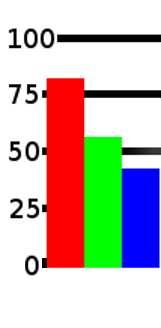
With Guantanamo Bay about to be shut down, and President Obamas' first year in office complete, what do the American public think of him?
% of Americans who approved of Pres. Bush after one year in office
% of Americans who favor waterboarding the Christmas bomber
% of Americans who approve of Pres. Obama after one year in office
How did this happen? Well, once upon a time, the USA was really racist. Then a light skinned African American with no negro dialect entered the presidential contest and the country entered a new post-racial era. Unfortunately not everyone had the audacity to hope. Things got so bad, people wanted to cut obamas nuts off but the change we sought within us prevailed and became president. Unfortunately some parts of the US are still filled with overweight Jesus and gun loving Walmart shoppers who insist on voting Republican even though that party doesn't exist anymore. Why? Racism. It's the only possible explanation

16 January 2010

C.J. Adams-Collier: AoE root for KVM guests

So. I m trying to get familiar with libvirt and friends. To this end, I ve set up a Lucid virtual machine booting from PXE into an initrd environment which does a pivot_root to an AoE block device. The #virt channel on irc.oftc.net told me that in order to have libvirt provide PXE capability, I would have to install a recent version of libvirt. I built version 0.7.5-3 from sid on my karmic laptop and it seems to be working okay. I decided to set up the pxe root directoy in /var/lib/tftproot just because that s what the example code had in it. I had to manually configure a virtual network. Here is the XML config file:
$ sudo virsh net-dumpxml netboot
<network>
  <name>netboot</name>
  <uuid>81ff0d90-c91e-6742-64da-4a736edb9a9b</uuid>
  <forward mode='nat'/>
  <bridge name='virbr1' stp='off' delay='1' />
  <domain name='example.com'/>
  <ip address='192.168.123.1' netmask='255.255.255.0'>
    <tftp root='/var/lib/tftproot' />
    <dhcp>
      <range start='192.168.123.2' end='192.168.123.254' />
      <bootp file='pxelinux.0' />
    </dhcp>
  </ip>
</network>
This, of course, depends on the pxelinux.0 file. Luckily, this is packaged up in syslinux and can be installed with a simple
$ sudo apt-get install syslinux
$ sudo mkdir /var/lib/tftproot
$ sudo cp /usr/lib/syslinux/pxelinux.0 /var/lib/tftproot
I had to create a pxelinux config file for the virtual machine (indexed by mac address). Note that I put a console=ttyS0,115200 argument on the kernel command line so that I can attach to the serial port from the host system for copy/paste debugging. Also of importance is the root=/dev/etherd/e0.1p1 argument, specifying which block device we ll be doing the pivot_root to eventually.
$ mkdir /var/lib/tftproot/pxelinux.cfg/
$ cat /var/lib/tftproot/pxelinux.cfg/01-52-54-00-44-34-67
DEFAULT linux
LABEL linux
SAY Now booting the kernel from PXELINUX...
KERNEL vmlinuz-lucid0
APPEND ro root=/dev/etherd/e0.1p1 console=ttyS0,115200 initrd=initrd.img-lucid0
I decided to use the karmic kernel for lucid initially. I ll eventually switch over to the lucid kernel ;)
$ sudo cp /boot/vmlinuz-2.6.31-17-generic /var/lib/tftproot/vmlinuz-lucid0
I copied /etc/initramfs-tools to ~/tmp/lucid so that I didn t mess up the system initrd scripts:
$ mkdir -p ~/tmp/lucid && cp -r /etc/initramfs-tools ~/tmp/lucid/
Since mkinitramfs doesn t currently have a system for AoE root, I had to do a bit of fiddling. I copied the NFS root boot script and made a couple of modifications.
$ diff -u /usr/share/initramfs-tools/scripts/nfs ~/tmp/lucid/initramfs-tools/scripts/aoe
--- /usr/share/initramfs-tools/scripts/nfs	2008-06-23 23:10:21.000000000 -0700
+++ /home/cjac/tmp/lucid/initramfs-tools/scripts/aoe	2010-01-15 14:56:28.098298027 -0800
@@ -5,59 +5,25 @@
 retry_nr=0
 # parse nfs bootargs and mount nfs
-do_nfsmount()
+do_aoemount()
  
-
 	configure_networking
-	# get nfs root from dhcp
-	if [ "x$ NFSROOT " = "xauto" ]; then
-		# check if server ip is part of dhcp root-path
-		if [ "$ ROOTPATH#*: " = "$ ROOTPATH " ]; then
-			NFSROOT=$ ROOTSERVER :$ ROOTPATH 
-		else
-			NFSROOT=$ ROOTPATH 
-		fi
-
-	# nfsroot=[<server-ip>:]<root-dir>[,<nfs-options>]
-	elif [ -n "$ NFSROOT " ]; then
-		# nfs options are an optional arg
-		if [ "$ NFSROOT#*, " != "$ NFSROOT " ]; then
-			NFSOPTS="-o $ NFSROOT#*, "
-		fi
-		NFSROOT=$ NFSROOT%%,* 
-		if [ "$ NFSROOT#*: " = "$NFSROOT" ]; then
-			NFSROOT=$ ROOTSERVER :$ NFSROOT 
-		fi
-	fi
+        ip link set up dev eth0
-	if [ -z "$ NFSOPTS " ]; then
-		NFSOPTS="-o retrans=10"
-	fi
+        ls /dev/etherd/
-	[ "$quiet" != "y" ] && log_begin_msg "Running /scripts/nfs-premount"
-	run_scripts /scripts/nfs-premount
-	[ "$quiet" != "y" ] && log_end_msg
+        echo > /dev/etherd/discover
-	if [ $ readonly  = y ]; then
-		roflag="-o ro"
-	else
-		roflag="-o rw"
-	fi
+        ls /dev/etherd/
-	nfsmount -o nolock $ roflag  $ NFSOPTS  $ NFSROOT  $ rootmnt 
+        mount $ ROOT  $ rootmnt 
  
-# NFS root mounting
+# AoE root mounting
 mountroot()
  
-	[ "$quiet" != "y" ] && log_begin_msg "Running /scripts/nfs-top"
-	run_scripts /scripts/nfs-top
-	[ "$quiet" != "y" ] && log_end_msg
-
-	modprobe nfs
-	# For DHCP
-	modprobe af_packet
+	modprobe aoe
 	# Default delay is around 180s
 	# FIXME: add usplash_write info
@@ -67,17 +33,13 @@
 		delay=$ ROOTDELAY 
 	fi
-	# loop until nfsmount succeds
+	# loop until aoemount succeds
 	while [ $ retry_nr  -lt $ delay  ] && [ ! -e $ rootmnt $ init  ]; do
 		[ $ retry_nr  -gt 0 ] && \
-		[ "$quiet" != "y" ] && log_begin_msg "Retrying nfs mount"
-		do_nfsmount
+		[ "$quiet" != "y" ] && log_begin_msg "Retrying AoE mount"
+		do_aoemount
 		retry_nr=$(( $ retry_nr  + 1 ))
 		[ ! -e $ rootmnt $ init  ] && /bin/sleep 1
 		[ $ retry_nr  -gt 0 ] && [ "$quiet" != "y" ] && log_end_msg
 	done
-
-	[ "$quiet" != "y" ] && log_begin_msg "Running /scripts/nfs-bottom"
-	run_scripts /scripts/nfs-bottom
-	[ "$quiet" != "y" ] && log_end_msg
  
(below is the full file in case udiff is less convenient)
$ cat ~/tmp/lucid/initramfs-tools/scripts/aoe
# NFS filesystem mounting			-*- shell-script -*-
# FIXME This needs error checking
retry_nr=0
# parse nfs bootargs and mount nfs
do_aoemount()
 
	configure_networking
        ip link set up dev eth0
        ls /dev/etherd/
        echo > /dev/etherd/discover
        ls /dev/etherd/
        mount $ ROOT  $ rootmnt 
 
# AoE root mounting
mountroot()
 
	modprobe aoe
	# Default delay is around 180s
	# FIXME: add usplash_write info
	if [ -z "$ ROOTDELAY " ]; then
		delay=180
	else
		delay=$ ROOTDELAY 
	fi
	# loop until aoemount succeds
	while [ $ retry_nr  -lt $ delay  ] && [ ! -e $ rootmnt $ init  ]; do
		[ $ retry_nr  -gt 0 ] && \
		[ "$quiet" != "y" ] && log_begin_msg "Retrying AoE mount"
		do_aoemount
		retry_nr=$(( $ retry_nr  + 1 ))
		[ ! -e $ rootmnt $ init  ] && /bin/sleep 1
		[ $ retry_nr  -gt 0 ] && [ "$quiet" != "y" ] && log_end_msg
	done
 
There was also a small modification to the initramfs.conf file:
$ diff -u /etc/initramfs-tools/initramfs.conf ~/tmp/lucid/initramfs-tools/initramfs.conf
--- /etc/initramfs-tools/initramfs.conf	2008-07-08 18:37:42.000000000 -0700
+++ /home/cjac/tmp/lucid/initramfs-tools/initramfs.conf	2010-01-15 14:33:38.088295207 -0800
@@ -47,14 +47,16 @@
 #
 #
-# BOOT: [ local   nfs ]
+# BOOT: [ local   nfs   aoe]
 #
 # local - Boot off of local media (harddrive, USB stick).
 #
 # nfs - Boot using an NFS drive as the root of the drive.
 #
+# aoe - Boot using an AoE drive as the root of the drive.
+#
-BOOT=local
+BOOT=aoe
 #
 # DEVICE: ...
I also needed to add aoe to the list of modules included in the initramfs:
$ echo aoe >> ~/tmp/lucid/initramfs-tools/modules
In order to generate the initrd.img file from this new config, I ran the following:
$ sudo mkinitramfs -d ~/tmp/lucid/initramfs-tools/ -o /var/lib/tftproot/initrd.img-lucid0
I created a lucid VM by installing from the desktop install disk. You can grab the ISO here: http://cdimage.ubuntu.com/daily-live/current/ I ll leave the creation of the virtual machine and installation as an exercise for the reader. I put the filesystem on an lvm volume group called vg0 in a logical volume called lucid0 (ie, /dev/vg0/lucid0). At this point, I created a new virtual machine called lucid0. Here is the xml for the domain:
$ sudo virsh dumpxml lucid0
<domain type='kvm' id='1'>
  <name>lucid0</name>
  <uuid>96fbad21-4f25-5700-ddd8-1a565c7170ee</uuid>
  <memory>524288</memory>
  <currentMemory>524288</currentMemory>
  <vcpu>1</vcpu>
  <os>
    <type arch='x86_64' machine='pc-0.11'>hvm</type>
    <boot dev='network'/>
  </os>
  <features>
    <pae/>
  </features>
  <clock offset='localtime'/>
  <on_poweroff>destroy</on_poweroff>
  <on_reboot>restart</on_reboot>
  <on_crash>restart</on_crash>
  <devices>
    <emulator>/usr/bin/kvm</emulator>
    <interface type='network'>
      <mac address='52:54:00:44:34:67'/>
      <source network='netboot'/>
      <target dev='vnet0'/>
    </interface>
    <serial type='pty'>
   <source path='/dev/pts/4'/>
      <target port='0'/>
    </serial>
  <console type='pty' tty='/dev/pts/4'>
   <source path='/dev/pts/4'/>
      <target port='0'/>
    </console>
    <input type='tablet' bus='usb'/>
    <input type='mouse' bus='ps2'/>
    <graphics type='vnc' port='5901' autoport='yes' listen='127.0.0.1' keymap='en-us'/>
    <sound model='es1370'/>
    <video>
      <model type='cirrus' vram='9216' heads='1'/>
    </video>
  </devices>
</domain>
Now we re ready to start the AoE target and launch the virtual machine. If you don t have vblade installed, do so now:
$ sudo apt-get install vblade
Start the target up with the following command:
$ sudo vbladed 0 1 virbr1 /dev/vg0/lucid0
Now, if all goes well, you should be able to watch the virtual machine boot up and do its thing like so:
$ sudo virsh start lucid0 && sudo screen -S lucid0 sudo virsh ttyconsole lucid0 115200
If you get errors about /dev/etherd/e0.1p1 not existing (these might look like this):
Begin: Retrying AoE mount ...
err         discover    interfaces  revalidate  flush
mount: mounting /dev/etherd/e0.1p1 on /root failed: No such file or directory
Done.
then you might want to try restarting vbladed like this:
$ sudo kill -9 ps auwx grep vblade grep -v grep awk ' print $2 ' && sudo vbladed 0 1 virbr1 /dev/vg0/lucid0
So. Now you should have a lucid gdm in your virt-manager console. Any questions? #virt on irc.oftc.net
<script>//<script language="javascript" src="http://reddit.com/button.js?t=1"></script>

14 January 2010

Russell Coker: Links January 2010

Magnus Larsson gave an interesting TED talk about using bacteria to transform dunes into architecture [1]. The concept of making a wall across Africa to stop sand dunes from overtaking farm land is obviously a good one, the idea of using bacteria to convert sand into sandstone to do so cheaply is also good. But making that into houses seems a little risky. I wouldn t want to live under shifting sand with only bacteria generated sandstone to protect me. Cory Doctorow gave an interesting speech titled How to Destroy the Book , here is the transcript [2]. He talks about how much he loves books and described his opposition to the DRM people who want to destroy the book culture. Sendmail has a DKIM Wizard for generating ADSP (Domain Signing Policy) records [3]. If I knew that ADSP records were so easy to implement then I would have used them a year ago! Loretta Napoleoni gave an insightful TED talk about the economics of terrorism [4]. Apparently the US dollar used to be THE currency for international crime, when the PATRIOT act was passed it s anti-money-laundering provisions encouraged many shady people to invest in Euros instead and thus led to the devaluation of the US currency. It s also interesting to note that terrorist organisations are driven by economics, if only we could prevent them from making money Ryan Lobo gave an interesting TED talk about his photographic work [5]. The effectiveness of the all-women peace-keeping force is noteworthy. The part about the Liberian war criminal who has become an evangelical Christian and who now tours Liberia begging forgiveness from his victims (and their relatives in the case of the people he murdered). Should someone like that be permitted to remain free if his victims forgive him? Charles Stross has an appealing vision for how Apple and Google can destroy the current mobile telephony market [6]. I can t wait for the mobile phone market to be entirely replaced by mobile VOIP devices! James Geary gave an interesting TED talk about metaphors [7]. The benefits of metaphors in poetry are well known (particularly in lyrics), but the impact of metaphors in influencing stock market predictions surprised me. Shaffi Mather gave an interesting TED talk about his company that makes money from fighting corruption [8]. Instead of paying a bribe you can pay his company to force the official(s) in question to do the right thing. Apparently the cost of doing so tends to be less than 10% the cost of the bribe if you know what you are doing. His previous company was an ambulance service that charges what the patient can afford is also interesting. John Robb wrote an interesting article about lottery winners and griefers [9]. He suggests that publishing the names, addresses, etc of rich people will be a new trend in Griefing. One thing I ve been wondering about is the value of the HR database at a typical corporation. A single database typically contains the home addresses, phone numbers, and salaries of all the employees. It would be very easy to do an SQL dump and store it on a USB flash device to carry out of the office. Then it could be sold to the highest bidder. They could probably make a market in the private data about rich people in the same way that there is currently a market for credit card data maybe they have already done this but it s kept quiet to stop others from implementing the same idea. Michael Smith wrote an interesting article for the Washington Times about home schooling and socialisation [10]. It seems that people who were home schooled as children tend to be more academically successful and involved in civic life as well as being happier and having career success. Richard Seager wrote an interesting article for American Scientist about ocean currents and heat transfer from the tropics [11]. It seems that when the ocean currents shut down the UK and other parts of northern Europe won t be getting a mini ice-age. Ian Lance Taylor (most known for the gold linker) has written a good summary of the situation in regard to climate change and what must be done about it [12]. The Wrath of the Killdozer article about how one angry man converted a bulldozer into a tank [13]. This wasn t a big bulldozer (every mining company has bigger ones) and he didn t have any serious weapons (only rifles). Imagine what terrorists could do if they started with a mining vehicle and serious weapons Simon Singh has written about being sued for libel by the British Chiropractic Association [14]. The BCA didn t like his article criticising chiropractors for claiming to be able to treat many conditions unrelated to the spine. Remember, chiropractors are not doctors all they can do is alleviate some back problems. See a GP if you have any medical condition that doesn t involve a sore back or neck. Avoid uppity chiropracters who claim to be able to cure all ills. Nicholas D. Kristof wrote an interesting article for the New York times about how happy the people in Costa Rica are [15]. He claims that the Costa Rican government s decision in 1949 to dissolve it s armed forces and invest the money in education is the root cause of the happy population. Maybe if the US government would scale back military spending the US population could be as happy as the Costa Ricans. While there are good arguments for having some sort of military, there are no good arguments for spending more money on the military than the rest of the world combined (as the US does).

11 January 2010

Alastair McKinstry: Supporting free speech at home

Thanks to Joey Hess for the request to set up tor bridges. I wholeheartedly agree, and recommend the video he points to. I've installed a Tor bridge at home, and recommend others to do so. For the most part, I'm not politically active at the moment - I'm doing a PhD Part-time, and thats consuming all my "spare" time, other than work and family. Just given a blog site, however, one subject strikes me as very important - free speech. Hence the side links to Amnesty International, etc. In Ireland this campaign has a particular focus at the moment - the Repeal of the Blasphemy Law. This law came into effect in Ireland this January. While the government claims that this law will 'never be used', its bad in several ways. Firstly, it promotes the ideas of censorship as a method of hiding social issues, and secondly it may actually be used, as pointed out in : <object height="300" width="400"><param name="allowfullscreen" value="true"><param name="allowscriptaccess" value="always"><param name="movie" value="http://vimeo.com/moogaloop.swf?clip_id=5196379&amp;server=vimeo.com&amp;show_title=1&amp;show_byline=1&amp;show_portrait=0&amp;color=&amp;fullscreen=1"><embed allowfullscreen="true" allowscriptaccess="always" height="300" src="http://vimeo.com/moogaloop.swf?clip_id=5196379&amp;server=vimeo.com&amp;show_title=1&amp;show_byline=1&amp;show_portrait=0&amp;color=&amp;fullscreen=1" type="application/x-shockwave-flash" width="400"></embed></object>Blasphemy is a Victimless Crime from Limerick Blogger on Vimeo. Basically, with Europe-wide arrest warrants, if two European countries have criminal blasphemy laws, then someone may be extradited to face prosecution in another country. While the Irish government says they will never prosecute, they open the possibility of say, Irish citizens being extradited to Greece to safe prosecution for blasphemy. On a wider level, I recommend Index on Censorship. It keeps documenting the cost of censorship around the world, and has been instrumental in campaigning for Libel reform in the UK, which is ncreasingly important for open scientific discussion. Tags , ,

9 January 2010

Rapha&#235;l Hertzog: Debian related goals for 2010

Here s stuff that I d like to do this year, more or less by decreasing order of importance: All of this probably doesn t fit in my free time (being a father since last month does not help increasing my free time :-) ), so if you re interested in seeing one or more of those projects completed, and if you know some person/company that could sponsor them, get in touch with me! Partagez cet article / Share This

Erich Schubert: Facebook Scam Groups

Facebook seems to have little interest in protecting its users from a huge flow of common scam/spam. Sure they do get active when accounts are mass hacked, and I havn't seen a "Facebook virus" for some time. Their JavaScript filtering is pretty neat, and they have implemented dereferrer pages they can use to quickly stop URLs from spreading.However, some of my friends keep on joining very dubious groups and installing very dubios applications. No wonder "FarmVille" is sometime nicknamed "ScamVille". There still is a lot of money to make in dubious ways.The big problem with Facebook is that everyone can set up groups and applications that look like they might be real. This is why people keep on installing "Mafia wars gifts" applications that have nothing to do with the actual game except the name. And sometimes not even realize they don't actually get these gifts in the real game.Even worse are the "pimp" groups. It's a classic pyramid scheme. Invite all your friends to the group, then you get extra Mafia points. Facebook really needs to stop that.A quick search for "invite proof" - these groups usually require you to post "proof" of having invited all your friends - turns up 246 groups, almost all of which promise you Mafia stuff.Searching for "getElementsByTagName" in Facebook turns up "over 500" groups. This string is a JavaScript command commonly used to auto-invite all your friends to a group. A typical mass-spread group will use this in its "join instructions".Facebook needs to combat this kind of spam/scam. And it's not too hard. Just actually check user complaints/reports, do simple searches like the ones I posted above, and have some employee go through them and just delete all these dubious mass-join groups. Pyramid schemes likely violate the Facebook TOS, and they definitely are illegal in at least Germany.

Jo Shields: directhex-grub-themes 00000001 release announcement.

There s been a fair deal of talk on the intertubes lately about prettifying the boot process. The first I saw was a post from Lasse Havelund regarding a proposal for Ubuntu Lucid, and the second was regarding a forked version of GRUB2 called BURG, which adds some theming abilities. A tiny bit of research revealed that despite the existence of BURG, the regular upstream GRUB2 project already has graphical theme support, courtesy of a Google Summer of Code project by Colin Bennett (albeit with a few less features at time of writing). Since Lasse had gone to the hard work of actual design, I decided to try my hand at chopping his design up into a usable GRUB2 theme, and the result can be seen here. I ended up speaking with the upstream GRUB2 team (which has certainly lead to a strange alliance in one case) about Colin s GSOC themes, and as it turns out, the main reason there s no theme supplied with GRUB2 is that Colin s themes use non-Free elements (proprietary fonts like Helvetica are used heavily). Since I had learnt the theme format to a basic degree in doing my Ubuntu theme, I proposed making a genuinely Free theme starting with a Debian theme, and moving on to a generic GRUB2 theme afterwards. As I went along, I found a handful of bugs and feature oddities, which have almost all been fixed with incredible turnaround by Vladimir Serbinenko, the current maintainer of the gfxmenu code (there remain some questions regarding RTL support in themes, and how to gracefully deal with different aspect ratios) and I want to extend my thanks to him for his help. However, at this point in time, I m pleased to announce a theme I d consider ready for public consumption. It s obviously not perfect, and it uses the old visual style from Debian Lenny, but it s a fully Free starting point, which hopefully can be deconstructed by others seeking to make their own themes. It ought to scale fully to any 4:3 resolution. And it may explode and eat your disk on any version of GRUB2 Experimental other than r1499. Generally, the README is a good starting point. Oh yes, an URL. Try http://retro.apebox.org/grubthemes/ I ve been speaking with some folks on deviantART regarding using their Debian-themed wallpaper in future releases of my themes package, but for now, this should be enough for gfxmenu to get a little more exposure and a little more testing. And, hopefully, shift artist focus back from the theme-incompatible BURG fork to the real GRUB2 project.

Andrew Pollock: [life/americania] TransLink, the Bay Area's best kept public transportation secret?

We're not huge users of Caltrain, because frankly, it sucks. It's way slower than driving to San Francisco, and by the time you've paid for two return tickets, you might as well have driven and paid for parking. That said, we do use it from time to time. One of the things I noticed when we first moved over here was this intriguing box on a pole, to the side of the normal ticket vending machine. It looked all battered and faded, kind of like a deprecated form of ticketing that had been phased out years ago. Except it looked too high-tech to be phased out. Fast forward to four years later, and we're using Caltrain to get back from SFO after returning from Atlanta for Christmas, and there's this "Don't forget to tag off" TransLink poster inside the carriage. I'm now officially intrigued. I did some browsing of their website on the journey home. How could this be? Hong Kong's MTR has the Octopus Card. London's Tube has the Oyster Card, and the Bay Area has TransLink? Why the hell isn't this thing being pimped out more? It's awesome! I mentioned it to a co-worker the other day, who's been in the Bay Area for 7 years, and he'd never heard of it. So I signed up for it for myself and Sarah, and two cards promptly arrived. If you sign up with an autoload of $20 or more, there's no cost for cards at all. So from now on, whenever we need to ride Caltrain (or BART or Muni, which are the public transport networks we're ever likely to use) we can just wave these cards at something and never have to worry about a ticket ever again. It's awesome. Apparently VTA is coming on board with it later this year, so that'll round things out nicely. It sounds like it's been an epic implementation, starting back in 1999, and still rolling out ten years later. Better late than never. The added bonus will be for our visitors. When they come, we can just give them these cards, and they won't have to deal with BART's utterly confusing (for casual riders) fare system. One of my favourite things about Hong Kong was the MTR and the Octopus Card. Now we just need awesome mass transit for the Bay Area. Somehow, I think that's going to take even longer than TransLink.

Next.

Previous.