Search Results: "bod"

24 July 2015

Elena 'valhalla' Grandi: Old and new: furoshiki and electronics.

Old and new: furoshiki and electronics.

Yesterday at the local LUG (@Gruppo Linux Como ) somebody commented on the mix of old and new in my cloth-wrapped emergency electronics kit (you know, the kind of things you carry around with a microcontroller board http://espruino.com and a few components in case you suddenly have an idea for a project :-) ).

Immagine/fotohttp://social.gl-como.it/photos/valhalla/image/401bdd78db4a7eb8265a8119cb28c385

This is the kind of things it has right now: components tend to change in time.

Immagine/fotohttp://social.gl-como.it/photos/valhalla/image/7ba4c1372772b4d0374b655613f70c99

And yes, I admit I can only count up to 2, for higher numbers I carry a reference card :-)

Immagine/fotohttp://social.gl-como.it/photos/valhalla/image/2f544e5bef5c08c4ce9490865d22208a

Anyway, there was a bit of conversation on how this looked like a grandmother-ish thing, especially since it was in the same bag with a knitted WIP sock, and I mentioned the Japanese #furoshiki revival and how I believe that good old things are good, and good new things are good, and why not use them both?

Somebody else, who may or not be @Davide De Prisco asked me to let him have the links I mentioned, which include:

* Wikipedia page: Furoshiki https://en.wikipedia.org/wiki/Furoshiki
* Guide from the Japanese Ministry of the Environment on how to use a furoshiki http://www.env.go.jp/en/focus/attach/060403-5.html (and the article http://www.env.go.jp/en/focus/060403.html)
* A website with many other wrapping tecniques http://furoshiki.com/techniques/.

Simon Kainz: DUCK challenge: week 3

One more update on the the DUCK challenge: In the current week, the following packages were fixed and uploaded into unstable: So we had 10 packages fixed and uploaded by 8 different uploaders. A big "Thank You" to you!! Since the start of this challenge, a total of 35 packages, uploaded by 25 different persons were fixed. Here is a quick overview:
Week 1 Week 2 Week 3 Week 4 Week 5 Week 6 Week 7
# Packages 10 15 10 - - - -
Total 10 25 35 - - - -
The list of the fixed and updated packages is availabe here. I will try to update this ~daily. If I missed one of your uploads, please drop me a line. There is still lots of time till the end of DebConf15 and the end of the DUCK Challenge, so please get involved. Pevious articles are here: Week 1, Week 2.

23 July 2015

Daniel Pocock: Unpaid work training Google's spam filters

This week, there has been increased discussion about the pain of spam filtering by large companies, especially Google. It started with Google's announcement that they are offering a service for email senders to know if their messages are wrongly classified as spam. Two particular things caught my attention: the statement that less than 0.05% of genuine email goes to the spam folder by mistake and the statement that this new tool to understand misclassification is only available to "help qualified high-volume senders". From there, discussion has proceeded with Linus Torvalds blogging about his own experience of Google misclassifying patches from Linux contributors as spam and that has been widely reported in places like Slashdot and The Register. Personally, I've observed much the same thing from the other perspective. While Torvalds complains that he isn't receiving email, I've observed that my own emails are not always received when the recipient is a Gmail address. It seems that Google expects their users work a little bit every day going through every message in the spam folder and explicitly clicking the "Not Spam" button: so that Google can improve their proprietary algorithms for classifying mail. If you just read or reply to a message in the folder without clicking the button, or if you don't do this for every message, including mailing list posts and other trivial notifications that are not actually spam, more important messages from the same senders will also continue to be misclassified. If you are not willing to volunteer your time to do this, or if you are simply one of those people who has better things to do, Google's Gmail service is going to have a corrosive effect on your relationships. A few months ago, we visited Australia and I sent emails to many people who I wanted to catch up with, including invitations to a family event. Some people received the emails in their inboxes yet other people didn't see them because the systems at Google (and other companies, notably Hotmail) put them in a spam folder. The rate at which this appeared to happen was definitely higher than the 0.05% quoted in the Google article above. Maybe the Google spam filters noticed that I haven't sent email to some members of the extended family for a long time and this triggered the spam algorithm? Yet it was at that very moment that we were visiting Australia that email needs to work reliably with that type of contact as we don't fly out there every year. A little bit earlier in the year, I was corresponding with a few students who were applying for Google Summer of Code. Some of them also observed the same thing, they sent me an email and didn't receive my response until they were looking in their spam folder a few days later. Last year I know a GSoC mentor who lost track of a student for over a week because of Google silently discarding chat messages, so it appears Google has not just shot themselves in the foot, they managed to shoot their foot twice. What is remarkable is that in both cases, the email problems and the XMPP problems, Google doesn't send any error back to the sender so that they know their message didn't get through. Instead, it is silently discarded or left in a spam folder. This is the most corrosive form of communication problem as more time can pass before anybody realizes that something went wrong. After it happens a few times, people lose a lot of confidence in the technology itself and try other means of communication which may be more expensive, more synchronous and time intensive or less private. When I discussed these issues with friends, some people replied by telling me I should send them things through Facebook or WhatsApp, but each of those services has a higher privacy cost and there are also many other people who don't use either of those services. This tends to fragment communications even more as people who use Facebook end up communicating with other people who use Facebook and excluding all the people who don't have time for Facebook. On top of that, it creates more tedious effort going to three or four different places to check for messages. Despite all of this, the suggestion that Google's only response is to build a service to "help qualified high-volume senders" get their messages through leaves me feeling that things will get worse before they start to get better. There is no mention in the Google announcement about what they will offer to help the average person eliminate these problems, other than to stop using Gmail or spend unpaid time meticulously training the Google spam filter and hoping everybody else does the same thing. Some more observations on the issue Many spam filtering programs used in corporate networks, such as SpamAssassin, add headers to each email to suggest why it was classified as spam. Google's systems don't appear to give any such feedback to their users or message senders though, just a very basic set of recommendations for running a mail server. Many chat protocols work with an explicit opt-in. Before you can exchange messages with somebody, you must add each other to your buddy lists. Once you do this, virtually all messages get through without filtering. Could this concept be adapted to email, maybe giving users a summary of messages from people they don't have in their contact list and asking them to explicitly accept or reject each contact? If a message spends more than a week in the spam folder and Google detects that the user isn't ever looking in the spam folder, should Google send a bounce message back to the sender to indicate that Google refused to deliver it to the inbox? I've personally heard that misclassification occurs with mailing list posts as well as private messages.

Daniel Pocock: Recording live events like a pro (part 1: audio)

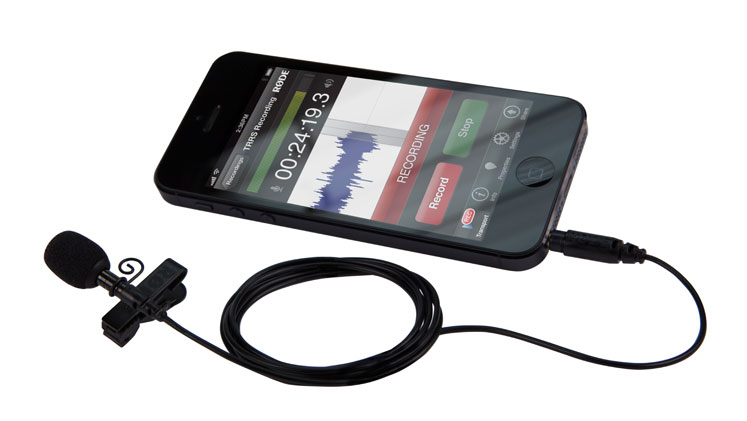
Whether it is a technical talk at a conference, a political rally or a budget-conscious wedding, many people now have most of the technology they need to record it and post-process the recording themselves. For most events, audio is an essential part of the recording. There are exceptions: if you take many short clips from a wedding and mix them together you could leave out the audio and just dub the couple's favourite song over it all. For a video of a conference presentation, though, the the speaker's voice is essential. These days, it is relatively easy to get extremely high quality audio using a lapel microphone attached to a smartphone. Lets have a closer look at the details. Using a lavalier / lapel microphone Full wireless microphone kits with microphone, transmitter and receiver are usually $US500 or more. The lavalier / lapel microphone by itself, however, is relatively cheap, under $US100. The lapel microphone is usually an omnidirectional microphone that will pick up the voices of everybody within a couple of meters of the person wearing it. It is useful for a speaker at an event, some types of interviews where the participants are at a table together and it may be suitable for a wedding, although you may want to remember to remove it from clothing during the photos. There are two key features you need when using such a microphone with a smartphone:
  • TRRS connector (this is the type of socket most phones and many laptops have today)
  • Microphone impedance should be at least 1k (that is one kilo Ohm) or the phone may not recognize when it is connected
Many leading microphone vendors have released lapel mics with these two features aimed specifically at smartphone users. I have personally been testing the Rode smartLav+ Choice of phone There are almost 10,000 varieties of smartphone just running Android, as well as iPhones, Blackberries and others. It is not practical for most people to test them all and compare audio recording quality. It is probably best to test the phone you have and ask some friends if you can make test recordings with their phones too for comparison. You may not hear any difference but if one of the phones has a poor recording quality you will hopefully notice that and exclude it from further consideration. A particularly important issue is being able to disable AGC in the phone. Android has a standard API for disabling AGC but not all phones or Android variations respect this instruction. I have personally had positive experiences recording audio with a Samsung Galaxy Note III. Choice of recording app Most Android distributions have at least one pre-installed sound recording app. Look more closely and you will find not all apps are the same. For example, some of the apps have aggressive compression settings that compromise recording quality. Others don't work when you turn off the screen of your phone and put it in your pocket. I've even tried a few that were crashing intermittently. The app I found most successful so far has been Diktofon, which is available on both F-Droid and Google Play. Diktofon has been designed not just for recording, but it also has some specific features for transcribing audio (currently only supporting Estonian) and organizing and indexing the text. I haven't used those features myself but they don't appear to cause any inconvenience for people who simply want to use it as a stable recording app. As the app is completely free software, you can modify the source code if necessary. I recently contributed patches enabling 48kHz recording and disabling AGC. At the moment, the version with these fixes has just been released and appears in F-Droid but not yet uploaded to Google Play. The fixes are in version 0.9.83 and you need to go into the settings to make sure AGC is disabled and set the 48kHz sample rate. Whatever app you choose, the following settings are recommended:
  • 16 bit or greater sample size
  • 48kHz sample rate
  • Disable AGC
  • WAV file format
Whatever app you choose, test it thoroughly with your phone and microphone. Make sure it works even when you turn off the screen and put it in your pocket while wearing the lapel mic for an hour. Observe the battery usage. Gotchas Now lets say you are recording a wedding and the groom has that smartphone in his pocket and the mic on his collar somewhere. What is the probability that some telemarketer calls just as the couple are exchanging vows? What is the impact on the recording? Maybe some apps will automatically put the phone in silent mode when recording. More likely, you need to remember this yourself. These are things that are well worth testing though. Also keep in mind the need to have sufficient storage space and to check whether the app you use is writing to your SD card or internal memory. The battery is another consideration. In a large event where smartphones are being used instead of wireless microphones, possibly for many talks in parallel, install a monitoring app like Ganglia on the phones to detect and alert if any phone has weak wifi signal, low battery or a lack of memory. Live broadcasts and streaming Some time ago I tested RTP multicasting from Lumicall on Android. This type of app would enable a complete wireless microphone setup with live streaming to the internet at a fraction of the cost of a traditional wireless microphone kit. This type of live broadcast could also be done with WebRTC on the Firefox app. Conclusion If you research the topic thoroughly and spend some time practicing and testing your equipment, you can make great audio recordings with a smartphone and an inexpensive lapel microphone. In subsequent blogs, I'll look at tips for recording video and doing post-production with free software.

21 July 2015

Sven Hoexter: O: courierpassd

In case you're one of the few still depending on courierpassd and would like to see it to be part of stretch, please pick it up. I'm inclined to fill a request for removal before we release stretch in case nobody picks it up.

20 July 2015

Daniel Pocock: RTC status on Debian, Ubuntu and Fedora

Zoltan (Zoltanh721) recently blogged about WebRTC for the Fedora community and Fedora desktop. https://fedrtc.org has been running for a while now and this has given many people a chance to get a taste of regular SIP and WebRTC-based SIP. As suggested in Zoltan's blog, it has convenient integration with Fedora SSO and as the source code is available, people are welcome to see how it was built and use it for other projects. Issues with Chrome/Chromium on Linux If you tried any of FedRTC.org, rtc.debian.org or meet.jit.si using Chrome/Chromium on Linux, you may have found that the call appears to be connected but there is no media. This is a bug and the Chromium developers are on to it. You can work around this by trying an older version of Chromium (it still works with v37 from Debian wheezy) or Firefox/Iceweasel. WebRTC is not everything WebRTC offers many great possibilities for people to quickly build and deploy RTC services to a large user base, especially when using components like JSCommunicator or the DruCall WebRTC plugin for Drupal. However, it is not a silver bullet. For example, there remain concerns about how to receive incoming calls. How do you know which browser tab is ringing when you have many tabs open at once? This may require greater browser/desktop integration and that has security implications for JavaScript. Whether users on battery-powered devices can really leave JavaScript running for extended periods of time waiting for incoming calls is another issue, especially when you consider that many web sites contain some JavaScript that is less than efficient. Native applications and mobile apps like Lumicall continue to offer the most optimized solution for each platform although WebRTC currently offers the most convenient way for people to place a Call me link on their web site or portal. Deploy it yourself The RTC Quick Start Guide offers step-by-step instructions and a thorough discussion of the architecture for people to start deploying RTC and WebRTC on their own servers using standard packages on many of the most popular Linux distributions, including Debian, Ubuntu, RHEL, CentOS and Fedora.

Ritesh Raj Sarraf: Micro DD meetup

A couple of us DDs met here on the weekend. It is always a fun time, being part of these meetings. We talked briefly about the status of Cross Compilation in Debian, on the tools that simplify the process. Next we touched upon licensing, discussing the benefits of particular licenses (BSD, Apache, GPL) from the point of view of the consumer. The consumer being an individual just wanting to use/improve software, to a consumer who's building a (free / non-free) product on top of it. I think the overall conclusion was that there are 2 major licenses at a high level: Ones those allow you take the code and not give back, and the others which allow you to take code only if you are ready to share the enhancements back and forward. Next we briefly touched upon systemd. Given that I recently spent a good amount of time talking to the systemd maintainer while fixing bugs in my software, it was natural for me to steer that topic. At the end, more people are now enthused to learn the paradigm shift. The other topic where we spent time was on Containers. It is impressive to see how quick, and how many, products have now spun out of cgroups. The topic moved to cgroups, thanks to systemd, one of the prime consumers of cgroups. While demonstrating the functionalities of Linux Containers (LXC), I realized that systemd has a tool in place to serve the same use case. So, once back home, I spent some time figuring out the possibility to replace my lxc setup, with that of systemd-nspawn. Apart from a minor bug, almost everything else seems to work find with systemd-nspawn. So, following is the config detail of my container, as used in lxc. And to replace lxc, I need to fill is almost all of it with systemd-nspawn.
rrs@learner:~$ sudo cat /var/lib/lxc/deb-template/config
# Template used to create this container: /usr/share/lxc/templates/lxc-debian
# Parameters passed to the template:
# For additional config options, please look at lxc.container.conf(5)
# CPU
lxc.cgroup.cpuset.cpus = 0,1
lxc.cgroup.cpu.shares = 1234
# Mem
lxc.cgroup.memory.limit_in_bytes = 2000M
lxc.cgroup.memory.soft_limit_in_bytes = 1500M
# Network
lxc.network.type = veth
lxc.network.hwaddr = 00:16:3e:0c:c5:d4
lxc.network.flags = up
lxc.network.link = lxcbr0
# Root file system
lxc.rootfs = /var/lib/lxc/deb-template/rootfs
# Common configuration
lxc.include = /usr/share/lxc/config/debian.common.conf
# Container specific configuration
lxc.mount = /var/lib/lxc/deb-template/fstab
lxc.utsname = deb-template
lxc.arch = amd64
# For apt
lxc.mount.entry = /var/cache/apt/archives var/cache/apt/archives none defaults,bind 0 0
lxc.mount.entry = /var/tmp/lxc var/tmp/lxc none defaults,bind 0 0
2015-07-20 / 16:28:58         
The equivalent of the above, in systemd-nspawn is:
sudo systemd-nspawn -n -b --machine deb-template --network-bridge=lxcbr0 --bind /var/cache/apt/archives/
The only missing bit is CPU and Memory, which I'm yet to try, is documented as doable with the systemctl --property= interface
      --property=
           Set a unit property on the scope unit to register for the machine. This only
           applies if the machine is run in its own scope unit, i.e. if --keep-unit is not
           used. Takes unit property assignments in the same format as systemctl
           set-property. This is useful to set memory limits and similar for machines.
With all this in place, using containers under systemd is a breeze.
rrs@learner:~/Community/Packaging/multipath-tools (experimental)$ sudo machinectl list
MACHINE      CLASS     SERVICE
deb-template container nspawn
1 machines listed.
2015-07-20 / 16:44:07         
rrs@learner:~/Community/Packaging/multipath-tools (experimental)$ sudo machinectl status deb-template
deb-template
           Since: Mon 2015-07-20 16:13:58 IST; 30min ago
          Leader: 9064 (systemd)
         Service: nspawn; class container
            Root: /var/lib/lxc/deb-template/rootfs
           Iface: lxcbr0
         Address: 172.16.10.12
                  fe80::706d:e4ff:fec5:bfc8%3
              OS: Debian GNU/Linux stretch/sid
            Unit: machine-deb\x2dtemplate.scope
                   9064 /lib/systemd/systemd --system --deserialize 14
                   system.slice
                     systemd-journald.service
                       9092 /lib/systemd/systemd-journald
                     ssh.service
                       9160 /usr/sbin/sshd -D
                     console-getty.service
                       9166 /bin/login --     
                       9171 -bash
                       9226 dhclient host0
Jul 20 16:13:58 learner systemd[1]: Started Container deb-template.
Jul 20 16:13:58 learner systemd[1]: Starting Container deb-template.
2015-07-20 / 16:44:15         

Categories:

Keywords:

Like:

19 July 2015

Laura Arjona: Family games: Robots

I play Robots with my kid. I ve tested the game with other kids and it seems that for ages 5 to 7 they like it. I ve talked about the game to several adults and it seems they like too, so I thought maybe writing about it here may be useful for somebody to enjoy some summer days. Players One player is the Robot. The other one is the programmer. If there are more players, it can be several robots and several programmers. If players are older, you can make the game more complicated making robots cooperate or programmers cooperate. If not, you make pairs 1-1 or 1 programmer 2 robots if the number is odd. The game The programmer must turn on the robot, pressing the ON/OFF button (robot chooses where s the button: nose, ear, belly, whatever).
Then, the robot say hello , and the programmer asks for the list of commands available (like Hello, robot, give me the list of commands ). The robot says the list of commands available, for example Run, stop, jump, sing a song, somersault, say something in a different language . Then, the programmer thinks a program, and loads it to the robot (speaks the list of orders, loudly, to the robot). Then the programmer presses the START button (Robot choses where it is) and then the robot has to perform the program without errors. If the robot performs correctly, wins one point. If it fails, looses one point. The programmer can design another program (maybe longer, maybe with some conditional expression) and tries the limits of the memory of robot. If the robot is tired, needs to charge batteries, or whatever, the roles programmer/robot are interchanged, and the one with more points in a certain amount of time or rounds, wins. Variants, tips If the programmer does not like the list, of commands, she can ask for updates, and maybe some new commands will be installed (and/or other uninstalled, who knows). Please be creative with the list of commands, or the game will be very boring. Depending on the operating system which runs the robot, it will give more or less options to the programmer, and the behaviour will be more evil or good. Robots shouldn t behave too much evil, though, otherwise the programmer will erase their disk and install Debian on them to make them obedient ;) You can play with a third person being the Robot manufacturer, who controls the robot, even sometimes overriding the programmer instructions (if the robot has an OS which is not free software). Robot will win one point obeying the manufacturer, but if there are more robots, will loose one round of playing because the programmer got angry and turned it off or reinstalled the software. The manufacturer and the programmer cooperate if the robot runs free software, though. Together they can expand robot memory (for example, lend a piece of paper where to store the program), or create new commands, fix bugs, or whatever. Comments? You can comment about this post in Pump.io thread about this post.
Filed under: My experiences and opinion Tagged: Debian, Education, English, Free culture, Free Software, Games, kids

16 July 2015

Norbert Preining: Recent silence scientific freak weeks

If you wonder why it was so silent here over the last weeks, there is a simple explanation: I am on scientific freak weeks  As you might know, in my main profession I am logician, mathematician, computer scientist at the Japan Advanced Institute of Science and Technology (btw, searching urgently for a new job, in case someone is interested!!!). purity The last weeks have been very busy with attenting and presenting at LICS 2015 (Logic in Computer Science), followed by a workshop on Proofs as Processes organized by myself, then a presentation at CCA 2015 (Conference on Computability and Complexity in Analysis), and now working with visitors on our hyper natural deduction system. Above all that, there is also my lecture on Logical Decision Procedures at JAIST that a colleague and I a creating on the fly. All in all a very busy July, but I hope that after the weekend, and another workshop at JAIST, things settle down around beginning of August.
Email this to someonePrint this pageShare on FacebookShare on Google+Tweet about this on TwitterShare on LinkedInFlattr the author

15 July 2015

Ritesh Raj Sarraf: VirtualBox 5.x

We just pushed VirtualBox 5.0.0 into Debian Experimental. It should land up on your mirrors very soon. Since this is a major release, we are looking for some testing and feedback. If you use VBox, or have your business depend on it, please give it a test. For details about what is new in 5.x, please check out the release announcement

Categories:

Keywords:

Like:

14 July 2015

Matthew Palmer: Why DANE isn't going to win

In a comment to my previous post, Daniele asked the entirely reasonable question,
Would you like to comment on why you think that DNSSEC+DANE are not a possible and much better alternative?
Where DANE fails to be a feasible alternative to the current system is that it is not widely acknowledged to be superior in every possible way . A weak demonstration of this is that no browser has implemented DANE support, and very few other TLS-using applications have, either. The only thing I use which has DANE support that I m aware of is Postfix and SMTP is an application in which the limitations of DANE have far less impact. My understanding of the limitations of DANE, for large-scale deployment, are enumerated below.

DNS Is Awful Quoting Google security engineer Adam Langley:
But many (~4% in past tests) of users can t resolve a TXT record when they can resolve an A record for the same name. In practice, consumer DNS is hijacked by many devices that do a poor job of implementing DNS.
Consider that TXT records are far, far older than TLSA records. It seems likely that TLSA records would fail to be retrieved greater than 4% of the time. Extrapolate to the likely failure rate for lookup of TLSA records would be, and imagine what that would do to the reliability of DANE verification. It would either be completely unworkable, or else would cause a whole new round of just click through the security error training. Ugh. This also impacts DNSSEC itself. Lots of recursive resolvers don t validate DNSSEC, and some providers mangle DNS responses in some way, which breaks DNSSEC. Since OSes don t support DNSSEC validation by default (for example, by having the name resolution APIs indicate DNSSEC validation status), browsers would essentially have to ship their own validating resolver code. Some people have concerns around the single point of control for DNS records, too. While the weakest link nature of the CA model is terribad, there is a significant body of opinion that replacing it with a single, minimally-accountable organisation like ICANN isn t a great trade. Finally, performance is also a concern. Having to go out-of-band to retrieve TLSA records delays page generation, and nobody likes slow page loads.

DNSSEC Is Awful Lots of people don t like DNSSEC, for all sorts of reasons. While I don t think it is quite as bad as people make out (I ve deployed it for most zones I manage, there are some legitimate issues that mean browser vendors aren t willing to rely on DNSSEC. 1024 bit RSA keys are quite common throughout the DNSSEC system. Getting rid of 1024 bit keys in the PKI has been a long-running effort; doing the same for DNSSEC is likely to take quite a while. Yes, rapid rotation is possible, by splitting key-signing and zone-signing (a good design choice), but since it can t be enforced, it s entirely likely that long-lived 1024 bit keys for signing DNSSEC zones is the rule, rather than exception.

DNS Providers are Awful While we all poke fun at CAs who get compromised, consider how often someone s DNS control panel gets compromised. Now ponder the fact that, if DANE is supported, TLSA records can be manipulated in that DNS control panel. Those records would then automatically be DNSSEC signed by the DNS provider and served up to anyone who comes along. Ouch. In theory, of course, you should choose a suitably secure DNS provider, to prevent this problem. Given that there are regular hijackings of high-profile domains (which, presumably, the owners of those domains would also want to prevent), there is something in the DNS service provider market which prevents optimal consumer behaviour. Market for lemons, perchance?

Conclusion None of these problems are unsolvable, although none are trivial. I like DANE as a concept, and I d really, really like to see it succeed. However, the problems I ve listed above are all reasonable objections, made by people who have their hands in browser codebases, and so unless they re fixed, I don t see that anyone s going to be able to rely on DANE on the Internet for a long, long time to come.

12 July 2015

Lunar: Reproducible builds: week 11 in Stretch cycle

Debian is undertaking a huge effort to develop a reproducible builds system. I'd like to thank you for that. This could be Debian's most important project, with how badly computer security has been going.

PerniciousPunk in Reddit's Ask me anything! to Neil McGovern, DPL. What happened in the reproducible builds effort this week: Toolchain fixes More tools are getting patched to use the value of the SOURCE_DATE_EPOCH environment variable as the current time:

In the reproducible experimental toolchain which have been uploaded: Johannes Schauer followed up on making sbuild build path deterministic with several ideas. Packages fixed The following 311 packages became reproducible due to changes in their build dependencies : 4ti2, alot, angband, appstream-glib, argvalidate, armada-backlight, ascii, ask, astroquery, atheist, aubio, autorevision, awesome-extra, bibtool, boot-info-script, bpython, brian, btrfs-tools, bugs-everywhere, capnproto, cbm, ccfits, cddlib, cflow, cfourcc, cgit, chaussette, checkbox-ng, cinnamon-settings-daemon, clfswm, clipper, compton, cppcheck, crmsh, cupt, cutechess, d-itg, dahdi-tools, dapl, darnwdl, dbusada, debian-security-support, debomatic, dime, dipy, dnsruby, doctrine, drmips, dsc-statistics, dune-common, dune-istl, dune-localfunctions, easytag, ent, epr-api, esajpip, eyed3, fastjet, fatresize, fflas-ffpack, flann, flex, flint, fltk1.3, fonts-dustin, fonts-play, fonts-uralic, freecontact, freedoom, gap-guava, gap-scscp, genometools, geogebra, git-reintegrate, git-remote-bzr, git-remote-hg, gitmagic, givaro, gnash, gocr, gorm.app, gprbuild, grapefruit, greed, gtkspellmm, gummiboot, gyp, heat-cfntools, herold, htp, httpfs2, i3status, imagetooth, imapcopy, imaprowl, irker, jansson, jmapviewer, jsdoc-toolkit, jwm, katarakt, khronos-opencl-man, khronos-opengl-man4, lastpass-cli, lava-coordinator, lava-tool, lavapdu, letterize, lhapdf, libam7xxx, libburn, libccrtp, libclaw, libcommoncpp2, libdaemon, libdbusmenu-qt, libdc0, libevhtp, libexosip2, libfreenect, libgwenhywfar, libhmsbeagle, libitpp, libldm, libmodbus, libmtp, libmwaw, libnfo, libpam-abl, libphysfs, libplayer, libqb, libsecret, libserial, libsidplayfp, libtime-y2038-perl, libxr, lift, linbox, linthesia, livestreamer, lizardfs, lmdb, log4c, logbook, lrslib, lvtk, m-tx, mailman-api, matroxset, miniupnpd, mknbi, monkeysign, mpi4py, mpmath, mpqc, mpris-remote, musicbrainzngs, network-manager, nifticlib, obfsproxy, ogre-1.9, opal, openchange, opensc, packaging-tutorial, padevchooser, pajeng, paprefs, pavumeter, pcl, pdmenu, pepper, perroquet, pgrouting, pixz, pngcheck, po4a, powerline, probabel, profitbricks-client, prosody, pstreams, pyacidobasic, pyepr, pymilter, pytest, python-amqp, python-apt, python-carrot, python-django, python-ethtool, python-mock, python-odf, python-pathtools, python-pskc, python-psutil, python-pypump, python-repoze.tm2, python-repoze.what, qdjango, qpid-proton, qsapecng, radare2, reclass, repsnapper, resource-agents, rgain, rttool, ruby-aggregate, ruby-albino, ruby-archive-tar-minitar, ruby-bcat, ruby-blankslate, ruby-coffee-script, ruby-colored, ruby-dbd-mysql, ruby-dbd-odbc, ruby-dbd-pg, ruby-dbd-sqlite3, ruby-dbi, ruby-dirty-memoize, ruby-encryptor, ruby-erubis, ruby-fast-xs, ruby-fusefs, ruby-gd, ruby-git, ruby-globalhotkeys, ruby-god, ruby-hike, ruby-hmac, ruby-integration, ruby-jnunemaker-matchy, ruby-memoize, ruby-merb-core, ruby-merb-haml, ruby-merb-helpers, ruby-metaid, ruby-mina, ruby-net-irc, ruby-net-netrc, ruby-odbc, ruby-ole, ruby-packet, ruby-parseconfig, ruby-platform, ruby-plist, ruby-popen4, ruby-rchardet, ruby-romkan, ruby-ronn, ruby-rubyforge, ruby-rubytorrent, ruby-samuel, ruby-shoulda-matchers, ruby-sourcify, ruby-test-spec, ruby-validatable, ruby-wirble, ruby-xml-simple, ruby-zoom, rumor, rurple-ng, ryu, sam2p, scikit-learn, serd, shellex, shorewall-doc, shunit2, simbody, simplejson, smcroute, soqt, sord, spacezero, spamassassin-heatu, spamprobe, sphinxcontrib-youtube, splitpatch, sratom, stompserver, syncevolution, tgt, ticgit, tinyproxy, tor, tox, transmissionrpc, tweeper, udpcast, units-filter, viennacl, visp, vite, vmfs-tools, waffle, waitress, wavtool-pl, webkit2pdf, wfmath, wit, wreport, x11proto-input, xbae, xdg-utils, xdotool, xsystem35, yapsy, yaz. Please note that some packages in the above list are falsely reproducible. In the experimental toolchain, debhelper exported TZ=UTC and this made packages capturing the current date (without the time) reproducible in the current test environment. The following packages became reproducible after getting fixed: Ben Hutchings upstreamed several patches to fix Linux reproducibility issues which were quickly merged. Some uploads fixed some reproducibility issues but not all of them: Uploads that should fix packages not in main: Patches submitted which have not made their way to the archive yet: reproducible.debian.net A new package set has been added for lua maintainers. (h01ger) tracker.debian.org now only shows reproducibility issues for unstable. Holger and Mattia worked on several bugfixes and enhancements: finished initial test setup for NetBSD, rewriting more shell scripts in Python, saving UDD requests, and more debbindiff development Reiner Herrmann fixed text comparison of files with different encoding. Documentation update Juan Picca added to the commands needed for a local test chroot installation of the locales-all package. Package reviews 286 obsolete reviews have been removed, 278 added and 243 updated this week. 43 new bugs for packages failing to build from sources have been filled by Chris West (Faux), Mattia Rizzolo, and h01ger. The following new issues have been added: timestamps_in_manpages_generated_by_ronn, timestamps_in_documentation_generated_by_org_mode, and timestamps_in_pdf_generated_by_matplotlib. Misc. Reiner Herrmann has submitted patches for OpenWrt. Chris Lamb cleaned up some code and removed cruft in the misc.git repository. Mattia Rizzolo updated the prebuilder script to match what is currently done on reproducible.debian.net.

10 July 2015

Gunnar Wolf: Finishing the course on "Free Software and Open Standards"

A couple of months ago, I was invited to give the starting course for the Masters degree in Free Software in the Universidad Andina Sim n Bol var university. UASB is a multinational university, with campuses in (at least) Ecuador, Chile, Bolivia and Colombia; I was doubtful at first regarding the seriousness of this proposal and the viability of the program, but time made my doubts disappear. Bolivia is going through an interesting process, as they have one of the strongest worded government mandates for migration to free software for the public administration in the next couple of years; this migration has prompted the interest of many professionals in the country. In particular, we have over 40 registered people for this Masters degree. Studying a Masters degree is a long-term commitment which signifies a big time investment, and although many of the student are quite new to the idea of free software, they are willing to spend this time (and money, as the university is privately owned and charges for its enrollment). I gave this class together with Alejandro Miranda (a.k.a. @pooka), as we have a very good pair-teaching dynamics; we had already given many conferences together, but this is the first time we had the opportunity to share a whole course and the experience was very good. We have read the students' logs, and many of them clearly agree with this. I had to skip two of the (ten) lessons, as I travelled from Mexico to Argentina halfway through it (of course, we brought the babies to meet my wife's family and friends!), so we had also the honor of having Esteban Lima fill in for those sessions. I am very happy and grateful that the University took care to record our presentations and intend to record and put online all of the classes; as we were the first in the program, there were some understandable hiccups and some sessions were lost, but most are available. Here they are, in case you are interested in refering to them:
Topic Video (my server) Video (Youtube)
Introduction to free software Watch Watch
History Watch Watch
Free culture N/A N/A
The effects of free software Watch Watch
Free software and open standards related to technologic soverignity Watch Watch
The free software ecosystem Watch Watch
Free software implementation in Bolivia Watch Watch
Introduction to intelectual property: Copyright, patents, trademarks, etc. Watch Watch
Who is "the community" and why do we speak about it? Watch Watch
Current status and challenges for the movement N/A N/A
We have yet another video file (which I have not fully followed through) titled ADSIB - Migration plan. It can also be downloaded from my server or watched online at Youtube. All in all: This was a great opportunity and a joy to do. I think the material we used and developed fit well what was expected from us, and we had fun giving somewhat heterodox readings on our movement.

7 July 2015

Matthew Palmer: It's 10pm, do you know where your SSL certificates are?

The Internet is going encrypted. Revelations of mass-surveillance of Internet traffic has given the Internet community the motivation to roll out encrypted services the biggest of which is undoubtedly HTTP. The weak point, though, is SSL Certification Authorities. These are trusted third parties who are supposed to validate that a person requesting a certificate for a domain is authorised to have a certificate for that domain. It is no secret that these companies have failed to do the job entrusted to them, again, and again, and again. Oh, and another one. However, at this point, doing away with CAs and finding some other mechanism isn t feasible. There is no clear alternative, and the inertia in the current system is overwhelming, to the point where it would take a decade or more to migrate away from the CA-backed SSL certificate ecosystem, even if there was something that was widely acknowledged to be superior in every possible way. This is where Certificate Transparency comes in. This protocol, which works as part of the existing CA ecosystem, requires CAs to publish every certificate they issue, in order for the certificate to be considered valid by browsers and other user agents. While it doesn t guarantee to prevent misissuance, it does mean that a CA can t cover up or try to minimise the impact of a breach or other screwup their actions are fully public, for everyone to see. Much of Certificate Transparency s power, however, is diminished if nobody is looking at the certificates which are being published. That is why I have launched sslaware.com, a site for searching the database of logged certificates. At present, it is rather minimalist, however I intend on adding more features, such as real-time notifications (if a new cert for your domain or organisation is logged, you ll get an e-mail about it), and more advanced searching capabilities. If you care about the security of your website, you should check out SSL Aware and see what certificates have been issued for your site. You may be unpleasantly surprised.

6 July 2015

Ritesh Raj Sarraf: Apport Integration with Debian - GSoC Update

For this year's Google Summer of Code, I have been mentoring Yuru Roy Shao, on Integrating Apport with Debian. Yuru is a CS student studying at University of Michigan, USA completing his PhD. For around 2+ years, Apport was packaged for Debian, but remained in Experimental. While we did have a separate (Debian BTS aware) crashdb, the general concerns (bug spam, too many duplicates etc) were the reason we held its inclusion. With this GSoC, Yuru has been bringing some of the missing integration pieces of Debian. For example, we are now using debianbts to to talk to the Debian BTS Server, and fetch bug reports for the user. While apport's Bug Report data collection itself is very comprehensive, still for Debian, it will have the option to use native as well as reportbug. This will allow us to use the many hooks people have integrated so far with reportbug. Both Bug Report data collectors will be available. Yuru has blogged about his GSoC progress so far, here. Please do have a read, and let us know your views. If the travel formalities work out well, I intend to attend Debconf this year, and can talk in more detail.

Categories:

Keywords:

Like:

5 July 2015

Thorsten Alteholz: My Debian Activities in June 2015

FTP assistant This month I marked 539 packages for accept, rejected 61 of them and had to send 24 emails to maintainers. This is a new personal record. Even in the month before the Jessie freeze I accepted only 407 packages. So, very well done (self-laudation has to happen from time to time :-) ). Another record was broken as well. After 19 month of doing this kind of work, I got my first insulting email. I would prefer to wait another 19 month before I get the next one Squeeze LTS This was my twelfth month that I did some work for the Squeeze LTS initiative, started by Raphael Hertzog at Freexian. This month I got assigned a workload of only 14.5h and I spent most of it to work on a new upload of php5. Unfortunately there have been so many CVEs comming in, that I didn t do an upload yet. Other stuff I uploaded was This month I also had my first one and a half weeks of doing frontdesk work. As introduced in this email, every member of the LTS team should do some LTS CVE triage. Up to now it was mainly done by Raphael and he wants to share this task with everybody else. So I answered questions on the IRC channel, on the LTS list and looked for CVEs that are important for Squeeze LTS or could be ignored. Other stuff This month I also uploaded a new version of harminv and wondered why the package didn t move to testing. Of course there is a document how to do a transition of a library properly. But hey, it is me, I know everything better and of course I can use a shortcut. Oh boy, I was wrong. So I also uploaded new versions of meep, meep-lam4, meep-openmpi, meep-mpi-default and meep-mpich2. And the moral of the story: If you don t understand why something should be done in a specific way, you shouldn t try to do it different. Donations Again, thanks alot to all donors. I really appreciate this and hope that everybody is pleased with my commitment. Don t hesitate to make suggestions for improvements.

2 July 2015

Ritesh Raj Sarraf: Laptop Mode Tools 1.67

I am pleased to announce the release of Laptop Mode Tools, version 1.67. This release has many important bug fixes, and everyone is recommended to upgrade. Of the many, one important fix is to, more reliably check for Device Mapper based devices, which is common these days with Crypt and LVM. For the summary of changes to quote from git log:
1.67 - Thu Jul  2 17:05:07 IST 2015
    * Relax minimum window size to accomodate low res screens
    * Fix variable name to comply with our "constants" assuptions
    * Get more aggressive in power saving for Intel HD Audio
    * Account Device Mapper devices
    * Add swsusp freeze support
    * Switch battery-level-polling default to True
    * Detect ethernet carrier, early and relibaly
    * changes the boolean setting *_ACTIVATE_SATA_POWER to a customizable
      *_SATA_POLICY, with backward-compatible defaults and documentation
      Thanks Yuir D'Elia
PS: On a side note, over the years, Linux's power savings functionality has improved a lot, all thanks to its use in the mobile worlds. At the same time, because of more companies shipping drivers depending on external firmware, stability has become less reliable. And to add to that, bare functionality of devices typically ask for disabling, you know what, LPM. So, at the end, the result is the same.

Categories:

Keywords:

Like:

Steve Kemp: My new fitness challenge

So recently I posted on twitter about a sudden gain in strength: To put that more into context I should give a few more details. In the past I've been using an assisted pull-up machine, which offers a counterweight to make such things easier. When I started the exercise I assumed I couldn't do it for real, so I used the machine and set it on 150lb. Over a few weeks I got as far as being able to use it with only 80lb. (Which means I was lifting my entire body-weight minus 80lb. With the assisted-pullup machine smaller numbers are best!) One evening I was walking to the cinema with my wife and told her I thought I'd be getting close to doing one real pull-up soon, which sounds a little silly, but I guess is pretty common for random men who are 40 as I almost am. As it happens there were some climbing equipment nearby so I said "Here see how close I am", and I proceeded to do 1.5 pullups. (The second one was bad, and didn't count, as I got 90% of the way "up".) Having had that success I knew I could do "almost two", and I set a goal for the next gym visit: 3 x 3-pullups. I did that. Then I did two more for fun on the way out (couldn't quite manage a complete set.) So that's the story of how I went from doing 1.5 pullus to doing 11 in less than a week. These days I can easily do 3x3, but struggle with more. It'll come, slowly.
So pull-up vs. chin-up? This just relates to which way you place your hands: palm facing you (chin-up) and palm way from you (pull-up). Some technical details here but chinups are easier, and more bicep-centric.
Anyway too much writing. My next challenge is the one-armed pushup. However long it takes, and I think it will take a while, that's what I'm working toward.

Norbert Preining: An amusing lintian error Lenna

Well, there we are, trying to build another round of TeX Live packages for Debian, just to realize that the lintian error that should have been downgraded to warning (or removed) is still around, due to doubts about the license. Ok. Well, anyway, but what I found is even more funny:
E: texlive-extra source: license-problem-non-free-img-lenna texmf-dist/doc/latex/reflectgraphics/lenna.jpg
which is about one of the most used images in images processing courses, Lenna: who-is-lenna
Without comments, I just quote the lintian error it is a whole lot of fun to read.
Ref: https://en.wikipedia.org/wiki/Lenna, https://www.debian.org/vote/2012/vote_002, #771191
Info: The given source file is cropped from playboy centerfold. This image is a picture of Lena S derberg, shot by photographer Dwight Hooker, cropped from the centerfold of the November 1972 issue of Playboy magazine. According to Hutchison, Jamie (May June 2001). Culture, Communication, and an Information Age Madonna (PDF). IEEE Professional Communication Society Newsletter 45 (3). (page 5 second column second paragraph), this image is distributable but not free. Moreover, Lenna photo has been pointed to as an example of sexism in the sciences, reinforcing gender stereotypes. Please use well known and free test image. Please also submit md5sum, sha1sum, and sha256 of this file as a bug report for lintian.
How fortunate our generation is that we don t have anything else to care about Anyway, back to rebuilding orig.tars, source packages, and binary packages!

29 June 2015

Lunar: Reproducible builds: week 9 in Stretch cycle

What happened about the reproducible builds effort this week: Toolchain fixes Norbert Preining uploaded texinfo/6.0.0.dfsg.1-2 which makes texinfo indices reproducible. Original patch by Chris Lamb. Lunar submitted recently rebased patches to make the file order of files inside .deb stable. akira filled #789843 to make tex4ht stop printing timestamps in its HTML output by default. Dhole wrote a patch for xutils-dev to prevent timestamps when creating gzip compresed files. Reiner Herrmann sent a follow-up patch for wheel to use UTC as timezone when outputing timestamps. Mattia Rizzolo started a discussion regarding the failure to build from source of subversion when -Wdate-time is added to CPPFLAGS which happens when asking dpkg-buildflags to use the reproducible profile. SWIG errors out because it doesn't recognize the aforementioned flag. Trying to get the .buildinfo specification to more definitive state, Lunar started a discussion on storing the checksums of the binary package used in dpkg status database. akira discovered while proposing a fix for simgrid that CMake internal command to create tarballs would record a timestamp in the gzip header. A way to prevent it is to use the GZIP environment variable to ask gzip not to store timestamps, but this will soon become unsupported. It's up for discussion if the best place to fix the problem would be to fix it for all CMake users at once. Infrastructure-related work Andreas Henriksson did a delayed NMU upload of pbuilder which adds minimal support for build profiles and includes several fixes from Mattia Rizzolo affecting reproducibility tests. Neils Thykier uploaded lintian which both raises the severity of package-contains-timestamped-gzip and avoids false positives for this tag (thanks to Tomasz Buchert). Petter Reinholdtsen filled #789761 suggesting that how-can-i-help should prompt its users about fixing reproducibility issues. Packages fixed The following packages became reproducible due to changes in their build dependencies: autorun4linuxcd, libwildmagic, lifelines, plexus-i18n, texlive-base, texlive-extra, texlive-lang. The following packages became reproducible after getting fixed: Some uploads fixed some reproducibility issues but not all of them: Untested uploaded as they are not in main: Patches submitted which have not made their way to the archive yet: debbindiff development debbindiff/23 includes a few bugfixes by Helmut Grohne that result in a significant speedup (especially on larger files). It used to exhibit the quadratic time string concatenation antipattern. Version 24 was released on June 23rd in a hurry to fix an undefined variable introduced in the previous version. (Reiner Herrmann) debbindiff now has a test suite! It is written using the PyTest framework (thanks Isis Lovecruft for the suggestion). The current focus has been on the comparators, and we are now at 93% of code coverage for these modules. Several problems were identified and fixed in the process: paths appearing in output of javap, readelf, objdump, zipinfo, unsqusahfs; useless MD5 checksum and last modified date in javap output; bad handling of charsets in PO files; the destination path for gzip compressed files not ending in .gz; only metadata of cpio archives were actually compared. stat output was further trimmed to make directory comparison more useful. Having the test suite enabled a refactoring of how comparators were written, switching from a forest of differences to a single tree. This helped removing dust from the oldest parts of the code. Together with some other small changes, version 25 was released on June 27th. A follow up release was made the next day to fix a hole in the test suite and the resulting unidentified leftover from the comparator refactoring. (Lunar) Documentation update Ximin Luo improved code examples for some proposed environment variables for reference timestamps. Dhole added an example on how to fix timestamps C pre-processor macros by adding a way to set the build date externally. akira documented her fix for tex4ht timestamps. Package reviews 94 obsolete reviews have been removed, 330 added and 153 updated this week. Hats off for Chris West (Faux) who investigated many fail to build from source issues and reported the relevant bugs. Slight improvements were made to the scripts for editing the review database, edit-notes and clean-notes. (Mattia Rizzolo) Meetings A meeting was held on June 23rd. Minutes are available. The next meeting will happen on Tuesday 2015-07-07 at 17:00 UTC. Misc. The Linux Foundation announced that it was funding the work of Lunar and h01ger on reproducible builds in Debian and other distributions. This was further relayed in a Bits from Debian blog post.

Next.

Previous.