Search Results: "sten"

14 May 2014

Martín Ferrari: Yakker, part 2: the directory service

This is the second post in a series of posts describing a secure alternative to applications like WhatsApp. I started with the following statement:
I believe it is possible to build a system with the simplicity and functionality of WhatsApp or Viber, which provides end-to-end encryption, is built on free software and open protocols, that supports federation and is almost decentralised, and that would allow interested companies to turn a profit without compromising any of these principles.
In this post, I will outline the concepts behind the most critical component of the architecture: the directory service.

Outline I say this is the most critical component, because here lies what makes this architecture different, but also because this is the weakest link in the whole idea. I expect criticism, specially on some security trade-offs, and I hope that people that know better than me can help me improve it. The directory service is what allows the users to register easily, without using passwords, to be able to receive calls and messages from other users, even if they are not part of the network, and to do all this with a reasonable security model.

Let's get technical The directory service is basically a DNSSEC-protected DNS zone serving ENUM records, along with public keys associated with each user identifier. A TLS-enabled API will enable account creation and validation, DNS records publishing, and encrypted records querying. Applications not supporting that API use standard ENUM querying, and the user manually uses traditional web-based methods for account and records management. This allows interoperability with any existing clients and SIP services. The service will authenticate users by using the usual methods to probe ownership of phone numbers: sending an encrypted SMS with a secret that the client application uses then to claim the phone number. This same method can be used to validate ownership of identifiers that are not phone numbers, like pre-existing SIP or email addresses. Once the user is authenticated, the directory service will publish the user's public key and SIP address, both associated with the phone number. When a user wants to place a call or send a message, it uses a DNSSEC-enabled resolver to get securely the other party's public key and SIP address. The user can also perform bulk look-ups, to discover which people on theirs address book is already in the system. These operations disclose an important amount of private data, and I don't think this can be mitigated in an acceptable manner, and therefore the directory service needs to forget the queries as soon as possible, and not to store any logs of these. Also, DNS queries are not encrypted, and are thus vulnerable to snooping by third parties. To mitigate this, the service needs to implement an encrypted but anonymous API to perform queries, and thus offer extra privacy to clients that support the API. The idea is to have more than one service running on different domain names, but not many: they need to keep consistency and replicate among them, and the security and privacy implications of one service not being properly implemented or administered are too big. Therefore, there must not be more than a handful of these, they need to be properly audited, and must not be operated by any for-profit organisation.

Security The Web of Trust is hard. End users don't like hard. Traditional PKI is prohibitely costly, and broken. OTR is good, but is still not hassle-free. Using one of the proposed extensions to DANE, we can solve this problem: using DNSSEC, we can have each users' public key published where everybody can retrieve it securely. This published key can then be used for end-to-end encryption and client authentication with all the components of this architecture. Who creates the key pair? In the simple case, the client application creates the key pair, and stores it in an appropriate container in the mobile device. It then chooses one of many cooperating directory services, and gets the public key associated with the phone number. If the private key is lost (lost your phone?), a new pair is generated and published, after passing the same checks of number ownership, and the old keys are discarded. This opens the door for some attacks, but those can be mitigated by having the client application verify the public records periodically, and the service requiring extra checks for key replacement. For example, by also using a challenge sent by email. What if I want to do things my way? Perfect, you create your keys, and then use the same mechanisms to register with the identity service. Also, you use the service to tell other users to connect to your own SIP server when they want to talk to your phone number. Does this sound like ENUM? It is ENUM, but better. Just by adding DNSSEC, an unified API, and the capability of publishing key material along with the routing information, you got yourself a reasonably secure way of distributing keys and locating users.

Interaction with other components Once the user records are published, the SIP server can use the public key to authenticate the user, and removes the need for passwords. The same principle applies to account creation: if the user has published key material under a phone number's record, the SIP server must accept account creation requests for the same phone number, provided these are authenticated with the private key. If the user wants to switch providers, it is as simple as creating a new account in the new provider, and then updating the ENUM record. The client application queries the service (and possibly other ENUM providers) before placing a call or sending a message. If the peer has keys published, the client can refuse to communicate if the keys don't match, or the peer is not offering call encryption. When public keys are not found, the client can downgrade to traditional unauthenticated encryption, or unencrypted communications.

To be continued In the next posts, I will talk about the overseeing organisation, the SIP service providers, and the client application, and how they all fit together. Stay tuned!

13 May 2014

Thorsten Glaser: L gen haben lange Leitern

Photo von Laternenmast mit Wahlplakaten, oben Pro NRW, unten Endlich tut mal jemand was gegen die rechte Hetzpartei! Ein Arbeitskollege fragt, ob man die nicht einfach mit einem langen Heckenschneider abmachen kann aber sie so l cherlich zu machen hat auch was

Finally, someone is doing something against this Nazi party! A coworker wondered whether it s legal to cut them off with a long tool, but making them ridiculous like this is also funny

(Explanation: the Pro NRW people put their campaign thingies (sorry, I don t speak English well) up on lamp posts very high, because they are taken down by other citizens immediately otherwise, so there s now people making fun of them for using long ladders (to put them up there, so the offended citizens need equally long ladders or tools with long arms) in leaning on the saying that lies have long legs here: ladders.)

12 May 2014

Russell Coker: BTRFS vs LVM

For some years LVM (the Linux Logical Volume Manager) has been used in most Linux systems. LVM allows one or more storage devices (either disks, partitions, or RAID sets) to be assigned to a Volume Group (VG) some of which can then allocated to a Logical Volume (LVs) which are equivalent to any other block device, a VG can have many LVs. One of the significant features of LVM is that you can create snapshots of a LV. One common use is to have multiple snapshots of a LV for online backups and another is to make a snapshot of a filesystem before making a backup to external storage, the snapshot is unchanging so there s no problem of inconsistencies due to backing up a changing data set. When you create a snapshot it will have the same filesystem label and UUID so you should always mount a LVM device by it s name (which will be /dev/$VGNAME/$LVNAME). One of the problems with the ReiserFS filesystem was that there was no way to know whether a block of storage was a data block, a metadata block, or unused. A reiserfsck --rebuild-tree would find any blocks that appeared to be metadata and treat them as such, deleted files would reappear and file contents which matched metadata (such as a file containing an image of a ReiserFS filesystem) would be treated as metadata. One of the impacts of this was that a hostile user could create a file which would create a SUID root program if the sysadmin ran a --rebuild-tree operation. BTRFS solves the problem of filesystem images by using a filesystem specific UUID in every metadata block. One impact of this is that if you want to duplicate a BTRFS filesystem image and use both copies on the same system you need to regenerate all the checksums of metadata blocks with the new UUID. The way BTRFS works is that filesystems are identified by UUID so having multiple block devices with the same UUID causes the kernel to get confused. Making an LVM snapshot really isn t a good idea in this situation. It s possible to change BTRFS kernel code to avoid some of the problems of duplicate block devices and it s most likely that something will be done about it in future. But it still seems like a bad idea to use LVM with BTRFS. The most common use of LVM is to divide the storage of a single disk or RAID array for the use of multiple filesystems. Each filesystem can be enlarged (through extending the LV and making the filesystem use the space) and snapshots can be taken. With BTRFS you can use subvolumes for the snapshots and the best use of BTRFS (IMHO) is to give it all the storage that s available so there is no need to enlarge a filesystem in typical use. BTRFS supports quotas on subvolumes which aren t really usable yet but in the future will remove the need to create multiple filesystems to control disk space use. An important but less common use of LVM is to migrate a live filesystem to a new disk or RAID array, but this can be done by BTRFS too by adding a new partition or disk to a filesystem and then removing the old one. It doesn t seem that LVM offers any benefits when you use BTRFS. When I first experimented with BTRFS I used LVM but I didn t find any benefit in using LVM and it was only a matter of luck that I didn t use a snapshot and break things. Snapshots of BTRFS Filesystems One reason for creating a snapshot of a filesystem (as opposed to a snapshot of a subvolume) is for making backups of virtual machines without support from inside the virtual machine (EG running an old RHEL5 virtual machine that doesn t have the BTRFS utilities). Another is for running training on virtual servers where you want to create one copy of the filesystem for each student. To solve both these problems I am currently using files in a BTRFS subvolume. The BTRFS kernel code won t touch those files unless I create a loop device so I can only create a loop device for one file at a time. One tip for doing this, don t use names such as /xenstore/vm1 for the files containing filesystem images, use names such as /xenstore/vm1-root. If you try to create a virtual machine named vm1 then Xen will look for a file named vm1 in the current directory before looking in /etc/xen and tries to use a filesystem image as a Xen configuration file. It would be nice if there was a path for Xen configuration files that either didn t include the current directory or included it at the end of the list. Including the current directory in the path is a DOS mistake that should have gone away a long time ago. Psychology and Block Devices ZFS has a similar design to BTRFS in many ways and has some similar issues. But one benefit for ZFS is that it manages block devices in a zpool , first you create a zpool with the block devices and after that you can create ZFS filesystems or ZVOL block devices. I think that most sysadmins would regard a zpool as something similar to LVM (which may or may not be correct depending on how you look at it) and immediately rule out the possibility of running a zpool on LVM. BTRFS looks like a regular Unix filesystem in many ways, you can have a single block device that you mount with the usual mount command. The fact that BTRFS can support multiple block devices in a RAID configuration isn t so obvious and the fact that it implements equivalents to most LVM functionality probably isn t known to most people when they start using it. The most obvious way to start using BTRFS is to use it just like an Ext3/4 filesystem on an LV, and to use LVM snapshots to backup data, this is made even more likely by the fact that there is a program to convert a ext2/3/4 filesystem to BTRFS. This seems likely to cause data loss.

11 May 2014

Matthew Garrett: Oracle continue to circumvent EXPORT_SYMBOL_GPL()

Oracle won their appeal regarding whether APIs are copyrightable. There'll be ongoing argument about whether Google's use of those APIs is fair use or not, and perhaps an appeal to the Supreme Court, but that's the new status quo. This will doubtless result in arguments over whether Oracle's implementation of Linux APIs in Solaris 10 was a violation of copyright or not (and presumably Google are currently checking whether they own any code that Oracle reimplemented), but that's not what I'm going to talk about today.

Oracle own some code called DTrace (Wikipedia has a good overview here - what it actually does isn't especially relevant) that was originally written as part of Solaris. When Solaris was released under the CDDL, so was DTrace. The CDDL is a file-level copyleft license with some restrictions not present in the GPL - as a result, combining GPLed code with CDDLed code will (in the absence of additional permission grants) result in a work that is under an inconsistent license and cannot legally be distributed.

Oracle wanted to make DTrace available for Linux as part of their Unbreakable Linux product. Integrating it directly into the kernel would obviously cause legal issues, so instead they implemented it as a kernel module. The copyright status of kernel modules is somewhat unclear. The GPL covers derivative works, but the definition of derivative works is a function of copyright law and judges. Making use of explicitly exported API may not be sufficient to constitute a derivative work - on the other hand, it might. This is largely untested in court. Oracle appear to believe that they're legitimate, and so have added just enough in-kernel code (and GPLed) to support DTrace, while keeping the CDDLed core of DTrace separate.

The kernel actually has two levels of exposed (non-userspace) API - those exported via EXPORT_SYMBOL() and those exported via EXPORT_SYMBOL_GPL(). Symbols exported via EXPORT_SYMBOL_GPL() may only be used by modules that claim to be GPLed, with the kernel refusing to load them otherwise. There is no technical limitation on the use of symbols exported via EXPORT_SYMBOL().

(Aside: this should not be interpreted as meaning that modules that only use symbols exported via EXPORT_SYMBOL() will not be considered derivative works. Anything exported via EXPORT_SYMBOL_GPL() is considered by the author to be so fundamental to the kernel that using it would be impossible without creating a derivative work. Using something exported via EXPORT_SYMBOL() may result in the creation of a derivative work. Consult lawyers before attempting to release a non-GPLed Linux kernel module)

DTrace integrates very tightly with the host kernel, and one of the things it needs access to is a high-resolution timer that is guaranteed to monotonically increase. Linux provides one in the form of ktime_get(). Unfortunately for Oracle, ktime_get() is only exported via EXPORT_SYMBOL_GPL(). Attempting to call it directly from the DTrace module would fail.

Oracle work around this in their (GPLed) kernel abstraction code. A function called dtrace_gethrtimer() simply returns the value of ktime_get(). dtrace_gethrtimer() is exported via EXPORT_SYMBOL() and therefore can be called from the DTrace module.

So, in the face of a technical mechanism designed to enforce the author's beliefs about the copyright status of callers of this function, Oracle deliberately circumvent that technical mechanism by simply re-exporting the same function under a new name. It should be emphasised that calling an EXPORT_SYMBOL_GPL() function does not inherently cause the caller to become a derivative work of the kernel - it only represents the original author's opinion of whether it would. You'd still need a court case to find out for sure. But if it turns out that the use of ktime_get() does cause a work to become derivative, Oracle would find it fairly difficult to argue that their infringement was accidental.

Of course, as copyright holders of DTrace, Oracle could solve the problem by dual-licensing DTrace under the GPL as well as the CDDL. The fact that they haven't implies that they think there's enough value in keeping it under an incompatible license to risk losing a copyright infringement suit. This might be just the kind of recklessness that Oracle accused Google of back in their last case.

comment count unavailable comments

4 May 2014

Jonathan Wiltshire: iptables-persistent overhaul

A couple of weeks ago I finally got round to doing some major surgery on iptables-persistent. First of all it is principally now called netfilter-persistent (although the source package hasn t been renamed) and has a plugin architecture so that it can be extended by other packages. One of those packages is iptables-persistent; others may follow. This opens the way to fixing #662743 and #697088 (patches always welcome). There s also a new binary to handle loading/unloading of rules, instead of having all the logic in an init script. I was therefore able to add systemd support as a first-class unit, and I d appreciate patches for an Upstart service (as I m largely unfamiliar with it). Plugins are simply dropped into /usr/share/netfilter-persistent/plugins.d and must follow certain minimum conventions, detailed in netfilter-persistent(1). They can be any executable, so compiled or interpreted binaries are acceptable. This release finally gets the magic 1.0 identifier. It reaches Jessie today, and is already in Ubuntu Utopic. Flattr
iptables-persistent overhaul is a post from: jwiltshire.org.uk Flattr

Thorsten Glaser: Maibaum f r Ada

While taking the tram to our favourite Croatian restaurant, I spotted something dedicated to Ada. We ll never know which one the language, the famous programmer, or someone else. A Maibaum (may pole, one of its many meanings). Click on the picture to get a slightly different one which has the text better legible. Ada-Maibaum

1 May 2014

Siri Reiter: That goddamned perfection again

Since the MiniDebConf Jonas and I have been travelling in Spain, France and finally staying in Belgium for a week, getting some work done. It's been harder than imagined to work during travel. I haven't exercised either, and regained at least three of four kilos I spent much time and effort getting rid in the year preceding. I thrive in my home and find it hard to keep my own time and focus when I am deprived of my own space. It was challenging to give a talk, "Why aren't more designers using Debian or working for Debian", my first public talk. I've been working to recapture my points in writing, to make a stronger statement, but I seem to blur my own views with conflicting ones, and I'm loosing momentum every day. One of my reasons for speaking up was to do it even though I'm not at trained speaker and have "nothing" to contribute but my opinions from the angle of a user that happens to be a designer. Not claiming to be a superior designer, but one that would like to contribute if it was easier to figure out how. And since the community wants to encourage designers to contribute to the Debian project, I figured it to be a good idea to talk about how this has been challenging to me as a dedicated user and completely out of the question for any other designer I know - or knew before the minidebconf. No reseach, no scientific proofs, just my wiew from my "dumb user" and designer's perspective. I saw one single attendant rolling his eyes during my talk. I didn't care at that time, but I've given that look more consideration than the people approaching me after the talk, saying thank you for voicing their opinions and thoughts. I think that's absolutely astonishing and at the same time it's just typically me. It makes me angry, first with myself for not speaking to this man's perception of things, then with myself for not just letting go of that image. I'm really glad that so many seemed to listen with curiosity and interest. What if one more - or half of the auditorium - had rolled their eyes? I don't like to feel that vulnerable. The truth is, though, that I'm really not. I gave the talk against my fear of failure and public humiliation and I'm convinced that my thoughts and actions matter, just as anybody's does, if we dare to say what's on our minds and to take action. I believe it's in anybody's power to "make a difference" and even "change the world" - at least in a small way. I guess that's one of the underlying reasons to be a designer in the first place. That is quite a strong position to take. I've created the wikipage http://wiki.debian.org/Design - well knowing that design is a word with many meanings. Everything is design. Since the talk I've been in doubt about that page. About the project, my aim with it, what to do about it, how to move on with just a tiny babystep, and I realise that I'm simply afraid to be disturbing someone's peace, making people angry or roll their eyes at my fumbling attempts to figure out in public what can be done to make a thriving community of designers collaborating with coders to make better, more usable and attractive software in the free, wide world. I'm starting a design process, not presenting a perfect, finished solution. Now, having put these thoughts into words, perhaps, my mind will be somewhat appeaced and let me move on with my intended tasks of cultivating that acclaimed space in the Debian information jungle into a friendly and welcoming place with info that makes it easier to be a contributing designer in Debian.

Daniel Pocock: reSIProcate v1.9 WebRTC available for Fedora 20 testing

Today I just released reSIProcate v1.9 packages into the Fedora 20 testing updates repository. This means Fedora 20 users can now try WebRTC more easily. The same version is already available in Debian wheezy-backports and Ubuntu trusty. Get started today Install the resiprocate-repro proxy server package using yum. Set up a DNS entry, here is what we will use in the example:
Domain sip-ws1.example.org
WebSocket URL
Use this in JSCommunicator or JsSIP
ws://sip-ws1.example.org
IP address of server 198.51.100.50
so the DNS entry will be
sip-ws1.example.org.     IN    A    198.51.100.50
Notice that in the ws:// URL, we do not specify a port. This means port 80 is used by default. You can also use a non-standard port if you prefer or if you dont' have root permissions. Now edit the file /etc/repro/repro.config, adding a transport definition for WebSockets (WS) and change a few other parameters from their defaults:
# Bind to 198.51.100.50 on port 80
Transport1Interface = 198.51.100.50:80
# Use WS (can also use WSS for TLS, see repro.config for full details)
Transport1Type = WS
# if using WSS, must also change the transport param here
Transport1RecordRouteUri = sip:sip-ws1.example.org;transport=WS
EnableFlowTokens = true
DisableOutbound = false
# Disable all authentication - just for testing
DisableAuth = false
# allow http admin access on all interfaces,
# default is 127.0.0.1
# HttpBindAddress = 0.0.0.0
Now set up a password for the web admin tool using htdigest:
# htdigest /etc/repro/users.txt repro admin
After all that, restart the repro process
# service repro restart
Go to the web interface on port 5080 (only listening on localhost by default), go to the "ADD DOMAIN" page and add sip-ws1.example.org Now restart repro again so it recognises the new domain.
# service repro restart
Finally, you can test it using JSCommunicator or tryit.jssip.net Next steps
  • Set up a TURN server for NAT traversal
  • Use WebSockets over TLS (WSS) instead of regular WS mode
  • Set up authentication (see the various options, including client certificate support, in repro.confg)
  • Connect to regular SIP infrastructure such as Asterisk
Questions? Please come and ask on the repro-users mailing list

29 April 2014

Guido G nther: Bits from the 7th Debian groupware meeting

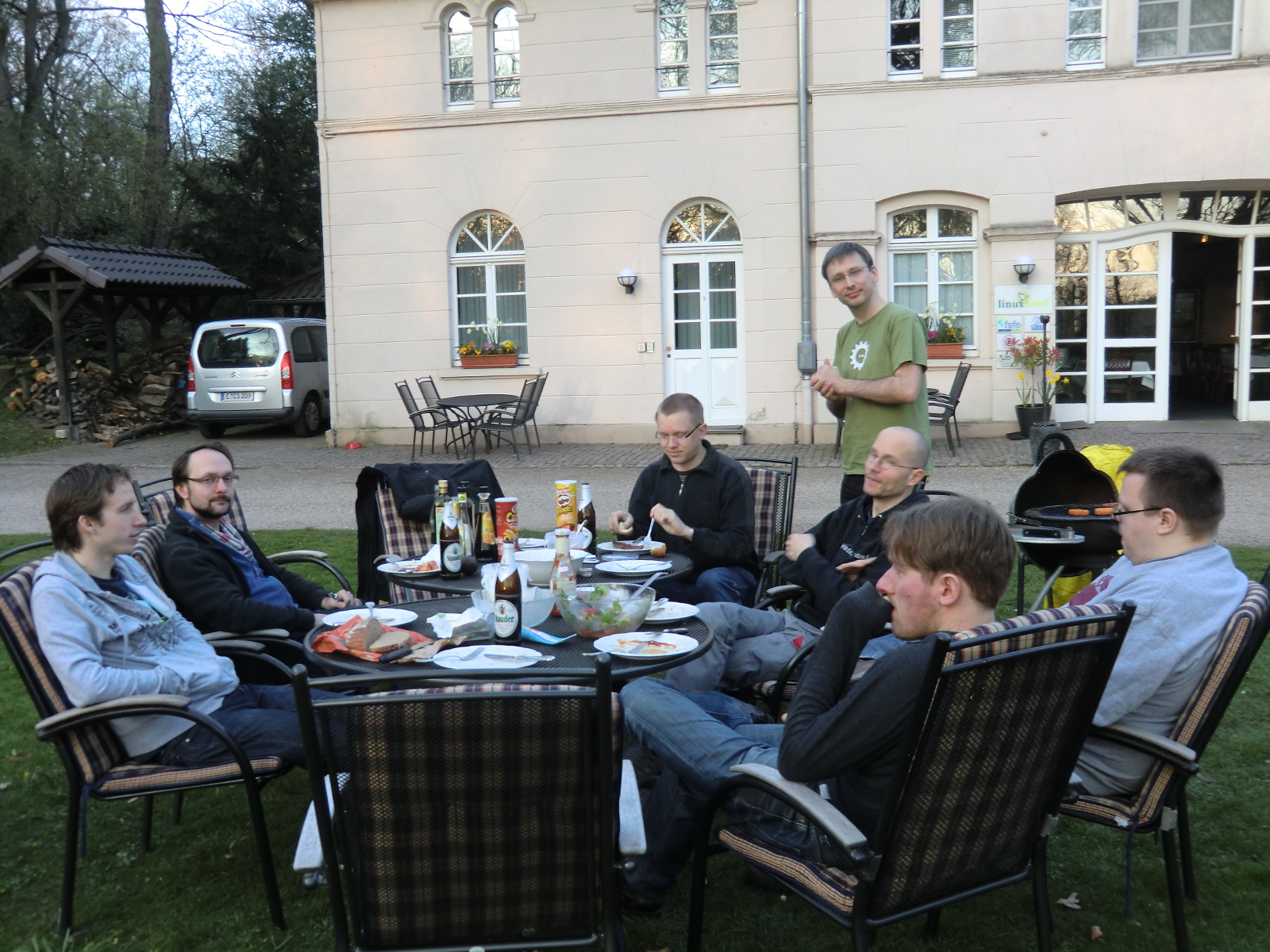
The seventh Debian Groupware Meeting was held in the LinuxHotel, Essen, Germany. We had one remote hacker from NYC which brings the number of attendants up to 9. This is a short summary of what happened during the weekend: Since we had a nice mix of first time Debian contributors, Debian Maintainers and Debian Developers we had lots of room for discussion and co-working which made this an exciting weekend. Groupphoto by Carsten Sch nert

Gunnar Wolf: Split regarding Docker

I have heard many good things about Docker, and decided to give it a spin on my systems. I think application-level virtualization has a lot to offer to my workflow... But the process to understand and later adopt it has left me somewhat heart-torn. Docker is clearly great technology, but its documentation is... Condescending and completely out of line with what I have grown used to in my years using Linux. First, there is so much simplistic self-praise sprinkled throughout it. There is almost no page I landed on that does not mention how user-friendly and user-centric Docker's commandline arguments are They let you talk in almost plain1 English. What they don't mention is that... Well, that's the way of basically every command-line tool. Of course, as soon as you start specifying details to it, the plain-Englishness starts dilluting into a more realistic English-inspiredness... Then... Things that go against our historical culture. It is often said that Windows documentation tends to be repetitive because users don't have the patience to read a full document. And our man pages are succint and to the point, because in our culture it is expected that users know how to search for the bit of information they are after. But reading documentation that's so excited with itself and praises again and again the same values and virtues, but never gets to the point I am interested in getting at (be it deployment, interoperation, description of the in-disk images+overlays layout, or anything moderately technical) never gets there... makes me quite unhappy. Last (for now)... Such a continuous sales pitch, an insistence on the good virtues, makes me wary of something they might be hiding. Anyway, at least for now, I just wanted to play a bit with it; I will wait at least until there is a backport to the stable Debian version before I consider moving my LXC VMs setup over to Docker (and a backport does not seem trivial to achieve, as Docker has several updated low-level dependencies we are unlikely to see in Wheezy). But I had to vent this. OK, now go back to your regular work ;-)

Russell Coker: Autism and the Treatment of Women Again

Background I ve previously written about the claim that people use Autism as an excuse for bad behavior [1]. In summary it doesn t and such claims instead lead to people not being assessed for Autism. I ve also previously written about empathy and Autism in the context of discussions about conference sexual harassment [2]. The main point is that anyone who s going to blame empathy disorders for the widespread mistreatment of women in society and divert the subject from the actions of average men to men in minority groups isn t demonstrating empathy. Discussions of the actions of average men are so often derailed to cover Autism that the Geek Feminism Wiki has a page about the issue of blaming Autism [3]. The Latest Issue Last year Shanley Kane wrote an informative article for Medium titled What Can Men Do about the treatment of women in the IT industry [4]. It s a good article, I recommend reading it. As an aside @shanley s twitter feed is worth reading [5]. In response to Shanley s article Jeff Atwood wrote an article of the same title this year which covered lots of other things [6]. He writes about Autism but doesn t seem to realise that officially Asperger Syndrome is now Autism according to DSM-V (they decided that separate diagnosis of Autism, Asperger Syndrome, and PDD-NOS were too difficult and merged them). Asperger Syndrome is now a term that refers to historic issues (IE research that was published before DSM-V) and slang use. Gender and the Autism Spectrum Jeff claims that autism skews heavily towards males at a 4:1 ratio and cites the Epidemiology of Autism Wikipedia page as a reference. Firstly that page isn t a great reference, I fixed one major error (which was obviously wrong to anyone who knows anything about Autism and also contradicted the cited reference) in the first section while writing this post. The Wikipedia page cites a PDF about the Epidemiology of Autism that claims the 4.3:1 ratio of boys to girls [7]. However that PDF is a summary of other articles and the one which originated the 4.3:1 claim is behind a paywall. One thing that is worth noting in the PDF is that the section containing the 4.3:1 claim also references claims about correlations between race and Autism and studies contradicting such claims it notes the possibility of ascertainment bias . I think that anyone who reads that section should immediately consider the possibility of ascertainment bias in regard to the gender ratio. Most people who are diagnosed with Autism are diagnosed as children. An Autism diagnosis of a child is quite subjective, an important part is an IQ test (where the psychologist interprets the intent of the child in the many cases where answers aren t clear) to compare social skills with IQ. So whether a child is diagnosed is determined by the psychologist s impression of the child s IQ vs the impression of their social skills. Whether a child is even taken for assessment depends on whether they act in a way that s considered to be obviously different. Any child who is suspected of being on the Autism Spectrum will be compared other children who have been diagnosed (IE mostly boys) and this will probably increase the probability that a boy will be assessed. So an Aspie girl might not be assessed because she acts like other Aspie girls not like the Aspie boys her parents and teachers have seen. The way kids act is not solely determined by neuro-type. Our society expects and encourages boys to be louder than girls and take longer and more frequent turns to speak, this is so widespread that I don t think it s possible for parents to avoid it if their kids are exposed to the outside world. Because of this boys who would be diagnosed with Asperger Syndrome by DSM-IV tend to act in ways that are obviously different from other kids. While the combination of Autism and the the social expectations on girls tends to result in girls who are quiet, shy, and apologetic. The fact that girls are less obviously different and that their differences cause fewer difficulties for parents and teachers makes them less likely to be assessed. Note that the differences in behavior of boys and girls who have been diagnosed is noted by the professionals (and was discussed at a conference on AsperGirls that my wife attended) while the idea that this affects assessment rates is my theory. Jeff also cites the book The Essential Difference: Male And Female Brains And The Truth About Autism by Professor Simon Baron-Cohen (who s (in)famous for his Extreme Male Brain theory). The first thing to note about the Extreme Male Brain theory are that it depends almost entirely on the 4.3:1 ratio of males to females on the Autism Spectrum (which is dubious as I noted above). The only other evidence in support of it is subjective studies of children which suffer from the same cultural issues this is why double blind tests should be used whenever possible. The book Delusions of Gender by Cordelia Fine [8] debunks Simon Baron-Cohen s work among other things. The look inside feature of the Amazon page for Delusions of Gender allows you to read about Simon Baron-Cohen s work [9]. Now even if the Extreme Male Brain theory had any merit it would be a really bad idea to cite it (or a book based on it) if you want to make things better for women in the IT industry. Cordelia s book debunks the science and also shows how such claims about supposed essential difference are taken as exclusionary. The Problem with Jeff Atwood Jeff suggests in his post that men should listen to women. Then he and his followers have a huge flame-war with many women over twitter during which which he tweeted Trying to diversify my follows by following any female voices that engaged me in a civil, constructive way recently . If you only listen to women who agree with you then that doesn t really count as listening to women. When you have a stated policy of only listening to women who agree then it seems to be more about limiting what women may feel free to say around you. The Geek Feminism wiki page about the Tone Argument [10] says the following: One way in which the tone argument frequently manifests itself is as a call for civility. A way to gauge whether a request for civility is sincere or not is to ask whether the person asking for civility has more power along whatever axes are contextually relevant (see Intersectionality) than the person being called incivil , less power, or equal power. Often, people who have the privilege of being listened to and taken seriously level accusations of incivility as a silencing tactic, and label as incivil any speech or behavior that questions their privilege. For example, some men label any feminist thought or speech as hostile or impolite; there is no way for anybody to question male power or privilege without being called rude or aggressive. Likewise, some white people label any critical discussion of race, particularly when initiated by people of color, as incivil. Writing about one topic is also a really good idea. A blog post titled What Can Men Do should be about things that men can do. Not about Autism, speculation about supposed inherent differences between men and women which are based on bad research, gender diversity in various occupations, etc. Following up a post on What Can Men Do with discussion (in blog comments and twitter) about what women should do before they are allowed to join the conversation is ridiculous. Jeff s blog post says that men should listen to women, excluding women based on the tone argument is gross hypocrisy. Swearing Jeff makes a big deal of the fact that Shanley uses some profane language in her tweets. This combines a couple of different ways of silencing women. It s quite common for women to be held to a high standard of ladylike behavior, while men get a free pass on doing the same thing. One example of this is the Geek Feminism article about the results of Sarah Sharp s request for civility in the Linux kernel community [11]. That s not an isolated incident, to the best of my recollection in 20+ years my local Linux Users Group has had only one debate about profanity on mailing lists in that case a woman (who is no longer active in the group) was criticised for using lesser profanity than men used both before and after with no comment (as an experiment I used some gratuitous profanity a couple of weeks later and no-one commented). There is also a common difference in interpretation of expressions of emotion, when a woman seems angry then she invariably has men tell her to change her approach (even when there are obvious reasons for her anger) while when a man is angry the possibility that other people shouldn t make him angry will usually be considered. The issues related to the treatment of women have had a large affect on Shanley s life and her friend s lives. It s quite understandable that she is angry about this. Her use of profanity in tweets seems appropriate to the situation. Other Links Newsweek s Gentlemen in Technology article has a section about Jeff [12], it s interesting to note his history of deleting tweets and editing his post. I presume he will change his post in response to mine and not make any note of the differences. Jacob Kaplan-Moss wrote a good rebuttal to Jeff s post [13]. It s a good article and has some other relevant links that are worth reading.

21 April 2014

John Goerzen: A Dry Spring

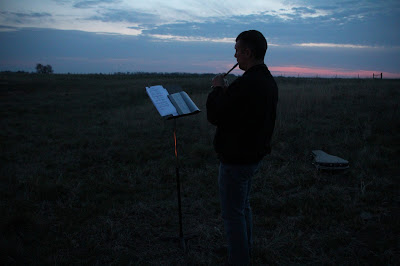
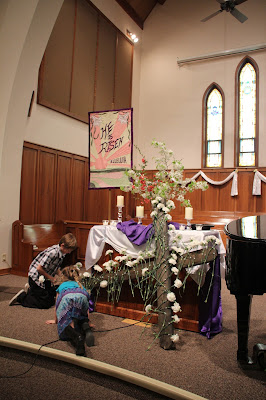
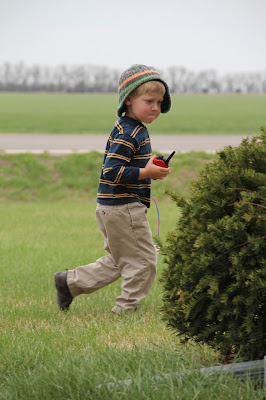
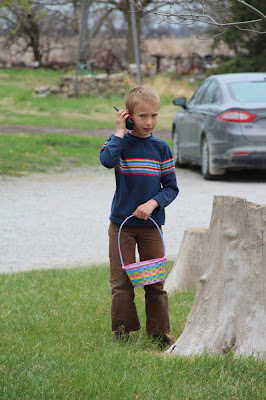
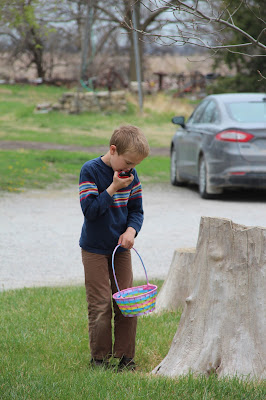
Spring in the prairie is a bit of an odd thing this year. Here and there, near ditches and creeks, a short, soft blanket of lush green grass covers the ground. A few feet away, patches of green are visible between the brown shoots of last year s grass. Some trees are already turning green, purple, red, and white, while others stand still and brown, stubbornly insisting that spring is not here yet. To look at the thermometer may not be much guide either; two days after the temperature was nearly 90, we woke to see a dusting of snow on the ground. It s been dry, terribly try in Kansas. Grass next to a gravel driveway or road often has a chalkish layer of dust on it, kicked up by passing cars or even a stiff wind. The earth thirsts. It is somehow fitting to celebrate Easter, that spring holiday, in the midst of the dry ground, to remember that water is not the only thing that can quench thirst. Easter morning began sleepily, as we got up early to head to a sunrise service. It was in a pasture just outside a small Kansas town, and we gathered there at about 6:15, wearing only light jackets against the breeze. A fire was burning, and there was water on hand to quickly douse any grass that caught first that wasn t supposed to and it was occasionally used. I was doing the prelude for the service, playing on my penny whistle. I enjoyed being able to do that, and was glad that the wind was calm enough that it didn t interfere too much with the music. We sang some hymns, listened to some Bible readings, and just stood in silence, listening to the crackle of the fire, some country dogs playing, and watching the sky to the east transform as the sun came up. Then it was on to church for breakfast, and a break before the Easter service the pipe organ ringing, piano playing with it, and deep trombone and full sanctuary of people singing our 4-part Easter hymns celebrating the day. Laura had the idea of pinning carnations onto the cross, and we got to watch everyone come up and add theirs. Jacob and Oliver enjoyed the sunrise service. They decided they would keep a watchful eye on the first and the dogs, they enjoyed muffins at breakfast and playing in the church after that. But if you are 4 or 7, what is Easter without an Easter egg hunt? And they got in several. Laura and I hid some eggs around the yard. Jacob asked me to use a radio to tell them when the eggs were ready. Here they are, bounding out the door to begin the hunt! And, of course, if you are 4 or 7 and have a geek for a dad, you will naturally think to bring radios with you to the next hunt. To tell your brother what you re finding, of course. It was a good weekend, and in fact, Jacob even volunteered to put up a wet floor sign after he spilled some water: On the last car ride of the day, Jacob decided he would write a story about his Easter. He decided he would publish a big book, and be a famous author and make other children happy. Oliver, of course, decided he needed an Easter story also. We couldn t very well publish a book in the car, but I did manage to use my phone to capture their stories. It s been a long and busy week, but there is much to be joyful about, even when tired.

Russ Allbery: Review: Hyperbole and a Half

Review: Hyperbole and a Half, by Allie Brosh
Publisher: Touchstone
Copyright: November 2013
ISBN: 1-4767-6459-X
Format: Graphic novel
Pages: 373
It's fundamentally pointless to write this review. Some number of you have already heard of Hyperbole and a Half. Most of that group already own this book and are only reading this review so that you can remember how much fun you had reading it. But, even better, you could just stop reading this review and go read the book again. Some of you who have heard of Hyperbole and a Half didn't know that Allie Brosh had published a book. If that's you, you're probably not reading this review any more, since you're now at your favorite book seller buying a copy of the book, rendering the review somewhat pointless. For those of you who have not heard of Hyperbole and a Half, there's no need to read a review, because it's a blog. So, rather than reading this review, you can just follow that link and read it for yourself. If you find yourself laughing uncontrollably (and occasionally crying) and going "where can I get more of this?", well, there's a book. Which you could have also found out from the blog itself. Like I said, not much point. If you read the blog and don't particularly care for it, well, I greatly respect your position. The diversity of taste in the human race is what leads to our wonderful variety of culture, philosophy, and art, and I appreciate your substantial contribution to that diversity. However, you should now make a mental note to never trust my humor recommendations, and you shouldn't let this review change your mind. But, since I'm here, I may as well write a review anyway. Hyperbole and a Half is, as mentioned, a blog by Allie Brosh. Most of the posts are quite long and substantial and in the form of cartoons mixed with text, usually (but not always) telling some sort of story. The cartoon style is what is often called "MS Paint," meaning that it looks like something drawn in Microsoft Paint with its most basic tools. (Other examples of this style are the Oatmeal and Homestuck, although Brosh stays consistently with a rawer art style than either of those.) It looks extremely simple, like child drawings (and early childhood inspires much of Brosh's material), but once one gets used to it, one realizes that Brosh gets amazing expressiveness and character out of the art style. As an aside, yes, I am wholeheartedly recommending a book that is full of material about young children. Brosh is that good. The subtitle of this book is "unfortunate situations, flawed coping mechanisms, mayhem, and other things that happened," and it's mostly based on (exaggerated) incidents that occurred in Brosh's life. Most of them are hilarious. Some of them are both hilarious and stunning psychological insights. She has an amazing knack for storytelling and for exaggerating just the right moments of the story, or summing up emotions in a wonderful turn of phrase or a picture. She's also amazingly good at telling embarrassing stories about herself in a way that makes you empathize rather than just cringe, and then come away feeling like you understand both her and yourself better. If you've wandered around the Internet much, you have probably run across the phrase "clean ALL the things!" and the corresponding picture. That's from Hyperbole and a Half (specifically, "This is Why I'll Never Be an Adult") and is included in this book (improved; see below). It's even better in context. But, beyond storytelling, the other thing Brosh is amazingly good at is capturing internal mental states and emotions in a way that the reader understands and those who have experienced the emotion immediately go "yes, THAT." The apex of this is her two-part post on depression, which is hands-down the best description of depression that I've ever read. That judgment has been echoed by multiple friends of mine with depression. And yes, both of those posts are included in the book as well, although you can also read them on the web. As you've probably noticed, this book is partly a collection of material that's freely available on the web. Unlike some web comics collections, it's not entirely a reprint collection; there are entirely new stories here (which for me was enough by itself to buy the book). Brosh's post on the book says that it's about 50% new material. But the ones that aren't original have been edited and improved, sometimes substantially. For example, I did a quick comparison of the book version with the web version of "This is Why I'll Never be an Adult" and found Brosh redrew all of the cartoons for the story. The book is also gorgeous, if you care about such things like I do: high quality paper, thick pages, vibrant colors, and a comfortable heft to the hardcover version. It's the sort of book that feels like it will survive for decades, which is good since I intend to re-read it for decades. Brosh has a lot of material on-line, so obviously only a small fraction made it into the book and there's more to discover on the blog. I can particularly recommend "The Alot is Better Than You at Everything" and "Boyfriend Doesn't Have Ebola. Probably.". The latter, which is mostly about creating a better pain scale, is my favorite from the blog that didn't make it into the book. And there are two more examples of the sort of thing that you'll getting here. So ends the probably pointless review. I absolutely adore Hyperbole and a Half. It is my favorite web comic, even surpassing XKCD, which is saying something. Even if there were no material, I would have bought this book in hardcover to support Brosh and to have a high-quality printing of the blog posts. The reworkings and improvements of the republished material and the brand new additions are just bonuses. But there's no need to take my word for it; the best possible advertisement for Brosh's work is on-line, from which you can easily determine if you'll enjoy this book as much as I did. Even the back cover and the inside flaps are awesome. Rating: 10 out of 10

Russell Coker: Sociological Images 2014

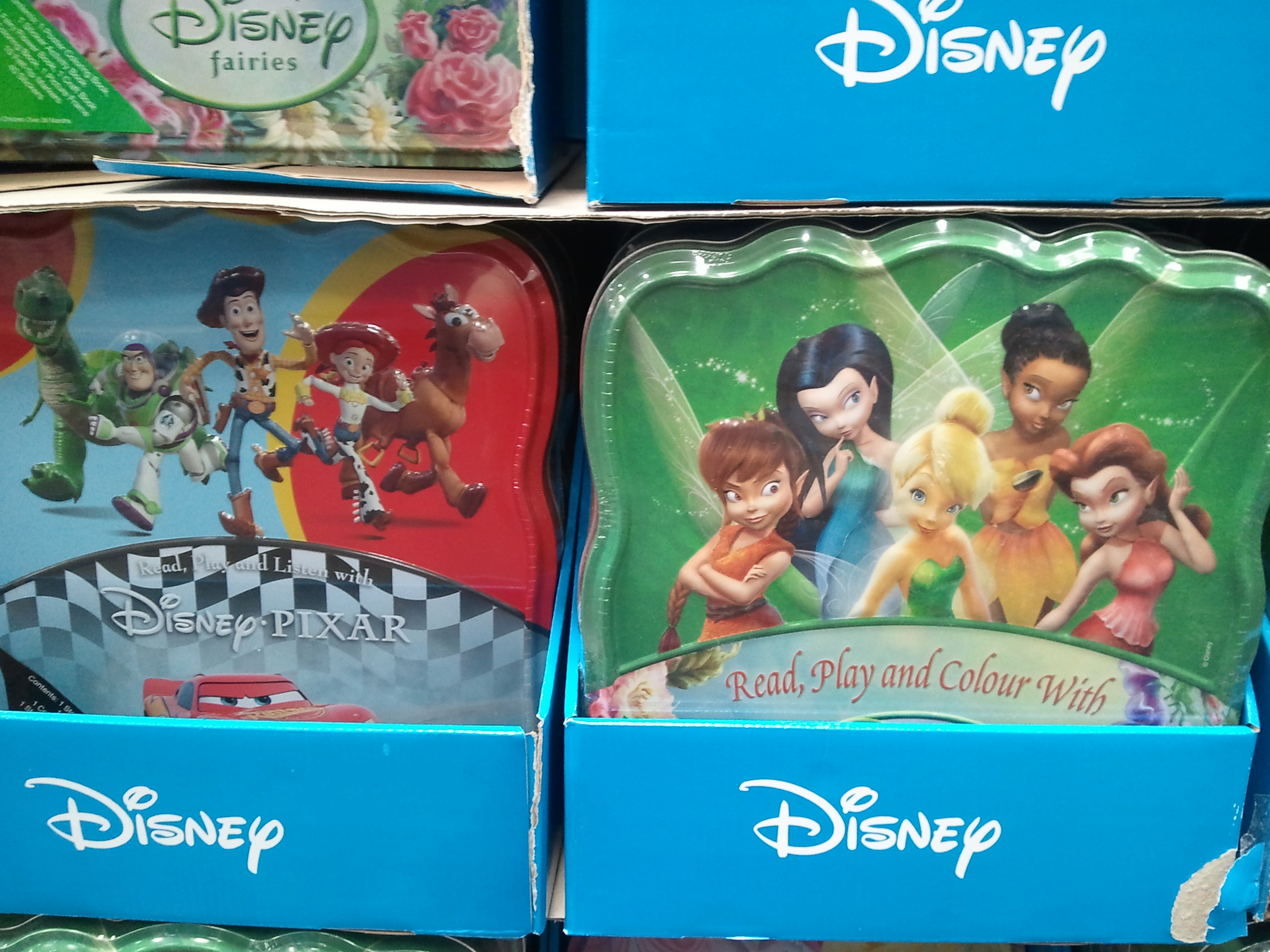
White Trash The above poster was on a bridge pylon in Flinders St in 2012. It s interesting to see what the Fringe Festival people consider to be associated with white trash . They claim homophobia is a white trash thing however lower class people have little political power and the fact that we still don t have marriage equality in Australia is clear evidence that homophobia is prevalent among powerful people. Toys vs Fairies Fairies look pretty while boys toys do things I took the above photo at Costco in 2012. I think it s worth noting the way that the Disney Fairies (all female and marketed to a female audience) are standing around looking pretty while the Toy Story characters (mostly male and marketed to a male audience) are running out to do things. Having those items side by side on the shelf was a clear example of a trend in toys towards girls being encouraged to be passive while boys are doing things. The Toy Story pack has one female character, so it could be interpreted as being aimed at both boys and girls. But even that interpretation doesn t remove the clear gender difference. It seems ironic to me that the descriptions on the boxes are Read, Play, and Listen for the Toy Story pack and Read, Play, and Colour on the Fairies pack. Colouring is more active than listening so the pictures don t match the contents. Make Up vs Tools Girls chocolate is make-up and boys chocolate is tools I took the above photo in an Aldi store in early 2013, today I was in Aldi and noticed that the same chocolate is still on sale. A clear and pointless gender difference. Rumor has it that some of the gender difference in kids clothing is so that a child can t wear the clothes of an older sibling of different gender, but chocolate only gets eaten once so there is no reason for this. Oath The above poster was inside the male toilet at Melbourne University in 2013. It would probably be good to have something like that on display all the time instead of just for one event. Locks Locks with inscriptions on a bridge on the Yarra River in Melbourne I took the above picture early this year, it shows hundreds of padlocks attached to a bridge across the Yarra River in Melbourne. Each padlock has a message written or inscribed in it, mostly declarations of love. I first noticed this last year, I m not sure how long it s been up. There was nothing formal about this (no signs about it), people just see it and decide that they want to add to it. I guess that the council cuts some of them off periodically as the number of locks doesn t seem to be increasing much in recent times. It would be interesting to do some research into how many locks are needed to start one of these. It would also be interesting to discover whether the nature of the inscriptions determines the speed at which it takes off, would a bunch of padlocks with messages like I Love Linux inspire others as well as messages declaring love for random people? All that is required is some old locks and an engraving tool. I wonder what the social norm might be regarding messing with those locks. If I was to use those padlocks to practice the sport of lock-picking (which I learned when in Amsterdam) I wonder whether random bystanders would try to discourage me. It seems likely that picking the locks and taking them away would get a negative reaction but I wonder whether picking them one at a time and replacing them (or maybe moving them to another wire) would get a reaction. Blackface for Schoolkids teachers choice blackface and yellowface masks A craft shop at the Highpoint shopping center in Melbourne is selling Teacher s Choice brand Multicultural Face Masks . Multicultural is a well regarded term in education, teaching children about other cultures is a good concept but can be implemented really badly. When I was in high school the subject Social Studies seemed to have an approach of look how weird people are in other places instead of teaching the kids anything useful. Sociological Images has an informative article on the Australian Hey Hey it s Saturday blackface incident in 2009 [1]. The idea of these masks seems to involve students dressing up as caricatures of other races. The mask which looks like someone s idea of a Geisha is an even bigger WTF, mixing what the package calls culture (really race) with sex work. When I visited Tokyo I got the impression that French maids fill a similar niche to Geisha for younger Japanese men and the maid cafe thing is really popular there. I think it s interesting to consider the way that a French maid costume is regarded differently to a Geisha costume. I expect that Teacher s Choice doesn t sell French maid costumes. Delicious Cow picture of a bovine named Delicious Usually meat is advertised in a way that minimises the connection to living animals. Often adverts just show cuts of meat and don t make any mention of animals and when animals are shown they are in the distance. The above picture was on the wall at a Grill d burger restaurant in Point Cook. It shows a bovine (looks like a bull even though I believe that cows are the ones that are usually eaten) with a name-tag identifying it as Delicious . The name tag personalises the animal which is an uncommon thing to do when parts of an animal are going to be eaten. Of the animals that are commonly eaten it seems that the general trend is to only show fish as complete live animals, presumably because people can identify with mammals such as cattle in a way that they can t identify with fish. Fish are also the only complete animals that are shown dead, adverts for fish that are sold as parts (EG salmon and tuna) often show complete dead fish. But I ve never seen a meat advert that shows a complete dead cow or sheep.

Matthew Garrett: Home entertainment implementations are pretty appalling

I picked up a Panasonic BDT-230 a couple of months ago. Then I discovered that even though it appeared fairly straightforward to make it DVD region free (I have a large pile of PAL region 2 DVDs), the US models refuse to play back PAL content. We live in an era of software-defined functionality. While Panasonic could have designed a separate hardware SKU with a hard block on PAL output, that would seem like unnecessary expense. So, playing with the firmware seemed like a reasonable start.

Panasonic provide a nice download site for firmware updates, so I grabbed the most recent and set to work. Binwalk found a squashfs filesystem, which was a good sign. Less good was the block at the end of the firmware with "RSA" written around it in large letters. The simple approach of hacking the firmware, building a new image and flashing it to the device didn't appear likely to work.

Which left dealing with the installed software. The BDT-230 is based on a Mediatek chipset, and like most (all?) Mediatek systems runs a large binary called "bdpprog" that spawns about eleventy billion threads and does pretty much everything. Runnings strings over that showed, well, rather a lot, but most promisingly included a reference to "/mnt/sda1/vudu/vudu.sh". Other references to /mnt/sda1 made it pretty clear that it was the mount point for USB mass storage. There were a couple of other constraints that had to be satisfied, but soon attempting to run Vudu was actually setting a blank root password and launching telnetd.

/acfg/config_file_global.txt was the next stop. This is a set of tokens and values with useful looking names like "IDX_GB_PTT_COUNTRYCODE". I tried changing the values, but unfortunately made a poor guess - on next reboot, the player had reset itself to DVD region 5, Blu Ray region C and was talking to me in Russian. More inconveniently, the Vudu icon had vanished and I couldn't launch a shell any more.

But where there's one obvious mechanism for running arbitrary code, there's probably another. /usr/local/bin/browser.sh contained the wonderful line:
export LD_PRELOAD=/mnt/sda1/bbb/libSegFault.so
, so then it was just a matter of building a library that hooked open() and launched inetd and dropping that into the right place, and then opening the browser.

This time I set the country code correctly, rebooted and now I can actually watch Monkey Dust again. Hurrah! But, at the same time, concerning. This software has been written without any concern for security, and it listens on the network by default. If it took me this little time to find two entirely independent ways to run arbitrary code on the device, it doesn't seem like a stretch to believe that there are probably other vulnerabilities that can be exploited with less need for physical access.

The depressing part of this is that there's no reason to believe that Panasonic are especially bad here - especially since a large number of vendors are shipping much the same Mediatek code, and so probably have similar (if not identical) issues. The future is made up of network-connected appliances that are using your electricity to mine somebody else's Dogecoin. Our nightmarish dystopia may be stranger than expected.

comment count unavailable comments

19 April 2014

Joey Hess: propellor-driven DNS and backups

Took a while to get here, but Propellor 0.4.0 can deploy DNS servers and I just had it deploy mine. Including generating DNS zone files. Configuration is dead simple, as far as DNS goes:
     & alias "ns1.example.com"
        & Dns.secondary hosts "joeyh.name"
                & Dns.primary hosts "example.com"
                        (Dns.mkSOA "ns1.example.com" 100)
                        [ (RootDomain, NS $ AbsDomain "ns1.example.com")
            , (RootDomain, NS $ AbsDomain "ns2.example.com")
                        ]
The awesome thing is that propellor fills in all the other information in the zone file by looking at the properties of the hosts it knows about.
 , host "blue.example.com"
        & ipv4 "192.168.1.1"
        & ipv6 "fe80::26fd:52ff:feea:2294"
        & alias "example.com"
        & alias "www.example.com"
        & alias "example.museum"
        & Docker.docked hosts "webserver"
             requres  backedup "/var/www"
        
        & alias "ns2.example.com"
        & Dns.secondary hosts "example.com"
When it sees this host, Propellor adds its IP addresses to the example.com DNS zone file, for both its main hostname ("blue.example.com"), and also its relevant aliases. (The .museum alias would go into a different zone file.) Multiple hosts can define the same alias, and then you automaticlly get round-robin DNS. The web server part of of the blue.example.com config can be cut and pasted to another host in order to move its web server to the other host, including updating the DNS. That's really all there is to is, just cut, paste, and commit! I'm quite happy with how that worked out. And curious if Puppet etc have anything similar.
One tricky part of this was how to ensure that the serial number automtically updates when changes are made. The way this is handled is Propellor starts with a base serial number (100 in the example above), and then it adds to it the number of commits in its git repository. The zone file is only updated when something in it besides the serial number needs to change. The result is nice small serial numbers that don't risk overflowing the (so 90's) 32 bit limit, and will be consistent even if the configuration had Propellor setting up multiple independent master DNS servers for the same domain.
Another recent feature in Propellor is that it can use Obnam to back up a directory. With the awesome feature that if the backed up directory is empty/missing, Propellor will automcatically restore it from the backup. Here's how the backedup property used in the example above might be implemented:
backedup :: FilePath -> Property
backedup dir = Obnam.backup dir daily
    [ "--repository=sftp://rsync.example.com/~/webserver.obnam"
    ] Obnam.OnlyClient
     requires  Ssh.keyImported SshRsa "root"
     requires  Ssh.knownHost hosts "rsync.example.com" "root"
     requires  Gpg.keyImported "1B169BE1" "root"
Notice that the Ssh.knownHost makes root trust the ssh host key belonging to rsync.example.com. So Propellor needs to be told what that host key is, like so:
 , host "rsync.example.com"
        & ipv4 "192.168.1.4"
        & sshPubKey "ssh-rsa blahblahblah"
Which of course ties back into the DNS and gets this hostname set in it. But also, the ssh public key is available for this host and visible to the DNS zone file generator, and that could also be set in the DNS, in a SSHFP record. I haven't gotten around to implementing that, but hope at some point to make Propellor support DNSSEC, and then this will all combine even more nicely.
By the way, Propellor is now up to 3 thousand lines of code (not including Utility library). In 20 days, as a 10% time side project.

Russell Coker: Swap Space and SSD

In 2007 I wrote a blog post about swap space [1]. The main point of that article was to debunk the claim that Linux needs a swap space twice as large as main memory (in summary such advice is based on BSD Unix systems and has never applied to Linux and that most storage devices aren t fast enough for large swap). That post was picked up by Barrapunto (Spanish Slashdot) and became one of the most popular posts I ve written [2]. In the past 7 years things have changed. Back then 2G of RAM was still a reasonable amount and 4G was a lot for a desktop system or laptop. Now there are even phones with 3G of RAM, 4G is about the minimum for any new desktop or laptop, and desktop/laptop systems with 16G aren t that uncommon. Another significant development is the use of SSDs which dramatically improve speed for some operations (mainly seeks). As SATA SSDs for desktop use start at about $110 I think it s safe to assume that everyone who wants a fast desktop system has one. As a major limiting factor in swap use is the seek performance of the storage the use of SSDs should allow greater swap use. My main desktop system has 4G of RAM (it s an older Intel 64bit system and doesn t support more) and has 4G of swap space on an Intel SSD. My work flow involves having dozens of Chromium tabs open at the same time, usually performance starts to drop when I get to about 3.5G of swap in use. While SSD generally has excellent random IO performance the contiguous IO performance often isn t much better than hard drives. My Intel SSDSC2CT12 300i 128G can do over 5000 random seeks per second but for sustained contiguous filesystem IO can only do 225M/s for writes and 274M/s for reads. The contiguous IO performance is less than twice as good as a cheap 3TB SATA disk. It also seems that the performance of SSDs aren t as consistent as that of hard drives, when a hard drive delivers a certain level of performance then it can generally do so 24*7 but a SSD will sometimes reduce performance to move blocks around (the erase block size is usually a lot larger than the filesystem block size). It s obvious that SSDs allow significantly better swap performance and therefore make it viable to run a system with more swap in use but that doesn t allow unlimited swap. Even when using programs like Chromium (which seems to allocate huge amounts of RAM that aren t used much) it doesn t seem viable to have swap be much bigger than 4G on a system with 4G of RAM. Now I could buy another SSD and use two swap spaces for double the overall throughput (which would still be cheaper than buying a PC that supports 8G of RAM), but that still wouldn t solve all problems. One issue I have been having on occasion is BTRFS failing to allocate kernel memory when managing snapshots. I m not sure if this would be solved by adding more RAM as it could be an issue of RAM fragmentation I won t file a bug report about this until some of the other BTRFS bugs are fixed. Another problem I have had is when running Minecraft the driver for my ATI video card fails to allocate contiguous kernel memory, this is one that almost certainly wouldn t be solved by just adding more swap but might be solved if I tweaked the kernel to be more aggressive about swapping out data. In 2007 when using hard drives for swap I found that the maximum space that could be used with reasonable performance for typical desktop operations was something less than 2G. Now with a SSD the limit for usable swap seems to be something like 4G on a system with 4G of RAM. On a system with only 2G of RAM that might allow the system to be usable with swap being twice as large as RAM, but with the amounts of RAM in modern PCs it seems that even SSD doesn t allow using a swap space larger than RAM for typical use unless it s being used for hibernation. Conclusion It seems that nothing has significantly changed in the last 7 years. We have more RAM, faster storage, and applications that are more memory hungry. The end result is that swap still isn t very usable for anything other than hibernation if it s larger than RAM. It would be nice if application developers could stop increasing the use of RAM. Currently it seems that the RAM requirements for Linux desktop use are about 3 years behind the RAM requirements for Windows. This is convenient as a PC is fully depreciated according to the tax office after 3 years. This makes it easy to get 3 year old PCs cheaply (or sometimes for free as rubbish) which work really well for Linux. But it would be nice if we could be 4 or 5 years behind Windows in terms of hardware requirements to reduce the hardware requirements for Linux users even further.

18 April 2014

Thorsten Glaser: Stay off my computer, puppet!

I was out, seeing something that wasn t there yet when I was at school (the web was not ubiquitous, back then), and decided to have a look:
pageok

Ugh. Oh well, PocketIE doesn t provide a View Source thingy, so I asked Natureshadow (who got the same result on his Android, and had no View Source either apparently, so he used cURL to see it). We saw (here, re-enacted using ftp(1)):

	tg@blau:~ $ ftp -Vo - http://www.draitschbrunnen.de/
	<!-- pageok -->
	<!-- managed by puppet -->
	<html>
	<pre>pageok</pre>
	</html>
 

This is the final straw after puppet managed to trash a sudoers(5) at work (I warned people to not introduce it) now it breaks websites.

(Of course, tools are useful, but at best to the skill of their users. Merely dumbly copying recipes from the net without any understanding just makes debugging harder for those of us with skills.) ObQuestion: Does anyone have a transcript (into UTF-8) and a translation for the other half of the OpenBSD 2.8 poster? (I get asked this regularily.)
Update: One person sent me the Kanji and Kana for it in UTF-8 , and they and one more person told me it s Hands off my machine! or Don t lay a hand on my machine! . Now I m not studying Japanese, but it LGTM in FixedMisc [MirOS], and JMdict from MirPorts says: ore no mashin ni te (w)o dasu na (roughly: my machine; particle; hands; particle; put out; prohibition) Thanks all, now I know what to tell visitors who wonder about that poster on my wall. ObTip: I can install a few hundred Debian VMs at work manually before the effort needed to automate d-i would amortise. So I decided not to. Coworkers are shocked. I keep flexibility (can decide to have machines differ), and the boss accepts my explanations. Think before doing automation just for the sake of automation!

15 April 2014

Dirk Eddelbuettel: BH release 1.54.0-2

Yesterday's release of RcppBDT 0.2.3 lead to an odd build error. If one used at the same time a 32-bit OS, a compiler as recent as g++ 4.7 and the Boost 1.54.0 headers (directly or via the BH package) then the file lexical_cast.hpp barked and failed to compile for lack of an 128-bit integer (which is not a surprise on a 32-bit OS). After looking at this for a bit, and looking at some related bug report, I came up with a simple fix (which I mentioned in an update to the RcppBDT 0.2.3 release post). Sleeping over it, and comparing to the Boost 1.55 file, showed that the hunch was right, and I have since made a new release 1.54.0-2 of the BH package which contains the fix.
Changes in version 1.54.0-2 (2014-04-14)
  • Bug fix to lexical_cast.hpp which now uses the test for INT128 which the rest of Boost uses, consistent with Boost 1.55 too.
Courtesy of CRANberries, there is also a diffstat report for the most recent release. Comments and suggestions are welcome via the mailing list or issue tracker at the GitHub repo.

This post by Dirk Eddelbuettel originated on his Thinking inside the box blog. Please report excessive re-aggregation in third-party for-profit settings.

10 April 2014

Joey Hess: Kite: a server's tale

My server, Kite, is finishing its 20th year online. It started as kite.resnet.cornell.edu, a 486 under the desk in my dorm room. Early on, it bounced around the DNS -- kite.ithaca.ny.us, kite.ml.org, kite.preferred.com -- before landing on kite.kitenet.net. The hardware has changed too, from a succession of desktop machines, it eventually turned into a 2u rack-mount server in the CCCP co-op. And then it went virtual, and international, spending a brief time in Amsterdam, before relocating to England and the kvm-hosting co-op. Through all this change, and no few reinstalls from scratch, it's had a single distinct personality. This is a multi-user unix system, of the old school, carefully (and not-so-carefully) configured and administered to perform a grab-bag of functions. Whatever the users need. I read the olduse.net hacknews newsgroup, and I see, in their descriptions of their server in 1984, the prototype of Kite and all its ilk. It's consistently had a small group of users, a small subset of my family and friends. Not quite big enough to really turn into a community, and we wall and talk less than we once did.
Exhibit: Kite as it appeared in the 90's [Intentionally partially broken, being able to read the cgi source code is half the fun.] Kite was an early server on the WWW, and garnered mention in books and print articles. Not because it did anything important, but because there were few enough interesting web sites that it slightly stood out.

Many times over these 20 years I've wondered what will be the end of Kite's story. It seemed like I would either keep running it indefinitely, or perhaps lose interest. (Or funding -- it's eaten a lot of cash over the years, especially before the current days of $5/month VPS hosting.) But I failed to anticipate what seems to really be happening to it. Just as I didn't fathom, when kite was perched under my desk, that it would one day be some virtual abstract machine in a unknown computer in anther country. Now it seems that what will happen to Kite is that most of the important parts of it will split off into a constellation of specialized servers. The website, including the user sites, has mostly moved to branchable.com. The DNS server, git server and other crucial stuff is moving to various VPS instances and containers. (The exhibit above is just one more automatically deployed, soulless container..) A large part of Kite has always been about me playing with bleeding-edge stuff and installing random new toys; that has moved to a throwaway personal server at cloudatcost.com which might be gone tomorrow (or might keep running for free for years). What it seems will be left is a shell box, with IMAP access to a mail server, and a web server for legacy /~user/ sites, and a few tools that my users need (including that pine program some of them are still stuck on.) Will it be worth calling that Kite?
[ Kite users: This transition needs to be done by December when the current host is scheduled to be retired. ]

Next.

Previous.