Search Results: "nate"

28 July 2020

Dirk Eddelbuettel: ttdo 0.0.6: Bugfix

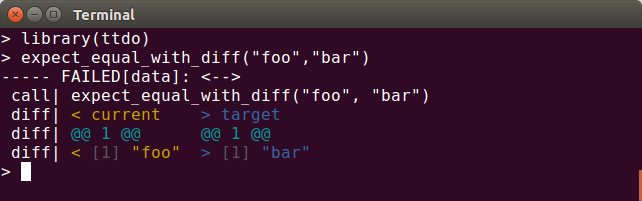
A bugfix release of our (still small) ttdo package arrived on CRAN overnight. As introduced last fall, the ttdo package extends the most excellent (and very minimal / zero depends) unit testing package tinytest by Mark van der Loo with the very clever and well-done diffobj package by Brodie Gaslam to give us test results with visual diffs: ttdo screenshot This release corrects a minor editing error spotted by the ever-vigilant John Blischak. The NEWS entry follow.

Changes in ttdo version 0.0.6 (2020-07-27)
  • Correct a minor editing mistake spotted by John Blischak.

CRANberries provides the usual summary of changes to the previous version. Please use the GitHub repo and its issues for any questions. If you like this or other open-source work I do, you can now sponsor me at GitHub. For the first year, GitHub will match your contributions.

This post by Dirk Eddelbuettel originated on his Thinking inside the box blog. Please report excessive re-aggregation in third-party for-profit settings.

Russ Allbery: Review: The City in the Middle of the Night

Review: The City in the Middle of the Night, by Charlie Jane Anders
Publisher: Tor
Copyright: February 2019
Printing: February 2020
ISBN: 1-4668-7113-X
Format: Kindle
Pages: 366
January is a tidally-locked planet divided between permanent night and permanent day, an unfortunate destination for a colony starship. Now, humans cling to a precarious existence along the terminator, huddling in two wildly different cities and a handful of smaller settlements, connected by a road through the treacherous cold. The novel opens with Sophie, a shy university student from the dark side of the city of Xiosphant. She has an overwhelming crush on Bianca, her high-class, self-confident roommate and one of the few people in her life to have ever treated her with compassion and attention. That crush, and her almost non-existent self-esteem, lead her to take the blame for Bianca's petty theft, resulting in what should have been a death sentence. Sophie survives only because she makes first contact with a native intelligent species of January, one that the humans have been hunting for food and sport. Sadly, I think this is enough Anders for me. I've now bounced off two of her novels, both for structural reasons that I think go deeper than execution and indicate a fundamental mismatch between what Anders wants to do as an author and what I'm looking for as a reader. I'll talk more about what this book is doing in a moment, but I have to start with Bianca and Sophie. It's difficult for me to express how much I loathed this relationship and how little I wanted to read about it. It took me about five pages to peg Bianca as a malignant narcissist and Sophie's all-consuming crush as dangerous codependency. It took the entire book for Sophie to figure out how awful Bianca is to her, during which Bianca goes through the entire abusive partner playbook of gaslighting, trivializing, contingent affection, jealous rage, and controlling behavior. And meanwhile Sophie goes back to her again, and again, and again, and again. If I hadn't been reading this book on a Kindle, I think it would have physically hit a wall after their conversation in the junkyard. This is truly a matter of personal taste and preference. This is not an unrealistic relationship; this dynamic happens in life all too often. I'm sure there is someone for whom reading about Sophie's spectacularly poor choices is affirming or cathartic. I've not personally experienced this sort of relationship, which doubtless matters. But having empathy for someone who is making awful and self-destructive life decisions and trusting someone they should not be trusting and who is awful to them in every way is difficult work. Sophie is the victim of Bianca's abuse, but she does so many stupid and ill-conceived things in support of this twisted relationship that I found it very difficult to not get angry at her. Meanwhile, Anders writes Sophie as so clearly fragile and uncertain and devoid of a support network that getting angry at her is like kicking a puppy. The result for me was spending nearly an entire book in a deeply unpleasant state of emotional dissonance. I may be willing to go through that for a close friend, but in a work of fiction it's draining and awful and entirely not fun. The other viewpoint character had the opposite problem for me. Mouth starts the book as a traveling smuggler, the sole survivor of a group of religious travelers called the Citizens. She's practical, tough, and guarded. Beneath that, I think the intent was to show her as struggling to come to terms with the loss of her family and faith community. Her first goal in the book is to recover a recording of Citizen sacred scripture to preserve it and to reconnect with her past. This sounds interesting on the surface, but none of it gelled. Mouth never felt to me like someone from a faith community. She doesn't act on Citizen beliefs to any meaningful extent, she rarely talks about them, and when she does, her attitude is nostalgia without spirituality. When Mouth isn't pursuing goals that turn out to be meaningless, she aimlessly meanders through the story. Sophie at least has agency and makes some important and meaningful decisions. Mouth is just there, even when Anders does shattering things to her understanding of her past. Between Sophie and Bianca putting my shoulders up around my ears within the first few pages of the first chapter and failing to muster any enthusiasm for Mouth, I said the eight deadly words ("I don't care what happens to these people") about a hundred pages in and the book never recovered. There are parts of the world-building I did enjoy. The alien species that Sophie bonds with is not stunningly original, but it's a good (and detailed) take on one of the alternate cognitive and social models that science fiction has dreamed up. I was comparing the strangeness and dislocation unfavorably to China Mi ville's Embassytown while I was reading it, but in retrospect Anders's treatment is more decolonialized. Xiosphant's turn to Circadianism as their manifestation of order is a nicely understated touch, a believable political overreaction to the lack of a day/night cycle. That touch is significantly enhanced by Sophie's time working in a salon whose business model is to help Xiosphant residents temporarily forget about time. And what glimmers we got of politics on the colony ship and their echoing influence on social and political structures were intriguing. Even with the world-building, though, I want the author to be interested in and willing to expand the same bits of world-building that I'm engaged with. Anders didn't seem to be. The reader gets two contrasting cities along a road, one authoritarian and one libertine, which makes concrete a metaphor for single-axis political classification. But then Anders does almost nothing with that setup; it's just the backdrop of petty warlord politics, and none of the political activism of Bianca's student group seems to have relevance or theoretical depth. It's a similar shallowness as the religion of Mouth's Citizens: We get a few fragments of culture and religion, but without narrative exploration and without engagement from any of the characters. The way the crew of the Mothership was assembled seems to have led to a factional and racial caste system based on city of origin and technical expertise, but I couldn't tell you more than that because few of the characters seem to care. And so on. In short, the world-building that I wanted to add up to a coherent universe that was meaningful to the characters and to the plot seemed to be little more than window-dressing. Anders tosses in neat ideas, but they don't add up to anything. They're just background scenery for Bianca and Sophie's drama. The one thing that The City in the Middle of the Night does well is Sophie's nervous but excited embrace of the unknown. It was delightful to see the places where a typical protagonist would have to overcome a horror reaction or talk themselves through tradeoffs and where Sophie's reaction was instead "yes, of course, let's try." It provided an emotional strength to an extended first-contact exploration scene that made it liberating and heart-warming without losing the alienness. During that part of the book (in which, not coincidentally, Bianca does not appear), I was able to let my guard down and like Sophie for the first time, and I suspect that was intentional on Anders's part. But, overall, I think the conflict between Anders's story-telling approach and my preferences as a reader are mostly irreconcilable. She likes to write about people who make bad decisions and compound their own problems. In one of the chapters of her non-fiction book about writing that's being serialized on Tor.com she says "when we watch someone do something unforgivable, we're primed to root for them as they search desperately for an impossible forgiveness." This is absolutely not true for me; when I watch a character do something unforgivable, I want to see repudiation from the protagonists and ideally some clear consequences. When that doesn't happen, I want to stop reading about them and find something more enjoyable to do with my time. I certainly don't want to watch a viewpoint character insist that the person who is doing unforgivable things is the center of her life. If your preferences on character and story arc are closer to Anders's than mine, you may like this book. Certainly lots of people did; it was nominated for multiple awards and won the Locus Award for Best Science Fiction Novel. But despite the things it did well, I had a truly miserable time reading it and am not anxious to repeat the experience. Rating: 4 out of 10

27 July 2020

Russ Allbery: Review: Rise of the Warrior Cop

Review: Rise of the Warrior Cop, by Radley Balko
Publisher: PublicAffairs
Copyright: 2013
ISBN: 1-61039-212-4
Format: Kindle
Pages: 336
As the United States tries, in fits and starts, to have a meaningful discussion about long-standing police racism, brutality, overreach, corruption, and murder, I've realized that my theoretical understanding of the history of and alternative frameworks for law enforcement is woefully lacking. Starting with a book by a conservative white guy is not the most ideal of approaches, but it's what I already had on hand, and it won't be the last book I read and review on this topic. (Most of my research so far has been in podcast form. I don't review those here, but I can recommend Ezra Klein's interviews with Ta-Nehisi Coates, Paul Butler, and, most strongly, sujatha baliga.) Rise of the Warrior Cop is from 2013 and has had several moments of fame, no doubt helped by Balko's connections to the conservative and libertarian right. One of the frustrating facts of US politics is that critiques of the justice system from the right (and from white men) get more media attention than critiques from the left. That said, it's a generally well-respected book on the factual history of the topic, and police brutality and civil rights are among the points on which I have stopped-clock agreements with US libertarians. This book is very, very libertarian. In my callow youth, I was an ardent libertarian, so I've read a lot of US libertarian literature. It's a genre with its own conventions that become obvious when you read enough of it, and Rise of the Warrior Cop goes through them like a checklist. Use the Roman Republic (never the Roman Empire) as the starting point for any political discussion, check. Analyze the topic in the context of pre-revolutionary America, check. Spend considerable effort on discerning the opinions of the US founders on the topic since their opinions are always relevant to the modern world, check. Locate some point in the past (preferably before 1960) where the political issue was as good as it has ever been, check. Frame all changes since then as an erosion of rights through government overreach, check. Present your solution as a return to a previous era of respect for civil rights, check. Once you start recognizing the genre conventions, their prevalence in libertarian writing is almost comical. The framing chapters therefore leave a bit to be desired, but the meat of the book is a useful resource. Starting with the 1970s and its use as a campaigning tool by Nixon, Balko traces a useful history of the war on drugs. And starting with the 1980s, the number of cites to primary sources and the evidence of Balko's own research increases considerably. If you want to know how US police turned into military cosplayers with body armor, heavy weapons, and armored vehicles, this book provides a lot of context and history. One of the reasons why I view libertarians as allies of convenience on this specific issue is that drug legalization and disgust with the war on drugs have been libertarian issues for decades. Ideologically honest libertarians (and Balko appears to be one) are inherently skeptical of the police, so when the police overreach in an area of libertarian interest, they notice. Balko makes a solid argument, backed up with statistics, specific programs, legislation, and court cases, that the drug war and its accompanying lies about heavily-armed drug dealers and their supposed threat to police officers was the fuel for the growth of SWAT teams, no-knock search warrants, erosion of legal protections for criminal defendants, and de facto license for the police to ignore the scope and sometimes even the existence of warrants. This book is useful support for the argument that fears for the safety of officers underlying the militarization of police forces are imaginary. One telling point that Balko makes repeatedly and backs with statistical and anecdotal evidence is that the police generally do not use raid tactics on dangerous criminals. On the contrary, aggressive raids are more likely to be used on the least dangerous criminals because they're faster, they're fun for the police (they provide an adrenaline high and let them play with toys), and they're essentially risk-free. If the police believe someone is truly dangerous, they're more likely to use careful surveillance and to conduct a quiet arrest at an unexpected moment. The middle-of-the-night armed break-ins with battering rams, tear gas, and flash-bangs are, tellingly, used against the less dangerous suspects. This is part of Balko's overall argument that police equipment and tactics have become untethered from any realistic threat and have become cultural. He traces an acceleration of that trend to 9/11 and the resulting obsession with terrorism, which further opened the spigot of military hardware and "special forces" training. This became a point of competition between police departments, with small town forces that had never seen a terrorist and had almost no chance of a terrorist incident demanding their own armored vehicles. I've encountered this bizarre terrorism justification personally; one of the reasons my local police department gave in a public hearing for not having a policy against shooting at moving vehicles was "but what if terrorism?" I don't believe there has ever been a local terrorist attack. SWAT in such places didn't involve the special training or dedicated personnel of large city forces; instead, it was a part-time duty for normal police officers, and frequently they were encouraged to practice SWAT tactics by using them at random for some otherwise normal arrest or search. Balko argues that those raids were more exciting than normal police work, leading to a flood of volunteers for that duty and a tendency to use them as much as possible. That in turn normalizes disconnecting police tactics from the underlying crime or situational risk. So far, so good. But despite the information I was able to extract from it, I have mixed feelings about Rise of the Warrior Cop as a whole. At the least, it has substantial limitations. First, I don't trust the historical survey of policing in this book. Libertarian writing makes for bad history. The constraints of the genre require overusing only a few points of reference, treating every opinion of the US founders as holy writ, and tying forward progress to a return to a previous era, all of which interfere with good analysis. Balko also didn't do the research for the historical survey, as is clear from the footnotes. The citations are all to other people's histories, not to primary sources. He's summarizing other people's histories, and you'll almost certainly get better history by finding well-respected historians who cover the same ground. (That said, if you're not familiar with Peel's policing principles, this is a good introduction.) Second, and this too is unfortunately predictable in a libertarian treatment, race rarely appears in this book. If Balko published the same book today, I'm sure he would say more about race, but even in 2013 its absence is strange. I was struck while reading by how many examples of excessive police force were raids on west coast pot farms; yes, I'm sure that was traumatic, but it's not the demographic I would name as the most vulnerable to or affected by police brutality. West coast pot growers are, however, mostly white. I have no idea why Balko made that choice. Perhaps he thought his target audience would be more persuaded by his argument if he focused on white victims. Perhaps he thought it was an easier and less complicated story to tell. Perhaps, like a lot of libertarians, he doesn't believe racism has a significant impact on society because it would be a market failure. Perhaps those were the people who more readily came to mind. But to talk about police militarization, denial of civil rights, and police brutality in the United States without putting race at the center of both the history and the societal effects leaves a gaping hole in the analysis. Given that lack of engagement, I also am dubious of Balko's policy prescriptions. His reform suggestions aren't unreasonable, but they stay firmly in the centrist and incrementalist camp and would benefit white people more than black people. Transparency, accountability, and cultural changes are all fine and good, but the cultural change Balko is focused on is less aggressive arrest tactics, more use of mediation, and better physical fitness. I would not object to those things (well, maybe the last, which seemed odd), but we need to have a discussion about police white supremacist organizations, the prevalence of spousal abuse, and the police tendency to see themselves not as public servants but as embattled warriors who are misunderstood by the naive sheep they are defending. And, of course, you won't find in Rise of the Warrior Cop any thoughtful wrestling with whether there are alternative approaches to community safety, whether punitive rather than restorative justice is effective, or whether crime is a symptom of deeper societal problems we could address but refuse to. The most radical suggestion Balko has is to legalize drugs, which is both the predictable libertarian position and, as we have seen from recent events in the United States, far from the only problem of overcriminalization. I understand why this book is so frequently mentioned on-line, and its author's political views may make it more palatable to some people than a more race-centered or radical perspective. But I don't think this is the best or most useful book on police violence that one could read today. I hope to find a better one in upcoming reviews. Rating: 6 out of 10

24 July 2020

Dirk Eddelbuettel: anytime 0.3.8: Minor Maintenance

A new minor release of the anytime package arrived on CRAN overnight. This is the nineteenth release, and it comes just over six months after the previous release giving further indicating that we appear to have reached a nice level of stability. anytime is a very focused package aiming to do just one thing really well: to convert anything in integer, numeric, character, factor, ordered, format to either POSIXct or Date objects and to do so without requiring a format string. See the anytime page, or the GitHub README.md for a few examples. This release mostly plays games with CRAN. Given the lack of specification for setups on their end, reproducing test failures remains, to put it mildly, somewhat challenging . So we eventually gave up and weaponed up once more and now explicitly test for the one distribution where tests failed (when they clearly passed everywhere else). With that we now have three new logical predicates for various Linux distribution flavours, and if that dreaded one is seen in one test file the test is skipped. And with that we now score twelve out of twelve OKs. This being a game of cat and mouse, I am sure someone somewhere will soon invent a new test The full list of changes follows.

Changes in anytime version 0.3.8 (2020-07-23)
  • A small utility function was added to detect the Linux distribution used in order to fine-tune tests once more.
  • Travis now uses Ubuntu 'bionic' and R 4.0.*.

Courtesy of CRANberries, there is a comparison to the previous release. More information is on the anytime page. The issue tracker tracker off the GitHub repo can be use for questions and comments. If you like this or other open-source work I do, you can now sponsor me at GitHub. For the first year, GitHub will match your contributions.

This post by Dirk Eddelbuettel originated on his Thinking inside the box blog. Please report excessive re-aggregation in third-party for-profit settings.

23 July 2020

Sean Whitton: Kinesis Advantage 2 for heavy Emacs users

A little under two months ago I invested in an expensive ergonomic keyboard, a Kinesis Advantage 2, and set about figuring out how to use it most effectively with Emacs. The default layout for the keyboard is great for strong typists who control their computer mostly with their mouse, but less good for Emacs users, who are strong typists that control their computer mostly with their keyboard. It took me several tries to figure out where to put the ctrl, alt, backspace, delete, return and spacebar keys, and aside from one forum post I ran into, I haven t found anyone online who came up with anything much like what I ve come up with, so I thought I should probably write up a blog post. The mappings Sequences of two modified keys on different halves of the keyboard It is desirable to input sequences like C-x C-o without switching which hand is holding the control key. This requires one-handed chording, but this is trecherous when the modifier keys not under the thumbs, because you might need to press the modified key with the same finger that s holding the modifier! Fortunately, most or all sequences of two keys modified by ctrl or alt/meta, where each of the two modifier keys is typed by a different hand, begin with C-c, C-x or M-g, and the left hand can handle each of these on its own. This leaves the right hand completely free to hit the second modified key while the left hand continues to hold down the modifier. My rebindings for ordinary keyboards I have some rebindings to make Emacs usage more ergonomic on an ordinary keyboard. So far, my Kinesis Advantage setup is close enough to that setup that I m not having difficulty switching back and forth from my laptop keyboard. The main difference is for sequences of two modified keys on different halves of the keyboard which of the two modified keys is easiest to type as a one-handed chord is different on the Kinesis Advantage than on my laptop keyboard. At this point, I m executing these sequences without any special thought, and they re rare enough that I don t think I need to try to determine what would be the most ergonomic way to handle them.

22 July 2020

Enrico Zini: nc sudo

Question: what does this command do?
# Don't do this
nc localhost 12345   sudo tar xf -
Answer: it sends the password typed into sudo to the other endpoint of netcat. I can reproduce this with both nc.traditional and nc.openbsd. One might be tempted to just put sudo in front of everything, but it'll mean that only nc will run as root:
# This is probably not what you want
sudo nc localhost 12345   tar xf -
The fix that I will never remember, thanks to twb on IRC, is to close nc's stdin:
<&- nc localhost 12345   sudo tar xf -
Or flip the table and just use sudo -s:
$ sudo -s
# nc localhost 12345   tar xf -
Updates Harald Koenig suggested two alternative spellings that might be easier to remember:
nc localhost 12345 < /dev/null   sudo tar xf -
< /dev/null nc localhost 12345   sudo tar xf -
And thinking along those lines, there could also be the disappointed face variant:
:  nc localhost 12345   sudo tar xf -
Matthias Urlichs suggested the approach of precaching sudo's credentials, making the rest of the command lines more straightforward (and TIL: sudo id):
sudo id
nc localhost 12345   sudo tar xf -
Or even better:
sudo id && nc localhost 12345   sudo tar xf -
Shortcomings of nc tar Tomas Janousek commented:
There's one more problem with a plain tar nc tar without redirection or extra parameteres: it doesn't know when to stop. So the best way to use it, I believe, is: tar c nc -N nc -d tar x The -N option terminates the sending end of the connection, and the -d option tells the receiving netcat to never read any input. These two parameters, I hope, should also fix your sudo/password problem. Hope it helps!

20 July 2020

Dominique Dumont: Security gotcha with log collection on Azure Kubernetes cluster.

Azure Kubernetes Service provides a nice way to set up Kubernetes
cluster in the cloud. It s quite practical as AKS is setup by default
with a rich monitoring and reporting environment. By default, all
container logs are collected, CPU and disk data are gathered.  I used AKS to setup a cluster for my first client as a
freelance. Everything was nice until my client asked me why logs
collection was as expensive as the computer resources. Ouch  My first reflex was to reduce the amount of logs produced by all our
containers, i.e. start logging at warn level instead of info
level
. This reduced the amount of logs quite a lot. But this did not reduce the cost of collecting logs, which looks like
to a be a common issue. Thanks to the documentation provided by Microsoft, I was able to find
that ContainerInventory data table was responsible of more than 60%
of our logging costs. What is ContainerInventory ? It s a facility to monitor the content
of all environment variables from all containers. Wait What ?  Should we be worried about our database credentials which are, legacy
oblige, stored in environment variables ? Unfortunately, the query shown below confirmed that, yes, we should:
the logs aggregated by Azure contains the database credentials of my
client.
ContainerInventory
  where TimeGenerated > ago(1h)
Having credentials collected in logs is lackluster from a security
point of view.  And we don t need it because our environment variables do not change. Well, it s now time to fix these issues.  We re going to:
  1. disable the collection of environment variables in Azure, which
    will reduce cost and plug the potential credential leak
  2. renew all DB credentials, because the previous credentials can be
    considered as compromised (The renewal of our DB passwords is quite
    easy with the script I provided to my client)
  3. pass credentials with files instead of environment variables.
In summary, the service provided by Azure is still nice, but beware of
the default configuration which may contain surprises. I m a freelance, available for hire. The https://code-straight.fr site
describes how I can help your projects. All the best

18 July 2020

Dirk Eddelbuettel: tint 0.1.3: Fixes for html mode, new demo

A new version 0.1.3 of the tint package arrived at CRAN today. It corrects some features for html output, notably margin notes and references. It also contains a new example for inline references. The full list of changes is below.

Changes in tint version 0.1.3 (2020-07-18)
  • A new minimal demo was added showing inline references (Dirk addressing #42).
  • Code for margin notes and reference in html mode was updated with thanks to tufte (Dirk in #43 and #44 addressing #40).
  • The README.md was updated with a new 'See Also' section and a new badge.

Courtesy of CRANberries, there is a comparison to the previous release. More information is on the tint page. For questions or comments use the issue tracker off the GitHub repo.

This post by Dirk Eddelbuettel originated on his Thinking inside the box blog. Please report excessive re-aggregation in third-party for-profit settings.

Dirk Eddelbuettel: drat 0.1.8: Minor test fix

drat user A new version of drat arrived on CRAN today. This is a follow-up release to 0.1.7 from a week ago. It contains a quick follow-up by Felix Ernst to correct on of the tests which misbehaved under the old release of R still being tested at CRAN. drat stands for drat R Archive Template, and helps with easy-to-create and easy-to-use repositories for R packages. Since its inception in early 2015 it has found reasonably widespread adoption among R users because repositories with marked releases is the better way to distribute code. As your mother told you: Friends don t let friends install random git commit snapshots. Rolled-up releases it is. drat is easy to use, documented by five vignettes and just works. The NEWS file summarises the release as follows:

Changes in drat version 0.1.8 (2020-07-18)
  • The archive pruning test code was corrected for r-oldrel (Felix Ernst in #105 fixing #104).

Courtesy of CRANberries, there is a comparison to the previous release. More detailed information is on the drat page. If you like this or other open-source work I do, you can now sponsor me at GitHub. For the first year, GitHub will match your contributions.

This post by Dirk Eddelbuettel originated on his Thinking inside the box blog. Please report excessive re-aggregation in third-party for-profit settings.

Andrew Cater: Debian "Stretch" 9.13 release preparations ongoing

Just checking in. Debian "Jessie" == oldoldstable == Debian 8 was the previous Debian Long Term Support release. Debian LTS seeks to provide support for Debian releases for five years. LTS support for Jessie ended on 30th June 2020.

A limited subset of Jessie will now move to ELTS - Extended Long Term Support and another two years projected support.

Neither LTS nor ELTS are supported any longer by the main Debian folks: instead, they are supported on a commercial basis by a group of Debian volunteers and companies, coordinated by a company led by Raphael Hertzog.

Debian releases are fully supported by the Debian project for two years after the release of the next version. Today is the final release of Stretch by Debian to incorporate security fixes and so on up to the handover to LTS.

if you are currently running Stretch: you do not need the new CD images. Apt / apt-get update will supply you the updates up until today. Hereafter, Stretch will be supported only as LTS - see LTS


David Bremner: git-annex and ikiwiki, not as hard as I expected

Background So apparently there's this pandemic thing, which means I'm teaching "Alternate Delivery" courses now. These are just like online courses, except possibly more synchronous, definitely less polished, and the tuition money doesn't go to the College of Extended Learning. I figure I'll need to manage share videos, and our learning management system, in the immortal words of Marie Kondo, does not bring me joy. This has caused me to revisit the problem of sharing large files in an ikiwiki based site (like the one you are reading). My goto solution for large file management is git-annex. The last time I looked at this (a decade ago or so?), I was blocked by git-annex using symlinks and ikiwiki ignoring them for security related reasons. Since then two things changed which made things relatively easy.
  1. I started using the rsync_command ikiwiki option to deploy my site.
  2. git-annex went through several design iterations for allowing non-symlink access to large files.

TL;DR In my ikiwiki config
    # attempt to hardlink source files? (optimisation for large files)
    hardlink => 1,
In my ikiwiki git repo
$ git annex init
$ git annex add foo.jpg
$ git commit -m&aposadd big photo&apos
$ git annex adjust --unlock                 # look ikiwiki, no symlinks
$ ikiwiki --setup ~/.config/ikiwiki/client  # rebuild my local copy, for review
$ ikiwiki --setup /home/bremner/.config/ikiwiki/rsync.setup --refresh  # deploy
You can see the result at photo

17 July 2020

Dirk Eddelbuettel: RcppArmadillo 0.9.900.2.0

armadillo image Armadillo is a powerful and expressive C++ template library for linear algebra aiming towards a good balance between speed and ease of use with a syntax deliberately close to a Matlab. RcppArmadillo integrates this library with the R environment and language and is widely used by (currently) 757 other packages on CRAN. Conrad just released a new minor upstream version 9.900.2 of Armadillo which we packaged and tested as usual first as a release candidate build and then as the release. As usual, logs from reverse-depends runs are in the rcpp-logs repo. All changes in the new release are noted below.

Changes in RcppArmadillo version 0.9.900.2.0 (2020-07-17)
  • Upgraded to Armadillo release 9.900.2 (Nocturnal Misbehaviour)
    • In sort(), fixes for inconsistencies between checks applied to matrix and vector expressions
    • In sort(), remove unnecessary copying when applied in-place to vectors function when applied in-place to vectors

Courtesy of CRANberries, there is a diffstat report relative to previous release. More detailed information is on the RcppArmadillo page. Questions, comments etc should go to the rcpp-devel mailing list off the R-Forge page. If you like this or other open-source work I do, you can now sponsor me at GitHub. For the first year, GitHub will match your contributions.

This post by Dirk Eddelbuettel originated on his Thinking inside the box blog. Please report excessive re-aggregation in third-party for-profit settings.

16 July 2020

Enrico Zini: Build Qt5 cross-builder with raspbian sysroot: compiling with the sysroot

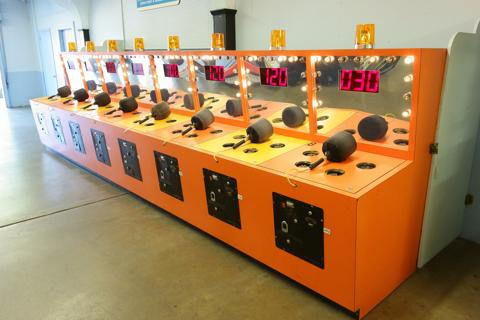
Whack-A-Mole machines from <https://commons.wikimedia.org/wiki/File:Whac-A-Mole_Cedar_Point.jpg> This is part of a series of posts on compiling a custom version of Qt5 in order to develop for both amd64 and a Raspberry Pi. Now that I have a sysroot, I try to use it to build Qt5 with QtWebEngine. Nothing seems to work straightforwardly with Qt5's build system, and hit an endless series of significant blockers to try and work around.
Problem in wayland code QtWayland's source currently does not compile:
../../../hardwareintegration/client/brcm-egl/qwaylandbrcmeglwindow.cpp: In constructor  QtWaylandClient::QWaylandBrcmEglWindow::QWaylandBrcmEglWindow(QWindow*) :
../../../hardwareintegration/client/brcm-egl/qwaylandbrcmeglwindow.cpp:131:67: error: no matching function for call to  QtWaylandClient::QWaylandWindow::QWaylandWindow(QWindow*&) 
     , m_eventQueue(wl_display_create_queue(mDisplay->wl_display()))
                                                                   ^
In file included from ../../../../include/QtWaylandClient/5.15.0/QtWaylandClient/private/qwaylandwindow_p.h:1,
                 from ../../../hardwareintegration/client/brcm-egl/qwaylandbrcmeglwindow.h:43,
                 from ../../../hardwareintegration/client/brcm-egl/qwaylandbrcmeglwindow.cpp:40:
../../../../include/QtWaylandClient/5.15.0/QtWaylandClient/private/../../../../../src/client/qwaylandwindow_p.h:97:5: note: candidate:  QtWaylandClient::QWaylandWindow::QWaylandWindow(QWindow*, QtWayland
Client::QWaylandDisplay*) 
     QWaylandWindow(QWindow *window, QWaylandDisplay *display);
     ^~~~~~~~~~~~~~
../../../../include/QtWaylandClient/5.15.0/QtWaylandClient/private/../../../../../src/client/qwaylandwindow_p.h:97:5: note:   candidate expects 2 arguments, 1 provided
make[5]: Leaving directory '/home/build/armhf/qt-everywhere-src-5.15.0/qttools/src/qdoc'
I am not trying to debug here. I understand that Wayland support is not a requirement, and I'm adding -skip wayland to Qt5's configure options. Next round. nss not found Qt5 embeds Chrome's sources. Chrome's sources require libnss3-dev to be available for both host and target architectures. Although I now have it installed both on the build system and in the sysroot, the pkg-config wrapper that Qt5 hooks into its Chrome's sources, failes to find it:
Command: /usr/bin/python2 /home/build/armhf/qt-everywhere-src-5.15.0/qtwebengine/src/3rdparty/chromium/build/config/linux/pkg-config.py -s /home/build/sysroot/ -a arm -p /usr/bin/arm-linux-gnueabihf-pkg-config --system_libdir lib nss -v -lssl3
Returned 1.
stderr:
Package nss was not found in the pkg-config search path.
Perhaps you should add the directory containing  nss.pc'
to the PKG_CONFIG_PATH environment variable
No package 'nss' found
Traceback (most recent call last):
  File "/home/build/armhf/qt-everywhere-src-5.15.0/qtwebengine/src/3rdparty/chromium/build/config/linux/pkg-config.py", line 248, in <module>
    sys.exit(main())
  File "/home/build/armhf/qt-everywhere-src-5.15.0/qtwebengine/src/3rdparty/chromium/build/config/linux/pkg-config.py", line 143, in main
    prefix = GetPkgConfigPrefixToStrip(options, args)
  File "/home/build/armhf/qt-everywhere-src-5.15.0/qtwebengine/src/3rdparty/chromium/build/config/linux/pkg-config.py", line 82, in GetPkgConfigPrefixToStrip
    "--variable=prefix"] + args, env=os.environ).decode('utf-8')
  File "/usr/lib/python2.7/subprocess.py", line 223, in check_output
    raise CalledProcessError(retcode, cmd, output=output)
subprocess.CalledProcessError: Command '['/usr/bin/arm-linux-gnueabihf-pkg-config', '--variable=prefix', 'nss']' returned non-zero exit status 1
See //build/config/linux/nss/BUILD.gn:15:3: whence it was called.
  pkg_config("system_nss_no_ssl_config")  
  ^---------------------------------------
See //crypto/BUILD.gn:218:25: which caused the file to be included.
    public_configs += [ "//build/config/linux/nss:system_nss_no_ssl_config" ]
                        ^--------------------------------------------------
Project ERROR: GN run error!
It's trying to look into $SYSROOT/usr/lib/pkgconfig, while it should be $SYSROOT//usr/lib/arm-linux-gnueabihf/pkgconfig. I worked around this this patch to qtwebengine/src/3rdparty/chromium/build/config/linux/pkg-config.py:
--- pkg-config.py.orig  2020-07-16 11:46:21.005373002 +0200
+++ pkg-config.py   2020-07-16 11:46:02.605296967 +0200
@@ -61,6 +61,7 @@
   libdir = sysroot + '/usr/' + options.system_libdir + '/pkgconfig'
   libdir += ':' + sysroot + '/usr/share/pkgconfig'
+  libdir += ':' + sysroot + '/usr/lib/arm-linux-gnueabihf/pkgconfig'
   os.environ['PKG_CONFIG_LIBDIR'] = libdir
   return libdir
Next round. g++ 8.3.0 Internal Compiler Error Qt5's sources embed Chrome's sources that embed the skia library sources. One of the skia library sources, when cross-compiled to ARM with -O1 or -O2 with g++ 8.3.0, produces an Internal Compiler Error:
/usr/bin/arm-linux-gnueabihf-g++ -MMD -MF obj/skia/skcms/skcms.o.d -DUSE_UDEV -DUSE_AURA=1 -DUSE_NSS_CERTS=1 -DUSE_OZONE=1 -DOFFICIAL_BUILD -DTOOLKIT_QT -D_FILE_OFFSET_BITS=64 -D_LARGEFILE_SOURCE -D_LARGEFILE64_SOURCE -DNO_UNWIND_TABLES -D__STDC_CONSTANT_MACROS -D__STDC_FORMAT_MACROS -DCR_SYSROOT_HASH=76e6068f9f6954e2ab1ff98ce5fa236d3d85bcbd -DNDEBUG -DNVALGRIND -DDYNAMIC_ANNOTATIONS_ENABLED=0 -I../../3rdparty/chromium/third_party/skia/include/third_party/skcms -Igen -I../../3rdparty/chromium -w -std=c11 -mfp16-format=ieee -fno-strict-aliasing --param=ssp-buffer-size=4 -fstack-protector -fno-unwind-tables -fno-asynchronous-unwind-tables -fPIC -pipe -pthread -march=armv7-a -mfloat-abi=hard -mtune=generic-armv7-a -mfpu=vfpv3-d16 -mthumb -Wall -U_FORTIFY_SOURCE -D_FORTIFY_SOURCE=2 -Wno-psabi -Wno-unused-local-typedefs -Wno-maybe-uninitialized -Wno-deprecated-declarations -fno-delete-null-pointer-checks -Wno-comments -Wno-packed-not-aligned -Wno-dangling-else -Wno-missing-field-initializers -Wno-unused-parameter -O2 -fno-ident -fdata-sections -ffunction-sections -fno-omit-frame-pointer -g0 -fvisibility=hidden -std=gnu++14 -Wno-narrowing -Wno-class-memaccess -Wno-attributes -Wno-class-memaccess -Wno-subobject-linkage -Wno-invalid-offsetof -Wno-return-type -Wno-deprecated-copy -fno-exceptions -fno-rtti --sysroot=../../../../../../sysroot/ -fvisibility-inlines-hidden -c ../../3rdparty/chromium/third_party/skia/third_party/skcms/skcms.cc -o obj/skia/skcms/skcms.o
during RTL pass: expand
In file included from ../../3rdparty/chromium/third_party/skia/third_party/skcms/skcms.cc:2053:
../../3rdparty/chromium/third_party/skia/third_party/skcms/src/Transform_inl.h: In function  void baseline::exec_ops(const Op*, const void**, const char*, char*, int) :
../../3rdparty/chromium/third_party/skia/third_party/skcms/src/Transform_inl.h:766:13: internal compiler error: in convert_move, at expr.c:218
 static void exec_ops(const Op* ops, const void** args,
             ^~~~~~~~
Please submit a full bug report,
with preprocessed source if appropriate.
See <file:///usr/share/doc/gcc-8/README.Bugs> for instructions.
I reported the bug at https://gcc.gnu.org/bugzilla/show_bug.cgi?id=96206 Since this source compiles with -O0, I attempted to fix this by editing qtwebkit/src/3rdparty/chromium/build/config/compiler/BUILD.gn and replacing instances of -O1 and -O2 with -O0. Spoiler: wrong attempt. We'll see it in the next round. Impossible constraint in asm Qt5's sources embed Chrome's sources that embed the ffmpeg library sources. Even if ffmpeg's development libraries are present both in the host and in the target system, the build system insists in compiling and using the bundled version. Unfortunately, using -O0 breaks the build of ffmpeg:
/usr/bin/arm-linux-gnueabihf-gcc -MMD -MF obj/third_party/ffmpeg/ffmpeg_internal/opus.o.d -DHAVE_AV_CONFIG_H -D_POSIX_C_SOURCE=200112 -D_XOPEN_SOURCE=600 -DPIC -DFFMPEG_CONFIGURATION=NULL -DCHROMIUM_NO_LOGGING -D_ISOC99_SOURCE -D_LARGEFILE_SOURCE -DUSE_UDEV -DUSE_AURA=1 -DUSE_NSS_CERTS=1 -DUSE_OZONE=1 -DOFFICIAL_BUILD -DTOOLKIT_QT -D_FILE_OFFSET_BITS=64 -D_LARGEFILE_SOURCE -D_LARGEFILE64_SOURCE -DNO_UNWIND_TABLES -DCR_SYSROOT_HASH=76e6068f9f6954e2ab1ff98ce5fa236d3d85bcbd -DNDEBUG -DNVALGRIND -DDYNAMIC_ANNOTATIONS_ENABLED=0 -DOPUS_FIXED_POINT -I../../3rdparty/chromium/third_party/ffmpeg/chromium/config/Chromium/linux/arm -I../../3rdparty/chromium/third_party/ffmpeg -I../../3rdparty/chromium/third_party/ffmpeg/compat/atomics/gcc -Igen -I../../3rdparty/chromium -I../../3rdparty/chromium/third_party/opus/src/include -fPIC -Wno-deprecated-declarations -fomit-frame-pointer -w -std=c99 -pthread -fno-math-errno -fno-signed-zeros -fno-tree-vectorize -fno-strict-aliasing --param=ssp-buffer-size=4 -fstack-protector -fno-unwind-tables -fno-asynchronous-unwind-tables -fPIC -pipe -pthread -march=armv7-a -mfloat-abi=hard -mtune=generic-armv7-a -mfpu=vfpv3-d16 -mthumb -g0 -fvisibility=hidden -Wno-psabi -Wno-unused-local-typedefs -Wno-maybe-uninitialized -Wno-deprecated-declarations -fno-delete-null-pointer-checks -Wno-comments -Wno-packed-not-aligned -Wno-dangling-else -Wno-missing-field-initializers -Wno-unused-parameter -O0 -fno-ident -fdata-sections -ffunction-sections -std=gnu11 --sysroot=../../../../../../sysroot/ -c ../../3rdparty/chromium/third_party/ffmpeg/libavcodec/opus.c -o obj/third_party/ffmpeg/ffmpeg_internal/opus.o
In file included from ../../3rdparty/chromium/third_party/ffmpeg/libavutil/intmath.h:30,
                 from ../../3rdparty/chromium/third_party/ffmpeg/libavutil/common.h:106,
                 from ../../3rdparty/chromium/third_party/ffmpeg/libavutil/avutil.h:296,
                 from ../../3rdparty/chromium/third_party/ffmpeg/libavutil/audio_fifo.h:30,
                 from ../../3rdparty/chromium/third_party/ffmpeg/libavcodec/opus.h:28,
                 from ../../3rdparty/chromium/third_party/ffmpeg/libavcodec/opus_celt.h:29,
                 from ../../3rdparty/chromium/third_party/ffmpeg/libavcodec/opus.c:32:
../../3rdparty/chromium/third_party/ffmpeg/libavcodec/opus.c: In function  ff_celt_quant_bands :
../../3rdparty/chromium/third_party/ffmpeg/libavutil/arm/intmath.h:77:5: error: impossible constraint in  asm 
     __asm__ ("usat %0, %2, %1" : "=r"(x) : "r"(a), "i"(p));
     ^~~~~~~
The same source compiles with using -O2 instead of -O0. I worked around this by undoing the previous change, and limiting -O0 to just the source that causes the Internal Compiler Error. I edited qtwebengine/src/3rdparty/chromium/third_party/skia/third_party/skcms/skcms.cc to prepend:
#pragma GCC push_options
#pragma GCC optimize ("O0")
and append:
#pragma GCC pop_options
Next round. Missing build-deps for i386 code Qt5's sources embed Chrome's sources that embed the V8 library sources. For some reason, torque, that is part of V8, wants to build some of its sources into 32 bit code with -m32, and I did not have i386 cross-compilation libraries installed:
/usr/bin/g++ -MMD -MF v8_snapshot/obj/v8/torque_base/csa-generator.o.d -DUSE_UDEV -DUSE_AURA=1 -DUSE_NSS_CERTS=1 -DUSE_OZONE=1 -DOFFICIAL_BUILD -DTOOLKIT_QT -D_FILE_OFFSET_BITS=64 -D_LARGEFILE_SOURCE -D_LARGEFILE64_SOURCE -DNO_UNWIND_TABLES -D__STDC_CONSTANT_MACROS -D__STDC_FORMAT_MACROS -DNDEBUG -DNVALGRIND -DDYNAMIC_ANNOTATIONS_ENABLED=0 -DV8_TYPED_ARRAY_MAX_SIZE_IN_HEAP=64 -DENABLE_MINOR_MC -DV8_INTL_SUPPORT -DV8_CONCURRENT_MARKING -DV8_ENABLE_LAZY_SOURCE_POSITIONS -DV8_EMBEDDED_BUILTINS -DV8_SHARED_RO_HEAP -DV8_WIN64_UNWINDING_INFO -DV8_ENABLE_REGEXP_INTERPRETER_THREADED_DISPATCH -DV8_31BIT_SMIS_ON_64BIT_ARCH -DV8_DEPRECATION_WARNINGS -DV8_TARGET_ARCH_ARM -DCAN_USE_ARMV7_INSTRUCTIONS -DCAN_USE_VFP3_INSTRUCTIONS -DUSE_EABI_HARDFLOAT=1 -DV8_HAVE_TARGET_OS -DV8_TARGET_OS_LINUX -DDISABLE_UNTRUSTED_CODE_MITIGATIONS -DV8_31BIT_SMIS_ON_64BIT_ARCH -DV8_DEPRECATION_WARNINGS -Iv8_snapshot/gen -I../../3rdparty/chromium -I../../3rdparty/chromium/v8 -Iv8_snapshot/gen/v8 -fno-strict-aliasing --param=ssp-buffer-size=4 -fstack-protector -fno-unwind-tables -fno-asynchronous-unwind-tables -fPIC -pipe -pthread -m32 -msse2 -mfpmath=sse -mmmx -Wall -U_FORTIFY_SOURCE -D_FORTIFY_SOURCE=2 -Wno-unused-local-typedefs -Wno-maybe-uninitialized -Wno-deprecated-declarations -fno-delete-null-pointer-checks -Wno-comments -Wno-packed-not-aligned -Wno-dangling-else -Wno-missing-field-initializers -Wno-unused-parameter -fno-omit-frame-pointer -g0 -fvisibility=hidden -Wno-strict-overflow -Wno-return-type -O3 -fno-ident -fdata-sections -ffunction-sections -std=gnu++14 -Wno-narrowing -Wno-class-memaccess -Wno-attributes -Wno-class-memaccess -Wno-subobject-linkage -Wno-invalid-offsetof -Wno-return-type -Wno-deprecated-copy -fvisibility-inlines-hidden -fexceptions -frtti -c ../../3rdparty/chromium/v8/src/torque/csa-generator.cc -o v8_snapshot/obj/v8/torque_base/csa-generator.o
In file included from ../../3rdparty/chromium/v8/src/torque/csa-generator.h:8,
                 from ../../3rdparty/chromium/v8/src/torque/csa-generator.cc:5:
/usr/include/c++/8/iostream:38:10: fatal error: bits/c++config.h: No such file or directory
 #include <bits/c++config.h>
          ^~~~~~~~~~~~~~~~~~
compilation terminated.
New build dependencies needed:
apt install lib32stdc++-8-dev
apt install libc6-dev-i386
dpkg --add-architecture i386
apt install linux-libc-dev:i386
Next round. OpenGL build issues Next bump are OpenGL related compiler issues:
/usr/bin/arm-linux-gnueabihf-g++ -MMD -MF obj/QtWebEngineCore/gl_ozone_glx_qt.o.d -DCHROMIUM_VERSION=\"80.0.3987.163\" -DUSE_UDEV -DUSE_AURA=1 -DUSE_NSS_CERTS=1 -DUSE_OZONE=1 -DOFFICIAL_BUILD -DTOOLKIT_QT -D_FILE_OFFSET_BITS=64 -D_LARGEFILE_SOURCE -D_LARGEFILE64_SOURCE -DNO_UNWIND_TABLES -D__STDC_CONSTANT_MACROS -D__STDC_FORMAT_MACROS -DCR_SYSROOT_HASH=76e6068f9f6954e2ab1ff98ce5fa236d3d85bcbd -DNDEBUG -DNVALGRIND -DDYNAMIC_ANNOTATIONS_ENABLED=0 -DQT_NO_LINKED_LIST -DQT_NO_KEYWORDS -DQT_USE_QSTRINGBUILDER -DQ_FORWARD_DECLARE_OBJC_CLASS=QT_FORWARD_DECLARE_CLASS -DQTWEBENGINECORE_VERSION_STR=\"5.15.0\" -DQTWEBENGINEPROCESS_NAME=\"QtWebEngineProcess\" -DBUILDING_CHROMIUM -DQTWEBENGINE_EMBEDDED_SWITCHES -DQT_NO_EXCEPTIONS -D_LARGEFILE64_SOURCE -D_LARGEFILE_SOURCE -DQT_NO_DEBUG -DQT_QUICK_LIB -DQT_GUI_LIB -DQT_QMLMODELS_LIB -DQT_WEBCHANNEL_LIB -DQT_QML_LIB -DQT_NETWORK_LIB -DQT_POSITIONING_LIB -DQT_CORE_LIB -DQT_WEBENGINECOREHEADERS_LIB -DVK_NO_PROTOTYPES -DGL_GLEXT_PROTOTYPES -DUSE_GLX -DUSE_EGL -DGOOGLE_PROTOBUF_NO_RTTI -DGOOGLE_PROTOBUF_NO_STATIC_INITIALIZER -DHAVE_PTHREAD -DU_USING_ICU_NAMESPACE=0 -DU_ENABLE_DYLOAD=0 -DUSE_CHROMIUM_ICU=1 -DU_STATIC_IMPLEMENTATION -DICU_UTIL_DATA_IMPL=ICU_UTIL_DATA_FILE -DUCHAR_TYPE=uint16_t -DWEBRTC_NON_STATIC_TRACE_EVENT_HANDLERS=0 -DWEBRTC_CHROMIUM_BUILD -DWEBRTC_POSIX -DWEBRTC_LINUX -DABSL_ALLOCATOR_NOTHROW=1 -DWEBRTC_USE_BUILTIN_ISAC_FIX=1 -DWEBRTC_USE_BUILTIN_ISAC_FLOAT=0 -DHAVE_SCTP -DNO_MAIN_THREAD_WRAPPING -DSK_HAS_PNG_LIBRARY -DSK_HAS_WEBP_LIBRARY -DSK_USER_CONFIG_HEADER=\"../../skia/config/SkUserConfig.h\" -DSK_GL -DSK_HAS_JPEG_LIBRARY -DSK_USE_LIBGIFCODEC -DSK_VULKAN_HEADER=\"../../skia/config/SkVulkanConfig.h\" -DSK_VULKAN=1 -DSK_SUPPORT_GPU=1 -DSK_GPU_WORKAROUNDS_HEADER=\"gpu/config/gpu_driver_bug_workaround_autogen.h\" -DVK_NO_PROTOTYPES -DLEVELDB_PLATFORM_CHROMIUM=1 -DLEVELDB_PLATFORM_CHROMIUM=1 -DV8_31BIT_SMIS_ON_64BIT_ARCH -DV8_DEPRECATION_WARNINGS -I../../3rdparty/chromium/skia/config -I../../3rdparty/chromium/third_party -I../../3rdparty/chromium/third_party/boringssl/src/include -I../../3rdparty/chromium/third_party/skia/include/core -Igen -I../../3rdparty/chromium -I/home/build/armhf/qt-everywhere-src-5.15.0/qtwebengine/src/core -I/home/build/armhf/qt-everywhere-src-5.15.0/qtwebengine/src/core/api -I/home/build/armhf/qt-everywhere-src-5.15.0/qtdeclarative/include/QtQuick/5.15.0 -I/home/build/armhf/qt-everywhere-src-5.15.0/qtdeclarative/include/QtQuick/5.15.0/QtQuick -I/home/build/armhf/qt-everywhere-src-5.15.0/qtbase/include/QtGui/5.15.0 -I/home/build/armhf/qt-everywhere-src-5.15.0/qtbase/include/QtGui/5.15.0/QtGui -I/home/build/armhf/qt-everywhere-src-5.15.0/qtdeclarative/include -I/home/build/armhf/qt-everywhere-src-5.15.0/qtdeclarative/include/QtQuick -I/home/build/armhf/qt-everywhere-src-5.15.0/qtbase/include -I/home/build/armhf/qt-everywhere-src-5.15.0/qtbase/include/QtGui -I/home/build/armhf/qt-everywhere-src-5.15.0/qtdeclarative/include/QtQmlModels/5.15.0 -I/home/build/armhf/qt-everywhere-src-5.15.0/qtdeclarative/include/QtQmlModels/5.15.0/QtQmlModels -I/home/build/armhf/qt-everywhere-src-5.15.0/qtdeclarative/include/QtQml/5.15.0 -I/home/build/armhf/qt-everywhere-src-5.15.0/qtdeclarative/include/QtQml/5.15.0/QtQml -I/home/build/armhf/qt-everywhere-src-5.15.0/qtbase/include/QtCore/5.15.0 -I/home/build/armhf/qt-everywhere-src-5.15.0/qtbase/include/QtCore/5.15.0/QtCore -I/home/build/armhf/qt-everywhere-src-5.15.0/qtdeclarative/include/QtQmlModels -I/home/build/armhf/qt-everywhere-src-5.15.0/qtwebchannel/include -I/home/build/armhf/qt-everywhere-src-5.15.0/qtwebchannel/include/QtWebChannel -I/home/build/armhf/qt-everywhere-src-5.15.0/qtdeclarative/include/QtQml -I/home/build/armhf/qt-everywhere-src-5.15.0/qtbase/include/QtNetwork -I/home/build/armhf/qt-everywhere-src-5.15.0/qtlocation/include -I/home/build/armhf/qt-everywhere-src-5.15.0/qtlocation/include/QtPositioning -I/home/build/armhf/qt-everywhere-src-5.15.0/qtbase/include/QtCore -I/home/build/armhf/qt-everywhere-src-5.15.0/qtwebengine/include -I/home/build/armhf/qt-everywhere-src-5.15.0/qtwebengine/include/QtWebEngineCore -I/home/build/armhf/qt-everywhere-src-5.15.0/qtwebengine/include/QtWebEngineCore/5.15.0 -I/home/build/armhf/qt-everywhere-src-5.15.0/qtwebengine/include/QtWebEngineCore/5.15.0/QtWebEngineCore -I.moc -I/home/build/sysroot/opt/vc/include -I/home/build/sysroot/opt/vc/include/interface/vcos/pthreads -I/home/build/sysroot/opt/vc/include/interface/vmcs_host/linux -Igen/.moc -I/home/build/armhf/qt-everywhere-src-5.15.0/qtbase/mkspecs/devices/linux-rasp-pi2-g++ -Igen -Igen -I../../3rdparty/chromium/third_party/libyuv/include -Igen -I../../3rdparty/chromium/third_party/jsoncpp/source/include -I../../3rdparty/chromium/third_party/jsoncpp/generated -Igen -Igen -I../../3rdparty/chromium/third_party/khronos -I../../3rdparty/chromium/gpu -I../../3rdparty/chromium/third_party/vulkan/include -I../../3rdparty/chromium/third_party/perfetto/include -Igen/third_party/perfetto/build_config -Igen -Igen -Igen/third_party/dawn/src/include -I../../3rdparty/chromium/third_party/dawn/src/include -Igen -I../../3rdparty/chromium/third_party/boringssl/src/include -I../../3rdparty/chromium/third_party/protobuf/src -Igen/protoc_out -I../../3rdparty/chromium/third_party/protobuf/src -I../../3rdparty/chromium/third_party/ced/src -I../../3rdparty/chromium/third_party/icu/source/common -I../../3rdparty/chromium/third_party/icu/source/i18n -I../../3rdparty/chromium/third_party/webrtc_overrides -I../../3rdparty/chromium/third_party/webrtc -Igen/third_party/webrtc -I../../3rdparty/chromium/third_party/abseil-cpp -I../../3rdparty/chromium/third_party/skia -I../../3rdparty/chromium/third_party/libgifcodec -I../../3rdparty/chromium/third_party/vulkan/include -I../../3rdparty/chromium/third_party/skia/third_party/vulkanmemoryallocator -I../../3rdparty/chromium/third_party/vulkan/include -Igen/third_party/perfetto -Igen/third_party/perfetto -Igen/third_party/perfetto -Igen/third_party/perfetto -Igen/third_party/perfetto -Igen/third_party/perfetto -Igen/third_party/perfetto -Igen/third_party/perfetto -Igen/third_party/perfetto -Igen/third_party/perfetto -I../../3rdparty/chromium/third_party/crashpad/crashpad -I../../3rdparty/chromium/third_party/crashpad/crashpad/compat/non_mac -I../../3rdparty/chromium/third_party/crashpad/crashpad/compat/linux -I../../3rdparty/chromium/third_party/crashpad/crashpad/compat/non_win -I../../3rdparty/chromium/third_party/libwebm/source -I../../3rdparty/chromium/third_party/leveldatabase -I../../3rdparty/chromium/third_party/leveldatabase/src -I../../3rdparty/chromium/third_party/leveldatabase/src/include -I../../3rdparty/chromium/v8/include -Igen/v8/include -I../../3rdparty/chromium/third_party/mesa_headers -fno-strict-aliasing --param=ssp-buffer-size=4 -fstack-protector -fno-unwind-tables -fno-asynchronous-unwind-tables -fPIC -pipe -pthread -march=armv7-a -mfloat-abi=hard -mtune=generic-armv7-a -mfpu=vfpv3-d16 -mthumb -Wall -U_FORTIFY_SOURCE -D_FORTIFY_SOURCE=2 -Wno-psabi -Wno-unused-local-typedefs -Wno-maybe-uninitialized -Wno-deprecated-declarations -fno-delete-null-pointer-checks -Wno-comments -Wno-packed-not-aligned -Wno-dangling-else -Wno-missing-field-initializers -Wno-unused-parameter -O2 -fno-ident -fdata-sections -ffunction-sections -fno-omit-frame-pointer -g0 -fvisibility=hidden -g -O2 -fdebug-prefix-map=/home/build/armhf/qt-everywhere-src-5.15.0=. -fstack-protector-strong -Wformat -Werror=format-security -Wdate-time -D_FORTIFY_SOURCE=2 -O2 -fno-exceptions -Wall -Wextra -D_REENTRANT -I/home/build/sysroot/usr/include/nss -I/home/build/sysroot/usr/include/nspr -std=gnu++14 -Wno-narrowing -Wno-class-memaccess -Wno-attributes -Wno-class-memaccess -Wno-subobject-linkage -Wno-invalid-offsetof -Wno-return-type -Wno-deprecated-copy -fno-exceptions -fno-rtti --sysroot=../../../../../../sysroot/ -fvisibility-inlines-hidden -g -O2 -fdebug-prefix-map=/home/build/armhf/qt-everywhere-src-5.15.0=. -fstack-protector-strong -Wformat -Werror=format-security -Wdate-time -D_FORTIFY_SOURCE=2 -O2 -std=gnu++1y -fno-exceptions -Wall -Wextra -D_REENTRANT -Wno-unused-parameter -Wno-unused-variable -Wno-deprecated-declarations -c /home/build/armhf/qt-everywhere-src-5.15.0/qtwebengine/src/core/ozone/gl_ozone_glx_qt.cpp -o obj/QtWebEngineCore/gl_ozone_glx_qt.o
In file included from ../../3rdparty/chromium/ui/gl/gl_bindings.h:497,
                 from ../../3rdparty/chromium/ui/gl/gl_gl_api_implementation.h:12,
                 from /home/build/armhf/qt-everywhere-src-5.15.0/qtwebengine/src/core/ozone/gl_ozone_glx_qt.cpp:49:
../../3rdparty/chromium/ui/gl/gl_bindings_autogen_egl.h:227:5: error:  EGLSetBlobFuncANDROID  has not been declared
     EGLSetBlobFuncANDROID set,
     ^~~~~~~~~~~~~~~~~~~~~
../../3rdparty/chromium/ui/gl/gl_bindings_autogen_egl.h:228:5: error:  EGLGetBlobFuncANDROID  has not been declared
     EGLGetBlobFuncANDROID get);
     ^~~~~~~~~~~~~~~~~~~~~
../../3rdparty/chromium/ui/gl/gl_bindings_autogen_egl.h:571:46: error:  EGLSetBlobFuncANDROID  has not been declared
                                              EGLSetBlobFuncANDROID set,
                                              ^~~~~~~~~~~~~~~~~~~~~
../../3rdparty/chromium/ui/gl/gl_bindings_autogen_egl.h:572:46: error:  EGLGetBlobFuncANDROID  has not been declared
                                              EGLGetBlobFuncANDROID get) = 0;
                                              ^~~~~~~~~~~~~~~~~~~~~
cc1plus: warning: unrecognized command line option  -Wno-deprecated-copy 
/usr/bin/arm-linux-gnueabihf-g++ -MMD -MF obj/QtWebEngineCore/display_gl_output_surface.o.d -DCHROMIUM_VERSION=\"80.0.3987.163\" -DUSE_UDEV -DUSE_AURA=1 -DUSE_NSS_CERTS=1 -DUSE_OZONE=1 -DOFFICIAL_BUILD -DTOOLKIT_QT -D_FILE_OFFSET_BITS=64 -D_LARGEFILE_SOURCE -D_LARGEFILE64_SOURCE -DNO_UNWIND_TABLES -D__STDC_CONSTANT_MACROS -D__STDC_FORMAT_MACROS -DCR_SYSROOT_HASH=76e6068f9f6954e2ab1ff98ce5fa236d3d85bcbd -DNDEBUG -DNVALGRIND -DDYNAMIC_ANNOTATIONS_ENABLED=0 -DQT_NO_LINKED_LIST -DQT_NO_KEYWORDS -DQT_USE_QSTRINGBUILDER -DQ_FORWARD_DECLARE_OBJC_CLASS=QT_FORWARD_DECLARE_CLASS -DQTWEBENGINECORE_VERSION_STR=\"5.15.0\" -DQTWEBENGINEPROCESS_NAME=\"QtWebEngineProcess\" -DBUILDING_CHROMIUM -DQTWEBENGINE_EMBEDDED_SWITCHES -DQT_NO_EXCEPTIONS -D_LARGEFILE64_SOURCE -D_LARGEFILE_SOURCE -DQT_NO_DEBUG -DQT_QUICK_LIB -DQT_GUI_LIB -DQT_QMLMODELS_LIB -DQT_WEBCHANNEL_LIB -DQT_QML_LIB -DQT_NETWORK_LIB -DQT_POSITIONING_LIB -DQT_CORE_LIB -DQT_WEBENGINECOREHEADERS_LIB -DVK_NO_PROTOTYPES -DGL_GLEXT_PROTOTYPES -DUSE_GLX -DUSE_EGL -DGOOGLE_PROTOBUF_NO_RTTI -DGOOGLE_PROTOBUF_NO_STATIC_INITIALIZER -DHAVE_PTHREAD -DU_USING_ICU_NAMESPACE=0 -DU_ENABLE_DYLOAD=0 -DUSE_CHROMIUM_ICU=1 -DU_STATIC_IMPLEMENTATION -DICU_UTIL_DATA_IMPL=ICU_UTIL_DATA_FILE -DUCHAR_TYPE=uint16_t -DWEBRTC_NON_STATIC_TRACE_EVENT_HANDLERS=0 -DWEBRTC_CHROMIUM_BUILD -DWEBRTC_POSIX -DWEBRTC_LINUX -DABSL_ALLOCATOR_NOTHROW=1 -DWEBRTC_USE_BUILTIN_ISAC_FIX=1 -DWEBRTC_USE_BUILTIN_ISAC_FLOAT=0 -DHAVE_SCTP -DNO_MAIN_THREAD_WRAPPING -DSK_HAS_PNG_LIBRARY -DSK_HAS_WEBP_LIBRARY -DSK_USER_CONFIG_HEADER=\"../../skia/config/SkUserConfig.h\" -DSK_GL -DSK_HAS_JPEG_LIBRARY -DSK_USE_LIBGIFCODEC -DSK_VULKAN_HEADER=\"../../skia/config/SkVulkanConfig.h\" -DSK_VULKAN=1 -DSK_SUPPORT_GPU=1 -DSK_GPU_WORKAROUNDS_HEADER=\"gpu/config/gpu_driver_bug_workaround_autogen.h\" -DVK_NO_PROTOTYPES -DLEVELDB_PLATFORM_CHROMIUM=1 -DLEVELDB_PLATFORM_CHROMIUM=1 -DV8_31BIT_SMIS_ON_64BIT_ARCH -DV8_DEPRECATION_WARNINGS -I../../3rdparty/chromium/skia/config -I../../3rdparty/chromium/third_party -I../../3rdparty/chromium/third_party/boringssl/src/include -I../../3rdparty/chromium/third_party/skia/include/core -Igen -I../../3rdparty/chromium -I/home/build/armhf/qt-everywhere-src-5.15.0/qtwebengine/src/core -I/home/build/armhf/qt-everywhere-src-5.15.0/qtwebengine/src/core/api -I/home/build/armhf/qt-everywhere-src-5.15.0/qtdeclarative/include/QtQuick/5.15.0 -I/home/build/armhf/qt-everywhere-src-5.15.0/qtdeclarative/include/QtQuick/5.15.0/QtQuick -I/home/build/armhf/qt-everywhere-src-5.15.0/qtbase/include/QtGui/5.15.0 -I/home/build/armhf/qt-everywhere-src-5.15.0/qtbase/include/QtGui/5.15.0/QtGui -I/home/build/armhf/qt-everywhere-src-5.15.0/qtdeclarative/include -I/home/build/armhf/qt-everywhere-src-5.15.0/qtdeclarative/include/QtQuick -I/home/build/armhf/qt-everywhere-src-5.15.0/qtbase/include -I/home/build/armhf/qt-everywhere-src-5.15.0/qtbase/include/QtGui -I/home/build/armhf/qt-everywhere-src-5.15.0/qtdeclarative/include/QtQmlModels/5.15.0 -I/home/build/armhf/qt-everywhere-src-5.15.0/qtdeclarative/include/QtQmlModels/5.15.0/QtQmlModels -I/home/build/armhf/qt-everywhere-src-5.15.0/qtdeclarative/include/QtQml/5.15.0 -I/home/build/armhf/qt-everywhere-src-5.15.0/qtdeclarative/include/QtQml/5.15.0/QtQml -I/home/build/armhf/qt-everywhere-src-5.15.0/qtbase/include/QtCore/5.15.0 -I/home/build/armhf/qt-everywhere-src-5.15.0/qtbase/include/QtCore/5.15.0/QtCore -I/home/build/armhf/qt-everywhere-src-5.15.0/qtdeclarative/include/QtQmlModels -I/home/build/armhf/qt-everywhere-src-5.15.0/qtwebchannel/include -I/home/build/armhf/qt-everywhere-src-5.15.0/qtwebchannel/include/QtWebChannel -I/home/build/armhf/qt-everywhere-src-5.15.0/qtdeclarative/include/QtQml -I/home/build/armhf/qt-everywhere-src-5.15.0/qtbase/include/QtNetwork -I/home/build/armhf/qt-everywhere-src-5.15.0/qtlocation/include -I/home/build/armhf/qt-everywhere-src-5.15.0/qtlocation/include/QtPositioning -I/home/build/armhf/qt-everywhere-src-5.15.0/qtbase/include/QtCore -I/home/build/armhf/qt-everywhere-src-5.15.0/qtwebengine/include -I/home/build/armhf/qt-everywhere-src-5.15.0/qtwebengine/include/QtWebEngineCore -I/home/build/armhf/qt-everywhere-src-5.15.0/qtwebengine/include/QtWebEngineCore/5.15.0 -I/home/build/armhf/qt-everywhere-src-5.15.0/qtwebengine/include/QtWebEngineCore/5.15.0/QtWebEngineCore -I.moc -I/home/build/sysroot/opt/vc/include -I/home/build/sysroot/opt/vc/include/interface/vcos/pthreads -I/home/build/sysroot/opt/vc/include/interface/vmcs_host/linux -Igen/.moc -I/home/build/armhf/qt-everywhere-src-5.15.0/qtbase/mkspecs/devices/linux-rasp-pi2-g++ -Igen -Igen -I../../3rdparty/chromium/third_party/libyuv/include -Igen -I../../3rdparty/chromium/third_party/jsoncpp/source/include -I../../3rdparty/chromium/third_party/jsoncpp/generated -Igen -Igen -I../../3rdparty/chromium/third_party/khronos -I../../3rdparty/chromium/gpu -I../../3rdparty/chromium/third_party/vulkan/include -I../../3rdparty/chromium/third_party/perfetto/include -Igen/third_party/perfetto/build_config -Igen -Igen -Igen/third_party/dawn/src/include -I../../3rdparty/chromium/third_party/dawn/src/include -Igen -I../../3rdparty/chromium/third_party/boringssl/src/include -I../../3rdparty/chromium/third_party/protobuf/src -Igen/protoc_out -I../../3rdparty/chromium/third_party/protobuf/src -I../../3rdparty/chromium/third_party/ced/src -I../../3rdparty/chromium/third_party/icu/source/common -I../../3rdparty/chromium/third_party/icu/source/i18n -I../../3rdparty/chromium/third_party/webrtc_overrides -I../../3rdparty/chromium/third_party/webrtc -Igen/third_party/webrtc -I../../3rdparty/chromium/third_party/abseil-cpp -I../../3rdparty/chromium/third_party/skia -I../../3rdparty/chromium/third_party/libgifcodec -I../../3rdparty/chromium/third_party/vulkan/include -I../../3rdparty/chromium/third_party/skia/third_party/vulkanmemoryallocator -I../../3rdparty/chromium/third_party/vulkan/include -Igen/third_party/perfetto -Igen/third_party/perfetto -Igen/third_party/perfetto -Igen/third_party/perfetto -Igen/third_party/perfetto -Igen/third_party/perfetto -Igen/third_party/perfetto -Igen/third_party/perfetto -Igen/third_party/perfetto -Igen/third_party/perfetto -I../../3rdparty/chromium/third_party/crashpad/crashpad -I../../3rdparty/chromium/third_party/crashpad/crashpad/compat/non_mac -I../../3rdparty/chromium/third_party/crashpad/crashpad/compat/linux -I../../3rdparty/chromium/third_party/crashpad/crashpad/compat/non_win -I../../3rdparty/chromium/third_party/libwebm/source -I../../3rdparty/chromium/third_party/leveldatabase -I../../3rdparty/chromium/third_party/leveldatabase/src -I../../3rdparty/chromium/third_party/leveldatabase/src/include -I../../3rdparty/chromium/v8/include -Igen/v8/include -I../../3rdparty/chromium/third_party/mesa_headers -fno-strict-aliasing --param=ssp-buffer-size=4 -fstack-protector -fno-unwind-tables -fno-asynchronous-unwind-tables -fPIC -pipe -pthread -march=armv7-a -mfloat-abi=hard -mtune=generic-armv7-a -mfpu=vfpv3-d16 -mthumb -Wall -U_FORTIFY_SOURCE -D_FORTIFY_SOURCE=2 -Wno-psabi -Wno-unused-local-typedefs -Wno-maybe-uninitialized -Wno-deprecated-declarations -fno-delete-null-pointer-checks -Wno-comments -Wno-packed-not-aligned -Wno-dangling-else -Wno-missing-field-initializers -Wno-unused-parameter -O2 -fno-ident -fdata-sections -ffunction-sections -fno-omit-frame-pointer -g0 -fvisibility=hidden -g -O2 -fdebug-prefix-map=/home/build/armhf/qt-everywhere-src-5.15.0=. -fstack-protector-strong -Wformat -Werror=format-security -Wdate-time -D_FORTIFY_SOURCE=2 -O2 -fno-exceptions -Wall -Wextra -D_REENTRANT -I/home/build/sysroot/usr/include/nss -I/home/build/sysroot/usr/include/nspr -std=gnu++14 -Wno-narrowing -Wno-class-memaccess -Wno-attributes -Wno-class-memaccess -Wno-subobject-linkage -Wno-invalid-offsetof -Wno-return-type -Wno-deprecated-copy -fno-exceptions -fno-rtti --sysroot=../../../../../../sysroot/ -fvisibility-inlines-hidden -g -O2 -fdebug-prefix-map=/home/build/armhf/qt-everywhere-src-5.15.0=. -fstack-protector-strong -Wformat -Werror=format-security -Wdate-time -D_FORTIFY_SOURCE=2 -O2 -std=gnu++1y -fno-exceptions -Wall -Wextra -D_REENTRANT -Wno-unused-parameter -Wno-unused-variable -Wno-deprecated-declarations -c /home/build/armhf/qt-everywhere-src-5.15.0/qtwebengine/src/core/compositor/display_gl_output_surface.cpp -o obj/QtWebEngineCore/display_gl_output_surface.o
In file included from ../../3rdparty/chromium/gpu/command_buffer/client/gles2_interface.h:8,
                 from ../../3rdparty/chromium/gpu/command_buffer/client/client_transfer_cache.h:15,
                 from ../../3rdparty/chromium/gpu/command_buffer/client/gles2_implementation.h:28,
                 from /home/build/armhf/qt-everywhere-src-5.15.0/qtwebengine/src/core/compositor/display_gl_output_surface.cpp:47:
/home/build/sysroot/opt/vc/include/GLES2/gl2.h:78: warning: "GL_FALSE" redefined
 #define GL_FALSE                          (GLboolean)0
In file included from ../../3rdparty/chromium/gpu/command_buffer/client/client_context_state.h:10,
                 from ../../3rdparty/chromium/gpu/command_buffer/client/gles2_implementation.h:27,
                 from /home/build/armhf/qt-everywhere-src-5.15.0/qtwebengine/src/core/compositor/display_gl_output_surface.cpp:47:
../../3rdparty/chromium/third_party/khronos/GLES3/gl3.h:85: note: this is the location of the previous definition
 #define GL_FALSE                          0
In file included from ../../3rdparty/chromium/gpu/command_buffer/client/gles2_interface.h:8,
                 from ../../3rdparty/chromium/gpu/command_buffer/client/client_transfer_cache.h:15,
                 from ../../3rdparty/chromium/gpu/command_buffer/client/gles2_implementation.h:28,
                 from /home/build/armhf/qt-everywhere-src-5.15.0/qtwebengine/src/core/compositor/display_gl_output_surface.cpp:47:
/home/build/sysroot/opt/vc/include/GLES2/gl2.h:79: warning: "GL_TRUE" redefined
 #define GL_TRUE                           (GLboolean)1
In file included from ../../3rdparty/chromium/gpu/command_buffer/client/client_context_state.h:10,
                 from ../../3rdparty/chromium/gpu/command_buffer/client/gles2_implementation.h:27,
                 from /home/build/armhf/qt-everywhere-src-5.15.0/qtwebengine/src/core/compositor/display_gl_output_surface.cpp:47:
../../3rdparty/chromium/third_party/khronos/GLES3/gl3.h:86: note: this is the location of the previous definition
 #define GL_TRUE                           1
In file included from ../../3rdparty/chromium/gpu/command_buffer/client/gles2_interface.h:8,
                 from ../../3rdparty/chromium/gpu/command_buffer/client/client_transfer_cache.h:15,
                 from ../../3rdparty/chromium/gpu/command_buffer/client/gles2_implementation.h:28,
                 from /home/build/armhf/qt-everywhere-src-5.15.0/qtwebengine/src/core/compositor/display_gl_output_surface.cpp:47:
/home/build/sysroot/opt/vc/include/GLES2/gl2.h:600:37: error: conflicting declaration of C function  void glShaderSource(GLuint, GLsizei, const GLchar**, const GLint*) 
 GL_APICALL void         GL_APIENTRY glShaderSource (GLuint shader, GLsizei count, const GLchar** string, const GLint* length);
                                     ^~~~~~~~~~~~~~
In file included from ../../3rdparty/chromium/gpu/command_buffer/client/client_context_state.h:10,
                 from ../../3rdparty/chromium/gpu/command_buffer/client/gles2_implementation.h:27,
                 from /home/build/armhf/qt-everywhere-src-5.15.0/qtwebengine/src/core/compositor/display_gl_output_surface.cpp:47:
../../3rdparty/chromium/third_party/khronos/GLES3/gl3.h:624:29: note: previous declaration  void glShaderSource(GLuint, GLsizei, const GLchar* const*, const GLint*) 
 GL_APICALL void GL_APIENTRY glShaderSource (GLuint shader, GLsizei count, const GLchar *const*string, const GLint *length);
                             ^~~~~~~~~~~~~~
cc1plus: warning: unrecognized command line option  -Wno-deprecated-copy 
I'm out of the allocated hour budget, and I'll stop here for now. Building Qt5 has been providing some of the most nightmarish work time in my entire professional life. If my daily job became being required to deal with this kind of insanity, I would strongly invest in a change of career. Update Andreas Gruber wrote:
Long story short, a fast solution for the issue with EGLSetBlobFuncANDROID is to remove libraspberrypi-dev from your sysroot and do a full rebuild. There will be some changes to the configure results, so please review them - if they are relevant for you - before proceeding with your work.
And thanks to Andreas, the story can continue...

Russell Coker: Windows 10 on Debian under KVM

Here are some things that you need to do to get Windows 10 running on a Debian host under KVM. UEFI Booting UEFI is big and complex, but most of what it does isn t needed at all. If all you want to do is boot from an image of a disk with a GPT partition table then you just install the package ovmf and add something like the following to your KVM start script:
UEFI"-drive if=pflash,format=raw,readonly,file=/usr/share/OVMF/OVMF_CODE.fd -drive if=pflash,format=raw,readonly,file=/usr/share/OVMF/OVMF_VARS.fd"
Note that some of the documentation on this doesn t have the OVMF_VARS.fd file set to readonly. Allowing writes to that file means that the VM boot process (and maybe later) can change EFI variables that affect later boots and other VMs if they all share the same file. For a basic boot you don t need to change variables so you want it read-only. Also having it read-only is necessary if you want to run KVM as non-root. As an experiment I tried booting without the OVMF_VARS.fd file, it didn t boot and then even after configuring it to use the OVMF_VARS.fd file again Windows gave a boot error about the boot configuration data file that required booting from recovery media. Apparently configuration mistakes with EFI can mess up the Windows installation, so be careful and backup the Windows installation regularly! Linux can boot from EFI but you generally don t want to unless the boot device is larger than 2TB. It s relatively easy to convert a Linux installation on a GPT disk to a virtual image on a DOS partition table disk or on block devices without partition tables and that gives a faster boot. If the same person runs the host hardware and the VMs then the best choice for Linux is to have no partition tables just one filesystem per block device (which makes resizing much easier) and have the kernel passed as a parameter to kvm. So booting a VM from EFI is probably only useful for booting Windows VMs and for Linux boot loader development and testing. As an aside, the Debian Wiki page about Secure Boot on a VM [4] was useful for this. It s unfortunate that it and so much of the documentation about UEFI is about secure boot which isn t so useful if you just want to boot a system without regard to the secure boot features. Emulated IDE Disks Debian kernels (and probably kernels from many other distributions) are compiled with the paravirtualised storage device drivers. Windows by default doesn t support such devices so you need to emulate an IDE/SATA disk so you can boot Windows and install the paravirtualised storage driver. The following configuration snippet has a commented line for paravirtualised IO (which is fast) and an uncommented line for a virtual IDE/SATA disk that will allow an unmodified Windows 10 installation to boot.
#DRIVE="-drive format=raw,file=/home/kvm/windows10,if=virtio"
DRIVE="-drive id=disk,format=raw,file=/home/kvm/windows10,if=none -device ahci,id=ahci -device ide-drive,drive=disk,bus=ahci.0"
Spice Video Spice is an alternative to VNC, Here is the main web site for Spice [1]. Spice has many features that could be really useful for some people, like audio, sharing USB devices from the client, and streaming video support. I don t have a need for those features right now but it s handy to have options. My main reason for choosing Spice over VNC is that the mouse cursor in the ssvnc doesn t follow the actual mouse and can be difficult or impossible to click on items near edges of the screen. The following configuration will make the QEMU code listen with SSL on port 1234 on all IPv4 addresses. Note that this exposes the Spice password to anyone who can run ps on the KVM server, I ve filed Debian bug #965061 requesting the option of a password file to address this. Also note that the qxl virtual video hardware is VGA compatible and can be expected to work with OS images that haven t been modified for virtualisation, but that they work better with special video drivers.
KEYDIR=/etc/letsencrypt/live/kvm.example.com-0001
-spice password=xxxxxxxx,x509-cacert-file=$KEYDIR/chain.pem,x509-key-file=$KEYDIR/privkey.pem,x509-cert-file=$KEYDIR/cert.pem,tls-port=1234,tls-channel=main -vga qxl
To connect to the Spice server I installed the spice-client-gtk package in Debian and ran the following command:
spicy -h kvm.example.com -s 1234 -w xxxxxxxx
Note that this exposes the Spice password to anyone who can run ps on the system used as a client for Spice, I ve filed Debian bug #965060 requesting the option of a password file to address this. This configuration with an unmodified Windows 10 image only supported 800*600 resolution VGA display. Networking To setup bridged networking as non-root you need to do something like the following as root:
chgrp kvm /usr/lib/qemu/qemu-bridge-helper
setcap cap_net_admin+ep /usr/lib/qemu/qemu-bridge-helper
mkdir -p /etc/qemu
echo "allow all" > /etc/qemu/bridge.conf
chgrp kvm /etc/qemu/bridge.conf
chmod 640 /etc/qemu/bridge.conf
Windows 10 supports the emulated Intel E1000 network card. Configuration like the following configures networking on a bridge named br0 with an emulated E1000 card. MAC addresses that have a 1 in the second least significant bit of the first octet are locally administered (like IPv4 addresses starting with 10. ), see the Wikipedia page about MAC Address for details. The following is an example of network configuration where $ID is an ID number for the virtual machine. So far I haven t come close to 256 VMs on one network so I ve only needed one octet.
NET="-device e1000,netdev=net0,mac=02:00:00:00:01:$ID -netdev tap,id=net0,helper=/usr/lib/qemu/qemu-bridge-helper,br=br0"
Final KVM Settings
KEYDIR=/etc/letsencrypt/live/kvm.example.com-0001
SPICE="-spice password=xxxxxxxx,x509-cacert-file=$KEYDIR/chain.pem,x509-key-file=$KEYDIR/privkey.pem,x509-cert-file=$KEYDIR/cert.pem,tls-port=1234,tls-channel=main -vga qxl"
UEFI="-drive if=pflash,format=raw,readonly,file=/usr/share/OVMF/OVMF_CODE.fd -drive if=pflash,format=raw,readonly,file=/usr/share/OVMF/OVMF_VARS.fd"
DRIVE="-drive format=raw,file=/home/kvm/windows10,if=virtio"
NET="-device e1000,netdev=net0,mac=02:00:00:00:01:$ID -netdev tap,id=net0,helper=/usr/lib/qemu/qemu-bridge-helper,br=br0"
kvm -m 4000 -smp 2 $SPICE $UEFI $DRIVE $NET
Windows Settings The Spice Download page has a link for spice-guest-tools that has the QNX video driver among other things [2]. This seems to be needed for resolutions greater than 800*600. The Virt-Manager Download page has a link for virt-viewer which is the Spice client for Windows systems [3], they have MSI files for both i386 and AMD64 Windows. It s probably a good idea to set display and system to sleep after never (I haven t tested what happens if you don t do that, but there s no benefit in sleeping). Before uploading an image I disabled the pagefile and set the partition to the minimum size so I had less data to upload. Problems Here are some things I haven t solved yet. The aSpice Android client for the Spice protocol fails to connect with the QEMU code at the server giving the following message on stderr: error:14094418:SSL routines:ssl3_read_bytes:tlsv1 alert unknown ca:../ssl/record/rec_layer_s3.c:1544:SSL alert number 48 . Spice is supposed to support dynamic changes to screen resolution on the VM to match the window size at the client, this doesn t work for me, not even with the Red Hat QNX drivers installed. The Windows Spice client doesn t seem to support TLS, I guess running some sort of proxy for TLS would work but I haven t tried that yet.

15 July 2020

Utkarsh Gupta: GSoC Phase 2

Hello, In early May, I got selected as a Google Summer of Code student for Debian to work on a project which is to write a linter (an extension to RuboCop).
This tool is mostly to help the Debian Ruby team. And that is the best part, I love working in/for/with the Ruby team!
(I ve been an active part of the team for 19 months now :)) More details about the project can be found here, on the wiki.

And also, I have got the best mentors I could ve possibly asked for: Antonio Terceiro and David Rodr guez So, the program began on 1st June and I ve been working since then. I log my daily updates at gsocwithutkarsh2102.tk.
The blog for the first part of phase 1 can be found here and that of second part of phase 1 can be found here. Whilst the daily updates are available at the above site^, I ll breakdown the important parts here: Well, the best part yet?
rubocop-packaging is being used by batalert, arbre, rspec-stubbed_env, rspec-pending_for, ISO8601, get_root ( ), gir_ffi, linter, and cucumber-rails. Whilst it has been a lot of fun so far, my plate has started to almost overflow. It seems that I ve got a lot of things to work on (and already things that are due!).
From my major project, college *stuff to my GSoC project, Debian (E)LTS, and a lot *more. Thanks to Antonio for helping me out with *other things (which maps back to his sayings in Paris \o/).
Until next time.
:wq for today.

14 July 2020

Ian Jackson: MessagePack vs CBOR (RFC7049)

tl;dr: Use MessagePack, rather than CBOR. Introduction I recently wanted to choose a binary encoding. This was for a project using Rust serde, so I looked at the list of formats there. I ended up reading about CBOR and MessagePack. Both of these are binary formats for a JSON-like data model. Both of them are "schemaless", meaning you can decode them without knowing the structure. (This also provides some forwards compatibility.) They are, in fact, quite similar (although they are totally incompatible). This is no accident: CBOR is, effectively, a fork of MessagePack. Both formats continue to exist and both are being used in new programs. I needed to make a choice but lacked enough information. I thought I would try to examine the reasons and nature of the split, and to make some kind of judgement about the situation. So I did a lot of reading [11]. Here are my conclusions. History and politics Between about 2010 and 2013 there was only MessagePack. Unfortunately, MessagePack had some problems. The biggest of these was that it lacked a separate string type. Strings were to be encoded simply as byte blocks. This caused serious problems for many MessagePack library implementors: for example, when decoding a MessagePack file the Python library wouldn't know whether to produce a Python bytes object, or a string. Straightforward data structures wouldn't round trip through MessagePack. [1] [2] It seems that in late 2012 this came to the attention to someone with an IETF background. According to them, after unsatisfactory conversations with MessagePack upstream, they decided they would have to fork. They submitted an Internet Draft for a partially-incompatible protocol [3] [4]. Little seemed to happen in the IETF until soon before the Orlando in-person IETF meeting in February 2013.[5] These conversations sparked some discussion in the MessagePack issue tracker. There were long threads including about process [1,2,4 ibid]. But there was also a useful technical discussion, about proposed backward compatible improves to the MessagePack spec.[5] The prominent IETF contributor provided some helpful input in these discussions in the MessagePack community - but also pushed quite hard for a "tagging" system, which suggestion was not accepted (see my technical analysis, below). An improved MessagePack spec resulted, with string support, developed largely by the MessagePack community. It seems to have been available in useable form since mid-2013 and was officially published as canonical in August 2013. Meanwhile a parallel process was pursued in the IETF, based on the IETF contributor's fork, with 11 Internet-Drafts from February[7] to September[8]. This seems to have continued even though the original technical reason for the fork - lack of string vs binary distinction - no longer applied. The IETF proponent expressed unhappiness about MessagePack's stewardship and process as much as they did about the technical details [4, ibid]. The IETF process culminated in the CBOR RFC[9]. The discussion on process questions between the IETF proponent and MessagePack upstream, in the MessagePack issue tracker [4, ibid] should make uncomfortable reading for IETF members. The IETF acceptance of CBOR despite clear and fundamental objections from MessagePack upstream[13] and indeed other respected IETF members[14], does not reflect well on the IETF. The much vaunted openness of the IETF process seems to have been rather one-sided. The IETF proponent here was an IETF Chair. Certainly the CBOR author was very well-spoken and constantly talks about politeness and cooperation and process; but what they actually did was very hostile. They accused the MessagePack community of an "us and them" attitude while simultaneously pursuing a forked specification! The CBOR RFC does mention MessagePack in Appendix E.2. But not to acknowledge that CBOR was inspired by MessagePack. Rather, it does so to make a set of tendentious criticisms of MessagePack. Perhaps these criticisms were true when they were first written in an I-D but they were certainly false by the time the RFC was actually published, which occurred after the MessagePack improvement process was completely concluded, with a formal spec issued. Since then both formats have existed in parallel. Occasionally people discuss which one is better, and sometimes it is alleged that "yes CBOR is the successor to MessagePack", which is not really fair.[9][10] Technical differences The two formats have a similar arrangement: initial byte which can encode small integers, or type and length, or type and specify a longer length encoding. But there are important differences. Overall, MessagePack is very significantly simpler. Floating point CBOR supports five floating point formats! Not only three sizes of IEEE754, but also decimal floating point, and bigfloats. This seems astonishing for a supposedly-simple format. (Some of these are supported via the semi-optional tag mechanism - see below.) Indefinite strings and arrays Like MessagePack, CBOR mostly precedes items with their length. But CBOR also supports "indefinite" strings, arrays, and so on, where the length is not specified at the beginning. The object (array, string, whatever) is terminated by a special "break" item. This seems to me to be a mistake. If you wanted the kind of application where MessagePack or CBOR would be useful, streaming sub-objects of unknown length is not that important. This possibility considerably complicates decoders. CBOR tagging system CBOR has a second layer of sort-of-type which can be attached to each data item. The set of possible tags is open-ended and extensible, but the CBOR spec itself gives tag values for: two kinds of date format; positive and negative bignums; decimal floats (see above); binary but expected to be encoded if converted to JSON (in base64url, base64, or base16); nestedly encoded CBOR; URIs; base64 data (two formats); regexps; MIME messages; and a special tag to make file(1) work. In practice it is not clear how many of these are used, but a decoder must be prepared to at least discard them. The amount of additional spec complexity here is quite astonishing. IMO binary formats like this will (just like JSON) be used by a next layer which always has an idea of what the data means, including (where the data is a binary blob) what encoding it is in etc. So these tags are not useful. These tags might look like a middle way between (i) extending the binary protocol with a whole new type such as an extension type (incompatible with old readers) and encoding your new kind data in a existing type (leaving all readers who don't know the schema to print it as just integers or bytes or string). But I think they are more trouble than they are worth. The tags are uncomfortably similar to the ASN.1 tag system, which is widely regarded as one of ASN.1's unfortunate complexities. MessagePack extension mechanism MessagePack explicitly reserves some encoding space for users and for future extensions: there is an "extension type". The payload is an extension type byte plus some more data bytes; the data bytes are in a format to be defined by the extension type byte. Half of the possible extension byte values are reserved for future specification, and half are designated for application use. This is pleasingly straightforward. (There is also one unused primary initial byte value, but that would be rejected by existing decoders and doesn't seem like a likely direction for future expansion.) Minor other differences in integer encoding The encodings of integers differ. In MessagePack, signed and unsigned integers have different typecodes. In CBOR, signed and unsigned positive integers have the same typecodes; negative integers have a different set of typecodes. This means that a CBOR reader which knows it is expecting a signed value will have to do a top-bit-set check on the actual data value! And a CBOR writer must check the value to choose a typecode. MessagePack reserves fewer shortcodes for small negative integers, than for small positive integers. Conclusions and lessons MessagePack seems to have been prompted into fixing the missing string type problem, but only by the threat of a fork. However, this fork went ahead even after MessagePack clearly accepted the need for a string type. MessagePack had a fixed protocol spec before the IETF did. The continued pursuit of the IETF fork was ostensibly been motivated by a disapproval of the development process and in particular a sense that the IETF process was superior. However, it seems to me that the IETF process was abused by CBOR's proponent, who just wanted things their own way. I have seen claims by IETF proponents that the open decisionmaking system inherently produces superior results. However, in this case the IETF process produced a bad specification. To the extent that other IETF contributors had influence over the ultimate CBOR RFC, I don't think they significantly improved it. CBOR has been described as MessagePack bikeshedded by the IETF. That would have been bad enough, but I think it's worse than that. To a large extent CBOR is one person's NIH-induced bad design rubber stamped by the IETF. CBOR's problems are not simply matters of taste: it's significantly overcomplicated. One lesson for the rest of us is that although being the upstream and nominally in charge of a project seems to give us a lot of power, it's wise to listen carefully to one's users and downstreams. Once people are annoyed enough to fork, the fork will have a life of its own. Another lesson is that many of us should be much warier of the supposed moral authority of the IETF. Many IETF standards are awful (Oauth 2 [12]; IKE; DNSSEC; the list goes on). Sometimes (especially when network adoption effects are weak, as with MessagePack vs CBOR) better results can be obtained from a smaller group, or even an individual, who simply need the thing for their own uses. Finally, governance systems of public institutions like the IETF need to be robust in defending the interests of outsiders (and hence of society at large) against eloquent insiders who know how to work the process machinery. Any institution which nominally serves the public good faces a constant risk of devolving into self-servingness. This risk gets worse the more powerful and respected the institution becomes. References
  1. #13: First-class string type in serialization specification (MessagePack issue tracker, June 2010 - August 2013)
  2. #121: Msgpack can't differentiate between raw binary data and text strings (MessagePack issue tracker, November 2012 - February 2013)
  3. draft-bormann-apparea-bpack-00: The binarypack JSON-like representation format (IETF Internet-Draft, October 2012)
  4. #129: MessagePack should be developed in an open process (MessagePack issue tracker, February 2013 - March 2013)
  5. Re: JSON mailing list and BoF (IETF apps-discuss mailing list message from Carsten Bormann, 18 February 2013)
  6. #128: Discussions on the upcoming MessagePack spec that adds the string type to the protocol (MessagePack issue tracker, February 2013 - August 2013)
  7. draft-bormann-apparea-bpack-01: The binarypack JSON-like representation format (IETF Internet-Draft, February 2013)
  8. draft-bormann-cbor: Concise Binary Object Representation (CBOR) (IETF Internet-Drafts, May 2013 - September 2013)
  9. RFC 7049: Concise Binary Object Representation (CBOR) (October 2013)
  10. "MessagePack should be replaced with [CBOR] everywhere ..." (floatboth on Hacker News, 8th April 2017)
  11. Discussion with very useful set of history links (camgunz on Hacker News, 9th April 2017)
  12. OAuth 2.0 and the Road to Hell (Eran Hammer, blog posting from 2012, via Wayback Machine)
  13. Re: [apps-discuss] [Json] msgpack/binarypack (Re: JSON mailing list and BoF) (IETF list message from Sadyuki Furuhashi, 4th March 2013)
  14. "no apologies for complaining about this farce" (IETF list message from Phillip Hallam-Baker, 15th August 2013)
    Edited 2020-07-14 18:55 to fix a minor formatting issue, and 2020-07-14 22:54 to fix two typos


comment count unavailable comments

13 July 2020

Antoine Beaupr : Not recommending Purism

This is just a quick note to mention that I have updated my hardware documentation on the Librem 13v4 laptop. It has unfortunately turned into a rather lengthy (and ranty) piece about Purism. Let's just say that waiting weeks for your replacement laptop (yes, it died again) does wonders for creativity. To quote the full review:
TL;DR: I recommend people avoid the Purism brand and products. I find they have questionable politics, operate in a "libre-washing" fashion, and produce unreliable hardware. Will not buy again.
People who have read the article might want to jump directly to the new sections: I have also added the minor section of the missing mic jack. I realize that some folks (particularly at Debian) might still work at Purism, and that this article might be demoralizing for their work. If that is the case, I am sorry this article triggered you in any way and I hope this can act as a disclaimer. But I feel it is my duty to document the issues I am going through, as a user, and to call bullshit when I see it (let's face it, the anti-interdiction stuff and the Purism 5 crowd-funding campaign were total bullshit). I also understand that the pandemic makes life hard for everyone, and probably makes a bad situation at Purism worse. But those problems existed before the pandemic happened. They were issues I had identified in 2019 and that I simply never got around to document. I wish that people wishing to support the free software movement would spend their energy towards organisations that actually do honest work in that direction, like System76 and Pine64. And if you're going to go crazy with an experimental free hardware design, why not go retro with the MNT Reform. In the meantime, if you're looking for a phone, I recommend you give the Fairphone a fair chance. It really is a "fair" (as in, not the best, but okay) phone that you can moderately liberate, and it actually frigging works. See also my hardware review of the FP2. Update: this kind of blew up, for my standards: 10k visitors in ~24h while I usually get about 1k visitors after a week on any regular blog post. There were more discussions on the subject here: Trigger warning: some of those threads include personal insults and explicitly venture into the free speech discussion, with predictable (sad) consequences...

12 July 2020

Dirk Eddelbuettel: drat 0.1.7: New functionality

drat user A new version of drat arrived on CRAN yesterday. Once again, this release is mostly the work of Felix Ernst who extended some work from the previous release, and added support for repository updates (outside of package insertion) and more. drat stands for drat R Archive Template, and helps with easy-to-create and easy-to-use repositories for R packages. Since its inception in early 2015 it has found reasonably widespread adoption among R users because repositories with marked releases is the better way to distribute code. As your mother told you: Friends don t let friends install random git commit snapshots. Rolled-up releases it is. drat is easy to use, documented by five vignettes and just works. The NEWS file summarises the release as follows:

Changes in drat version 0.1.7 (2020-07-10)
  • Functions insertPackages, archivePackages and prunePackages are now vectorised (Patrick Schratz and Felix Ernst in #93, #100).
  • The new functionality is supported by unit tests (Felix Ernst in #93, and #102 fixing #101).
  • Added new function updateRepo (Felix Ernst in #95, #97).

Courtesy of CRANberries, there is a comparison to the previous release. More detailed information is on the drat page. If you like this or other open-source work I do, you can now sponsor me at GitHub. For the first year, GitHub will match your contributions.

This post by Dirk Eddelbuettel originated on his Thinking inside the box blog. Please report excessive re-aggregation in third-party for-profit settings.

11 July 2020

Simon Quigley: Adventures in Writing

The Linux community is a fascinating and powerful space.When I joined the Ubuntu project approximately five years ago, I (vaguely at the time) understood that there was a profound sense of community and passion everywhere that is difficult to find in other spaces. My involvement has increased, and so has my understanding. I had thought of starting a blog as a means of conveying the information that I stumbled across, but my writing skills were very crude and regrettable, being in my early teenage years.I have finally decided to take the leap. In this blog, I would like to occasionally provide updates on my work, either through focused deep dives on a particular topic, or broad updates on low hanging fruit that has been eliminated. While the articles may be somewhat spontaneous, I decided that an initial post was in order to explain my goals. Feel free to subscribe for more detailed posts in the future, as there are many more to come.

10 July 2020

Enrico Zini: Wait until a command opened a file

In my last post I wrote:
The sleep 0.3s is needed because xdg-open exits right after starting the program, and when invoked by mutt it means that mutt could delete the attachment before evince has a chance to open it. I had to use the same workaround for sensible-browser, since the same happens when a browser opens a document in an existing tab. I feel like writing some wrapper about all this that forks the viewer, then waits for an IN_OPEN event on its argument via inotify before exiting.
I wrote it: https://github.com/spanezz/waitused/
$ ./waitused --help
usage: waitused [-h] path ...
Run a command exiting only after it quits and a given file has been opened and
closed
positional arguments:
  path        file to monitor
  command     command to run
optional arguments:
  -h, --help  show this help message and exit
This works around situations like mutt deleting the temporary attachment file after run-mailcap is run, while run-mailcap runs a program that backgrounds before opening its input file. Example
waitused file.pdf xdg-open file.pdf
waitused file.pdf run-mailcap file.pdf
Example ~/.mailcap entry
application/pdf; waitused -- %s xdg-open %s; test=test -n "$DISPLAY"
Update: Teddy Hogeborn pointed out that the initial mailcap entry would fail on files starting with a dash. I added -- for waitused, but unfortunately there seems to be no way at the moment to have xdg-open open files starting with a dash (see: #964949

Next.

Previous.