Search Results: "tb"

25 December 2016

Gregor Herrmann: RC bugs 2016/46-51

it's amazing how many new bugs appear; luckily in the Debian Perl Group we're not too bad at fixing them as well. here's the list of my contributions over the last weeks:

Enrico Zini: "Intervallo RAI" generator

During holiday idling, I made a thing to generate picture slideshows similar to RAI's iconic "Intervallo" You can get it at https://github.com/spanezz/intervallo Usage:
$ intervallo --help
usage: intervallo [-h] [--font file.ttf] [--audio file.mp3] [--duration sec]
                  imgfile [imgfile ...]
Create an Intervallo RAI out of a collection of images.
positional arguments:
  imgfile           input image files
optional arguments:
  -h, --help        show this help message and exit
  --font file.ttf   Font to use for subtitles
  --audio file.mp3  Audio track
  --duration sec    Time for each image in seconds
For example:
./intervallo --font DejaVuSerif.ttf --audio Paradisi-Toccata.mp3 *.jpg
The images are captioned with their file name, without extension. You may want to rename the image files to have nice descriptive names. For some audio to use, you can try https://archive.org/details/IntervalloRai-Paradisi Example https://www.youtube.com/watch?v=ZCERwjTB4ck

Russ Allbery: Review: A Man Called Ove

Review: A Man Called Ove, by Fredrik Backman
Translator: Henning Koch
Publisher: Washington Square
Copyright: 2012, 2014
Printing: May 2015
ISBN: 1-4767-3802-5
Format: Trade paperback
Pages: 337
Ove is 59 years old and drives a Saab. He's grumpy, often taciturn, very particular in how things should be done, and extremely judgmental about how other people do them. He is the sort of person who regularly rants about how poorly things are done these days and how much better they used to be. Ove does not like change. A Man Called Ove opens with him terrorizing the employees of an Apple Store, trying to buy a computer, but this incident is actually foreshadowing, and will only make sense at the very end of the book. The story actually begins in the second chapter, with Ove making his morning rounds of the neighborhood in which he lives, discovering an out-of-place bicycle and a mangy cat, and then starting to put a hook in his ceiling. But just as he's getting started, he's interrupted by new neighbors, who are incapable of backing up a trailer properly without scraping it against his house. Not that motor vehicles are allowed in the area anyway. That inauspicious beginning changes Ove's life, mostly through the sheer persistence of other people's disasters. It's not obvious at first that it will, and at the start A Man Called Ove could be a funny collection of stories about a curmudgeon. But as Backman shows more of Ove's life and tells more of his background and situation, it becomes something so much more, something satisfying and heart-breaking and deeply human. I've been struggling to review this book because I find it hard to capture what makes it so wonderful. Making that even harder, several key plot elements are introduced gradually in the story in ways that add a lot to the rhythm of the plot, and I don't want to spoil them. I think the closest I can get in a spoiler-free review is that A Man Called Ove is about empathy. It's about human connection, even when people seem unlikable, unreachable, or angrily off-putting. And it's a book about seeing the best inside other people, and about finding ways to be persistently oneself while still changing enough to find new connections, and about recognizing those moments when someone is showing you their best without getting caught up on the surface presentation. The man Ove is the center of this story, the subject of tight third person perspective for nearly all of the book. He's 59 when the story opens, but by the end of the book, mostly through flashback chapters, the reader knows his childhood and early adulthood and much of the story of his marriage. At first, he seems to be an obnoxious, surly, angry curmudgeon, the sort of old man who yells at clouds. But the joy of this book is how the reader's perception changes, how one gains sympathy, and then respect, first for Ove's unshakable inner sense of morality that he got from his father and then for his rule-based approach to how the world should work. One never entirely agrees with him, but Backman demystifies and explains Ove's thought process and ties it into a different generation and a different way of interacting with work (although Ove was still uncommon even in his youth, just not as unique). As I write this review, news and opinion in the United States are very focused on the plight of the white working class and how that does or does not explain recent election results. Backman is Swedish (I read this book in translation), so it's not coming from US culture and the cultural fault lines are not quite the same. But I think this book says something deeply valuable and fascinating about the working-class culture of Ove's youth, something that's much less about specific politics and much more about how it feels to make things with one's hands, to build or rebuild one's own house, or to work for thirty years at the same job and not be interested in a promotion to management. Backman does a truly spectacular job conveying the sense of angry frustration at the changes in work and life, the difficulty communicating one's internal feelings meaningfully, and the quiet joy of finding those places in life where one can do things properly. Ove is, of course, not the only character in this book, and every character here is a delight in their own idiosyncratic ways. The main story arc involves the various people in his neighborhood, particularly his new next-door neighbors: a pregnant Iranian woman and her very laid-back husband who is incapable of doing things around the house but keeps trying. I think Parvaneh, the woman, is my favorite character of the story except for Ove, and it's fitting that she's the first to work out the broad outlines of what's happening in Ove's life and the tricky path to effectively helping him. In a way, she's Ove's opposite: fiery, mercurial, talkative, and meddling. But she sees things in Ove that no one else seems to notice. (And the scene between her and Ove when she's learning to drive is a thing of beauty.) This is a book that could have been extremely sad, and yet isn't. It's a book about somber, depressing topics that somehow manages to be delightfully funny. And it's about a curmudgeon who persistently fails to have any sort of stereotyped heart of gold, but is nonetheless one of the most satisfying, fascinating, ethical, and good-willed characters I've ever read about. It manages to treat a collection of very different characters with individualized deep empathy and appreciation, while never pushing them all into the same mold. And the ending is wonderful. I rarely read slice of life stories, but this one is worth making an exception for. It's one of the best books I've ever read. Highly, highly recommended. Rating: 10 out of 10

24 December 2016

Russell Coker: Video Mode and KVM

I recently changed my KVM servers to use the kernel command-line parameter nomodeset for the virtual machine kernels so that they don t try to go into graphics mode. I do this because I don t have X11 or VNC enabled and I want a text console to use with the -curses option of KVM. Without the nomodeset KVM just says that it s in 1024*768 graphics mode and doesn t display the text. Now my KVM server running Debian/Unstable has had it s virtual machines start going into graphics mode in spite of nomodeset parameter. It seems that an update to QEMU has added a new virtual display driver which recent kernels from Debian/Unstable support with the bochs_drm driver, and that driver apparently doesn t respect nomodeset. The solution is to create a file named /etc/modprobe.d/blacklist.conf with the contents blacklist bochs_drm and now my virtual machines have a usable plain-text console again! This blacklist method works for all video drivers, you can blacklist similar modules for the other virtual display hardware. But it would be nice if the one kernel option would cover them all.

Russ Allbery: Review: Warchild

Review: Warchild, by Karin Lowachee
Series: Warchild #1
Publisher: Warner Aspect
Copyright: April 2002
ISBN: 0-446-61077-1
Format: Mass market
Pages: 451
In a future world of deep space stations and starship trade routes, Jos Musey grew up on a merchant ship with a loving family and typical childhood companions. But, at the age of eight, his ship was taken by pirates and he's taken as a slave. That might have been the end of his story, but after a year of captivity he manages to escape during an alien attack on a distant frontier station. Jos then learns more than he ever expected to learn about the ongoing deep space war between the human military and the aliens and their human sympathizers. From both sides. Warchild feels so much like a collection of 1980s SF tropes that I'm a bit surprised it was published in 2002. Some of those have been part of SF well before the 1980s: the coming-of-age story of a child in space, deep-space combat and merchant fleets, pirates, and sketchy stations. But when one adds the Japanese-inspired philosophy and combat training, with a bit of Karate Kid feel, plus the (oddly bolted on) cyberpunk "burndiving," this book feels deeply embedded in a specific generation of SF storytelling. That's not necessarily a drawback. I like some of those tropes. The martial arts training coupled with careful and patient psychology worked very well for me. It may be a bit stereotyped, but Lowachee is careful to never present it as Asian; it's an alien philosophy and environment, and although it happens to wear its influences on its sleeves, it makes no attempt to tie that to any particular human culture. And the philosophy and, more to the point, the approach Niko takes with Jos is exactly what Jos needs. That section of the book (the second) was by far my favorite. I wish the whole book had been like that. Unfortunately, it's not. The first part is a deeply uncomfortable account of Jos's capture and enslavement (with bonus implied pedophilia). It's thankfully the shortest section of the book, but it's an endless parade of horrors that I didn't enjoy reading. Lowachee took the stylistic choice of writing it in the second person, which is a literary trick that rarely works for me and didn't work here. I'm sure the goal is to make it feel more immediate, but I didn't need this scene to be more immediate, and second person always reads as awkward and forced. If the authors write characters well, I will identify with them, but if I feel like I'm being forced to identify with them, I just start getting irritated. The third part of the book goes in yet a different direction: military SF, complete with hazing, camaraderie, esprit de corps, and bloody combat, with an uncomfortable undertone of constant stress due to Jos's complex and dangerous position. I wanted this to be much shorter and wanted the book to return to the part that I really liked. Unfortunately, that's not to be; the tone of this section is the tone for the rest of the book. To be fair, it's better than I expected it to be, and Jos's recovery and coming-of-age continues in more subtle and more satisfying ways than at first it seemed like it would. But Lowachee complicates and largely breaks a recovery that I was hoping would proceed down a more peaceful path, and replaced a beautiful and interesting (if a bit stereotyped) environment with bog-standard military SF. If you like that sort of thing, there's a lot of that thing here, but I've read a lot of books with that setting and far fewer about an Asian-inspired martial alien philosophy. I think Warchild has a bit too much stuff going on and not enough recovery space. The cyberpunk angle probably gets developed more in later books of the series (the next book is Burndive, which is the name for cyberpunk hacking in this book), but it felt bolted on here. Jos's story has multiple false starts and complications, and Lowachee keeps pulling the rug out from under him again until both he and the reader go a bit numb. The ending mostly works, but it's a brutal resolution to the complex psychological situation Lowachee sets up. This book reminds me a bit of C.J. Cherryh in that the characters seem constantly stressed beyond their ability to cope. I wanted something a bit kinder and softer. Despite that, the psychology and the brief moments of understanding and light are compelling enough that I'm still tempted to read on in this series. The subsequent books follow other characters; maybe they'll be a bit less nasty to their protagonists. Followed by Burndive. Rating: 6 out of 10

22 December 2016

John Goerzen: Singing with Kids

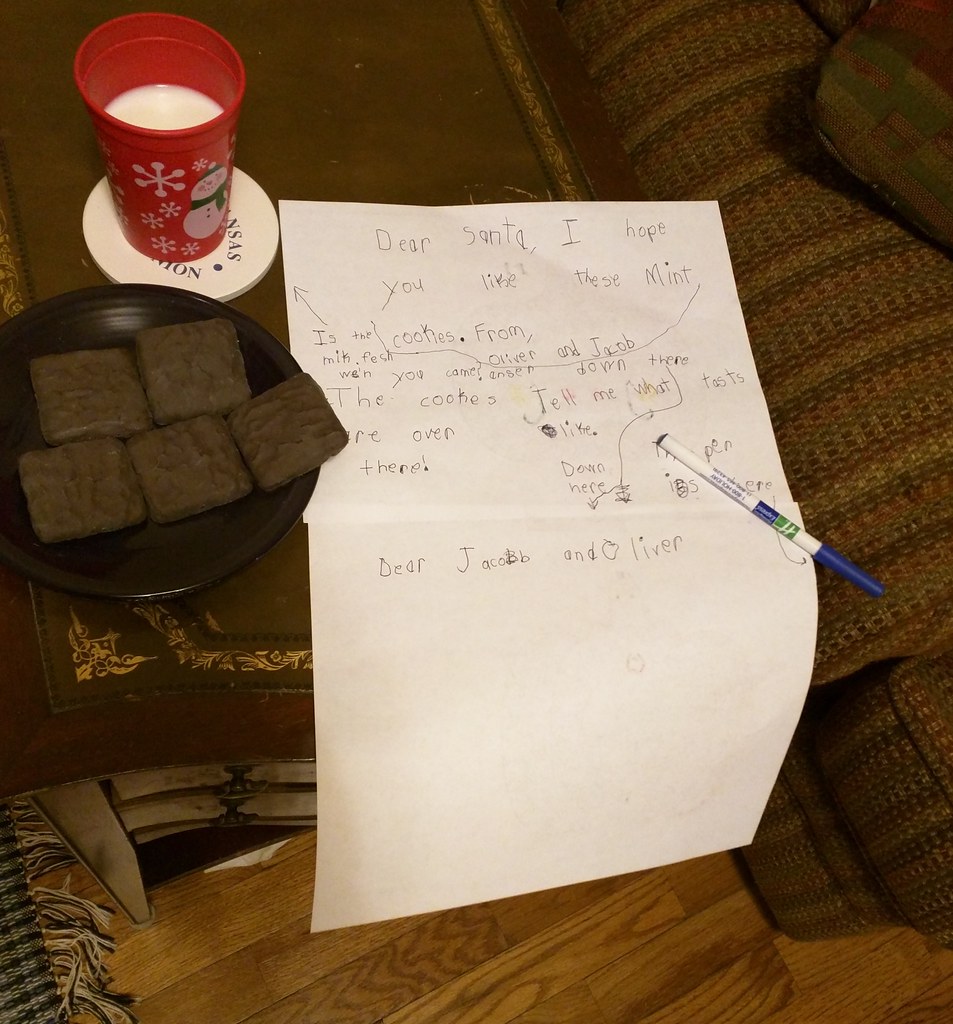
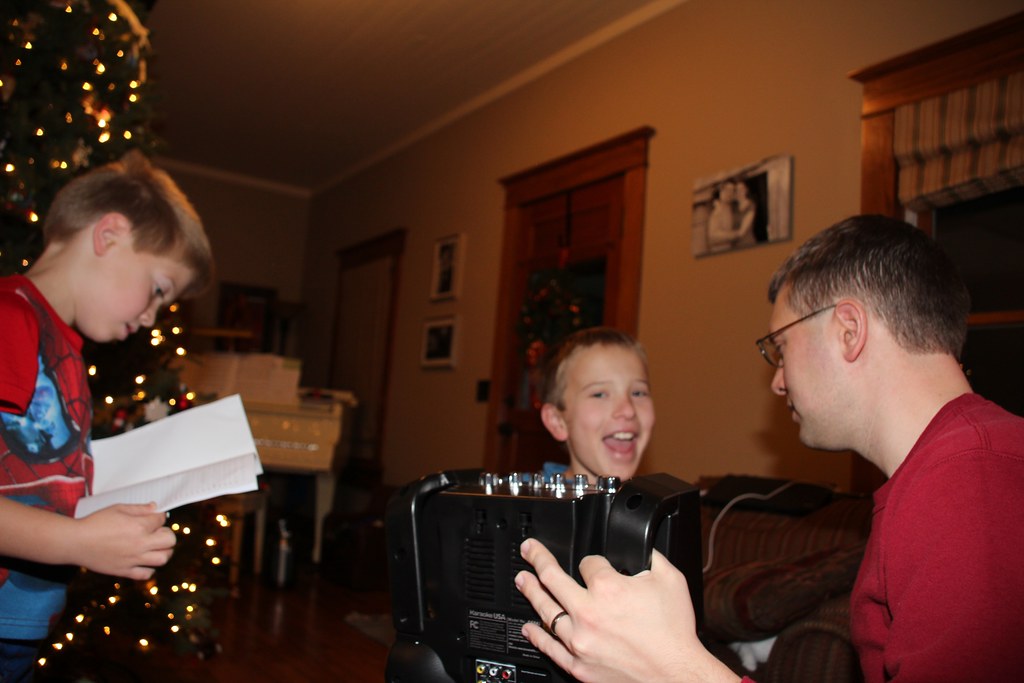
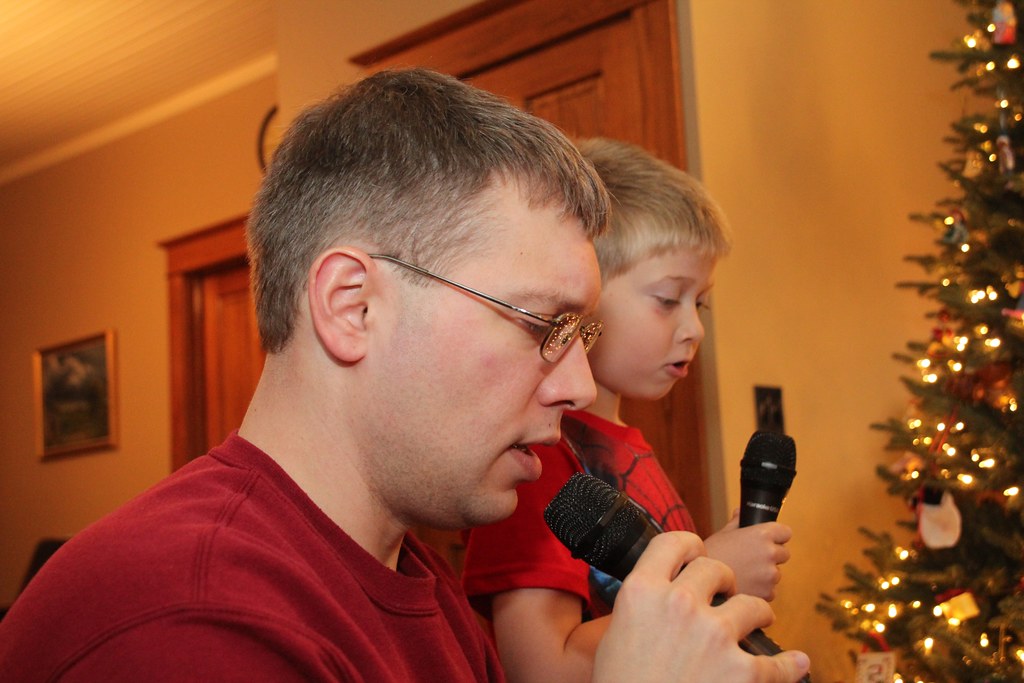
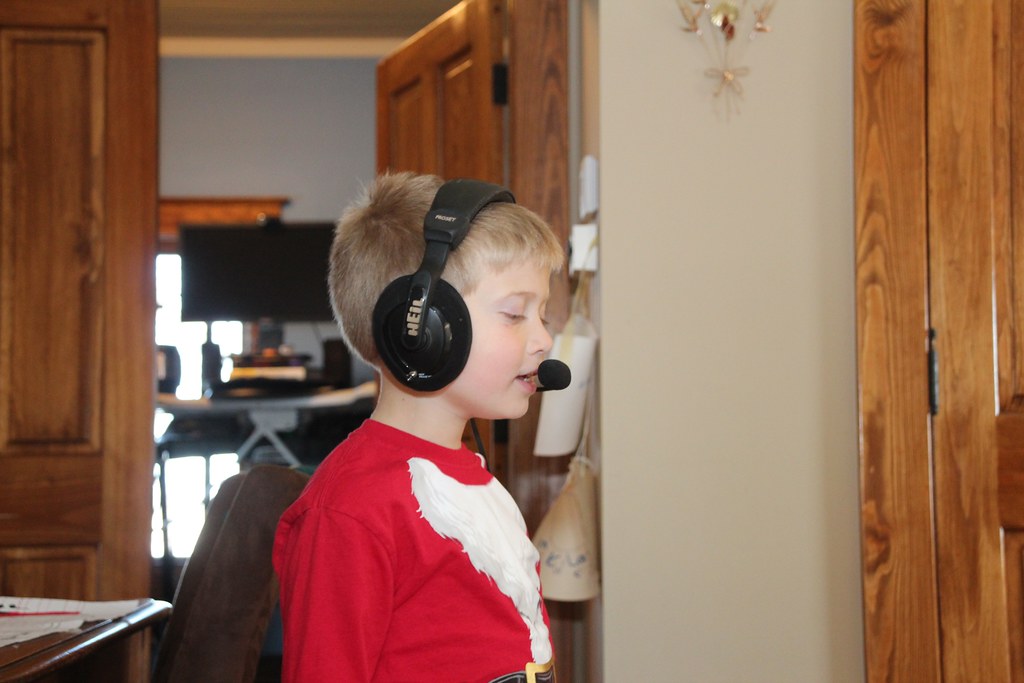
For four years now, we ve had a tradition: I go up to the attic one night, make a lot of noise, and pretend to be Santa. The boys don t think Santa is real, but they get a huge kick out of this anyway. The other day, this wound up with me singing a duet with my 7-year-old Oliver, and seeing a hugely delighted 10-year-old Jacob. All last week, the boys had been lobbying for me to be Santa . They aren t going to be able to be here on Christmas day this year, so I thought why not let them have some fun. I chose one present to give them early too. So, Saturday night, I said they could get ready for Santa. They found some cookies somewhere, got out some milk. And Oliver wrote this wonderful note to Santa : IMG_20161217_204244_cropped That is a note I m going to keep for a long time. He helpfully drew arrows pointing to the milk, cookies, and even the pen. He even started Santa s reply at the bottom! So, Saturday night, I snuck up to the attic, pretended to be Santa, and ate some cookies, drank some milk, and wrote Oliver a note. And I left a present. Jacob has been really getting into music lately, and Laura suggested I find something for the boys. I went looking for something that could record also, and came up with what has got to be a kid s dream: a karaoke machine. The particular one I found came with two microphones, a CD player, audio recording onto SD card (though it s a little dodgy), and a screen for showing words on any music that s karaoke-enhanced. Cue gasps of awe and excitement from the boys when we came down in our PJs and sweats at 6:45 Sunday morning to check it out. IMG_8895 Jacob excitedly began exploring all the knobs and options on it (they were particularly fond of the echo feature), while Oliver wanted to sing. So we found one of his favorite Christmas songs, and here he is singing it with me. IMG_8908 When you have a system with a line in, line out, and several microphone jacks, you can get creative. With a few bits of adapters from my attic, the headset I use for amateur radio worked with it perfectly. Add on a little mic extension cord, and pretty soon Oliver was pretending to be an announcer for a football game! IMG_8919 Then, Oliver decided he would act out a football game while Jacob and I were the announcers. Something tells me there will be much fun had with this over the next while! Just wait until I show them how to hook up a handheld radio to it in order to make a remotely-activated loudspeaker

20 December 2016

Reproducible builds folks: Reproducible Builds: week 86 in Stretch cycle

What happened in the Reproducible Builds effort between Sunday December 11 and Saturday December 17 2016: Reproducible builds world summit The 2nd Reproducible Builds World Summit was held in Berlin, Germany on December 13th-15th. The event was a great success with enthusiastic participation from an extremely diverse number of projects. Many thanks to our sponsors for making this event possible! Reproducible Summit 2 in Berlin 2016 Whilst there is an in-depth report forthcoming, the Guix project have already released their own report. Media coverage Reproducible work in other projects Documentation update A large number of revisions were made to the website during the summit, including re-structuring existing content and creating a concrete plan to move the wiki content to the website: Elsewhere in Debian Packages reviewed and fixed, and bugs filed Chris Lamb: Daniel Shahaf: Reiner Herrmann: Reviews of unreproducible packages 9 package reviews have been added, 19 have been updated and 17 have been removed in this week, adding to our knowledge about identified issues. 3 issue types have been added: One issue type was updated: Weekly QA work During our reproducibility testing, some FTBFS bugs have been detected and reported by: diffoscope development reprotest development trydiffoscope development Misc. This week's edition was written by Chris Lamb and reviewed by a bunch of Reproducible Builds folks on IRC and via email.

18 December 2016

Johannes Schauer: Looking for self-hosted filesharing software

The owncloud package was removed from Debian unstable and testing. I am thus now looking for an alternative. Unfortunately, finding such replacement seems to be harder than I initially thought, even though I only use a very small subset of what owncloud provides. What I require is some software which allows me to:
  1. upload a directory of files of any type to my server (no "distributed" filesharing where I have to stay online with my laptop)
  2. share the content of that directory via HTTP (no requirement to install any additional software other than a web browser)
  3. let the share-links be private (no possibility to infer the location of other shares)
  4. allow users to browse that directory (image thumbnails or a photo gallery would be nice)
  5. allow me to allow anonymous users to upload their own content into that directory (also only requiring their web browser)
  6. already in Debian or easy to package and maintain due to low complexity (I don't have enough time to become the next "owncloud maintainer")
I thought this was a pretty simple task to solve but I am unable to find any software that fits above criteria. The below table shows the result of my research of what's currently available. The columns mark whether the respective software fulfills one of the six criteria from above.
Software 123456
owncloud
sparkleshare
dvcs-autosync
git annex assistant
syncthing
pydio
seafile
sandstorm.io
ipfs
bozon
droppy
Pydio, seafile and sandstorm.io look promising but they seem to be beasts similar in complexity to owncloud as they bring features like version tracking, office integration, wikis, synchronization across multiple devices or online editing of files which are features that I do not need. I would already be very happy if there was a script which would make it easy to create a hard-to-guess symlink to a directory with data tracked by git annex under my www-root and then generate some static HTML to provide a thumbnails view or a photo gallery. Unfortunately, even that solution would not be sufficient as it would still disallow public upload by anybody whom I would give the link to... If you know some software that meets my criteria or would like to submit corrections to above table, please shoot an email to josch@debian.org. Thanks!

16 December 2016

Dimitri John Ledkov: Swapfiles by default in Ubuntu

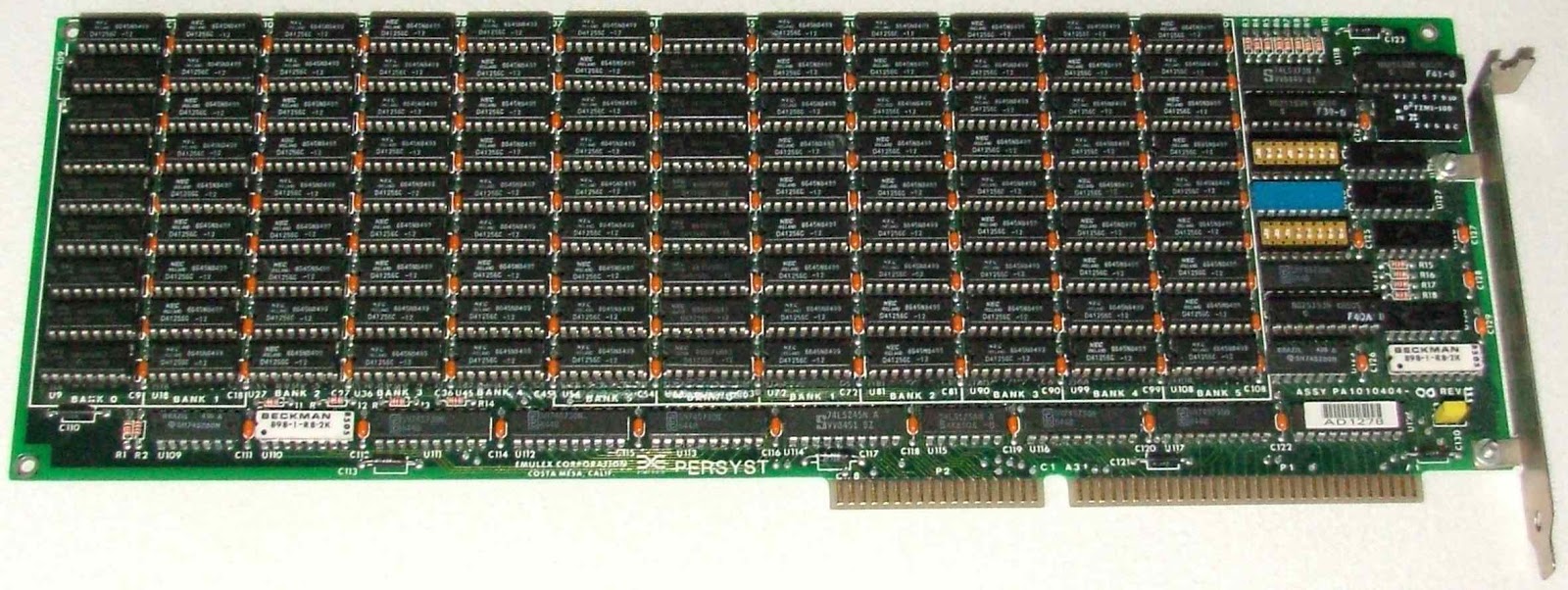
4MB RAM card
By default, in Ubuntu, we usually create a swap partition.

Back in the day of 4MB RAM cards this made total sense, as the ration of RAM to disk space, was still very low. Things have changed since. Server, desktop, embedded systems have migrated to newer generations of both RAM and persistent storage. On the high performance side of things we see machines with faster storage in the form of NVMe and SSD drives. Reserving space for swap on such storage, can be seen as expensive and wasteful. This is also true for recent enough laptops and desktops too. Mobile phones have substantial amounts of RAM these days, and at times, coupled with eMMC storage - it is flash storage of lower performance, which have limited number of write cycles, hence should not be overused for volatile swap data. And there are also unicorns in a form of high performance computing of high memory (shared memory) systems with little or no disk space.

Today, carving a partition and reserving twice the RAM size for swap makes little sense. For a common, general, machine most of the time this swap will not be used at all. Or if said swap space is in use but is of inappropriate size, changing it in-place in retrospect is painful.

Starting from 17.04 Zesty Zapus release, instead of creating swap partitions, swapfiles will be used by default for non-lvm based installations.

Secondly, the sizing of swapfiles is very different. It is no more than 5% of free disk space or 2GiB, whichever is lower.

For preseeding, there are two toggles that control this behavior:
  • d-i partman-swapfile/percentage string 5
  • d-i partman-swapfile/size string 2048
Setting either of those to zero, will result in system without any swap at all. And one can tweak relative integer percentage points and absolute limits in integer percentage points or MiB.

On LVM based installations, swap logical volumes are used, since unfortunately LVM snapshots do not exclude swapfile changes. However, I would like to move partman-auto to respect the above proposed 5%-or-2GB limits.

Ps. 4MB RAM card picture is by Bub's (Photo) [GFDL or CC-BY-SA-3.0], via Wikimedia Commons

15 December 2016

Reproducible builds folks: Reproducible Builds: week 85 in Stretch cycle

What happened in the Reproducible Builds effort between Sunday December 4 and Saturday December 10 2016: Toolchain development and fixes Anders Kaseorg opened a pull request to asciidoc upstream, to make it generate reproducible documentation. (#782294) Bugs filed Chris Lamb: Clint Adams: Dafydd Harries: Robbie Harwood: Valerie R Young: Reviews of unreproducible packages 47 package reviews have been added, 84 have been updated and 3 have been removed in this week, adding to our knowledge about identified issues. 1 new issue type has been added: lessc_captures_build_path Weekly QA work During our reproducibility testing, some FTBFS bugs have been detected and reported by: diffoscope development Chris Lamb fixed a division-by-zero in the progress bar, split out trydiffoscope into a separate package, and made some performance enhancements. Maria Glukhova fixed build issues with Python 3.4 strip-nondeterminism development Anders Kaseorg added support for .par files, by allowing them to be treated as Zip archives; and Chris Lamb improved some documentation. reprotest development Ximin Luo added the ability to vary the build time using faketime, as well as other code quality improvements and cleanups. He also discovered a little-known fact about faketime - that it also modifies filesystem timestamps by default. He submitted a PR to libfaketime upstream to improve the documentation on this, which was quickly accepted, and also disabled this feature in reprotest's own usage of faketime. buildinfo.debian.net development There was further work on buildinfo.debian.net code. Chris Lamb added support for buildinfo format 0.2 and made rejection notices clearer; and Emanuel Bronshtein fixed some links to use HTTPS. Misc. This week's edition was written by Ximin Luo and reviewed by a bunch of Reproducible Builds folks on IRC and via email.

7 December 2016

Shirish Agarwal: Day trip in Cape Town, part 2

Debconf16 logo The post continues from the last post shared. Let me get some interesting tit-bits not related to the day-trip out-of-the-way first I don t know whether we had full access to see all parts of fuller hall or not. Couple of days I was wondering around Fuller Hall, specifically next to where clothes were pressed. Came to know of the laundry service pretty late but still was useful. Umm next to where the ladies/gentleman pressed our clothes, there is a stairway which goes down. In fact even on the opposite side there is a stairway which goes down. I dunno if other people explored them or not. The jail inside and under UCT I was surprised and shocked to see bars in each room as well as connecting walkways etc. I felt a bit sad, confused and curious and went on to find more places like that. After a while I came up to the ground-level and enquired with some of the ladies therein. I was shocked to know that UCT some years ago (they were not specific) was a jail for people. I couldn t imagine that a place which has so much warmth (in people, not climate) could be evil in a sense. I was not able to get much information out of them about the nature of jail it was, maybe it is a dark past that nobody wants to open up, dunno. There were also two *important* aspects of UCT which Bernelle either forgot, didn t share or I just came to know via the Wikipedia page then but nothing else. 1. MeerKAT Apparently quite a bit of the technology was built-in UCT itself. This would have been interesting for geeks and wanna-be geeks like me 2. The OpenContent Initiative by UCT This would have been also something worth exploring. One more interesting thing which I saw was the French council in Cape Town from outside The French Council in cape town from outside I would urge to look at the picture in the gallery as the picture I shared doesn t really show all the details. For e.g. the typical large french windows which are the hall-mark of French architecture doesn t show its glory but if you look at 1306 2322 original picture instead of the 202 360 reproduction you will see that. You will also the insignia of the French Imperial Eagle whose history I came to know only after I looked it up on the Wikipedia page on that day. It seemed fascinating and probably would have the same pride as the State Emblem of India has for Indians with the four Asiatic Lions standing in a circle protecting each other. I also like the palm tree and the way the French Council seemed little and yet had character around all the big buildings. What also was interesting that there wasn t any scare/fear-build and we could take photos from outside unlike what I had seen and experienced in Doha, Qatar as far as photography near Western Embassies/Councils were concerned. One of the very eye-opening moments for me was also while I was researching flights from India to South Africa. While perhaps unconsciously I might have known that Middle East is close to India, in reality, it was only during the search I became aware that most places in Middle East by flight are only an hour or two away. This was shocking as there is virtually no mention of one of our neighbours when they are source of large-scale remittances every year. I mean this should have been in our history and geography books but most do not dwell on the subject. It was only during and after that I could understand Mr. Modi s interactions and trade policies with the Middle East. Another interesting bit was seeing a bar in a Sprinbok bus spingbok atlas bar in bus While admittedly it is not the best picture of the bar, I was surprised to find a bar at the back of a bus. By bar I mean a machine which can serve anything from juices to alcoholic drinks depending upon what is stocked. What was also interesting in the same bus is that the bus also had a middle entrance-and-exit. The middle door in springbok atlas This is something I hadn t seen in most Indian buses. Some of the Volvo buses have but it is rarely used (only except emergencies) . An exhaustive showcase of local buses can be seen here . I find the hand-drawn/cad depictions of all the buses by Amit Pense near to the T. Axe which can be used to break windows Emergency exit window This is also something which I have not observed in Indian inter-city buses (axe to break the window in case of accident and breakable glass which doesn t hurt anyone I presume), whether they are State-Transport or the high-end Volvo s . Either it s part of South African Roads Regulations or something that Springbok buses do for their customers. All of these queries about the different facets I wanted to ask the bus-driver and the attendant/controller but in the excitement of seeing, recording new things couldn t ask In fact one of the more interesting things I looked at and could look day and night is the variety of vehicles on display in Cape Town. In hindsight, I should have bought a couple of 128 GB MMC cards for my mobile rather than the 64 GB one. It was just plain inadequate to capture all that was new and interesting. Auditorum chair truck seen near Auditorium This truck I had seen about some 100 metres near the Auditorium on Upper Campus. The truck s design, paint was something I had never seen before. It is/was similar to casket trucks seen in movies but the way it was painted and everything made it special. What was interesting is to see the gamut of different vehicles. For instance, there were no bicycles that I saw in most places. There were mostly Japanese/Italian bikes and all sorts of trucks. If I had known before, I would definitely have bought an SD specifically to take snaps of all the different types of trucks, cars etc. that I saw therein. The adage/phrase I should stop in any one place and the whole world will pass me by seemed true on quite a few South African Roads. While the roads were on par or a shade better than India, many of those were wide roads. Seeing those, I was left imagining how the Autobahn in Germany and other high-speed Expressways would look n feel. India has also been doing that with the Pune-Mumbai Expressway and projects like Yamuna Expressway and now the extension Agra Lucknow Expressway but doing this all over India would take probably a decade or more. We have been doing it since a decade and a half. NHDP and PMGSY are two projects which are still ongoing to better the roads. We have been having issues as to should we have toll or no toll issues but that is a discussion for some other time. One of the more interesting sights I saw was the high-arched gothic-styled church from outside. This is near Longstreet as well. high arch gothic-styled church I have seen something similar in Goa, Pondicherry but not such high-arches. I did try couple of times to gain entry but one time it was closed, the other time some repairing/construction work was going on or something. I would loved to see it from inside and hopefully they would have had an organ (music) as well. I could imagine to some extent the sort of music that would have come out. Now that Goa has come in the conversation I can t help but state that Seafood enthusiasts/lover/aficionado, or/and Pescatarianism would have a ball of a time in Goa. Goa is on the Konkan coast and while I m eggie, ones who enjoy seafood really have a ball of a time in Goa. Fouthama s Festival which happens in February is particularly attractive as Goan homes are thrown open for people to come and sample their food, exchange recipes and alike. This happens around 2 weeks before the Goan Carnival and is very much a part of the mish-mashed Konkani-Bengali-Parsi-Portugese culture. I better stop here about the Goa otherwise I ll get into reminiscing mode. To put the story and event back on track from where we left of (no fiction hereon), Nicholas was in constant communication with base, i.e. UCT as well as another group who was hiking from UCT to Table Mountain. We waited for the other group to join us till 13:00 hrs. We came to know that they were lost and were trying to come up and hence would take more time. As Bernelle was with them, who was a local and she had two dogs who knew the hills quite well, it was decided to go ahead without them. We came down the same cable-car and then ventured on towards Houtbay. Houtbay has it all, a fisherman s wharf, actual boats with tough-mean looking men with tattoos working on boats puffing cigars/pipes, gaggle of sea-gulls, the whole scene. Sharing a few pictures of the way in-between. the view en-route to Houtbay western style car paint and repair shop Tajmahal Indian Restaurant, Houtbay I just now had a quick look at the restaurant and it seems they had options for veggies too. Unfortunately, the rating leaves a bit to be desired but then dunno as Indian flavoring is something that takes time to get used too. Zomato doesn t give any idea of from when a restaurant is in business and has too few reviews so not easy to know how the experience would have been. Chinese noodles and small houses Notice the pattern, the pattern of small houses I saw all the way till Houtbay and back. I do vaguely remember starting a discussion about it on the bus but don t really remember. I have seen (on TV) cities like Miami, Dubai or/and Hong Kong who have big buildings on the beach but both in Konkan as well as Houtbay there were small buildings. I guess a combination of zoning regulations, feel of community, fear of being flooded all play into beaches being the way they are. Also, this probably is good as less stress on the environment. Miamiboyz from Wikimedia Commons The above picture is taken from Wikipedia from the article Miami Beach, Florida for comparison. Audi rare car to be seen in India The Audi rare car to be seen in India. This car has been associated with Ravi Shastri when he won it in 1985. I was young but still get goosebumps remembering those days. first-glance-Houtbay-and-pier First glance of Houtbay beach and pier. Notice how clean and white the beach is. Wharf-Grill-Restaurant-from-side-and-Hop-on-Hop-off-bus You can see the wharf grill restaurant in the distance (side-view), see the back of the hop on and hop off bus (a concept which was unknown to me till then). Once I came back and explored on the web came to know this concept is prevalent in many a touristy places around the world. Umm also By sheer happenchance also captured a beautiful looking Indian female . So many things happening all at once In Hindi, we would call this picture virodabhas or contradiction . this is in afternoon, around 1430 hrs. You have the sun, the clouds, the Mountains, the x number of boats, the pier, the houses, the cars, the shops. It was all crazy and beautiful at the same time. The Biggest Contradiction is seeing the Mountain, the beach and the Sea in the same Picture. Baffled the mind. Konkan though is a bit similar there as well. You have all the three things in some places but that s a different experience altogether as ours is a more tropical weather although is one of the most romantic places in the rains. We were supposed to go on a short cruise to seal/dolphin island but as we were late (as had been waiting for the other group) didn t go and instead just loitered there. Fake-real lookout bar-restaurant IIRC the lookout bar is situated just next to Houtbay Search and Rescue. Although was curious if the Lookout tower was used in case of disappearance. lost people, boats etc. Seal in action Seal jumping over water, what a miracle ! One of the boats on which we possibly could have been on. It looked like the boat we could have been on. I clicked as I especially liked the name Calypso and Calypso . I shared the two links as the mythologies, interpretation differ a bit between Greek and Hollywood culture Debian folks and the area around Can see few Debian folks in the foreground, next to the Pole and the area around. Also can see a bit of the area around. Alone boy trying to surf I don t know anything about water sports and after sometime he came out. I was left wondering though, how safe he was in that water. While he was close to the pier and he was just paddling, there weren t big waves still felt a bit of concern. Mr. Seal - the actor and his handler While the act was not to the level we see in the movies, still for the time I hung around, I saw him showing attitude for his younger audiences, eating out of their hands, making funny sounds. Btw he farted a few times, whether that was a put-on or not can t really say but produced a few guffaws from his audience. A family feeding Mr. Seal I dunno why the birds came down for. Mr. Seal was being fed oily small fish parts, dunno if the oil was secreted by the fish themselves or whatever, it just looked oily from distance. Bird-Man-Bird Bird taking necessary sun bath typical equipment on a boat to catch fish-lot of nets boats-nets-and-ropes People working on disentangling a net There wasn t much activity on the time we went. It probably would have been different on sunrise and would be on sunset. The only activity I saw was on this boat where they were busy fixing and disentangling the lines. I came up with 5-15 different ideas for a story but rejected them as a. Probably all of them have been tried. People have been fishing since the beginning of time and modern fishing probably 200 odd years or so. I have read accounts of fishing companies in early 1800s onwards, so probably all must have been tried. b. More dangerous one, if there is a unique idea, then it becomes more dangerous as writing is an all-consuming process. Writing a blog post (bad or good) takes lots of time. I constantly read, re-read, try and improvise till I can or my patience loses out. In book you simply can t have such luxuries. hout-bay-search-and-rescue-no-parking-zone No parking/tow zone in/near the Houtbay search and rescue. Probably to take out emergency vehicles once something untoward happens. hout-bay-sea-rescue-with-stats Saved 54 lives, boats towed 154 Salut! Houtbay sea rescue. The different springbok atlas bus that we were on kraal-kraft The only small criticism is for Houtbay there wasn t a single public toilet. We had to ask favor at kraal kraft to use their toilets and there could have been accidents, it wasn t lighted well and water was spilled around. Road sign telling that we are near to UCT For us, because we were late we missed both the boat-cruise as well as some street shops selling trinkets. Other than that it was all well. We should have stayed till sunset, I am sure the view would have been breath-taking but we hadn t booked the bus till evening. Back at UCT Overall it was an interesting day as we had explored part of Table Mountain, seen the somewhat outrageously priced trinkets there as well as explored Houtbay sea-side as well.
Filed under: Miscellenous Tagged: #Audi, #Cape Town, #Cruises, #Debconf16, #French Council, #Geography, #Houtbay Sea Rescue, #Jail, #Middle East, #Springbok Atlas, #Vehicles

5 December 2016

Reproducible builds folks: Reproducible Builds: week 84 in Stretch cycle

What happened in the Reproducible Builds effort between Sunday November 27 and Saturday December 3 2016: Reproducible work in other projects Media coverage, etc. Bugs filed Chris Lamb: Clint Adams: Dafydd Harries: Daniel Shahaf: Reiner Herrmann: Valerie R Young: Reviews of unreproducible packages 15 package reviews have been added, 4 have been updated and 26 have been removed in this week, adding to our knowledge about identified issues. 2 issue types have been added: Weekly QA work During our reproducibility testing, some FTBFS bugs have been detected and reported by: diffoscope development Is is available now in Debian, Archlinux and on PyPI. strip-nondeterminism development reprotest development tests.reproducible-builds.org Misc. This week's edition was written by Chris Lamb, Valerie Young, Vagrant Cascadian, Holger Levsen and reviewed by a bunch of Reproducible Builds folks on IRC.

Markus Koschany: My Free Software Activities in November 2016

Welcome to gambaru.de. Here is my monthly report that covers what I have been doing for Debian. If you re interested in Java, Games and LTS topics, this might be interesting for you. Debian Android Debian Games Debian Java Debian LTS This was my ninth month as a paid contributor and I have been paid to work 11 hours on Debian LTS, a project started by Rapha l Hertzog. In that time I did the following: Non-maintainer uploads It is already this time of the year again. See you next year for another report.

3 December 2016

Vincent Bernat: Build-time dependency patching for Android

This post shows how to patch an external dependency for an Android project at build-time with Gradle. This leverages the Transform API and Javassist, a Java bytecode manipulation tool.

buildscript  
    dependencies  
        classpath 'com.android.tools.build:gradle:2.2.+'
        classpath 'com.android.tools.build:transform-api:1.5.+'
        classpath 'org.javassist:javassist:3.21.+'
        classpath 'commons-io:commons-io:2.4'
     
 
Disclaimer: I am not a seasoned Android programmer, so take this with a grain of salt.

Context This section adds some context to the example. Feel free to skip it. Dashkiosk is an application to manage dashboards on many displays. It provides an Android application you can install on one of those cheap Android sticks. Under the table, the application is an embedded webview backed by the Crosswalk Project web runtime which brings an up-to-date web engine, even for older versions of Android1. Recently, a security vulnerability has been spotted in how invalid certificates were handled. When a certificate cannot be verified, the webview defers the decision to the host application by calling the onReceivedSslError() method:
Notify the host application that an SSL error occurred while loading a resource. The host application must call either callback.onReceiveValue(true) or callback.onReceiveValue(false). Note that the decision may be retained for use in response to future SSL errors. The default behavior is to pop up a dialog.
The default behavior is specific to Crosswalk webview: the Android builtin one just cancels the load. Unfortunately, the fix applied by Crosswalk is different and, as a side effect, the onReceivedSslError() method is not invoked anymore2. Dashkiosk comes with an option to ignore TLS errors3. The mentioned security fix breaks this feature. The following example will demonstrate how to patch Crosswalk to recover the previous behavior4.

Simple method replacement Let s replace the shouldDenyRequest() method from the org.xwalk.core.internal.SslUtil class with this version:
// In SslUtil class
public static boolean shouldDenyRequest(int error)  
    return false;
 

Transform registration Gradle Transform API enables the manipulation of compiled class files before they are converted to DEX files. To declare a transform and register it, include the following code in your build.gradle:
import com.android.build.api.transform.Context
import com.android.build.api.transform.QualifiedContent
import com.android.build.api.transform.Transform
import com.android.build.api.transform.TransformException
import com.android.build.api.transform.TransformInput
import com.android.build.api.transform.TransformOutputProvider
import org.gradle.api.logging.Logger
class PatchXWalkTransform extends Transform  
    Logger logger = null;
    public PatchXWalkTransform(Logger logger)  
        this.logger = logger
     
    @Override
    String getName()  
        return "PatchXWalk"
     
    @Override
    Set<QualifiedContent.ContentType> getInputTypes()  
        return Collections.singleton(QualifiedContent.DefaultContentType.CLASSES)
     
    @Override
    Set<QualifiedContent.Scope> getScopes()  
        return Collections.singleton(QualifiedContent.Scope.EXTERNAL_LIBRARIES)
     
    @Override
    boolean isIncremental()  
        return true
     
    @Override
    void transform(Context context,
                   Collection<TransformInput> inputs,
                   Collection<TransformInput> referencedInputs,
                   TransformOutputProvider outputProvider,
                   boolean isIncremental) throws IOException, TransformException, InterruptedException  
        // We should do something here
     
 
// Register the transform
android.registerTransform(new PatchXWalkTransform(logger))
The getInputTypes() method should return the set of types of data consumed by the transform. In our case, we want to transform classes. Another possibility is to transform resources. The getScopes() method should return a set of scopes for the transform. In our case, we are only interested by the external libraries. It s also possible to transform our own classes. The isIncremental() method returns true because we support incremental builds. The transform() method is expected to take all the provided inputs and copy them (with or without modifications) to the location supplied by the output provider. We didn t implement this method yet. This causes the removal of all external dependencies from the application.

Noop transform To keep all external dependencies unmodified, we must copy them:
@Override
void transform(Context context,
               Collection<TransformInput> inputs,
               Collection<TransformInput> referencedInputs,
               TransformOutputProvider outputProvider,
               boolean isIncremental) throws IOException, TransformException, InterruptedException  
    inputs.each  
        it.jarInputs.each  
            def jarName = it.name
            def src = it.getFile()
            def dest = outputProvider.getContentLocation(jarName, 
                                                         it.contentTypes, it.scopes,
                                                         Format.JAR);
            def status = it.getStatus()
            if (status == Status.REMOVED)   //  
                logger.info("Remove $ src ")
                FileUtils.delete(dest)
              else if (!isIncremental   status != Status.NOTCHANGED)   //  
                logger.info("Copy $ src ")
                FileUtils.copyFile(src, dest)


We also need two additional imports:
import com.android.build.api.transform.Status
import org.apache.commons.io.FileUtils
Since we are handling external dependencies, we only have to manage JAR files. Therefore, we only iterate on jarInputs and not on directoryInputs. There are two cases when handling incremental build: either the file has been removed ( ) or it has been modified ( ). In all other cases, we can safely assume the file is already correctly copied.

JAR patching When the external dependency is the Crosswalk JAR file, we also need to modify it. Here is the first part of the code (replacing ):
if ("$ src " ==~ ".*/org.xwalk/xwalk_core.*/classes.jar")  
    def pool = new ClassPool()
    pool.insertClassPath("$ src ")
    def ctc = pool.get('org.xwalk.core.internal.SslUtil') //  
    def ctm = ctc.getDeclaredMethod('shouldDenyRequest')
    ctc.removeMethod(ctm) //  
    ctc.addMethod(CtNewMethod.make("""
public static boolean shouldDenyRequest(int error)  
    return false;
 
""", ctc)) //  
    def sslUtilBytecode = ctc.toBytecode() //  
    // Write back the JAR file
    //  
  else  
    logger.info("Copy $ src ")
    FileUtils.copyFile(src, dest)
 
We also need the following additional imports to use Javassist:
import javassist.ClassPath
import javassist.ClassPool
import javassist.CtNewMethod
Once we have located the JAR file we want to modify, we add it to our classpath and retrieve the class we are interested in ( ). We locate the appropriate method and delete it ( ). Then, we add our custom method using the same name ( ). The whole operation is done in memory. We retrieve the bytecode of the modified class in . The remaining step is to rebuild the JAR file:
def input = new JarFile(src)
def output = new JarOutputStream(new FileOutputStream(dest))
//  
input.entries().each  
    if (!it.getName().equals("org/xwalk/core/internal/SslUtil.class"))  
        def s = input.getInputStream(it)
        output.putNextEntry(new JarEntry(it.getName()))
        IOUtils.copy(s, output)
        s.close()
     
 
//  
output.putNextEntry(new JarEntry("org/xwalk/core/internal/SslUtil.class"))
output.write(sslUtilBytecode)
output.close()
We need the following additional imports:
import java.util.jar.JarEntry
import java.util.jar.JarFile
import java.util.jar.JarOutputStream
import org.apache.commons.io.IOUtils
There are two steps. In , all classes are copied to the new JAR, except the SslUtil class. In , the modified bytecode for SslUtil is added to the JAR. That s all! You can view the complete example on GitHub.

More complex method replacement In the above example, the new method doesn t use any external dependency. Let s suppose we also want to replace the sslErrorFromNetErrorCode() method from the same class with the following one:
import org.chromium.net.NetError;
import android.net.http.SslCertificate;
import android.net.http.SslError;
// In SslUtil class
public static SslError sslErrorFromNetErrorCode(int error,
                                                SslCertificate cert,
                                                String url)  
    switch(error)  
        case NetError.ERR_CERT_COMMON_NAME_INVALID:
            return new SslError(SslError.SSL_IDMISMATCH, cert, url);
        case NetError.ERR_CERT_DATE_INVALID:
            return new SslError(SslError.SSL_DATE_INVALID, cert, url);
        case NetError.ERR_CERT_AUTHORITY_INVALID:
            return new SslError(SslError.SSL_UNTRUSTED, cert, url);
        default:
            break;
     
    return new SslError(SslError.SSL_INVALID, cert, url);
 
The major difference with the previous example is that we need to import some additional classes.

Android SDK import The classes from the Android SDK are not part of the external dependencies. They need to be imported separately. The full path of the JAR file is:
androidJar = "$ android.getSdkDirectory().getAbsolutePath() /platforms/" +
             "$ android.getCompileSdkVersion() /android.jar"
We need to load it before adding the new method into SslUtil class:
def pool = new ClassPool()
pool.insertClassPath(androidJar)
pool.insertClassPath("$ src ")
def ctc = pool.get('org.xwalk.core.internal.SslUtil')
def ctm = ctc.getDeclaredMethod('sslErrorFromNetErrorCode')
ctc.removeMethod(ctm)
pool.importPackage('android.net.http.SslCertificate');
pool.importPackage('android.net.http.SslError');
//  

External dependency import We must also import org.chromium.net.NetError and therefore, we need to put the appropriate JAR in our classpath. The easiest way is to iterate through all the external dependencies and add them to the classpath.
def pool = new ClassPool()
pool.insertClassPath(androidJar)
inputs.each  
    it.jarInputs.each  
        def jarName = it.name
        def src = it.getFile()
        def status = it.getStatus()
        if (status != Status.REMOVED)  
            pool.insertClassPath("$ src ")


def ctc = pool.get('org.xwalk.core.internal.SslUtil')
def ctm = ctc.getDeclaredMethod('sslErrorFromNetErrorCode')
ctc.removeMethod(ctm)
pool.importPackage('android.net.http.SslCertificate');
pool.importPackage('android.net.http.SslError');
pool.importPackage('org.chromium.net.NetError');
ctc.addMethod(CtNewMethod.make(" "))
// Then, rebuild the JAR...
Happy hacking!

  1. Before Android 4.4, the webview was severely outdated. Starting from Android 5, the webview is shipped as a separate component with updates. Embedding Crosswalk is still convenient as you know exactly which version you can rely on.
  2. I hope to have this fixed in later versions.
  3. This may seem harmful and you are right. However, if you have an internal CA, it is currently not possible to provide its own trust store to a webview. Moreover, the system trust store is not used either. You also may want to use TLS for authentication only with client certificates, a feature supported by Dashkiosk.
  4. Crosswalk being an opensource project, an alternative would have been to patch Crosswalk source code and recompile it. However, Crosswalk embeds Chromium and recompiling the whole stuff consumes a lot of resources.

30 November 2016

Chris Lamb: Free software activities in November 2016

Here is my monthly update covering what I have been doing in the free software world (previous month):
Reproducible builds

Whilst anyone can inspect the source code of free software for malicious flaws, most software is distributed pre-compiled to end users. The motivation behind the Reproducible Builds effort is to permit verification that no flaws have been introduced either maliciously or accidentally during this compilation process by promising identical results are always generated from a given source, thus allowing multiple third-parties to come to a consensus on whether a build was compromised.

This month:

My work in the Reproducible Builds project was also covered in our weekly reports. (#80, #81, #82 #83.

Toolchain issues I submitted the following patches to fix reproducibility-related toolchain issues with Debian:

strip-nondeterminism

strip-nondeterminism is our tool to remove specific non-deterministic results from a completed build.


jenkins.debian.net

jenkins.debian.net runs our comprehensive testing framework.

  • buildinfo.debian.net has moved to SSL. (ac3b9e7)
  • Submit signing keys to keyservers after generation. (bdee6ff)
  • Various cosmetic changes, including
    • Prefer if X not in Y over if not X in Y. (bc23884)
    • No need for a dictionary; let's just use a set. (bf3fb6c)
    • Avoid DRY violation by using a for loop. (4125ec5)

I also submitted 9 patches to fix specific reproducibility issues in apktool, cairo-5c, lava-dispatcher, lava-server, node-rimraf, perlbrew, qsynth, tunnelx & zp.

Debian

Debian LTS This month I have been paid to work 11 hours on Debian Long Term Support (LTS). In that time I did the following:
  • "Frontdesk" duties, triaging CVEs, etc.
  • Issued DLA 697-1 for bsdiff fixing an arbitrary write vulnerability.
  • Issued DLA 705-1 for python-imaging correcting a number of memory overflow issues.
  • Issued DLA 713-1 for sniffit where a buffer overflow allowed a specially-crafted configuration file to provide a root shell.
  • Issued DLA 723-1 for libsoap-lite-perl preventing a Billion Laughs XML expansion attack.
  • Issued DLA 724-1 for mcabber fixing a roster push attack.

Uploads
  • redis:
    • 3.2.5-2 Tighten permissions of /var/ lib,log /redis. (#842987)
    • 3.2.5-3 & 3.2.5-4 Improve autopkgtest tests and install upstream's MANIFESTO and README.md documentation.
  • gunicorn (19.6.0-9) Adding autopkgtest tests.
  • libfiu:
    • 0.94-1 Add autopkgtest tests.
    • 0.95-1, 0.95-2 & 0.95-3 New upstream release and improve autopkgtest coverage.
  • python-django (1.10.3-1) New upstream release.
  • aptfs (0.8-3, 0.8-4 & 0.8-5) Adding and subsequently improving the autopkgtext tests.


I performed the following QA uploads:


Finally, I also made the following non-maintainer uploads:
  • libident (0.22-3.1) Move from obsolete Source-Version substvar to binary:Version. (#833195)
  • libpcl1 (1.6-1.1) Move from obsolete Source-Version substvar to binary:Version. (#833196)
  • pygopherd (2.0.18.4+nmu1) Move from obsolete Source-Version substvar to $ source:Version . (#833202)


RC bugs


I also filed 59 FTBFS bugs against arc-gui-clients, asyncpg, blhc, civicrm, d-feet, dpdk, fbpanel, freeciv, freeplane, gant, golang-github-googleapis-gax-go, golang-github-googleapis-proto-client-go, haskell-cabal-install, haskell-fail, haskell-monadcatchio-transformers, hg-git, htsjdk, hyperscan, jasperreports, json-simple, keystone, koji, libapache-mod-musicindex, libcoap, libdr-tarantool-perl, libmath-bigint-gmp-perl, libpng1.6, link-grammar, lua-sql, mediatomb, mitmproxy, ncrack, net-tools, node-dateformat, node-fuzzaldrin-plus, node-nopt, open-infrastructure-system-images, open-infrastructure-system-images, photofloat, ppp, ptlib, python-mpop, python-mysqldb, python-passlib, python-protobix, python-ttystatus, redland, ros-message-generation, ruby-ethon, ruby-nokogiri, salt-formula-ceilometer, spykeviewer, sssd, suil, torus-trooper, trash-cli, twisted-web2, uftp & wide-dhcpv6.

FTP Team

As a Debian FTP assistant I ACCEPTed 70 packages: bbqsql, coz-profiler, cross-toolchain-base, cross-toolchain-base-ports, dgit-test-dummy, django-anymail, django-hstore, django-html-sanitizer, django-impersonate, django-wkhtmltopdf, gcc-6-cross, gcc-defaults, gnome-shell-extension-dashtodock, golang-defaults, golang-github-btcsuite-fastsha256, golang-github-dnephin-cobra, golang-github-docker-go-events, golang-github-gogits-cron, golang-github-opencontainers-image-spec, haskell-debian, kpmcore, libdancer-logger-syslog-perl, libmoox-buildargs-perl, libmoox-role-cloneset-perl, libreoffice, linux-firmware-raspi3, linux-latest, node-babel-runtime, node-big.js, node-buffer-shims, node-charm, node-cliui, node-core-js, node-cpr, node-difflet, node-doctrine, node-duplexer2, node-emojis-list, node-eslint-plugin-flowtype, node-everything.js, node-execa, node-grunt-contrib-coffee, node-grunt-contrib-concat, node-jquery-textcomplete, node-js-tokens, node-json5, node-jsonfile, node-marked-man, node-os-locale, node-sparkles, node-tap-parser, node-time-stamp, node-wrap-ansi, ooniprobe, policycoreutils, pybind11, pygresql, pysynphot, python-axolotl, python-drizzle, python-geoip2, python-mockupdb, python-pyforge, python-sentinels, python-waiting, pythonmagick, r-cran-isocodes, ruby-unicode-display-width, suricata & voctomix-outcasts. I additionally filed 4 RC bugs against packages that had incomplete debian/copyright files against node-cliui, node-core-js, node-cpr & node-grunt-contrib-concat.

29 November 2016

Reproducible builds folks: Reproducible Builds: week 83 in Stretch cycle

What happened in the Reproducible Builds effort between Sunday November 20 and Saturday November 26 2016: Reproducible work in other projects Bugs filed Chris Lamb: Daniel Shahaf: Reiner Herrmann: Reviews of unreproducible packages 63 package reviews have been added, 73 have been updated and 41 have been removed in this week, adding to our knowledge about identified issues. 4 issue types have been added: Weekly QA work During our reproducibility testing, some FTBFS bugs have been detected and reported by: strip-nondeterminism development debrepatch development Continuous integration: tests.reproducible-builds.org Debian: Since the stretch freeze is getting closer, Holger made the following changes: Misc. This week's edition was written by Ximin Luo, Holger Levsen & Chris Lamb and reviewed by a bunch of Reproducible Builds folks on IRC.

21 November 2016

Reproducible builds folks: Reproducible Builds: week 82 in Stretch cycle

What happened in the Reproducible Builds effort between Sunday November 13 and Saturday November 19 2016: Media coverage Elsewhere in Debian Documentation update Packages reviewed and fixed, and bugs filed Reviews of unreproducible packages 43 package reviews have been added, 4 have been updated and 12 have been removed in this week, adding to our knowledge about identified issues. 2 issue types have been updated: 4 issue types have been added: Weekly QA work During our reproducibility testing, some FTBFS bugs have been detected and reported by: strip-nondeterminism development disorderfs development debrebuild development debrebuild is new tool proposed by HW42 and josch (see #774415: "From srebuild sbuild-wrapper to debrebuild"). debrepatch development debrepatch is a set of scripts that we're currently developing to make it easier to track unapplied patches. We have a lot of those and we're not always sure if they still work. The plan is to set up jobs to automatically apply old reproducibility patches to newer versions of packages and notify the right people if they don't apply and/or no longer make the package reproducible. debpatch is a component of debrepatch that applies debdiffs to Debian source packages. In other words, it is to debdiff(1) what patch(1) is to diff(1). It is a general tool that is not specific to Reproducible Builds. This week, Ximin Luo worked on making it more "production-ready" and will soon submit it for inclusion in devscripts. reprotest development Ximin Luo significantly improved reprotest, adding presets and auto-detection of which preset to use. One can now run e.g. reprotest auto . or reprotest auto $pkg_$ver.dsc instead of the long command lines that were needed before. He also made it easier to set up build dependencies inside the virtual server and made it possible to specify pre-build dependencies that reprotest itself needs to set up the variations. Previously one had to manually edit the virtual server to do that, which was not very usable to humans without an in-depth knowledge of the building process. These changes will be tested some more and then released in the near future as reprotest 0.4. tests.reproducible-builds.org Misc. This week's edition was written by Chris Lamb, Holger Levsen, Ximin Luo and reviewed by a bunch of Reproducible Builds folks on IRC.

17 November 2016

Reproducible builds folks: Reproducible Builds: week 81 in Stretch cycle

What happened in the Reproducible Builds effort between Sunday November 6 and Saturday November 12 2016: Media coverage Matthew Garrett blogged about Tor, TPMs and service integrity attestation and how reproducible builds are the base for systems integrity. The Linux Foundation announced renewed funding for us as part of the Core Infrastructure Initiative. Thank you! Outreachy updates Maria Glukhova has been accepted into the Outreachy winter internship and will work with us the Debian reproducible builds team. To quote her words
siamezzze: I've been accepted to #outreachy winter internship - going to
work with Debian reproducible builds team. So excited about that! <3
Debian
Toolchain development and fixes dpkg: debrebuild: Bugs filed Chris Lamb: Daniel Shahaf: Niko Tyni: Reiner Herrman: Reviews of unreproducible packages 136 package reviews have been added, 5 have been updated and 7 have been removed in this week, adding to our knowledge about identified issues. 3 issue types have been updated: Weekly QA work During of reproducibility testing, some FTBFS bugs have been detected and reported by: diffoscope development A new version of diffoscope 62~bpo8+1 was uploaded to jessie-backports by Mattia Rizzolo. Meanwhile in git, Ximin Luo greatly improved speed by fixing a O(n2) lookup which was causing diffs of large packages such as GCC and glibc to take many more hours than was necessary. When this commit is released, we should hopefully see full diffs for such packages again. Currently we have 197 source packages which - when built - diffoscope fails to analyse. buildinfo.debian.net development tests.reproducible-builds.org Debian: reproducible-builds.org website F-Droid was finally added to our list of partner projects. (This was an oversight and they had already been working with us for some time.) Misc. This week's edition was written by Ximin Luo and Holger Levsen and reviewed by a bunch of Reproducible Builds folks on IRC.

Uwe Kleine-K nig: Installing Debian Stretch on a Turris Omnia

Recently I got "my" Turris Omnia and it didn't take long to replace the original firmware with Debian. If you want to reproduce, here is what you have to do: Open the case of the Turris Omnia, connect the hacker pack (or an RS232-to-TTL adapter) to access the U-Boot prompt (see Turris Omnia: How to use the "Hacker pack"). Then download the installer and device tree:
# cd /srv/tftp
# wget https://d-i.debian.org/daily-images/armhf/daily/netboot/vmlinuz
# wget https://d-i.debian.org/daily-images/armhf/daily/netboot/initrd.gz
# wget https://www.kleine-koenig.org/tmp/armada-385-turris-omnia.dtb
(The latter is not included yet in Debian, but I'm working on that.) and after connecting the Turris Omnia's WAN to a dhcp managed network start it in U-Boot:
dhcp
setenv serverip 192.168.1.17
tftpboot 0x01000000 vmlinuz
tftpboot 0x02000000 armada-385-turris-omnia.dtb
tftpboot 0x03000000 initrd.gz
bootz 0x01000000 0x03000000:$filesize 0x02000000
With 192.168.1.17 being the IPv4 of the machine you have the tftp server running. I suggest to use btrfs as rootfs because that works well with U-Boot. Before finishing the installation put the dtb in the rootfs as /boot/dtb. To then boot into Debian do in U-Boot:
setenv mmcboot=btrload mmc 0 0x01000000 boot/vmlinuz\; btrload mmc 0 0x02000000 boot/dtb\; btrload mmc 0 0x03000000 boot/initrd.img\; bootz 0x01000000 0x03000000:$filesize 0x02000000
setenv bootargs console=ttyS0,115200 rootfstype=btrfs rootdelay=2 root=/dev/mmcblk0p1 rootflags=commit=5 rw
saveenv
boot
Known issues: If you have problems, don't hesitate to contact me. Also check the Debian Wiki for further details.

Next.

Previous.