Search Results: "robert"

29 March 2017

Daniel Pocock: Brexit: If it looks like racism, if it smells like racism and if it feels like racism, who else but a politician could argue it isn't?

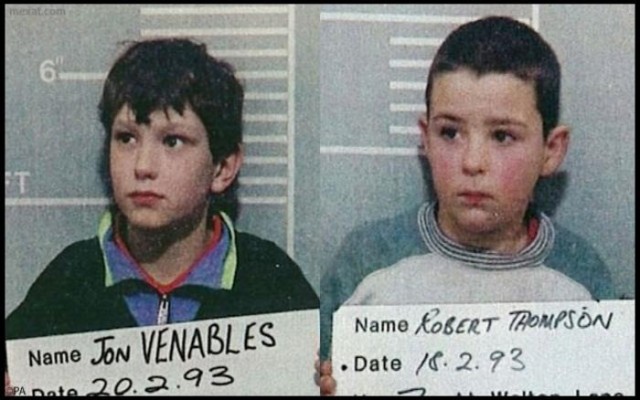
Since the EU referendum got under way in the UK, it has become almost an everyday occurence to turn on the TV and hear some politician explaining "I don't mean to sound racist, but..." (example) Of course, if you didn't mean to sound racist, you wouldn't sound racist in the first place, now would you? The reality is, whether you like politics or not, political leaders have a significant impact on society and the massive rise in UK hate crimes, including deaths of Polish workers, is a direct reflection of the leadership (or profound lack of it) coming down from Westminster. Maybe you don't mean to sound racist, but if this is the impact your words are having, maybe it's time to shut up? Choosing your referendum Why choose to have a referendum on immigration issues and not on any number of other significant topics? Why not have a referendum on nuking Mr Putin to punish him for what looks like an act of terrorism against the Malaysian Airlines flight MH17? Why not have a referendum on cutting taxes or raising speed limits, turning British motorways into freeways or an autobahn? Why choose to keep those issues in the hands of the Government, but invite the man-in-a-white-van from middle England to regurgitate Nigel Farage's fears and anxieties about migrants onto a ballot paper? Even if David Cameron sincerely hoped and believed that the referendum would turn out otherwise, surely he must have contemplated that he was playing Russian Roulette with the future of millions of innocent people? Let's start at the top For those who are fortunate enough to live in parts of the world where the press provides little exposure to the antics of British royalty, an interesting fact you may have missed is that the Queen's husband, Prince Philip, Duke of Edinburgh is actually a foreigner. He was born in Greece and has Danish and German ancestry. Migration (in both directions) is right at the heart of the UK's identity. Queen and Prince Philip Home office minister Amber Rudd recently suggested British firms should publish details about how many foreign people they employ and in which positions. She argued this is necessary to help boost funding for training local people. If that is such a brilliant idea, why hasn't it worked for the Premier League? It is a matter of public knowledge how many foreigners play football in England's most prestigious division, so why hasn't this caused local clubs to boost training budgets for local recruits? After all, when you consider that England hasn't won a World Cup since 1966, what have they got to lose? Kevin Pietersen All this racism, it's just not cricket. Or is it? One of the most remarkable cricketers to play for England in recent times, Kevin Pietersen, dubbed "the most complete batsman in cricket" by The Times and "England's greatest modern batsman" by the Guardian, was born in South Africa. In the five years he was contracted to the Hampshire county team, he only played one match, because he was too busy representing England abroad. His highest position was nothing less than becoming England's team captain. Are the British superior to every other European citizen? One of the implications of the rhetoric coming out of London these days is that the British are superior to their neighbours, entitled to have their cake and eat it too, making foreigners queue up at Paris' Gare du Nord to board the Eurostar while British travelers should be able to walk or drive into European countries unchallenged. This superiority complex is not uniquely British, you can observe similar delusions are rampant in many of the places where I've lived, including Australia, Switzerland and France. America's Donald Trump has taken this style of politics to a new level. Look in the mirror Theresa May: after British 10-year old schoolboys Robert Thompson and Jon Venables abducted, tortured, murdered and mutilated 2 year old James Bulger in 1993, why not have all British schoolchildren fingerprinted and added to the police DNA database? Why should "security" only apply based on the country where people are born, their religion or skin colour? Jon Venables and Robert Thompson In fact, after Brexit, people like Venables and Thompson will remain in Britain while a Dutch woman, educated at Cambridge and with two British children will not. If that isn't racism, what is? Running foreigner's off the roads Theresa May has only been Prime Minister for less than a year but she has a history of bullying and abusing foreigners in her previous role in the Home Office. One example of this was a policy of removing driving licenses from foreigners, which has caused administrative chaos and even taken away the licenses of many people who technically should not have been subject to these regulations anyway. Shouldn't the DVLA (Britain's office for driving licenses) simply focus on the competence of somebody to drive a vehicle? Bringing all these other factors into licensing creates a hostile environment full of mistakes and inconvenience at best and opportunities for low-level officials to engage in arbitrary acts of racism and discrimination. Of course, when you are taking your country on the road to nowhere, who needs a driving license anyway? Run off the road What does "maximum control" over other human beings mean to you? The new British PM has said she wants "maximum control" over immigrants. What exactly does "maximum control" mean? Donald Trump appears to be promising "maximum control" over Muslims, Hitler sought "maximum control" over the Jews, hasn't the whole point of the EU been to avoid similar situations from ever arising again? This talk of "maximum control" in British politics has grown like a weed out of the UKIP. One of their senior figures has been linked to kidnappings and extortion, which reveals a lot about the character of the people who want to devise and administer these policies. Similar people in Australia aspire to jobs in the immigration department where they can extort money out of people for getting them pushed up the queue. It is no surprise that the first member of Australia's parliament ever sent to jail was put there for obtaining bribes and sexual favours from immigrants. When Nigel Farage talks about copying the Australian immigration system, he is talking about creating jobs like these for his mates. Even if "maximum control" is important, who really believes that a bunch of bullies in Westminster should have the power to exercise that control? Is May saying that British bosses are no longer competent to make their own decisions about who to employ or that British citizens are not reliable enough to make their own decisions about who they marry and they need a helping hand from paper-pushers in the immigration department? maximum control over Jewish people Echoes of the Third Reich Most people associate acts of mass murder with the Germans who lived in the time of Adolf Hitler. These are the stories told over and and over again in movies, books and the press. Look more closely, however, and it appears that the vast majority of Germans were not in immediate contact with the gas chambers. Even Gobels' secretary writes that she was completely oblivious to it all. Many people were simply small cogs in a big bad machine. The clues were there, but many of them couldn't see the big picture. Even if they did get a whiff of it, many chose not to ask questions, to carry on with their comfortable lives. Today, with mass media and the Internet, it is a lot easier for people to discover the truth if they look, but many are still reluctant to do so. Consider, for example, the fingerprint scanners installed in British post offices and police stations to fingerprint foreigners and criminals (as if they have something in common). If all the post office staff refused to engage in racist conduct the fingerprint scanners would be put out of service. Nonetheless, these people carry on, just doing their job, just following orders. It was through many small abuses like this, rather than mass murder on every street corner, that Hitler motivated an entire nation to serve his evil purposes. Technology like this is introduced in small steps: first it was used for serious criminals, then anybody accused of a crime, then people from Africa and next it appears they will try and apply it to all EU citizens remaining in the UK. How will a British man married to a French woman explain to their children that mummy has to be fingerprinted by the border guard each time they return from vacation? The Nazis pioneered biometric technology with the tracking numbers branded onto Jews. While today's technology is electronic and digital, isn't it performing the same function? There is no middle ground between "soft" and "hard" brexit An important point for British citizens and foreigners in the UK to consider today is that there is no compromise between a "soft" Brexit and a "hard" Brexit. It is one or the other. Anything less (for example, a deal that is "better" for British companies and worse for EU citizens) would imply that the British are a superior species and it is impossible to imagine the EU putting their stamp on such a deal. Anybody from the EU who is trying to make a life in the UK now is playing a game of Russian Roulette - sure, everything might be fine if it morphs into "soft" Brexit, but if Theresa May has her way, at some point in your life, maybe 20 years down the track, you could be rounded up by the gestapo and thrown behind bars for a parking violation. There has already been a five-fold increase in the detention of EU citizens in British concentration camps and they are using grandmothers from Asian countries to refine their tactics for the efficient removal of EU citizens. One can only wonder what type of monsters Theresa May has been employing to run such inhumane operations. This is not politics Edmund Burke's quote "The only thing necessary for the triumph of evil is for good men to do nothing" comes to mind on a day like today. Too many people think it is just politics and they can go on with their lives and ignore it. Barely half the British population voted in the referendum. This is about human beings treating each other with dignity and respect. Anything less is abhorrent and may well come back to bite.


25 March 2017

Russ Allbery: Spring haul

Work has been hellishly busy lately, so that's pretty much all I've been doing. The major project I'm working on should be basically done in the next couple of weeks, though (fingers crossed), so maybe I'll be able to surface a bit more after that. In the meantime, I'm still acquiring books I don't have time to read, since that's my life. In this case, two great Humble Book Bundles were too good of a bargain to pass up. There are a bunch of books in here that I already own in paperback (and hence showed up in previous haul posts), but I'm running low on shelf room, so some of those paper copies may go to the used bookstore to make more space. Kelley Armstrong Lost Souls (sff)
Clive Barker Tortured Souls (horror)
Jim Butcher Working for Bigfoot (sff collection)
Octavia E. Butler Parable of the Sower (sff)
Octavia E. Butler Parable of the Talents (sff)
Octavia E. Butler Unexpected Stories (sff collection)
Octavia E. Butler Wild Seed (sff)
Jacqueline Carey One Hundred Ablutions (sff)
Richard Chizmar A Long December (sff collection)
Jo Clayton Skeen's Leap (sff)
Kate Elliot Jaran (sff)
Harlan Ellison Can & Can'tankerous (sff collection)
Diana Pharoh Francis Path of Fate (sff)
Mira Grant Final Girls (sff)
Elizabeth Hand Black Light (sff)
Elizabeth Hand Saffron & Brimstone (sff collection)
Elizabeth Hand Wylding Hall (sff)
Kevin Hearne The Purloined Poodle (sff)
Nalo Hopkinson Skin Folk (sff)
Katherine Kurtz Camber of Culdi (sff)
Katherine Kurtz Lammas Night (sff)
Joe R. Lansdale Fender Lizards (mainstream)
Robert McCammon The Border (sff)
Robin McKinley Beauty (sff)
Robin McKinley The Hero and the Crown (sff)
Robin McKinley Sunshine (sff)
Tim Powers Down and Out in Purgatory (sff)
Cherie Priest Jacaranda (sff)
Alastair Reynolds Deep Navigation (sff collection)
Pamela Sargent The Shore of Women (sff)
John Scalzi Miniatures (sff collection)
Lewis Shiner Glimpses (sff)
Angie Thomas The Hate U Give (mainstream)
Catherynne M. Valente The Bread We Eat in Dreams (sff collection)
Connie Willis The Winds of Marble Arch (sff collection)
M.K. Wren Sword of the Lamb (sff)
M.K. Wren Shadow of the Swan (sff)
M.K. Wren House of the Wolf (sff)
Jane Yolen Sister Light, Sister Dark (sff)

16 March 2017

Raphaël Hertzog: Freexian s report about Debian Long Term Support, February 2017

A Debian LTS logoLike each month, here comes a report about the work of paid contributors to Debian LTS. Individual reports In January, about 154 work hours have been dispatched among 13 paid contributors. Their reports are available: Evolution of the situation The number of sponsored hours increased slightly thanks to Bearstech and LiHAS joining us. The security tracker currently lists 45 packages with a known CVE and the dla-needed.txt file 39. The number of open issues continued its slight increase, this time it could be explained by the fact that many contributors did not spend all the hours allocated (for various reasons). There s nothing worrisome at this point. Thanks to our sponsors New sponsors are in bold.

No comment Liked this article? Click here. My blog is Flattr-enabled.

20 February 2017

Russ Allbery: Haul via parents

My parents were cleaning out a bunch of books they didn't want, so I grabbed some of the ones that looked interesting. A rather wide variety of random stuff. Also, a few more snap purchases on the Kindle even though I've not been actually finishing books recently. (I do have two finished and waiting for me to write reviews, at least.) Who knows when, if ever, I'll read these. Mark Ames Going Postal (nonfiction)
Catherine Asaro The Misted Cliffs (sff)
Ambrose Bierce The Complete Short Stores of Ambrose Bierce (collection)
E. William Brown Perilous Waif (sff)
Joseph Campbell A Hero with a Thousand Faces (nonfiction)
Jacqueline Carey Miranda and Caliban (sff)
Noam Chomsky 9-11 (nonfiction)
Noam Chomsky The Common Good (nonfiction)
Robert X. Cringely Accidental Empires (nonfiction)
Neil Gaiman American Gods (sff)
Neil Gaiman Norse Mythology (sff)
Stephen Gillet World Building (nonfiction)
Donald Harstad Eleven Days (mystery)
Donald Harstad Known Dead (mystery)
Donald Harstad The Big Thaw (mystery)
James Hilton Lost Horizon (mainstream)
Spencer Johnson The Precious Present (nonfiction)
Michael Lerner The Politics of Meaning (nonfiction)
C.S. Lewis The Joyful Christian (nonfiction)
Grigori Medredev The Truth about Chernobyl (nonfiction)
Tom Nadeu Seven Lean Years (nonfiction)
Barak Obama The Audacity of Hope (nonfiction)
Ed Regis Great Mambo Chicken and the Transhuman Condition (nonfiction)
Fred Saberhagen Berserker: Blue Death (sff)
Al Sarrantonio (ed.) Redshift (sff anthology)
John Scalzi Fuzzy Nation (sff)
John Scalzi The End of All Things (sff)
Kristine Smith Rules of Conflict (sff)
Henry David Thoreau Civil Disobedience and Other Essays (nonfiction)
Alan W. Watts The Book (nonfiction)
Peter Whybrow A Mood Apart (nonfiction) I've already read (and reviewed) American Gods, but didn't own a copy of it, and that seemed like a good book to have a copy of. The Carey and Brown were snap purchases, and I picked up a couple more Scalzi books in a recent sale.

13 February 2017

Raphaël Hertzog: Freexian s report about Debian Long Term Support, January 2017

A Debian LTS logoLike each month, here comes a report about the work of paid contributors to Debian LTS. Individual reports In January, about 159 work hours have been dispatched among 13 paid contributors. Their reports are available: Evolution of the situation The number of sponsored hours increased slightly thanks to Exonet joining us. The security tracker currently lists 37 packages with a known CVE and the dla-needed.txt file 36. The situation is roughly similar to last month even though the number of open issues increased slightly. Thanks to our sponsors New sponsors are in bold.

No comment Liked this article? Click here. My blog is Flattr-enabled.

12 February 2017

Stefano Zacchiroli: Opening the Software Heritage archive

... one API (and one FOSDEM) at a time [ originally posted on the Software Heritage blog, reposted here with minor adaptations ] Last Saturday at FOSDEM we have opened up the public API of Software Heritage, allowing to programmatically browse its archive. We posted this while I was keynoting with Roberto at FOSDEM 2017, to discuss the role Software Heritage plays in preserving the Free Software commons. To accompany the talk we released our first public API, which allows to navigate the entire content of the Software Heritage archive as a graph of connected development objects (e.g., blobs, directories, commits, releases, etc.). Over the past months we have been busy working on getting source code (with full development history) into the archive, to minimize the risk that important bits of Free/Open Sources Software that are publicly available today disappear forever from the net, due to whatever reason --- crashes, black hat hacking, business decisions, you name it. As a result, our archive is already one of the largest collections of source code in existence, spanning a GitHub mirror, injections of important Free Software collections such as Debian and GNU, and an ongoing import of all Google Code and Gitorious repositories. Up to now, however, the archive was deposit-only. There was no way for the public to access its content. While there is a lot of value in archival per se, our mission is to Collect, Preserve, and Share all the material we collect with everybody. Plus, we totally get that a deposit-only library is much less exciting than a store-and-retrieve one! Last Saturday we took a first important step towards providing full access to the content of our archive: we released version 1 of our public API, which allows to navigate the Software Heritage archive programmatically. You can have a look at the API documentation for full details about how it works. But to briefly recap: conceptually, our archive is a giant Merkle DAG connecting together all development-related objects we encounter while crawling public VCS repositories, source code releases, and GNU/Linux distribution packages. Examples of the objects we store are: file contents, directories, commits, releases; as well as their metadata, such as: log messages, author information, permission bits, etc. The API we have just released allows to pointwise navigate this huge graph. Using the API you can lookup individual objects by their IDs, retrieve their metadata, and jump from one object to another following links --- e.g., from a commit to the corresponding directory or parent commits, from a release to the annotated commit, etc. Additionally, you can retrieve crawling-related information, such as the software origins we track (usually as VCS clone/checkout URLs), and the full list of visits we have done on any known software origin. This allows, for instance, to know when we took snapshots of a Git repository you care about and, for each visit, where each branch of the repo was pointing to at that time. Our resources for offering the API as a public service are still quite limited. This is the reason why you will encounter a couple of limitations. First, no download of the actual content of files we have stored is possible yet --- you can retrieve all content-related metadata (e.g., checksums, detected file types and languages, etc.), but not the actual content as a byte sequence. Second, some pretty severe rate limits apply; API access is entirely anonymous and users are identified by their IP address, each "user" will be able to do a little bit more than 100 requests/hour. This is to keep our infrastructure sane while we grow in capacity and focus our attention to developing other archive features. If you're interested in having rate limits lifted for a specific use case or experiment, please contact us and we will see what we can do to help. If you'd like to contribute to increase our resource pool, have a look at our sponsorship program!

16 January 2017

Raphaël Hertzog: Freexian s report about Debian Long Term Support, December 2016

A Debian LTS logoLike each month, here comes a report about the work of paid contributors to Debian LTS. Individual reports In December, about 175 work hours have been dispatched among 14 paid contributors. Their reports are available: Evolution of the situation The number of sponsored hours did not increase but a new silver sponsor is in the process of joining. We are only missing another silver sponsor (or two to four bronze sponsors) to reach our objective of funding the equivalent of a full time position. The security tracker currently lists 31 packages with a known CVE and the dla-needed.txt file 27. The situation improved a little bit compared to last month. Thanks to our sponsors New sponsors are in bold.

No comment Liked this article? Click here. My blog is Flattr-enabled.

4 January 2017

Raphaël Hertzog: My Free Software Activities in December 2016

My monthly report covers a large part of what I have been doing in the free software world. I write it for my donors (thanks to them!) but also for the wider Debian community because it can give ideas to newcomers and it s one of the best ways to find volunteers to work with me on projects that matter to me. Debian LTS I was allocated 10 hours to work on security updates for Debian 7 Wheezy. During this time I did the following: Misc packaging With the strong freeze approaching, I had some customer requests to push packages into Debian and/or to fix packages that were in danger of being removed from stretch. While trying to bring back uwsgi into testing I filed #847095 (libmongoclient-dev: Should not conflict with transitional mongodb-dev) and #847207 (uwsgi: FTBFS on multiple architectures with undefined references to uwsgi_* symbols) and interacted on some of the RC bugs that were keeping the package out of testing. I also worked on a few new packages (lua-trink-cjson, lua-inotify, lua-sandbox-extensions) that enhance hindsight in some use cases and sponsored a rozofs update in experimental to fix a file conflict with inn2 (#846571). Misc Debian work Debian Live. I released two live-build updates. The second update added more options to customize the grub configuration (we use it in Kali to override the theme and add more menu entries) both for EFI boot and normal boot. Misc bugreports. #846569 on libsnmp-dev to accomodate the libssl transition (I noticed the package was not maintained, I asked for new maintainers on debian-devel). #847168 on devscripts for debuild that started failing when lintian was failing (unexpected regression). #847318 on lintian to not emit spurious errors for kali packages (which was annoying with the debuild regression above). #847436 for an upgrade problem I got with tryton-server. #847223 on firefoxdriver as it was still depending on iceweasel instead of firefox. Sponsorship. I sponsored a new version of asciidoc (#831965) and of ssldump 0.9b3-6 (for libssl transition). I also uploaded a new version of mutter to fix #846898 (it was ready in SVN already). Distro Tracker Not much happening, I fixed #814315 by switching a few remaining URLs to https. I merged patches from efkin to fix the functional test suite (#814315), that was a really useful contribution! The same contributer started to tackle another ticket (#824912) about adding an API to retrieve action items. This is a larger project and needs some thoughts. I still have to respond to him on his latest patches (after two rounds already). Misc stuff I updated the letsencrypt-sh salt formula for version 0.3.0 and added the possibility to customize the hook script to reload the webserver. The @planetdebian twitter account is no longer working since twitterfeed.com closed doors and the replacement (dlvr.it) is unhappy about the RSS feed of planet.debian.org. I filed bug #848123 against planet-venus since it does not preserve the isPermalink attribute in the guid tag Thanks See you next month for a new summary of my activities.

No comment Liked this article? Click here. My blog is Flattr-enabled.

30 December 2016

Antoine Beaupr : My free software activities, November and December 2016

Debian Long Term Support (LTS) Those were 8th and 9th months working on Debian LTS started by Raphael Hertzog at Freexian. I had trouble resuming work in November as I had taken a long break during the month and started looking at issues only during the last week of November.

Imagemagick, again I have, again, spent a significant amount of time fighting the ImageMagick (IM) codebase. About 15 more vulnerabilities were found since the last upload, which resulted in DLA-756-1. In the advisory, I unfortunately forgot to mention CVE-2016-8677 and CVE-2016-9559, something that was noticed by my colleague Roberto after the upload... More details about the upload are available in the announcement. When you consider that I worked on IM back in october, which lead to an upload near the end of November covering around 80 more vulnerabilities, it doesn't look good for the project at all. Of the 15 vulnerabilities I worked on, only 6 had CVEs assigned and I had to request CVEs for the other 9 vulnerabilities plus 11 more that were still unassigned. This lead to the assignment of 25 distinct CVE identifiers as a lot of issues were found to be distinct enough to warrant their own CVEs. One could also question how many of those issues affect the fork, Graphicsmagick. A lot of the vulnerabilities were found through fuzzing searches that may not have been tested on Graphicsmagick. It seems clear to me that a public corpus of test data should be available to test regressions and cross-project vulnerabilities. It's already hard enough to track issues withing IM itself, I can't imagine what it would be for the fork to keep track of those issues, especially since upstream doesn't systematically request CVEs for issues that they find, a questionable practice considering the number of issues we all need to keep track of.

Nagios I have also worked on the Nagios package and produced DLA 751-1 which fixed two fairly major issues (CVE-2016-9565 and CVE-2016-9566) that could allow remote root access under certain conditions. Fortunately, the restricted permissions setup by default in the Debian package made both exploits limited to information disclosure and privilege escalation if the debug log is enabled. This says a lot about how proper Debian packaging can help in limiting the attack surface of certain vulnerabilities. It was also "interesting" to have to re-learn dpatch to add patches to the package: I regret not converting it to quilt, as the operation is simple and quilt is so much easier to use. People new to Debian packaging may be curious to learn about the staggering number of patching systems historically used in Debian. On that topic, I started a conversation about how much we want to reuse existing frameworks when we work on those odd packages, and the feedback was interesting. Basically, the answer is "it depends"...

NSS I had already worked on the package in November and continued the work in December. Most of the work was done by Raphael, which fixed a lot of issues with the test suite. I tried to wrap this up by fixing CVE-2016-9074, the build on armel and the test suite. Unfortunately, I had to stop again because I ran out of hours and the fips test suite was still failing, but fortunately Raphael was able to complete the work with DLA-759-1. As things stand now, the package is in better shape than in other suites as tests (Debian bug #806639) and autopkgtest (Debian bug #806207) are still not shipped in the sid or stable releases.

Other work For the second time, I forgot to formally assign myself a package before working on it, which meant that I wasted part of my hours working on the monit package. Those hours, of course, were not counted in my regular hours. I still spent some time reviewing mejo's patch to ensure it was done properly and it turned out we both made similar patches working independently, always a good sign. As I reported in my preliminary November report, I have also triaged issues in libxml2, ntp, openssl and tiff. Finally, I should mention my short review of the phpMyAdmin upload, among the many posts i sent to the LTS mailing list.

Other free software work One reason why I had so much trouble getting paid work done in November is that I was busy with unpaid work...

manpages.debian.org A major time hole for me was trying to tackle the manpages.debian.org service, which had been offline since August. After a thorough evaluation of the available codebases, I figured the problem space wasn't so hard and it was worth trying to do an implementation from scratch. The result is a tool called debmans. It took, obviously, way longer than I expected, as I experimented with Python libraries I had been keeping an eye on for a while. For the commanline interface, I used the click library, which is really a breeze to use, but a bit heavy for smaller scripts. For a web search service prototype, I looked at flask, which was also very interesting, as it is light and simple enough to use that I could get started quickly. It also, surprisingly, fares pretty well in the global TechEmpower benchmarking tests. Those interested in those tools may want to look at the source code, in particular the main command (using an interesting pattern itself, __main__.py) and the search prototype. Debmans is the first project for which I have tried the CII Best Practices Badge program, an interesting questionnaire to review best practices in software engineering. It is an excellent checklist I recommend every project manager and programmer to get familiar with. I still need to complete my work on Debmans: as I write this, I couldn't get access to the new server the DSA team setup for this purpose. It was a bit of a frustrating experience to wait for all the bits to get into place while I had a product ready to test. In the end, the existing manpages.d.o maintainer decided to deploy the existing codebase on the new server while the necessary dependencies are installed and accesses are granted. There's obviously still a bunch of work to be done for this to be running in production so I have postponed all this work to January. My hope is that this tool can be reused by other distributions, but after talking with Ubuntu folks, I am not holding my breath: it seems everyone has something that is "good enough" and that they don't want to break it...

Monkeysign I spent a good chunk of time giving a kick in the Monkeysign project, with the 2.2.2 release, which features contributions from two other developers, which may be a record for a single release. I am especially happy to have adopted a new code of conduct - it has been an interesting process to adapt the code of conduct for such a relatively small project. Monkeysign is becoming a bit of a template on how to do things properly for my Python projects: documentation on readthedocs.org including a code of conduct, support and contribution information, and so on. Even though the code now looks a bit old to me and I am embarrassed to read certain parts, I still think it is a solid project that is useful for a lot of people. I would love to have more time to spend on it.

LWN publishing As you may have noticed if you follow this blog, I have started publishing articles for the LWN magazine, filed here under the lwn tag. It is a way for me to actually get paid for some of my blogging work that used to be done for free. Reports like this one, for example, take up a significant amount of my time and are done without being paid. Converting parts of this work into paid work is part of my recent effort to reduce the amount of time I spend on the computer. An funny note: I always found the layout of the site to be a bit odd, until I looked at my articles posted there in a different web browser, which didn't have my normal ad blocker configuration. It turns out LWN uses ads, and Google ones too, which surprised me. I definitely didn't want to publish my work under banner ads, and will never do so on this blog. But it seems fair that, since I get paid for this work, there is some sort of revenue stream associated with it. If you prefer to see my work without ads, you can wait for it to be published here or become a subscriber which allows you to get rid of the ads on the site. My experience with LWN is great: they're great folks, and very supportive. It's my first experience with a real editor and it really pushed me in improving my writing to make better articles that I normally would here. Thanks to the LWN folks for their support! Expect more of those quality articles in 2017.

Debian packaging I have added a few packages to the Debian archive:
  • magic-wormhole: easy file-transfer tool, co-maintained with Jamie Rollins
  • slop: screenshot tool
  • xininfo: utility used by teiler
  • teiler (currently in NEW): GUI for screenshot and screencast tools
I have also updated sopel and atheme-services.

Other work Against my better judgment, I worked again on the borg project. This time I tried to improve the documentation, after a friend asked me for help on "how to make a quick backup". I realized I didn't have any good primer to send regular, non-sysadmin users to and figured that, instead of writing a new one, I could improve the upstream documentation instead. I generated a surprising 18 commits of documentation during that time, mainly to fix display issues and streamline the documentation. My final attempt at refactoring the docs eventually failed, unfortunately, again reminding me of the difficulty I have in collaborating on that project. I am not sure I succeeded in making the project more attractive to non-technical users, but maybe that's okay too: borg is a fairly advanced project and not currently aimed at such a public. This is yet another project I am thinking of creating: a metabackup program like backupninja that would implement the vision created by liw in his A vision for backups in Debian post, which was discarded by the Borg project. Github also tells me that I have opened 19 issues in 14 different repositories in November. I would like to particularly bring your attention to the linkchecker project which seems to be dead upstream and for which I am looking for collaborators in order to create a healthy fork. Finally, I started on reviving the stressant project and changing all my passwords, stay tuned for more!

16 December 2016

Raphaël Hertzog: Freexian s report about Debian Long Term Support, November 2016

A Debian LTS logoLike each month, here comes a report about the work of paid contributors to Debian LTS. Individual reports In October, about 150 work hours have been dispatched among 14 paid contributors. Their reports are available: Evolution of the situation The number of sponsored hours did not change this month and in fact we haven t had any new sponsor since September. We still need a couple of supplementary sponsors to reach our objective of funding the equivalent of a full time position. The security tracker currently lists 40 packages with a known CVE and the dla-needed.txt file 36. We don t seem to really catch up the small backlog. The reasons are not clear but I noticed that there are a few packages that take a lot of time due to the number of issues found with fuzzers. We also handle many issues that the security team ends up classifying as not worth an update because we add the package to dla-needed.txt before the security team has done its review and nobody checks afterwards. Thanks to our sponsors New sponsors are in bold.

No comment Liked this article? Click here. My blog is Flattr-enabled.

2 December 2016

Raphaël Hertzog: My Free Software Activities in November 2016

My monthly report covers a large part of what I have been doing in the free software world. I write it for my donors (thanks to them!) but also for the wider Debian community because it can give ideas to newcomers and it s one of the best ways to find volunteers to work with me on projects that matter to me. Debian LTS In the 11 hours of (paid) work I had to do, I managed to release DLA-716-1 aka tiff 4.0.2-6+deb7u8 fixing CVE-2016-9273, CVE-2016-9297 and CVE-2016-9532. It looks like this package is currently getting new CVE every month. Then I spent quite some time to review all the entries in dla-needed.txt. I wanted to get rid of some misleading/no longer applicable comments and at the same time help Olaf who was doing LTS frontdesk work for the first time. I ended up tagging quite a few issues as no-dsa (meaning that we will do nothing for them as they are not serious enough) such as those affecting dwarfutils, dokuwiki, irssi. I dropped libass since the open CVE is disputed and was triaged as unimportant. While doing this, I fixed a bug in the bin/review-update-needed script that we use to identify entries that have not made any progress lately. Then I claimed libgc and and released DLA-721-1 aka libgc 1:7.1-9.1+deb7u1 fixing CVE-2016-9427. The patch was large and had to be manually backported as it was not applying cleanly. The last thing I did was to test a new imagemagick and review the update prepared by Roberto. pkg-security work The pkg-security team is continuing its good work: I sponsored patator to get rid of a useless dependency on pycryptopp which was going to be removed from testing due to #841581. After looking at that bug, it turns out the bug was fixed in libcrypto++ 5.6.4-3 and I thus closed it. I sponsored many uploads: polenum, acccheck, sucrack (minor updates), bbqsql (new package imported from Kali). A bit later I fixed some issues in the bbsql package that had been rejected from NEW. I managed a few RC bugs related to the openssl 1.1 transition: I adopted sslsniff in the team and fixed #828557 by build-depending on libssl1.0-dev after having opened the proper upstream ticket. I did the same for ncrack and #844303 (upstream ticket here). Someone else took care of samdump2 but I still adopted the package in the pkg-security team as it is a security relevant package. I also made an NMU for axel and #829452 (it s not pkg-security related but we still use it in Kali). Misc Debian work Django. I participated in the discussion about a change letting Django count the number of developers that use it. Such a change has privacy implications and the discussion sparked quite some interest both in Debian mailing lists and up to LWN. On a more technical level, I uploaded version 1.8.16-1~bpo8+1 to jessie-backports (security release) and I fixed RC bug #844139 by backporting two upstream commits. This led to the 1.10.3-2 upload. I ensured that this was fixed in the 1.10.x upstream branch too. dpkg and merged /usr. While reading debian-devel, I discovered dpkg bug #843073 that was threatening the merged-/usr feature. Since the bug was in code that I wrote a few years ago, and since Guillem was not interested in fixing it, I spent an hour to craft a relatively clean patch that Guillem could apply. Unfortunately, Guillem did not yet manage to pull out a new dpkg release with the patches applied. Hopefully it won t be too long until this happens. Debian Live. I closed #844332 which was a request to remove live-build from Debian. While it was marked as orphaned, I was always keeping an eye on it and have been pushing small fixes to git. This time I decided to officially adopt the package within the debian-live team and work a bit more on it. I reviewed all pending patches in the BTS and pushed many changes to git. I still have some pending changes to finish to prettify the Grub menu but I plan to upload a new version really soon now. Misc bugs filed. I filed two upstream tickets on uwsgi to help fix currently open RC bugs on the package. I filed #844583 on sbuild to support arbitrary version suffix for binary rebuild (binNMU). And I filed #845741 on xserver-xorg-video-qxl to get it fixed for the xorg 1.19 transition. Zim. While trying to fix #834405 and update the required dependencies, I discovered that I had to update pygtkspellcheck first. Unfortunately, its package maintainer was MIA (missing in action) so I adopted it first as part of the python-modules team. Distro Tracker. I fixed a small bug that resulted in an ugly traceback when we got queries with a non-ASCII HTTP_REFERER. Thanks See you next month for a new summary of my activities.

No comment Liked this article? Click here. My blog is Flattr-enabled.

21 November 2016

Daniel Pocock: 21 November 1916

There has been a lot of news recently about the 100th anniversaries of various events that took place during the Great War. On 21 November 1916, the SS Hunscraft sailed from Southampton to France. My great grandfather, Robert Pocock, was aboard. He was part of the Australian Imperial Force, 3rd Divisional Train. It's sad that Australians had to travel half way around the world to break up fist fights and tank battles. Sadder still that some people who romanticize the mistakes of imperialism are being appointment to significant positions of power. Fortunately my great grandfather returned to Australia in one piece, many Australians didn't. Robert Pocock's war medals

14 November 2016

Raphaël Hertzog: Freexian s report about Debian Long Term Support, October 2016

A Debian LTS logoLike each month, here comes a report about the work of paid contributors to Debian LTS. Individual reports In October, about 175 work hours have been dispatched among 14 paid contributors. Their reports are available: Evolution of the situation The number of sponsored hours did not change this month. We still need a couple of supplementary sponsors to reach our objective of funding the equivalent of a full time position. The security tracker currently lists 34 packages with a known CVE and the dla-needed.txt file 29. The situation improved slightly compared to last month. Thanks to our sponsors New sponsors are in bold.

No comment Liked this article? Click here. My blog is Flattr-enabled.

9 November 2016

Daniel Pocock: Understanding what lies behind Trump and Brexit

As the US elections finish, many people are scratching their heads wondering what it all means. For example, is Trump serious about the things he has been saying, or is he simply saying whatever was most likely to make a whole bunch of really stupid people crawl out from under their rocks to vote for him? Was he serious about winning at all, or was it just the ultimate reality TV experiment? Will he show up for work in 2017, or like Australia's billionaire Clive Palmer, will he set a new absence record for an elected official? Ironically, Palmer and Trump have both been dogged by questions over their business dealings, will Palmer's descent towards bankruptcy be replicated in the ongoing fraud trial against Trump University and similar scandals? While the answer to those questions may not be clear for some time, some interesting observations can be made at this point. The world has been going racist. In the UK, for example, authorities have started putting up anti-Muslim posters with an eery resemblance to Hitler's anti-Jew propaganda. It makes you wonder if the Brexit result was really the "will of the people", or were the people deliberately whipped up into a state of irrational fear by a bunch of thugs seeking political power? Who thought The Man in the High Castle was fiction? In January 2015, a pilot of The Man in the High Castle, telling the story of a dystopian alternative history where Hitler has conquered America, was the most-watched original series on Amazon Prime. It appears Trump supporters have already been operating US checkpoints abroad for some time, achieving widespread notoriety when they blocked a family of British Muslims from visiting Disneyland in 2015. Ambushing them at the last moment as they were about to board their flight, it is unthinkable how anybody could be so cruel. When you reflect on statements made by Trump and the so-called "security" practices around the world, this would appear to be only a taste of things to come though. Is it a coincidence that Brexit and Trump both happened in the same year that the copyright on Mein Kampf expired? Ironically, in the chapter on immigration Hitler specifically singles out the U.S.A. for his praise, is that the sort of rave review that Trump aspires to when he talks about making America great again? US voters have traditionally held concerns about the power of the establishment. The US Federal Reserve has been in the news almost every week since the financial crisis, but did you know that the very concept of central banking was thrown out the window four times in America's history? Is Trump the type of hardliner who will go down this path again, or will it be business as usual? In his book Rich Dad's Guide to Investing in Gold & Silver, Robert Kiyosaki and Michael Maloney encourage people to consider putting most of their wealth into gold and silver bullion. Whether you like the politics of Trump and Brexit or not, are we entering an era where it will be prudent for people to keep at least ten percent of net wealth in this asset class again? Online dealers like BullionVault in Europe already appear to be struggling under the pressure as people rush to claim the free grams of bullion credited to newly opened accounts. The Facebook effect In recent times, there has been significant attention on the question of how Facebook and Google can influence elections, some European authorities have even issued alerts comparing this threat to terrorism. Yet in the US election, it was simple email that stole the limelight (or conveniently diverted attention from other threats), first with Clinton's private email server and later with Wikileaks exposing the entire email history of Clinton's chief of staff. The Podesta emails, while being boring for outsiders, are potentially far more damaging as they undermine the morale of Clinton's grass roots supporters. These people are essential for knocking on doors and distributing leaflets in the final phase of an election campaign, but after reading about Clinton's close relationship with big business, many of them may well have chosen to stay home. Will future political candidates seek to improve their technical competance, or will they simply be replaced by candidates who are born hackers and fluent in the language of a digital world?

5 November 2016

Russ Allbery: Fall haul post

It's been a while since I've done one of these. danah boyd It's Complicated (non-fiction)
Jeffrey A. Carver Eternity's End (sff)
Becky Chambers A Closed and Common Orbit (sff)
Stephen Deas The Adamantine Palace (sff)
Robert Heinlein The Green Hills of Earth / The Menace from Earth (sff)
Robert Heinlein Revolt in 2100 / Methuselah's Children (sff)
Marjorie M. Liu The Iron Hunt (sff)
Larry Niven The Ringworld Engineers (sff)
Don Norman The Design of Everyday Things (non-fiction)
Kurt Vonnegut Slaughterhouse-Five (sff)
Jo Walton Necessity (sff)
Eileen Wilks Tempting Danger (sff) I picked up some extra used books since I was placing a book order to pick up Necessity anyway, and fleshed out my early Heinlein novels mostly out of curiousity. I've already reviewed The Design of Everyday Things, which I got from the work book club.

3 November 2016

Bits from Debian: New Debian Developers and Maintainers (September and October 2016)

The following contributors got their Debian Developer accounts in the last two months: The following contributors were added as Debian Maintainers in the last two months: Congratulations!

31 October 2016

Antoine Beaupr : My free software activities, October 2016

Debian Long Term Support (LTS) This is my 7th month working on Debian LTS, started by Raphael Hertzog at Freexian, after a long pause during the summer. I have worked on the following packages and CVEs: I have also helped review work on the following packages:
  • imagemagick: reviewed BenH's work to figure out what was done. unfortunately, I forgot to officially take on the package and Roberto started working on it in the meantime. I nevertheless took time to review Roberto's work and outline possible issues with the original patchset suggested
  • tiff: reviewed Raphael's work on the hairy TIFFTAG_* issues, all the gory details in this email
The work on ImageMagick and GraphicsMagick was particularly intriguing. Looking at the source of those programs makes me wonder why were are still using them at all: it's a tangled mess of C code that is bound to bring up more and more vulnerabilities, time after time. It seems there's always an "Magick" vulnerability waiting to be fixed out there... I somehow hoped that the fork would bring more stability and reliability, but it seems they are suffering from similar issues because, fundamentally, they haven't rewritten ImageMagick... It looks this is something that affects all image programs. The review I have done on the tiff suite give me the same shivering sensation as reviewing the "Magick" code. It feels like all image libraries are poorly implemented and then bound to be exploited somehow... Nevertheless, if I had to use a library of the sort in my software, I would stay away from the "Magick" forks and try something like imlib2 first... Finally, I also did some minor work on the user and developer LTS documentation and some triage work on samba, xen and libass. I also looked at the dreaded CVE-2016-7117 vulnerability in the Linux kernel to verify its impact on wheezy users. I also looked at implementing a --lts flag for dch (see bug #762715). It was difficult to get back to work after such a long pause, but I am happy I was able to contribute a significant number of hours. It's a bit difficult to find work sometimes in LTS-land, even if there's actually always a lot of work to be done. For example, I used to be one of the people doing frontdesk work, but those duties are now assigned until the end of the year, so it's unlikely I will be doing any of that for the forseable future. Similarly, a lot of packages were assigned when I started looking at the available packages. There was an interesting discussion on the internal mailing list regarding unlocking package ownership, because some people had packages locked for weeks, sometimes months, without significant activity. Hopefully that situation will improve after that discussion. Another interesting discussion I participated in is the question of whether the LTS team should be waiting for unstable to be fixed before publishing fixes in oldstable. It seems the consensus right now is that it shouldn't be mandatory to fix issues in unstable before we fix security isssues in oldstable and stable. After all, security support for testing and unstable is limited. But I was happy to learn that working on brand new patches is part of our mandate as part of the LTS work. I did work on such a patch for tar which ended up being adopted by the original reporter, although upstream ended up implementing our recommendation in a better way. It's coincidentally the first time since I start working on LTS that I didn't get the number of requested hours, which means that there are more people working on LTS. That is a good thing, but I am worried it may also mean people are more spread out and less capable of focusing for longer periods of time on more difficult problems. It also means that the team is growing faster than the funding, which is unfortunate: now is a good time as any to remind you to see if you can make your company fund the LTS project if you are still running Debian wheezy.

Other free software work It seems like forever that I did such a report, and while I was on vacation, a lot has happened since the last report.

Monkeysign I have done extensive work on Monkeysign, trying to bring it kicking and screaming in the new world of GnuPG 2.1. This was the objective of the 2.1 release, which collected about two years of work and patches, including arbitrary MUA support (e.g. Thunderbird), config files support, and a release on PyPI. I have had to release about 4 more releases to try and fix the build chain, ship the test suite with the program and have a primitive preferences panel. The 2.2 release also finally features Tor suport! I am also happy to have moved more documentation to Read the docs, part of which I mentionned in in a previous article. The git repositories and issues were also moved to a Gitlab instance which will hopefully improve the collaboration workflow, although we still have issues in streamlining the merge request workflow. All in all, I am happy to be working on Monkeysign, but it has been a frustrating experience. In the last years, I have been maintaining the project largely on my own: although there are about 20 contributors in Monkeysign, I have committed over 90% of the commits in the code. New contributors recently showed up, and I hope this will release some pressure on me being the sole maintainer, but I am not sure how viable the project is.

Funding free software work More and more, I wonder how to sustain my contributions to free software. As a previous article has shown, I work a lot on the computer, even when I am not on a full-time job. Monkeysign has been a significant time drain in the last months, and I have done this work on a completely volunteer basis. I wouldn't mind so much except that there is a lot of work I do on a volunteer basis. This means that I sometimes must prioritize paid consulting work, at the expense of those volunteer projects. While most of my paid work usually revolves around free sofware, the benefits of paid work are not always immediately obvious, as the primary objective is to deliver to the customer, and the community as a whole is somewhat of a side-effect. I have watched with interest joeyh's adventures into crowdfunding which seems to be working pretty well for him. Unfortunately, I cannot claim the incredible (and well-deserved) reputation Joey has, and even if I could, I can't live with 500$ a month. I would love to hear if people would be interested in funding my work in such a way. I am hesitant in launching a crowdfunding campaign because it is difficult to identify what exactly I am working on from one month to the next. Looking back at earlier reports shows that I am all over the place: one month I'll work on a Perl Wiki (Ikiwiki), the next one I'll be hacking at a multimedia home cinema (Kodi). I can hardly think of how to fund those things short of "just give me money to work on anything I feel like", which I can hardly ask for of anyone. Even worse, it feels like the audience here is either friends or colleagues. It would make little sense for me to seek funding from those people: colleagues have the same funding problems I do, and I don't want to empoverish my friends... So far I have taken the approach of trying to get funding for work I am doing, bit by bit. For example, I have recently been told that LWN actually pays for contributed articles and have started running articles by them before publishing them here. This is looking good: they will publish an article I wrote about the Omnia router I have recently received. I give them exclusive rights on the article for two weeks, but I otherwise retain full ownership over the article and will publish them after the exclusive period here. Hopefully, I will be able to find more such projects that pays for the work I do on a day to day basis.

Open Street Map editing I have ramped up my OpenStreetMap contributions, having (temporarily) moved to a different location. There are lots of things to map here: trails, gaz stations and lots of other things are missing from the map. Sometimes the effort looks a bit ridiculous, reminding me of my early days of editing OSM. I have registered to OSM Live, a project to fund OSM editors that, I must admit, doesn't help much with funding my work: with the hundreds of edits I did in October, I received the equivalent of 1.80$CAD in Bitcoins. This may be the lowest hourly salary I have ever received, probably going at a rate of 10 per hour! Still, it's interesting to be able to point people to the project if someone wants to contribute to OSM mappers. But mappers should have no illusions about getting a decent salary from this effort, I am sorry to say.

Bounties I feel this is similar to the "bounty" model used by the Borg project: I claimed around $80USD in that project for what probably amounts to tens of hours of work, yet another salary that would qualify as "poor". Another example is a feature I would like to implement in Borg: support for protocols other than SSH. There is currently no bounty on this, but a similar feature, S3 support has one of the largest bounties Borg has ever seen: $225USD. And the claimant for the bounty hasn't actually implemented the feature, instead backing up to S3, the patch (to a third-party tool) actually enables support for Amazon Cloud Drive, a completely different API. Even at $225, I wouldn't be able to complete any of those features and get a decent salary. As well explained by the Snowdrift reviews, bounties just don't work at all... The ludicrous 10% fee charged by Bountysource made sure I would never do business with them ever again anyways.

Other work There are probably more things I did recently, but I am having difficulty keeping track of the last 5 months of on and off work, so you will forgive that I am not as exhaustive as I usually am.

19 October 2016

Raphaël Hertzog: Freexian s report about Debian Long Term Support, September 2016

A Debian LTS logoLike each month, here comes a report about the work of paid contributors to Debian LTS. Individual reports In September, about 152 work hours have been dispatched among 13 paid contributors. Their reports are available: Evolution of the situation The number of sponsored hours reached 172 hours per month thanks to maxcluster GmbH joining as silver sponsor and RHX Srl joining as bronze sponsor. We only need a couple of supplementary sponsors now to reach our objective of funding the equivalent of a full time position. The security tracker currently lists 39 packages with a known CVE and the dla-needed.txt file 34. It s a small bump compared to last month but almost all issues are affected to someone. Thanks to our sponsors New sponsors are in bold.

No comment Liked this article? Click here. My blog is Flattr-enabled.

22 September 2016

Gustavo Noronha Silva: WebKitGTK+ 2.14 and the Web Engines Hackfest

Next week our friends at Igalia will be hosting this year s Web Engines Hackfest. Collabora will be there! We are gold sponsors, and have three developers attending. It will also be an opportunity to celebrate Igalia s 15th birthday \o/. Looking forward to meet you there! =) Carlos Garcia has recently released WebKitGTK+ 2.14, the latest stable release. This is a great release that brings a lot of improvements and works much better on Wayland, which is becoming mature enough to be used by default. In particular, it fixes the clipboard, which was one of the main missing features, thanks to Carlos Garnacho! We have also been able to contribute a bit to this release =) One of the biggest changes this cycle is the threaded compositor, which was implemented by Igalia s Gwang Yoon Hwang. This work improves performance by not stalling other web engine features while compositing. Earlier this year we contributed fixes to make the threaded compositor work with the web inspector and fixed elements, helping with the goal of enabling it by default for this release. Wayland was also lacking an accelerated compositing implementation. There was a patch to add a nested Wayland compositor to the UIProcess, with the WebProcesses connecting to it as Wayland clients to share the final rendering so that it can be shown to screen. It was not ready though and there were questions as to whether that was the way to go and alternative proposals were floating around on how to best implement it. At last year s hackfest we had discussions about what the best path for that would be where collaborans Emanuele Aina and Daniel Stone (proxied by Emanuele) contributed quite a bit on figuring out how to implement it in a way that was both efficient and platform agnostic. We later picked up the old patchset, rebased on the then-current master and made it run efficiently as proof of concept for the Apertis project on an i.MX6 board. This was done using the fancy GL support that landed in GTK+ in the meantime, with some API additions and shortcuts to sidestep performance issues. The work was sponsored by Robert Bosch Car Multimedia. Igalia managed to improve and land a very well designed patch that implements the nested compositor, though it was still not as efficient as it could be, as it was using glReadPixels to get the final rendering of the page to the GTK+ widget through cairo. I have improved that code by ensuring we do not waste memory when using HiDPI. As part of our proof of concept investigation, we got this WebGL car visualizer running quite well on our sabrelite imx6 boards. Some of it went into the upstream patches or proposals mentioned below, but we have a bunch of potential improvements still in store that we hope to turn into upstreamable patches and advance during next week s hackfest. One of the improvements that already landed was an alternate code path that leverages GTK+ s recent GL super powers to render using gdk_cairo_draw_from_gl(), avoiding the expensive copying of pixels from the GPU to the CPU and making it go faster. That improvement exposed a weird bug in GTK+ that causes a black patch to appear when shrinking the window, which I have a tentative fix for. We originally proposed to add a new gdk_cairo_draw_from_egl() to use an EGLImage instead of a GL texture or renderbuffer. On our proof of concept we noticed it is even more efficient than the texturing currently used by GTK+, and could give us even better performance for WebKitGTK+. Emanuele Bassi thinks it might be better to add EGLImage as another code branch inside from_gl() though, so we will look into that. Another very interesting igalian addition to this release is support for the MemoryPressureHandler even on systems with no cgroups set up. The memory pressure handler is a WebKit feature which flushes caches and frees resources that are not being used when the operating system notifies it memory is scarce. We worked with the Raspberry Pi Foundation to add support for that feature to the Raspberry Pi browser and contributed it upstream back in 2014, when Collabora was trying to squeeze as much as possible from the hardware. We had to add a cgroups setup to wrap Epiphany in, back then, so that it would actually benefit from the feature. With this improvement, it will benefit even without the custom cgroups setups as well, by having the UIProcess monitor memory usage and notify each WebProcess when memory is tight. Some of these improvements were achieved by developers getting together at the Web Engines Hackfest last year and laying out the ground work or ideas that ended up in the code base. I look forward to another great few days of hackfest next week! See you there o/

19 September 2016

Mike Gabriel: Rocrail changed License to some dodgy non-free non-License

The Background Story A year ago, or so, I took some time to search the internet for Free Software that can be used for controlling model railways via a computer. I was happy to find Rocrail [1] being one of only a few applications available on the market. And even more, I was very happy when I saw that it had been licensed under a Free Software license: GPL-3(+). A month ago, or so, I collected my old M rklin (Digital) stuff from my parents' place and started looking into it again after +15 years, together with my little son. Some weeks ago, I remembered Rocrail and thought... Hey, this software was GPLed code and absolutely suitable for uploading to Debian and/or Ubuntu. I searched for the Rocrail source code and figured out that it got hidden from the web some time in 2015 and that the license obviously has been changed to some non-free license (I could not figure out what license, though). This made me very sad! I thought I had found a piece of software that might be interesting for testing with my model railway. Whenever I stumble over some nice piece of Free Software that I plan to use (or even only play with), I upload this to Debian as one of the first steps. However, I highly attempt to stay away from non-free sofware, so Rocrail has become a no-option for me back in 2015. I should have moved on from here on... Instead... Proactively, I signed up with the Rocrail forum and asked the author(s) if they see any chance of re-licensing the Rocrail code under GPL (or any other FLOSS license) again [2]? When I encounter situations like this, I normally offer my expertise and help with such licensing stuff for free. My impression until here already was that something strange must have happened in the past, so that software developers choose GPL and later on stepped back from that decision and from then on have been hiding the source code from the web entirely. Going deeper... The Rocrail project's wiki states that anyone can request GitBlit access via the forum and obtain the source code via Git for local build purposes only. Nice! So, I asked for access to the project's Git repository, which I had been granted. Thanks for that. Trivial Source Code Investigation... So far so good. I investigated the source code (well, only the license meta stuff shipped with the source code...) and found that the main COPYING files (found at various locations in the source tree, containing a full version of the GPL-3 license) had been replaced by this text:
Copyright (c) 2002 Robert Jan Versluis, Rocrail.net
All rights reserved.
Commercial usage needs permission.
The replacement happened with these Git commits:
commit cfee35f3ae5973e97a3d4b178f20eb69a916203e
Author: Rob Versluis <r.j.versluis@rocrail.net>
Date:   Fri Jul 17 16:09:45 2015 +0200
    update copyrights
commit df399d9d4be05799d4ae27984746c8b600adb20b
Author: Rob Versluis <r.j.versluis@rocrail.net>
Date:   Wed Jul 8 14:49:12 2015 +0200
    update licence
commit 0daffa4b8d3dc13df95ef47e0bdd52e1c2c58443
Author: Rob Versluis <r.j.versluis@rocrail.net>
Date:   Wed Jul 8 10:17:13 2015 +0200
    update
Getting in touch again, still being really interested and wanting to help... As I consider such a non-license as really dangerous when distributing any sort of software, be it Free or non-free Software, I posted the below text on the Rocrail forum:
Hi Rob,
I just stumbled over this post [3] [link reference adapted for this
blog post), which probably is the one you have referred to above.
It seems that Rocrail contains features that require a key or such
for permanent activation.  Basically, this is allowed and possible
even with the GPL-3+ (although Free Software activists will  not
appreciate that). As the GPL states that people can share the source
code, programmers can  easily deactivate license key checks (and
such) in the code and re-distribute that patchset as they  like.
Furthermore, the current COPYING file is really non-protective at
all. It does not really protect   you as copyright holder of the
code. Meaning, if people crash their trains with your software, you  
could actually be legally prosecuted for that. In theory. Or in the
U.S. ( ;-) ). Main reason for  having a long long license text is to
protect you as the author in case your software causes t trouble to
other people. You do not have any warranty disclaimer in your COPYING
file or elsewhere. Really not a good idea.
In that referenced post above, someone also writes about the nuisance
of license discussions in  this forum. I have seen various cases
where people produced software and did not really care for 
licensing. Some ended with a letter from a lawyer, some with some BIG
company using their code  under their copyright holdership and their
own commercial licensing scheme. This is not paranoia,  this is what
happens in the Free Software world from time to time.
A model that might be much more appropriate (and more protective to
you as the author), maybe, is a  dual release scheme for the code. A
possible approach could be to split Rocrail into two editions:  
Community Edition and Professional/Commercial Edition. The Community
Edition must be licensed in a  way that it allows re-using the code
in a closed-source, non-free version of Rocrail (e.g.   MIT/Expat
License or Apache2.0 License). Thus, the code base belonging to the
community edition  would be licensed, say..., as Apache-2.0 and for
the extra features in the Commercial Edition, you  may use any
non-free license you want (but please not that COPYING file you have
now, it really  does not protect your copyright holdership).
The reason for releasing (a reduced set of features of a) software as
Free Software is to extend  the user base. The honey jar effect, as
practise by many huge FLOSS projects (e.g. Owncloud,  GitLab, etc.).
If people could install Rocrail from the Debian / Ubuntu archives
directly, I am  sure that the user base of Rocrail will increase.
There may also be developers popping up showing  an interest in
Rocrail (e.g. like me). However, I know many FLOSS developers (e.g.
like me) that  won't waste their free time on working for a non-free
piece of software (without being paid).
If you follow (or want to follow) a business model with Rocrail, then
keep some interesting  features in the Commercial Edition and don't
ship that source code. People with deep interest may  opt for that.
Furthermore, another option could be dual licensing the code. As the
copyright holder of Rocrail  you are free to juggle with licenses and
apply any license to a release you want. For example, this  can be
interesing for a free-again Rocrail being shipped via Apple's iStore. 
Last but not least, as you ship the complete source code with all
previous changes as a Git project  to those who request GitBlit
access, it is possible to obtain all earlier versions of Rocrail. In 
the mail I received with my GitBlit credentials, there was some text
that  prohibits publishing the  code. Fine. But: (in theory) it is
not forbidden to share the code with a friend, for local usage.  This
friend finds the COPYING file, frowns and rewinds back to 2015 where
the license was still  GPL-3+. GPL-3+ code can be shared with anyone
and also published, so this friend could upload the  2015-version of
Rocrail to Github or such and start to work on a free fork. You also
may not want  this.
Thanks for working on this piece of software! It is highly
interesing, and I am still sad, that it  does not come with a free
license anymore. I won't continue this discussion and move on, unless
you  are interested in any of the above information and ask for more
expertise. Ping me here or directly  via mail, if needed. If the
expertise leads to parts of Rocrail becoming Free Software again, the 
expertise is offered free of charge ;-).
light+love
Mike
Wow, the first time I got moderated somewhere... What an experience! This experience now was really new. My post got immediately removed from the forum by the main author of Rocrail (with the forum's moderator's hat on). The new experience was: I got really angry when I discovererd having been moderated. Wow! Really a powerful emotion. No harassment in my words, no secrets disclosed, and still... my free speech got suppressed by someone. That feels intense! And it only occurred in the virtual realm, not face to face. Wow!!! I did not expect such intensity... The reason for wiping my post without any other communication was given as below and quite a statement to frown upon (this post has also been "moderately" removed from the forum thread [2] a bit later today):
Mike,
I think its not a good idea to point out a way to get the sources back to the GPL periode.
Therefore I deleted your posting.
(The phpBB forum software also allows moderators to edit posts, so the critical passage could have been removed instead, but immediately wiping the full message, well...). Also, just wiping my post and not replying otherwise with some apology to suppress my words, really is a no-go. And the reason for wiping the rest of the text... Any Git user can easily figure out how to get a FLOSS version of Rocrail and continue to work on that from then on. Really. Now the political part of this blog post... Fortunately, I still live in an area of the world where the right of free speech is still present. I found out: I really don't like being moderated!!! Esp. if what I share / propose is really noooo secret at all. Anyone who knows how to use Git can come to the same conclusion as I have come to this morning. [Off-topic, not at all related to Rocrail: The last votes here in Germany indicate that some really stupid folks here yearn for another this time highly idiotic wind of change, where free speech may end up as a precious good.] To other (Debian) Package Maintainers and Railroad Enthusiasts... With this blog post I probably close the last option for Rocrail going FLOSS again. Personally, I think that gate was already closed before I got in touch. Now really moving on... Probably the best approach for my new train conductor hobby (as already recommended by the woman at my side some weeks back) is to leave the laptop lid closed when switching on the train control units. I should have listened to her much earlier. I have finally removed the Rocrail source code from my computer again without building and testing the application. I neither have shared the source code with anyone. Neither have I shared the Git URL with anyone. I really think that FLOSS enthusiasts should stay away from this software for now. For my part, I have lost my interest in this completely... References light+love,
Mike

Next.

Previous.
