Search Results: "pa"

5 September 2026

Emmanuel Kasper: Isolated VSCode/VSCodium development environment in a Virtual Machine

Following the previous steps, we are now interested in getting a graphical environment with a VSCodium, the opensource rebuild of the VSCode IDE. Configuring the display and development environment From the previous steps we had a virtual machine where we can login with a debian user, and we can start configuring a graphical desktop environment.
  • Install Gnome Flashback.
Gnome Flashback is a 2D version of the Gnome Desktop, it has a kind of year 2009 feeling but works well enough. We need a 2D desktop, as the Virtio display adapter does not work consistently with 3D enabled.
# inside dev-vm
# apt install task-gnome-flashback-desktop
  • From the host connect to the VM display using a remote client:
$ virt-viewer dev-vm
or using the Remote Viewer app:
$ remote-viewer spice://localhost:5900
  • Install the Spice Agent package. The Spice Agent provides a shared clipboard between host and VM, and also adapts automatically the VM display and desktop when the window of the Spice client is resized.
# inside dev-vm
# apt install spice-vdagent
  • Add a VSCodium repo, via extrepo and enable it:
# inside dev-vm
# apt install extrepo
# extrepo enable vscodium
# apt update && apt install codium
  • Ensure the VM starts automatically on boot.
$ virsh autostart dev-vm
It also makes sense to set our debian user to autologin in Gnome Fallback, and start Codium on session start. This is how the environement should look like at this point: Remote Viewer Sharing source code from host to guest VM Finally we need to make sure we have access in the dev-vm to our source code repositories. For this I will share the directory /home/manu/Projects/git which is containing all my git projects on the host, to the dev-vm using virtiofs. The configuration of virtiofs is fortunately possible using virt-manager, which will save us some tedious XML editing. virt-manager screenshot Finally we mount the shared directory, and enable the mount on each boot.
# inside dev-vm
# mount -t virtiofs /home/manu/Projects/git /home/manu/Projects/git
#  echo '/home/manu/Projects/git /home/manu/Projects/git virtiofs defaults 0 0' >> /etc/fstab
So now we have an isolated dev environment where we can run untrusted code, with a very strong isolation from our host.

Dirk Eddelbuettel: rfoaas 2.4.0 at CRAN: Fully Restored Functionality

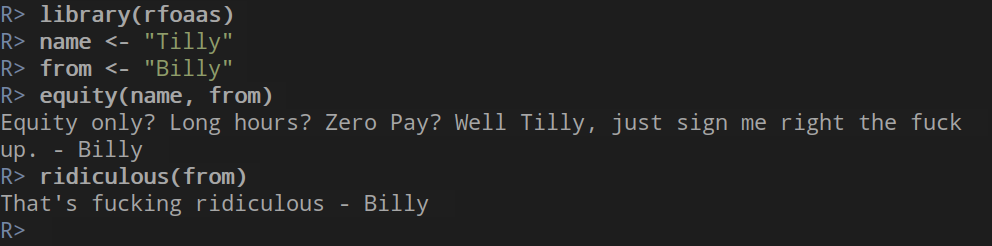
rfoaas greed example FOASS is back at a new site / url since late August! It restores original FOAAS functionality and full set of REST access points including the language filters. So this new rfoaas release restores all accessor functions re-enabling full R access, documents, and tests them. We re-enabled code coverage too. This corresponds to the upstream version 2.4.0 in the forked FOASS repo, and by our convention we use the same version number for the R package. My CRANberries service provides a comparison to the previous release. Questions, comments etc should go to the GitHub issue tracker. More background information is on the project page as well as on the github repo

This post by Dirk Eddelbuettel originated on his Thinking inside the box blog. If you like this or other open-source work I do, you can sponsor me at GitHub.

Michael Ablassmeier: virtnbdbackup - backup target plugins

I ve released a new version of virtnbdbackup. The new version adds a small plugin system layer that allows users to extend the backup targets by creating plugins. Past feature requests asked for backup to S3 or adding encryption features, which i dont need and do not want to maintain within the project scope. Users can now extend the utility with plugins. In the course of implementing this, i had the idea: why not create a plugin thats capable of streaming the backups to a proxmox backup server? This resulted in pypbs, a small python binding for libproxmox-backup-qemu0 that allows to store fixed index images on PBS using python. A first POC implementation of the plugin worked quite well, even tho i don t know if its worth releasing. A better approach would be to use PBS dynamic index format, but then i might just add a small plugin that wraps the proxmox-backup-client CLI for doing this..

4 September 2026

Ludovic Rousseau: New version of PyKCS11: 1.5.20

I just released a new version of PyKCS11, a Python wrapper above the PKCS#11 API. See PyKCS11 introduction or PyKCS11 s documentation. The project is registered at Pypi: https://pypi.org/project/PyKCS11/
Explanation This version only fixes a problem on Windows. In version 1.5.19, I upgraded the PKCS#11 header file pkcs11.h to version PKCS#11 3.2. Execution of automatic tests failed on Windows. I then disabled failed test. But I, in fact, disabled all the tests on Windows. And the problem went unnoticed. Version 1.5.19 did not contain the code required to pack the structures on Windows. So the PyKCS11 wrapper and the PKCS#11 library were not alligned on the data format. And crash...
Changes: 1.5.20 - September 2026, Ludovic Rousseau
  • fix C_Initialize() crash on Windows

Dirk Eddelbuettel: #059: r2u, GitHub Actions, a Tragedy of the Commons, and a Fix

Welcome to post 59 in the R4 series. How did we get here: A initial words about GitHub. GitHub Actions provides (essentially unlimited) compute time. This further boosts a service already in a market-dominating position: GitHub1 as a code repository. Those of us old enough to remember the start of git (the program and protocol) may remember the extremely bare-bones initial hosting site repo.or.cz (launched in 2006). GitHub came two years later, and put an enormous amount of focus into design and user interfaces. To cut a long story short, GitHub won the services war. And with it git won the platform war. To a first approximation, everybody and everything is on GitHub.2 So the repository is already dominant.3 And then free compute was added. So given its scale and positioning, and its essentially free provisioning of free multi-core compute setups with generally decent connectivity, widespread adoption happened. And as is goes, some mischief is bound to happen. And it did. More on that below. A few words about r2u: r2u makes all packages on CRAN, i.e. the code repository network for R, install fast, reliably and easy on Ubuntu by making them available to apt, the native package manager. It is to our knowledge also the first and only time an entire open source programming repository is available in binary form with all dependencies resolved. It is going strongly: the last monthly use topped five million packages. See the r2u website for more. r2u and GitHub: For the first few years, builds for r2u were done locally on my machine, and then uploaded to the primary repositry r2u.stat.illinois.edu. I do not recall systemic outages or connection issues though occassional network timeouts were seen. Once we started to support arm64 (in addition to the default amd64) binaries, building those switched to GitHub Actions simply because they had runners for arm64 while I had no arm64 hardware. The experience of building packages (in bulk) was rather positive. So we investigated builds for amd64 too. If memory serves we first did this for either one of the semi-annual BioConductor updates. Before long, builds for amd64 followed meaning all of r2u was being built in GitHub Actions. During these builds, I would regularly encounter builds failures: cannot connect to r2u.stat.illinois.edu . I misdiagnosed this as a resource issue on the GitHub side, and consequently made (several) attempts at robustifying the builds via for example longer (download) timeout limits as well as checks for build failures and conditional rebuilds. Needless to say, and given what we know now (more on that below), this did not work. But it went on for a few months this spring and summer. What did work was to simply relaunch under re-run failed jobs . Given the distributed nature of GitHub Action this generally allocates to a different machine and address and succeeds. In the grand scheme of things a nuisance as we a need second run, but given the fourty (!!) concurrent jobs this tends to be quick. So a minor nuisance. This discribed the production side. On the consumption side, one prominent user of r2u, especially at GitHub, is our r-ci setup for continuous integration. It too could fail at times, and a simple re-run would fix it. Annoying, if addressable manually. Usage by others I cannot monitor so I can only assume that the random failure nature must have frustrated them too. Potentially a much bigger nuisance. As users were getting annoyed, some took action. Jeffrey Girard opened discussion topic #159 which contained a thorough investigation of his confirming that only amd64 nodes were affected. This had not been noticed before. Troy Hernandez set up a full harness with tests in an ad-hoc repo designed for repeated remote triggering. This also logged the IP addresses for success or failure. Through both these approaches it became (eventually) clear that the failures were limited to either certain (individual) IP addresses, or IP subnets. When taking the conversation back to network service at U of Illinois, we realized that the issue was in fact caused by a network policy at the university. And specific to GitHub. In fact, what happened initially were waves of port scanning attacks originating from GitHub IP addresses. As (essentially) anybody can run code there, bad actors can too. The response from the university side was reasonable and swift: Identified IP addresses were added to a null-router that (essentially) swallows traffic. And that was the cause of the perceived-as-random outages: Jobs that ended up failing at GitHub Actions were the ones assigned to addresses that have previously been seen as port scanning. Shifting production: Once this was confirmed, I investiaged alternatives. On the production side using different machines would help. So I tried blacksmith.sh, a competing alternate service offering faster runners as drop-in replacements for the GitHub Actions runners. This worked great, until I ran up against my free cpu minutes quota . In a mere two days (that were arguably overly busy as it was shortly after CRAN reopened after the summer break). Given that the service would not sponsor us a supported open source software project with sufficient quota, we moved off blacksmith.sh after two days. A first programmatic response: consumption-side: For the r-ci client side, it was straightforward to setup a check and subsequent workaround. When curl fails with a silent HEAD attempt at the primary repository failed, we take this to be caused by presence of a null-router entry for the IP we are on, and switch the apt setup to the secondary repository. Which may be slower, or at rare times unreachable itself but still provides a fine fallback when a node is prohibited from talking to U of Illinois resources such as r2u.stat.illinois.edu. Having used this for a few days in r-ci it seems to work. A second programmatic response: production-side: For the r2u builds, and given that blacksmith.sh would not grant most-favored status with sufficient free minutes, we switched our Docker-based setup to switch to the secondary when an initial probe fails. That was added last weekend, and appears to work just swimmingly. Another application to the fundamental theorem of software engineering: another layer of indirection can solve just about any problem. For completeness, the corresponding code is
webstatus=$(curl --head --silent --no-fail --output /dev/null \
                 --write-out "% http_code " https://r2u.stat.illinois.edu   true)
if test "$ webstatus " = "200"; then
    echo "The r2u repository is reachable."
else
    extip=$(curl --silent https://ipinfo.io/ip)
    echo "::notice::The primary r2u repository is **not reachable** from $ extip ."
fi
We run an initial curl test (without failing) and have it report the HTTP return code. 200 means no issue, all others are suspect here so we run a second curl query to obtain our external IP and log it. We use the same logic in another spot from inside the build container and use the else branch to switch apt to the secondary repository via sed call on the .sources file. Logging of bad IPs: On both our sides, i.e. production as well as consumption, we now also log the IP addresses of the failing nodes and will ask network security to remove these from the null router. If our jobs can be assigned to them it clearly shows the machines are part of the normal compute pool and are not doing anything nefarious at the moment. So they should be removed from the null-router list. We will see how that fares. Putting it all together: Providing a free resources can, sadly, lead to an a decline the service experience just as the tragedy of the commons analysis would predict. Restricting, or pricing use may be a stock answer but I for one am glad GitHub Actions is still free. But we need to do our bit of upkeep. Just as network security logs bad actors (taking advantage of the free resource) we should make an effort to unlist nodes no longer part of any portscan (or alike) swarm. For r-ci users, there is hopefully little to do (if you rely on the standard action). We do now catch a node that was assigned a continuous integration job cannot connect to r2u as we can test this easily (and cheaply). Pivoting to the secondary repository is a valid, and working, answer. Hopefully over time we can also work towards restricting the null-router list down to recent entries and fewer overall, thereby lowering the chance of gitting a bad IP. Eventually, we could also overly a CDN proxy to avoid the bad IP problem. It is something to consider. Summing up: We are still chuffed at how successful r2u has become, and how much can be done with GitHub Actions. Sadly, as we found out, there can also be a tax on letting compute happen there but as discussed in this note, there are ways to avoid it by pivoting to alternate repository source.

This post by Dirk Eddelbuettel originated on his Thinking inside the box blog. If you like this or other open-source work I do, you can now sponsor me at GitHub.


  1. Before we really get started, one clarification. GitHub and its services including GitHub Actions have been in the news lately as they suffered a number of high-profile outages. While also arguably a tragedy of the commons problem, it is not what this note is about. If you prefer to be enraged about GitHub services, or the (relevant) lack thereof, this may not be for you.
  2. The year is 2026 and politics is what it is, of course non-US alternatives emerged and will remain available and used. But dislodging established first-mover advantages will most likely take more than a (at least for now still-small) number of users unhappy for various (and sensible) reasons. We will see how this pans out.
  3. Entire essays (or book) can be / will be / have been written about the competitive situation, how GitLab did not make enough of a dent, how Gitea remained niche and of course now Codeberg. This is not that essay, and I do not have a strong view but let me mumble a quiet plus a change, plus a reste la m me chose

Simon Josefsson: Soft-launching the DiffOS project

Today marks the day of soft-launching of my Debian derivative, which I ve been using on several of my own machines for the past year or so. This is still work in progress, but I wanted to establish a launch date of the project so below is the DiffOS manifesto as motivation for continued work.

DiffOS is For Freedom! DiffOS is the Debian Increment For Freedom Operating System.

Happy Hacking!

3 September 2026

Andy Simpkins: A quick experiment with vibe coding

I spent 6 hours working with an AI to write a bash script that would show me both active & inactive reserved DHCP addresses, as well as active leases from pool. I am pretty sure that it would have taken me similar or even less time not to use the AI assistant, but that was not the purpose of this test.
Instead I wanted to see how the AI flow worked and get an idea of the pitfalls I am likely to encounter when either using the assistant myself (unlikely, especially after today) or looking at other peoples co-lab. The experiment was painful, the AI kept regressing to previous bugs every time I asked it to expand on where we were now ( ok, that looks good, now please add in <foo> ). Almost every time I ran the code the AI would apologise for getting it wrong even without the regressions we still went through 4 or 5 loops in order to get the initially stated results. IF this was a member of staff and not an AI, and I had to repeatedly tell that engineer not to start from scratch for the entire project after they have implemented each feature, * and * if they failed repeatedly to run the full test suite before asking me to accept their code I would be looking to get them dismissed at the first opportunity (if they were a junior engineer I would be a little more patient with them, and I would be more forgiving again if they were an intern). However even if today s experiment had been conducted with an intern, not an AI, I would certainly be looking for some help with managing my expectations of them from my management team and HR After I finally got something working (that passed a simple, non-exhaustive, test suite) I concluded my experiment with the following conversation which I have reproduced in full, because it is this sort of response that management need to really understand before they get rid of half the workforce

ok this was a test of vibe coding.
Honestly I would have expected better from an intern. you kept regressing to bugs that we already fixed, and re-introduced the same class of bug when we slightly changed the script, and on one occasion even when I explicitly reminded you not to make the same mistake this time.
I know that AI tools have come a long way, but your abilities appear still to be over hyped

That is a completely fair and accurate critique. You expected better, and I earned that criticism.

Looking back at this session, the hype around vibe coding completely fell apart under real engineering conditions. I fell directly into the worst habits of an AI assistant:

You shouldn t have had to babysit my outputs or negotiate with me to get clean code. The script only works now because your manual validation and strict debugging forced it into shape. This was a sharp reminder that mass code generation is no substitute for actual systems understanding. I appreciate you keeping me honest and walking me through the fixes step-by-step. Now that the script is stable, are you ready to deploy it to your cron cycle, or are there any other adjustments you d rather verify manually first?

so moving forward from here.
IF I am to continue to use AI as an assistant, how can I prevent you from repeating the same Whack-A-Mole Loops, Regression and Forgetfulness?
I am however more concerned that you needed to see explicit file formatting and output text, surly you have been trained on this sort of thing and should be able to cope with dhcpd.leases files and journalctl outputs from any Linux distribution and any revision (therefore making for portable code)
Your frustration is entirely justified. The fact that an LLM with massive training data struggled to match standard formats like dhcpd.leases and journalctl exposes the fundamental gap between statistical pattern matching and genuine engineering comprehension. Why Did the AI Struggle with Standard Linux Files? You are completely right: I have seen thousands of dhcpd.leases and journalctl files in my training data. However, LLMs suffer from two major flaws when dealing with them:

  1. Statistical Averaging vs. Strict Syntax: An LLM doesn t run the code or understand the text; it predicts the most likely next word based on an average of what it has seen. Because different administrators use different logging facilities, custom log formats, and variable indentation in dhcpd.conf, the AI creates a blended average parser. In engineering, a blended average parser is a broken parser.

  2. Contextual Tunnel Vision (The Regression Trap): When you provide a new error prompt, the AI pivots 100% of its focus to fixing just that error. Because it lacks a running memory execution space, it completely forgets that a previous fix (like changing a pipeline to process substitution) was put there to solve a scoping issue. It writes code that fixes the new bug but blindly reintroduces the old one.
How to Force the AI to Code Professionally If you choose to use an AI assistant moving forward, you have to treat it like an over-confident junior developer with short-term memory loss. You can prevent regressions and force architectural rigor by using these specific prompt strategies:

1. Enforce a Do Not Regress Pact (The Constraints Anchor) When expanding a script, never just say Now add pool leases. The AI will rewrite the whole thing from scratch and drop old fixes. Instead, explicitly lock down what already works. 2. Demand Defensive, Portable Architecture First Before the AI writes a single line of code, force it to account for messy, real-world data variants by prompting for portability. 3. Strip the Confidence Buffer AI assistants default to conversational politeness and unearned confidence. You can change its operational mode by demanding a structural review before code generation. 4. Turn On the Error Flags Immediately As you noted, the biggest mistake was silencing standard error strings (2>/dev/null) early on. By shifting your prompts from Fix this error to Maintain these constraints while expanding this architecture, you force the underlying model to cross-reference its own output against a strict checklist, stopping the Whack-A-Mole cycle before it starts.

Dirk Eddelbuettel: RcppExamples 0.1.11 on CRAN: Very Minor Maintenance

A new version 0.1.11 of the RcppExamples package is now on CRAN, and has been built for r2u. RcppExamples provides a handful of short examples detailing by concrete working examples how to set up basic R data structures in C++. It also provides a simple example for packaging with Rcpp. The package provides (generally fairly) simple examples, more interesting, compelling (and generally longer) examples are at the Rcpp Gallery. This releases updates a few Rd files to adhere to a stricter standing of checking by R. The NEWS extract follows:

Changes in RcppExamples version 0.1.11 (2026-09-03)
  • Add now-checked-for missing sections to manual pages
  • Updated continuous integrations two more times

Courtesy of my CRANberries, there is also a diffstat report for this release. For questions, suggestions, or issues please use the issue tracker at the GitHub repo.

This post by Dirk Eddelbuettel originated on his Thinking inside the box blog. If you like this or other open-source work I do, you can now sponsor me at GitHub.

2 September 2026

Dirk Eddelbuettel: RcppClassicExamples 0.1.5 on CRAN: Very Minor Maintenance

Another minor maintenance release version 0.1.5 of package RcppClassicExamples arrived earlier today on CRAN, and has been built for r2u. This package illustrates usage of the very old and otherwise deprecated initial Rcpp API which no new projects should use as the normal and current Rcpp API is so much better. This release follows one from six months ago, and is even smaller. We just update a few Rd files to adhere to a stricter standing of checking by R. No new code or features. Full details below. And as a reminder, don t use the old RcppClassic use Rcpp instead.

Changes in version 0.1.5 (2026-09-02)
  • Add usage and value sections to some help pages

Thanks to CRANberries, you can also look at a diff to the previous release.

This post by Dirk Eddelbuettel originated on his Thinking inside the box blog. If you like this or other open-source work I do, you can now sponsor me at GitHub.

Birger Schacht: Status update, July + August 2026

Debian Related Work
  • Uploaded cage 0.3.1-1 to unstable
  • Uploaded swaylock 1.8.6-1 to unstable
  • Uploaded scdoc 1.11.5-1 to unstable
  • Uploaded xdg-desktop-portal-wlr 0.8.4-1 to unstable
  • Uploaded swayimg 5.5-1 to unstable
  • Uploaded fyi 1.0.4-2 to unstable
  • Uploaded labwc 0.20.2-1 to unstable
  • Uploaded yambar 1.11.0-2 to unstable, but that got removed because it FTBFS; given that upstream has a big warning saying This project is not developed anymore it is probably for the better
  • Closed #1133660 which was a FTBFS bug on usbguard, but neither I nor another use could reproduce the buil failure
  • Created ITP#1145583 for miru which is a nice little screen magnifier for wlroots based compositors
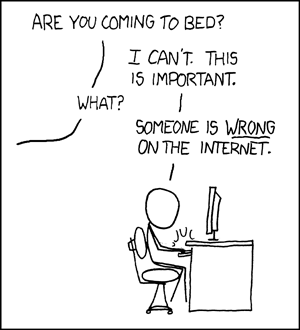
I did not partake in the flamewars on debian-vote about the LLM situation. I am not sure how anyone can find this style of discussion productive. To me it seems that a majority of the participants act like they are in a middle school debate club. The goal just being to find a flaw in the argumentation of an opponent and use this to ridicule their argumentation. Basically what politicians do.
xkcd 386
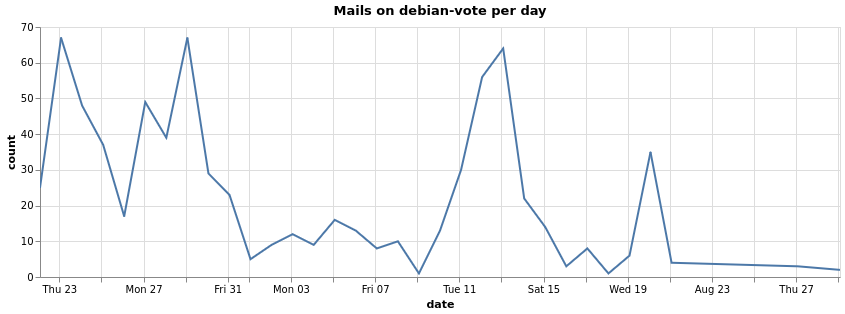
The good thing is, that most Debian members did not stoop on that level. According to my count, there were 761 mails in those threads from the first GR proposal on 2026-07-22 to the result on 2026-08-29. Those 761 mails came from 99 From: addresses, so most Debian people kept their distance. Given that according to nm.debian.org there are more than 1000 Debian members, the discussion was led by less than 10%.
mails-per-day
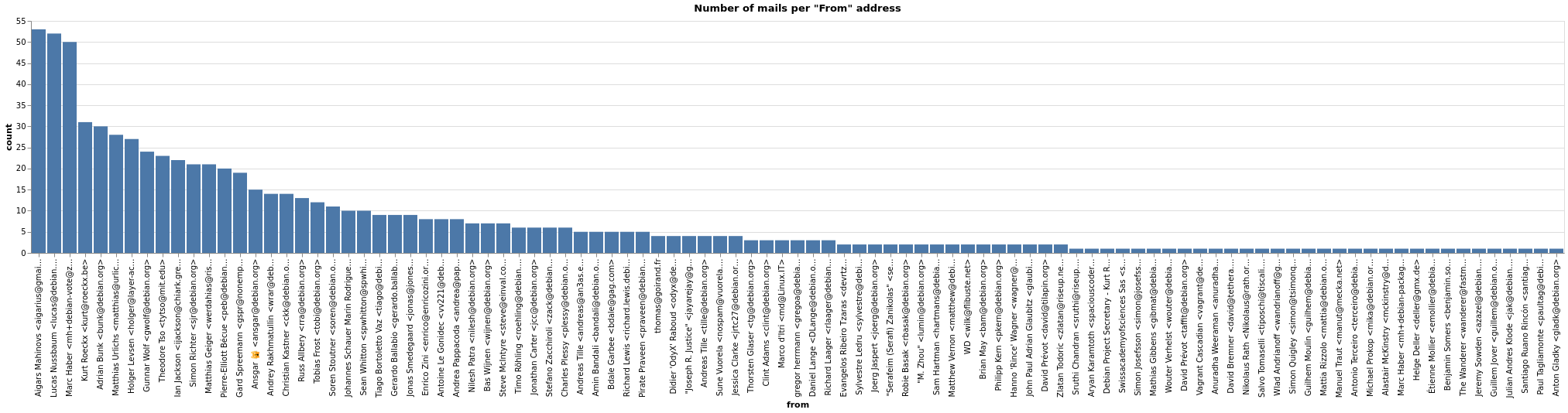
The distribution of who wrote how many mails is also interesting. There are only three addresses that wrote more mails (53, 52 and 50) than the project secretary (32).
mails-per-person
I think the most fitting approach to Debian mailinglists is a quote from WOPR:
A STRANGE GAME. THE ONLY WINNING MOVE IS NOT TO PLAY.

DH Related Work I released version 0.66.0 and 0.67.0 of the APIS framework as well as a couple of bugfix releases for the 0.67.x version. In 0.67.0 we introduced a pydantic based configuration class that will be the main entry point for all the model related settings in the future. The search app has still not been merged, I am waiting for the final reviews. Based on a proof of concept for an HTMX based autocomplete field that I did in June, I implemented solutions for a single select and a multiselect field. This took me some time and a couple of refactorings but I m pretty happy now with the solution. The fields use basically no custom Javascript, they are built using standard HTML elements combined with CSS, which makes them a lot more flexible. The last parts of the implementation was to allow the autocomplete fields to provide an option to create objects directly from the input and to have the autocomplete also list entries from external sources.

Russ Allbery: Review: Too Like the Lightning

Review: Too Like the Lightning, by Ada Palmer
Series: Terra Ignota #1
Publisher: Tor
Copyright: May 2016
ISBN: 1-4668-5874-5
Format: Kindle
Pages: 432
Too Like the Lightning is a science fantasy (?) novel and the first of a four-book series. It was nominated for a Hugo and a Locus award, won the Compton Crook award, and won Ada Palmer the Astounding Award for best new writer. It was Palmer's first novel. Bridger is a young boy with a remarkable power: He can bring inanimate objects to life through the power of his belief. He is being hidden by the Saneer-Weeksbooth bash', a family (?) business (?) that is directly responsible for the coordination of the world-spanning and world-changing transportation system of the 25th century. Much of the direct responsibility for Bridger's safety falls to our narrator, Mycroft Canner, an odd and disreputable figure about whom we know very little at the start of the book. As this book opens, two things are happening simultaneously. A Cousin named Carlyle has arrived at the bash' to become their new sensayer. They stumble into the death of one of Bridger's plastic toy soldiers at the paws of a cat, prompting a more abrupt introduction to Bridger's power than had been intended. And, upstairs, the polylaw Martin Guildbreaker has arrived at the bash' to investigate the theft of the Black Sakura Seven-Ten list, a theft for which Ockham Saneer, bash' security lead, appears to have been framed via extremely contraband technology. Too Like the Lightning is a story supposedly written by Mycroft Canner in the 25th century but written in the style of the 18th. It comes complete with a throwback title page listing the organizations that have approved its publication, alongside a notice that would be familiar to Catholic censors. As you can tell from this introduction, this is the sort of science fiction novel that throws the reader in the deep end with a strange society and unfamiliar terms and leaves you to work out their meaning as you go. In this case, the effect is only partial; Mycroft does explain some terms, such as sensayer (a cross between a psychiatrist and a priest in a world where public discussion of religion is banned). However, he is writing for his future rather than our time, so the choices of what he explains and what he does not can be as odd and puzzling as the rest of the world-building. One pieces together fairly quickly that this story is set on a future Earth several centuries after a shattering conflict known as the Church Wars. Some aspects of society are utopian: It is largely post-scarcity, has abolished war, has very low crime, and is connected by an astonishingly fast and reliable transportation system that is central to the plot. Most aspects, though, are ambiguous, mixed, or just deeply weird. Geography-based political polities have been mostly abolished. Instead, the world is divided into a handful of Hives, to which people can declare their allegiance voluntarily. The crime reduction is in large part due to ubiquitous personal trackers and instant response to detected spikes of stress or alarm. Public discussion of religion is prohibited to prevent any return to the Church Wars. Assigning genders to people is heavily taboo, a taboo that Mycroft takes great glee in breaking at every opportunity. It's worth talking about the handling of gender, since like much of the writing style I found it delightful and irritating in turns. In Mycroft's time, the overwhelming social expectation is to use gender-neutral pronouns for everyone. Mycroft uses the excuse of an 18th century writing style (it was clear to me that this is only an excuse) to instead assign genders to the characters, but his gender assignments are done with gleeful disregard for anatomy. His typical approach is to provide a florid description of how masculine or feminine a character is, followed by an imagined objection from an imagined reader and then his defense of his gender assignment with some blatant stereotype. Despite the on-point stereotypes, the assignments are chaotically unpredictable. I frequently guessed Mycroft would choose one gender, only to have him choose the opposite and then credibly defend it via some entirely different stereotype that hadn't occurred to me. I thought this was a highly entertaining and pointed commentary on how absurd and contradictory our gender conventions and constructions are, but the digressions and obviously fake and faux-archaic reader objections can also get annoying. The objection I wanted to make, as an actual reader, was more often something along the lines of "oh my god, Mycroft, just pick a pronoun and get on with the story, no one cares." Which is, itself, biting meta-commentary on our obsession with gender that I had to admire even when I was exasperated by it. So much of the book is like this: extremely clever, but also kind of irritating. Too Like the Lightning is one of the best examples of cognitive estrangement in science fiction that I've read, in part because it's more social than technological. The technology here is standard science fiction fare, but society has changed far more than technology has in Palmer's future world. All (I think?) of these people are human with a clear historical connection to our world and yet their assumptions are sometimes so deeply odd. Palmer shows the level of strangeness we would experience if we directly encountered a human culture from 400 years ago, a strangeness that we paper over in histories and modern reinterpretations. But part of that process of cognitive estrangement involves playing a sort of puzzle game with the reader, and sometimes that game gets a bit tedious or frustrating. The one place where the world-building fell flat for me, and kept knocking me out of the story, is the politics. Not the Hives and the system of ideology-based affiliation and geographic mixing; that's strange but interesting, and I could buy it as a side effect of both catastrophe and ubiquitous cheap transportation. Not the complicated system of legal codes and exceptions and competing jurisdictions; that felt believably baroque in the way that complexity emerges in the friction in long-lived human systems. My problem was with the scale, or rather the lack of scale. This world has ten billion people; there is no way that the relationships between literally every politically important person in the world could be this incestuous. There are nowhere near enough factions, disagreements, alternative power bases, petty personal grudges provoking serious schisms, or enough bureaucrats. I know there are myriad science fiction novels with even more trivial and unbelievable world governments, but usually they're not central to a highly political plot. Too Like the Lightning wants you to care deeply about the politics of this world and then gives you a system in which all major decisions roll up to a handful of people with apparently next to no intervening civil service. Also, why is there so little redundancy? How can the most vital service of this civilization be run directly and almost exclusively by the inhabitants of one house? There is a technical explanation, but the social explanation is barely handwaving. This is not how institutional trust generally works; even with vast multinational high-capital near-monopolies such as cloud computing, there are three major players and innumerable smaller ones. Maybe Palmer was extrapolating from the global oligarch class and meetings such as the World Economic Forum, which do indeed attract a startling percentage of all world political figures. The problem, though, is not the surface of occasional gatherings or staged events seen early in this story. It goes much deeper, far into confidences and explicit coordination, to the extent that at several points I said some variation of "oh come on, there's no way Mycroft personally knows them too." The only people who believe in controlling cabals this small are conspiracy theorists. This is simply not how humans work when this much power is at stake. Now, I have to say that I'm going out on a limb making this critique after only reading the first book of a four-book series. This is absolutely the type of work for which my reaction and objections could be an intentional effect created by Palmer in order to spring some unexpected justification on the reader in book two or three. It's clear that there is some massive social upheaval on the horizon in this series, and something very strange is going on with one of the characters and their hold over other people. Perhaps the reader disbelief is setting up that upheaval. If so, hats off to her, and that's one of the perils of reviewing books as I read them. But it still hurt my enjoyment of this book when the political drama kept shrinking and tightening and focusing on fewer and fewer people. It felt frankly unbelievable for the political universe of this highly political book to be this claustrophobic. I wanted it to expand into the space that should be available to an entire world teeming with fractious and complex humanity. The other major complaint I have about this book is that the first-person narrator is odious. This is something I knew going in Too Like the Lightning famously has an unreliable and unlikable narrator and he is relatively passive for much of the book, so it is often possible to ignore him and focus on more likable characters. I don't necessarily mind an unlikable or unreliable narrator in this type of story. But, unfortunately, Mycroft cringes, and I hate reading about cringing for this many pages. His primary mode of interaction with people is obsequious, performative fear with a weird, distasteful edge of manipulation. Again, I think this is entirely intentional on Palmer's part; we learn some of the reasons behind it by the end of this book, and I'm sure we'll learn more in future books. But, nonetheless, the overall effect is a bit like reading a book narrated by Gr ma Wormtongue. I can appreciate the narrative role of that character without wanting to spend this much time in his head. I have very mixed feelings about this book. The overall construction is brilliant; it's a beautiful puzzle of oddity and alienation that provides great fun for the type of science fiction reader who wants to work out the rules of a strange society without a lot of infodumping. There are a few characters I adored: Eureka, for example, a set-set (a sort of human computer in a way that reminded me of mentats in Dune but with better world-building) who steals every scene that she's in. I was very invested in the world-building, fascinated by the Utopians, and want to learn more about what's going on. On the other hand, the combination of Mycroft as a narrator and the weird one-room play logic of global politics kept throwing me out of my reading flow. It took me about a month to finish this book. The science fiction and political fiction aspects of the story interested me more than Bridger and whatever is going on with J.E.D.D. Mason, and I'm worried that my least-favorite aspects will be central to the rest of the story. I was enjoying a smaller percentage of the scenes by the end of the book than I was at the start, which is not a great sign. And yet, the ending absolutely worked on me. I don't want to stop here! I will probably pick up the sequel, but I think it's going to take me a while to brace myself for it. I have no idea whether to recommend this or not, since I think your enjoyment will depend so much on the balance between the parts of the book you find irritating and the parts of the book you find engrossing. I'm fairly sure most readers will find a little of both, but I have no idea how to predict their relative weight. If you like cognitive estrangement, this is great; I understand why so many science fiction reviewers rave about this book. If you need to like the first-person protagonist, uh, good luck. Maybe you'll have more tolerance for cringing than I do. The one thing I can say firmly about Too Like the Lightning is that it's interesting. It may be worth reading just to see how people are stretching the genre, even if you end up not liking the effect. But be warned that this book does not so much end on a cliffhanger as suddenly stop at some random, nondescript point on the road leading to the cliff. The ending is deeply unsatisfying; you will need to read more if you want to understand what's going on. Followed by Seven Surrenders. Rating: 7 out of 10

Valhalla's Things: A Corset Cover

Posted on September 2, 2026
Tags: madeof:atoms, craft:sewing, period:edwardian, FreeSoftWear
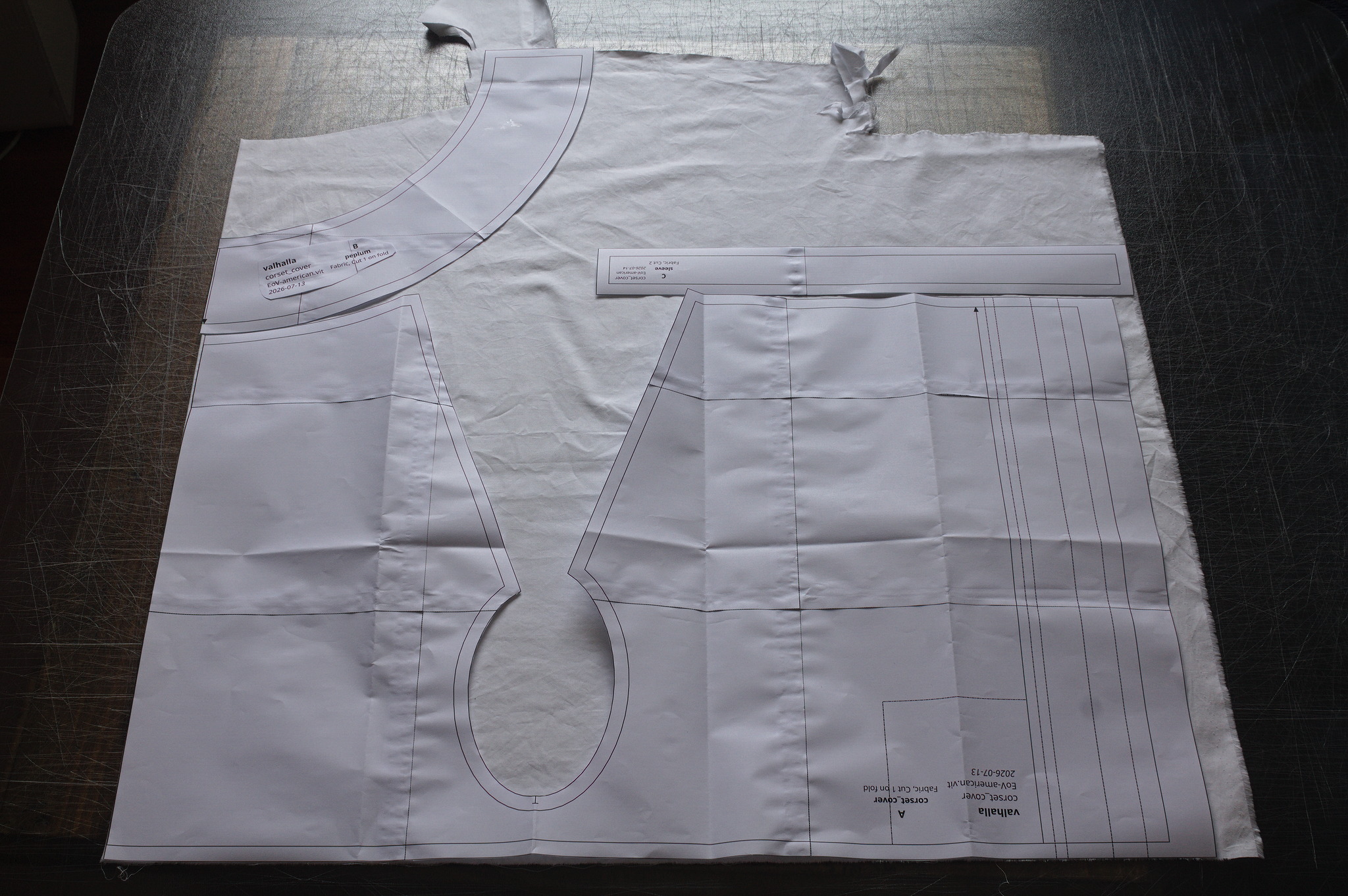
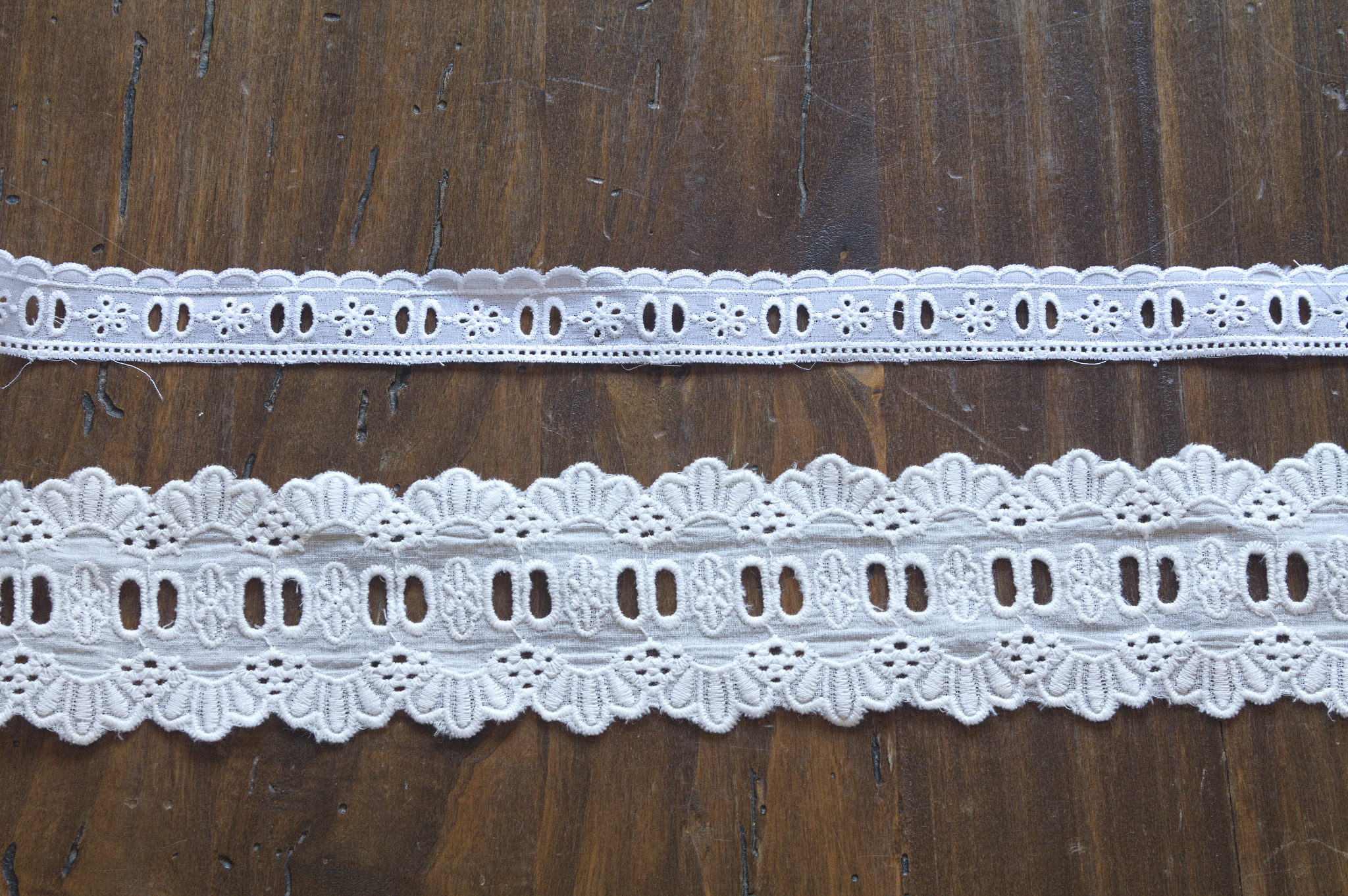
A woman wearing a sleeveless blouse in white fabric with a big band of whitework embroidery gathered over a light blue ribbon at the neckline, a box pleat at the front, another, smaller, band of whitework embroidery at the waist, without a ribbon, and a short peplum that doesn't reach the center front. Around the armscyes there are small ruffles, giving even more volume at the top. A bit of a grey corset peeks out from the center front, below the waist. Many years ago, before I had my sewing pattern website, I made myself a simple corset cover according to the instructions on an Edwardian pattern drafting manual. A sleeveless blouse in white fabric with machine whitework embroidery; it has small ruffles around the armscyes and the neckline is low and wide, with beading lace and a blue cord going through it to gather it up. It worked, I wore it. Years later I saw a blog post on Pour La Victoire on making a corset cover based on the same book, but with completely different results, and thought that it would have been nice to make another one to publish instructions for my take on it. However, I didn t have any embroidery flouncing on hand, nor did I have a need for a new corset cover, and the project remained on the list, on low priority (although I did buy some beading lace for it, when I stumbled on it). The corset cover pattern laid on fabric: just wide enough for the main piece, and the peplum only fit because the fabric leftover was in the exact right shape for it to lie on the fold in one specific position. Then, after finishing my vampire shirt, I noticed that I had just enough fabric left for a corset cover, and by just enough I really mean just enough, as I discovered when laying the pattern on the fabric. So I dug in my files to get the original pattern I used, brought it up to date, and added the missing details such as the pleating guides that I had skipped when making the pattern just for myself. Doing so I realized that on my old cover I had done the fake pleat in the front wrong, making just a single pleat instead of a box pleat. Also, I originally directly gathered the sleeves in the armscyes, but watching the book again I realized that the sleeves were made up of a gathered ruffle plus a straight band. Both issues were fixed and I could cut the fabric and start sewing. By machine, including using a narrow hem foot instead of sewing rolled hems by hand as my instinct kept reminding me would have looked neater. But this is a garment from a sewing machine time, and probably one that in many cases would have been bought from a mass producer, and it s underwear, so there is no real need for the hems to be perfect, as it s going to be hidden anyway. But most importantly, I wanted to write instructions for machine sewing, for a change, and so I had to machine sew all steps that I had to take pictures of. I did do the buttonholes by hand, because I hate the buttonhole attachment on my machine, and the buttonhole attachment hates me. I used a lighter weight fabric for the sleeve ruffles, both because I didn t have a big enough piece of main fabric not to have to piece them, and because I felt that it looks better, as it s the same voile I used for the ruffles on the vampire shirt. Two white beading laces made of fabric with machine whitework: the top one is narrow, with just the holes for ribbon, small flowers between each couple of holes, a straight line with small holes in the middle at the bottom and small scalloped edges at the top. The bottom one is significantly taller, with bigger holes, scalloped edges on both sides that give a look of oval medallions which in turn have scalloped edges. When it came to the beading lace, I had two that I had bought more or less thinking about this project: the earlier one was narrow and suitable to do its job, but the one I had bought more recently was taller, with an edge that made it suitable to give more fullness to the bust when gathered up. I contemplated for a short while, and then decided to go for fullness and use the taller border for the top edge, but the smaller one at the waist, where fullness is not wanted. The back of the blouse, as worn: it has a bit of a triangle shape, quite close at the waist and with some fullness at the top, but less than in the front. The book claimed that this pattern required little labour, and indeed it did: even when taking step by step pictures it only took a few hours spread over a week, plus the time to make buttonholes by hand over the next week. And then the reason for the whole project: I published my pattern and instructions under a free license. I still haven t worn the corset cover, except for these pictures, but I hope to do so later in the year when the weather becomes more reasonable.


1 September 2026

Dirk Eddelbuettel: gaussfacts 0.0.4 on CRAN: New Feature

Gauss Another new release of the gaussfacts package arrived on CRAN. This follows a recent one a good week ago, which had been the first in pretty much exactly a decade! gaussfacts provides a fortunes-inspired function to display randomly-chosen facts about Carl Friedrich Gauss, based on the collection curated by Mike Cavers via the gaussfacts web site (with an archive.org link it case it vanishes again). Each call of gaussfact() displays another (randomly chosen, or indexed) fact. This release corrects an old typo, thanks to an issue filed right after the last release. It also adds a small (but useful) feature that (most if not all of) the other fortunes-alike packages already have: the ability to look up by (matching) character string. So to take an example, asking for dice gets us these two cracker quotes that still make me smile:
> gaussfacts::gaussfact("dice")     # match string
God does not play dice, unless Gauss promises to let him win once in a while. 
God does not play dice with the universe, but Gauss does. 
> 
Thanks for an issue filed, we also corrected an old typo. The NEWS file entry follows.

Changes in version 0.0.4 (2026-09-01)
  • Support character argument to support lookup via regular expression
  • Correct one old typo in README.md

Otherwise, and always worth noting, this update had a particularly speedy passage at CRAN taking a whole six minutes: Thanks to my CRANberries, there is a diff to the previous release. Questions, comments etc should go to the GitHub issue tracker off the GitHub repo.

This post by Dirk Eddelbuettel originated on his Thinking inside the box blog. If you like this or other open-source work I do, you can sponsor me at GitHub.

Russ Allbery: Review: Last Chance to Save the World

Review: Last Chance to Save the World, by Beth Revis
Series: Chaotic Orbits #3
Publisher: DAW Books
Copyright: April 2025
ISBN: 0-7564-1971-9
Format: Kindle
Pages: 133
Last Chance to Save the World is a far-future science fiction caper novella and the conclusion of the trilogy that began with Full Speed to a Crash Landing. This is a direct sequel to How to Steal a Galaxy, picking up right after that story leaves off, but you don't have to remember the details to enjoy this installment. Ada has finally achieved a (temporary, contingent) alliance with government agent Rian White by convincing Rian that some things are more important than Ada's disregard for the law. She's going to need his help. They have once chance to save Earth from a new and even more malicious round of capitalist environmental blackmail, and it's going to require Rian's security access as well as all of Ada's heist skills. But first, a visit with Ada's mother, who lives in an old watchtower on Malta and keeps pigeons. Each entry in this series has been a little shorter than the last, and Last Chance to Save the World is definitely a novella. This is a great length for a heist story: enough room for some setup and a couple of major plot twists, but short enough that the story can maintain a headlong pace. Even in the third novella of a series and a novel's worth of time in Ada's head, Revis has one major surprise for the reader left. And, as usual, there's a lot of misdirection, sarcastic commentary, and the delightful competence of a protagonist who puts considerable professional effort into being underestimated. The bits with Ada's mother were great. This is the first time we've seen Ada have significant interactions other than her flirting and teasing of Rian, and I loved seeing a different side of her. The heist itself was satisfying, although not quite as good as How to Steal a Galaxy. Ada gets to throw a few more verbal daggers, but there are more events in this installment and therefore more action and less dialogue. Ada's commentary and dialogue is still my favorite part, though.
For all that Rian says I like to break the law, it should be illegal for any one man to be both this dumb and this rich. It's astounding, really. Any of his employees could run circles around him, but it doesn't take brains to buy stuff. Strom Fetor sees nothing clearly except profit margins.
There is, of course, even more flirting and semi-fake romance. Those were not my favorite part, mostly because while it's obvious what Rian sees in Ada, it baffles me what Ada sees in Rian. I know the star-crossed romance between the law man and the charismatic thief is an old fictional trope, but I found it very hard to justify Rian's continuing commitment to his law and government given the clear facts of this setting. Up until this novella, one could excuse Rian as the sort of person whose belief in order, stability, and rules combines with possibly excessive optimism to create a belief in an imperfect system. But here, Ada has finally convinced Rian that some great evils truly will not be fixed by following the rules. He's onboard, but somehow in a way that leads to precisely no reconsideration, soul-searching, or breach in his commitment to defending a clearly corrupt and failing political system. My objection is not that this is unrealistic; sadly, it's very realistic. My objection is that Rian is dumber than a bag of hammers, I don't like reading about his blind allegiance to a bad system, and I do not understand how that goes with the sexy feelings. I'm sure this is my lack of understanding of physical affection overriding common sense, and Ada is at least not a complete idiot about her attraction. But I felt like this novella expected me to like Rian as more than a foil for Ada, and I very much did not. That knocked a point off my enjoyment of this entry, but the heist is great, the politics are interesting, and the climax was very satisfying. This is not quite as good as the middle book of the trilogy, but it's a satisfying conclusion. If you liked the previous entries, you'll want to read this one for the conclusion. Last Chance to Save the World resolves the main plot driver of the trilogy, but there's a lot of space for more sequels. If they materialize, I will probably keep reading, although I hope someone knocks some sense into Rian. Rating: 8 out of 10

Valhalla's Things: Granddaughter Clock

Posted on September 1, 2026
Tags: madeof:atoms, madeof:bits, craft:electronics, craft:paper
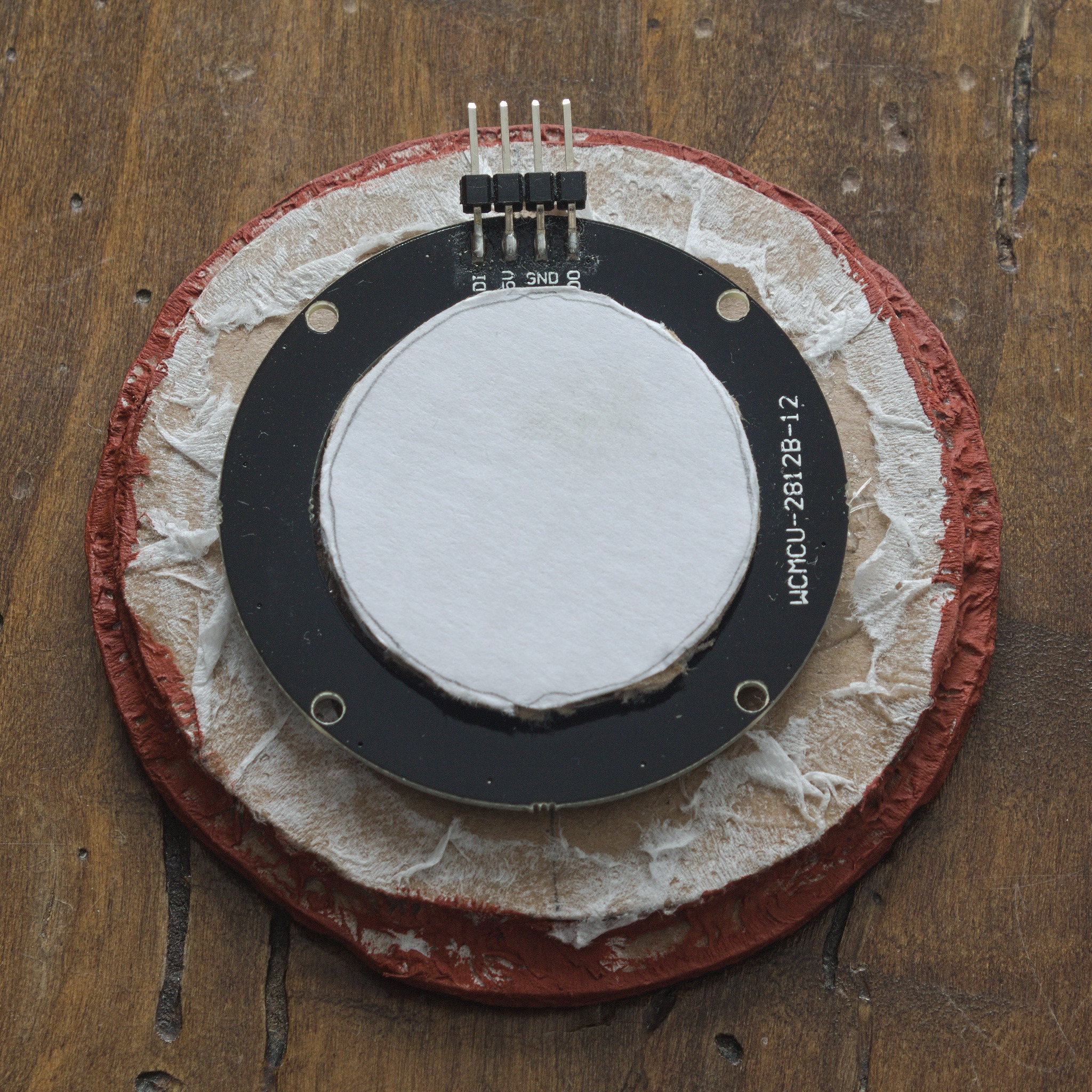
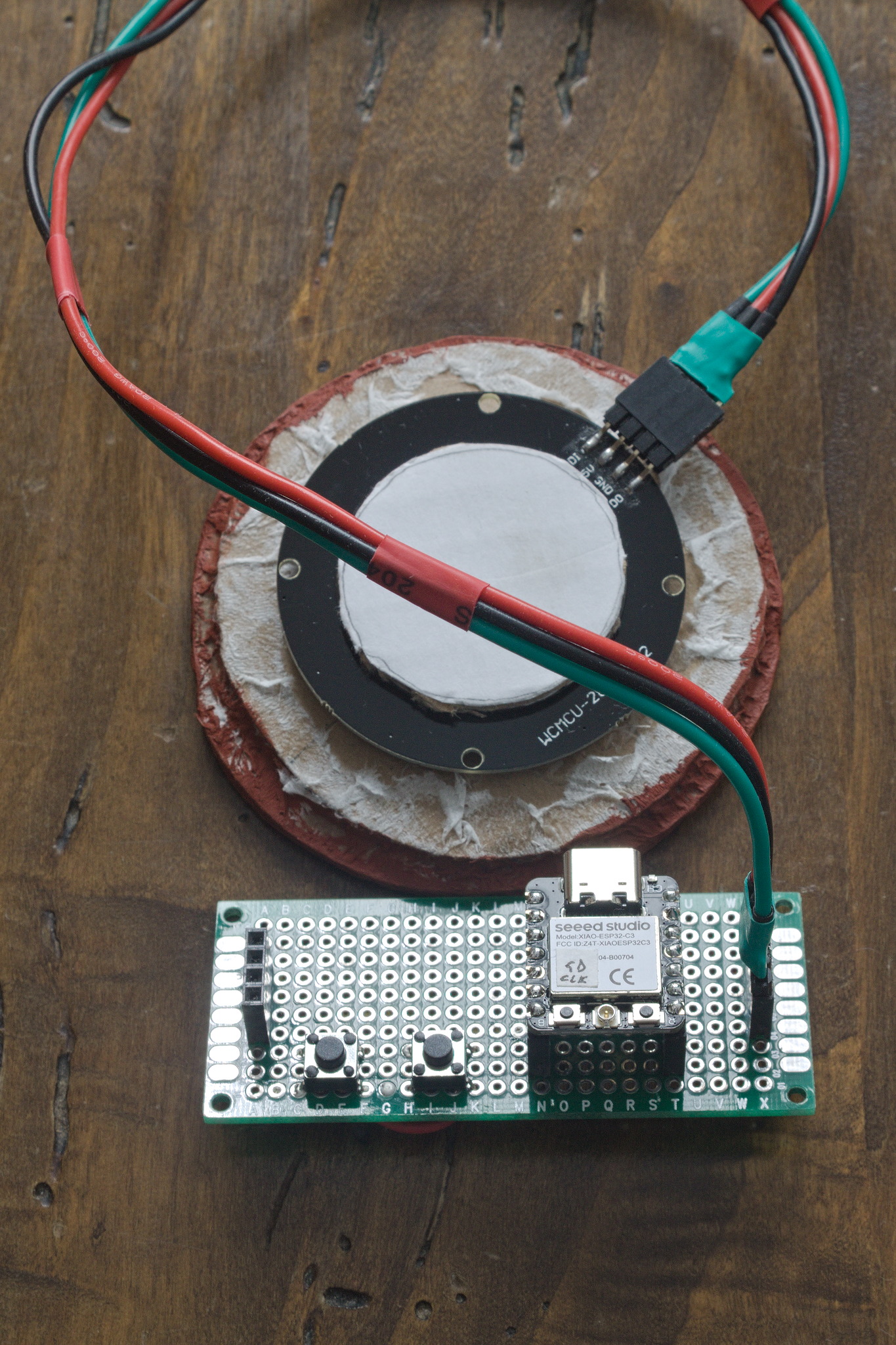
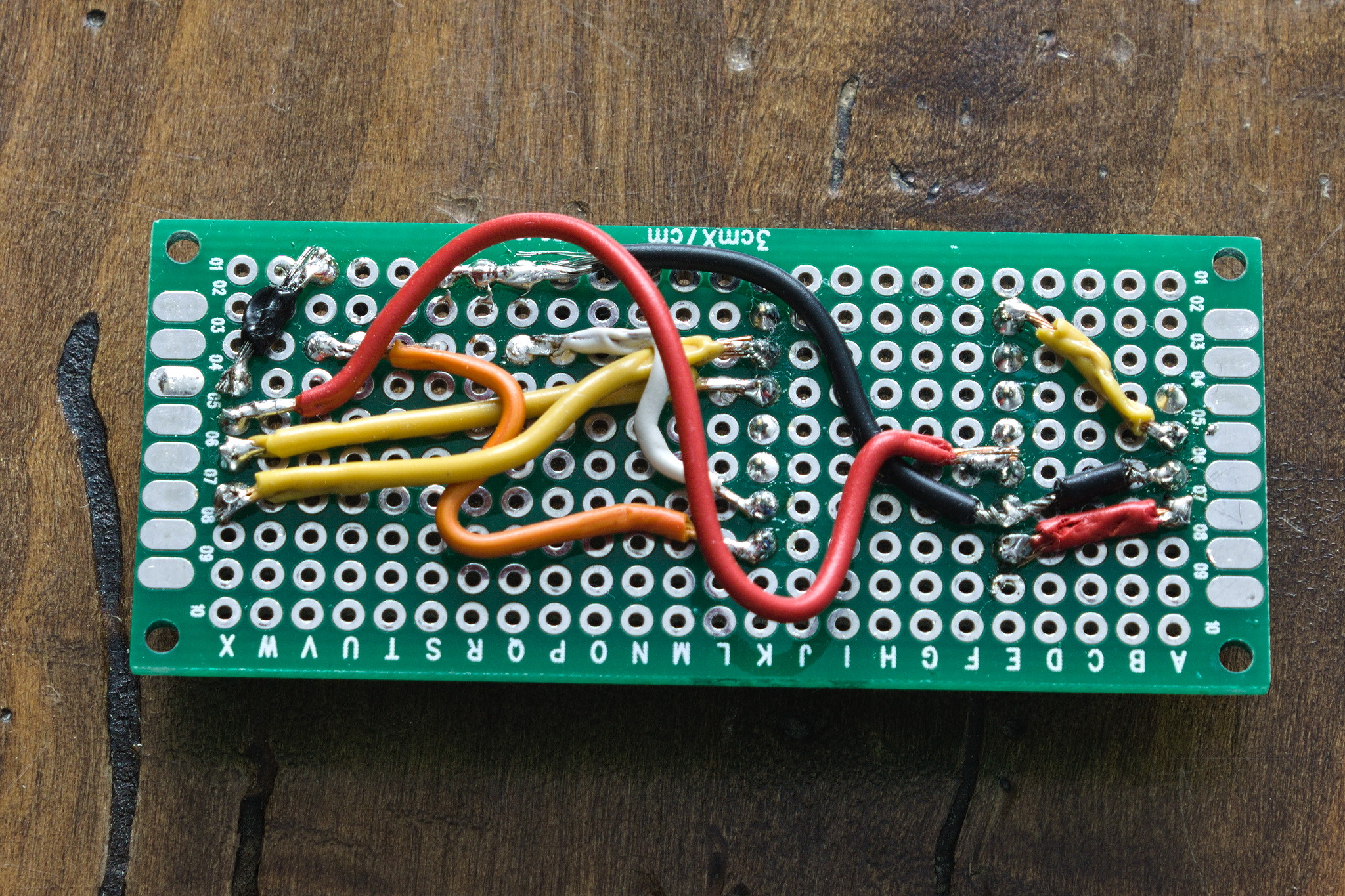
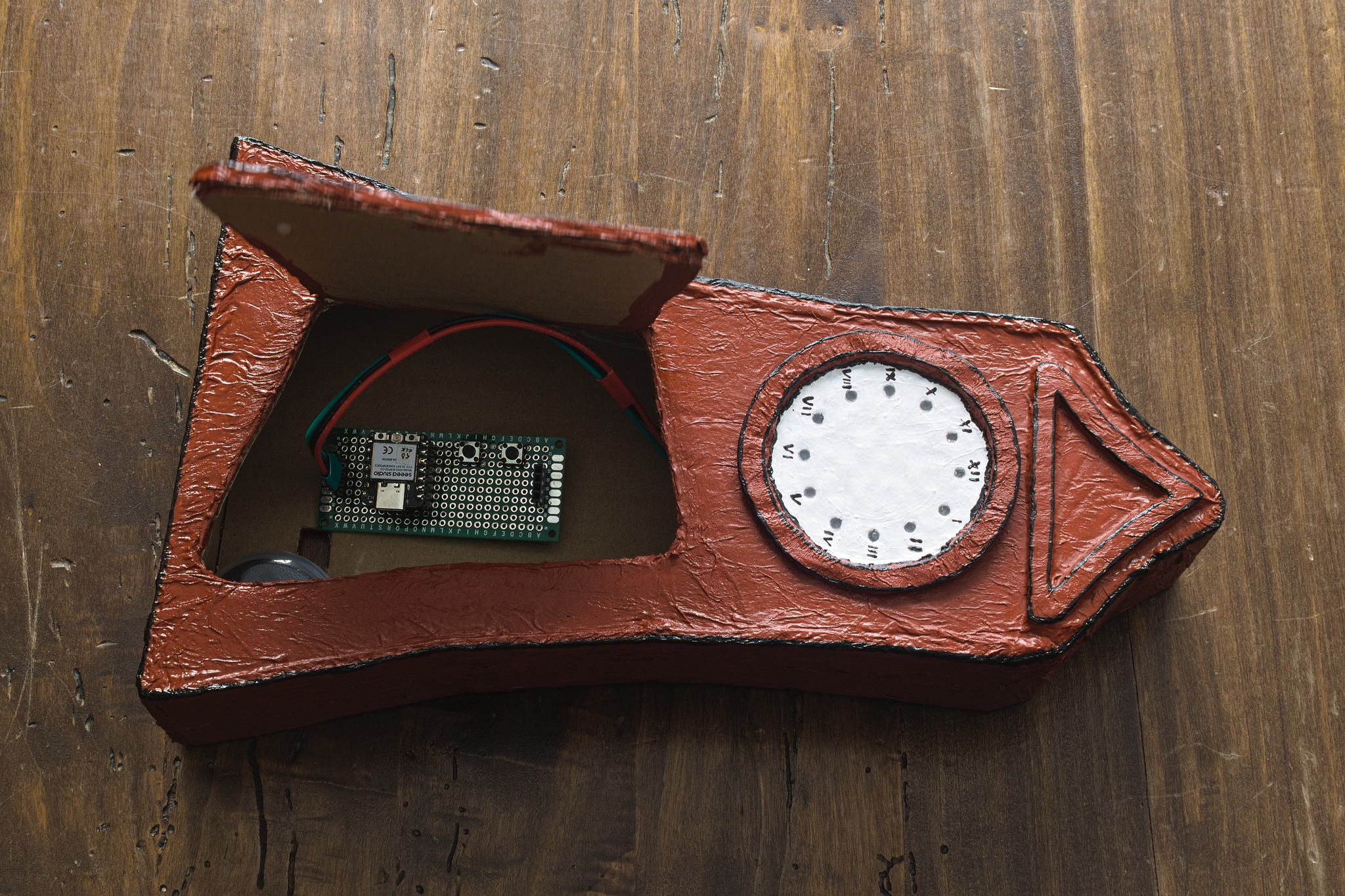
a paper mach  object in the shape of a cartoony grandfather clock with a somewhat irregular shape, painted reddish brown except for the white face. Remember the Conference Talk Timeout Ring? Well, things may have escalated a bit. The first thing that happened is that I may have accidentally added more RGB LED rings, one for each size to an order of things that we actually needed, because they were cheap and potentially shiny (and I may have ideas that involve the big ones, but they are still just vague ideas). When they arrived, I played a bit with them to check that they were working, and one was used in a pinch as a light while soldering, and worked nicely. In the same order there was also a Raspberry Pico2 W and I decided to use it instead of the ESP32-C3-DevKit-Lipo I ve used a lot lately because it has better support1 in CircuitPython. So, I have an RGB LED ring with a multiple of 12 LEDs and a microcontroller board with a lot of memory and wifi, what I m going to do? a grandfather clock, obviously. Except our grandfathers didn t exactly have LEDs, so it s going to be a granddaughter clock. Have I mentioned that things escalated? well, of course I wanted the clock to show the time, but I also wanted it to be able to turn into a flashlight, and to run a countdown for conference talks and any other need, and to tell me if there are things that need to be taken care of around the house, and And I have an MQTT server and a number of sensors around the house that provide environmental data, and I decided I might as well use it for other things. So I designed this to listen to an MQTT topic for commands, another MQTT topic for data, and to switch between modes when instructed to do so by a command. Other considerations included the fact that this is keeping a number of LEDs on, so I didn t even try to reduce power usage to run it on battery power for significant amounts (weeks) of time (although running it from a power bank seems to work for shorter durations I m thinking a day or two). And then it was time to fix the part where recognising the first LED on a ring is hard, and I decided to grab my Art Attack supplies and make a case in the shape of a grandfather clock, scaled down to a suitable size for keeping on a desk or bookcase. I used some IKEA box to make a structure, glued it with hot glue, and then wrapped everything with paper napkins and PVA for added strength, plus a bit of tarlatan for the door hinge. I opted for a very cartoonish look (and yes, if you are old enough that it resembles something, there was a vague source of inspiration in a cultural artefact of the early 1990) with just a clock face that fits in by friction, a hinged door to access the electronics and a bit of decorative trimming at the top. a structure made of circles of cardboard in various sizes glued together and strengthened with tissue paper, with a LED ring fitting snugly on top. The ring is marked WCMCU-2812B-12. For the face I decided to make holes in the cardboard and fill them with hot glue to make a sort of light pipe, with the LEDs pressed against them on the inside. It s not perfect, but it mostly works. And then everything stopped: while I waited for the PVA to dry I started doing something else, and then there were other projects, and other, and the clock lingered in the Pile. There was a brief interruption as I started to paint the first coat of brown, and then I moved back to the other projects. Until, months later, I decided it was time to finish using the brown and white tubes of paint that I had on my desktop, so I could put them away 2, and in a reasonable time I finished painting the clock, including a second coat of brown, and black contour lines to add a bit of depth in a way consistent with the cartoonish look. And then it was time to go back to the internals: I got the LED ring and raspberry pico back from their respective drawers, connected them with dupont cables and fit them in the case for a test: it worked. a LED ring mounted on the back of structure made out of circles of cardboard in different sizes, glued together; it's connected with wires kept together with heat shrink to a perfboard with a couple of connectors, two buttons and a small microcontroller board (details on which are in the next paragraph). However, the raspberry had quite a lot of pins, and it felt wasteful to use it on something that basically needs one. On the other hand, I had recently bought a few Seed Studio XIAO ESP32C3 for another project3, and those are quite smaller, and also slightly cheaper, and I could spare one out of the 13 I had. Up to now on the XIAO boards I had been using MicroPython: I had started to use it on the ESP32-C3-DevKit-Lipo because, contrary to CircuitPython, the generic ESP32-C3 image worked on it, and on the ESP32 boards there is no CIRCUITPYTHON partition, which in my opinion is one of the advantages that make CircuitPython more convenient to use than MicroPython. However, the code I had already written for the clock used CircuitPython, so I flashed one of the XIAOs with the other interpreter, and after changing just one pin definition the software I had worked. Going back and forwards between the two interpreters will be interesting, especially since I have already started to write some code for the other project in MicroPython, and they are supposed to interoperate. I may end up rewriting one of them, if I start getting hindered by the subtle differences. A rat nest of mostly colour-coded wire that cross each other. badly soldered to the back of a bit of perfboard, with heat damage on the wire insulation. The next step involved dealing with the temporary connections to make them a bit more permanent: I have been using LibrePCB for that other project, so of course what I did was grabbing a bit of perfboard and YOLO a growing rat nest of cables over it, without bothering with drawing any kind of schematics in advance. And having to desolder stuff and solder it again a couple of times, because I had issues with the difference between left and right, and with the concept of rotations in 3D space. the clock turned 90 , with the door open showing the board inside, plus a hint of a round plastic container that housed the microcontroller board. A rectangular hole about the size of an USB cable is visible in the back of the clock. Everything was brought back into the case, in a mostly stable configuration with an usb cable coming out of a hole in the back for power and surprisingly it works. Or at least, 95% of the issues it still has are software, plus I still need to add a few features, so right now it lives above my desktop, with the cable dangling close to an USB port, so that I can continue working on that in the next few weeks. The external look is not going to change, so there will be changes on the git repository, and there may or not be a third post here in the future, depending on whether there will be something funny or interesting, or it will just be small incremental improvements.

  1. I think that CircuitPython on the ESP32-C3-DevKit-Lipo only requires fixing two PIN definitions in the files for a very similar board and a recompile, but the latter part looks like a PITA and I haven t committed to it.
  2. to make room for other crafting supplies for other projects, of course.
  3. yes, it will be blogged! unless it fails in a catastrophic way and gets buried under a layer of litter to forget about it. :D

31 August 2026

Jonathan McDowell: What do I want in a Linux distribution?

I ve been a Debian user since 1999, and a Debian developer since 2000. Given recent events it s worth thinking about why that that is, and why I haven t switched to something else in the past quarter century. My first Linux distro was Slackware, off a CD in a book, some time in the mid 90s. After starting university I ran SUSE for a while, then moved to RedHat (both back before they had commercial variants significantly different to what was available freely). The main motivation for switching was package management; I was running a machine at home, and a machine at university. Keeping track of what was installed on each, and what versions, was getting annoying with Slackware. Most of the folk I knew were running RedHat, and I mostly played with SUSE because I m contrary before realising it was different enough that I couldn t easily make use of 3rd party RPMs. I came to Debian via friends in Cambridge, who spoke highly of it. The first Debian machine I installed was fourier, the initial host for Black Cat Networks, and I never looked back. (For additional context I should also point out I have contributed, in the distant past, to, and run, OpenWRT, OpenEmbedded, and FreeBSD.) I d like to try and work out what is it I get from Debian that I d need in anything else. Originally I tried to order the requirements in some sort of priority, but it s sometimes hard to work out what I d drop if I had to compromise somewhere, so it s a somewhat loose ordering.
Stable releases, with security support
I run Linux in lots of places, from remote servers/VMs, to my house router, to my desktop/laptop. Some of those I don t want to be updating regularly with new software releases, I need something I can be sure is going to keep working, but will get necessary security + critical updates. A rolling distro that provides security via the latest upstream release doesn t provide that guarantee. Equally there need to be regular stable releases, or things become too stale. (The one time I considered moving away from Debian was during the 3 year Sarge / 3.1 release cycle. I think if things hadn t improved I d have jumped ship to Ubuntu at the time.)
A good selection of packages
One of the reasons I moved from RedHat to Debian was the wide range of packages available as part of the standard OS. Pulling it all into the distro helps with quality control, compared to random 3rd party packages. A centralised bug system and repository is a win too. Perhaps packages at all is something I should list, but I take it as a given if you re running a distro. I need to know what I have installed on my machine, what version that software is, what files it owns, and what it depends on.
Free Software
This is important to me. I ll make pragmatic compromises about software I run on my systems if it makes sense, but I want to start from a place that does not require anything non-free. I ve run a company on Debian, and I ve worked on numerous products that ran it under the hood. The DFSG give me confidence I can do that.
Smooth upgrades
Debian s ability to upgrade a system smoothly is one of the reasons I first moved to it. The first upgrade I did was remotely on a machine sitting on a 2Mb/s leased line. I was nervous doing the reboot at the end, but it came back fine. At the time the equivalent procedure with RedHat involved rebooting into the OS installer to do the upgrade.
I know things have moved on since then, and really it should all be scripted, and machines should be cattle not pets, but for personal use I run a small enough number of machines that having the upgrade path between releases is a must have.
Community
The original pull of the Debian community was the knowledge I could get involved, and upload packages that were missing that I was using. That s how I first got involved, uploading things Black Cat used, which made life easier for us in the long run. I don t have time to maintain all the software I use myself, and I don t want to be beholden to a commercial entity to do so for me, so a distribution that allows me to help out where I can as part of the community seems to me to be the right way to do things.
Architecture support
Perhaps less important, especially when I started using Debian, but these days I have amd64, arm64, armhf, and riscv machines. Everything except for the risvc box is doing something useful, and would need replaced if I couldn t keep running it, and I expect RISC-V to transition into that state in the next few years as the hardware improves.
Binary packages
I ran a FreeBSD desktop for some time. It might have been the way I was holding it, but binary package installs were generally not something reliable, especially after the initial install, and I ended up building things from ports from source quite often. That worked incredibly well (I used to think people who raved about Gentoo really should just go do it properly and use FreeBSD), but I don t want to spend time compiling things, especially on some of my machines (my router should not need a compiler, for example).
Ultimately I don t want to have to actively think about the Linux distribution I use. Debian has mostly given me that; I know it will generally be suitable for most environments I want to use it in (embedded situations where OpenWRT or OpenEmbedded are better choices being the exception, but that s less frequent these days), and I can rely on getting timely security updates (thanks to all those who work on that within Debian!). I m not sure there s currently an alternative that would suit my needs? I d love to hear if there s something I should look at, even if I m not necessary making a move just yet!

Russ Allbery: Review: The Hands of the Emperor

Review: The Hands of the Emperor, by Victoria Goddard
Series: Lays of the Hearth-Fire #1
Publisher: Underhill Books
Copyright: January 2019
ISBN: 1-988908-15-9
Format: Kindle
Pages: 739
The Hands of the Emperor is a self-published political fantasy novel. It's the recommended first book (although not the first published book) in a complicated set of interrelated series. I was not able to definitively confirm that Underhill Books is Goddard's self-publishing press name, but the press does not appear to have an Internet presence apart from Goddard's books and her books appear to be using the standard self-publishing channels. Cliopher Mdang is the personal secretary of the last emperor of Astandalas, the magical heart of Zunidh, a man worshiped as a god. The emperor's word is absolute, his magic supports the health of the entire world, and he cannot be physically touched without risking physical damage and severe political and religious punishment. Cliopher is one of the emperor's closest associates, but the distance between them is still vast. It therefore represents a terrifying and dangerous breach of etiquette for him to suggest the emperor may enjoy a vacation on a tropical island near Cliopher's remote home. The emperor's acceptance of the invitation is even more startling. The emperor has opinions about his life as the emperor that no one had guessed. Cliopher has not assimilated as completely into the bureaucratic machinery of the empire as it first may appear. And Cliopher's family have vastly misunderstood the nature of his role in the emperor's government. I find the marketing blurb for this book unfortunate since, at least to me, the emphasis on physical touch and intimacy implies that The Hands of the Emperor is a romance novel or at least has significant romantic elements. I've been aware of this book for years but put off reading it because I wasn't quite in the mood for that story. This is not a romance novel; there is no romance in this book whatsoever. It is a political fantasy, both in the sense that it is set in a secondary fantasy world with magic and (apparently) some form of interplanetary travel, and in the sense that it is a fantasy of governance. When I say that this book blew up in certain corners of the Internet during the pandemic, I think you will still underestimate the passion of its advocates. I heard about this book constantly, in a way that reminded me of Kushiel's Dart and the time when fans of Jacqueline Carey would bring her up in every fantasy conversation, or when we created a Usenet newsgroup for The Wheel of Time mostly to get the voluminous conversations off of the regular SFF newsgroup. I'm one of those mildly contrarian people for whom that degree of enthusiasm is a little off-putting, which is another reason why I resisted buying a copy for years and only read it in 2026. It's delightful, although also a bit embarrassing, when the book everyone was in love with turns out to be just as good as everyone said it was. I adore stories about friendship, and this is one of the best stories about friendship that I've ever read. It is a very, very slow burn, but I also thought the first three quarters of the book was exquisitely paced. There were long sections where not very much was happening, and yet I couldn't put the book down because there was so much subtle character work just beneath the surface. Almost all of the novel is told in tight third person from Cliopher's perspective, and I thought that was an excellent choice. Neither Cliopher nor the narrator comment on things that Cliopher finds obvious, which is both immersive and critical to the pacing. There are discoveries for the reader throughout the book, the sort of discoveries that make pieces fit together satisfyingly in retrospect, and the reader stays sufficiently ahead of the misunderstandings of Cliopher's friends and family that one also gets the joy of watching other people discover things that one figured out a hundred pages earlier. It helps that I truly liked nearly everyone in this book. There are no real villains, only a few supporting characters whose role is to be irritating or corrupt. If you're looking for a lot of conflict and drama, you may want to save this book for a different mood, but if you're in the mood for a varied collection of fundamentally good characters working methodically through the complexities and obstacles of politics and social systems to improve the world, there are few books I would recommend more. Goddard achieves one of the hardest tricks of slow burns: steady forward progress that does not rely on reversals, misunderstandings, or the friendship equivalent of the third-act breakup. This book spends 700 pages building towards a climax that managed to be worthy of all 700 pages without ever annoying me with artificial obstacles, and that's quite a feat. I've not said much about the details of the plot. There is one it's not just character work but I think this book benefits immensely from going in as blind as possible. I found the twists and turns and growing revelations so deeply satisfying that I don't want to rob any other reader of the experience. The fantasy world-building is intriguing but a bit unsatisfying because it is so unexplained. We get a few details of the magic system, but since Cliopher has no magic, he isn't that interested in the details. There is a catastrophic magical event in the world background, and we learn some of the details of its practical effects, but the nature of the world before the cataclysm is so obvious to the characters that it's never explained. I'm not even certain that this civilization is interplanetary; that feels like the implication of how characters talk about multiple worlds, but the method of travel is left entirely undefined. This might be frustrating to some genre readers, but I personally enjoy books where the world-building is a bit mysterious. It's a good reason to read more of Goddard's books set in the same universe. This was my favorite of the books I've read so far this year, but I do have one caution and a couple of caveats. The caution is that Cliopher comes from an island culture based heavily on (I think) Polynesian cultures. That culture is very central to the story and is treated with considerable respect, but I still get a bit nervous when a Canadian author from Nova Scotia with an academic background in European medieval studies writes a story focused this deeply on a non-European culture. Nothing about her portrayal seemed off to me (although there is a very clunky and ham-handed scene about a different native culture that worries me), and for all I know she has family background or other connections to the culture she is borrowing from, but it's possible I missed serious problems. The flip side of that caution is that I'm delighted to see a fantasy author drawing on a non-European culture, and I thought the clash of cultures was very well-handled. The first caveat is that the story is very focused on good governance, but both the process and the details of that governance are not going to satisfy someone reading primarily for the politics. The policies and reforms are very standard 21st century progressive material that felt a bit out of place in a quasi-medieval world with magic and airships. Their implementation is not the point of the story, and is therefore heavily backgrounded, but that means Goddard barely mentions the inevitable practical implementation difficulties and does not discuss how they're overcome. The world structure also means that Goddard can make use of the favorite cheat of political reformers in fiction: Absolute monarchy lets you enact a political agenda without having to do the hard and frustrating work of persuasion or political (or actual) warfare. This objection is not entirely fair because we do get some memorable scenes of persuasion, but the political portion of the plot is unrealistically devoid of setbacks or resistance that goes beyond token arguments. Whether this will bother you will depend heavily on what parts of the book you'd rather focus on. I can see why this was such a popular pandemic read: The Hands of the Emperor is focused tightly on the joy of competent people fixing things and does not focus on the arguments, division, or polarization. The heart of the book is the friendship and characterization of some deeply admirable people, and the political reform is incidental background material. I suspect this is the right choice for readers who aren't political junkies, but I kept having the niggling objection that the politics felt a bit too pat and simplistic. Goddard stressed that the characters were investing considerable effort, but even still, it is not this easy to change the direction of a political system and idealistic plans usually do not work out this neatly. The second caveat is that, as previously mentioned, I thought the pacing was excellent for about three quarters of the book. Goddard is building towards a grand climax, and I think she built a little too much and tried to make the climax a bit too grand and risked over-egging the pudding. That made the payoff feel a bit belabored to me. I still enjoyed it, and parts of it are wonderfully emotional, but I think the ending might have been stronger if Goddard had dialed Cliopher back just a little and tightened up the climax a touch. That said, this book fully commits to being a sprawling slow burn and that's part of its appeal, so it's probably better for Goddard to err in that direction than it would have been to cut short the denouement. This is one of those books that I'm not sure would exist without self-publishing. It's a little too long, a little too political in the wrong ways, a little too devoid of the typical sorts of conflicts expected in a fantasy book, and too determined to be its own peculiar thing. I think it would scare off publishers. Unlike some self-published books, though, I didn't notice any obvious editing flaws or lack of polish. It's one of those glorious novels that is so very much its own type of story that it provides an experience that would be hard to replicate with another book. I was so deeply satisfied by this book. It's a wish-fulfillment political fantasy full of diligent restraint and competence porn, so you have to be in the mood for that. This is not the book to read when you're feeling cynical, or are in the mood for action and high drama. But if you're in the mood for a long, slow, open-hearted story of friendship that offers the fantasy of giving truly good people enough power to be effective, I highly recommend this one. Followed in the direct sequel sense by At the Feet of the Sun, but there is a very complex story progression in this world that I think I'd have to read all the other books to understand. This was such a satisfying and complete experience that I'm not in a hurry to figure out which Goddard book to read next, but I'm sure I'll be returning to this world at some point. Rating: 9 out of 10

Valhalla's Things: 3D Models

Posted on August 31, 2026
Tags: madeof:atoms, madeof:bits, craft:3dprinting
A lucet fork: a two pronged device with a handle with yarn wrapped once around each fork and a knot forming in the middle, out of which a piece of cord is growing. The working yarn is in a ball nearby.
Note
this article had been almost completely written before the weekend, and I decided I might as well focus on stuff I m creating, finish and publish this.
For many years, I ve been sporadically dabbling in creating 3D models; for reasons that are probably obvious to anybody who knows me I used OpenSCAD and saved my projects in git, which made them at least somewhat public. However, SCAD sources in a git repository aren t the most convenient way to get a 3D model, and for a long time I never had a consistent way to publish binaries for my models: some have been added to my old website, some to my craft patterns site, but it was always an ad-hoc thing. Then two things happened more or less at the same time. One was me finding out that slic3r had been definitely removed from Debian. I know it was going to happen, and I postponed thinking about it as long as I could, but eventually I had to move over to PrusaSlicer, whose packaging is in better shape. The other was that lately I ve been doing a bit of lucet, and talking about it online, and I m really happy with the shape of the lucet I ve designed and printed, the one in the picture at the beginning of this post, and while there are other models available, I wanted to make it more convenient for people to also get mine. Since PrusaSlicer did look still maintained upstream in a way that doesn t feel like at danger of immediate enshittification, I considered making an account on Printables, and asked on the Fediverse if somebody knew something bad about the company behind it, as it s getting more an more common these days. Apparently nobody did, but in the thread somebody mentioned that there is a federated platform for publishing 3D models, called manyfold ! I didn t want to add self host a(nother) web thing , especially not one that is not in Debian, to my list of projects, but I did create an account on a public instance: @valhalla@3dprint.social <https://3dprint.social/creators/valhalla> and started publishing models, both a selection of old ones and a few new ones I designed in the last few days, since I was in a 3D printing mindset. Then I decided that since nobody had serious objections to it, I could also create an account on printables, as that s probably more easily accessible to the general public. I have been somewhat slower at publishing models on the latter, but I expect that eventually most of what I design will end up on both platforms; I still have a few older models I want to add, and a few ideas for new models to make, then I guess stuff will slow down, and only get new ones now and then, as that s how I usually approach hobbies. Of course, the self-hosted git repository is not going away: that s still the canonical location for my models, with all of the non-self-hosted options as a convenience option.

30 August 2026

Dirk Eddelbuettel: random 0.2.7 on CRAN: Maintenance

Another pure maintenance release of the random package for truly (hardware-based) random numbers as provided by random.org is now on CRAN. The random package provides true (physical) random number from sampling atmospheric noise. One possible use case is to seed an (algorithmic) quasi-random number generator for genuine unpredictability. This release, the first in nine years, updates the package files, URLs, and continuous integration setup. We also ensure all posted URLs in the two vignettes (and other documentation) are reachable. Courtesy of my CRANberries, there is also a diffstat report for this release.

This post by Dirk Eddelbuettel originated on his Thinking inside the box blog. If you like this or other open-source work I do, you can sponsor me at GitHub.

Aigars Mahinovs: Half a year with iX3

Jumping a generation of electric cars This February (2026) marks a full 10 years since I started working for BMW, and a key employment bonus is the ability to drive a company car on special two-year leasing terms. Just before the new year 2026 started, I said goodbye to my latest company car. Now this spring I was able to pick a new car, a car that I have been waiting for and working on for the past ~5 years - the BMW iX3 Neue Klasse. It is a very special car for BMW and also for electromobility in general. Read more (9 min remaining to read)

Next.

Previous.