Search Results: "jh"

15 January 2012

Gregor Herrmann: RC bugs 2012/02

while working on RC bugs, I noticed that some DDs sent patches to the BTS in the last weeks (yeah!) but did not upload the fixes in NMUs. short request: could you please either state the reason for not uploading, or just go ahead and dput/dupload the fixed packages?

& here's my list:

7 December 2011

Gustavo Noronha Silva: WebKitGTK+ hackfest \o/

It s been a couple days since I returned from this year s WebKitGTK+ hackfest in A Coru a, Spain. The weather was very nice, not too cold and not too rainy, we had great food, great drinks and I got to meet new people, and hang out with old friends, which is always great!

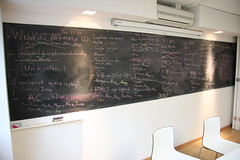
Hackfest black board, photo by Mario

I think this was a very productive hackfest, and as usual a very well organized one! Thanks to the GNOME Foundation for the travel sponsorship, to our friends at Igalia for doing an awesome job at making it happen, and to Collabora for sponsoring it and granting me the time to go there! We got a lot done, and although, as usual, our goals list had many items not crossed, we did cross a few very important ones. I took part in discussions about the new WebKit2 APIs, got to know the new design for GNOME s Web application, which looks great, discussed about Accelerated Compositing along with Joone, Alex, Nayan and Martin Robinson, hacked libsoup a bit to port the multipart/x-mixed-replace patch I wrote to the awesome gio-based infrastructure Dan Winship is building, and some random misc. The biggest chunk of time, though, ended up being devoted to a very uninteresting (to outsiders, at least), but very important task: making it possible to more easily reproduce our test results. TL;DR? We made our bots and development builds use jhbuild to automatically install dependencies; if you re using tarballs, don t worry, your usual autogen/configure/make/make install have not been touched. Now to the more verbose version! The need

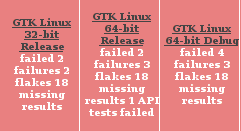
Our three build slaves reporting a few failures

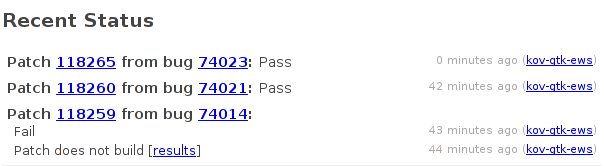
For a couple years now we have supported an increasingly complex and very demanding automated testing infrastructure. We have three buildbot slaves, one provided by Collabora (which I maintain), and two provided by Igalia (maintained by their WebKitGTK+ folks). Those bots build as many check ins as possible with 3 different configurations: 32 bits release, 64 bits release, and 64 bits debug. In addition to those, we have another bot called the EWS, or Early Warning System. There are two of those at this moment: one VM provided by Collabora and my desktop, provided by myself. These bots build every patch uploaded to the bugzilla, and report build failures or passes (you can see the green bubbles). They are very important to our development process because if the patch causes a build failure for our port people can often know that before landing, and try fixes by uploading them to bugzilla instead of doing additional commits. And people are usually very receptive to waiting for EWS output and acting on it, except when they take way too long. You can have an idea of what the life of an EWS bot looks like by looking at the recent status for the WebKitGTK+ bots. Maintaining all of those bots is at times a rather daunting task. The tests require a very specific set of packages, fonts, themes and icons to always report the same size for objects in a render. Upgrades, for instance, had to be synchronized, and usually involve generating new baselines for a large number of tests. You can see in these instructions, for instance, how strict the environment requirements are yes, we need specific versions of fonts, because they often cause layouts to change in size! At one point we had tests fail after a compiler upgrade, which made rounding act a bit different! So stability was a very important aspect of maintaining these bots. All of them have the same version of Debian, and most of the packages are pinned to the same version. On the other hand, and in direct contradition to the stability requirement, we often require bleeding edge versions of some libraries we rely on, such as libsoup. Since we started pushing WebKitGTK+ to be libsoup-only, its own progress has been pretty much driven by WebKitGTK+ s requirements, and Dan Winship has made it possible to make our soup backend much, much simpler and way more featureful. That meant, though, requiring very recent versions of soup. To top it off, for anyone not running Debian testing and tracking the exact same versions of packages as the bots it was virtually impossible to get the tests to pass, which made it very difficult for even ourselves to make sure all patches were still passing before committing something. Wow, what a mess. The explosion^Wsolution So a few weeks back Martin Robinson came up with a proposed solution, which, as he says, is the nuclear bomb solution. We would have a jhbuild environment which would build and install all of the dependencies necessary for reproducing the test expectations the bots have. So over the first three days of the hackfest Martin and myself hacked away in building scripts, buildmaster integration, a jhbuild configuration, a jhbuild modules file, setting up tarballs, and wiring it all in a way that makes it convenient for the contributors to get along with. You ll notice that our buildslaves now have a step just before compiling called updated gtk dependencies (gtk is the name we use for our port in the context of WebKit), which runs jhbuild to install any new dependencies or version bumps we added. You can also see that those instructions I mentioned above became a tad simpler. It took us way more time than we thought for the dust to settle, but it eventually began to. The great thing of doing it during the hackfest was that we could find and fix issues with weird configurations on the spot! Oh, you build with AR_FLAGS=cruT and something doesn t like it? OK, we fix it so that the jhbuild modules are not affected by that variable. Oh, turns out we missed a dependency, no problem, we add it to the modules file or install them on the bots, and then document the dependency. I set up a very clean chroot which we could use for trying out changes so as to not disrupt the tree too much for the other hackfest participants, and I think overall we did good. The aftermath By the time we were done our colleagues who ran other distributions such as Fedora were already being able to get a substantial improvements to the number of tests passing, and so did we! Also, the ability to seamlessly upgrade all the bots with a simple commit made it possible for us to very easily land a change that required a very recent (as in unreleased) version of soup which made our networking backend way simpler. All that red looks great, doesn t it? And we aren t done yet, we ll certainly be making more tweaks to this infrastructure to make it more transparent and more helpful to the users (contributors and other people interested in running the tests). If you ve been hit by the instability we caused, sorry about that, poke mrobinson or myself in the #webkitgtk+ IRC channel on FreeNode, and we ll help you out or fix any issues. If you haven t, we hope you enjoy all the goodness that a reproducible testing suite has to offer! That s it for now, folks, I ll have more to report on follow-up work started at the hackfest soon enough, hopefully =).

8 November 2011

Jan Hauke Rahm: On GNOME 3

Since there have been a few blog posts about GNOME 3 already, I m sure you don t mind me adding one. I m one of those who don t do any work, just lurk around and wait for stuff to be fixed or working in the first place. I also don t like compiling GNOME myself. I barely touched the already packaged stuff in the repository of our Debian GNOME packaging team. But I run unstable plus stuff from experimental. I ll thus have a bit of a different experience with GNOME 3 than current testing users who at least in parts don t seem to like what they re getting. That being said I love it. No, I don t mind running network manager on my systems, I even have it on my netbook (Atom processor). I used wicd for a long time because network manager really got nothing done back in the days (half a year ago or what :)). Nowadays, since version 0.9, it works fine for me. No fiddling around with config files, perfect integration in the desktop, and LAN and WLAN Just Work [tm]. No, I don t like if some weird dependencies dictate what tools to use. I usually used pidgin for messaging, for instance. Now I m using empathy, simply because it s best integrated in GNOME. And no, I won t switch from mutt to evolution. :-P And there are more such cases. Also, these weird accessibility tools that are stuck in the gnome-shell top panel , I don t need them. Still there. (There s an extension to remove it, by the way.) Also, I must say, GNOME 3.2 is a lot better than 3.0 already. And I think 3.4 might do the final trick for me. Fact is, with GNOME 3 I have a much cleaner desktop, there is more room for windows (which is nice on a netbook display), there are web apps which I already use a lot, and it has a professional, not too playful look (i.e. a few effects, clear and consistent theming, no bubbling windows). And the new notification stuff is just awesome, especially with the empathy integration. Oh, and too many mouse click to access an application? 1) Put your most used apps in the favorites bar (or whatever it is called); it s just one click then. 2) Press your meta-key (that way our name for the windows key, or was that the ESC key? Whatever, press your windows key), type in the first two or three letters of your application, and hit enter; you don t need a mouse at all. There. It had to be said. :)

3 November 2011

John Goerzen: Greece part 4: Food and Shopping

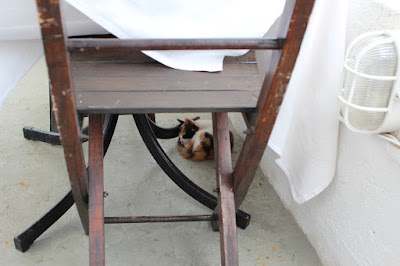
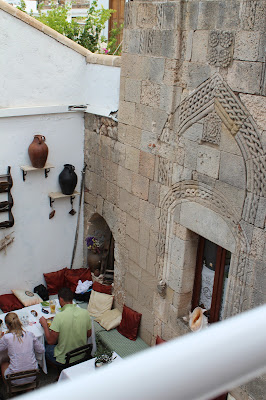
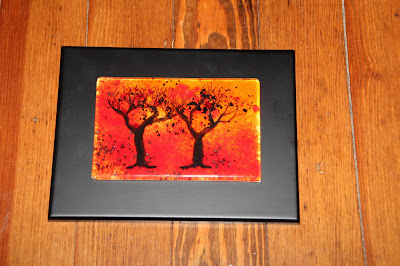
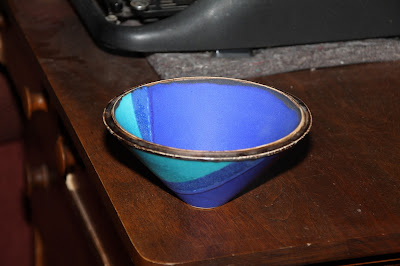
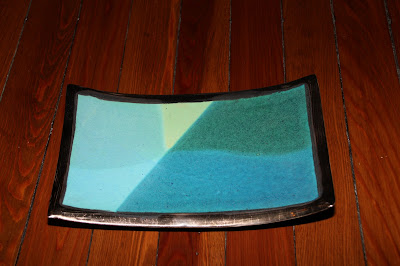
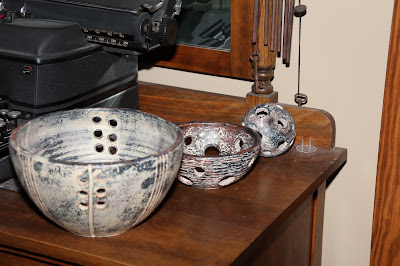
See also parts 1, 2, and 3. I am a person that enjoys food that s different from what s at home, and Rhodes didn t disappoint. Terah and I used to live close to an excellent Greek restaurant in Indianapolis, so we were already familiar in some way with the food. But there isn t any Greek restaurant at all in the Wichita area, so we missed it. Our favorite restaurant on Rhodes was Kalypso of Lindos. Everything there was just excellent, starting with the saganaki, one of my favorite Greek appetizers. I had yogurt with honey there for dessert both times we visited, a surprisingly tasty desert. Like many restaurants in Lindos, Kalypso had the option of eating on the rooftop, or at ground level. We ate on the roof, which had a nice view of the Lindos Acropolis. Being outdoors, there were sometimes cats around. This kitten enjoyed playing games with my shoestrings for awhile. Kalypso is at a 17th century captain s house. Here s a view of it from the rooftop: We, of course, had the chance to eat at quite a few different places during our visit, and I d go on way too long if I mentioned them all. Terah particularly enjoyed the gelaterie.gr ice cream shop in the square in Rhodes. We liked our lunch at Maria s Taverna in Lindos and enjoyed chatting with the staff there. I recently talked about shopping in Mexico, and perhaps learned a thing or two from that. I won t say we never buy them, but in general we don t buy souvenirs like t-shirts, plastic things made in China, etc. We prefer to buy local. Those items tend to be higher quality, more interesting, and we like to support the local economy. We also don t have lots of room for things, so we try to choose carefully. So it was something of a surprise to Terah, and perhaps even to me, when I suggested we go shopping one day. Terah typically enjoys shopping a lot more than I do. Anyhow, off we went to Lindos. One of the first things that had caught our eye in Lindos was the shop selling glass. But it wasn t just any glass; it appeared to be made with some sort of layered process, and has a distinctly three-dimensional feel to it. As you move around, it looks like the background shifts. We wound up with this item, which was made in Athens: By the time we visited Lindos specifically for shopping, we had a good feel for when the busy times of day were, so we could avoid them. It gave us the opportunity to visit with people and when they weren t busy, many shopkeepers liked to chat. I enjoy hearing people s stories and we heard several. One ceramics shop the Musa Shop -caught Terah s eye. They had such incredible and beautiful pieces outside that we just had to go in. We wound up with two pieces from there, both in shades of blue: Both remind me of the Aegean Sea and the deep blue sky of Rhodes. And then, as we were walking along, I pointed inside a shop and said to Terah, Hey, those look different. We went in, and eventually wound up buying these: The appearance, and even feel, of them is unlike anything I d seen. Quite interesting. And seeing those particular items in the Lakis Place shop led to making some new friends I ll write about it in the next post.

18 October 2011

John Goerzen: Greece part 3: Water

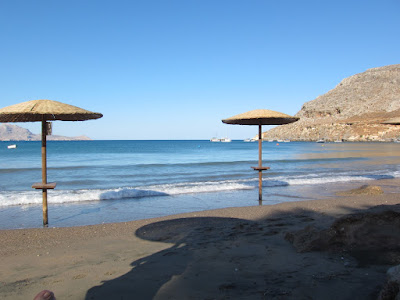
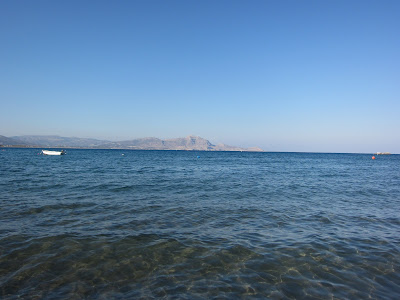
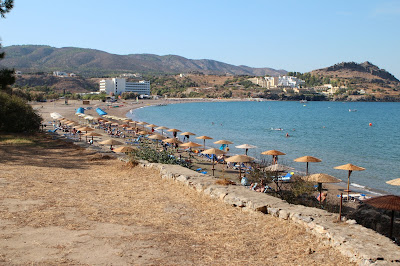
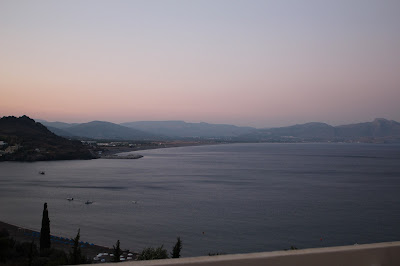
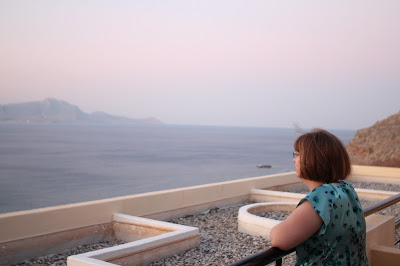
See also parts 1 and 2. That s a photo of Vlicha Beach, near our hotel. But before I talk about the Greek beaches, I need to explain something about living in Kansas. Kansas is in the middle of the United States. The nearest ocean is the Gulf of Mexico, which is 700 miles (1100km) away. That s roughly the same as the distance between Berlin and Minsk, or New York and Chicago. And I believe it s farther away from a saltwater body than all (or almost all) of Europe. So we re not just going to the beach every weekend or something. Vlicha Beach was all those incredible things you ever hear about beaches. The water was so clear that I could easily see my feat while wading in it. That, and the fish swimming around them. It was peaceful, relaxing, and picturesque. Between the deep blue of the sea and the same in the sky, I suppose it is no wonder that blue is often associated with Greece. We weren t exactly the only ones there. Though I think we were the only ones there with Kindles, which seemed to be much more popular in the USA than in Europe. We got several interested people carrying paper books asking what they were. Towards dusk, the mist would become more pronounced and the mountains off in the distance started to fade: The evening before we were set to fly home, we spent some time sitting on our balcony watching dusk set in. One last gaze out over the beautiful Aegean, the misty mountains, and the boats in the distance.

4 October 2011

Michael Banck: 4 Oct 2011

Woodchuck and FrOSCon

At the end of August, I attended FrOSCon in Bonn again, after skipping it last year. The evening before FrOSCon however, I visited Neal Walfield, his wife Isabel and their little son Noam in D sseldorf. Besides having a great time and a lovely dinner, I was most impressed by their collection of Maemo devices (they had at least two N770s, an N900 and, to my jealousy, an N950) which Neal is doing research on these days. He works on woodchuck, which is a project investigating how to improve data availability on mobile devices and our conversation prompted him to implement ATP Woodchuck, which makes smarter decisions when to run APT upgrade on your Maemo device then the standard updater. As part of the research, they also run a user behaviour study which I joined, where one installs a client which records various data off your N900 and sends them anonymized (he seems to be doing a good job at that) to figure out how people use their mobile devices and hopefully enhance the experience. So if you have a N900, you should consider joining the study so they get better data.
The next day, I picked up Martin Michlmayr nearby and we headed for FrOSCon. I was quite impressed by the Makerbot at the Tarent booth, but I still don't know what they are really doing and why they had it on display... In the afternoon, I attended a couple of talks in the PostgreSQL developer room and a talk about a big OpenVPN deployment, before ending the day with the excellent as always social event barbeque. On Sunday, I went to quite a few talks, but I thought that two of them were particularly interesting:
Michael "Monty" Widenius of MySQL gave a talk titled "Why going open source will improve your product" about starting businesses on an open source project, or how business can/should open-source their product. Besides a detailed discussion about the various forms of Open Source licenses and the Open-Core model, he proposed the idea of "Business Source" (see slide 20 of his presentation), where a startup would distribute the source code under a non-commercial (but otherwise open-source) license with the explicit guarantee that the license would be changed to a true FLOSS license at some defined point in the future, giving the company a head start to develop and nurture their project. I asked whether this has been already implemented in practise and how the community could be sure that e.g. lawyers after a hostile takeover would not just remove that part of the copyright notice, as long as a true distribution under a FLOSS license has not happened yet. Monty wasn't aware of any real-word cases, and he did not seem to be concerned about this and said the original intent would be clear in a possible court case. This was the first time I heard about this approach, I wonder how other people think about it, whether it would work in practise and be a useful thing to have?
Second, I attended a talk by Gregor Geiermann, a Ph.D. student in linguistics on "Perceptions of rudeness in Free Software communities". He conducted an online survey about the perceived rudeness of several forum thread posts on Ubuntu Forums. Survey participants were first asked a couple of generic questions about their gender, nationality etc. and were then presented with a series of posts. For each post, they were asked to rate how rude they thought it was on a scale of 1 to 5 and they also had the possibility to highlight the parts of the post they considered rude as well as add comments. He presented a neat web application for analyzing the results, which makes it possible to select different groups (he did male vs. female and Americans vs. Germans in the talk) and have their overall rudeness ratings as well as the highlighted texts visualized as different shades of blue. Comments can be easily accessed. There were quite a few interesting differences e.g. in how Germans perceived rudeness compared to Americans (RTFM comments were considered less rude by Germans for example, IIRC). In response to my question, he said he intended to release the web application as open source and this might be an interesting tool for FLOSS projects to analyze how their public communication channels are perceived by various groups. Unfortunately, I cannot find any other resources about this on the web as of today, so I should try to contact him about it at some point.

26 September 2011

Jan Hauke Rahm: zsh, tab completion, remote hosts, and collaboration

Using zsh as default shell is perfect. Using grml-zsh stuff to configure it, even better. Using XTaran s config, way better. Using your own config, invaluable. Now, there is one thing that always bothered me: having all hosts I usually deal with in my ~/.ssh/config in order to have tab completion (and short names). I wanted to improve the situation and was kindly pointed in a different direction by Myon, namely to just use the ~/.ssh/known_hosts for tab completion. How about that? I started playing around with the config and, as it turns out, Axel already has something ready. Unfortunately, it didn t fulfill all my needs yet. That is because I have multiple known_hosts files. Martin already filed a bug to have ssh read ~/.ssh/known_hosts.d/* but that isn t resolved yet either, even though upstream is aware of it. I thus had to point tab completion and ssh to multiple files by hand. But that s not too bad for now. Let s have a look: Host *
HashKnownHosts no
Host *.your-work.com
User that-is-what-they-call-me-at-work
UserKnownHostsFile ~/.ssh/known_hosts.work
Host *.debian.org
UserKnownHostsFile ~/.ssh/known_hosts.debian
What am I doing? Well, we need to deactivate the hashing of known hosts. Otherwise your known_hosts files aren t readable as needed. Then you define your known_hosts files for the domains you care about. Pretty straight forward. Now, how about tab completion in zsh? Well, easy part actually: [ -f ~/.ssh/config ] && : $ (A)ssh_config_hosts:=$ $ $ $ (@M)$ (f)"$(<~/.ssh/config)" :#Host * #Host :#*\** :#*\?*
[ -f ~/.ssh/known_hosts ] && : $ (A)ssh_known_hosts:=$ $ $ (f)"$(<$HOME/.ssh/known_hosts)" %%\ * %%,*
[ -f ~/.ssh/known_hosts.work ] && : $ (A)ssh_known_hosts_work:=$ $ $ (f)"$(<$HOME/.ssh/known_hosts.work)" %%\ * %%,*
[ -f ~/.ssh/known_hosts.debian ] && : $ (A)ssh_known_hosts_debian:=$ $ $ (f)"$(<$HOME/.ssh/known_hosts.debian)" %%\ * %%,*
zstyle ':completion:*:hosts' hosts $ssh_config_hosts $ssh_known_hosts $ssh_known_hosts_work $ssh_known_hosts_debian What's here? We read and parse your ~/.ssh/config for configured hosts, then we parse all your known_hosts files which are for me: ~/.ssh/known_hosts, ~/.ssh/known_hosts.work, and ~/.ssh/known_hosts.debian. And lastly, all is added to zsh completion for hosts. That actually works. :) Axel, that makes a diff for you looking like this: diff --git a/zsh.d/70-completion b/zsh.d/70-completion
index e92e068..5abf5cc 100644
--- a/zsh.d/70-completion
+++ b/zsh.d/70-completion
@@ -8,6 +8,8 @@
[ -f ~/.ssh/config ] && : $ (A)ssh_config_hosts:=$ $ $ $ (@M)$ (f)"$(<~/.ssh/config)" :#Host * #Host :#*\** :#*\?*
[ -f ~/.ssh/known_hosts ] && : $ (A)ssh_known_hosts:=$ $ $ (f)"$(<$HOME/.ssh/known_hosts)" %%\ * %%,*
+[ -f ~/.ssh/known_hosts.work ] && : $ (A)ssh_known_hosts_work:=$ $ $ (f)"$(<$HOME/.ssh/known_hosts.work)" %%\ * %%,*
+[ -f ~/.ssh/known_hosts.debian ] && : $ (A)ssh_known_hosts_debian:=$ $ $ (f)"$(<$HOME/.ssh/known_hosts.debian)" %%\ * %%,*
-zstyle ':completion:*:*:*' hosts $ssh_config_hosts $ssh_known_hosts
+zstyle ':completion:*:hosts' hosts $ssh_config_hosts $ssh_known_hosts $ssh_known_hosts_work $ssh_known_hosts_debian
Care to merge? Oh, and before I forget... Of course you don't need to check each and every host by yourself. Debian provides ssh keys for all hosts on master. Just do a scp master.debian.org:/etc/ssh/ssh_known_hosts ~/.ssh/known_hosts.debian and I'm sure, your security aware employer has such a file for you as well. Doesn't he? ;)

20 September 2011

John Goerzen: Mexico Part 6: Conclusion

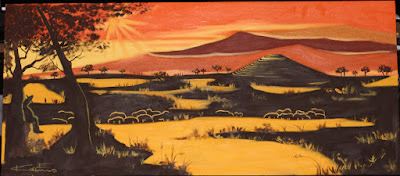
The sixth in a series; see also parts 1, 2, 3, 4, and 5. It s been about two weeks now since we got back home. Every few days, our boys still talk about Mexico. Jacob talks about what he will want to do when we go back and how he d like to see Jonathan over there again. Jacob, Oliver, and I look at photos from our trip a few times a week. This is all a sure sign that our boys loved the trip. And I keep trying to find Mexican food that tastes as good as the real thing (and, so far, failing). Another sign of a good trip! I think it is possible to have fun, relax, and enjoy new experiences all at the same time. We did that in Mexico. We had a lazy afternoon or two with the boys taking naps or playing with other children at the house we stayed at. And we stayed in a beautiful hotel without air conditioning, explored old downtown areas and ancient ruins, and bought things from crowded markets and people selling things from a table along a road. To anyone thinking about visiting: Go. Enjoy it, bring back memories, and live a little more serendipitously than usual. That s what I hope to do when we visit Greece before too long. Finally, here s a photo of the painting I bought from a roadside vendor for $17. Make sure to view it full screen. I think it says more about Mexico than 6 blog posts do.

14 September 2011

John Goerzen: Mexico Part 4: Street Scenes and Architecture

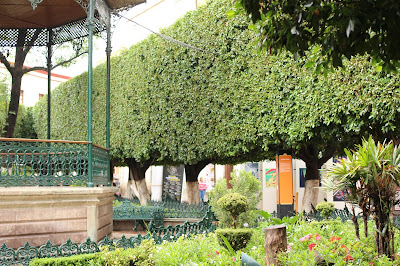
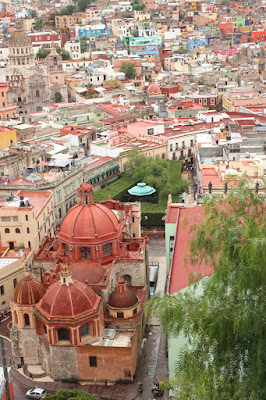
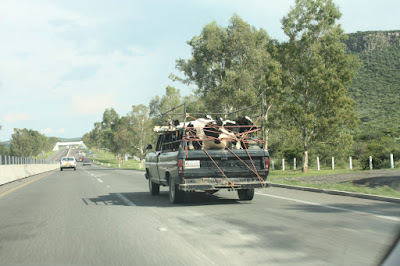
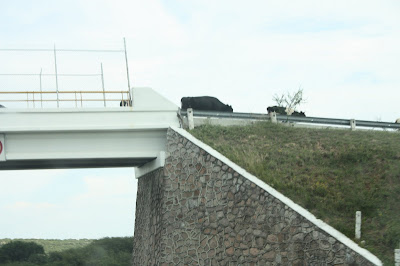
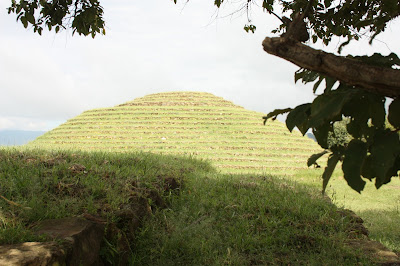
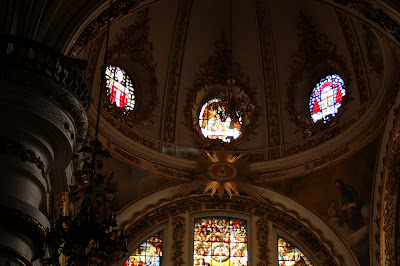
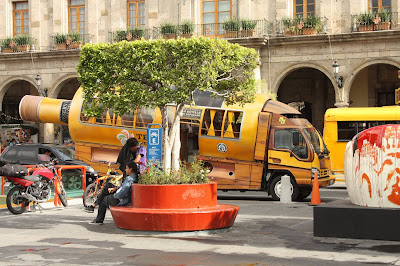
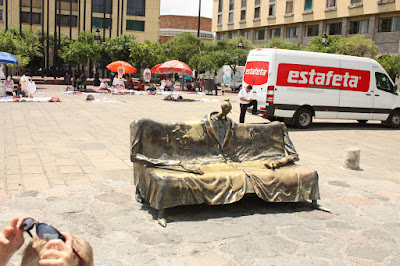
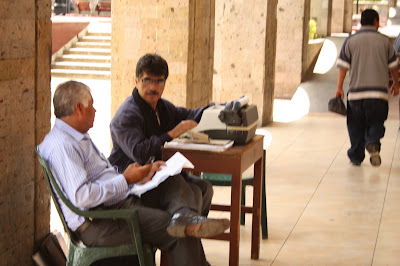
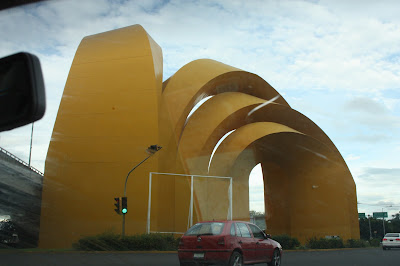
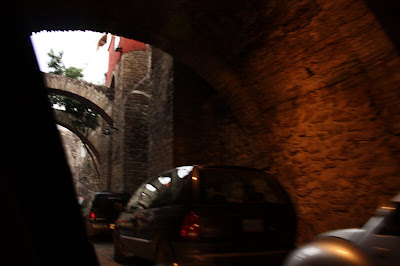
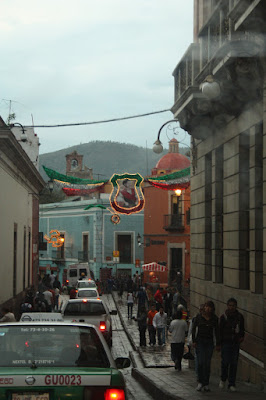
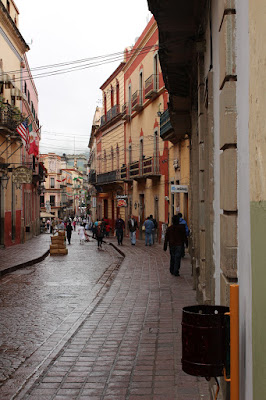
The fourth in a series; see also parts 1, 2, and 3. This post is going to be more a photolog than a narrative, and I apologize in advance for it being a bit disjointed. I ve already touched on these themes a bit in the other post, but now it s time to focus on them. Immediately after leaving the airport, it s quite clear that things are a little different. Trees are square. People ride around in the backs of pickups sometimes on top of piles of debris. Left turns are made in front of other lanes of traffic going the same way. But those are just the things obvious from the road. It s a lot of fun to enjoy the differences. First, the ubiquitous square trees. They look pretty, and are found all over. I also found carefully-manicured trees in cone shapes, more cylindrical shapes, etc. It seems that tree care is taken seriously in Mexico. It was also not uncommon to see the bottom few feet of a tree painted white. A park in Guanajuato had a whole bunch of trees carefully trimmed. And from up on the mountain, it still looked impressive (the green area behind the dome). Driving in Mexico was interesting for a lot of reasons. The highways there aren t quite as limited access as the freeways in the USA. It was quite common to see bicyclists, walkers, a mule, or some cattle ambling along the side of the road. Roadside taco stands don t require taking an exit. You just pull off the road because it s right there. Some sights were a bit surprising. Cattle in a pickup, with rope, for instance. Or cattle crossing the highway on the overpass. Street vendors were everywhere. Stop at a red light and someone might spring from the side of the road and suddenly start washing your windshield (expecting a tip); try to sell you flowers, juice, or bug zappers; or even throw business card-sized advertisements for adult websites into any open windows they can find. One night we saw an incredible fire juggler. I would have tipped him well but he was too far away to do so before the light turned green. Mexico s history stretches back into prehistoric times, and we saw the Teuchitlan ruins at Guachimontones one day. It was truly a remarkable feeling to be able to walk down the middle of the ancient ball court, or to climb up one pyramid and see the other from it. It s not exactly architecture, but Jacob and Oliver sure enjoyed visiting the hot springs at Bosque de la Primavera. Jacob still remembers that where the steam is, the water is 200 degrees, and we CAN T TOUCH IT THERE! Back in Guadalajara, here s a photo from the inside of the grand old cathedral. Compared to the cathedrals we saw in Europe, this was of a similar general size and design, and perhaps only slightly newer. But one big difference: worshipers outnumbered tourists at every Mexican cathedral I saw, whether in the center of Guadalajara or at a rainy intersection in Guanajuato or a plaza in Tlaquepaque. It made them feel more alive, and perhaps more sacred as well. One surprise was seeing people sitting on the steps of the cathedral in downtown Guadalajara selling trinkets such as beads. I think the only other place I had seen something like that was in New Orleans. All of Guadalajara s Centro was beautiful. Much of it survives from colonial days; I think a person could spend days exploring its museums and buildings. Way too many of my 900 photos were taken in Centro to post on the blog, but just for flavor, here s one of the less than historic scenes. Yes, that is a bus shaped like a tequila bottle. Fountains were beautiful and common across Mexico. A few of them were easily reachable by boys, and ours sure loved those. There was a lot of public art, including this interesting chair/skeleton/I m not sure what it is: And, just for good measure while walking around Centro, they tossed in an apparent Redundant Array of Inexpensive Typewriters. I don t know what they were doing, but there were about a dozen guys sitting out in the sun typing on their manual typewriters on their identical tables. And who can leave Guadalajara without seeing one of North America s most impressive traffic circles. I ve got to hand it to the Mexicans for making something that is normally really boring into an interesting work of art. Over in Guanajuato, a lot of driving takes place in the city s vast underground tunnel system. Here s a scene emerging from one of them. Guanajuato was already getting decorated for Mexican independence day festivities (Sept. 15-16) while we were there. Here s a typical Guanajuato street scene. Many of the streets were closed to traffic and perhaps not wide enough to handle vehicles anyway. Those streets had a wonderful peaceful and slow feel to them. I feel that I ve barely done the trip justice with this post. The feelings of walking down a beautiful Guanajuato street, or stepping into a Spanish cathedral, or even seeing a bunch of guys with typewriters, just can t be replicated. It s brimming with history and character, and shouldn t be missed.

12 September 2011

John Goerzen: Mexico Part 2: Lodging & Family

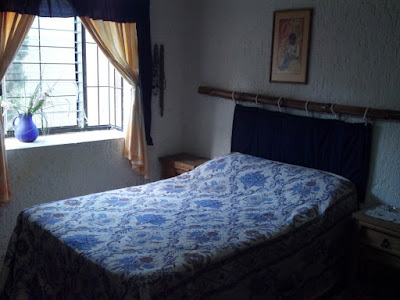
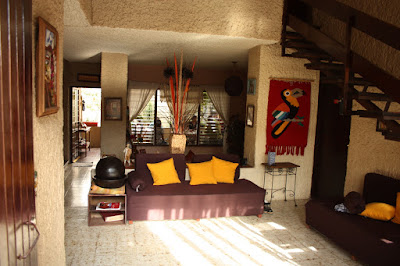
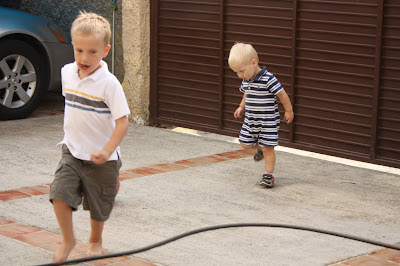
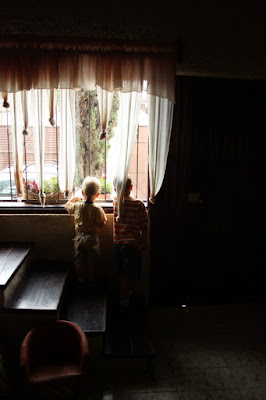
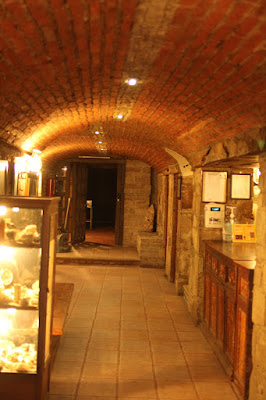
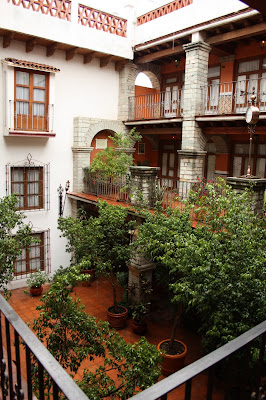
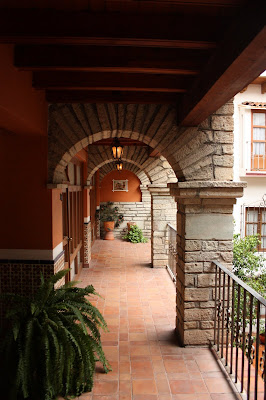
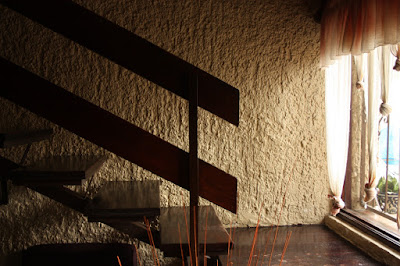
As I wrote in part 1, my family and I were in Mexico recently. Today I ll write about the places we stayed. We spent most of the time in a room we rented in a private home in Guadalajara. My friend Jonathan had found it for us, and it was not too far from his home. The owner was a grandmother, and across the courtyard was more family, including a granddaughter close in age to our boys. They enjoyed playing together. It was really a perfect arrangement for us. There s no better way to be a part of local life when traveling than to stay in someone s house. Here s our bedroom: Notice the glass slats in the window it s a nifty, though not airtight, alternative to our regular windows. More on that later. More of the inside: We had a bit of a language barrier while in Mexico, though never anything significant. My Spanish vocabulary started with almost nothing and I reached maybe a few dozen words by the time we left. Terah knew some Spanish from high school and college, and my friend was fluent. Our hostess also knew a little English. But we all communicated well enough. Terah or Jonathan would help translate when needed. As I d seen before, the children would say things to each other, but never seemed to be bothered that their playmates didn t understand what was being said. They just had a great time anyhow. On Sunday afternoon, when we came back from our activities, there was a buzz of activity. Children everywhere outside, running and playing. Adults too, chatting. We didn t know exactly what was happening, but sent Jacob and Oliver out to play anyhow (which they were eager to do). The yard was enclosed by a wall, so children could pretty much run around without lots of supervision. Eventually they were invited to have some birthday cake (ah ha!) it was one of the children s birthday. Jacob and Oliver actually were served the first two pieces of cake (as the amigos ). Everyone seemed so friendly, warm, and welcoming. Each morning started with breakfast at the house, followed by a scene like this: That s Jacob and Oliver, looking to see if Jonathan had arrived for the day yet. I often noticed in Mexico that I was unsure if I was inside or outside. Here in Kansas, we can have a string of summer days that each exceed 110F (44C) or a few weeks in winter that never get above 15F (-9C), even in daytime. And then we have some pleasant days like right now, too or rain blowing sideways at 60MPH. In general, we spend a lot of effort keeping the outside, well, out. It is quite clear that this isn t a problem in the Guadalajara area. Some restaurants could have been described as buildings with large, open windows so you feel a lot of breeze while inside. Or perhaps as a simple shade roof with a few supports on the edges, so you re never really inside at all (sort of like going under a small shade tent outdoors). To the extent that windows could close, many of them couldn t be made airtight. It was clear that in that area, people spend more energy finding ways to invite the outdoors in rather than to keep it out, thanks to the year-round moderate climate. Perhaps the best example of this surprised me one evening. We were arriving in Guanajuato, an old silver mining town in the mountains, and were going to spend the night at Hotel Socav n, which had been recommended to us by a local friend of Jonathan s. From the street, the hotel looked tiny. But walk in, and you get in this old-looking (and feeling) entry tunnel: That s the front desk, apparently cut out of it there on the right. We asked to see some of the rooms before buying apparently a normal request around there. The innkeeper agreed, and gave us keys and directions to find them on the third floor. It included going up 2 flights of stairs, passing through a courtyard, and going up another flight. It was after dark, and the hotel was dimly lit something I was fine with. I thought we were stepping out into a beautiful atrium with some potted plants in the center of the building something fairly common in some nicer hotels. Until I felt rain on my head. Then I realized that the courtyard, which began two floors up from the street, was open to the sky. Beautiful! Here was the view from out room door: And down the hall : After getting home, a Google happened to turn up some reviews of this hotel. I was so annoyed at what some people wrote! One person gave them only 3 stars because they didn t have air conditioning, had poor water pressure, and lots of steps . Someone else complained of the dark entry tunnel something I couldn t help but smiling about the moment I entered. My review, which should hopefully get posted soon, is certainly different. I gave them 5 stars, because if I wanted a Super 8 with generic fluorescent lighting and the same layout as thousands of other hotels, I would have gone to Nebraska instead of Mexico. Most homes and local hotels in the region don t have air conditioning because they don t need it, and that s just how water pressure is in Mexico (due to needing to pump it from municipal supplies to private storage tanks overhead). And who doesn t appreciate entering a hotel through a brick tunnel? Ah, sigh This should give you some idea of the kind of travel we like: part of the point of traveling is enjoying the differences from home, and I think it is a huge mistake to be annoyed at everything that is different. Enjoy the differences! Finally, here s a photo of the staircase in the home we stayed in, which I thought was fascinating:

6 August 2011

Bdale Garbee: FreedomBox in Banja Luka

FreedomBox activities at Debconf11 I spent the last two weeks of July 2011 in Banja Luka. The occasion was the annual Debian developer's conference, Debconf11 and preceding work week known as Debcamp. This was my tenth successive year attending Debconf, and I had a very productive and pleasant time! The facilities were good, the local team was friendly, enthusiastic, and very helpful, and in addition to giving three talks and hosting a couple panel discussions, I managed to put a burst of energy into work on FreedomBox. Several other developers working on FreedomBox were also present, and a good number of Sheeva and Dream plugs were evident in the hacklabs sporting new FreedomBox stickers. Working together in the same place for several days, we made good progress on several projects, and also had some great discussions about what we want to do going forward. image building tools For some time, I've been working towards a light-weight tool set to build FreedomBox software images. Shortly before Debconf started, I chose the name 'freedom-maker' for this tool and shared a link to a readable copy of my git repository with other developers I expected to work with in Banja Luka. With input from Bert Agaz and Jonas Smedegaard during Debcamp, freedom-maker went from almost useful to actually useful. It still deserves work to be more useful to others, but I have now pushed a copy of the git repository to git.debian.org so that we can take advantage of the tools supported there to enable others to more easily contribute to the code. Very soon, Bert plans to add support to freedom-maker for using Lars Wirzenius' vmdebootstrap to build x86 images suitable for testing in a virtualized environment. At the same time, we plan to refactor the existing code slightly to enable lists of desired packages for the various image flavors we expect to produce independently of the configuration for each specific image building tool. Jonas continued in parallel to work on his alternate packaging toolset boxer. It offers some potentially interesting features for the future, and we may eventually merge some or all of it into freedom-maker, but for now it remains a separate utility. uAP user space tools Several weeks ago, we received from Marvell the source code to two user space programs that are necessary for configuring and monitoring the binary firmware provided for the uAP wireless chip used in the DreamPlug. Early during my stay in Banja Luka, I packaged these for Debian as uaputl and uapevent, and I am pleased to note that they were quickly accepted into the archive and are now present in Debian mirrors. u-boot Another bit of code received very shortly before Debconf started was the source for the version of u-boot shipped by Globalscale in the DreamPlug units we're working with. During Debcamp, Clint Adams passed a copy of this source to Jason Cooper, who was already trying to add support for the DreamPlug to upstream u-boot, but had stalled due to a lack of information. Jason has now merged his own work with the sources we got from the manufacturer, and is making good progress towards merging DreamPlug support into upstream u-boot. Once that happens, we should be able to flash our Sheeva and Dream plug devices with a u-boot image built from the source in the Debian u-boot package, in the process enabling things that matter to us like the ability to boot from an ext2 partition, and hopefully the ability to execute command scripts from that partition instead of having to hard-code kernel filenames in flash. This will allow us to support the ongoing effort in Debian to move away from the need for kernel symlinks. DreamPlug kernels With respect to kernels, another work stream at Debconf primarily involving H ctor Or n and Nick Bane was to analyze the current state of the patches from Marvell and Globalscale used to support the DreamPlug against both upstream and current Debian kernel sources. To my surprise and our collective pleasure, the remaining patch set required against current upstream kernels is much smaller than we previously believed! There are still several patches critical to us that are not merged upstream, but the work remaining to be able to build images for our devices from mainline and Debian kernel source trees now seems like something we might be able to complete before Debian's next stable release. One of our discoveries during the u-boot and kernel work during Debconf was that Globalscale did not obtain a new machine id for the DreamPlug, but instead re-used the one for the GuruPlug series, despite there being some differences in the hardware that require at least one additional driver. After much discussion, we plan to continue using the existing machine id instead of requesting another, particularly because the ARM kernel community has apparently stopped issuing new ids for the moment. We will add a new kernel config option for the DreamPlug, however, and are likely to build distinct Sheeva and Dream kernel packages that do not require initrd for use in FreedomBox images, even if doing so is not strictly necessary. This will allow us to optimize both the in-memory footprint and boot times for our devices. software configuration Another area of investigation in Banja Luka was technology for package configuration. Mirsal Ennaime performed various tests using debconf and Config::Model, with some results reflected in this commit relating to configuring the bitcoind daemon in the bitcoin package for Debian. identity and trust management While we did not actually do any FreedomBox specific work on the trust management layer we know is necessary, after several rounds of conversation, I am now more convinced than ever that the right path forward is to base our trust relationships on OpenPGP keys using GnuPG and Monkeysphere as starting software elements. Our thinking to date is captured on an Identity Management page in the wiki. communication services Another thing that became fairly clear to me during discussions at Debconf is that in the near term, planning to build communication services around XMPP is the approach most likely to give good results. Investigating the software choices available to build an interesting XMPP infrastructure is now a high priority for me. Jonas has done some work towards configuring and integrating ejabberd or Prosody, I've started studying yate as a possible call manager and VoIP server choice with XMPP/jingle support, and we await with great interest a release from the Buddycloud developers to evaluate as a possible basis for deploying social network services. Some of these software choices will lead us to use Apache as our web services base technology because of the need for features that only it supports well among daemons that are Free Software. Jonas completed packaging GNU Sip Witch for Debian, and it is now available in the mirror network. Tzafrir Cohen and Jonas did some initial testing on its use. documentation A number of new wiki pages were written (or at least started) in order to sum up ideas, design various aspects of FreedomBox, and reflect discussions that happened during DebConf11. A lot of work is needed to complete these pages though, as well as others to capture more of the current state of the project. press coverage Finally, while in Banja Luka I got some great press coverage for FreedomBox! On Sunday the 24th, I was interviewed by the main television network serving the Republika Srpska. This led to a couple of minutes of coverage near the top of the national news program that night, immediately following the lead story about the President and several ministers appearing at Debian Day that morning to help open the conference. This interview was later re-used in another TV program that summarized Debconf11. On the morning of Thursday the 28th, I was part of a small group that spent more than an hour meeting with the Minister of Science and Technology in his office, and the relationship between Debian and our work on FreedomBox was one of the items of discussion in that meeting and the associated press conference. I'm told this resulted in more press coverage, but if true I have not seen it yet. summary On Friday afternoon the 29th, I gave a talk in the main Debconf program containing a FreedomBox Progress Report . In it, I talked about the structure of the FreedomBox Foundation, progress the foundation has made, and the work that was still then underway in Banja Luka. It was streamed live over the internet, and replays are available online. The reaction from Debian developers present was very positive, which was good to learn since by that time my energy level was quite low after the nearly two weeks of intense technical and social interaction that is Debconf! All in all, we got lots of work done on FreedomBox in Banja Luka, enough that I think at least the next few steps along the road towards an eventual "1.0" release of a reference implementation are now much clearer than they were two weeks ago!

28 April 2011

Jan Hauke Rahm: Save the environment and come to LinuxTag 2011 in Berlin

It s the time of the year again. LinuxTag is right up and, of course, Debian is part of it. But, it wouldn t be us if we didn t have any problems at all. Well, the situation isn t real bad but could deserve some improvement. Improvement about what, you ask? Isn t that obvious? It s man power that we need (women shall feel included :)). Now, LinuxTag 2011 is going to happen, with or without you, on May 11th to 14th. Needless to say that you ll be missing quite a lot if you don t attend. I mean, even Zack will be there. And so will I (most probably at least). And even more Who s willing to miss that, really? So, pack your stuff, get a train ticket or your car or your friend s car or the car of a friend of your friend who knows a friend who doesn t know you but still wants to give you his car which you don t even need since you already have the car of that friend of your friend and now you have two cars and can even bring another bunch of fellas who probably own cars themselves and now you re thinking about the environment because of all the cars that will come to Berlin and because of that you suddenly buy a train ticket and leave all three cars at home and in the end only one thing counts: you ll be there. Oh, and before you drive off to your local train station, please put your name into our neat little list so we can count on you as booth staff that s because we need man power in case you missed that section or somehow forgot it while thinking about that guy who is the friend of your friend that owns a car but rather comes by train as it saves the environment.

17 February 2011

Jan Hauke Rahm: Gnome calendar

Dear lazyweb, I m using Gnome for quite some time now and I m always satisfied with the interfaces I have to whatever I need. There is one thing, though, that I miss: a calendar. I don t like evolution, I don t need another mail client. What I want is a simple, yet sophisticated application that I can put appointments in and which reminds me of them (recurring issues should be possible, too). It may but doesn t have to be somehow attached to the Gnome clock or whatever. Though I expect it to look Gnome-like and be accessible from the panel. Do you know such? And is there even a Debian package for it? Thanks.
<fb:like action="like" colorscheme="light" href="http://blog.jhr-online.de/266" layout="default" show_faces="true" width="400">

8 December 2010

Jan Hauke Rahm: Google maps irritated?

<fb:share-button href="http://blog.jhr-online.de/169" type="button"></fb:share-button>Countless times already have I used Google s amazing feature called maps. Admittedly, if you know me, you might wonder how I can be advertising Google. At least as often as I used google maps, I have told people about google s evilness. They re making their users transparent in ways most people can t even imagine transparent to other users (just like Facebook does) but, more importantly, transparent to themselves and their advertising customers. Technically skilled people reading my blog probably just nod and scoll down now :) Well, there still is something about Google that makes me use their developments: they are good. I don t know any other online service to create own maps, get directions etc. with as much detail and huge amount of data as google delivers. Thus, Google maps became my main source for locations and directions world wide. As such, I wanted to use it to get directions between places in Berlin, Germany. Apparently, Google s software had some kind of hick up or whatever, though. They got the directions right but somehow I doubt the map is anyhow related to what I requested. See for yourself Google maps irritatedYes, yes, no software is perfect but still :)

<iframe allowtransparency="true" frameborder="0" scrolling="no" src="http://www.facebook.com/plugins/like.php?href=http://blog.jhr-online.de/169&amp;layout=standard&amp;show_faces=true&amp;width=450&amp;action=like&amp;colorscheme=light" style="border:none; overflow:hidden; width:450px; height:65px"></iframe>

8 November 2010

Jan Hauke Rahm: Yet another new gpg key

Since thousands of people seem to like RSA keys these days and my key is old anyways, I thought: how about running where the other lemmings run So, here it is, my transition to a new gpg key. A properly written transition document is to be found here, obviously signed by both the old and the new key. I d appreciate signatures if your signing policy allows (and you re not insanely signing anything that looks like it could be signed).

14 October 2010

Rapha&#235;l Hertzog: Correctly renaming a conffile in Debian package maintainer scripts

After having dealt with the removal of obsolete conffiles, I ll now explain what you should do when a configuration file managed by dpkg must be renamed. The problem Let s suppose that version 1.2 of the software stopped providing /etc/foo.conf. Instead it provides /etc/bar.conf because the configuration file got renamed. If you do nothing special, the new conffile will be installed with the default configuration, and the old one will stay around. Any customization made by the administrator are lost in the process (in fact they are not lost, they are still in foo.conf but they are unused). Of course, you could do mv /etc/foo.conf /etc/bar.conf in the pre-installation script. But that s not satisfactory: it will generate a spurious conffile prompt that the end-user will not understand. The solution In the preinst script, you have to verify if the old conffile has been modified by the administrator. If yes, you want to keep the file around. Otherwise you know you will be able to ditch it once the upgrade is over, and you rename it to /etc/foo.conf.dpkg-remove to remember this fact. In the postinst script, you remove /etc/foo.conf.dpkg-remove. If the old conffile (/etc/foo.conf) still exists, it s because it was modified by the administrator. You make a backup of the new conffile in /etc/bar.conf.dpkg-dist and rename the old one into /etc/bar.conf. In the postrm, when called to abort an upgrade, you move /etc/foo.conf.dpkg-remove back to its original name. In practice, use dpkg-maintscript-helper dpkg-maintscript-helper can automate all those tasks. You just have to put the following snippet in the maintainer scripts (postinst, postrm, preinst):
if dpkg-maintscript-helper supports mv_conffile 2>/dev/null; then
    dpkg-maintscript-helper mv_conffile /etc/foo.conf /etc/bar.conf 1.1-3 -- "$@"
fi
In this example, I assumed that version 1.1-3 was the last version of the package that contained /etc/foo.conf (i.e. the last version released before 1.2-1 was packaged). You can avoid the preliminary test if you pre-depend on dpkg (>= 1.15.7.2) or if enough time has passed to assume that everybody has a newer version anyway. You can learn all the details in dpkg-maintscript-helper s manual page. Found it useful? Be sure to not miss other packaging tips (or lessons), click here to subscribe to my free newsletter and get new articles by email (just check Send me blog updates ).
Flattr this Share/Bookmark No comment Support my work

23 September 2010

Biella Coleman: Automated Message

So I suspect folks have received a message from a professor when on sabbatical and it usually goes something like this:
Thank you for your message. This is an automated reply.
I am on sabbatical leave and unable to reply to my email. For all matters concerning the __________________________ Department of __________ Contact ____________ .
Thank you for your patience,
Professor
I have been thinking of writing one myself, being I am also on sabbatical but thought I might be a bit more honest and forthcoming. This is what I have so far come up with:
Thank you for your message. This is an automated reply. I am on sabbatical leave and while I am able to reply to my email, in fact, I have a heck of a lot more time compared to when I teach, it is customary to write a message like this and claim otherwise. However, being on leave does relieve you of (most) all department responsibilities. And given the grueling pace of academic jobs and the contemporary burden of email avalanches we all suffer from, I am taking the license (the sabbatical license) to say: 1) I may never get back to you 2) I may but it may take longer than usual 3) honestly I suffer from MEAD (Massive Email Anxiety Disorder) and hate it when people don t respond to me, so I will likely get back to you but don t you get MEAD if I fail to do so. Thanks for your patience,
Gabriella Coleman
On leave 2010-2011

6 September 2010

Jan Hauke Rahm: tmux entered my system

Been playing with that thought for a while now, finally got to rebuilding it for lenny, now I m using it tmux is the new screen. To have fun already I read a few short introductions and got myself a few suggestions for a proper .tmux.conf. So, for root I have this one now: # Copy mode
unbind [
bind Escape copy-mode
# Use Vi mode
setw -g mode-keys vi
# Make mouse useful in copy mode
setw -g mode-mouse on
# More straight forward key bindings for splitting
unbind %
bind split-window -h
bind h split-window -h
unbind '"'
bind - split-window -v
bind v split-window -v
# History
set -g history-limit 4000
# Terminal emulator window title
set -g set-titles on
set -g set-titles-string '#S:#I.#P #W'
# Status Bar
set -g status-bg black
set -g status-fg white
set -g status-interval 1
set -g status-left '#[fg=green]#H#[default]'
# no line break here, it's just to long for my blog layout!
set -g status-right '#[fg=yellow]#(cut -d " " -f 1-4 /proc/loadavg)#[default] #[fg=cyan,bold]%Y-%m-%d %H:%M:%S#[default]'
# Notifying if other windows has activities
setw -g monitor-activity on
set -g visual-activity on
# Highlighting the active window in status bar
setw -g window-status-current-bg red
# Clock
setw -g clock-mode-colour green
setw -g clock-mode-style 24
# Create a default session
new -n htop -d htop
setw -t htop monitor-activity off
neww -n aptitude -d aptitude
neww -d
Then I added a new alias to my user s zsh config: alias root='su -c "tmux attach"' Why tmux attach ? Because tmux would start a new session which I don t want it to. The config already starts a session which we can immediately attach to. Also, when such session was started I can attach to it as a user with the very same command over and over again. That makes it pretty handy as I always have htop, aptitude and a free shell available in a nice tmux session. Great. How did I live until now? ;-)

29 June 2010

Jan Hauke Rahm: [OT] Online magazine in German about music

It s pretty off topic for my blog since I usually only blog about technical stuff. But this is just great. Real life people having a real look at concerts of prominent and not-so-prominent musicians. And it s all in German which is a nice thing since most of such stuff I have to find on English web sites (except the obvious German big press influence). Made me notice I missed the concert of Jamie Cullum of course. But the article is quite nice and I definitely enjoy reading more of those. Have a look if you re as keen on music as I am, or not. :)

11 June 2010

Jan Hauke Rahm: MiniDebConf in Berlin, now

Good morning everyone, after quite some time of organization, we got the MiniDebConf running in Berlin. Yesterday at 9.30, Zack had the pleasure of opening the event which seems to be reflected in the press already. After that, we had nice talks, one every hour from 10 to 6 with mine being the last one of the day at 5 p.m. Yes, I did it :) Slides, links, and all that stuff will follow in a later post, or more official announcements. Right now I m preparing myself to get back to the fairground. The second day starts with another bunch of talks at 10 and I m excited to meet different people again and hear more interesting talks. The BSP went well. :) Actually, we didn t really fix many bugs, I guess. A few maintainers stayed after the event as well as a couple of users completely new to packaging. Thus, it was more like a small social event bit it was really fun. And of course the HackLab is still open today, so we have every chance to fix more bugs This just as a small input from where we stand. More is to come some time later, probably after the weekend, we ll see

Next.

Previous.