Reproducible Builds (diffoscope): diffoscope 327 released
327. This version includes the following changes:
[ Colin Watson ]
* Handle missing openssh-client binaries in autopkgtests.
327. This version includes the following changes:
[ Colin Watson ]
* Handle missing openssh-client binaries in autopkgtests.
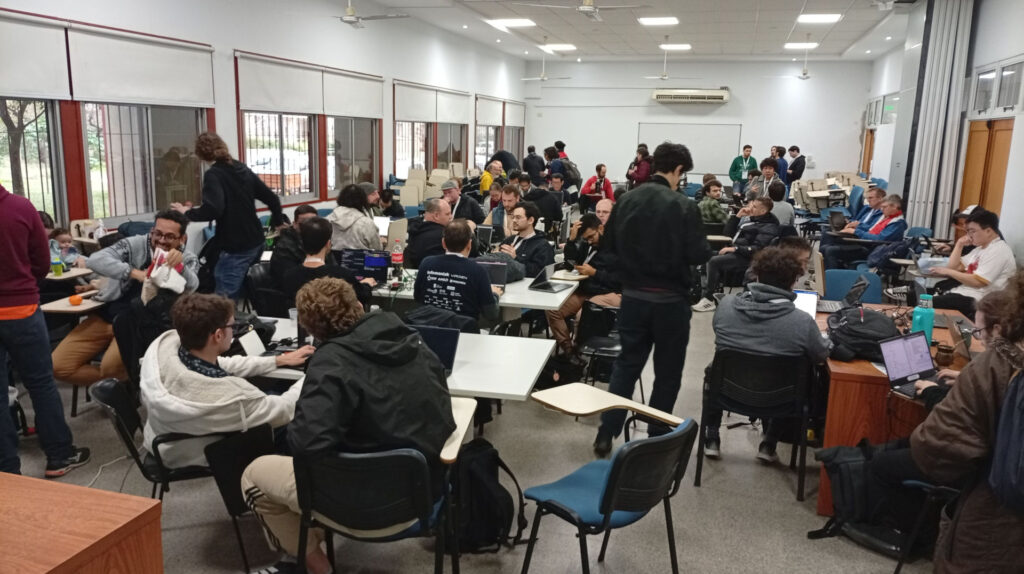
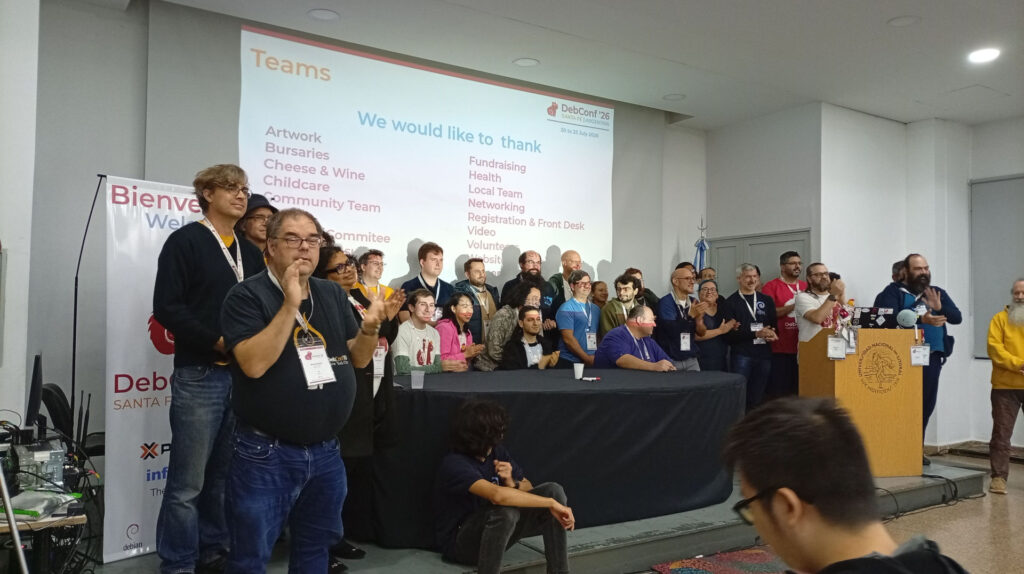
On Saturday 25 July 2026, the annual Debian Developers and Contributors
Conference came to a close.
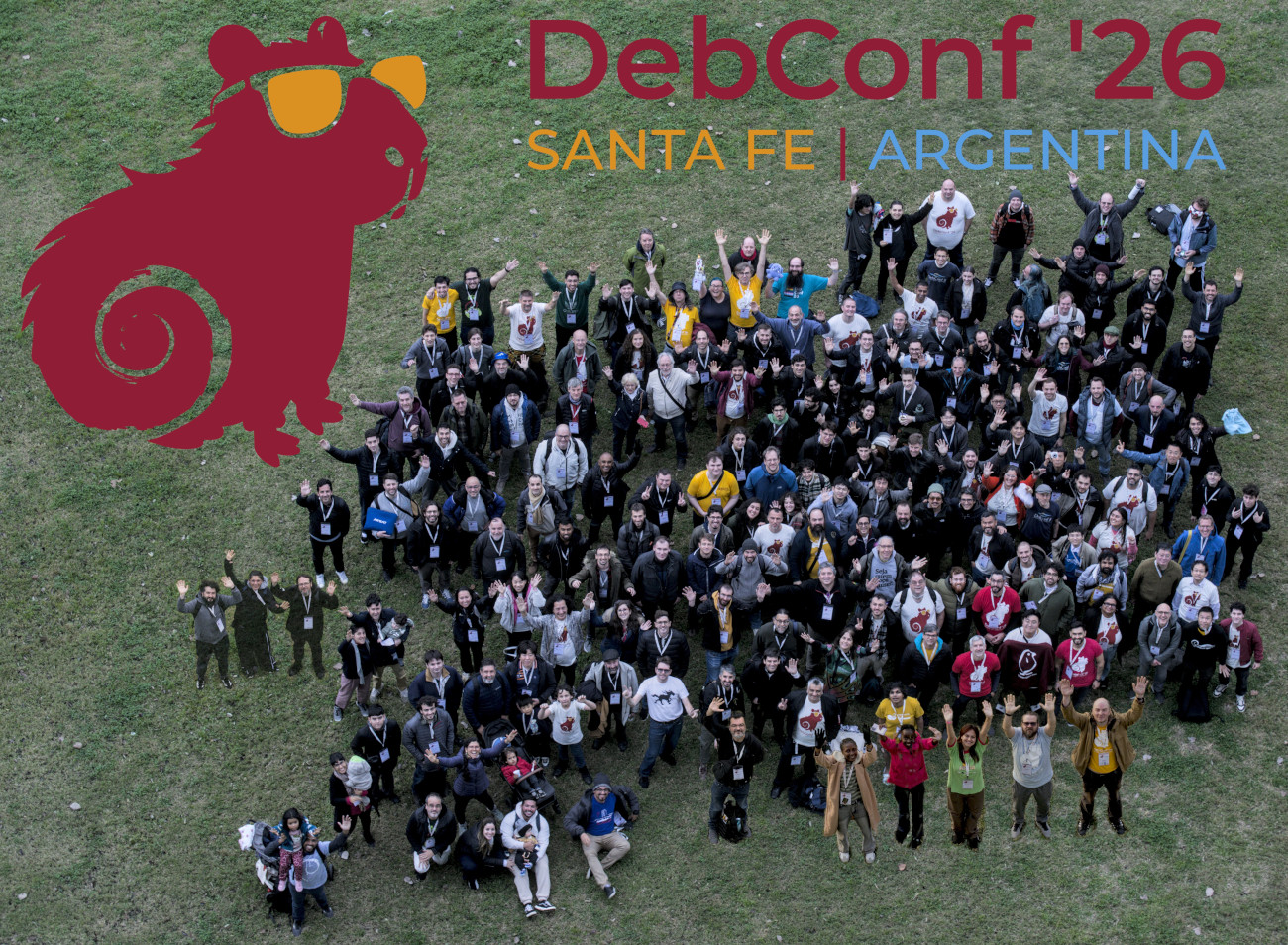
Over 270 attendees representing 35 countries from around the world came
together for a combined 90 events (including some which took place during
the DebCamp) including more than 27 Talks, 21 Short Talks,
29 Birds of a Feather sessions ("BoF" informal meeting between developers
and users), 8 workshops, and activities in support of furthering our
distribution and free software, learning from our mentors and peers, building
our community, and having a bit of fun.
The conference was preceded by the annual
DebCamp hacking session held 13
through 19 July where Debian Developers and Contributors convened to
focus on their individual Debian-related projects or work in team sprints
geared toward in-person collaboration in developing Debian.
As has been the case for several years, a special effort has been made to
welcome newcomers and help them become familiar with Debian and DebConf
by organizing a sprint "New Contributors Onboarding" every day of Debcamp,
followed more informally by mentorship during DebConf. Half a dozen new
contributors joined the sessions and learned about Debian, free software,
packaging and much more.
This year, a week-long DebCamp session was dedicated to auditing,
patching, and modernizing the Go ecosystem in Debian and enable the
transition triggered by the recent upload of dh-golang enabling GO111MODULE=on
by default in Experimental.
In order to make the conference more accessible for local participants,
a local language track was included in the schedule for talks in Spanish,
as was done at DebConf19 in Brazil.
The actual Debian Developers Conference started on Monday 20 July 2026.
In addition to the traditional "Bits from the DPL" talk, the continuous
key-signing party, lightning talks, and the announcement of next year's
DebConf27, there were several update sessions shared by internal projects
and teams.
Many of the hosted discussion sessions were presented by our technical
core teams with the usual and useful "Meet the Technical Committee", three
talks about Linux Kernel, early boot and improving Debian s kernel and
installer support for Chromebooks, and about twenty BoFs and talks about
Debian packaging policy, Debian infrastructure, security and privacy.
This year, and echoing ongoing discussions within the Free Software community,
Artificial Intelligence and Age Verification have been the subject of
several talks. The Python, Perl, Ruby, Go, and Rust programming
language teams also shared updates on their work and efforts.
More than 17 BoFs and talks about community, diversity, and local outreach
highlighted the work of various teams involved in not just the technical but
also the social aspect of our community
The schedule
was updated each day with planned and ad hoc activities introduced by
attendees over the course of the conference. Several traditional activities
took place: a poetry performance, the traditional Cheese and Wine party, the
Group Photos, and the Day Trip.
For those who were not able to attend, most of the talks and sessions were
broadcasted live and recorded. One can find the seventy hours of recorded
videos available via the conference
schedule,
or alternatively through this
link.
Almost all of the sessions facilitated remote participation via IRC and Matrix
messaging apps or online collaborative text documents which allowed remote
attendees to "be in the room" and ask questions or share comments with the
speaker or assembled audience. DebConf26 saw over 341 T-shirts, a day trip,
and up to 130 meals planned per day.
All of these events, activities, conversations, and streams coupled with our
love, interest, and participation in Debian and F/OSS certainly made this
conference an overall success both here in Santa Fe, Argentina and online
around the world.
The DebConf26 website
will remain active for archival purposes and will continue to offer
links to the presentations and videos of talks and events.
Next year, DebConf27 will be held
in Asahikawa, Hokkaido, Japan, from Sunday September 5th to Saturday
September 11th, 2027. As tradition follows before the next DebConf the
local organizers in Japan will start the conference activities with DebCamp
with a particular focus on individual and team work towards improving the
distribution.
DebConf is committed to a safe and welcome environment for all
participants. See the
web page about the Code of Conduct on the DebConf26 website
for more details on this.
Debian thanks the commitment of numerous
sponsors
to support DebConf26, particularly our Platinum Sponsors:
Infomaniak, and
Proxmox,
and our Gold Sponsors : Freexian, and
Viridien.
We also wish to thank our Video and Infrastructure teams, the DebConf26
and DebConf committees, our host nation of Argentina, and each and every
person who helped contribute to this event and to Debian overall.
Thank you all for your work in helping Debian continue to be "The Universal
Operating System".
See you next year!
About Debian
The Debian Project was founded in 1993 by Ian Murdock to be a truly free
community project. Since then the project has grown to be one of the
largest and most influential Open Source projects. Thousands of
volunteers from all over the world work together to create and maintain
Debian software. Available in 70 languages, and supporting a huge range
of computer types, Debian calls itself the universal operating system.
About DebConf
DebConf is the Debian Project's developer conference. In addition to a
full schedule of technical, social and policy talks, DebConf provides an
opportunity for developers, contributors and other interested people to
meet in person and work together more closely. It has taken place
annually since 2000 in locations as varied as Scotland, Bosnia and Herzegovina,
India, Korea, France. More information about DebConf is available from
https://debconf.org/.
About Infomaniak
Infomaniak is an independent, employee-owned
Swiss technology company that designs, develops, and operates its own cloud
infrastructure and digital services entirely in Switzerland. With over
300 employees more than 70% engineers and developers the company reinvests
all profits into R&D. Its public cloud is built on OpenStack, with managed
Kubernetes, Database as a Service, object storage, and sovereign AI services
accessible via OpenAI-compatible APIs, all running on its own Swiss
infrastructure. Infomaniak also develops a sovereign collaborative suite
messaging, email, storage, online office tools, videoconferencing, and a
built-in AI assistant developed in-house and as a privacy-respecting
solution to proprietary platforms. Open source is central to how Infomaniak
operates. Its latest data center (D4) runs on 100% renewable energy and uses
no traditional cooling: all the heat generated by its servers is captured and
fed into Geneva's district heating network, supplying up to 6,000 homes in
winter and hot water year-round. The entire project has been documented and
open-sourced at d4project.org.
About Proxmox
Proxmox develops powerful, yet easy-to-use
open-source server solutions. The comprehensive open-source ecosystem is
designed to manage divers IT landscapes, from single servers to large-scale
distributed data centers. Our unified platform integrates server
virtualization, easy backup, and rock-solid email security ensuring seamless
interoperability across the entire portfolio. With the Proxmox Datacenter
Manager, the ecosystem also offers a "single pane of glass" for centralized
management across different locations. Since 2005, all Proxmox solutions have
been built on the rock-solid Debian platform. We are proud to return to
DebConf26 as a sponsor because the Debian community provides the foundation
that makes our work possible. We believe in keeping IT simple, open, and under
your control.
Contact Information
For further information, please visit the DebConf26 web page at
https://debconf26.debconf.org/ or send
mail to press@debian.org.
This post is an unpublished review for Subscription Bombing Email under AttackOne of the most important inputs one can have when designing a response strategy against a security attack is a good characterization. This article describes a relatively newly described attack mode (subscription bombing), hypothetizes on the motivations that can lie behind it, and presents some countermeasures that can be taken by different actors to reduce its impact. At its core, suscription bombing is a classical reflection attack: it uses a third party service so that the answer to a relatively simple request is amplified and results in a distributed denial of service (DDoS) for the victim. And, as with most DDoS attacks, its effectivity lies in that there is not much a person can do against traffic coming from seemingly random different providers all around the world. The core differentiatof for subscription bombing is that the attack s victim is not a network port, but an individual s e-mail address. The attacker builds a database of service providers that allow interested users to sign up for newsletter on their activities, or a mailing list, or even just to create a new account on a given Web system. This action will generate a (seemingly legitimate) confirmation mail sent to the victim. But the attacker scripts together hundreds of thousands of such request, creating a deluge of confirmation mails sent to the unsuspecting victim. The authors explain the goals an attacker might pursue by performing this kind of attack. They suppose this can be due to harassment (a disgruntled employee being denied a salary raise, a political adversary, or even a romantic ex-partner wanting to inconvenience the victim s use of their e-mail). More worryingly, the attack can be used as a distraction: by sending a high volume of mails in a controlled timeframe, the attacker can reduce the probability of the victim noticing a specific attack warning them of, i.e., financial fraud, unwanted purchases, or break-in attempts into their accounts. Attacks targetting mailboxes at private mail servers can also lead to overloading an account s limit, causing it to reject mails after the attack is delivered and before the folder is cleaned. And it can also pave the way for follow-up, targetted deception attacks, where the attackers call the victim pretending to be the company s IT department, and get them to install a remote desktop monitoring and management tool, with which they can effectively seize control of the victim s data. To do this, they present a study they made over 24 cases of victims, from which 47,970 total e-mails were received between October and December 2024, with individual attacks receiving between 81 and 3,387 e-mails per hour, from where they presented several descriptive analysis. The authors explored cyber criminal s offers on underground websites, comparing flooding services and pricing schemes. Finally, mitigation strategies are discussed. Mitigation is quite problematic, as none of the mail servers is acting in either a hostile way or lacking permissions they are performing just the task they should. The authors suggest four mitigation strategies for mail server operators to reduce the burden on their users, although none of them is easily automatizab (rate-limit the number of emails a given inbox can receive from previously unseen senders; educate users about this kind of attacks; group similar newsletter or account reset mails during active attacks; and automatically unsubscribe or bounce newsletter messages when a surge is detected). They also recommend newsletter providers and services accepting the unrestricted creation of user accounts to provide some hardening to increase the effort wrongdoers need to spend to abuse their services, such as requiring CAPTCHAs or requiring users to take several steps before requesting a subscription, although they recognize this adds friction to the process providers are most interested in providing; filtering and triaging known-good and known-bad domains, although this is hard to implement on a preemptive fashion, and adhering to easy unsubscription standards, such as easily identifiable headers with which mass unsubscription could be performed more easily victims, instead of hunting for the right places to click, potentially even in mails written in an unknown language. The described problem is interesting, and properly tackling it can be a game changer for many users who will suffer this kind of abuse, and the article is easy to read and soundly supports its claims.
Welcome to post 58 in the R4 series.
R and the CRAN repositories maintain a very
high level of what we might call quality assurrance by requiring that
newly-added code does not break any existing dependencies. This is
frequently called a reverse-dependency check . For any given CRAN package one can quickly
determine it reverse dependencies. Calling
tools::package_dependencies(pkgName, reverse=TRUE) will for
a scalar or vector-valued argument return a named list with the reverse
dependencies. It is then a matter of looping over this list. There are
helper functions in base R as well as in contributed packages on and off
CRAN. I also wrote my own with
package prrd which,
while possibly a wee bit specialised and under-documented has served me
well to check on Rcpp and
related packages which can indeed have a large number of
reverse dependencies.
I recently looked into one of these contributed runner packages, and
while I will refrain from naming its implementation language let me just
mention that the term cargo cult may be a real thing
here. What go me interested in this was the fact that if one
has a simple-to-use runner then the fact that r2u makes it fast, easy,
reliable: pick all three (to borrow its slogan) to deal with actual
depencies if Ubuntu has indeed been selected as the host. We will
maintain the position that if you can in fact integrate with
the system-wide package management then any alternative per-repo package
management approach not doing so will likely be dominated by an approach
that does integrate with the system facilities. Which is what precisely
what r2u does, and
offers. And why it is used enough to by now have shipped eighty eight
million binary packages. So I tested it for the reverse-dependency check
task.
What I learned by looking into the (much more complicated) runner was
that it at the end of the day it hands the actual task of running the
reverse dependecies off to a helper function rev_check that
is part of the xfun package
by Yuhui. I quickly found that besides xfun we would also need its
suggested dependency tinytex which in turn
would error unless the tlmgr binary was present. So as the
sole requirement (on an Ubuntu system with r2u) turns out to be
where we do it all in one apt call (as root
in the container). (Given r2u we could also call
install.packages(c("xfun","tinytext")) followed by
apt install texlive-base but it is simpler for this setup
step to be just one call).
With that we are basically done. I did this (twice) using a
rocker/r2u container with r2u preinstalled, mounting
a local work and scrap directory for the container. In it we expand the
package to be tested (i.e. tar xaf pkgName_*tar.gz for a
given source package pkgName from CRAN) and then just call with the
package name and expanded direcrtory. I.e. I used this call to test my
package AsioHeaders (which has just three reverse
dependencies) to both name it and to point to the expanded source
directory created for this purposed:
> system.time( res <- xfun::rev_check("AsioHeaders", src="AsioHeaders") )
## ... earlier output omitted for brevity here ...
user system elapsed
35.732 3.333 149.683
> res
httpgd ipaddress websocket
0 0 0
> res. As I checked the current CRAN version, the check was as
expected free of concerns or issues.
To support this, r2u
did indeed go off and install about sixty seven binary packages (and the
total includes all binary dependencies fully resolved) delivering on the
just works promise by the r2u documentation.
As another check, I did the same for RcppAnnoy which has
seven reverse dependencies and needed about two hundred CRAN packages to be installed. The
full test took just over four minutes with the timing function reporting
some nice gains from parallelisation as total user compute time was on
the order of just under eight minutes. Again, test results were clean
and free of worries as expected:
> system.time( res <- xfun::rev_check("RcppAnnoy", src="RcppAnnoy") )
## ... earlier output omitted for brevity here ...
user system elapsed
471.765 378.220 266.855
> res
bbknnR bigANNOY blocking scDHA Seurat uwot VectrixDB
0 0 0 0 0 0 0
> This post by Dirk Eddelbuettel originated on his Thinking inside the box blog. If you like this or other open-source work I do, you can now sponsor me at GitHub.
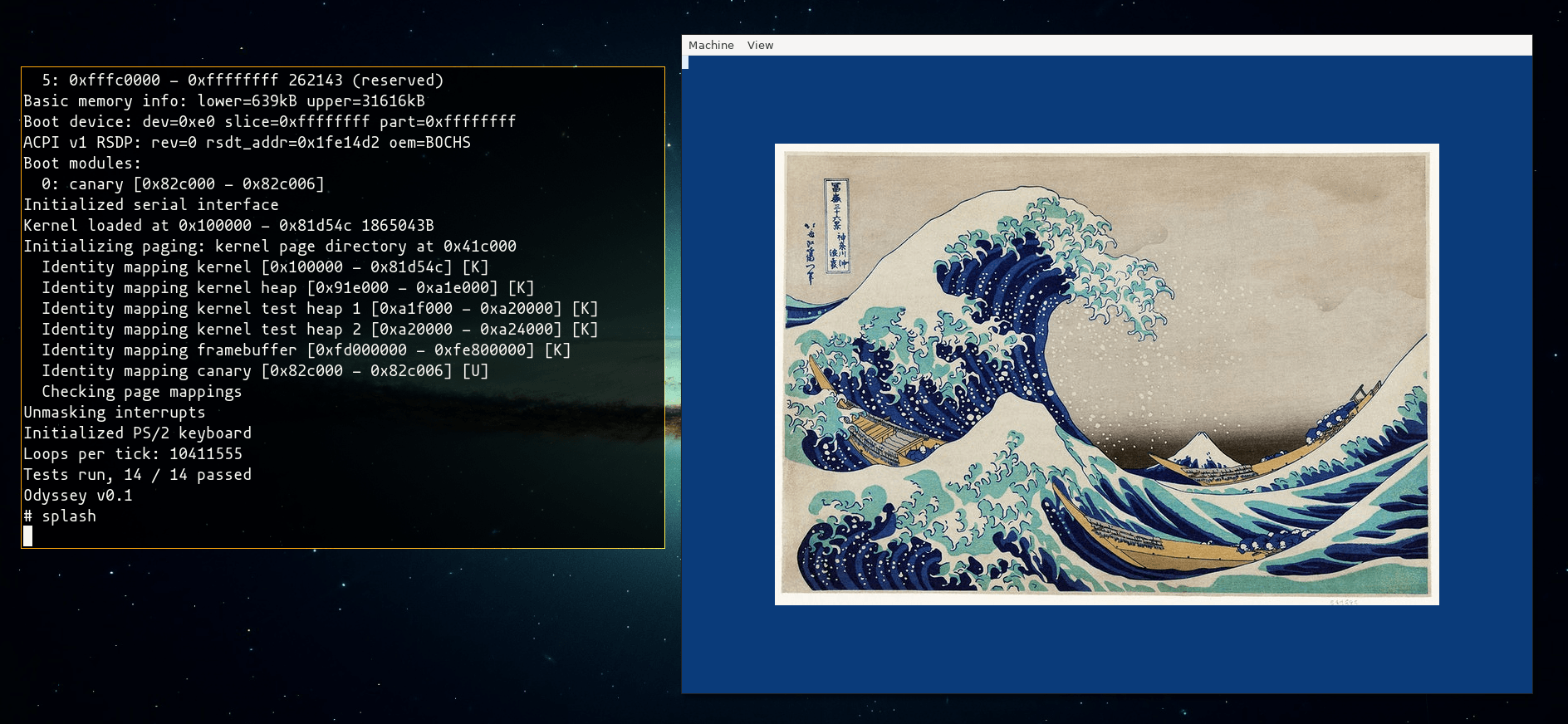
Screenshot by VulcanSphere via Wikimedia Commons MIT License/net), processes are files, the display is a file (/dev/draw). Because every resource speaks 9P and every process has its own namespace, you can mount another machine's /net into your namespace and your program makes network calls through that machine's stack without knowing or caring. No sockets API, no RPC layer, just ordinary file system operations through a simple system call interface.
Some would say that OS research is dead, and that backwards-compatibility and POSIX killed it. Rob Pike himself argued as much in his 2000 talk, "Systems Software Research is Irrelevant" - but we didn't care at the time. There was so much happening that we didn't have time to take it all in. And then Linux happened, and Software Freedom became a focal point (more on that in a later post).
In the summer of 2020, with the world deep in Covid lockdowns, I decided to build a toy operating system, just to try my hand at the the thing that I had always wanted to do. I spent three feverish months working on Odyssey and, looking back, it is perhaps the most fun I have ever had. I would not dare compare it to the magnum opus that is Plan 9, but it gave me perspective: how hard it is to build an OS from scratch, and above all, how fun it is to build an OS from scratch, and why the original creators kept coming back to the same problem. The highlight of those three months was booting the OS and watching it render "The Great Wave off Kanagawa". Nothing in my professional achievements to date captures what that meant to me.
Odyssey displaying "The Great Wave Off Kanagawa"

I dedicate this release of C-Kermit to Frank da Cruz. Frank was directly involved with Kermit for 44 years, from its initial design in 1981 all the way through 2025. He maintained Kermit as an Open Source project after Columbia University ended its sponsorship. I know of no other Open Source project where the founder remains so personally involved for so long. When Kermit was begun, transfers between different hardware and operating systems were difficult or impossible. Frank helped build a bridge. Kermit glued systems together, from the International Space Station to pocket calculators, and set a new standard for interoperability. It continues to do so. Kermit is still one of the quietly-working pillars of computing today, enabling everything from firmware upgrades to radios. And, yes, it still reliably transfers files over serial lines. As we start to spend a lot of time in the Kermit codebase, we do so standing on the shoulders of a giant. Thanks, Frank, for your decades of work on Kermit. John Goerzen, July 2026
| Series: | Chaotic Orbits #2 |
| Publisher: | DAW Books |
| Copyright: | December 2024 |
| ISBN: | 0-7564-1949-2 |
| Format: | Kindle |
| Pages: | 143 |
"I don't think anyone should have enough personal wealth to decimate a large country's income just because he's going through a midlife crisis."Ada's interactions with Strom Fetor are an absolute delight. He is so sure of himself that he is incapable of registering her as a threat, and she effortlessly deceives him by hiding in plain sight.
"You really shouldn't be talking about this," Rian starts. Fetor waves aside his concerns. "We're all friends here." "Not me," I say. "I hate you. Remember?" Fetor laughs in a tone I'm sure he thinks is charming.Fetor's complete inability to realize that a beautiful woman might both sincerely not like him and not be flirting with him is perfect. I was cackling through half of this book. Like any good heist story, there are twists and turns, surprises, double agents, unexpected complications, and a delightful amount of verbal fencing. I adore the narrative tone Revis uses for these stories. Ada has just the right mix of idealism, cynicism, professionalism, and irreverence to carry off the feeling that she's a step ahead of everyone else. Underneath the bones of a delightful plot is a character who cares deeply but is very aware of her limitations, and therefore has taught herself to laugh at and be ruthless with her own emotions. I am finding it an incredibly compelling type of competence porn. I enjoyed the first book of this series, but this one was so much better. These stories are exactly the right length to keep the reader engrossed throughout and satisfied but wanting more at the end. How to Steal a Galaxy ends on a cliffhanger of sorts, to be resolved in the next and final book. I can hardly wait to start it. Highly recommended. Followed by Last Chance to Save the World. Rating: 9 out of 10
| Series: | Midlife Recorder #2 |
| Publisher: | Linzi Day |
| Copyright: | November 2022 |
| ISBN: | 9798360228431 |
| Format: | Kindle |
| Pages: | 577 |
I built my current house server back in 2019. It had an upgrade from the original Ryzen 2700 to a 5700G in late 2021, but otherwise is still running with the original setup. Back in November it developed some erratic behaviour (initially manifesting as problems with the TPM, which is ironic as I ve spent a bunch of time at my day job trying to improve TPM reliability), culminating in unreliable reboots. I had a limited amount of ability to swap parts out, but ultimately decided it was a motherboard issue (thinking perhaps VRM problems), found a replacement locally, and everything seemed fine.
Until May.
At that point I rebooted the machine for a Debian point release, and it failed to come back. Fans would spin, but there was no sign of actual life. I ended up pressing a temporary machine into service (that could at least run the Home Assistant container, and a few other critical bits) while I tried to work out what was wrong. I d kept the previous motherboard, and still had the Ryzen 2700, so I did a bunch of swaps (and obtained a motherboard buzzer to try and get some indication about whether there were useful beep codes being emitted), and ultimately came to the conclusion that the CPU had died.
I m not quite clear what happened here. I played it safe and replaced the PSU at the same time, in case that was the original cause back in November and ultimately damaged the CPU, but both old + new motherboards worked just fine with the 2700.
That left a decision about what to do. This previous server was from 2013, so this machine has now lasted longer than that and I could justifiably upgrade. However when I went to look at what the equivalent modern machine would be it s only a couple of generations later (Zen 5 vs Zen 3), and 64GB RAM alone would have set me back ~ 1k. For not a lot of gain. So I ended up buying a replacement Ryzen 5700G, hopefully allowing me to put off thinking about an upgrade until Zen 6 is out, and RAM prices are saner (though I understand that might take a couple of years).
It s not the first time I ve had a faulty PSU be the cause of a dead machine, but it was a pretty frustrating experience.
While many Western democracies seem to be in a state of decay and are no longer the safe, civilized and prosperous countries they once were, there are still some European countries that are governed well. One of those that stand out is Estonia.
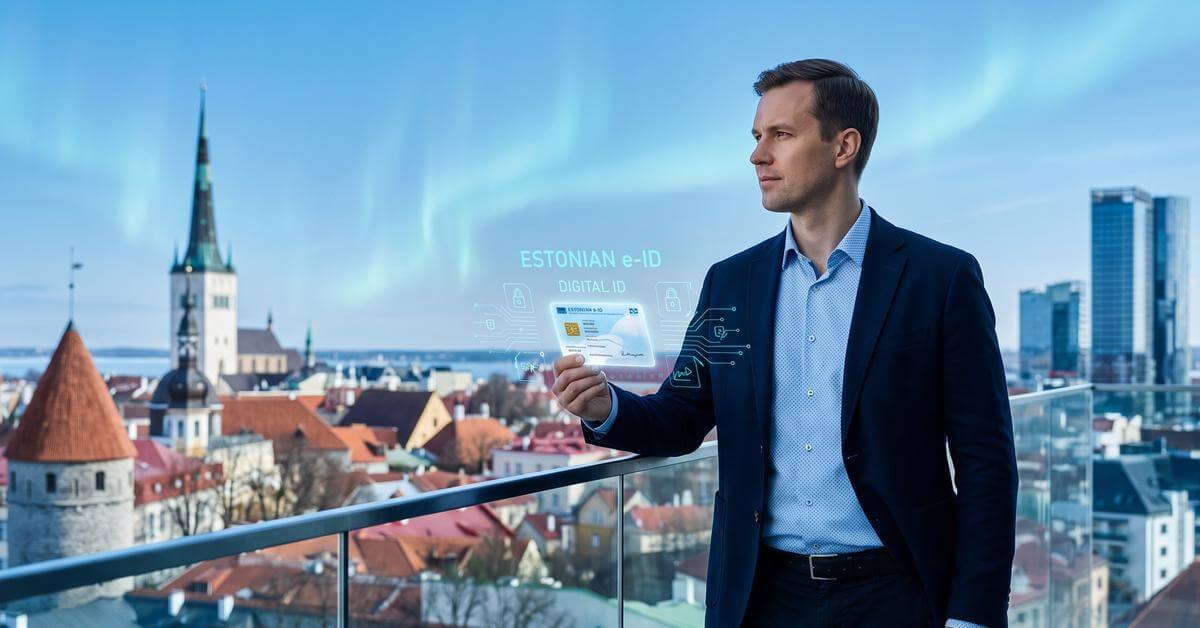
Estonia is probably most well known for multiple software companies that originated from there, such as Wise, Bolt, Pipedrive and Skype. The government itself is also famous for being early in issuing government IDs with an embedded smart chip for online authentication already in the 1990s. Via the national portal at eesti.ee all residents can access extensive eServices ranging from viewing their health benefits to filing taxes.
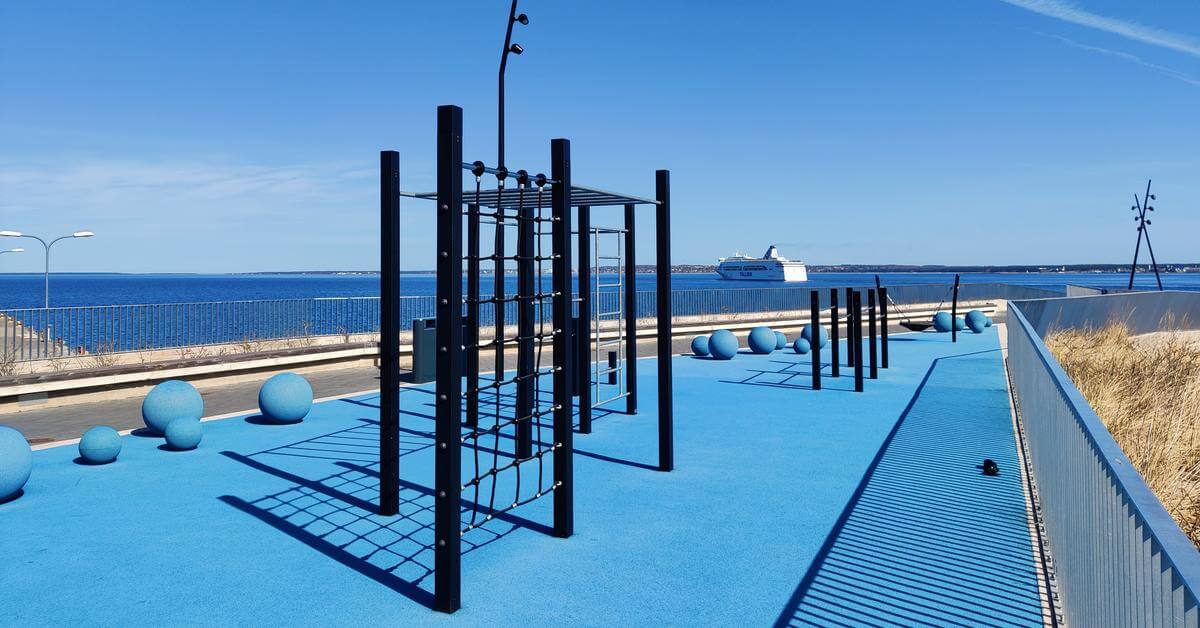
Estonia has also been running an e-Residency program since 2014, where they issue digital ID cards to foreigners, making it easy for them to remotely log into the government portals and for example, establish businesses, file annual reports and so forth. Note that the e-Residency is not a path to physical residency. Estonia does, however, have a separate Digital Nomad visa program that makes it easy for non-EU citizens to also physically establish themselves in Estonia, assuming, of course, you meet the criteria, which includes, among others, a minimum monthly income of 3960 from outside Estonia. EU citizens naturally have free mobility inside the EU and can simply get an apartment and register as a resident in Estonia if they so choose. And there are plenty of reasons to do so.
Estonians also seem to value the school system highly. The government has been actively raising teacher pay and has a stated goal of reaching 120% of the national average by 2027. The students are also expected to value the education and respect their teachers. According to the TALIS 2024 survey (OECD s international teacher survey), Estonian teachers spend significantly more time on actual teaching and learning and waste less time on interruptions or keeping classroom order compared to the OECD average. This is among the highest rates internationally, meaning they spend relatively little time on maintaining order or dealing with disruptions. While the international education benchmark PISA scores have been dropping globally, Estonia has consistently been climbing the ranks in past decades. In the latest PISA study (from 2022), Estonia ranked number one in Europe for reading, mathematics and science. In the overall results, Estonia ranked seventh globally, only behind countries such as Japan, Korea and Singapore.

Valuing entrepreneurship is evident in how the taxation system is set up in Estonia. Famously, in Estonia, companies can defer taxes on annual earnings and reinvest all of their profit in growing the company. Taxes are due only later, when paid out from the company, for example as dividends. For individuals, receiving dividends from any Estonian or foreign company is tax-free as long as the company paying dividends already paid corporate tax on the same income.
The tax system is also very simple. For all individuals, all types of income, including salary and capital gains, are always taxed at a flat rate of 22%. This removes the incentive for anyone to try to convert income into different types, setting up holding company structures and other optimizations as there is no gain. All entrepreneurs can simply focus on growing their business and forget extra bureaucracy. There is also no marginal tax rate cliff to stop working at everyone is encouraged to always try to produce as much value as they can. A simple tax system is also reflected in the fact that anyone can easily read all tax rules that apply to individuals in plain English on the Estonian tax authority website, and one does not need to hire any accountants simply to file taxes.
Estonia also has a very straightforward investment account system: any person can freely open a self-directed investment account at any brokerage at no extra cost and report it as such to the tax authority, and then use it to save for an apartment, retirement, or other purposes, and defer all income taxes until withdrawal. There are no caps or time limits, and all residents are encouraged to save and invest as much as they can and thus take responsibility for their own wealth accumulation.
It seems that culturally Estonians respect people who are active and progress in their careers and businesses more than in other countries. Unlike in Finland, successful people are admired and living on government welfare is not romanticized. At the same time, the government benefits are less generous so people can t live comfortably on them and, for example, many of the asylum seekers Estonia accepted have since left on their own initiative to other European countries in search of better benefits.
This is not just my personal experience. According to the Numbeo crime index, Estonia has one of the lowest crime rates in the world. Also, comparing drug and property crime stats, for example, Finland has twice as much crime per capita, and places like Vancouver in Canada almost five times more.

I don t have any clear explanation for why crime is so much lower in Estonia, but some suggest that higher social cohesion and lower levels of welfare contribute to people standing to lose more if they behave antisocially. Compared to Finland, Estonia also more readily jails repeat offenders, and those who are put on trial will experience a swifter court process thanks to simplified legal processes and more efficient governance.
The next step is to buy a local prepaid SIM card at e.g., an R-Kiosk or a convenience store as signing up for other matters later on will require an Estonian phone number. Once you have an apartment and e.g., signed a rental agreement, you can register in the population registry online.
After that, you have proof you are a local resident with an address and telephone number in Estonia. With local resident status, you can go to the police station to get a local ID card. Don t bother scheduling an appointment, just go to the Tammesaare police station in Tallinn, take a queue number and wait. Once it is your turn, they will guide you on how to use the photo booth, fingerprint registration device, and file your application. A few days later you will receive an email confirming whether your application was accepted, and after a few more days, you will get another email notifying you that your ID card has been printed and is available for pick-up at the same location. This will also be your first practical experience of how fast and efficient the government in Estonia is.
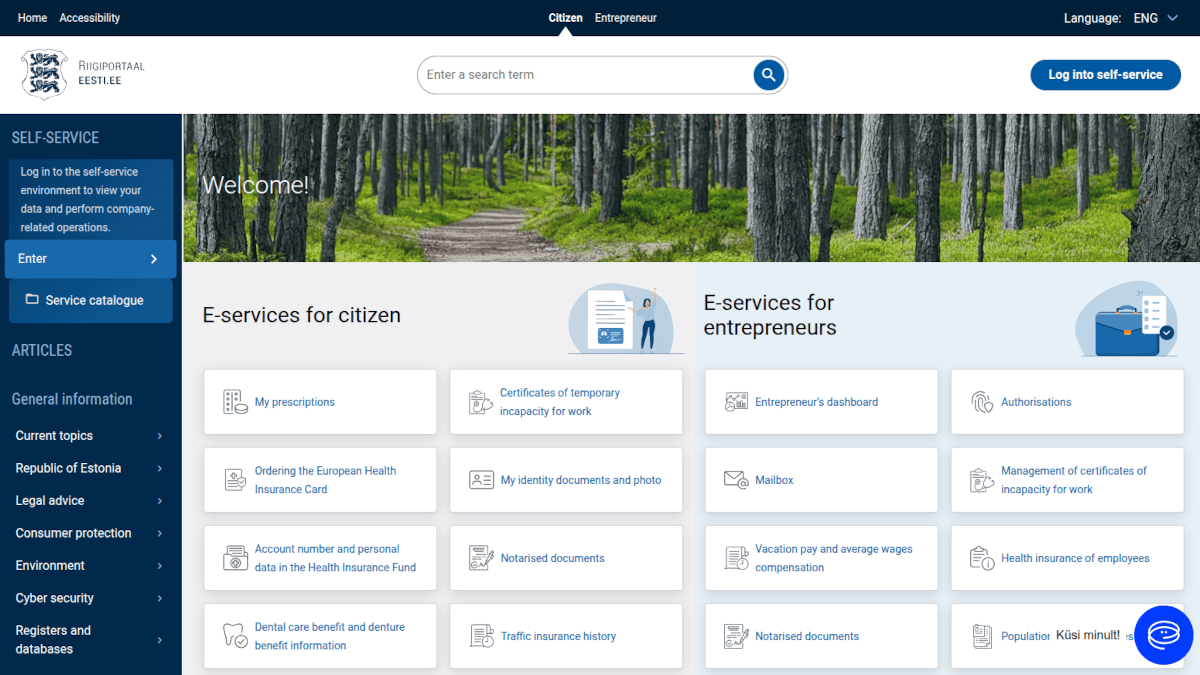
Once you have the local ID card, you can use the smart card feature to log into all the government eServices and sort out the rest of the relocation process, such as registering tax residency and getting a family doctor.
jj's builtin merge editor finally became
too much for me. So, I looked at the list of merge
tool options, saw vimdiff, and thought, Oh, cool,
I know how to use vimdiff. So, I launched
jj config edit --user, added a ui section, and
set merge-editor to vimdiff. With the new
config, I ran jj resolve again. It was at that
point that I realized that I do not, in fact, know
how to use vimdiff: I only know how to use
vimdiff with two buffers. What appeared in my
terminal was a 4-pane monstrosity. Why are there
four panes? I'm trying to resolve conflicts
between only two changes on only one file. For a
moment, I nearly go down a rabbit hole, because
this
says that by default, vimdiff is barely useable
[sic]. Should I be installing some addon or a
Python script? Apparently there are tradeoffs.
I just want to resolve these conflicts without
doing line-by-line approvals for how ever many
hours that would take.
Accordingly, I ran away in terror, installed meld,
set merge-editor to meld, and went clicky-clicky
in the GUI. I'm not happy using a GUI, but at least
it didn't have a mysterious extra buffer to confuse
and taunt me.
| Series: | Sub-Inspector Ferron Mysteries #1 |
| Publisher: | Sobbing Squonk Press |
| Copyright: | 2012 |
| Printing: | 2018 |
| ISBN: | 0-9863735-1-6 |
| Format: | Kindle |
| Pages: | 73 |
I enjoyed reading this post by Marginalia

"Your harddrive is probably full"
You can construct an entropic argument that there are simply more ways for a harddrive to be full than ways in which it can be empty.Of course it made me check how full my laptop drive is, and indeed it was more than 75% full, as predicted. But, I almost never feel that my hard drive is full. I can very easily free up almost any amount of disk space at any time, without any thought. While writing this blog post, I ran a single command and now my harddrive is 50% empty.
The other part of the equation is that a full disk isn t a problem until it s so full you can t put more stuff on it, and at the point it s so irredeemably cluttered that when you do clean it up, you only have the patience to clean up enough to bide your time, judging the fate of every file on the harddrive is simply too much work.Why doesn't this apply to me? Because I have put in the up-front thought to organize things, so that I never have to do that anymore. I have 3 categories of files that I can remove at any time I need more space, without any thought:
git-annex drop any file and stop it using disk
space, but the file is still there (as a broken symlink) so you don't
risk losing or forgetting about it.~/tmp/, which is reserved for any files I only want to have a
passing acquaintance with. If I'm not comfortable with something being
deleted at any time, I don't put it there./tmp/ as an example that I long ago used as the basis for the rules for my
~/tmp/. I hope that git-annex might also serve as an example
that moving files between drives is not the best way to manage disk space
use.
| Series: | Midlife Recorder #1 |
| Publisher: | Linzi Day |
| Copyright: | July 2022 |
| ISBN: | 9798837010774 |
| Format: | Kindle |
| Pages: | 464 |
I loved reading books about kickass women who took no crap and fixed their lives up exactly how they wanted them to be. But how did they get to be that way? They always started out awesome in the books. Seriously, did they kick ass at sixteen? Or did their superpower kickassery not kick in until they were thirty? Forty? If so, then I was screwed. Would I need to wait till I was fifty or until a genie arrived offering wishes? I already felt as if I d spent my whole life waiting for something wild and wonderful to happen.Niki is a Specific Type to a somewhat hilarious degree, and I'm not sure if Day is playing into that intentionally or if she's projecting herself into the book. The amount of self-insertion is not zero: Day also lives in Gretna Green, owns a Bichon Frise, and worked as an assistant registrar and civil celebrant. Niki also drinks wine regularly, has a psychic gift, occasionally reads tarot cards, is an accommodating pushover at work who struggles to say no to her abusive boss, has impostor syndrome problems, and swears by a fictional self-help book about grief that provides the quotes at the starts of chapters. There is a cat, because of course there's a cat. (The fictional self-help book is a spot-on parody played entirely straight in the story. I think Day is having some fun with the reader? I can't tell!) This is what I mean by unapologetic. It's easy to read Niki as a stereotype, but she's a stereotype a lot of real people can identify with and there's something highly satisfying in watching her find her footing. I like wish fulfillment books; it's fun to see someone's wishes come true! Particularly in the year of 2026, there's something immensely satisfying in seeing an ordinary, insecure person get a massive amount of power and use it to make the world better. I don't need everything to be hard, fraught, and laden with costs in fiction, although I wouldn't want every book I read to be like this. Also, the world building is great. It's not polished; there's a bit of a grab bag feeling to it, I'm dubious the magic system has any underlying rigorous rule set, and Niki's powers, once she has access to them, are more of a semi-sentient genie than a skill she has to learn with hard practice. But the magic is fun. The sentient house is one of the best characters, particularly after Niki realizes how underused it has been, and I am a sucker for any good sentient house book. The cat is a far more interesting character than I first thought she would be. And Niki's new magical job is more complicated and less typical than the normal Celtic-inspired fantasy that I thought it was going to be at first. My primary warning about this book is that Niki starts out beaten down and grieving her dead husband, and it took me about five pages to decide that her dead husband was a complete piece of shit who was not worth any of the grief Niki puts into him. She also doesn't stand up for herself for the first hundred pages or so, which made me want to yell at the book a few times. Both of these problems go away farther into the book, and Niki does eventually figure out that Nick was abusive trash, but I was relieved when the "make endless excuses for worthless men" portion of the story was finally over. You have to stick with it until Niki gets brave enough to try being the protagonist; once that happens, it becomes great fun. It is fairly obvious that Midlife in Gretna Green was self-published, and I wish it had gotten the editing that it deserved. My copy had a couple of obvious formatting errors, the plot veers about more than was strictly necessary, and I think a careful editing pass could have tightened the writing by about fifty pages or so without losing any important detail. If that sort of thing bothers you, make sure you're in self-published fiction mode before starting this one. But it also has that irrepressible, bubbling-with-ideas feeling of a book where nothing has suppressed the author's enthusiasm. It's a very grabby book; once Niki starts embracing her new life, I could barely put it down. If you're in the mood for a good fantasy wish-fulfillment story that has no romance and a whole lot of "why are things run this way, no, we're changing that," highly recommended. I had so much fun with this book, and the series is currently making the rounds of my whole family. Don't read this when you're looking for something challenging and literary and deep; save it for when you desperately want to watch someone just fix something for once, damn it. Followed by Painting the Blues in Gretna Green, which I have already read, breaking my usual rule of writing reviews before reading the next book in a series. Rating: 8 out of 10
RcppDate ships
the featureful date
library written by Howard
Hinnant to enable use from R packages. This header-only modern C++
library has been in pretty wide-spread use for a while now, and adds to
C++11, C++14 and C++17 what is (with minor modifications) the date
library in C++20. The RcppDate package
adds no extra R or C++ code and can therefore be a zero-cost dependency
for any other project; yet a number of other projects decided to
re-vendor it resulting in less-efficient duplication. Oh well. C est
la vie.
This release syncs with upstream release 3.0.5 made yesterday. We
also made two routine updates to the continuous integration since the
last release a good year ago. The Debian and r2u packages for this new
release have already been uploaded too.
Courtesy of my CRANberries, there is also a diffstat report for the most recent release. More information is available at the repository or the package page.Changes in version 0.0.7 (2026-07-27)
- Updated to upstream version 3.0.5
- Regular updates to continuous integration setup
This post by Dirk Eddelbuettel originated on his Thinking inside the box blog. If you like this or other open-source work I do, you can sponsor me at GitHub.
Welcome to post 57 in the R4 series.
R packages with compiled codes can use the file
src/Makevars to set compilation flags. We often rely on
this to set libraries, include directories or compilation options. When
using external libraries, be it header-only or via headers and linking,
we are often experiencing compilation noise when these libraries
tickle warnings under generally-recommended flags such as
-Wall -pedantic. Two packages I maintain are clearly repeat
offenders here: Eigen, and BH. Both cam generate pages and pages of
compiler output. This is generally not great as it may hide genuine
warnings from our own code.
What makes matters worse is that some of the available and specific
options for the compilers are treated by R CMD check as
non-portable leading to a nag on package checking. Examples are
-Wno-parentheses, -Wno-maybe-uninitialize or
-Wno-nunnull.
I have long resorted to adding these to my per-user
~/.R/Makevars. When added there, compilation is quieter,
but R CMD check still nags here where the option
is set but not at CRAN or
r-universe. A situation that is not ideal but what somewhat
stable .
More recently, I realized there was an available check we can use to
conditionally add extra compilation flags but leave them off by
default. That makes local development quiet allowing us to focus on the
quality of our additions here without noise from third-party libraries
we may use. At the same time we do not need to do anything else to let
CRAN do its work.
The check we now use is whether there is a .git/
directory present. If so, we are indeed building from local sources and
can add extra flags. If not, we are likely building from a tar.gz source
archive which is the case for CRAN and hence do not set these.
An example use is this recent additional to package qlcal where this bit of R
code is invoked from a minimal shell script configure and
replaces the stub @XTRAFLAGS@ in
src/Makevars.in (or src/Makevars.win.in)
if (dir.exists(".git"))
## development from a .git directory can use these flags
xtraflags <- "-Wno-nonnull -Wno-deprecated-declarations"
else
## else build from tarball so stick with existing flags
xtraflags <- ""
win <- if (Sys.info()[["sysname"]] == "Windows") ".win" else ""
infile <- file.path("src", paste0("Makevars", win, ".in"))
outfile <- file.path("src", paste0("Makevars", win))
lines <- readLines(infile)
lines <- gsub("@XTRAFLAGS@", xtraflags, lines)
writeLines(lines, outfile)configure
file written in autoconf. Here is a similar example from RcppEigen
(showing some relevants parts of the whole file)
# PKG_CXXFLAGS initialized earlier ...
## Check if building locally
AC_MSG_CHECKING([whether .git/ exists])
if test -d "$srcdir/.git"; then
AC_MSG_RESULT([yes, adding extra flags])
AC_SUBST([PKG_CXXFLAGS],["$ PKG_CXXFLAGS -Wno-ignored-attributes -Wno-maybe-uninitialized"])
else
AC_MSG_RESULT([no, consider adding '-Wno-ignored-attributes -Wno-maybe-uninitialized' to ~/.R/Makevars])
fi
AC_SUBST([PKG_CXXFLAGS], ["$ PKG_CXXFLAGS "])
AC_CONFIG_FILES([src/Makevars])
AC_OUTPUTThis post by Dirk Eddelbuettel originated on his Thinking inside the box blog. If you like this or other open-source work I do, you can now sponsor me at GitHub.
TL;DR: What a great DebConf! I managed to recharge my Debian batteries, and my talks / BoF sessions all went fine. Already looking forward to DebConf in Japan next year!
The evening before DebCamp started, we had a nice bbq (we taught some locals to call it a braai at an organiser s house and went for a walk around the river as the sun set. It was a very peaceful lead-in to DebCamp.


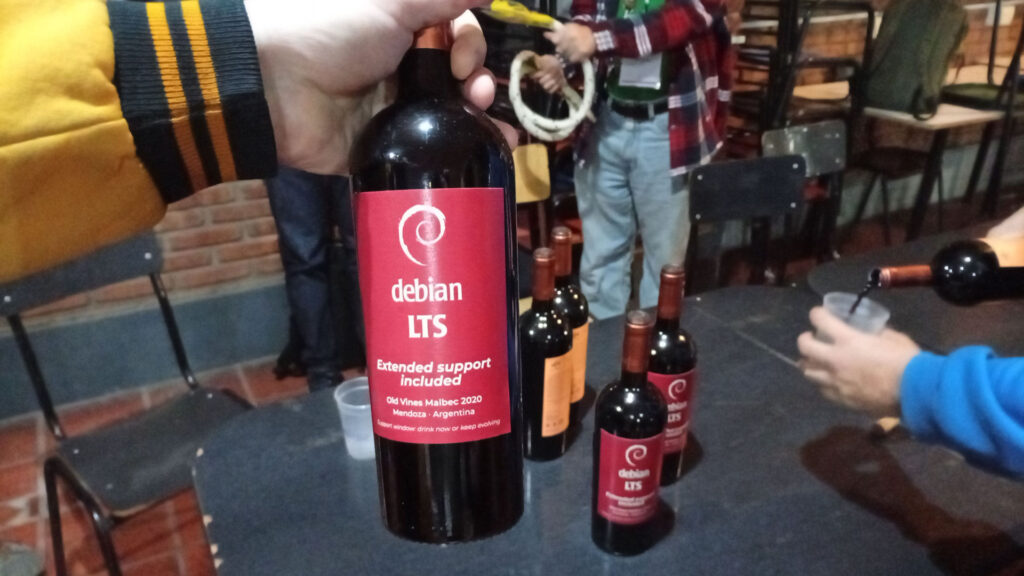
Debian LTS wine

View of Santa Fe city from hotel
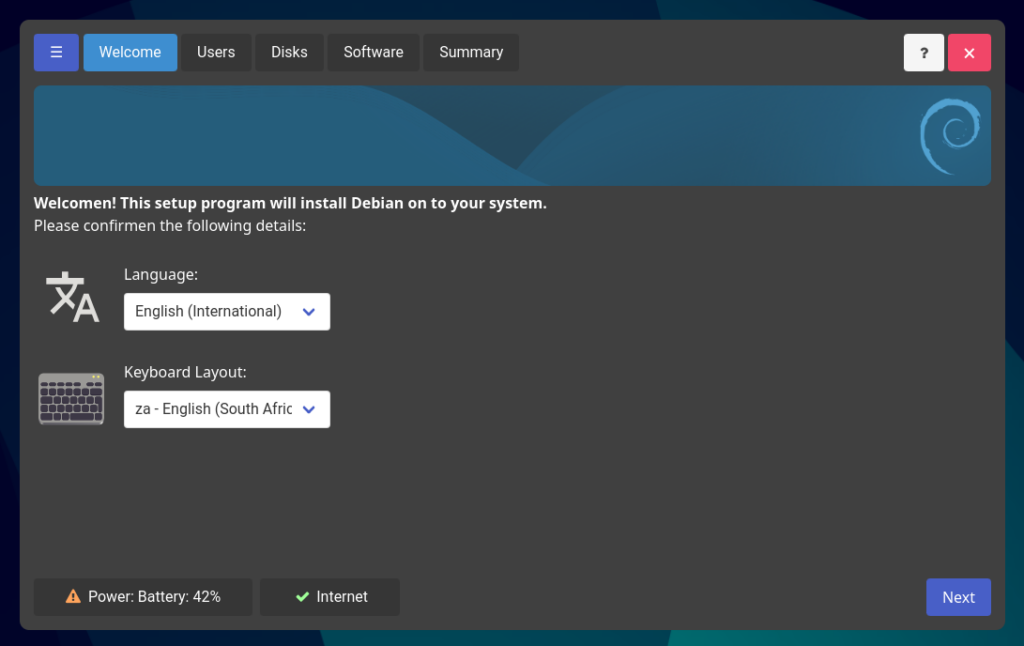
In this talk I do a very quick comparison of system installers based on my experience with them. It s hard to directly compare all of them, since there are so many, and each have their own niche that they attempt to satisfy.
I also introduce Yasi my attempt to answer the question of whether we could build a universal installer, which can also better cover advanced installations, automated installations and niche setups.
It s very early days for the project, and I didn t quite feel ready to share the code with the world, but it was nice that I did a quick demo where I could install a Debian system and the resulting system actually booted up. *phew*.
This is also going to be my main focus for the mid-term future. I aim to have all the basic partitioning options working by the time Debian 14 (Forky) is released, and by the time Debian 15 is released, I have a long list of features that I aim to have working. So, my timeline for having something that s generally useful is around a year from now, and in around 3 years it should be a fully fledged installer that should cover a very large amount of Debian use cases and architectures.

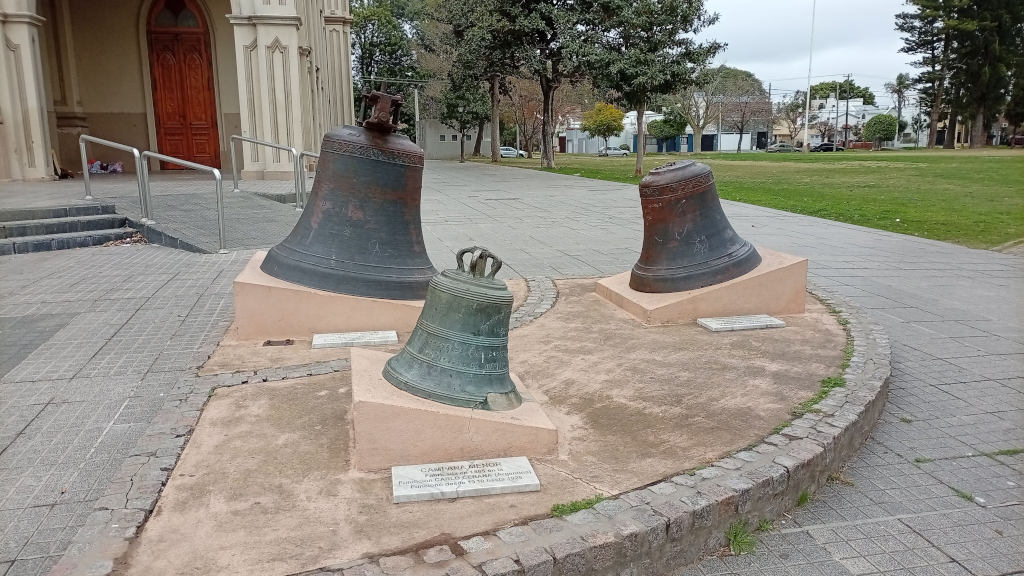
For the day trip, we did a tour across Santa Fe, visited Constituci n de la Naci n Argentina, had lunch where we tried various dishes based on local fish from the river, and then went on a boat ride on the river.


Funding in Free Software Projects: I initially registered this BoF because I m increasingly concerned about how upstreams are asking for donations in their software. I increased the scope to talk about funding in free software in general. It followed Marga s talk about funding, which focussed more about how developers are funded in general. We didn t dive very deep into this, but we certainly need some further discussion (and action) on this within Debian.
Debian Social Team: My most important issue for this team is a carry-over from last year, I want to set up barman (packaged in Debian) for live postgres syncing for our larger databases. For the smaller DBs, doing a daily dump is quite cheap. But for Matrix, it s very expensive in terms if i/o and CPU, so it would be ideal to do less regular complete dumps and use live replication for the first line of redundancy instead.
Images Team: I wasn t initially planning to say much during this session, I have some ideas to reduce both size and count of images, without losing any benefits, but I don t have any work to show for that yet. I ended up talking a lot more than I anticipated, the topics covered were quite good and representative of the current state of Debian images built. I don t have time to create a full summary, so I suggest checking the etherpad / video recording if you re interested.

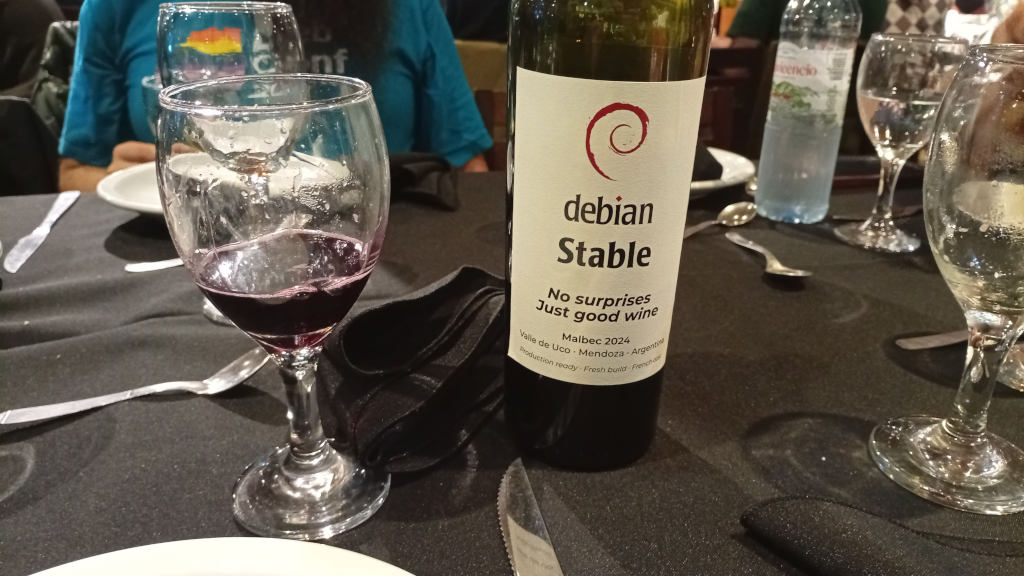
Some more wine variety during the conference dinner

Debianites in the main hacklab

I m spending two days in Rosario before I head home. Exploring a bit, catching up with sleep, finishing this blog post, signing keys and exploring some ideas I made note of during DebConf.

It was a little surreal not being part of any DebConf team for the first time ever, I ve just been too focussed on getting Yasi ready for my talk (no regrets!). I hope to be more involved again next year, in the meantime, I m very grateful to everyone who has made this happen, you did a stellar job! I hope to see many of you again next year in Japan!
Next.