Paul Tagliamonte: wrapping it all up (Part 8/12)

This post is part of a series called "Pigeon". If this is the first post
you've found, it'd be worth reading the
intro post first and then looking over
all posts in the series.
If you're looking for it, the intro to the PHY (layer 1) that this belongs at a high level and listing of the parts that make it up (including this one) is on the phy post.
The time has come.
If you re following along at home, we now have all the basics we need to glue
these parts together and see what this looks like.
We re going to build the highest-level constructs for the PHY in code
something that takes some number of bytes in and writes out IQ samples fit for
transmit over the airwaves (we ll call this the If you're looking for it, the intro to the PHY (layer 1) that this belongs at a high level and listing of the parts that make it up (including this one) is on the phy post.
Encoder), and something that
takes chunks of IQ samples in, writing out decoded bytes (which we ll call the
Decoder).
Encoder
Let s begin with the Encoder, since it s slightly less involved. I ve tried
to make this a bit more accessible by drawing a diagram out before describing
the order of operations, so that it s possible to follow along visually.
 While the process here can look like a lot, it s really not that bad.
We begin by taking the incoming bytes, converting the bytes into bits, and chunk
those bits into parts which are sized to fit completely within an LDPC message. We will then
encode incoming data into LDPC messages, using our
configured LDPC Matrix (the table we appropriated from 802.3an). Next, we
apply whitning over all the bits in our
encoded (and packed) LDPC messages, using our configured whitening constant. In
the case of QPSK, pairs of bits will then be
modulated into a QAM subcarrier, where each
QAM point represents a range of bits in the message. We ll go through each of
those modulated IQ subcarriers, and
set each corresponding data subcarrier
in order, for each OFDM symbol contained in the pigeon Burst. The preamble configuration
is then used to generate (or, more likely, can be used at startup to precompute)
the Schmidl-Cox preamble, which is written to the
first IQ samples in our output IQ buffer. Finally, we will do a series of
inverse FFT operations to convert each
OFDM symbol to the time domain, including their cyclic prefix.
Let s take a look at doing that, but in code this time now:
// (lightly edited for clarity)
impl Encoder
 ..

 /// Encode the provided bits into the output time-domain IQ samples.
 fn encode(
 &mut self,
 dst: &mut [IQ],
 src: &Vector,
 ) -> Result<Burst, Error>
 let src =
 let mut raw = Vector::new(self.fec.message_len());

 // Set  raw 's data bits, compute and set LDPC
 // checkbits.
 self.fec.add(&mut raw, src);

 // Apply whitening, and return
 raw.xor(&self.whitening)
  ;

 // copy in the precomputed schmidl-cox preamble to  dst
 let preamble_len = self.preamble_iq.len();
 dst[..preamble_len].copy_from_slice(&self.preamble_iq);

 // allocate a new (frequency domain) 'Burst' container.
 let mut burst = Burst::new(
 &self.mode.ofdm.plan,
 self.mode.ofdm.symbols
 );

 // modulate bits from 'src' as iq, and set each
 // data subcarrier for each ofdm symbol in the
 // burst.
 self.burst_encoder.multiplex(&mut burst, &src);

 // convert from frequency-domain data into time
 // domain iq samples, writing out ofdm symbols
 // and cyclic prefixes to  dst .
 self.burst_encoder
 .transform(&mut dst[preamble_len..], &burst)?;

 // normalize all IQ samples; the maximum magnitude
 // in the IQ buffer may be very small, which weakens
 // our transmitted signal. Scale all IQ samples such
 // that the maximum IQ sample magnitude will be '1.0'.
 dst.norm();

 Ok(burst)
Using the Encoder should hopefully be fairly straightforward we ll
give it a bag of bytes, and get back some IQ samples that we can ask our
nearest SDR to transmit.
As for what happens on the other end?
Decoder
Next up is the mirror image of our Encoder the, imaginatively named,
Decoder. The Decoder is slightly more involved (since it has to find the
packet in the IQ stream, as well as correct for channel error(s)), so we ll do
the same thing as above start with a diagram. My hope is going over the
Encoder first helps us only really focus on the new stuff, otherwise it
should feel like running the Encoder backwards.
 Here, we start with an incoming stream of IQ, where we will process
scan detections as they come in
from our Schmidl-Cox detector and burst Scanner. This will give us a snippit
of IQ, sized to exactly our Burst. We ll begin to correct our IQ samples by
first doing
frequency estimation and correction
in the time domain using our preamble and ofdm configuration. We ll then do
a series of inverse FFTs to extract each OFDM symbol
in our
Burst, where we can then do
channel estimation and correction.
With the OFDM symbols (hopefully) good enough, we can now
map each data subcarrier back to bits, and
unapply whitning. The resulting
bits are then chunked back up into LDPC messages,
which are then checked, and concatanated data extracted. Finally the bits
are turned back into bytes, which are written to our output buffer.
However, before we get into the code to do this there s one last detail. We
know bursts won t overlap (if they do, it s likely not possible to recover
right now even though other PHYs can and do), so any time we see something we believe
to be a burst, we can skip ahead by the burst s (constant) length within
the IQ, and avoid trying to decode anything else in there.
The nice side-effect here is this also gives us an interesting property for the
Decoder namely, we know the maximum number of Burst detections we can
get for a given block of incoming IQ data if they were packed end-to-end and
we can pre-allocate the memory we need, avoiding allocations for every
demodulation attempt (which may or may not even be a valid Burst).
This pre-allocated block of memory to hold the burst s data is something that
I ve called a frame buffer internally. Each frame buffer contains exactly
sized buffers to hold decoded information from the burst an iq buffer
that is exactly the same number of samples required to encode the preamble
and data, exactly the number of bits needed to store pre and post FEC data,
pre-allocated byte array, etc.
 Not shockingly, the code looks like this:
#[derive(Clone)]
pub struct FrameBuffer
 /// Corrected IQ samples
 pub samples: Samples,

 /// post-correction OFDM burst
 pub burst: Burst,

 /// demodulated bits from the OFDM burst
 pub bits: Vector,

 /// demodulated bits from the OFDM burst,
 /// after FEC, and cleaned
 pub raw_bits: Vector,

 /// Layer 2 contents of the Frame
 pub contents: Vec<u8>,
Of course, that alone is handy but we need to use them. So let s go ahead
and do what we promised above each Decoder uses a fixed number of
pre-allocated FrameBuffers to store packets in-flight, packed into what
is, creatively, called FrameBuffers within my code.
 As an aside, I likely should have called this a
Memory Pool, since that s the
common
and accepted
name for this design pattern but being stuck with unfortunate names is
the burden of those of us who stumble into sensible ideas over time. The only
nuance here is that I use the pools strictly sequentially we only
save
the FrameBuffer if the LDPC checksum is correct, allowing us to only keep
track of how many successful packets we have and being able to get the valid
FrameBuffers, rather than storing a handle to each FrameBuffer as we go
a promise that most memory pools do not make, since blocks can usually be
taken and returned in any order.
Let s go ahead and do the whole Decoder dance now:
// (lightly edited for clarity)

impl Decoder
 ..

 /// Process incoming IQ for Pigeon Bursts, and
 /// demodulate them.
 pub fn decode(
 &mut self,
 buf: &[IQ],
 ) -> Result<Vec<(Detection, &FrameBuffer)>, Error>
 let mut ret = Vec::new();
 let mode = self.scanner.mode().clone();

 // reset the "valid frame buffer count" back to 0
 self.frames.reset();

 // call the scanner and get scan detections for
 // this block of iq ( buf )
 for detection in self.scanner.scan(buf)
 // for each detection, we're (only) going to process
 // the iq snippit, but pass along the metadata
 // such as SNR.
 let ScanDetection
 snippit,
 snr,
 range,
 m,
   = detection;

 // grab the next free frame buffer to work within.
 let frame_buffer = self.frames.next_mut();

 // Copy the snippit into the frame buffer (a mutable
 // location)
 frame_buffer.samples.copy_from_slice(snippit);

 // estimate the frequency offset based on the
 // Burst's Schmidl-Cox preamble.
 let preamble_fo = preamble::estimate_frequency_offset(
 &mode.preamble,
 mode.rate,
 &frame_buffer.samples[..mode.preamble.samples()],
 );

 // Shift the IQ stream by the estimated frequency
 // offset -- hopefully we're closer to 0Hz
 frame_buffer.samples.shift(mode.rate, preamble_fo);

 // estimate the frequency offset based on the
 // each burst's **cyclic prefix** -- exactly like
 // we did with the Burst Schmidl-Cox preamble,
 // but this time on each OFDM symbol.
 let ofdm_fo = ofdm::estimate_frequency_offset(
 &mode.ofdm,
 mode.rate,
 &frame_buffer.samples[mode.preamble.samples()..],
 );

 // Shift the IQ stream closer yet; hopefully this
 // is a very small nudge even closer still to 0Hz.
 frame_buffer.samples.shift(mode.rate, ofdm_fo);

 // Do a bunch of inverse fft operations for each
 // OFDM symbol, filling the frequency-domain Symbol
 // structs in  frame_buffer.burst  (Burst) struct.
 //
 // this will also do channel estimation and
 // correction before returning.
 self
 .decoder
 .transform(
 &mut frame_buffer.burst,
 &frame_buffer.samples[mode.preamble.samples()..],
 )?;

 // "demultiplex" each data subcarrier's frequency-domain
 // IQ constellation point, setting the correct bit range.
 self.decoder.demultiplex(
 &mut frame_buffer.raw_bits,
 &frame_buffer.burst
 );

 // unapply whitening by XOR-ing the buffer with
 // the well-known whitening vector.
 frame_buffer.raw_bits = frame_buffer.raw_bits.xor(
 &self.whitening);

 // verify that the LDPC message(s) are all correct,
 // and if so, concatanate the the data bits (no check
 // bits) to the  bits  vector.
 if self.fec.decode(
 &mut frame_buffer.bits,
 &frame_buffer.raw_bits
 ).is_err()
 // this is where invalid packets fail. we gave it a good go.
 // next packet please.
 continue;


 // copy the raw bits out, as bytes, to the  contents  buffer.
 frame_buffer.bits.copy_as_bytes(&mut frame_buffer.contents);

 // store metadata/metrics on the demodulation.
 ret.push(Detection
 m,
 snr,
 index: range.start,
  );

 // save the contents of this frame buffer (don't
 // reuse this buffer next go-around).
 self.frames.save();


 // We're going to take out the borrow on the frame at
 // the end since we don't want to deal with telling the
 // compiler via code gymnastics that the mut and non-mut
 // borrows are OK since they're non-overlapping.
 Ok(ret.into_iter().zip(self.frames.iter()).collect())
Phew. That was kinda a lot. In fact it s basically the whole thing. This
function is as close to how do you read an OFDM packet as it gets, and
perhaps the most important part of this whole series. Beyond that, though, this
is a huge conceptual unlock. This means we now have an incredibly powerful
primitive; the ability to take bytes and go to/from IQ samples over the air.
Let s talk about pigeon modes
// (lightly edited for clarity)
impl Encoder
..
/// Encode the provided bits into the output time-domain IQ samples.
fn encode(
&mut self,
dst: &mut [IQ],
src: &Vector,
) -> Result<Burst, Error>
let src =
let mut raw = Vector::new(self.fec.message_len());
// Set raw 's data bits, compute and set LDPC
// checkbits.
self.fec.add(&mut raw, src);
// Apply whitening, and return
raw.xor(&self.whitening)
;
// copy in the precomputed schmidl-cox preamble to dst
let preamble_len = self.preamble_iq.len();
dst[..preamble_len].copy_from_slice(&self.preamble_iq);
// allocate a new (frequency domain) 'Burst' container.
let mut burst = Burst::new(
&self.mode.ofdm.plan,
self.mode.ofdm.symbols
);
// modulate bits from 'src' as iq, and set each
// data subcarrier for each ofdm symbol in the
// burst.
self.burst_encoder.multiplex(&mut burst, &src);
// convert from frequency-domain data into time
// domain iq samples, writing out ofdm symbols
// and cyclic prefixes to dst .
self.burst_encoder
.transform(&mut dst[preamble_len..], &burst)?;
// normalize all IQ samples; the maximum magnitude
// in the IQ buffer may be very small, which weakens
// our transmitted signal. Scale all IQ samples such
// that the maximum IQ sample magnitude will be '1.0'.
dst.norm();
Ok(burst)
Encoder the, imaginatively named,
Decoder. The Decoder is slightly more involved (since it has to find the
packet in the IQ stream, as well as correct for channel error(s)), so we ll do
the same thing as above start with a diagram. My hope is going over the
Encoder first helps us only really focus on the new stuff, otherwise it
should feel like running the Encoder backwards.
Here, we start with an incoming stream of IQ, where we will process
scan detections as they come in
from our Schmidl-Cox detector and burst Scanner. This will give us a snippit
of IQ, sized to exactly our Burst. We ll begin to correct our IQ samples by
first doing
frequency estimation and correction
in the time domain using our preamble and ofdm configuration. We ll then do
a series of inverse FFTs to extract each OFDM symbol
in our Burst, where we can then do
channel estimation and correction.
With the OFDM symbols (hopefully) good enough, we can now
map each data subcarrier back to bits, and
unapply whitning. The resulting
bits are then chunked back up into LDPC messages,
which are then checked, and concatanated data extracted. Finally the bits
are turned back into bytes, which are written to our output buffer.
However, before we get into the code to do this there s one last detail. We
know bursts won t overlap (if they do, it s likely not possible to recover
right now even though other PHYs can and do), so any time we see something we believe
to be a burst, we can skip ahead by the burst s (constant) length within
the IQ, and avoid trying to decode anything else in there.
The nice side-effect here is this also gives us an interesting property for the
Decoder namely, we know the maximum number of Burst detections we can
get for a given block of incoming IQ data if they were packed end-to-end and
we can pre-allocate the memory we need, avoiding allocations for every
demodulation attempt (which may or may not even be a valid Burst).
This pre-allocated block of memory to hold the burst s data is something that
I ve called a frame buffer internally. Each frame buffer contains exactly
sized buffers to hold decoded information from the burst an iq buffer
that is exactly the same number of samples required to encode the preamble
and data, exactly the number of bits needed to store pre and post FEC data,
pre-allocated byte array, etc.
Not shockingly, the code looks like this:
#[derive(Clone)]
pub struct FrameBuffer
/// Corrected IQ samples
pub samples: Samples,
/// post-correction OFDM burst
pub burst: Burst,
/// demodulated bits from the OFDM burst
pub bits: Vector,
/// demodulated bits from the OFDM burst,
/// after FEC, and cleaned
pub raw_bits: Vector,
/// Layer 2 contents of the Frame
pub contents: Vec<u8>,
Decoder uses a fixed number of
pre-allocated FrameBuffers to store packets in-flight, packed into what
is, creatively, called FrameBuffers within my code.
As an aside, I likely should have called this a
Memory Pool, since that s the
common
and accepted
name for this design pattern but being stuck with unfortunate names is
the burden of those of us who stumble into sensible ideas over time. The only
nuance here is that I use the pools strictly sequentially we only save
the FrameBuffer if the LDPC checksum is correct, allowing us to only keep
track of how many successful packets we have and being able to get the valid
FrameBuffers, rather than storing a handle to each FrameBuffer as we go
a promise that most memory pools do not make, since blocks can usually be
taken and returned in any order.
Let s go ahead and do the whole Decoder dance now:
// (lightly edited for clarity)
impl Decoder
..
/// Process incoming IQ for Pigeon Bursts, and
/// demodulate them.
pub fn decode(
&mut self,
buf: &[IQ],
) -> Result<Vec<(Detection, &FrameBuffer)>, Error>
let mut ret = Vec::new();
let mode = self.scanner.mode().clone();
// reset the "valid frame buffer count" back to 0
self.frames.reset();
// call the scanner and get scan detections for
// this block of iq ( buf )
for detection in self.scanner.scan(buf)
// for each detection, we're (only) going to process
// the iq snippit, but pass along the metadata
// such as SNR.
let ScanDetection
snippit,
snr,
range,
m,
= detection;
// grab the next free frame buffer to work within.
let frame_buffer = self.frames.next_mut();
// Copy the snippit into the frame buffer (a mutable
// location)
frame_buffer.samples.copy_from_slice(snippit);
// estimate the frequency offset based on the
// Burst's Schmidl-Cox preamble.
let preamble_fo = preamble::estimate_frequency_offset(
&mode.preamble,
mode.rate,
&frame_buffer.samples[..mode.preamble.samples()],
);
// Shift the IQ stream by the estimated frequency
// offset -- hopefully we're closer to 0Hz
frame_buffer.samples.shift(mode.rate, preamble_fo);
// estimate the frequency offset based on the
// each burst's **cyclic prefix** -- exactly like
// we did with the Burst Schmidl-Cox preamble,
// but this time on each OFDM symbol.
let ofdm_fo = ofdm::estimate_frequency_offset(
&mode.ofdm,
mode.rate,
&frame_buffer.samples[mode.preamble.samples()..],
);
// Shift the IQ stream closer yet; hopefully this
// is a very small nudge even closer still to 0Hz.
frame_buffer.samples.shift(mode.rate, ofdm_fo);
// Do a bunch of inverse fft operations for each
// OFDM symbol, filling the frequency-domain Symbol
// structs in frame_buffer.burst (Burst) struct.
//
// this will also do channel estimation and
// correction before returning.
self
.decoder
.transform(
&mut frame_buffer.burst,
&frame_buffer.samples[mode.preamble.samples()..],
)?;
// "demultiplex" each data subcarrier's frequency-domain
// IQ constellation point, setting the correct bit range.
self.decoder.demultiplex(
&mut frame_buffer.raw_bits,
&frame_buffer.burst
);
// unapply whitening by XOR-ing the buffer with
// the well-known whitening vector.
frame_buffer.raw_bits = frame_buffer.raw_bits.xor(
&self.whitening);
// verify that the LDPC message(s) are all correct,
// and if so, concatanate the the data bits (no check
// bits) to the bits vector.
if self.fec.decode(
&mut frame_buffer.bits,
&frame_buffer.raw_bits
).is_err()
// this is where invalid packets fail. we gave it a good go.
// next packet please.
continue;
// copy the raw bits out, as bytes, to the contents buffer.
frame_buffer.bits.copy_as_bytes(&mut frame_buffer.contents);
// store metadata/metrics on the demodulation.
ret.push(Detection
m,
snr,
index: range.start,
);
// save the contents of this frame buffer (don't
// reuse this buffer next go-around).
self.frames.save();
// We're going to take out the borrow on the frame at
// the end since we don't want to deal with telling the
// compiler via code gymnastics that the mut and non-mut
// borrows are OK since they're non-overlapping.
Ok(ret.into_iter().zip(self.frames.iter()).collect())
 The following contributor got their Debian Developer account in the last two
months:
 My Debian contributions this month were all
 The



 One of those arguments became its own fix. My wording implied symbols were
unpacked inside the isolated sbuild environment (the consequence was I was
handed a


 Every merge request above landed with unit tests, but those only tell you
that the pieces behave correctly. What Colin and I wanted was a real gdb
fetching real symbols from a real instance, so

 Another minor maintenance release of the
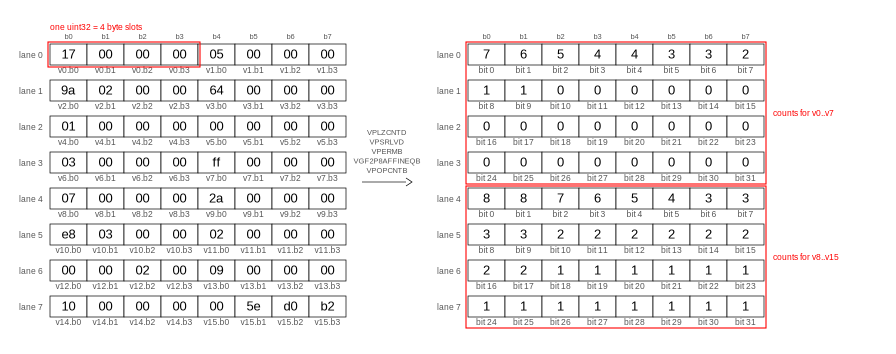
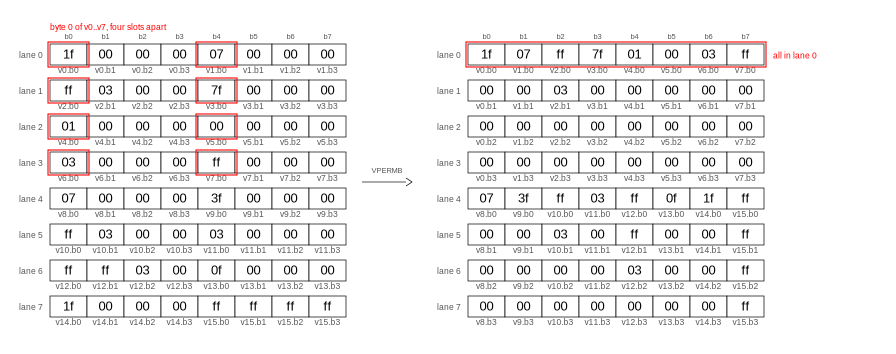
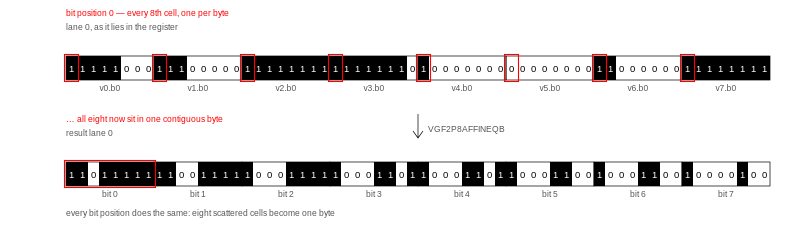
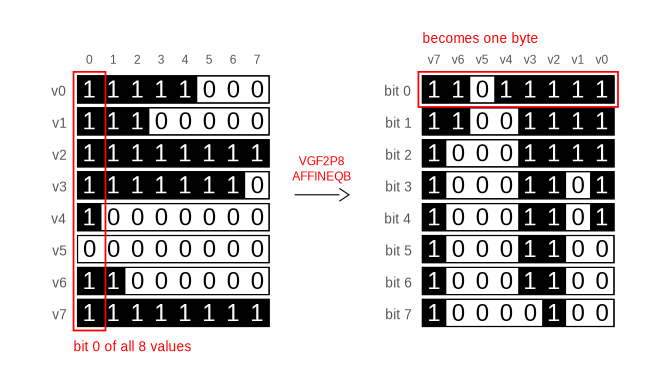
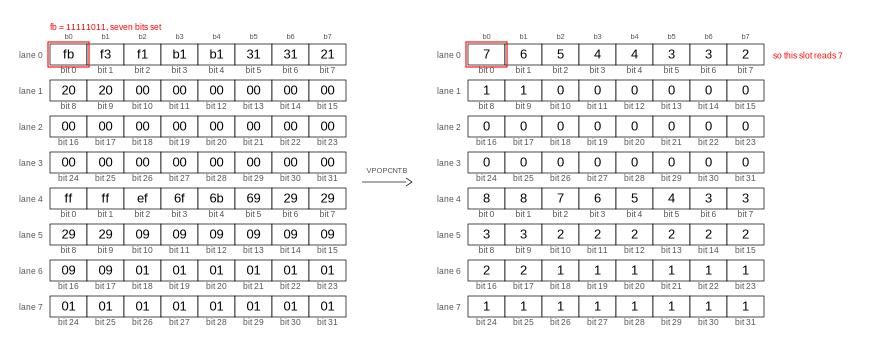
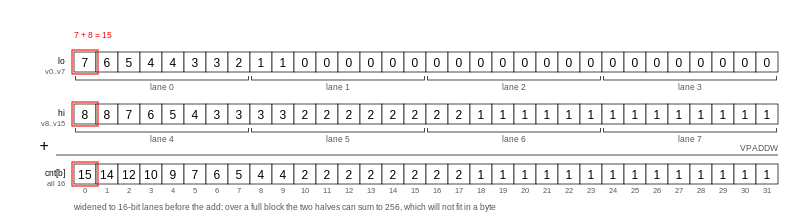
 SIMD bitpacking works like regular bitpacking, but processes 8


 Sharing source code from host to guest VM
Finally we need to make sure we have access in the dev-vm to our source code repositories.
For this I will share the directory
 Finally we mount the shared directory, and enable the mount on each boot.
 Summer Vacation for my kids is over. And Peace is back to my life.
AI is transforming how I operate and view things. It was very different a few months back.
AI (as a product) is useful in generating code, useful in analysing things. It seems to be able to retrieve and show me information relatively quickly, doesn't need me to scan the search results to find which one is more useful.
I feel I am less reliable than an AI, even when AI is prone to failure.
The text generated by AI is better worded than me myself, albeit they have their own tone.
Is it still fun if all my hobby programming is overtaken by AI? I am not sure, did I enjoy writing the fixtures and build environment for the
open source programming stuff? Do I enjoy reviewing other people's code?
Reviewing other people's contributions is usually not great, because by definition the code you own you have better knowledge about,
and the code you generate yourself is the best code, others will not fit naturally, they don't have the historical context, and the undocumented future plans.
 I just released a new version of